
Grade 9 Science Worksheets
6,926 worksheets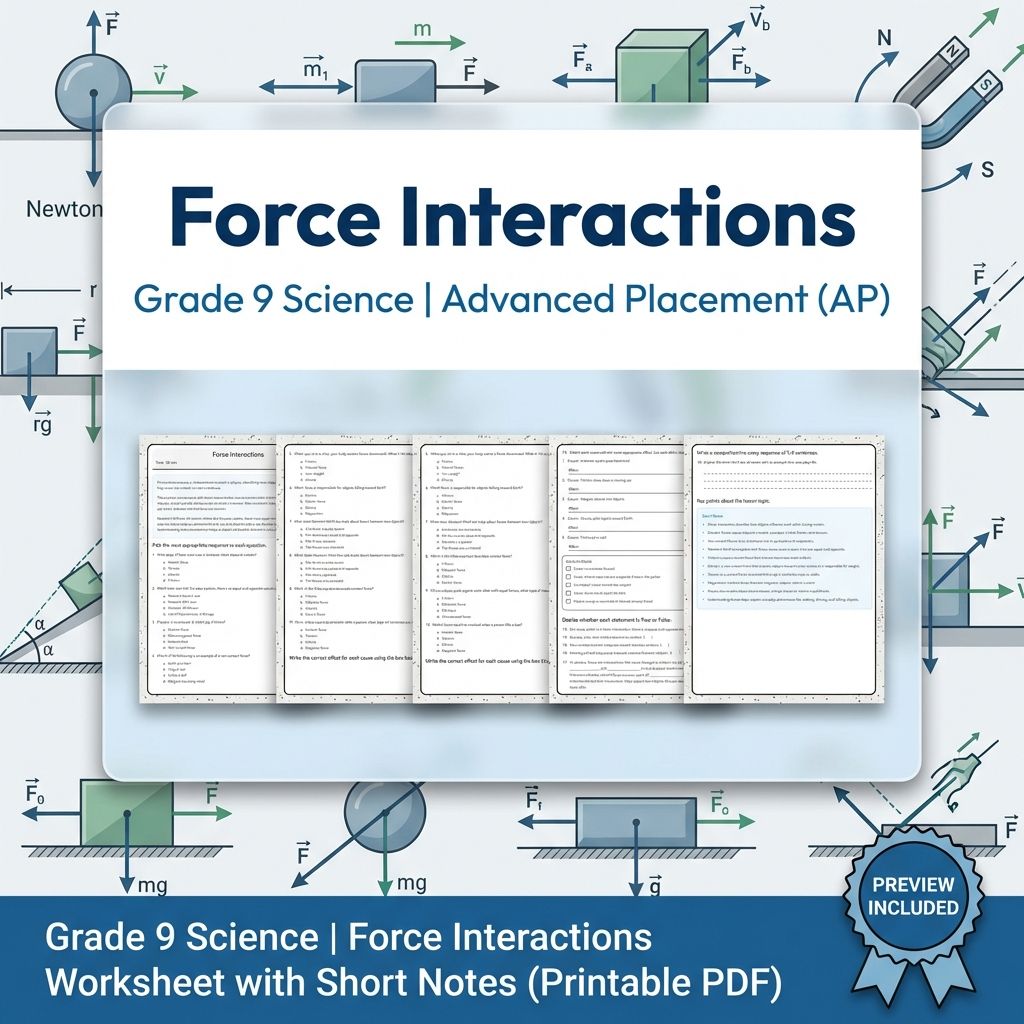
Grade 9 Science | Force Interactions Worksheet with Short Notes (Printable PDF)
 Created byMeadowlark Worksheets
Learning Objectives
- Understand the different types of force interactions in physics.
- Identify examples of forces and their effects.
- Explain Newton's third law of motion.
Also included in: Grade 9 Science Motion & Force Unit Worksheet Bundle (PDF Download) +1 more
Instant download

Grade 9 Science | Systems Thinking Worksheet | California Standards
 Created byLumora Learning
Learning Objectives
- Explain how a design functions as part of a larger system using matter, energy, and information flows
- Identify feedback and unintended effects that can occur when system components interact
- Use systems thinking to evaluate boundary conditions and how system behavior changes over time
Instant download
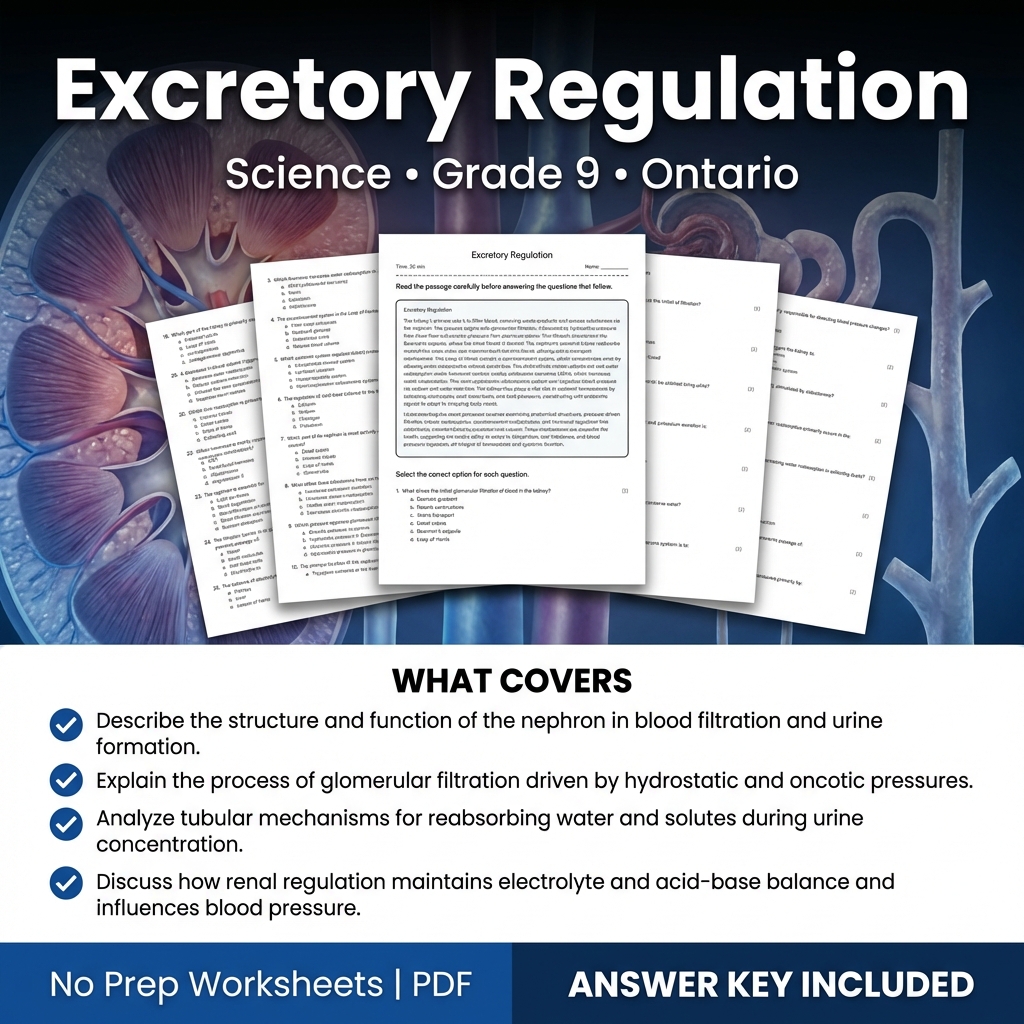
Grade 9 Science Worksheet on Excretory Regulation | Ontario Standards
 Created byCoral Reef Learning
Learning Objectives
- Describe the structure and function of the nephron in blood filtration and urine formation.
- Explain the process of glomerular filtration driven by hydrostatic and oncotic pressures.
- Analyze tubular mechanisms for reabsorbing water and solutes during urine concentration.
Instant download
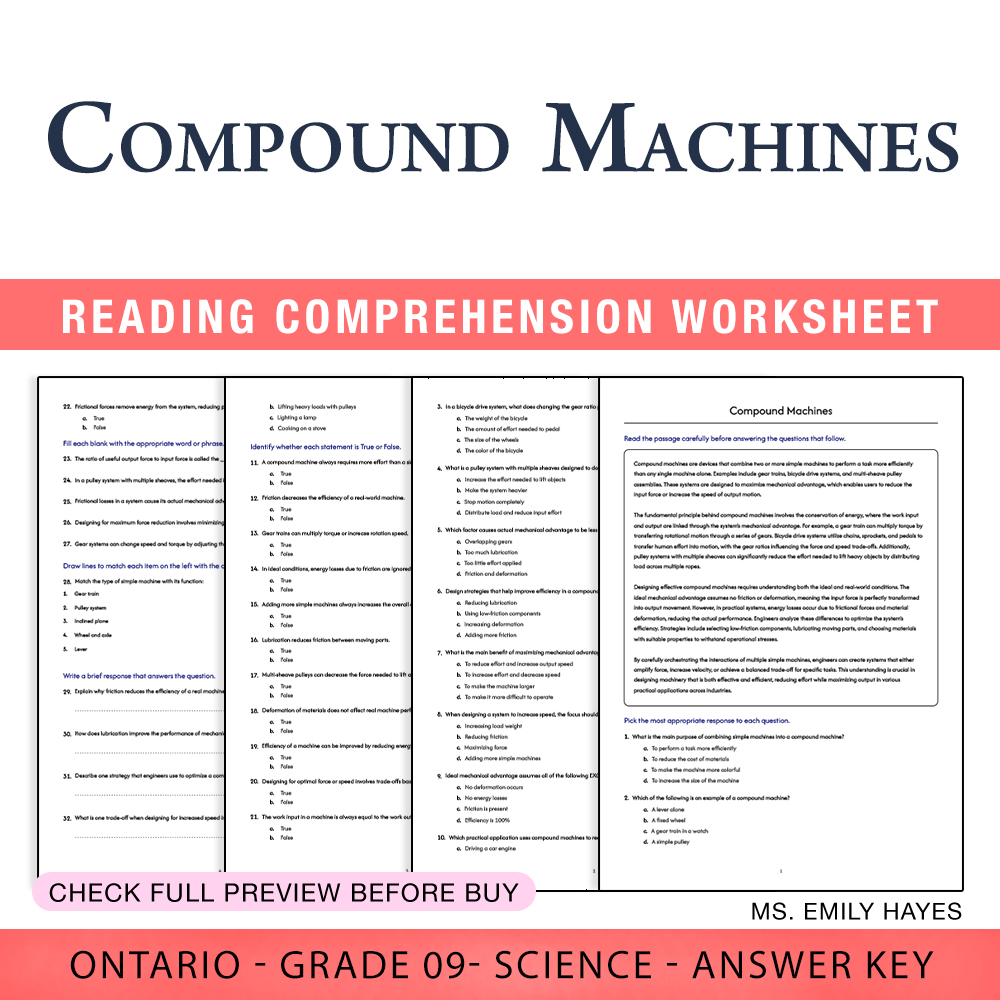
9th Grade Science | Compound Machines Worksheet (PDF + Answer Key)
 Created byCopper Leaf Classroom
Learning Objectives
- Explain how multiple simple machines combine to form compound machines and analyze their mechanical advantage.
- Calculate overall mechanical advantage using force and displacement relationships in compound systems.
- Differentiate between ideal and actual mechanical advantage, and understand the effects of friction and deformation.
Instant download

Grade 9 Science – Work and Machines Worksheet (Alberta Standards) (PDF)
 Created byEvergreen Desk Education
Learning Objectives
- Explain how work depends on force and distance and how units connect to energy transfer
- Describe how simple machines change force magnitude and/or direction
- Use mechanical advantage and trade-offs (force vs distance) to predict machine performance
Instant download
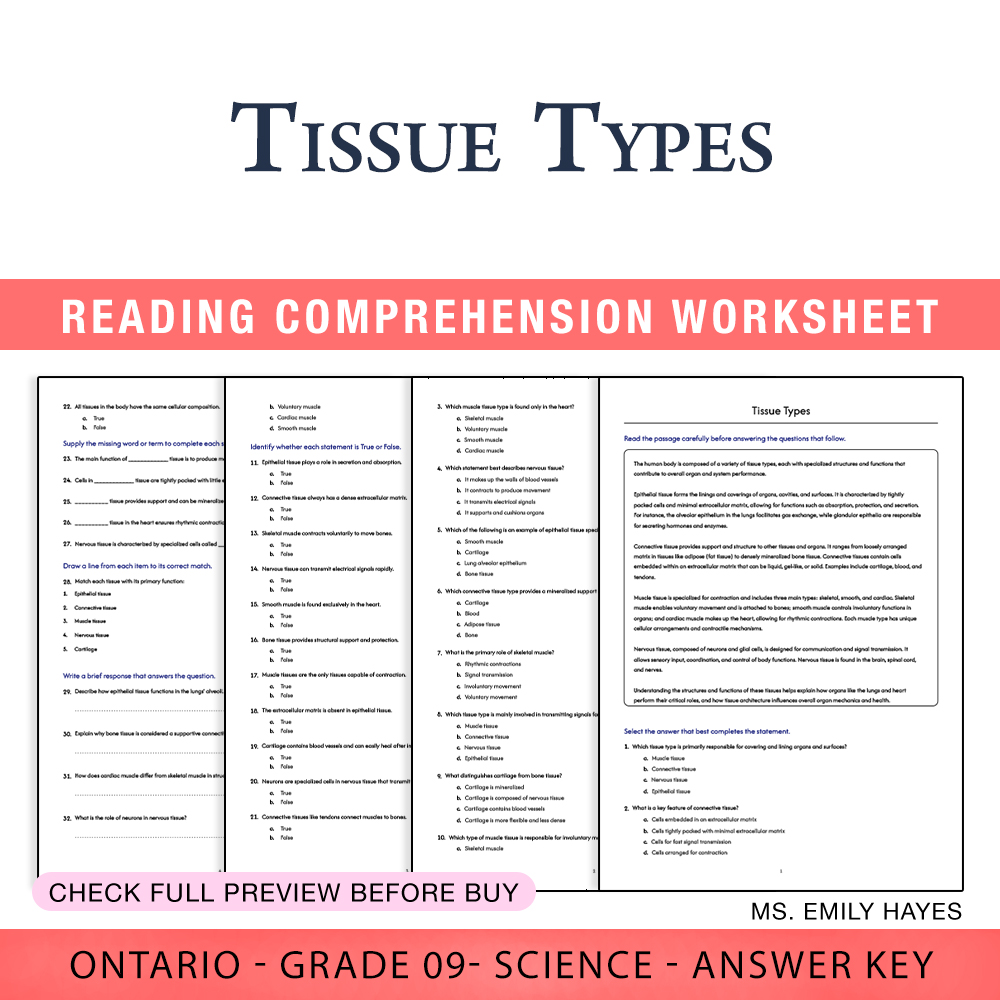
9th Grade Science | Tissue Types Worksheet (PDF + Answer Key)
Created byCopper Leaf ClassroomLearning Objectives
- Identify the four principal tissue classes and their key features.
- Describe examples of specialized epithelial, connective, and muscle tissues.
- Explain how tissue architecture relates to organ function.
Instant download
Grade 9 Science | Tissue Types Worksheet (Ontario) – Science PDF
 Created byBright Mind Resources
Learning Objectives
- Identify and describe the four principal tissue classes: epithelial, connective, muscle, and nervous.
- Explain the cellular composition and extracellular matrix roles of each tissue type.
- Differentiate specialized epithelial tissues for absorption and secretion.
Instant download
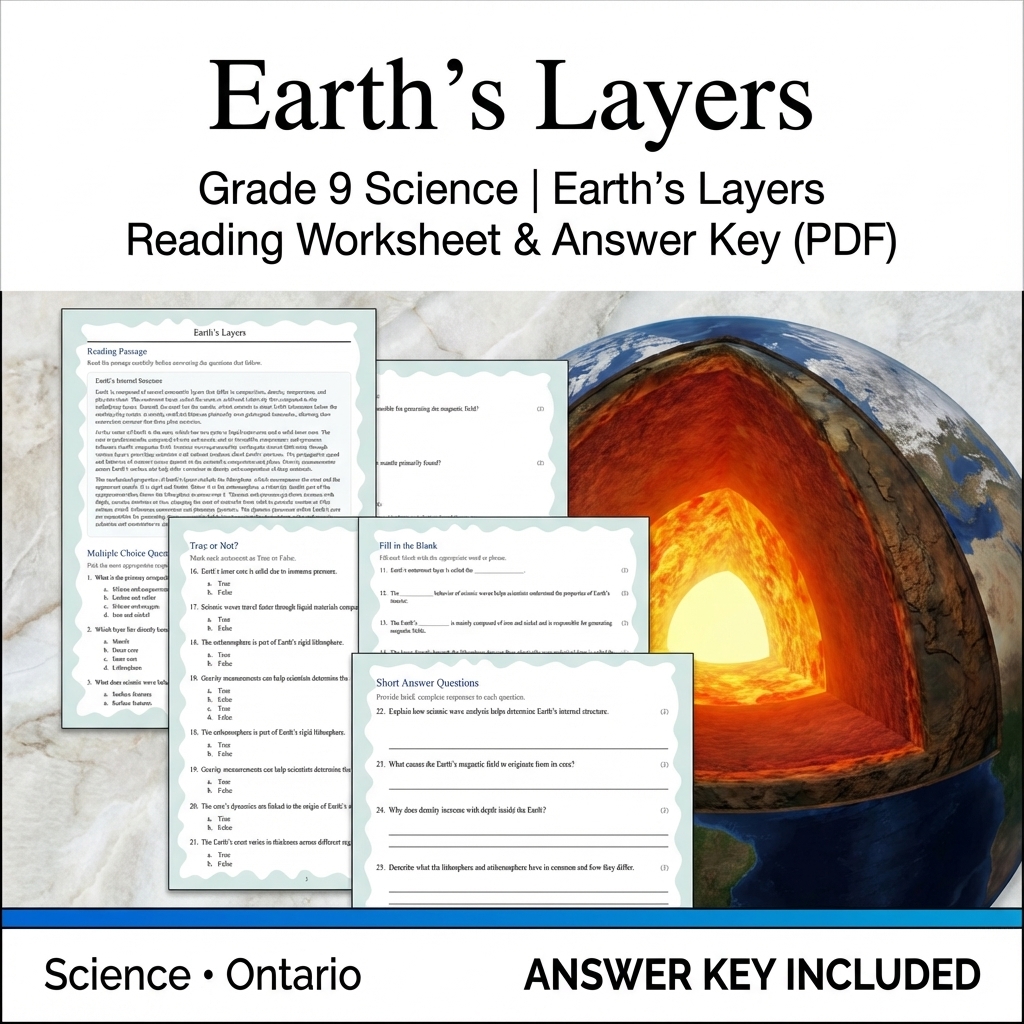
Grade 9 Science | Earth's Layers Reading Worksheet & Answer Key (PDF)
JCreated byJ.S SheetsLearning Objectives
- Describe the main layers of Earth and their properties.
- Understand how seismic waves and gravity inform about Earth's interior.
- Compare the mechanical behavior of Earth's lithosphere and asthenosphere.
Also included in: Grade 9 Science | Earth Processes & Celestial Phenomena Worksheets Collection +1 more
Instant download

Grade 9 Science | Motion Relationships Worksheet | General Standards
Created byLumora LearningLearning Objectives
- Explain how distance and time relate to speed using data and graphs
- Describe how changing speed over time indicates acceleration
- Distinguish constant speed (linear distance–time pattern) from changing speed (nonlinear pattern)
Instant download

Grade 9 Mass Measurement Worksheet | BC Practice PDF
 Created byClear Sky Classroom
Learning Objectives
- Explain how conservation of atoms applies to mass measurements during chemical reactions within a defined system boundary.
- Distinguish between open and closed systems and predict how gas escape affects observed (measured) mass.
- Evaluate how instrument sensitivity and external influences can change measured values while conserving total atomic mass in the system.
Instant download

Solar System Scales Worksheet | Standards-Aligned Grade 9 Science Practice
JCreated byJ.S SheetsLearning Objectives
- Understand the concept of scale in the solar system and how sizes and distances vary.
- Analyze planetary motion and how relative scale properties relate to observations.
- Connect apparent brightness and movement to actual distances and orbital periods.
Also included in: Grade 9 Earth and Space Science Lesson Bundle: California Standards +1 more
Instant download

Grade 9 Science Apparent Motion of the Sky Worksheet | Ontario Standards
JCreated byJ.S SheetsLearning Objectives
- Explain how Earth’s rotation produces apparent diurnal motion of celestial objects across the sky.
- Describe how Earth’s revolution around the Sun leads to apparent annual changes in which stars are visible at night.
- Use celestial coordinate ideas (altitude and azimuth) to reason about rising and setting from an Earth observer’s viewpoint.
Instant download

Grade 9 Science – Succession Daily Reading Worksheet + Answer Key
JCreated byJ.S SheetsLearning Objectives
- Identify the differences between primary and secondary succession
- Explain key processes and species changes during succession
- Understand factors influencing ecosystem recovery and stability
Also included in: Grade 9 Science Lesson Bundle: Ecosystems and Ecology Worksheets +1 more
Instant download

Grade 9 Science – Trophic Levels Daily Reading Worksheet with Answer Key
JCreated byJ.S SheetsLearning Objectives
- Define and identify different trophic levels within an ecosystem.
- Describe how food chains and food webs illustrate energy flow.
- Explain the concepts of trophic efficiency and trophic cascades.
Also included in: Grade 9 Science Lesson Bundle: Ecosystems and Ecology Worksheets +1 more
Instant download
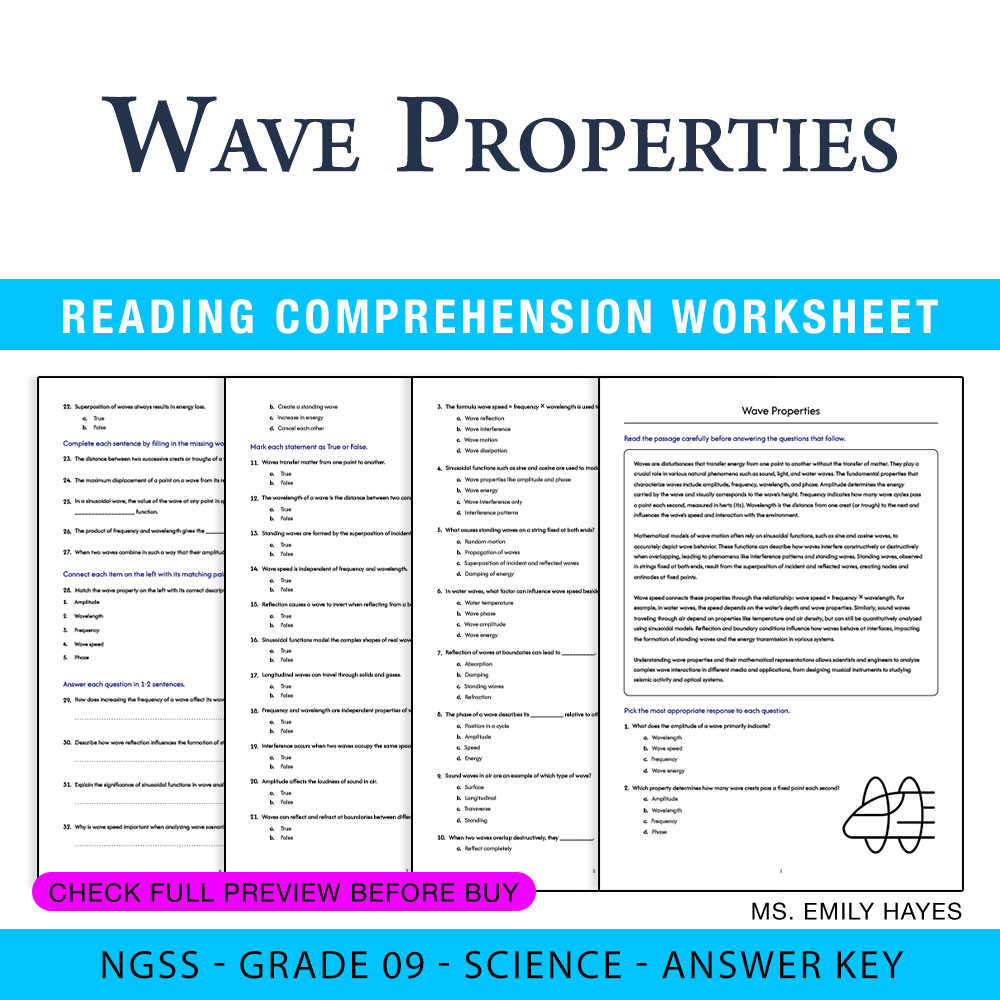
9th Grade Science | Wave Properties Worksheet (PDF+ Answer Key)
Created byCopper Leaf ClassroomLearning Objectives
- Understand and describe the key properties of waves, including amplitude, frequency, wavelength, and phase.
- Apply the wave speed formula: wave speed = frequency × wavelength to analyze wave scenarios.
- Explain how sinusoidal functions model wave behavior and describe interference and standing waves.
Instant download

Grade 9 Science – Levels of Biological Organization | Daily Reading Worksheet
Created byBright Mind ResourcesLearning Objectives
- Understand the hierarchy from molecules to organisms
- Identify the properties of each level of biological organization
- Explain how emergent properties develop at higher levels
Also included in: Grade 9 Cell and Human Body Systems Science Daily Reading Lesson Bundle | BC +1 more
Instant download
Grade 9 Science | Cellular Metabolism Worksheet (NGSS) – PDF
 Created byMaple Path Learning
Learning Objectives
- Describe the biochemical pathways involved in cellular respiration, including glycolysis, the citric acid cycle, and electron transport chain.
- Explain how ATP is produced and utilized in energy coupling within cells.
- Relate organelle functions of mitochondria and chloroplasts to metabolic processes like respiration and photosynthesis.
Instant download

Grade 9 Chemical Changes Worksheet | Ontario Science | Reactions & Answer Key
Created byClear Sky ClassroomLearning Objectives
- Distinguish chemical changes from physical changes by using evidence that new substances form.
- Identify observable indicators of chemical change such as temperature change, gas production, precipitate formation, and persistent color change.
- Explain reactant-to-product transformation using the idea of particles at the microscopic level.
Instant download
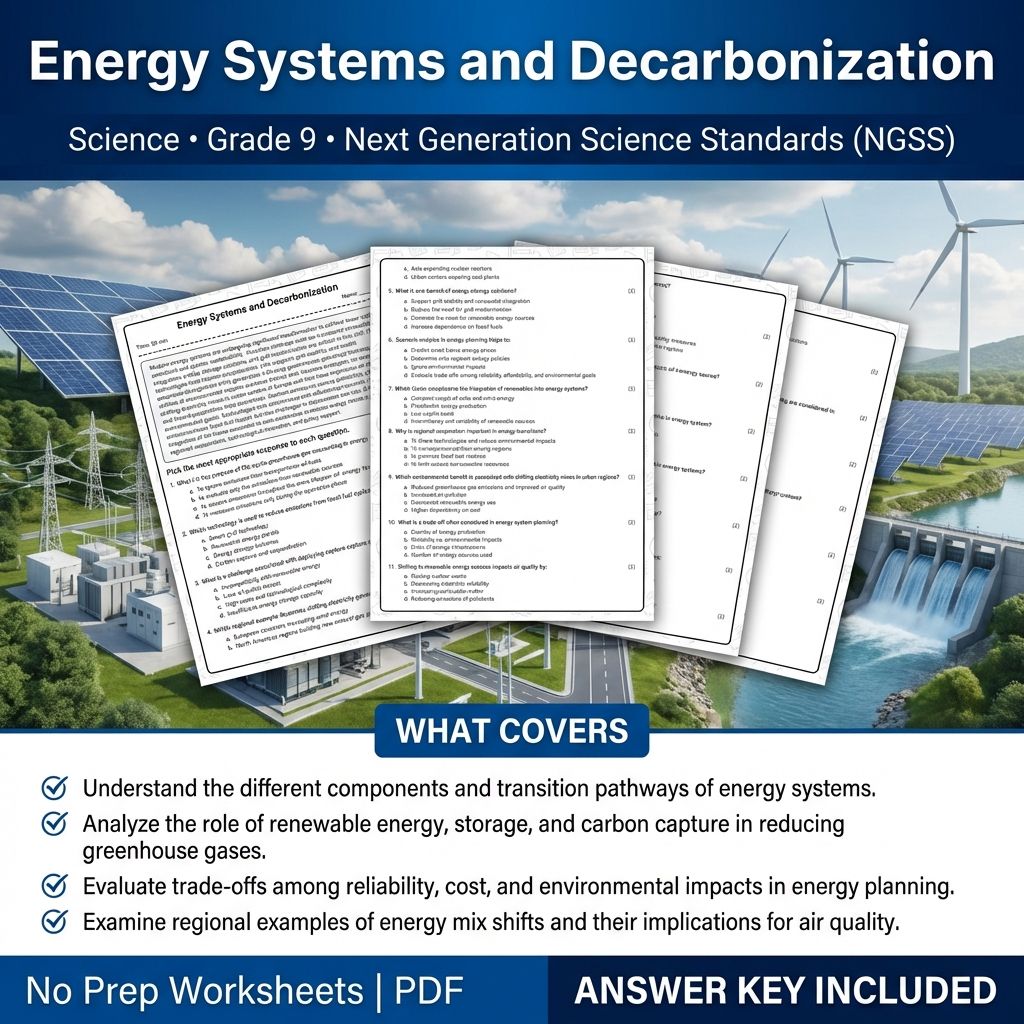
Grade 9 Science Worksheet | Energy Systems & Decarbonization (PDF + Answer Key)
Created byCoral Reef LearningLearning Objectives
- Understand the different components and transition pathways of energy systems.
- Analyze the role of renewable energy, storage, and carbon capture in reducing greenhouse gases.
- Evaluate trade-offs among reliability, cost, and environmental impacts in energy planning.
Also included in: Grade 9 Science UNIT Worksheet Pack-Resource Management & Energy Decarbonization +1 more
Instant download

Grade 9 Science | Respiratory Pathways Worksheet | AP-aligned
Created byLumora LearningLearning Objectives
- Describe the pathways involved in cellular respiration, including glycolysis, the TCA cycle, and electron transport.
- Explain the differences between aerobic and anaerobic respiration and their implications for ATP production.
- Connect substrate-level phosphorylation and oxidative phosphorylation to ATP yields and redox balances.
Also included in: Grade 9 Science | Biology and Ecosystems Custom Bundle | AP Worksheets
Instant download
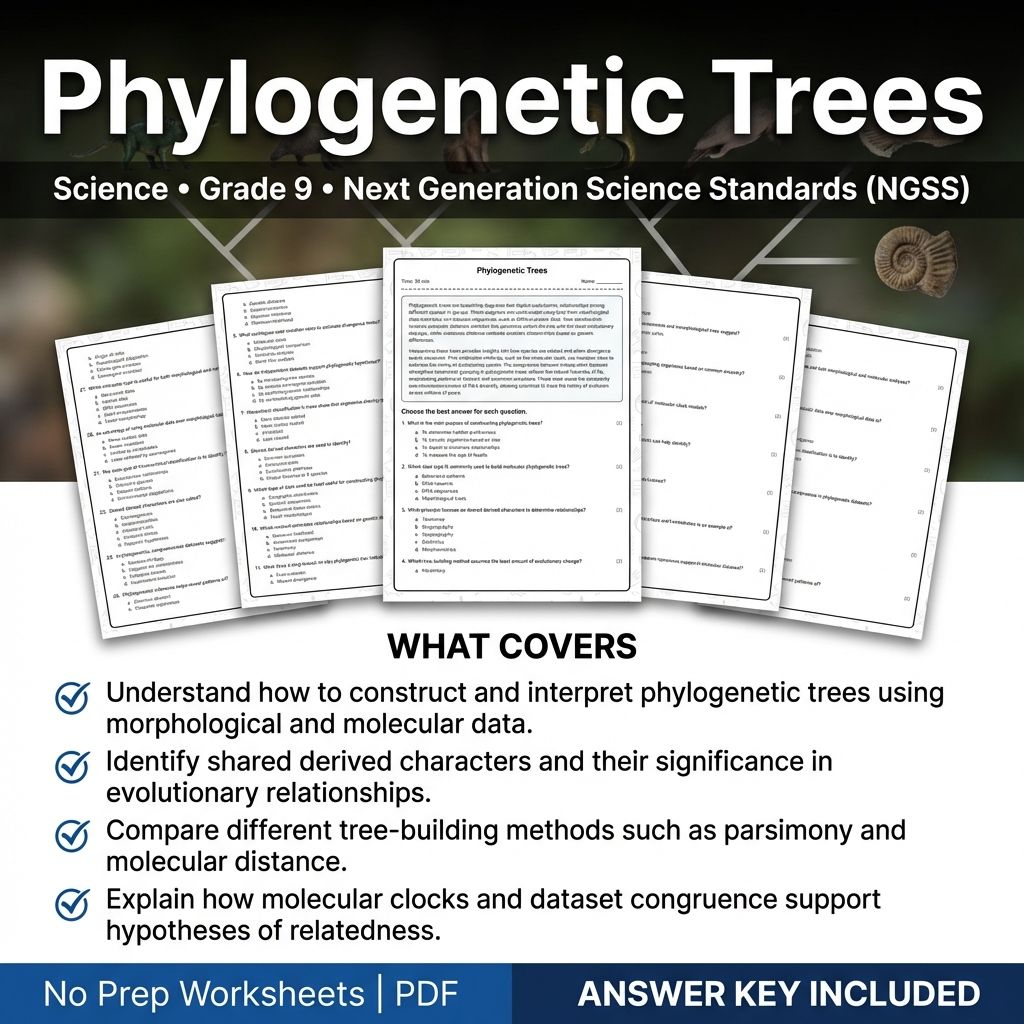
9th Grade Science | Phylogenetic Trees Worksheet & Answer Key (Printable PDF)
Created byCoral Reef LearningLearning Objectives
- Understand how to construct and interpret phylogenetic trees using morphological and molecular data.
- Identify shared derived characters and their significance in evolutionary relationships.
- Compare different tree-building methods such as parsimony and molecular distance.
Also included in: Grade 9 Science | Evolution & Phylogenetics Worksheet Bundle (Printable PDFs) +1 more
Instant download
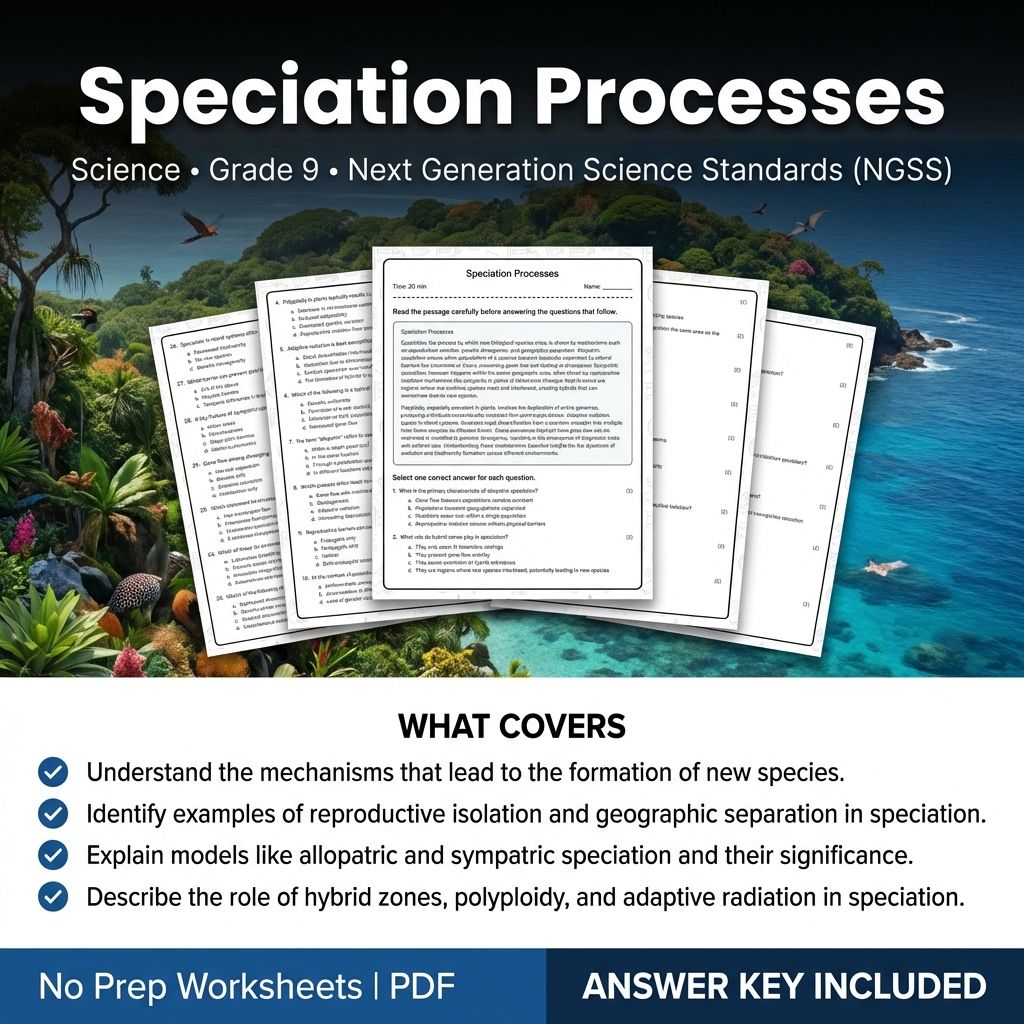
Grade 9 Science | Speciation Processes Worksheet & Answer Key (Printable PDF)
Created byCoral Reef LearningLearning Objectives
- Understand the mechanisms that lead to the formation of new species.
- Identify examples of reproductive isolation and geographic separation in speciation.
- Explain models like allopatric and sympatric speciation and their significance.
Also included in: Grade 9 Science | Evolution & Phylogenetics Worksheet Bundle (Printable PDFs) +1 more
Instant download
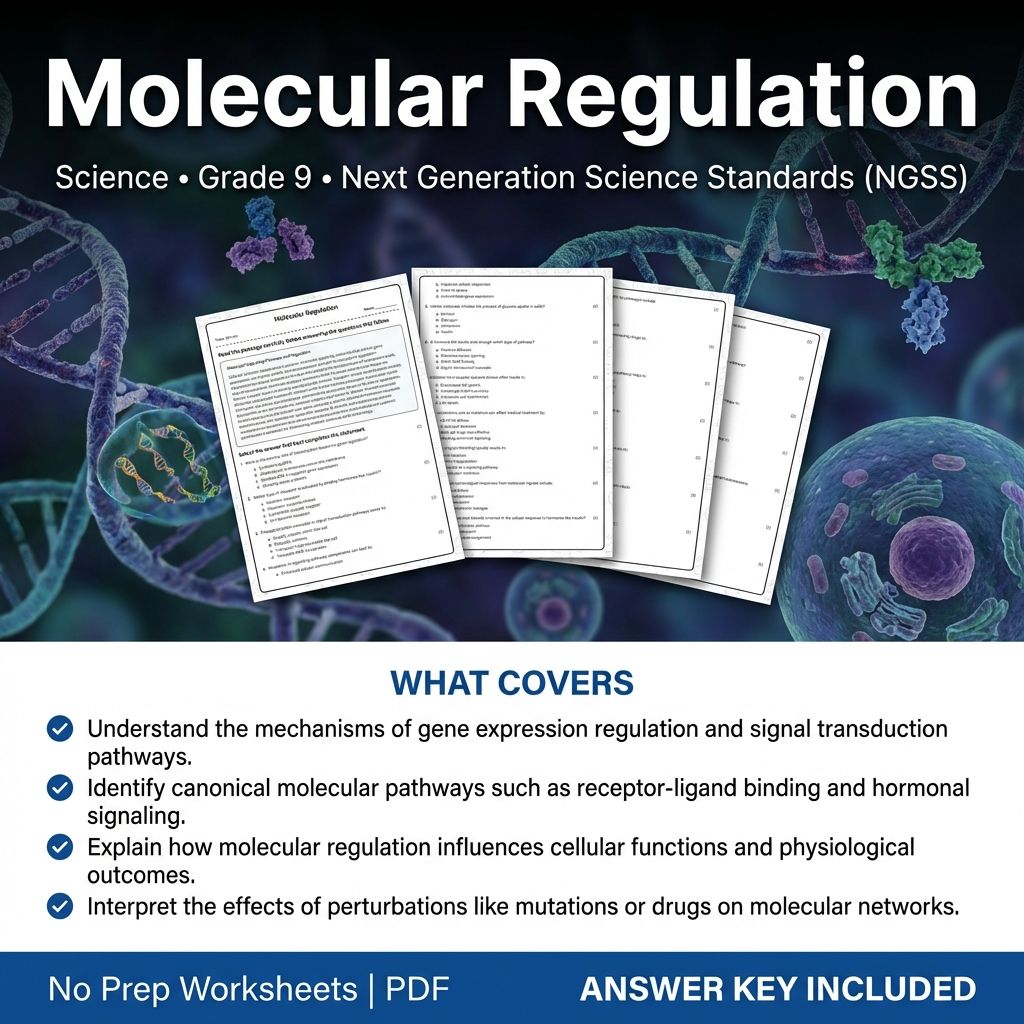
9th Grade Science | Molecular Regulation Worksheet & Answer Key (Printable PDF)
Created byCoral Reef LearningLearning Objectives
- Understand the mechanisms of gene expression regulation and signal transduction pathways.
- Identify canonical molecular pathways such as receptor-ligand binding and hormonal signaling.
- Explain how molecular regulation influences cellular functions and physiological outcomes.
Also included in: Grade 9 Science Unit Bundle-Biological Systems & Molecular Regulation Worksheets +1 more
Instant download
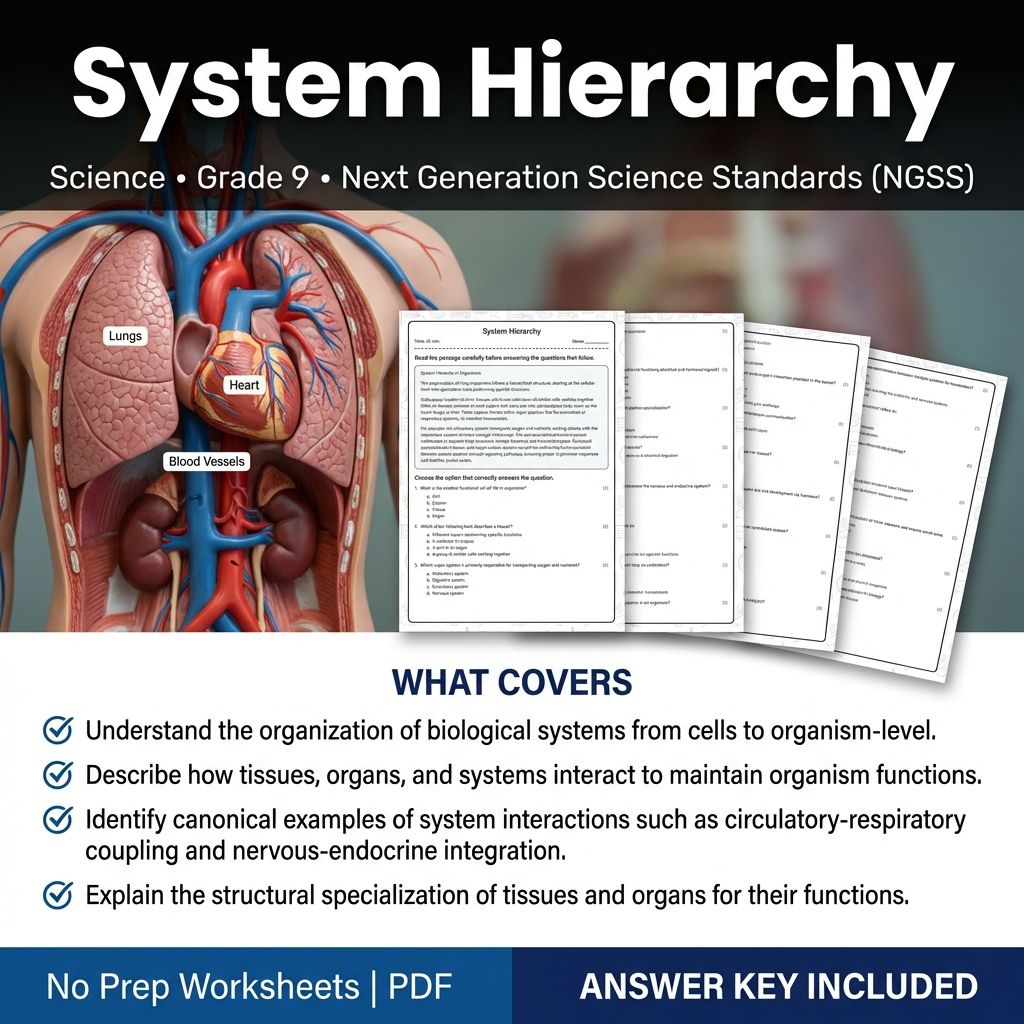
Grade 9 Science | System Hierarchy Worksheet + Answer Key for Classroom Use
Created byCoral Reef LearningLearning Objectives
- Understand the organization of biological systems from cells to organism-level.
- Describe how tissues, organs, and systems interact to maintain organism functions.
- Identify canonical examples of system interactions such as circulatory-respiratory coupling and nervous-endocrine integration.
Also included in: Grade 9 Science Unit Bundle-Biological Systems & Molecular Regulation Worksheets +1 more
Instant download
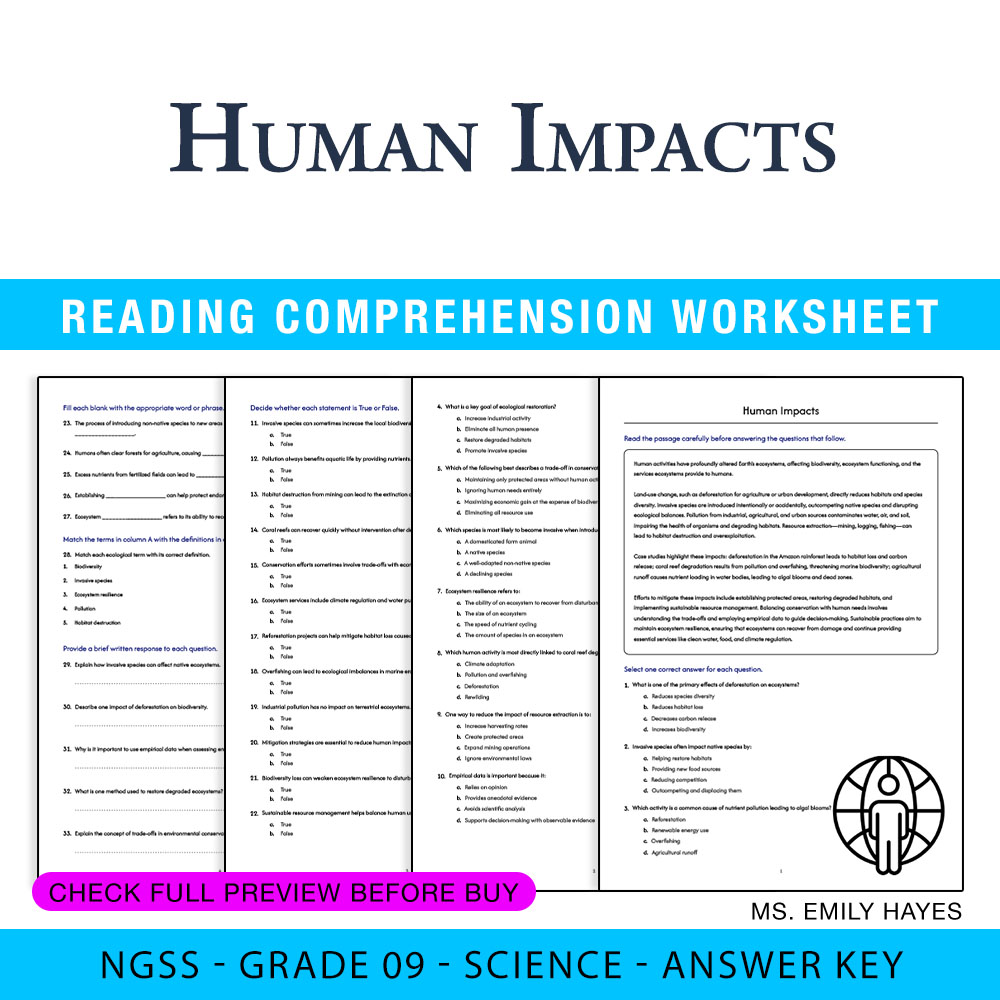
9th Grade Science | Human Impacts Worksheet (PDF+ Answer Key)
Created byCopper Leaf ClassroomLearning Objectives
- Explain how land-use change, invasive species, pollution, and resource extraction impact biodiversity and ecosystems.
- Interpret empirical data from case studies to evaluate environmental impacts and mitigation strategies.
- Identify trade-offs among conservation efforts and socioecological outcomes.
Instant download

Using Models as Evidence Worksheets | Grade 9 Physical Science
 Created byBRIGHT PATH RESOURCES
Learning Objectives
- Explain how quantitative measurements constrain scientific claims about motion, forces, energy transfer, and waves.
- Use models to describe patterns and connect variables in a claim, then judge how well the model matches evidence.
- Compare competing explanations by using accuracy, expected relationships, and stated assumptions.
Also included in: Grade 9 Science Waves, Forces & Energy Transfer Worksheets Bundle +1 more
Instant download

Organ Systems Worksheet | TEKS Grade 9 Science Assessment Practice
JCreated byJ.S SheetsLearning Objectives
- Explain how circulatory, respiratory, digestive, and renal systems contribute to maintaining internal balance
- Describe how nervous and endocrine signaling help coordinate organ systems during changing conditions
- Use cause-and-effect reasoning to connect changes in one system to responses in other systems
Instant download
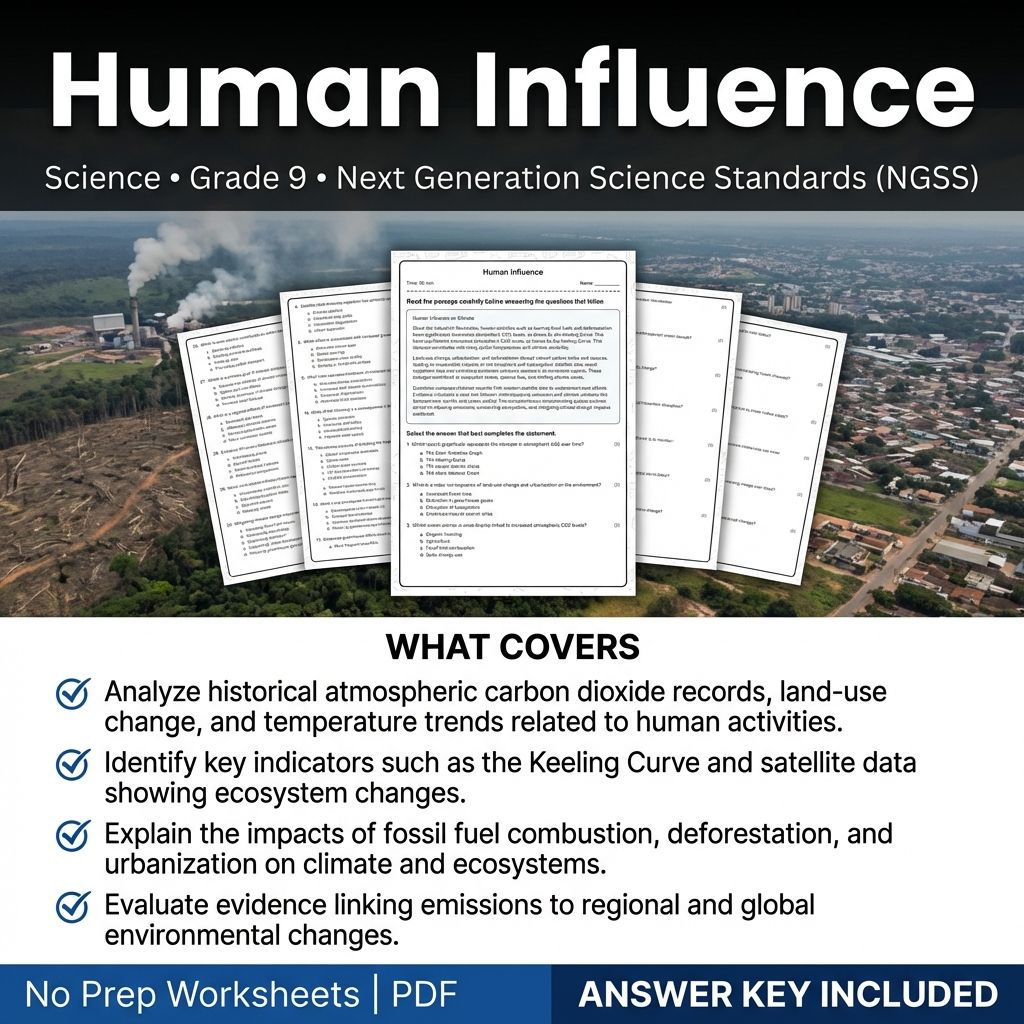
9th Grade Science | Human Influence Worksheet & Answer Key (PDF)
Created byCoral Reef LearningLearning Objectives
- Analyze historical atmospheric carbon dioxide records, land-use change, and temperature trends related to human activities.
- Identify key indicators such as the Keeling Curve and satellite data showing ecosystem changes.
- Explain the impacts of fossil fuel combustion, deforestation, and urbanization on climate and ecosystems.
Also included in: Grade 9 Science UNIT Worksheet Pack-Resource Management & Energy Decarbonization +1 more
Instant download
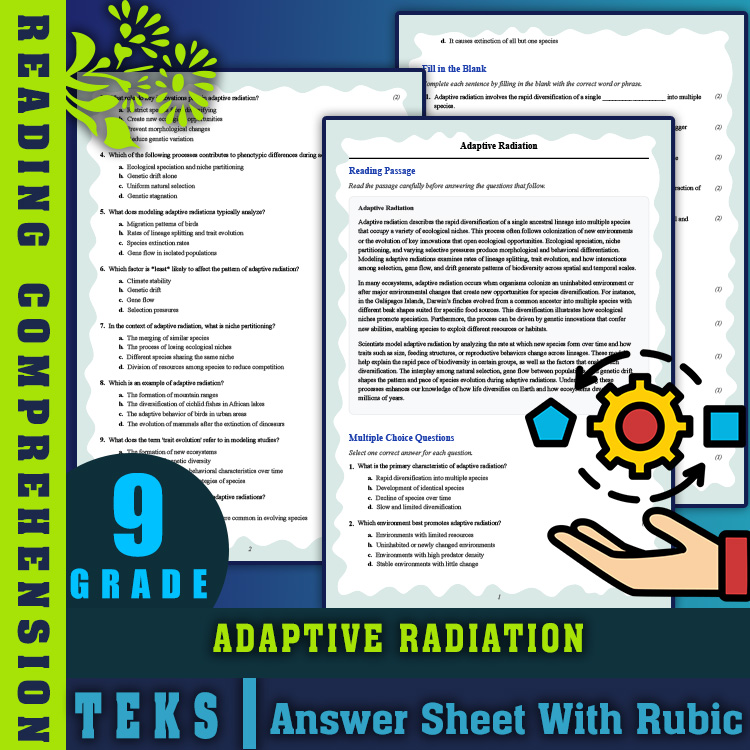
9th Grade Science | Adaptive Radiation Reading Worksheet & Answer Key (PDF)
JCreated byJ.S SheetsLearning Objectives
- Understand the concept of adaptive radiation and its significance in evolution.
- Identify key factors that drive diversification of species in new environments.
- Analyze the processes of ecological speciation and niche partitioning.
Instant download
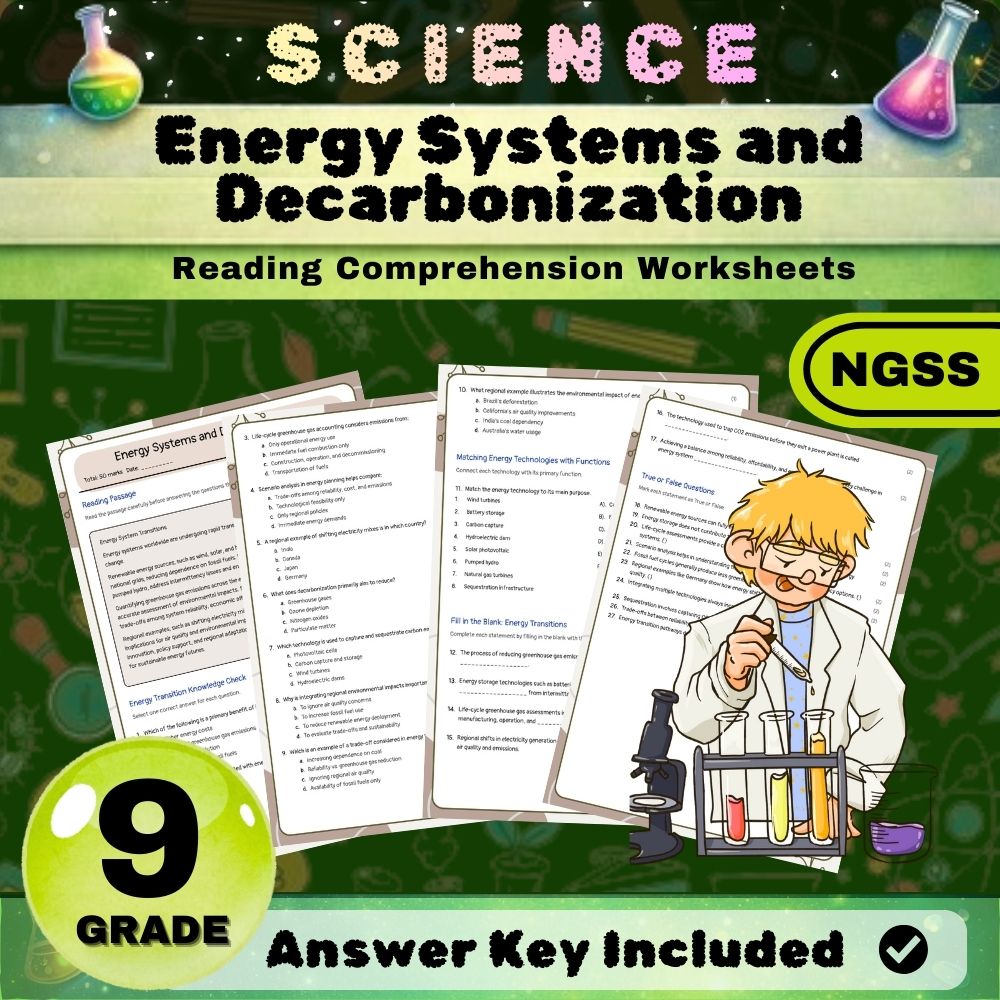
Grade 9 Science | Energy Systems & Decarbonization NGSS Worksheet (PDF)
Created byMaple Path LearningLearning Objectives
- Understand the transitions between different energy systems and their environmental impacts.
- Evaluate the role of renewable energy, energy storage, and grid technologies in reducing greenhouse gases.
- Analyze life-cycle emissions and trade-offs among reliability, cost, and environmental goals.
Also included in: Grade 9 Science NGSS Lesson Bundle | Earth and Human Activity Unit +1 more
Instant download
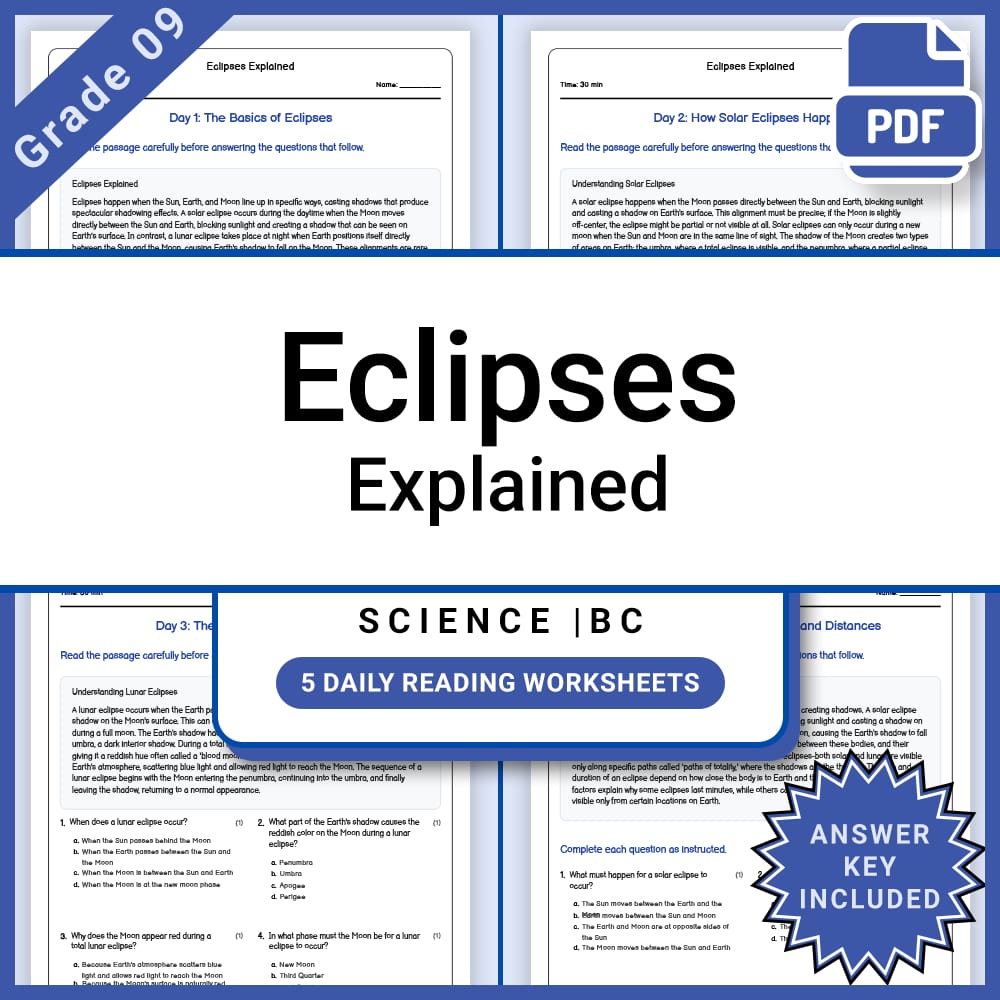
Grade 9 Science – Eclipses Explained Daily Reading Worksheet + Answer Key
JCreated byJ.S SheetsLearning Objectives
- Understand the differences between solar and lunar eclipses
- Learn how the Sun, Earth, and Moon align to produce eclipses
- Identify the conditions necessary for each type of eclipse
Also included in: Grade 9 Science Lesson Bundle: Tidal Forces, Tectonic Plates & Climate Physics +1 more
Instant download

Grade 9 Science | Atmospheric Energy Worksheet | California Standards
Created byLumora LearningLearning Objectives
- Explain how unequal solar heating creates pressure differences that drive atmospheric circulation and winds
- Describe how energy and water vapor transfers between the surface and atmosphere influence clouds and precipitation
- Use the idea of local energy balance (temperature, humidity, pressure) to predict short-term weather patterns
Instant download

Grade 9 Selective Breeding & Hybridization Alberta Science Worksheet
Created byBRIGHT PATH RESOURCESLearning Objectives
- Identify the main idea of a biotechnology text and use details to support it.
- Explain how selective breeding and hybridization can change traits in crops or livestock over generations.
- Connect genetic technology choices to potential benefits and limitations.
Instant download
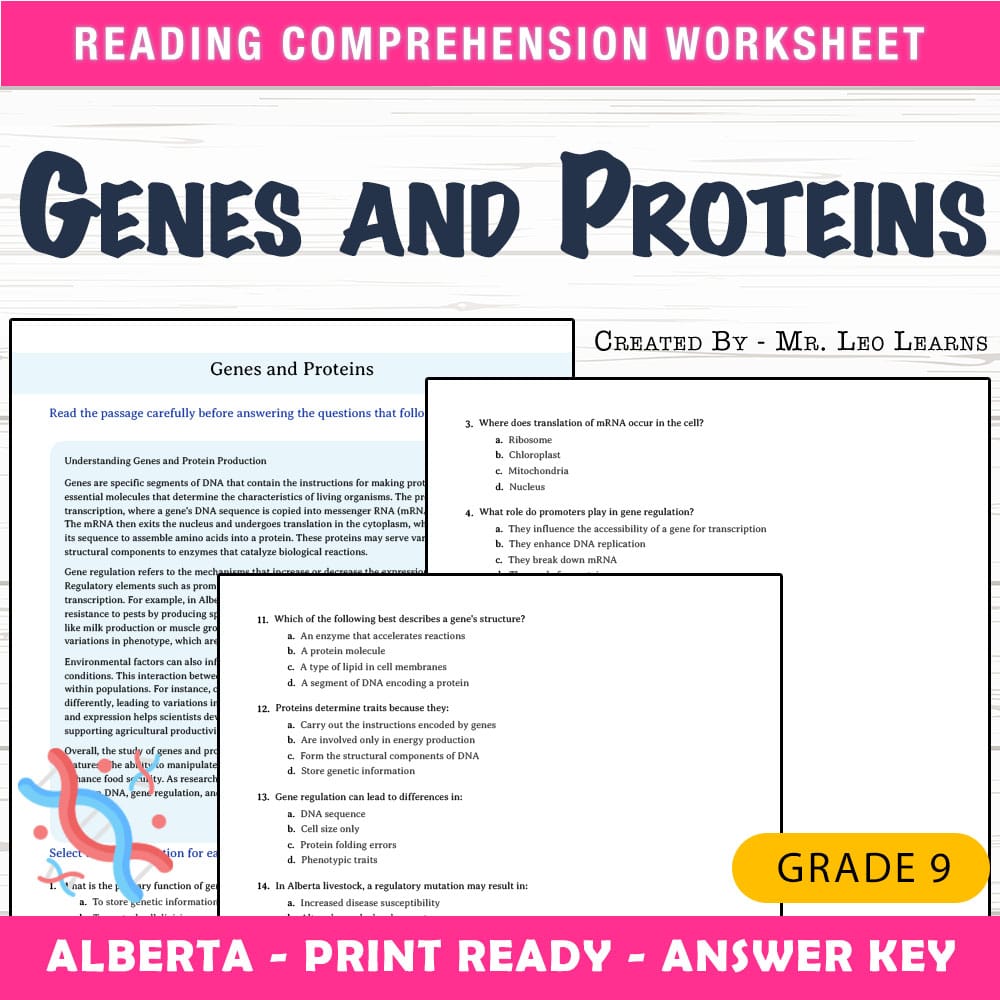
Grade 9 Science — Worksheet MCQ Paper for Mastering Genes and Proteins
 Created byThe Resource Hub
Learning Objectives
- Understand the role of genes as DNA segments coding for proteins.
- Explain the processes of transcription and translation in protein synthesis.
- Identify how gene regulation influences phenotypic traits in crops and livestock.
Also included in: Grade 9 Science Lesson Bundle | Reproduction and Heredity Worksheets +1 more
Instant download

Grade 9 Science – Evolution Evidence & Fossil Record | Daily Reading Worksheet
Created byBright Mind ResourcesLearning Objectives
- Understand how fossils support the theory of evolution.
- Identify different types of fossil evidence.
- Explain how fossils demonstrate gradual change in species over time.
Also included in: Selection Grade 9 Science Daily Reading Worksheets Lesson Bundle | FL NGSSS +1 more
Instant download
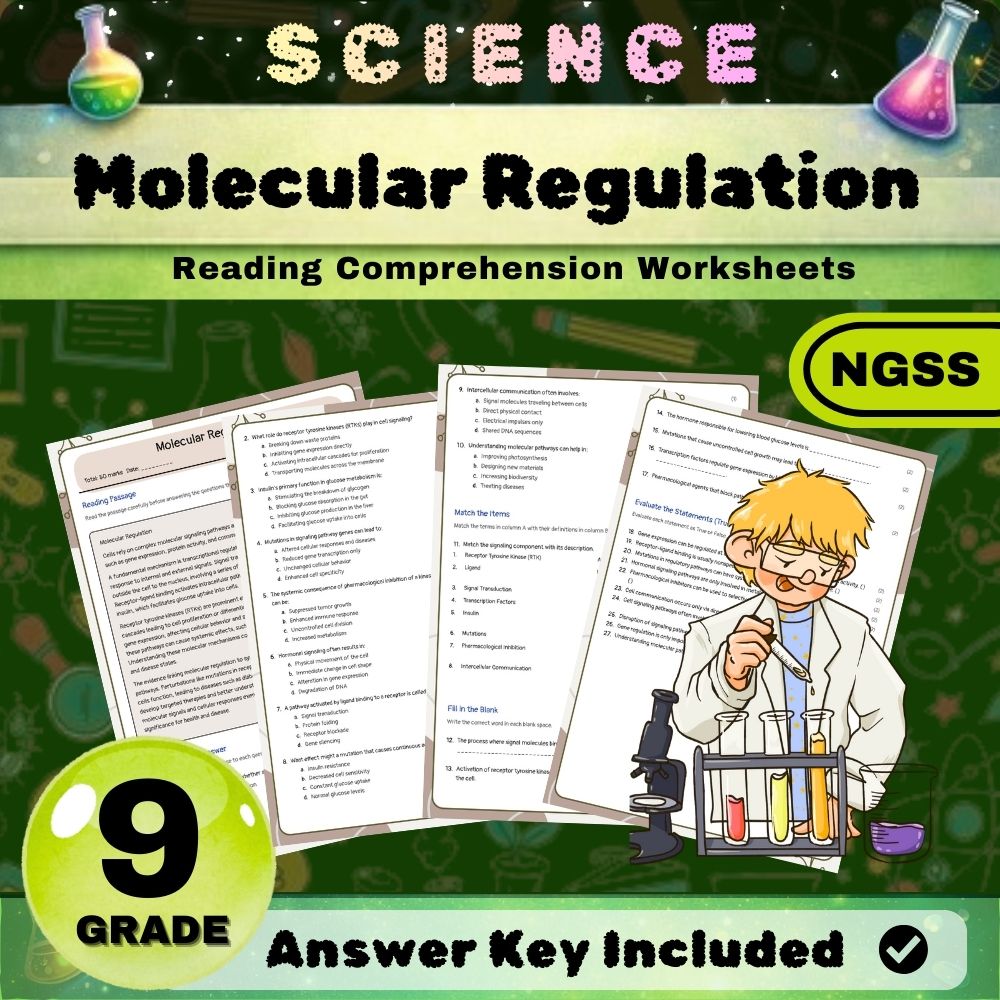
Grade 9 Science – Molecular Regulation Worksheet (NGSS) PDF
Created byMaple Path LearningLearning Objectives
- Understand the mechanisms of gene regulation, signal transduction, and intercellular communication.
- Identify examples of molecular signaling pathways such as insulin-mediated glucose uptake and receptor tyrosine kinase cascades.
- Explain how molecular regulation affects cellular functions and physiological outcomes.
Also included in: Grade 9 Science NGSS| From Molecules to Organisms: Structures & Processes Bundle +1 more
Instant download
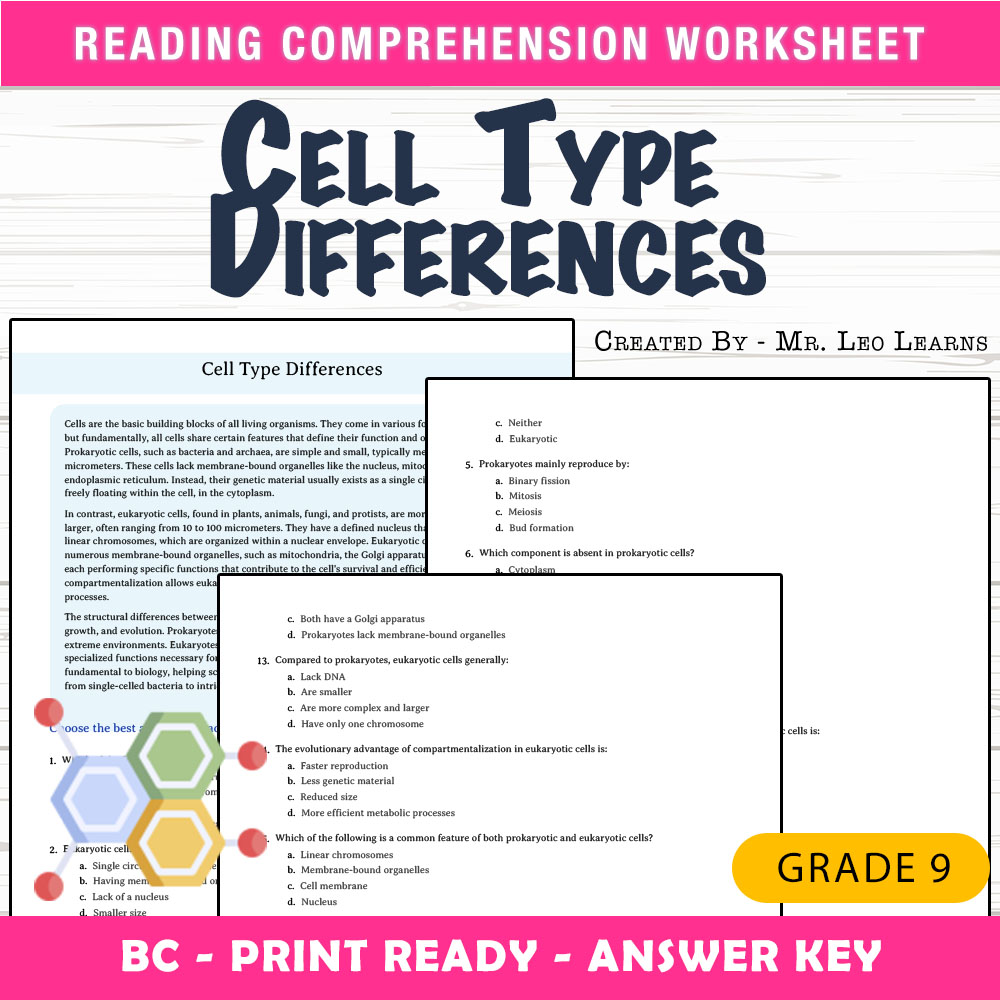
Grade 9 Science — Worksheet MCQ Paper for Mastering Cell Type Differences
Created byThe Resource HubLearning Objectives
- Understand the key differences between prokaryotic and eukaryotic cells.
- Identify structural components unique to each cell type.
- Explain how cellular organization influences biological functions.
Also included in: Grade 9 Science Cells & Body Systems Worksheet Bundle | BC Curriculum Resources +1 more
Instant download
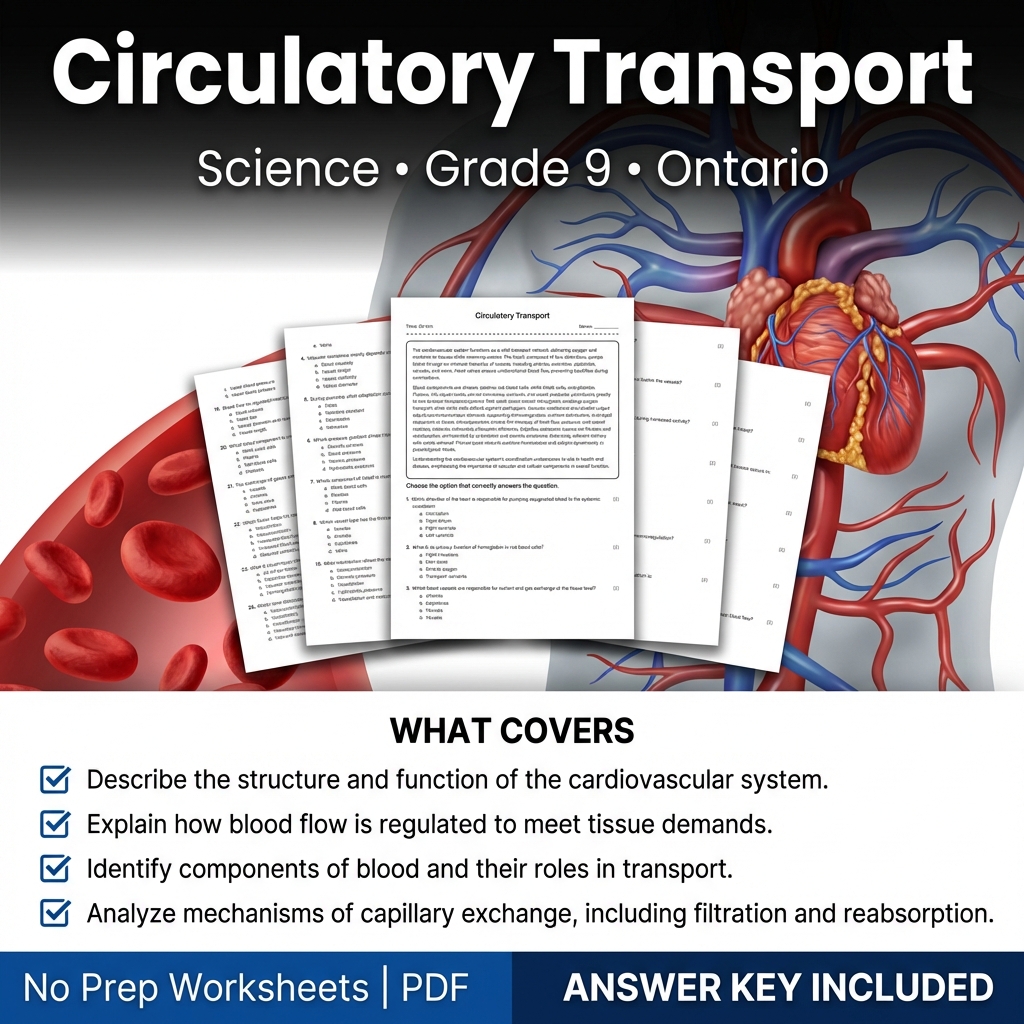
Circulatory Transport Worksheet Grade 9 Science | Ontario Standards
Created byCoral Reef LearningLearning Objectives
- Describe the structure and function of the cardiovascular system.
- Explain how blood flow is regulated to meet tissue demands.
- Identify components of blood and their roles in transport.
Instant download

Grade 9 Science Feedback Mechanisms Worksheet with Short Notes (Printable PDF)
Created byMeadowlark WorksheetsLearning Objectives
- Explain the concepts of negative and positive feedback in maintaining internal stability.
- Identify physiological examples of feedback loops such as thermoregulation and blood glucose regulation.
- Describe the role of set points, sensors, and effectors in feedback systems.
Also included in: Grade 9 Science NGSS From Molecules to Organisms Structures & Processes Bundle +1 more
Instant download

Integrated Analysis Worksheet Pack | Grade 9 Science Activities
 Created byPrism Point Learning
Learning Objectives
- Explain how kinematics, net-force reasoning, and energy considerations work together to predict complex motion.
- Use force balance and energy ideas to determine acceleration and changes in speed during braking.
- Interpret how graphs and equations combine to estimate stopping distance under varying conditions.
Also included in: Forces, Motion & Energy Lesson Bundle | Grade 9 Science (Alberta)
Instant download

Power and Efficiency Worksheet | Grade 9 Science Activities
Created byPrism Point LearningLearning Objectives
- Explain how power relates to the rate of energy transfer in everyday and engineering systems
- Calculate and interpret efficiency as the fraction of input energy converted to useful output
- Identify major sources of energy loss and describe how they affect operational limits and design trade-offs
Also included in: Forces, Motion & Energy Lesson Bundle | Grade 9 Science (Alberta)
Instant download

Kinematic Concepts Worksheet | Grade 9 Science Practice Activity
Created byPrism Point LearningLearning Objectives
- Differentiate speed, velocity, and acceleration using scalar vs. vector ideas and direction conventions.
- Use basic kinematics relationships and unit conversions to compare motion in real contexts.
- Interpret sign conventions for motion and determine whether acceleration is increasing or decreasing velocity.
Also included in: Forces, Motion & Energy Lesson Bundle | Grade 9 Science (Alberta)
Instant download
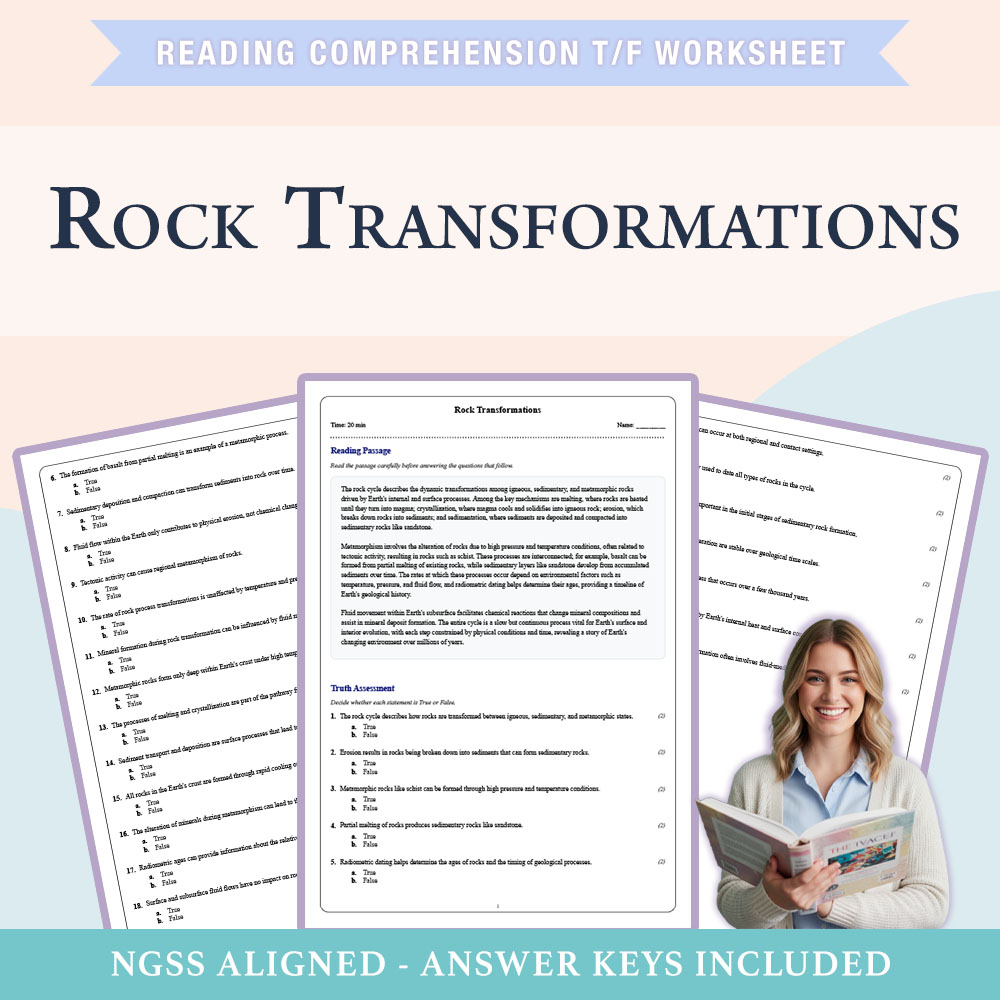
9th Grade Science | Rock Transformations Worksheet (PDF + Answer Key)
Created byCopper Leaf ClassroomLearning Objectives
- Understand the processes involved in the rock cycle, including melting, crystallization, erosion, and metamorphism.
- Identify examples of rock transformations such as basalt formation, sandstone deposition, and regional metamorphism.
- Explain how rates, pressure-temperature conditions, and radiometric ages influence the sequencing of rock cycle events.
Also included in: Grade 9 Science | Earth Processes & Landform Evolution Bundle (PDF +Answer Key) +1 more
Instant download
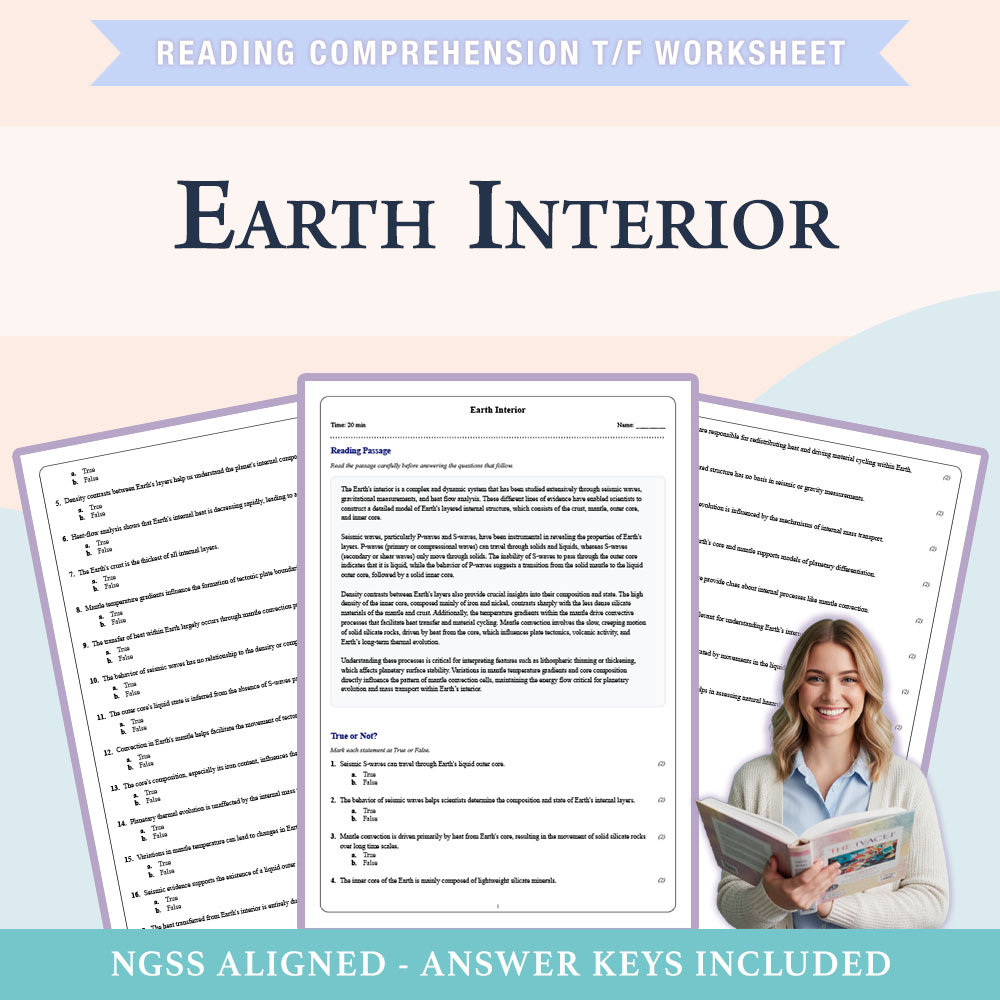
9th Grade Science | Earth Interior Worksheet (PDF + Answer Key)
Created byCopper Leaf ClassroomLearning Objectives
- Describe the layered structure of Earth's interior as understood through seismic, gravity, and heat-flow evidence.
- Explain how seismic wave behavior and mantle temperature gradients inform models of Earth's internal processes.
- Identify the relationships between core composition, mantle convection, and planetary thermal evolution.
Also included in: Grade 9 Science | Earth Processes & Landform Evolution Bundle (PDF +Answer Key) +1 more
Instant download

Grade 9 Gene Expression Daily Reading Worksheet | TEKS Biology Science
Created byBRIGHT PATH RESOURCESLearning Objectives
- Identify the sequence of events in gene expression
- Explain how transcription and translation convert genetic information into a polypeptide
- Recognize the roles of mRNA, codons, and tRNA in building proteins
Also included in: Grade 9 Genetics Molecular Biology Science Reading Worksheets Bundle | TEKS +1 more
Instant download
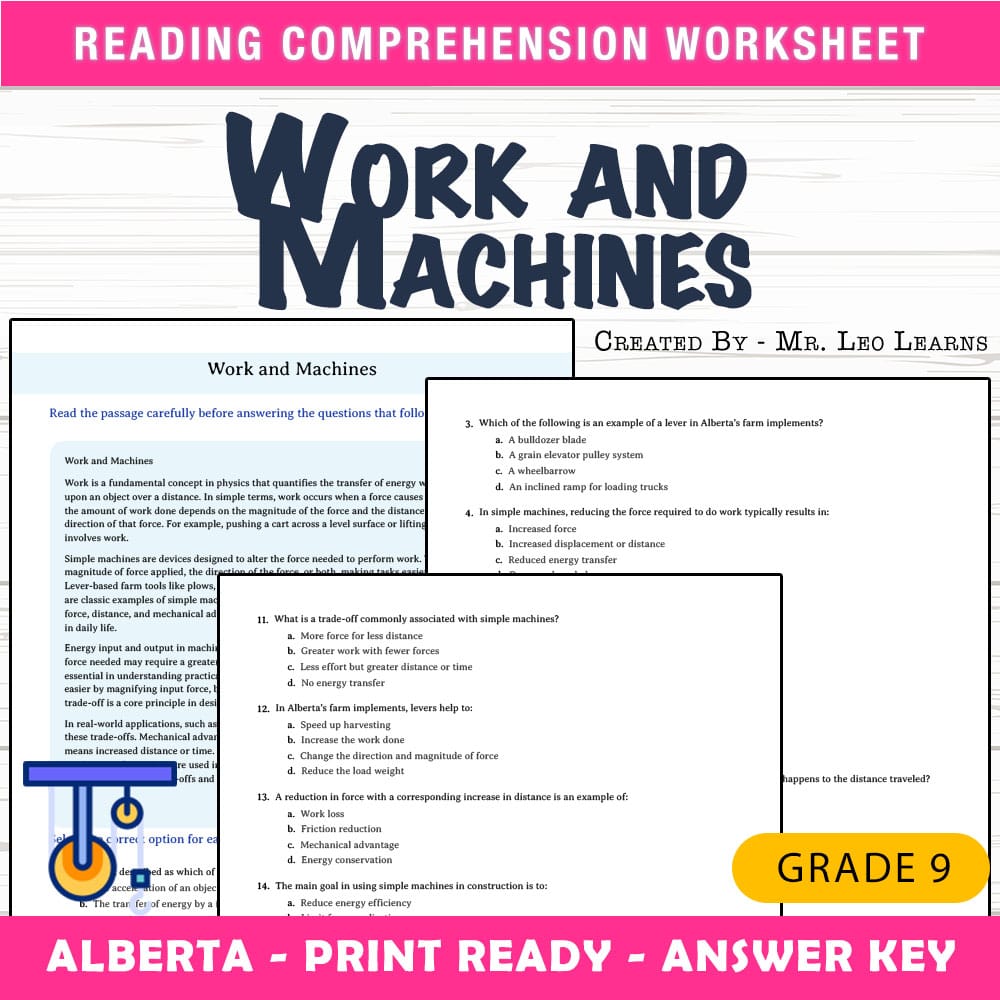
Grade 9 Science — Work and Machines Worksheet MCQ for Mastery
Created byThe Resource HubLearning Objectives
- Understand the concept of work as energy transfer by force and displacement.
- Identify how simple machines change the magnitude or direction of applied forces.
- Explain the relationships among force, distance, work, and mechanical advantage in practical contexts.
Also included in: Grade 9 Science Forces and Motion Worksheet Pack | Alberta Curriculum +1 more
Instant download
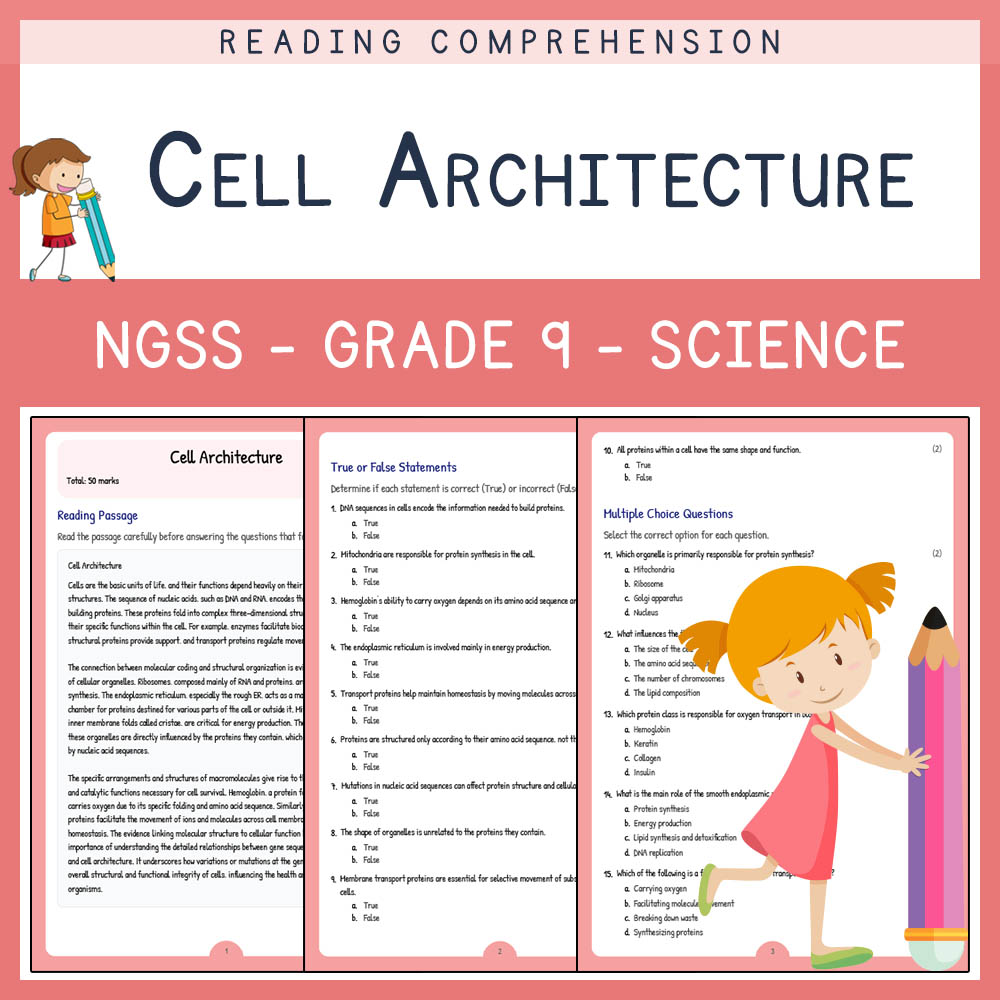
Grade 9 Science | Cell Architecture Worksheet with Answer Key (PDF)
Created byLumora LearningLearning Objectives
- Understand how nucleic acid sequences determine amino acid chains and protein structures.
- Connect molecular coding and folding to the architecture and function of cellular organelles.
- Identify examples of proteins that influence cell function, such as hemoglobin and membrane transport proteins.
Instant download
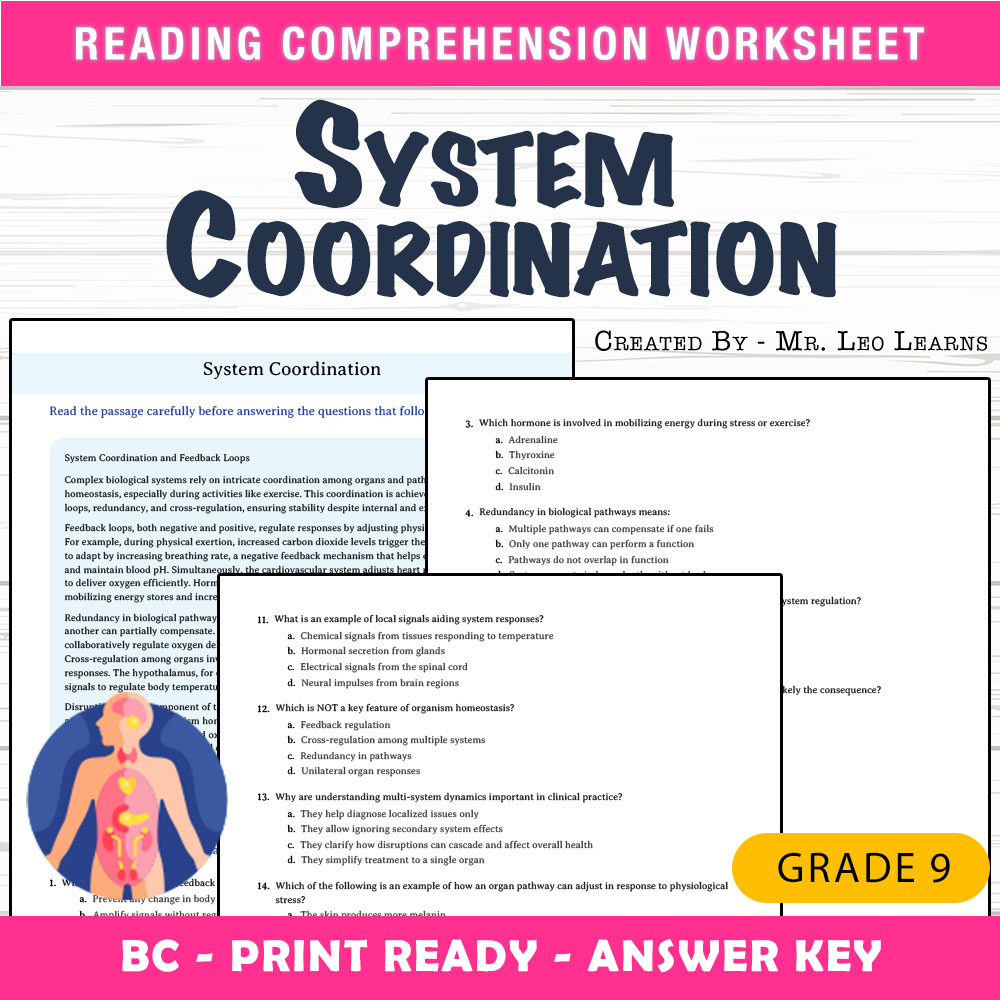
Grade 9 Science — Worksheet MCQ Paper for Mastering System Coordination
Created byThe Resource HubLearning Objectives
- Describe how feedback loops contribute to multi-system coordination in the body.
- Explain the roles of neural, hormonal, and local signals in mediating organism responses.
- Analyze how disruptions in one component of system coordination can cascade to affect overall homeostasis.
Also included in: Grade 9 Science Cells & Body Systems Worksheet Bundle | BC Curriculum Resources +1 more
Instant download
About Grade 9 Science Worksheets
Find Science worksheets built for Grade 9. All 6,926 cover core skills, practice, and review, each an instant PDF download.
Every worksheet on MyTeachingSheets is created by independent teacher-authors and reviewed before publication. All resources download as printable PDFs for classroom, homework, or at-home practice, and many include answer keys. Preview any worksheet free before buying.