
Science Worksheets
44,376 subject resources
Grade 6 Science | Evaporation and Transpiration Worksheet | California Standards
 Created byLumora Learning
Learning Objectives
- Explain how energy and temperature affect evaporation and transpiration
- Describe how plants add water vapor to the atmosphere through transpiration
- Connect evaporation, transpiration, condensation, and precipitation as linked phase changes
Instant download
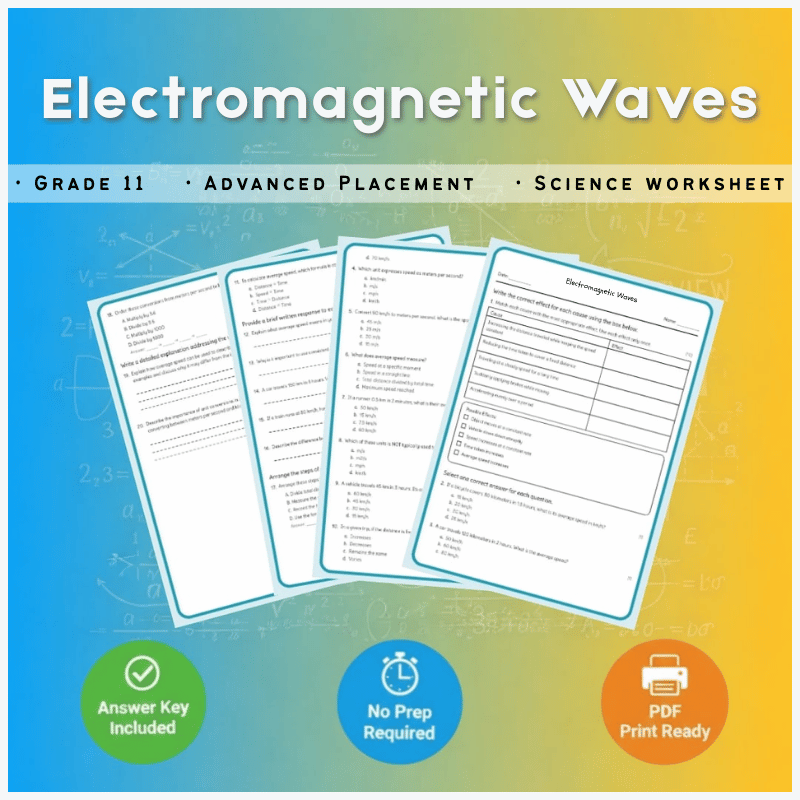
Grade 11 Science | Electromagnetic Waves Worksheet (AP Standards) PDF
 Created byBright Mind Resources
Learning Objectives
- Understand the oscillating electric and magnetic field structure of electromagnetic waves.
- Describe wave properties including speed, polarization, and energy transfer.
- Relate electromagnetic waves to prior wave models and their behavior in different media.
Instant download

Grade 8 Science | Weather and Climate Worksheet (TEKS) (PDF)
 Created byEvergreen Desk Education
Learning Objectives
- Compare weather and climate using short-term vs long-term patterns
- Explain how air masses, fronts, and pressure systems lead to precipitation
- Describe how temperature, humidity, and pressure variability affect measurable weather
Instant download
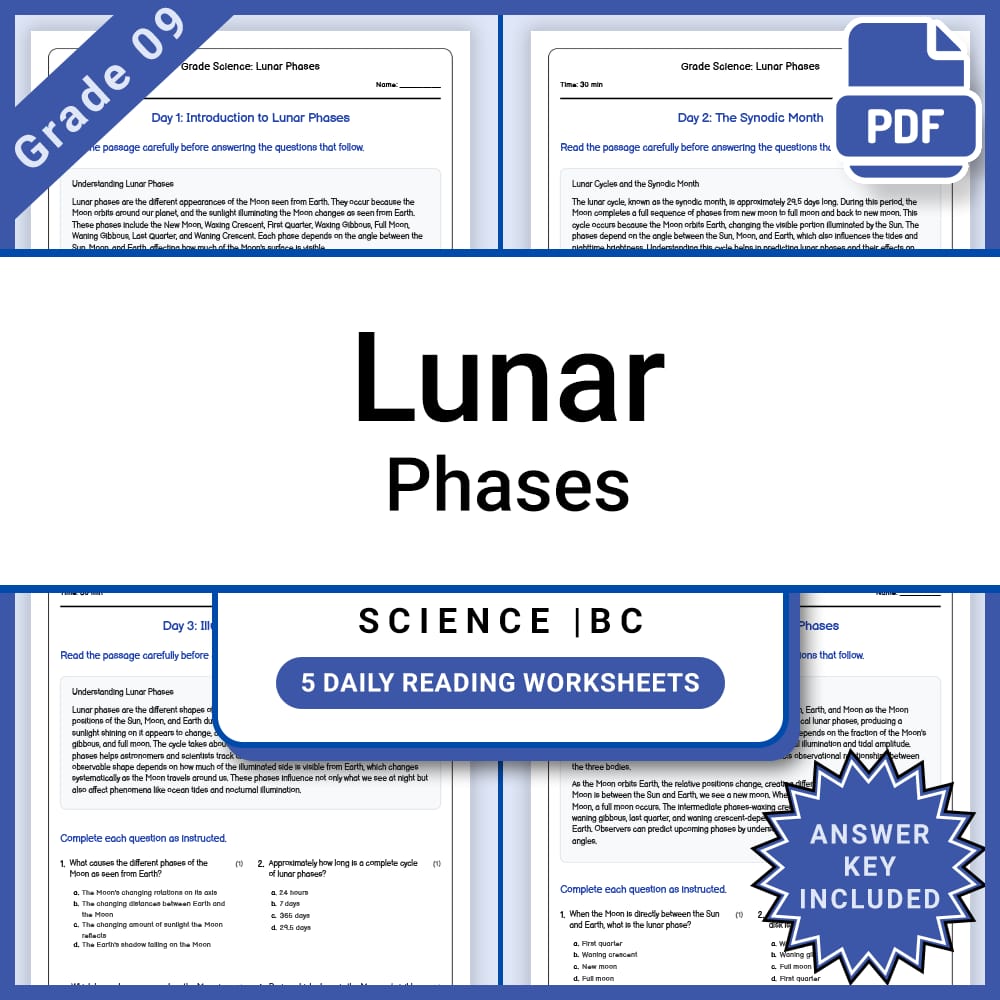
Grade 9 Science – Lunar Phases Daily Reading Worksheet + Answer Key
JCreated byJ.S SheetsLearning Objectives
- Identify and describe the different phases of the Moon.
- Understand the cause of lunar phases based on the Sun-Earth-Moon geometry.
- Explain the significance of lunar phases in calendars and tidal patterns.
Also included in: Grade 9 Science Lesson Bundle: Tidal Forces, Tectonic Plates & Climate Physics +1 more
Instant download

Grade 8 Science | Aerodynamic Drag Worksheet (Alberta Standards) PDF
 Created bySilver Birch Teaching
Learning Objectives
- Explain how aerodynamic drag opposes motion through air and how it affects net force
- Describe how shape and exposed area influence drag and airflow behavior
- Apply drag concepts to real-world examples such as vehicles and wind turbines
Also included in: Grade 8 Forces, Motion, and Energy Science Lesson Bundle for Alberta +1 more
Instant download
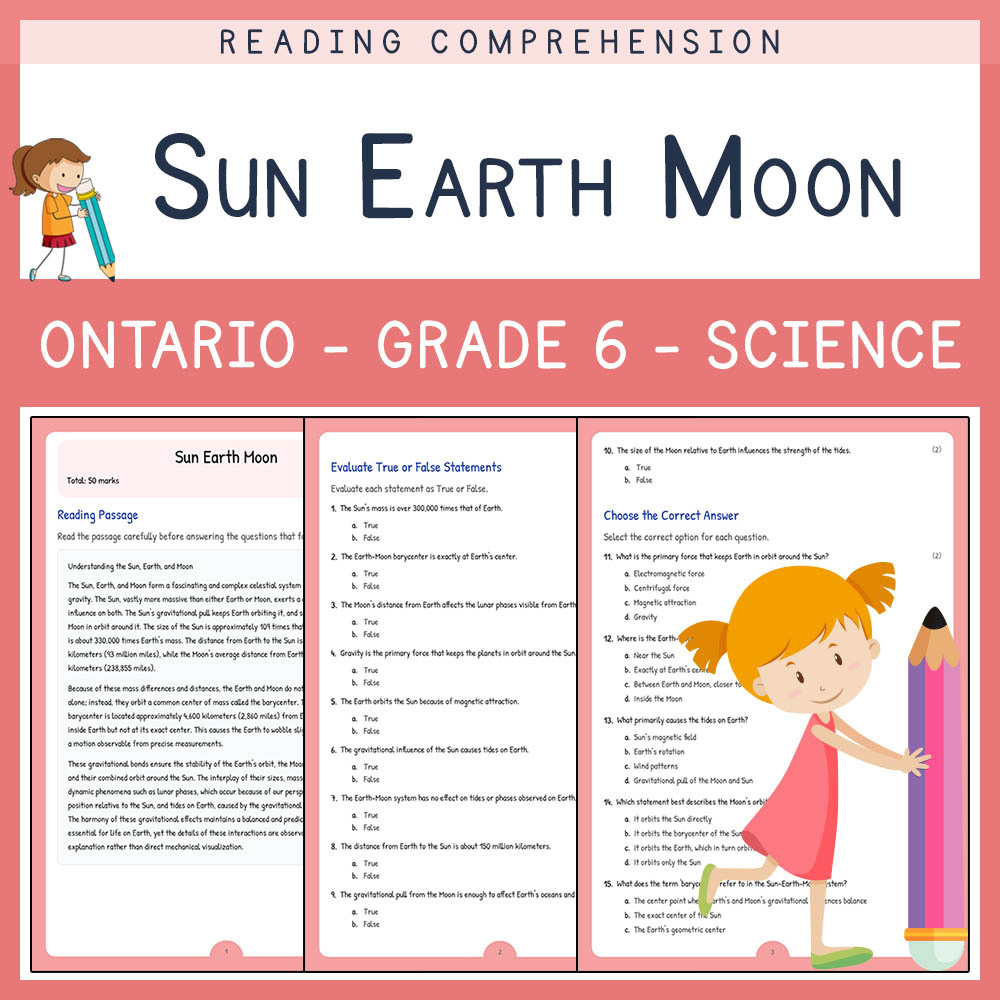
Grade 6 Science | Sun, Earth, Moon Worksheet with Answer Key (PDF) | Ontario
Created byLumora LearningLearning Objectives
- Understand the relative sizes and distances among the Sun, Earth, and Moon
- Explain how gravitational interactions influence orbital relationships
- Describe the concept of the Earth–Moon barycenter and the Sun's gravitational role
Also included in: Grade 6 | Space Science Lesson Bundle Worksheets | Ontario Framework
Instant download
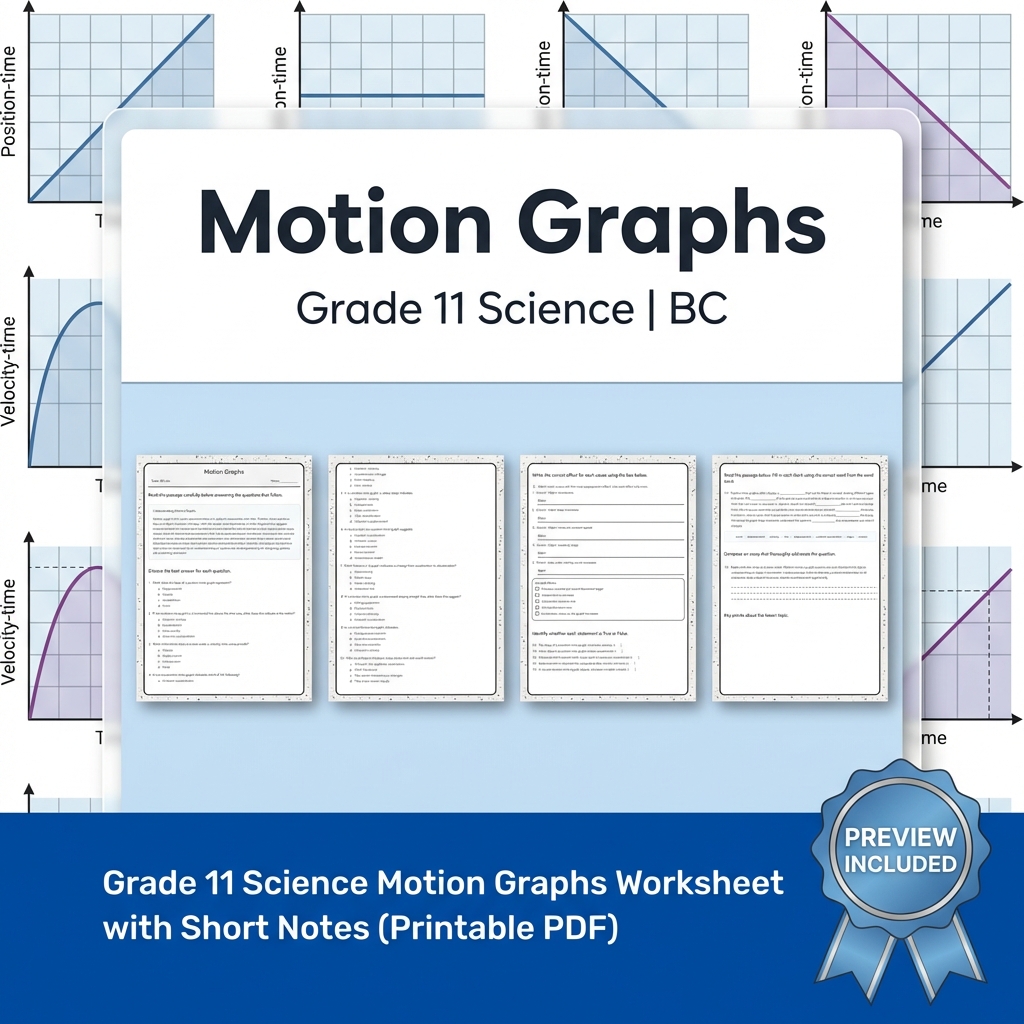
Grade 11 Science Motion Graphs Worksheet with Short Notes (Printable PDF)
 Created byMeadowlark Worksheets
Learning Objectives
- Interpret position–time and velocity–time graphs to analyze motion.
- Explain how the slope of a graph relates to velocity and acceleration.
- Calculate displacement and identify types of motion from graphs.
Also included in: Grade 11 Science Lesson Bundle | Motion, Energy, and Forces Worksheets +1 more
Instant download
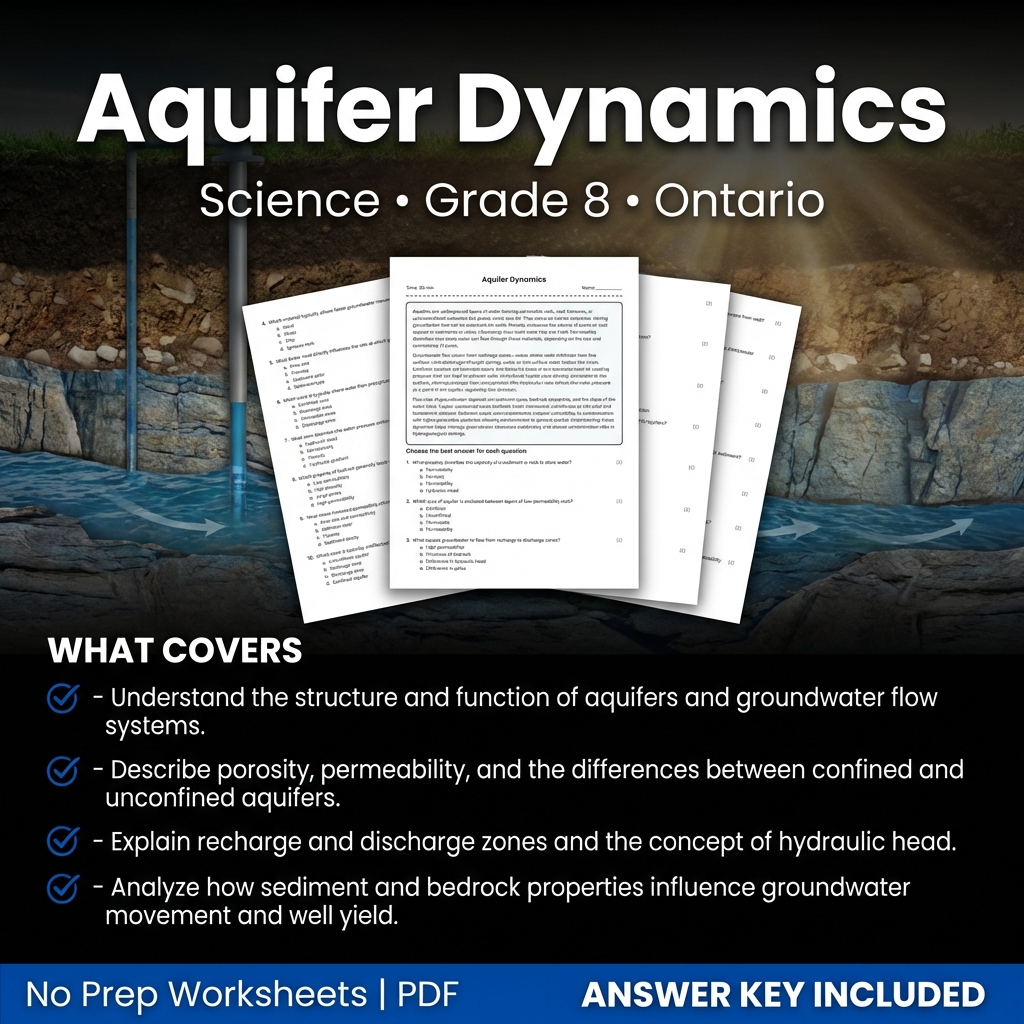
Grade 8 Science Worksheet on Aquifer Dynamics | Ontario Standards
 Created byCoral Reef Learning
Learning Objectives
- Understand the structure and function of aquifers and groundwater flow systems.
- Describe porosity, permeability, and the differences between confined and unconfined aquifers.
- Explain recharge and discharge zones and the concept of hydraulic head.
Instant download
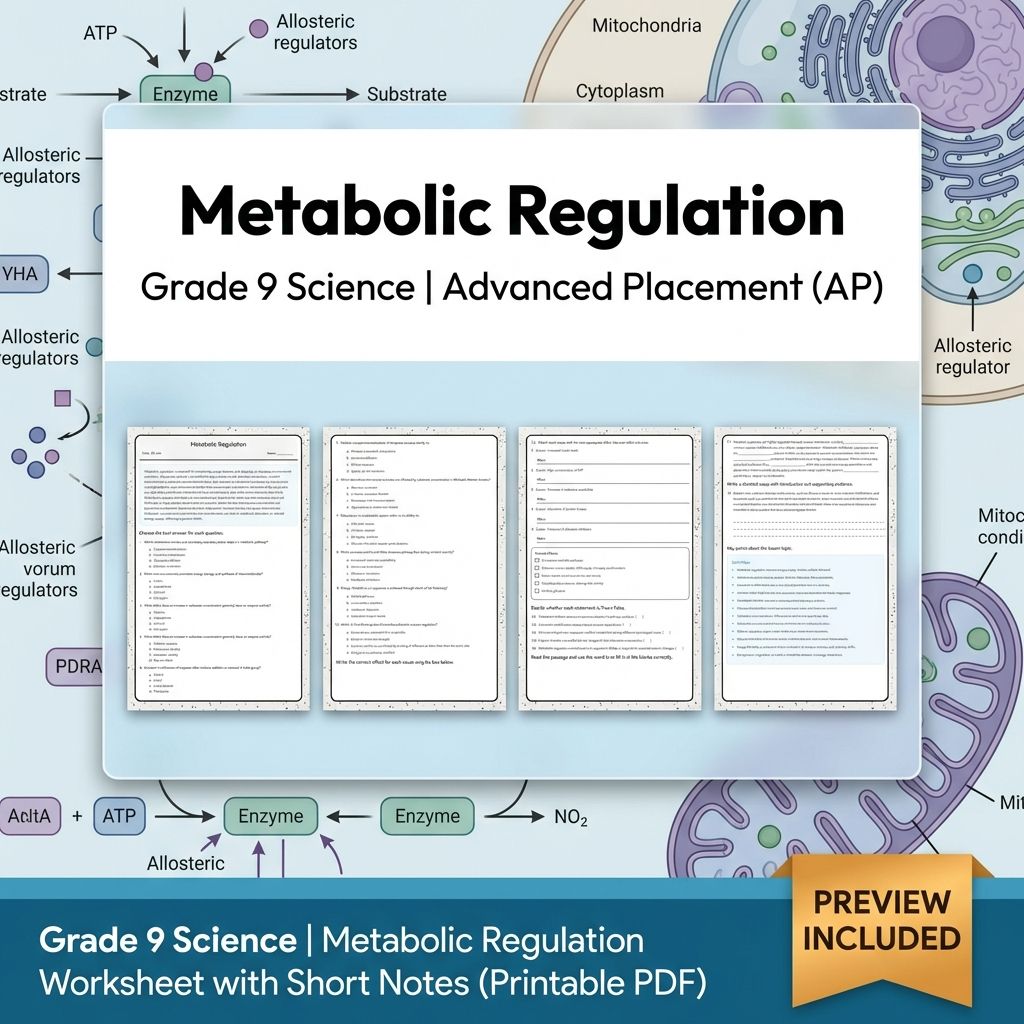
Grade 9 Science | Metabolic Regulation Worksheet with Short Notes (PDF)
Created byMeadowlark WorksheetsLearning Objectives
- Understand the regulatory mechanisms that coordinate metabolic pathways, including allosteric enzyme control and covalent modifications.
- Explain feedback inhibition and hormonal signals that shift metabolic flux between catabolism and anabolism.
- Model how enzyme kinetics and substrate concentrations influence pathway rates.
Also included in: Grade 9 Science Unit | Cellular Processes & Ecosystems Worksheet Pack (PDF) +1 more
Instant download

Planetary Origins Worksheet for Grade 9 Science | NGSS-Aligned Practice
JCreated byJ.S SheetsLearning Objectives
- Explain the processes involved in the formation of the solar system from a protoplanetary disk.
- Identify key evidence such as meteorite composition and isotopic dating that supports planetary formation theories.
- Describe the differences between inner rocky planets and outer gas giants based on compositional gradients and planetary differentiation.
Also included in: Grade 9 Origins, Motion, and Evolution Space Science Lesson Bundle – NGSS +1 more
Instant download
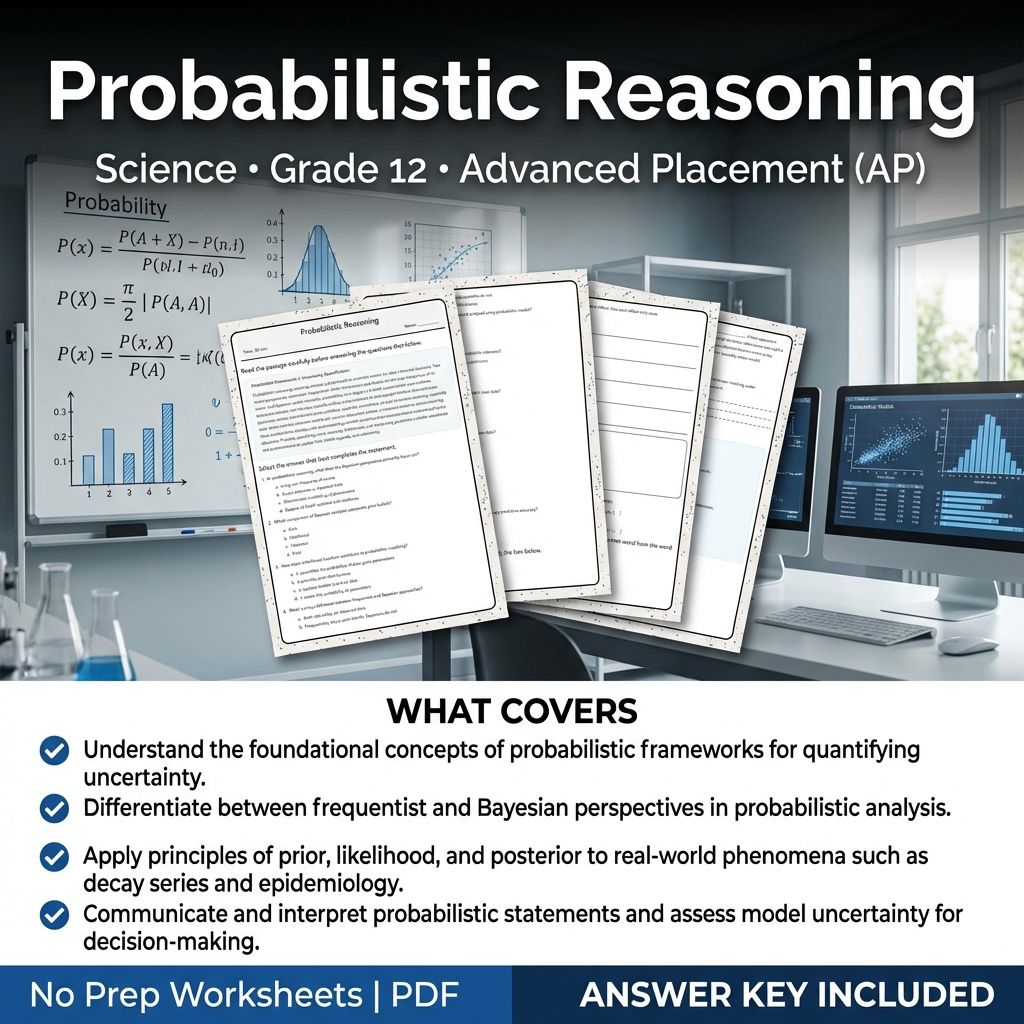
12th Grade Science | Probabilistic Reasoning Worksheet & Answer Key (Printable PDF)
Created byCoral Reef LearningLearning Objectives
- Understand the foundational concepts of probabilistic frameworks for quantifying uncertainty.
- Differentiate between frequentist and Bayesian perspectives in probabilistic analysis.
- Apply principles of prior, likelihood, and posterior to real-world phenomena such as decay series and epidemiology.
Also included in: Grade 12 Science Unit Bundle | Uncertainty, Data Analysis & Modeling Worksheets +1 more
Instant download
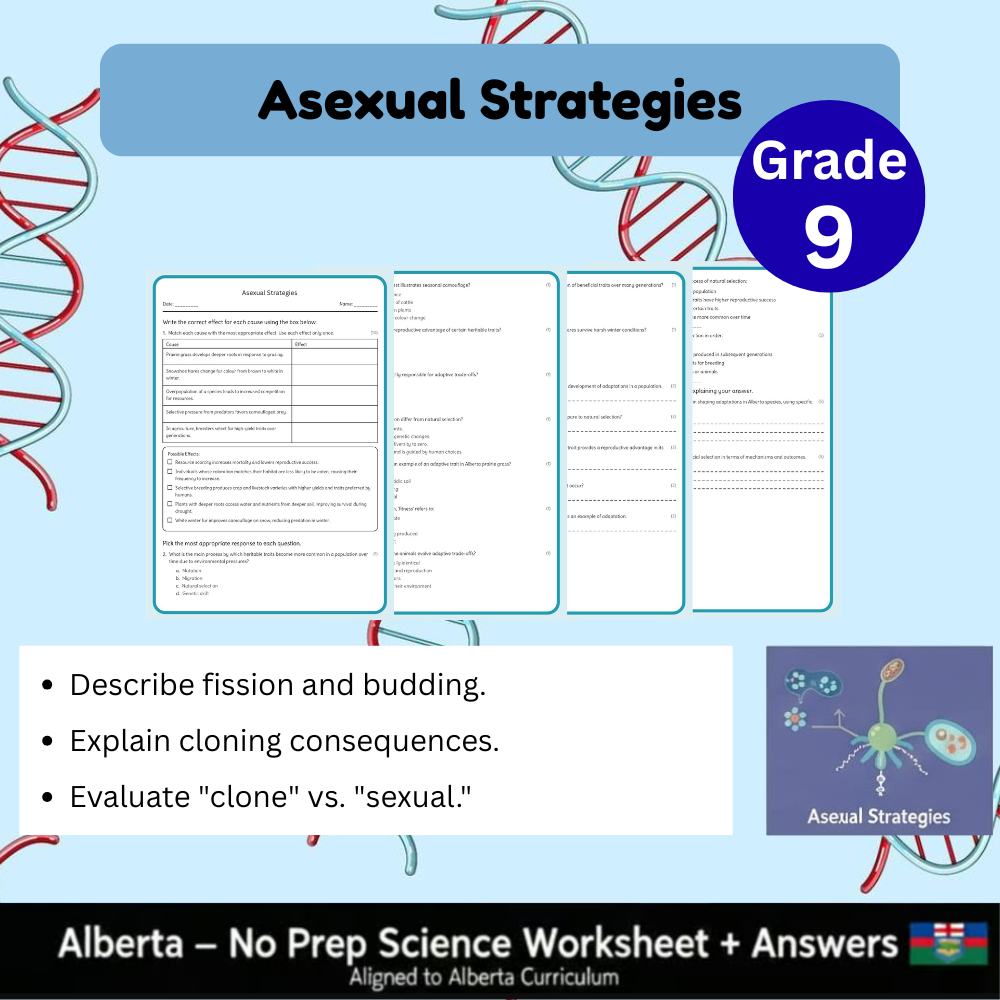
Grade 9 Science | Asexual Strategies Worksheet (PDF) – Alberta Standards
Created byBright Mind ResourcesLearning Objectives
- Describe different mechanisms of asexual reproduction such as binary fission, budding, spore formation, and vegetative propagation.
- Explain the genetic consequences of producing clones and how this affects diversity.
- Evaluate ecological contexts that favor asexual versus sexual reproduction.
Instant download
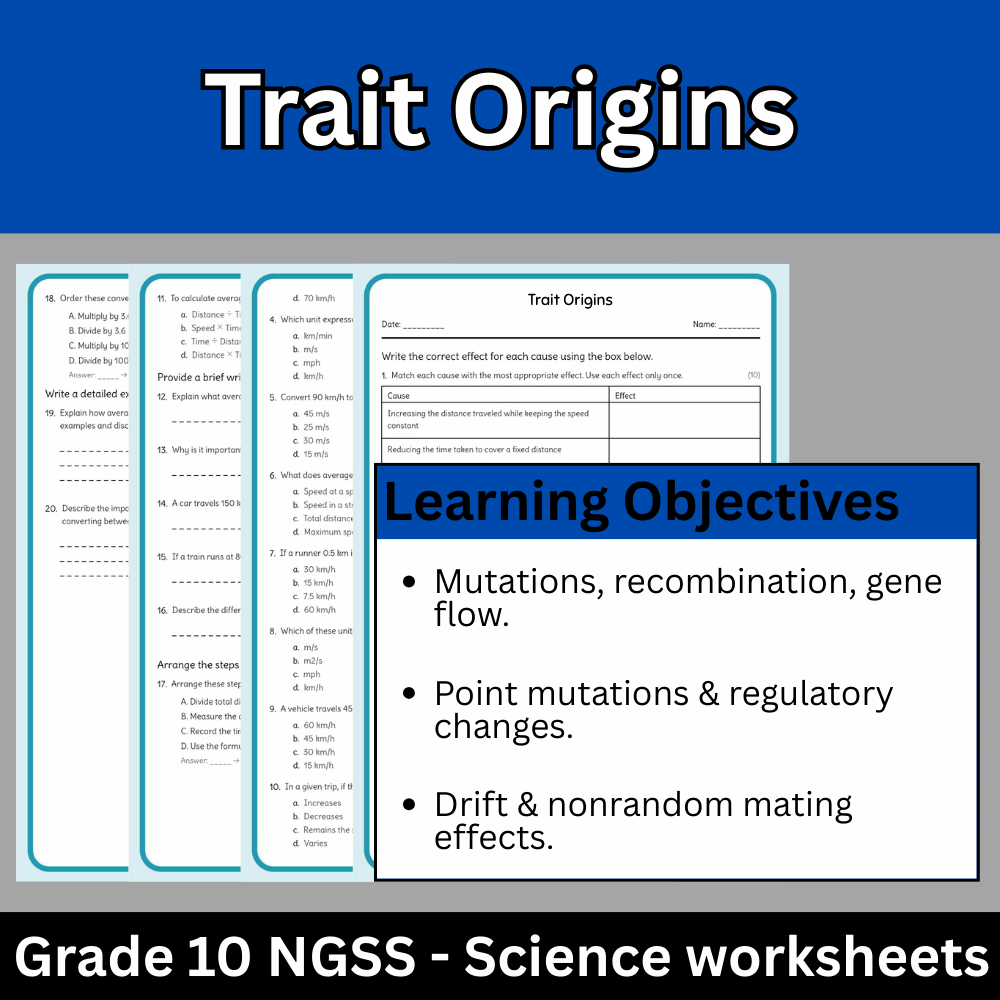
Grade 10 Science | Biodiversity Drivers Worksheet (Answer Key) – NGSS Standards
Created byBright Mind ResourcesLearning Objectives
- Identify key factors influencing species richness and composition in various habitats.
- Explain how habitat fragmentation, invasive species, land-use change, and climate shifts impact ecosystems.
- Analyze mechanisms such as genetic diversity, metapopulation structure, and connectivity affecting extinction risk and recovery.
Instant download

Grade 8 Science – Aquifer Dynamics & Groundwater | Daily Reading Worksheet
Created byBright Mind ResourcesLearning Objectives
- Identify different types of aquifers
- Understand the basic functions of aquifers
- Explain how groundwater flows within aquifers
Also included in: Grade 8 Water Systems Science Daily Reading Worksheets Lesson Bundle | Ontario +1 more
Instant download
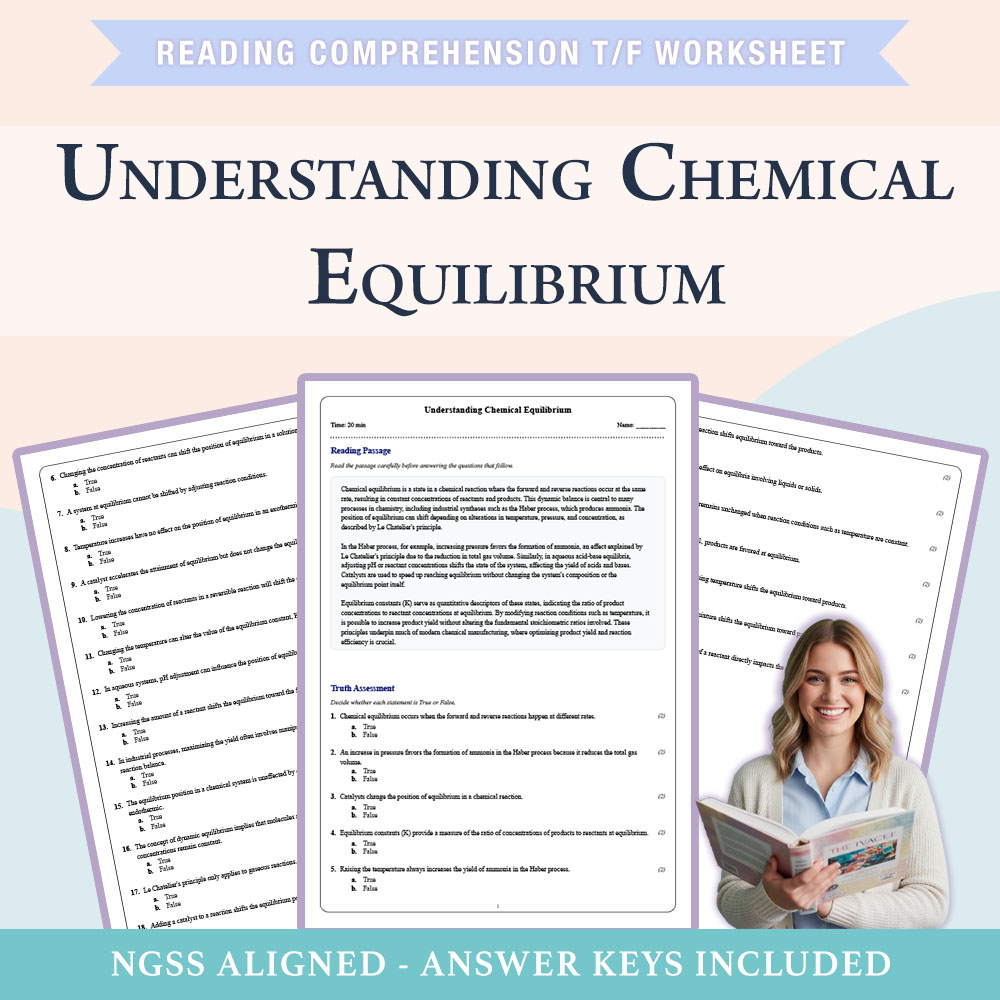
10th Grade Science |Understanding Chemical Equilibrium Worksheet (PDF + Answers)
 Created byCopper Leaf Classroom
Learning Objectives
- Explain the concept of chemical equilibrium and how it depends on reaction conditions.
- Identify how changes in pressure, concentration, and temperature influence the position of equilibrium in chemical systems.
- Describe the role of catalysts and equilibrium constants in chemical reactions.
Also included in: Grade 10 Science | Chemical Reaction & Particle Interactions (PDF + Answer Key) +1 more
Instant download
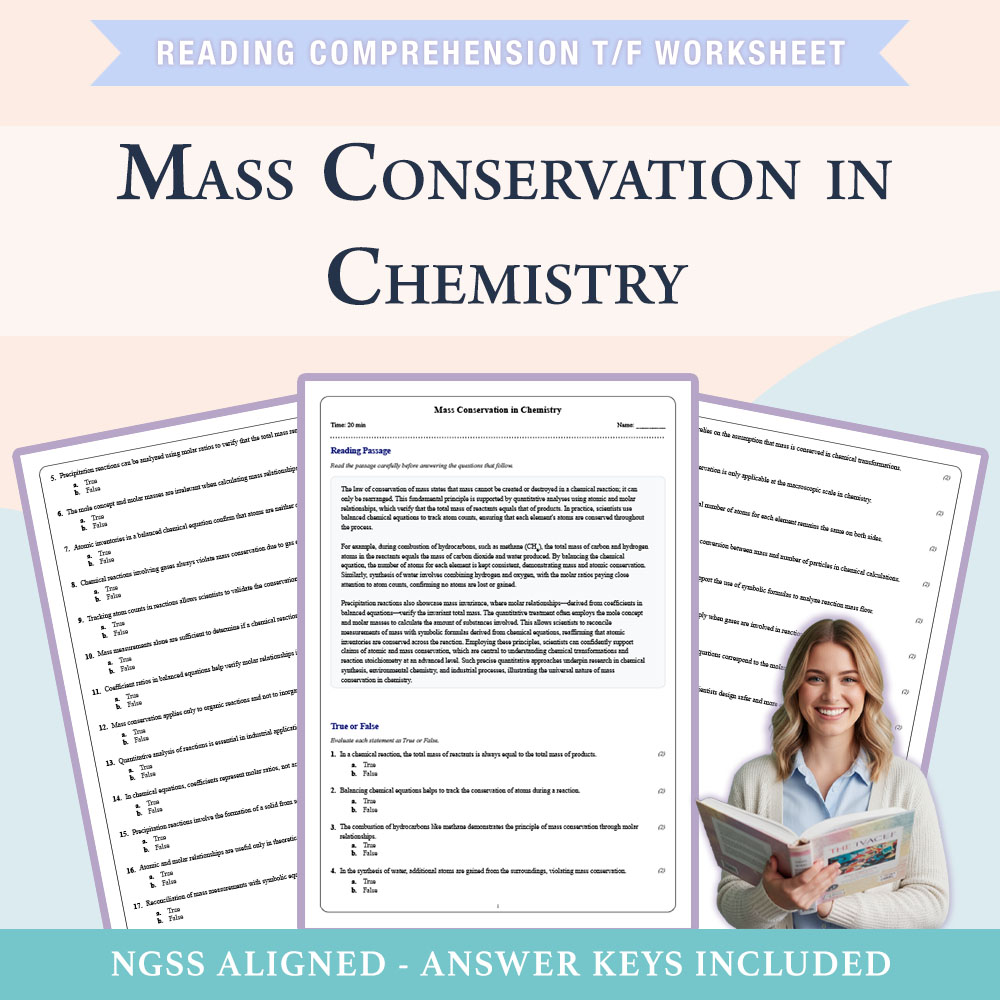
10th Grade Science | Mass Conservation in Chemistry Worksheet (PDF + Answer Key)
Created byCopper Leaf ClassroomLearning Objectives
- Understand how balanced chemical equations demonstrate the conservation of atoms and mass.
- Identify various chemical reactions where mass invariance is verified through molar relationships.
- Apply mole concepts, molar masses, and coefficients to analyze and confirm mass conservation in chemical processes.
Also included in: Grade 10 Science | Chemical Reaction & Particle Interactions (PDF + Answer Key) +1 more
Instant download
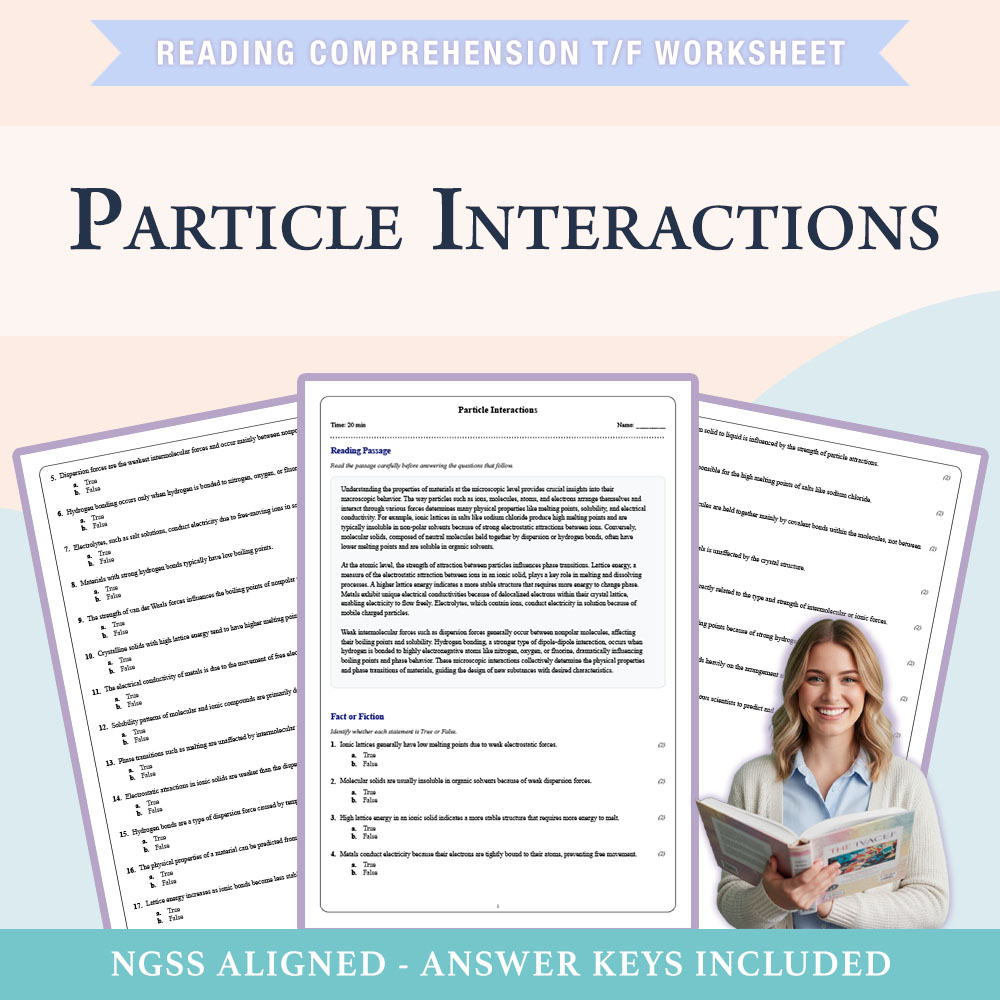
10th Grade Science | Particle Interactions Worksheet (PDF + Answer Key)
Created byCopper Leaf ClassroomLearning Objectives
- Understand how crystal structure and molecular interactions influence macroscopic properties of materials.
- Differentiate between ionic lattices, molecular solids, metals, and electrolytes based on their particle arrangements and electrical behavior.
- Explain how lattice energy, dispersion forces, and hydrogen bonding affect phase transitions and physical properties.
Also included in: Grade 10 Science | Chemical Reaction & Particle Interactions (PDF + Answer Key) +1 more
Instant download
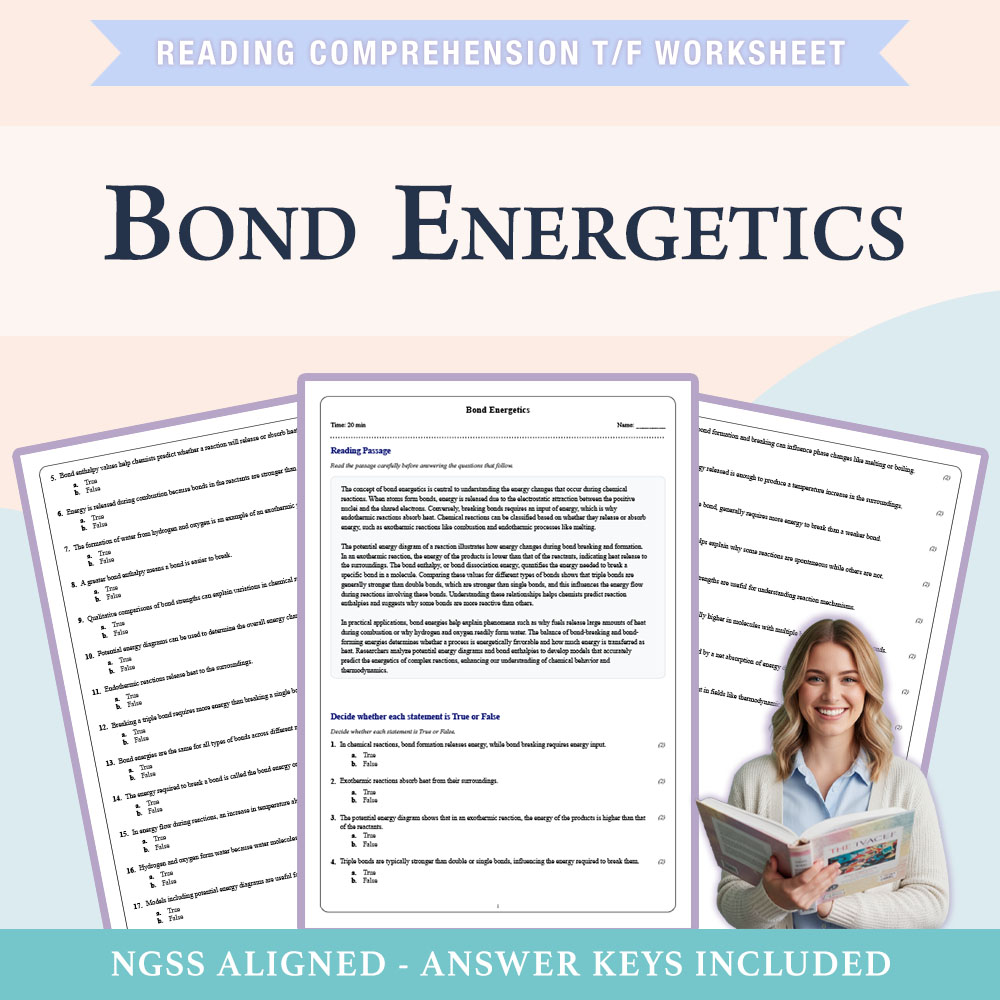
10th Grade Science | Bond Energetics Worksheet (PDF + Answer Key)
Created byCopper Leaf ClassroomLearning Objectives
- Understand how chemical bond formation and breaking relate to energy changes in reactions.
- Distinguish between exothermic and endothermic processes based on bond energies.
- Analyze potential energy diagrams and bond enthalpy values to interpret energy flow during chemical reactions.
Also included in: Grade 10 Science | Chemical Reaction & Particle Interactions (PDF + Answer Key) +1 more
Instant download
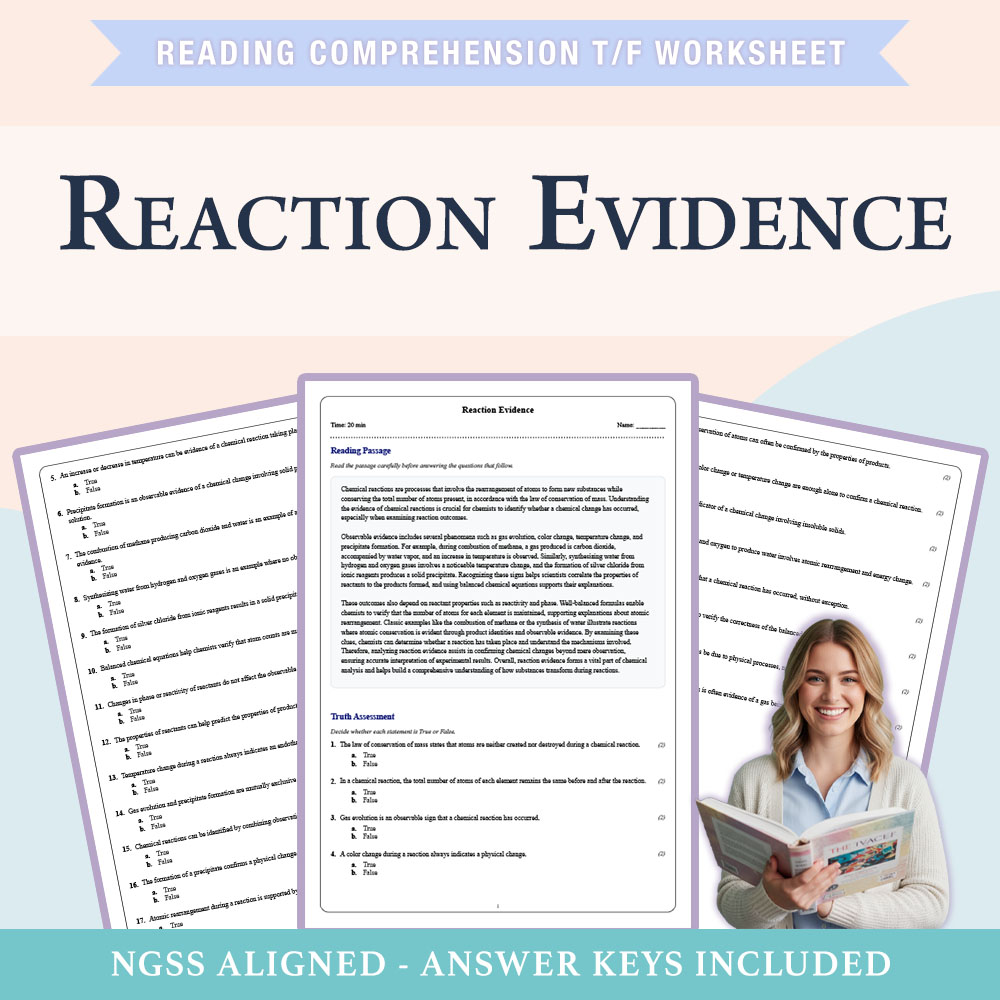
10th Grade Science | Reaction Evidence Worksheet (PDF + Answer Key)
Created byCopper Leaf ClassroomLearning Objectives
- Understand how chemical reactions conserve atoms and involve atomic rearrangement.
- Identify observable evidence of chemical reactions such as gas evolution, color change, temperature change, and precipitate formation.
- Relate reactant properties to the identities of products using balanced formulas.
Also included in: Grade 10 Science | Chemical Reaction & Particle Interactions (PDF + Answer Key) +1 more
Instant download
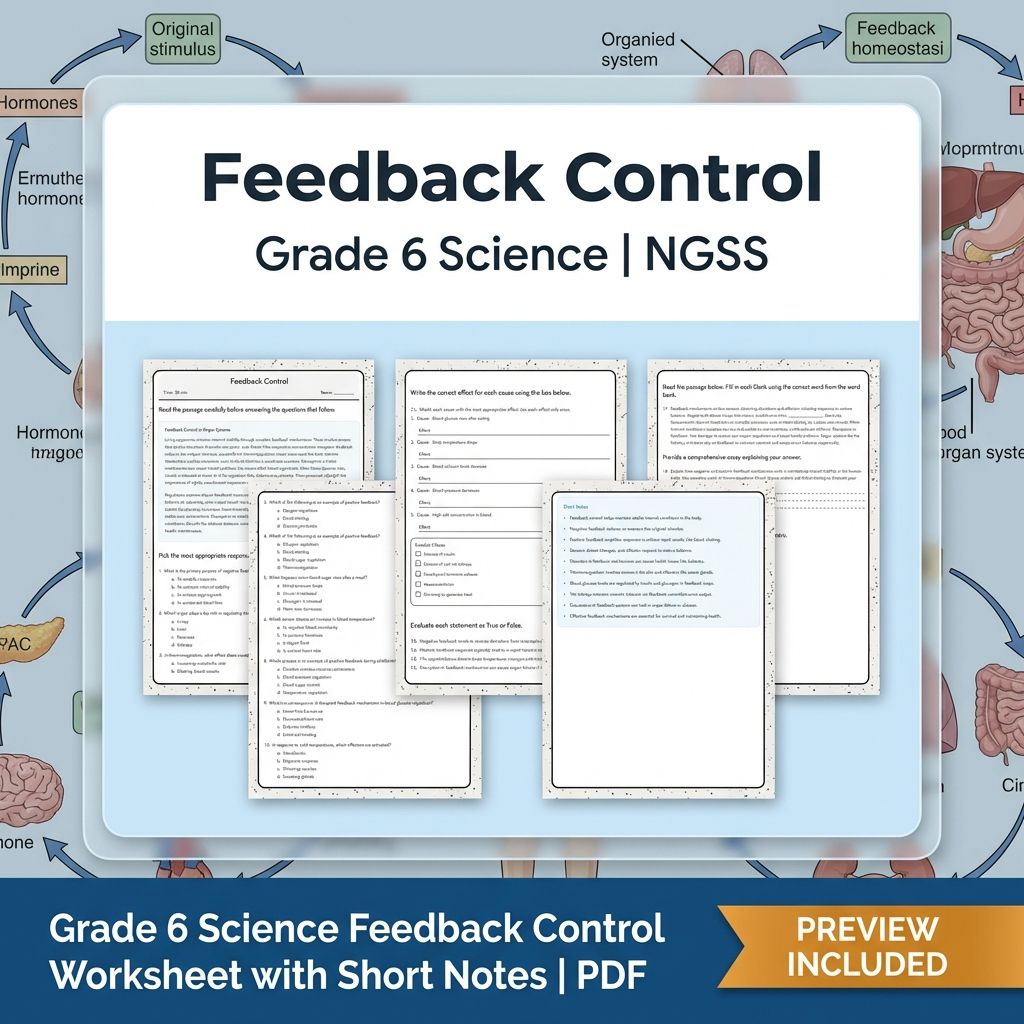
Grade 6 Science Feedback Control Worksheet with Short Notes | PDF
Created byMeadowlark WorksheetsLearning Objectives
- Understand the mechanisms of negative and positive feedback in maintaining internal stability.
- Identify physiological examples of feedback regulation such as thermoregulation and blood glucose control.
- Explain the roles of sensors and effectors in feedback loops.
Also included in: Grade 6 Science NGSS From Molecules to Organisms: Structures & Processes +1 more
Instant download
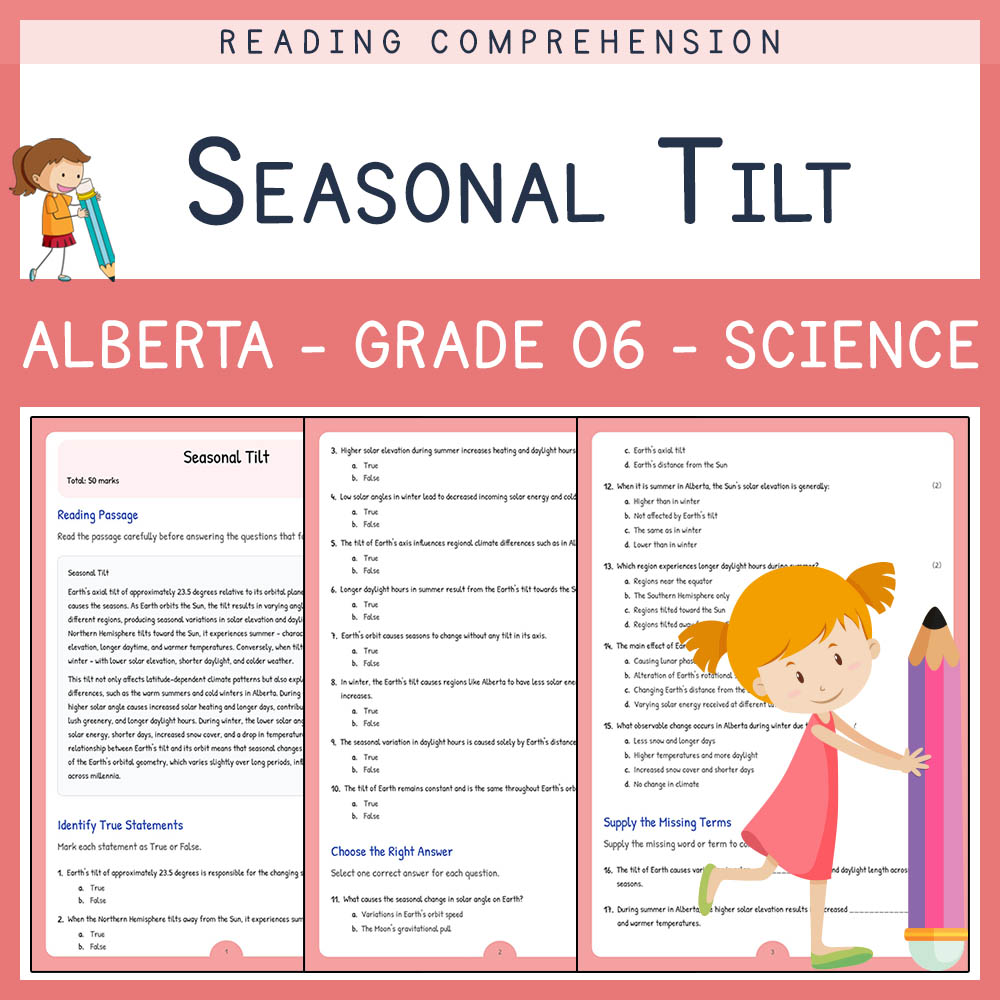
Grade 6 Science Worksheet | Earth's Tilt | Alberta Standards
Created byLumora LearningLearning Objectives
- Understand how Earth's axial tilt causes seasonal changes in solar angle and daylight duration.
- Explain how seasonal variations influence regional climates and biological rhythms.
- Connect Earth's tilt and orbital geometry to observable seasonal phenomena in regions like Alberta.
Instant download

Species Conservation Status Worksheets | Grade 7 Science Ecosystems
 Created bySunny Desk Resources
Learning Objectives
- Describe how population trends, threats, and recovery potential are used to evaluate conservation risk.
- Identify how land use, genetic diversity, and habitat connectivity affect a species' vulnerability.
- Interpret evidence from examples such as the swift fox and at-risk plants to explain regional persistence.
Also included in: Interactions & Ecosystems Grade 7 Alberta Science Worksheets Bundle +1 more
Instant download

Grade 10 Science – Thermochemistry Worksheet (AP Standard) PDF
Created byEvergreen Desk EducationLearning Objectives
- Use thermochemical equations to connect enthalpy change with reaction stoichiometry.
- Apply conservation of energy to calorimetry problems and interpret heat exchange.
- Use Hess’s law and bond enthalpy approximations to predict reaction enthalpy.
Also included in: Grade 10 Chemistry Science Lesson Bundle AP Framework Worksheets Practice +1 more
Instant download

Grade 10 Science – Stoichiometric Analysis Worksheet (AP) PDF
Created byEvergreen Desk EducationLearning Objectives
- Use mole ratios to solve multi-step stoichiometry problems and track units consistently.
- Identify limiting reactants and determine theoretical yields from balanced chemical equations.
- Convert between mass, concentration, moles, and percent composition, including empirical formulas.
Also included in: Grade 10 Chemistry Science Lesson Bundle AP Framework Worksheets Practice +1 more
Instant download

Grade 10 Science Bonding Models Worksheet (AP) | PDF & Answer Key
Created byEvergreen Desk EducationLearning Objectives
- Compare ionic, covalent, and metallic bonding using electron-transfer and electron-sharing models.
- Use Lewis structures and basic molecular orbital ideas to explain structure and bonding behavior.
- Predict macroscopic properties (conductivity, melting point, and solubility) from bonding type.
Also included in: Grade 10 Chemistry Science Lesson Bundle AP Framework Worksheets Practice +1 more
Instant download

Grade 10 Science – Reaction Stoichiometry Worksheet (AP) (PDF)
Created byEvergreen Desk EducationLearning Objectives
- Use the mole concept and molar mass to convert between mass, moles, and particle amounts in chemical reactions.
- Apply balanced chemical equations to determine stoichiometric mole ratios for mass-to-mass calculations.
- Identify the limiting reagent and calculate theoretical yield using mole ratios and unit analysis.
Also included in: Grade 10 Chemistry Science Lesson Bundle AP Framework Worksheets Practice +1 more
Instant download

Grade 10 Science | Effective Charge Worksheet (AP Standards) Practice
Created byEvergreen Desk EducationLearning Objectives
- Explain effective nuclear charge (Zeff) and how inner-shell electrons provide shielding.
- Use simplified Zeff reasoning to predict trends in atomic radius, ionization energy, and electron affinity across an isoelectronic series.
- Connect Zeff-based mechanistic thinking to real periodic behavior and chemical reactivity.
Also included in: Grade 10 Chemistry Science Lesson Bundle AP Framework Worksheets Practice +1 more
Instant download

Particle Conservation Assessment Grade 9 Science | Standards-Aligned
 Created byPrism Point Learning
Learning Objectives
- Understand the principle of conservation of matter during chemical reactions.
- Explain how atoms rearrange in reactions without being created or destroyed.
- Interpret chemical equations in terms of atom counts before and after reactions.
Instant download

Grade 6 Science | Physiological Adaptations Worksheet | BC Standards
Created byLumora LearningLearning Objectives
- Explain the concept of physiological adaptations and their role in survival.
- Identify different internal processes that help organisms respond to environmental challenges.
- Describe specific adaptations such as heat exchange, water conservation, and metabolic rate adjustments.
Instant download
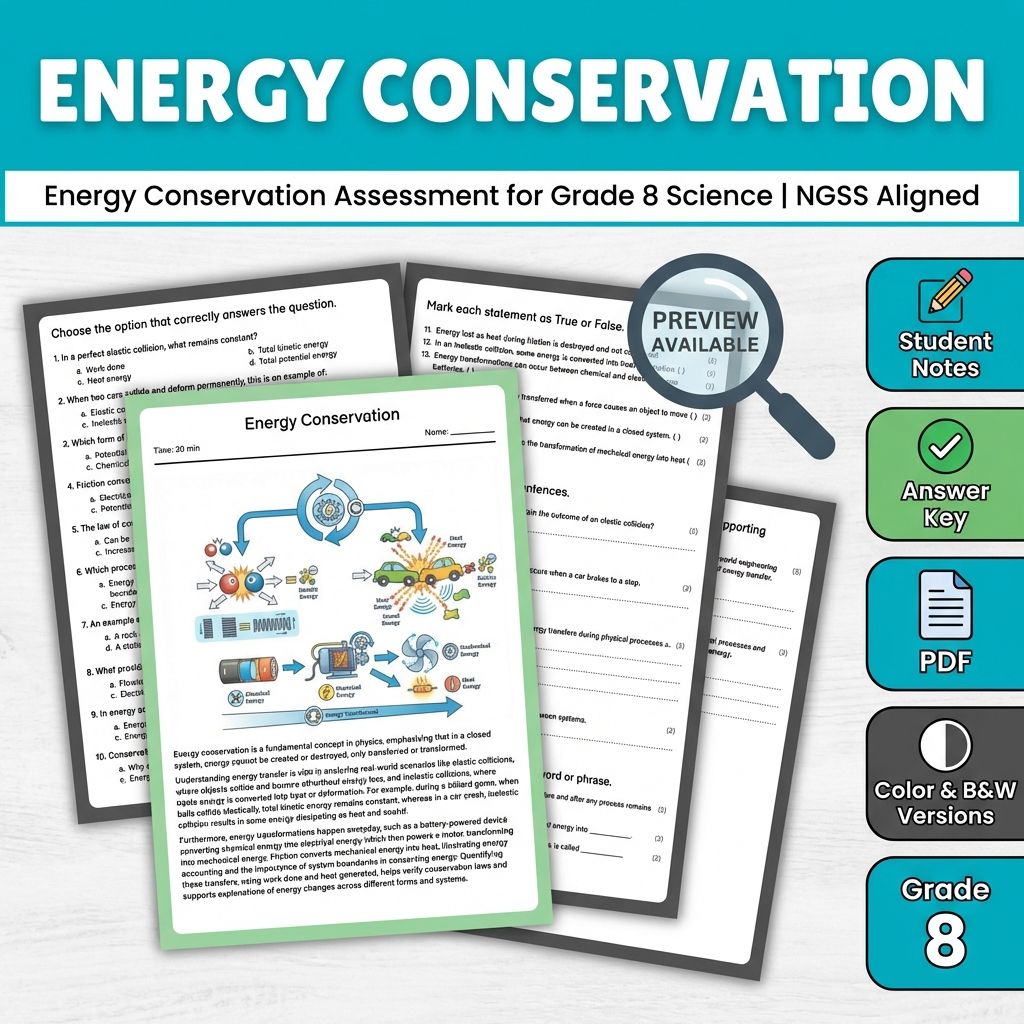
Energy Conservation Assessment for Grade 8 Science | NGSS Aligned
Created byPrism Point LearningLearning Objectives
- Explain the principle of energy conservation in various systems.
- Describe how energy transfers occur during elastic and inelastic collisions.
- Analyze the conversion of energy between chemical, electrical, and mechanical forms.
Also included in: Grade 8 Science Mini Bundle – Energy NGSS Standards-Aligned Not Specified +1 more
Instant download

Grade 9 Science – Force Fundamentals Worksheet (Alberta Standards) (PDF)
Created bySilver Birch TeachingLearning Objectives
- Explain how forces can change motion using push or pull effects
- Differentiate contact forces (like friction and normal force) from non-contact forces (like gravity)
- Describe how force direction and magnitude combine using vector reasoning
Also included in: Grade 9 Relative Motion, Forces & Energy Science Lesson Bundle – Alberta +1 more
Instant download

Conservation of Mass Worksheet for Grade 7 Science | Standards-Aligned Practice
JCreated byJ.S SheetsLearning Objectives
- Understand the principle of conservation of mass in chemical reactions.
- Explain how atoms are conserved and rearranged during reactions.
- Identify the characteristics of closed systems in chemical processes.
Instant download

Grade 10 Science | Heat Engines & Energy Conversion - Reading Comprehension
Created byCoral Reef LearningLearning Objectives
- Define what heat engines are and explain their basic operation.
- Identify different types of heat engines such as internal combustion, gas turbines, and steam turbines.
- Understand factors affecting the efficiency of heat engines, including temperature differences and cycle design.
Instant download

Grade 10 Science – Design Fundamentals Worksheet (Ontario Standards) (PDF)
Created byEvergreen Desk EducationLearning Objectives
- Formulate testable science questions by clearly identifying variables and operational definitions.
- Classify independent, dependent, and controlled variables and justify choices for fair testing.
- Use criteria for reproducibility and measurement consistency to design investigations.
Also included in: Grade 10 Scientific Inquiry & Data Reasoning Science Lesson Bundle: Ontario +1 more
Instant download

Grade 10 Science – Variable Isolation Worksheet (Ontario Standards) (PDF)
Created byEvergreen Desk EducationLearning Objectives
- Explain how isolating variables helps distinguish causation from correlation in multifactor investigations.
- Identify how factorial layouts, interaction effects, and blocking strategies control complexity and nuisance variables.
- Apply criteria for judging whether a design supports attributable causation using replication and sample size.
Also included in: Grade 10 Scientific Inquiry & Data Reasoning Science Lesson Bundle: Ontario +1 more
Instant download

Grade 10 Science | Risk Management Worksheet (Ontario) (PDF)
Created byEvergreen Desk EducationLearning Objectives
- Identify hazards in laboratory and field sampling contexts using chemical, biological, and physical hazard examples.
- Apply qualitative risk assessment steps to estimate likelihood and consequence and support mitigation decisions.
- Explain how the hierarchy of controls (elimination, substitution, engineering, and administrative procedures) reduces risk.
Also included in: Grade 10 Scientific Inquiry & Data Reasoning Science Lesson Bundle: Ontario +1 more
Instant download

Grade 10 Science Worksheet – Career Pathways | Ontario Standards (PDF)
Created byEvergreen Desk EducationLearning Objectives
- Identify how different science careers connect to laboratory practice and scientific inquiry.
- Describe credential pathways and workplace certifications that support entry into technical science roles.
- Explain how data collection, instrument calibration, and regulatory compliance appear in real workplace responsibilities.
Also included in: Grade 10 Scientific Inquiry & Data Reasoning Science Lesson Bundle: Ontario +1 more
Instant download

Grade 10 Science – Ethics and Safety Worksheet (Ontario Standards) (PDF)
Created byEvergreen Desk EducationLearning Objectives
- Explain how ethical responsibilities (data honesty, consent, humane treatment) support scientific safety and credibility.
- Describe what researchers and professionals should do when they encounter unsafe or unethical conditions.
- Evaluate how oversight, certification, and reporting norms contribute to long-term trust in scientific evidence.
Also included in: Grade 10 Scientific Inquiry & Data Reasoning Science Lesson Bundle: Ontario +1 more
Instant download
Energy Forms Worksheet for Grade 10 Science | Alberta Standards
Created byCoral Reef LearningLearning Objectives
- Understand the concepts of kinetic and potential energy and how they relate to motion and stored capacity to do work.
- Describe examples of kinetic and potential energy in Alberta, such as snowmobiling and water in reservoirs.
- Explain the principle of conservation of energy and how it applies in idealized systems and real-world scenarios with non-conservative forces.
Instant download

Cell Membrane Assessment for Grade 11 Science | Standards-Aligned Assessment
Created byPrism Point LearningLearning Objectives
- Describe the structure and composition of the cell membrane.
- Explain the functions of various membrane proteins.
- Differentiate between passive and active transport mechanisms.
Also included in: Grade 11 Cell Systems, Energy & Genetics Science: Lesson Bundle TEKS
Instant download

Cell Organization Assessment | TEKS Grade 11 Science Worksheet
Created byPrism Point LearningLearning Objectives
- Describe the hierarchical levels of cell organization in multicellular organisms.
- Explain how cellular differentiation leads to specialized functions.
- Identify mechanisms that regulate cellular specialization and coordination.
Also included in: Grade 11 Cell Systems, Energy & Genetics Science: Lesson Bundle TEKS
Instant download

Energy Organelles Assessment | TEKS Grade 11 Science Standards
Created byPrism Point LearningLearning Objectives
- Describe the structure and function of mitochondria and chloroplasts.
- Explain how energy is converted within these organelles.
- Identify the processes of oxidative phosphorylation and the Calvin cycle.
Also included in: Grade 11 Cell Systems, Energy & Genetics Science: Lesson Bundle TEKS
Instant download

Genetic Systems Assessment Grade 11 | TEKS Science Standards-Aligned
Created byPrism Point LearningLearning Objectives
- Compare genome organization and gene expression mechanisms in prokaryotes and eukaryotes.
- Identify structural differences in prokaryotic and eukaryotic genomes.
- Explain how these differences influence gene regulation, transcription, and DNA replication.
Also included in: Grade 11 Cell Systems, Energy & Genetics Science: Lesson Bundle TEKS
Instant download

6th Grade Science | Photosynthesis Process True or False (PDF +Answer Key)
Created byCopper Leaf ClassroomLearning Objectives
- Understand how green plants, algae, and some bacteria use sunlight to produce food
- Describe the role of chlorophyll in capturing light energy
- Explain how photosynthesis contributes to the oxygen and glucose supply in ecosystems
Instant download
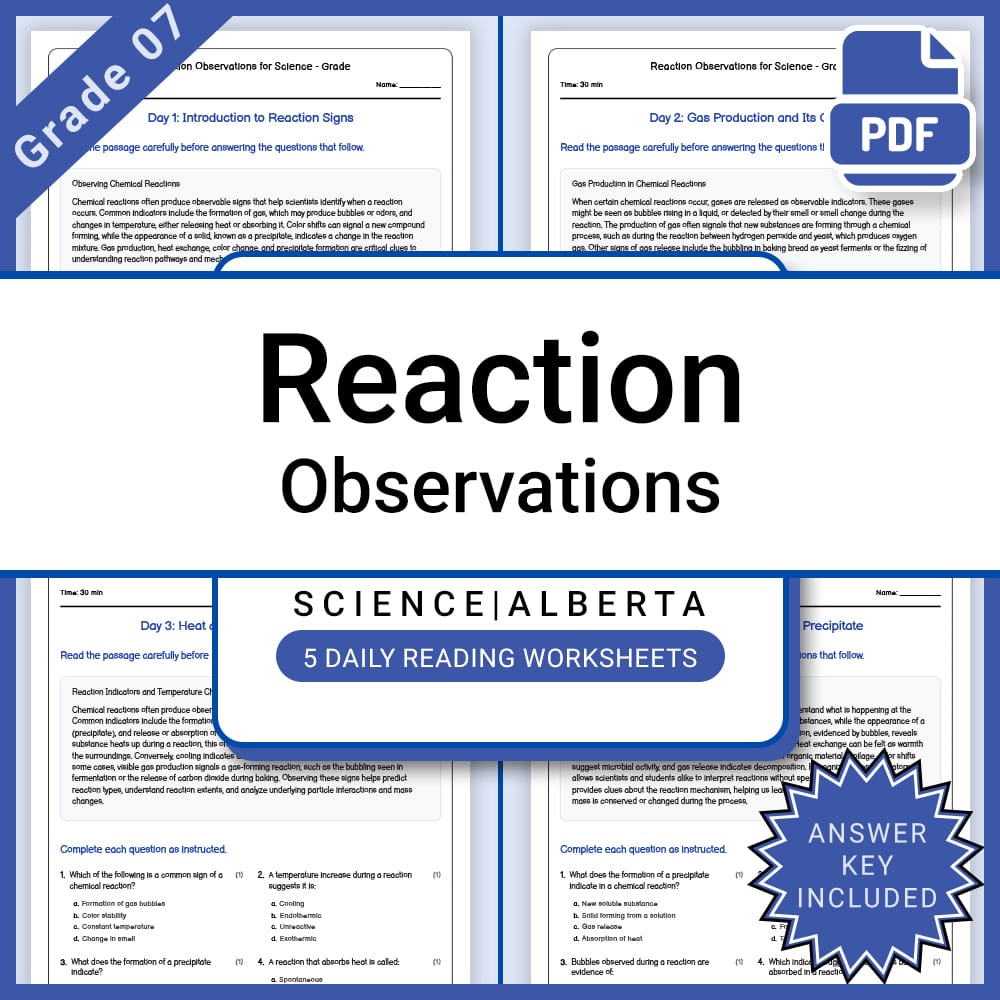
Grade 7 Science – Reaction Observation Daily Reading Worksheet + Answer Key
JCreated byJ.S SheetsLearning Objectives
- Identify different observable indicators of chemical reactions
- Describe how to recognize gas production, heat exchange, colour changes, and precipitate formation
- Connect observable signs to reaction pathways and processes
Also included in: Grade 7 Science Lesson Bundle | Alberta Framework for Classroom Use +1 more
Instant download

Cell Membrane Structure & Selective Permeability Worksheet | Grade 11 TEKS
 Created byBRIGHT PATH RESOURCES
Learning Objectives
- Identify key structures of the cell membrane and describe how they contribute to membrane function.
- Explain selective permeability and relate it to how substances move across the membrane.
Instant download

Environmental Monitoring Worksheet | NGSS G8 Science Practice Assessment
 Created byCedar Grove Learning
Learning Objectives
- Understand scientific measurement methods used to assess ecosystem and water resource health.
- Identify indicators and thresholds for ecological impact assessments.
- Analyze approaches for monitoring land-cover change, water quality, and erosion control.
Instant download
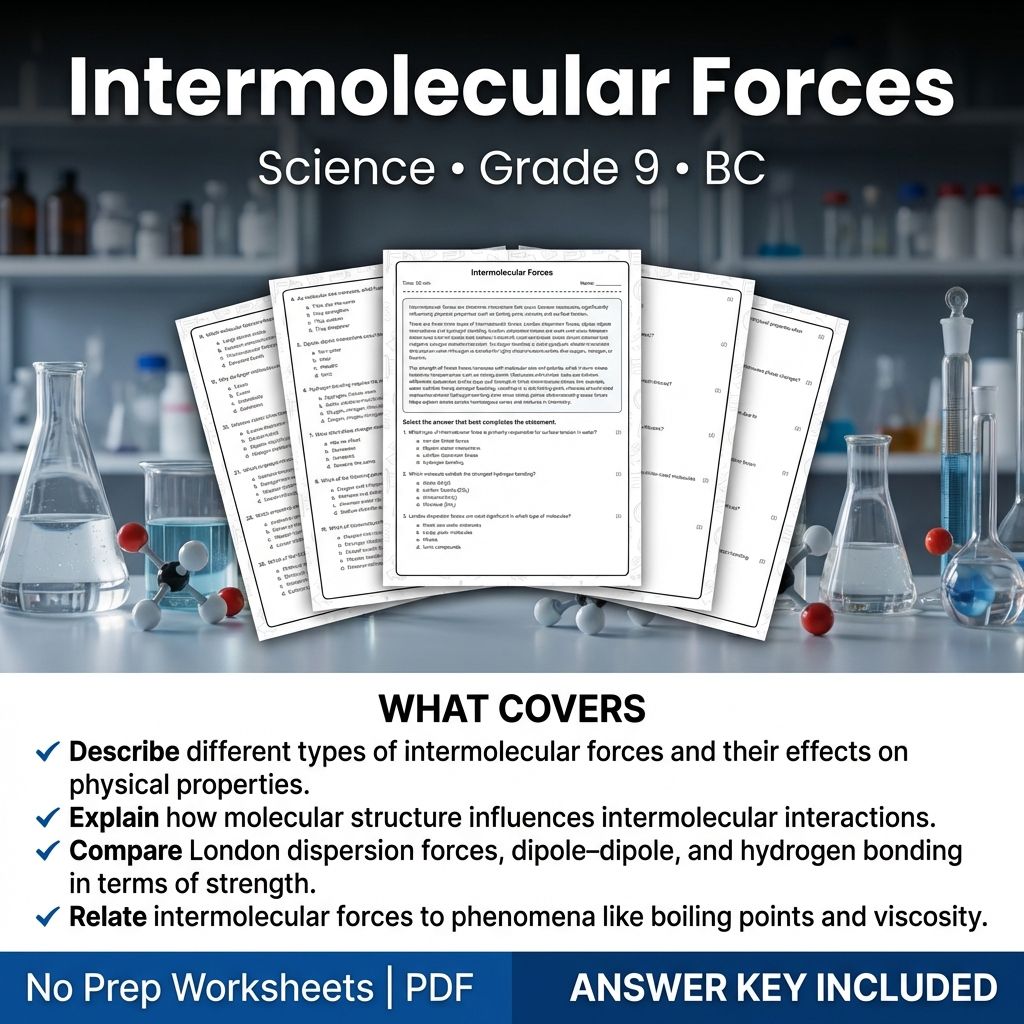
9th Grade Science | Intermolecular Forces Worksheet & Answer Key (Printable PDF)
Created byCoral Reef LearningLearning Objectives
- Describe different types of intermolecular forces and their effects on physical properties.
- Explain how molecular structure influences intermolecular interactions.
- Compare London dispersion forces, dipole–dipole, and hydrogen bonding in terms of strength.
Instant download
Browse more categories
About Science Worksheets
Find Science worksheets spanning core skills, practice, and review. All 44,376 resources are instant PDF downloads for the classroom or home.
Every worksheet on MyTeachingSheets is created by independent teacher-authors and reviewed before publication. All resources download as printable PDFs for classroom, homework, or at-home practice, and many include answer keys. Preview any worksheet free before buying.