
Science Worksheets
44,773 subject resources
Grade 11 Science — Worksheet MCQ Paper for Mastering Reaction Energetics
 Created byThe Resource Hub
Learning Objectives
- Understand the concepts of enthalpy changes and their measurement using calorimetry.
- Apply Hess’s law to combine energy steps and calculate overall reaction enthalpy.
- Relate bond enthalpies and formation energies to the macroscopic enthalpy of reactions and the stability of compounds.
Also included in: Grade 11 Science AP Worksheet Bundle: Mastering Key Concepts +1 more
Instant download

Grade 9 Science Resource Choices Worksheet | NGSS Assessment & Practice PDF
Learning Objectives
- Compare energy and mineral resource options based on environmental and economic impacts.
- Evaluate the life-cycle trade-offs of different resource extraction and use methods.
- Analyze case studies such as coal combustion, mountaintop removal, hydraulic fracturing, solar arrays, and wind farms.
Also included in: Grade 9 Science Earth and Human Activity NGSS Lesson Bundle +1 more
Instant download

Grade 8 Inquiry Models Daily Science Reading Worksheet | TEKS Activity
 Created byBRIGHT PATH RESOURCES
Learning Objectives
- Identify the aims of hypothesis-driven, descriptive, and correlational inquiry models.
- Explain how each model supports different types of scientific explanations.
Also included in: Grade 8 Science Skills Daily Reading Worksheets Bundle | TEKS +1 more
Instant download
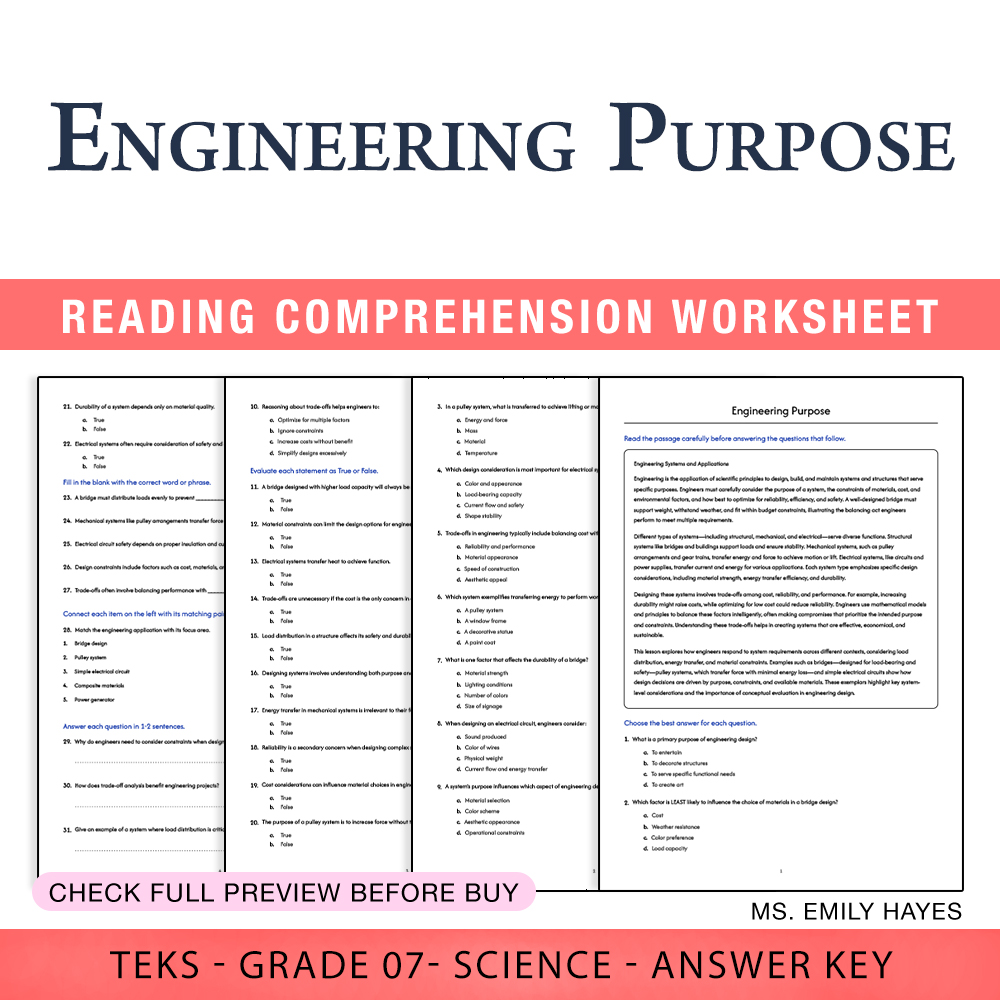
7th Grade Science | Engineering Purpose Worksheet (PDF+ Answer Key)
 Created byCopper Leaf Classroom
Learning Objectives
- Describe how engineering designs respond to system purpose, constraints, and materials.
- Identify examples of structural, mechanical, and electrical systems and their functions.
- Explain the trade-offs among cost, reliability, and performance in engineering.
Instant download
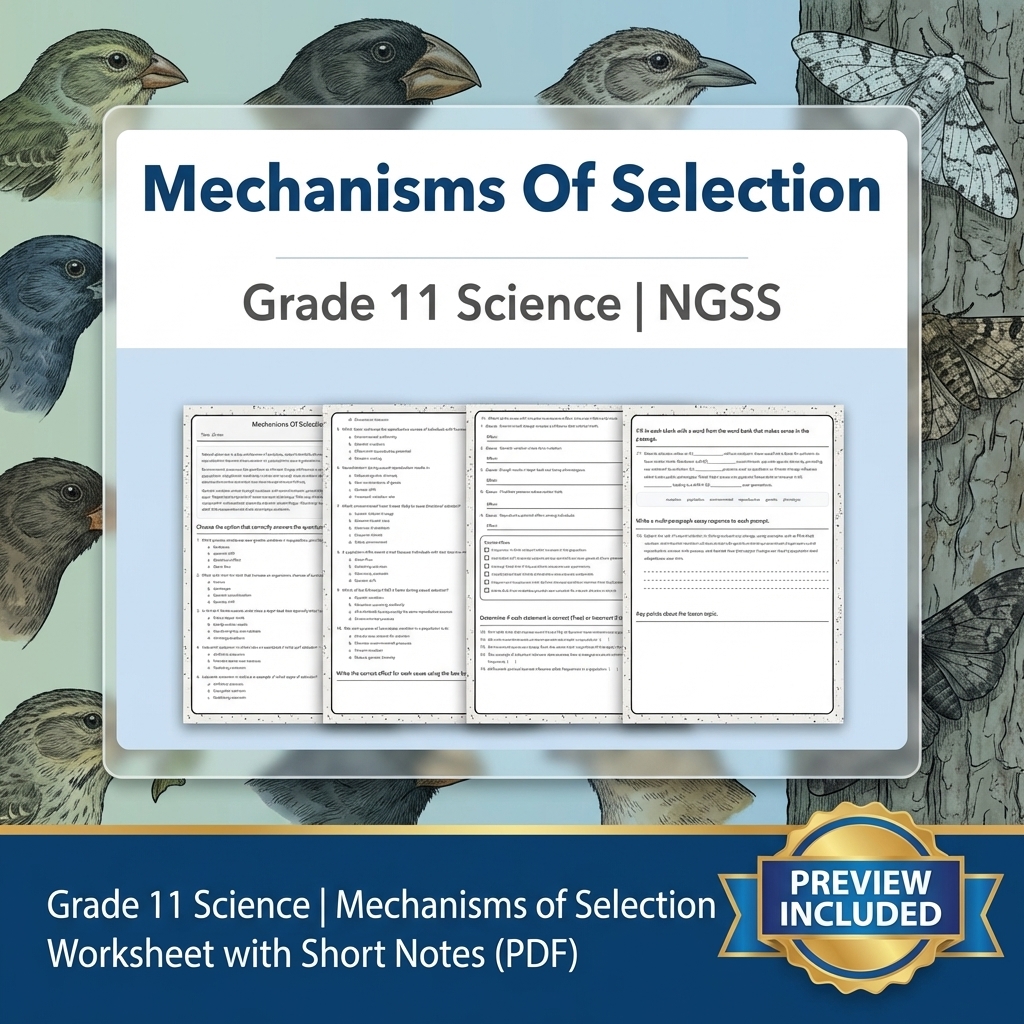
Grade 11 Science | Mechanisms of Selection Worksheet with Short Notes (PDF)
 Created byMeadowlark Worksheets
Learning Objectives
- Understand the fundamental principles of natural selection and its role in evolution.
- Identify factors such as genetic variation, reproductive potential, and environmental pressures that influence natural selection.
- Analyze classic examples like finch beak variation and industrial melanism to illustrate natural selection in action.
Also included in: Grade 11 Science NGSS Unit | Biological Evolution & Diversity Worksheet Bundle +1 more
Instant download

Grade 8 Science | Climate Drivers Worksheet with Short Notes (Printable PDF)
Created byMeadowlark WorksheetsLearning Objectives
- Identify and understand the key drivers influencing global temperature changes.
- Evaluate evidence from paleoclimate and modern records to assess climate change causes.
- Formulate testable questions about climate drivers and evidence.
Also included in: Grade 8 Science | Earth and Human Activity NGSS Unit Bundle (Collection) +1 more
Instant download

Grade 10 Science | Nutrient Cycling - Daily Reading Comprehension
 Created byCoral Reef Learning
Learning Objectives
- Understand the major processes involved in the carbon cycle
- Identify the roles of photosynthesis and respiration in carbon flux
- Analyze human impacts on the carbon and nitrogen cycles
Instant download
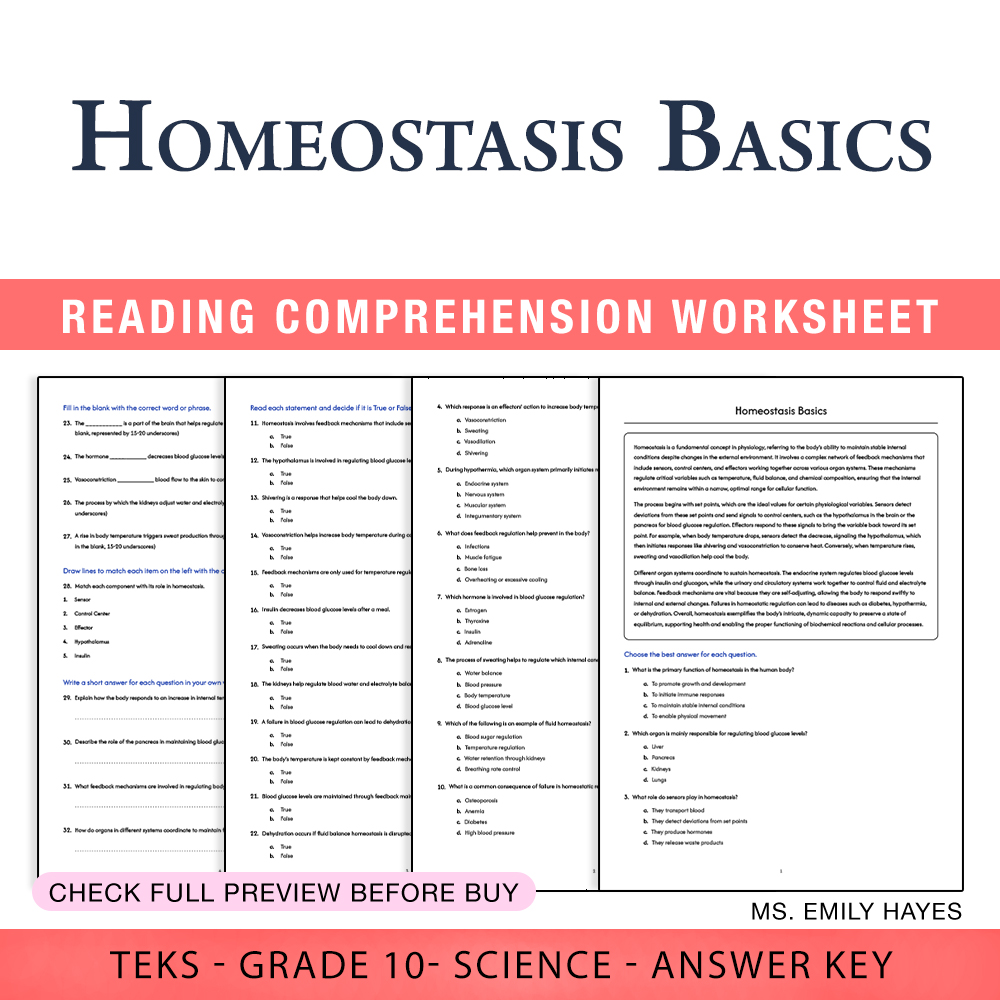
Grade 10 Science | Homeostasis Basics Worksheet (PDF+ Answer Key)
Created byCopper Leaf ClassroomLearning Objectives
- Explain the concept of homeostasis and its importance in human body functions.
- Identify the key components involved in maintaining internal stability, including set points, sensors, and effectors.
- Describe how feedback mechanisms regulate temperature, blood glucose, and fluid balance.
Instant download
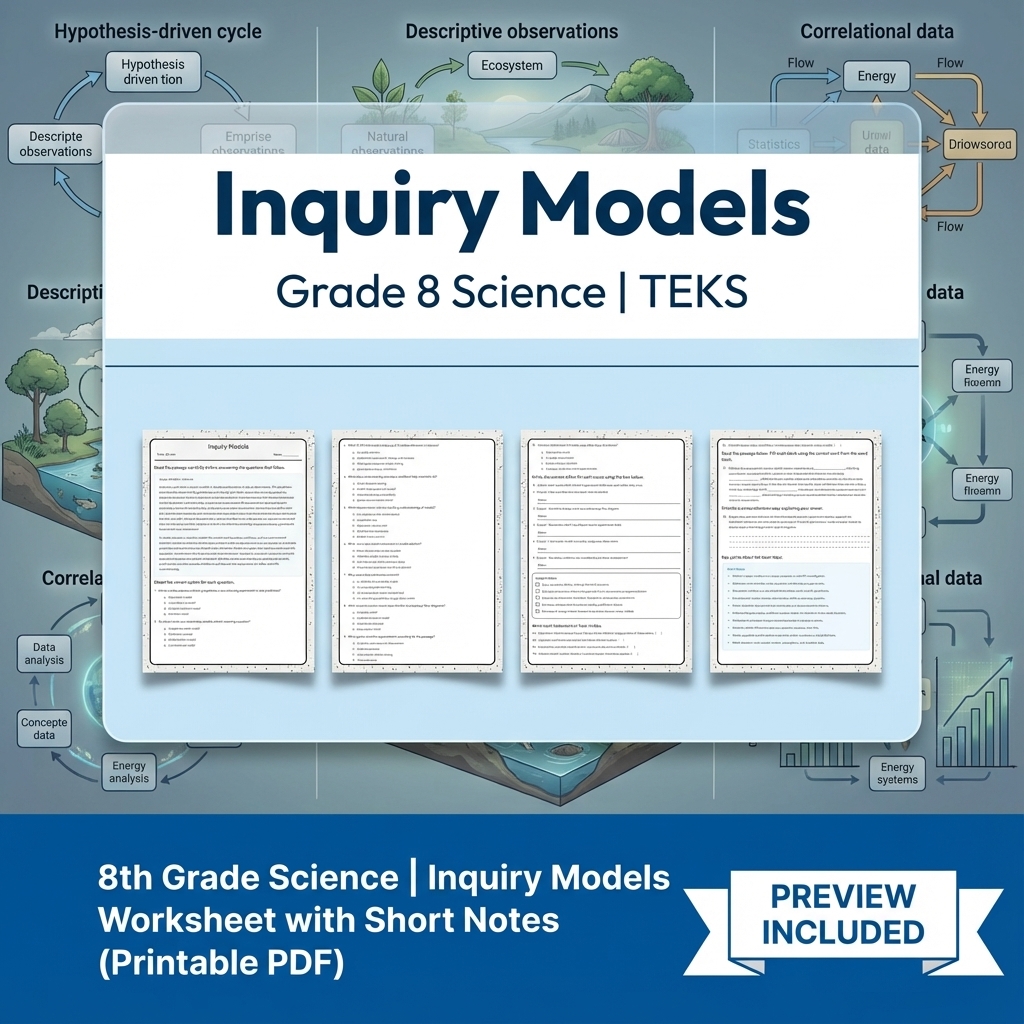
8th Grade Science | Inquiry Models Worksheet with Short Notes (Printable PDF)
Created byMeadowlark WorksheetsLearning Objectives
- Understand the differences between hypothesis-driven, descriptive, and correlational inquiry models.
- Identify typical contexts and applications of each inquiry model in science.
- Analyze model boundary conditions, assumptions, and testable predictions.
Instant download
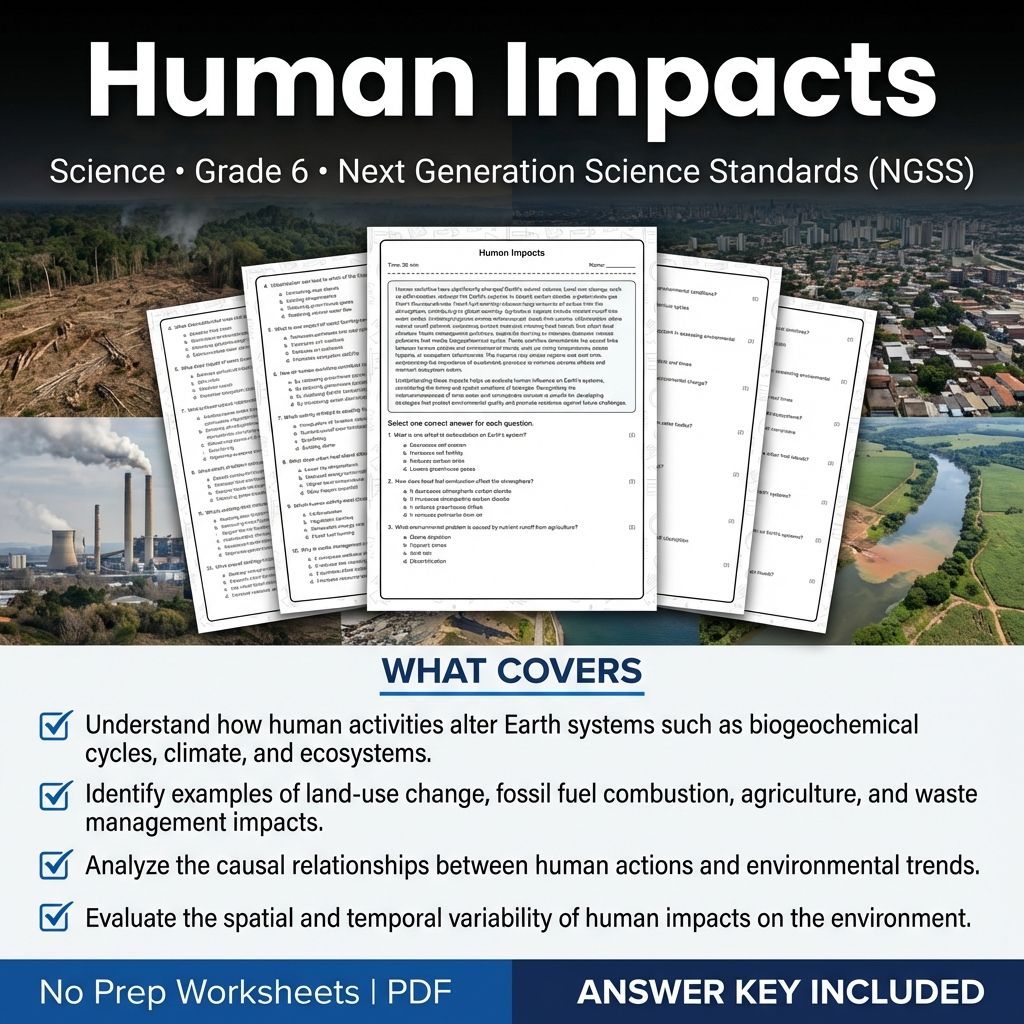
Grade 6 Science | Human Impacts Worksheet & PDF Answer Key (Printable)
Created byCoral Reef LearningLearning Objectives
- Understand how human activities alter Earth systems such as biogeochemical cycles, climate, and ecosystems.
- Identify examples of land-use change, fossil fuel combustion, agriculture, and waste management impacts.
- Analyze the causal relationships between human actions and environmental trends.
Instant download

Plate Tectonics Worksheet for Grade 10 Science | Florida NGSSS PDF
 Created byEvergreen Desk Education
Learning Objectives
- Explain how divergent, convergent, and transform boundaries differ in plate motion and outcomes.
- Describe how earthquake patterns and seafloor magnetic stripes provide evidence for plate tectonics.
- Connect plate movement to Earth system processes such as heat flow and recycling of Earth’s materials.
Instant download

Grade 7 Science | Organ System Roles Worksheet | BC Standard
 Created byLumora Learning
Learning Objectives
- Identify the functions of key organ systems such as circulatory, respiratory, and digestive.
- Explain how tissues and organs work together within organ systems to perform vital life functions.
- Describe the specialized structures that increase efficiency in gas exchange and nutrient absorption.
Instant download

Grade 10 Science – Cell Theory & Cell Types Daily Reading Worksheet
 Created byBright Mind Resources
Learning Objectives
- Identify basic cell structures such as the nucleus, cell membrane, and cytoplasm.
- Explain the principles of cell theory and its significance in biology.
- Differentiate between unicellular and multicellular organisms.
Also included in: Grade 10 Cell Structure & Function Science Daily Reading Lesson Bundle | TEKS +2 more
Instant download
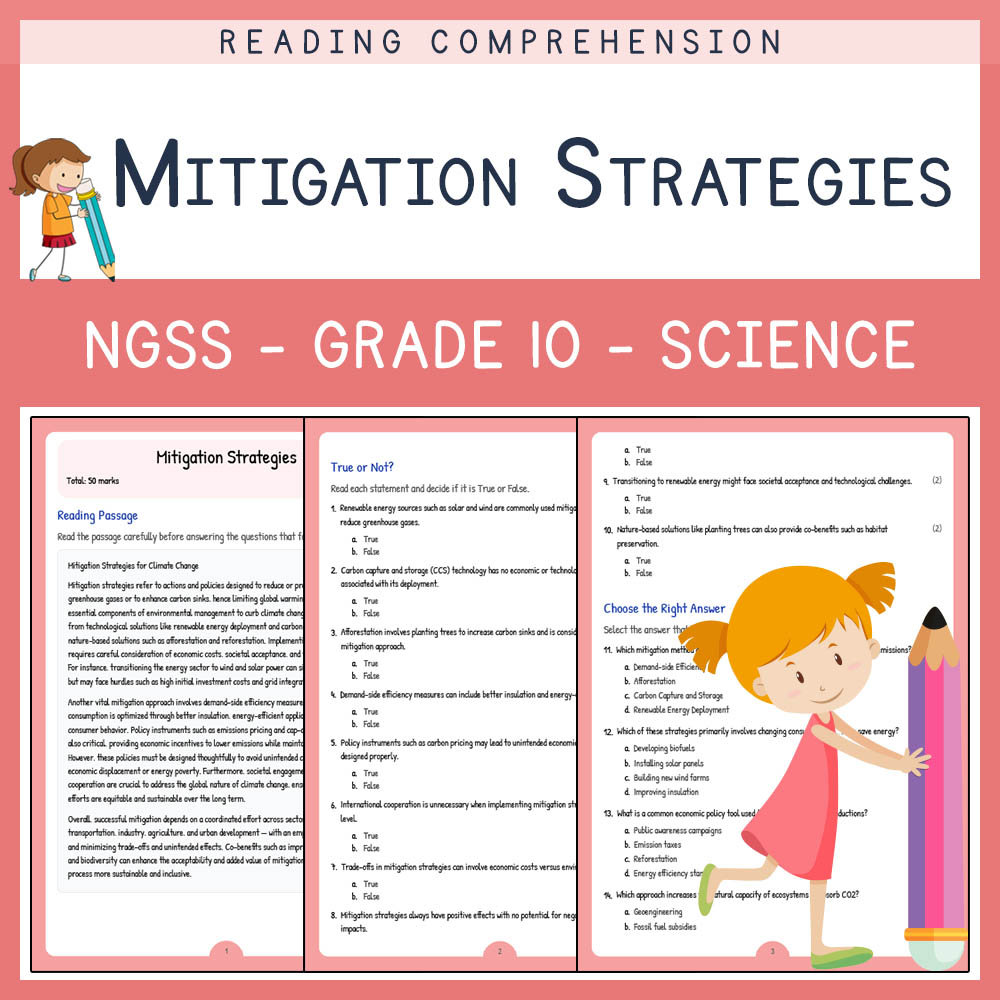
Grade 10 Science | Mitigation Strategies Worksheet (Answer Key) | NGSS Alignment
Created byLumora LearningLearning Objectives
- Understand different mitigation approaches used to reduce environmental impacts and greenhouse gas emissions.
- Evaluate the effectiveness, benefits, and potential trade-offs of various mitigation options across different sectors and scales.
- Analyze societal, economic, and technological constraints associated with mitigation strategies.
Instant download
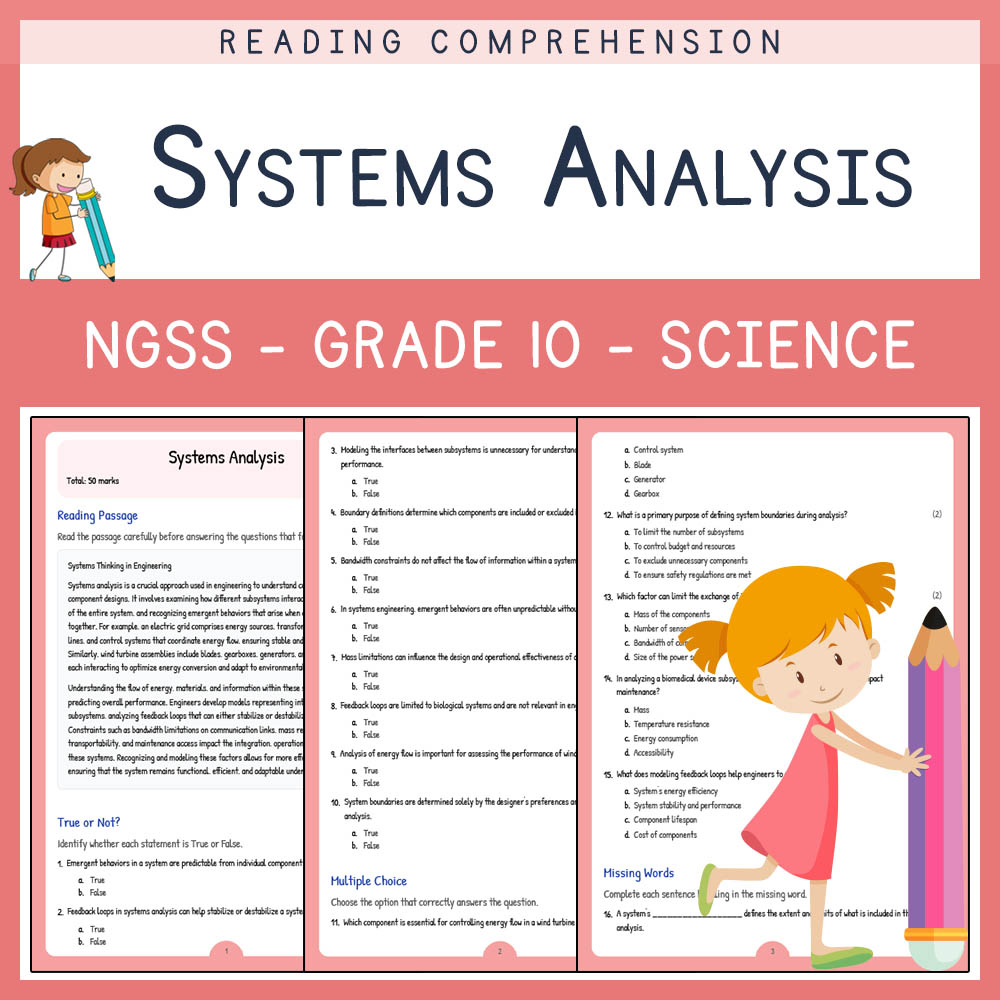
Grade 10 Science | Systems Analysis Worksheet & Answer Key – NGSS Aligned
Created byLumora LearningLearning Objectives
- Understand the concept of systems thinking in engineering contexts.
- Identify interactions, boundaries, and emergent behaviors in complex systems.
- Apply modeling tools to analyze subsystem interactions and feedback loops.
Instant download
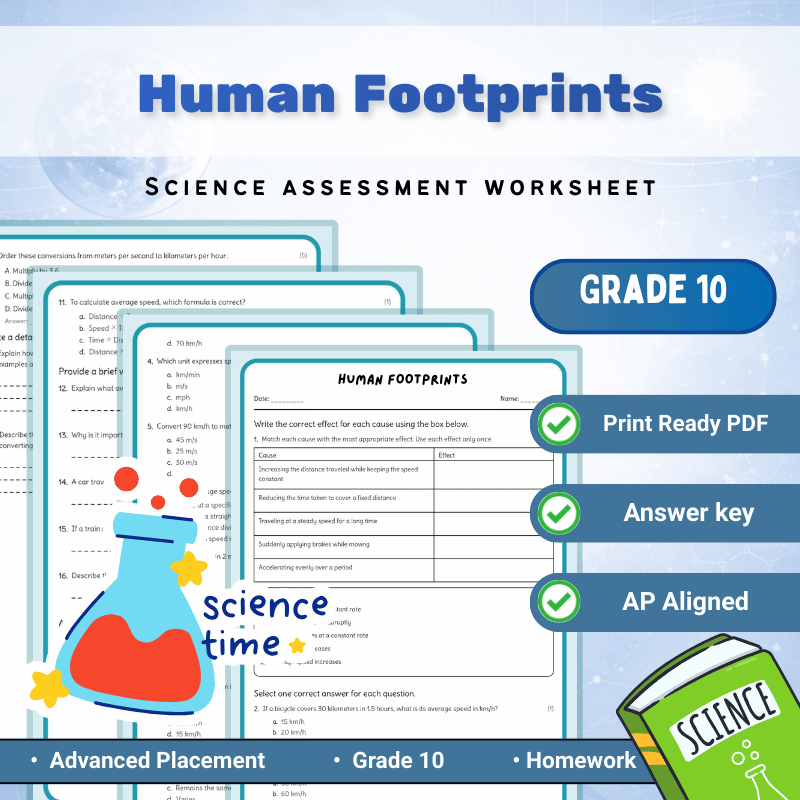
Grade 10 Science | Human Footprints AP Worksheet (PDF) – Environmental Impact
Created byBright Mind ResourcesLearning Objectives
- Understand how human activities alter Earth's land, water, and energy systems.
- Identify observable environmental consequences of anthropogenic forces.
- Analyze land-use changes, greenhouse gas emissions, and resource extraction impacts.
Instant download

Grade 11 Science | Mutations and Variation Worksheet | NGSSS Assessment
Created byLumora LearningLearning Objectives
- Explain how mutations can change DNA and affect gene function or gene regulation
- Describe how genetic variation arises through mutation and recombination during sexual reproduction
- Connect changes in allele frequency to natural selection and evolutionary change over time
Instant download

Ecosystem Dynamics Worksheet for Grade 9 Science | AP Standards Practice
JCreated byJ.S SheetsLearning Objectives
- Analyze how multiple factors influence ecosystem responses and stability.
- Understand trophic interactions, feedback loops, and material fluxes in ecosystems.
- Evaluate impacts of climate variability, land-use change, and species introductions on ecosystem services.
Also included in: Grade 9 Science | DNA and Ecosystems Lesson Group Bundle
Instant download
Ecosystem Dynamics Assessment for Grade 9 Science – AP Standards Aligned
 Created byPrism Point Learning
Learning Objectives
- Understand the concept of trophic interactions and feedback loops within ecosystems.
- Analyze how environmental factors influence ecosystem responses and resilience.
- Evaluate management scenarios affecting biodiversity and ecosystem services.
Also included in: Grade 9 Science Mini Bundle | Biology & Ecosystems Unit AP Standards
Instant download
Grade 10 Science — Human Impacts Worksheet for Ecosystem Learning
Created byThe Resource HubLearning Objectives
- Describe how human activities modify ecosystems through habitat change, pollution, and species introductions.
- Explain the effects of urbanization and agriculture on biodiversity and community dynamics.
- Identify causes and consequences of nutrient runoff, invasive species, and climate change on ecosystems.
Also included in: Grade 10 Science Unit Bundle | Ecosystems & Ecology Worksheets +1 more
Instant download

Matter Classification Worksheet for Grade 7 Science | Elements & Mixtures
Created byPrism Point LearningLearning Objectives
- Classify samples of matter as elements, compounds, or mixtures based on composition.
- Distinguish homogeneous mixtures from heterogeneous mixtures using visible uniformity.
- Use particle/combination ideas to predict how materials behave during physical and chemical changes.
Also included in: Physical Science Lesson Bundle | Grade 7 Science | Florida NGSSS
Instant download

Nutrient Cycling and Biogeochemical Fluxes Worksheet | Grade 10
 Created bythe curious pencil
Learning Objectives
- Explain how carbon and nitrogen move among major Earth reservoirs
- Describe how biological processes transform carbon and nitrogen
- Distinguish nitrification from denitrification in the nitrogen cycle
Also included in: Ecosystem Models & Energy Flow Lesson Bundle | Grade 10 Science | NGSS +2 more
Instant download

Grade 10 Science | Nutrient Cycling Worksheet (NGSS10 PDFs)
 Created bySilver Birch Teaching
Learning Objectives
- Explain the major biogeochemical cycles, including carbon and nitrogen fluxes.
- Describe processes such as photosynthesis, respiration, nitrification, denitrification, and decomposition.
- Analyze how human activities like fossil fuel combustion and agriculture affect nutrient reservoirs and flux rates.
Also included in: Grade 10 Ecosystem Stability and Biodiversity Science Lesson Bundle NGSS +1 more
Instant download
10th Grade Science | Nutrient Cycling Worksheet (PDF + Answer Key)
Created byCopper Leaf ClassroomLearning Objectives
- Describe the major biogeochemical cycles, including the carbon and nitrogen fluxes between Earth's spheres.
- Analyze human impacts such as fossil fuel combustion and agricultural runoff on nutrient reservoirs and ecological processes.
- Explain processes like photosynthesis, respiration, nitrification, denitrification, and decomposition and their roles in nutrient cycling.
Instant download
Grade 10 Science – Nutrient Cycling Worksheet (PDF +Answer Key)
Created byCopper Leaf ClassroomLearning Objectives
- Identify major components and processes of the carbon cycle.
- Understand the movement of carbon among Earth's systems.
- Analyze the impact of human activities on nutrient fluxes.
Instant download

Grade 12 Science Worksheet | Stellar Life Cycles | NGSSS Standards
JCreated byJ.S SheetsLearning Objectives
- Explain how a star’s mass influences internal pressure, fusion rates, and overall lifespan.
- Describe the main stages of stellar evolution for low-mass and high-mass stars after the main sequence.
- Interpret how stellar luminosity and temperature relate to a star’s position on the Hertzsprung-Russell (H-R) diagram.
Also included in: Grade 12 Earth and Space Systems Science Lesson Bundle – Florida NGSSS +1 more
Instant download
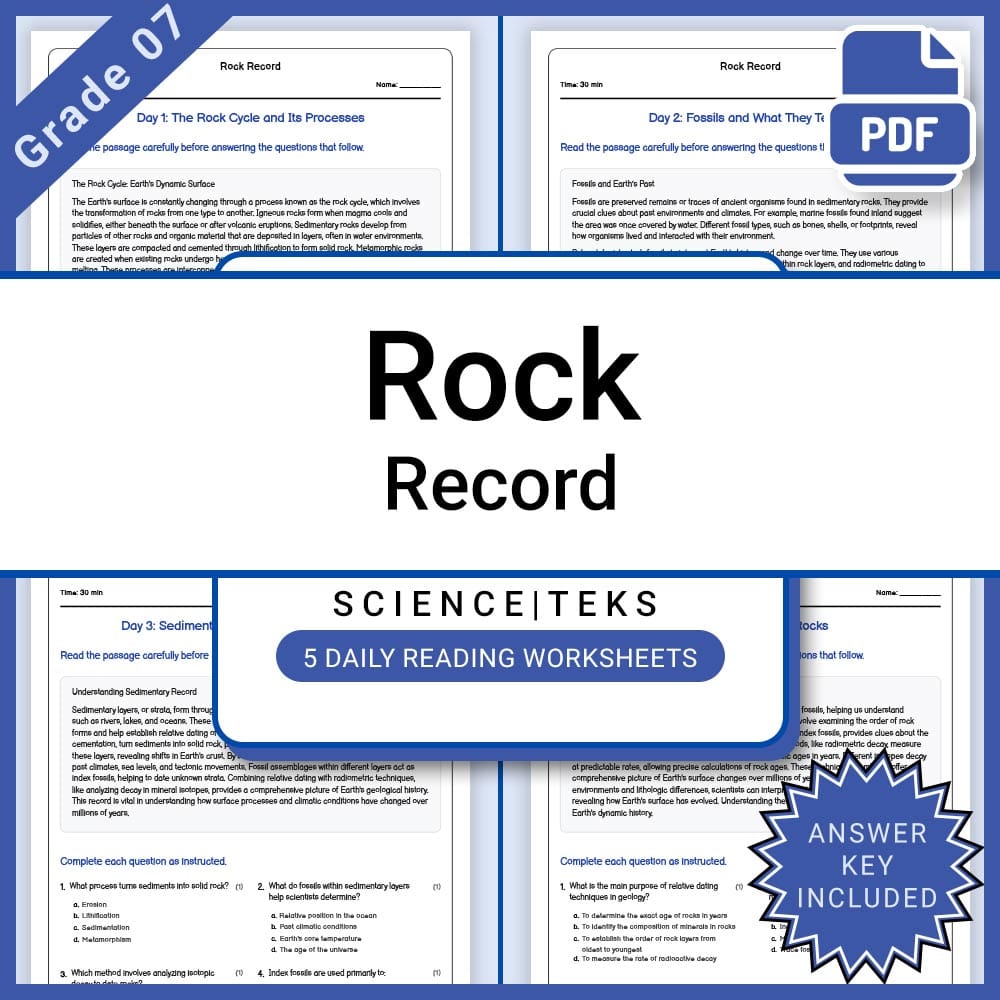
Grade 7 Science – Rock Record Daily Reading Worksheet + Answer Key
JCreated byJ.S SheetsLearning Objectives
- Understand key concepts related to Science
- Apply knowledge through practice questions
- Demonstrate comprehension of the material
Also included in: Grade 7 Science Lesson Group – TEKS Aligned & Concept-Focused Lesson Bundle +1 more
Instant download
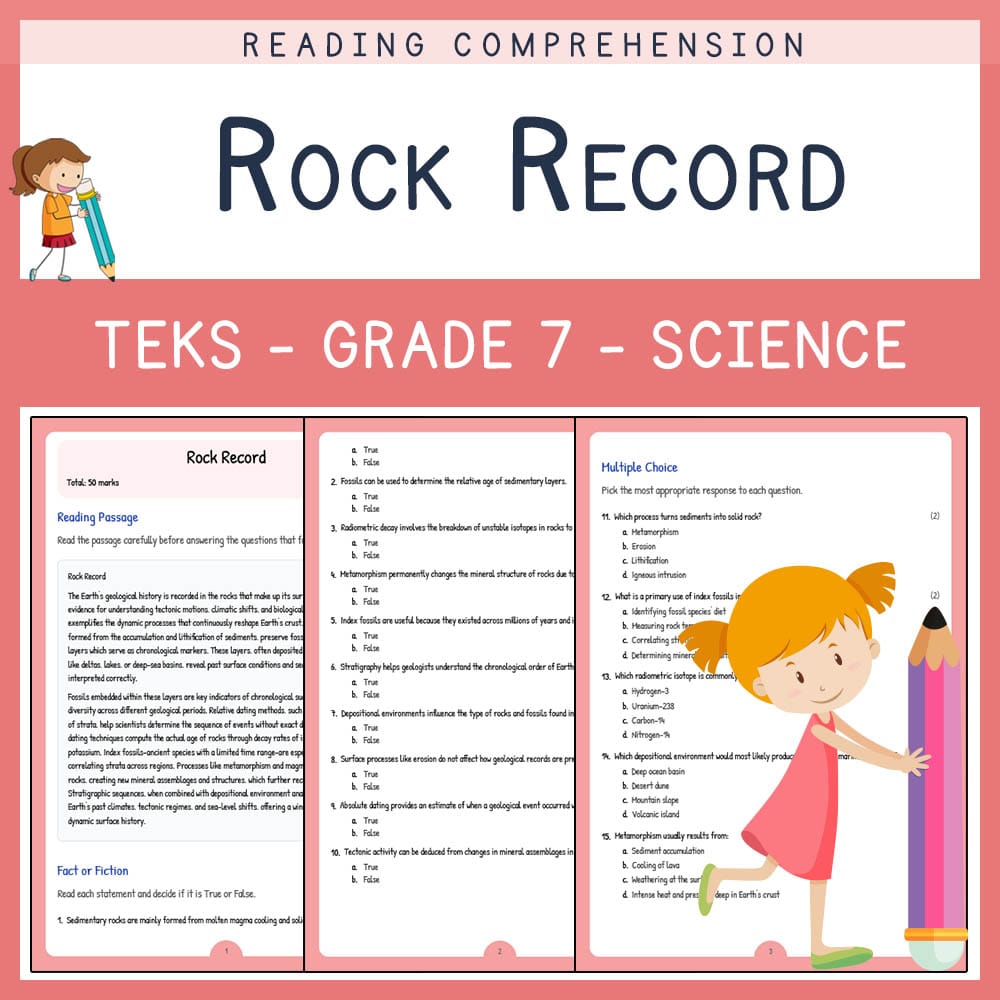
Grade 7 Science | Rock Record Worksheet | TEKS-Aligned
Created byLumora LearningLearning Objectives
- Understand the processes of the rock cycle, including sedimentation, lithification, metamorphism, and magmatism.
- Explain how fossils and stratigraphy serve as evidence of Earth's history and surface change.
- Identify relative and absolute dating techniques, including index fossils and radiometric decay methods.
Also included in: Grade 7 Science | Earth and Space Systems Unit Bundle | TEKS Standard
Instant download
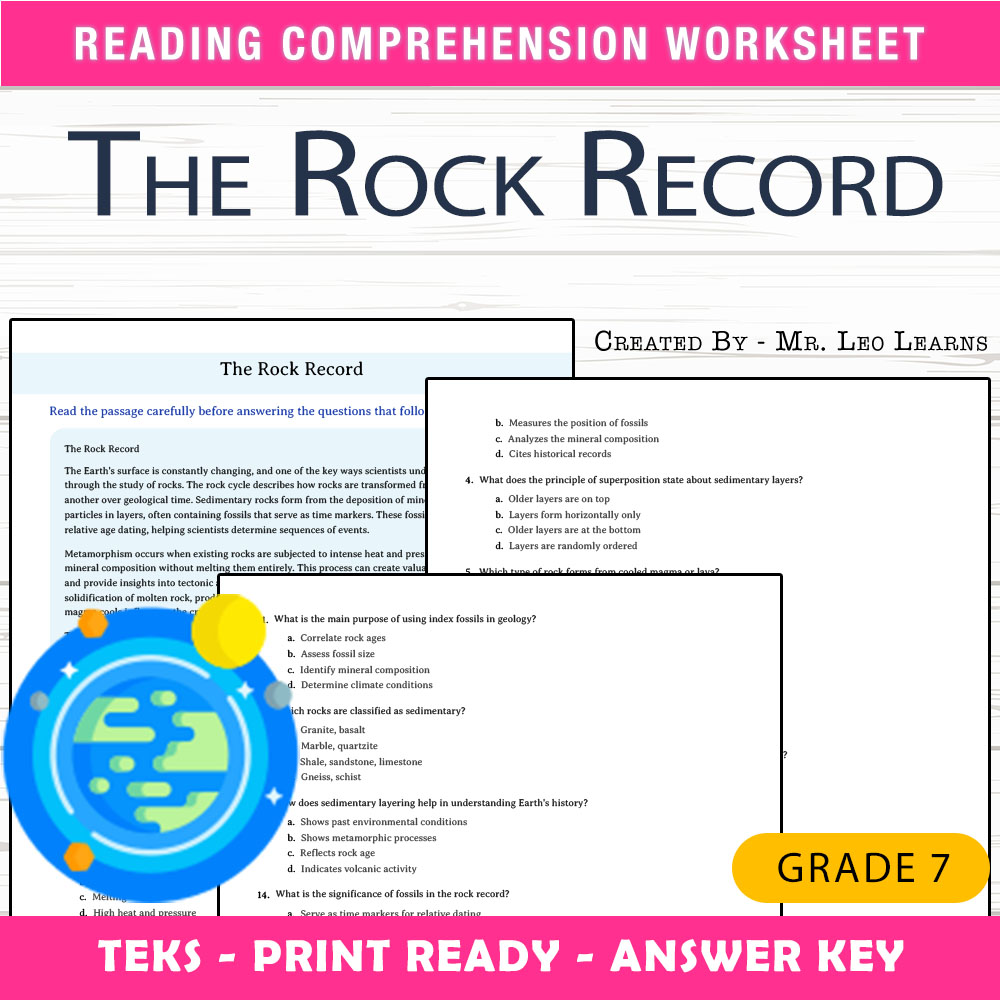
Grade 7 Science — The Rock Record Worksheet for Mastering Earth's History
Created byThe Resource HubLearning Objectives
- Understand the processes of the rock cycle, including lithification, metamorphism, and magmatism.
- Apply relative and absolute dating techniques, such as index fossils and radiometric decay, to interpret Earth's history.
- Analyze stratigraphic sequences and depositional environments to infer past tectonic and climate conditions.
Also included in: Grade 7 Science UNIT Bundle | Earth & Space Systems Mastery Worksheets +1 more
Instant download
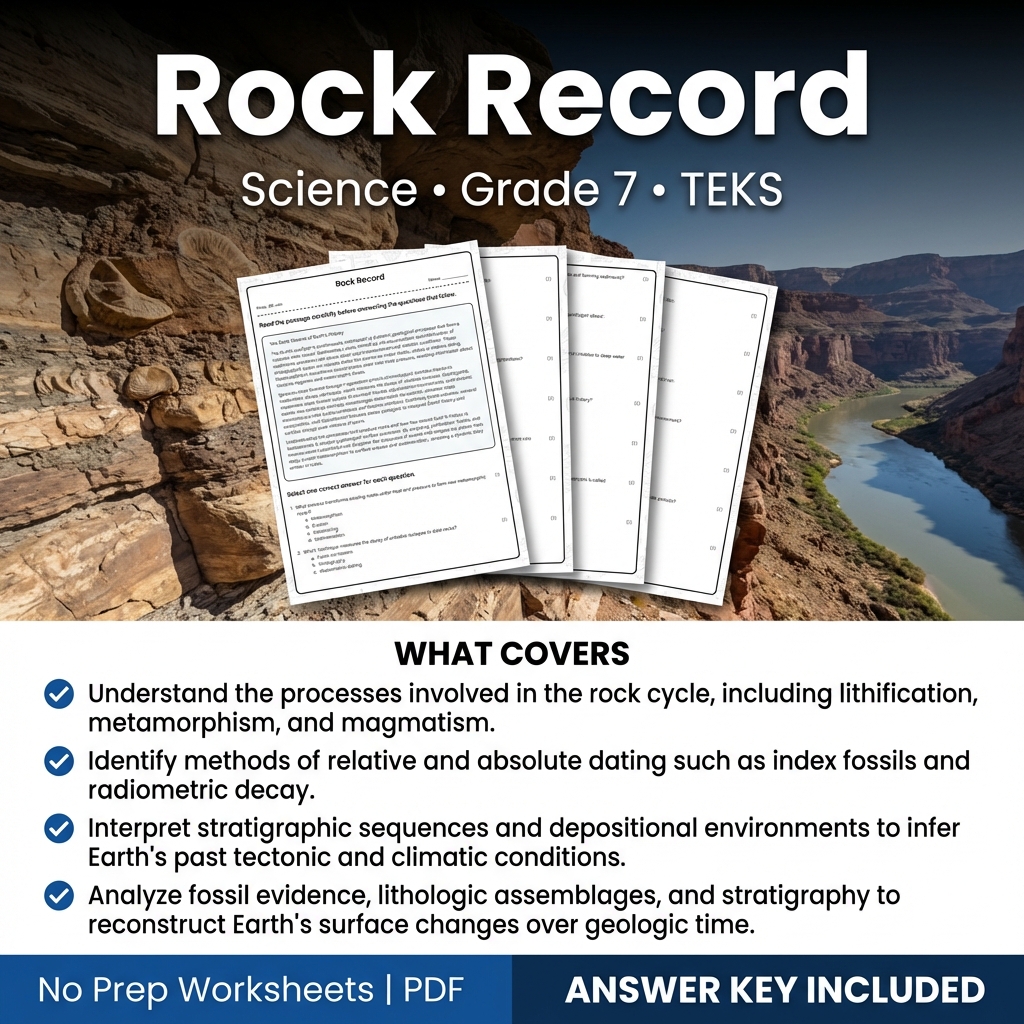
Grade 7 Science Worksheet | Rock Record TEKS Practice & Assessment
Created byCoral Reef LearningLearning Objectives
- Understand the processes involved in the rock cycle, including lithification, metamorphism, and magmatism.
- Identify methods of relative and absolute dating such as index fossils and radiometric decay.
- Interpret stratigraphic sequences and depositional environments to infer Earth's past tectonic and climatic conditions.
Instant download

Grade 7 Science | The Rock Record - Daily Reading Comprehension
Created byCoral Reef LearningLearning Objectives
- Understand the processes that form different types of rocks within the rock cycle
- Identify the main stages of sedimentary stratigraphy
- Explain how fossils serve as evidence of Earth's history
Instant download

Rock Record Worksheet | TEKS-Aligned Grade 7 Science Practice
JCreated byJ.S SheetsLearning Objectives
- Explain how the rock cycle and Earth processes (lithification, metamorphism, and magmatism) contribute to the rock record
- Use sedimentary stratigraphy and fossils (especially index fossils) to interpret relative time and correlate layers
- Describe relative and absolute dating methods, including radiometric decay, and explain how dated evidence anchors Earth’s history
Instant download

Grade 7 Rock Record Science Daily Reading Worksheet | TEKS Activity
Created byBRIGHT PATH RESOURCESLearning Objectives
- Identify the main idea of how the rock cycle records Earth’s history.
- Use supporting details to explain how different rock types form and change.
Also included in: Earth Resources & Space Systems Grade 7 Science Lesson Bundle | TEKS +1 more
Instant download

Thermal Expansion Worksheet Grade 7 Science | Heat and Matter
Created byPrism Point LearningLearning Objectives
- Explain how increasing temperature increases particle motion and average spacing, causing thermal expansion in solids and liquids.
- Describe how heating changes gas particle motion and increases pressure in a confined space.
- Use particle theory to predict contraction when temperature decreases.
Instant download

Thermal Expansion Worksheet | Standards-Based Practice for Grade 7 Science
JCreated byJ.S SheetsLearning Objectives
- Explain how heating affects the particle spacing in solids, liquids, and gases.
- Describe the process of thermal expansion and contraction in different materials.
- Understand how temperature changes influence pressure in gases within confined spaces.
Also included in: Grade 7 Forces and Matter Science lesson bundle – California Standards +1 more
Instant download

Grade 7 Thermal Expansion Worksheet | Practice & Standards PDF
 Created byClear Sky Classroom
Learning Objectives
- Explain how heating increases particle kinetic energy and spacing, causing thermal expansion in solids and liquids.
- Describe how cooling decreases particle motion and can lead to contraction.
- Predict how temperature changes can affect gas pressure in confined spaces.
Instant download

Grade 7 Science | Understanding Thermal Expansion - Daily Reading Comprehension
Created byCoral Reef LearningLearning Objectives
- Define thermal expansion and explain how particles behave when heated.
- Describe how solids, liquids, and gases respond differently to heat.
- Identify real-world examples of thermal expansion and contraction.
Instant download

Grade 7 Science | Thermal Expansion Worksheet | California Standards
Created byLumora LearningLearning Objectives
- Explain how heating and cooling affect the spacing and motion of particles in solids, liquids, and gases.
- Describe how thermal expansion leads to changes in length, volume, and pressure in real-world situations.
- Use the particle model to predict contraction and expansion when temperature changes.
Instant download
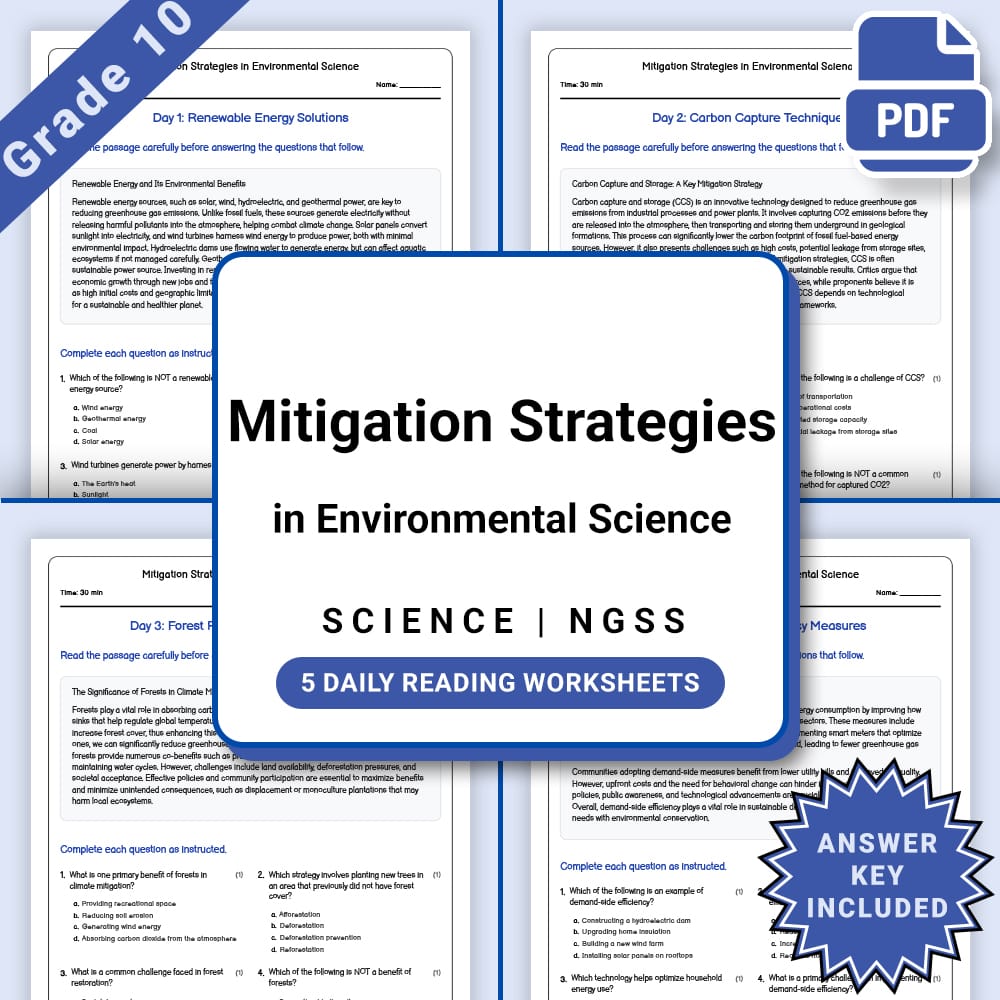
Grade 10 Science – Mitigation Strategies Worksheet (PDF +Answer Key)
Created byCopper Leaf ClassroomLearning Objectives
- Understand different renewable energy options and their environmental benefits.
- Analyze how renewable energy contributes to reducing pollution and greenhouse gases.
- Evaluate the advantages and challenges of implementing renewable energy solutions.
Instant download

Grade 10 Science – Environmental Management & Strategies | Reading Worksheet
Created byBright Mind ResourcesLearning Objectives
- Understand key concepts of environmental mitigation
- Identify common mitigation strategies and their purposes
- Evaluate the effectiveness and trade-offs of mitigation options
Also included in: Grade 10 Daily Reading Science: Environmental Systems Lesson Bundle | NGSS +2 more
Instant download

Mitigation Strategies Worksheet | NGSS-Aligned Grade 10 Science Practice
JCreated byJ.S SheetsLearning Objectives
- Understand various mitigation strategies to reduce environmental impacts and greenhouse gases.
- Evaluate the effectiveness, co-benefits, and trade-offs of different mitigation options.
- Analyze technological, economic, and societal constraints influencing mitigation measures.
Also included in: Grade 10 Climate Change Science Lesson Bundle | NGSS Practice Worksheets
Instant download

Mitigation Strategies Worksheet | Assessment Grade 10 Science printable PDF
Learning Objectives
- Explain major mitigation approaches for reducing greenhouse gas emissions, including renewables, carbon capture, afforestation, and demand-side efficiency.
- Evaluate mitigation options by considering effectiveness, co-benefits, unintended consequences, and trade-offs across sectors and scales.
- Analyze how economic and societal constraints shape real-world mitigation policy choices such as emissions pricing.
Also included in: Earth and Human Activity Lesson Bundle Grade 10 Science NGSS
Instant download
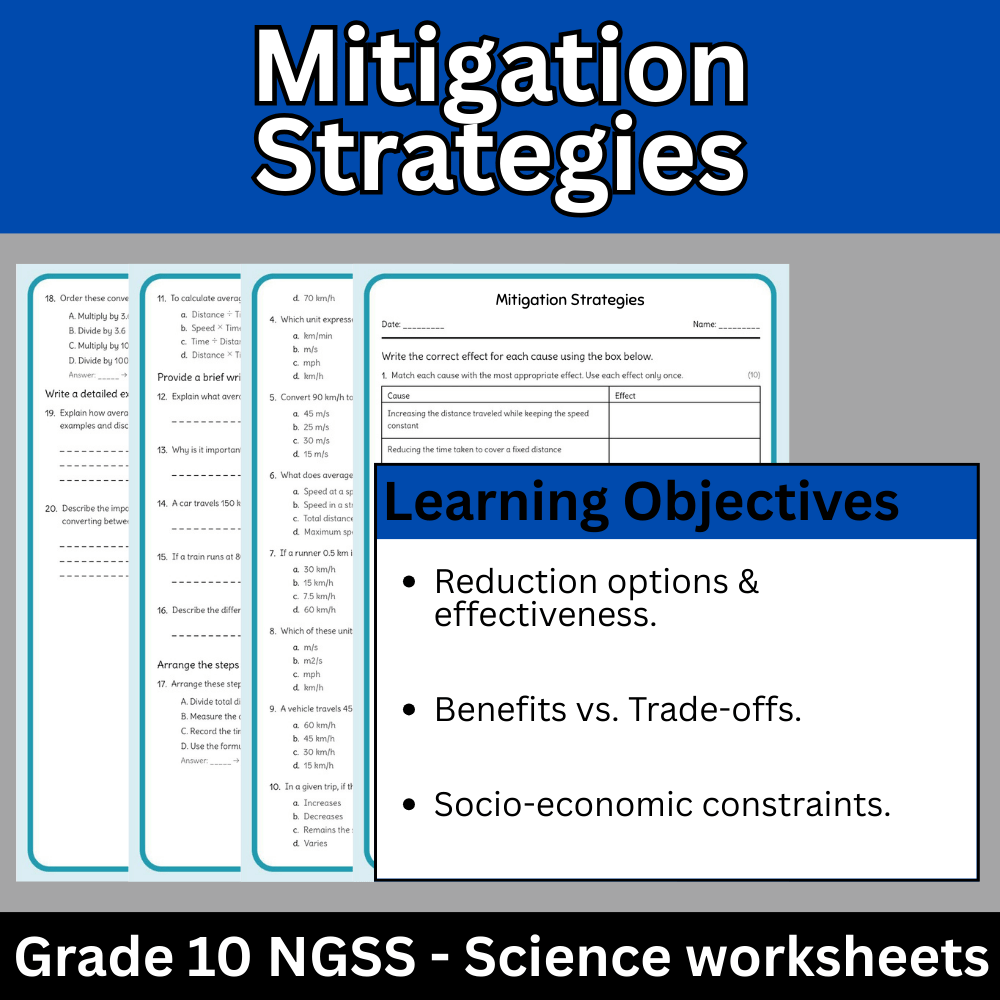
Grade 10 Science – Mitigation Strategies Worksheet (PW) | NGSS Aligned
Created byBright Mind ResourcesLearning Objectives
- Understand various mitigation options and their roles in reducing environmental impacts
- Evaluate the effectiveness, benefits, and trade-offs of different mitigation strategies
- Analyze the societal, economic, and technological constraints influencing mitigation choices
Instant download
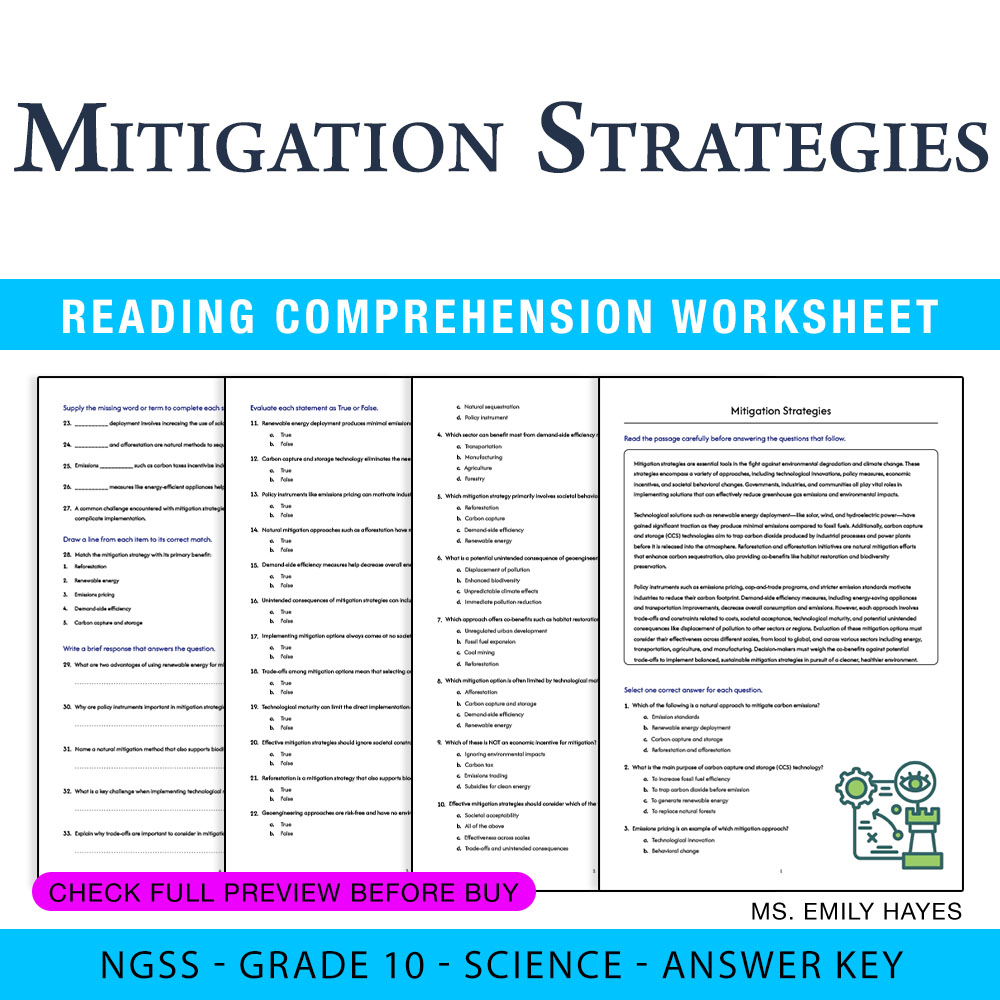
Grade 10 Science | Mitigation Strategies Worksheet (PDF+ Answer Key)
Created byCopper Leaf ClassroomLearning Objectives
- Understand various mitigation and management approaches to reduce environmental impacts and greenhouse gas emissions.
- Evaluate the effectiveness, co-benefits, trade-offs, and potential unintended consequences of different mitigation options.
- Analyze technological, economic, and societal constraints influencing mitigation strategies.
Instant download
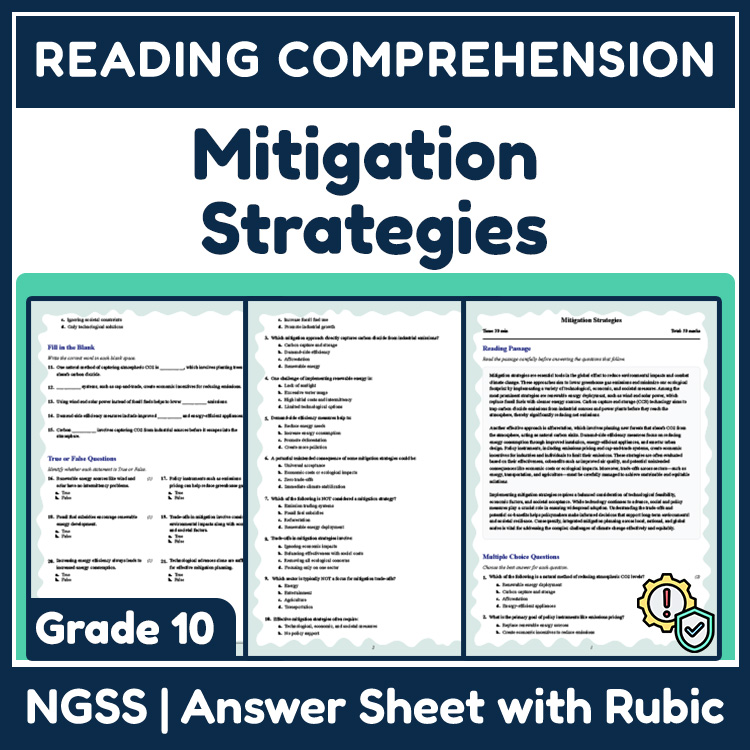
10th Grade Science | Mitigation Strategies Reading Worksheet with Answer Key
JCreated byJ.S SheetsLearning Objectives
- Understand various mitigation strategies to reduce environmental impacts and greenhouse gases.
- Analyze the effectiveness and trade-offs of different mitigation approaches across sectors.
- Evaluate technological, economic, and societal constraints affecting mitigation options.
Also included in: Grade 10 Science | Climate Change & Land Use Unit Worksheet Bundle
Instant download

Grade 10 Science Worksheet B: Mitigation Strategies Worksheet | NGSS Practice
Created byClear Sky ClassroomLearning Objectives
- Evaluate different greenhouse gas mitigation strategies by effectiveness, feasibility, and trade-offs.
- Analyze co-benefits and potential unintended consequences of mitigation measures across sectors and scales.
- Apply mitigation vocabulary (renewables, carbon capture, afforestation, demand-side efficiency, emissions pricing) to real-world scenarios.
Also included in: Grade 10 Climate & Natural Hazards Science Lesson Bundle (NGSS) +1 more
Instant download

Grade 10 Science | Mitigation Strategies Worksheet with Short Notes (PDF)
Created byMeadowlark WorksheetsLearning Objectives
- Understand different mitigation strategies to reduce environmental impacts.
- Evaluate the effectiveness and trade-offs of mitigation options.
- Analyze technological, economic, and societal constraints in mitigation efforts.
Also included in: Grade 10 Science NGSS Earth & Human Activity Unit | Worksheet Pack +1 more
Instant download

Grade 10 Science | Mitigation Strategies - Daily Reading Comprehension
Created byCoral Reef LearningLearning Objectives
- Understand the concept of renewable energy sources
- Identify the benefits and challenges of renewable energy
- Analyze how renewable energy contributes to reducing environmental impacts
Instant download
Browse more categories
About Science Worksheets
Find Science worksheets spanning core skills, practice, and review. All 44,773 resources are instant PDF downloads for the classroom or home.
Every worksheet on MyTeachingSheets is created by independent teacher-authors and reviewed before publication. All resources download as printable PDFs for classroom, homework, or at-home practice, and many include answer keys. Preview any worksheet free before buying.