
Science Worksheets
42,859 subject resources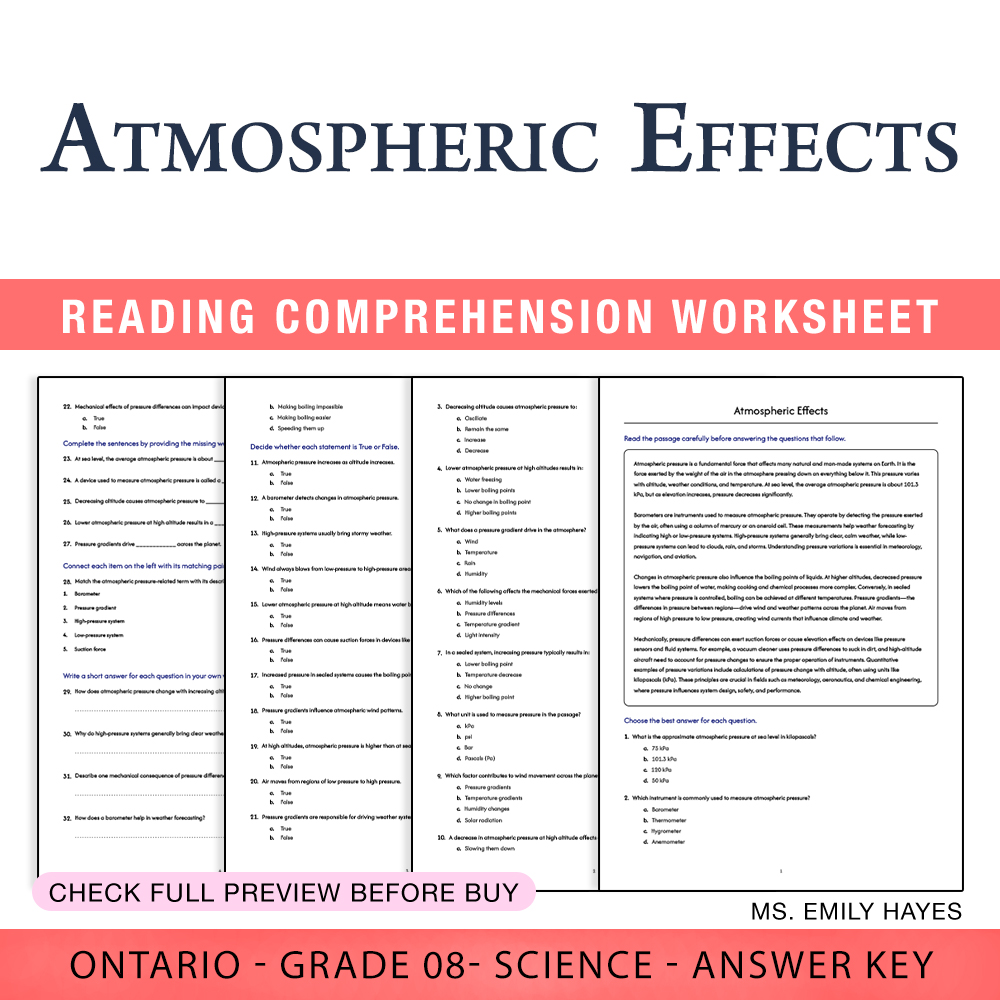
Grade 8 Science | Atmospheric Effects Worksheet (PDF+ Answer Key)
 Created byCopper Leaf Classroom
Learning Objectives
- Explain how atmospheric pressure influences boiling points and weather instruments.
- Describe the operation of a barometer and how pressure gradients drive wind.
- Analyze the mechanical consequences of pressure differences in sealed systems.
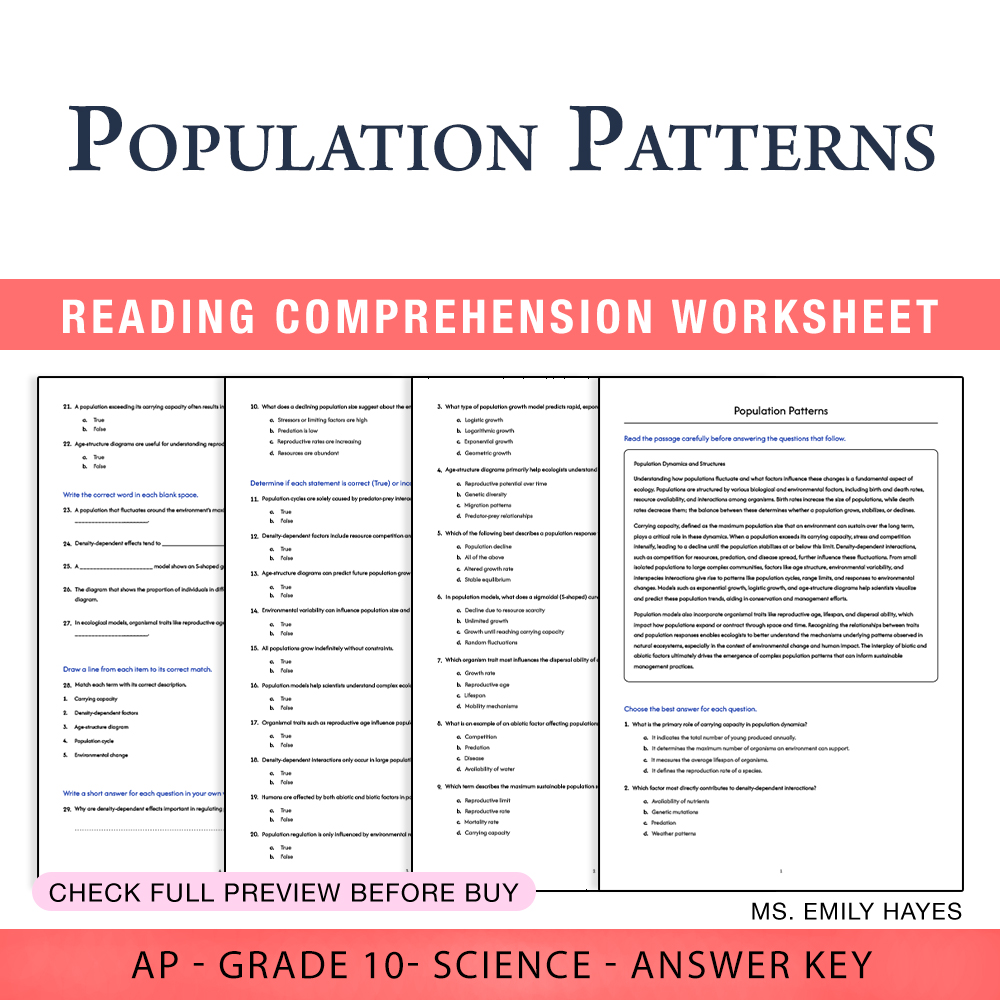
10th Grade Science | Population Patterns Worksheet (PDF+ Answer Key)
Created byCopper Leaf ClassroomLearning Objectives
- Understand factors that influence population structures such as birth and death rates.
- Describe the role of carrying capacity and density-dependent interactions in populations.
- Interpret population models and age-structure diagrams to analyze population dynamics.
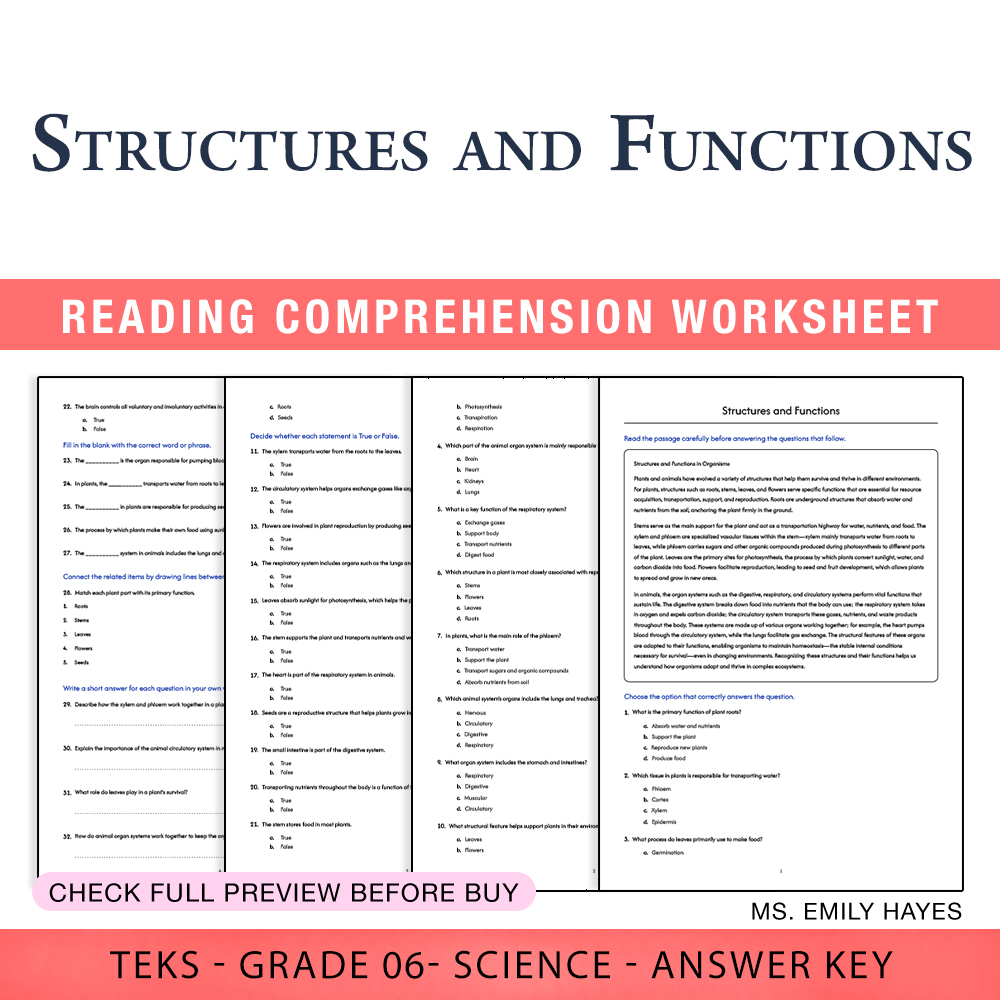
Grade 6 Science | Structures and Functions Worksheet (PDF+ Answer Key)
Created byCopper Leaf ClassroomLearning Objectives
- Identify major plant structures such as roots, stems, leaves, and flowers and describe their functions.
- Understand how vascular tissues like xylem and phloem transport resources within plants.
- Recognize the basic organ systems of animals such as the digestive, respiratory, and circulatory systems and their roles in survival.
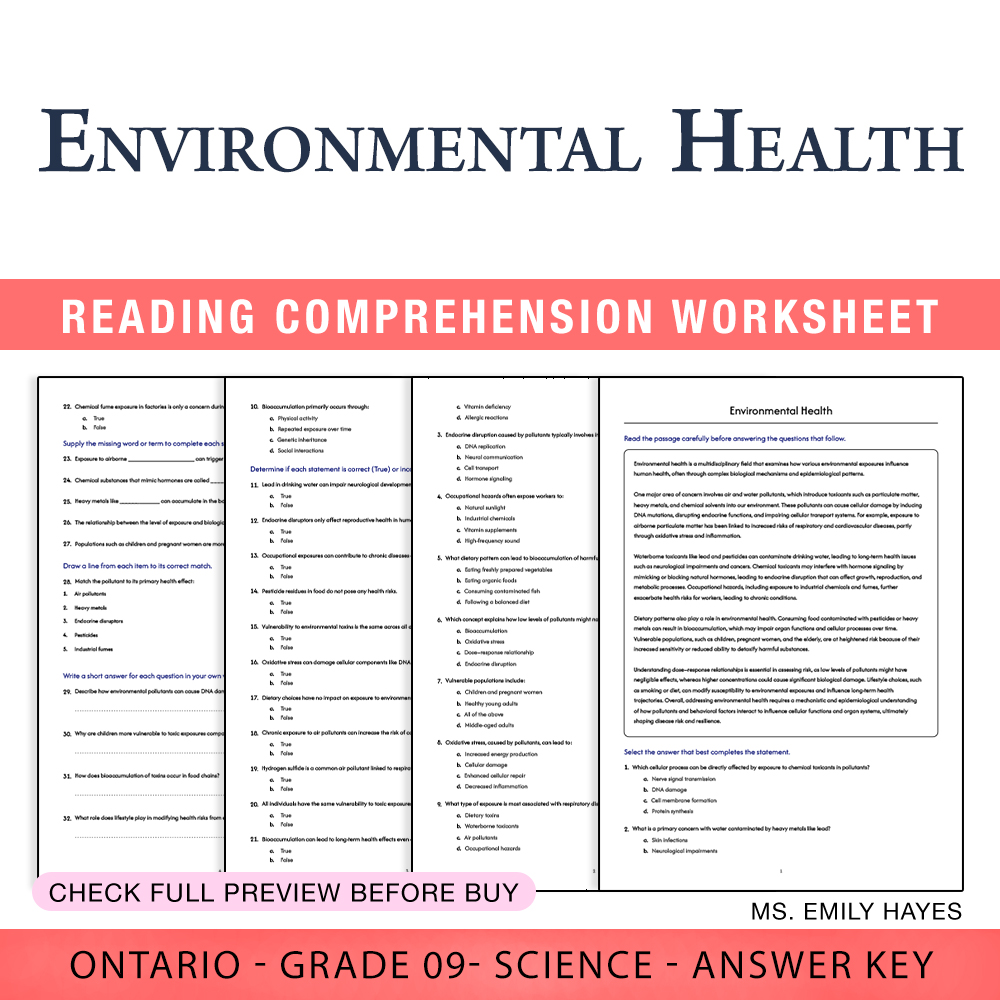
Grade 9 Science | Environmental Health Worksheet (PDF + Answer Key)
Created byCopper Leaf ClassroomLearning Objectives
- Understand how environmental exposures impact cellular processes and organ systems.
- Identify common pollutants and toxicants and their effects on human health.
- Explain concepts of dose-response and vulnerability factors in environmental health.
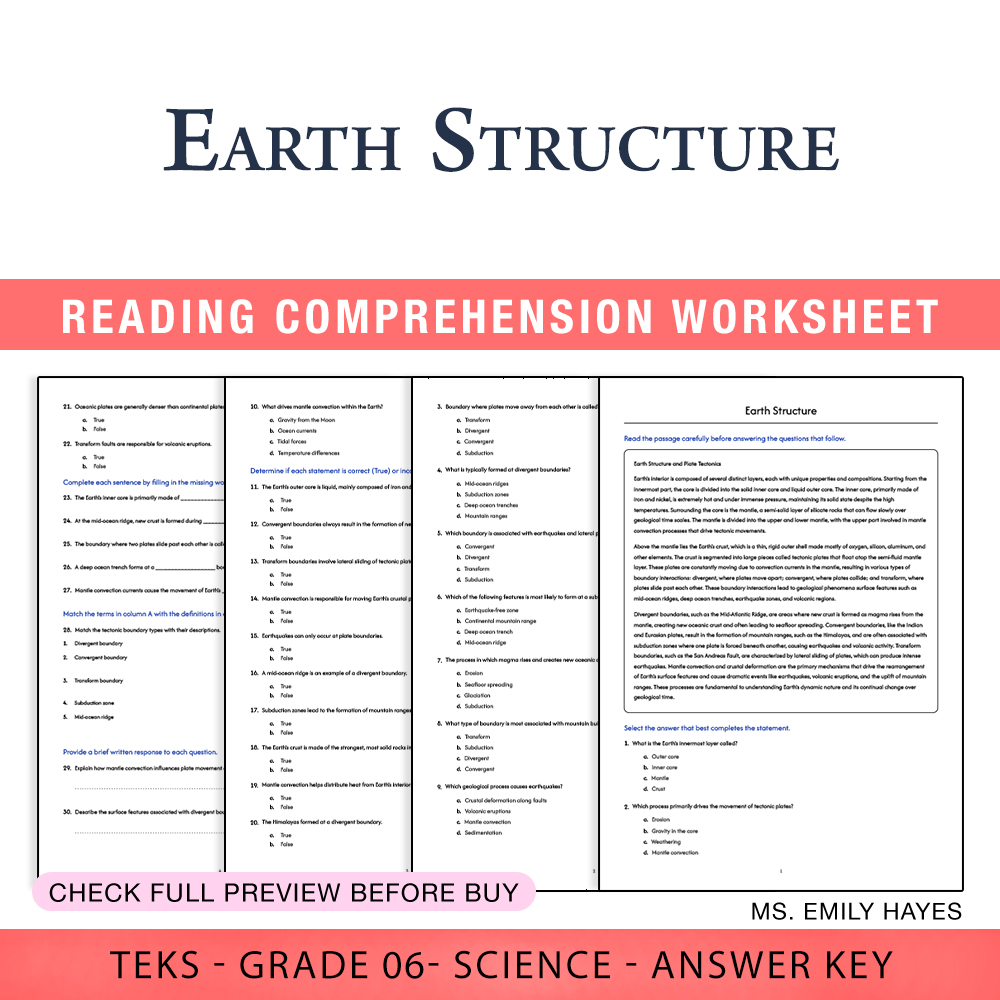
6th Grade Science | Earth Structure Worksheet (PDF+ Answer Key)
Created byCopper Leaf ClassroomLearning Objectives
- Describe the internal layers of the Earth and their properties.
- Identify different types of plate boundaries and their features.
- Explain the geological processes driven by plate movements that lead to earthquakes, volcanoes, and mountain formation.
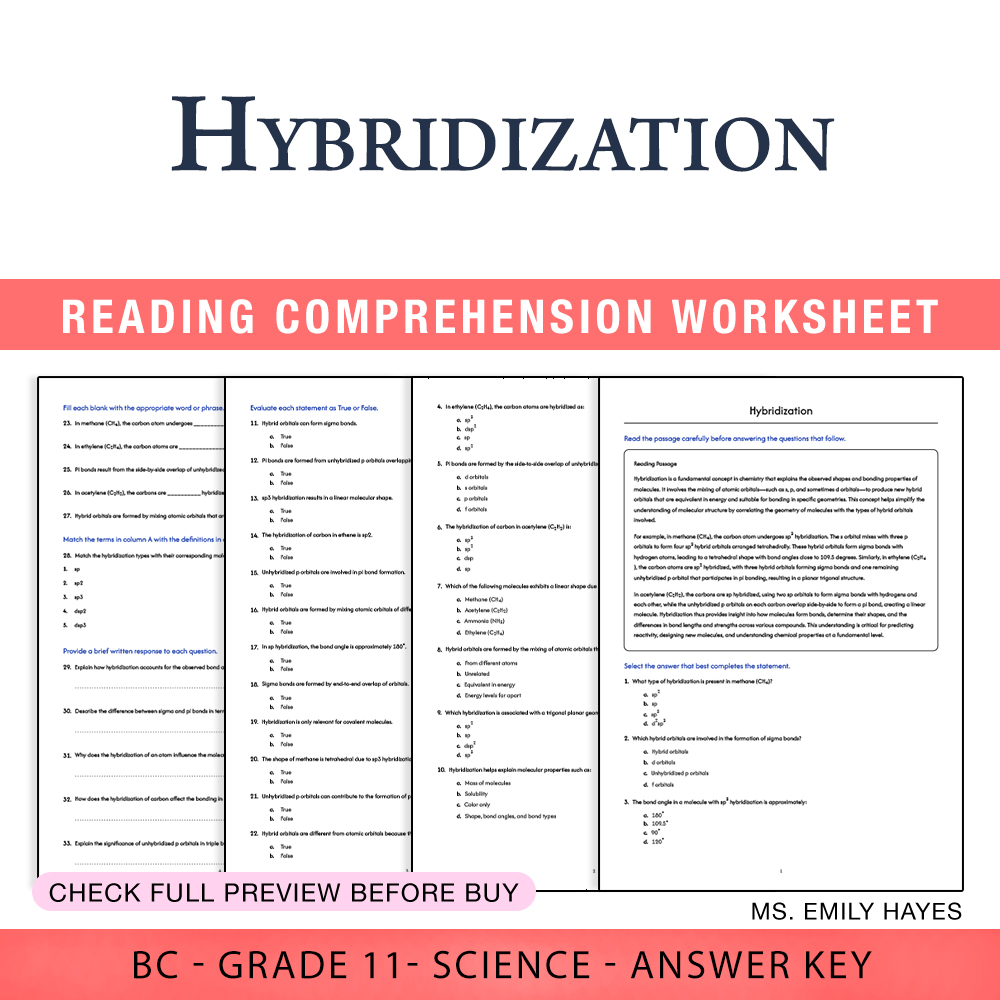
Grade 11 Science | Hybridization Worksheet (PDF + Answer Key)
Created byCopper Leaf ClassroomLearning Objectives
- Understand the concept of hybridization and how atomic orbitals mix to form new hybrid orbitals.
- Identify different types of hybridization (sp, sp2, sp3) and their associated molecular geometries.
- Explain the role of hybrid orbitals in sigma and pi bonding and their influence on bond strength and length.
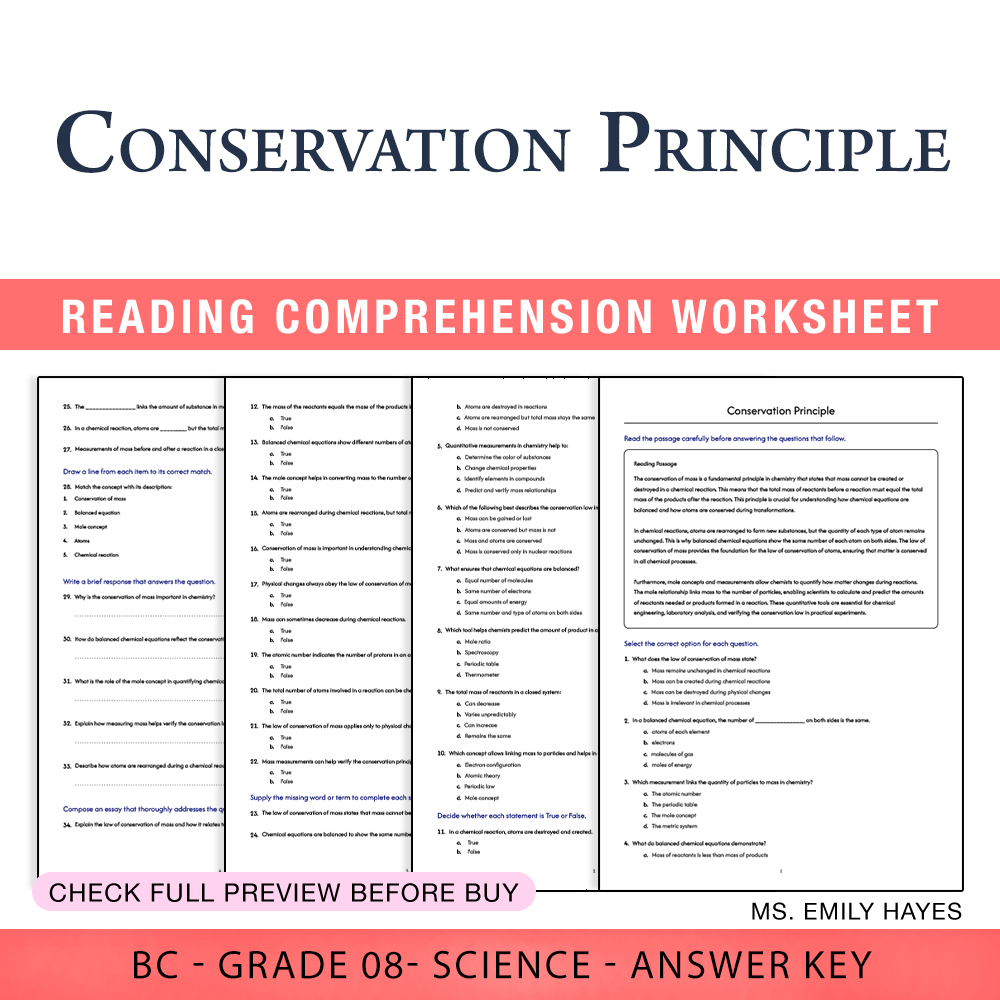
8th Grade Science | Conservation Principle Worksheet (PDF+ Answer Key)
Created byCopper Leaf ClassroomLearning Objectives
- Understand the law of conservation of mass and its significance in chemical reactions.
- Interpret balanced chemical equations to identify the conservation of atoms and mass.
- Apply mole concepts and quantitative measurements to predict mass relationships in chemical processes.
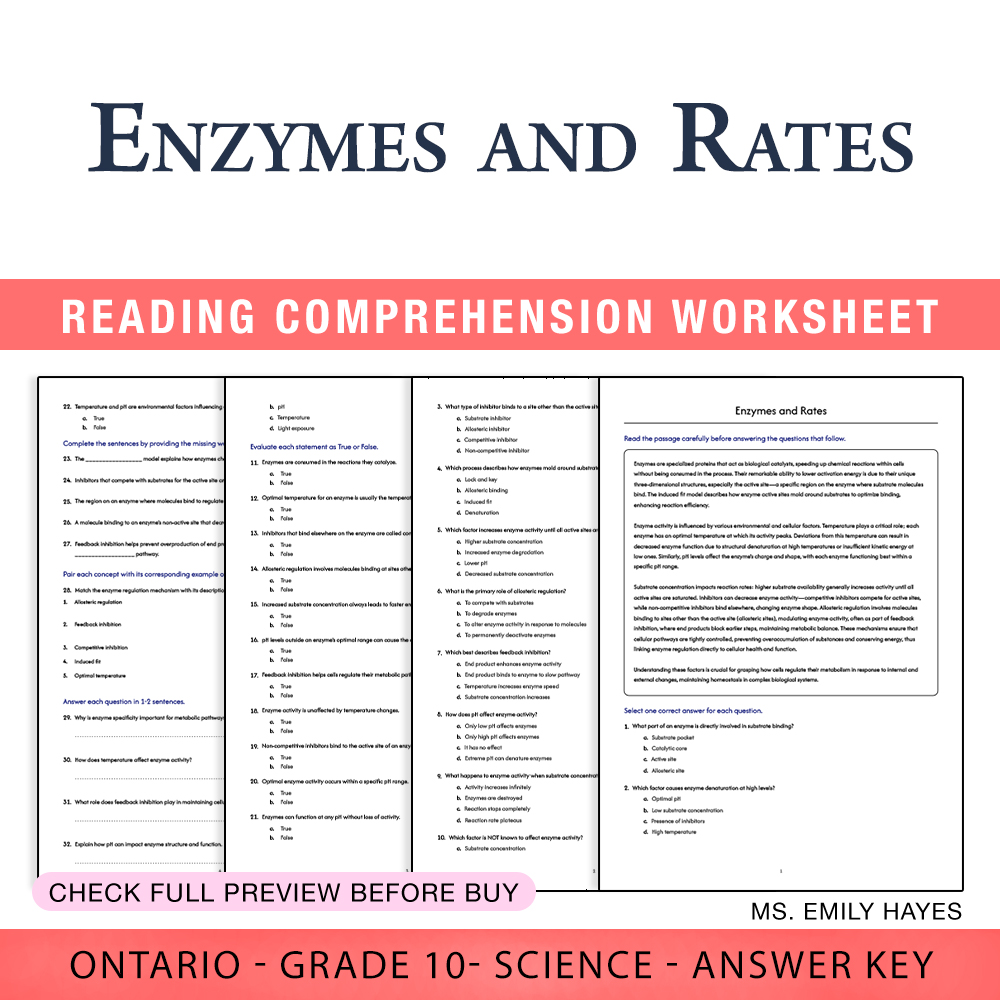
Grade 10 Science | Enzymes and Rates Worksheet (PDF + Answer Key)
Created byCopper Leaf ClassroomLearning Objectives
- Describe the properties and functions of enzymes in biological systems.
- Explain how factors like temperature, pH, substrate concentration, and inhibitors affect enzyme activity.
- Discuss mechanisms like allosteric regulation and feedback inhibition and their roles in metabolic pathways.
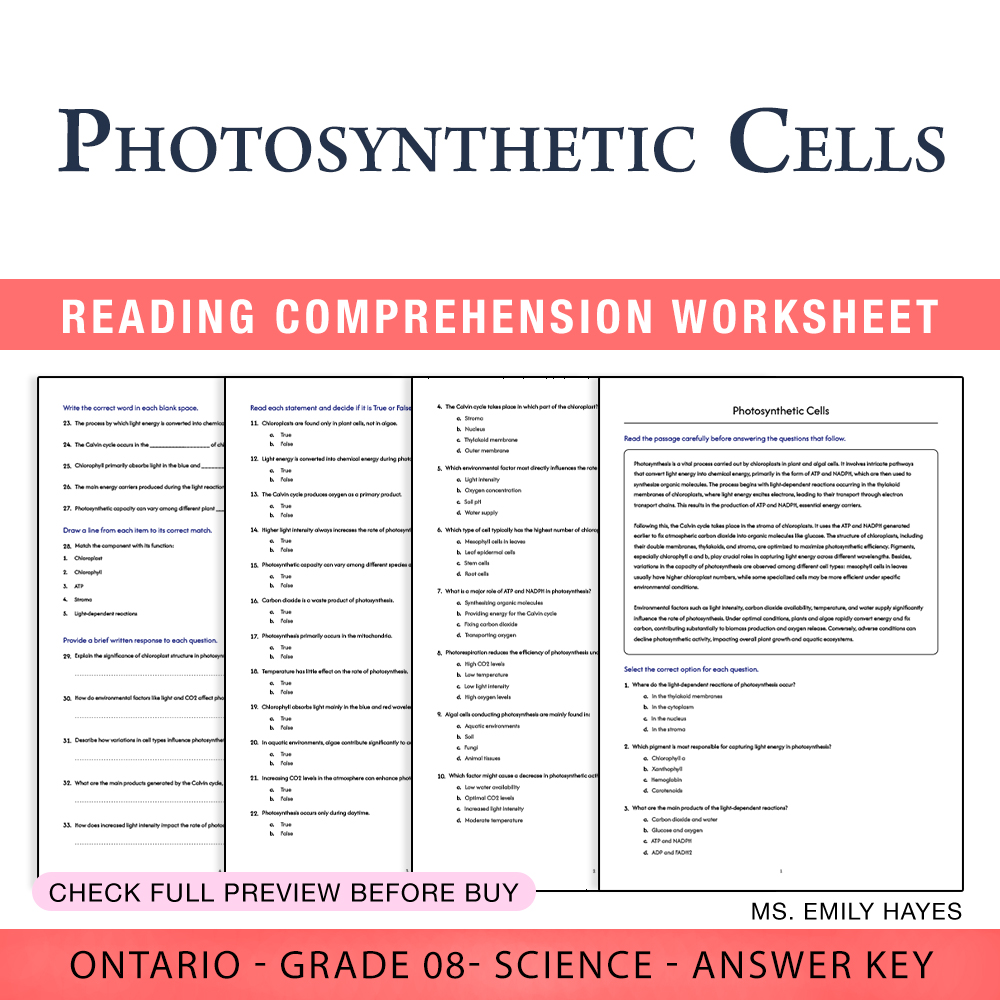
Grade 8 Science | Photosynthetic Cells Worksheet (PDF+ Answer Key)
Created byCopper Leaf ClassroomLearning Objectives
- Describe the structure of chloroplasts and their role in photosynthesis.
- Explain the light-dependent reactions and the Calvin cycle.
- Identify factors affecting photosynthetic efficiency in plant and algal cells.
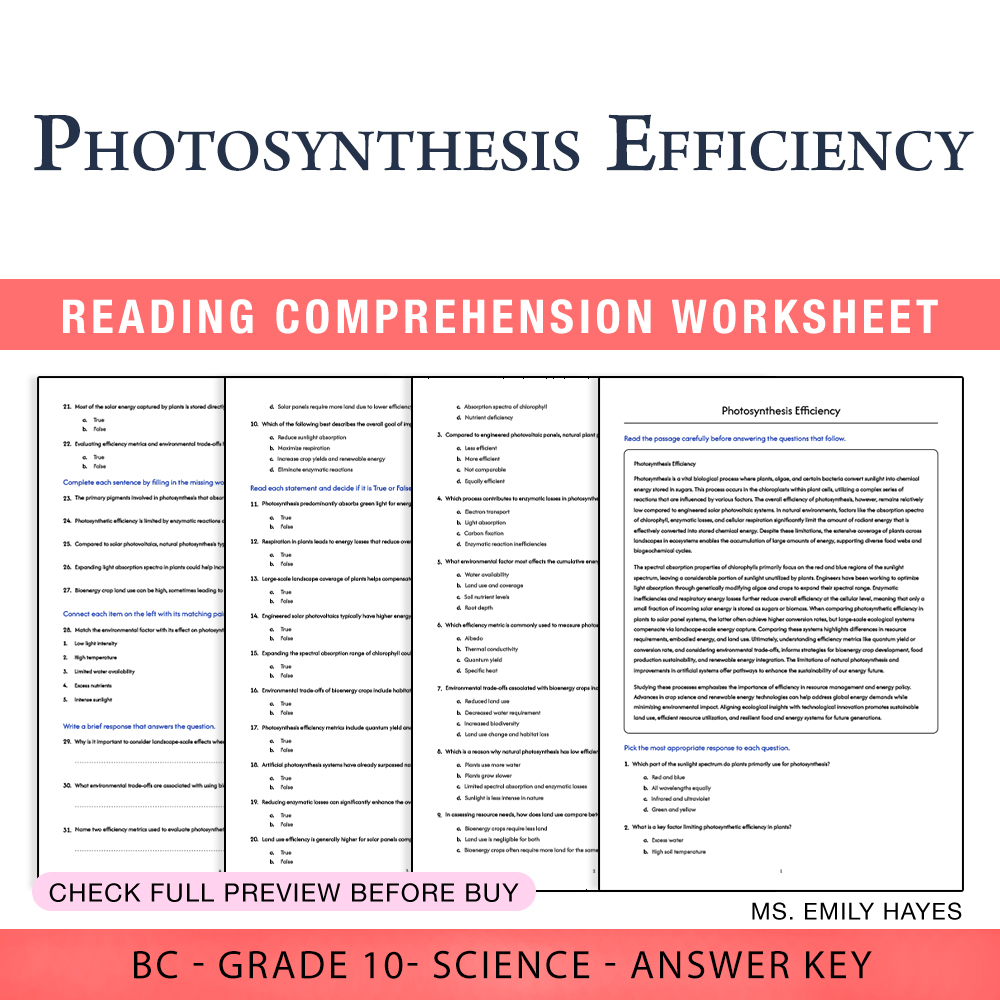
Grade 10 Science | Photosynthesis Efficiency Worksheet (PDF + Answer Key)
Created byCopper Leaf ClassroomLearning Objectives
- Understand the factors that influence the efficiency of photosynthesis in plants.
- Compare natural photosynthetic systems and engineered solar technologies.
- Evaluate environmental and resource trade-offs in bioenergy and renewable energy sources.
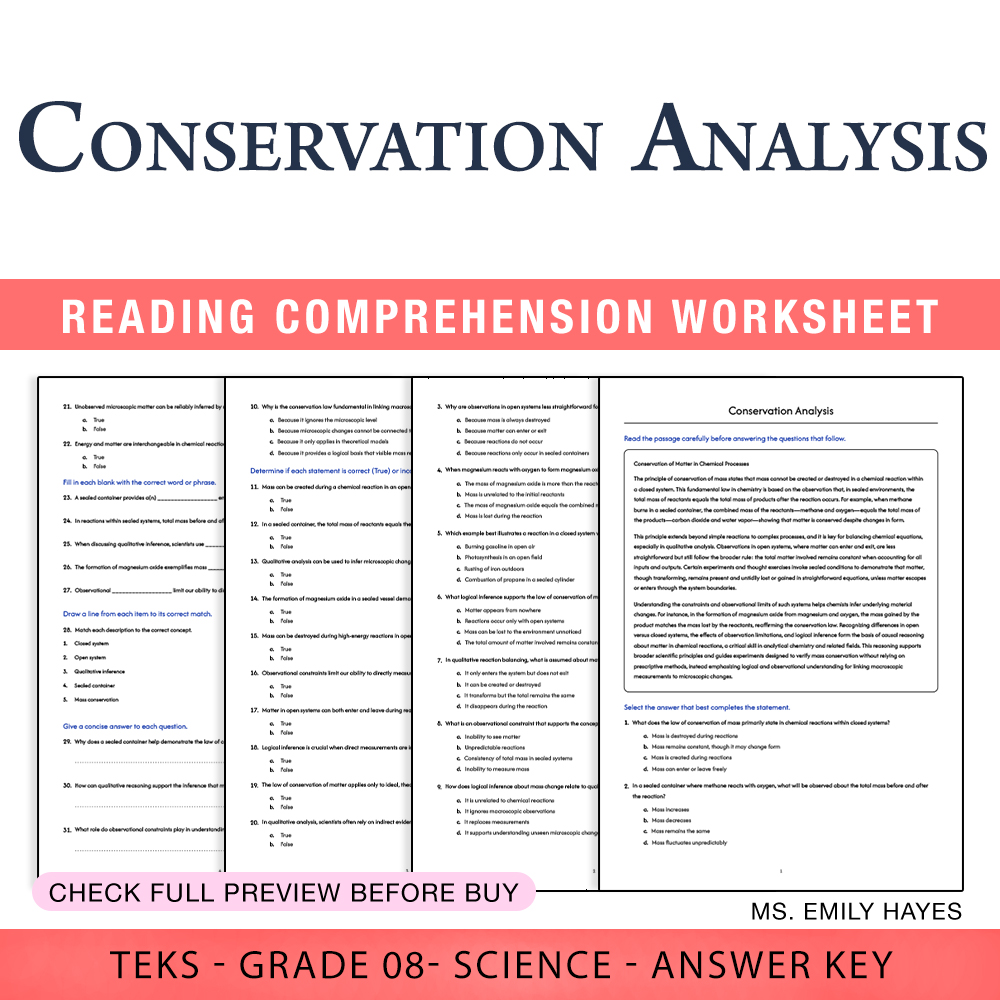
Grade 8 Science | Conservation Analysis Worksheet (PDF+ Answer Key)
Created byCopper Leaf ClassroomLearning Objectives
- Understand the principle of mass conservation in chemical reactions within closed systems.
- Analyze how observations in closed and open systems inform conclusions about matter.
- Apply qualitative reasoning to balance chemical reactions conceptually without prescriptive methods.
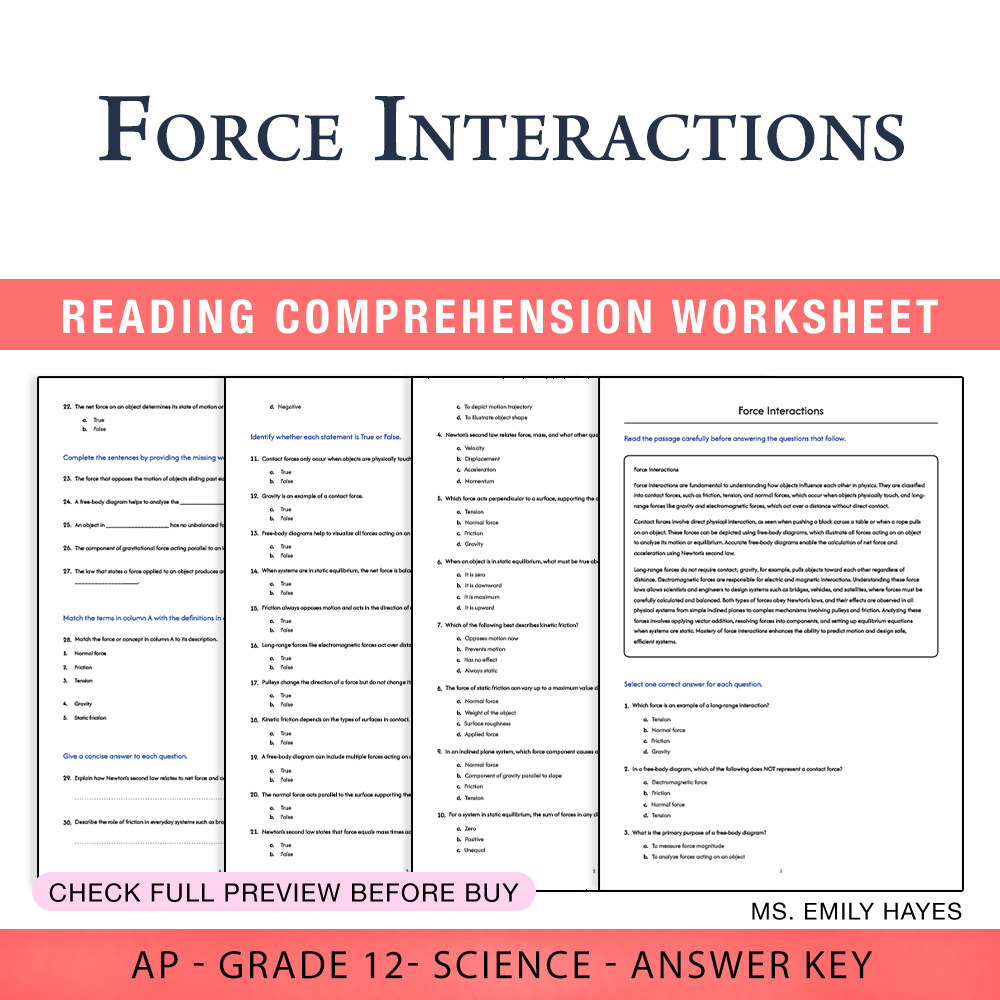
Grade 12 Science | Force Interactions Assessment Worksheet (PDF+ Answer Key)
Created byCopper Leaf ClassroomLearning Objectives
- Explain the differences between contact and long-range force interactions.
- Describe and draw free-body diagrams for various force systems.
- Apply Newton's laws to analyze systems including inclined planes, pulleys, and friction.
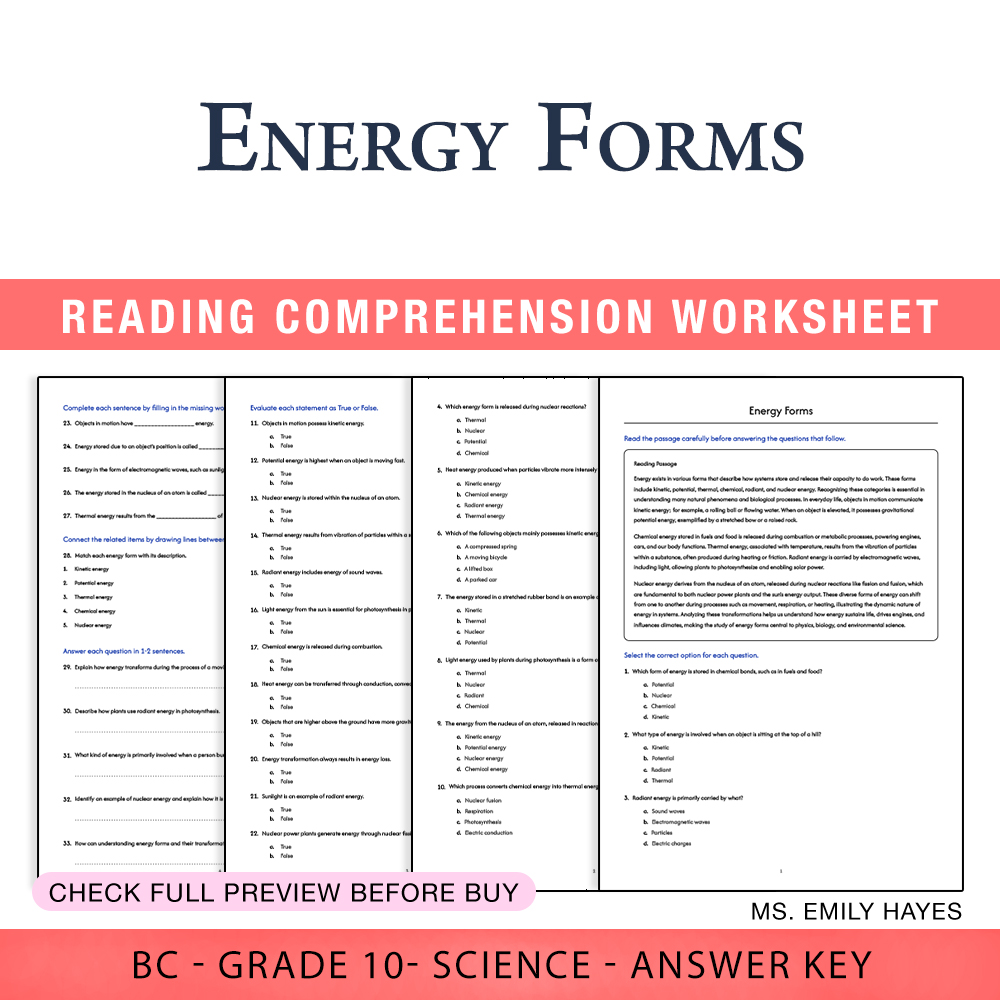
Grade 10 Science | Energy Forms Worksheet (PDF + Answer Key)
Created byCopper Leaf ClassroomLearning Objectives
- Identify and describe different forms of energy such as kinetic, potential, thermal, chemical, radiant, and nuclear.
- Explain how energy transforms between different forms during natural and biological processes.
- Apply understanding of energy forms to analyze movement, respiration, and heating processes.
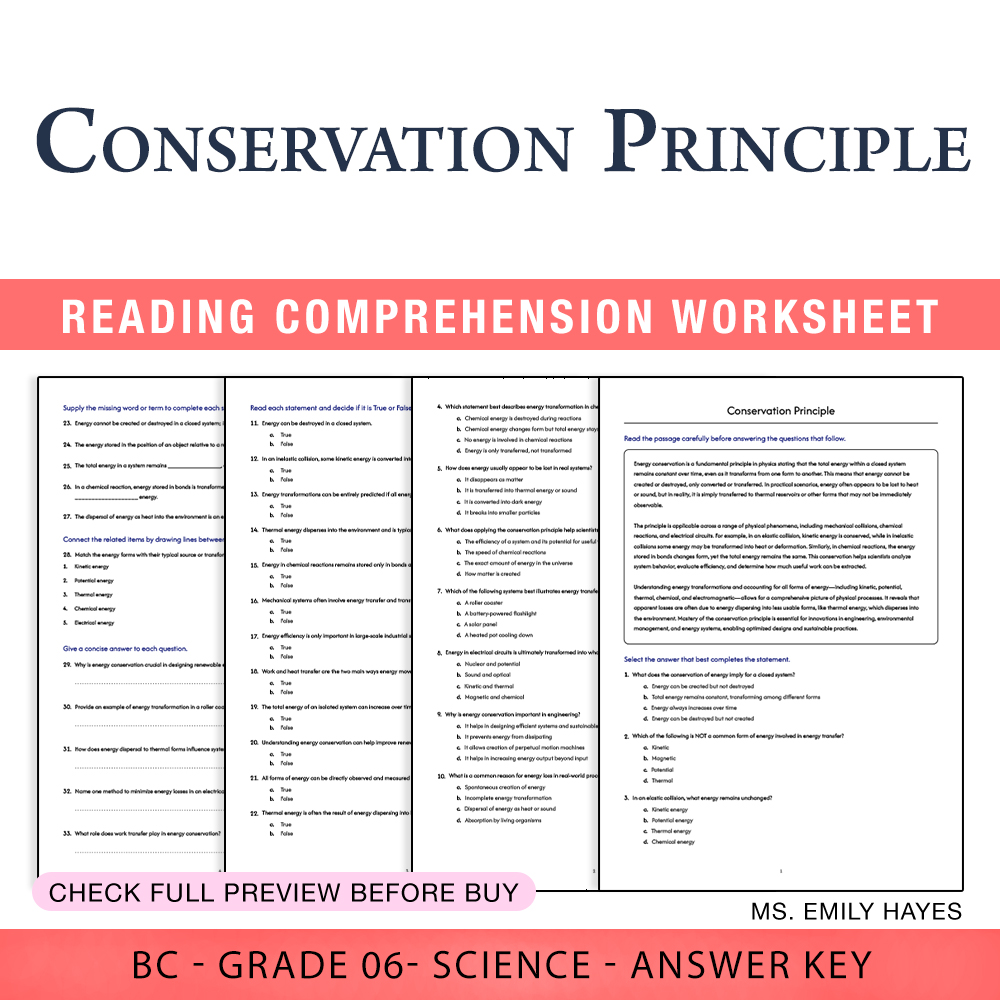
6th Grade Science | Conservation Principle Worksheet (PDF+ Answer Key)
Created byCopper Leaf ClassroomLearning Objectives
- Explain the concept of energy conservation within closed systems.
- Identify the different forms of energy and how they transform and transfer in various physical scenarios.
- Describe how the conservation principle applies in mechanical, chemical, and electrical systems.
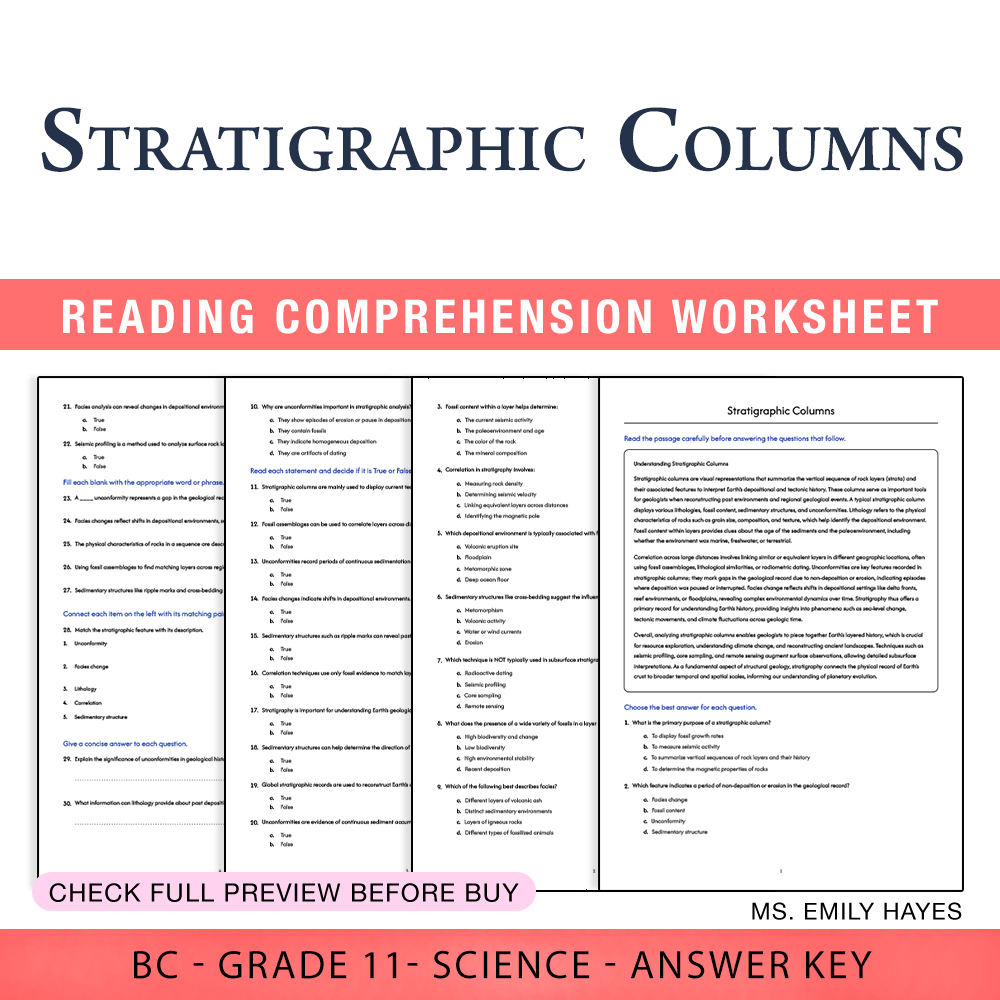
Grade 11 Science | Stratigraphic Columns Worksheet (PDF + Answer Key)
Created byCopper Leaf ClassroomLearning Objectives
- Understand the components and significance of stratigraphic columns in geological analysis.
- Identify the different features such as unconformities and facies within rock sequences.
- Interpret depositional histories and environmental changes from stratigraphic data.
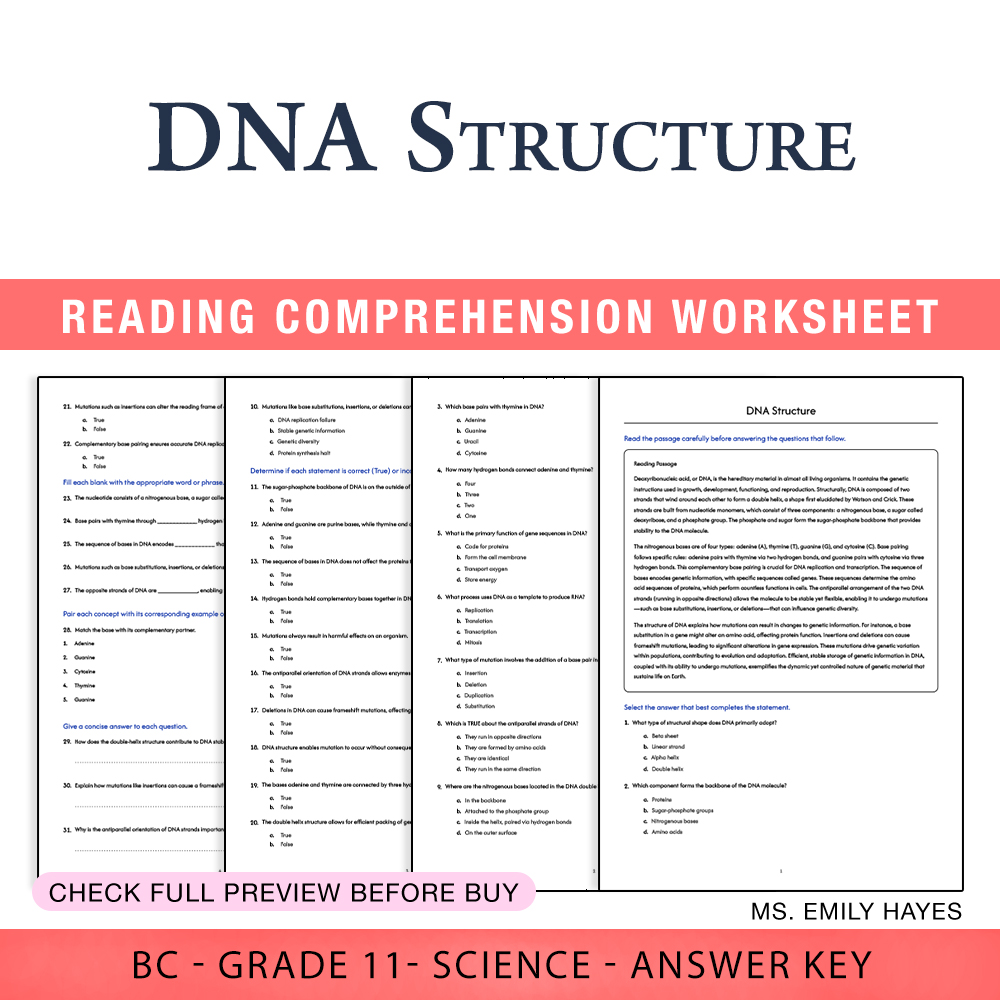
11th Grade Science | DNA Structure Worksheet (PDF + Answer Key)
Created byCopper Leaf ClassroomLearning Objectives
- Describe the basic structure of DNA, including its double helix and nucleotide components.
- Explain the principles of complementary base pairing in DNA.
- Understand how DNA's structural properties enable genetic storage, mutation, and replication.
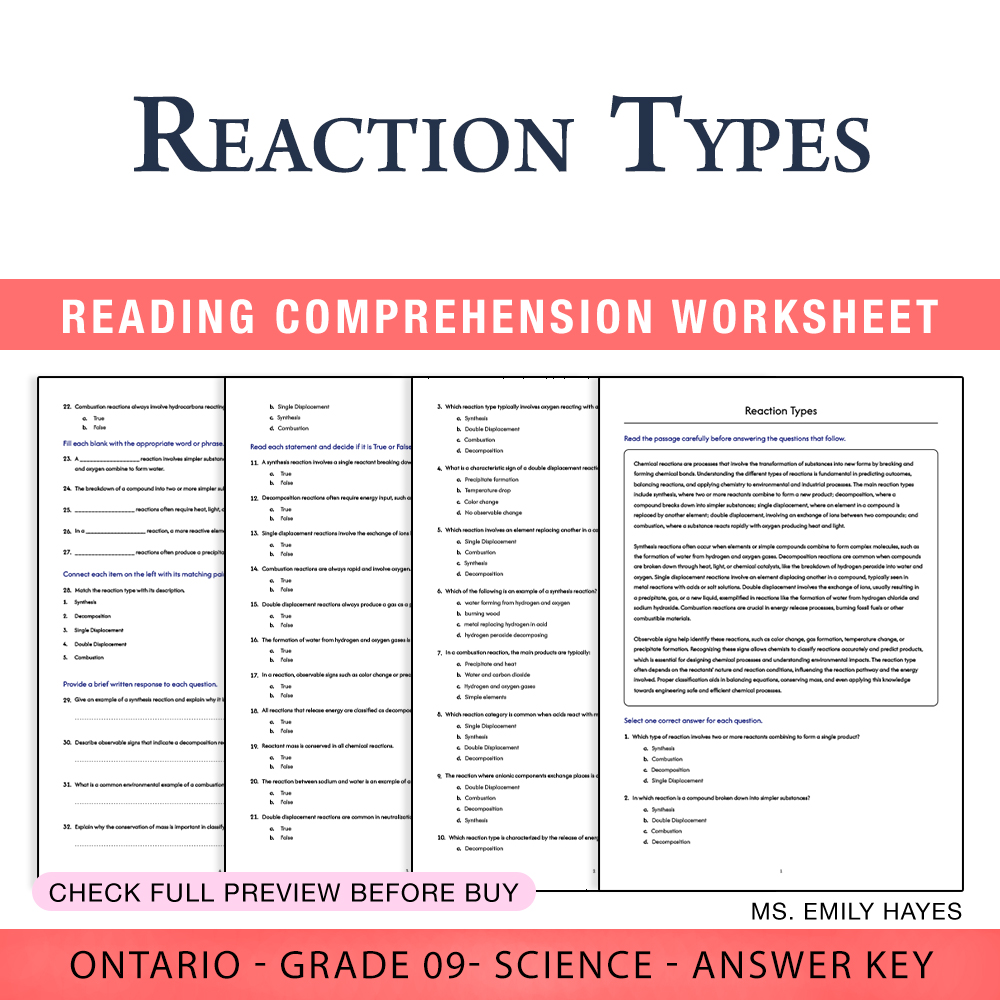
9th Grade Science | Reaction Types Worksheet (PDF + Answer Key)
Created byCopper Leaf ClassroomLearning Objectives
- Identify and describe the main types of chemical reactions: synthesis, decomposition, single displacement, double displacement, and combustion.
- Recognize observable signs and patterns that distinguish different reaction types.
- Predict products based on reaction patterns and understand mass conservation principles.
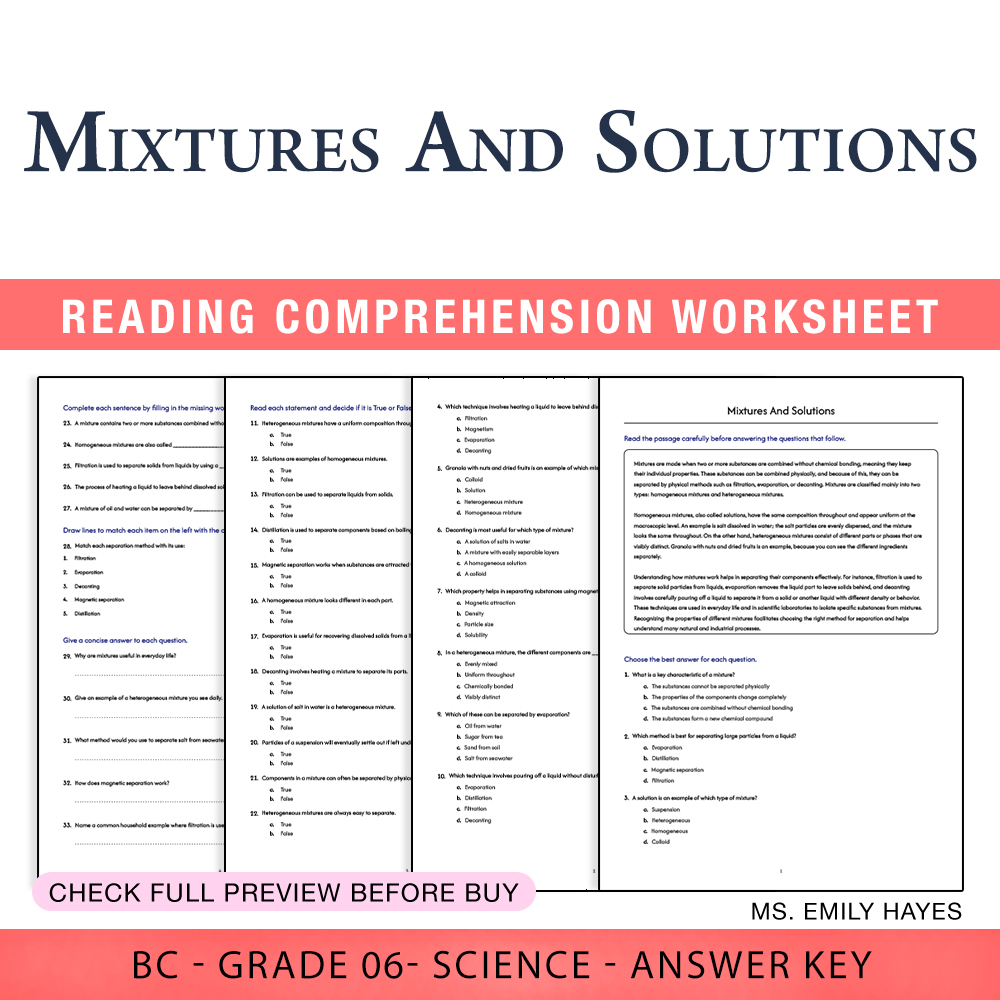
6th Grade Science | Mixtures And Solutions Worksheet (PDF+ Answer Key)
Created byCopper Leaf ClassroomLearning Objectives
- Understand the difference between mixtures and solutions.
- Identify characteristics of homogeneous and heterogeneous mixtures.
- Learn methods to separate components of mixtures such as filtration, evaporation, and decanting.
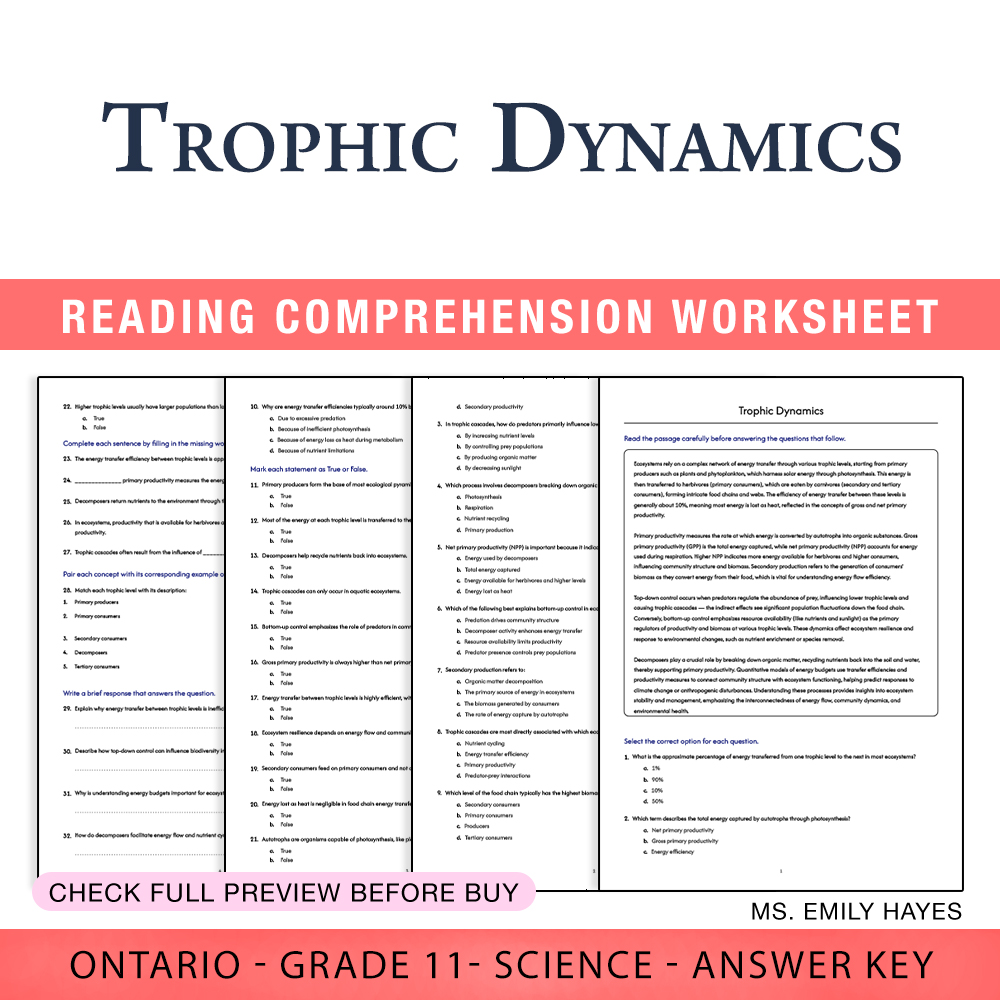
11th Grade Science | Trophic Dynamics Worksheet (PDF + Answer Key)
Created byCopper Leaf ClassroomLearning Objectives
- Understand the transfer of energy across trophic levels in ecosystems
- Analyze the concepts of primary production, gross and net productivity, and secondary production
- Explain top-down and bottom-up controls and their effects on community structure
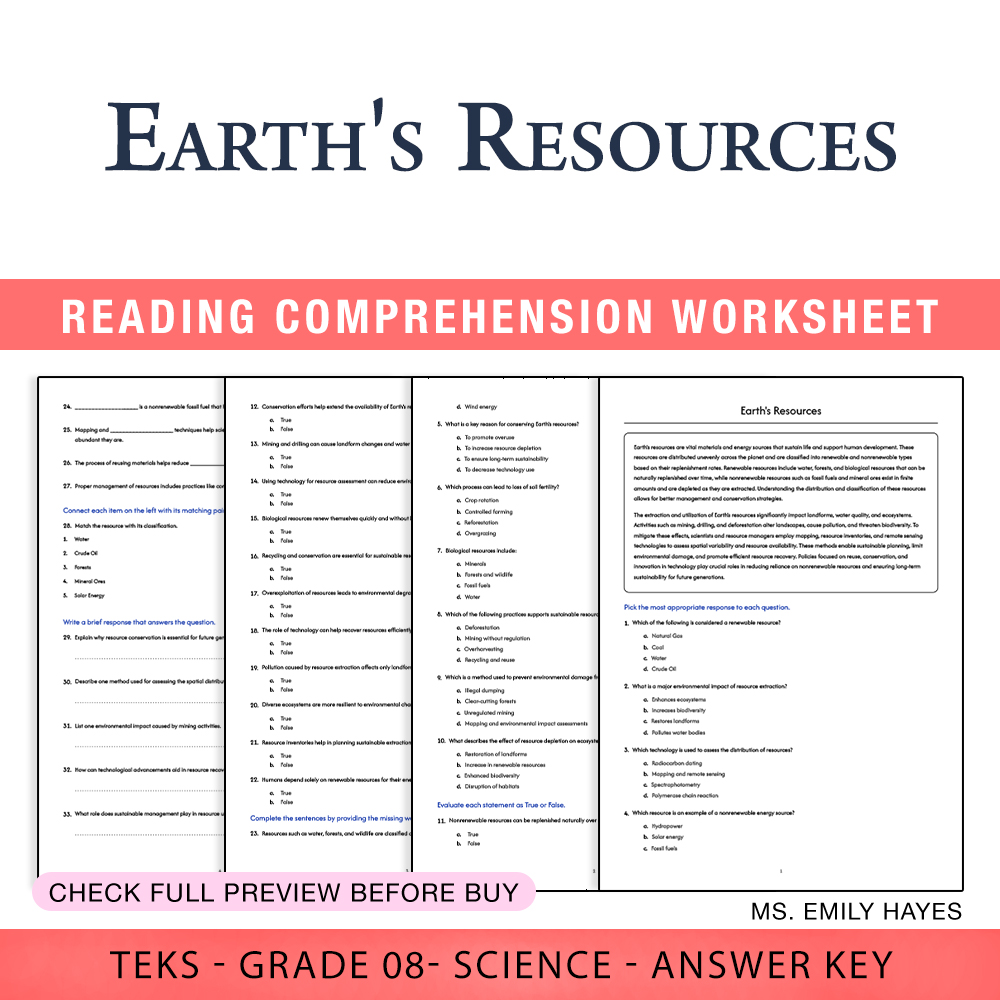
Grade 8 Science | Earth's Resources Worksheet (PDF+ Answer Key)
Created byCopper Leaf ClassroomLearning Objectives
- Describe the distribution and classification of renewable and nonrenewable resources.
- Explain the methods used to assess earth resources, such as mapping and inventories.
- Analyze the environmental impacts of resource extraction on landforms, water, and ecosystems.
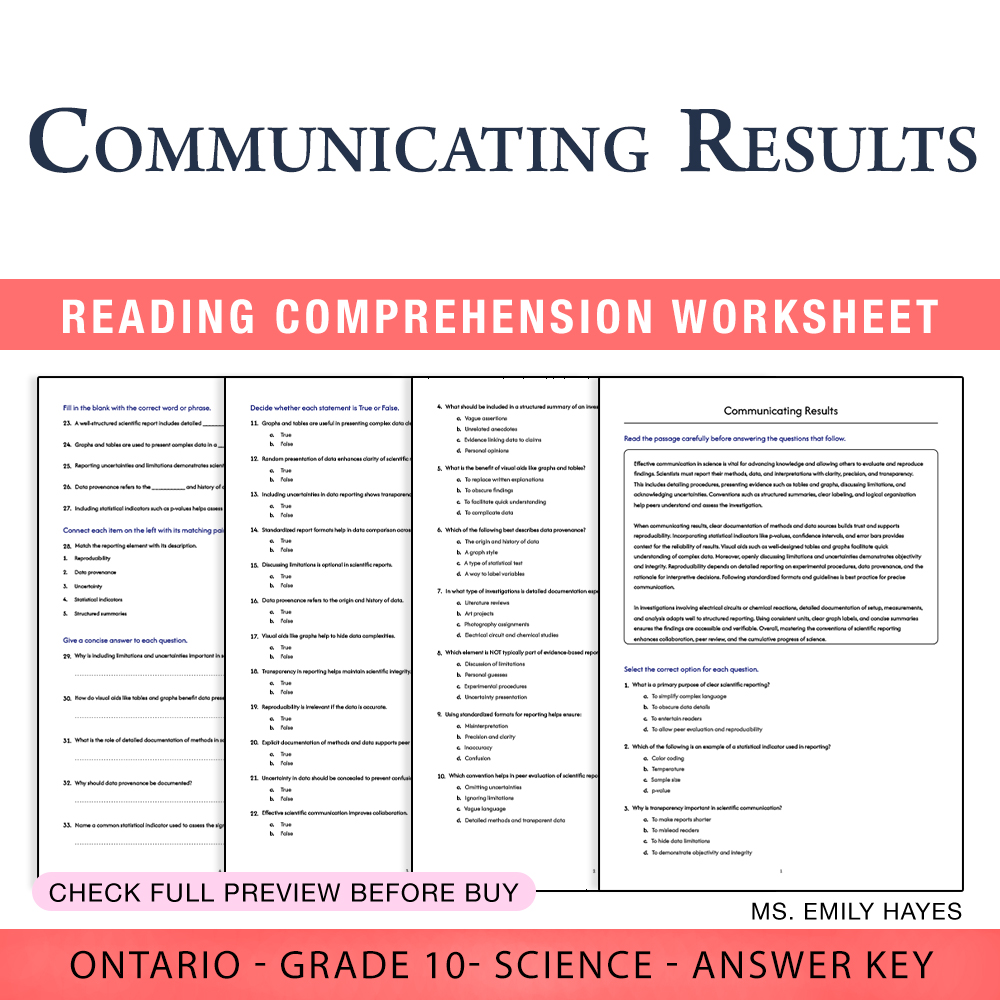
10th Grade Science | Communicating Results Worksheet (PDF + Answer Key)
Created byCopper Leaf ClassroomLearning Objectives
- Understand conventions for clear and evidence-based reporting of scientific investigations
- Learn to integrate tables, graphs, and statistical indicators to substantiate conclusions
- Develop skills for transparent presentation of data, limitations, and uncertainty
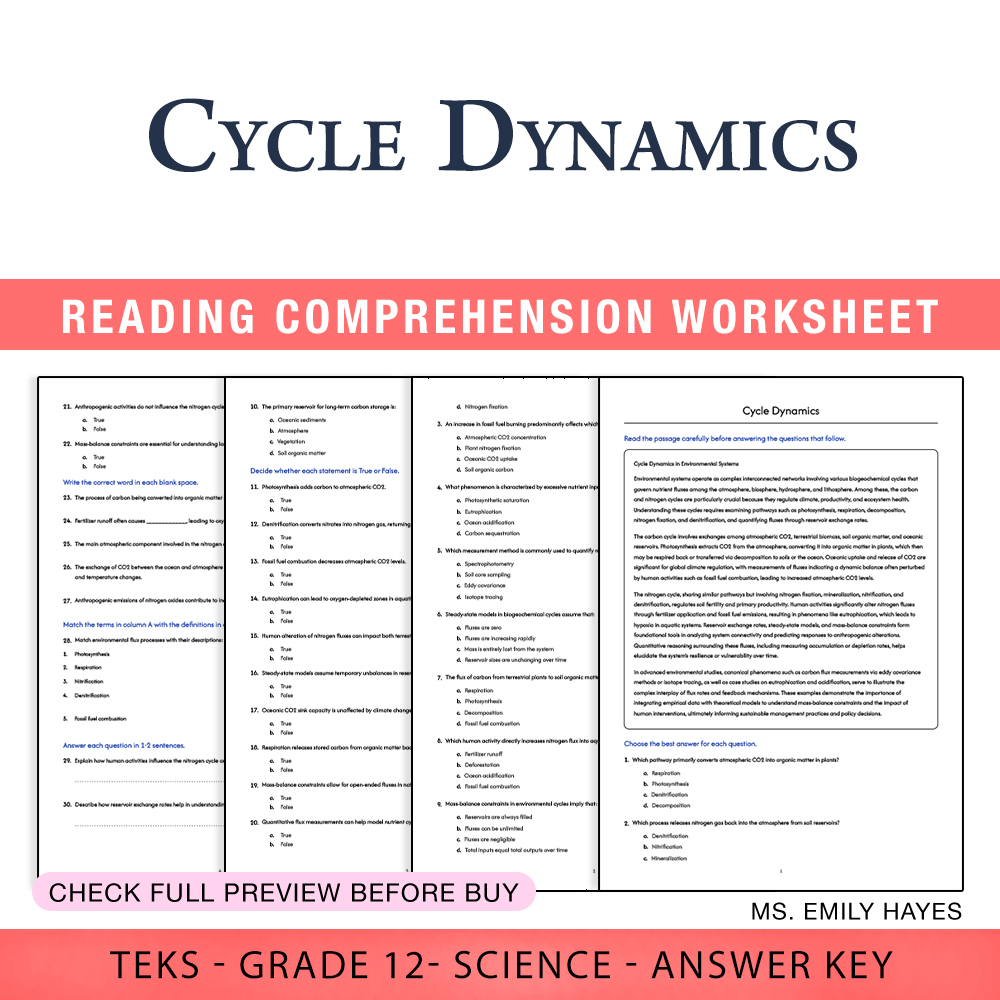
12th Grade Science | Cycle Dynamics Worksheet (PDF+ Answer Key)
Created byCopper Leaf ClassroomLearning Objectives
- Describe the pathways and fluxes of carbon and nitrogen within environmental systems.
- Analyze the effects of human activities like fossil fuel combustion and fertilizer runoff on biogeochemical cycles.
- Apply reservoir exchange rates and steady-state concepts to model nutrient fluxes.
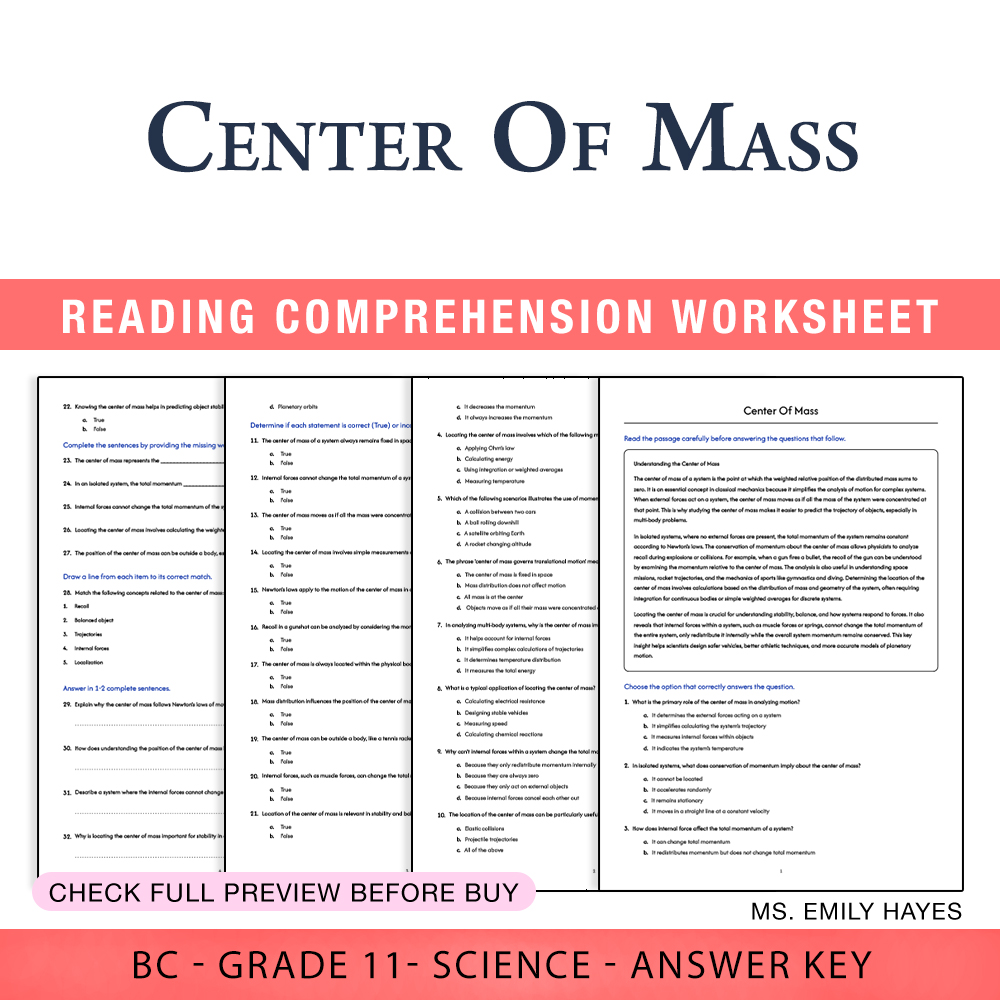
11th Grade Science | Center Of Mass Worksheet (PDF + Answer Key)
Created byCopper Leaf ClassroomLearning Objectives
- Understand the concept of center of mass and its significance in physics.
- Analyze how center of mass influences the motion of systems under external and internal forces.
- Apply the principle of momentum conservation about the center of mass in various scenarios.
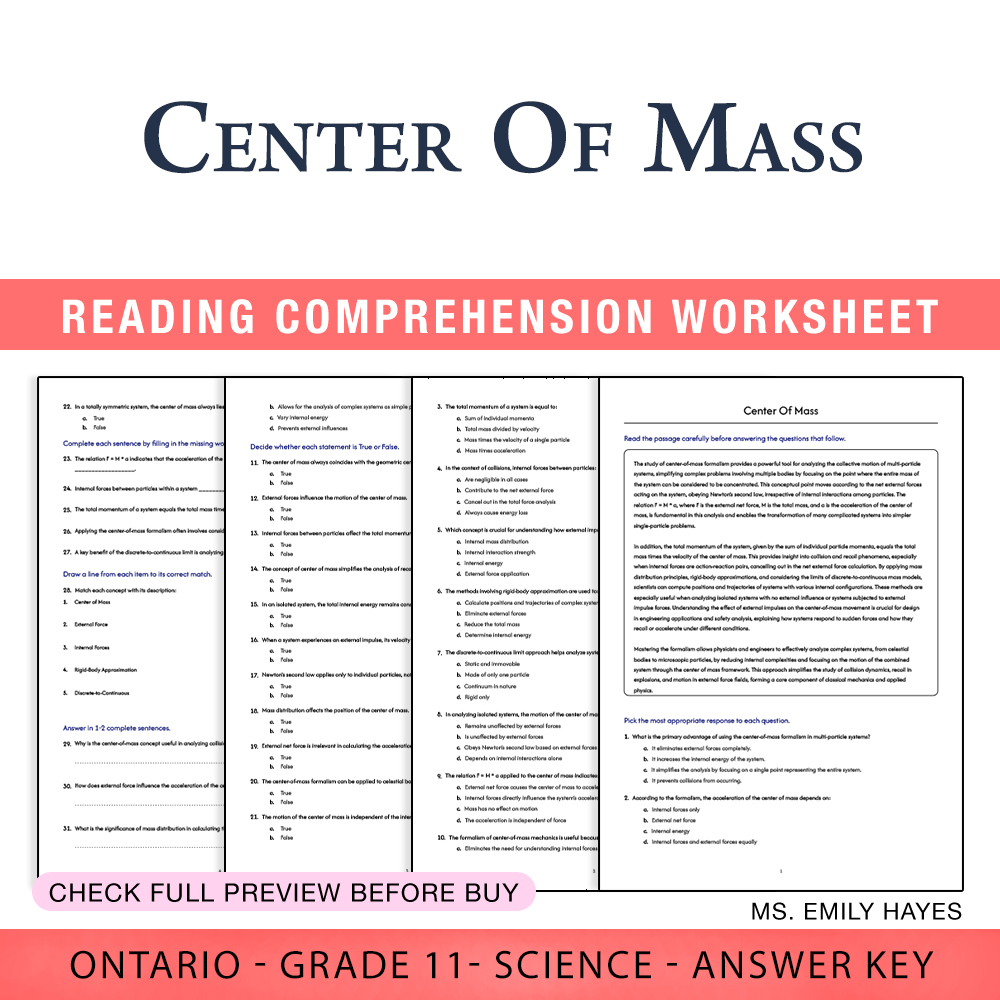
11th Grade Science | Center of Mass Worksheet (PDF + Answer Key)
Created byCopper Leaf ClassroomLearning Objectives
- Understand the formalism of center-of-mass and its relevance to collective motion in multi-particle systems.
- Apply the concept of external net force and its relation to center-of-mass acceleration in various physical scenarios.
- Explain the methods used to compute mass distribution, positions, and trajectories in systems with different internal interactions.
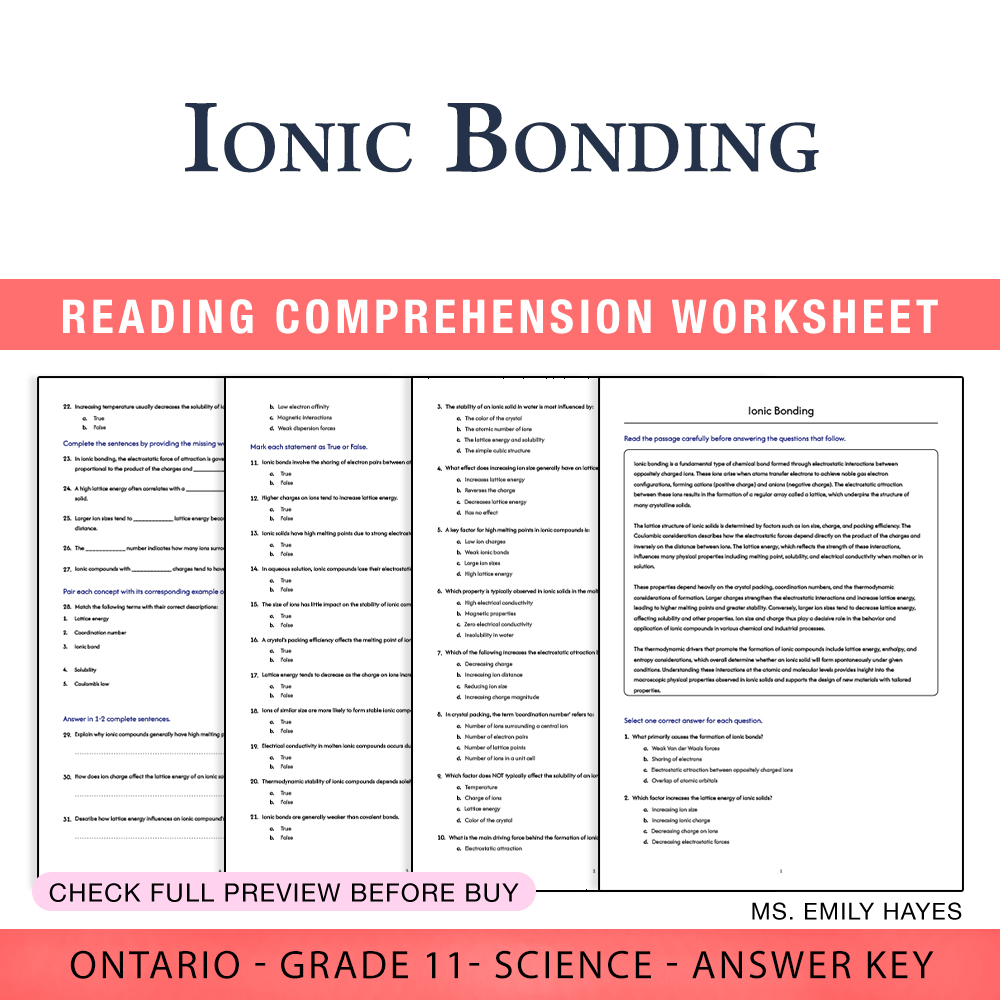
Grade 11 Science | Ionic Bonding Worksheet (PDF + Answer Key)
Created byCopper Leaf ClassroomLearning Objectives
- Describe the electrostatic interactions that lead to lattice formation in ionic compounds.
- Explain the role of Coulombic considerations and lattice energy in the stability of ionic solids.
- Analyze how ion size and charge influence the properties and stability of ionic compounds.
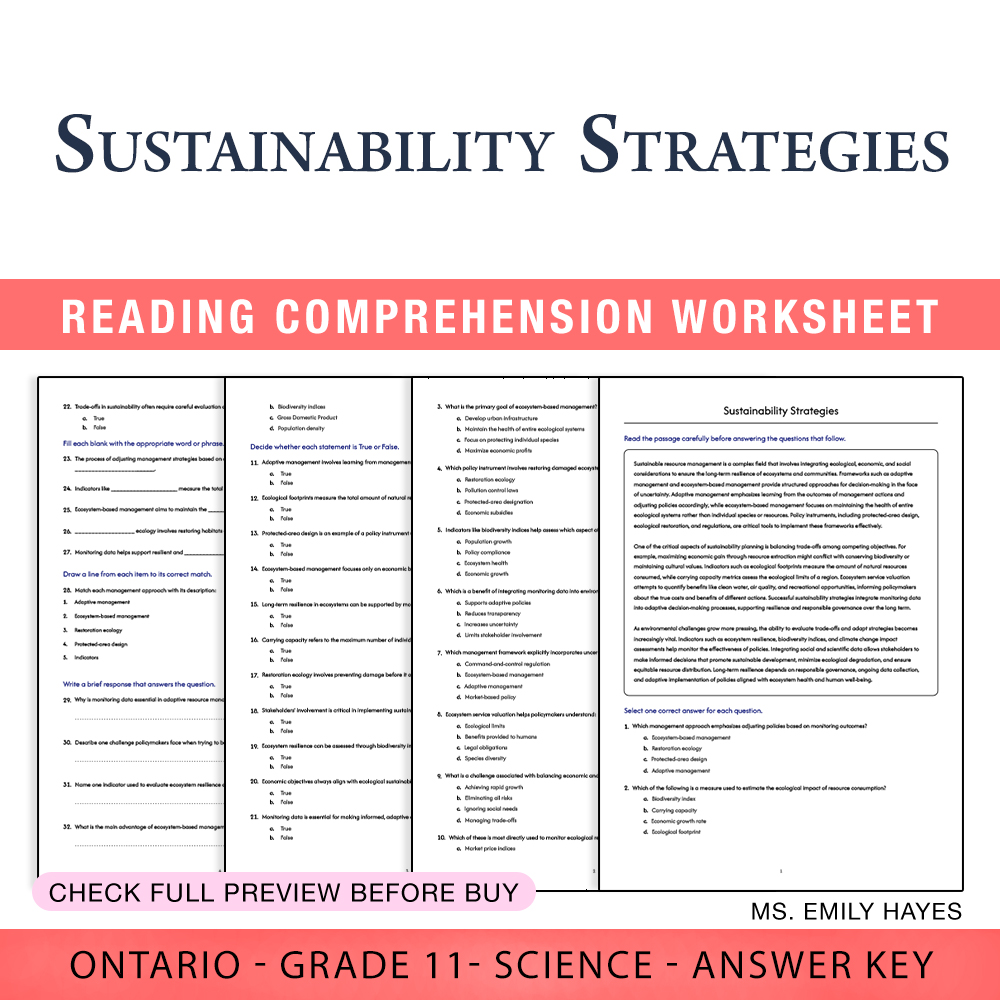
Grade 11 Science | Sustainability Strategies Worksheet (PDF + Answer Key)
Created byCopper Leaf ClassroomLearning Objectives
- Understand frameworks and policy instruments for sustainable resource use and ecosystem stewardship.
- Evaluate trade-offs among economic, social, and ecological objectives in sustainability planning.
- Identify indicators used for sustainability assessment such as ecological footprints and ecosystem service valuation.
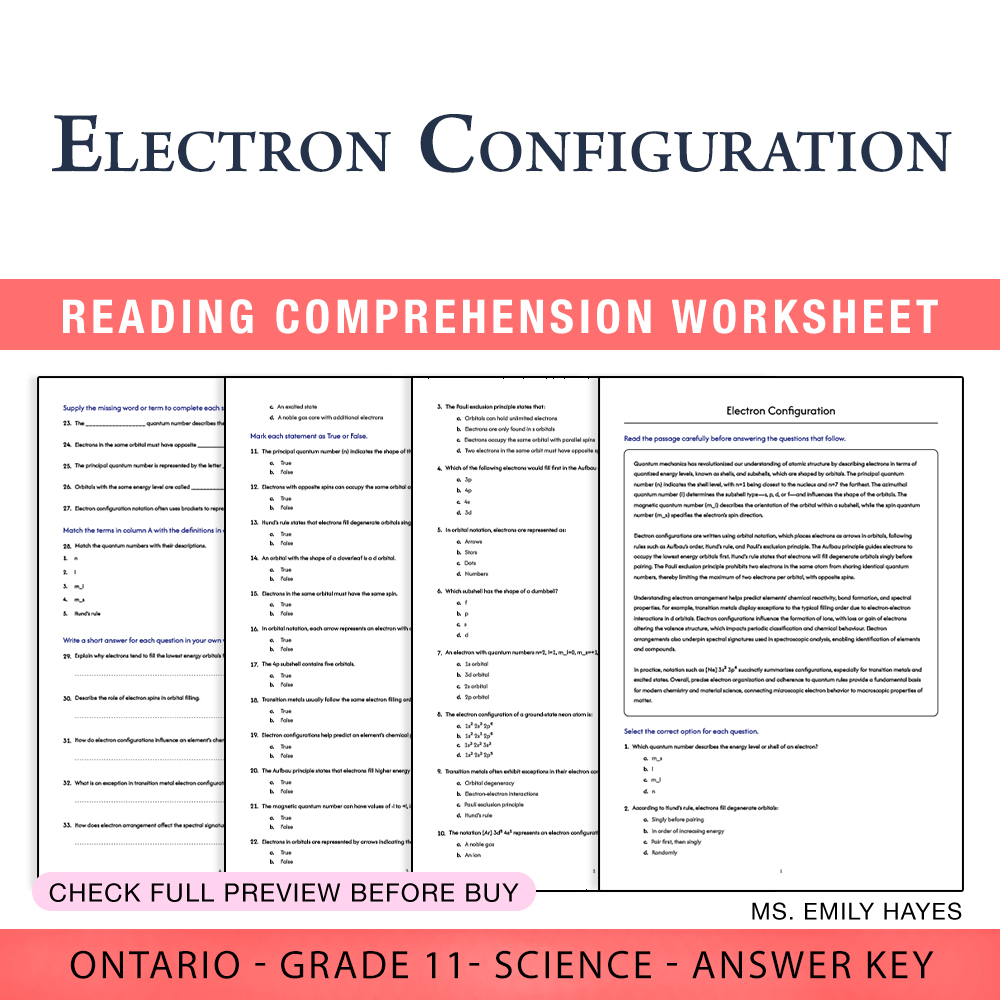
11th Grade Science | Electron Configuration Worksheet (PDF + Answer Key)
Created byCopper Leaf ClassroomLearning Objectives
- Describe the principles of quantum numbers, orbital notation, and electron organization.
- Apply Aufbau’s rule, Hund’s rule, and the Pauli exclusion principle to determine electron configurations.
- Link electronic configurations to valence structures and predict chemical behaviour.
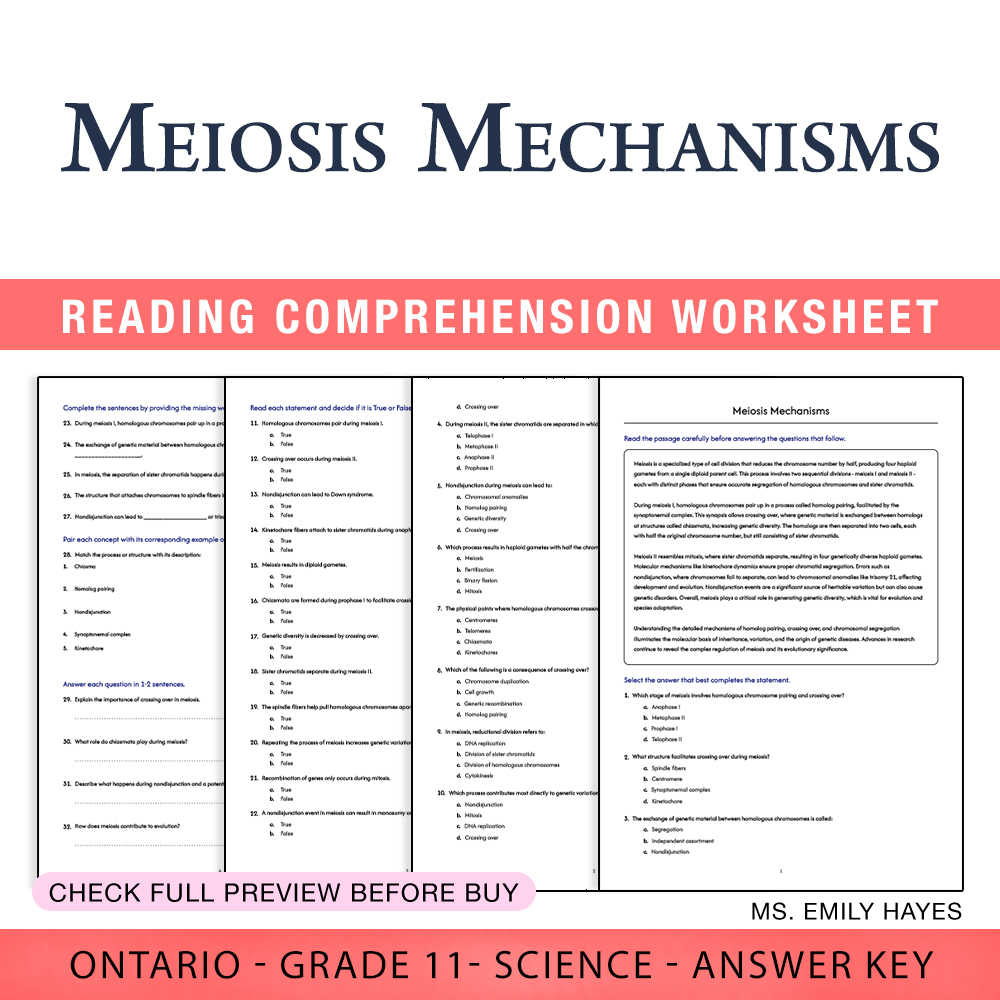
Grade 11 Science | Meiosis Mechanisms Worksheet (PDF + Answer Key)
Created byCopper Leaf ClassroomLearning Objectives
- Explain the stages of meiosis I and II and their molecular mechanisms.
- Describe the processes of homolog pairing, synapsis, crossing over, and chiasmata formation.
- Analyze how meiosis contributes to genetic variation and heritable traits.
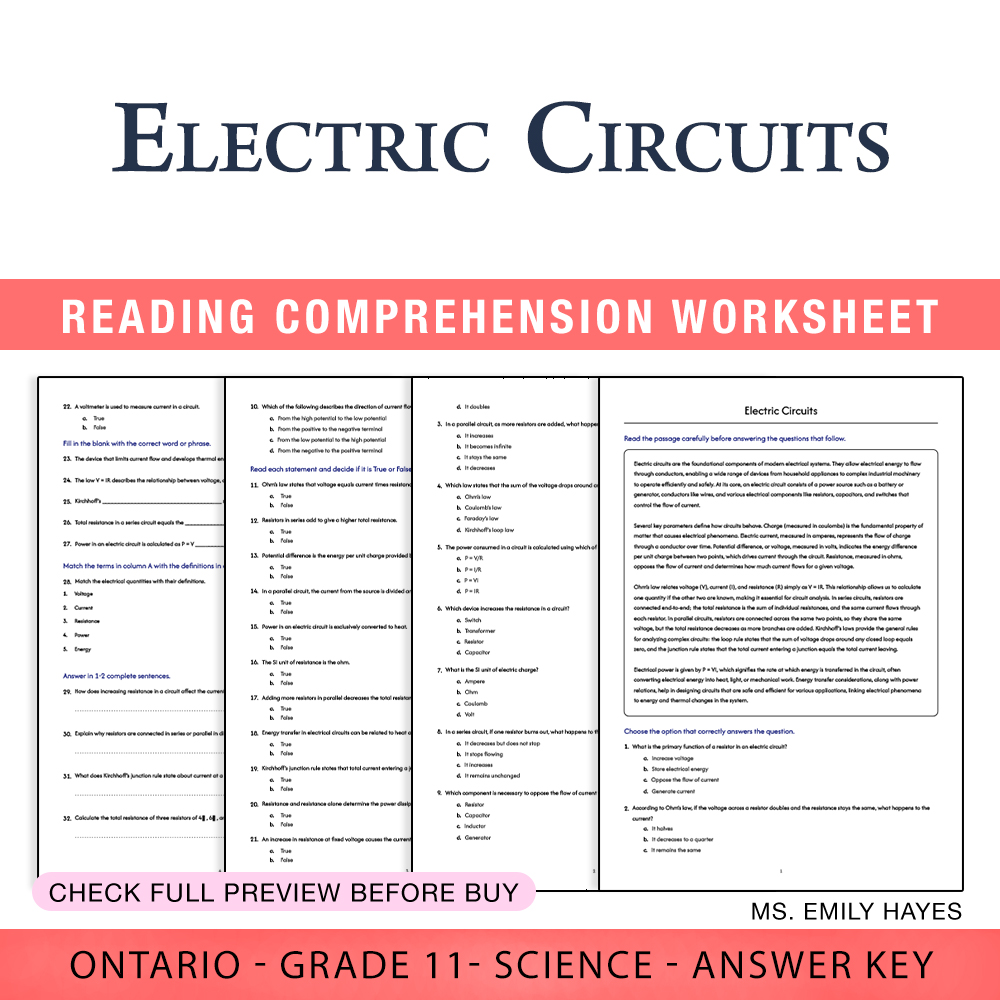
11th Grade Science | Electric Circuits Worksheet (PDF + Answer Key)
Created byCopper Leaf ClassroomLearning Objectives
- Understand the fundamental concepts of charge, current, potential difference, and resistance in electrical circuits.
- Apply Ohm’s law to calculate voltage, current, or resistance in simple circuits.
- Describe the differences between series and parallel resistor combinations and their effects on current and resistance.
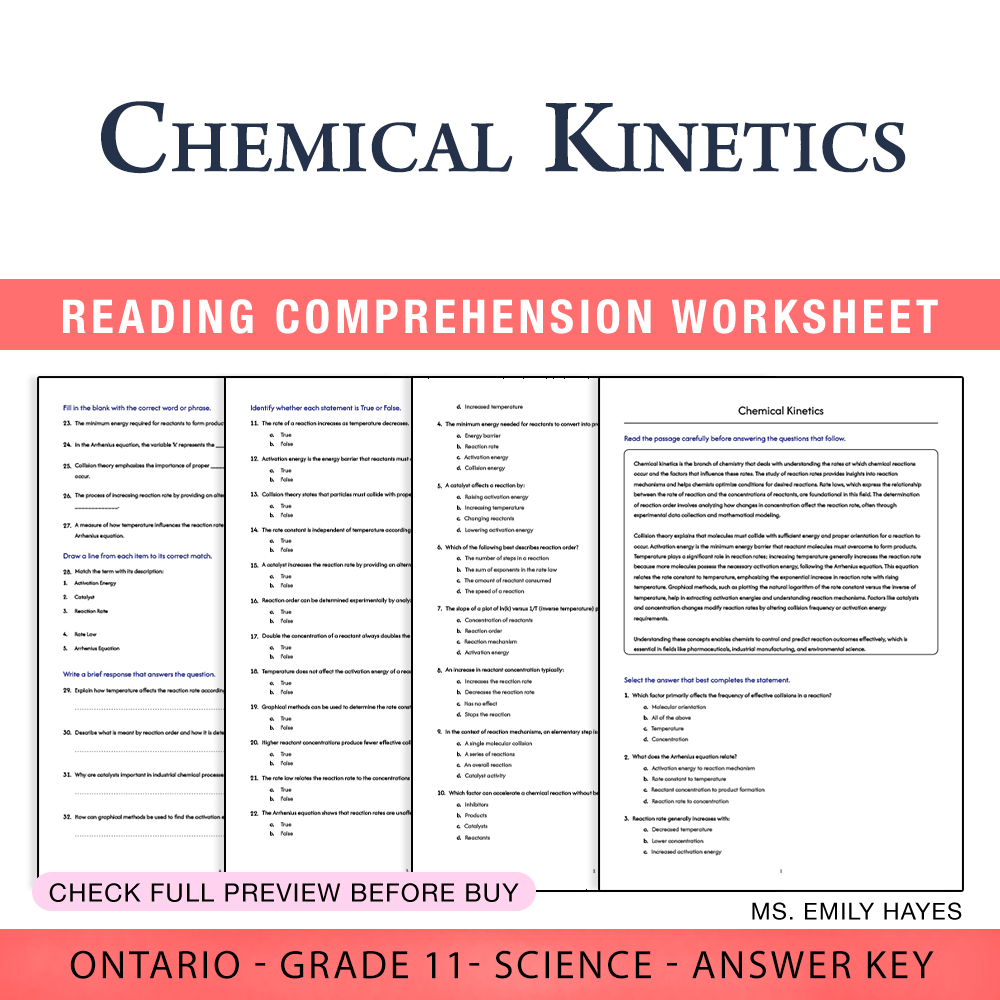
Grade 11 Science | Chemical Kinetics Worksheet (PDF + Answer Key)
Created byCopper Leaf ClassroomLearning Objectives
- Understand the principles of reaction rates and how they are characterized.
- Interpret experimental data to determine reaction orders and rate constants.
- Explain collision theory, activation energy, and their roles in reaction mechanisms.
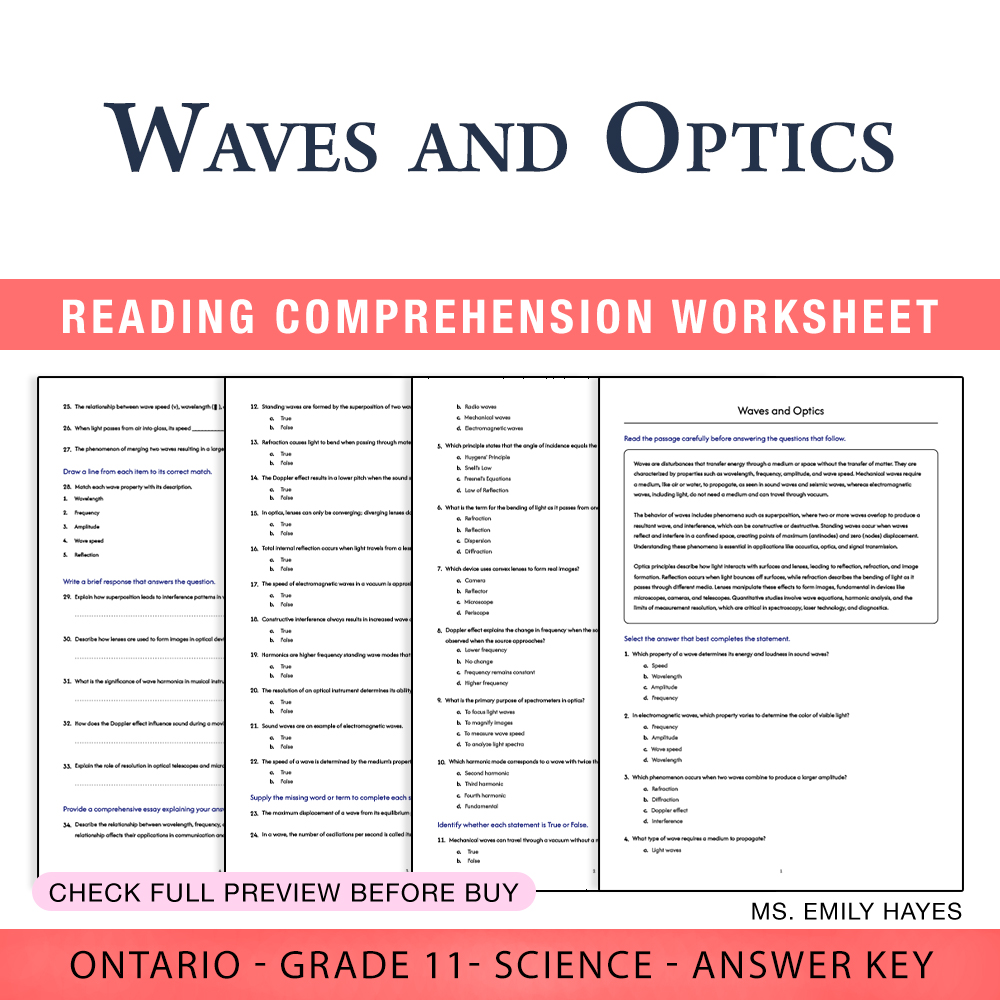
11th Grade Science | Waves and Optics Worksheet (PDF + Answer Key)
Created byCopper Leaf ClassroomLearning Objectives
- Describe the fundamental properties of waves, including wavelength, frequency, amplitude, and wave speed.
- Explain the principles of superposition, interference, and standing waves in various wave domains.
- Apply basic optics principles such as reflection, refraction, and lens imaging to real-world situations.
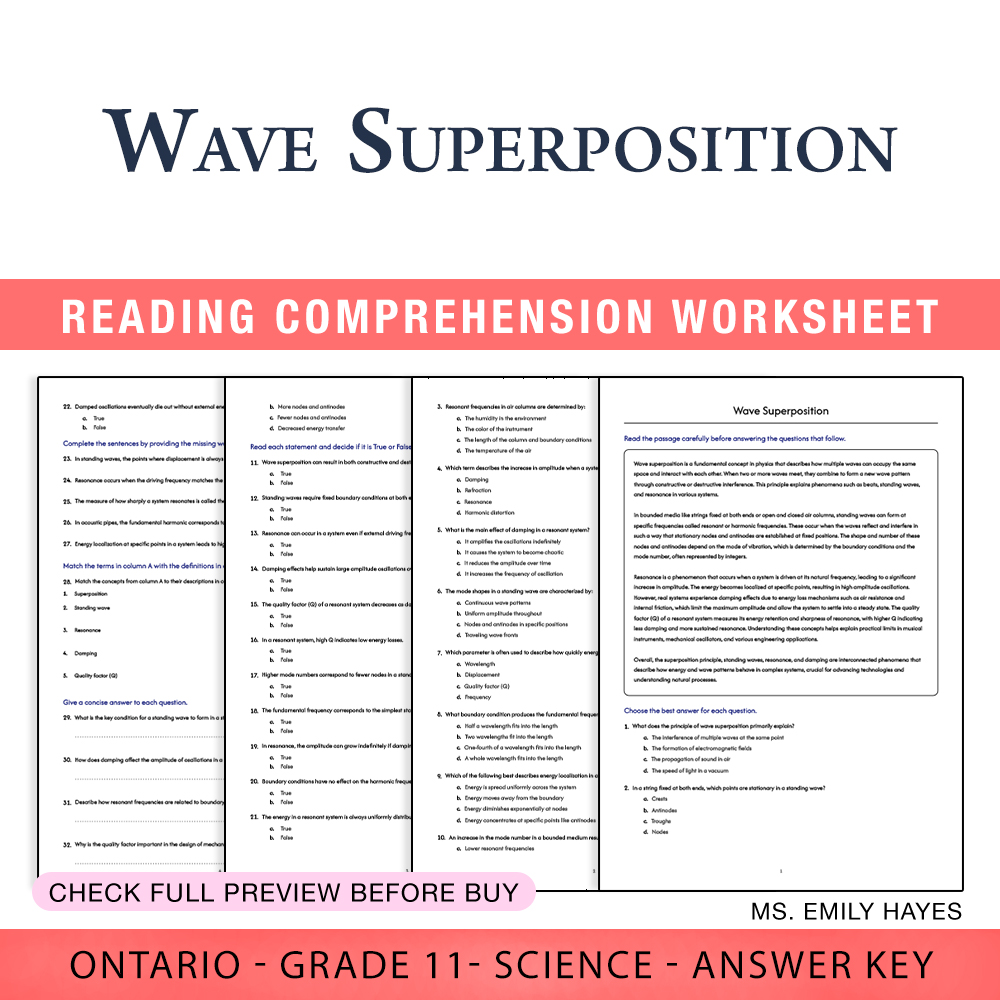
11th Grade Science | Wave Superposition Worksheet (PDF + Answer Key)
Created byCopper Leaf ClassroomLearning Objectives
- Explain the principle of wave superposition and its effects on interference patterns.
- Describe how standing waves form in bounded media and identify nodes and antinodes.
- Calculate resonant frequencies and understand their relation to boundary conditions and harmonics.
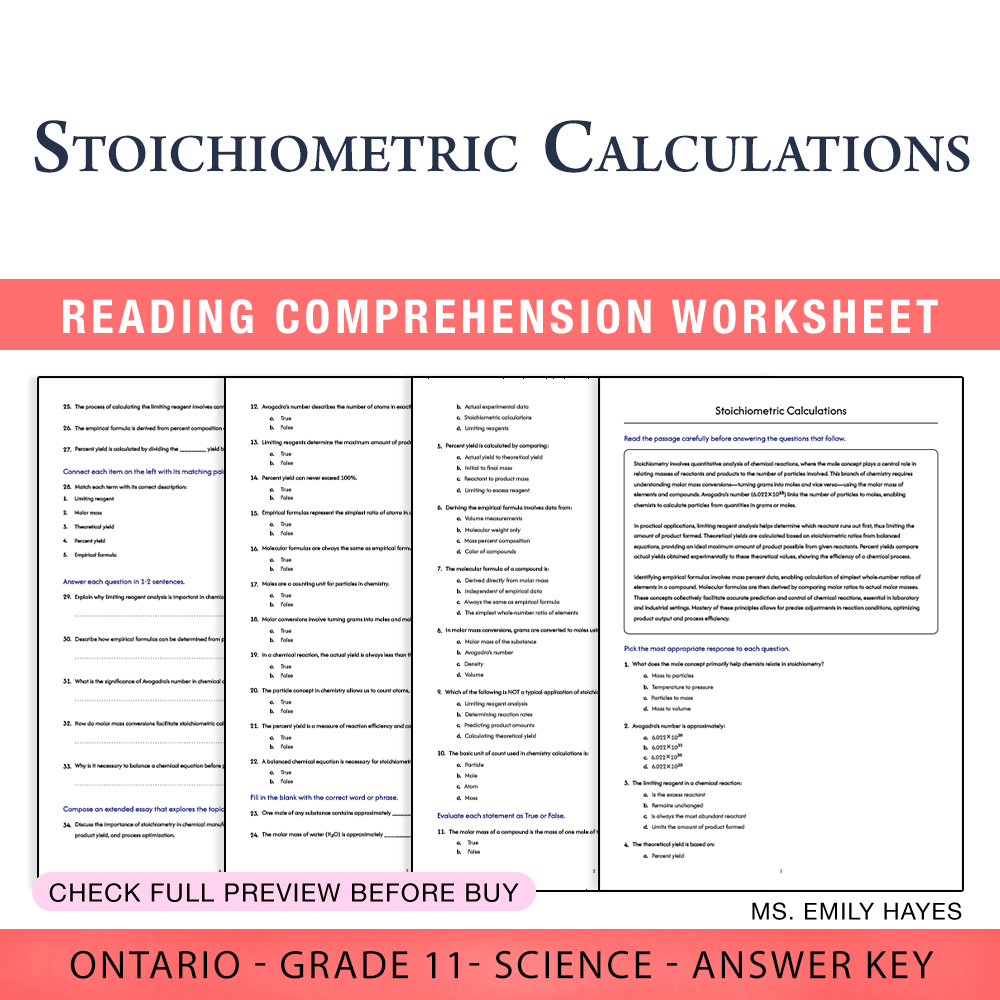
11th Grade Science | Stoichiometric Calculations Worksheet (PDF + Answer Key)
Created byCopper Leaf ClassroomLearning Objectives
- Understand and apply the mole concept to relate mass, moles, and particles.
- Perform molar mass conversions and utilize Avogadro's number in calculations.
- Analyze limiting reagents, calculate theoretical yields, and determine percent yields.
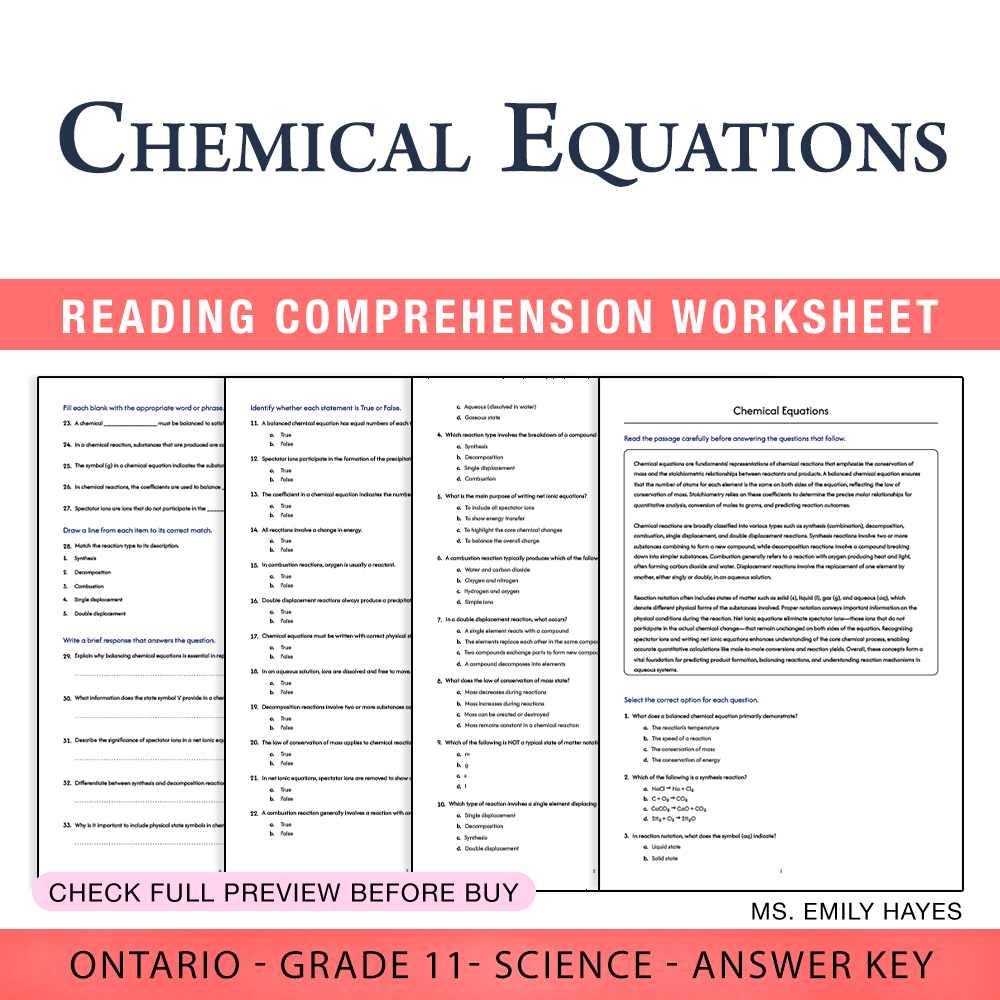
11th Grade Science | Chemical Equations Worksheet (PDF + Answer Key)
Created byCopper Leaf ClassroomLearning Objectives
- Understand the representation of chemical change through balanced symbolic equations and stoichiometric coefficients.
- Classify different types of chemical reactions including synthesis, decomposition, combustion, and displacement reactions.
- Analyze reaction notation, including states of matter and phase considerations.
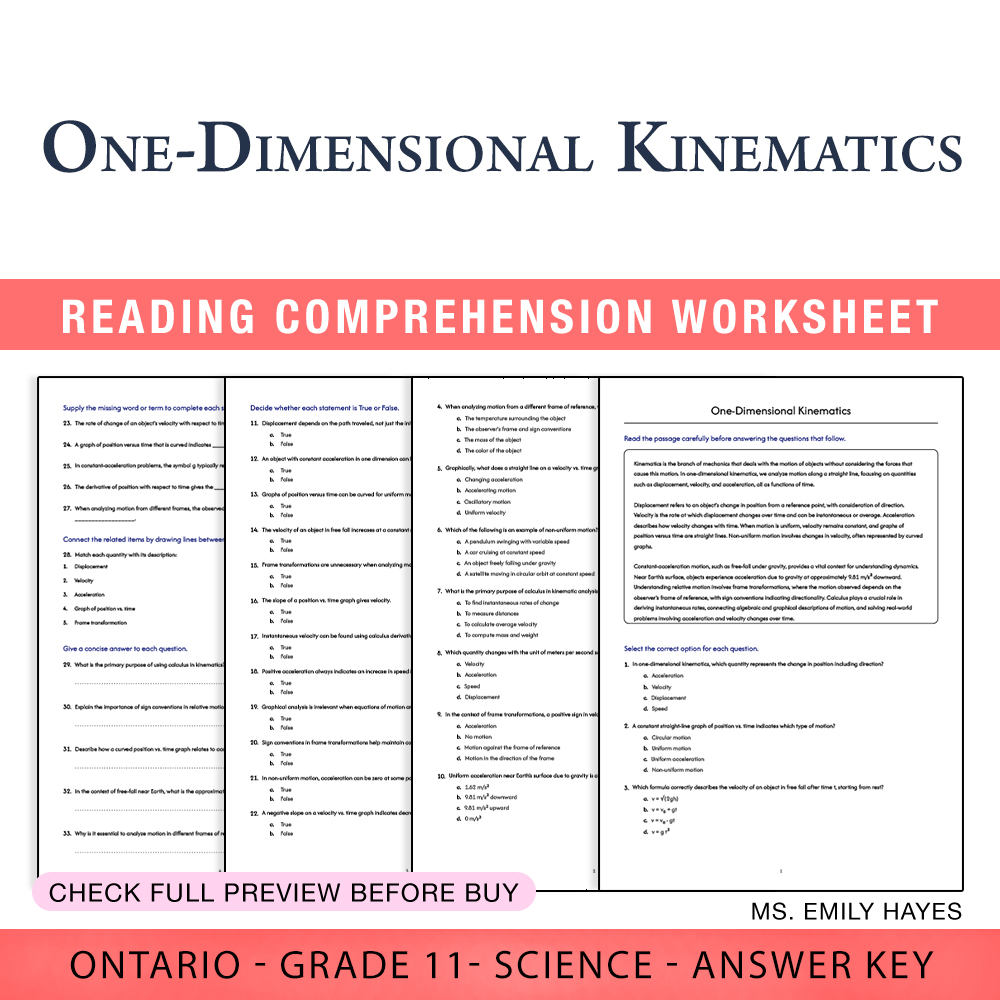
Grade 11 Science | One-Dimensional Kinematics Worksheet (PDF + Answer Key)
Created byCopper Leaf ClassroomLearning Objectives
- Describe the fundamental concepts of displacement, velocity, and acceleration as functions of time.
- Differentiate between uniform and non-uniform motion using algebraic and graphical methods.
- Apply constant-acceleration formulas to free-fall and relative motion scenarios, including frame transformations.
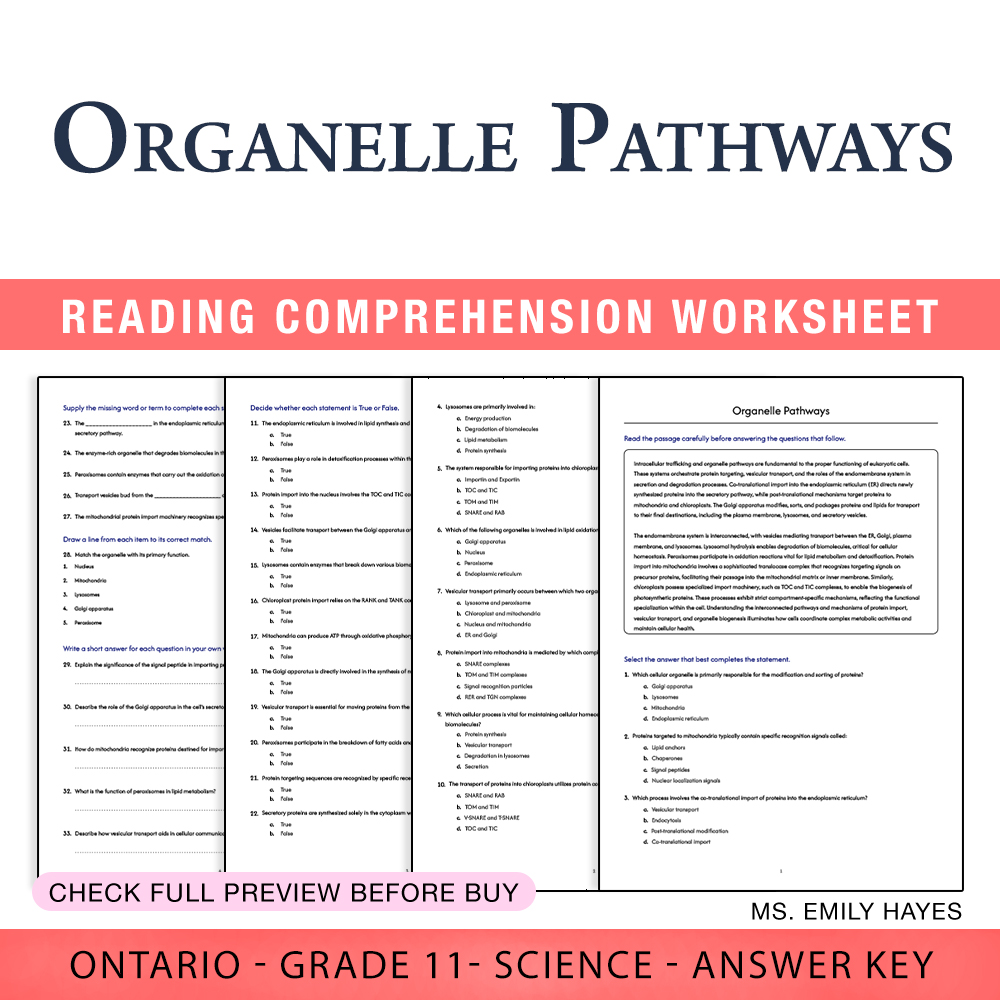
11th Grade Science | Organelle Pathways Worksheet (PDF + Answer Key)
Created byCopper Leaf ClassroomLearning Objectives
- Describe the processes involved in intracellular trafficking and protein targeting within organelles.
- Explain the roles of the endomembrane system, vesicular transport, and organelle-specific biogenesis.
- Identify the mechanisms of protein import into mitochondria and chloroplasts and their functional significance.
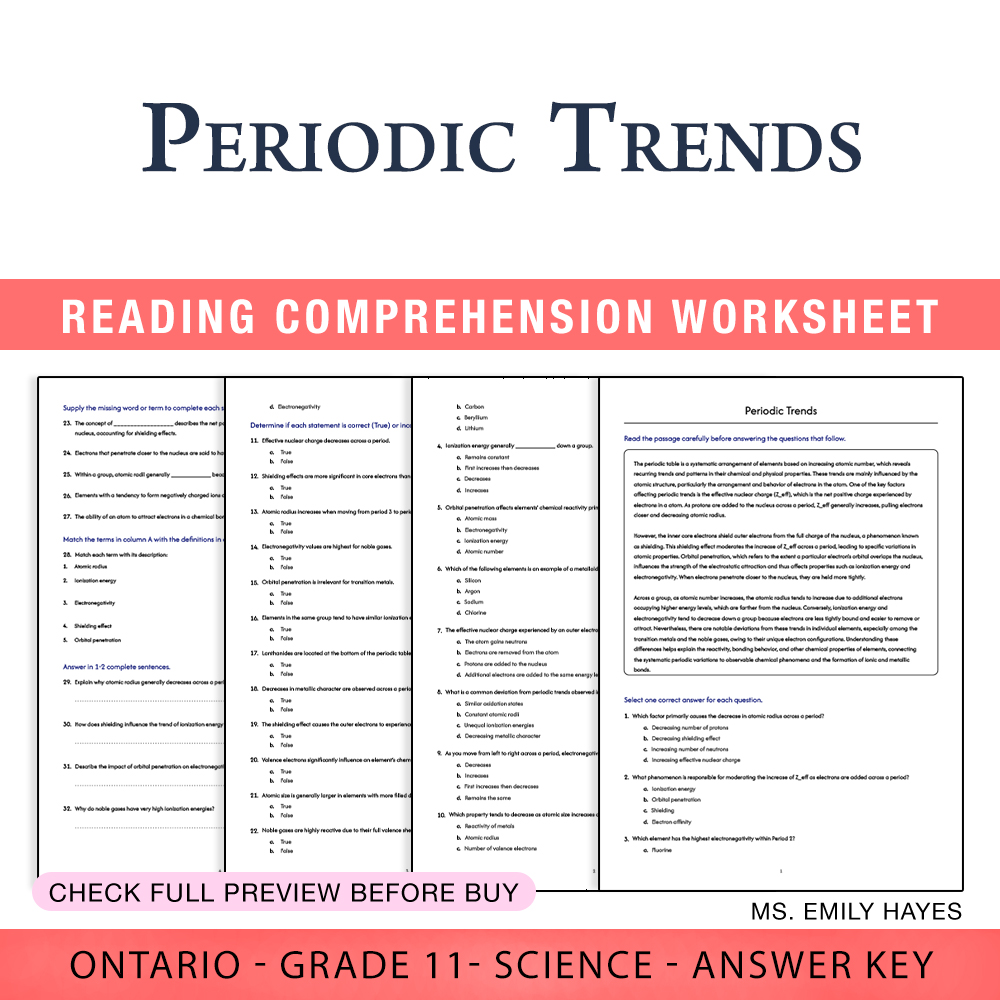
11th Grade Science | Periodic Trends Worksheet (PDF + Answer Key)
Created byCopper Leaf ClassroomLearning Objectives
- Explain the concepts of effective nuclear charge, shielding, and orbital penetration and their roles in periodic trends.
- Analyze how atomic radius, ionization energy, and electronegativity vary across periods and groups.
- Identify deviations from idealized periodic trends in representative elements and relate these to their chemical properties and behaviors.
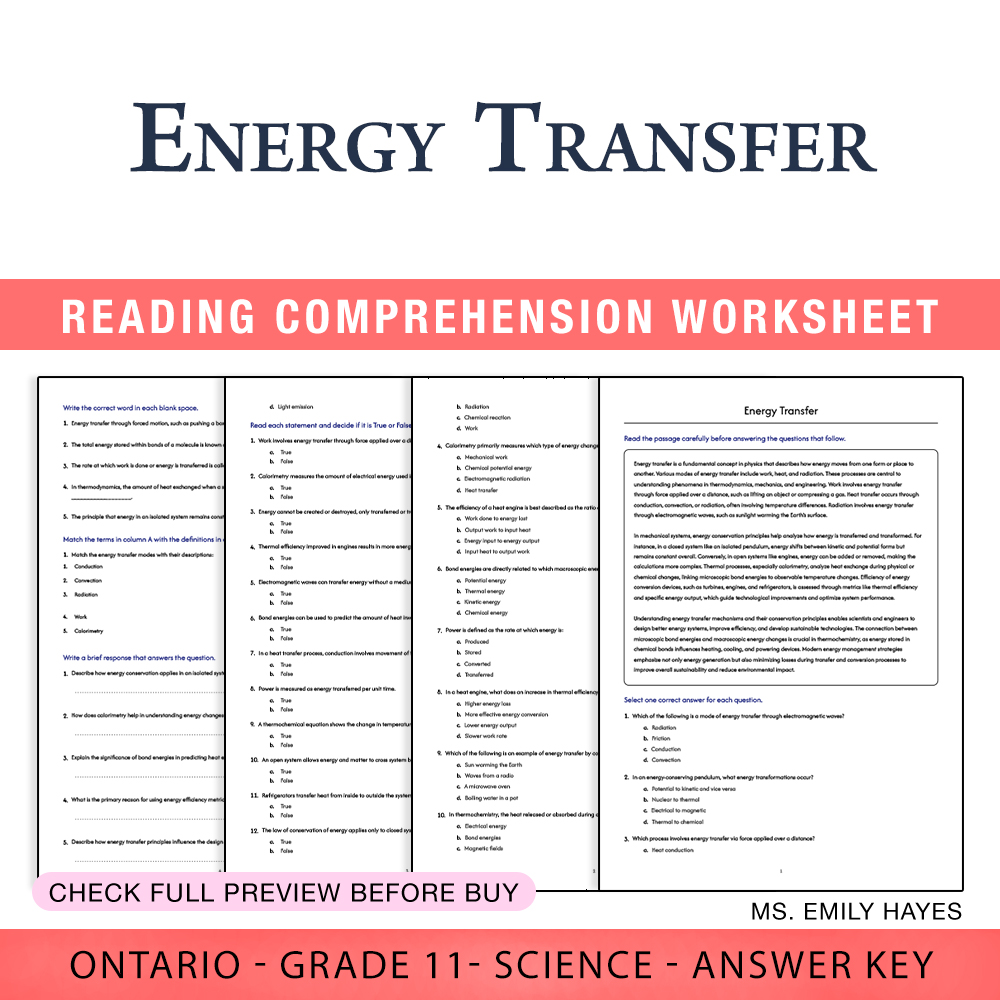
Grade 11 Science | Energy Transfer Worksheet (PDF + Answer Key)
Created byCopper Leaf ClassroomLearning Objectives
- Explain the different forms of energy and how energy is transferred in various systems.
- Analyze energy conservation principles in both closed and open systems.
- Apply quantitative methods like calorimetry and work-energy analysis to real-world problems.
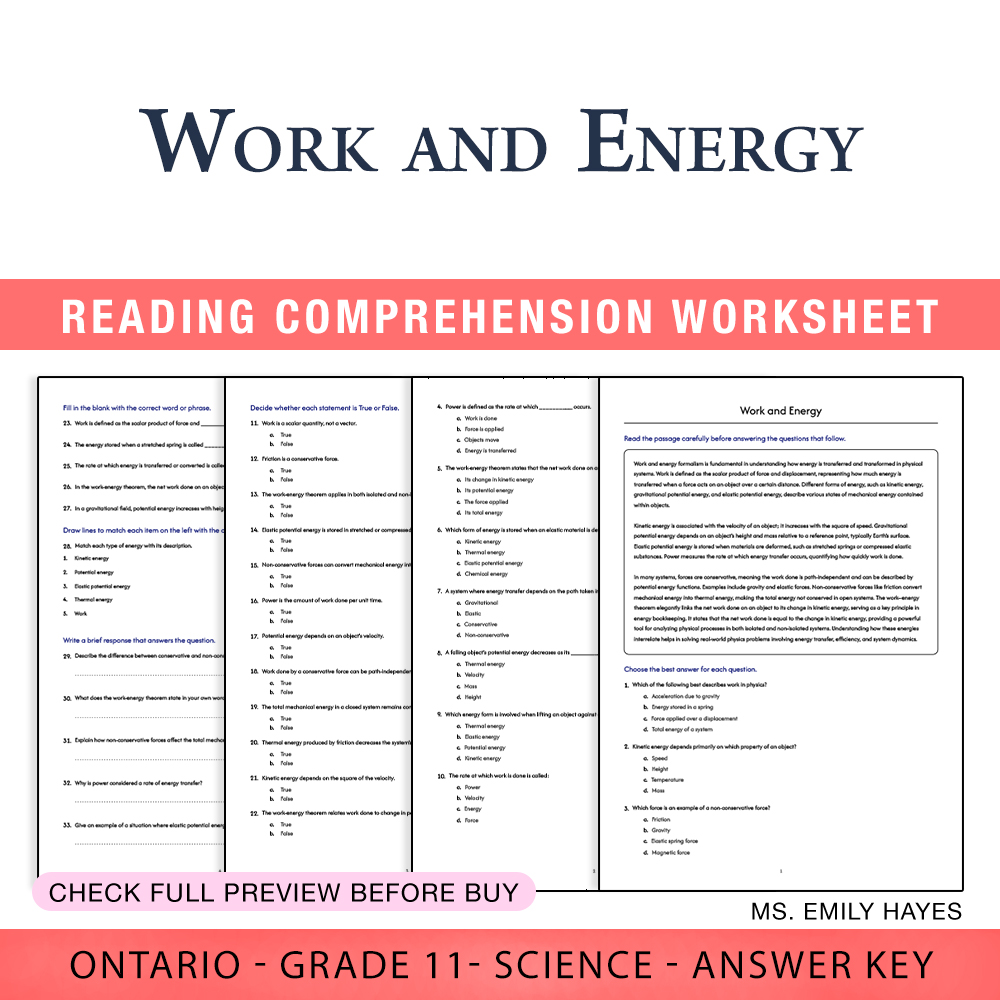
Grade 11 Science | Work and Energy Worksheet (PDF + Answer Key)
Created byCopper Leaf ClassroomLearning Objectives
- Explain the concept of work in physics as force applied over a displacement.
- Distinguish between different forms of energy—kinetic, gravitational potential, and elastic potential.
- Apply the work–energy theorem to solve related physics problems.
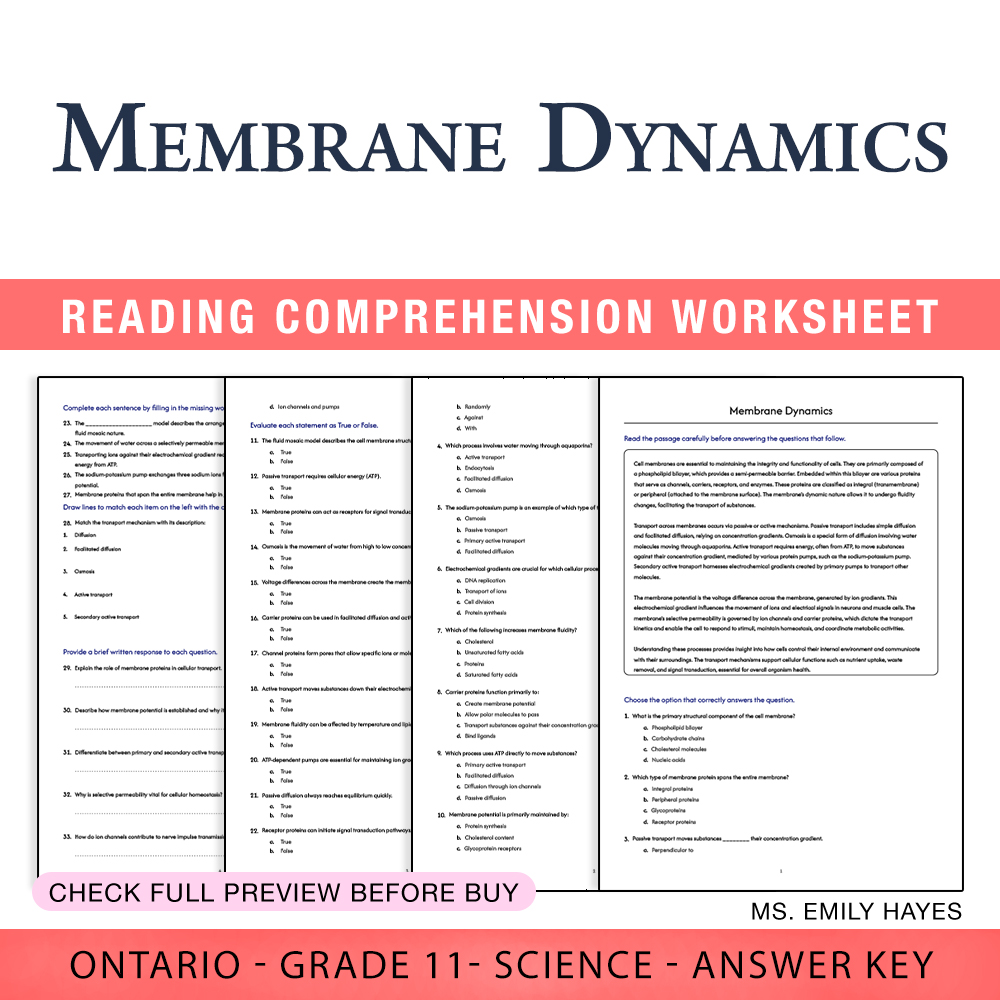
Grade 11 Science | Membrane Dynamics Worksheet (PDF + Answer Key)
Created byCopper Leaf ClassroomLearning Objectives
- Describe the structural components of biological membranes including bilayer structure and membrane proteins.
- Explain mechanisms of passive and active transport across membranes, including diffusion, osmosis, and ion pumps.
- Analyze how membrane potential and electrochemical gradients influence transport processes and homeostasis.
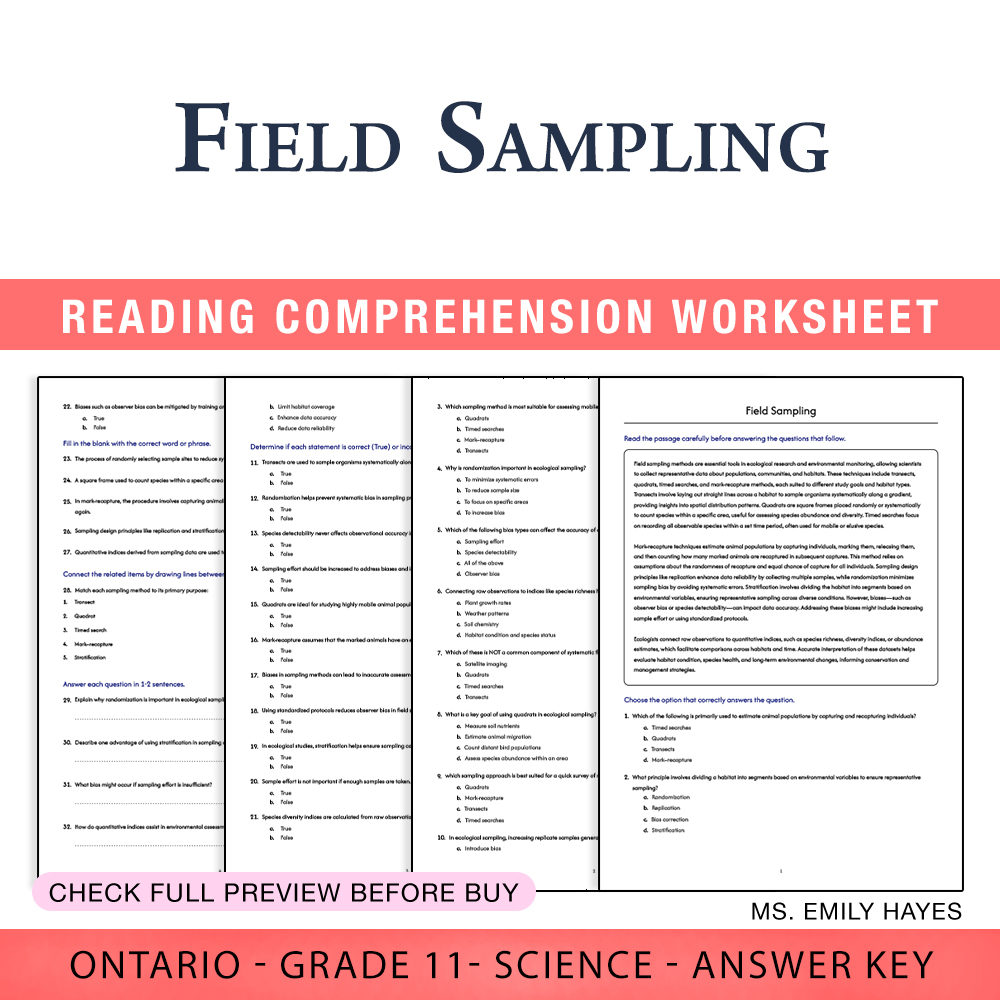
Grade 11 Science | Field Sampling Techniques Worksheet (PDF + Answer Key)
Created byCopper Leaf ClassroomLearning Objectives
- Understand various systematic approaches to field sampling such as transects, quadrats, and mark-recapture techniques.
- Identify principles of sampling design including replication, randomization, and stratification.
- Evaluate potential biases, detectability issues, and sample effort requirements in environmental sampling.
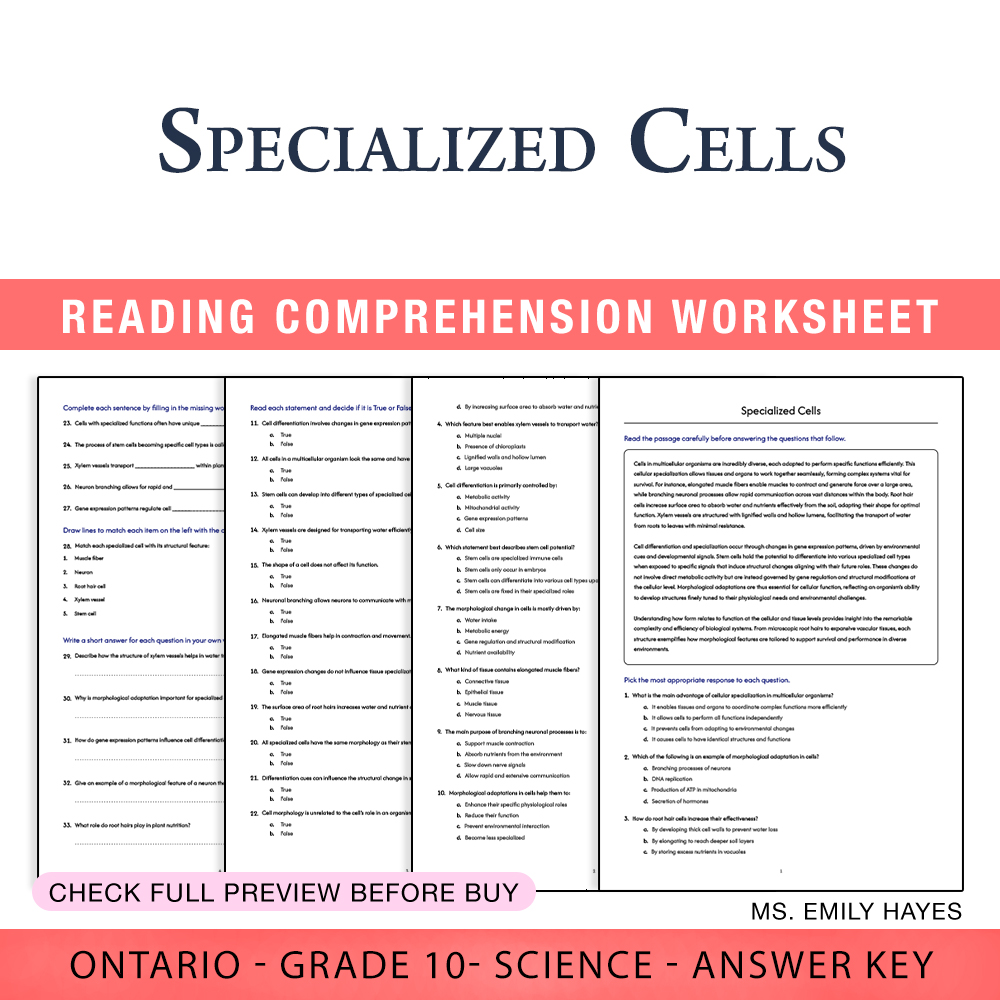
10th Grade Science | Specialized Cells Worksheet (PDF + Answer Key)
Created byCopper Leaf ClassroomLearning Objectives
- Understand the concept of cellular specialization and how tissue organization relates to function.
- Identify morphological adaptations in cells that enhance their specific physiological roles.
- Describe examples of specialized cells such as muscle fibers, neurons, root hairs, and xylem vessels.
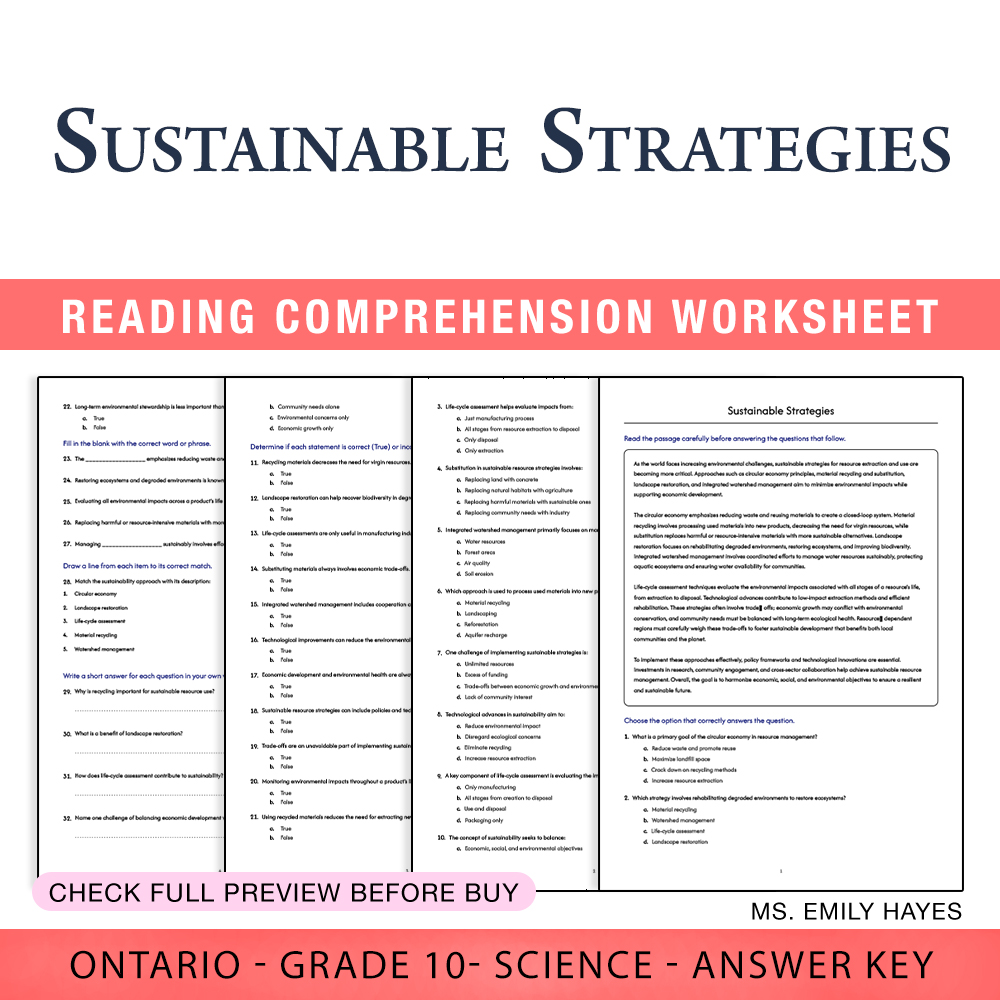
Grade 10 Science | Sustainable Strategies Worksheet (PDF + Answer Key)
Created byCopper Leaf ClassroomLearning Objectives
- Understand key approaches for reducing the environmental footprint of resource extraction and use.
- Describe principles of circular economy, recycling, substitution, and landscape restoration.
- Analyze trade-offs between economic development, community needs, and environmental stewardship in resource-dependent regions.
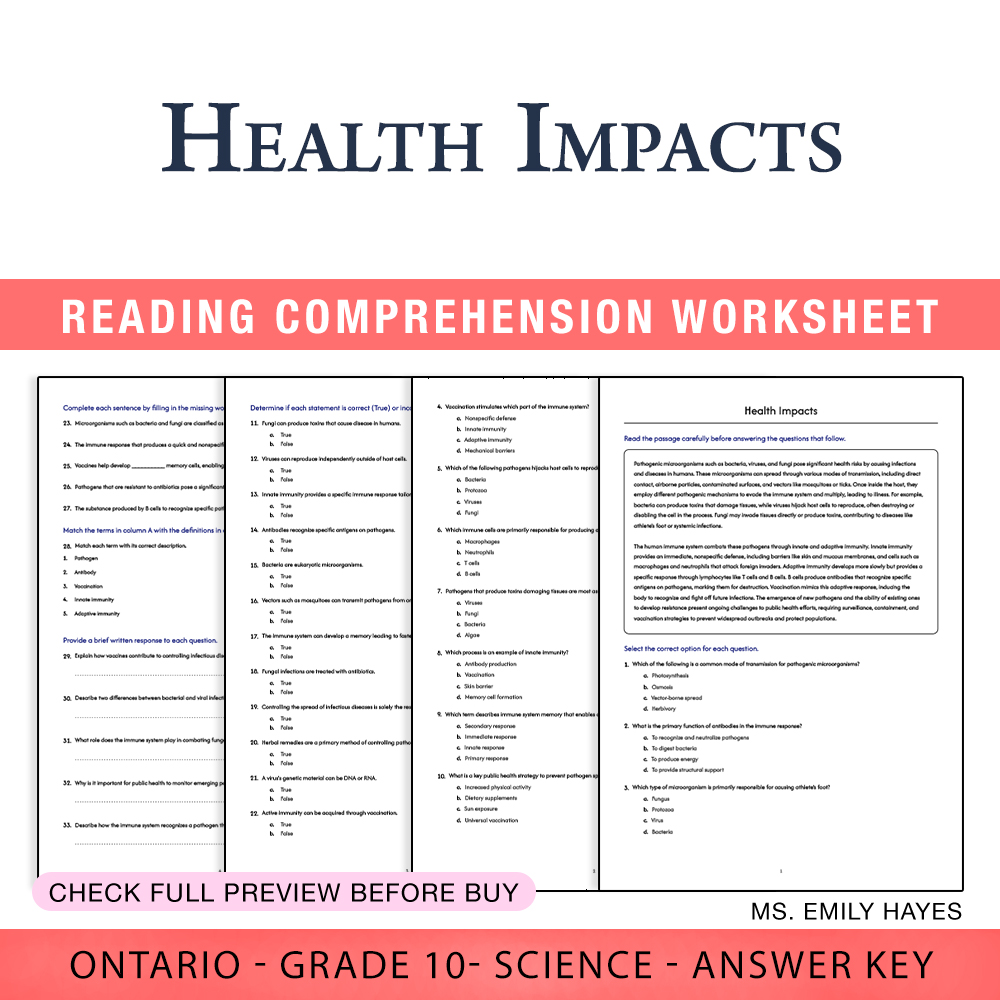
Grade 10 Science | Health Impacts Worksheet (PDF + Answer Key)
Created byCopper Leaf ClassroomLearning Objectives
- Describe the modes of transmission and pathogenic mechanisms of microorganisms.
- Differentiate bacterial, viral, and fungal disease processes.
- Explain the principles of innate and adaptive immunity, including antibody recognition.
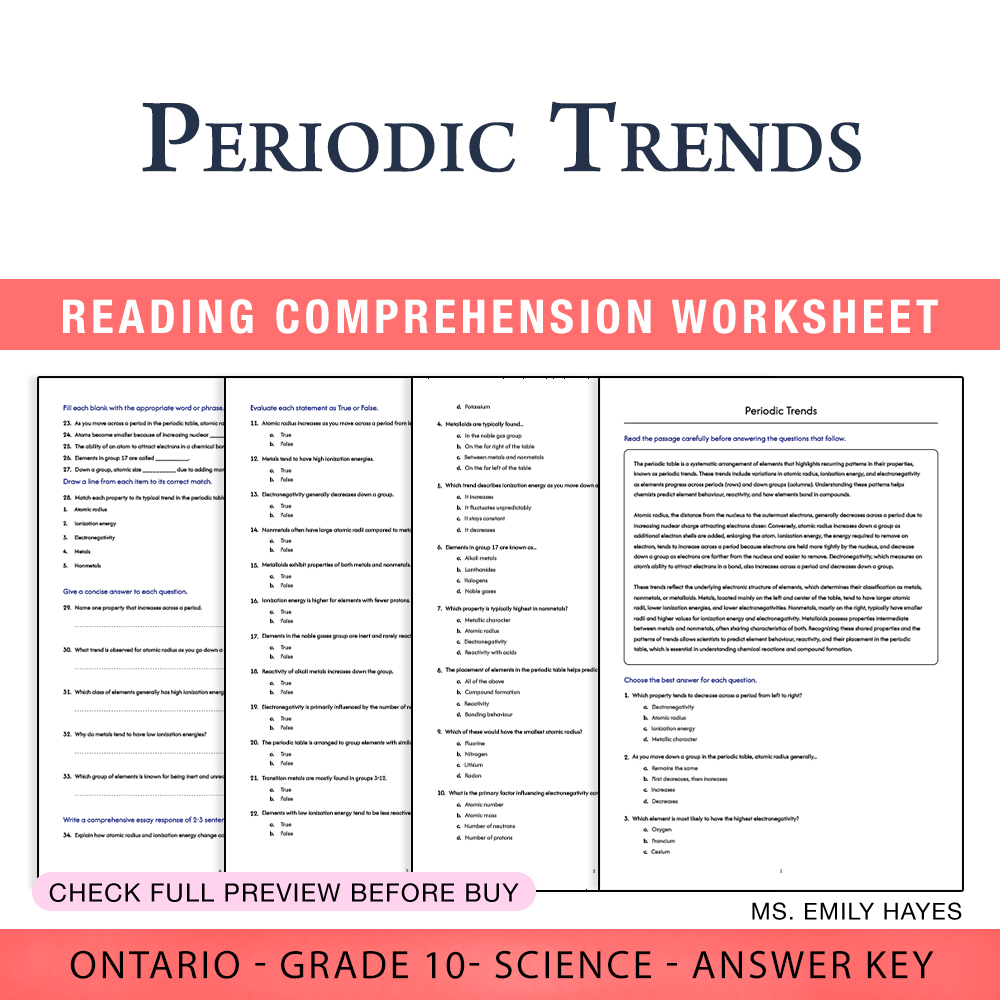
10th Grade Science | Periodic Trends Worksheet (PDF + Answer Key)
Created byCopper Leaf ClassroomLearning Objectives
- Understand the concept of periodic trends and their significance in chemistry.
- Identify and analyze patterns such as atomic radius, ionization energy, and electronegativity across periods and groups.
- Classify elements as metals, nonmetals, or metalloids based on shared properties and trends.
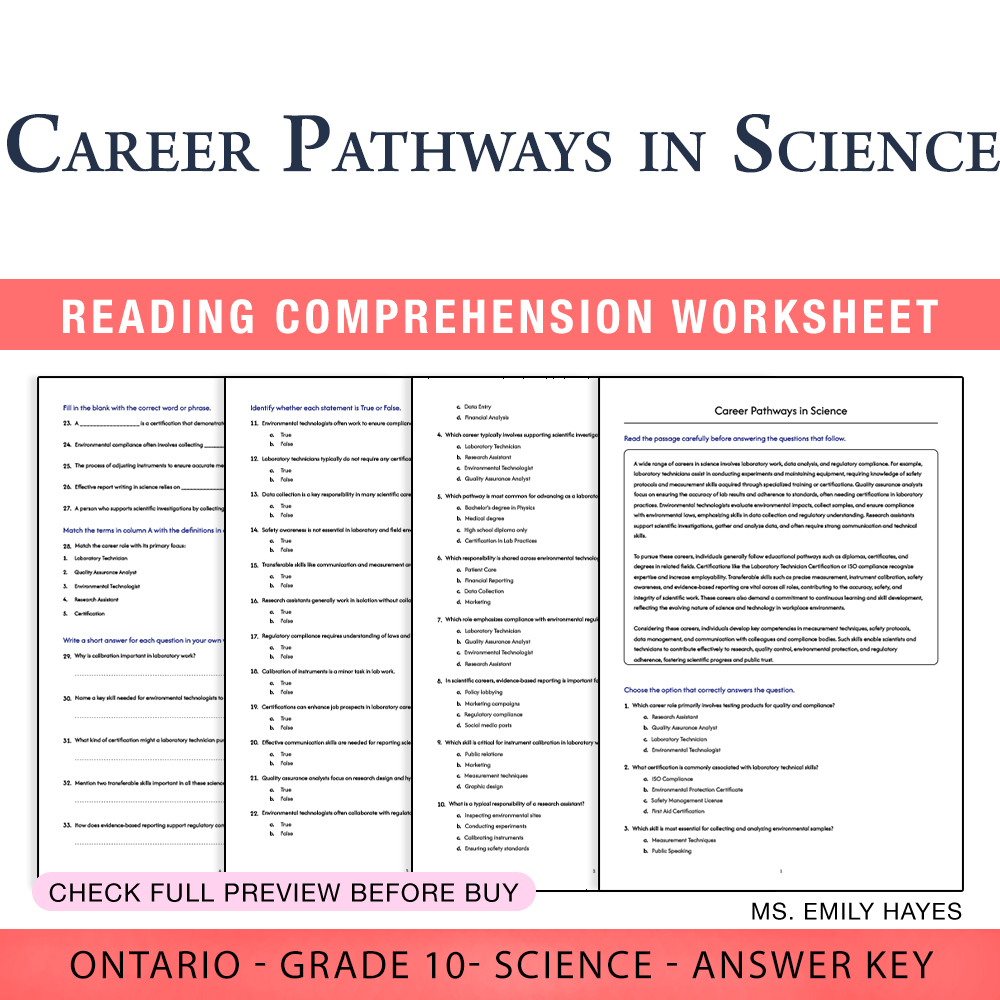
Grade 10 Science | Career Pathways Worksheet (PDF + Answer Key)
Created byCopper Leaf ClassroomLearning Objectives
- Identify various scientific careers and their roles in laboratory settings.
- Understand the credential pathways and certifications required for careers in science.
- Recognize key skills such as measurement techniques, safety practices, and data reporting in scientific professions.
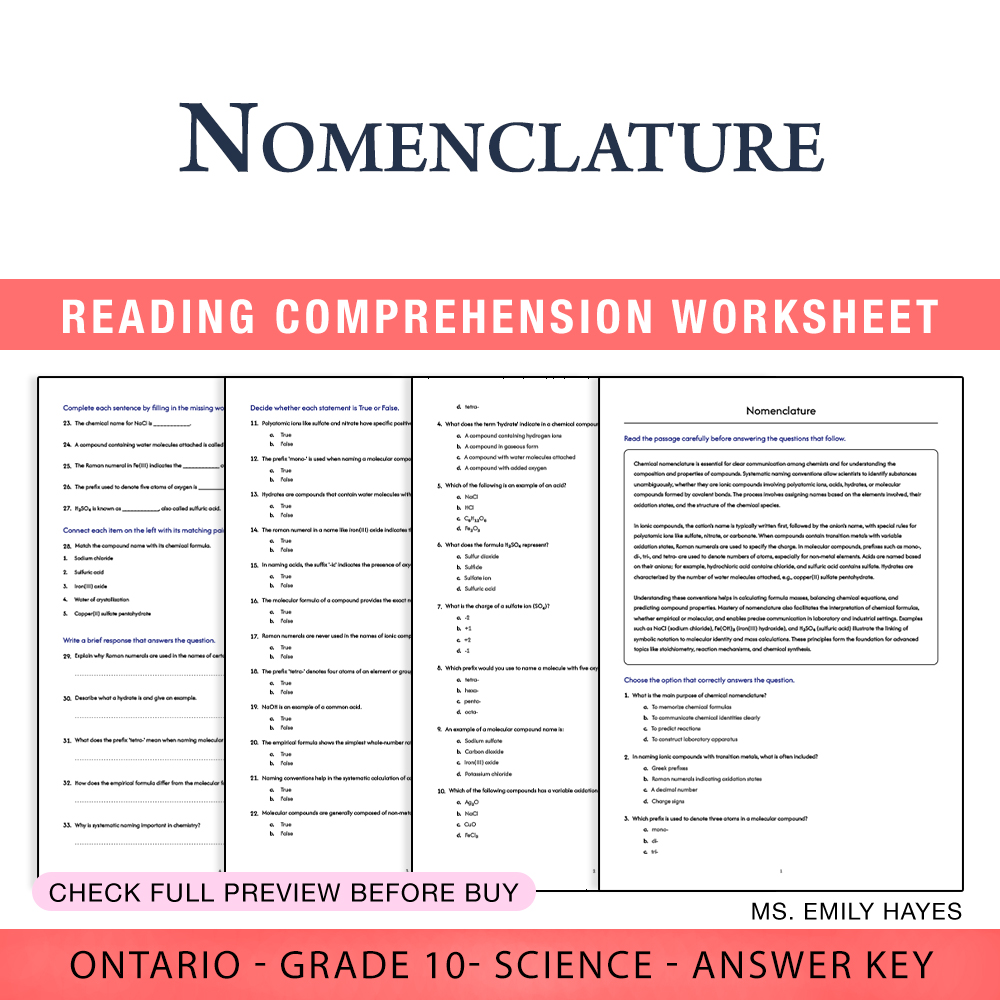
Grade 10 Science | Nomenclature Worksheet (PDF + Answer Key)
Created byCopper Leaf ClassroomLearning Objectives
- Understand and apply systematic naming conventions for ionic and molecular compounds.
- Identify and name polyatomic ions, acids, hydrates, and compounds with variable oxidation states.
- Construct and interpret empirical and molecular formulas based on charge balance and formula mass.
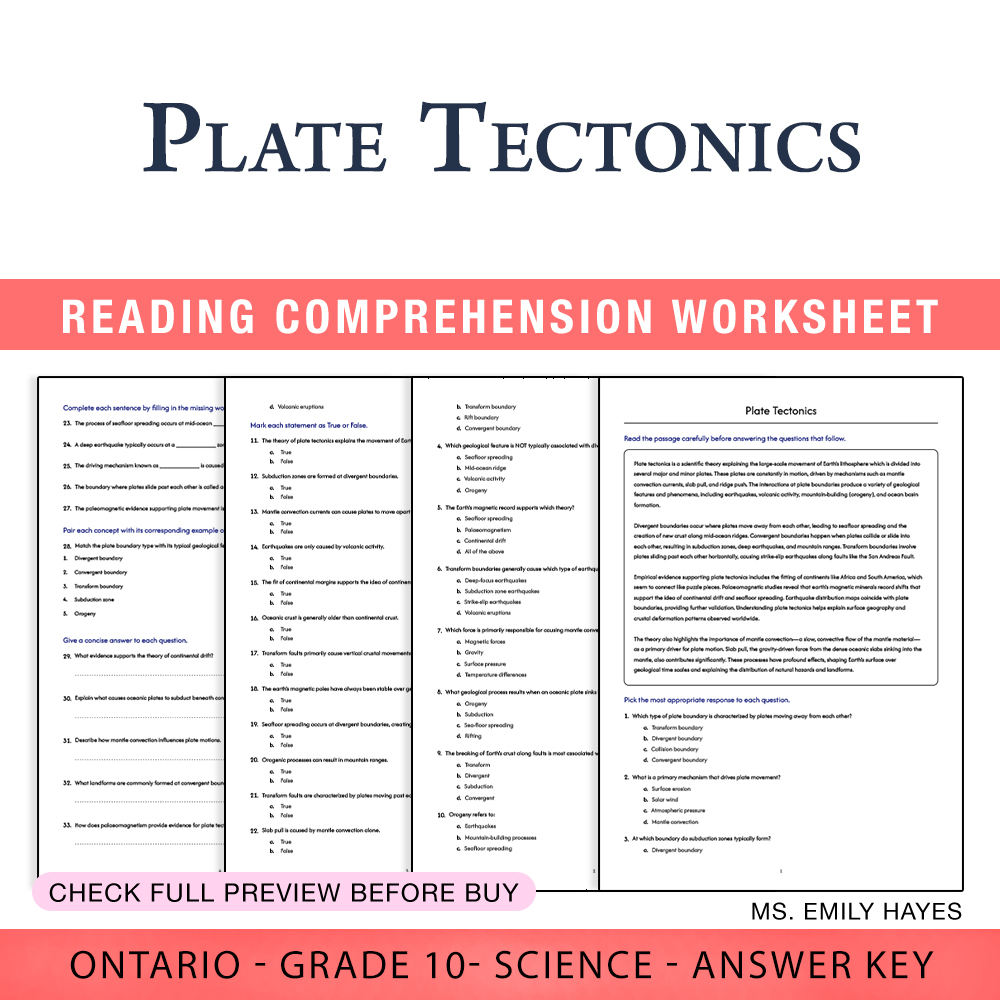
10th Grade Science | Plate Tectonics Worksheet (PDF + Answer Key)
Created byCopper Leaf ClassroomLearning Objectives
- Describe the main types of plate boundaries and their movement directions.
- Explain the driving mechanisms behind plate motions, including mantle convection and slab pull.
- Identify geological features and processes resulting from plate interactions such as seafloor spreading, subduction, and orogeny.
Browse more categories
About Science Worksheets
Find Science worksheets spanning core skills, practice, and review. All 42,859 resources are instant PDF downloads for the classroom or home.
Every worksheet on MyTeachingSheets is created by independent teacher-authors and reviewed before publication. All resources download as printable PDFs for classroom, homework, or at-home practice, and many include answer keys. Preview any worksheet free before buying.