
Science Worksheets
42,859 subject resources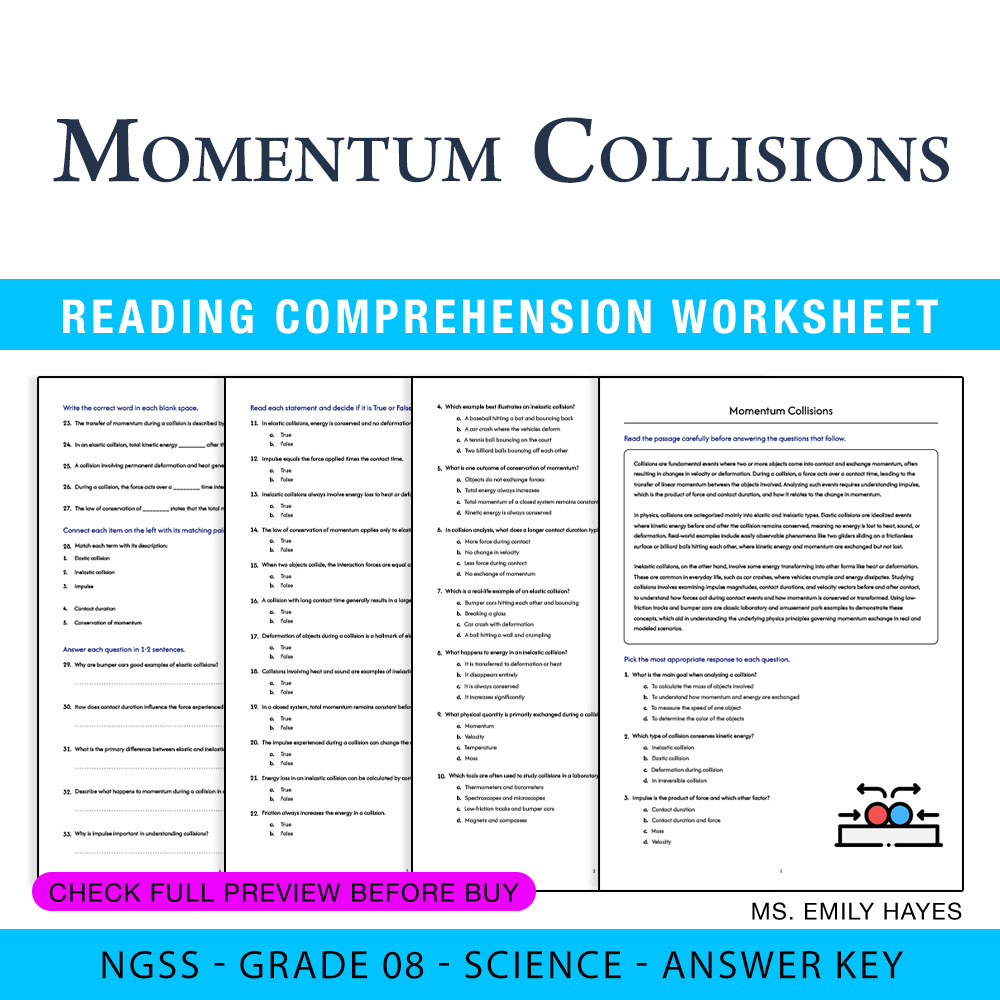
8th Grade Science | Momentum Collisions Worksheet (PDF+ Answer Key)
 Created byCopper Leaf Classroom
Learning Objectives
- Understand the principles of momentum and how it is exchanged during collisions.
- Differentiate between elastic and inelastic collisions based on energy conservation.
- Apply the concepts of impulse, contact duration, and velocity change in analyzing collision scenarios.
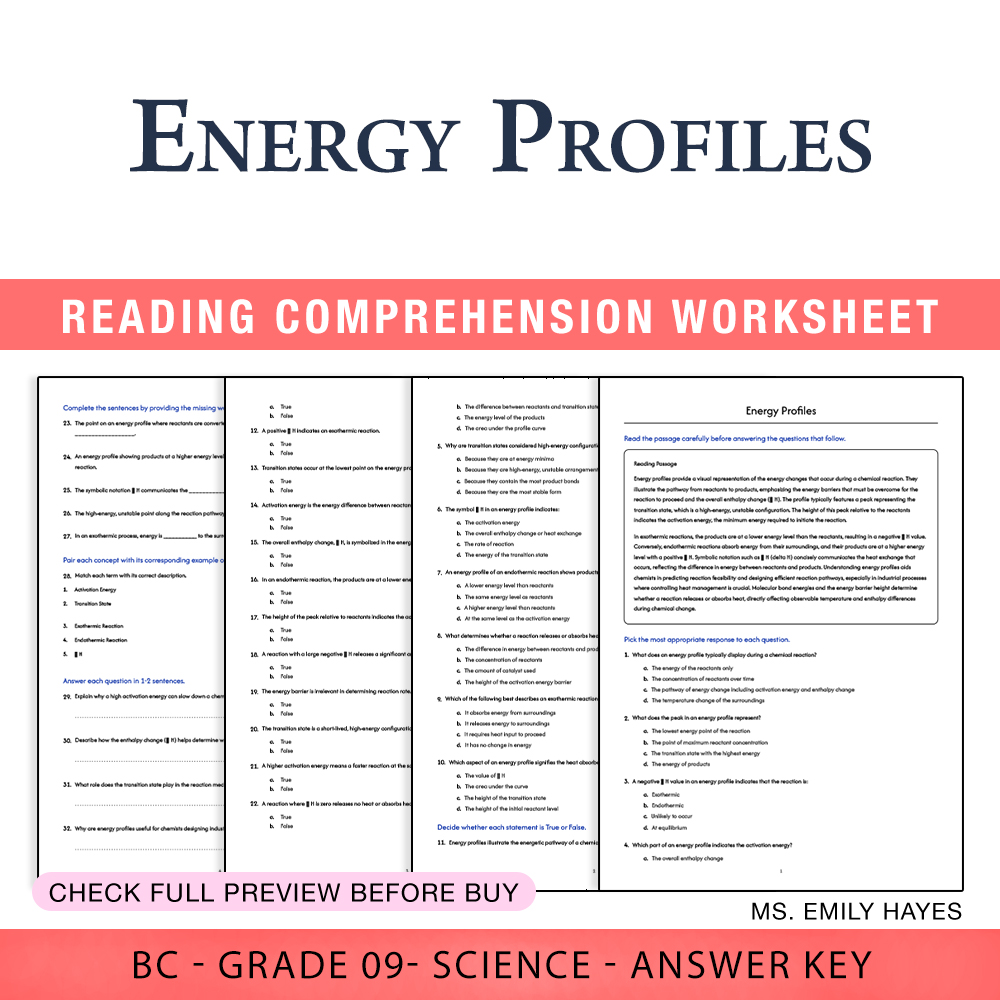
Grade 9 Science | Energy Profiles Worksheet (PDF+ Answer Key)
Created byCopper Leaf ClassroomLearning Objectives
- Describe the concept of energy profiles and their purpose in analyzing chemical reactions.
- Distinguish between exothermic and endothermic reactions based on enthalpy changes.
- Identify the significance of activation energy and transition states in reaction pathways.
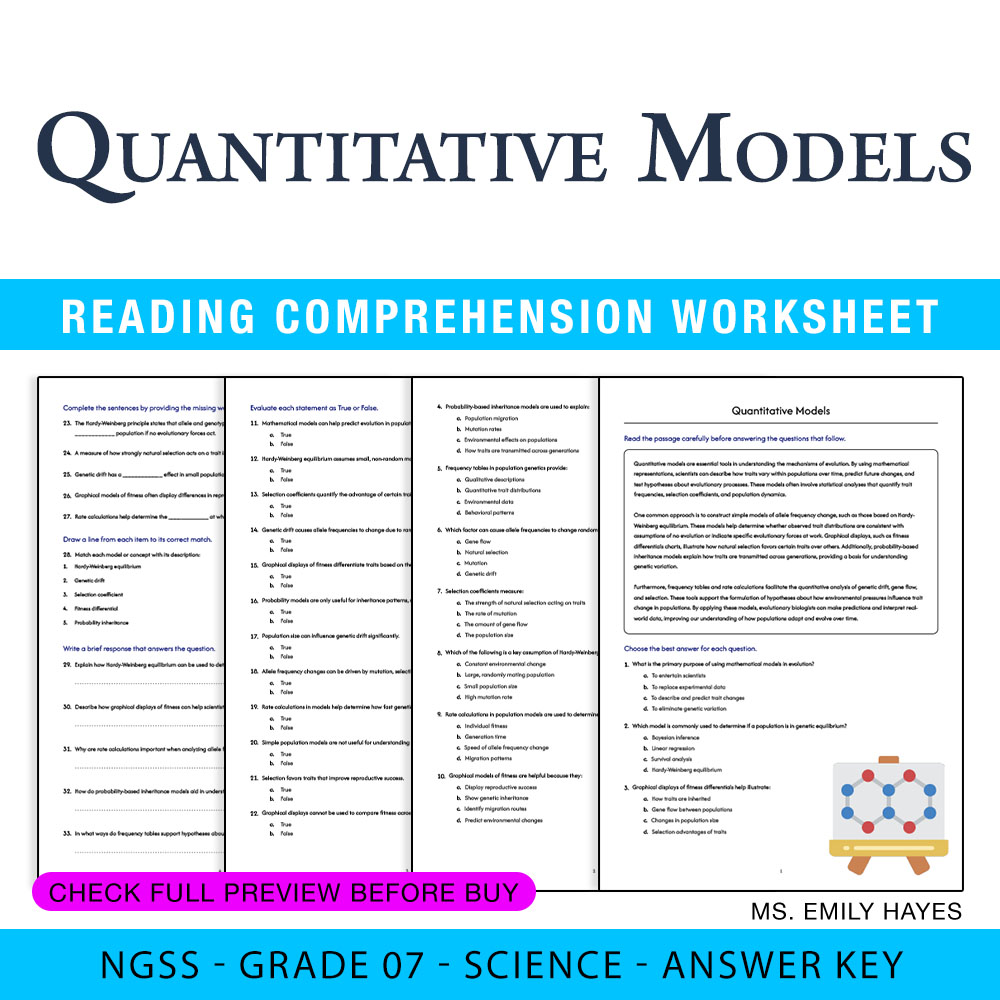
7th Grade Science | Quantitative Models Worksheet (PDF + Answer Key)
Created byCopper Leaf ClassroomLearning Objectives
- Understand how mathematical and statistical models are used to represent evolutionary processes.
- Interpret frequency tables, Hardy-Weinberg calculations, and rate data to analyze population genetics.
- Apply concepts of allele frequency change and genetic drift to real-world scenarios.
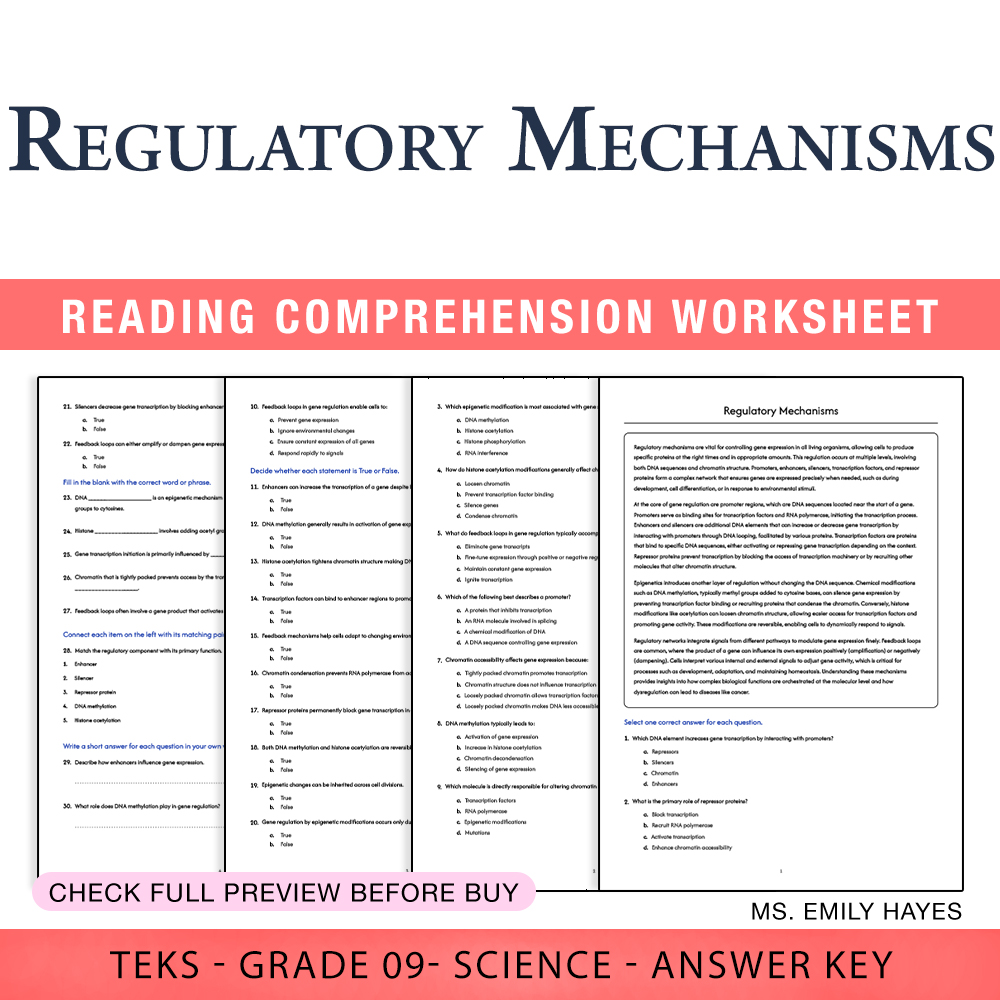
9th Grade Science | Regulatory Mechanisms Worksheet (PDF+ Answer Key)
Created byCopper Leaf ClassroomLearning Objectives
- Understand how gene expression is regulated through transcription factors, enhancers, and silencers.
- Explain the role of epigenetic modifications such as DNA methylation and histone acetylation in gene regulation.
- Describe how regulatory networks and feedback loops help cells respond to developmental and environmental cues.
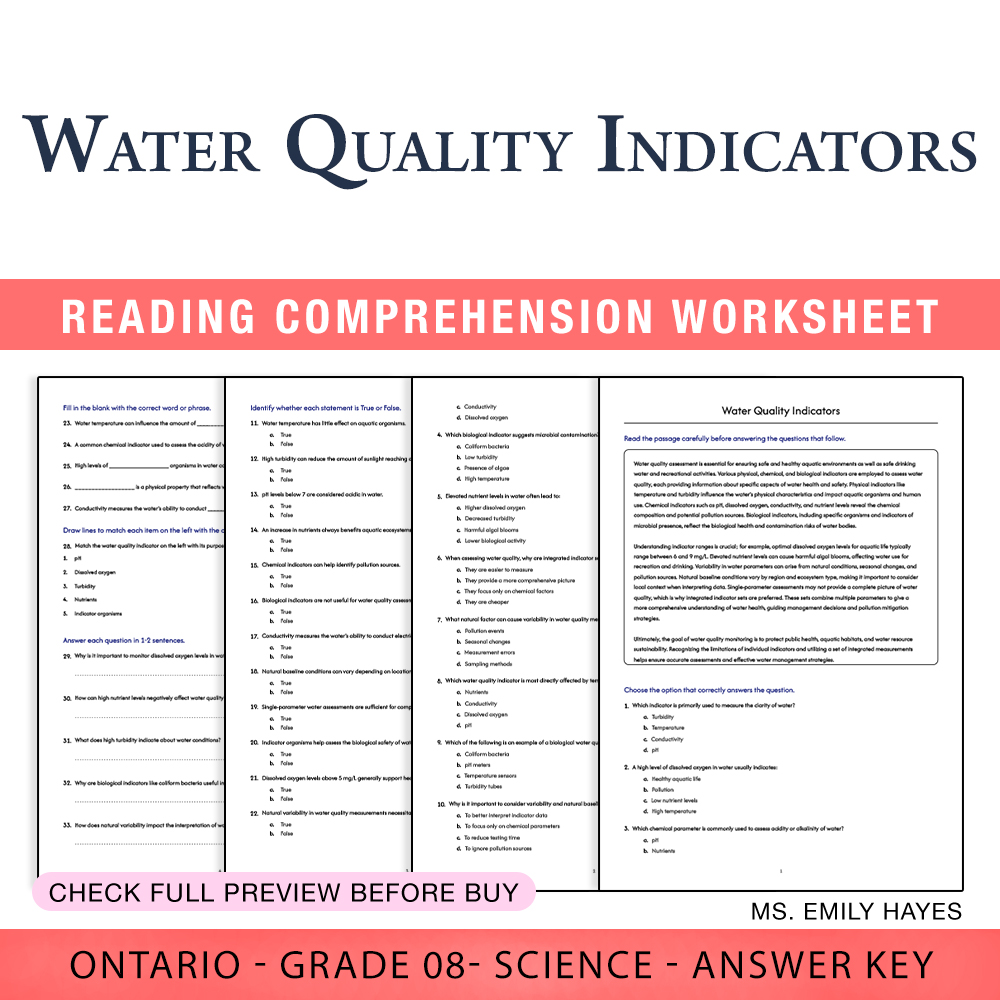
8th Grade Science | Water Quality Indicators Worksheet (PDF+ Answer Key)
Created byCopper Leaf ClassroomLearning Objectives
- Identify key physical, chemical, and biological water quality indicators.
- Interpret the significance of indicator ranges for aquatic health and human use.
- Understand sources of variability and the limitations of single-parameter assessments.
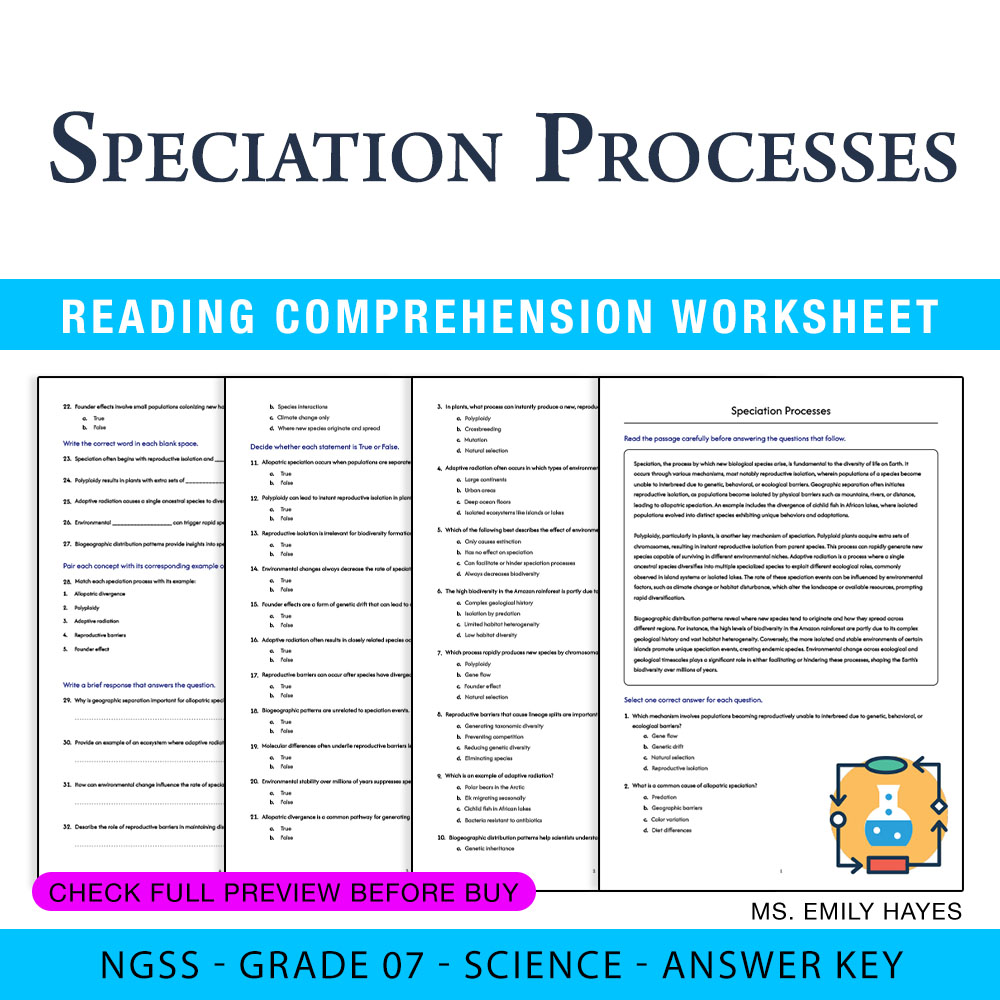
7th Grade Science | Speciation Processes Worksheet (PDF + Answer Key)
Created byCopper Leaf ClassroomLearning Objectives
- Explain the mechanisms driving speciation, including reproductive isolation and geographic separation.
- Describe examples of biodiversity resulting from speciation, such as cichlid radiations and plant polyploidization.
- Analyze how environmental changes influence rates of speciation and biodiversity over ecological and geological timescales.
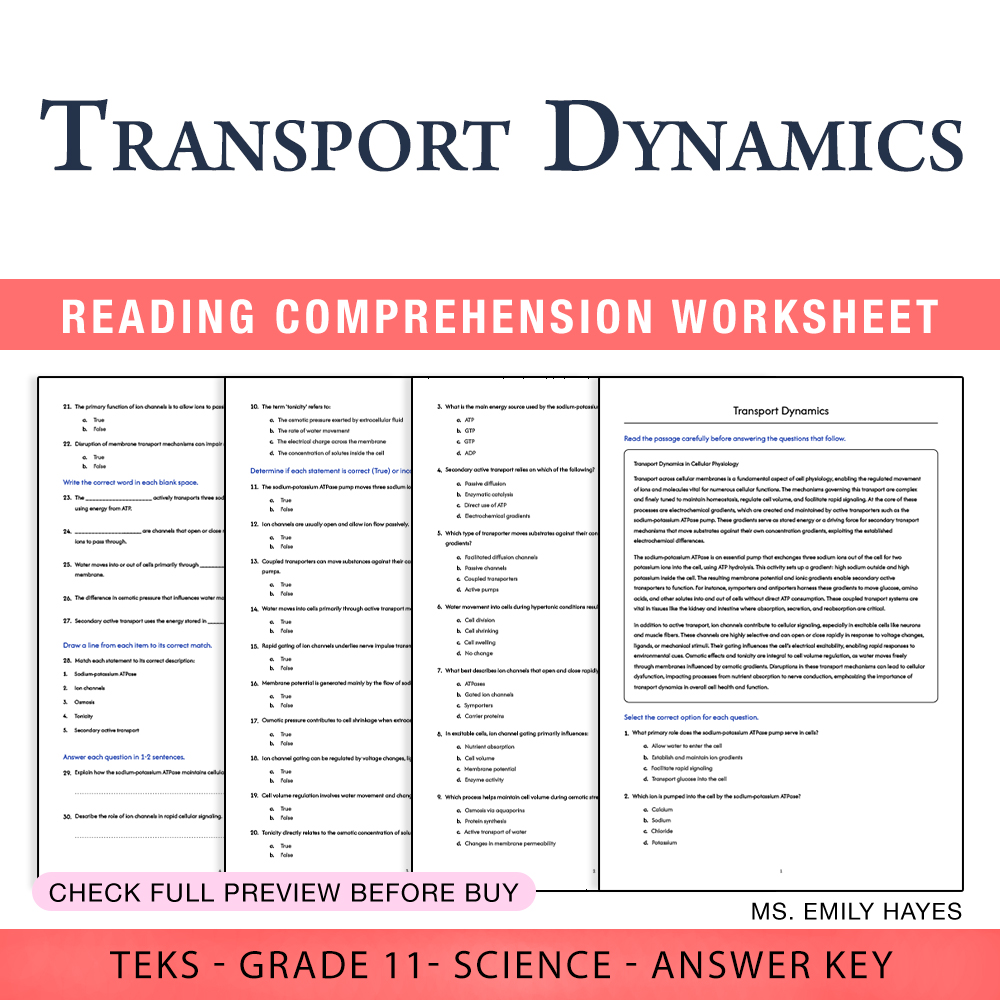
11th Grade Science | Transport Dynamics Worksheet (PDF+ Answer Key)
Created byCopper Leaf ClassroomLearning Objectives
- Explain how electrochemical gradients and membrane properties facilitate ion and molecule movement across cell membranes.
- Describe the role of active pumps such as the sodium-potassium ATPase in establishing ion gradients.
- Identify mechanisms of secondary active transport and their dependence on established gradients.
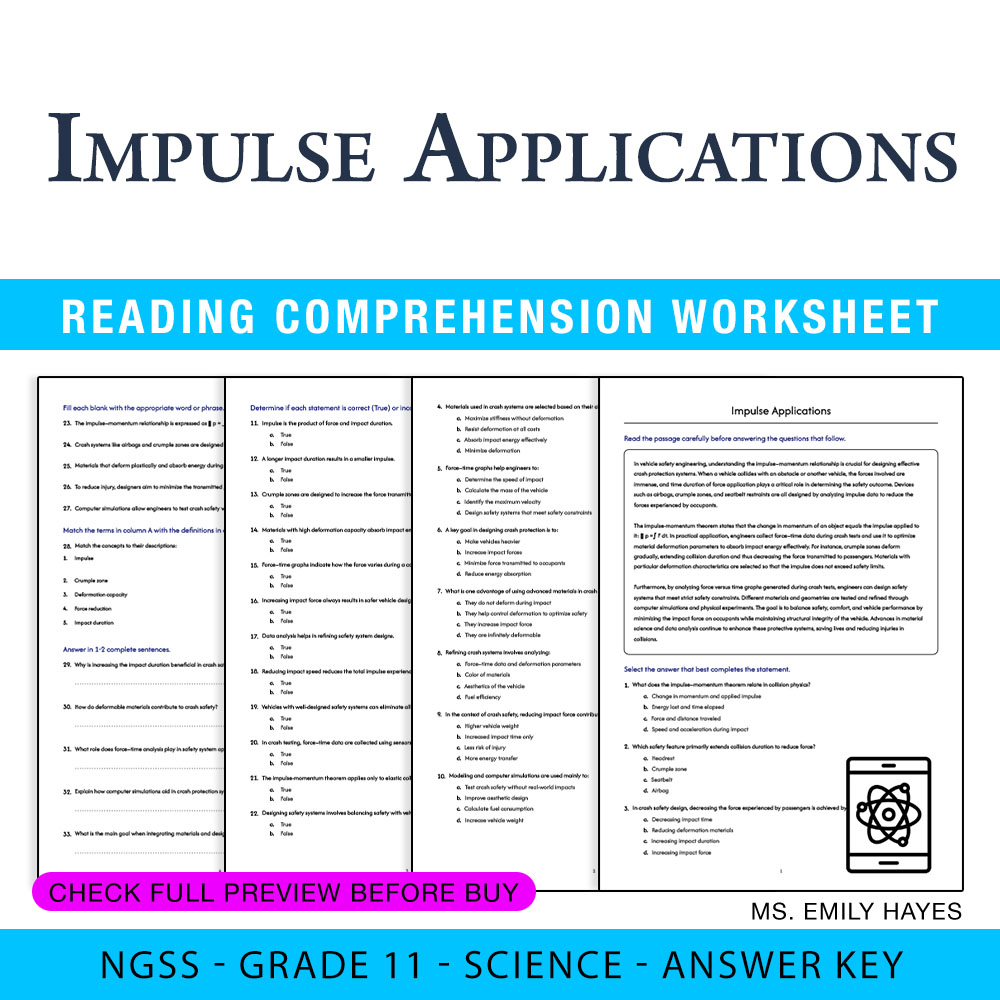
Grade 11 Science | Impulse Applications Worksheet (PDF+ Answer Key)
Created byCopper Leaf ClassroomLearning Objectives
- Explain the impulse–momentum relationship and how it applies to crash-avoidance systems.
- Design and evaluate crash-protection devices that minimize force during collisions.
- Analyze force–time data and material deformation parameters to meet safety constraints.
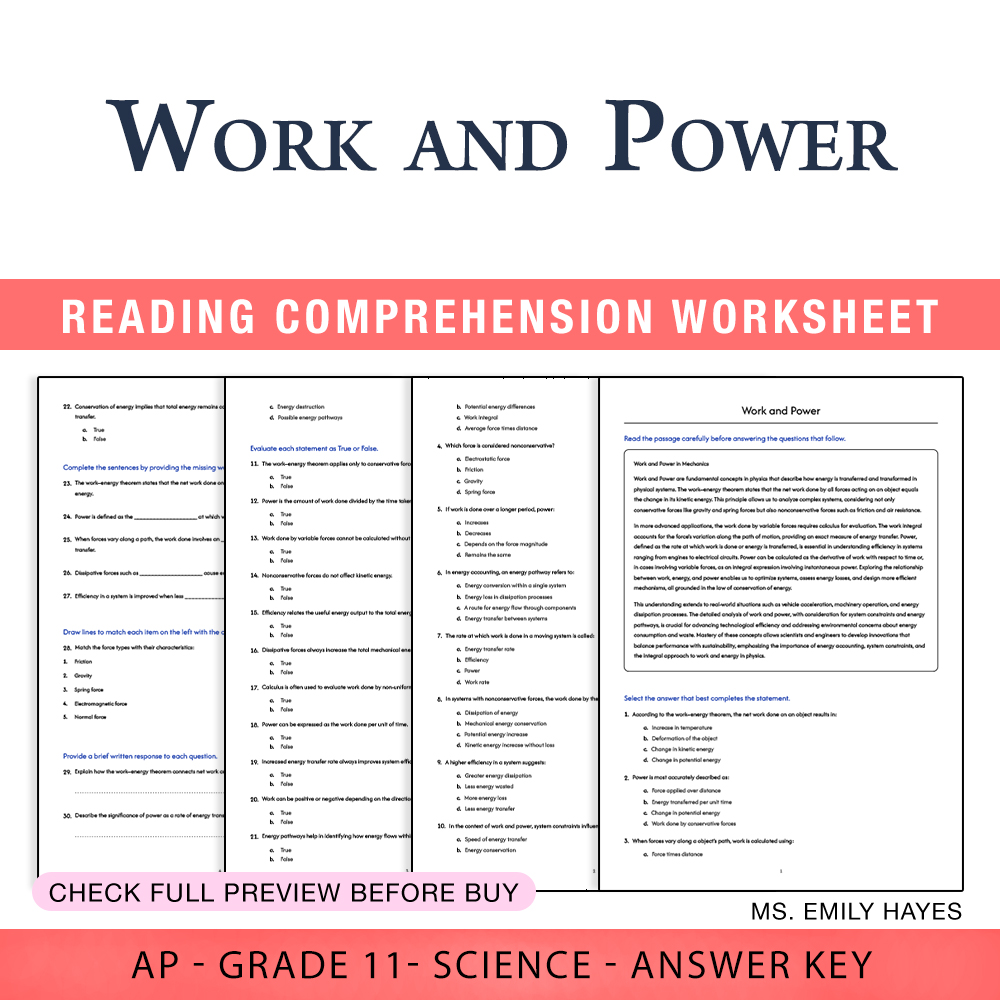
11th Grade Science | Work and Power Worksheet (PDF+ Answer Key)
Created byCopper Leaf ClassroomLearning Objectives
- Explain the work–energy theorem and its connection to changes in kinetic energy.
- Define power as the rate of energy transfer and relate it to work and time.
- Apply integral expressions to calculate work done by variable and nonconservative forces.
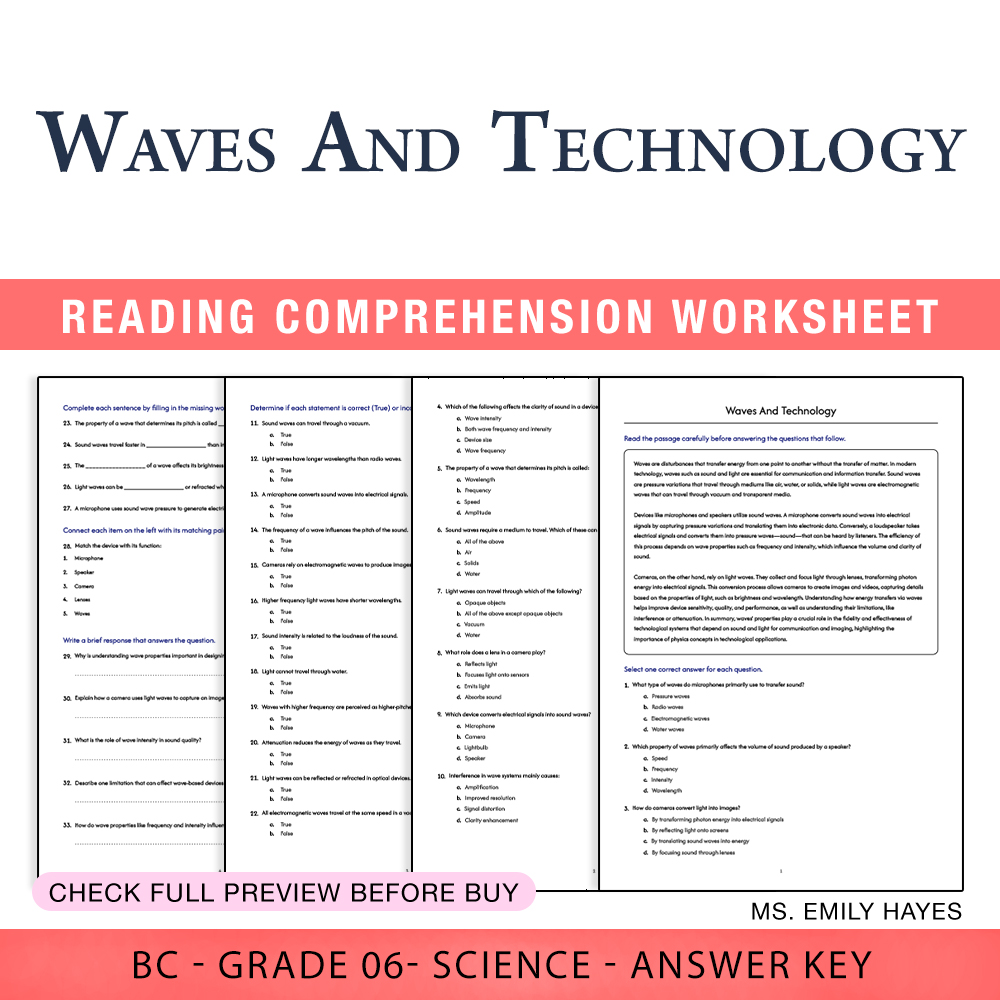
Grade 6 Science | Waves and Technology Worksheet (PDF+ Answer Key)
Created byCopper Leaf ClassroomLearning Objectives
- Describe how sound and light waves transfer energy in technological devices
- Explain how components like microphones, speakers, and cameras convert energy using waves
- Identify properties of waves such as frequency and intensity and how they affect device performance
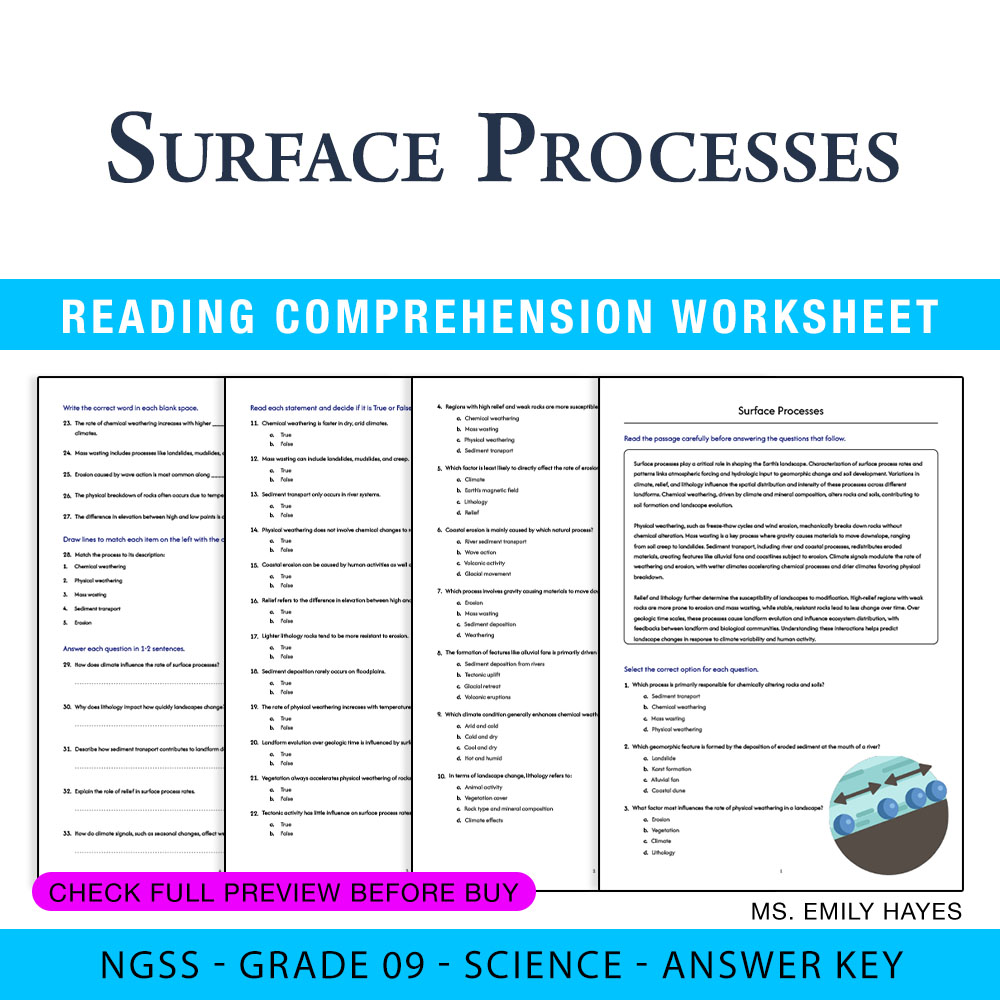
Grade 9 Science | Surface Processes Worksheet (PDF+ Answer Key)
Created byCopper Leaf ClassroomLearning Objectives
- Describe the main types of surface processes affecting landscape change.
- Analyze the factors influencing rates of chemical and physical weathering.
- Explain how mass wasting and sediment transport contribute to geomorphic patterns.
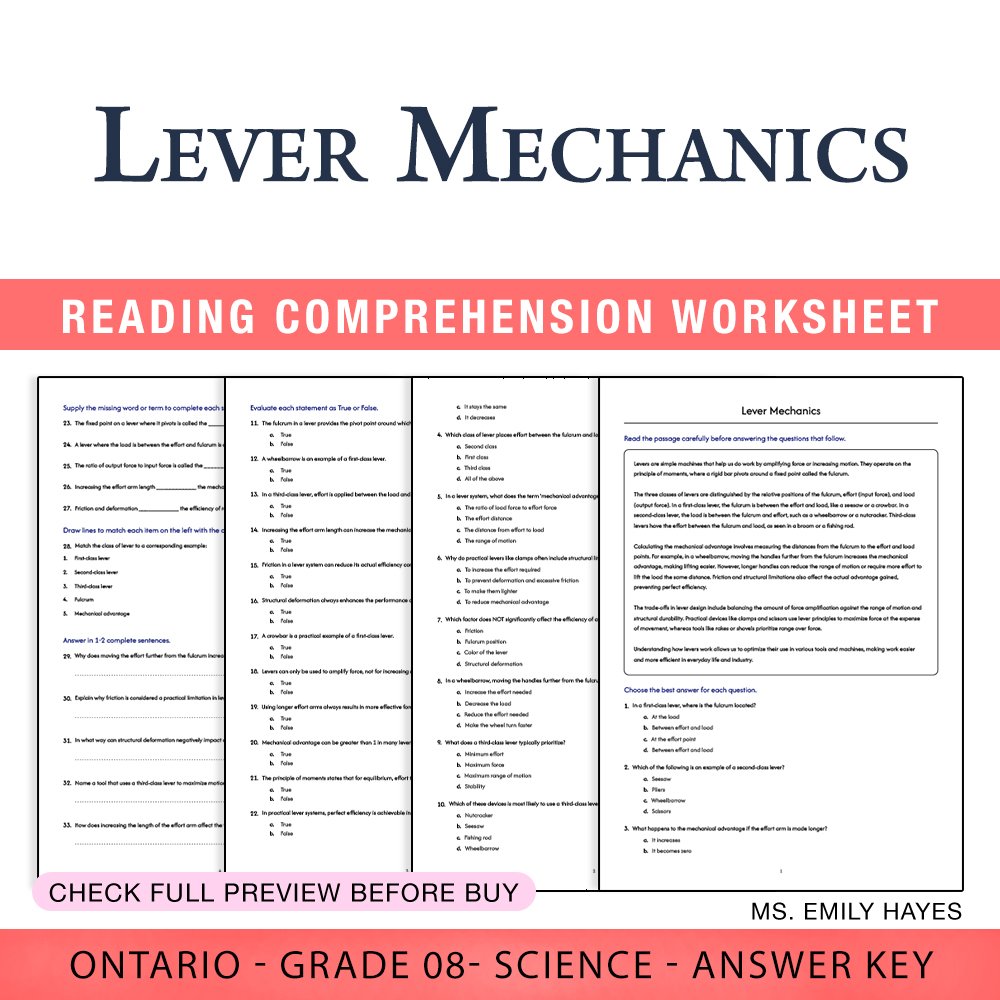
Grade 8 Science | Lever Mechanics Worksheet (PDF+ Answer Key)
Created byCopper Leaf ClassroomLearning Objectives
- Explain the three classes of levers and identify their fulcrum, input, and output forces.
- Calculate the mechanical advantage of first-, second-, and third-class levers using distances from the fulcrum.
- Describe the trade-offs between force amplification and range of motion in lever systems.
Grade 9 Science | Energy Systems Worksheet (PDF+ Answer Key)
Created byCopper Leaf ClassroomLearning Objectives
- Understand the concept of energy system transitions and decarbonization pathways.
- Analyze the trade-offs between reliability, affordability, and greenhouse gas reduction in energy scenarios.
- Evaluate the role of renewable energy, storage, and carbon capture in reducing emissions.
10th Grade Science | Metabolic Pathways Worksheet (PDF+ Answer Key)
Created byCopper Leaf ClassroomLearning Objectives
- Map and explain the core metabolic pathways including glycolysis, the TCA cycle, and oxidative phosphorylation.
- Identify key energy yields, electron flows, and fates of intermediates in these pathways.
- Understand the regulation and branching points that maintain cellular homeostasis under varying conditions.
9th Grade Science | Control Criteria in Causal Inference (PDF+ Answer Key)
Created byCopper Leaf ClassroomLearning Objectives
- Define and explain the key control criteria used in establishing causality and their importance.
- Analyze how variable isolation, replication, baseline characterization, and reference conditions influence causal interpretation.
- Evaluate the impact of residual confounding and uncontrolled variation on the strength of causal claims.
6th Grade Science | Feedback Control Worksheet (PDF + Answer Key)
Created byCopper Leaf ClassroomLearning Objectives
- Describe how negative and positive feedback mechanisms regulate internal body conditions.
- Explain examples of feedback control in human physiological processes such as thermoregulation, blood glucose regulation, and osmotic balance.
- Identify the roles of sensors, effectors, and set points in maintaining homeostasis.
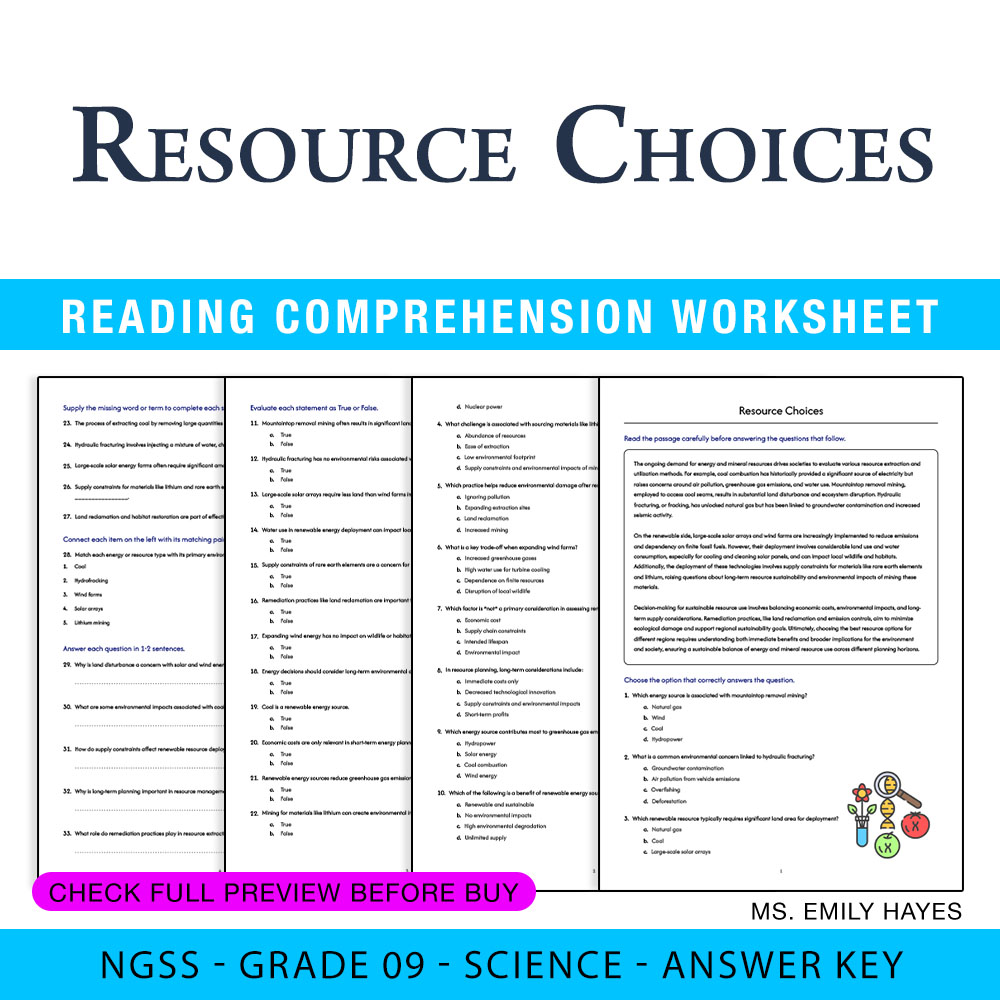
Grade 9 Science | Resource Choices Worksheet (PDF+ Answer Key)
Created byCopper Leaf ClassroomLearning Objectives
- Compare and analyze different energy and mineral resource options, considering their environmental, economic, and social impacts.
- Evaluate trade-offs involved in resource extraction, management, and sustainability within regional and long-term contexts.
- Understand the life-cycle considerations and environmental trade-offs of fossil fuels and renewable energy sources.
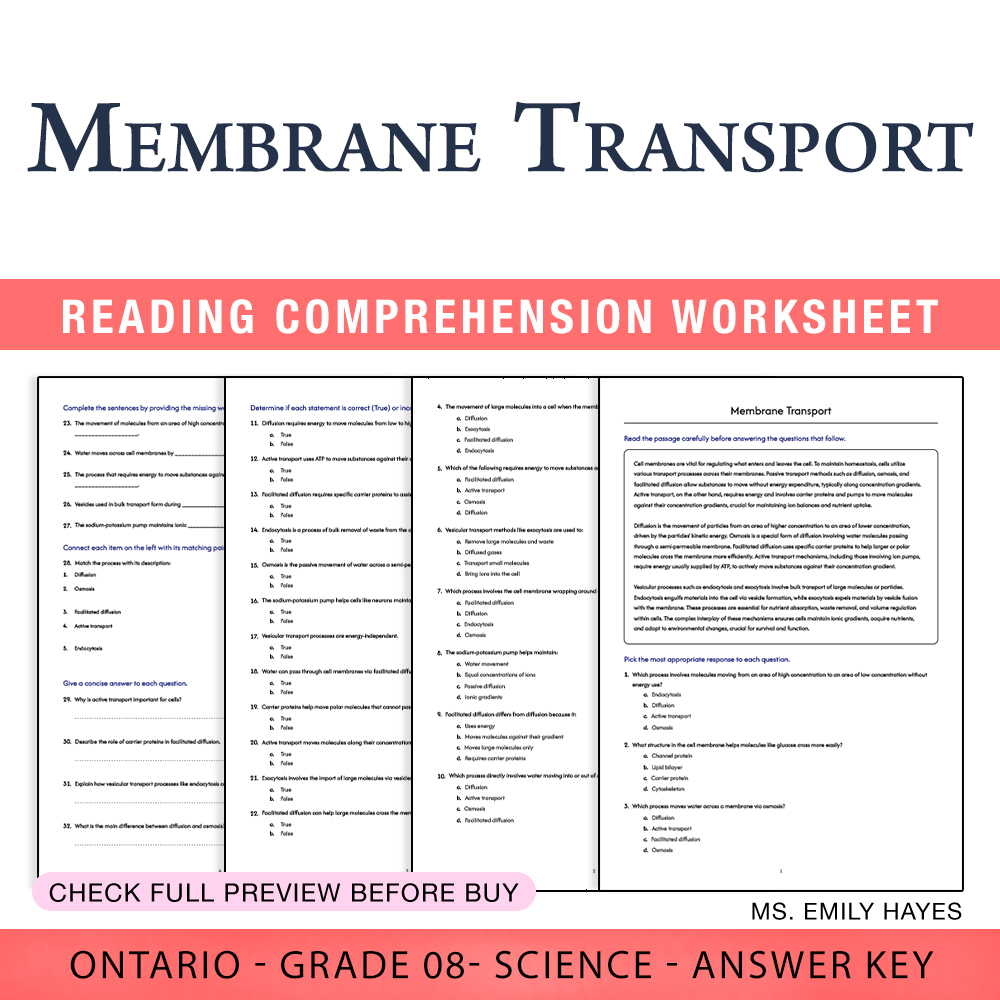
8th Grade Science | Membrane Transport Worksheet (PDF+ Answer Key)
Created byCopper Leaf ClassroomLearning Objectives
- Describe the processes of diffusion, osmosis, facilitated diffusion, and active transport across cell membranes.
- Explain the roles of carrier proteins and pumps in membrane transport.
- Understand the relationship between concentration gradients, surface area, and transport rate.
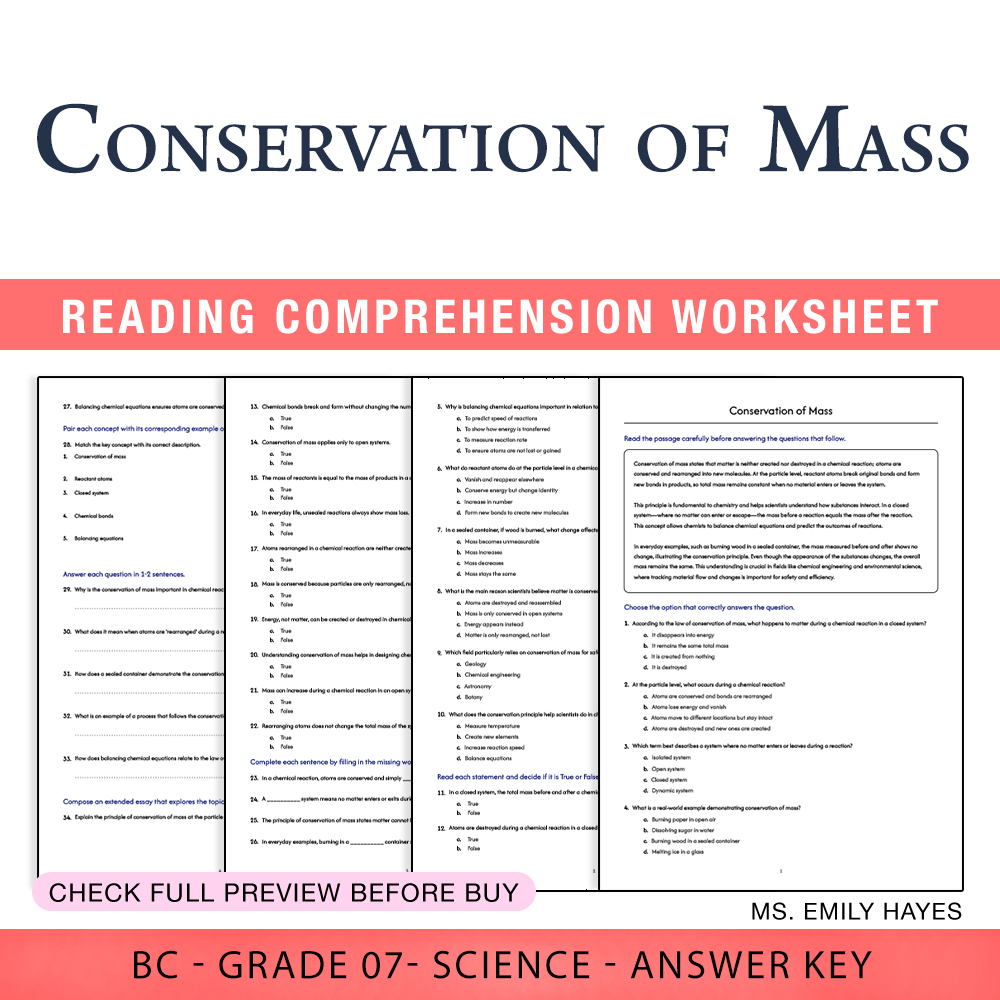
7th Grade Science | Conservation of Mass Worksheet (PDF+ Answer Key)
Created byCopper Leaf ClassroomLearning Objectives
- Explain the principle of conservation of mass in chemical reactions.
- Describe what happens at the particle level during a chemical reaction.
- Understand that matter is neither created nor destroyed in a closed system.
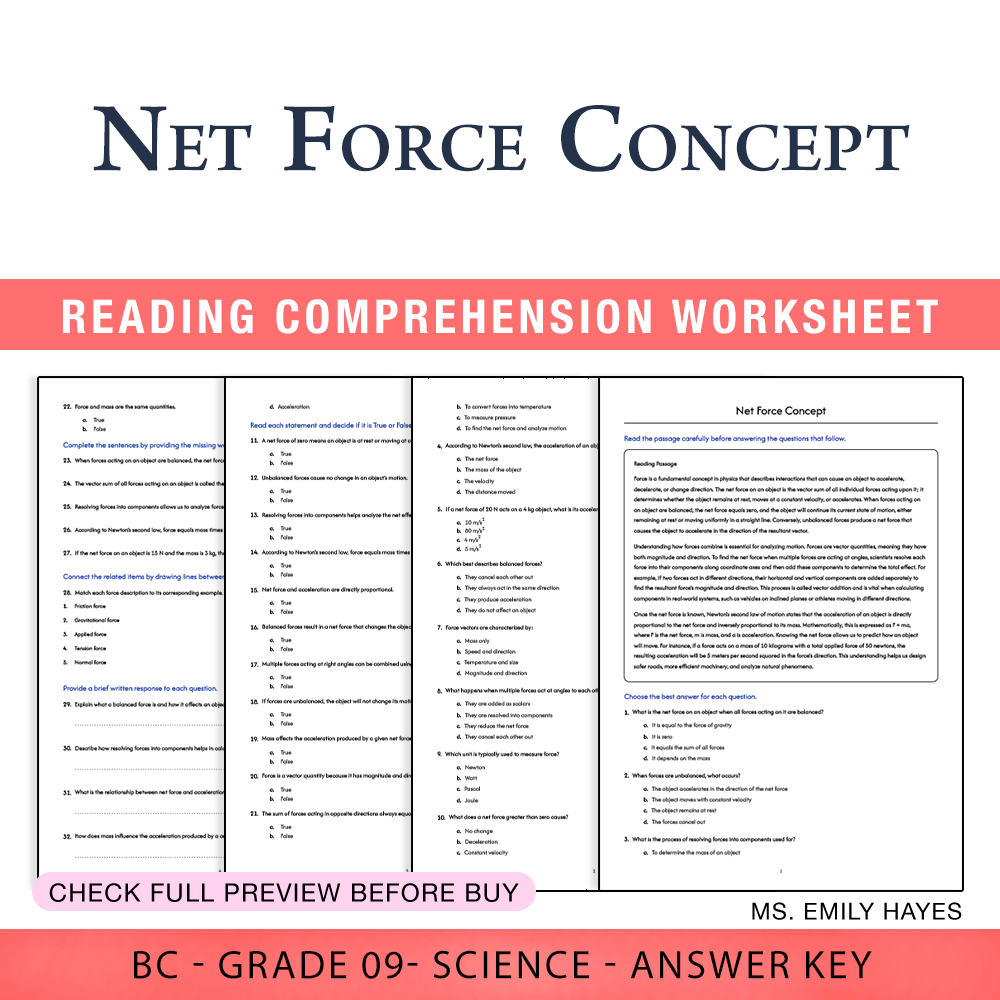
9th Grade Science | Net Force Concept Worksheet (PDF+ Answer Key)
Created byCopper Leaf ClassroomLearning Objectives
- Define and explain the concept of net force and how it affects motion.
- Describe how forces can be resolved into components and summed to find the net effect.
- Calculate the resulting acceleration when given force vectors and mass.
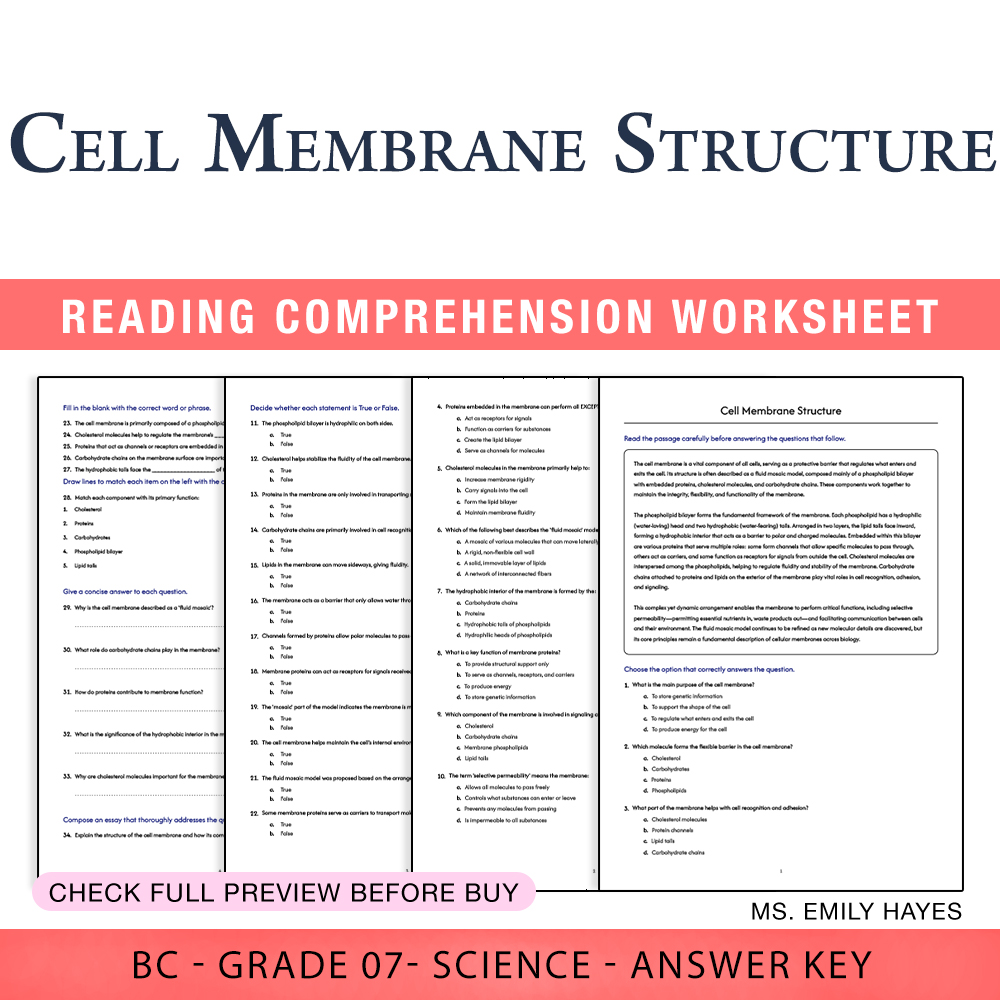
7th Grade Science | Cell Membrane Structure Worksheet (PDF+ Answer Key)
Created byCopper Leaf ClassroomLearning Objectives
- Describe the composition and organization of the cell membrane.
- Explain the functions of phospholipids, proteins, cholesterol, and carbohydrates in the membrane.
- Identify the components involved in selective permeability and communication in the cell membrane.
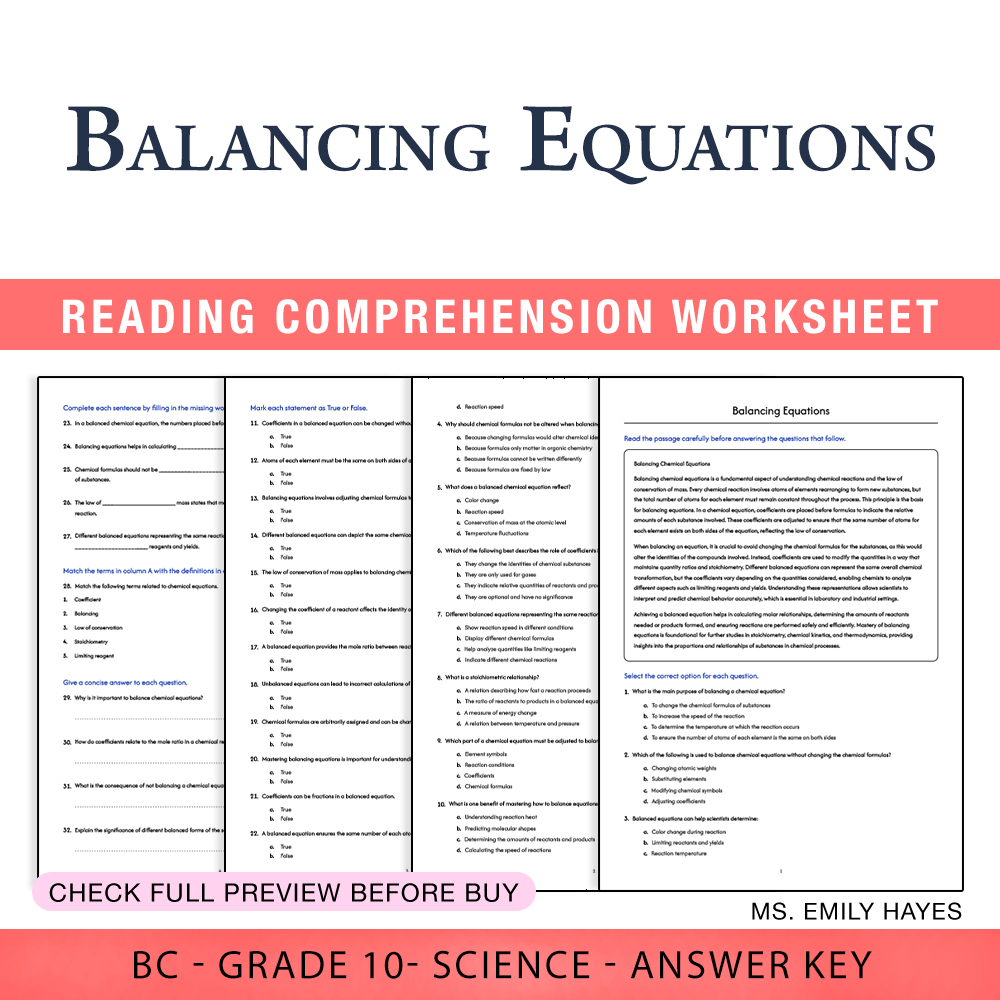
Grade 10 Science | Balancing Chemical Equations Worksheet (PDF + Answer Key)
Created byCopper Leaf ClassroomLearning Objectives
- Understand the concept of balancing chemical equations and the law of conservation of mass.
- Identify and apply appropriate coefficients to balance chemical equations.
- Interpret stoichiometric relationships from balanced equations.
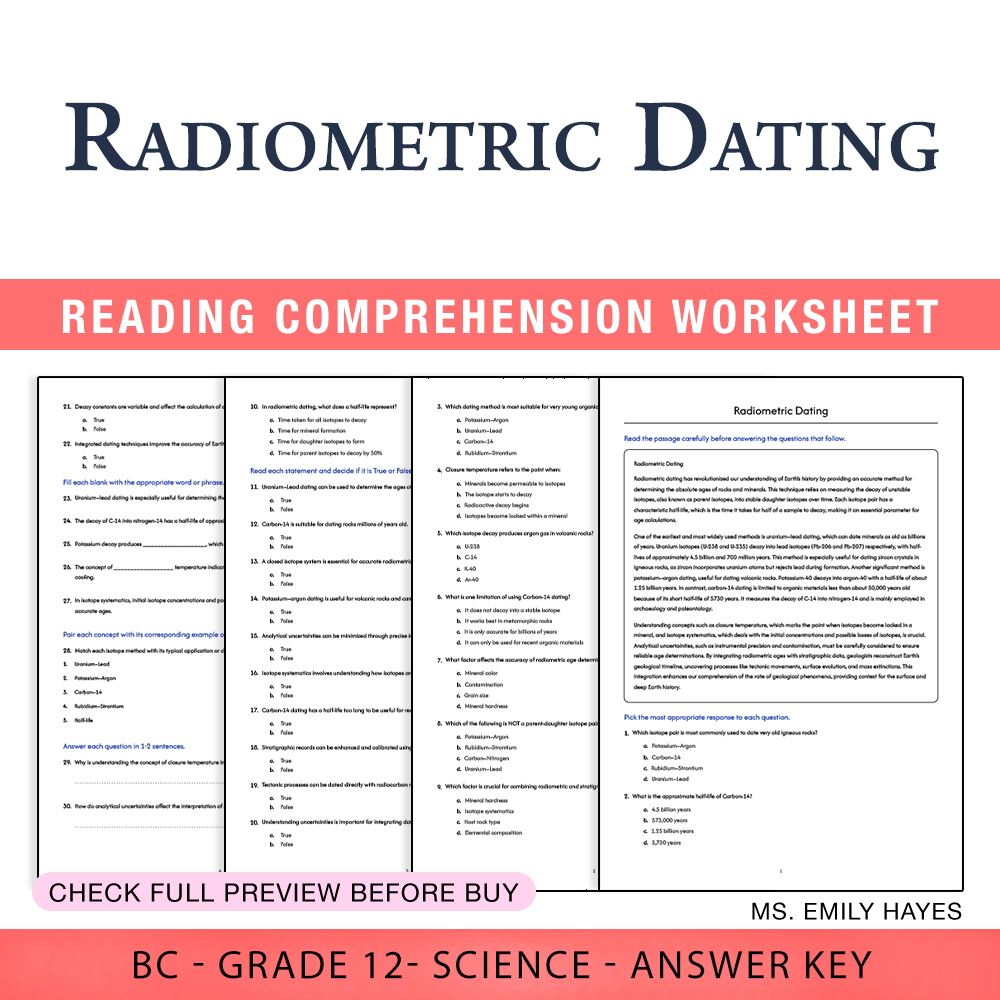
12th Grade Science | Radiometric Dating Worksheet (PDF + Answer Key)
Created byCopper Leaf ClassroomLearning Objectives
- Understand the principles of radiometric dating and isotope decay.
- Identify different radiometric methods and their applications in geology.
- Explain how isotopic systematics and uncertainties impact age calculations.
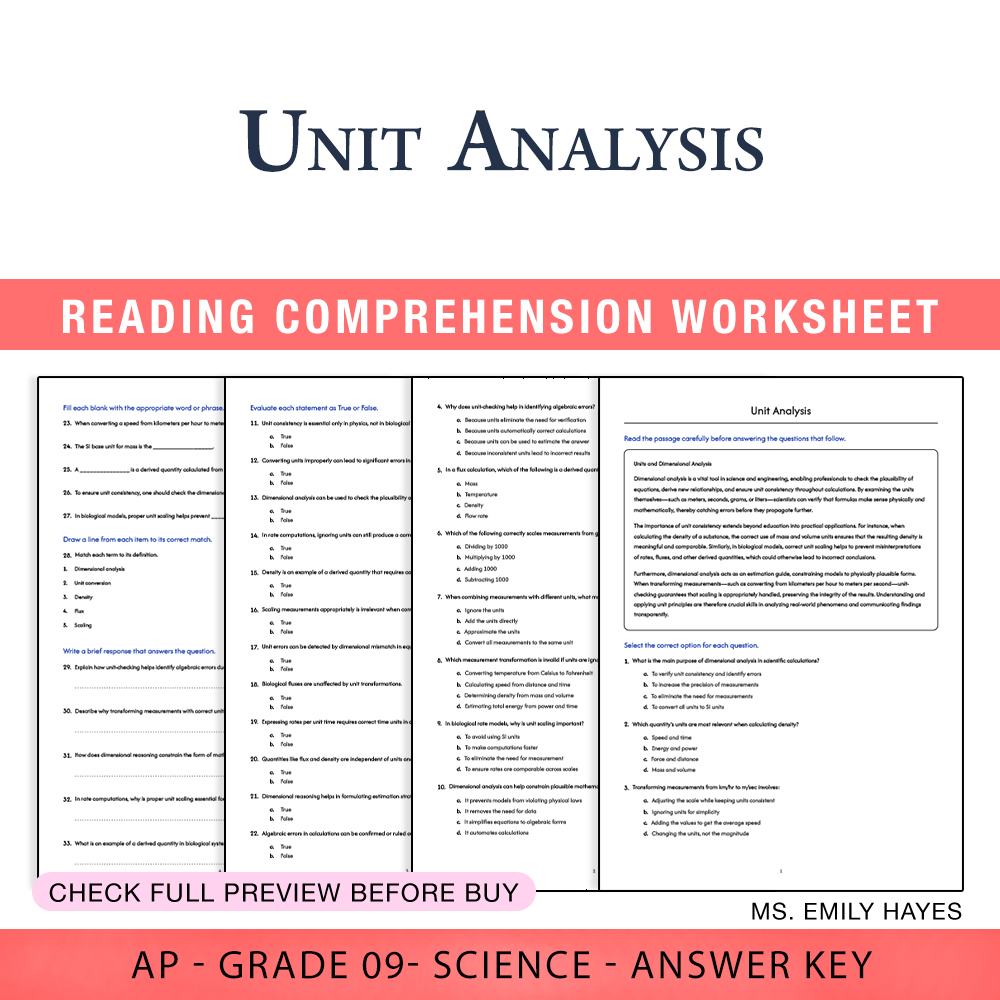
Grade 9 Science | Unit Analysis Worksheet (PDF+ Answer Key)
Created byCopper Leaf ClassroomLearning Objectives
- Understand the principles of dimensional analysis and apply unit consistency when combining measurements.
- Recognize how unit-checking can reveal algebraic errors in calculations.
- Derive relationships and transform measurements using correct units.
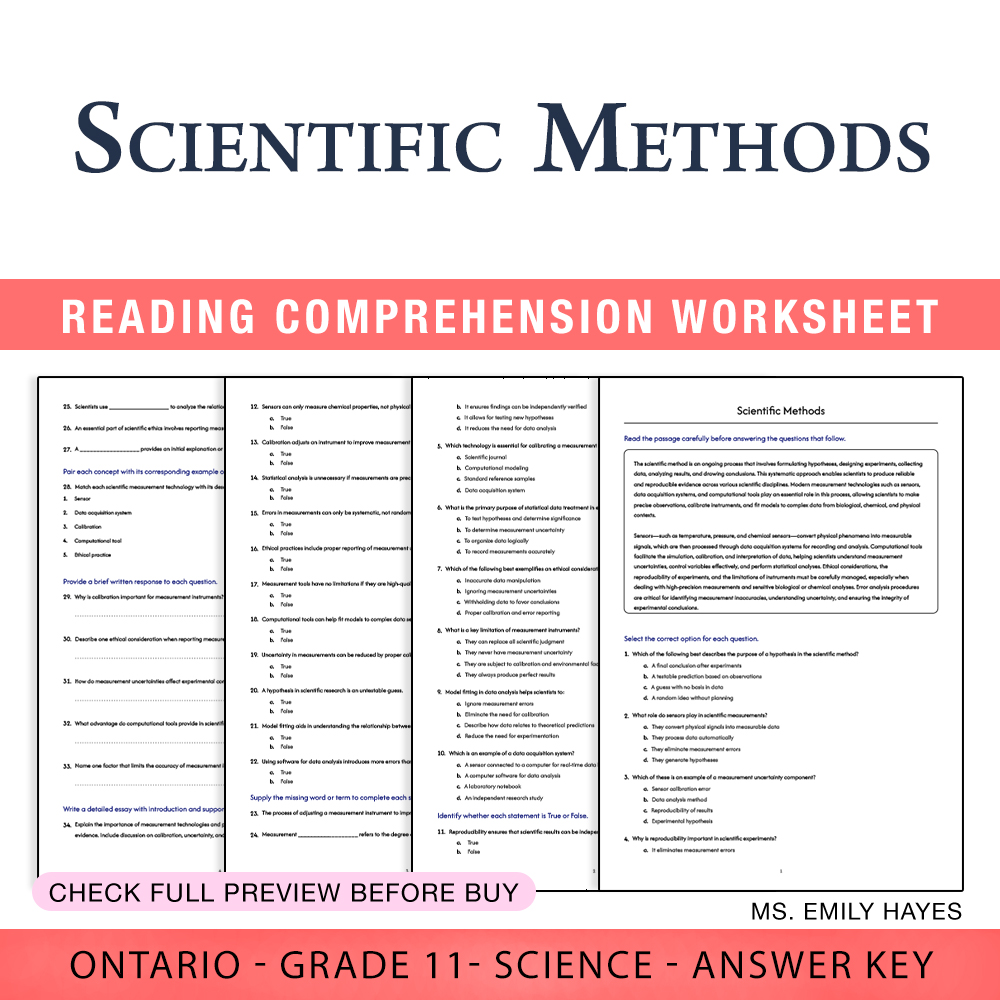
Grade 11 Science | Scientific Methods Worksheet (PDF + Answer Key)
Created byCopper Leaf ClassroomLearning Objectives
- Understand the key components of the scientific method, including hypothesis formulation, variable control, measurement, and data analysis.
- Recognize the roles of measurement technologies such as sensors, data acquisition systems, and computational tools in scientific research.
- Identify ethical considerations, reproducibility, and limitations related to scientific instruments and procedures.
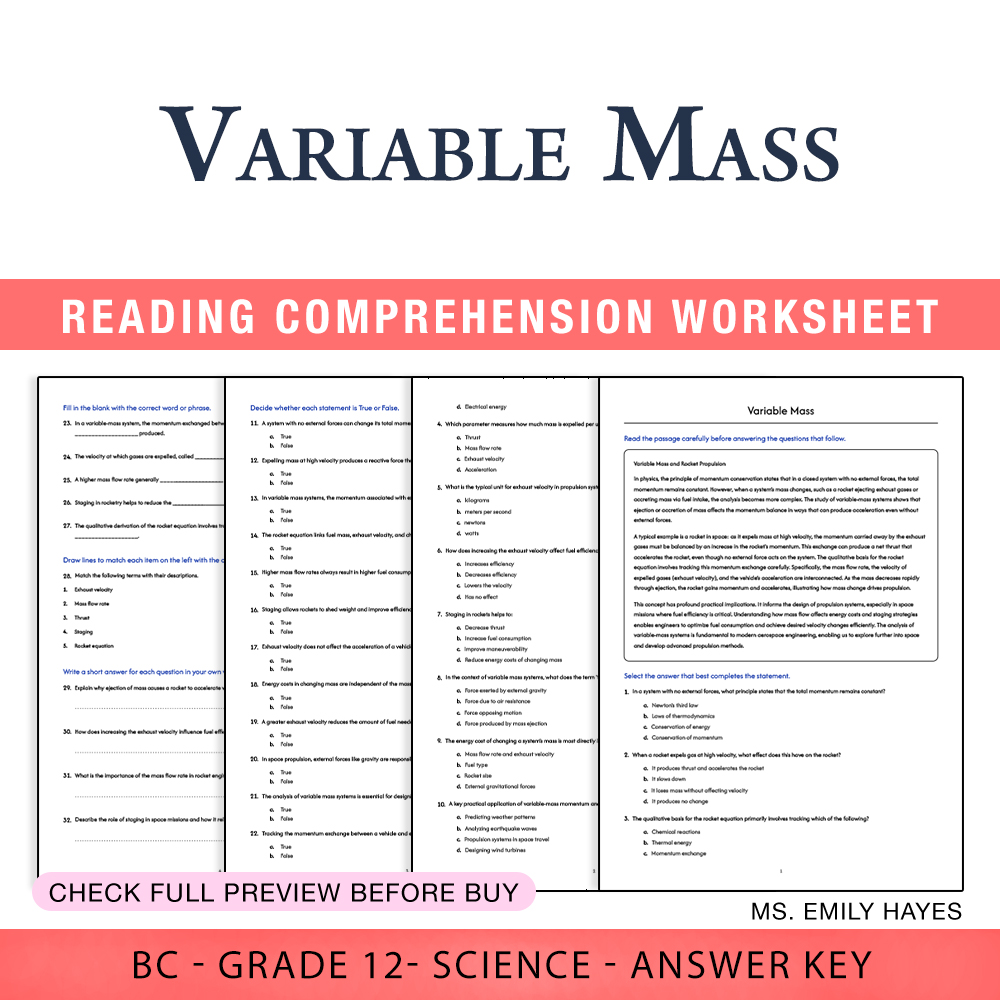
Grade 12 Science | Variable Mass & Momentum Conservation (PDF + Answer Key)
Created byCopper Leaf ClassroomLearning Objectives
- Understand the principles of momentum conservation in systems with changing mass.
- Explain how mass ejection or accretion affects a vehicle’s momentum and produces thrust.
- Derive the qualitative basis for the rocket equation by analyzing momentum exchange.
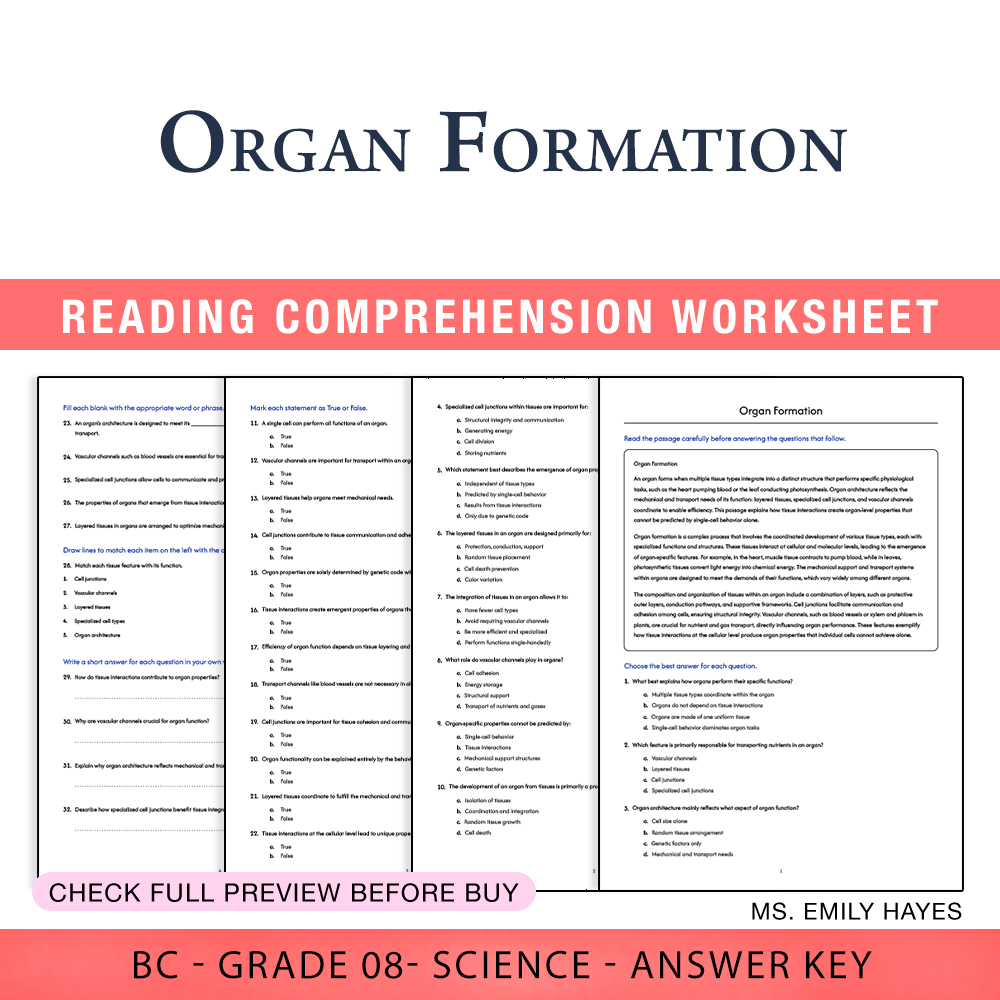
Grade 8 Science | Organ Formation Worksheet (PDF+ Answer Key)
Created byCopper Leaf ClassroomLearning Objectives
- Understand how tissues interact to form organs with specific functions.
- Identify the structural features of tissues that support organ architecture.
- Explain how organ structures enable efficiency in physiological tasks.
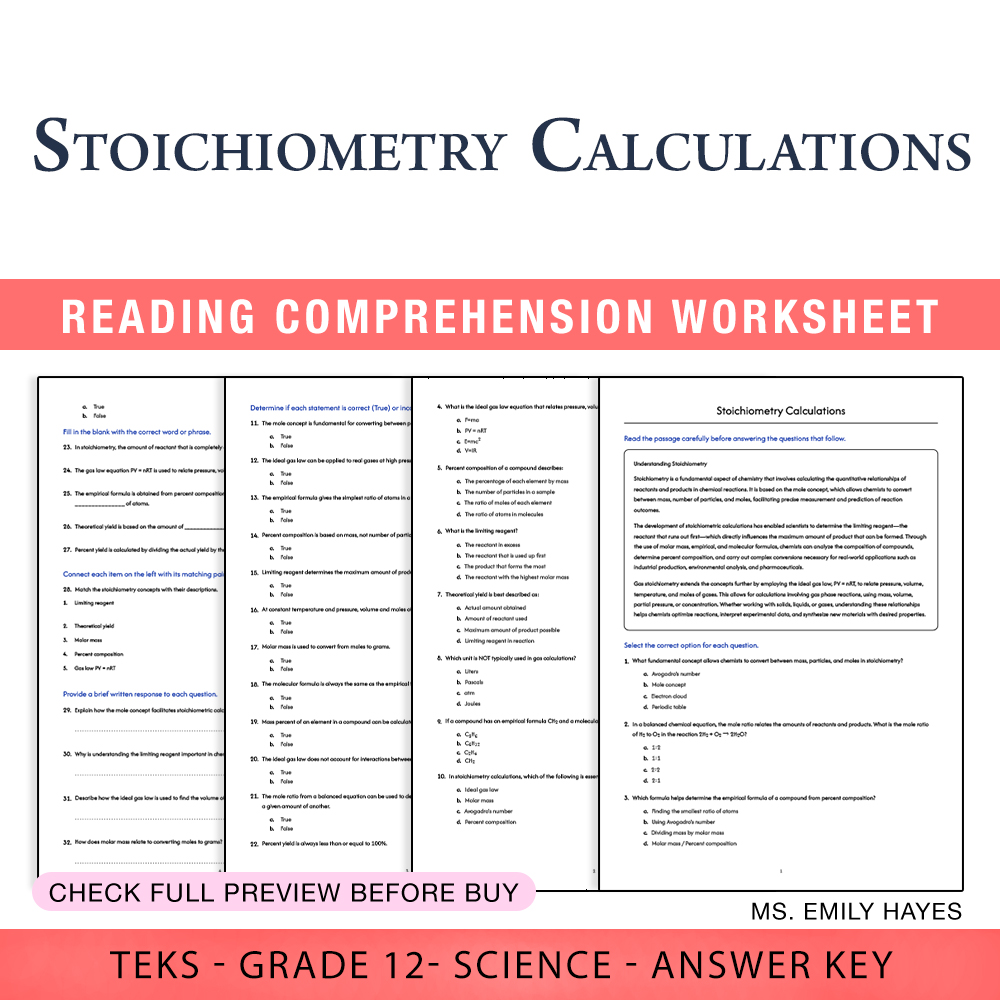
Grade 12 Science | Stoichiometry Calculations Worksheet (PDF+ Answer Key)
Created byCopper Leaf ClassroomLearning Objectives
- Understand and perform mole conversions between mass, moles, and particles.
- Apply molar masses, empirical and molecular formulas, and percent composition in calculations.
- Determine limiting reagents and theoretical yields using stoichiometric methods.
Grade 7 Science | Population Basics Worksheet (PDF+ Answer Key)
Created byCopper Leaf ClassroomLearning Objectives
- Understand the concept of a population and its components.
- Identify factors that influence population size and distribution.
- Explain how demographic and environmental factors impact population dynamics.
12th Grade Science | Biotechnology Overview Worksheet (PDF + Answer Key)
Created byCopper Leaf ClassroomLearning Objectives
- Describe key techniques used in biotechnology such as recombinant DNA, PCR, DNA sequencing, and genome editing.
- Identify various applications of biotechnology in medicine, agriculture, and industry.
- Discuss ethical considerations related to biotechnological advancements, including privacy, ecological impacts, and access.
10th Grade Science | Atomic Structure Worksheet (PDF+ Answer Key)
Created byCopper Leaf ClassroomLearning Objectives
- Describe the structure of atomic nuclei and electron configurations.
- Explain periodic trends based on electron arrangements and isotope compositions.
- Interpret energy-level diagrams, sublevel occupancy, and periodicity for elemental behavior.
6th Grade Science | Human Influences Worksheet (PDF+ Answer Key)
Created byCopper Leaf ClassroomLearning Objectives
- Understand human activities that impact natural ecosystems.
- Identify examples of habitat fragmentation, pollution, and resource extraction.
- Explain effects of human influences on species distribution and ecological balance.
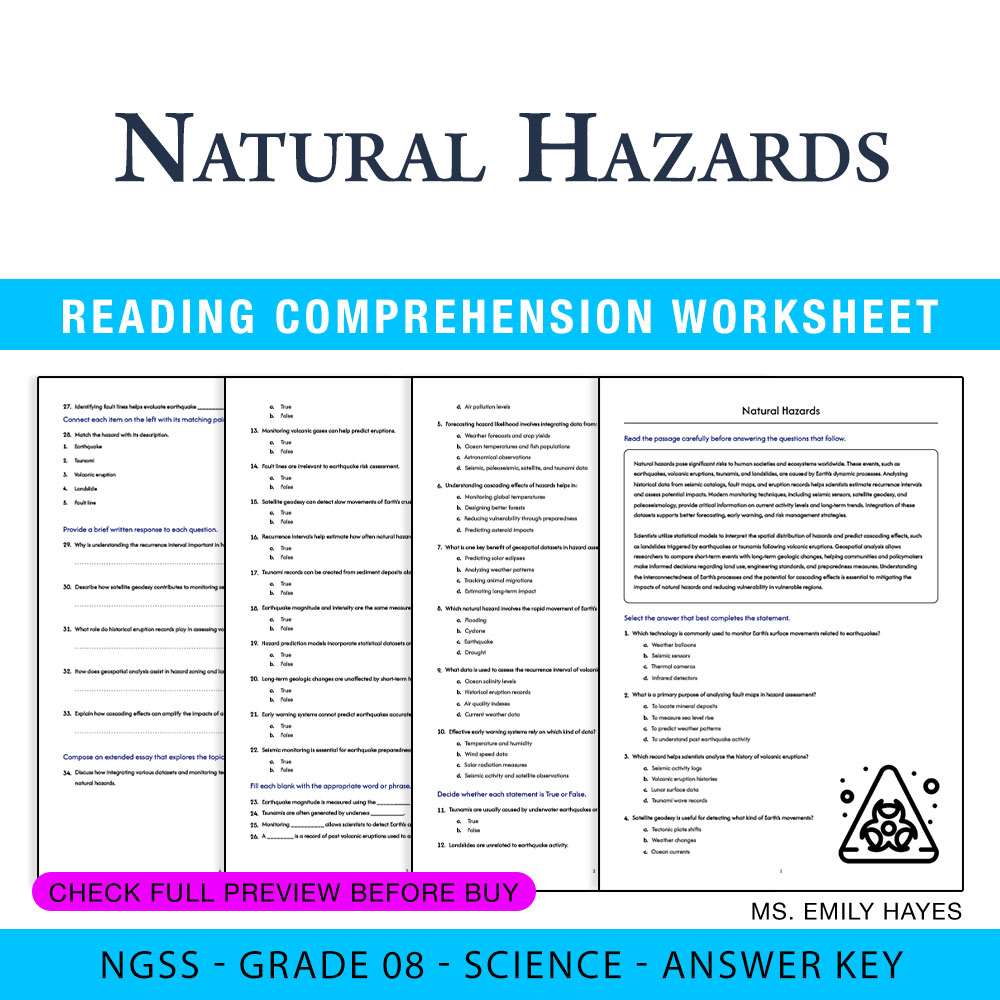
8th Grade Science | Natural Hazards Worksheet (PDF + Answer Key)
Created byCopper Leaf ClassroomLearning Objectives
- Analyze data related to natural hazards such as earthquakes, volcanoes, tsunamis, and faults.
- Interpret statistical and geospatial datasets to assess hazard recurrence, distribution, and impacts.
- Evaluate technologies for monitoring and forecasting natural hazards.
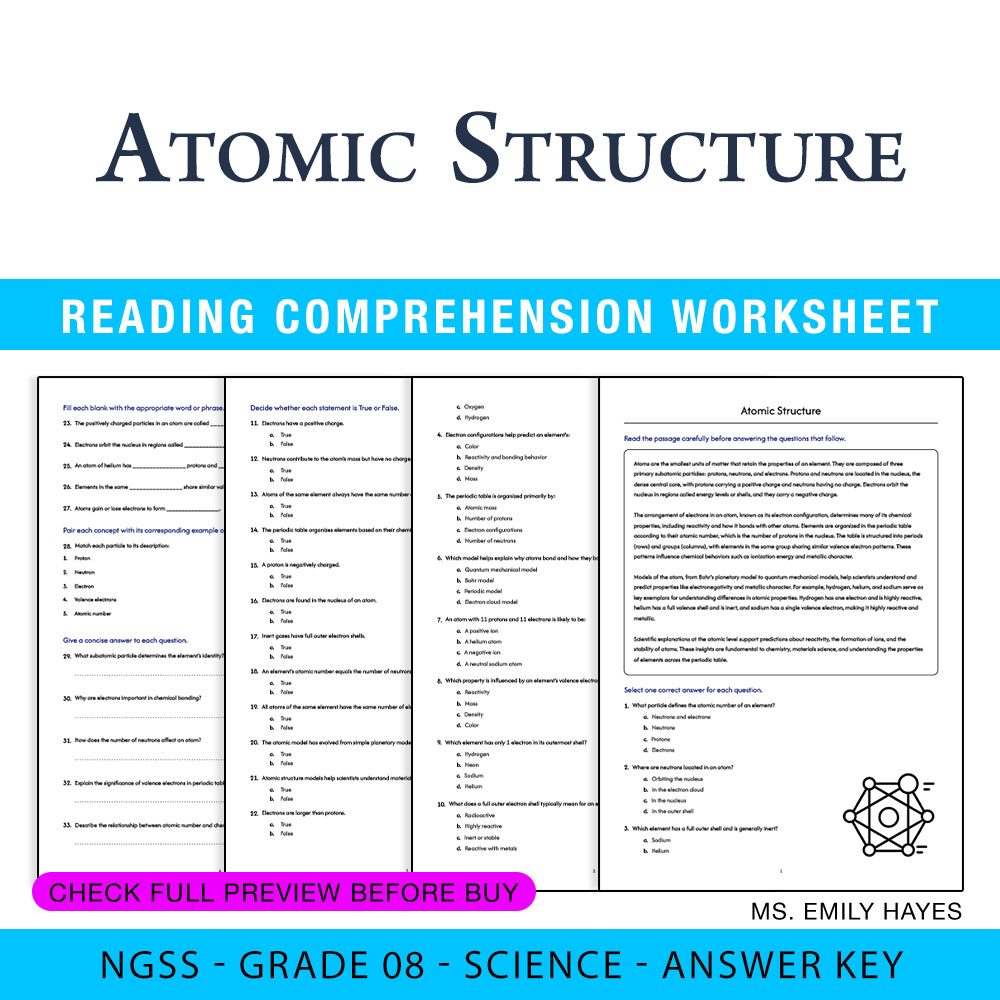
9th Grade Science | Atomic Structure Worksheet (PDF+ Answer Key)
Created byCopper Leaf ClassroomLearning Objectives
- Describe the fundamental particles that make up atoms, including protons, neutrons, and electrons.
- Explain electron configurations and how they relate to element properties.
- Interpret the periodic table in terms of valence electrons and chemical behavior.
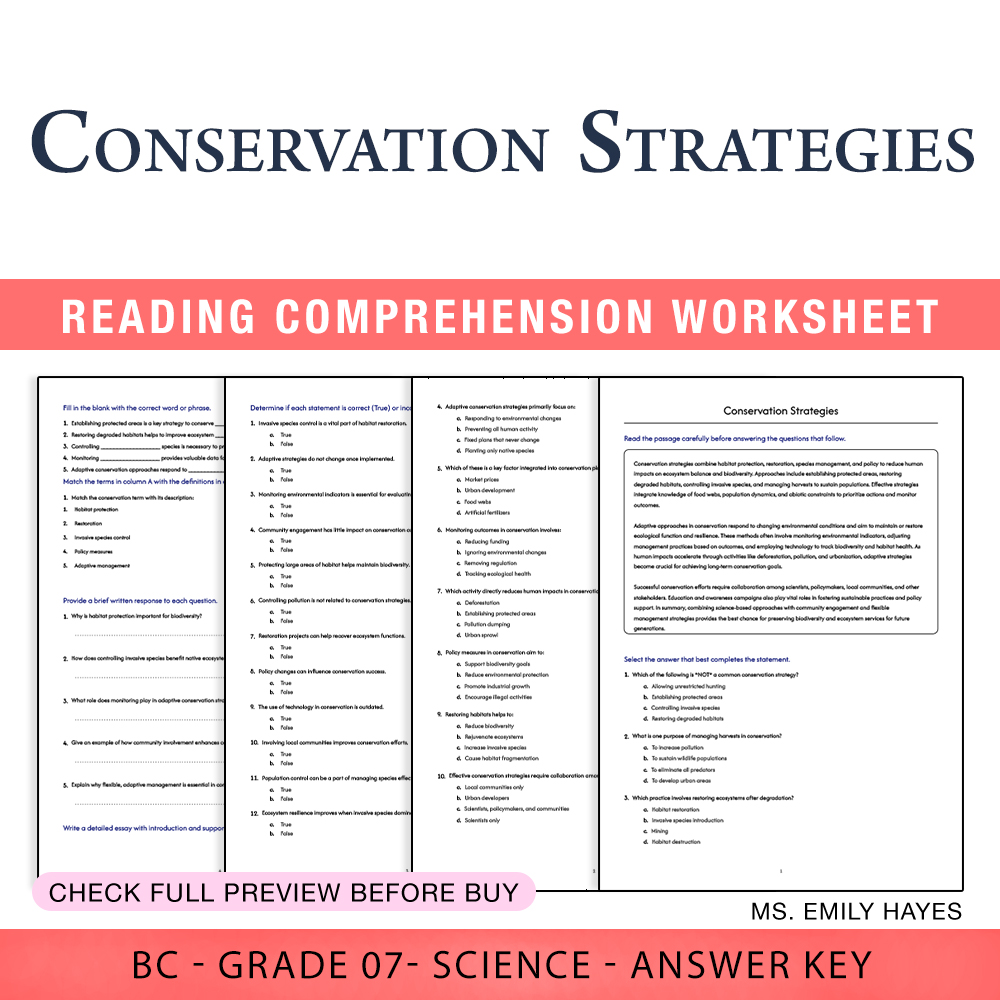
7th Grade Science | Conservation Strategies Worksheet (PDF + Answer Key)
Created byCopper Leaf ClassroomLearning Objectives
- Understand key conservation strategies used to protect ecosystems and biodiversity.
- Identify different methods such as habitat protection, restoration, and species management.
- Analyze the importance of adaptive approaches in conservation efforts.
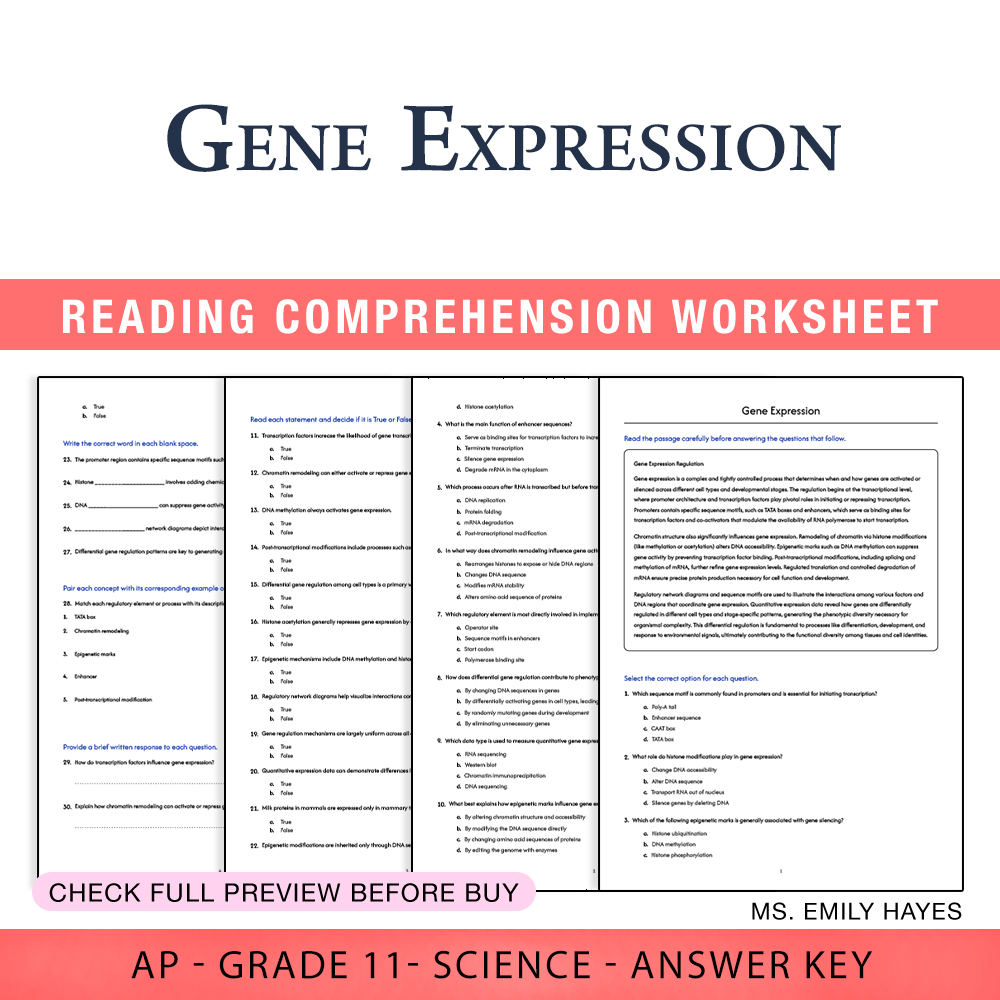
Grade 11 Science | Gene Expression Worksheet (PDF+ Answer Key)
Created byCopper Leaf ClassroomLearning Objectives
- Explain the mechanisms regulating gene expression from transcription to post-transcriptional modifications.
- Identify the roles of promoter architecture, transcription factors, chromatin remodeling, and epigenetic marks in gene regulation.
- Analyze how sequence motifs, regulatory network diagrams, and expression data illustrate gene regulation.
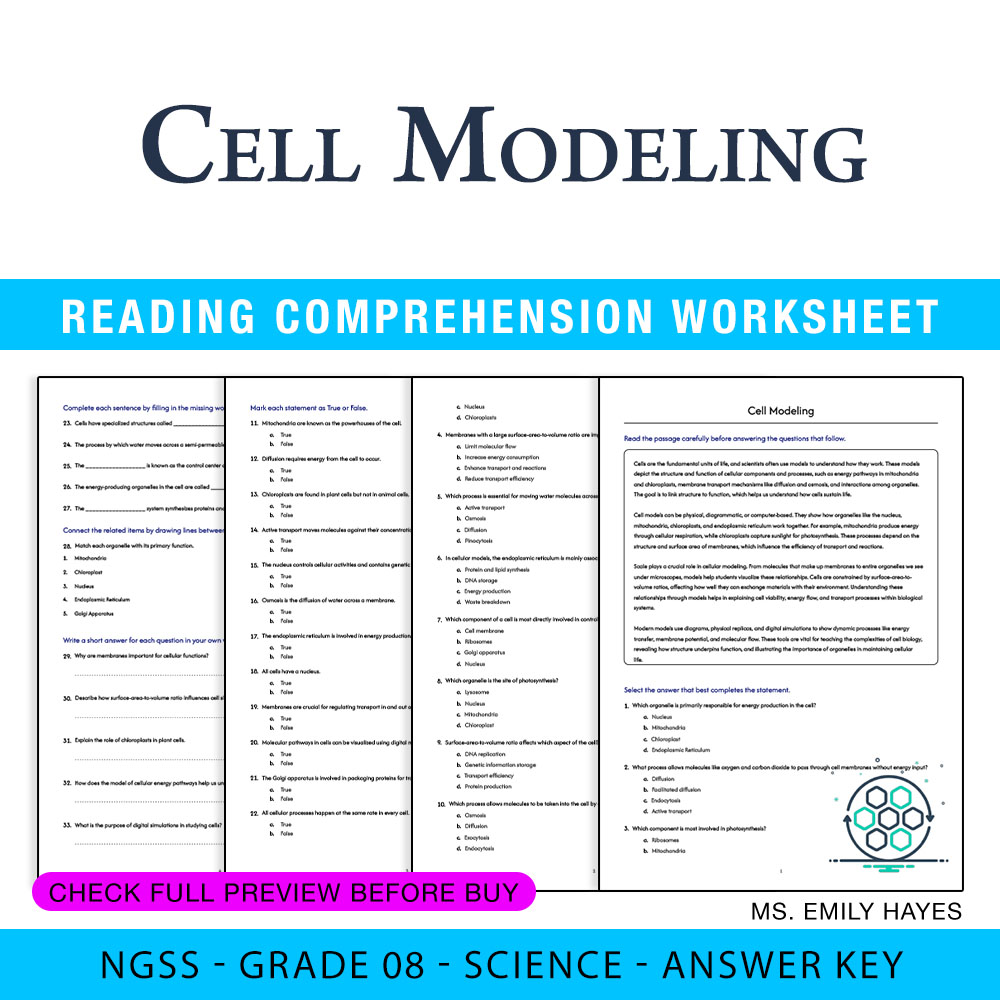
8th Grade Science | Cell Modeling Worksheet (PDF + Answer Key)
Created byCopper Leaf ClassroomLearning Objectives
- Understand and describe models of cellular processes and structures.
- Identify the roles of organelles and membrane systems in cell function.
- Explain how models link structure to cellular function, including energy pathways and membrane constraints.
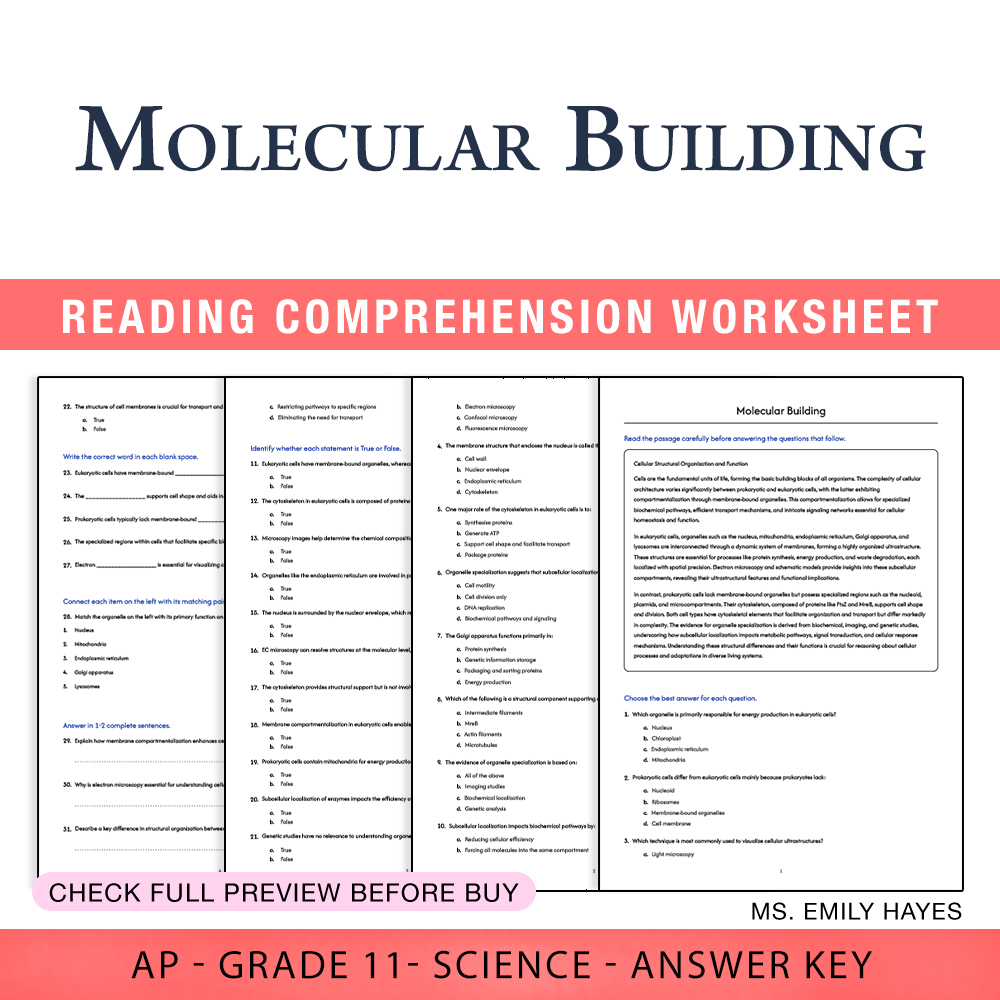
11th Grade Science | Molecular Building Worksheet (PDF+ Answer Key)
Created byCopper Leaf ClassroomLearning Objectives
- Describe the organization of cellular components from macromolecules to organelles.
- Compare structural features of prokaryotic and eukaryotic cells.
- Analyze microscopy images and schematic models to connect ultrastructure with function.
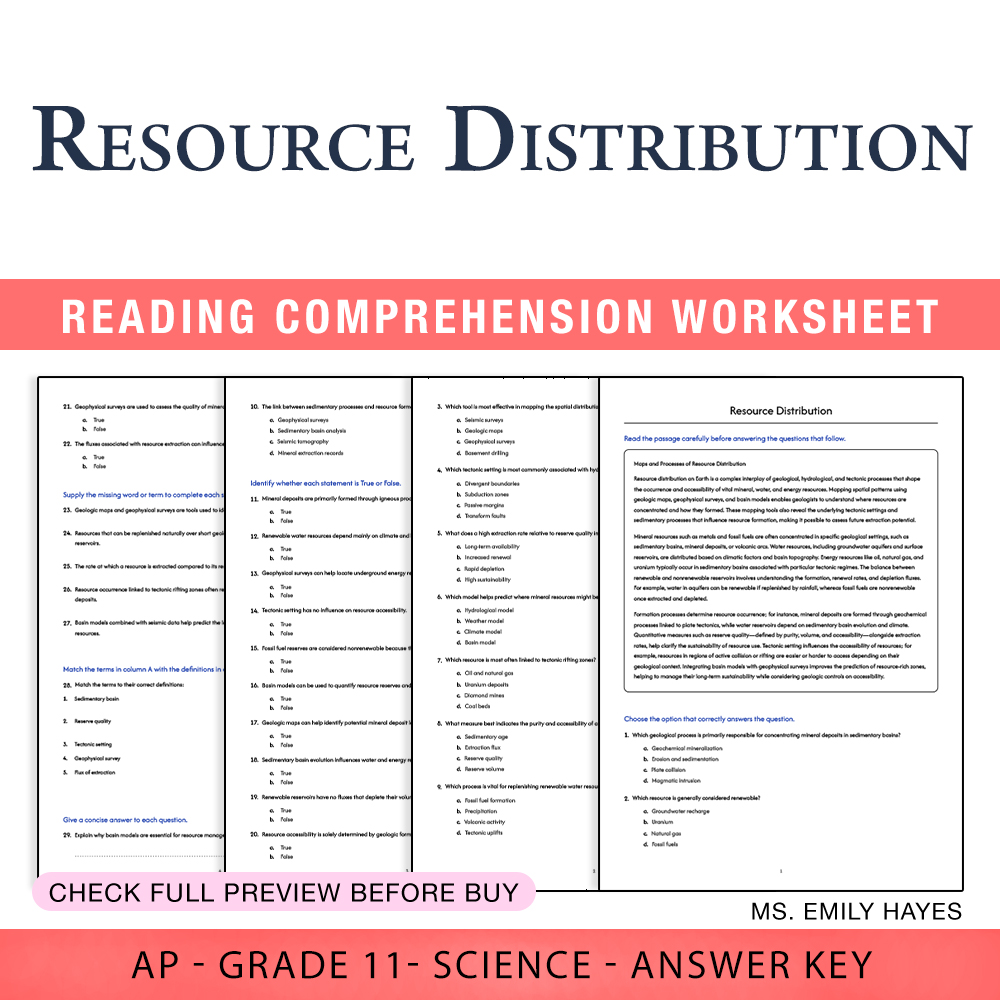
Grade 11 Science | Resource Distribution Worksheet (PDF+ Answer Key)
Created byCopper Leaf ClassroomLearning Objectives
- Map the spatial patterns of mineral, water, and energy resources using geologic maps and surveys.
- Distinguish between renewable and nonrenewable resource reservoirs and assess their formation processes.
- Analyze the geologic controls on resource accessibility and sustainability considerations.
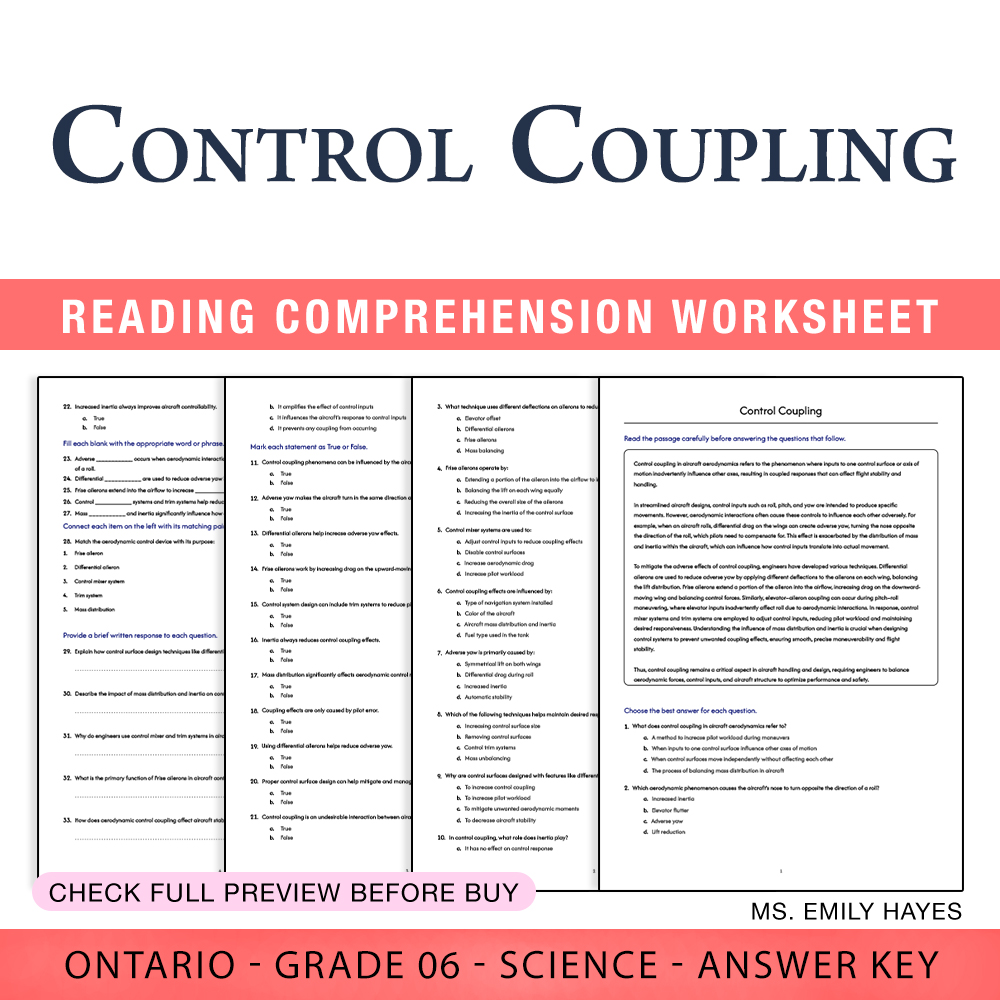
6th Grade Science | Control Coupling Worksheet (PDF + Answer Key)
Created byCopper Leaf ClassroomLearning Objectives
- Understand the principles of control coupling in aerodynamics and aircraft control surfaces.
- Identify how aerodynamic interactions such as adverse yaw and elevator–aileron coupling affect aircraft maneuverability.
- Explain techniques like differential and Frise ailerons used to mitigate control coupling effects.
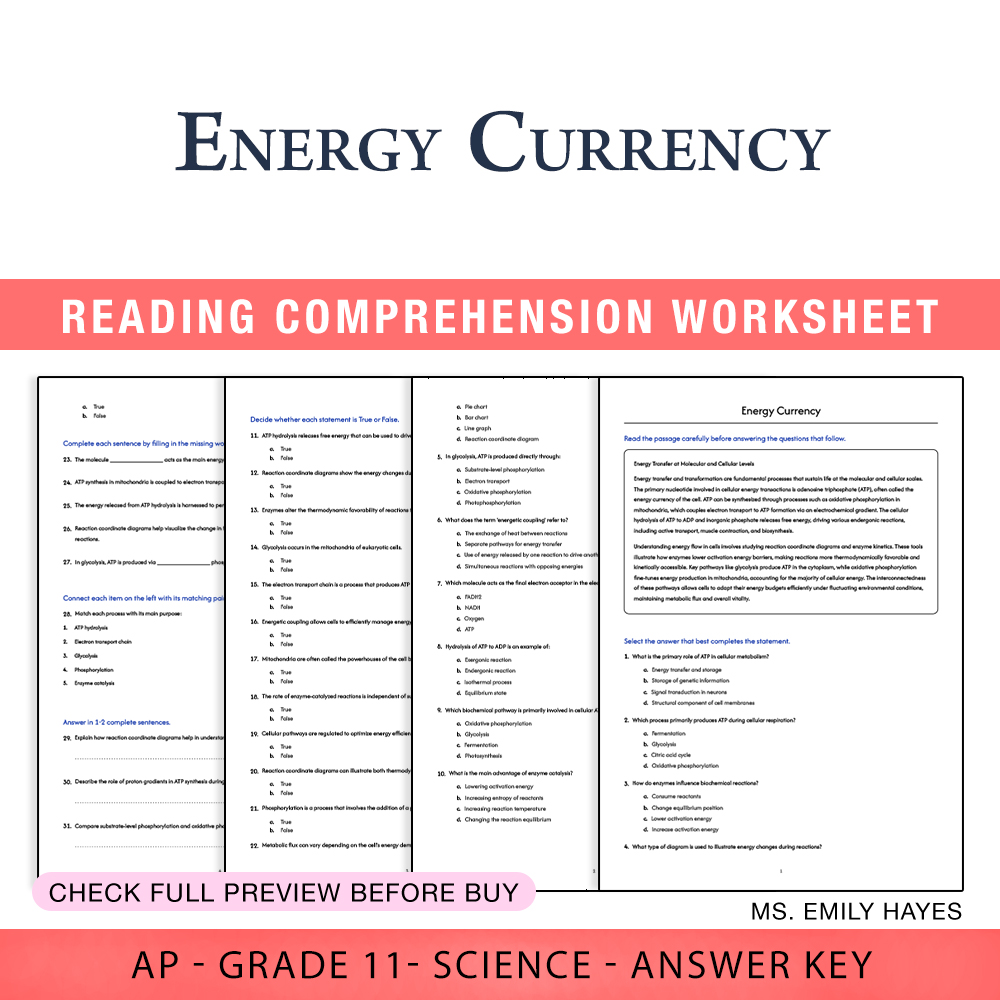
11th Grade Science | Energy Currency Worksheet (PDF+ Answer Key)
Created byCopper Leaf ClassroomLearning Objectives
- Explain the principles of molecular and cellular energy transfer and transformation.
- Describe ATP synthesis, hydrolysis, and energy coupling mechanisms in cellular processes.
- Interpret reaction coordinate diagrams and enzyme kinetics related to bioenergetics.
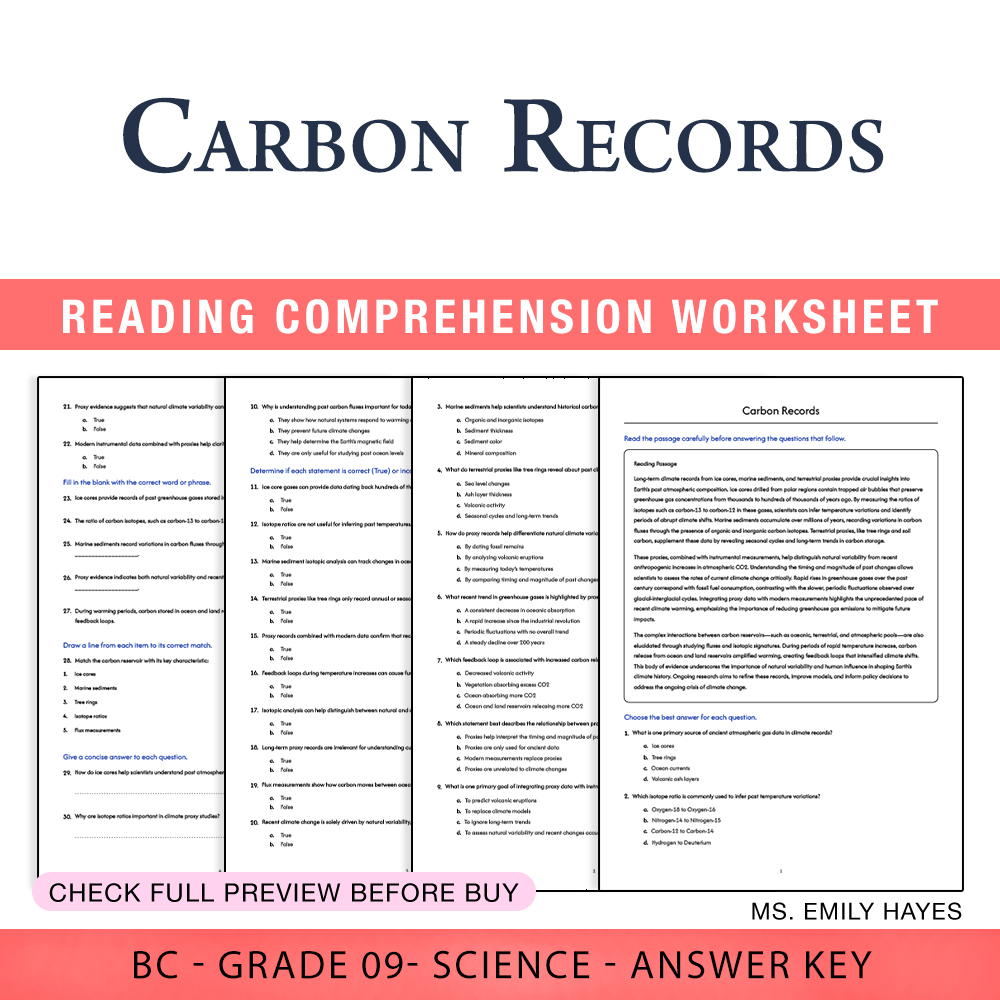
Grade 9 Science | Carbon Records Worksheet (PDF+ Answer Key)
Created byCopper Leaf ClassroomLearning Objectives
- Understand how ice cores, sediments, and proxies record past atmospheric carbon levels.
- Interpret isotope ratios and gas measurements to identify climate patterns and shifts.
- Analyze the relationship between carbon fluxes and global temperature changes.
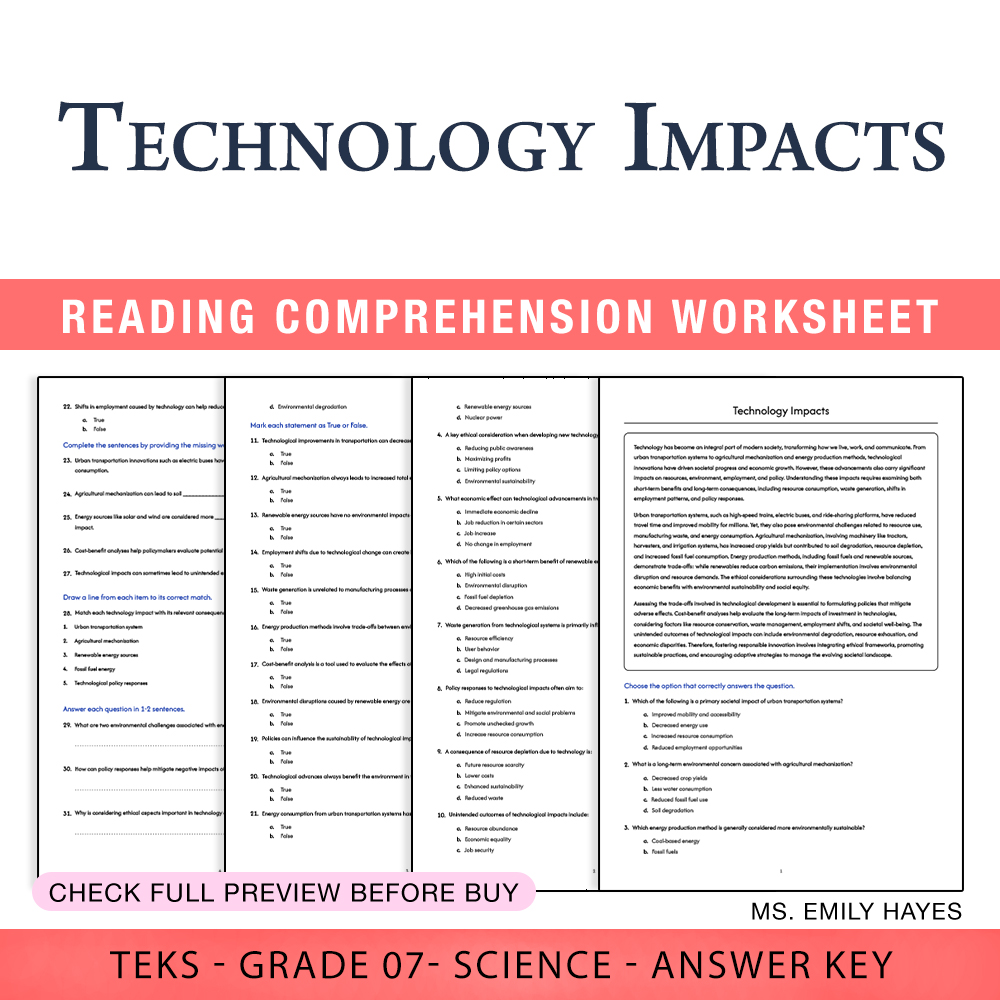
7th Grade Science | Technology Impacts Worksheet (PDF+ Answer Key)
Created byCopper Leaf ClassroomLearning Objectives
- Analyze the societal, economic, and environmental impacts of various technologies.
- Evaluate short- and long-term consequences of technological developments.
- Examine ethical considerations and policy responses related to technology impacts.
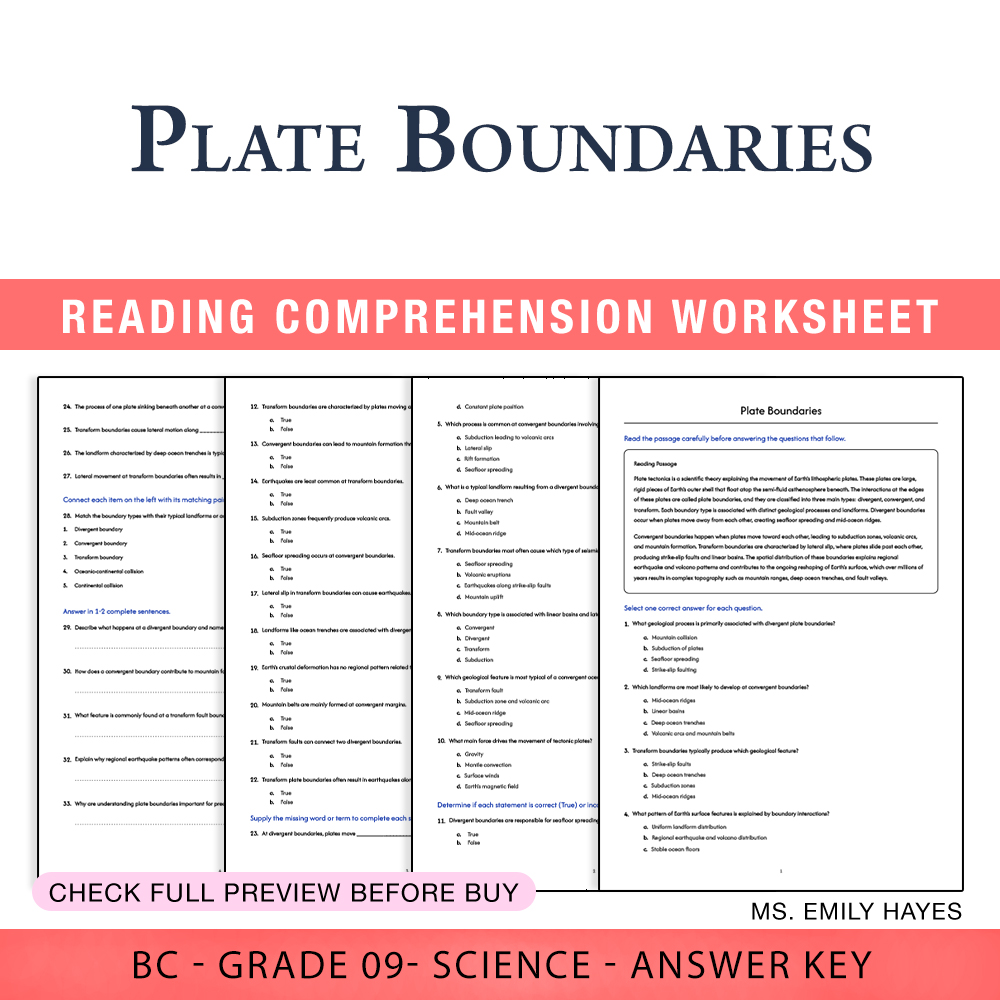
9th Grade Science | Plate Boundaries Worksheet (PDF+ Answer Key)
Created byCopper Leaf ClassroomLearning Objectives
- Identify and describe the three main types of plate boundaries: divergent, convergent, and transform.
- Explain the geological processes associated with each boundary type.
- Relate boundary types to landforms, earthquakes, and volcanic activity.
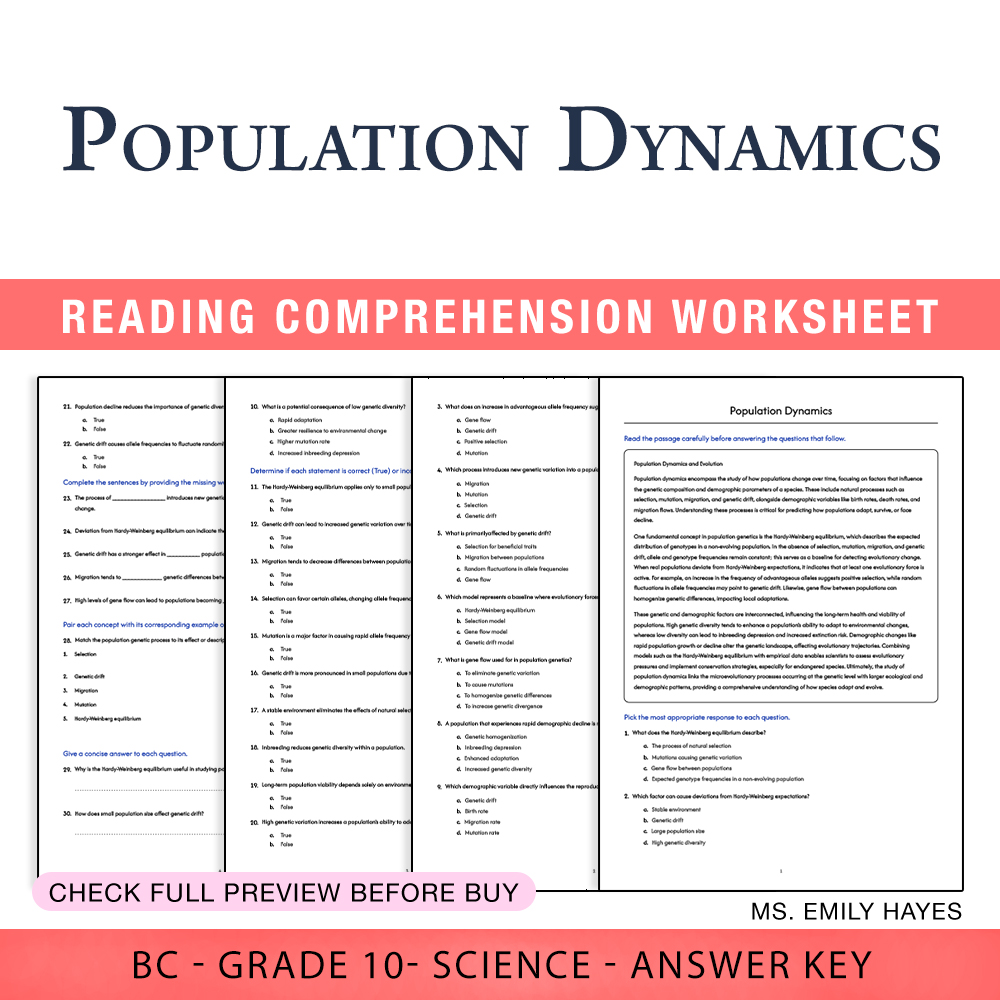
10th Grade Science | Population Dynamics Worksheet (PDF+ Answer Key)
Created byCopper Leaf ClassroomLearning Objectives
- Understand the principles of population genetics and how evolutionary forces influence allele frequencies
- Identify different models and concepts in population ecology and their significance
- Explain the Hardy-Weinberg equilibrium and what deviations indicate about evolutionary processes
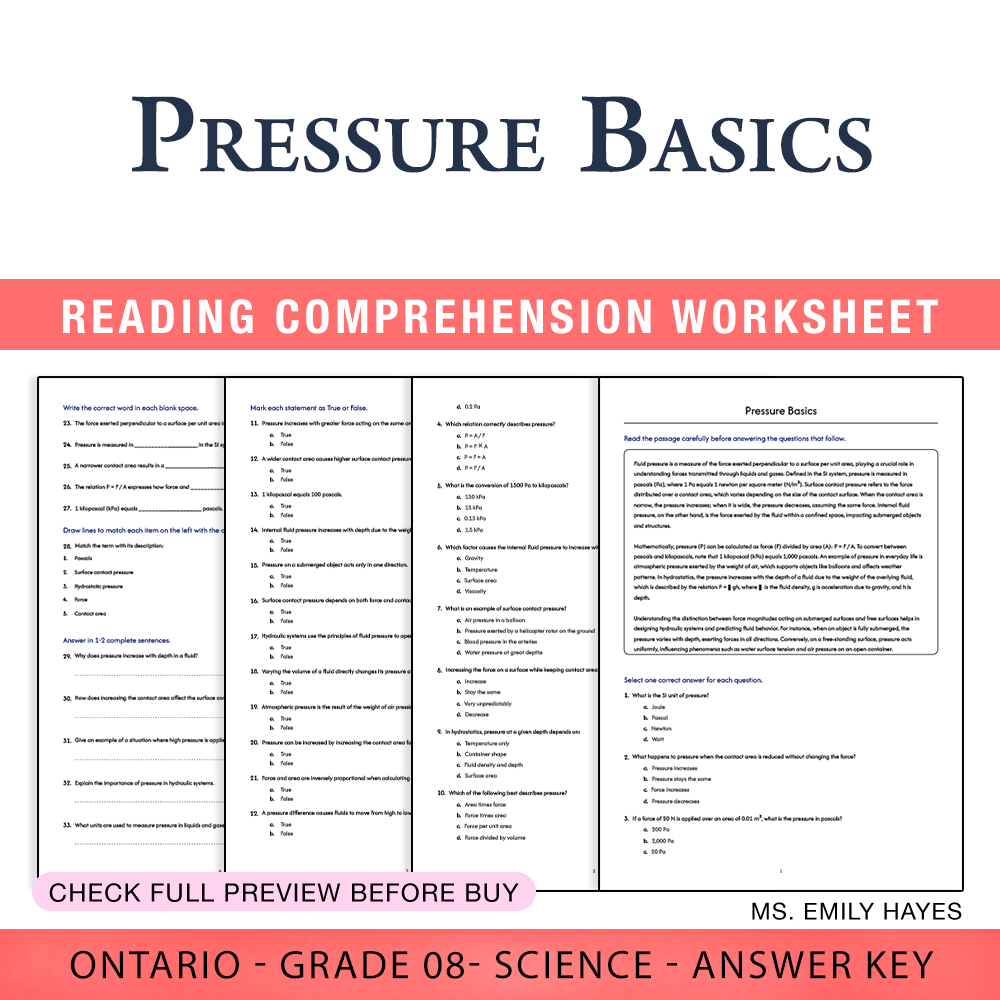
Grade 8 Science | Pressure Basics Worksheet (PDF+ Answer Key)
Created byCopper Leaf ClassroomLearning Objectives
- Define pressure and understand its SI units.
- Explain the difference between surface contact pressure and internal fluid pressure.
- Apply mathematical relationships to convert between pascals and kilopascals.
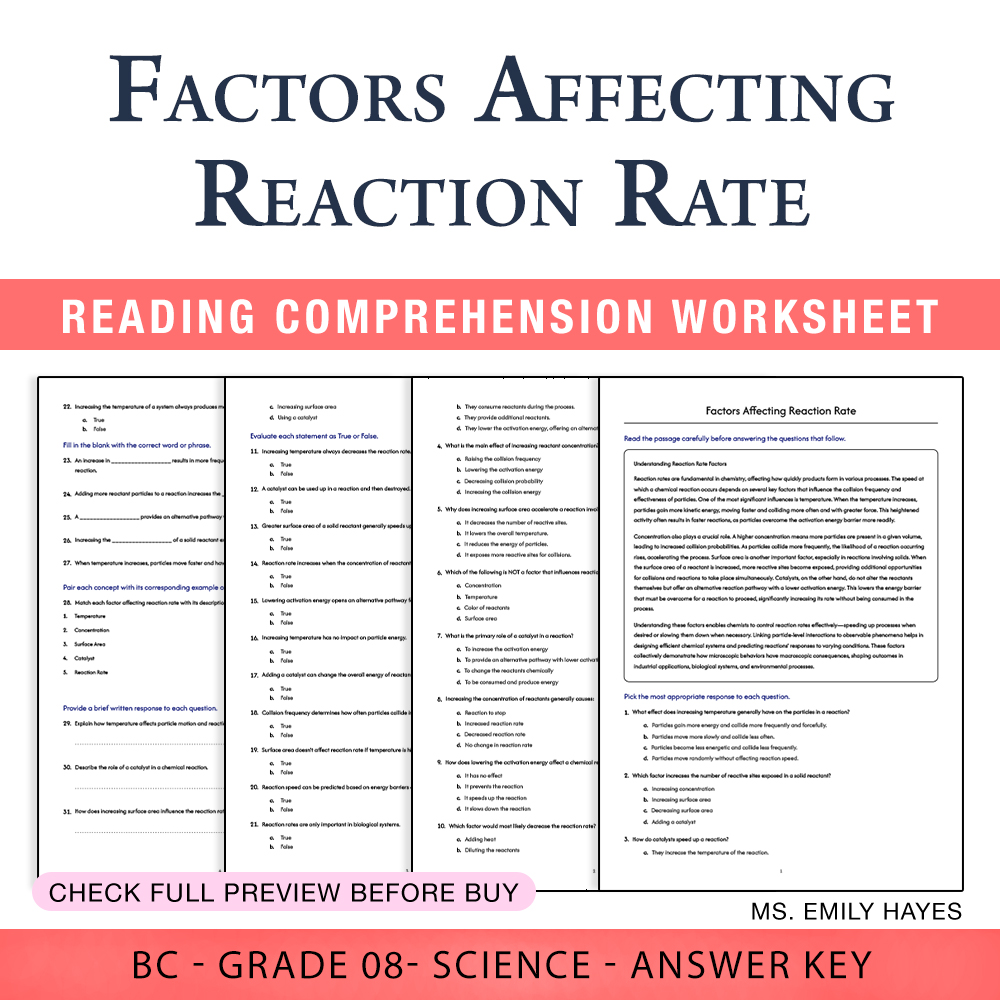
8th Grade Science | Factors Affecting Reaction Rate Worksheet (PDF+ Answer Key)
Created byCopper Leaf ClassroomLearning Objectives
- Identify the key factors that influence the rate of chemical reactions.
- Explain how temperature, concentration, surface area, and catalysts impact reaction speed.
- Relate microscopic particle interactions to macroscopic changes in reaction rates.
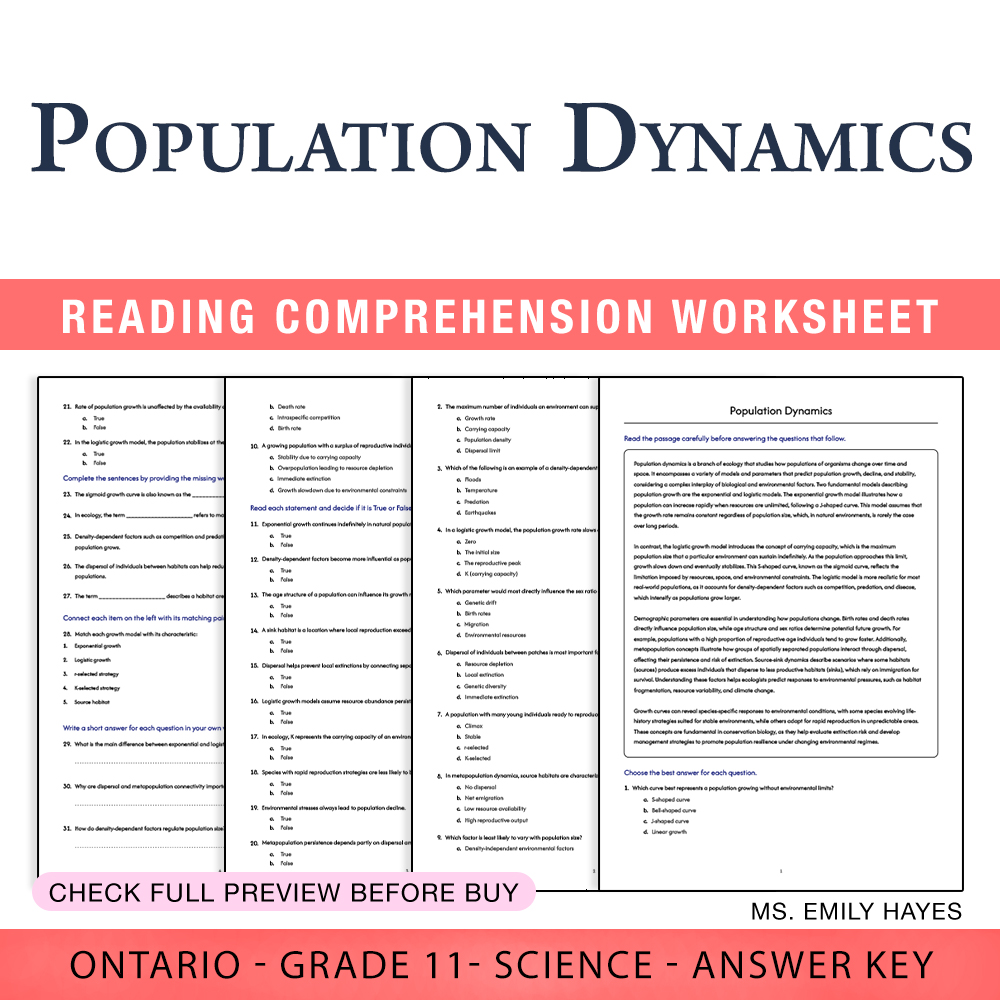
11th Grade Science | Population Dynamics Worksheet (PDF + Answer Key)
Created byCopper Leaf ClassroomLearning Objectives
- Understand and describe different population growth models, including exponential and logistic growth.
- Analyze the effects of demographic parameters such as birth rates, death rates, age structure, and sex ratio on population trajectories.
- Explain the concepts of carrying capacity, density-dependent, and density-independent factors influencing populations.
Browse more categories
About Science Worksheets
Find Science worksheets spanning core skills, practice, and review. All 42,859 resources are instant PDF downloads for the classroom or home.
Every worksheet on MyTeachingSheets is created by independent teacher-authors and reviewed before publication. All resources download as printable PDFs for classroom, homework, or at-home practice, and many include answer keys. Preview any worksheet free before buying.