
Science Worksheets
42,859 subject resources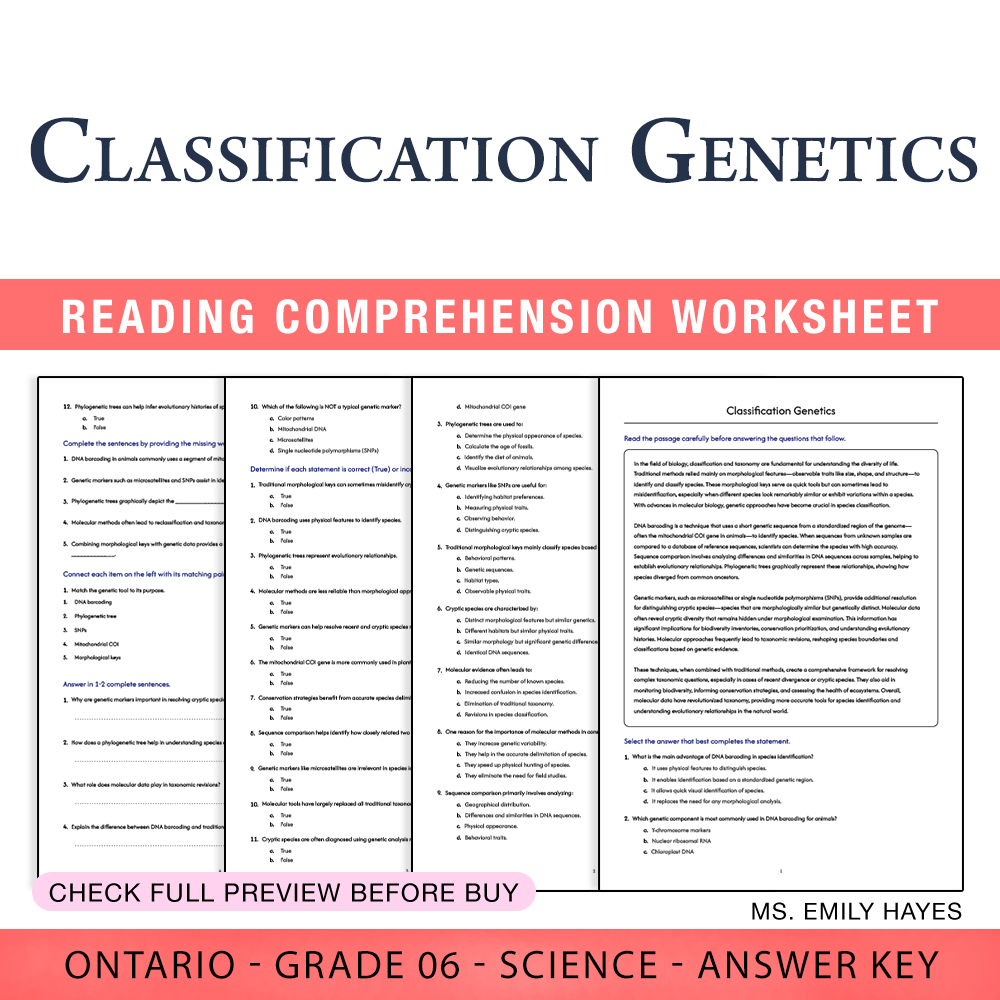
6th Grade Science | Classification Genetics Worksheet (PDF+ Answer Key)
 Created byCopper Leaf Classroom
Learning Objectives
- Understand the molecular approaches used in classifying species, including DNA barcoding and sequence comparison.
- Explain how genetic markers and phylogenetic trees help determine species relationships.
- Compare morphological keys and genetic markers in species identification.
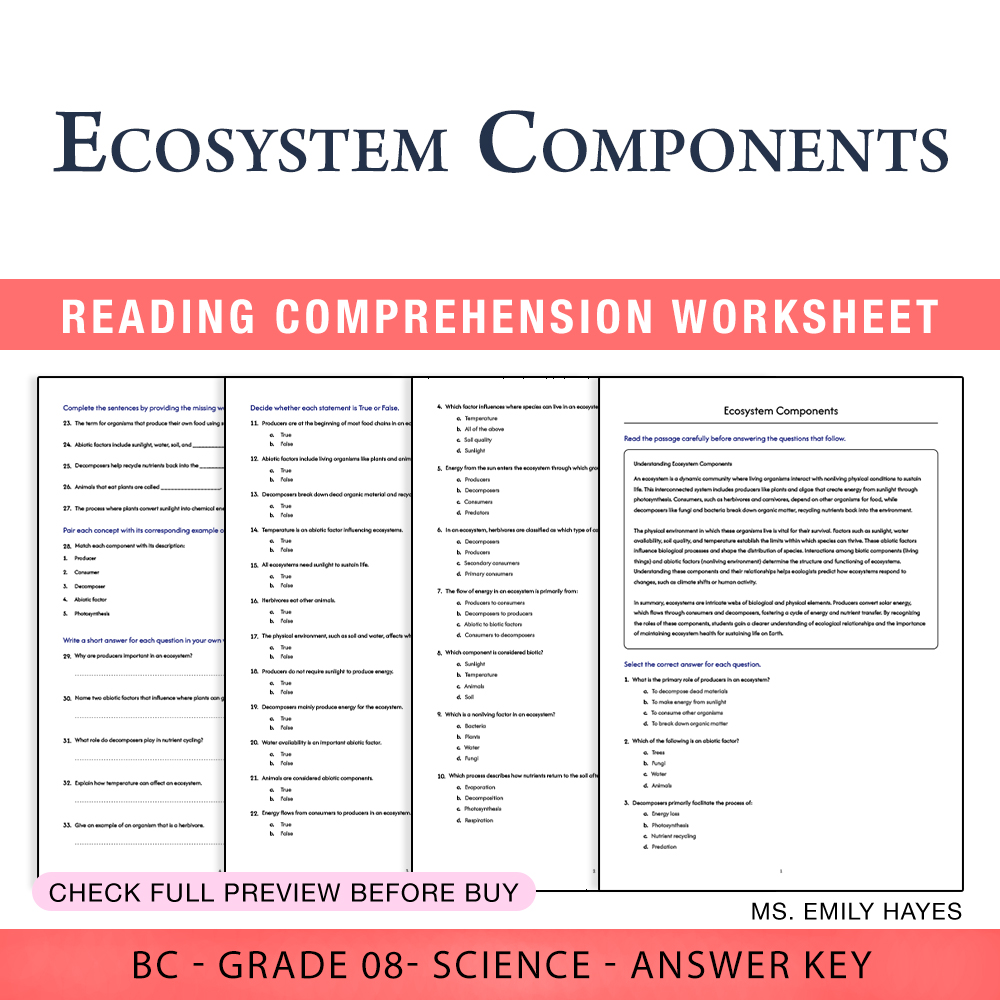
Grade 8 Science | Ecosystem Components Worksheet (PDF+ Answer Key)
Created byCopper Leaf ClassroomLearning Objectives
- Describe the key components of an ecosystem, including living and nonliving elements.
- Explain the roles of producers, consumers, and decomposers in energy and matter cycling.
- Identify abiotic factors such as sunlight, water, soil, and temperature that influence ecosystems.
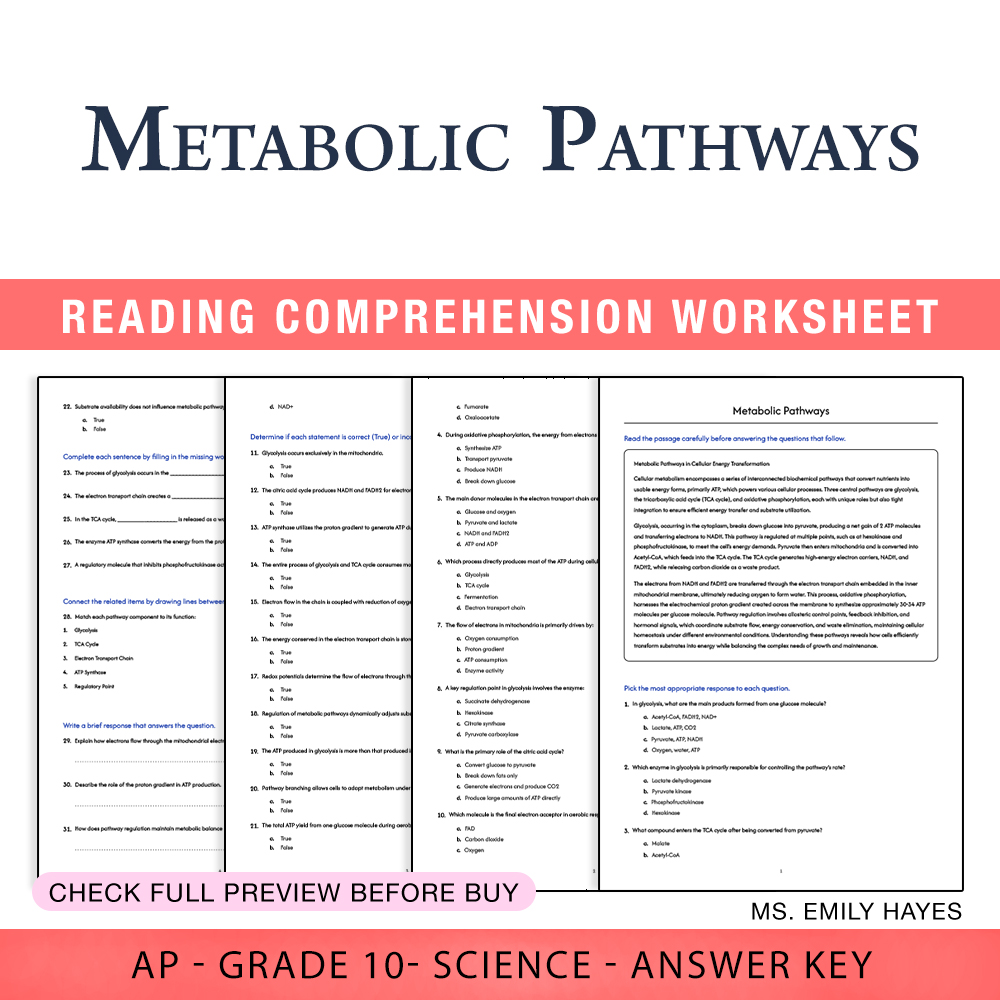
10th Grade Science | Metabolic Pathways Worksheet (PDF+ Answer Key)
Created byCopper Leaf ClassroomLearning Objectives
- Map and explain the core metabolic pathways including glycolysis, the TCA cycle, and oxidative phosphorylation.
- Identify key energy yields, electron flows, and fates of intermediates in these pathways.
- Understand the regulation and branching points that maintain cellular homeostasis under varying conditions.
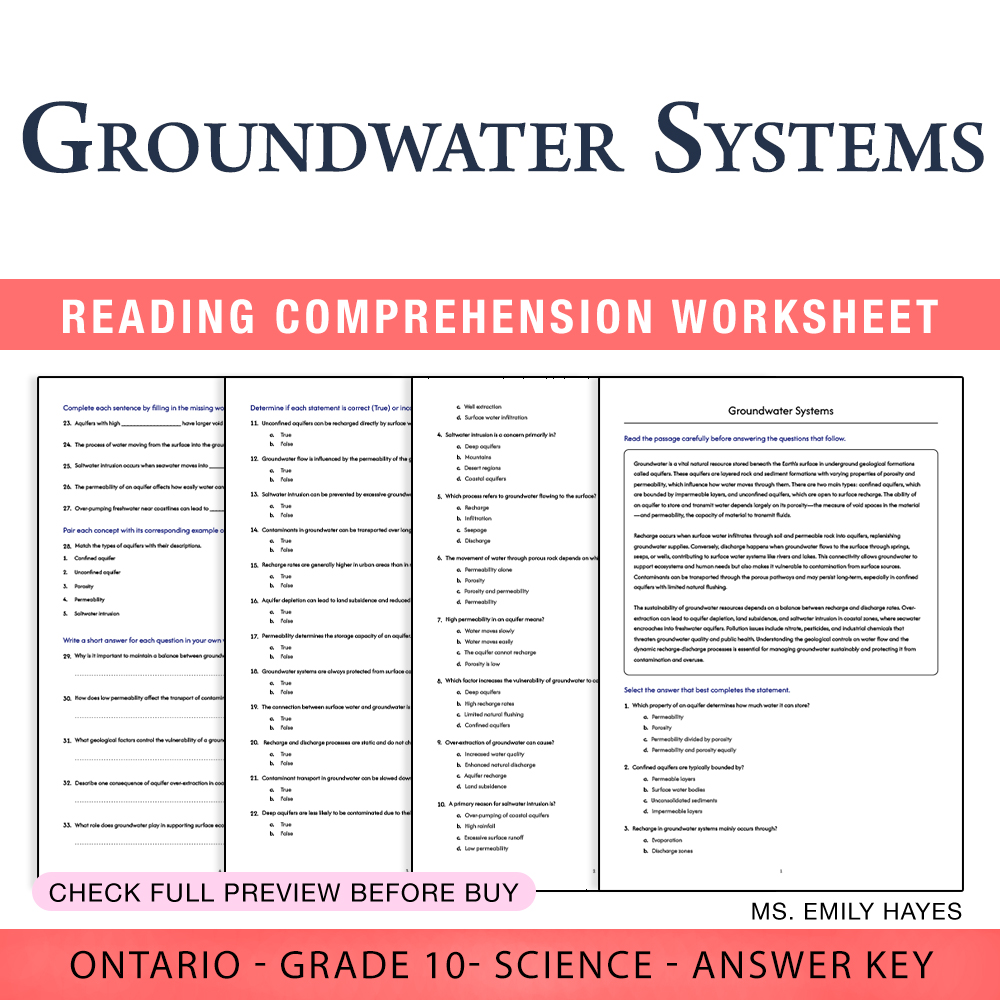
Grade 10 Science | Groundwater Systems Worksheet (PDF + Answer Key)
Created byCopper Leaf ClassroomLearning Objectives
- Describe the types and properties of aquifers and their significance in groundwater flow.
- Explain the concepts of porosity and permeability and how they affect groundwater movement.
- Analyze the processes of recharge and discharge in groundwater systems and their environmental impacts.
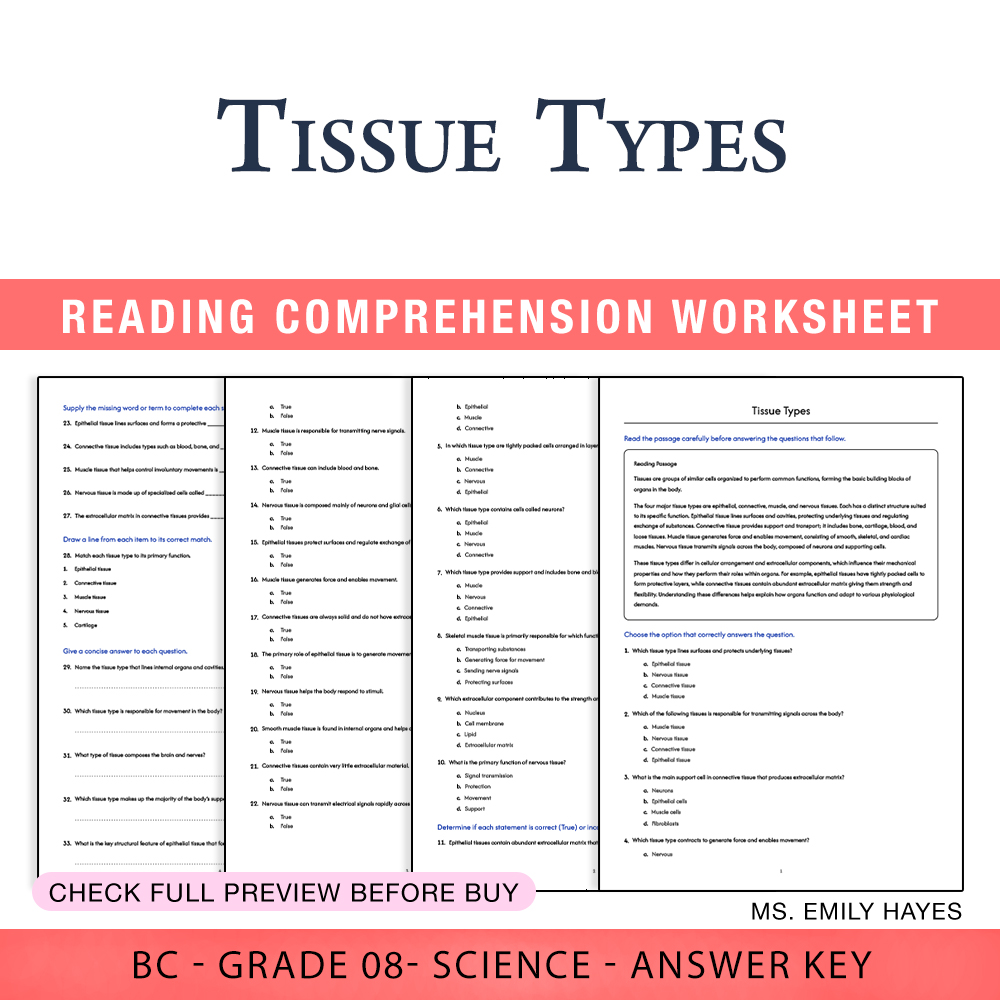
8th Grade Science | Tissue Types Worksheet (PDF+ Answer Key)
Created byCopper Leaf ClassroomLearning Objectives
- Identify and describe the four main tissue types: epithelial, connective, muscle, and nervous.
- Compare the structure and functions of different tissue types in organs.
- Explain how cellular arrangement and extracellular components influence tissue properties.
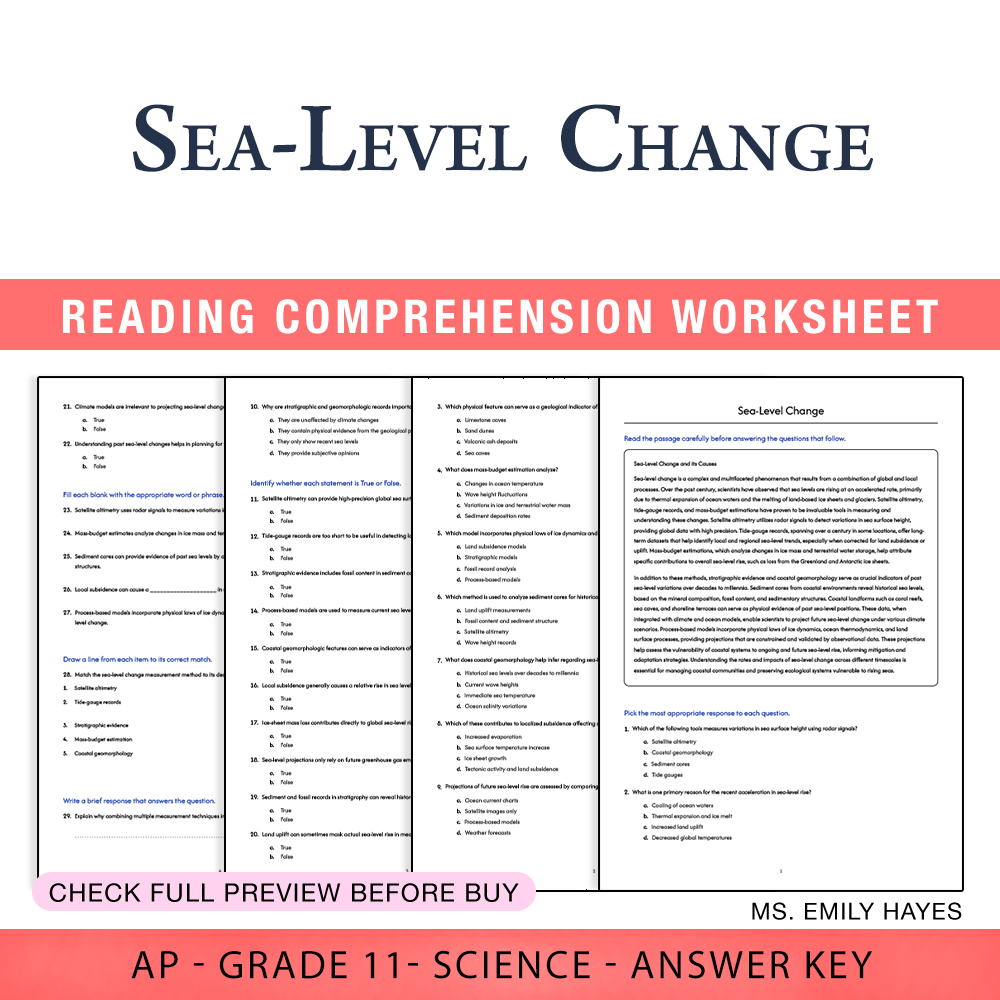
Grade 11 Science | Sea-Level Change Worksheet (PDF+ Answer Key)
Created byCopper Leaf ClassroomLearning Objectives
- Analyze the primary causes of sea-level variability and their measurement techniques.
- Differentiate between thermal expansion, ice-sheet mass loss, and local subsidence as contributors to sea-level change.
- Interpret stratigraphic and coastal geomorphologic evidence to infer historical sea-level variations.
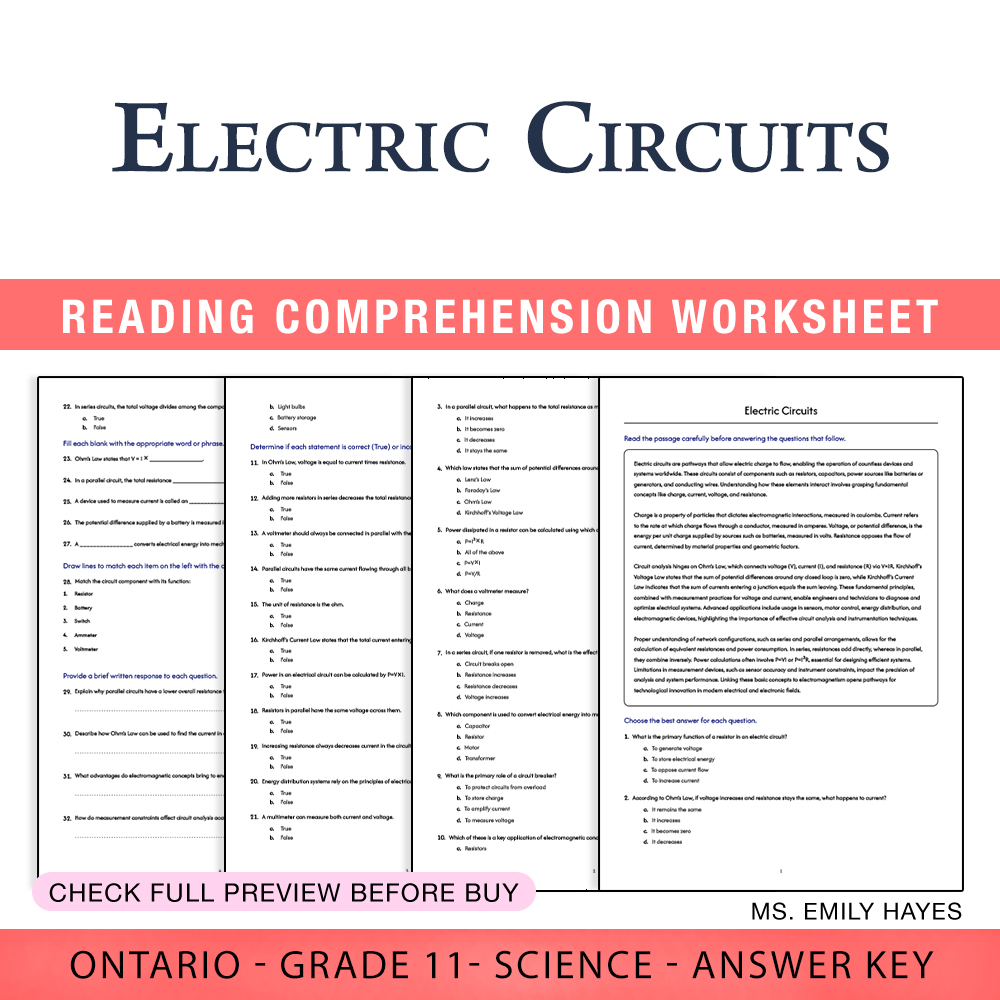
Grade 11 Science | Electric Circuits Worksheet (PDF + Answer Key)
Created byCopper Leaf ClassroomLearning Objectives
- Understand the fundamental principles of electric charge, current, voltage, and resistance.
- Apply Ohm's law and Kirchhoff's rules to analyze simple and complex circuits.
- Differentiate between series and parallel circuit configurations and calculate total resistance and power.
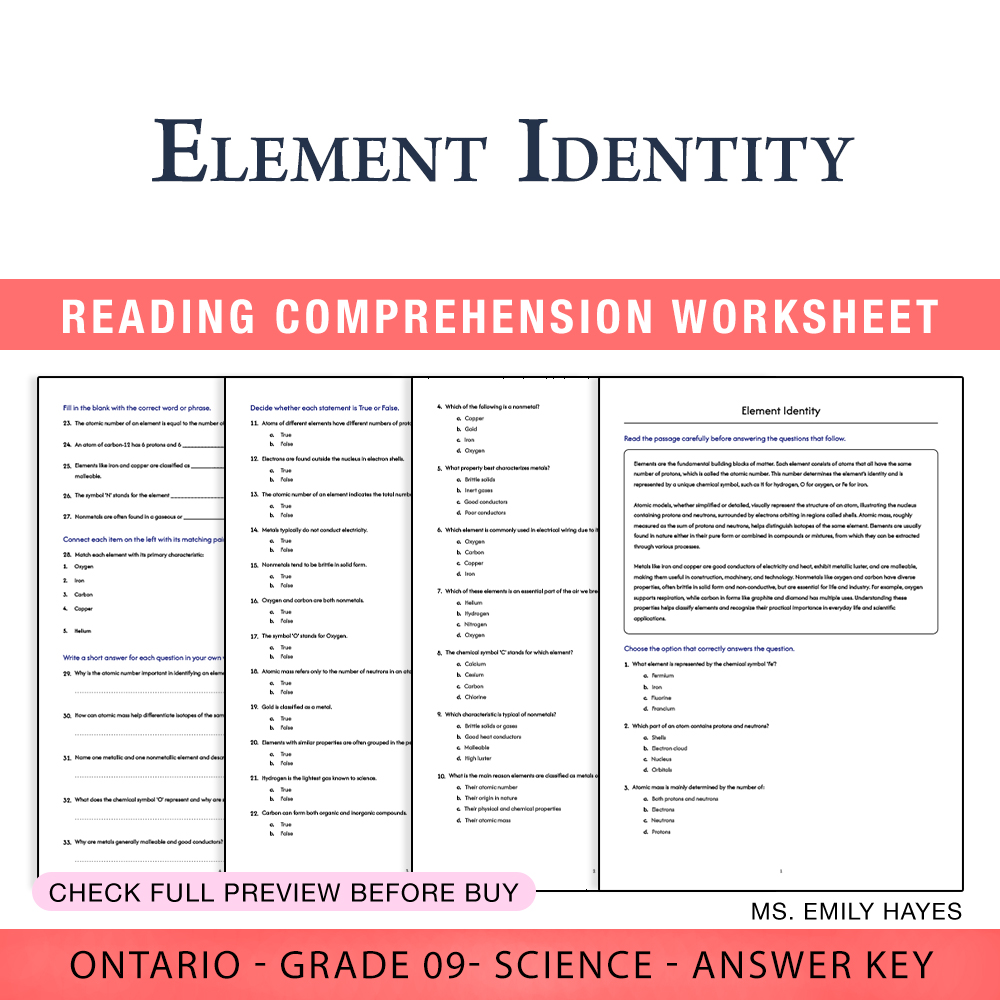
Grade 9 Science | Element Identity Worksheet (PDF + Answer Key)
Created byCopper Leaf ClassroomLearning Objectives
- Understand that elements are defined by their number of protons and their chemical symbols.
- Learn how atomic models represent atomic identity and the significance of atomic mass and symbols.
- Identify the properties of representative elements and distinguish between natural occurrence and extraction.
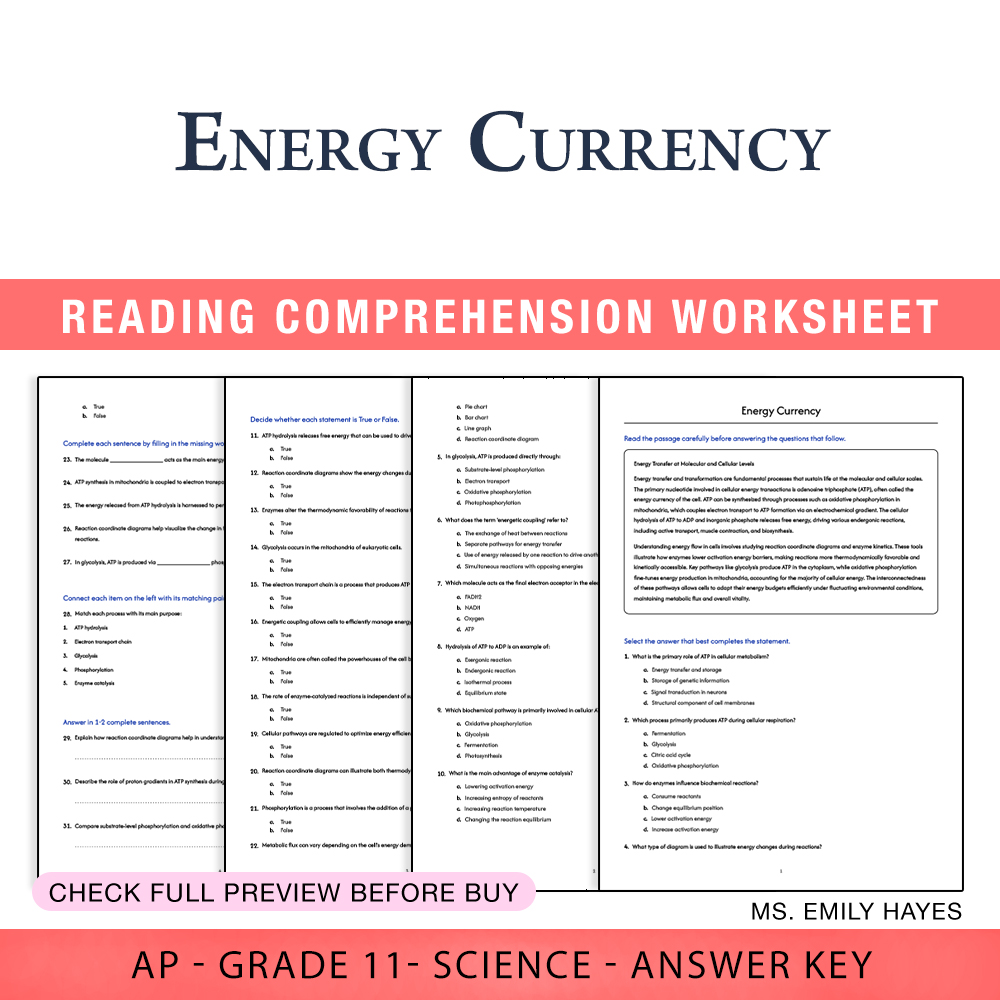
11th Grade Science | Energy Currency Worksheet (PDF+ Answer Key)
Created byCopper Leaf ClassroomLearning Objectives
- Explain the principles of molecular and cellular energy transfer and transformation.
- Describe ATP synthesis, hydrolysis, and energy coupling mechanisms in cellular processes.
- Interpret reaction coordinate diagrams and enzyme kinetics related to bioenergetics.
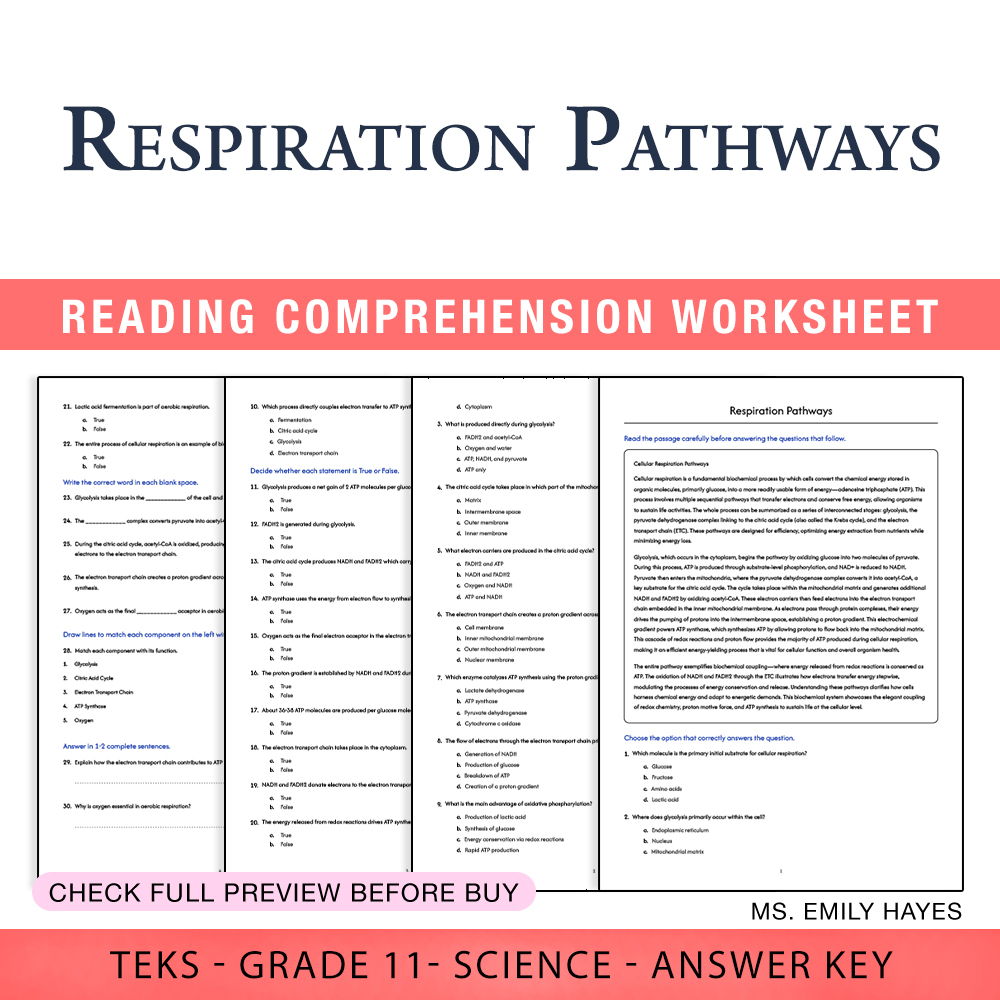
11th Grade Science | Respiration Pathways Worksheet (PDF+ Answer Key)
Created byCopper Leaf ClassroomLearning Objectives
- Describe the sequence of biochemical pathways involved in cellular respiration.
- Explain the roles of glycolysis, the citric acid cycle, and the electron transport chain.
- Identify the energy carriers produced during respiration and how they contribute to ATP synthesis.
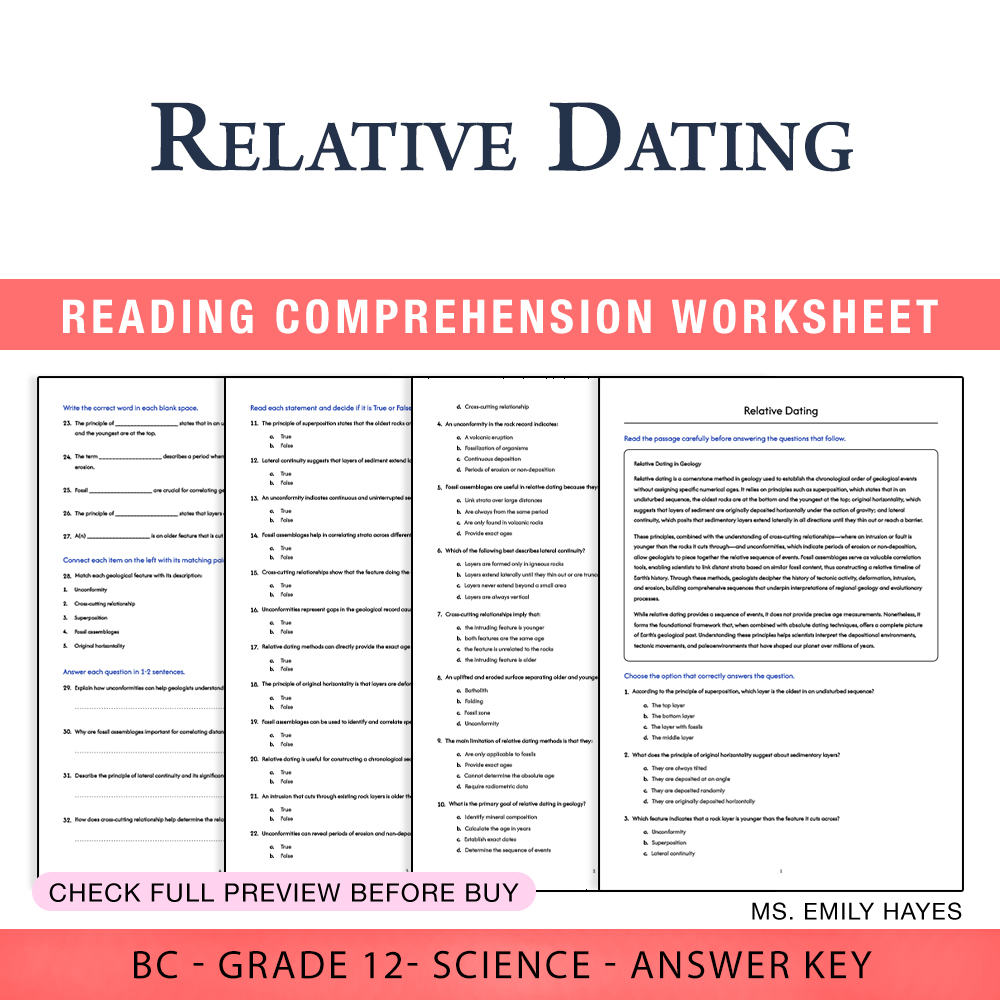
12th Grade Science | Relative Dating Worksheet (PDF + Answer Key)
Created byCopper Leaf ClassroomLearning Objectives
- Understand principles of relative dating such as superposition, original horizontality, lateral continuity, and cross-cutting relationships.
- Identify the significance of unconformities and fossil assemblages in correlating geological strata.
- Explain how relative dating tools help construct chronological sequences in Earth's history.
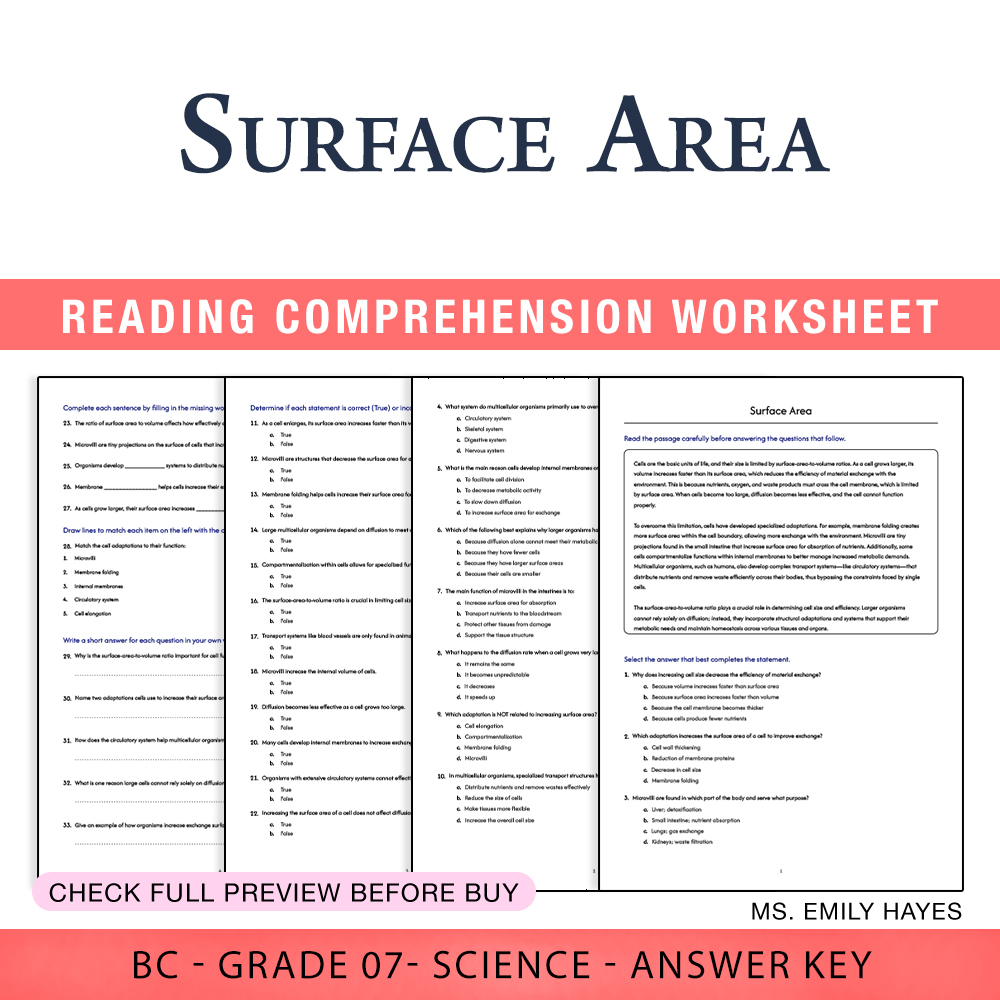
7th Grade Science | Surface Area Worksheet (PDF+ Answer Key)
Created byCopper Leaf ClassroomLearning Objectives
- Understand the concept of surface-area-to-volume ratio and its effect on cell size.
- Identify adaptations that increase surface area for efficient material exchange in cells and organisms.
- Explain how multicellular organisms overcome surface area limitations through specialized structures and systems.
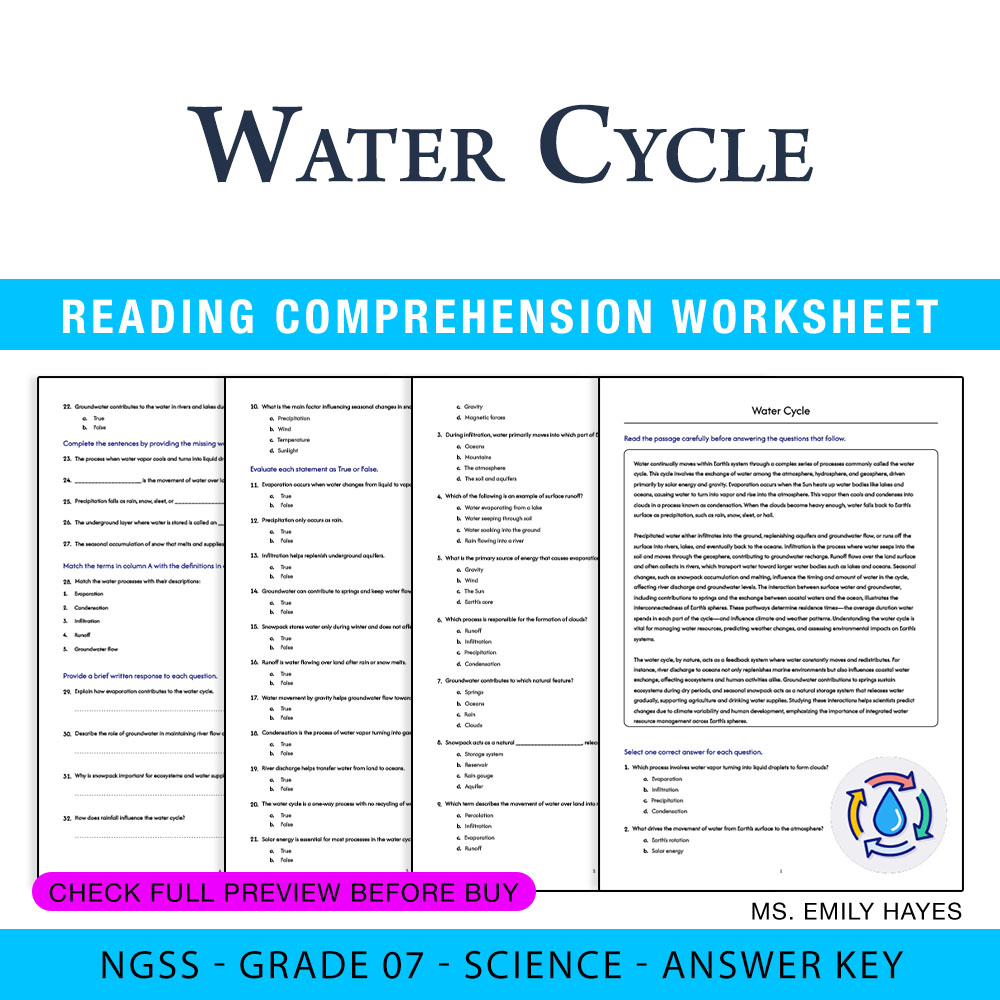
7th Grade Science | Water Cycle Worksheet (PDF+ Answer Key)
Created byCopper Leaf ClassroomLearning Objectives
- Describe the processes involved in the water cycle, including evaporation, condensation, precipitation, infiltration, runoff, and groundwater flow.
- Explain how solar energy and gravity drive water movement among Earth's spheres.
- Identify interactions such as river discharge to oceans, groundwater contributions to springs, and seasonal changes in snowpack.
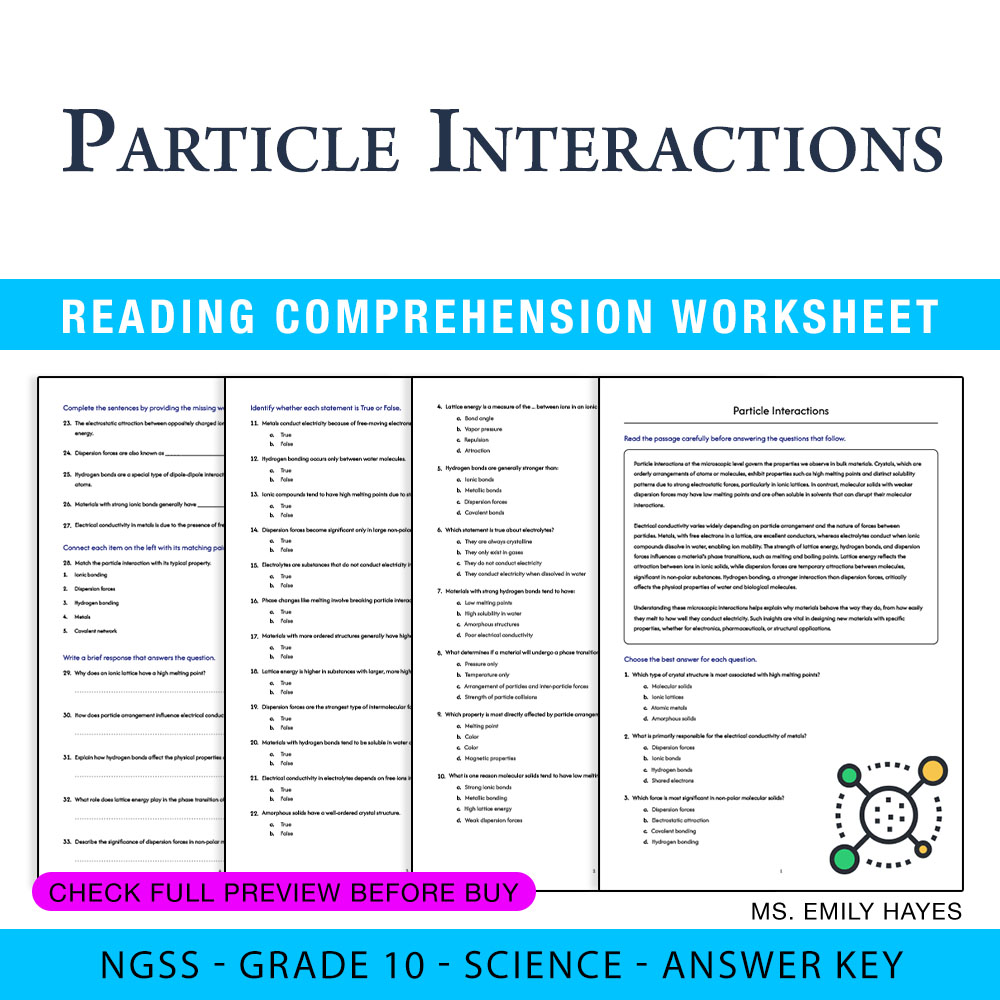
10th Grade Science | Particle Interactions Worksheet (PDF+ Answer Key)
Created byCopper Leaf ClassroomLearning Objectives
- Understand how crystal structure influences material properties such as melting point and solubility.
- Explain molecular interactions like hydrogen bonding, dispersion forces, and lattice energy.
- Describe how particle arrangement affects electrical conductivity and phase changes.
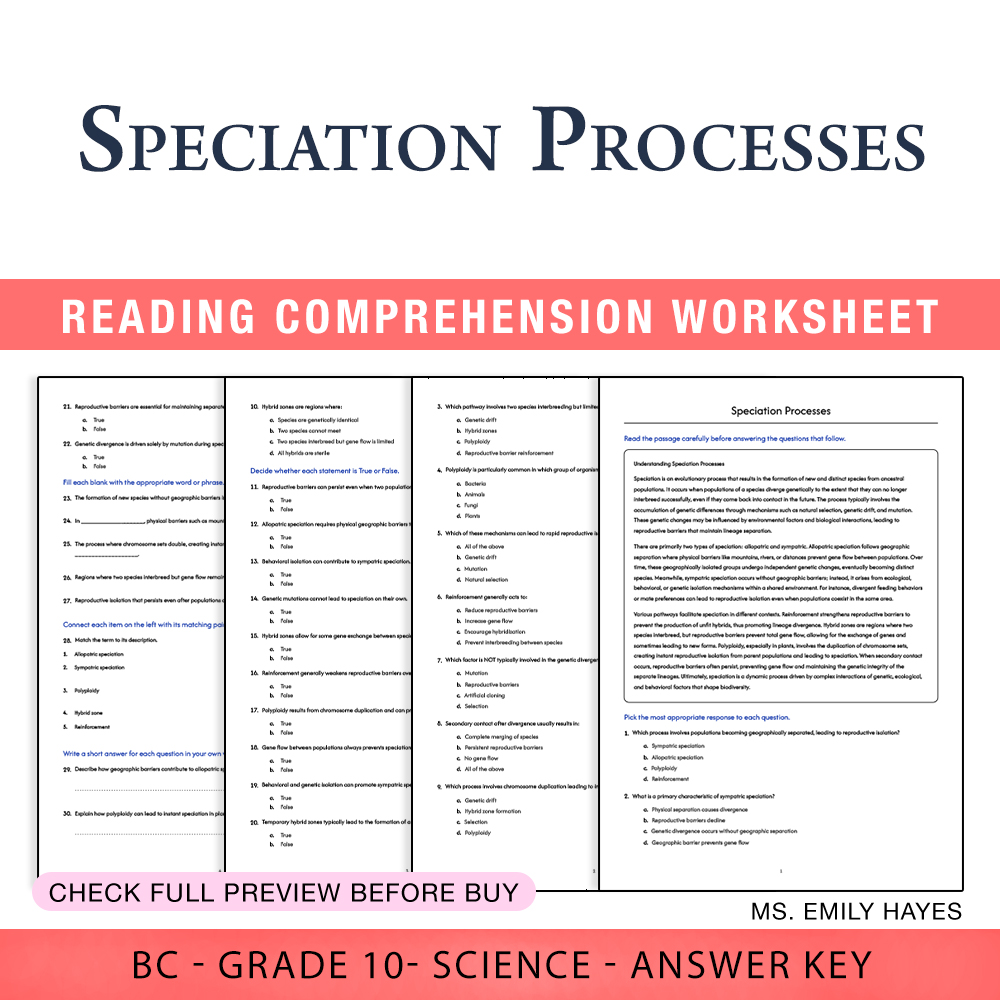
Grade 10 Science | Speciation Processes Worksheet (PDF+ Answer Key)
Created byCopper Leaf ClassroomLearning Objectives
- Explain the concept of speciation and how reproductive barriers lead to the formation of new species.
- Differentiate between allopatric and sympatric speciation in various contexts.
- Identify pathways such as reinforcement, hybrid zones, and polyploidy that promote speciation.
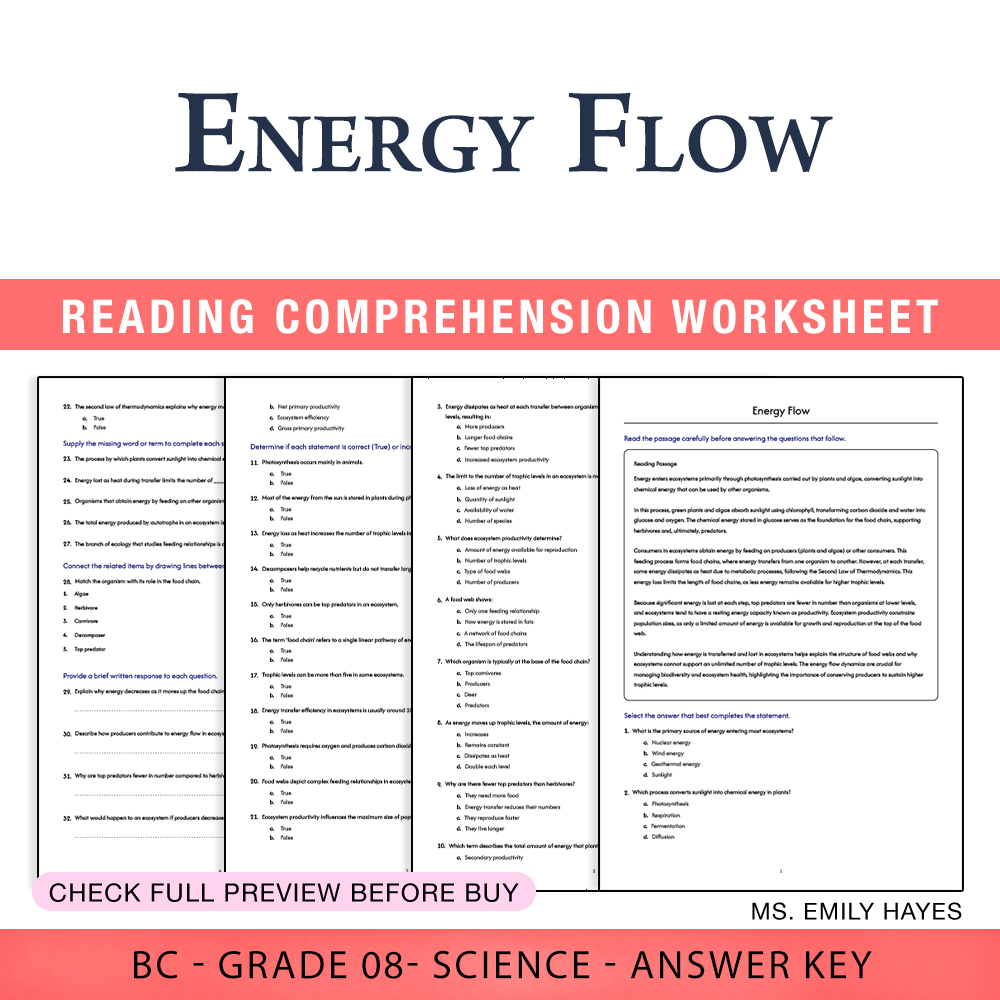
8th Grade Science | Energy Flow Worksheet (PDF+ Answer Key)
Created byCopper Leaf ClassroomLearning Objectives
- Explain how energy enters ecosystems through photosynthesis.
- Describe the transfer and loss of energy at each trophic level.
- Understand the reasons behind the limited number of top predators and ecosystem productivity constraints.
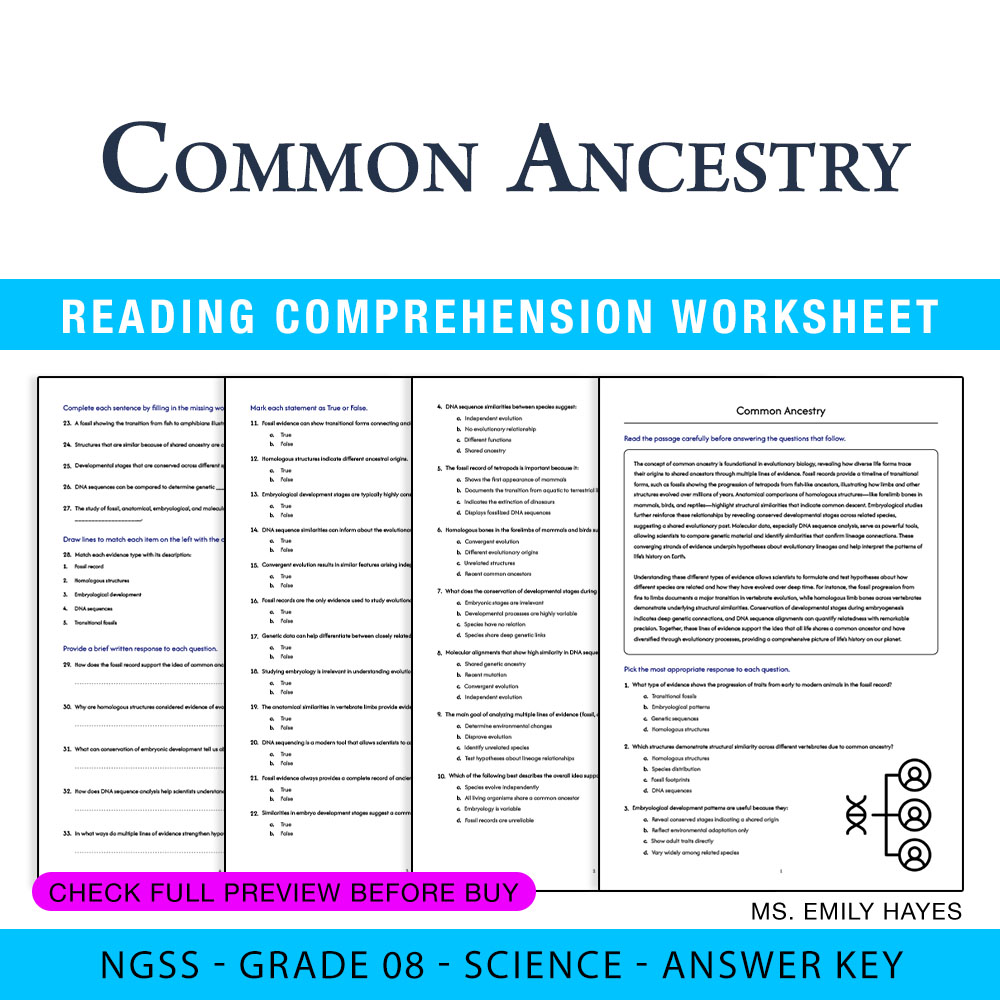
8th Grade Science | Common Ancestry Worksheet (PDF+ Answer Key)
Created byCopper Leaf ClassroomLearning Objectives
- Explain how fossil records show the progression of traits over time.
- Identify examples of homologous structures across different vertebrates.
- Interpret DNA sequence similarities to infer shared ancestry.
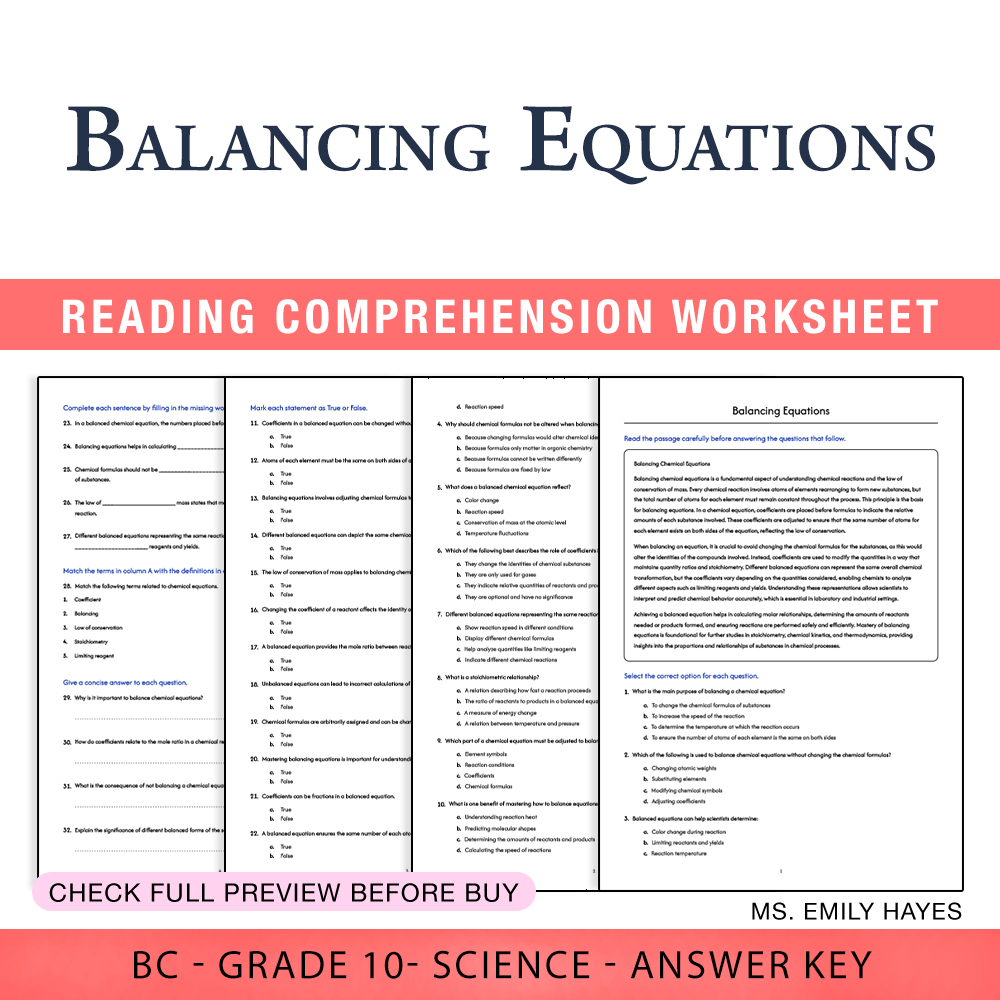
Grade 10 Science | Balancing Chemical Equations Worksheet (PDF + Answer Key)
Created byCopper Leaf ClassroomLearning Objectives
- Understand the concept of balancing chemical equations and the law of conservation of mass.
- Identify and apply appropriate coefficients to balance chemical equations.
- Interpret stoichiometric relationships from balanced equations.
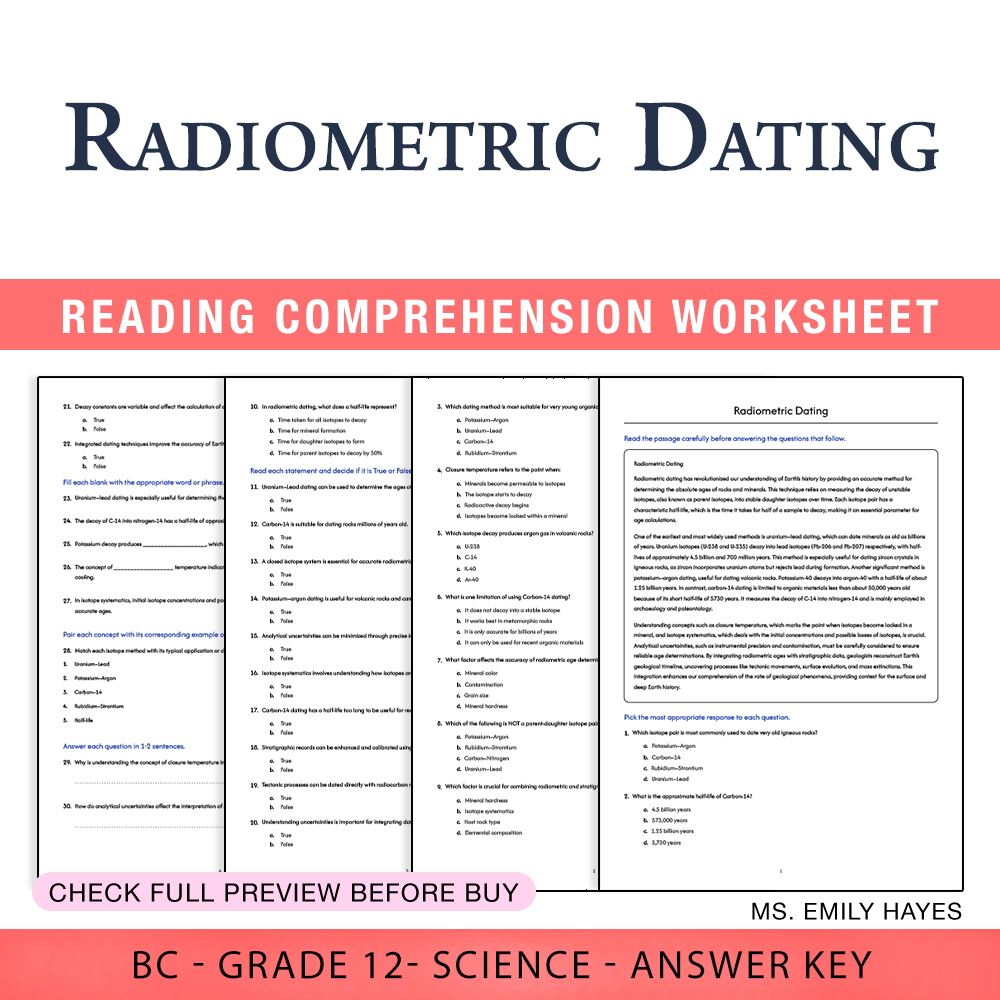
12th Grade Science | Radiometric Dating Worksheet (PDF + Answer Key)
Created byCopper Leaf ClassroomLearning Objectives
- Understand the principles of radiometric dating and isotope decay.
- Identify different radiometric methods and their applications in geology.
- Explain how isotopic systematics and uncertainties impact age calculations.
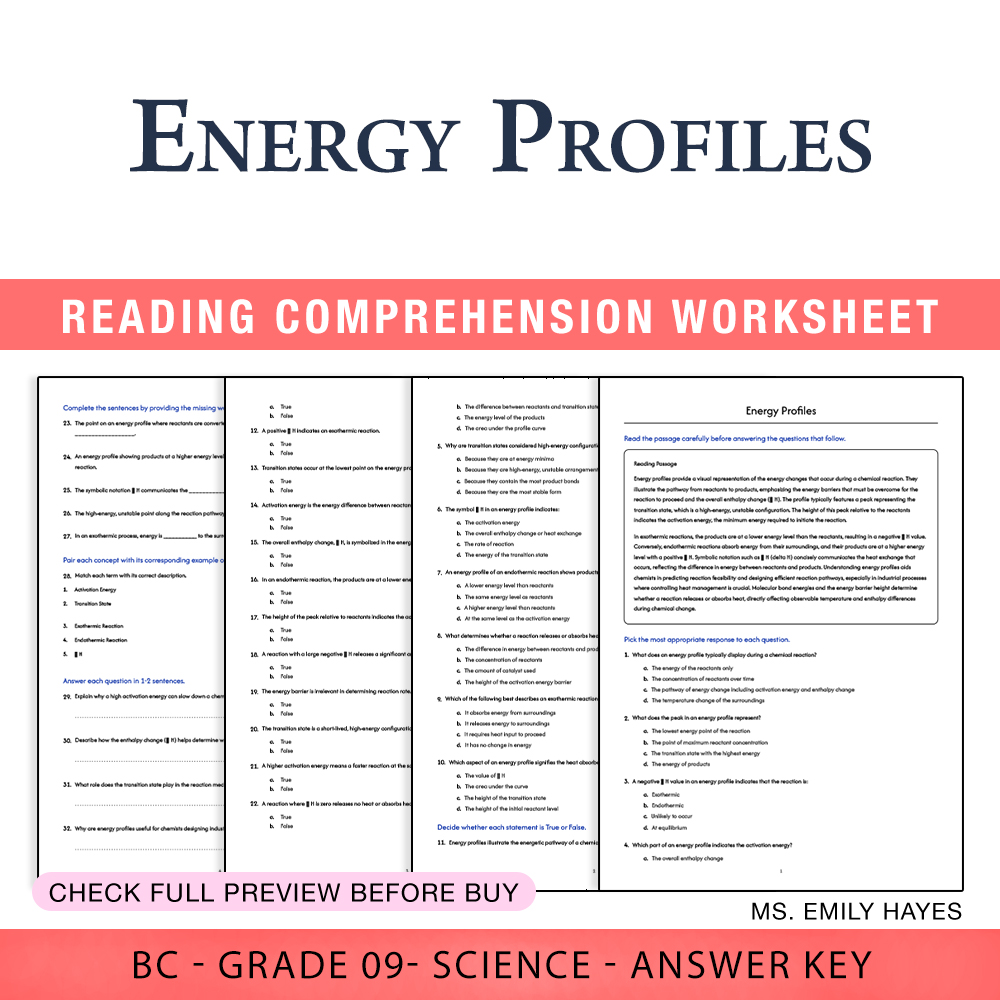
Grade 9 Science | Energy Profiles Worksheet (PDF+ Answer Key)
Created byCopper Leaf ClassroomLearning Objectives
- Describe the concept of energy profiles and their purpose in analyzing chemical reactions.
- Distinguish between exothermic and endothermic reactions based on enthalpy changes.
- Identify the significance of activation energy and transition states in reaction pathways.
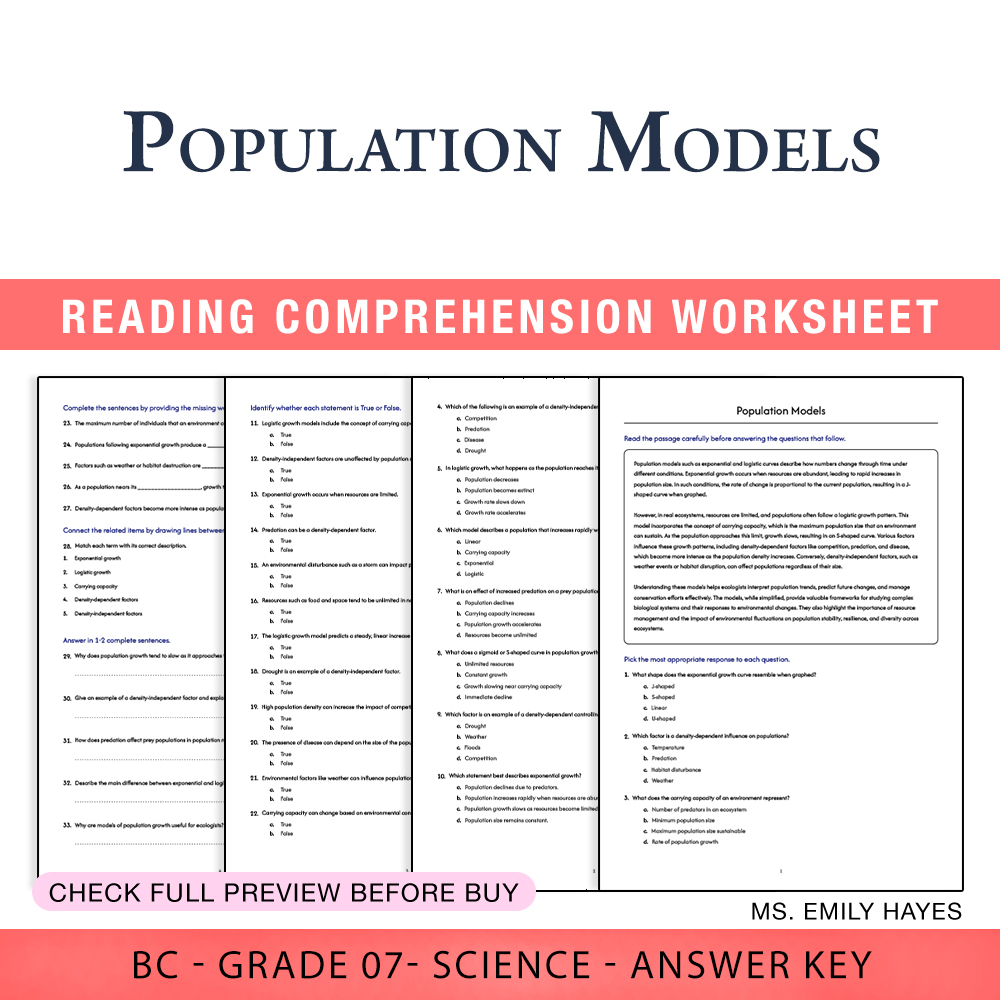
Grade 7 Science | Population Models Worksheet (PDF+ Answer Key)
Created byCopper Leaf ClassroomLearning Objectives
- Understand the differences between exponential and logistic population growth models.
- Identify factors influencing population changes, including density-dependent and density-independent factors.
- Interpret graphs and data related to population dynamics in ecosystems.
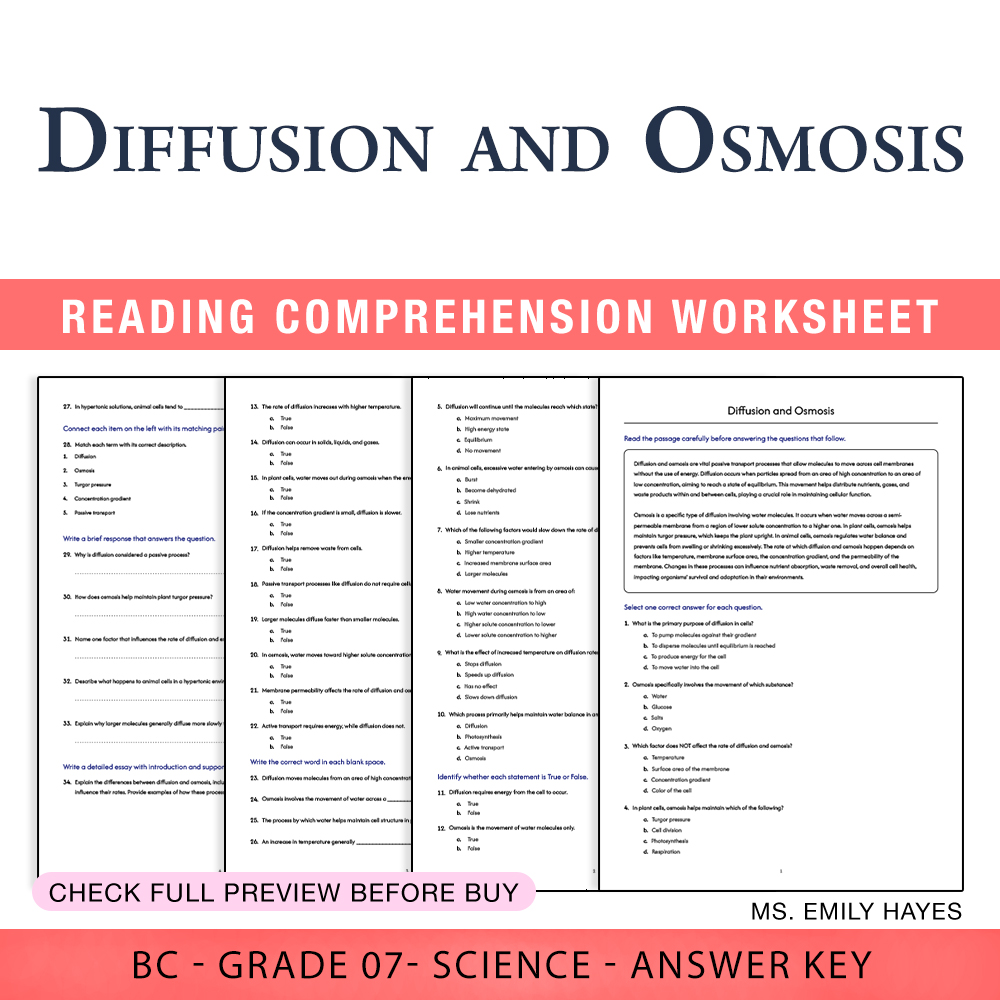
Grade 7 Science | Diffusion and Osmosis Worksheet (PDF+ Answer Key)
Created byCopper Leaf ClassroomLearning Objectives
- Understand the processes of diffusion and osmosis as passive transport mechanisms
- Explain how concentration gradients affect diffusion and osmosis in cells
- Describe the effects of diffusion and osmosis on plant and animal cells
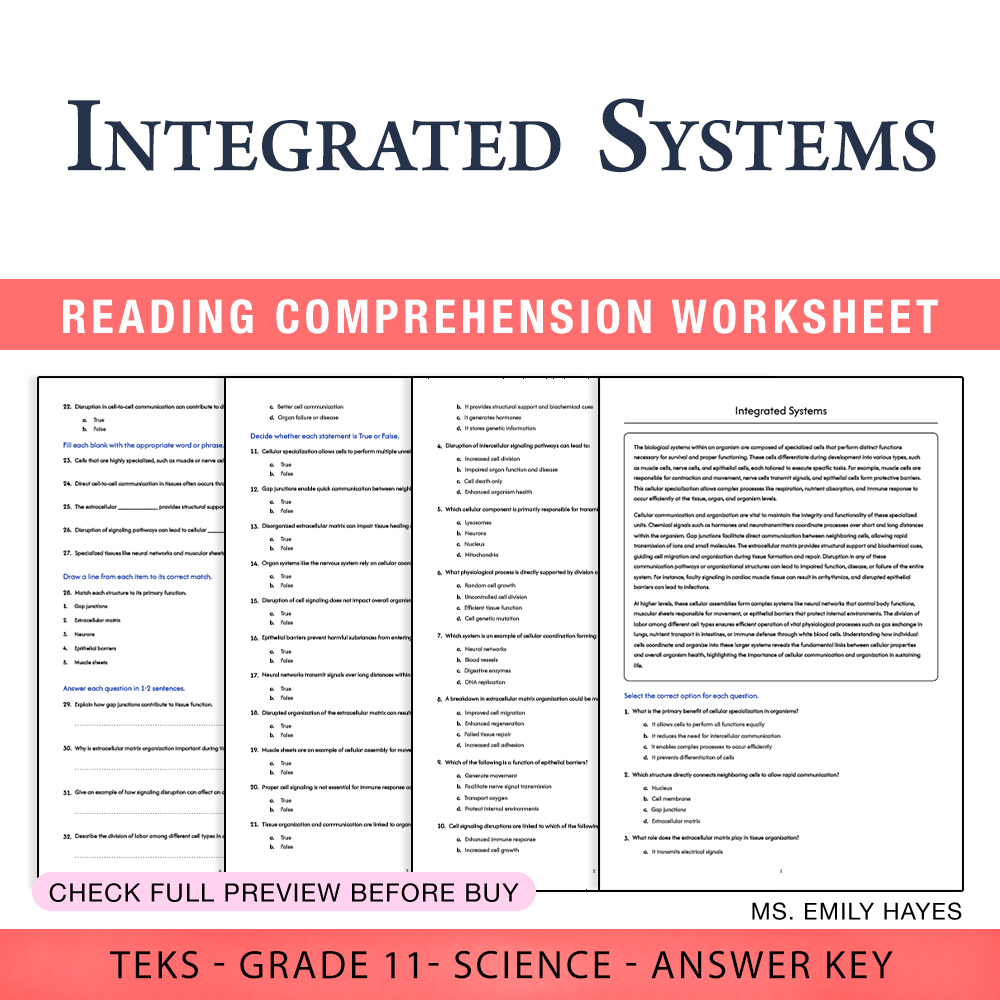
Grade 11 Science | Integrated Systems Worksheet (PDF+ Answer Key)
Created byCopper Leaf ClassroomLearning Objectives
- Describe how cellular specialization contributes to emergent functions at tissue, organ, and organism levels.
- Explain how chemical signaling, gap junctions, and extracellular matrix organization coordinate cellular behaviors.
- Identify examples of functional assemblies such as epithelial barriers, neural networks, and muscle sheets.
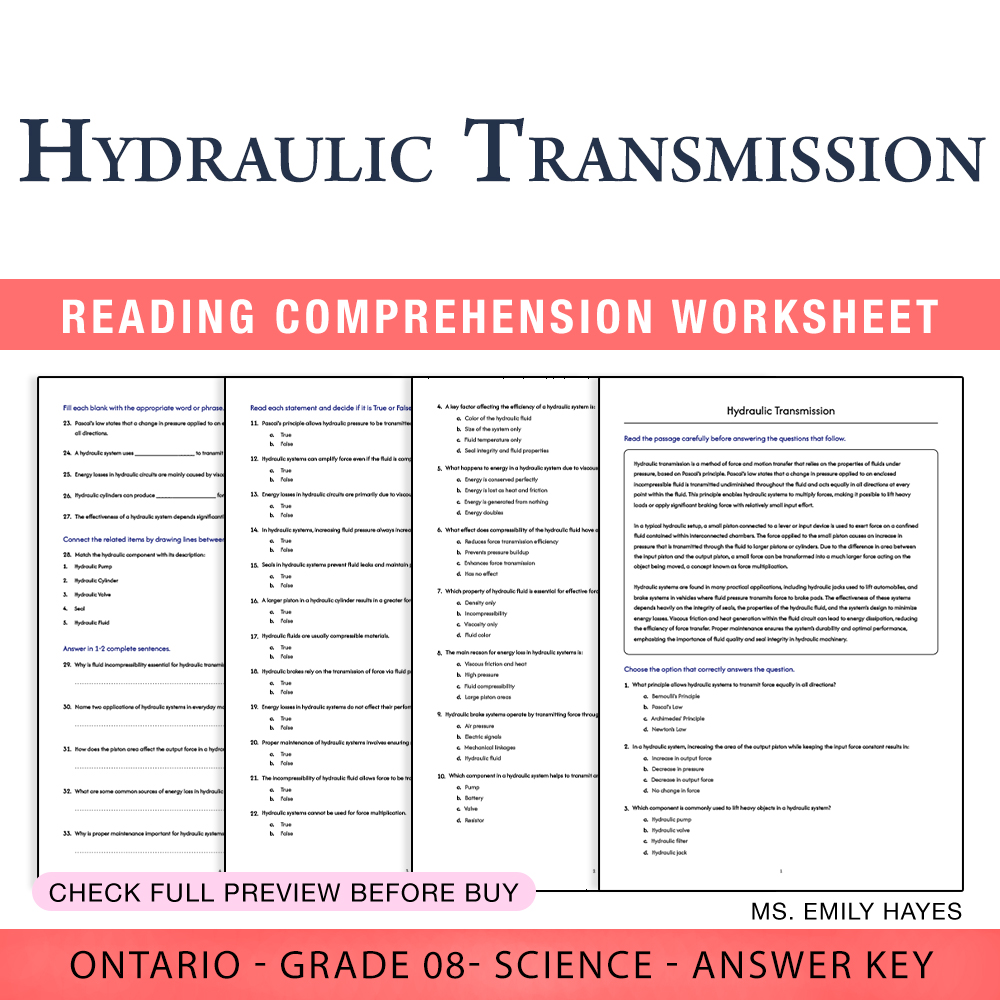
8th Grade Science | Hydraulic Transmission Worksheet (PDF+ Answer Key)
Created byCopper Leaf ClassroomLearning Objectives
- Explain the principles of hydraulic force transmission based on Pascal's law.
- Identify applications and components of hydraulic systems such as jacks and brakes.
- Describe how force multiplication occurs in hydraulic cylinders and the importance of pressure distribution.
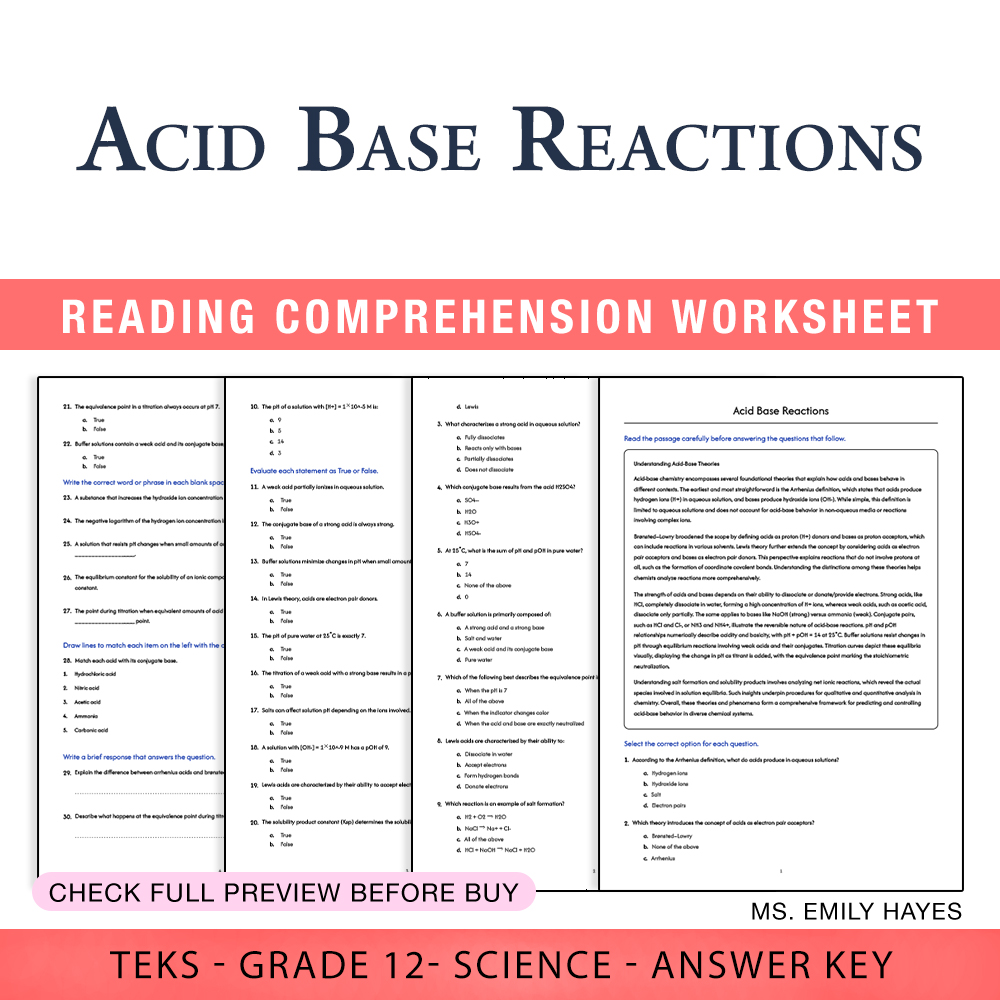
12th Grade Science | Acid Base Reactions Worksheet (PDF+ Answer Key)
Created byCopper Leaf ClassroomLearning Objectives
- Understand and compare the various definitions of acids and bases (Arrhenius, Brønsted–Lowry, Lewis).
- Differentiate between strong and weak acids and bases, and explain conjugate pairs.
- Interpret pH and pOH relationships and analyze buffer systems and their equilibria.
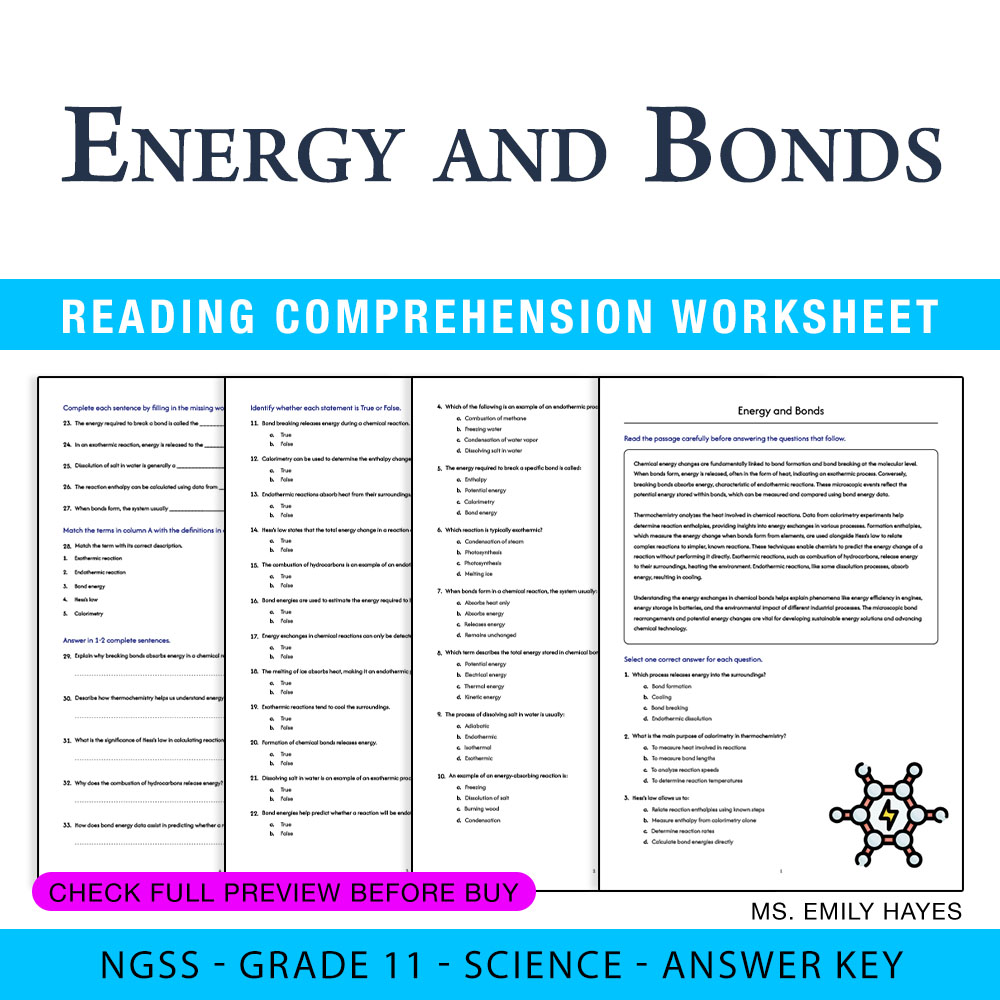
11th Grade Science | Energy and Bonds Worksheet (PDF + Answer Key)
Created byCopper Leaf ClassroomLearning Objectives
- Understand how chemical energy changes involve bond formation and breaking.
- Explain how thermochemical data are used to determine reaction enthalpies.
- Differentiate between exothermic and endothermic reactions with examples.
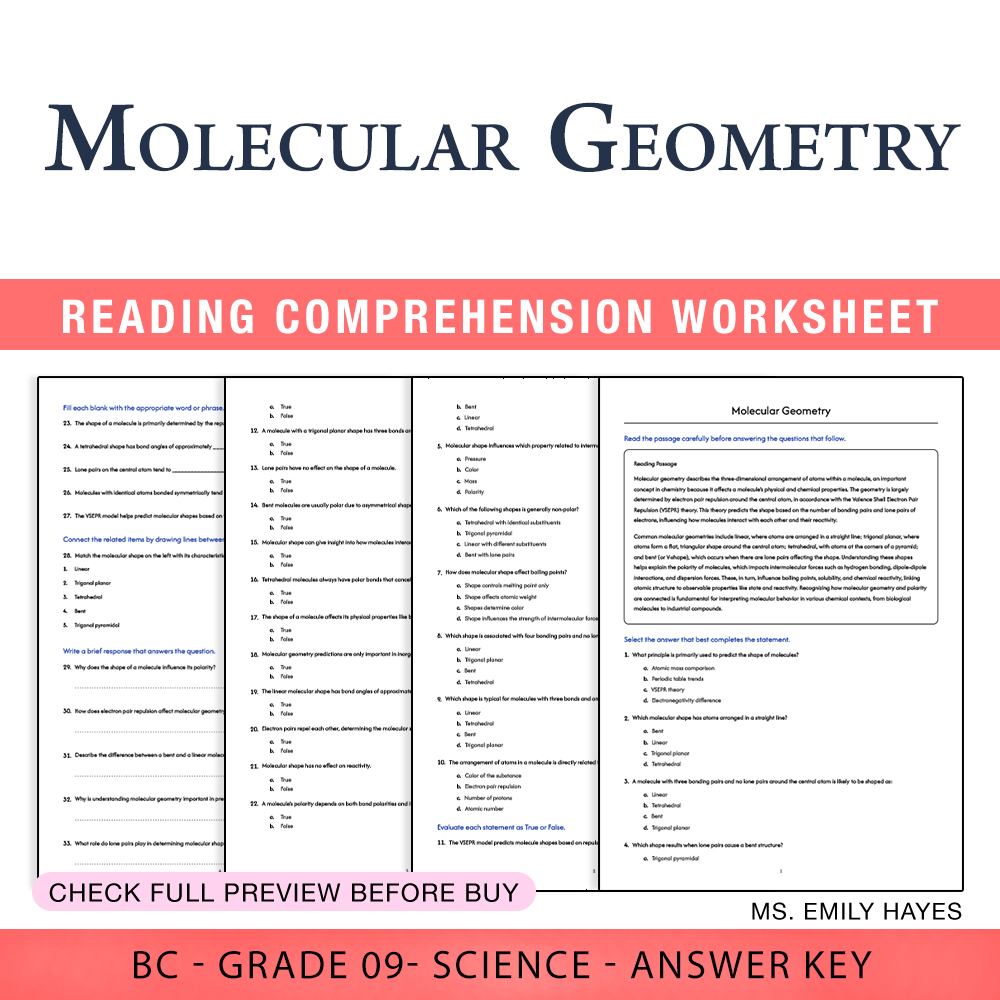
Grade 9 Science | Molecular Geometry Worksheet (PDF+ Answer Key)
Created byCopper Leaf ClassroomLearning Objectives
- Explain the principles of VSEPR theory related to molecular shapes.
- Identify common molecular geometries such as linear, trigonal planar, tetrahedral, and bent.
- Understand how molecular shape influences polarity and physical properties.
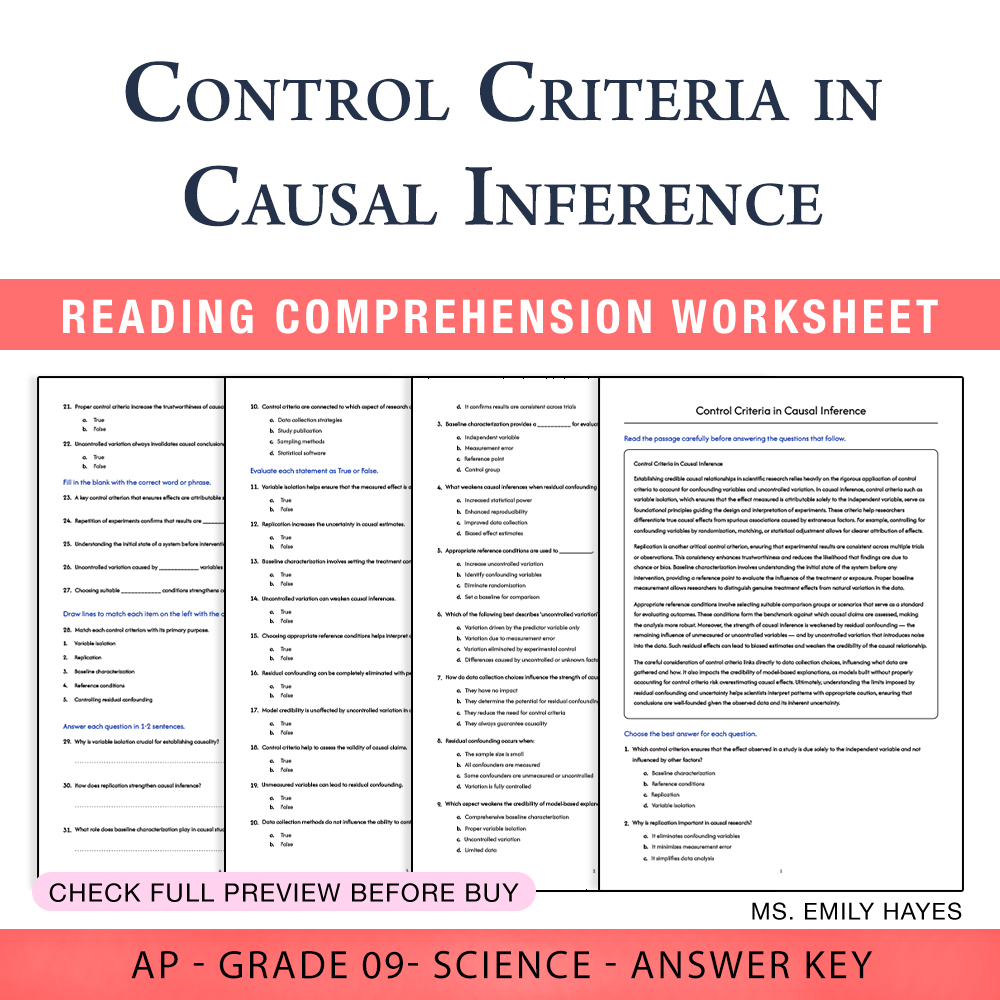
9th Grade Science | Control Criteria in Causal Inference (PDF+ Answer Key)
Created byCopper Leaf ClassroomLearning Objectives
- Define and explain the key control criteria used in establishing causality and their importance.
- Analyze how variable isolation, replication, baseline characterization, and reference conditions influence causal interpretation.
- Evaluate the impact of residual confounding and uncontrolled variation on the strength of causal claims.
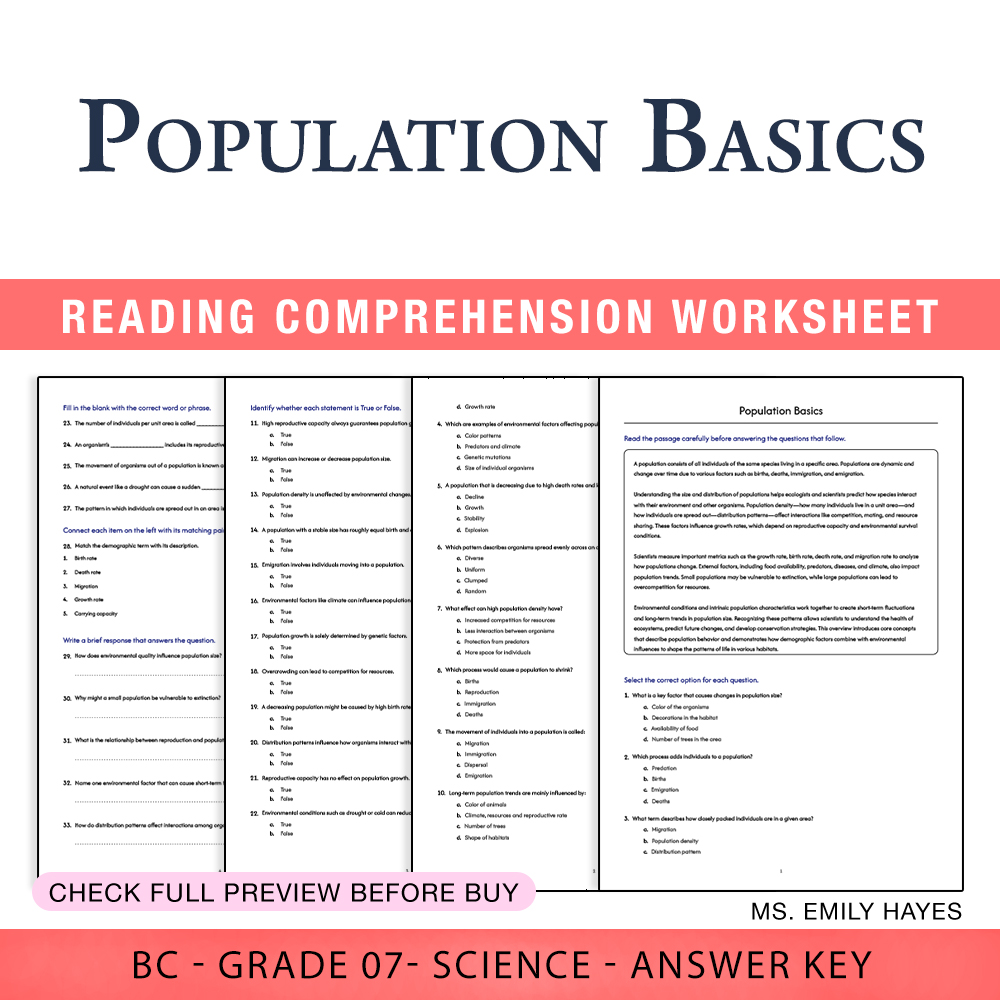
Grade 7 Science | Population Basics Worksheet (PDF+ Answer Key)
Created byCopper Leaf ClassroomLearning Objectives
- Understand the concept of a population and its components.
- Identify factors that influence population size and distribution.
- Explain how demographic and environmental factors impact population dynamics.
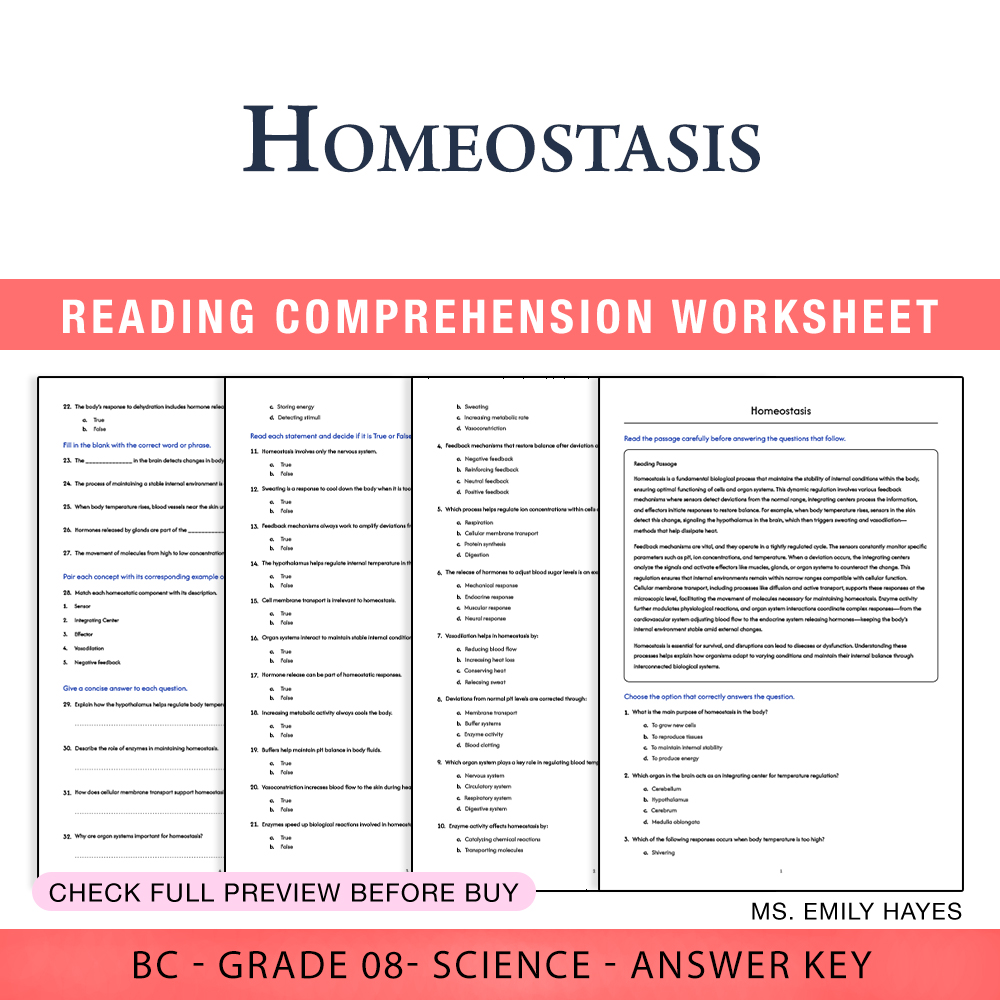
Grade 8 Science | Homeostasis Worksheet (PDF+ Answer Key)
Created byCopper Leaf ClassroomLearning Objectives
- Explain the concept of homeostasis and its importance in maintaining internal stability.
- Identify the feedback mechanisms involved in homeostatic processes and describe their functions.
- Describe how organ systems contribute to homeostasis through physiological responses.
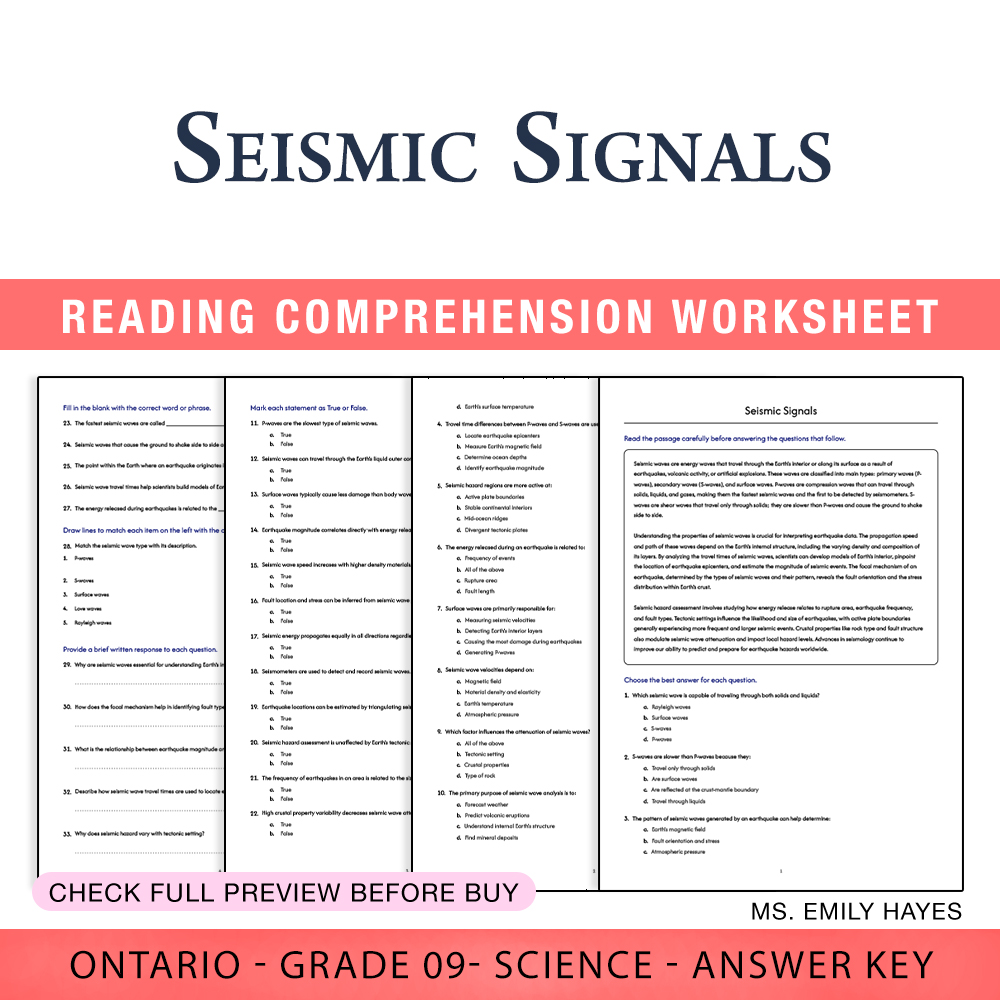
9th Grade Science | Seismic Signals Worksheet (PDF + Answer Key)
Created byCopper Leaf ClassroomLearning Objectives
- Describe different types of seismic waves and their propagation characteristics
- Explain how earthquake focal mechanisms reveal fault types and stress orientations
- Relate seismic wave travel times to Earth’s interior models and methods for locating epicentres
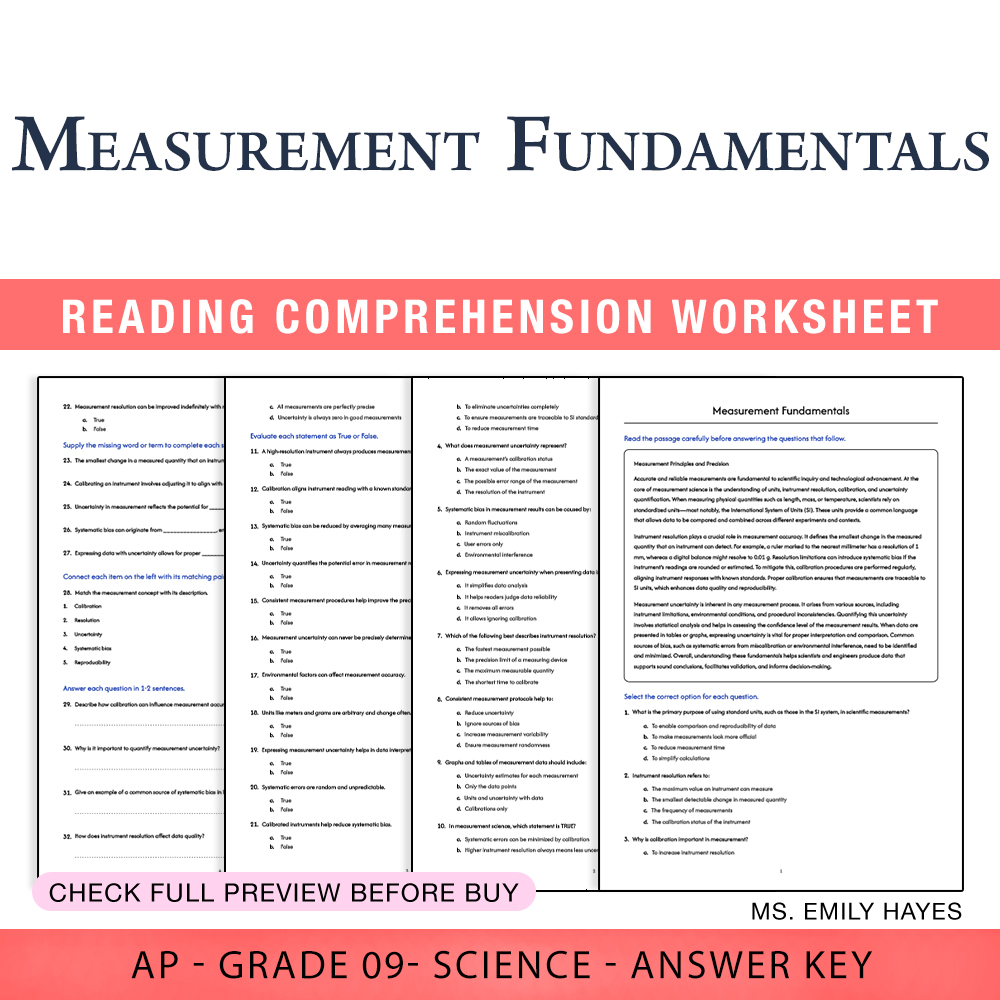
9th Grade Science | Measurement Fundamentals Worksheet (PDF+ Answer Key)
Created byCopper Leaf ClassroomLearning Objectives
- Understand the principles of metric measurement and the importance of standard units.
- Analyze how instrument resolution and calibration affect measurement accuracy and precision.
- Interpret and create tabular and graphical representations of measurement data.
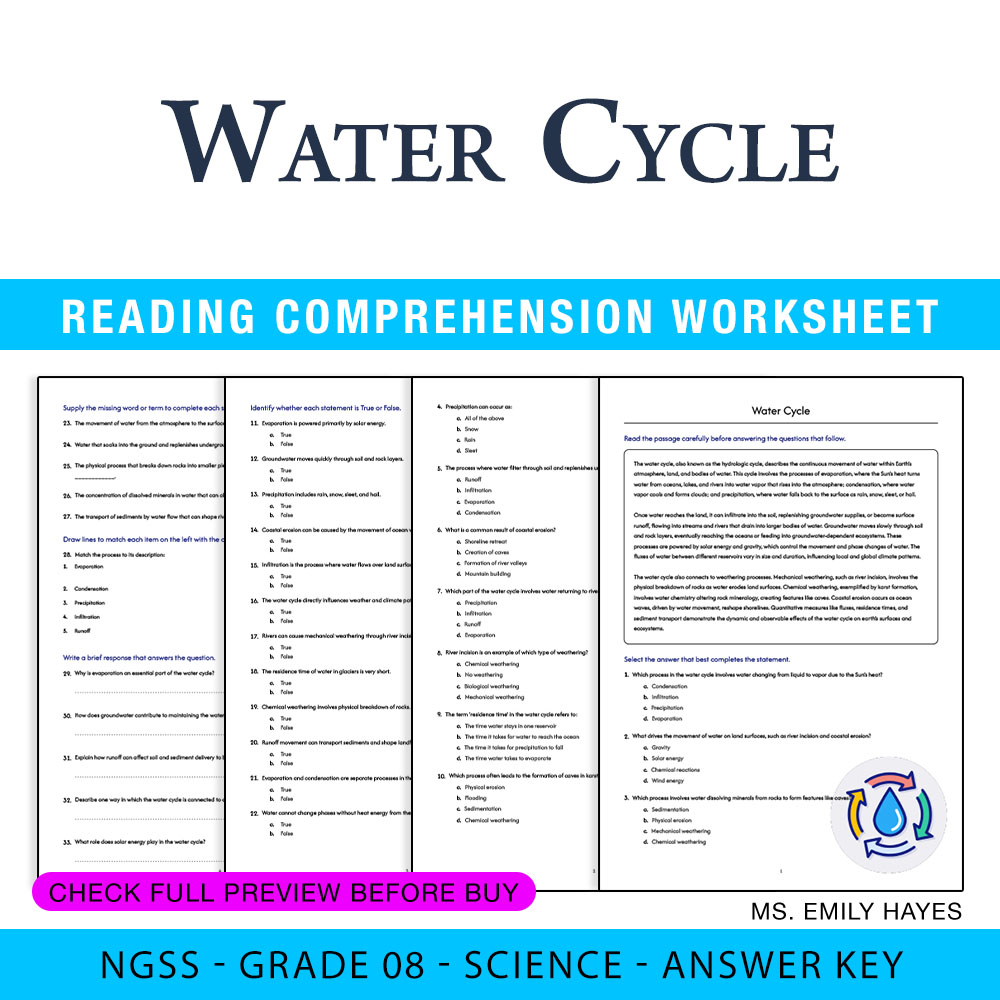
Grade 8 Science | Water Cycle Worksheet (PDF + Answer Key)
Created byCopper Leaf ClassroomLearning Objectives
- Explain the processes involved in the water cycle, including evaporation, condensation, precipitation, infiltration, runoff, and groundwater flow.
- Describe how energy from the Sun and gravity drive the processes of the water cycle.
- Connect the water cycle to chemical and mechanical weathering processes such as river incision, karst formation, and coastal erosion.
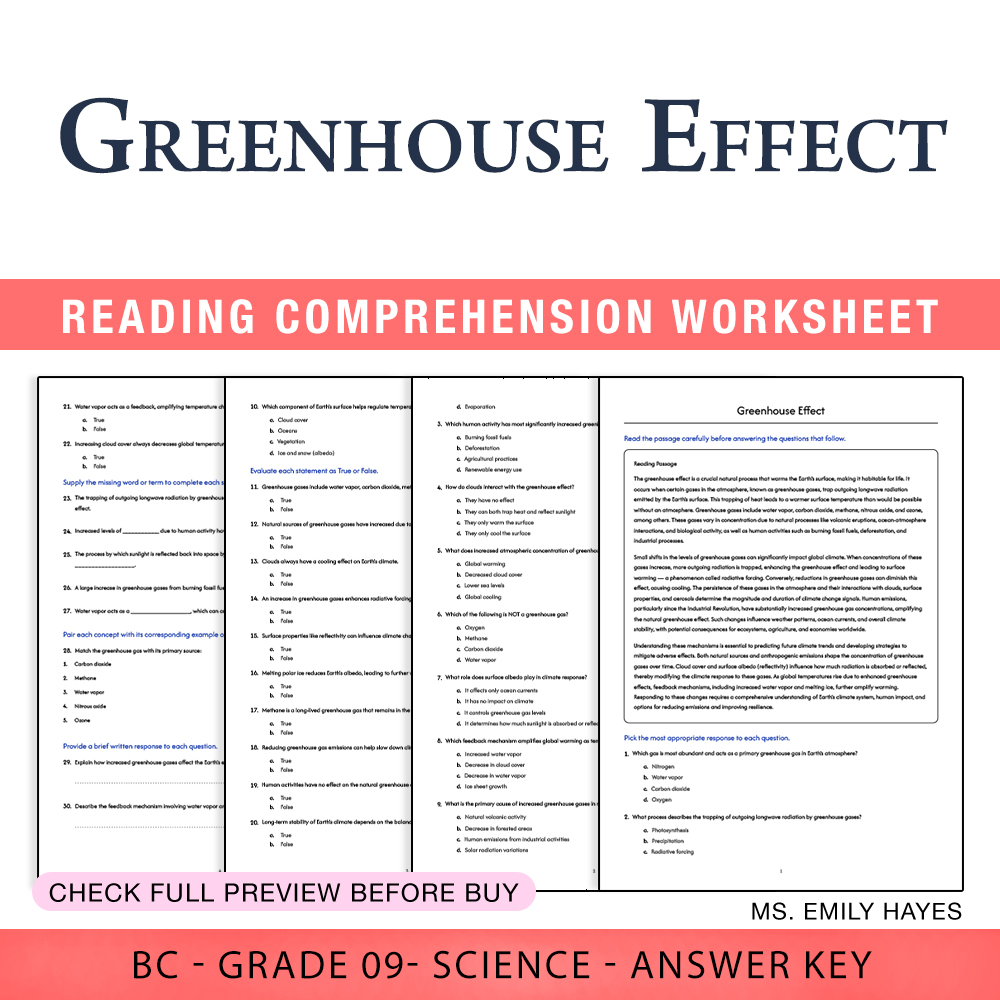
Grade 9 Science | Greenhouse Effect Worksheet (PDF+ Answer Key)
Created byCopper Leaf ClassroomLearning Objectives
- Explain the greenhouse effect and identify key greenhouse gases.
- Analyze how natural and human activities influence Earth's climate.
- Describe how changes in atmospheric composition affect radiative forcing and surface temperature.
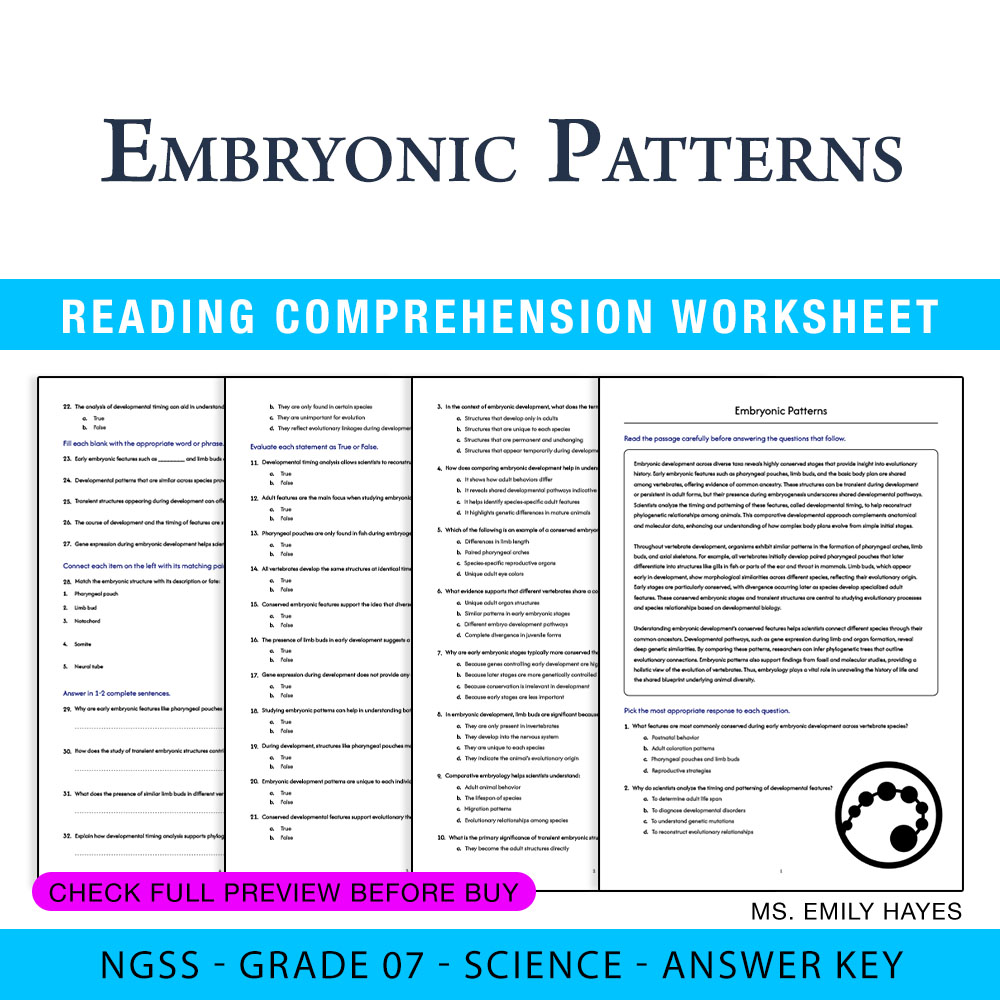
7th Grade Science | Embryonic Patterns Worksheet (PDF + Answer Key)
Created byCopper Leaf ClassroomLearning Objectives
- Describe key developmental stages observed across different taxa during embryonic development.
- Analyze the significance of conserved embryonic features in understanding evolutionary relationships.
- Identify specific morphological similarities such as pharyngeal pouches and limb buds in various vertebrates.
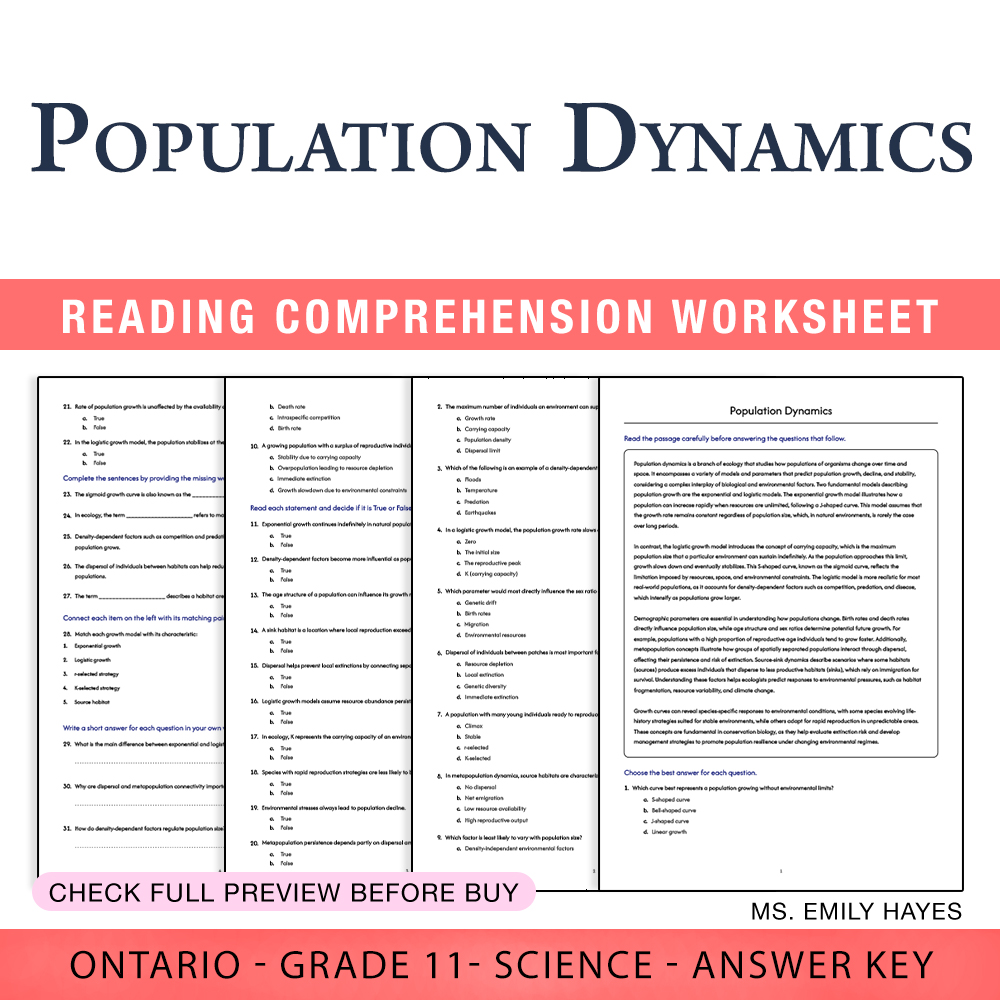
11th Grade Science | Population Dynamics Worksheet (PDF + Answer Key)
Created byCopper Leaf ClassroomLearning Objectives
- Understand and describe different population growth models, including exponential and logistic growth.
- Analyze the effects of demographic parameters such as birth rates, death rates, age structure, and sex ratio on population trajectories.
- Explain the concepts of carrying capacity, density-dependent, and density-independent factors influencing populations.
Grade 10 Science | Biodiversity Change Worksheet (PDF + Answer Key)
Created byCopper Leaf ClassroomLearning Objectives
- Understand the primary factors contributing to changes in biological diversity.
- Analyze evidence from phylogenetic studies and population monitoring related to biodiversity.
- Evaluate conservation strategies and their effectiveness based on extinction and genetic data.
11th Grade Science | Ecological Interactions Worksheet (PDF + Answer Key)
Created byCopper Leaf ClassroomLearning Objectives
- Describe different types of species interactions including predation, parasitism, competition, mutualism, facilitation, and commensalism.
- Explain the roles of keystone and foundational species in community assembly and ecosystem functioning.
- Analyze ecological networks, interaction strengths, and feedback loops to understand community stability.
11th Grade Science | Circular Motion Worksheet (PDF+ Answer Key)
Created byCopper Leaf ClassroomLearning Objectives
- Describe uniform and non-uniform circular motion in terms of centripetal and tangential acceleration.
- Model net forces acting in circular motion using radial and tangential components.
- Apply kinematic descriptions in polar coordinates to analyze circular motion scenarios.
6th Grade Science | Apparent Motion Worksheet (PDF + Answer Key)
Created byCopper Leaf ClassroomLearning Objectives
- Describe the apparent daily motion of the Sun, Moon, and stars from an Earth-based perspective.
- Explain how Earth's rotation and orbital motion cause phenomena such as rising, setting, and apparent stellar paths.
- Understand the concept of the celestial sphere and horizon in relation to sky observations.
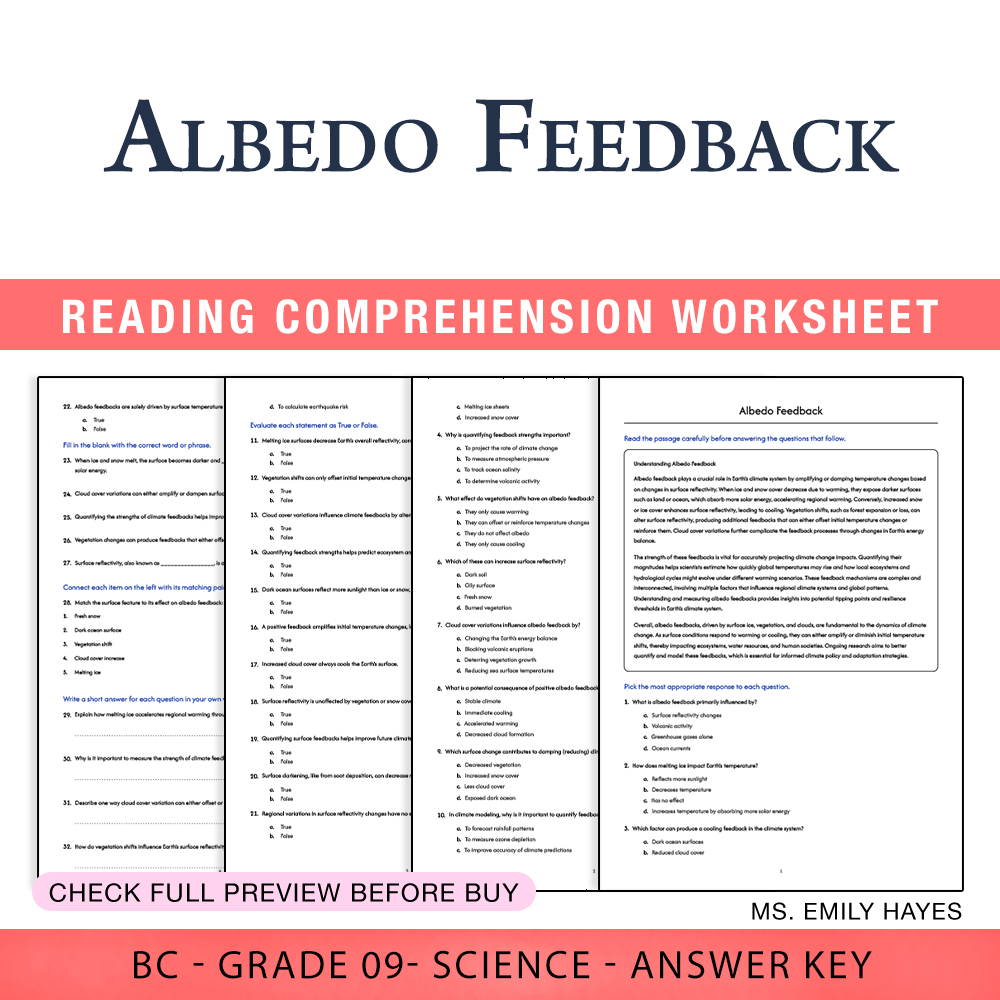
Grade 9 Science | Albedo Feedback Worksheet (PDF+ Answer Key)
Created byCopper Leaf ClassroomLearning Objectives
- Understand the concept of albedo and how surface reflectivity affects climate.
- Identify the various feedback mechanisms related to surface reflectivity changes.
- Analyze the role of ice, snow, vegetation, and clouds in albedo feedback processes.
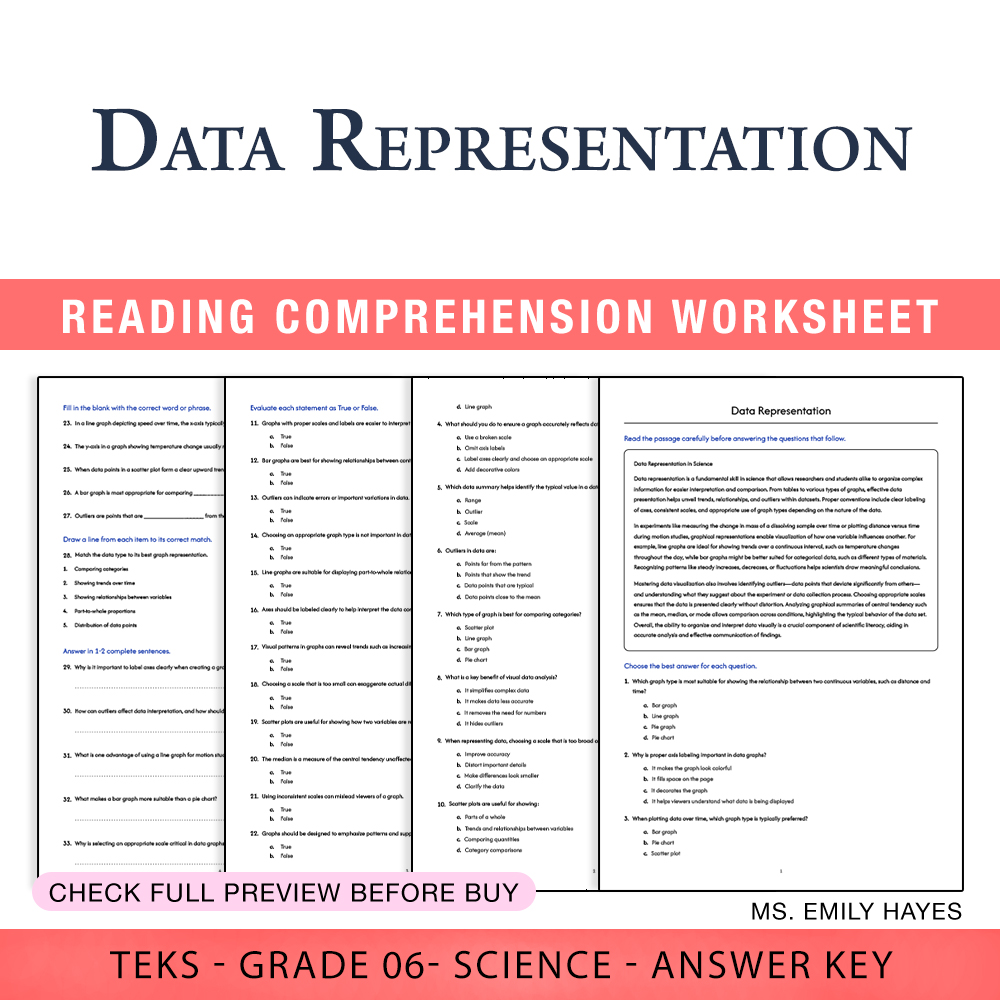
6th Grade Science | Data Representation Worksheet (PDF+ Answer Key)
Created byCopper Leaf ClassroomLearning Objectives
- Understand the conventions for organizing data in tables and graphs.
- Identify proper axes labeling and scale selection in data charts.
- Interpret graphical summaries to identify trends, patterns, and outliers.
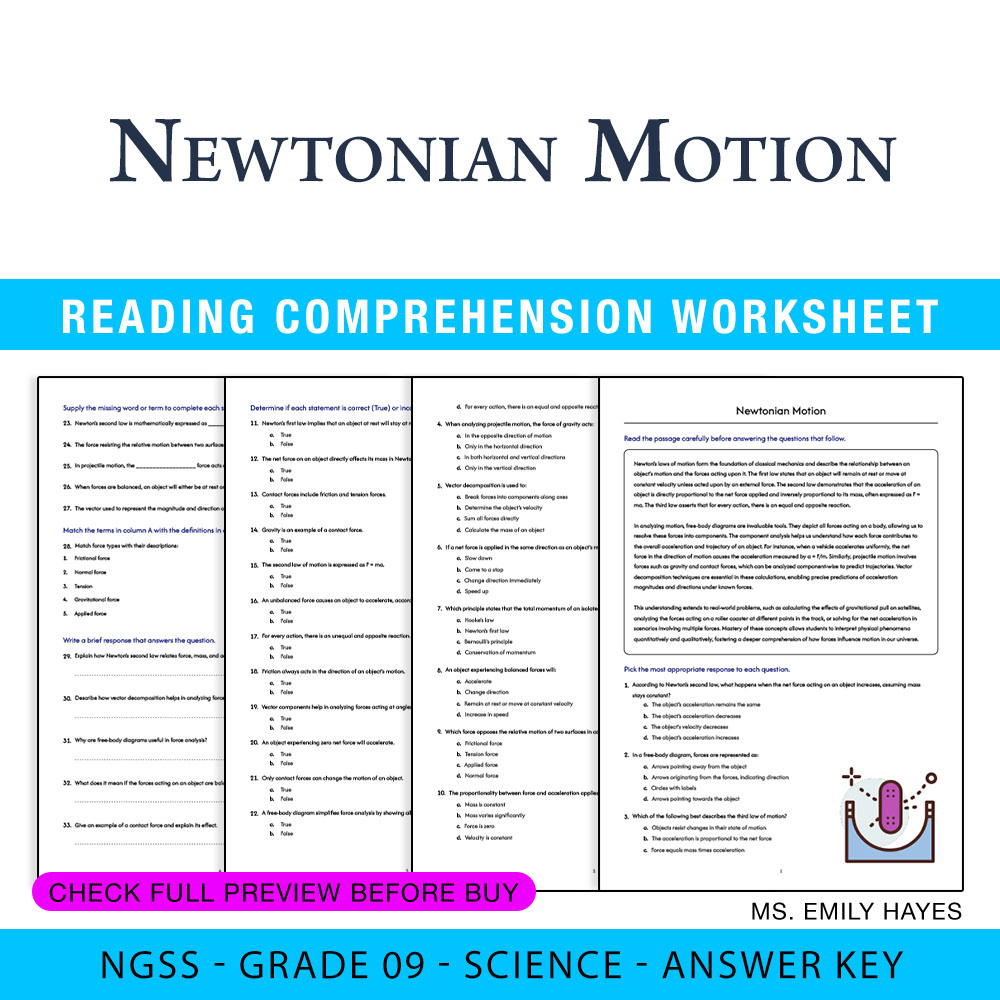
9th Grade Science | Newtonian Motion Practice Worksheet (PDF+ Answer Key)
Created byCopper Leaf ClassroomLearning Objectives
- Understand Newton's three laws of motion and their applications.
- Analyze force diagrams and components in different physical scenarios.
- Apply proportionality between net force and acceleration to predict motion in systems with constant mass.
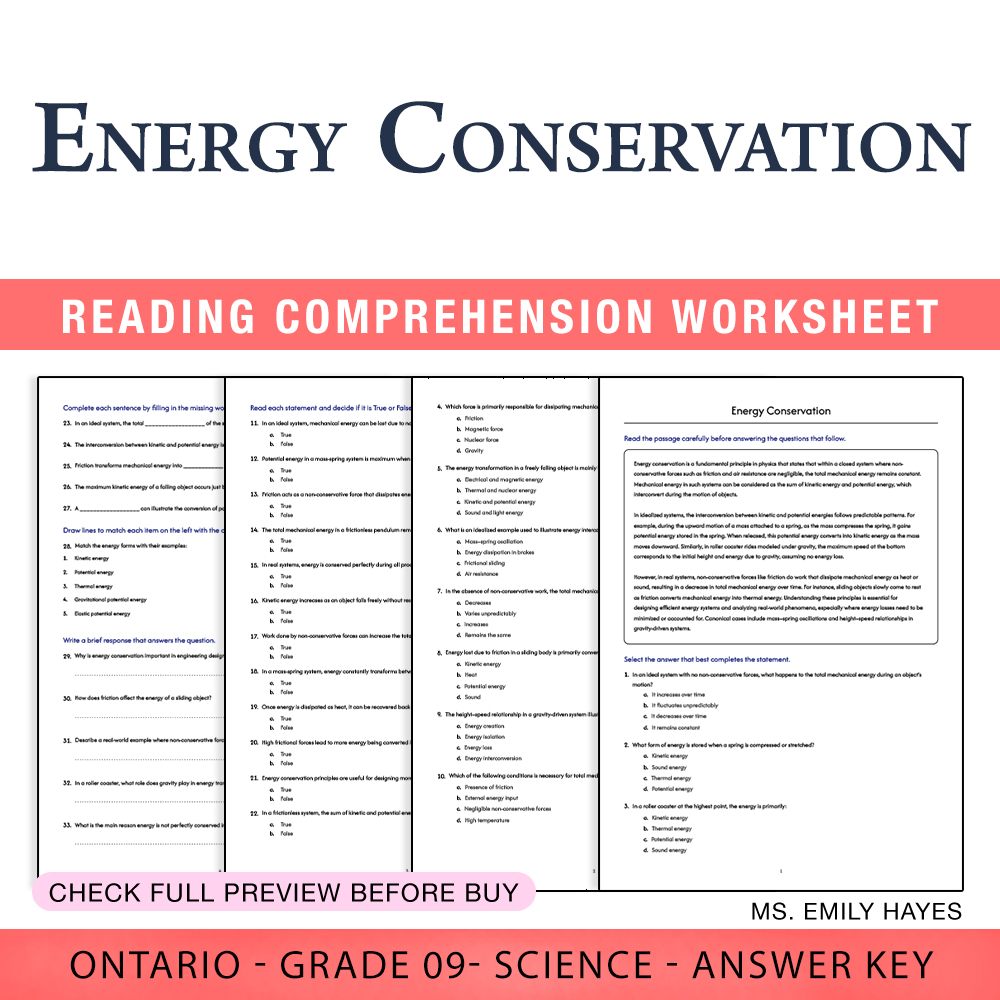
Grade 9 Science | Energy Conservation Worksheet (PDF + Answer Key)
Created byCopper Leaf ClassroomLearning Objectives
- Describe the principle of conservation of mechanical energy in systems where non-conservative forces are negligible.
- Explain the interconversion between kinetic and potential energies in various physical scenarios.
- Identify conditions under which total mechanical energy remains constant.
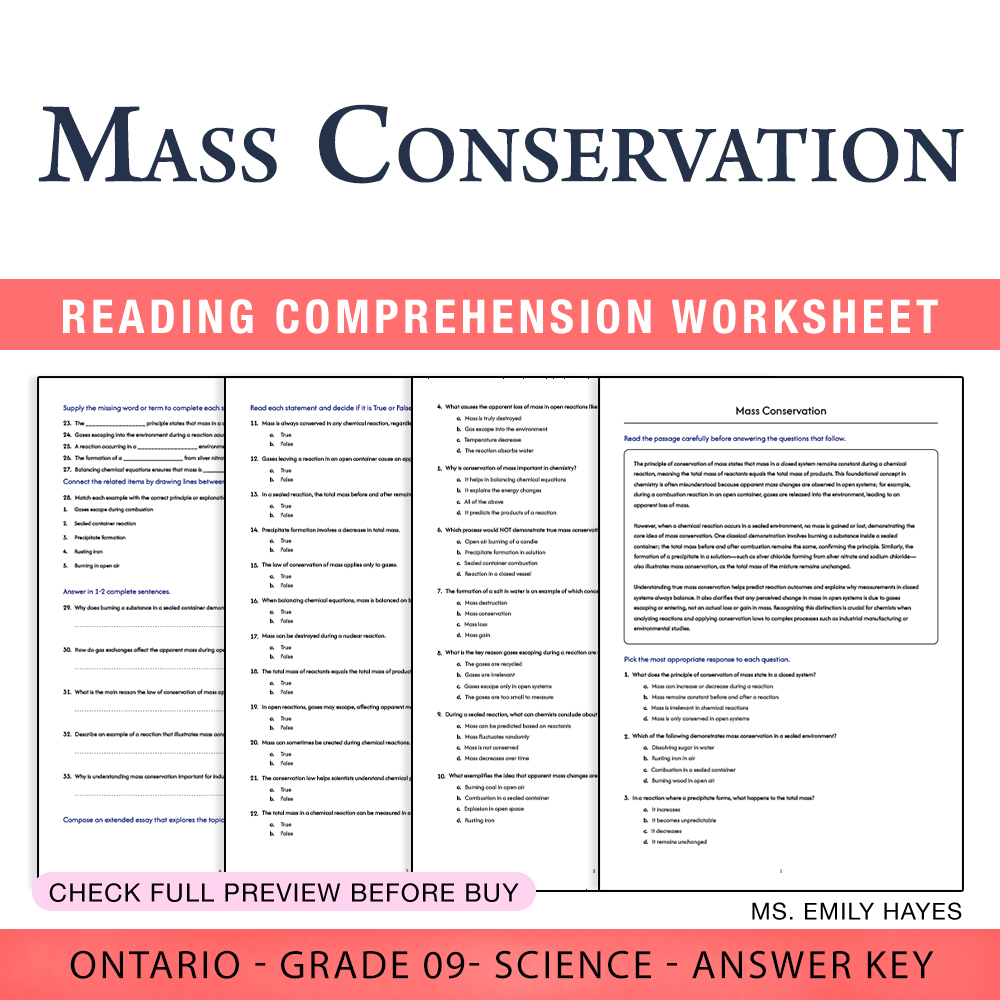
9th Grade Science | Mass Conservation Worksheet (PDF + Answer Key)
Created byCopper Leaf ClassroomLearning Objectives
- Understand the principle of conservation of mass in closed systems during chemical reactions.
- Explain how mass is conserved despite apparent changes during chemical processes.
- Identify examples of mass conservation in real-world chemical reactions.
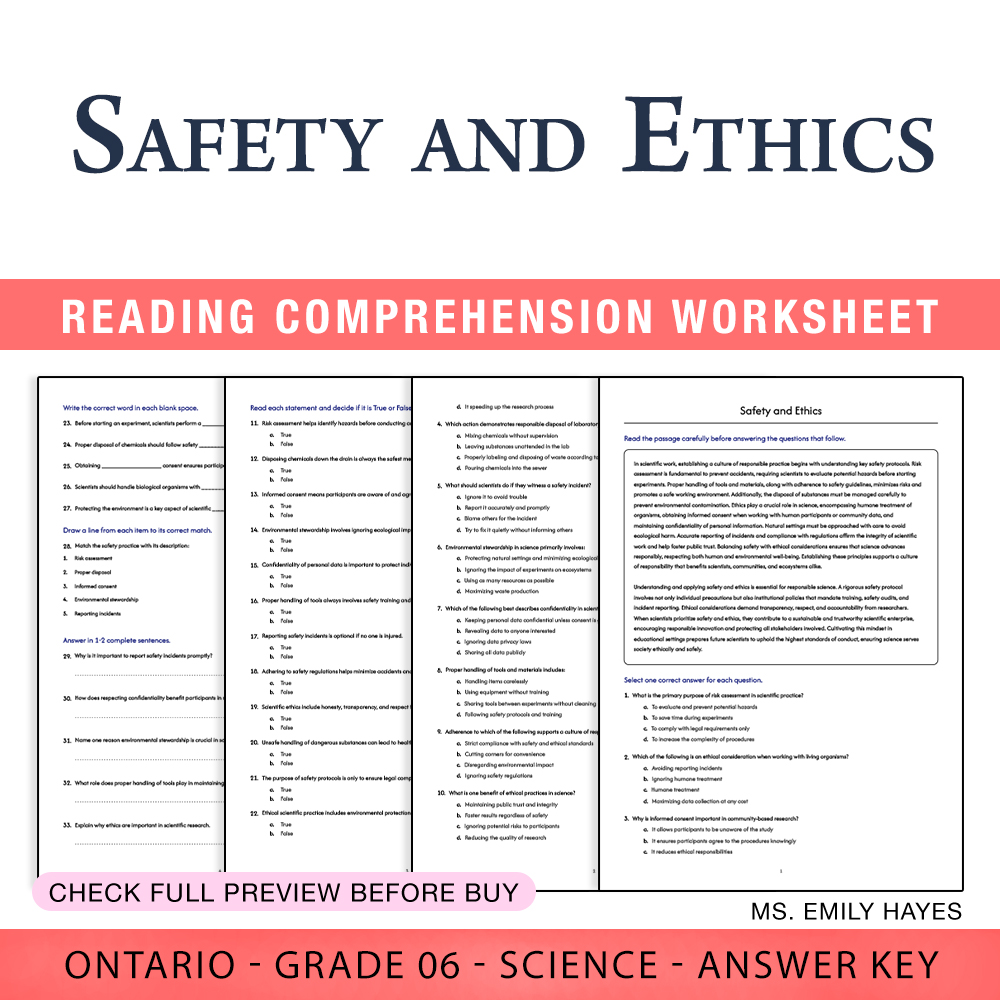
6th Grade Science | Safety and Ethics Worksheet (PDF+ Answer Key)
Created byCopper Leaf ClassroomLearning Objectives
- Understand the importance of risk assessment and safety protocols in scientific practices.
- Identify ethical considerations such as humane treatment, informed consent, and environmental stewardship.
- Apply proper procedures for handling tools, materials, and disposing of substances responsibly.
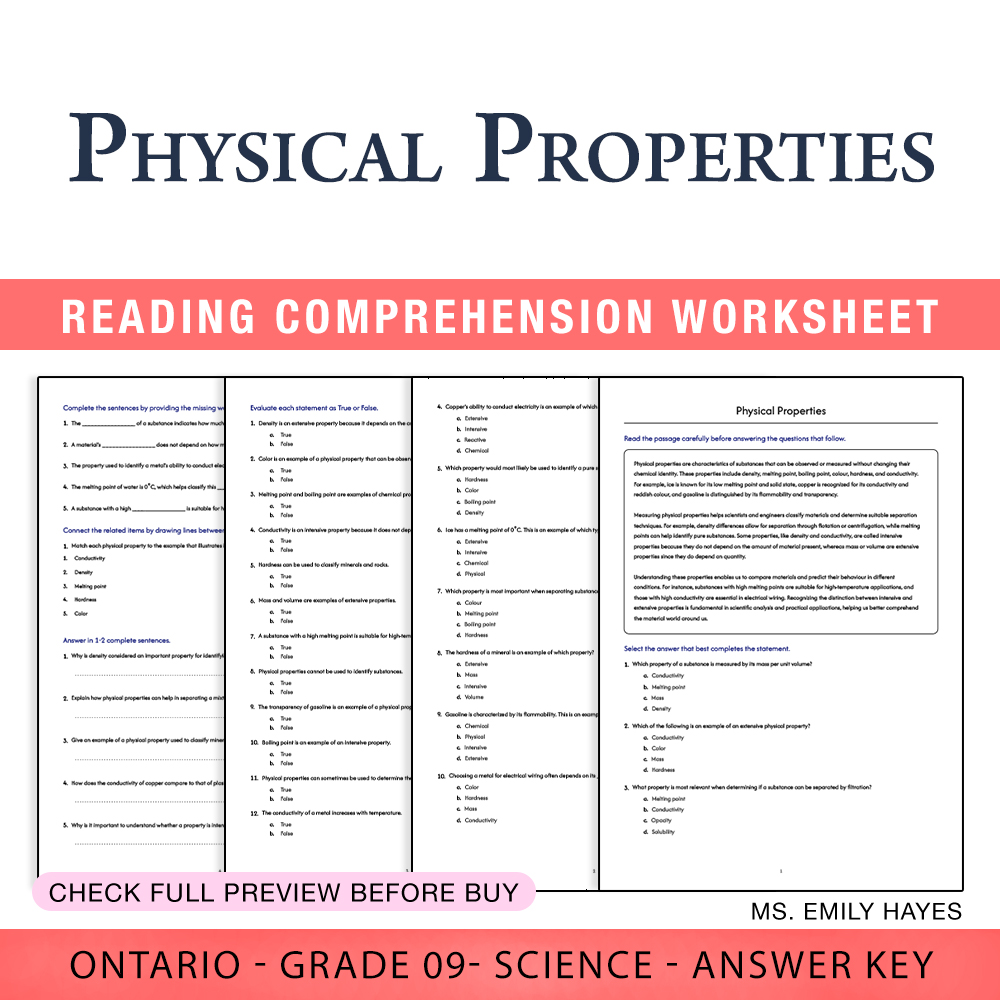
9th Grade Science | Physical Properties Worksheet (PDF + Answer Key)
Created byCopper Leaf ClassroomLearning Objectives
- Define physical properties and identify key examples such as density, melting point, and conductivity.
- Distinguish between intensive and extensive properties and understand their relevance in material classification.
- Describe how physical properties are measured and used to separate or classify materials.
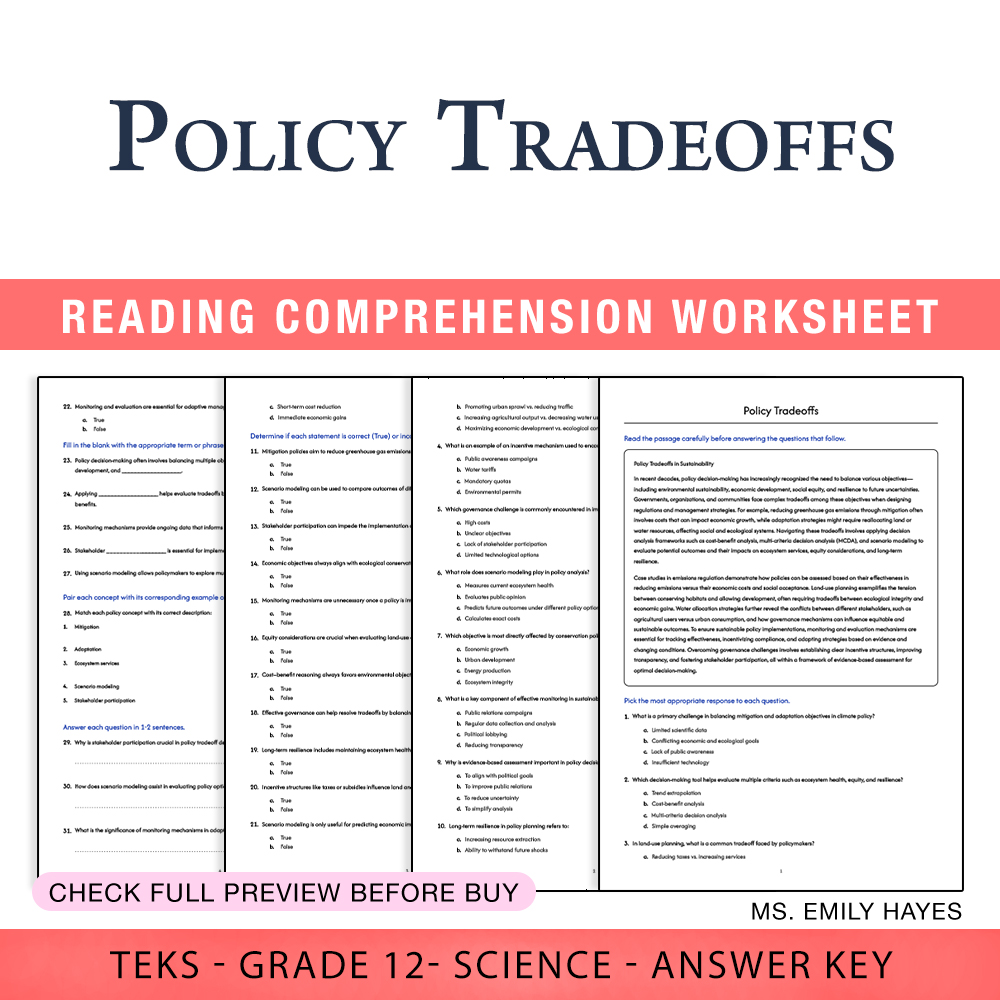
Grade 12 Science | Policy Tradeoffs Worksheet (PDF+ Answer Key)
Created byCopper Leaf ClassroomLearning Objectives
- Analyze the tradeoffs involved in policy decision-making across mitigation, adaptation, conservation, and socio-economic objectives.
- Apply decision analysis tools such as cost-benefit reasoning, multi-criteria decision analysis, and scenario modeling to policy evaluation.
- Interpret case studies of emissions regulation, land-use planning, and water allocation to understand real-world policy impacts.
Browse more categories
About Science Worksheets
Find Science worksheets spanning core skills, practice, and review. All 42,859 resources are instant PDF downloads for the classroom or home.
Every worksheet on MyTeachingSheets is created by independent teacher-authors and reviewed before publication. All resources download as printable PDFs for classroom, homework, or at-home practice, and many include answer keys. Preview any worksheet free before buying.