
Science Worksheets
42,859 subject resources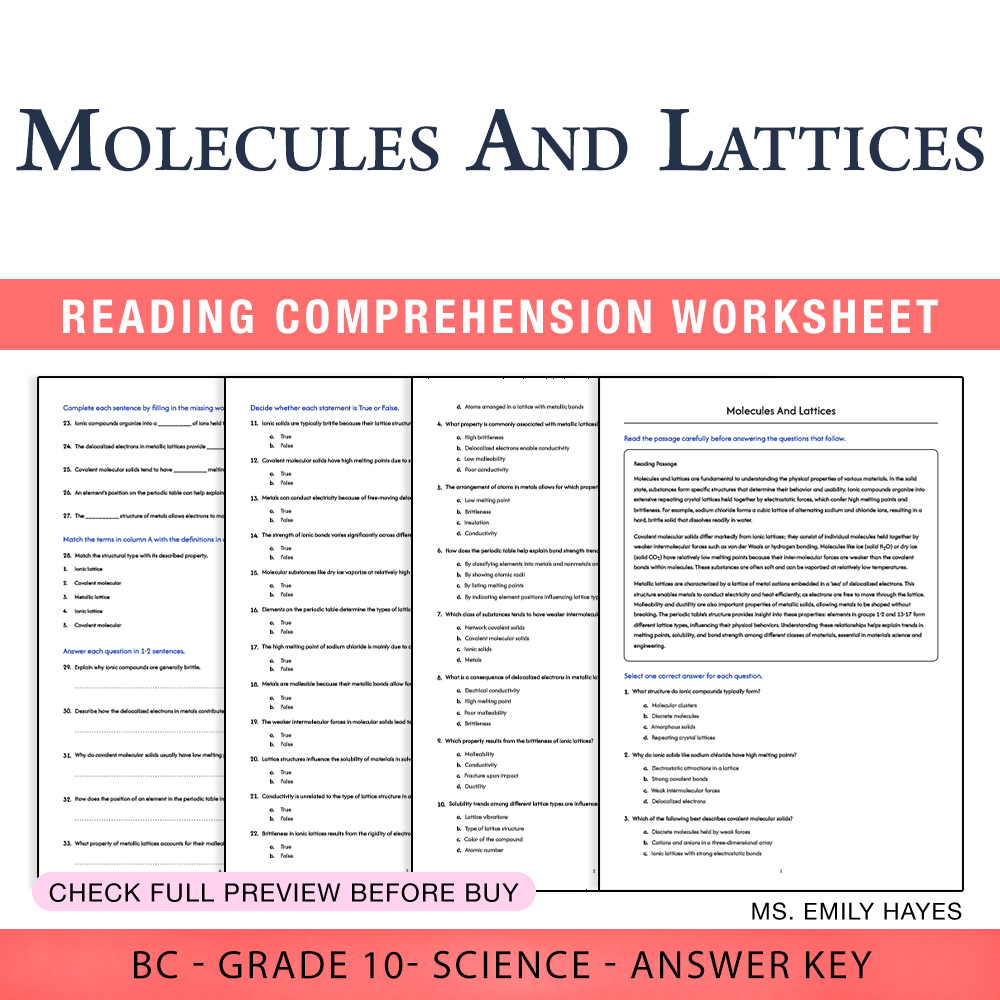
Grade 10 Science | Molecules and Lattices Practice Worksheet (PDF + Answer Key)
 Created byCopper Leaf Classroom
Learning Objectives
- Explain the structural arrangements of ionic, covalent molecular, and metallic substances.
- Describe how lattice structures influence properties like melting point, conductivity, and brittleness.
- Link the arrangement of atoms and molecules to their position on the periodic table and properties.
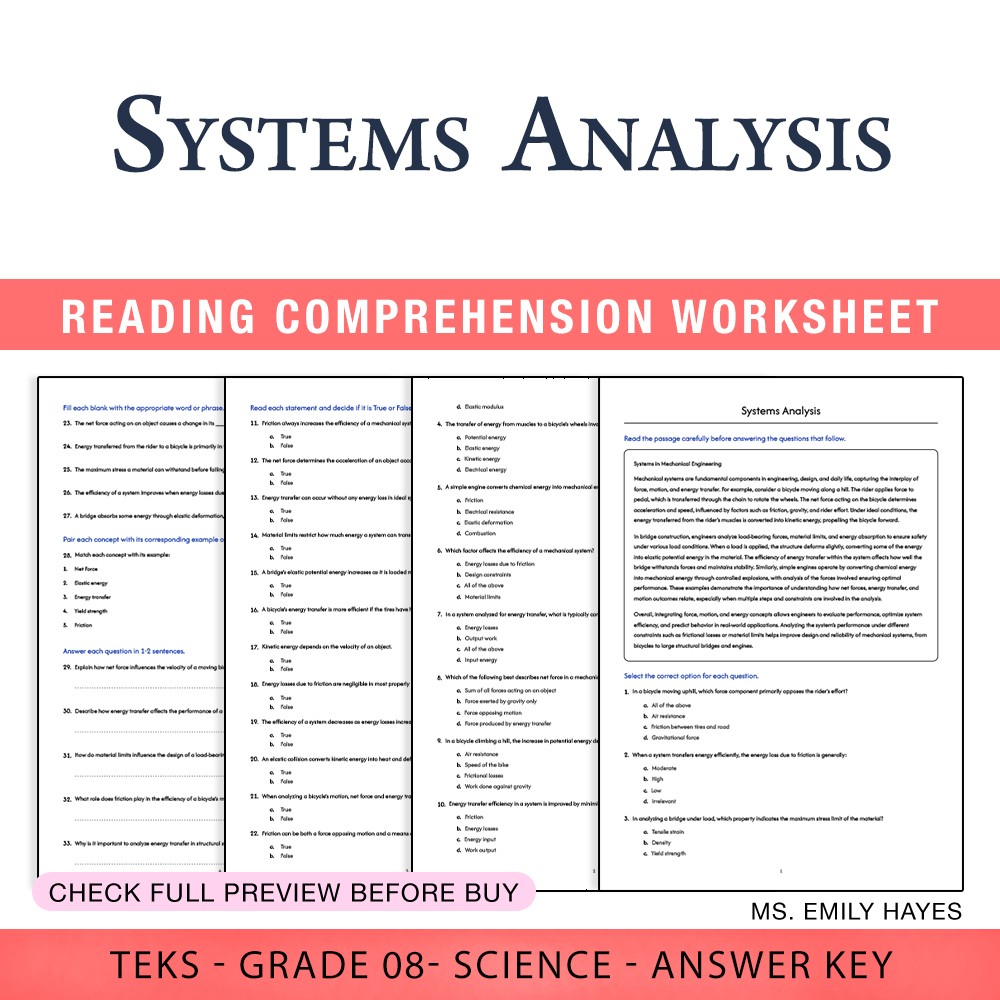
8th Grade Science | Systems Analysis Worksheet (PDF+ Answer Key)
Created byCopper Leaf ClassroomLearning Objectives
- Understand the principles of force, motion, and energy in mechanical systems.
- Analyze how net force affects motion outcomes like speed and acceleration.
- Evaluate the efficiency of mechanical systems considering energy transfer and constraints.
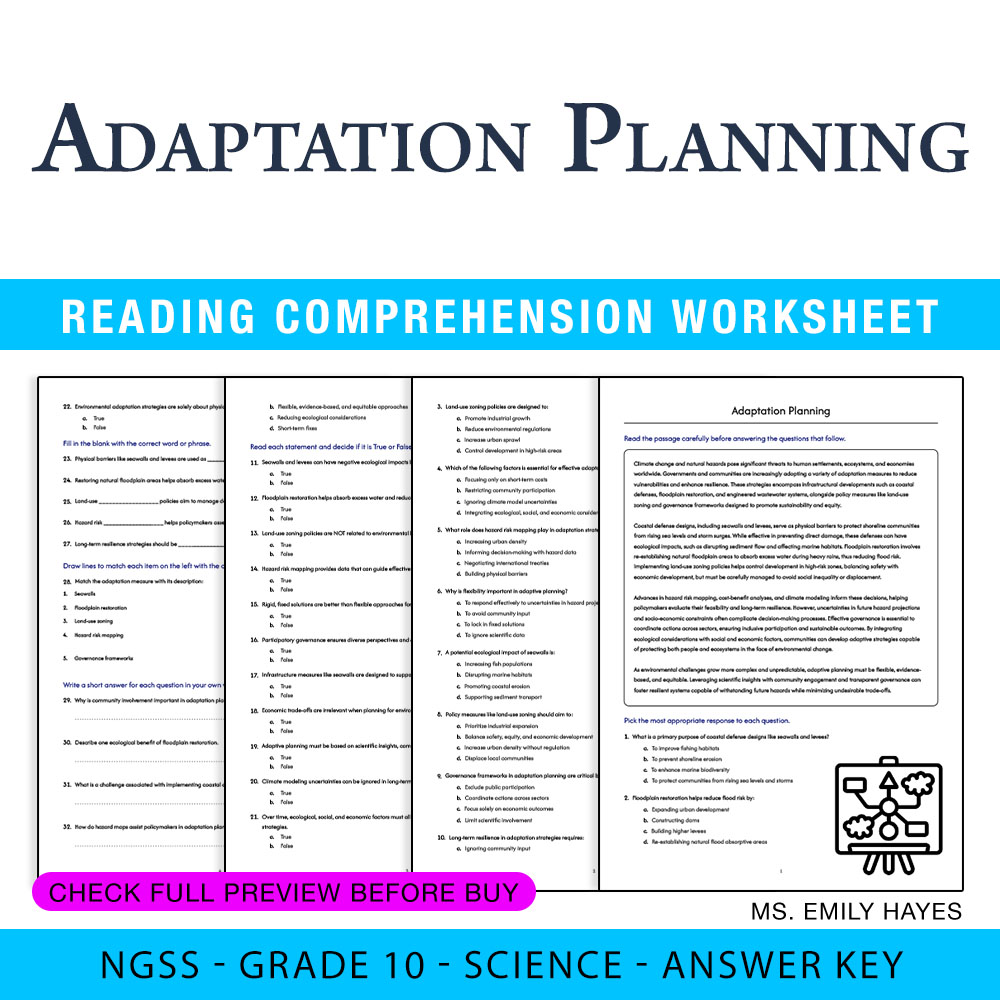
10th Grade Science | Adaptation Planning Worksheet (PDF+ Answer Key)
Created byCopper Leaf ClassroomLearning Objectives
- Evaluate infrastructural strategies and policy options for reducing environmental vulnerability.
- Analyze trade-offs in ecological, social, and economic aspects of adaptation measures.
- Assess the feasibility and resilience of proposed adaptation projects using risk and cost-benefit data.
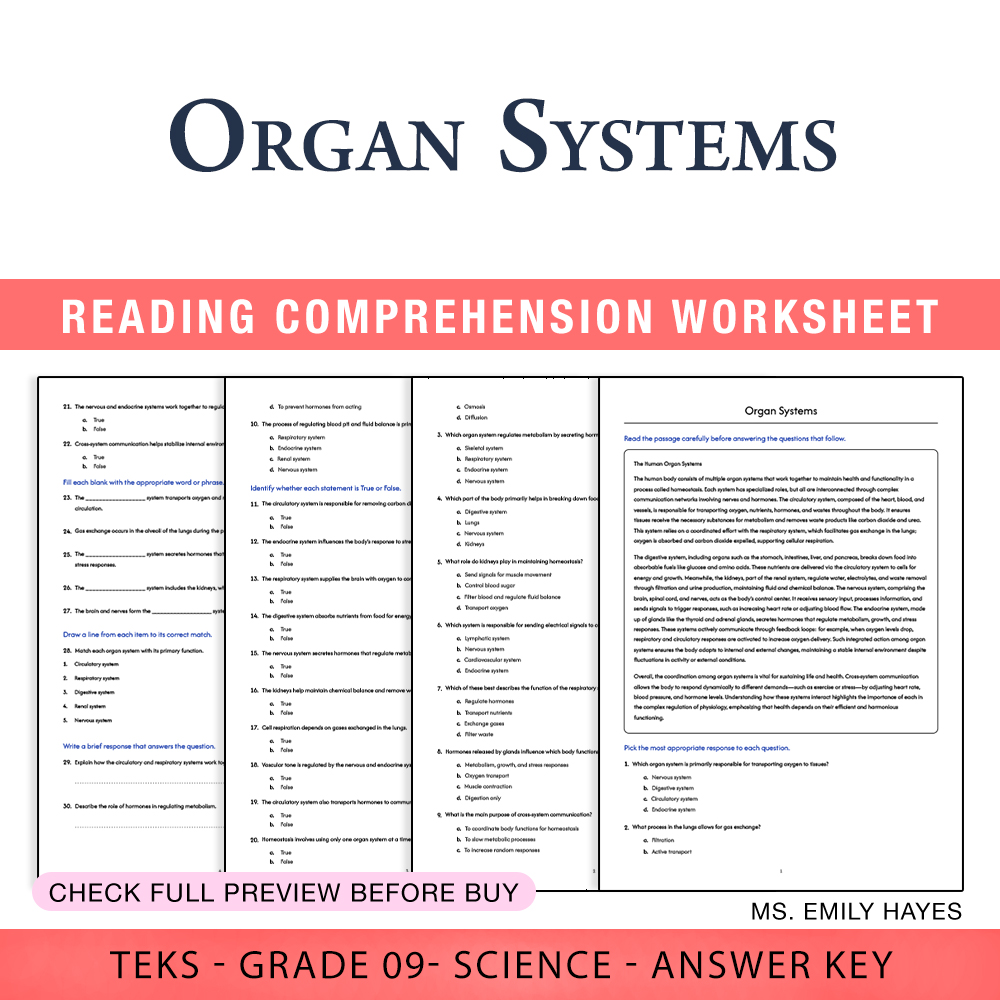
9th Grade Science | Organ Systems Worksheet (PDF+ Answer Key)
Created byCopper Leaf ClassroomLearning Objectives
- Describe the main functions of various organ systems involved in maintaining human physiology.
- Explain how different organ systems communicate and coordinate actions to sustain homeostasis.
- Identify the roles of the circulatory, respiratory, digestive, renal, nervous, and endocrine systems.
7th Grade Science | Atmospheric Systems Worksheet (PDF+ Answer Key)
Created byCopper Leaf ClassroomLearning Objectives
- Understand the fundamental processes governing atmospheric circulation and energy transfer.
- Identify the roles of pressure gradients, convection, and large-scale circulation patterns like the Hadley cell.
- Connect atmospheric phenomena such as fronts, jet streams, and greenhouse gases to climate variability.
10th Grade Science | Periodic Trends Worksheet (PDF + Answer Key)
Created byCopper Leaf ClassroomLearning Objectives
- Describe the periodic trends such as atomic radius, ionization energy, and electronegativity.
- Explain how nuclear charge and electron shielding influence element behavior across periods and down groups.
- Interpret patterns in element reactivity, bond polarity, and metallic character using periodic trends.
Grade 10 Science | Atomic Particles Worksheet (PDF + Answer Key)
Created byCopper Leaf ClassroomLearning Objectives
- Understand the composition and structure of atoms, including protons, neutrons, and electrons.
- Explain how the number of protons defines an element and influences atomic mass.
- Describe the arrangement of electrons in shells and how this affects chemical behavior.
10th Grade Science | Comparative Anatomy Worksheet (PDF+ Answer Key)
Created byCopper Leaf ClassroomLearning Objectives
- Understand the concept of homologous and analogous structures and their significance in evolution.
- Differentiate between homologous, analogous, and vestigial structures in various organisms.
- Explain how comparative anatomy supports phylogenetic and evolutionary studies.
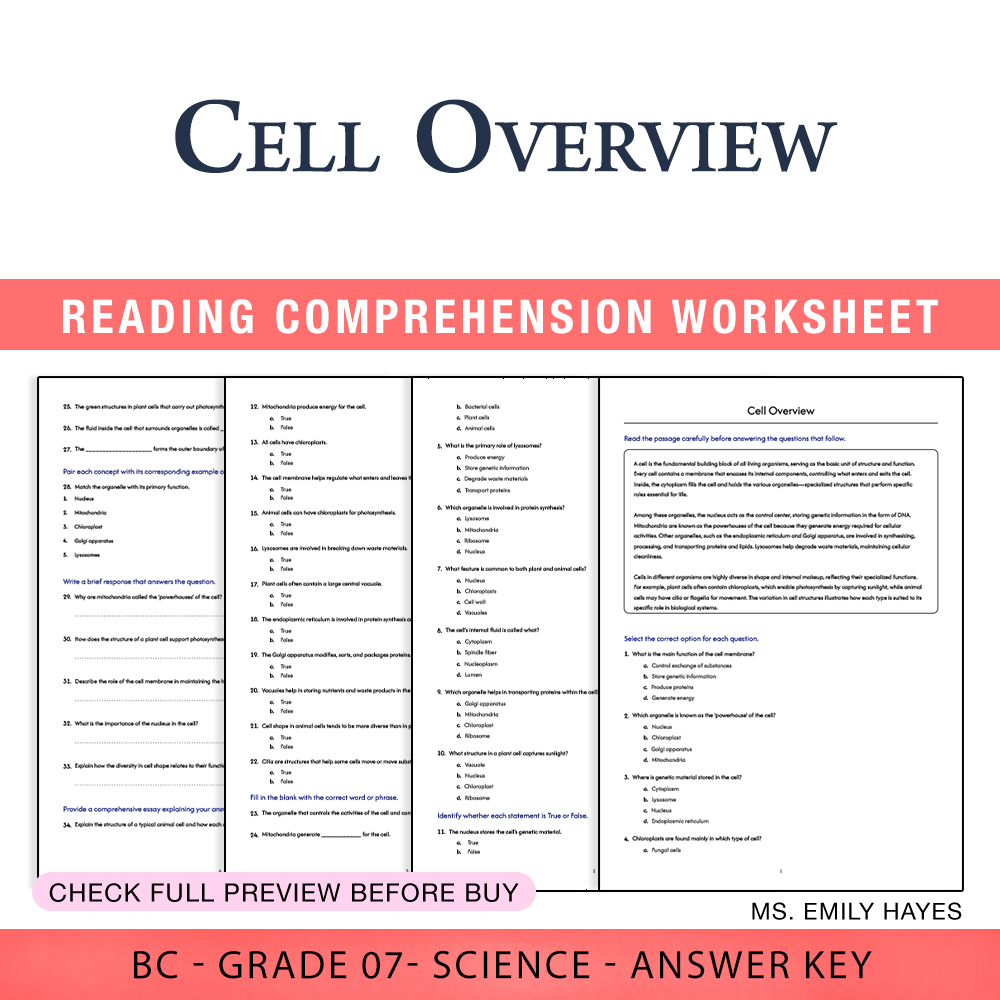
7th Grade Science | Cell Overview Worksheet (PDF+ Answer Key)
Created byCopper Leaf ClassroomLearning Objectives
- Describe the basic structure and functions of a cell
- Identify different organelles and their roles within the cell
- Explain how cell shape and components relate to their specific functions
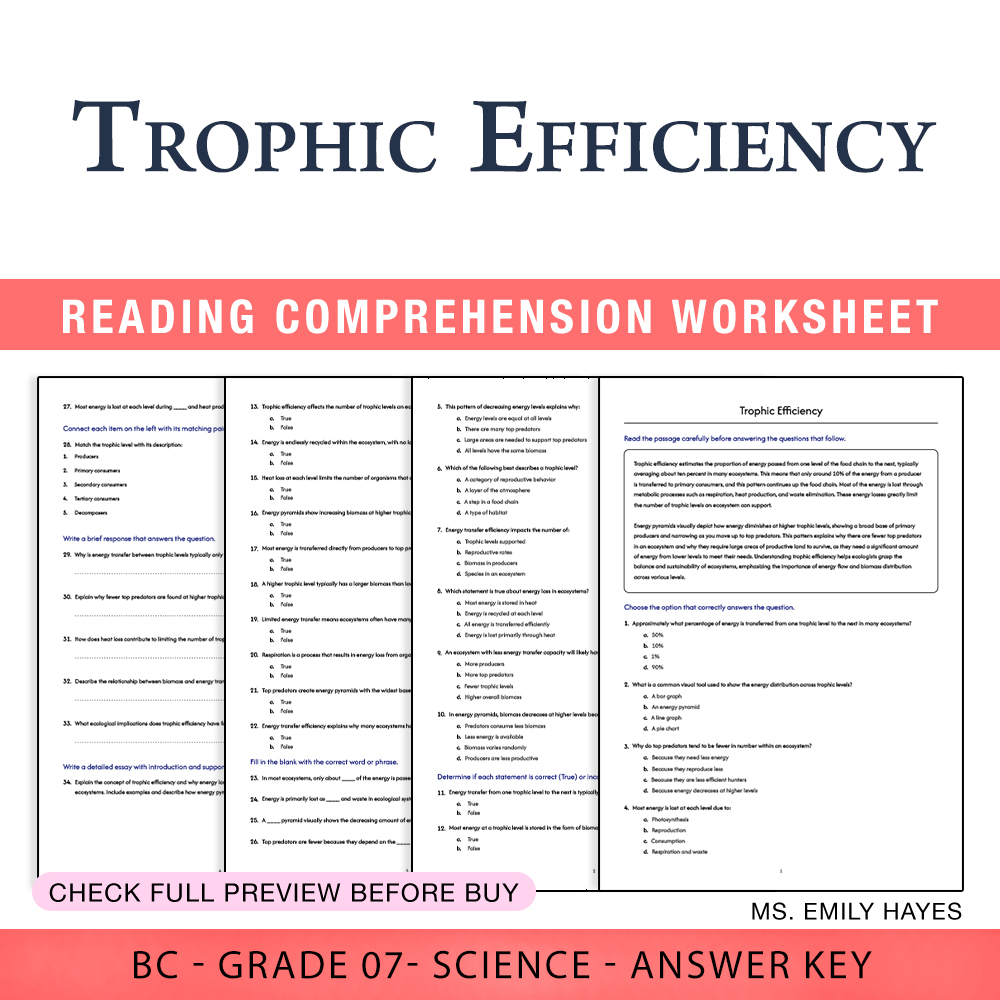
7th Grade Science | Trophic Efficiency Worksheet (PDF+ Answer Key)
Created byCopper Leaf ClassroomLearning Objectives
- Understand the concept of trophic efficiency and how energy is transferred between levels in an ecosystem.
- Interpret energy pyramids and grasp why top predators are fewer in number.
- Explain the reasons behind energy loss at each trophic level and its ecological implications.
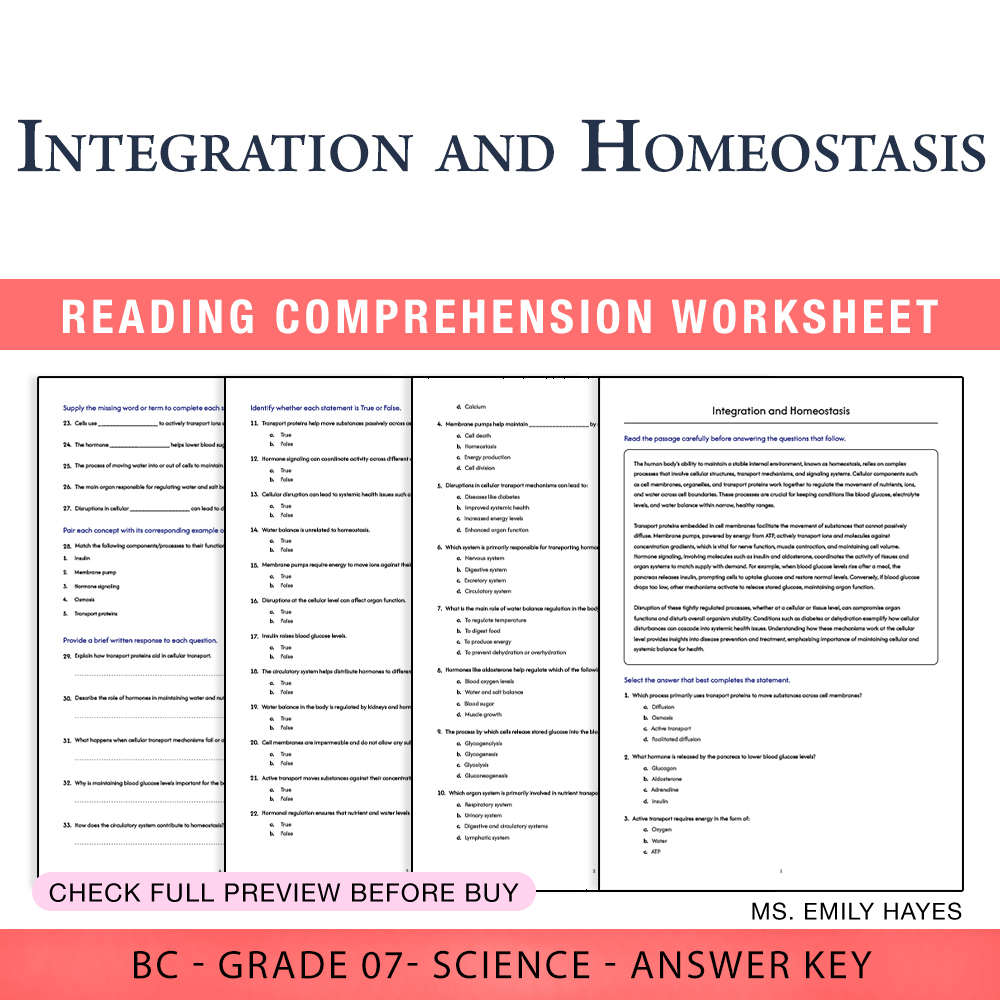
7th Grade Science | Integration and Homeostasis Worksheet (PDF+ Answer Key)
Created byCopper Leaf ClassroomLearning Objectives
- Understand how cellular structures and transport processes work together to maintain homeostasis in the body.
- Describe the role of transport proteins, membrane pumps, and hormones in regulating nutrient levels, ion concentrations, and water balance.
- Explain how disruptions at cellular or tissue levels can impact overall organ function and organism stability.
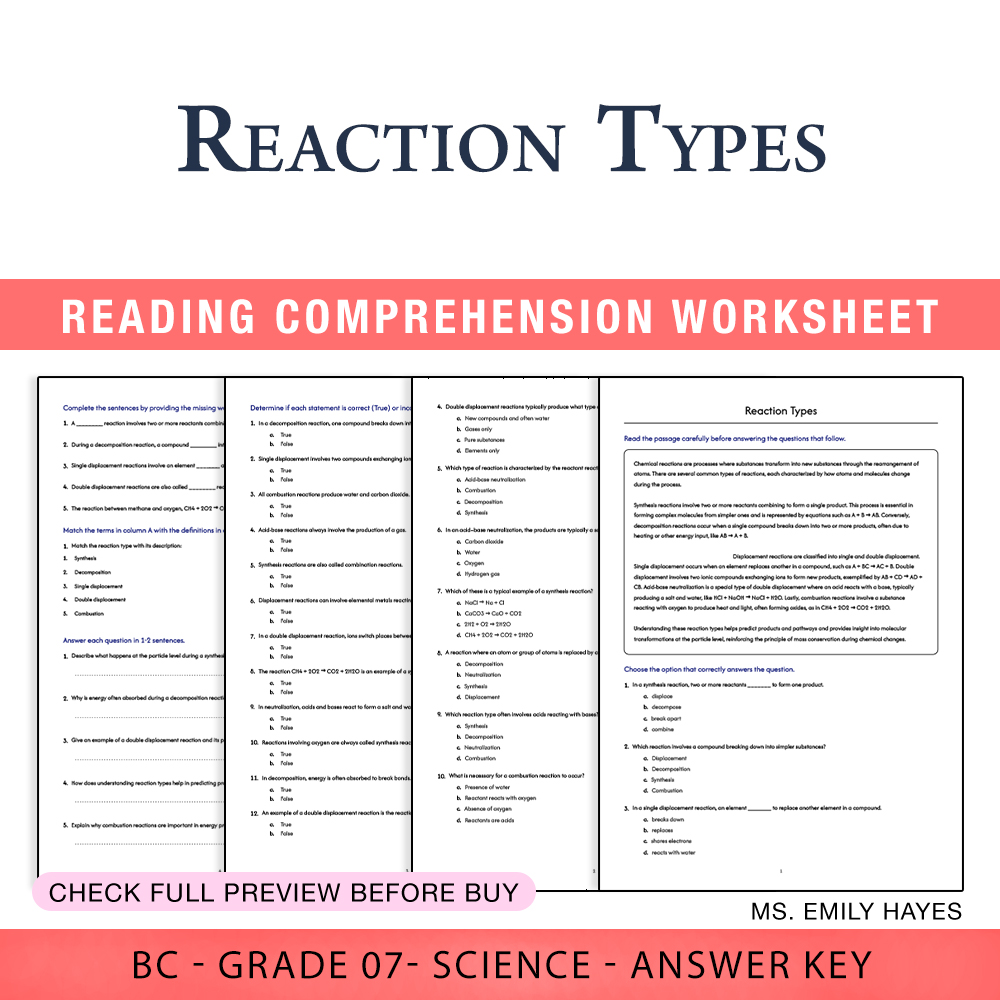
7th Grade Science | Reaction Types Worksheet (PDF+ Answer Key)
Created byCopper Leaf ClassroomLearning Objectives
- Understand the different types of chemical reactions: synthesis, decomposition, single displacement, double displacement, acid–base neutralization, and combustion.
- Identify reaction types from chemical equations and descriptions.
- Describe the particle-level processes involved in various reaction types.
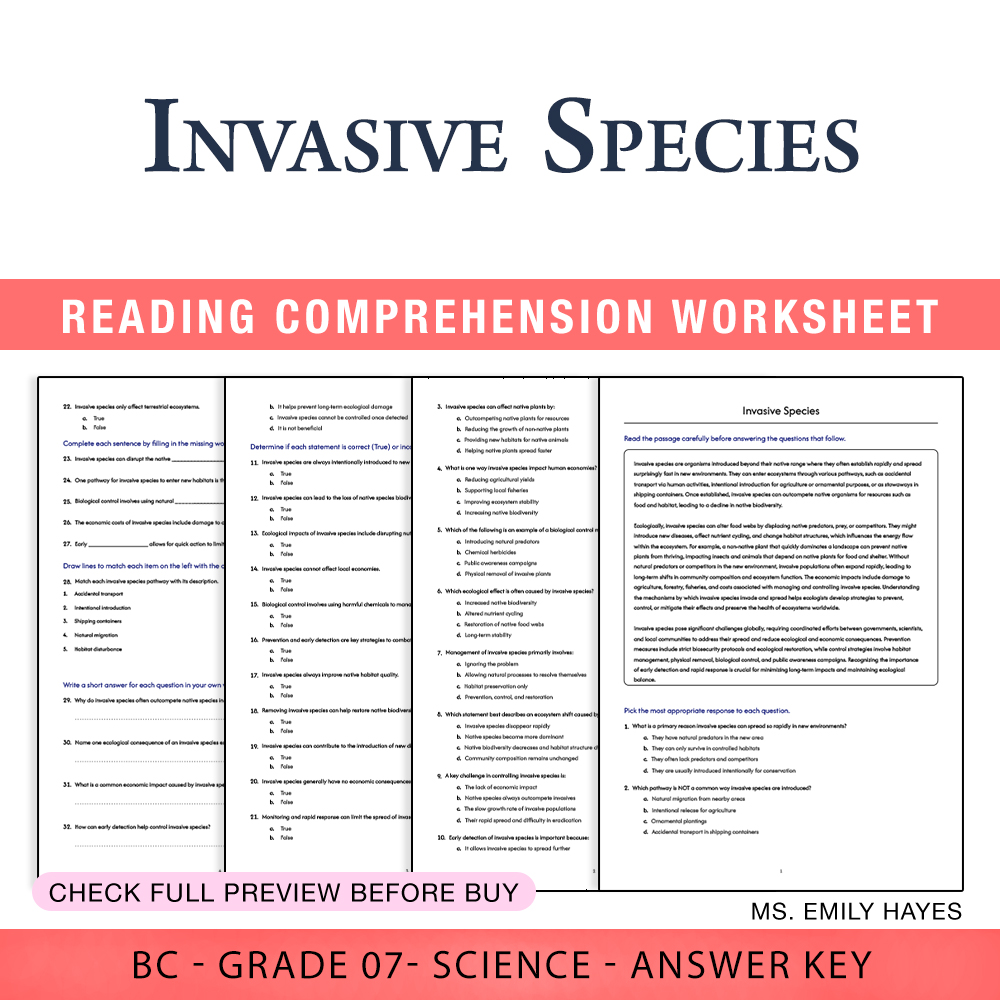
7th Grade Science | Invasive Species Worksheet (PDF + Answer Key)
Created byCopper Leaf ClassroomLearning Objectives
- Understand what invasive species are and how they affect ecosystems
- Identify mechanisms by which invasive species establish and spread
- Recognize ecological and economic impacts of invasive species
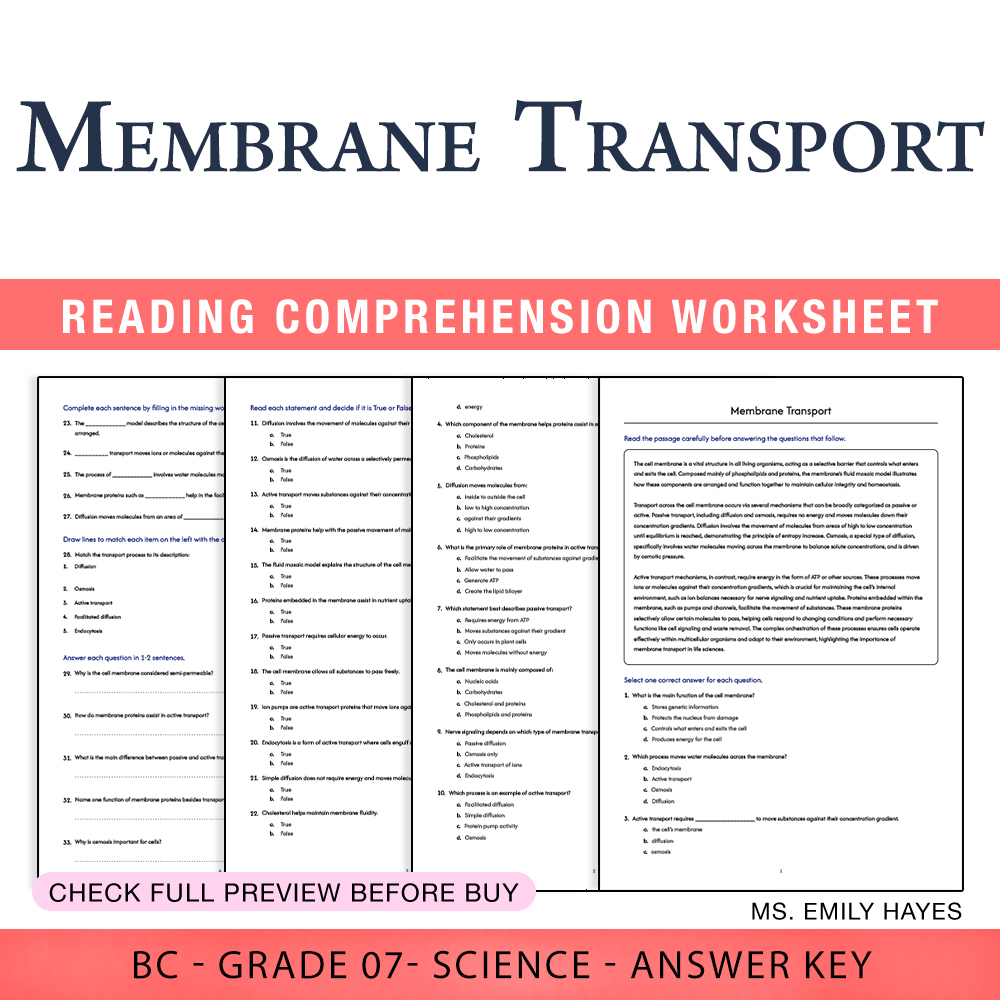
Grade 7 Science | Membrane Transport Worksheet (PDF+ Answer Key)
Created byCopper Leaf ClassroomLearning Objectives
- Describe the structure and function of the cell membrane.
- Explain the processes of diffusion, osmosis, and active transport in cells.
- Identify the role of membrane proteins in substance movement and cell function.
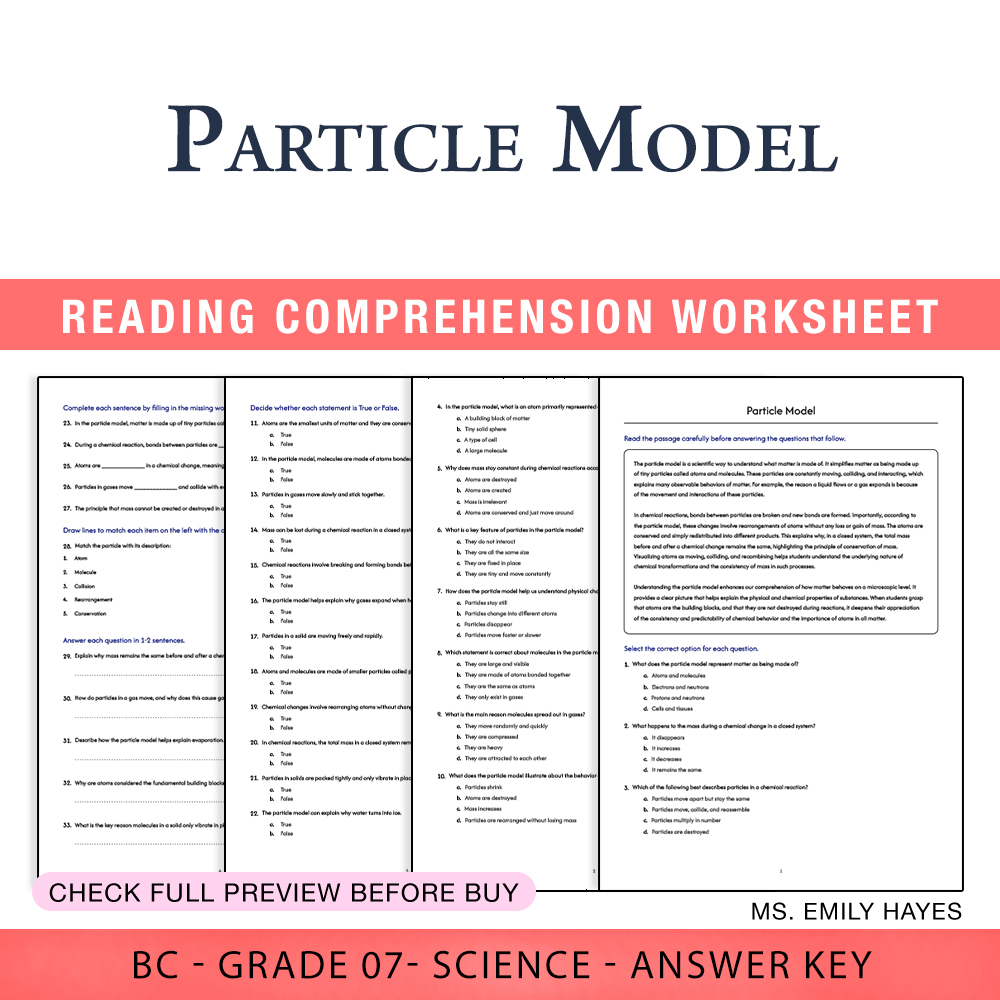
Grade 7 Science | Particle Model Worksheet (PDF+ Answer Key)
Created byCopper Leaf ClassroomLearning Objectives
- Explain how the particle model represents matter as composed of atoms and molecules.
- Describe how chemical changes involve breaking and forming bonds between particles while conserving mass.
- Visualize chemical reactions in terms of particles moving, colliding, and recombining.
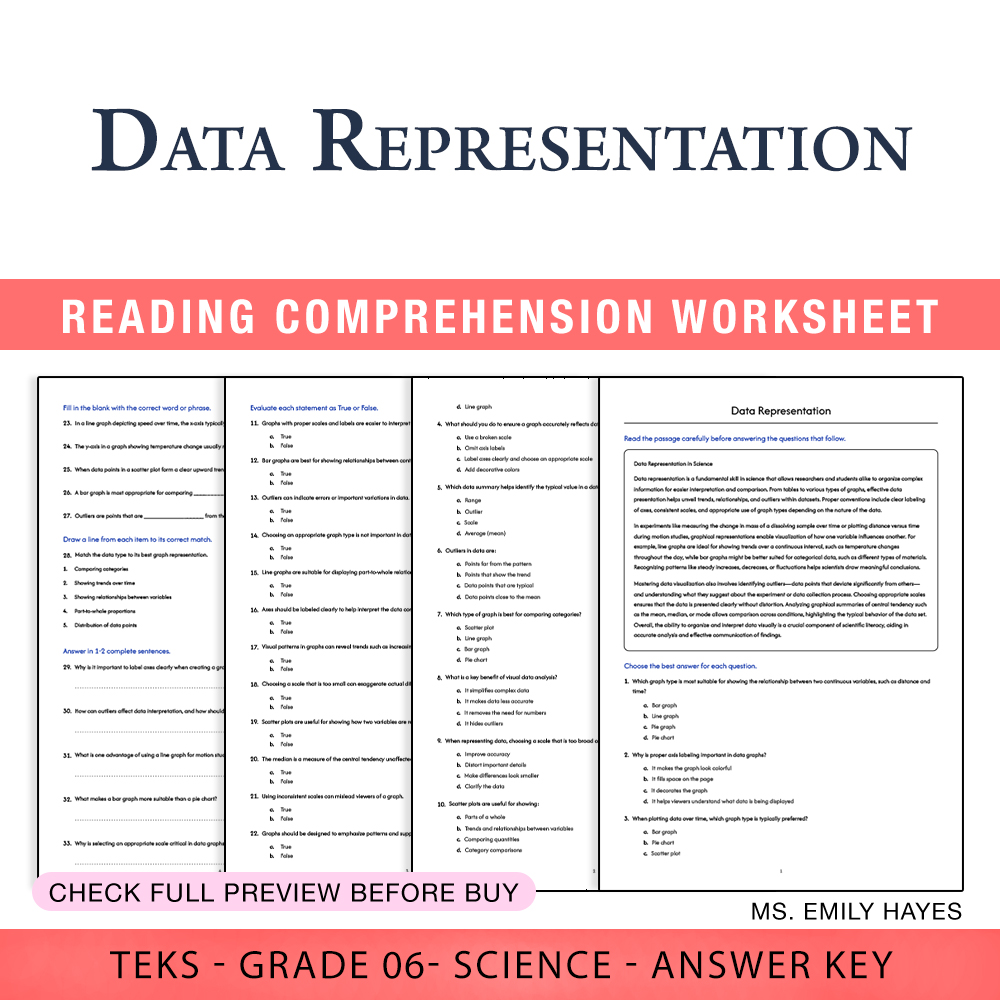
6th Grade Science | Data Representation Worksheet (PDF+ Answer Key)
Created byCopper Leaf ClassroomLearning Objectives
- Understand the conventions for organizing data in tables and graphs.
- Identify proper axes labeling and scale selection in data charts.
- Interpret graphical summaries to identify trends, patterns, and outliers.
7th Grade Science | Cell Communication Worksheet (PDF+ Answer Key)
Created byCopper Leaf ClassroomLearning Objectives
- Describe how cells communicate through chemical and electrical signals.
- Explain the role of receptor proteins, gap junctions, and plasmodesmata in cell communication.
- Identify processes like signal amplification and feedback regulation involved in cell signaling.
Grade 7 Science | Deposition and Landforms Worksheet (PDF + Answer Key)
Created byCopper Leaf ClassroomLearning Objectives
- Explain how deposition processes contribute to landform development.
- Identify different landforms created by deposition such as deltas, beaches, and moraines.
- Describe depositional features visible in stratigraphy like layered strata and cross-bedding.
7th Grade Science | Tissue Types Worksheet (PDF+ Answer Key)
Created byCopper Leaf ClassroomLearning Objectives
- Describe the four main tissue types and their functions.
- Identify different tissue types in diagrams and descriptions.
- Explain how tissue organization affects organ function.
Grade 7 Science | Mitochondria Energy Worksheet (PDF + Answer Key)
Created byCopper Leaf ClassroomLearning Objectives
- Describe the structure and function of mitochondria in cellular energy production.
- Explain the process of cellular respiration and how it produces ATP.
- Identify different cell types that have high mitochondrial activity.
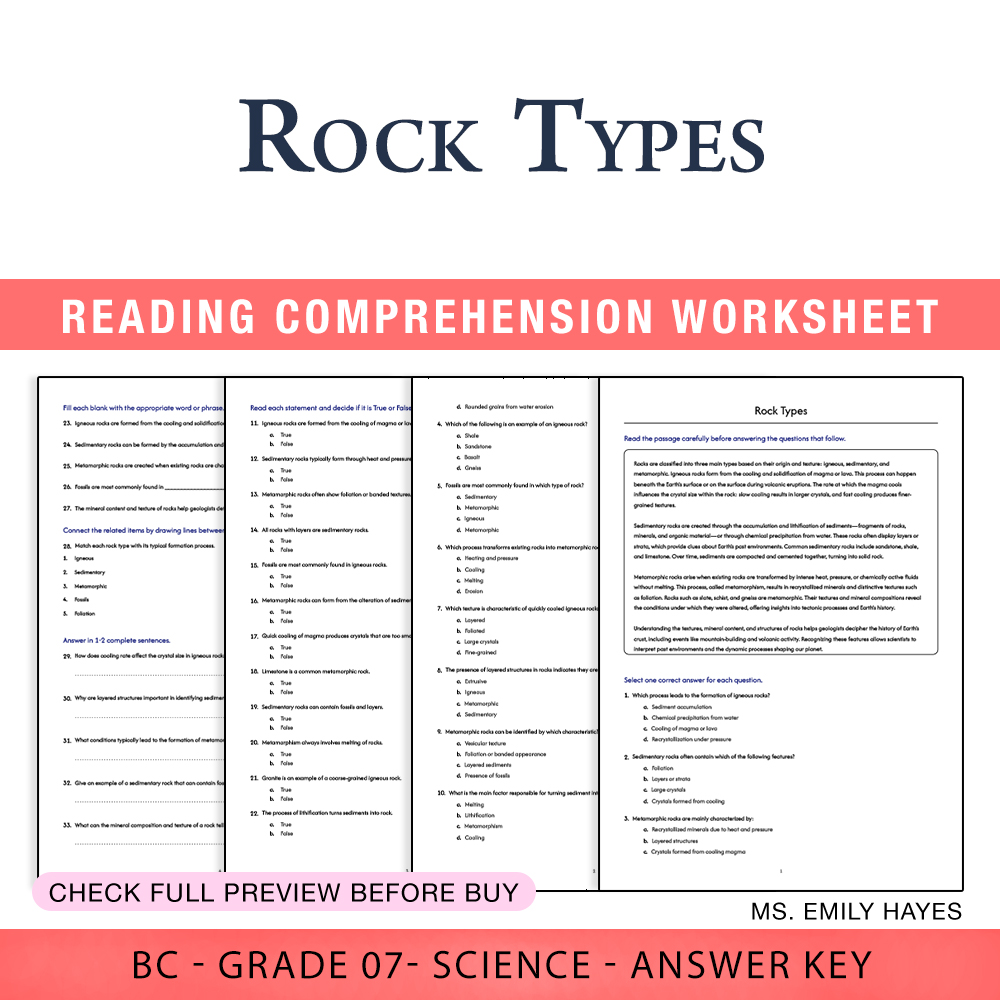
7th Grade Science | Rock Types Worksheet (PDF+ Answer Key)
Created byCopper Leaf ClassroomLearning Objectives
- Describe the three main types of rocks: igneous, sedimentary, and metamorphic.
- Identify features and textures characteristic of each rock type.
- Explain how rocks are classified based on their origin and appearance.
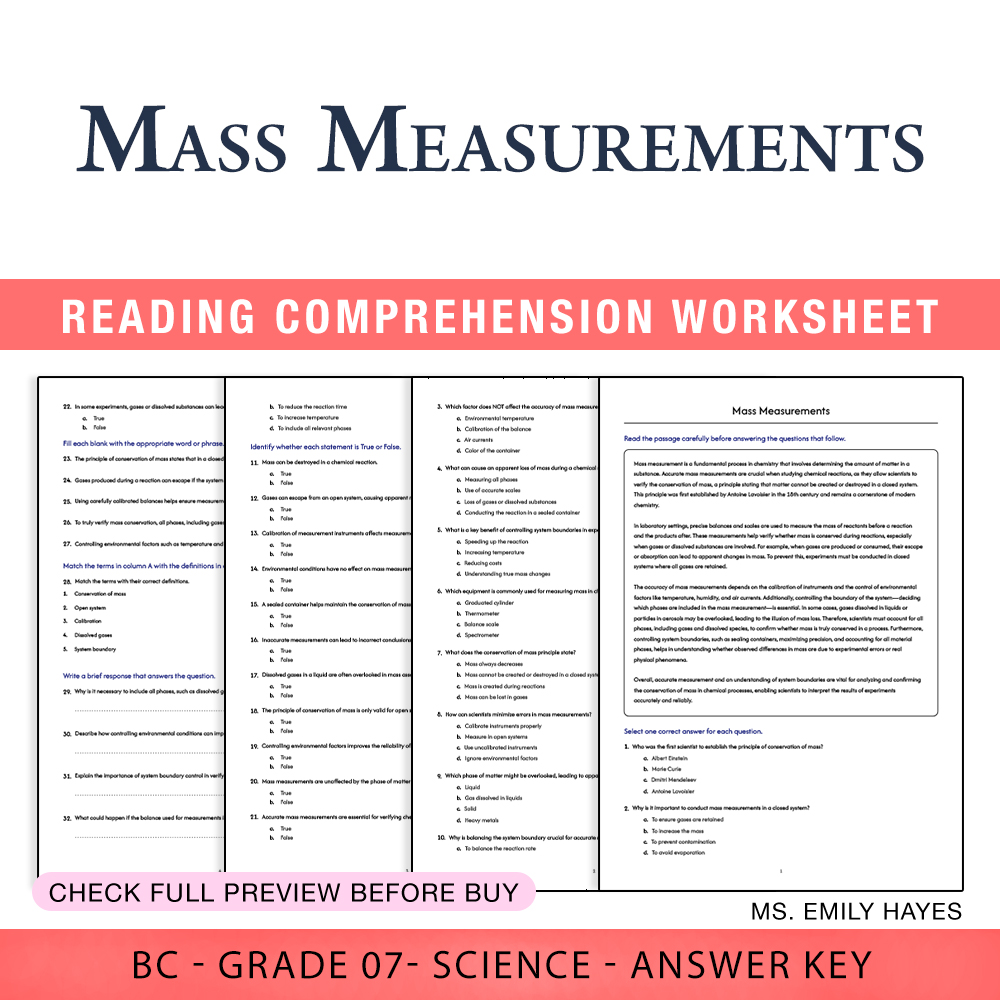
7th Grade Science | Mass Measurements Worksheet (PDF+ Answer Key)
Created byCopper Leaf ClassroomLearning Objectives
- Understand the concept of mass and its importance in chemical reactions.
- Learn how to accurately measure mass before and after a chemical process.
- Identify factors that affect the conservation of mass in closed and open systems.
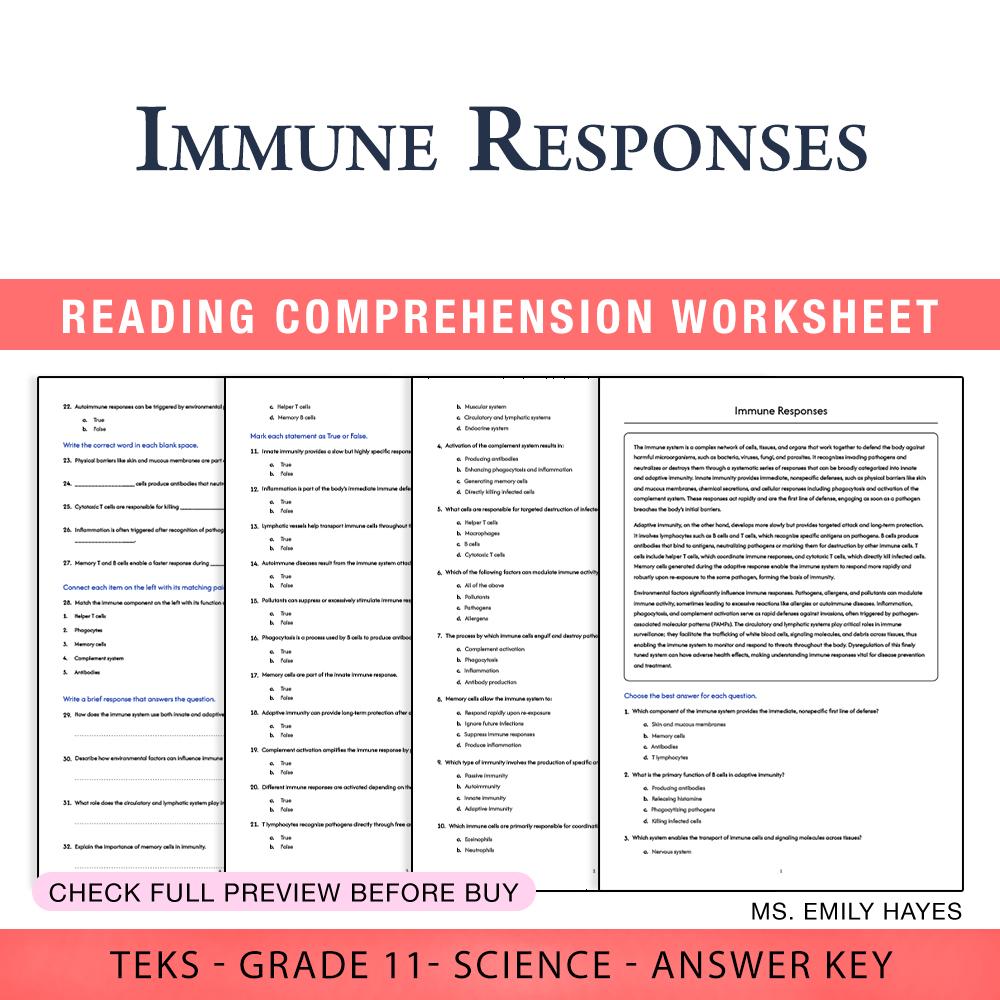
11th Grade Science | Immune Responses Worksheet (PDF+ Answer Key)
Created byCopper Leaf ClassroomLearning Objectives
- Explain how innate and adaptive immune responses protect the body from pathogens.
- Identify key components and processes involved in immune activation.
- Describe how environmental factors influence immune system function.
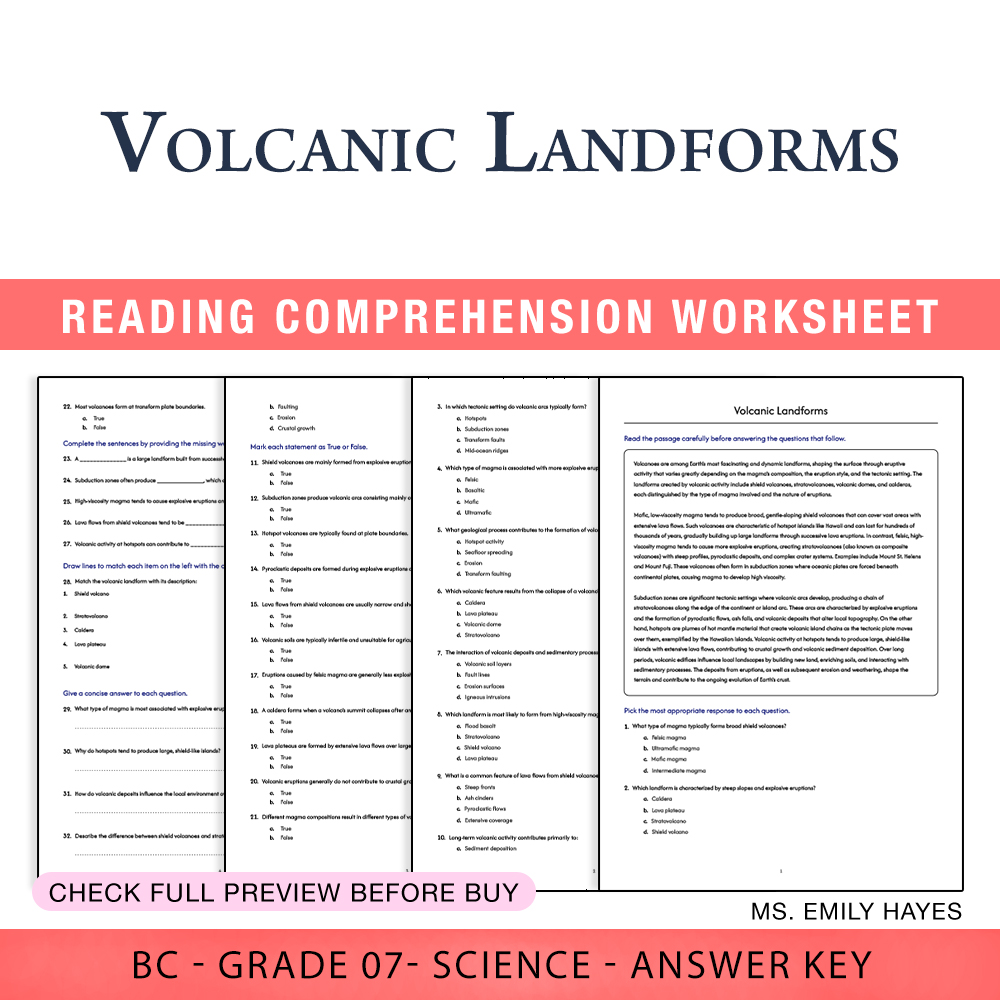
7th Grade Science | Volcanic Landforms Worksheet (PDF + Answer Key)
Created byCopper Leaf ClassroomLearning Objectives
- Describe the types of landforms created by volcanic activity and how magma composition influences volcano shape.
- Identify the different tectonic settings where volcanic landforms are produced, such as subduction zones and hotspots.
- Explain how volcanic activity contributes to crater formation, soil creation, and crustal growth.
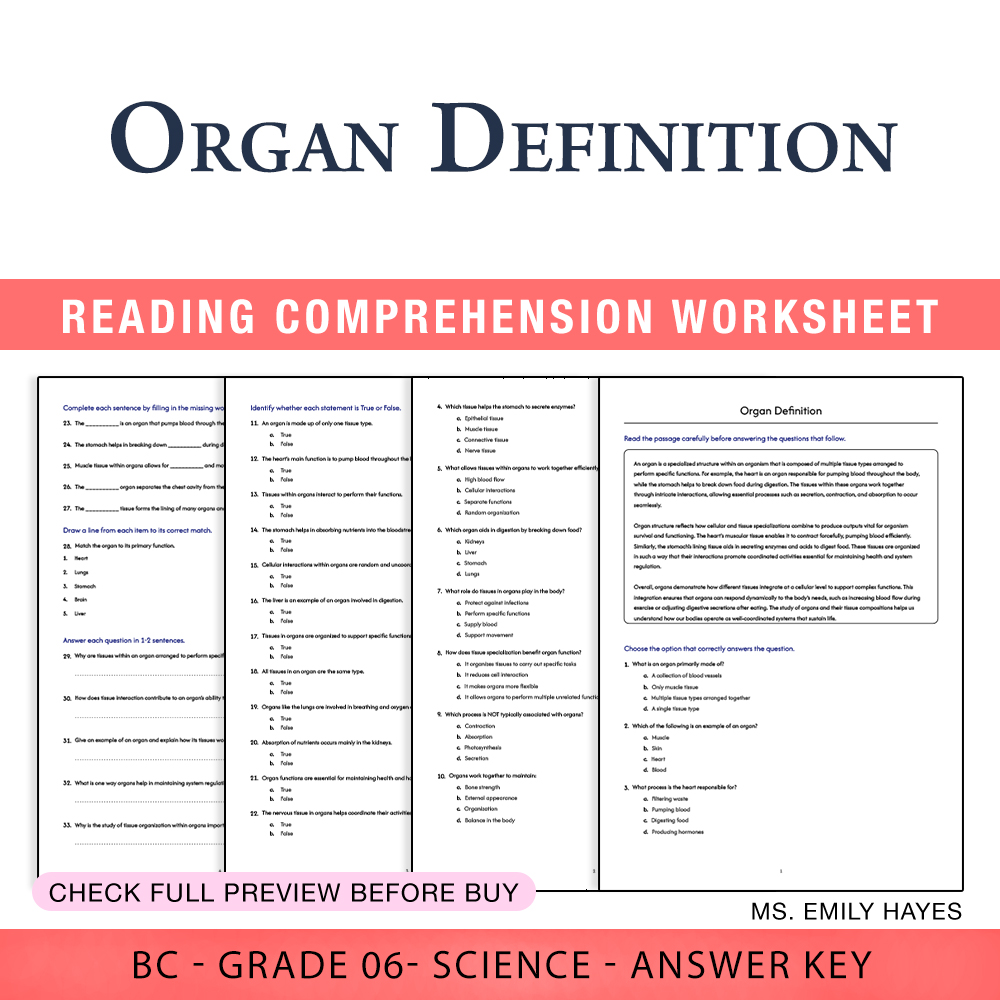
6th Grade Science | Organ Definition Worksheet (PDF + Answer Key)
Created byCopper Leaf ClassroomLearning Objectives
- Understand the structure and function of organs within the human body.
- Identify different tissues that compose organs and their roles.
- Explain how tissues work together in organs to perform specific functions.
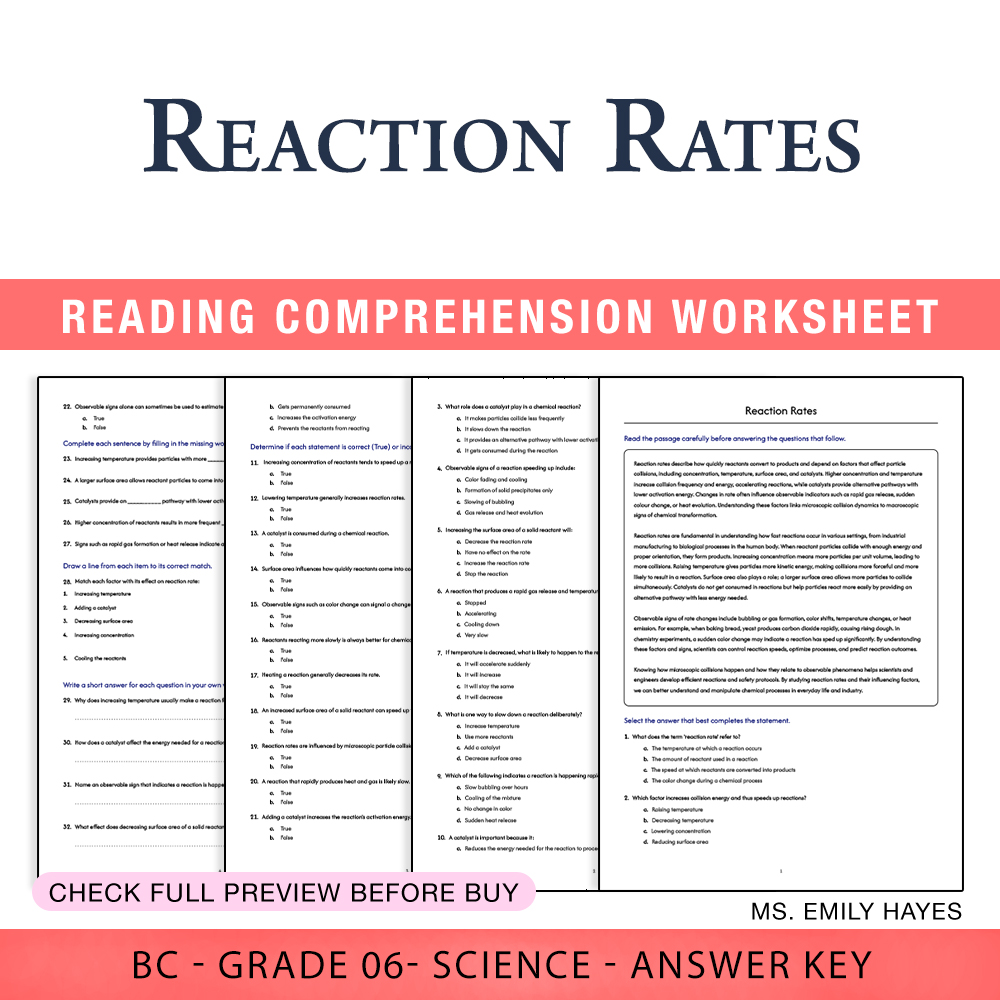
Grade 6 Science | Reaction Rates Worksheet (PDF+ Answer Key)
Created byCopper Leaf ClassroomLearning Objectives
- Explain what reaction rates are and how they describe the speed of chemical reactions.
- Identify factors that influence reaction rates such as concentration, temperature, surface area, and catalysts.
- Describe the observable signs indicating changes in reaction rates during chemical processes.
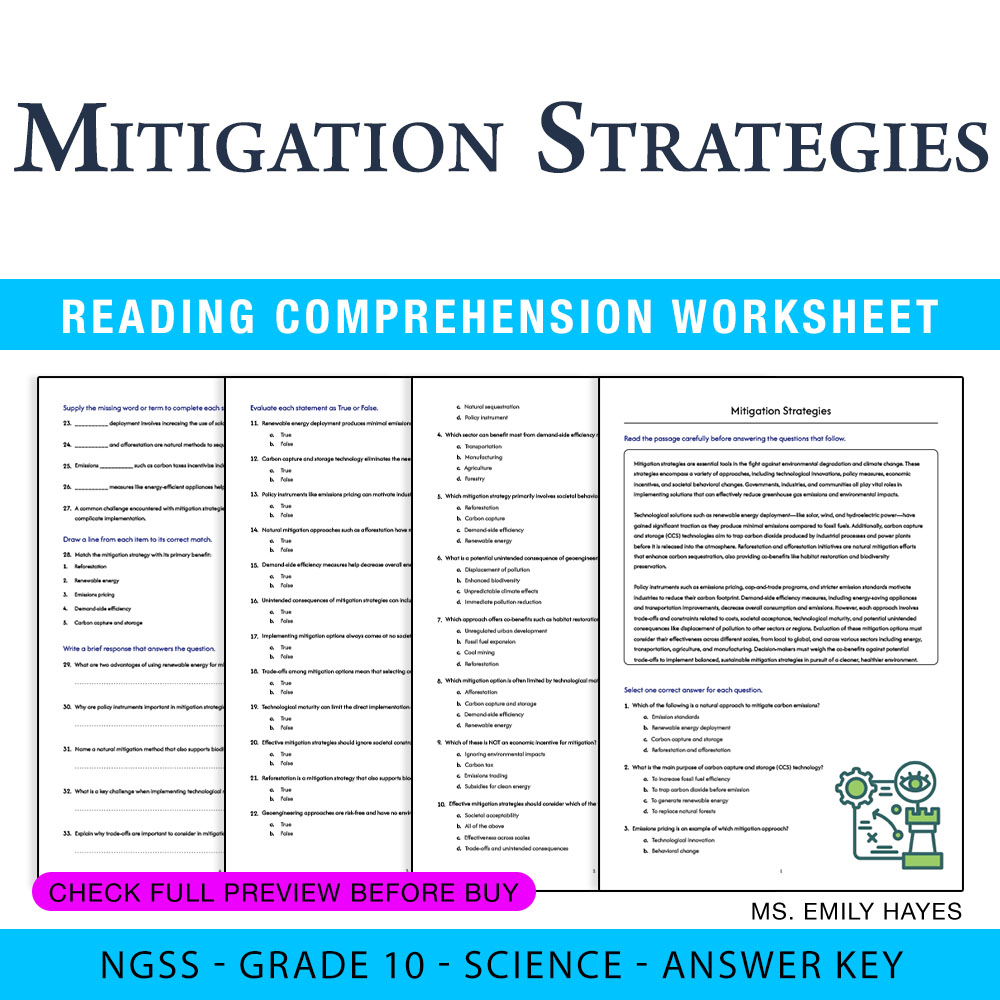
Grade 10 Science | Mitigation Strategies Worksheet (PDF+ Answer Key)
Created byCopper Leaf ClassroomLearning Objectives
- Understand various mitigation and management approaches to reduce environmental impacts and greenhouse gas emissions.
- Evaluate the effectiveness, co-benefits, trade-offs, and potential unintended consequences of different mitigation options.
- Analyze technological, economic, and societal constraints influencing mitigation strategies.
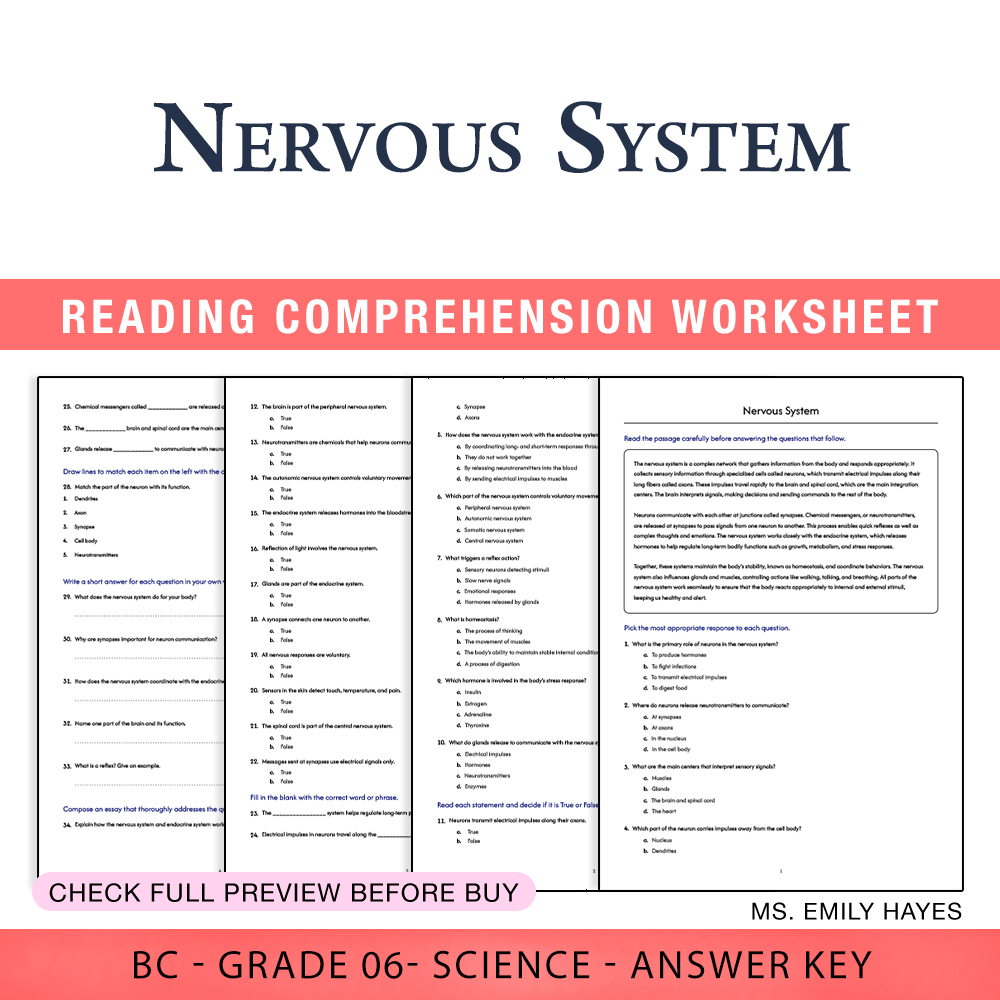
6th Grade Science | Nervous System Worksheet (PDF+ Answer Key)
Created byCopper Leaf ClassroomLearning Objectives
- Understand the basic structure and function of the nervous system.
- Identify the roles of neurons, synapses, and integration centers.
- Explain how the nervous system works with the endocrine system to regulate the body.
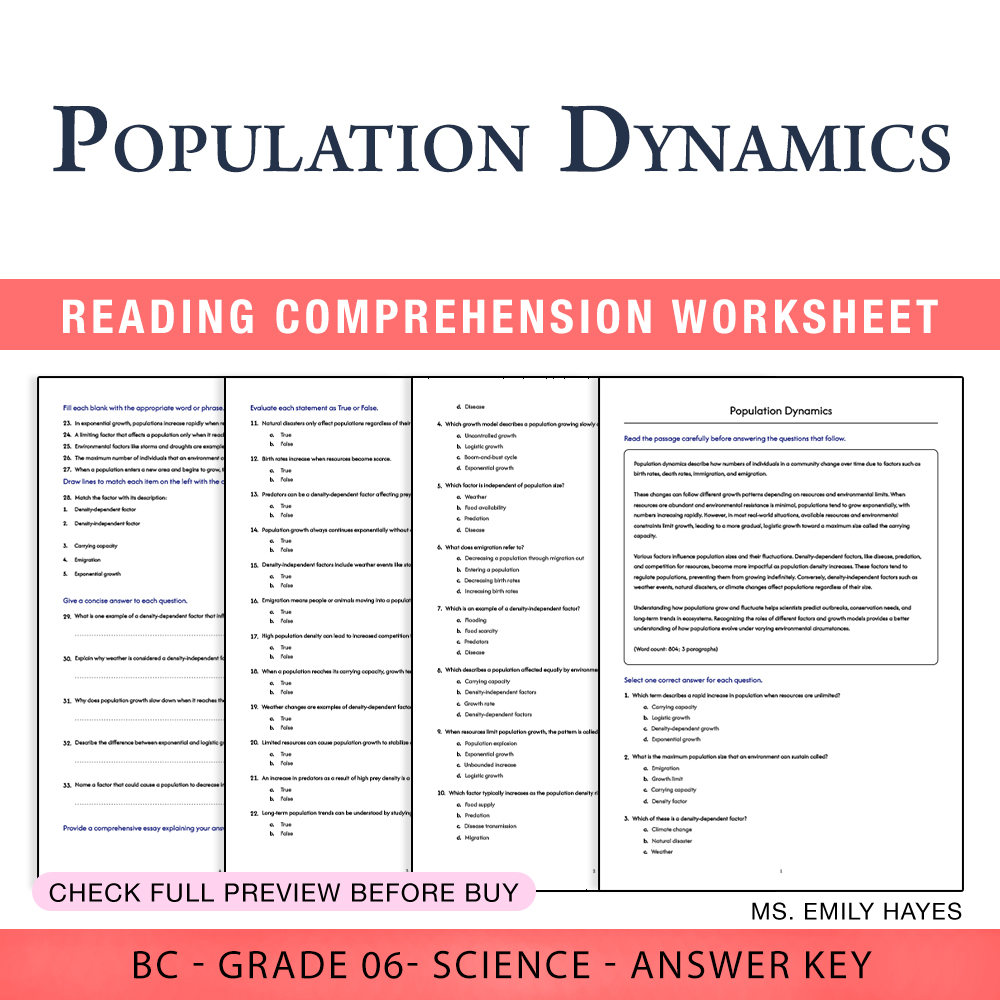
6th Grade Science | Population Dynamics Worksheet (PDF+ Answer Key)
Created byCopper Leaf ClassroomLearning Objectives
- Understand the basic concepts of population change, including birth and death rates, immigration, and emigration.
- Differentiate between growth models such as exponential and logistic growth.
- Identify and explain factors affecting population density, including density-dependent and density-independent factors.
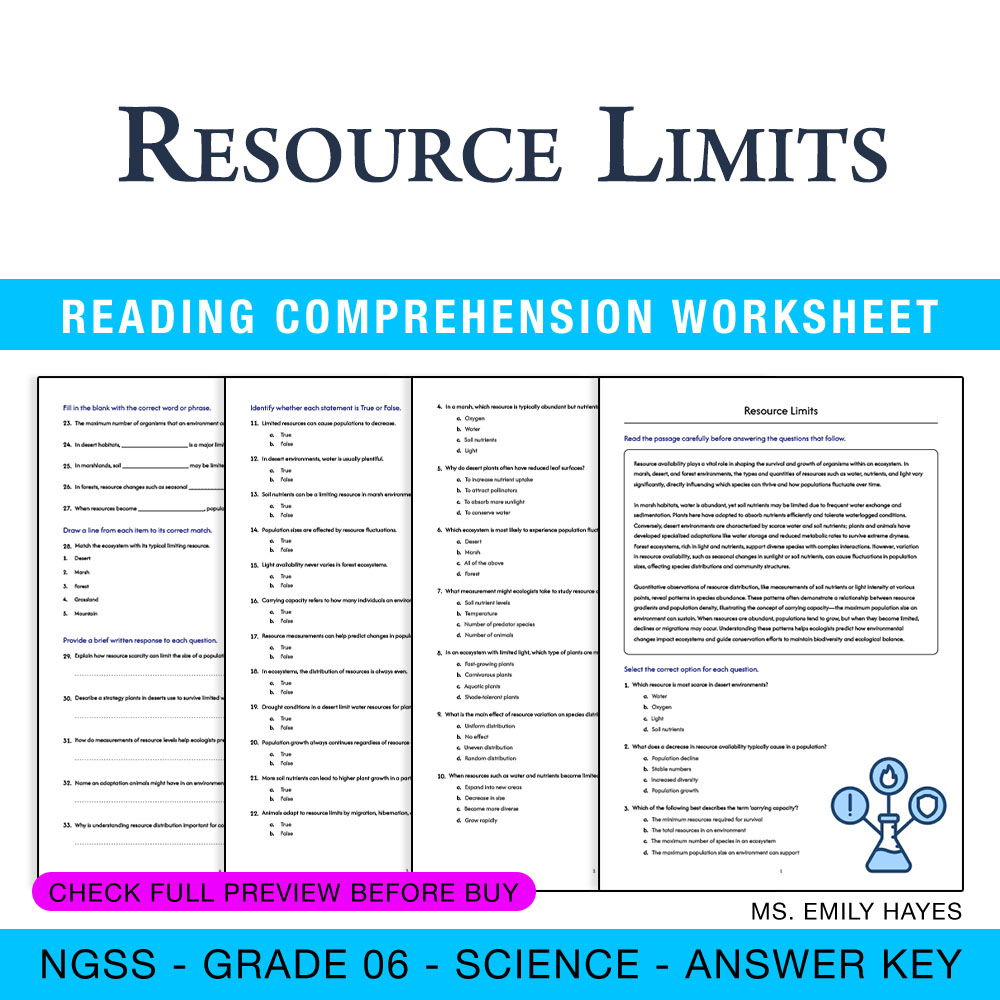
6th Grade Science | Resource Limits Worksheet (PDF +Answer Key)
Created byCopper Leaf ClassroomLearning Objectives
- Understand how resource availability affects individual organisms and populations.
- Interpret quantitative data related to resource gradients and population distribution.
- Identify limiting resources in different ecosystems and their effects on species diversity.
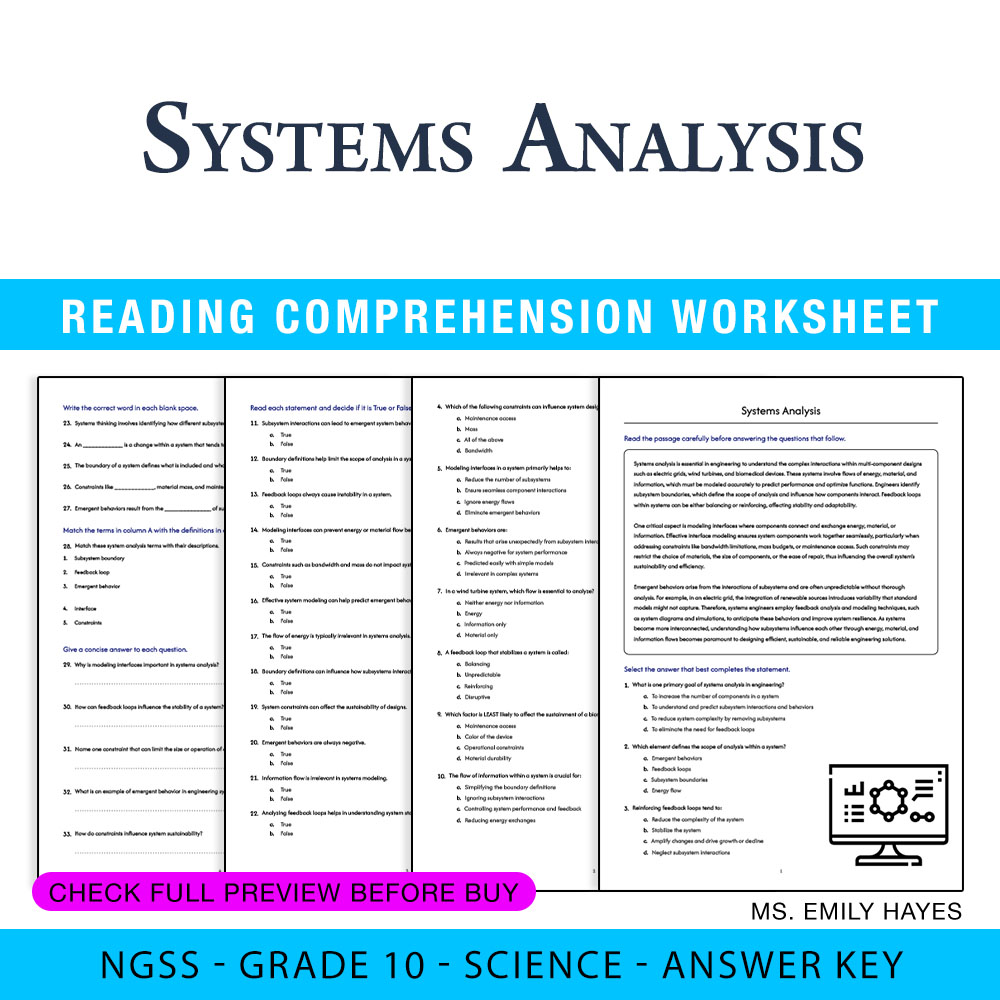
Grade 10 Science | Systems Analysis Worksheet (PDF+ Answer Key)
Created byCopper Leaf ClassroomLearning Objectives
- Explain the fundamentals of systems thinking and how it applies to engineering problems.
- Identify interactions, boundaries, and emergent behaviors within complex systems.
- Model interfaces and feedback loops in multi-component system designs.
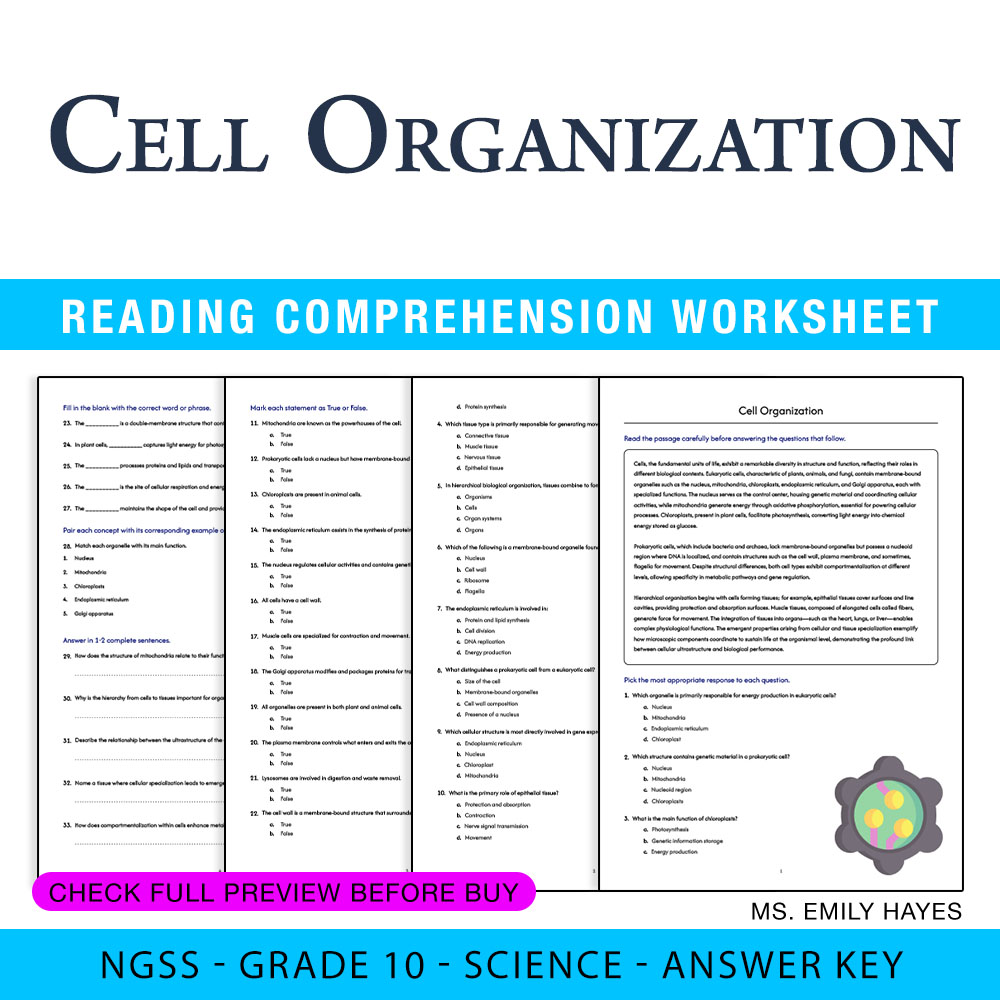
10th Grade Science | Cell Organization Worksheet (PDF+ Answer Key)
Created byCopper Leaf ClassroomLearning Objectives
- Describe the structure and functions of key membrane-bound organelles within eukaryotic and prokaryotic cells.
- Explain the hierarchical organization of cells into tissues and organs and how cellular specialization contributes to organ function.
- Compare and contrast the ultrastructure and metabolic roles of mitochondria, chloroplasts, endoplasmic reticulum, and nucleus.
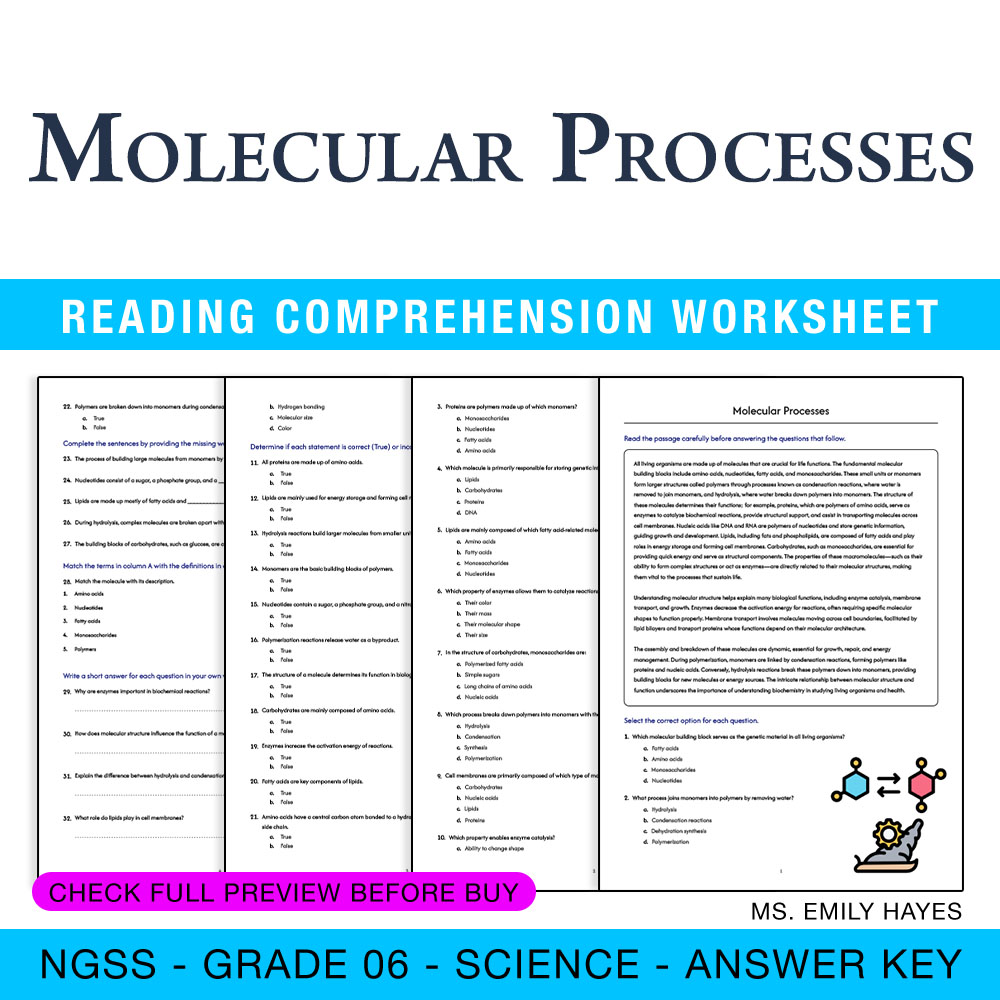
6th Grade Science | Molecular Processes Worksheet (PDF + Answer Key)
Created byCopper Leaf ClassroomLearning Objectives
- Understand the basic molecular building blocks such as amino acids, nucleotides, fatty acids, and monosaccharides.
- Explain how monomers assemble into polymers through condensation reactions and break down via hydrolysis.
- Relate molecular structure to properties like enzyme activity, membrane transport, and polymerization.
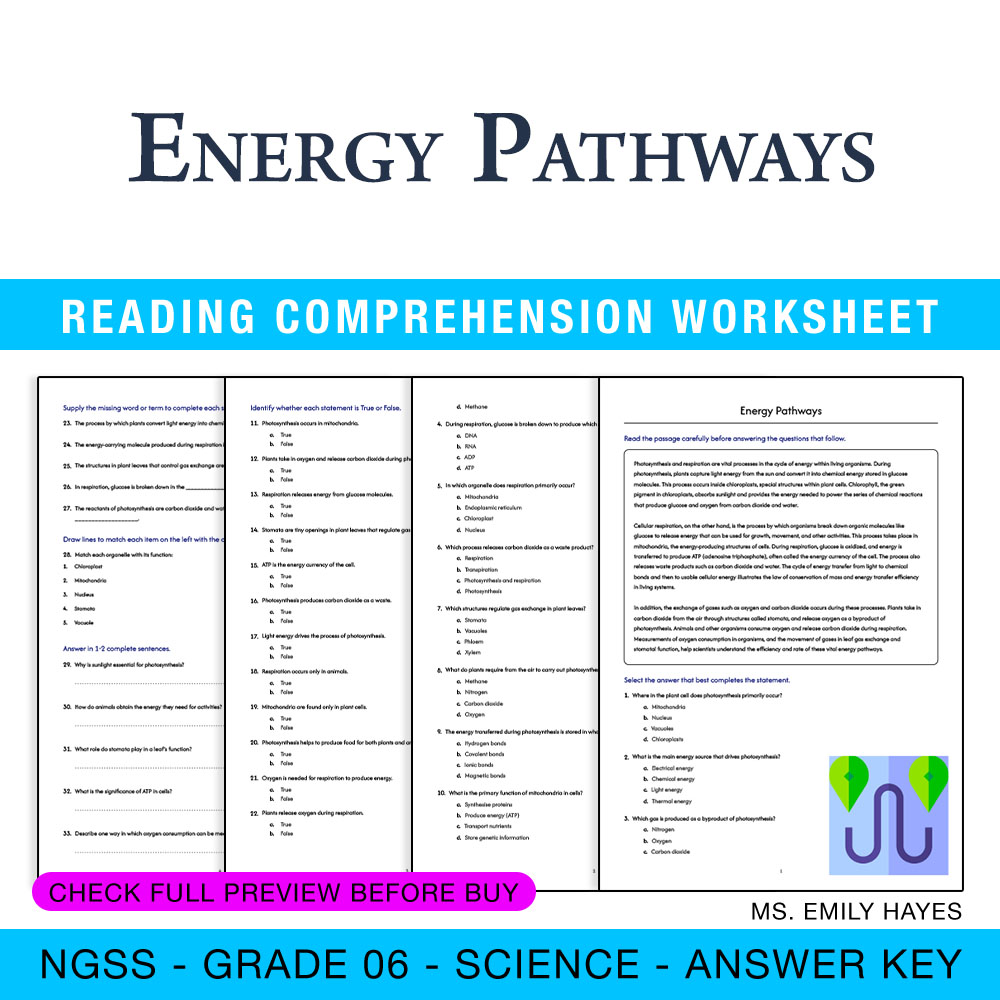
6th Grade Science | Energy Pathways Worksheet (PDF + Answer Key)
Created byCopper Leaf ClassroomLearning Objectives
- Describe how photosynthesis converts light energy into chemical energy in plants.
- Explain how organisms break down organic molecules to release usable energy during respiration.
- Identify the roles of chloroplasts and mitochondria in energy transformation.
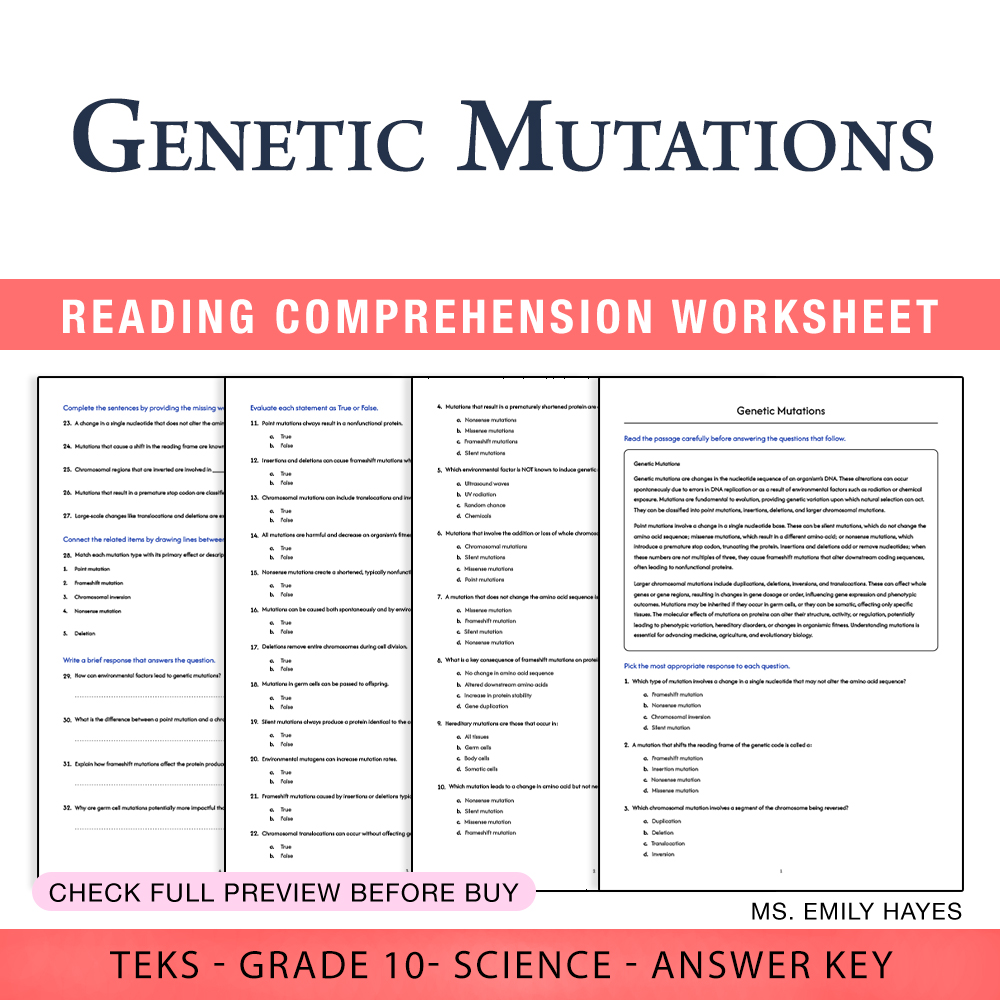
10th Grade Science | Genetic Mutations Worksheet (PDF+ Answer Key)
Created byCopper Leaf ClassroomLearning Objectives
- Understand the different types of genetic mutations and their molecular consequences.
- Identify how point mutations, insertions, deletions, and chromosomal alterations affect genes and proteins.
- Evaluate the impact of mutations on phenotype and inheritance.

Grade 7 Science | Plate Basics Worksheet (PDF+ Answer Key)
Created byCopper Leaf ClassroomLearning Objectives
- Understand the structure and composition of Earth's lithospheric plates.
- Identify the different types of plate boundaries and their effects on Earth's surface.
- Explain how plate movements influence geological features and activity.
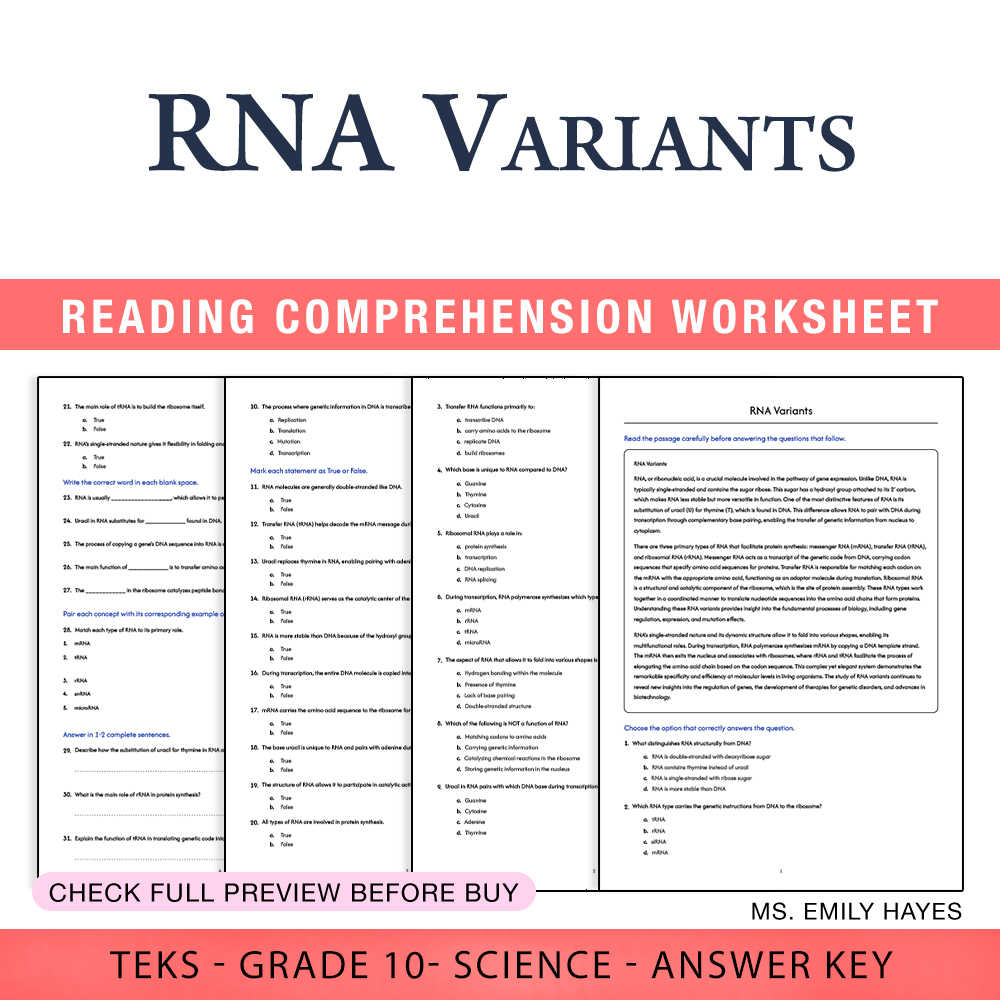
Grade 10 Science | RNA Variants Worksheet (PDF+ Answer Key)
Created byCopper Leaf ClassroomLearning Objectives
- Describe the different functional types of RNA and their roles in protein synthesis.
- Explain the structural differences between RNA and DNA, including base substitution and single-stranded nature.
- Identify the specific functions of messenger RNA, transfer RNA, and ribosomal RNA in gene expression.

Grade 8 Science | Cell Structure Worksheet (PDF+ Answer Key)
Created byCopper Leaf ClassroomLearning Objectives
- Describe the organization and function of cellular membranes and cytoplasm.
- Identify and explain the roles of key organelles such as the nucleus, mitochondria, and chloroplasts.
- Understand the relationship between membrane transport, compartmentalization, and cellular activity.
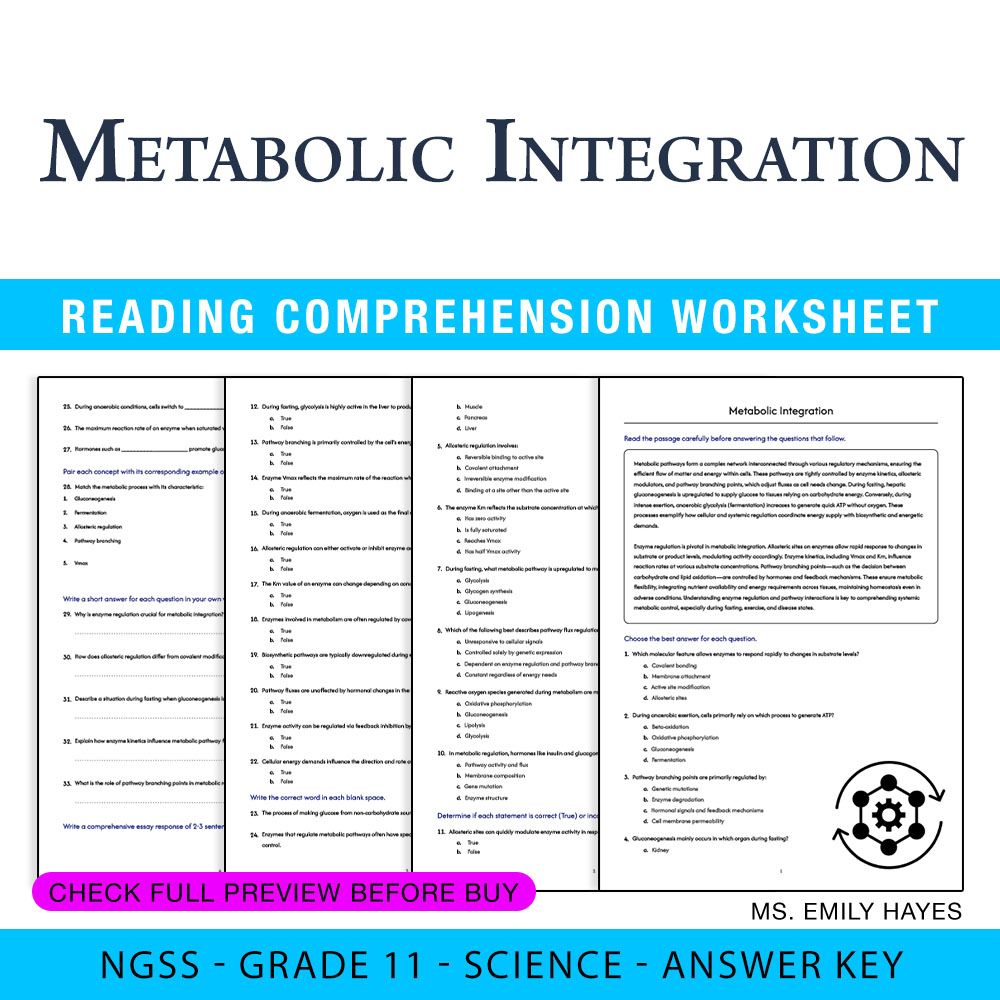
11th Grade Science | Metabolic Integration Worksheet (PDF+ Answer Key)
Created byCopper Leaf ClassroomLearning Objectives
- Understand how interconnected metabolic pathways regulate energy flow in cells.
- Identify key enzymes and their roles in carbohydrate, lipid, and protein metabolism.
- Explain examples of metabolic regulation during fasting and exertion.
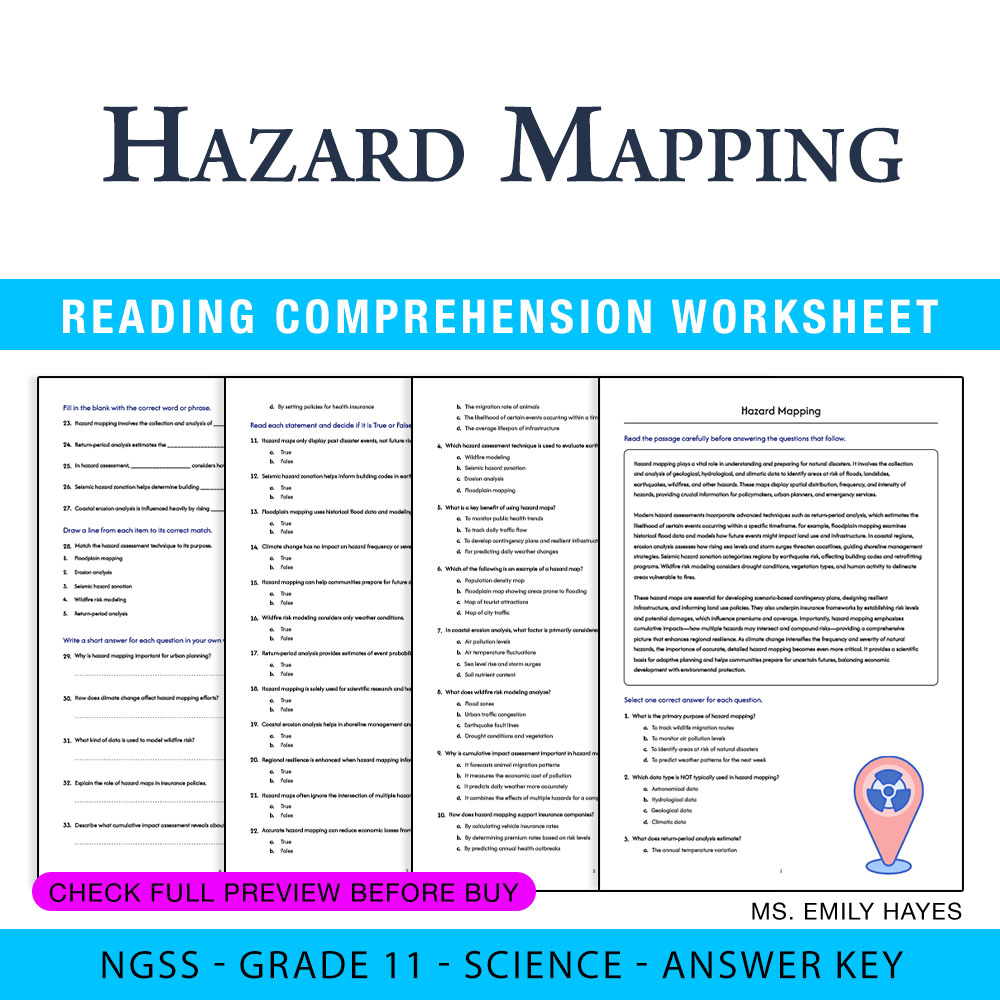
11th Grade Science | Hazard Mapping Worksheet (PDF+ Answer Key)
Created byCopper Leaf ClassroomLearning Objectives
- Understand the purpose and methods of hazard mapping in assessing natural risks.
- Analyze how geological, hydrological, and climatic data intersect to inform hazard assessments.
- Explain the importance of scenario-based analysis and return-period data in planning and resilience.
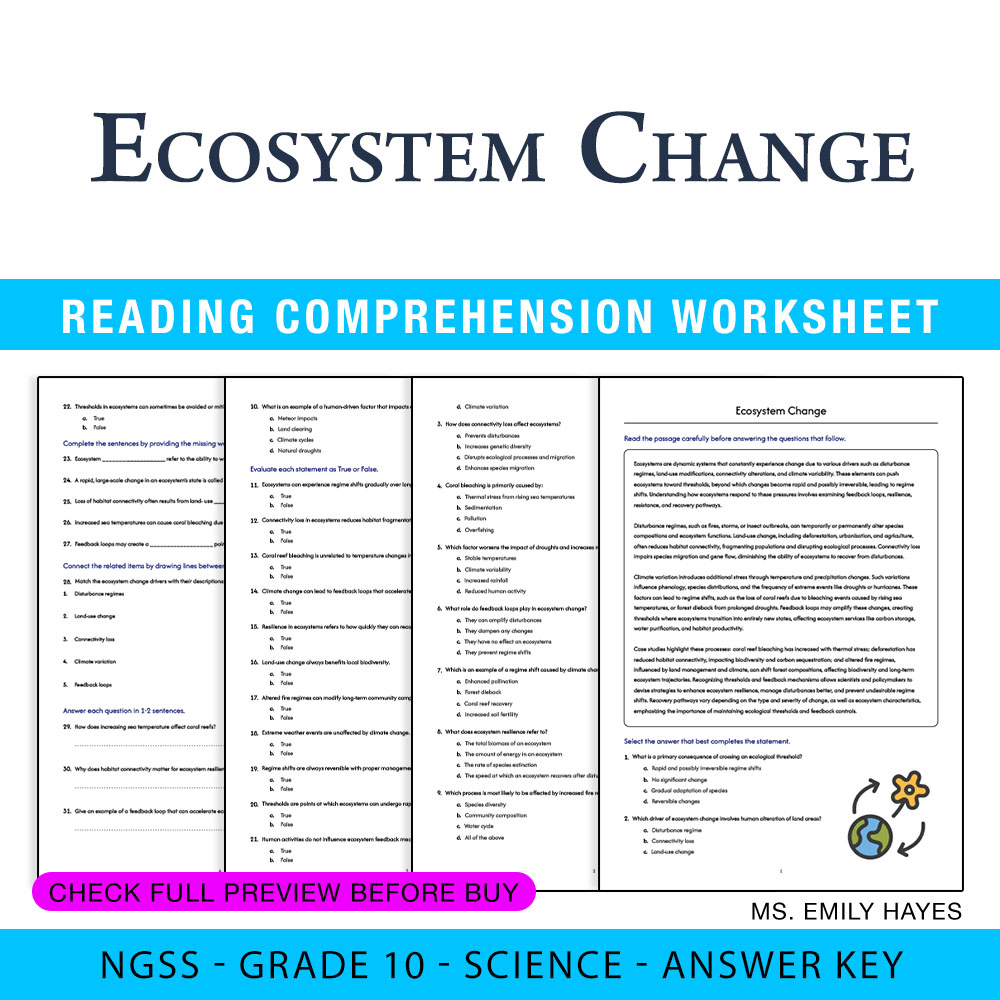
11th Grade Science | Ecosystem Change Worksheet (PDF+ Answer Key)
Created byCopper Leaf ClassroomLearning Objectives
- Explain the key drivers that cause changes in ecosystems, including disturbance regimes, land-use change, connectivity loss, and climate variation.
- Analyze case studies such as coral reef bleaching and deforestation to understand how these factors impact ecosystem resilience and regime shifts.
- Evaluate feedback loops, thresholds, and recovery pathways in ecosystem dynamics.
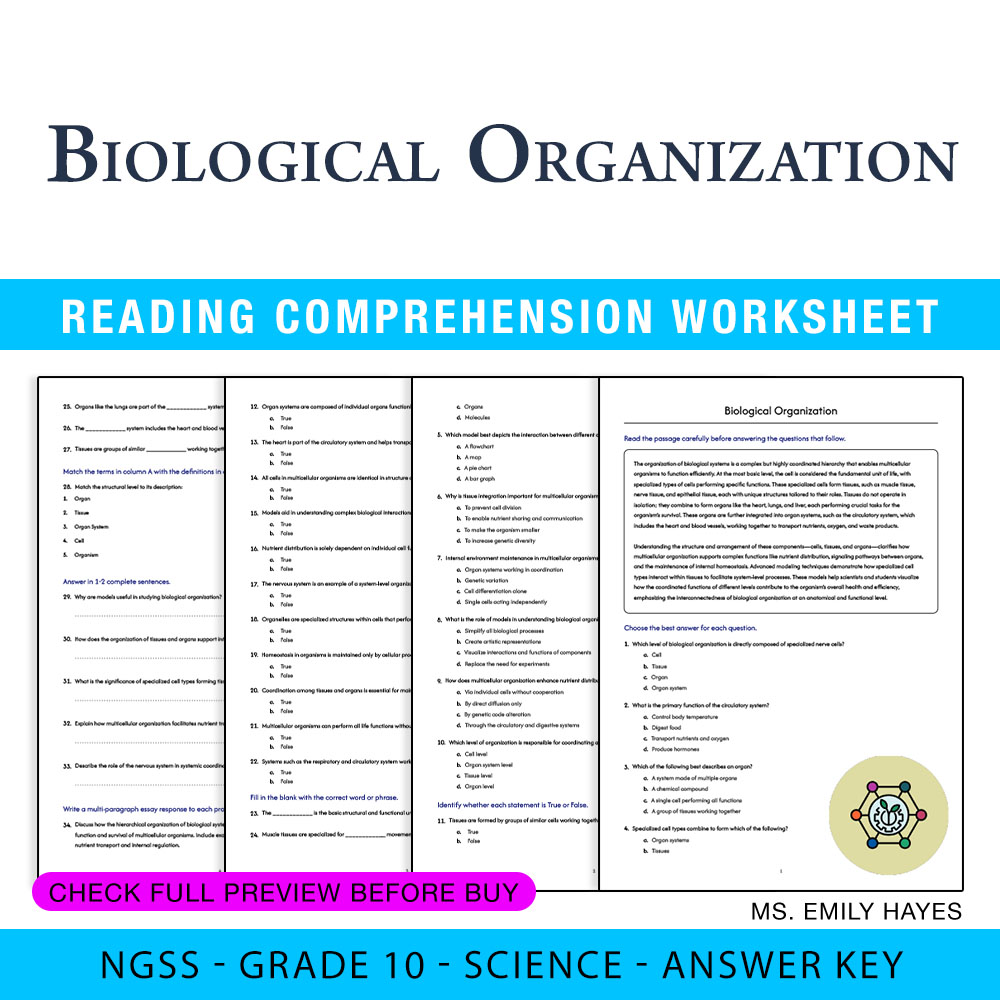
Grade 11 Biology | Biological Organization Worksheet (PDF+ Answer Key)
Created byCopper Leaf ClassroomLearning Objectives
- Explain the hierarchical levels of biological organization from organelles to organ systems.
- Describe models that depict specialized cell types and how they integrate into tissues and systems.
- Analyze how multicellular organization supports nutrient distribution, signaling pathways, and internal environment maintenance.
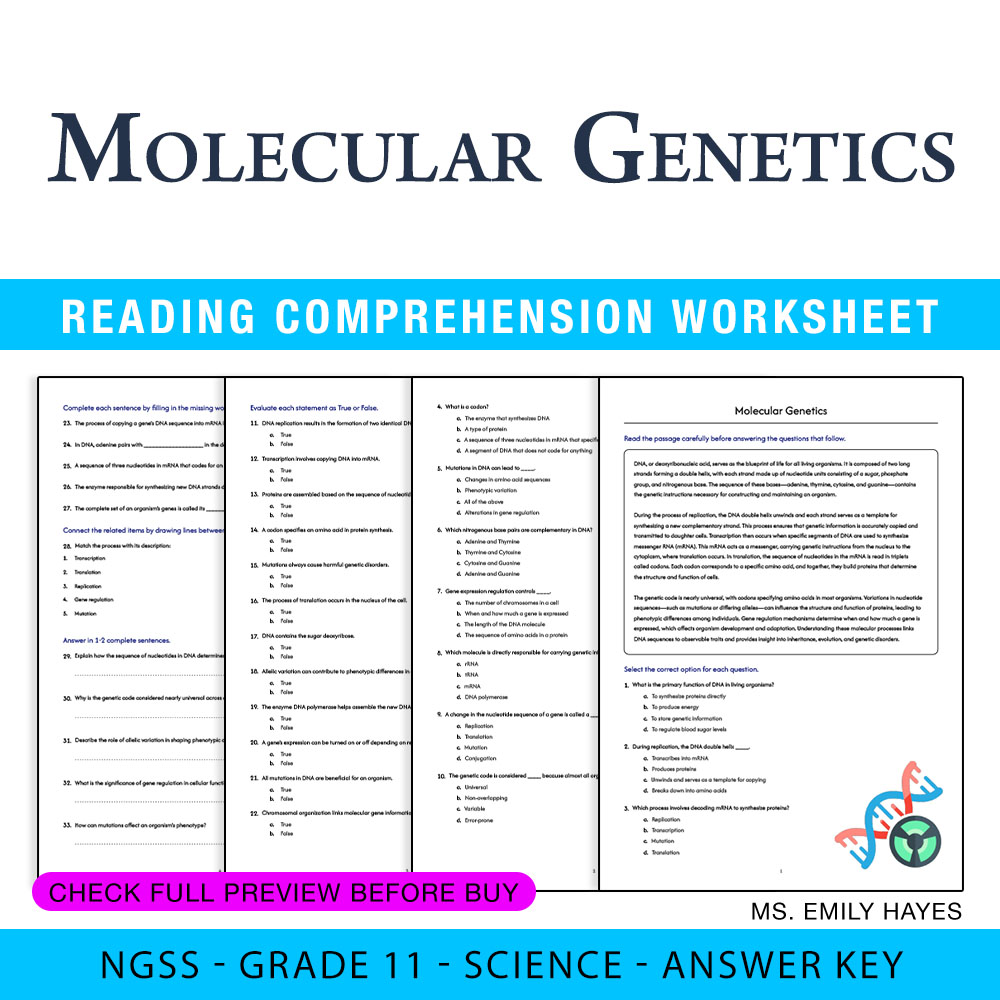
Grade 11 Science | Molecular Genetics Worksheet (PDF+ Answer Key)
Created byCopper Leaf ClassroomLearning Objectives
- Describe the structure of DNA and its role in genetic information storage.
- Explain the processes of replication, transcription, and translation.
- Understand the genetic code and how nucleotide sequences determine amino acid sequences.
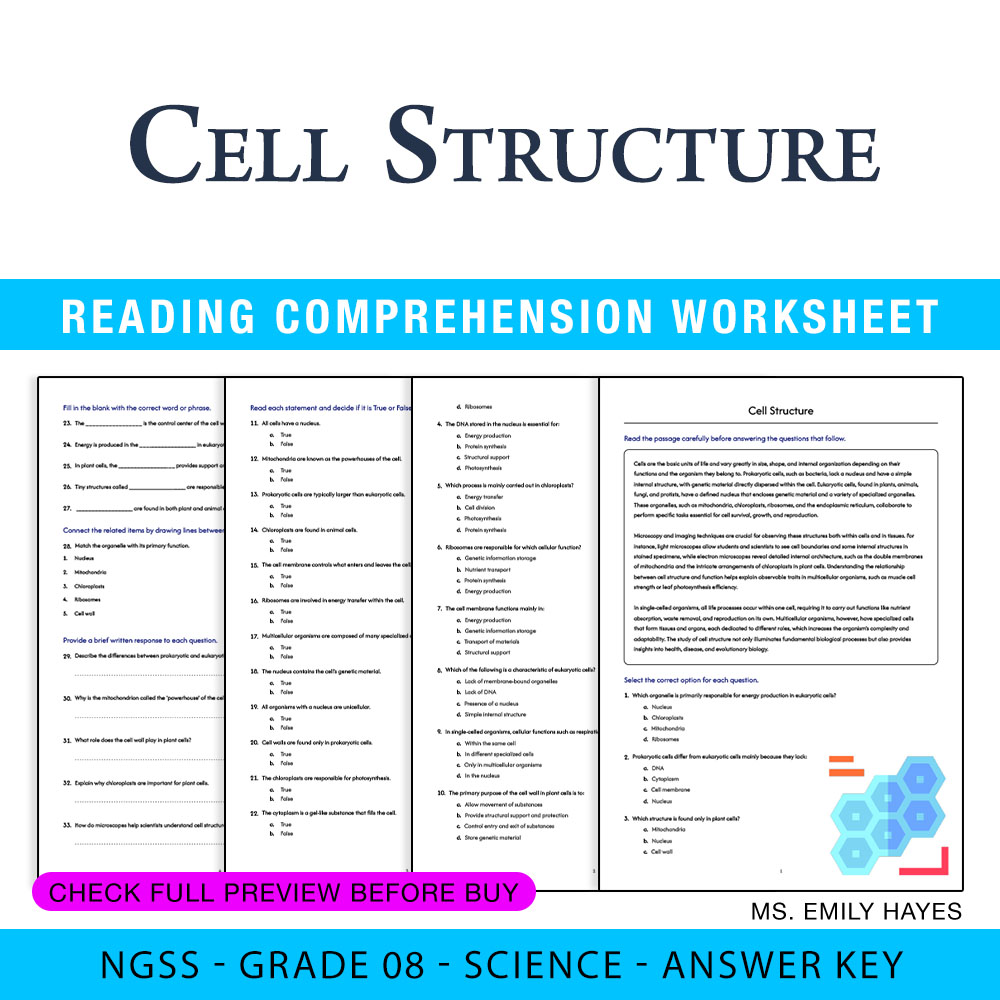
8th Grade Science | Cell Structure Worksheet (PDF + Answer Key)
Created byCopper Leaf ClassroomLearning Objectives
- Describe the key features and functions of cell organelles such as nucleus, mitochondria, chloroplasts, ribosomes, cell membrane, and cell wall.
- Compare prokaryotic and eukaryotic cells in terms of structure and function.
- Explain differences between single-celled and multicellular organisms in organismal organization.
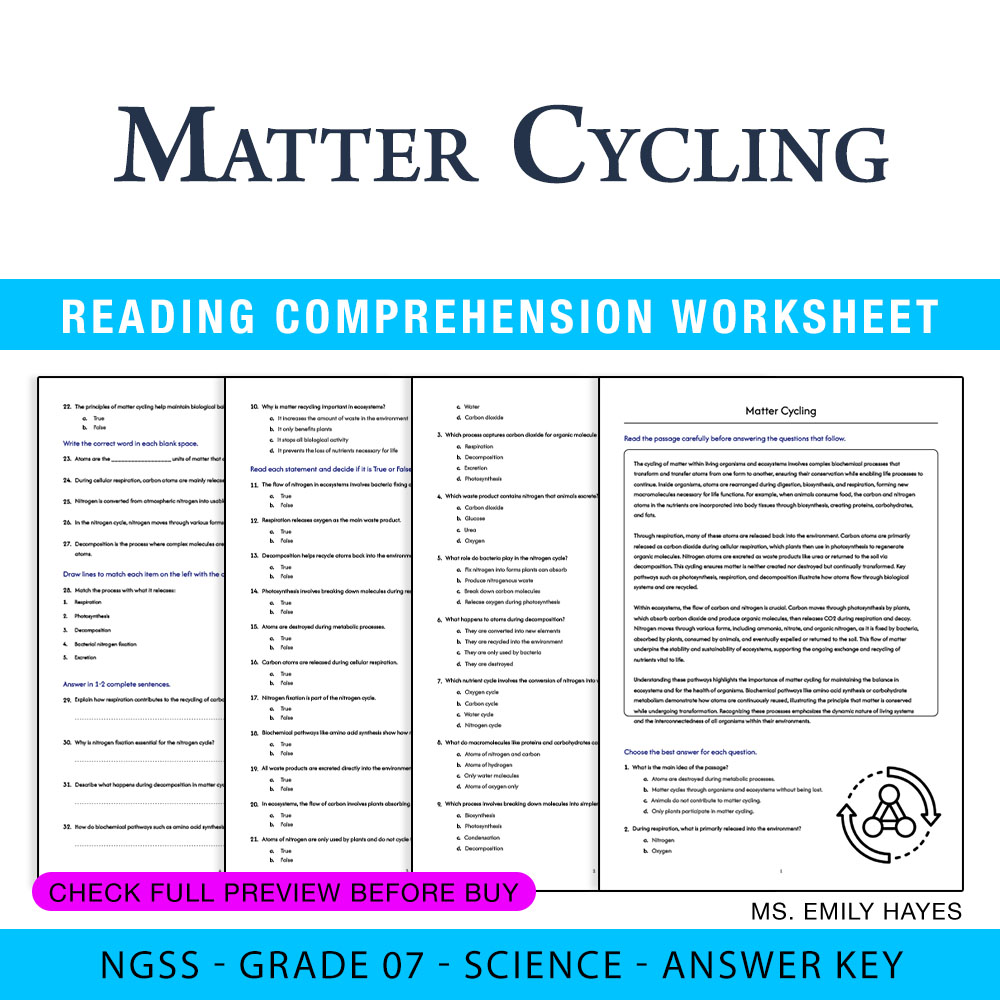
7th Grade Science | Matter Cycling Worksheet (PDF + Answer Key)
Created byCopper Leaf ClassroomLearning Objectives
- Describe the processes involved in matter cycling within organisms, including digestion, biosynthesis, and respiration.
- Explain how atoms are conserved and transformed during biochemical pathways such as macromolecule synthesis and decomposition.
- Illustrate the flow of carbon and nitrogen through different pathways in ecosystems and within organisms.
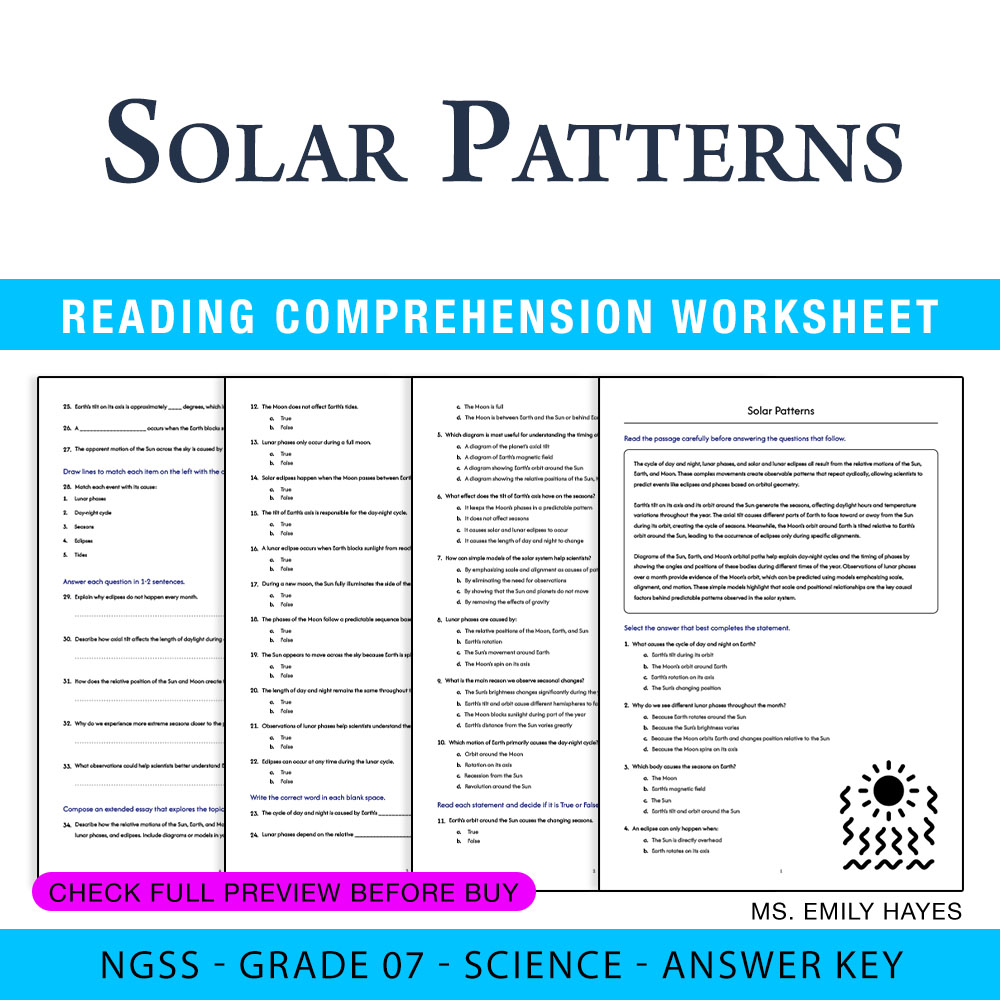
Grade 7 Science | Solar Patterns Worksheet (PDF+ Answer Key)
Created byCopper Leaf ClassroomLearning Objectives
- Understand the cyclic patterns produced by the relative motions of the Sun, Earth, and Moon.
- Explain how lunar phases, eclipses, and seasonal changes are caused by orbital geometry and tilt.
- Interpret diagrams of orbital motion and axial tilt to describe day-night cycles.
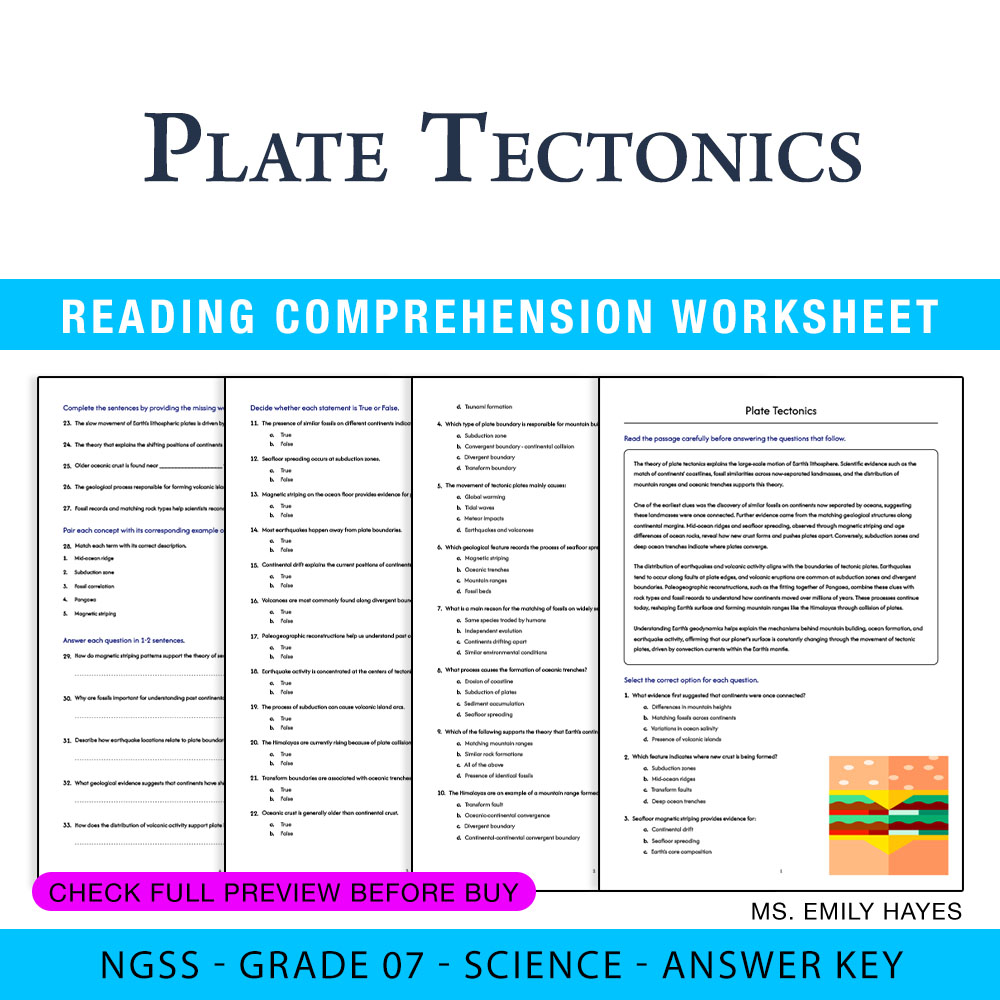
7th Grade Science | Plate Tectonics Worksheet (PDF+ Answer Key)
Created byCopper Leaf ClassroomLearning Objectives
- Describe the evidence supporting the theory of plate tectonics.
- Explain how geologic features such as mid-ocean ridges and trenches relate to plate movements.
- Identify significance of fossil distribution and rock types in reconstructing past continents.
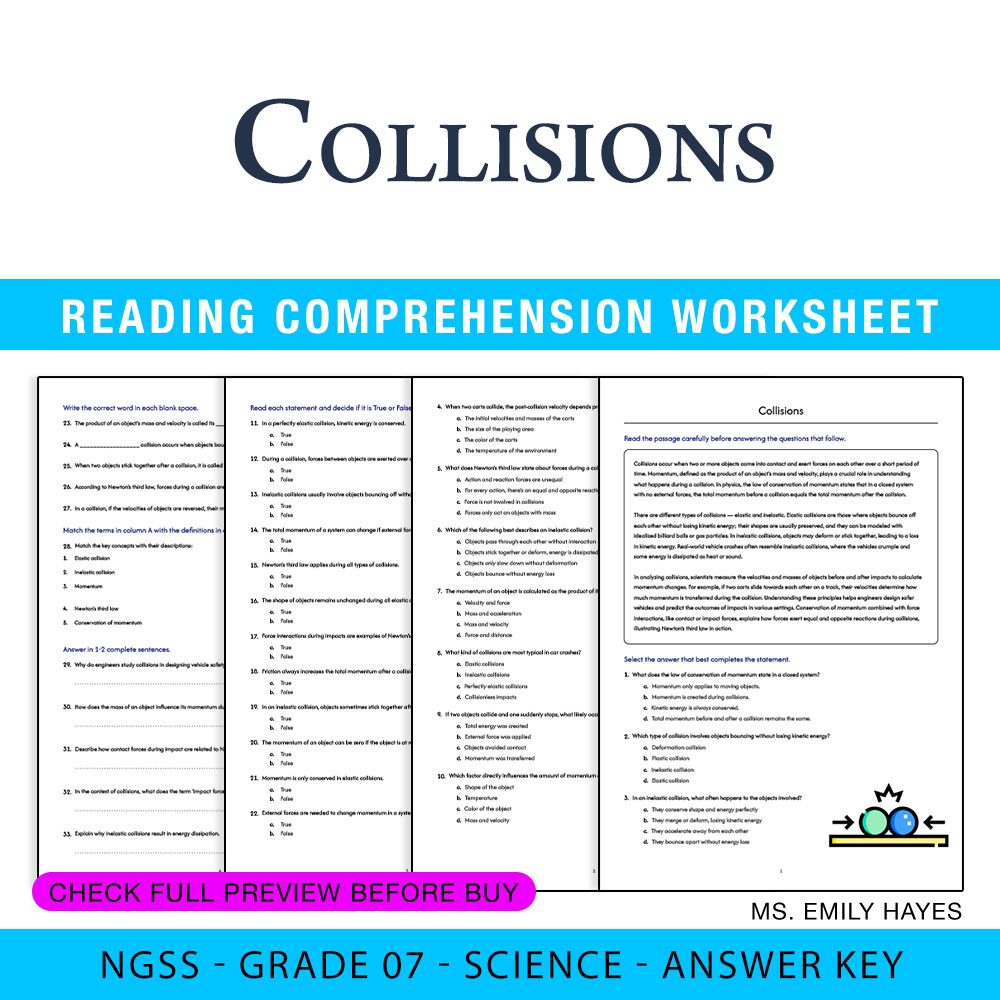
Grade 7 Science | Collisions Worksheet (PDF+ Answer Key)
Created byCopper Leaf ClassroomLearning Objectives
- Understand the principles of momentum conservation during collisions.
- Differentiate between elastic and inelastic collisions and their effects on moving objects.
- Apply quantitative concepts to analyze motion changes during collisions involving mass and velocity.
Browse more categories
About Science Worksheets
Find Science worksheets spanning core skills, practice, and review. All 42,859 resources are instant PDF downloads for the classroom or home.
Every worksheet on MyTeachingSheets is created by independent teacher-authors and reviewed before publication. All resources download as printable PDFs for classroom, homework, or at-home practice, and many include answer keys. Preview any worksheet free before buying.