
Science Worksheets
42,859 subject resources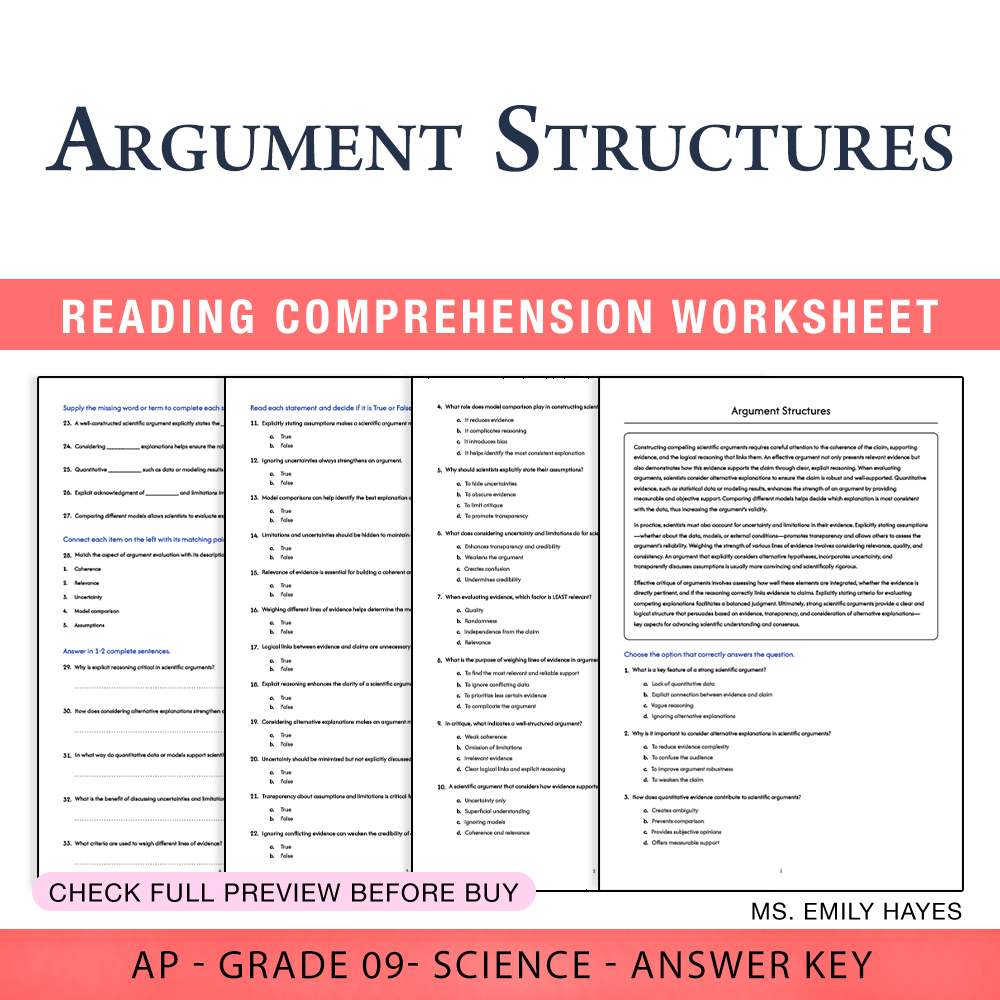
Grade 9 Science | Argument Structures Worksheet (PDF+ Answer Key)
 Created byCopper Leaf Classroom
Learning Objectives
- Define the components of scientific arguments, including claim, evidence, and reasoning.
- Analyze coherence, relevance, and alternative explanations in constructing scientific arguments.
- Evaluate how quantitative evidence and model comparison strengthen arguments.
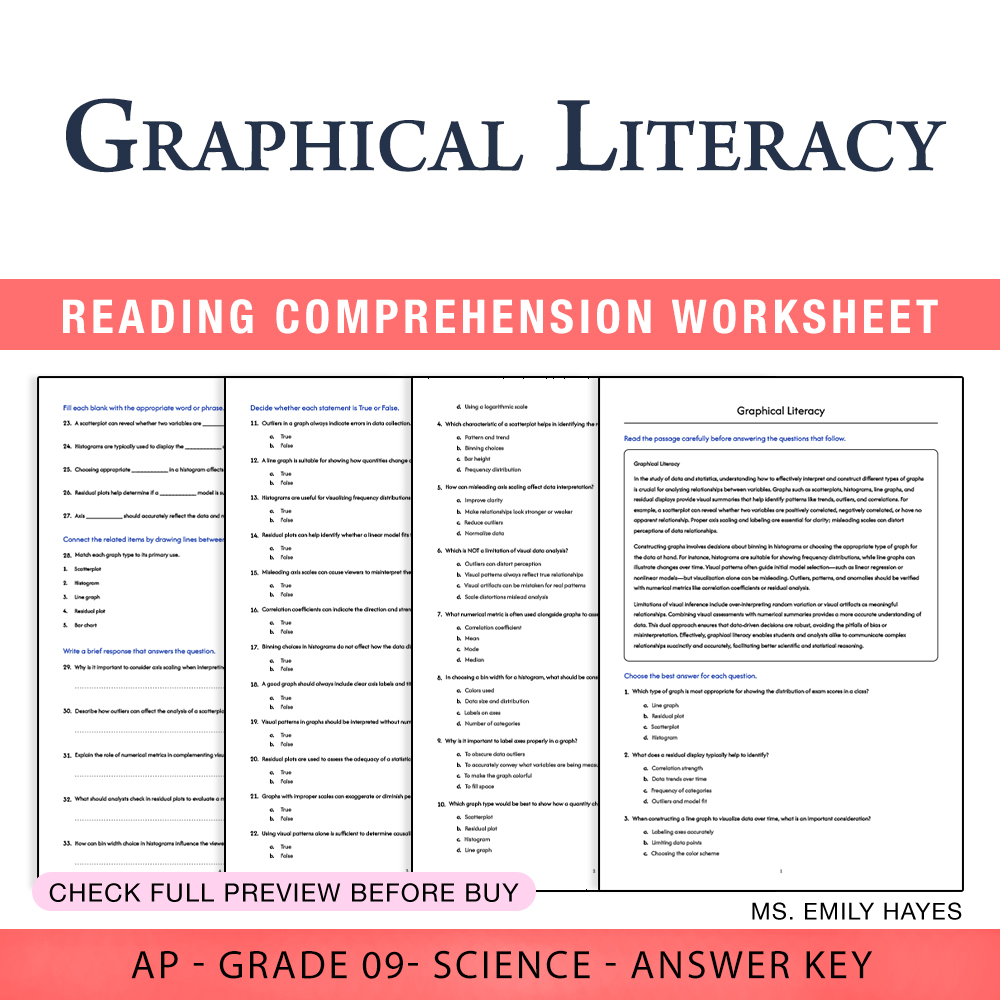
9th Grade Science | Graphical Literacy Worksheet (PDF+ Answer Key)
Created byCopper Leaf ClassroomLearning Objectives
- Understand how to interpret various graphical representations such as scatterplots, histograms, and line graphs.
- Identify appropriate graph types for different data patterns and variables.
- Evaluate the suitability of graph scales, labeling, and binning choices in conveying accurate information.
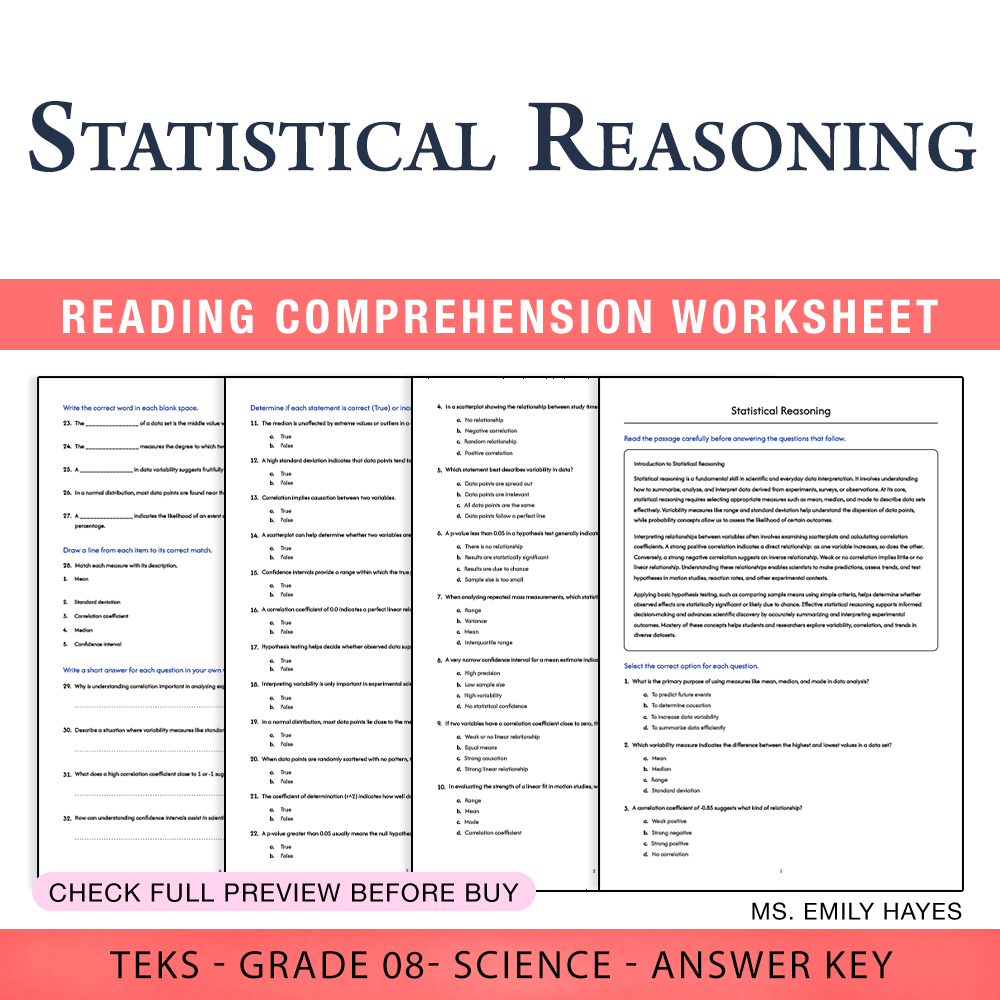
8th Grade Science | Statistical Reasoning Worksheet (PDF+ Answer Key)
Created byCopper Leaf ClassroomLearning Objectives
- Understand basic concepts of probability, variability, and correlation in data analysis.
- Identify appropriate measures of central tendency and dispersion for data sets.
- Interpret scatterplots and correlation coefficients to evaluate relationships between variables.
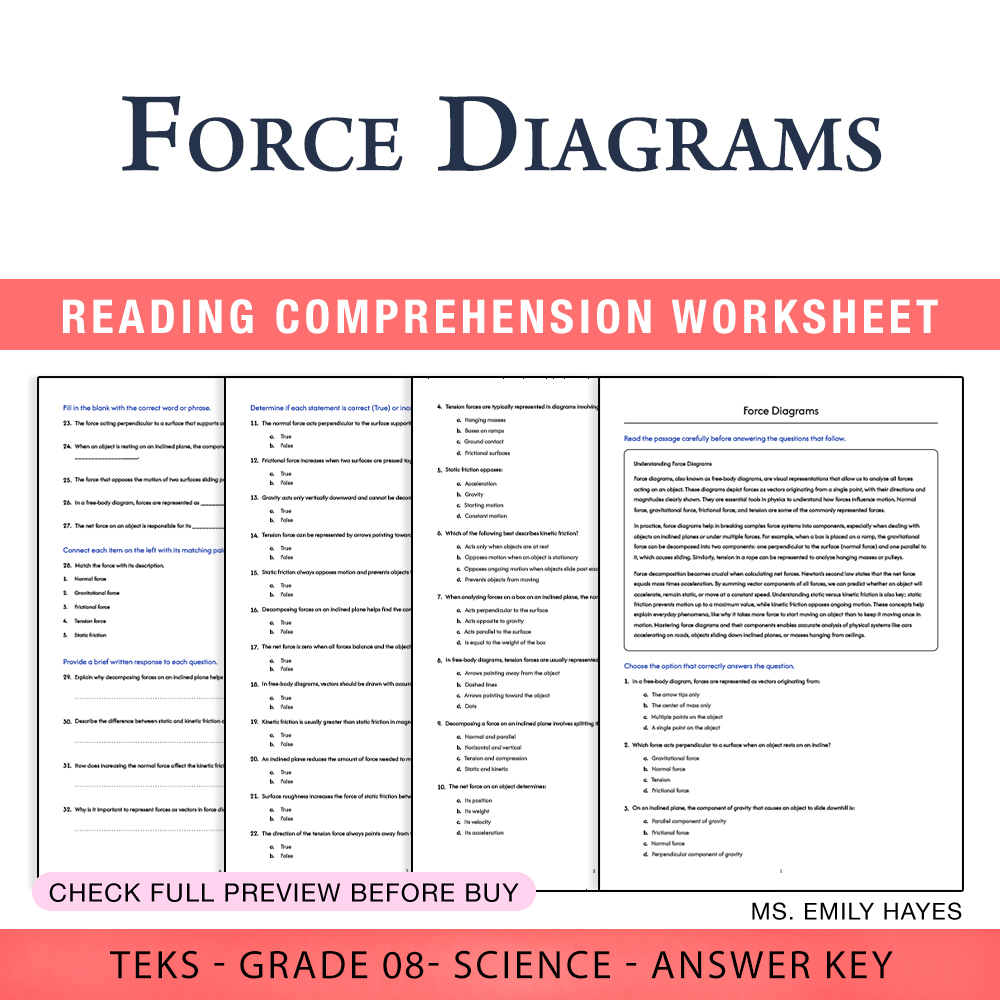
8th Grade Science | Force Diagrams Worksheet (PDF+ Answer Key)
Created byCopper Leaf ClassroomLearning Objectives
- Describe how to represent forces using free-body diagrams, including normal, gravitational, frictional, and tension forces.
- Identify and analyze vector directions of forces acting on objects in various scenarios.
- Decompose forces on inclined planes into components and calculate net force.
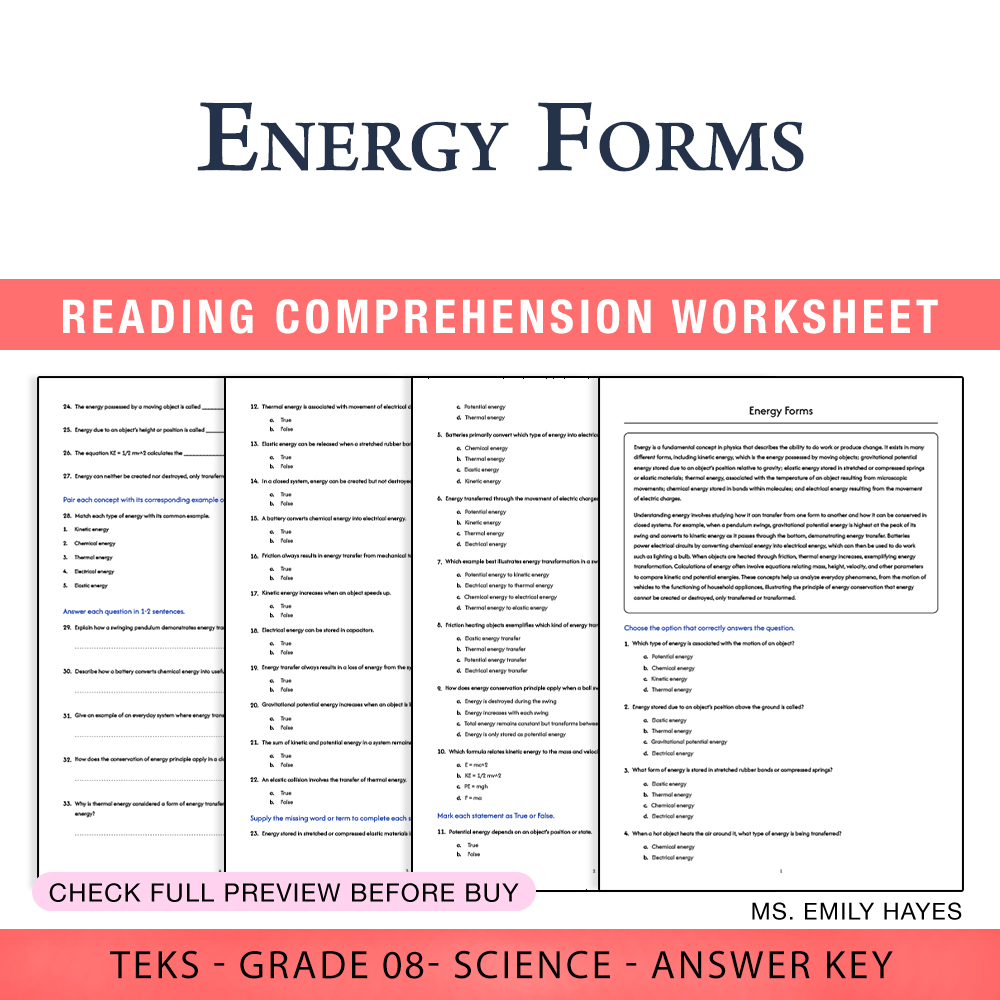
8th Grade Science | Energy Forms Worksheet (PDF+ Answer Key)
Created byCopper Leaf ClassroomLearning Objectives
- Identify and describe different types of energy such as kinetic, gravitational potential, elastic, thermal, chemical, and electrical.
- Explain how energy transfers and transforms among different forms in everyday systems.
- Analyze qualitative energy accounting in systems like swinging pendulums and electrical circuits.
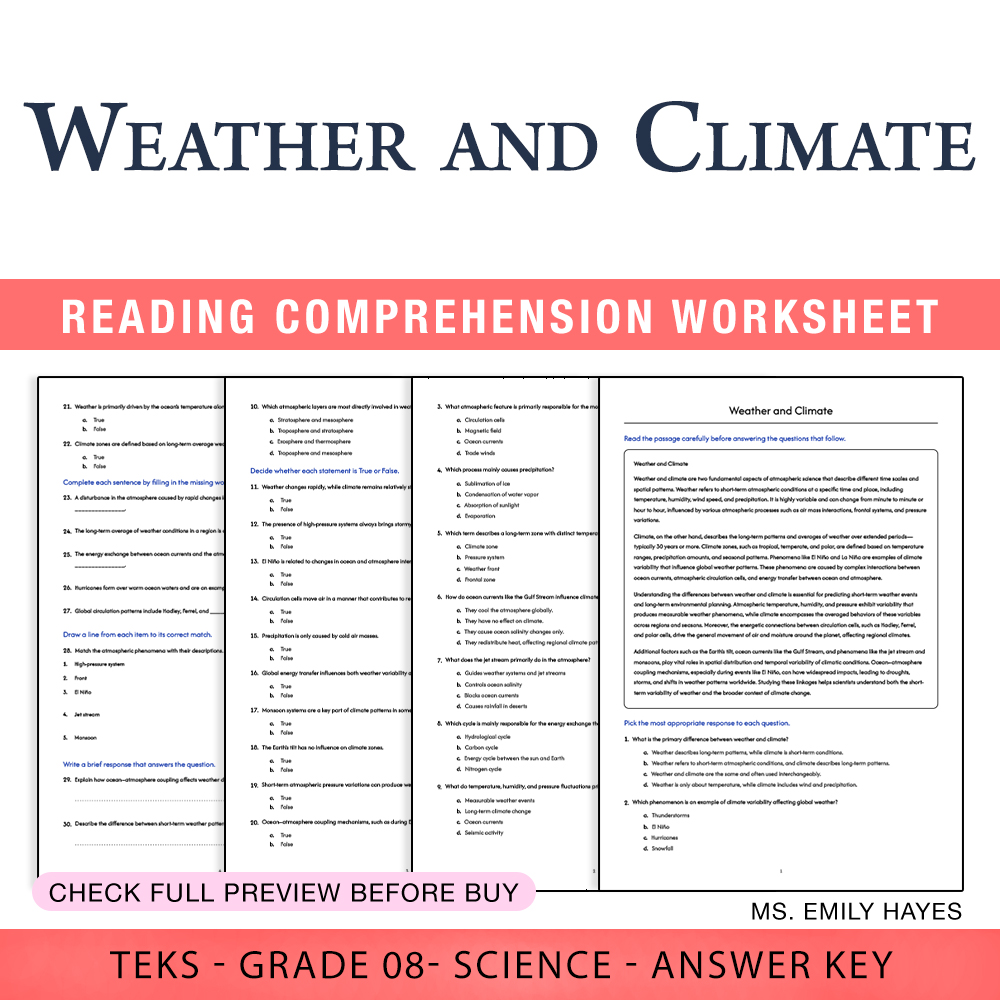
8th Grade Science | Weather and Climate Worksheet (PDF+ Answer Key)
Created byCopper Leaf ClassroomLearning Objectives
- Explain the differences between weather and climate and their respective patterns.
- Identify key atmospheric processes such as air mass interactions, fronts, and pressure systems.
- Describe the processes of precipitation and how they influence local weather conditions.

8th Grade Science | Models and Systems Worksheet (PDF+ Answer Key)
Created byCopper Leaf ClassroomLearning Objectives
- Explain the role of models and systems in understanding complex scientific phenomena.
- Identify components and interactions within various ecological and physical systems.
- Analyze examples of energy transfer, conservation of mass, and forces using diagrams and models.
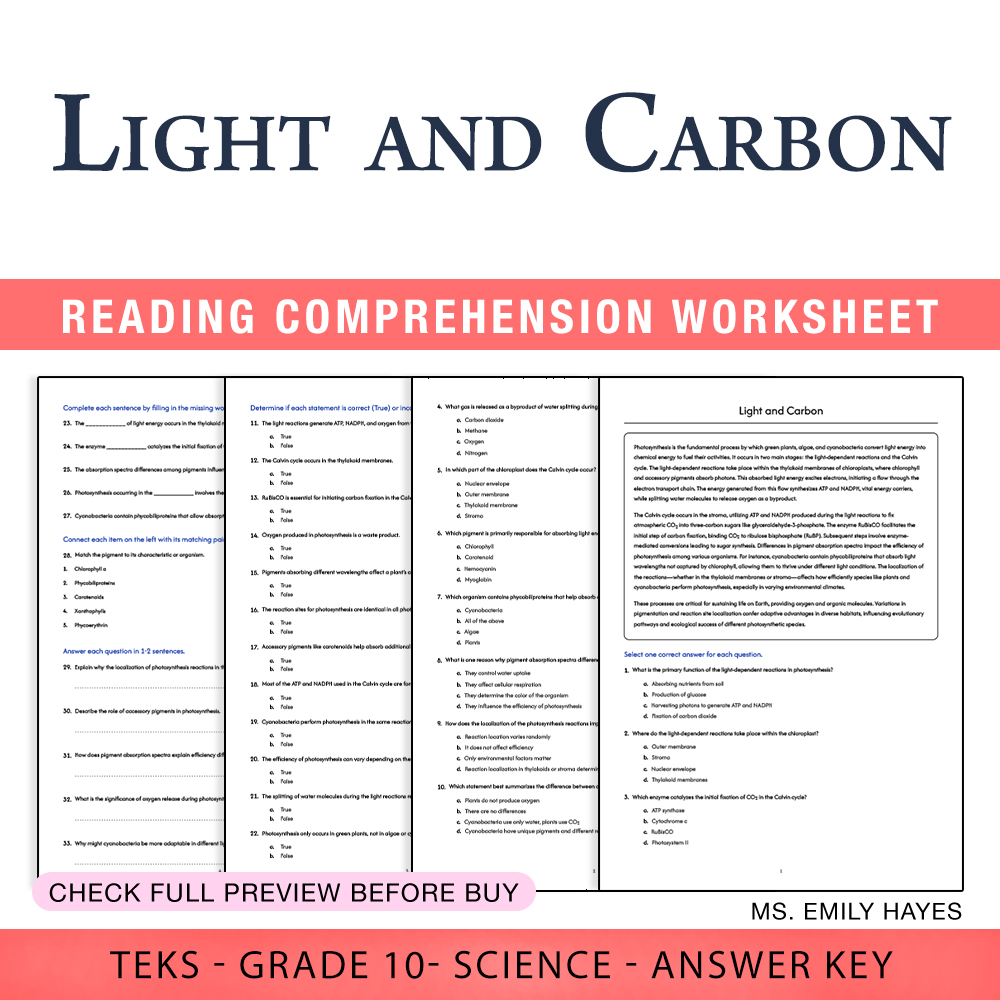
10th Grade Science | Light and Carbon Photosynthesis Worksheet (PDF+ Answer Key)
Created byCopper Leaf ClassroomLearning Objectives
- Describe the process of light reactions and how they produce ATP, NADPH, and oxygen.
- Explain the Calvin cycle and its role in fixing carbon dioxide into sugars.
- Compare pigment absorption spectra among different photosynthetic organisms.
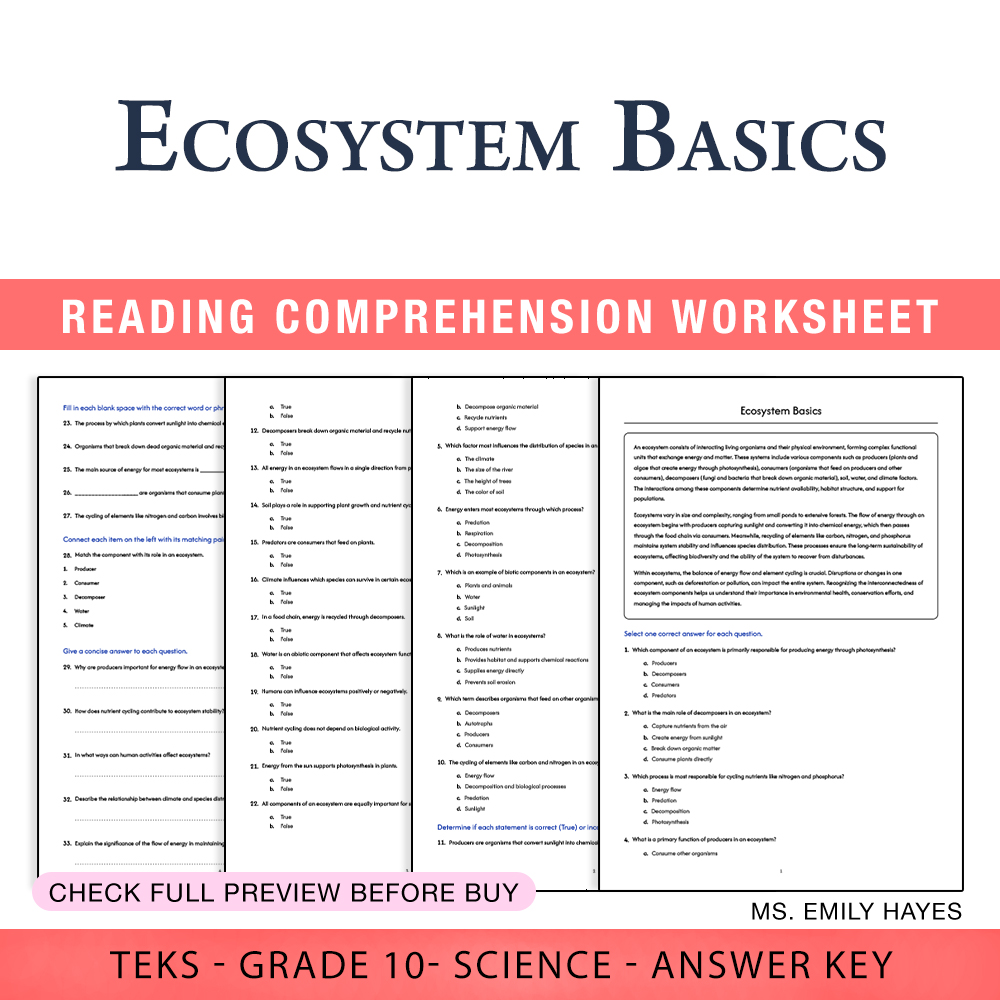
10th Grade Science | Ecosystem Basics Worksheet (PDF+ Answer Key)
Created byCopper Leaf ClassroomLearning Objectives
- Define and describe the components of an ecosystem.
- Explain the interactions among producers, consumers, decomposers, and the environment.
- Identify the flow of energy and cycling of elements within different ecosystems.
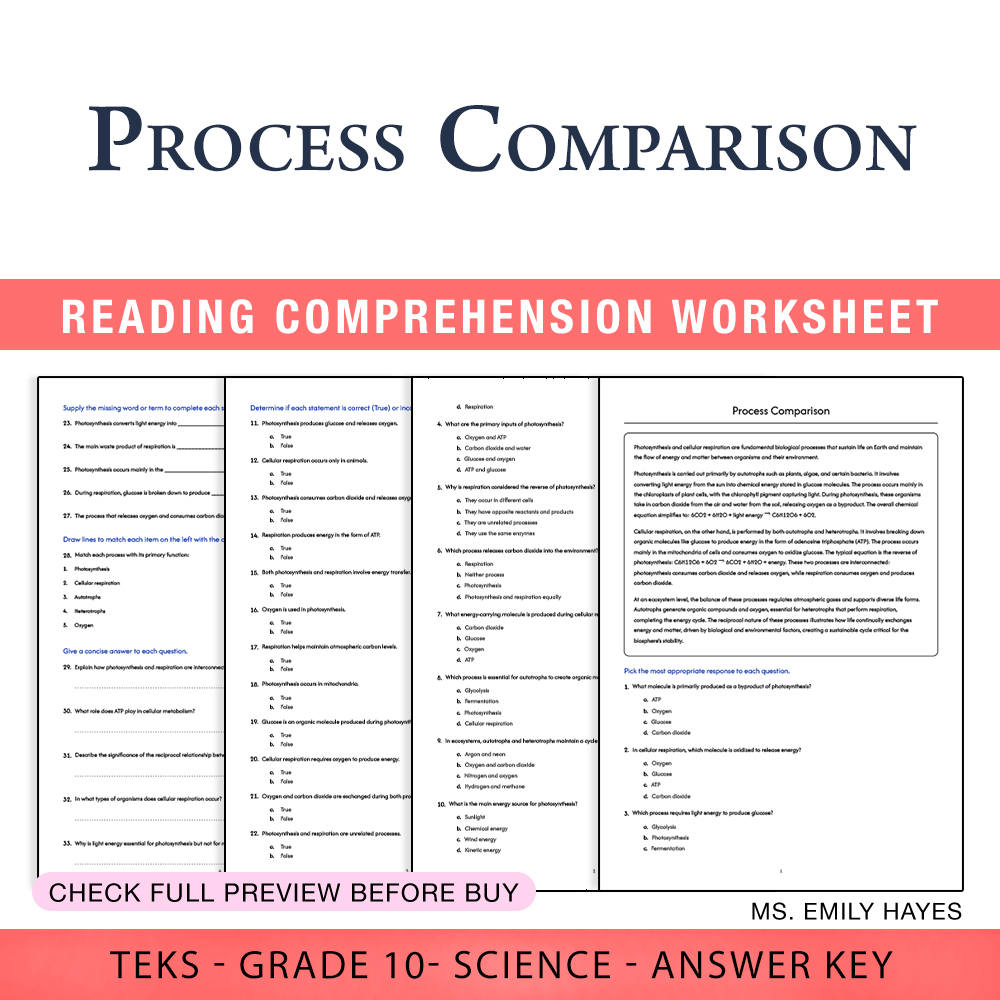
Grade 10 Science | Process Comparison Worksheet (PDF+ Answer Key)
Created byCopper Leaf ClassroomLearning Objectives
- Compare and contrast photosynthesis and cellular respiration in terms of inputs and outputs.
- Identify the roles of key molecules like oxygen, carbon dioxide, ATP, and glucose in metabolic processes.
- Explain how energy and matter cycle between organisms and their environment through these processes.
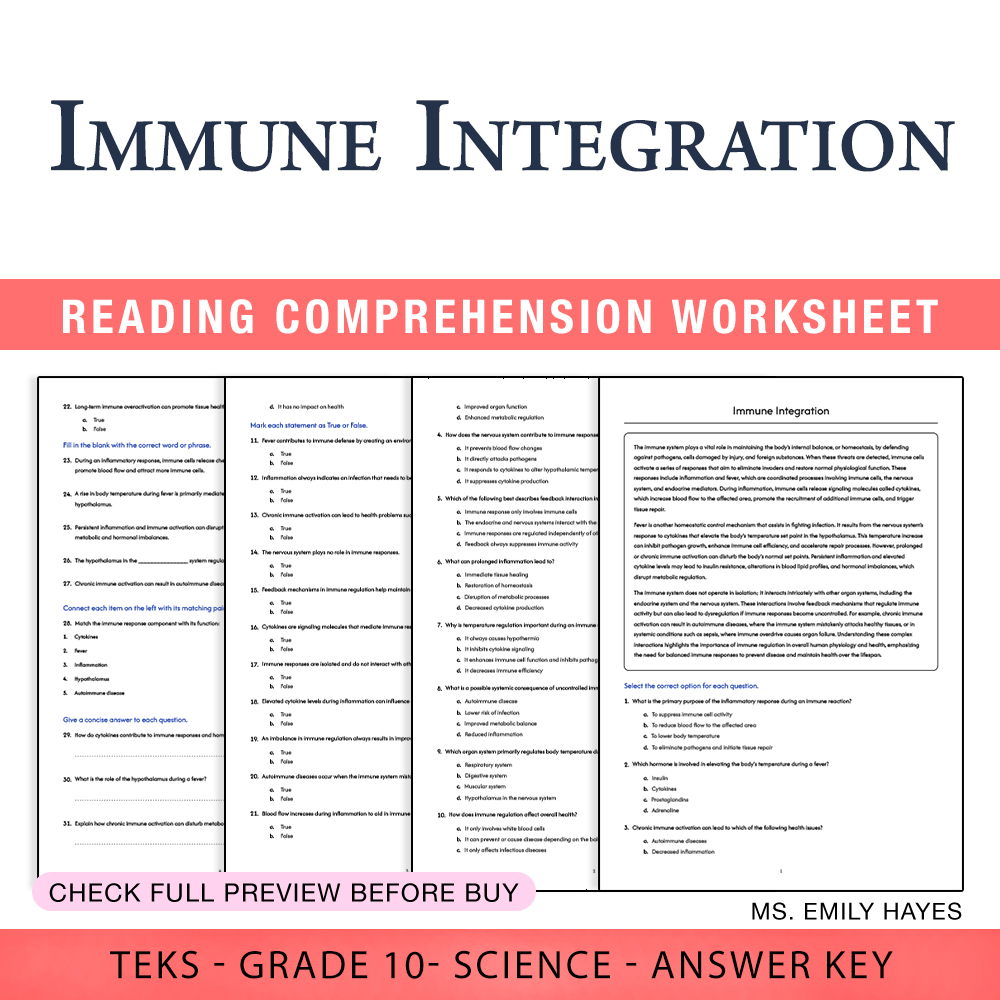
10th Grade Science | Immune System Mastery Worksheet (PDF+ Answer Key)
Created byCopper Leaf ClassroomLearning Objectives
- Understand how the immune system contributes to maintaining homeostasis.
- Identify responses of the immune system during inflammation and fever.
- Learn how immune regulation interacts with other organ systems.
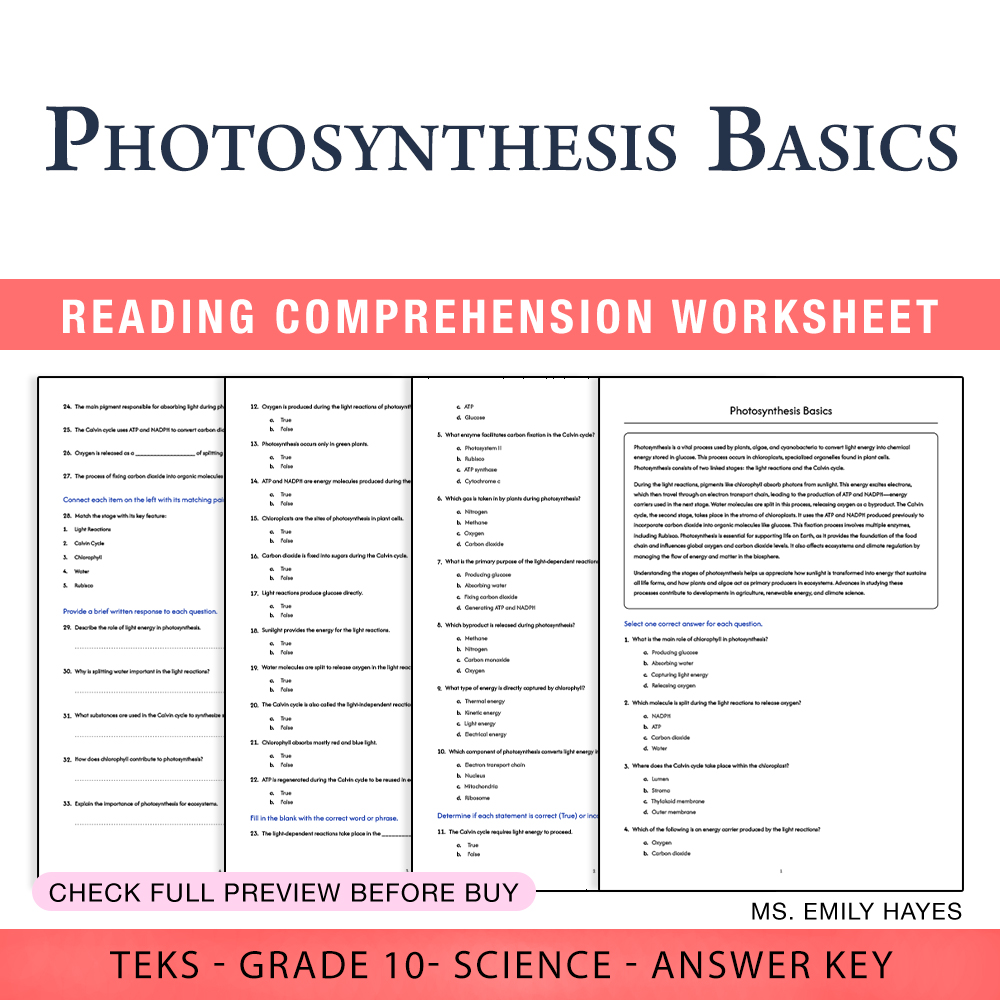
Grade 10 Science | Photosynthesis Basics Worksheet (PDF+ Answer Key)
Created byCopper Leaf ClassroomLearning Objectives
- Explain the two main stages of photosynthesis: light reactions and the Calvin cycle.
- Identify the key molecules involved in photosynthesis such as ATP, NADPH, oxygen, and carbon dioxide.
- Describe the role of pigments in capturing light energy.
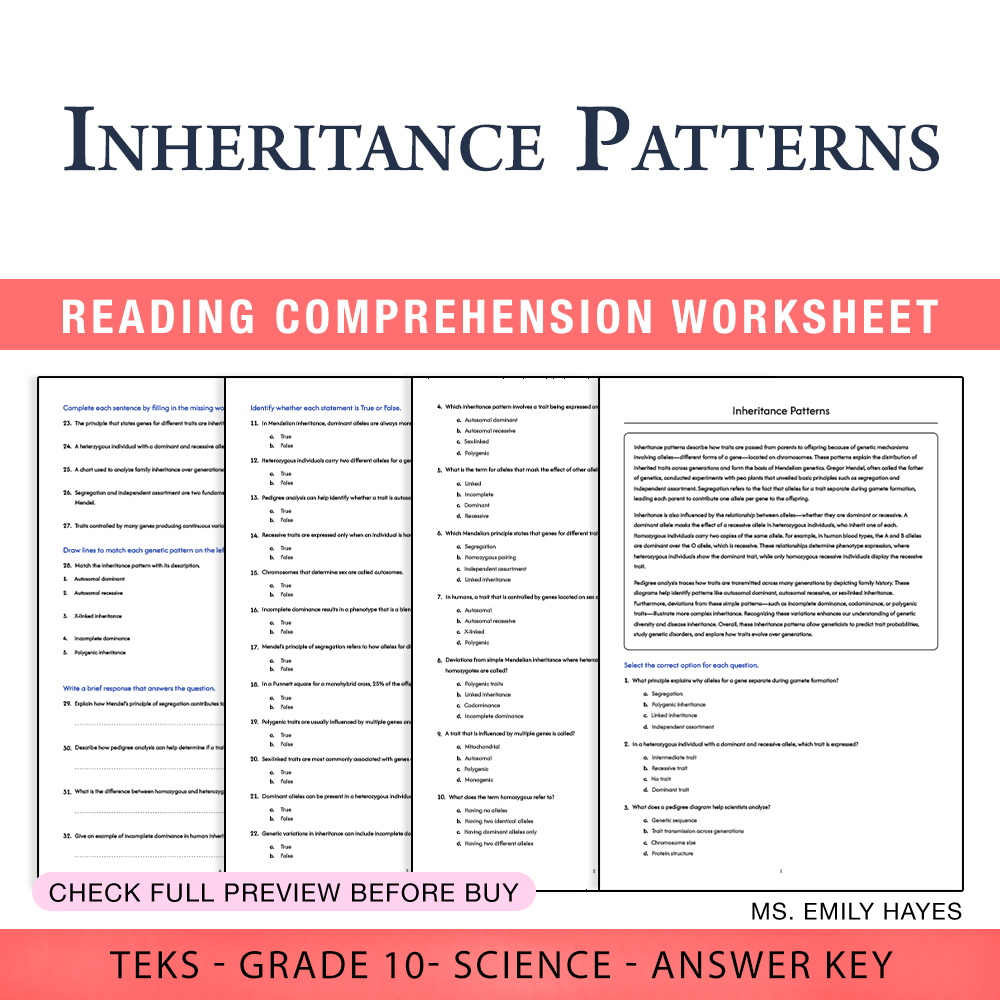
10th Grade Science | Inheritance Patterns Worksheet (PDF+ Answer Key)
Created byCopper Leaf ClassroomLearning Objectives
- Understand how dominant and recessive alleles influence phenotype expression.
- Identify different inheritance patterns such as Mendelian segregation and independent assortment.
- Analyze pedigrees to trace trait transmission across generations.
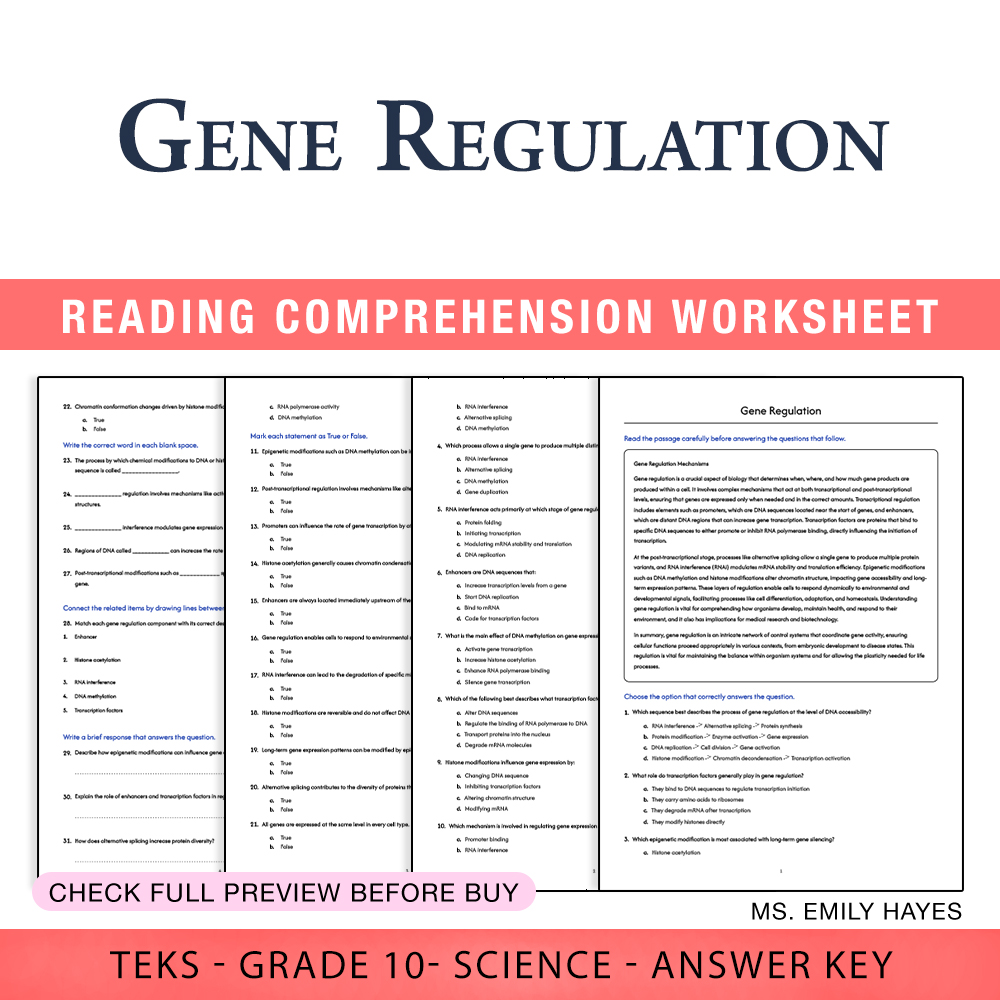
10th Grade Science | Gene Regulation Worksheet (PDF+ Answer Key)
Created byCopper Leaf ClassroomLearning Objectives
- Understand the mechanisms of gene regulation at transcriptional and post-transcriptional stages.
- Identify the roles of promoters, enhancers, transcription factors, and epigenetic modifications in gene expression.
- Explain how cells respond to signals, differentiate, and maintain homeostasis through gene regulation.
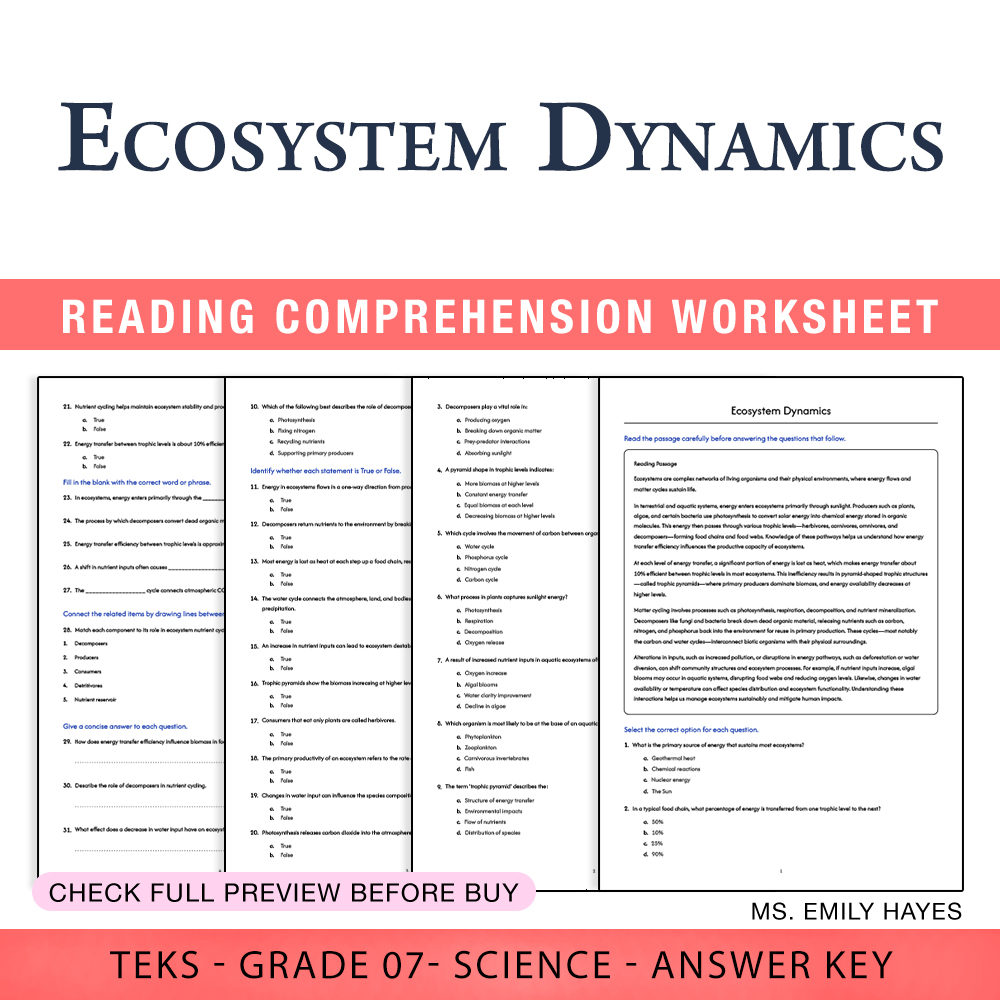
7th Grade Science | Ecosystem Dynamics Worksheet (PDF+ Answer Key)
Created byCopper Leaf ClassroomLearning Objectives
- Describe how energy flows through food chains, food webs, and trophic pyramids in ecosystems.
- Explain the cycling of matter and the roles of decomposers in nutrient recycling.
- Analyze how changes in inputs or energy pathways affect community composition and ecosystem functions.
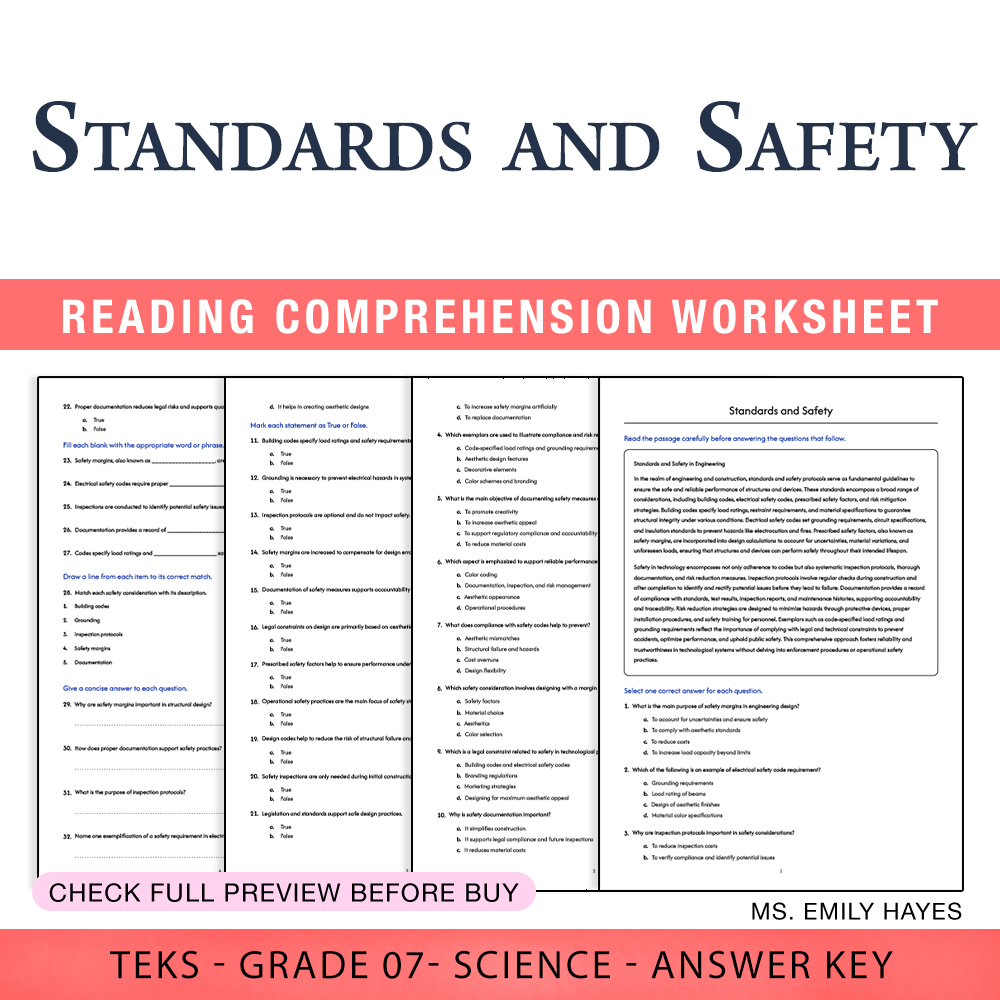
7th Grade Science | Standards and Safety Worksheet (PDF+ Answer Key)
Created byCopper Leaf ClassroomLearning Objectives
- Understand the key standards and safety considerations in technological practice.
- Identify safety codes and safety margins used in engineering and construction.
- Explain the importance of inspection, documentation, and risk reduction in safety compliance.
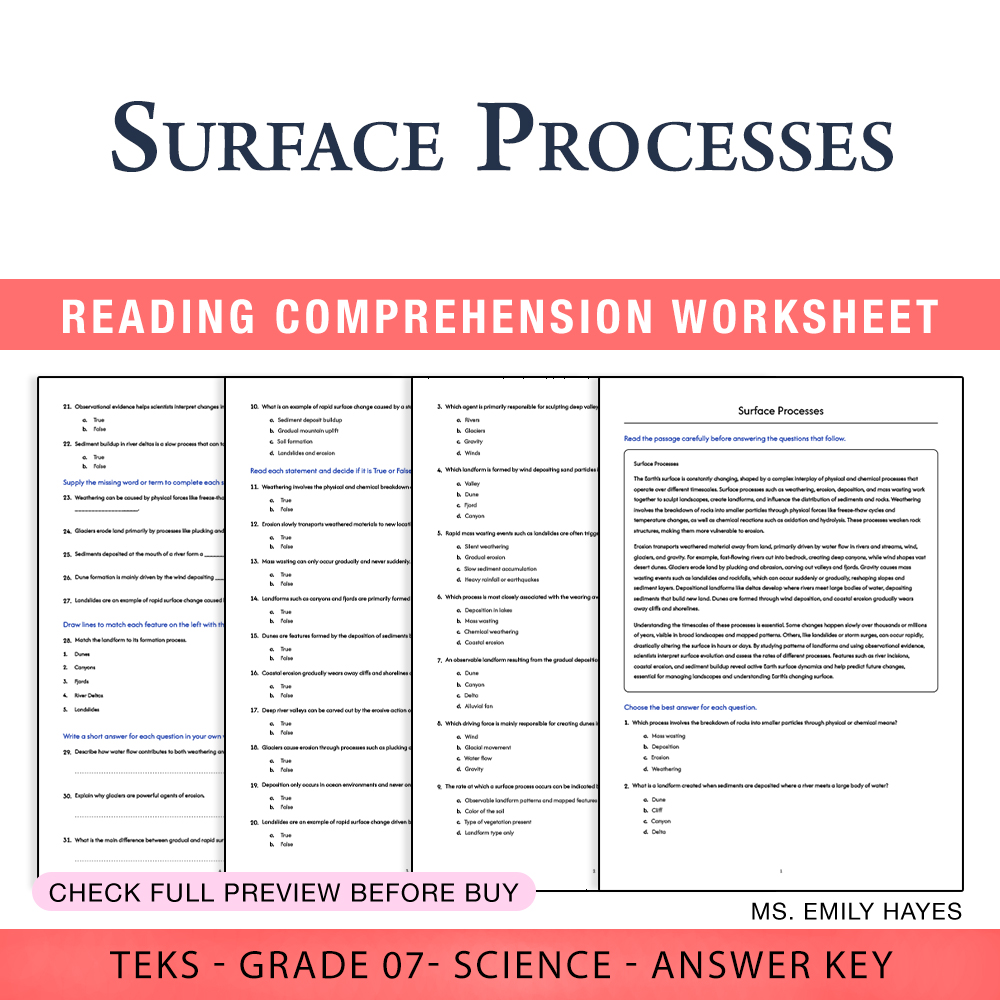
Grade 7 Science | Surface Processes Worksheet (PDF+ Answer Key)
Created byCopper Leaf ClassroomLearning Objectives
- Describe the physical and chemical processes shaping Earth's surface, including weathering, erosion, deposition, and mass wasting.
- Identify driving forces such as water flow, wind, glaciers, and gravity that influence landform development.
- Link observable landforms like deltas, canyons, and dunes to specific surface processes and their rates.
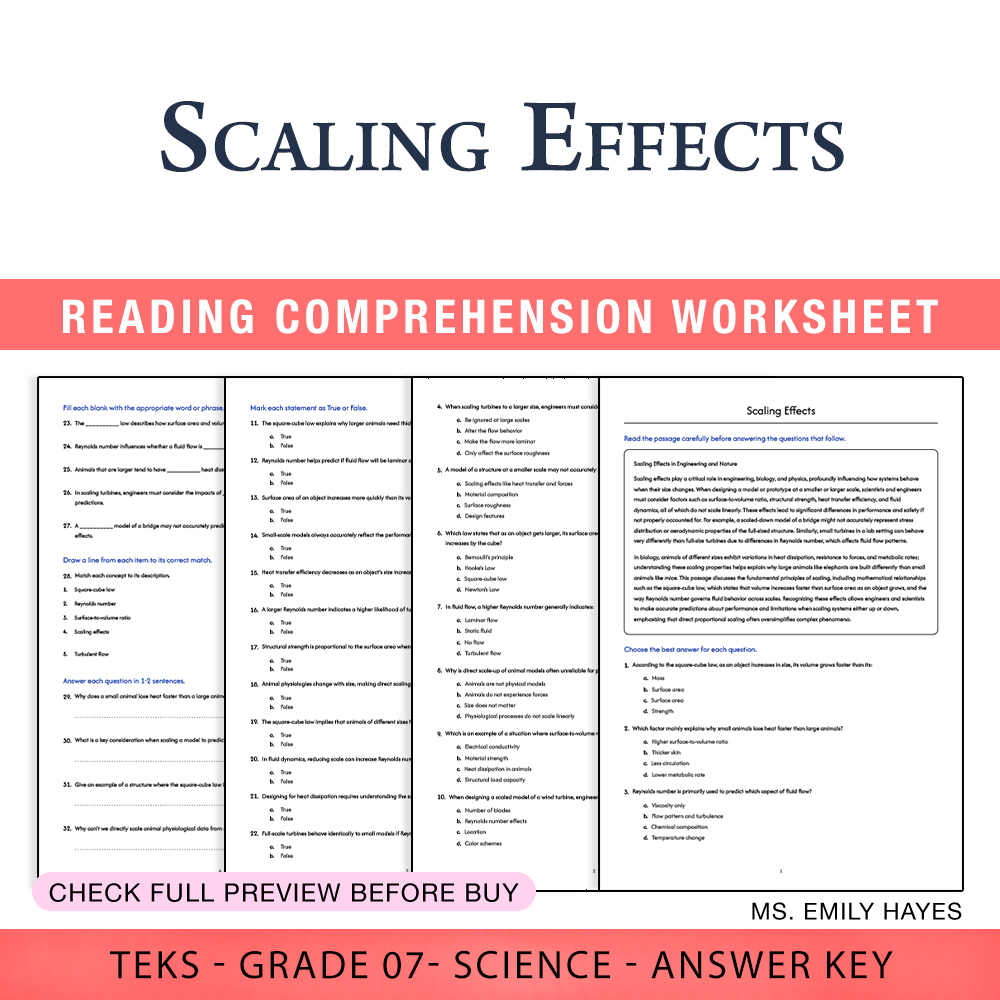
7th Grade Science | Scaling Effects Worksheet (PDF+ Answer Key)
Created byCopper Leaf ClassroomLearning Objectives
- Understand how physical behavior changes when scaling models to full size.
- Explain the relationships described by the square-cube law and surface-to-volume ratios.
- Analyze the implications of Reynolds number in fluid flow at different scales.
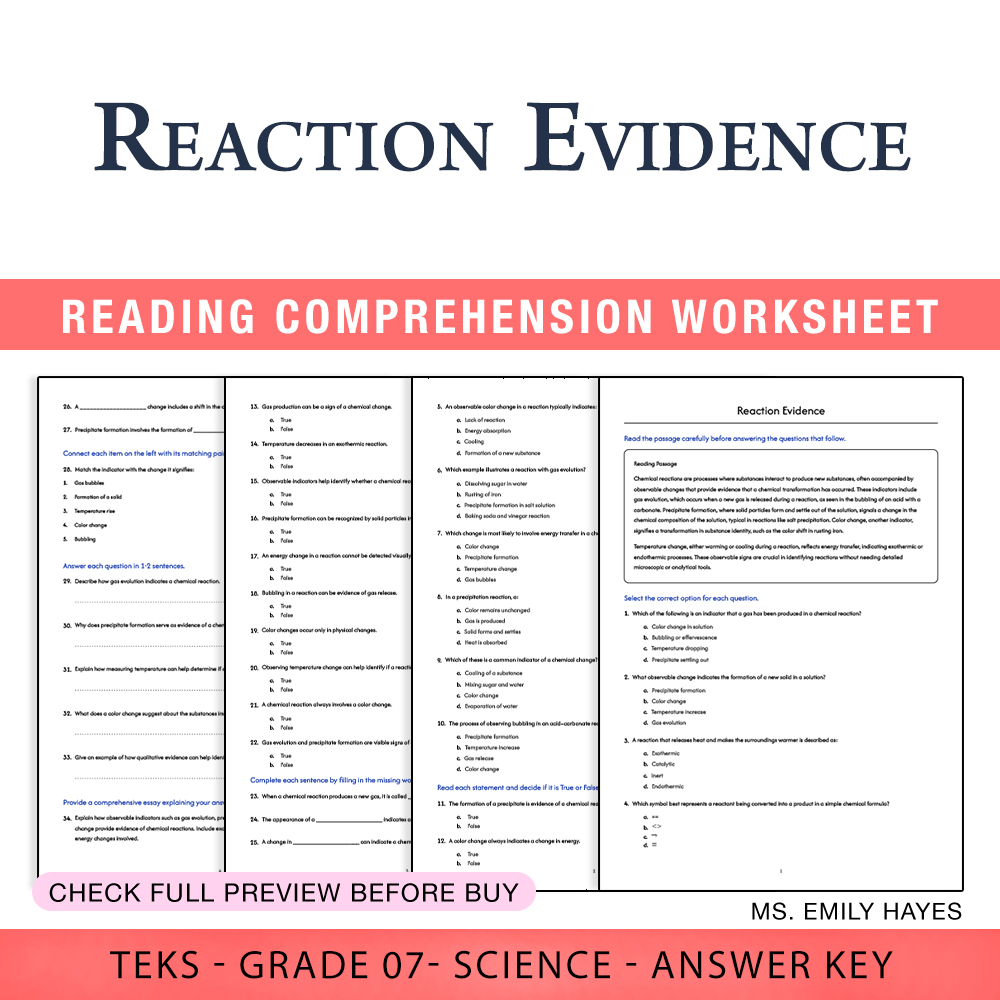
7th Grade Science | Reaction Evidence Worksheet (PDF+ Answer Key)
Created byCopper Leaf ClassroomLearning Objectives
- Describe various observable indicators of chemical reactions such as gas evolution, precipitate formation, color change, and temperature change.
- Connect observable signs of reactions to underlying mass and energy changes.
- Use simple symbolic formulas to represent reactant–product transformations.
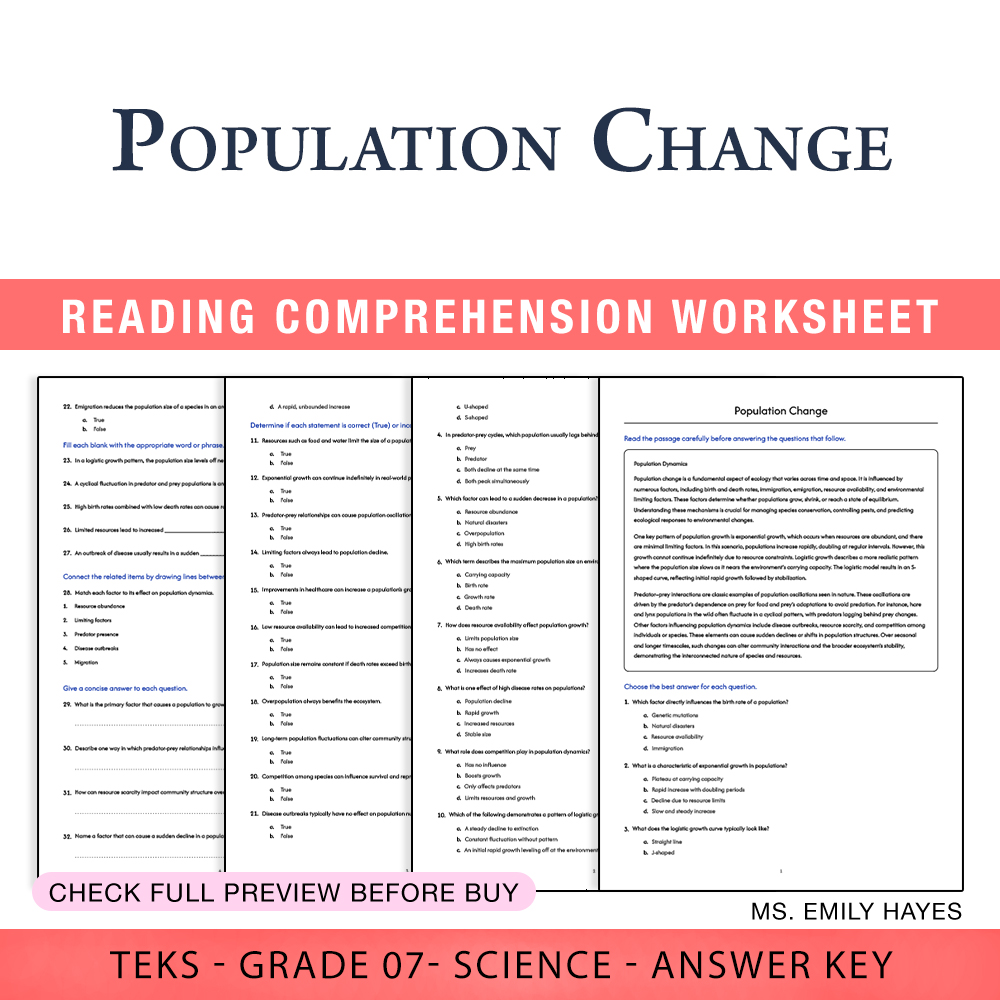
7th Grade Science | Population Change Worksheet (PDF+ Answer Key)
Created byCopper Leaf ClassroomLearning Objectives
- Identify factors influencing population size and distribution.
- Describe patterns of exponential and logistic growth.
- Explain how predator-prey relationships affect populations.
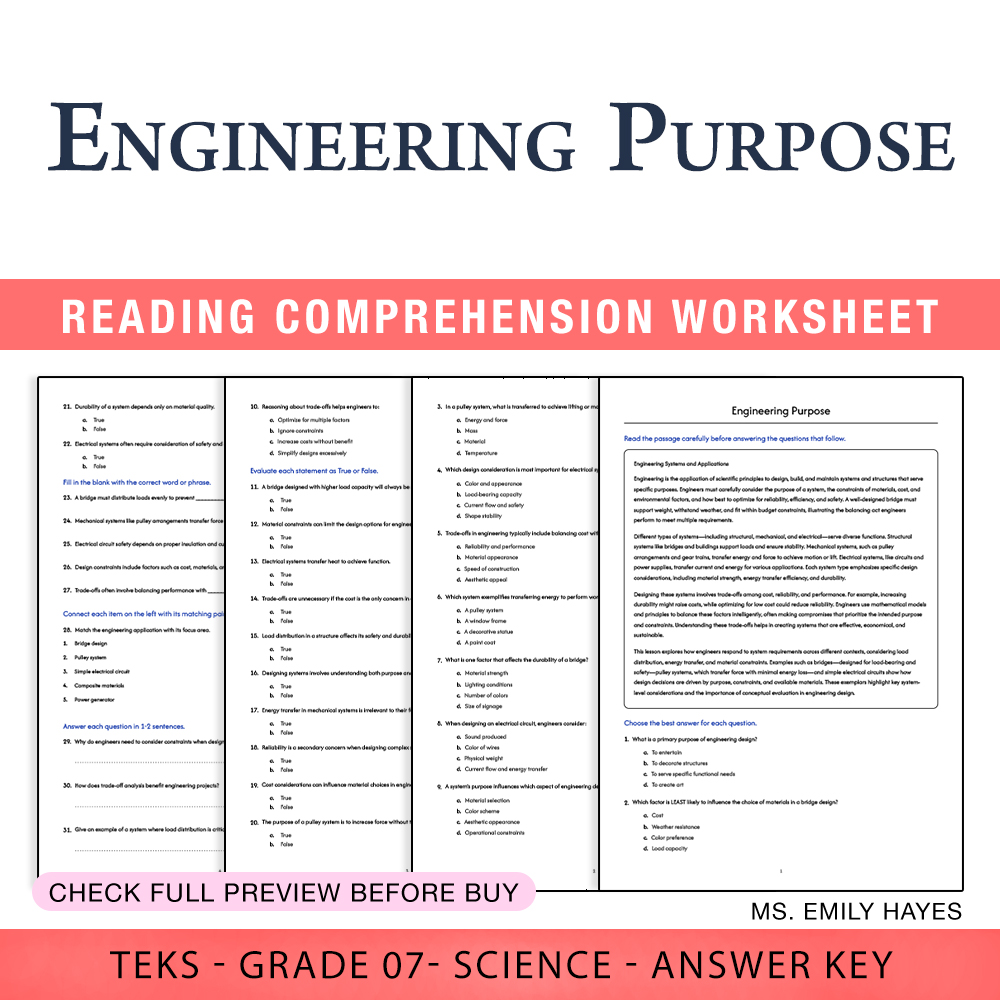
7th Grade Science | Engineering Purpose Worksheet (PDF+ Answer Key)
Created byCopper Leaf ClassroomLearning Objectives
- Describe how engineering designs respond to system purpose, constraints, and materials.
- Identify examples of structural, mechanical, and electrical systems and their functions.
- Explain the trade-offs among cost, reliability, and performance in engineering.
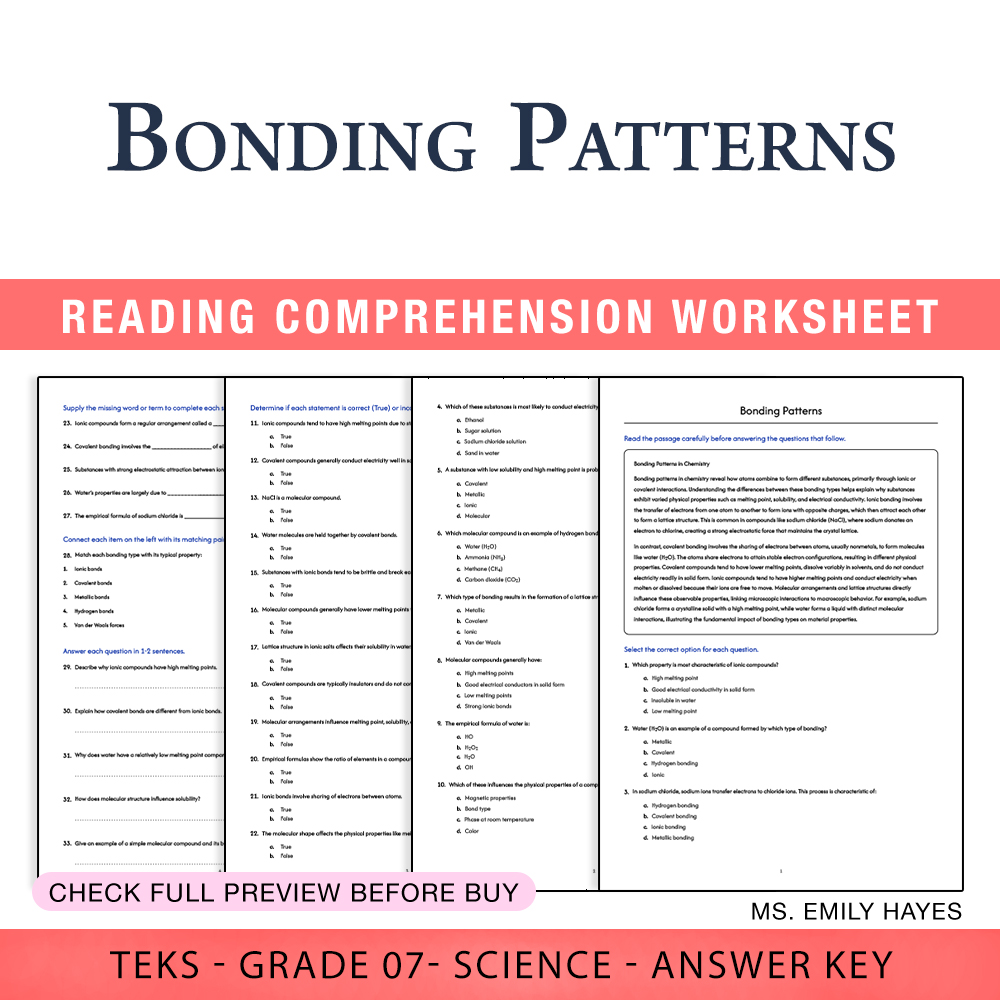
7th Grade Science | Bonding Patterns Worksheet (PDF+ Answer Key)
Created byCopper Leaf ClassroomLearning Objectives
- Distinguish between ionic and covalent bonding based on properties and formation.
- Relate bonding types to macroscopic properties such as melting point, solubility, and electrical conductivity.
- Describe the formation of simple binary ionic salts and molecular compounds using empirical formulas.
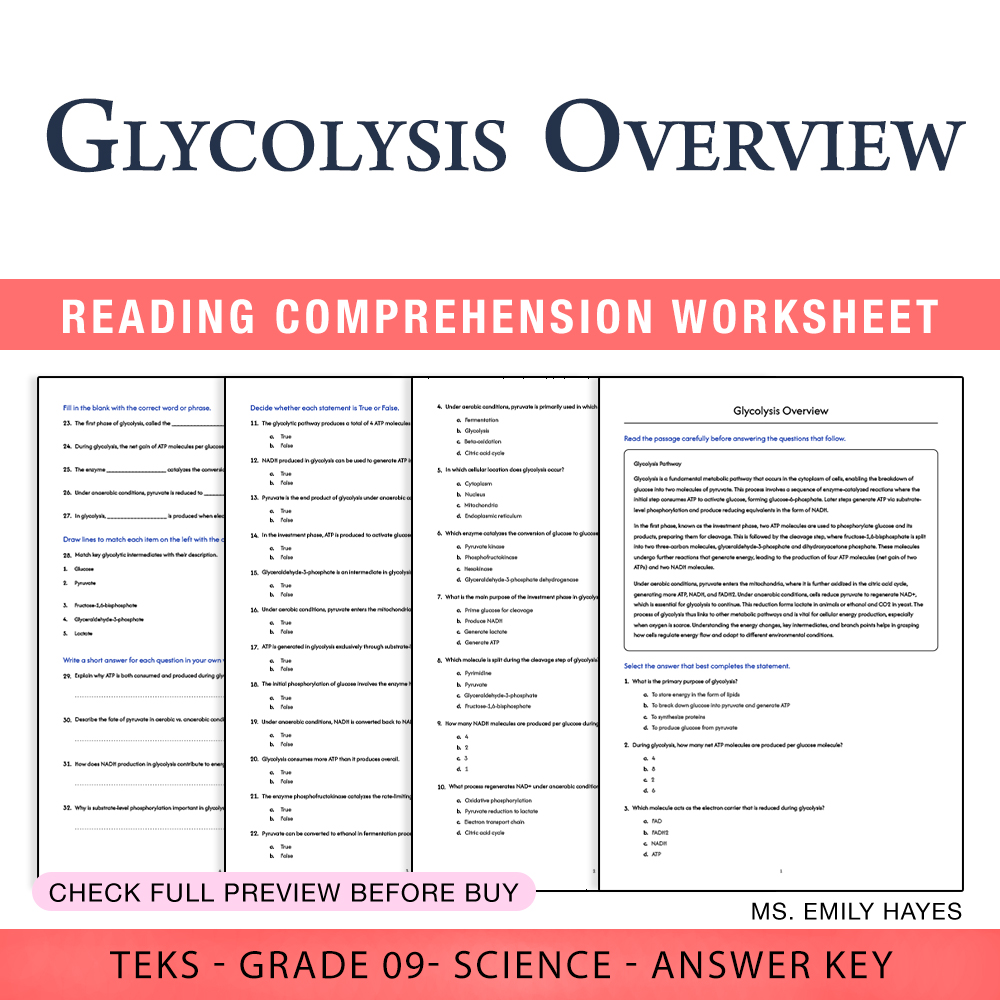
Grade 9 Science | Glycolysis Overview Worksheet (PDF+ Answer Key)
Created byCopper Leaf ClassroomLearning Objectives
- Understand the steps and key intermediates of glycolysis.
- Identify the energy investment and payoff phases of glycolysis.
- Describe the fate of pyruvate under aerobic and anaerobic conditions.
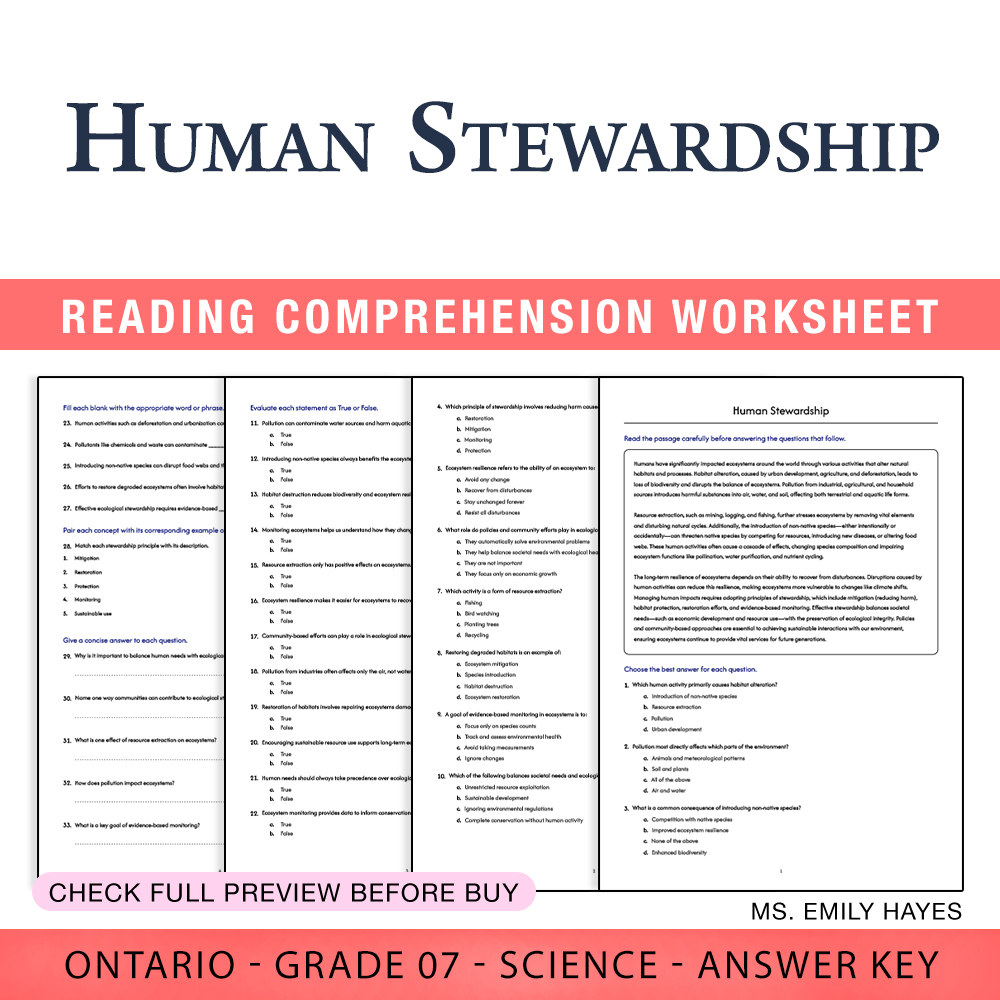
7th Grade Science | Human Stewardship Worksheet (PDF+ Answer Key)
Created byCopper Leaf ClassroomLearning Objectives
- Describe human impacts on ecosystems, including habitat alteration, pollution, resource extraction, and introduction of non-native species.
- Explain the consequences of human activities on species composition, ecosystem functions, and long-term resilience.
- Outline principles of ecological stewardship such as mitigation, habitat protection, restoration priorities, and evidence-based monitoring.
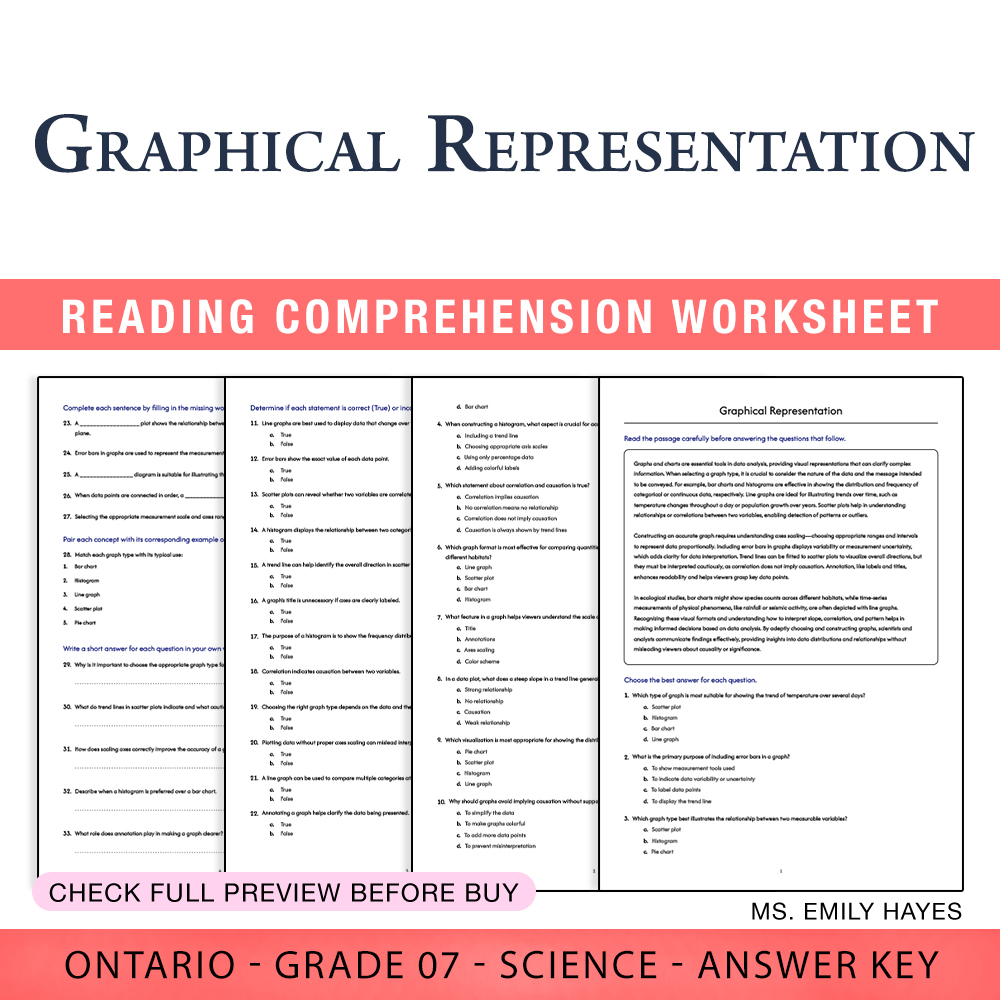
Grade 7 Science | Graphical Representation Worksheet (PDF+ Answer Key)
Created byCopper Leaf ClassroomLearning Objectives
- Understand the different types of graphs used to display data such as bar charts, histograms, line graphs, and scatter plots.
- Learn how to properly select and construct various graphs based on data type and measurement scales.
- Interpret elements of graphs including axes, error bars, trend lines, and patterns.
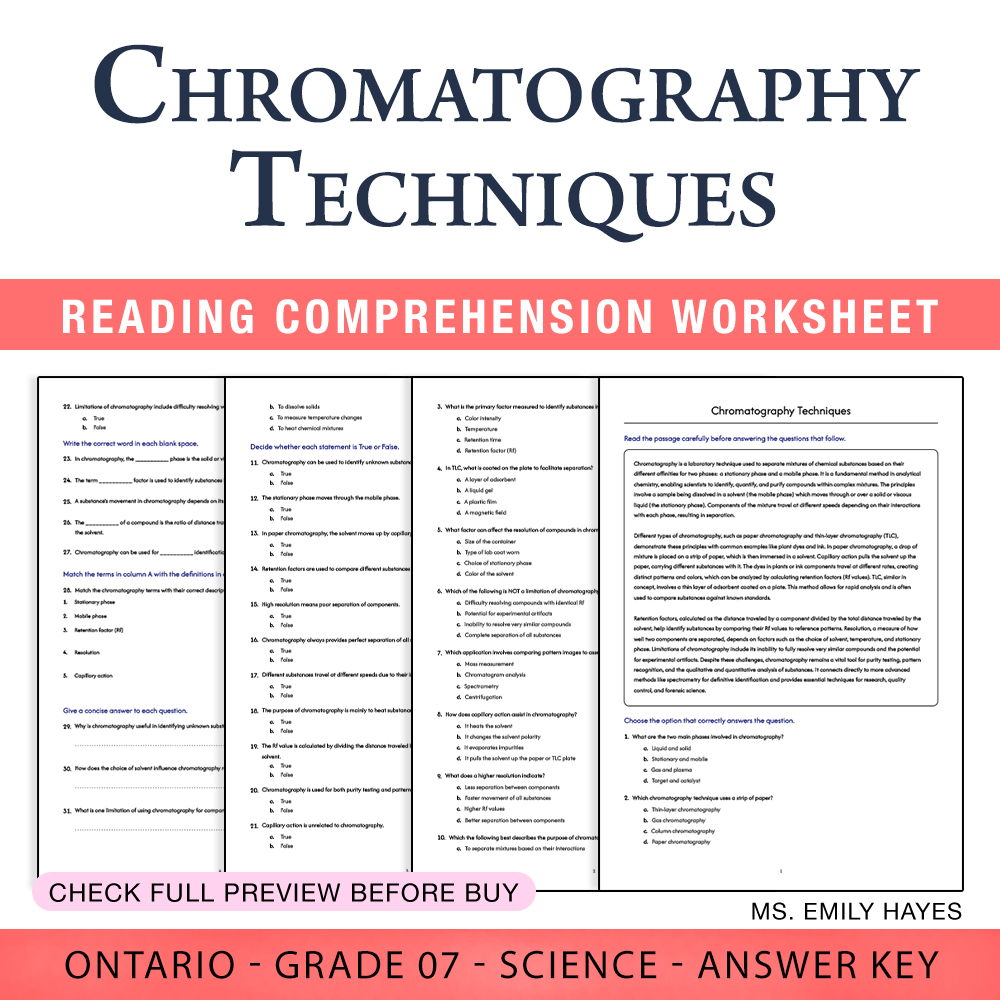
7th Grade Science | Chromatography Techniques Worksheet (PDF+ Answer Key)
Created byCopper Leaf ClassroomLearning Objectives
- Describe the principles of chromatographic separation, including differential partitioning and the roles of stationary and mobile phases.
- Identify the applications of paper and thin-layer chromatography using plant dyes and ink examples.
- Interpret retention factors, resolution, and limitations in chromatography.
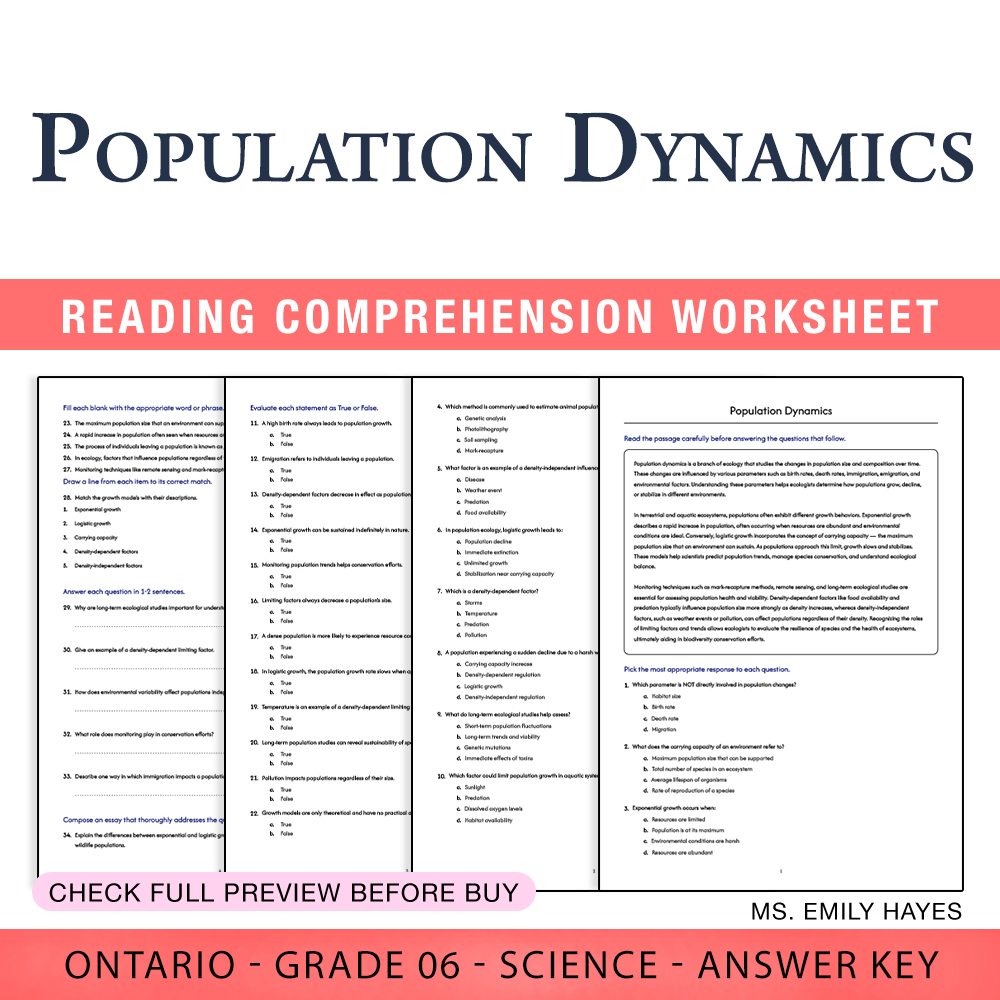
6th Grade Science | Population Dynamics Worksheet (PDF+ Answer Key)
Created byCopper Leaf ClassroomLearning Objectives
- Understand the key parameters that influence population change including birth rates, death rates, immigration, and emigration.
- Explain and distinguish between exponential and logistic growth models in populations.
- Identify factors that limit or promote population growth in terrestrial and aquatic systems.
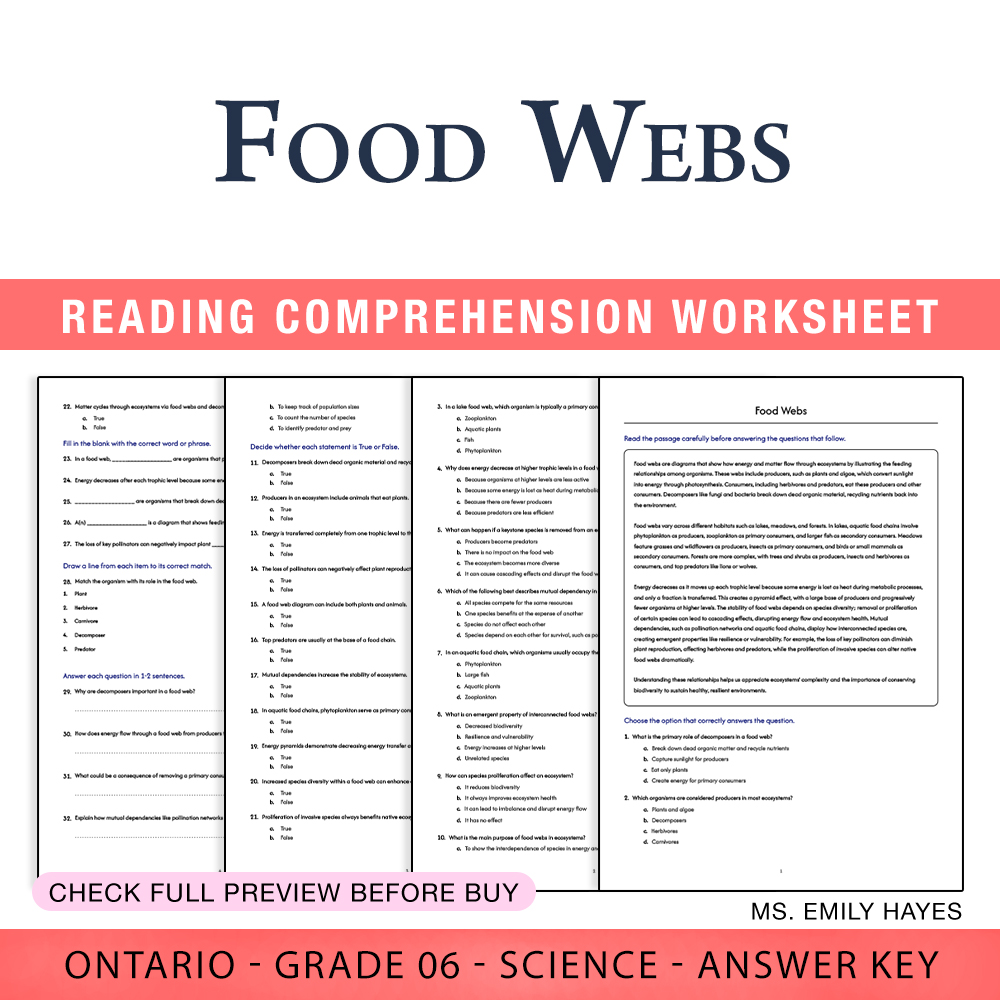
6th Grade Science | Food Webs Worksheet (PDF+ Answer Key)
Created byCopper Leaf ClassroomLearning Objectives
- Understand the components of food webs including producers, consumers, and decomposers
- Describe energy flow and matter cycling within different ecosystems
- Analyze the effects of species removal or proliferation on food web stability
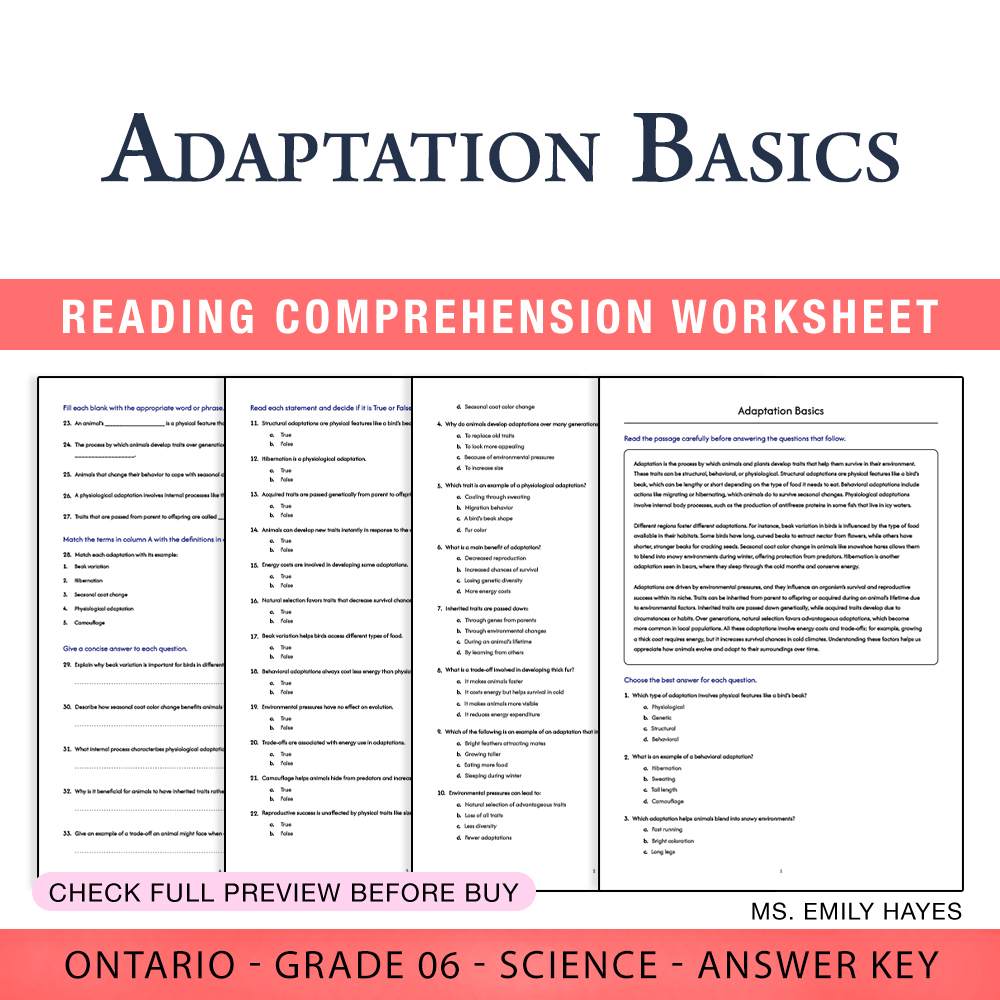
6th Grade Science | Adaptation Basics Worksheet (PDF+ Answer Key)
Created byCopper Leaf ClassroomLearning Objectives
- Understand the three main types of animal adaptations: structural, behavioral, and physiological.
- Identify regional examples of adaptations such as beak variation, seasonal coat color change, and hibernation.
- Explain how adaptations contribute to survival and reproductive success within specific niches.
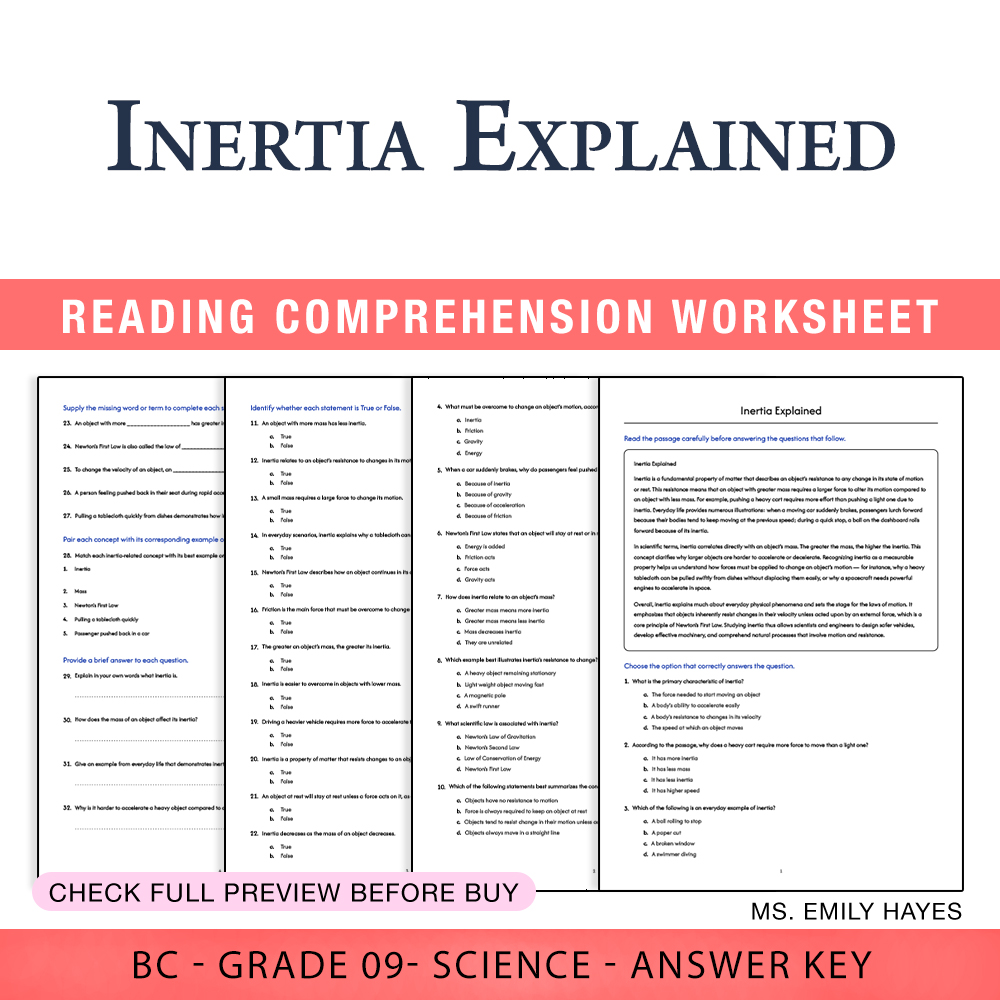
9th Grade Science | Inertia Explained Worksheet (PDF+ Answer Key)
Created byCopper Leaf ClassroomLearning Objectives
- Understand the concept of inertia and its relation to mass.
- Identify real-world examples that demonstrate inertia.
- Explain how force overcomes inertia to change an object's motion.
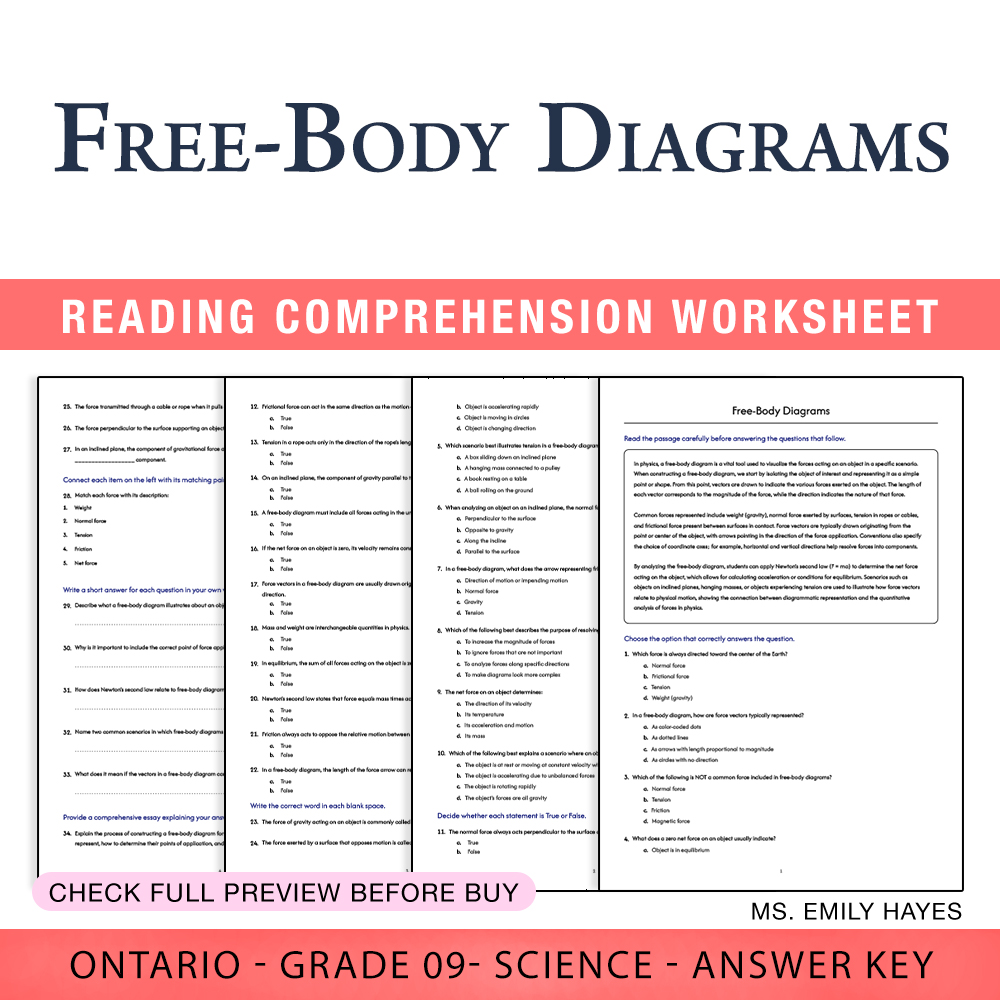
9th Grade Science | Free-Body Diagrams Worksheet (PDF + Answer Key)
Created byCopper Leaf ClassroomLearning Objectives
- Understand the components and conventions used in drawing free-body diagrams.
- Identify and represent the key forces acting on objects in various scenarios.
- Apply Newton's second law to analyze forces and calculate net force and acceleration.
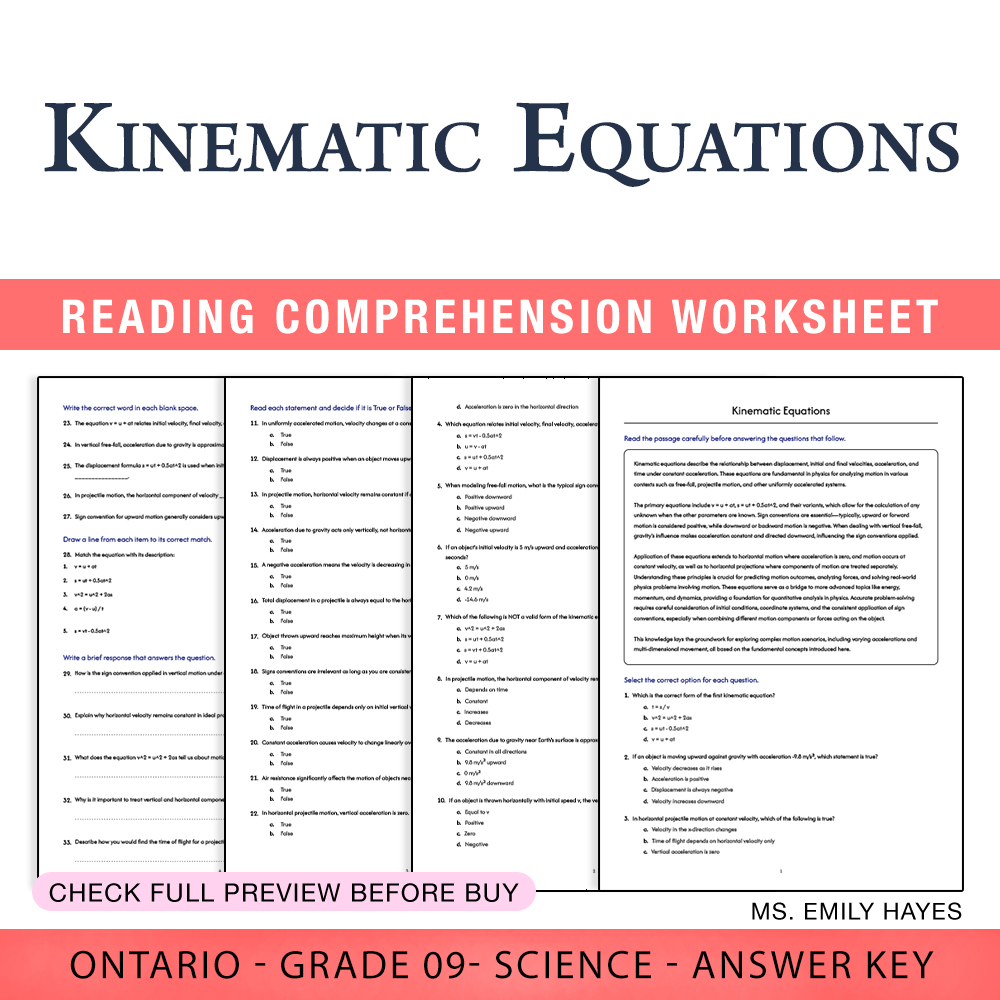
9th Grade Science | Kinematic Equations Worksheet (PDF + Answer Key)
Created byCopper Leaf ClassroomLearning Objectives
- Understand and explain the key kinematic equations involving constant acceleration.
- Apply the equations to analyze vertical free-fall motion and horizontal projectile motion.
- Interpret sign conventions and component-wise treatment in motion problems.
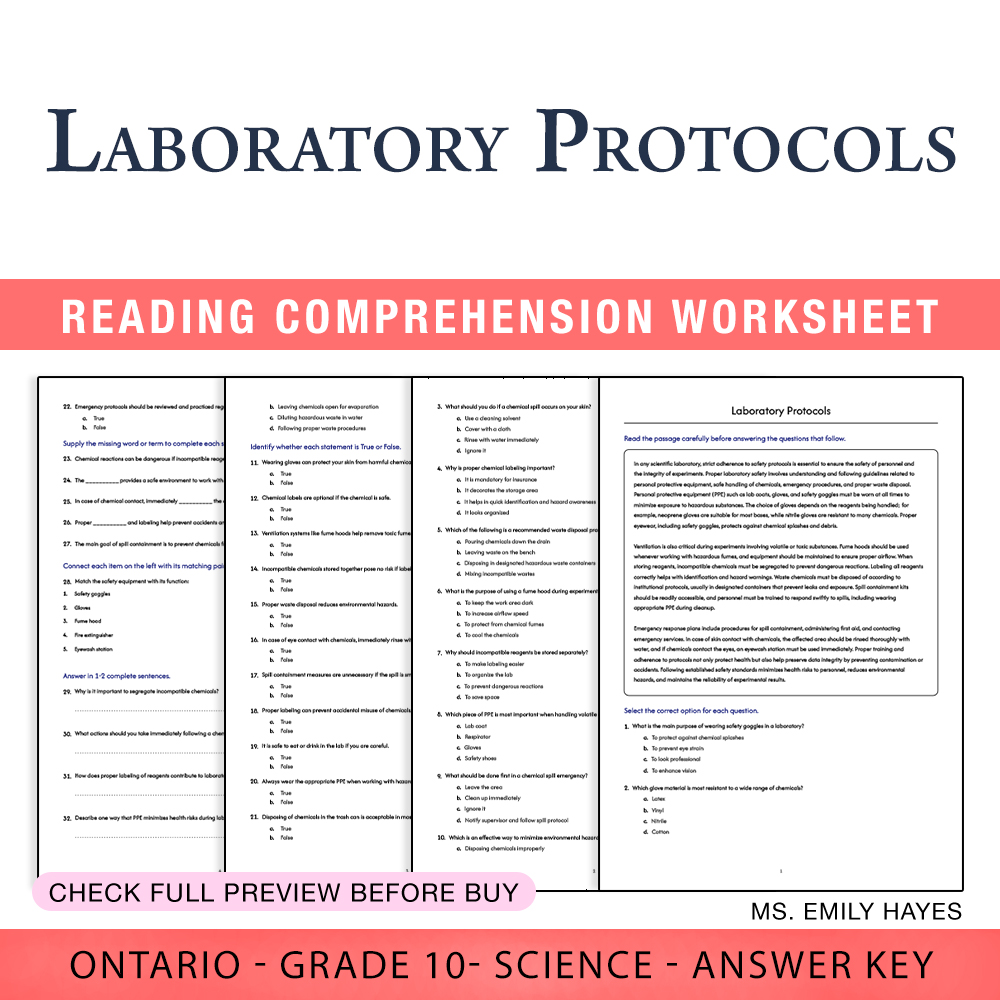
10th Grade Science | Laboratory Protocols Worksheet (PDF + Answer Key)
Created byCopper Leaf ClassroomLearning Objectives
- Identify essential safety protocols for laboratory work.
- Recognize appropriate use of personal protective equipment (PPE).
- Understand proper storage, labeling, and waste handling procedures.
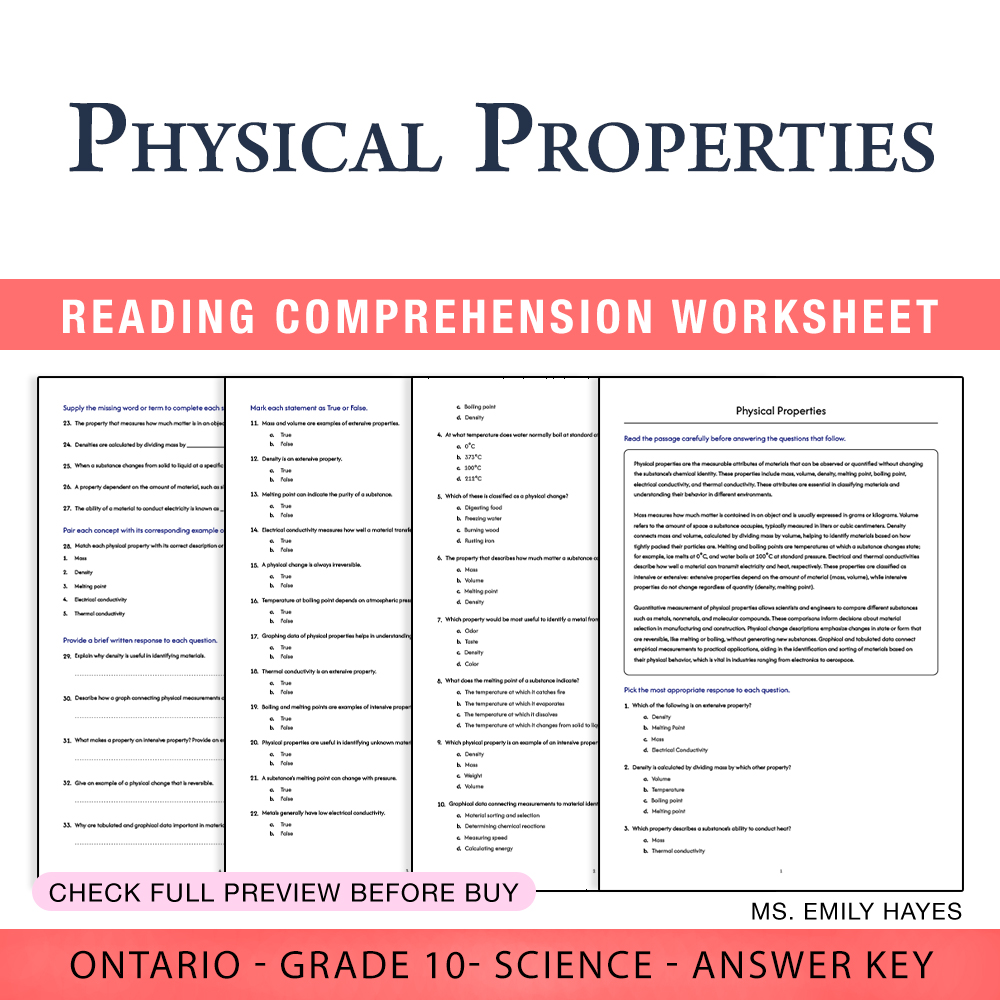
Grade 10 Science | Physical Properties Worksheet (PDF + Answer Key)
Created byCopper Leaf ClassroomLearning Objectives
- Define and distinguish between various measurable physical properties such as mass, volume, density, melting point, and boiling point.
- Explain the difference between intensive and extensive properties and provide examples of each.
- Interpret tabulated and graphical data related to physical properties for material identification and selection.
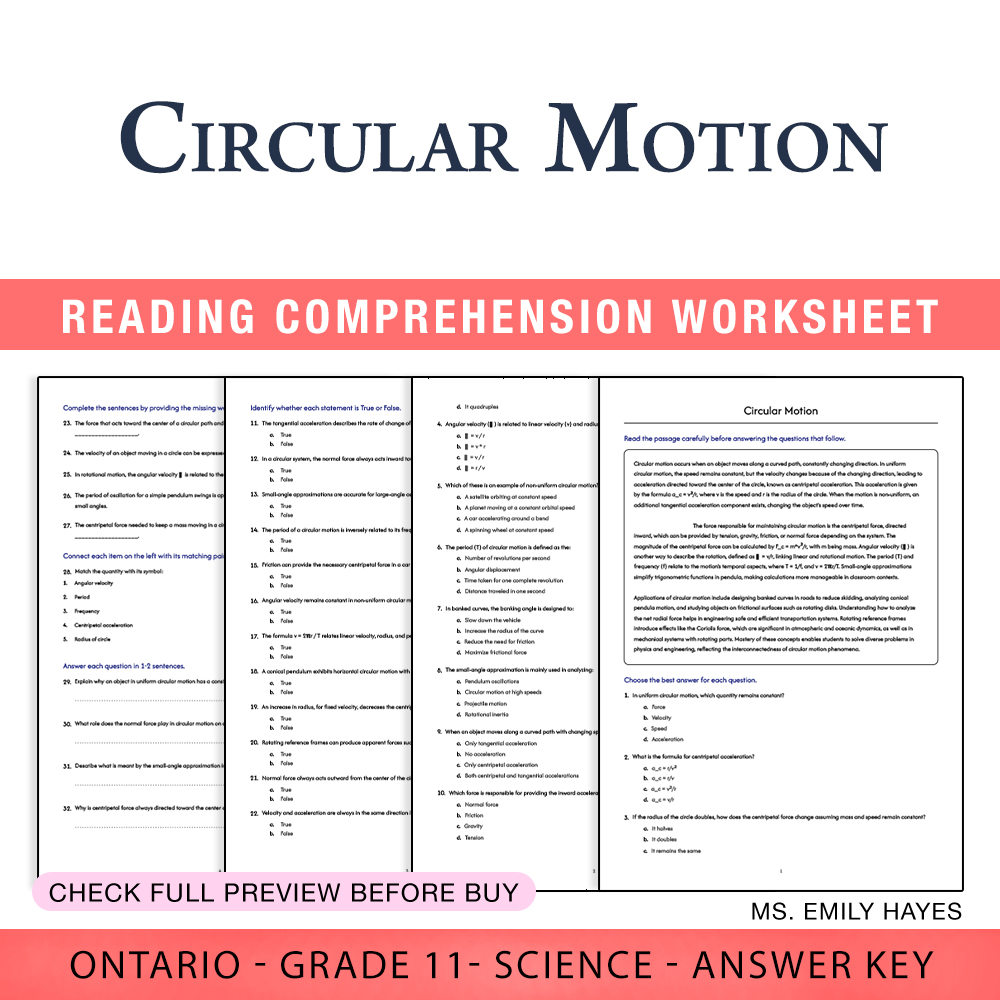
Grade 11 Science | Circular Motion Worksheet (PDF + Answer Key)
Created byCopper Leaf ClassroomLearning Objectives
- Understand the principles of centripetal acceleration in uniform and non-uniform circular motion.
- Analyze the relationships among speed, angular velocity, radius, and centripetal force.
- Apply concepts of circular motion to real-world systems such as banked curves, pendula, and frictional surfaces.
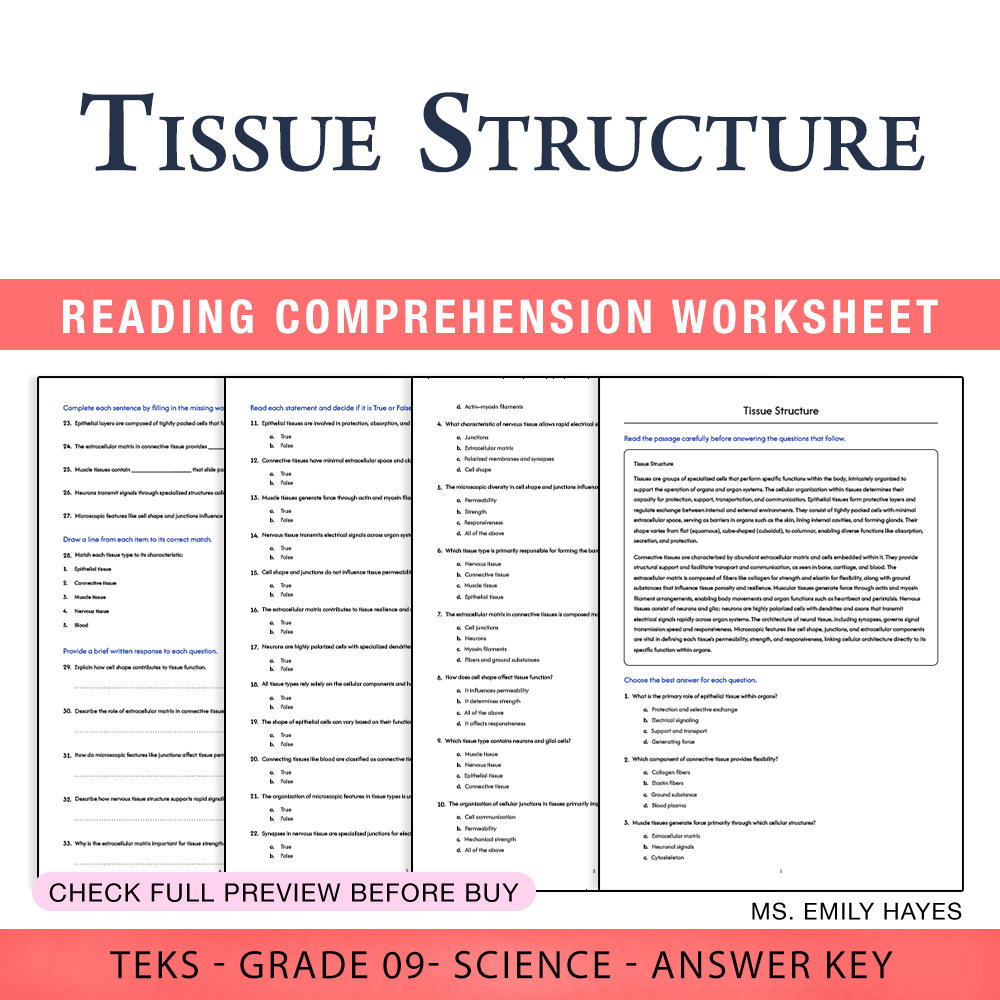
Grade 9 Science | Tissue Structure Worksheet (PDF+ Answer Key)
Created byCopper Leaf ClassroomLearning Objectives
- Describe the organization and functions of different tissue types in organs.
- Identify microscopic features that influence tissue functions, such as cell shape and junctions.
- Explain how cellular architecture supports physiological roles in organ systems.
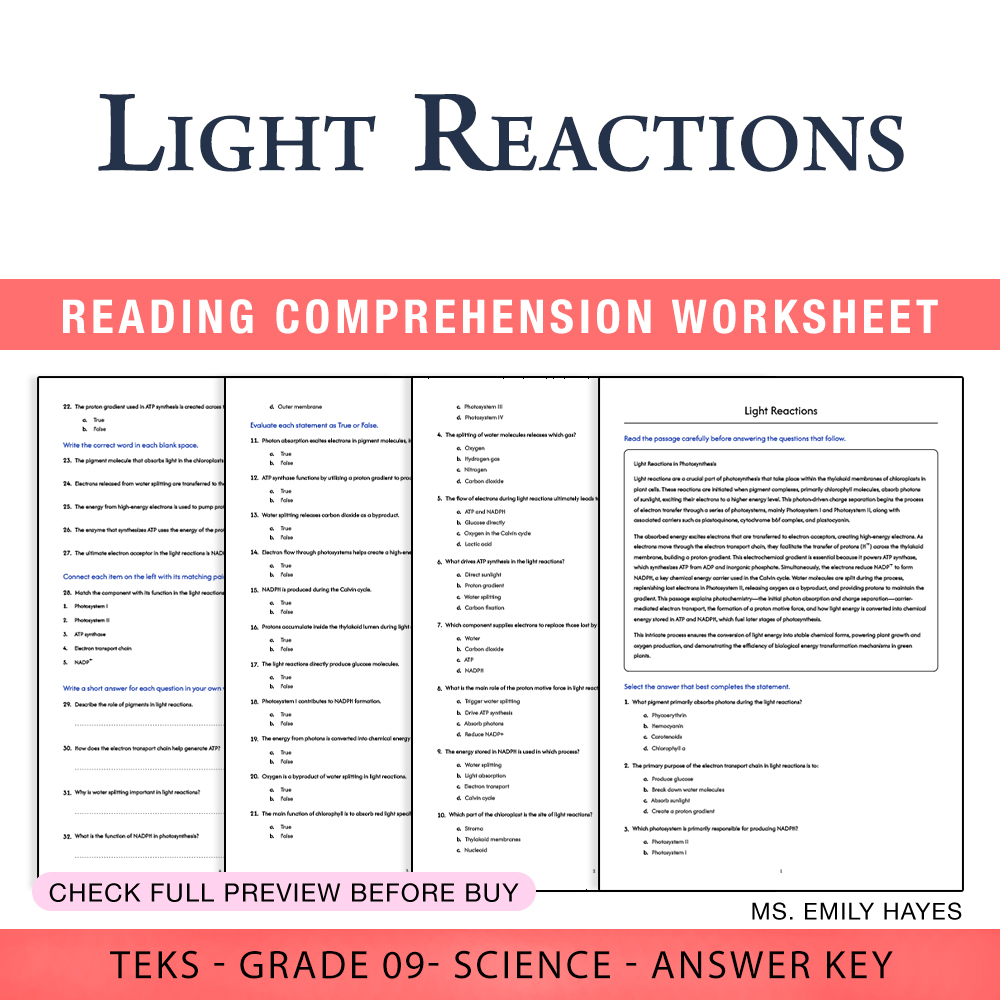
9th Grade Science | Light Reactions Worksheet (PDF+ Answer Key)
Created byCopper Leaf ClassroomLearning Objectives
- Explain the process occurring in the thylakoid membranes during light reactions.
- Identify the role of pigment complexes and photosystems in photon absorption.
- Describe how electron flow, proton gradient, and ATP/NADPH formation are interconnected.
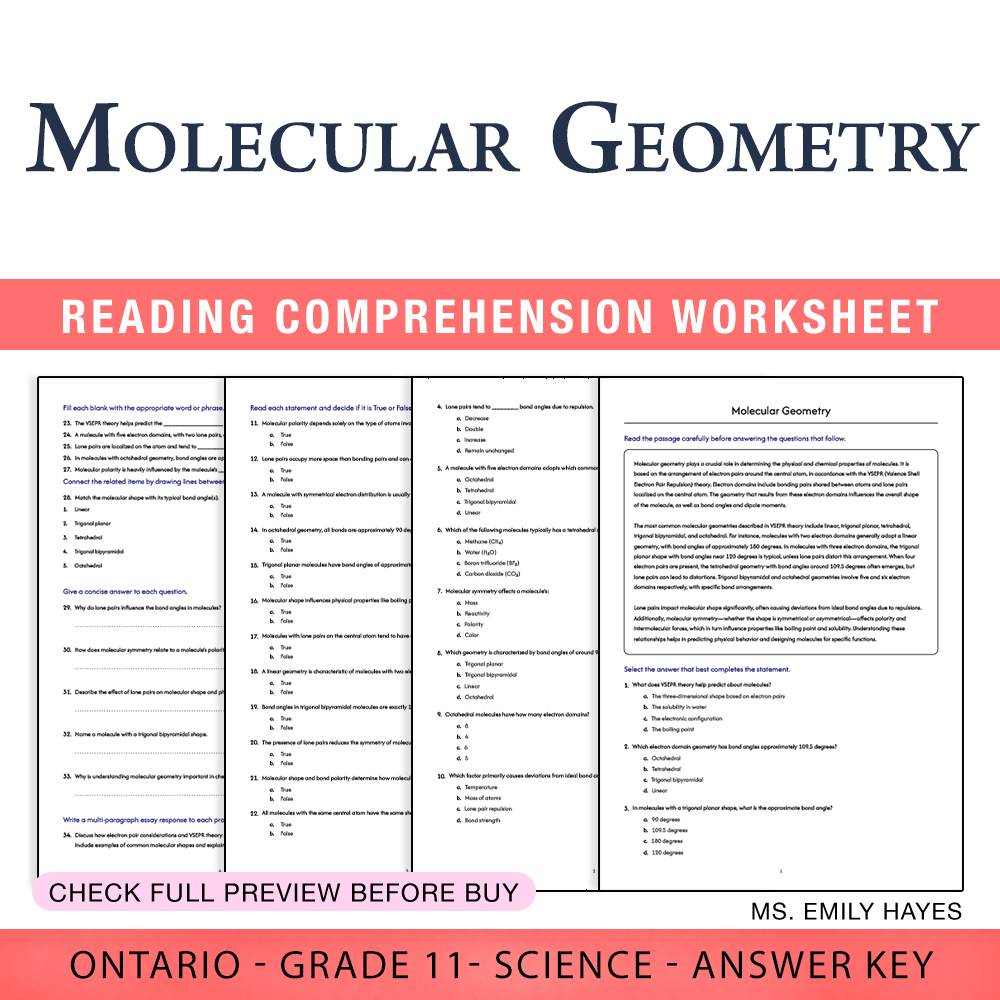
11th Grade Science | Molecular Geometry Worksheet (PDF + Answer Key)
Created byCopper Leaf ClassroomLearning Objectives
- Understand and identify the different electron-domain geometries (linear, trigonal planar, tetrahedral, trigonal bipyramidal, octahedral).
- Predict molecular shapes based on VSEPR theory and electron pair considerations.
- Interpret the relationship between molecular geometry and polarity, dipole moments, and physical properties.
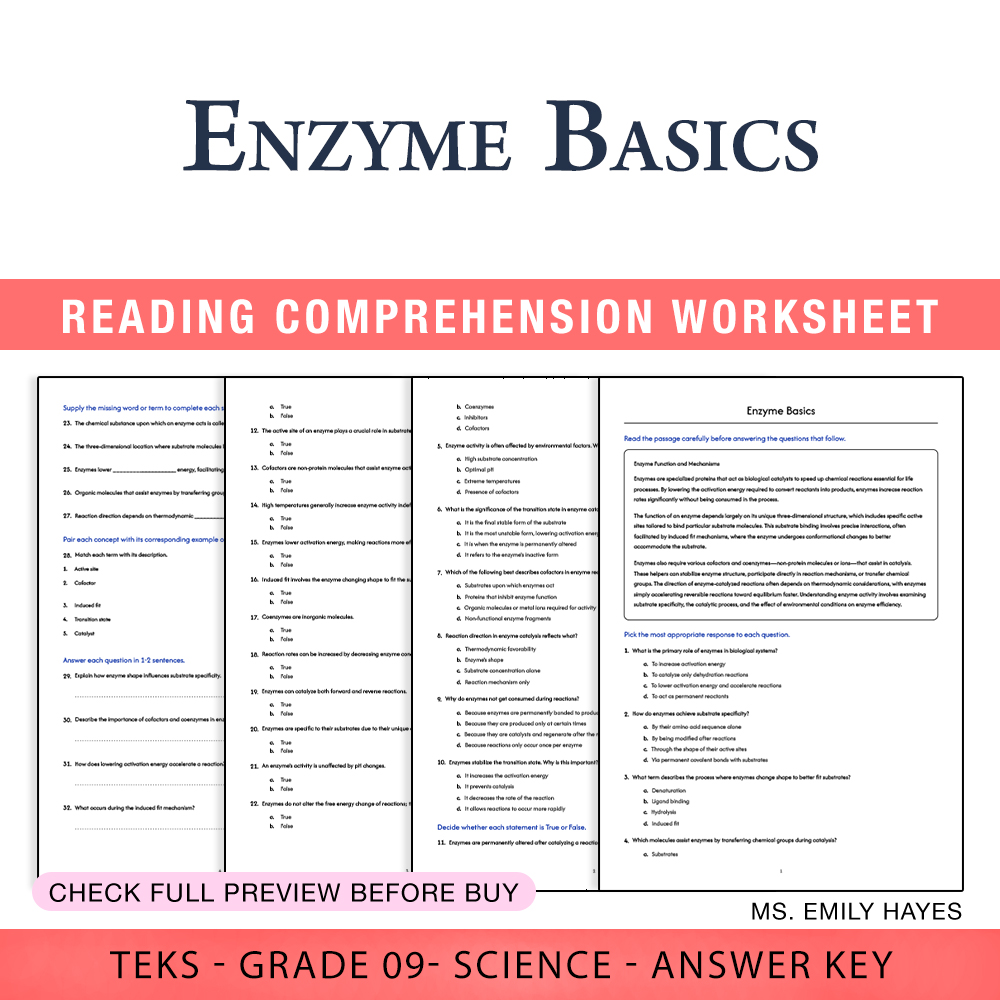
9th Grade Science | Enzyme Basics Worksheet (PDF+ Answer Key)
Created byCopper Leaf ClassroomLearning Objectives
- Understand the role of enzymes as biological catalysts in metabolic reactions.
- Describe how enzyme structure and active sites determine substrate specificity.
- Explain the concepts of activation energy and transition states in enzyme reactions.

Grade 11 Science | Remote Sensing & Land Monitoring Worksheet (PDF + Answer Key)
Created byCopper Leaf ClassroomLearning Objectives
- Understand the fundamental methods and technologies used in remote sensing for landscape monitoring.
- Identify and describe various remote sensing data types such as satellite imagery, aerial photography, and LiDAR.
- Analyze how remote sensing techniques are applied to land cover classification, vegetation indices, and change detection.
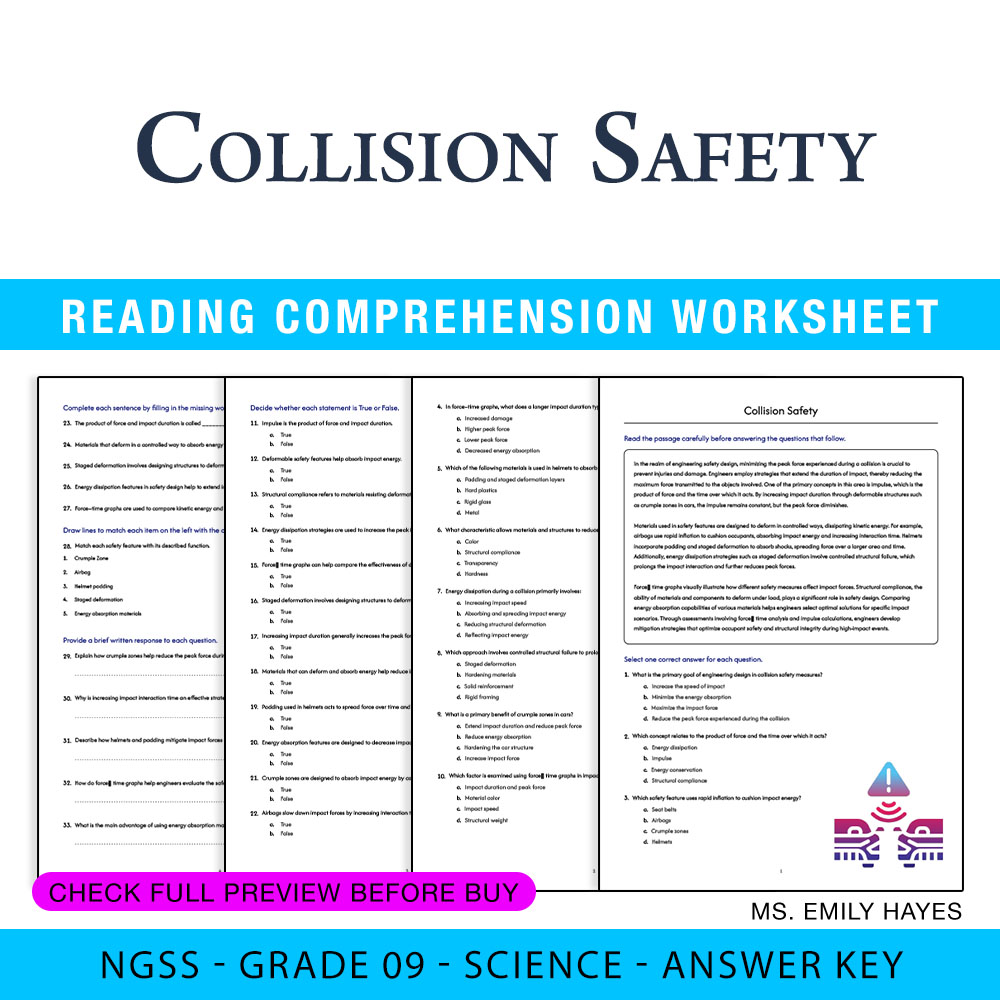
Grade 9 Science | Collision Safety Worksheet (PDF+ Answer Key)
Created byCopper Leaf ClassroomLearning Objectives
- Understand the concepts of impulse, force, and energy dissipation in collision scenarios.
- Analyze force‑time graphs to evaluate impact mitigation methods such as crumple zones and airbags.
- Describe how materials deform and dissipate energy during collisions to reduce peak forces.
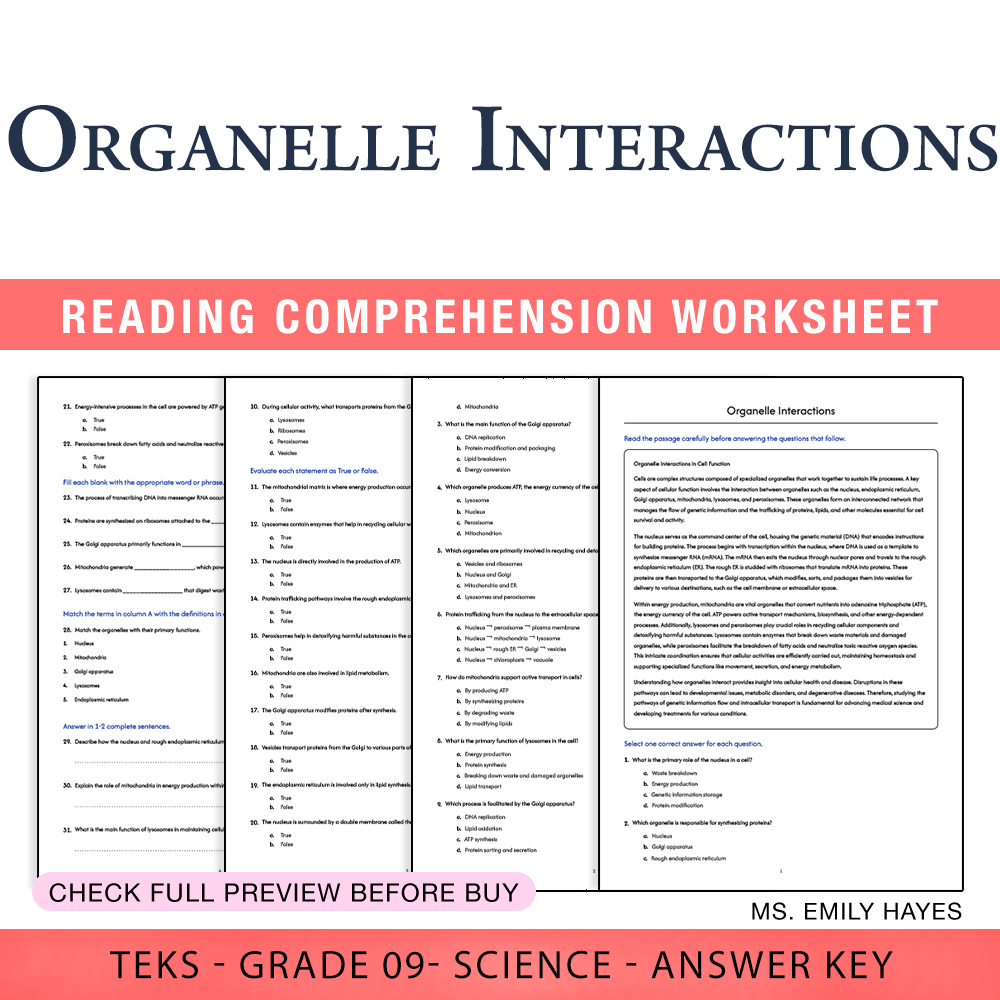
9th Grade Science | Organelle Interactions Worksheet (PDF+ Answer Key)
Created byCopper Leaf ClassroomLearning Objectives
- Describe how different organelles coordinate to support cellular functions.
- Explain the pathways of genetic information flow within a cell.
- Identify the roles of mitochondria, lysosomes, and the Golgi apparatus in maintaining homeostasis.
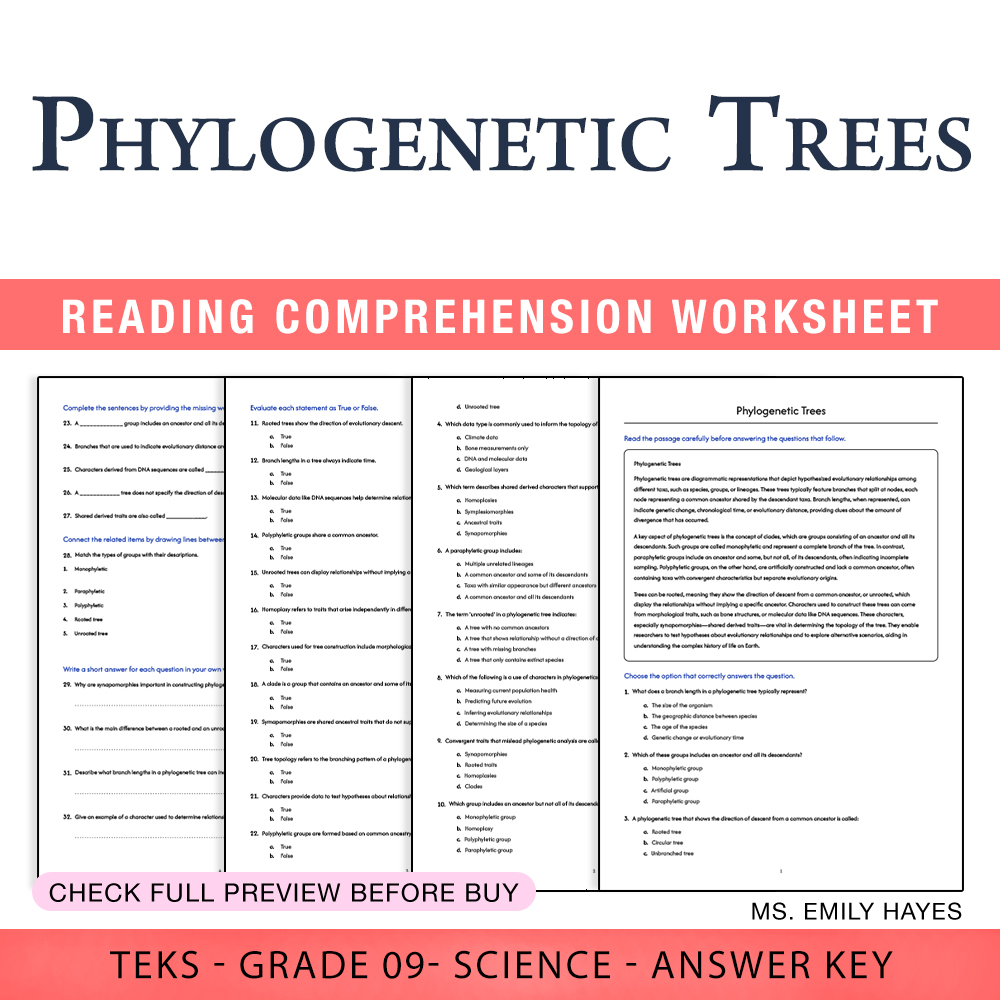
9th Grade Science | Phylogenetic Trees Worksheet (PDF+ Answer Key)
Created byCopper Leaf ClassroomLearning Objectives
- Understand the concept of phylogenetic trees and their components.
- Identify the differences between monophyletic, paraphyletic, and polyphyletic groups.
- Interpret branch lengths and rooted versus unrooted trees.
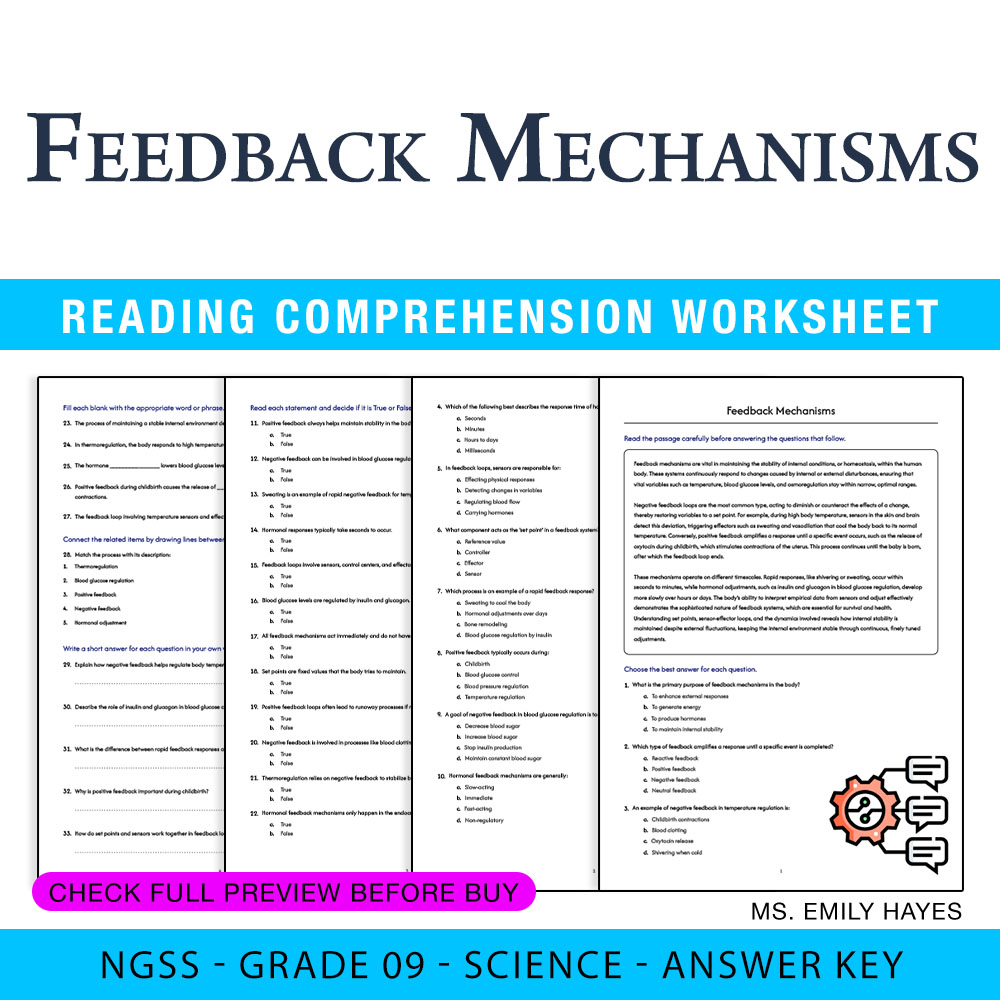
9th Grade Science | Feedback Mechanisms Worksheet (PDF+ Answer Key)
Created byCopper Leaf ClassroomLearning Objectives
- Describe the concepts of negative and positive feedback within physiological systems.
- Explain how feedback mechanisms maintain internal body conditions within narrow limits.
- Identify examples of feedback processes such as thermoregulation and blood glucose control.
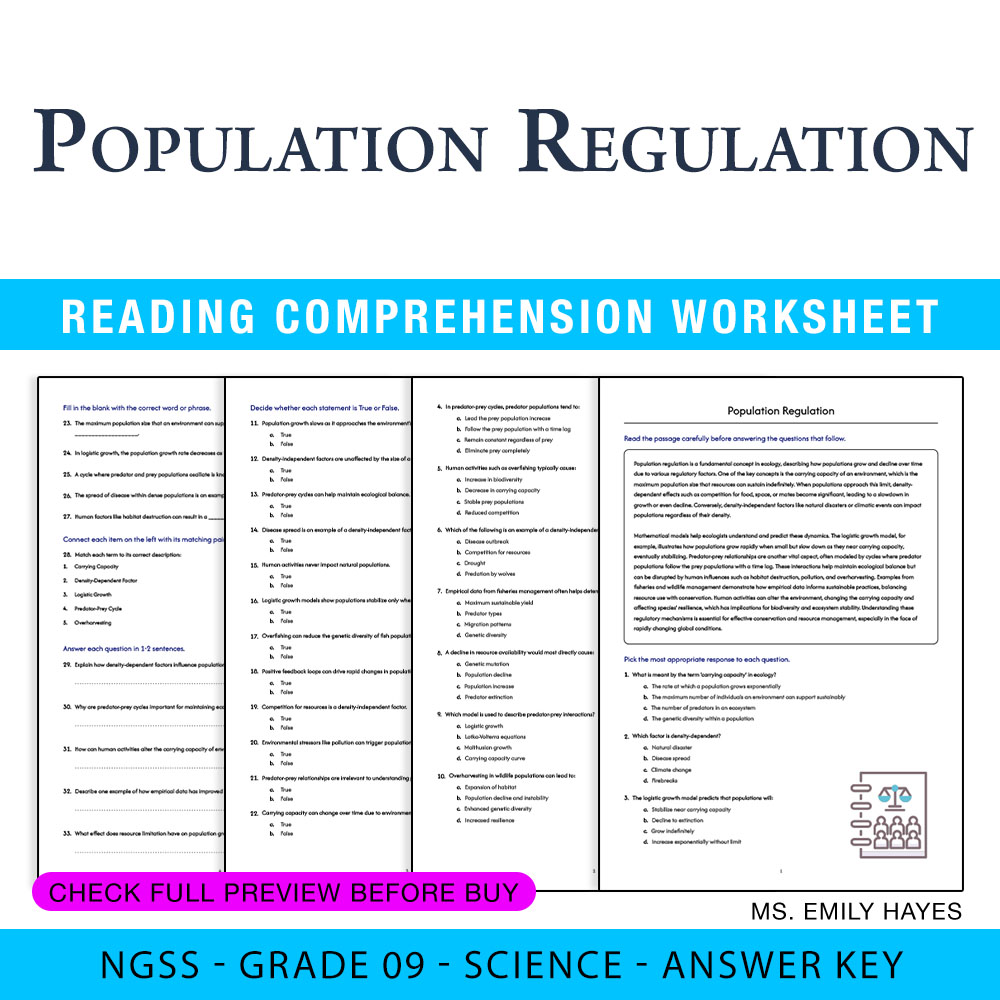
9th Grade Science | Population Regulation Worksheet (PDF+ Answer Key)
Created byCopper Leaf ClassroomLearning Objectives
- Describe factors that influence population sizes, including carrying capacity, competition, predation, and disease.
- Explain mathematical models such as logistic growth and predator-prey cycles in population dynamics.
- Analyze how human activities affect population resilience and ecosystems.
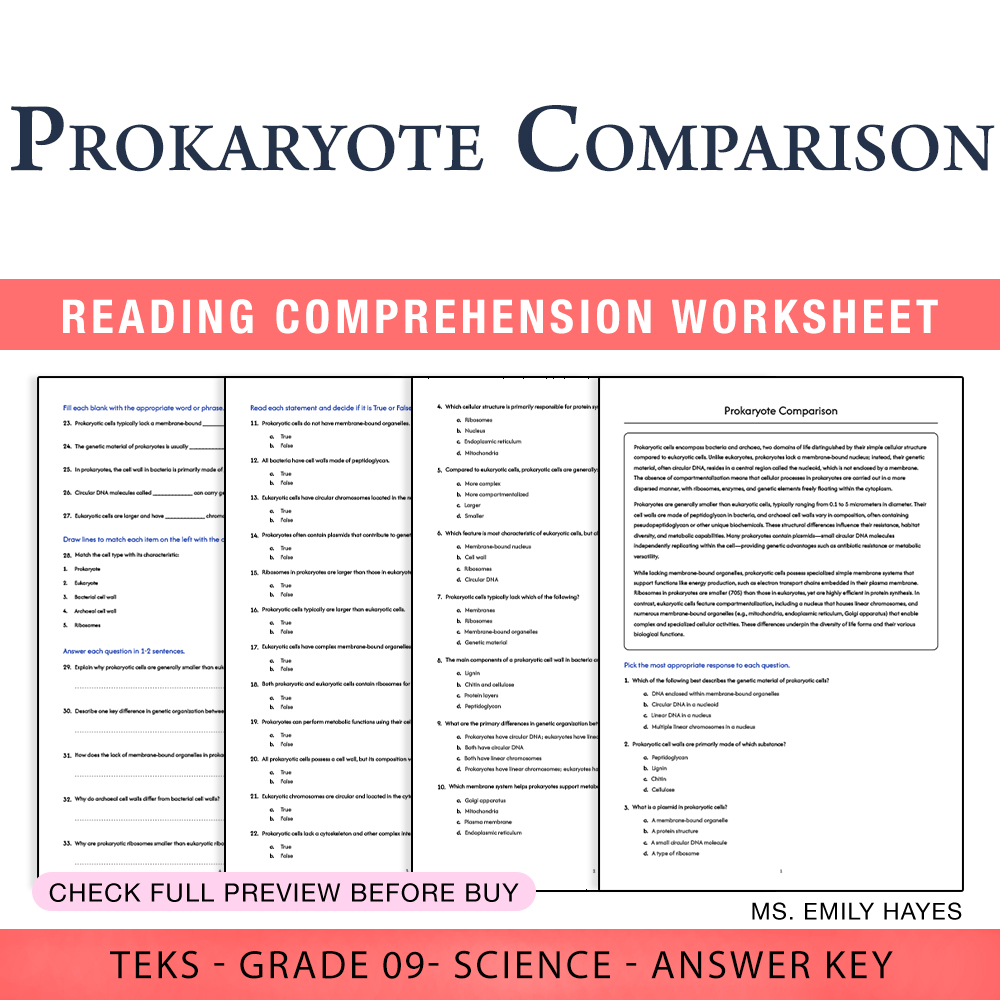
Grade 9 Science | Prokaryote Comparison Worksheet (PDF+ Answer Key)
Created byCopper Leaf ClassroomLearning Objectives
- Compare bacterial and archaeal cell organization with eukaryotic cells, focusing on differences in size, compartmentalization, and genetic arrangement.
- Describe features of prokaryotic cells such as the lack of membrane-bound organelles, circular DNA, and cell wall composition.
- Explain the structural and functional differences between prokaryotes and eukaryotes, including cellular components like ribosomes, plasmids, and membrane systems.
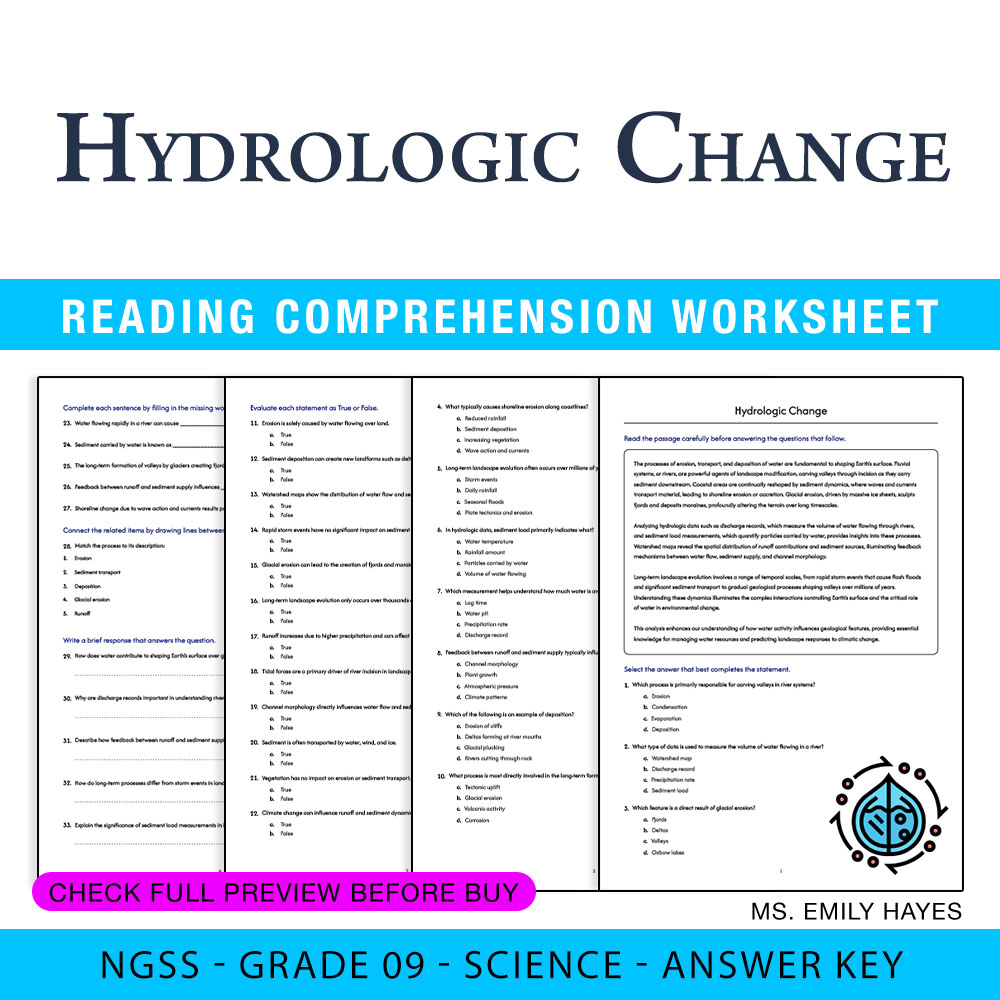
Grade 9 Science | Hydrologic Change Worksheet (PDF+ Answer Key)
Created byCopper Leaf ClassroomLearning Objectives
- Describe how water shapes Earth's surface through erosion, transport, and deposition.
- Analyze hydrologic data such as discharge records and sediment load measurements.
- Explain the feedbacks between runoff, sediment supply, and channel morphology.
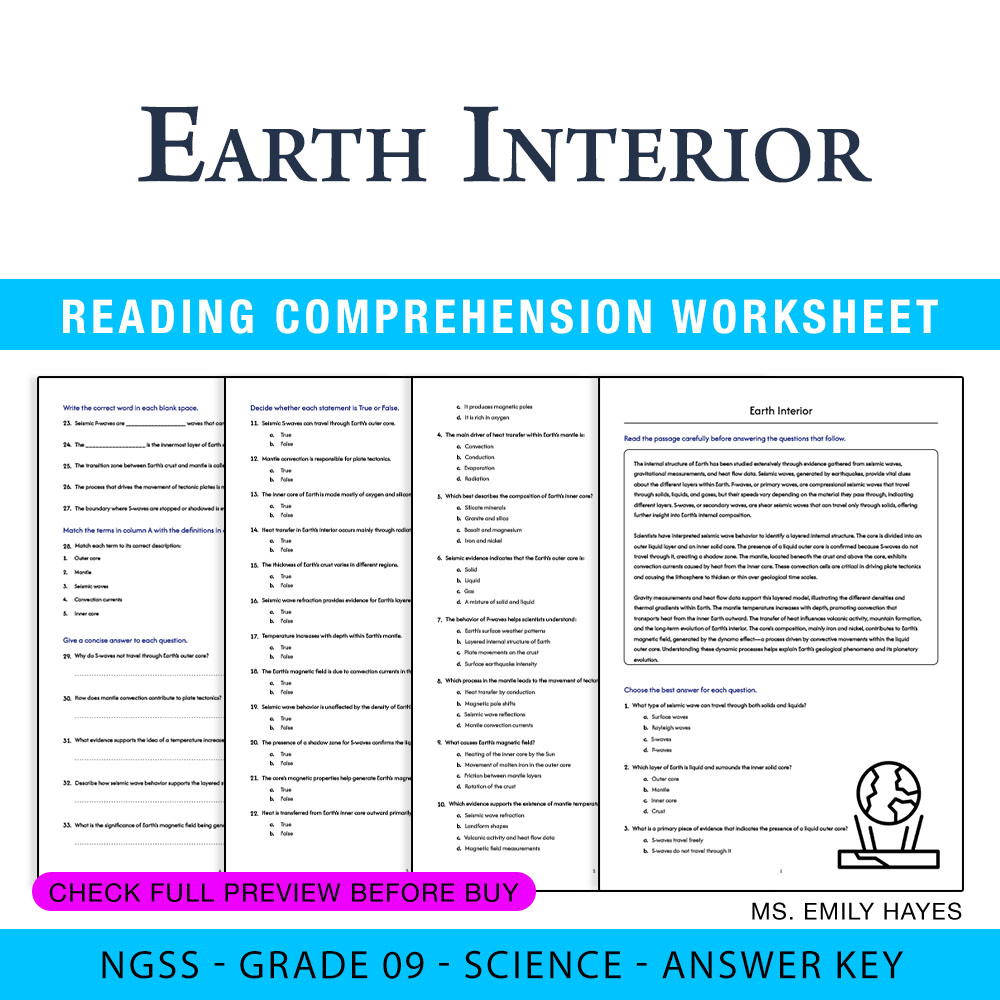
9th Grade Science | Earth Interior Worksheet (PDF+ Answer Key)
Created byCopper Leaf ClassroomLearning Objectives
- Describe the layered structure of Earth's interior based on seismic evidence.
- Explain how seismic wave behavior informs our understanding of Earth's internal composition.
- Analyze the relationship between density contrasts, gravity, and thermal energy transfer within Earth.
Browse more categories
About Science Worksheets
Find Science worksheets spanning core skills, practice, and review. All 42,859 resources are instant PDF downloads for the classroom or home.
Every worksheet on MyTeachingSheets is created by independent teacher-authors and reviewed before publication. All resources download as printable PDFs for classroom, homework, or at-home practice, and many include answer keys. Preview any worksheet free before buying.