
Science Worksheets
42,859 subject resources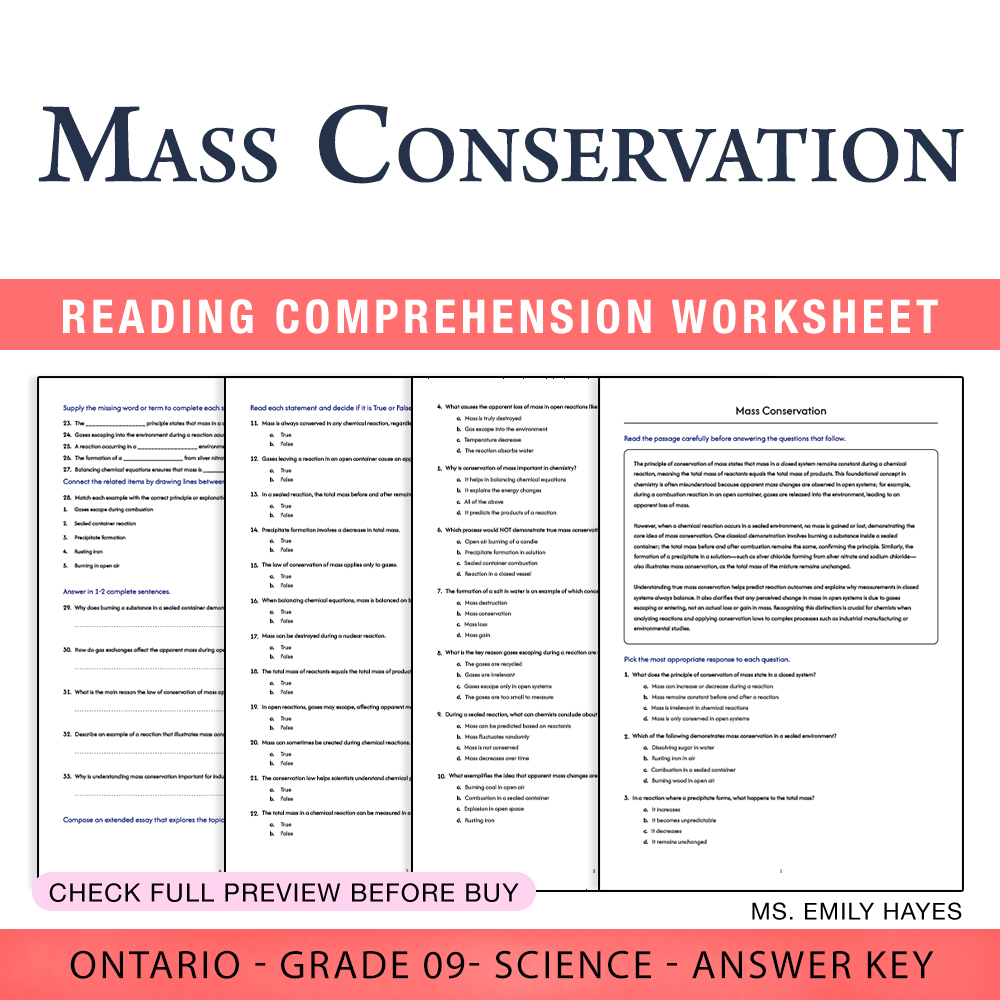
9th Grade Science | Mass Conservation Worksheet (PDF + Answer Key)
 Created byCopper Leaf Classroom
Learning Objectives
- Understand the principle of conservation of mass in closed systems during chemical reactions.
- Explain how mass is conserved despite apparent changes during chemical processes.
- Identify examples of mass conservation in real-world chemical reactions.
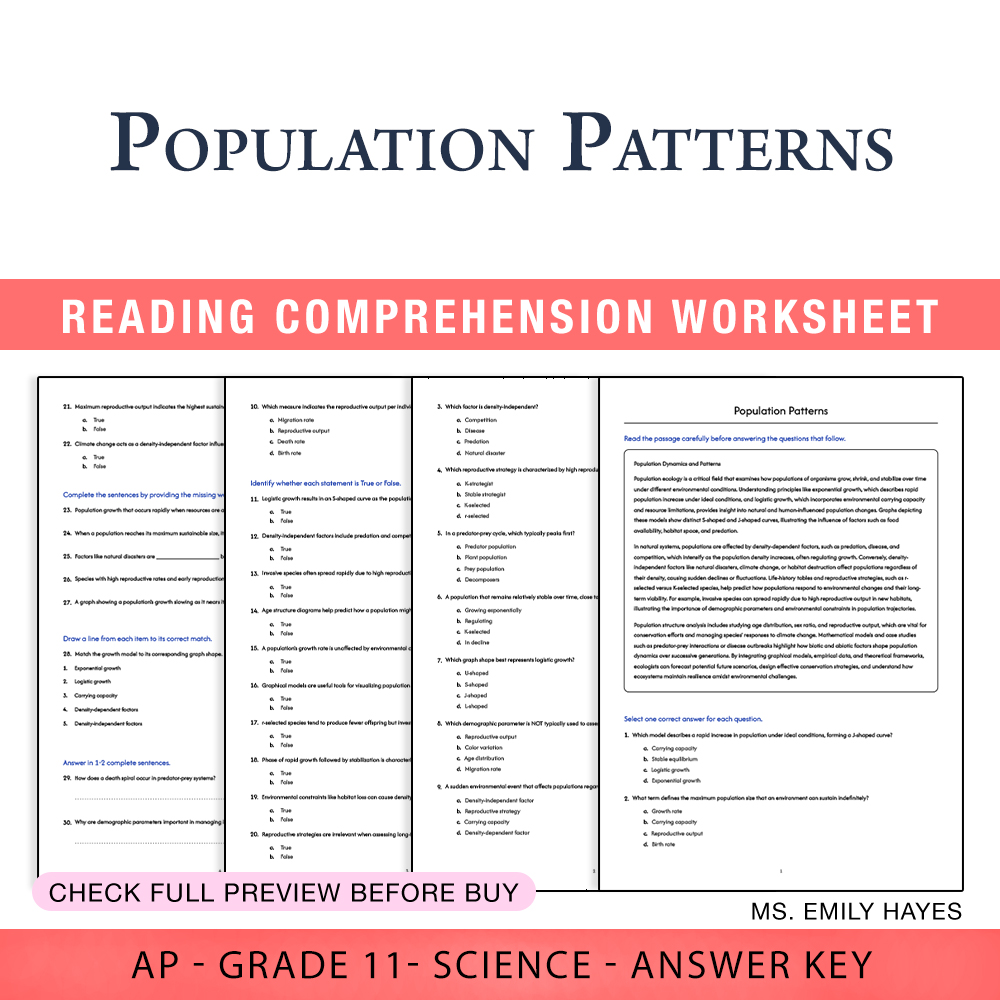
Grade 11 Science | Population Patterns Assessment Worksheet (PDF+ Answer Key)
Created byCopper Leaf ClassroomLearning Objectives
- Explain the fundamental principles of population dynamics, including exponential and logistic growth models.
- Analyze how carrying capacity and density-dependent and density-independent factors influence long-term population stability.
- Interpret graphical models and life-history tables to assess population fluctuations and reproductive strategies.
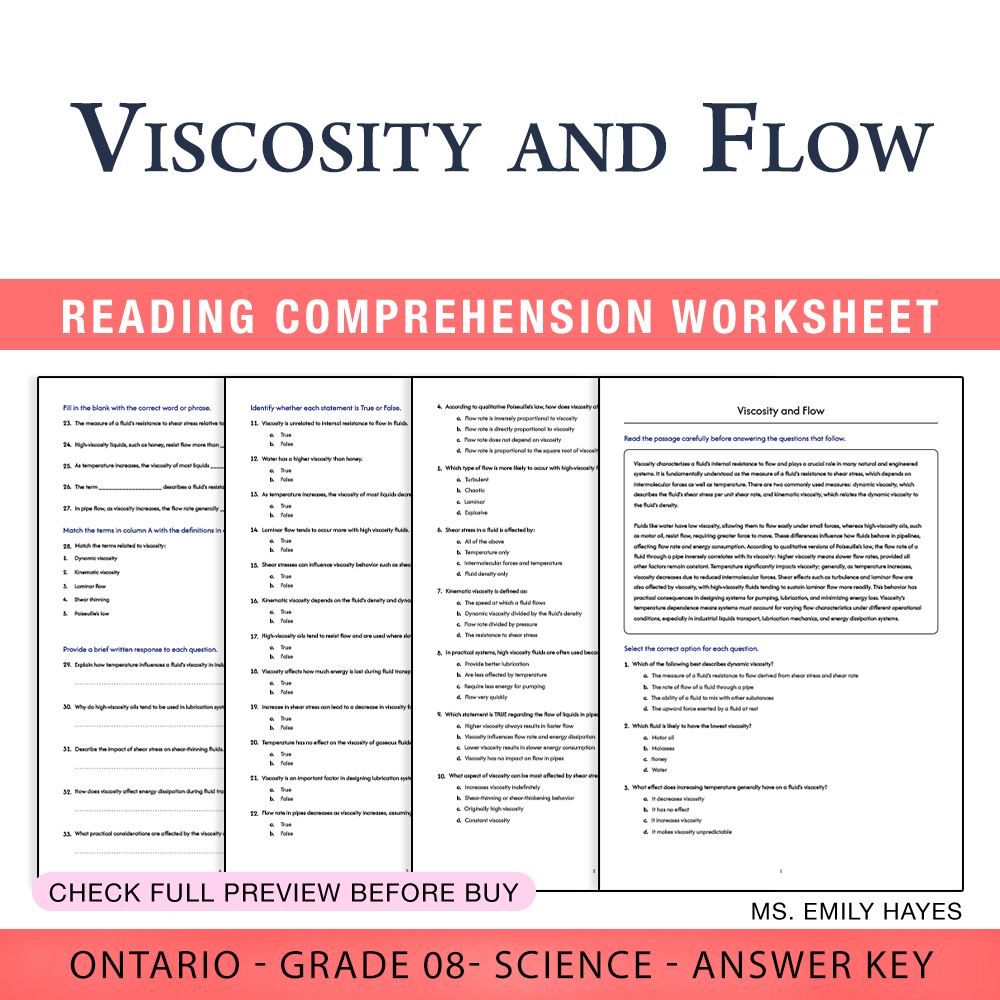
8th Grade Science | Viscosity and Flow Worksheet (PDF+ Answer Key)
Created byCopper Leaf ClassroomLearning Objectives
- Define and explain the concepts of dynamic and kinematic viscosity.
- Compare low-viscosity fluids like water with high-viscosity oils.
- Describe how viscosity influences flow rates in pipes based on qualitative understanding of Poiseuille's law.
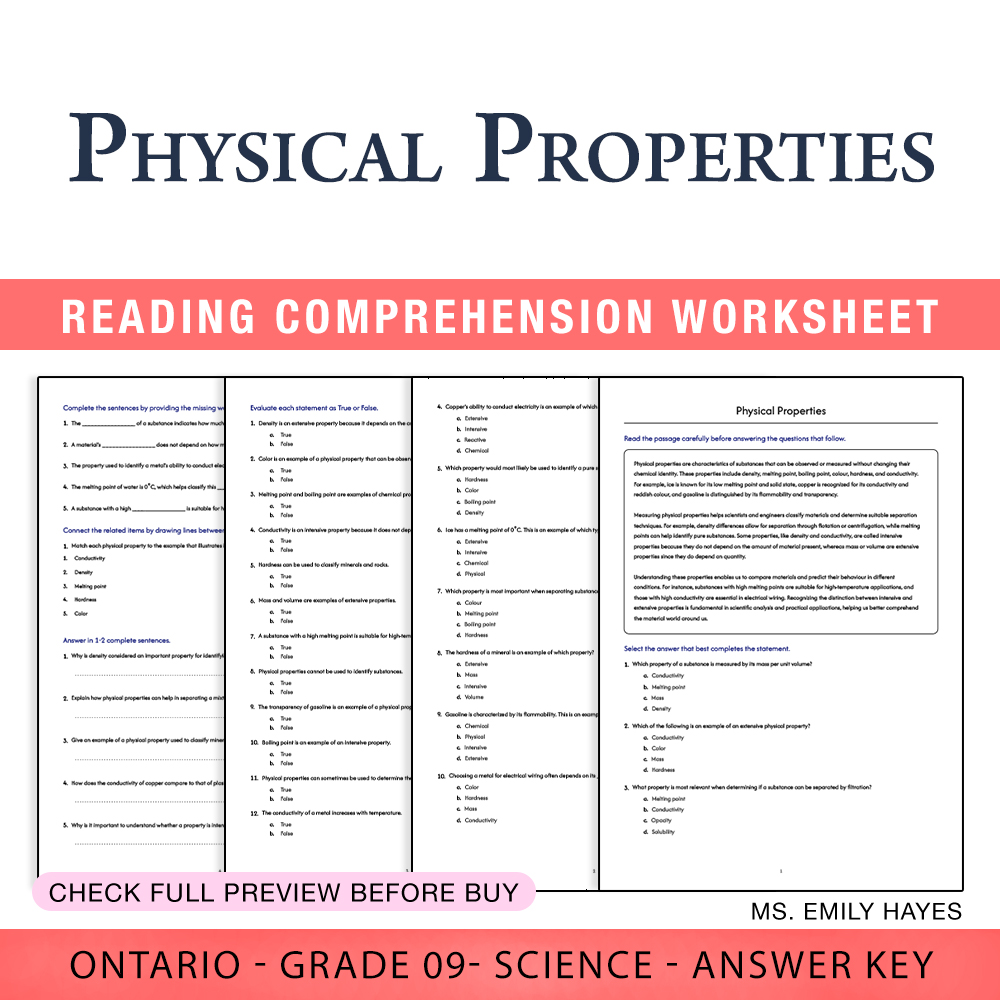
9th Grade Science | Physical Properties Worksheet (PDF + Answer Key)
Created byCopper Leaf ClassroomLearning Objectives
- Define physical properties and identify key examples such as density, melting point, and conductivity.
- Distinguish between intensive and extensive properties and understand their relevance in material classification.
- Describe how physical properties are measured and used to separate or classify materials.
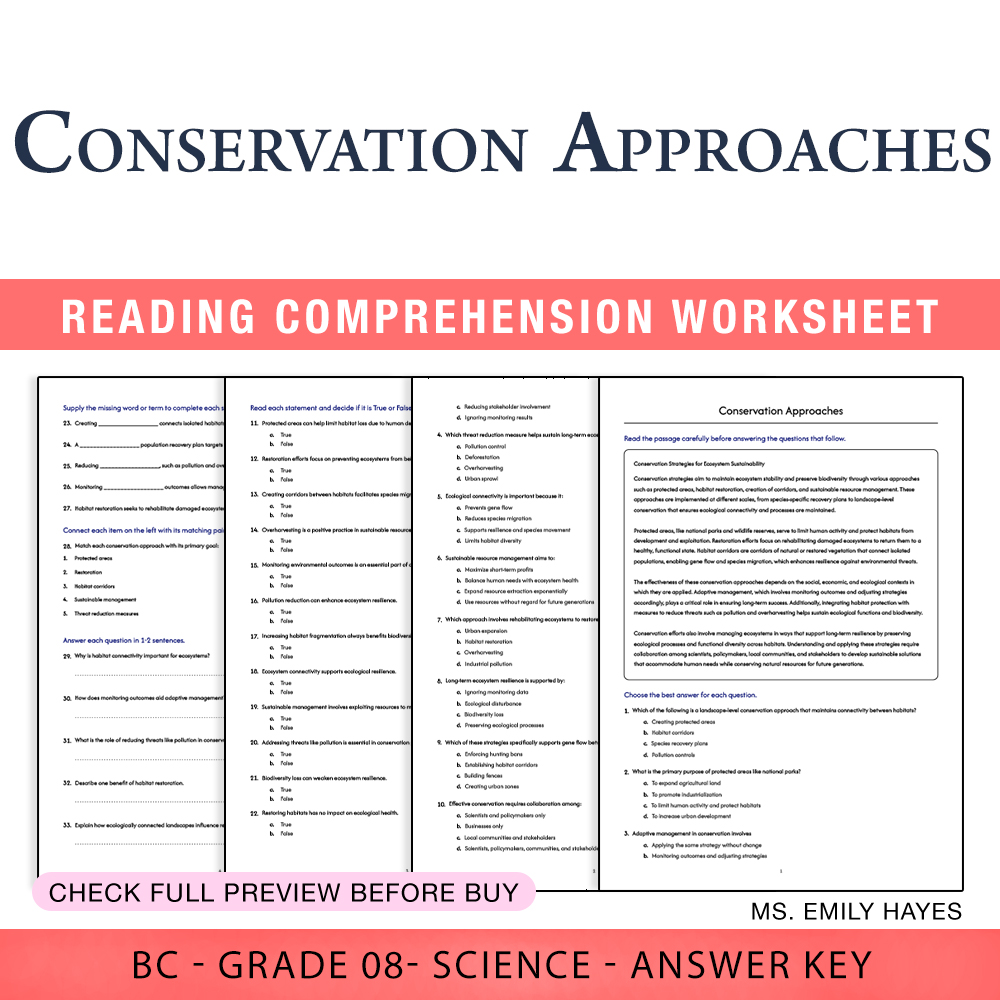
Grade 8 Science | Conservation Approaches Worksheet (PDF+ Answer Key)
Created byCopper Leaf ClassroomLearning Objectives
- Understand different strategies used in conservation and their ecological purposes.
- Explain how social, economic, and ecological factors influence conservation efforts.
- Identify key components of effective ecosystem management.
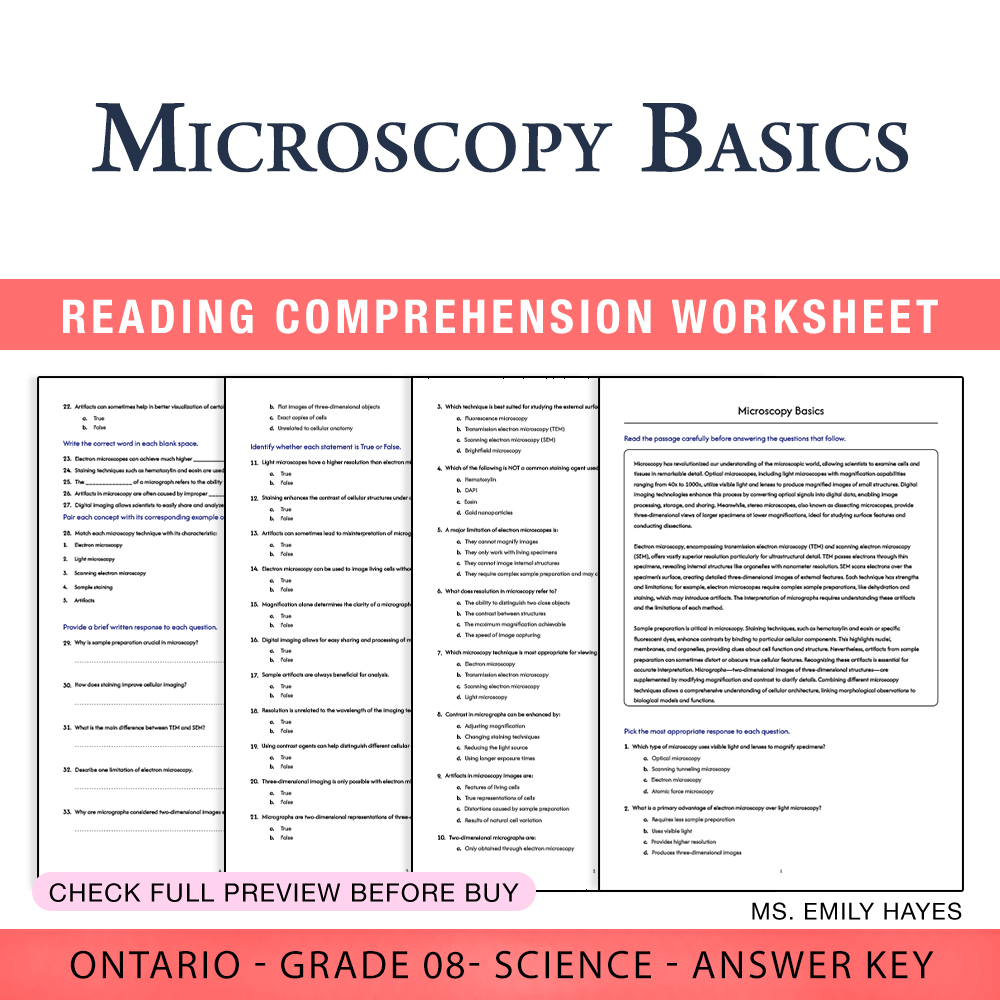
8th Grade Science | Microscopy Basics Worksheet (PDF+ Answer Key)
Created byCopper Leaf ClassroomLearning Objectives
- Understand the principles of optical, digital, stereomicroscopy, and electron imaging techniques.
- Identify and explain key concepts such as magnification, resolution, and contrast.
- Compare and contrast different microscopy methods used for cellular visualization.
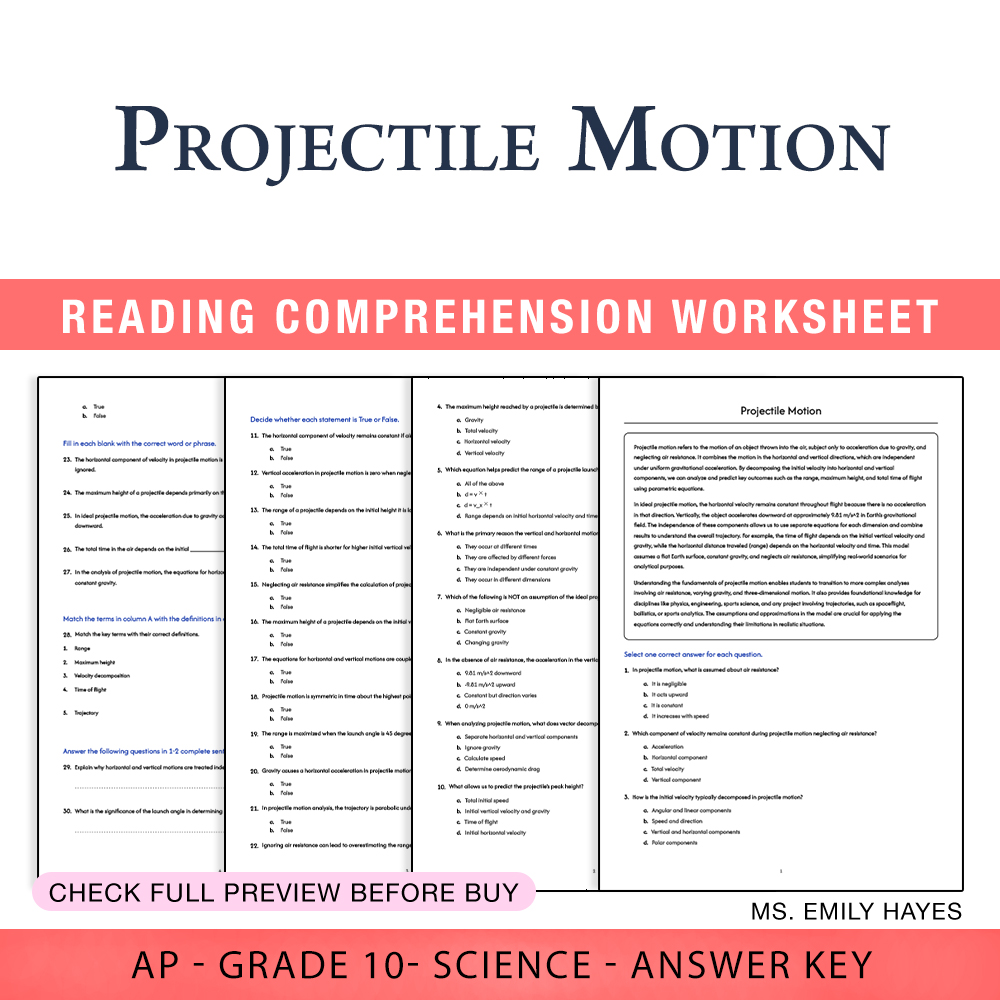
10th Grade Science | Projectile Motion Worksheet (PDF+ Answer Key)
Created byCopper Leaf ClassroomLearning Objectives
- Explain the independence of horizontal and vertical components of projectile motion.
- Calculate range, time of flight, and peak height for projectile trajectories ignoring air resistance.
- Use vector decomposition and parametric equations to analyze projectile motion scenarios.
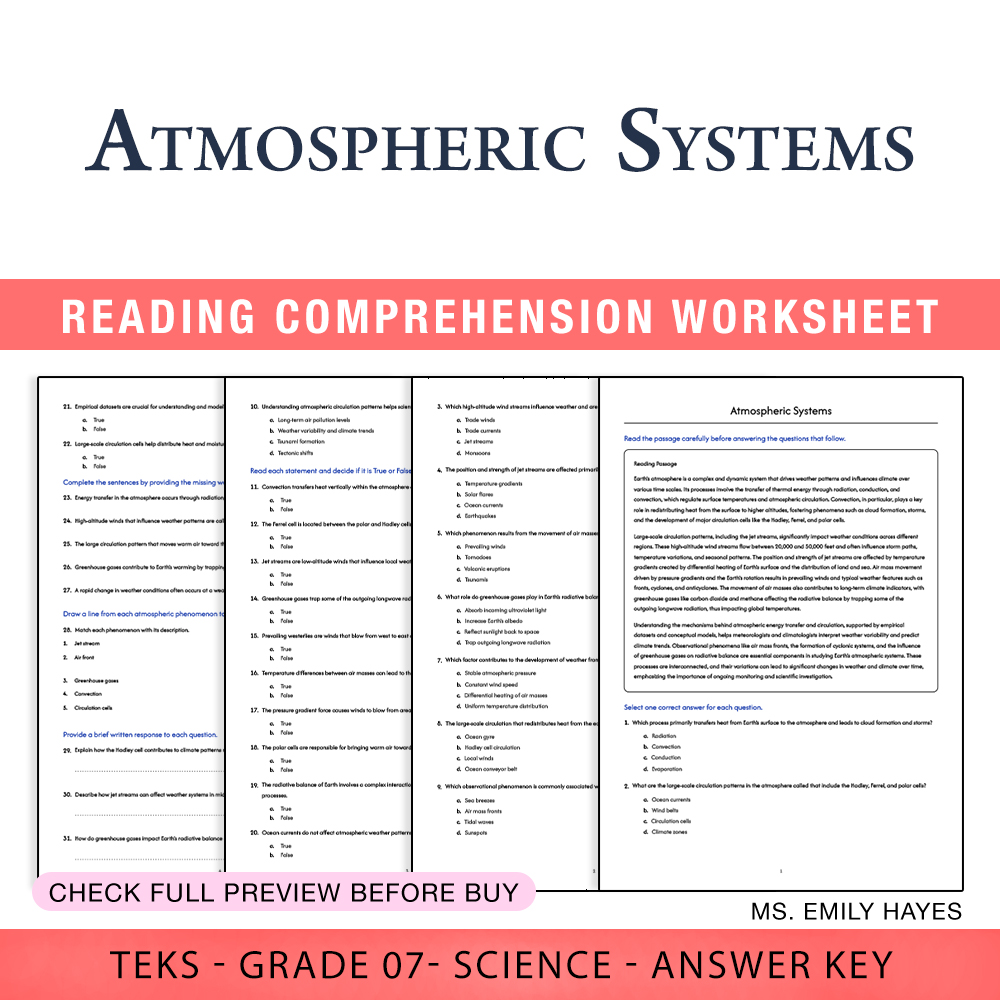
7th Grade Science | Atmospheric Systems Worksheet (PDF+ Answer Key)
Created byCopper Leaf ClassroomLearning Objectives
- Understand the fundamental processes governing atmospheric circulation and energy transfer.
- Identify the roles of pressure gradients, convection, and large-scale circulation patterns like the Hadley cell.
- Connect atmospheric phenomena such as fronts, jet streams, and greenhouse gases to climate variability.
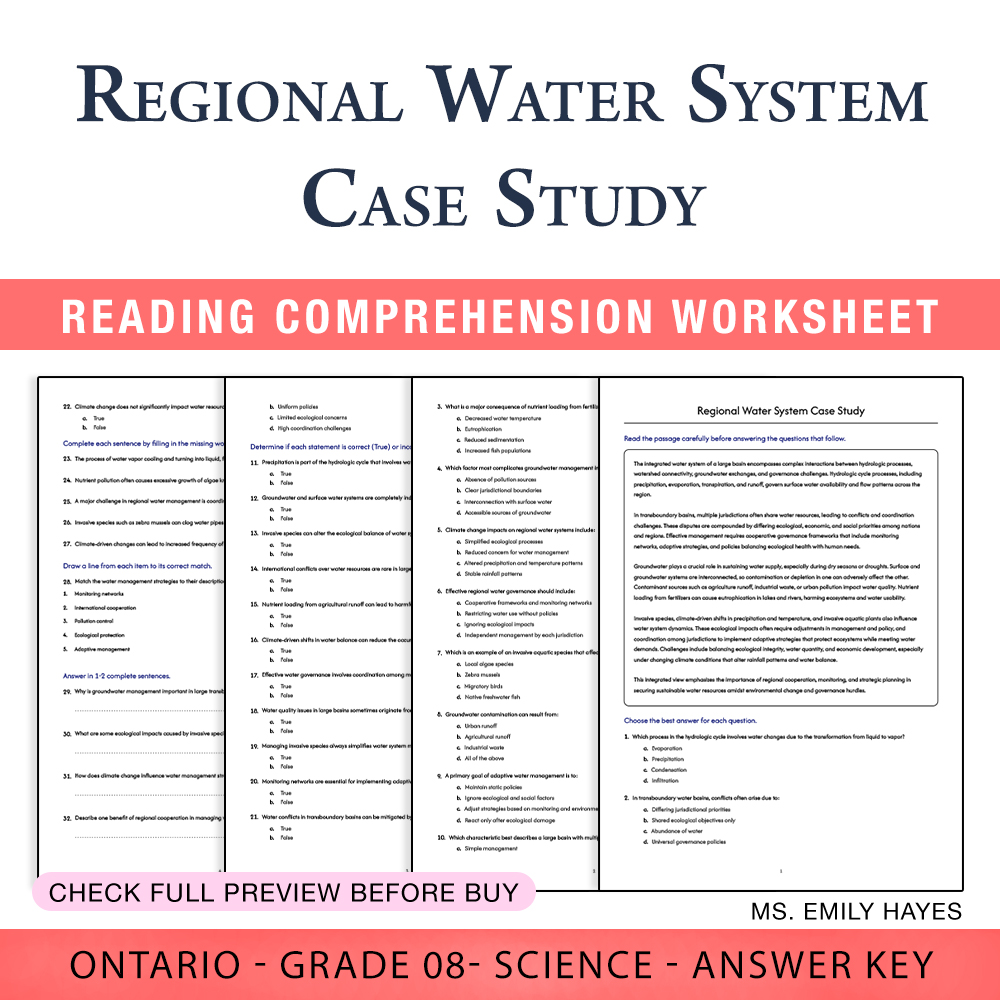
Grade 8 Science | Regional Water System Case Study Worksheet (PDF+ Answer Key)
Created byCopper Leaf ClassroomLearning Objectives
- Understand the key components and dynamics of a regional water system, including hydrologic cycle, groundwater-surface interactions, and watershed connectivity.
- Analyze governance challenges and management strategies in large transboundary water basins.
- Evaluate environmental and economic factors influencing water resource management in regional contexts.
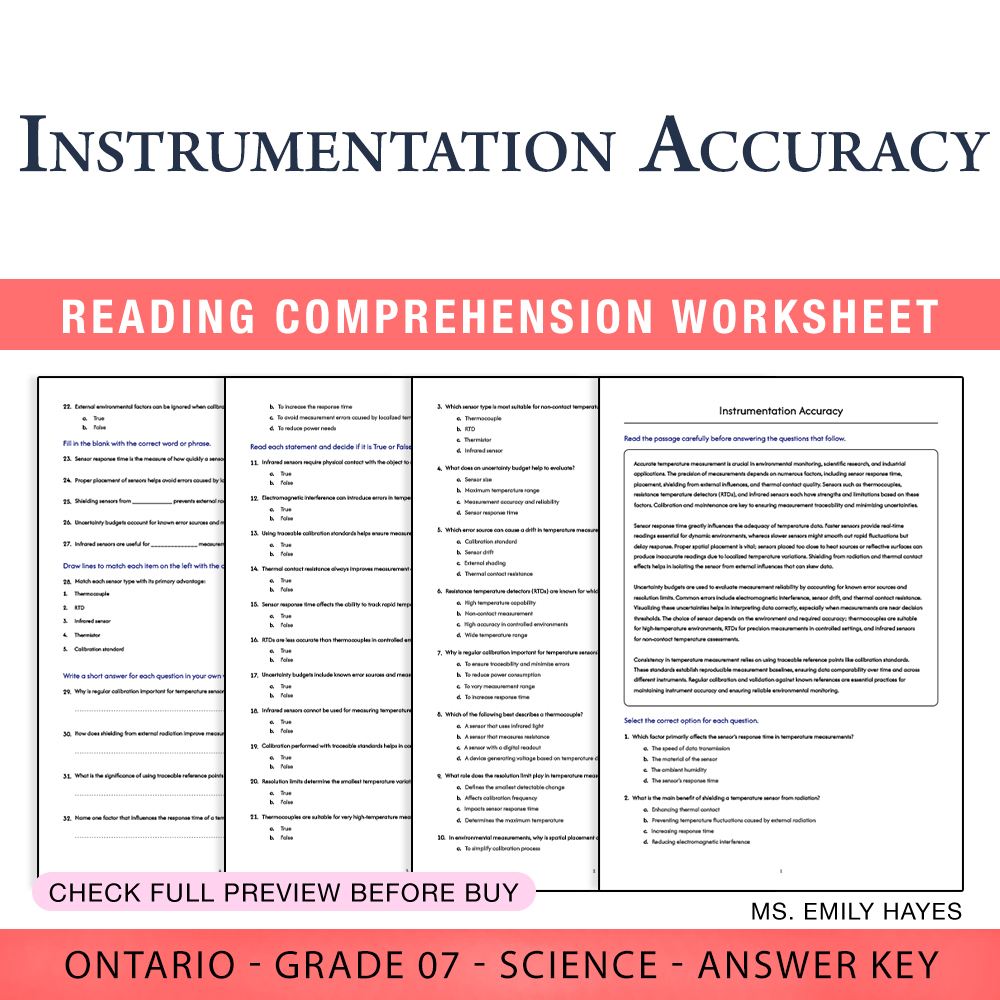
Grade 7 Science | Instrumentation Accuracy Worksheet (PDF+ Answer Key)
Created byCopper Leaf ClassroomLearning Objectives
- Understand the principles of sensor response time and how it affects temperature measurements in environmental contexts.
- Evaluate the impact of spatial placement, shielding, and thermal contact effects on instrument accuracy.
- Describe how uncertainty budgets, resolution limits, and common error sources influence temperature measurement reliability.
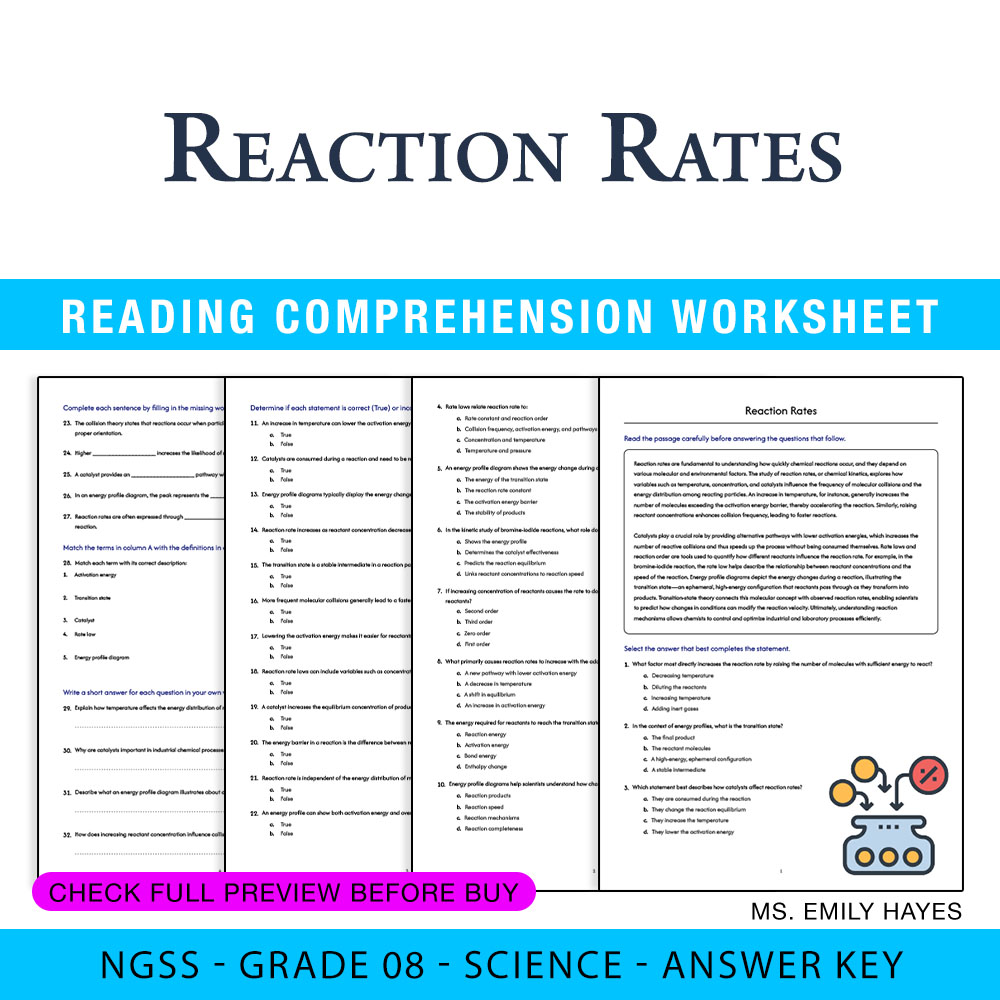
9th Grade Science | Reaction Rates Worksheet (PDF+ Answer Key)
Created byCopper Leaf ClassroomLearning Objectives
- Explain how temperature, concentration, and catalysts affect reaction rates.
- Describe the relationship between collision frequency and reaction speed.
- Interpret rate laws and reaction order in chemical kinetics.
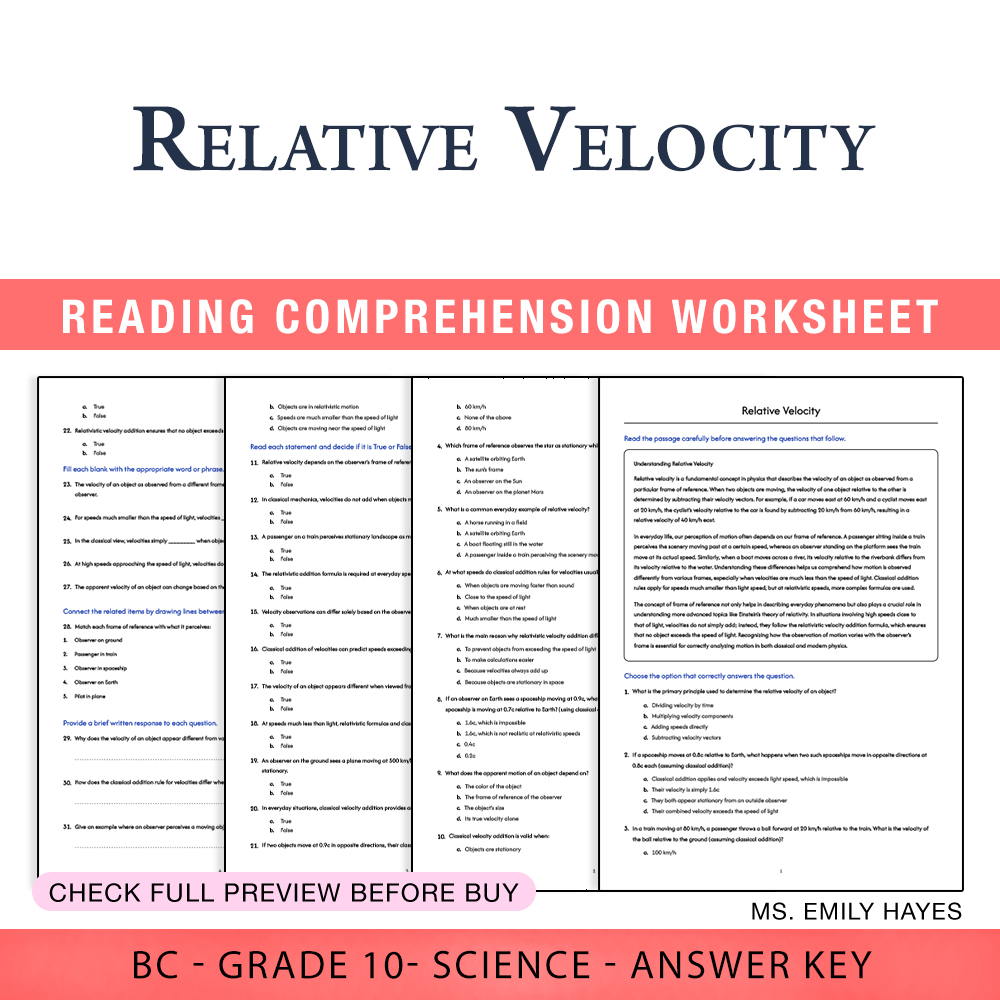
Grade 10 Science | Relative Velocity Worksheet (PDF+ Answer Key)
Created byCopper Leaf ClassroomLearning Objectives
- Understand the concept of relative velocity and how it is calculated between different reference frames.
- Apply basic vector subtraction to find the apparent velocity of objects from different perspectives.
- Explain the effect of frame of reference on the observation of motion, including everyday examples.
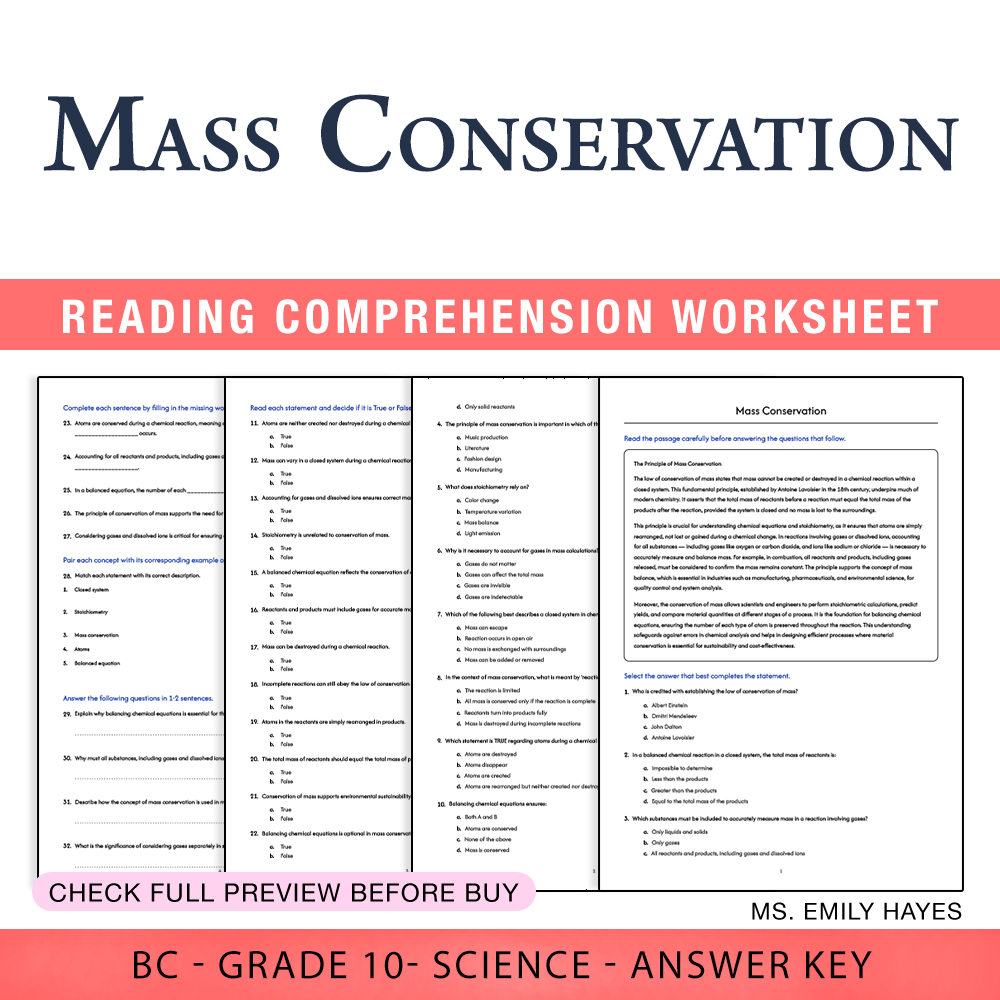
Grade 10 Science | Mass Conservation Worksheet (PDF + Answer Key)
Created byCopper Leaf ClassroomLearning Objectives
- Understand the principle of conservation of mass in chemical reactions.
- Explain the importance of accounting for all substances, including gases and ions.
- Apply the law of mass conservation to balance chemical equations.
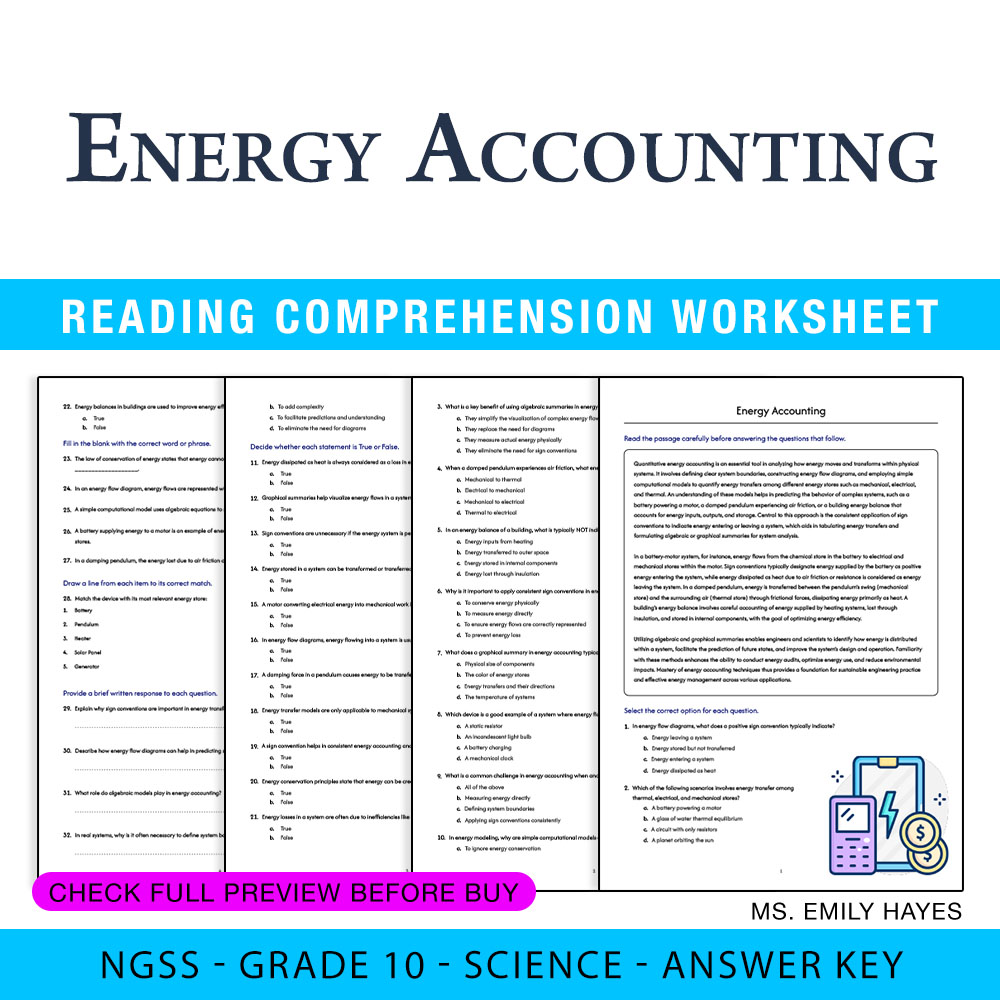
10th Grade Science | Energy Accounting Worksheet (PDF + Answer Key)
Created byCopper Leaf ClassroomLearning Objectives
- Understand the principles of energy flow in physical systems using energy flow diagrams.
- Apply system boundary definitions and sign conventions effectively in energy calculations.
- Use algebraic and graphical methods to summarize energy transfers and predict energy distribution.
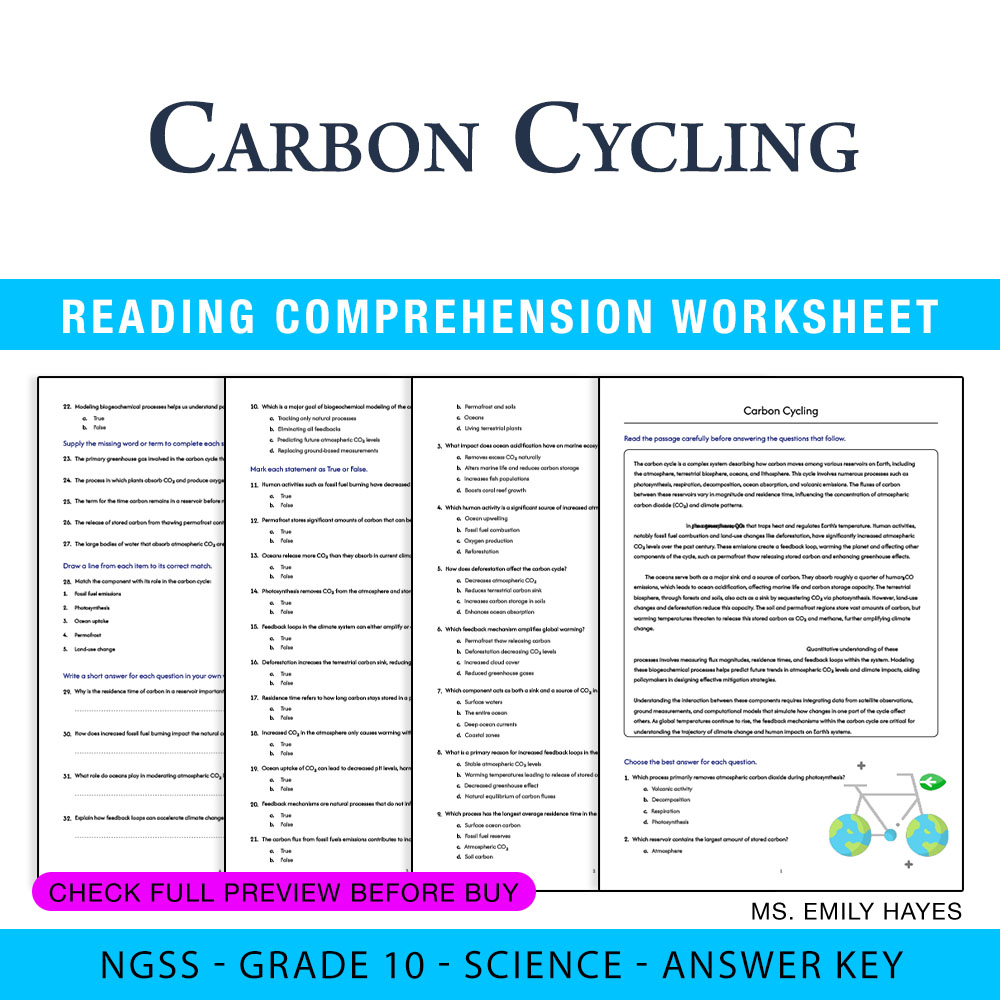
10th Grade Science | Carbon Cycling Worksheet (PDF+ Answer Key)
Created byCopper Leaf ClassroomLearning Objectives
- Describe the main components and pathways involved in the global carbon cycle.
- Explain how fluxes, residence times, and feedback mechanisms influence atmospheric carbon dioxide levels.
- Analyze the impacts of human activities on carbon fluxes and climate change.
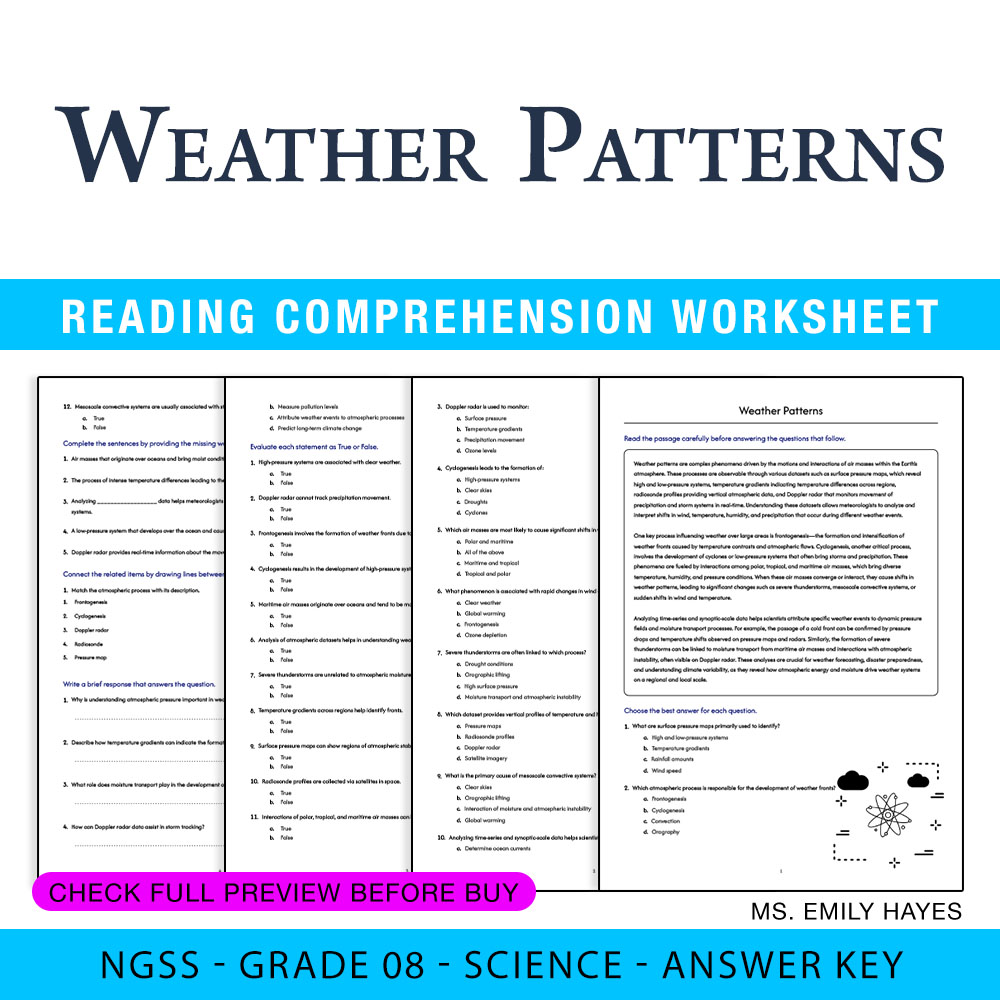
Grade 8 Science | Weather Patterns Worksheet (PDF + Answer Key)
Created byCopper Leaf ClassroomLearning Objectives
- Understand the relationship between atmospheric conditions and weather changes.
- Interpret surface pressure maps, temperature gradients, and Doppler radar data.
- Explain processes like frontogenesis and cyclogenesis and their effects on weather.
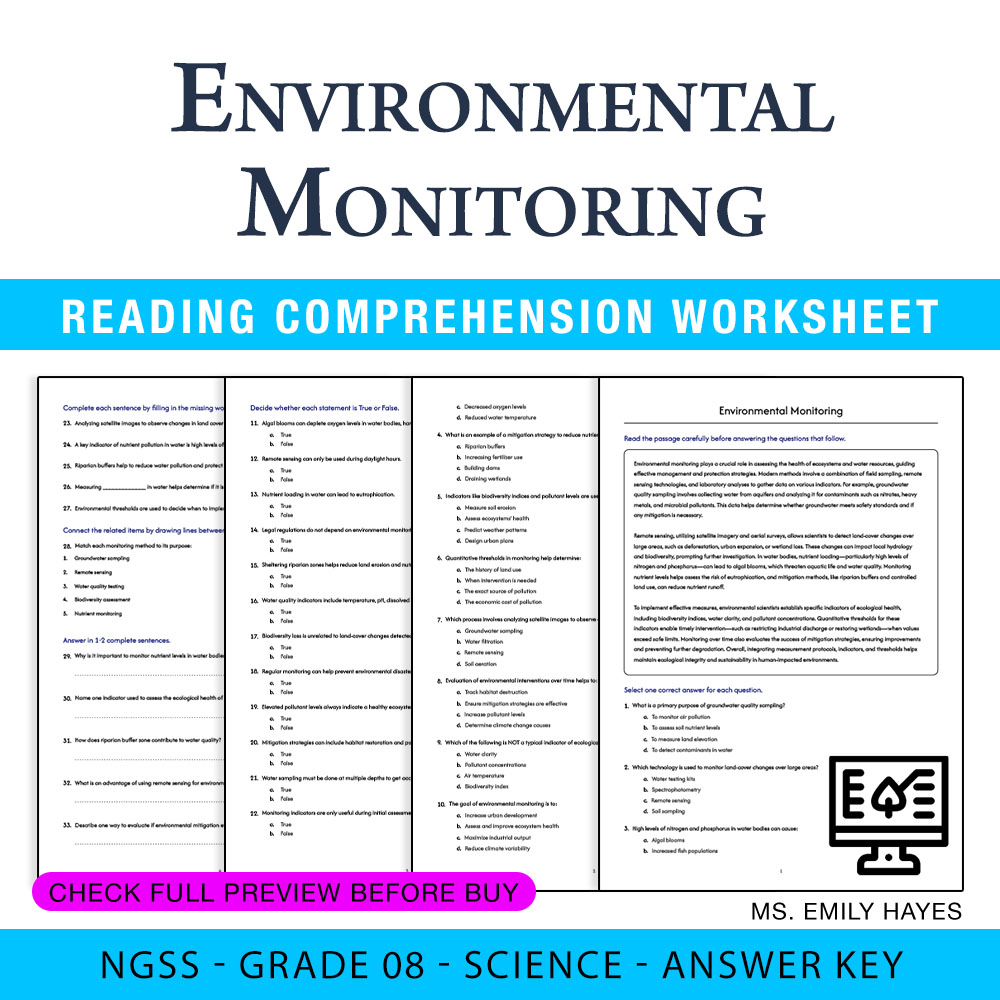
8th Grade Science | Environmental Monitoring Worksheet (PDF+ Answer Key)
Created byCopper Leaf ClassroomLearning Objectives
- Understand the methods used in environmental monitoring and their significance.
- Identify different indicators of ecosystem health and water quality.
- Describe mitigation strategies to minimize human impacts on ecosystems and water resources.
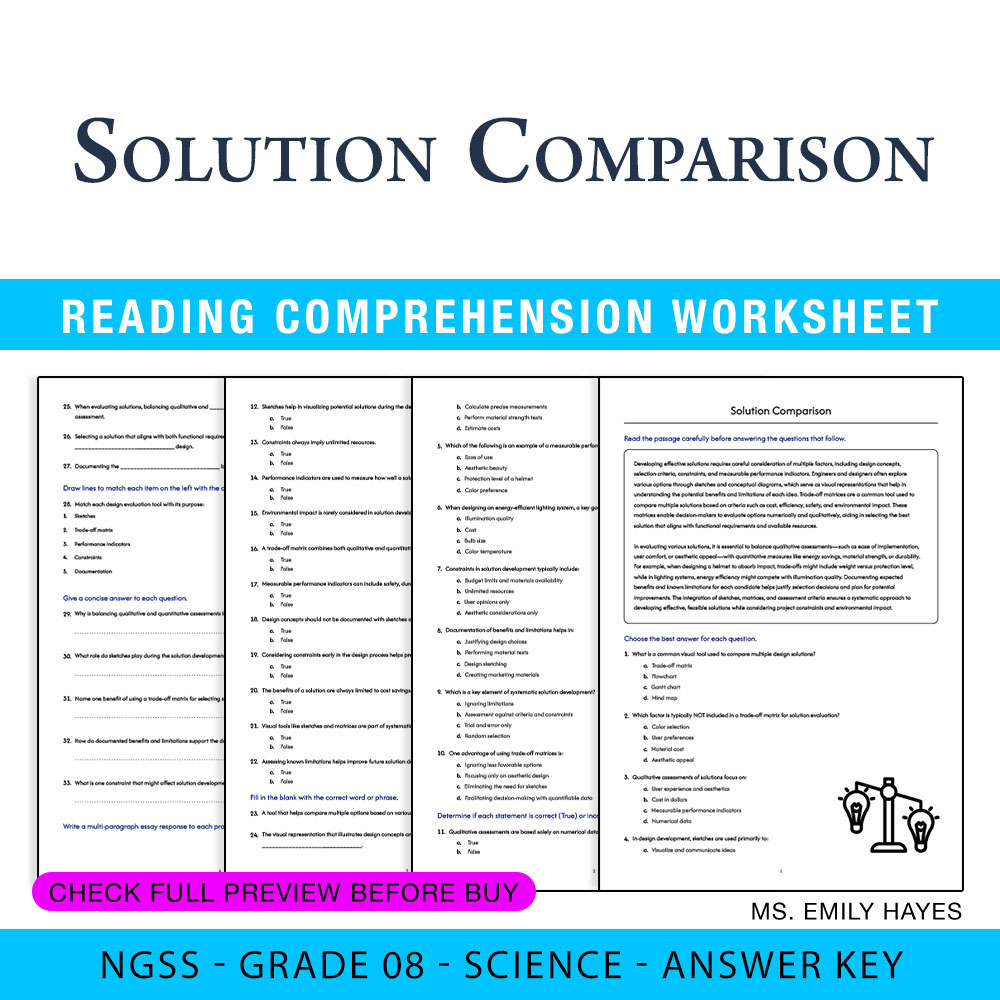
8th Grade Science | Solution Comparison Worksheet (PDF+ Answer Key)
Created byCopper Leaf ClassroomLearning Objectives
- Understand the development and evaluation of multiple design concepts related to solutions.
- Analyze different criteria, constraints, and performance indicators for solution selection.
- Differentiate between qualitative and quantitative assessment methods.
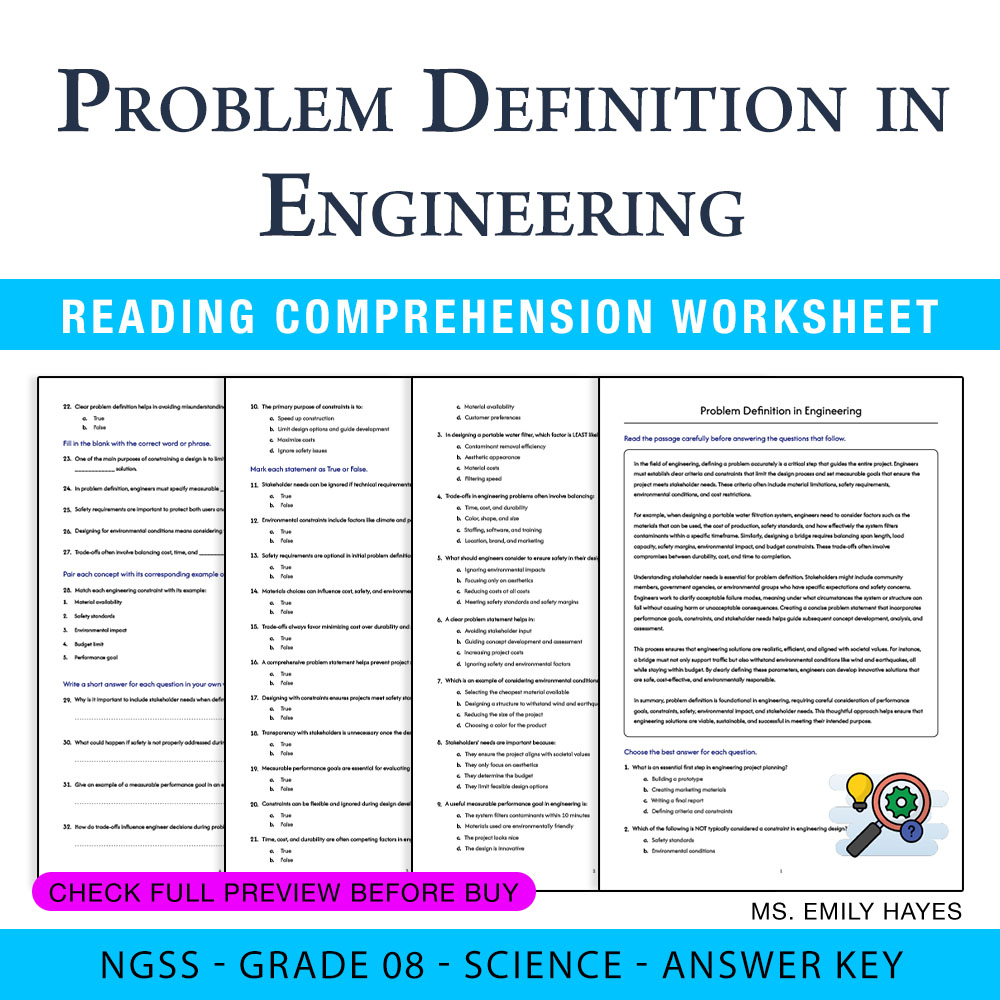
8th Grade Science | Problem Definition in Engineering Worksheet(PDF+ Answer Key)
Created byCopper Leaf ClassroomLearning Objectives
- Understand the criteria and constraints involved in defining engineering problems.
- Identify stakeholders' needs and establish measurable performance goals.
- Analyze trade-offs among cost, time, durability, safety, and environmental conditions.
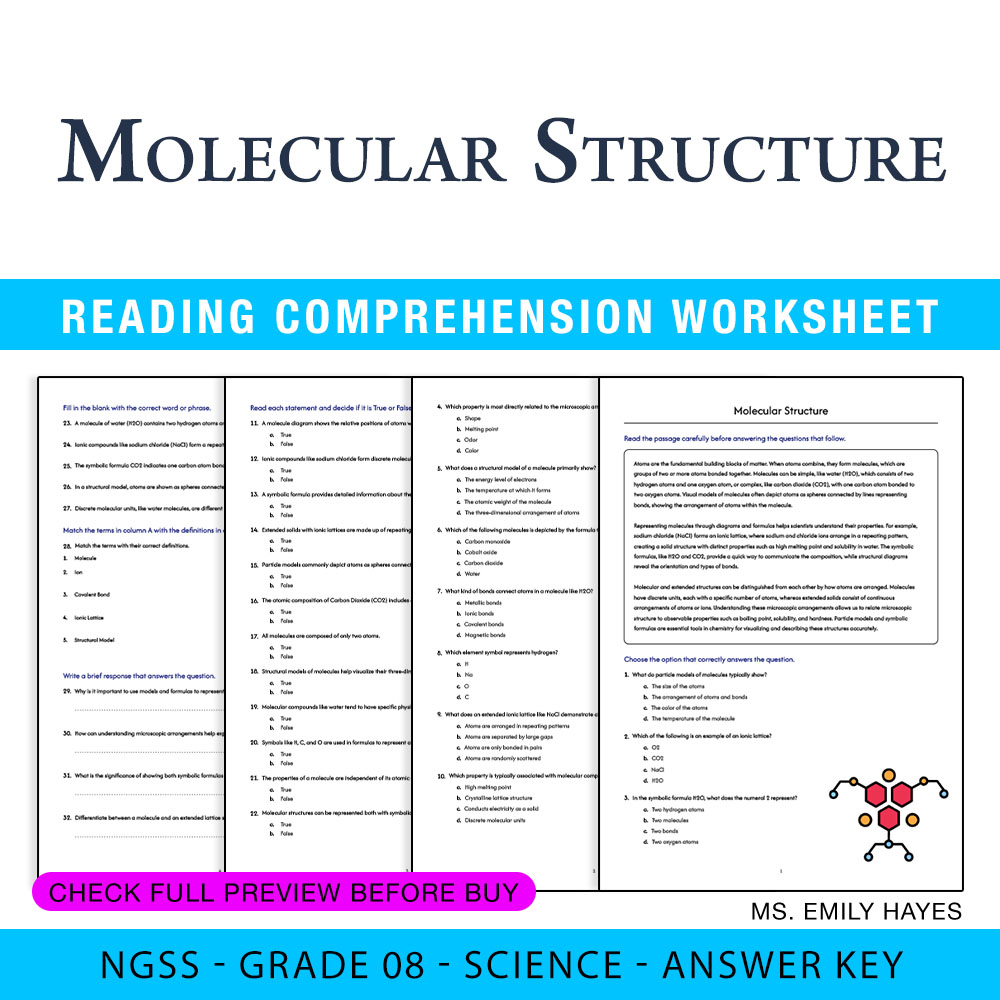
8th Grade Science | Molecular Structure Worksheet (PDF+ Answer Key)
Created byCopper Leaf ClassroomLearning Objectives
- Describe the atomic composition of simple molecules and extended structures using particle models and symbolic formulas.
- Understand how to represent atoms, element symbols, and bonding arrangements in common examples such as water (H2O), carbon dioxide (CO2), and ionic lattices like sodium chloride.
- Explain how molecule diagrams and structural models convey the relative atom types and numbers.
6th Grade Science | Adaptation Tradeoffs Worksheet (PDF+ Answer Key)
Created byCopper Leaf ClassroomLearning Objectives
- Understand the concept of adaptation trade-offs and how they affect organism survival
- Describe different types of trade-offs in structural and physiological features
- Evaluate the costs and benefits associated with specific adaptations
Grade 8 Science | Reaction Evidence Worksheet (PDF+ Answer Key)
Created byCopper Leaf ClassroomLearning Objectives
- Describe observable indicators that suggest a chemical change has occurred
- Differentiate between physical and chemical changes based on qualitative and quantitative data
- Interpret data from reactions such as corrosion, combustion, and acid-base interactions to identify chemical transformations
8th Grade Science | Matter Cycles Worksheet (PDF+ Answer Key)
Created byCopper Leaf ClassroomLearning Objectives
- Explain how matter is cycled between living organisms and the environment.
- Describe the processes of photosynthesis, respiration, decomposition, and nutrient transformations.
- Trace the movement of carbon and water atoms through different parts of ecosystems.
8th Grade Science | Gas Exchange Worksheet (PDF+ Answer Key)
Created byCopper Leaf ClassroomLearning Objectives
- Understand the structure and function of alveoli and stomata in gas exchange.
- Explain how specialized cell shapes facilitate rapid diffusion of gases.
- Describe the principles of surface area and thin moist surfaces in maximizing gas diffusion.
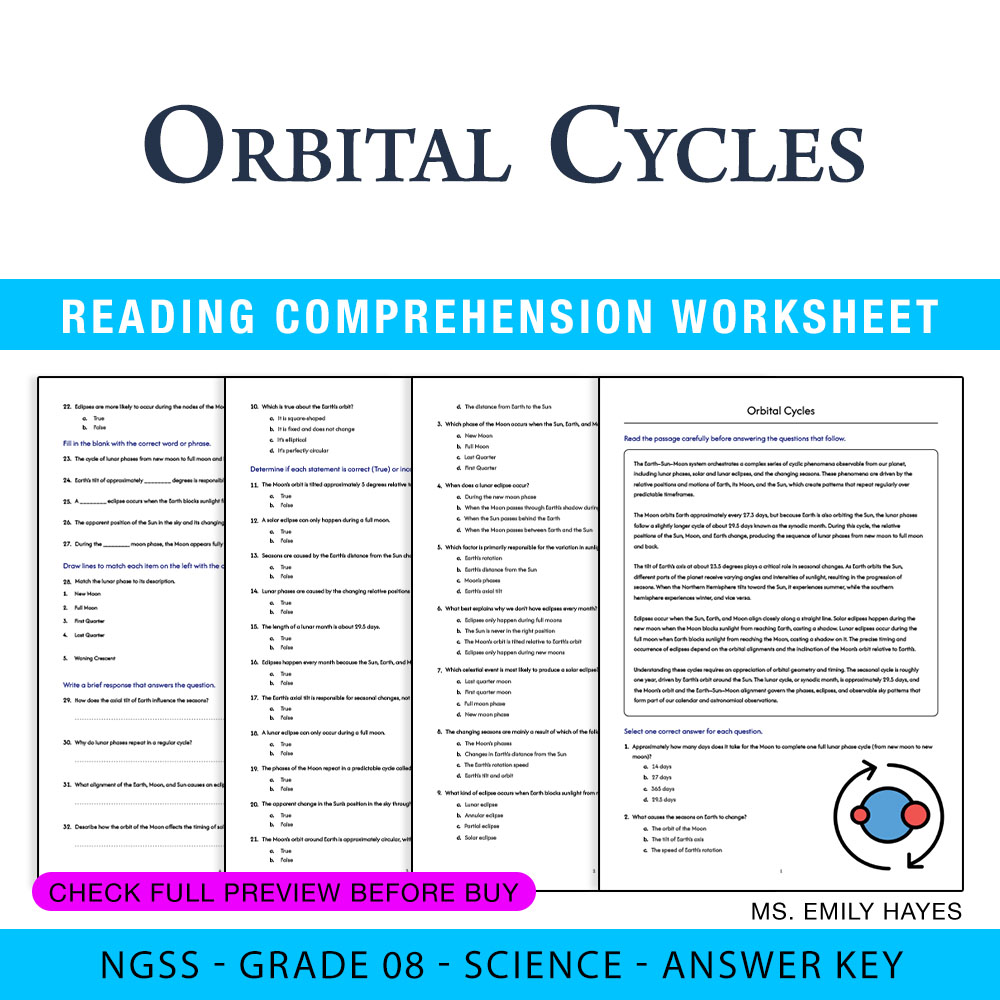
Grade 8 Science | Orbital Cycles Worksheet (PDF+ Answer Key)
Created byCopper Leaf ClassroomLearning Objectives
- Explain the relative positions and motions of the Earth, Moon, and Sun during lunar phases, eclipses, and seasonal changes.
- Describe how axial tilt and orbital geometry influence observable sky patterns and calendar cycles.
- Identify and link phenomena such as moon phases, eclipses, and seasons to the Earth's and Moon's motions.
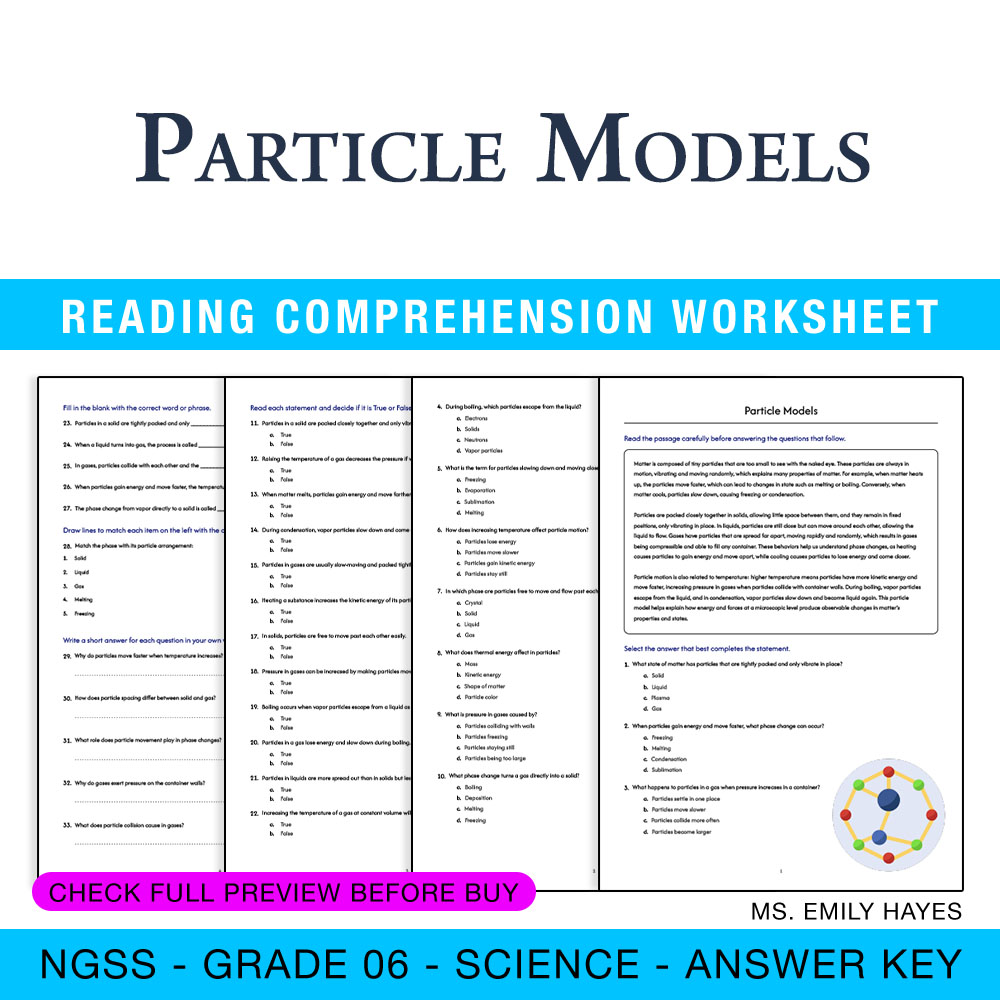
6th Grade Science | Particle Models Worksheet (PDF + Answer Key)
Created byCopper Leaf ClassroomLearning Objectives
- Describe matter as made up of particles too small to see.
- Explain how particle motion relates to phase changes and temperature.
- Use particle models to understand macroscopic properties like pressure and state changes.
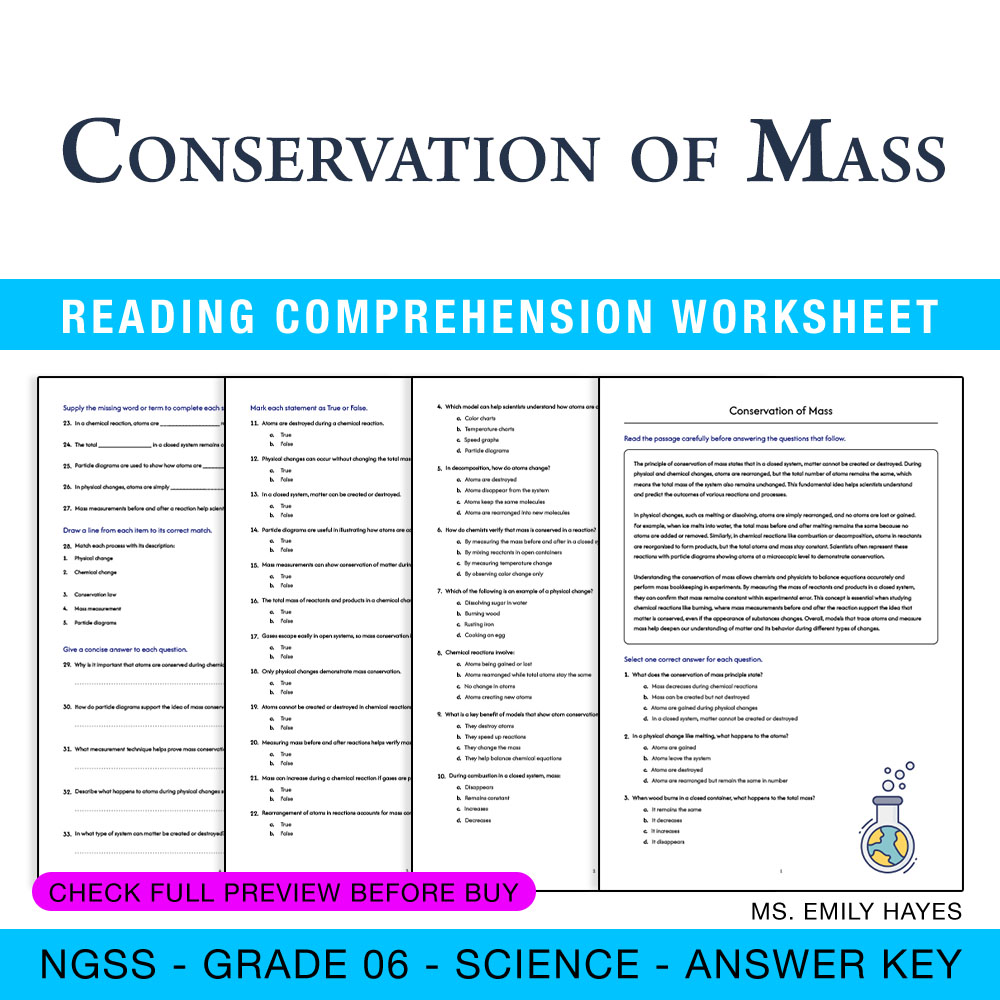
6th Grade Science | Conservation of Mass Worksheet (PDF + Answer Key)
Created byCopper Leaf ClassroomLearning Objectives
- Understand the principle of conservation of mass and how it applies to physical and chemical changes.
- Trace atoms and total mass through different reactions to see that mass remains constant.
- Use models, diagrams, and measurements to support the concept of matter conservation.
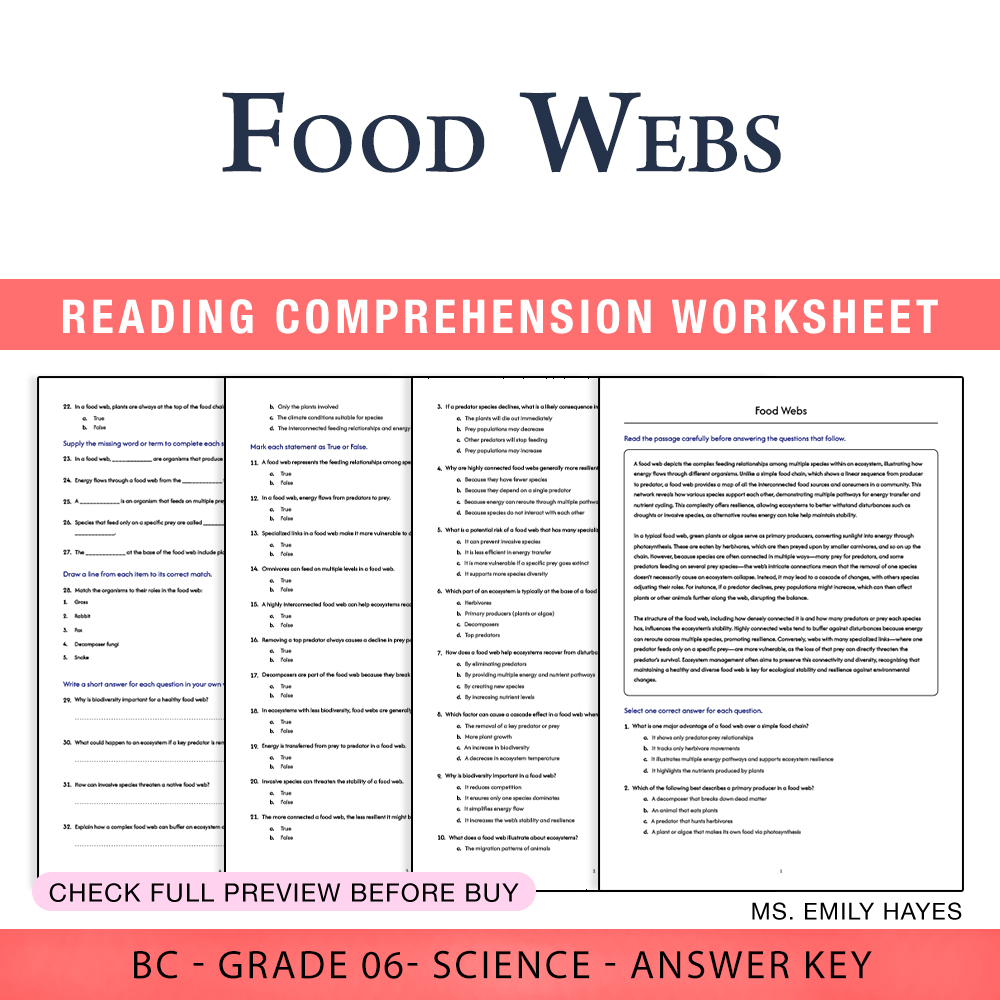
6th Grade Science | Food Webs Worksheet (PDF+ Answer Key)
Created byCopper Leaf ClassroomLearning Objectives
- Understand what a food web is and how it depicts interconnected feeding relationships among species.
- Analyze how changes within a food web can impact the entire ecosystem.
- Identify predator-prey relationships and the flow of energy in food webs.
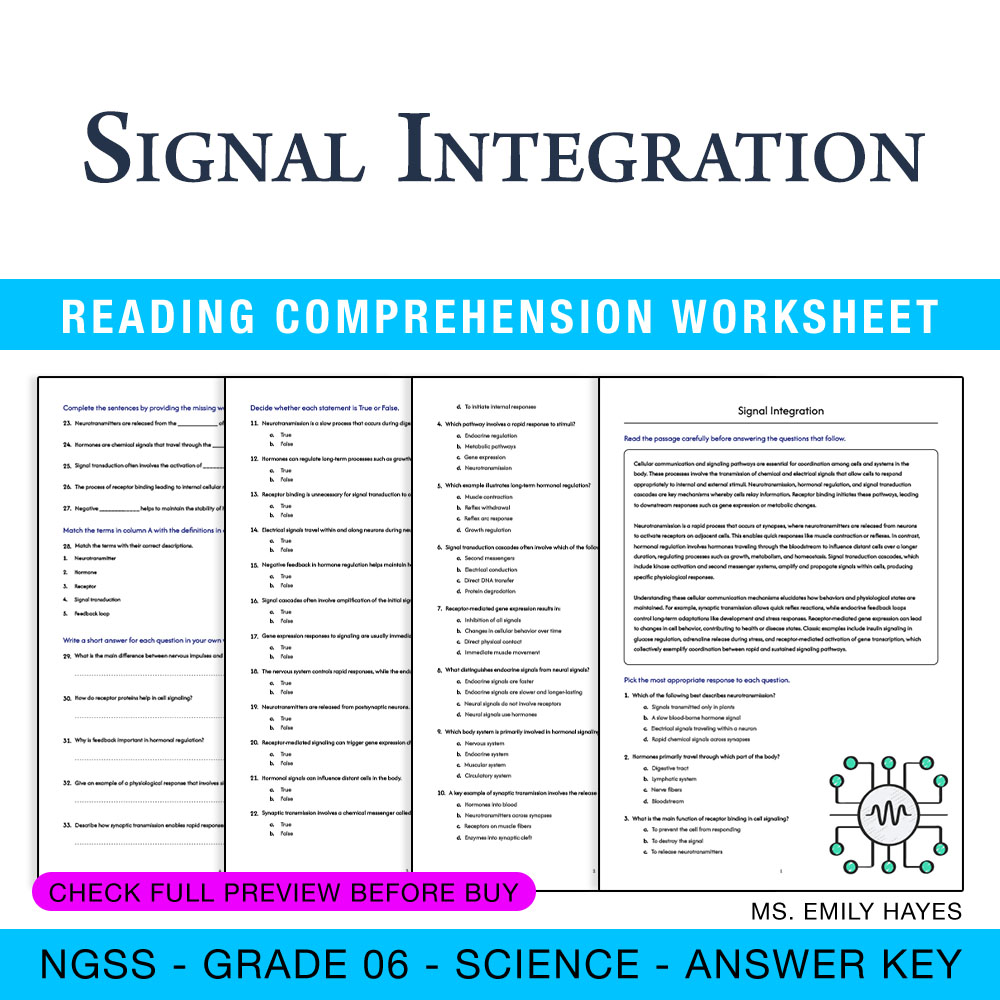
Grade 6 Science | Signal Integration Worksheet (PDF + Answer Key)
Created byCopper Leaf ClassroomLearning Objectives
- Describe how cells communicate through chemical and electrical signals during signal transduction.
- Differentiate between rapid nervous impulses and longer-term endocrine responses.
- Explain the role of neurotransmission, hormonal regulation, and receptor-mediated pathways in physiological functions.
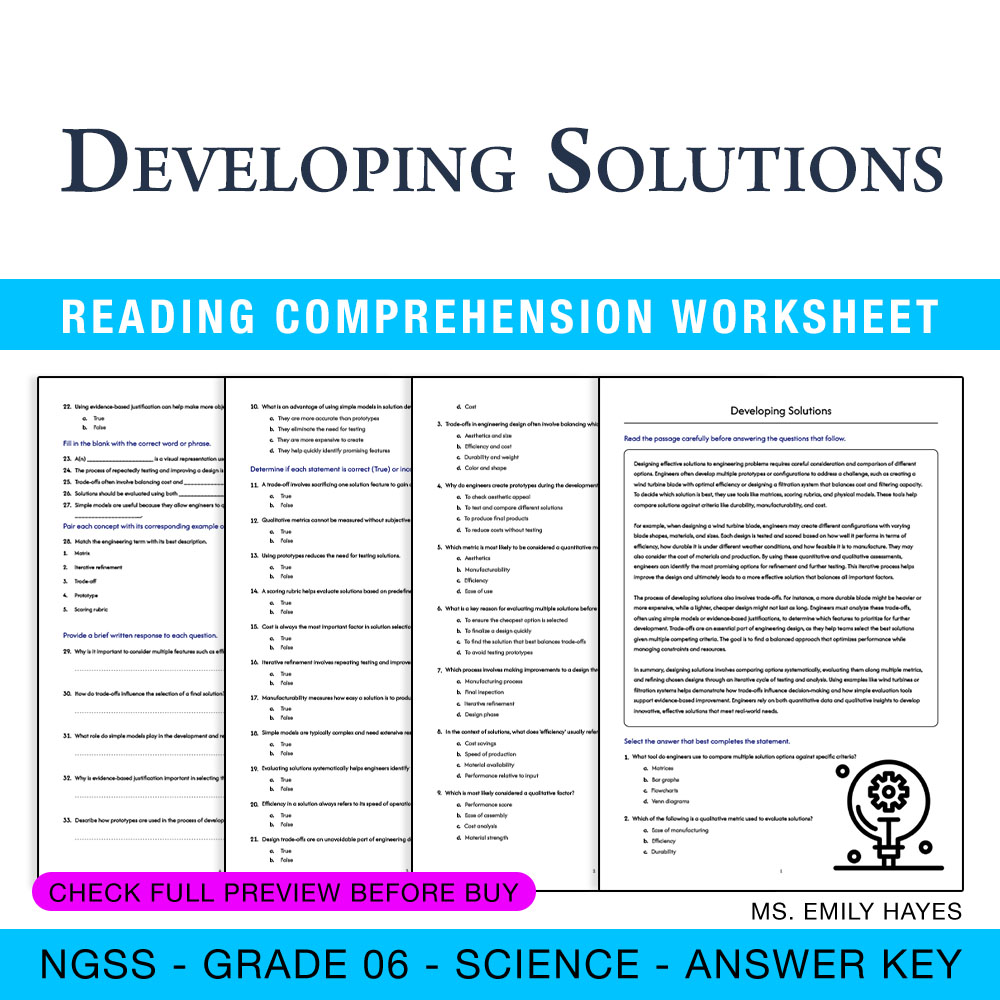
6th Grade Science | Developing Solutions Worksheet (PDF + Answer Key)
Created byCopper Leaf ClassroomLearning Objectives
- Compare multiple design solutions using matrices, scoring rubrics, and prototypes.
- Apply quantitative and qualitative metrics such as efficiency, durability, manufacturability, and cost to evaluate solutions.
- Use evidence-based justification and simple models to rank options.
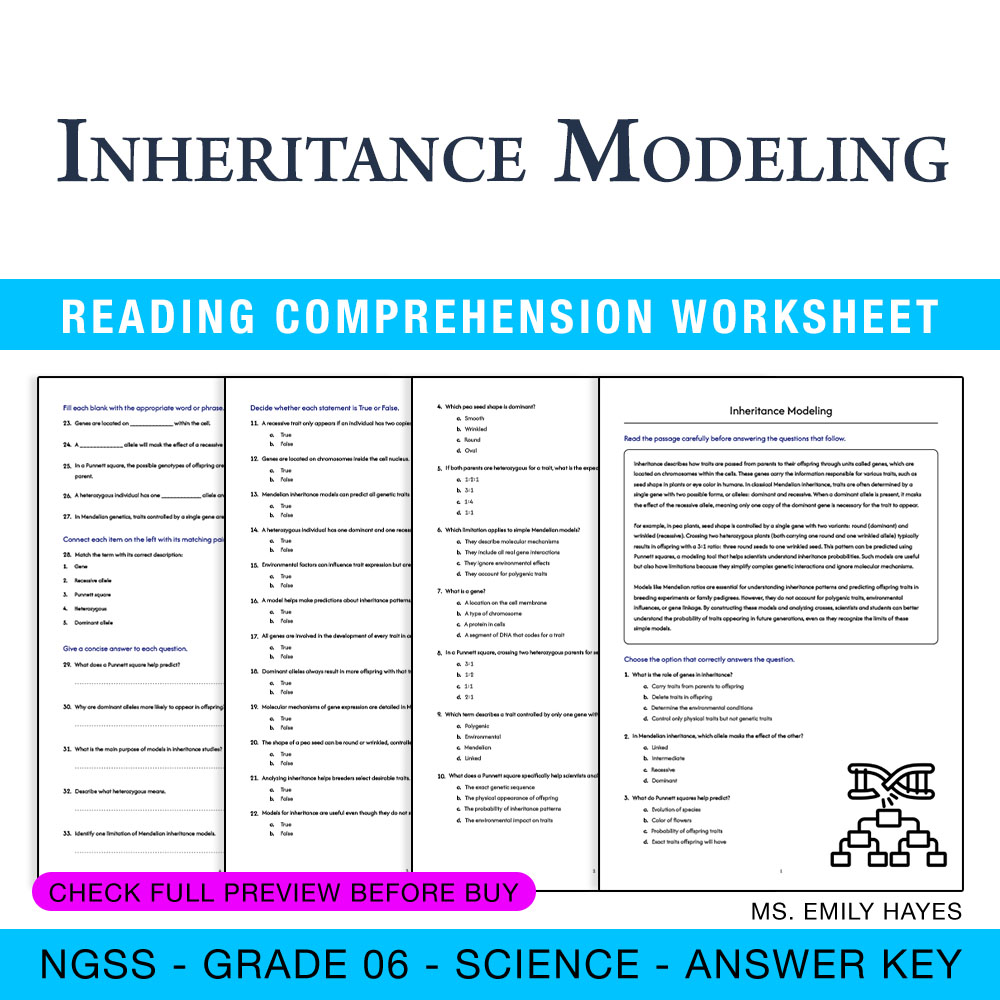
6th Grade Science | Inheritance Modeling Worksheet (PDF + Answer Key)
Created byCopper Leaf ClassroomLearning Objectives
- Understand how traits are transmitted from parents to offspring through genes.
- Use Mendelian cross examples to predict inheritance ratios of dominant and recessive traits.
- Construct and interpret models for simple inheritance patterns, including monohybrid crosses.
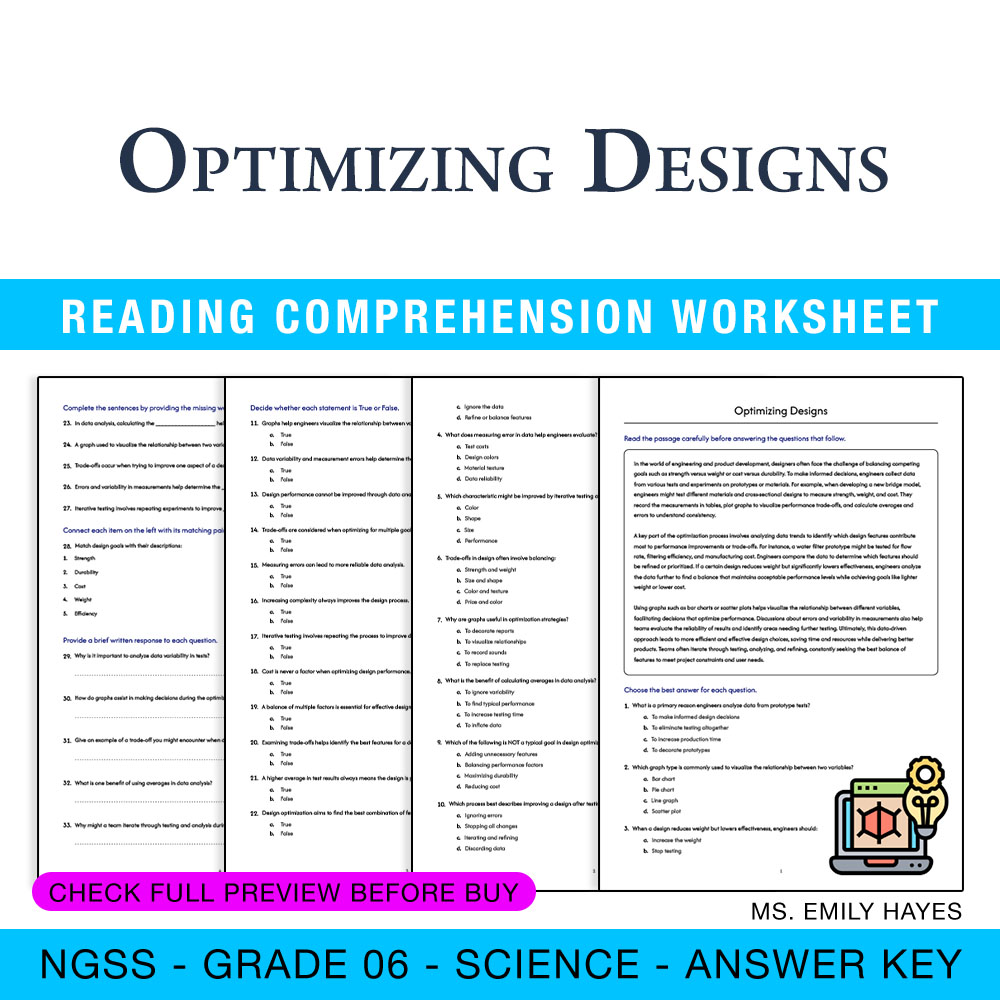
6th Grade Science | Optimizing Designs Worksheet (PDF + Answer Key)
Created byCopper Leaf ClassroomLearning Objectives
- Analyze comparative data from tests of different prototypes to evaluate performance characteristics.
- Identify trade-offs and support optimization strategies for design alternatives using graphs, averages, and error discussions.
- Evaluate how different design features affect strength, weight, cost, and durability to improve overall performance within constraints.
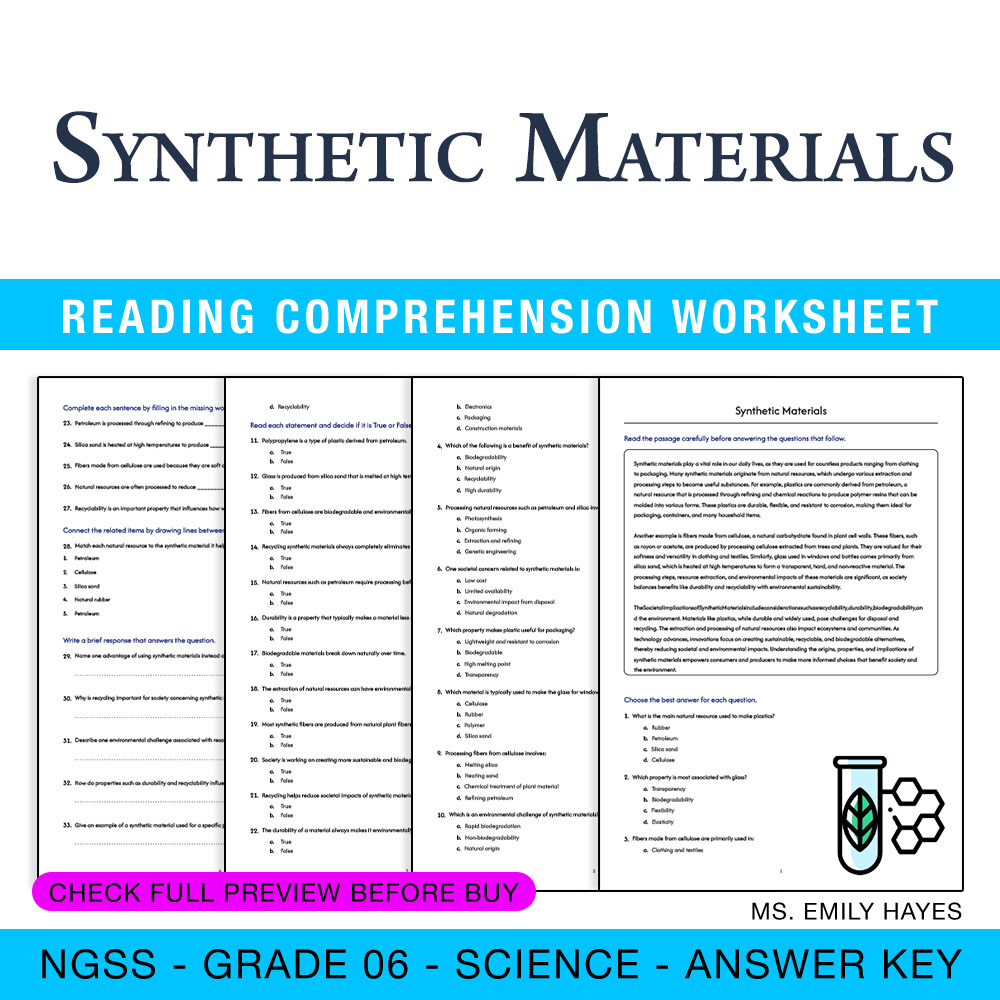
6th Grade Science | Chemical Reactions Worksheet (PDF + Answer Key)
Created byCopper Leaf ClassroomLearning Objectives
- Identify key indicators of chemical reactions such as color change, gas production, precipitate formation, and temperature change.
- Analyze quantitative and qualitative data to determine whether a chemical reaction has occurred and new substances have formed.
- Interpret pre-interaction and post-interaction measurements including mass, temperature, and composition data.

6th Grade Science | System Interactions Worksheet (PDF + Answer Key)
Created byCopper Leaf ClassroomLearning Objectives
- Describe how Earth's systems interact through transfers of matter and energy.
- Identify feedback mechanisms such as albedo changes, sediment transport, and nutrient movement.
- Explain energy sources and sinks within Earth's systems.
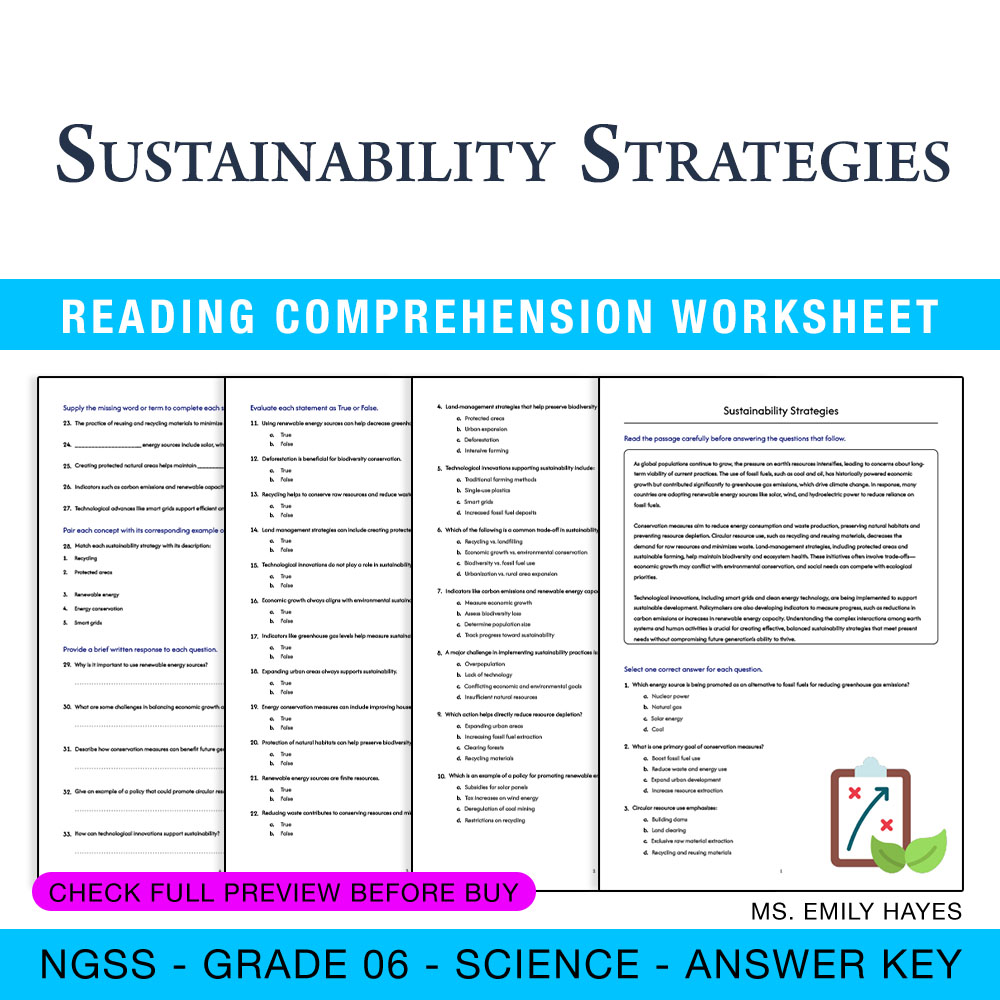
6th Grade Science | Sustainability Strategies Worksheet (PDF + Answer Key)
Created byCopper Leaf ClassroomLearning Objectives
- Understand how population trends and resource use impact earth systems
- Evaluate different sustainability practices and their effects
- Identify trade-offs among economic, social, and environmental priorities
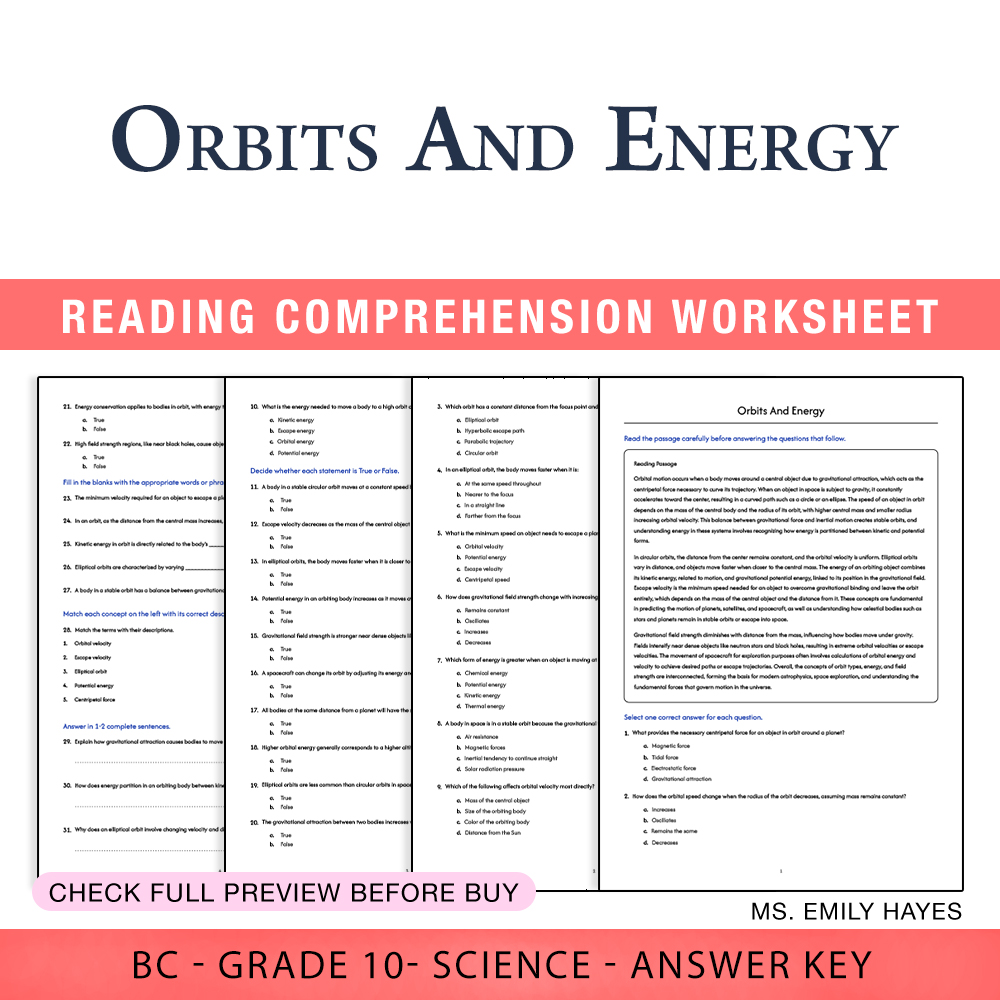
Grade 10 Science | Orbits and Energy Worksheet (PDF + Answer Key)
Created byCopper Leaf ClassroomLearning Objectives
- Explain how gravitational attraction provides the centripetal force for orbital motion.
- Describe the relationship between orbital speed, central mass, and orbital radius.
- Differentiate between circular and elliptical orbits and understand energy partitioning.
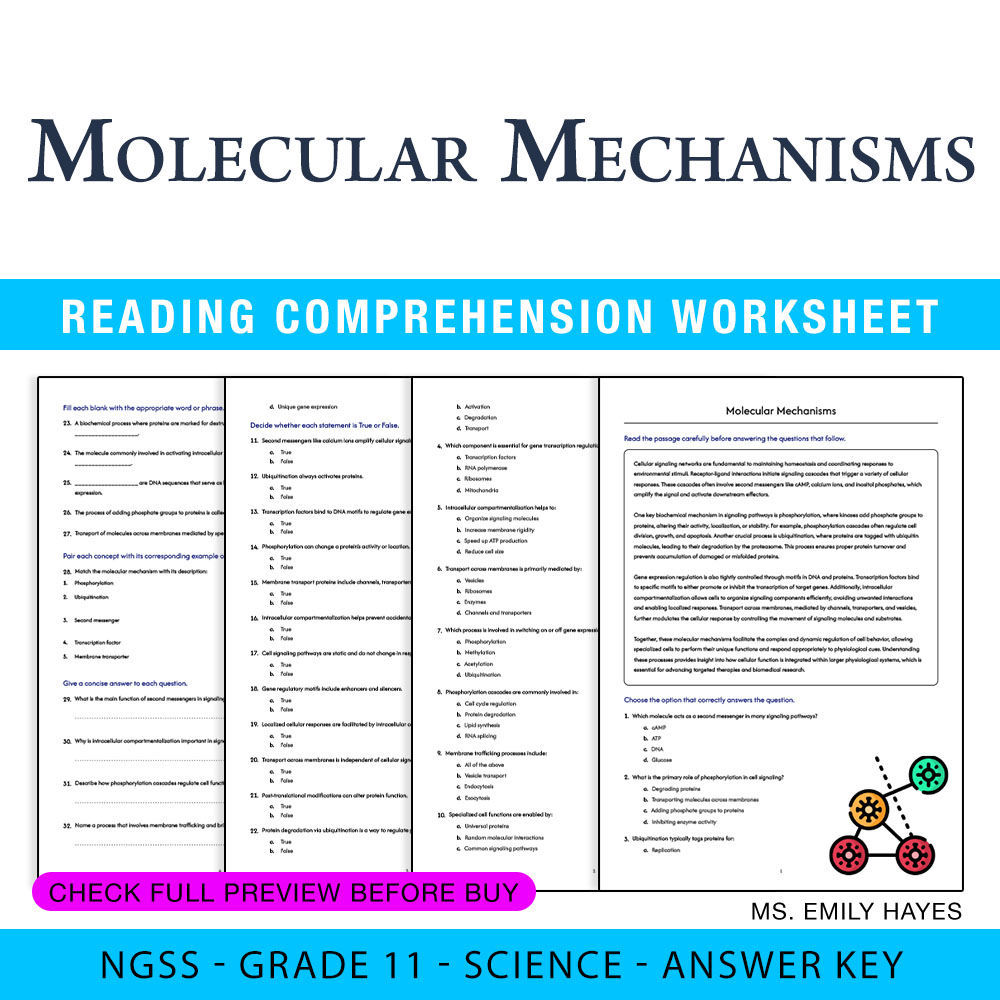
11th Grade Science | Molecular Mechanisms Worksheet (PDF+ Answer Key)
Created byCopper Leaf ClassroomLearning Objectives
- Understand the biochemical processes involved in cellular signaling, including phosphorylation cascades and ubiquitination.
- Describe how regulatory motifs influence gene expression and protein function.
- Explain the role of intracellular compartmentalization and membrane transport in cellular communication.
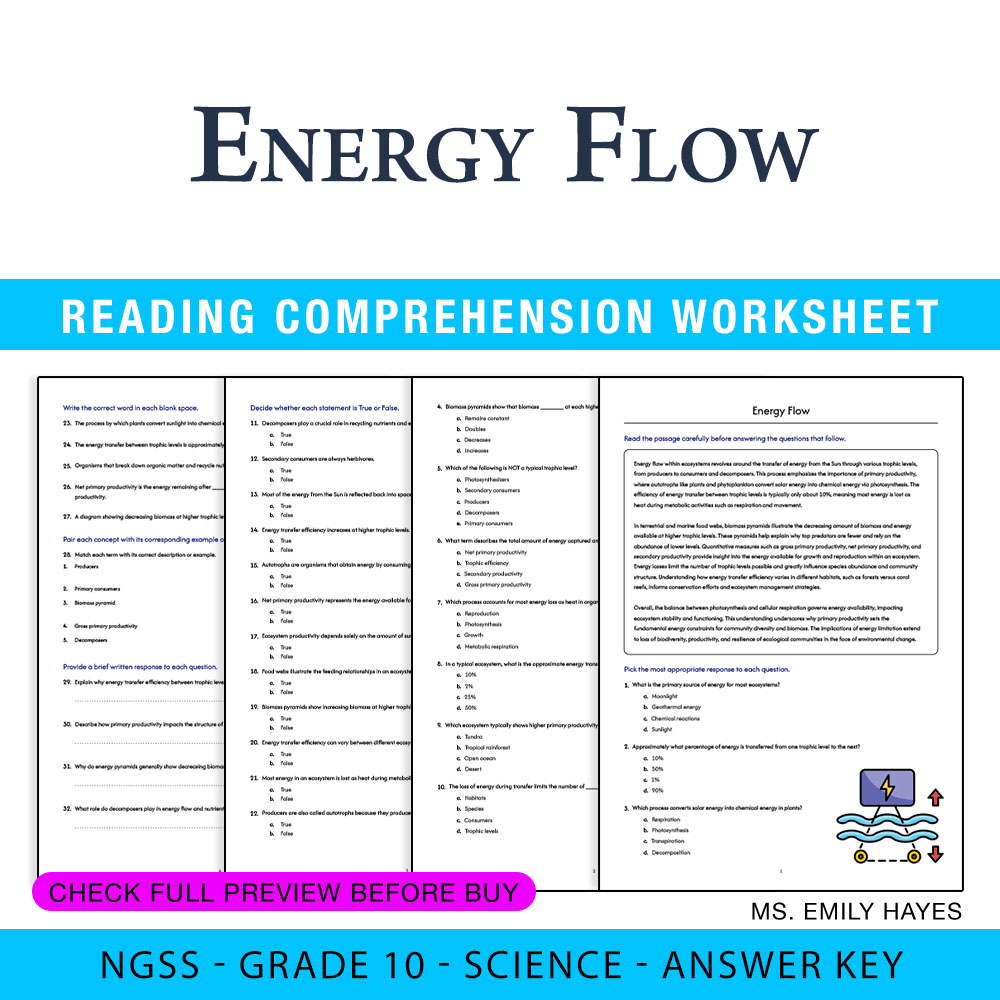
11th Grade Science | Energy Flow Worksheet (PDF+ Answer Key)
Created byCopper Leaf ClassroomLearning Objectives
- Understand the concept of energy transfer among producers, consumers, and decomposers within food webs.
- Analyze the roles of trophic levels, biomass pyramids, and energy loss through metabolic processes.
- Calculate and interpret efficiencies of trophic transfer and primary productivity in different ecosystems.
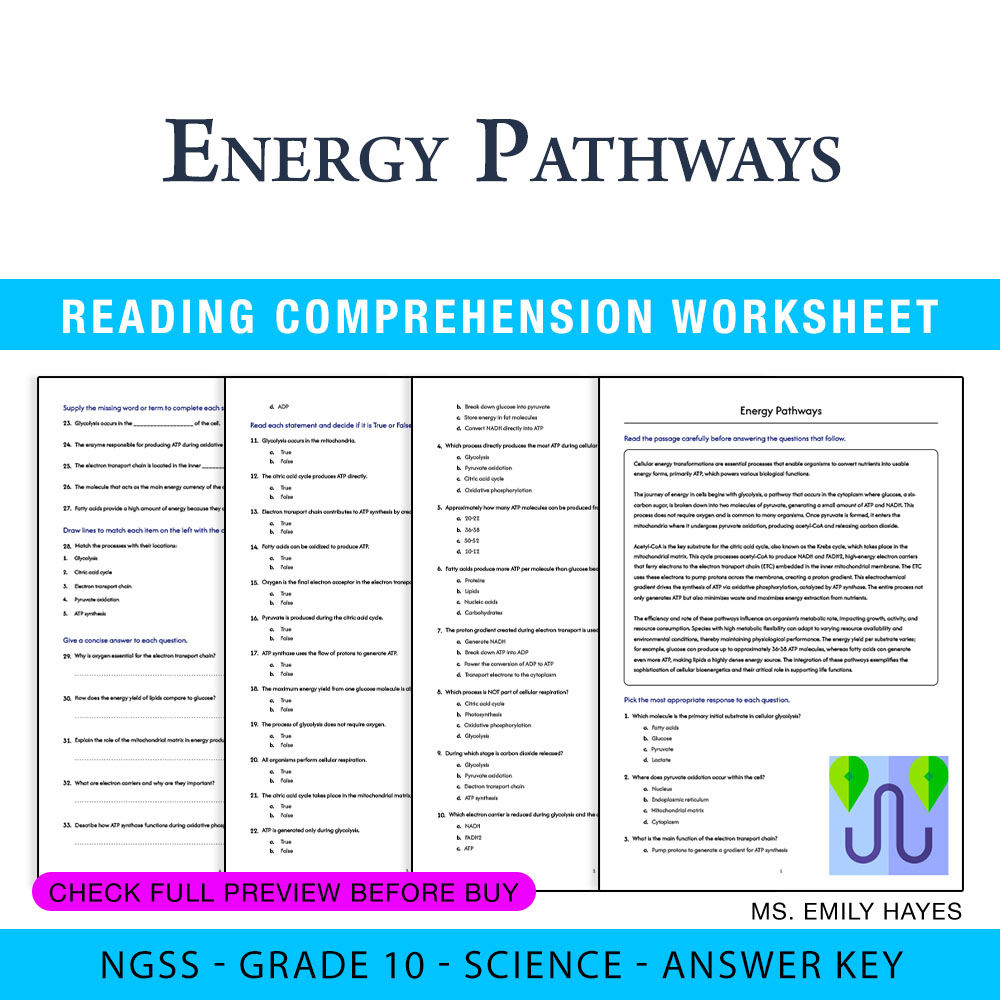
11th Grade Science | Energy Pathways Worksheet (PDF+ Answer Key)
Created byCopper Leaf ClassroomLearning Objectives
- Describe the process of cellular glycolysis, pyruvate oxidation, and the citric acid cycle in energy production.
- Explain the role of the electron transport chain and oxidative phosphorylation in ATP synthesis.
- Analyze the energy yield from different substrates and relate it to organismal metabolic rates.
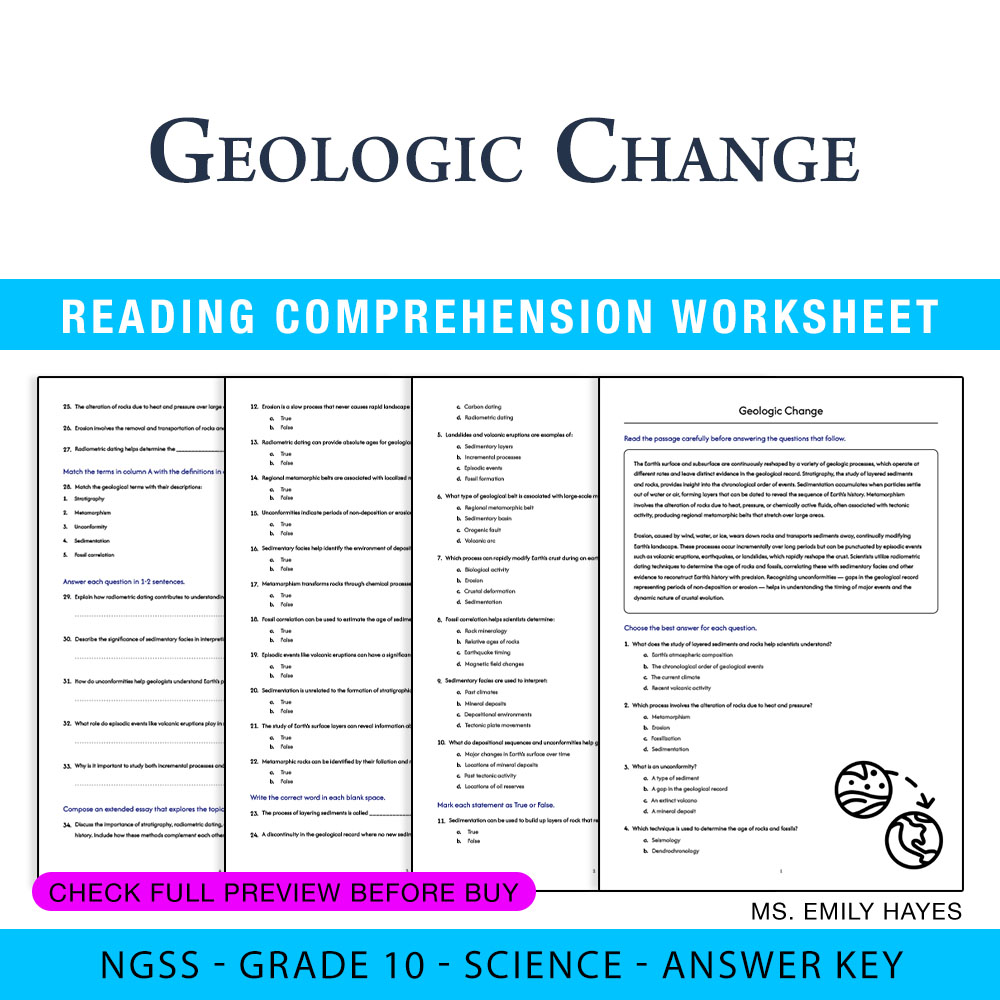
Grade 11 Science | Geologic Change Worksheet (PDF+ Answer Key)
Created byCopper Leaf ClassroomLearning Objectives
- Describe the processes involved in surface and subsurface geologic change, including stratigraphy, sedimentation, metamorphism, and erosion.
- Interpret temporal sequences of Earth's history using radiometric dating, fossil correlation, and sedimentary facies.
- Analyze geological features such as depositional sequences, unconformities, and metamorphic belts to understand Earth's dynamic history.
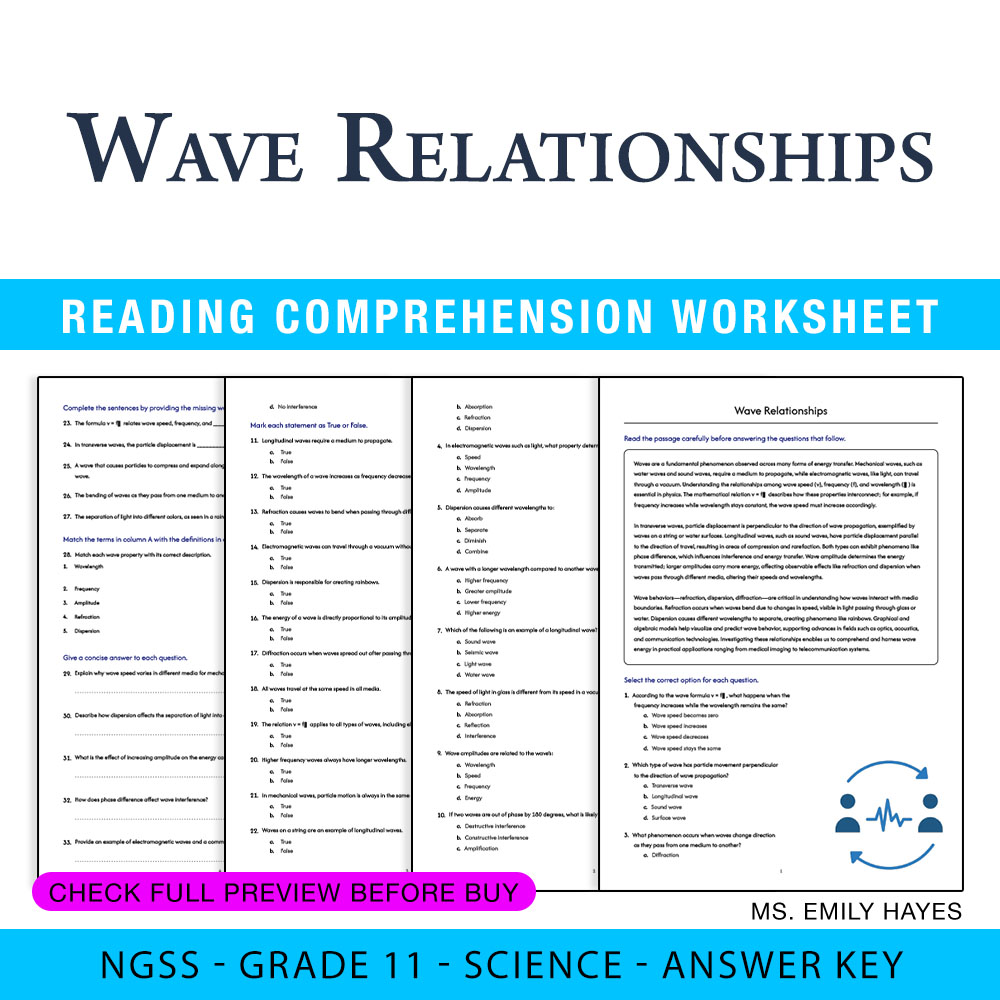
11th Grade Science | Wave Relationships Worksheet (PDF+ Answer Key)
Created byCopper Leaf ClassroomLearning Objectives
- Understand the mathematical relationships among wave properties such as v = fλ.
- Describe and compare transverse and longitudinal waves in various media.
- Explain wave behaviors like refraction and dispersion using graphs and algebraic representations.
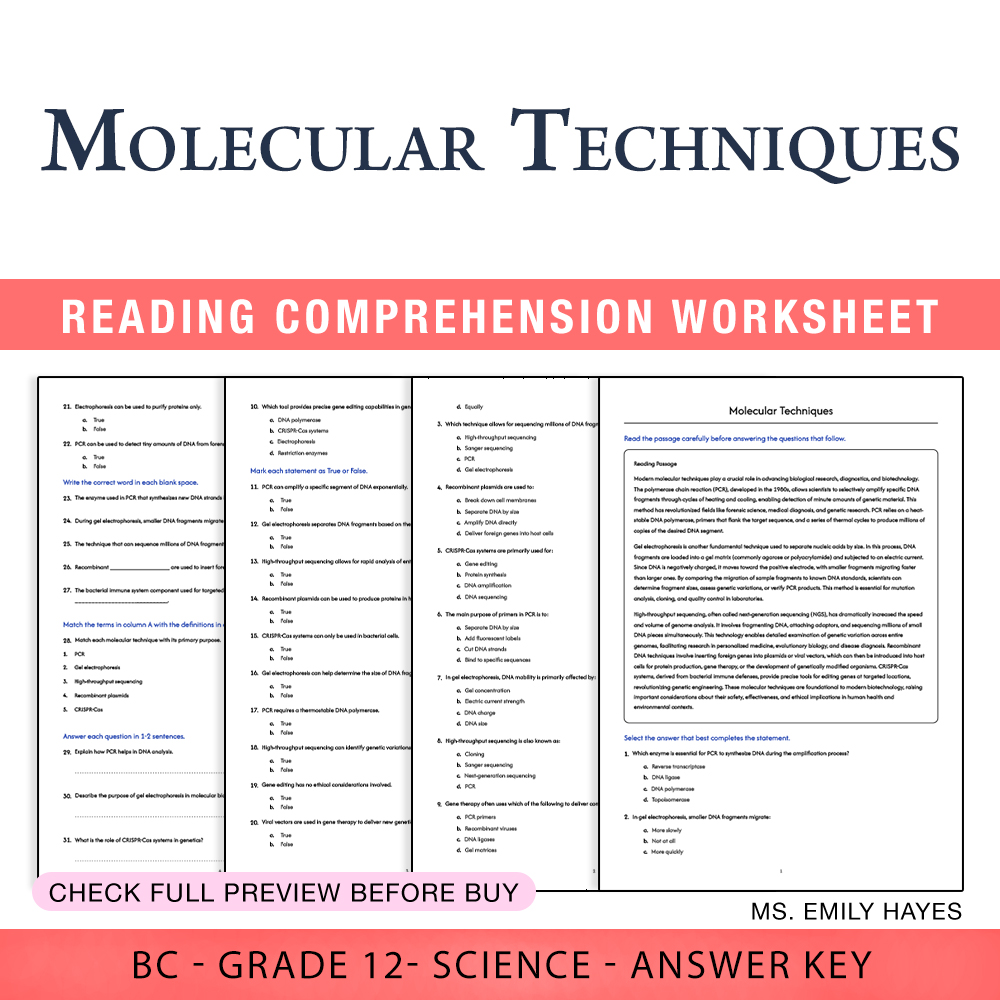
12th Grade Science | Molecular Techniques Worksheet (PDF + Answer Key)
Created byCopper Leaf ClassroomLearning Objectives
- Understand the principles and applications of modern molecular techniques.
- Identify key methods used in nucleic acid analysis and manipulation.
- Explain the purpose and process of PCR, gel electrophoresis, and sequencing.
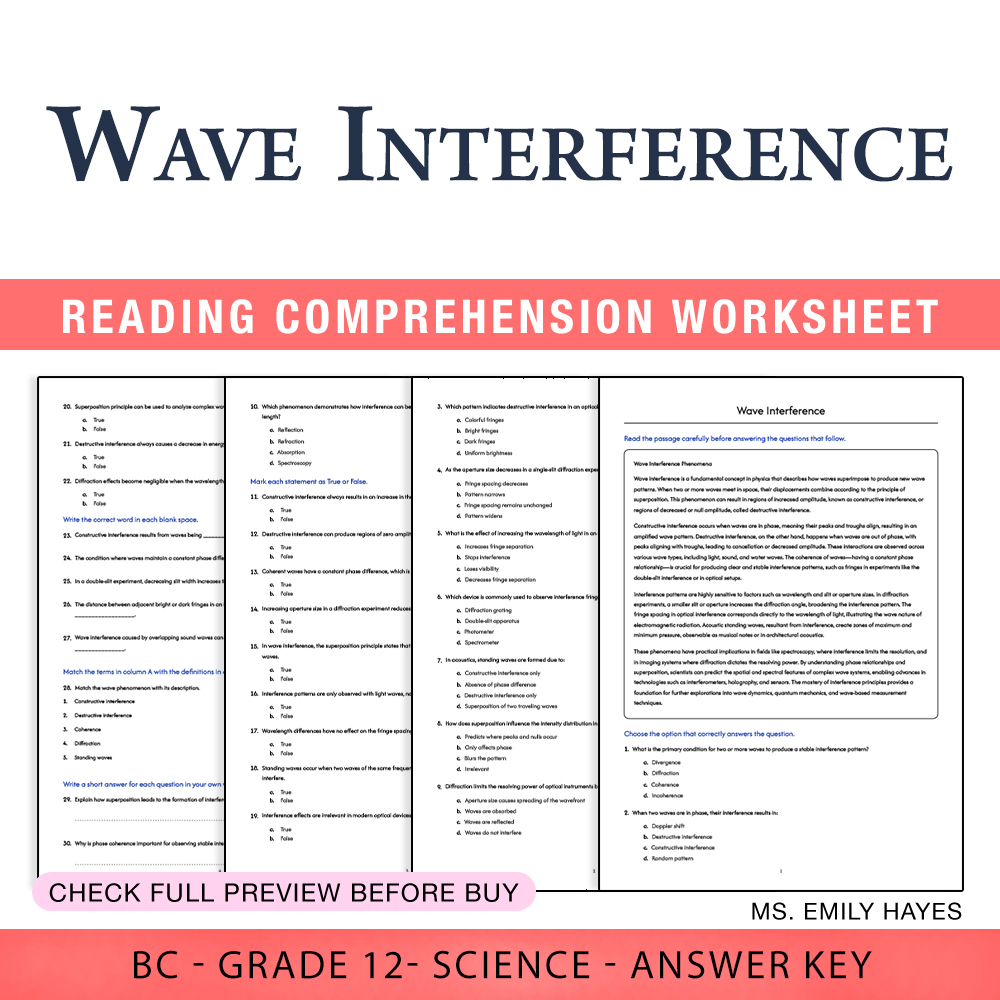
Grade 12 Science | Wave Interference Worksheet (PDF + Answer Key)
Created byCopper Leaf ClassroomLearning Objectives
- Explain the phenomena of wave interference, including constructive and destructive interference.
- Describe the conditions for coherence and how they influence interference patterns.
- Analyze how diffraction and interference patterns relate to wavelength and aperture size.
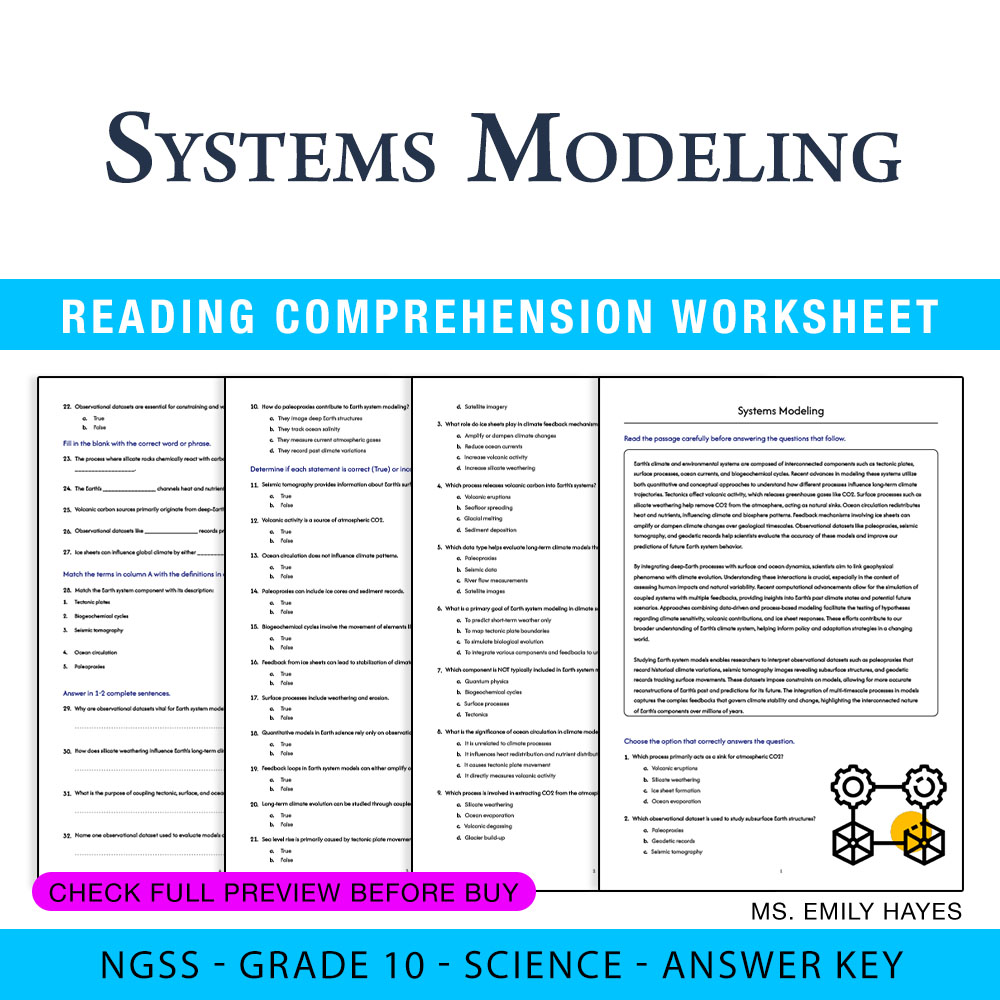
11th Grade Science | Systems Modeling Worksheet (PDF+ Answer Key)
Created byCopper Leaf ClassroomLearning Objectives
- Understand the key components and processes involved in Earth system modeling.
- Analyze how tectonics, surface processes, ocean circulation, and biogeochemical feedbacks interact over time.
- Evaluate observational data constraints used to validate Earth system models.
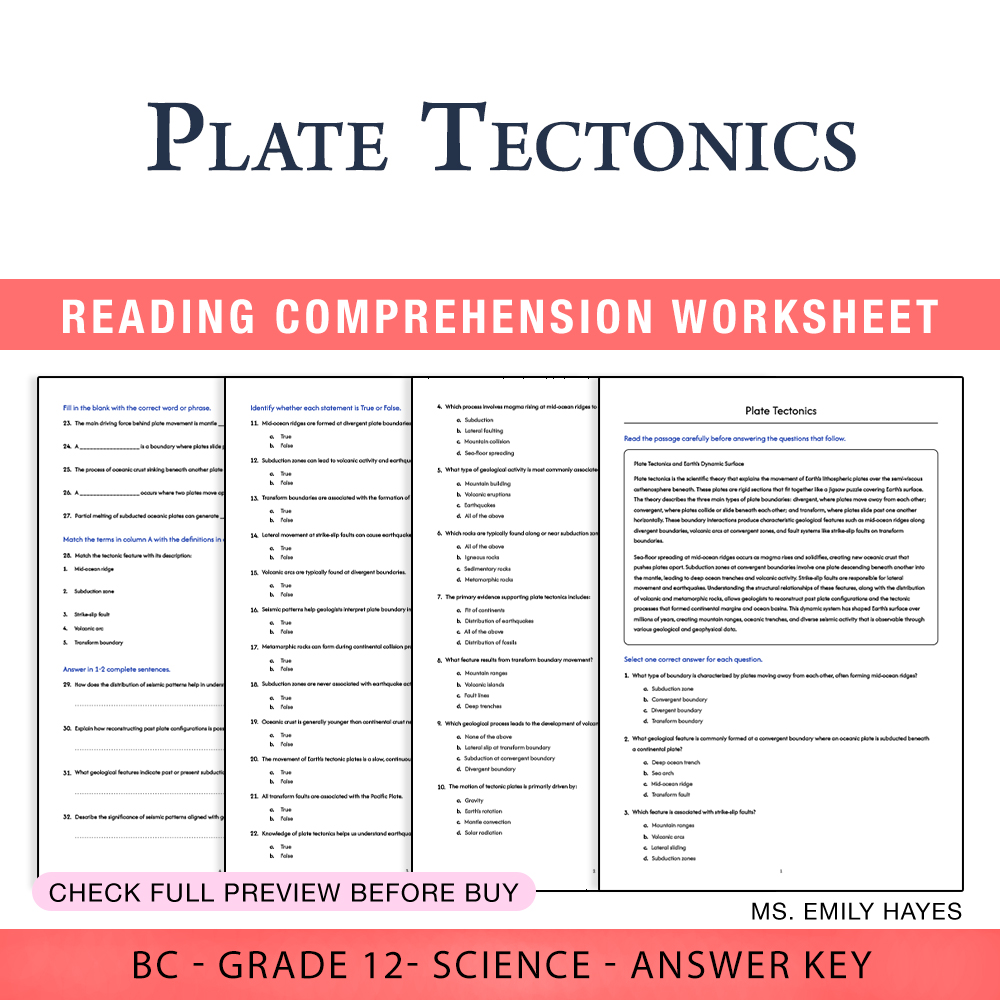
12th Grade Science | Plate Tectonics Worksheet (PDF + Answer Key)
Created byCopper Leaf ClassroomLearning Objectives
- Describe the processes and features associated with plate tectonics, including divergent, convergent, and transform boundaries.
- Interpret geological features such as mid-ocean ridges, volcanic arcs, and fault systems to reconstruct past plate movements.
- Explain how sea-floor spreading, subduction zones, and strike-slip faults shape Earth's surface.
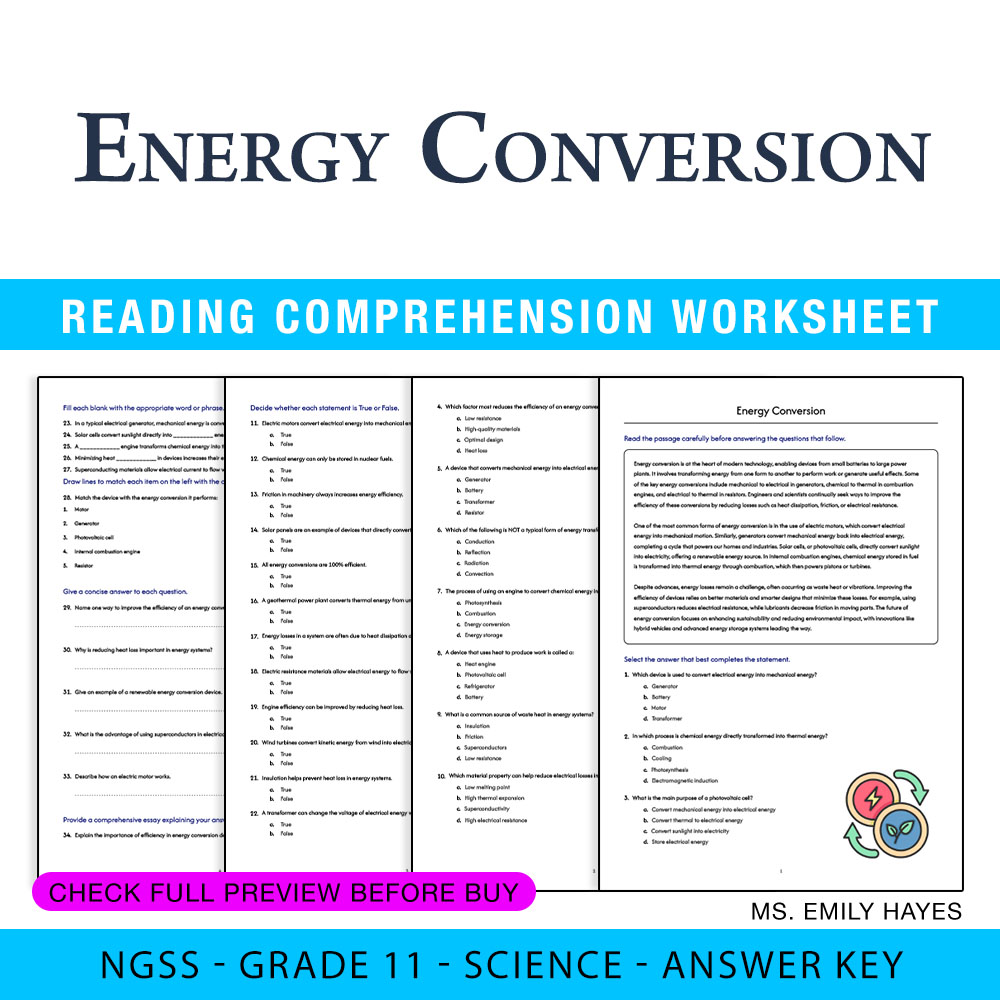
11th Grade Science | Energy Conversion Worksheet (PDF + Answer Key)
Created byCopper Leaf ClassroomLearning Objectives
- Understand the principles of energy conversion between mechanical, electrical, chemical, and thermal forms.
- Design and build devices that optimize energy transfer efficiency.
- Compare the performance of different energy conversion systems such as motors, generators, photovoltaic cells, and engines.
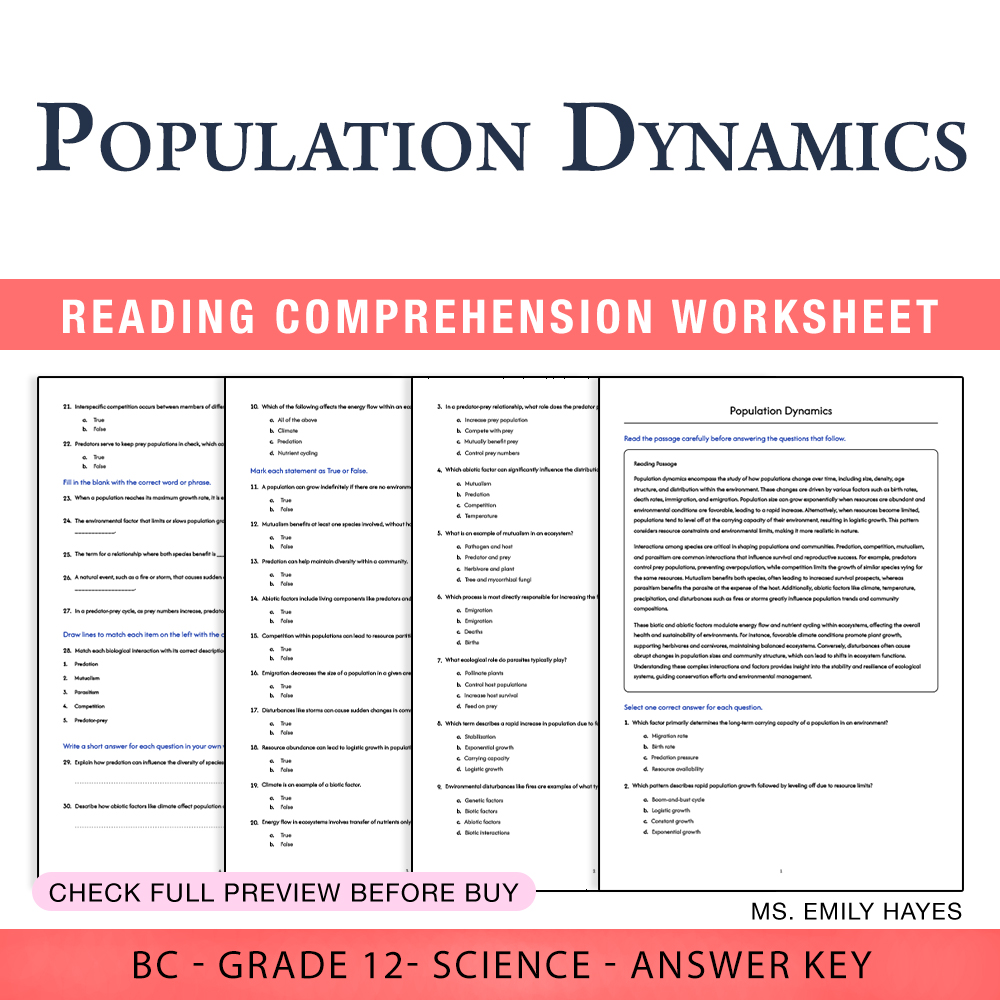
Grade 12 Science | Population Dynamics Worksheet (PDF + Answer Key)
Created byCopper Leaf ClassroomLearning Objectives
- Understand the key factors influencing population size and structure over time.
- Explain patterns of population growth such as exponential and logistic models.
- Analyze how biotic and abiotic interactions affect community composition.
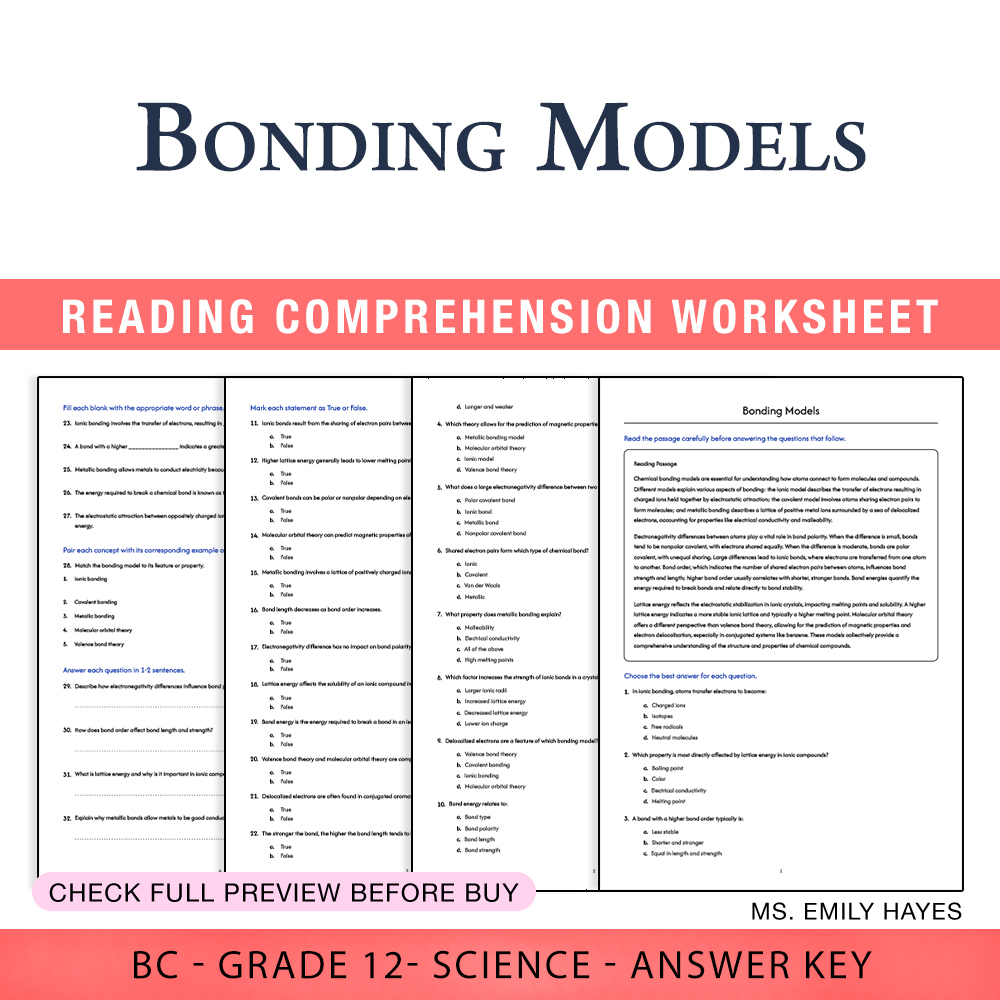
12th Grade Science | Bonding Models Worksheet (PDF + Answer Key)
Created byCopper Leaf ClassroomLearning Objectives
- Explain different types of chemical bonding: ionic, covalent, and metallic.
- Predict bond polarity based on electronegativity differences.
- Describe the concepts of bond order, bond energy, and their relationship to bond strength and length.
Browse more categories
About Science Worksheets
Find Science worksheets spanning core skills, practice, and review. All 42,859 resources are instant PDF downloads for the classroom or home.
Every worksheet on MyTeachingSheets is created by independent teacher-authors and reviewed before publication. All resources download as printable PDFs for classroom, homework, or at-home practice, and many include answer keys. Preview any worksheet free before buying.