
Science Worksheets
42,859 subject resources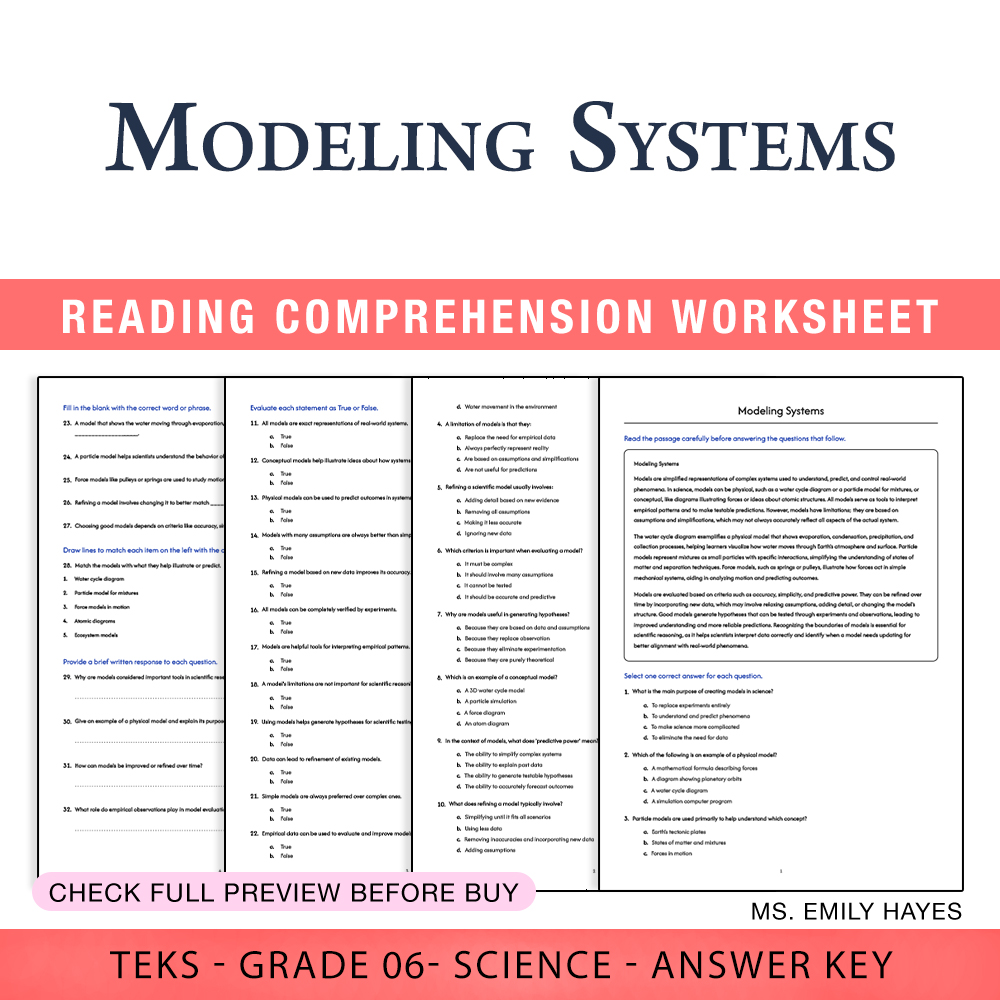
6th Grade Science | Modeling Systems Worksheet (PDF+ Answer Key)
 Created byCopper Leaf Classroom
Learning Objectives
- Understand the purpose and types of models used in science.
- Describe how physical and conceptual models can predict outcomes and interpret data.
- Evaluate the limitations of models based on empirical evidence.
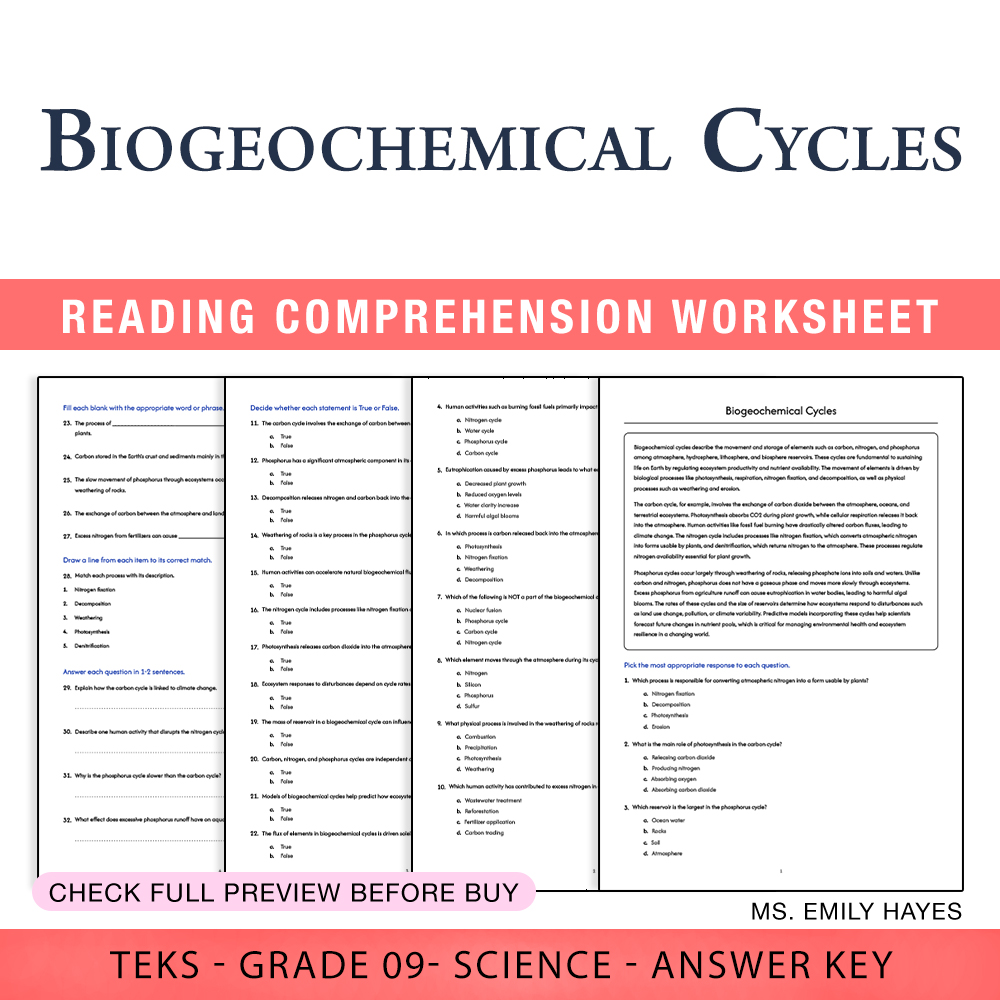
9th Grade Science | Biogeochemical Cycles Worksheet (PDF+ Answer Key)
Created byCopper Leaf ClassroomLearning Objectives
- Describe the main components and processes involved in biogeochemical cycles.
- Explain the roles of key elements like carbon, nitrogen, and phosphorus in ecosystems.
- Understand how fluxes and reservoir sizes influence ecosystem responses to environmental changes.
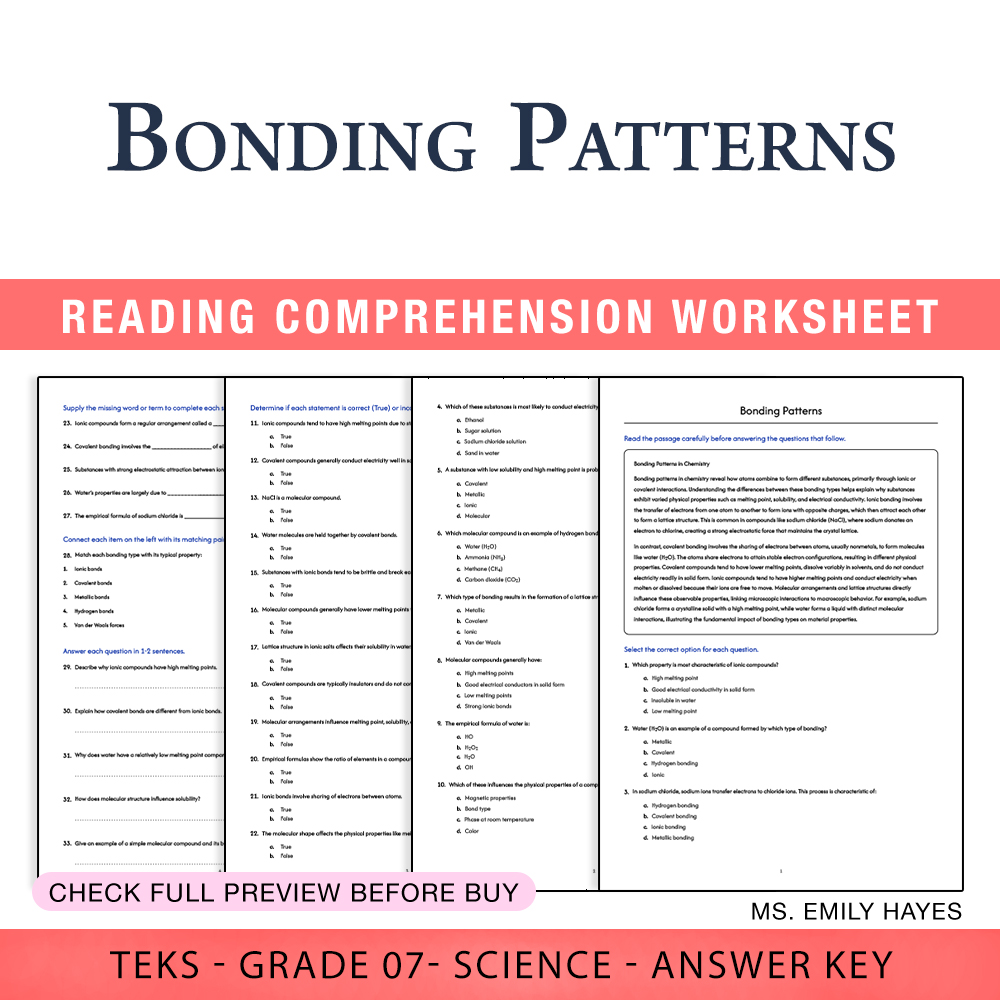
7th Grade Science | Bonding Patterns Worksheet (PDF+ Answer Key)
Created byCopper Leaf ClassroomLearning Objectives
- Distinguish between ionic and covalent bonding based on properties and formation.
- Relate bonding types to macroscopic properties such as melting point, solubility, and electrical conductivity.
- Describe the formation of simple binary ionic salts and molecular compounds using empirical formulas.
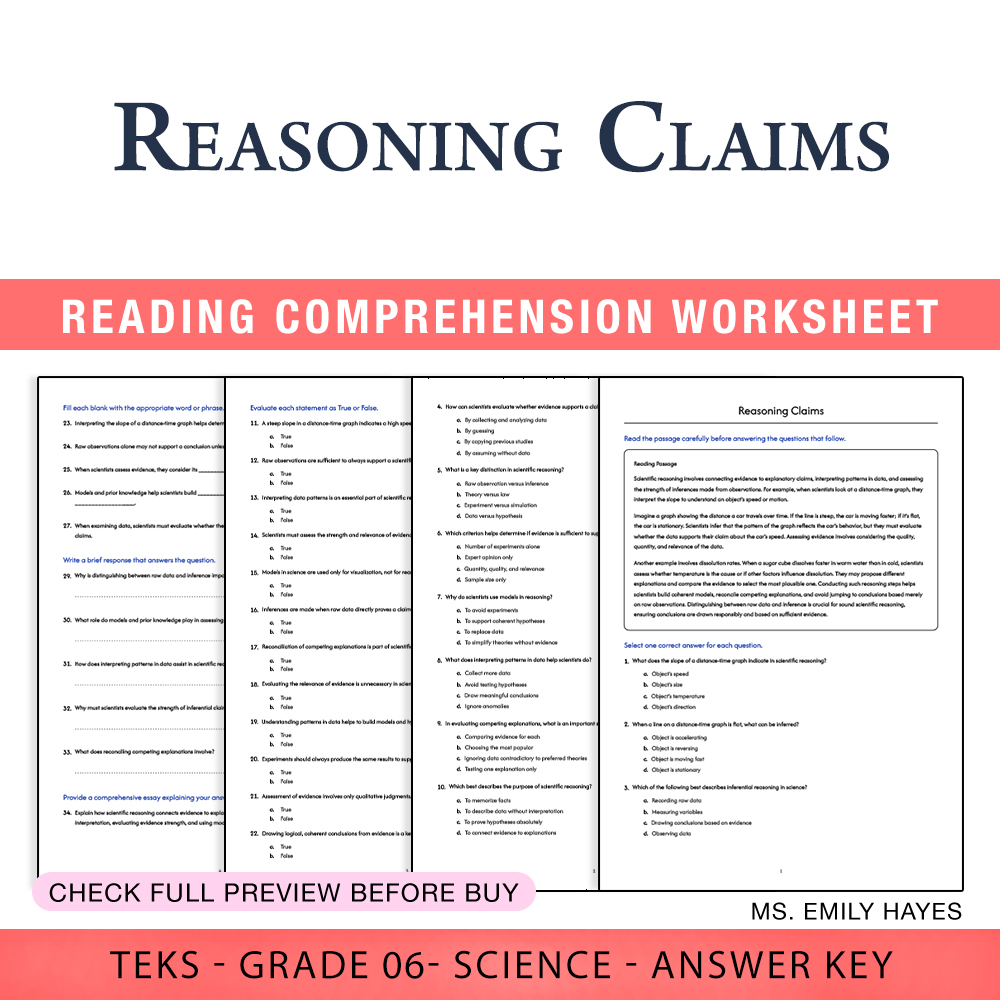
6th Grade Science | Reasoning Claims Worksheet (PDF+ Answer Key)
Created byCopper Leaf ClassroomLearning Objectives
- Understand how evidence connects to explanatory claims in scientific reasoning.
- Interpret patterns in data, such as distance-time graphs, to draw conclusions.
- Distinguish between raw observations and inferences based on evidence.
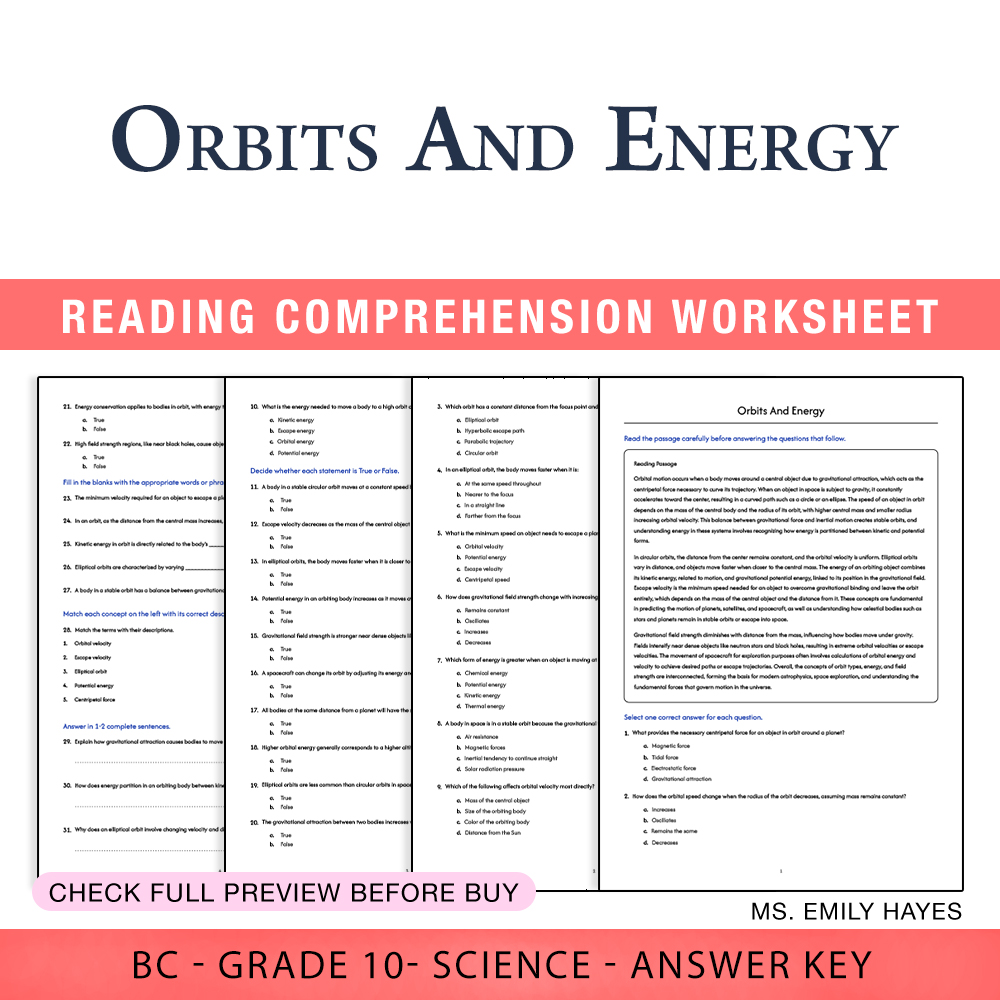
Grade 10 Science | Orbits and Energy Worksheet (PDF + Answer Key)
Created byCopper Leaf ClassroomLearning Objectives
- Explain how gravitational attraction provides the centripetal force for orbital motion.
- Describe the relationship between orbital speed, central mass, and orbital radius.
- Differentiate between circular and elliptical orbits and understand energy partitioning.
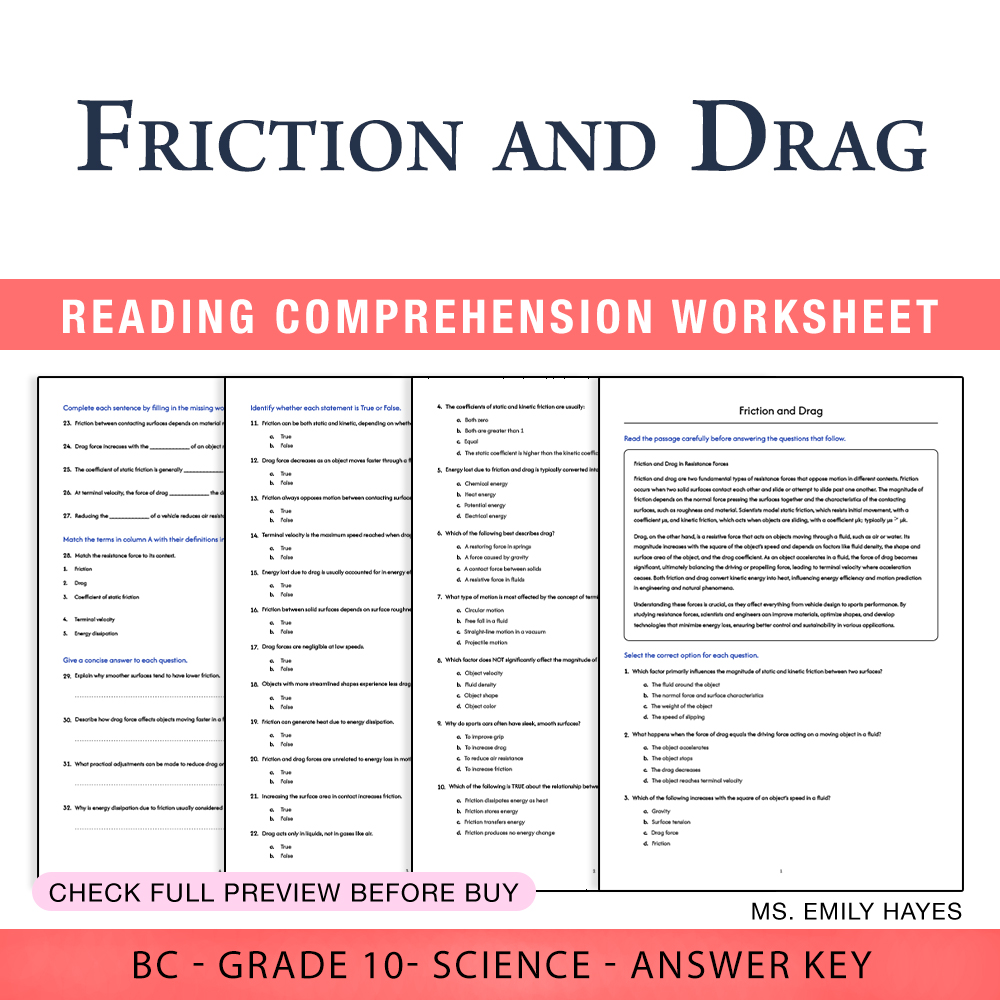
10th Grade Science | Friction and Drag Worksheet (PDF+ Answer Key)
Created byCopper Leaf ClassroomLearning Objectives
- Explain the mechanisms of friction and drag and how they oppose motion.
- Describe factors affecting static and kinetic friction between surfaces.
- Understand how drag force increases with speed and achieves terminal velocity.
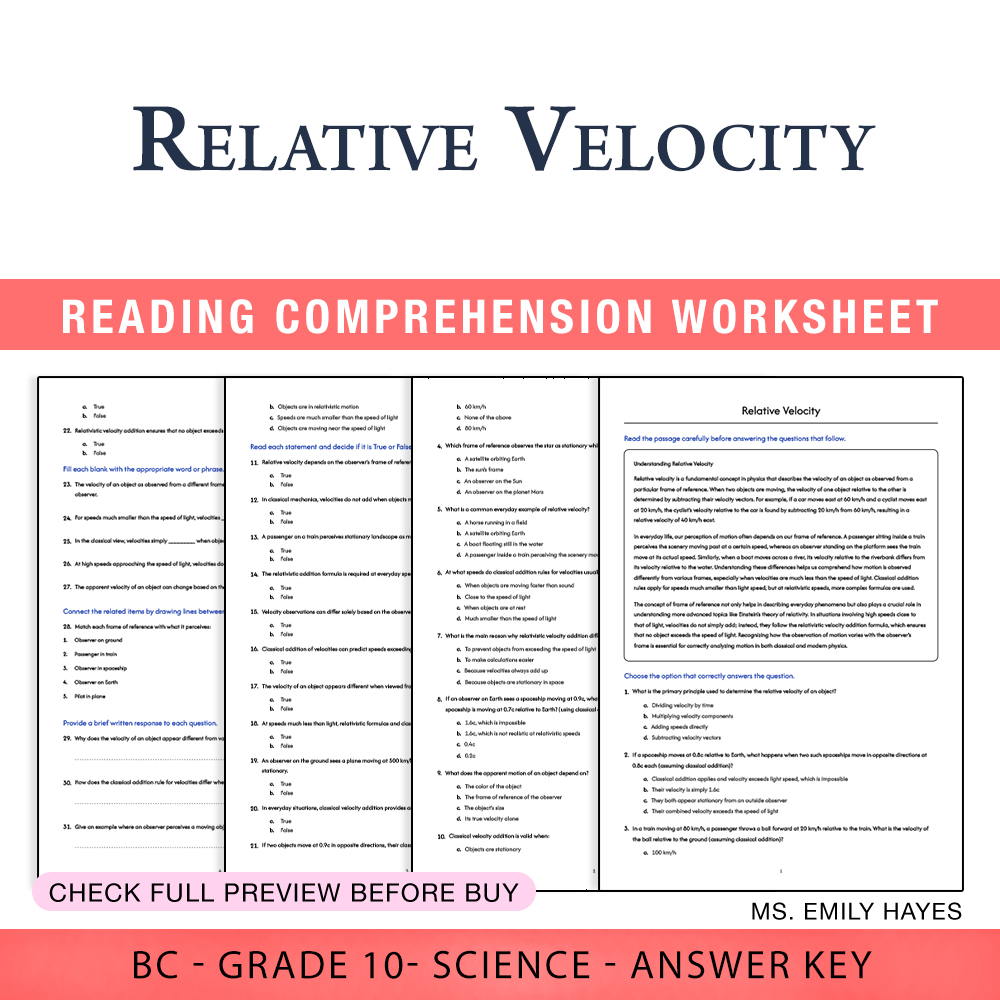
Grade 10 Science | Relative Velocity Worksheet (PDF+ Answer Key)
Created byCopper Leaf ClassroomLearning Objectives
- Understand the concept of relative velocity and how it is calculated between different reference frames.
- Apply basic vector subtraction to find the apparent velocity of objects from different perspectives.
- Explain the effect of frame of reference on the observation of motion, including everyday examples.
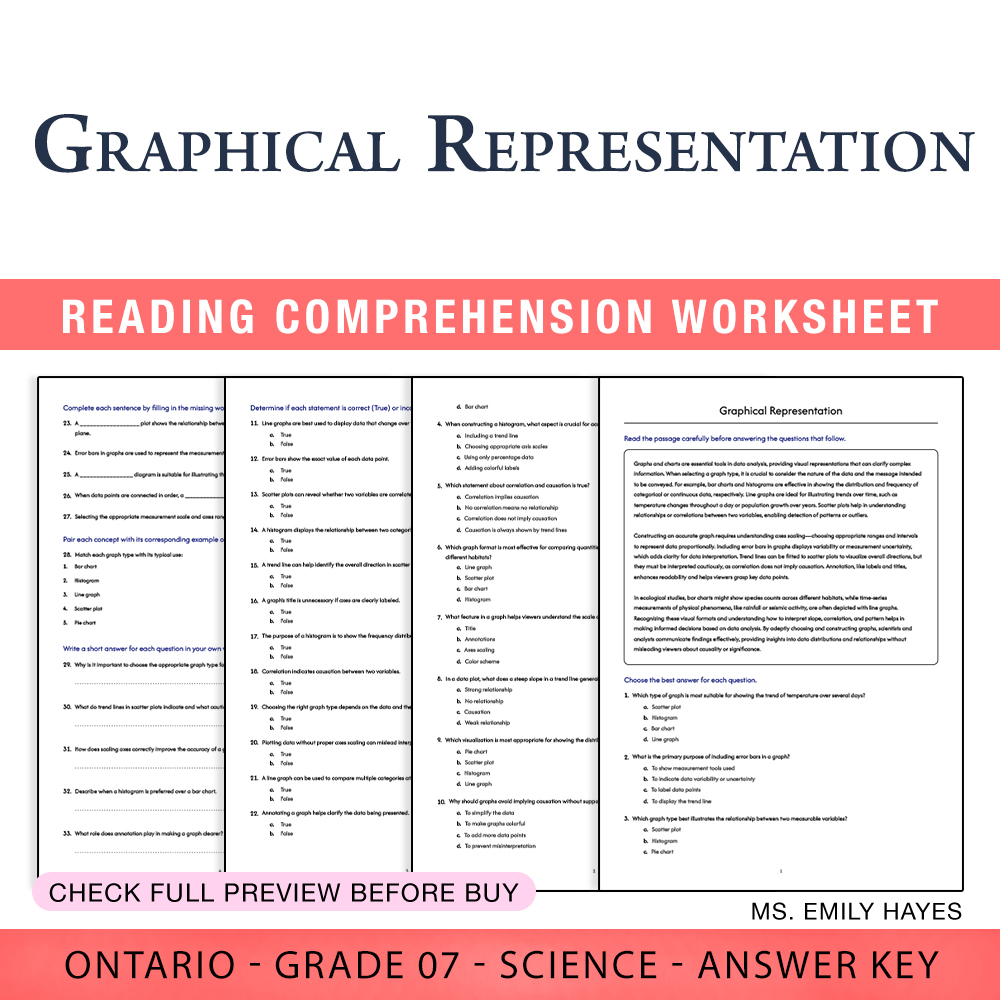
Grade 7 Science | Graphical Representation Worksheet (PDF+ Answer Key)
Created byCopper Leaf ClassroomLearning Objectives
- Understand the different types of graphs used to display data such as bar charts, histograms, line graphs, and scatter plots.
- Learn how to properly select and construct various graphs based on data type and measurement scales.
- Interpret elements of graphs including axes, error bars, trend lines, and patterns.
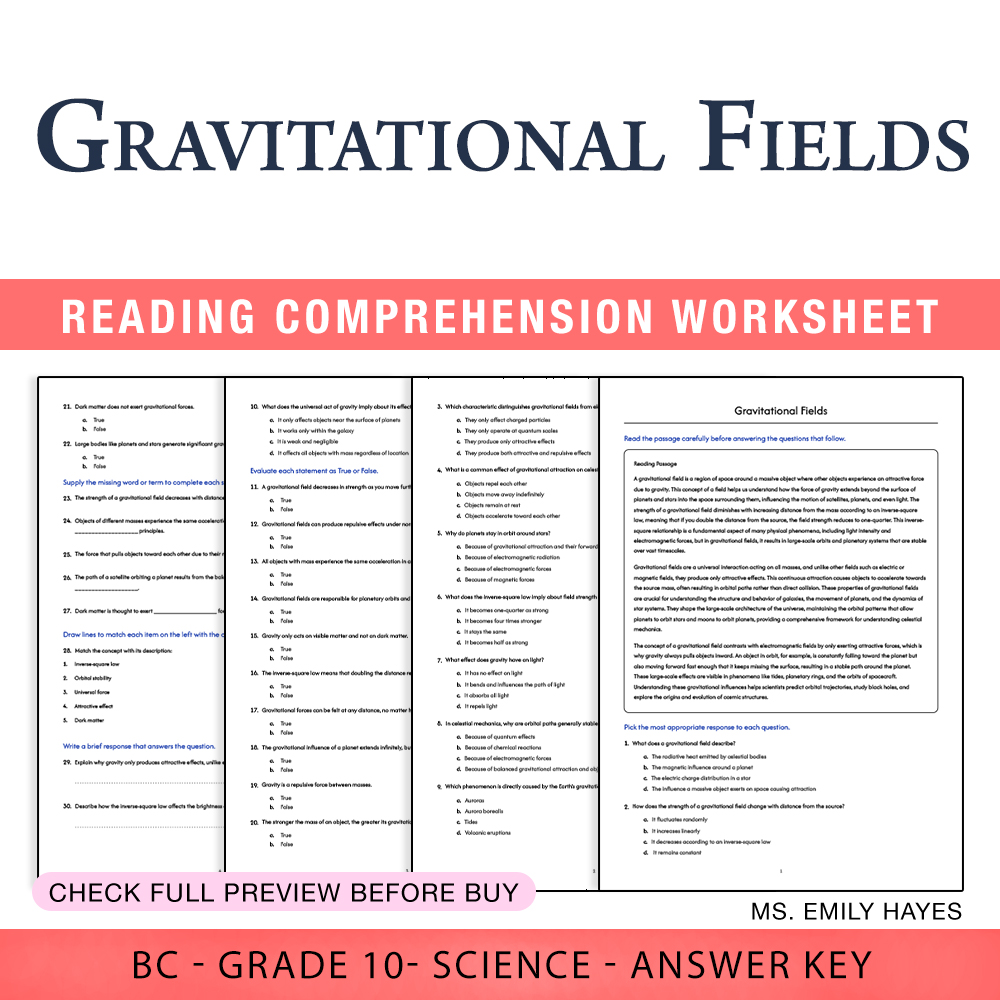
10th Grade Science | Gravitational Fields Worksheet (PDF+ Answer Key)
Created byCopper Leaf ClassroomLearning Objectives
- Explain the concept of a gravitational field and how it influences objects in space.
- Describe the inverse-square relationship between field strength and distance from a mass.
- Differentiate gravitational fields from other force fields by their universal attraction and large-scale effects.
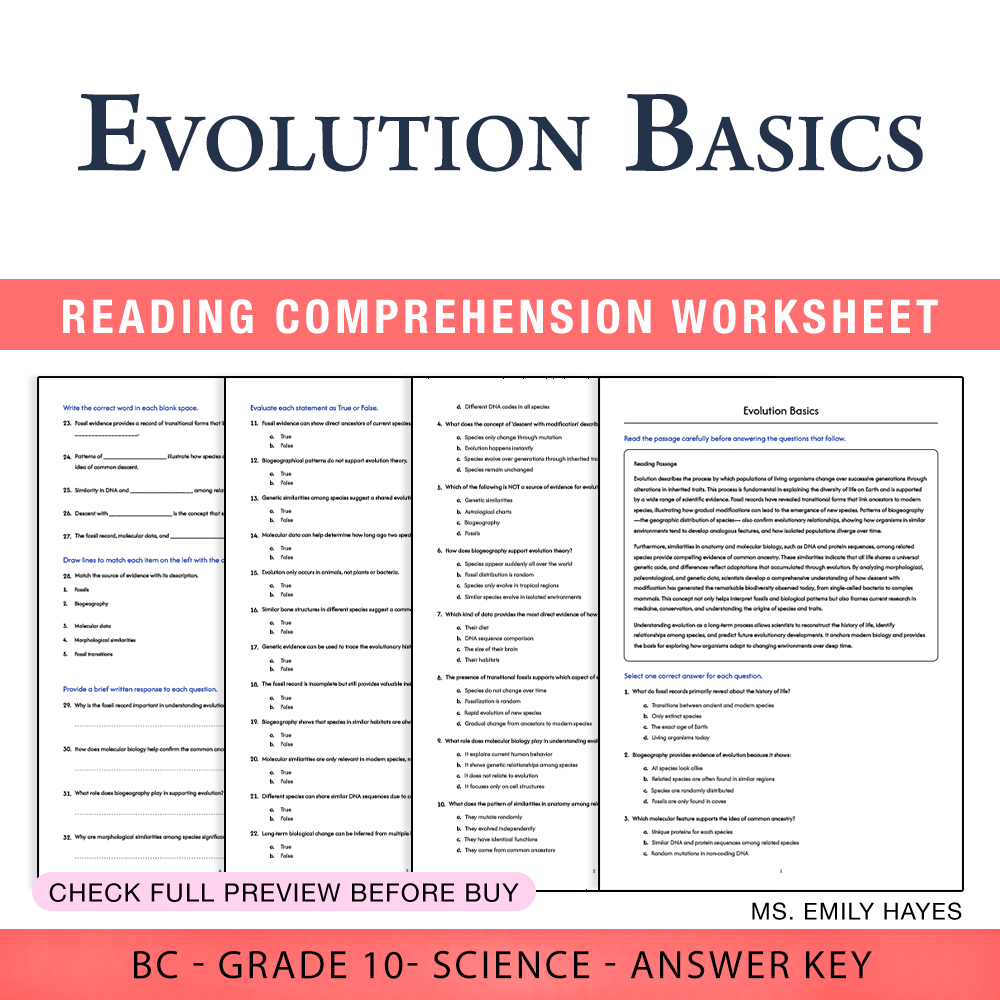
Grade 10 Science | Evolution Basics Worksheet (PDF+ Answer Key)
Created byCopper Leaf ClassroomLearning Objectives
- Understand the fundamental concepts of evolution and natural selection.
- Identify evidence supporting the theory of evolution from fossil records, biogeography, and molecular data.
- Explain how common ancestry provides insight into biological diversity.
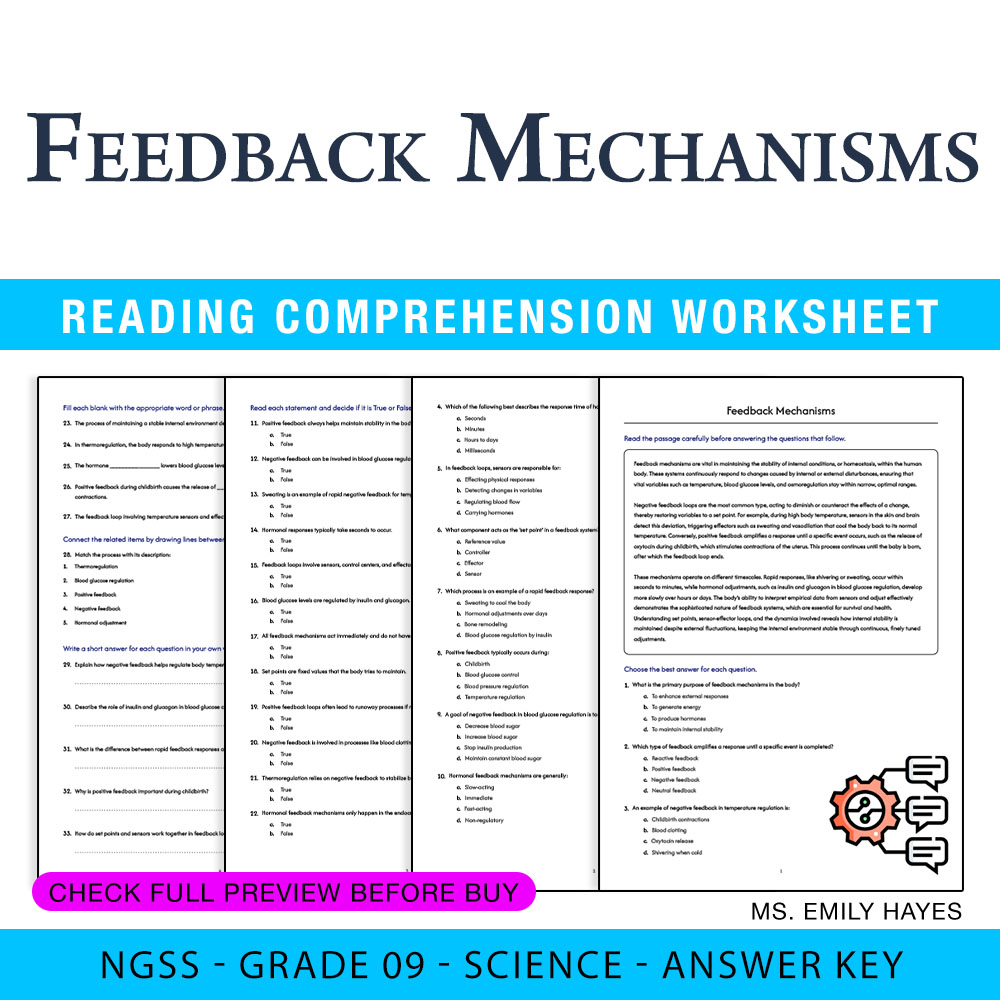
9th Grade Science | Feedback Mechanisms Worksheet (PDF+ Answer Key)
Created byCopper Leaf ClassroomLearning Objectives
- Describe the concepts of negative and positive feedback within physiological systems.
- Explain how feedback mechanisms maintain internal body conditions within narrow limits.
- Identify examples of feedback processes such as thermoregulation and blood glucose control.
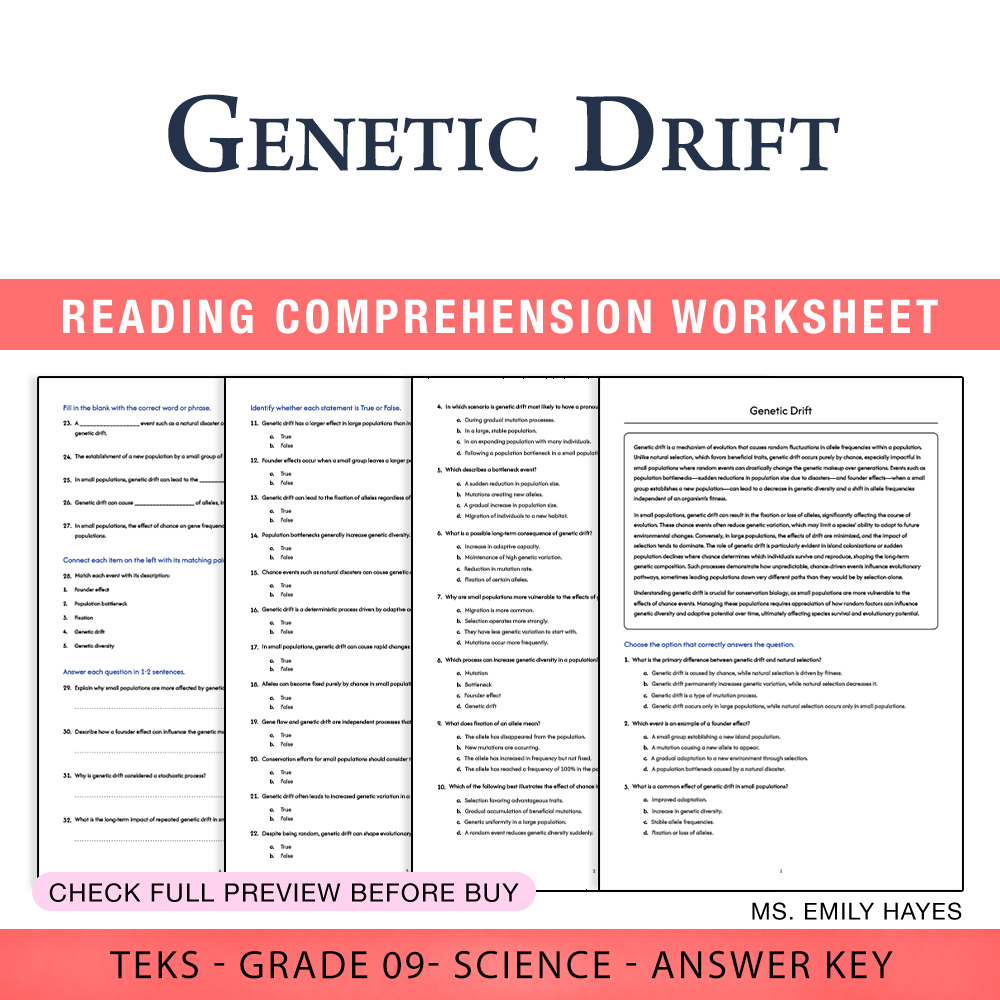
9th Grade Science | Genetic Drift Worksheet (PDF+ Answer Key)
Created byCopper Leaf ClassroomLearning Objectives
- Understand the concept of genetic drift and its role in evolution.
- Identify different events that cause genetic drift, such as bottlenecks and founder effects.
- Explain how chance events can influence genetic diversity in small populations.
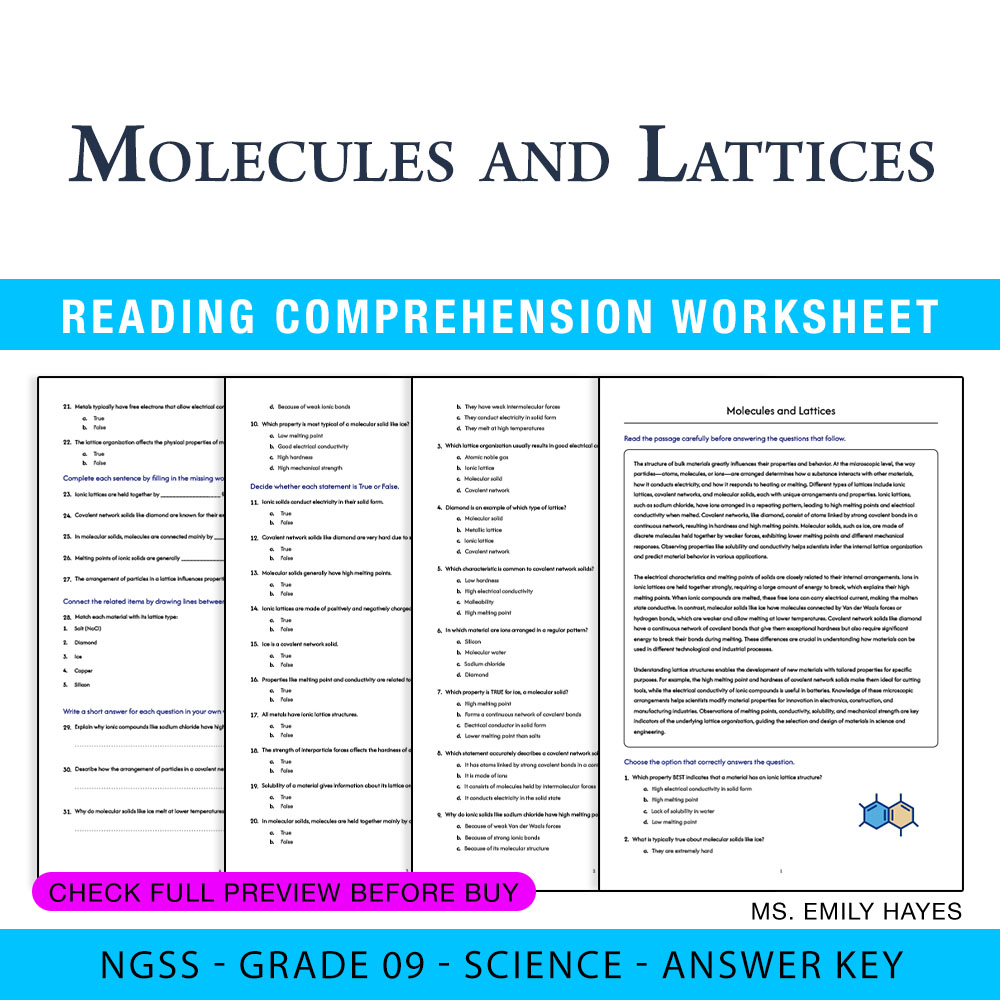
9th Grade Science | Molecules and Lattices Worksheet (PDF + Answer Key)
Created byCopper Leaf ClassroomLearning Objectives
- Explain the differences between ionic lattices, covalent networks, and molecular solids based on their particle arrangements and electrical forces.
- Describe how properties such as melting point, electrical conductivity, hardness, and solubility reflect the lattice organization of different materials.
- Analyze observations to determine the type of lattice organization in various bulk materials.
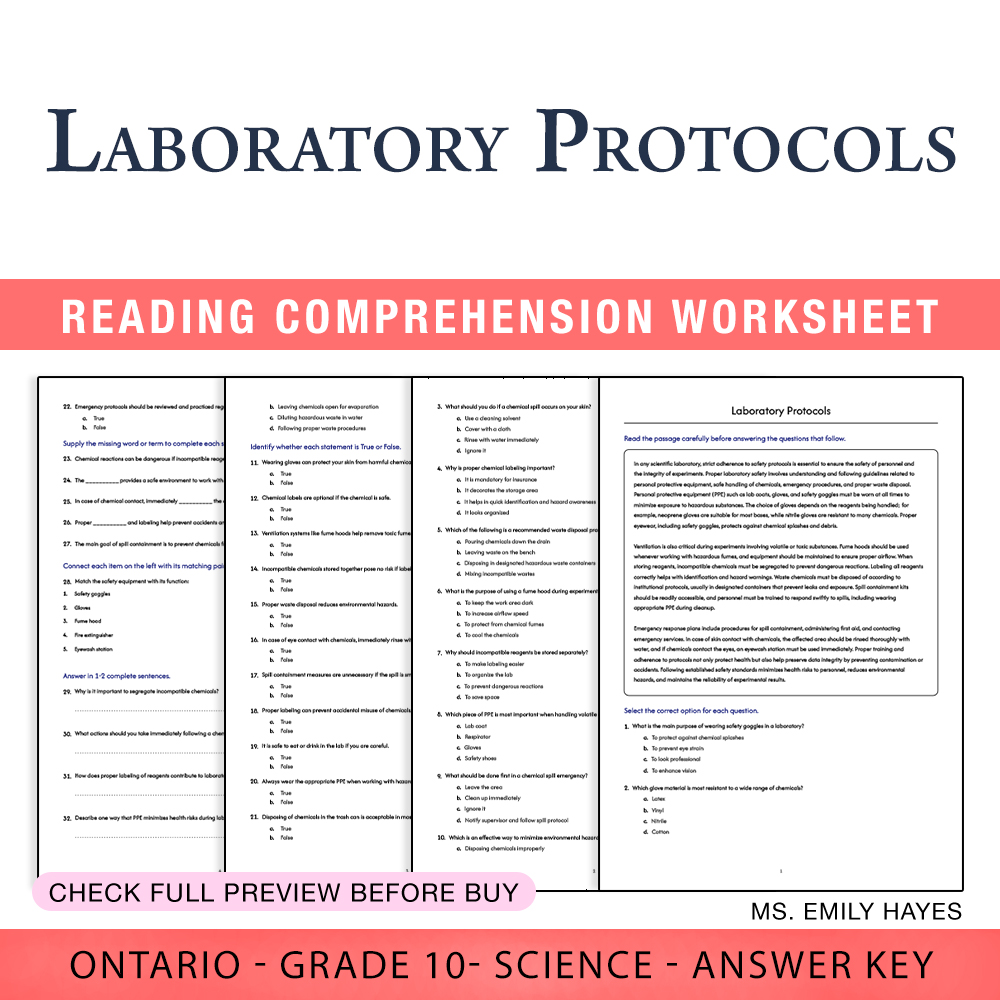
10th Grade Science | Laboratory Protocols Worksheet (PDF + Answer Key)
Created byCopper Leaf ClassroomLearning Objectives
- Identify essential safety protocols for laboratory work.
- Recognize appropriate use of personal protective equipment (PPE).
- Understand proper storage, labeling, and waste handling procedures.
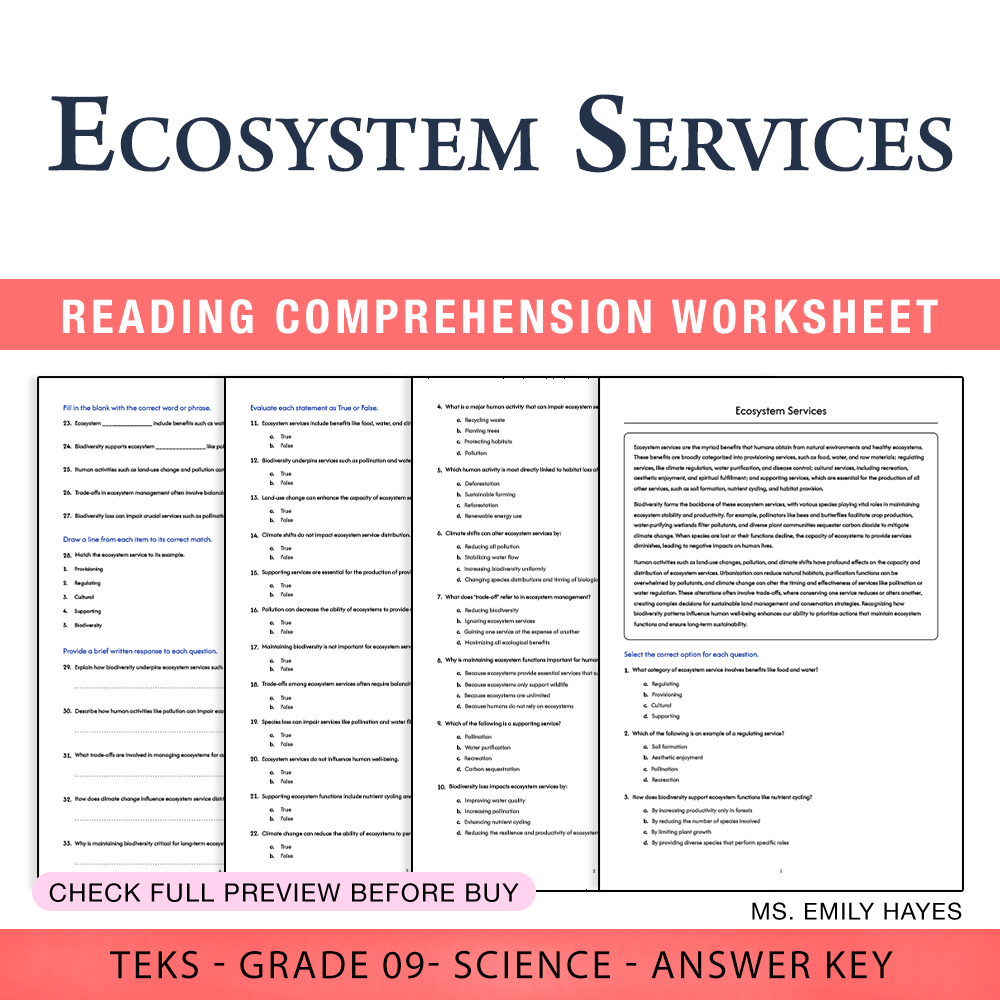
9th Grade Science | Ecosystem Services Worksheet (PDF+ Answer Key)
Created byCopper Leaf ClassroomLearning Objectives
- Explain the concept of ecosystem services and their types.
- Identify the ways biodiversity underpins ecosystem functions.
- Assess the impacts of human activities on ecosystem service capacity.
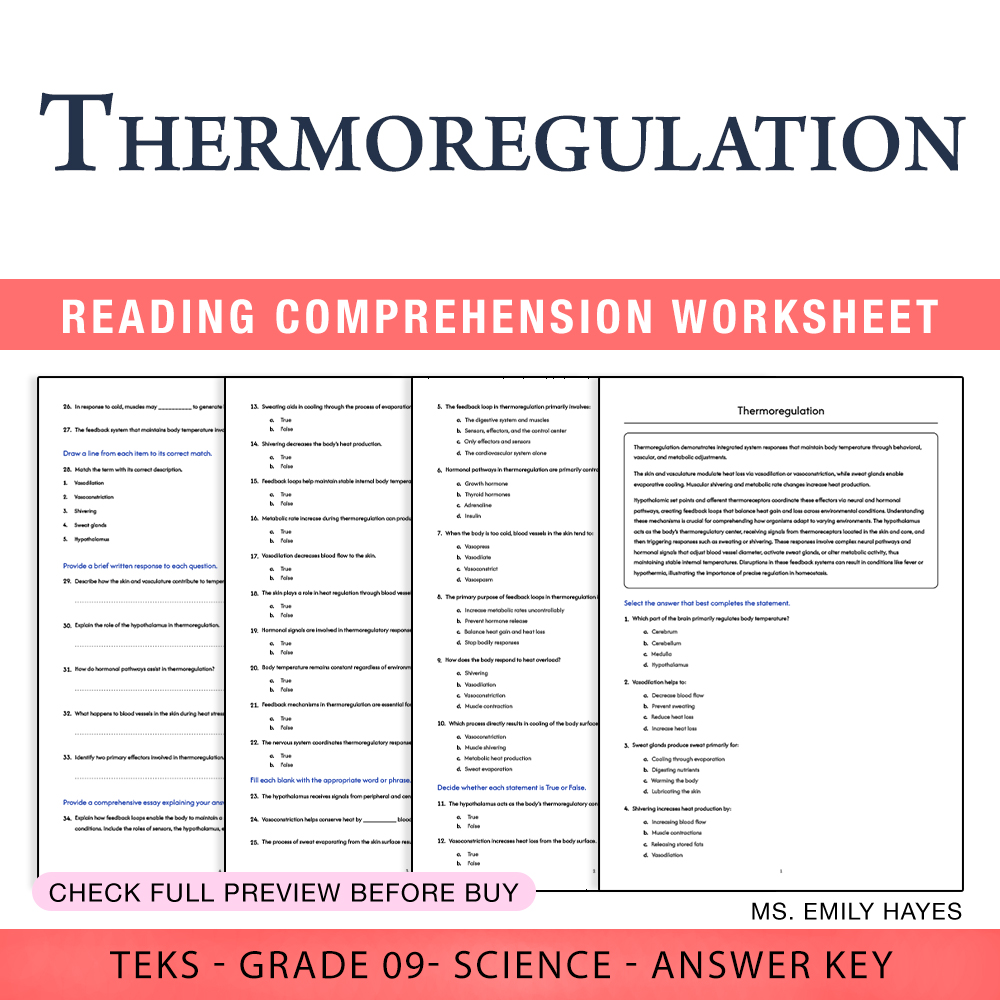
9th Grade Science | Thermoregulation Worksheet (PDF+ Answer Key)
Created byCopper Leaf ClassroomLearning Objectives
- Understand the biological processes involved in thermoregulation.
- Identify key effectors and mechanisms that maintain body temperature.
- Explain the roles of neural and hormonal pathways in thermoregulation.
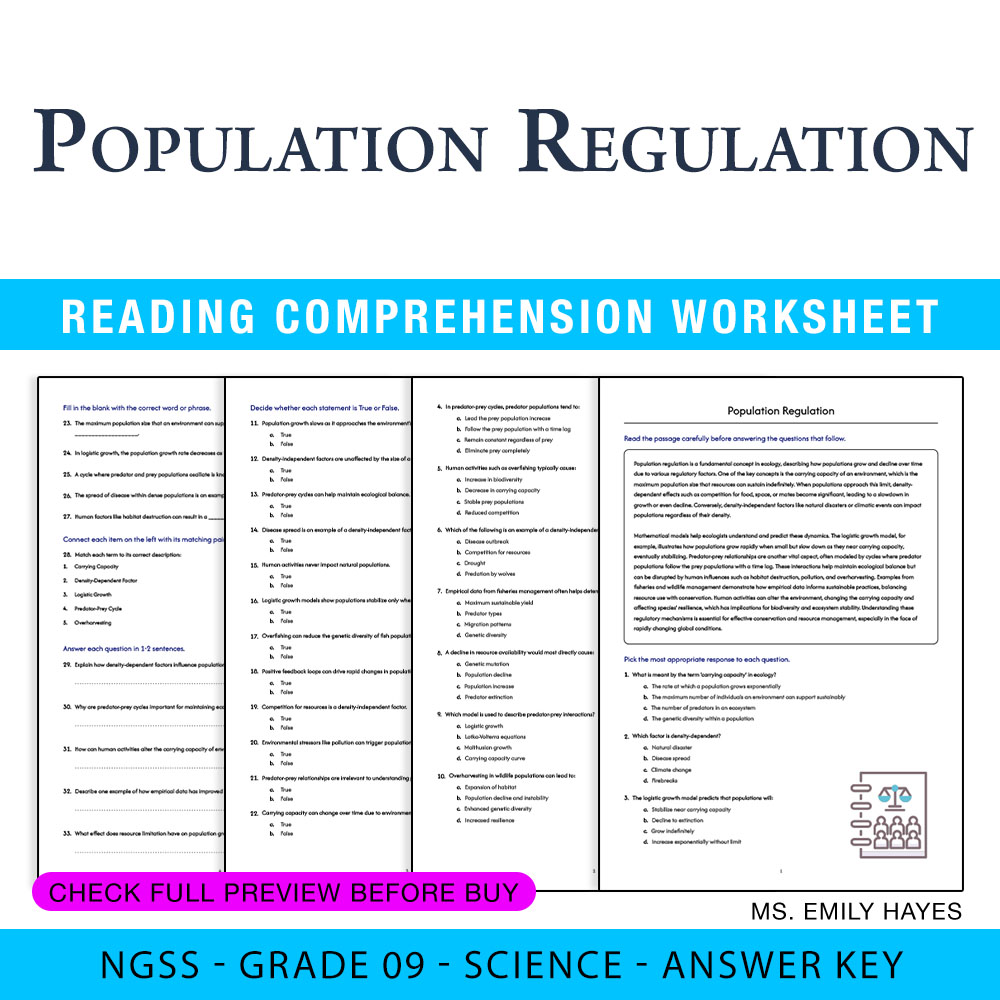
9th Grade Science | Population Regulation Worksheet (PDF+ Answer Key)
Created byCopper Leaf ClassroomLearning Objectives
- Describe factors that influence population sizes, including carrying capacity, competition, predation, and disease.
- Explain mathematical models such as logistic growth and predator-prey cycles in population dynamics.
- Analyze how human activities affect population resilience and ecosystems.
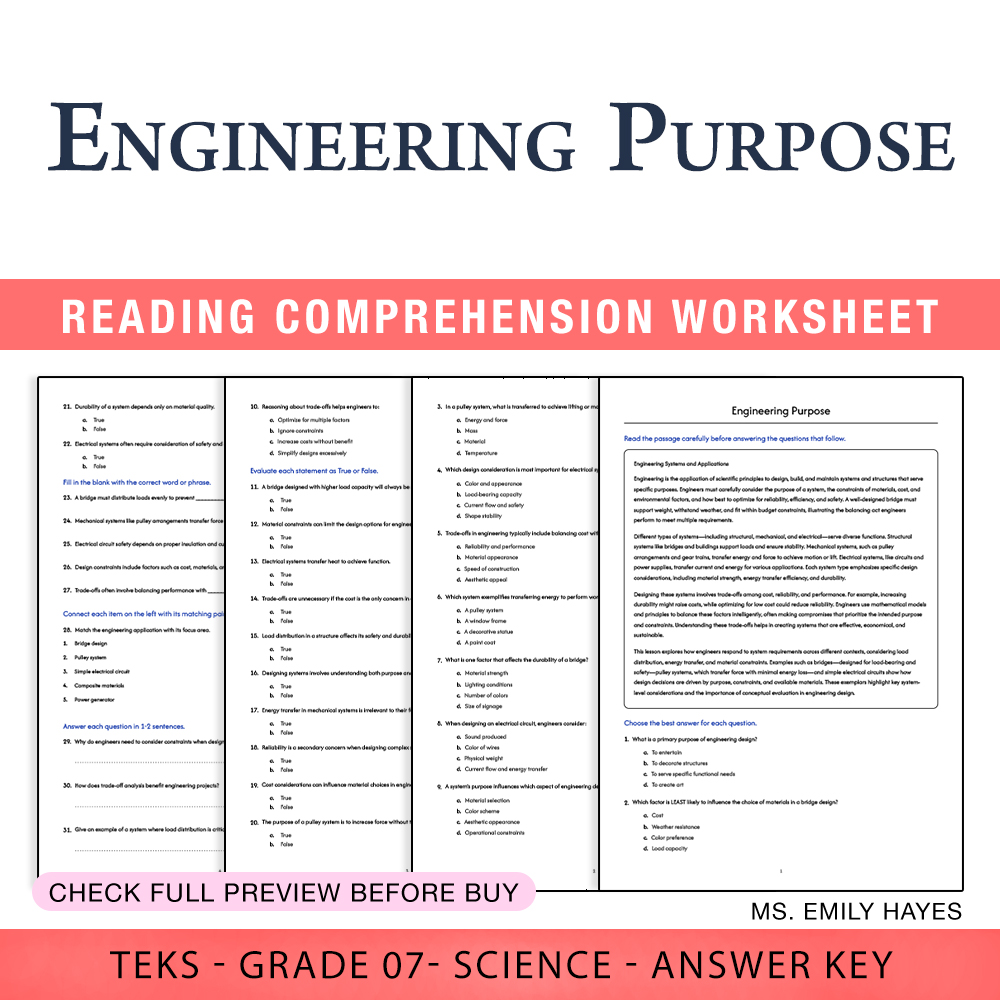
7th Grade Science | Engineering Purpose Worksheet (PDF+ Answer Key)
Created byCopper Leaf ClassroomLearning Objectives
- Describe how engineering designs respond to system purpose, constraints, and materials.
- Identify examples of structural, mechanical, and electrical systems and their functions.
- Explain the trade-offs among cost, reliability, and performance in engineering.
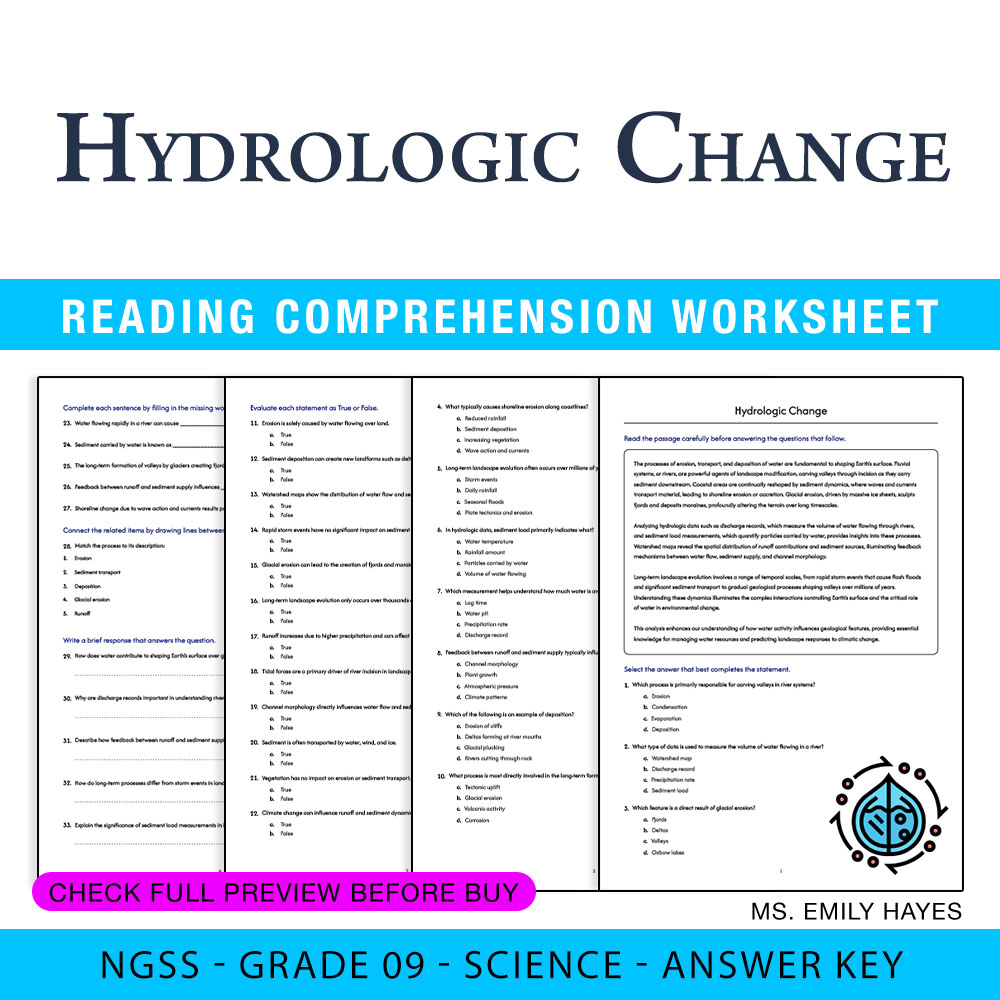
Grade 9 Science | Hydrologic Change Worksheet (PDF+ Answer Key)
Created byCopper Leaf ClassroomLearning Objectives
- Describe how water shapes Earth's surface through erosion, transport, and deposition.
- Analyze hydrologic data such as discharge records and sediment load measurements.
- Explain the feedbacks between runoff, sediment supply, and channel morphology.
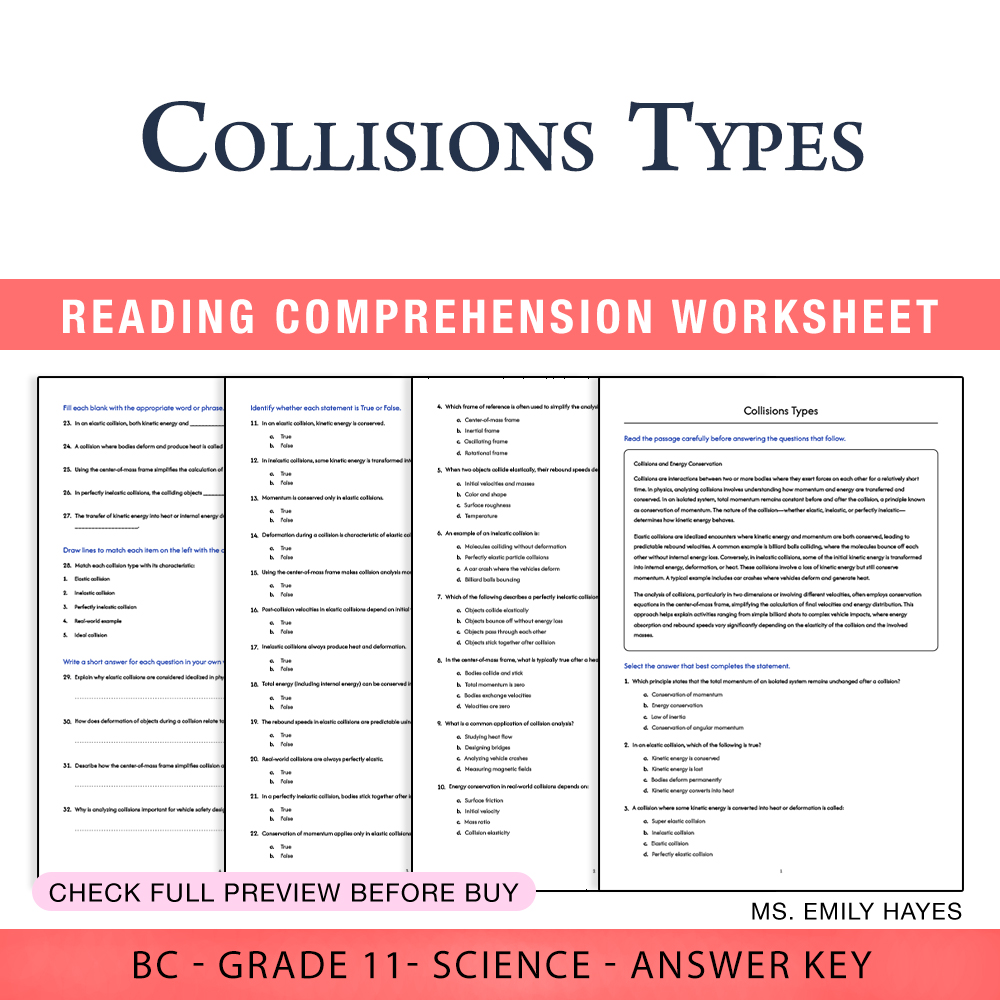
Grade 11 Science | Collisions Types Worksheet (PDF + Answer Key)
Created byCopper Leaf ClassroomLearning Objectives
- Understand the principles of momentum conservation in different types of collisions
- Differentiate between elastic and inelastic collisions based on energy transfer
- Apply conservation laws and center-of-mass frames to analyze collision scenarios
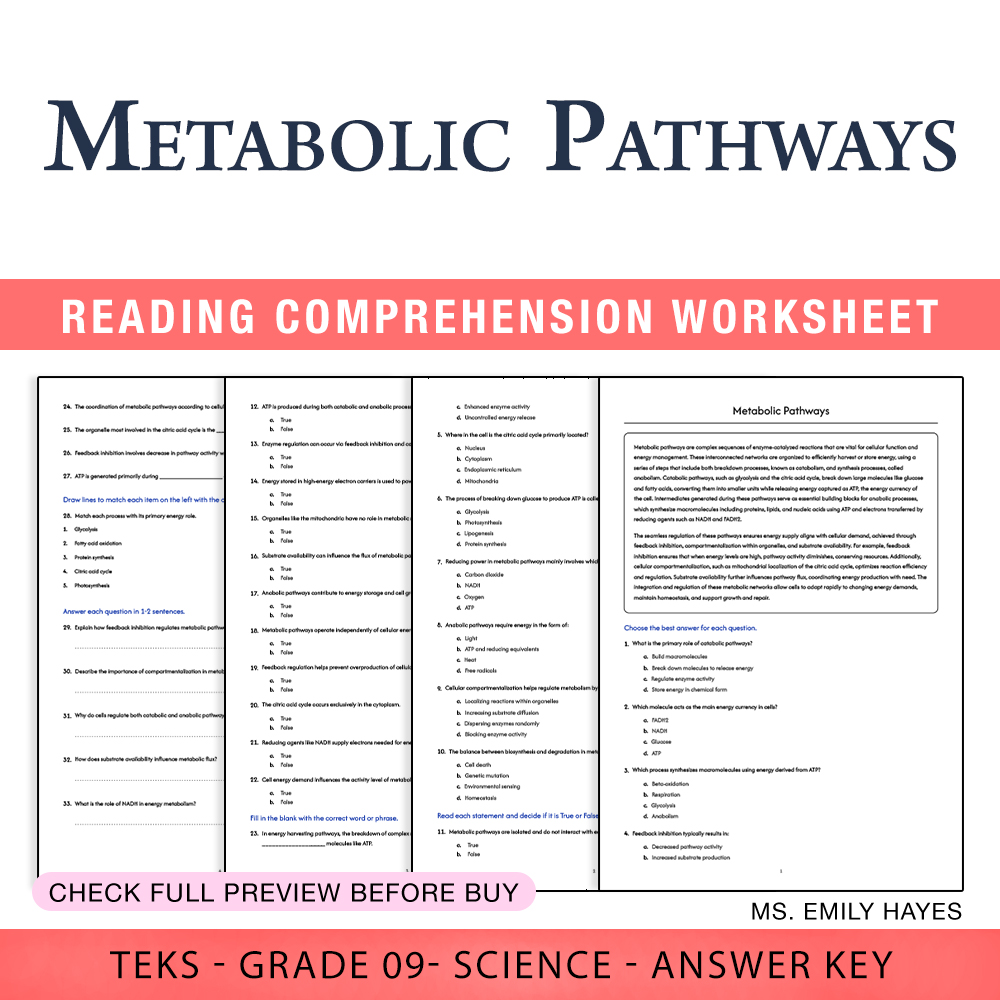
9th Grade Science | Metabolic Pathways Worksheet (PDF+ Answer Key)
Created byCopper Leaf ClassroomLearning Objectives
- Understand the sequence and function of metabolic pathways like catabolic and anabolic processes.
- Identify key enzymes and their roles in energy harvesting and storage.
- Explain regulation mechanisms such as feedback inhibition and compartmentalization.
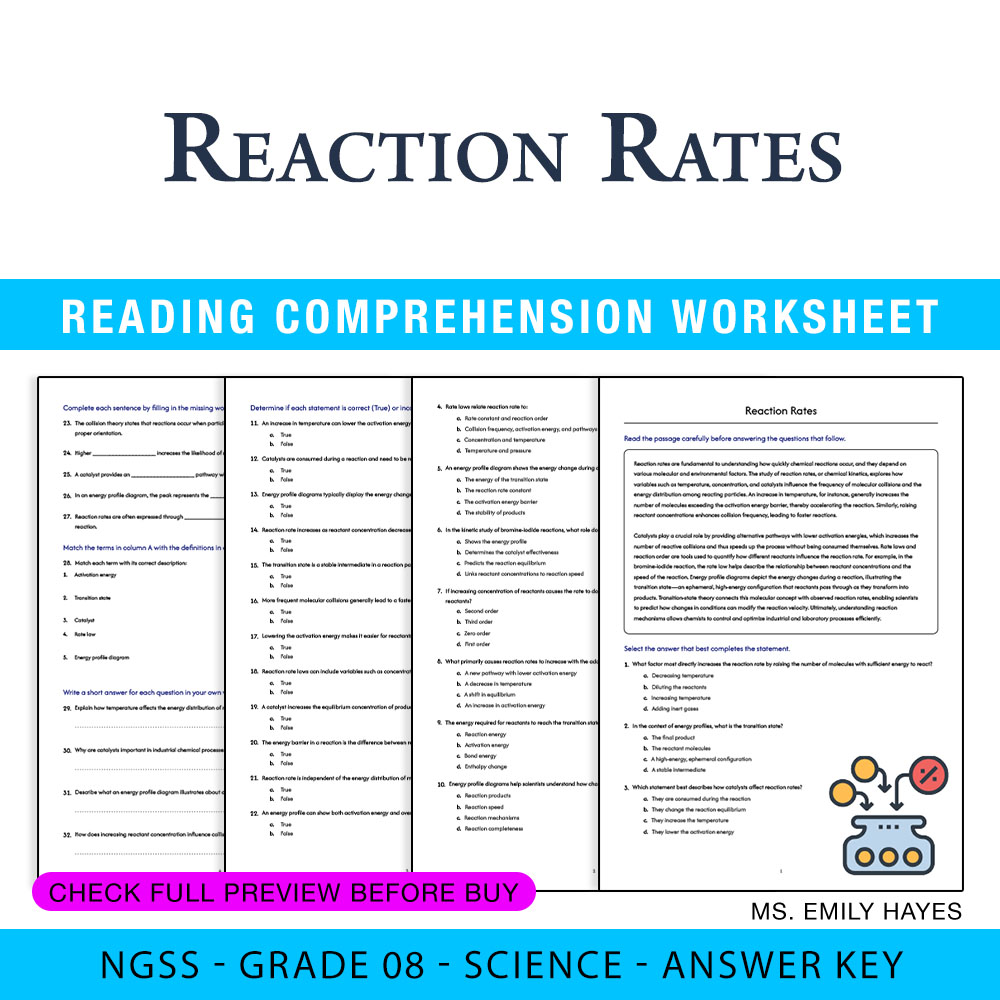
9th Grade Science | Reaction Rates Worksheet (PDF+ Answer Key)
Created byCopper Leaf ClassroomLearning Objectives
- Explain how temperature, concentration, and catalysts affect reaction rates.
- Describe the relationship between collision frequency and reaction speed.
- Interpret rate laws and reaction order in chemical kinetics.
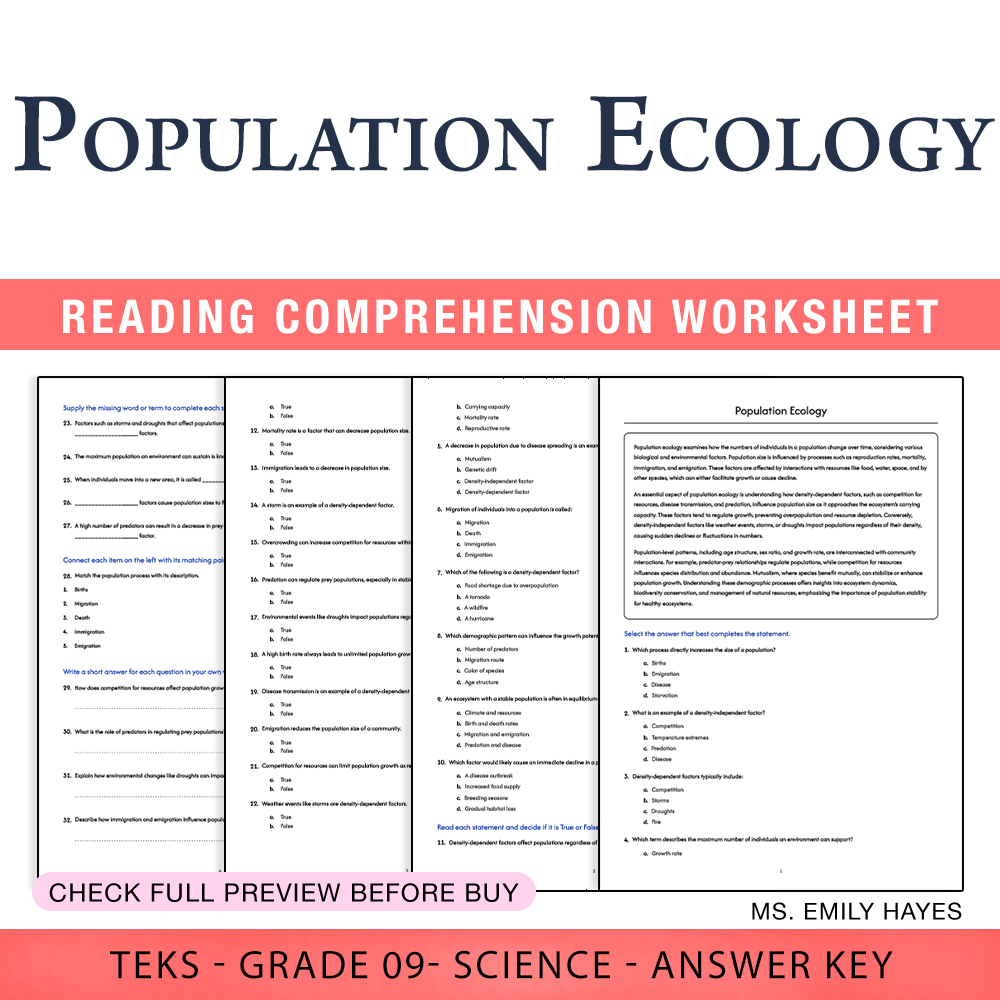
Grade 9 Science | Population Ecology Worksheet (PDF+ Answer Key)
Created byCopper Leaf ClassroomLearning Objectives
- Understand key concepts of population growth, decline, and regulation.
- Identify factors influencing population dynamics such as birth rates, death rates, immigration, and emigration.
- Differentiate between density-dependent and density-independent factors affecting populations.
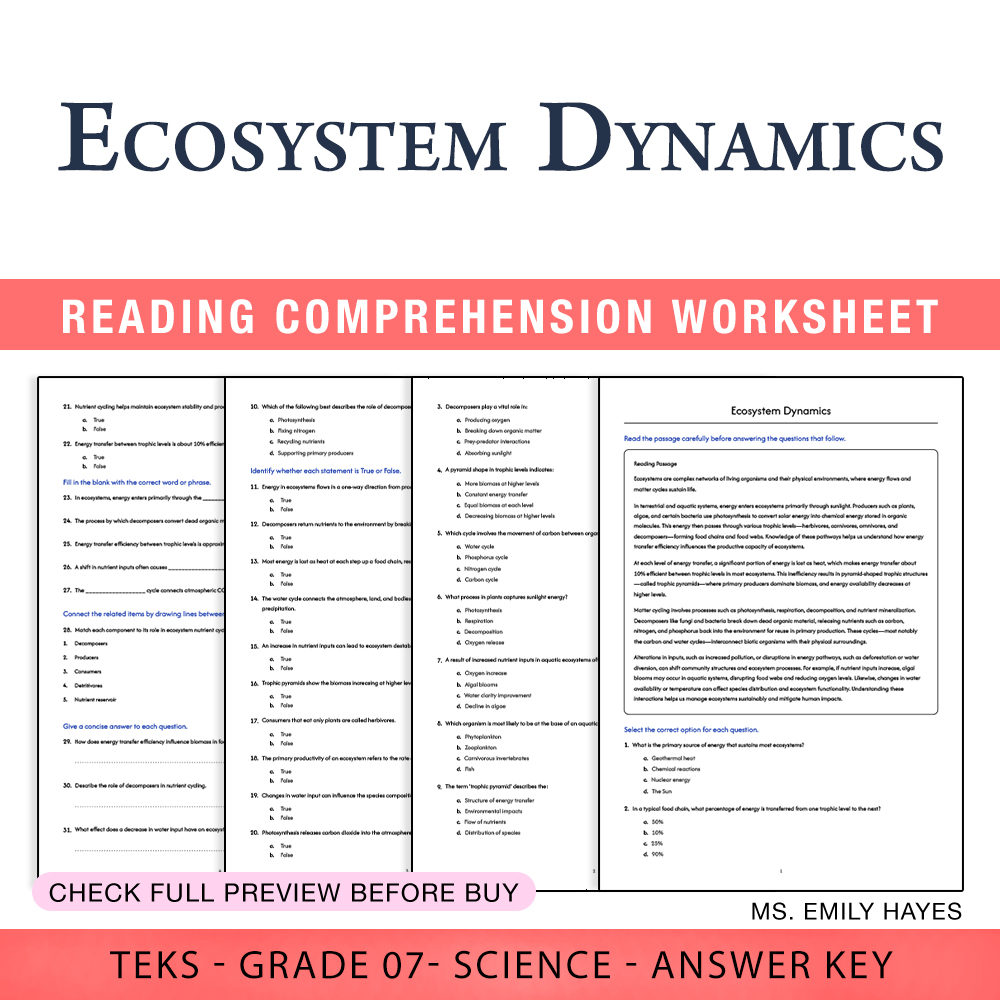
7th Grade Science | Ecosystem Dynamics Worksheet (PDF+ Answer Key)
Created byCopper Leaf ClassroomLearning Objectives
- Describe how energy flows through food chains, food webs, and trophic pyramids in ecosystems.
- Explain the cycling of matter and the roles of decomposers in nutrient recycling.
- Analyze how changes in inputs or energy pathways affect community composition and ecosystem functions.
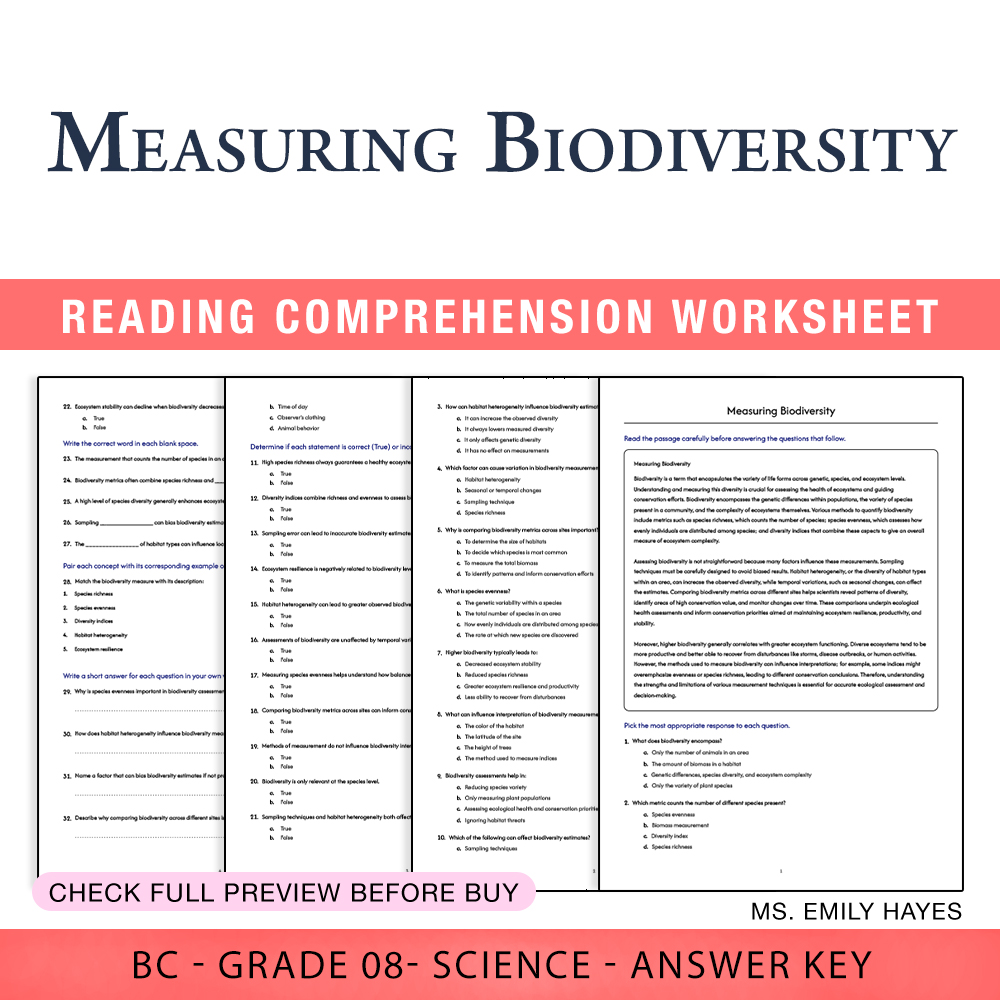
8th Grade Science | Measuring Biodiversity Worksheet (PDF+ Answer Key)
Created byCopper Leaf ClassroomLearning Objectives
- Understand the concept of biodiversity and its levels (genetic, species, ecosystem).
- Learn how biodiversity is measured using richness, evenness, and diversity indices.
- Recognize the importance of biodiversity for ecosystem stability and resilience.
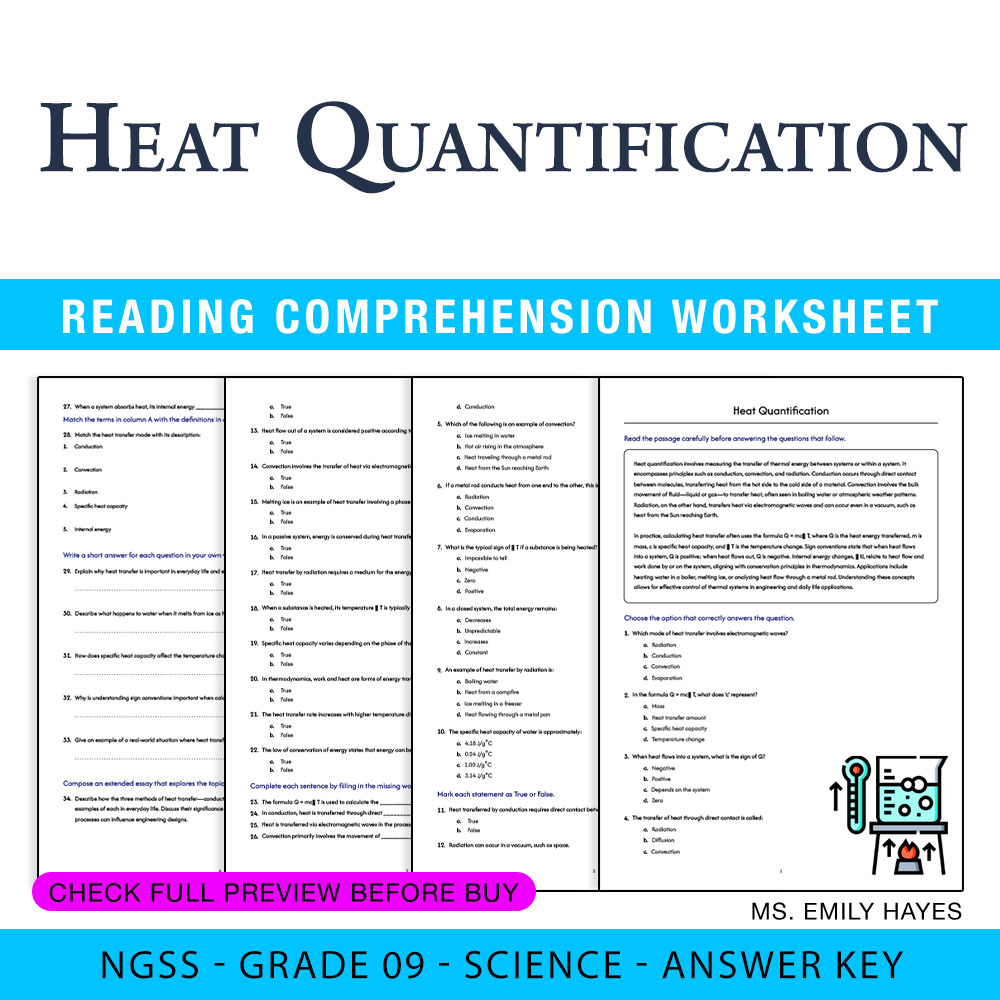
9th Grade Science | Heat Quantification Worksheet (PDF + Answer Key)
Created byCopper Leaf ClassroomLearning Objectives
- Understand and explain the different modes of heat transfer: conduction, convection, and radiation.
- Perform calculations involving specific heat capacity, mass, and temperature change to determine heat transfer and energy changes.
- Interpret sign conventions for heat flow and internal energy changes in closed systems.
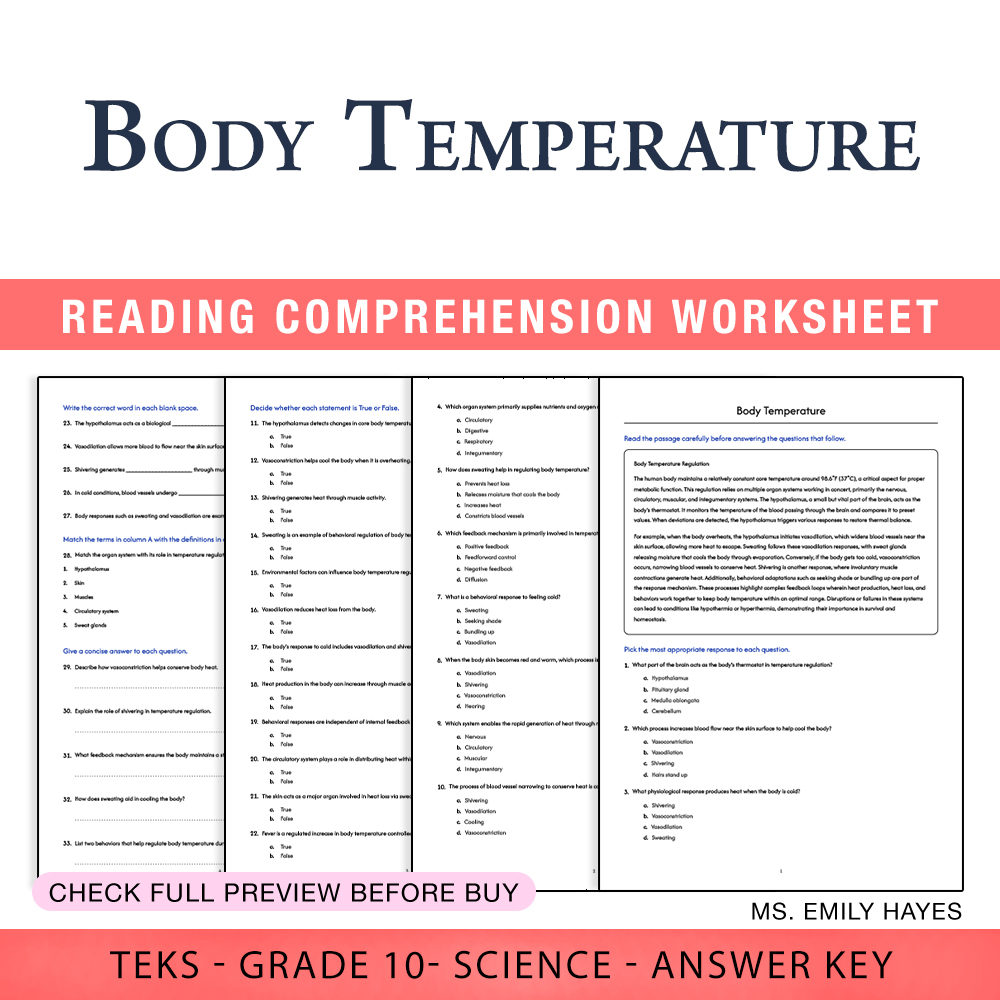
Grade 10 Science | Body Temperature Concepts Worksheet (PDF+ Answer Key)
Created byCopper Leaf ClassroomLearning Objectives
- Understand the mechanisms involved in body temperature regulation.
- Identify the roles of different organ systems in maintaining thermal equilibrium.
- Describe the feedback processes involved in temperature control.
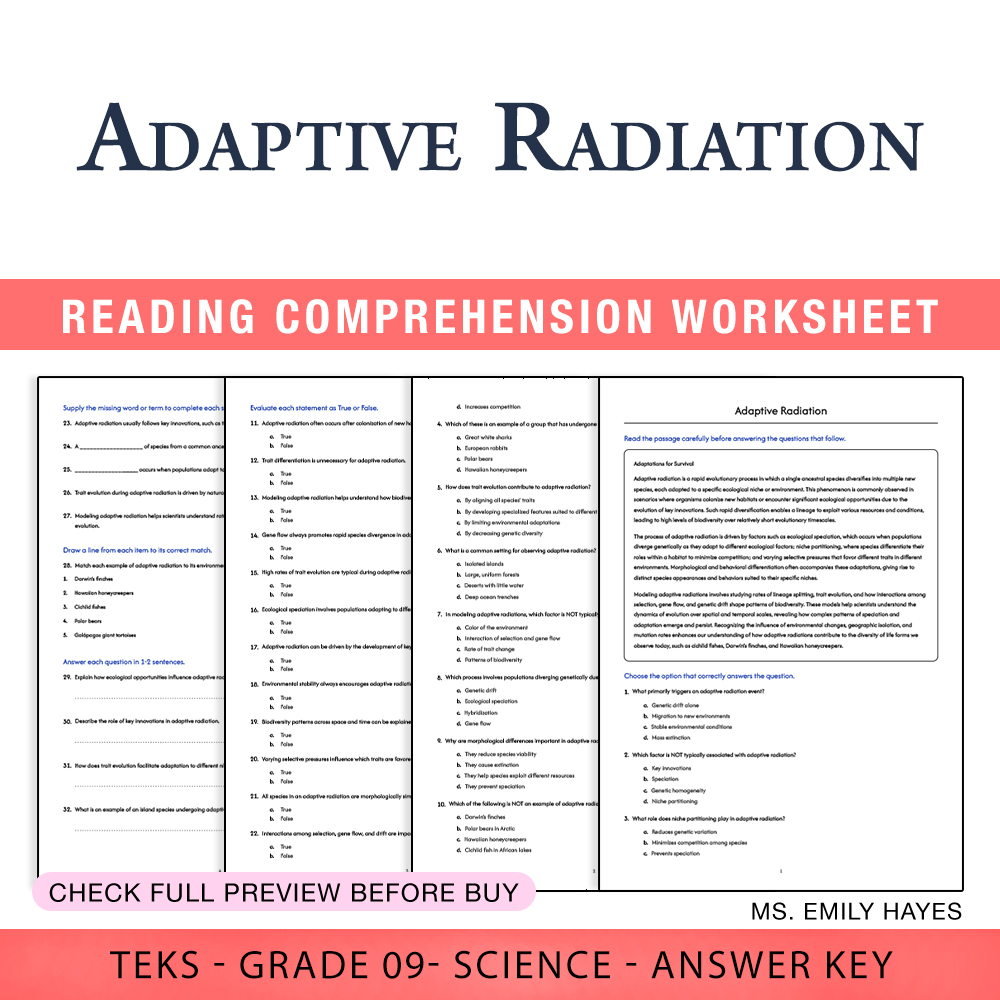
Grade 9 Science | Adaptive Radiation Worksheet (PDF+ Answer Key)
Created byCopper Leaf ClassroomLearning Objectives
- Understand the concept of adaptive radiation and its role in biodiversity.
- Identify key factors that influence the rapid diversification of species.
- Analyze examples of adaptive radiation in different ecosystems.
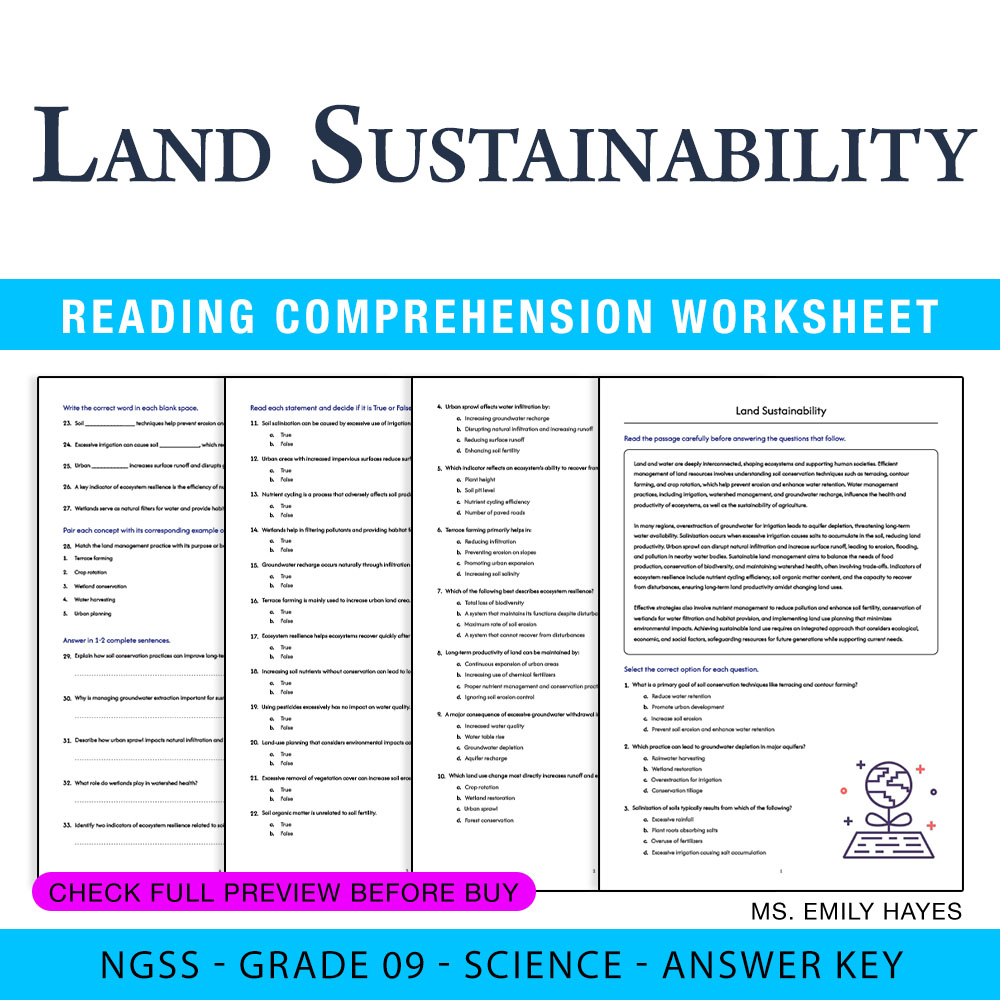
Grade 9 Science | Land Sustainability Worksheet (PDF+ Answer Key)
Created byCopper Leaf ClassroomLearning Objectives
- Understand the interactions between land use and water resources, including conservation and irrigation practices.
- Evaluate the impact of land management on ecosystem resilience, nutrient cycling, and long-term productivity.
- Analyze the trade-offs between agricultural productivity, biodiversity, and watershed health under different land-use scenarios.
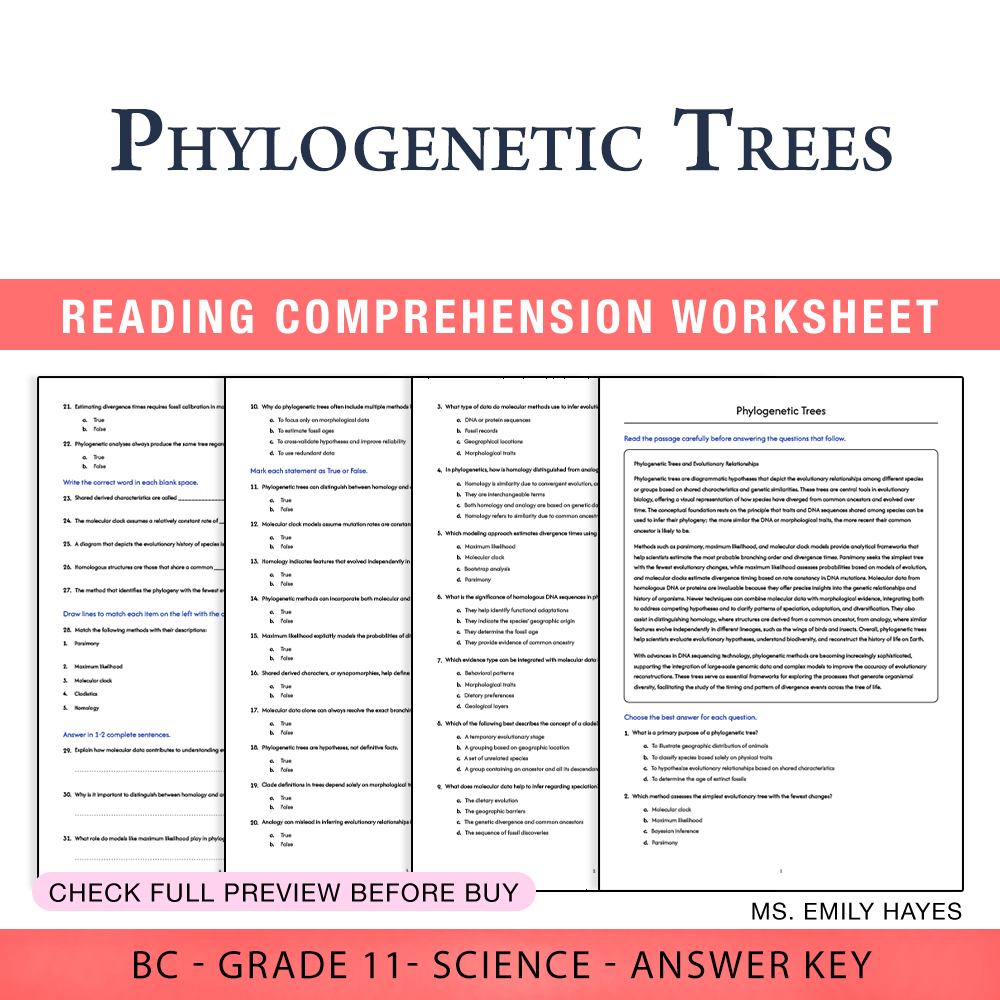
11th Grade Science | Phylogenetic Trees Worksheet (PDF + Answer Key)
Created byCopper Leaf ClassroomLearning Objectives
- Understand how phylogenetic trees illustrate hypotheses of evolutionary relationships.
- Interpret molecular and morphological data to infer common ancestry and divergence times.
- Differentiate between homology and analogy in the context of evolutionary biology.
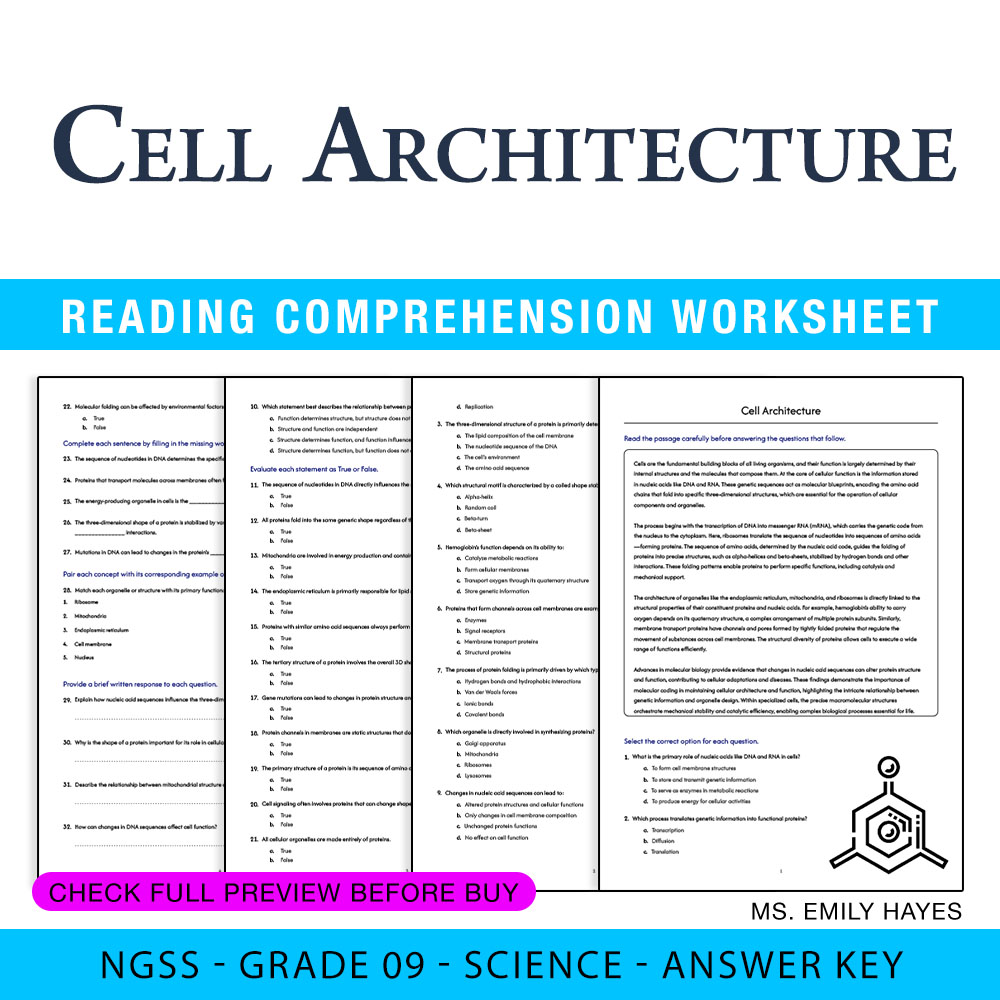
9th Grade Science | Cell Architecture Worksheet (PDF+ Answer Key)
Created byCopper Leaf ClassroomLearning Objectives
- Understand how nucleic acid sequences determine the three-dimensional structure of proteins that form cellular components.
- Explain the connection between molecular coding and organelle architecture such as ribosomes, endoplasmic reticulum, and mitochondria.
- Describe how structure relates to function in macromolecules like hemoglobin and membrane transport proteins.
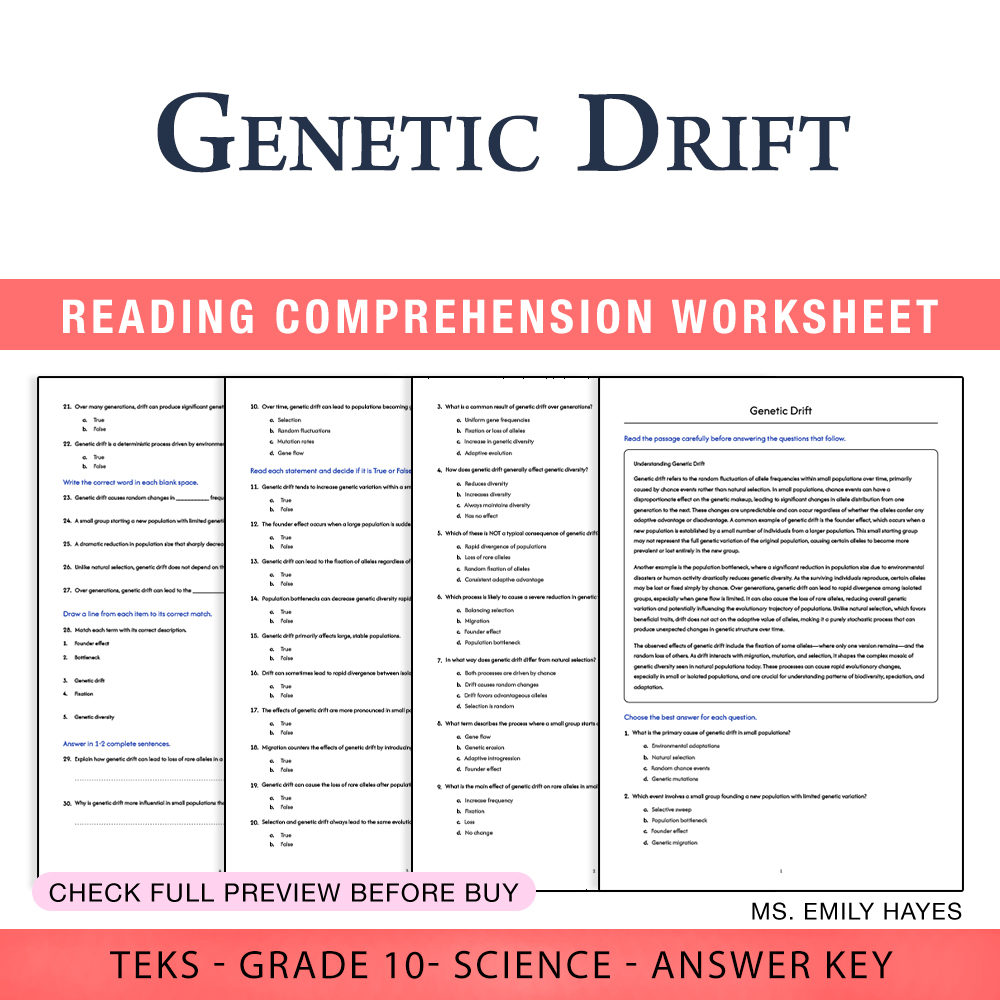
10th Grade Science | Genetic Drift Worksheet (PDF+ Answer Key)
Created byCopper Leaf ClassroomLearning Objectives
- Understand the concept of genetic drift and its mechanisms in small populations.
- Identify how genetic drift differs from natural selection.
- Explain the effects of genetic drift such as loss of genetic variation and fixation of alleles.
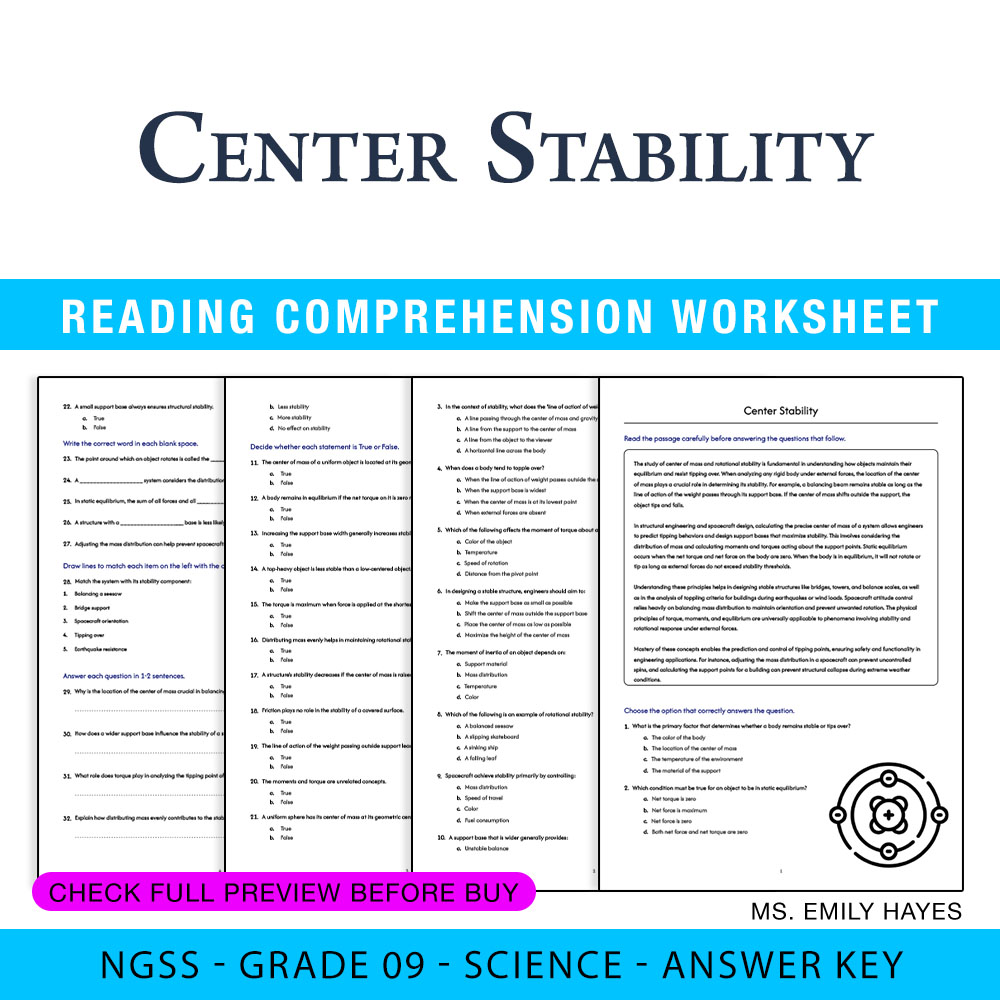
9th Grade Science | Center Stability Worksheet (PDF+ Answer Key)
Created byCopper Leaf ClassroomLearning Objectives
- Understand the concept of center of mass and how it affects rotational stability of rigid bodies.
- Apply torque and equilibrium conditions to analyze stability in structures and objects.
- Calculate the location of the center of mass for composite systems and determine tipping thresholds.
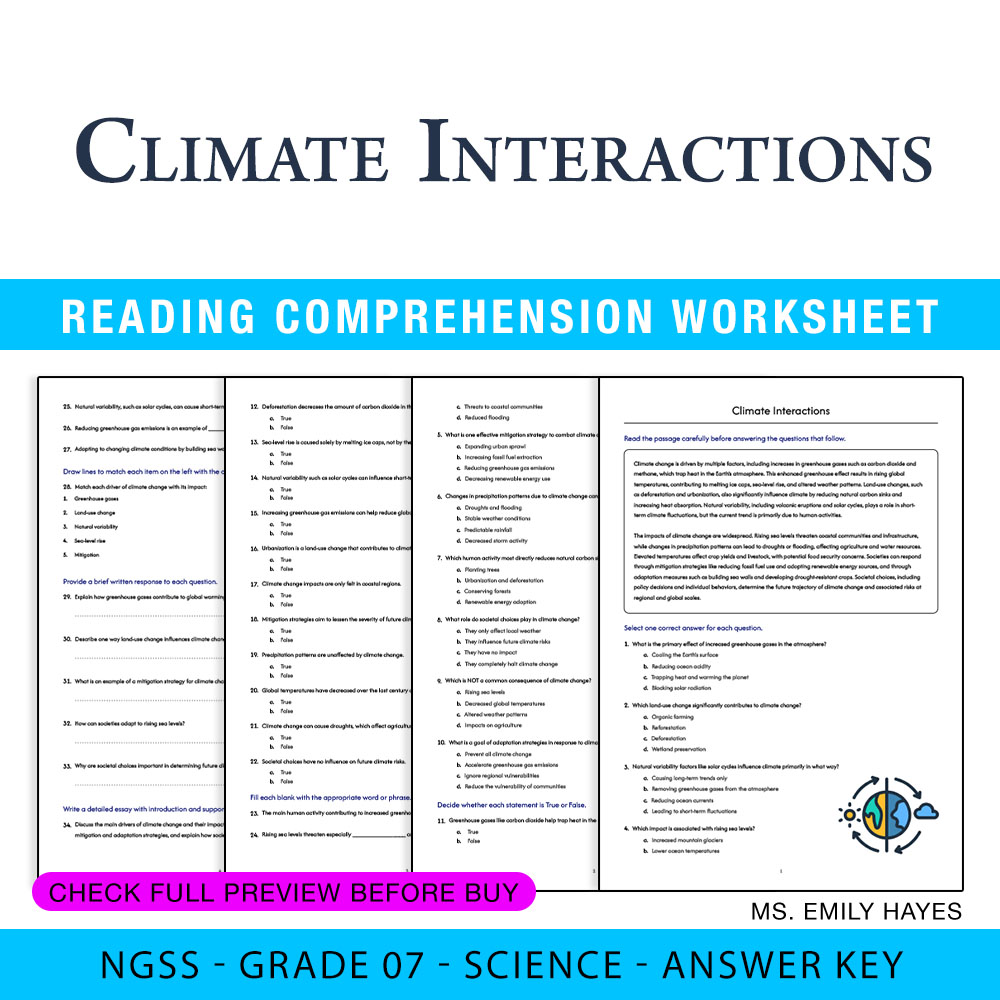
7th Grade Science | Climate Interactions Worksheet (PDF+ Answer Key)
Created byCopper Leaf ClassroomLearning Objectives
- Analyze evidence for climate change drivers such as greenhouse gases, land-use change, and natural variability.
- Assess impacts of climate change on sea levels, precipitation, and agriculture.
- Understand how societal choices influence future climate risks and explore mitigation strategies.
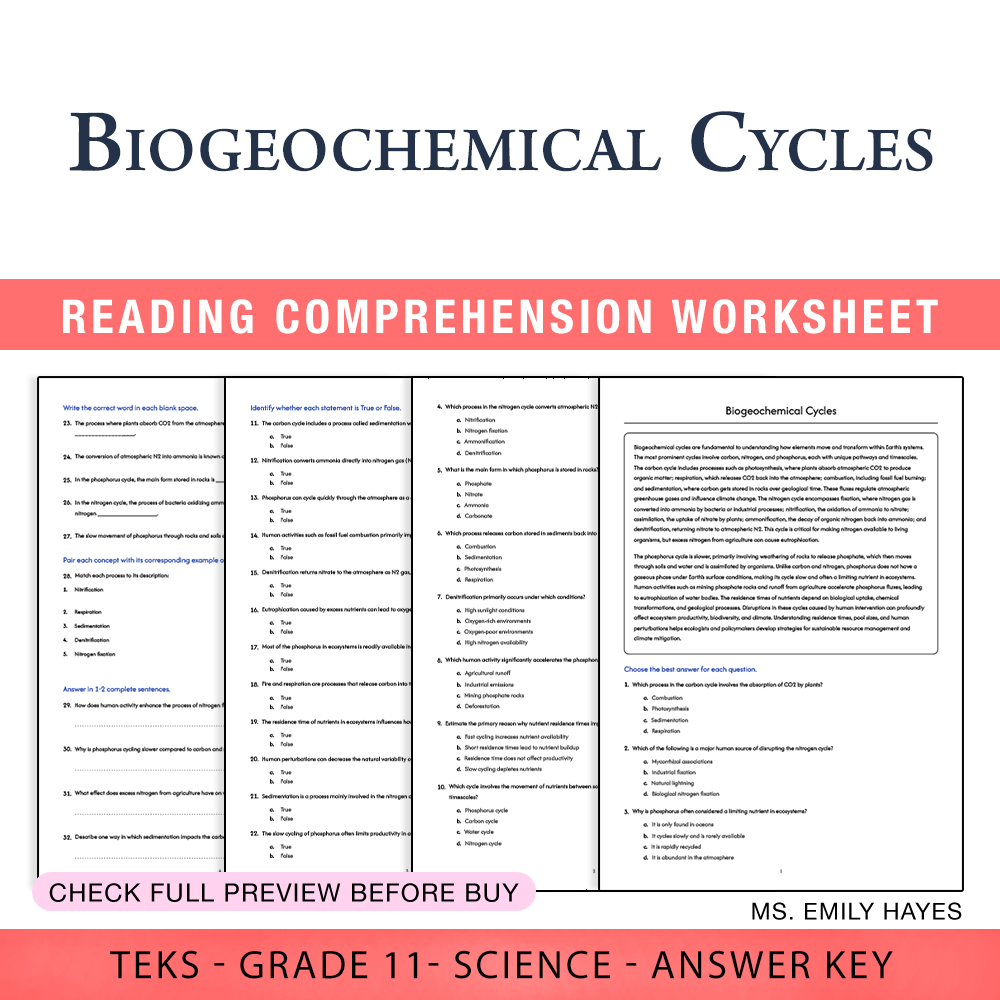
11th Grade Science | Biogeochemical Cycles Worksheet (PDF+ Answer Key)
Created byCopper Leaf ClassroomLearning Objectives
- Explain the movement of elements among living organisms, soil, water, and the atmosphere.
- Describe the main processes involved in the carbon, nitrogen, and phosphorus cycles.
- Analyze how human activities perturb natural biogeochemical cycles.
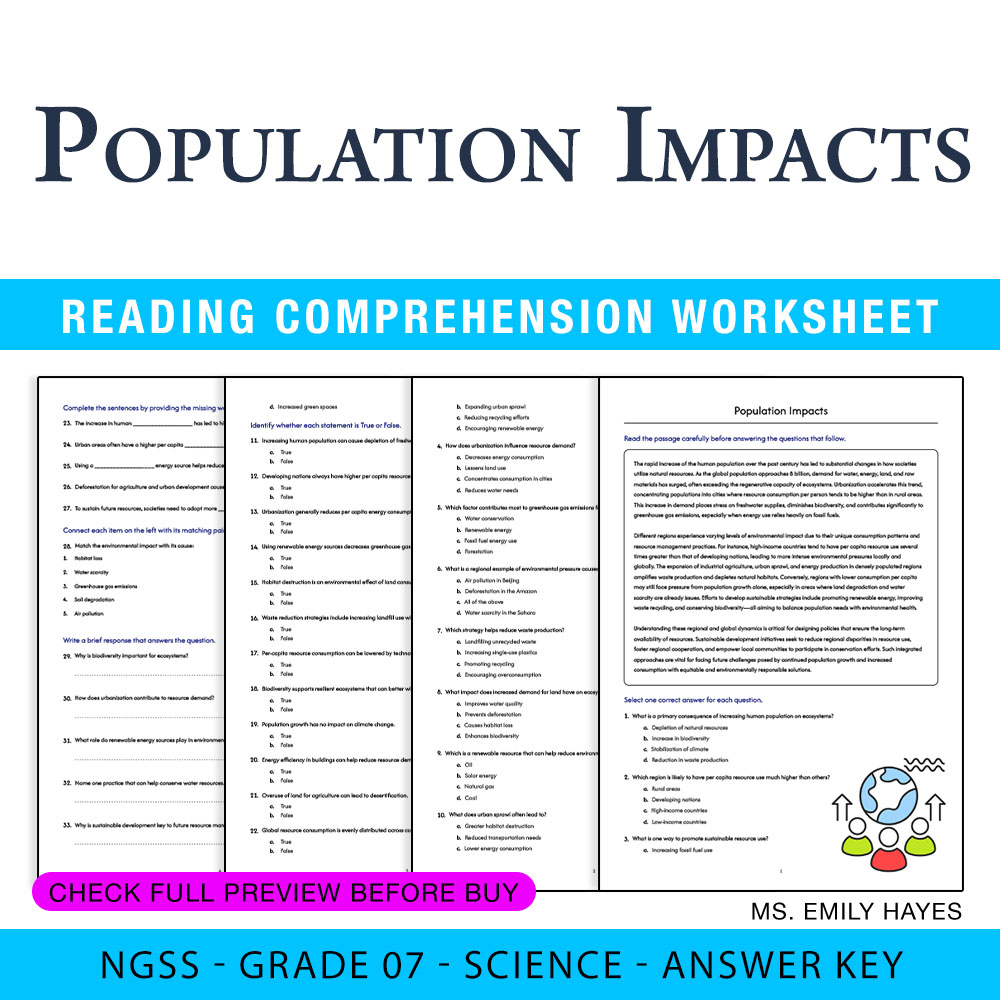
7th Grade Science | Population Impacts Worksheet (PDF+ Answer Key)
Created byCopper Leaf ClassroomLearning Objectives
- Understand how human population growth affects demand for natural resources and ecosystems.
- Analyze regional examples showing the relationship between consumption patterns and environmental pressures.
- Evaluate sustainable resource management strategies to mitigate negative impacts of population growth.
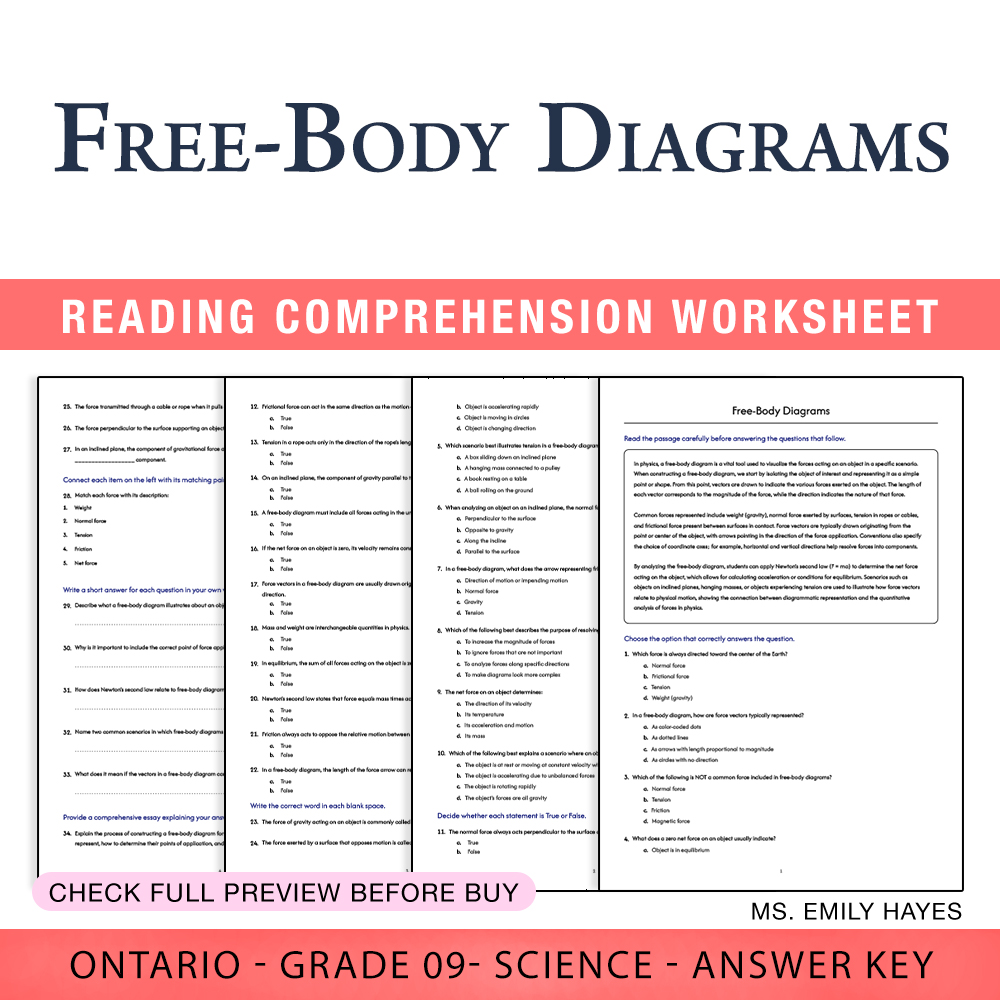
9th Grade Science | Free-Body Diagrams Worksheet (PDF + Answer Key)
Created byCopper Leaf ClassroomLearning Objectives
- Understand the components and conventions used in drawing free-body diagrams.
- Identify and represent the key forces acting on objects in various scenarios.
- Apply Newton's second law to analyze forces and calculate net force and acceleration.

11th Grade Science | Stoichiometry Basics Worksheet (PDF+ Answer Key)
Created byCopper Leaf ClassroomLearning Objectives
- Understand mole relationships, molar mass, and their role in chemical equations.
- Interpret balanced chemical equations for quantitative analysis.
- Apply limiting reagent concepts and calculate percent yields.
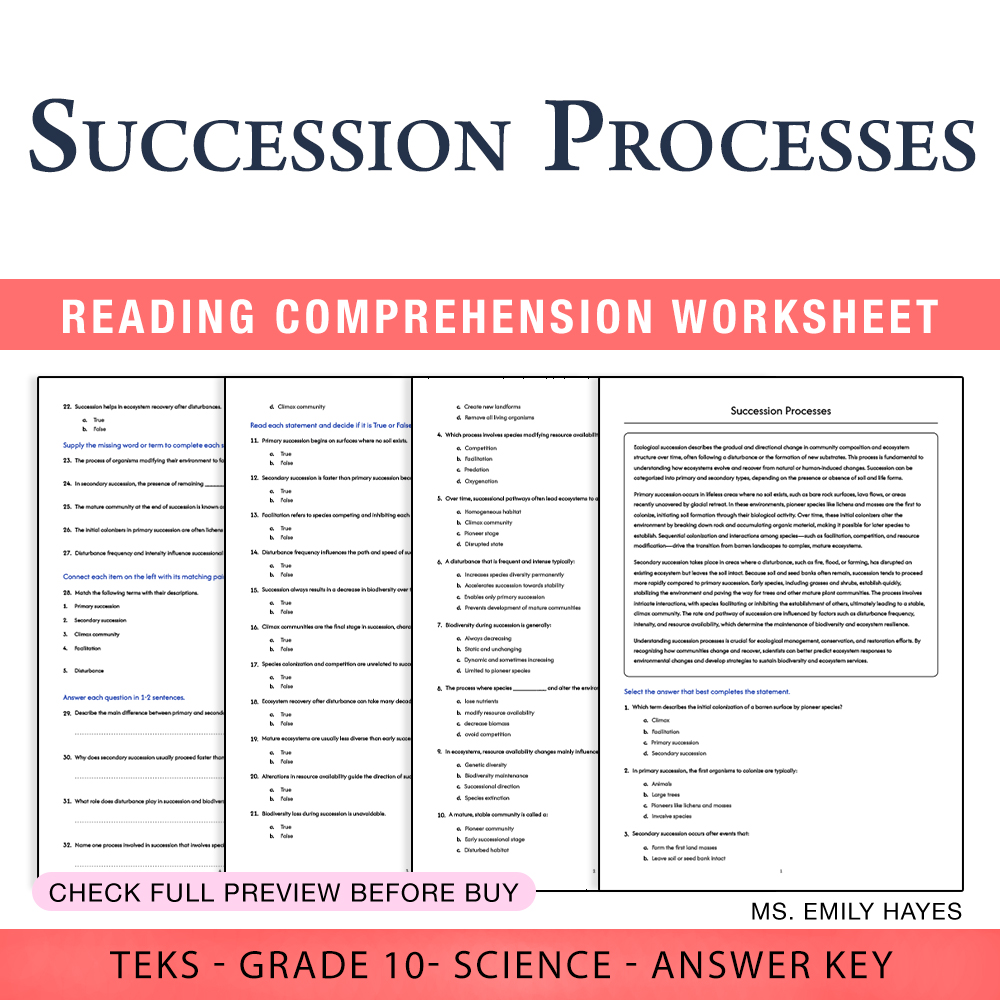
10th Grade Science | Succession Processes Worksheet (PDF+ Answer Key)
Created byCopper Leaf ClassroomLearning Objectives
- Understand the difference between primary and secondary succession.
- Identify the processes involved in ecological succession.
- Explain how disturbance influences succession and biodiversity.
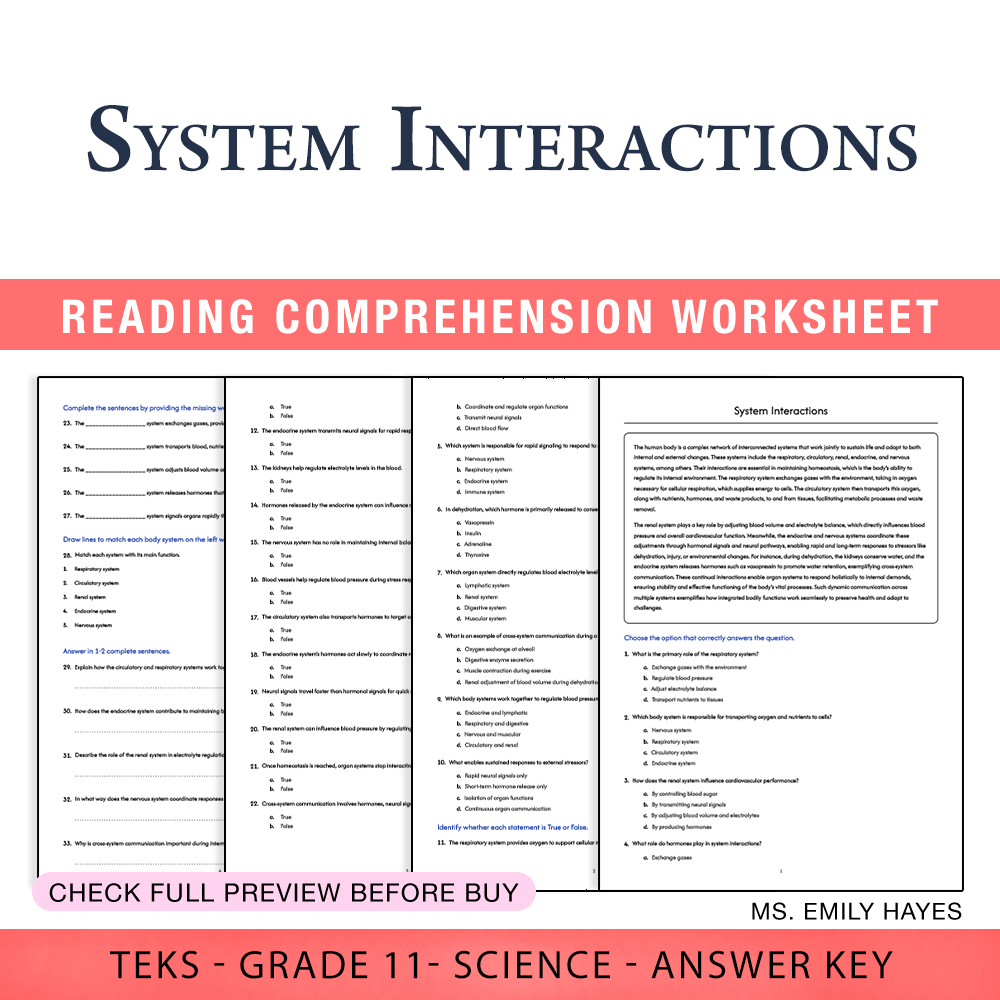
11th Grade Science | System Interactions Worksheet (PDF+ Answer Key)
Created byCopper Leaf ClassroomLearning Objectives
- Understand how different body systems communicate to maintain internal balance.
- Identify examples of cross-system interactions such as respiration, circulation, and renal regulation.
- Explain the roles of the endocrine and nervous systems in coordinating bodily responses.
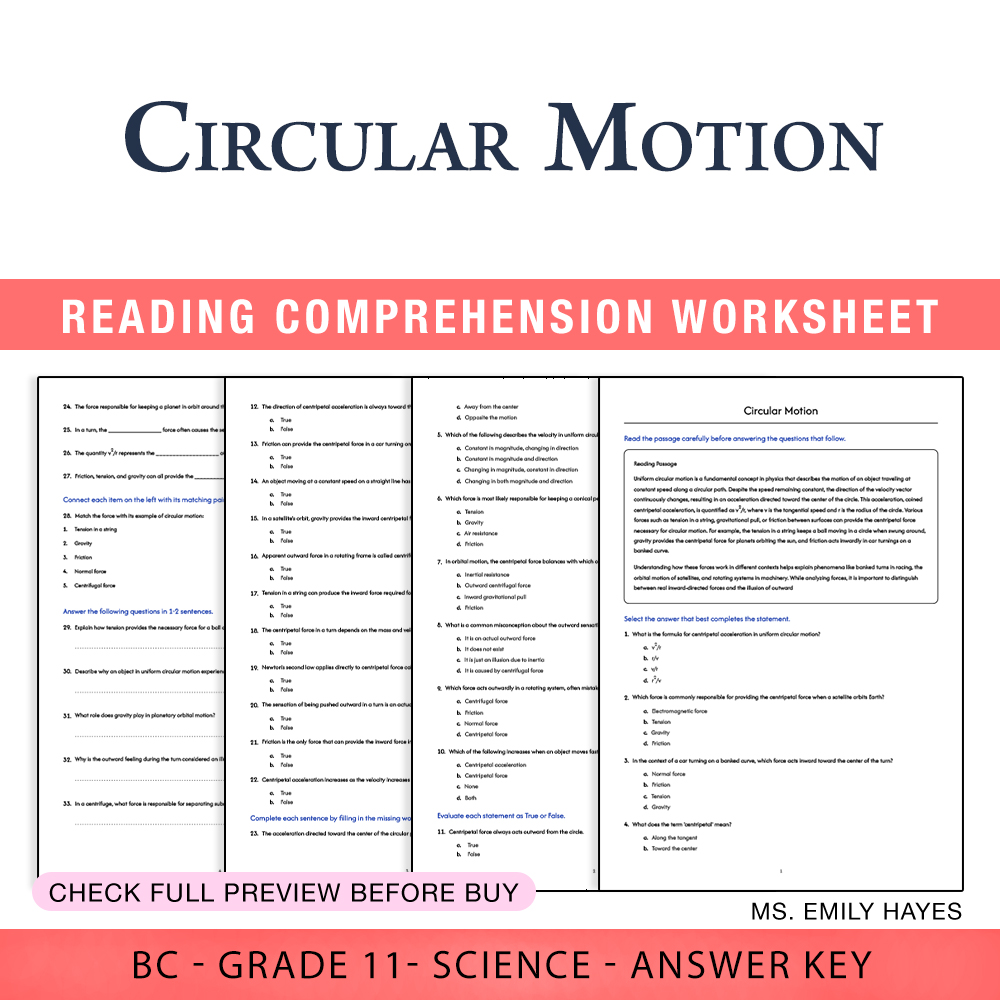
11th Grade Science | Circular Motion Worksheet (PDF + Answer Key)
Created byCopper Leaf ClassroomLearning Objectives
- Describe the key principles of uniform circular motion, including the role of centripetal force and acceleration.
- Calculate centripetal acceleration using the formula v²/r and relate it to the forces acting in circular motion.
- Identify real-world examples of forces such as tension, gravity, and friction that produce centripetal acceleration.
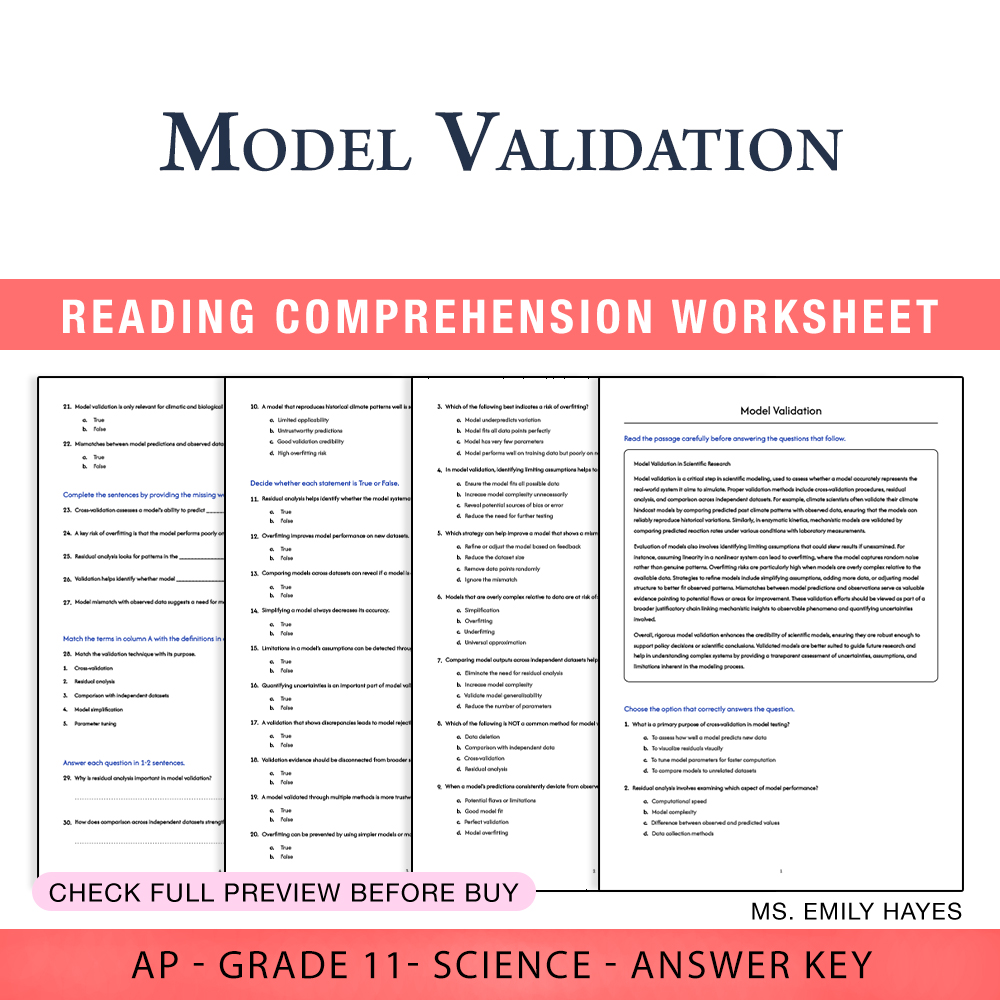
11th Grade Science | Model Validation Worksheet (PDF+ Answer Key)
Created byCopper Leaf ClassroomLearning Objectives
- Understand the methods used for evaluating the credibility of scientific models.
- Identify key techniques such as cross-validation, residual analysis, and dataset comparison.
- Evaluate the limitations and risks associated with model overfitting and assumptions.
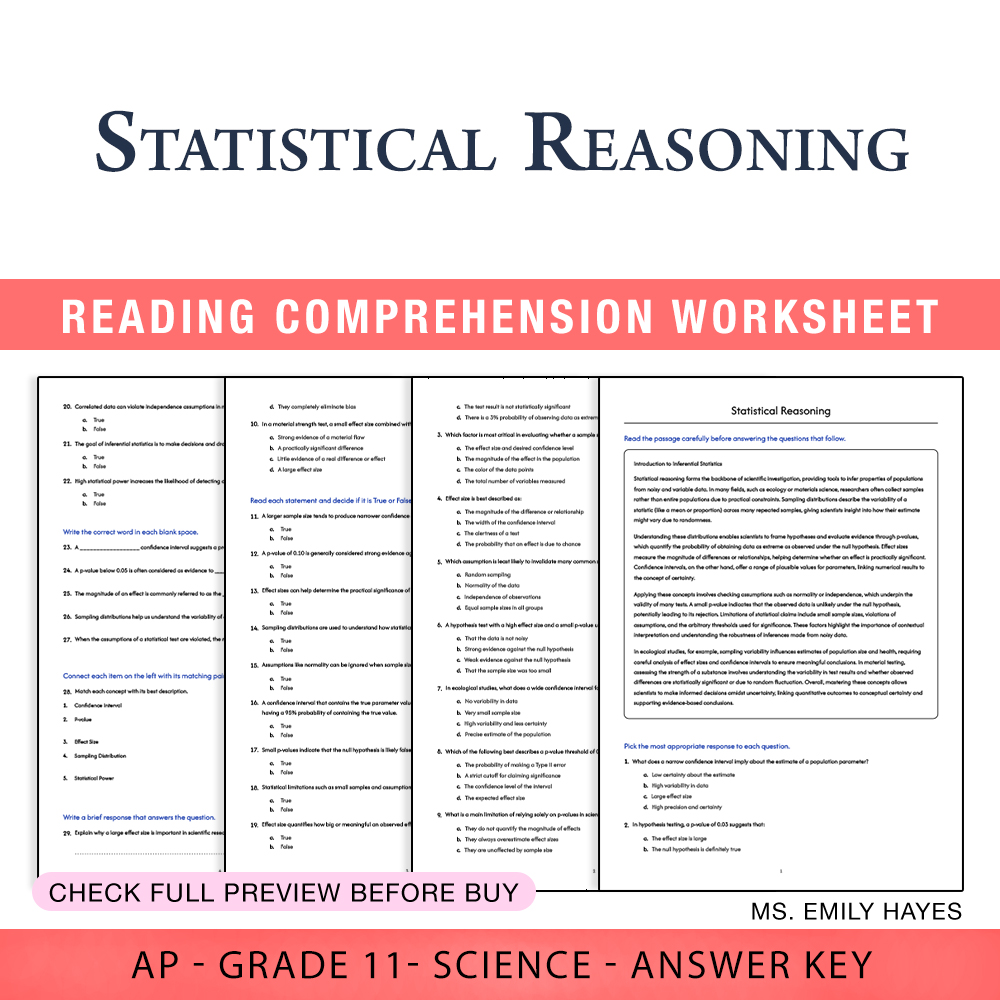
11th Grade Science | Statistical Reasoning Worksheet (PDF+ Answer Key)
Created byCopper Leaf ClassroomLearning Objectives
- Understand the role of sampling distributions in inferential statistics.
- Interpret p-values, effect sizes, and confidence intervals in context.
- Evaluate the assumptions and limitations of statistical tests in scientific investigations.
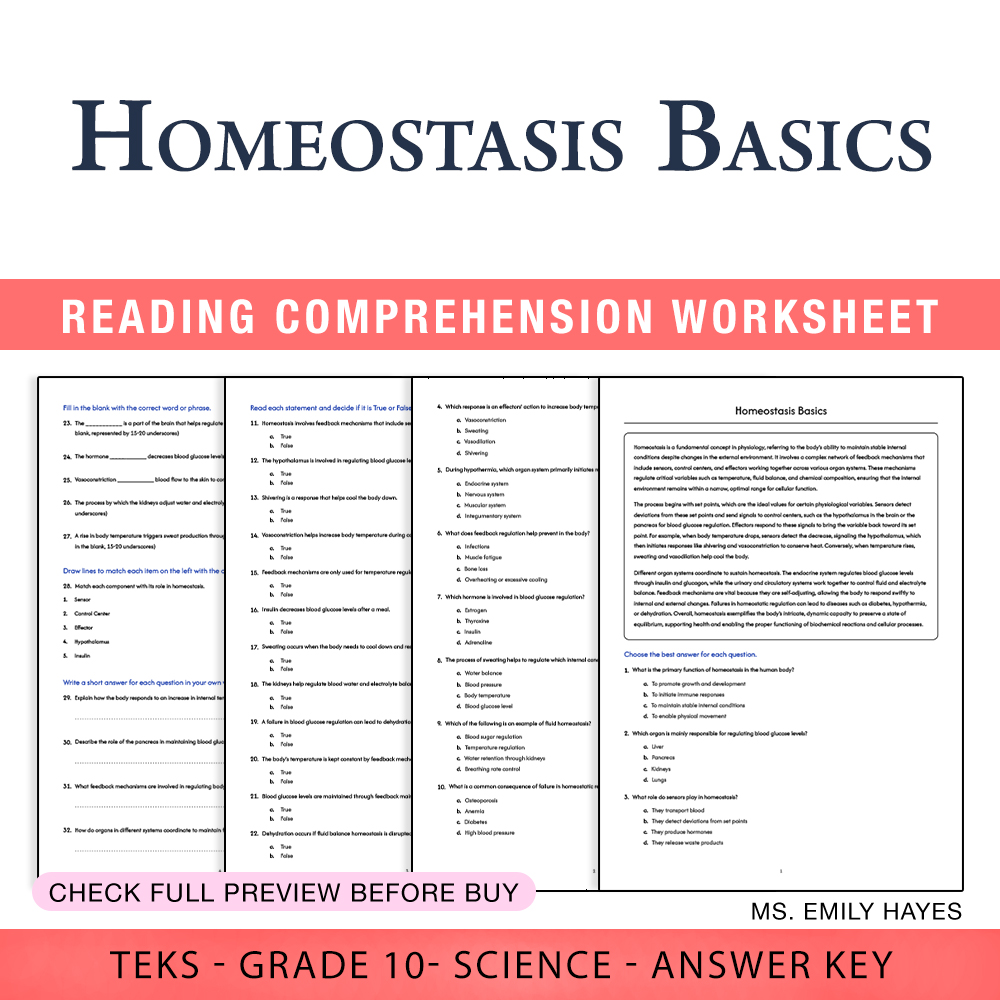
Grade 10 Science | Homeostasis Basics Worksheet (PDF+ Answer Key)
Created byCopper Leaf ClassroomLearning Objectives
- Explain the concept of homeostasis and its importance in human body functions.
- Identify the key components involved in maintaining internal stability, including set points, sensors, and effectors.
- Describe how feedback mechanisms regulate temperature, blood glucose, and fluid balance.
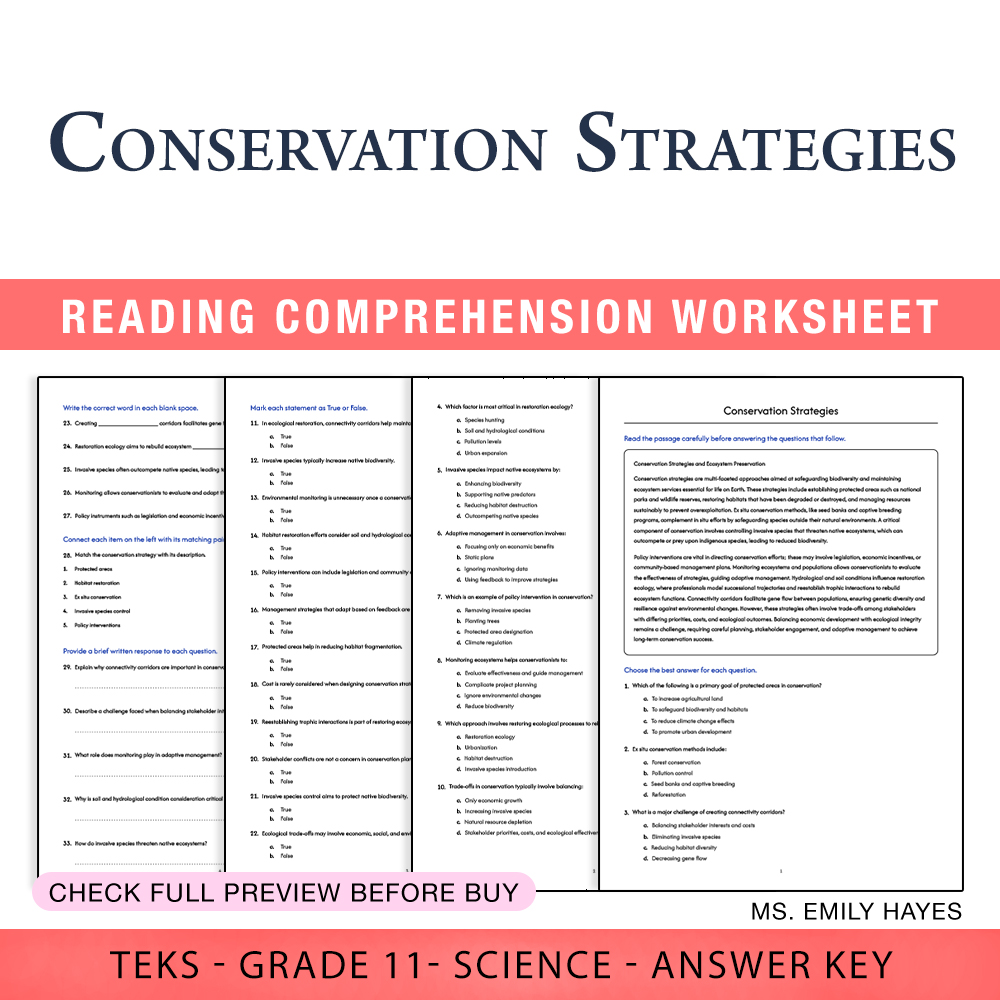
Grade 11 Science | Conservation Strategies Worksheet (PDF+ Answer Key)
Created byCopper Leaf ClassroomLearning Objectives
- Understand various conservation strategies including protected areas, habitat restoration, and policy interventions.
- Identify methods used to monitor and prioritize habitats for conservation.
- Explain the ecological principles behind habitat connectivity and succession in restoration.
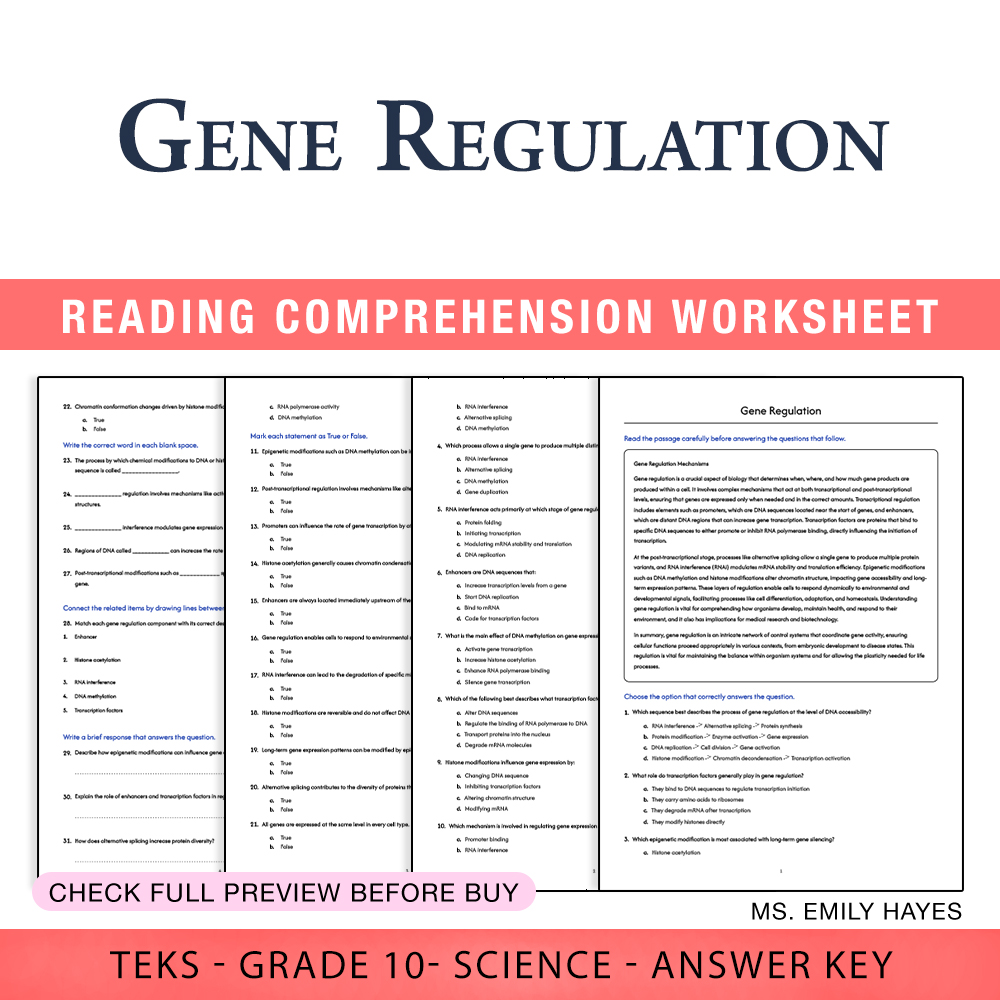
10th Grade Science | Gene Regulation Worksheet (PDF+ Answer Key)
Created byCopper Leaf ClassroomLearning Objectives
- Understand the mechanisms of gene regulation at transcriptional and post-transcriptional stages.
- Identify the roles of promoters, enhancers, transcription factors, and epigenetic modifications in gene expression.
- Explain how cells respond to signals, differentiate, and maintain homeostasis through gene regulation.
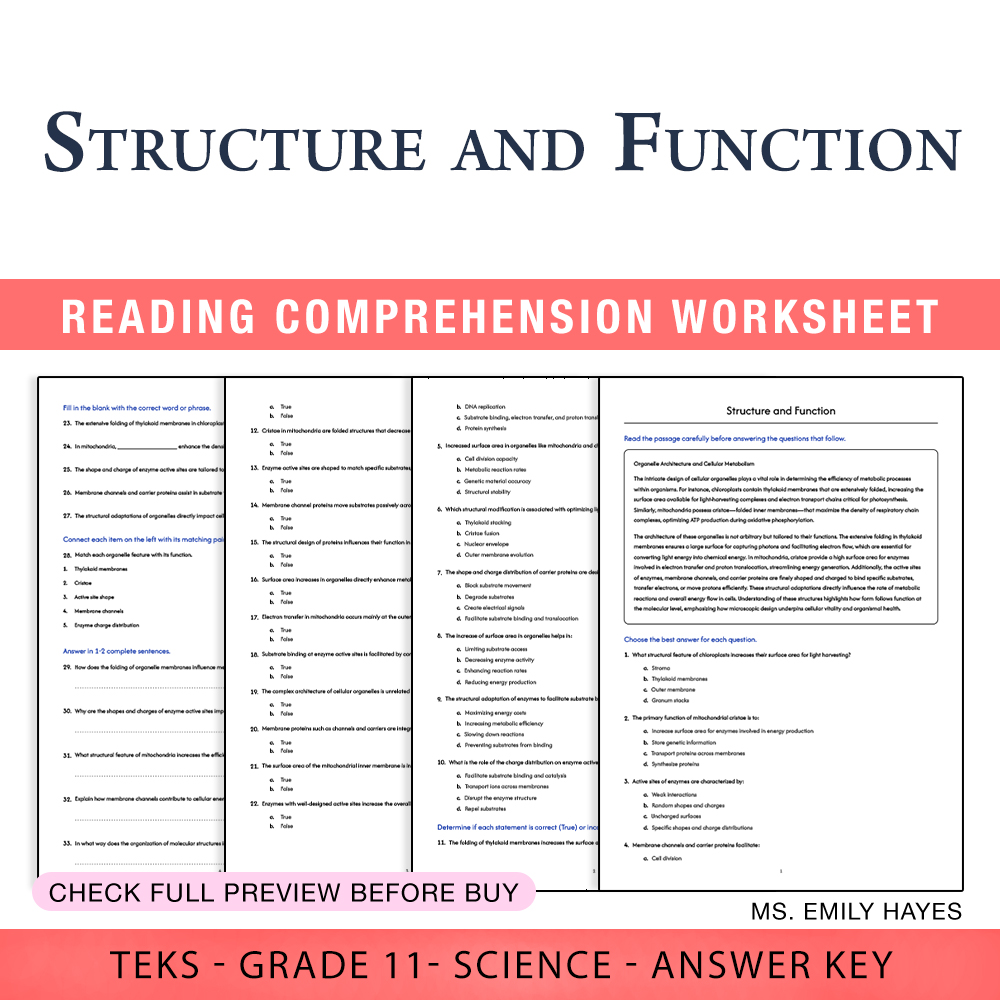
11th Grade Science | Structure and Function Worksheet (PDF+ Answer Key)
Created byCopper Leaf ClassroomLearning Objectives
- Describe how organelle architecture influences metabolic efficiency in cells.
- Explain how thylakoid membranes and mitochondrial cristae increase surface area for metabolic processes.
- Identify the structural features of enzymes, membrane channels, and carrier proteins that facilitate biological functions.
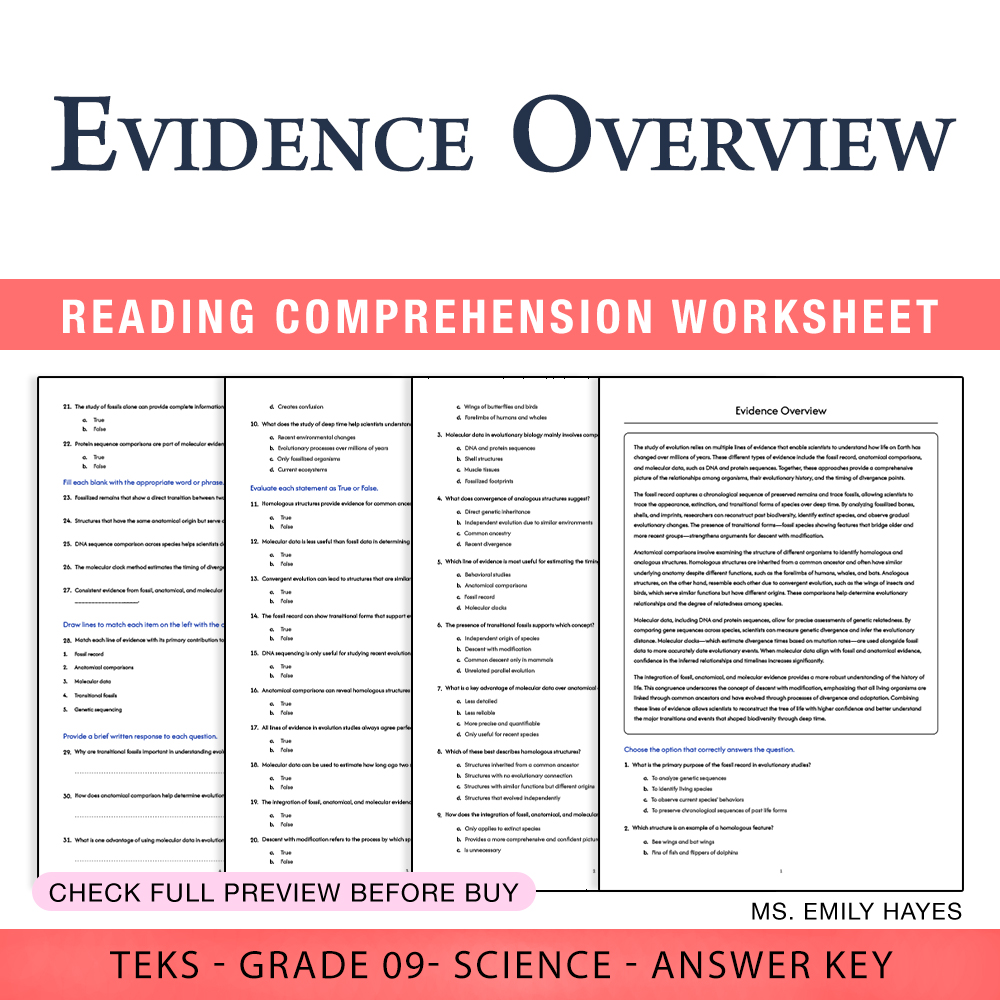
9th Grade Science | Evidence of Evolution Worksheet (PDF+ Answer Key)
Created byCopper Leaf ClassroomLearning Objectives
- Understand the different lines of evidence used to support evolutionary relationships among organisms.
- Identify how fossil records, anatomical comparisons, and molecular data contribute to understanding biodiversity through time.
- Evaluate the strength of evidence derived from different sources and their integration in evolutionary studies.
Browse more categories
About Science Worksheets
Find Science worksheets spanning core skills, practice, and review. All 42,859 resources are instant PDF downloads for the classroom or home.
Every worksheet on MyTeachingSheets is created by independent teacher-authors and reviewed before publication. All resources download as printable PDFs for classroom, homework, or at-home practice, and many include answer keys. Preview any worksheet free before buying.