
Science Worksheets
42,859 subject resources
6th Grade Science | Chemical Reactions Worksheet (PDF + Answer Key)
 Created byCopper Leaf Classroom
Learning Objectives
- Identify key indicators of chemical reactions such as color change, gas production, precipitate formation, and temperature change.
- Analyze quantitative and qualitative data to determine whether a chemical reaction has occurred and new substances have formed.
- Interpret pre-interaction and post-interaction measurements including mass, temperature, and composition data.

6th Grade Science | System Interactions Worksheet (PDF + Answer Key)
Created byCopper Leaf ClassroomLearning Objectives
- Describe how Earth's systems interact through transfers of matter and energy.
- Identify feedback mechanisms such as albedo changes, sediment transport, and nutrient movement.
- Explain energy sources and sinks within Earth's systems.
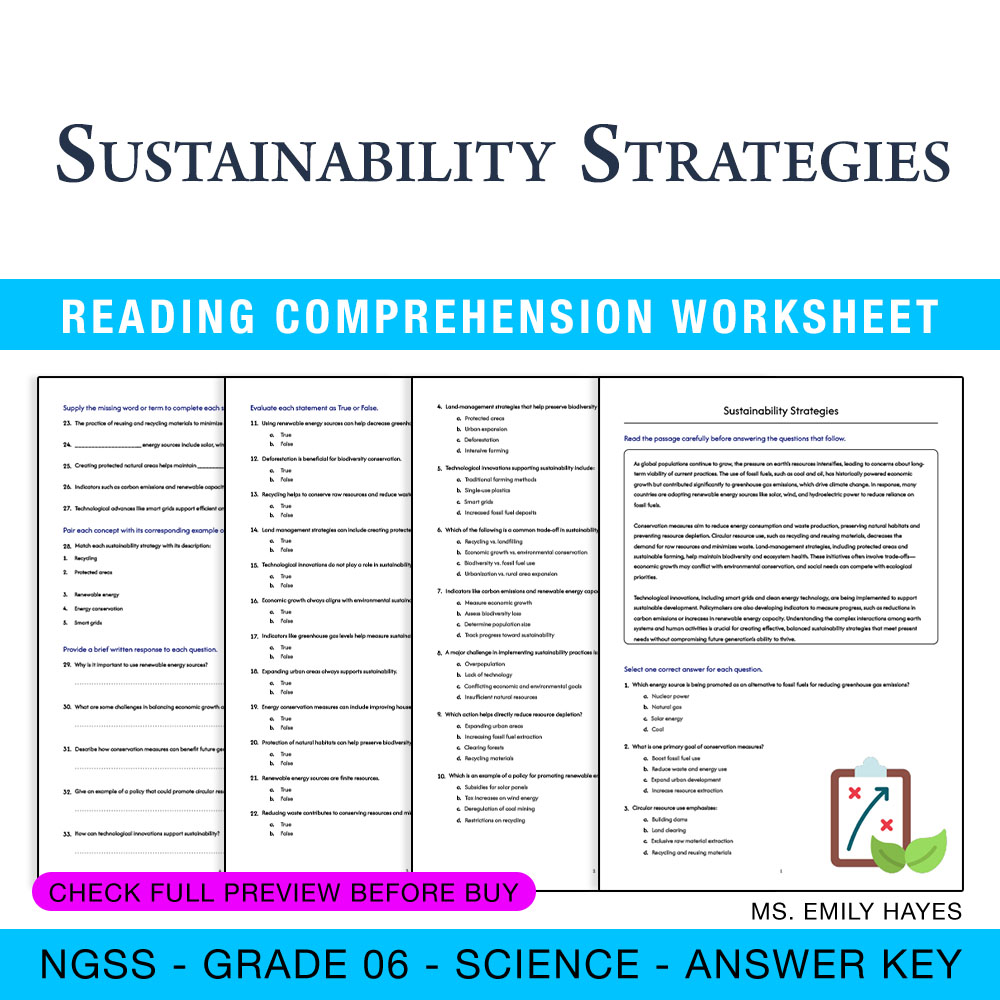
6th Grade Science | Sustainability Strategies Worksheet (PDF + Answer Key)
Created byCopper Leaf ClassroomLearning Objectives
- Understand how population trends and resource use impact earth systems
- Evaluate different sustainability practices and their effects
- Identify trade-offs among economic, social, and environmental priorities
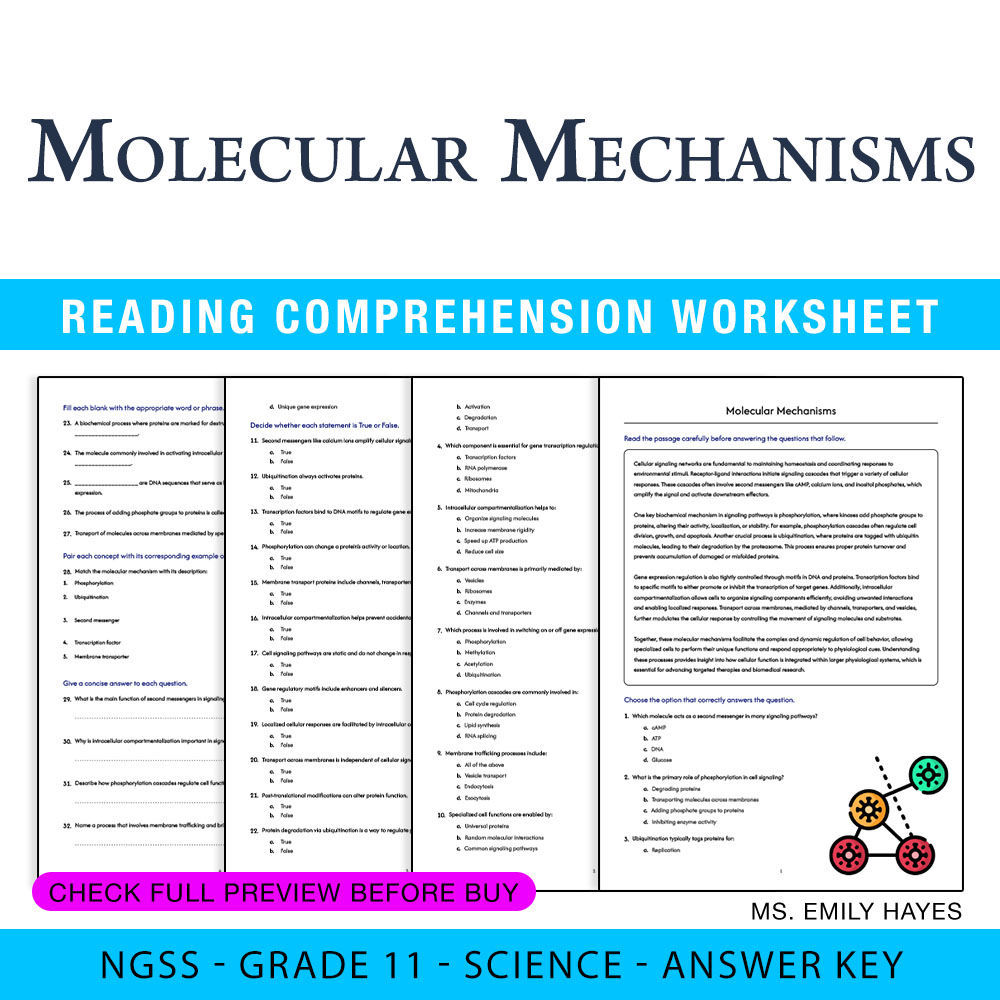
11th Grade Science | Molecular Mechanisms Worksheet (PDF+ Answer Key)
Created byCopper Leaf ClassroomLearning Objectives
- Understand the biochemical processes involved in cellular signaling, including phosphorylation cascades and ubiquitination.
- Describe how regulatory motifs influence gene expression and protein function.
- Explain the role of intracellular compartmentalization and membrane transport in cellular communication.
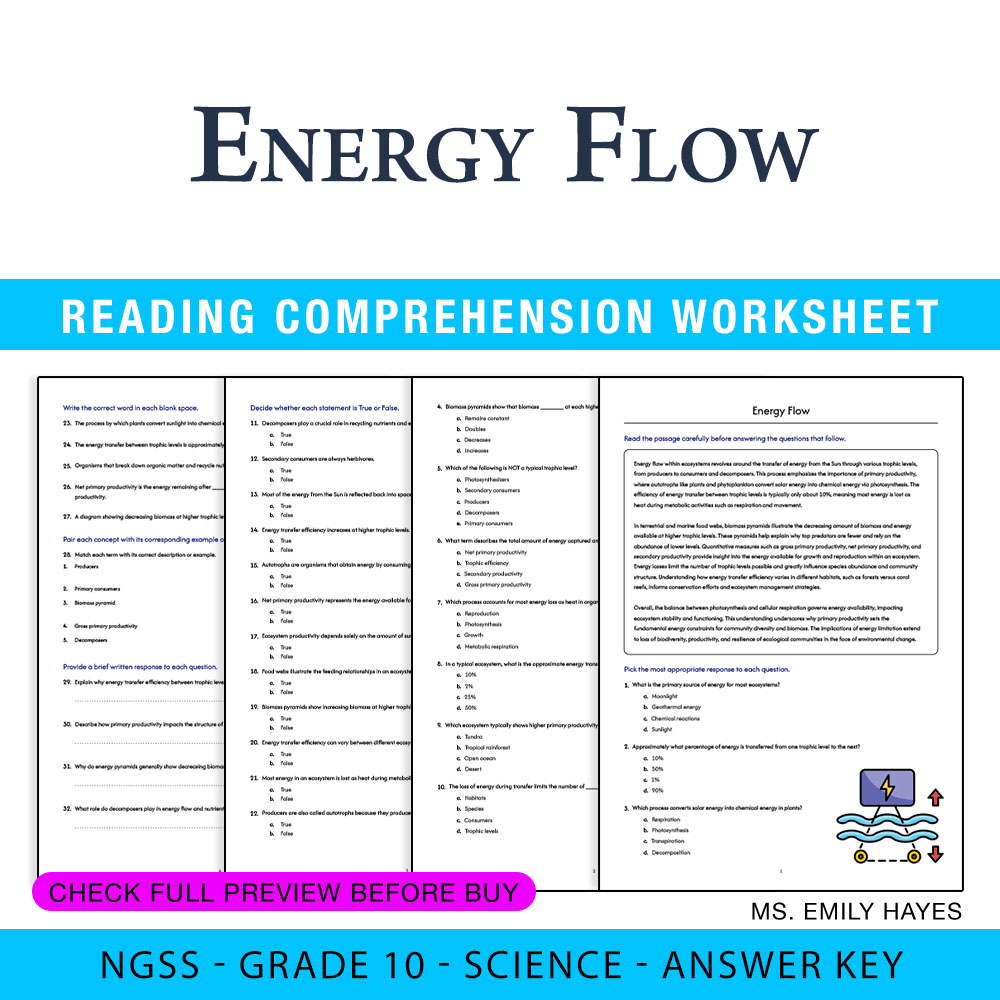
11th Grade Science | Energy Flow Worksheet (PDF+ Answer Key)
Created byCopper Leaf ClassroomLearning Objectives
- Understand the concept of energy transfer among producers, consumers, and decomposers within food webs.
- Analyze the roles of trophic levels, biomass pyramids, and energy loss through metabolic processes.
- Calculate and interpret efficiencies of trophic transfer and primary productivity in different ecosystems.
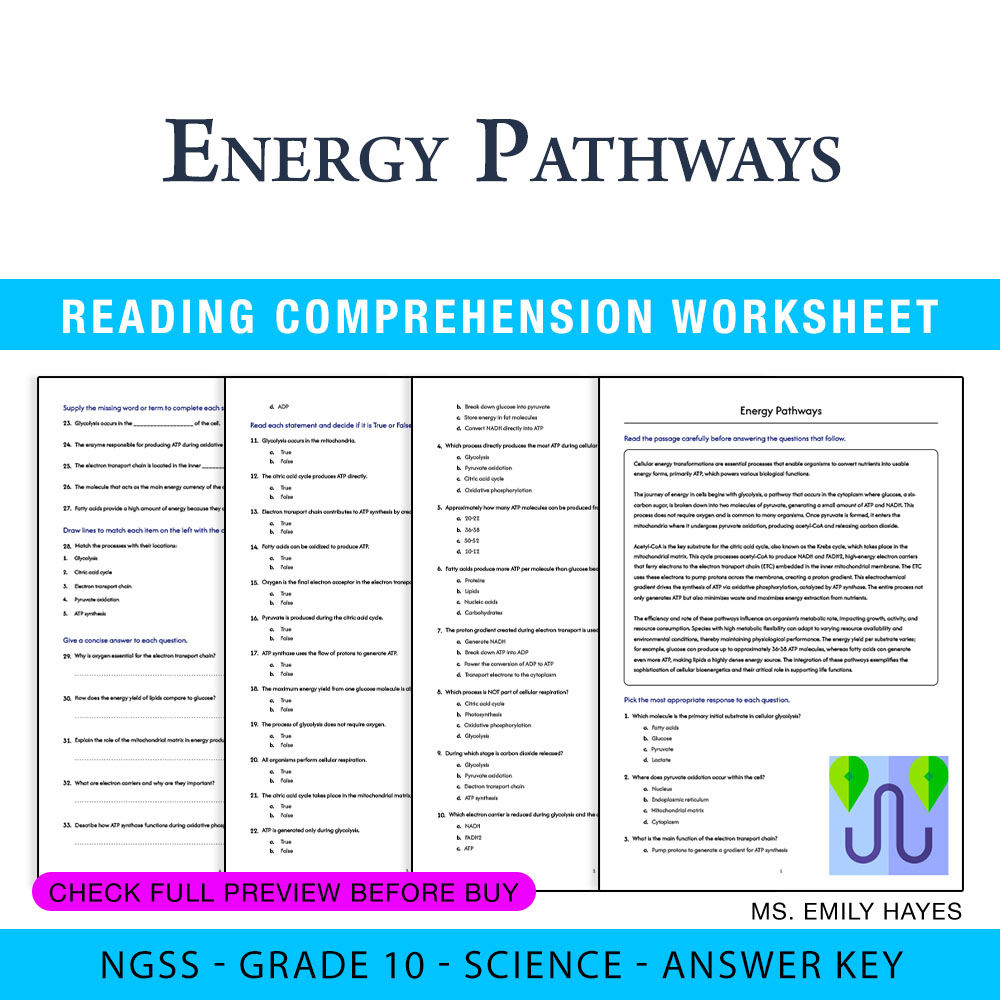
11th Grade Science | Energy Pathways Worksheet (PDF+ Answer Key)
Created byCopper Leaf ClassroomLearning Objectives
- Describe the process of cellular glycolysis, pyruvate oxidation, and the citric acid cycle in energy production.
- Explain the role of the electron transport chain and oxidative phosphorylation in ATP synthesis.
- Analyze the energy yield from different substrates and relate it to organismal metabolic rates.
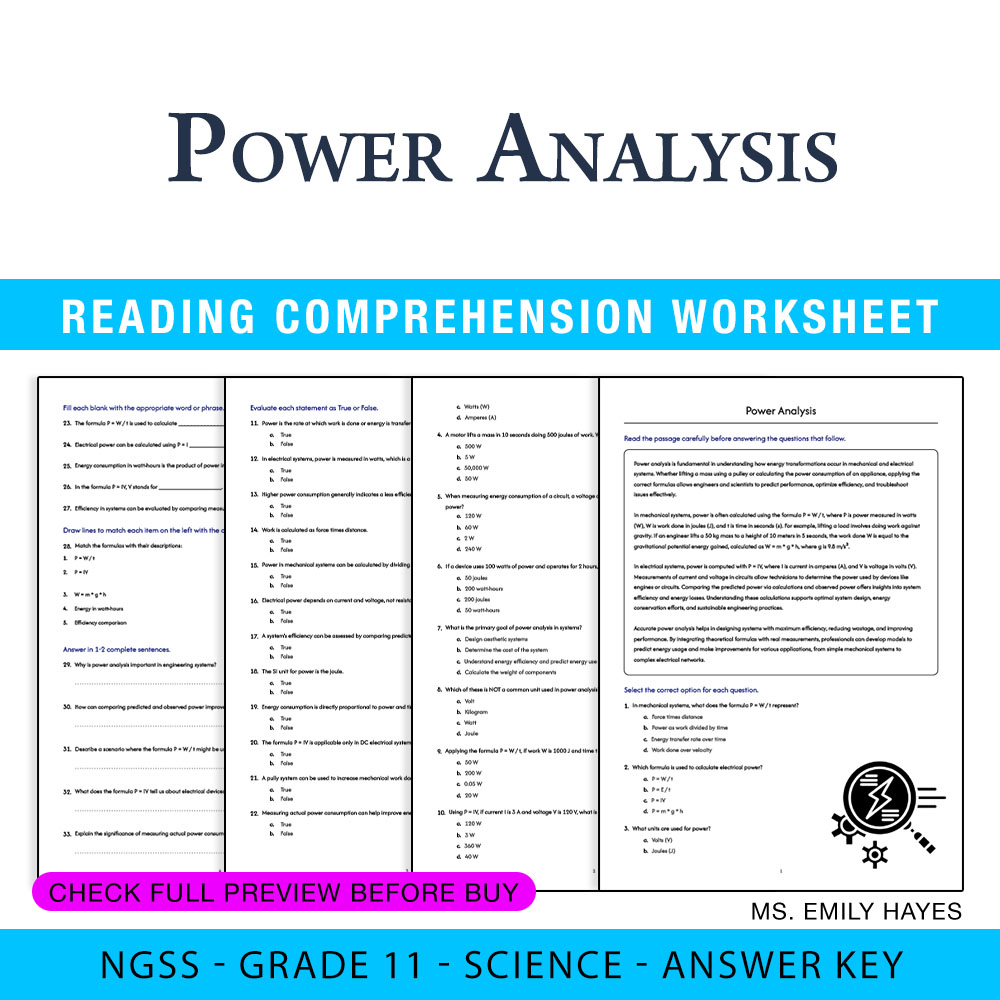
Grade 11 Science | Power Analysis Worksheet (PDF+ Answer Key)
Created byCopper Leaf ClassroomLearning Objectives
- Understand and apply the formula P = W/t to calculate power in mechanical systems
- Use P = IV to compute electrical power and analyze energy consumption
- Create and compare computational models for energy changes in different systems
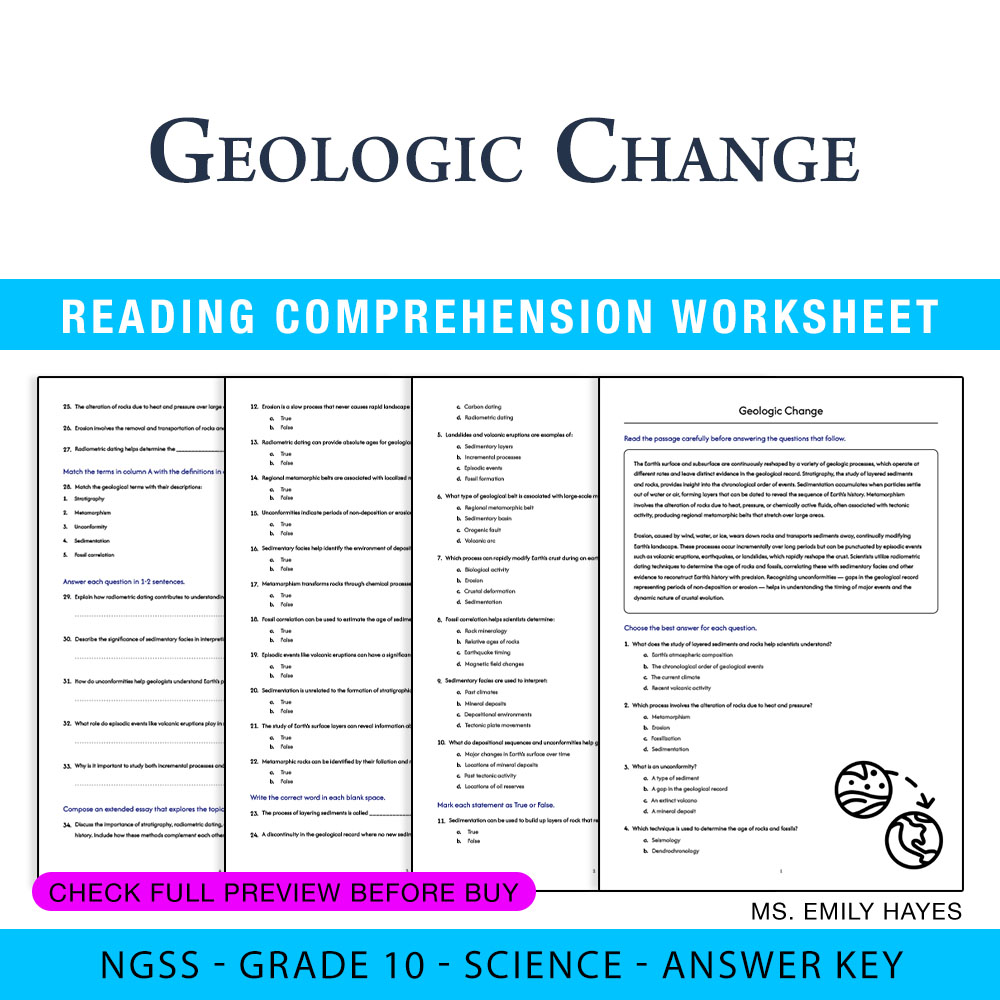
Grade 11 Science | Geologic Change Worksheet (PDF+ Answer Key)
Created byCopper Leaf ClassroomLearning Objectives
- Describe the processes involved in surface and subsurface geologic change, including stratigraphy, sedimentation, metamorphism, and erosion.
- Interpret temporal sequences of Earth's history using radiometric dating, fossil correlation, and sedimentary facies.
- Analyze geological features such as depositional sequences, unconformities, and metamorphic belts to understand Earth's dynamic history.
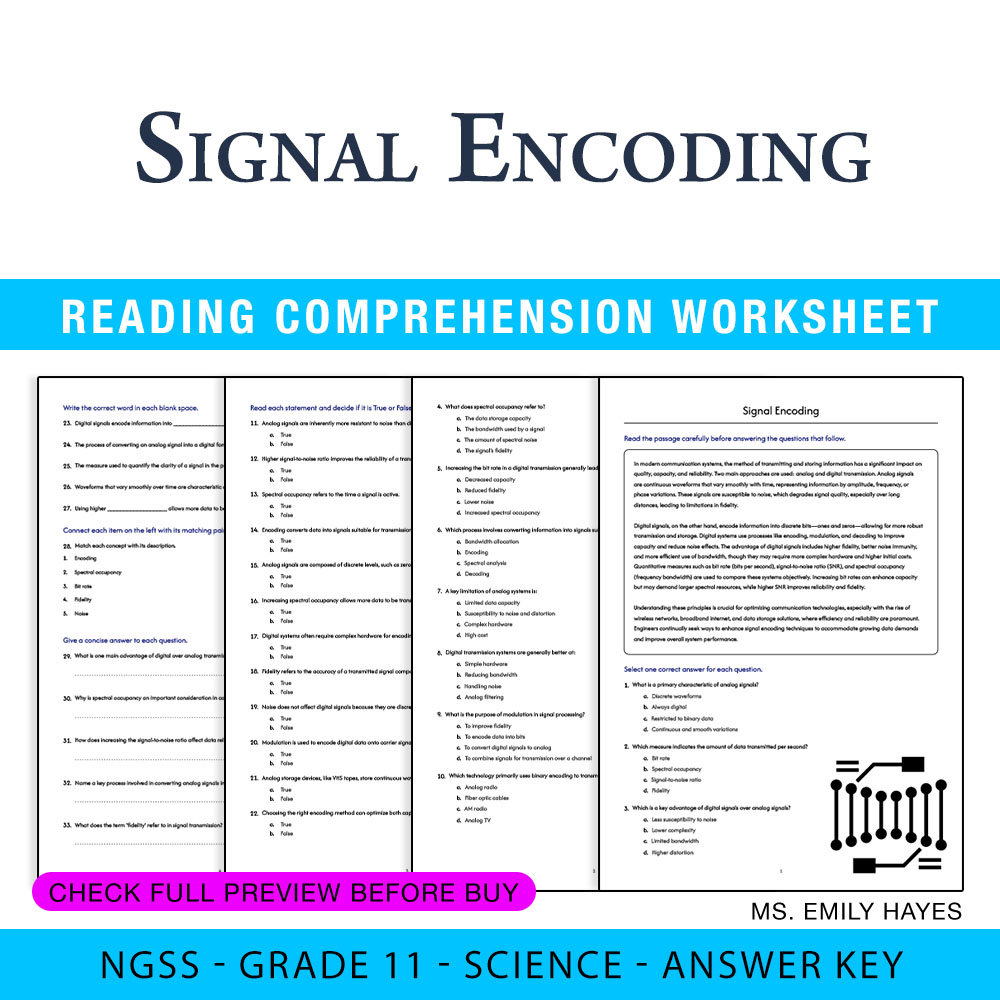
Grade 11 Science | Signal Encoding Worksheet (PDF+ Answer Key)
Created byCopper Leaf ClassroomLearning Objectives
- Explain the differences between digital and analog transmission and storage in terms of bandwidth, noise, and fidelity.
- Describe the principles of encoding, modulation, and decoding in communication systems.
- Compare the capacity and reliability of digital versus analog signals using quantitative measures such as bit rate, signal-to-noise ratio, and spectral occupancy.
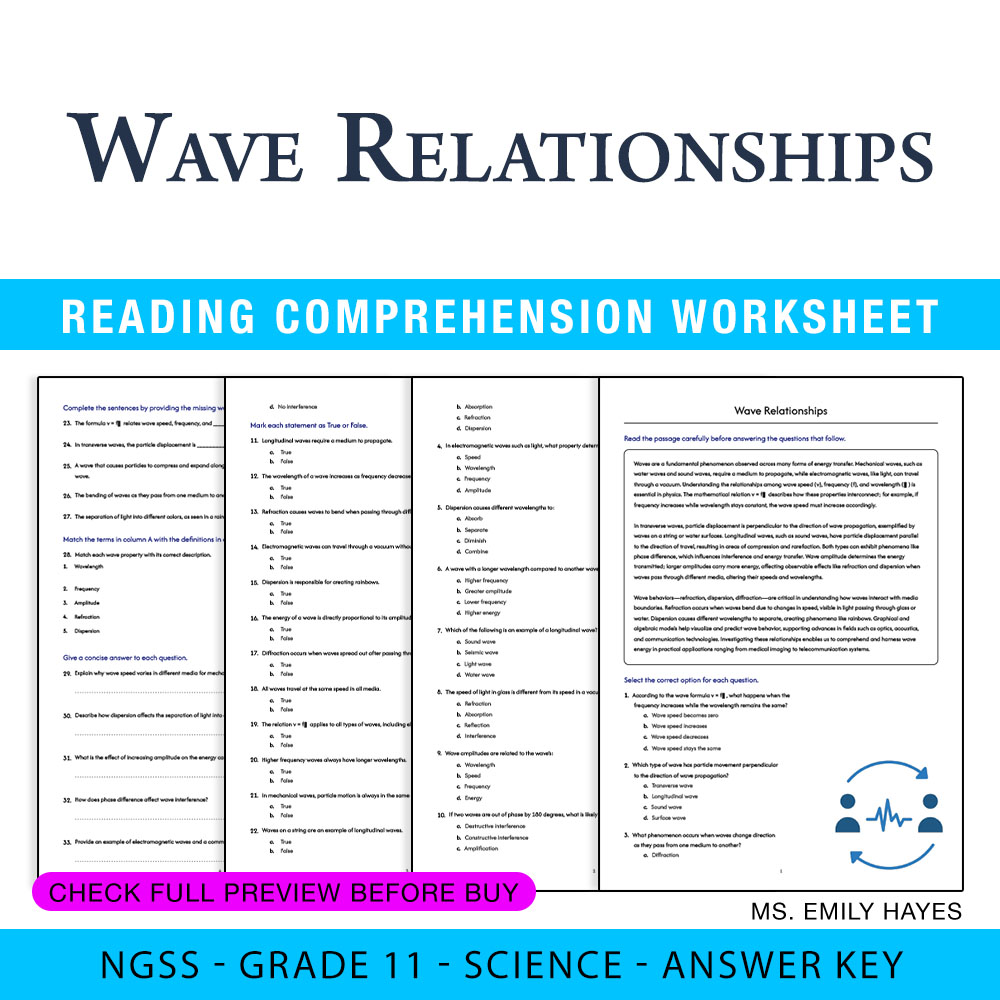
11th Grade Science | Wave Relationships Worksheet (PDF+ Answer Key)
Created byCopper Leaf ClassroomLearning Objectives
- Understand the mathematical relationships among wave properties such as v = fλ.
- Describe and compare transverse and longitudinal waves in various media.
- Explain wave behaviors like refraction and dispersion using graphs and algebraic representations.
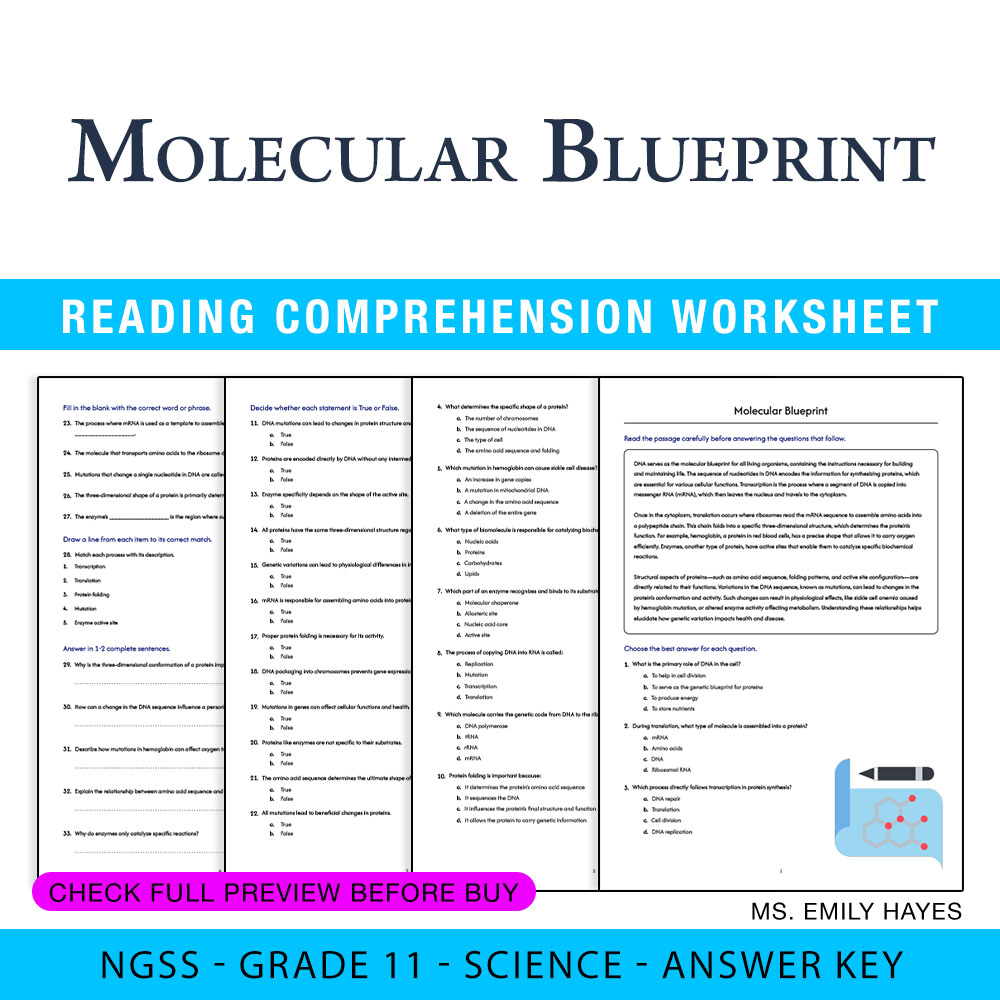
11th Grade Science | Molecular Blueprint Worksheet (PDF+ Answer Key)
Created byCopper Leaf ClassroomLearning Objectives
- Explain how DNA sequences influence protein structure and function.
- Describe the processes of transcription and translation in protein synthesis.
- Identify the relationship between gene variation and physiological effects.
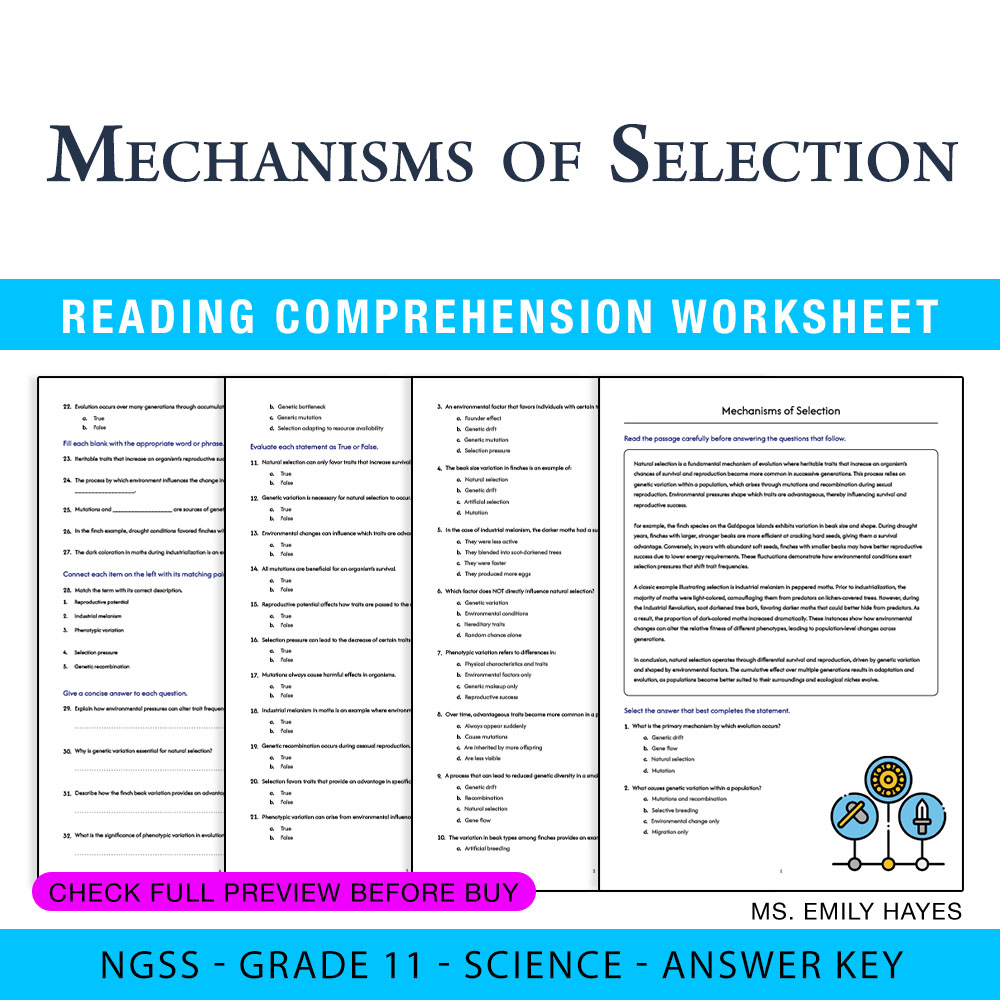
Grade 11 Science | Mechanisms of Selection Worksheet (PDF+ Answer Key)
Created byCopper Leaf ClassroomLearning Objectives
- Explain the process of natural selection and its role in evolution.
- Identify factors that influence selection pressures and trait frequencies.
- Analyze real-world examples like finch beak variation and industrial melanism.
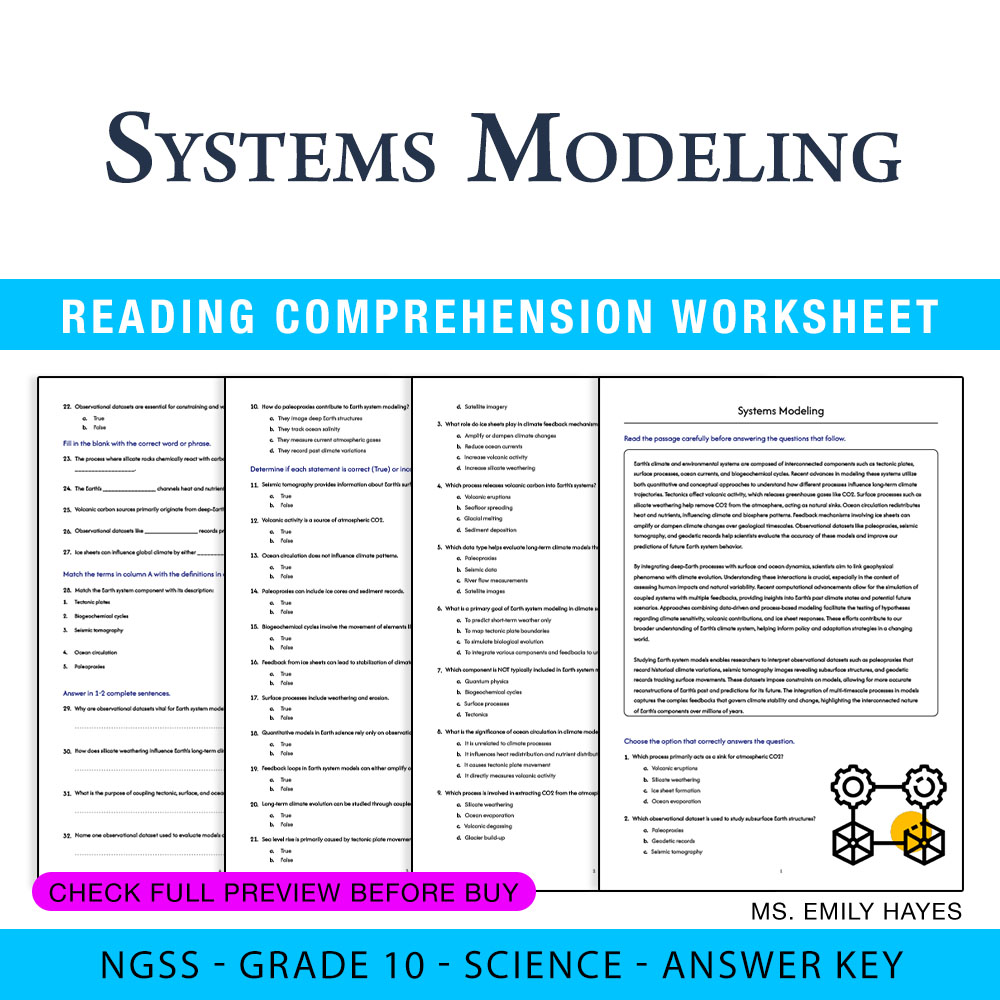
11th Grade Science | Systems Modeling Worksheet (PDF+ Answer Key)
Created byCopper Leaf ClassroomLearning Objectives
- Understand the key components and processes involved in Earth system modeling.
- Analyze how tectonics, surface processes, ocean circulation, and biogeochemical feedbacks interact over time.
- Evaluate observational data constraints used to validate Earth system models.
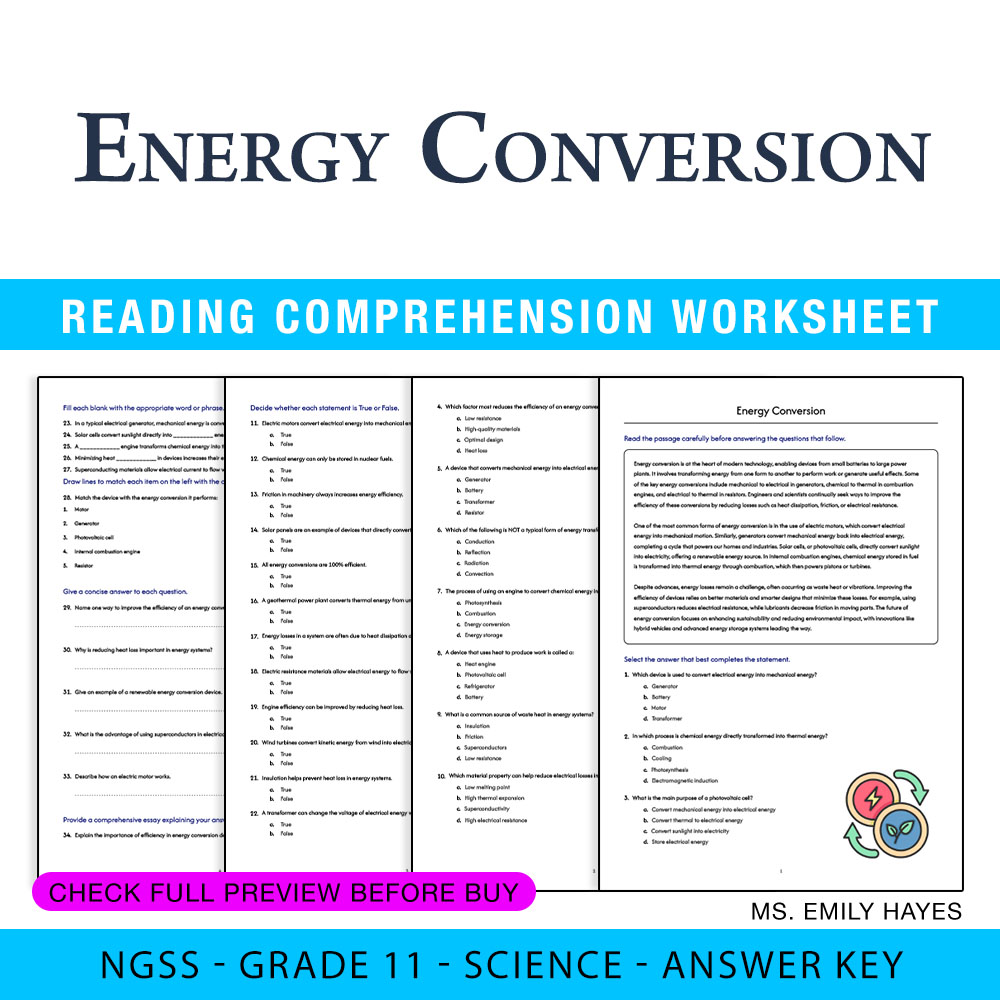
11th Grade Science | Energy Conversion Worksheet (PDF + Answer Key)
Created byCopper Leaf ClassroomLearning Objectives
- Understand the principles of energy conversion between mechanical, electrical, chemical, and thermal forms.
- Design and build devices that optimize energy transfer efficiency.
- Compare the performance of different energy conversion systems such as motors, generators, photovoltaic cells, and engines.
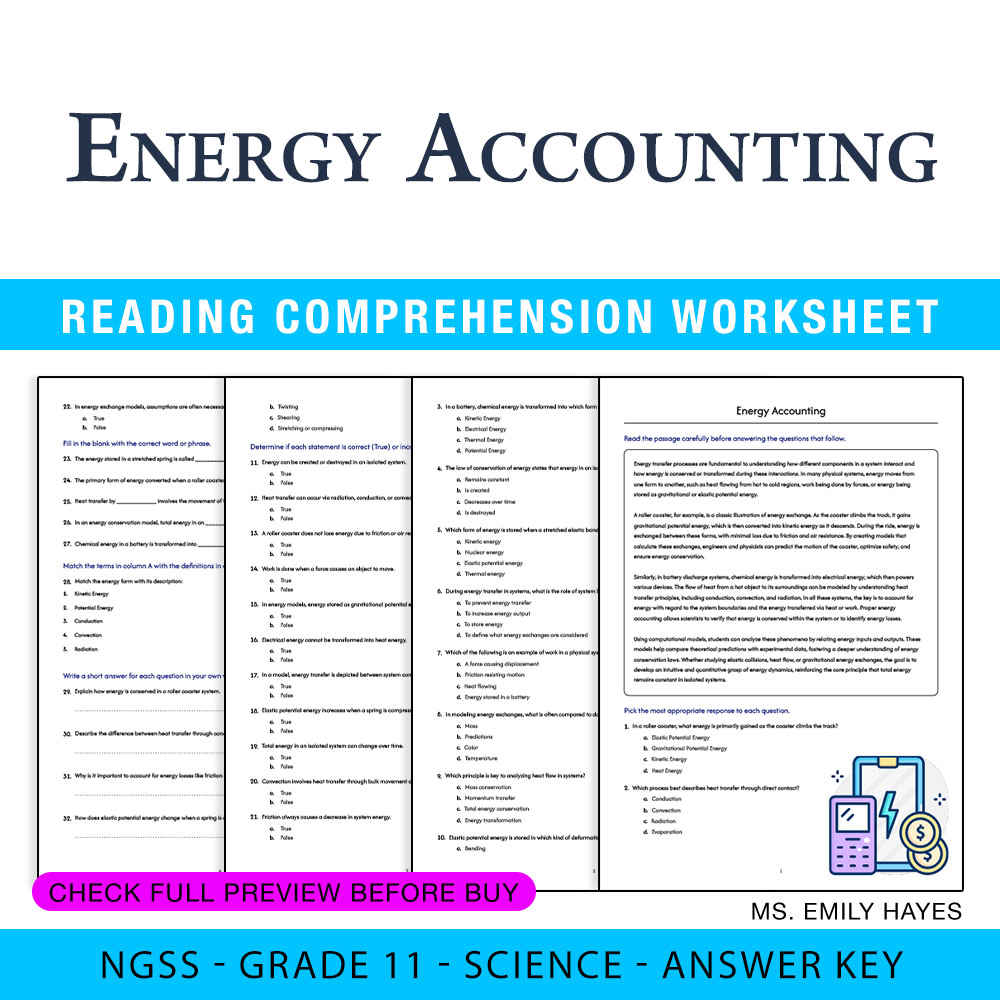
11th Grade Science | Energy Accounting Worksheet (PDF + Answer Key)
Created byCopper Leaf ClassroomLearning Objectives
- Create computational models to analyze energy transfers among system components.
- Relate heat, work, and stored energy in various physical systems using representations.
- Compare predicted energy flows to actual data, emphasizing total energy conservation.
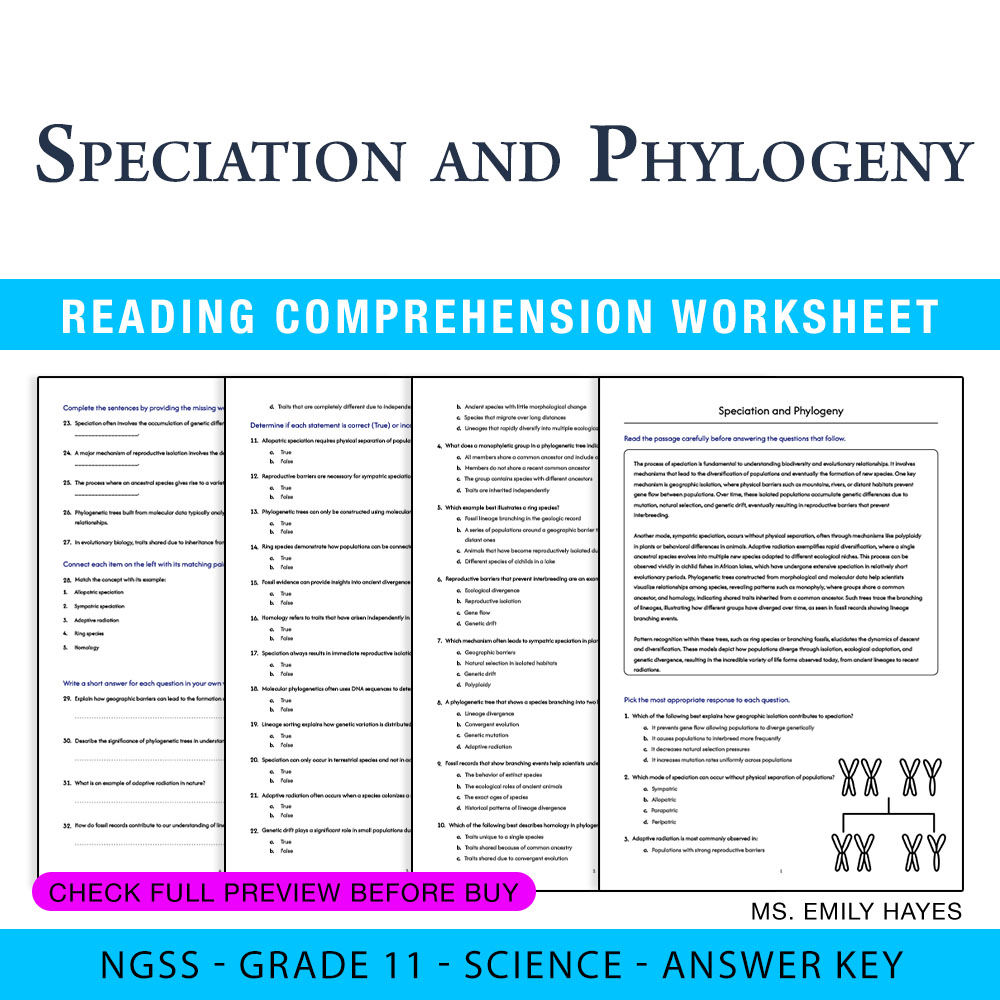
11th Grade Science | Speciation and Phylogeny Worksheet (PDF+ Answer Key)
Created byCopper Leaf ClassroomLearning Objectives
- Explain the mechanisms leading to the formation of new species, including geographic isolation, reproductive barriers, and adaptive radiation.
- Differentiate between modes of speciation such as allopatric and sympatric speciation.
- Interpret phylogenetic trees based on morphological and molecular data, understanding concepts like monophyly and homology.
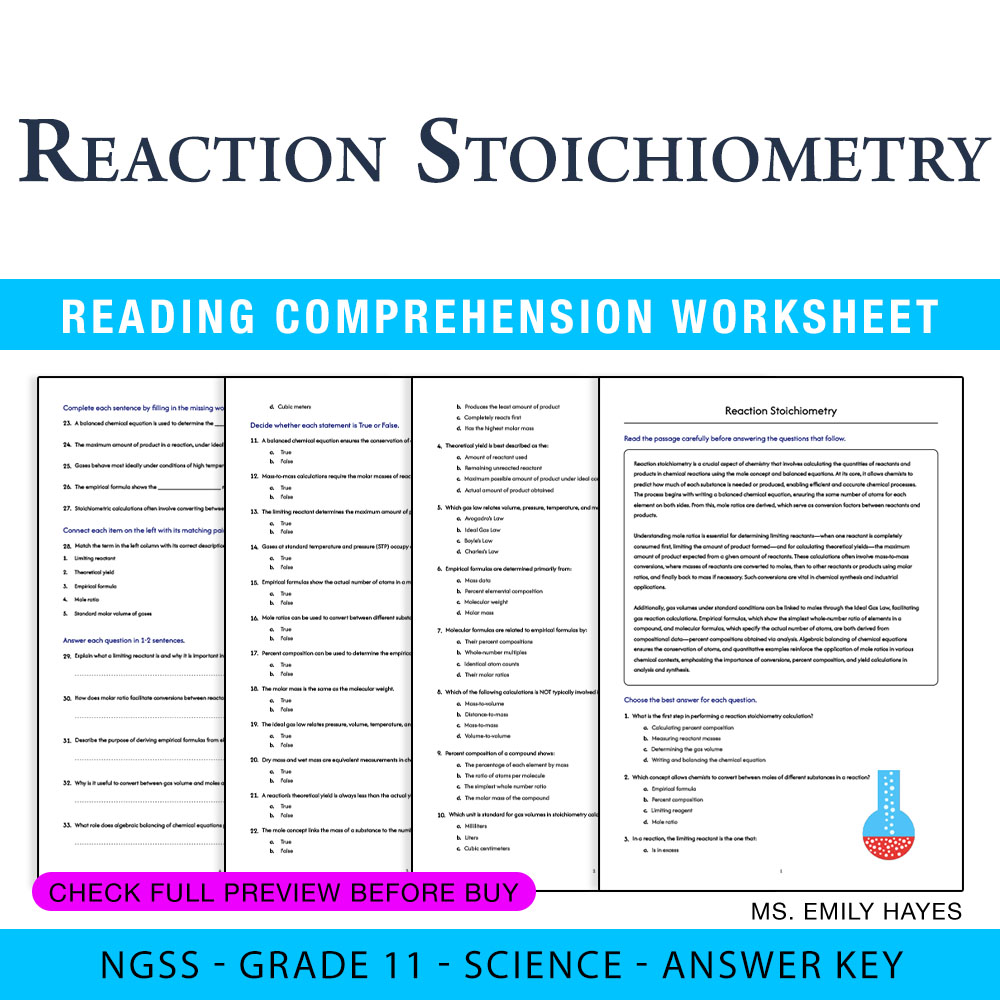
11th Grade Science | Reaction Stoichiometry Worksheet (PDF+ Answer Key)
Created byCopper Leaf ClassroomLearning Objectives
- Understand and use mole ratios from balanced chemical equations to perform quantitative calculations.
- Apply mass-to-mass, mass-to-mole, and mole-to-volume conversions under standard conditions.
- Determine limiting reactants and calculate theoretical yields in chemical reactions.
11th Grade Science | Community Interactions Worksheet (PDF+ Answer Key)
Created byCopper Leaf ClassroomLearning Objectives
- Describe various types of species interactions within ecological communities.
- Analyze the roles of keystone species and trophic cascades in community dynamics.
- Explain how species introductions and disturbances affect community stability and diversity.
11th Grade Science|Predictive Models in Climate Science Worksheet(PDF + Answers)
Created byCopper Leaf ClassroomLearning Objectives
- Understand the role of modeling in predicting climate change and environmental impacts.
- Identify different types of climate models and their applications.
- Explain the importance of model validation and uncertainty analysis in climate projections.
7th Grade Science | Design Optimization Worksheet (PDF+ Answer Key)
Created byCopper Leaf ClassroomLearning Objectives
- Analyze experimental test data to identify factors influencing design performance.
- Apply iterative parameter adjustments based on quantitative comparisons to improve design solutions.
- Justify modifications to design specifications with evidence of performance improvements within constraints.
7th Grade Science | Interactions Worksheet (PDF+ Answer Key)
Created byCopper Leaf ClassroomLearning Objectives
- Explain the nature of gravitational, electric, and magnetic interactions as long-range forces that act without contact.
- Describe how gravity is universally attractive and how electromagnetic forces can be attractive or repulsive.
- Relate gravitational attraction to mass and distance in qualitative terms.
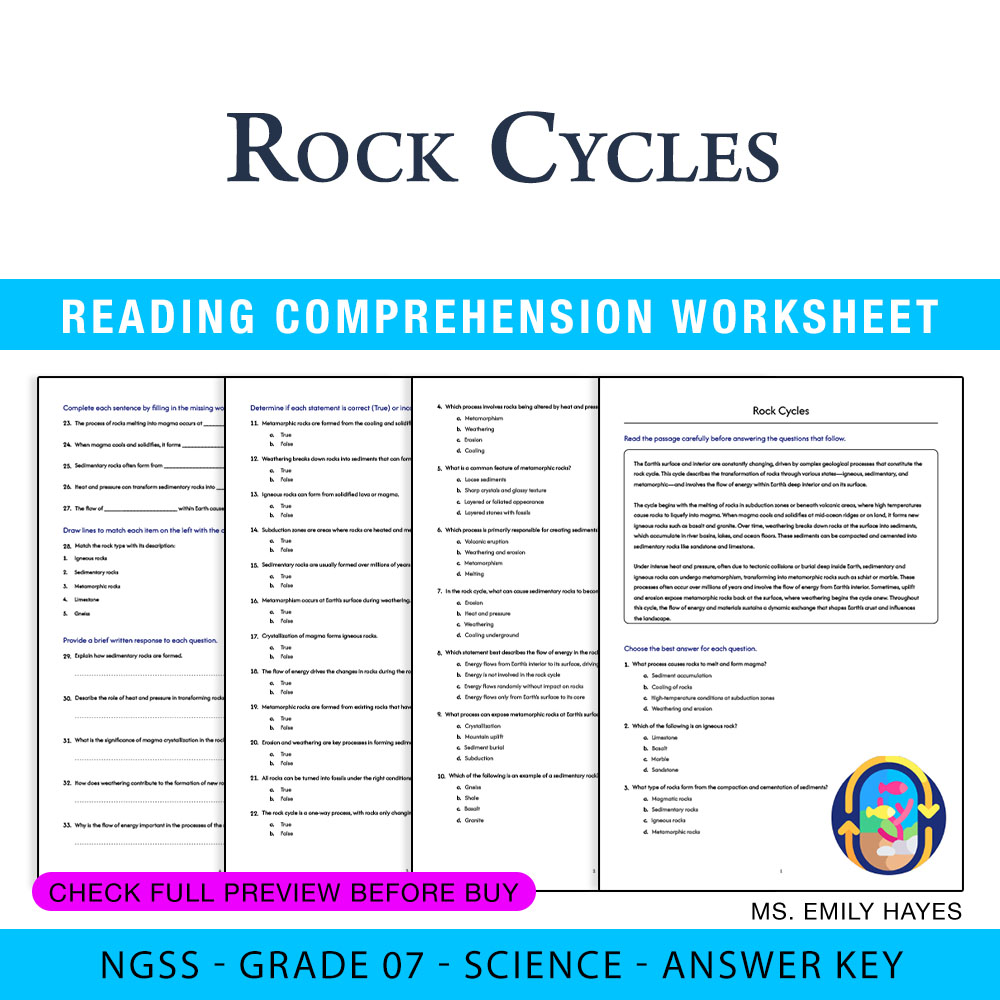
7th Grade Science | Rock Cycles Worksheet (PDF+ Answer Key)
Created byCopper Leaf ClassroomLearning Objectives
- Describe the stages of the rock cycle, including processes such as melting, cooling, weathering, and metamorphism.
- Identify and explain the different types of rocks—igneous, sedimentary, and metamorphic—and their formation processes.
- Understand how Earth's internal and surface processes drive the transformation of rocks over geological time.
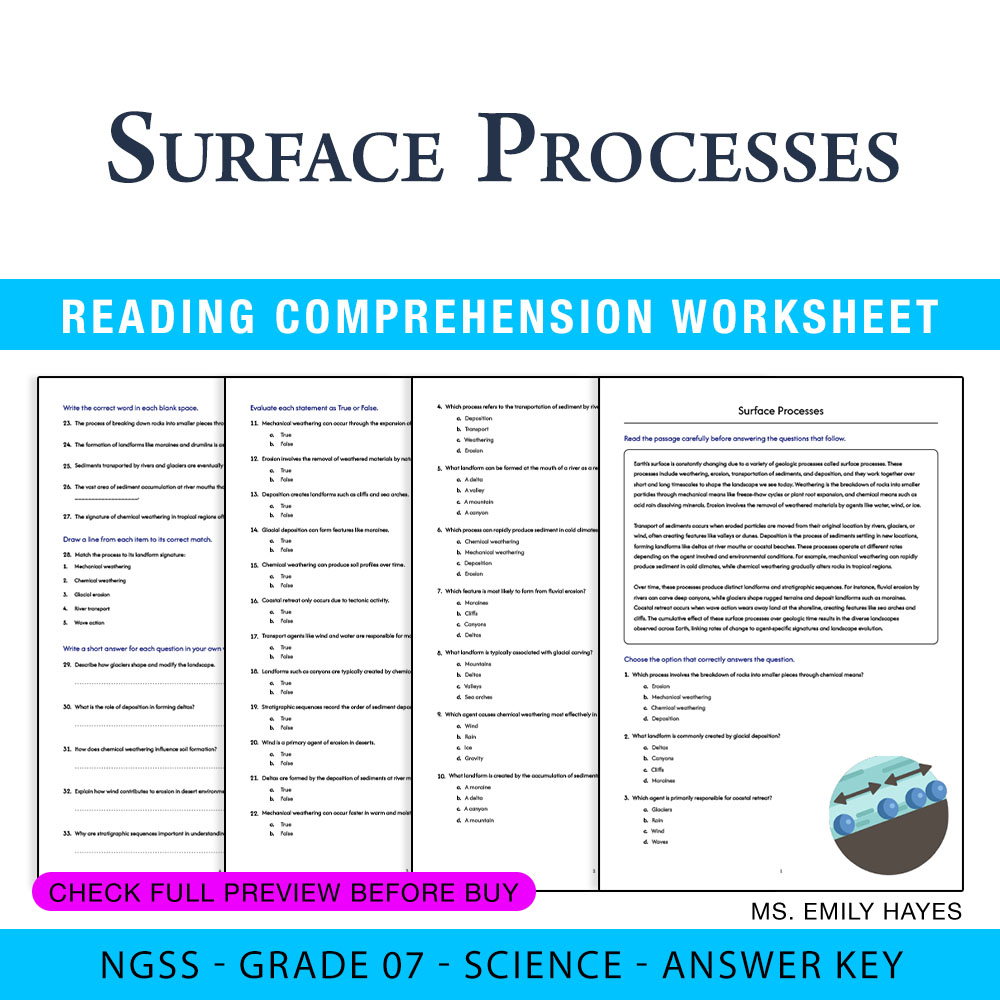
7th Grade Science | Surface Processes Worksheet (PDF+ Answer Key)
Created byCopper Leaf ClassroomLearning Objectives
- Describe the main types of surface processes such as weathering, erosion, transport, and deposition.
- Explain how different agents create specific landforms and signatures on Earth's surface.
- Connect rates of landscape change with geologic timescales and processes.
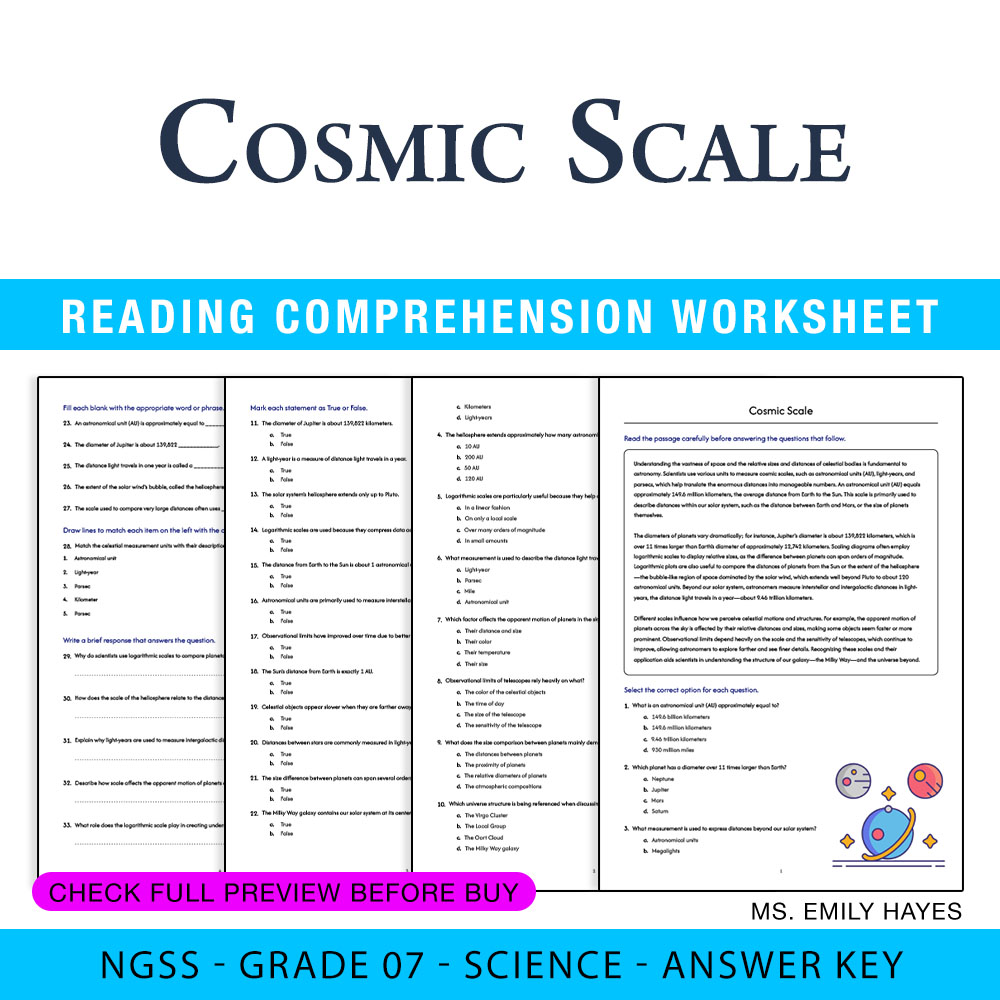
7th Grade Science | Cosmic Scale Worksheet (PDF + Answer Key)
Created byCopper Leaf ClassroomLearning Objectives
- Understand the concept of astronomical units and how they are used to measure distances within the solar system.
- Interpret different scales and representations, such as diagrams and logarithmic plots, to compare planetary sizes and distances.
- Analyze data related to stellar distances, including light-years, and assess how scale influences observation and perception of celestial objects.
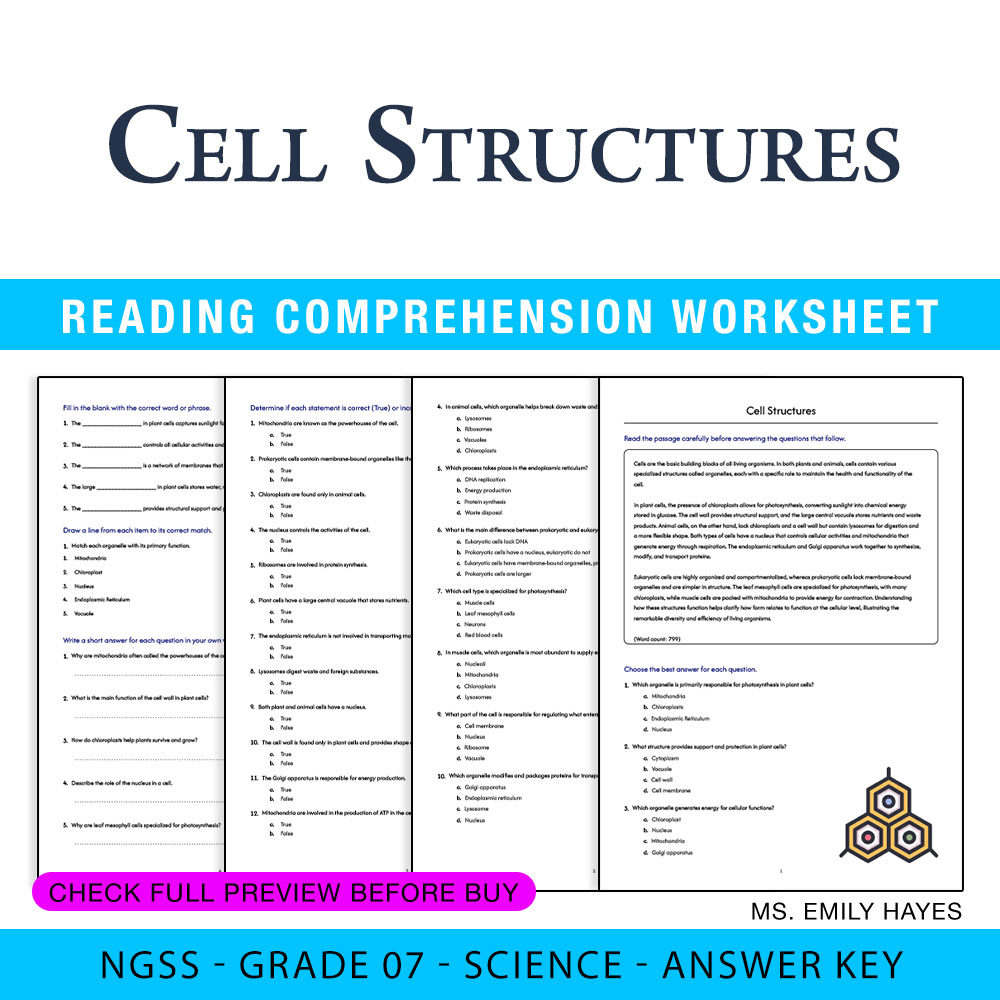
7th Grade Science | Cell Structures Worksheet (PDF + Answer Key)
Created byCopper Leaf ClassroomLearning Objectives
- Describe the main organelles of plant and animal cells and their functions.
- Connect cell structure to its role in processes like transport, synthesis, and compartmentalization.
- Compare eukaryotic cell organelles with prokaryotic cell organization.
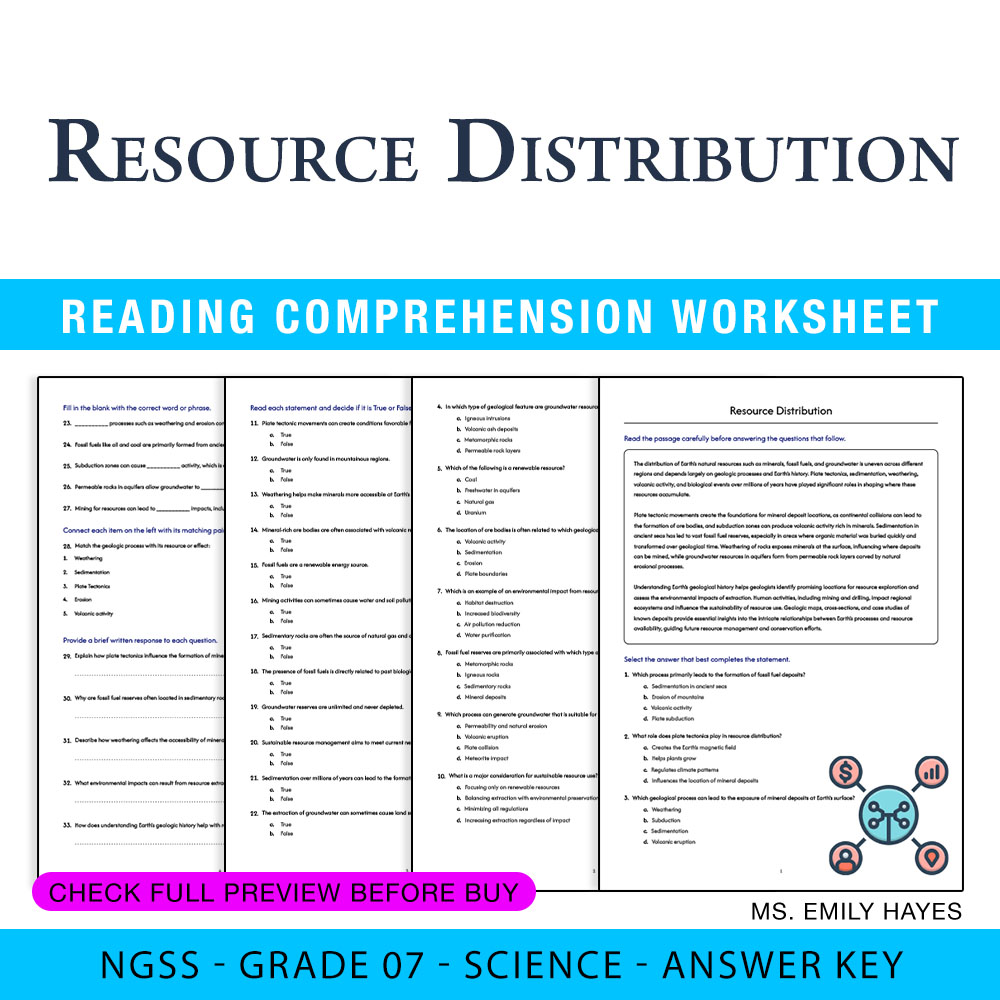
7th Grade Science | Resource Distribution Worksheet (PDF+ Answer Key)
Created byCopper Leaf ClassroomLearning Objectives
- Understand how geological processes affect the distribution of mineral, energy, and groundwater resources.
- Identify the relationship between plate tectonics, sedimentation, weathering, and resource locations.
- Analyze case studies of mineral deposits and aquifer locations to interpret geologic history and resource accessibility.
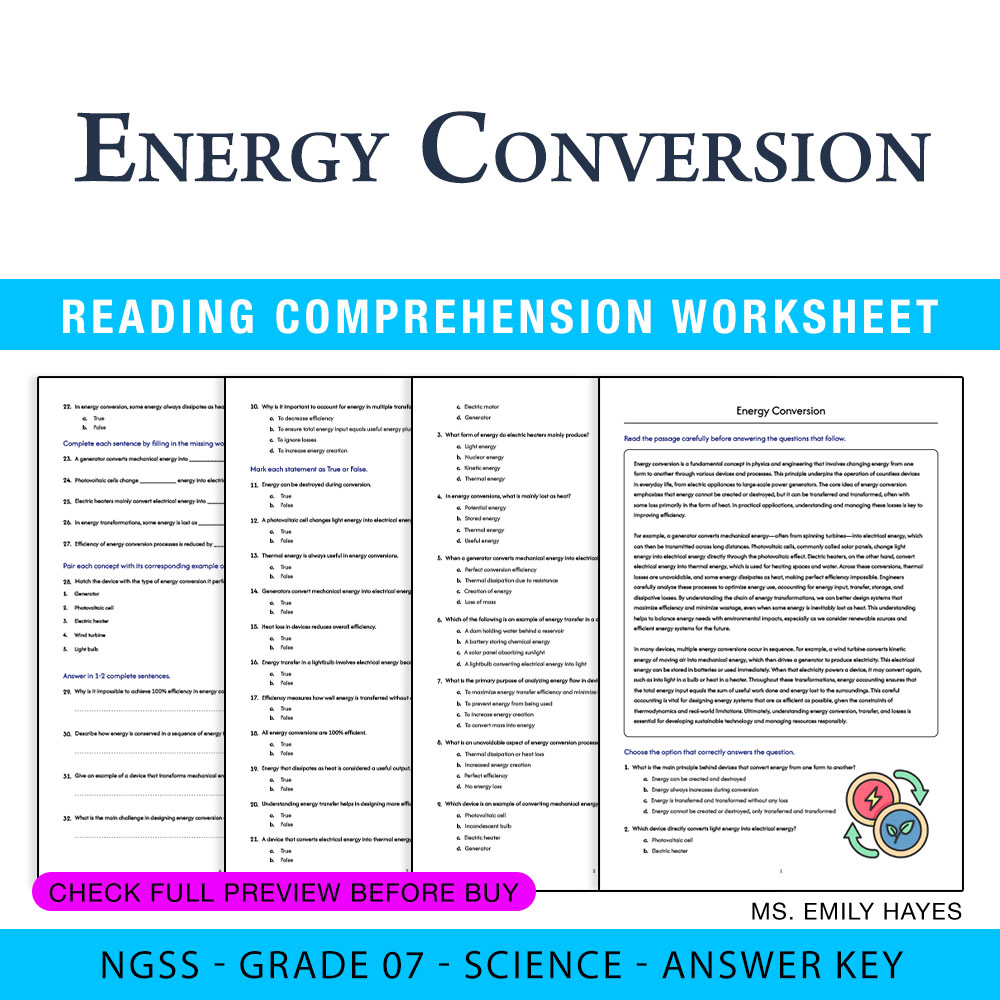
7th Grade Science | Energy Conversion Worksheet (PDF+ Answer Key)
Created byCopper Leaf ClassroomLearning Objectives
- Explain the principles of energy conversion and transfer in different devices.
- Identify examples of devices that transform energy from one form to another.
- Understand the concept of energy conservation and the effects of thermal losses.
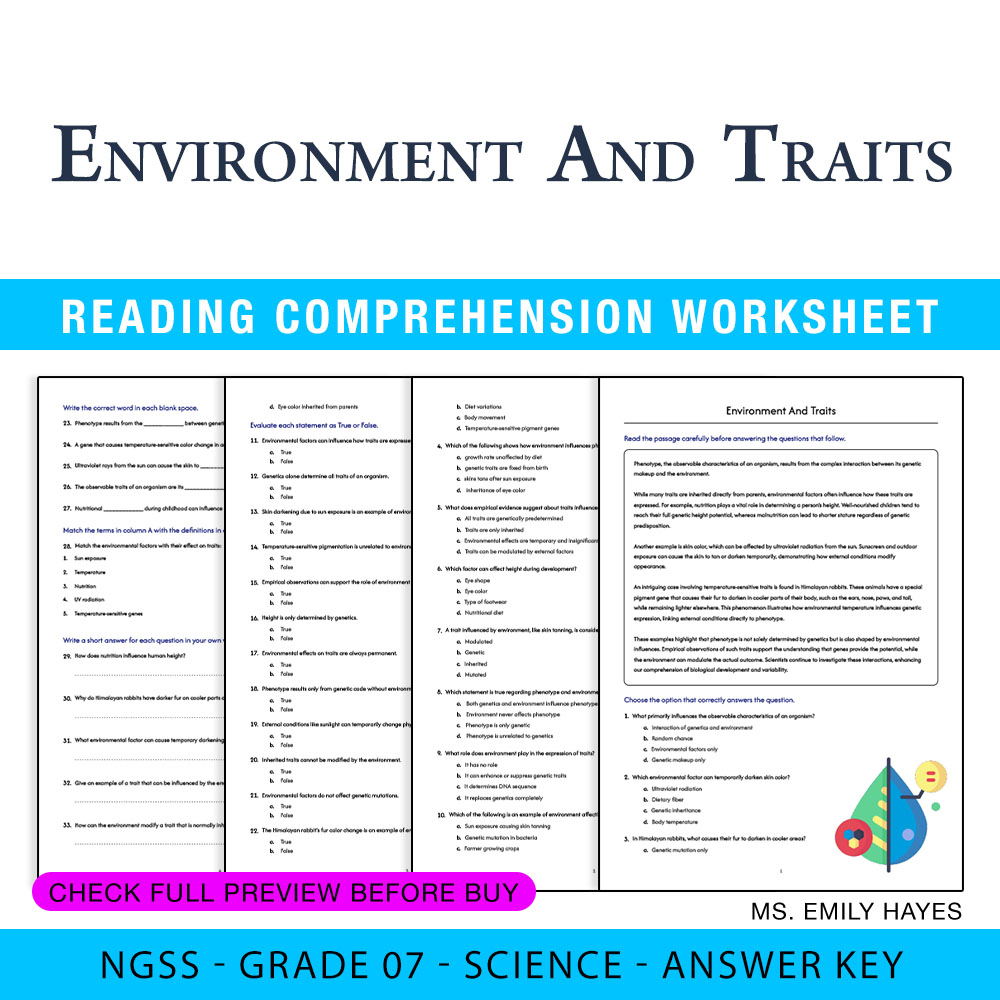
Grade 7 Science | Environment and Traits Worksheet (PDF+ Answer Key)
Created byCopper Leaf ClassroomLearning Objectives
- Explain how phenotype results from interactions between genetic makeup and environmental factors.
- Identify examples where environmental factors influence traits such as height, skin color, and pigmentation.
- Distinguish inherited genetic traits from environmentally modulated traits.
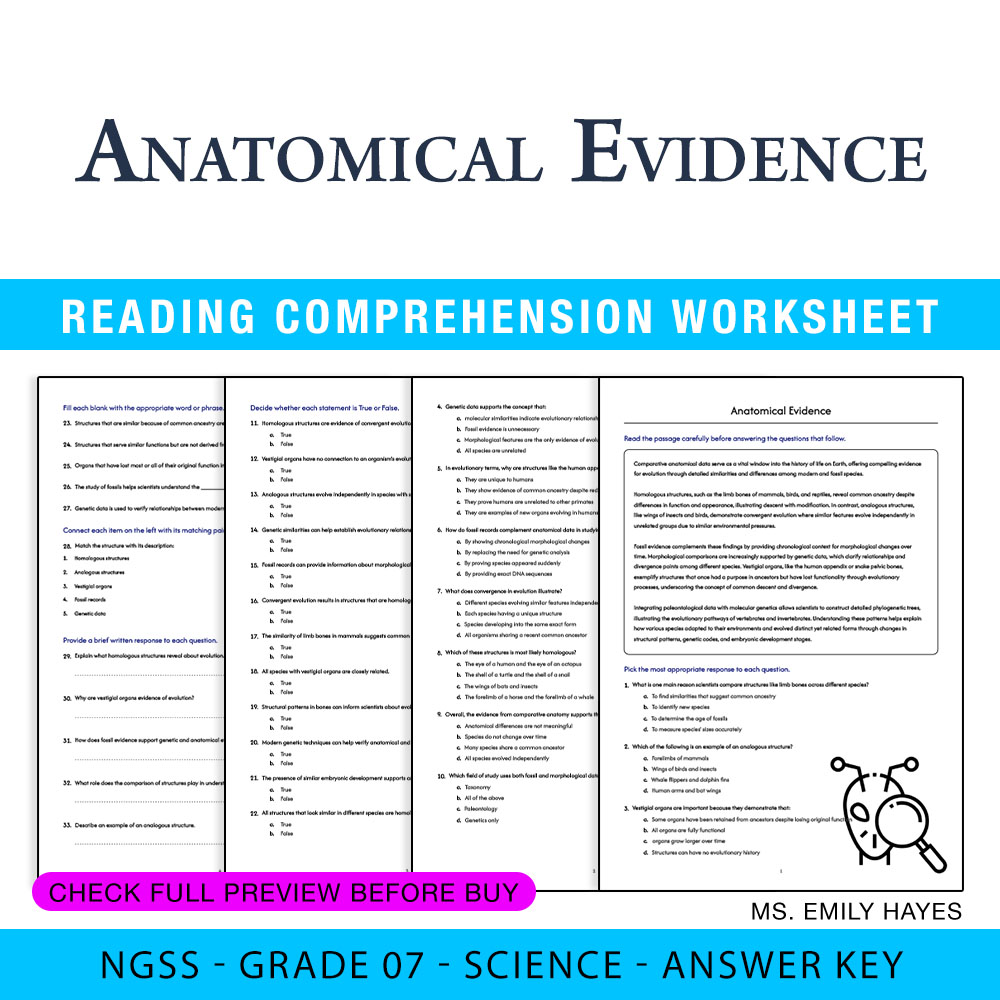
Grade 7 Science | Anatomical Evidence Worksheet (PDF + Answer Key)
Created byCopper Leaf ClassroomLearning Objectives
- Understand how comparative anatomy provides evidence for evolution.
- Identify homologous and analogous structures in different species.
- Explain how morphological, genetic, and paleontological data are integrated in evolutionary studies.
7th Grade Science | Organ Interactions Worksheet (PDF + Answer Key)
Created byCopper Leaf ClassroomLearning Objectives
- Describe the functions of the circulatory, respiratory, digestive, and nervous systems in multicellular animals.
- Explain how organ systems cooperate to support gas exchange, nutrient distribution, and homeostasis.
- Identify examples of system-level dependencies and feedback mechanisms in animal and plant systems.
7th Grade Science | Population Impacts Worksheet (PDF+ Answer Key)
Created byCopper Leaf ClassroomLearning Objectives
- Understand how human population growth affects demand for natural resources and ecosystems.
- Analyze regional examples showing the relationship between consumption patterns and environmental pressures.
- Evaluate sustainable resource management strategies to mitigate negative impacts of population growth.
7th Grade Science | Climate Interactions Worksheet (PDF+ Answer Key)
Created byCopper Leaf ClassroomLearning Objectives
- Analyze evidence for climate change drivers such as greenhouse gases, land-use change, and natural variability.
- Assess impacts of climate change on sea levels, precipitation, and agriculture.
- Understand how societal choices influence future climate risks and explore mitigation strategies.
9th Grade Science | Center Stability Worksheet (PDF+ Answer Key)
Created byCopper Leaf ClassroomLearning Objectives
- Understand the concept of center of mass and how it affects rotational stability of rigid bodies.
- Apply torque and equilibrium conditions to analyze stability in structures and objects.
- Calculate the location of the center of mass for composite systems and determine tipping thresholds.
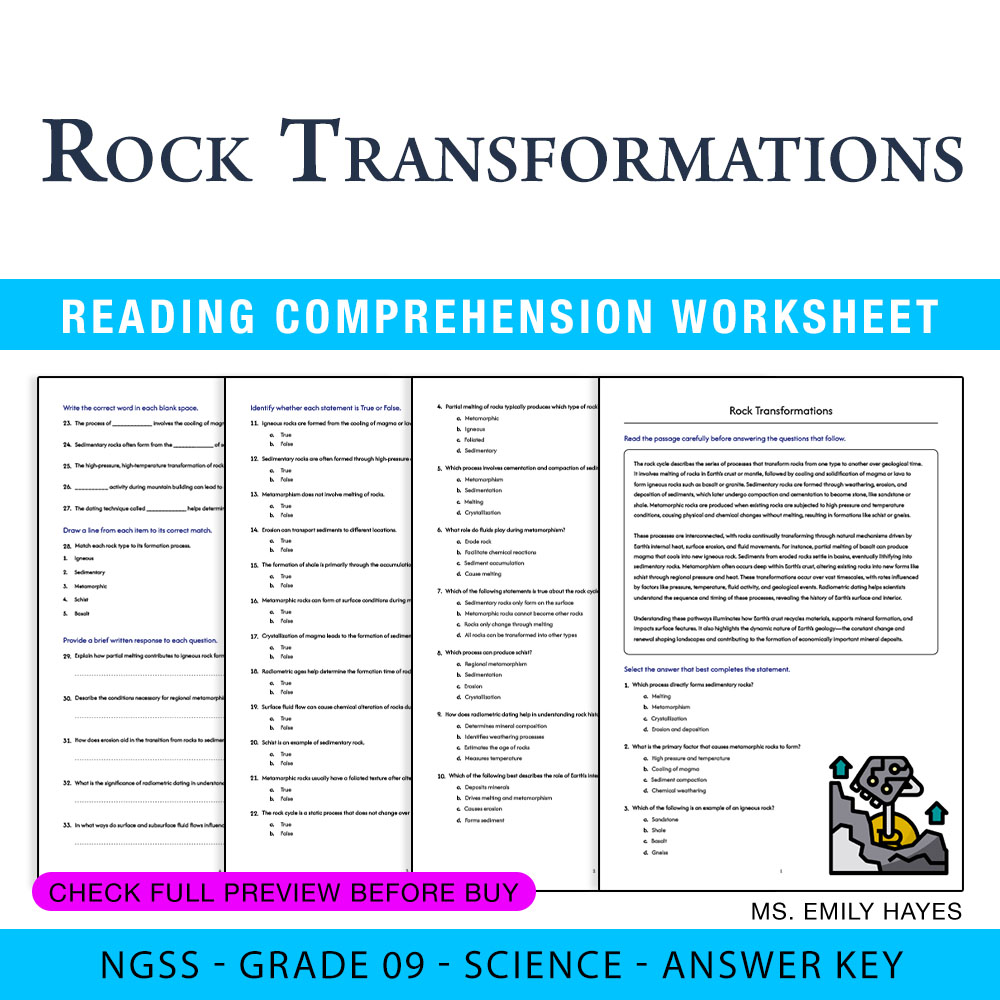
9th Grade Science | Rock Transformations Worksheet (PDF+ Answer Key)
Created byCopper Leaf ClassroomLearning Objectives
- Describe the processes involved in the rock cycle, including melting, crystallization, erosion, sedimentation, and metamorphism.
- Identify different types of rocks and their formation pathways in the rock cycle.
- Explain the conditions such as pressure, temperature, and time that influence rock transformation.
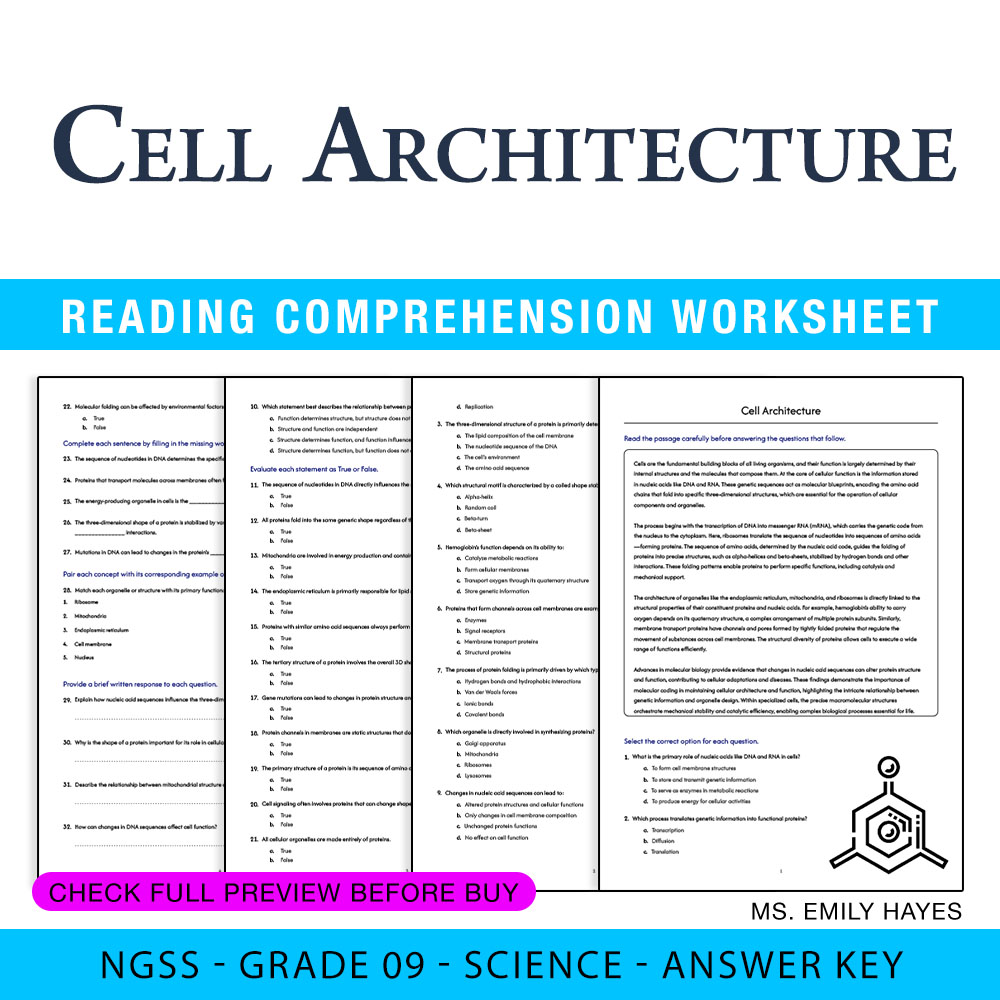
9th Grade Science | Cell Architecture Worksheet (PDF+ Answer Key)
Created byCopper Leaf ClassroomLearning Objectives
- Understand how nucleic acid sequences determine the three-dimensional structure of proteins that form cellular components.
- Explain the connection between molecular coding and organelle architecture such as ribosomes, endoplasmic reticulum, and mitochondria.
- Describe how structure relates to function in macromolecules like hemoglobin and membrane transport proteins.
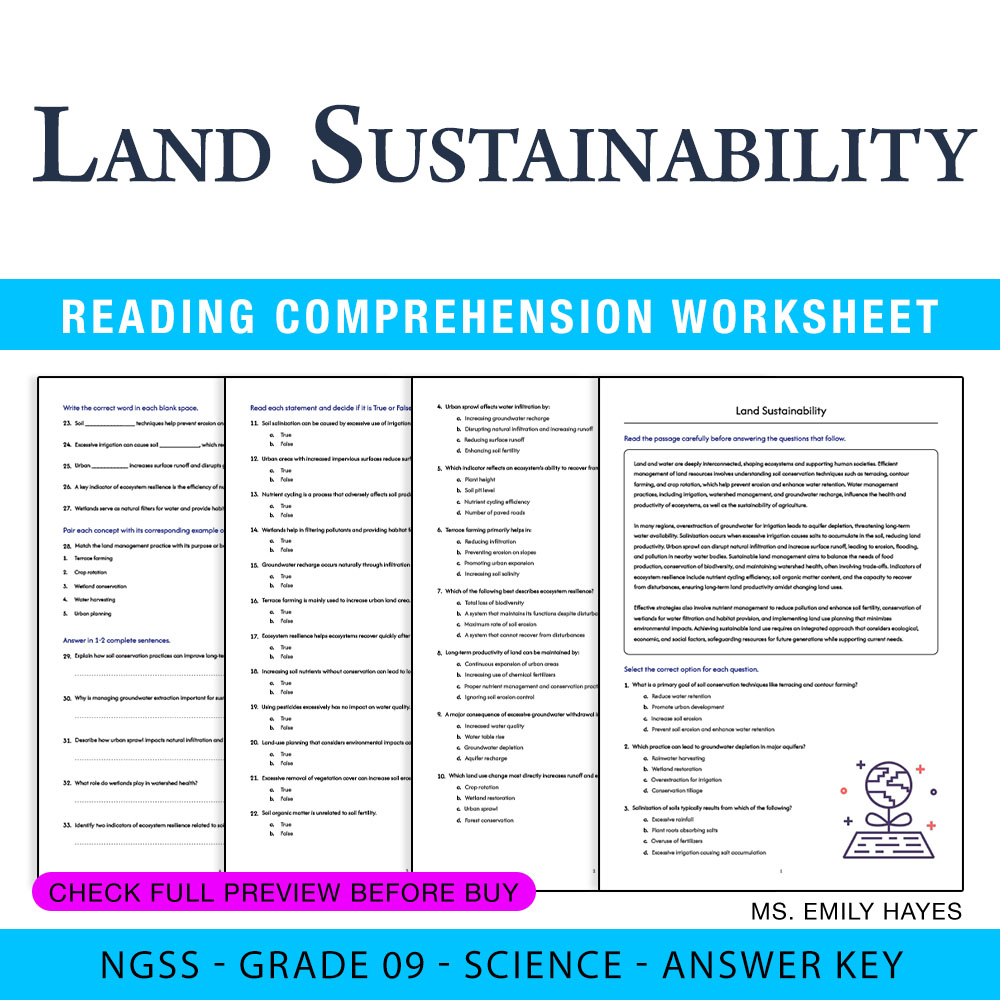
Grade 9 Science | Land Sustainability Worksheet (PDF+ Answer Key)
Created byCopper Leaf ClassroomLearning Objectives
- Understand the interactions between land use and water resources, including conservation and irrigation practices.
- Evaluate the impact of land management on ecosystem resilience, nutrient cycling, and long-term productivity.
- Analyze the trade-offs between agricultural productivity, biodiversity, and watershed health under different land-use scenarios.
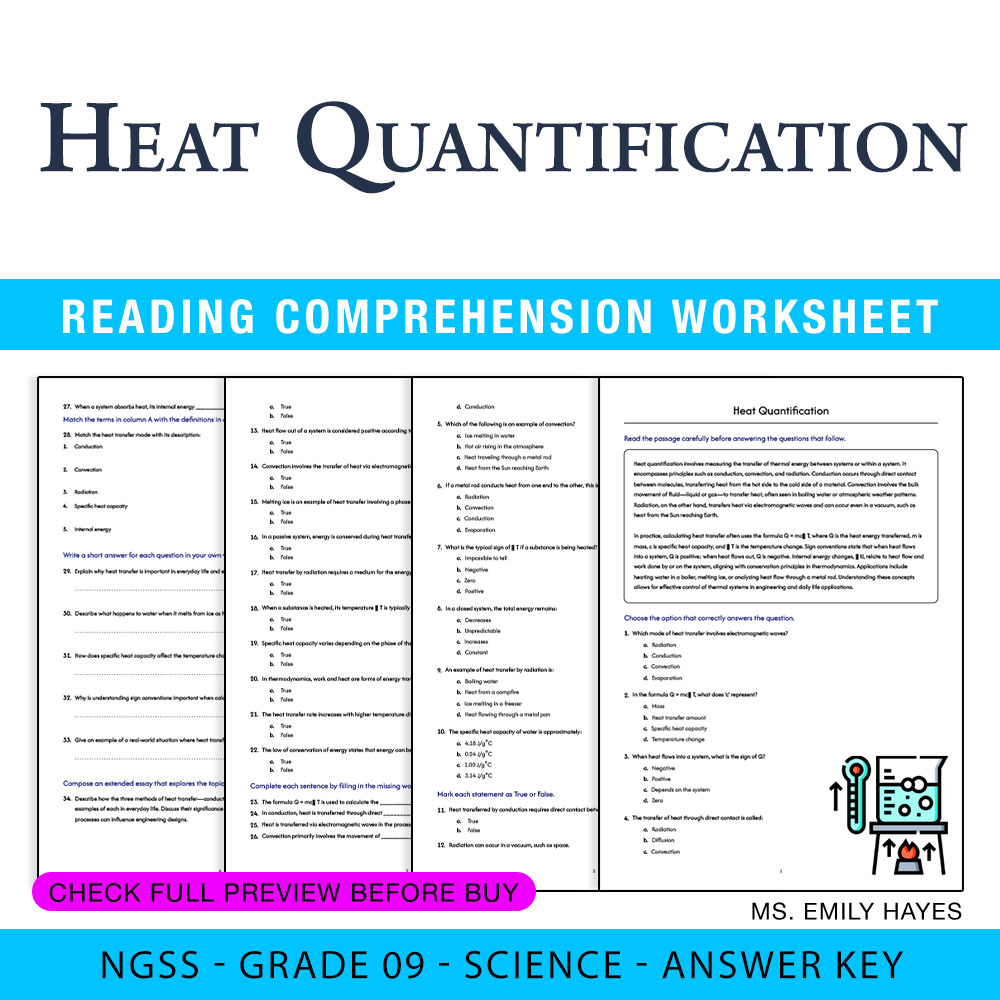
9th Grade Science | Heat Quantification Worksheet (PDF + Answer Key)
Created byCopper Leaf ClassroomLearning Objectives
- Understand and explain the different modes of heat transfer: conduction, convection, and radiation.
- Perform calculations involving specific heat capacity, mass, and temperature change to determine heat transfer and energy changes.
- Interpret sign conventions for heat flow and internal energy changes in closed systems.
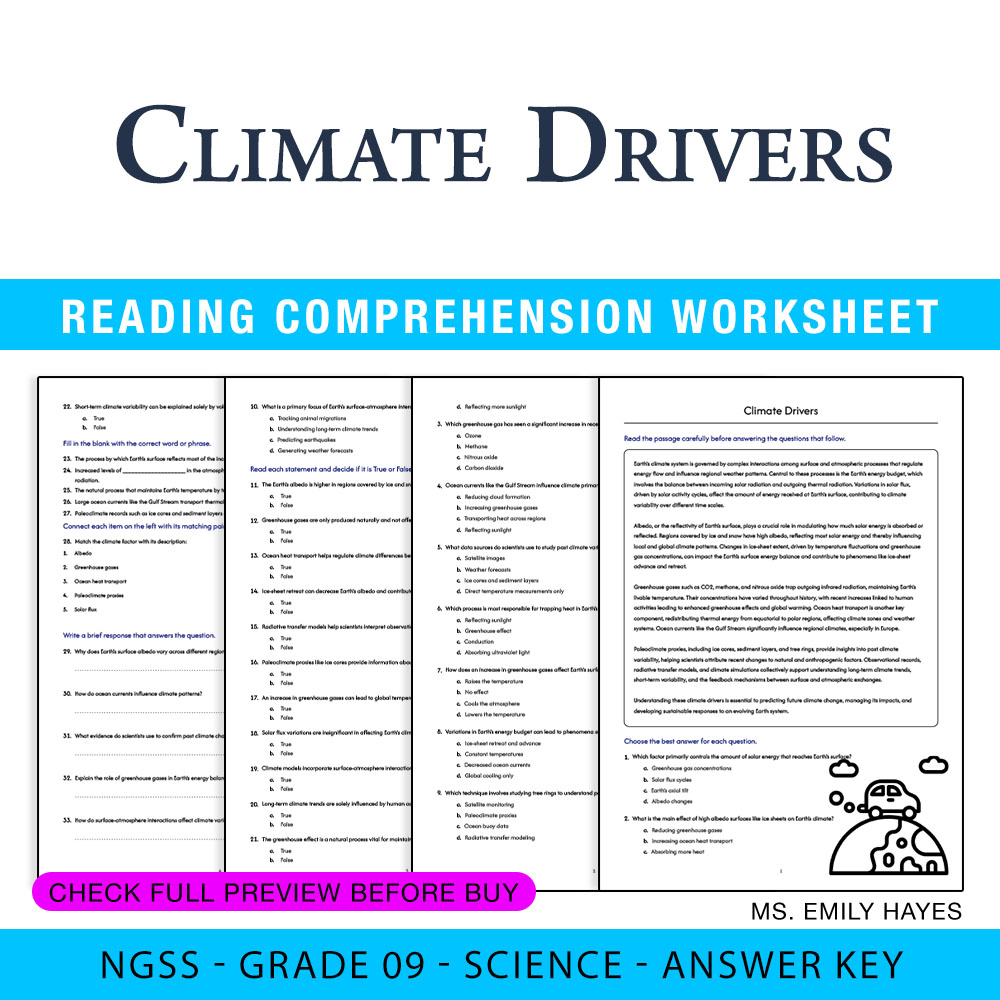
9th Grade Science | Climate Drivers Worksheet (PDF+ Answer Key)
Created byCopper Leaf ClassroomLearning Objectives
- Understand the key factors influencing Earth's climate such as solar flux, albedo, and greenhouse gases.
- Explain how Earth's energy budget affects regional weather patterns and climate variability.
- Analyze observational and paleoclimate data to interpret climate change and short-term variability.
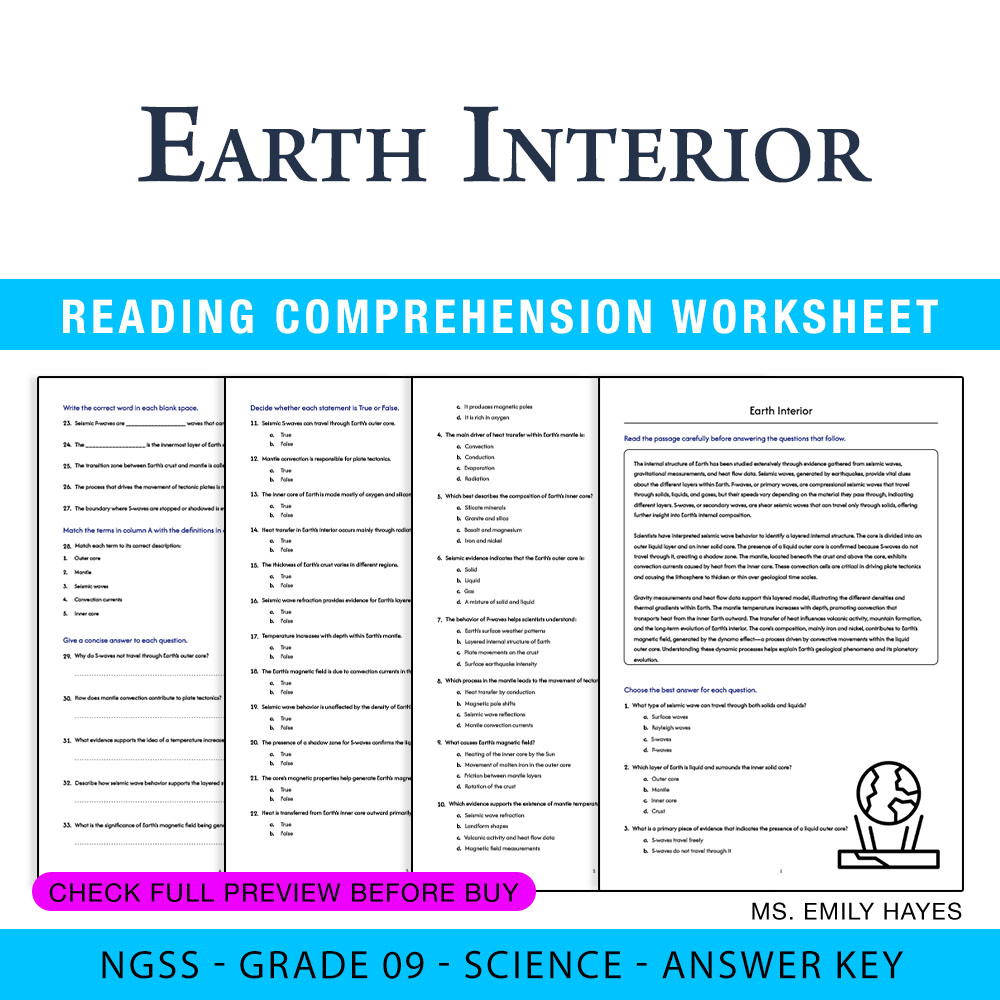
9th Grade Science | Earth Interior Worksheet (PDF+ Answer Key)
Created byCopper Leaf ClassroomLearning Objectives
- Describe the layered structure of Earth's interior based on seismic evidence.
- Explain how seismic wave behavior informs our understanding of Earth's internal composition.
- Analyze the relationship between density contrasts, gravity, and thermal energy transfer within Earth.
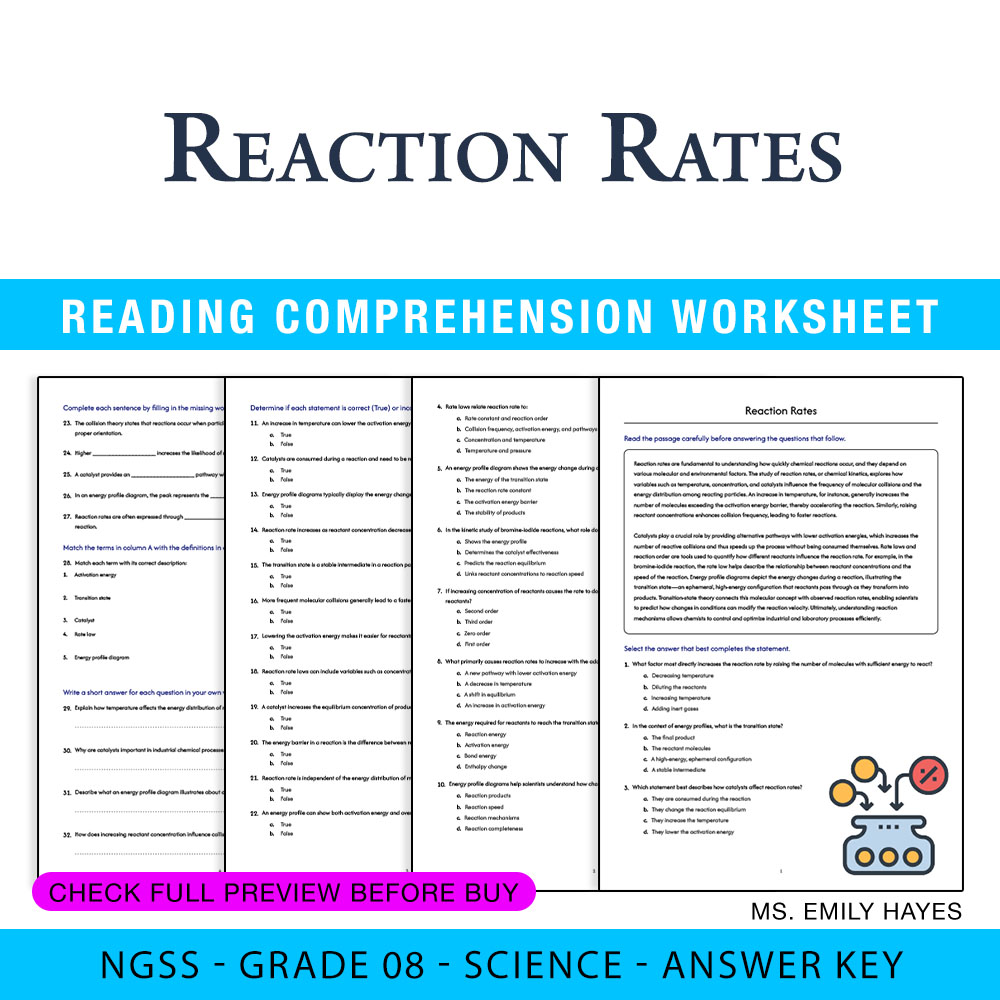
9th Grade Science | Reaction Rates Worksheet (PDF+ Answer Key)
Created byCopper Leaf ClassroomLearning Objectives
- Explain how temperature, concentration, and catalysts affect reaction rates.
- Describe the relationship between collision frequency and reaction speed.
- Interpret rate laws and reaction order in chemical kinetics.
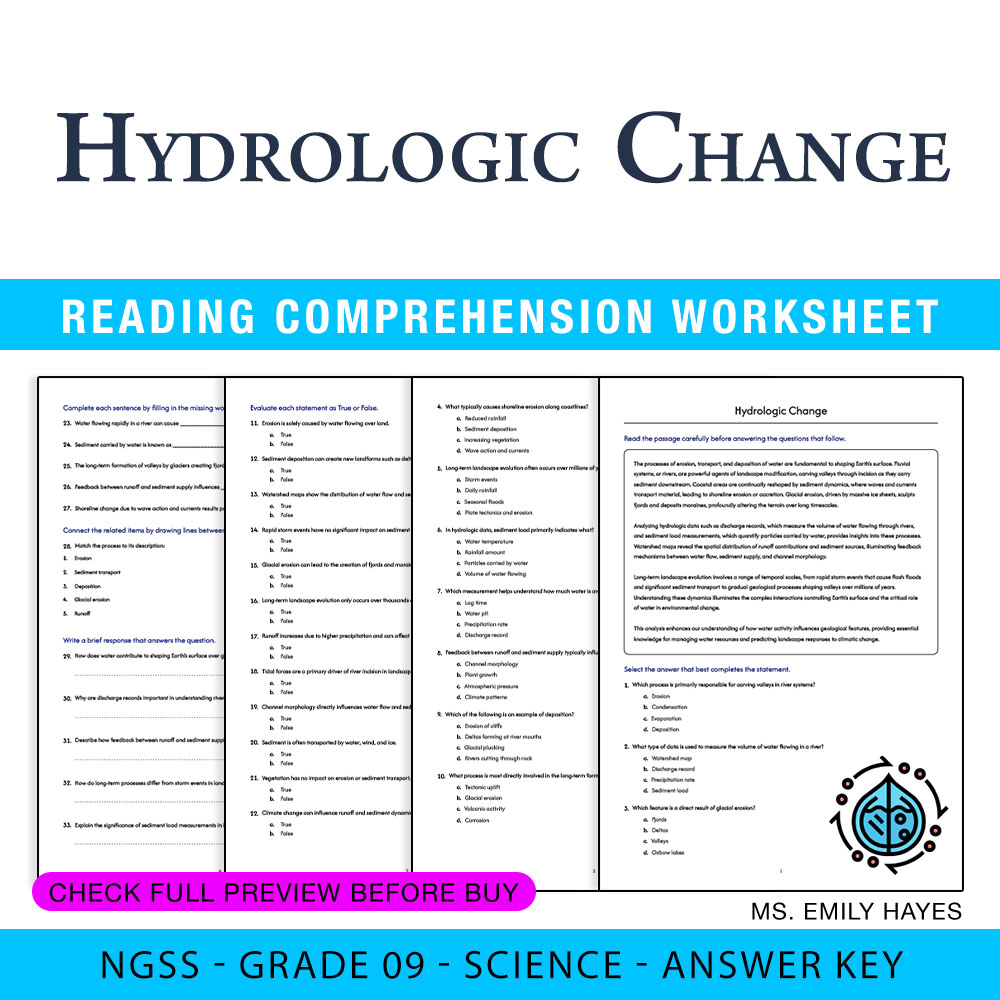
Grade 9 Science | Hydrologic Change Worksheet (PDF+ Answer Key)
Created byCopper Leaf ClassroomLearning Objectives
- Describe how water shapes Earth's surface through erosion, transport, and deposition.
- Analyze hydrologic data such as discharge records and sediment load measurements.
- Explain the feedbacks between runoff, sediment supply, and channel morphology.
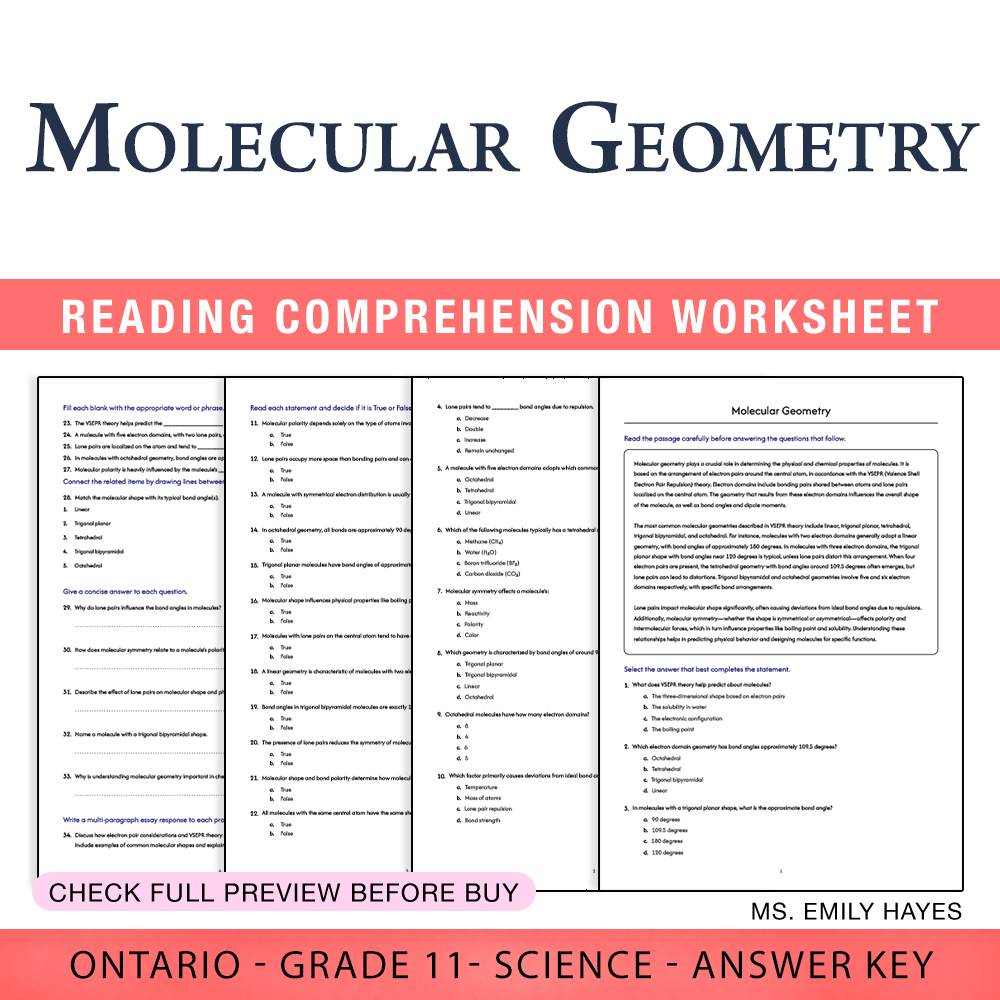
11th Grade Science | Molecular Geometry Worksheet (PDF + Answer Key)
Created byCopper Leaf ClassroomLearning Objectives
- Understand and identify the different electron-domain geometries (linear, trigonal planar, tetrahedral, trigonal bipyramidal, octahedral).
- Predict molecular shapes based on VSEPR theory and electron pair considerations.
- Interpret the relationship between molecular geometry and polarity, dipole moments, and physical properties.
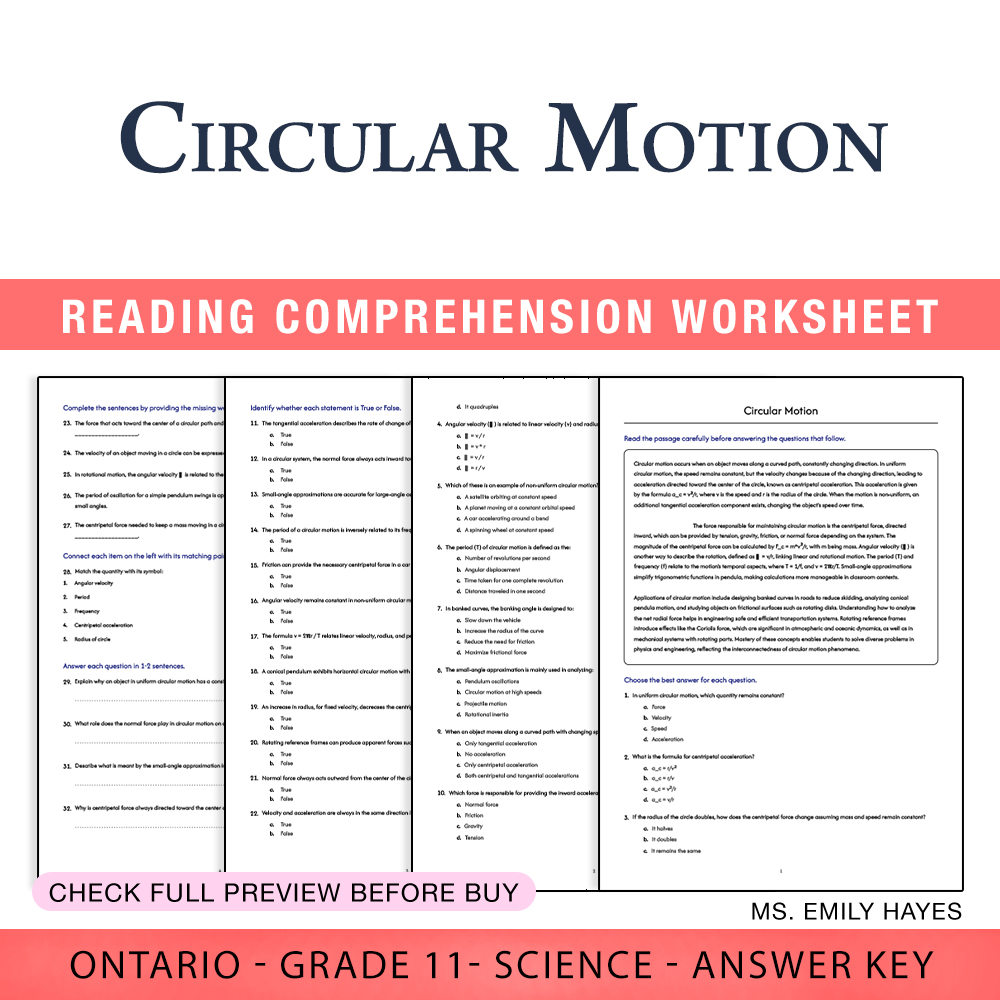
Grade 11 Science | Circular Motion Worksheet (PDF + Answer Key)
Created byCopper Leaf ClassroomLearning Objectives
- Understand the principles of centripetal acceleration in uniform and non-uniform circular motion.
- Analyze the relationships among speed, angular velocity, radius, and centripetal force.
- Apply concepts of circular motion to real-world systems such as banked curves, pendula, and frictional surfaces.
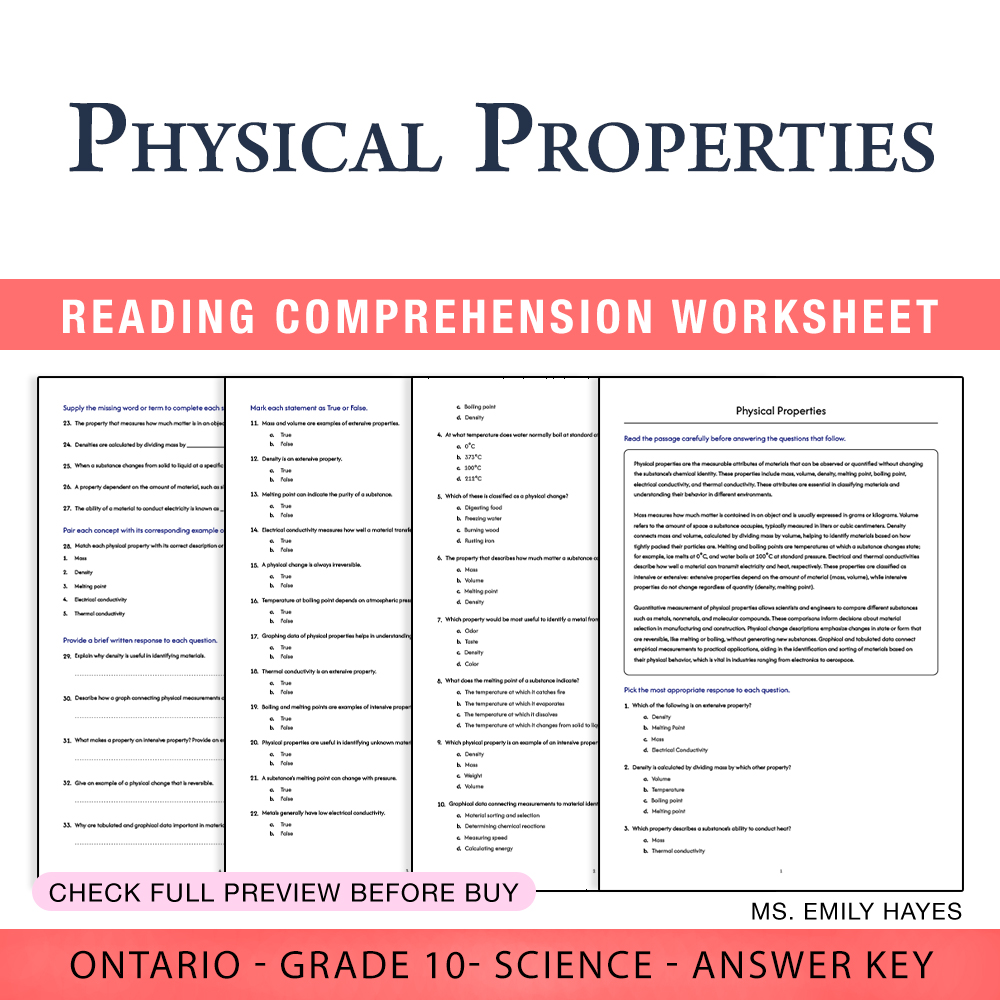
Grade 10 Science | Physical Properties Worksheet (PDF + Answer Key)
Created byCopper Leaf ClassroomLearning Objectives
- Define and distinguish between various measurable physical properties such as mass, volume, density, melting point, and boiling point.
- Explain the difference between intensive and extensive properties and provide examples of each.
- Interpret tabulated and graphical data related to physical properties for material identification and selection.
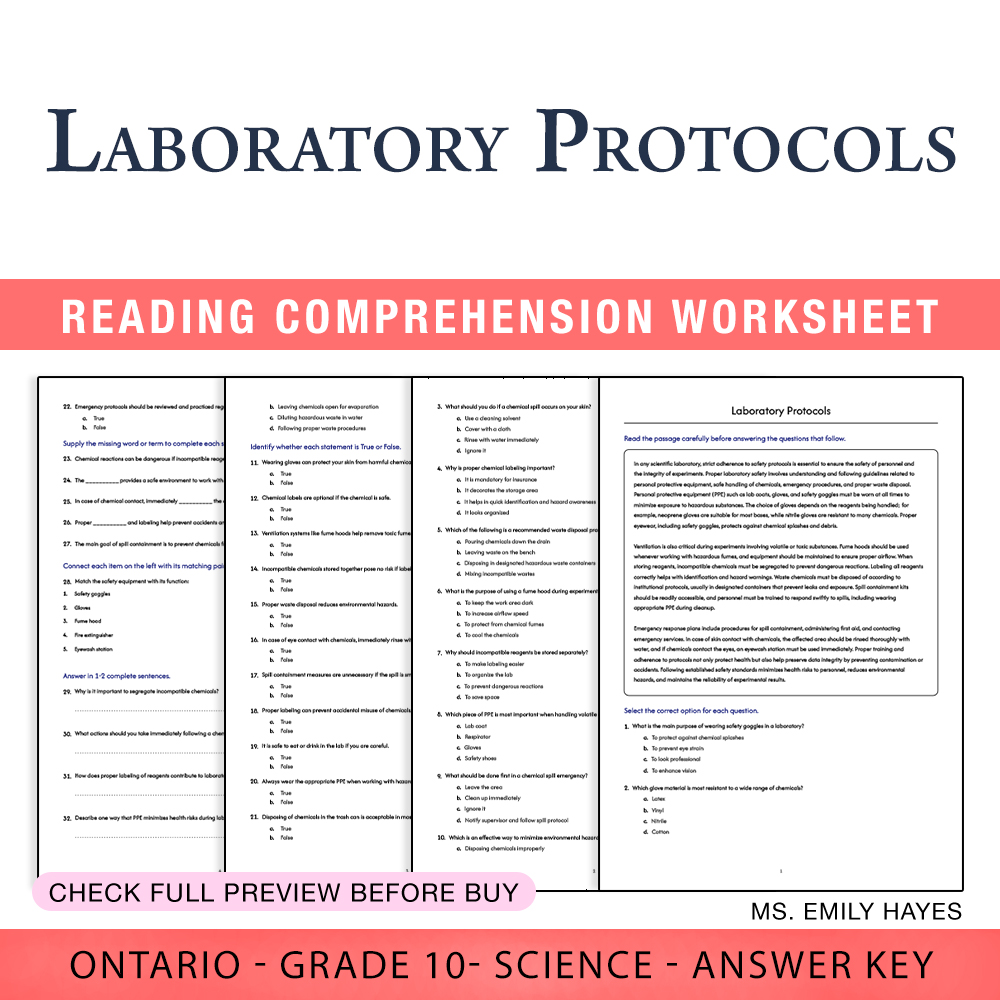
10th Grade Science | Laboratory Protocols Worksheet (PDF + Answer Key)
Created byCopper Leaf ClassroomLearning Objectives
- Identify essential safety protocols for laboratory work.
- Recognize appropriate use of personal protective equipment (PPE).
- Understand proper storage, labeling, and waste handling procedures.
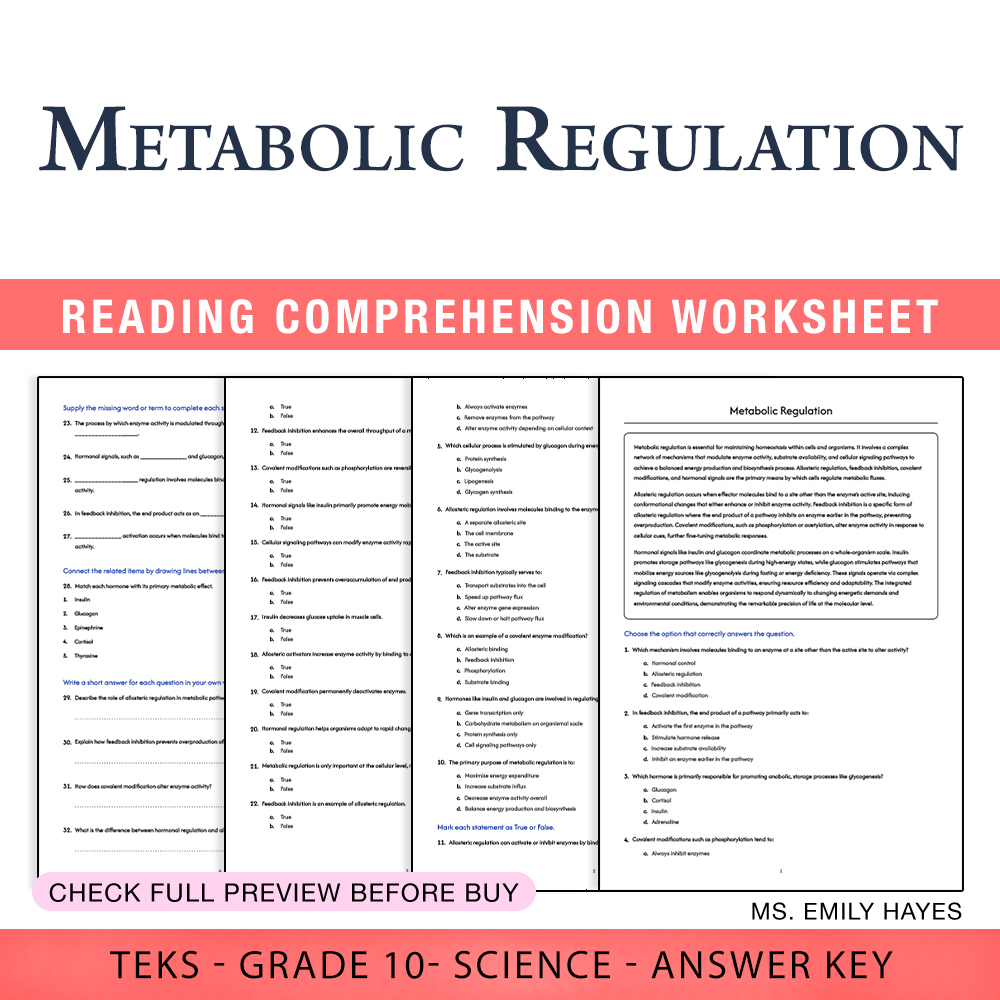
10th Grade Science | Metabolic Regulation Worksheet (PDF+ Answer Key)
Created byCopper Leaf ClassroomLearning Objectives
- Describe mechanisms of enzyme regulation in metabolic pathways.
- Explain the roles of allosteric control and feedback inhibition.
- Identify how cellular signals influence enzyme activity and metabolism.
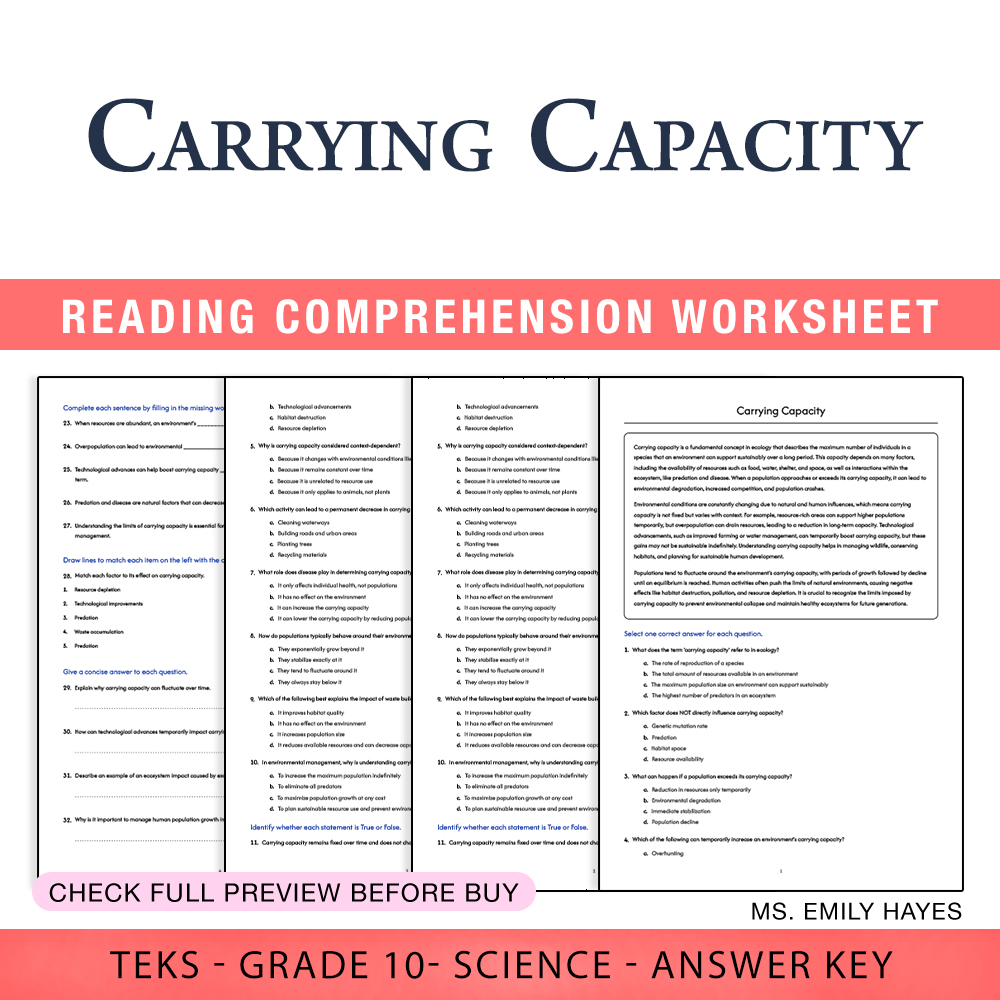
10th Grade Science | Carrying Capacity Worksheet (PDF+ Answer Key)
Created byCopper Leaf ClassroomLearning Objectives
- Define carrying capacity and explain its significance in ecosystems.
- Describe factors that influence an environment's carrying capacity.
- Analyze how resource limitations, predation, disease, and waste impact populations.
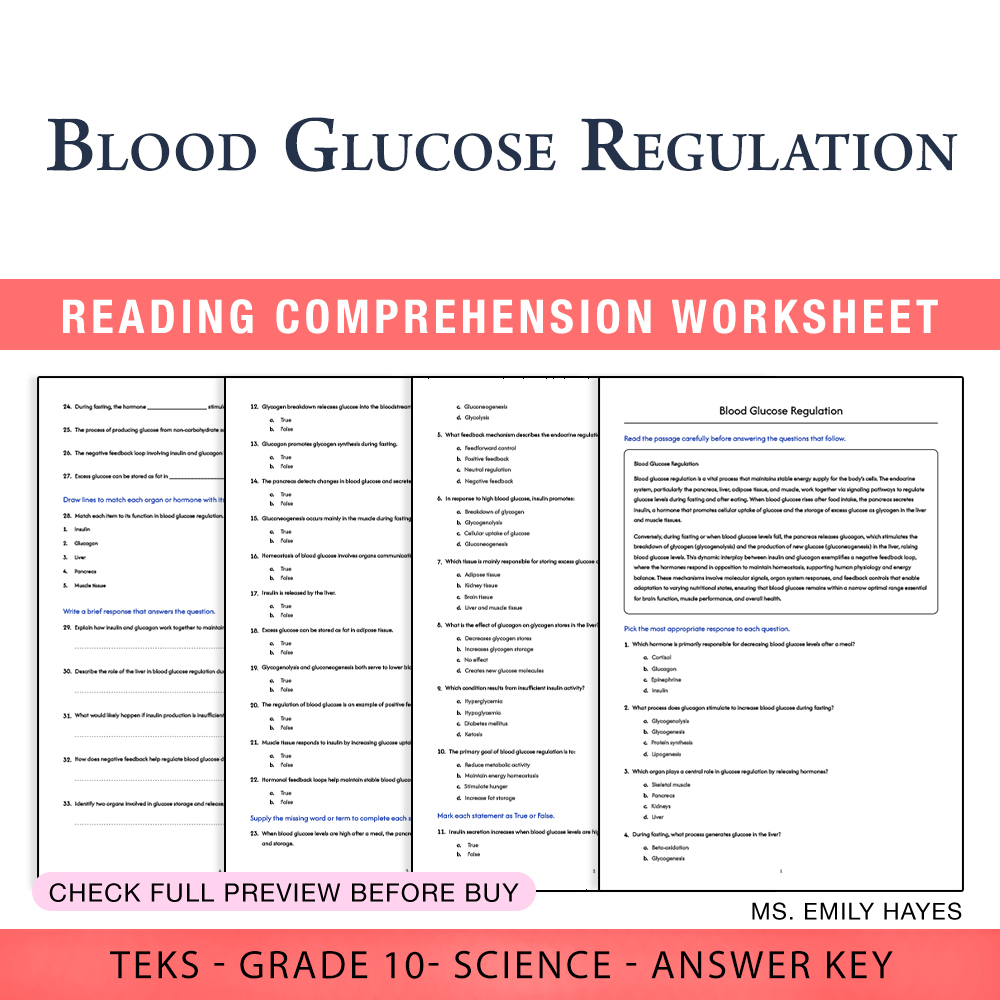
10th Grade Science | Blood Glucose Regulation Worksheet (PDF+ Answer Key)
Created byCopper Leaf ClassroomLearning Objectives
- Understand the hormonal regulation of blood glucose levels involving insulin and glucagon.
- Identify organs and tissues involved in glucose homeostasis.
- Explain the feedback mechanisms that maintain stable blood glucose concentrations.
Browse more categories
About Science Worksheets
Find Science worksheets spanning core skills, practice, and review. All 42,859 resources are instant PDF downloads for the classroom or home.
Every worksheet on MyTeachingSheets is created by independent teacher-authors and reviewed before publication. All resources download as printable PDFs for classroom, homework, or at-home practice, and many include answer keys. Preview any worksheet free before buying.