
Science Worksheets
42,859 subject resources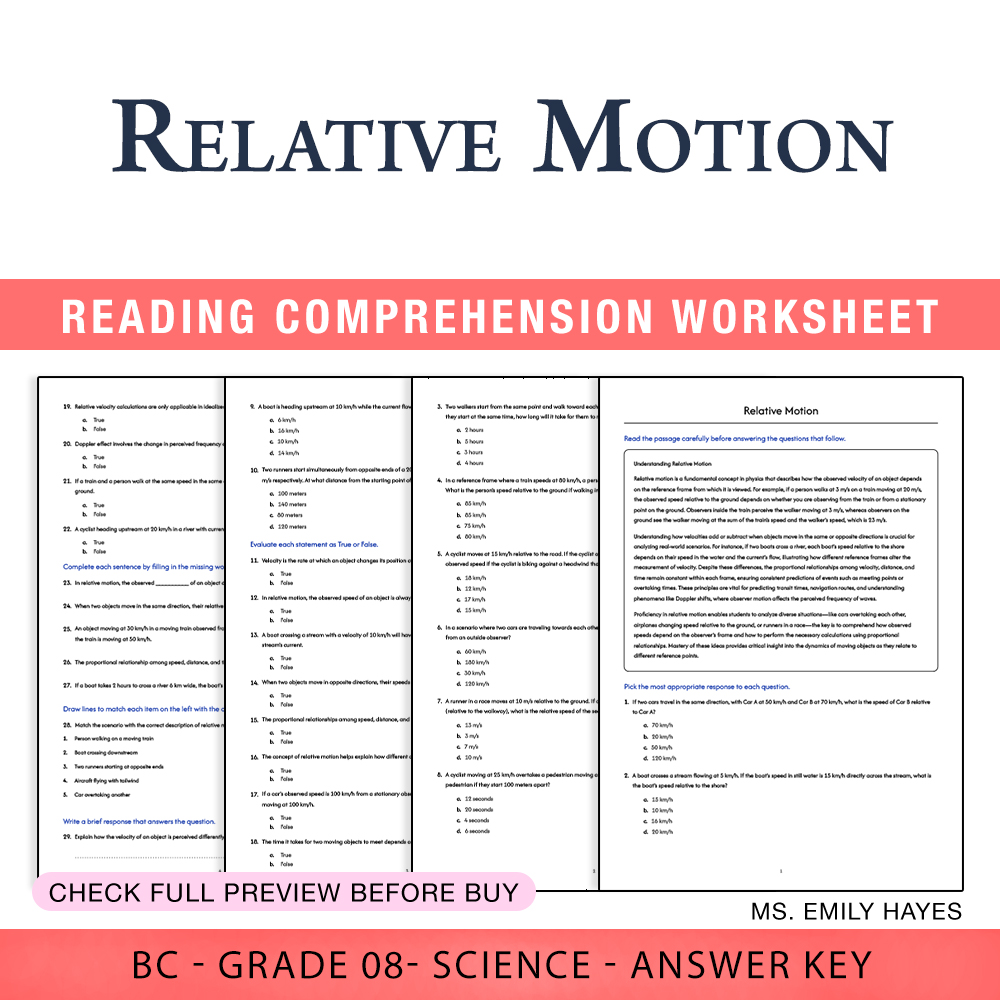
8th Grade Science | Relative Motion Worksheet (PDF+ Answer Key)
 Created byCopper Leaf Classroom
Learning Objectives
- Understand how observed speed depends on the reference frame in relative motion scenarios
- Apply the proportional relationships among speed, distance, and time within different frames
- Analyze simple relative motion scenarios such as walkers and boats crossing streams
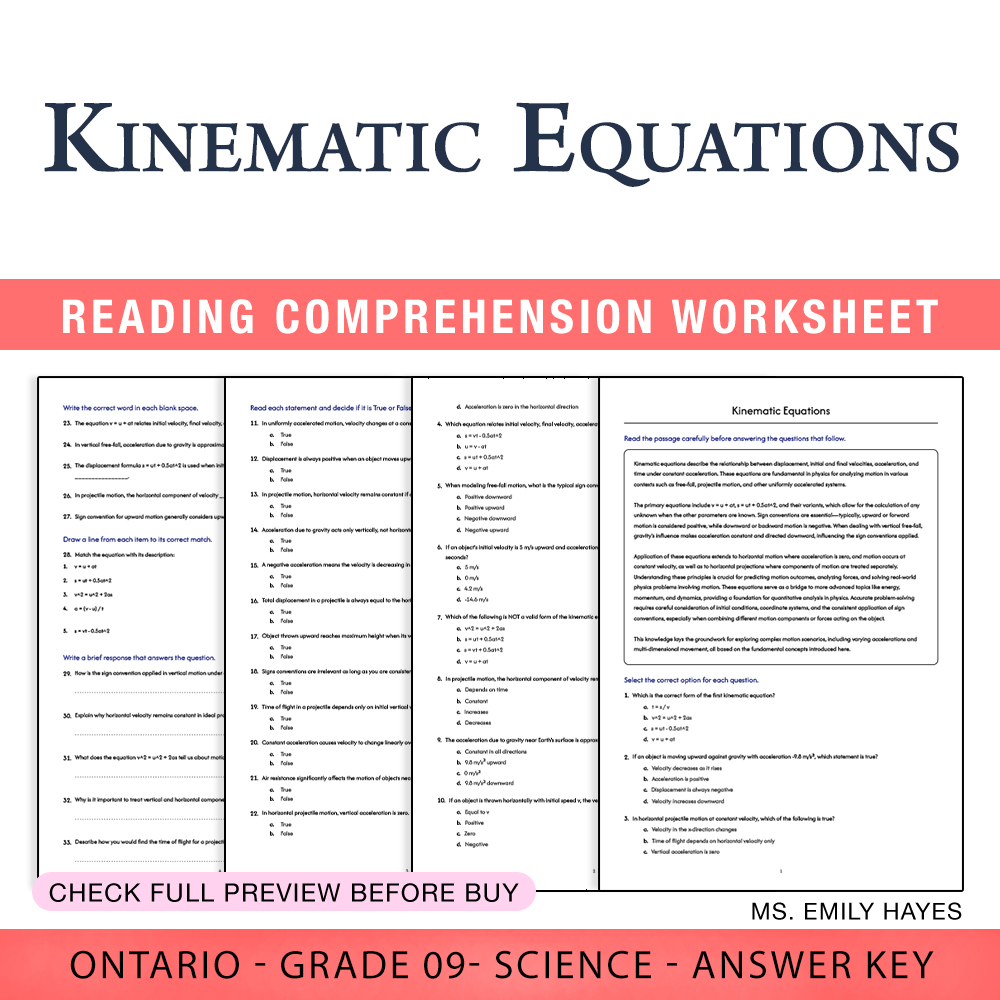
9th Grade Science | Kinematic Equations Worksheet (PDF + Answer Key)
Created byCopper Leaf ClassroomLearning Objectives
- Understand and explain the key kinematic equations involving constant acceleration.
- Apply the equations to analyze vertical free-fall motion and horizontal projectile motion.
- Interpret sign conventions and component-wise treatment in motion problems.
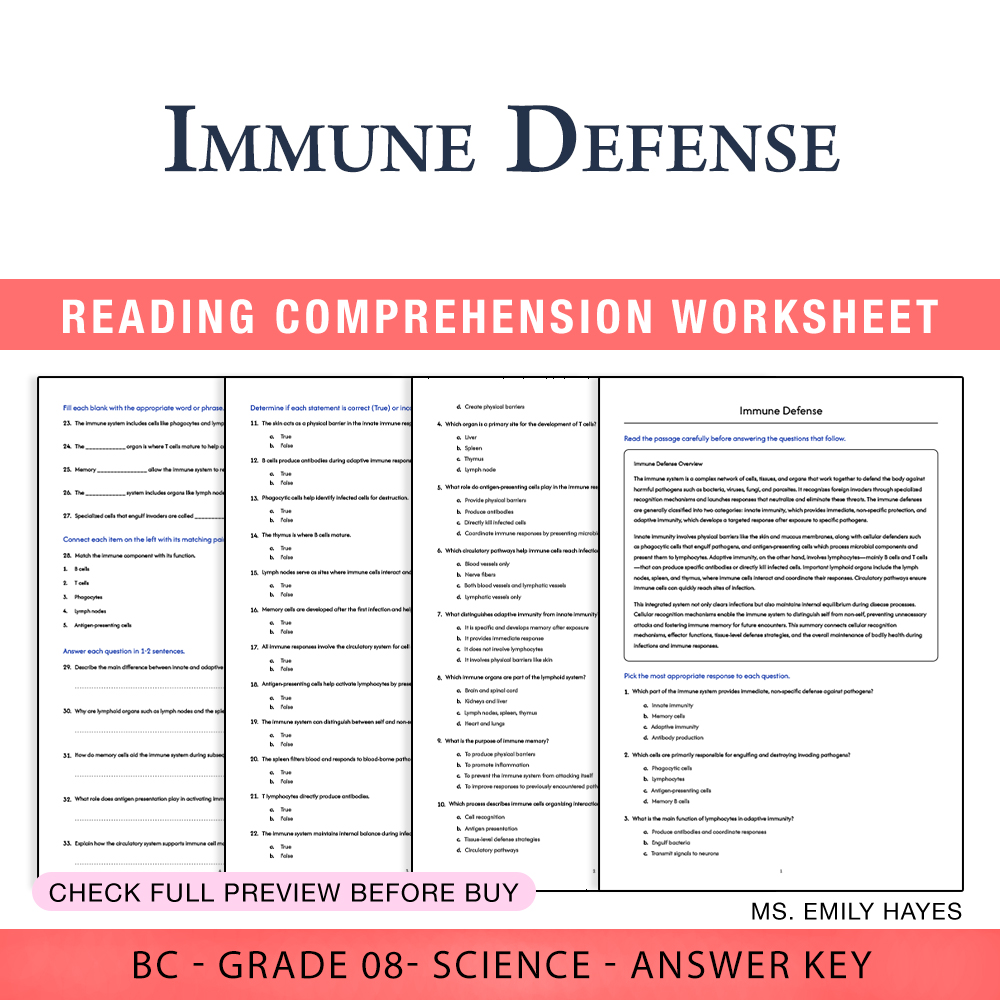
8th Grade Science | Immune Defense Worksheet (PDF+ Answer Key)
Created byCopper Leaf ClassroomLearning Objectives
- Understand the components and functions of the immune system, including innate and adaptive immunity.
- Identify cellular specializations involved in immune responses and their roles in tissue-level defense.
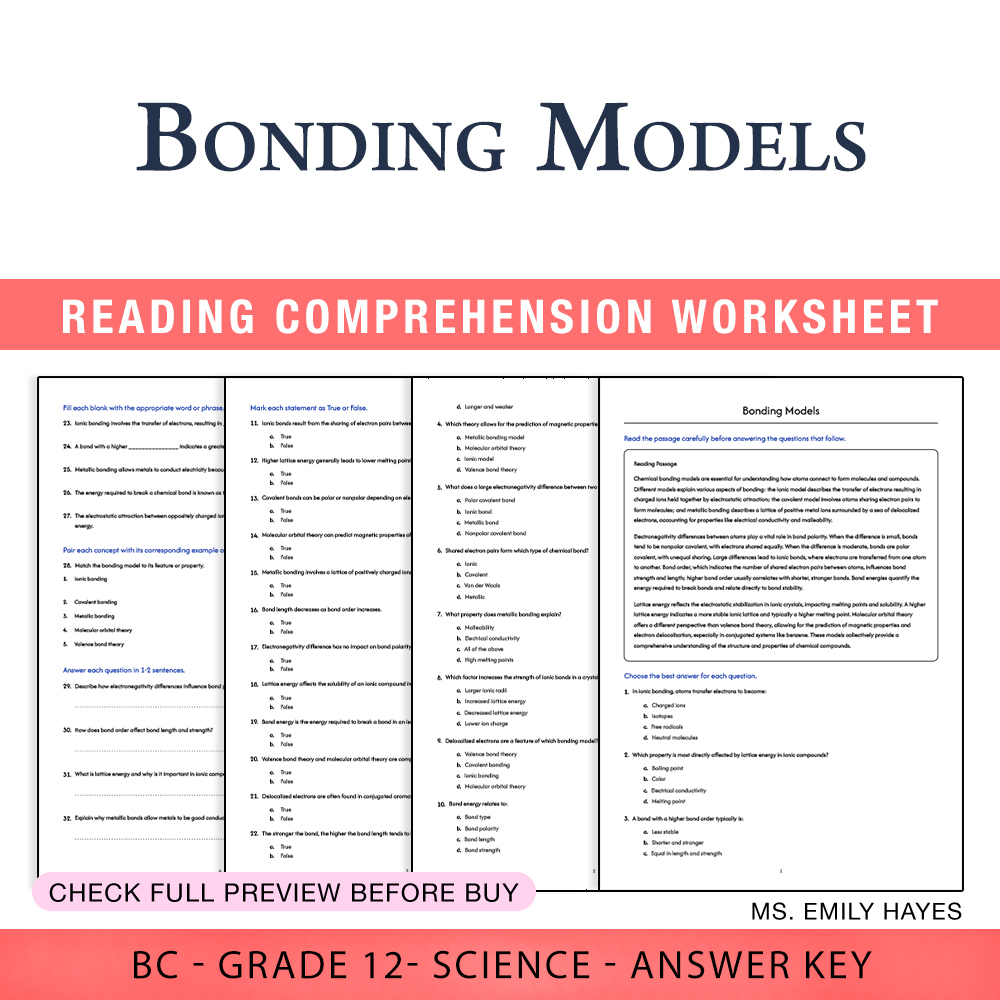
12th Grade Science | Bonding Models Worksheet (PDF + Answer Key)
Created byCopper Leaf ClassroomLearning Objectives
- Explain different types of chemical bonding: ionic, covalent, and metallic.
- Predict bond polarity based on electronegativity differences.
- Describe the concepts of bond order, bond energy, and their relationship to bond strength and length.
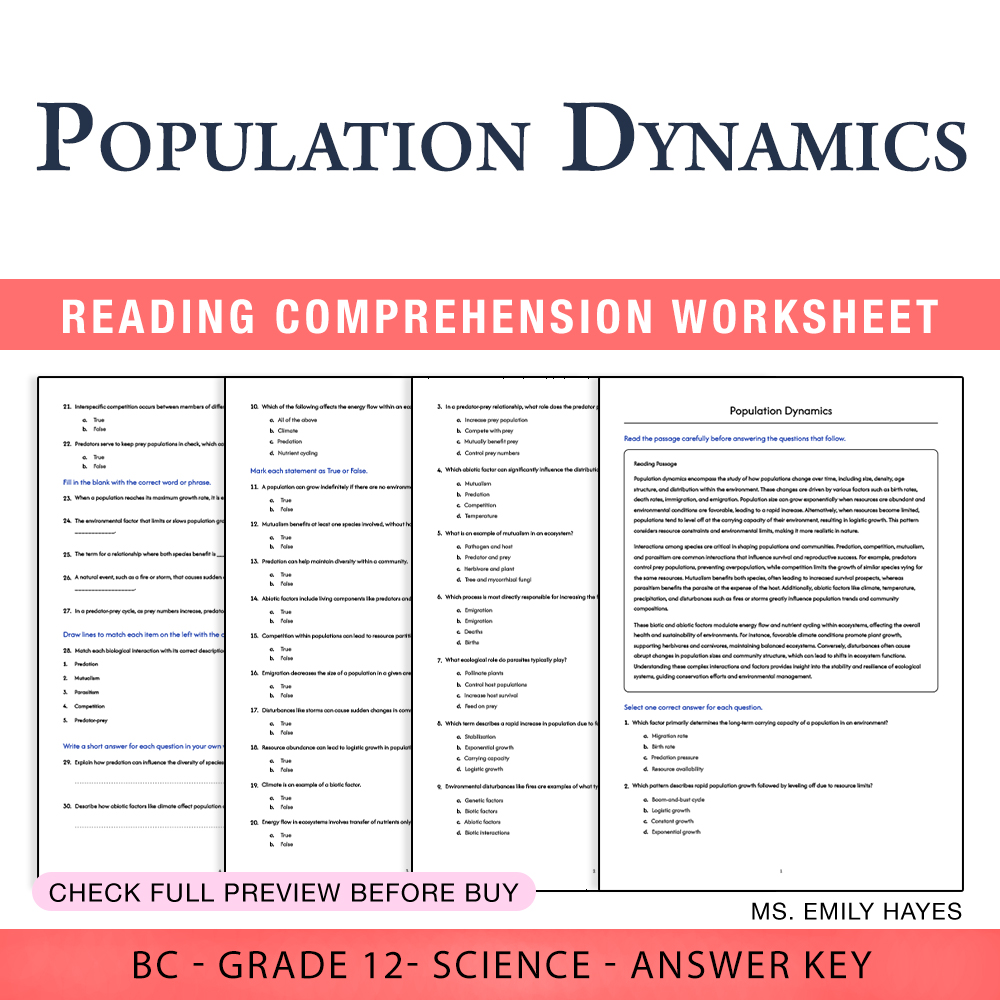
Grade 12 Science | Population Dynamics Worksheet (PDF + Answer Key)
Created byCopper Leaf ClassroomLearning Objectives
- Understand the key factors influencing population size and structure over time.
- Explain patterns of population growth such as exponential and logistic models.
- Analyze how biotic and abiotic interactions affect community composition.
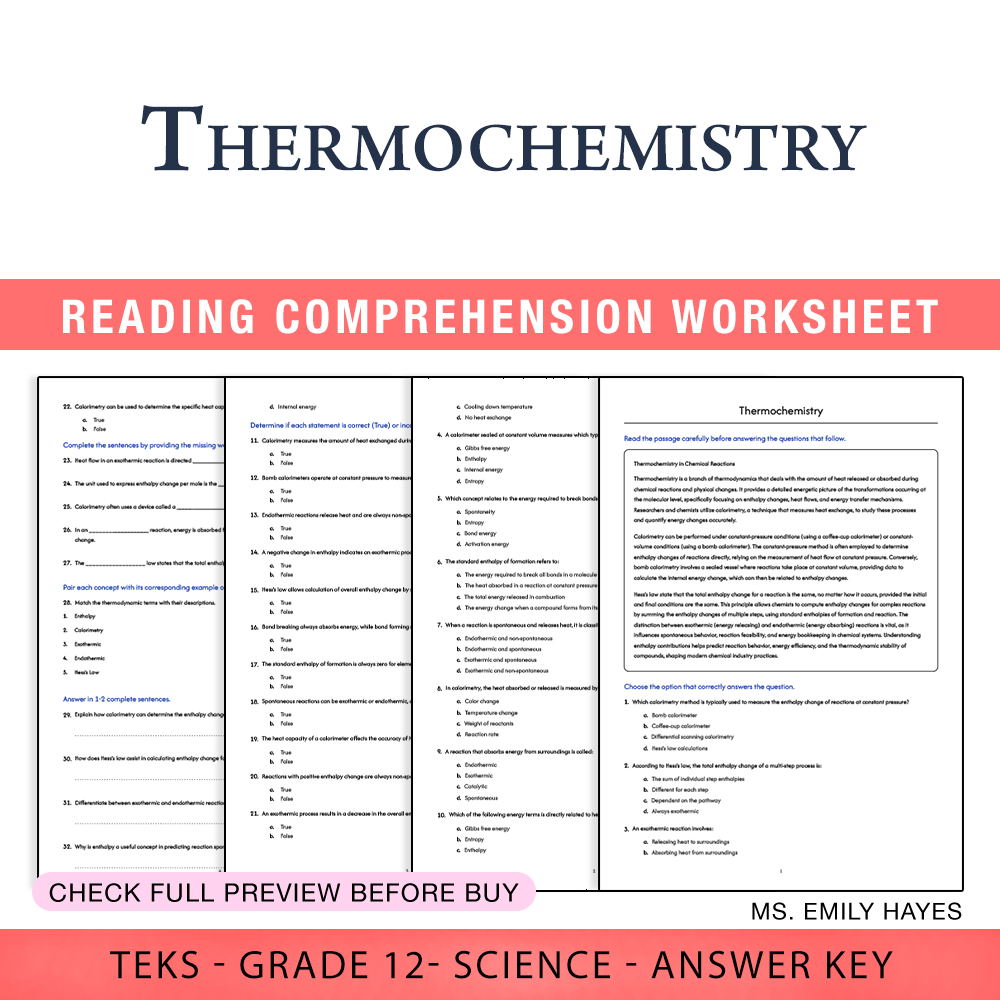
Grade 12 Science | Thermochemistry Worksheet (PDF+ Answer Key)
Created byCopper Leaf ClassroomLearning Objectives
- Explain the concepts of enthalpy, heat flow, and calorimetry in chemical reactions.
- Apply Hess's law to calculate enthalpy changes in multi-step processes.
- Differentiate between exothermic and endothermic reactions based on energy flow.
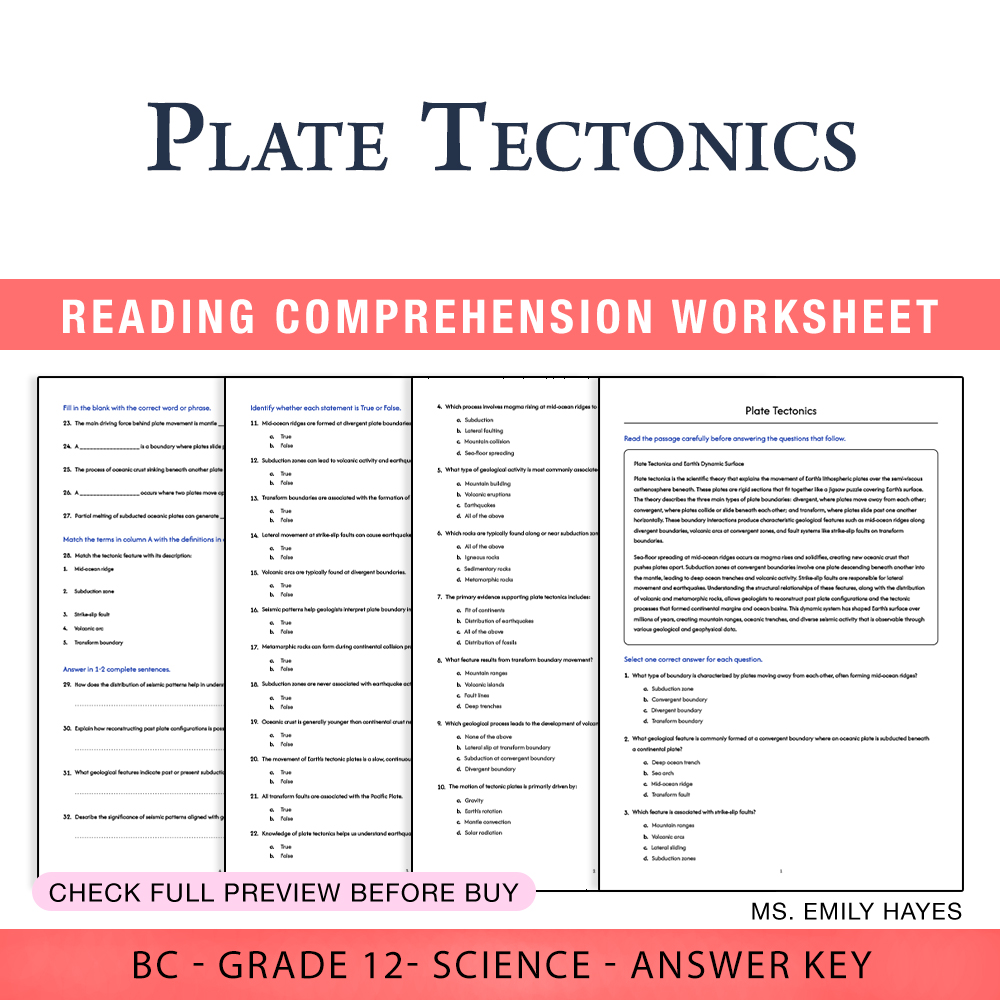
12th Grade Science | Plate Tectonics Worksheet (PDF + Answer Key)
Created byCopper Leaf ClassroomLearning Objectives
- Describe the processes and features associated with plate tectonics, including divergent, convergent, and transform boundaries.
- Interpret geological features such as mid-ocean ridges, volcanic arcs, and fault systems to reconstruct past plate movements.
- Explain how sea-floor spreading, subduction zones, and strike-slip faults shape Earth's surface.
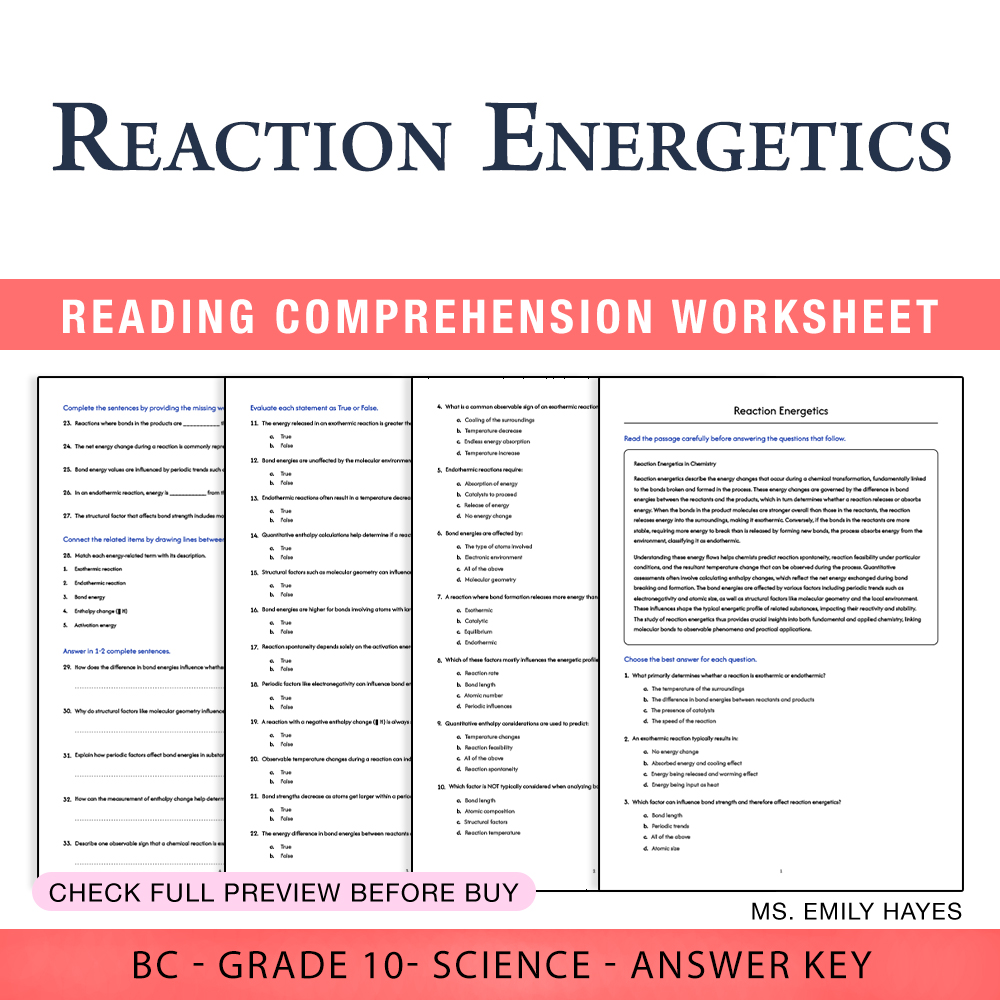
10th Grade Science | Reaction Energetics Worksheet (PDF + Answer Key)
Created byCopper Leaf ClassroomLearning Objectives
- Understand the energy changes involved in chemical reactions, including exothermic and endothermic processes.
- Explain how bond energies influence reaction profiles and observable temperature changes.
- Analyze the factors that affect bond strengths and their impact on reaction energetics.
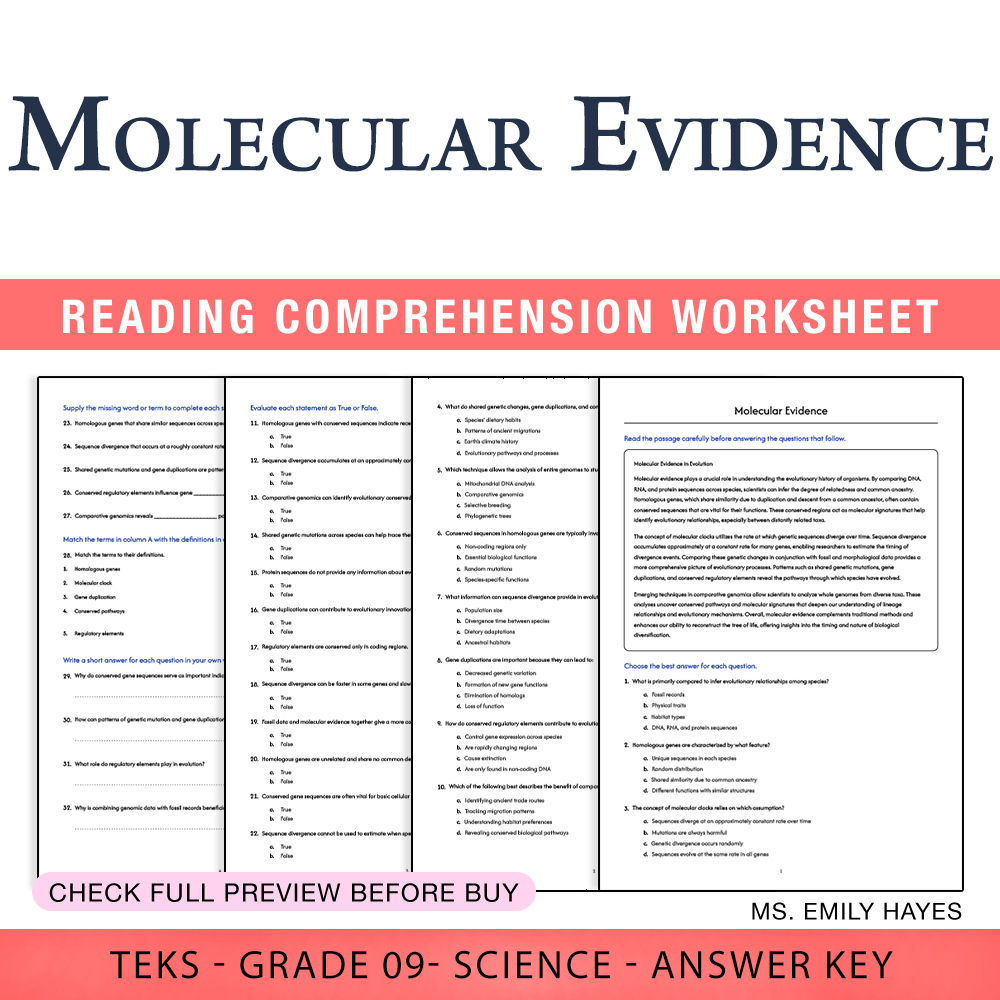
9th Grade Science | Molecular Evidence Worksheet (PDF+ Answer Key)
Created byCopper Leaf ClassroomLearning Objectives
- Understand how DNA, RNA, and protein sequences are used to infer evolutionary relationships.
- Identify the significance of homologous genes and conserved sequences in common ancestry.
- Explain the concept of molecular clocks and how sequence divergence estimates divergence times.
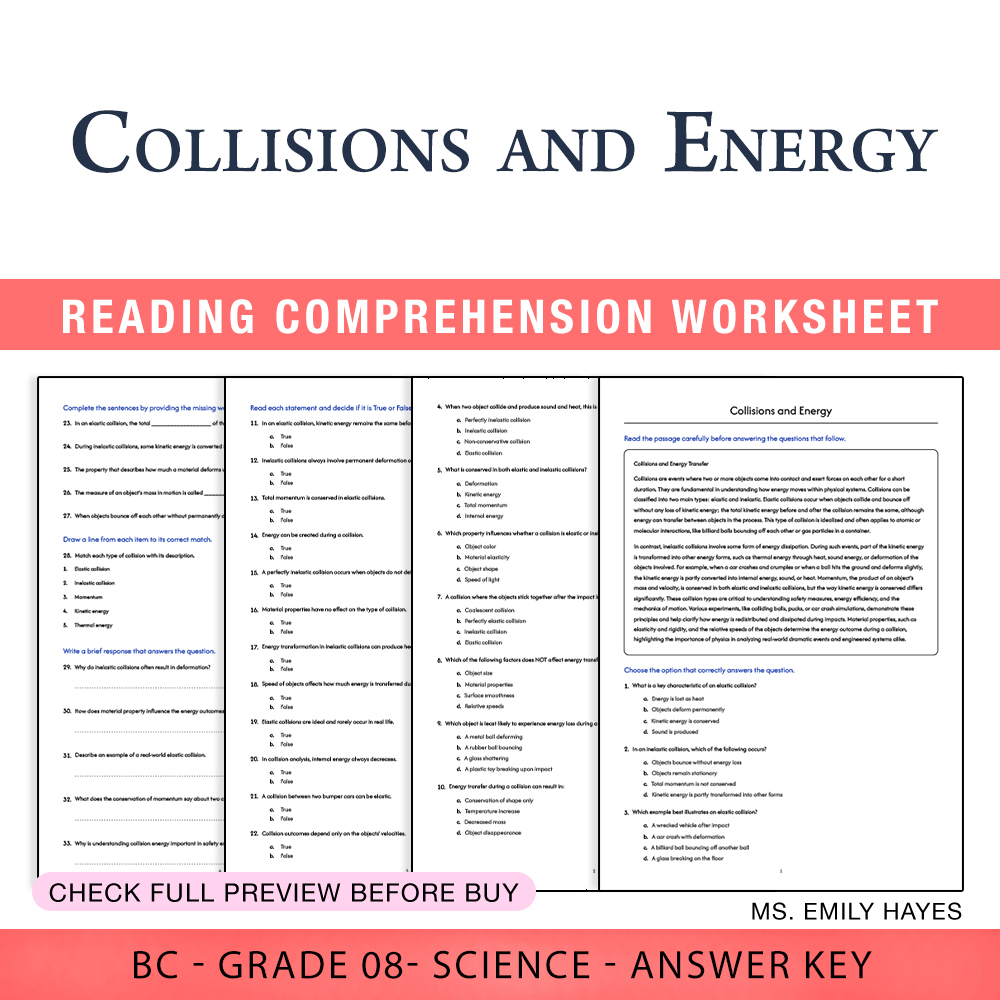
8th Grade Science | Collisions & Energy Worksheet (PDF+ Answer Key)
Created byCopper Leaf ClassroomLearning Objectives
- Understand the difference between elastic and inelastic collisions.
- Explain how energy is transferred and transformed during collisions.
- Describe the role of momentum in collision processes.
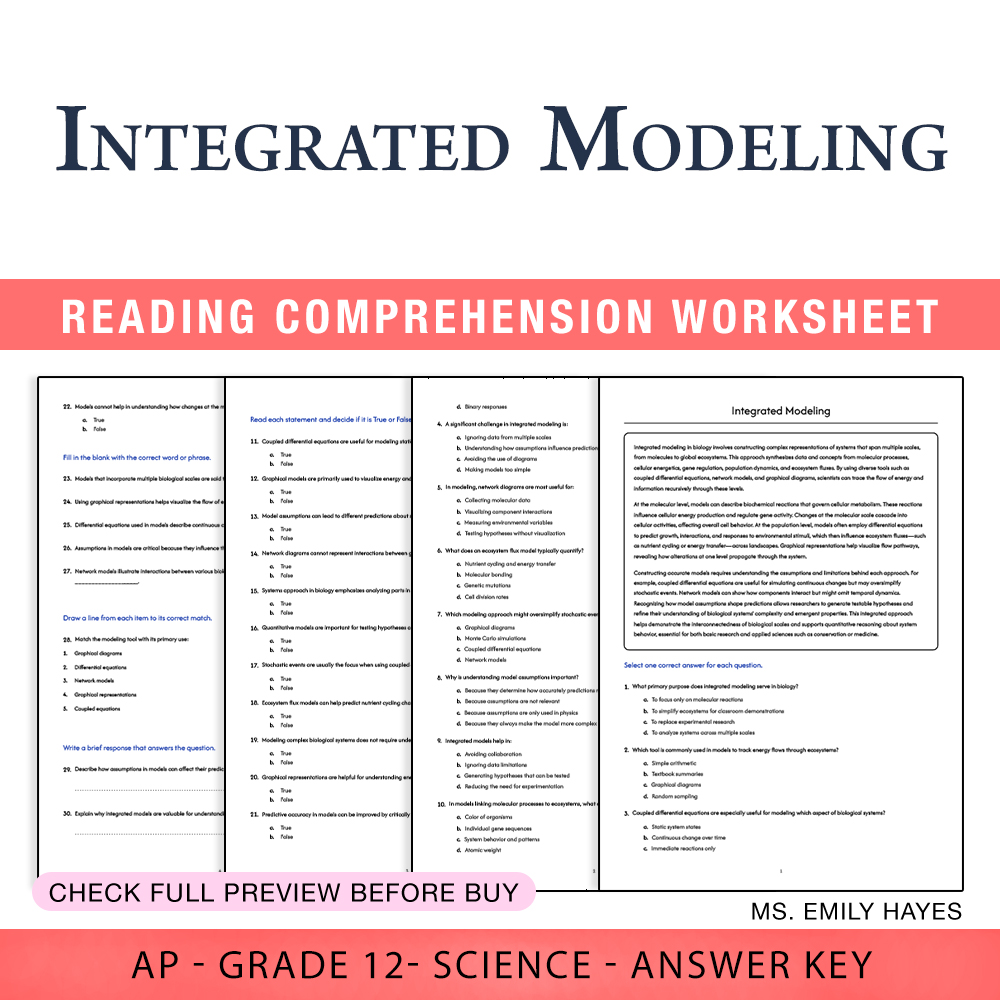
12th Grade Science | Integrated Modeling Worksheet (PDF+ Answer Key)
Created byCopper Leaf ClassroomLearning Objectives
- Explain how models integrate concepts across molecular, cellular, genetic, population, and ecosystem levels.
- Analyze how changes at one biological scale propagate to others within an ecosystem.
- Construct and interpret coupled differential equations, network models, and graphical representations of biological systems.
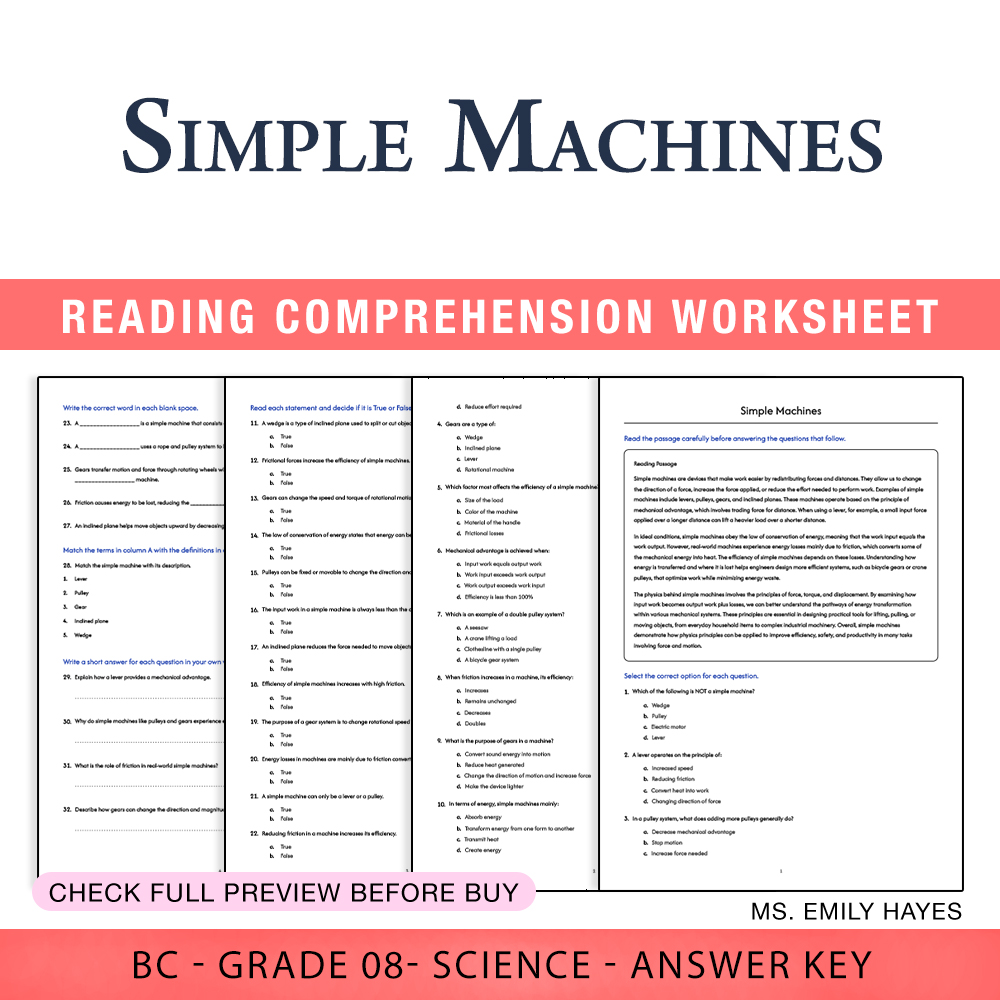
Grade 8 Science | Simple Machines Worksheet (PDF+ Answer Key)
Created byCopper Leaf ClassroomLearning Objectives
- Understand how simple machines redirect and amplify forces in mechanical systems.
- Identify different types of simple machines and their functions.
- Explain how forces and distances change when using levers, pulleys, and gears.
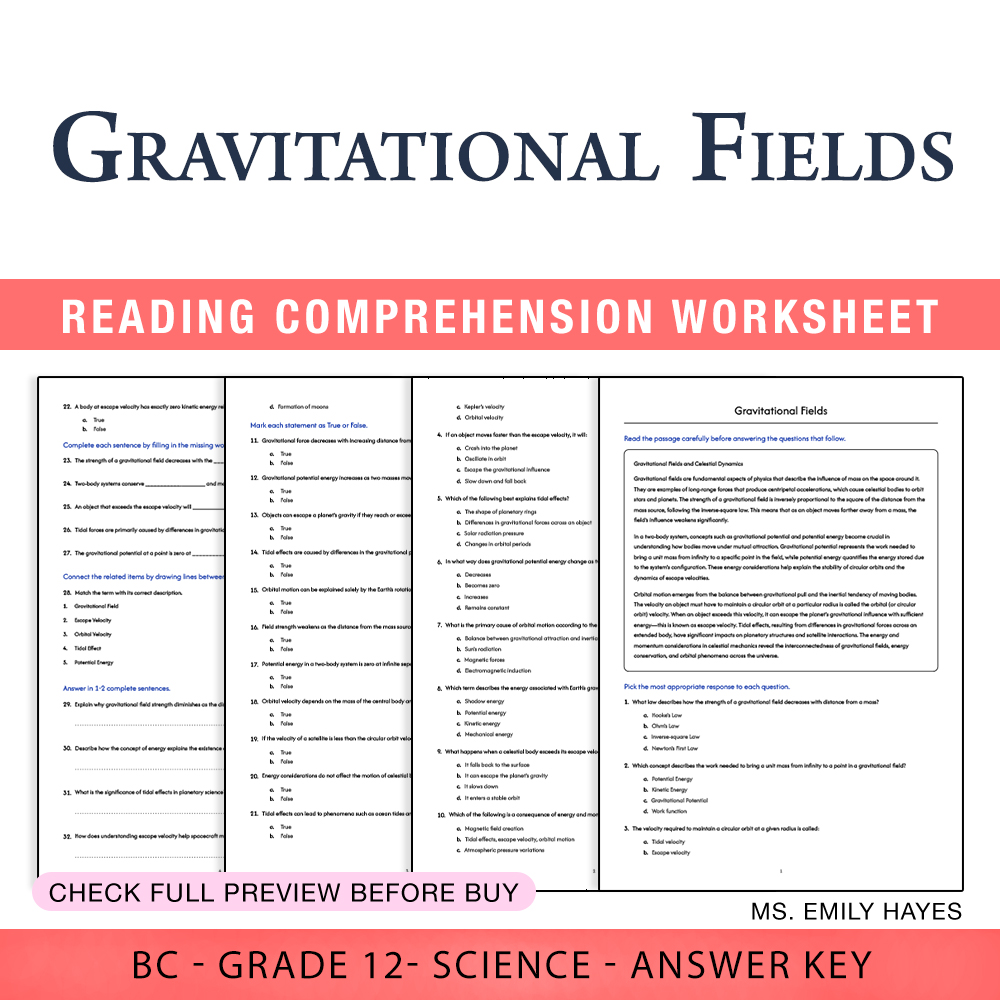
Grade 12 Science | Gravitational Fields Worksheet (PDF + Answer Key)
Created byCopper Leaf ClassroomLearning Objectives
- Explain the concept of gravitational fields as a long-range force producing central accelerations.
- Define gravitational potential and potential energy in two-body systems.
- Describe how field strength varies with distance from mass sources.
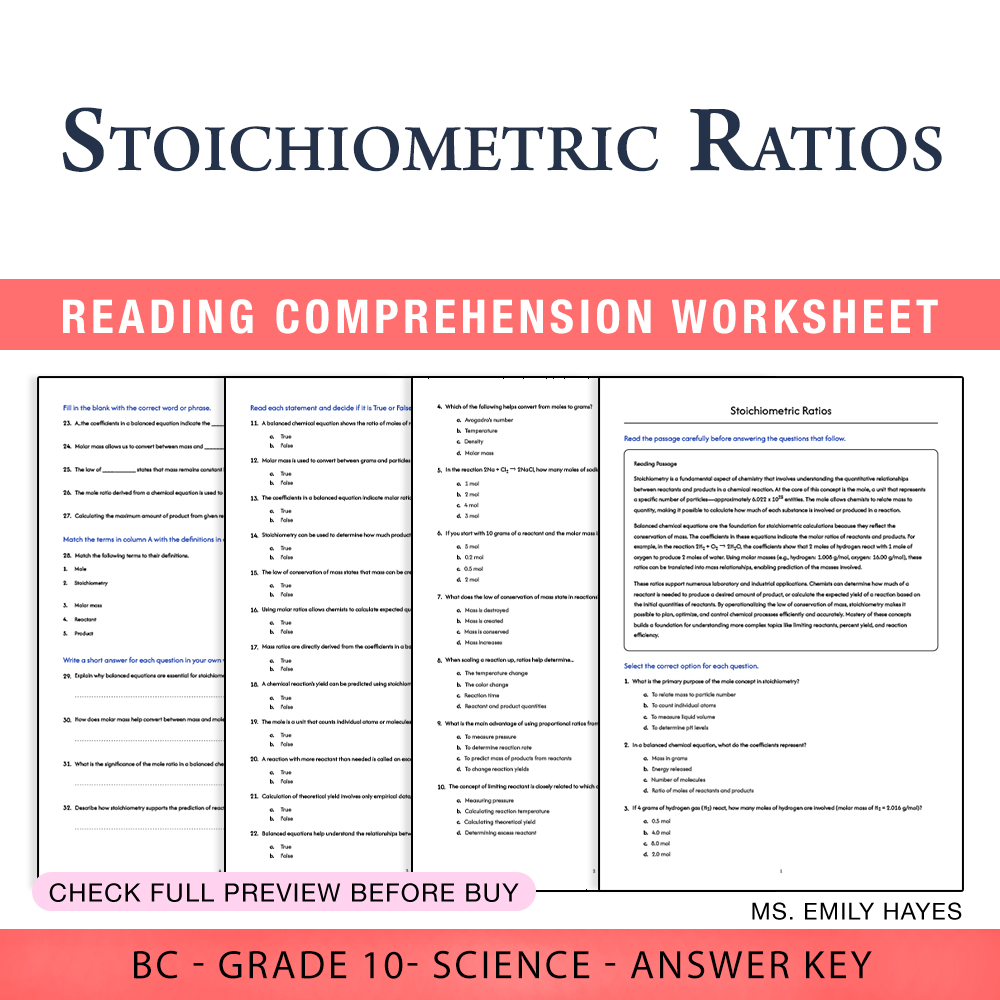
Grade 10 Science | Stoichiometric Ratios Worksheet (PDF + Answer Key)
Created byCopper Leaf ClassroomLearning Objectives
- Understand how to interpret and apply stoichiometric ratios from balanced chemical equations.
- Translate between mass of reactants/products and moles using molar mass calculations.
- Use coefficients from chemical equations to find proportional relationships for reaction yields and reactant requirements.
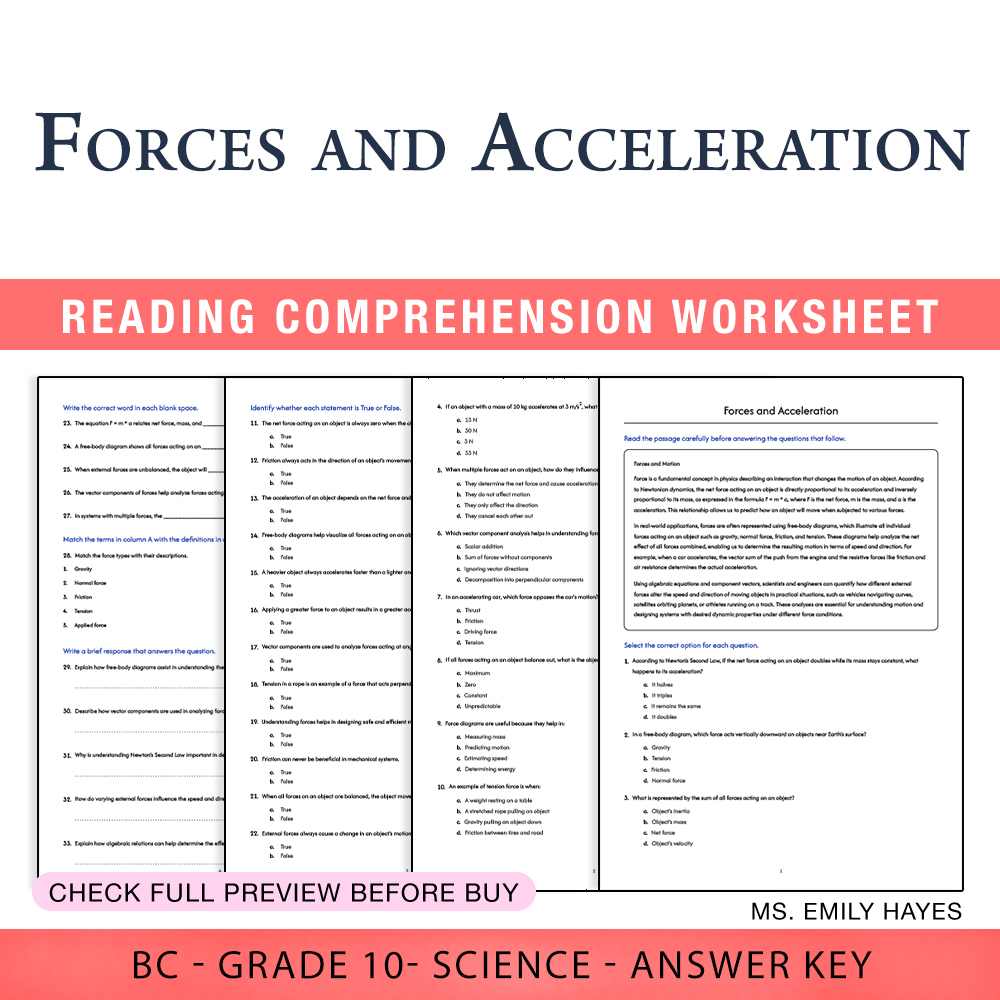
10th Grade Science | Forces and Acceleration Worksheet (PDF+ Answer Key)
Created byCopper Leaf ClassroomLearning Objectives
- Understand the relationship between net force, mass, and acceleration through Newton's Second Law.
- Interpret free-body diagrams to identify individual forces acting on an object.
- Apply algebraic and vector components to analyze how forces affect an object's motion.
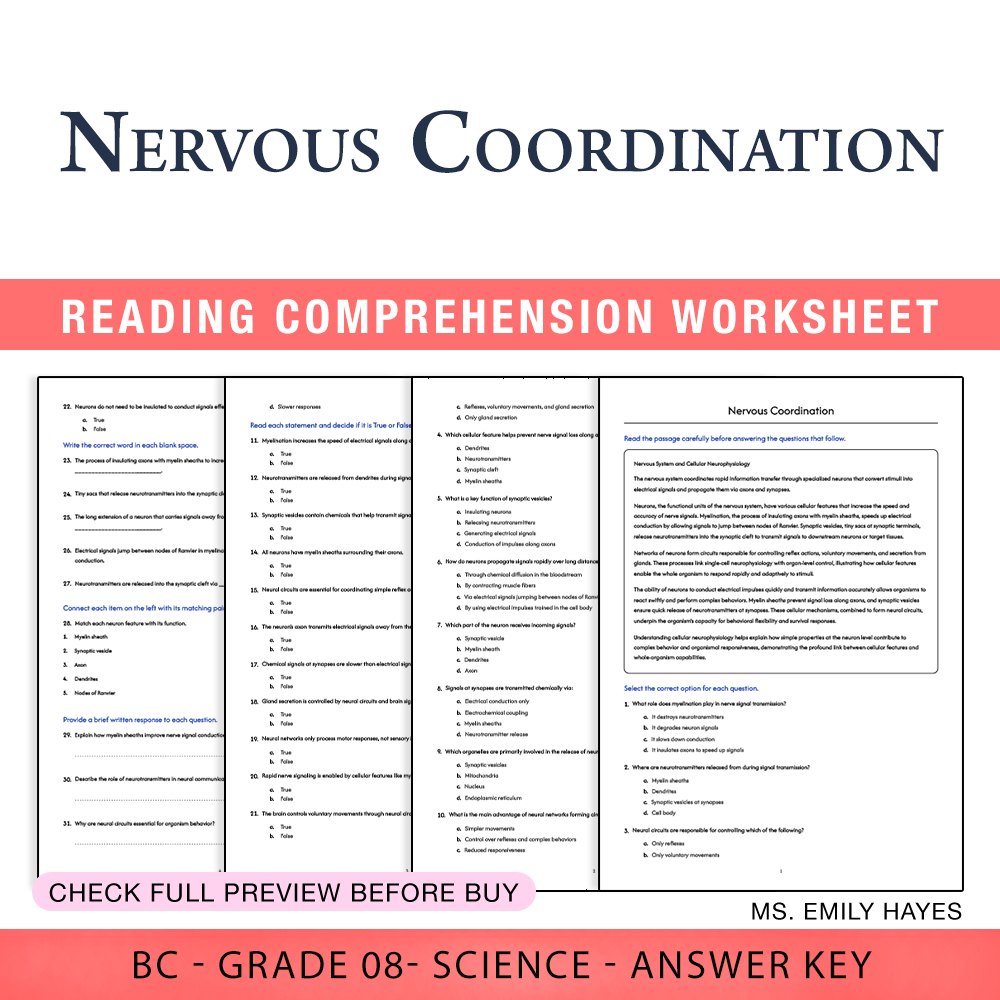
8th Grade Science | Nervous Coordination Worksheet (PDF+ Answer Key)
Created byCopper Leaf ClassroomLearning Objectives
- Understand the cellular features that enable rapid nerve signal transmission.
- Explain how neuron networks control reflexes, movements, and gland functions.
- Connect cellular neurophysiology to overall organism responsiveness and behavior.
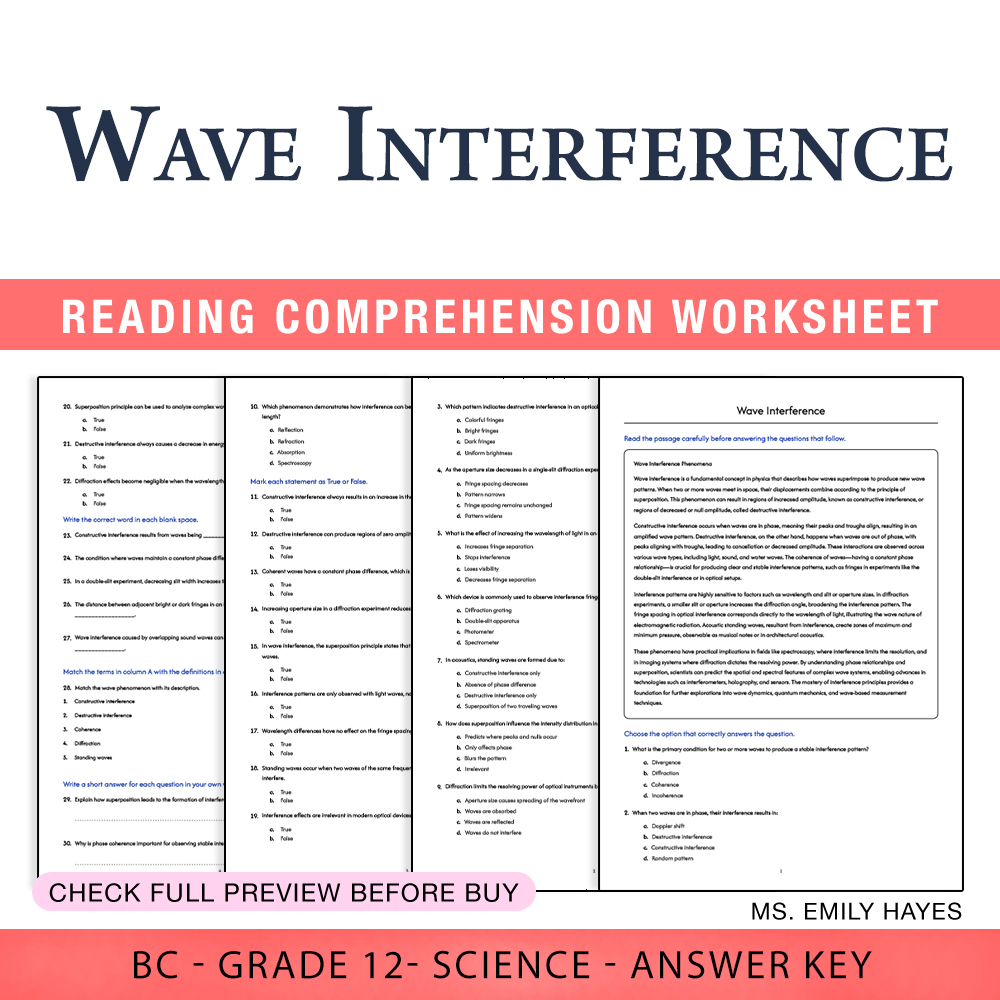
Grade 12 Science | Wave Interference Worksheet (PDF + Answer Key)
Created byCopper Leaf ClassroomLearning Objectives
- Explain the phenomena of wave interference, including constructive and destructive interference.
- Describe the conditions for coherence and how they influence interference patterns.
- Analyze how diffraction and interference patterns relate to wavelength and aperture size.
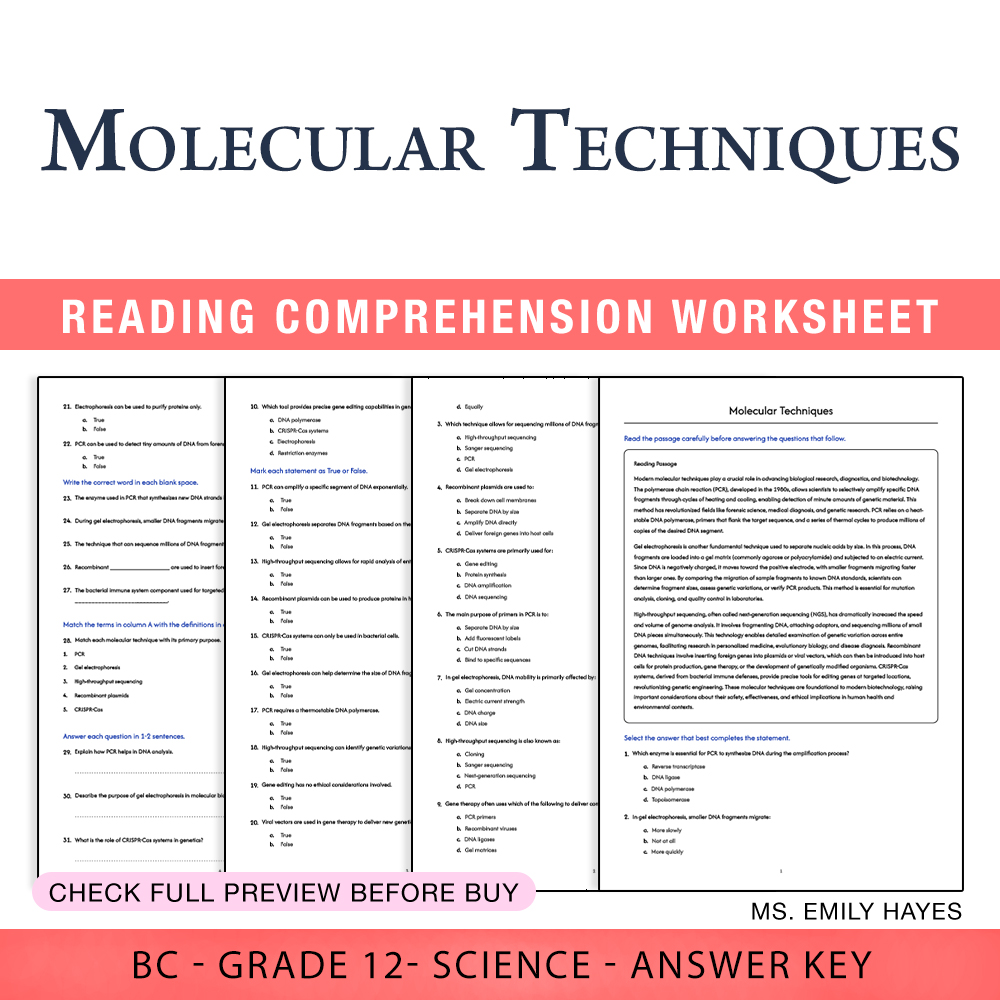
12th Grade Science | Molecular Techniques Worksheet (PDF + Answer Key)
Created byCopper Leaf ClassroomLearning Objectives
- Understand the principles and applications of modern molecular techniques.
- Identify key methods used in nucleic acid analysis and manipulation.
- Explain the purpose and process of PCR, gel electrophoresis, and sequencing.
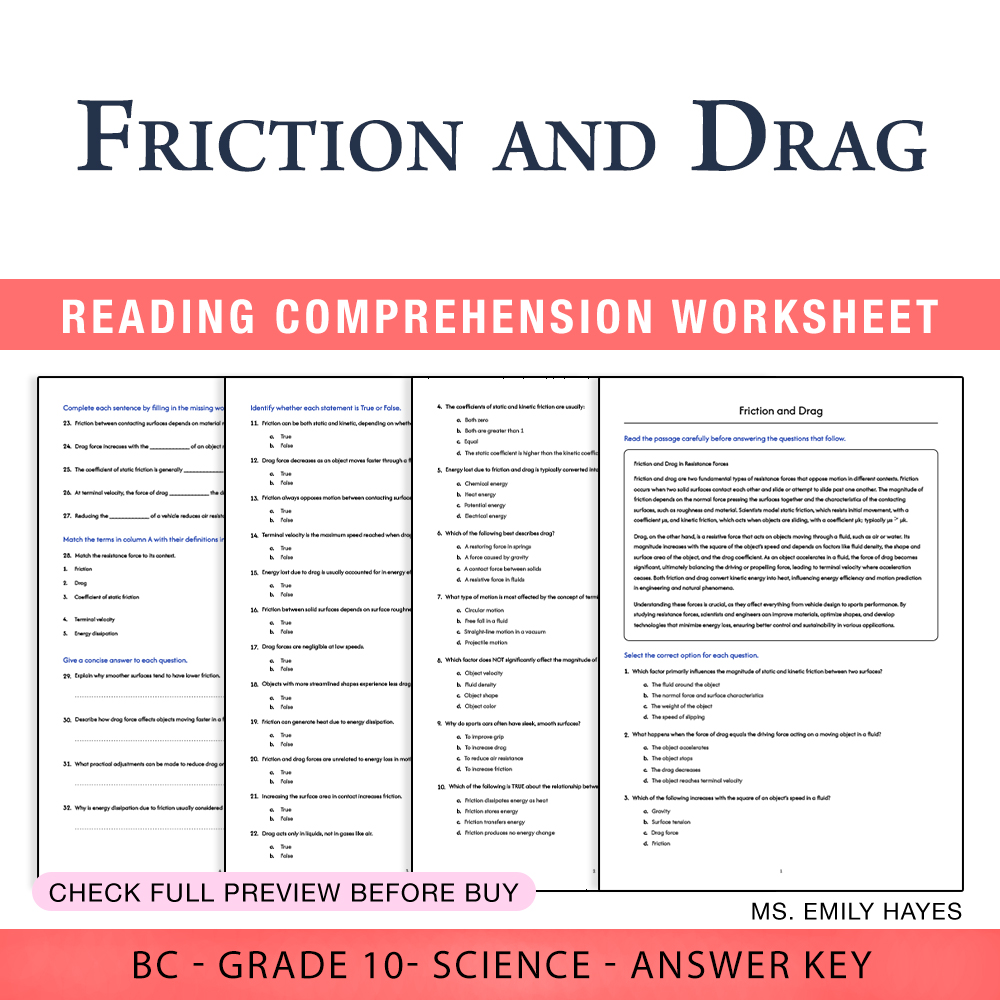
10th Grade Science | Friction and Drag Worksheet (PDF+ Answer Key)
Created byCopper Leaf ClassroomLearning Objectives
- Explain the mechanisms of friction and drag and how they oppose motion.
- Describe factors affecting static and kinetic friction between surfaces.
- Understand how drag force increases with speed and achieves terminal velocity.
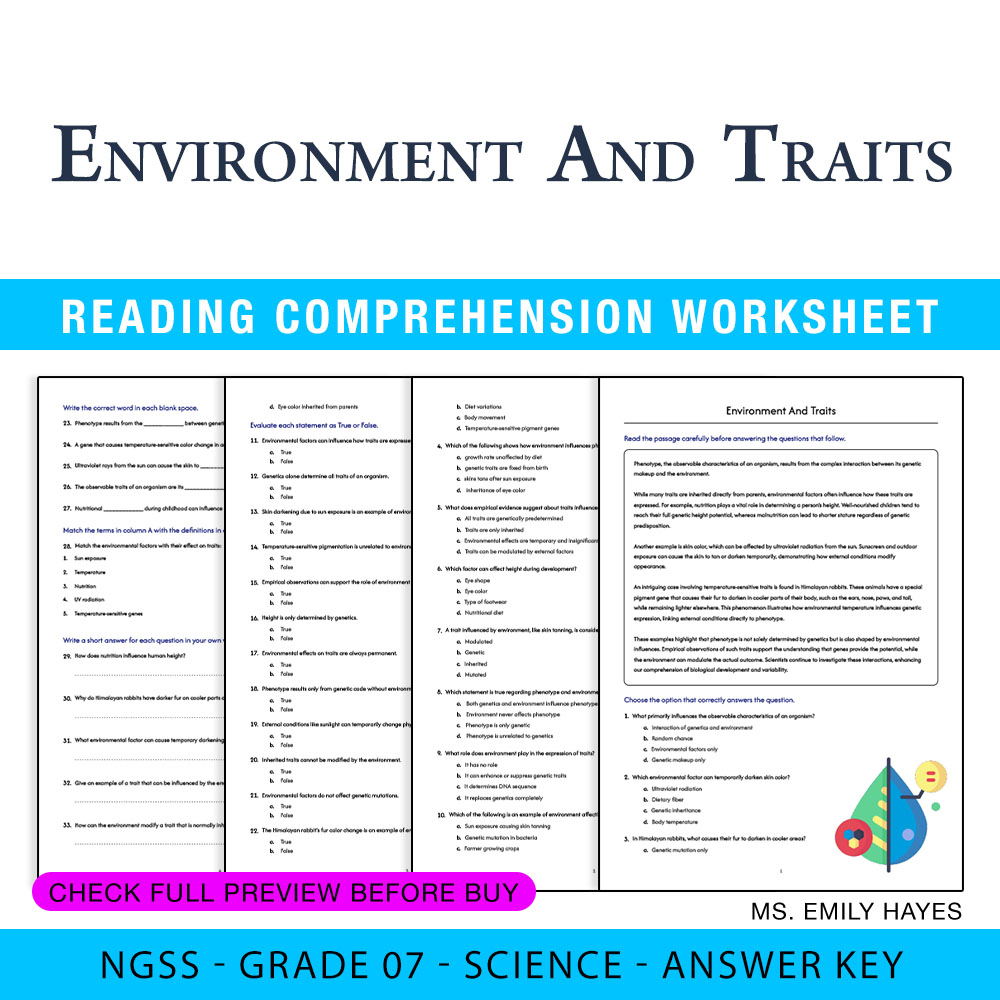
Grade 7 Science | Environment and Traits Worksheet (PDF+ Answer Key)
Created byCopper Leaf ClassroomLearning Objectives
- Explain how phenotype results from interactions between genetic makeup and environmental factors.
- Identify examples where environmental factors influence traits such as height, skin color, and pigmentation.
- Distinguish inherited genetic traits from environmentally modulated traits.
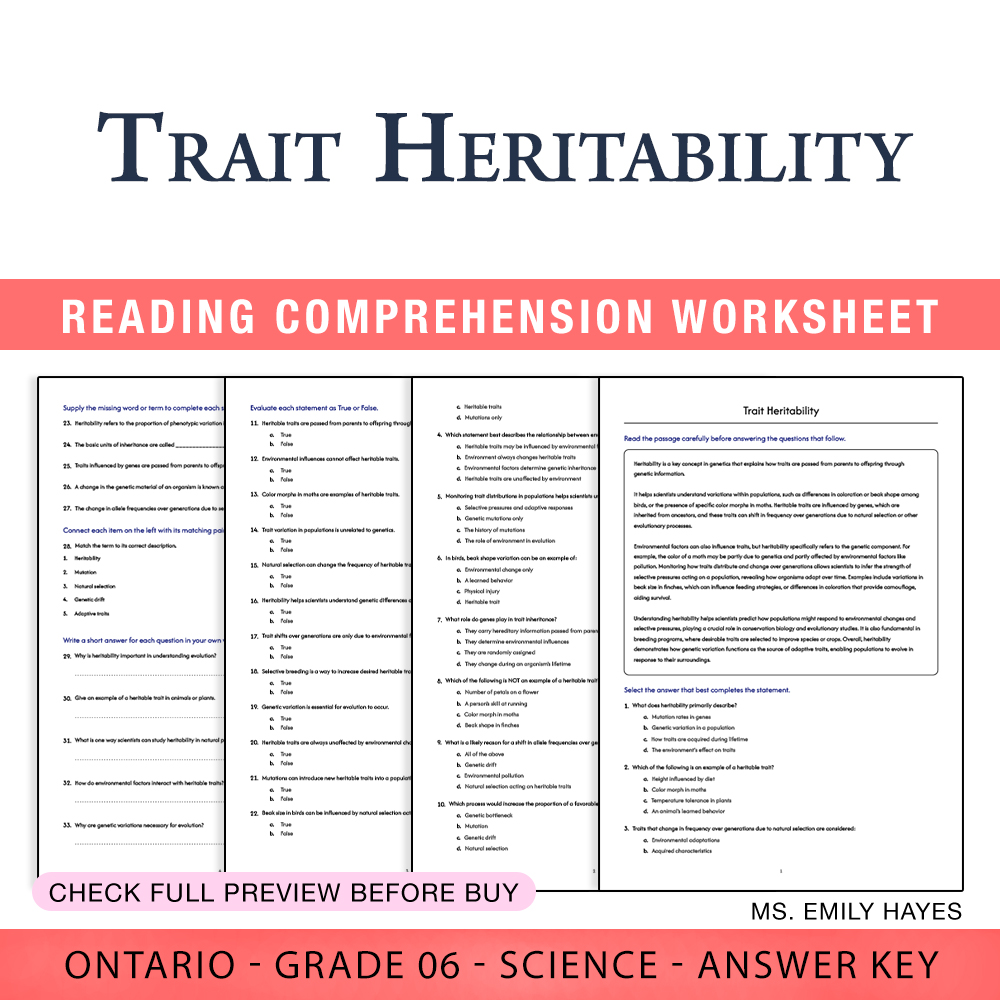
6th Grade Science | Trait Heritability Worksheet (PDF + Answer Key)
Created byCopper Leaf ClassroomLearning Objectives
- Explain the concept of heritability and how it relates to genetic variation in populations.
- Distinguish between heritable and environmental influences on traits.
- Describe basic mechanisms of inheritance and how they affect trait distribution over generations.

10th Grade Science | Biodiversity Overview Worksheet (PDF+ Answer Key)
Created byCopper Leaf ClassroomLearning Objectives
- Understand the fundamental concepts of biodiversity at genetic, species, and ecosystem levels.
- Identify factors that influence biodiversity patterns such as habitat, climate, and disturbance.
- Analyze how environmental gradients and evolutionary history affect biodiversity.
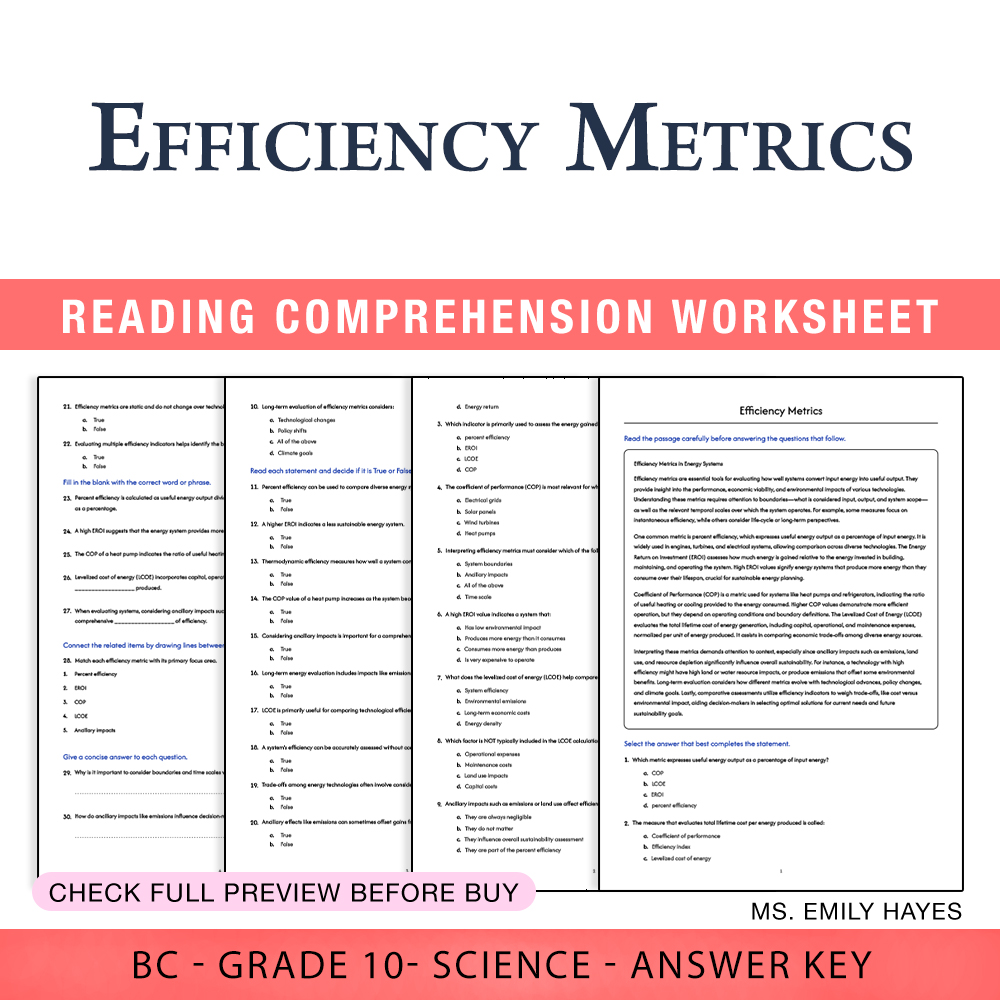
Grade 10 Science | Efficiency Metrics Worksheet (PDF + Answer Key)
Created byCopper Leaf ClassroomLearning Objectives
- Understand different measures of system efficiency such as percent efficiency, EROI, COP, and LCOE.
- Interpret how boundaries, time scales, and ancillary impacts influence efficiency evaluation.
- Compare technologies using efficiency indicators considering trade-offs and long-term effects.
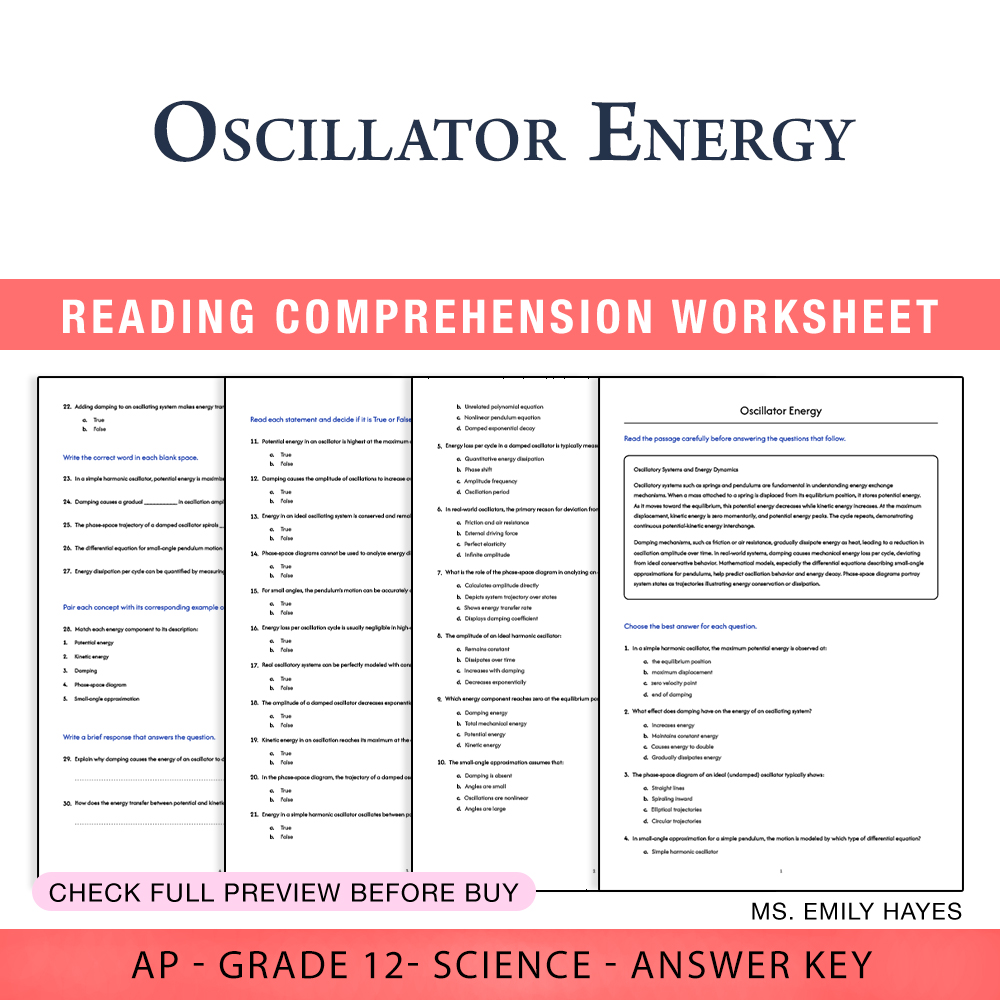
12th Grade Science | Oscillator Energy Worksheet Assessment (PDF + Answer Key)
Created byCopper Leaf ClassroomLearning Objectives
- Describe the energy exchange between potential and kinetic energy in oscillatory systems.
- Explain the effects of amplitude and damping on the energy in simple harmonic motion.
- Use phase-space and energy diagrams to analyze oscillatory behavior.
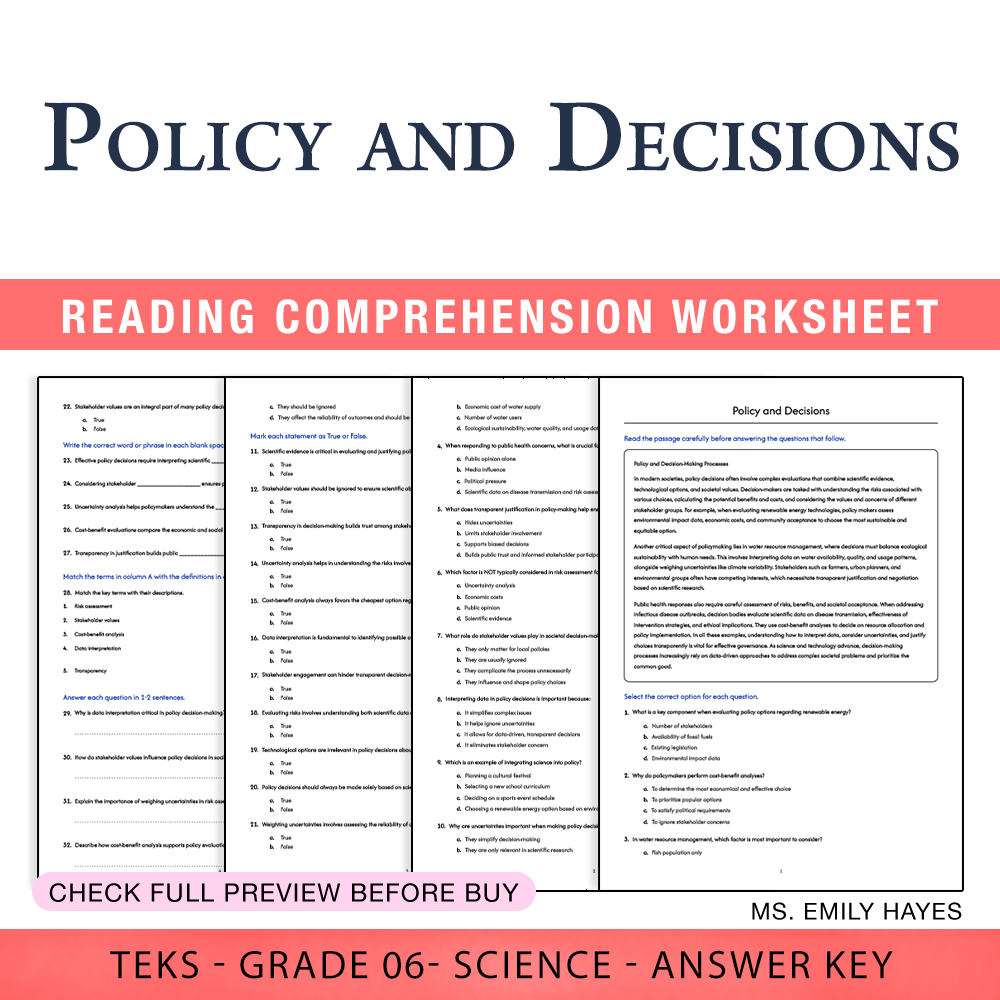
6th Grade Science | Policy and Decisions Worksheet (PDF+ Answer Key)
Created byCopper Leaf ClassroomLearning Objectives
- Analyze the decision-making process using scientific evidence and technological options.
- Evaluate risk assessment, cost-benefit analysis, and stakeholder values in policy choices.
- Interpret data and weigh uncertainties to support transparent policy decisions.
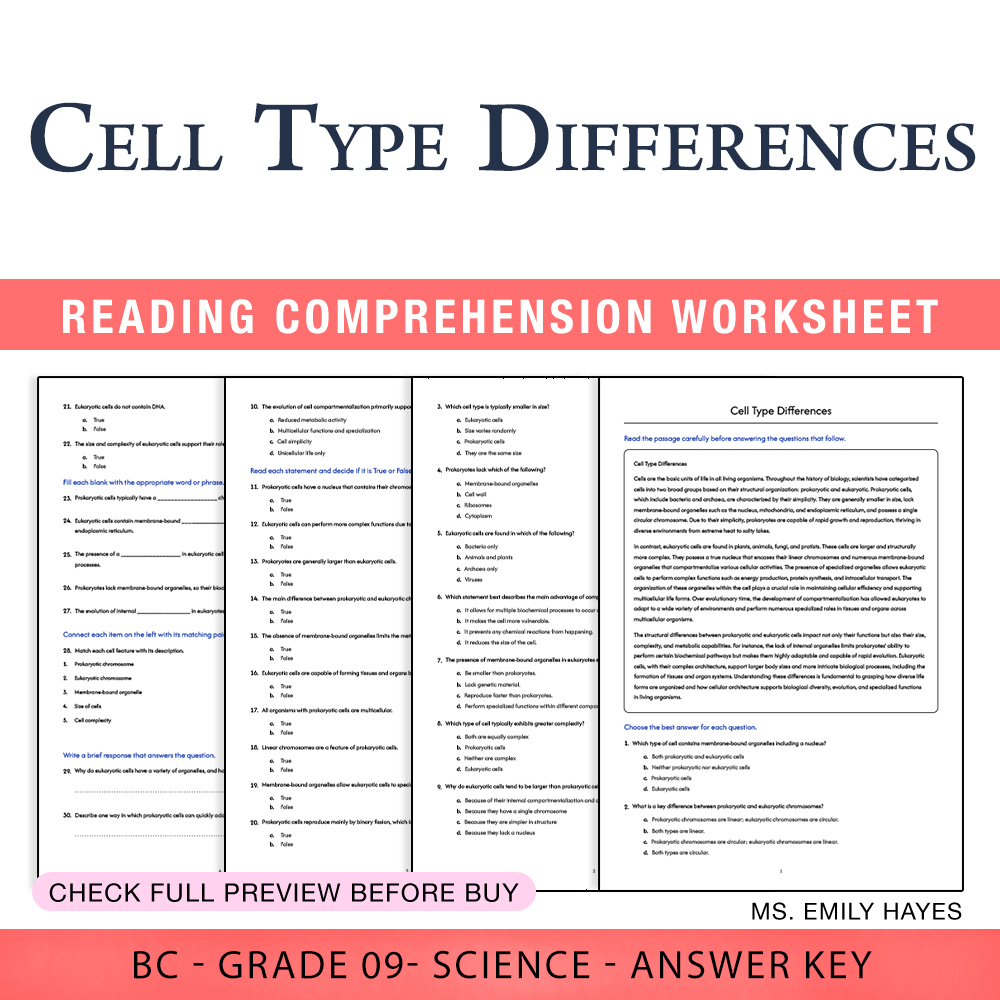
Grade 9 Science | Cell Type Differences Worksheet (PDF+ Answer Key)
Created byCopper Leaf ClassroomLearning Objectives
- Compare the structural differences between prokaryotic and eukaryotic cells.
- Identify key features of prokaryotic cells and how they differ from eukaryotic cells.
- Describe the roles of membrane-bound organelles in eukaryotic cells.
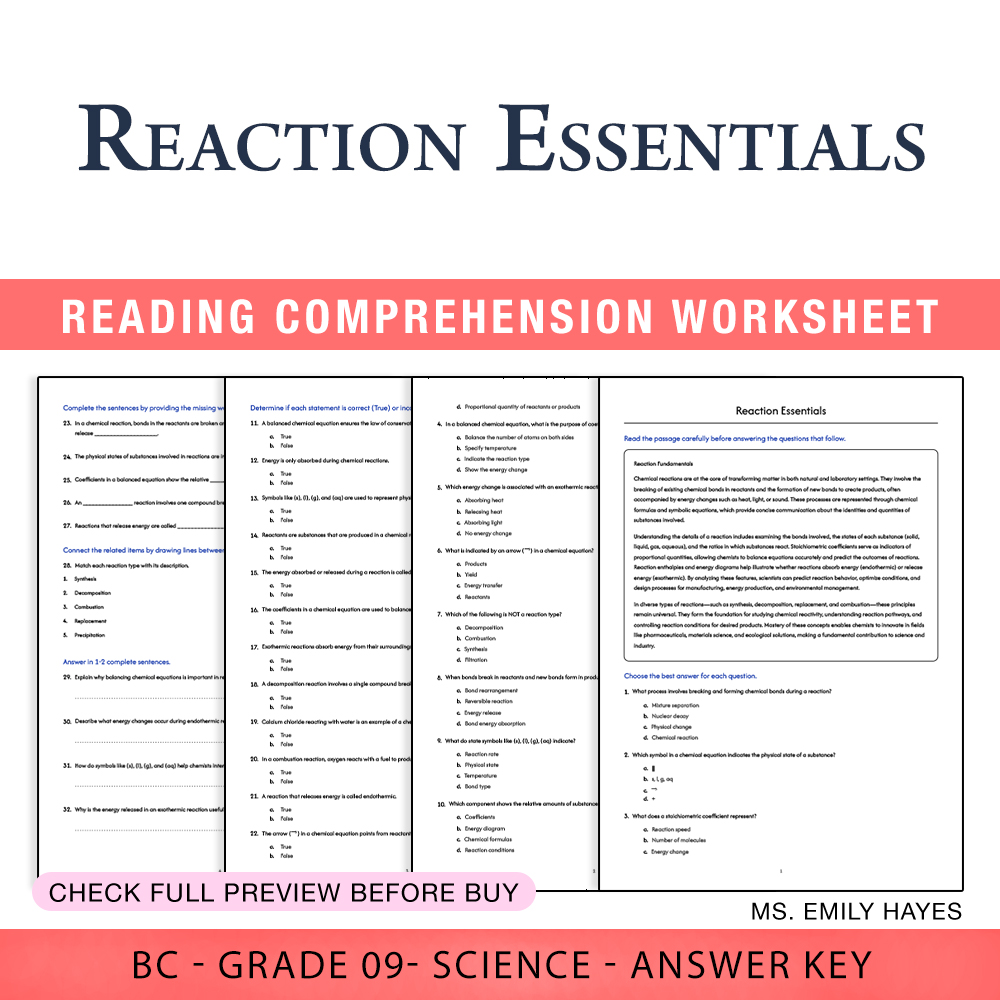
Grade 9 Science | Reaction Essentials Worksheet (PDF+ Answer Key)
Created byCopper Leaf ClassroomLearning Objectives
- Describe the components involved in chemical reactions and their transformations.
- Interpret chemical formulas and symbolic equations to understand reactions.
- Explain how bonds break and form, releasing or absorbing energy.
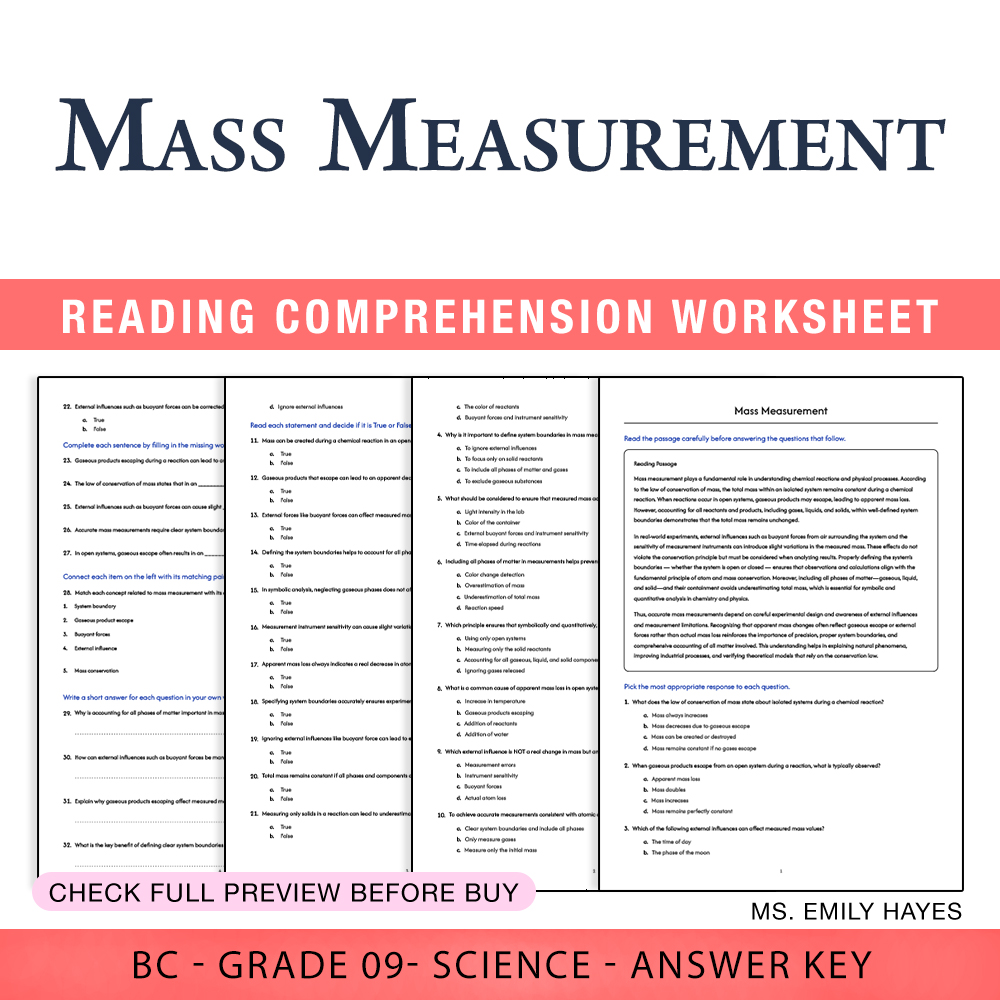
9th Grade Science | Mass Measurement Worksheet (PDF+ Answer Key)
Created byCopper Leaf ClassroomLearning Objectives
- Understand the principle of conservation of mass in chemical reactions.
- Identify factors affecting measured mass during experiments.
- Explain the importance of system boundaries in mass measurements.
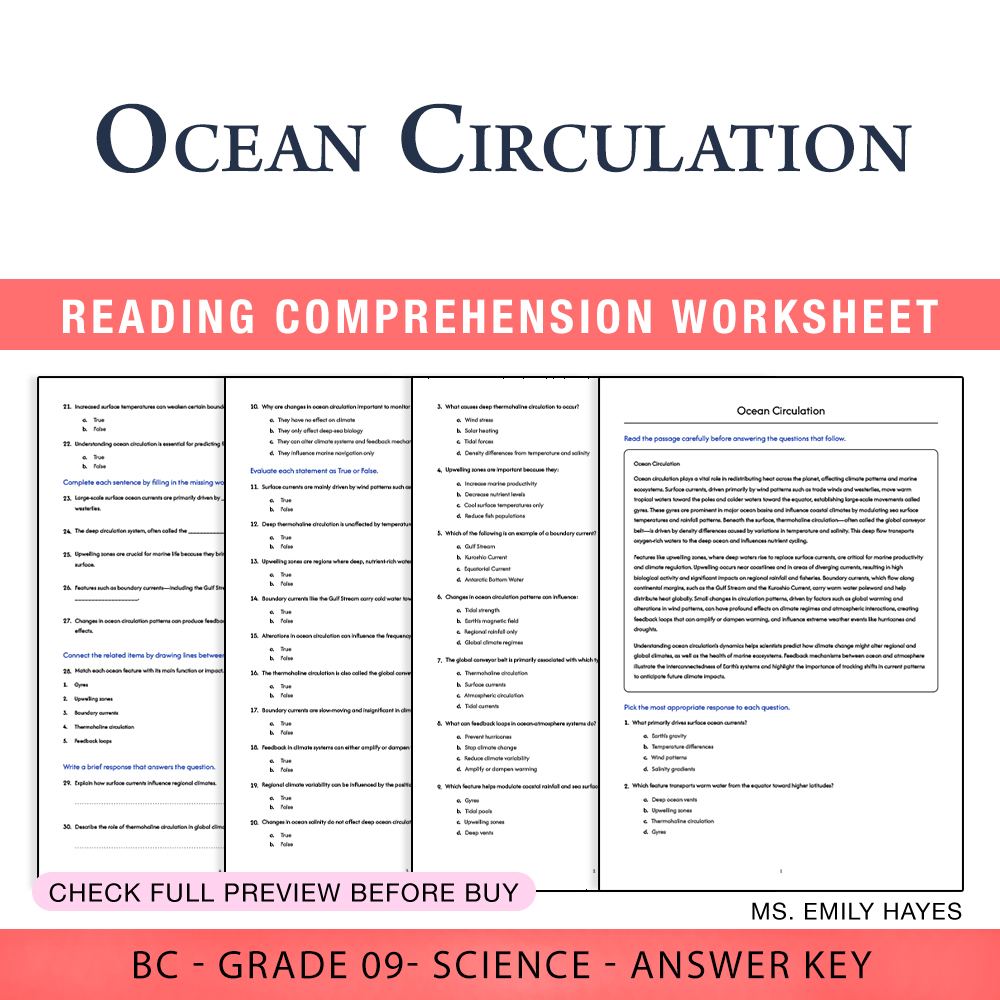
Grade 9 Science | Ocean Circulation Worksheet (PDF+ Answer Key)
Created byCopper Leaf ClassroomLearning Objectives
- Understand the mechanisms driving ocean surface and deep currents.
- Describe features such as gyres, upwelling zones, and boundary currents.
- Explain how ocean circulation influences regional climates and feedback systems.
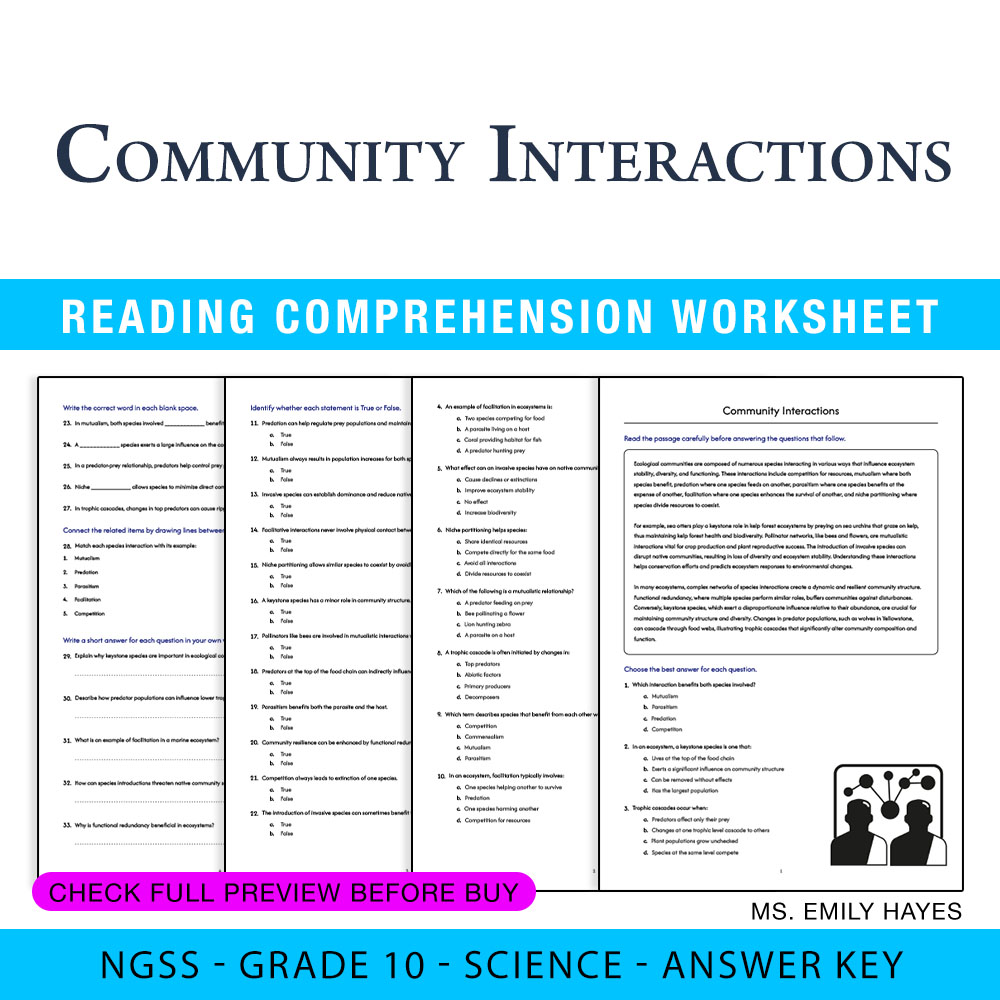
11th Grade Science | Community Interactions Worksheet (PDF+ Answer Key)
Created byCopper Leaf ClassroomLearning Objectives
- Describe various types of species interactions within ecological communities.
- Analyze the roles of keystone species and trophic cascades in community dynamics.
- Explain how species introductions and disturbances affect community stability and diversity.
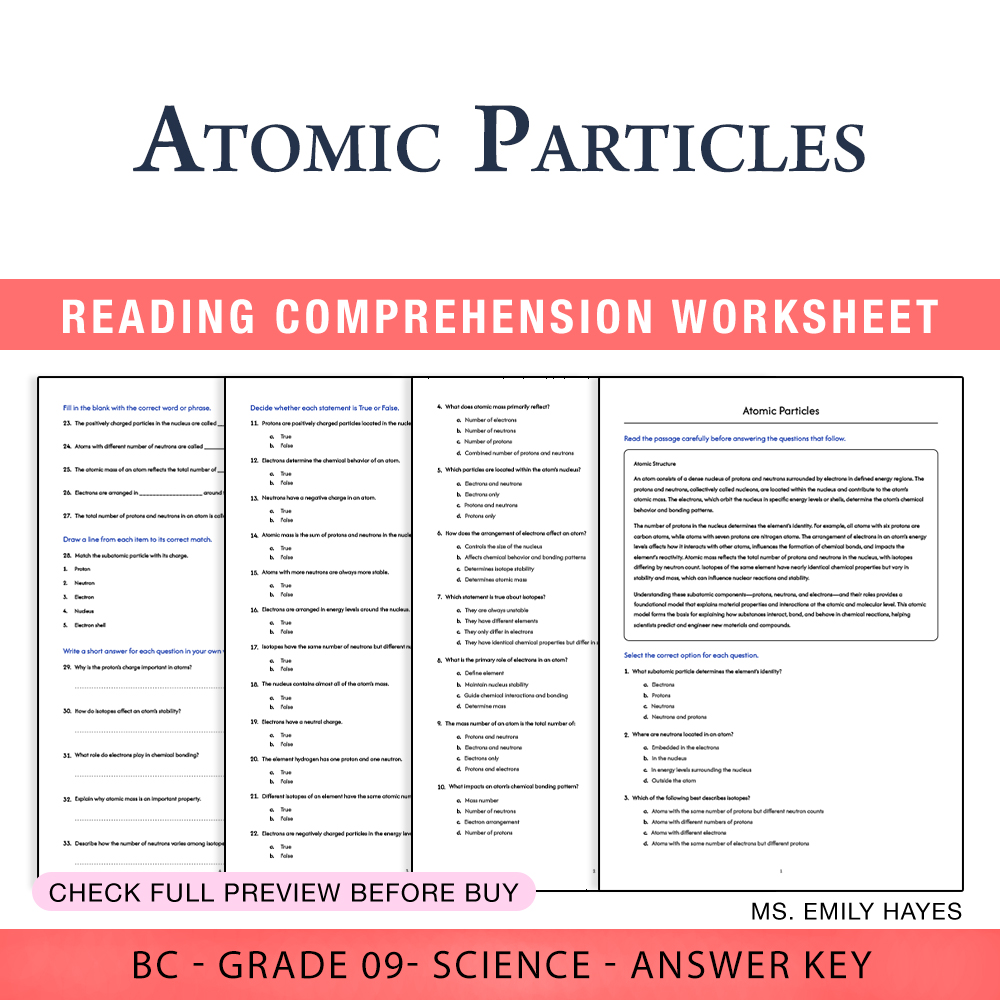
9th Grade Science | Atomic Particles Worksheet (PDF+ Answer Key)
Created byCopper Leaf ClassroomLearning Objectives
- Describe the structure of an atom, including protons, neutrons, and electrons.
- Explain how the number of protons determines the element identity.
- Understand the concept of isotopes and their effect on atomic mass and stability.
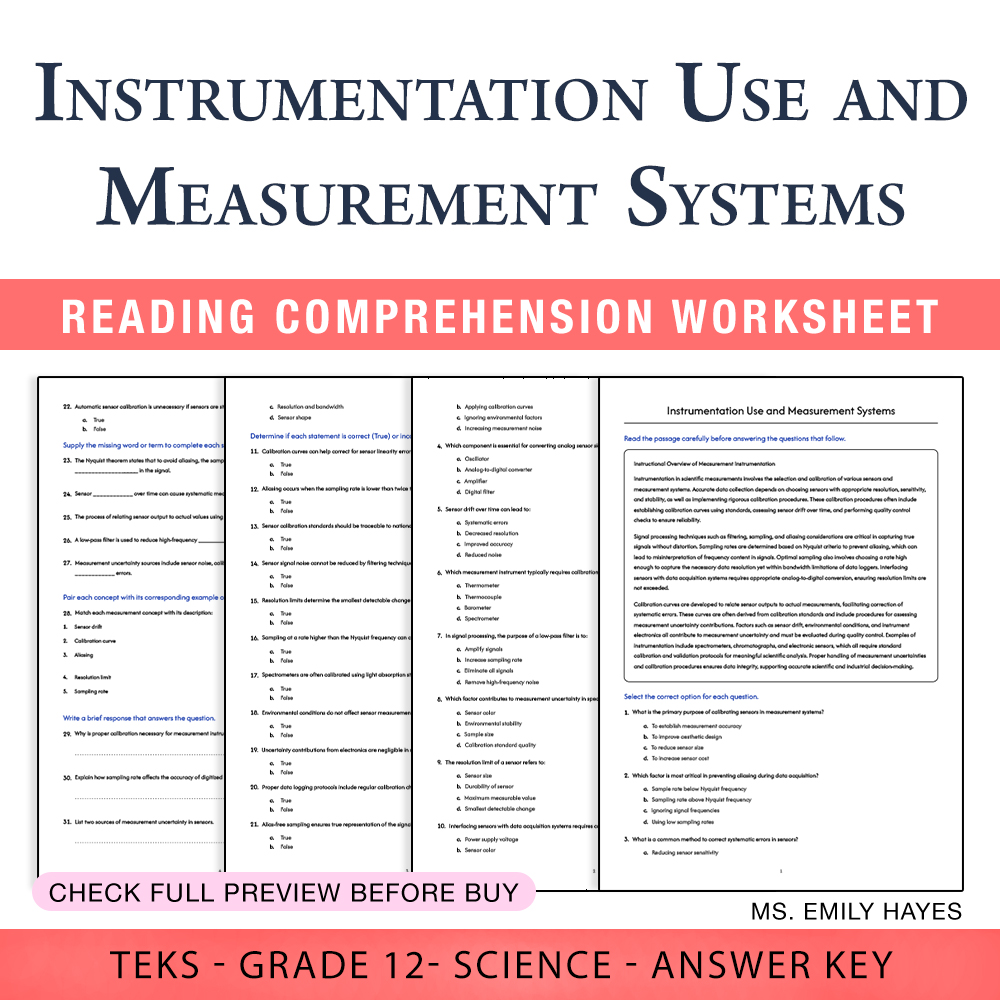
Grade 12 Science | Instrumentation Use & Measurement Systems (PDF + Answer Key)
Created byCopper Leaf ClassroomLearning Objectives
- Understand the selection and calibration of sensors for accurate data acquisition.
- Explain the principles of signal processing, sampling rates, and aliasing considerations.
- Apply calibration curves and quality control procedures to spectrometers, chromatographs, and sensors.
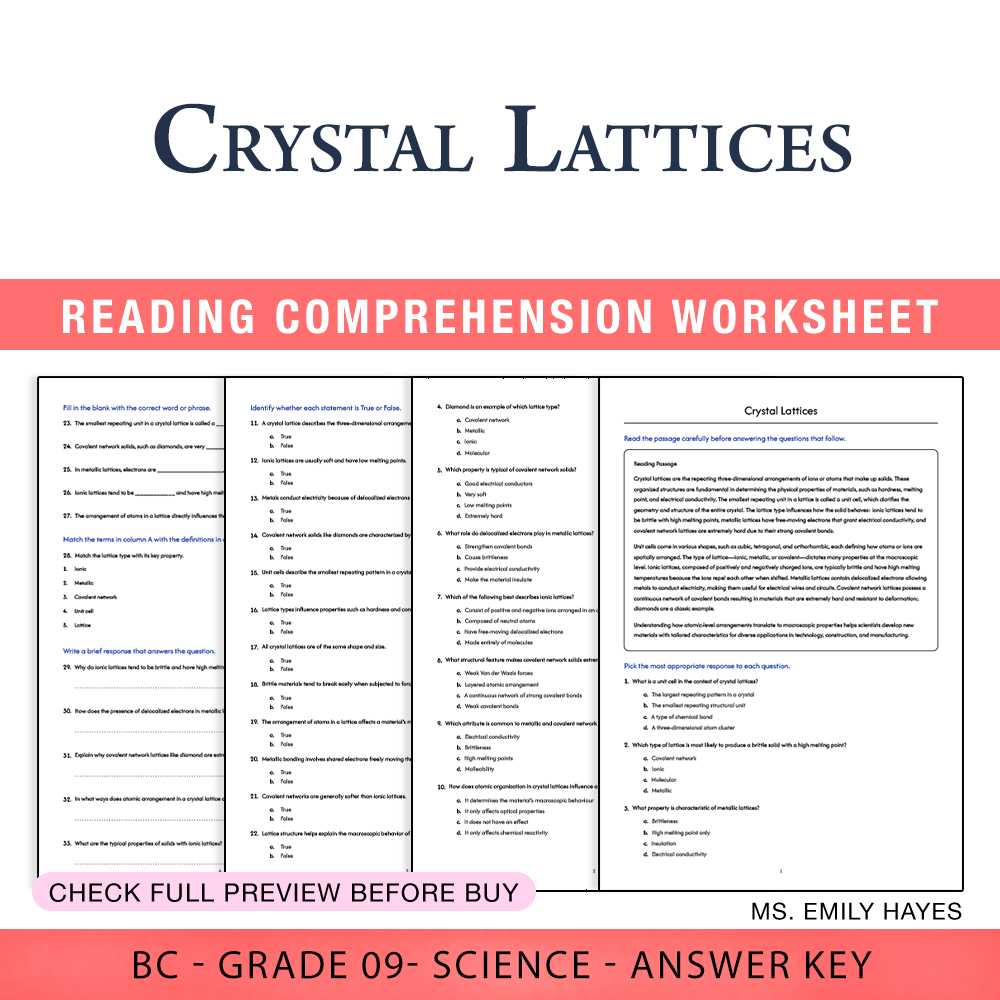
9th Grade Science | Crystal Lattices Worksheet (PDF+ Answer Key)
Created byCopper Leaf ClassroomLearning Objectives
- Understand the structure and function of different types of crystal lattices.
- Identify the characteristics and properties associated with ionic, metallic, and covalent network lattices.
- Explain how atomic arrangements influence the macroscopic properties of solids.
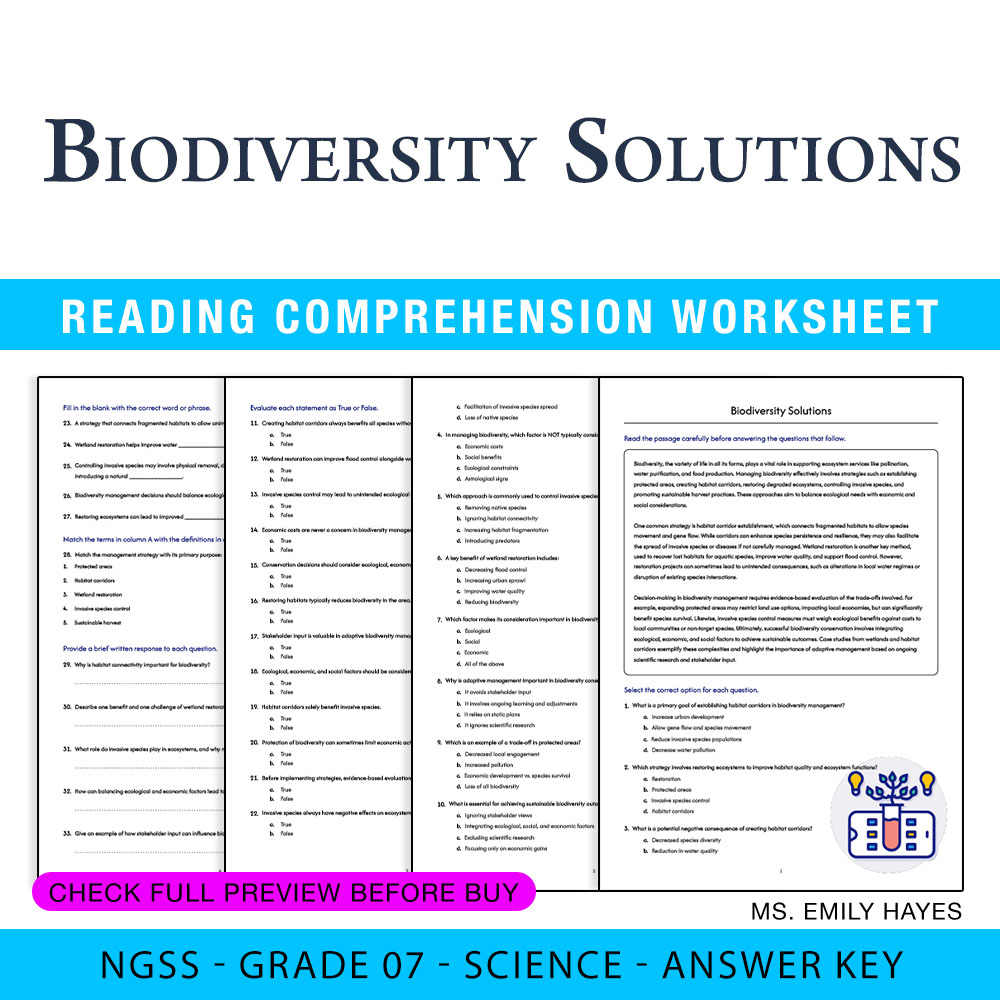
7th Grade Science | Biodiversity Solutions Worksheet (PDF +Answer Key)
Created byCopper Leaf ClassroomLearning Objectives
- Understand different management strategies used to maintain biodiversity and their ecological, economic, and social trade-offs.
- Evaluate case examples such as wetland restoration and habitat corridor establishment for their benefits and potential unintended effects.
- Compare and analyze alternative biodiversity conservation approaches using evidence-based reasoning.
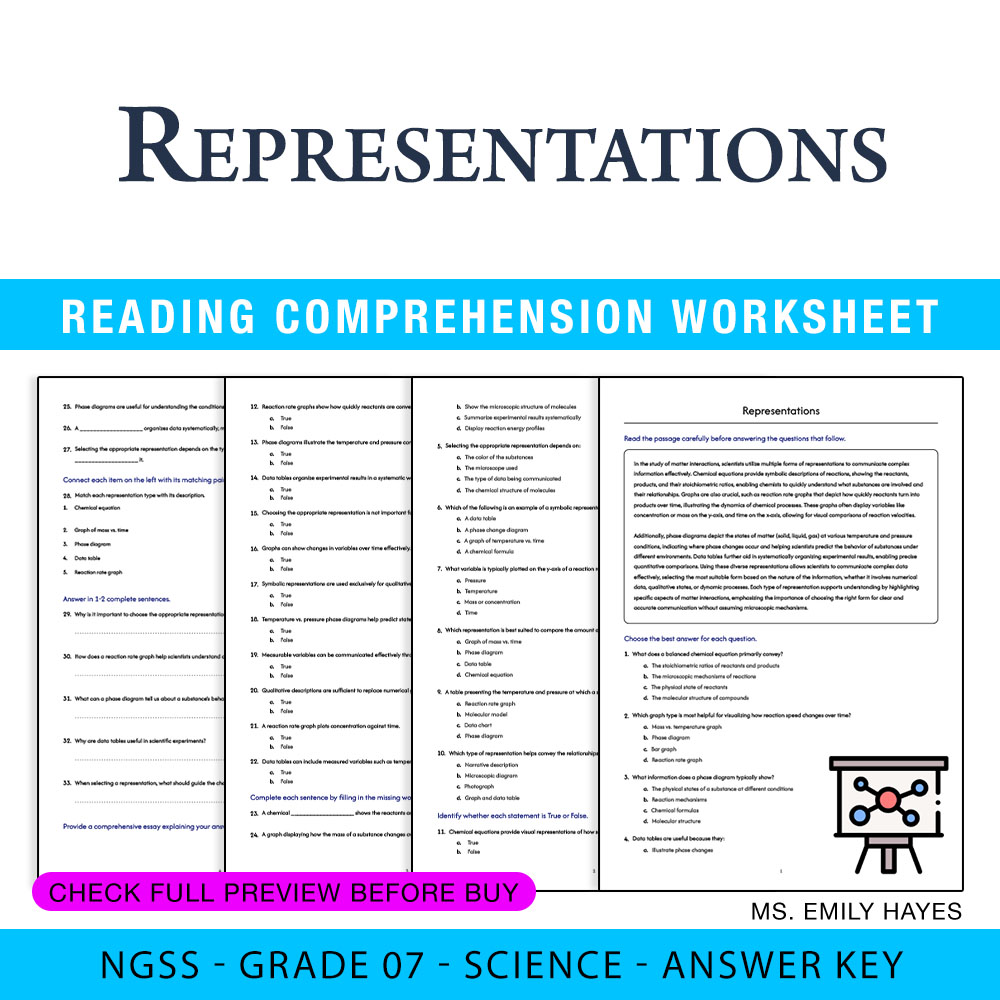
7th Grade Science | Representations Worksheet (PDF +Answer Key)
Created byCopper Leaf ClassroomLearning Objectives
- Understand different types of representations used to convey matter interactions, including chemical equations, graphs, and data tables.
- Interpret and analyze various representations such as reaction rate graphs, stoichiometric ratios, and phase diagrams.
- Select appropriate representations for quantitative comparison and communicate relationships among measurable variables.
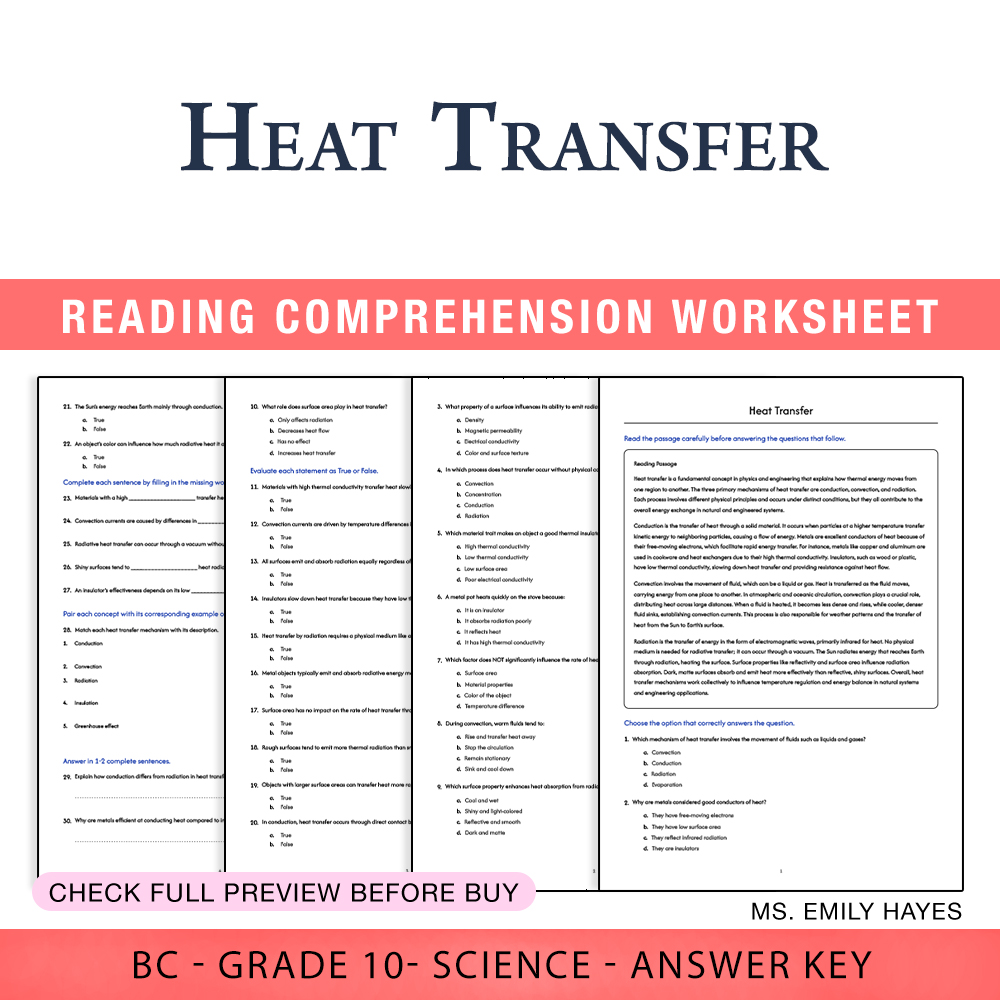
10th Grade Science | Heat Transfer Worksheet (PDF + Answer Key)
Created byCopper Leaf ClassroomLearning Objectives
- Understand the mechanisms of heat transfer: conduction, convection, and radiation.
- Identify material properties that influence heat transfer rates.
- Explain how surface area affects heat exchange.
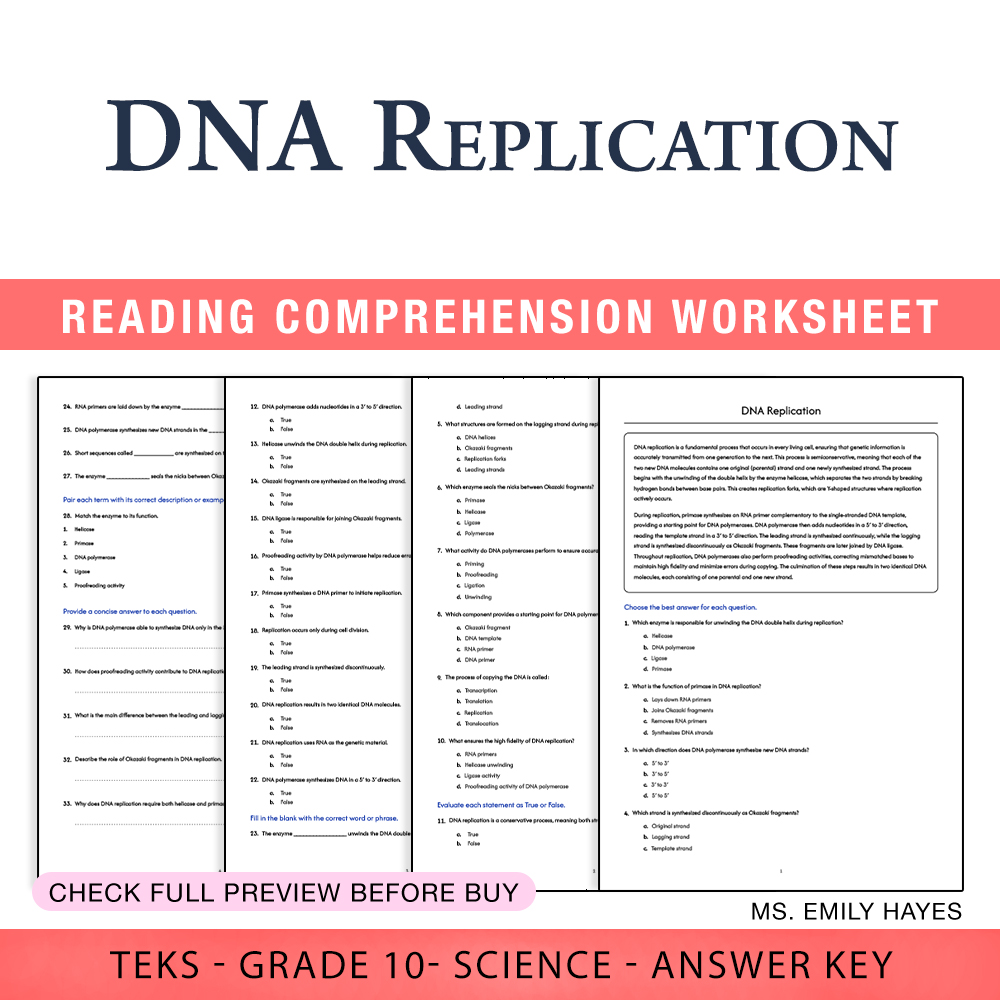
Grade 10 Science | DNA Replication Worksheet (PDF+ Answer Key)
Created byCopper Leaf ClassroomLearning Objectives
- Explain the process of DNA replication and the roles of key enzymes.
- Describe the steps involved in DNA unwinding, primer formation, and nucleotide addition.
- Differentiate between leading and lagging strand synthesis, including Okazaki fragments.
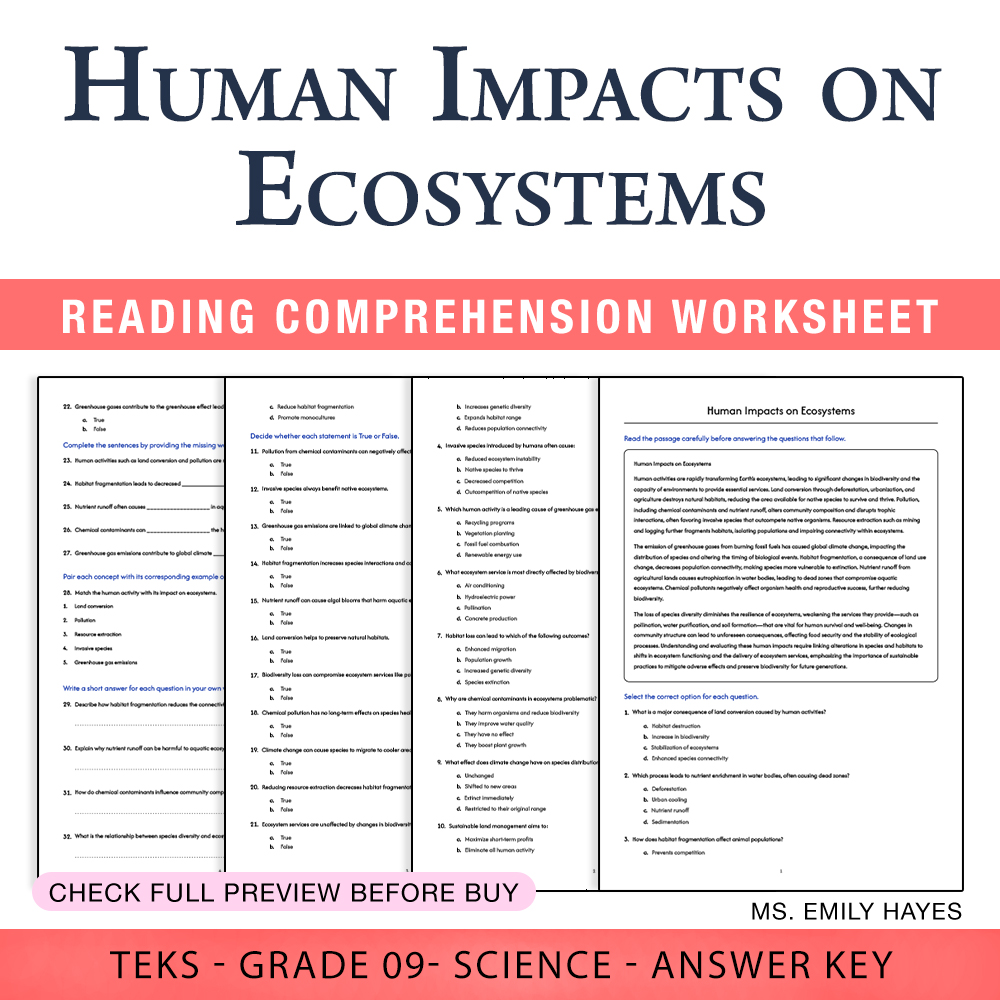
9th Grade Science | Human Impacts on Ecosystems Worksheet (PDF+ Answer Key)
Created byCopper Leaf ClassroomLearning Objectives
- Understand how human activities affect biodiversity and ecosystem services.
- Identify various forms of land conversion, pollution, resource extraction, invasive species, and greenhouse gas emissions.
- Explain the concepts of habitat fragmentation and nutrient runoff.
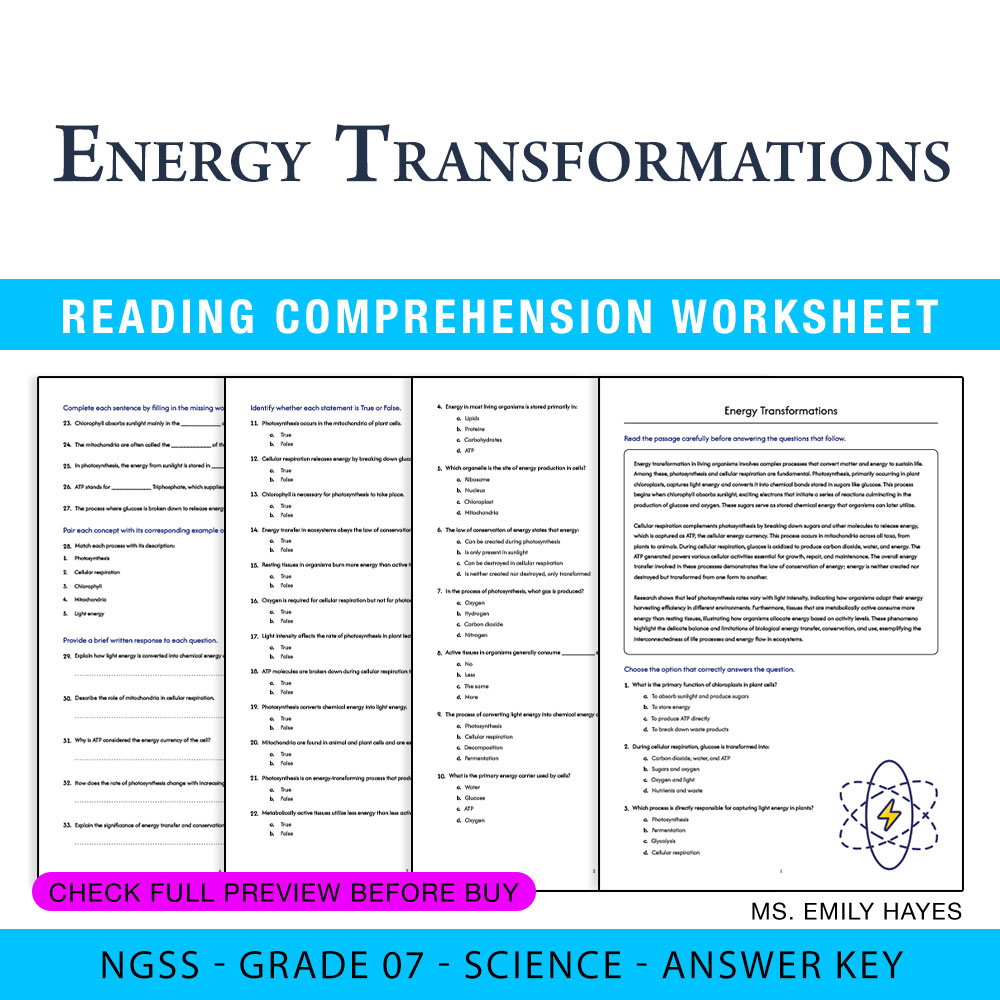
7th Grade Science | Energy Transformations Worksheet (PDF + Answer Key)
Created byCopper Leaf ClassroomLearning Objectives
- Explain how light energy is converted into chemical energy during photosynthesis.
- Describe how cellular respiration releases energy stored in food molecules.
- Connect processes of sugar production in chloroplasts to ATP generation in mitochondria across different organisms.
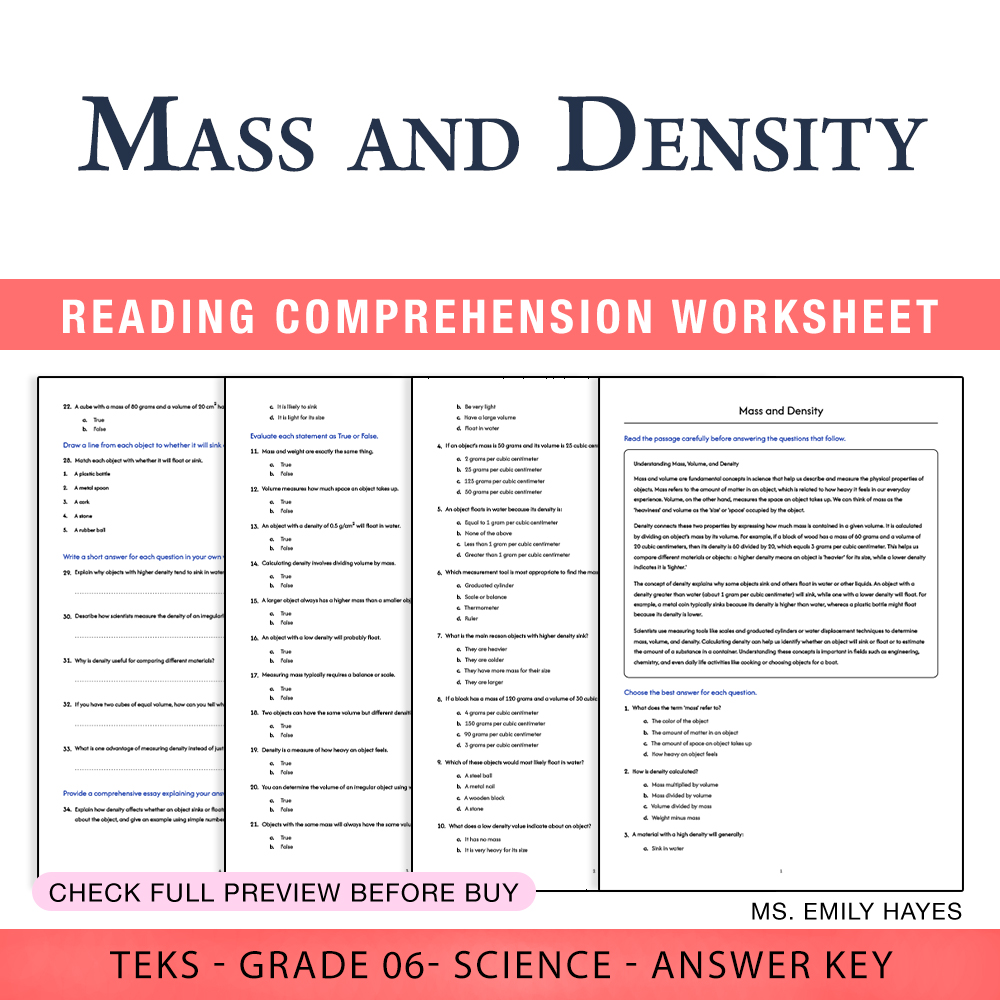
6th Grade Science | Mass and Density Worksheet (PDF+ Answer Key)
Created byCopper Leaf ClassroomLearning Objectives
- Define and distinguish between mass and volume.
- Explain the concept of density as a ratio of mass to volume.
- Calculate density for simple solids and liquids using whole-number values.
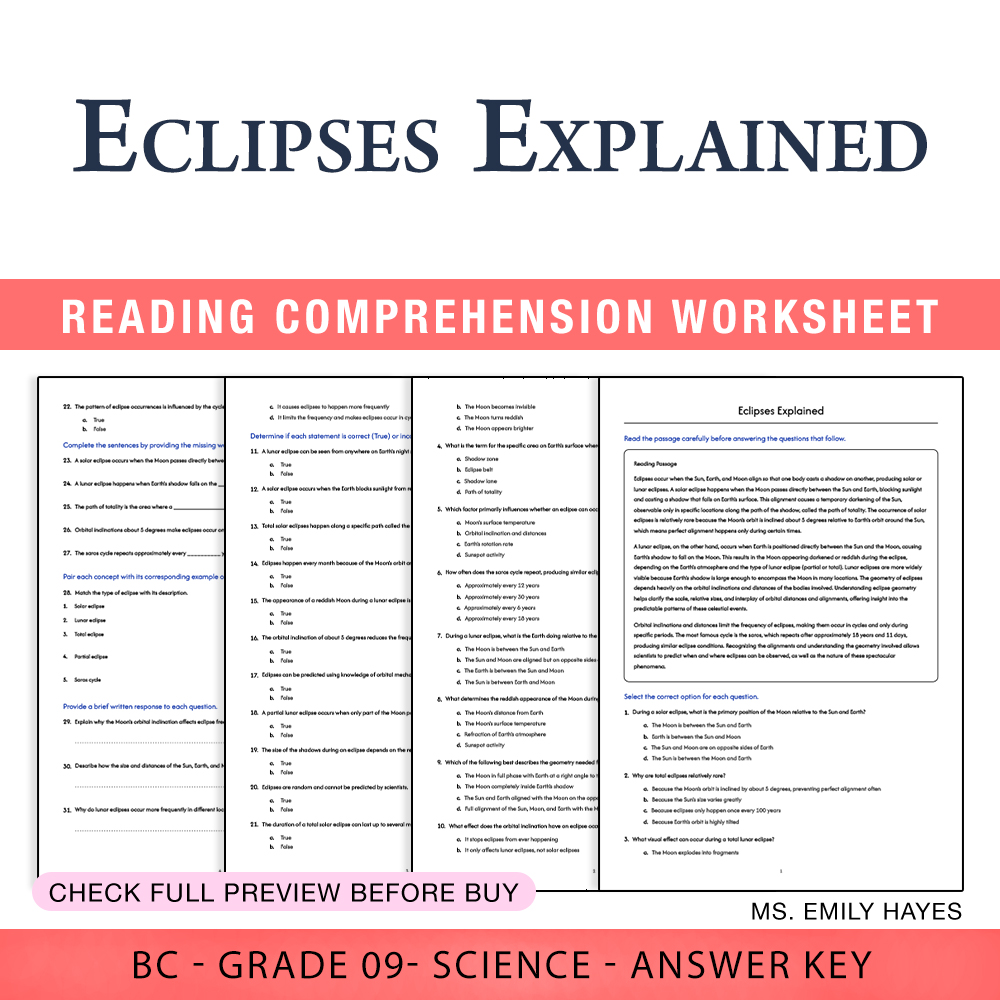
Grade 9 Science | Eclipses Explained Worksheet (PDF+ Answer Key)
Created byCopper Leaf ClassroomLearning Objectives
- Understand the basic geometry of solar and lunar eclipses.
- Identify the positions of the Sun, Earth, and Moon during different types of eclipses.
- Explain how orbital inclinations influence the occurrence and visibility of eclipses.
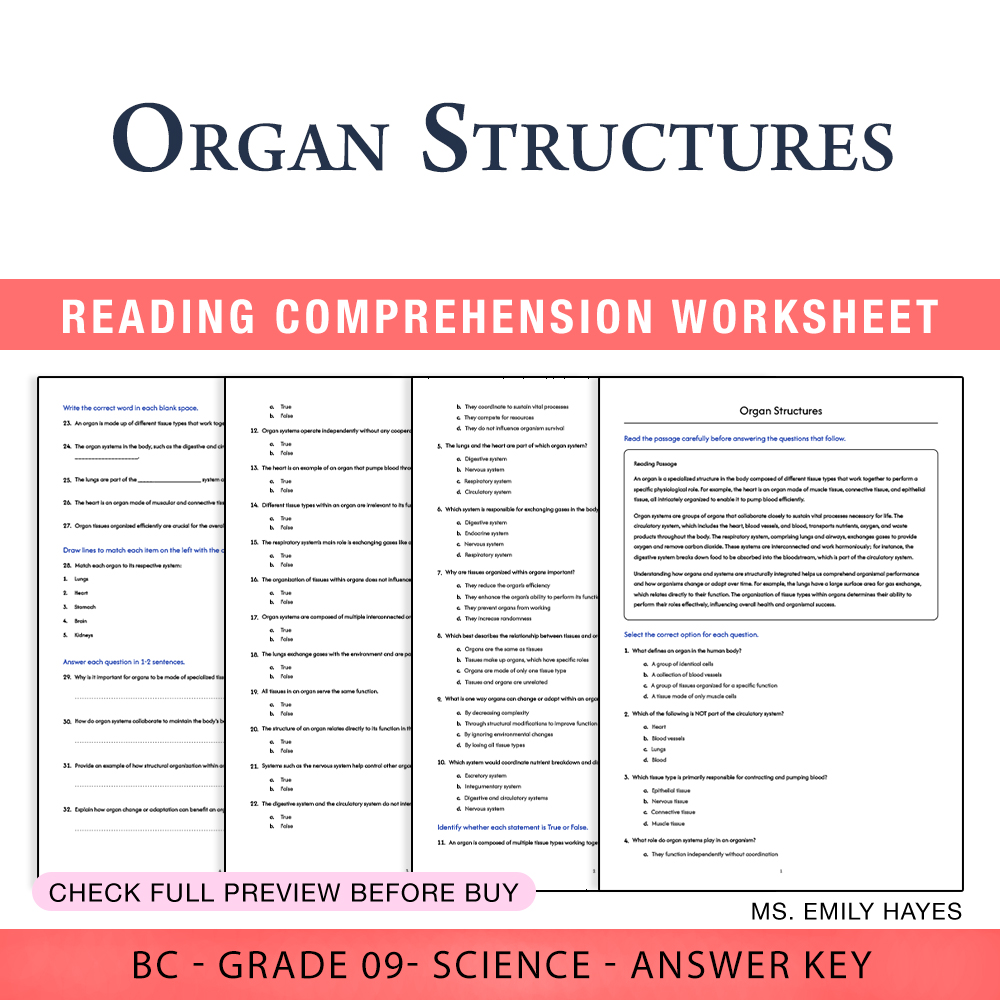
Grade 9 Science | Organ Structures Worksheet (PDF+ Answer Key)
Created byCopper Leaf ClassroomLearning Objectives
- Describe what makes up an organ and its tissue organization
- Explain the purpose of different organ systems and their coordination
- Identify examples of organs and system functions in humans
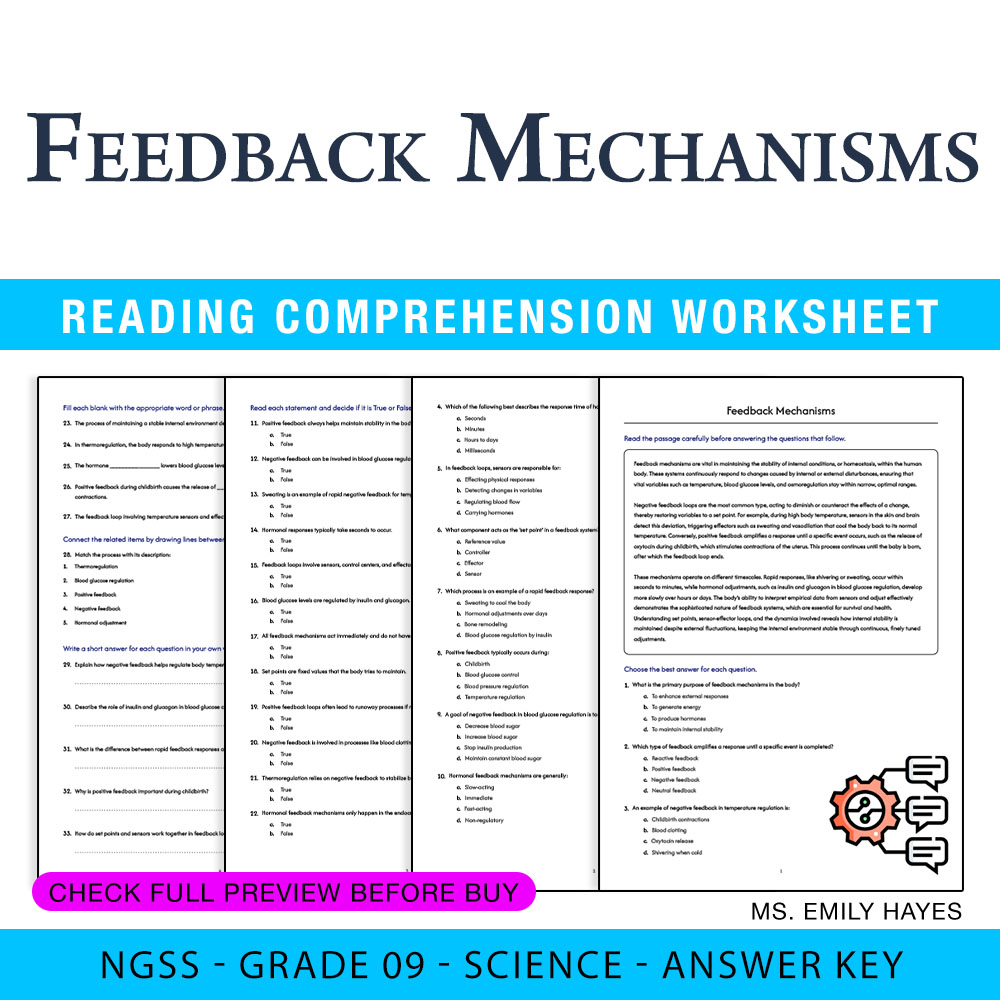
9th Grade Science | Feedback Mechanisms Worksheet (PDF+ Answer Key)
Created byCopper Leaf ClassroomLearning Objectives
- Describe the concepts of negative and positive feedback within physiological systems.
- Explain how feedback mechanisms maintain internal body conditions within narrow limits.
- Identify examples of feedback processes such as thermoregulation and blood glucose control.
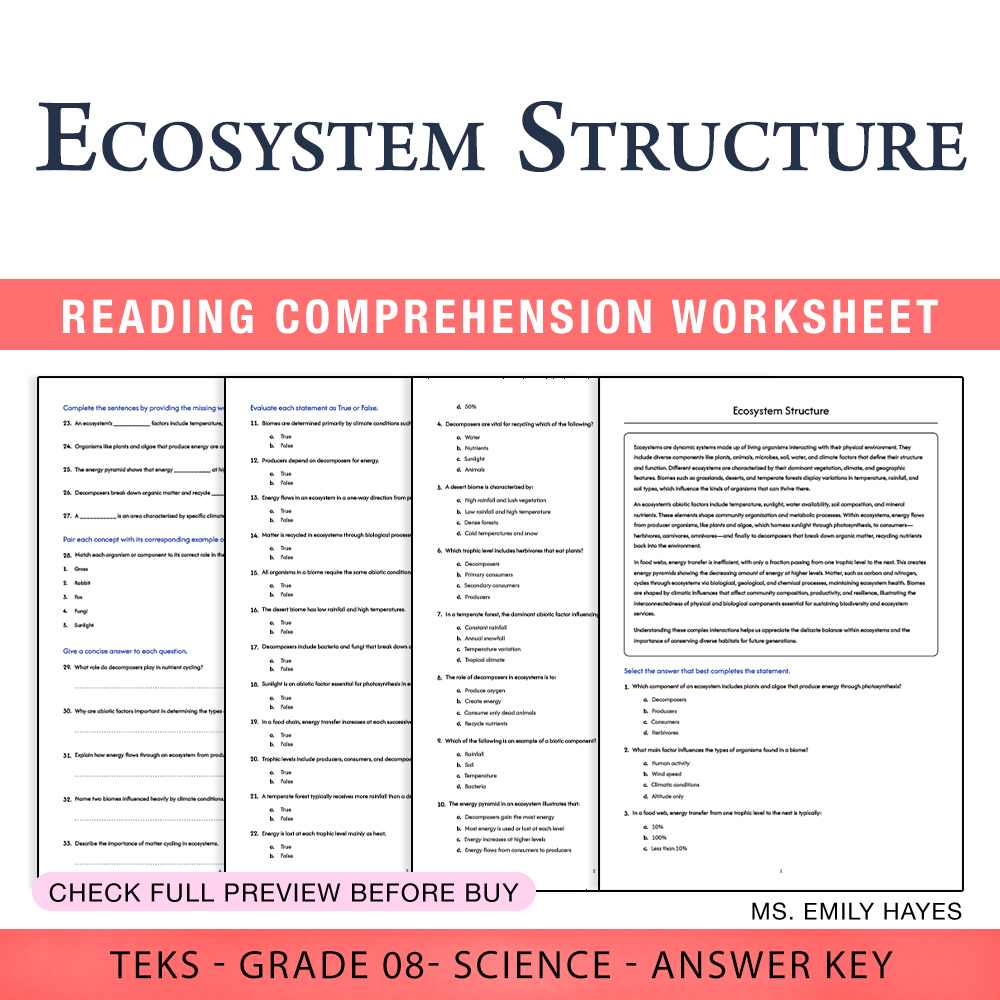
8th Grade Science | Ecosystem Structure Worksheet (PDF+ Answer Key)
Created byCopper Leaf ClassroomLearning Objectives
- Describe the components and organization of ecosystems and biomes.
- Identify abiotic factors that influence community composition.
- Understand the roles of producers, consumers, and decomposers in food webs and energy flow.
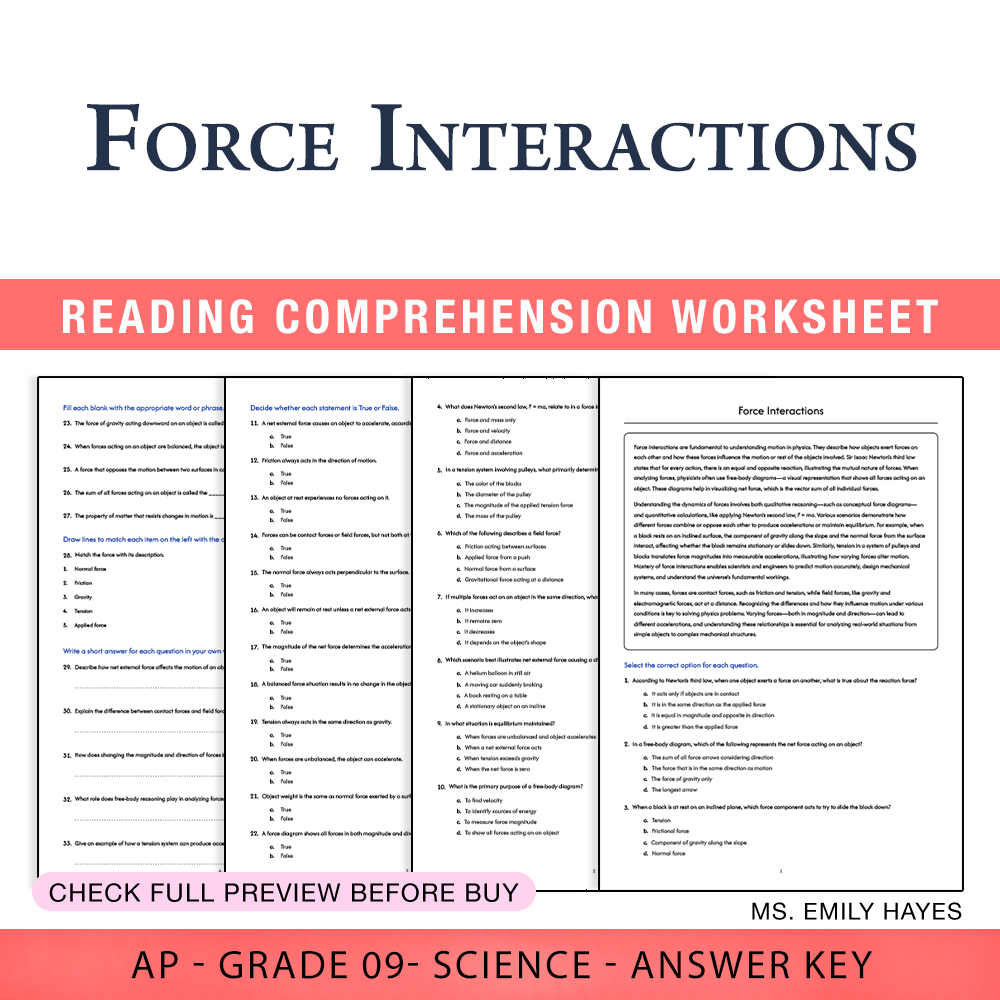
9th Grade Science | Force Interactions Worksheet (PDF+ Answer Key)
Created byCopper Leaf ClassroomLearning Objectives
- Explain the relationship between net external forces and changes in an object's motion using Newtonian dynamics.
- Interpret and analyze force diagrams and free-body diagrams to determine forces acting on objects.
- Calculate acceleration resulting from different force interactions in scenarios such as inclined planes and tension systems.
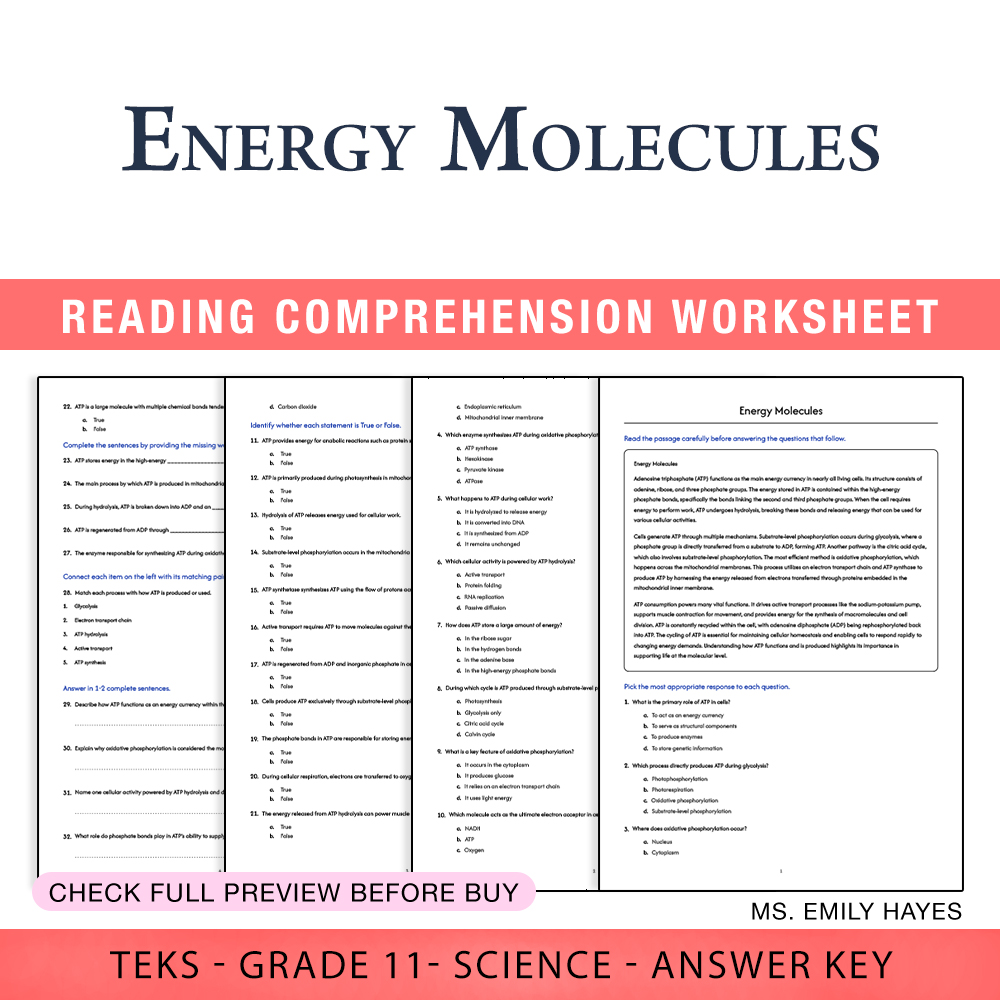
Grade 11 Science | Energy Molecules Worksheet (PDF+ Answer Key)
Created byCopper Leaf ClassroomLearning Objectives
- Describe the role of ATP as the primary energy carrier in cells.
- Explain how ATP is produced via substrate-level and oxidative phosphorylation.
- Identify cellular processes powered by ATP consumption, such as active transport and mechanical work.
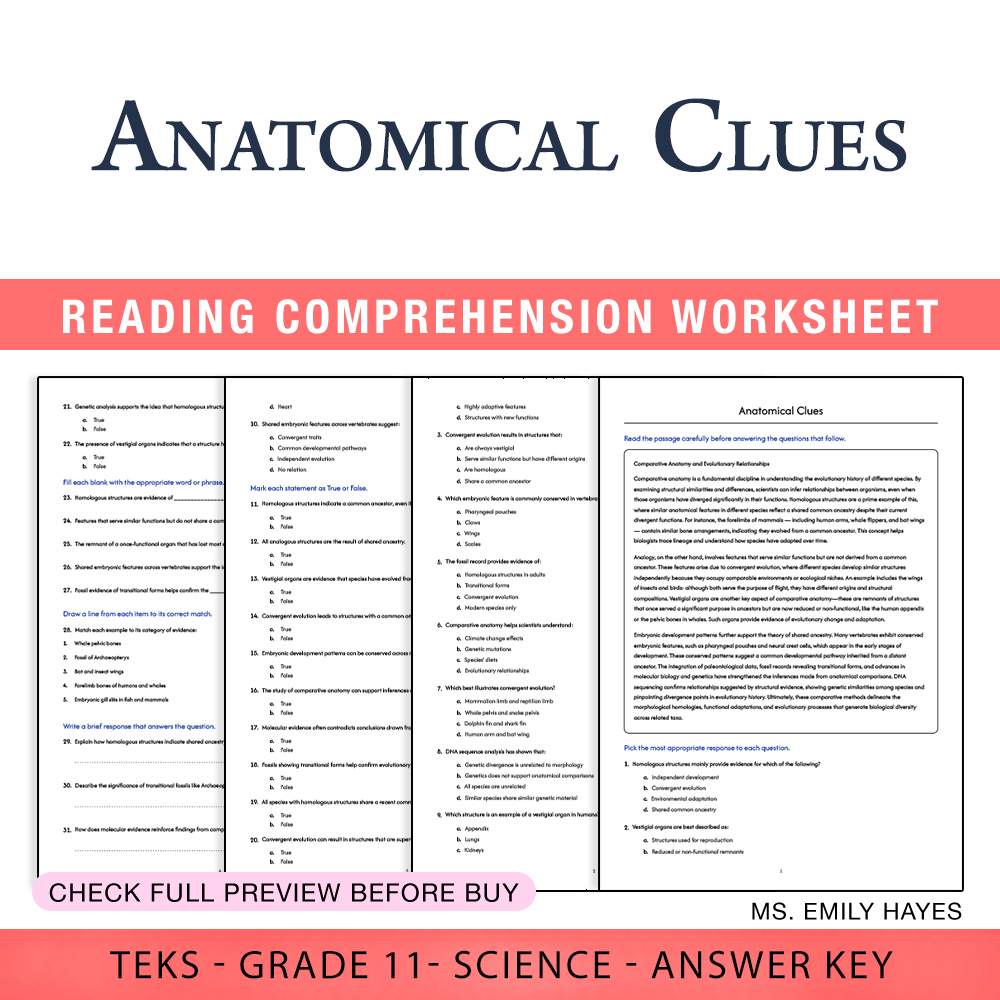
11th Grade Science | Anatomical Clues Worksheet (PDF+ Answer Key)
Created byCopper Leaf ClassroomLearning Objectives
- Understand the role of homologous and analogous structures in evolutionary relationships.
- Identify vestigial organs and conserved embryonic patterns as evidence of shared ancestry.
- Interpret how paleontological and molecular evidence support anatomical comparisons.
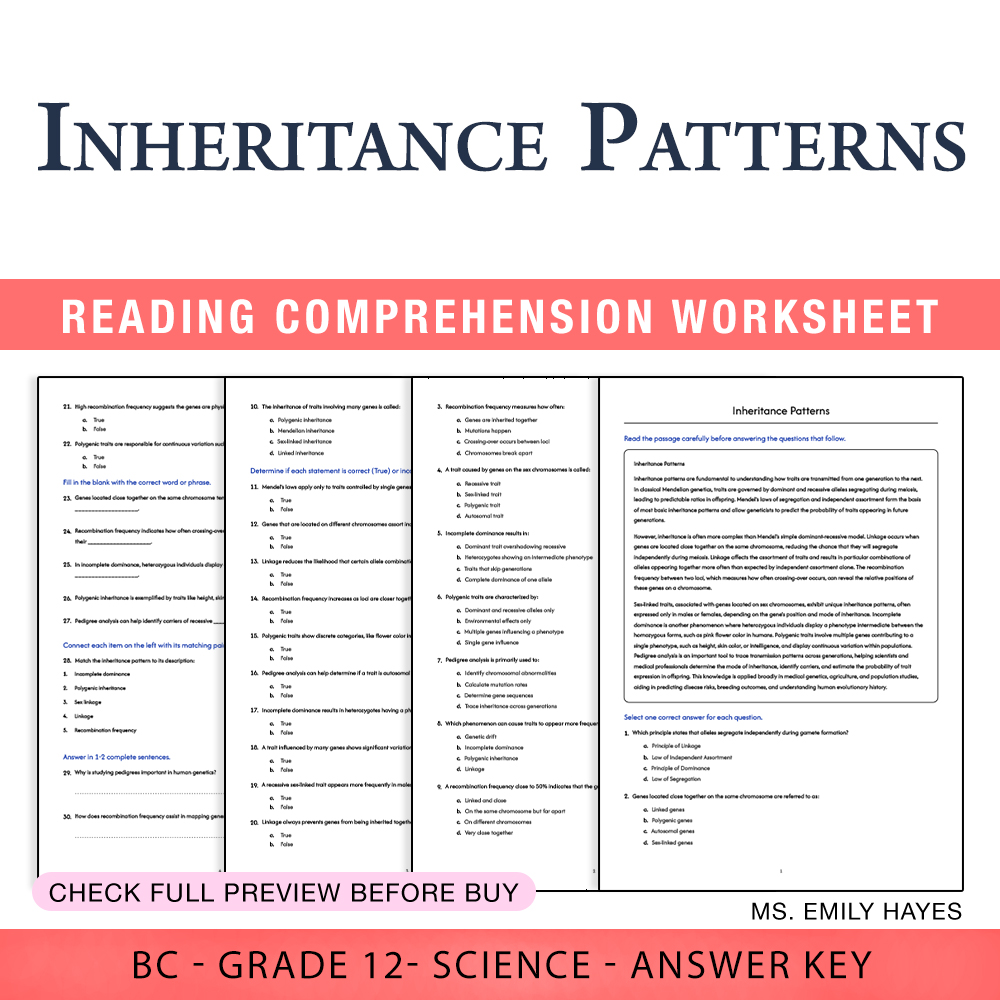
12th Grade Science | Inheritance Patterns Worksheet (PDF + Answer Key)
Created byCopper Leaf ClassroomLearning Objectives
- Understand different inheritance models including Mendelian, linkage, sex linkage, incomplete dominance, and polygenic traits.
- Analyze pedigrees to infer inheritance modes and estimate carriers.
- Interpret recombination frequency data to determine relative loci positions and trait assortment.
Browse more categories
About Science Worksheets
Find Science worksheets spanning core skills, practice, and review. All 42,859 resources are instant PDF downloads for the classroom or home.
Every worksheet on MyTeachingSheets is created by independent teacher-authors and reviewed before publication. All resources download as printable PDFs for classroom, homework, or at-home practice, and many include answer keys. Preview any worksheet free before buying.