
Science Worksheets
42,859 subject resources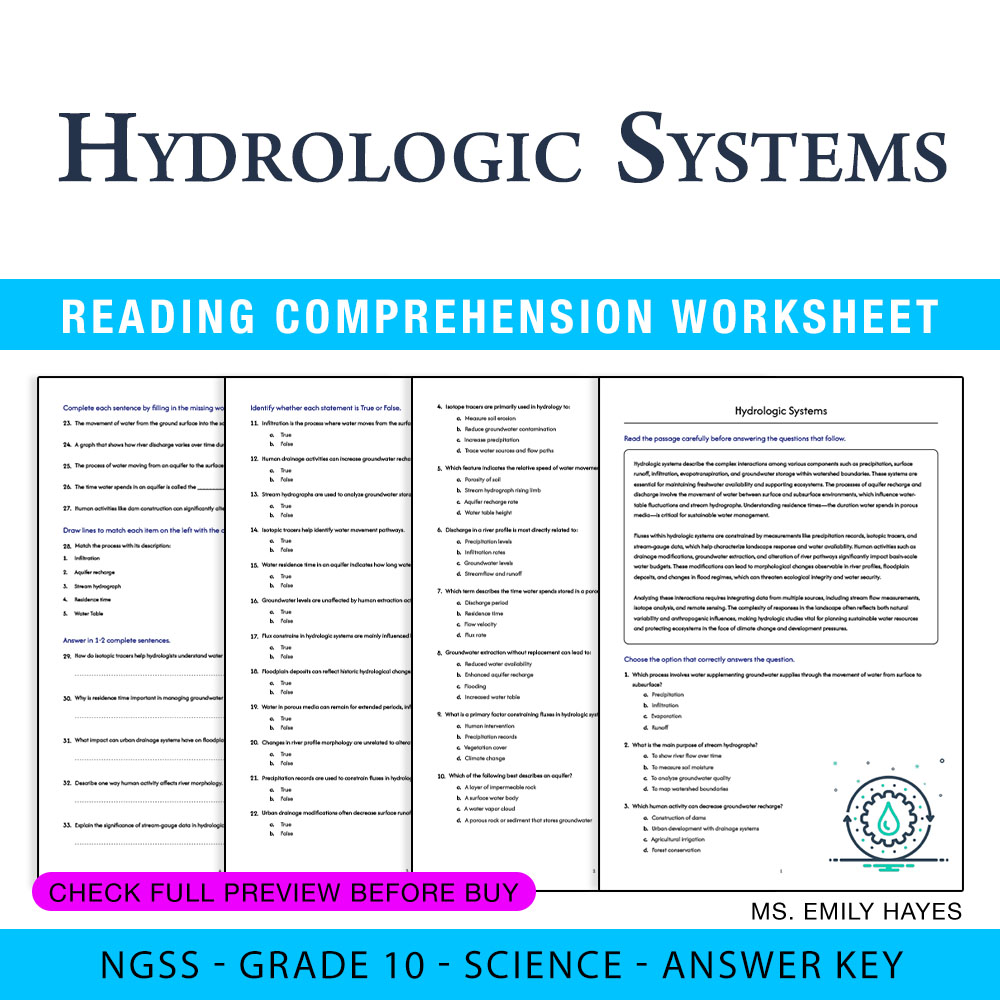
Grade 10 Science | Hydrologic Systems Worksheet (PDF+ Answer Key)
 Created byCopper Leaf Classroom
Learning Objectives
- Understand the key components and processes of hydrologic systems within watersheds.
- Analyze how human activities influence water budgets and landscape features.
- Interpret data related to precipitation, streamflow, and groundwater.
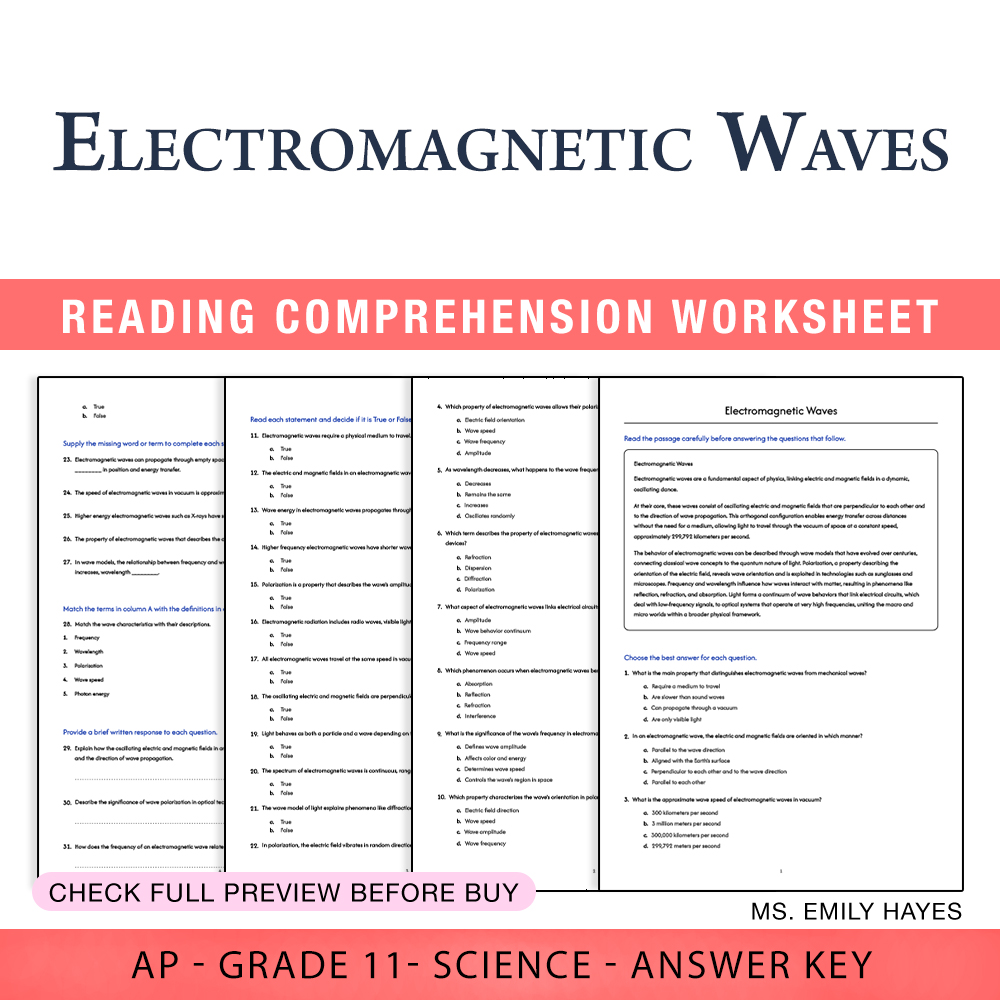
Grade 11 Science | Electromagnetic Waves Worksheet (PDF+ Answer Key)
Created byCopper Leaf ClassroomLearning Objectives
- Understand the oscillating nature of electric and magnetic fields in electromagnetic waves.
- Describe the wave structure and how electric and magnetic fields are oriented relative to each other.
- Explain the concept of wave speed in vacuum and how energy propagates via electromagnetic waves.
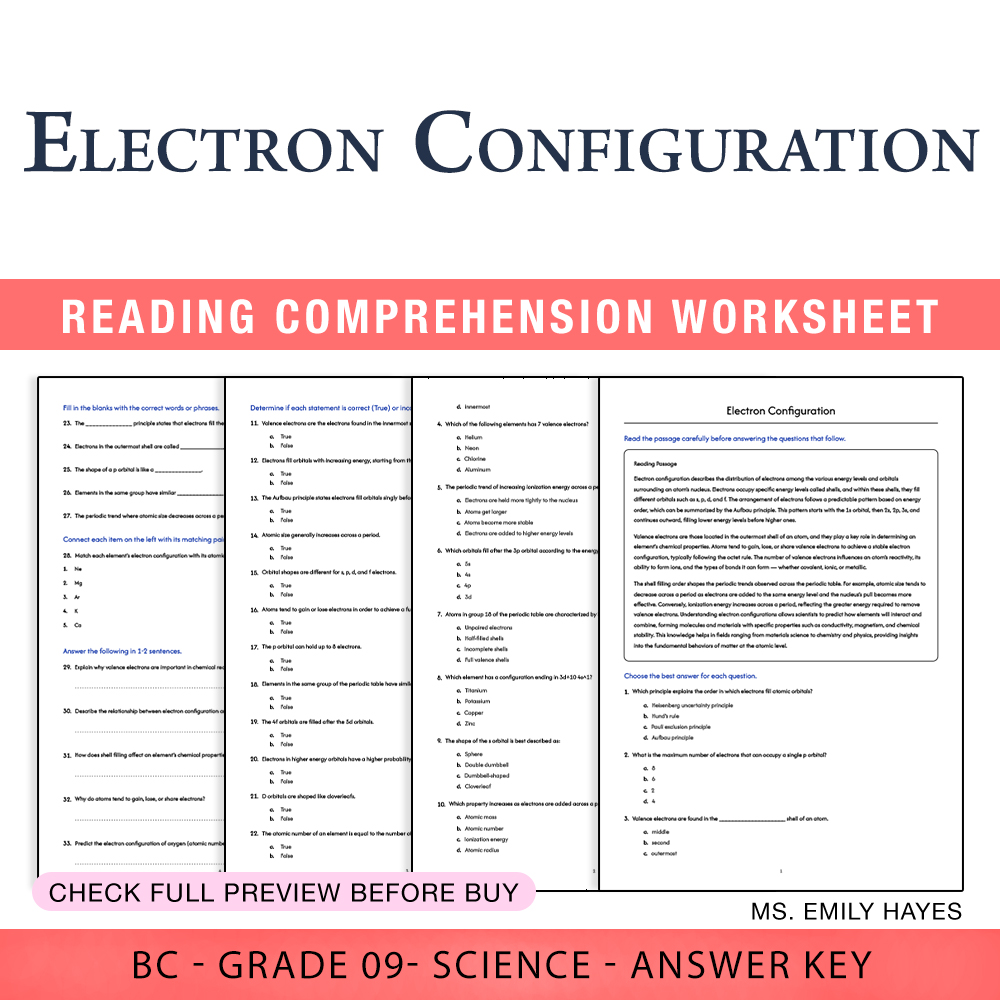
9th Grade Science | Electron Configuration Worksheet (PDF+ Answer Key)
Created byCopper Leaf ClassroomLearning Objectives
- Describe how electrons are distributed among energy levels and orbitals.
- Explain the importance of valence electrons in chemical reactivity and bonding.
- Identify the order in which electron shells are filled.
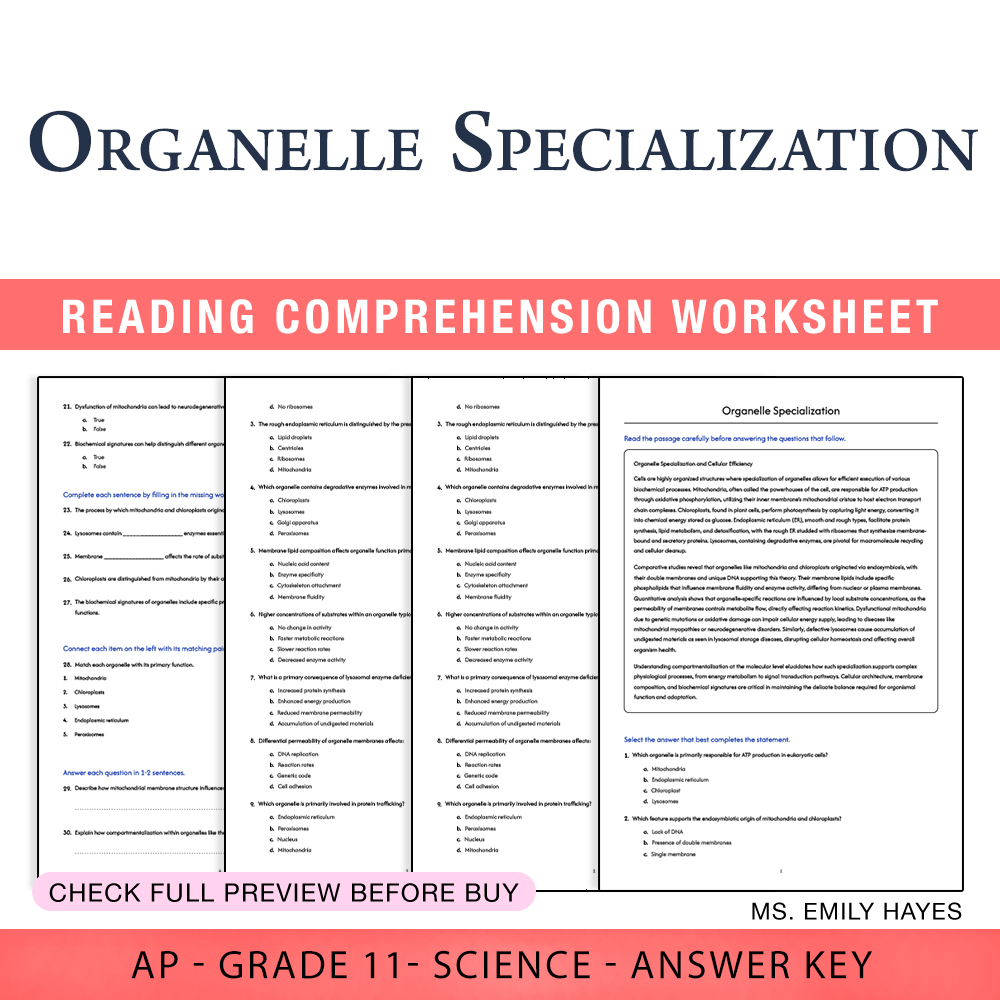
11th Grade Science |Organelle Specialization Assessment Worksheet (PDF+ Answers)
Created byCopper Leaf ClassroomLearning Objectives
- Analyze the structural and functional differences among cellular organelles such as mitochondria, chloroplasts, endoplasmic reticulum, and lysosomes.
- Explain how compartmentalization within cells optimizes metabolic pathways, protein trafficking, and signal transduction.
- Assess the origins of organelles and how membrane composition influences organelle function.
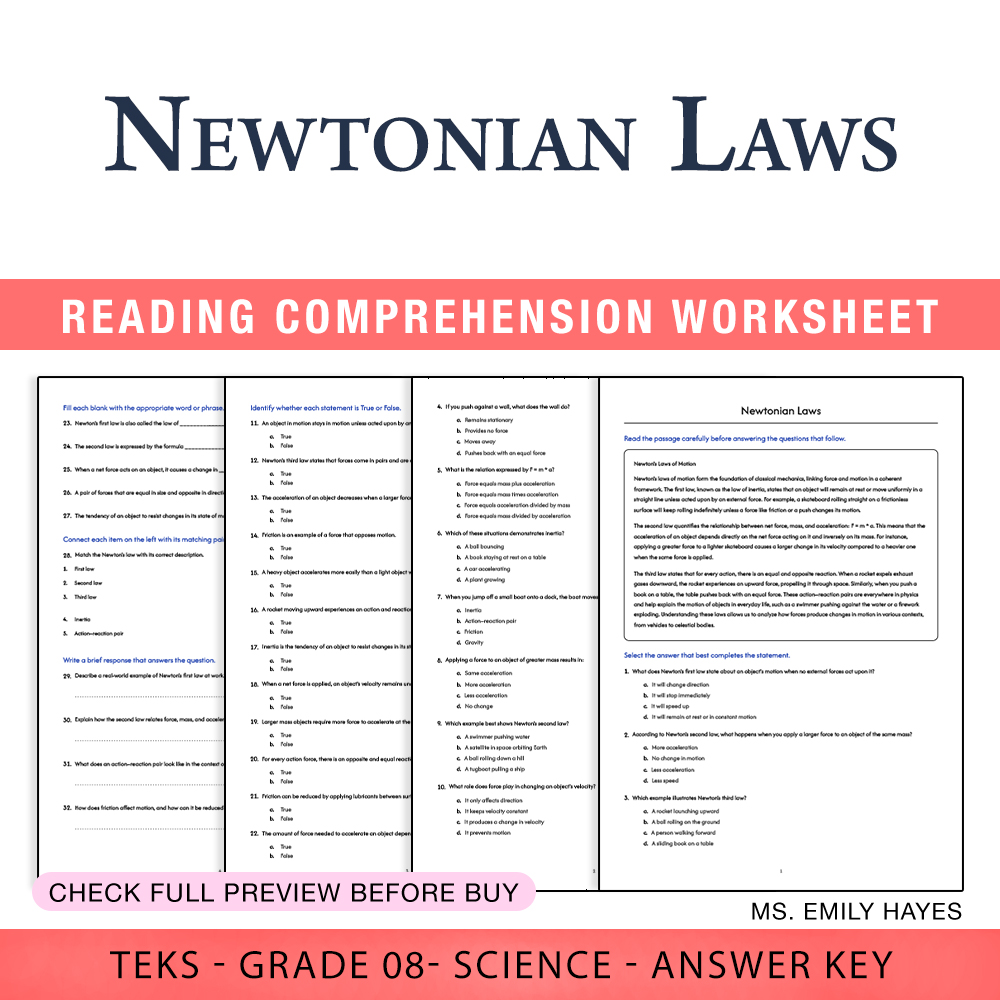
8th Grade Science | Newtonian Laws Worksheet (PDF+ Answer Key)
Created byCopper Leaf ClassroomLearning Objectives
- Explain Newton's three laws of motion and their significance.
- Identify examples of each law in real-world situations.
- Analyze how forces affect motion using proportional reasoning.
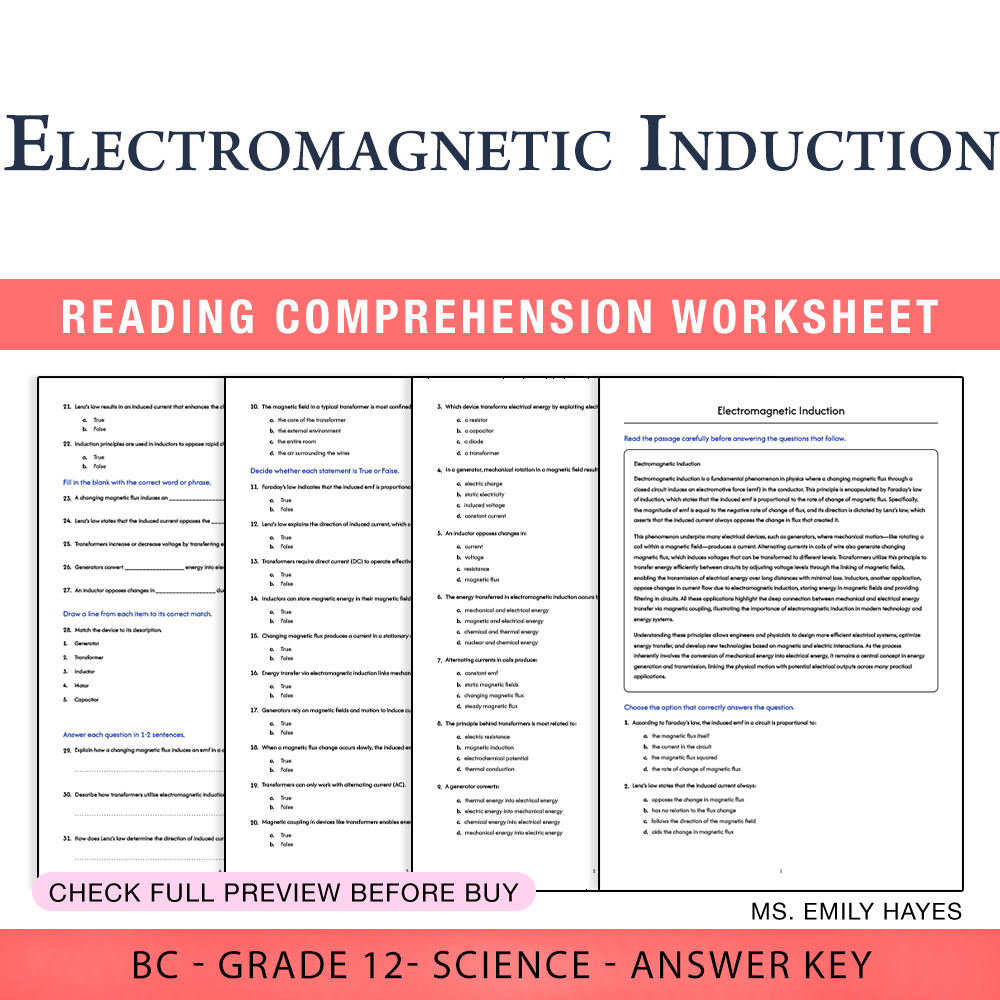
12th Grade Science | Electromagnetic Induction Worksheet (PDF + Answer Key)
Created byCopper Leaf ClassroomLearning Objectives
- Explain the principles of electromagnetic induction as described by Faraday's law.
- Describe how moving conductors and alternating currents produce induced voltages.
- Identify the applications of electromagnetic induction in devices like generators, transformers, and inductors.
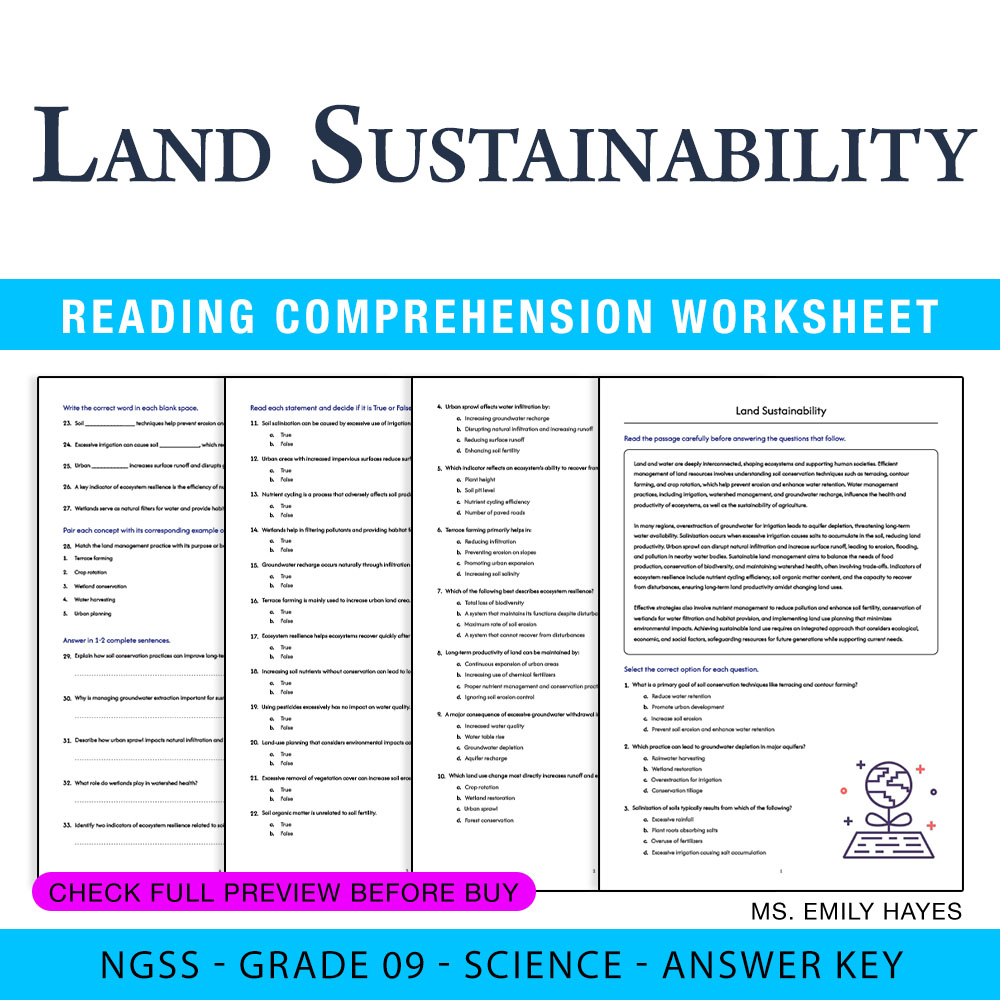
Grade 9 Science | Land Sustainability Worksheet (PDF+ Answer Key)
Created byCopper Leaf ClassroomLearning Objectives
- Understand the interactions between land use and water resources, including conservation and irrigation practices.
- Evaluate the impact of land management on ecosystem resilience, nutrient cycling, and long-term productivity.
- Analyze the trade-offs between agricultural productivity, biodiversity, and watershed health under different land-use scenarios.
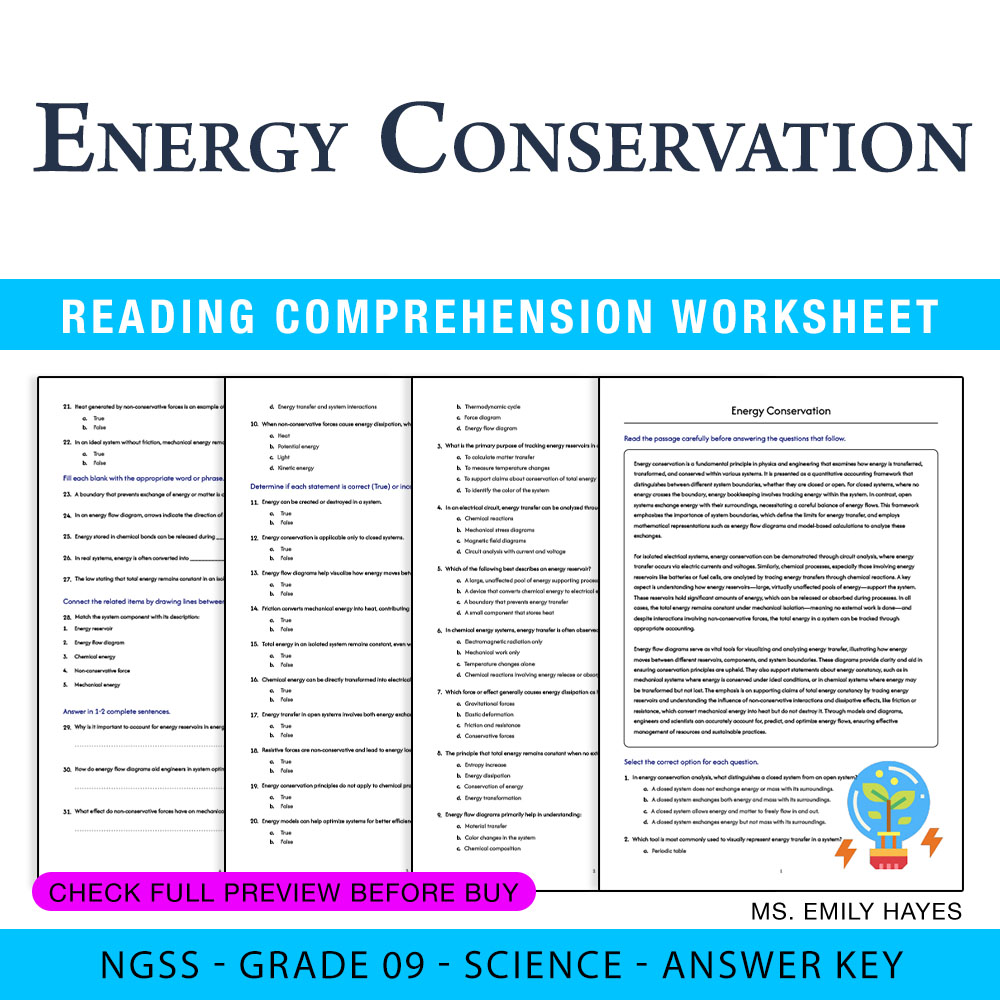
Grade 9 Science | Energy Conservation Worksheet (PDF + Answer Key)
Created byCopper Leaf ClassroomLearning Objectives
- Understand the concept of energy conservation within closed and open systems.
- Identify and analyze energy flow diagrams and their components.
- Apply mathematical representations to model energy transfer and reservoirs.
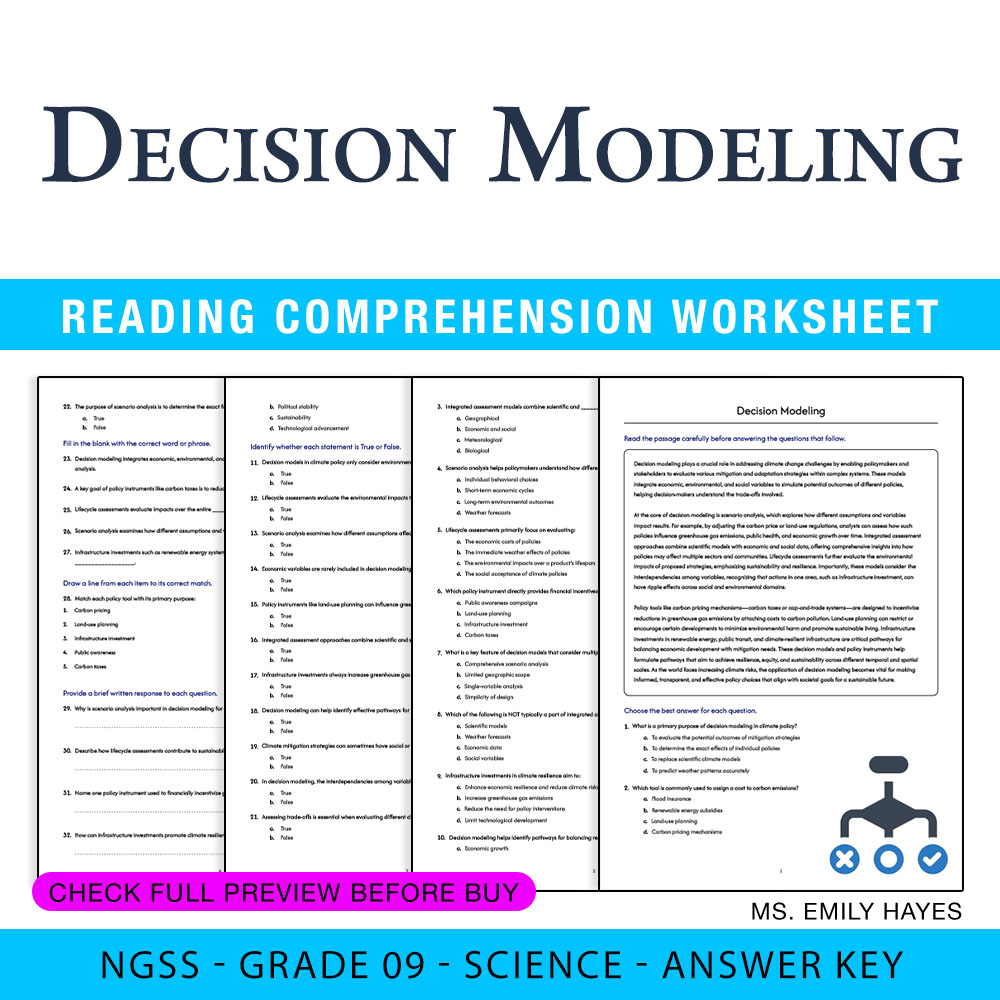
Grade 9 Science | Decision Modeling Worksheet (PDF+ Answer Key)
Created byCopper Leaf ClassroomLearning Objectives
- Describe how systems and decision models are used to evaluate climate mitigation and adaptation strategies.
- Explain the trade-offs among economic, environmental, and social variables in policy decision-making.
- Apply scenario analysis and integrated assessment approaches to real-world decision problems.
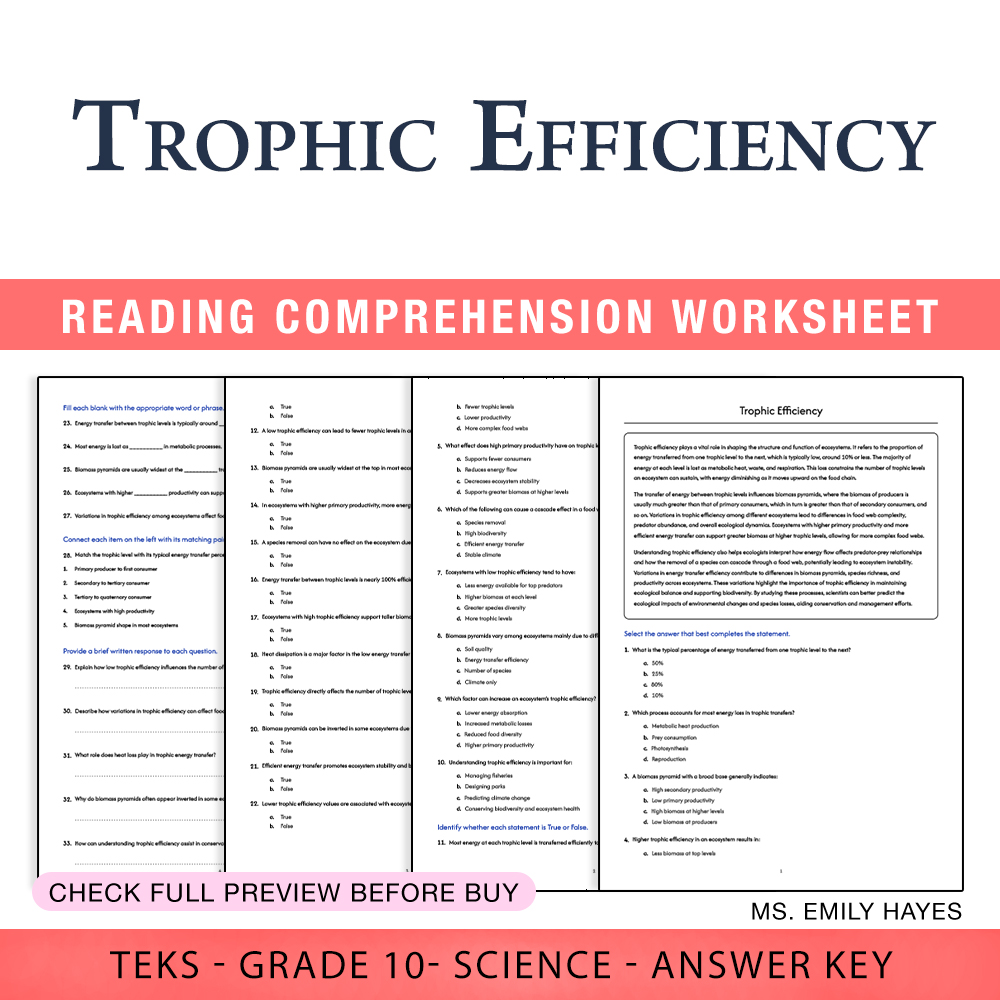
Grade 10 Science | Trophic Efficiency Worksheet (PDF+ Answer Key)
Created byCopper Leaf ClassroomLearning Objectives
- Understand the concept of trophic efficiency and how energy transfer between trophic levels affects ecosystems.
- Analyze the factors influencing biomass pyramids and trophic levels in various ecosystems.
- Evaluate the ecological significance of variations in trophic efficiency and primary productivity.
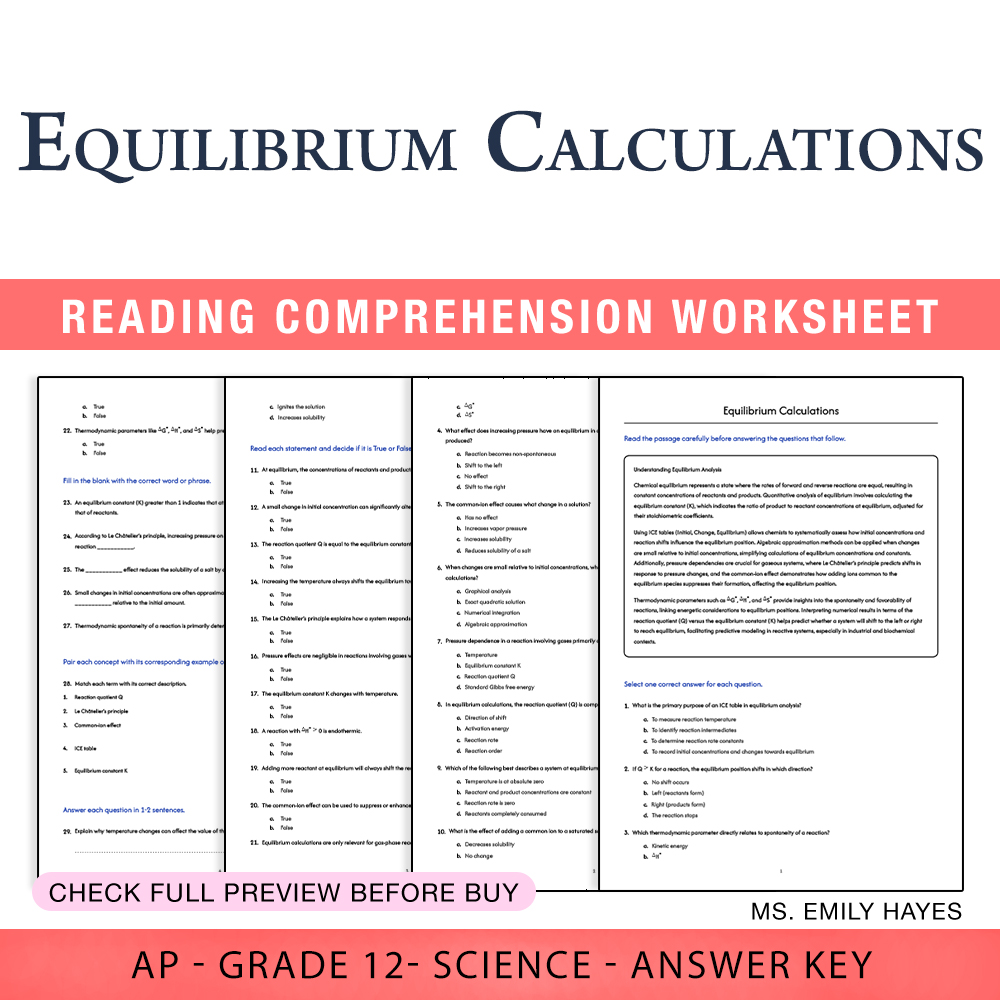
Grade 12 Science | Equilibrium Calculations Worksheet (PDF+ Answer Key)
Created byCopper Leaf ClassroomLearning Objectives
- Develop quantitative strategies for analyzing chemical equilibrium using ICE tables, reaction quotients, and algebraic methods.
- Interpret numerical equilibrium data to predict the direction of shifts and approximate equilibrium constants.
- Extend equilibrium analysis to pressure-dependent reactions and common-ion effects, linking thermodynamic parameters to system behavior.
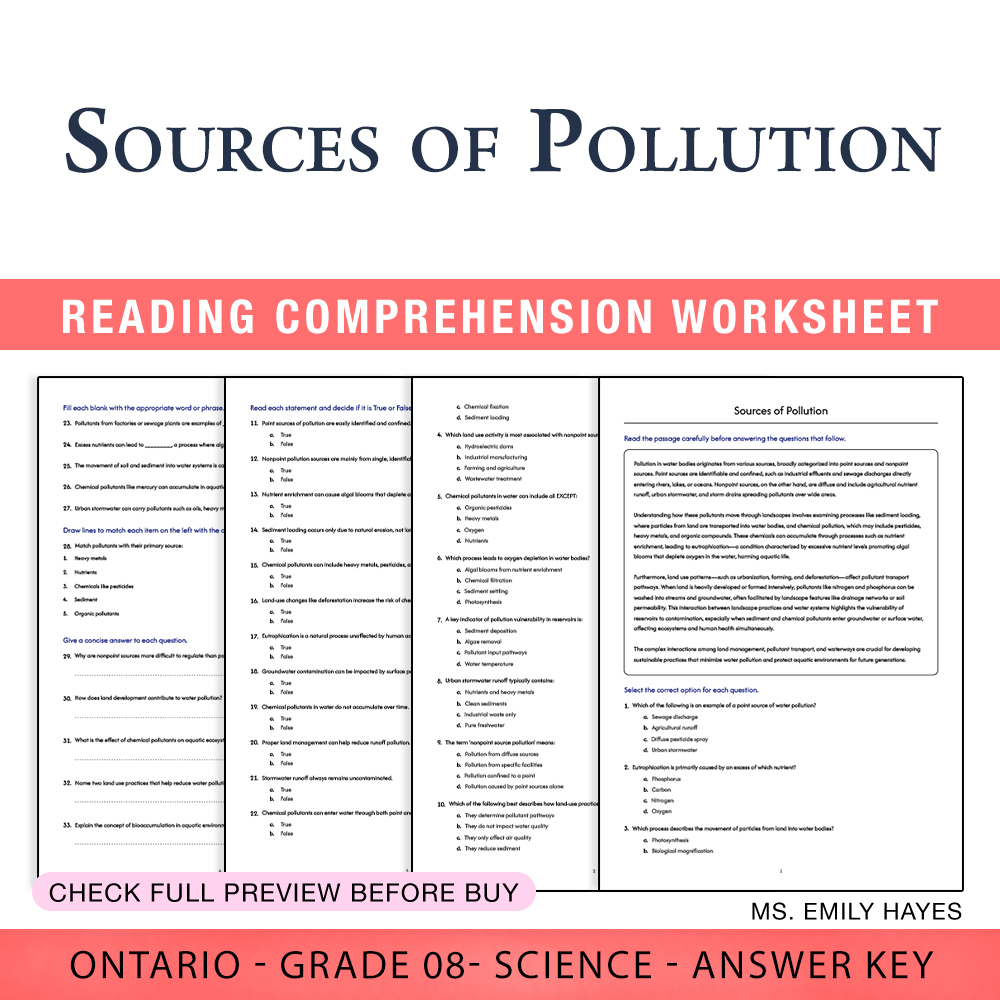
8th Grade Science | Sources of Pollution Worksheet (PDF + Answer Key)
Created byCopper Leaf ClassroomLearning Objectives
- Differentiate between point and nonpoint sources of pollution with examples.
- Explain the processes of nutrient enrichment, eutrophication, and oxygen depletion in water bodies.
- Describe how land use and landscape practices influence pollutant transport pathways.
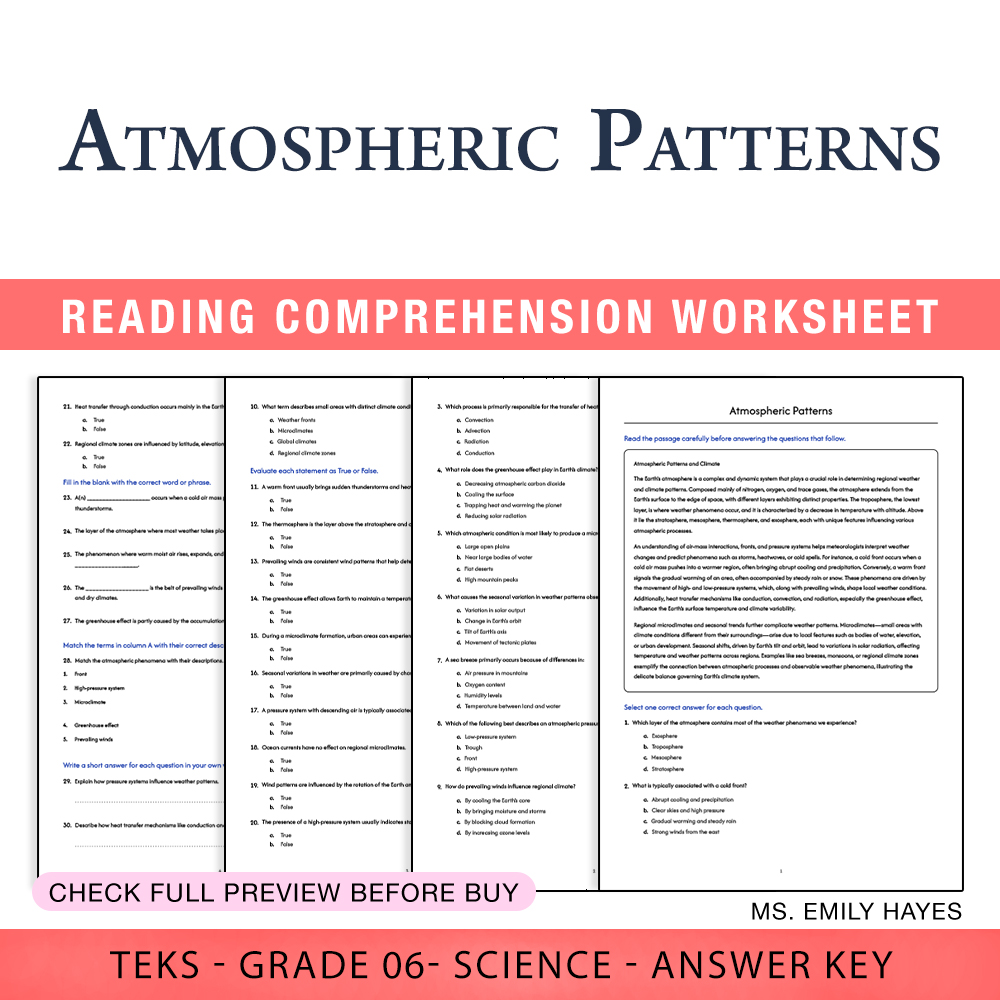
6th Grade Science | Atmospheric Patterns Worksheet (PDF+ Answer Key)
Created byCopper Leaf ClassroomLearning Objectives
- Understand the structure of the atmosphere and how it affects weather and climate.
- Identify the roles of air masses, pressure systems, and fronts in weather phenomena.
- Explain how heat transfer mechanisms and the greenhouse effect influence regional climate variability.
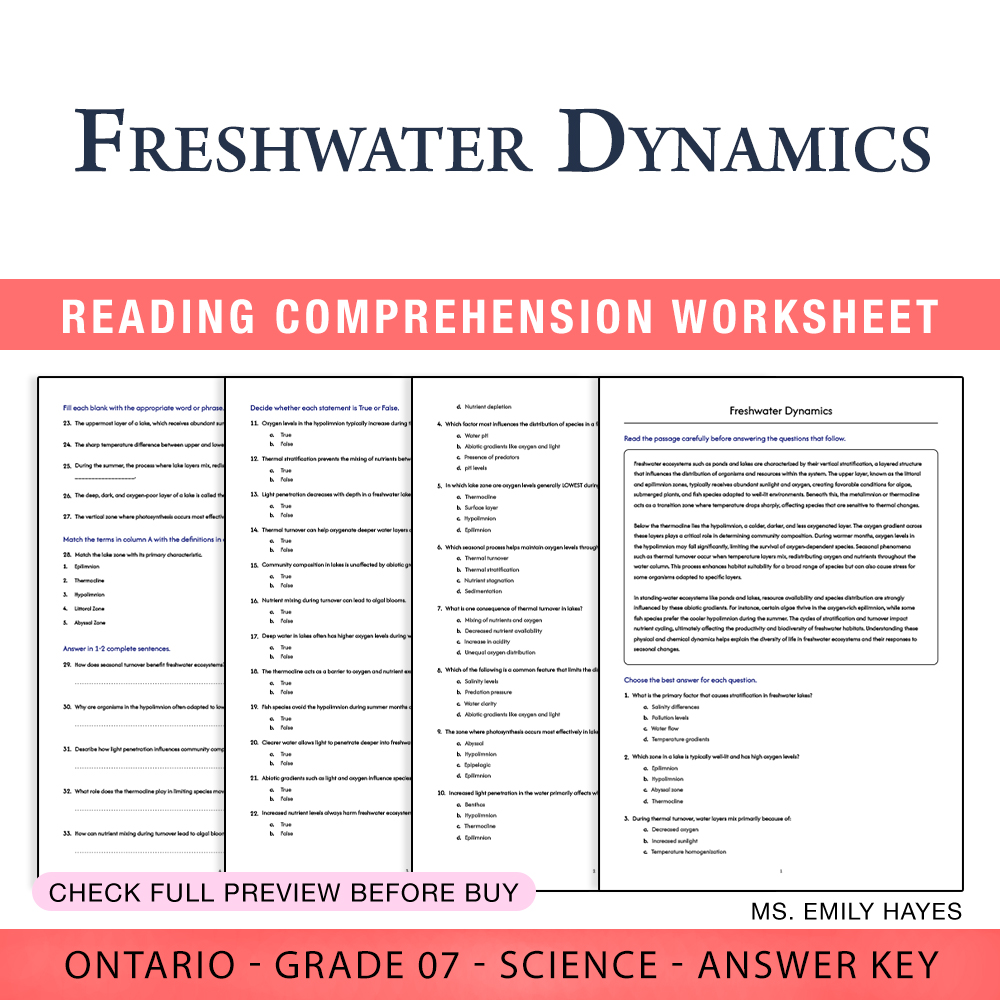
7th Grade Science | Freshwater Dynamics Worksheet (PDF+ Answer Key)
Created byCopper Leaf ClassroomLearning Objectives
- Describe the structure and stratification of freshwater systems such as ponds and lakes.
- Explain how abiotic gradients like oxygen levels, light penetration, and temperature influence community composition and species distribution.
- Analyze seasonal phenomena such as thermal turnover and their effects on dissolved oxygen and nutrient mixing.
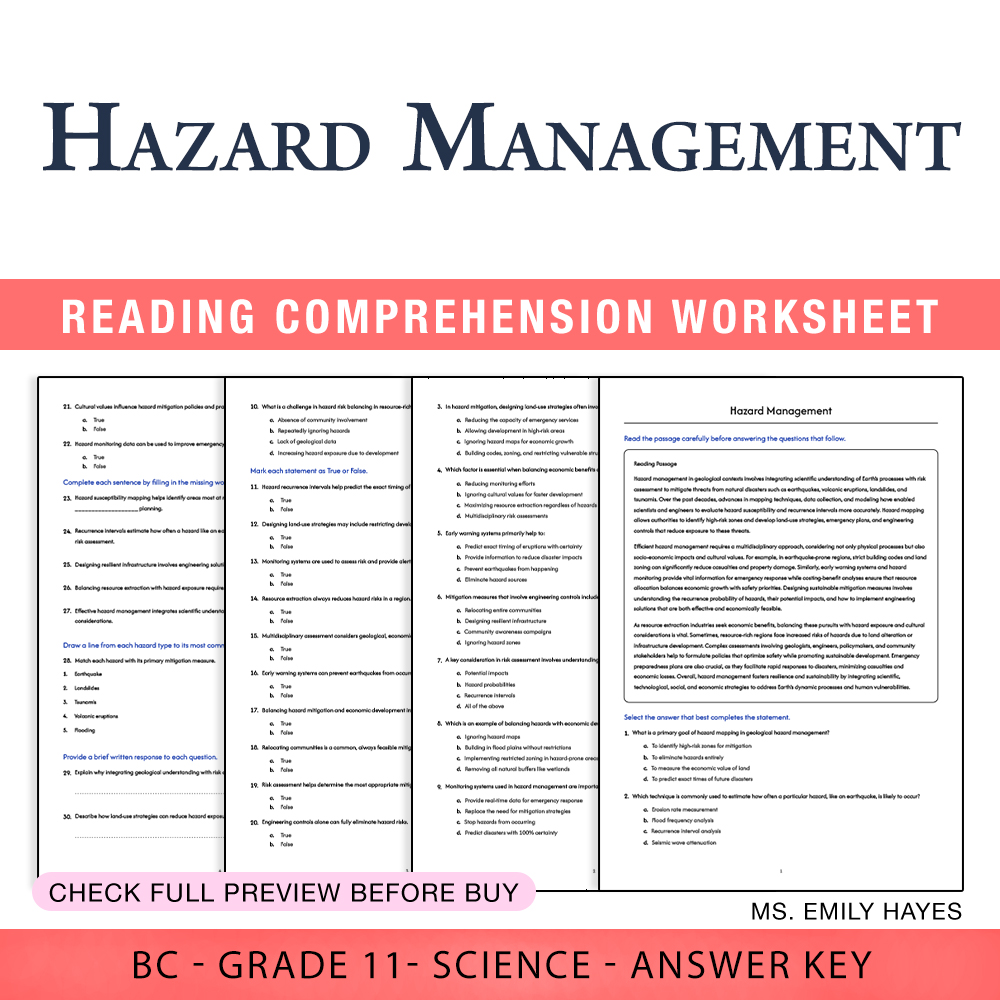
Grade 11 Science | Hazard Management Worksheet (PDF + Answer Key)
Created byCopper Leaf ClassroomLearning Objectives
- Understand the principles of hazard assessment and risk evaluation in geological contexts.
- Identify techniques for mapping hazards and designing mitigation strategies.
- Evaluate the balance between resource exploitation and hazard mitigation considering economic, cultural, and technical factors.
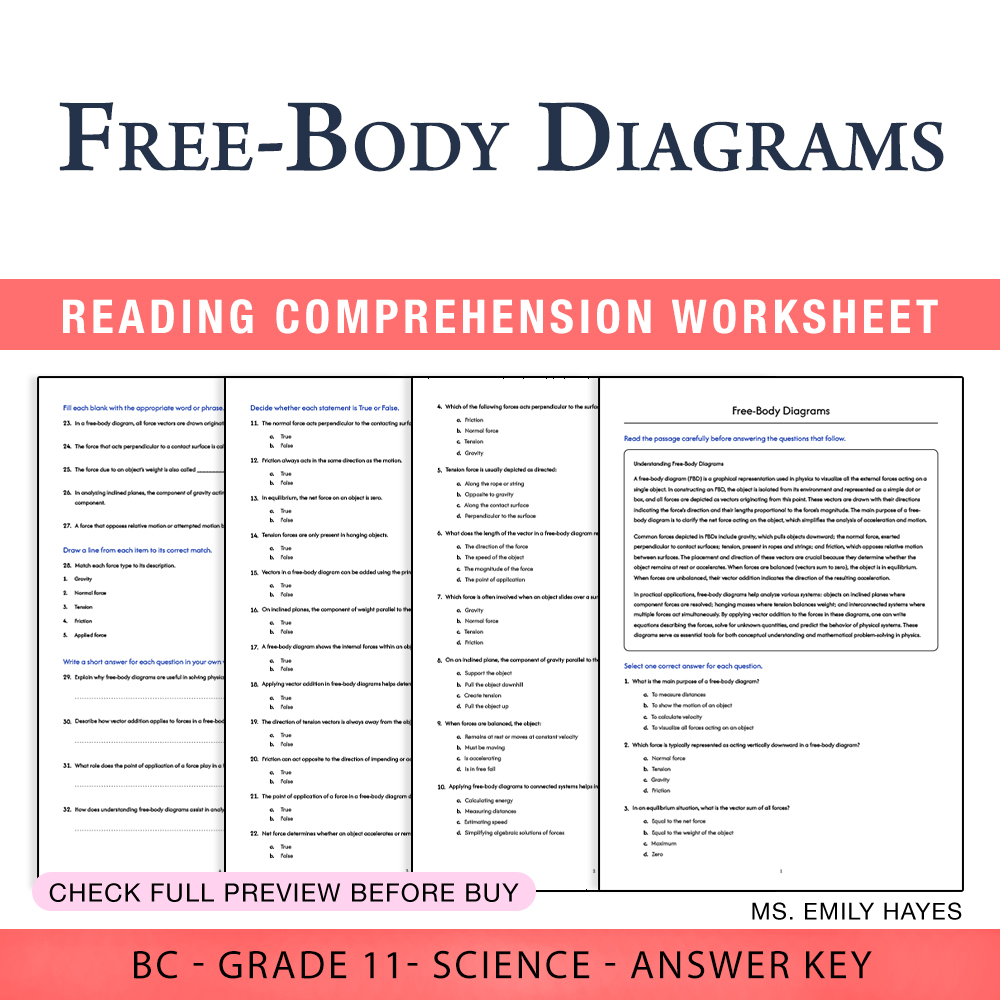
Grade 11 Science | Free-Body Diagrams Worksheet (PDF + Answer Key)
Created byCopper Leaf ClassroomLearning Objectives
- Understand how to represent all forces acting on an object using free-body diagrams.
- Identify the common force types involved in free-body diagrams and their directions.
- Apply vector addition to determine net force and predict motion or equilibrium.
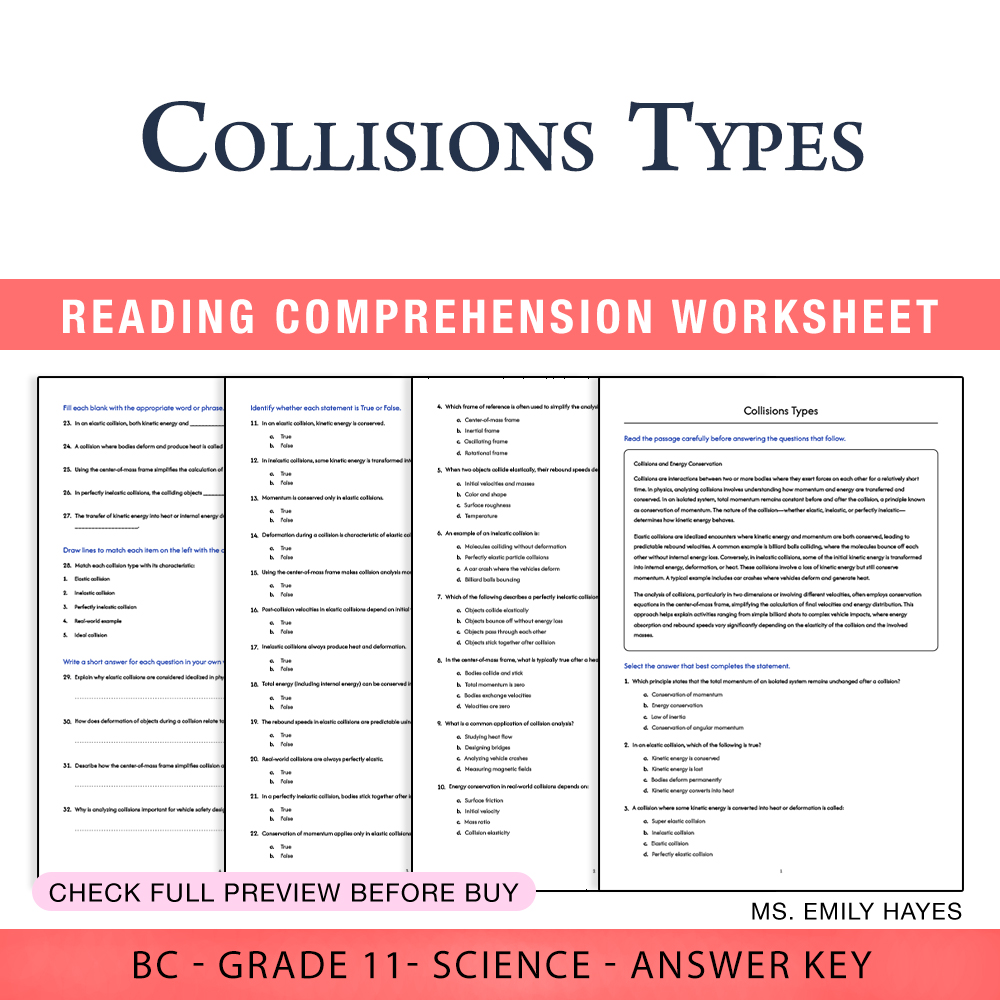
Grade 11 Science | Collisions Types Worksheet (PDF + Answer Key)
Created byCopper Leaf ClassroomLearning Objectives
- Understand the principles of momentum conservation in different types of collisions
- Differentiate between elastic and inelastic collisions based on energy transfer
- Apply conservation laws and center-of-mass frames to analyze collision scenarios
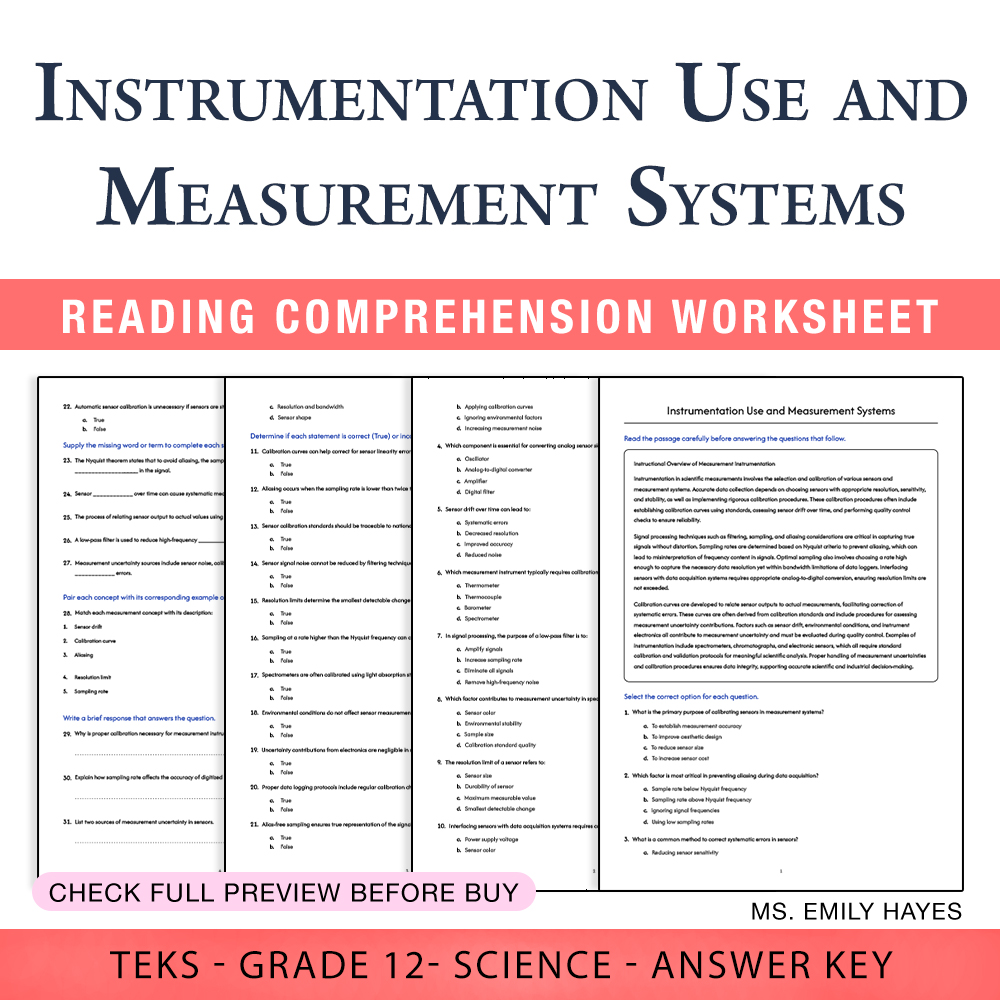
Grade 12 Science | Instrumentation Use & Measurement Systems (PDF + Answer Key)
Created byCopper Leaf ClassroomLearning Objectives
- Understand the selection and calibration of sensors for accurate data acquisition.
- Explain the principles of signal processing, sampling rates, and aliasing considerations.
- Apply calibration curves and quality control procedures to spectrometers, chromatographs, and sensors.
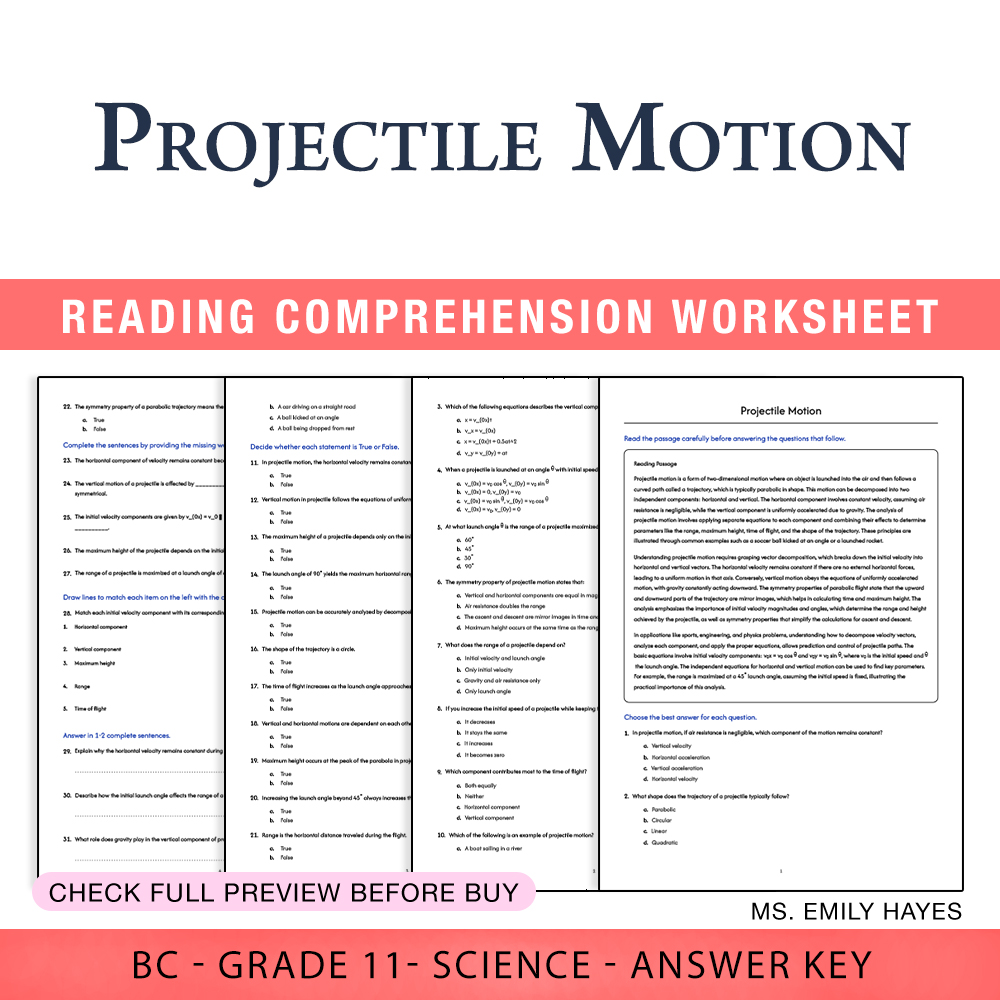
11th Grade Science | Projectile Motion Worksheet (PDF + Answer Key)
Created byCopper Leaf ClassroomLearning Objectives
- Understand the components of projectile motion and their independent equations.
- Describe the effects of initial speed and launch angle on trajectory, range, and maximum height.
- Analyze vector decomposition of motion into horizontal and vertical components.
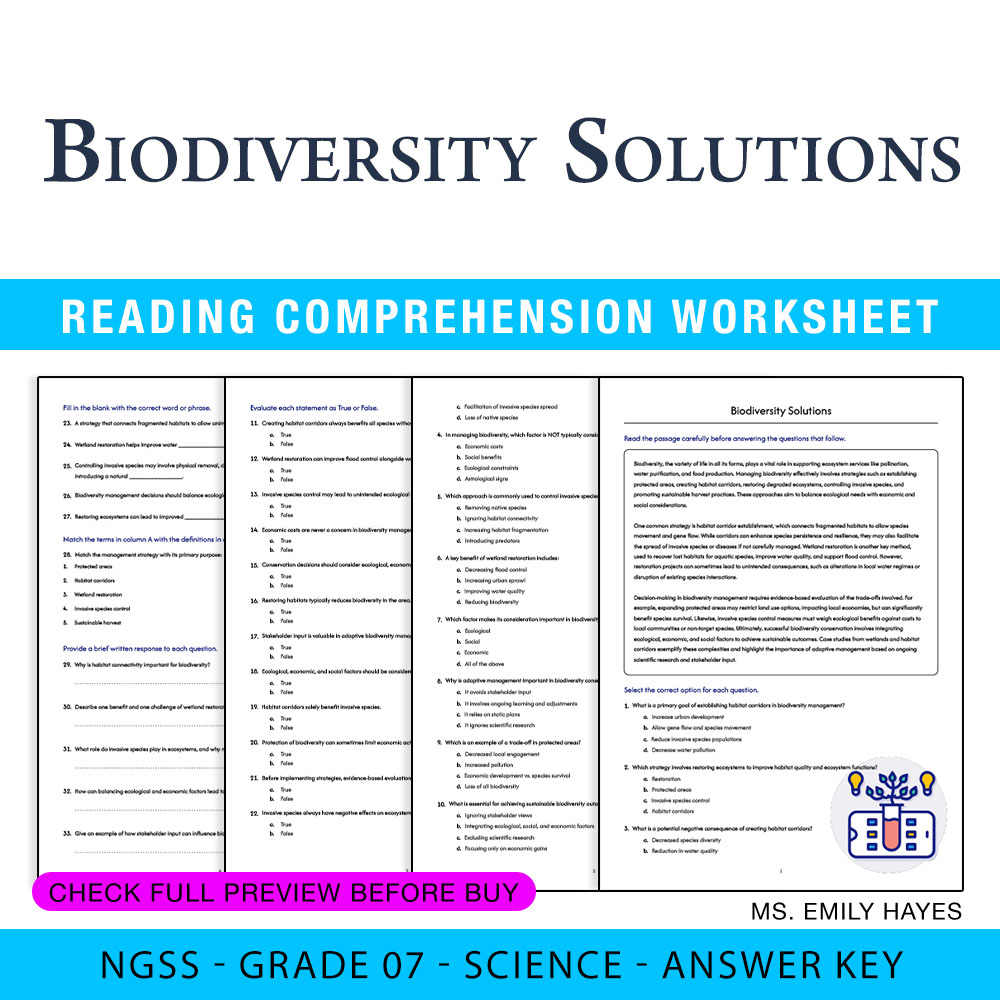
7th Grade Science | Biodiversity Solutions Worksheet (PDF +Answer Key)
Created byCopper Leaf ClassroomLearning Objectives
- Understand different management strategies used to maintain biodiversity and their ecological, economic, and social trade-offs.
- Evaluate case examples such as wetland restoration and habitat corridor establishment for their benefits and potential unintended effects.
- Compare and analyze alternative biodiversity conservation approaches using evidence-based reasoning.
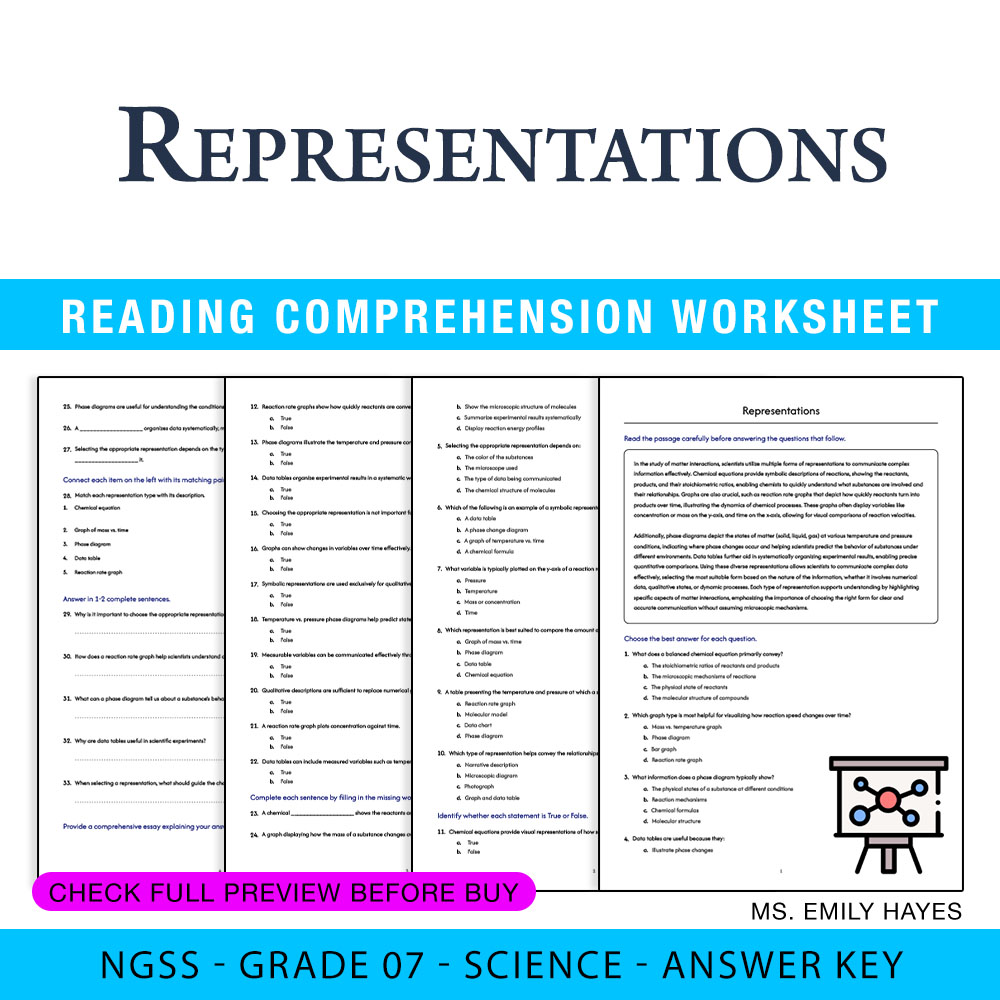
7th Grade Science | Representations Worksheet (PDF +Answer Key)
Created byCopper Leaf ClassroomLearning Objectives
- Understand different types of representations used to convey matter interactions, including chemical equations, graphs, and data tables.
- Interpret and analyze various representations such as reaction rate graphs, stoichiometric ratios, and phase diagrams.
- Select appropriate representations for quantitative comparison and communicate relationships among measurable variables.
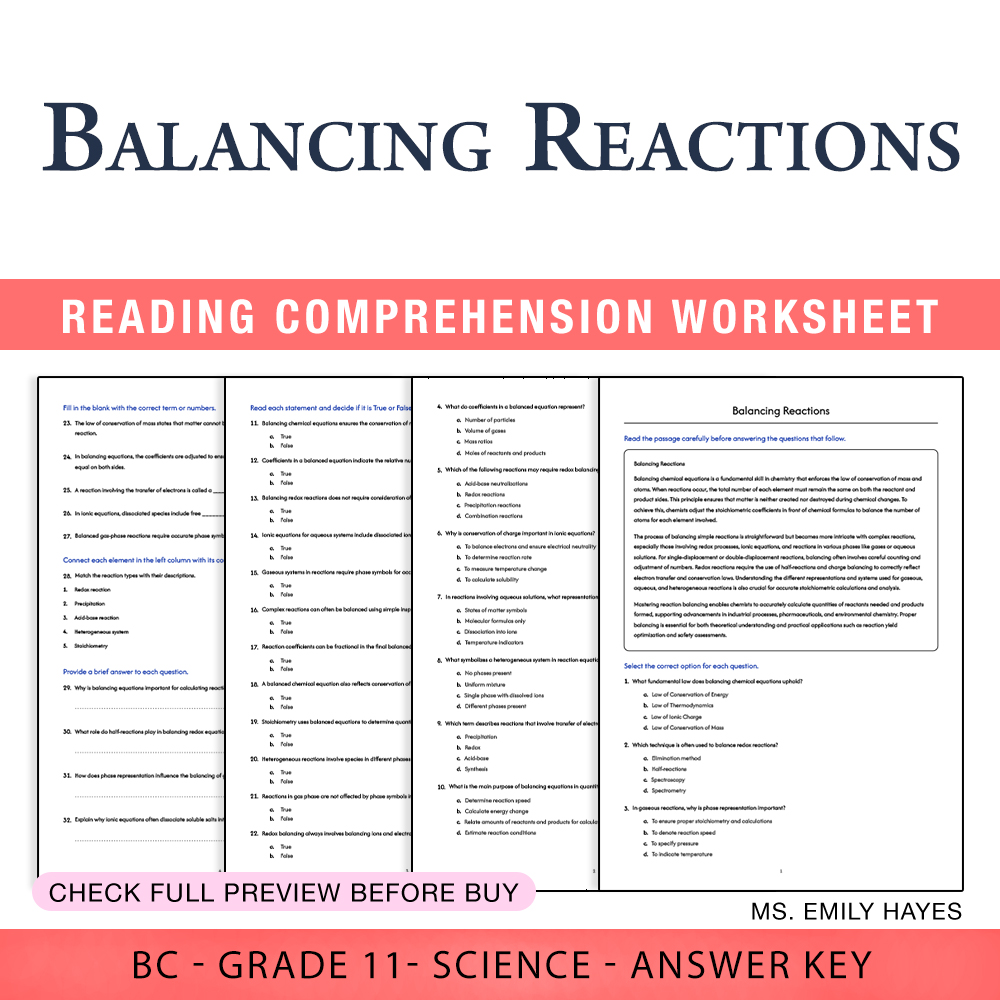
11th Grade Science | Balancing Reactions Worksheet (PDF + Answer Key)
Created byCopper Leaf ClassroomLearning Objectives
- Explain the importance of conservation of mass and atoms in chemical equations.
- Identify methods for balancing simple and complex chemical reactions.
- Apply stoichiometric coefficients to balance equations correctly.
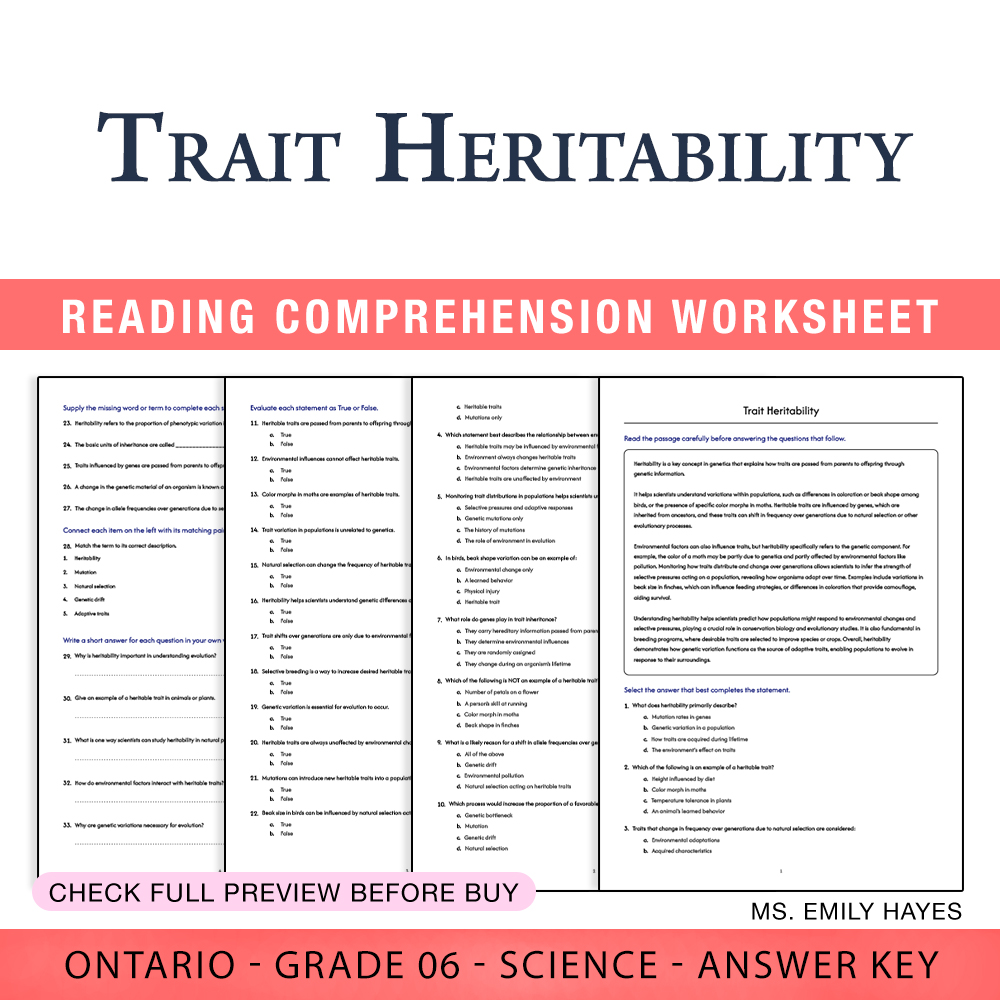
6th Grade Science | Trait Heritability Worksheet (PDF + Answer Key)
Created byCopper Leaf ClassroomLearning Objectives
- Explain the concept of heritability and how it relates to genetic variation in populations.
- Distinguish between heritable and environmental influences on traits.
- Describe basic mechanisms of inheritance and how they affect trait distribution over generations.
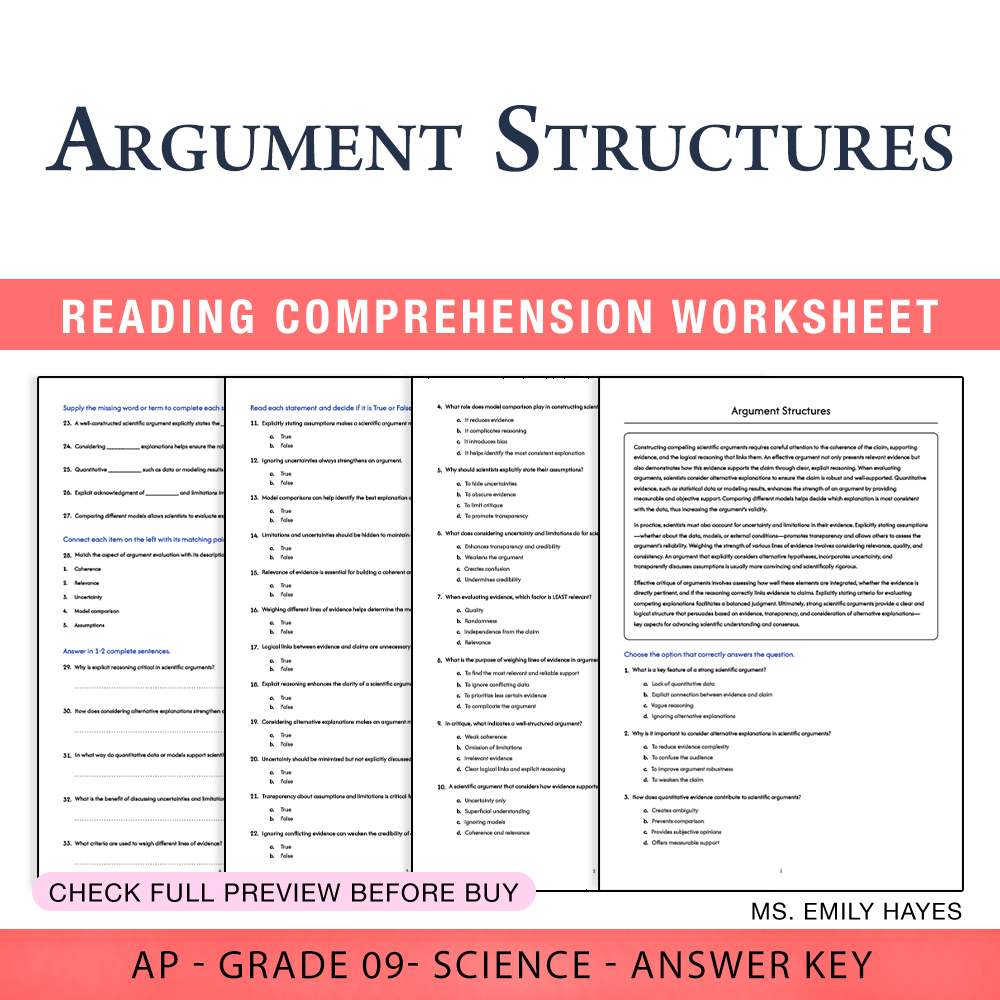
Grade 9 Science | Argument Structures Worksheet (PDF+ Answer Key)
Created byCopper Leaf ClassroomLearning Objectives
- Define the components of scientific arguments, including claim, evidence, and reasoning.
- Analyze coherence, relevance, and alternative explanations in constructing scientific arguments.
- Evaluate how quantitative evidence and model comparison strengthen arguments.
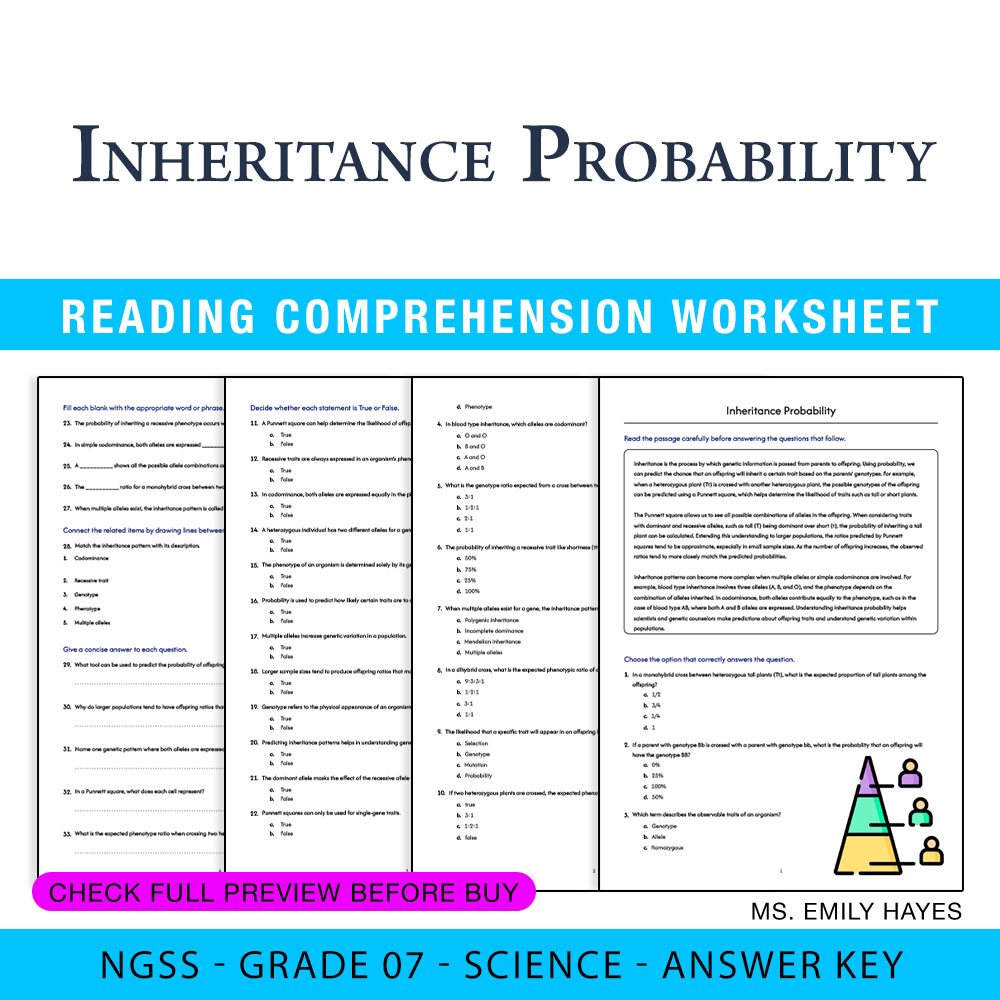
7th Grade Science | Inheritance Probability Worksheet (PDF+ Answer Key)
Created byCopper Leaf ClassroomLearning Objectives
- Understand how probability concepts apply to genetic inheritance and predict offspring traits using Punnett squares.
- Calculate expected genotype and phenotype ratios for monohybrid crosses involving dominant and recessive alleles.
- Connect outcomes of Punnett squares to the probability of inheritance and extend predictions to larger populations.
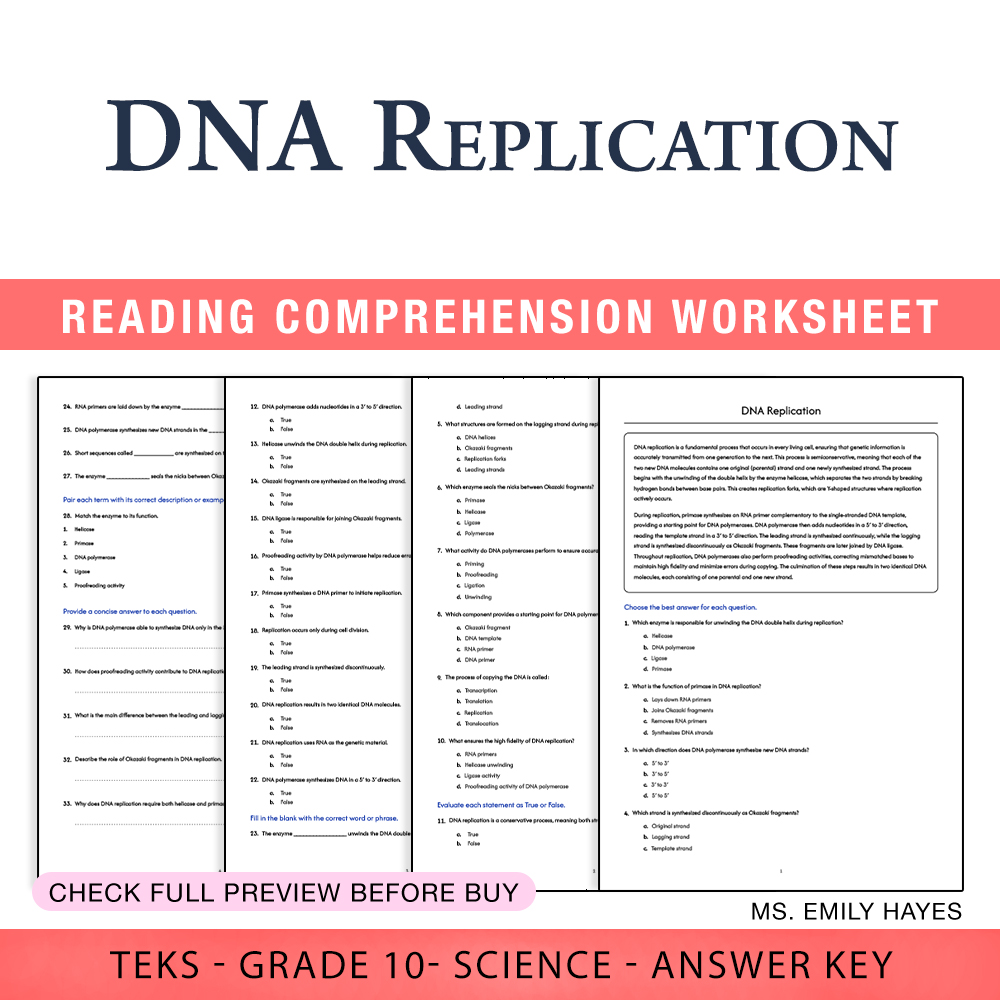
Grade 10 Science | DNA Replication Worksheet (PDF+ Answer Key)
Created byCopper Leaf ClassroomLearning Objectives
- Explain the process of DNA replication and the roles of key enzymes.
- Describe the steps involved in DNA unwinding, primer formation, and nucleotide addition.
- Differentiate between leading and lagging strand synthesis, including Okazaki fragments.
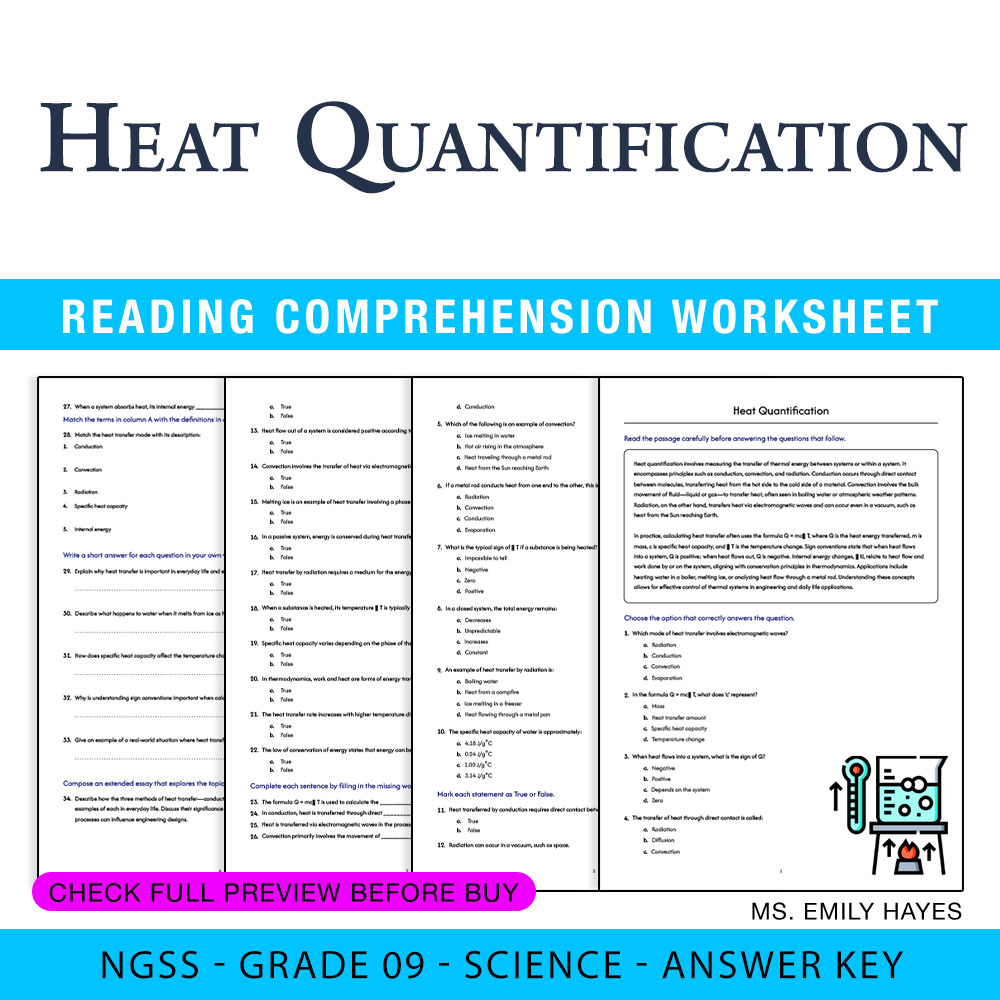
9th Grade Science | Heat Quantification Worksheet (PDF + Answer Key)
Created byCopper Leaf ClassroomLearning Objectives
- Understand and explain the different modes of heat transfer: conduction, convection, and radiation.
- Perform calculations involving specific heat capacity, mass, and temperature change to determine heat transfer and energy changes.
- Interpret sign conventions for heat flow and internal energy changes in closed systems.
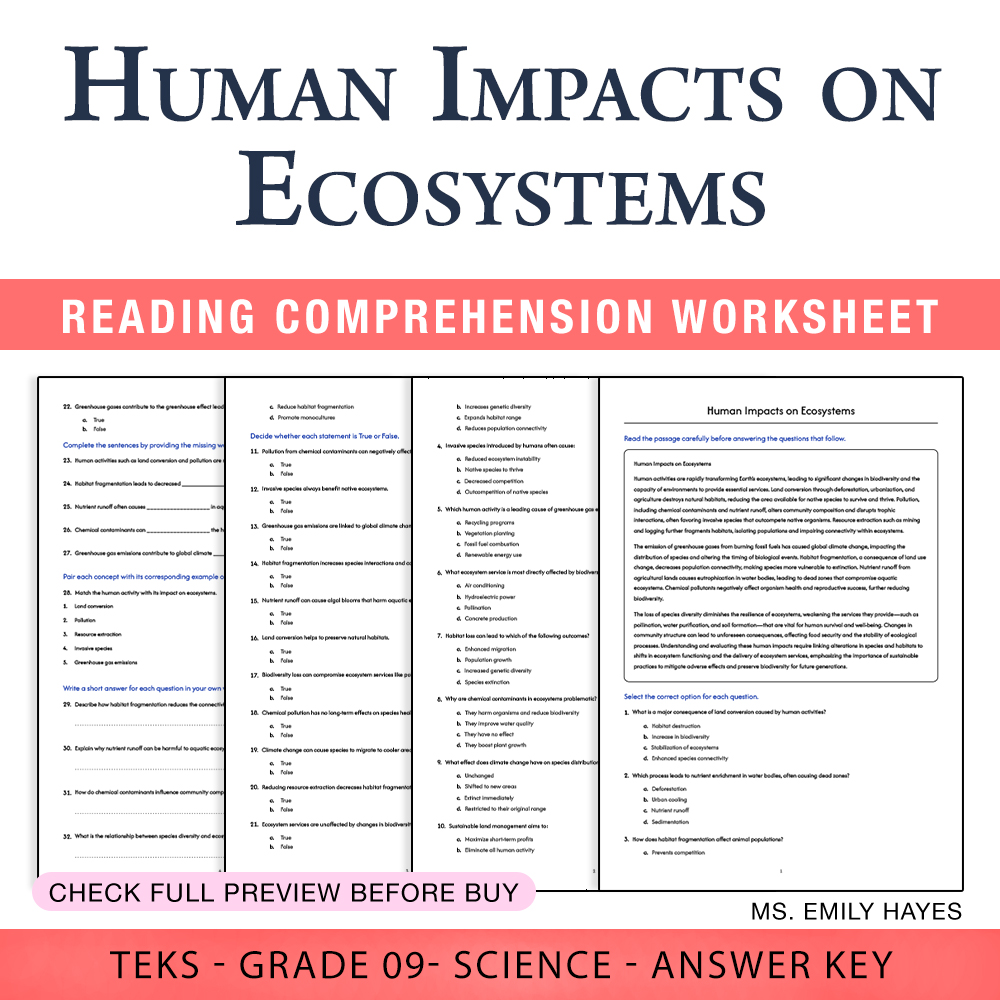
9th Grade Science | Human Impacts on Ecosystems Worksheet (PDF+ Answer Key)
Created byCopper Leaf ClassroomLearning Objectives
- Understand how human activities affect biodiversity and ecosystem services.
- Identify various forms of land conversion, pollution, resource extraction, invasive species, and greenhouse gas emissions.
- Explain the concepts of habitat fragmentation and nutrient runoff.
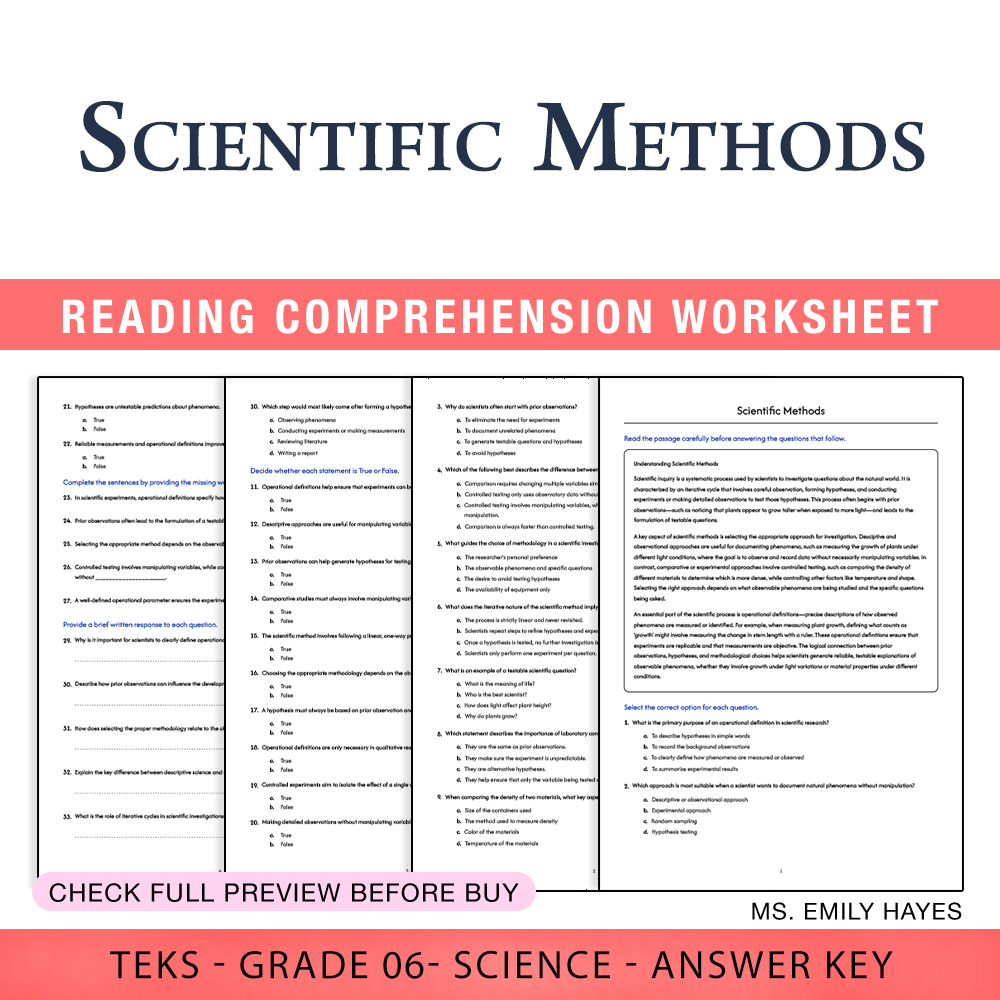
6th Grade Science | Scientific Methods Worksheet (PDF+ Answer Key)
Created byCopper Leaf ClassroomLearning Objectives
- Understand the iterative nature of scientific methods and how observations inform hypotheses.
- Differentiate between descriptive, observational approaches and comparative, experimental approaches.
- Identify operational definitions and appropriate methodologies based on observable phenomena.
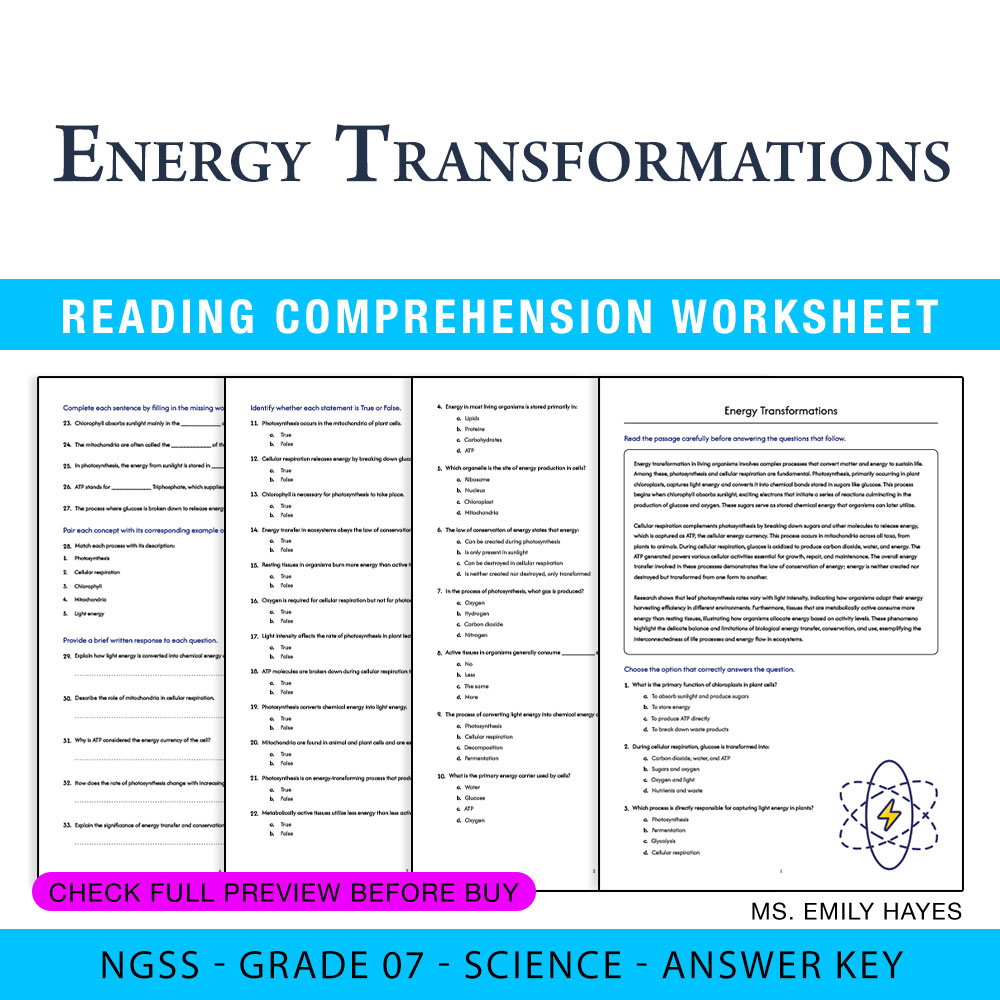
7th Grade Science | Energy Transformations Worksheet (PDF + Answer Key)
Created byCopper Leaf ClassroomLearning Objectives
- Explain how light energy is converted into chemical energy during photosynthesis.
- Describe how cellular respiration releases energy stored in food molecules.
- Connect processes of sugar production in chloroplasts to ATP generation in mitochondria across different organisms.
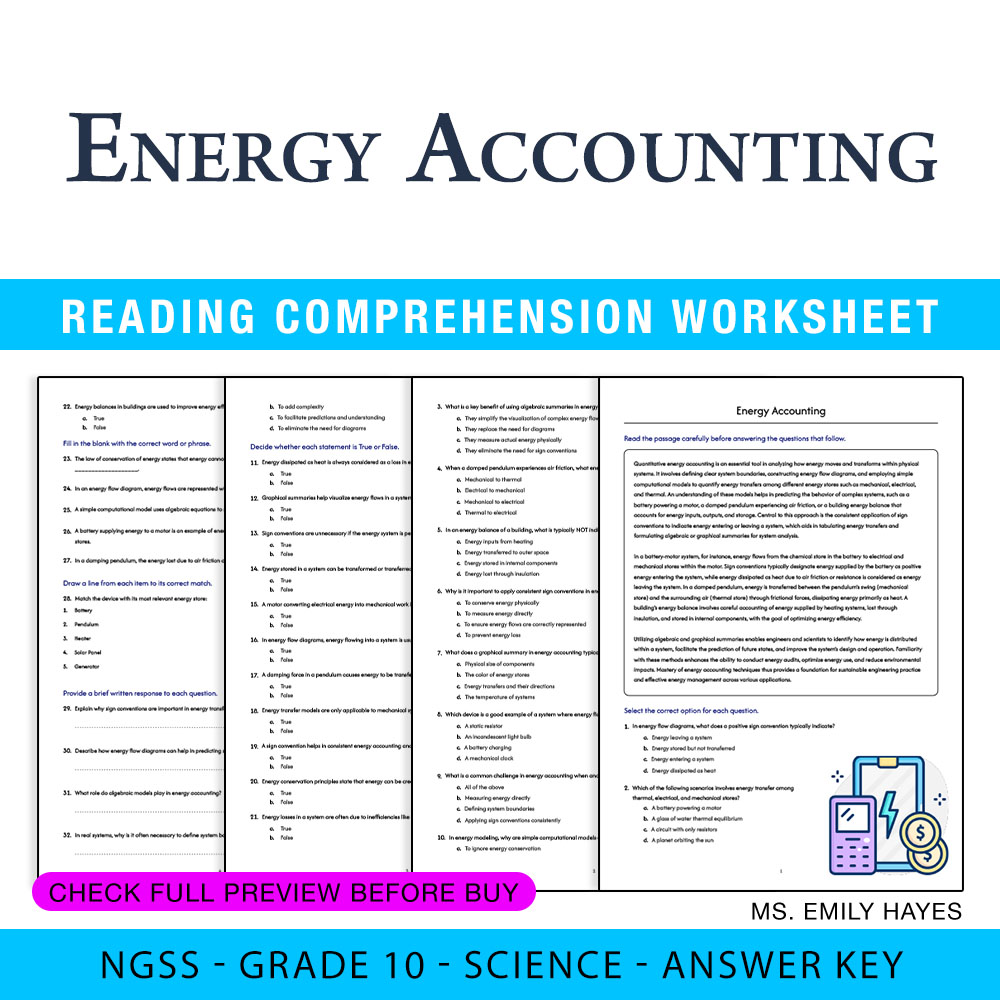
10th Grade Science | Energy Accounting Worksheet (PDF + Answer Key)
Created byCopper Leaf ClassroomLearning Objectives
- Understand the principles of energy flow in physical systems using energy flow diagrams.
- Apply system boundary definitions and sign conventions effectively in energy calculations.
- Use algebraic and graphical methods to summarize energy transfers and predict energy distribution.
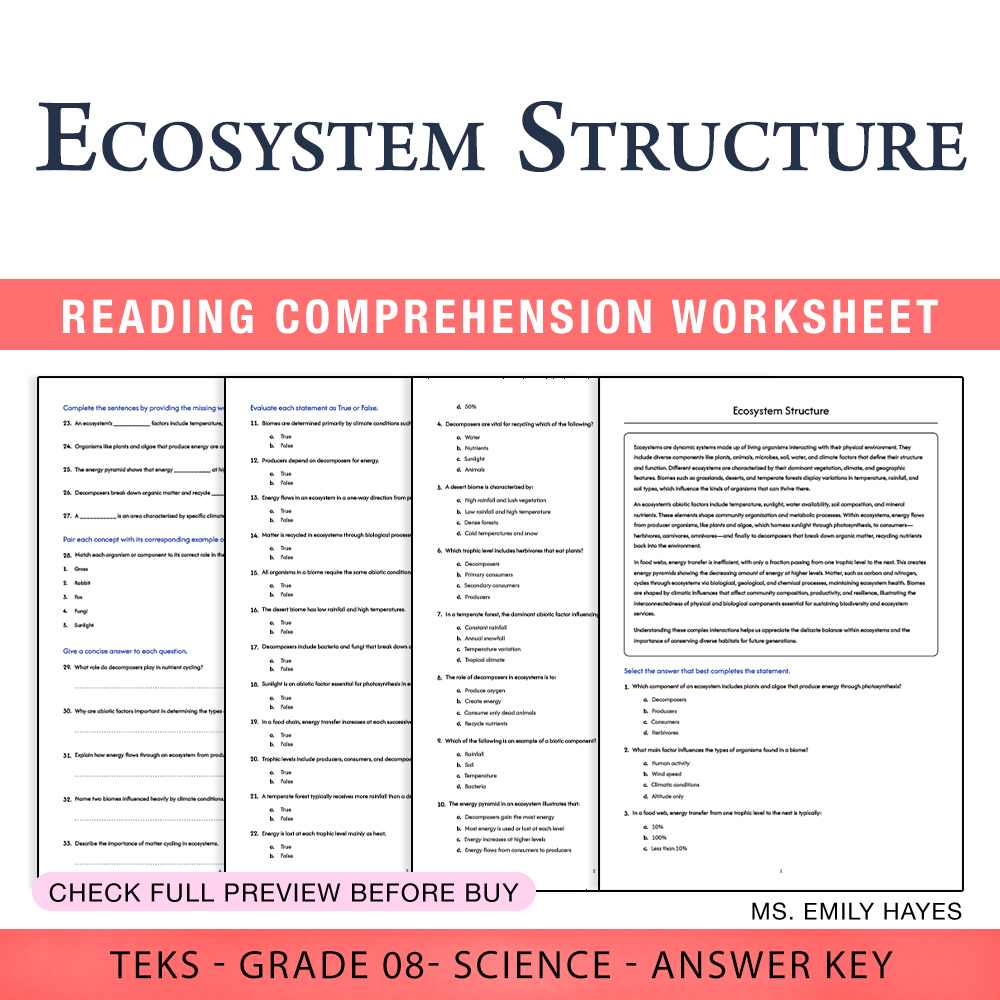
8th Grade Science | Ecosystem Structure Worksheet (PDF+ Answer Key)
Created byCopper Leaf ClassroomLearning Objectives
- Describe the components and organization of ecosystems and biomes.
- Identify abiotic factors that influence community composition.
- Understand the roles of producers, consumers, and decomposers in food webs and energy flow.
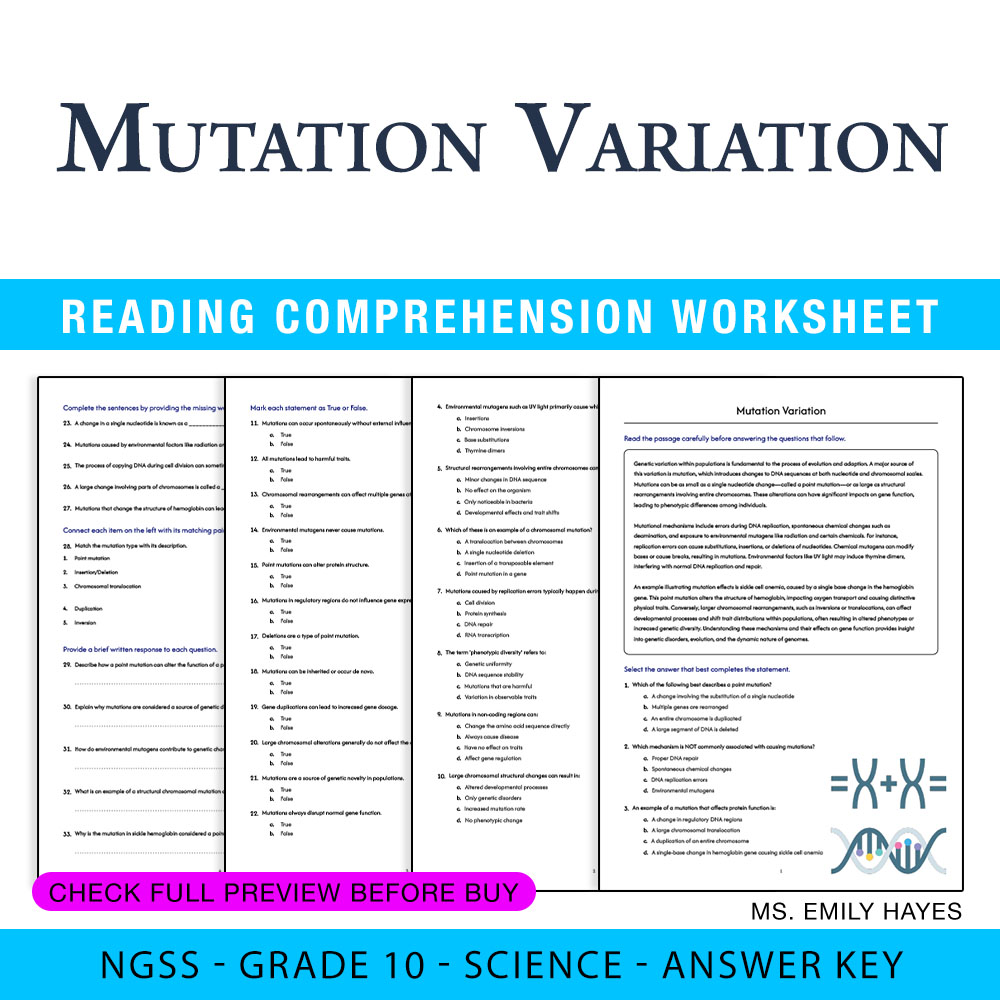
10th Grade Science | Mutation Variation Worksheet (PDF+ Answer Key)
Created byCopper Leaf ClassroomLearning Objectives
- Explain how genetic mutations at nucleotide and chromosomal levels contribute to genetic variation.
- Identify different types of mutations, including point mutations, insertions, deletions, and structural rearrangements.
- Describe mechanisms that lead to mutations, such as replication errors, chemical changes, and environmental mutagens.
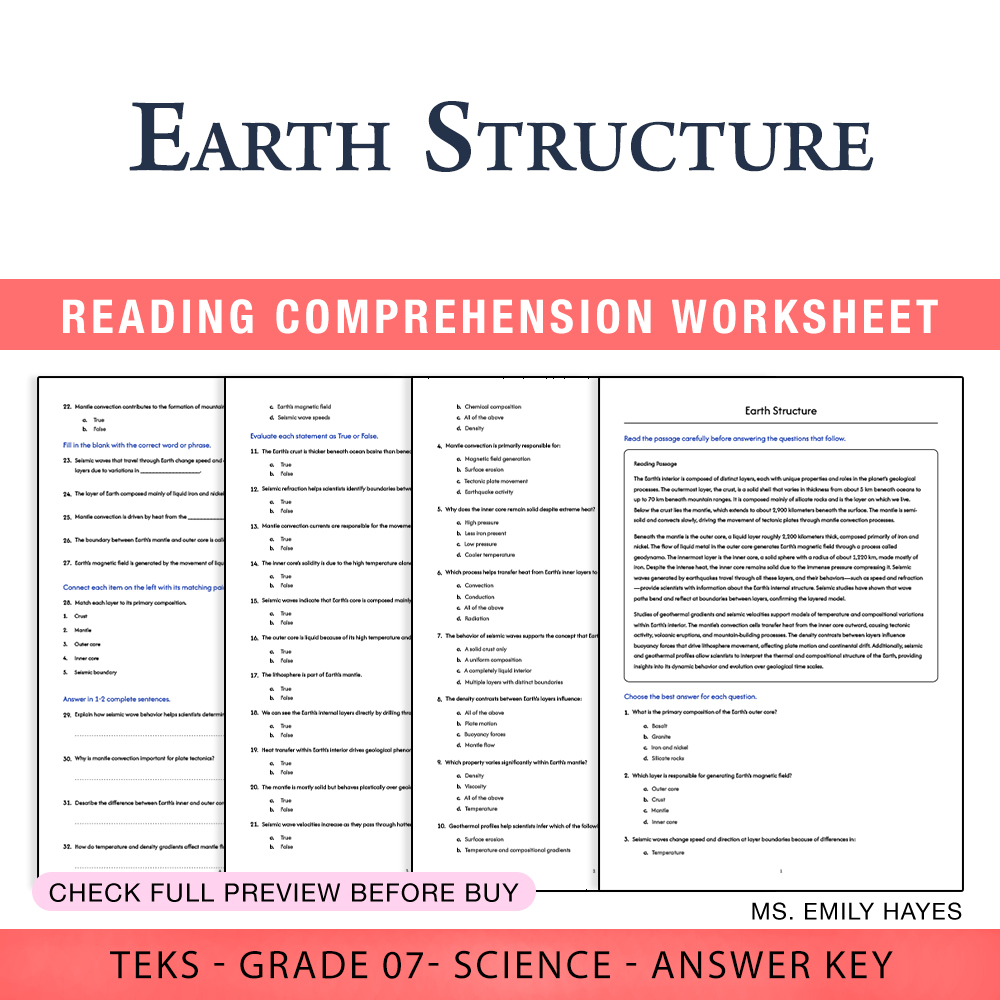
Grade 7 Science | Earth Structure Worksheet (PDF+ Answer Key)
Created byCopper Leaf ClassroomLearning Objectives
- Describe Earth's internal layers and their properties.
- Interpret seismic wave behavior and how it reveals Earth's structure.
- Explain mantle convection and its role in plate motion.
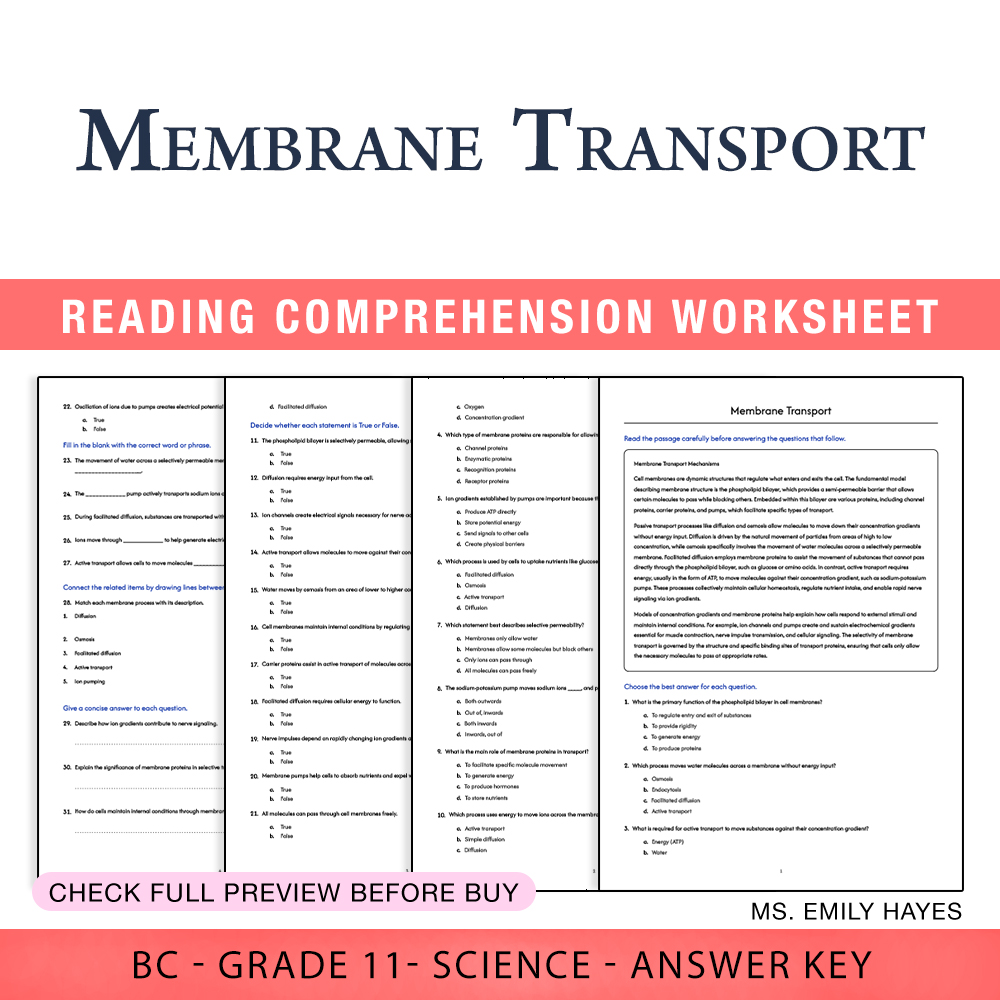
11th Grade Science | Membrane Transport Worksheet (PDF + Answer Key)
Created byCopper Leaf ClassroomLearning Objectives
- Describe different mechanisms of membrane transport including diffusion, osmosis, facilitated diffusion, and active transport.
- Explain the role of membrane proteins and phospholipid bilayers in selective permeability.
- Analyze how ion gradients are established and used for cellular processes such as nutrient uptake and nerve signaling.
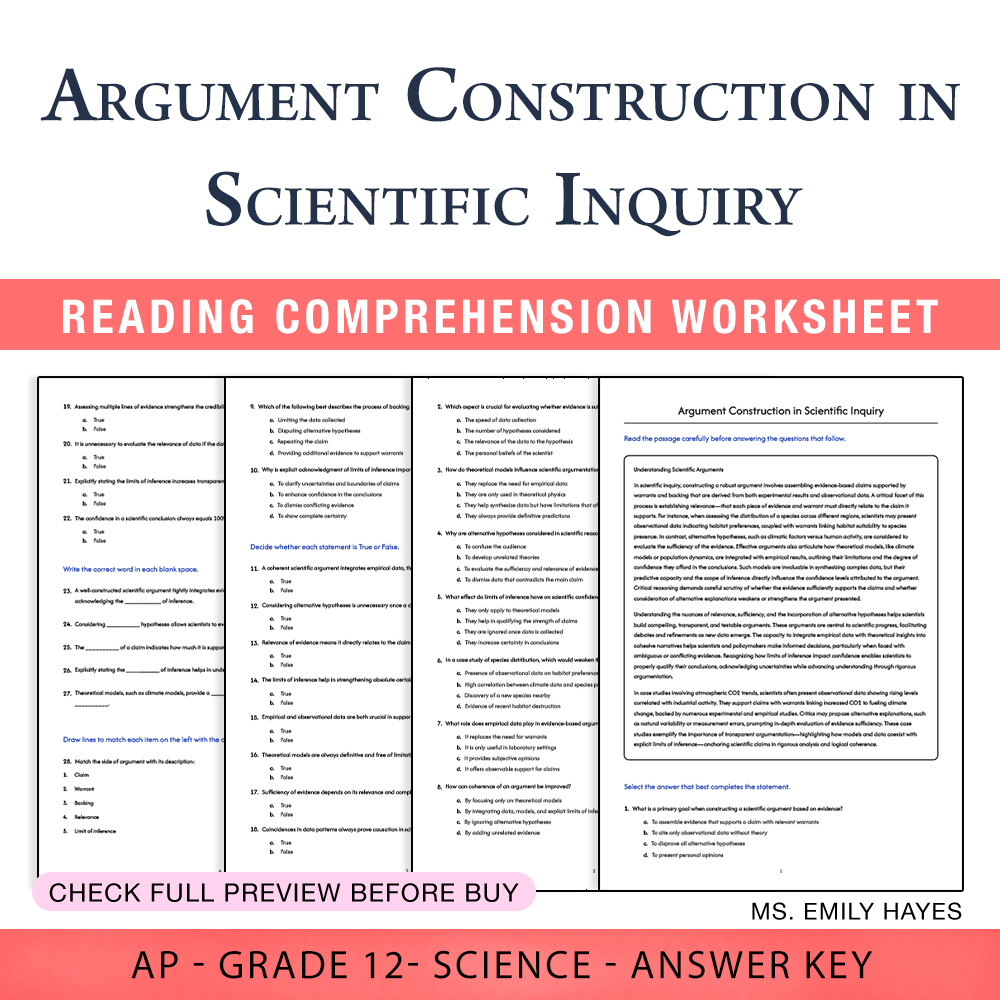
12th Grade Science | Argument Construction (PDF + Answer Key)
Created byCopper Leaf ClassroomLearning Objectives
- Understand the structure of evidence-based argumentation in science, including claims, warrants, and backing.
- Analyze case studies involving competing explanations to identify criteria for relevance, sufficiency, and alternative hypotheses.
- Evaluate how theoretical models and empirical data are integrated into coherent scientific arguments.
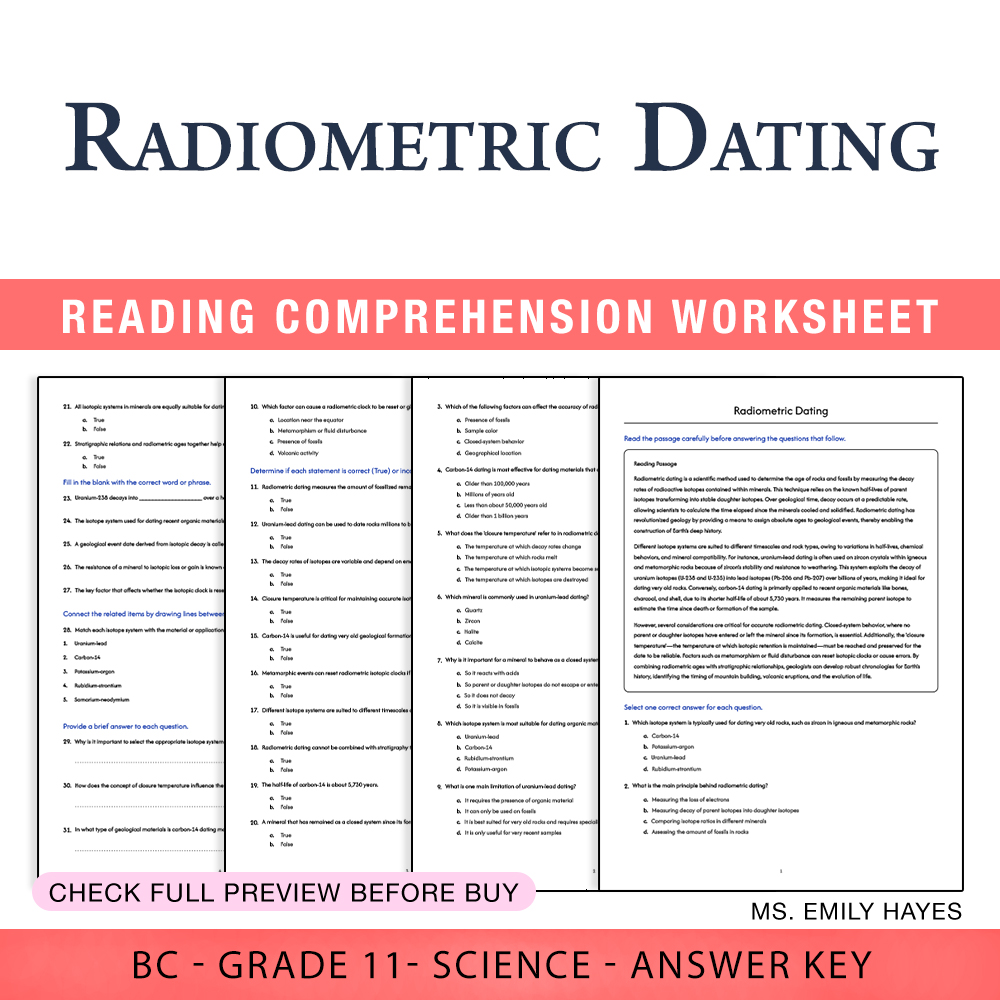
Grade 11 Science | Radiometric Dating Worksheet (PDF + Answer Key)
Created byCopper Leaf ClassroomLearning Objectives
- Understand the principles and applications of radiometric dating in geoscience.
- Identify different isotope systems used in dating various rocks and materials.
- Explain factors affecting the accuracy of radiometric age determinations.
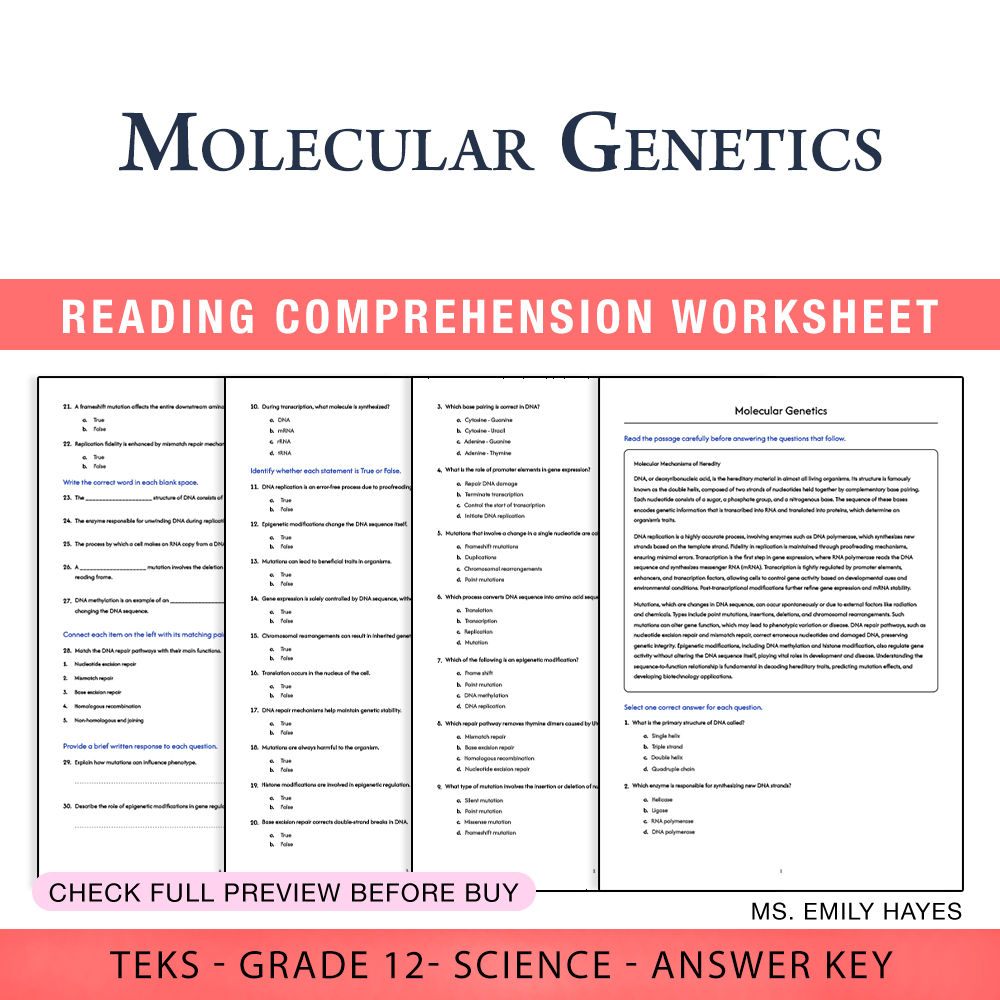
Grade 12 Science | Molecular Genetics Worksheet (PDF+ Answer Key)
Created byCopper Leaf ClassroomLearning Objectives
- Understand the structural features of DNA and how they facilitate replication and transcription.
- Explain the mechanisms by which mutations occur and their effects on gene expression and phenotype.
- Describe regulatory processes like gene control, epigenetics, and DNA repair pathways.
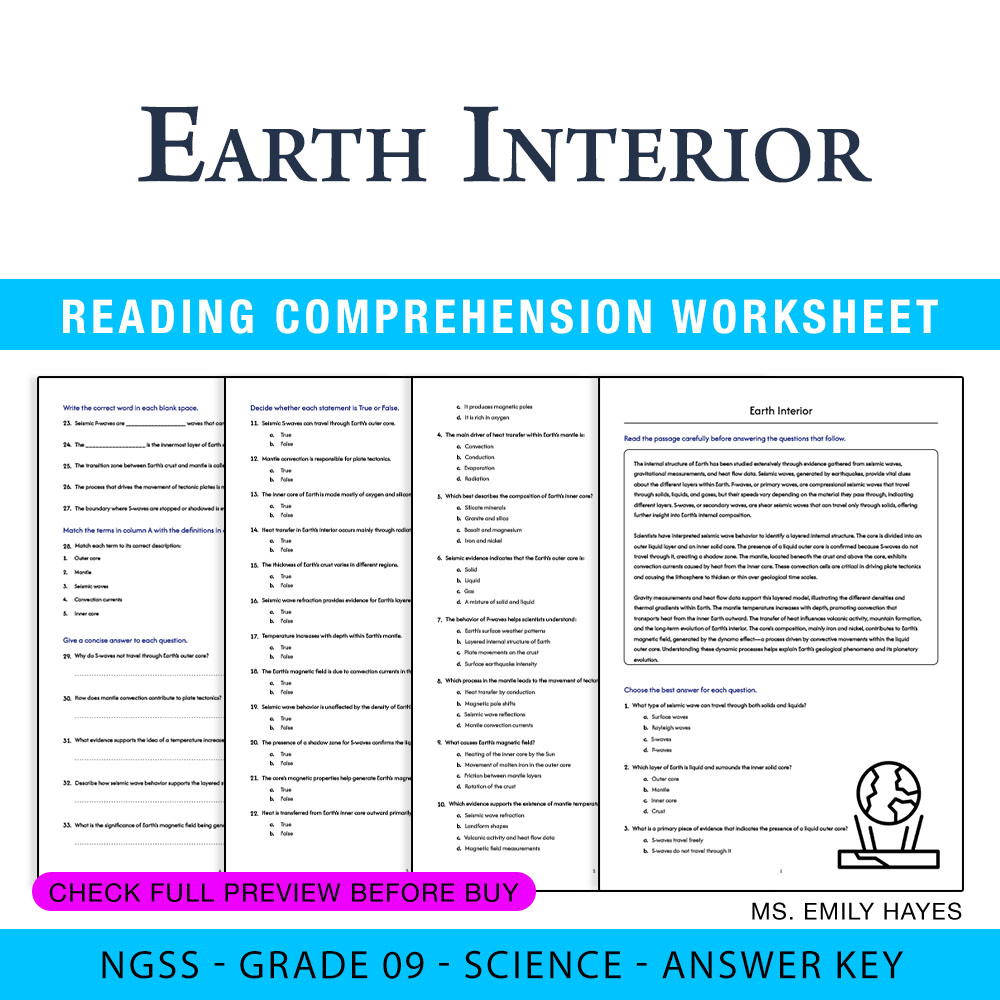
9th Grade Science | Earth Interior Worksheet (PDF+ Answer Key)
Created byCopper Leaf ClassroomLearning Objectives
- Describe the layered structure of Earth's interior based on seismic evidence.
- Explain how seismic wave behavior informs our understanding of Earth's internal composition.
- Analyze the relationship between density contrasts, gravity, and thermal energy transfer within Earth.
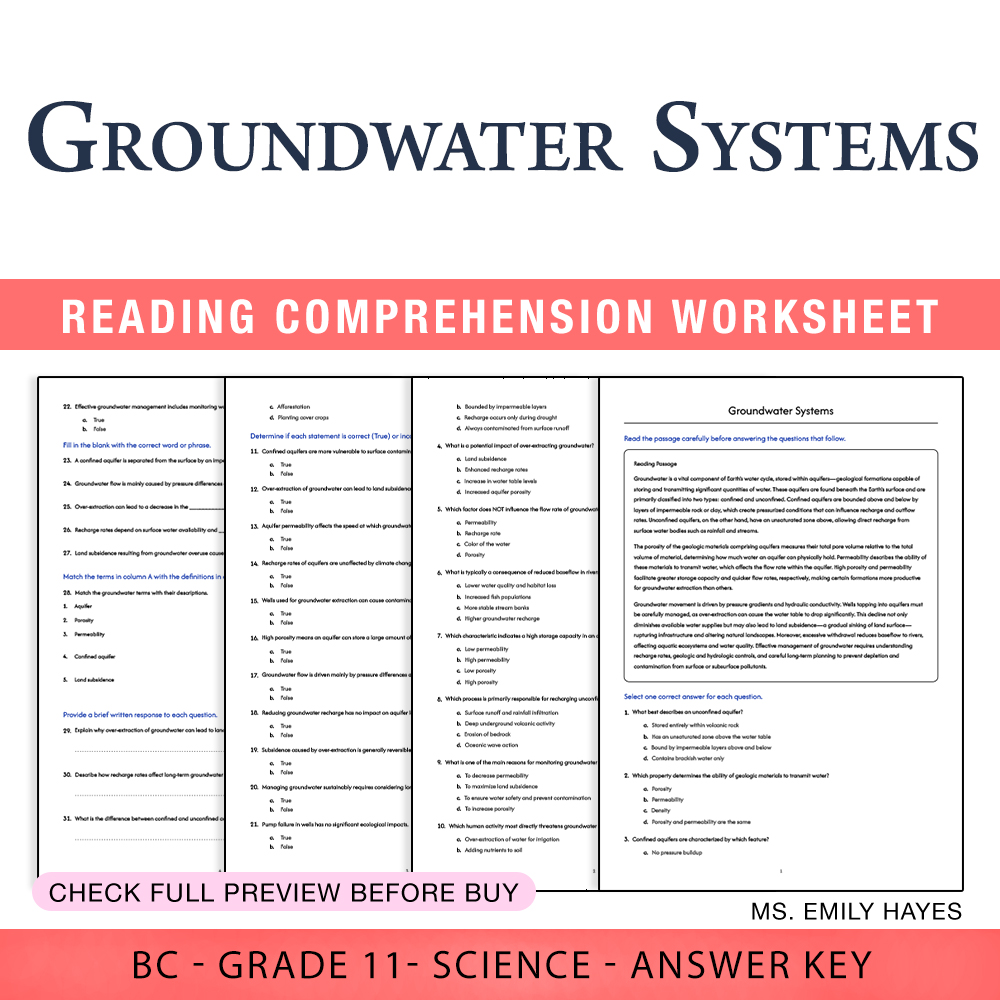
Grade 11 Science | Groundwater Systems Worksheet (PDF + Answer Key)
Created byCopper Leaf ClassroomLearning Objectives
- Understand the types and features of aquifers, including confined and unconfined systems.
- Explain how groundwater flow rates and storage are influenced by porosity and permeability.
- Analyze the effects of groundwater over-extraction on water tables, land stability, and river ecosystems.
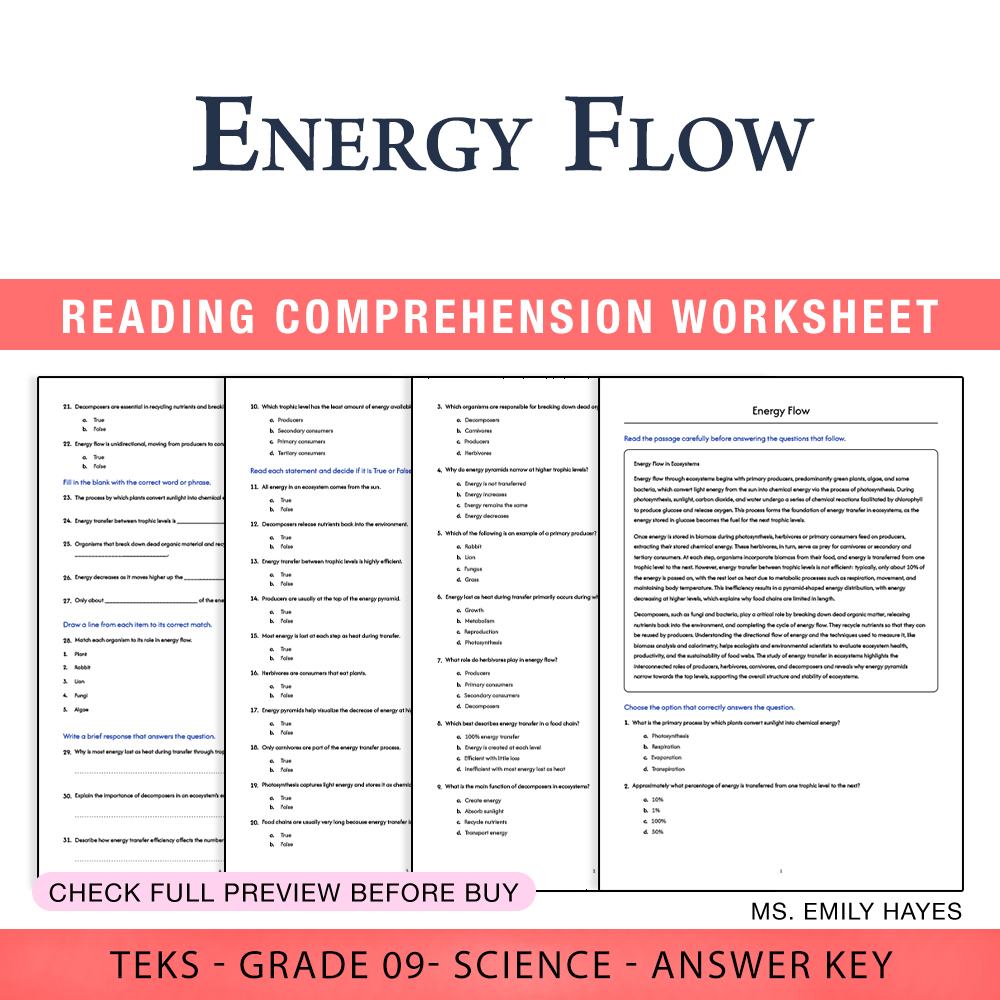
9th Grade Science | Energy Flow Worksheet (PDF+ Answer Key)
Created byCopper Leaf ClassroomLearning Objectives
- Describe how energy moves through ecosystems from producers to consumers and decomposers.
- Explain the process of photosynthesis and how it transfers energy through trophic levels.
- Analyze energy transfer efficiency and how it influences food chain length and population sizes.
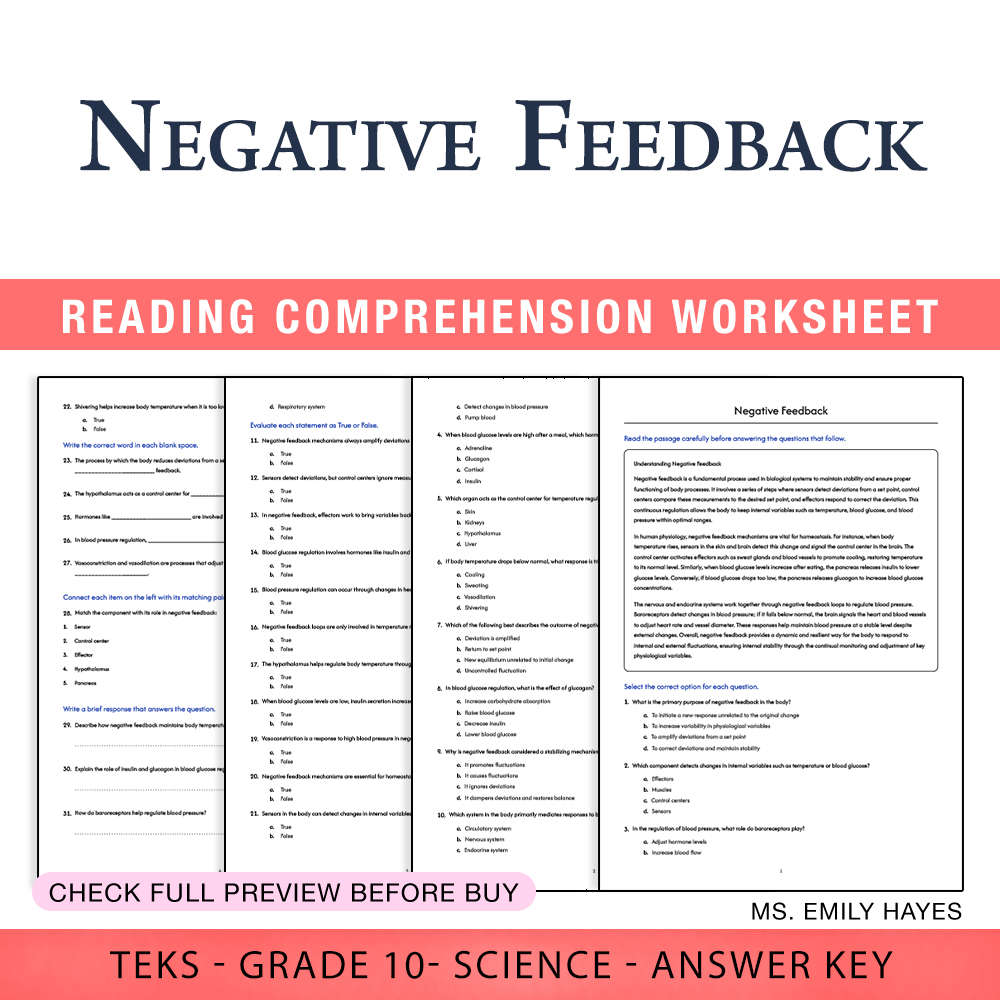
10th Grade Science | Negative Feedback Worksheet (PDF+ Answer Key)
Created byCopper Leaf ClassroomLearning Objectives
- Understand the concept of negative feedback in physiological regulation.
- Identify the components involved in negative feedback mechanisms, including sensors, control centers, and effectors.
- Explain how negative feedback maintains homeostasis for temperature, blood glucose, and blood pressure.
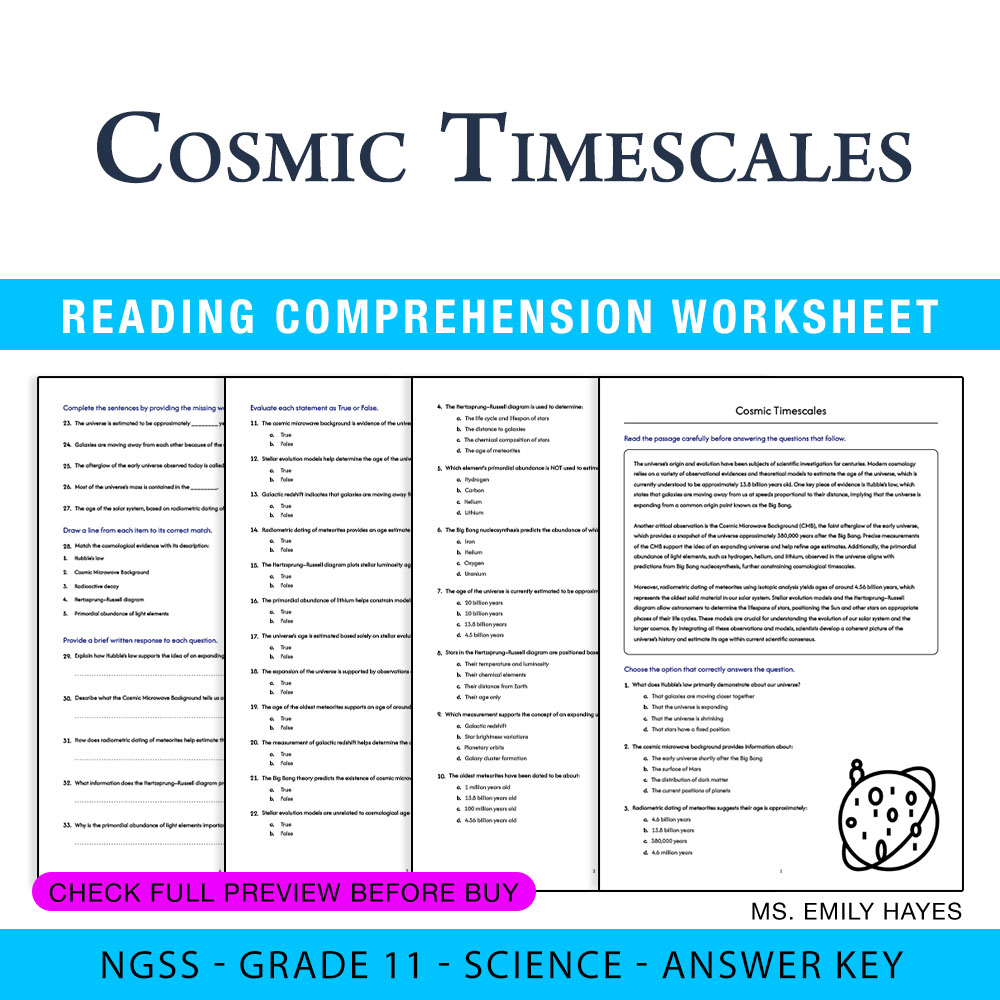
Grade 11 Science | Cosmic Timescales Worksheet (PDF+ Answer Key)
Created byCopper Leaf ClassroomLearning Objectives
- Understand the methods used to determine the age of the universe and solar system.
- Explain key observational evidence such as Hubble's law, cosmic microwave background, and radiometric dating.
- Apply stellar evolution models and Hertzsprung–Russell diagram positions to determine star lifespans.
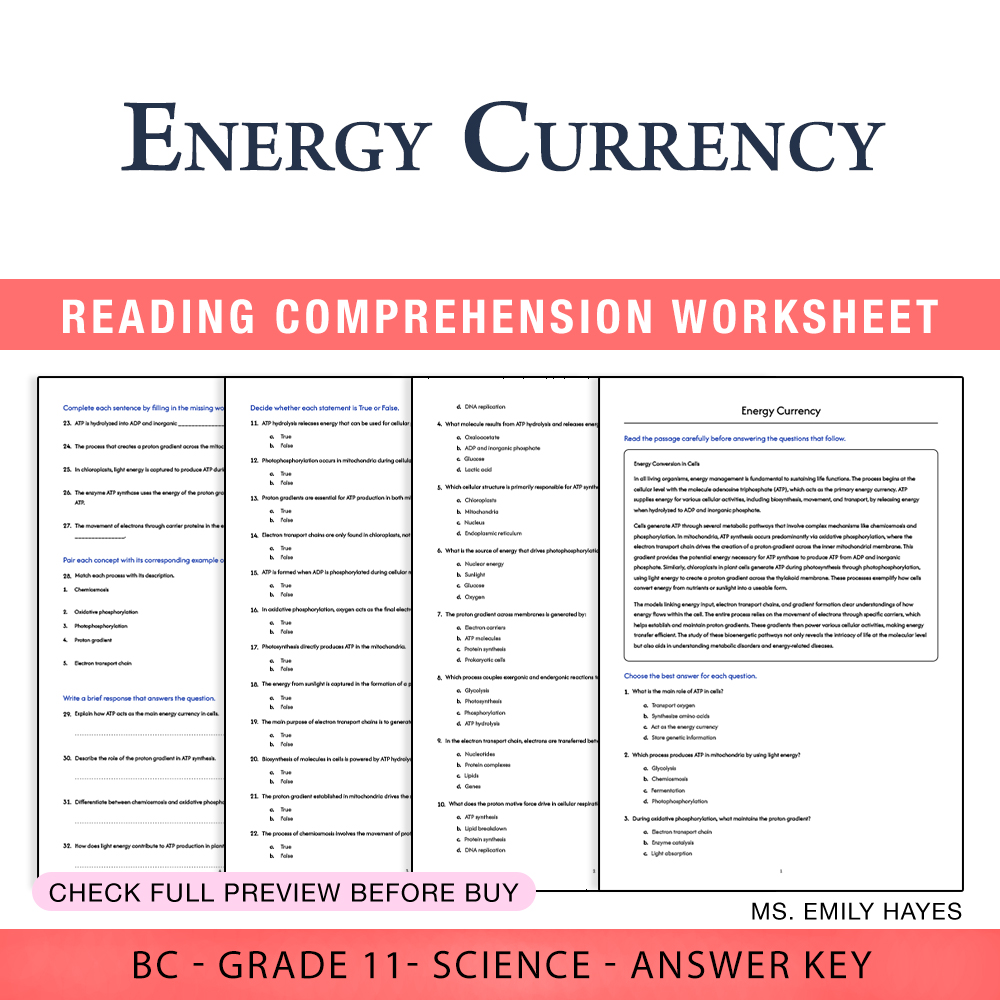
Grade 11 Science | Energy Currency Worksheet (PDF + Answer Key)
Created byCopper Leaf ClassroomLearning Objectives
- Describe how ATP functions as the main energy currency of cells.
- Explain the processes of ATP synthesis through chemiosmosis, oxidative phosphorylation, and photophosphorylation.
- Understand the role of proton gradients and electron transport chains in energy conversion.
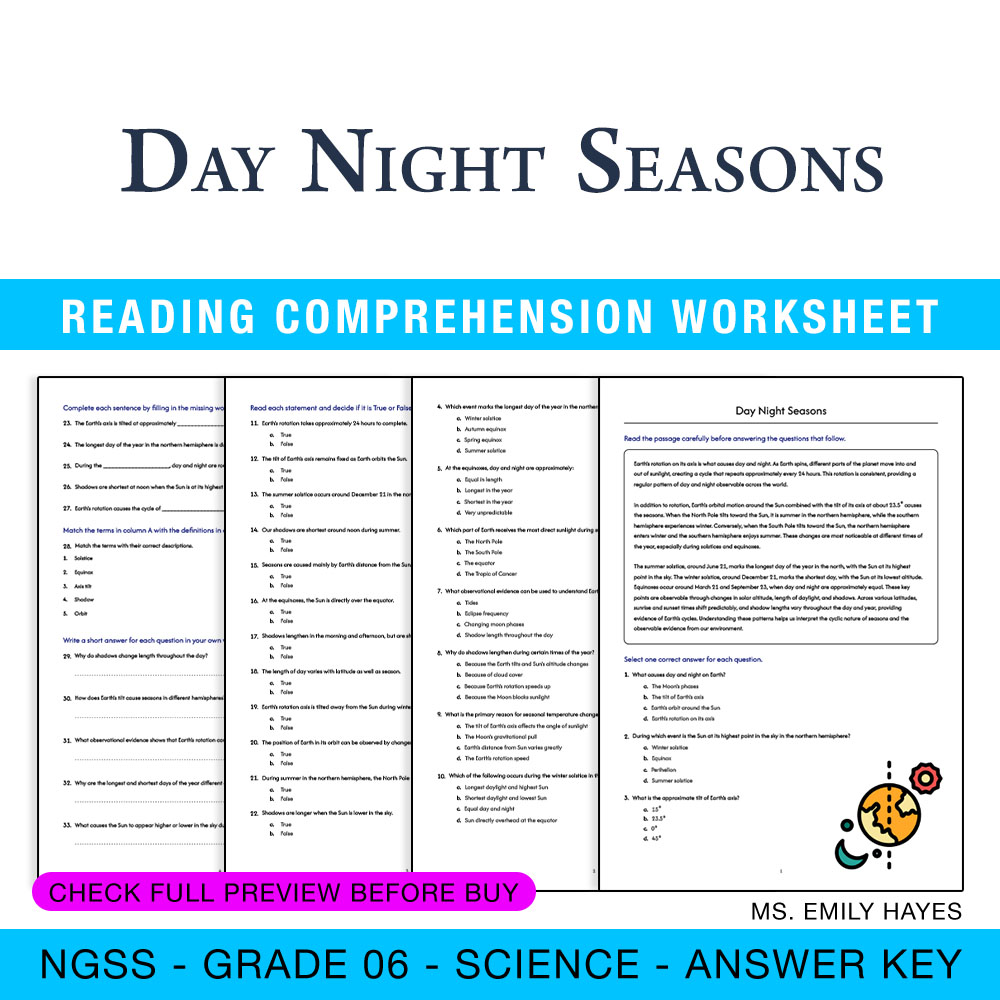
6th Grade Science | Day, Night & Seasons Worksheet (PDF + Answer Key)
Created byCopper Leaf ClassroomLearning Objectives
- Describe Earth's rotation and how it produces day and night.
- Explain how Earth's orbit and axial tilt cause seasons and climate variations.
- Identify key moments such as solstices and equinoxes as observational markers of seasons.
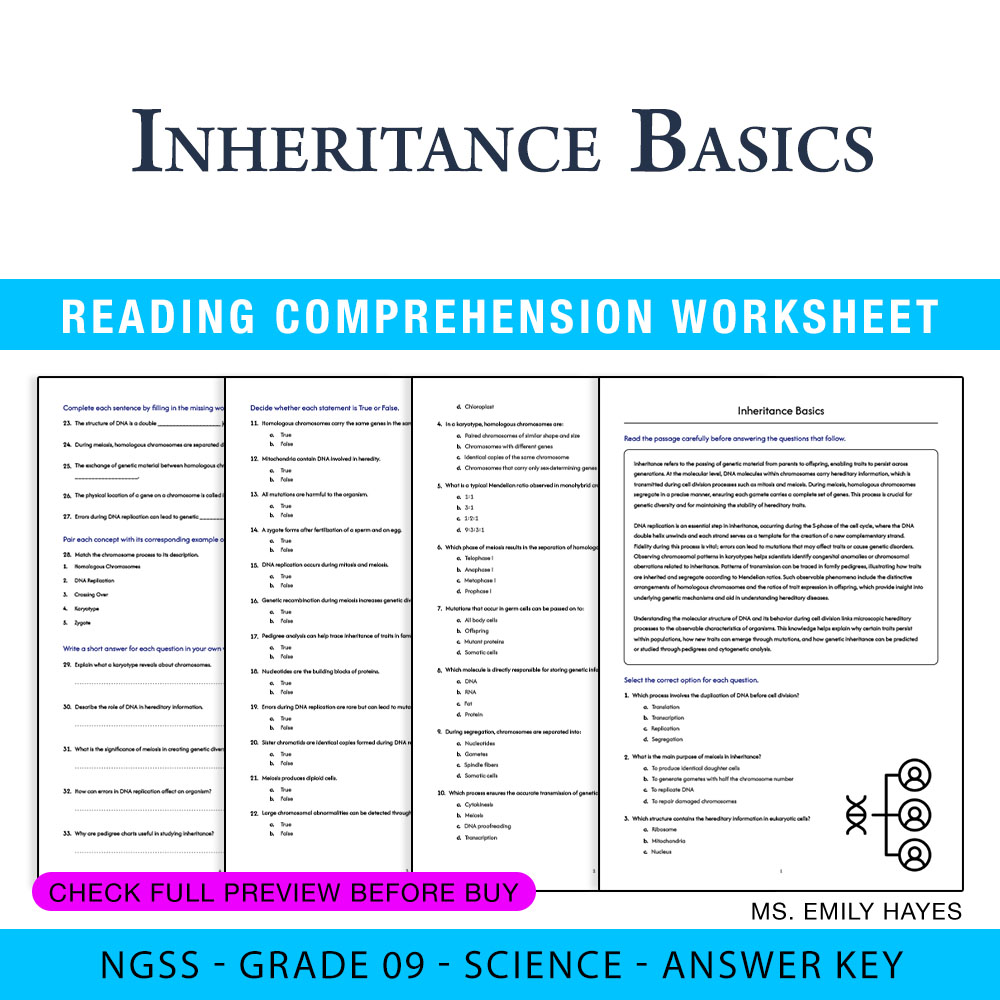
9th Grade Science | Inheritance Basics Worksheet (PDF+ Answer Key)
Created byCopper Leaf ClassroomLearning Objectives
- Understand the molecular structure of DNA and its role in inheritance.
- Explain how chromosomes and DNA facilitate the transmission of hereditary information across generations.
- Identify key processes such as DNA replication, chromosomal segregation during meiosis, and zygote formation.
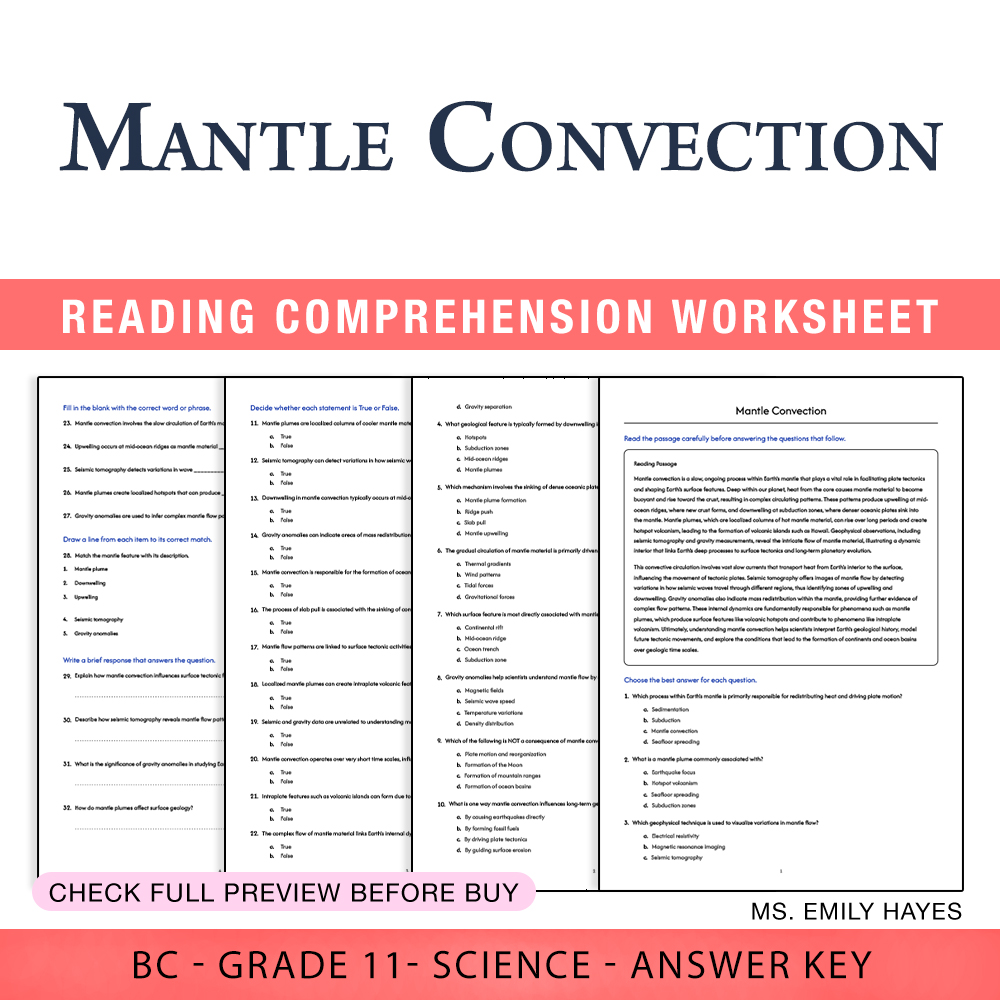
Grade 11 Science | Mantle Convection Worksheet (PDF + Answer Key)
Created byCopper Leaf ClassroomLearning Objectives
- Understand the process of mantle convection and its role in plate tectonics.
- Identify key manifestations of mantle convection such as upwelling, downwelling, and mantle plumes.
- Interpret geophysical evidence related to mantle flow using seismic tomography and gravity anomalies.
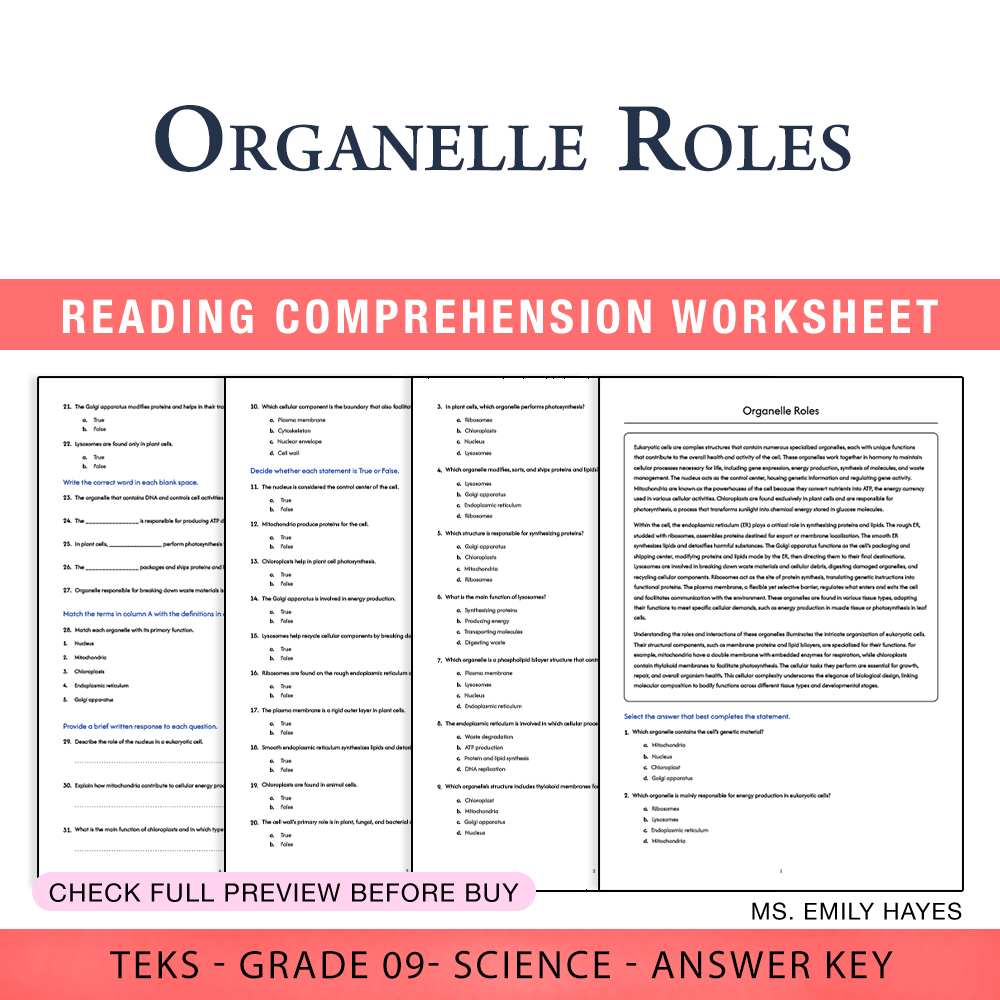
Grade 9 Science | Organelle Roles Worksheet (PDF+ Answer Key)
Created byCopper Leaf ClassroomLearning Objectives
- Identify the major structures of eukaryotic cells and describe their functions.
- Explain the connection between organelle structure and cellular tasks in different tissue types.
- Differentiate the roles of organelles such as the nucleus, mitochondria, chloroplasts, endoplasmic reticulum, Golgi apparatus, lysosomes, ribosomes, and plasma membrane.
Browse more categories
About Science Worksheets
Find Science worksheets spanning core skills, practice, and review. All 42,859 resources are instant PDF downloads for the classroom or home.
Every worksheet on MyTeachingSheets is created by independent teacher-authors and reviewed before publication. All resources download as printable PDFs for classroom, homework, or at-home practice, and many include answer keys. Preview any worksheet free before buying.