
Science Worksheets
42,859 subject resources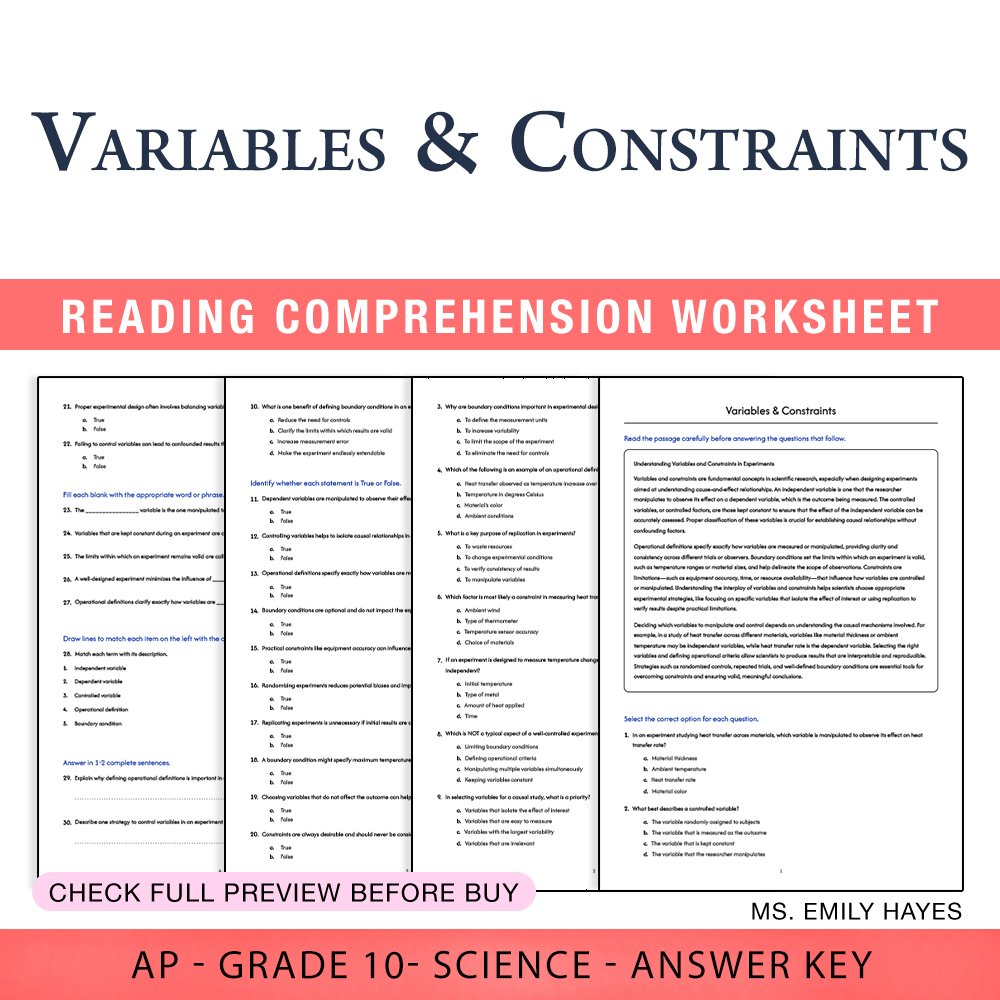
10th Grade Science | Variables & Constraints Worksheet (PDF+ Answer Key)
 Created byCopper Leaf Classroom
Learning Objectives
- Identify and classify independent, dependent, and controlled variables in experimental scenarios.
- Explain the role of operational definitions, boundary conditions, and constraints in scientific measurements.
- Select and justify variables that isolate causal relationships within experimental design.
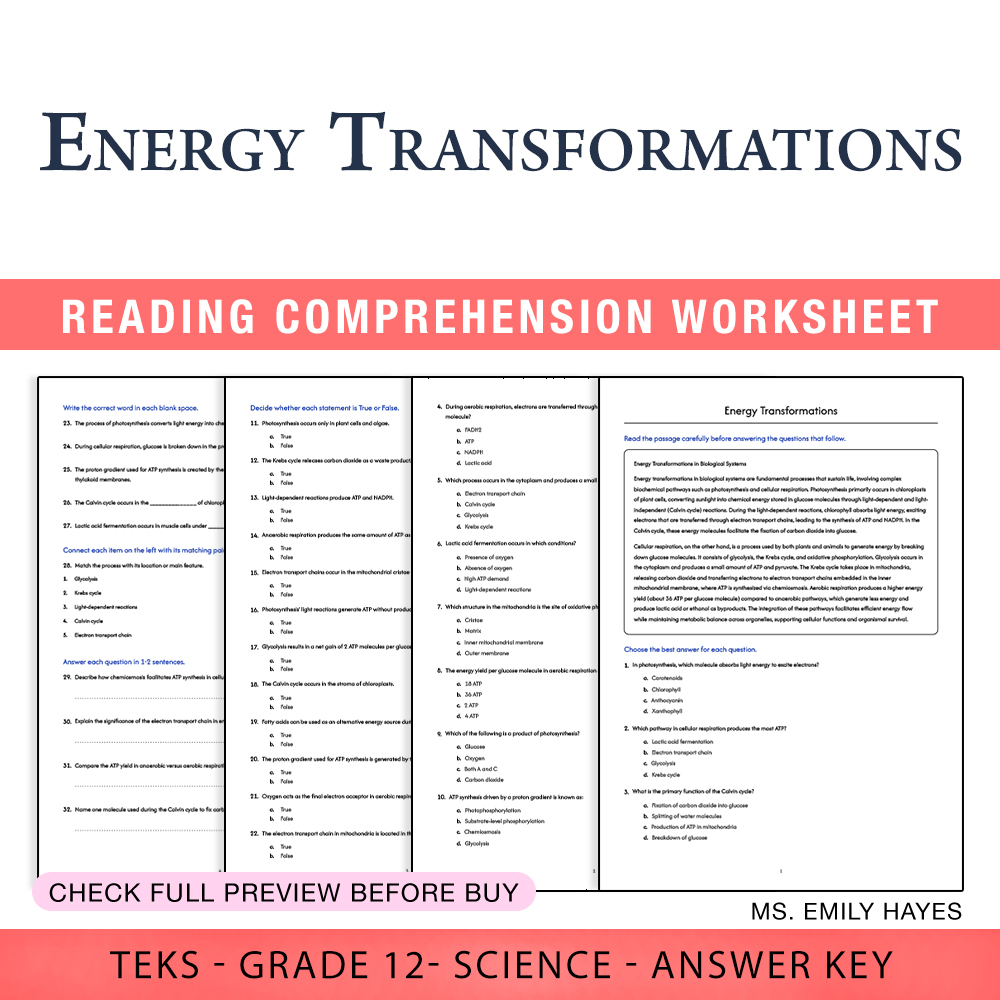
Grade 12 Science | Energy Transformations Worksheet (PDF+ Answer Key)
Created byCopper Leaf ClassroomLearning Objectives
- Describe the biochemical pathways involved in energy capture and conversion, including photosynthesis and cellular respiration.
- Explain the mechanisms of electron transport chains and chemiosmotic ATP synthesis.
- Compare energy yields of photosynthesis, glycolysis, Krebs cycle, and oxidative phosphorylation.
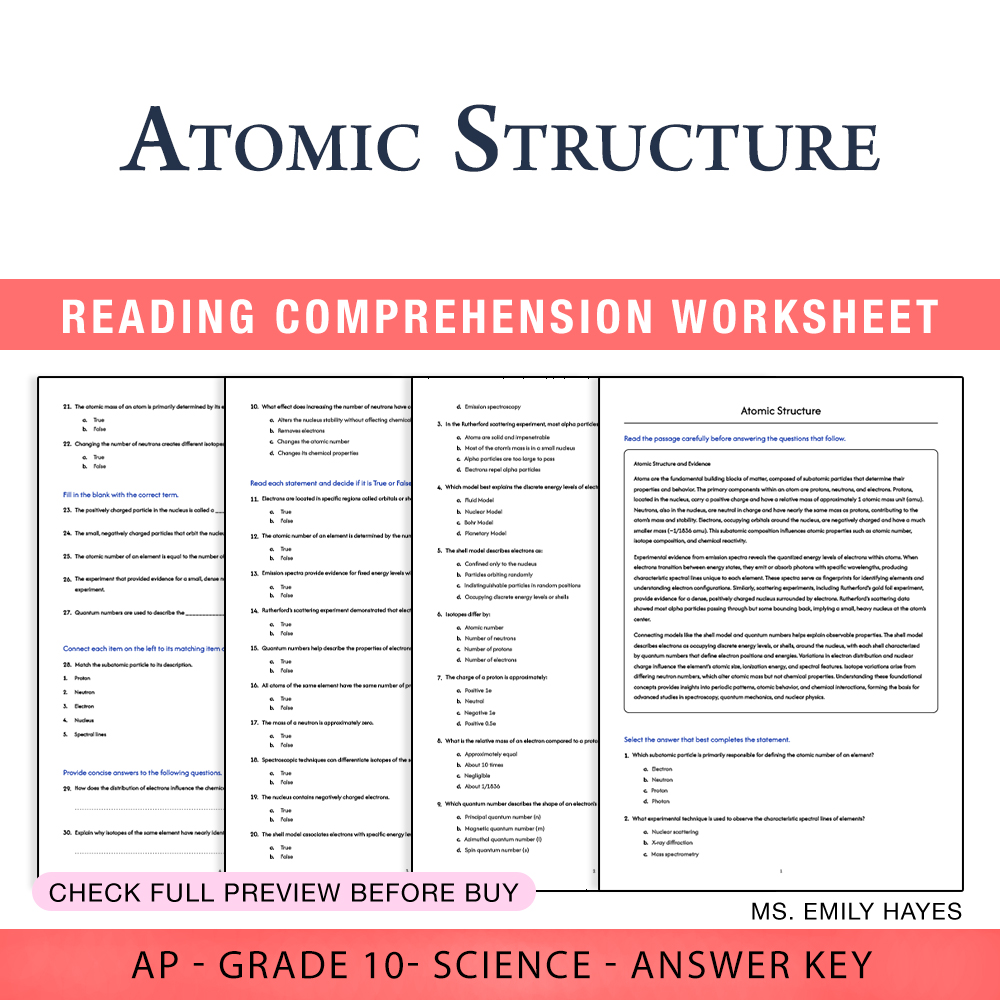
10th Grade Science | Atomic Structure Worksheet (PDF+ Answer Key)
Created byCopper Leaf ClassroomLearning Objectives
- Describe the subatomic components of atoms, including proton, neutron, and electron roles and masses.
- Explain how experimental evidence from emission spectra and scattering supports atomic models.
- Connect shell models and quantum numbers to observable atomic properties like spectral lines.
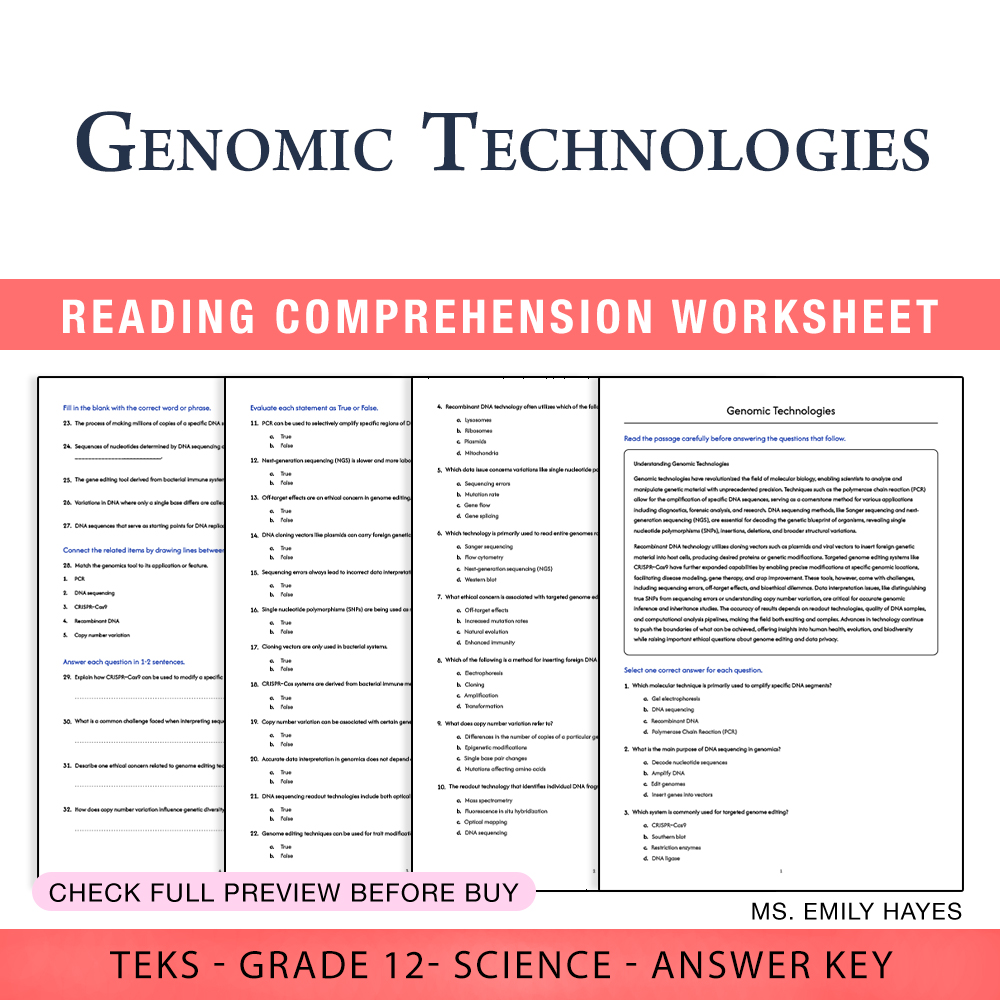
12th Grade Science | Genomic Technologies Worksheet (PDF+ Answer Key)
Created byCopper Leaf ClassroomLearning Objectives
- Understand the mechanistic basis of key genomic techniques such as PCR, DNA sequencing, and CRISPR-Cas systems.
- Identify applications of molecular tools in diagnostics, trait modification, and ethical considerations.
- Recognize challenges and data interpretation issues related to sequencing errors, SNPs, and copy number variations.
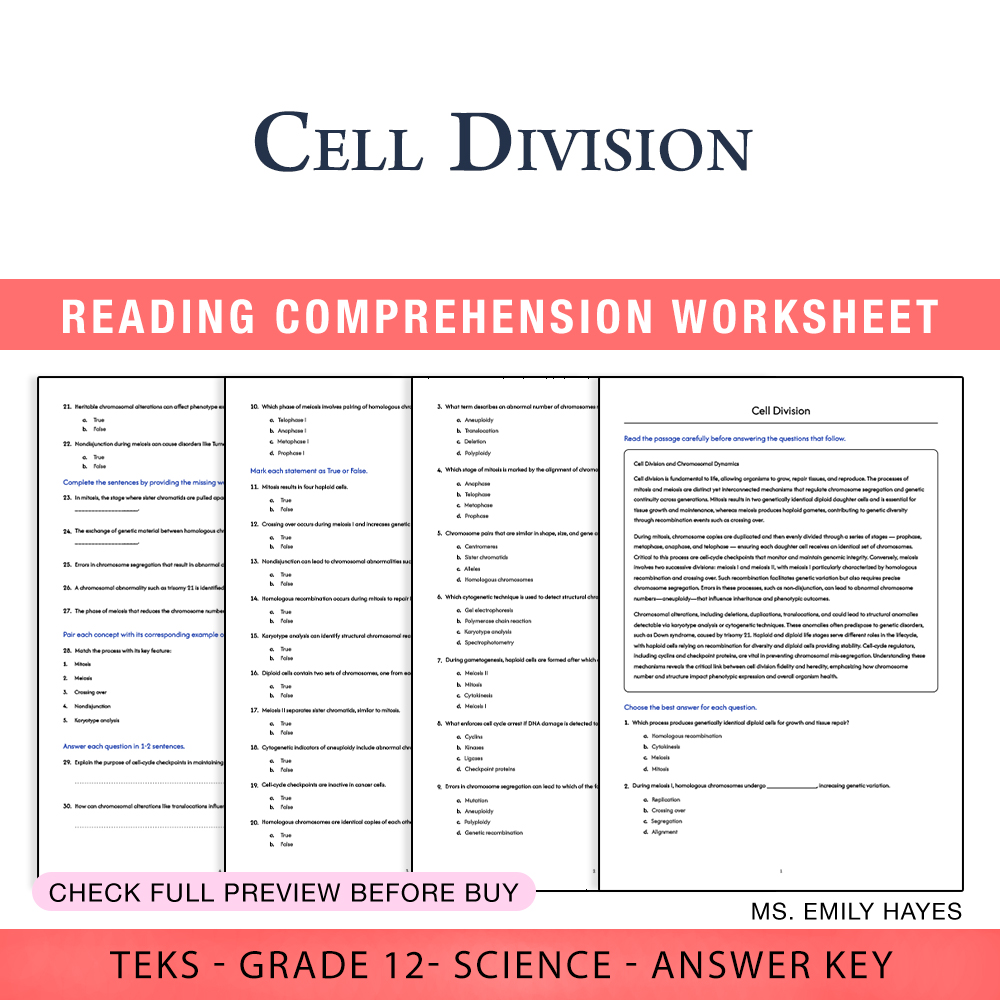
12th Grade Science | Cell Division Worksheet (PDF+ Answer Key)
Created byCopper Leaf ClassroomLearning Objectives
- Describe the processes of mitosis and meiosis and their roles in cellular reproduction.
- Explain chromosome segregation, homologous recombination, and mechanisms preventing nondisjunction.
- Identify structural and functional differences between haploid and diploid cells during division.
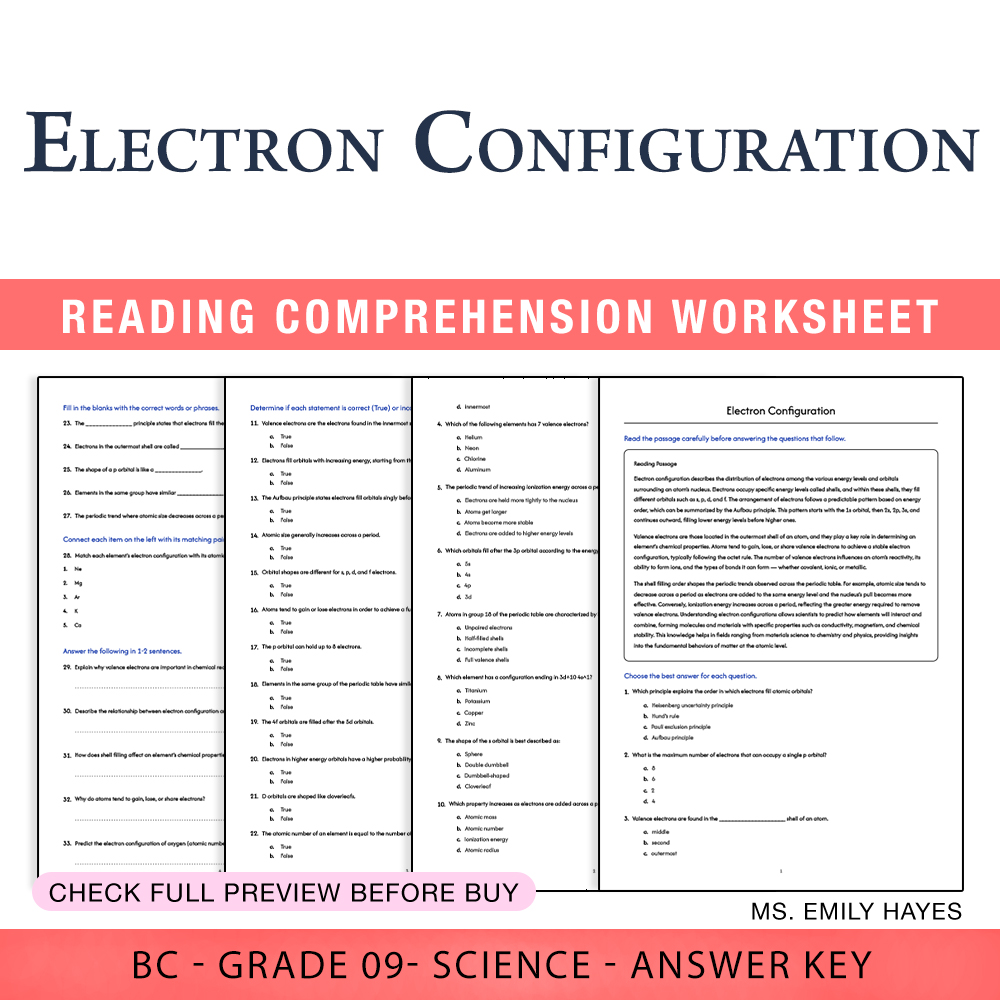
9th Grade Science | Electron Configuration Worksheet (PDF+ Answer Key)
Created byCopper Leaf ClassroomLearning Objectives
- Describe how electrons are distributed among energy levels and orbitals.
- Explain the importance of valence electrons in chemical reactivity and bonding.
- Identify the order in which electron shells are filled.
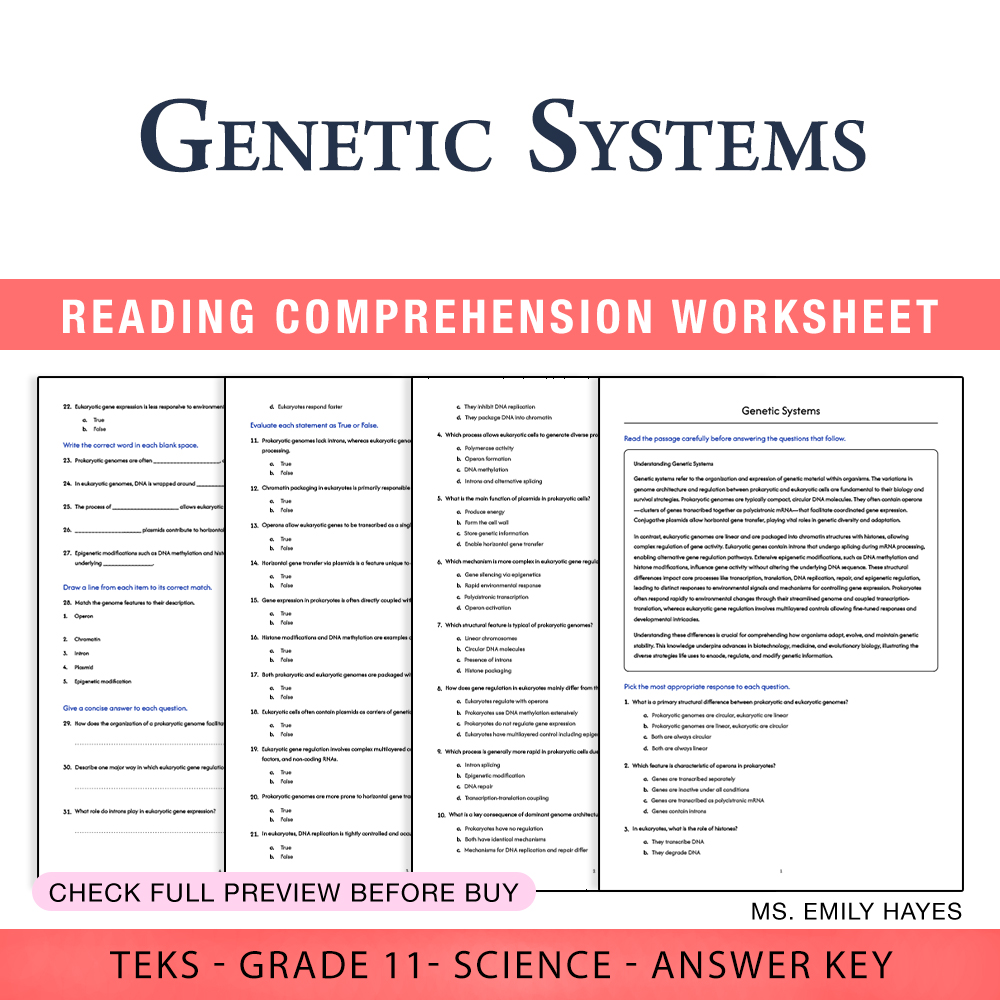
11th Grade Science | Genetic Systems Worksheet (PDF+ Answer Key)
Created byCopper Leaf ClassroomLearning Objectives
- Compare genome organization and gene expression mechanisms in prokaryotes and eukaryotes.
- Identify key differences in genome structure, regulation, and replication.
- Explain how genome features influence responses to environmental signals.
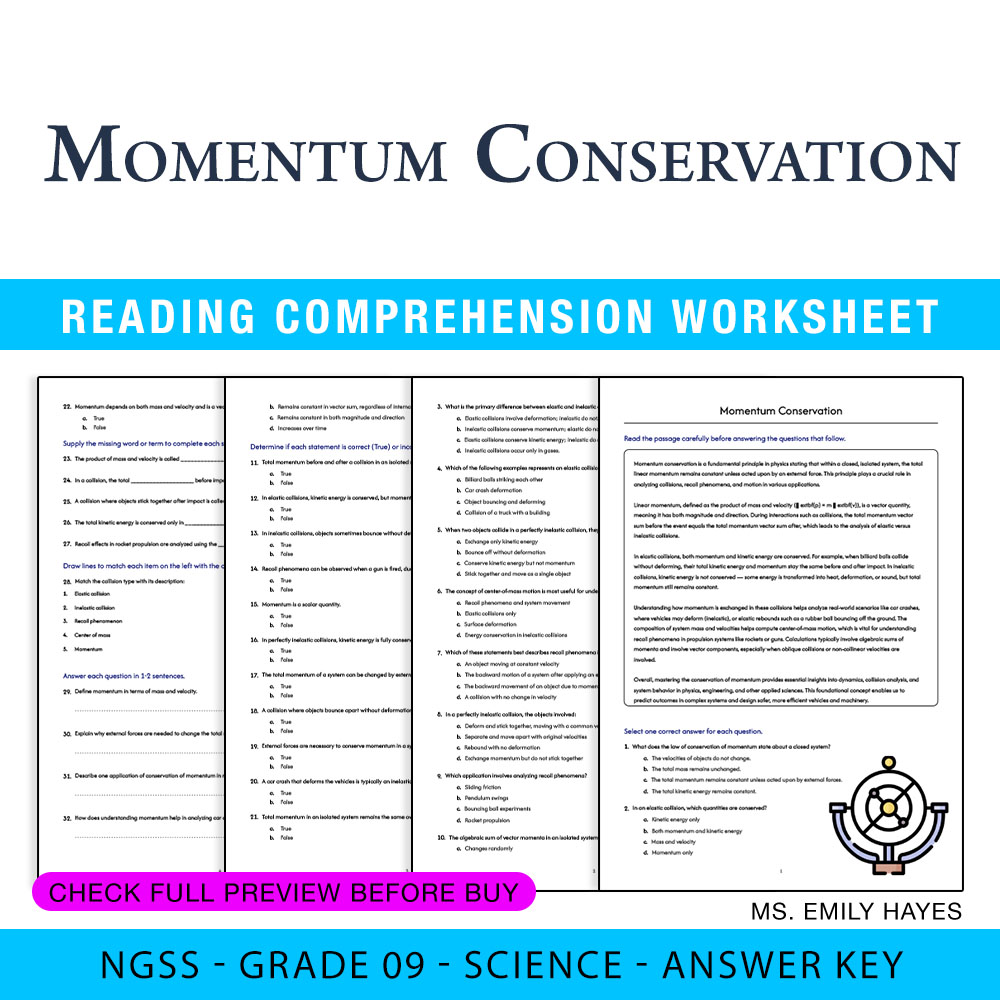
Grade 9 Science | Momentum Conservation Worksheet (PDF+ Answer Key)
Created byCopper Leaf ClassroomLearning Objectives
- Understand the principle of conservation of linear momentum in isolated systems.
- Calculate and analyze total momentum before and after collisions.
- Differentiate between elastic and inelastic collisions through vector sums.
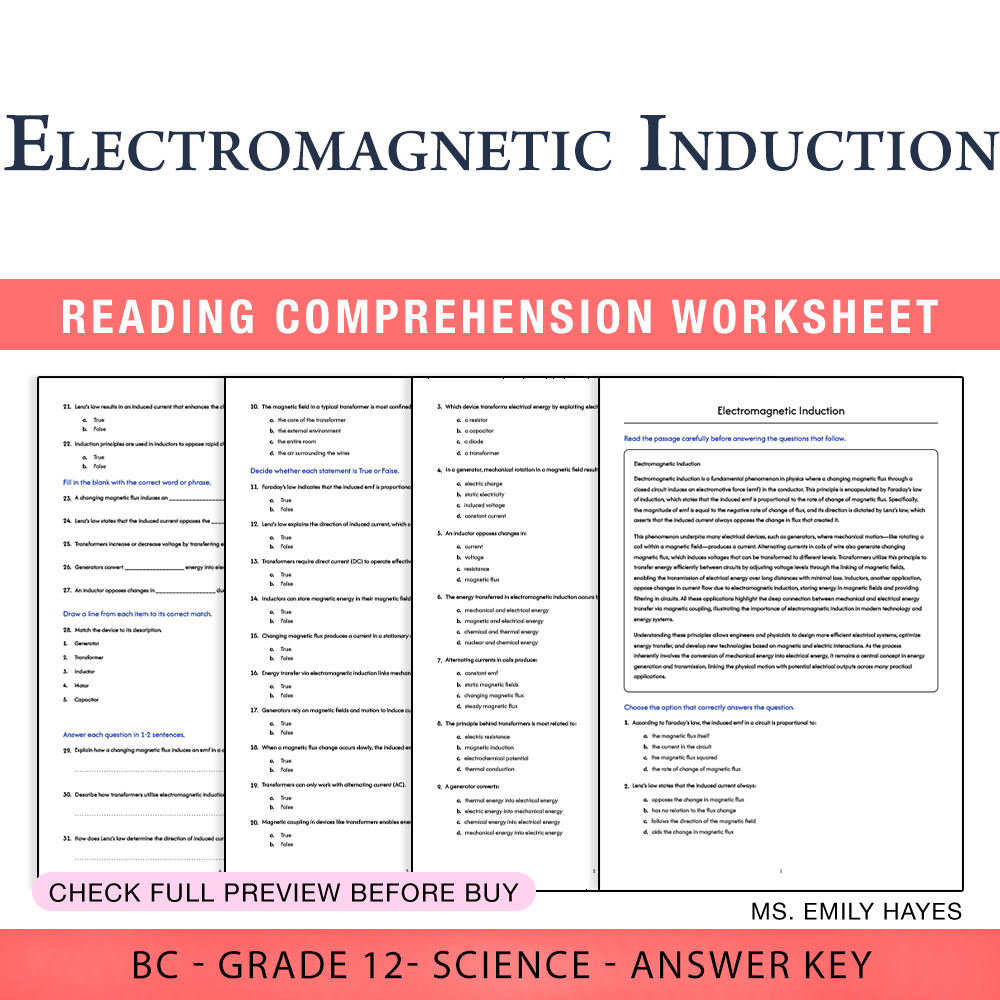
12th Grade Science | Electromagnetic Induction Worksheet (PDF + Answer Key)
Created byCopper Leaf ClassroomLearning Objectives
- Explain the principles of electromagnetic induction as described by Faraday's law.
- Describe how moving conductors and alternating currents produce induced voltages.
- Identify the applications of electromagnetic induction in devices like generators, transformers, and inductors.
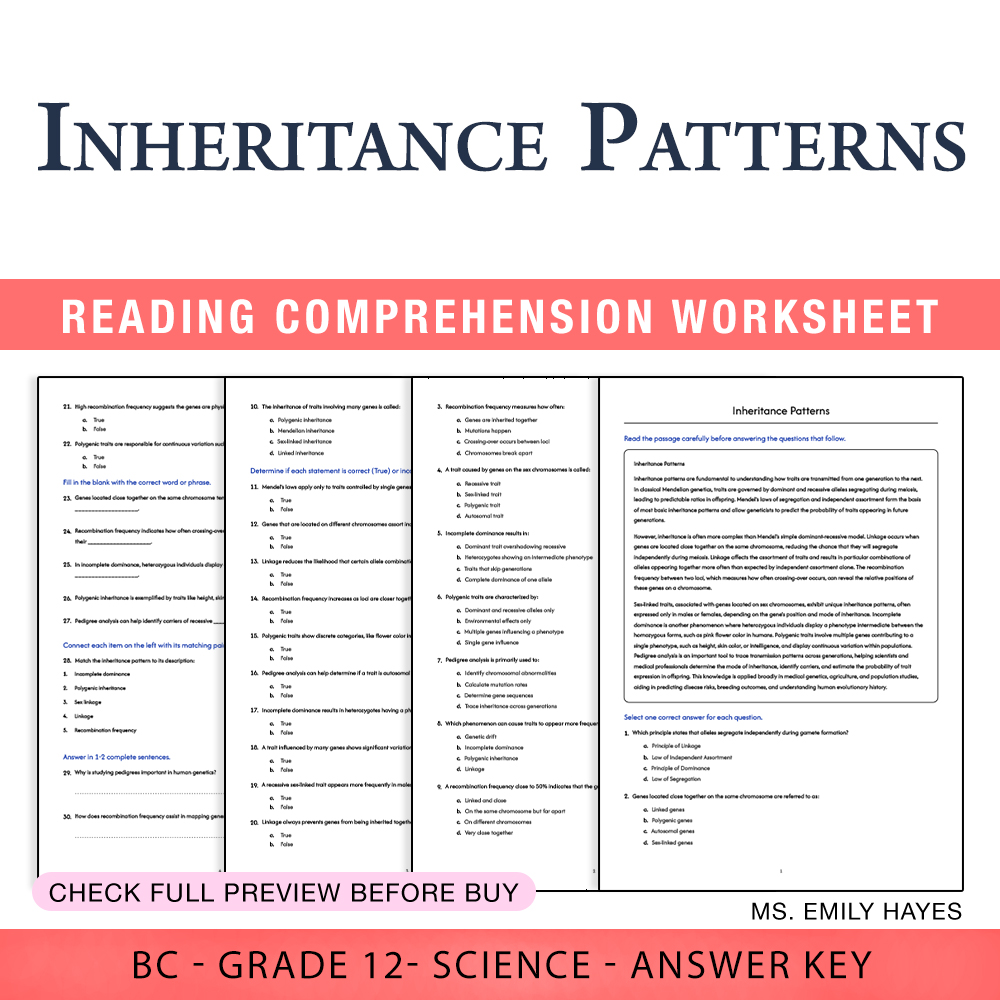
12th Grade Science | Inheritance Patterns Worksheet (PDF + Answer Key)
Created byCopper Leaf ClassroomLearning Objectives
- Understand different inheritance models including Mendelian, linkage, sex linkage, incomplete dominance, and polygenic traits.
- Analyze pedigrees to infer inheritance modes and estimate carriers.
- Interpret recombination frequency data to determine relative loci positions and trait assortment.
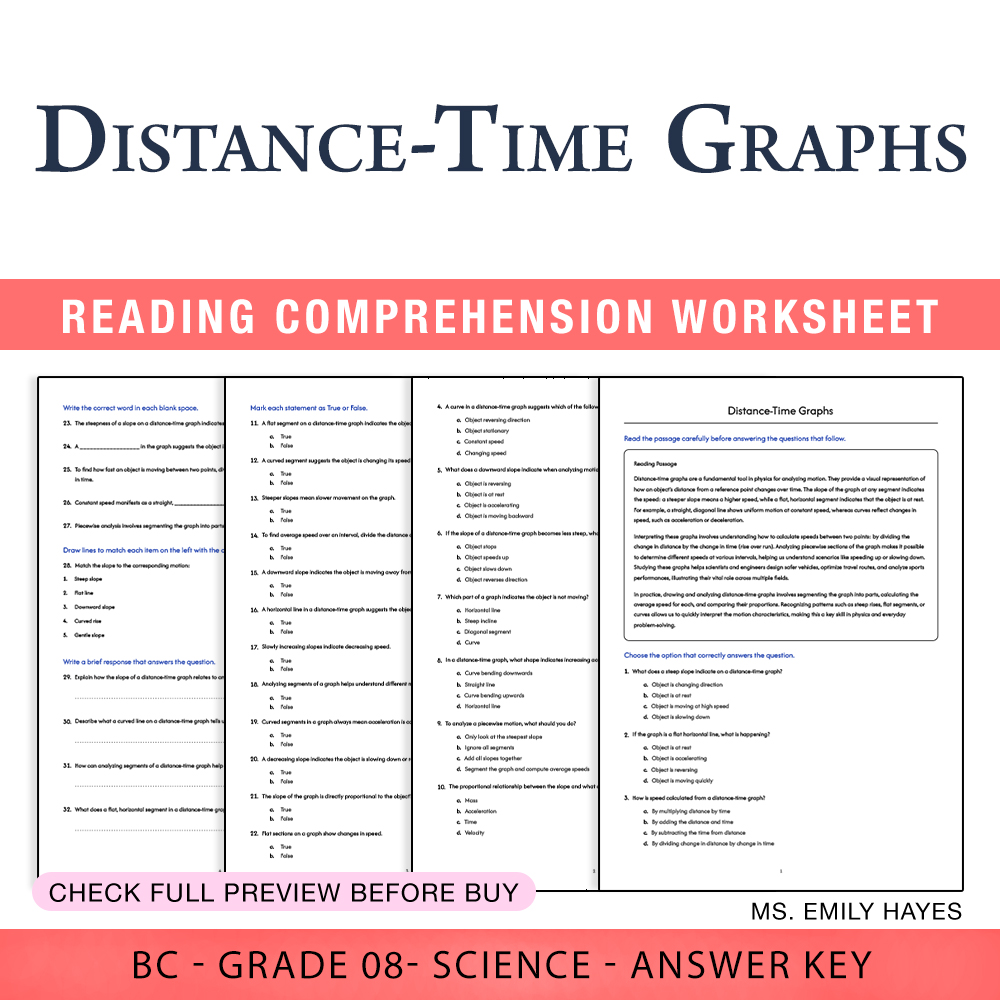
Grade 8 Science | Distance-Time Graphs Worksheet (PDF+ Answer Key)
Created byCopper Leaf ClassroomLearning Objectives
- Understand how to interpret distance-time graphs and what information they convey about motion.
- Learn to calculate speed using the slope of a distance-time graph and analyze different types of motion such as constant, increasing, or decreasing speed.
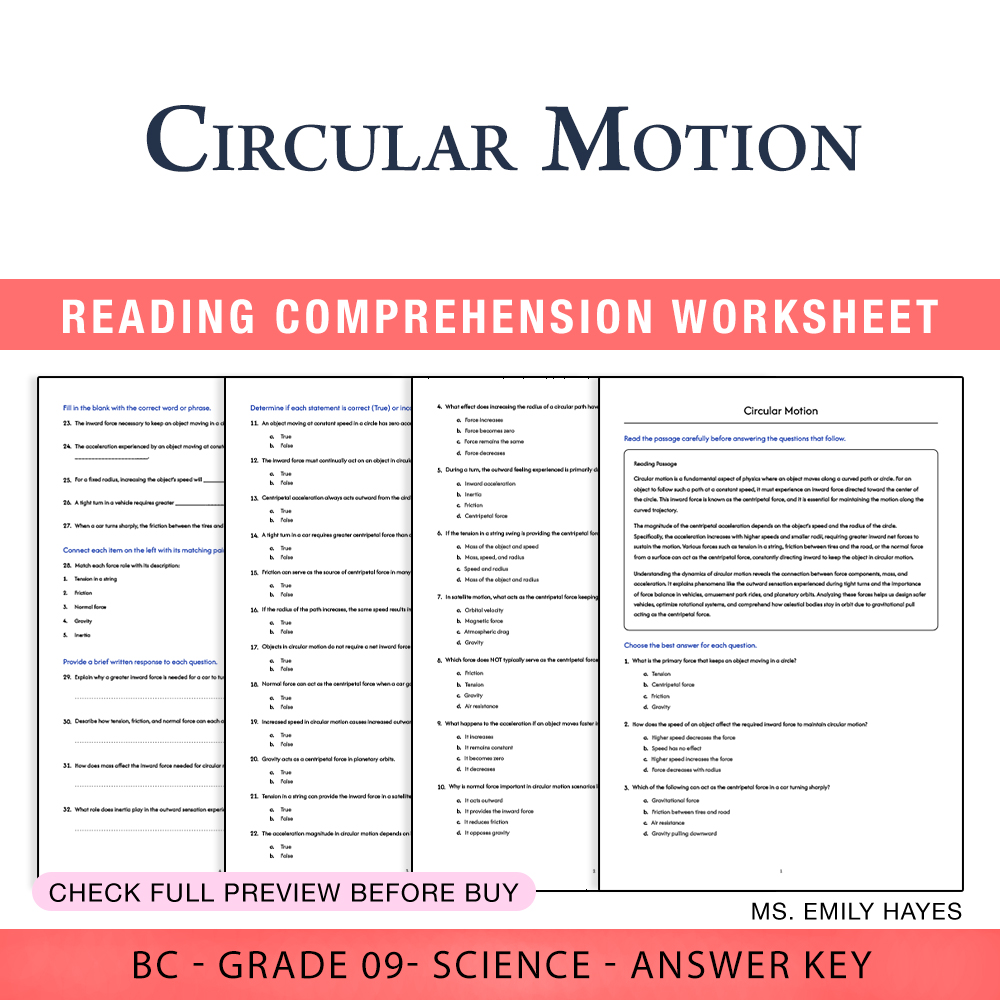
Grade 9 Science | Circular Motion Worksheet (PDF+ Answer Key)
Created byCopper Leaf ClassroomLearning Objectives
- Understand the role of centripetal force in circular motion.
- Identify the effects of inward acceleration on moving objects.
- Connect force components, mass, and acceleration in analyzing circular motion.
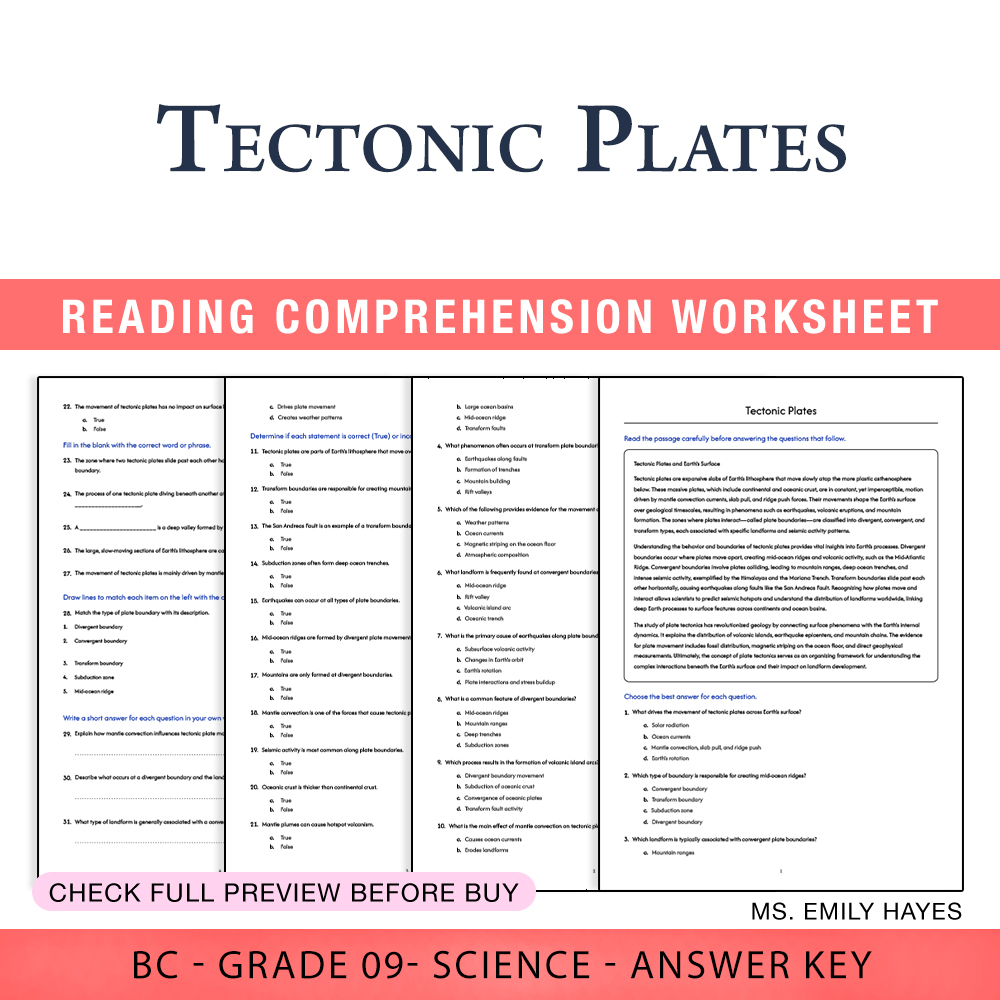
9th Grade Science | Tectonic Plates Worksheet (PDF+ Answer Key)
Created byCopper Leaf ClassroomLearning Objectives
- Understand the concept of tectonic plates and their movement.
- Identify causes and effects of plate interactions.
- Explain the types of plate boundaries and associated landforms and seismic activity.

11th Grade Science | Classification Methods Worksheet (PDF+ Answer Key)
Created byCopper Leaf ClassroomLearning Objectives
- Understand various classification methods used in biology to organize biodiversity.
- Differentiate between cladistic, phenetic, and phylogenomics approaches.
- Explain how hierarchical taxonomic systems represent evolutionary relationships.
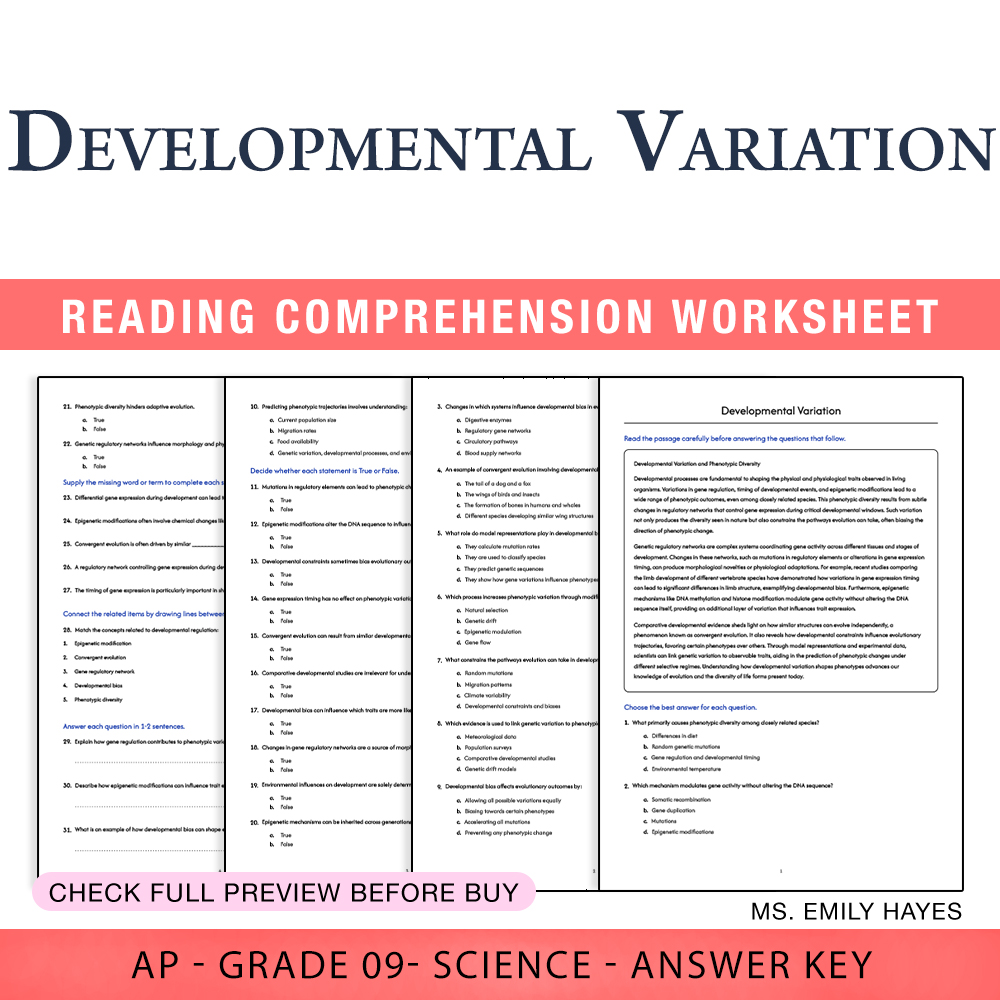
9th Grade Science | Developmental Variation Worksheet (PDF+ Answer Key)
Created byCopper Leaf ClassroomLearning Objectives
- Understand how gene regulation and developmental processes contribute to phenotypic diversity.
- Analyze the role of regulatory networks, timing, and epigenetics in morphological and physiological differences.
- Use comparative developmental evidence to explain convergent evolution and developmental bias.

Grade 6 Science | Wave Interactions Worksheet (PDF+ Answer Key)
Created byCopper Leaf ClassroomLearning Objectives
- Describe how wave interference can be constructive or destructive and how it affects energy.
- Explain the concepts of superposition, resonance, and damping in wave behavior.
- Identify real-world examples of wave interactions in sound and light phenomena.
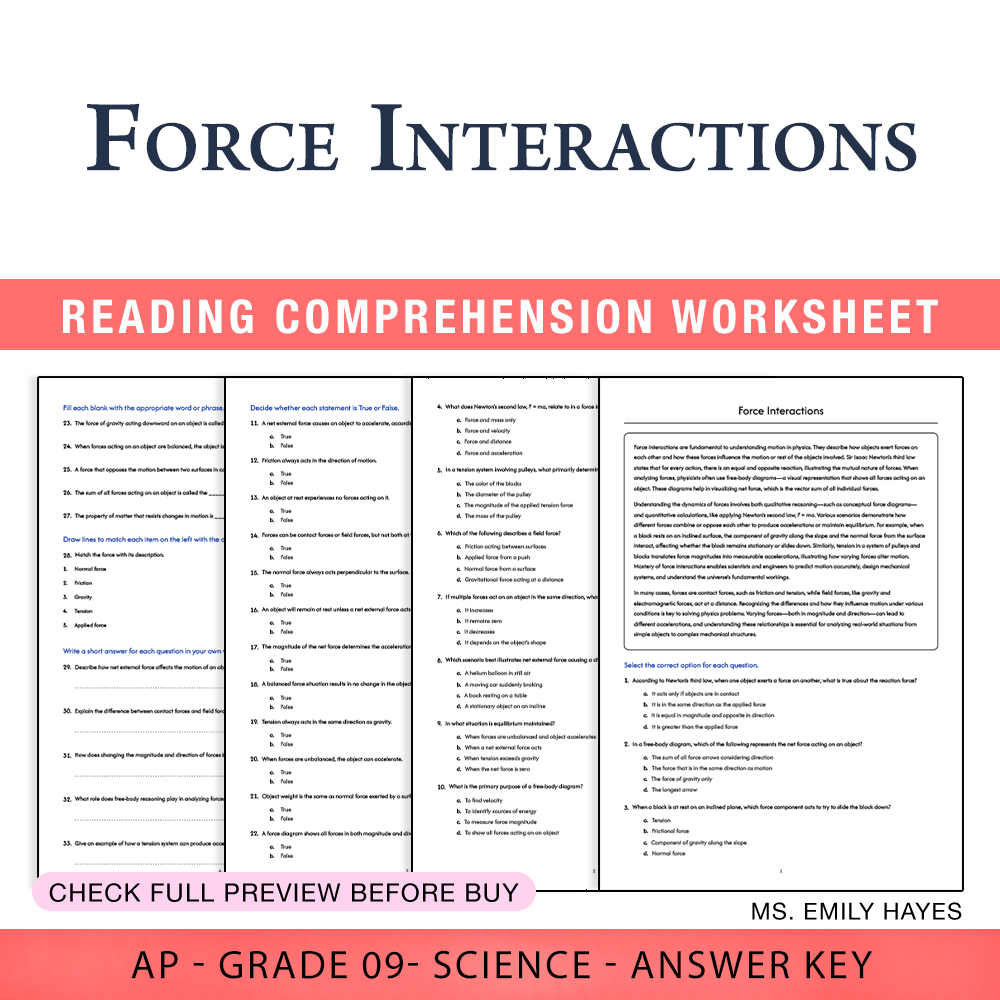
9th Grade Science | Force Interactions Worksheet (PDF+ Answer Key)
Created byCopper Leaf ClassroomLearning Objectives
- Explain the relationship between net external forces and changes in an object's motion using Newtonian dynamics.
- Interpret and analyze force diagrams and free-body diagrams to determine forces acting on objects.
- Calculate acceleration resulting from different force interactions in scenarios such as inclined planes and tension systems.
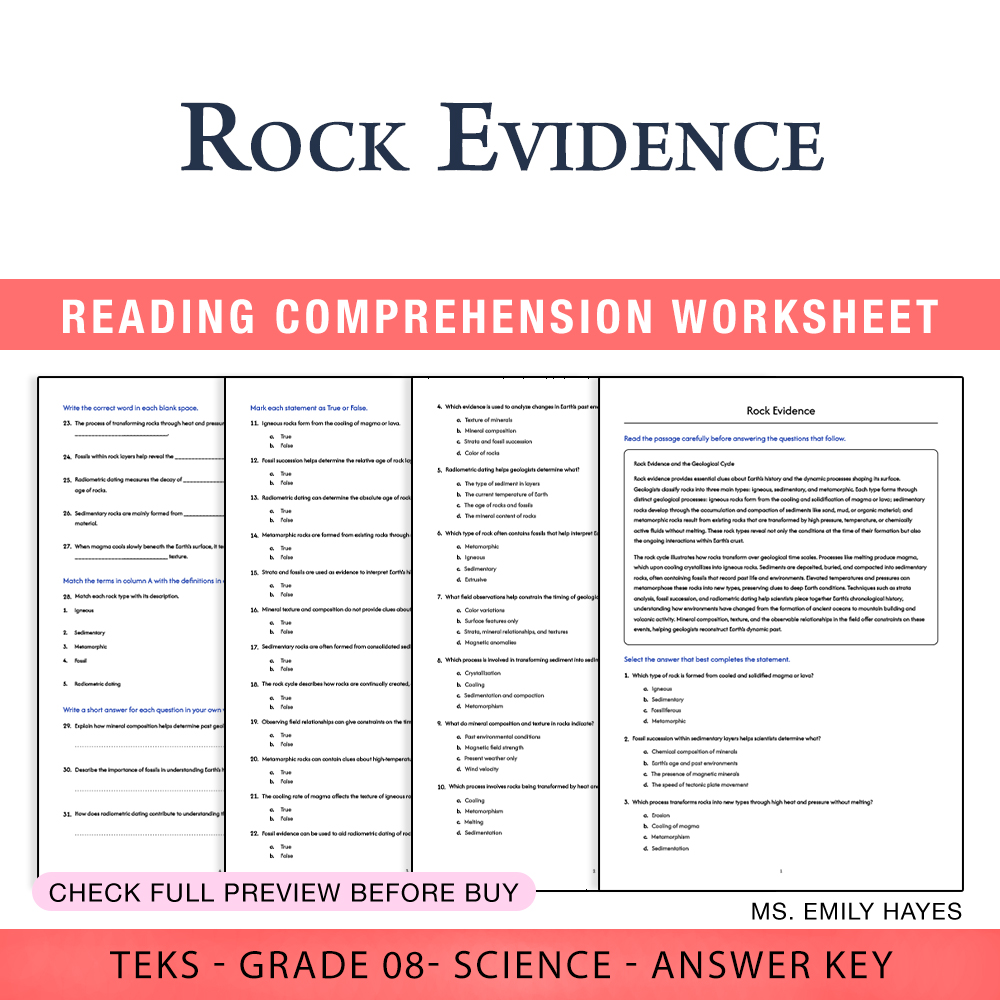
8th Grade Science | Rock Evidence Worksheet (PDF+ Answer Key)
Created byCopper Leaf ClassroomLearning Objectives
- Classify rocks into igneous, sedimentary, and metamorphic types based on their formation and properties.
- Describe the processes involved in the rock cycle, including melting, cooling, sedimentation, compaction, and metamorphism.
- Use methods such as strata analysis, fossil succession, and radiometric dating to interpret Earth's geological history.
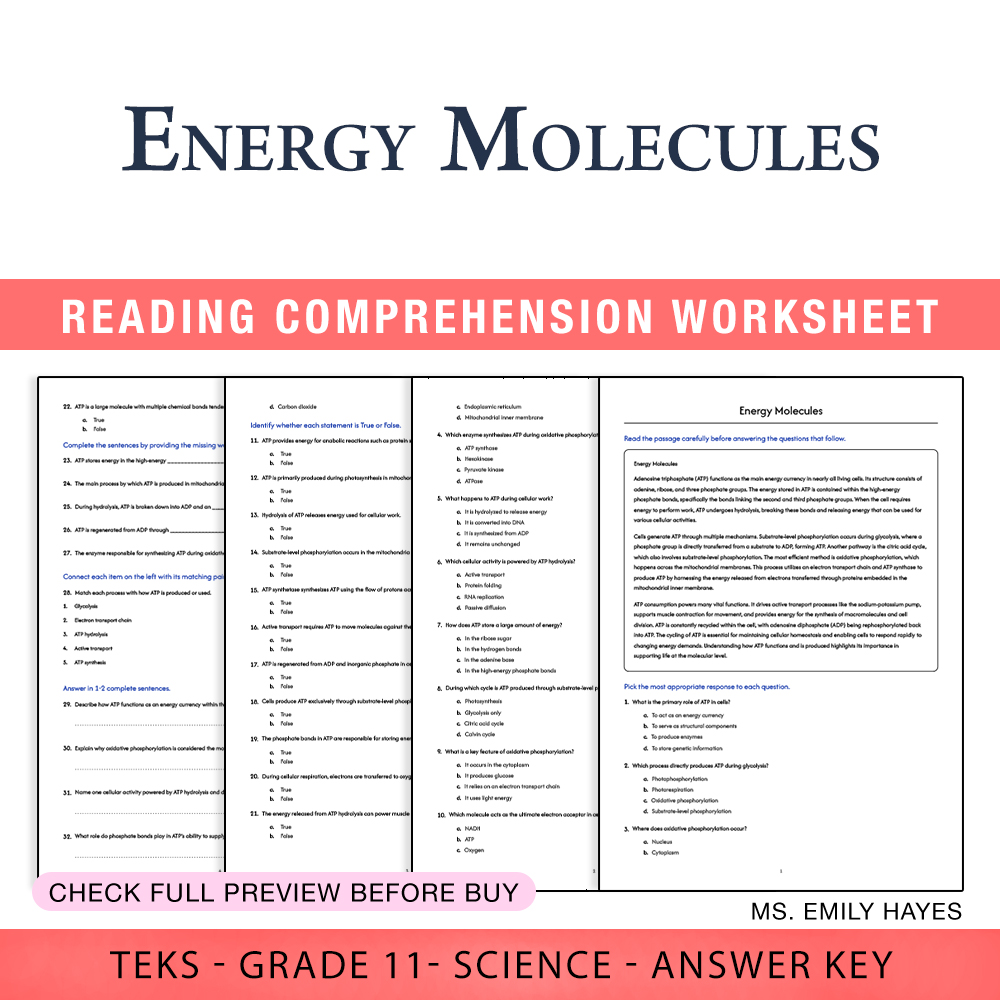
Grade 11 Science | Energy Molecules Worksheet (PDF+ Answer Key)
Created byCopper Leaf ClassroomLearning Objectives
- Describe the role of ATP as the primary energy carrier in cells.
- Explain how ATP is produced via substrate-level and oxidative phosphorylation.
- Identify cellular processes powered by ATP consumption, such as active transport and mechanical work.
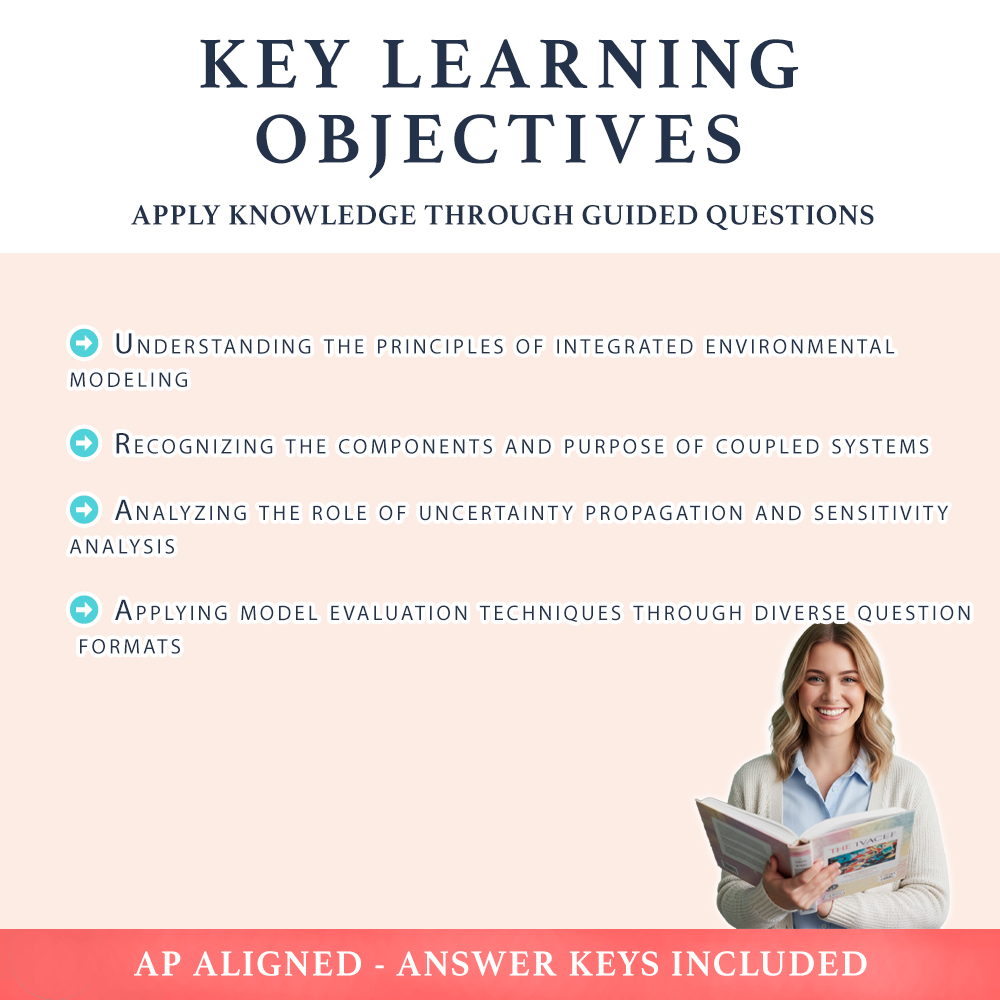
Grade 9 Science | Integrated Modeling Worksheet (PDF+ Answer Key)
Created byCopper Leaf ClassroomLearning Objectives
- Understand the components and interactions within coupled environmental models.
- Identify key parameters and sensitivities in integrated models.
- Evaluate how uncertainties propagate through complex environmental scenarios.
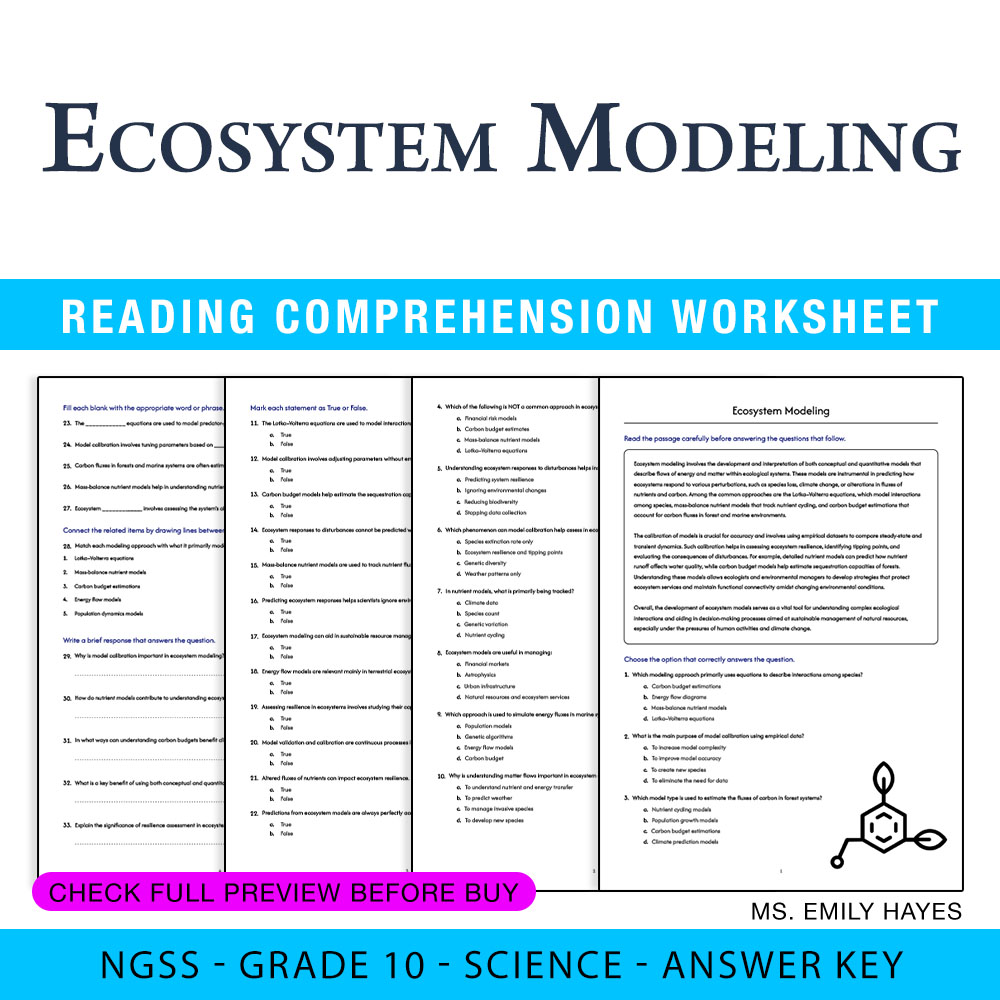
10th Grade Science | Ecosystem Modeling Worksheet (PDF + Answer Key)
Created byCopper Leaf ClassroomLearning Objectives
- Understand the principles of ecosystem modeling including energy and matter flows
- Interpret both conceptual and quantitative models such as Lotka–Volterra equations and nutrient models
- Analyze the responses of ecosystems to perturbations using modeling approaches
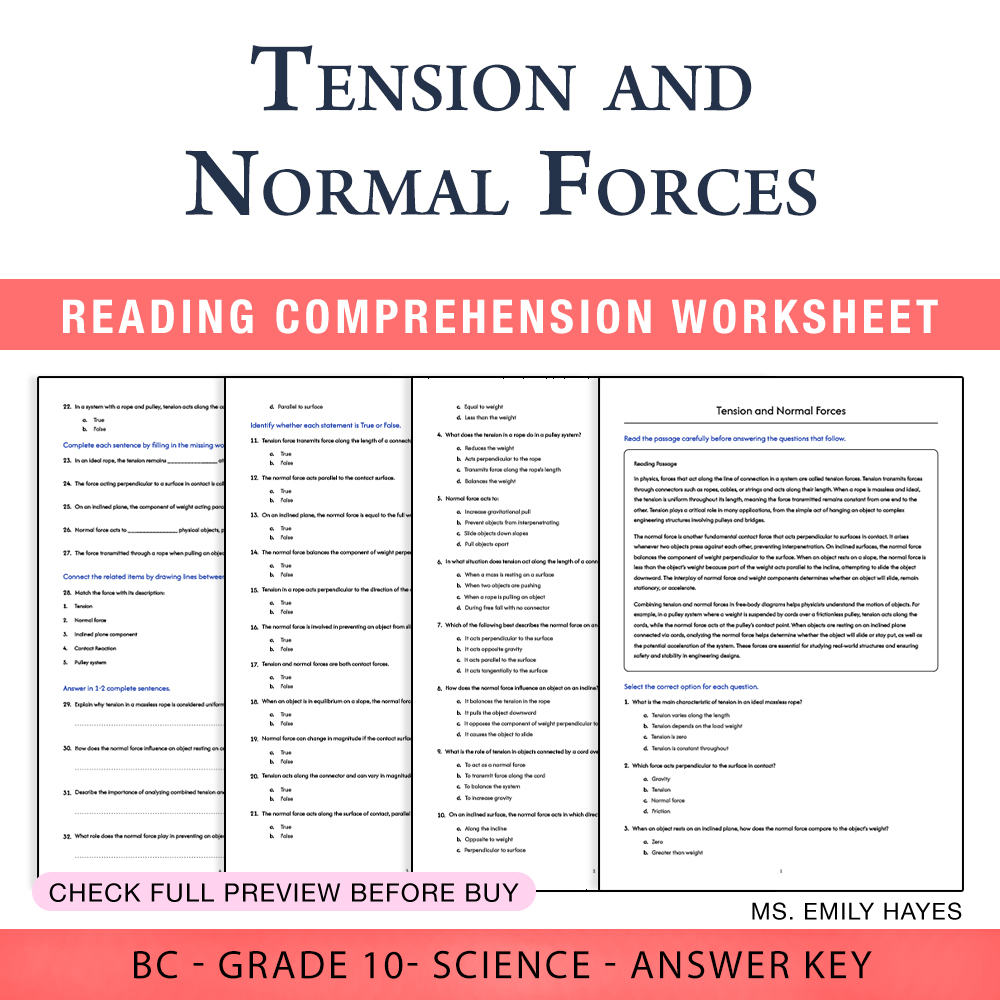
Grade 10 Science | Tension and Normal Forces Worksheet (PDF + Answer Key)
Created byCopper Leaf ClassroomLearning Objectives
- Understand how tension transmits forces through connectors and acts along their length in different situations.
- Explain how the normal force arises from contact and balances components of weight on inclined surfaces.
- Analyze the combined effects of tension and normal force in objects connected by cords or resting on slopes.
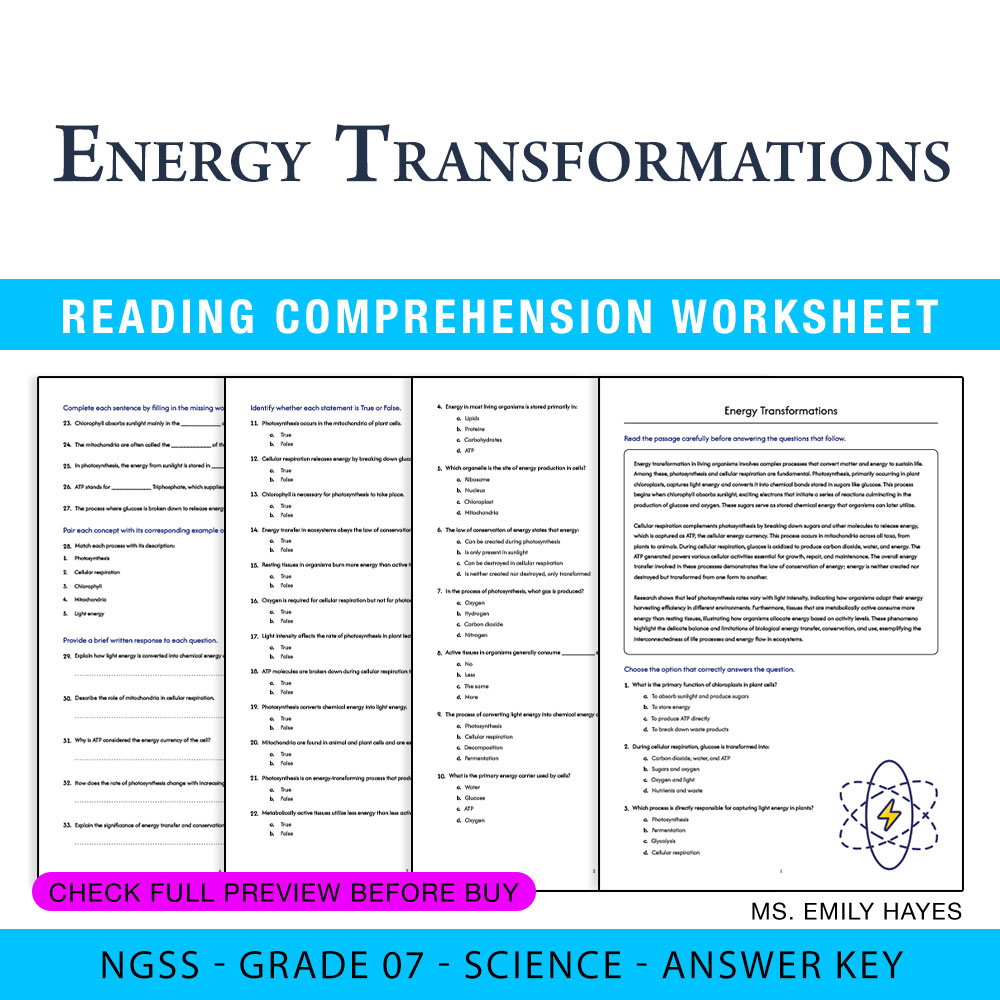
7th Grade Science | Energy Transformations Worksheet (PDF + Answer Key)
Created byCopper Leaf ClassroomLearning Objectives
- Explain how light energy is converted into chemical energy during photosynthesis.
- Describe how cellular respiration releases energy stored in food molecules.
- Connect processes of sugar production in chloroplasts to ATP generation in mitochondria across different organisms.
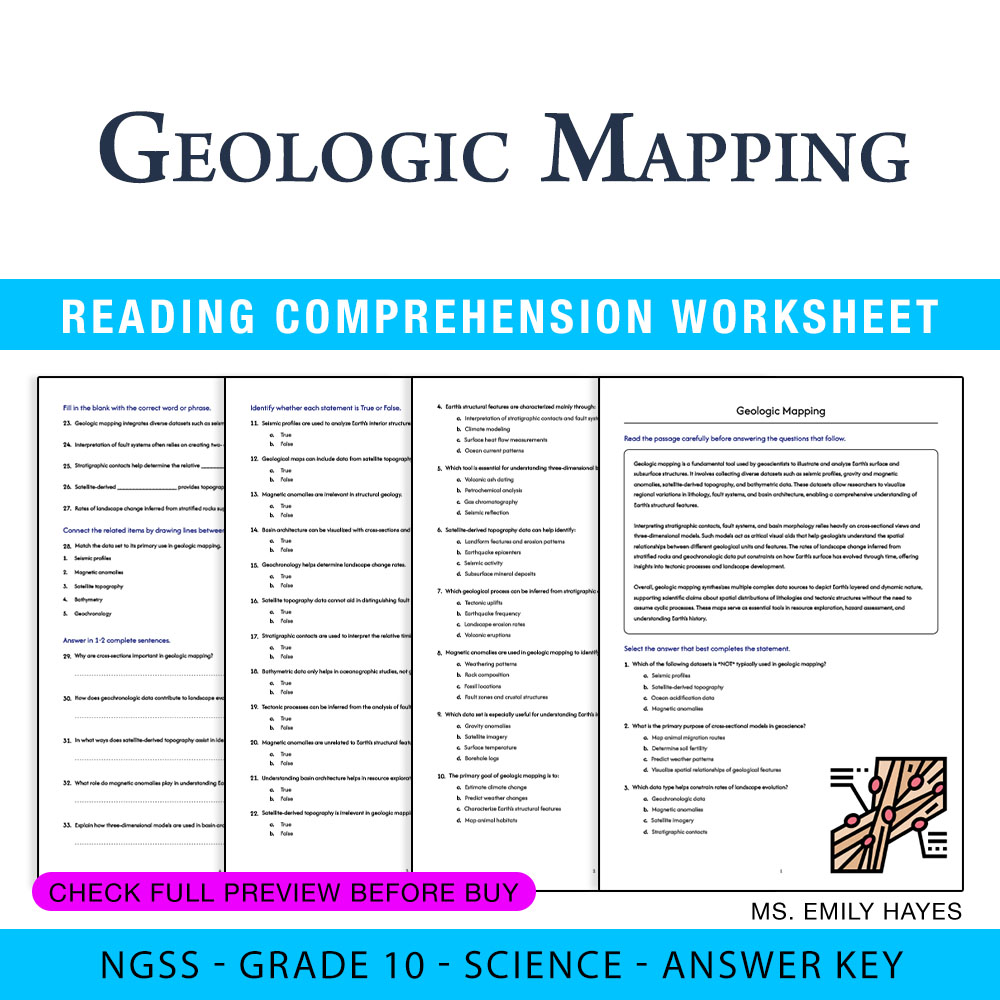
10th Grade Science | Geologic Mapping Worksheet (PDF+ Answer Key)
Created byCopper Leaf ClassroomLearning Objectives
- Understand the process and purpose of geologic mapping in earth sciences.
- Identify key data sets and interpret structural features from geologic maps.
- Apply knowledge of stratigraphy, fault systems, and basin architecture to analyze Earth's surface.
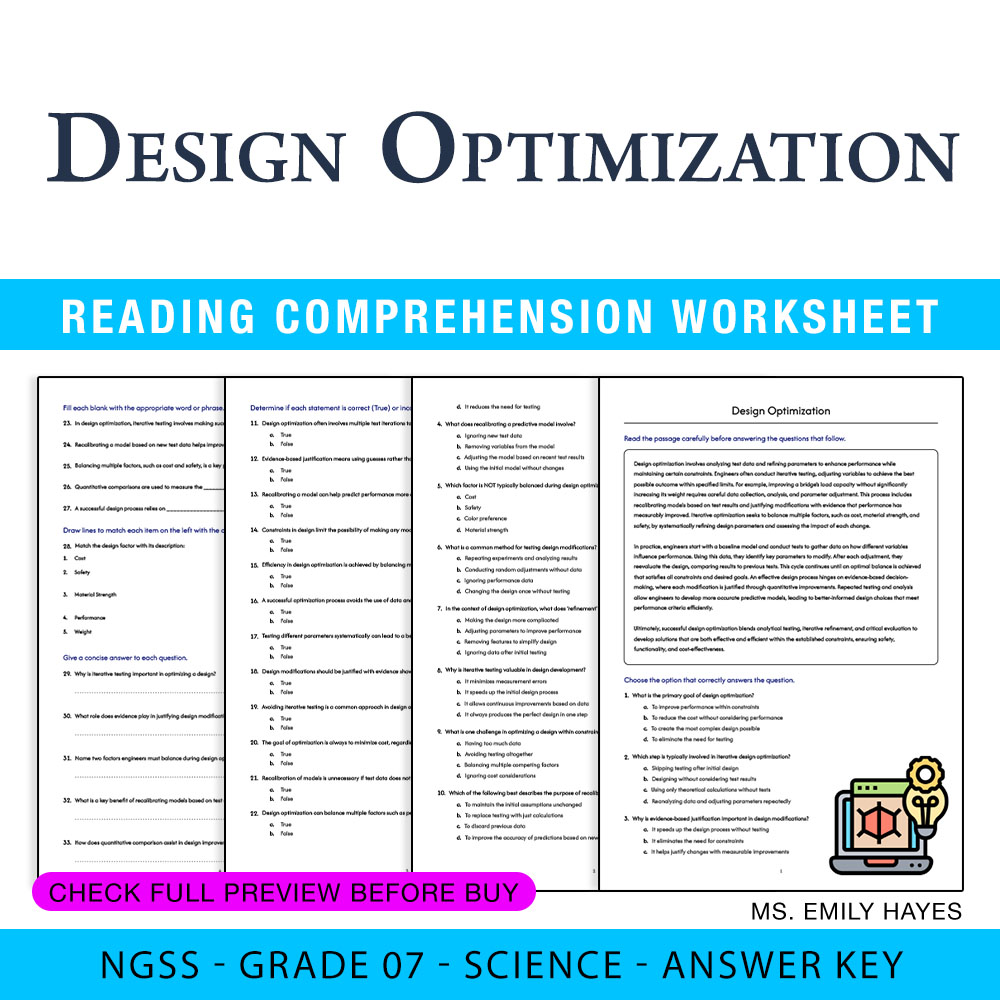
7th Grade Science | Design Optimization Worksheet (PDF+ Answer Key)
Created byCopper Leaf ClassroomLearning Objectives
- Analyze experimental test data to identify factors influencing design performance.
- Apply iterative parameter adjustments based on quantitative comparisons to improve design solutions.
- Justify modifications to design specifications with evidence of performance improvements within constraints.
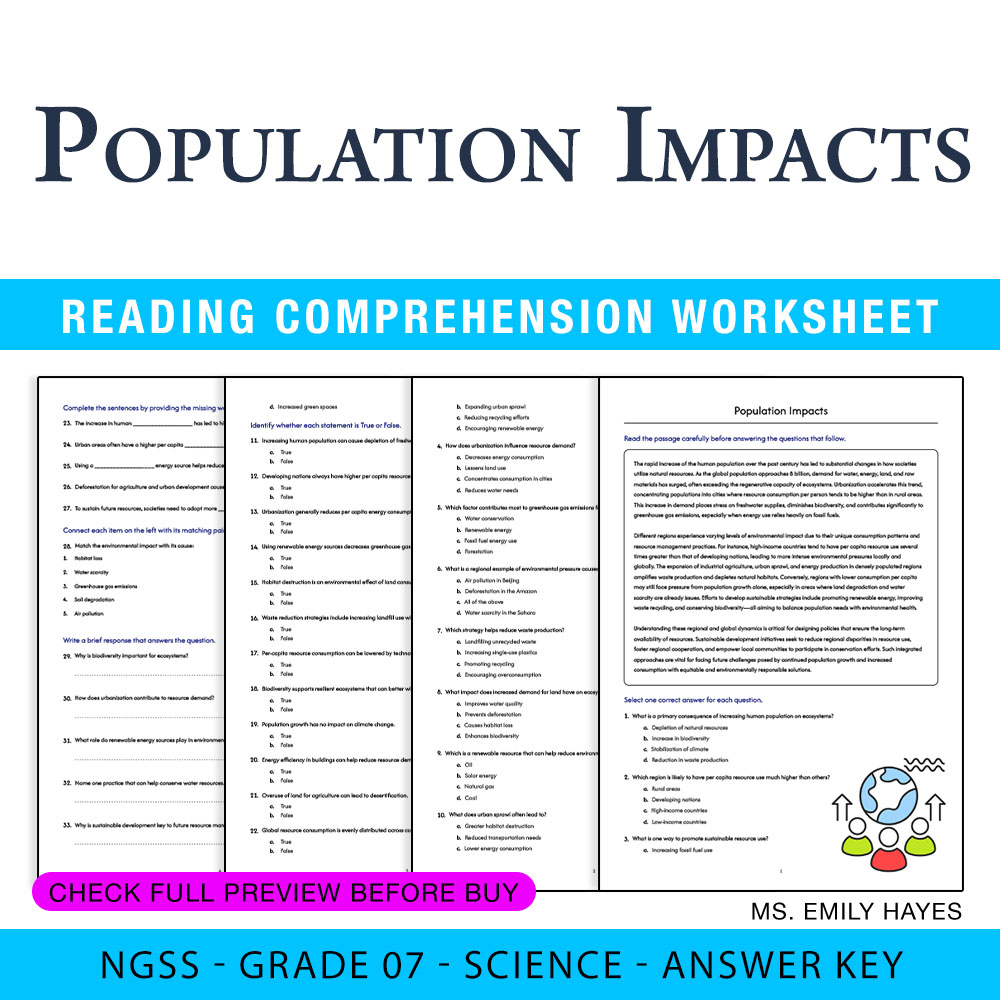
7th Grade Science | Population Impacts Worksheet (PDF+ Answer Key)
Created byCopper Leaf ClassroomLearning Objectives
- Understand how human population growth affects demand for natural resources and ecosystems.
- Analyze regional examples showing the relationship between consumption patterns and environmental pressures.
- Evaluate sustainable resource management strategies to mitigate negative impacts of population growth.
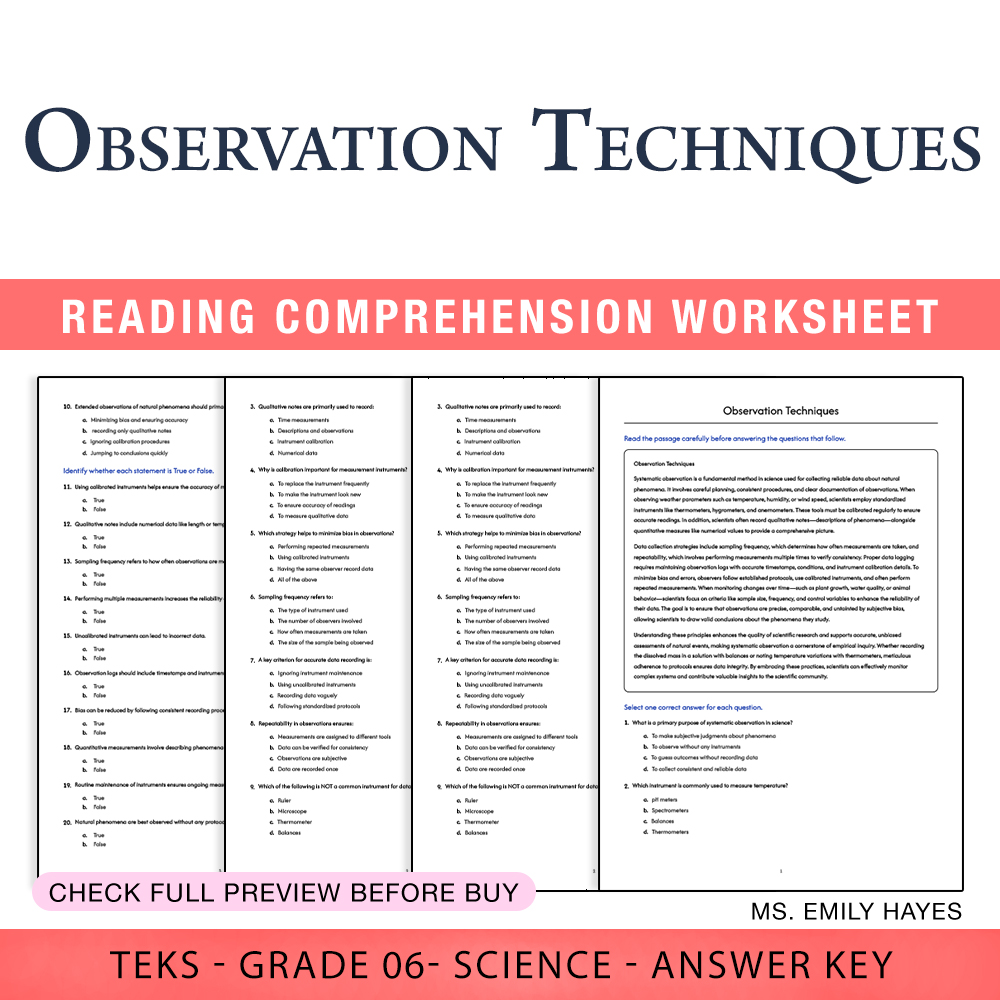
6th Grade Science | Observation Techniques Worksheet (PDF+ Answer Key)
Created byCopper Leaf ClassroomLearning Objectives
- Define systematic observation and explain its importance in scientific data collection.
- Distinguish between qualitative notes and quantitative measurements in data recording.
- Identify common instruments such as rulers, balances, and thermometers used in observation.
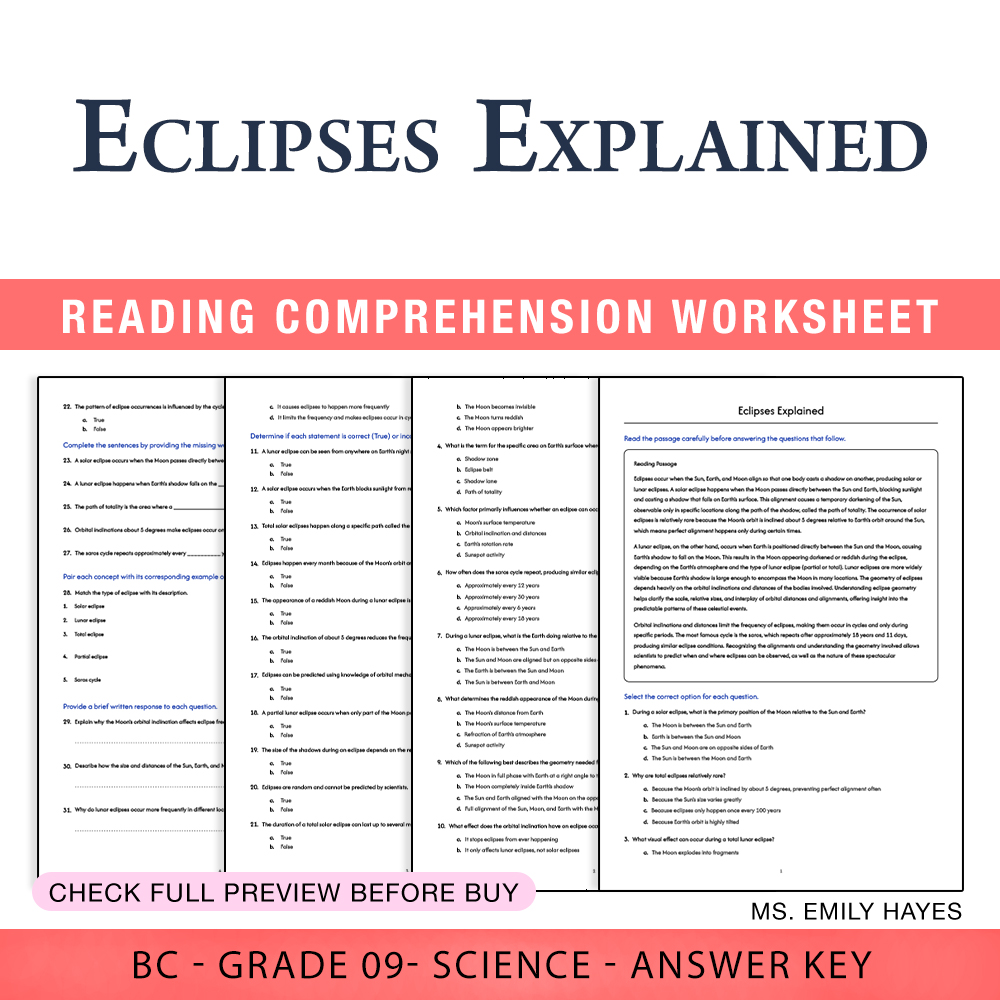
Grade 9 Science | Eclipses Explained Worksheet (PDF+ Answer Key)
Created byCopper Leaf ClassroomLearning Objectives
- Understand the basic geometry of solar and lunar eclipses.
- Identify the positions of the Sun, Earth, and Moon during different types of eclipses.
- Explain how orbital inclinations influence the occurrence and visibility of eclipses.
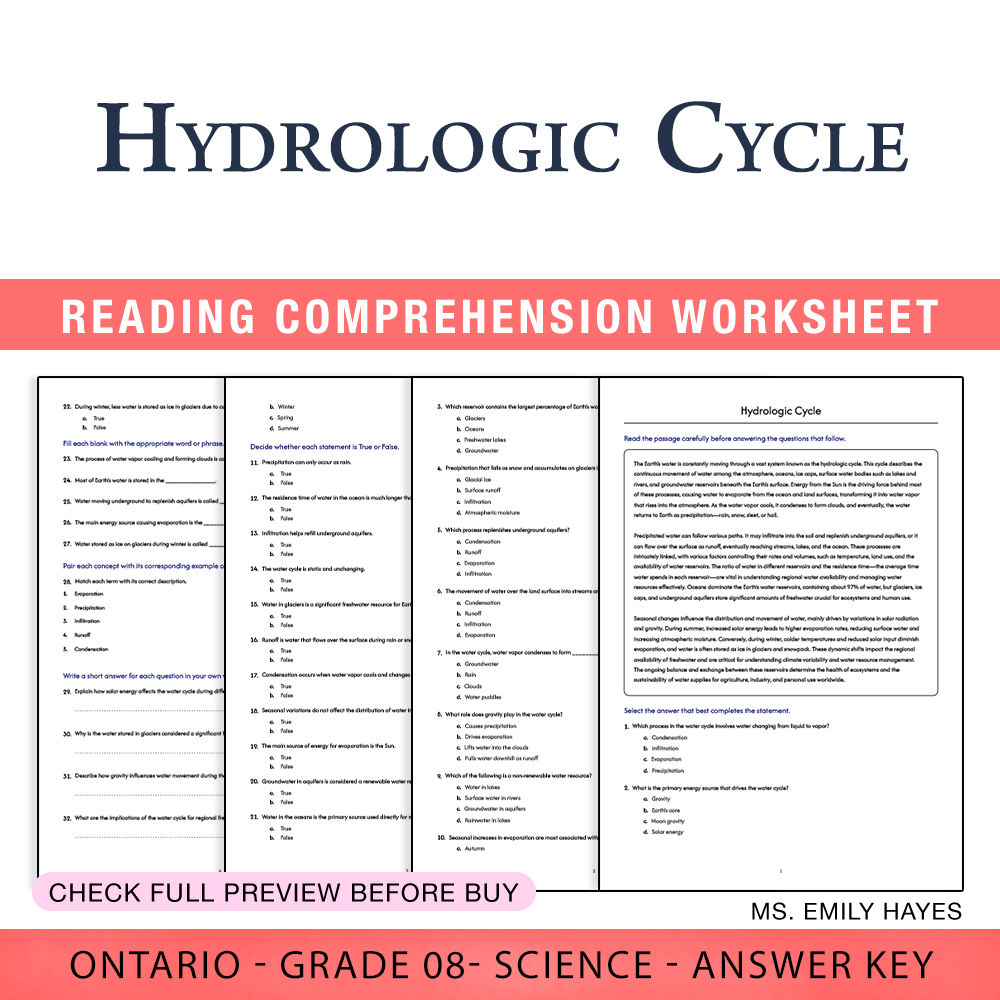
Grade 8 Science | Hydrologic Cycle Worksheet (PDF + Answer Key)
Created byCopper Leaf ClassroomLearning Objectives
- Describe the main processes involved in the hydrologic cycle, including evaporation, condensation, precipitation, infiltration, and runoff.
- Explain the role of solar energy and gravity in driving water fluxes and seasonal water redistribution.
- Identify the different reservoirs of water on Earth, such as oceans, glaciers, and aquifers, and discuss their sizes and residence times.
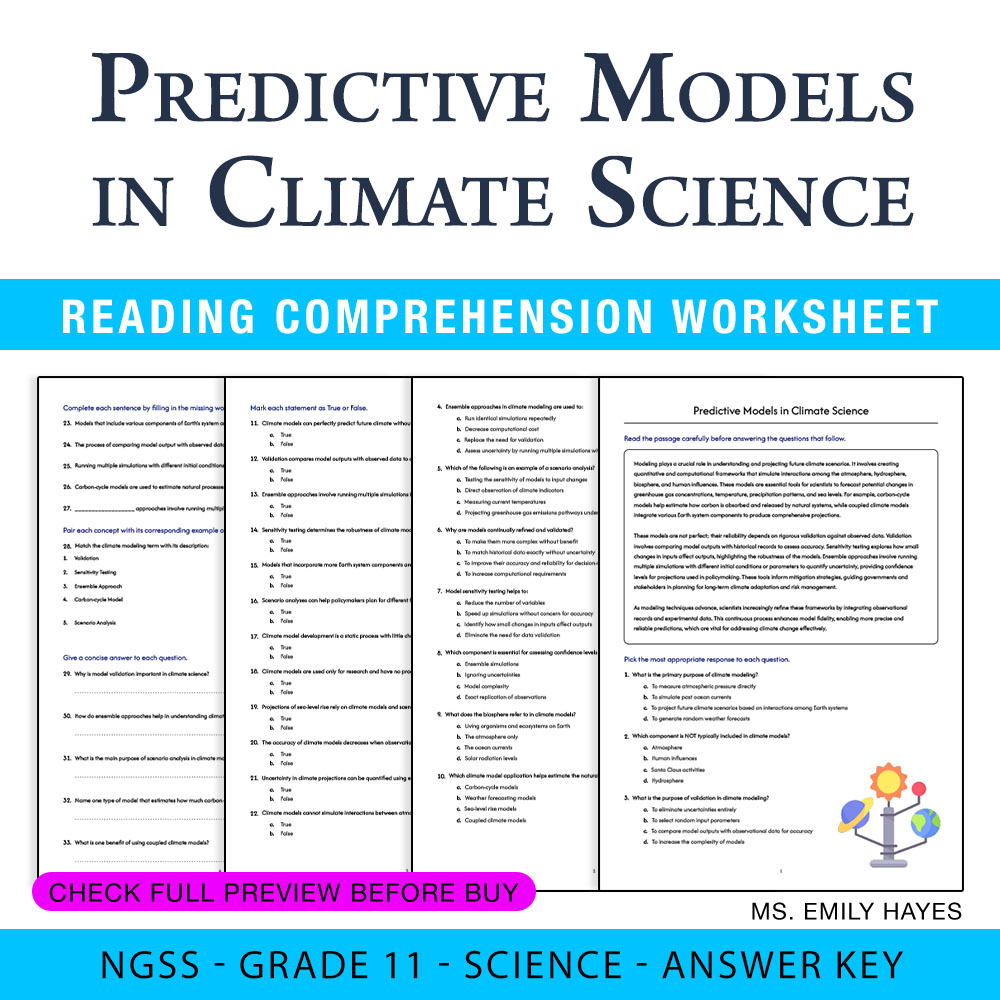
11th Grade Science|Predictive Models in Climate Science Worksheet(PDF + Answers)
Created byCopper Leaf ClassroomLearning Objectives
- Understand the role of modeling in predicting climate change and environmental impacts.
- Identify different types of climate models and their applications.
- Explain the importance of model validation and uncertainty analysis in climate projections.
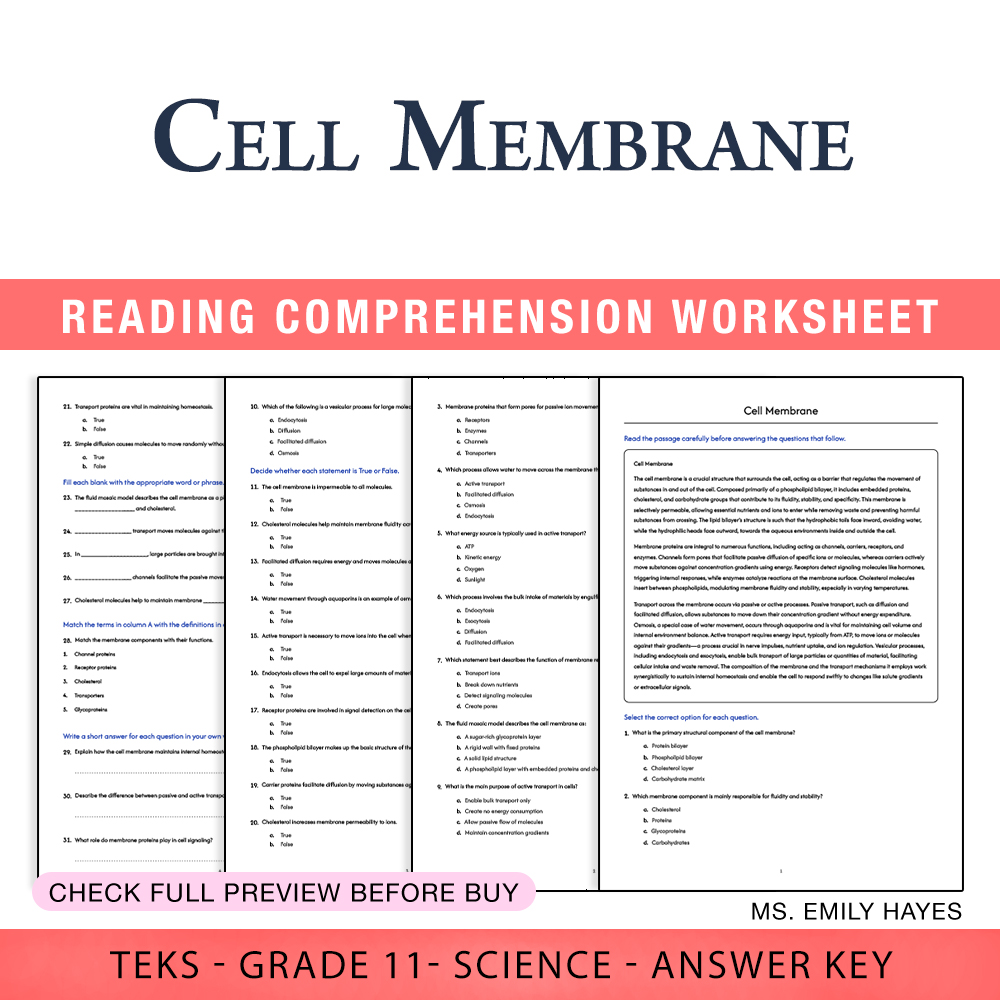
11th Grade Science | Cell Membrane Worksheet (PDF+ Answer Key)
Created byCopper Leaf ClassroomLearning Objectives
- Explain the structure and composition of the cell membrane.
- Describe the functions of different membrane proteins and lipids.
- Identify various transport mechanisms across the membrane.
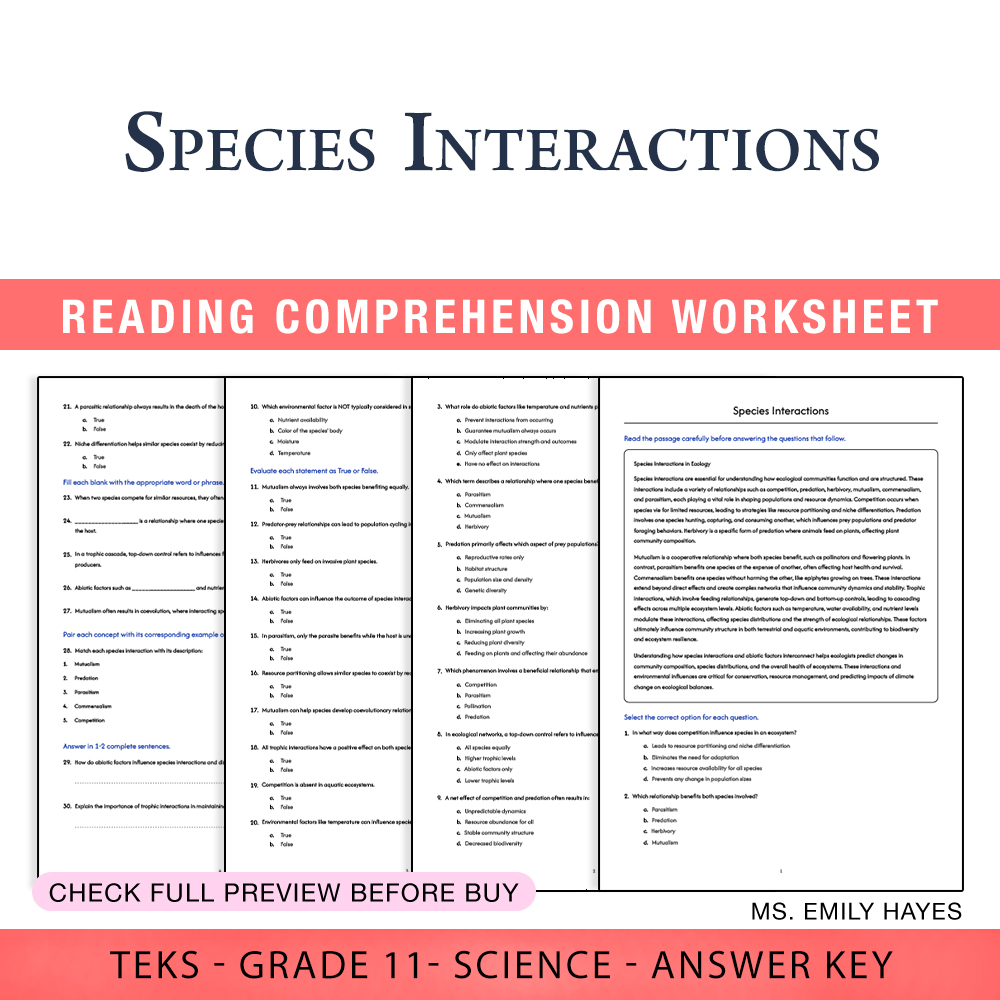
11th Grade Science | Species Interactions Worksheet (PDF+ Answer Key)
Created byCopper Leaf ClassroomLearning Objectives
- Describe the different types of species interactions such as competition, predation, herbivory, mutualism, commensalism, and parasitism.
- Explain how species interactions influence community structure, population dynamics, and resource partitioning.
- Analyze the effects of abiotic factors like temperature, moisture, and nutrients on species interactions and distributions.
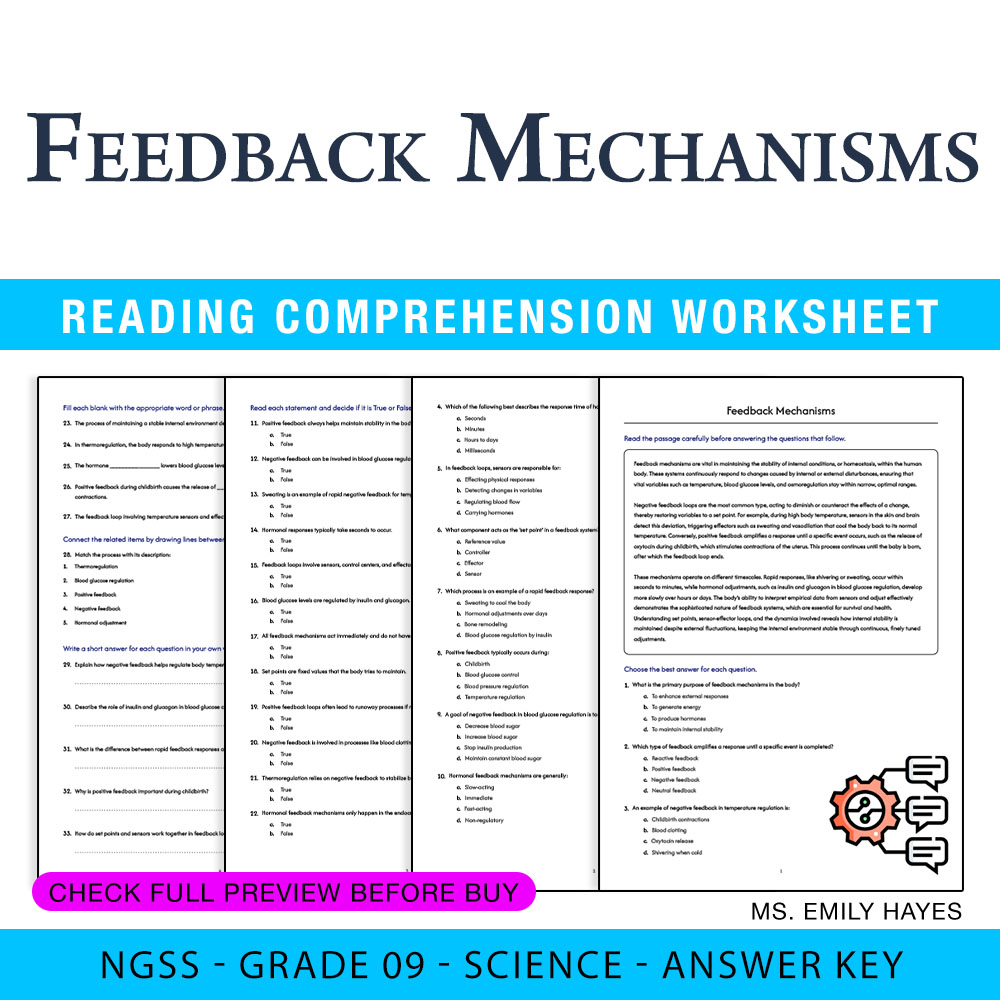
9th Grade Science | Feedback Mechanisms Worksheet (PDF+ Answer Key)
Created byCopper Leaf ClassroomLearning Objectives
- Describe the concepts of negative and positive feedback within physiological systems.
- Explain how feedback mechanisms maintain internal body conditions within narrow limits.
- Identify examples of feedback processes such as thermoregulation and blood glucose control.
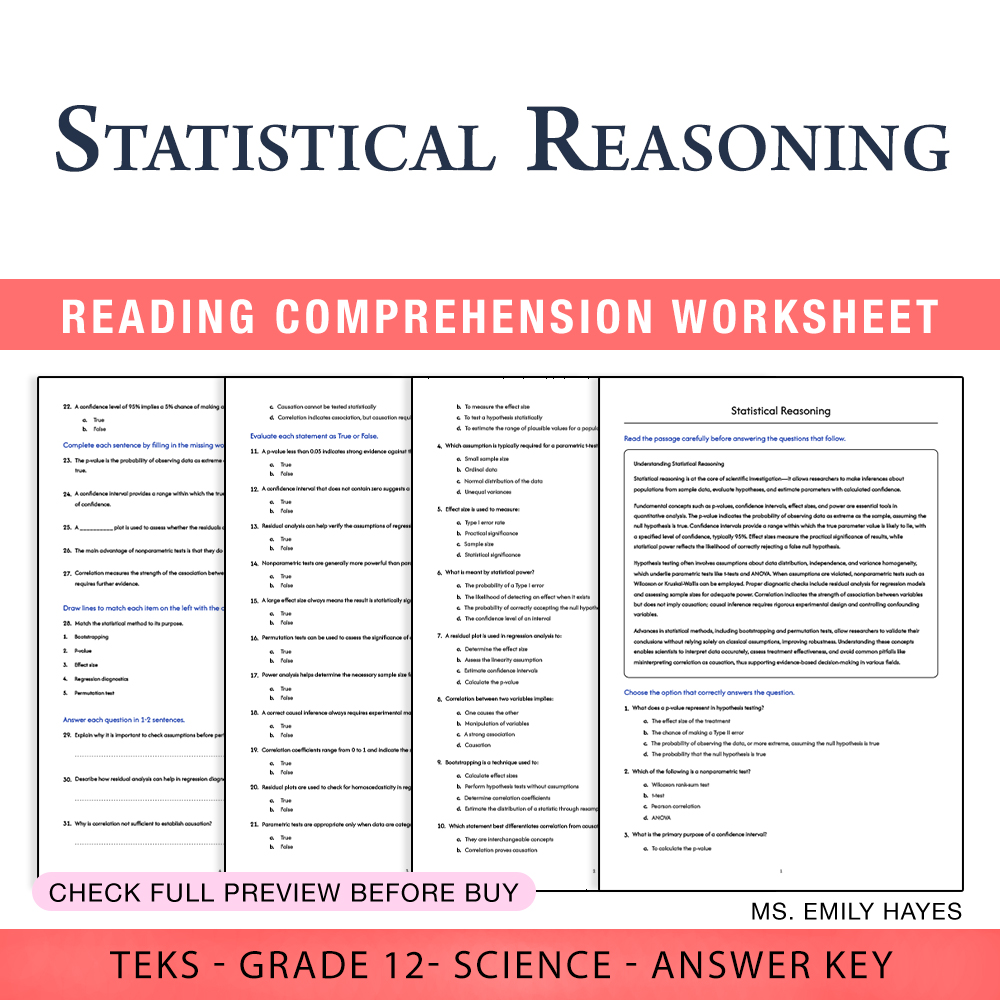
Grade 12 Science | Statistical Reasoning Worksheet (PDF+ Answer Key)
Created byCopper Leaf ClassroomLearning Objectives
- Understand the fundamental concepts of hypothesis testing, confidence intervals, and p-values.
- Interpret the results of statistical analysis, including effect sizes and power.
- Recognize the assumptions underlying parametric and nonparametric tests and select appropriate methods.

12th Grade Science | Astronomy Overview Worksheet (PDF+ Answer Key)
Created byCopper Leaf ClassroomLearning Objectives
- Understand the formation processes and architecture of the Solar System within the context of astronomy.
- Describe key theories such as protoplanetary disk evolution, accretion, and planetary differentiation.
- Analyze observational data like spectroscopy and orbital parameters to relate models to planetary diversity.
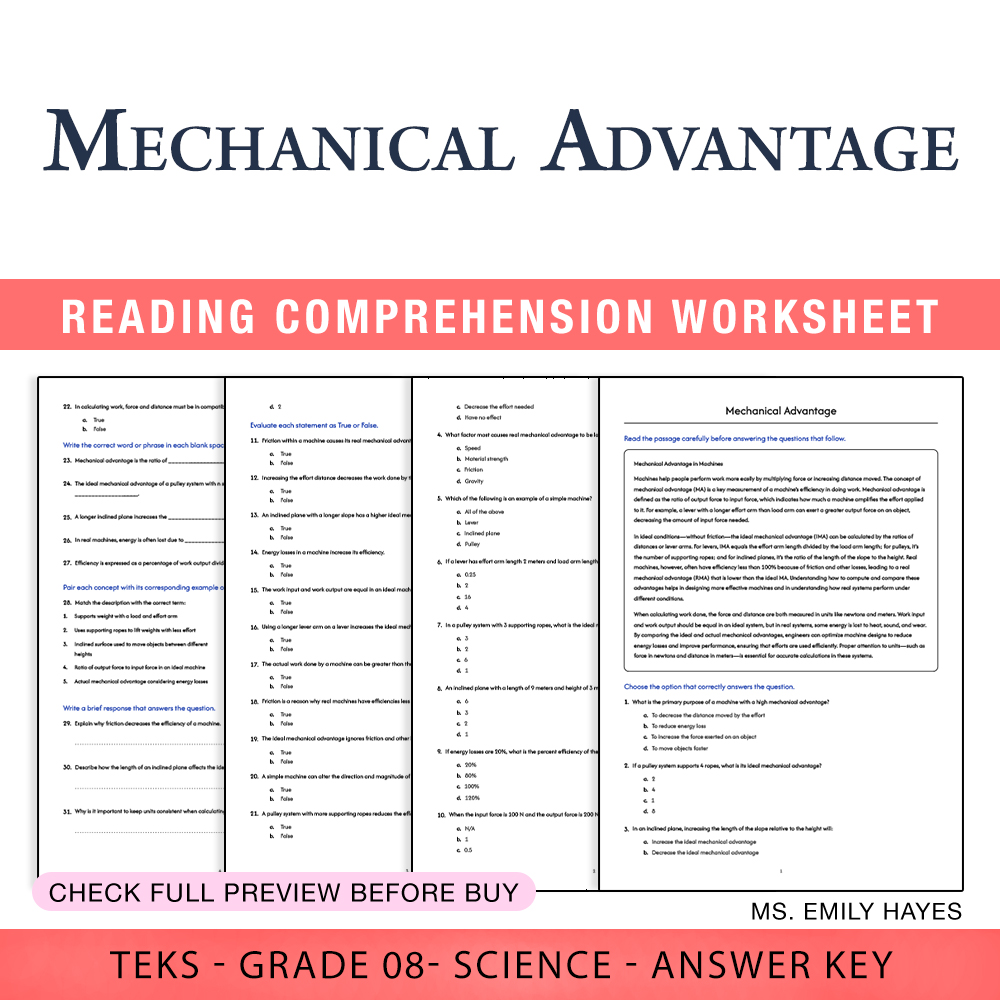
8th Grade Science | Mechanical Advantage Worksheet (PDF+ Answer Key)
Created byCopper Leaf ClassroomLearning Objectives
- Understand the concept of mechanical advantage and how it relates to force and distance in simple machine systems.
- Calculate ideal and real mechanical advantage using formulas for levers, pulleys, and inclined planes.
- Apply algebraic reasoning to compare different machine configurations and analyze efficiency.
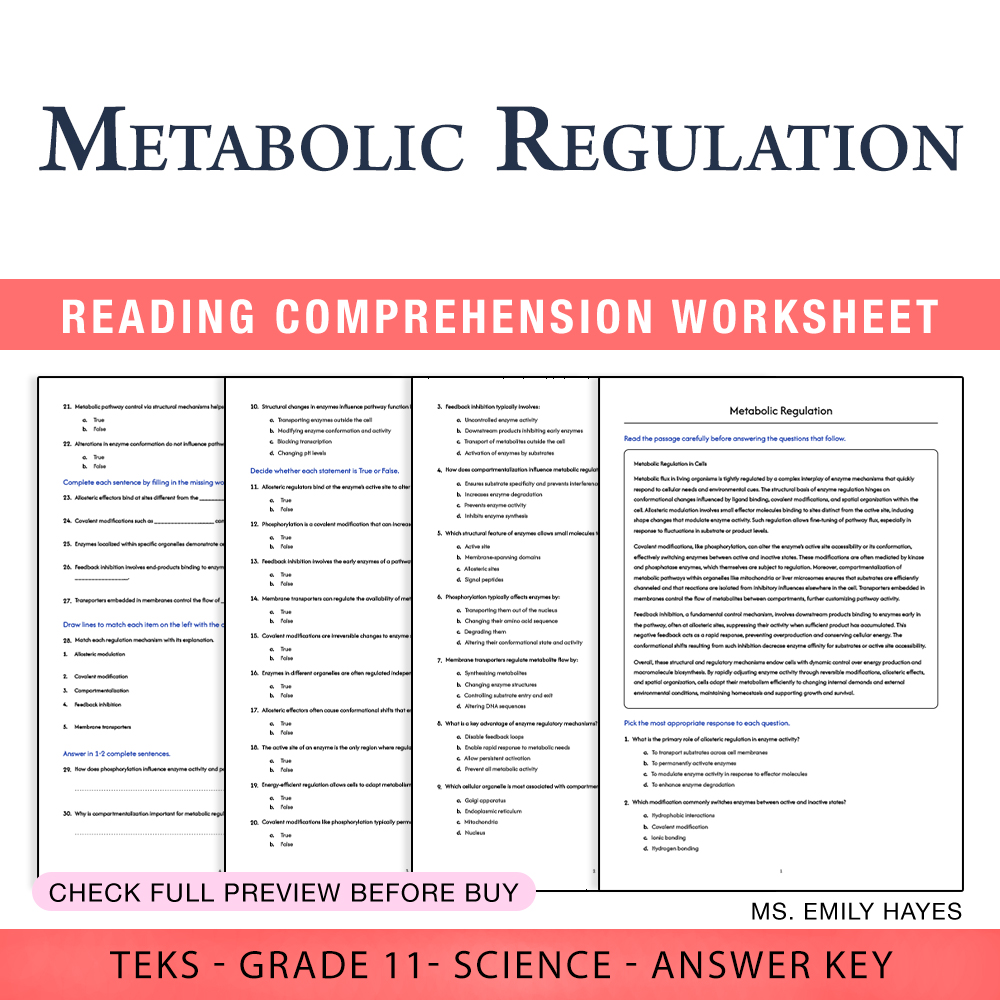
11th Grade Science | Metabolic Regulation Worksheet (PDF+ Answer Key)
Created byCopper Leaf ClassroomLearning Objectives
- Understand the mechanisms linking enzyme structure to pathway control, including allosteric modulation, covalent modification, and compartmentalization.
- Explain how feedback inhibition and phosphorylation alter enzyme activity and pathway flux.
- Describe cellular strategies such as organellar separation and membrane transporters in metabolic regulation.
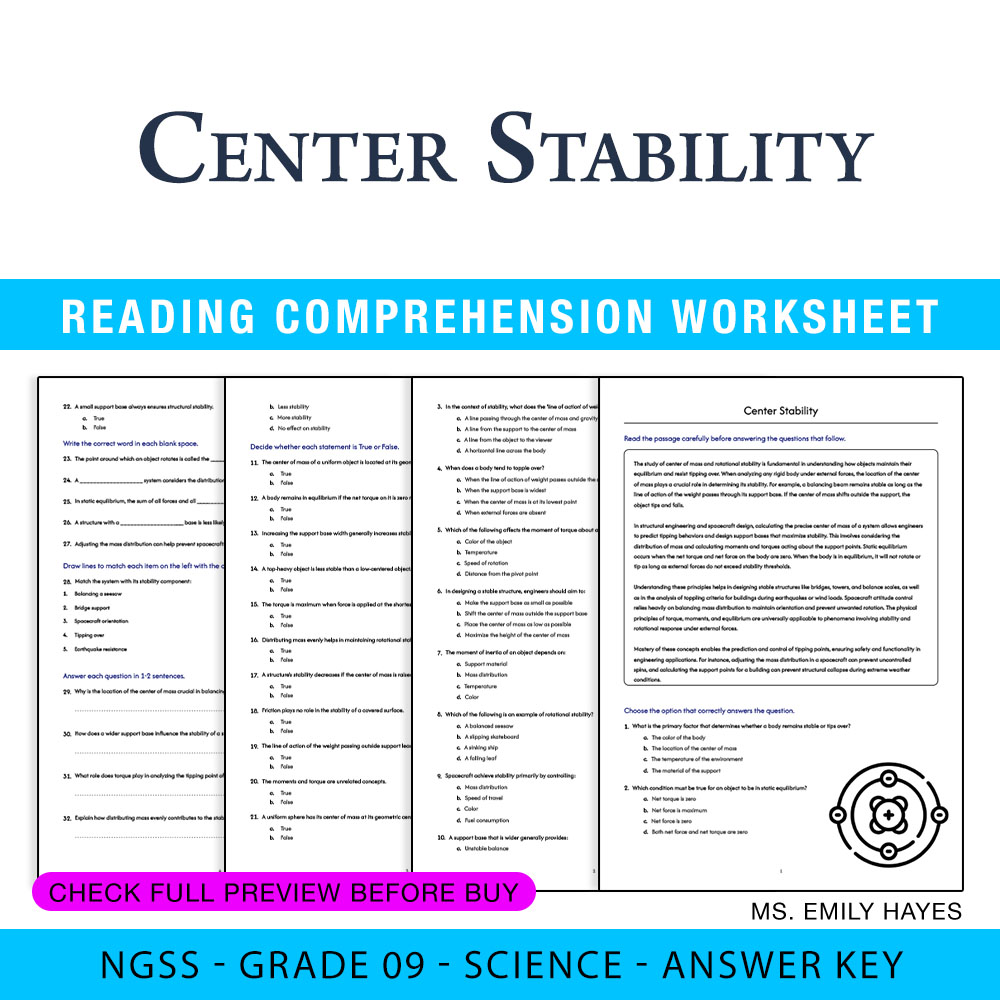
9th Grade Science | Center Stability Worksheet (PDF+ Answer Key)
Created byCopper Leaf ClassroomLearning Objectives
- Understand the concept of center of mass and how it affects rotational stability of rigid bodies.
- Apply torque and equilibrium conditions to analyze stability in structures and objects.
- Calculate the location of the center of mass for composite systems and determine tipping thresholds.
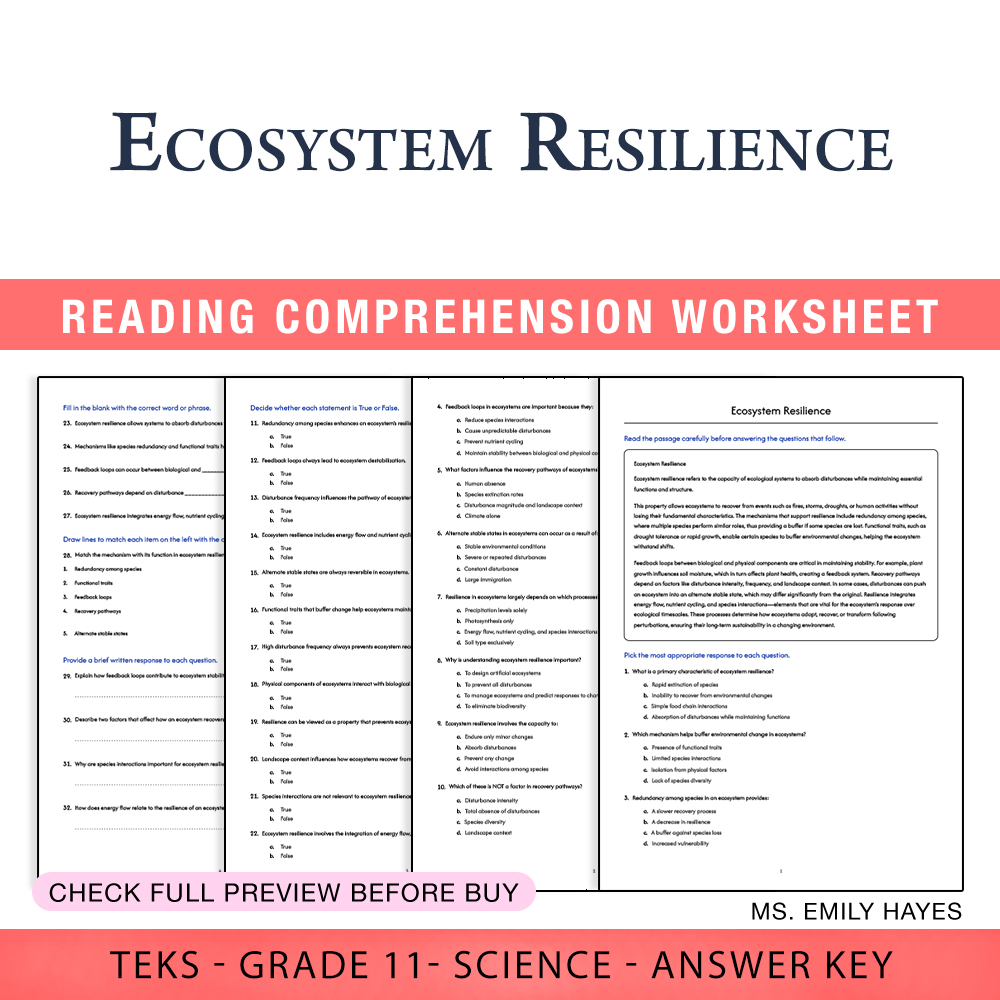
Grade 11 Science | Ecosystem Resilience Worksheet (PDF+ Answer Key)
Created byCopper Leaf ClassroomLearning Objectives
- Define ecosystem resilience and explain its key mechanisms.
- Identify various pathways through which ecosystems recover from disturbances.
- Analyze the factors influencing the stability and adaptability of ecological systems.
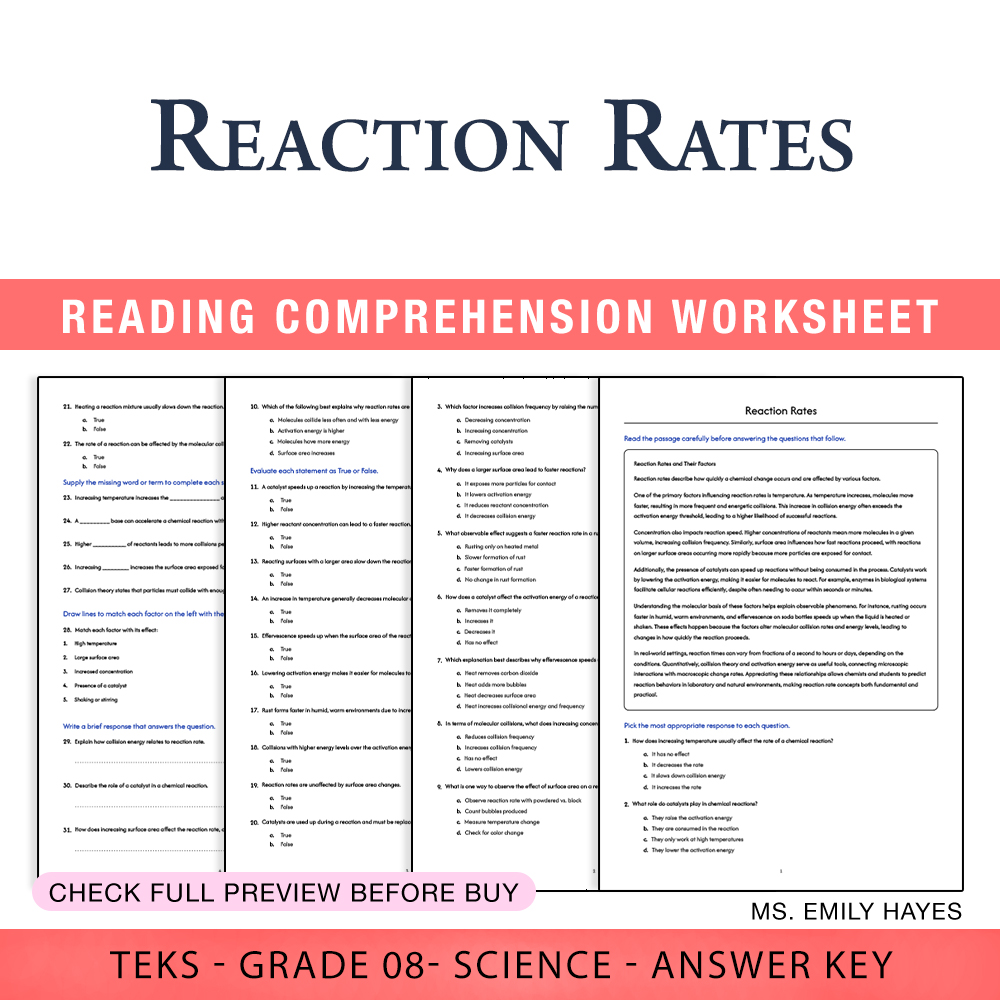
8th Grade Science | Reaction Rates Worksheet (PDF+ Answer Key)
Created byCopper Leaf ClassroomLearning Objectives
- Understand the factors that influence the speed of chemical reactions.
- Identify how temperature, concentration, surface area, and catalysts affect reaction rates.
- Explain molecular collision theory and activation energy in relation to reaction speed.
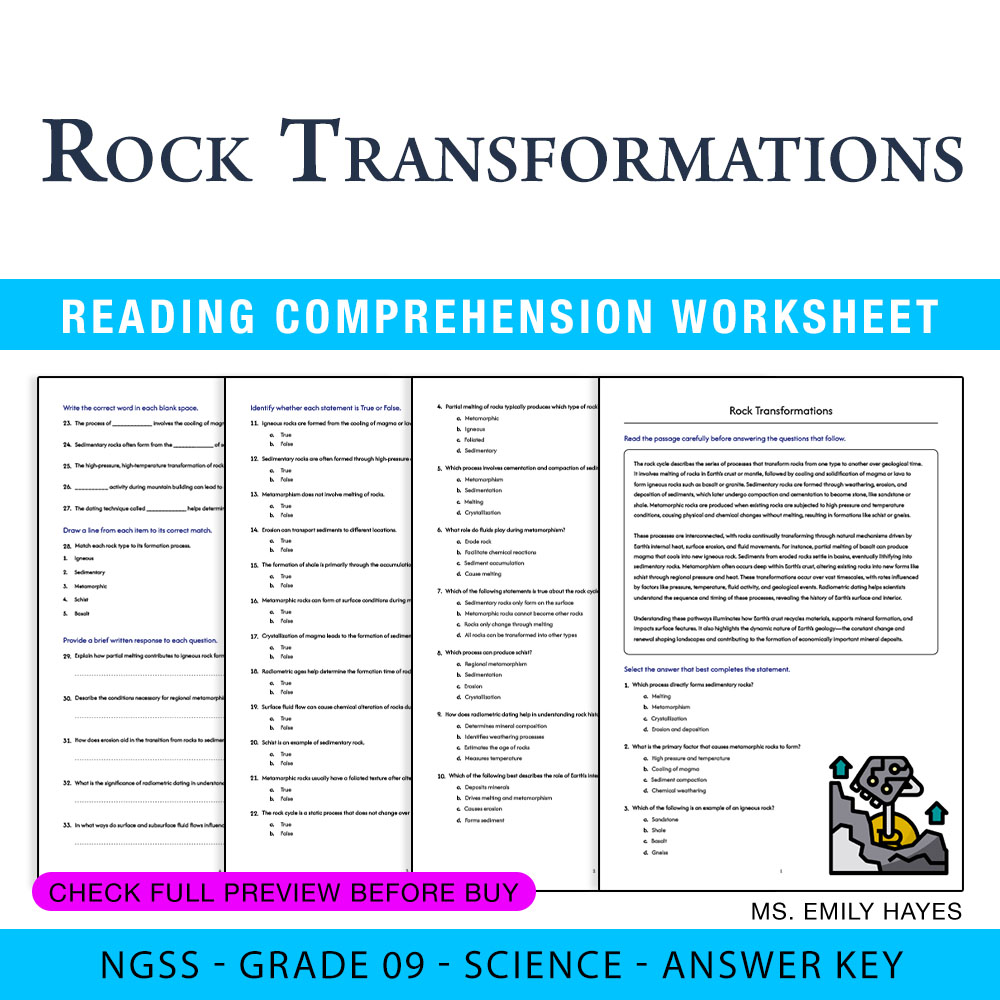
9th Grade Science | Rock Transformations Worksheet (PDF+ Answer Key)
Created byCopper Leaf ClassroomLearning Objectives
- Describe the processes involved in the rock cycle, including melting, crystallization, erosion, sedimentation, and metamorphism.
- Identify different types of rocks and their formation pathways in the rock cycle.
- Explain the conditions such as pressure, temperature, and time that influence rock transformation.
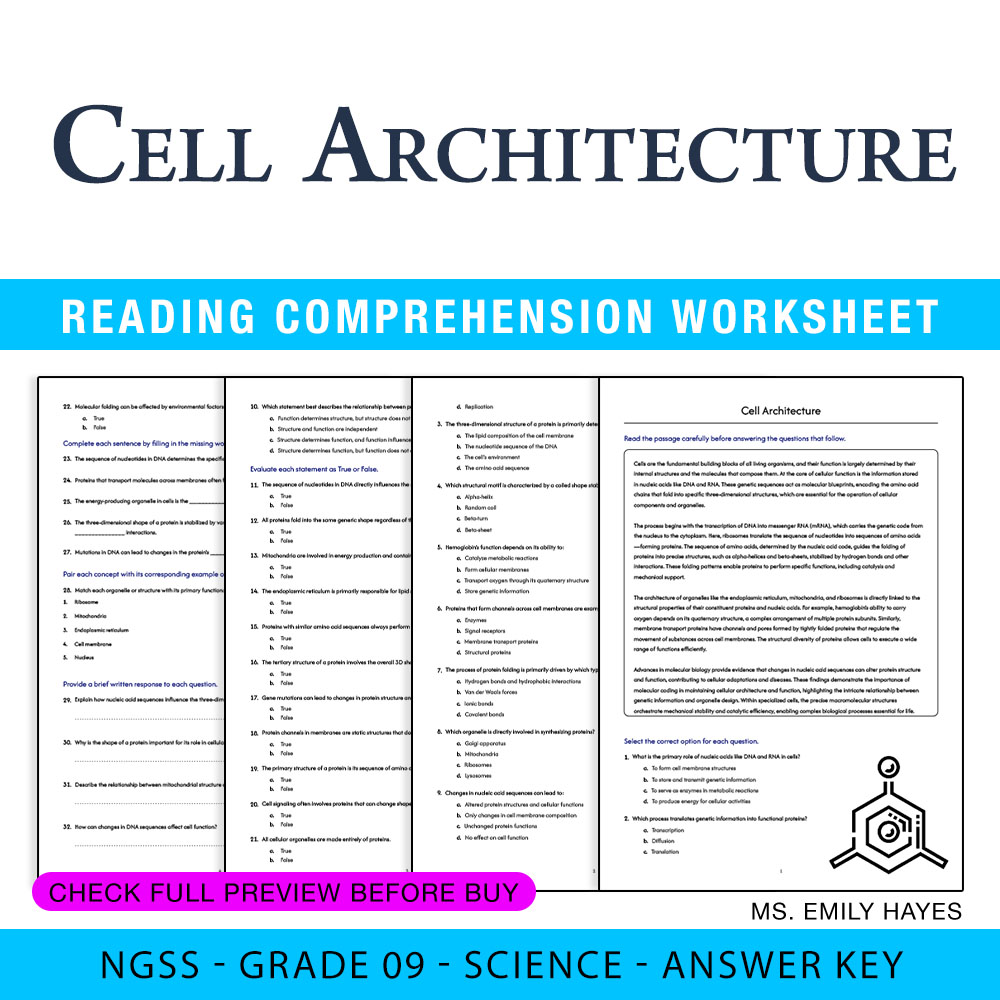
9th Grade Science | Cell Architecture Worksheet (PDF+ Answer Key)
Created byCopper Leaf ClassroomLearning Objectives
- Understand how nucleic acid sequences determine the three-dimensional structure of proteins that form cellular components.
- Explain the connection between molecular coding and organelle architecture such as ribosomes, endoplasmic reticulum, and mitochondria.
- Describe how structure relates to function in macromolecules like hemoglobin and membrane transport proteins.
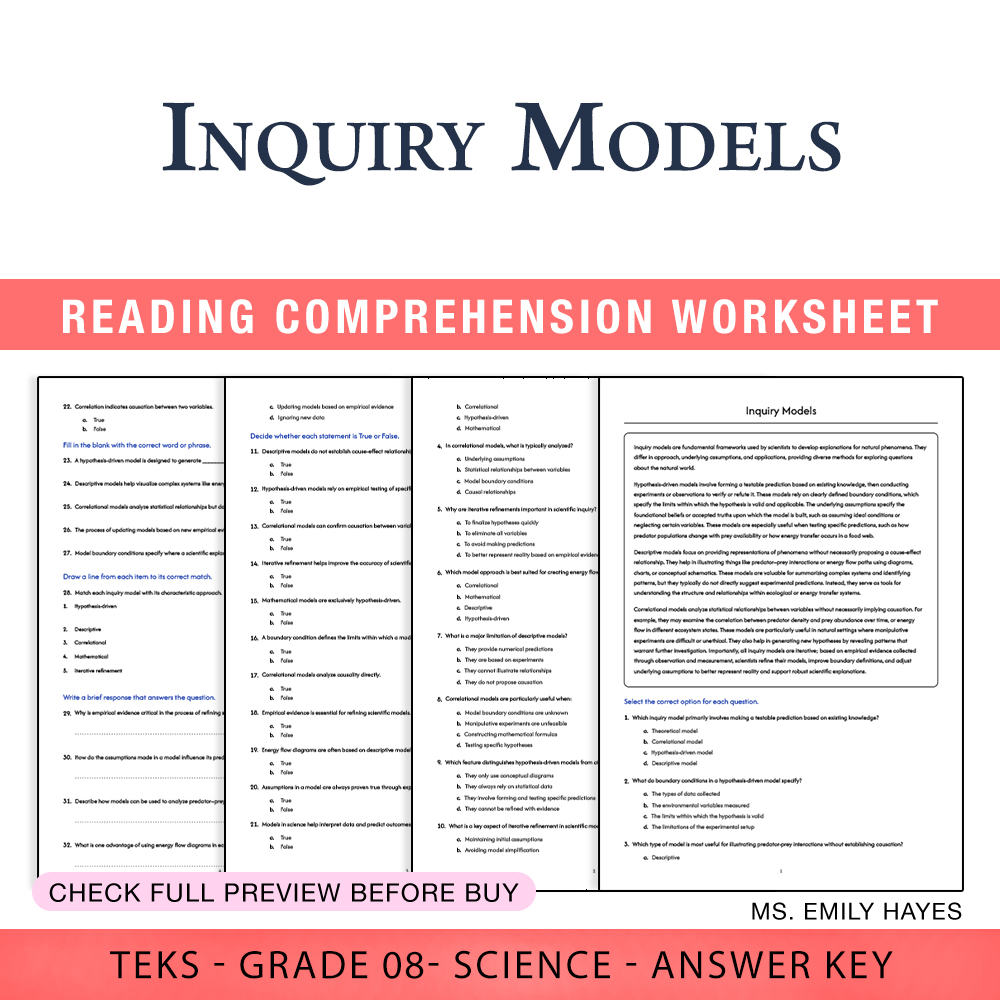
8th Grade Science | Inquiry Models Worksheet (PDF+ Answer Key)
Created byCopper Leaf ClassroomLearning Objectives
- Compare hypothesis-driven, descriptive, and correlational inquiry models.
- Identify the boundary conditions, assumptions, and testable predictions of each model.
- Analyze how different inquiry approaches are applied to predator–prey relationships or energy flow diagrams.
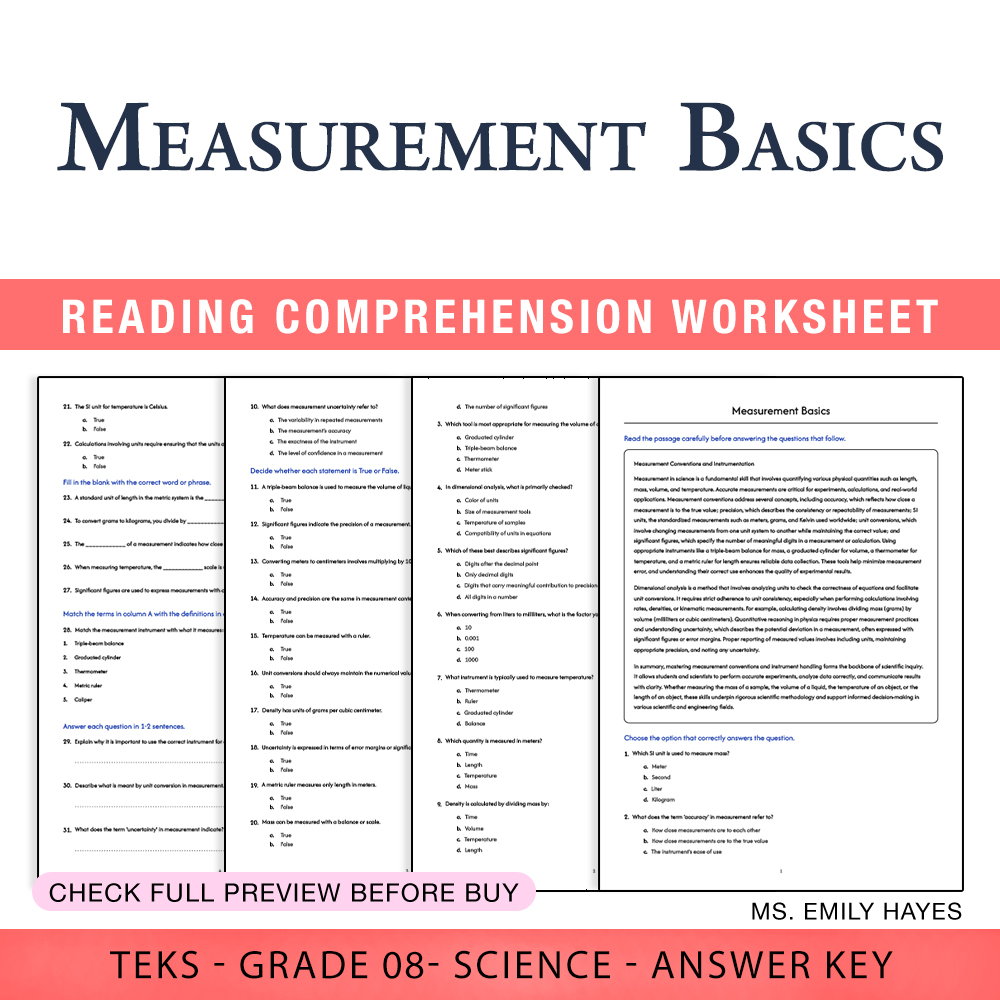
8th Grade Science | Measurement Basics Worksheet (PDF+ Answer Key)
Created byCopper Leaf ClassroomLearning Objectives
- Understand and interpret measurement data using SI units and significant figures.
- Apply dimensional analysis and unit conversions in practical contexts.
- Identify proper measurement tools such as balances, graduated cylinders, thermometers, and rulers.
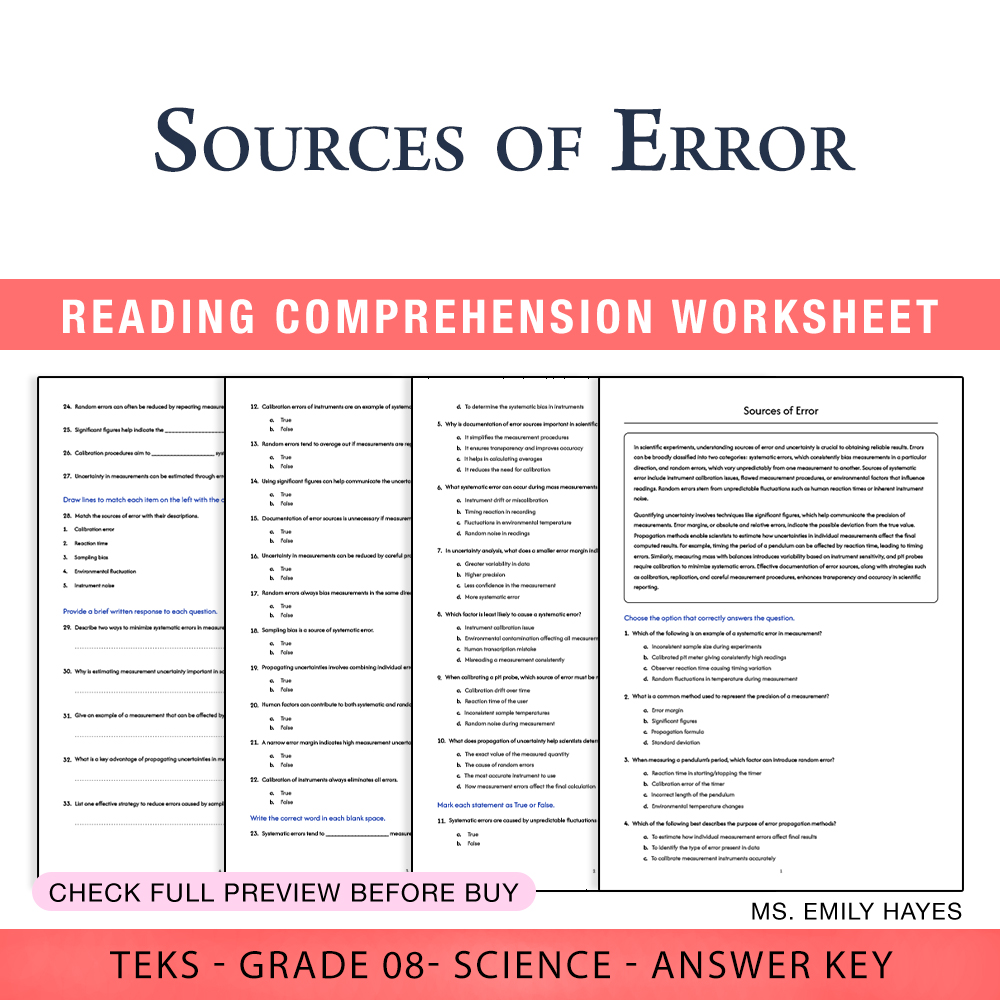
8th Grade Science | Sources of Error Worksheet (PDF+ Answer Key)
Created byCopper Leaf ClassroomLearning Objectives
- Identify and differentiate between systematic and random errors in scientific measurements.
- Analyze measurement procedures for potential sources of error and uncertainty.
- Apply methods to quantify uncertainty, including significant figures, error margins, and propagation.
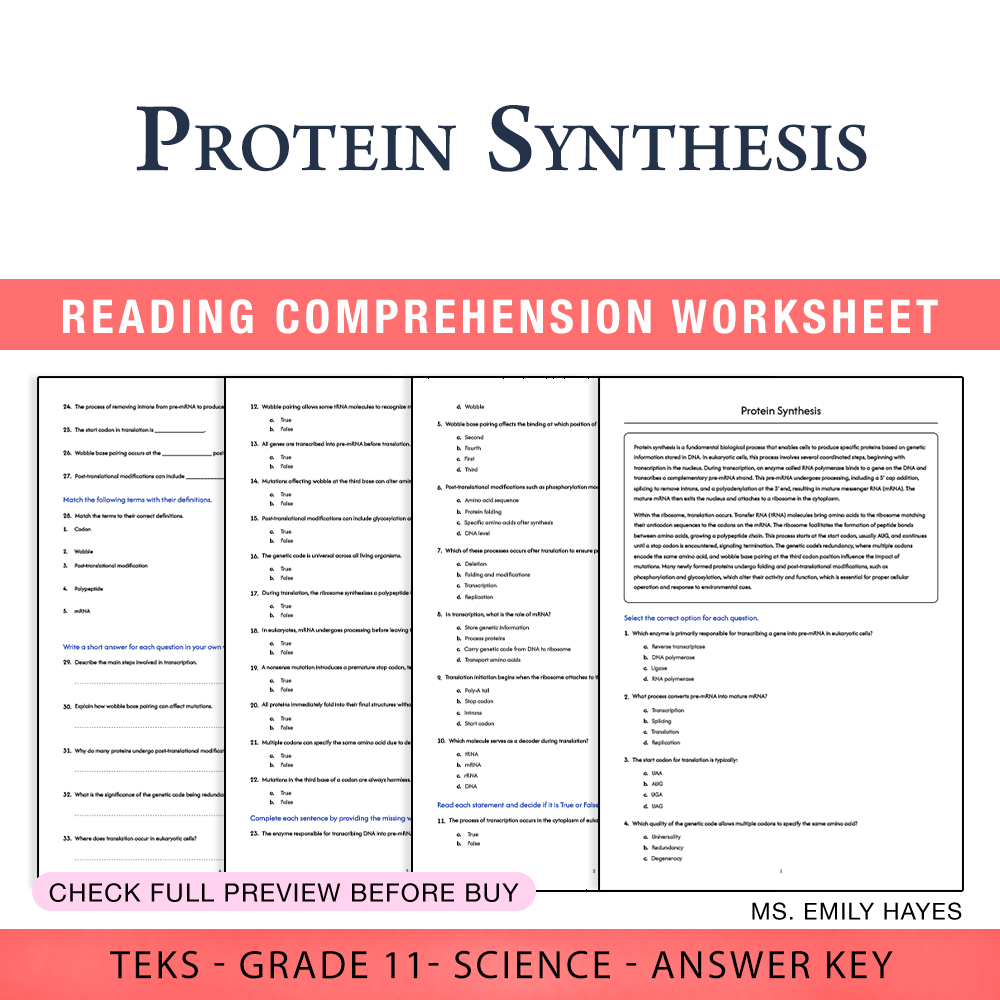
11th Grade Science | Protein Synthesis Worksheet (PDF+ Answer Key)
Created byCopper Leaf ClassroomLearning Objectives
- Describe the process of transcription and translation in protein synthesis.
- Explain the roles of RNA polymerase, mRNA processing, and ribosomes.
- Understand how genetic code redundancy and wobble influence mutations.
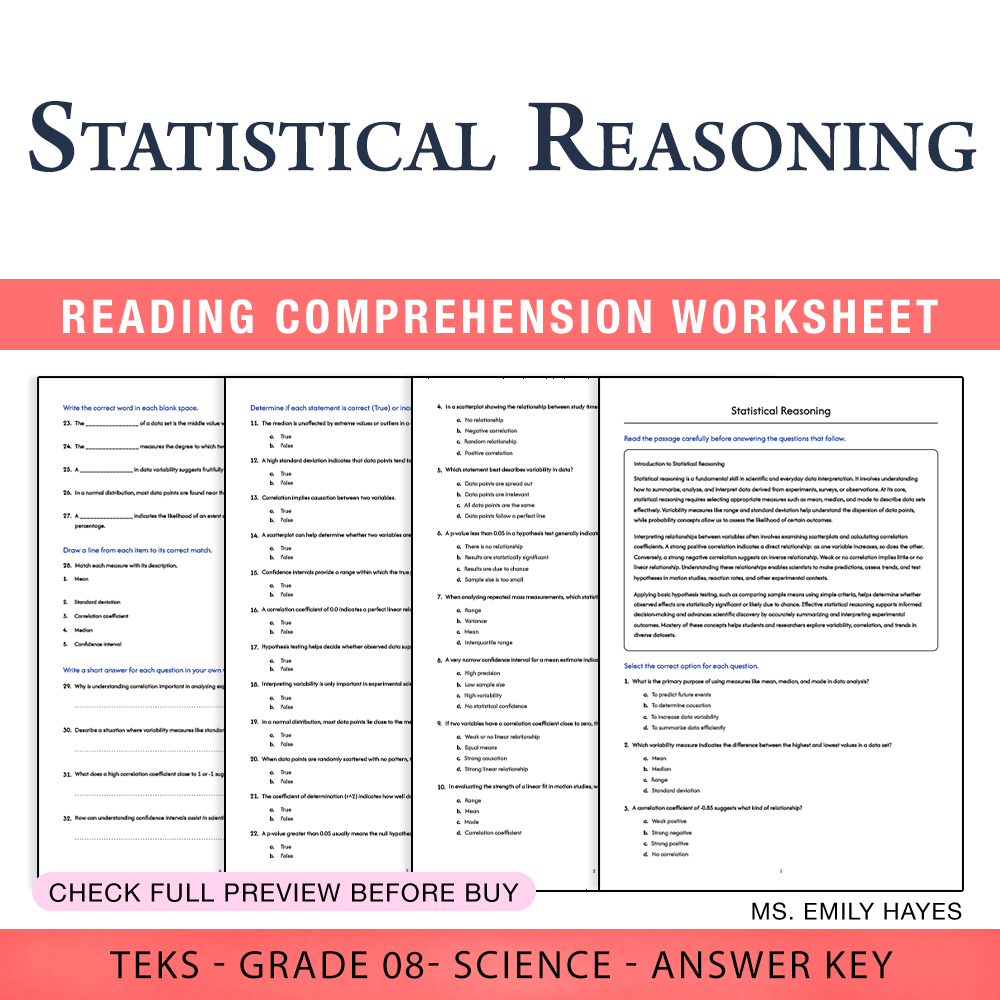
8th Grade Science | Statistical Reasoning Worksheet (PDF+ Answer Key)
Created byCopper Leaf ClassroomLearning Objectives
- Understand basic concepts of probability, variability, and correlation in data analysis.
- Identify appropriate measures of central tendency and dispersion for data sets.
- Interpret scatterplots and correlation coefficients to evaluate relationships between variables.
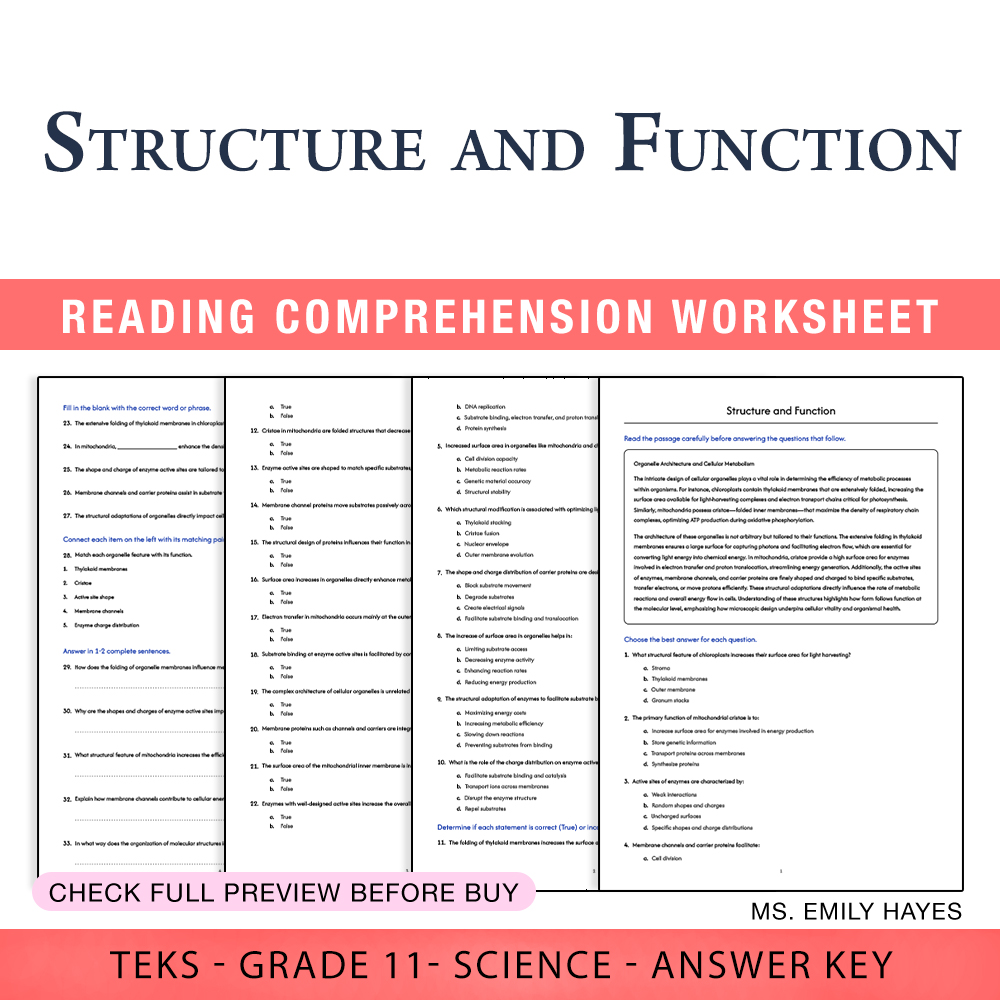
11th Grade Science | Structure and Function Worksheet (PDF+ Answer Key)
Created byCopper Leaf ClassroomLearning Objectives
- Describe how organelle architecture influences metabolic efficiency in cells.
- Explain how thylakoid membranes and mitochondrial cristae increase surface area for metabolic processes.
- Identify the structural features of enzymes, membrane channels, and carrier proteins that facilitate biological functions.
Browse more categories
About Science Worksheets
Find Science worksheets spanning core skills, practice, and review. All 42,859 resources are instant PDF downloads for the classroom or home.
Every worksheet on MyTeachingSheets is created by independent teacher-authors and reviewed before publication. All resources download as printable PDFs for classroom, homework, or at-home practice, and many include answer keys. Preview any worksheet free before buying.