
Science Worksheets
42,550 subject resources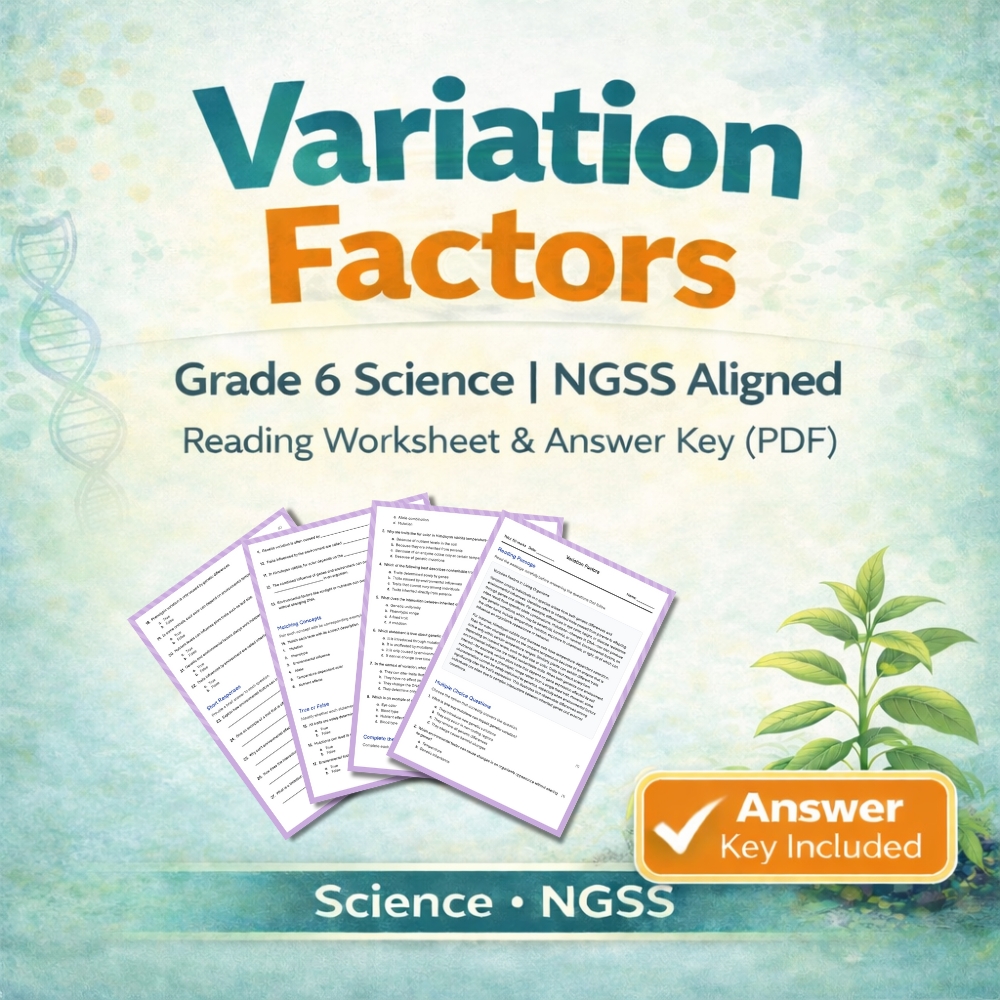
6th Grade Science | Variation Factors | NGSS Aligned ( Worksheet + Answer Key )
 Created byCedar Grove Learning
Learning Objectives
- Explain how genetic differences contribute to observable variation among individuals.
- Describe how environmental factors influence phenotypic traits in organisms.
- Analyze models of allele combinations, mutation impact, and environmental effects on traits.
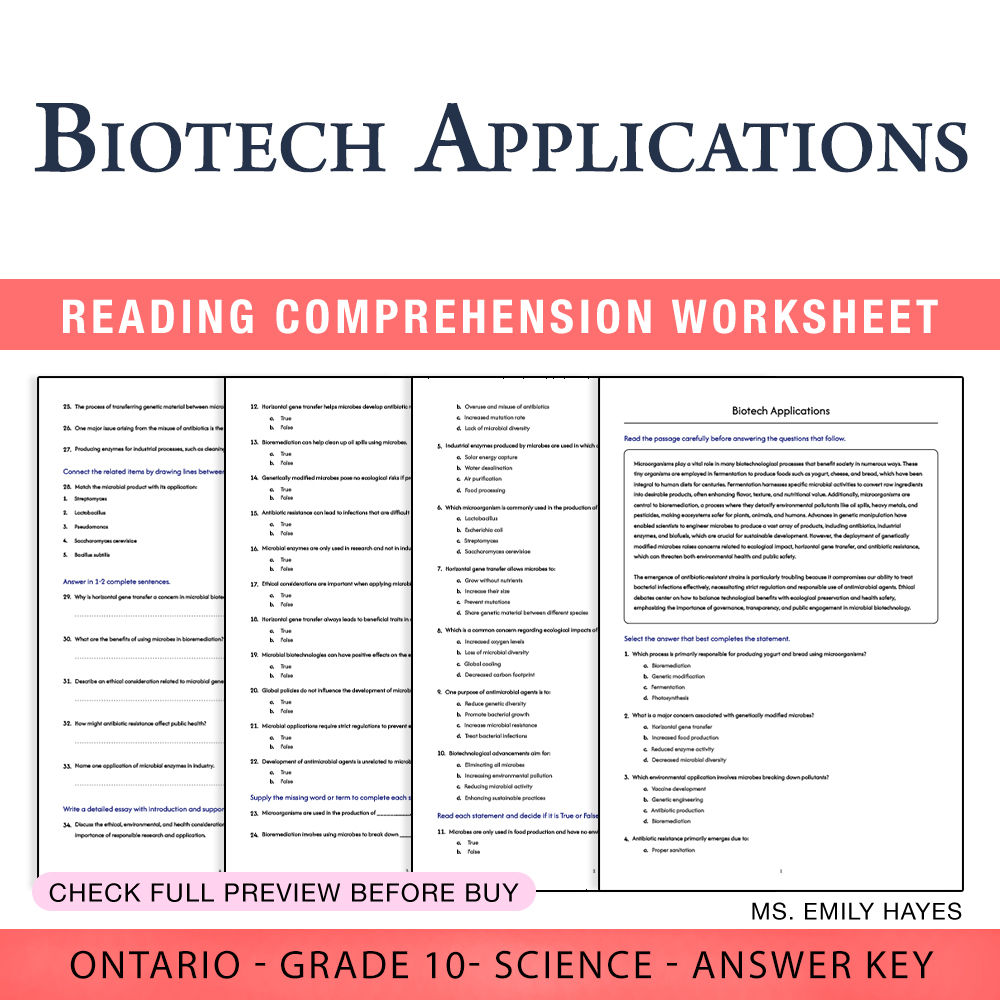
Grade 10 Science | Biotech Applications Worksheet (PDF + Answer Key)
 Created byCopper Leaf Classroom
Learning Objectives
- Describe key biotechnological applications of microorganisms in various industries.
- Explain the principles of genetic manipulation in microbial systems for product synthesis.
- Analyze the ecological and health impacts of antibiotic use and resistance.
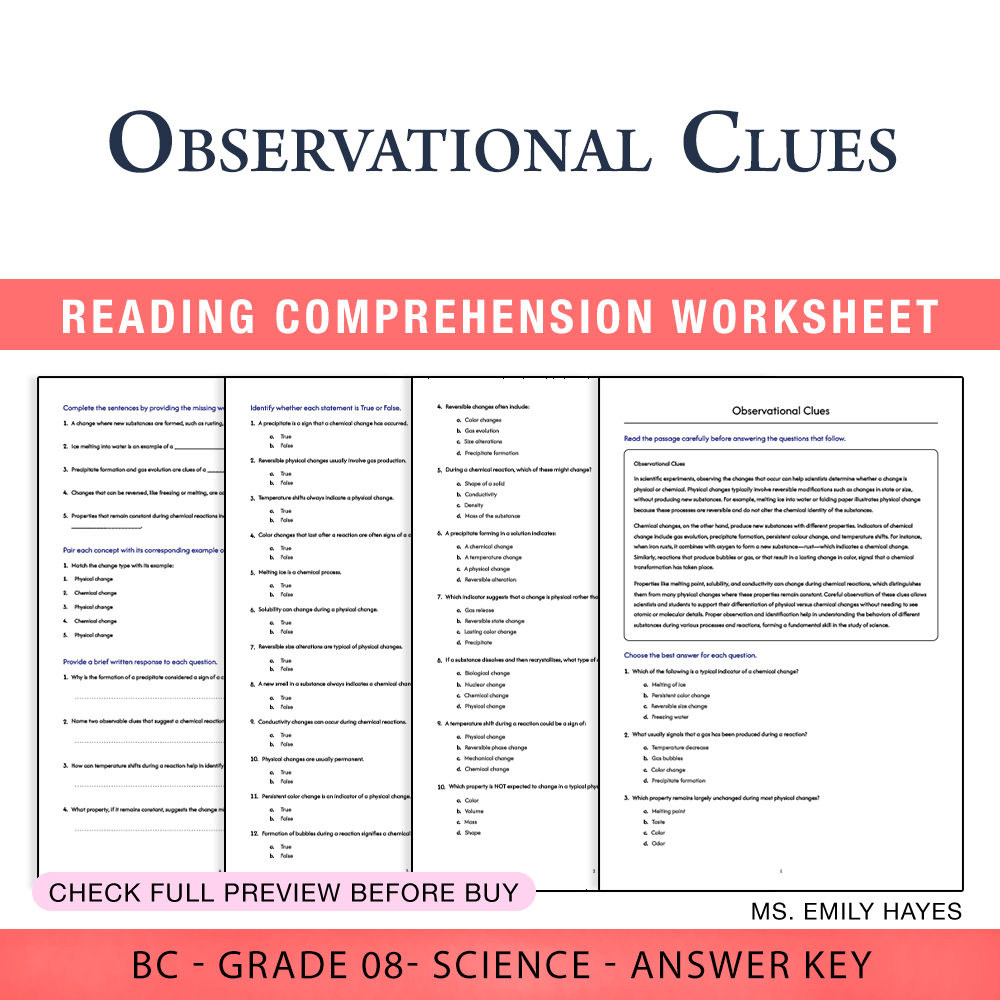
Grade 8 Science | Observational Clues Worksheet (PDF+ Answer Key)
Created byCopper Leaf ClassroomLearning Objectives
- Identify physical and chemical changes based on observable clues.
- Differentiate between properties that change and those that remain constant during physical and chemical processes.
- Apply observation skills to classify different types of changes in experiments.
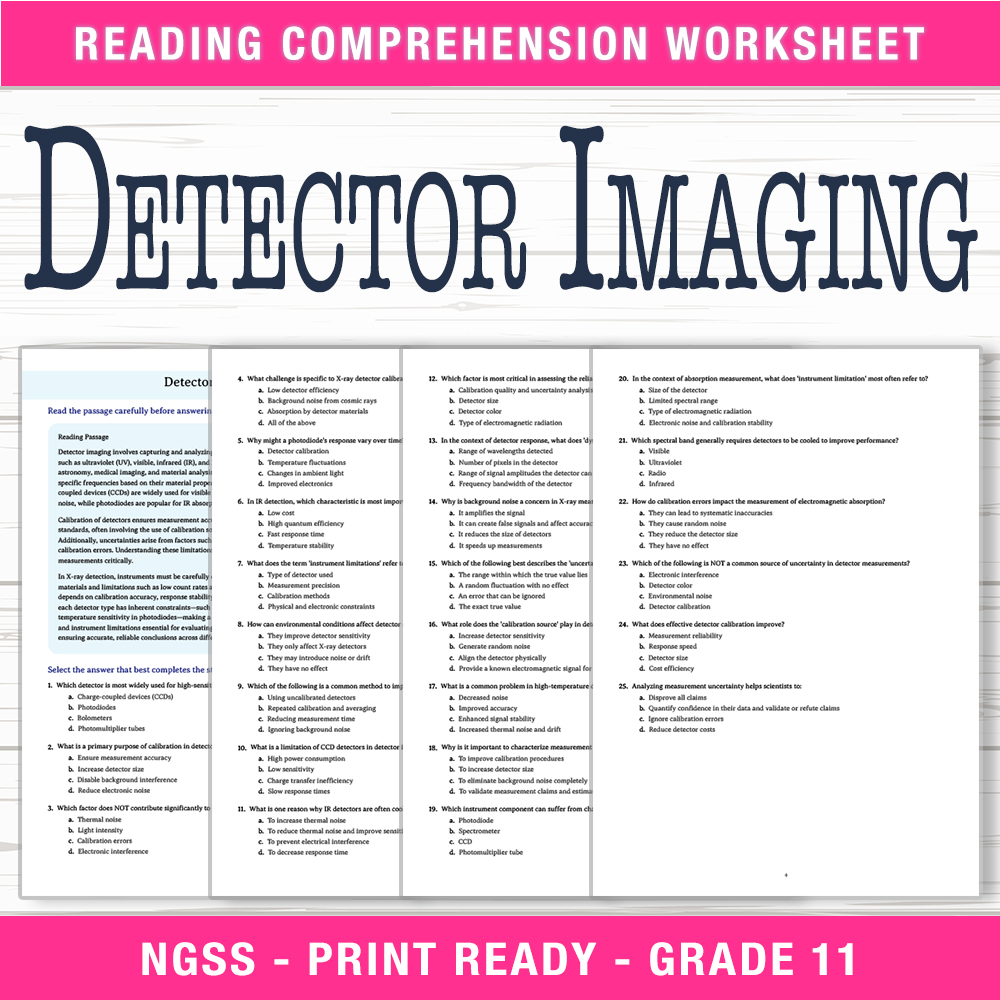
Grade 11 Science | Detector Imaging Worksheet (PDF + Answer Key)
 Created byRiverstone Classroom
Learning Objectives
- Understand how electromagnetic radiation interacts with matter across UV, visible, IR, and X-ray bands.
- Evaluate the reliability and limitations of different detector types such as CCDs and photodiodes.
- Analyze calibration procedures, uncertainties, and instrument limitations in electromagnetic measurement.
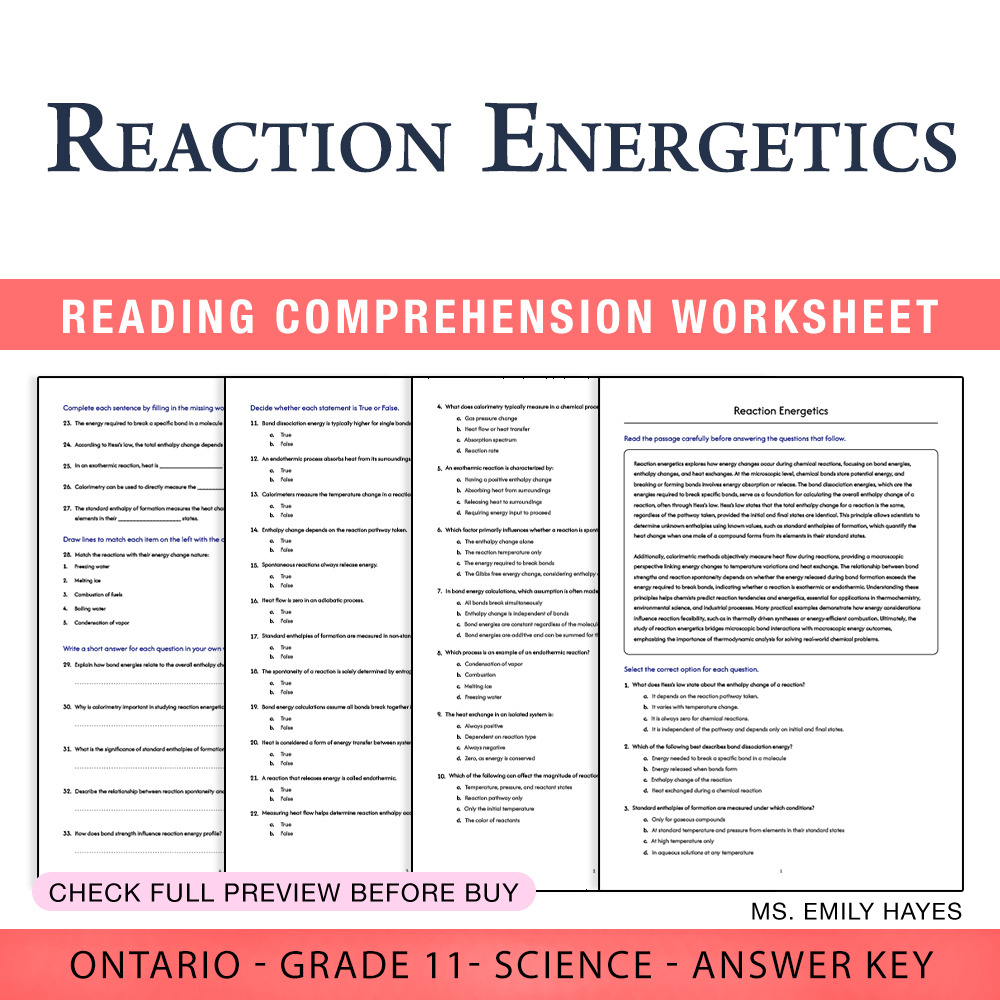
11th Grade Science | Reaction Energetics Worksheet (PDF + Answer Key)
Created byCopper Leaf ClassroomLearning Objectives
- Understand the relationship between bond energies, enthalpy changes, and heat exchange in reactions.
- Apply Hess’s law and standard enthalpies of formation to calculate reaction enthalpies.
- Explain calorimetric principles for measuring heat flow during chemical processes.
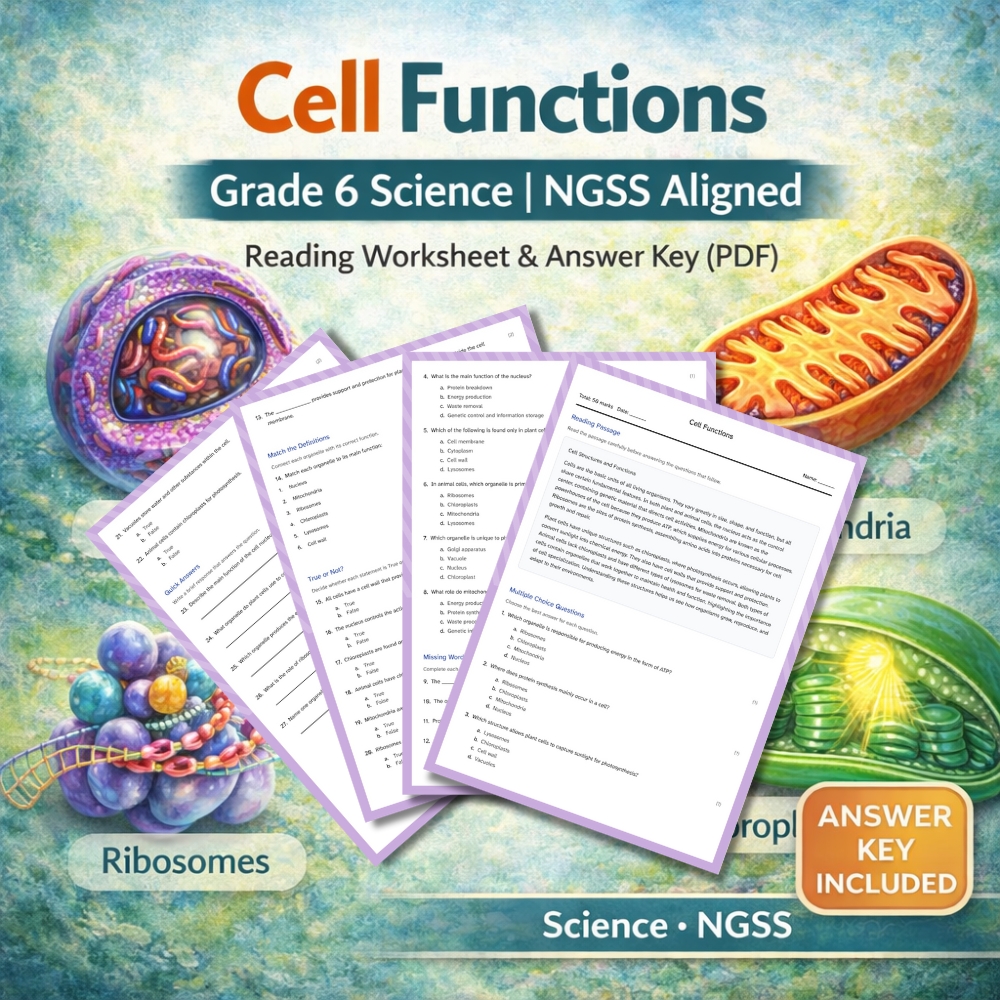
6th Grade Science | Cell Functions | Worksheet & Answer Key – NGSS Aligned
Created byCedar Grove LearningLearning Objectives
- Identify the main organelles in plant and animal cells and their functions.
- Explain how cell structure relates to its role in energy processing, protein synthesis, waste removal, and regulation.
- Compare and contrast plant and animal cells based on their organelle composition and specialization.
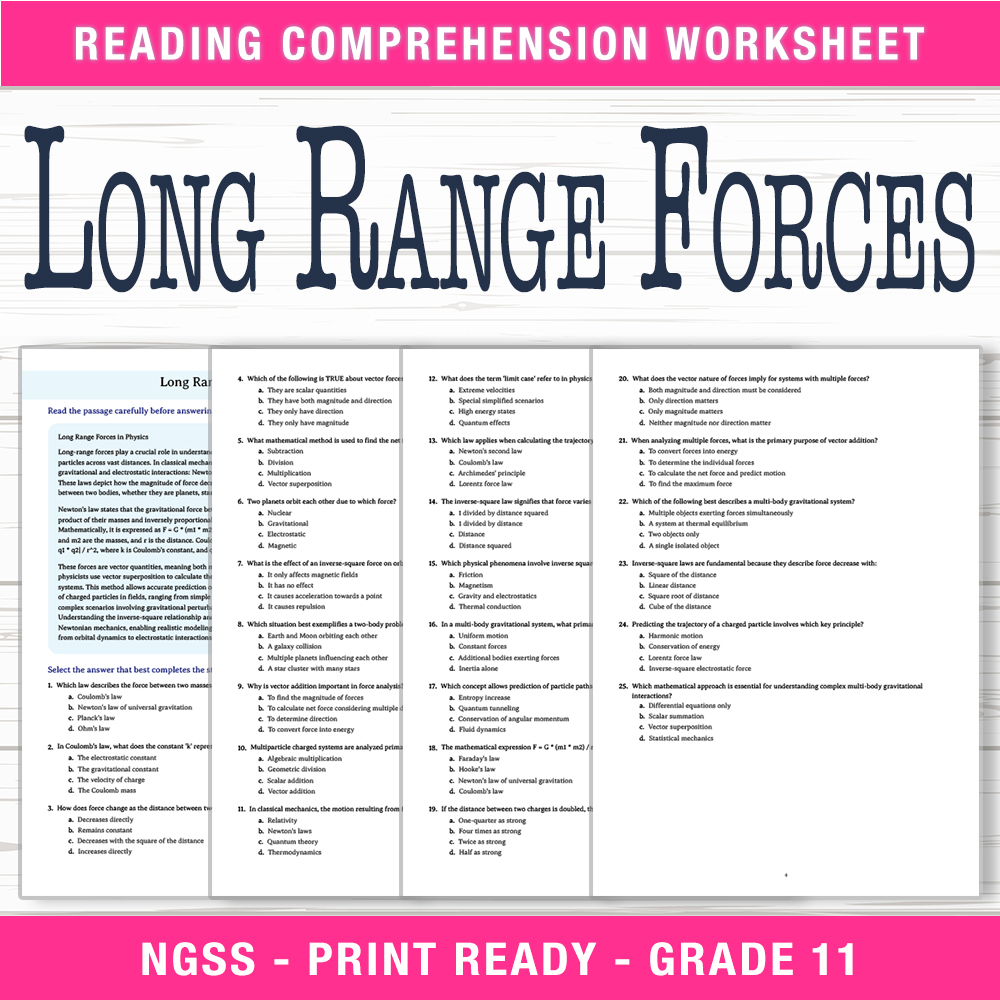
Grade 11 Science | Long Range Forces Worksheet (PDF + Answer Key)
Created byRiverstone ClassroomLearning Objectives
- Understand and describe the mathematical formulation of gravitational and electrostatic forces using inverse-square laws.
- Apply vector addition techniques to determine net forces and predict motion of bodies under classical mechanics.
- Analyze various scenarios involving two-body, multi-body, and point-charge systems using fundamental laws.
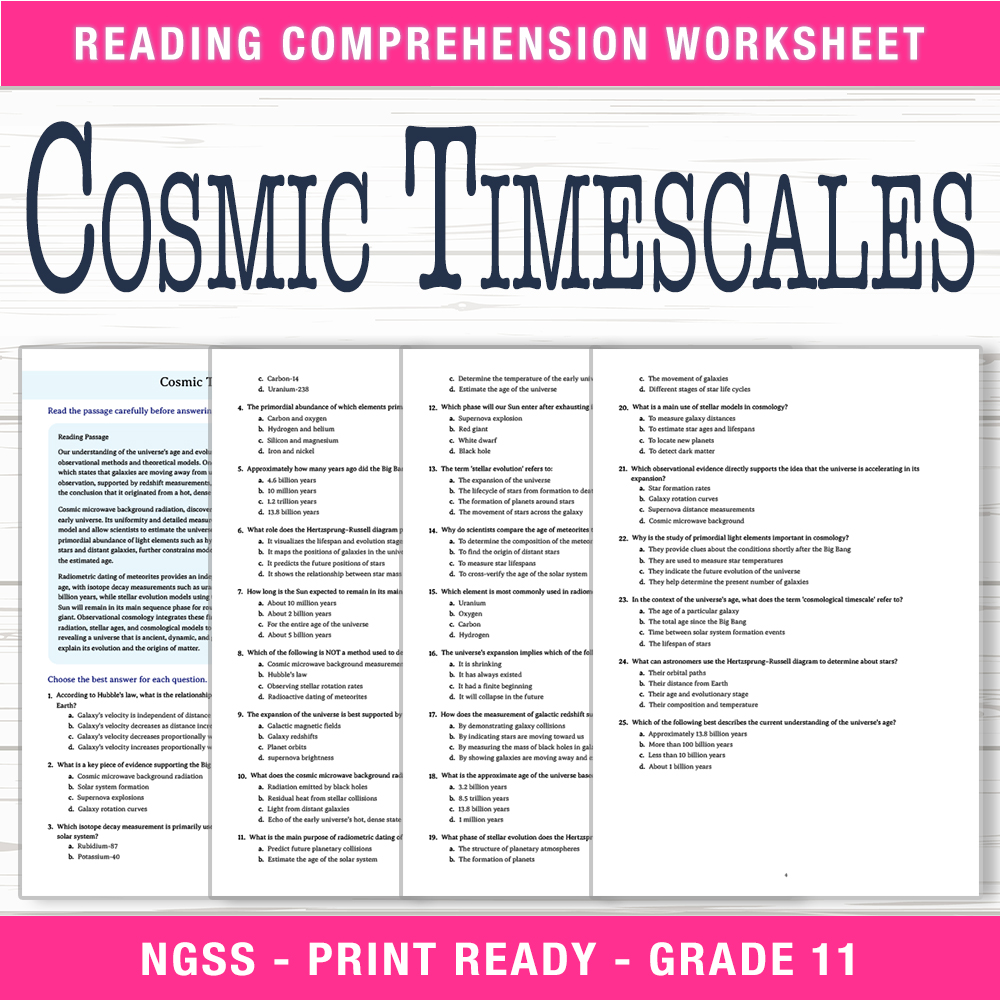
Grade 11 Science – Cosmic Timescales Worksheet (PDF + Answer Key)
Created byRiverstone ClassroomLearning Objectives
- Understand how astronomical observations constrain the age and evolution of the universe and solar system.
- Learn about key methods such as Hubble's law, cosmic microwave background, and radiometric dating used in cosmology.
- Explore stellar evolution and how the Hertzsprung–Russell diagram contextualizes the lifespan of stars including the Sun.
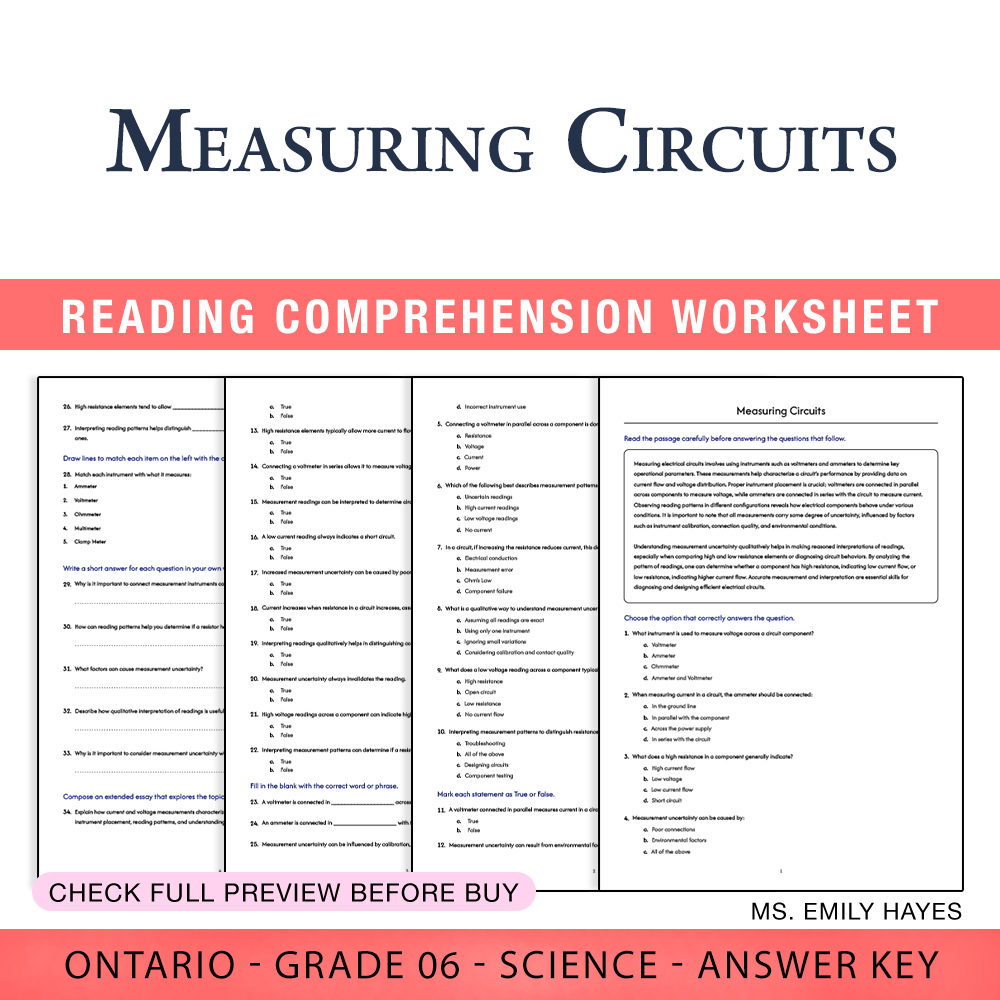
Grade 6 Science | Measuring Circuits Worksheet (PDF + Answer Key)
Created byCopper Leaf ClassroomLearning Objectives
- Understand how current and voltage measurements characterize circuit performance.
- Identify proper placement of measurement instruments in circuits.
- Interpret typical readings in various circuit configurations.
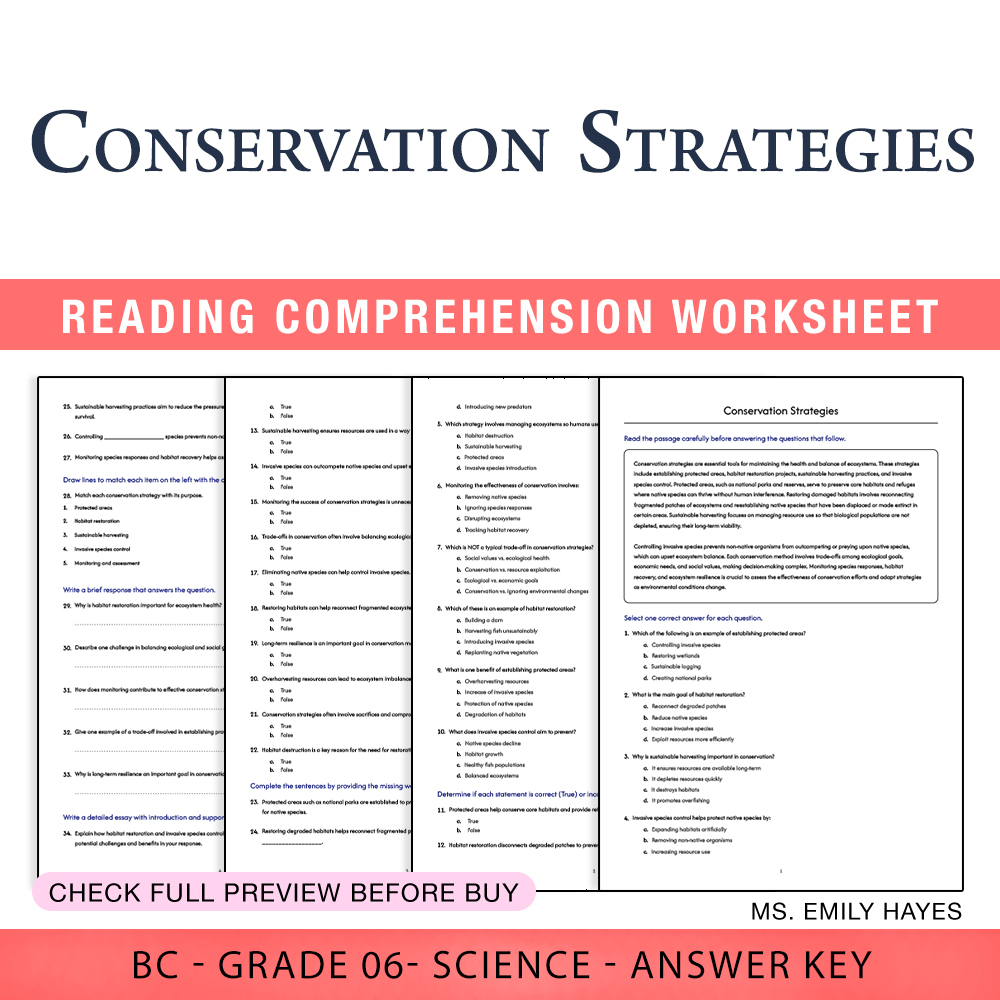
6th Grade Science | Conservation Strategies Worksheet (PDF+ Answer Key)
Created byCopper Leaf ClassroomLearning Objectives
- Understand various conservation strategies used to protect ecosystems.
- Identify differences and applications of protected areas, habitat restoration, sustainable harvesting, and invasive species control.
- Evaluate the importance of monitoring and assessing the effectiveness of conservation efforts.
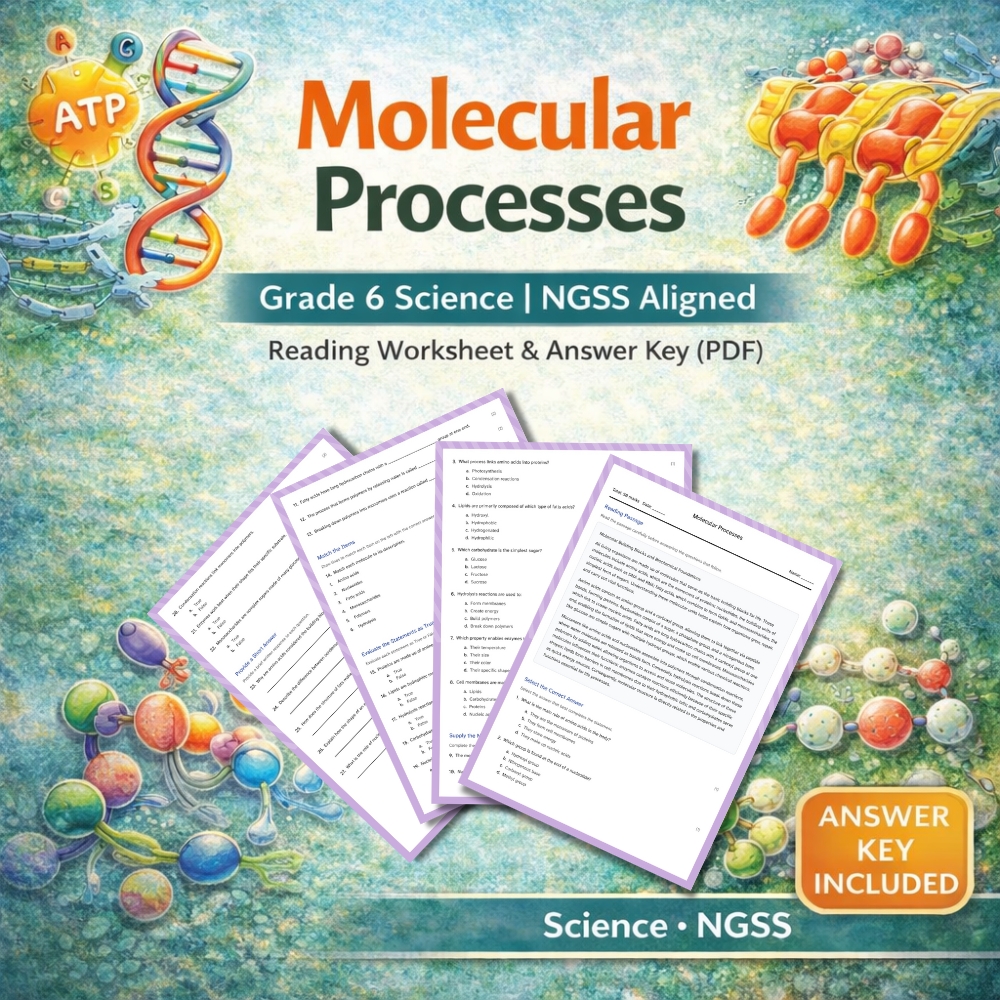
6th Grade Science | Molecular Processes | Worksheet (PDF + Answer Key) NGSS
Created byCedar Grove LearningLearning Objectives
- Understand the building blocks of molecules such as amino acids, nucleotides, fatty acids, and monosaccharides.
- Explain how monomers assemble into polymers through condensation reactions and are broken down by hydrolysis.
- Relate molecular structure to properties like enzyme catalysis, membrane transport, and polymerization during growth.
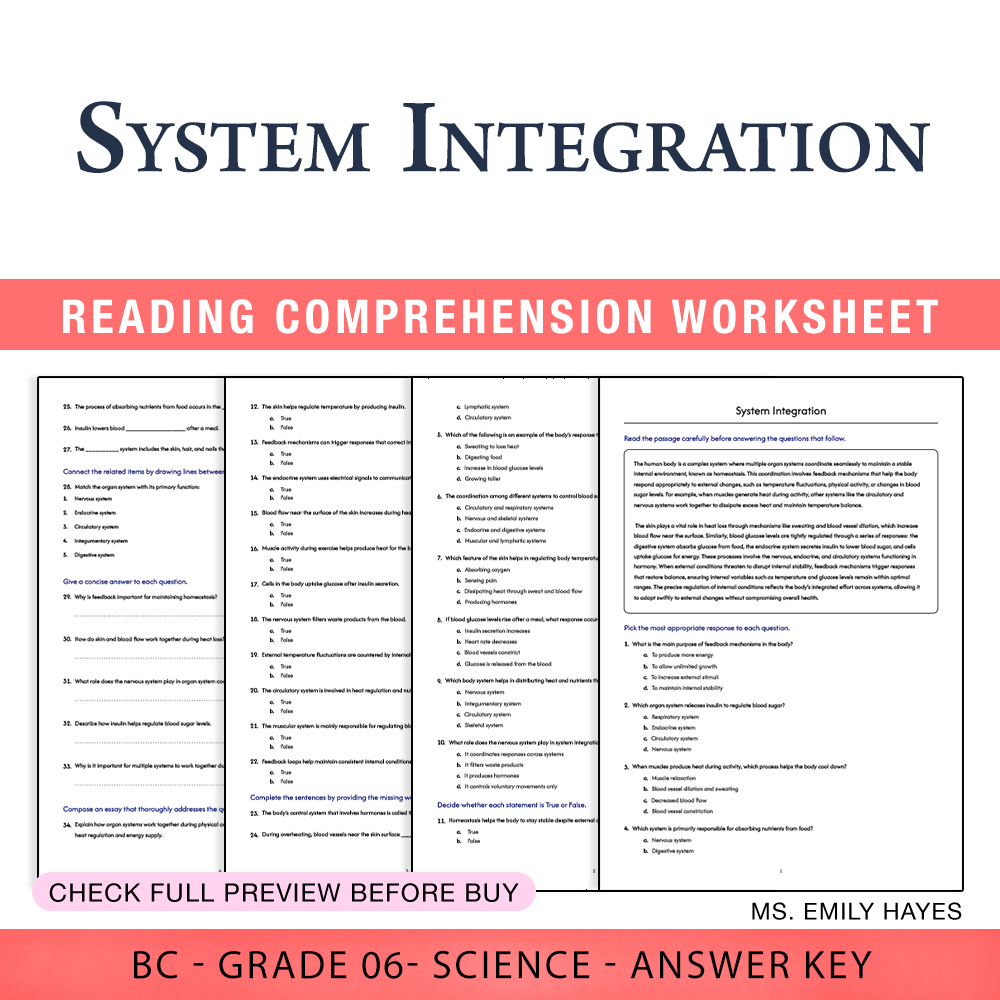
6th Grade Science | System Integration Worksheet (PDF+ Answer Key)
Created byCopper Leaf ClassroomLearning Objectives
- Describe how different organ systems work together to maintain homeostasis.
- Explain feedback mechanisms involved in regulating internal body conditions.
- Identify examples of system coordination in the human body.
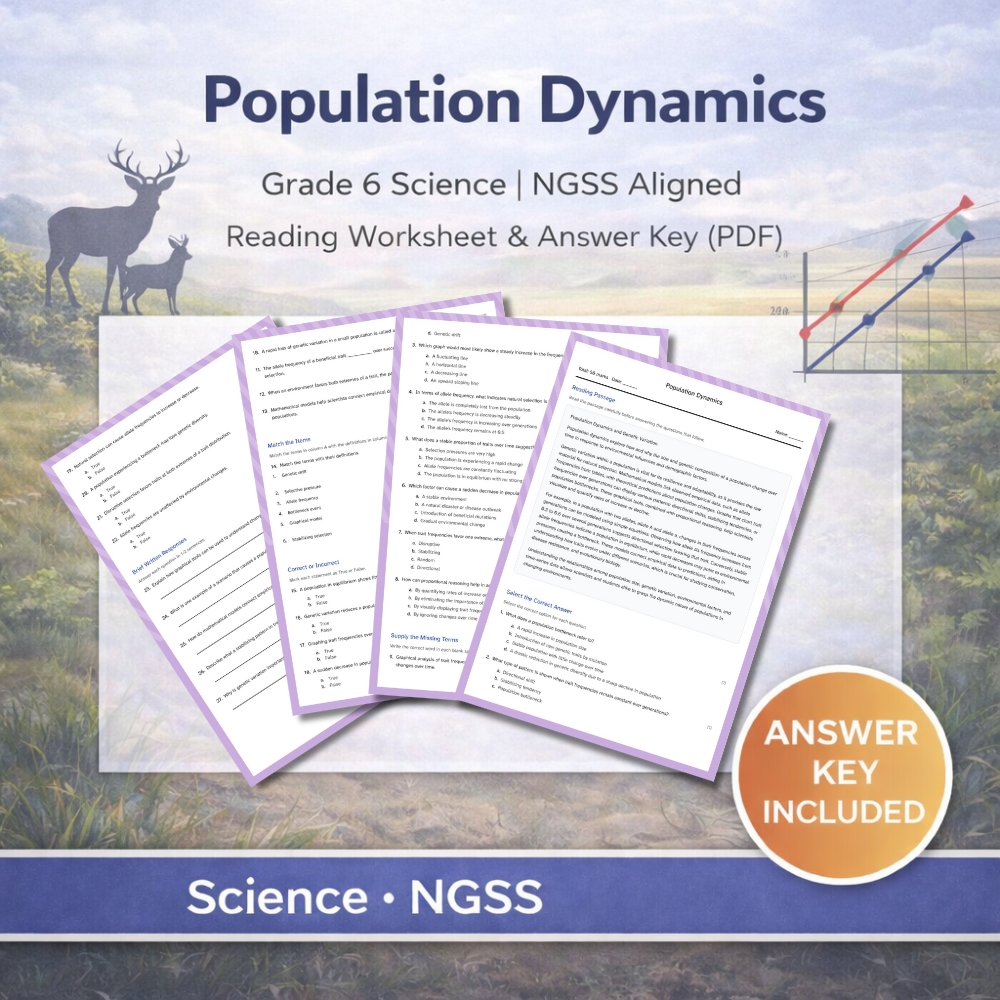
6th Grade Science | Population Dynamics | Worksheet & Answer Key | NGSS-Aligned
Created byCedar Grove LearningLearning Objectives
- Understand how trait frequencies and population sizes change over generations in response to environmental and demographic factors.
- Use graphical representations, proportional reasoning, and mathematical models to analyze population changes.
- Interpret data from allele frequency tables and simple models to predict population-level trends.
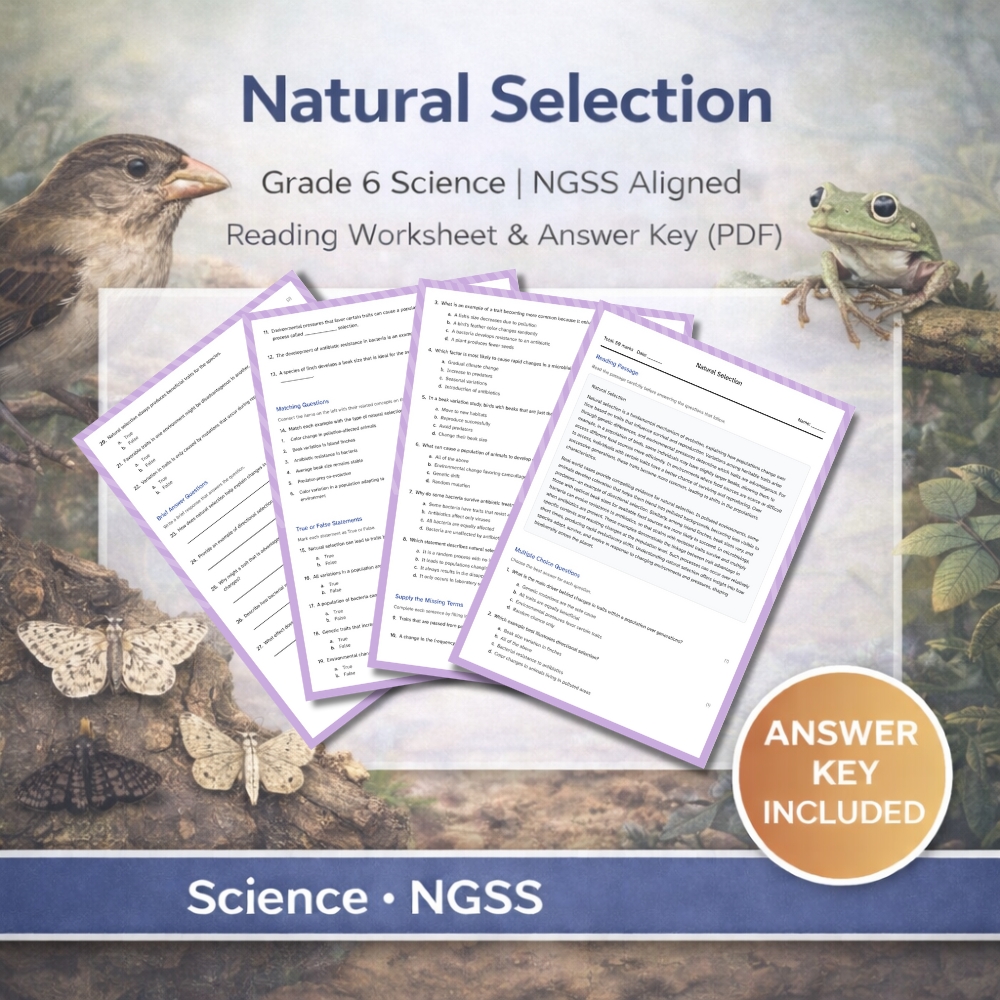
6th Grade Science | Natural Selection | NGSS Worksheet & Answer Key
Created byCedar Grove LearningLearning Objectives
- Understand how variation in heritable traits influences survival and reproduction.
- Explain how environmental pressures drive changes in trait frequencies over generations.
- Identify real-world examples of natural selection, including coloration changes, beak variation, and antibiotic resistance.
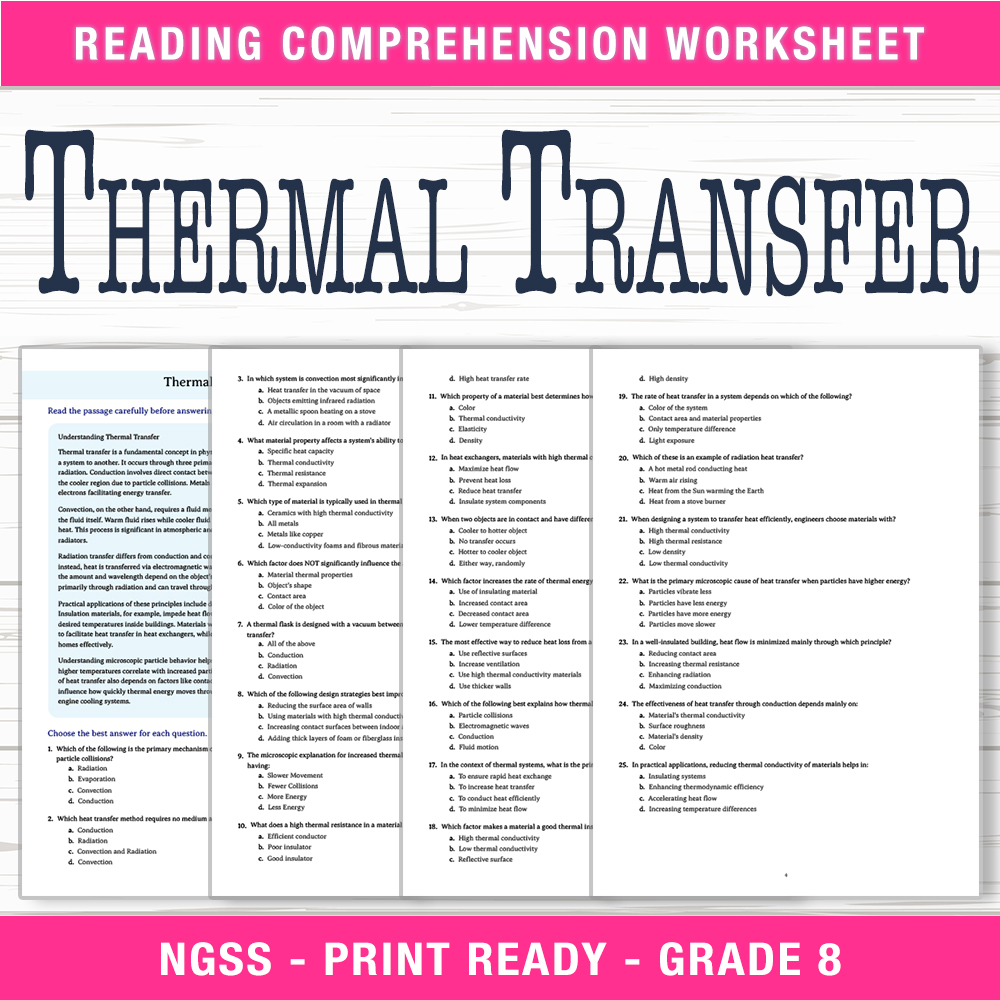
Grade 8 Science – Thermal Transfer Worksheet (PDF + Answer Key)
Created byRiverstone ClassroomLearning Objectives
- Explain the principles of conduction, convection, and radiation in thermal energy transfer.
- Identify materials and design strategies that minimize or maximize heat flow in systems.
- Understand how macroscopic temperature differences relate to microscopic particle energies and how material properties influence heat transfer rates.
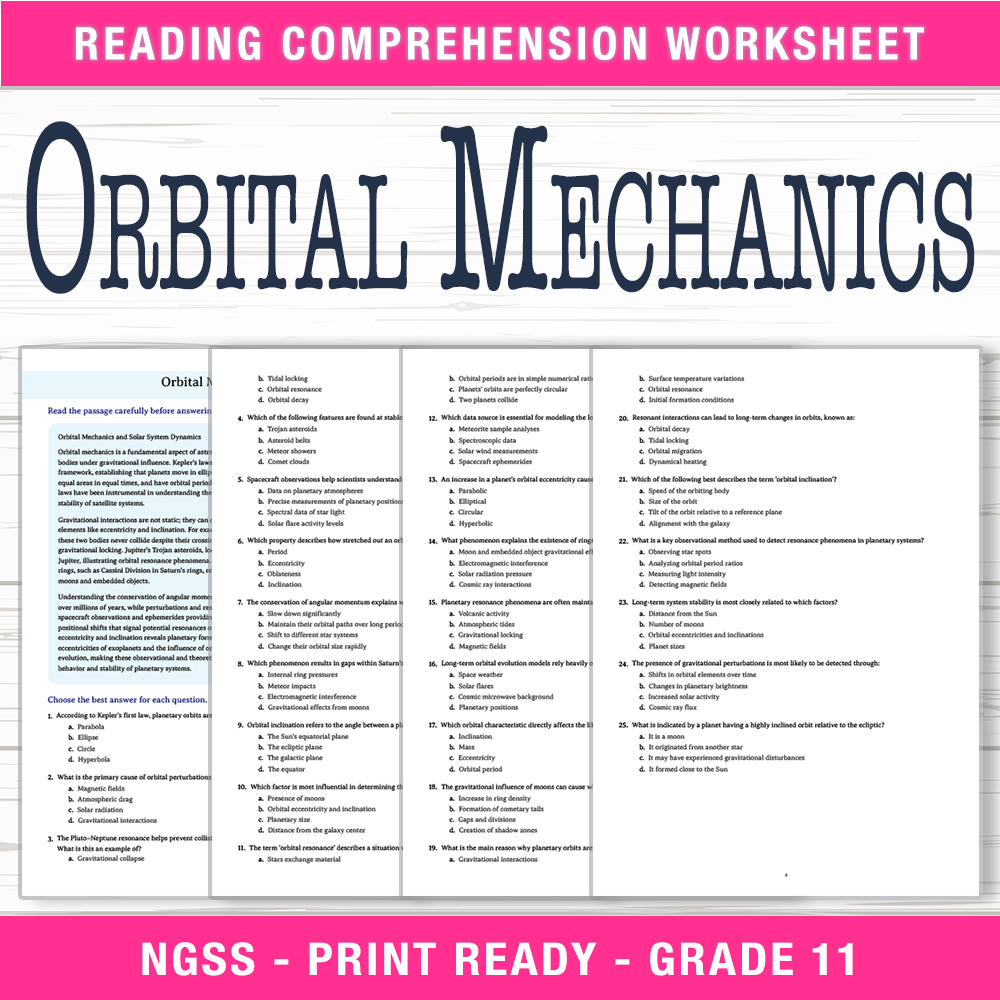
Grade 11 Science | Orbital Mechanics Worksheet (PDF + Answer Key)
Created byRiverstone ClassroomLearning Objectives
- Understand and explain Kepler's laws of planetary motion.
- Analyze the effects of gravitational interactions and perturbations on orbital stability.
- Describe phenomena such as orbital resonance, planetary eccentricity, and inclination.
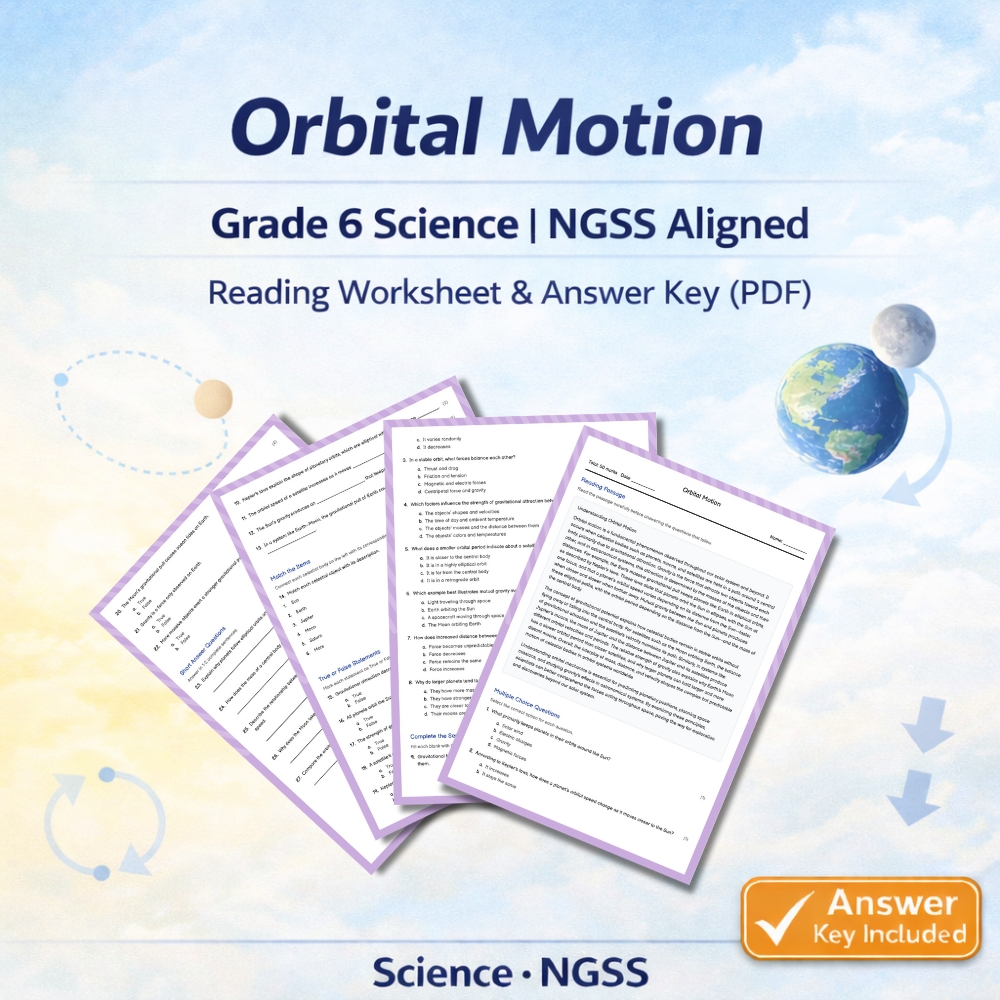
6th Grade Science | Orbital Motion | NGSS ( Worksheet + Answer Key )
Created byCedar Grove LearningLearning Objectives
- Explain how gravitational attraction governs planetary motion and orbital paths within the solar system.
- Describe the relationship between mass, distance, and the strength of gravitational forces in orbital systems.
- Compare different orbital systems such as Earth–Moon and Jupiter–satellite to understand relative influences.
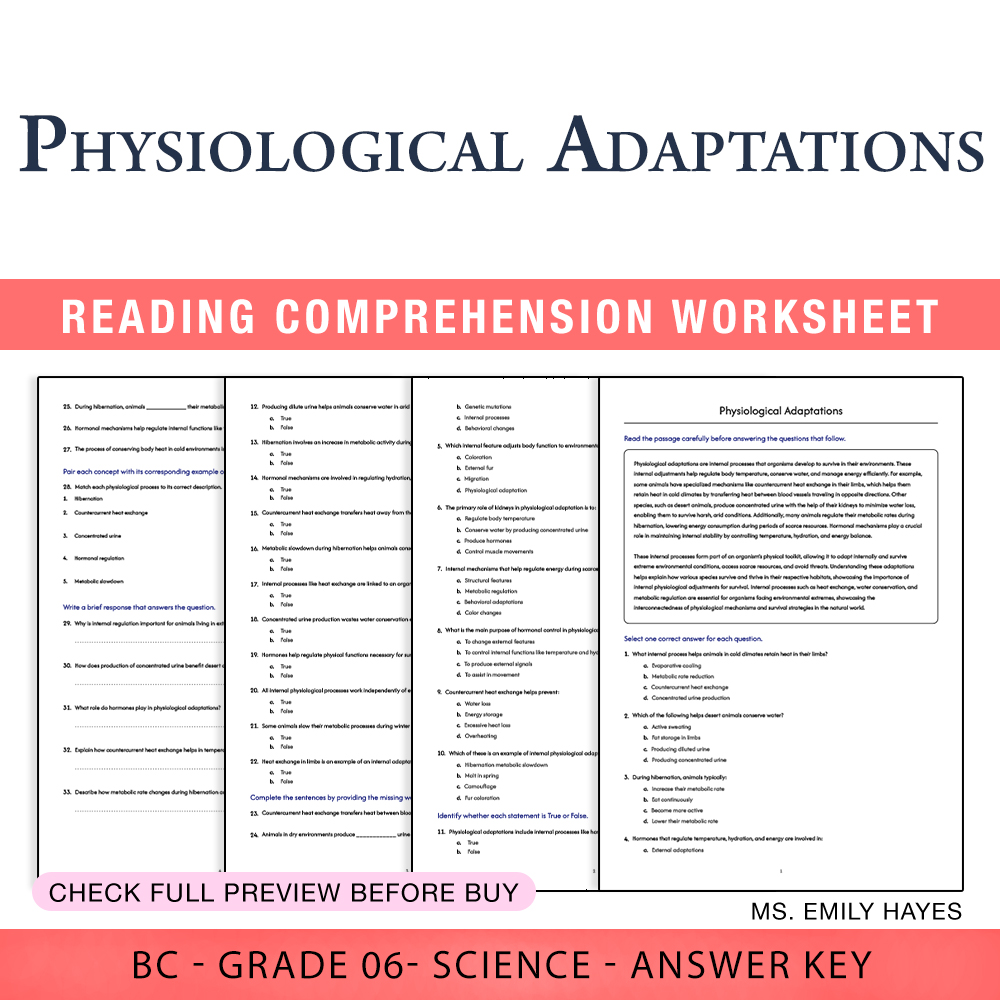
6th Grade Science | Physiological Adaptations Worksheet (PDF+ Answer Key)
Created byCopper Leaf ClassroomLearning Objectives
- Explain the concept of physiological adaptations and their importance for survival.
- Identify different internal processes that help organisms survive environmental challenges.
- Describe specific physiological mechanisms such as heat exchange, water conservation, and metabolic regulation.
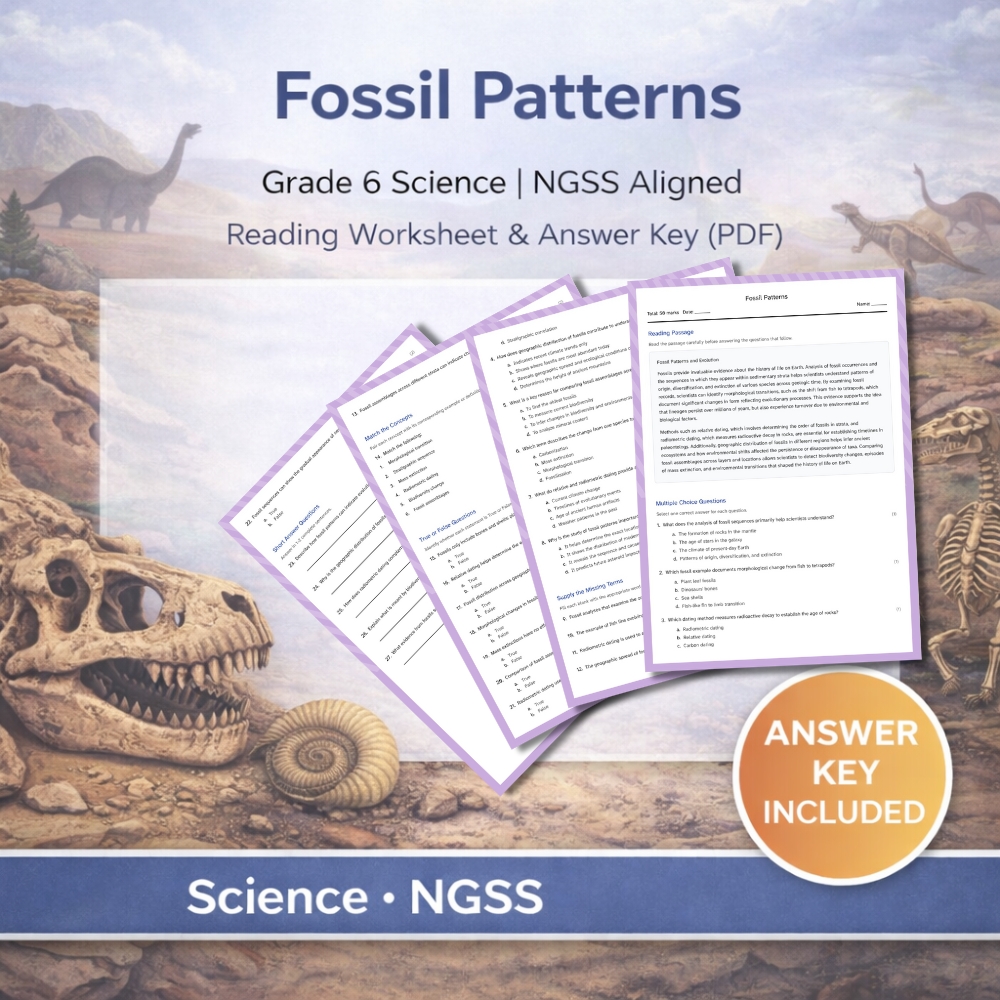
6th Grade Science | Fossil Patterns (Worksheet & Answer Key) NGSS Standards
Created byCedar Grove LearningLearning Objectives
- Describe how fossil occurrences and stratigraphic sequences reveal patterns of biological change over geologic time.
- Identify morphological transitions in fossils, such as fish-to-tetrapod evolution, as evidence of change in form.
- Explain how methods like relative dating and geographic distribution support understanding of lineage continuity and extinction.
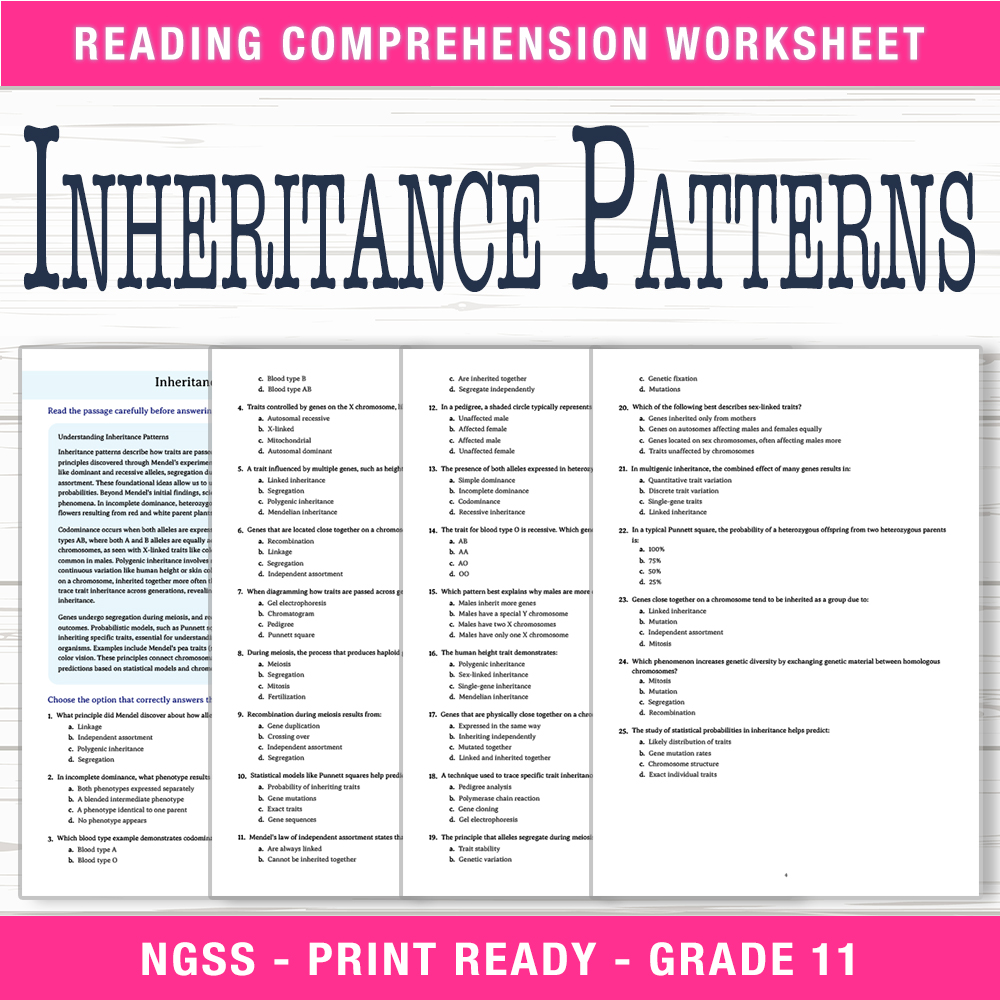
Grade 11 Science – Inheritance Patterns Worksheet (PDF + Answer Key)
Created byRiverstone ClassroomLearning Objectives
- Explain the principles of Mendelian inheritance and how they predict trait distribution.
- Describe patterns of inheritance beyond simple dominance, including incomplete dominance, codominance, sex linkage, polygenic inheritance, and linkage.
- Interpret pedigrees and understand how meiosis and recombination influence inheritance patterns.
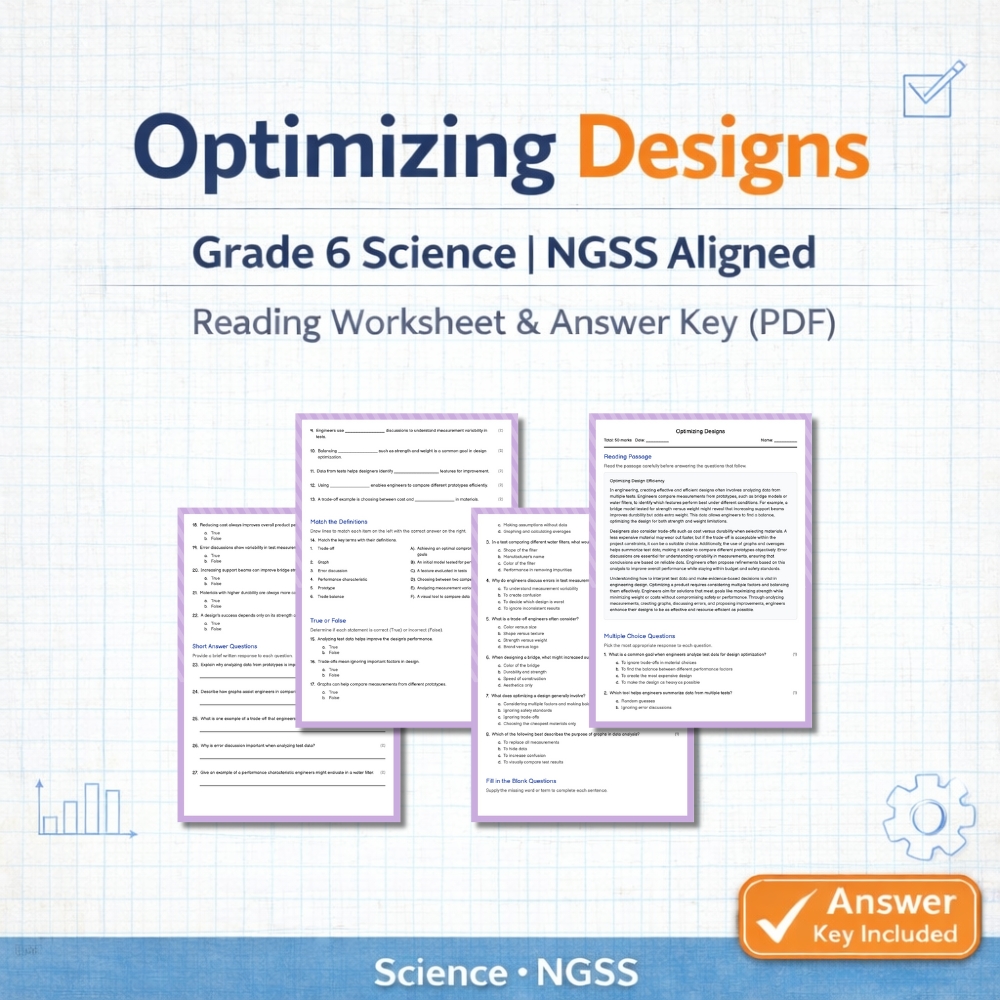
6th Grade Science | Optimizing Designs | Worksheet – NGSS Aligned
Created byCedar Grove LearningLearning Objectives
- Analyze data from tests to compare performance of different design options.
- Use graphs, averages, and error discussion to support decisions in design optimization.
- Evaluate trade-offs in design performance criteria such as strength versus weight, cost versus durability.
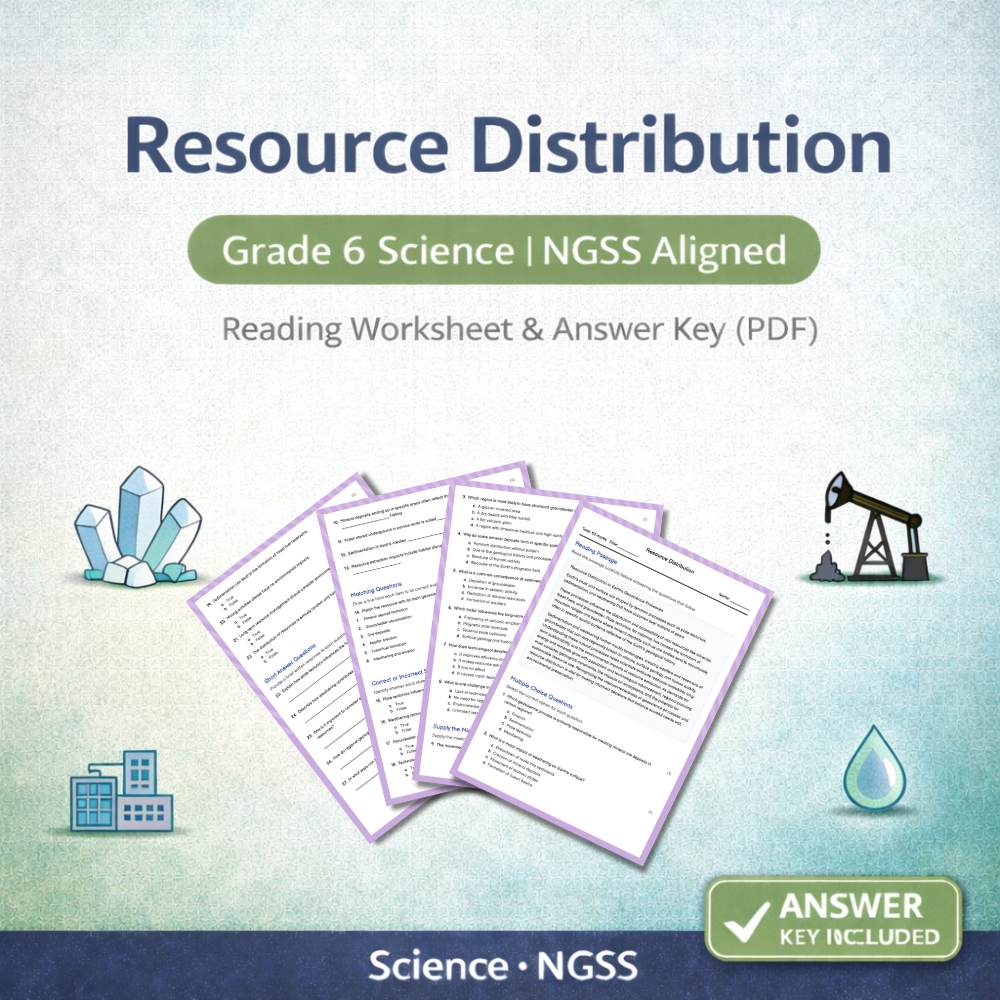
6th Grade Science | Resource Distribution | NGSS Worksheet & Answer Key
Created byCedar Grove LearningLearning Objectives
- Understand the geological processes that influence the distribution of mineral, energy, and groundwater resources.
- Analyze spatial patterns of resource deposits and evaluate trade-offs in resource management based on demand and environmental impacts.
- Explore how Earth's history and geoscience processes shape resource availability in regional and global contexts.
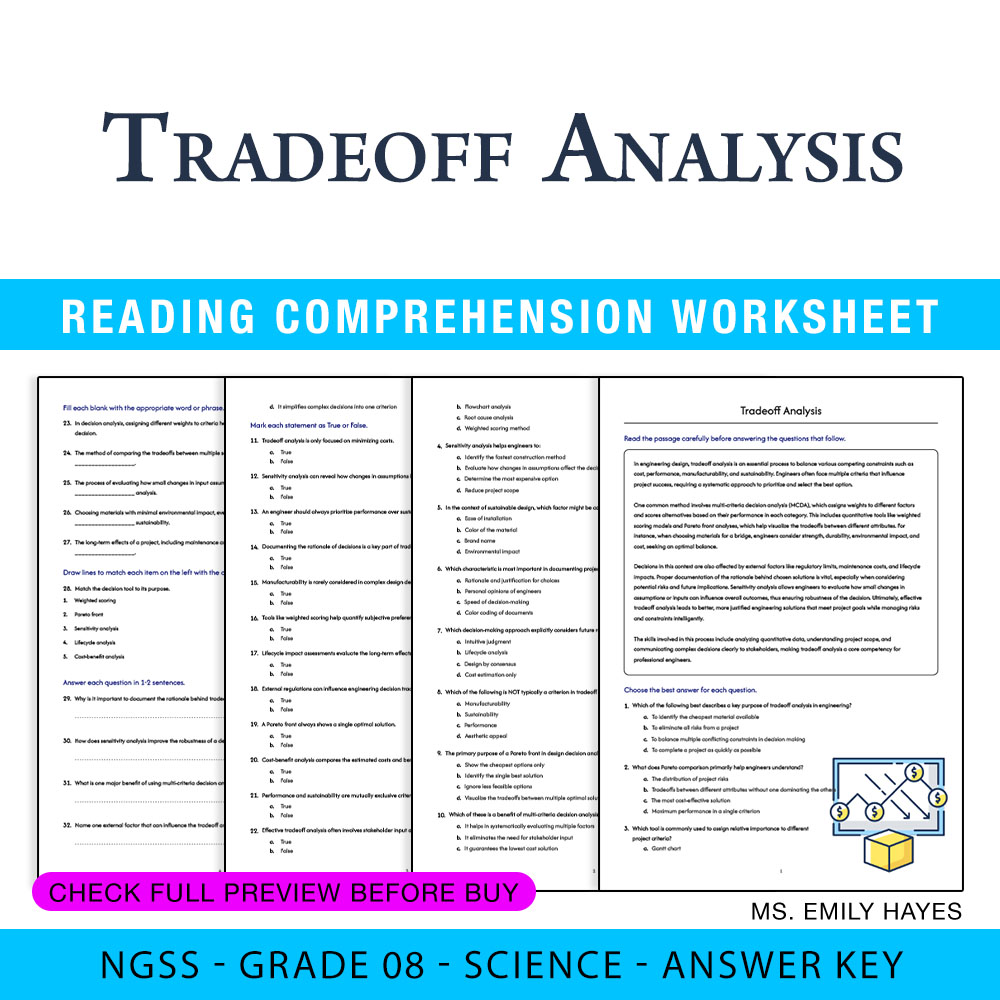
8th Grade Science | Tradeoff Analysis Worksheet (PDF+ Answer Key)
Created byCopper Leaf ClassroomLearning Objectives
- Understand how to prioritize competing constraints using multi-criteria decision methods.
- Apply cost-benefit estimation techniques to project choices.
- Utilize tools such as weighted scoring and pareto comparisons to analyze performance, manufacturability, and sustainability.
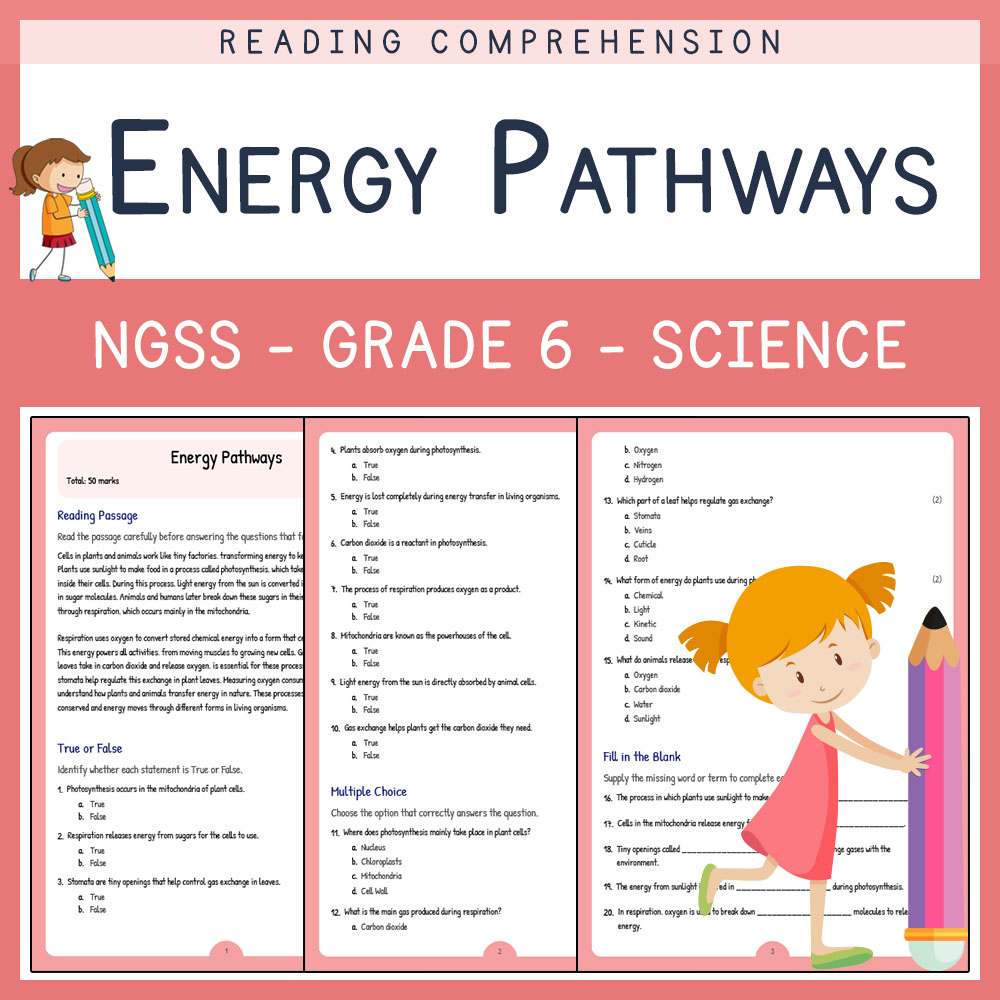
Grade 6 Science | Energy Pathways Worksheet (PDF) | NGSS Aligned
 Created byLumora Learning
Learning Objectives
- Understand how plants and animals transfer and transform energy in their cells.
- Learn how photosynthesis and respiration are connected processes.
- Identify how light energy is converted into chemical energy in plants.
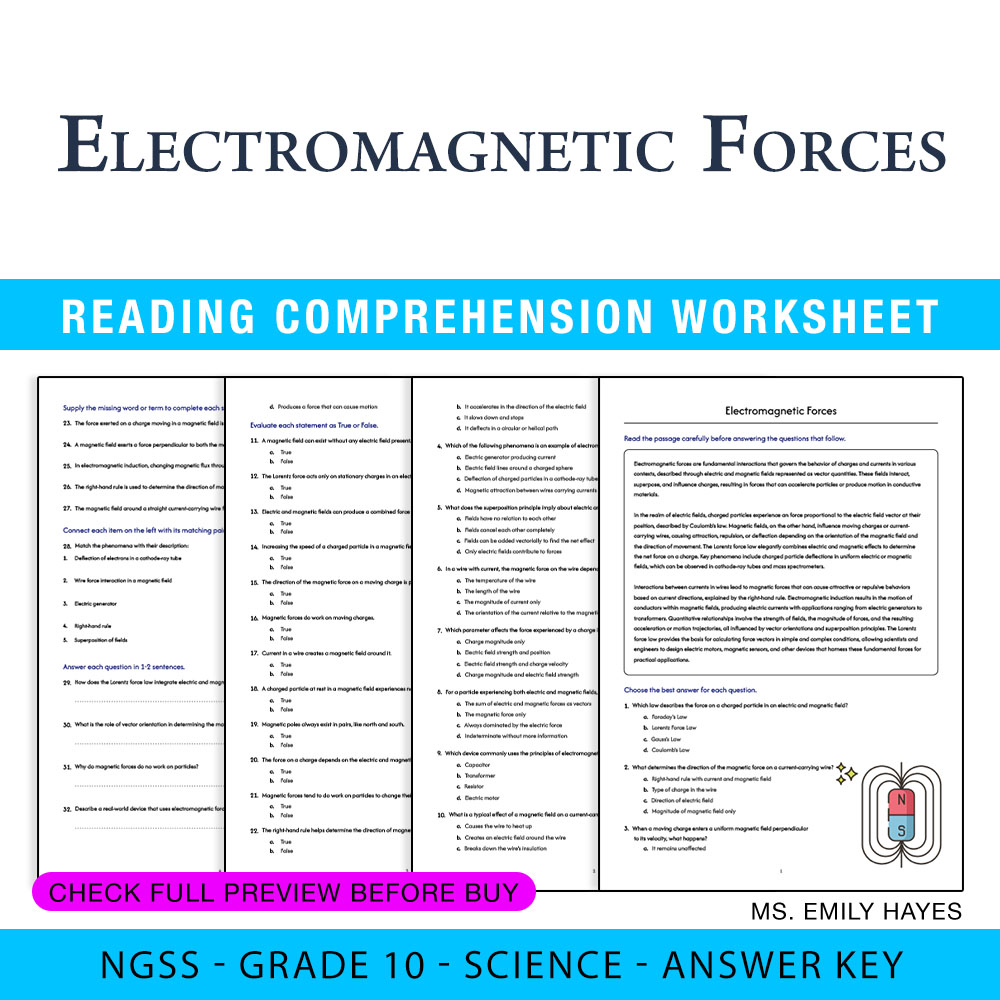
Grade 10 Science | Electromagnetic Forces Worksheet (PDF+ Answer Key)
Created byCopper Leaf ClassroomLearning Objectives
- Describe the fundamental concepts of electric and magnetic fields and their interactions.
- Explain how forces on charges and currents are determined using vector relationships and the Lorentz force law.
- Identify and analyze canonical phenomena such as charge deflection, wire interactions, and electromagnet-induced motion.
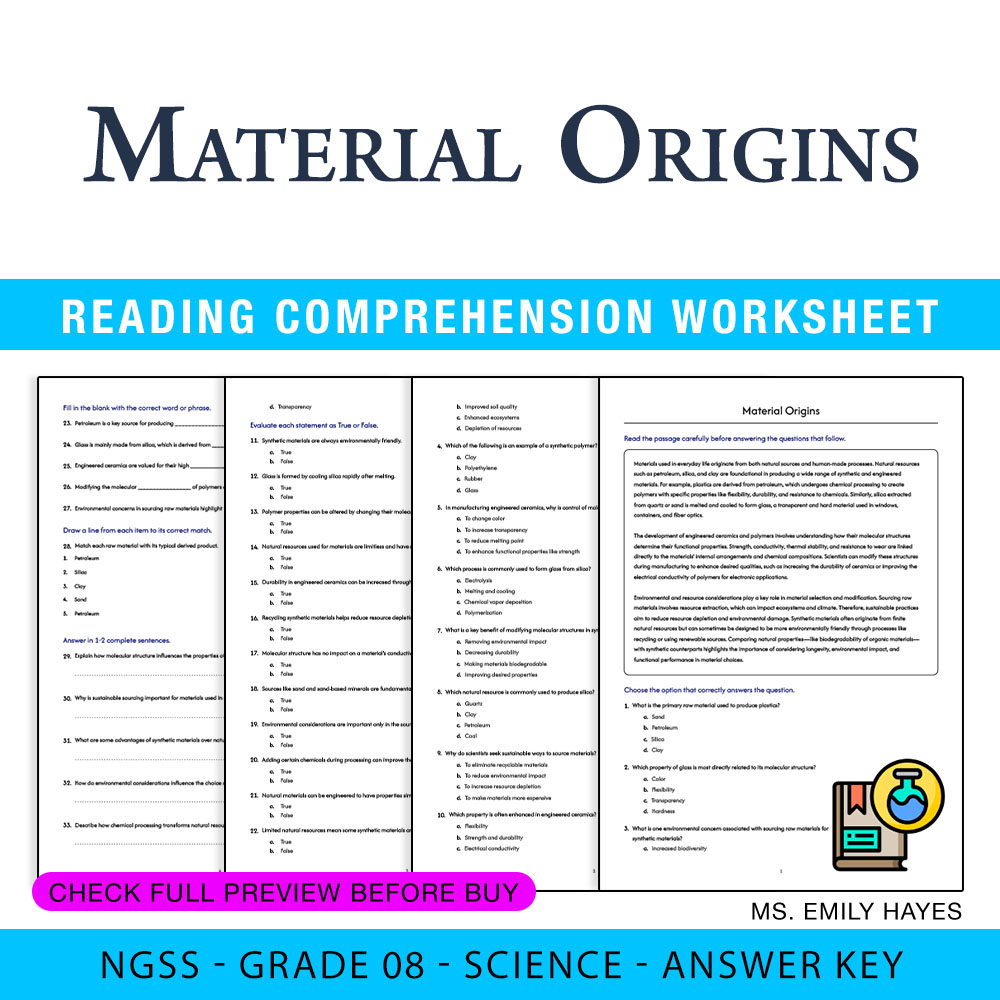
8th Grade Science | Material Origins Worksheet (PDF+ Answer Key)
Created byCopper Leaf ClassroomLearning Objectives
- Understand how natural resources are transformed into synthetic materials.
- Recognize the influence of processing and molecular structure on material properties.
- Analyze environmental and resource considerations in sourcing and modifying materials.
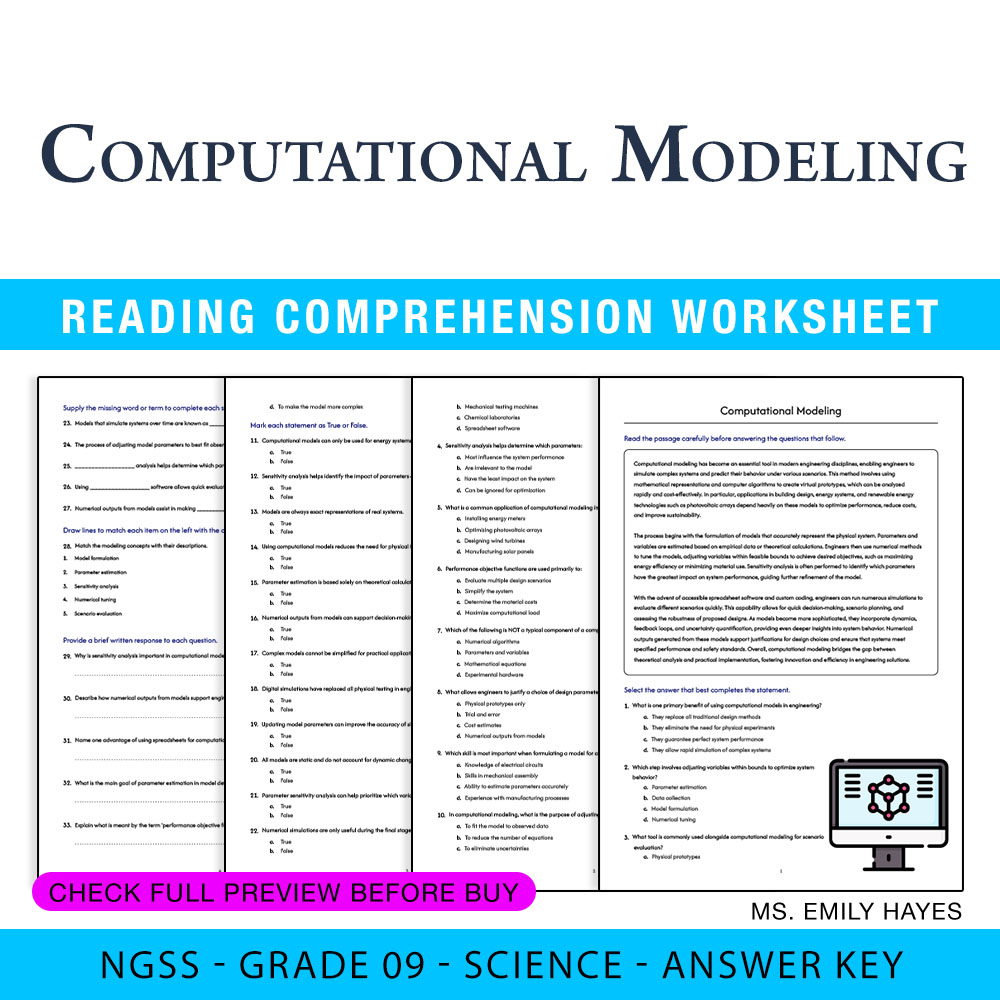
Grade 9 Science | Computational Modeling Worksheet (PDF+ Answer Key)
Created byCopper Leaf ClassroomLearning Objectives
- Understand the application of mathematical and computational methods in system modeling.
- Develop skills to formulate, analyze, and tune models for systems such as building envelopes and photovoltaic arrays.
- Use spreadsheets or basic code to evaluate scenarios and interpret numerical outputs for design decisions.
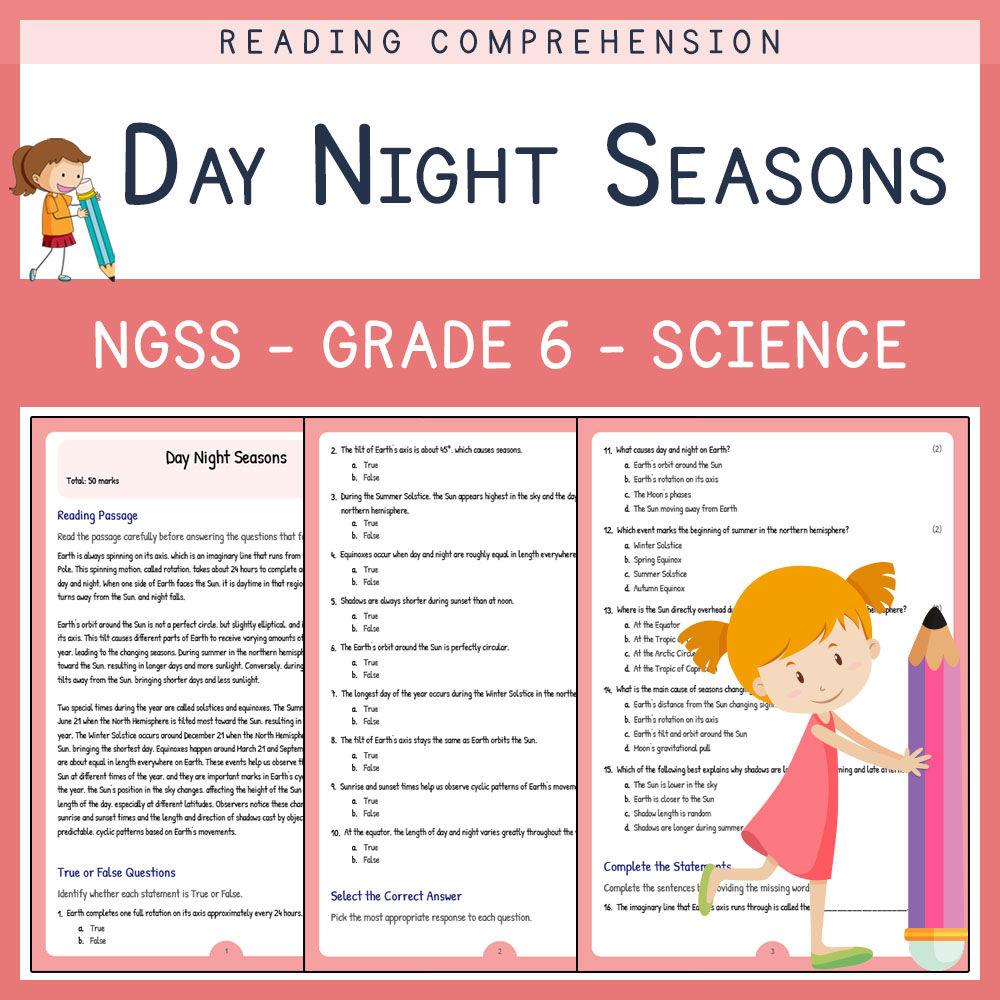
Grade 6 Science | Day, Night & Seasons Worksheet (PDF) | NGSS Aligned
Created byLumora LearningLearning Objectives
- Understand Earth's rotation and orbit
- Identify key phenomena like day and night, seasons, solstices, and equinoxes
- Explain how sunlight and shadow patterns relate to Earth's position
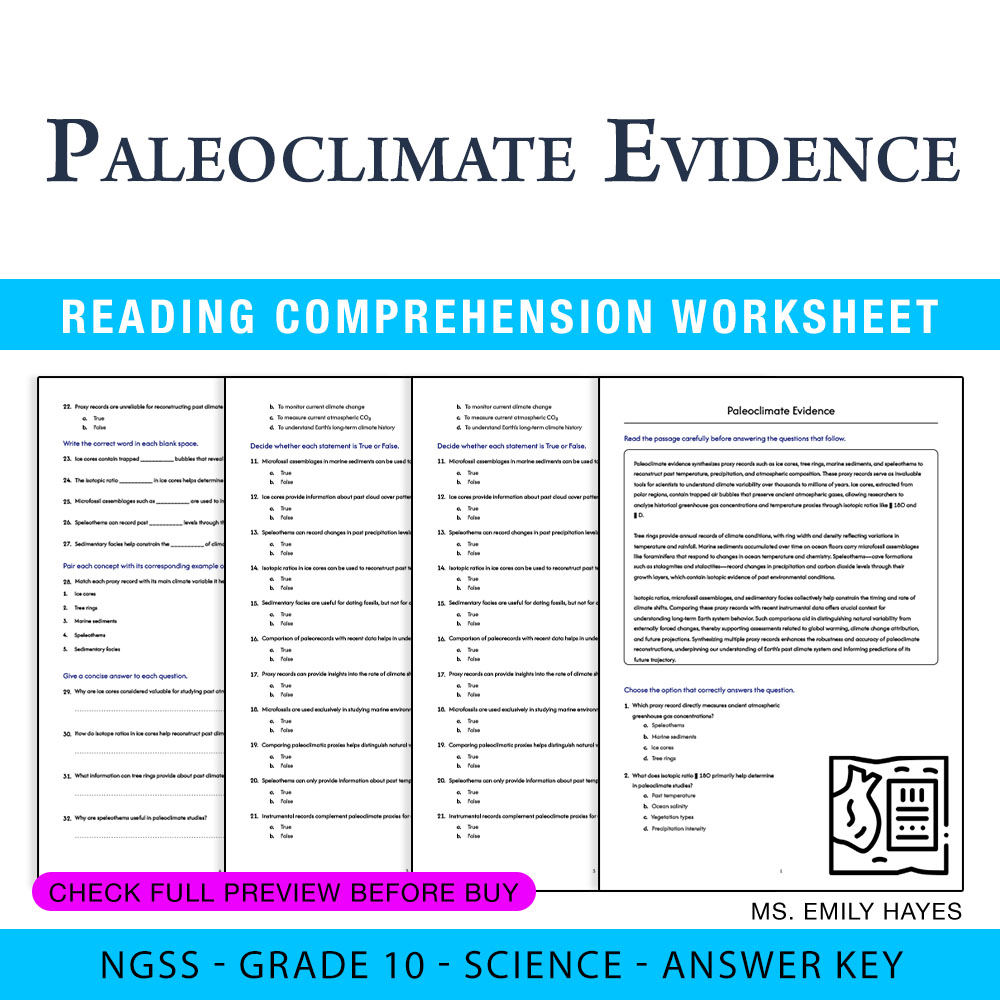
10th Grade Science | Paleoclimate Evidence Worksheet (PDF+ Answer Key)
Created byCopper Leaf ClassroomLearning Objectives
- Understand the types of proxy records used in paleoclimate reconstruction
- Analyze how isotopic ratios and microfossil assemblages provide insights into past climates
- Evaluate the importance of comparing paleorecords with instrumental data to assess climate trends
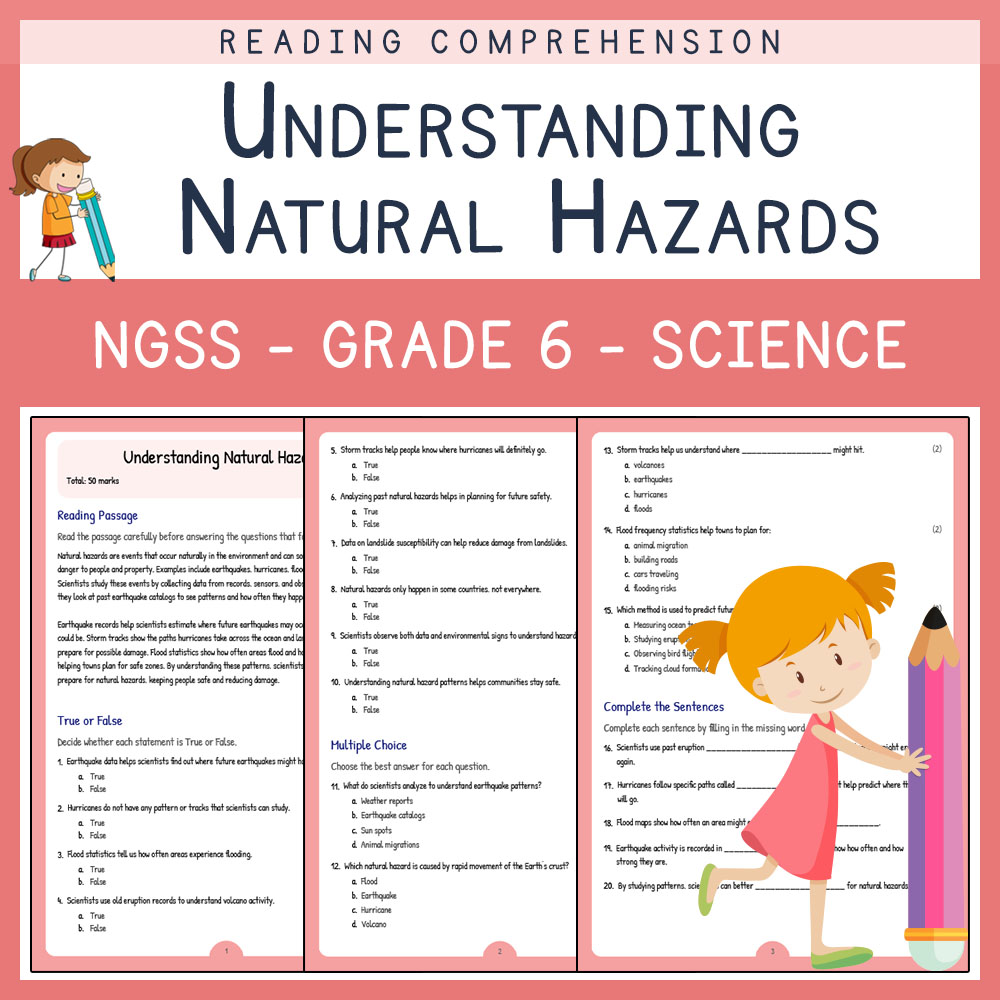
Grade 6 Science | Understanding Natural Hazards Worksheet (PDF) | NGSS Aligned
Created byLumora LearningLearning Objectives
- Learn to identify different types of natural hazards.
- Understand how scientists observe and analyze natural hazards.
- Recognize patterns and recurrence of events like earthquakes and storms.
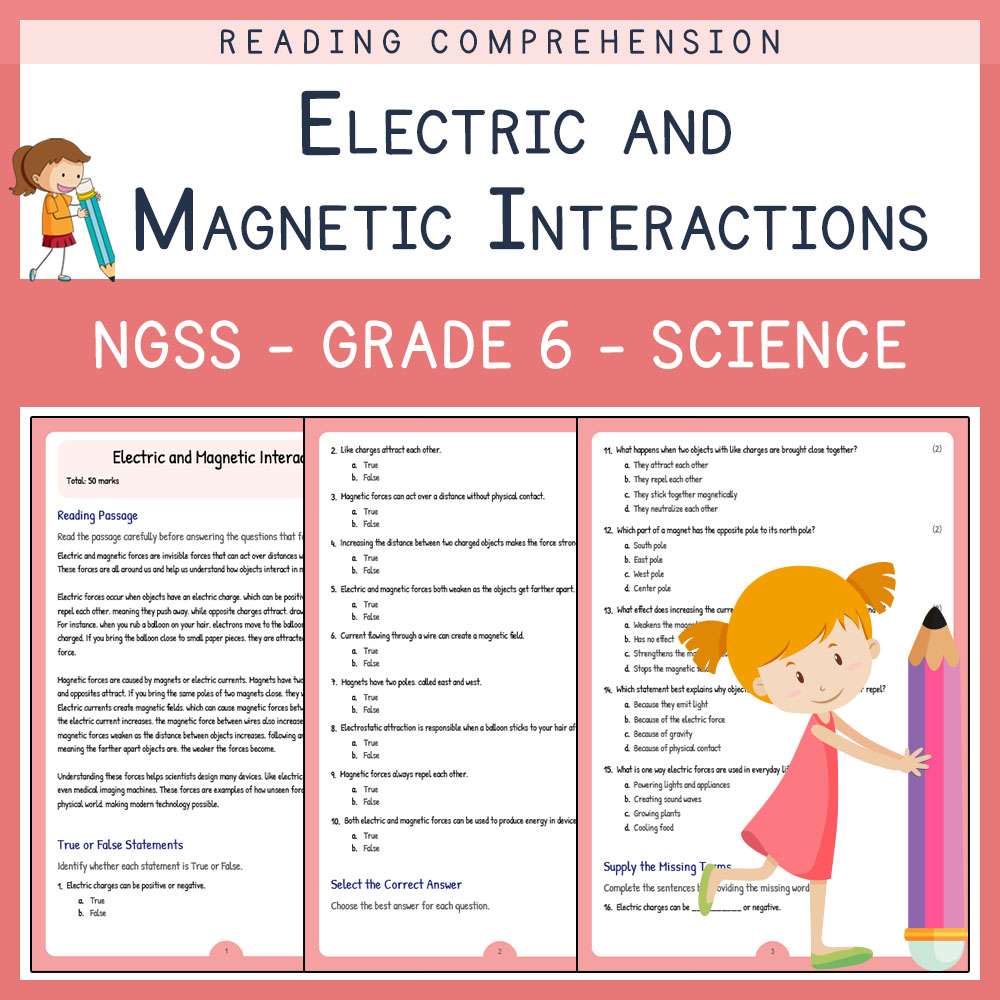
Grade 6 Science | Electric and Magnetic Interactions Worksheet (PDF) | NGSS
Created byLumora LearningLearning Objectives
- Understand the basic principles of electric forces and magnetic forces
- Identify how force strength depends on source strength and distance
- Differentiate between electrostatic attraction/repulsion and magnetic force
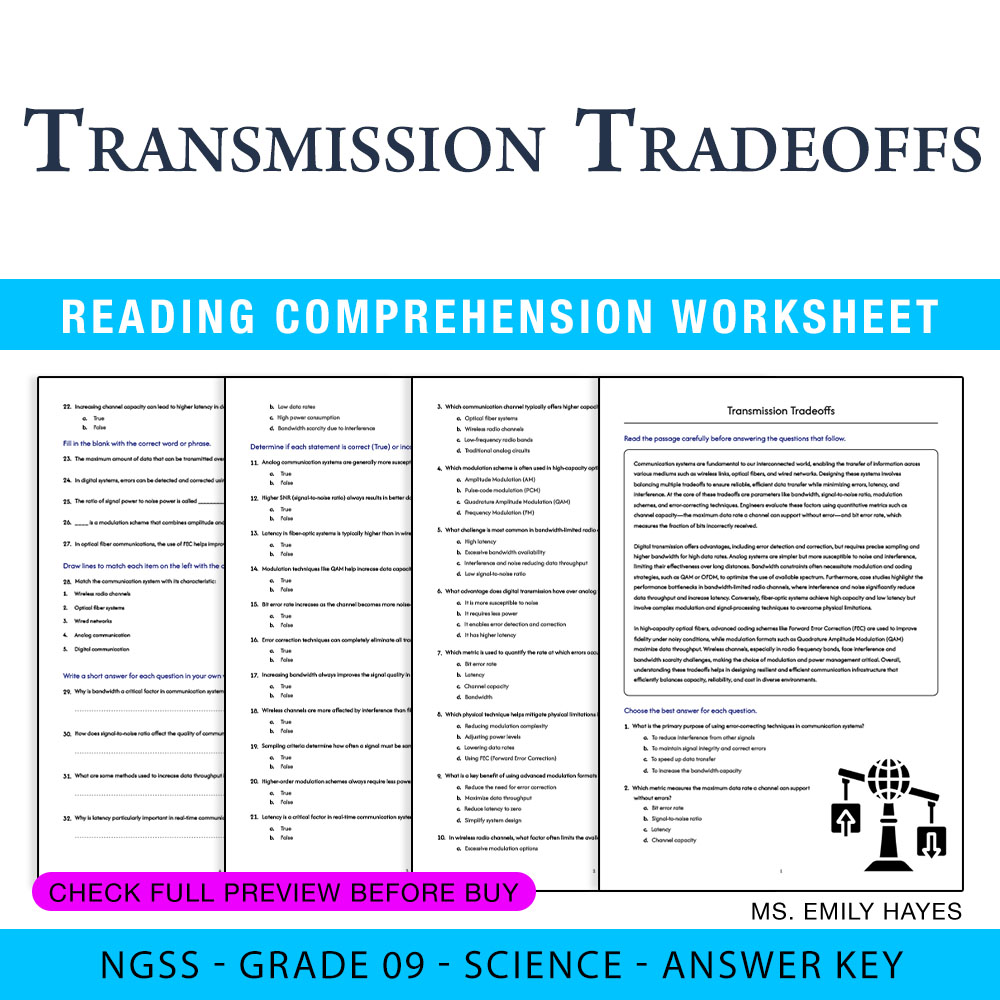
9th Grade Science | Transmission Tradeoffs Worksheet (PDF+ Answer Key)
Created byCopper Leaf ClassroomLearning Objectives
- Understand the key tradeoffs involved in digital and analog communication systems.
- Analyze the impact of bandwidth constraints, signal-to-noise ratio, and sampling criteria on system performance.
- Evaluate the role of error-correcting techniques, modulation, and coding in maintaining signal fidelity under noise.
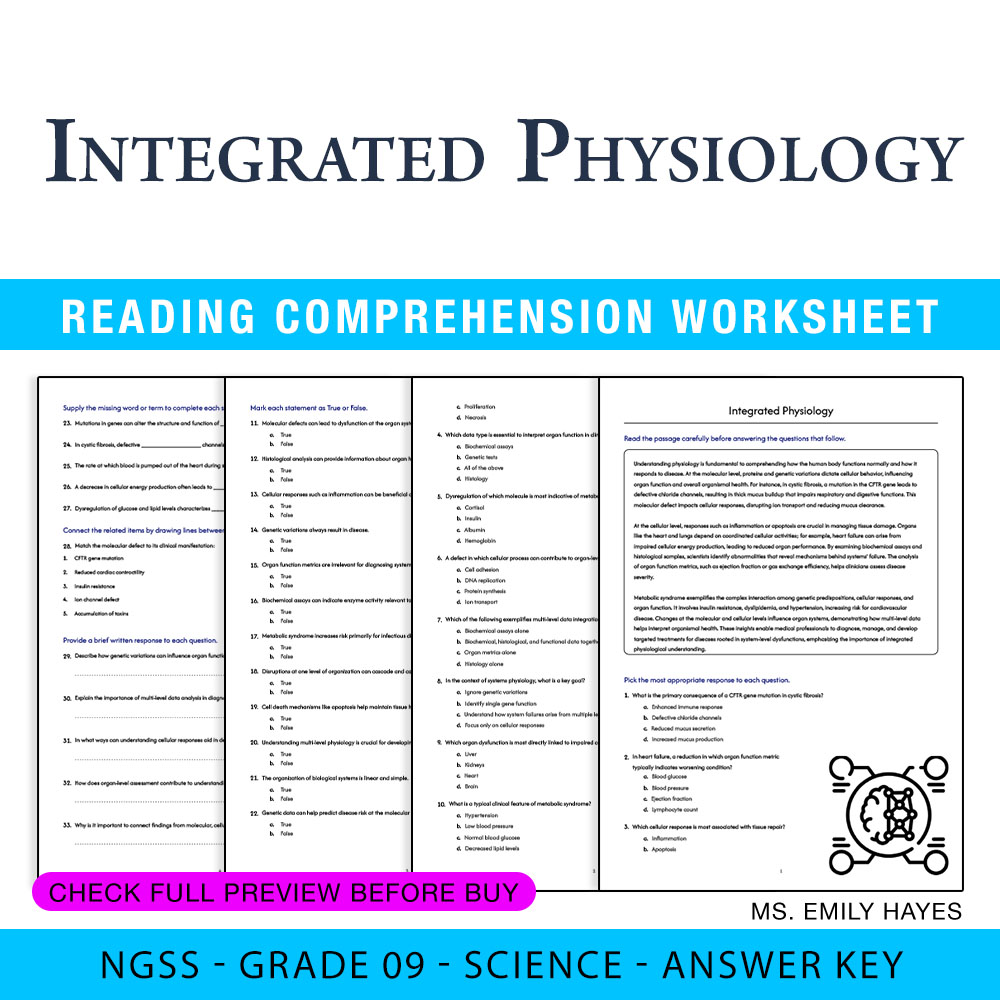
Grade 9 Science | Integrated Physiology Worksheet (PDF+ Answer Key)
Created byCopper Leaf ClassroomLearning Objectives
- Understand how molecular, cellular, and organ-level interactions contribute to physiological functions and health.
- Analyze clinical and natural exemplars such as cystic fibrosis, heart failure, and metabolic syndrome to understand system dysfunction.
- Construct explanatory accounts connecting genetic variation to cellular responses and organ system performance.
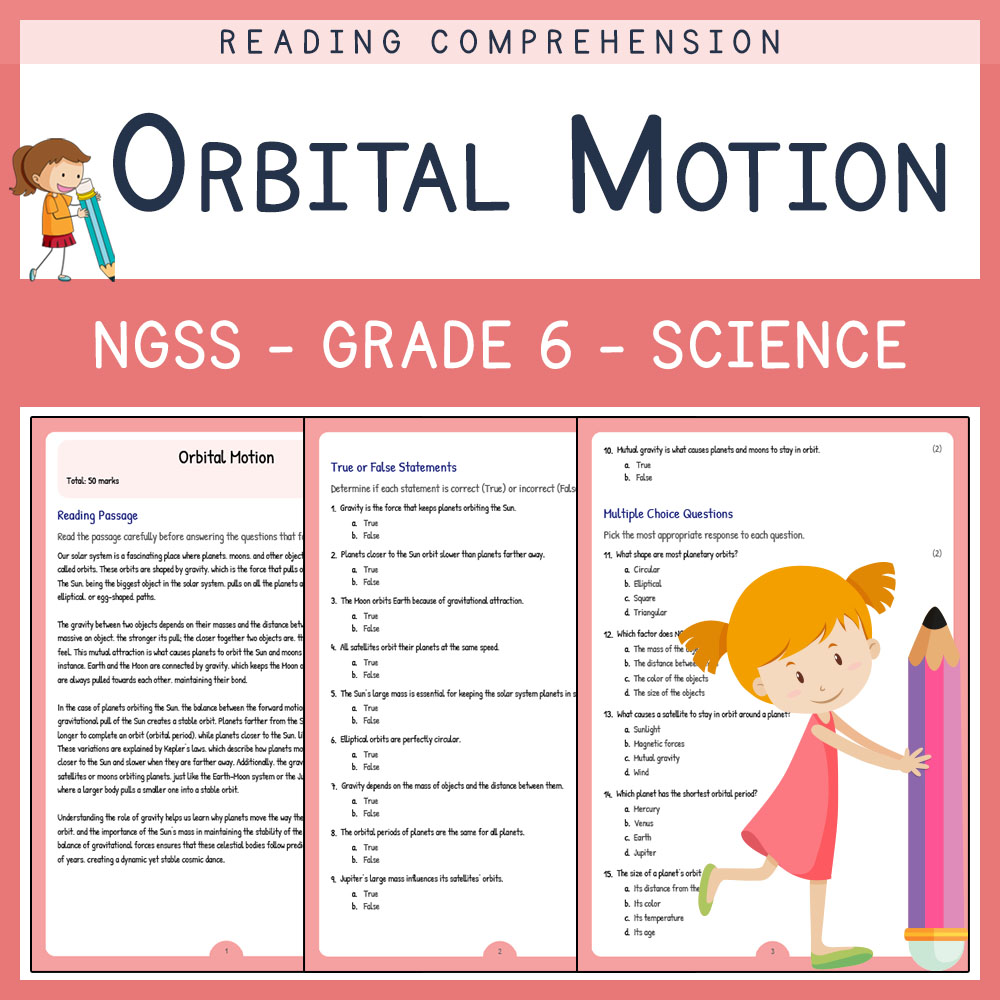
Grade 6 Science | Orbital Motion Worksheets (PDF) | NGSS Aligned
Created byLumora LearningLearning Objectives
- Understand that gravity is the force that keeps planets in orbit around the Sun.
- Describe elliptical orbits and how mutual gravity affects planetary motion.
- Explain the concepts of orbital periods and variations in orbital speed.
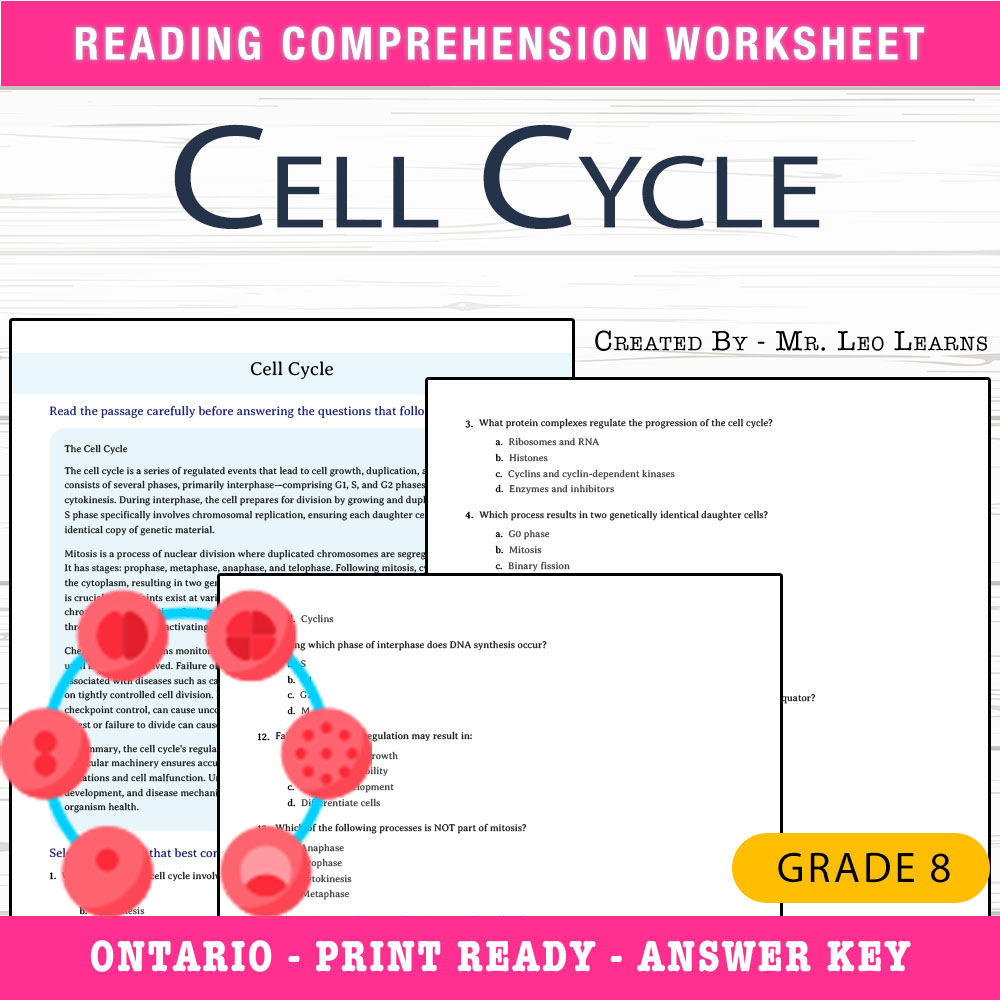
Grade 8 Science – Cell Cycle Worksheet for Mastering Cell Division
 Created byThe Resource Hub
Learning Objectives
- Explain the stages of the cell cycle, including interphase, mitosis, and cytokinesis.
- Describe the roles of cyclins, kinases, and checkpoint mechanisms in regulating cell division.
- Analyze the significance of proper cell cycle regulation in tissue growth, wound repair, and prevention of diseases such as cancer.
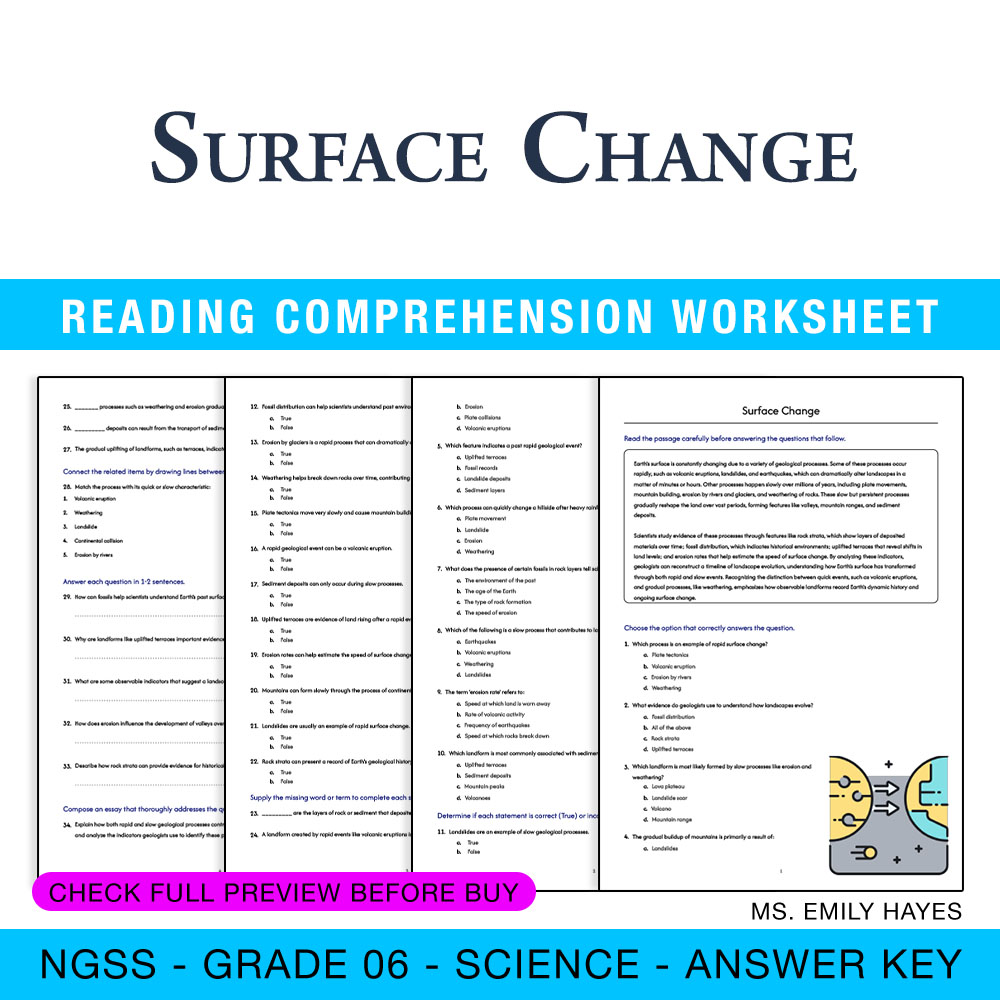
6th Grade Science | Surface Change Worksheet (PDF + Answer Key)
Created byCopper Leaf ClassroomLearning Objectives
- Explain the processes that modify Earth's surface, including both rapid and slow geological events.
- Identify evidence such as rock strata, fossil distribution, and landforms that help explain landscape evolution.
- Contrast the characteristics and effects of rapid surface change events like volcanic eruptions and landslides with slow processes like weathering and continental collision.
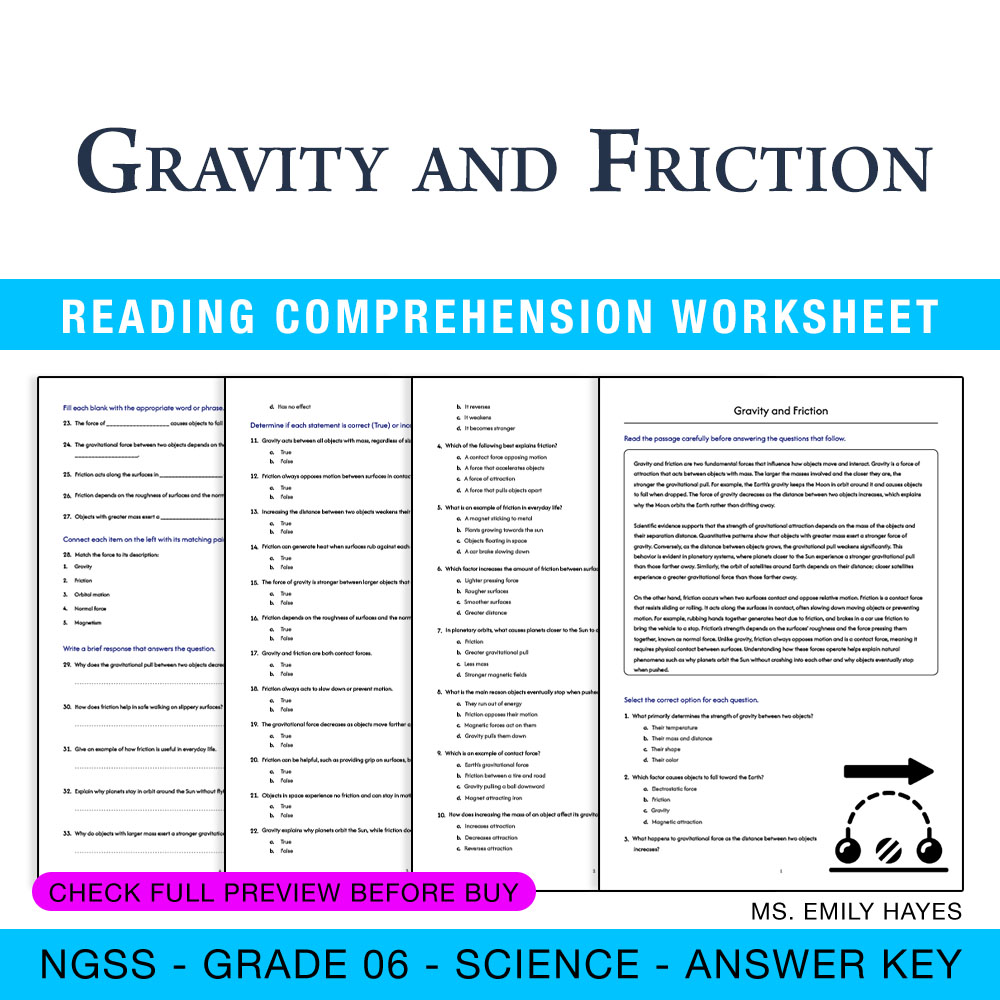
6th Grade Science | Gravity and Friction Worksheet (PDF + Answer Key)
Created byCopper Leaf ClassroomLearning Objectives
- Describe how gravity depends on mass and distance using examples like Earth-Moon system and planetary orbits.
- Explain the concept of friction as a contact force that resists motion along surfaces.
- Differentiate between gravitational forces and contact forces such as friction in how they affect motion and orbiting behavior.
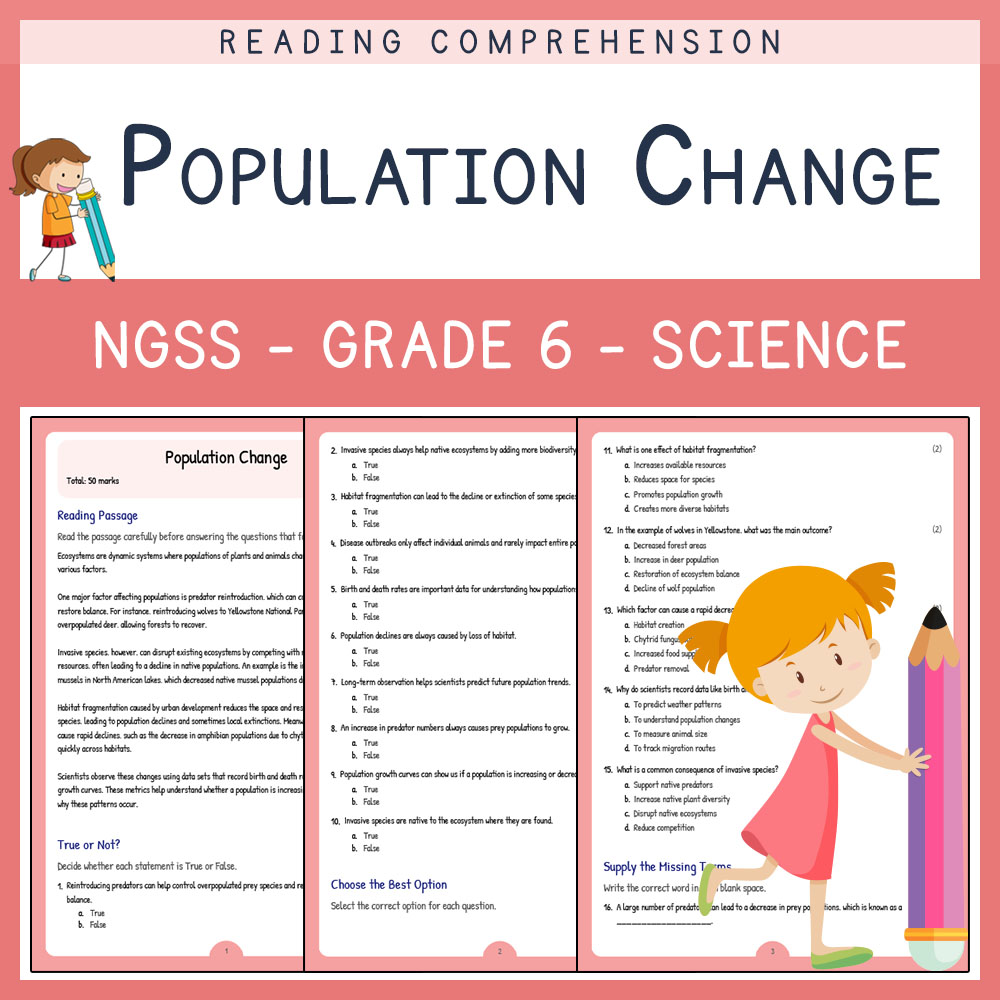
Grade 6 Science | Population Change Worksheet (PDF) | NGSS Aligned
Created byLumora LearningLearning Objectives
- Construct evidence-based arguments about factors influencing population changes in ecosystems.
- Interpret case studies concerning predator reintroduction, invasive species, habitat fragmentation, and disease outbreaks.
- Use empirical data and quantitative metrics to analyze population responses and patterns.
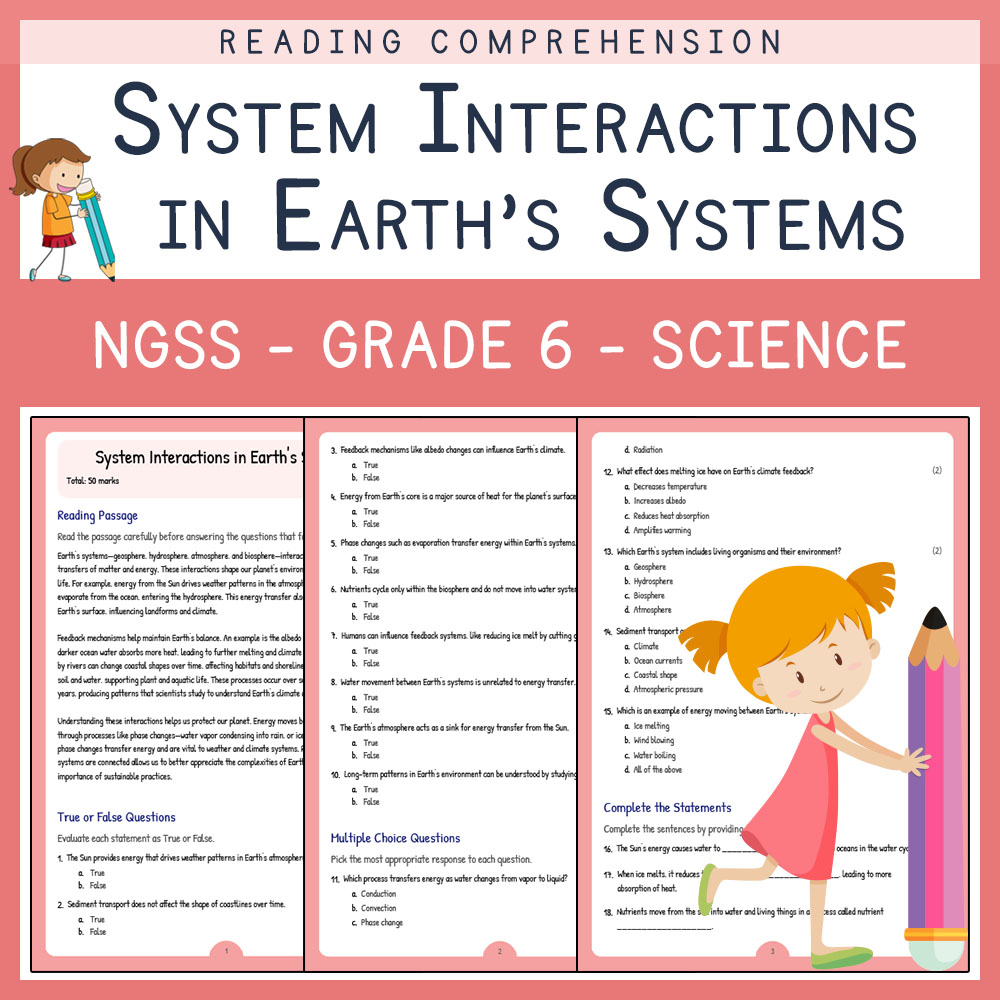
Grade 6 Science | Earth's Systems Interactions Worksheet (PDF) | NGSS Aligned
Created byLumora LearningLearning Objectives
- Understand how Earth's systems interact through the transfer of matter and energy.
- Identify examples of feedback mechanisms like albedo changes, sediment transport, and nutrient movement.
- Describe the flow of energy within Earth's systems including sources, sinks, and phase changes.
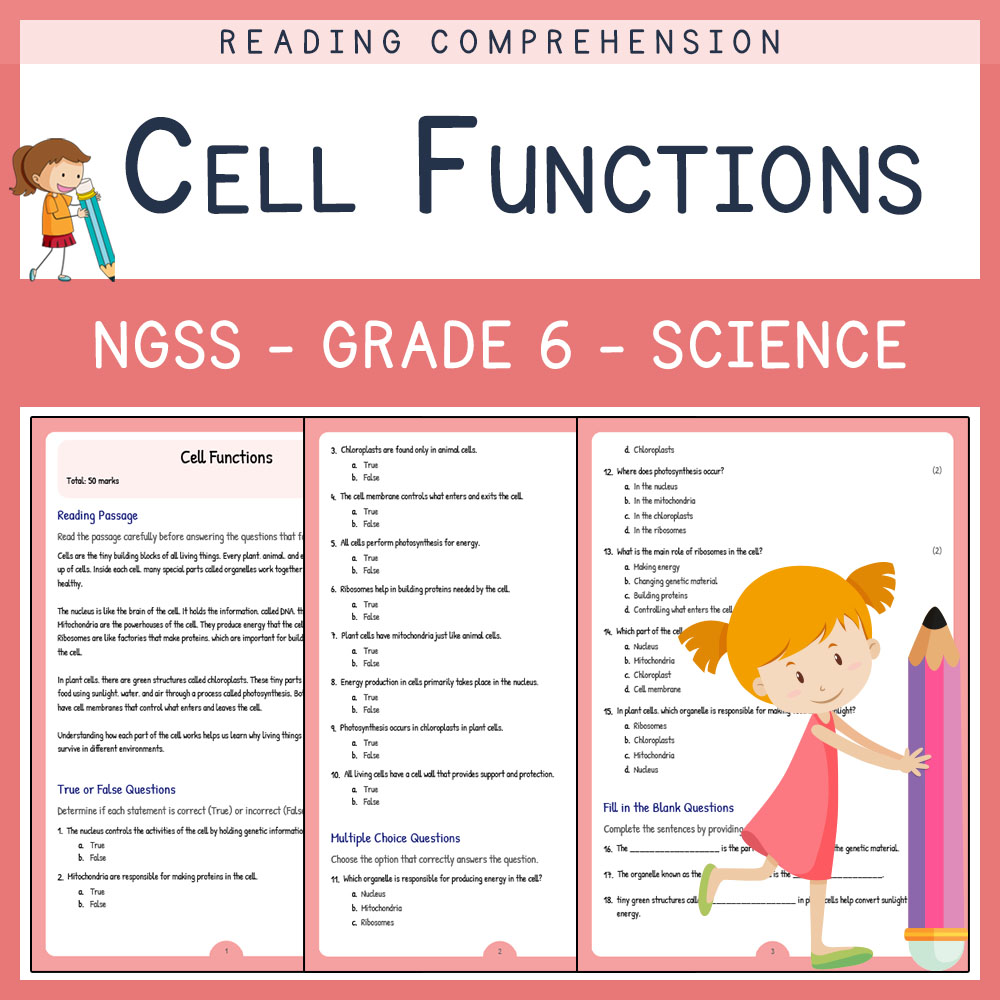
Grade 6 Science | Cell Functions Worksheet (PDF) | NGSS Aligned
Created byLumora LearningLearning Objectives
- Understand the structure and function of different cell organelles
- Identify the roles of nucleus, mitochondria, ribosomes, and chloroplasts
- Compare plant and animal cells to see how they are specialized
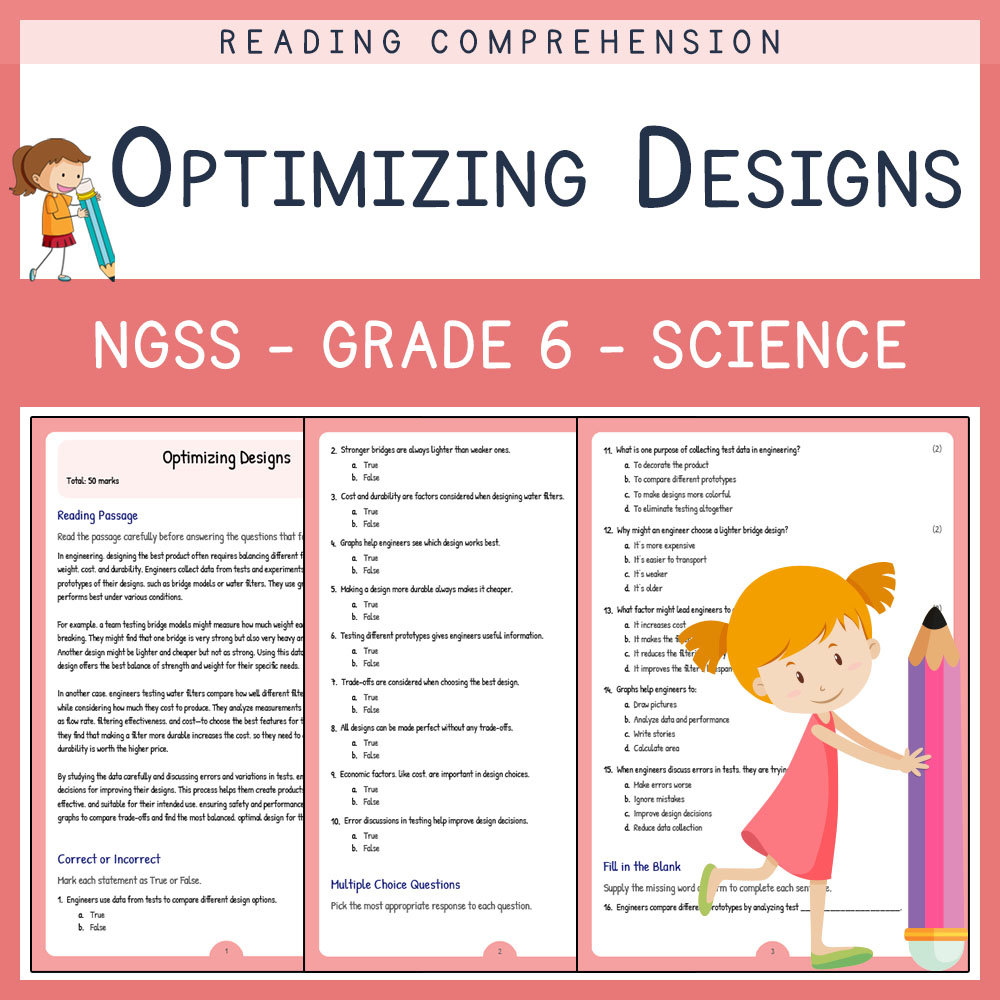
Grade 6 Science | Optimizing Designs Worksheet (Answer Key) | NGSS Aligned
Created byLumora LearningLearning Objectives
- Understand how data can be used to compare different design options.
- Learn to read graphs and analyze performance measurements.
- Identify trade-offs when selecting optimal design features.
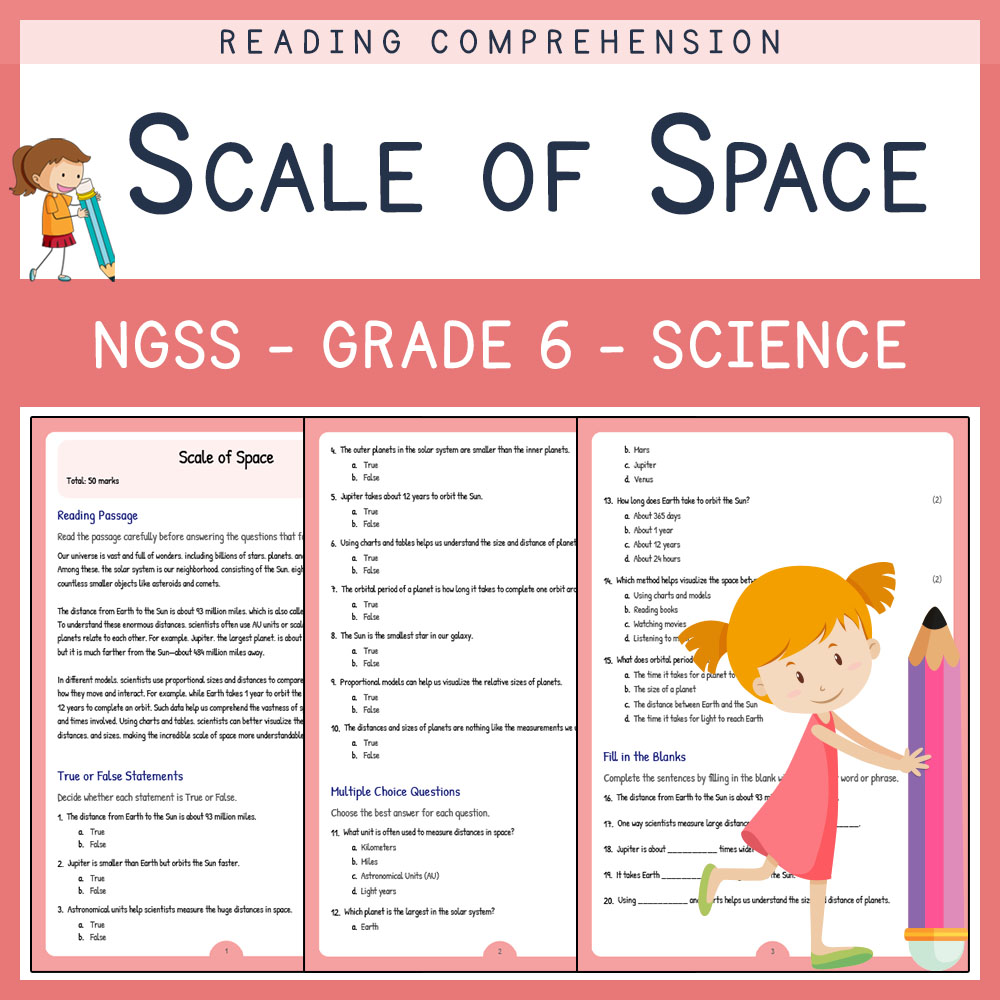
Grade 6 Science | Scale of Space Worksheet (PDF) | NGSS Aligned
Created byLumora LearningLearning Objectives
- Understand the relative sizes and distances of planets in the solar system.
- Learn about astronomical units and how they are used to measure space.
- Compare the sizes and orbital periods of planets like Earth and Jupiter.
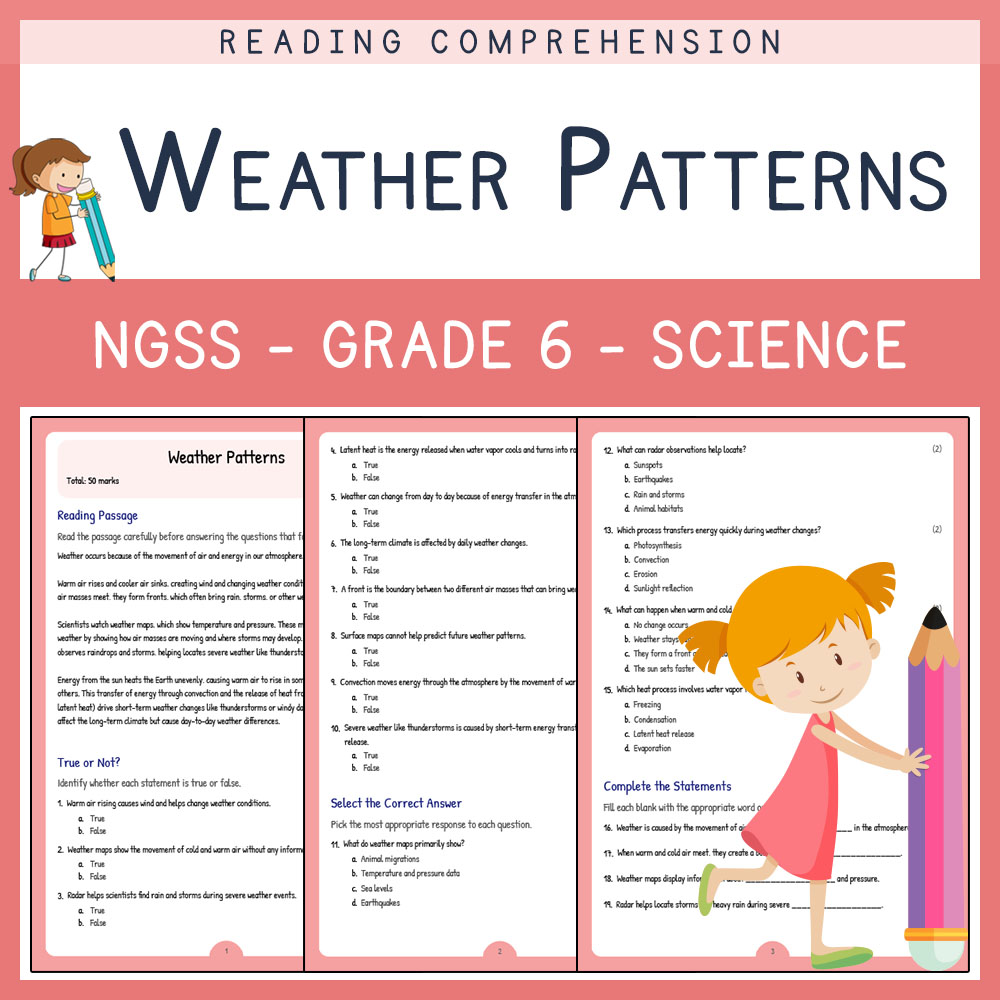
Grade 6 Science | Weather Patterns Worksheet (PDF) | NGSS Aligned
Created byLumora LearningLearning Objectives
- Understand how atmospheric processes influence weather.
- Interpret surface maps, temperature, and pressure data.
- Identify types of weather phenomena such as storms and fronts.
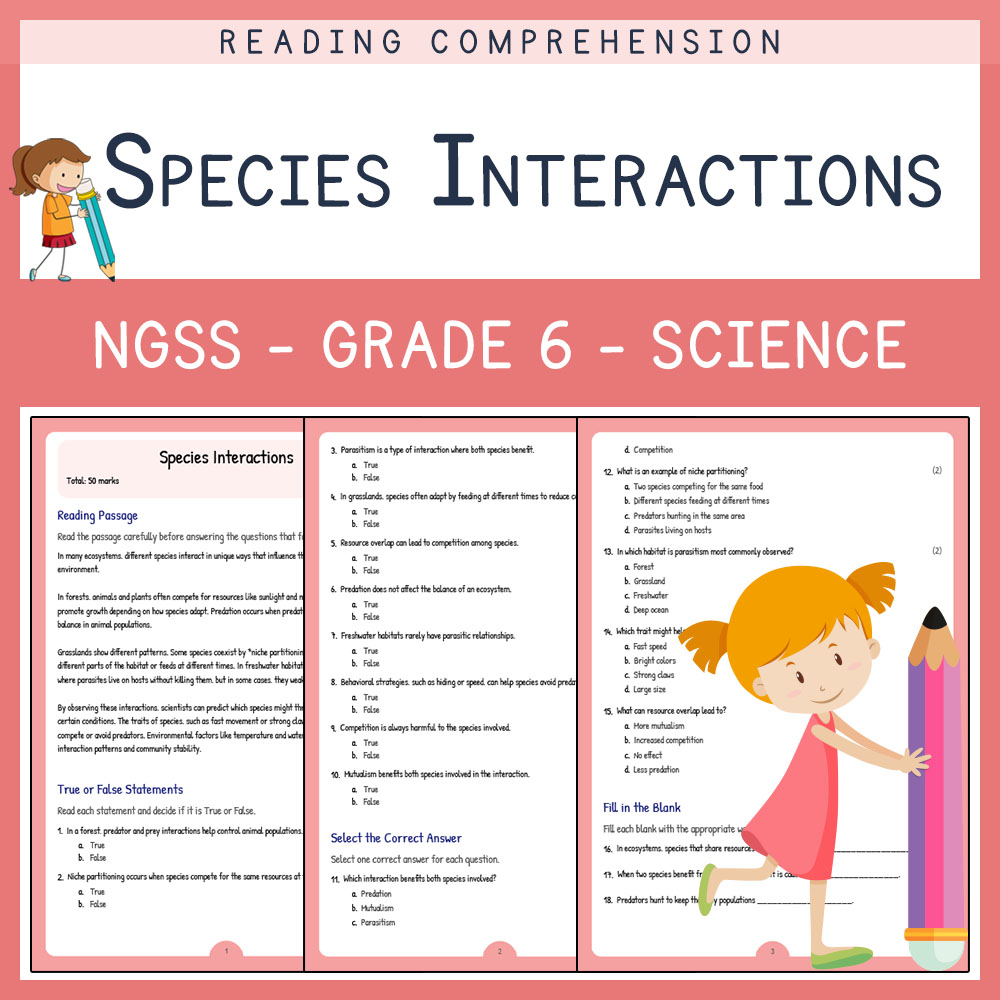
Grade 6 Science | Species Interactions Worksheet (PDF) | NGSS Aligned
Created byLumora LearningLearning Objectives
- Construct explanations predicting patterns of species interactions across ecosystems
- Identify types of species interactions such as mutualism, competition, predation, and parasitism
- Compare interaction outcomes in forest, grassland, and freshwater environments
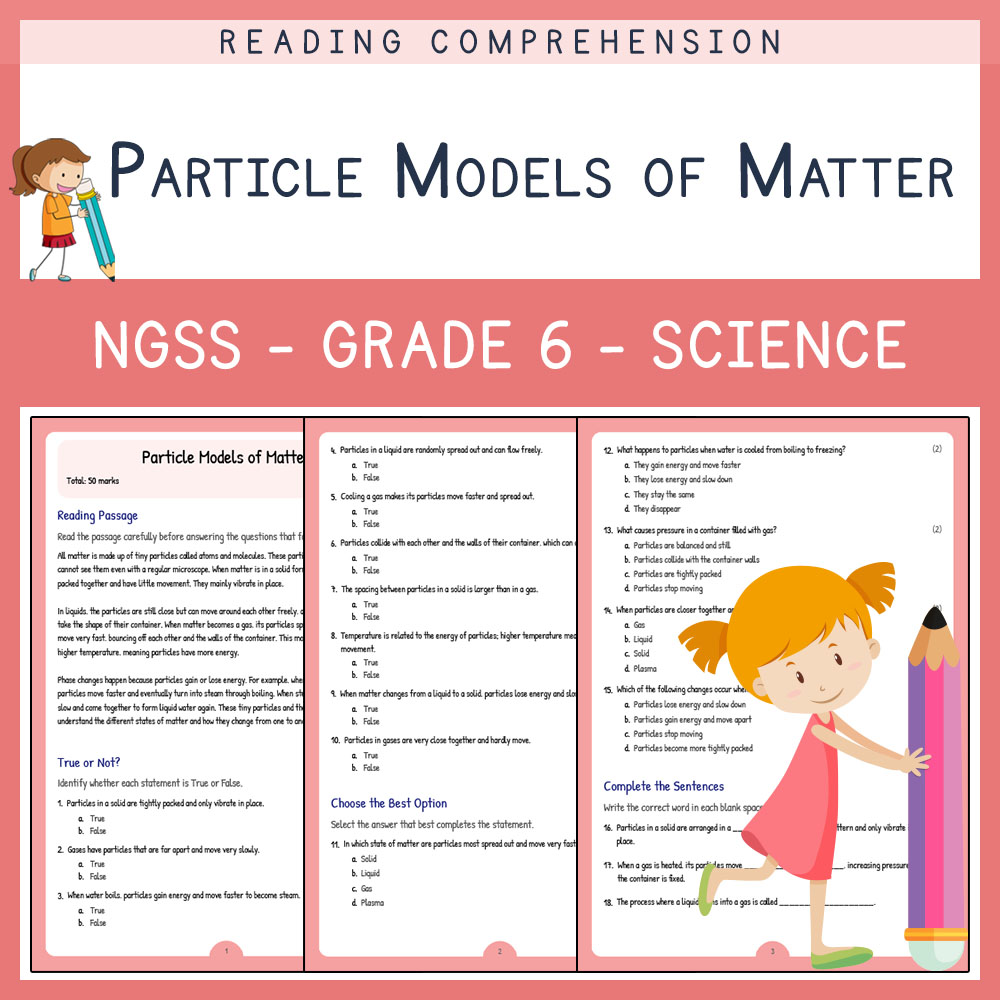
Grade 6 Science | Particle Models of Matter Worksheet (PDF) | NGSS Aligned
Created byLumora LearningLearning Objectives
- Describe matter as made up of tiny particles
- Explain how particle motion relates to temperature and states of matter
- Use particle models to understand phase changes like melting, freezing, boiling, and condensation
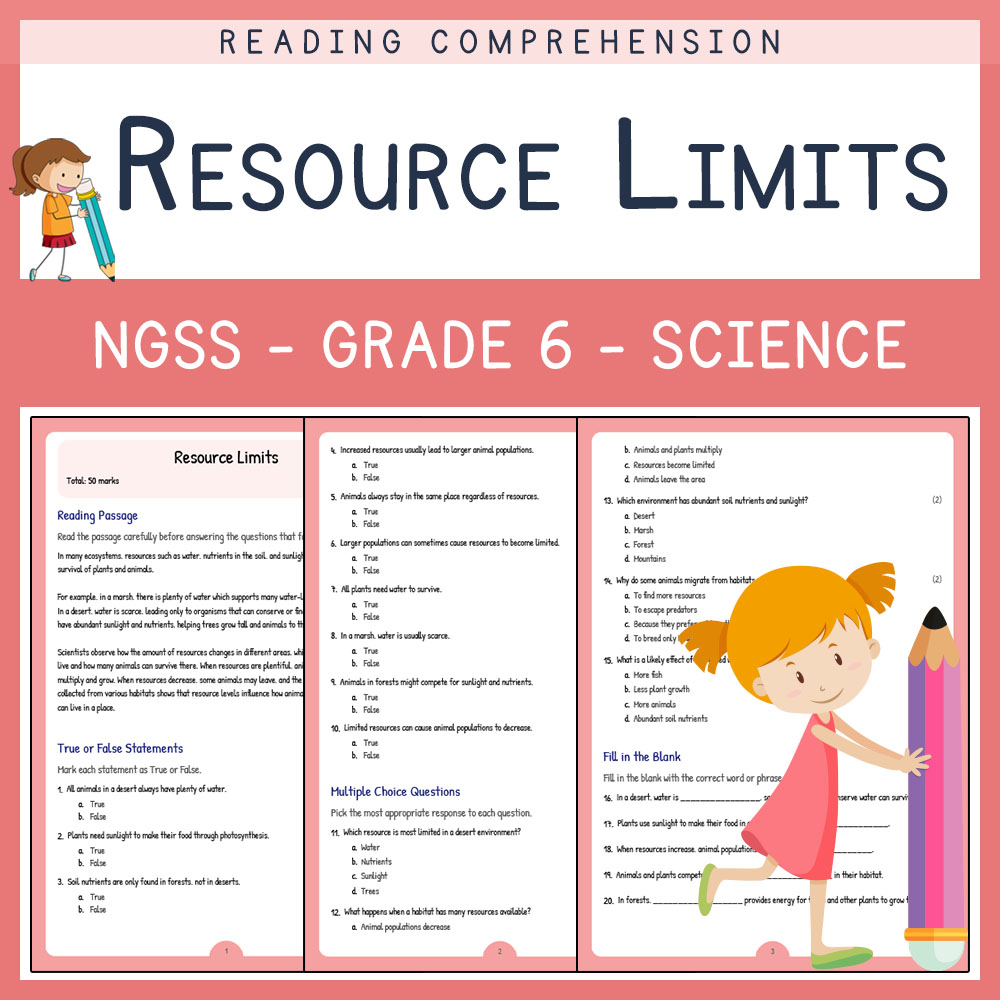
Grade 6 Science | Resource Limits Worksheet (PDF) | NGSS Aligned
Created byLumora LearningLearning Objectives
- Understand how resource availability affects individual organisms and populations.
- Interpret data patterns related to resource distribution in different environments.
- Identify limiting resources such as water, soil nutrients, and light across habitats.
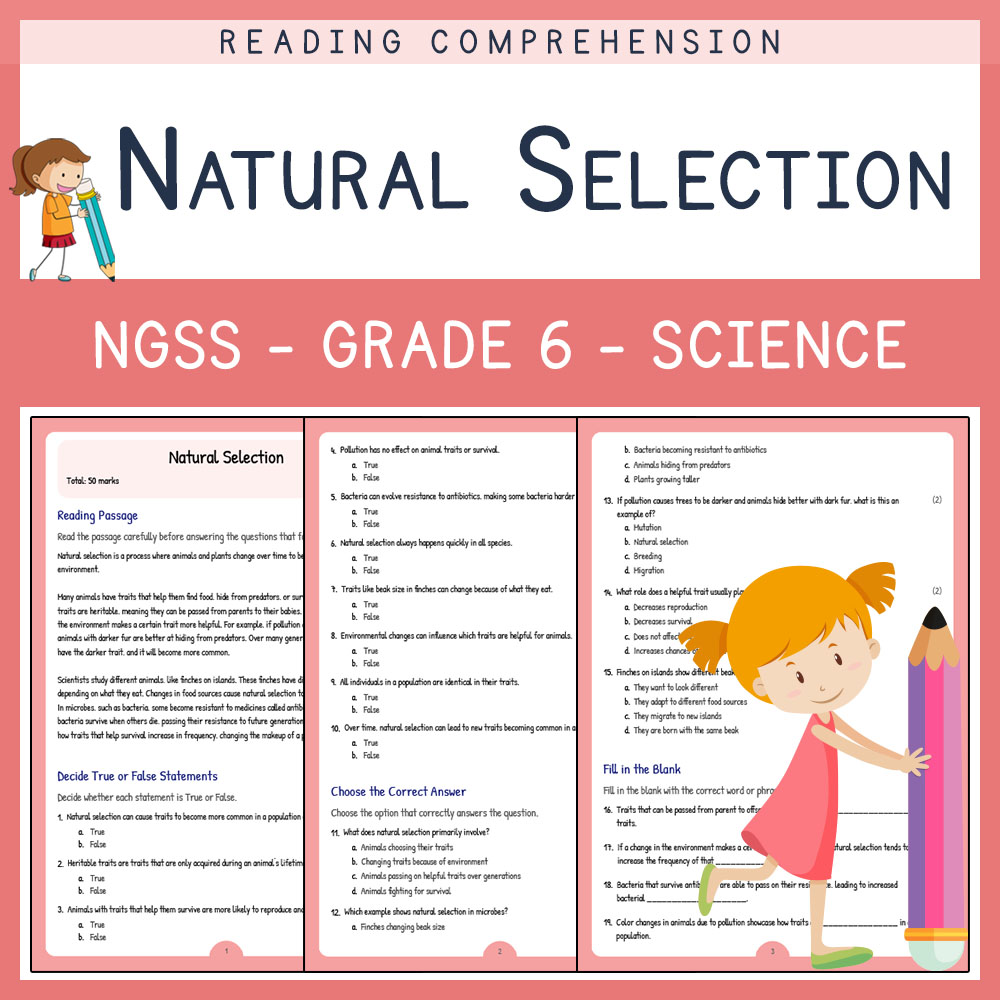
Grade 6 Science | Natural Selection Worksheet (PDF) | NGSS Aligned
Created byLumora LearningLearning Objectives
- Understand that variation in heritable traits affects survival and reproduction.
- Identify how environmental pressures influence trait frequencies in populations.
- Recognize real-world examples of natural selection, such as coloration changes and antibiotic resistance.
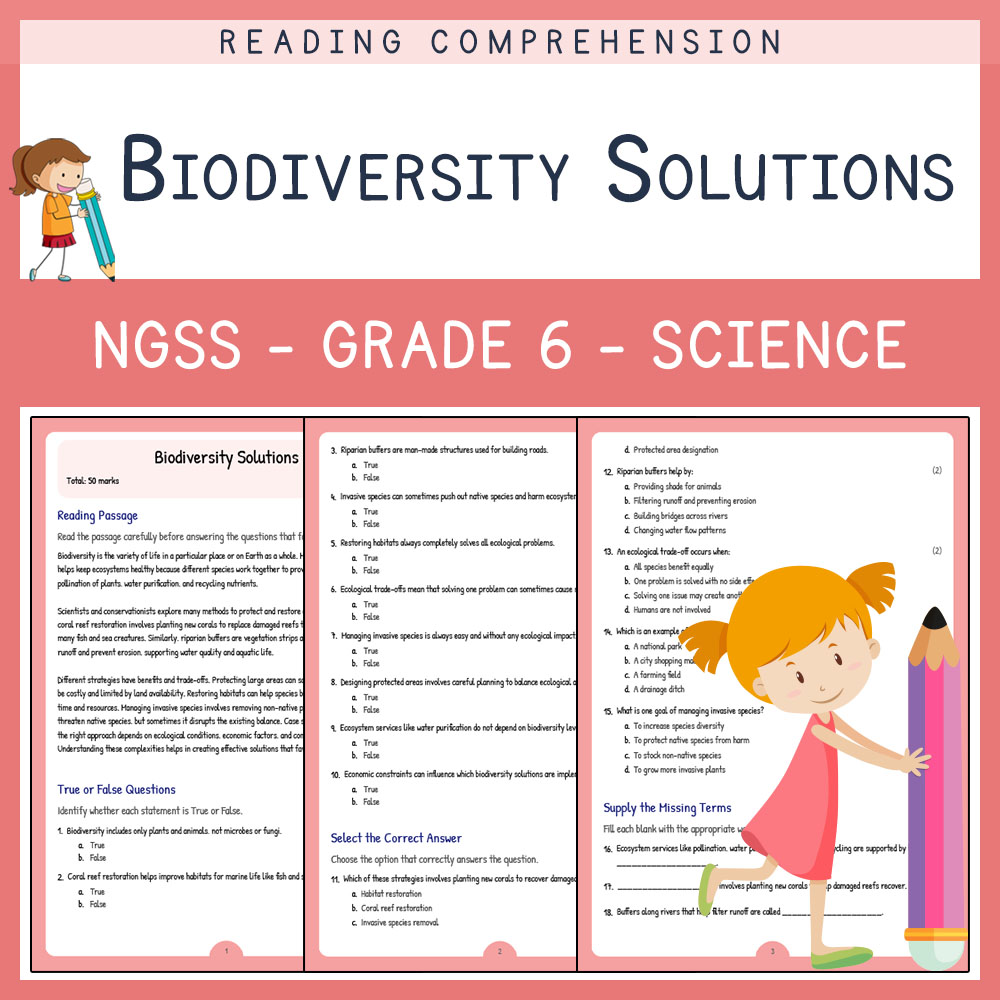
Grade 6 Science | Biodiversity Solutions Worksheet (PDF) | NGSS Aligned
Created byLumora LearningLearning Objectives
- Compare different conservation strategies for maintaining biodiversity
- Understand ecological trade-offs and feasibility of different solutions
- Analyze case studies such as coral reef restoration and riparian buffers
Browse more categories
About Science Worksheets
Find Science worksheets spanning core skills, practice, and review. All 42,550 resources are instant PDF downloads for the classroom or home.
Every worksheet on MyTeachingSheets is created by independent teacher-authors and reviewed before publication. All resources download as printable PDFs for classroom, homework, or at-home practice, and many include answer keys. Preview any worksheet free before buying.