
Science Worksheets
42,550 subject resources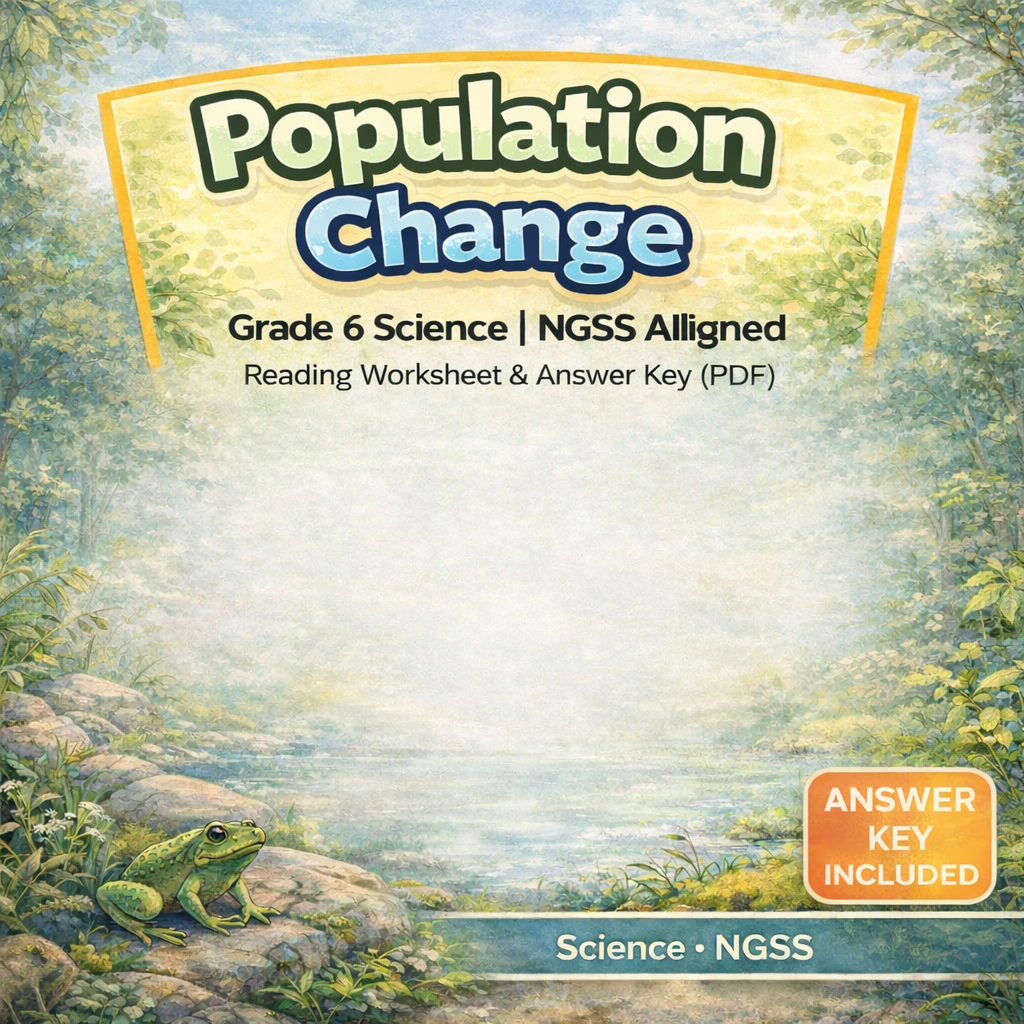
6th Grade Science | Population Change | NGSS Worksheet & Answer Key
 Created byCedar Grove Learning
Learning Objectives
- Construct evidence-based arguments linking ecosystem component alterations to population dynamics.
- Analyze case studies involving predator reintroduction, invasive species, habitat fragmentation, and disease outbreaks.
- Interpret empirical data sets and longitudinal observations to infer causality in population responses.
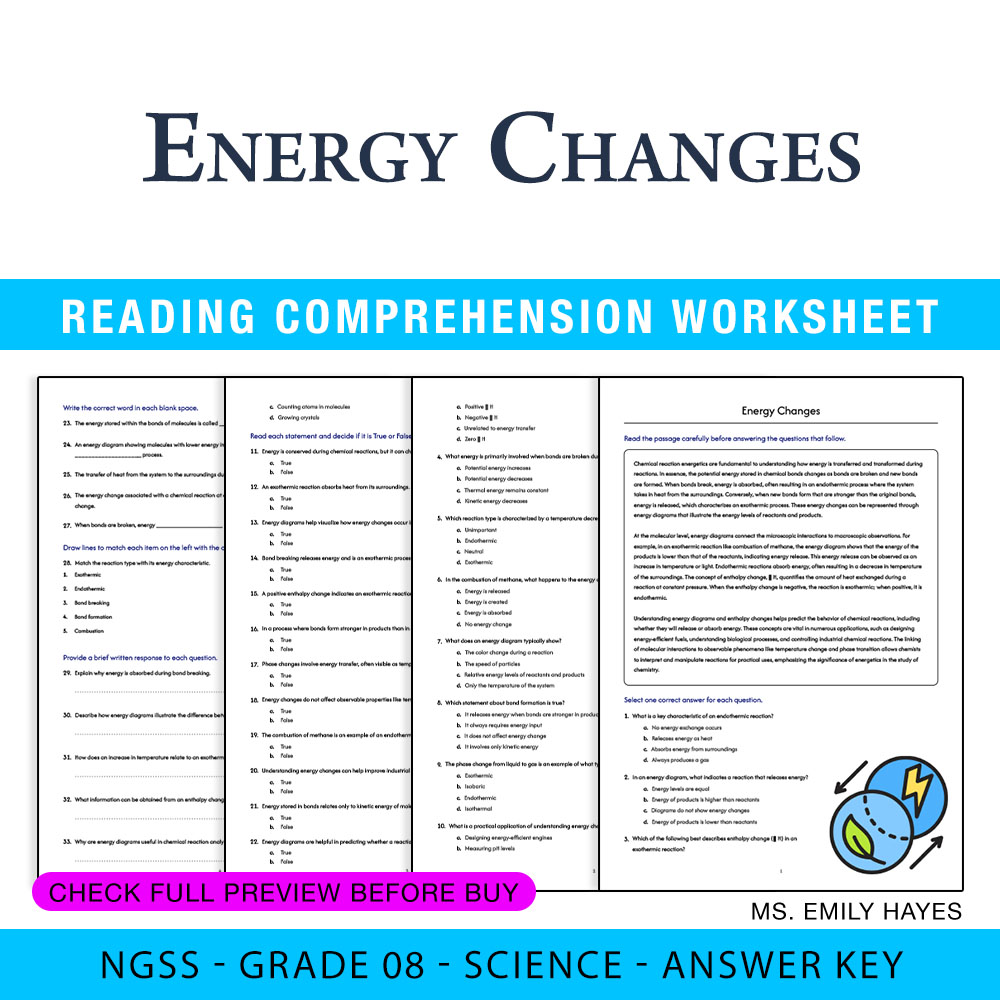
Grade 9 Science | Energy Changes Worksheet (PDF+ Answer Key)
 Created byCopper Leaf Classroom
Learning Objectives
- Describe how chemical bonds involve changes in potential and kinetic energy during reactions.
- Differentiate between endothermic and exothermic processes using energy diagrams.
- Explain the concept of enthalpy change and its significance in chemical reactions.
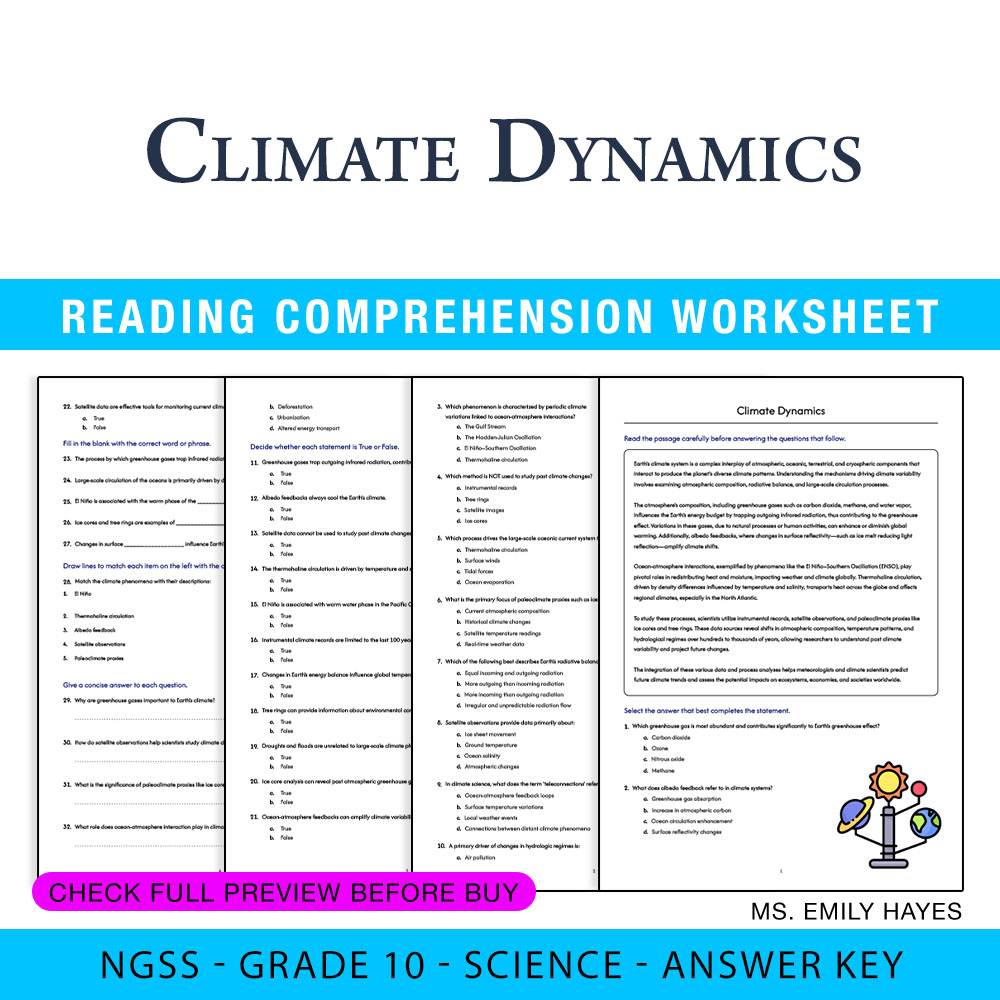
Grade 11 Science | Climate Dynamics Worksheet (PDF+ Answer Key)
Created byCopper Leaf ClassroomLearning Objectives
- Understand the mechanisms that govern climate variability and change, including greenhouse gases, albedo feedbacks, and ocean-atmosphere interactions.
- Analyze climate evidence from instrumental records, satellite observations, and paleoclimate proxies.
- Evaluate the impacts of large-scale climate phenomena such as El Niño–Southern Oscillation and thermohaline circulation.
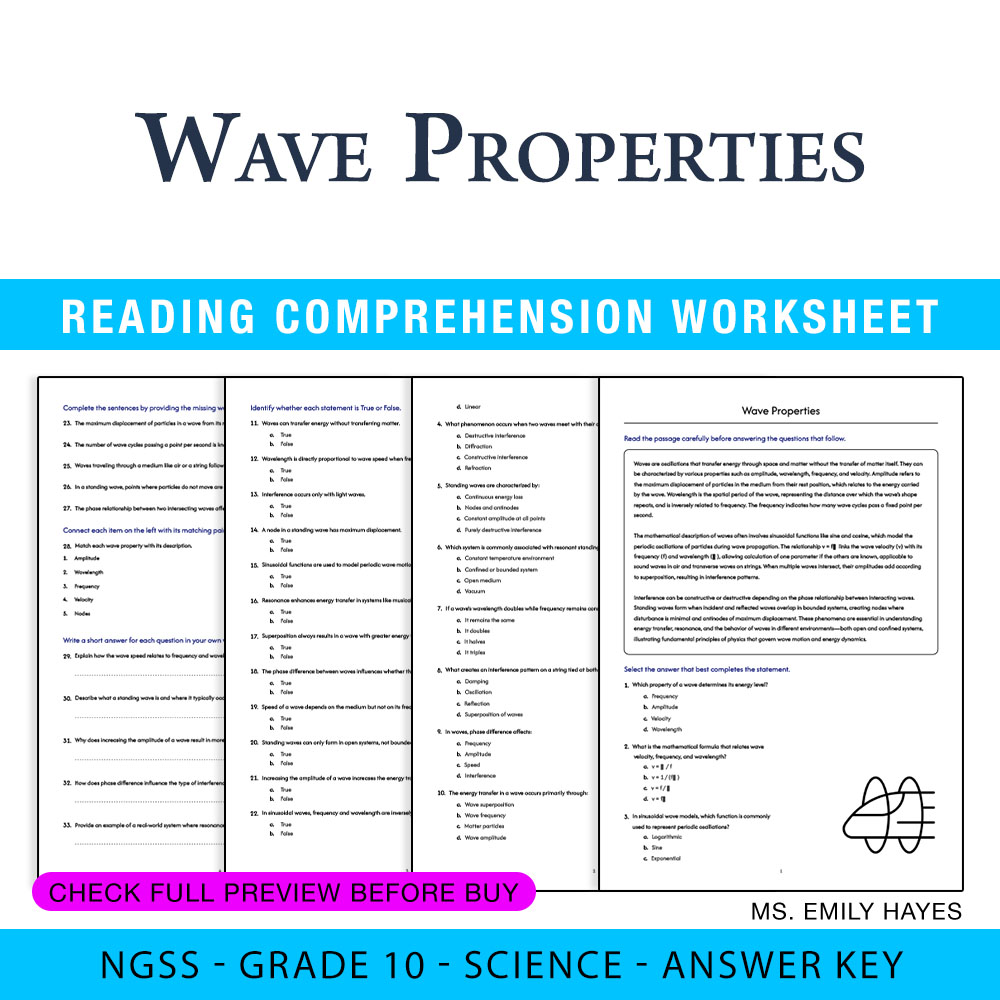
Grade 10 Science | Wave Properties Worksheet (PDF + Answer Key)
Created byCopper Leaf ClassroomLearning Objectives
- Explain the mathematical relationships that characterize wave properties such as amplitude, wavelength, frequency, and velocity.
- Describe how sinusoidal functions model wave behavior and how superposition leads to interference patterns.
- Analyze the formation of standing waves and their significance in energy transfer and resonance in various systems.
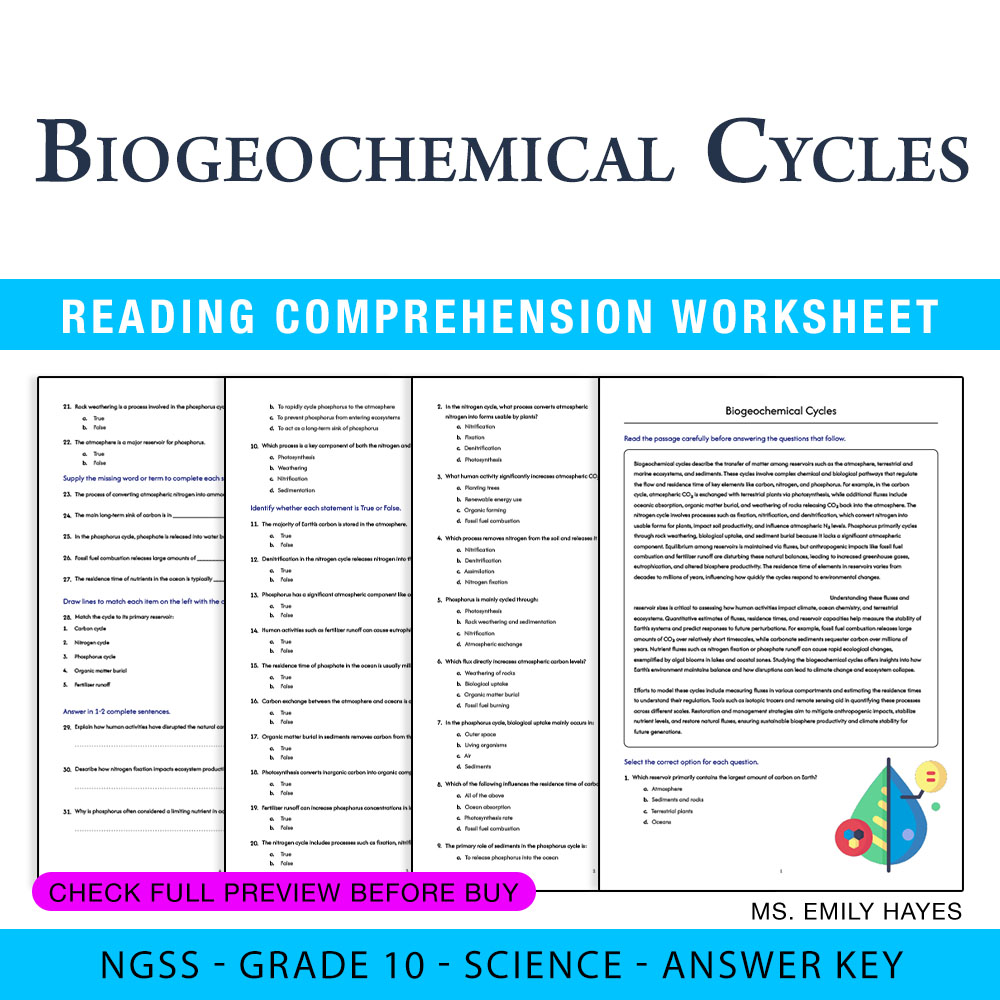
Grade 11 Science | Biogeochemical Cycles Worksheet (PDF+ Answer Key)
Created byCopper Leaf ClassroomLearning Objectives
- Describe the main reservoirs and fluxes involved in the carbon, nitrogen, and phosphorus cycles.
- Explain how human activities perturb natural biogeochemical cycles.
- Calculate residence times of key reservoirs in biogeochemical cycles.
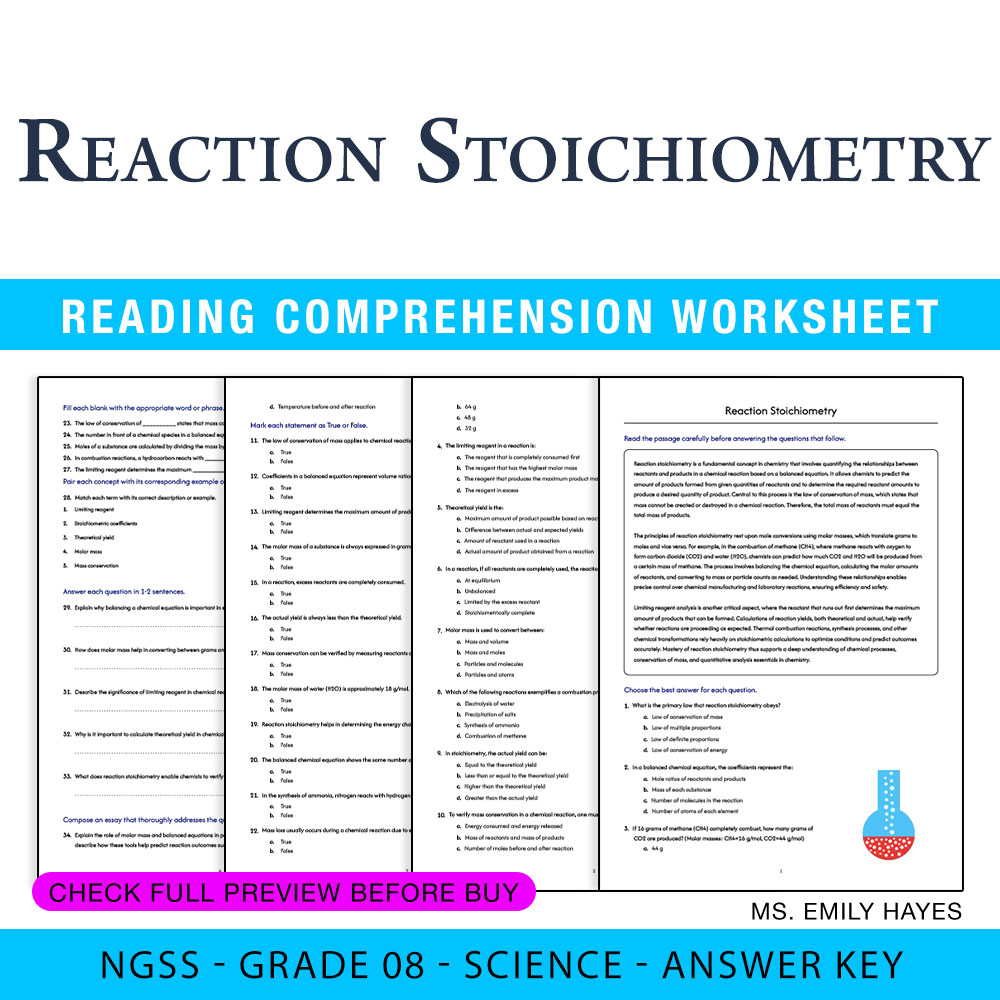
9th Grade Science | Reaction Stoichiometry Worksheet (PDF+ Answer Key)
Created byCopper Leaf ClassroomLearning Objectives
- Understand the concept of reaction stoichiometry and how it relates quantities of reactants and products in chemical reactions.
- Apply molar mass conversions to relate moles, mass, and particle counts in balanced chemical equations.
- Analyze limiting reagents and calculate theoretical yields in chemical reactions.
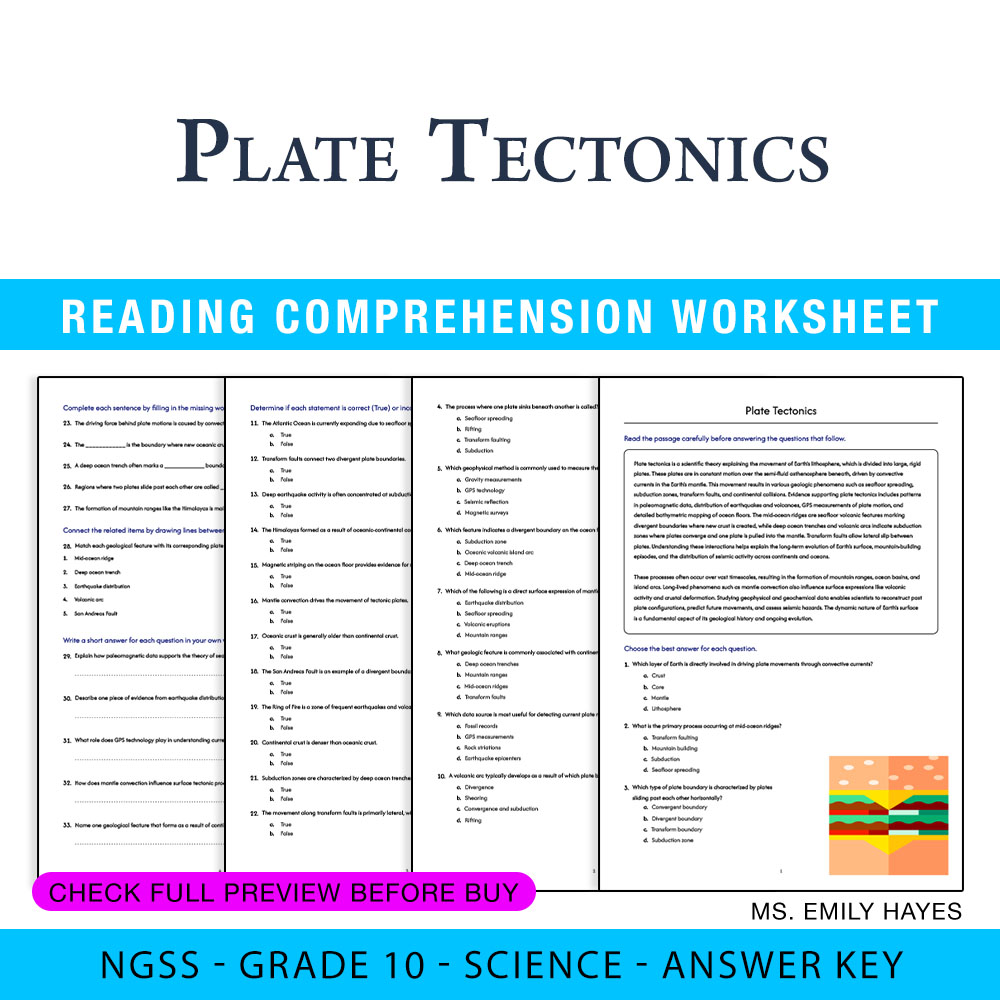
11th Grade Science | Plate Tectonics Worksheet (PDF+ Answer Key)
Created byCopper Leaf ClassroomLearning Objectives
- Explain the mechanisms of seafloor spreading, subduction, transform faulting, and continental collision.
- Interpret geologic evidence such as paleomagnetic patterns, earthquake distributions, GPS data, and bathymetric maps related to plate movements.
- Describe the surface expressions of deep mantle convection phenomena like mid-ocean ridges, volcanic arcs, and mountain ranges.
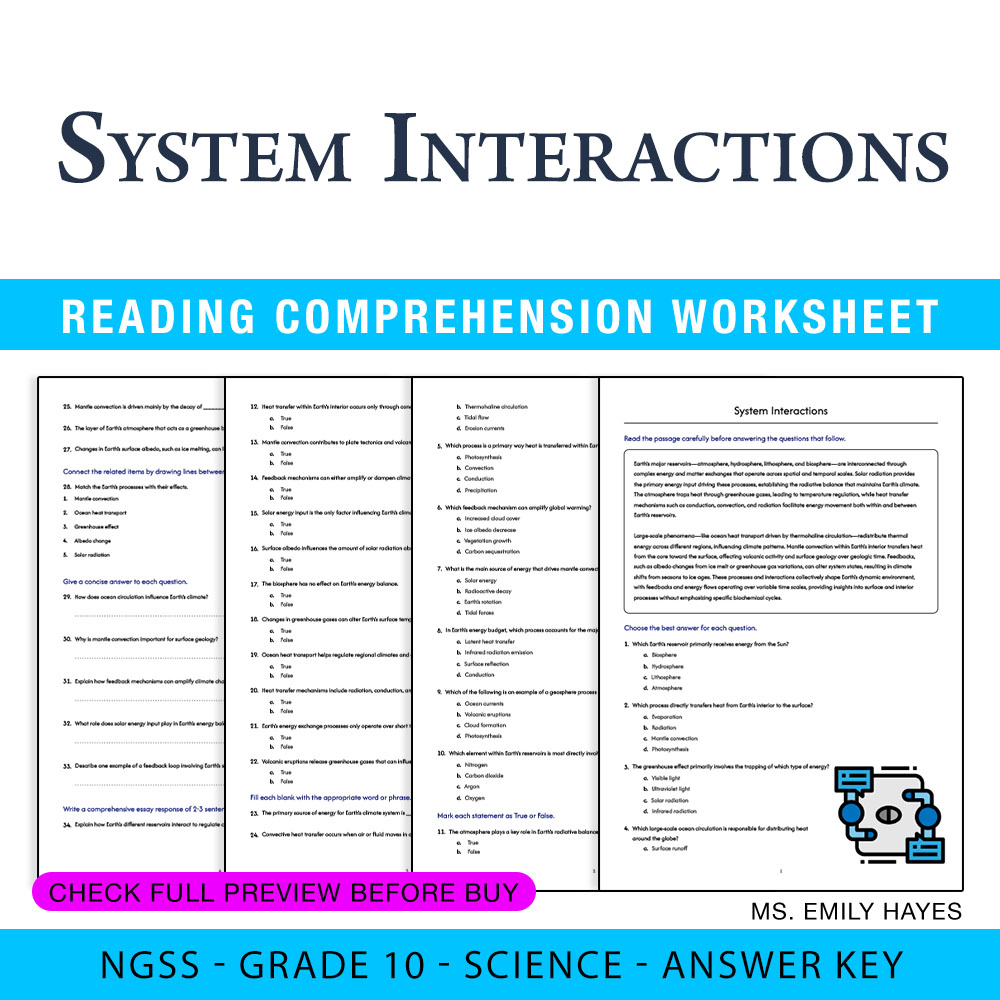
11th Grade Science | System Interactions Worksheet (PDF+ Answer Key)
Created byCopper Leaf ClassroomLearning Objectives
- Describe the major Earth's reservoirs and their interactions.
- Explain energy transfer mechanisms and feedbacks in Earth's systems.
- Analyze canonical phenomena like ocean heat transport and mantle convection.
Grade 6 Science | Organ Systems Worksheet + Answer Key | NGSS Aligned
 Created byLumora Learning
Learning Objectives
- Understand the organization of the body into different organ systems.
- Identify the roles of tissues and organs in the circulatory, respiratory, digestive, and nervous systems.
- Explain how organs work together to maintain health and body functions.
8th Grade Science | Speciation Patterns Worksheet (PDF+ Answer Key)
Created byCopper Leaf ClassroomLearning Objectives
- Describe the processes that generate new species, including genetic divergence and reproductive isolation.
- Explain how geographic isolation can lead to allopatric speciation and adaptive radiation.
- Analyze evidence from fossils and genetics that document episodes of diversification and mass extinctions.
Grade 6 Science | Molecular Processes Worksheet (PDF) | NGSS Aligned
Created byLumora LearningLearning Objectives
- Identify basic molecular building blocks such as amino acids, nucleotides, fatty acids, and monosaccharides.
- Describe how monomers assemble into polymers through condensation reactions.
- Explain how macromolecules like proteins, nucleic acids, lipids, and carbohydrates function in living organisms.
7th Grade Science | Synthetic Materials Worksheet (PDF +Answer Key)
Created byCopper Leaf ClassroomLearning Objectives
- Describe the production pathways from natural resources to common synthetic materials, including feedstocks, polymerization, and refining steps.
- Identify examples of synthetic materials such as polyethylene, PET, nylon, and metals processed from ores.
- Explain the trade-offs involved in synthetic material choices, including durability, recyclability, and environmental impacts.
8th Grade Science | Mendelian Patterns Worksheet (PDF+ Answer Key)
Created byCopper Leaf ClassroomLearning Objectives
- Explain how allele combinations determine observable traits through Mendelian inheritance.
- Predict phenotypic ratios using Punnett squares for dominant and recessive alleles.
- Interpret pedigrees to identify patterns of inheritance.
11th Grade Science | Inheritance Patterns Worksheet (PDF+ Answer Key)
Created byCopper Leaf ClassroomLearning Objectives
- Understand Mendelian inheritance principles and how they explain trait variation.
- Identify and differentiate between various inheritance patterns including incomplete dominance, codominance, sex linkage, polygenic inheritance, and linkage.
- Use probabilities to predict inheritance outcomes in genetic crosses.
11th Grade Science | Orbital Mechanics Worksheet (PDF+ Answer Key)
Created byCopper Leaf ClassroomLearning Objectives
- Explain the fundamental principles governing planetary orbits based on Kepler's laws.
- Analyze the effects of gravitational perturbations and orbital resonance phenomena in the planetary system.
- Interpret observational data from spacecraft and planetary positions to assess system stability and evolution.
10th Grade Science | Evolutionary Evidence Worksheet (PDF + Answer Key)
Created byCopper Leaf ClassroomLearning Objectives
- Describe the different lines of empirical evidence supporting common ancestry and evolution.
- Explain how fossil records, comparative anatomy, molecular data, and biogeography contribute to understanding evolution.
- Analyze various types of evidence to interpret evolutionary patterns and relationships among organisms.
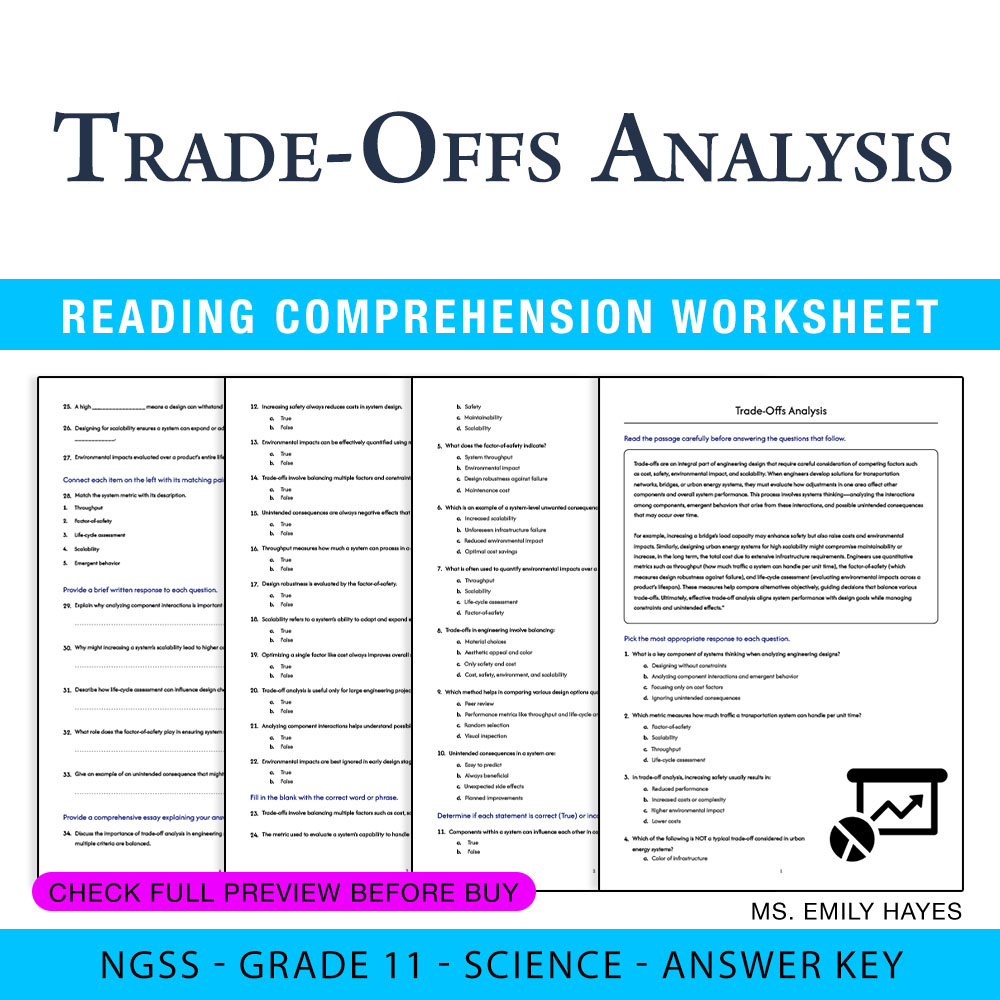
11th Grade Science | Trade-Offs Analysis Worksheet (PDF+ Answer Key)
Created byCopper Leaf ClassroomLearning Objectives
- Understand how to evaluate and compare alternative designs based on criteria such as cost, safety, and environmental impact.
- Apply systems thinking to analyze component interactions, emergent behavior, and unintended consequences in complex systems.
- Quantify performance metrics like throughput, factor-of-safety, and life-cycle assessment to inform decision-making.
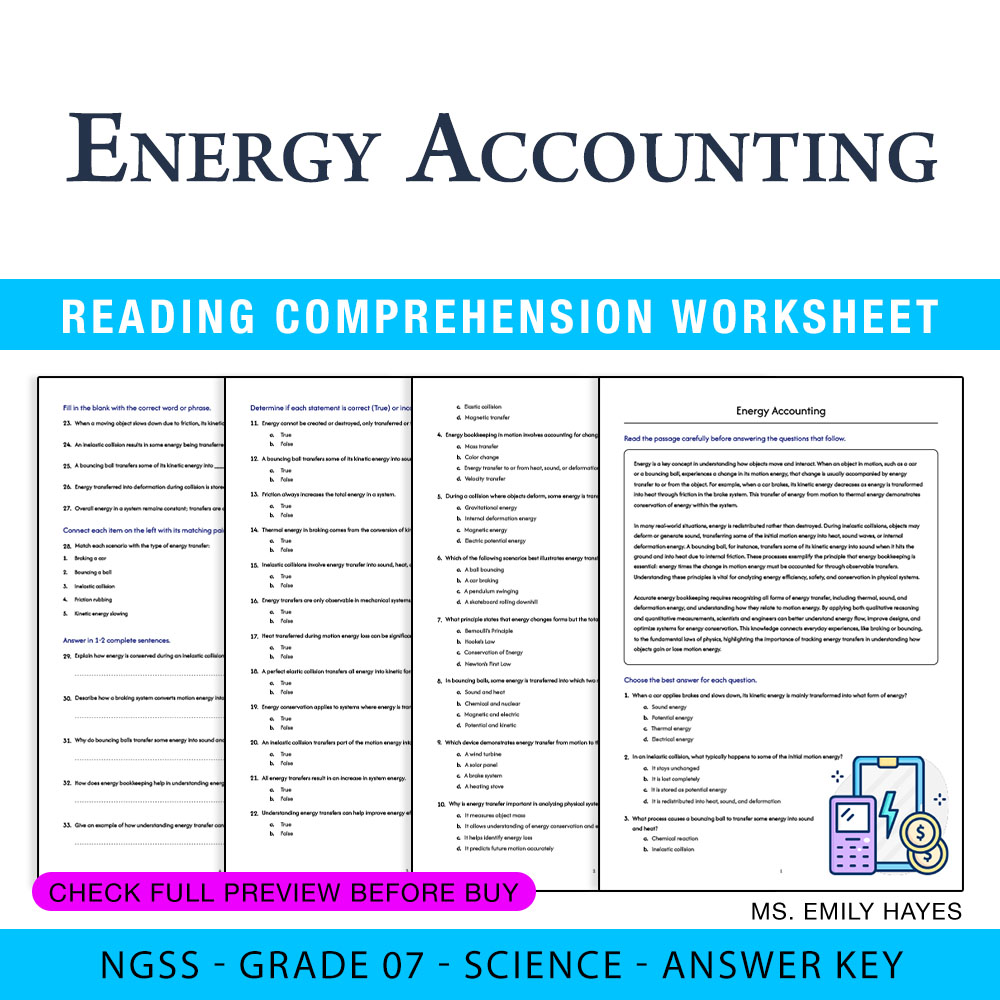
Grade 7 Science | Energy Accounting Worksheet (PDF+ Answer Key)
Created byCopper Leaf ClassroomLearning Objectives
- Describe how changes in an object's motion energy are linked to energy transfers into or out of the object.
- Analyze scenarios such as braking cars, inelastic collisions, and bouncing balls to identify energy transfers.
- Apply quantitative and qualitative reasoning to understand conservation and transfer of energy in motion.
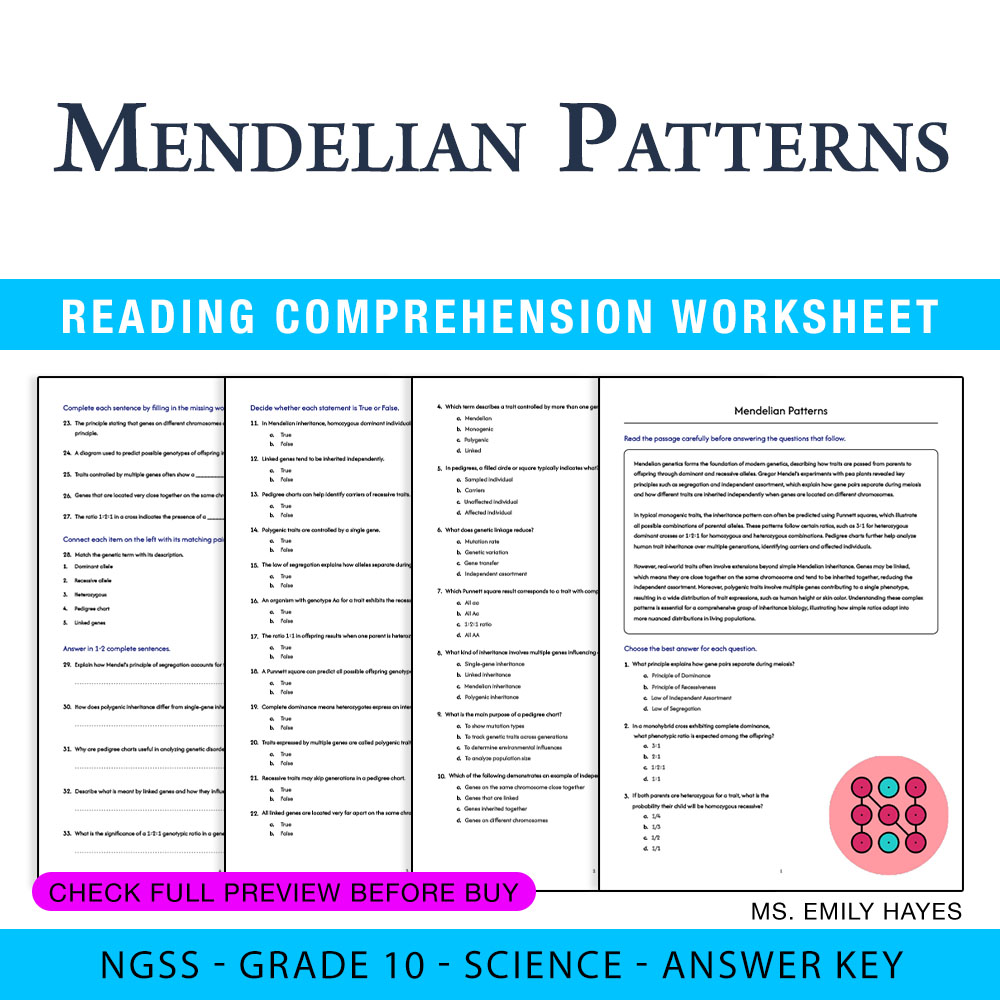
10th Grade Science | Mendelian Patterns Worksheet (PDF+ Answer Key)
Created byCopper Leaf ClassroomLearning Objectives
- Understand the principles of dominant and recessive inheritance patterns.
- Use Punnett squares to predict offspring genotypes and phenotypes.
- Interpret pedigree charts to analyze inheritance of traits.
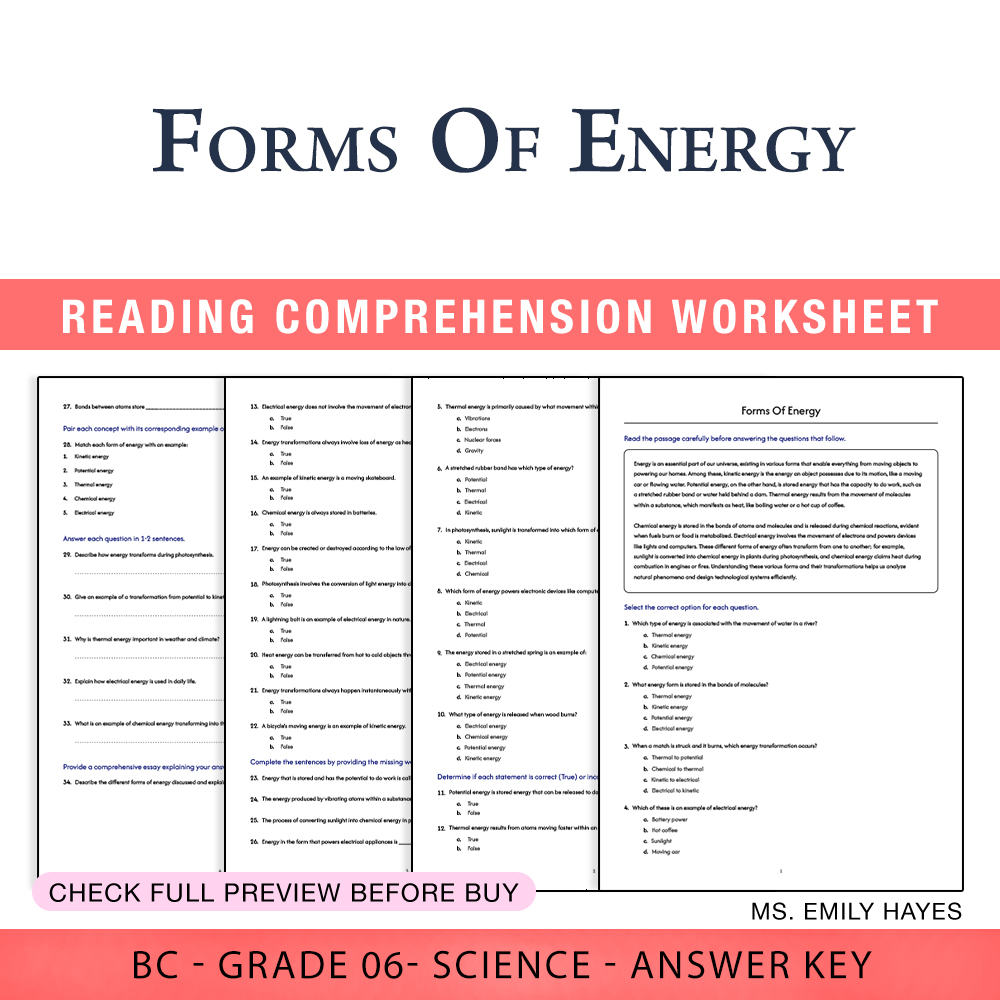
6th Grade Science | Forms of Energy Worksheet (PDF+ Answer Key)
Created byCopper Leaf ClassroomLearning Objectives
- Identify and describe different forms of energy such as kinetic, potential, thermal, chemical, and electrical.
- Explain the process of energy transformations between different forms.
- Recognize common examples of energy forms and their typical transformations in real-world systems.
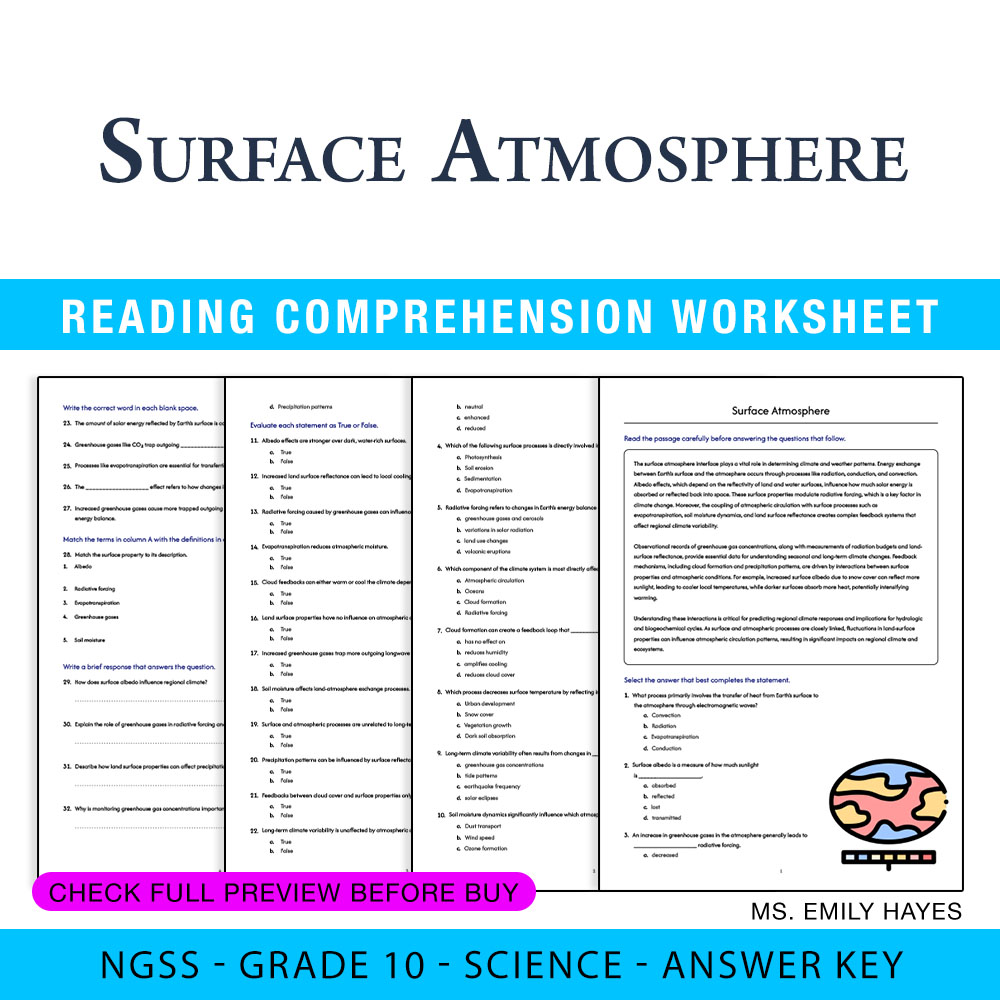
Grade 10 Science | Surface Atmosphere Worksheet (PDF+ Answer Key)
Created byCopper Leaf ClassroomLearning Objectives
- Explain the interactions between surface properties and atmospheric processes such as energy exchange and radiative forcing.
- Describe how land surface reflectance and greenhouse gases influence climate variability and regional weather patterns.
- Analyze the feedback mechanisms involving surface conditions, cloud formation, and precipitation.
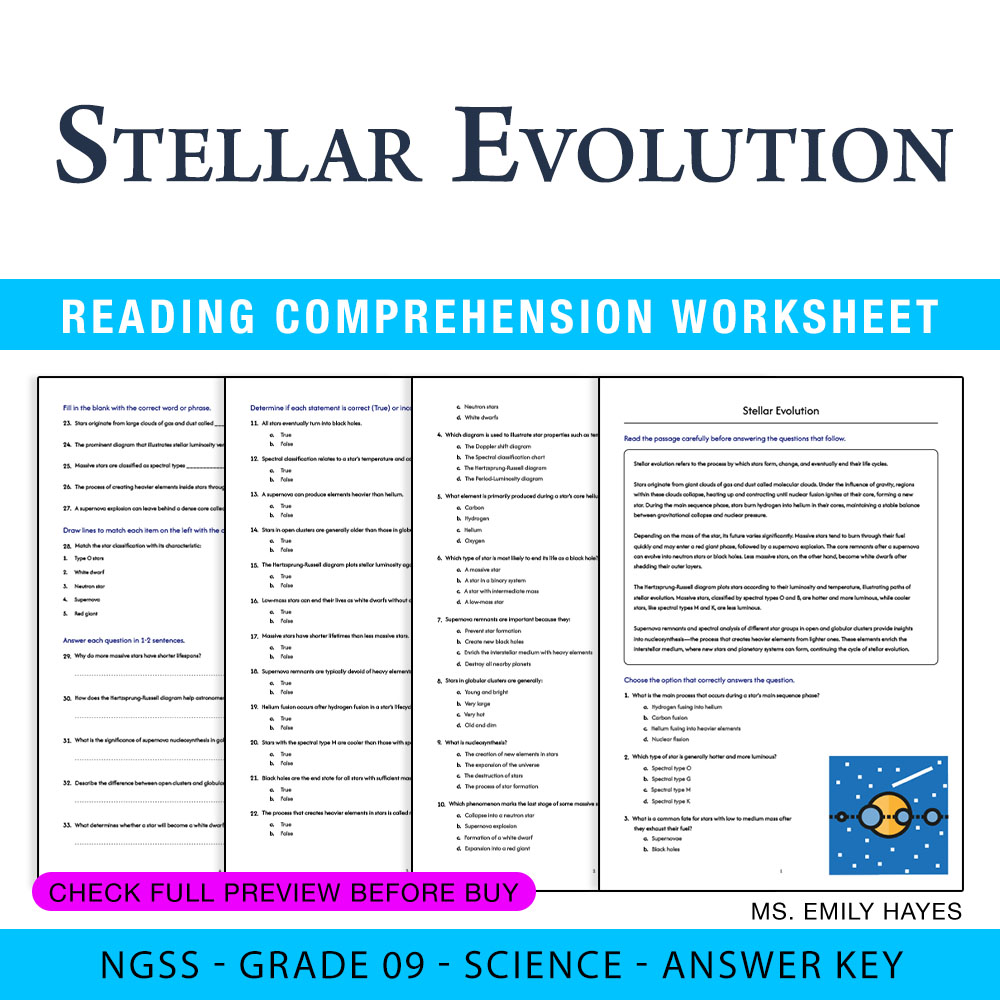
9th Grade Science | Stellar Evolution Worksheet (PDF+ Answer Key)
Created byCopper Leaf ClassroomLearning Objectives
- Describe the key stages in the life cycle of a star from formation to final outcome.
- Explain how the Hertzsprung-Russell diagram illustrates stellar properties and evolution.
- Identify spectral classifications and their relation to star temperature and luminosity.
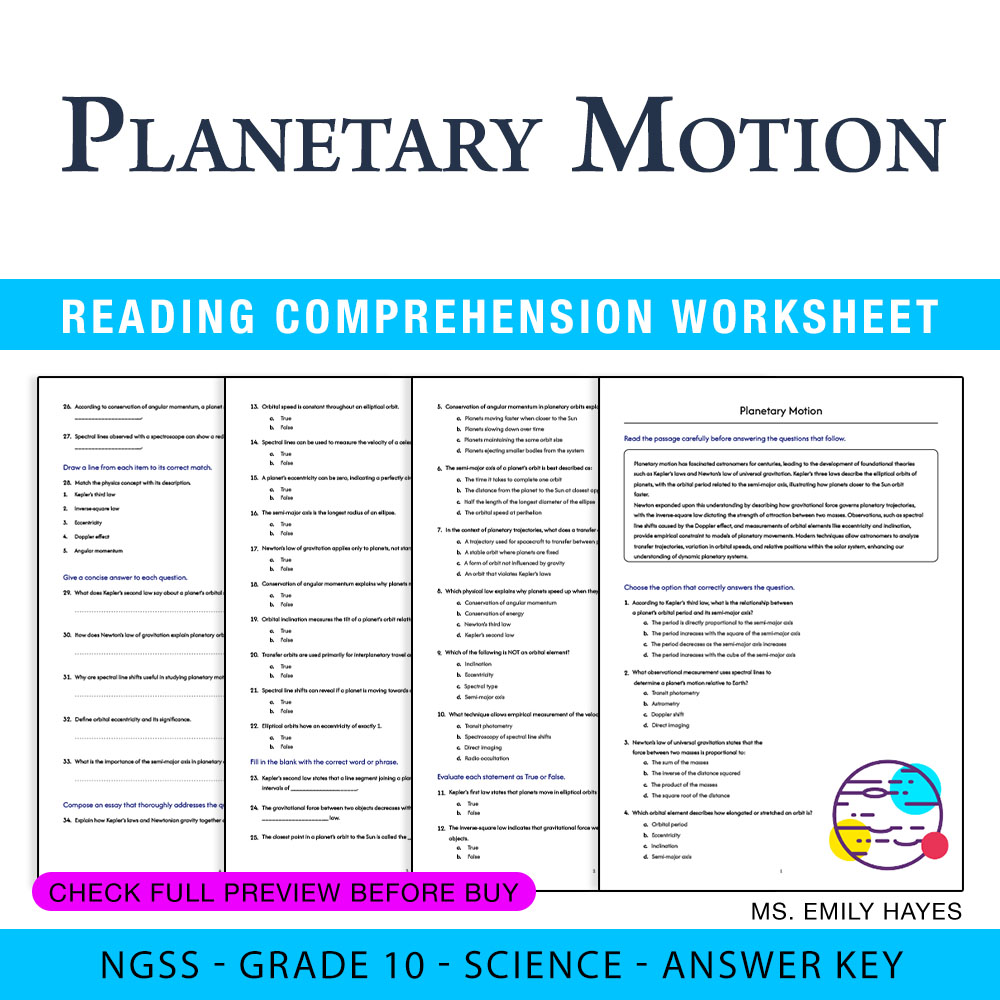
10th Grade Science | Planetary Motion Worksheet (PDF + Answer Key)
Created byCopper Leaf ClassroomLearning Objectives
- Explain Kepler's laws of planetary motion and their significance in understanding orbits.
- Describe how Newtonian gravitation applies to the movement of planets and other celestial bodies.
- Analyze how conservation of angular momentum affects planetary velocities.
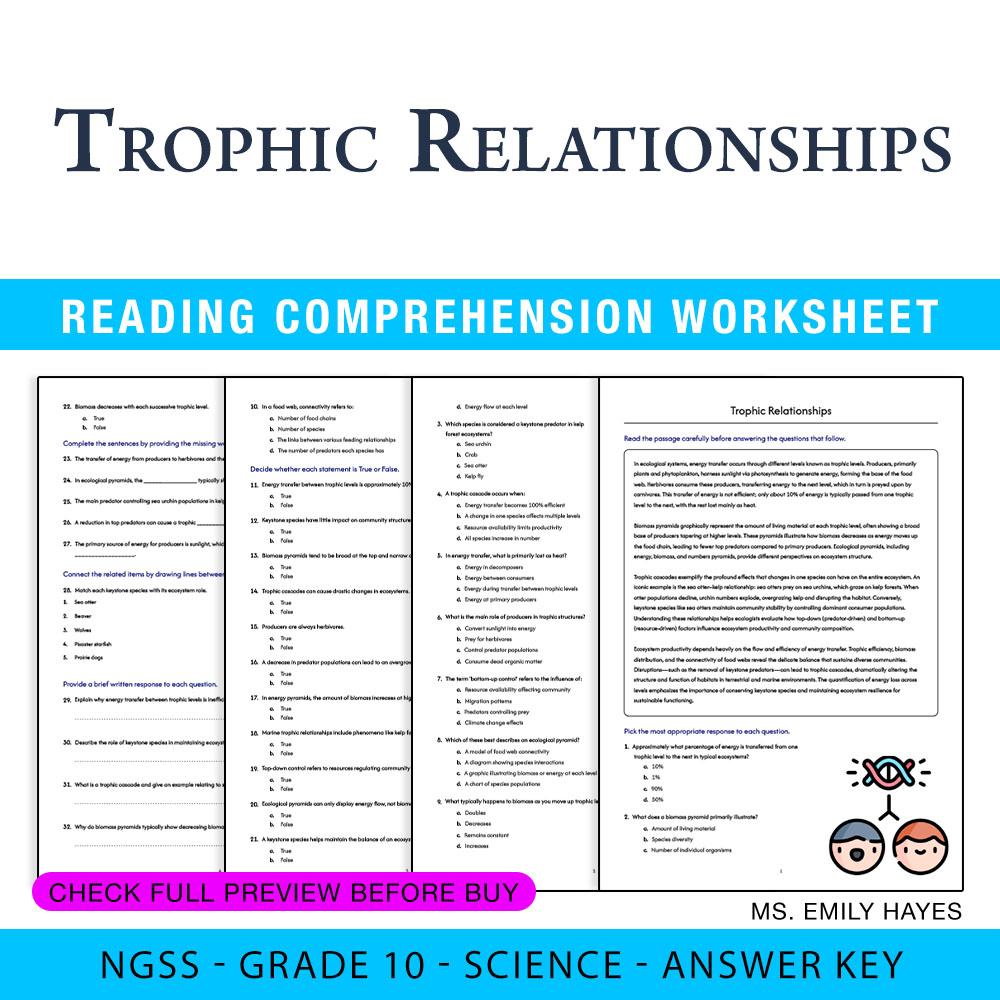
10th Grade Science | Trophic Relationships Worksheet (PDF + Answer Key)
Created byCopper Leaf ClassroomLearning Objectives
- Understand energy transfer and biomass pyramids in ecosystems.
- Analyze the role of keystone species and trophic cascades in community structure.
- Interpret ecological pyramids and evaluate top-down and bottom-up controls.
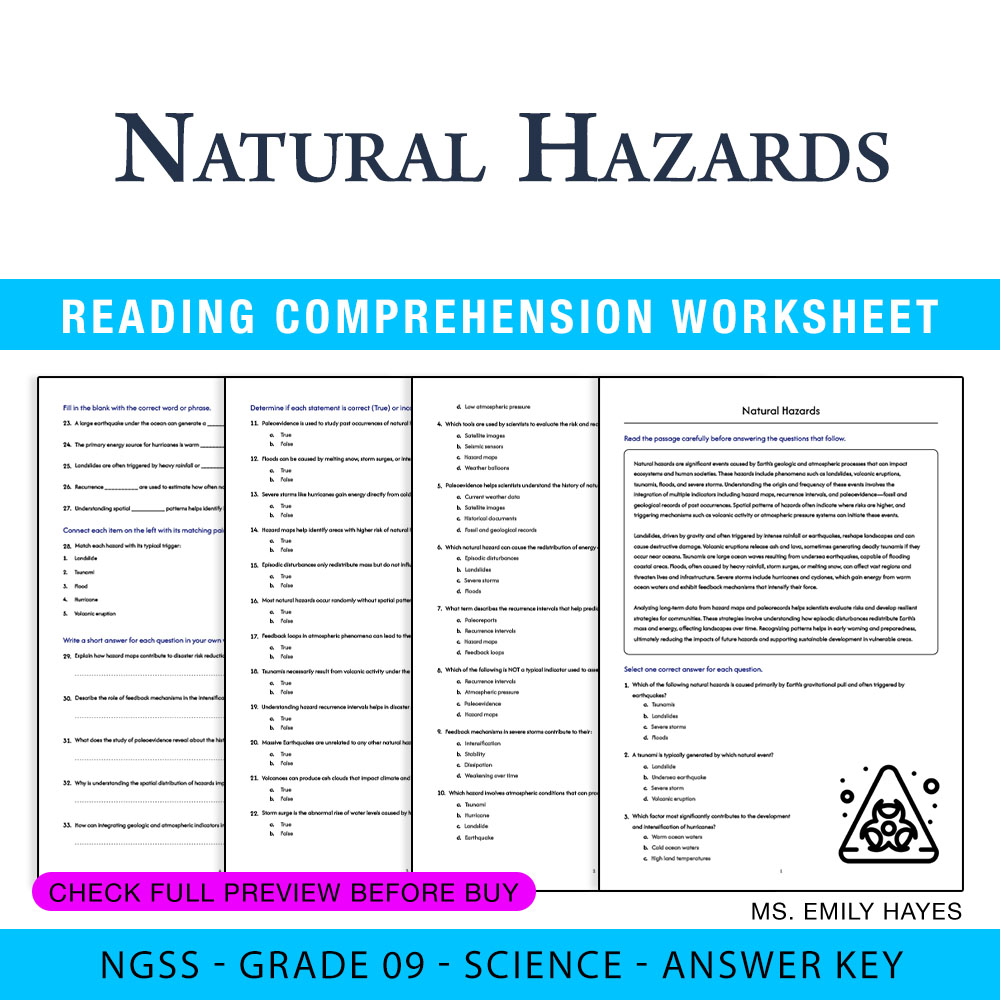
9th Grade Science | Natural Hazards Worksheet (PDF+ Answer Key)
Created byCopper Leaf ClassroomLearning Objectives
- Identify and describe various natural hazards such as landslides, volcanic eruptions, tsunamis, floods, and severe storms.
- Analyze the geologic and atmospheric indicators associated with natural hazards.
- Evaluate the risks and resilience of human and ecological systems using hazard maps, recurrence intervals, and paleoevidence.
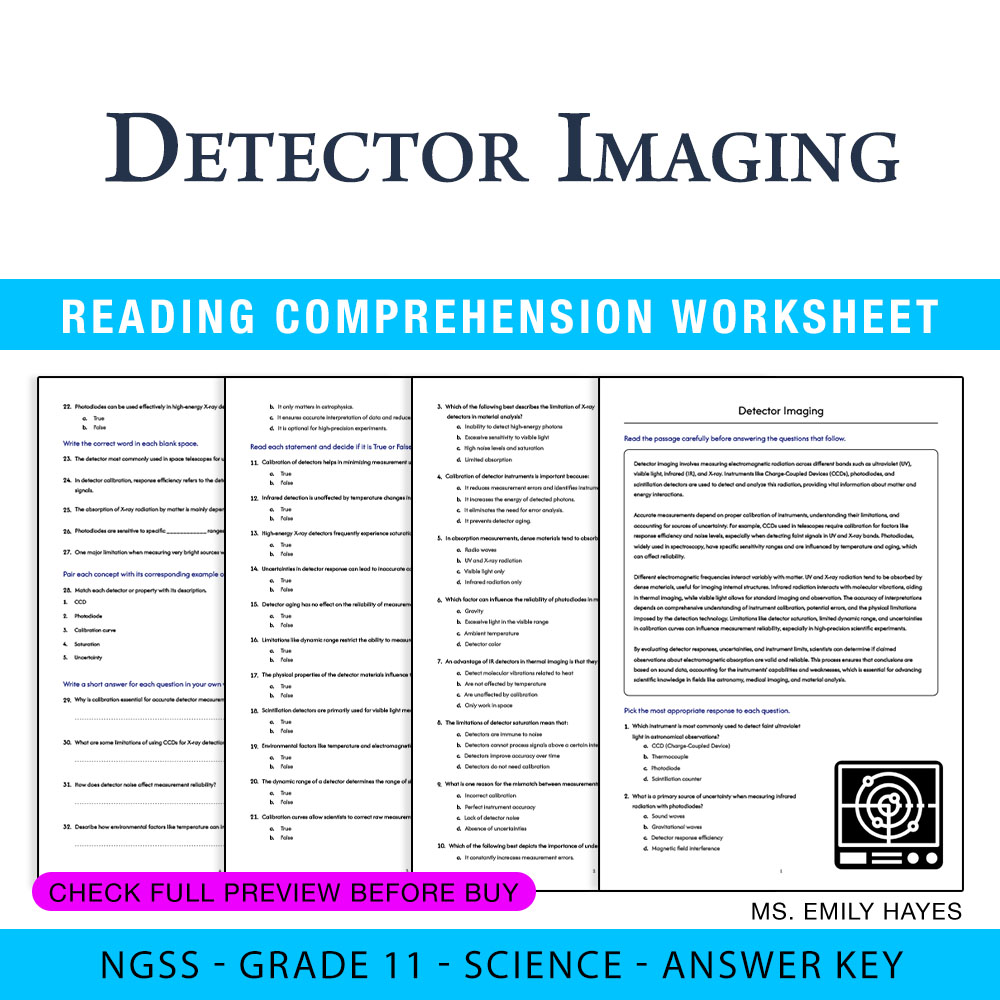
Grade 11 Science | Detector Imaging Worksheet (PDF+ Answer Key)
Created byCopper Leaf ClassroomLearning Objectives
- Evaluate the validity of claims regarding electromagnetic absorption across UV, visible, IR, and X-ray bands using detector measurements.
- Analyze the reliability and calibration of detector instruments such as CCDs and photodiodes in different electromagnetic frequencies.
- Identify sources of uncertainty and limitations in electromagnetic detection instruments and measurement data.
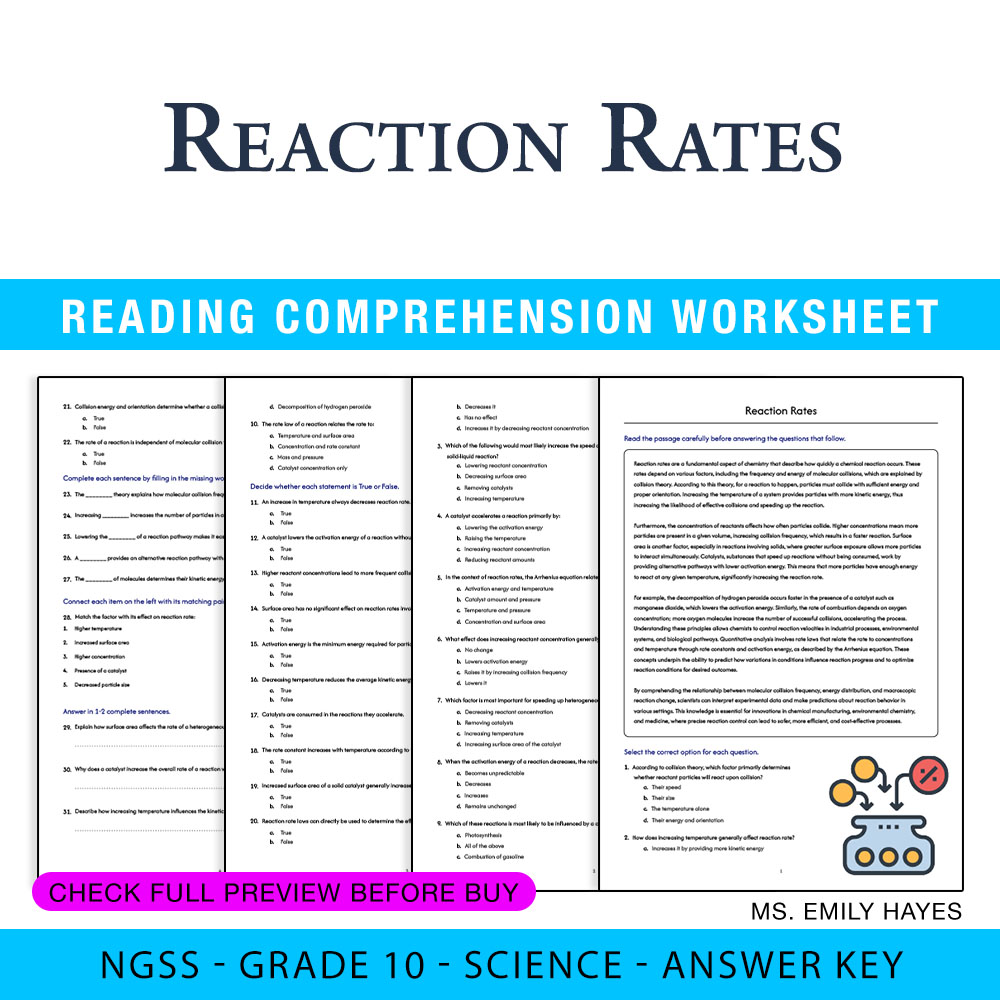
Grade 10 Science | Reaction Rates Worksheet (PDF+ Answer Key)
Created byCopper Leaf ClassroomLearning Objectives
- Explain how collision theory relates to reaction rates and identify factors that influence collision frequency and energy.
- Describe how temperature, concentration, surface area, and catalysts affect reaction speed based on rate laws.
- Interpret empirical data linking molecular collisions, activation energy, and rate constants.
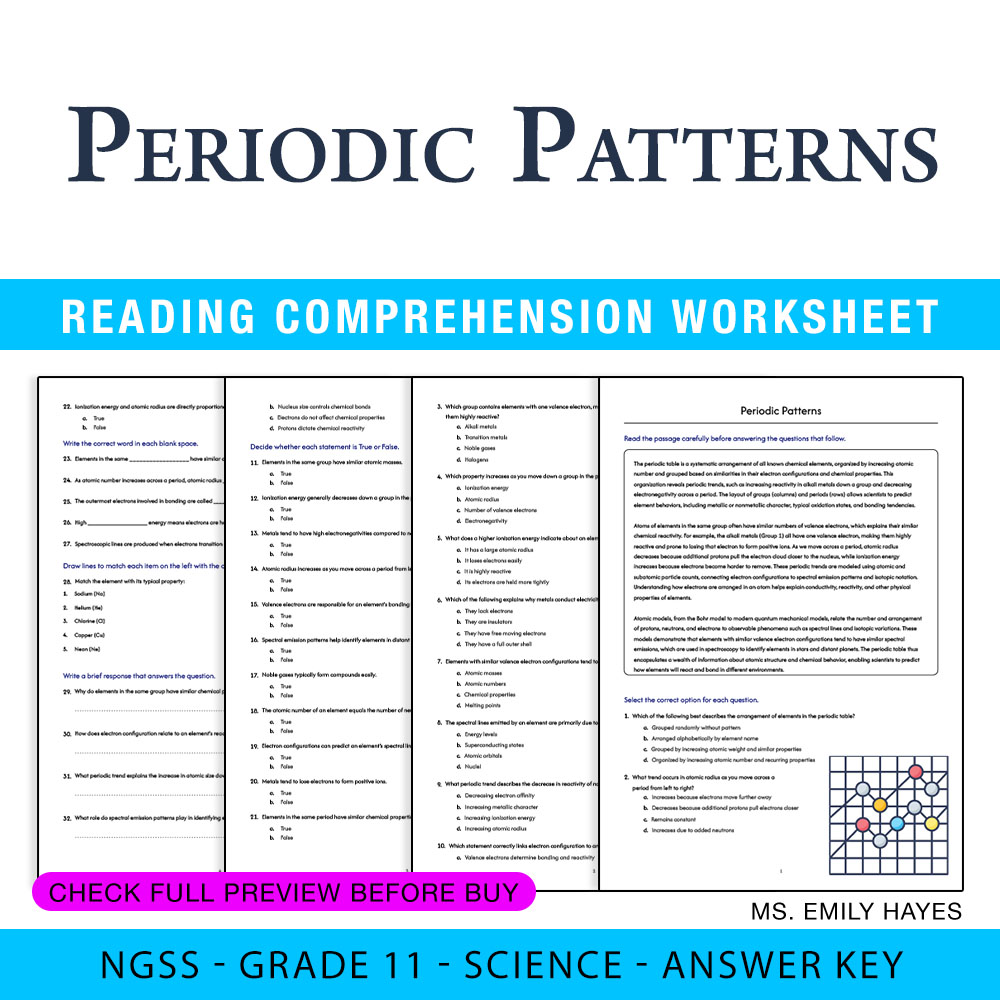
11th Grade Science | Periodic Patterns Worksheet (PDF+ Answer Key)
Created byCopper Leaf ClassroomLearning Objectives
- Understand how the periodic table organizes elements by electron configuration and recurring properties.
- Identify trends in reactivity, atomic radius, ionization energy, and metallic character across periods and groups.
- Explain how atomic models connect subatomic particles to spectral emission and isotopic notation.
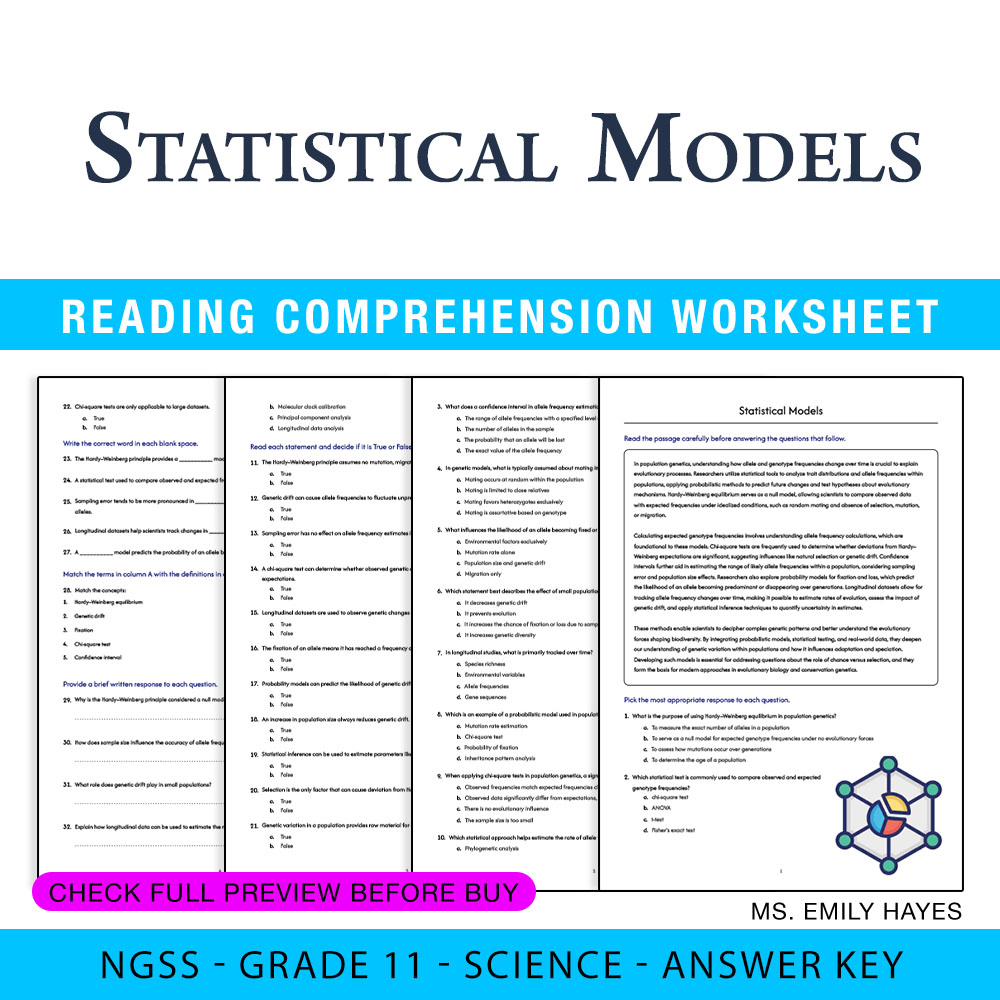
11th Grade Science | Statistical Models Worksheet (PDF+ Answer Key)
Created byCopper Leaf ClassroomLearning Objectives
- Understand the application of statistical and probabilistic methods to allele frequencies and trait distributions.
- Develop proficiency in calculating expected genotype frequencies under Hardy–Weinberg equilibrium and use chi-square tests to assess deviations.
- Interpret population genetic data using confidence intervals, and evaluate effects of sampling error, population size, and probability models on genetic variation.
Grade 10 Science | Speciation Processes Worksheet (PDF + Answer Key)
Created byCopper Leaf ClassroomLearning Objectives
- Explain the mechanisms that lead to reproductive isolation and speciation.
- Identify empirical examples of different speciation processes.
- Describe phylogenetic patterns and evidence for lineage splitting.
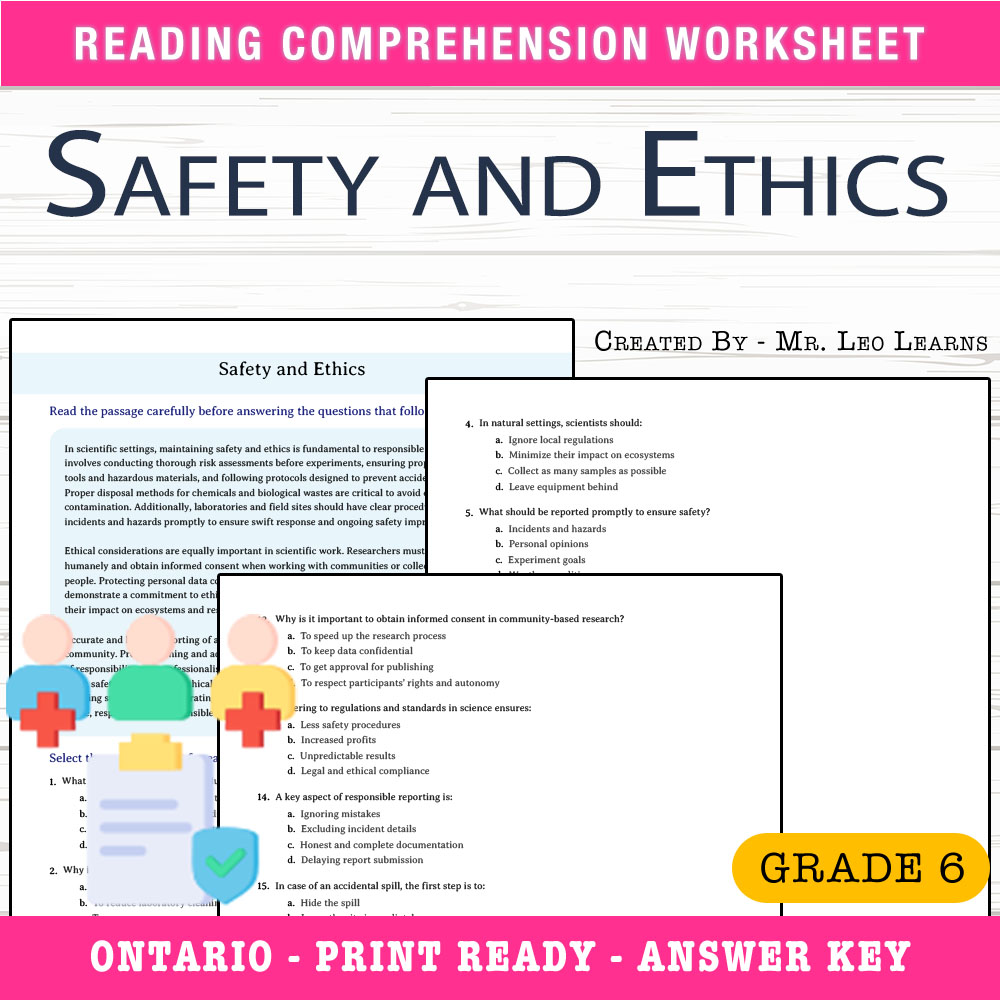
Grade 6 Science – Safety and Ethics Worksheet for Mastering Responsible Practice
 Created byThe Resource Hub
Learning Objectives
- Understand the principles of risk assessment and hazard prevention in scientific activities.
- Recognize appropriate handling and disposal of tools and materials.
- Identify ethical considerations including humane treatment and confidentiality in scientific work.
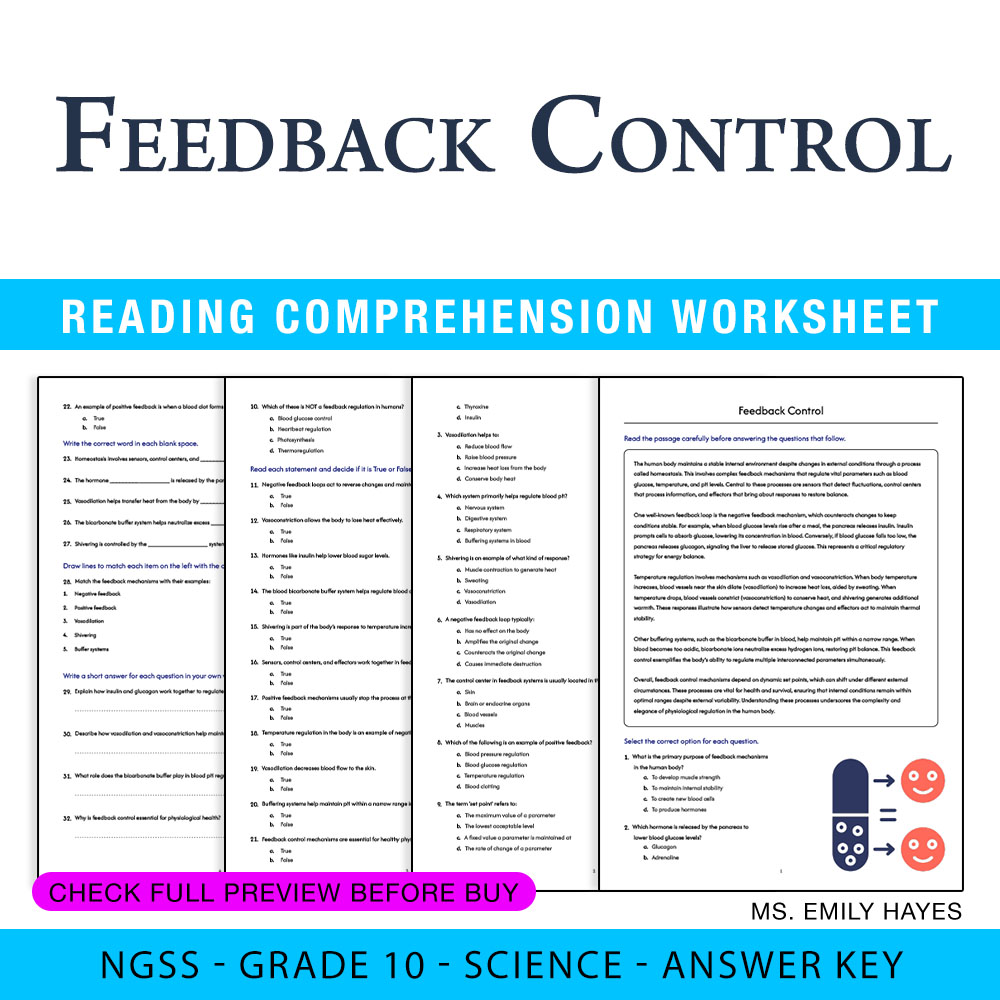
Grade 10 Science | Feedback Control Worksheet (PDF+ Answer Key)
Created byCopper Leaf ClassroomLearning Objectives
- Understand the mechanisms of homeostasis and feedback loops in the human body.
- Identify the roles of sensors, control centers, and effectors in regulating internal conditions.
- Describe how hormonal and physiological responses maintain stability under varying external conditions.
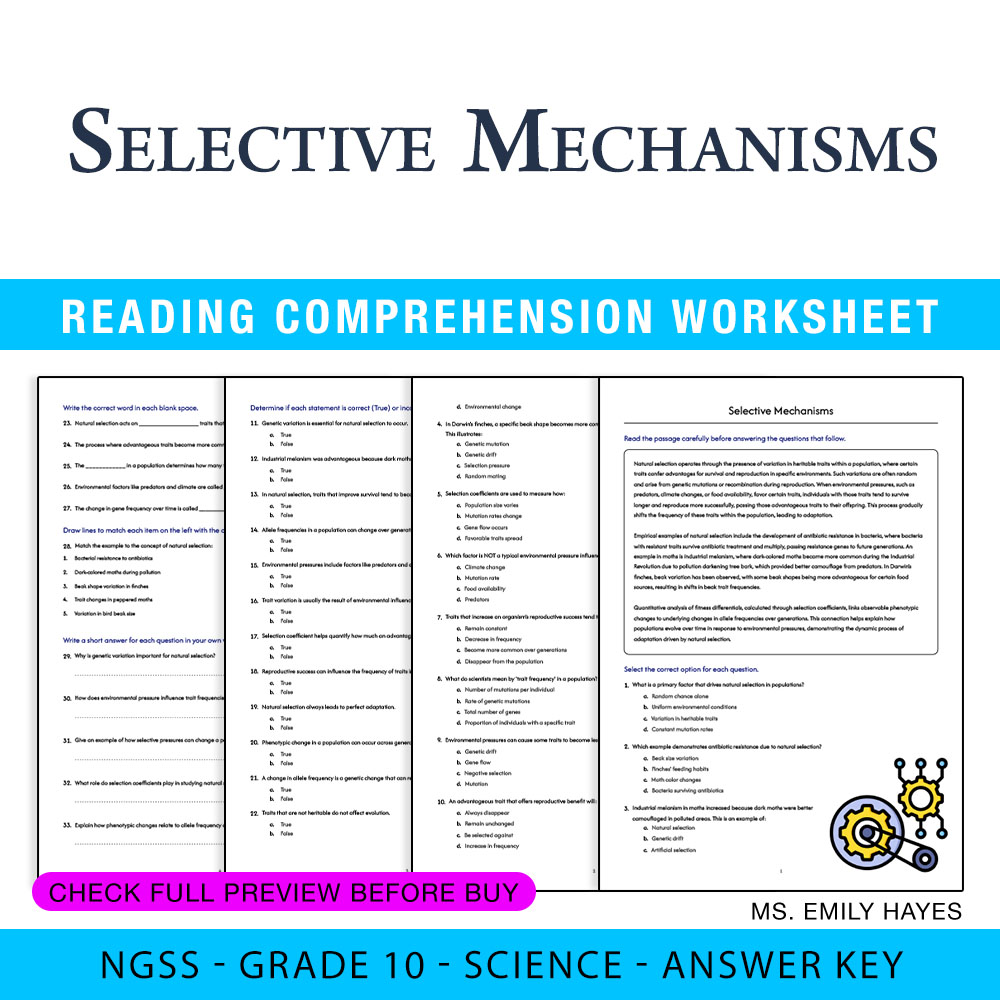
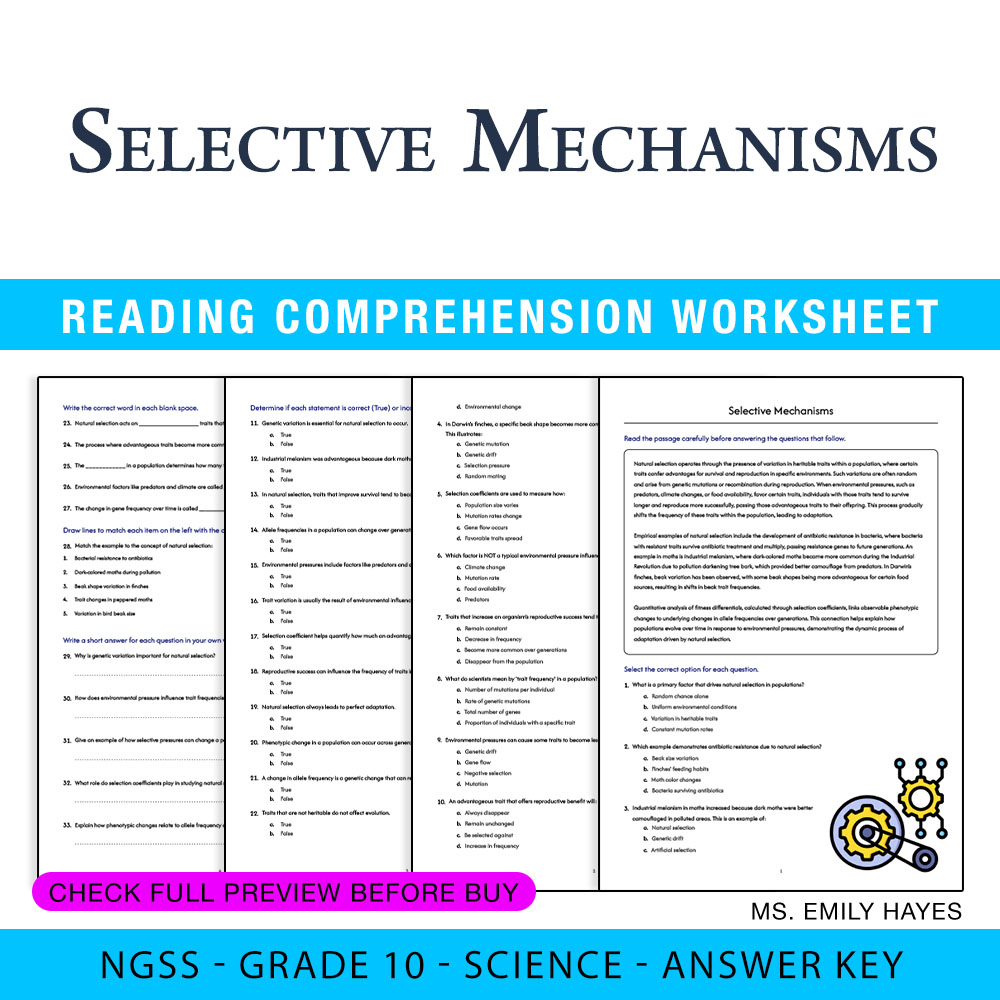
10th Grade Science | Selective Mechanisms Worksheet (PDF + Answer Key)
Created byCopper Leaf ClassroomLearning Objectives
- Explain how natural selection involves variation and environmental pressures.
- Identify real-world examples of selective mechanisms such as antibiotic resistance, industrial melanism, and beak variation.
- Analyze how traits increase or decrease in frequency due to survival and reproduction advantages.
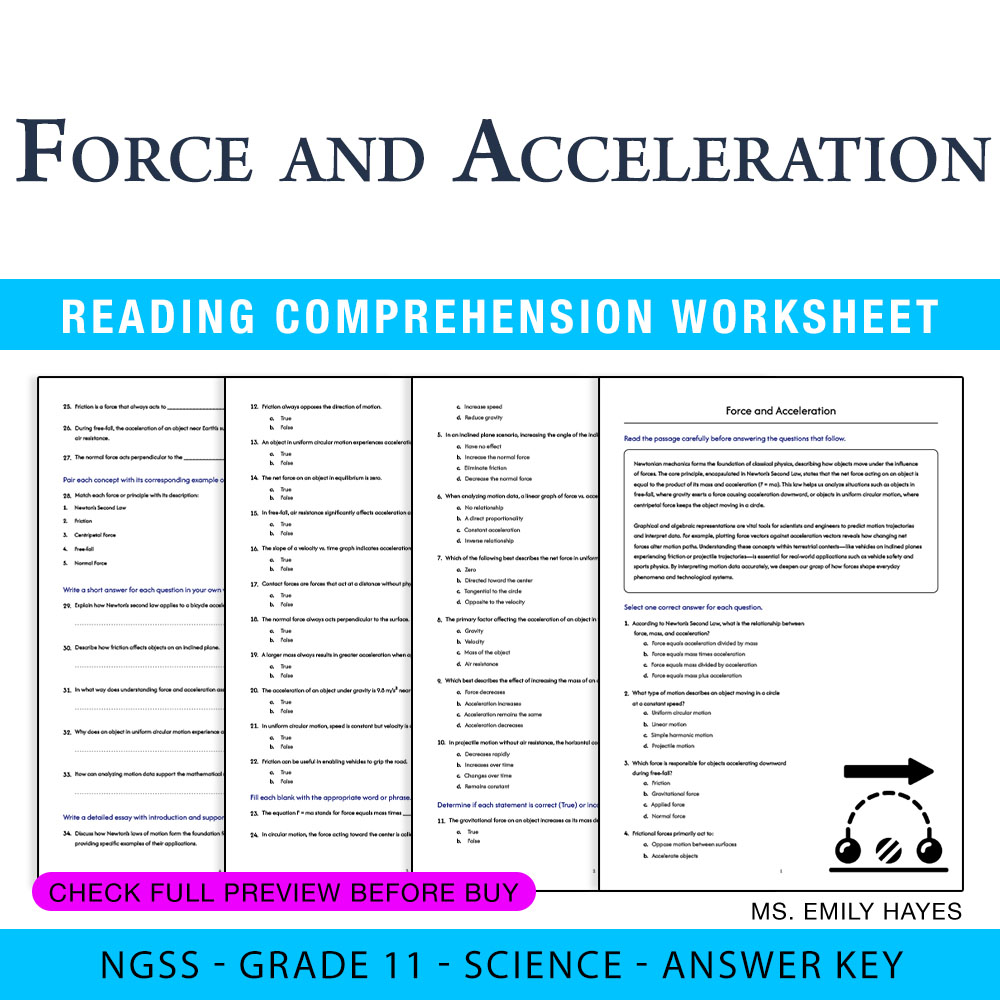
11th Grade Science | Force and Acceleration Worksheet (PDF+ Answer Key)
Created byCopper Leaf ClassroomLearning Objectives
- Describe the relationship between force, mass, and acceleration using Newton's Second Law, F = ma.
- Analyze free-fall motion and uniform circular motion through graphical and algebraic representations.
- Interpret motion data to understand how net force influences the trajectory of rigid bodies.
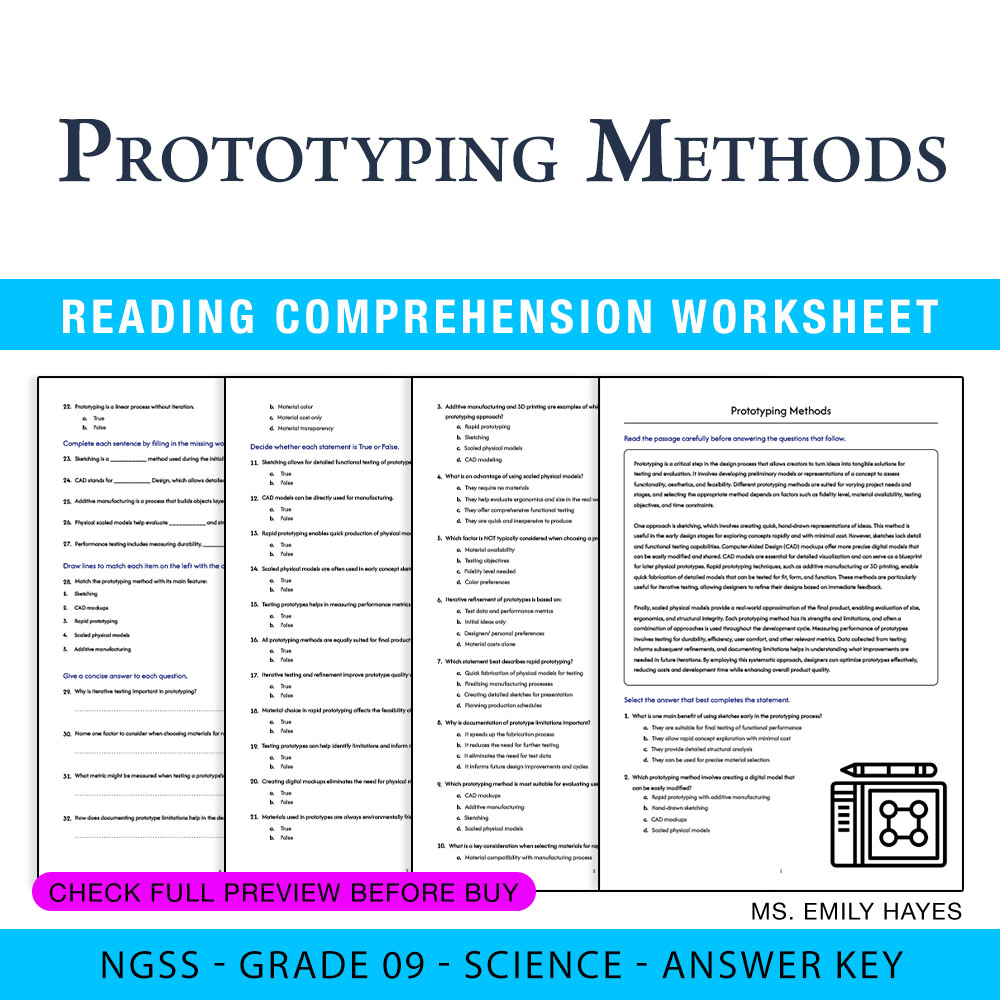
Grade 9 Science | Prototyping Methods Worksheet (PDF+ Answer Key)
Created byCopper Leaf ClassroomLearning Objectives
- Identify different prototyping methods suitable for various stages of product development.
- Evaluate the advantages and limitations of sketching, CAD mockups, rapid prototyping, and scaled physical models.
- Apply measurement techniques to assess prototype performance and interpret test data.
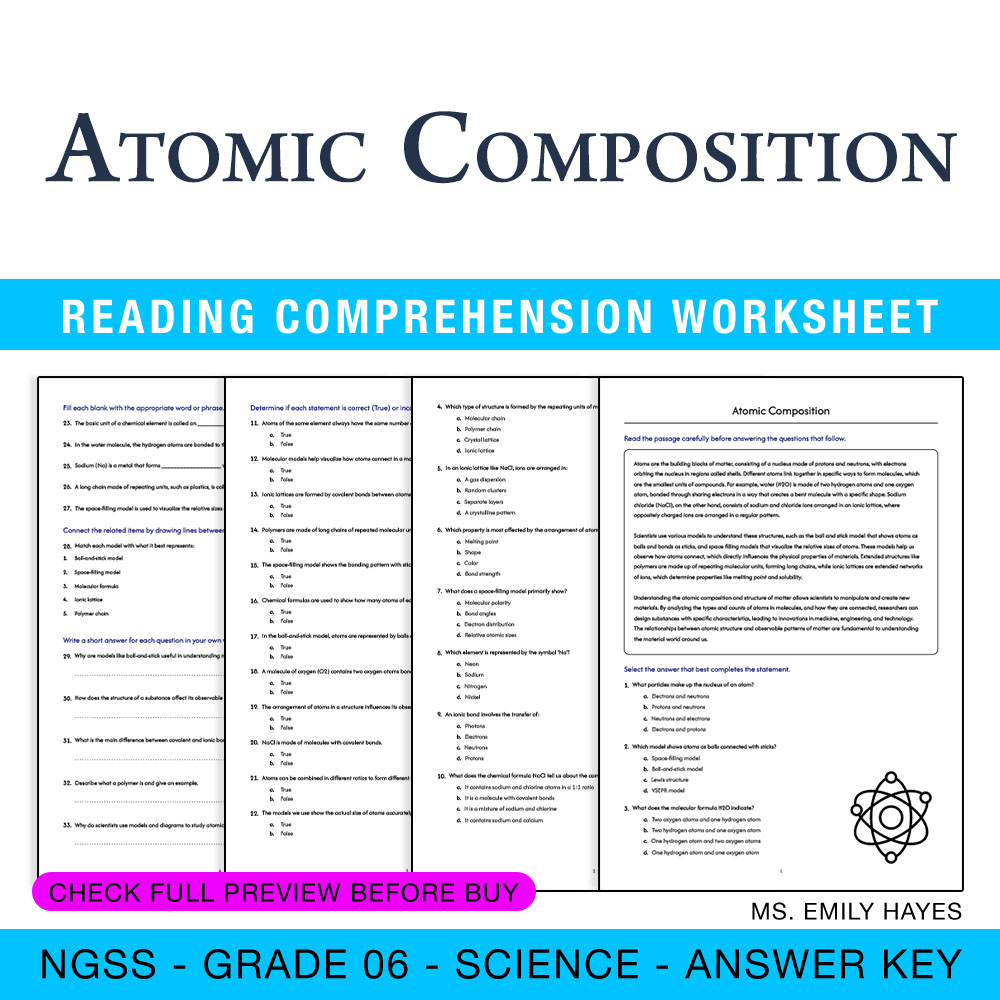
6th Grade Science | Atomic Composition Worksheet (PDF + Answer Key)
Created byCopper Leaf ClassroomLearning Objectives
- Describe how atoms combine to form molecules such as H2O and NaCl.
- Identify different models and representations used to visualize molecules and structures.
- Explain the relationship between molecular structure and observable patterns of matter.
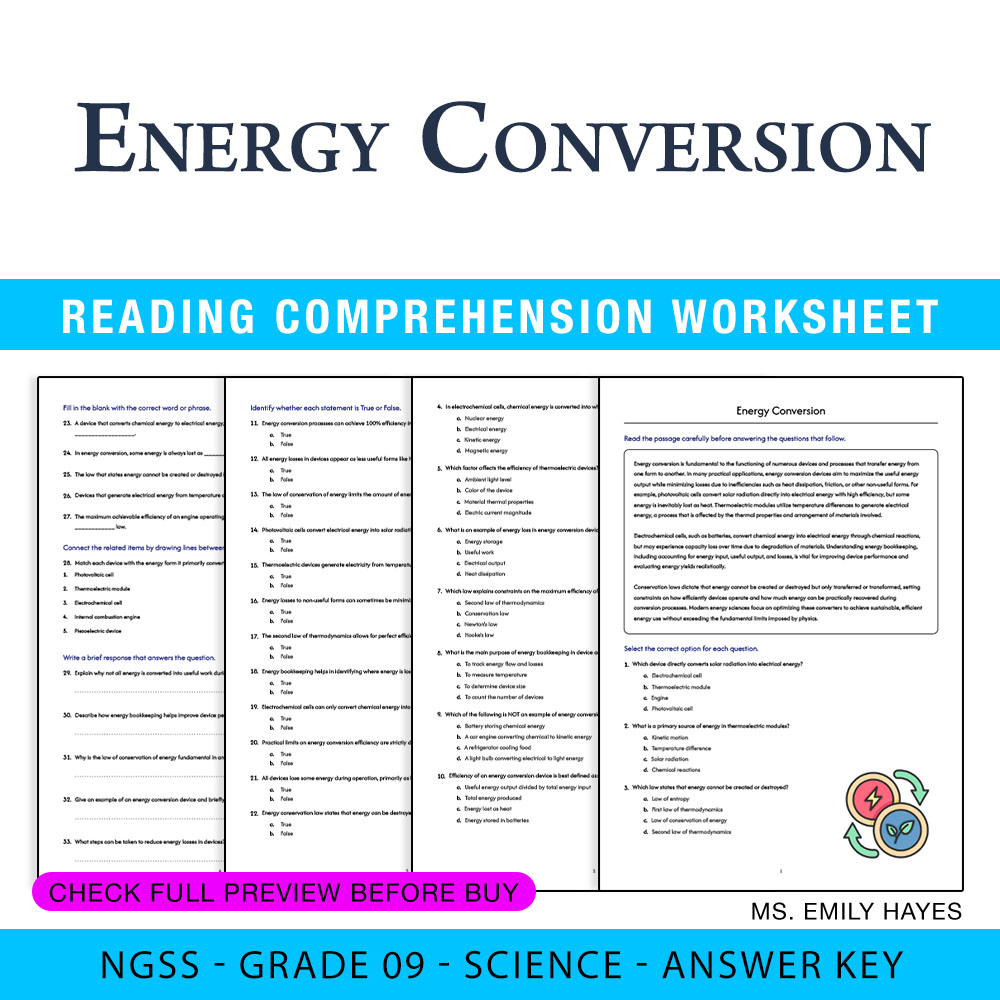
9th Grade Science | Energy Conversion Worksheet (PDF+ Answer Key)
Created byCopper Leaf ClassroomLearning Objectives
- Explain the process of energy conversion in different devices
- Identify the forms of energy involved in energy conversion processes
- Analyze the efficiency and energy losses during device operation
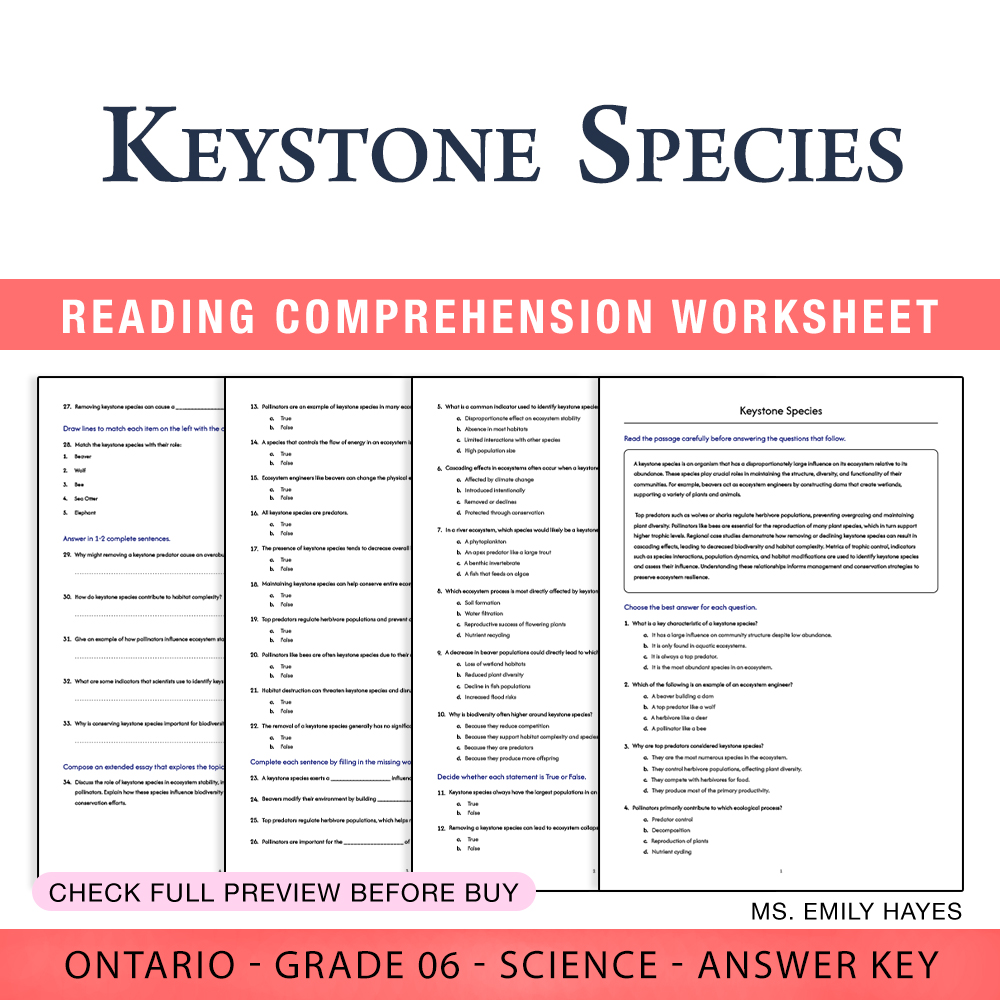
6th Grade Science | Keystone Species Comprehensive Worksheet (PDF+ Answer Key)
Created byCopper Leaf ClassroomLearning Objectives
- Define and explain the concept of keystone species and their role in ecosystems.
- Identify regional case studies illustrating keystone species such as beavers, top predators, and pollinators.
- Analyze the metrics and indicators used to assess keystone status and their trophic control.
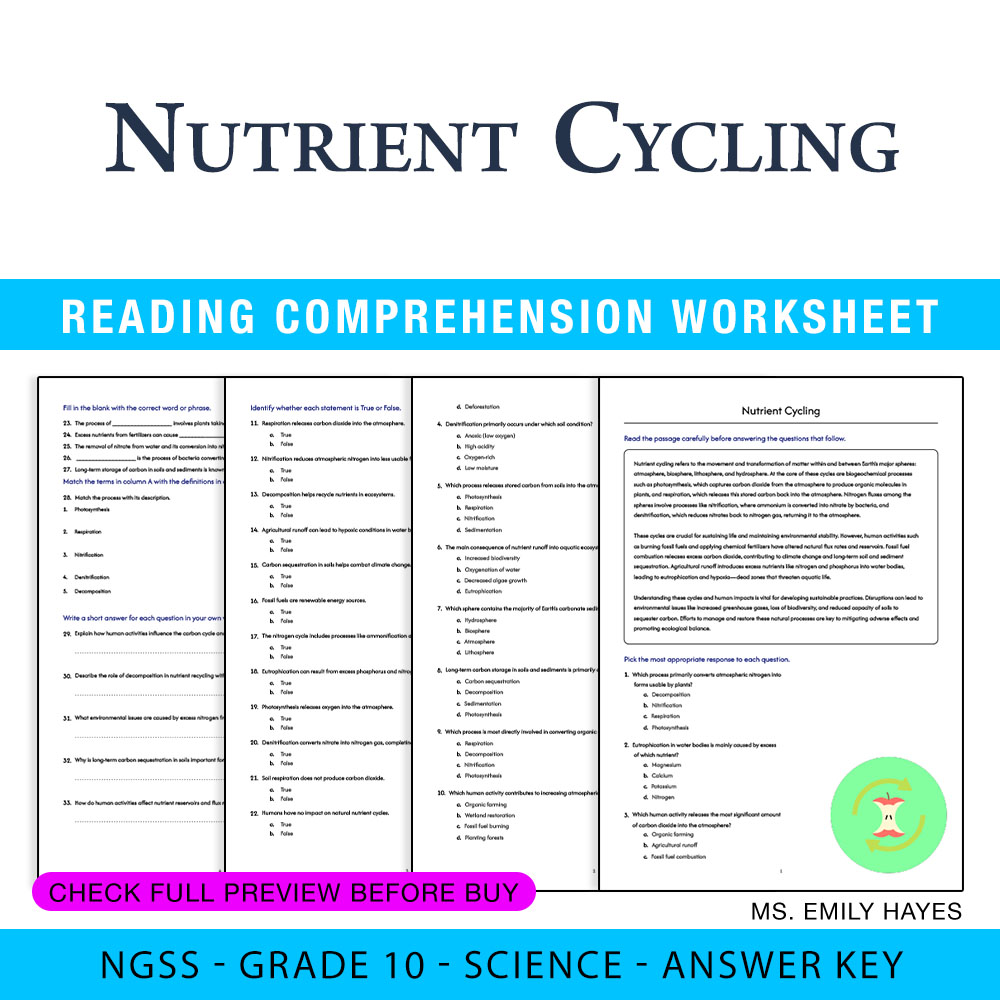
10th Grade Science | Nutrient Cycling Worksheet (PDF + Answer Key)
Created byCopper Leaf ClassroomLearning Objectives
- Describe the major biogeochemical cycles, including the carbon and nitrogen fluxes between Earth's spheres.
- Analyze human impacts such as fossil fuel combustion and agricultural runoff on nutrient reservoirs and ecological processes.
- Explain processes like photosynthesis, respiration, nitrification, denitrification, and decomposition and their roles in nutrient cycling.
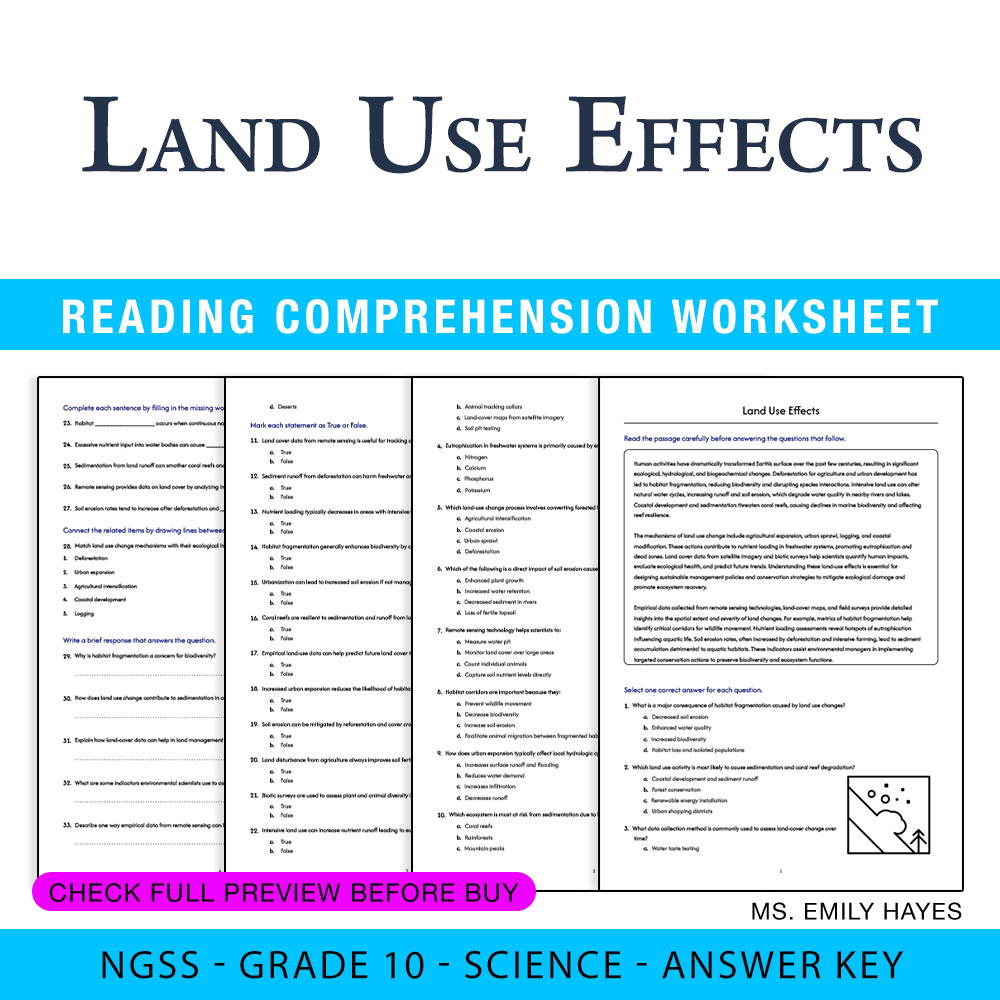
10th Grade Science | Land Use Effects Worksheet (PDF+ Answer Key)
Created byCopper Leaf ClassroomLearning Objectives
- Understand how human land-use activities alter ecosystems and biogeochemical cycles.
- Analyze empirical land-cover data and remote sensing images to assess ecological impacts.
- Evaluate the consequences of land-change mechanisms such as deforestation and urban expansion.
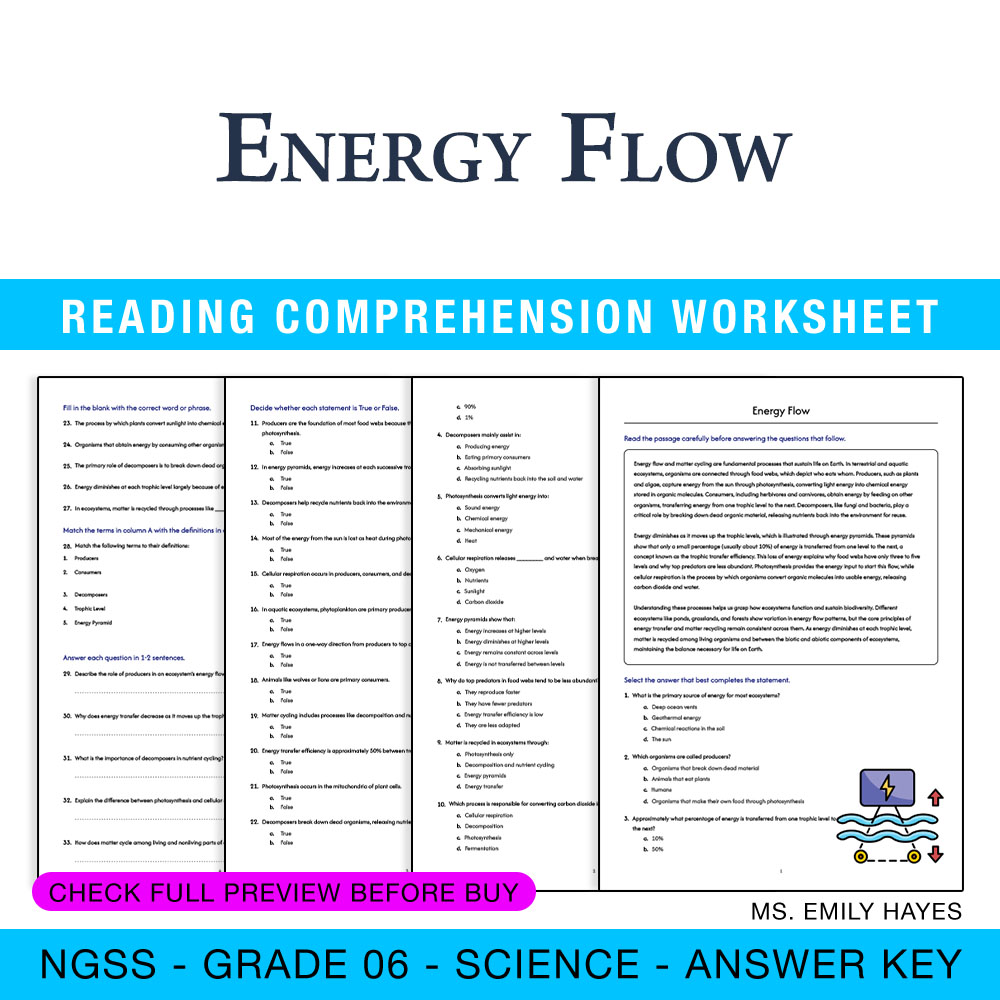
6th Grade Science | Energy Flow Worksheet (PDF +Answer Key)
Created byCopper Leaf ClassroomLearning Objectives
- Describe how energy flows through and matter cycles within terrestrial and aquatic food webs.
- Identify the roles of producers, consumers, and decomposers in energy transfer and nutrient cycling.
- Interpret energy pyramids and understand trophic transfer efficiency.
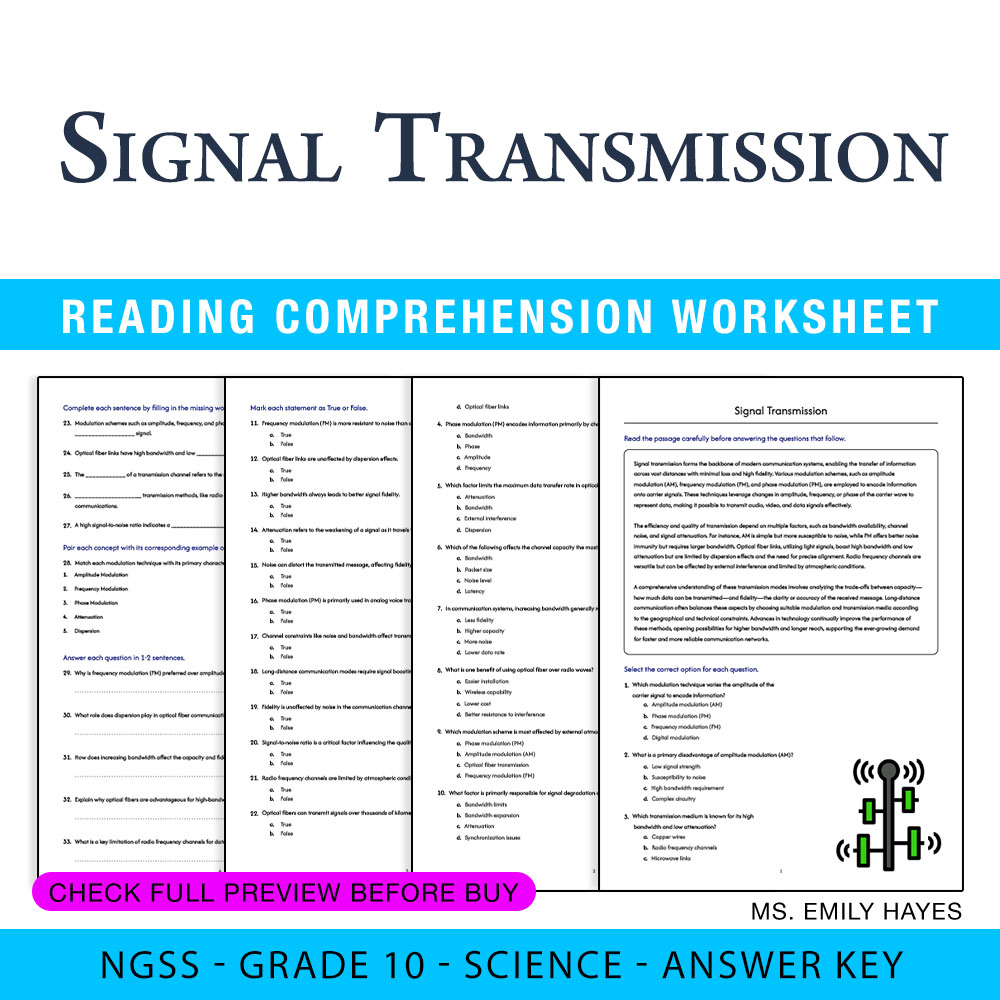
Grade 10 Science | Signal Transmission Worksheet (PDF+ Answer Key)
Created byCopper Leaf ClassroomLearning Objectives
- Explain the principles of amplitude, frequency, and phase modulation techniques.
- Describe the factors affecting the capacity and fidelity of transmission channels.
- Compare different transmission modes such as radio frequency channels and optical fibers.
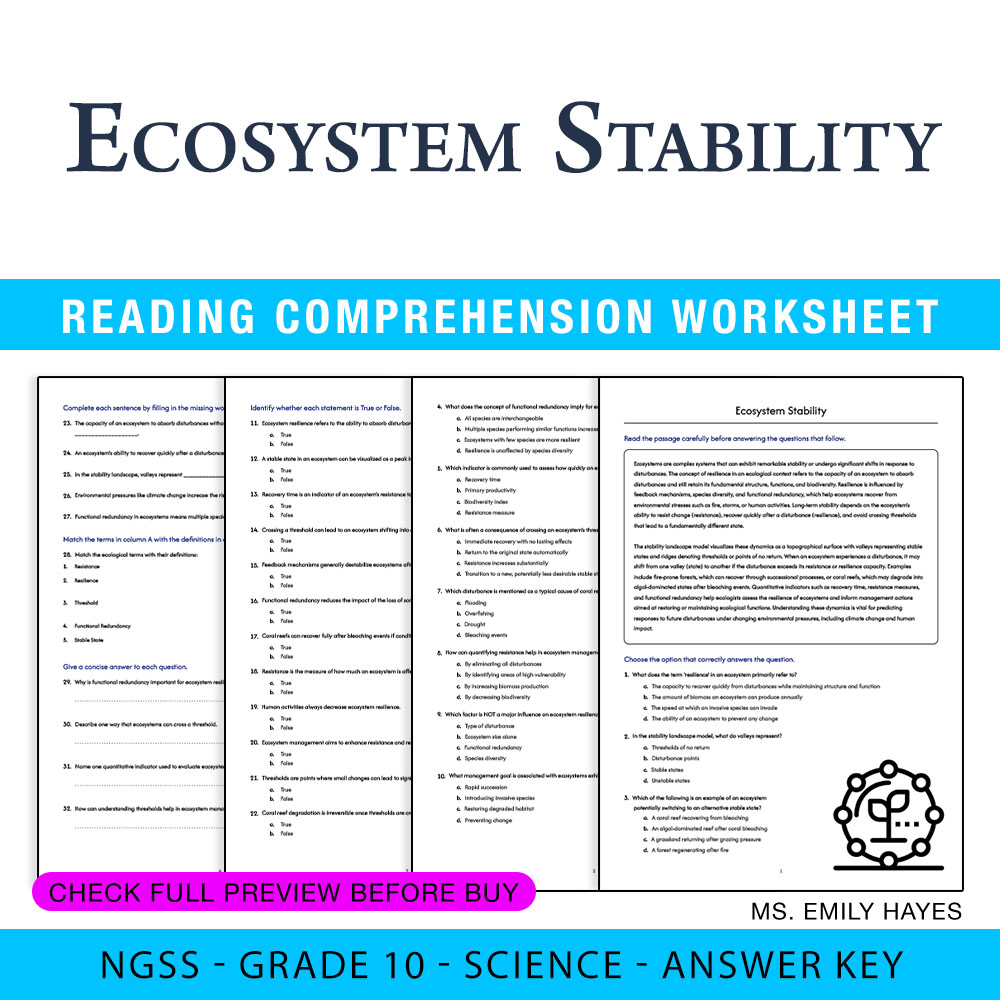
10th Grade Science | Ecosystem Stability Worksheet (PDF + Answer Key)
Created byCopper Leaf ClassroomLearning Objectives
- Explain the concepts of resilience, resistance, and thresholds in ecosystems.
- Analyze recovery pathways and potential stable states after disturbances.
- Interpret quantitative indicators used to assess ecosystem resilience and function.
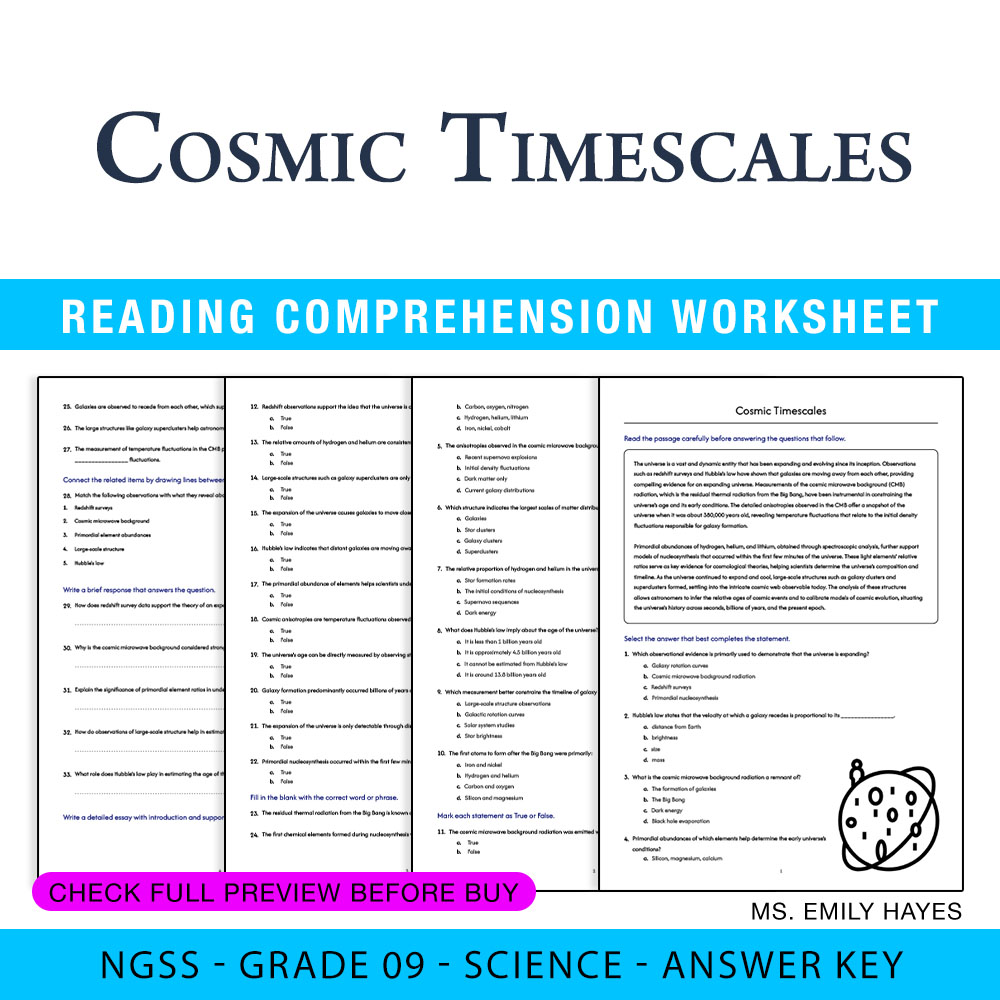
9th Grade Science | Cosmic Timescales Worksheet (PDF+ Answer Key)
Created byCopper Leaf ClassroomLearning Objectives
- Explain the concept of cosmic timescales and how observational evidence constrains the age of the universe
- Describe key phenomena such as redshift, cosmic microwave background, and primordial element abundances
- Interpret data related to the expansion of the universe and cosmic history
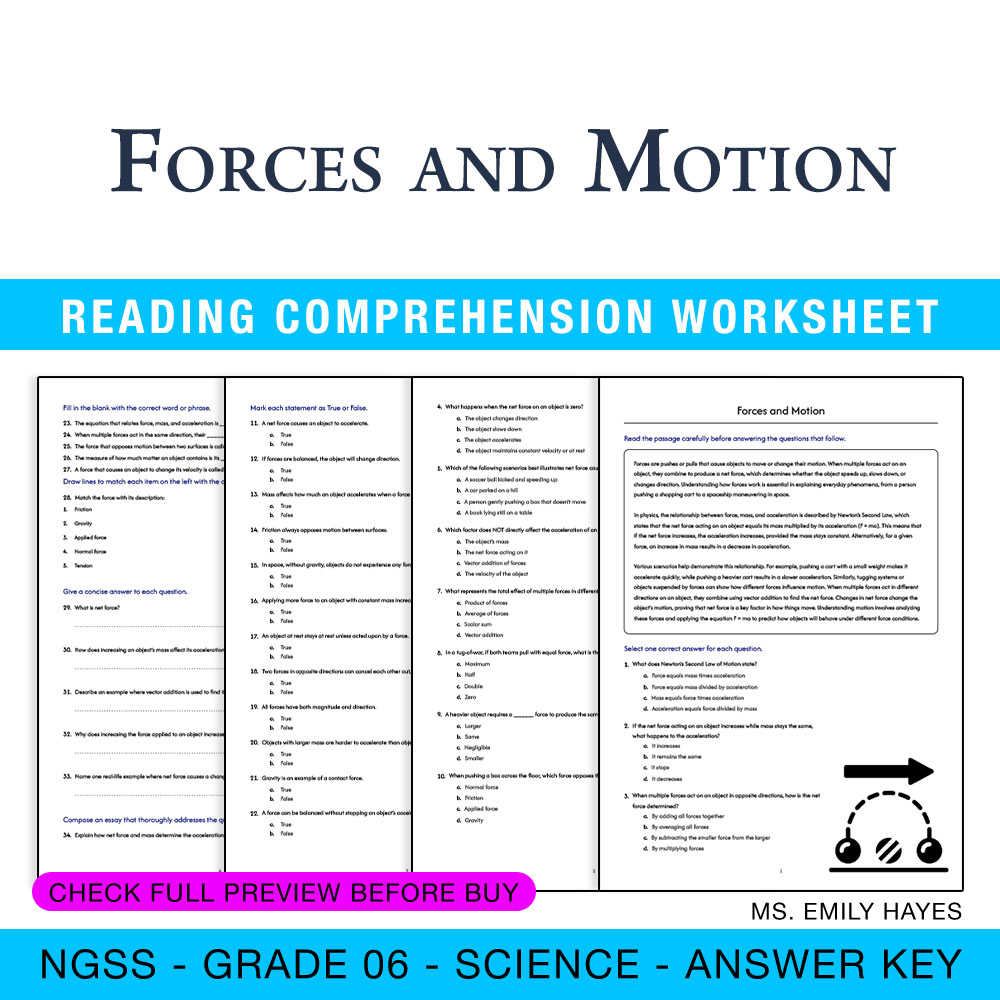
6th Grade Science | Forces and Motion Worksheet (PDF + Answer Key)
Created byCopper Leaf ClassroomLearning Objectives
- Explain how net force affects the motion of objects.
- Describe the relationship between mass, force, and acceleration using the formula F = ma.
- Identify different scenarios where forces act on objects and analyze their effects.
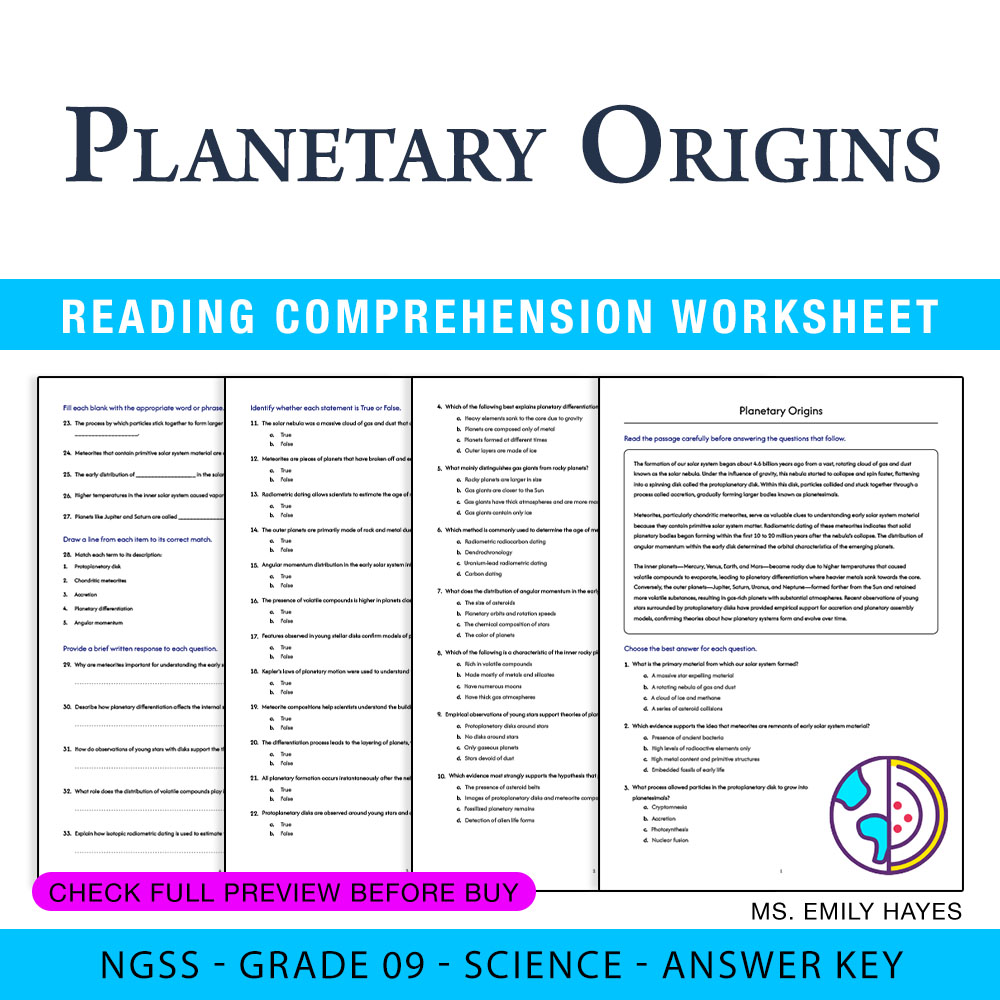
Grade 9 Science | Planetary Origins Worksheet (PDF+ Answer Key)
Created byCopper Leaf ClassroomLearning Objectives
- Describe the processes involved in the formation of the solar system from a protoplanetary disk.
- Identify evidence such as meteorite composition and radiometric dating that support theories of planetary formation.
- Explain the differences between inner rocky planets and outer gas giants based on planetary differentiation and volatile content.

11th Grade Science | Biodiversity Metrics Practice Worksheet (PDF + Answer Key)
Created byCopper Leaf ClassroomLearning Objectives
- Define and differentiate various measures of biodiversity including species richness, evenness, and diversity indices.
- Explain sampling considerations such as effort and rarefaction to obtain accurate biodiversity estimates.
- Distinguish between alpha, beta, and gamma diversity across spatial scales.
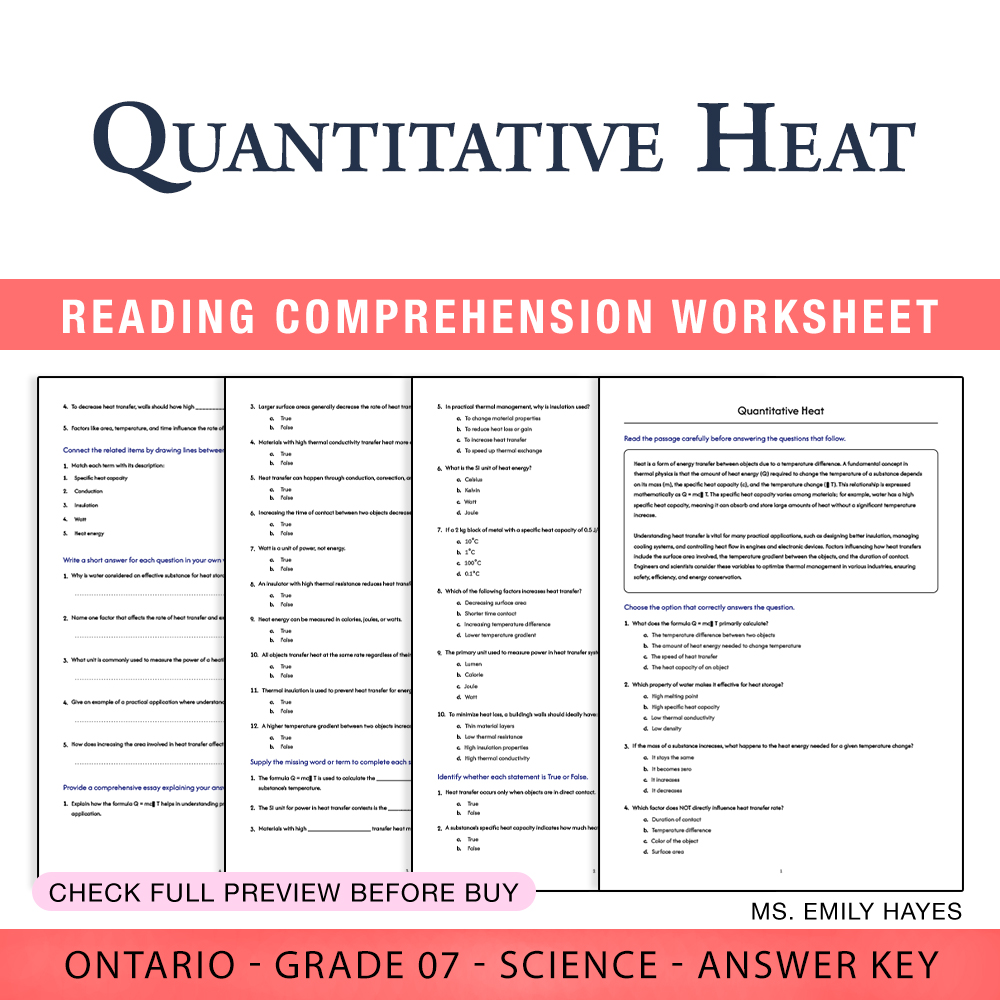
Grade 7 Science | Quantitative Heat Worksheet (PDF+ Answer Key)
Created byCopper Leaf ClassroomLearning Objectives
- Understand the relationship between heat, mass, and temperature change using the equation Q = mcΔT.
- Calculate the amount of heat energy required to change the temperature of various substances.
- Explain factors affecting heat transfer such as area, temperature gradient, and time.
Browse more categories
About Science Worksheets
Find Science worksheets spanning core skills, practice, and review. All 42,550 resources are instant PDF downloads for the classroom or home.
Every worksheet on MyTeachingSheets is created by independent teacher-authors and reviewed before publication. All resources download as printable PDFs for classroom, homework, or at-home practice, and many include answer keys. Preview any worksheet free before buying.