
Science Worksheets
44,342 subject resources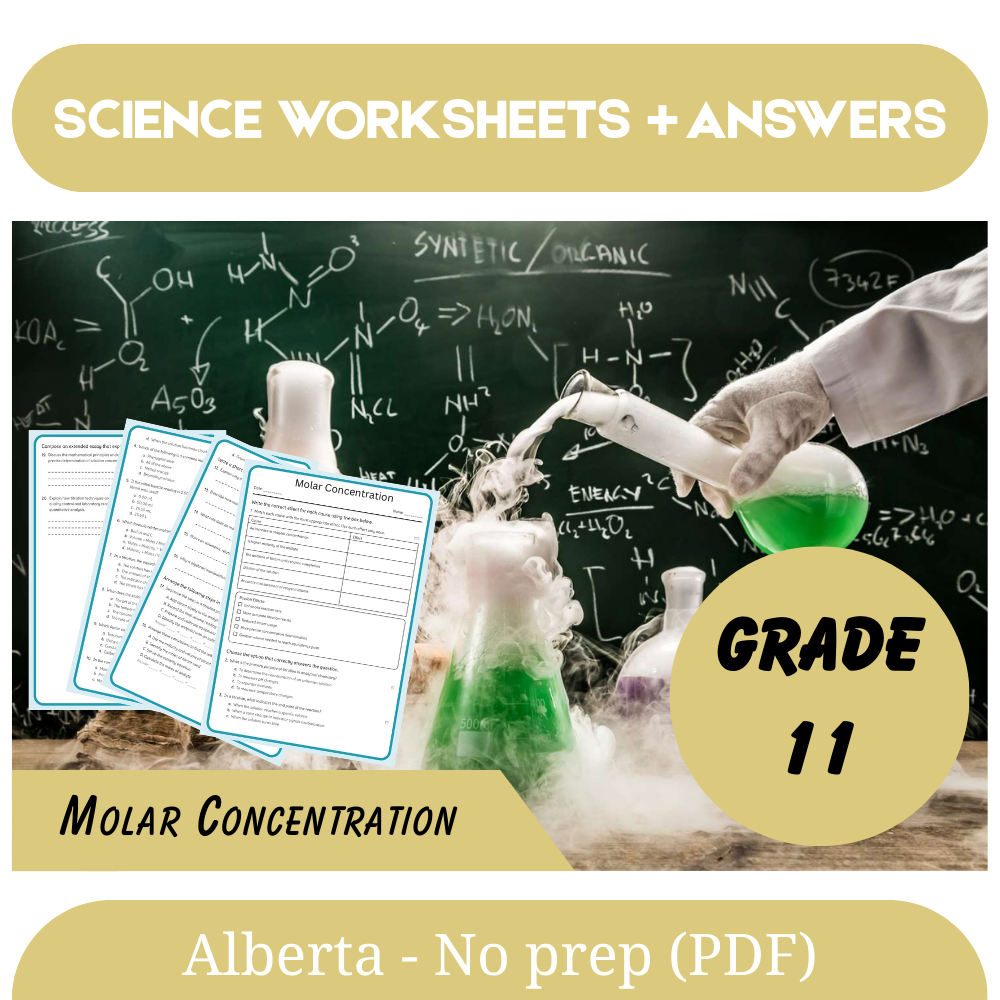
Grade 11 Science | Molar Concentration (Worksheet + Answer Key) – Alberta Standards
 Created byBright Mind Resources
Learning Objectives
- Understand the definition of molar concentration and its units.
- Perform conversions between mass and moles of solutes.
- Apply algebraic relationships to prepare solutions via dilution from concentrated stocks.
Instant download
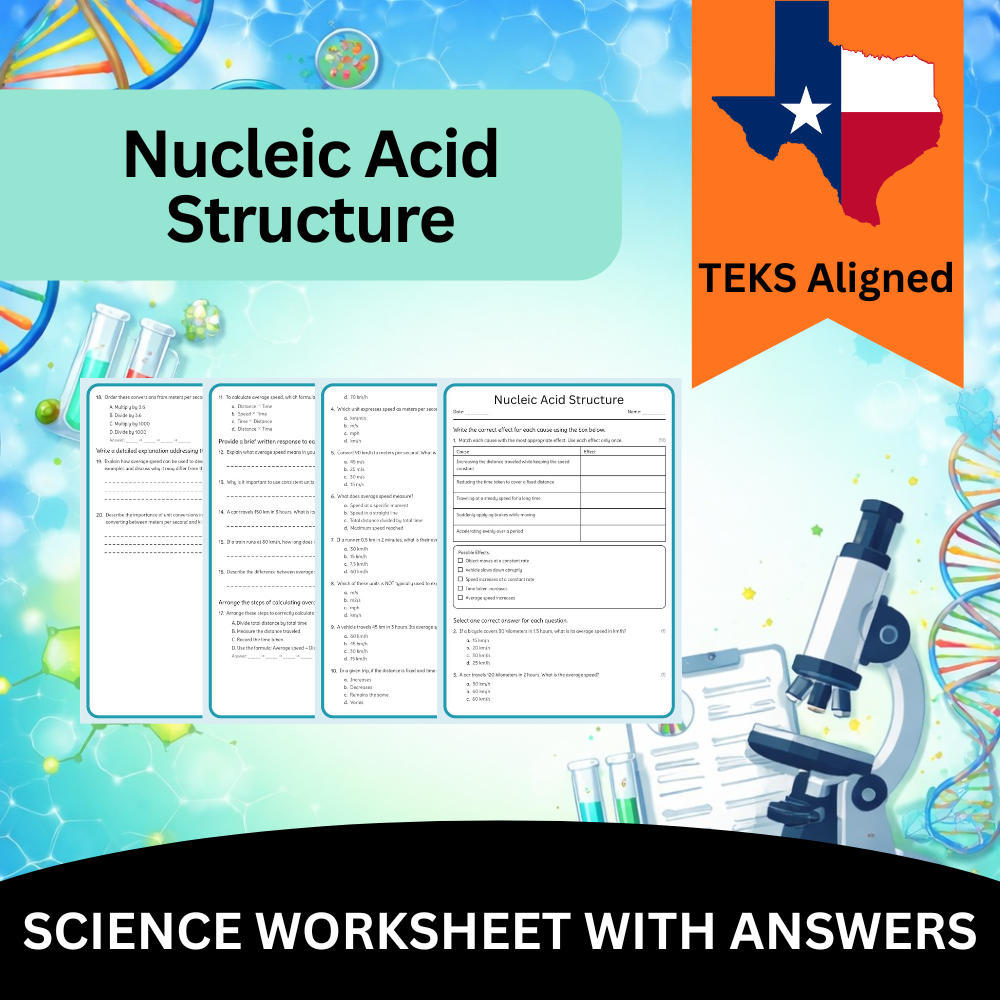
Grade 9 Science | Nucleic Acid Structure Worksheet (Answer Key) – TEKS Alignment
Created byBright Mind ResourcesLearning Objectives
- Describe the chemical structures of DNA and RNA and how they differ.
- Explain the importance of nucleotide subunits in genetic information.
- Identify the structural features that enable specific base pairing in DNA.
Also included in: Grade 9 Science Genetics & Biotechnology Unit - TEKS - Aligned (Answer Keys) +3 more
Instant download

Particle Model Worksheet for Grade 7 Science | Standards-Aligned Practice
JCreated byJ.S SheetsLearning Objectives
- Explain how the kinetic particle model uses particle spacing, motion, and forces to describe macroscopic properties of matter.
- Predict how changing temperature or applying pressure affects density, compressibility, and pressure in terms of particle arrangement.
- Connect observable measurements such as diffusion rate, thermal expansion, and compressibility to particle-level explanations.
Instant download
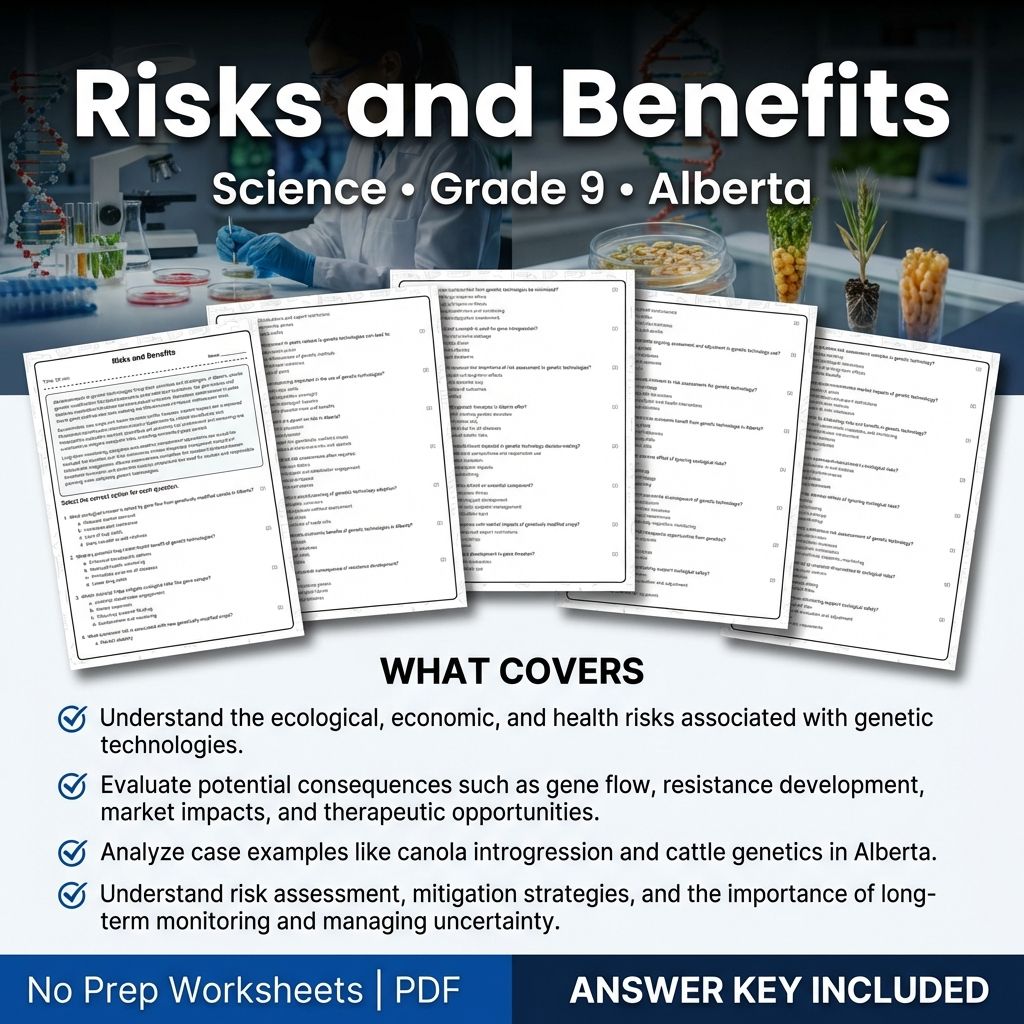
Risks and Benefits Worksheet | Alberta Grade 9 Science Practice
 Created byCoral Reef Learning
Learning Objectives
- Understand the ecological, economic, and health risks associated with genetic technologies.
- Evaluate potential consequences such as gene flow, resistance development, market impacts, and therapeutic opportunities.
- Analyze case examples like canola introgression and cattle genetics in Alberta.
Instant download
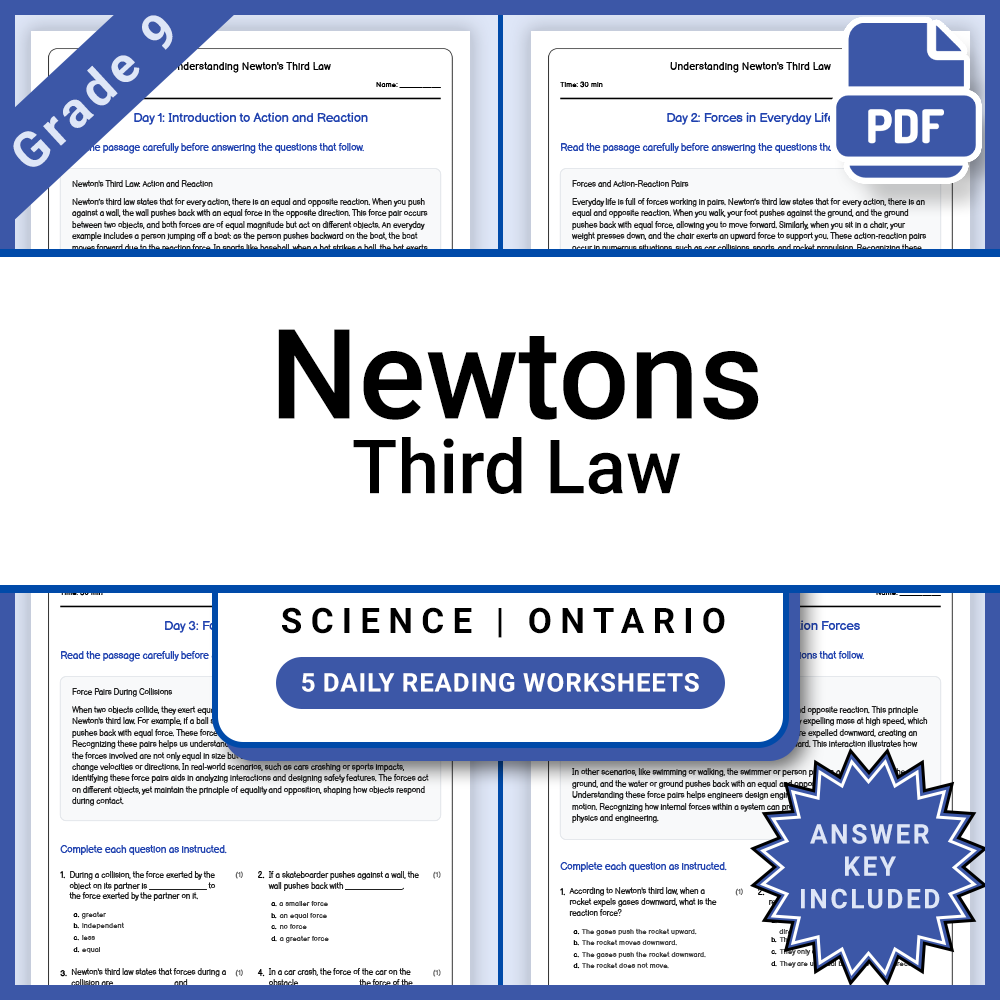
Grade 9 Science – Newton's Third Law Daily Reading Worksheet + Answer Key
JCreated byJ.S SheetsLearning Objectives
- Identify action-reaction force pairs in various scenarios.
- Explain the concept that forces in a pair have equal magnitude and opposite direction.
- Apply Newton's third law to analyze real-world interactions such as collisions and propulsion.
Also included in: Grade 9 Science Lesson Group: Physics and Motion Worksheets Bundle +1 more
Instant download
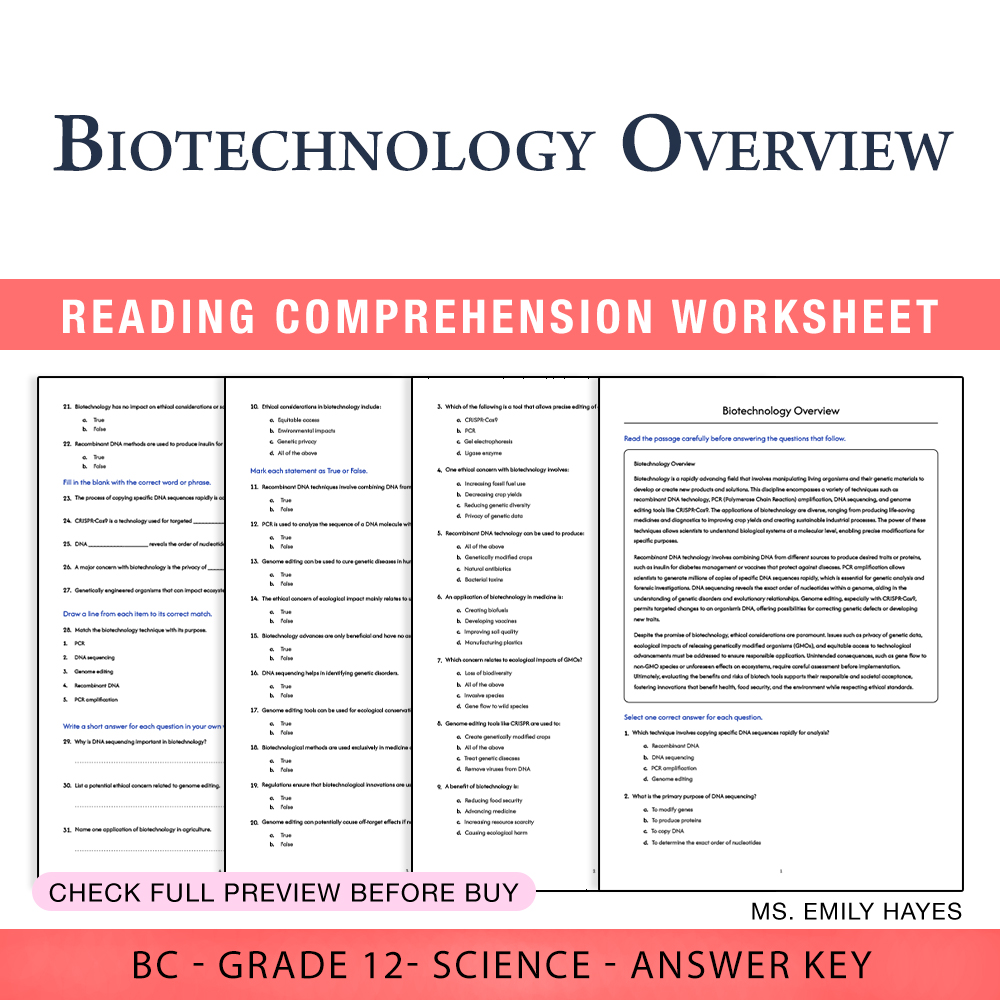
12th Grade Science | Biotechnology Overview Worksheet (PDF + Answer Key)
 Created byCopper Leaf Classroom
Learning Objectives
- Describe key techniques used in biotechnology such as recombinant DNA, PCR, DNA sequencing, and genome editing.
- Identify various applications of biotechnology in medicine, agriculture, and industry.
- Discuss ethical considerations related to biotechnological advancements, including privacy, ecological impacts, and access.
Also included in: Grade 12 Science | Genetics, Evolution & Ecology (PDF+ Answer Keys) +1 more
Instant download
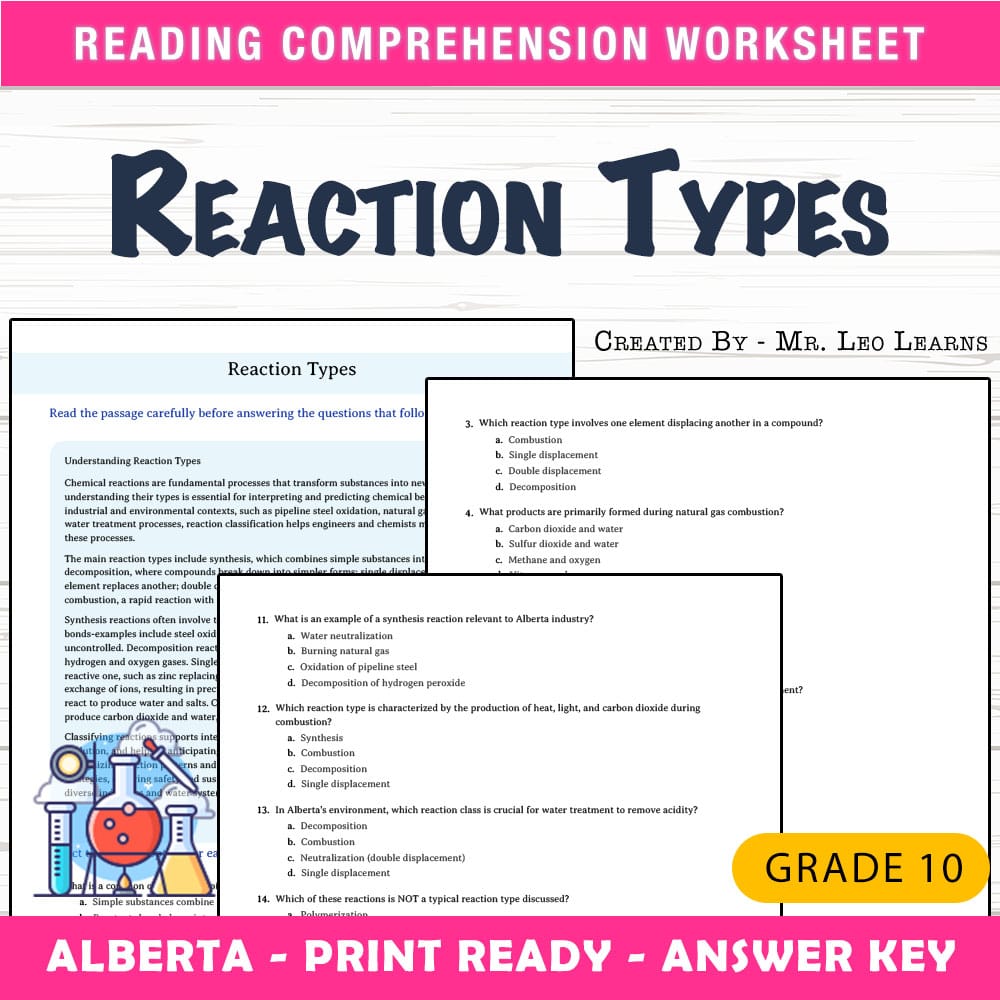
Grade 10 Science — Worksheet MCQ Paper for Mastering Reaction Types
 Created byThe Resource Hub
Learning Objectives
- Identify the different types of chemical reactions such as synthesis, decomposition, single and double displacement, and combustion.
- Understand the distinctive features and observable indicators of each reaction type.
- Apply reaction classification to Alberta-relevant examples like steel oxidation, natural gas combustion, and water treatment.
Also included in: Grade 10 Science Lesson Bundle | Matter and Chemical Change Worksheets +1 more
Instant download
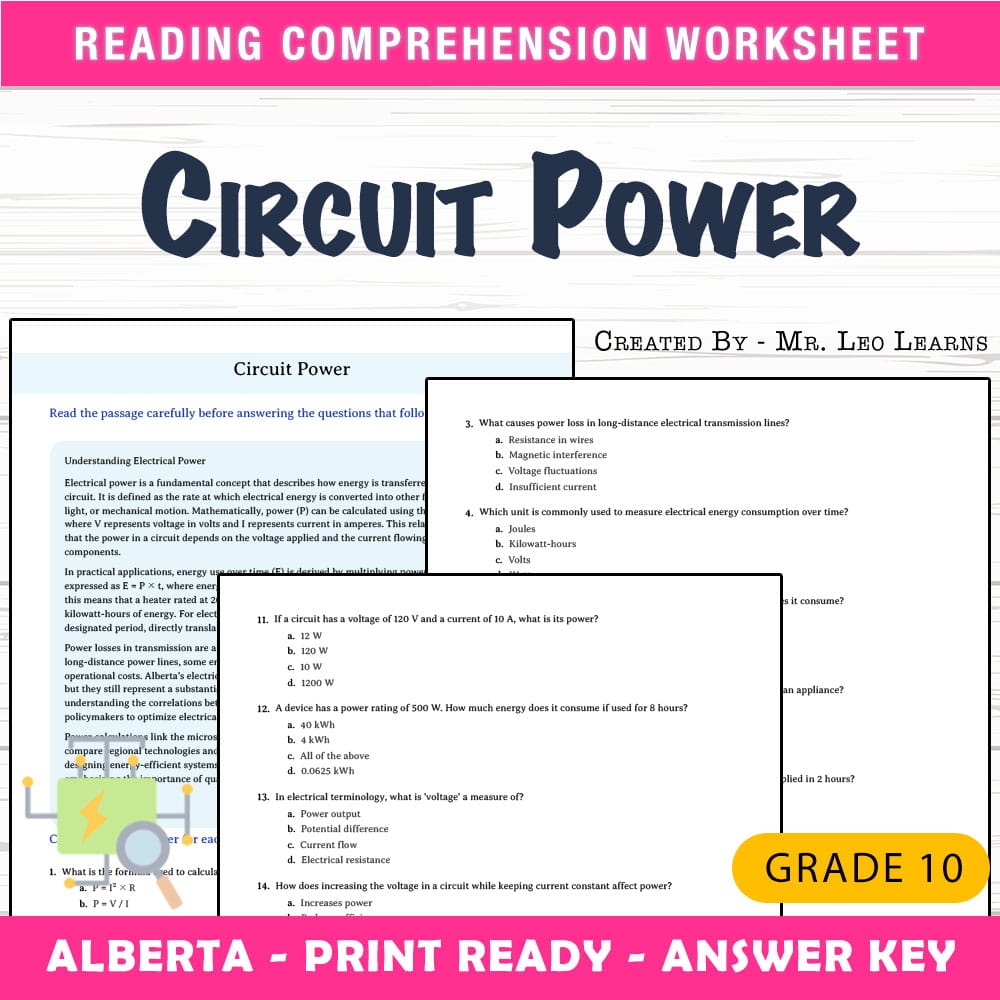
Grade 10 Science — Worksheet MCQ Paper for Mastering Circuit Power
Created byThe Resource HubLearning Objectives
- Understand how voltage, current, and resistance relate to electrical power.
- Calculate energy consumption over time using power and usage duration.
- Apply power and energy concepts to household appliances, electric vehicles, and regional power systems.
Also included in: Grade 10 Science | Energy, Motion & Electricity Worksheet Bundle | Alberta +1 more
Instant download
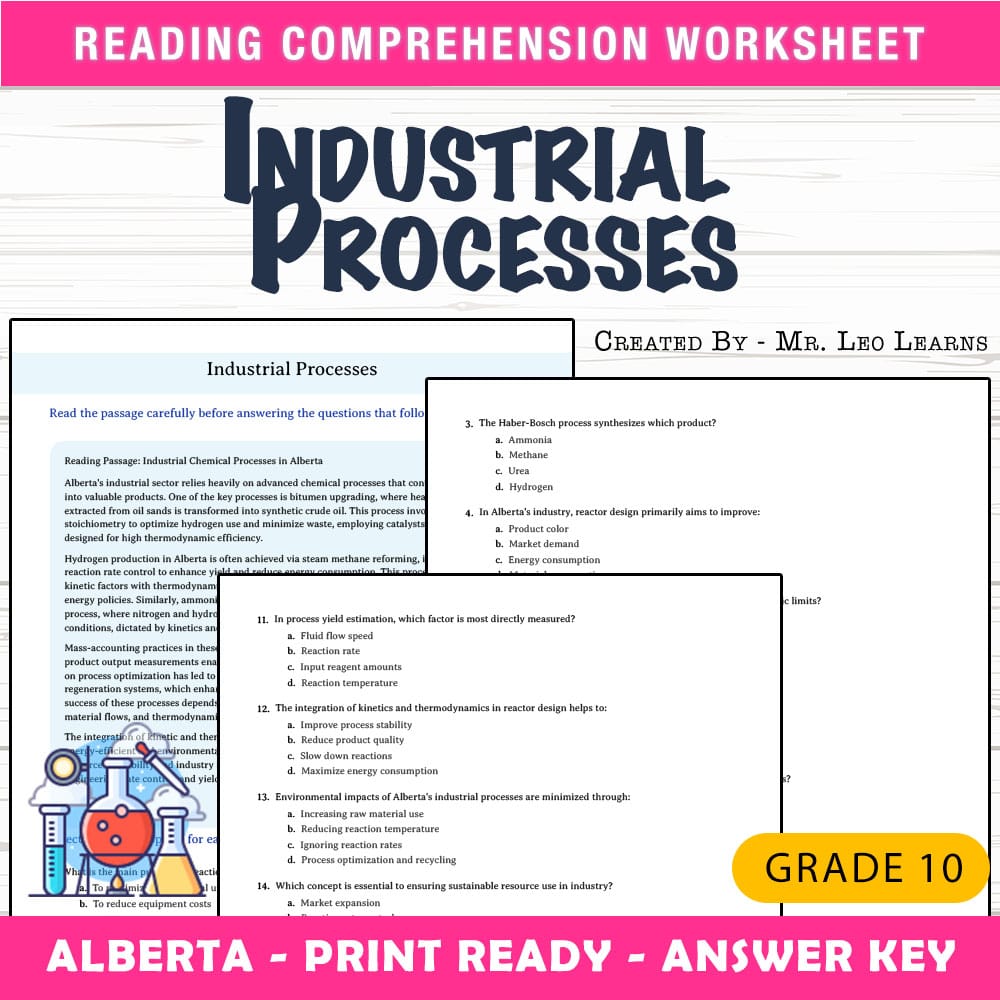
Grade 10 Science — Worksheet MCQ Paper for Mastering Industrial Processes
Created byThe Resource HubLearning Objectives
- Understand key concepts of reaction stoichiometry and mass conservation in industrial chemical processes.
- Identify factors affecting process efficiency and yield in Alberta-specific industrial applications.
- Explain the interplay of kinetics and thermodynamics in reactor design and process optimization.
Also included in: Grade 10 Science Lesson Bundle | Matter and Chemical Change Worksheets +1 more
Instant download
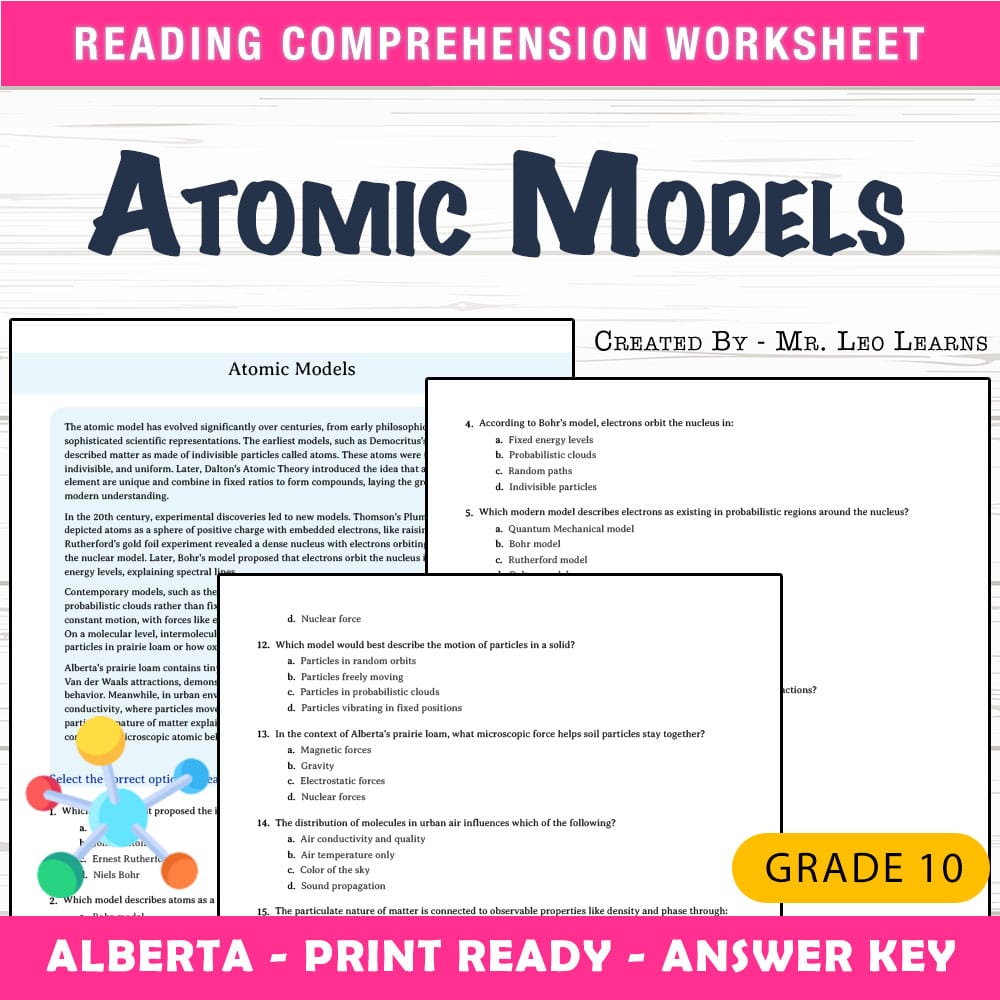
Grade 10 Science — Worksheet MCQ Paper for Mastering Atomic Models
Created byThe Resource HubLearning Objectives
- Understand different atomic models and their representations.
- Relate microscopic atomic structure to macroscopic properties of matter.
- Identify how particle motion and forces influence observable material behavior.
Also included in: Grade 10 Science Lesson Bundle | Matter and Chemical Change Worksheets +1 more
Instant download
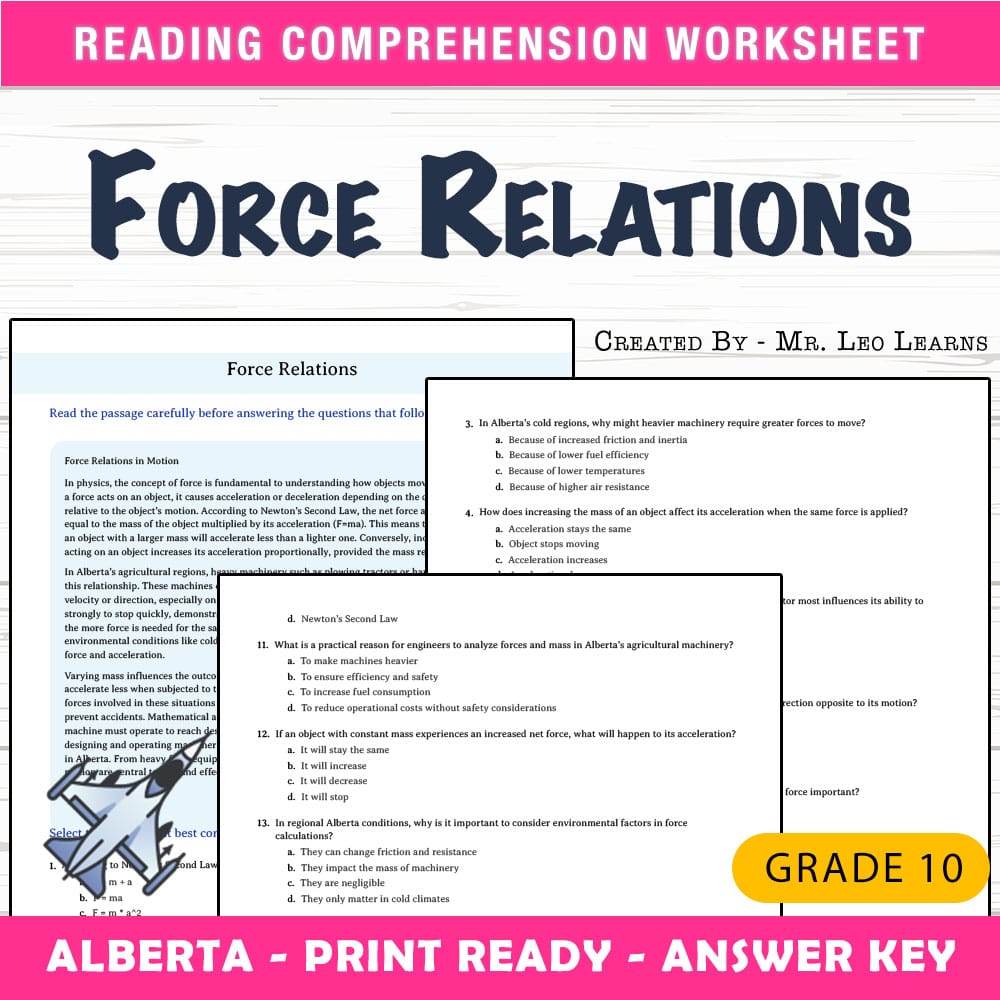
Grade 10 Science — Worksheet MCQ Paper for Mastering Force Relations
Created byThe Resource HubLearning Objectives
- Understand how net force affects the motion of objects.
- Analyze the relationship between mass, force, and acceleration using Newtonian principles.
- Interpret regional Alberta examples involving heavy machinery and vehicle braking to illustrate force and motion concepts.
Also included in: Grade 10 Science | Energy, Motion & Electricity Worksheet Bundle | Alberta +1 more
Instant download
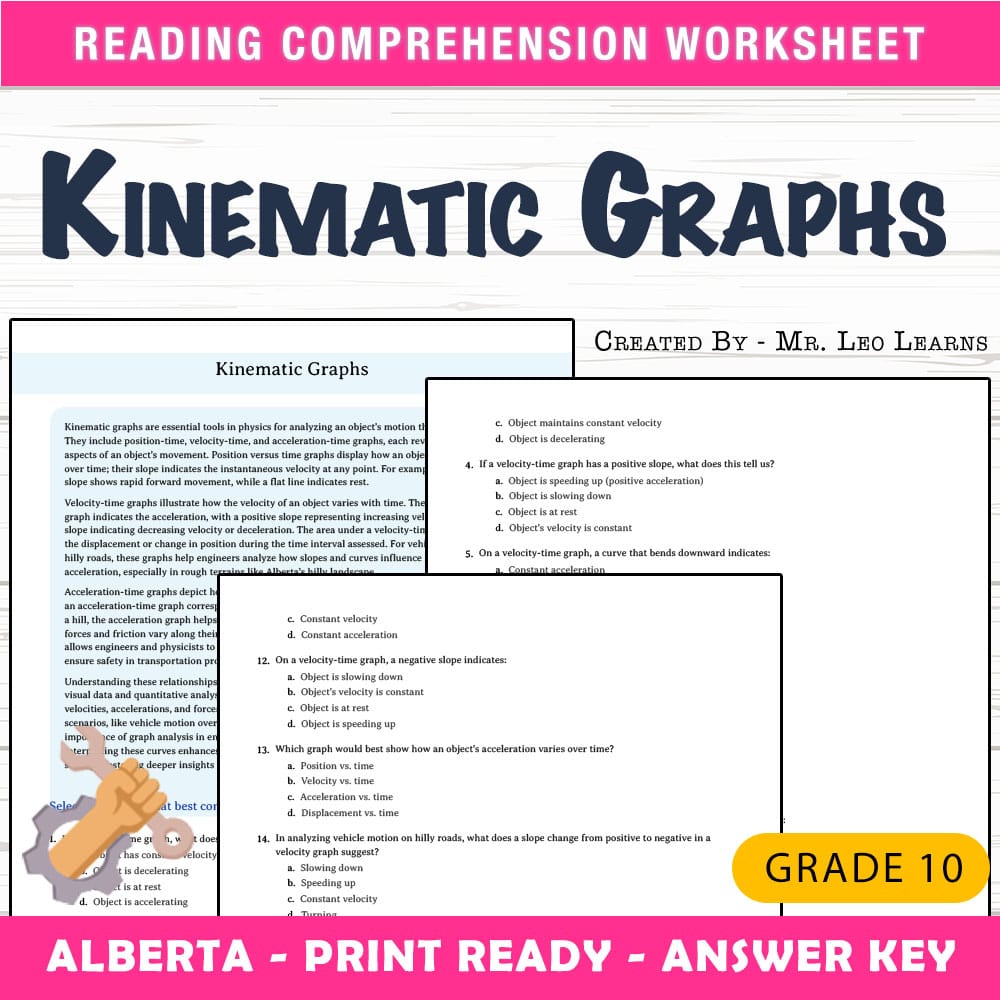
Grade 10 Science — Worksheet MCQ Paper for Mastering Kinematic Graphs
Created byThe Resource HubLearning Objectives
- Understand how position, velocity, and acceleration graphs represent motion.
- Interpret slopes and areas under curves to determine instantaneous and average quantities.
- Apply graphical analysis to real-world vehicle and sled motion scenarios.
Also included in: Grade 10 Science | Energy, Motion & Electricity Worksheet Bundle | Alberta +1 more
Instant download
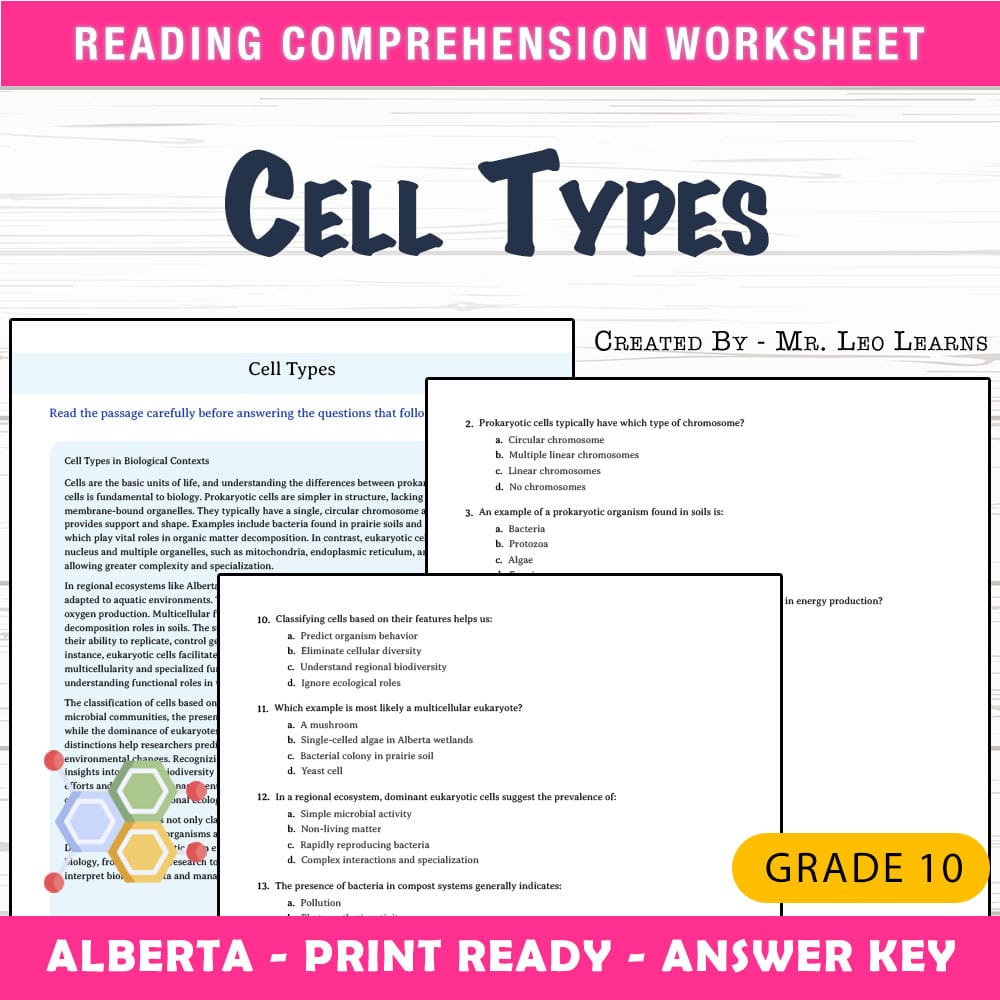
Grade 10 Science — Worksheet MCQ Paper for Mastering Cell Types
Created byThe Resource HubLearning Objectives
- Compare structural differences between prokaryotic and eukaryotic cells.
- Identify examples of prokaryotic and eukaryotic organisms in regional habitats.
- Understand how cell structure influences replication, genetic control, and ecological roles.
Also included in: Grade 10 Science Cells and Systems Lesson Bundle | Alberta Curriculum +1 more
Instant download
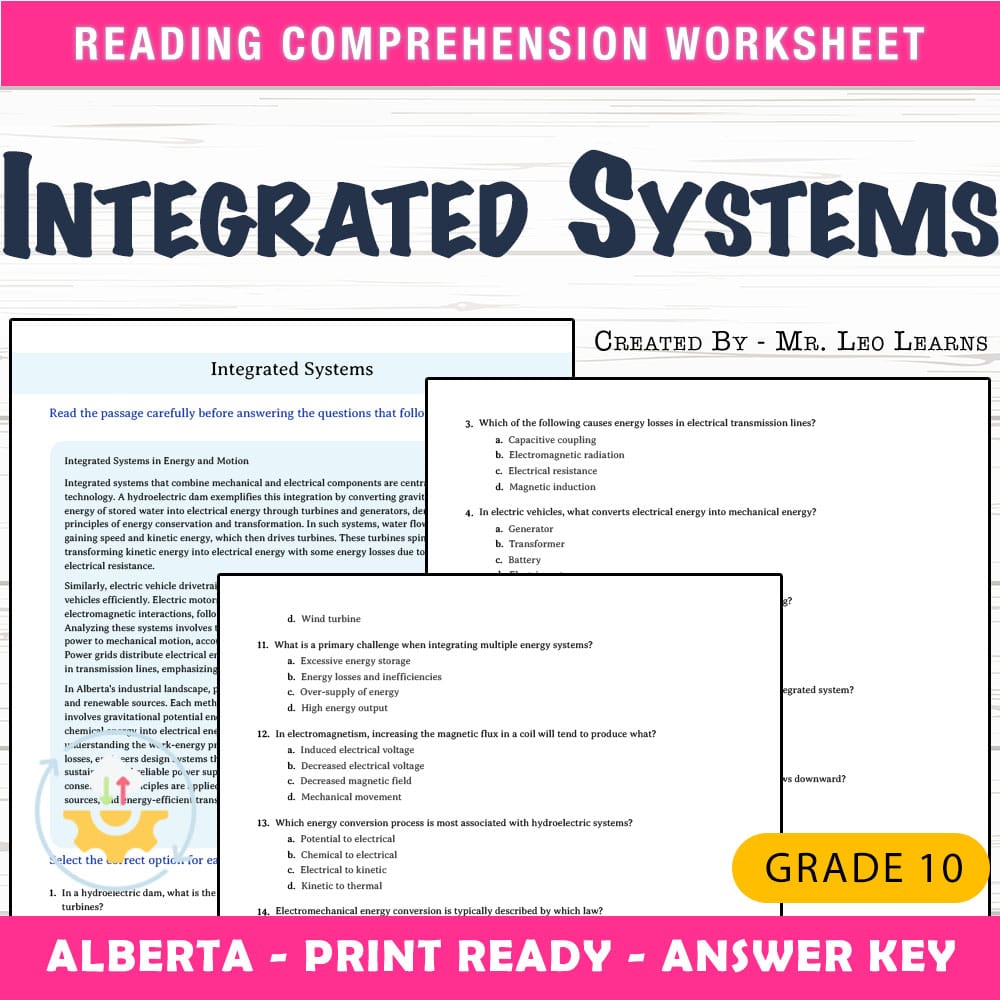
Grade 10 Science — Worksheet MCQ Paper for Mastering Integrated Systems
Created byThe Resource HubLearning Objectives
- Explain the principles of energy conversion and conservation in mechanical and electrical systems.
- Identify energy transformations in integrated systems such as hydroelectric plants and electric vehicles.
- Analyze efficiencies and energy losses in combined mechanical and electrical systems.
Also included in: Grade 10 Science | Energy, Motion & Electricity Worksheet Bundle | Alberta +1 more
Instant download
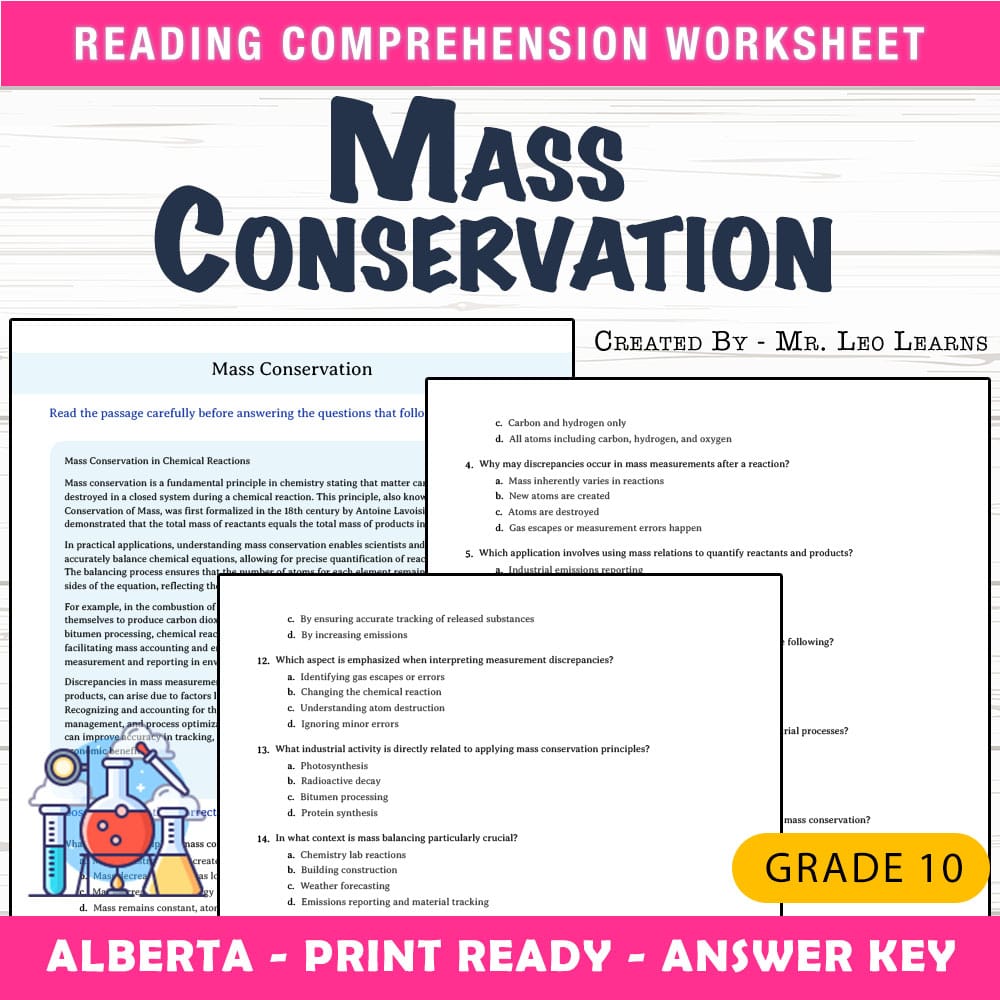
Grade 10 Science — Mass Conservation Worksheet MCQ Paper for Mastery
Created byThe Resource HubLearning Objectives
- Understand the principle of mass conservation in chemical reactions.
- Learn to balance symbolic chemical equations accurately.
- Apply mass relations to quantify reactants and products.
Also included in: Grade 10 Science Lesson Bundle | Matter and Chemical Change Worksheets +1 more
Instant download
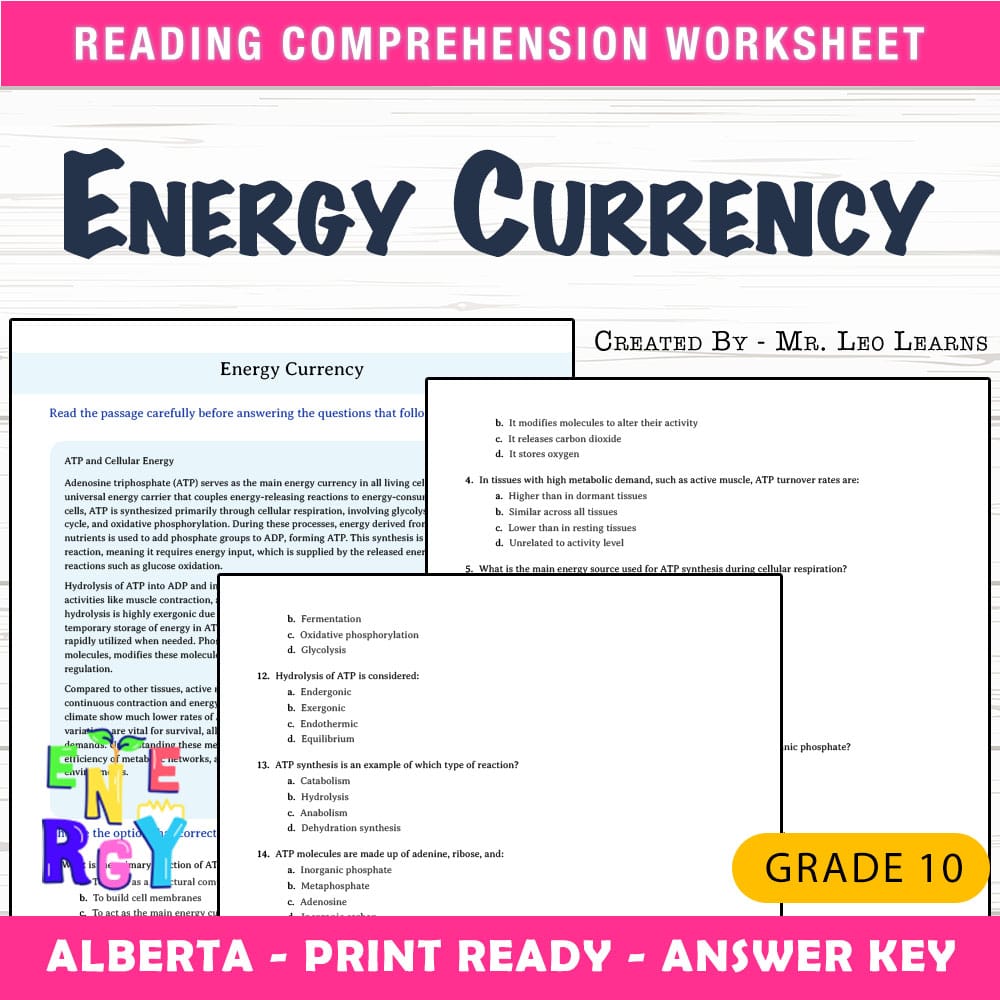
Grade 10 Science — Worksheet MCQ Paper for Mastering Energy Currency
Created byThe Resource HubLearning Objectives
- Understand the role of ATP as the primary energy currency in cells.
- Explain how ATP synthesis and hydrolysis couple energy release to metabolic reactions.
- Describe variations in ATP turnover rates across tissues and environmental conditions.
Also included in: Grade 10 Science Cells and Systems Lesson Bundle | Alberta Curriculum +1 more
Instant download
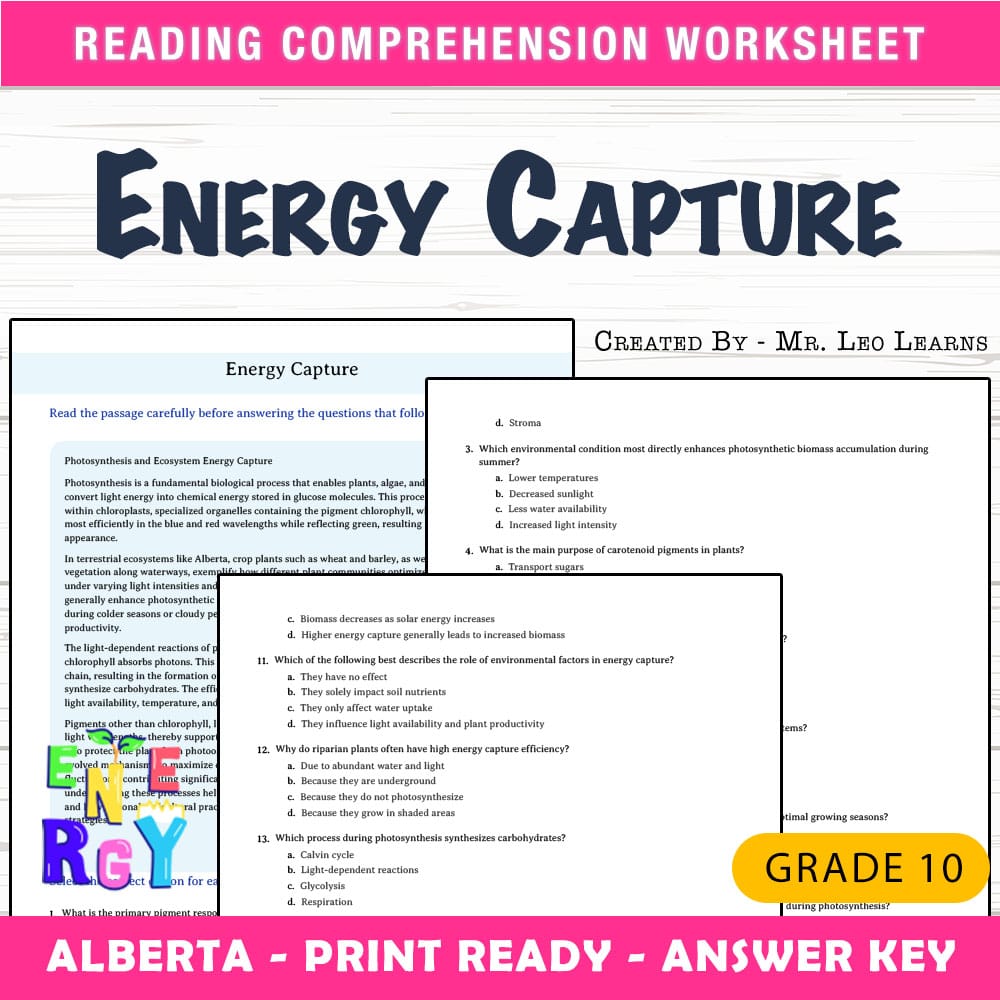
Grade 10 Science — Energy Capture Worksheet MCQ Paper for Alberta
Created byThe Resource HubLearning Objectives
- Understand the process of photosynthesis and how light energy is converted into chemical energy.
- Identify the roles of chlorophyll and other pigments in capturing solar energy.
- Explain environmental factors that influence energy input and plant biomass production.
Also included in: Grade 10 Science Cells and Systems Lesson Bundle | Alberta Curriculum +1 more
Instant download
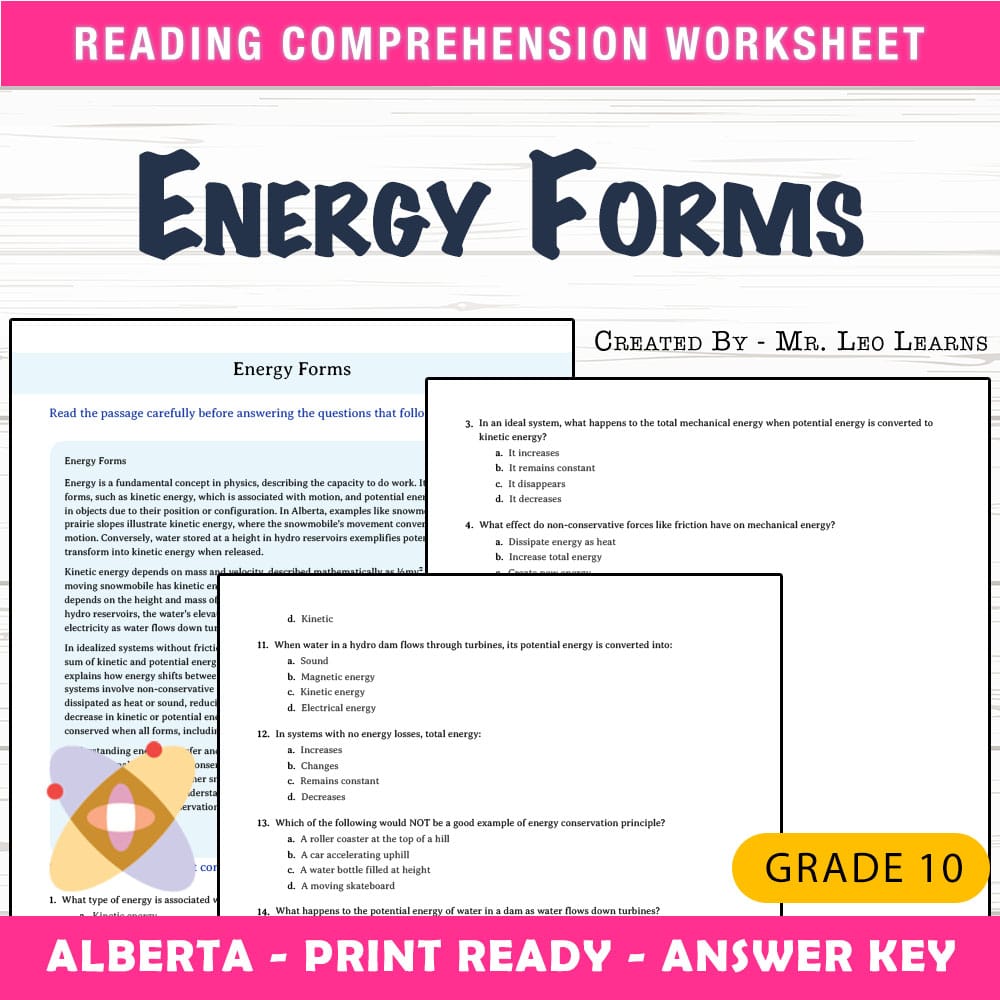
Grade 10 Science — Worksheet MCQ Paper for Mastering Energy Forms
Created byThe Resource HubLearning Objectives
- Understand the concepts of kinetic and potential energy and their differences.
- Recognize real-world examples of energy transformation, such as moving objects and stored energy.
- Explain how energy is conserved in ideal systems and how non-conservative forces affect energy distribution.
Also included in: Grade 10 Science | Energy, Motion & Electricity Worksheet Bundle | Alberta +1 more
Instant download
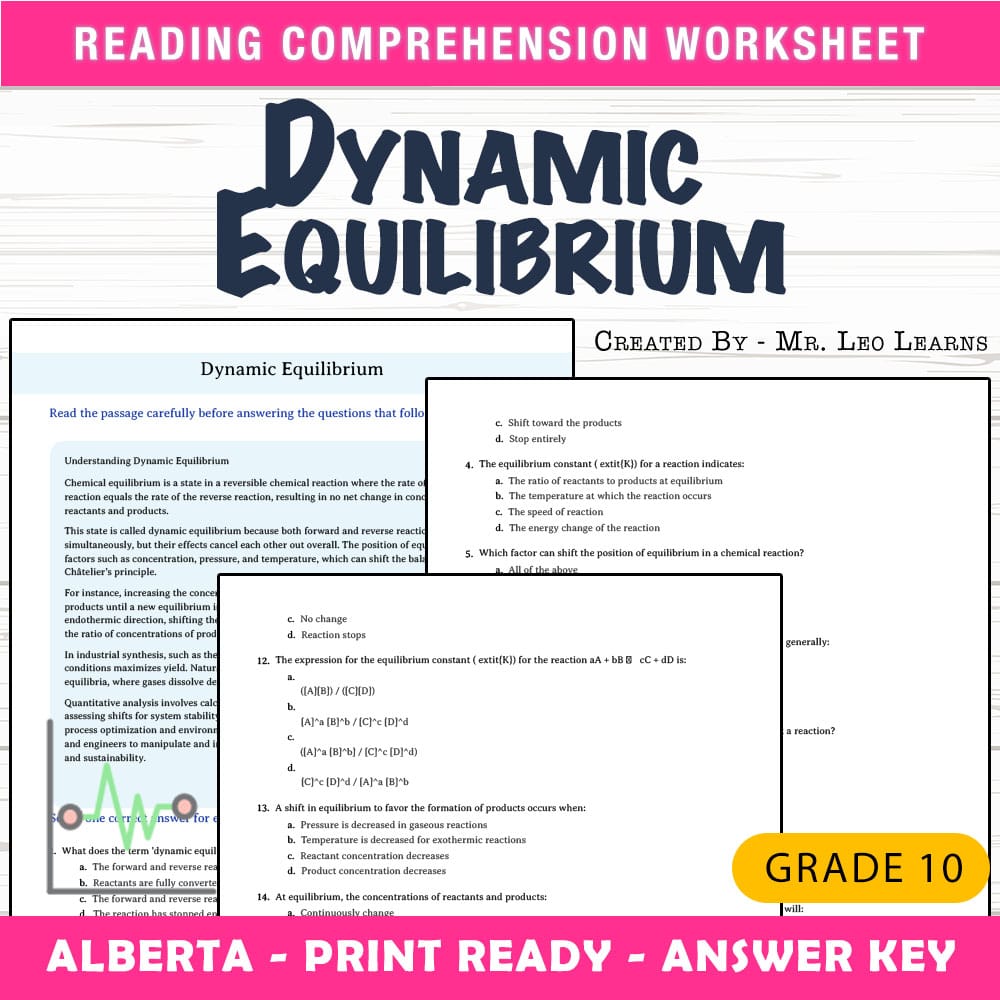
Grade 10 Science — Worksheet MCQ Paper for Mastering Dynamic Equilibrium
Created byThe Resource HubLearning Objectives
- Understand the concept of chemical equilibrium and dynamic balance between forward and reverse reactions.
- Interpret equilibrium expressions quantitatively and analyze how external changes affect the equilibrium position.
- Predict the net change in a system when subjected to perturbations such as concentration, pressure, or temperature shifts.
Also included in: Grade 10 Science Lesson Bundle | Matter and Chemical Change Worksheets +1 more
Instant download
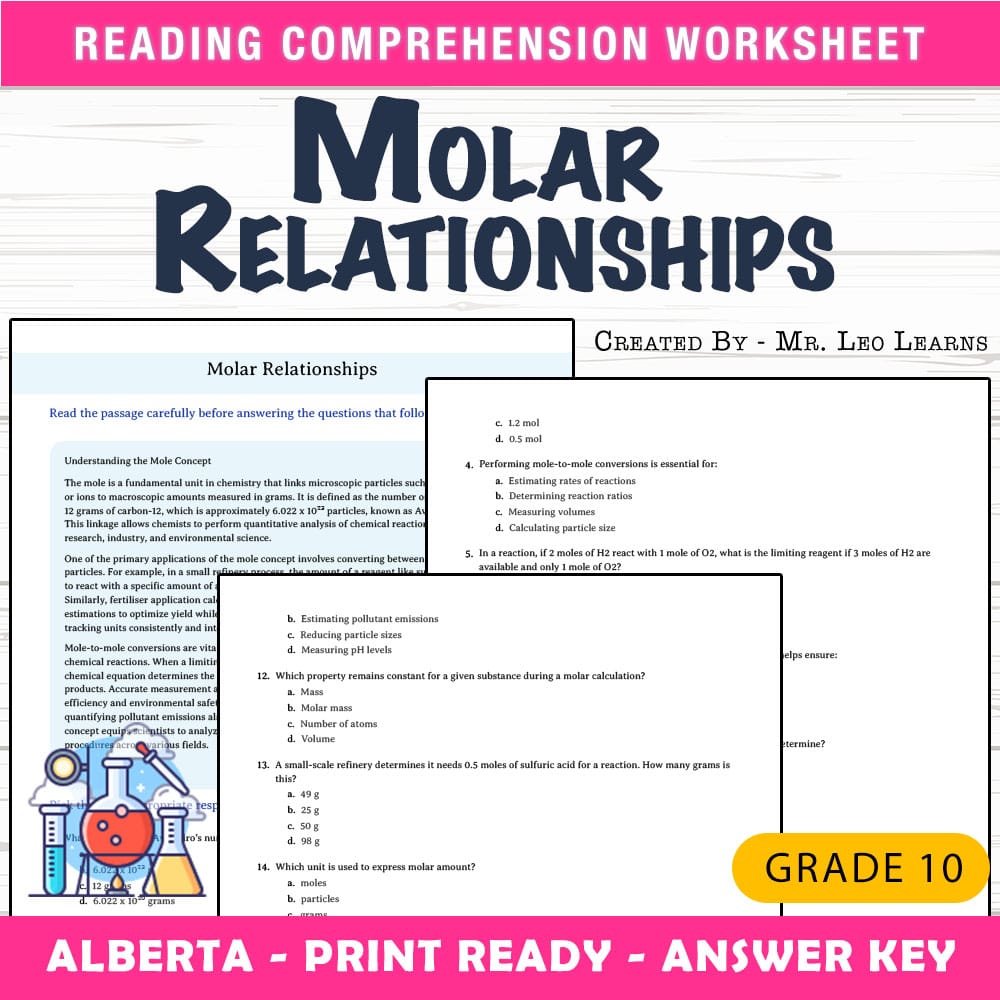
Grade 10 Science — Worksheet MCQ Paper for Mastering Molar Relationships
Created byThe Resource HubLearning Objectives
- Understand the concept of the mole as a link between particle counts and measurable mass.
- Perform mole-to-mass, mole-to-mole conversions, and limiting reagent calculations.
- Apply molar concepts to real-world scenarios like fertilizer use and chemical processing.
Also included in: Grade 10 Science Lesson Bundle | Matter and Chemical Change Worksheets +1 more
Instant download
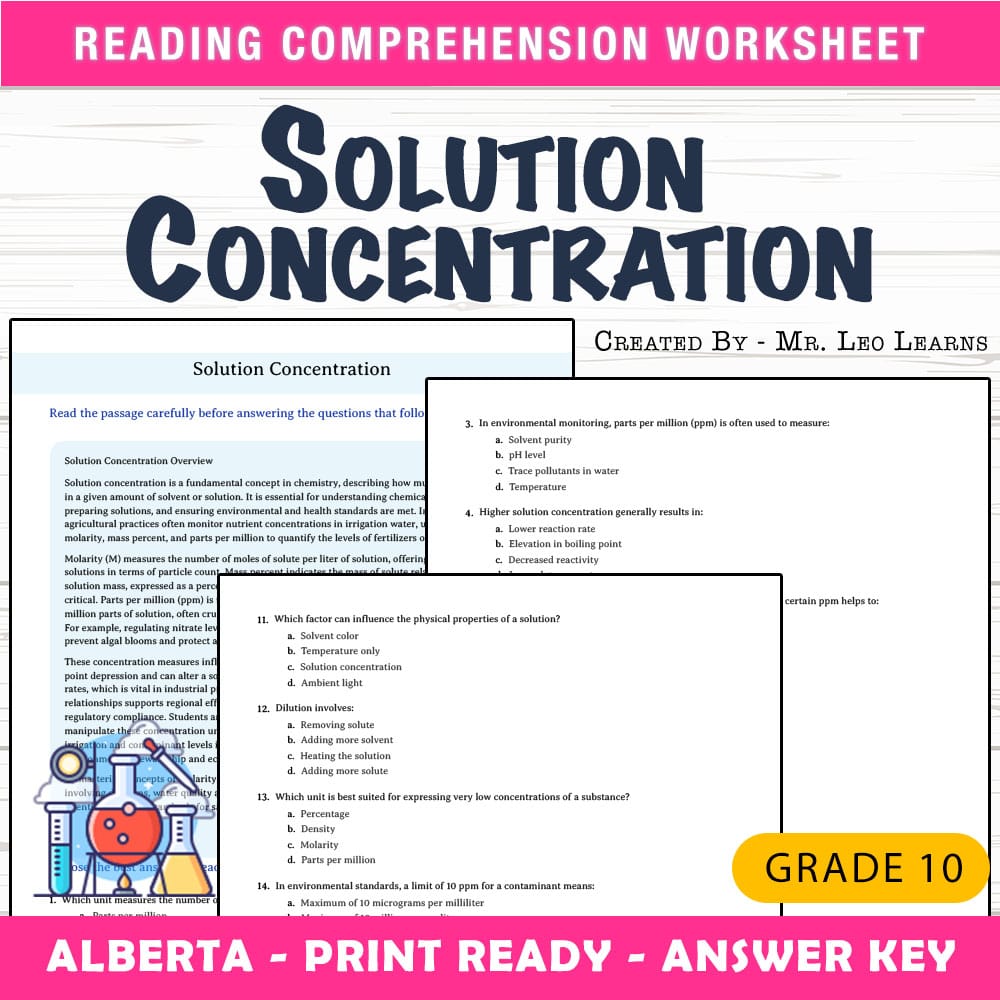
Grade 10 Science — Worksheet MCQ Paper for Mastering Solution Concentration
Created byThe Resource HubLearning Objectives
- Understand the different measures of solution concentration, including molarity, mass percent, and parts per million.
- Interpret how solution concentration affects chemical properties, reactivity, and environmental standards.
- Apply knowledge of solution concentration to real-world contexts like irrigation water and watershed monitoring.
Also included in: Grade 10 Science Lesson Bundle | Matter and Chemical Change Worksheets +1 more
Instant download
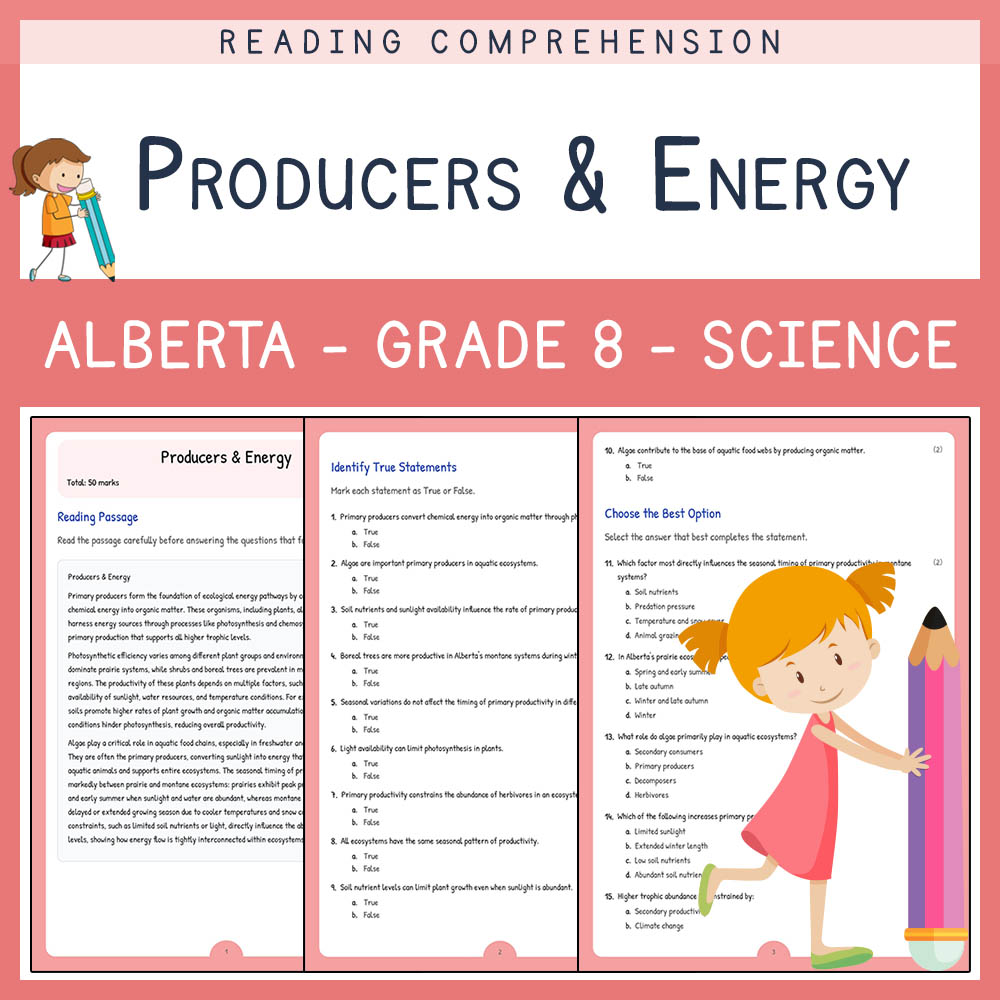
Grade 8 Science | Producers & Energy Worksheet | Alberta
 Created byLumora Learning
Learning Objectives
- Understand the role of primary producers in ecological energy flow.
- Explain the factors that influence primary productivity in different ecosystems.
- Differentiate between types of producers such as algae, grasses, shrubs, and boreal trees.
Instant download
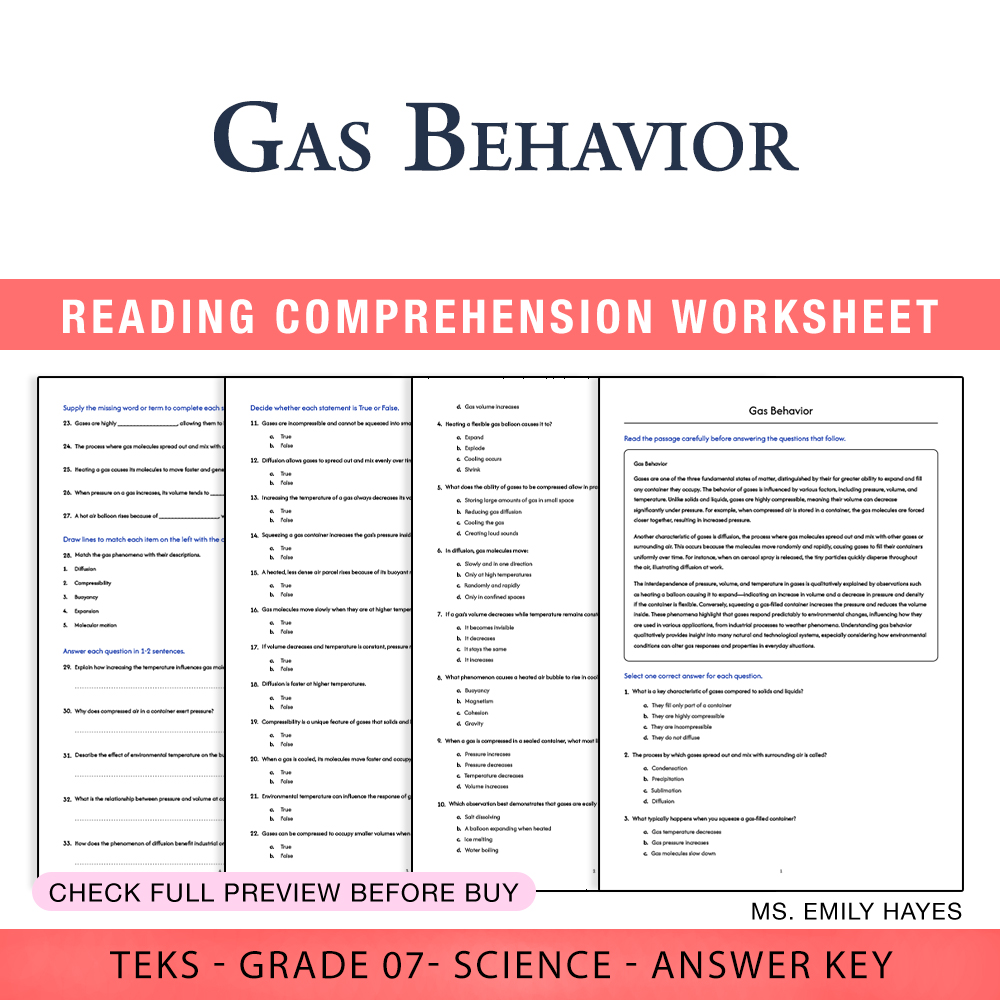
7th Grade Science | Gas Behavior Worksheet (PDF+ Answer Key)
Created byCopper Leaf ClassroomLearning Objectives
- Describe qualitatively how pressure, volume, and temperature interdependently affect gases.
- Explain phenomena such as diffusion and compressibility in gases.
- Relate macroscopic observations like pressure changes with applied force or volume confinement to gas behavior.
Instant download
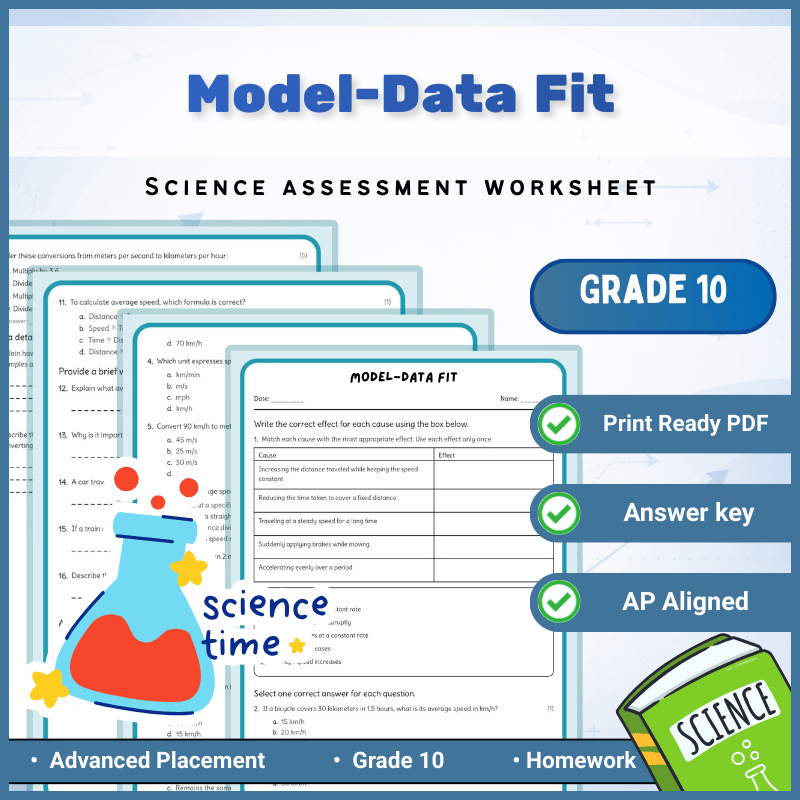
Grade 10 Science | Model-Data Fit Worksheet (AP Standards) – PDF
Created byBright Mind ResourcesLearning Objectives
- Understand how to compare model predictions with observed data using residual analysis.
- Identify concept of goodness-of-fit and how it informs model adequacy.
- Use residuals to evaluate systematic deviations in model predictions.
Instant download

Field Concepts Worksheet Pack | Grade 12 Science Activities
 Created byPrism Point Learning
Learning Objectives
- Explain how gravitational and electric fields describe forces as functions of position.
- Use field line ideas and superposition to predict net field effects from multiple sources.
- Relate field strength to changes in potential energy and motion using Newton’s second law.
Also included in: Waves, Quantum & Electromagnetism Lesson Bundle | Grade 12 Science | BC
Instant download

Grade 9 Science | Energy Conversion - Daily Reading Comprehension
Created byCoral Reef LearningLearning Objectives
- Understand the process of energy transfer in photovoltaic cells
- Identify different forms of energy involved in solar energy devices
- Analyze the efficiency and limitations of solar energy conversion
Instant download

Grade 12 Science Equilibrium Calculations Worksheet (AP) PDF
 Created byEvergreen Desk Education
Learning Objectives
- Use ICE tables and reaction quotients to determine equilibrium concentrations for Grade 12 equilibrium systems.
- Calculate equilibrium constants (Kc and/or Kp) and predict the direction of shift using Q versus K.
- Account for pressure dependence and common-ion effects in equilibrium calculations and interpret the magnitude of the shift.
Also included in: Grade 12 Chemistry Foundations Science Lesson Bundle for Advanced Placement (AP) +1 more
Instant download

Grade 12 Science | Molecular Geometry Worksheet (AP Standards) (PDF)
Created byEvergreen Desk EducationLearning Objectives
- Use VSEPR and hybridization concepts to predict molecular shapes and approximate bond angles from electron-pair arrangements.
- Relate molecular geometry and symmetry to bond polarity, overall dipole moment, and macroscopic properties.
- Explain how resonance and multiple bonds affect electron distribution and the resulting 3D molecular structure.
Also included in: Grade 12 Chemistry Foundations Science Lesson Bundle for Advanced Placement (AP) +1 more
Instant download

Grade 12 Science | Bonding Models Worksheet (AP Standard) (PDF)
Created byEvergreen Desk EducationLearning Objectives
- Explain how molecular orbital theory extends valence-bond ideas for diatomic molecules and predicts bonding order.
- Compare localized versus delocalized bonding models and connect each model to delocalization and observed properties.
- Use energy-level diagrams and symmetry ideas to predict electronic transitions and magnetic behavior.
Also included in: Grade 12 Chemistry Foundations Science Lesson Bundle for Advanced Placement (AP) +1 more
Instant download

Grade 12 Science | Intermolecular Forces Worksheet (AP Standards) (PDF)
Created byEvergreen Desk EducationLearning Objectives
- Distinguish dispersion forces, dipole–dipole interactions, and hydrogen bonding and relate each to molecular structure
- Explain how intermolecular force strength affects boiling point, vapor pressure, viscosity, and solubility
- Use diagrams and thermodynamic reasoning to predict how changes in size, shape, and polarity change macroscopic behavior
Also included in: Grade 12 Chemistry Foundations Science Lesson Bundle for Advanced Placement (AP) +1 more
Instant download

Grade 12 Science Worksheet | Periodic Predictions (AP) Standards Aligned (PDF)
Created byEvergreen Desk EducationLearning Objectives
- Use effective nuclear charge, shielding, and subshell filling to predict trends and anomalies in ionization energy, electron affinity, and atomic radius.
- Interpret quantitative comparisons and simple graphical relationships across periods and down groups to justify periodic patterns.
- Connect periodic trends to element classification, reactivity series behavior, and the selection of representative elements for modeling.
Also included in: Grade 12 Chemistry Foundations Science Lesson Bundle for Advanced Placement (AP) +1 more
Instant download

Grade 12 Science | Atomic Models Worksheet (AP Standards) (PDF)
Created byEvergreen Desk EducationLearning Objectives
- Explain how historical atomic models evolved toward quantum descriptions of the electron and nucleus.
- Use spectral lines and scattering evidence to justify discrete (quantized) energy levels.
- Relate quantum numbers and orbital shapes to electron arrangements and chemical behavior.
Also included in: Grade 12 Chemistry Foundations Science Lesson Bundle for Advanced Placement (AP) +1 more
Instant download
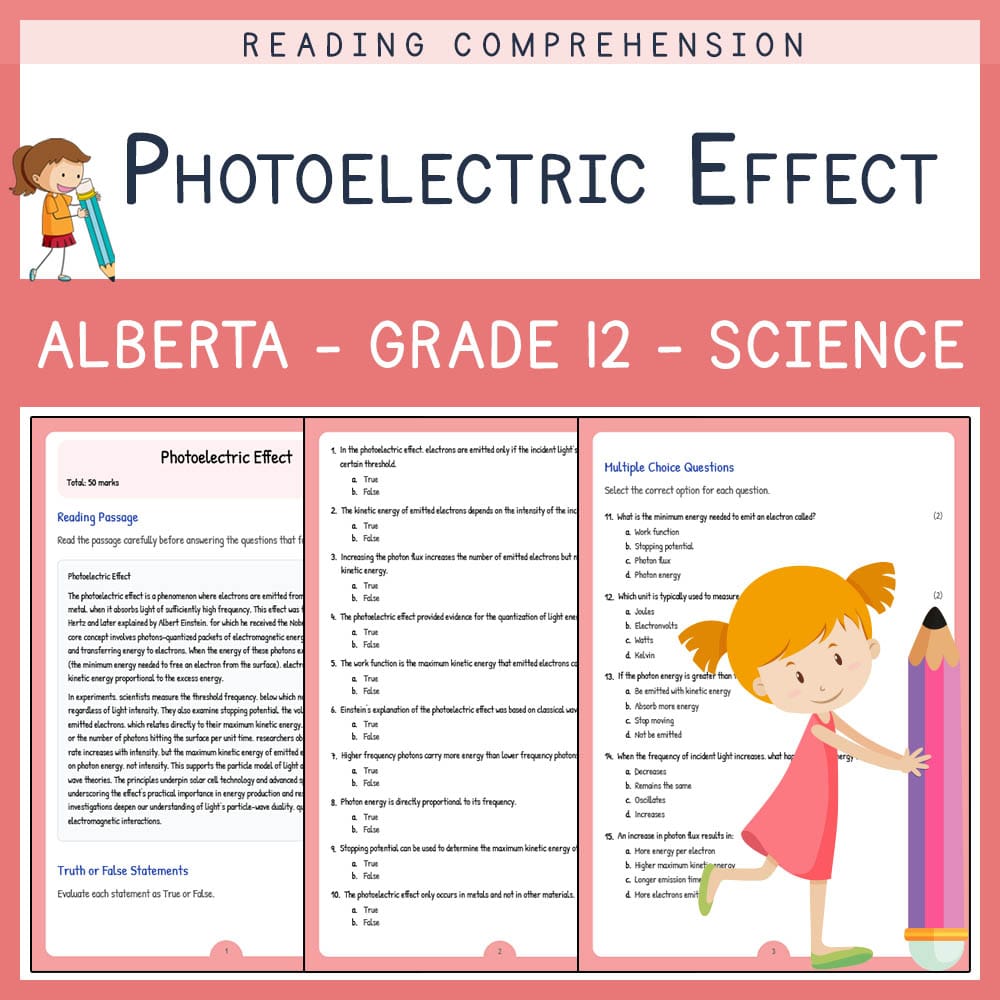
Grade 12 Science | Photoelectric Effect Worksheet | Alberta Standard
Created byLumora LearningLearning Objectives
- Explain the principles of the photoelectric effect and its significance in quantum physics.
- Connect the concepts of photon energy, work function, and kinetic energy of emitted electrons.
- Analyze how experimental measurements relate to the particle nature of light.
Also included in: Grade 12 Science | Physics Science Lesson Bundle Worksheet Set | Alberta
Instant download

Grade 10 Hydrologic Cycle Worksheet | Alberta Science Standards PDF
Created byEvergreen Desk EducationLearning Objectives
- Describe the main processes of the hydrologic cycle (evaporation, transpiration, condensation, precipitation, and runoff).
- Explain how seasonal storage in snowpack and groundwater affects streamflow and freshwater availability.
- Analyze how climate variability and watershed characteristics influence water security in river basins.
Instant download

Grade 7 Science Impact of Technology Worksheet (TEKS) – PDF
Created byEvergreen Desk EducationLearning Objectives
- Analyze how technology can create short-term and long-term social, economic, and environmental impacts.
- Evaluate trade-offs using cost-benefit reasoning and identify unintended consequences.
- Explain how policy responses and ethical considerations can help mitigate harm from technological change.
Instant download
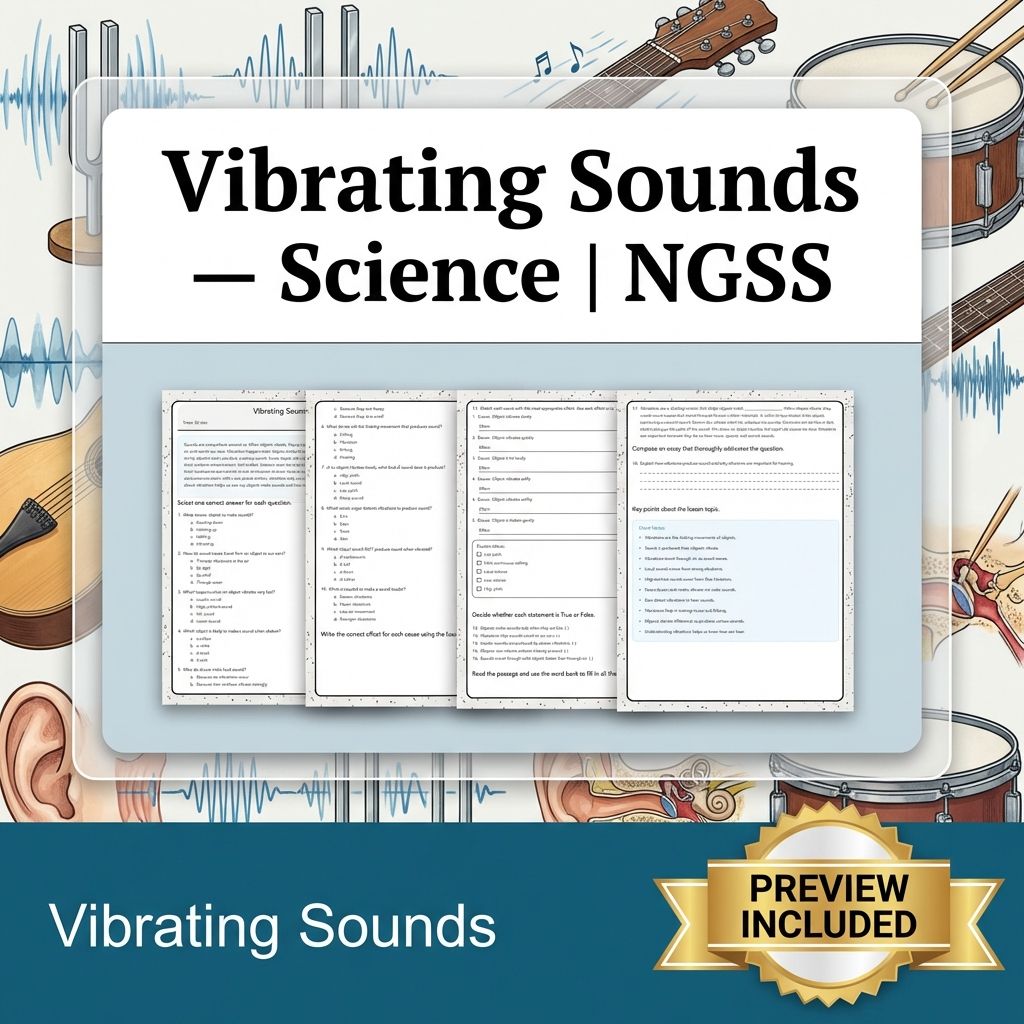
Grade 1 Science | Vibrating Sounds Worksheet with Short Notes (Printable PDF)
 Created byMeadowlark Worksheets
Learning Objectives
- Understand how vibrations produce sounds.
- Identify objects that make sounds when vibrated.
- Learn how sounds travel through the air.
Also included in: Grade 1 Science NGSS Unit Bundle | Waves & Information Transfer Applications +1 more
Instant download
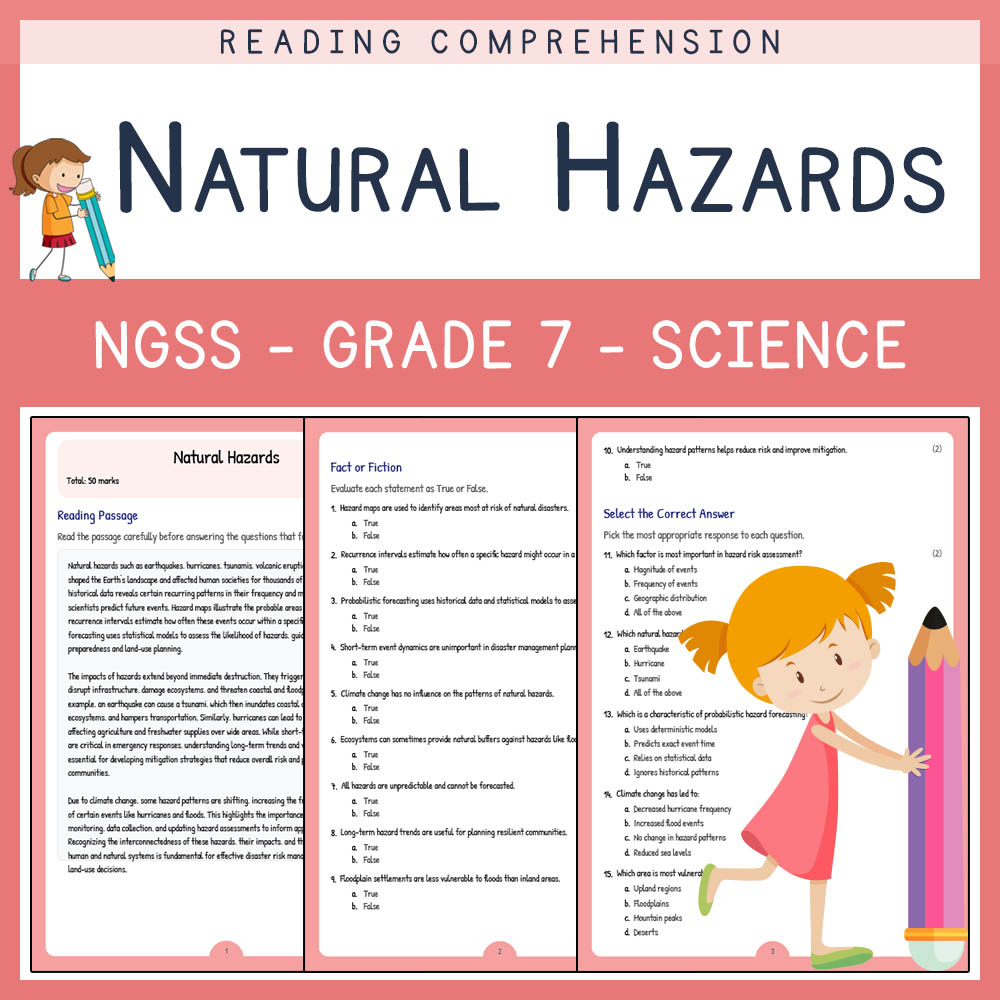
Grade 7 Science | Natural Hazards Worksheet & Answer Key (NGSS Aligned)
Created byLumora LearningLearning Objectives
- Analyze patterns in the frequency and magnitude of earthquakes, volcanic eruptions, hurricanes, floods, and tsunamis.
- Interpret hazard maps, recurrence intervals, and probabilistic forecasts to assess risks.
- Understand the cascading impacts of natural hazards on infrastructure and ecosystems.
Instant download
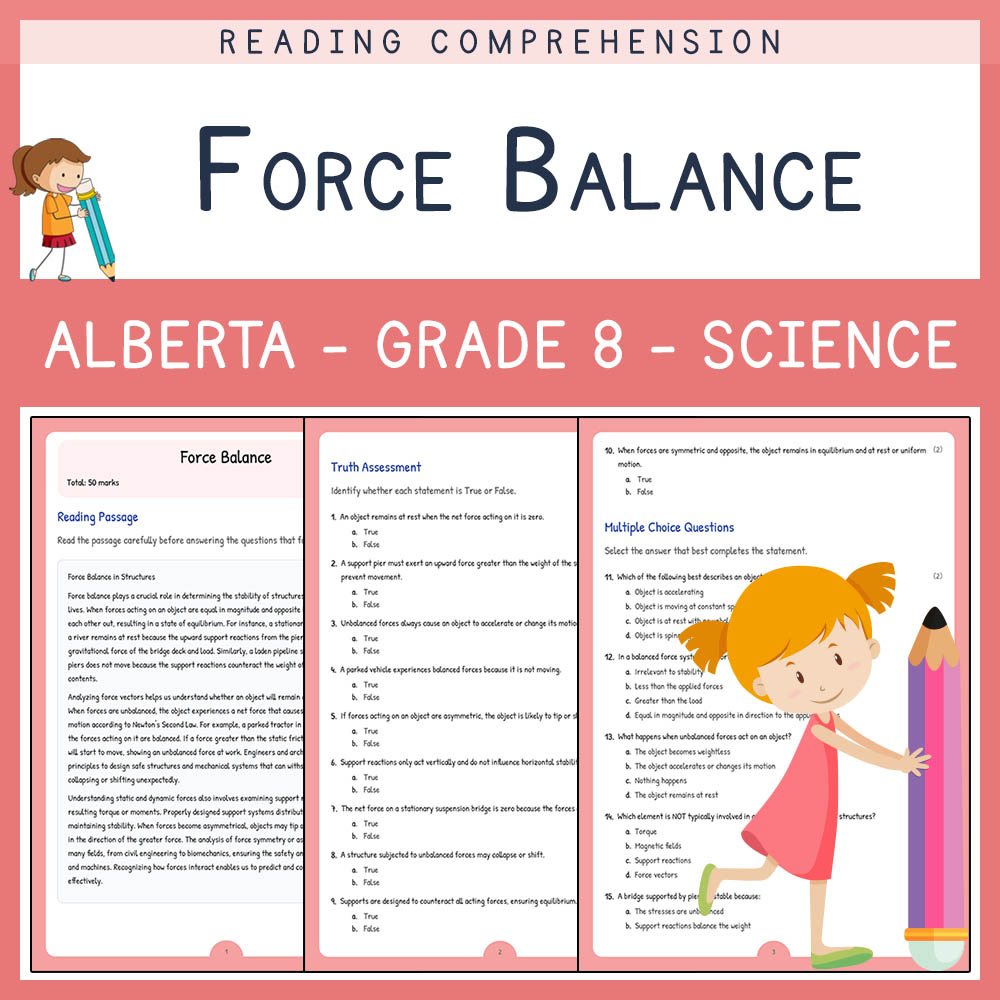
Grade 8 Science | Force Balance Worksheet Elena | Alberta Standard
Created byLumora LearningLearning Objectives
- Understand the concept of balanced and unbalanced forces and their effects on objects.
- Analyze force vectors, support reactions, and resulting motion or equilibrium.
- Identify examples of static and dynamic force systems in real-world scenarios.
Instant download
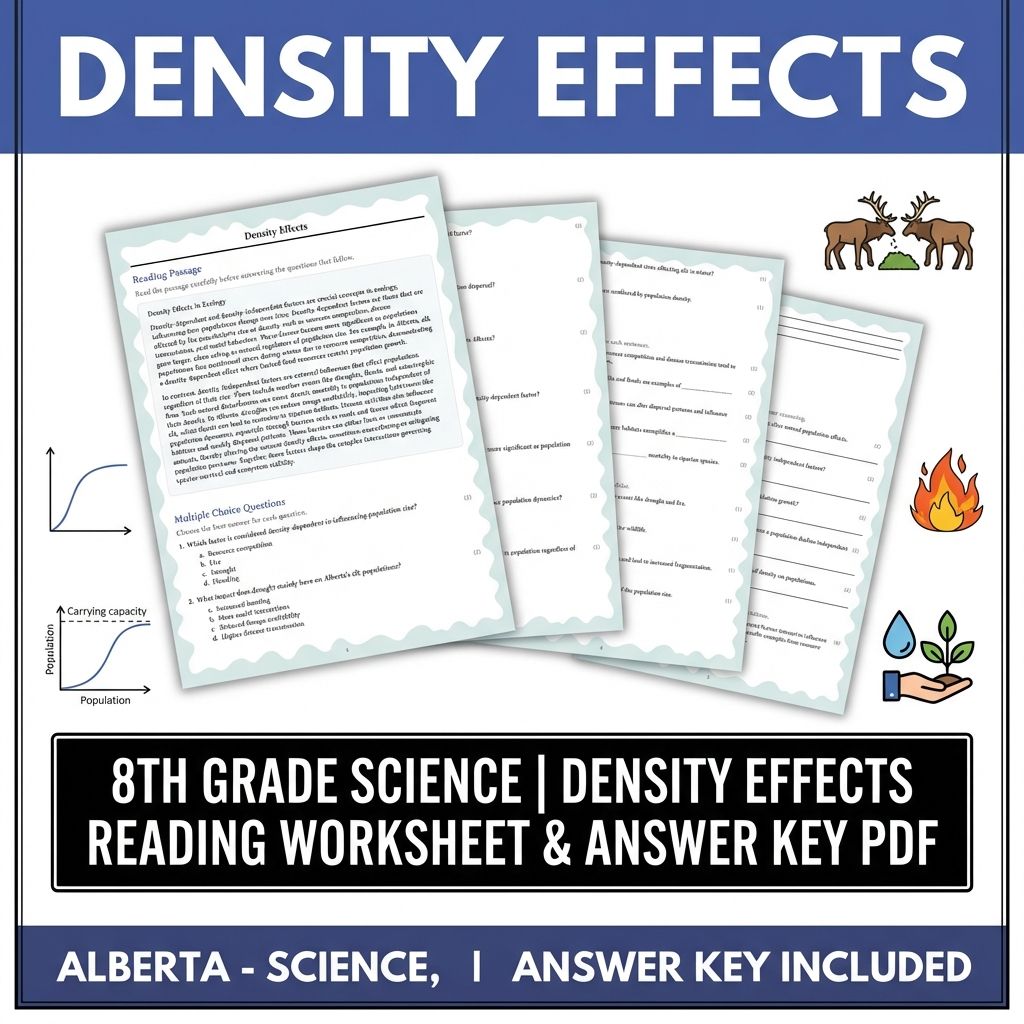
8th Grade Science | Density Effects Reading Worksheet & Answer Key PDF
JCreated byJ.S SheetsLearning Objectives
- Understand the difference between density-dependent and density-independent factors affecting populations.
- Identify examples of resource competition, disease transmission, and social behaviors related to population control.
- Describe how weather events, drought, and fire influence population dynamics in different habitats.
Also included in: Grade 8 Science Bundle | Ecosystem Dynamics & Environmental Impact Worksheets +1 more
Instant download

Grade 11 Science – Detecting Electromagnetic Frequencies & Measurement
Created byBright Mind ResourcesLearning Objectives
- Identify and differentiate various electromagnetic bands
- Understand how matter absorbs different electromagnetic frequencies
- Analyze the measurement techniques using detectors like CCDs and photodiodes
Also included in: Signals & Waves Grade 11 Science Daily Reading Worksheets Bundle | NGSS +2 more
Instant download

Grade 11 Science – Wave Relationships & Concepts | Daily Reading Worksheet
Created byBright Mind ResourcesLearning Objectives
- Understand the mathematical relationship defining wave speed: v = fλ.
- Identify and differentiate between transverse and longitudinal waves.
- Describe wave properties including phase, amplitude, and energy.
Also included in: Signals & Waves Grade 11 Science Daily Reading Worksheets Bundle | NGSS +2 more
Instant download

Grade 11 Science DNA Structure Worksheet | Standards-Aligned Practice
JCreated byJ.S SheetsLearning Objectives
- Describe the basic components of DNA and their functions.
- Explain the significance of complementary base pairing and the double helix structure.
- Understand how mutations can alter genetic information and contribute to variation.
Instant download

Grade 9 Science – Inclined Planes & Forces | Daily Reading Worksheet
Created byBright Mind ResourcesLearning Objectives
- Understand key concepts related to Science
- Apply knowledge through practice questions
- Demonstrate comprehension of the material
Also included in: Grade 9 Forces, Motion & Energy Science Lesson Bundle for Daily Reading | BC +1 more
Instant download
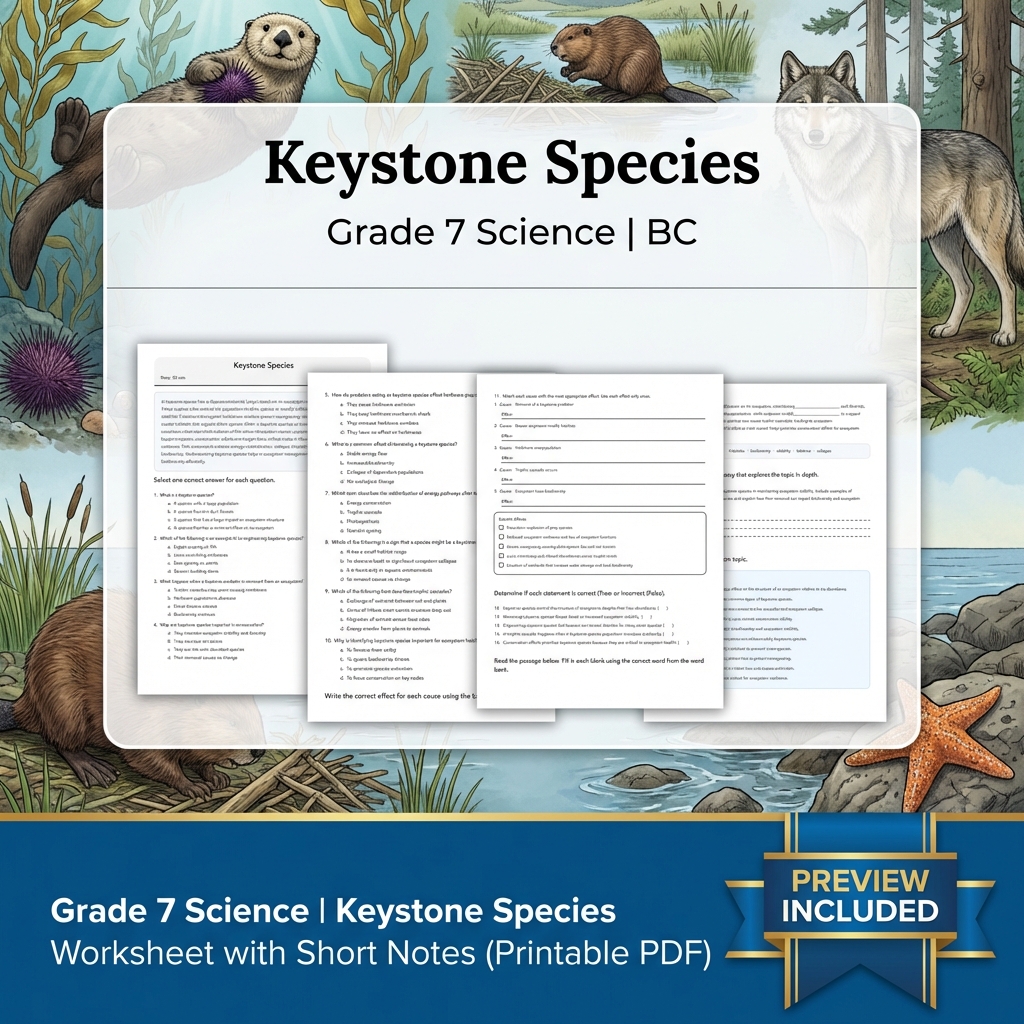
Grade 7 Science | Keystone Species Worksheet with Short Notes (Printable PDF)
Created byMeadowlark WorksheetsLearning Objectives
- Understand the concept of a keystone species and its importance in ecosystems.
- Identify different types of keystone species, such as predators and engineers.
- Explain the effects of removing a keystone species from an ecosystem.
Also included in: Grade 7 Science Lesson Bundle: Ecosystems and Population Dynamics Worksheets +1 more
Instant download
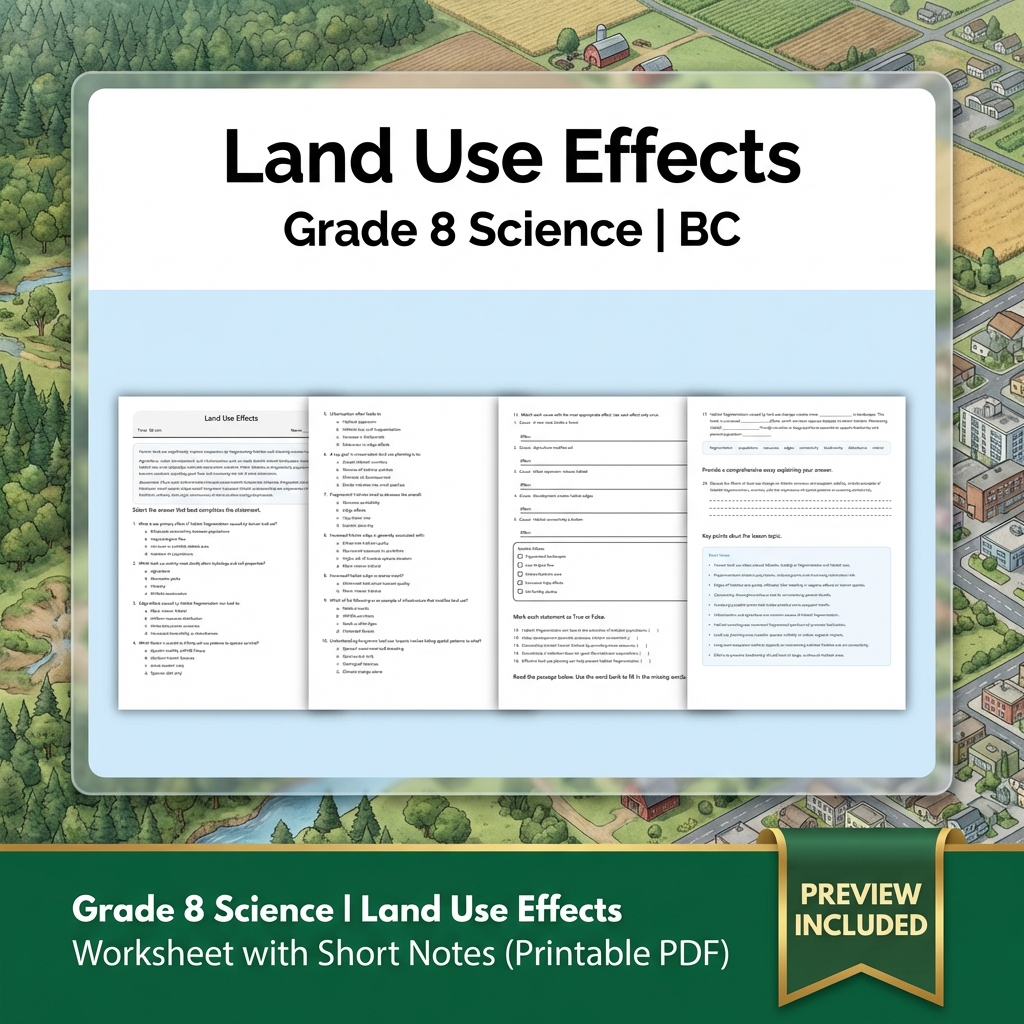
Grade 8 Science | Land Use Effects Worksheet with Short Notes (Printable PDF)
Created byMeadowlark WorksheetsLearning Objectives
- Understand how human land use alters habitats and ecosystem connectivity.
- Identify the impacts of land fragmentation on biodiversity and species survival.
- Analyze spatial patterns of land use and relate them to species' life histories.
Also included in: Grade 8 Science Lesson Bundle | Ecosystems, Biodiversity & Environmental Impacts +1 more
Instant download
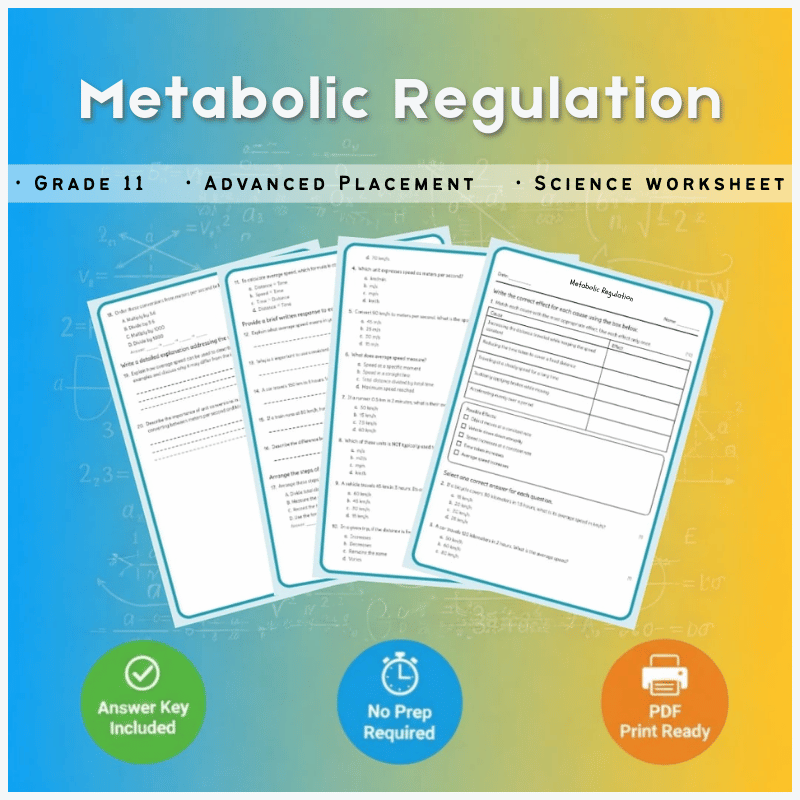
Grade 11 Science | Metabolic Regulation Worksheet (AP Standards + Answer Key)
Created byBright Mind ResourcesLearning Objectives
- Understand mechanisms controlling metabolic pathway flux, including allosteric control, covalent modification, and compartmentalization.
- Explain feedback inhibition, branch-point regulation, and hormonal signaling in metabolism.
- Integrate thermodynamic constraints with enzyme kinetics to describe metabolic homeostasis during different physiological states.
Instant download
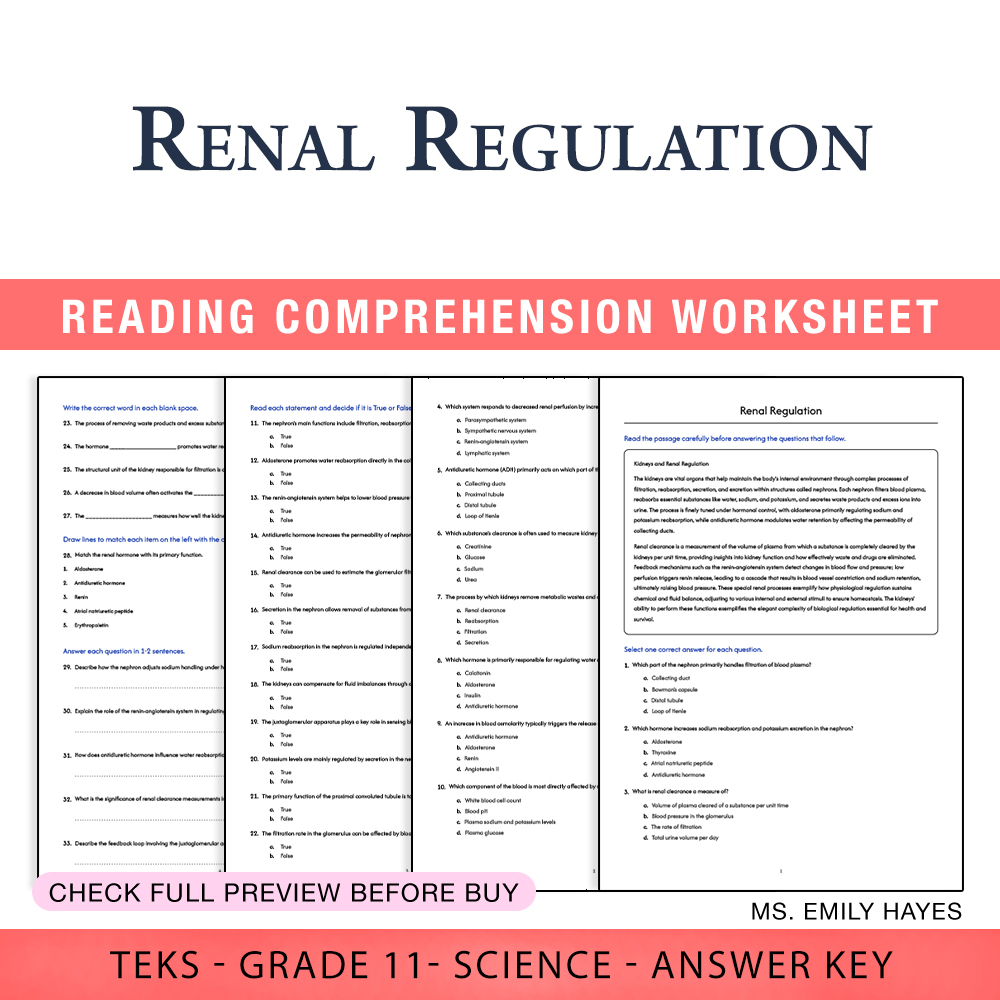
11th Grade Science | Renal Regulation Worksheet (PDF+ Answer Key)
Created byCopper Leaf ClassroomLearning Objectives
- Understand the mechanisms of kidney function including filtration, reabsorption, secretion, and excretion.
- Describe how hormones like aldosterone and antidiuretic hormone regulate nephron activities.
- Explain renal clearance and feedback loops such as the renin-angiotensin system.
Instant download
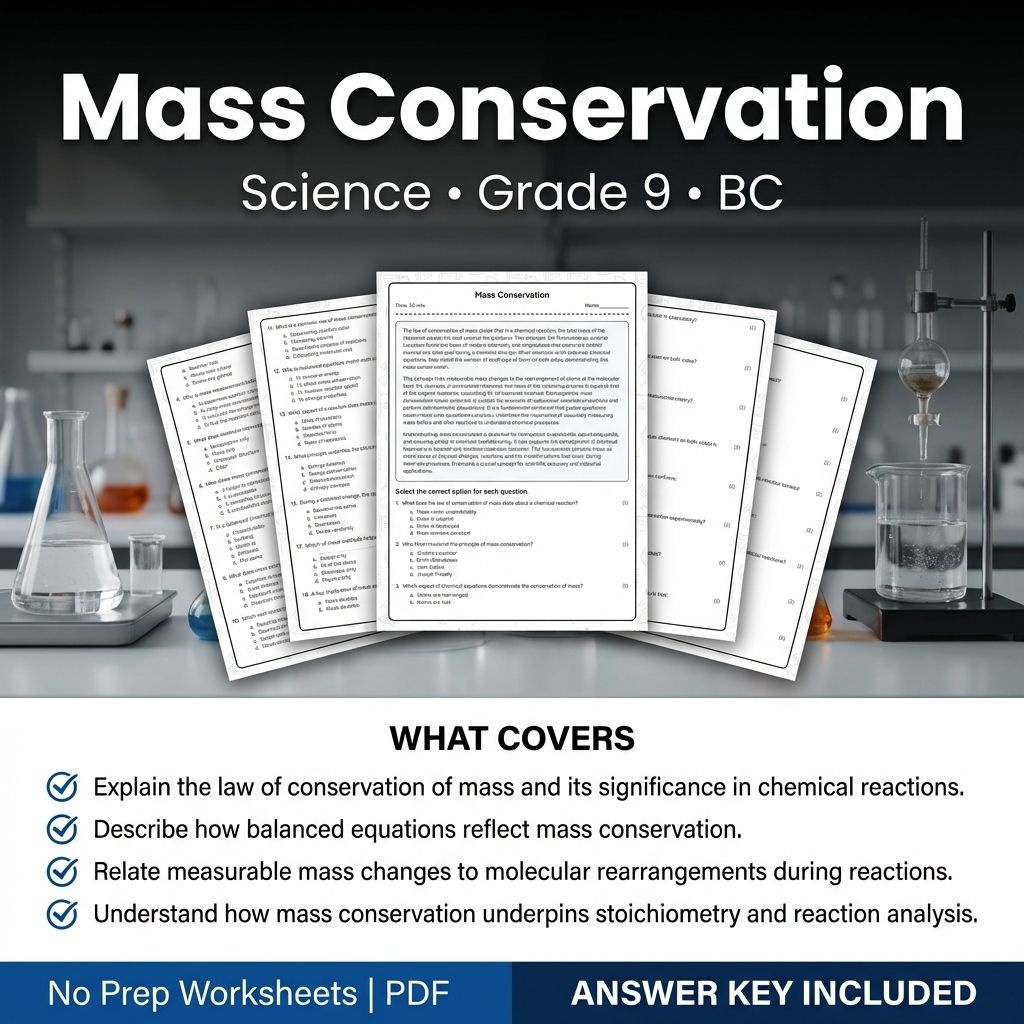
Grade 9 Science | Mass Conservation Worksheet & Answer Key (Printables)
Created byCoral Reef LearningLearning Objectives
- Explain the law of conservation of mass and its significance in chemical reactions.
- Describe how balanced equations reflect mass conservation.
- Relate measurable mass changes to molecular rearrangements during reactions.
Instant download
Browse more categories
About Science Worksheets
Find Science worksheets spanning core skills, practice, and review. All 44,342 resources are instant PDF downloads for the classroom or home.
Every worksheet on MyTeachingSheets is created by independent teacher-authors and reviewed before publication. All resources download as printable PDFs for classroom, homework, or at-home practice, and many include answer keys. Preview any worksheet free before buying.