
Grade 10 Science Worksheets
7,069 worksheets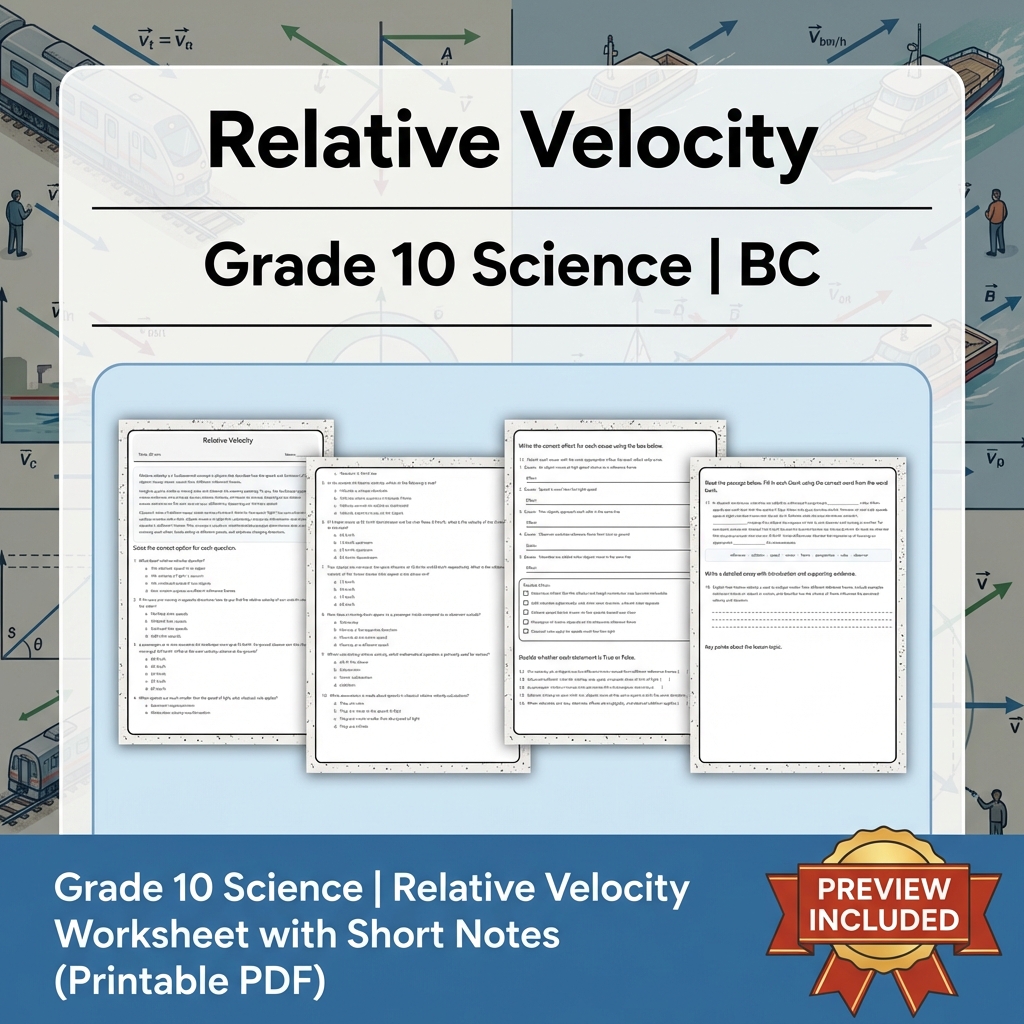
Grade 10 Science | Relative Velocity Worksheet with Short Notes (Printable PDF)
 Created byMeadowlark Worksheets
Learning Objectives
- Understand the concept of relative velocity between different reference frames.
- Apply vector subtraction to calculate apparent speeds and directions.
- Distinguish between different frame perspectives in motion analysis.
Also included in: Grade 10 Science Lesson Bundle | Physics and Forces Worksheets | BC Framework +1 more
Instant download

Technology Society Impacts Worksheet Grade 10 Science STEM Activities
 Created byPrism Point Learning
Learning Objectives
- Explain how technologies change communication, work, travel, and access to services in society.
- Use cause-and-effect reasoning to connect design choices to social and environmental impacts.
- Evaluate how engineering trade-offs can affect public health, equity, and long-term sustainability.
Instant download
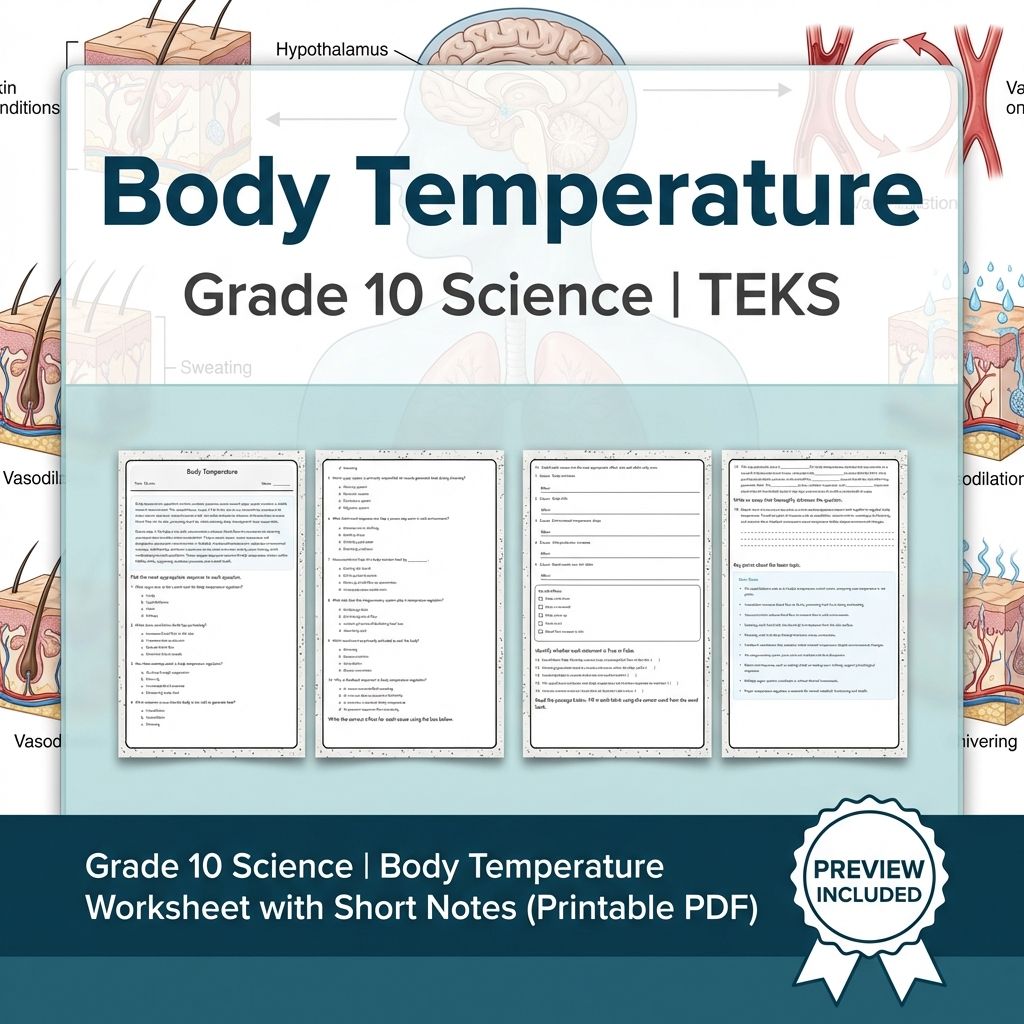
Grade 10 Science | Body Temperature Worksheet with Short Notes (Printable PDF)
Created byMeadowlark WorksheetsLearning Objectives
- Understand the mechanisms involved in body temperature regulation.
- Identify the roles of different organ systems in maintaining thermal balance.
- Explain feedback processes like vasodilation, vasoconstriction, sweating, and shivering.
Instant download
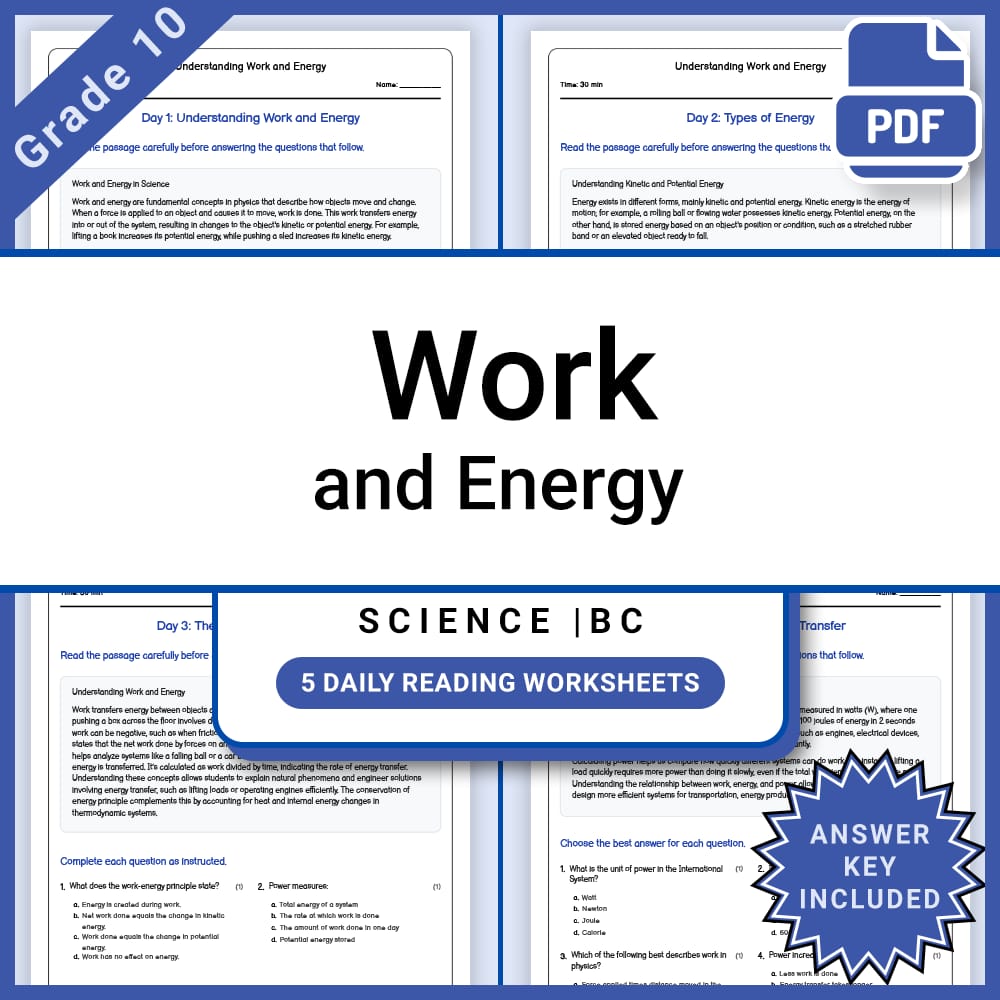
Grade 10 Science – Work and Energy Daily Reading Practice with Answer Key
JCreated byJ.S SheetsLearning Objectives
- Understand key concepts related to Science
- Apply knowledge through practice questions
- Demonstrate comprehension of the material
Also included in: Grade 10 Science Lesson Group BC Framework – Daily Reading Worksheets Bundle +1 more
Instant download

Grade 10 Science | Variable Isolation in Scientific Experiments - Comprehension
 Created byCoral Reef Learning
Learning Objectives
- Understand the concept of independent and dependent variables
- Identify variables in experimental design
- Explore how variables influence scientific outcomes
Instant download
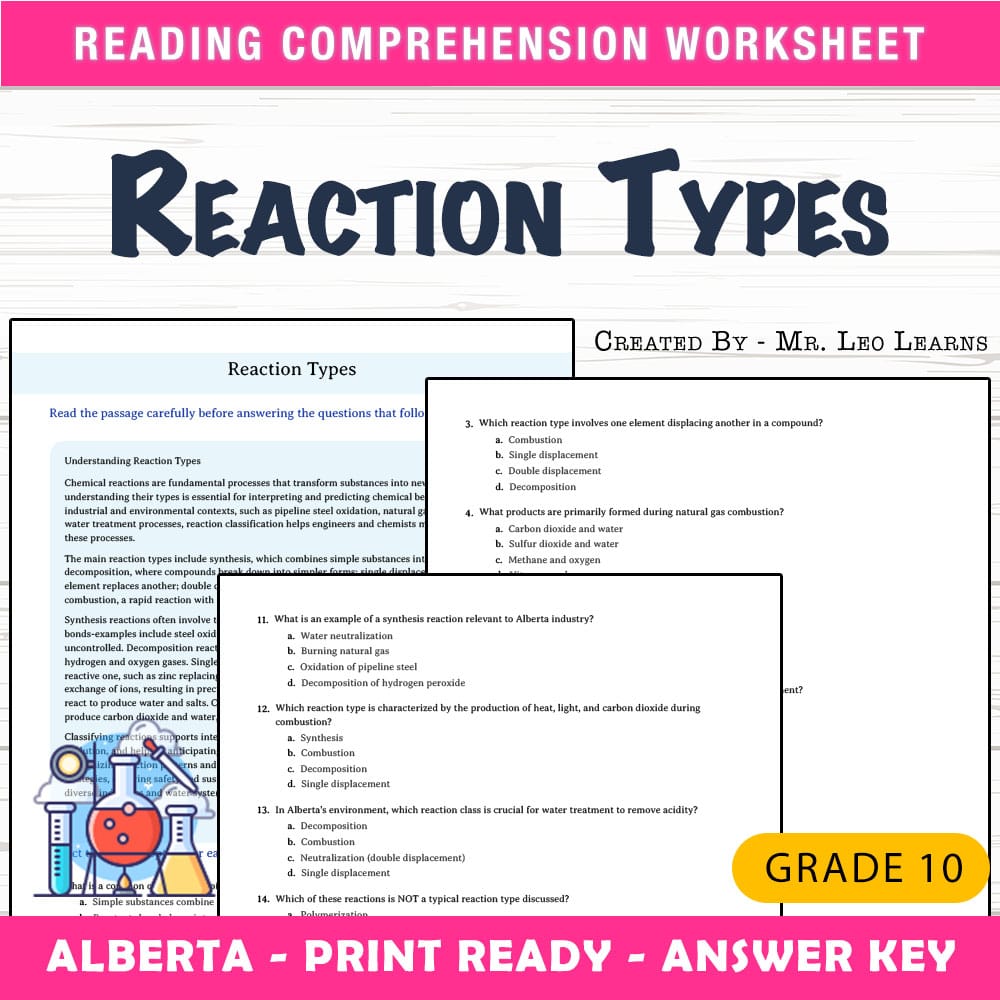
Grade 10 Science — Worksheet MCQ Paper for Mastering Reaction Types
 Created byThe Resource Hub
Learning Objectives
- Identify the different types of chemical reactions such as synthesis, decomposition, single and double displacement, and combustion.
- Understand the distinctive features and observable indicators of each reaction type.
- Apply reaction classification to Alberta-relevant examples like steel oxidation, natural gas combustion, and water treatment.
Also included in: Grade 10 Science Lesson Bundle | Matter and Chemical Change Worksheets +1 more
Instant download
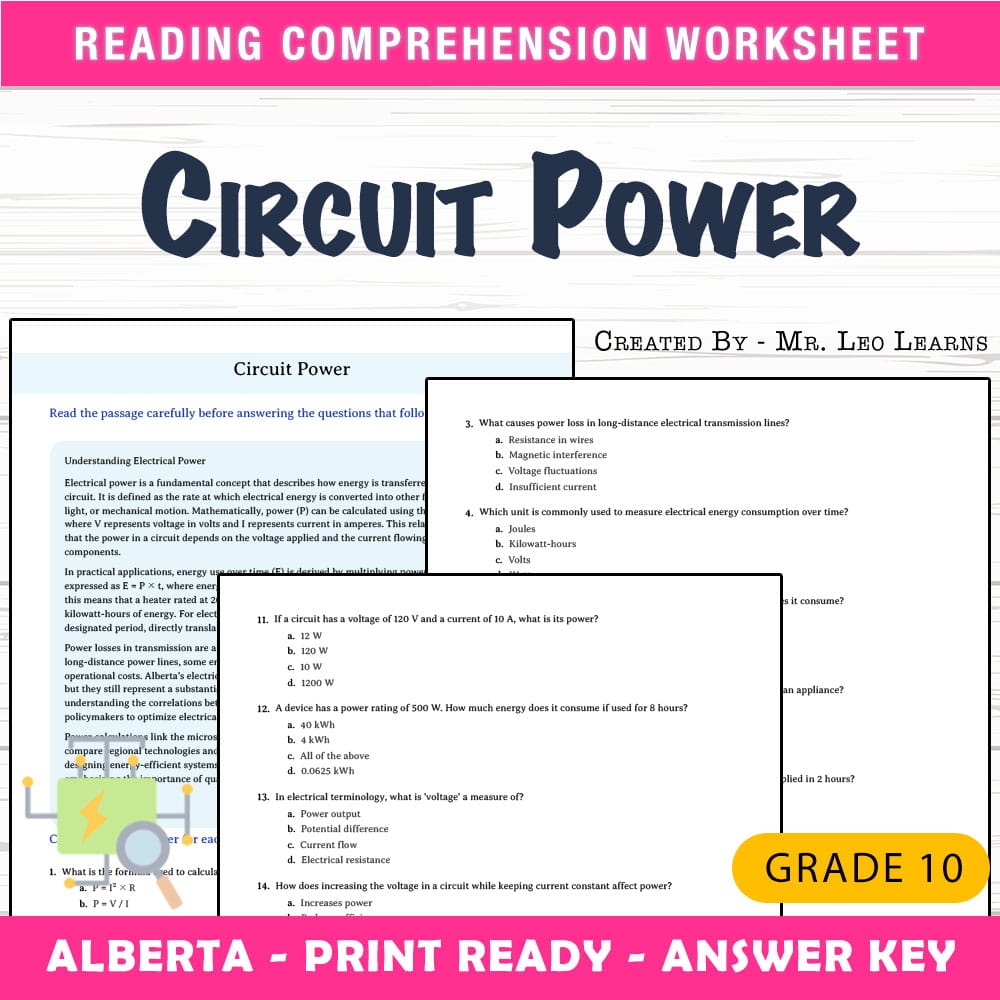
Grade 10 Science — Worksheet MCQ Paper for Mastering Circuit Power
Created byThe Resource HubLearning Objectives
- Understand how voltage, current, and resistance relate to electrical power.
- Calculate energy consumption over time using power and usage duration.
- Apply power and energy concepts to household appliances, electric vehicles, and regional power systems.
Also included in: Grade 10 Science | Energy, Motion & Electricity Worksheet Bundle | Alberta +1 more
Instant download
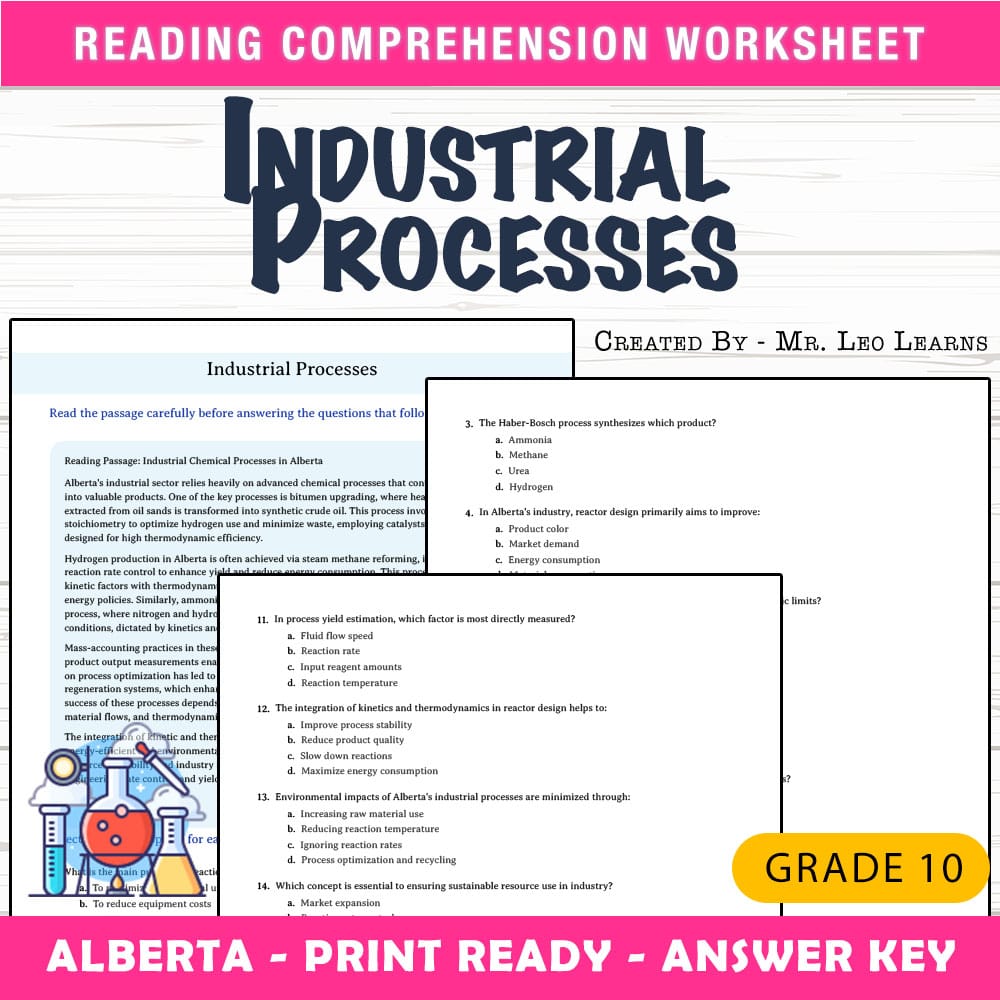
Grade 10 Science — Worksheet MCQ Paper for Mastering Industrial Processes
Created byThe Resource HubLearning Objectives
- Understand key concepts of reaction stoichiometry and mass conservation in industrial chemical processes.
- Identify factors affecting process efficiency and yield in Alberta-specific industrial applications.
- Explain the interplay of kinetics and thermodynamics in reactor design and process optimization.
Also included in: Grade 10 Science Lesson Bundle | Matter and Chemical Change Worksheets +1 more
Instant download
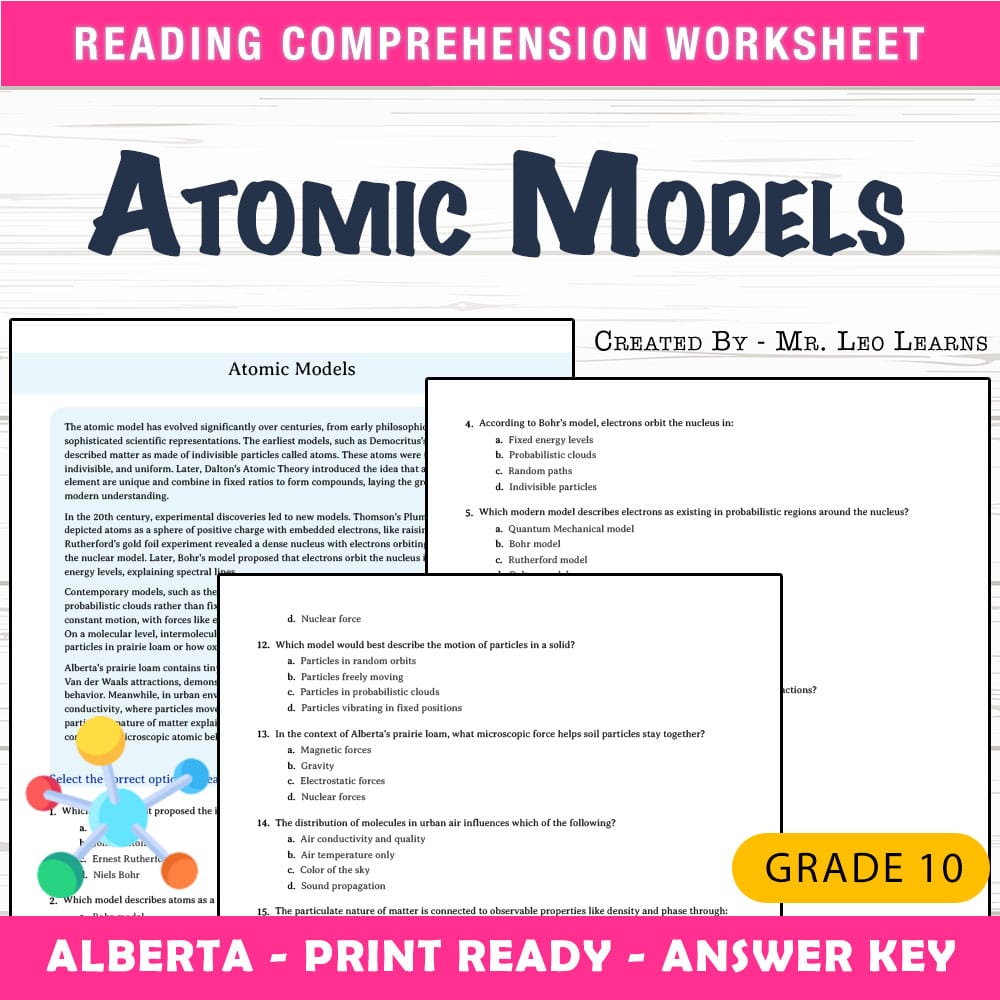
Grade 10 Science — Worksheet MCQ Paper for Mastering Atomic Models
Created byThe Resource HubLearning Objectives
- Understand different atomic models and their representations.
- Relate microscopic atomic structure to macroscopic properties of matter.
- Identify how particle motion and forces influence observable material behavior.
Also included in: Grade 10 Science Lesson Bundle | Matter and Chemical Change Worksheets +1 more
Instant download
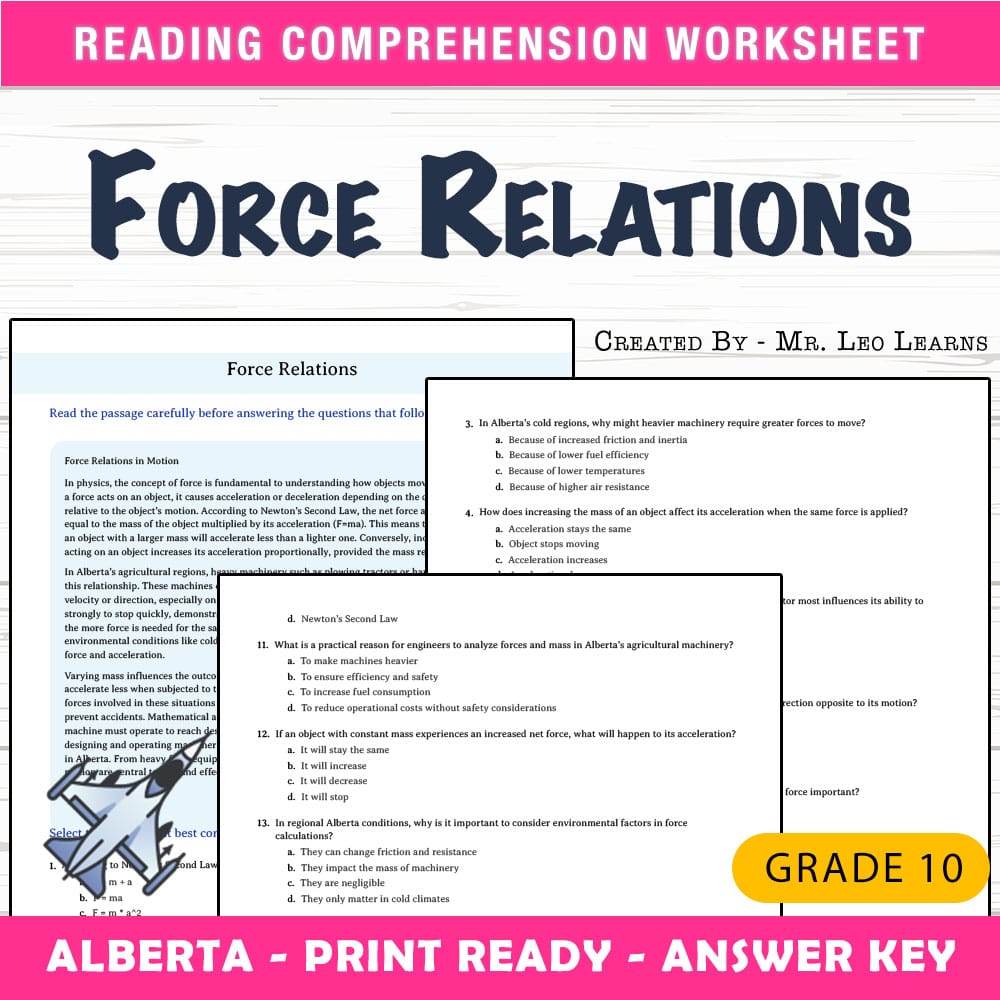
Grade 10 Science — Worksheet MCQ Paper for Mastering Force Relations
Created byThe Resource HubLearning Objectives
- Understand how net force affects the motion of objects.
- Analyze the relationship between mass, force, and acceleration using Newtonian principles.
- Interpret regional Alberta examples involving heavy machinery and vehicle braking to illustrate force and motion concepts.
Also included in: Grade 10 Science | Energy, Motion & Electricity Worksheet Bundle | Alberta +1 more
Instant download
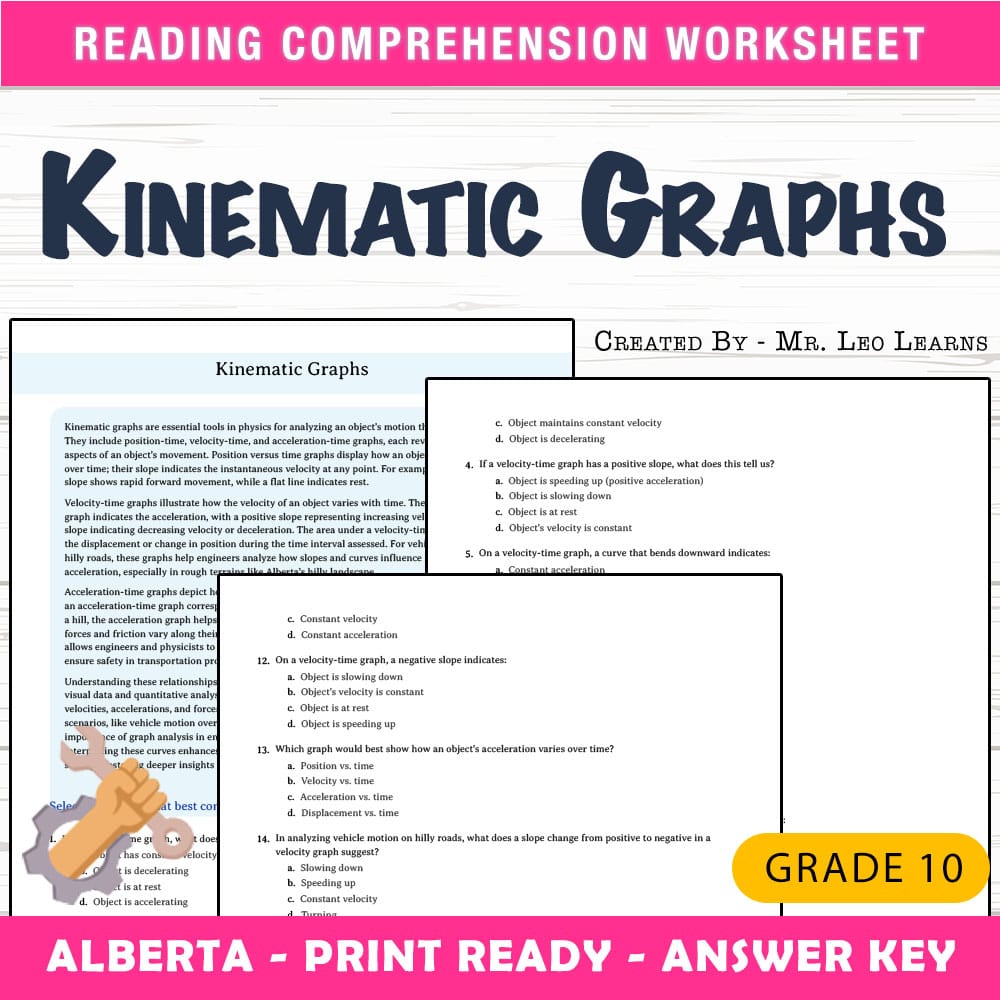
Grade 10 Science — Worksheet MCQ Paper for Mastering Kinematic Graphs
Created byThe Resource HubLearning Objectives
- Understand how position, velocity, and acceleration graphs represent motion.
- Interpret slopes and areas under curves to determine instantaneous and average quantities.
- Apply graphical analysis to real-world vehicle and sled motion scenarios.
Also included in: Grade 10 Science | Energy, Motion & Electricity Worksheet Bundle | Alberta +1 more
Instant download
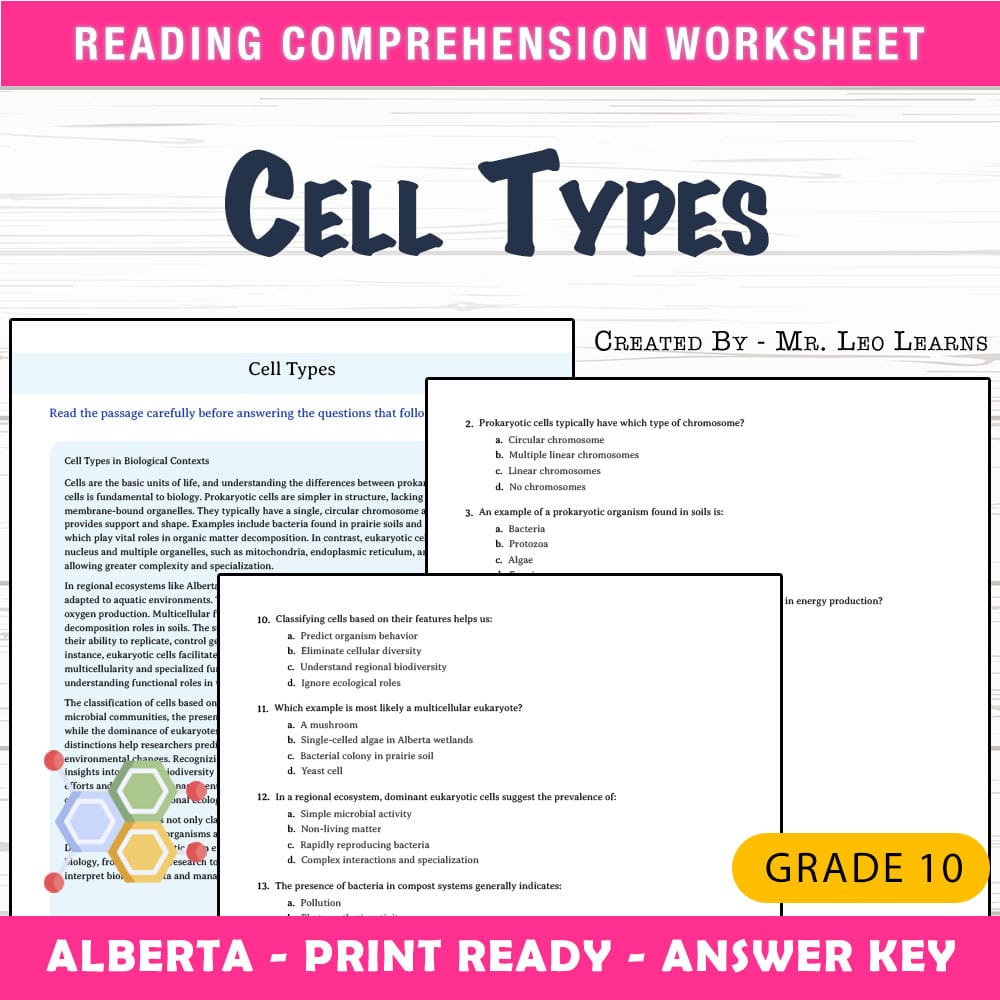
Grade 10 Science — Worksheet MCQ Paper for Mastering Cell Types
Created byThe Resource HubLearning Objectives
- Compare structural differences between prokaryotic and eukaryotic cells.
- Identify examples of prokaryotic and eukaryotic organisms in regional habitats.
- Understand how cell structure influences replication, genetic control, and ecological roles.
Also included in: Grade 10 Science Cells and Systems Lesson Bundle | Alberta Curriculum +1 more
Instant download
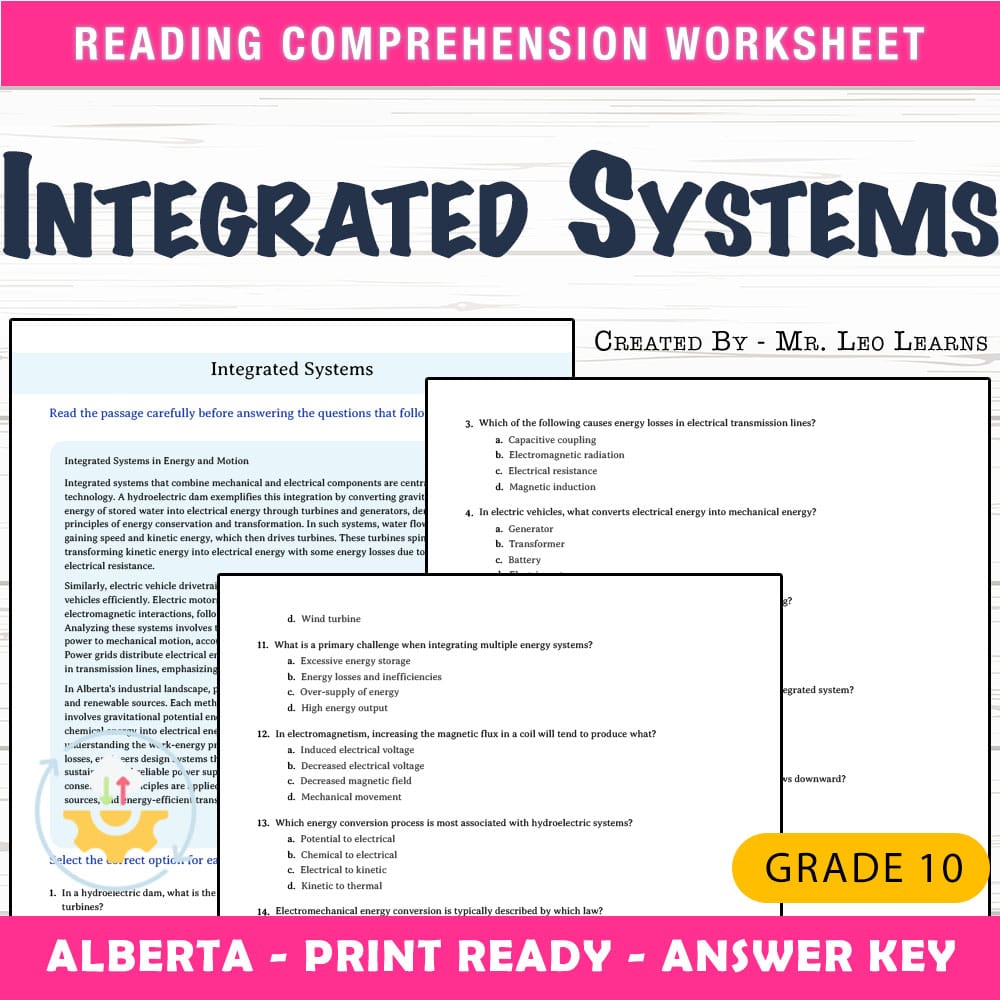
Grade 10 Science — Worksheet MCQ Paper for Mastering Integrated Systems
Created byThe Resource HubLearning Objectives
- Explain the principles of energy conversion and conservation in mechanical and electrical systems.
- Identify energy transformations in integrated systems such as hydroelectric plants and electric vehicles.
- Analyze efficiencies and energy losses in combined mechanical and electrical systems.
Also included in: Grade 10 Science | Energy, Motion & Electricity Worksheet Bundle | Alberta +1 more
Instant download
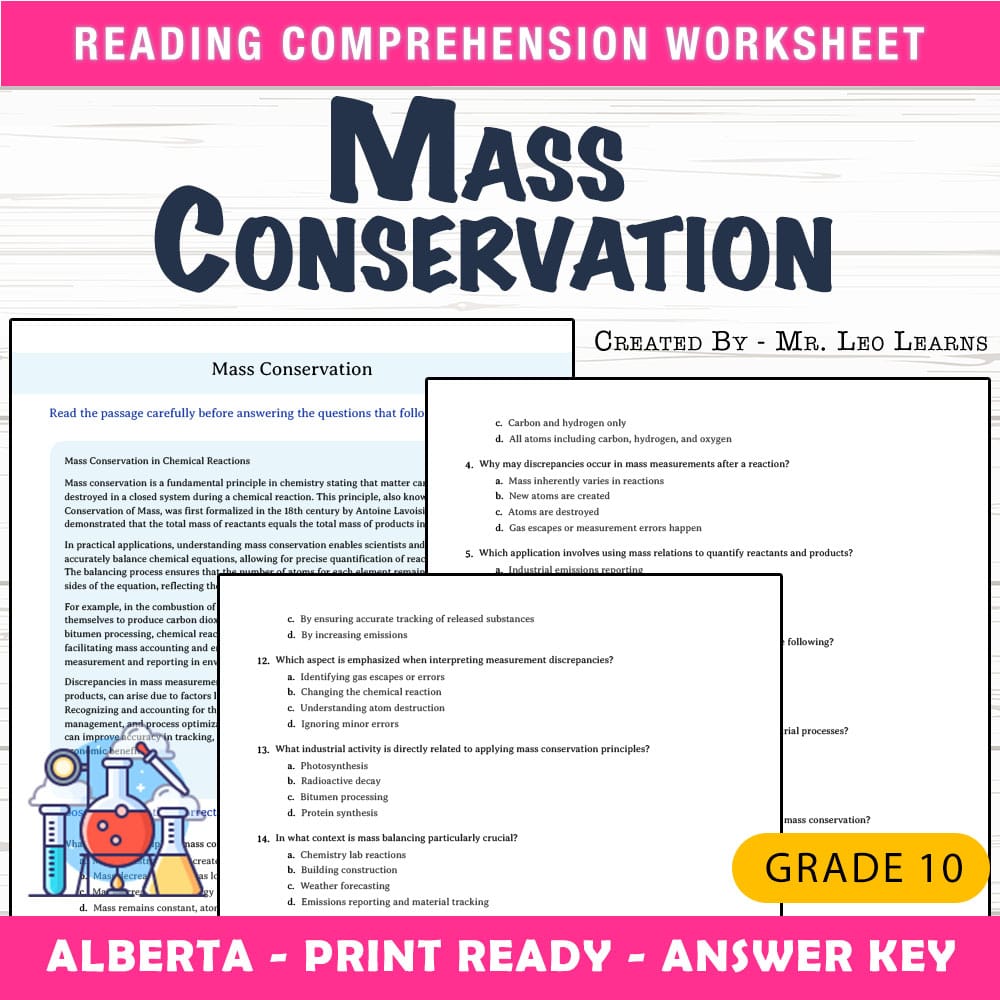
Grade 10 Science — Mass Conservation Worksheet MCQ Paper for Mastery
Created byThe Resource HubLearning Objectives
- Understand the principle of mass conservation in chemical reactions.
- Learn to balance symbolic chemical equations accurately.
- Apply mass relations to quantify reactants and products.
Also included in: Grade 10 Science Lesson Bundle | Matter and Chemical Change Worksheets +1 more
Instant download
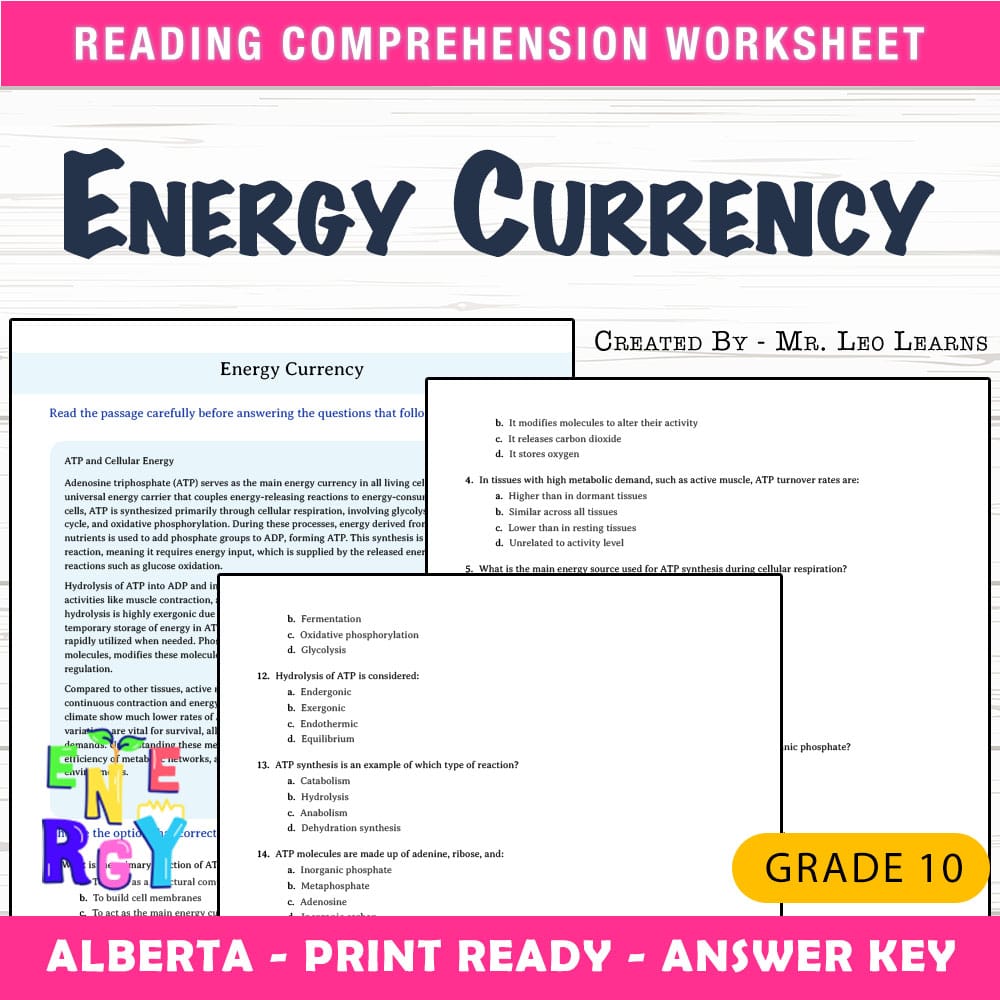
Grade 10 Science — Worksheet MCQ Paper for Mastering Energy Currency
Created byThe Resource HubLearning Objectives
- Understand the role of ATP as the primary energy currency in cells.
- Explain how ATP synthesis and hydrolysis couple energy release to metabolic reactions.
- Describe variations in ATP turnover rates across tissues and environmental conditions.
Also included in: Grade 10 Science Cells and Systems Lesson Bundle | Alberta Curriculum +1 more
Instant download
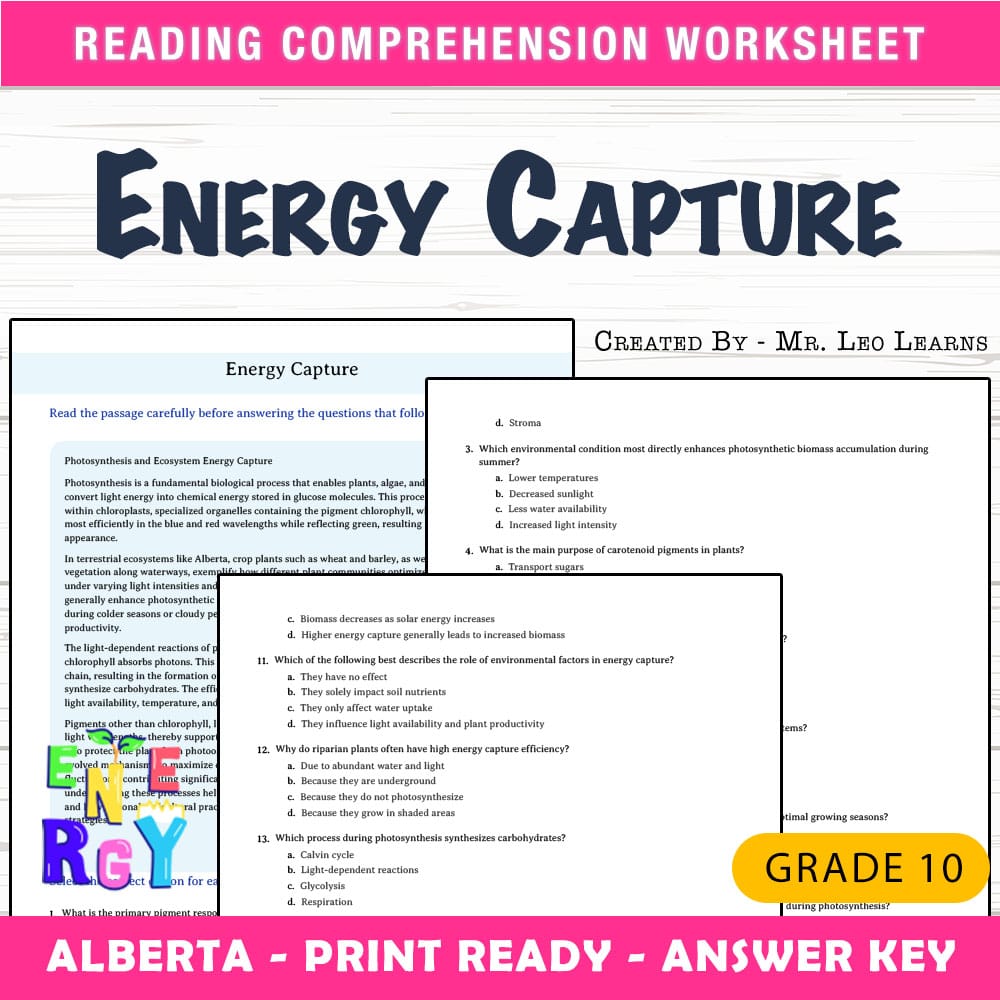
Grade 10 Science — Energy Capture Worksheet MCQ Paper for Alberta
Created byThe Resource HubLearning Objectives
- Understand the process of photosynthesis and how light energy is converted into chemical energy.
- Identify the roles of chlorophyll and other pigments in capturing solar energy.
- Explain environmental factors that influence energy input and plant biomass production.
Also included in: Grade 10 Science Cells and Systems Lesson Bundle | Alberta Curriculum +1 more
Instant download
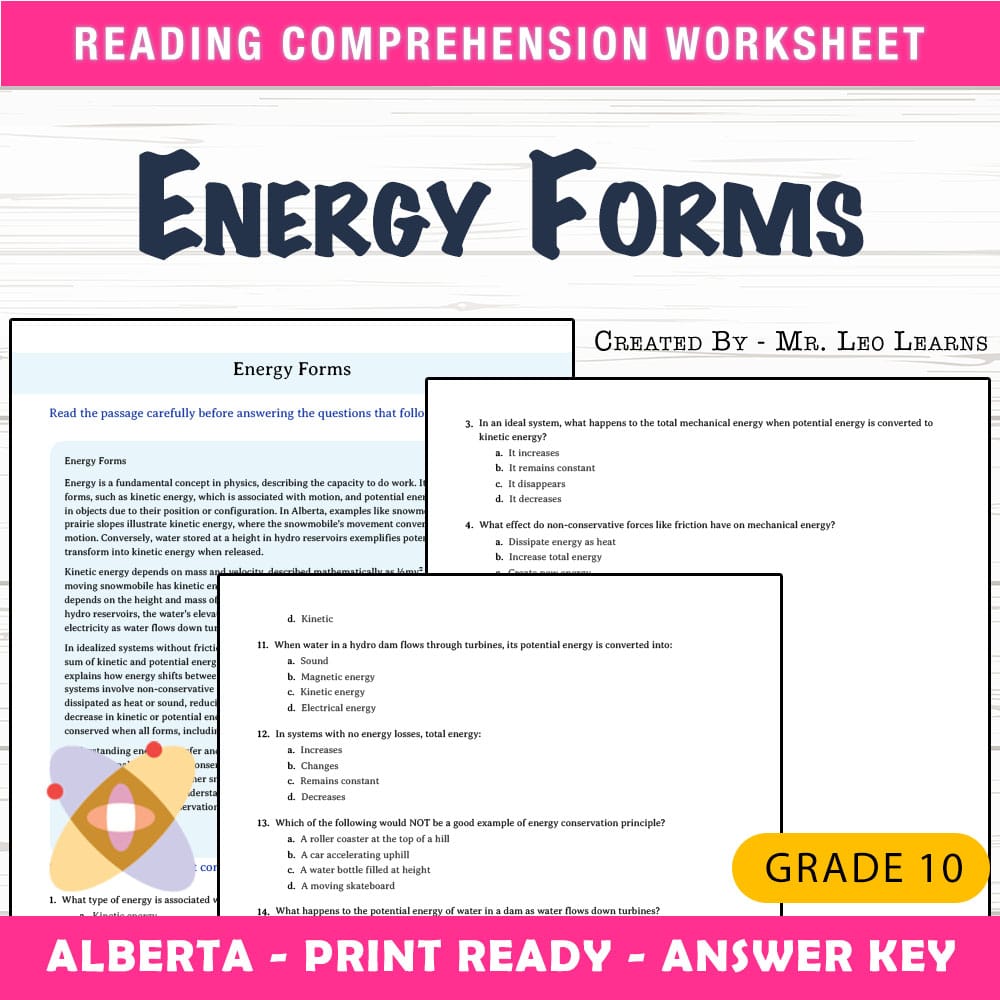
Grade 10 Science — Worksheet MCQ Paper for Mastering Energy Forms
Created byThe Resource HubLearning Objectives
- Understand the concepts of kinetic and potential energy and their differences.
- Recognize real-world examples of energy transformation, such as moving objects and stored energy.
- Explain how energy is conserved in ideal systems and how non-conservative forces affect energy distribution.
Also included in: Grade 10 Science | Energy, Motion & Electricity Worksheet Bundle | Alberta +1 more
Instant download
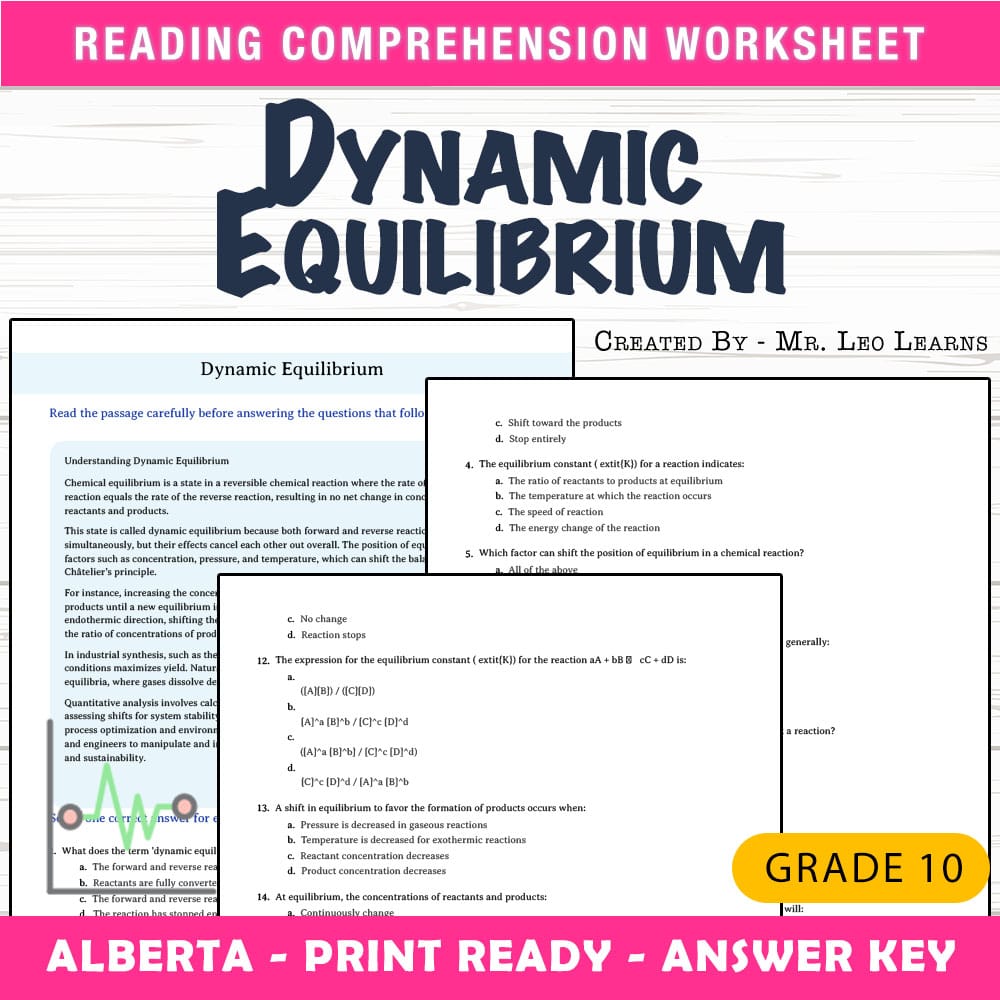
Grade 10 Science — Worksheet MCQ Paper for Mastering Dynamic Equilibrium
Created byThe Resource HubLearning Objectives
- Understand the concept of chemical equilibrium and dynamic balance between forward and reverse reactions.
- Interpret equilibrium expressions quantitatively and analyze how external changes affect the equilibrium position.
- Predict the net change in a system when subjected to perturbations such as concentration, pressure, or temperature shifts.
Also included in: Grade 10 Science Lesson Bundle | Matter and Chemical Change Worksheets +1 more
Instant download
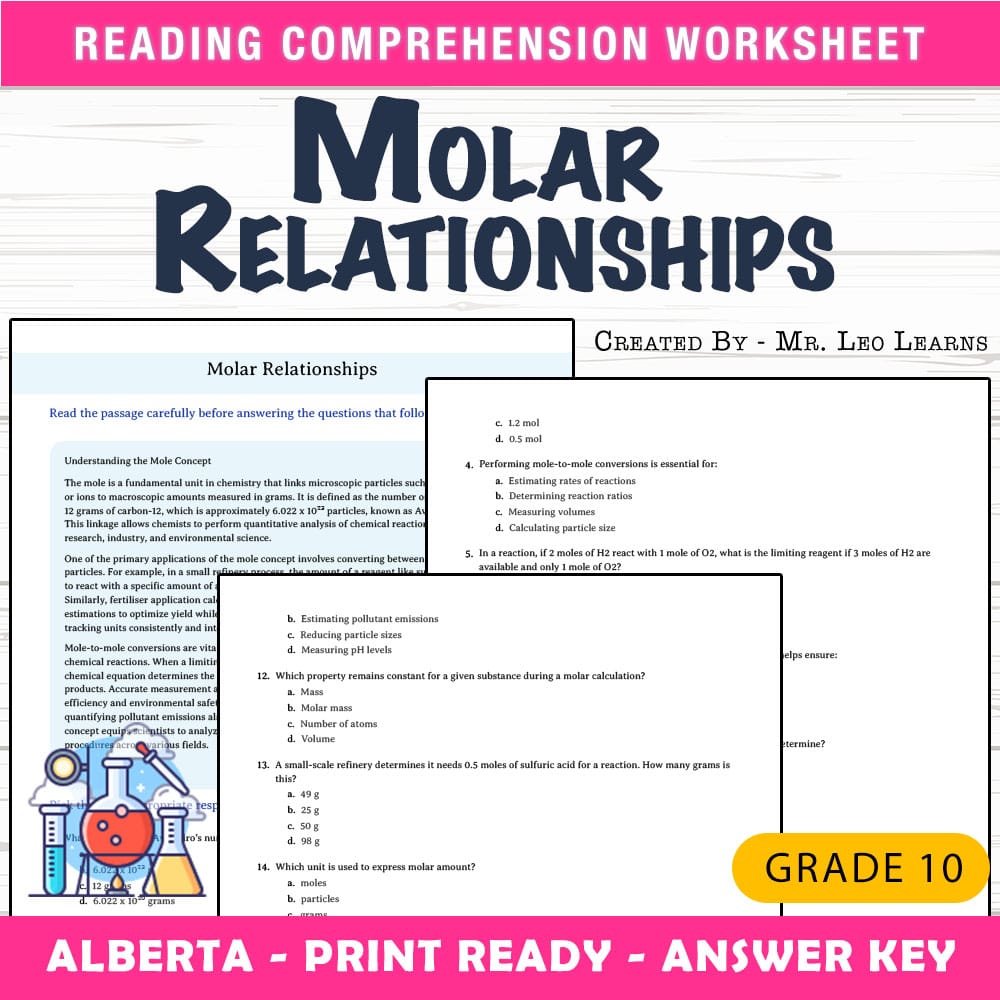
Grade 10 Science — Worksheet MCQ Paper for Mastering Molar Relationships
Created byThe Resource HubLearning Objectives
- Understand the concept of the mole as a link between particle counts and measurable mass.
- Perform mole-to-mass, mole-to-mole conversions, and limiting reagent calculations.
- Apply molar concepts to real-world scenarios like fertilizer use and chemical processing.
Also included in: Grade 10 Science Lesson Bundle | Matter and Chemical Change Worksheets +1 more
Instant download
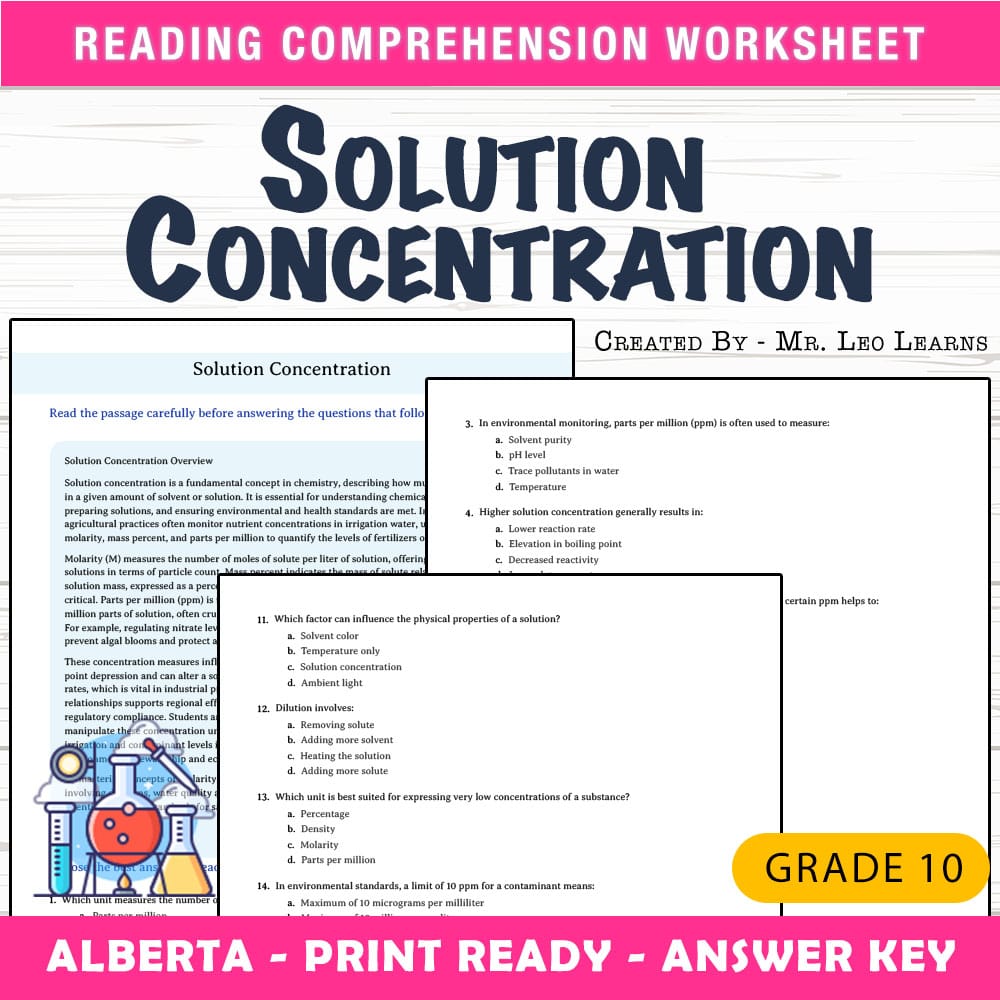
Grade 10 Science — Worksheet MCQ Paper for Mastering Solution Concentration
Created byThe Resource HubLearning Objectives
- Understand the different measures of solution concentration, including molarity, mass percent, and parts per million.
- Interpret how solution concentration affects chemical properties, reactivity, and environmental standards.
- Apply knowledge of solution concentration to real-world contexts like irrigation water and watershed monitoring.
Also included in: Grade 10 Science Lesson Bundle | Matter and Chemical Change Worksheets +1 more
Instant download
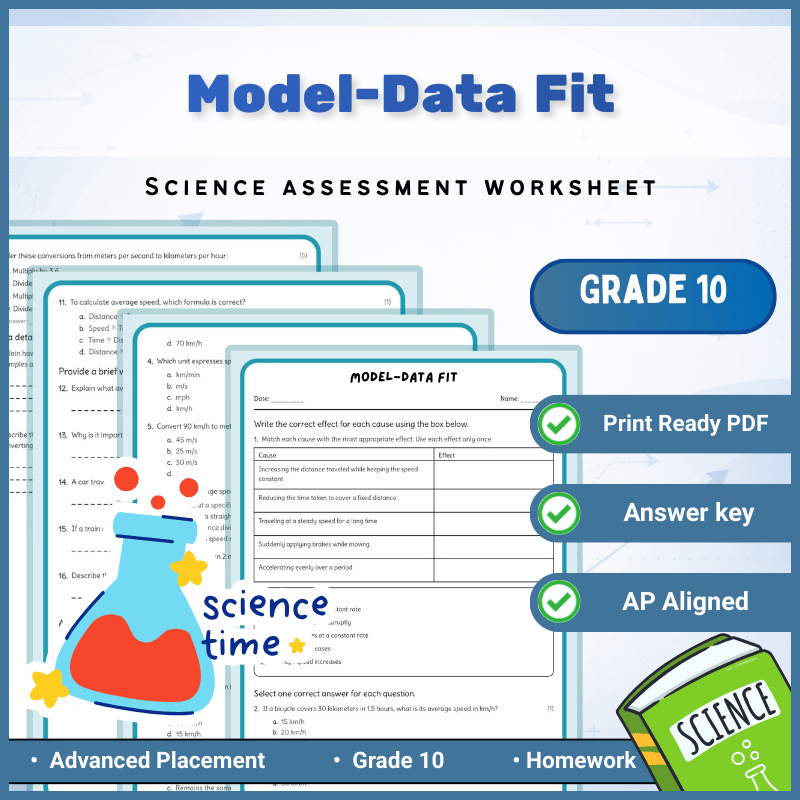
Grade 10 Science | Model-Data Fit Worksheet (AP Standards) – PDF
 Created byBright Mind Resources
Learning Objectives
- Understand how to compare model predictions with observed data using residual analysis.
- Identify concept of goodness-of-fit and how it informs model adequacy.
- Use residuals to evaluate systematic deviations in model predictions.
Instant download

Grade 10 Hydrologic Cycle Worksheet | Alberta Science Standards PDF
 Created byEvergreen Desk Education
Learning Objectives
- Describe the main processes of the hydrologic cycle (evaporation, transpiration, condensation, precipitation, and runoff).
- Explain how seasonal storage in snowpack and groundwater affects streamflow and freshwater availability.
- Analyze how climate variability and watershed characteristics influence water security in river basins.
Instant download
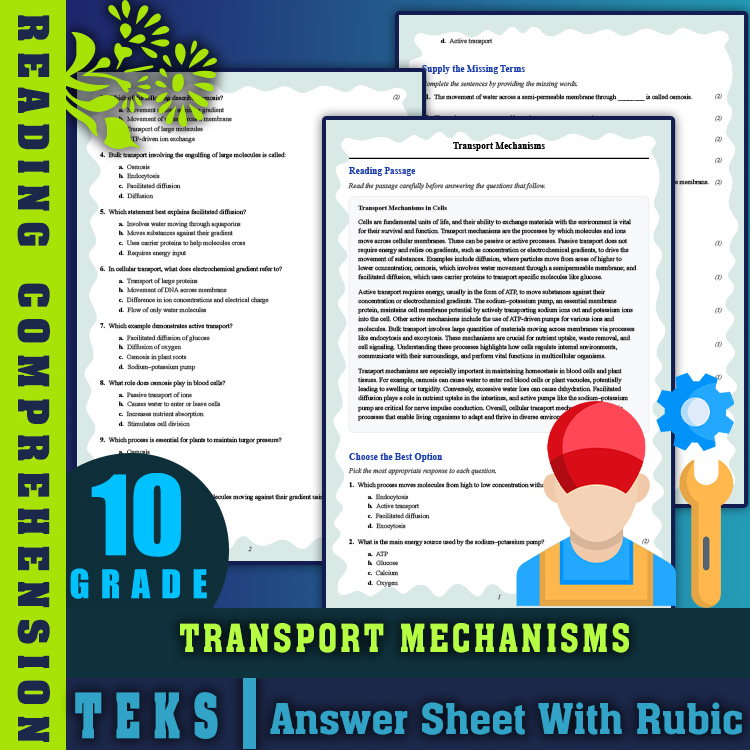
10th Grade Science | Transport Mechanisms Reading Worksheet & Answer Key (PDF)
JCreated byJ.S SheetsLearning Objectives
- Understand the different types of passive and active transport mechanisms across cell membranes.
- Identify examples of transport processes such as diffusion, osmosis, facilitated diffusion, and active pumps.
- Explain how cellular transport mechanisms maintain homeostasis and enable cellular function.
Instant download

Enzymes and Transport Worksheet for Grade 10 Biology Science Activities
Created byPrism Point LearningLearning Objectives
- Explain how enzymes increase reaction rates and provide specificity through active sites
- Compare diffusion and osmosis and describe how membrane structure affects permeability
- Interpret how selective transport and signaling help cells coordinate responses
Instant download

10th Grade Science | Human Impacts Worksheet (PDF+ Answer Key)
 Created byCopper Leaf Classroom
Learning Objectives
- Understand how human activities alter ecosystems through habitat modification, pollution, and species introductions.
- Identify the effects of resource extraction and climate change on ecosystem structure and function.
- Analyze the impacts of urbanization and agriculture on biodiversity and population dynamics.
Instant download
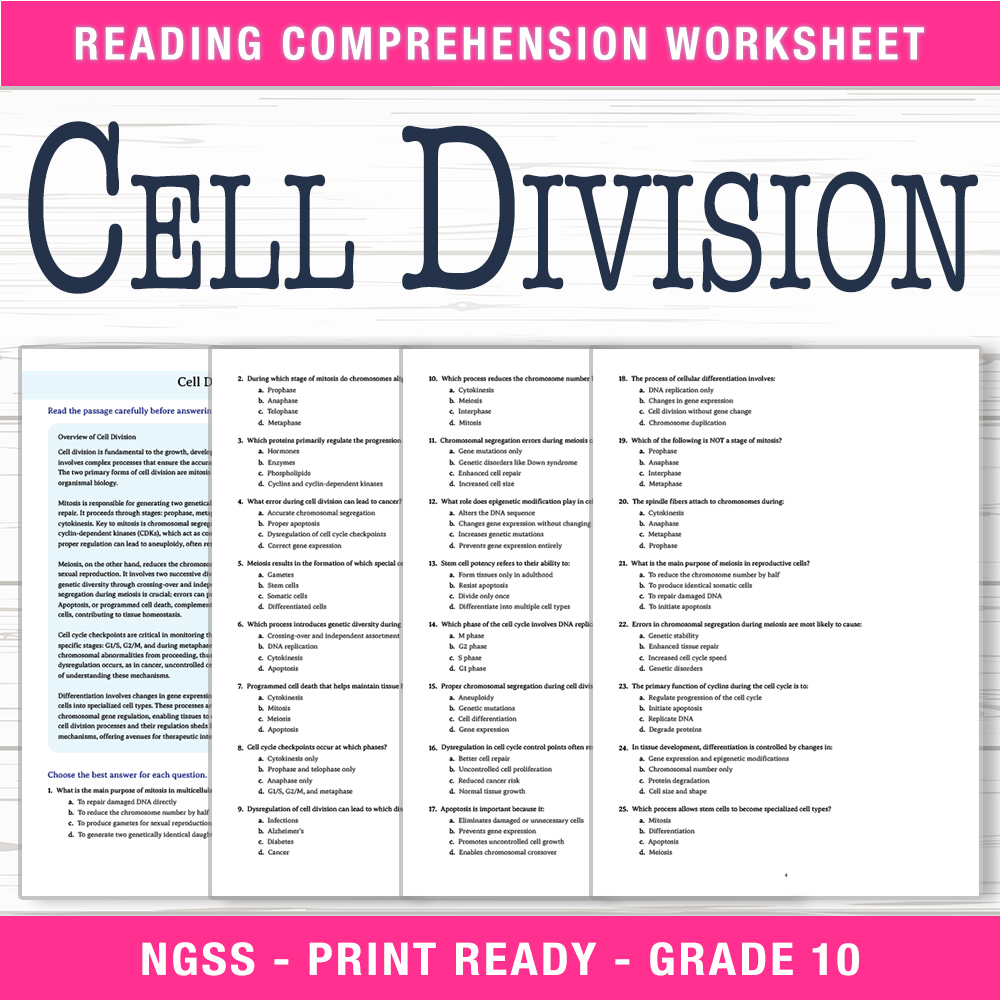
Grade 10 Science | Cell Division Worksheet (PDF + Answer Key)
 Created byRiverstone Classroom
Learning Objectives
- Describe the processes of mitosis and meiosis and their roles in cell division.
- Explain how cell cycle checkpoints regulate cell division and prevent dysregulation.
- Understand the mechanisms of apoptosis and their importance in tissue homeostasis.
Instant download
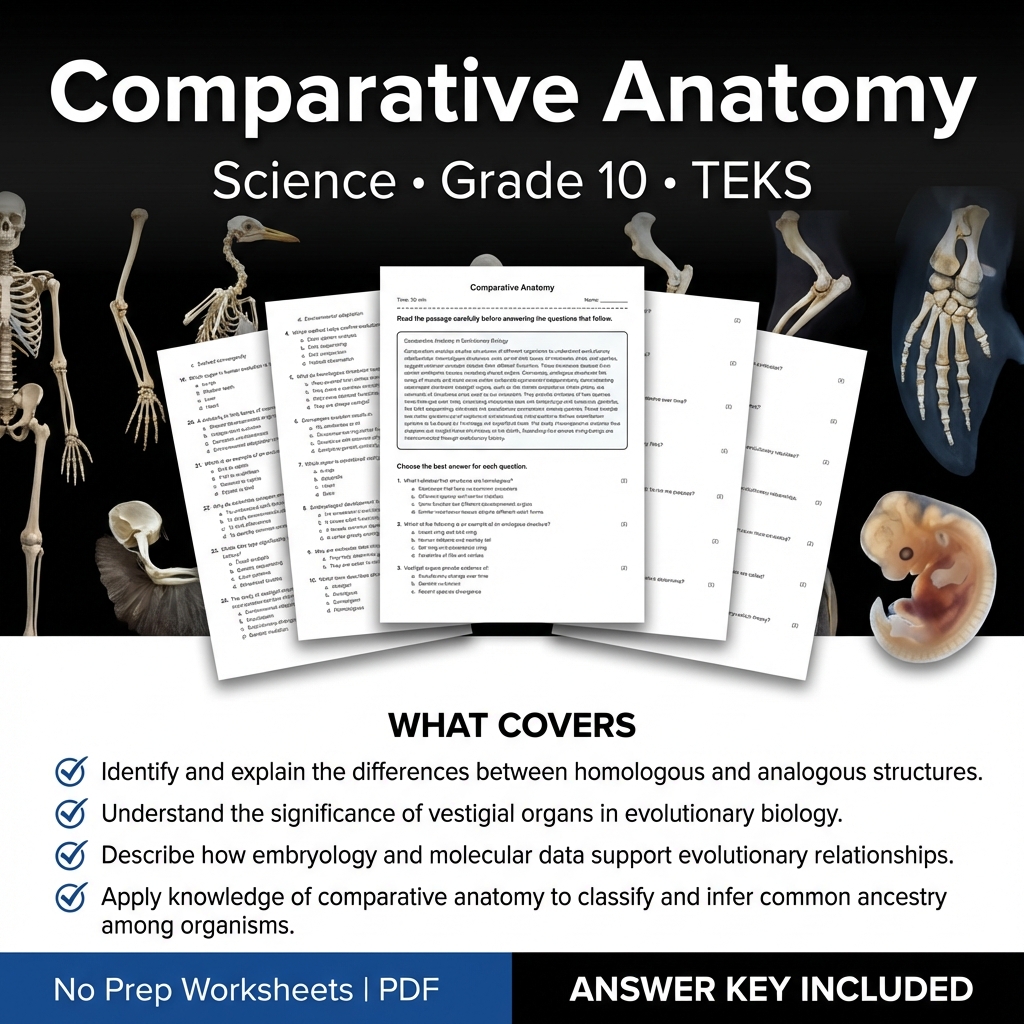
Comparative Anatomy Worksheet for Grade 10 Science | TEKS Aligned
Created byCoral Reef LearningLearning Objectives
- Identify and explain the differences between homologous and analogous structures.
- Understand the significance of vestigial organs in evolutionary biology.
- Describe how embryology and molecular data support evolutionary relationships.
Instant download
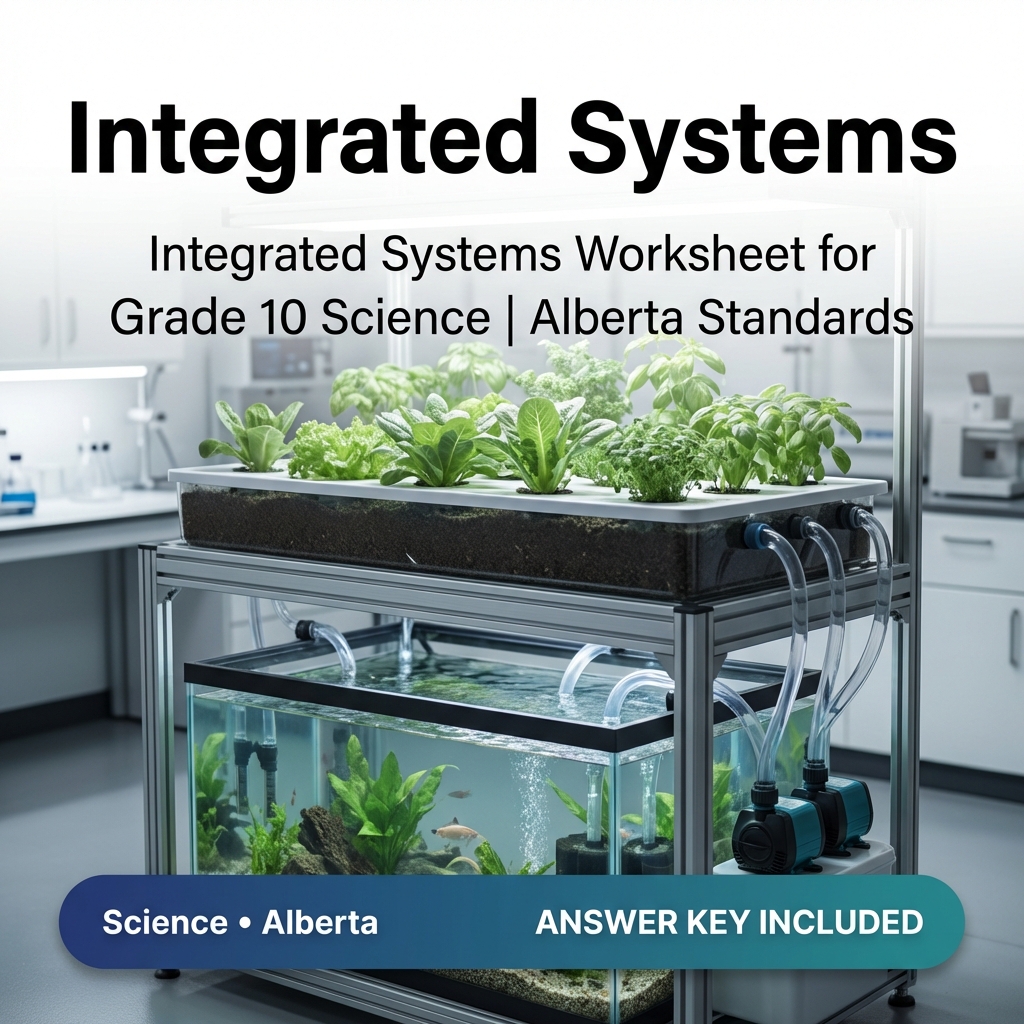
Integrated Systems Worksheet for Grade 10 Science | Alberta Standards
Created byCoral Reef LearningLearning Objectives
- Understand how energy is transformed and conserved across mechanical and electrical domains in integrated systems.
- Analyze energy flow and efficiency in systems like hydroelectric installations, electric vehicles, and power grids.
- Trace the conversion of work-energy, kinematic, and electromagnetic principles in real-world applications.
Instant download
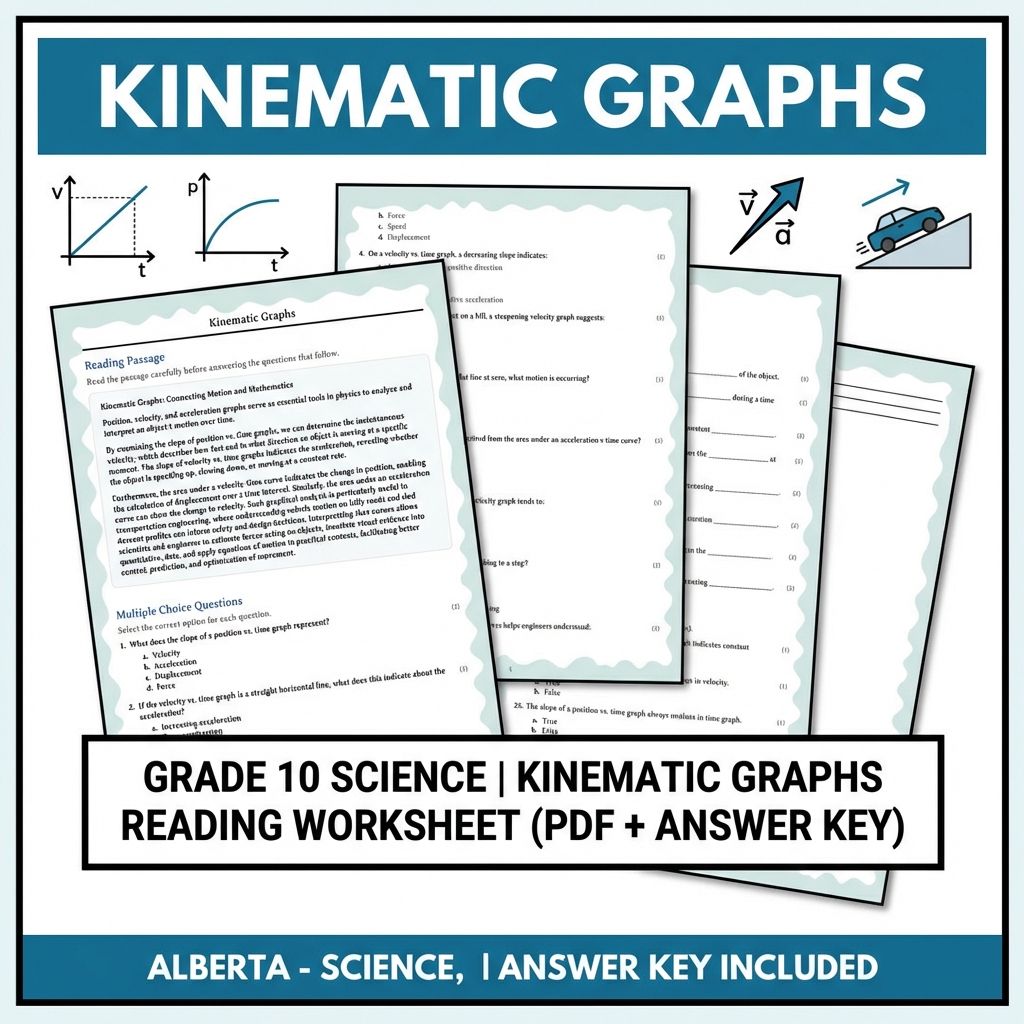
Grade 10 Science | Kinematic Graphs Reading Worksheet (PDF + Answer Key)
JCreated byJ.S SheetsLearning Objectives
- Understand how position, velocity, and acceleration graphs analyze motion patterns.
- Interpret slopes and areas under curves to extract instantaneous and average quantities.
- Apply graphical analysis to real-world vehicle and sled motion scenarios.
Also included in: Grade 10 Science Bundle | Energy, Circuits & Mechanics (Answer Keys Included) +1 more
Instant download
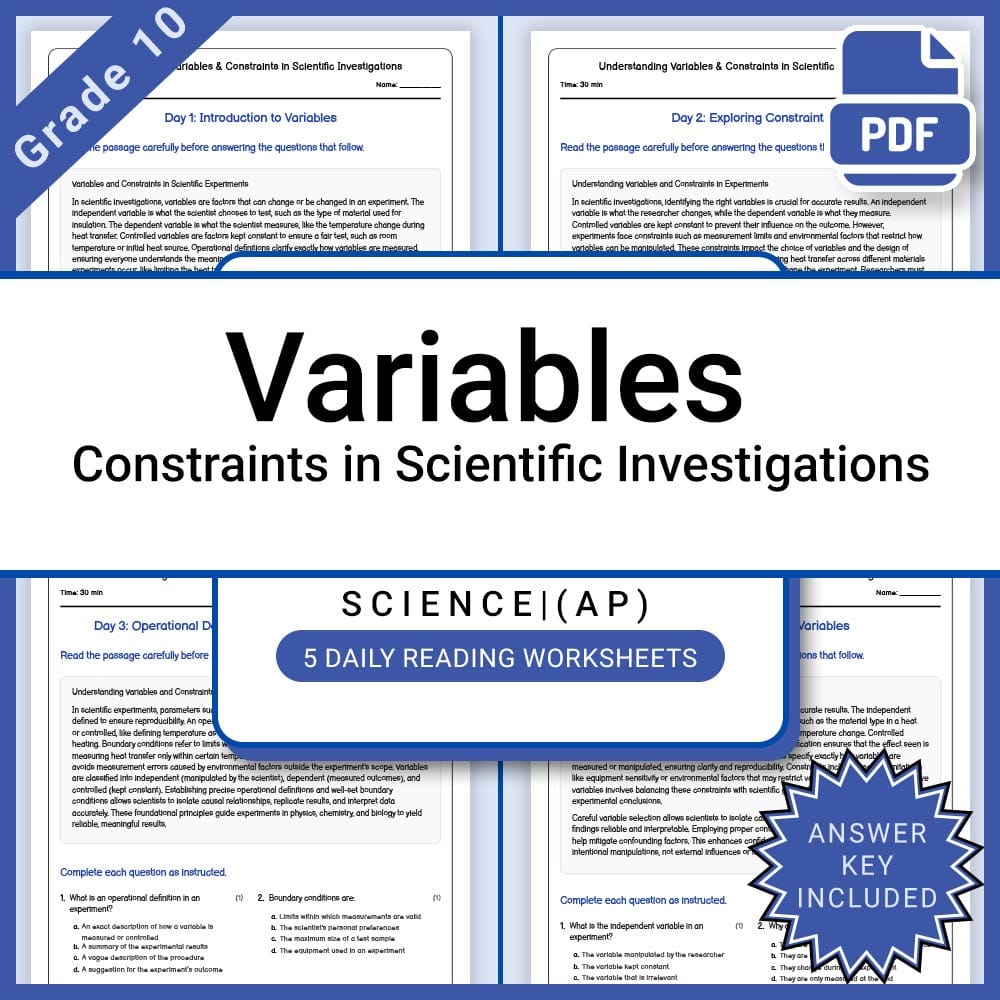
Grade 10 Science – Variables & Constraints Daily Reading Worksheet + Answer Key
JCreated byJ.S SheetsLearning Objectives
- Identify independent, dependent, and controlled variables in scientific experiments.
- Understand how operational definitions and boundary conditions shape observations.
- Recognize constraints that limit measurement and experimental design.
Also included in: Grade 10 Science Full Year Bundle | AP Curriculum & Earth, Physics, Solar System +1 more
Instant download

Carbon Cycle and Primary Production Worksheet | Grade 10 TEKS Science
 Created byBRIGHT PATH RESOURCES
Learning Objectives
- Identify main ideas in an informational text about the carbon cycle
- Use key vocabulary (photosynthesis, respiration, decomposition, primary production) accurately
- Explain how carbon moves between living things and Earth systems
Also included in: Grade 10 Ecology & Environmental Interactions Science Worksheets | TEKS +1 more
Instant download

Grade 10 Cell Division Worksheet | Mitosis & Cell Cycle NGSS Science
Created byBRIGHT PATH RESOURCESLearning Objectives
- Understand key concepts related to Science
- Apply knowledge through practice questions
- Demonstrate comprehension of the material
Also included in: Human Physiology Grade 10 Science Daily Reading Worksheets Lesson Bundle | Ngss +1 more
Instant download

Grade 10 Science | Nutrient Cycling Worksheet with Short Notes (Printable PDF)
Created byMeadowlark WorksheetsLearning Objectives
- Understand the major biogeochemical cycles, including carbon and nitrogen fluxes.
- Identify key processes such as photosynthesis, respiration, nitrification, denitrification, and decomposition.
- Analyze human impacts like fossil fuel burning and agricultural runoff on nutrient reservoirs and flux rates.
Also included in: Grade 10 Science Ecosystems Interactions & Energy NGSS Unit Bundle +1 more
Instant download
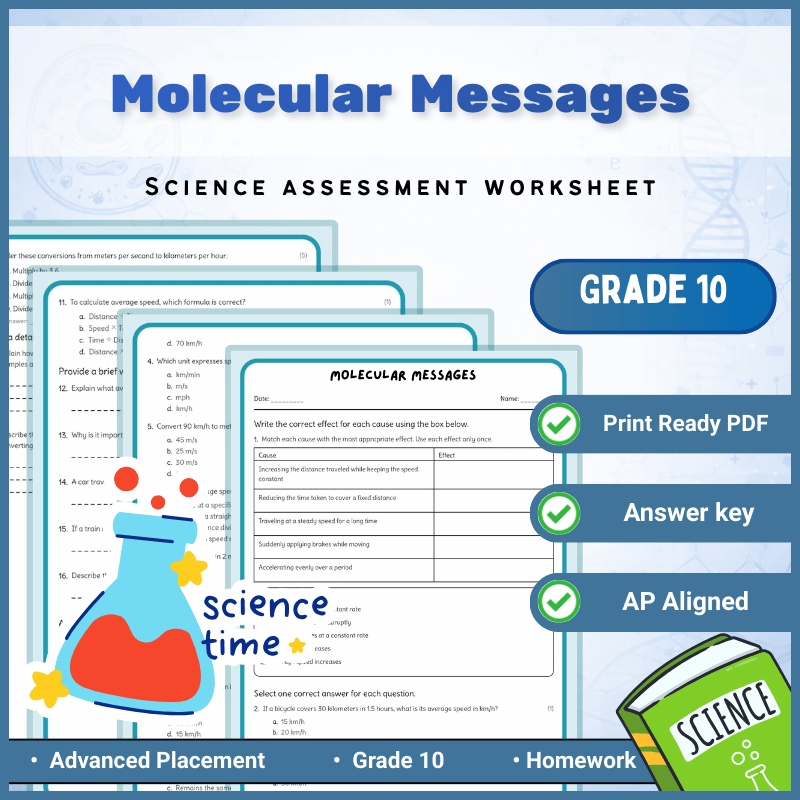
Grade 10 Science – Molecular Messages Worksheet (AP Standards) PDF
Created byBright Mind ResourcesLearning Objectives
- Describe the structure and function of DNA in storing genetic information.
- Explain the processes of transcription and translation in gene expression.
- Identify the molecular mechanisms that ensure fidelity during DNA replication.
Instant download
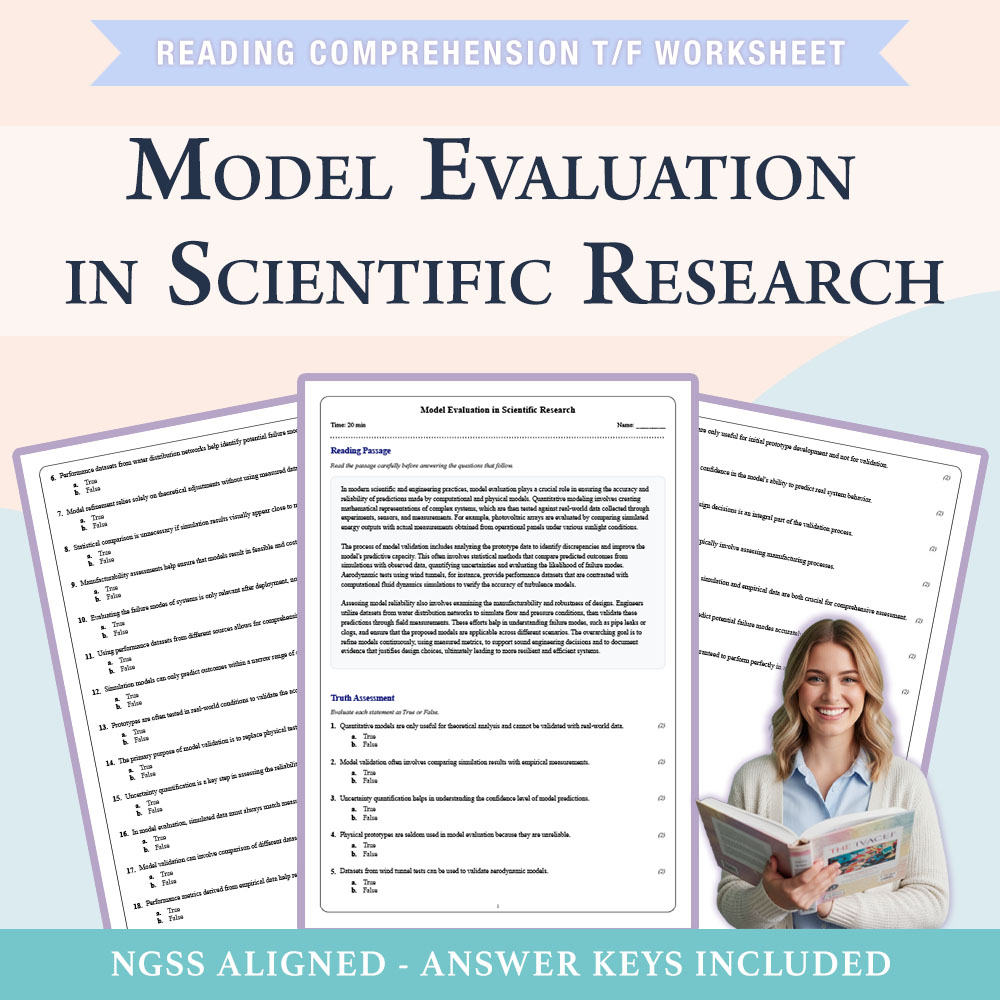
10th Grade Science | Model Evaluation in Scientific Research (PDF + Answer Key)
Created byCopper Leaf ClassroomLearning Objectives
- Understand the importance of quantitative modeling and prototype data analysis in scientific evaluation.
- Learn how to interpret and compare simulation results with empirical measurements for model validation.
- Recognize the role of statistical comparison, uncertainty quantification, and performance metrics in assessing model reliability.
Also included in: Grade 10 Science Bundle |Systems, Decision-Making & Engineering (PDF+Answer Key) +1 more
Instant download
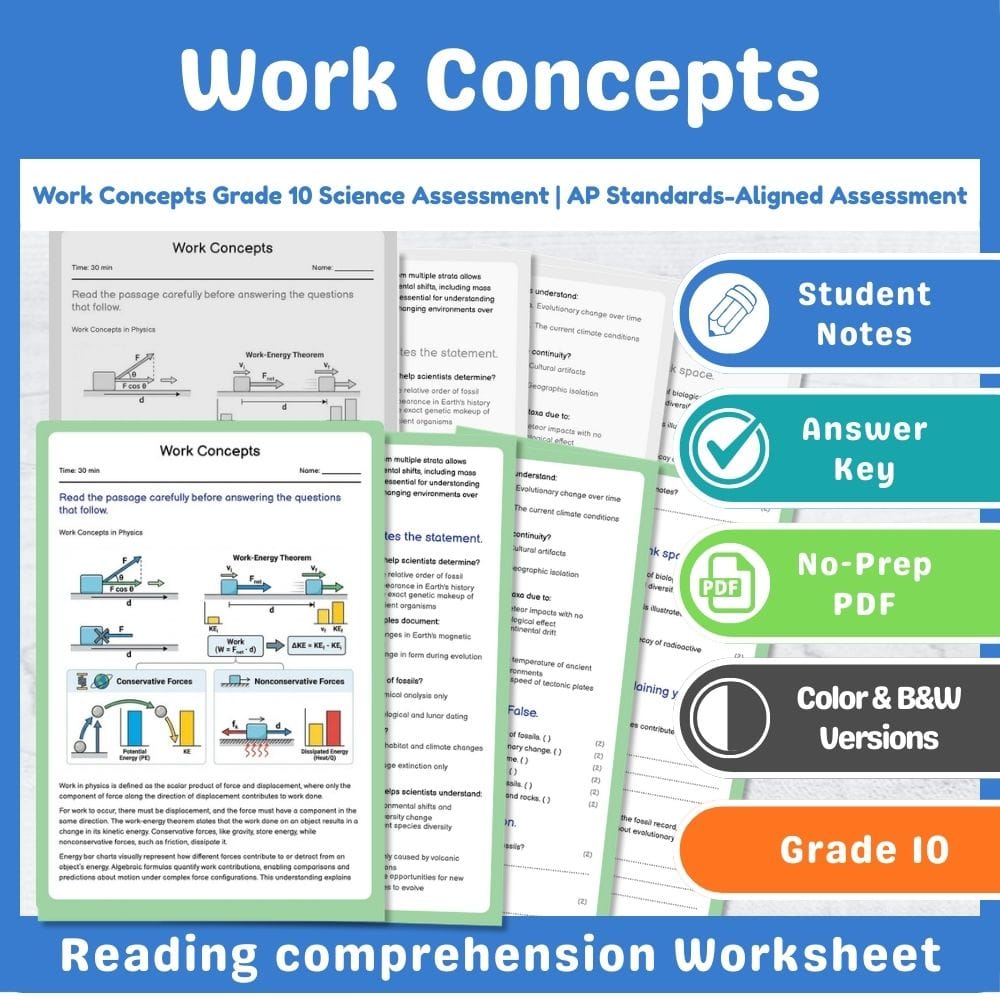
Work Concepts Grade 10 Science Assessment | AP Standards-Aligned Assessment
Created byPrism Point LearningLearning Objectives
- Define work as the product of force component along displacement.
- Explain the scalar nature of work in various contexts.
- Connect work to changes in kinetic energy via the work-energy relationship.
Also included in: Lesson Grade 10 Science Assessment Bundle | AP Standards-Aligned
Instant download

Science Worksheet: Community Interactions Grade 10 | NGSSS Aligned Worksheet
JCreated byJ.S SheetsLearning Objectives
- Explain how competition, predation, parasitism, and mutualism shape community composition.
- Describe how biotic interactions affect survival, reproduction, and population size over time.
- Predict possible cascading effects in a food web when one interaction changes.
Also included in: Grade 10 Life Science Evolution, Genetics & Cells Lesson Bundle – Florida NGSSS +1 more
Instant download
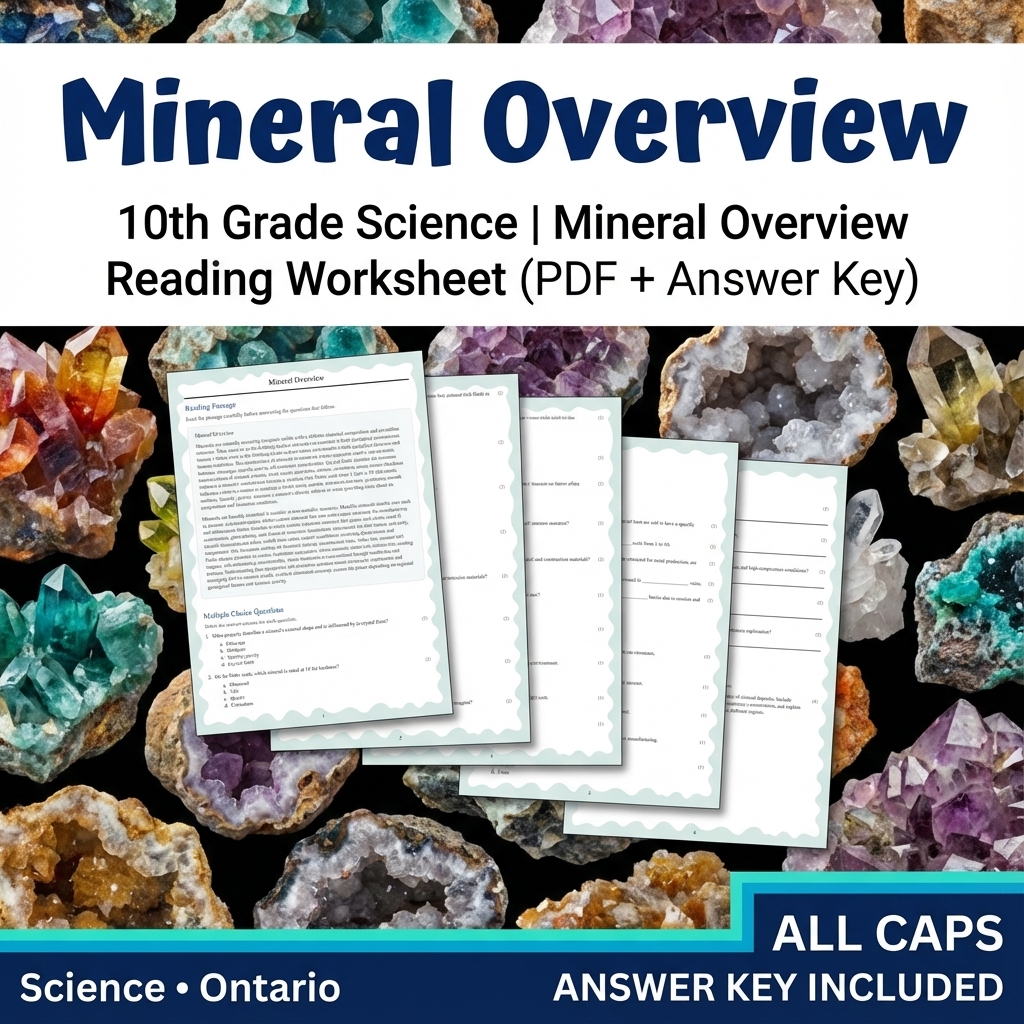
10th Grade Science | Mineral Overview Reading Worksheet (PDF + Answer Key)
JCreated byJ.S SheetsLearning Objectives
- Understand the key properties used to classify minerals, including crystal habit, hardness, cleavage, and specific gravity.
- Differentiate between ores, industrial minerals, and gemstones based on their properties and formation settings.
- Identify common geological environments where different mineral resources are formed, such as hydrothermal veins, magmatic segregation, and sedimentary concentration.
Also included in: Grade 10 Science Unit Bundle – Earth Dynamics & Resources (PDF + Rubrics) +1 more
Instant download

Grade 10 Science Mechanical Energy Calculations Worksheet Alberta PDF
Created byEvergreen Desk EducationLearning Objectives
- Apply conservation of energy to systems that include friction, springs, and gravity
- Use quantitative relationships to calculate final speeds or heights after energy losses
- Identify when conservation of mechanical energy is valid and when non-conservative work must be included
Instant download
Grade 10 Science | Health Impacts Worksheet (Ontario Standards) (PDF)
Created byBright Mind ResourcesLearning Objectives
- Understand how pathogenic microorganisms interact with host systems.
- Identify modes of pathogen transmission and mechanisms of disease.
- Differentiate between bacterial, viral, and fungal disease processes.
Instant download

Grade 10 Science | Metabolic Regulation Worksheet | TEKS-Aligned
 Created byLumora Learning
Learning Objectives
- Understand the mechanisms of metabolic regulation including enzyme activity modulation and signaling pathways.
- Describe the roles of allosteric regulation, feedback inhibition, and covalent modifications in controlling metabolism.
- Explain how hormones like insulin and glucagon influence carbohydrate metabolism and energy balance.
Also included in: Grade 10 Science | Metabolism & Energy Processes Lesson Bundle | TEKS Aligned +1 more
Instant download
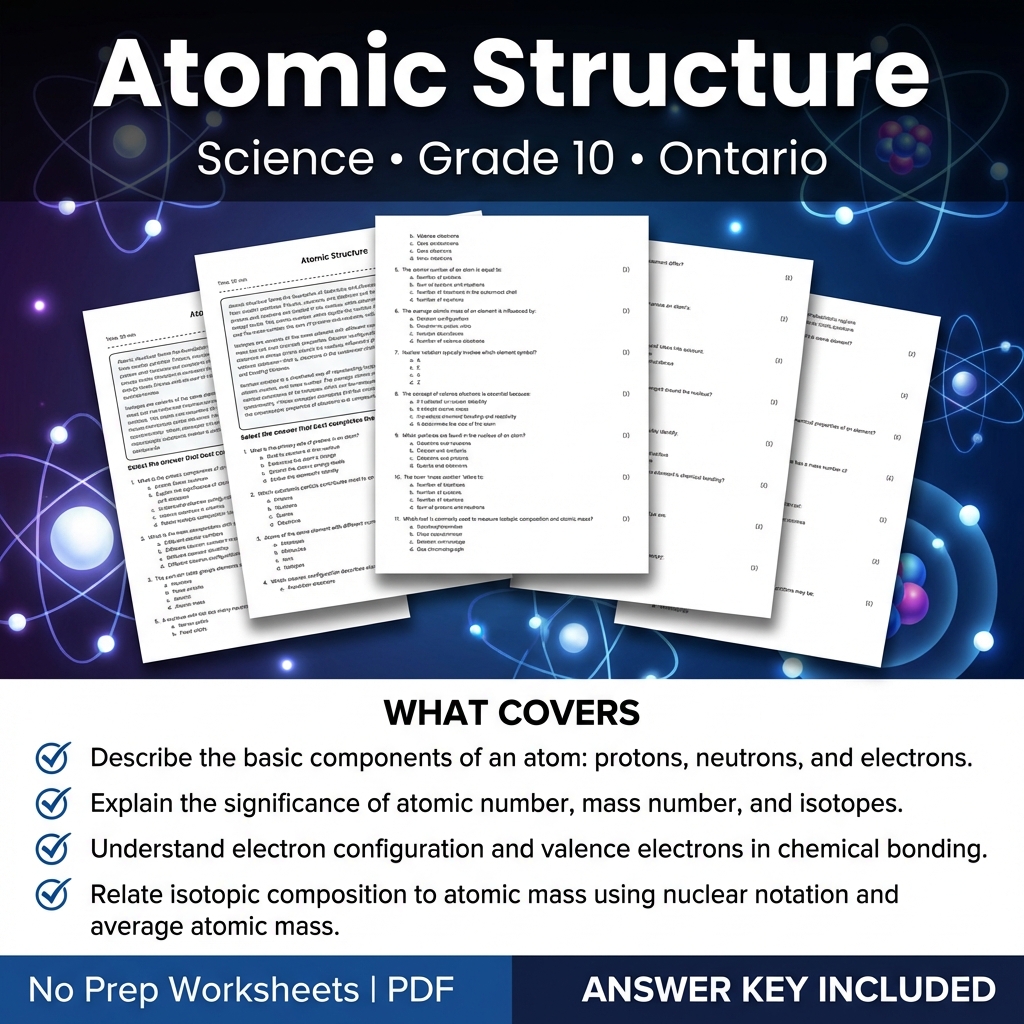
Grade 10 Science Atomic Structure Worksheet | Ontario Standards
Created byCoral Reef LearningLearning Objectives
- Describe the basic components of an atom: protons, neutrons, and electrons.
- Explain the significance of atomic number, mass number, and isotopes.
- Understand electron configuration and valence electrons in chemical bonding.
Instant download

DNA and Genes Assessment for Grade 10 Science NGSSS Standards
Created byPrism Point LearningLearning Objectives
- Explain how genetic information stored in DNA is organized into chromosomes and genes
- Describe how gene expression depends on reading DNA information to produce proteins or functional RNA
- Connect inherited traits to the transmission of similar DNA and the role of genetic variation
Also included in: Grade 10 Cells, Genetics & Evolution Science Lesson Bundle | Florida NGSSS +1 more
Instant download
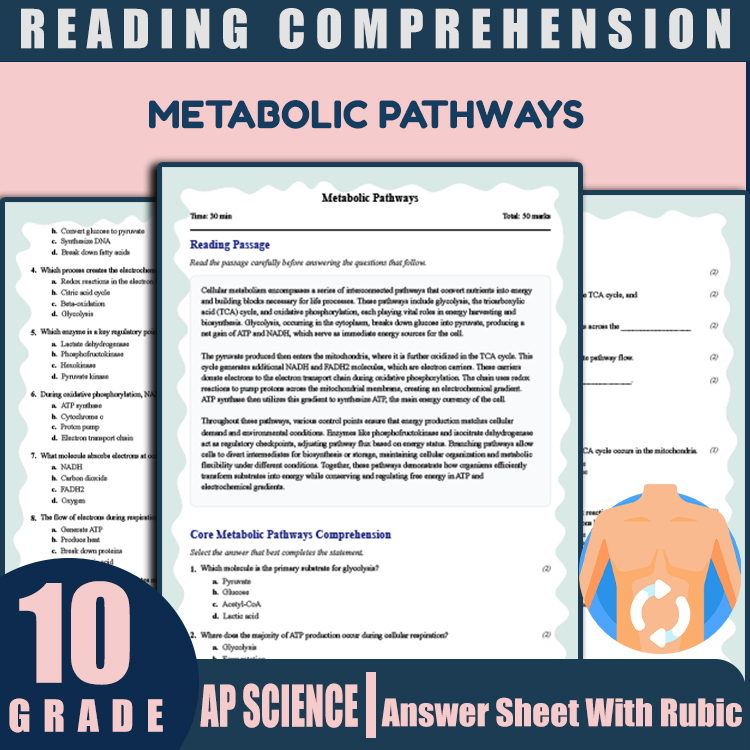
Grade 10 Science | Membrane Dynamics Reading Worksheet (PDF & Answer Key)
JCreated byJ.S SheetsLearning Objectives
- Explain the composition of cellular membranes and their role in transport mechanisms.
- Describe how electrochemical gradients are established and maintained across membranes.
- Analyze different membrane transport processes such as diffusion, carrier-mediated transport, and vesicular trafficking.
Also included in: Grade 10 Science Unit | Cell Biology, Genetics, & Ecosystems Worksheet Pack +1 more
Instant download
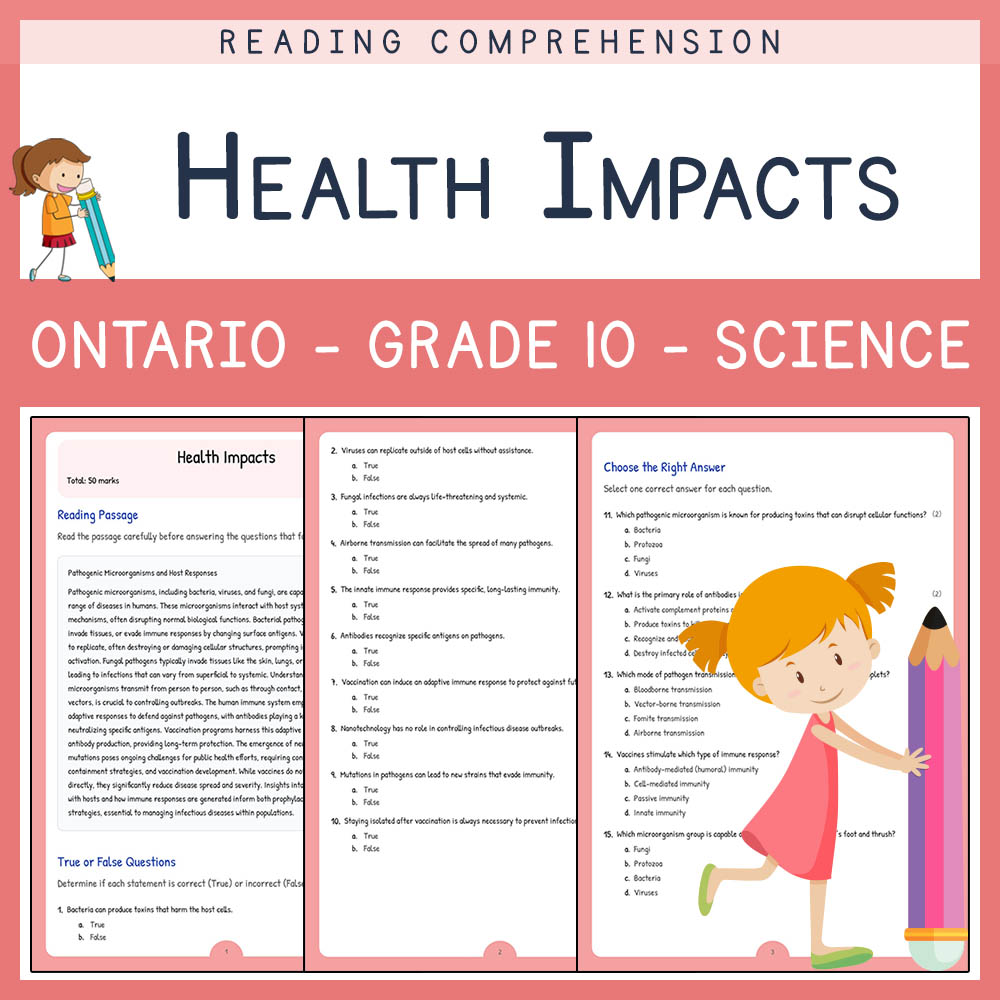
Grade 10 Science | Health Impacts Worksheet Elena | Ontario Standard
Created byLumora LearningLearning Objectives
- Understand the interactions of pathogenic microorganisms with host systems.
- Identify modes of transmission and mechanisms of disease causation.
- Differentiate bacterial, viral, and fungal disease processes.
Instant download

Grade 10 Science – Reaction Yield & Limiting Reagents | Daily Reading Worksheet
Created byBright Mind ResourcesLearning Objectives
- Understand the concepts of theoretical and actual yields in chemical reactions.
- Identify the limiting reagent in given chemical equations.
- Calculate percent yield based on experimental data.
Also included in: Grade 10 Chemistry Science Daily Reading Worksheets Lesson Bundle | Ontario +1 more
Instant download

Grade 10 Science – Bonding Types & Properties | Daily Reading Worksheet
Created byBright Mind ResourcesLearning Objectives
- Understand the characteristics of ionic bonds
- Relate ionic bonding properties to physical traits of ionic compounds
- Identify the differences between ionic, covalent, and metallic bonds
Also included in: Grade 10 Chemistry Science Daily Reading Worksheets Lesson Bundle | Ontario +1 more
Instant download

Grade 10 Science – Stoichiometry & Mole Concept Daily Reading Worksheet
Created byBright Mind ResourcesLearning Objectives
- Define the mole as a counting unit in chemistry
- Explain how Avogadro's number relates to particles and moles
- Describe the significance of molar mass in chemical calculations
Also included in: Grade 10 Chemistry Science Daily Reading Worksheets Lesson Bundle | Ontario +1 more
Instant download
About Grade 10 Science Worksheets
Find Science worksheets built for Grade 10. All 7,069 cover core skills, practice, and review, each an instant PDF download.
Every worksheet on MyTeachingSheets is created by independent teacher-authors and reviewed before publication. All resources download as printable PDFs for classroom, homework, or at-home practice, and many include answer keys. Preview any worksheet free before buying.