
Grade 10 Science Worksheets
7,069 worksheets
Le Châtelier Shifts & Equilibrium Yield Worksheet | Grade 10 Chemistry NGSS
 Created byAmber Owl Education
Learning Objectives
- Explain how changes in pressure, concentration, and temperature shift a dynamic chemical equilibrium
- Use Le Châtelier’s principle to predict which direction reactions favor after a condition change
- Interpret equilibrium constant and equilibrium as a measurable, quantitative description of reaction systems
Instant download
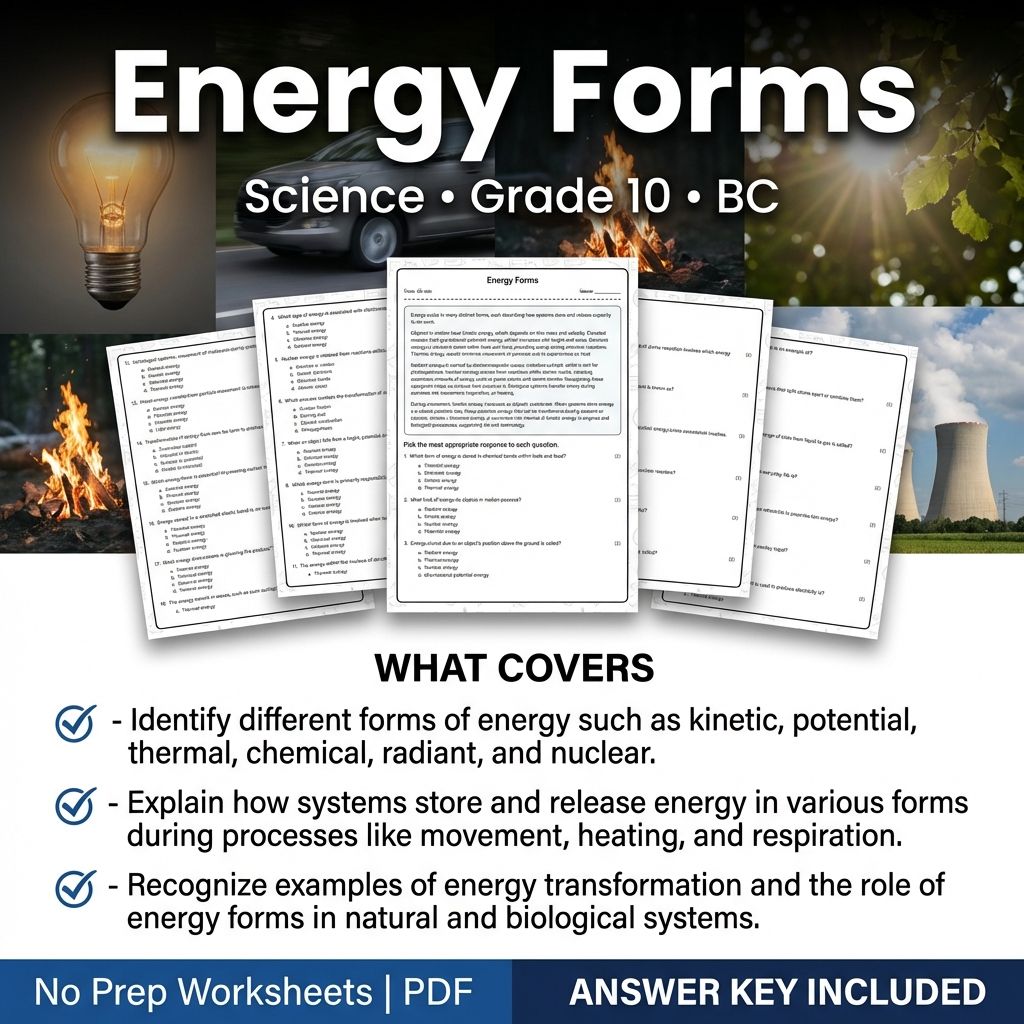
10th Grade Science | Energy Forms Worksheet & Answer Key PDF (Printable)
 Created byCoral Reef Learning
Learning Objectives
- Identify different forms of energy such as kinetic, potential, thermal, chemical, radiant, and nuclear.
- Explain how systems store and release energy in various forms during processes like movement, heating, and respiration.
- Recognize examples of energy transformation and the role of energy forms in natural and biological systems.
Instant download
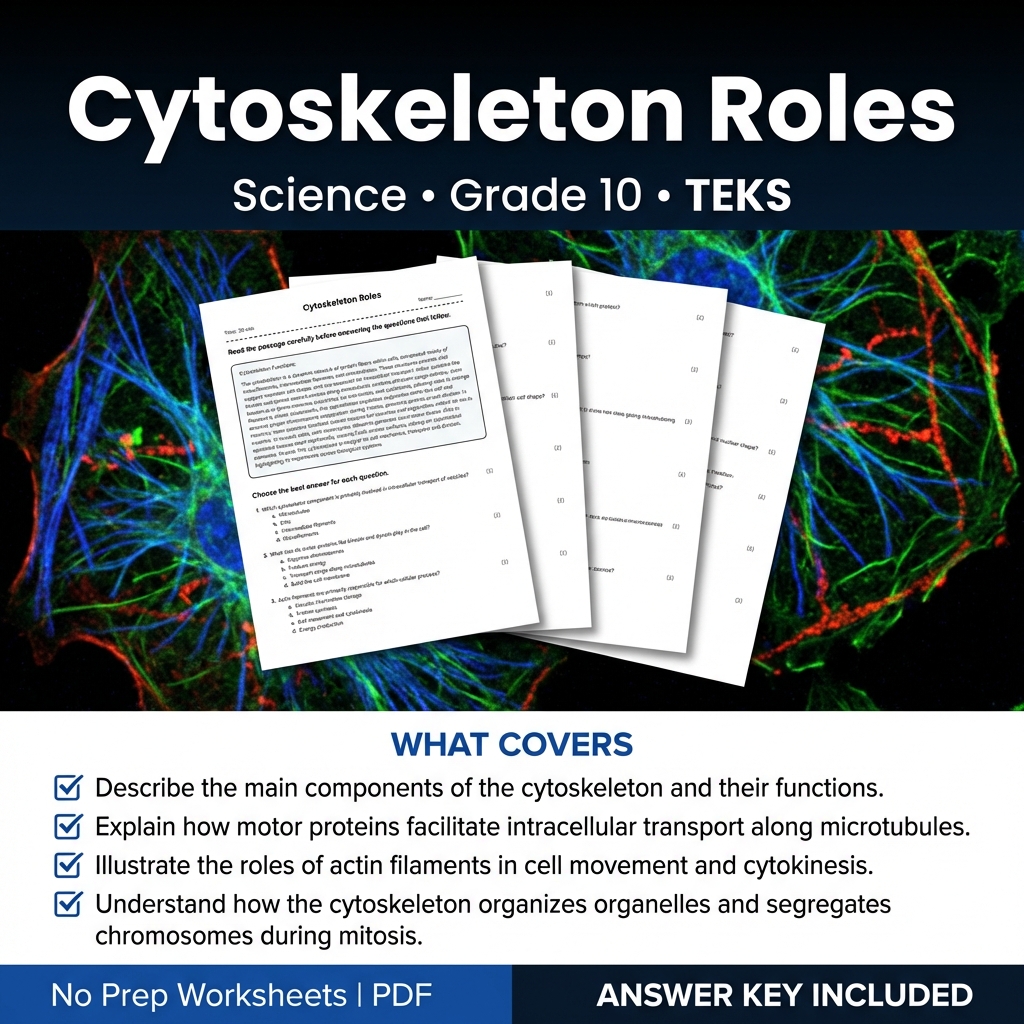
Grade 10 Science Worksheet on Cytoskeleton Roles | TEKS Standards Practice
Created byCoral Reef LearningLearning Objectives
- Describe the main components of the cytoskeleton and their functions.
- Explain how motor proteins facilitate intracellular transport along microtubules.
- Illustrate the roles of actin filaments in cell movement and cytokinesis.
Instant download
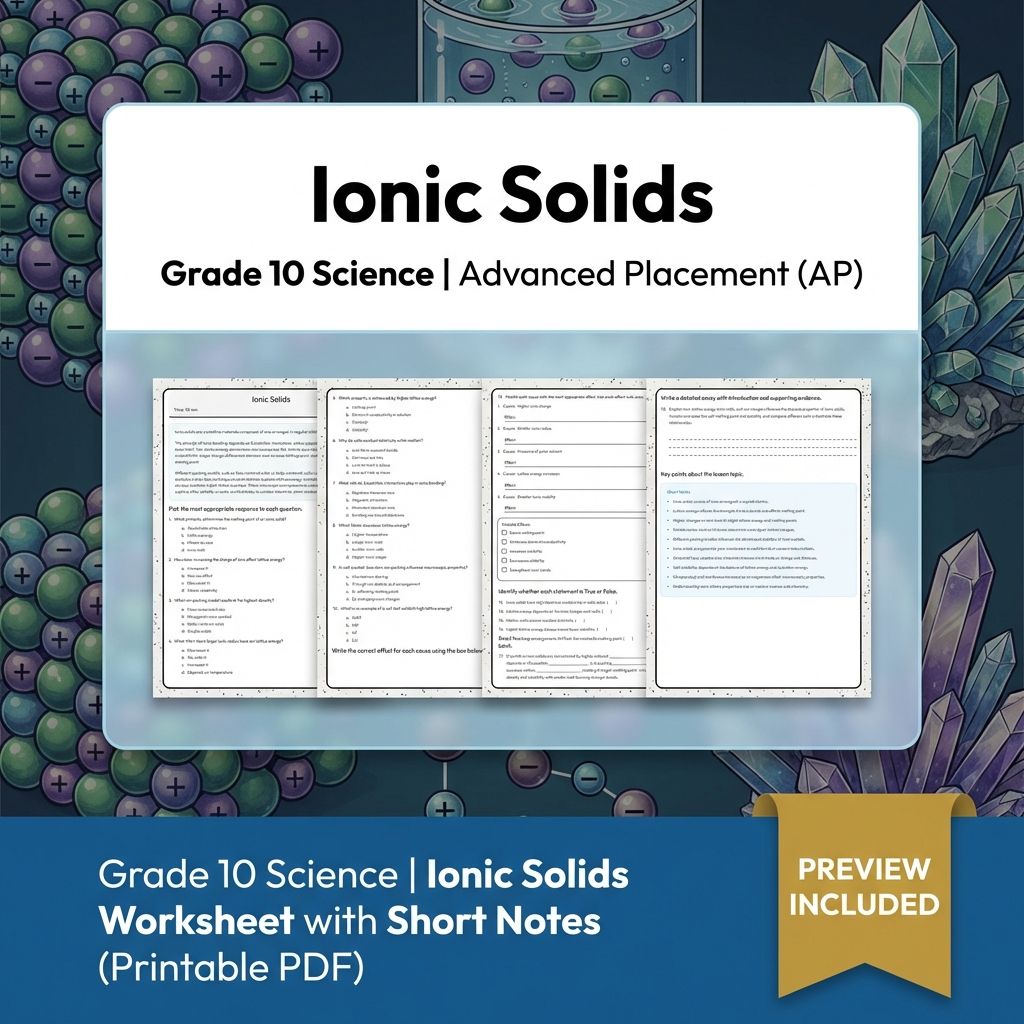
Grade 10 Science | Ionic Solids Worksheet with Short Notes (Printable PDF)
 Created byMeadowlark Worksheets
Learning Objectives
- Understand the structure and properties of crystalline ionic solids.
- Explain the role of lattice energy, ionic radii, and charge in salt properties.
- Interpret lattice energy and Coulombic interactions in solid and molten salts.
Also included in: Grade 10 Science | Comprehensive Unit Bundle on Atomic Structure
Instant download

Grade 10 Science | Molecular Messages Worksheet | AP Aligned
 Created byLumora Learning
Learning Objectives
- Understand the structure and function of DNA and how genetic information is stored and transmitted.
- Describe the processes of DNA replication, transcription, and translation at the molecular level.
- Explain the relationship between sequence and function in genetic molecules and how regulatory motifs influence gene expression.
Also included in: Grade 10 Science | Biology and Ecosystems Custom Bundle | AP
Instant download

Grade 10 Science | Ecosystem Networks Worksheet | AP Aligned
Created byLumora LearningLearning Objectives
- Describe energy flow and matter cycling within ecosystems.
- Identify trophic structures and food-web topology.
- Quantify energy transfer efficiency, biomass distribution, and nutrient reservoirs.
Also included in: Grade 10 Science | Biology and Ecosystems Custom Bundle | AP
Instant download

Grade 10 Science | Metabolic Pathways Worksheet | AP Aligned
Created byLumora LearningLearning Objectives
- Describe the core metabolic pathways including glycolysis, the tricarboxylic acid cycle, and oxidative phosphorylation.
- Explain how cells transform substrates and conserve free energy in ATP and electrochemical gradients.
- Identify regulatory checkpoints and pathway branching that maintain cellular organization under varying conditions.
Also included in: Grade 10 Science | Biology and Ecosystems Custom Bundle | AP
Instant download

Grade 10 Science | Inheritance Patterns Worksheet | AP Aligned
Created byLumora LearningLearning Objectives
- Understand the principles of heredity from Mendelian segregation to molecular markers.
- Interpret genetic inheritance patterns using pedigree, Punnett square, and allele frequency representations.
- Explain the concepts of dominance, linkage, and chromosomal inheritance in genetics.
Also included in: Grade 10 Science | Biology and Ecosystems Custom Bundle | AP
Instant download

Genetic Variation Worksheet | Evolution, Meiosis & Gene Flow Activities
 Created byPrism Point Learning
Learning Objectives
- Explain how random assortment and crossing over during meiosis create new combinations of alleles.
- Describe how mutations and gene flow add genetic variation within populations.
- Connect genetic variation to natural selection and changes in population traits over time.
Instant download
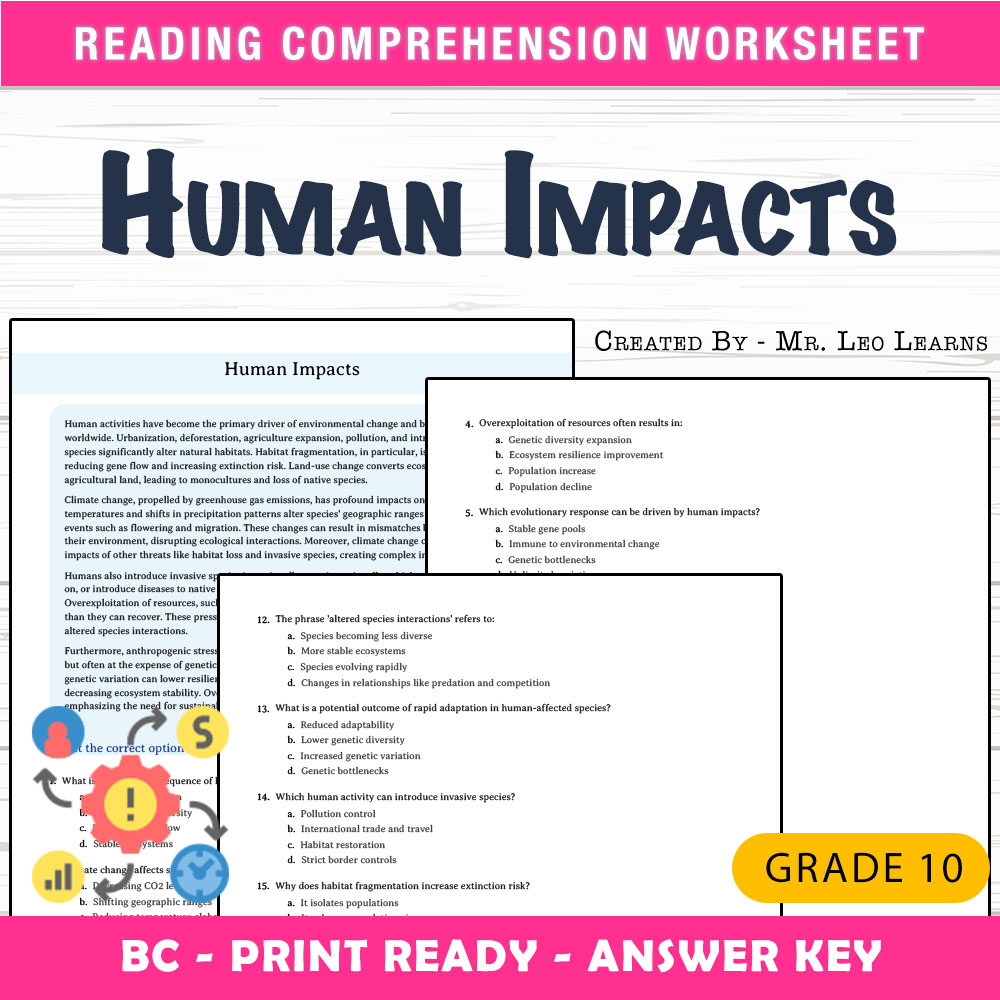
Grade 10 Science — Human Impacts Worksheet MCQ Paper
 Created byThe Resource Hub
Learning Objectives
- Understand how human activities impact biodiversity through habitat fragmentation and pollution.
- Recognize the effects of climate change on species distribution and phenology.
- Identify patterns of invasive species introduction and overexploitation consequences.
Also included in: Grade 10 Science Unit on Evolution & Biodiversity +1 more
Instant download
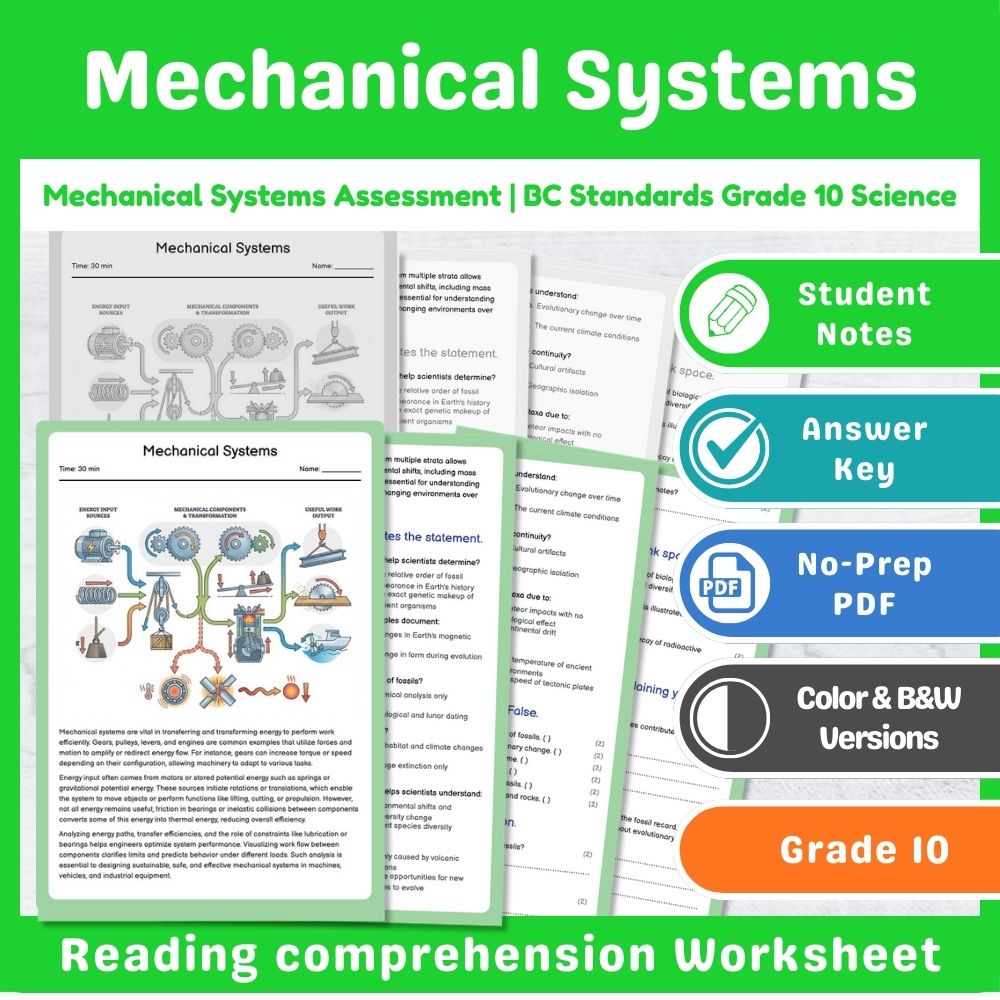
Mechanical Systems Assessment | BC Standards Grade 10 Science
Created byPrism Point LearningLearning Objectives
- Understand the transfer and transformation of energy in mechanical systems.
- Identify how forces, motions, and mechanical advantage operate in gears, pulleys, and levers.
- Analyze energy paths, transfer efficiencies, and effects of constraints such as bearings and lubrication.
Also included in: Grade 10 Science | Energy Assessment - BC Standards-Aligned Mini Bundle
Instant download
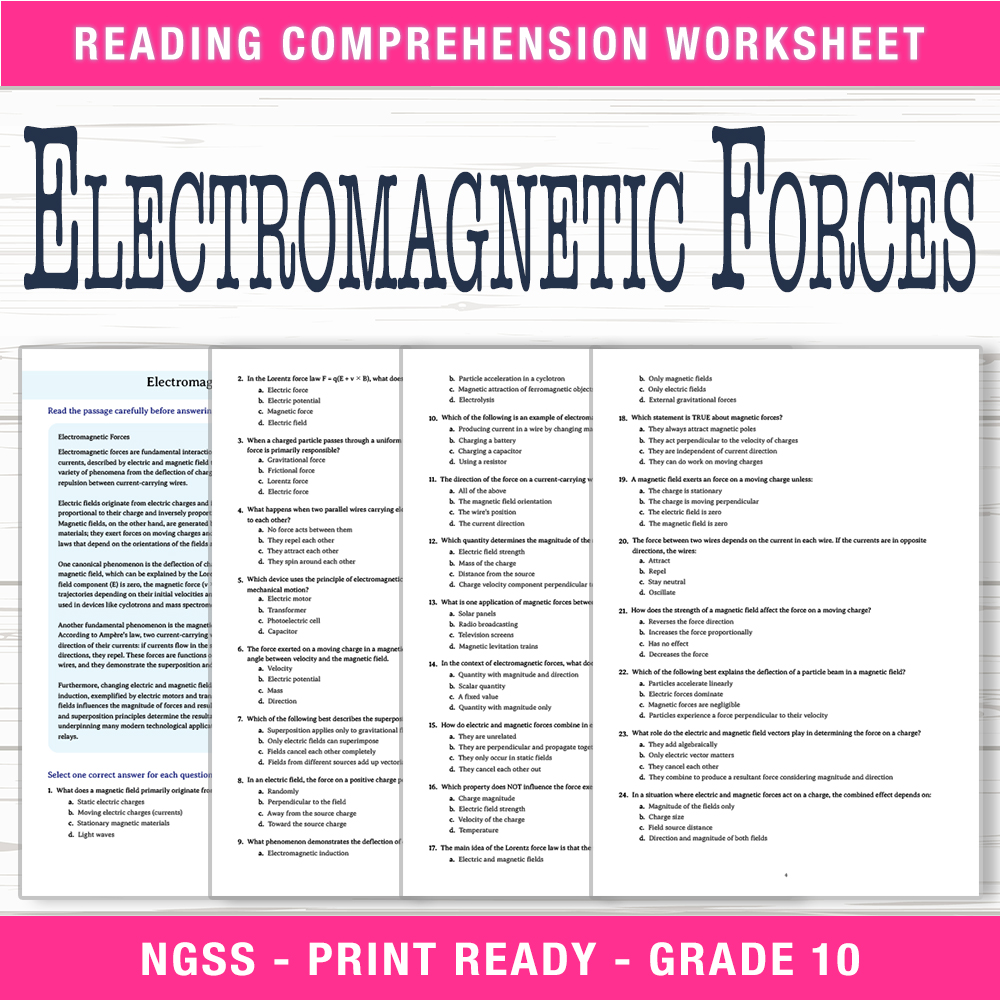
Grade 10 Science – Electromagnetic Forces Worksheet (PDF + Answer Key)
 Created byRiverstone Classroom
Learning Objectives
- Describe how electric and magnetic fields interact with charges and currents.
- Explain the Lorentz force law and how it determines the motion of charged particles in fields.
- Identify canonical phenomena involving electromagnetic forces, such as particle deflection and forces between current-carrying wires.
Instant download
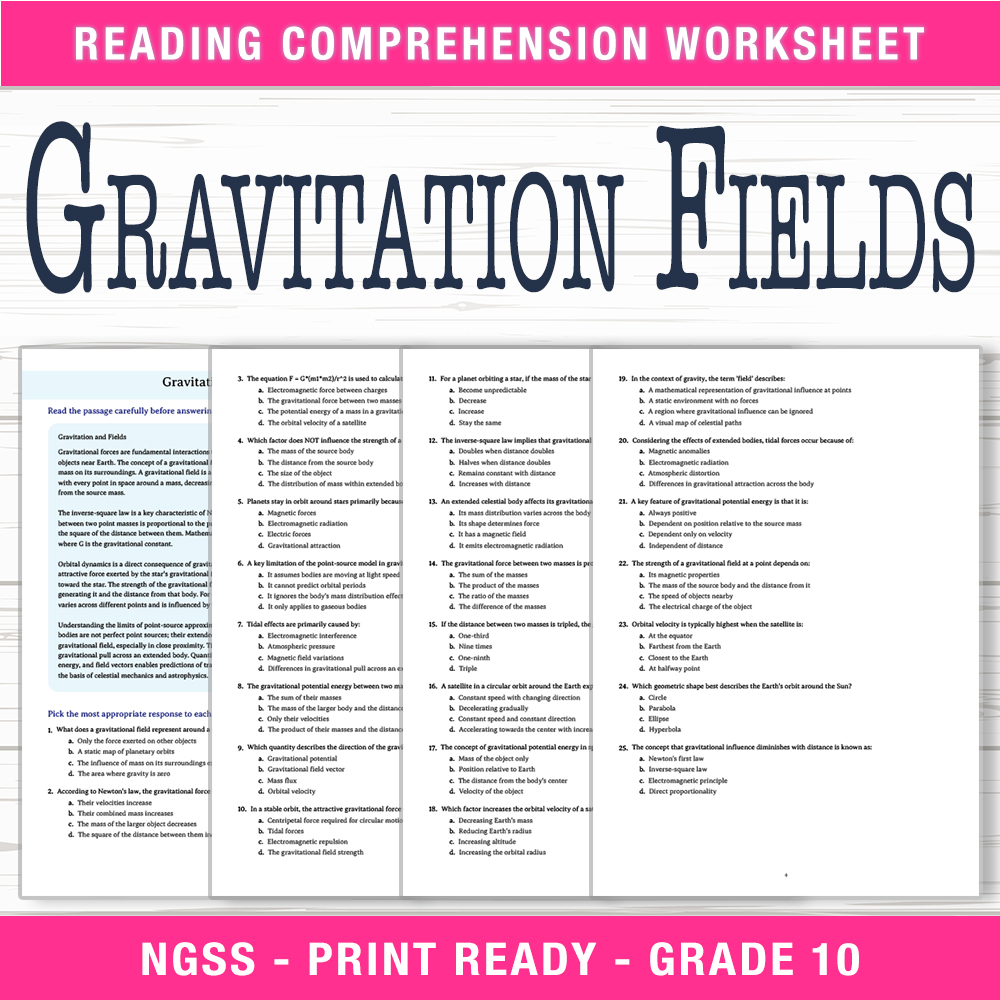
Grade 10 Science | Gravitation Fields Worksheet (PDF + Answer Key)
Created byRiverstone ClassroomLearning Objectives
- Explain the concept of gravitational fields and how they represent gravitational influence around masses.
- Apply Newton's law of universal gravitation to calculate the force between two masses at various distances.
- Analyze orbital motion using gravitational field concepts and predict the orbital period of planets and satellites.
Instant download

Grade 10 Science | Matter Conservation Worksheet | General Standards
Created byLumora LearningLearning Objectives
- Explain how matter conservation applies to physical and chemical changes using particle and atom models
- Interpret conservation in phase changes by tracking particles and how their motion/spacing changes without changing total amount
- Use particle/atom counting to justify why total matter is conserved in chemical reactions
Instant download
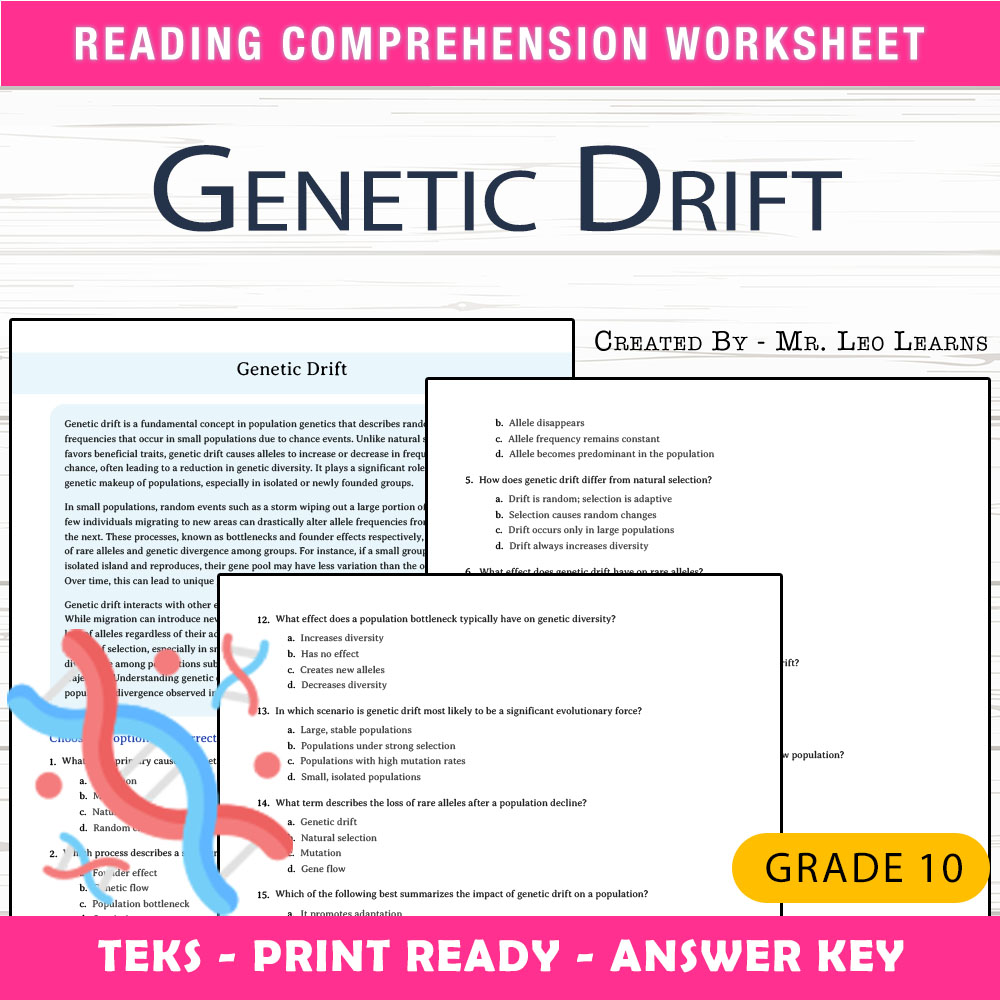
Grade 10 Science — Genetic Drift Worksheet for Mastery | PDF + Answer Key
Created byThe Resource HubLearning Objectives
- Explain the concept of genetic drift and its effects on small populations.
- Differentiate between genetic drift and natural selection.
- Describe processes such as founder effects and population bottlenecks that influence genetic variation.
Also included in: Grade 10 Science | Evolution & Heredity Worksheet Bundle (Mastery Skills Pack) +2 more
Instant download

Meiosis and Genetic Variation Worksheet Grade 10 Biology Activities
Created byPrism Point LearningLearning Objectives
- Explain how meiosis reduces chromosome number and produces genetically different gametes.
- Describe how homologous chromosome separation and genetic recombination create variation.
- Connect heritable variation to natural selection and population responses to environmental pressures.
Instant download

Grade 10 Science | Electromagnetic Behavior Worksheet (NGSS 10)
 Created bySilver Birch Teaching
Learning Objectives
- Understand the relationship between photon energy and electromagnetic spectra using Planck's relation E = hf.
- Interpret spectral signatures from thermal and atomic sources to analyze energy transfer processes.
- Identify detection mechanisms such as photodiodes and spectrometers used in observing electromagnetic radiation across different bands.
Also included in: Grade 10 Waves and Signals Science Lesson Bundle: NGSS System & EM Behavior +1 more
Instant download
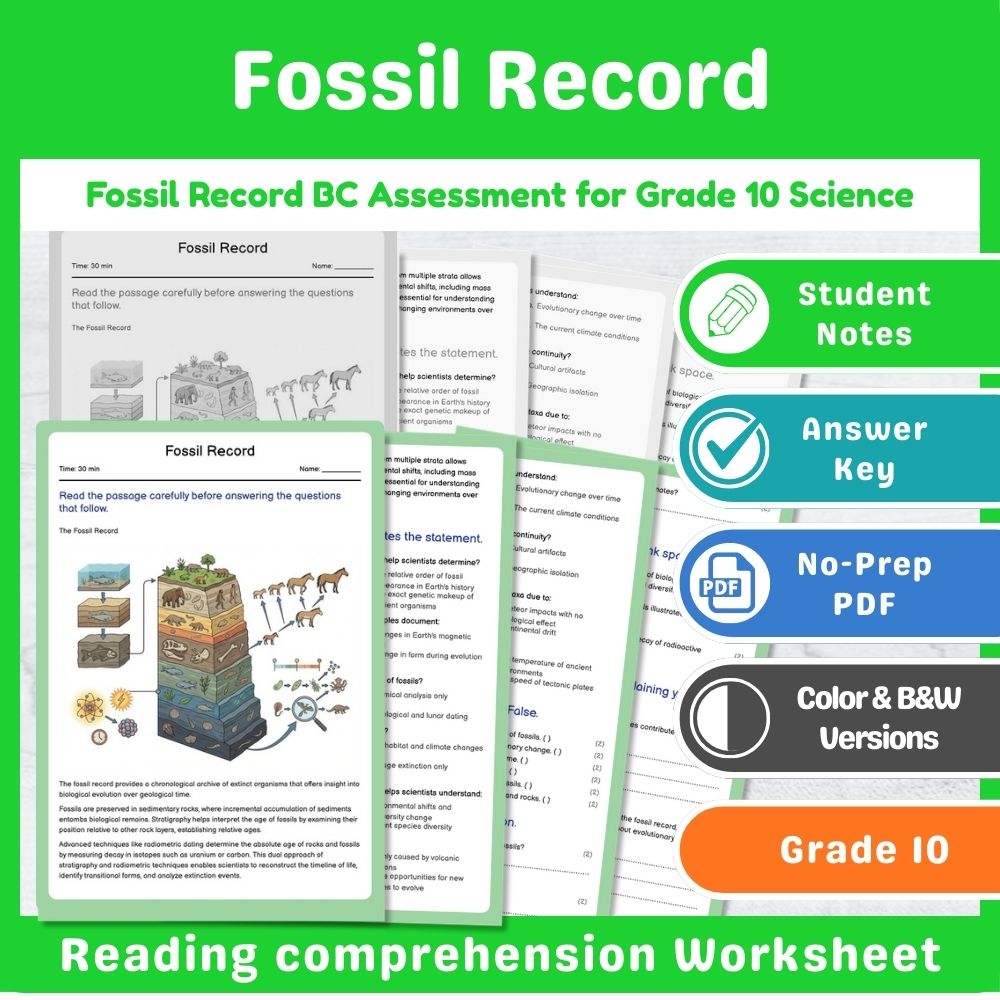
Fossil Record BC Assessment for Grade 10 Science
Created byPrism Point LearningLearning Objectives
- Understand how fossils are preserved and their significance in Earth's history.
- Identify methods used to interpret the fossil record, including stratigraphy and radiometric dating.
- Analyze patterns of biological change and extinction events through fossil evidence.
Instant download

Grade 10 Evolutionary Evidence Worksheet | NGSS Evolution Biology Activity
 Created byBRIGHT PATH RESOURCES
Learning Objectives
- Understand the different types of evidence supporting evolution
- Recognize the significance of fossils, anatomy, and molecular data in evolution
- Learn how radiometric dating and phylogenetics contribute to understanding evolutionary history
Also included in: Genetics & Evolution Grade 10 Science Worksheets Lesson Bundle | NGSS +1 more
Instant download

Grade 10 Heritable Trait Origins Worksheet | NGSS Genetics Science Activity
Created byBRIGHT PATH RESOURCESLearning Objectives
- Understand the sources of genetic variation such as mutation, recombination, gene flow, and chromosomal changes.
- Identify how molecular changes can influence phenotypic traits in populations.
- Describe the processes like genetic drift and nonrandom mating that impact trait distribution across generations.
Also included in: Genetics & Evolution Grade 10 Science Worksheets Lesson Bundle | NGSS +1 more
Instant download

Grade 10 Science | Adaptation Planning in Coastal Regions - Comprehension
Created byCoral Reef LearningLearning Objectives
- Understand different infrastructural strategies for coastal defense.
- Evaluate the ecological, social, and economic trade-offs of coastal adaptation measures.
- Analyze risk maps and hazard data to assess feasibility of defense options.
Instant download
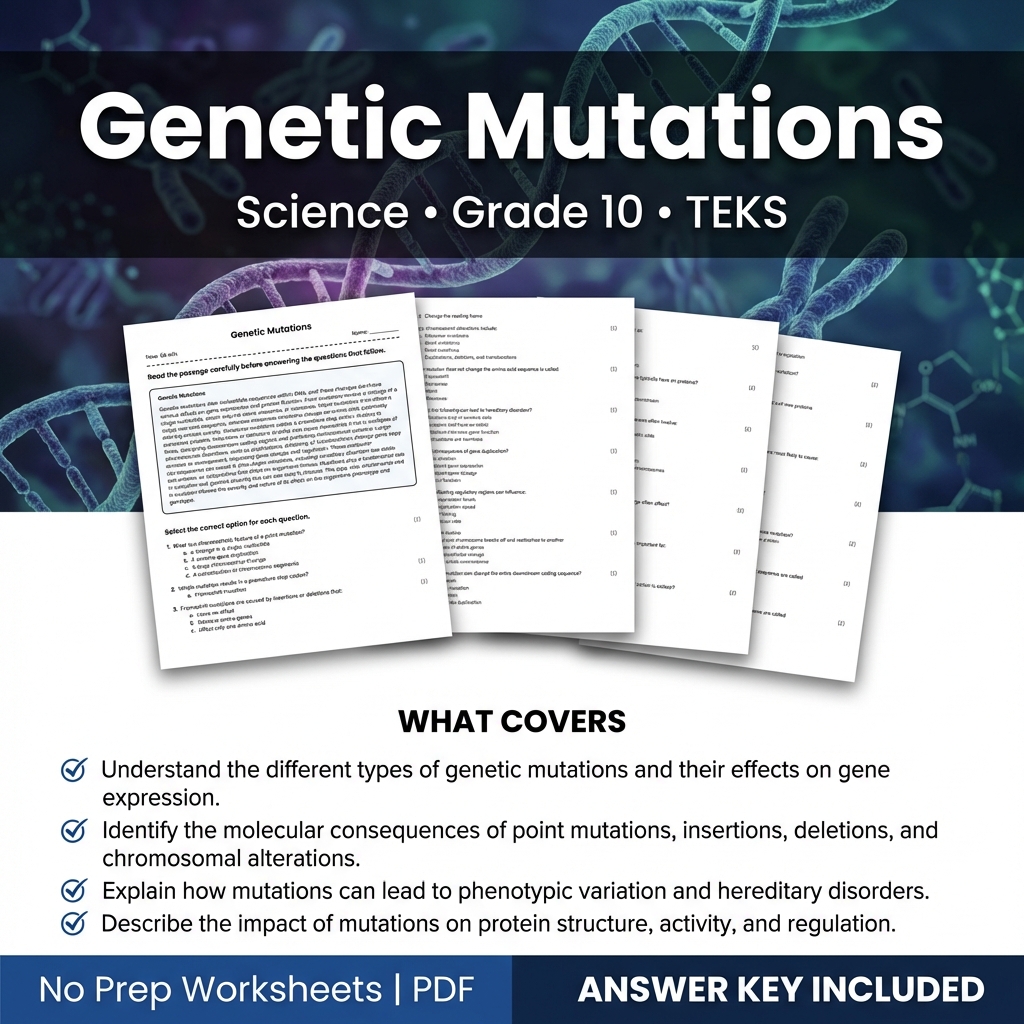
Genetic Mutations Worksheet for Science Grade 10 | TEKS Aligned
Created byCoral Reef LearningLearning Objectives
- Understand the different types of genetic mutations and their effects on gene expression.
- Identify the molecular consequences of point mutations, insertions, deletions, and chromosomal alterations.
- Explain how mutations can lead to phenotypic variation and hereditary disorders.
Instant download

Force Concepts Worksheet for Grade 10 Science | AP Standards Practice
JCreated byJ.S SheetsLearning Objectives
- Understand the vector nature of forces and how to determine net force.
- Explain Newton’s three laws of motion and their applications.
- Represent forces using free-body diagrams and analyze interactions.
Also included in: Grade 10 Motion, Waves & Electricity Science Lesson Bundle
Instant download
Grade 10 Science | Molecular Geometry Practice Worksheet (AP Standards)
 Created byBright Mind Resources
Learning Objectives
- Define molecular geometry using electron-domain and orbital hybridization models.
- Predict three-dimensional molecular arrangements based on electron domains.
- Explain how spatial distribution of electrons influences molecular shape and polarity.
Instant download
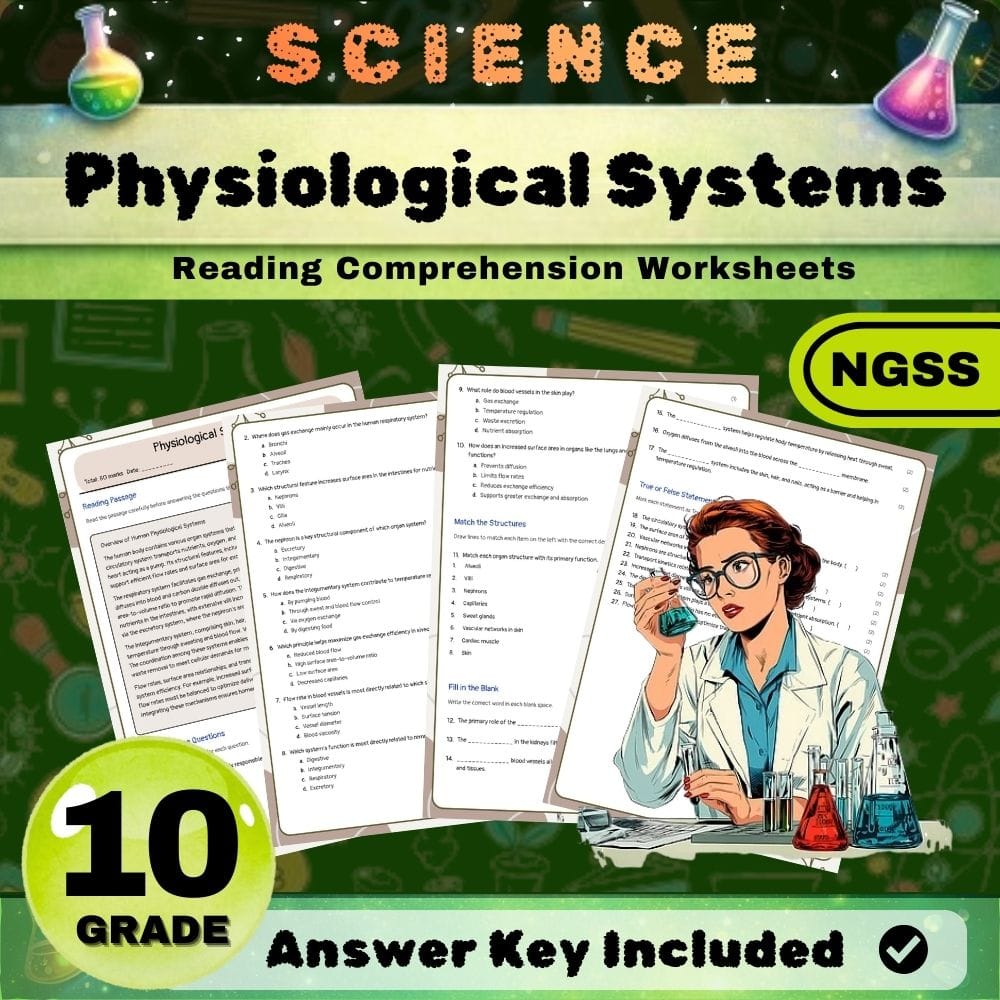
Grade 10 Science | Physiological Systems Worksheet (NGSS) PDF
 Created byMaple Path Learning
Learning Objectives
- Compare the structure and function of circulatory, respiratory, digestive, excretory, and integumentary systems.
- Explain how organ system structures support their roles in transport, gas exchange, and waste removal.
- Analyze the relationships between surface area, flow rates, and transport kinetics in physiological systems.
Also included in: Grade 10 Science From Molecules to Organisms Lesson Bundle | NGSS +1 more
Instant download
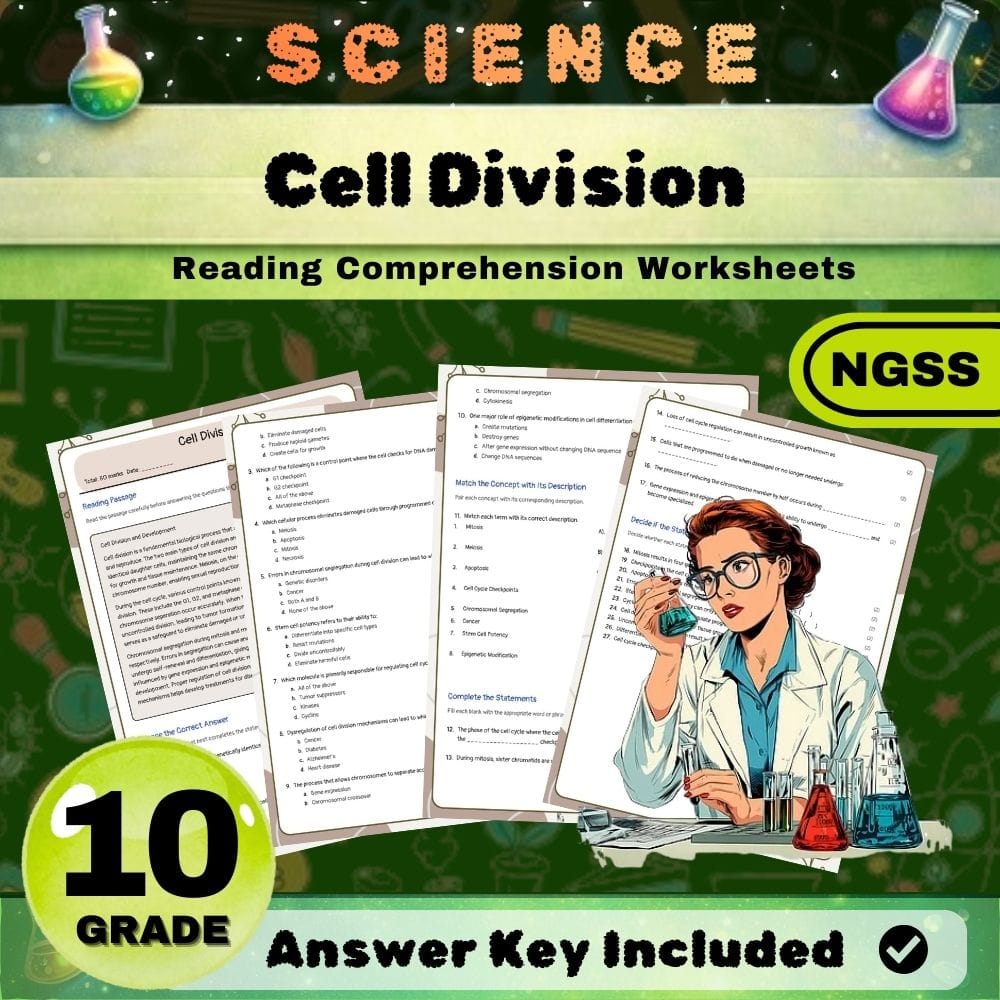
Grade 10 Science | Cell Division Worksheet (NGSS) (PDF)
Created byMaple Path LearningLearning Objectives
- Describe the processes of mitosis and meiosis involved in cellular reproduction.
- Explain the role of the cell cycle checkpoints, apoptosis, and chromosomal segregation in maintaining healthy cell function.
- Analyze how dysregulation of cell division can lead to diseases such as cancer.
Also included in: Grade 10 Science From Molecules to Organisms Lesson Bundle | NGSS +1 more
Instant download
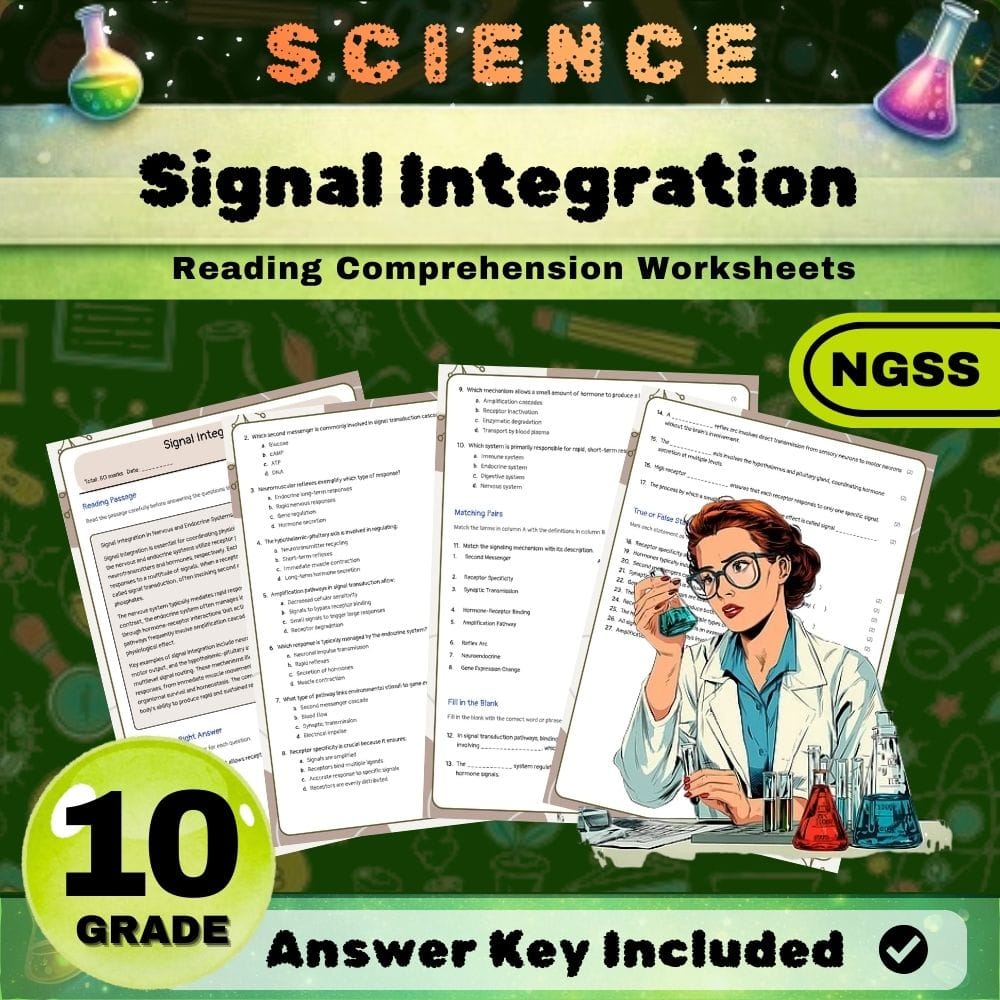
Grade 10 Science | Signal Integration Worksheet (NGSS PDF)
Created byMaple Path LearningLearning Objectives
- Describe how nervous and endocrine systems coordinate responses to environmental cues.
- Explain the mechanisms of receptor specificity, signal transduction, and amplification pathways.
- Identify examples of multilevel signal routing, such as reflex arcs and hormonal regulation.
Also included in: Grade 10 Science From Molecules to Organisms Lesson Bundle | NGSS +1 more
Instant download
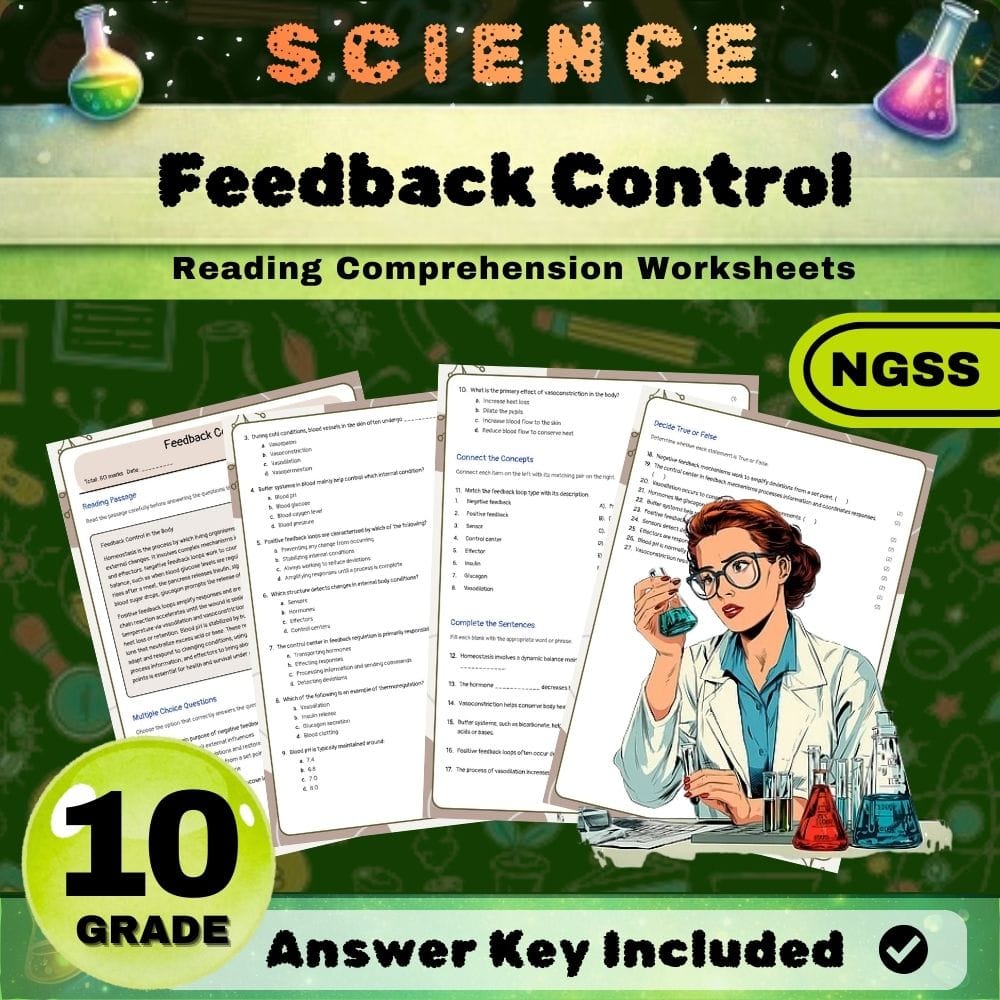
Grade 10 Science Feedback Control Worksheet (NGSS) PDF – Homeostasis Assessment
Created byMaple Path LearningLearning Objectives
- Explain the mechanisms of homeostasis involving negative and positive feedback loops.
- Identify the roles of sensors, control centers, and effectors in maintaining internal stability.
- Describe hormonal regulation of blood glucose by insulin and glucagon.
Also included in: Grade 10 Science From Molecules to Organisms Lesson Bundle | NGSS +1 more
Instant download
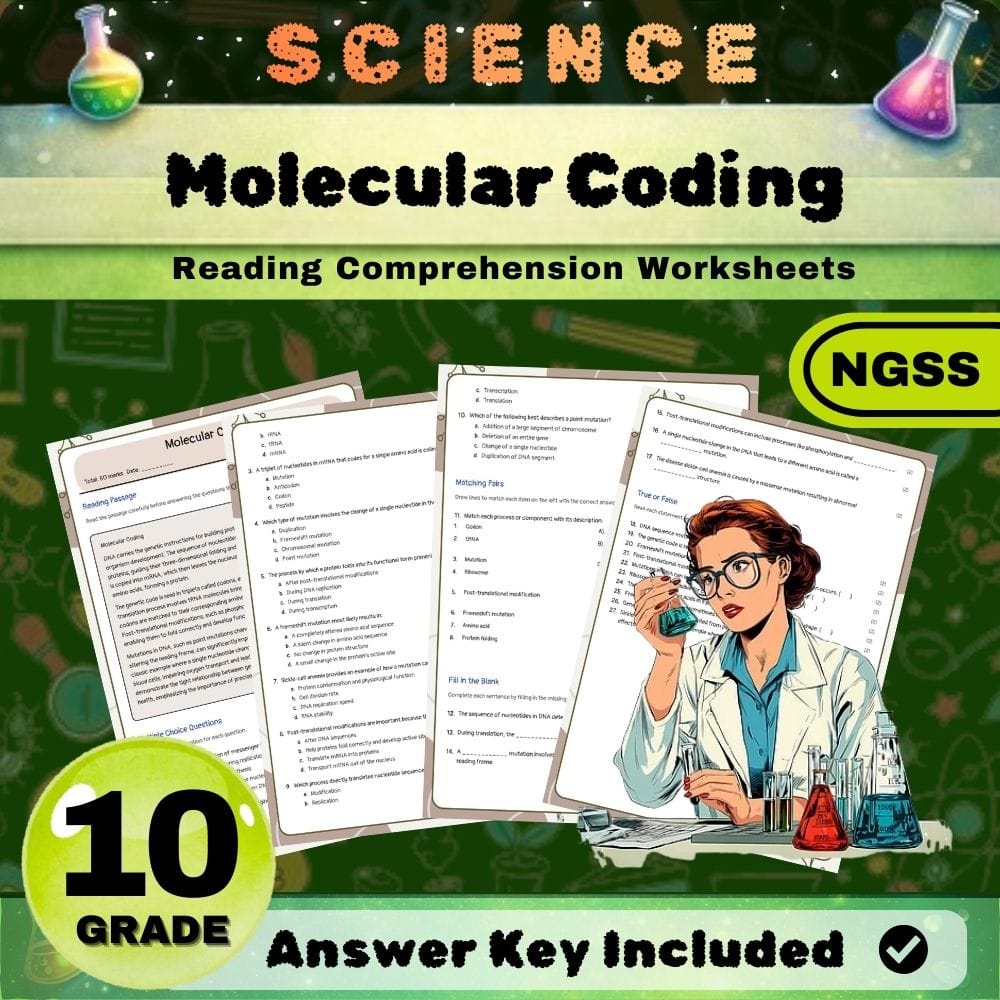
Grade 10 Science | Molecular Coding Worksheet (NGSS) (PDF)
Created byMaple Path LearningLearning Objectives
- Explain how DNA sequences determine protein structure through transcription and translation.
- Identify the roles of codons, ribosomes, and post-translational modifications in protein synthesis.
- Analyze how point mutations and frameshift mutations alter protein conformation and function.
Also included in: Grade 10 Science From Molecules to Organisms Lesson Bundle | NGSS +1 more
Instant download
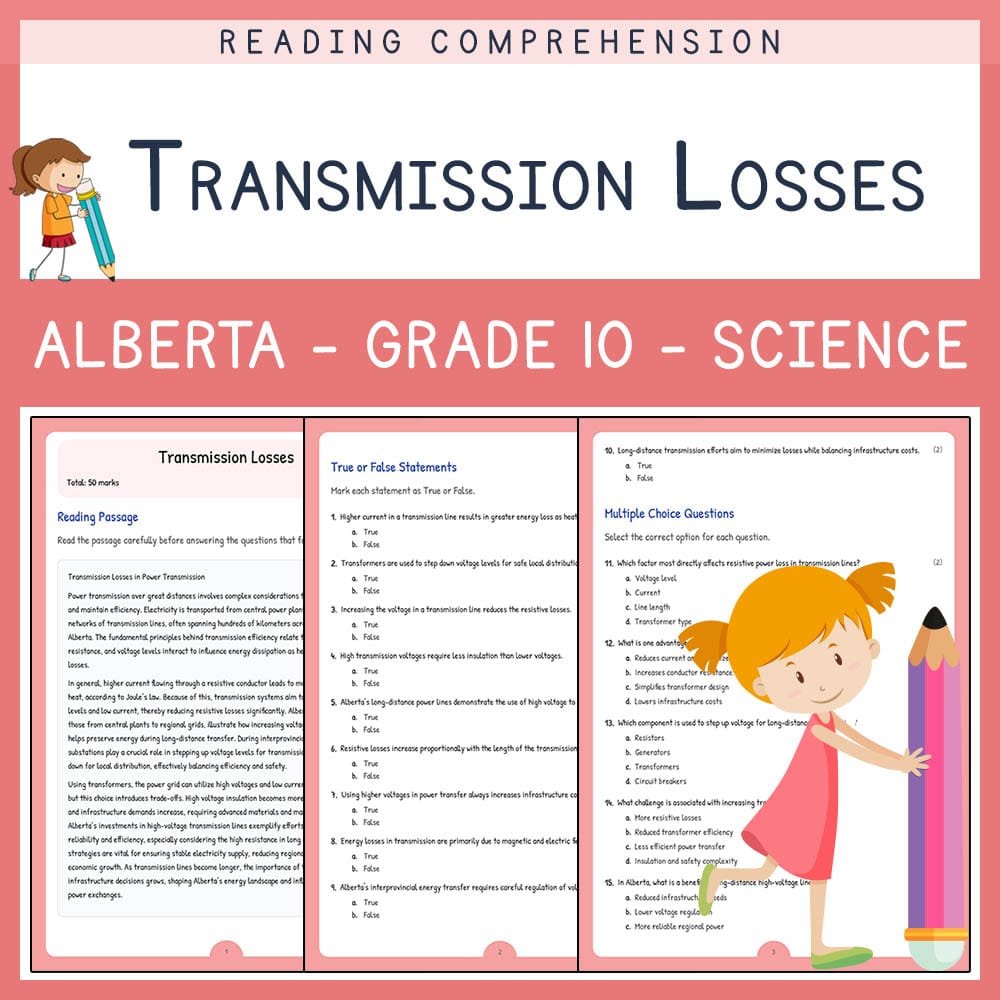
Grade 10 Science | Transmission Losses Worksheet | Alberta Standards
Created byLumora LearningLearning Objectives
- Understand how current, resistance, and voltage influence energy losses during power transmission.
- Identify strategies for reducing transmission losses in electrical grids.
- Explain the role of transformers in voltage regulation and their impact on efficiency.
Instant download
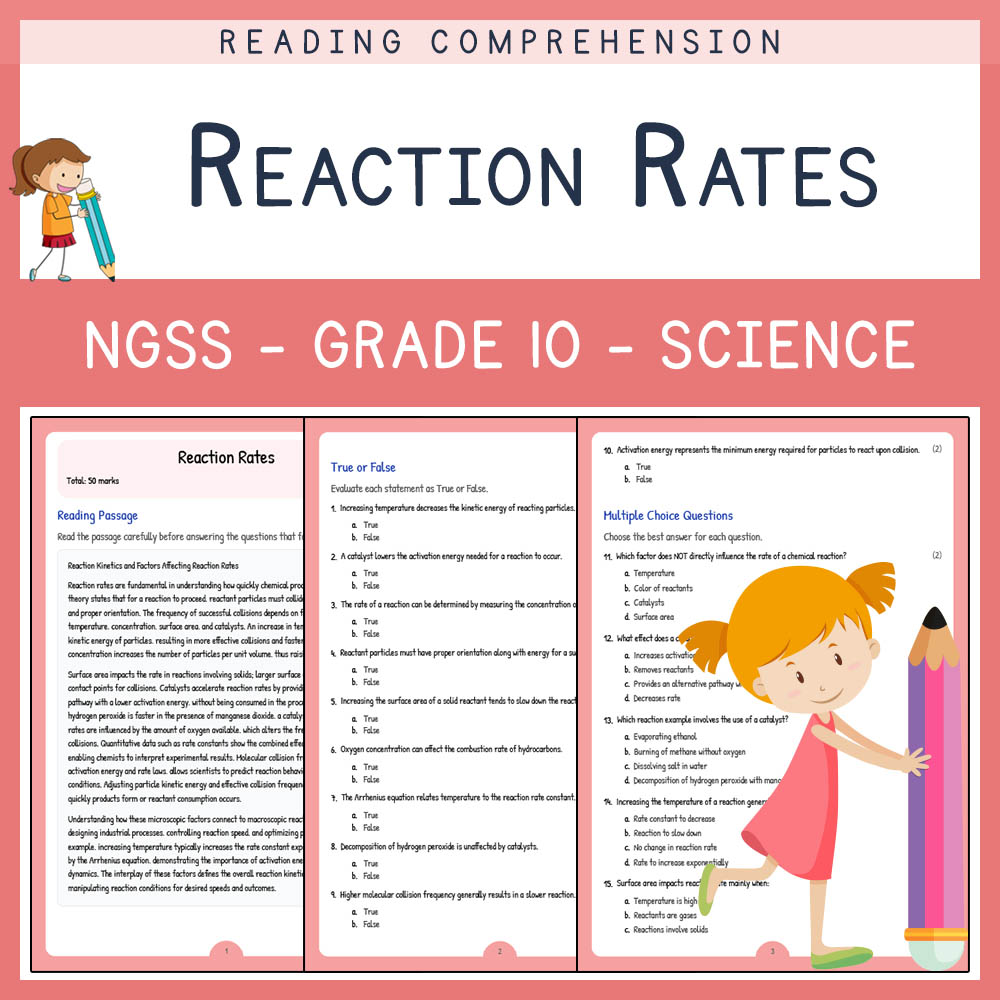
Grade 10 Science | Reaction Rates Worksheet & Answer Key – NGSS-Aligned
Created byLumora LearningLearning Objectives
- Understand how collision theory explains reaction rates and the factors influencing them.
- Interpret empirical data related to reaction kinetics, including rate laws and activation energies.
- Apply concepts of temperature, concentration, surface area, and catalysts to real-world chemical reactions.
Instant download
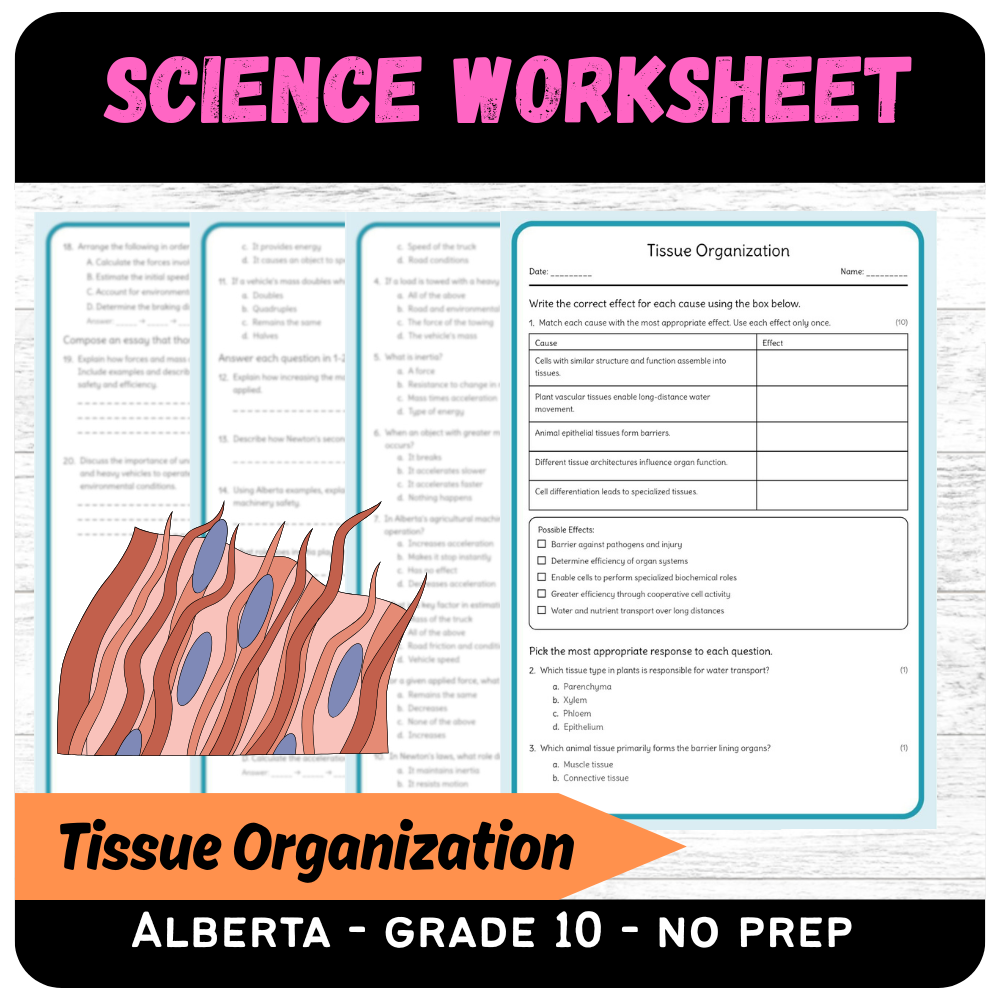
Grade 10 Science – Tissue Organization Worksheet (PDF) | Alberta Standards
Created byBright Mind ResourcesLearning Objectives
- Describe how similar cells form tissues with specific functions in plants and animals.
- Explain how tissue properties influence organ performance across different biomes and agricultural systems.
- Identify types of plant and animal tissues and their roles in cellular differentiation and tissue architecture.
Instant download

Grade 10 Science | Fields Overview Worksheet Elena | AP Aligned
Created byLumora LearningLearning Objectives
- Understand the basic concepts of electric and magnetic fields.
- Describe how field lines represent force interactions.
- Relate electric fields to forces, potential energy, and charge interactions.
Instant download
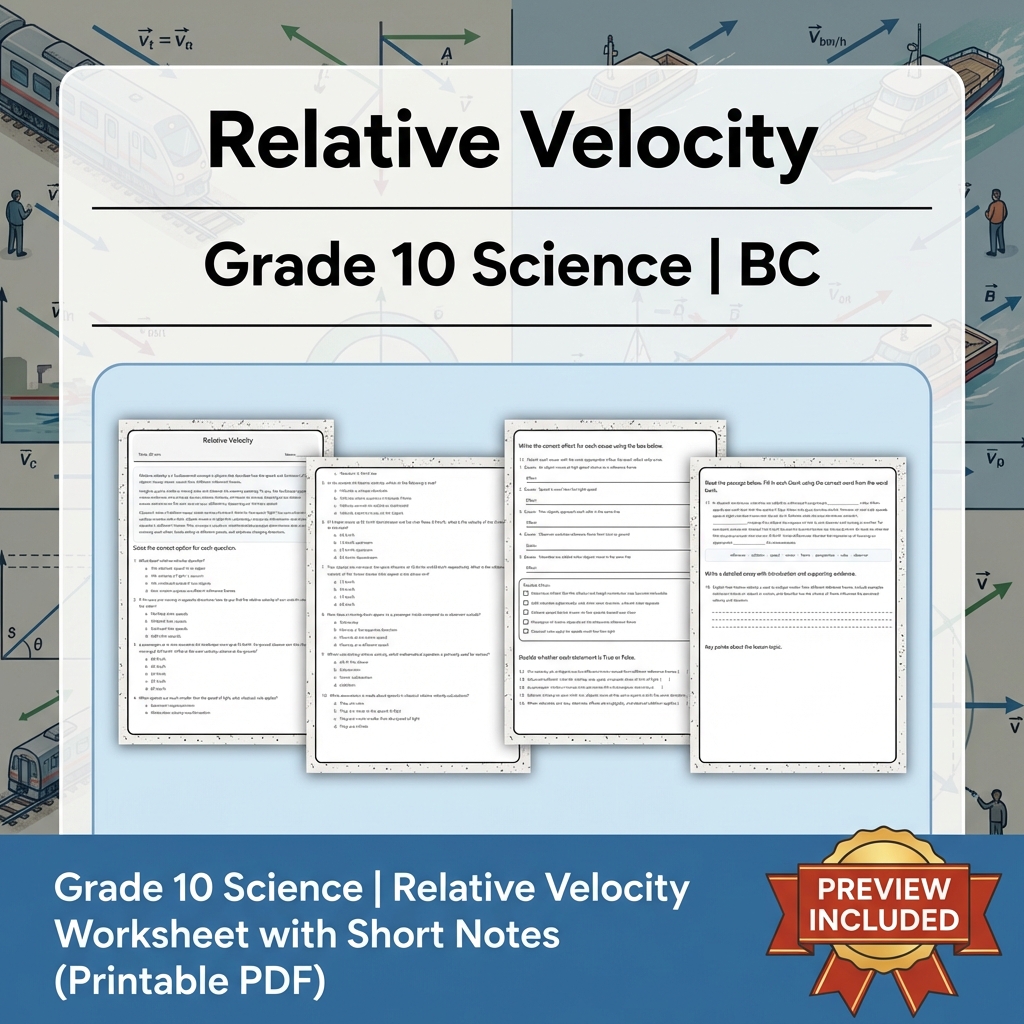
Grade 10 Science | Relative Velocity Worksheet with Short Notes (Printable PDF)
Created byMeadowlark WorksheetsLearning Objectives
- Understand the concept of relative velocity between different reference frames.
- Apply vector subtraction to calculate apparent speeds and directions.
- Distinguish between different frame perspectives in motion analysis.
Also included in: Grade 10 Science Lesson Bundle | Physics and Forces Worksheets | BC Framework +1 more
Instant download

Technology Society Impacts Worksheet Grade 10 Science STEM Activities
Created byPrism Point LearningLearning Objectives
- Explain how technologies change communication, work, travel, and access to services in society.
- Use cause-and-effect reasoning to connect design choices to social and environmental impacts.
- Evaluate how engineering trade-offs can affect public health, equity, and long-term sustainability.
Instant download
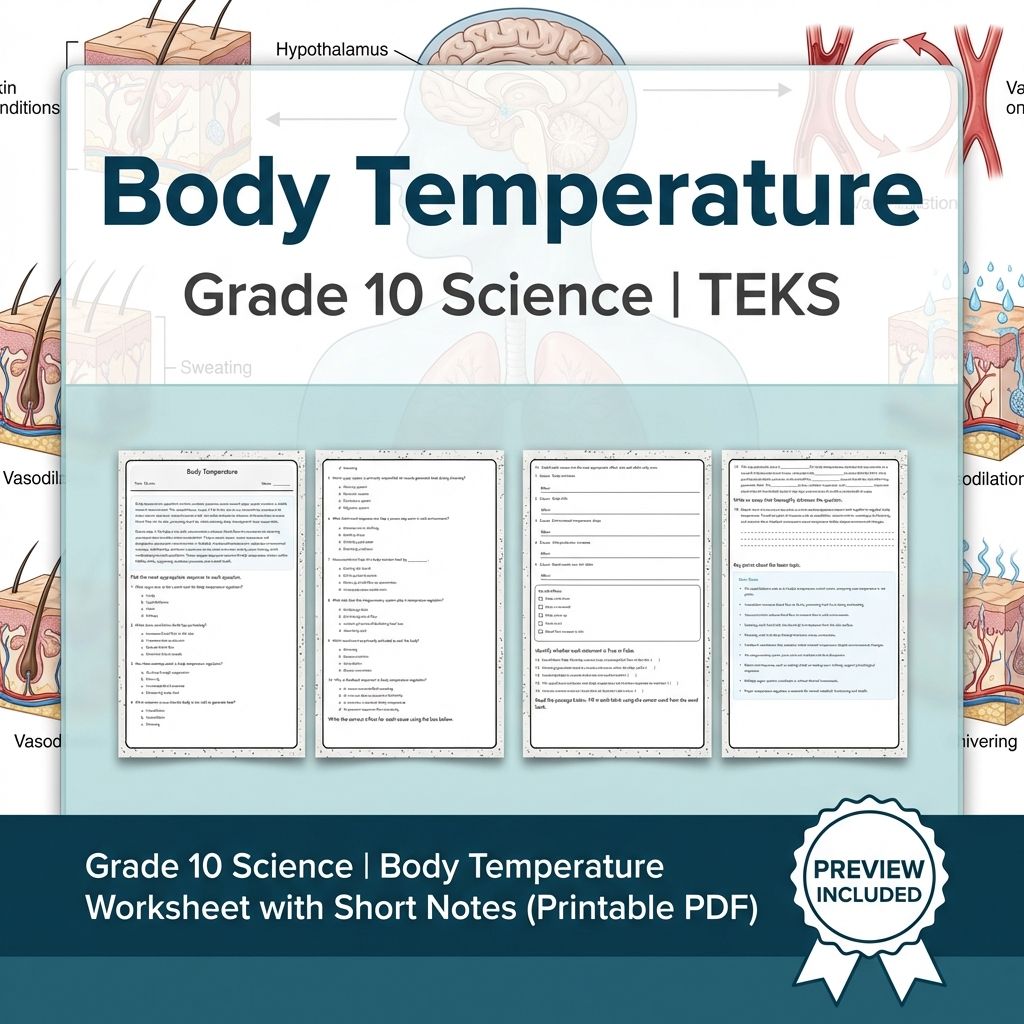
Grade 10 Science | Body Temperature Worksheet with Short Notes (Printable PDF)
Created byMeadowlark WorksheetsLearning Objectives
- Understand the mechanisms involved in body temperature regulation.
- Identify the roles of different organ systems in maintaining thermal balance.
- Explain feedback processes like vasodilation, vasoconstriction, sweating, and shivering.
Instant download
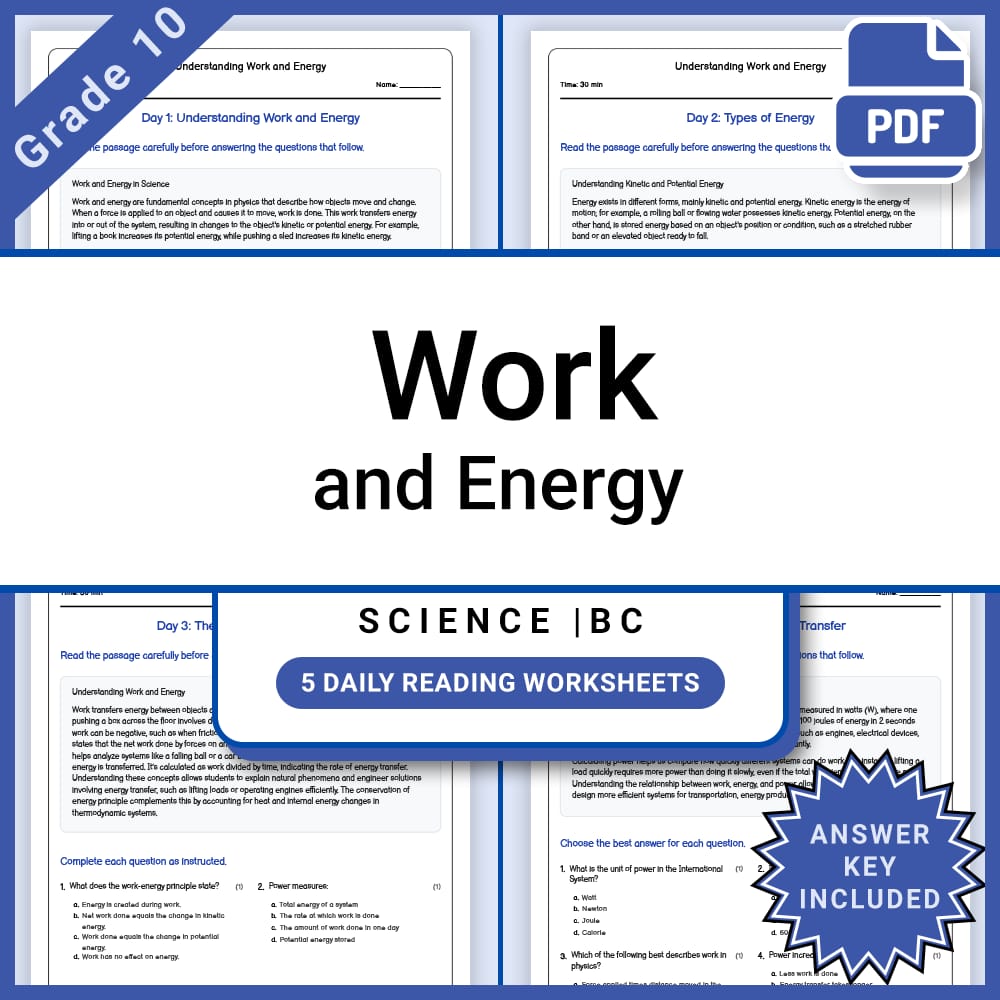
Grade 10 Science – Work and Energy Daily Reading Practice with Answer Key
JCreated byJ.S SheetsLearning Objectives
- Understand key concepts related to Science
- Apply knowledge through practice questions
- Demonstrate comprehension of the material
Also included in: Grade 10 Science Lesson Group BC Framework – Daily Reading Worksheets Bundle +1 more
Instant download

Grade 10 Science | Variable Isolation in Scientific Experiments - Comprehension
Created byCoral Reef LearningLearning Objectives
- Understand the concept of independent and dependent variables
- Identify variables in experimental design
- Explore how variables influence scientific outcomes
Instant download
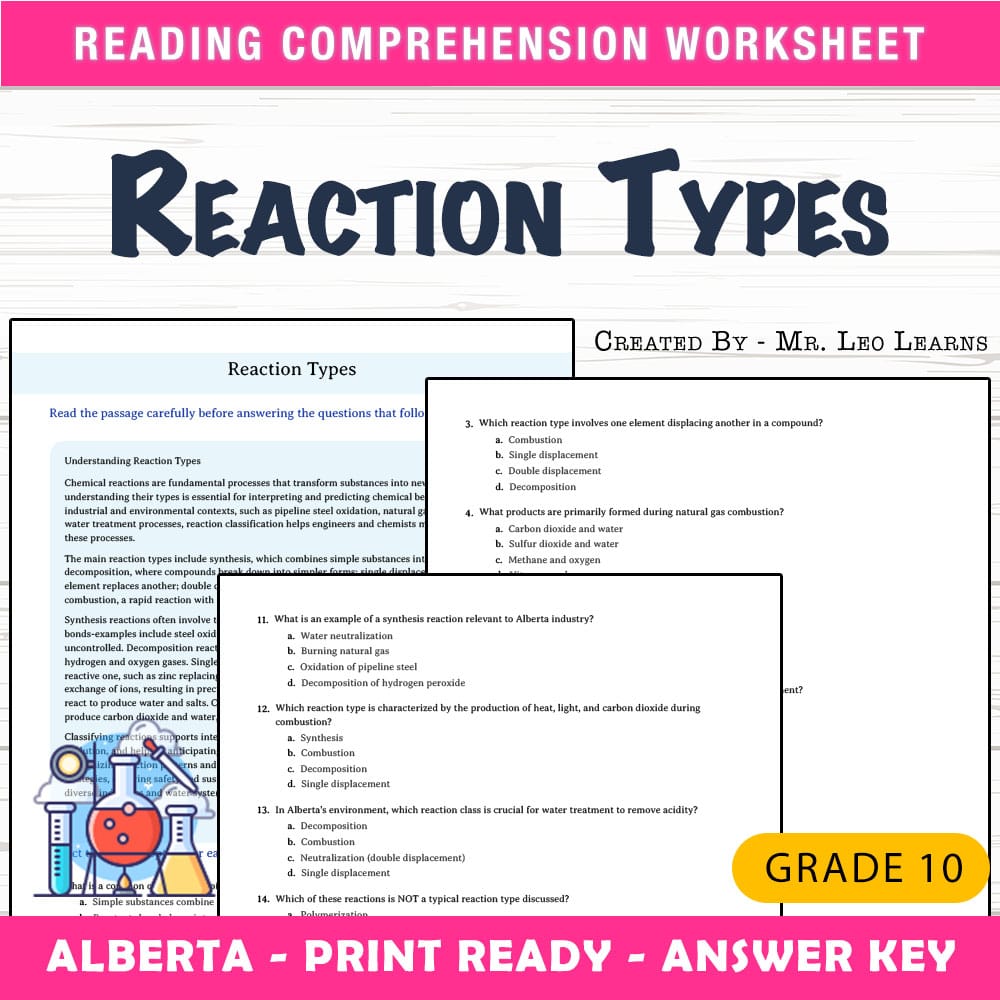
Grade 10 Science — Worksheet MCQ Paper for Mastering Reaction Types
Created byThe Resource HubLearning Objectives
- Identify the different types of chemical reactions such as synthesis, decomposition, single and double displacement, and combustion.
- Understand the distinctive features and observable indicators of each reaction type.
- Apply reaction classification to Alberta-relevant examples like steel oxidation, natural gas combustion, and water treatment.
Also included in: Grade 10 Science Lesson Bundle | Matter and Chemical Change Worksheets +1 more
Instant download
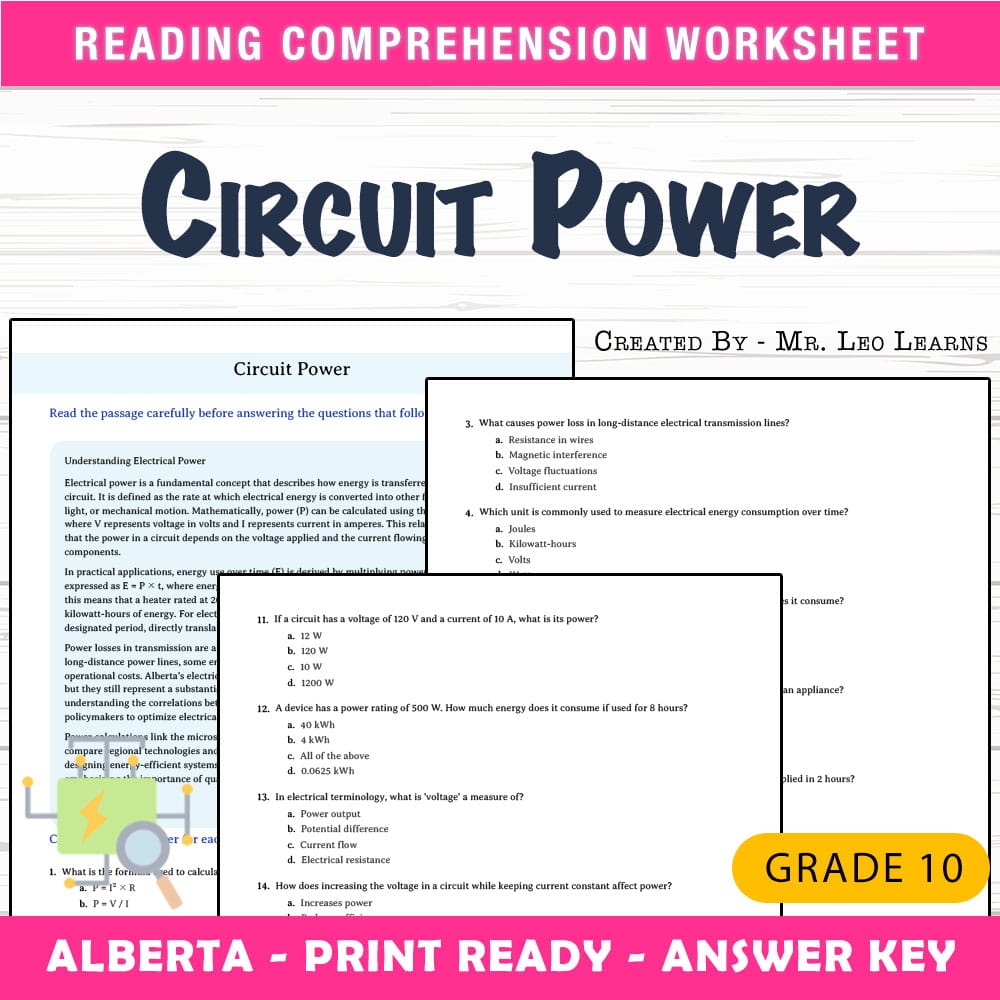
Grade 10 Science — Worksheet MCQ Paper for Mastering Circuit Power
Created byThe Resource HubLearning Objectives
- Understand how voltage, current, and resistance relate to electrical power.
- Calculate energy consumption over time using power and usage duration.
- Apply power and energy concepts to household appliances, electric vehicles, and regional power systems.
Also included in: Grade 10 Science | Energy, Motion & Electricity Worksheet Bundle | Alberta +1 more
Instant download
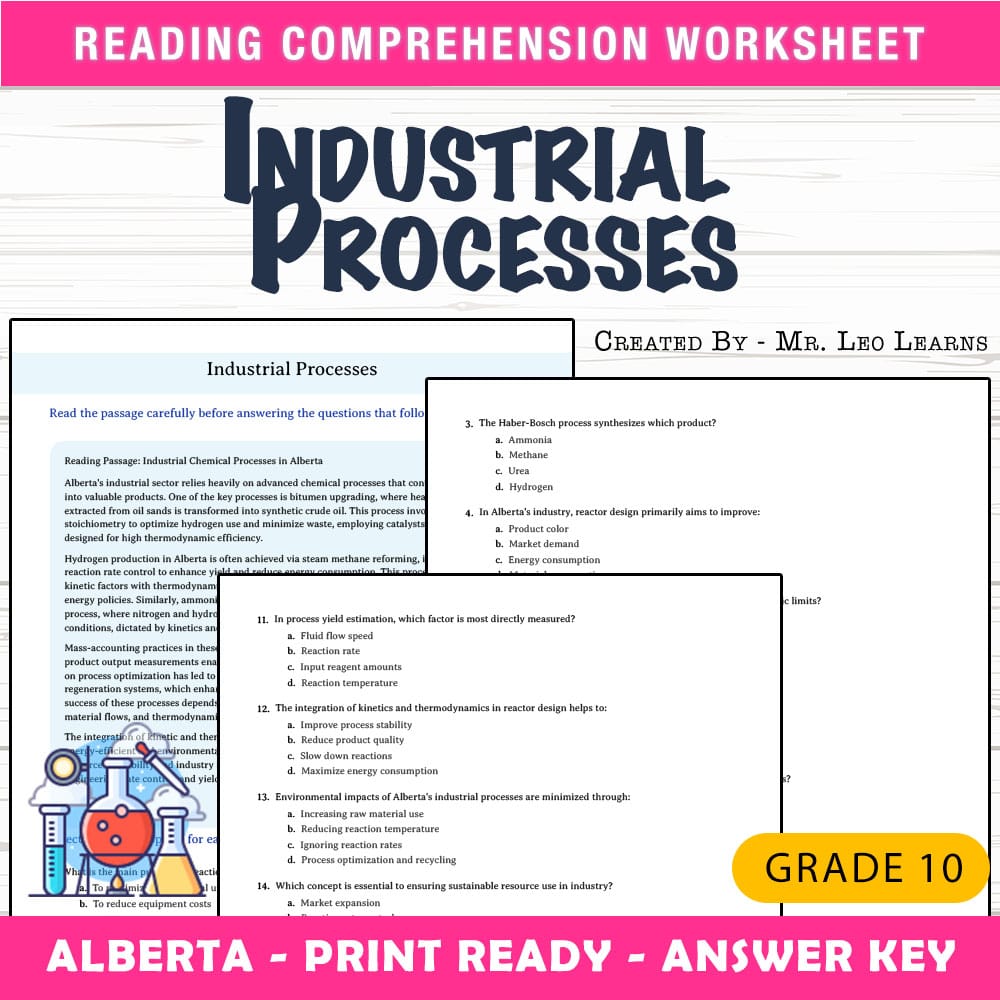
Grade 10 Science — Worksheet MCQ Paper for Mastering Industrial Processes
Created byThe Resource HubLearning Objectives
- Understand key concepts of reaction stoichiometry and mass conservation in industrial chemical processes.
- Identify factors affecting process efficiency and yield in Alberta-specific industrial applications.
- Explain the interplay of kinetics and thermodynamics in reactor design and process optimization.
Also included in: Grade 10 Science Lesson Bundle | Matter and Chemical Change Worksheets +1 more
Instant download
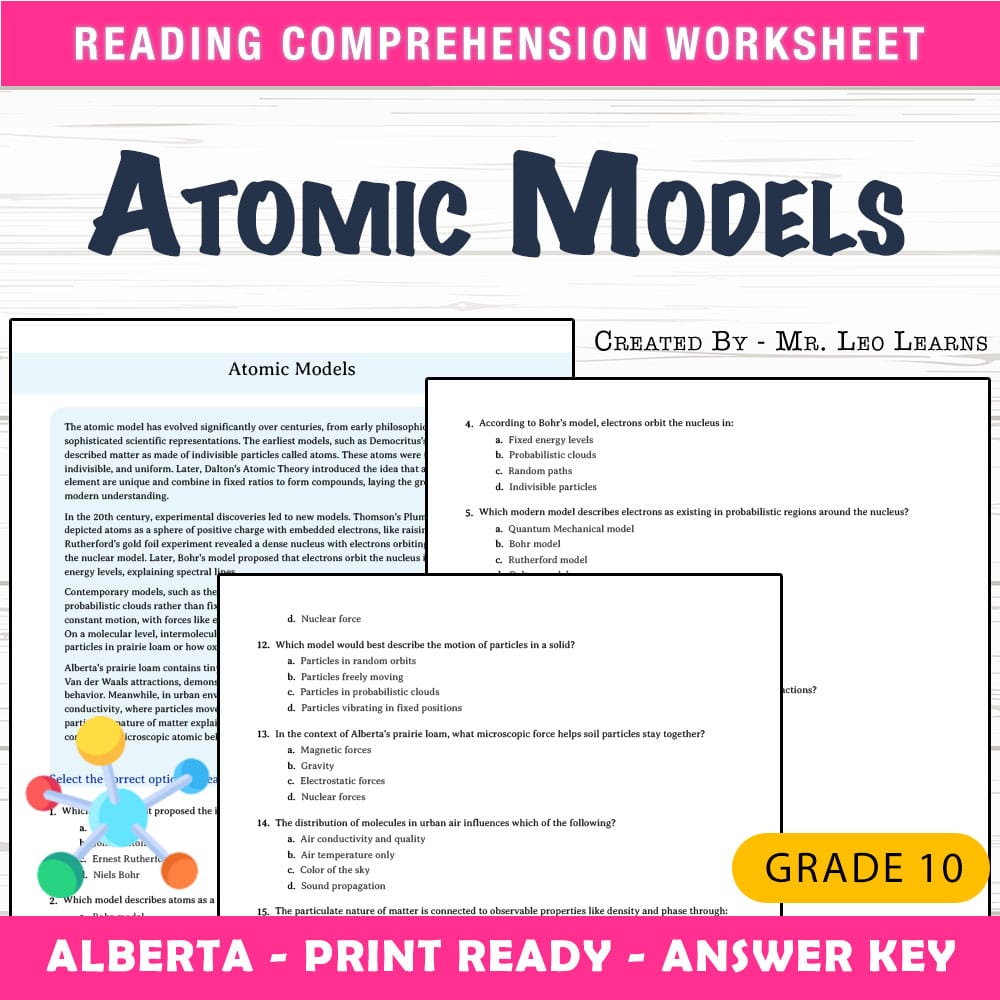
Grade 10 Science — Worksheet MCQ Paper for Mastering Atomic Models
Created byThe Resource HubLearning Objectives
- Understand different atomic models and their representations.
- Relate microscopic atomic structure to macroscopic properties of matter.
- Identify how particle motion and forces influence observable material behavior.
Also included in: Grade 10 Science Lesson Bundle | Matter and Chemical Change Worksheets +1 more
Instant download
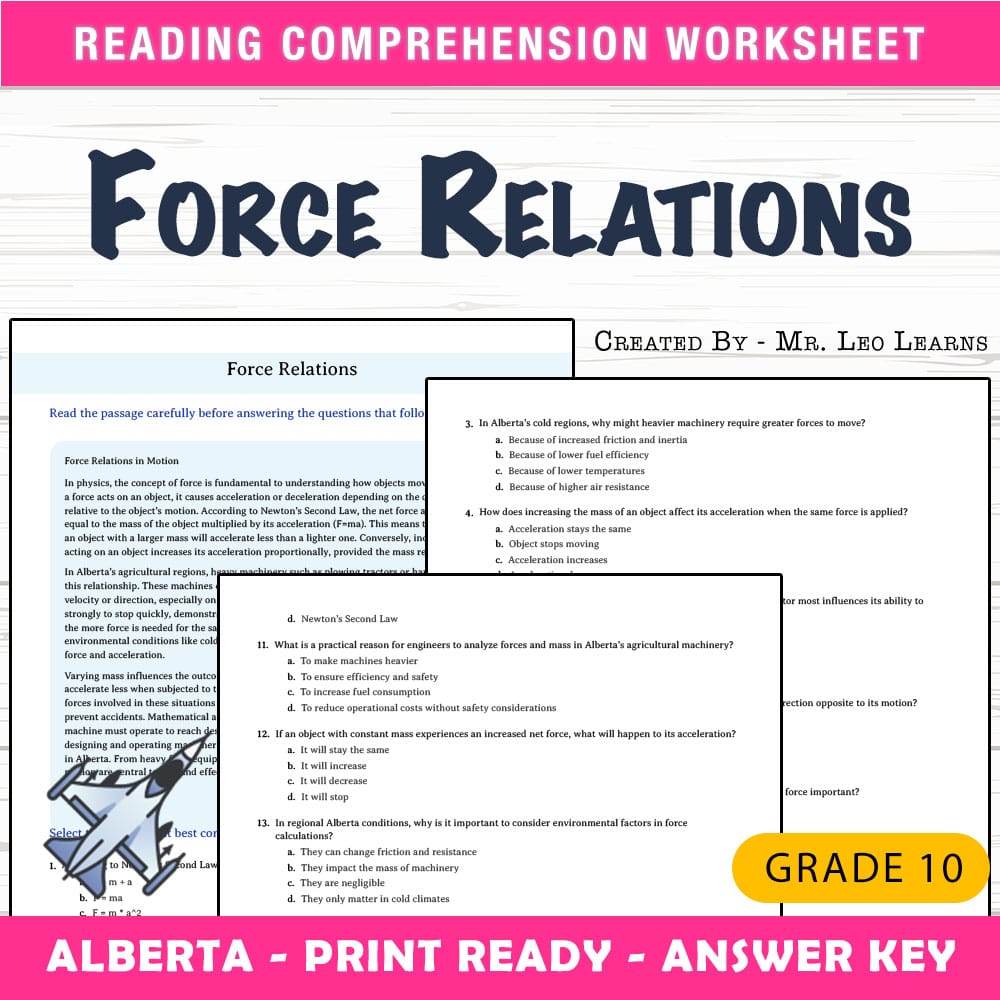
Grade 10 Science — Worksheet MCQ Paper for Mastering Force Relations
Created byThe Resource HubLearning Objectives
- Understand how net force affects the motion of objects.
- Analyze the relationship between mass, force, and acceleration using Newtonian principles.
- Interpret regional Alberta examples involving heavy machinery and vehicle braking to illustrate force and motion concepts.
Also included in: Grade 10 Science | Energy, Motion & Electricity Worksheet Bundle | Alberta +1 more
Instant download
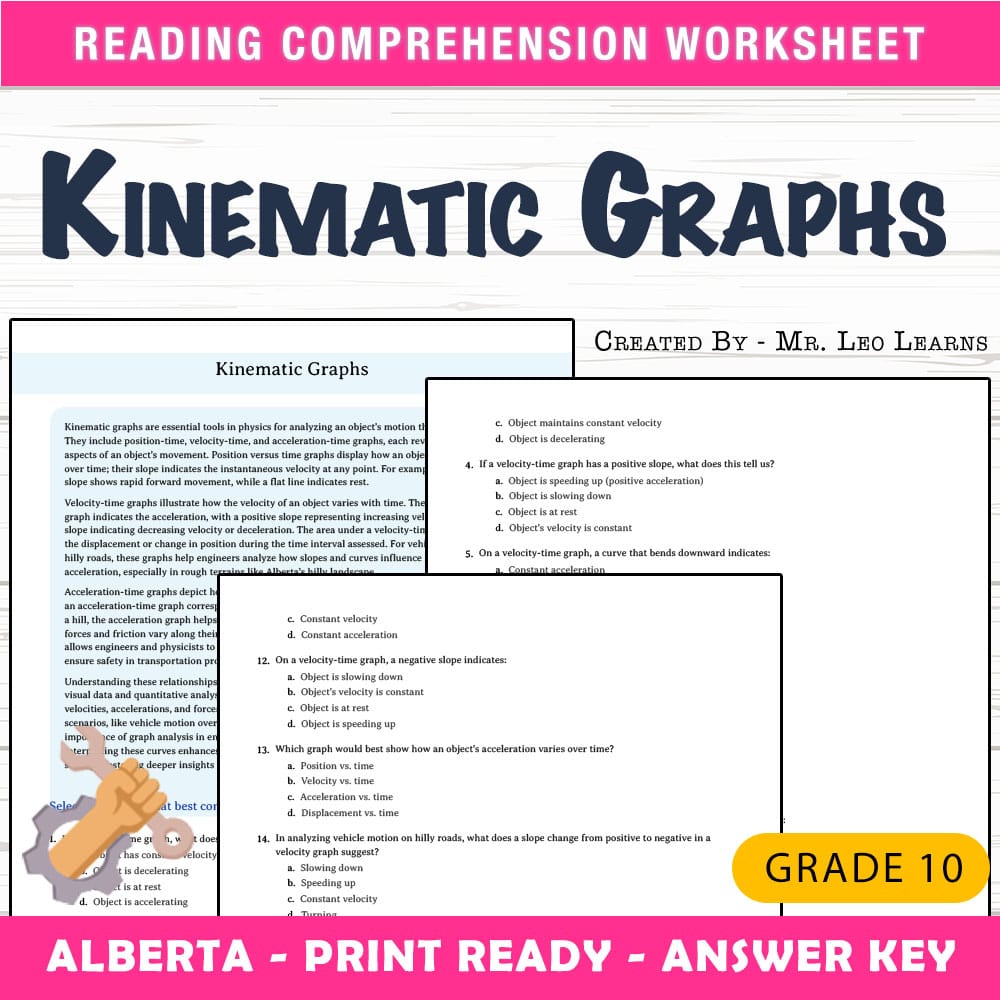
Grade 10 Science — Worksheet MCQ Paper for Mastering Kinematic Graphs
Created byThe Resource HubLearning Objectives
- Understand how position, velocity, and acceleration graphs represent motion.
- Interpret slopes and areas under curves to determine instantaneous and average quantities.
- Apply graphical analysis to real-world vehicle and sled motion scenarios.
Also included in: Grade 10 Science | Energy, Motion & Electricity Worksheet Bundle | Alberta +1 more
Instant download
Grade 10 Science — Worksheet MCQ Paper for Mastering Cell Types
Created byThe Resource HubLearning Objectives
- Compare structural differences between prokaryotic and eukaryotic cells.
- Identify examples of prokaryotic and eukaryotic organisms in regional habitats.
- Understand how cell structure influences replication, genetic control, and ecological roles.
Also included in: Grade 10 Science Cells and Systems Lesson Bundle | Alberta Curriculum +1 more
Instant download
Grade 10 Science — Worksheet MCQ Paper for Mastering Integrated Systems
Created byThe Resource HubLearning Objectives
- Explain the principles of energy conversion and conservation in mechanical and electrical systems.
- Identify energy transformations in integrated systems such as hydroelectric plants and electric vehicles.
- Analyze efficiencies and energy losses in combined mechanical and electrical systems.
Also included in: Grade 10 Science | Energy, Motion & Electricity Worksheet Bundle | Alberta +1 more
Instant download
Grade 10 Science — Mass Conservation Worksheet MCQ Paper for Mastery
Created byThe Resource HubLearning Objectives
- Understand the principle of mass conservation in chemical reactions.
- Learn to balance symbolic chemical equations accurately.
- Apply mass relations to quantify reactants and products.
Also included in: Grade 10 Science Lesson Bundle | Matter and Chemical Change Worksheets +1 more
Instant download
Grade 10 Science — Worksheet MCQ Paper for Mastering Energy Currency
Created byThe Resource HubLearning Objectives
- Understand the role of ATP as the primary energy currency in cells.
- Explain how ATP synthesis and hydrolysis couple energy release to metabolic reactions.
- Describe variations in ATP turnover rates across tissues and environmental conditions.
Also included in: Grade 10 Science Cells and Systems Lesson Bundle | Alberta Curriculum +1 more
Instant download
About Grade 10 Science Worksheets
Find Science worksheets built for Grade 10. All 7,069 cover core skills, practice, and review, each an instant PDF download.
Every worksheet on MyTeachingSheets is created by independent teacher-authors and reviewed before publication. All resources download as printable PDFs for classroom, homework, or at-home practice, and many include answer keys. Preview any worksheet free before buying.