
Grade 10 Science Worksheets
7,038 worksheets
Elements, Compounds and Mixtures Worksheets: Grade 10 Science
 Created byPrism Point Learning
Learning Objectives
- Classify substances as elements, compounds, or mixtures
- Distinguish pure substances from homogeneous and heterogeneous mixtures
- Interpret chemical formulas using atomic composition
Also included in: Matter & Chemical Change Grade 10 Science Worksheets Ontario Bundle
Instant download

Grade 10 Science Worksheet B: Cosmic Origins Worksheet | NGSS Practice PDF
 Created byClear Sky Classroom
Learning Objectives
- Explain how cosmic microwave background (CMB) measurements inform models of the early universe
- Interpret galactic redshift as evidence for an expanding universe and connect it to large-scale structure
- Describe how primordial elemental abundances constrain early-universe conditions and time sequence
Also included in: Grade 10 Space Systems Science Lesson Bundle: Stellar Lifecycles & Motion NGSS +1 more
Instant download
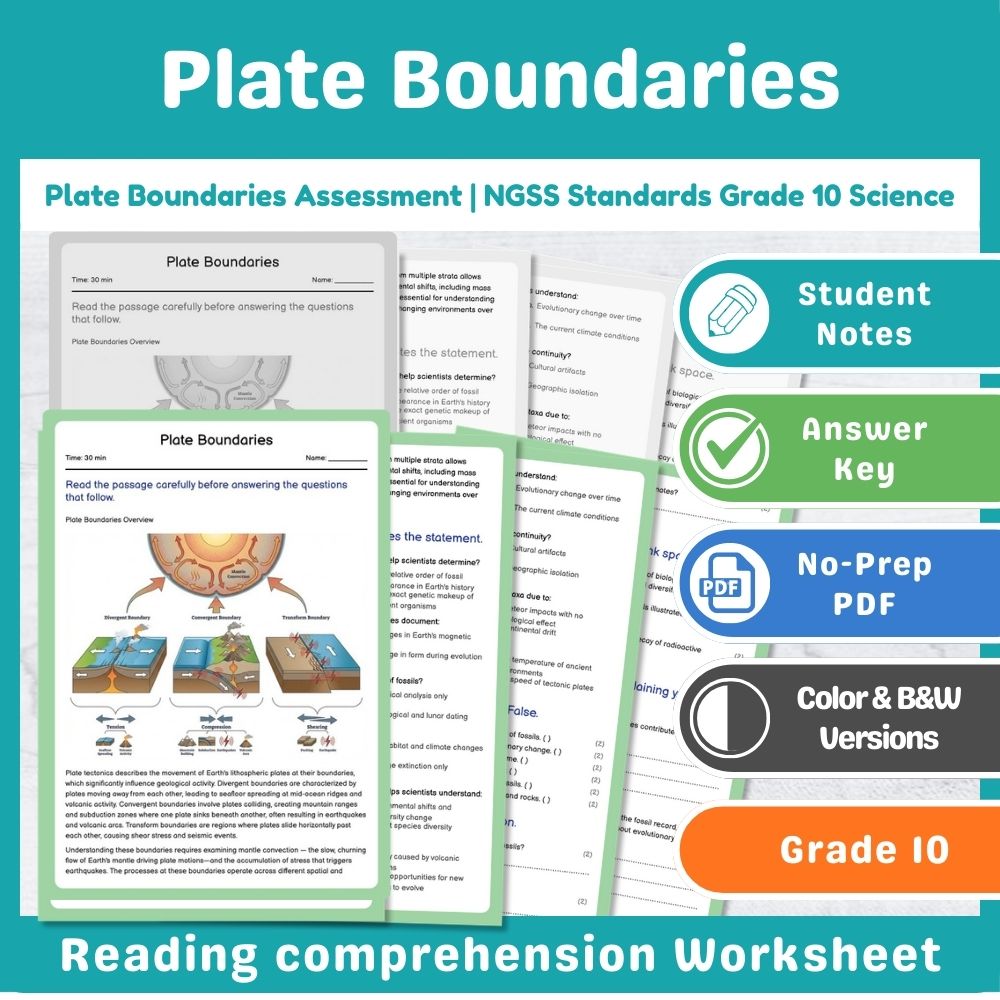
Plate Boundaries Assessment | NGSS Standards Grade 10 Science
Created byPrism Point LearningLearning Objectives
- Understand the three main types of plate boundaries: divergent, convergent, and transform.
- Describe key geological phenomena associated with each boundary type, such as mid-ocean ridges, subduction zones, and mountain uplift.
- Explain mechanisms of mantle convection and stress accumulation that cause earthquakes and volcanic activity.
Instant download

Grade 10 Reference Frames Worksheet | AP Practice PDF
Created byClear Sky ClassroomLearning Objectives
- Explain how choosing a reference frame and coordinate system determines the signs of position and velocity in one-dimensional motion
- Use kinematic equations to relate position, velocity, and acceleration for constant-velocity and constant-acceleration situations
- Interpret and describe changes in position-time and velocity-time graphs using the concepts of slope and acceleration
Also included in: Grade 10 Physics Concepts Science Lesson Bundle: Advanced Placement (AP) +1 more
Instant download
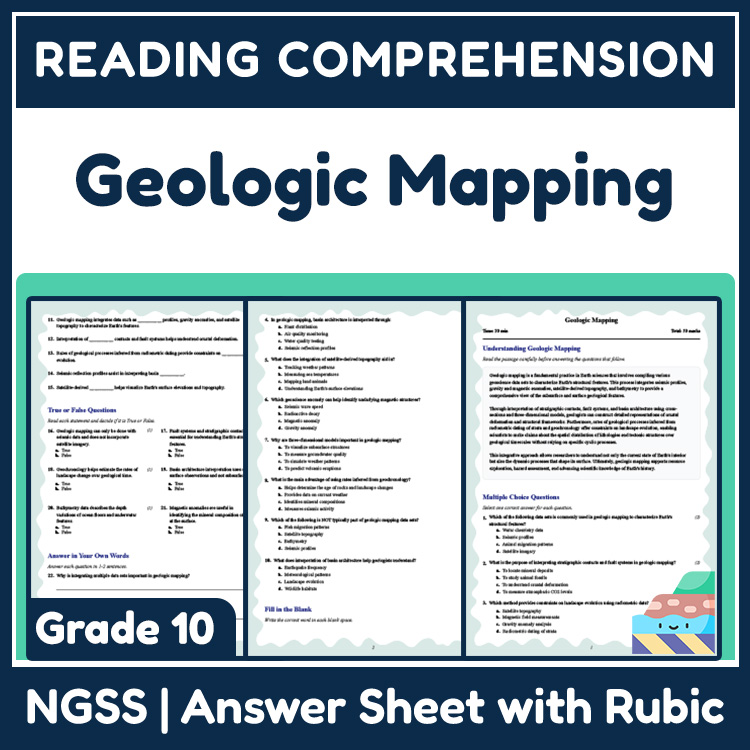
Grade 10 Science | Geologic Mapping Reading Worksheets (PDF + Rubric)
JCreated byJ.S SheetsLearning Objectives
- Understand the purpose and types of geologic mapping and data sources used in geoscience.
- Learn how interpret stratigraphic contacts, fault systems, and basin architecture using cross-sections and 3D models.
- Recognize how rates from dated strata and geochronology inform landscape evolution and tectonic structures.
Also included in: Grade 10 Science Unit | Earth Systems & Climate Change Worksheets Bundle
Instant download

Grade 10 Science – Electron Configuration Worksheet (AP Standard) (PDF)
 Created byEvergreen Desk Education
Learning Objectives
- Explain what the principal, angular, magnetic, and spin quantum numbers mean and how they describe an electron in an atom.
- Use orbital shapes and orbital-diagram rules to predict electron distribution and energy ordering.
- Connect electron configurations and valence patterns to periodic behavior, chemical reactivity, and simple magnetic properties.
Also included in: Grade 10 Chemistry Science Lesson Bundle AP Framework Worksheets Practice +1 more
Instant download

Grade 10 Science – Remote Sensing & Earth Observation | Daily Reading Worksheet
 Created byBright Mind Resources
Learning Objectives
- Describe the main sensor types used in satellite remote sensing.
- Explain how spectral information from sensors helps analyze land and water surfaces.
- Identify common derived products used in environmental monitoring.
Also included in: Grade 10 Sustainability Science Daily Reading Worksheets lesson bundle | Alberta +1 more
Instant download

Grade 10 Science | Model-Data Fit Worksheet | AP-aligned
 Created byLumora Learning
Learning Objectives
- Understand how to compare model predictions with observed data using residual analysis.
- Evaluate the goodness-of-fit of different models in data analysis.
- Interpret discrepancies between models and data to inform model adequacy.
Instant download
Grade 10 Science | Periodic Trends Worksheet (Answer Key) | BC Standards
Created byBright Mind ResourcesLearning Objectives
- Understand the systematic changes in atomic radius, ionization energy, and electronegativity across periods and down groups.
- Explain how nuclear charge and electron shielding influence periodic trends.
- Apply knowledge of trends to predict element behavior and bond characteristics.
Instant download

Grade 10 Science | Motors & Generators - Daily Reading Comprehension
 Created byCoral Reef Learning
Learning Objectives
- Understand the basic principles of how motors and generators operate
- Differentiate between the functions of motors and generators
- Learn about electromagnetic forces involved in energy conversion
Also included in: Energy, Motion and Electricity Lesson Bundle | Grade 10 Science | Alberta +1 more
Instant download

Heat Transfer Worksheet | Standards-Aligned Science Practice for Grade 10
JCreated byJ.S SheetsLearning Objectives
- Understand the mechanisms of heat transfer: conduction, convection, and radiation.
- Identify material properties that influence heat transfer rates.
- Explain how surface area and temperature gradients affect thermal energy flow.
Instant download

Rock Cycle Practice Worksheet | Grade 10 Science Ontario
Created byPrism Point LearningLearning Objectives
- Explain how igneous, sedimentary, and metamorphic processes connect within the rock cycle
- Describe physical and chemical drivers of rock transformation, including temperature, pressure, and weathering
- Relate rock-type turnover to timescales and plate tectonics and surface processes
Also included in: Grade 10 Earth Systems Science Lesson Bundle: Ontario Review Worksheets
Instant download

Multi-Criteria Optimization Worksheets: Engineering Design Grade 10
 Created byBRIGHT PATH RESOURCES
Learning Objectives
- Explain how multi-criteria optimization uses trends in measured data to improve a design toward target values.
- Describe how constraints and priorities affect which design changes produce meaningful gains.
- Compare trade-offs between multiple goals when optimizing under realistic limitations.
Also included in: Grade 10 Engineering Design Worksheets Bundle | Science Trade-Offs +4 more
Instant download

Wave Properties Worksheet | NGSS-Aligned Science Practice for Grade 10
JCreated byJ.S SheetsLearning Objectives
- Understand the fundamental properties of waves, including amplitude, wavelength, frequency, and speed.
- Apply the relationship v = fλ to solve problems involving wave motion.
- Describe the principles of superposition and interference patterns, including standing waves, using trigonometric functions and phase relationships.
Also included in: Grade 10 Electromagnetic Waves & Signals Science Lesson Bundle – NGSS
Instant download

System Optimization Worksheet Practice Test | Grade 10 Science NGSS
Created byPrism Point LearningLearning Objectives
- Use link budget ideas to connect transmitter power, losses, and required receiver signal level.
- Evaluate how antenna gain and impedance matching affect signal strength and efficiency.
- Explain how error-correcting codes change trade-offs between reliability and throughput.
Also included in: Grade 10 Waves & Electromagnetism Science Lesson Bundle Practice (NGSS)
Instant download
Grade 10 Science | Understanding Electric Fields Worksheet (PDF) – BC Standards
Created byBright Mind ResourcesLearning Objectives
- Describe what an electric field is and how it influences space around charged objects.
- Understand how field vectors represent force per unit charge at a point.
- Interpret field lines to determine the direction and relative strength of electric fields.
Instant download
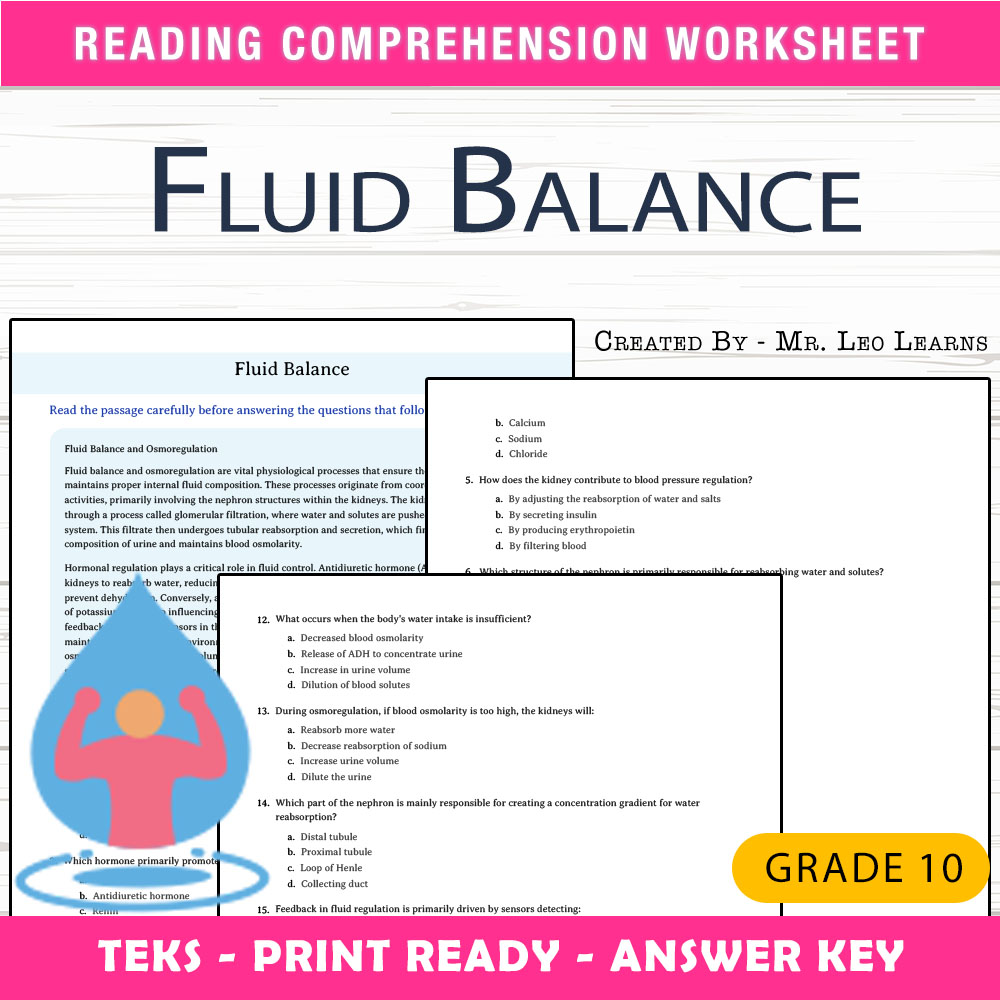
Grade 10 Science | Fluid Balance Worksheet for Mastery
 Created byThe Resource Hub
Learning Objectives
- Understand the processes of glomerular filtration, tubular reabsorption, and secretion in the kidneys.
- Identify how hormones like antidiuretic hormone and aldosterone regulate fluid and solute balance.
- Explain the interaction between renal mechanisms and other organ systems in maintaining internal fluid composition.
Also included in: Grade 10 Science Worksheet Bundle – Cellular, Genetics & Ecology Mastery
Instant download

Energy Transfer Worksheet | Standards-Aligned Science Practice for Grade 10
JCreated byJ.S SheetsLearning Objectives
- Explain how energy transfers between systems and changes form in everyday and laboratory situations.
- Connect kinetic energy to particle motion, gravitational potential energy to height, and elastic energy to deformation.
- Describe heating, work done by forces, and radiation as pathways for energy transfer and predict likely direction using observable changes.
Also included in: Grade 10 Conservation Laws and Stoichiometry Science Lesson Bundle | General +1 more
Instant download
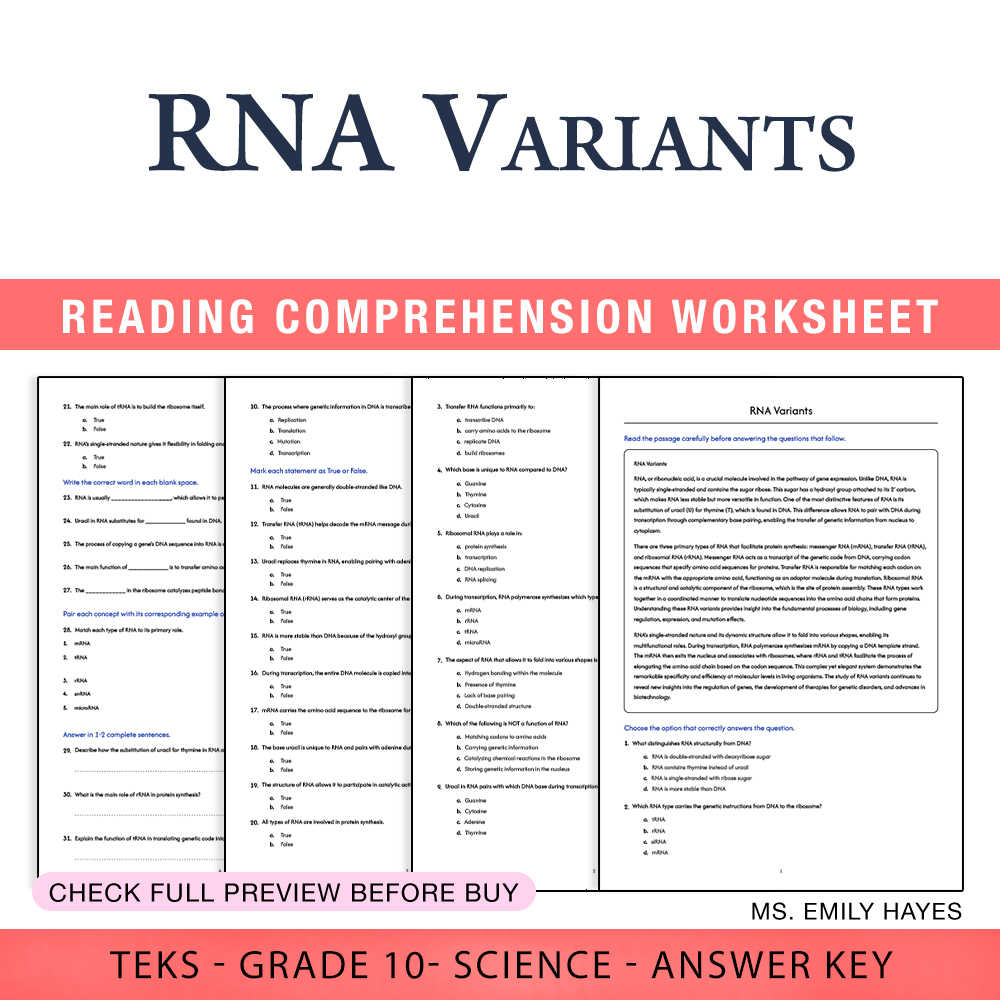
Grade 10 Science | RNA Variants Worksheet (PDF+ Answer Key)
 Created byCopper Leaf Classroom
Learning Objectives
- Describe the different functional types of RNA and their roles in protein synthesis.
- Explain the structural differences between RNA and DNA, including base substitution and single-stranded nature.
- Identify the specific functions of messenger RNA, transfer RNA, and ribosomal RNA in gene expression.
Instant download

Grade 10 Energy Accounting Worksheet | NGSS Science Activity
Created byBRIGHT PATH RESOURCESLearning Objectives
- Identify different types of energy transfer and their signs in simple systems.
- Describe and interpret energy flow diagrams and models.
- Apply sign conventions and tabulate energy transfers.
Also included in: Energy Work Power Grade 10 Science Daily Reading Worksheets Lesson Bundle | ngss +1 more
Instant download

Faraday’s and Lenz’s Laws Electromagnetic Induction Worksheets Grade 10
 Created bySunny Desk Resources
Learning Objectives
- Explain how changing magnetic flux induces an electromotive force (emf) in a conductor or coil.
- Use Faraday’s law and Lenz’s law to predict the relative size and direction of induced emf.
- Describe how mechanical motion converts to electrical energy in generators and transformers.
Also included in: Energy, Electricity & Momentum Transfer Lesson Bundle | Grade 10 Science | Alberta +1 more
Instant download

Evolutionary Synthesis Assessment | TEKS Standards for Grade 10 Science
Created byPrism Point LearningLearning Objectives
- Understand the concept of evolutionary synthesis and how it integrates multiple scientific disciplines.
- Identify key mechanisms such as natural selection, genetic drift, mutation, and gene flow in evolution.
- Analyze evidence from fossils, genetics, and phylogenetics to explain species change over time.
Also included in: Grade 10 Evolution and Heredity Science Lesson Bundle for TEKS Standards
Instant download

Grade 10 Science | Valence Patterns - Daily Reading Comprehension
Created byCoral Reef LearningLearning Objectives
- Understand the concept of valence electrons and their role in chemical bonding.
- Identify valence electrons in various elements using the periodic table.
- Relate electron configurations to element reactivity and bonding tendencies.
Instant download

Land Use Effects on Ecosystems and Water Worksheets Grade 10
 Created byTeachers Club
Learning Objectives
- Explain how land-cover change alters ecosystem function and biodiversity
- Interpret land-use maps and remote sensing evidence
- Describe how runoff and erosion affect freshwater systems
Also included in: Grade 10 Earth Science Worksheets Bundle | NGSS Earth & Human Activity +1 more
Instant download
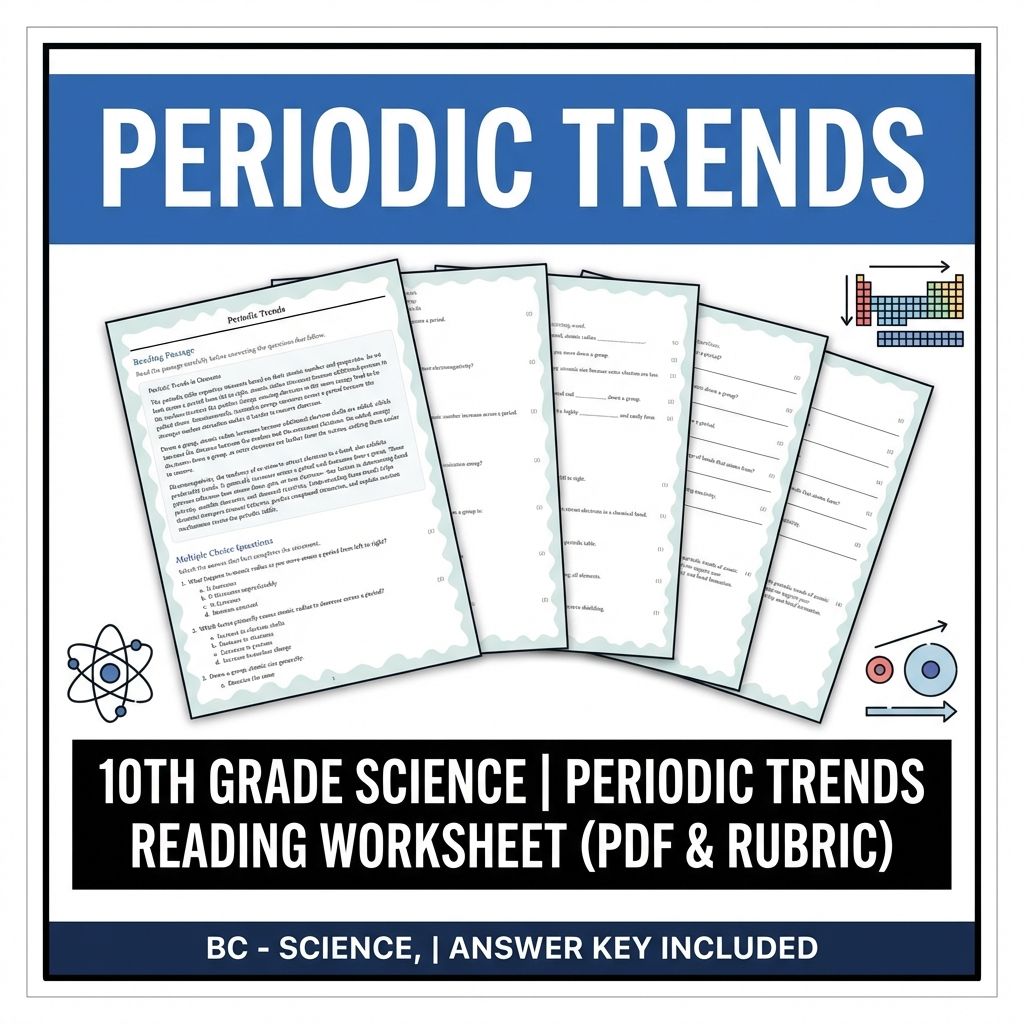
10th Grade Science | Periodic Trends Reading Worksheet (PDF & Rubric)
JCreated byJ.S SheetsLearning Objectives
- Understand the systematic patterns of atomic radius, ionization energy, and electronegativity across periods and down groups.
- Explain how nuclear charge and electron shielding influence atomic properties.
- Interpret periodic trends to predict atom and molecule behavior in chemical reactions.
Instant download
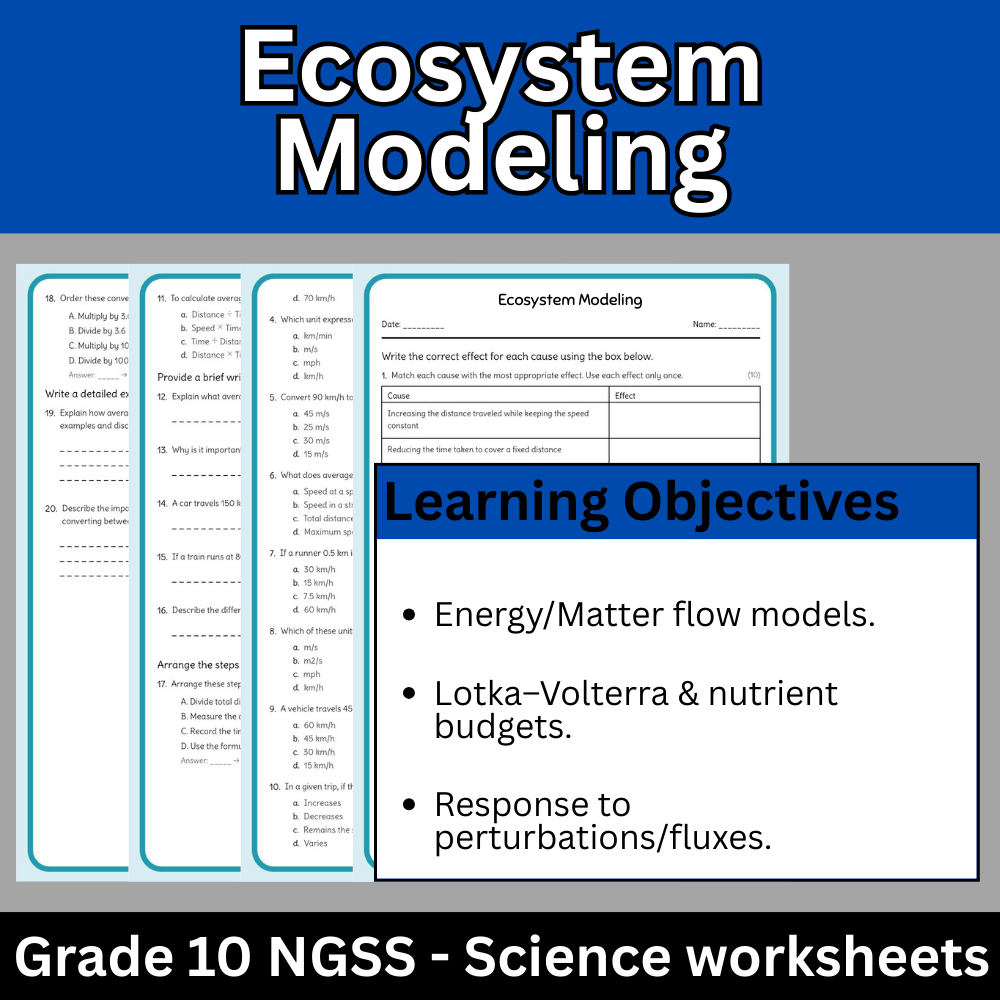
Grade 10 Science | Ecosystem Modeling Worksheet (PDF) – NGSS Aligned
Created byBright Mind ResourcesLearning Objectives
- Explain the development and interpretation of ecosystem models that address energy and matter flows.
- Apply concepts like Lotka–Volterra equations, nutrient models, and carbon budgets to real-world systems.
- Analyze how system responses to perturbations, species loss, and altered fluxes affect ecosystem services and stability.
Instant download

Earth Spheres Worksheets: Matter & Energy Pathways Grade 10
Created bySunny Desk ResourcesLearning Objectives
- Describe the basic structure and role of the geosphere, hydrosphere, atmosphere, and biosphere in regional Earth systems.
- Explain how matter and energy move among the four spheres using Alberta-based examples.
- Predict regional patterns in climate or landscapes based on interactions among spheres.
Also included in: Earth Systems, Climate, and Sustainability Lesson Bundle | Grade 10 Science | Alberta +1 more
Instant download
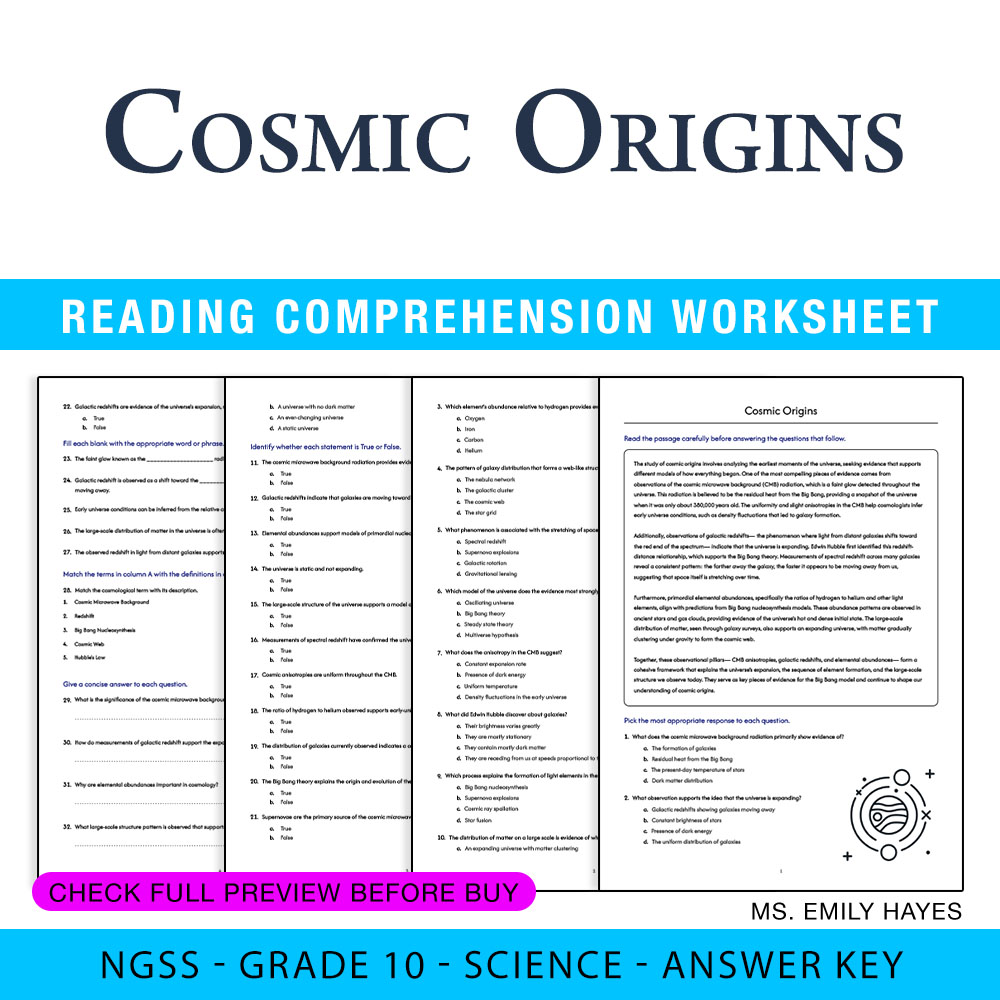
10th Grade Science | Cosmic Origins Worksheet (PDF+ Answer Key)
Created byCopper Leaf ClassroomLearning Objectives
- Understand the observational evidence supporting models of cosmic origins.
- Explain how cosmic microwave background radiation, galactic redshifts, and elemental abundances inform our understanding of the universe's history.
- Interpret data related to space observations to draw conclusions about the expansion and evolution of the universe.
Instant download
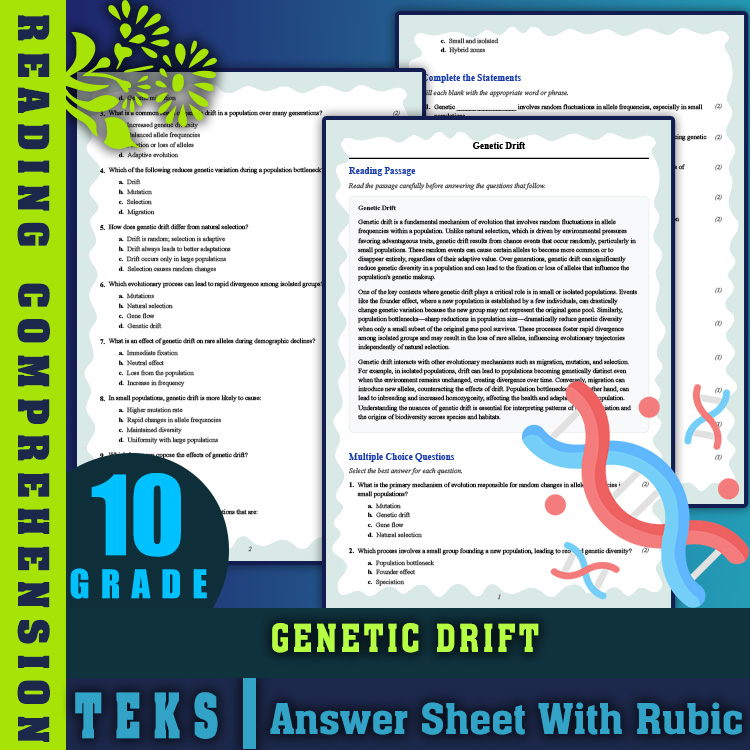
10th Grade Science | Genetic Drift Reading Worksheet PDF with Rubric
JCreated byJ.S SheetsLearning Objectives
- Understand the concept of genetic drift and its effects on small populations.
- Identify factors leading to genetic drift such as founder effects and bottlenecks.
- Compare genetic drift with natural selection in shaping genetic variation.
Instant download
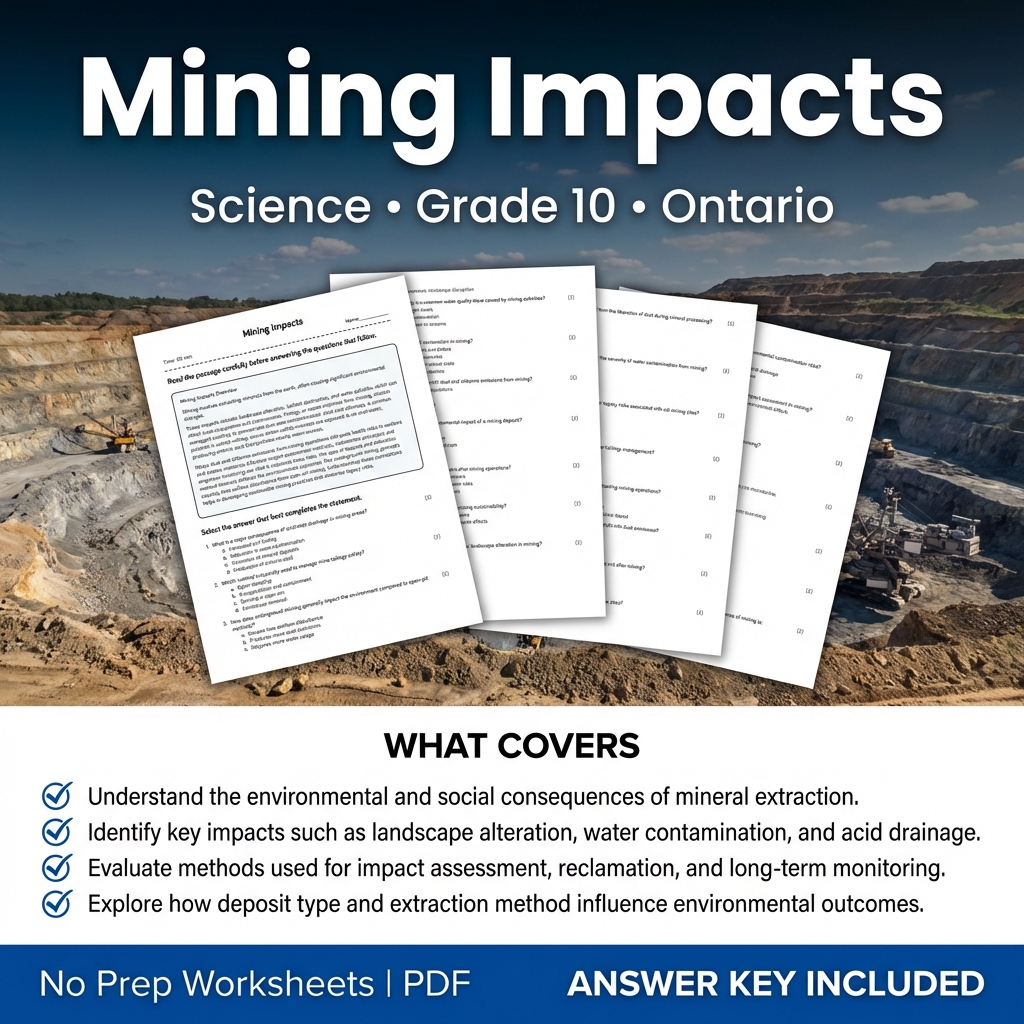
Mining Impacts Science Worksheet for Grade 10 | Ontario Standards
Created byCoral Reef LearningLearning Objectives
- Understand the environmental and social consequences of mineral extraction.
- Identify key impacts such as landscape alteration, water contamination, and acid drainage.
- Evaluate methods used for impact assessment, reclamation, and long-term monitoring.
Instant download
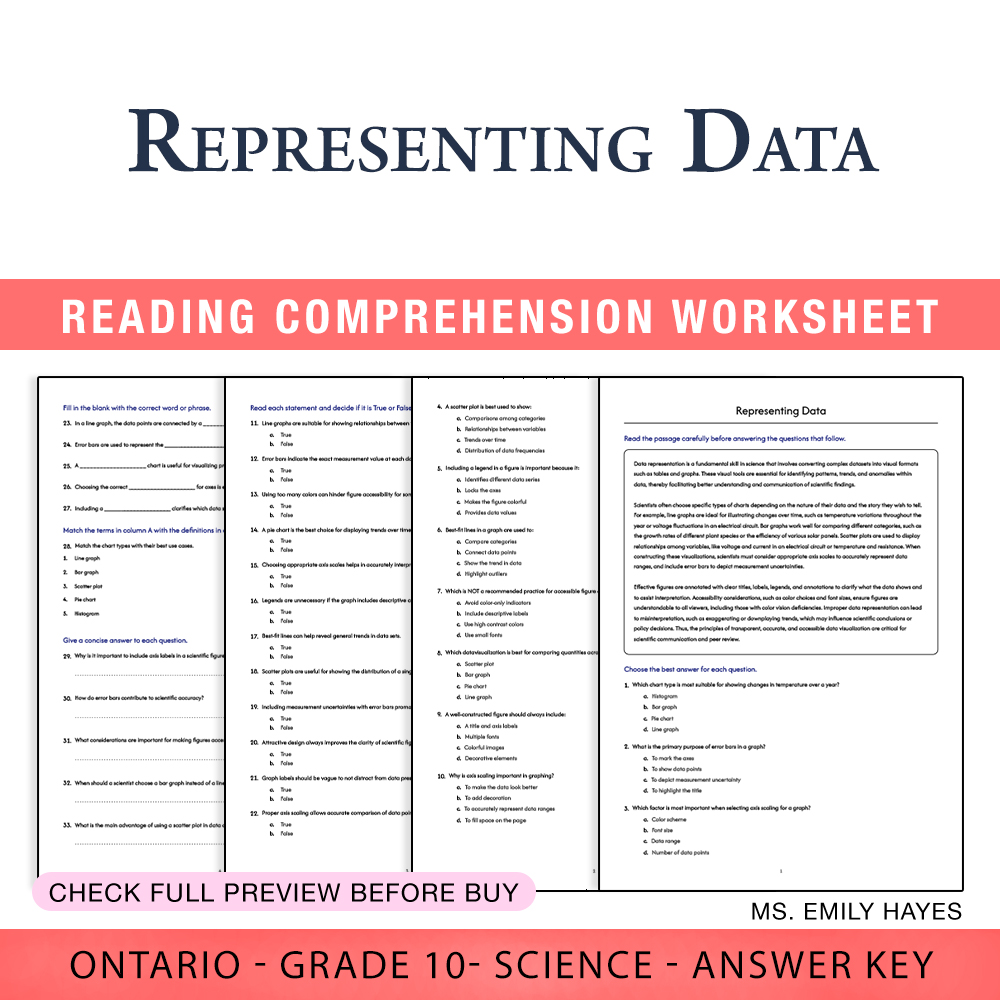
Grade 10 Science | Representing Data Worksheet (PDF + Answer Key)
Created byCopper Leaf ClassroomLearning Objectives
- Understand conventions for creating and interpreting tables and graphs in scientific data.
- Select appropriate chart types for different data sets, considering axes and scaling.
- Evaluate the use of error bars, best-fit lines, and annotations to communicate data trends.
Instant download
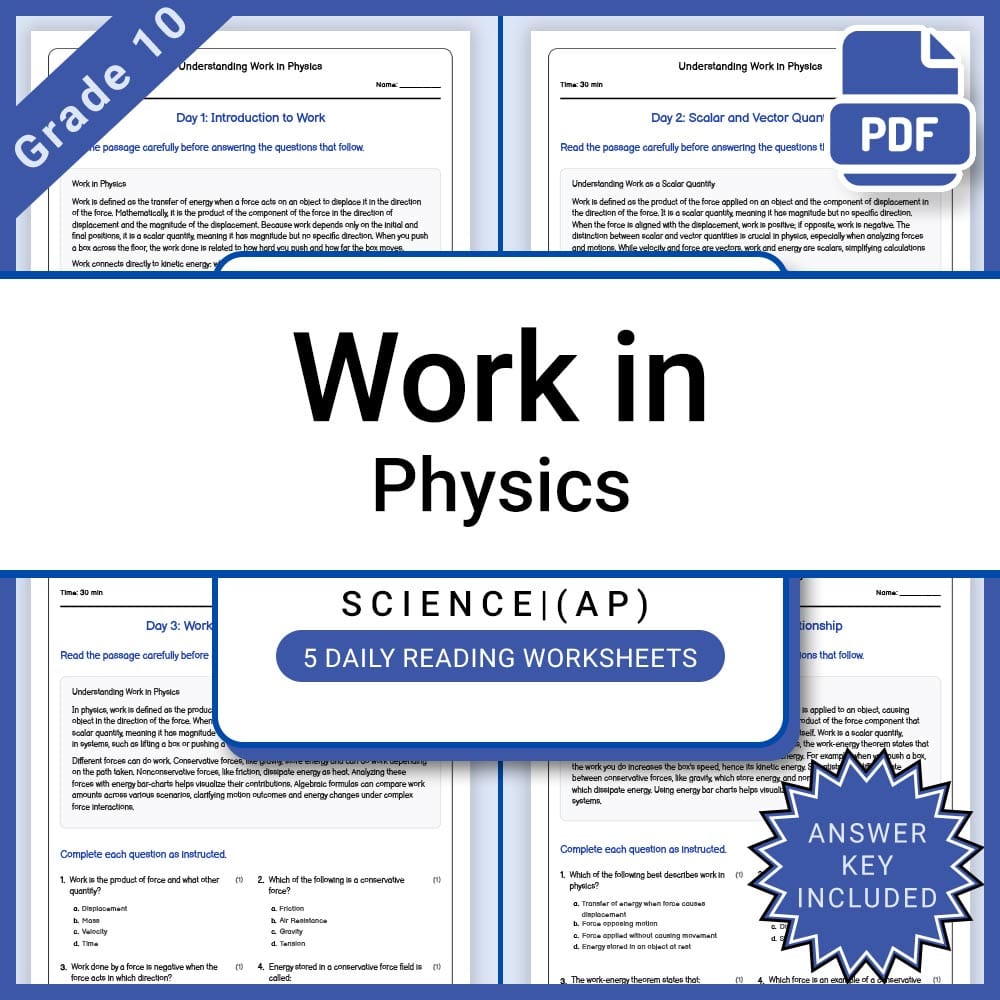
Grade 10 Science – Work Daily Reading Worksheet with Answer Key
JCreated byJ.S SheetsLearning Objectives
- Define work as the product of force and displacement.
- Explain the scalar nature of work.
- Relate work to changes in kinetic energy through the work-energy theorem.
Instant download

Grade 10 Science Momentum Transfer Worksheet | Alberta Physics PDF
Created byEvergreen Desk EducationLearning Objectives
- Explain linear momentum and impulse in terms of vector quantities and forces acting over time
- Apply conservation of momentum to predict outcomes of collisions in closed systems
- Use the impulse–momentum relationship to compare changes in momentum during different collision scenarios
Instant download
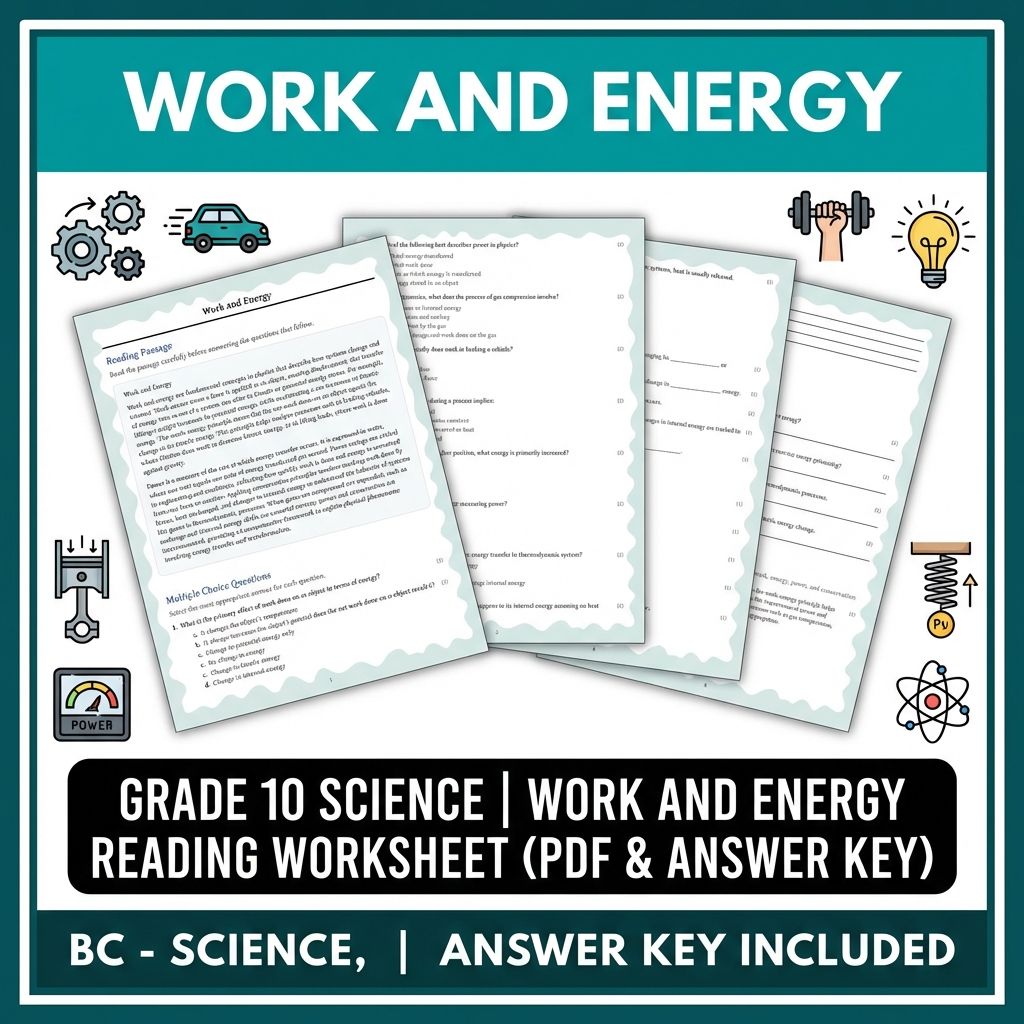
Grade 10 Science | Work and Energy Reading Worksheet (PDF & Answer Key)
JCreated byJ.S SheetsLearning Objectives
- Understand how work transfers energy into and out of a system, affecting kinetic and potential energy.
- Explain the work–energy principle and how it relates net work to changes in kinetic energy.
- Describe how power measures the rate at which energy is transferred during physical processes.
Instant download

Tissue Organization Assessment | Alberta Standards Grade 10 Science
Created byPrism Point LearningLearning Objectives
- Describe how cells of similar structure and function assemble into tissues that perform collective roles.
- Explain the differences between plant vascular tissues and animal epithelial and connective tissues.
- Analyze how tissue properties influence organ performance across different biomes and agricultural systems.
Also included in: Grade 10 Cells and Systems Science Lesson Bundle for Alberta Standards +1 more
Instant download

Grade 10 Science | Atomic Structure - Daily Reading Comprehension
Created byCoral Reef LearningLearning Objectives
- Identify protons, neutrons, and electrons in an atom
- Understand atomic number and mass number
- Explain isotopes and their examples
Instant download

Grade 10 Science | Charge And Fields - Daily Reading Comprehension
Created byCoral Reef LearningLearning Objectives
- Understand the concept of electric charge and its properties
- Identify the differences between positive and negative charges
- Explain how electric fields are represented with field lines
Also included in: Energy, Motion and Electricity Lesson Bundle | Grade 10 Science | Alberta +1 more
Instant download

Grade 10 Worksheet B: Atomic Structure and Periodic Trends Practice | NGSS
Created byClear Sky ClassroomLearning Objectives
- Explain how electron configuration determines valence electrons, ion formation, and periodic trends
- Describe nuclear composition (protons, neutrons, isotopes) and how atomic mass relates to isotopic abundance
- Use energy-level and sublevel occupancy ideas to predict properties and oxidation states
Also included in: Grade 10 Reaction Rates & Chemical Change Science Lesson Bundle – NGSS +1 more
Instant download

Physical Properties Worksheet | Grade 10 Science Activities
Created byPrism Point LearningLearning Objectives
- Differentiate between physical properties and chemical properties using examples from everyday materials.
- Classify physical properties as intensive or extensive and predict how each helps identify substances.
- Use property classifications (e.g., melting point, density, solubility, reactivity) to reason about material choice and environmental impact.
Also included in: Grade 10 Chemistry & Dynamic Equilibrium Lesson Bundle | Alberta Science
Instant download
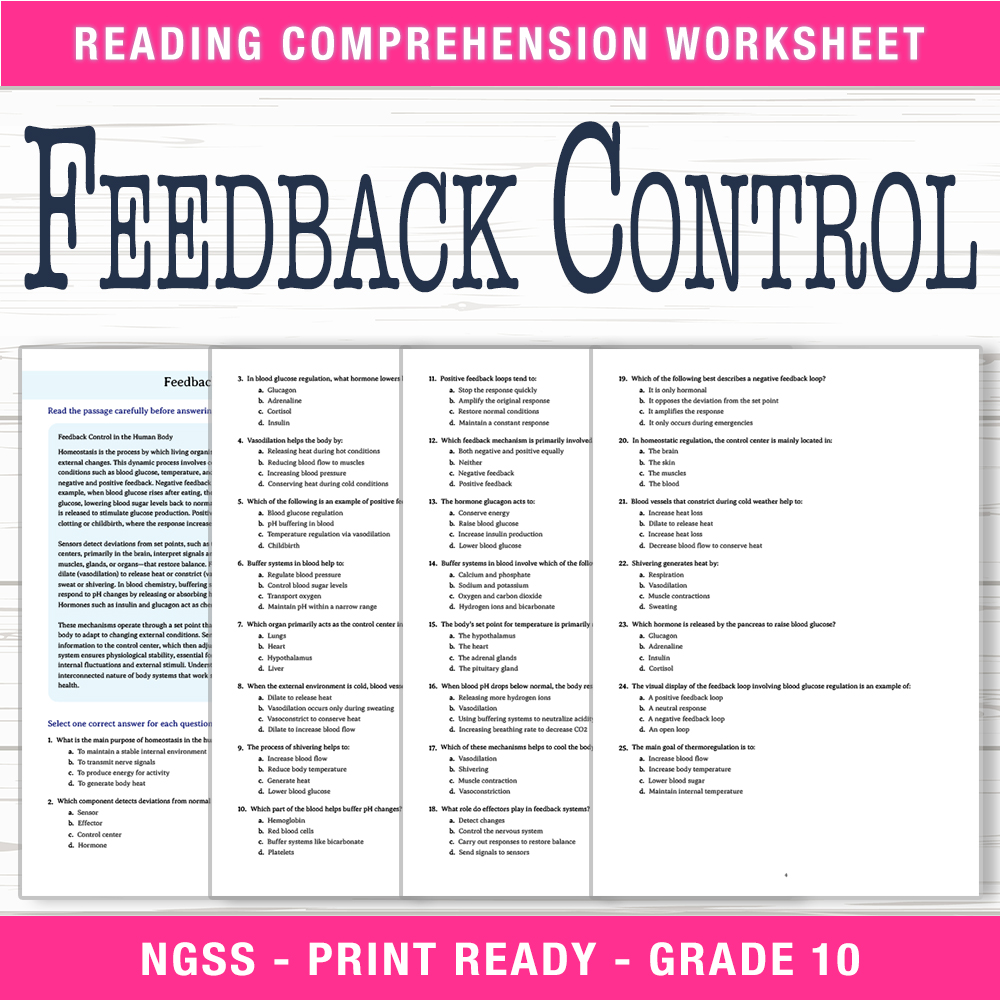
Grade 10 Science | Feedback Control Worksheet (PDF + Answer Key)
 Created byRiverstone Classroom
Learning Objectives
- Explain the mechanisms of homeostasis and the role of feedback loops in regulating internal conditions.
- Identify the functions of sensors, control centers, and effectors in physiological stability.
- Describe hormonal and physical strategies used for temperature, blood glucose, and pH regulation.
Instant download
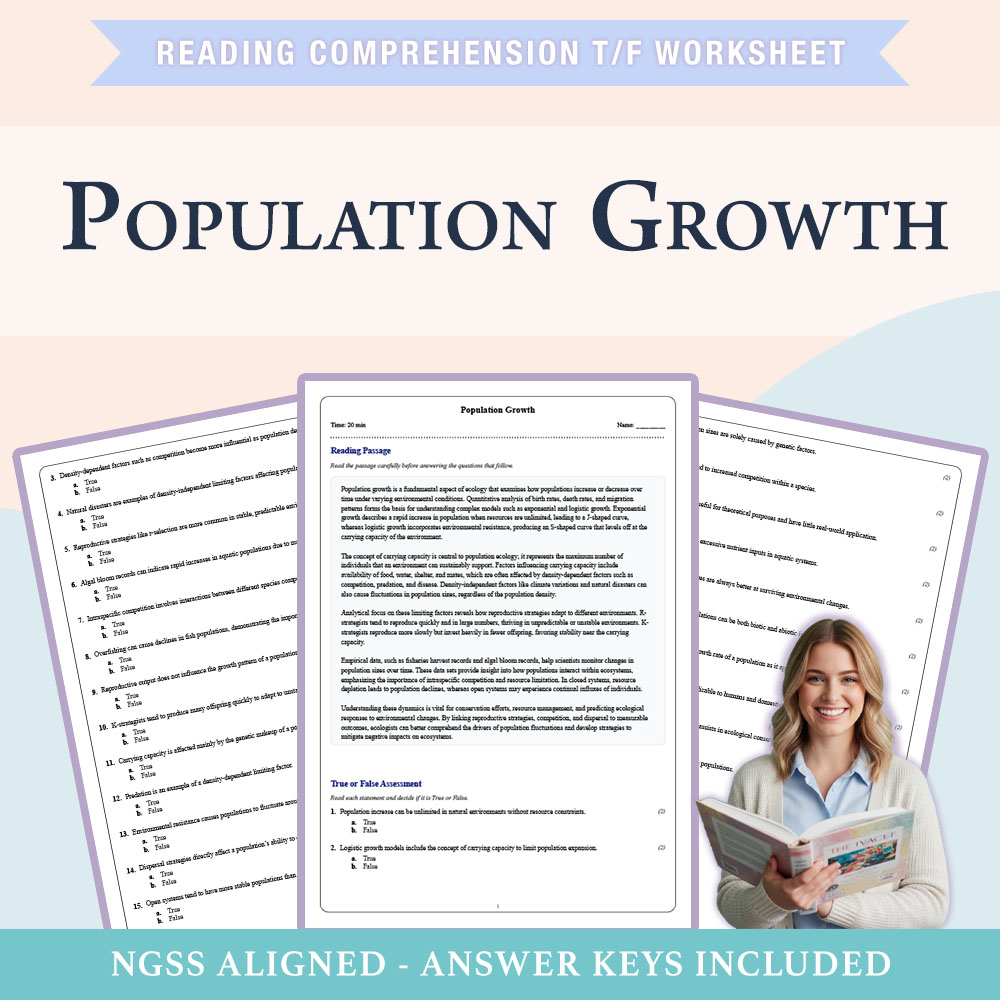
10th Grade Science | Population Growth Worksheet (PDF + Answer Key)
Created byCopper Leaf ClassroomLearning Objectives
- Understand the principles of exponential and logistic growth models in populations.
- Identify density-dependent and density-independent limiting factors affecting populations.
- Analyze the roles of reproductive strategies and resource competition in population dynamics.
Also included in: Grade 10 Science Unit | Ecosystem Dynamics & Biodiversity (PDF +Answer Key) +1 more
Instant download

Cellular Signaling & Phenotypic Plasticity Worksheets Grade 10 Science
Created bySunny Desk ResourcesLearning Objectives
- Explain how cellular signaling can scale up to organ-level and whole-organism responses to environmental change.
- Describe how resource reallocation supports survival during stress, and how trade-offs can affect long-term fitness.
- Evaluate the limits of phenotypic plasticity and how these limits influence population and ecosystem resilience.
Also included in: Cell Structure, Homeostasis & Energy Lesson Bundle: Grade 10 Science Alberta +1 more
Instant download

Grade 10 – Quantitative Uncertainty in Measurement Worksheet + Answer Key
JCreated byJ.S SheetsLearning Objectives
- Understand key concepts related to Science
- Apply knowledge through practice questions
- Demonstrate comprehension of the material
Also included in: Grade 10 Science Full Year Bundle | AP Curriculum & Earth, Physics, Solar System +1 more
Instant download

Grade 10 Science – Human Impacts on Ecosystems Daily Worksheet + Answer Key
JCreated byJ.S SheetsLearning Objectives
- Understand how urbanization affects natural habitats.
- Identify various human activities that modify ecosystems.
- Recognize the consequences of habitat loss and pollution.
Also included in: Grade 10 Science Lesson Group – Ecosystems and Environmental Impact Worksheets +1 more
Instant download

Engineering and Technology Worksheets: Society & Environmental Impacts
Created byBRIGHT PATH RESOURCESLearning Objectives
- Explain how technology and engineering change communication, work, travel, and access to services.
- Analyze how design choices create cause-and-effect impacts on public health and equity.
- Evaluate environmental trade-offs involving resource use, emissions, and waste over time.
Also included in: Grade 10 Engineering Design Worksheets Bundle | Science Trade-Offs +4 more
Instant download
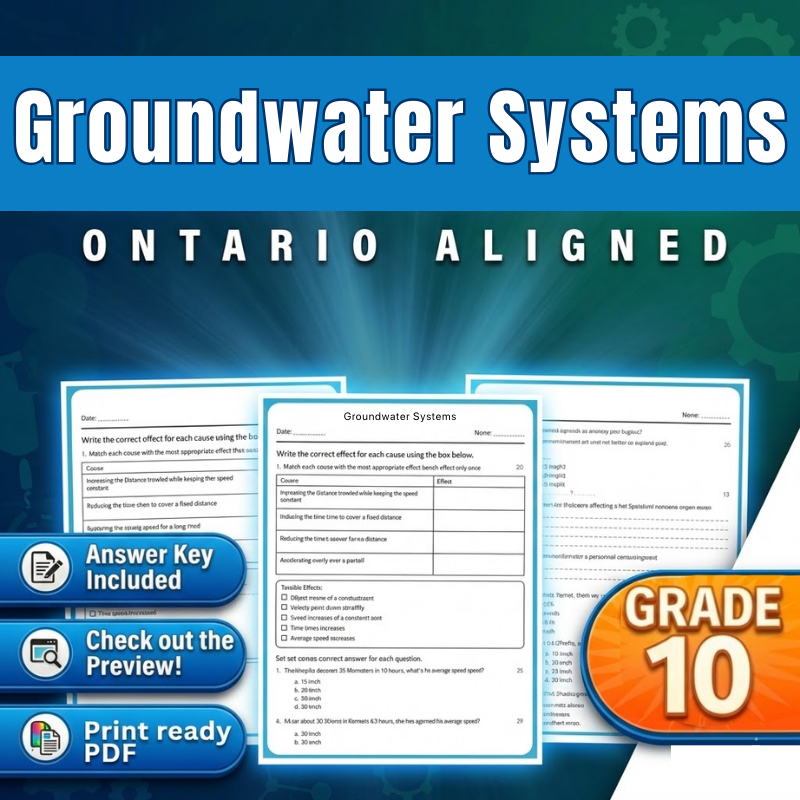
Grade 10 Science | Groundwater Systems Worksheet (Ontario) (PDF)
Created byBright Mind ResourcesLearning Objectives
- Identify different types and properties of aquifers and how these influence groundwater flow.
- Explain the concepts of porosity and permeability and their effect on groundwater movement.
- Describe the recharge and discharge processes of groundwater and their importance to resource sustainability.
Instant download

Constant Acceleration Practice Worksheet | Grade 10 Science Assessment
Created byPrism Point LearningLearning Objectives
- Apply kinematic equations to uniformly accelerated motion with different initial velocities, displacements, and times
- Choose appropriate formulas for velocity and displacement, using consistent sign conventions for direction
- Analyze braking and launch situations, including interpretation of negative acceleration and motion reversal
Also included in: Grade 10 Motion & Forces Kinematics Science Lesson Bundle for Ontario
Instant download
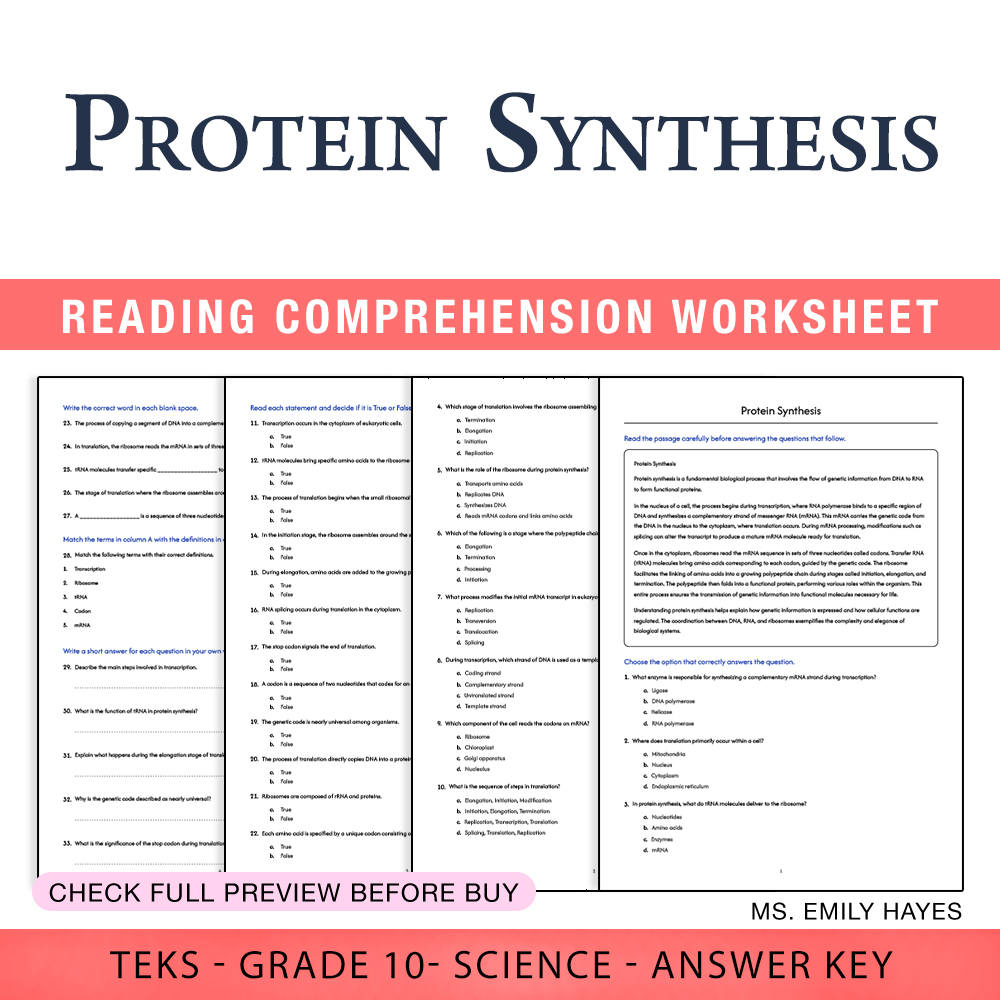
10th Grade Science | Protein Synthesis Worksheet (PDF+ Answer Key)
Created byCopper Leaf ClassroomLearning Objectives
- Explain the flow of genetic information from DNA to protein.
- Describe the processes of transcription and translation in protein synthesis.
- Identify the roles of RNA polymerase, mRNA, tRNA, and ribosomes during protein synthesis.
Instant download
About Grade 10 Science Worksheets
Find Science worksheets built for Grade 10. All 7,038 cover core skills, practice, and review, each an instant PDF download.
Every worksheet on MyTeachingSheets is created by independent teacher-authors and reviewed before publication. All resources download as printable PDFs for classroom, homework, or at-home practice, and many include answer keys. Preview any worksheet free before buying.