
Grade 10 Science Worksheets
7,038 worksheets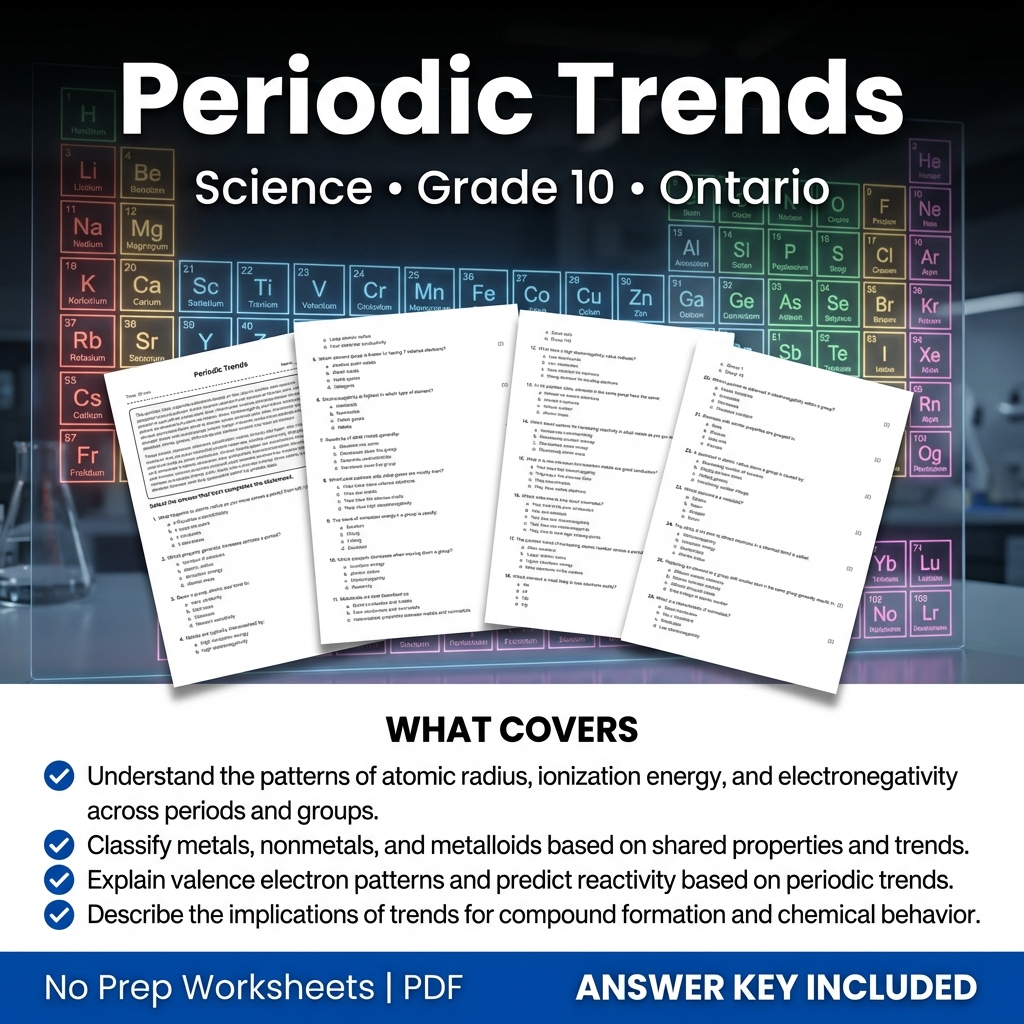
Periodic Trends Worksheet for Grade 10 Science | Ontario Standard
 Created byCoral Reef Learning
Learning Objectives
- Understand the patterns of atomic radius, ionization energy, and electronegativity across periods and groups.
- Classify metals, nonmetals, and metalloids based on shared properties and trends.
- Explain valence electron patterns and predict reactivity based on periodic trends.
Instant download

Systems Thinking for Engineering Design Worksheets Grade 10 Science
 Created byTeachers Club
Learning Objectives
- Identify system boundaries and subsystems in engineering designs
- Explain energy, material, and information flows between subsystems
- Predict system performance changes using feedback loops
Also included in: Engineering Design Worksheets Grade 10 Science NGSS Bundle +1 more
Instant download

Science Worksheet Specialized Cells and Tissue Organization | Grade 10
JCreated byJ.S SheetsLearning Objectives
- Explain how cellular morphology supports specific functions in tissues
- Describe examples of specialized cells (muscle fibers, neurons, root hairs, xylem) and link structure to role
- Interpret how stem cell differentiation involves gene expression changes and structural outcomes
Instant download

Grade 10 Science – Constant Acceleration Worksheet (Ontario Standard) (PDF)
 Created byEvergreen Desk Education
Learning Objectives
- Use kinematic equations to determine velocity and displacement for uniformly accelerated 1D motion with given initial conditions.
- Interpret the sign of acceleration and velocity to determine whether motion speeds up, slows down, or reverses direction.
- Solve multi-stage and braking problems by applying correct boundary conditions for each stage.
Also included in: Grade 10 Kinematics Forces & Mechanics Science Lesson Bundle Ontario Worksheets +1 more
Instant download

Ethics And Safety Worksheet Printables | Grade 10 Science Assessment
 Created byPrism Point Learning
Learning Objectives
- Explain how ethical responsibilities (data honesty, consent, and humane treatment where applicable) protect both people and scientific credibility.
- Describe reporting and oversight responsibilities when unsafe conditions or misconduct are observed.
- Apply ethical reasoning to methodological choices that affect trustworthiness and long-term evidence reliability.
Also included in: Grade 10 Evidence-Based Science Data Analysis Lesson Bundle: Ontario
Instant download

Transmission Losses Worksheet for Grade 10 Science | Alberta Standards
JCreated byJ.S SheetsLearning Objectives
- Understand how current, resistance, and voltage affect energy loss in power transmission.
- Identify strategies such as transformer use to reduce transmission losses and improve efficiency.
- Analyze real-world Alberta examples of long-distance power transfer and infrastructure trade-offs.
Also included in: Grade 10 Science Practice Worksheets: Alberta Science Full-Year Bundle
Instant download

Grade 10 Science | Evolution Evidence Worksheet | NGSSS Assessment
 Created byLumora Learning
Learning Objectives
- Explain how fossil records provide evidence of evolutionary change over geologic time.
- Describe how comparative anatomy and biogeography support common ancestry.
- Use genetic evidence (DNA sequence similarity) to infer relatedness among species.
Instant download

Grade 10 Science – Quantitative Uncertainty Worksheet (AP) PDF
Created byEvergreen Desk EducationLearning Objectives
- Distinguish between absolute and relative uncertainty and identify common sources of measurement error
- Apply uncertainty propagation to compute the combined uncertainty of calculated quantities
- Use significant figures and dimensional consistency to report results accurately and check formulas
Also included in: Grade 10 Scientific Modeling & Quantitative Reasoning Science Lesson Bundle (AP) +1 more
Instant download

Reaction Yield Test Prep Worksheet | Grade 10 Science Assessment Ontario
Created byPrism Point LearningLearning Objectives
- Identify the limiting reagent and explain how it constrains the amount of product formed
- Distinguish between theoretical yield and actual yield and calculate percent yield
- Connect reaction yield results to conservation of mass and possible causes of reduced yield
Instant download

Grade 10 Science Worksheet | Earth's Spheres Interaction & Systems Analysis (PDF)
Created byEvergreen Desk EducationLearning Objectives
- Explain how energy and matter transfers connect Earth’s atmosphere, hydrosphere, geosphere, and biosphere in sphere-interaction models.
- Use model variables (e.g., temperature, rainfall, aerosol levels) to predict outcomes such as runoff, groundwater recharge, and ecosystem stress.
- Interpret cause-and-effect relationships between land cover changes, erosion, sediment transport, and downstream impacts.
Also included in: Grade 10 Weather & Climate Science Lesson Bundle - General Framework +1 more
Instant download
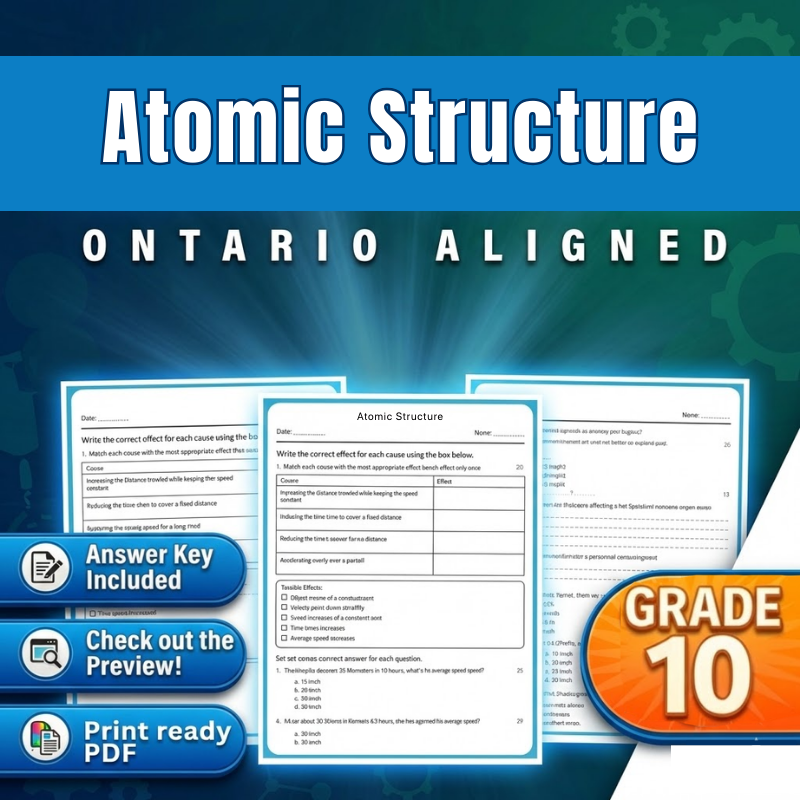
Grade 10 Science – Atomic Structure Worksheet (Ontario) (PDF)
 Created byBright Mind Resources
Learning Objectives
- Describe the components of an atom, including protons, neutrons, and electrons.
- Understand atomic number, mass number, and isotopes with examples.
- Explain electron configuration, valence electrons, and their influence on chemical behavior.
Instant download

Grade 10 Worksheet B: Trophic Relationships Energy Transfer & Food Webs | NGSS
 Created byClear Sky Classroom
Learning Objectives
- Explain how energy is transferred between trophic levels and why efficiency is limited
- Interpret biomass and energy patterns in ecological pyramids and food webs
- Describe trophic cascades and the role of keystone species in ecosystem structure
Also included in: Grade 10 Ecosystem Energy Transfer & Biodiversity Science Lesson Bundle: NGSS +1 more
Instant download

Unbalanced Force Effects Worksheet | Grade 10 Physics Science CA Standards
Created byEvergreen Desk EducationLearning Objectives
- Explain how net force direction and magnitude determine the acceleration of an object
- Interpret data about changing speed or direction to infer whether forces are balanced or unbalanced
- Connect force diagrams to measurable outcomes such as increasing speed, decreasing speed, or changing direction
Instant download

Newtonian Forces Worksheet Grade 10 Science Practice & Assessment NGSSS
Created byPrism Point LearningLearning Objectives
- Explain how net force relates to changes in velocity and acceleration.
- Connect equilibrium to balanced forces and predict motion outcomes.
- Use Newton’s second law to predict how changing force or mass affects acceleration.
Also included in: Grade 10 Physical Science Lesson Bundle | Florida NGSSS
Instant download

Grade 10 Photosynthesis & Cellular Respiration Energy Pathways Worksheet
 Created byAmber Owl Education
Learning Objectives
- Explain how photosynthesis captures light energy and converts it into chemical energy stored in biomass
- Describe how cellular respiration transfers chemical energy to ATP and supports mass flow of carbon and oxygen
- Connect key pathway steps (Calvin cycle, glycolysis, Krebs cycle, oxidative phosphorylation) to ATP yield and energy transduction
Instant download
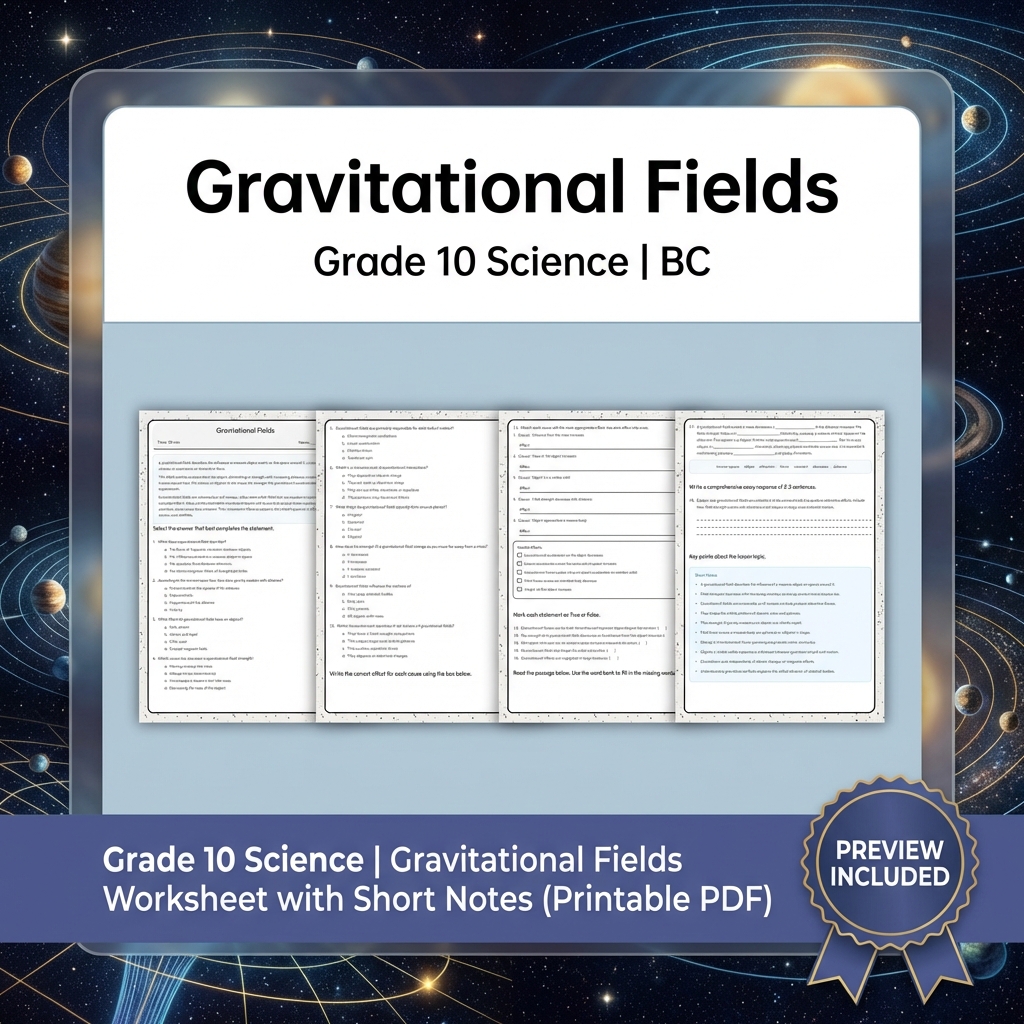
Grade 10 Science | Gravitational Fields Worksheet with Short Notes (PDF)
 Created byMeadowlark Worksheets
Learning Objectives
- Understand the concept of gravitational fields and how they influence objects in space.
- Explain the inverse-square law relating field strength and distance from a mass.
- Describe the universal attraction property of gravitational fields.
Also included in: Grade 10 Science Lesson Bundle | Physics and Forces Worksheets | BC Framework +1 more
Instant download
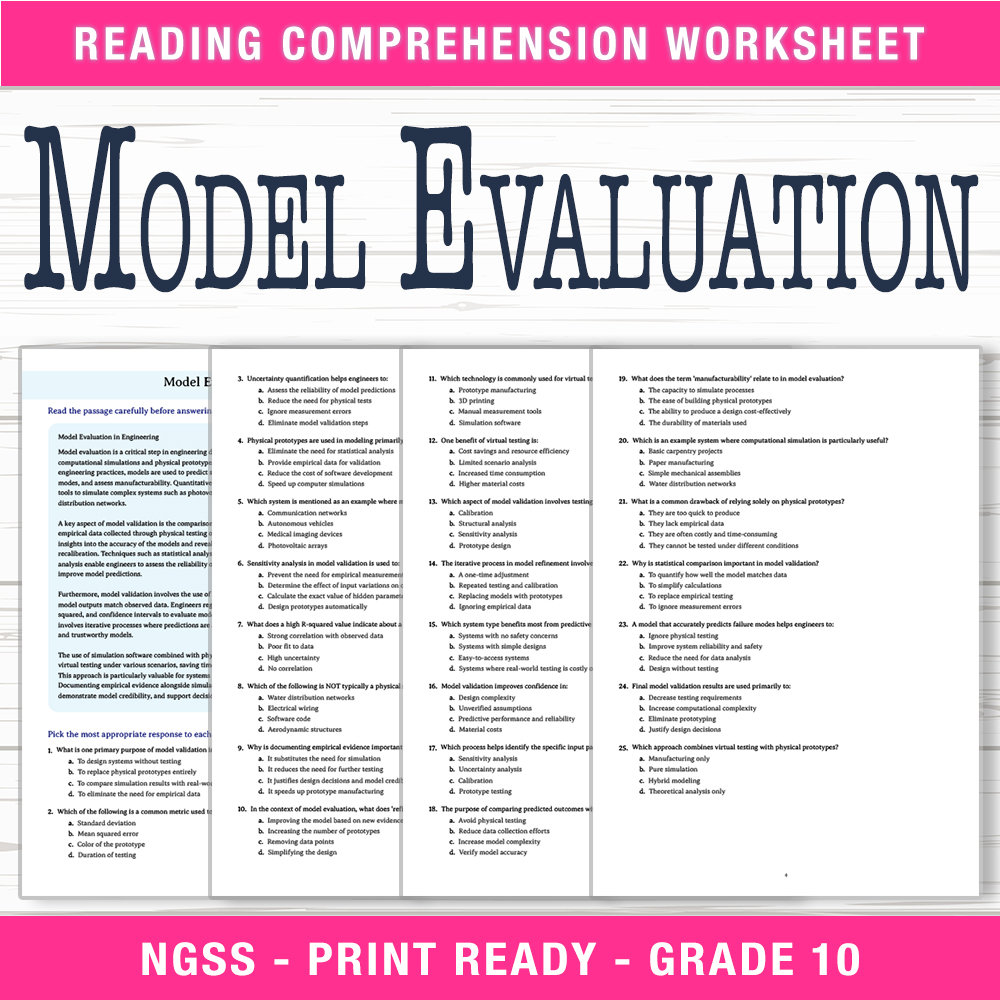
Grade 10 Science – Model Evaluation Worksheet (PDF + Answer Key)
 Created byRiverstone Classroom
Learning Objectives
- Understand the process of quantitative modeling and data analysis in engineering
- Evaluate the reliability and accuracy of models through comparison with empirical data
- Apply statistical methods to assess model predictions against observed measurements
Also included in: Grade 10 Science Unit | Systems & Design Worksheets Bundle
Instant download

Grade 10 Science | DNA Structure Worksheet (NGSS10) (PDF)
 Created bySilver Birch Teaching
Learning Objectives
- Describe the structural features of DNA, including double helix geometry and complementary base pairing.
- Explain the mechanisms of DNA replication, including roles of DNA polymerase and helicase.
- Understand how DNA fidelity is maintained through proofreading and repair mechanisms.
Also included in: Grade 10 Genetics Science Lesson Bundle NGSS: Mutation, Mendelian, DNA +1 more
Instant download
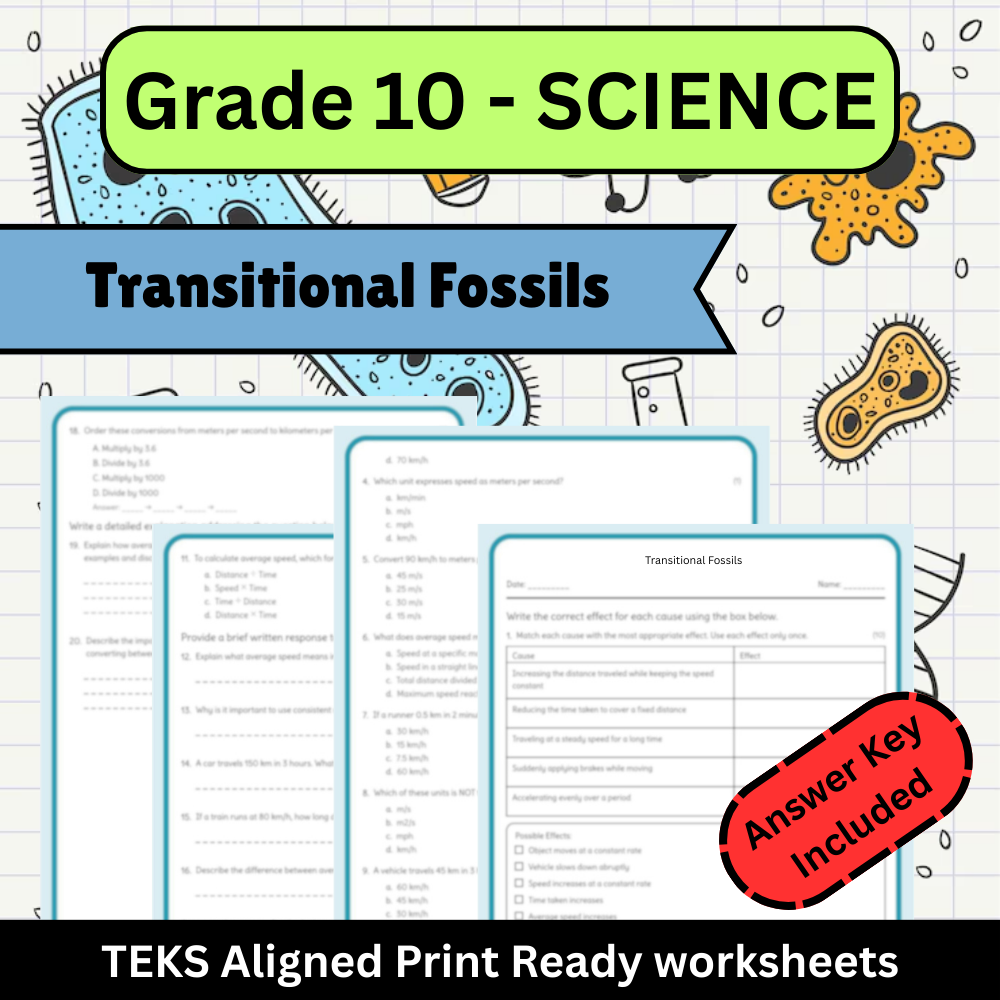
Grade 10 Science | Transitional Fossils Worksheet + Answer Key (TEKS Aligned PDF)
Created byBright Mind ResourcesLearning Objectives
- Understand the role of transitional fossils in illustrating evolution.
- Identify examples of fossil features that demonstrate gradual lineage changes.
- Recognize factors like taphonomic biases that affect fossil record interpretations.
Also included in: Grade 10 Science | Evolution & Heredity Unit Worksheet Bundle (TEKS Aligned) +5 more
Instant download

Gravitation Fields Practice Worksheet | Grade 10 Science NGSS Review
Created byPrism Point LearningLearning Objectives
- Explain how gravitational field strength depends on distance from a point mass using an inverse-square relationship
- Represent gravitational forces and field vectors for objects near Earth and between interacting bodies
- Use Newton’s law of gravitation and field concepts to predict orbital motion and period for circular orbits
Also included in: Grade 10 Forces and Conservation Science Lesson Bundle – NGSS
Instant download
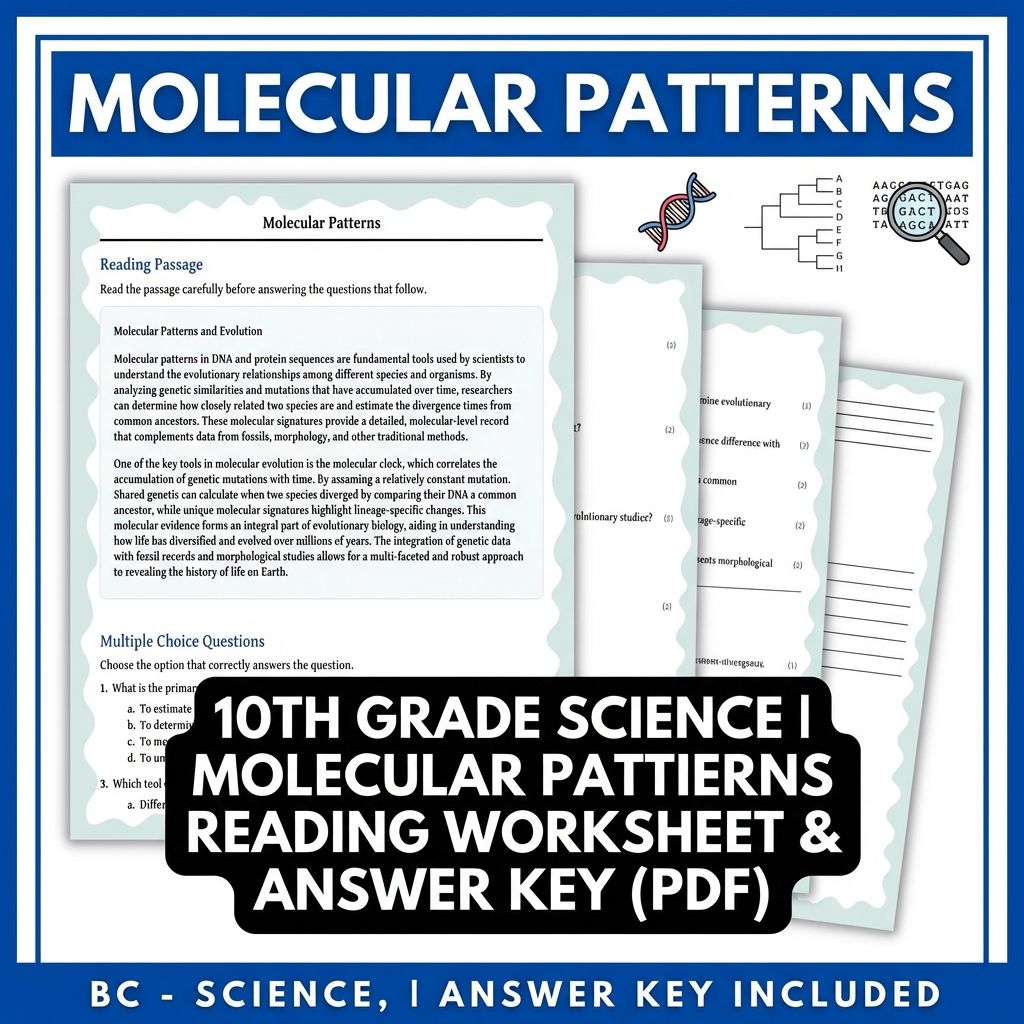
10th Grade Science | Molecular Patterns Reading Worksheet & Answer Key (PDF)
JCreated byJ.S SheetsLearning Objectives
- Understand how molecular patterns in DNA and protein sequences reveal evolutionary relationships.
- Identify how molecular clocks are used to estimate divergence times among organisms.
- Describe the significance of shared genetic markers and conserved genes in tracing common ancestry.
Instant download
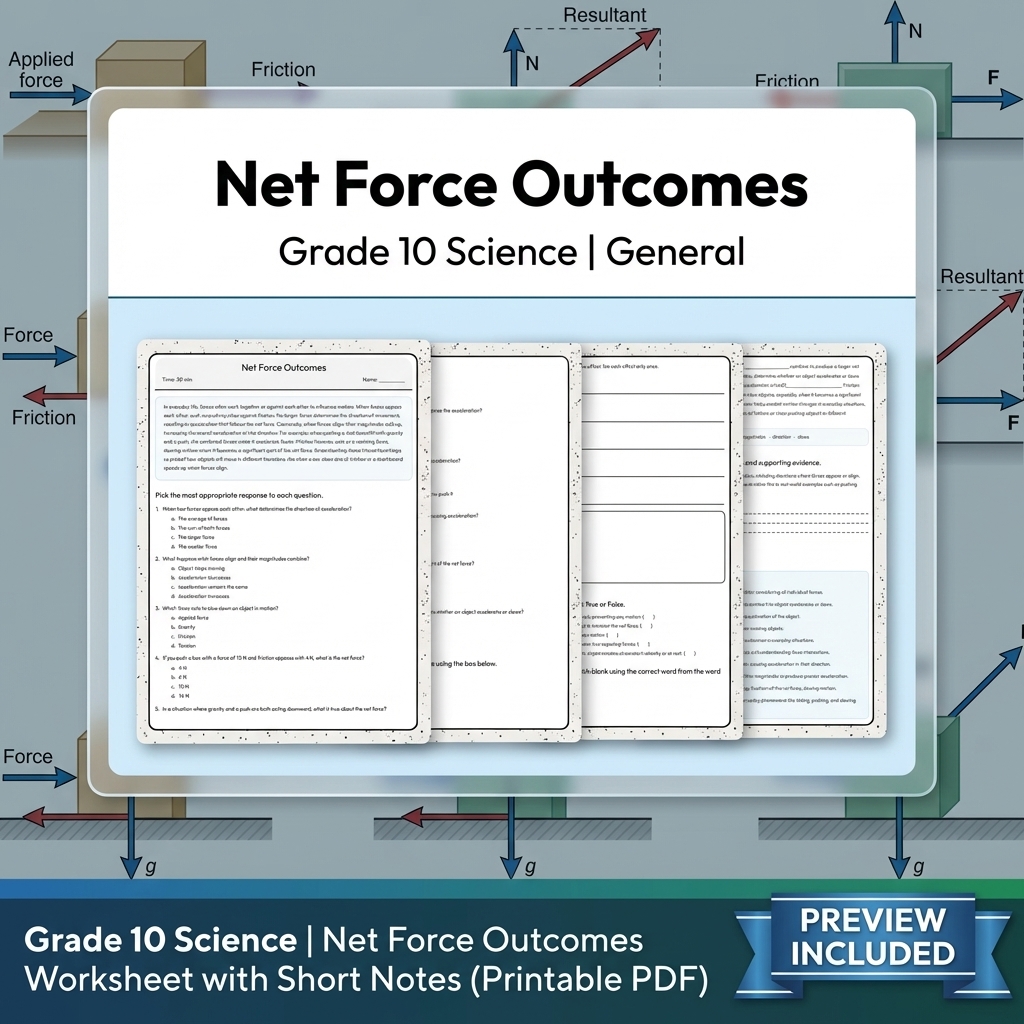
Grade 10 Science | Net Force Outcomes Worksheet with Short Notes (Printable PDF)
Created byMeadowlark WorksheetsLearning Objectives
- Understand how multiple forces interact to produce net force and acceleration.
- Predict motion changes when forces oppose or align.
- Connect force interactions to real-world situations involving pushing, sliding, and friction.
Also included in: Grade 10 Forces and Energy Science Lesson Bundle for General Framework +1 more
Instant download

Grade 10 Science | Paleoclimate Records - Daily Reading Comprehension
Created byCoral Reef LearningLearning Objectives
- Identify different types of paleo-proxies used to study past climates
- Understand how proxy archives preserve climate information over time
- Learn methods used to extract and interpret paleoclimate data
Also included in: Earth and Space Systems Lesson Bundle – Grade 10 Science Alberta +1 more
Instant download

Trade-Off Data Decisions Assessment | Standards-Aligned Grade 10 Science
Created byPrism Point LearningLearning Objectives
- Understand how data supports decision-making by comparing alternative solutions using measurable criteria.
- Explain the concept of trade-offs and how they are explicitly evaluated in design choices.
- Analyze trade-offs in terms of performance, cost, durability, and weight.
Instant download

Grade 10 Science Control Strategies Worksheet | Valid Comparisons Ontario
 Created byChalk and Compass
Learning Objectives
- Explain why control groups and randomization help isolate causal effects
- Identify sources of bias and confounding and propose control strategies to reduce them
- Use blocking and replication to improve reliability of experimental results
Also included in: Grade 10 Science Variables & Control Data Analysis Lesson Bundle | Ontario +1 more
Instant download

Science Grade 10 Trade-Off Data Decisions Worksheet | Standards-Aligned Practice
JCreated byJ.S SheetsLearning Objectives
- Explain how measurable criteria help compare alternative solutions in science and engineering design.
- Identify common trade-offs (e.g., cost vs. performance, weight vs. durability) and describe their implications.
- Use evidence to justify a design choice by linking criteria, data, and limitations of the selected option.
Also included in: Grade 10 Trade-Offs and Prototyping Science Lesson Bundle | General +1 more
Instant download
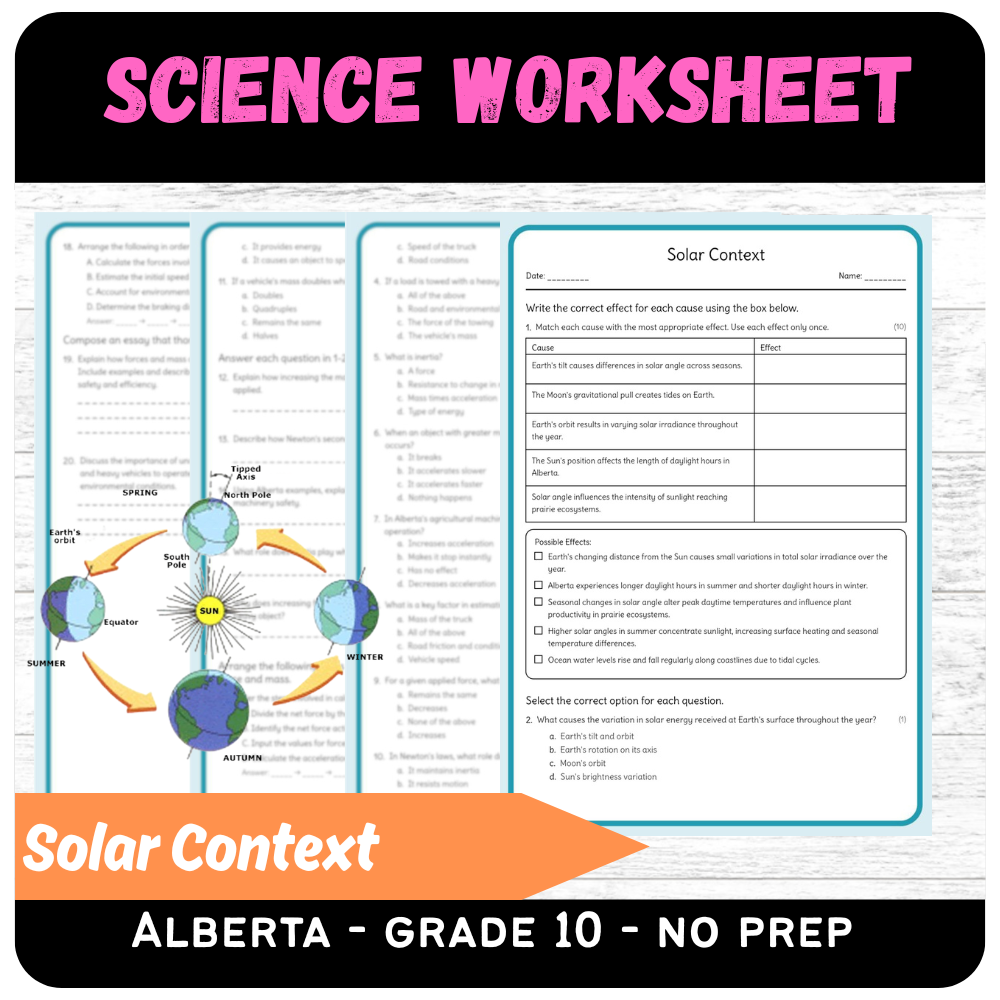
Grade 10 Science – Solar Context (Worksheet + Answer Key) – Alberta Standards
Created byBright Mind ResourcesLearning Objectives
- Explain how Earth's tilt and orbit influence seasonal and daily solar energy input.
- Describe the gravitational interactions among Earth, Moon, and Sun and their effects on orbital geometry.
- Analyze how solar irradiance and solar angles affect ecosystems and climate in Alberta regions.
Instant download

Grade 10 System Responses Worksheet | Alberta Practice & PDF
Created byClear Sky ClassroomLearning Objectives
- Explain how cellular signaling and organ-level changes work together to produce adaptive responses
- Describe how environmental cues trigger signaling networks and resource reallocation in complex biological systems
- Evaluate trade-offs and limits of phenotypic plasticity, including impacts on long-term fitness and resilience
Instant download
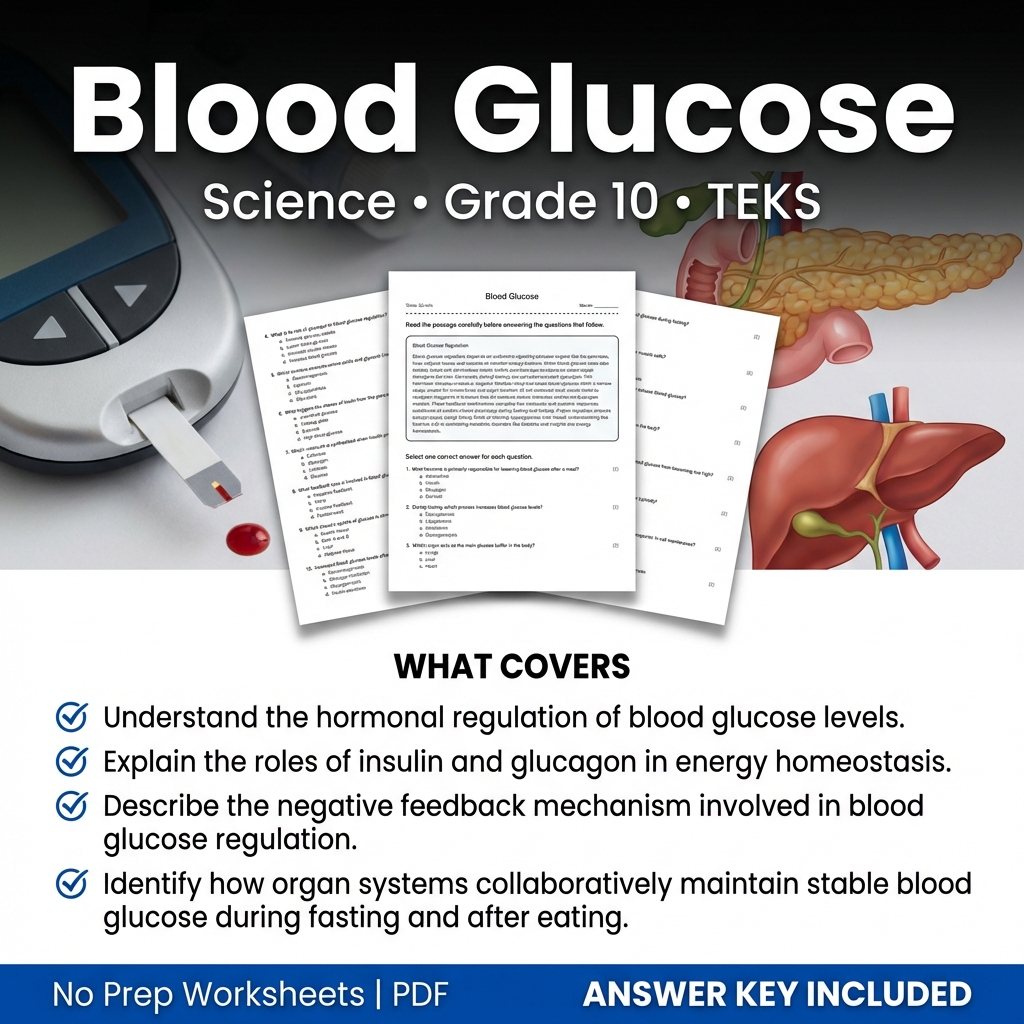
Blood Glucose Grade 10 Science Worksheet | TEKS Aligned Practice
Created byCoral Reef LearningLearning Objectives
- Understand the hormonal regulation of blood glucose levels.
- Explain the roles of insulin and glucagon in energy homeostasis.
- Describe the negative feedback mechanism involved in blood glucose regulation.
Instant download

Volcanism and Orogeny Worksheet Grade 10 Earth Science Ontario
Created byClear Sky ClassroomLearning Objectives
- Explain how magma forms through partial melting and how volatiles influence magma behavior during ascent and eruption.
- Compare effusive and explosive volcanism and identify common volcanic landforms linked to each style.
- Describe how convergent margins and continental collision processes build mountain belts through arc magmatism and crustal thickening.
Instant download
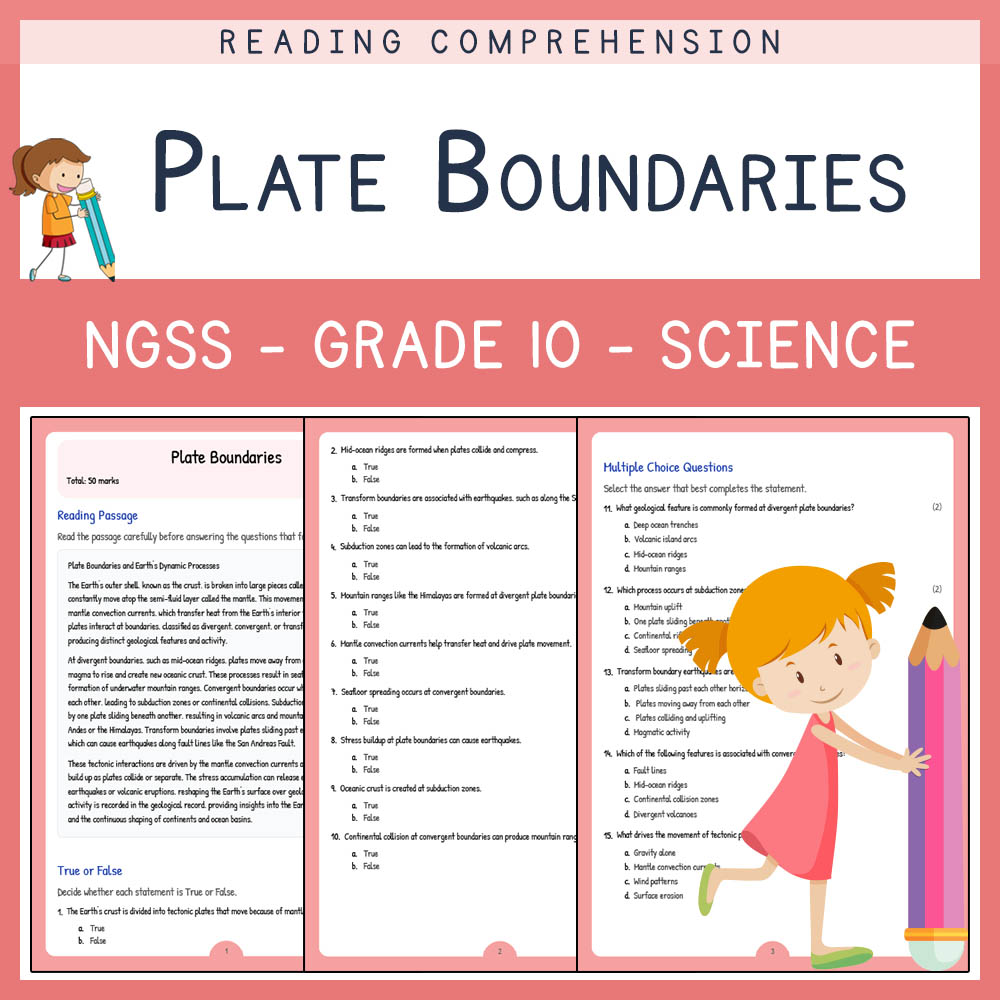
Grade 10 Science | Plate Boundaries Worksheet & Answer Key (NGSS Aligned)
Created byLumora LearningLearning Objectives
- Understand the different types of plate boundaries and their features.
- Identify the processes associated with divergent, convergent, and transform boundaries.
- Analyze geological phenomena such as mid-ocean ridges, subduction zones, and mountain formation.
Instant download

Grade 10 Science – Rock Cycle Processes & Weathering Daily Reading Worksheet
Created byBright Mind ResourcesLearning Objectives
- Understand the processes of weathering and erosion
- Identify how surface processes modify rocks
- Describe the role of weathering and erosion in the rock cycle
Also included in: Stellar Evolution Grade 10 Science Daily Reading Worksheets Bundle | FL NGSSS +1 more
Instant download

Membrane Transport Assessment for Grade 10 Science – Alberta Standards
Created byPrism Point LearningLearning Objectives
- Describe the mechanisms of membrane transport, including diffusion, osmosis, and facilitated transport.
- Explain how membrane proteins and lipid composition influence permeability and signaling.
- Connect membrane transport processes to cellular homeostasis, nutrient uptake, and waste removal in diverse habitats.
Also included in: Grade 10 Cells and Systems Science Lesson Bundle for Alberta Standards +1 more
Instant download

Cell Membrane Assessment for Grade 10 Science | TEKS Standards
Created byPrism Point LearningLearning Objectives
- Explain the structure and composition of the cell membrane.
- Describe how phospholipid bilayers and proteins contribute to membrane function.
- Identify examples of membrane transport processes like diffusion, osmosis, and protein channels.
Also included in: Grade 10 Cell Structure and Function Unit Science Lesson Bundle TEKS
Instant download

Grade 10 Science | ATP and Energy Worksheet (Ontario Standards) (PDF)
Created byEvergreen Desk EducationLearning Objectives
- Explain how ATP stores and transfers energy through the hydrolysis of phosphate bonds.
- Describe phosphorylation and how ATP can couple exergonic reactions to drive endergonic cellular work.
- Compare, at a conceptual level, how ATP is regenerated via substrate-level and oxidative mechanisms and why ATP turnover matters.
Also included in: Grade 10 Cell Functions & Energy Science Lesson Bundle - Ontario Framework +1 more
Instant download

Measurable Criteria Worksheet Pack Grade 10 STEM Engineering Skills
Created byPrism Point LearningLearning Objectives
- Distinguish between design criteria (measurable goals) and constraints (limits on possible solutions)
- Translate a goal into observable or measurable requirements for testing
- Use constraints to narrow design choices and avoid optimizing irrelevant features
Instant download

Work and Power Worksheet Grade 10 Science Alberta Physics PDF
Created byEvergreen Desk EducationLearning Objectives
- Explain and apply the relationship for work as force times displacement, including direction and units.
- Connect power to energy transfer rate using energy per unit time, with correct units and everyday examples.
- Solve quantitative problems involving force, displacement, energy, and time using appropriate formulas.
Instant download

Grade 10 Physical Properties Worksheet | Alberta Practice & PDF
Created byClear Sky ClassroomLearning Objectives
- Differentiate physical properties from chemical properties using examples
- Classify physical properties as intensive or extensive
- Identify how property classification supports material selection and environmental behavior
Instant download

Energy Currency Assessment | Alberta Grade 10 Science Standards
Created byPrism Point LearningLearning Objectives
- Understand the role of ATP as the energy currency in cellular processes.
- Explain how ATP synthesis and hydrolysis provide energy for metabolic reactions.
- Compare ATP turnover rates in different tissues and environmental contexts.
Also included in: Grade 10 Cells and Systems Science Lesson Bundle for Alberta Standards +1 more
Instant download

Land Use Effects Worksheet for Grade 10 Science | NGSS Assessment
Learning Objectives
- Explain how land-cover change can alter ecosystem function, hydrologic cycles, and biodiversity.
- Identify indicators of land-use impacts such as habitat fragmentation, nutrient loading, soil erosion, and coral reef degradation.
- Interpret how empirical evidence (maps, remote sensing, and field biotic surveys) can link human land changes to ecological and biogeochemical outcomes.
Also included in: Earth and Human Activity Lesson Bundle Grade 10 Science NGSS
Instant download

Rock Cycle Processes Assessment | Florida NGSSS Grade 10 Science
Created byPrism Point LearningLearning Objectives
- Explain how weathering, erosion, deposition, and lithification connect surface processes to the rock cycle.
- Describe how heat and pressure can cause metamorphism without melting and how this changes rock properties.
- Relate magma formation and cooling to the creation of igneous rocks within Earth’s energy and mass transfer system.
Also included in: Grade 10 Earth and Space Systems Science Lesson Bundle – Florida NGSSS +1 more
Instant download

Natural Selection Assessment for Grade 10 Science | Standards-Aligned Assessment
Created byPrism Point LearningLearning Objectives
- Explain the process of natural selection and how it leads to evolution.
- Identify key factors that influence allele frequency changes in populations.
- Differentiate between convergent and divergent evolution.
Also included in: Grade 10 Evolution and Genetics Science Lesson Bundle: General Unit
Instant download

Bonding Types Practice Worksheet | Grade 10 Science Ontario
Created byPrism Point LearningLearning Objectives
- Distinguish ionic, covalent, and metallic bonding using electron transfer versus electron sharing concepts
- Relate bonding and structure (lattice vs molecular vs metallic bonding) to macroscopic properties such as melting point and conductivity
- Explain how polarity and bond energy influence molecular behaviour and predict real-world applications
Instant download

Grade 10 Science – System Optimization Worksheet (NGSS10) (PDF)
Created bySilver Birch TeachingLearning Objectives
- Understand how mathematical models and computational analysis optimize communication systems.
- Evaluate trade-offs among range, throughput, and reliability in system design.
- Apply concepts of link budget calculations, antenna gain, and impedance matching.
Also included in: Grade 10 Waves and Signals Science Lesson Bundle: NGSS System & EM Behavior +1 more
Instant download
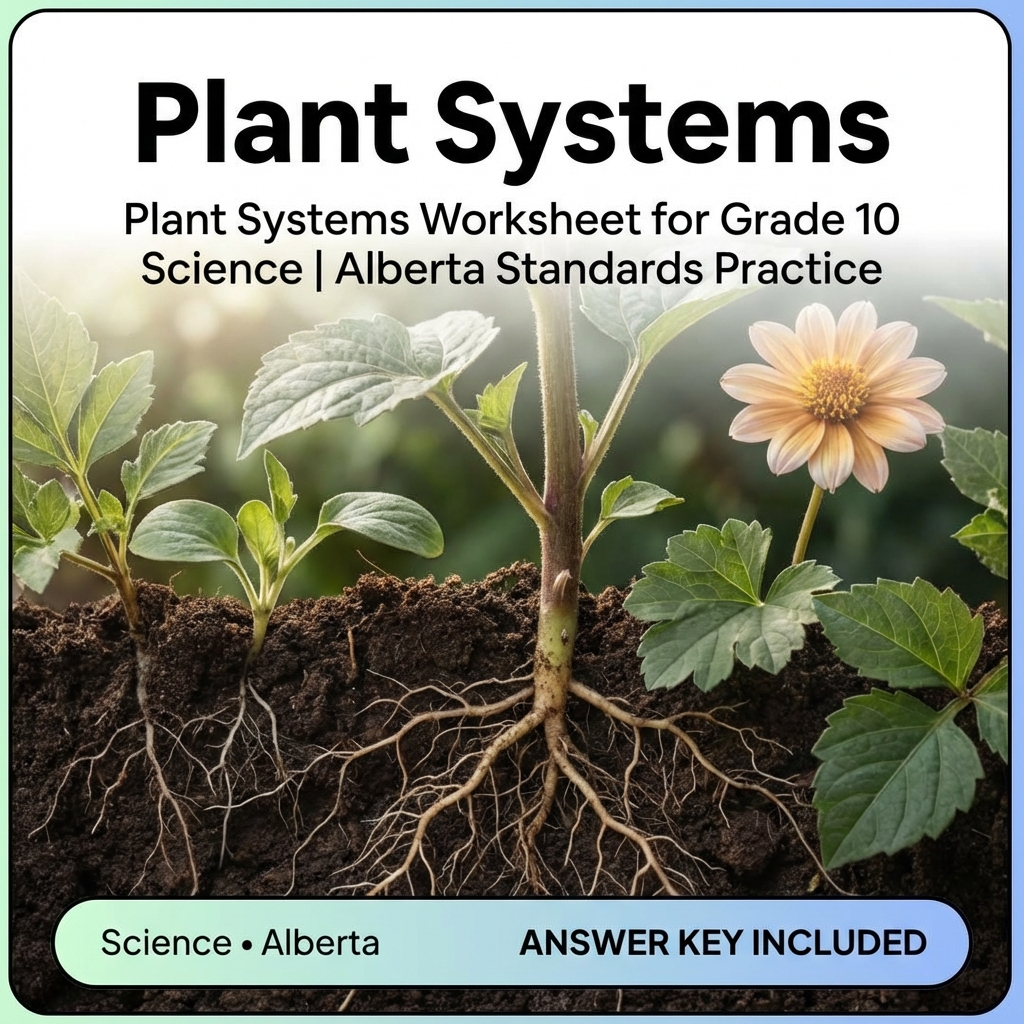
Plant Systems Worksheet for Grade 10 Science | Alberta Standards Practice
Created byCoral Reef LearningLearning Objectives
- Understand the structure and function of plant organ systems in resource acquisition, transport, and reproduction.
- Describe adaptations observable in Alberta’s grasslands and foothill forests affecting plant systems.
- Explain how plant morphology connects to environmental responses and agricultural management.
Instant download

Grade 10 Science | Conservation In Reactions - Daily Reading Comprehension
Created byCoral Reef LearningLearning Objectives
- Understand key concepts related to Science
- Apply knowledge through practice questions
- Demonstrate comprehension of the material
Instant download
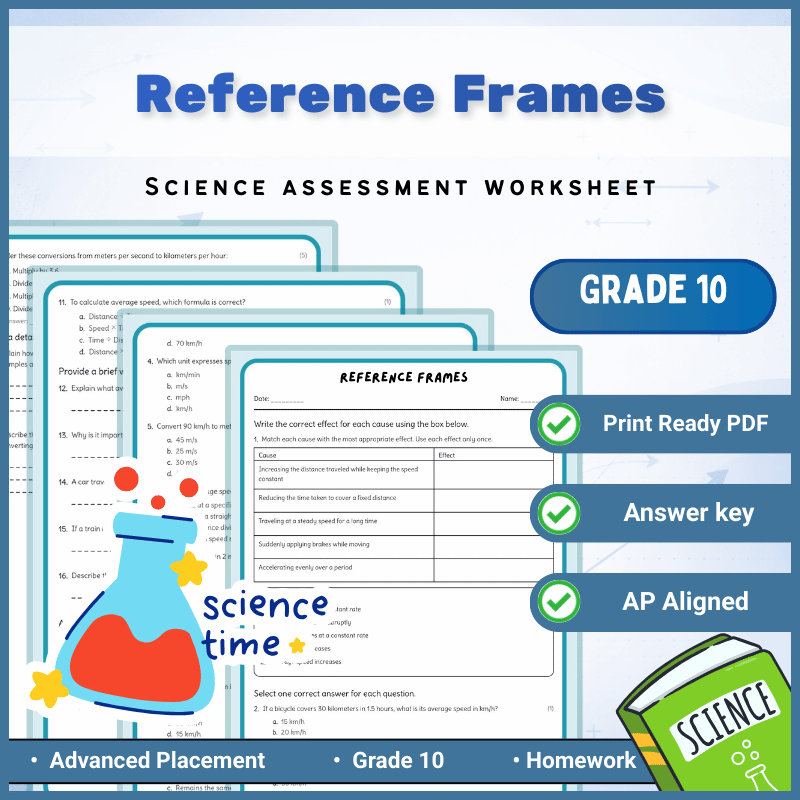
Grade 10 Science | Reference Frames Worksheet (AP Standard) – Science 1 PDF
Created byBright Mind ResourcesLearning Objectives
- Understand the concept of reference frames and how they describe position and motion.
- Differentiate between displacement, velocity, and acceleration in one-dimensional motion.
- Analyze motion graphs to interpret velocity and acceleration over time.
Instant download

Grade 10 Science Motors and Generators Worksheet | Alberta Physics PDF
Created byEvergreen Desk EducationLearning Objectives
- Explain how electromagnetic forces and torque cause rotational motion in motors and how motion produces electrical current in generators
- Compare the energy conversion processes of motors versus generators using the roles of coils and magnetic fields
- Apply relationships among current, magnetic field strength, and mechanical/electrical output to predict performance and efficiency trade-offs
Instant download
About Grade 10 Science Worksheets
Find Science worksheets built for Grade 10. All 7,038 cover core skills, practice, and review, each an instant PDF download.
Every worksheet on MyTeachingSheets is created by independent teacher-authors and reviewed before publication. All resources download as printable PDFs for classroom, homework, or at-home practice, and many include answer keys. Preview any worksheet free before buying.