
Grade 6 Worksheets
8,578 grade resources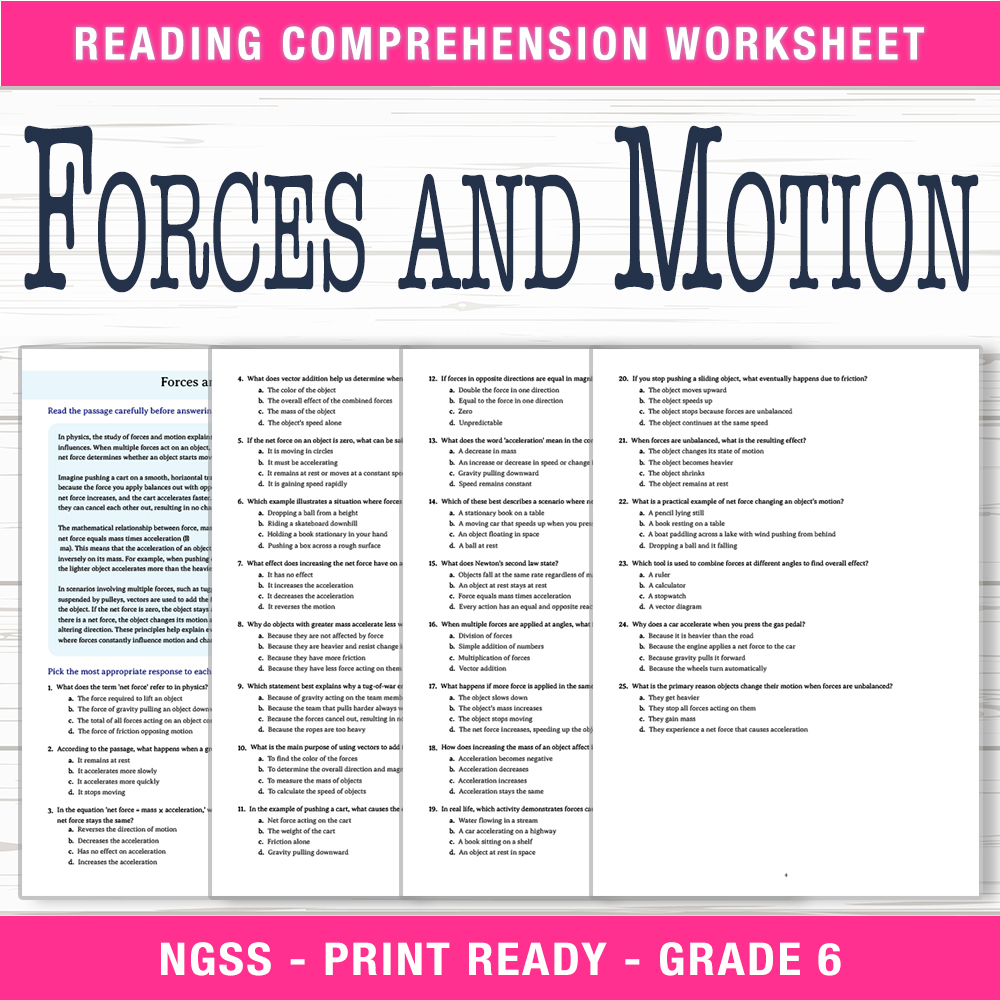
Grade 6 Science | Forces and Motion Worksheet (PDF + Answer Key)
 Created byRiverstone Classroom
Learning Objectives
- Understand how net force affects the motion of objects based on their mass.
- Explain the relationship between force, mass, and acceleration using the formula net force equals mass times acceleration.
- Identify scenarios where forces change and predict resulting motion alterations.
Instant download
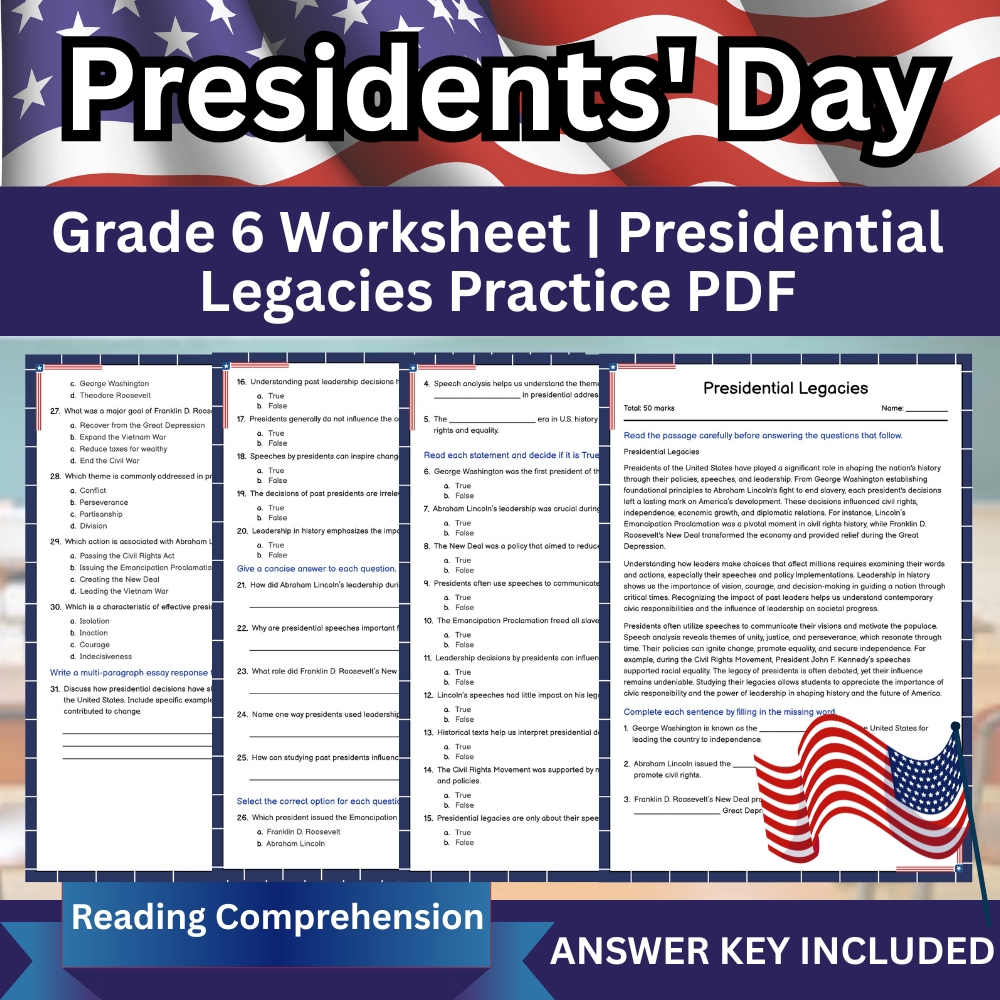
Grade 6 Seasonal Worksheet | Presidential Legacies Assessment & Student Practice (PDF)
Learning Objectives
- Analyze the key decisions and actions of influential U.S. presidents and their impact on American history.
- Interpret historical texts related to presidential policies and speeches.
- Understand cause-and-effect relationships in the context of leadership and civic development.
Instant download
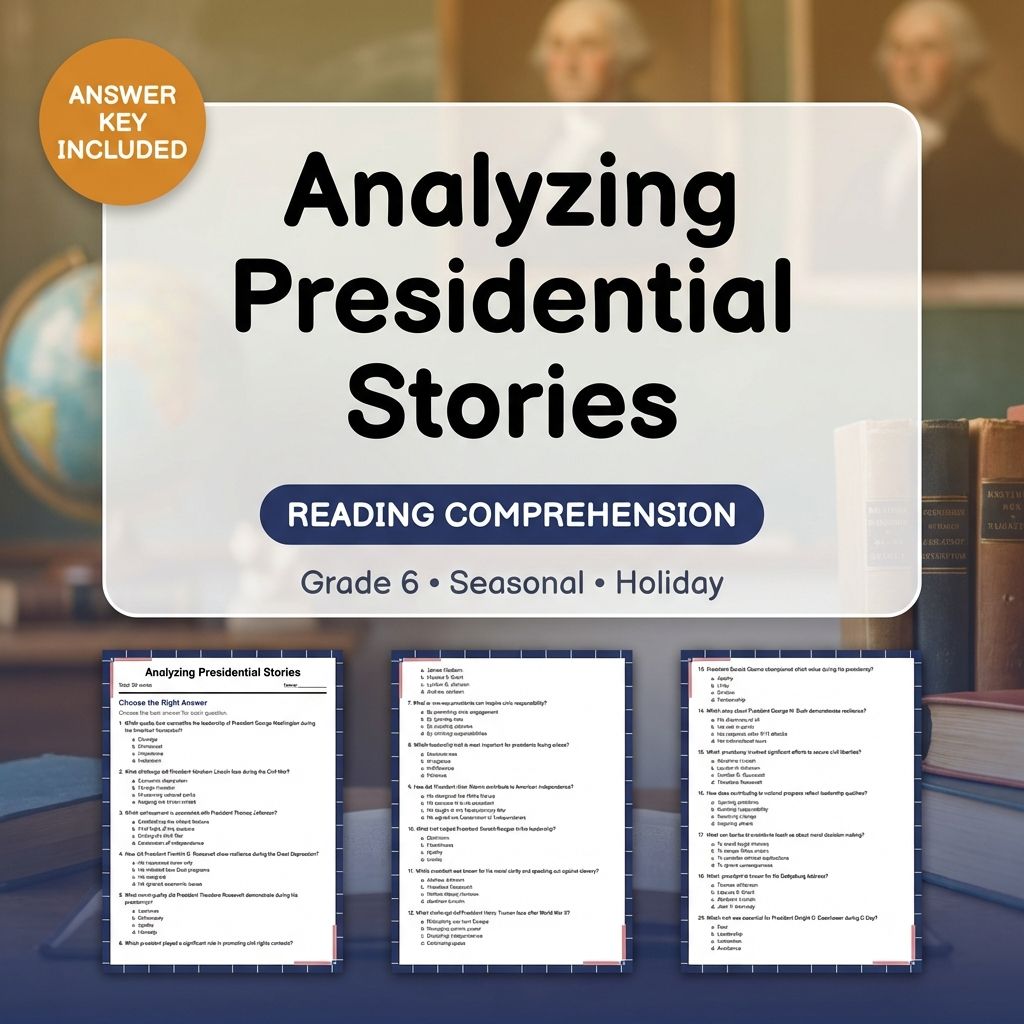
Grade 6 Seasonal Worksheet | Analyzing Presidential Stories - Multiple Choice PDF
Learning Objectives
- Analyze stories of different presidents focusing on their challenges and achievements related to American independence.
- Develop critical thinking and comprehension skills through narrative analysis.
- Evaluate qualities such as leadership, resilience, and moral choices demonstrated by historical figures.
Instant download

Grade 6 Science Worksheet: Habitat Fragmentation Assessment – Ontario
JCreated byJ.S SheetsLearning Objectives
- Explain how habitat fragmentation divides landscapes and changes connectivity between habitat patches
- Describe how fragmentation can reduce gene flow and pollinator movement
- Analyze how edge effects and isolation can disrupt species interactions and food webs
Instant download
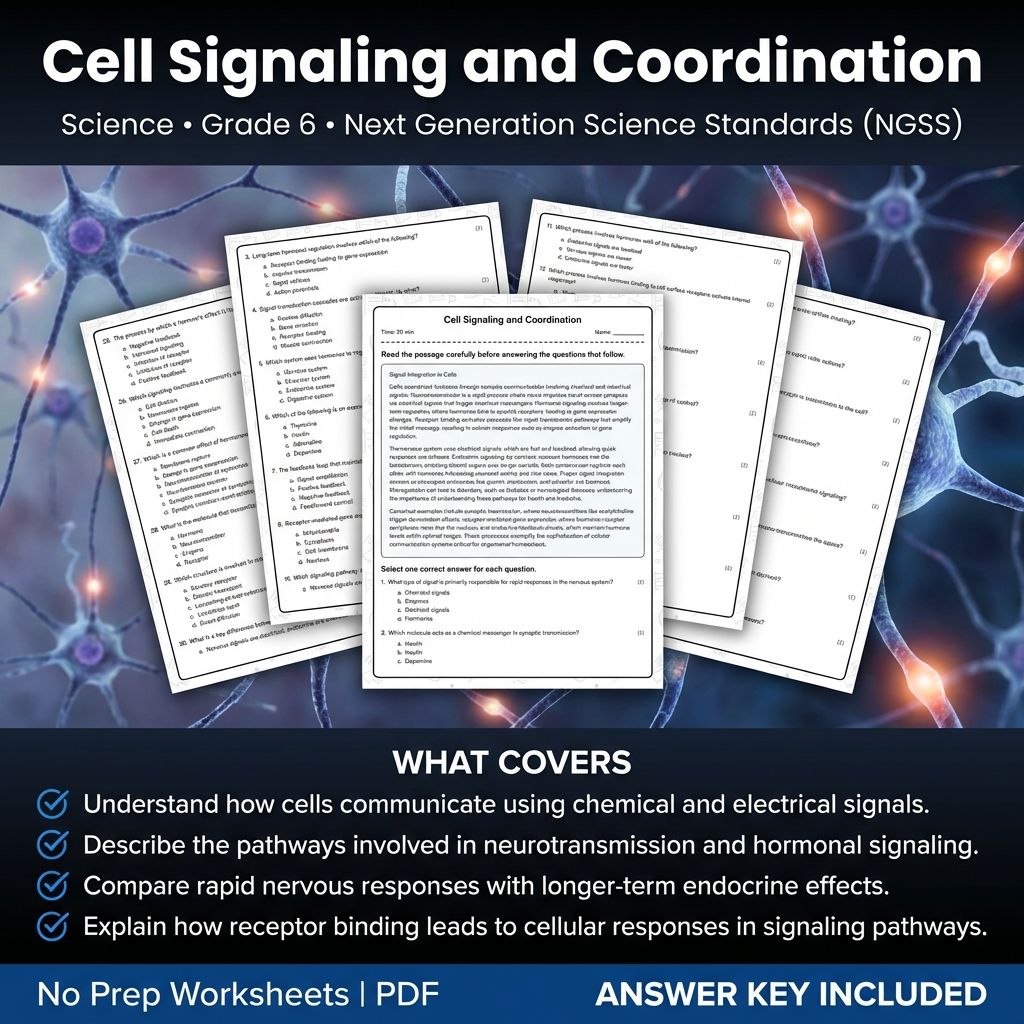
6th Grade Science Worksheet | Cell Signaling & Coordination (Printable PDF + Answer Key)
 Created byCoral Reef Learning
Learning Objectives
- Understand how cells communicate using chemical and electrical signals.
- Describe the pathways involved in neurotransmission and hormonal signaling.
- Compare rapid nervous responses with longer-term endocrine effects.
Instant download
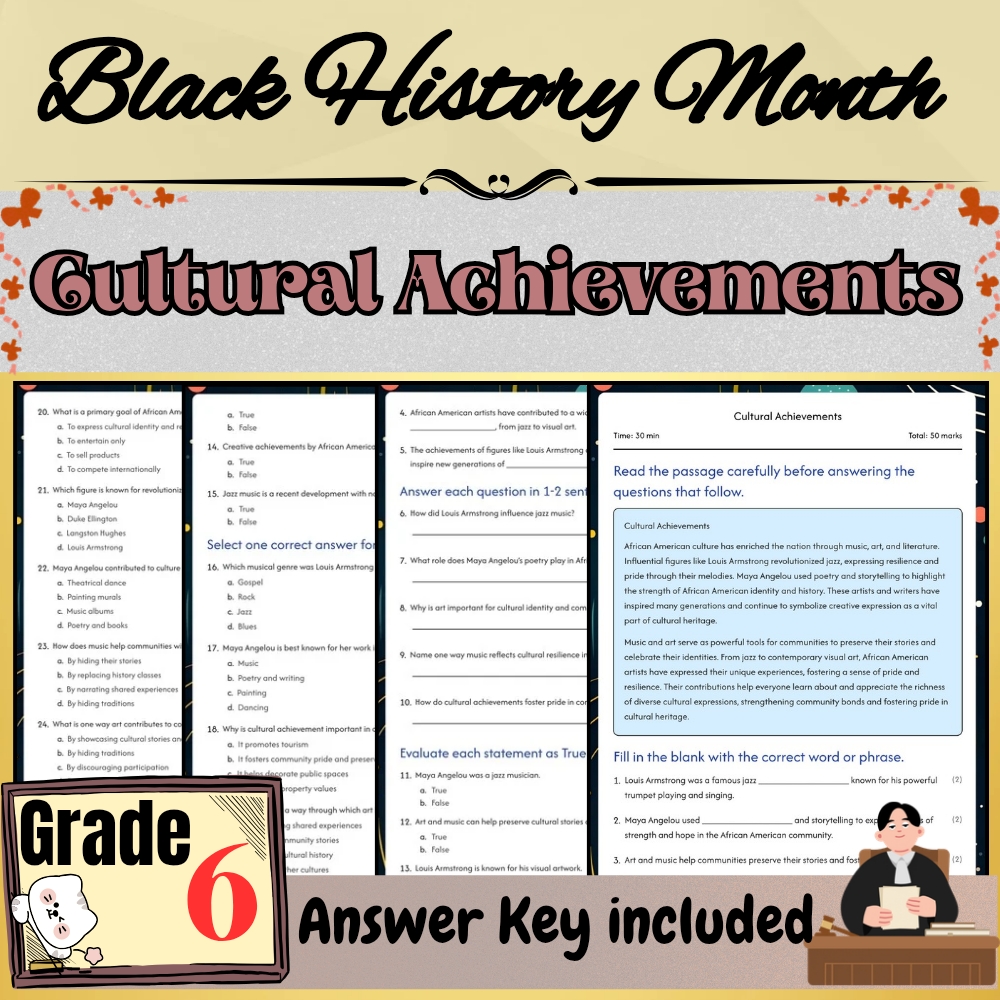
Grade 6 Seasonal Black Friday Worksheet for Cultural Achievements|PDF+Answer Key
 Created byShaNova Worksheets
Learning Objectives
- Understand the contributions of African American artists, musicians, and writers to American culture.
- Recognize key figures like Louis Armstrong and Maya Angelou and their impact on arts and literature.
- Appreciate how artistic expression reflects cultural identity and resilience.
Instant download
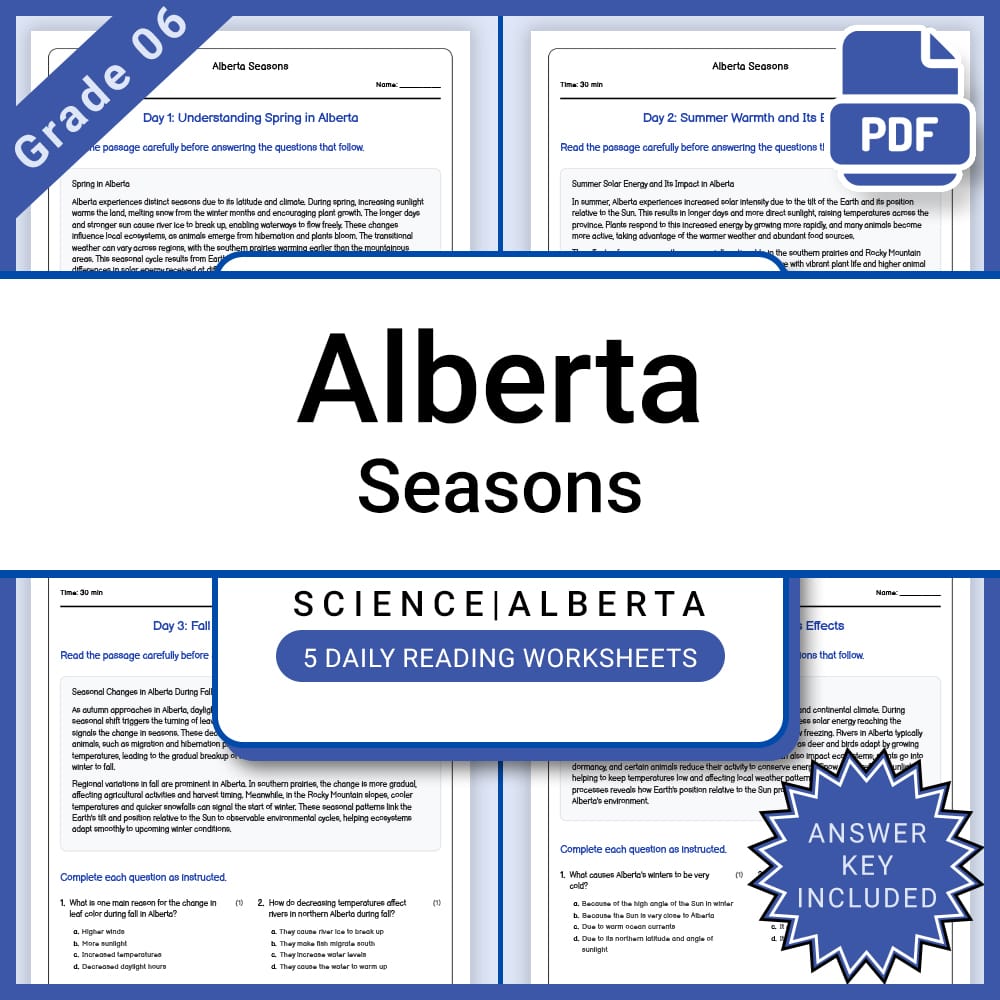
Grade 6 Science – Alberta Seasons Daily Reading Worksheet with Answer Key
JCreated byJ.S SheetsLearning Objectives
- Understand the concept of seasonal changes in Alberta.
- Identify factors that influence Alberta's seasons, such as sunlight and latitude.
- Describe how seasons affect local ecosystems and human activities.
Also included in: Grade 6 Science Lesson Group: Earth & Space Reading Worksheets Bundle +1 more
Instant download
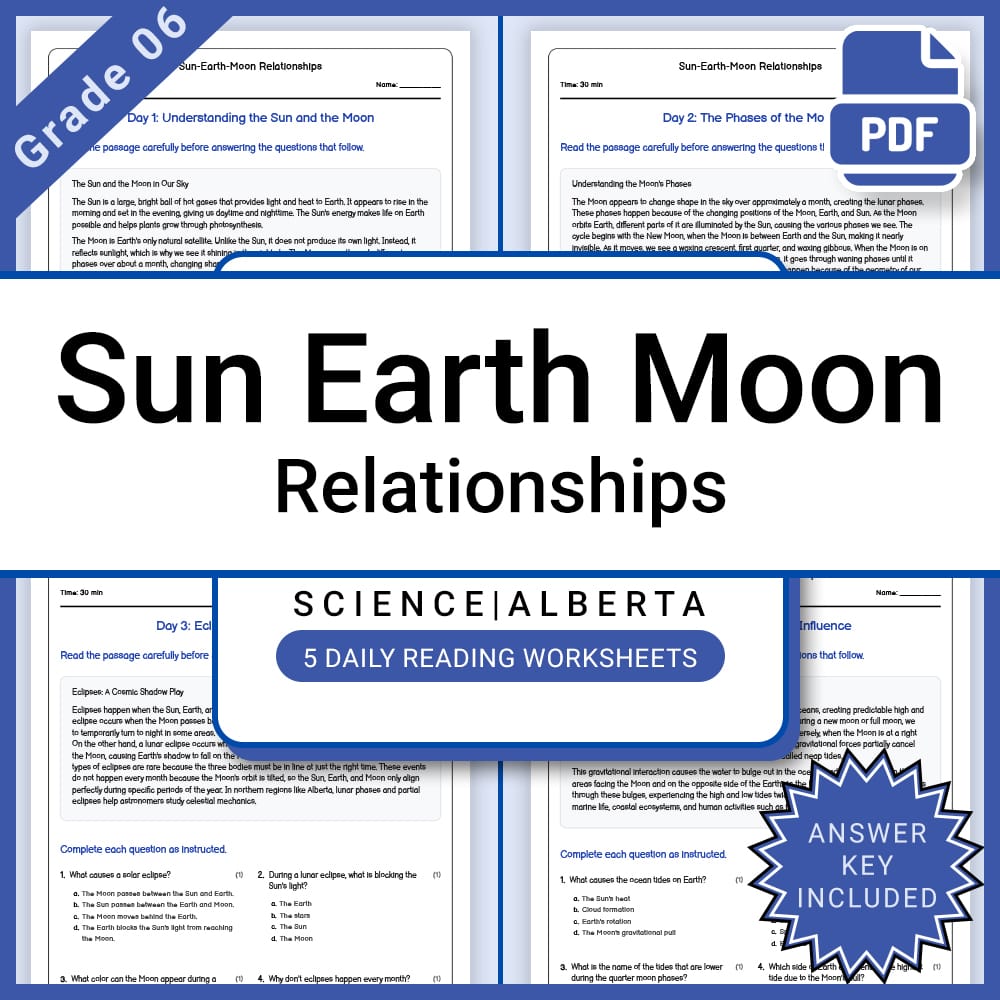
Grade 6 Science Sun–Earth–Moon Relationships Daily Reading Worksheet + Answer Key
JCreated byJ.S SheetsLearning Objectives
- Identify the basic positions of the Sun, Earth, and Moon.
- Describe how the Sun and Moon shine or reflect light.
- Understand the different phases of the Moon and their causes.
Also included in: Grade 6 Science Lesson Group: Earth & Space Reading Worksheets Bundle +1 more
Instant download
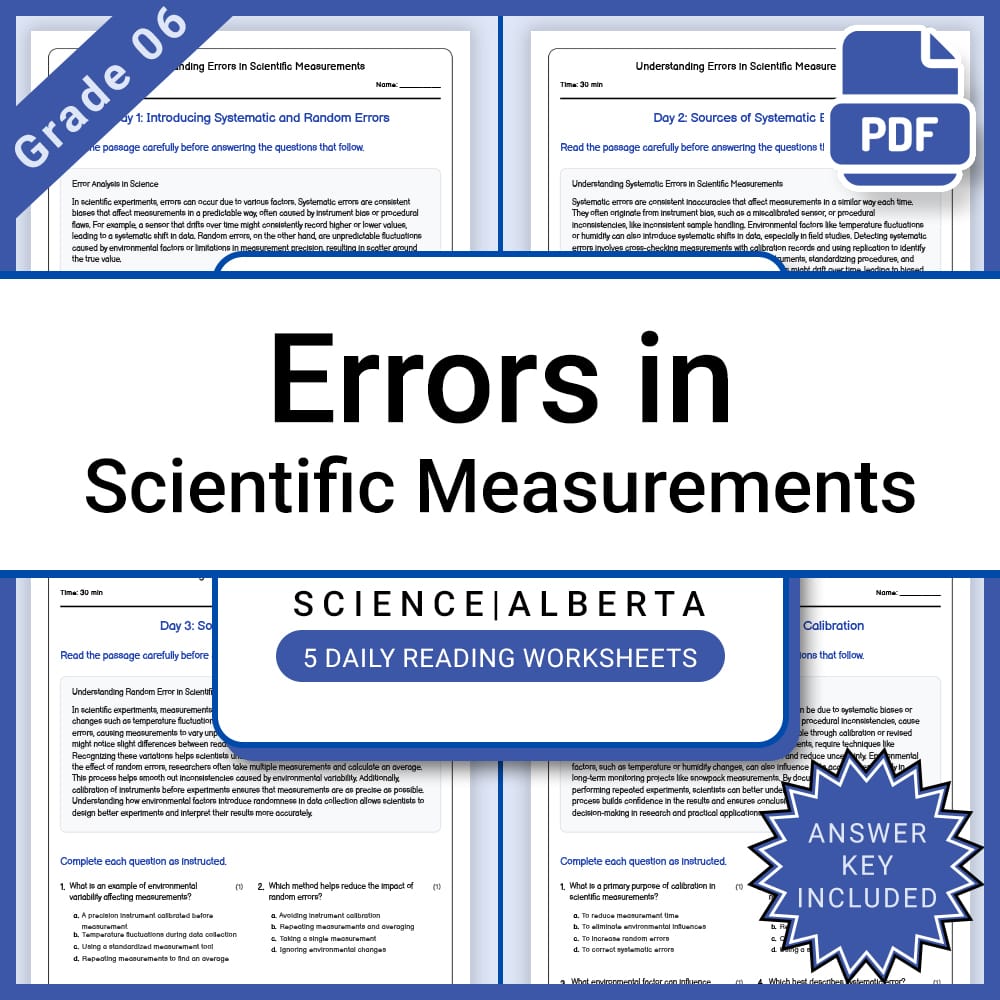
Grade 6 Science – Errors in Scientific Measurements Daily Worksheet + Answer Key
JCreated byJ.S SheetsLearning Objectives
- Define and distinguish between systematic and random errors.
- Identify sources of errors in scientific experiments.
- Explain methods used to analyze and reduce errors.
Also included in: Grade 6 Science Lesson Group Bundle | Alberta Standards with Reading Worksheets +1 more
Instant download
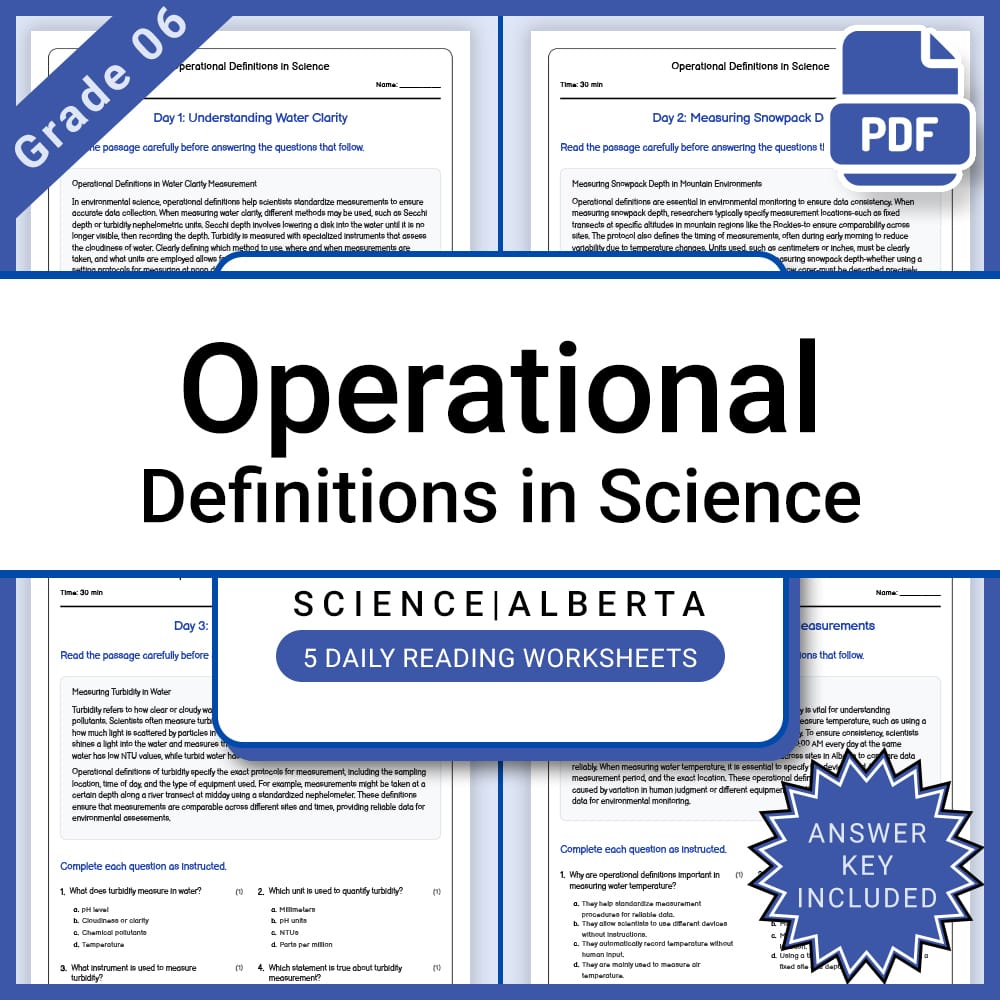
Grade 6 Science – Operational Definitions Daily Reading Worksheet + Answer Key
JCreated byJ.S SheetsLearning Objectives
- Understand the purpose and importance of operational definitions in scientific measures.
- Learn how to convert qualitative observations into quantitative data.
- Identify examples of measurement methods such as water clarity and snowpack depth.
Also included in: Grade 6 Science Lesson Group Bundle | Alberta Standards with Reading Worksheets +1 more
Instant download
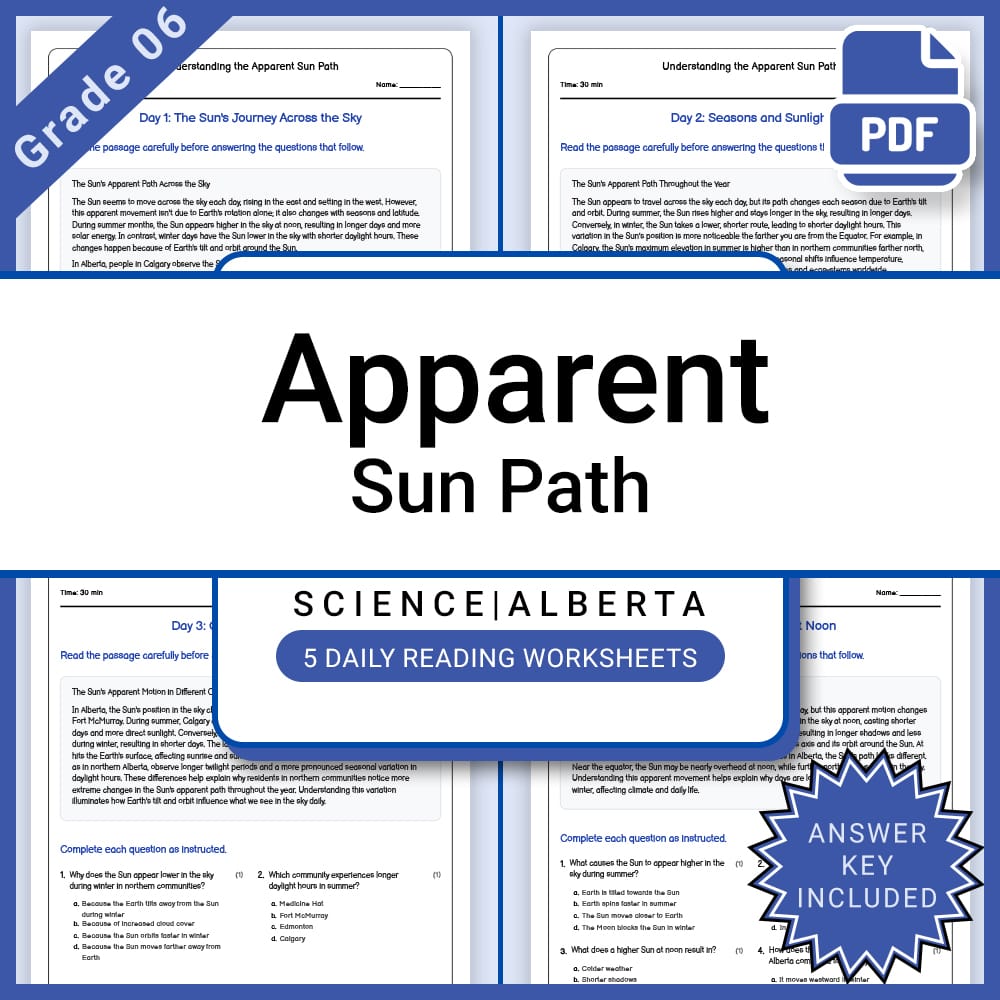
Grade 6 Science – Apparent Sun Path Daily Reading Worksheet + Answer Key
JCreated byJ.S SheetsLearning Objectives
- Describe how the Sun appears to move across the sky during different seasons.
- Explain how latitude affects the Sun's apparent path.
- Understand the relationship between Earth's tilt and the Sun's position at different times of the year.
Also included in: Grade 6 Science Lesson Group: Earth & Space Reading Worksheets Bundle +1 more
Instant download
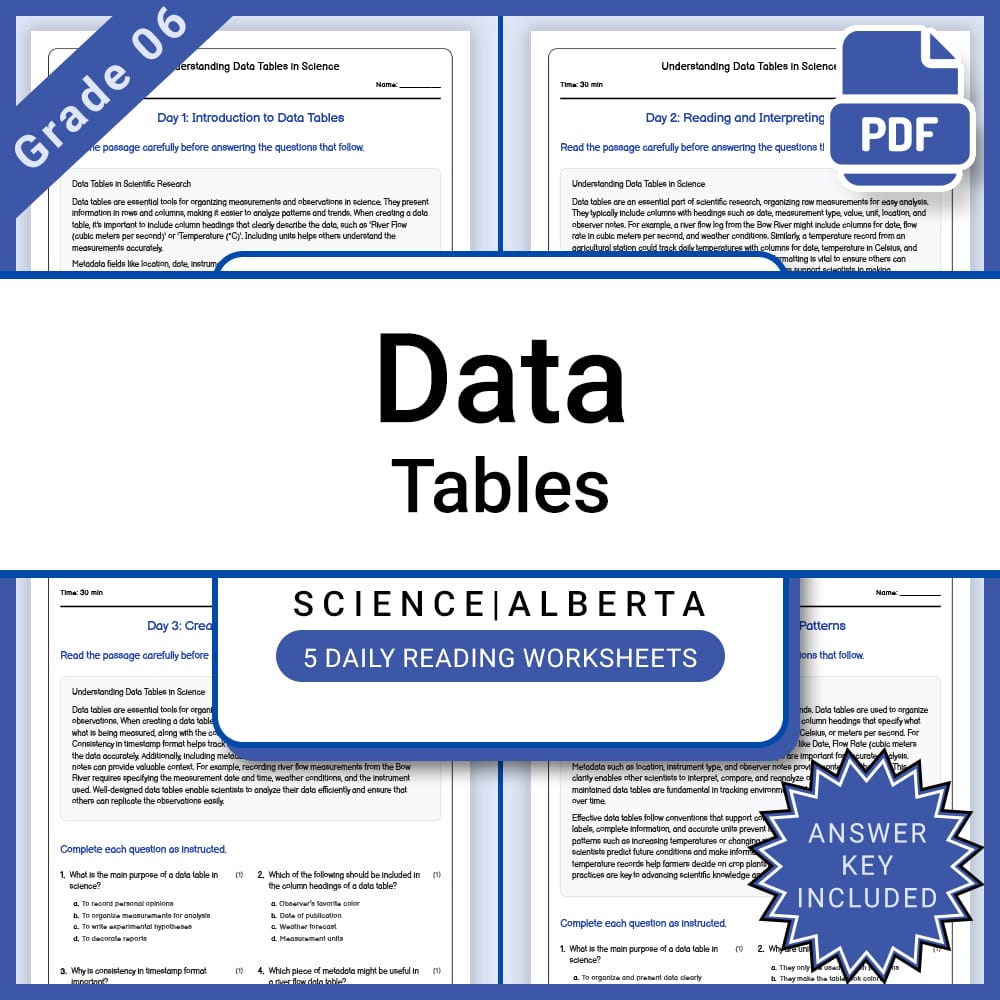
Grade 6 Science – Data Tables Daily Reading Worksheet + Answer Key
JCreated byJ.S SheetsLearning Objectives
- Identify the components of a data table, including column headings and metadata.
- Understand the importance of clear and consistent labels in data recording.
- Recognize examples of data tables used in real-world scientific observations.
Also included in: Grade 6 Science Lesson Group Bundle | Alberta Standards with Reading Worksheets +1 more
Instant download
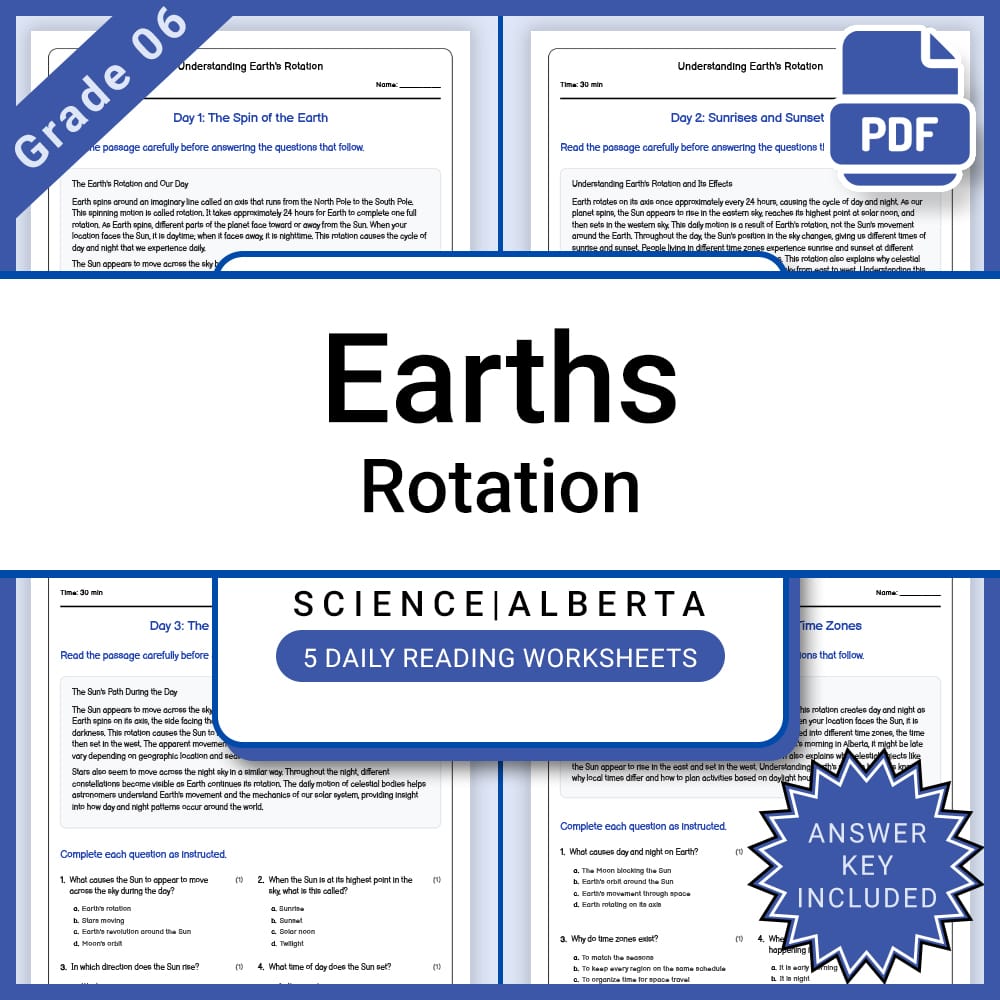
Grade 6 Science – Earth's Rotation Daily Reading Worksheet with Answer Key
JCreated byJ.S SheetsLearning Objectives
- Explain the concept of Earth's rotation about its axis.
- Describe how Earth's rotation causes day and night.
- Identify key positions in the daily path of the Sun across the sky.
Also included in: Grade 6 Science Lesson Group: Earth & Space Reading Worksheets Bundle +1 more
Instant download
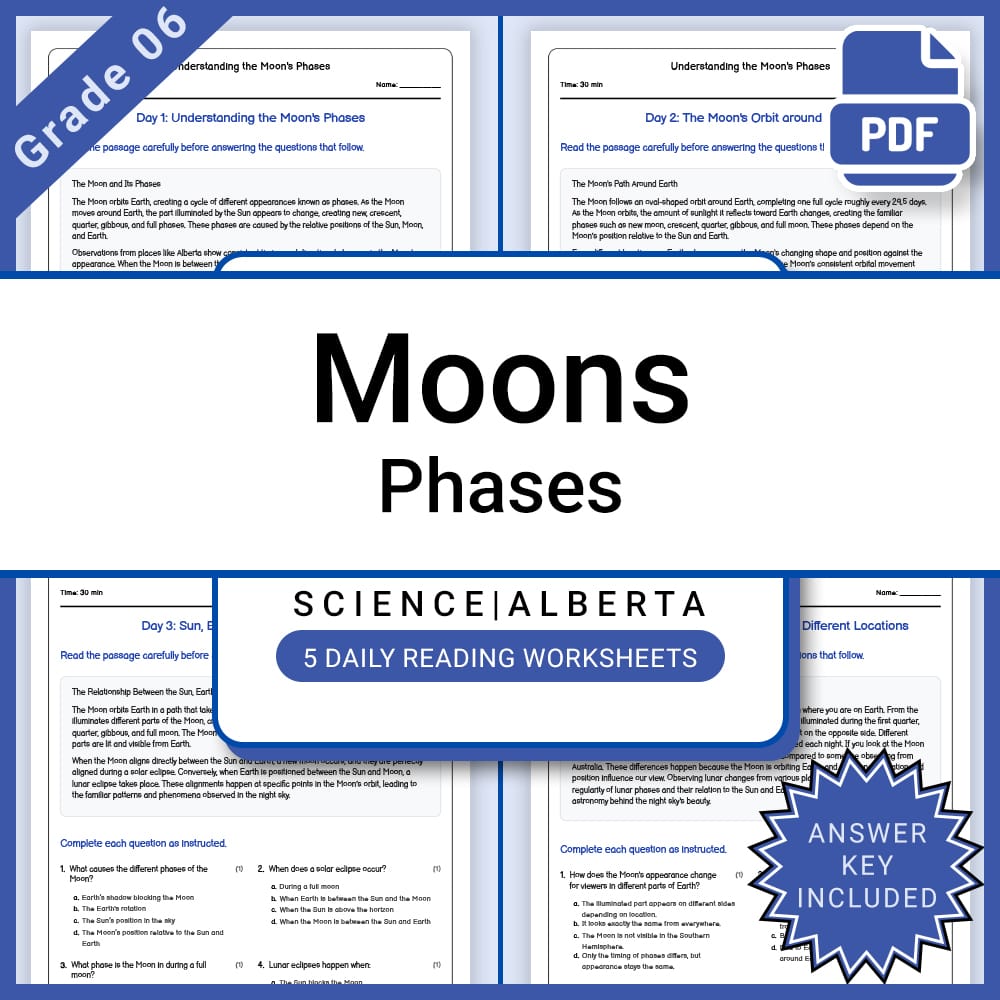
Grade 6 Science – Moon Phases Daily Reading Worksheet with Answer Key
JCreated byJ.S SheetsLearning Objectives
- Identify different phases of the Moon
- Describe how the Moon's appearance changes over time
- Explain the relationship between the Sun, Earth, and Moon in lunar motion
Also included in: Grade 6 Science Lesson Group: Earth & Space Reading Worksheets Bundle +1 more
Instant download
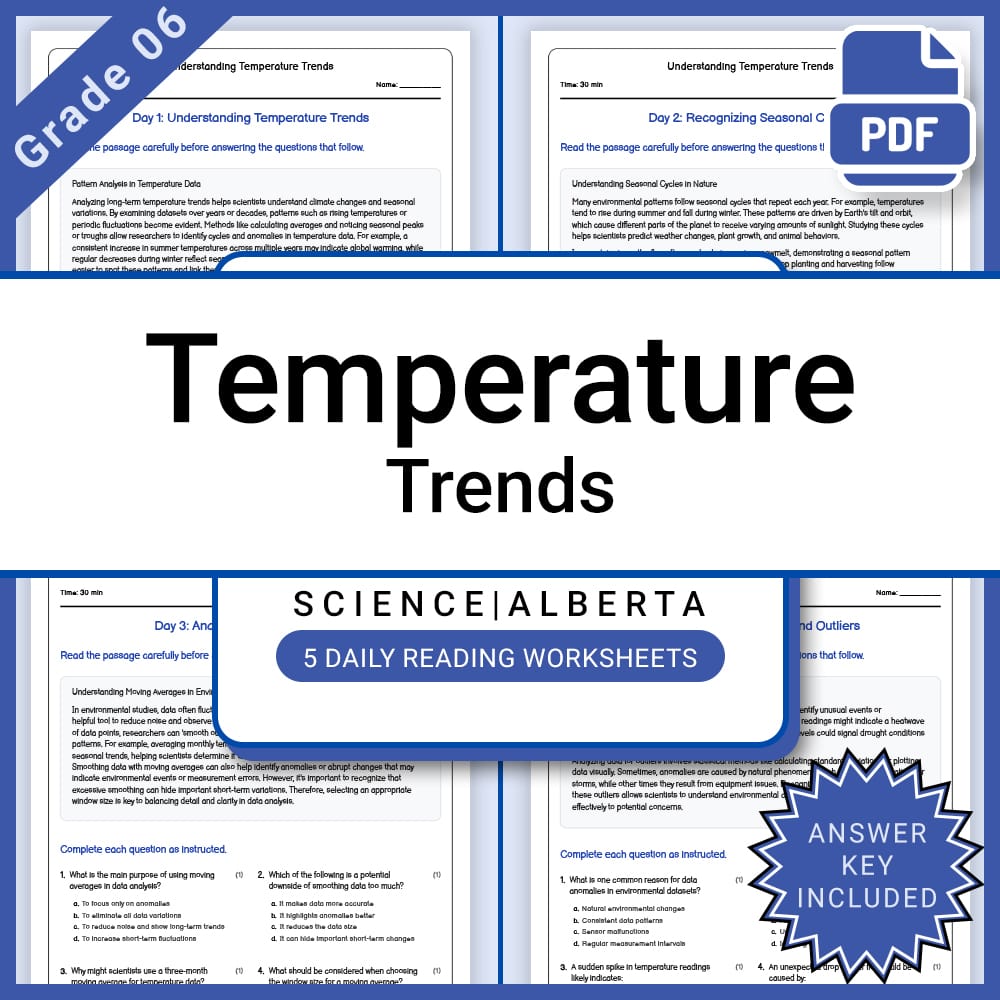
Grade 6 Science – Temperature Trends Daily Reading Worksheet + Answer Key
JCreated byJ.S SheetsLearning Objectives
- Learn how to identify long-term temperature patterns in datasets.
- Understand the concepts of seasonal cycles and anomalies in temperature data.
- Explore methods like descriptive statistics and moving averages used in pattern analysis.
Also included in: Grade 6 Science Lesson Group Bundle | Alberta Standards with Reading Worksheets +1 more
Instant download
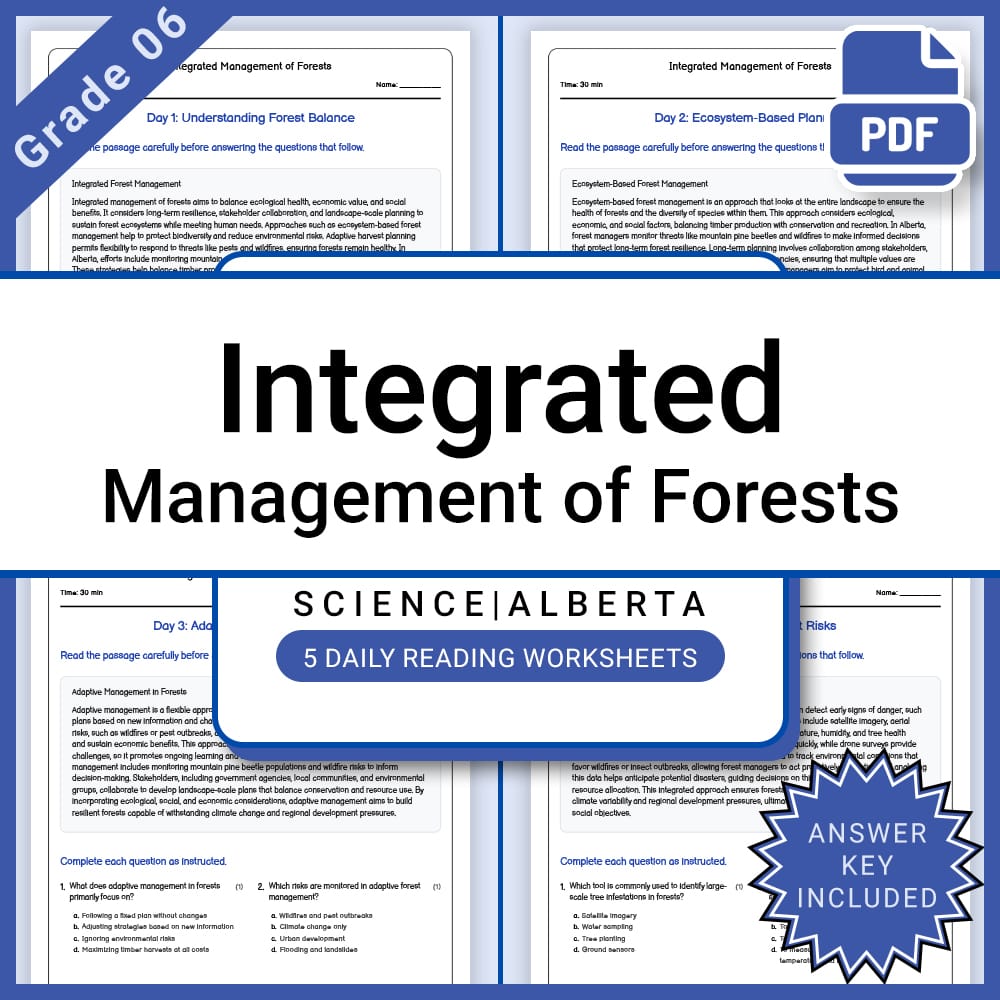
Grade 6 Science – Integrated Forest Management Daily Worksheet + Answer Key
JCreated byJ.S SheetsLearning Objectives
- Understand the concept of integrated forest management.
- Identify ecological, economic, and social objectives in forest planning.
- Learn about approaches like ecosystem-based management and adaptive planning.
Also included in: Grade 6 Science Lesson Bundle – Ecosystems, Trees, and Land Management +1 more
Instant download
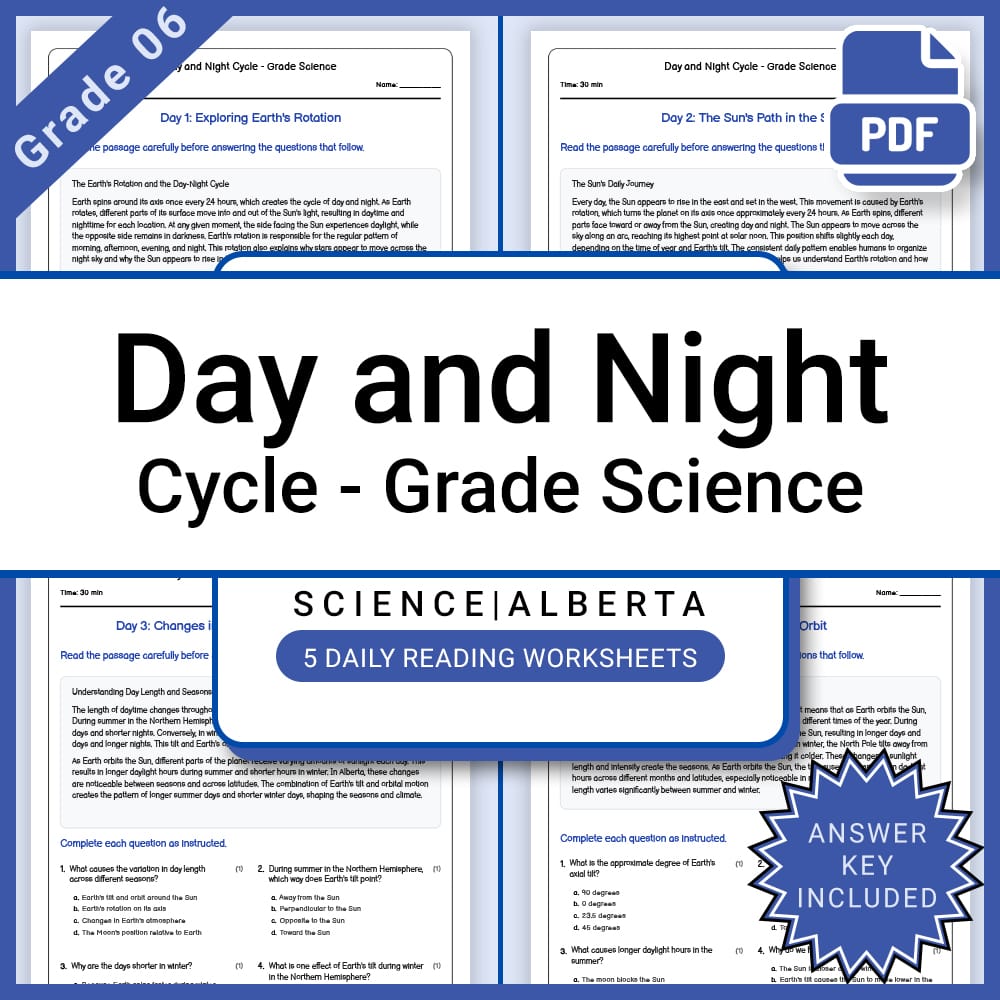
Grade 6 Science – Day and Night Cycle Daily Reading Worksheet + Answer Key
JCreated byJ.S SheetsLearning Objectives
- Understand Earth's rotation and how it causes day and night
- Explain the mechanics behind the cycle of day and night
- Identify factors influencing daylight duration throughout the year
Also included in: Grade 6 Science Lesson Group: Earth & Space Reading Worksheets Bundle +1 more
Instant download
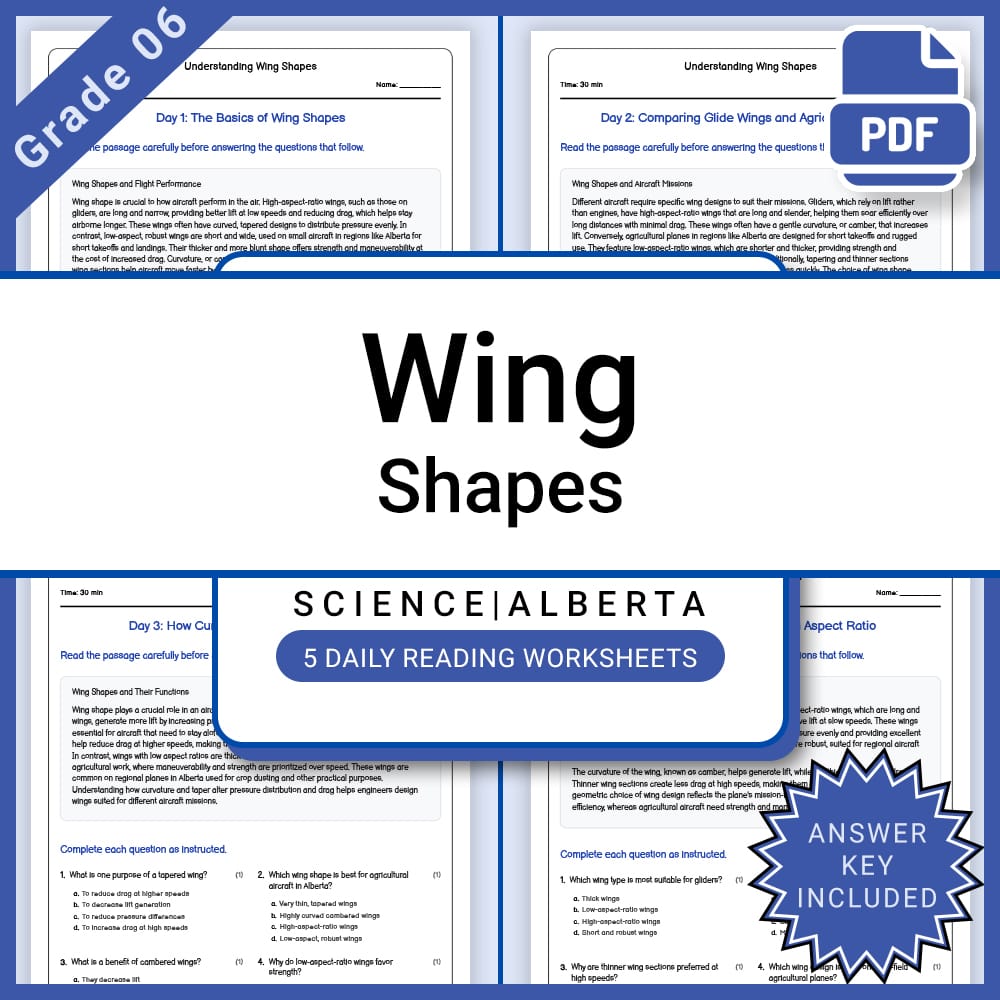
Grade 6 Science – Wing Shapes Daily Reading Worksheet with Answer Key
JCreated byJ.S SheetsLearning Objectives
- Identify different wing features such as camber, thickness, and aspect ratio.
- Explain how wing shape influences lift, stall behavior, and maneuverability.
- Compare high-aspect-ratio wings with low-aspect-ratio wings used in regional aviation.
Also included in: Grade 6 Science Lesson Bundle: Flight, Weather, and Aerodynamics +1 more
Instant download

Grade 6 Science – Biodiversity Roles Daily Reading Worksheet Answer Key
JCreated byJ.S SheetsLearning Objectives
- Understand the concept of keystone species and their influence on ecosystems.
- Recognize the importance of biodiversity for ecosystem stability.
- Identify different species roles such as keystone, indicator, and interdependent species.
Also included in: Grade 6 Science Lesson Bundle – Ecosystems, Trees, and Land Management +1 more
Instant download

Grade 6 Science – Tree Growth Rings Daily Reading Worksheet with Answer Key
JCreated byJ.S SheetsLearning Objectives
- Define what growth rings in trees are
- Describe how growth rings provide information about a tree's age and environment
- Identify how environmental factors influence ring patterns
Also included in: Grade 6 Science Lesson Bundle – Ecosystems, Trees, and Land Management +1 more
Instant download
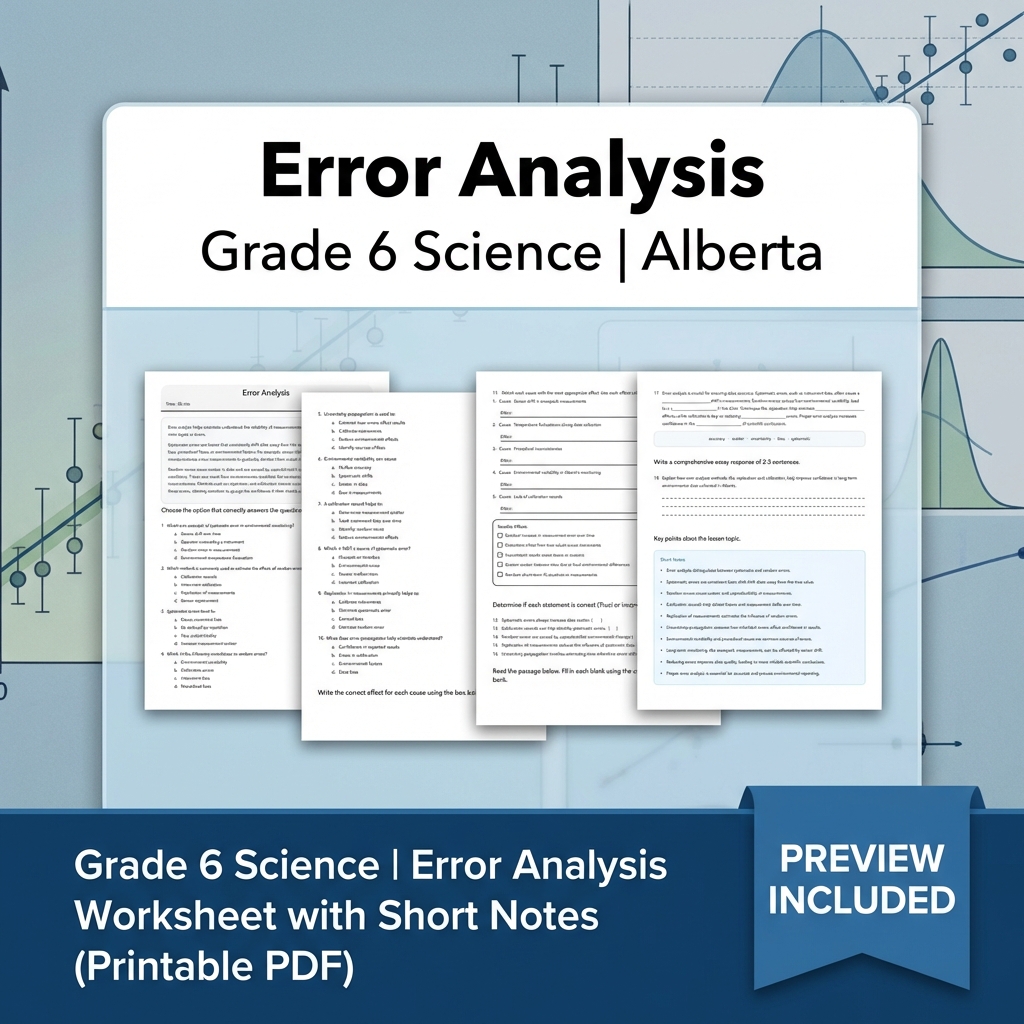
Grade 6 Science | Error Analysis Worksheet with Short Notes (Printable PDF)
 Created byMeadowlark Worksheets
Learning Objectives
- Understand the sources and types of errors in scientific measurements.
- Distinguish between systematic and random errors and their effects on data.
- Learn methods such as replication, calibration, and uncertainty propagation to assess errors.
Also included in: Grade 6 Science | Evidence & Investigation Unit Worksheet Bundle +1 more
Instant download

Grade 6 Science – Physiological Adaptations & Animal Survival | Worksheet
 Created byBright Mind Resources
Learning Objectives
- Understand how internal processes help animals regulate temperature
- Identify key physiological mechanisms like heat exchange, urine concentration, and metabolic rate
- Learn how these processes contribute to animal survival in cold environments
Also included in: Grade 6 Science: Organ Systems & Adaptations Daily Reading Lesson Bundle | BC +1 more
Instant download
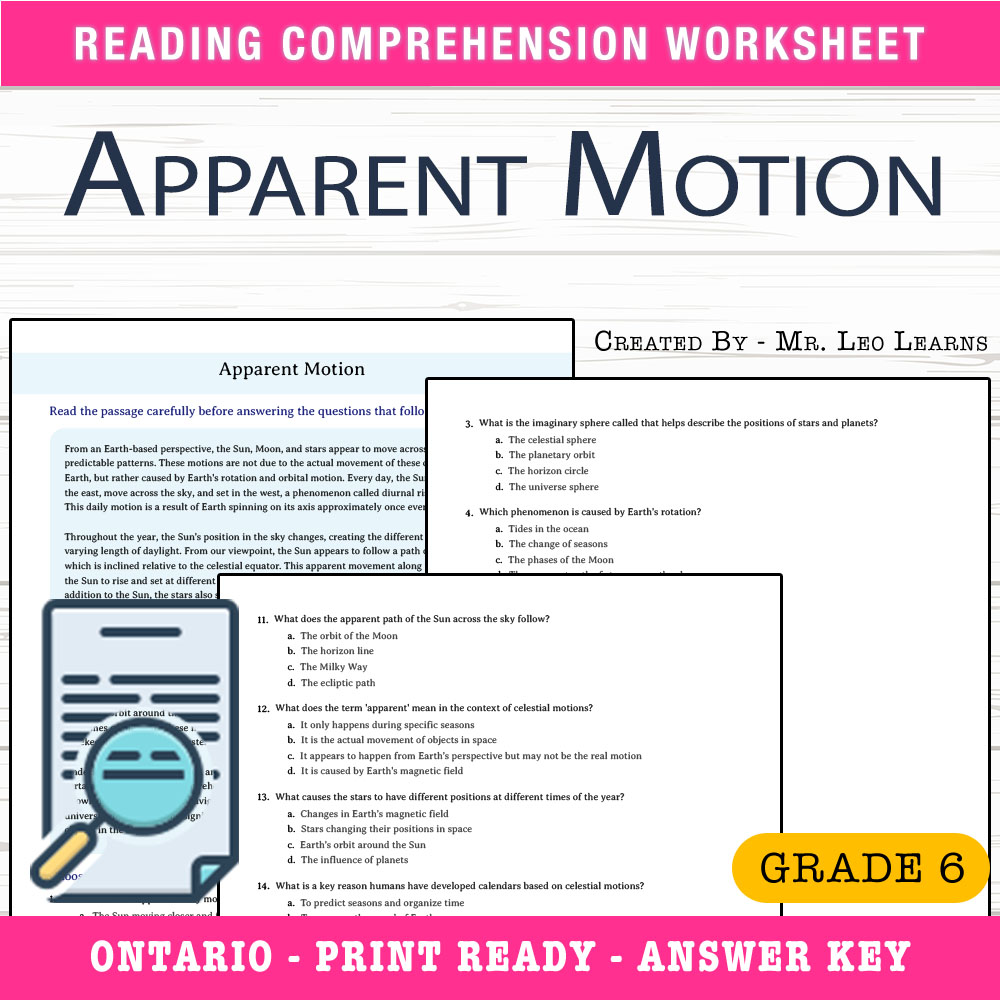
Grade 6 Science — Apparent Motion Worksheet for Mastery
 Created byThe Resource Hub
Learning Objectives
- Understand the daily and yearly apparent motions of the Sun, Moon, and stars from Earth's perspective.
- Explain how Earth's rotation and orbit cause the observed movements in the sky.
- Describe key concepts such as diurnal rising and setting, celestial paths, and the celestial sphere.
Also included in: Grade 6 Science Unit | Space Systems & Orbital Mechanics Worksheet Pack +1 more
Instant download
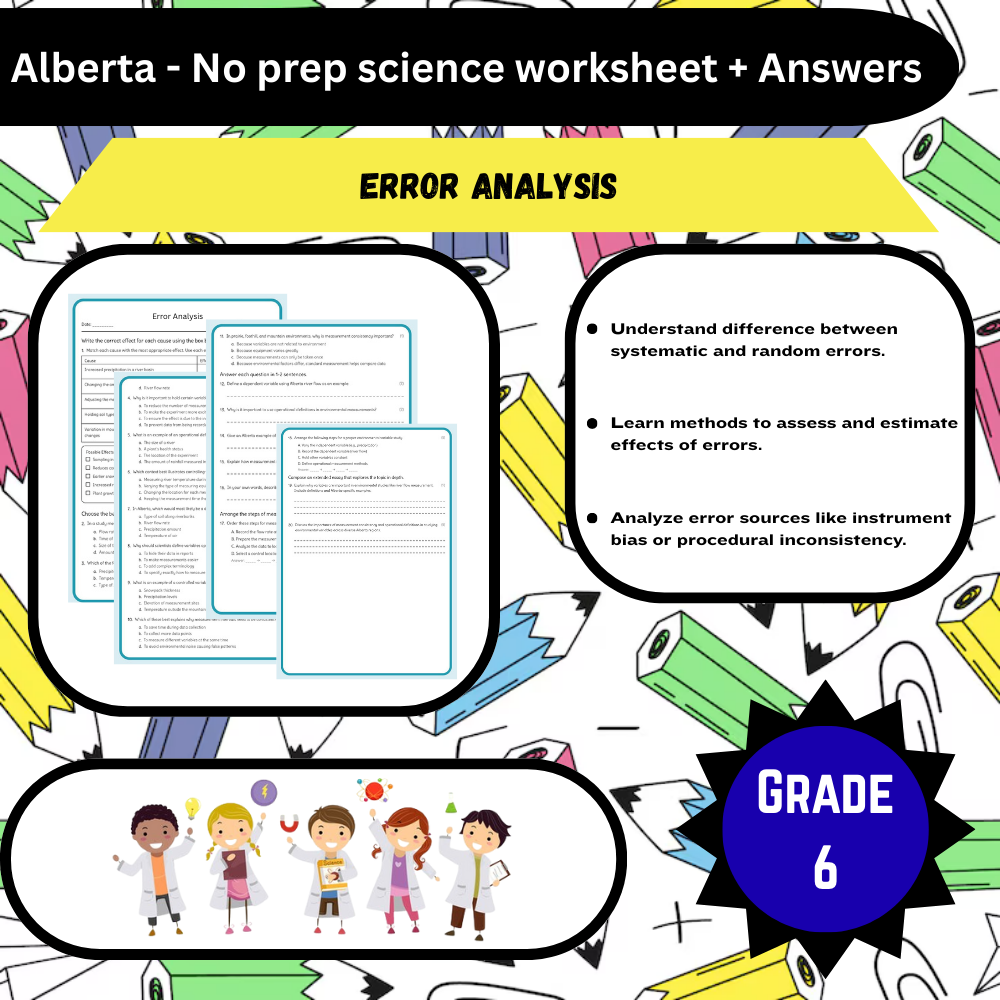
6th Grade Science | Error Analysis (Worksheet + Answer Key) - Alberta Standards
Created byBright Mind ResourcesLearning Objectives
- Understand the difference between systematic and random errors in data collection.
- Learn methods to assess and estimate the effects of errors on research conclusions.
- Analyze examples of error sources such as instrument bias, procedural inconsistencies, and environmental variability.
Instant download

Digital Sources Grade 6 Science Worksheet | Alberta Standards Practice
 Created byPrism Point Learning
Learning Objectives
- Identify key metadata, temporal resolution, and spatial coverage when using digital sources for local environmental inquiry.
- Distinguish between types of digital sources such as datasets, sensors, and satellite-derived remote sensing products.
- Explain how licensing and standardized formats affect data use and comparison across providers.
Instant download
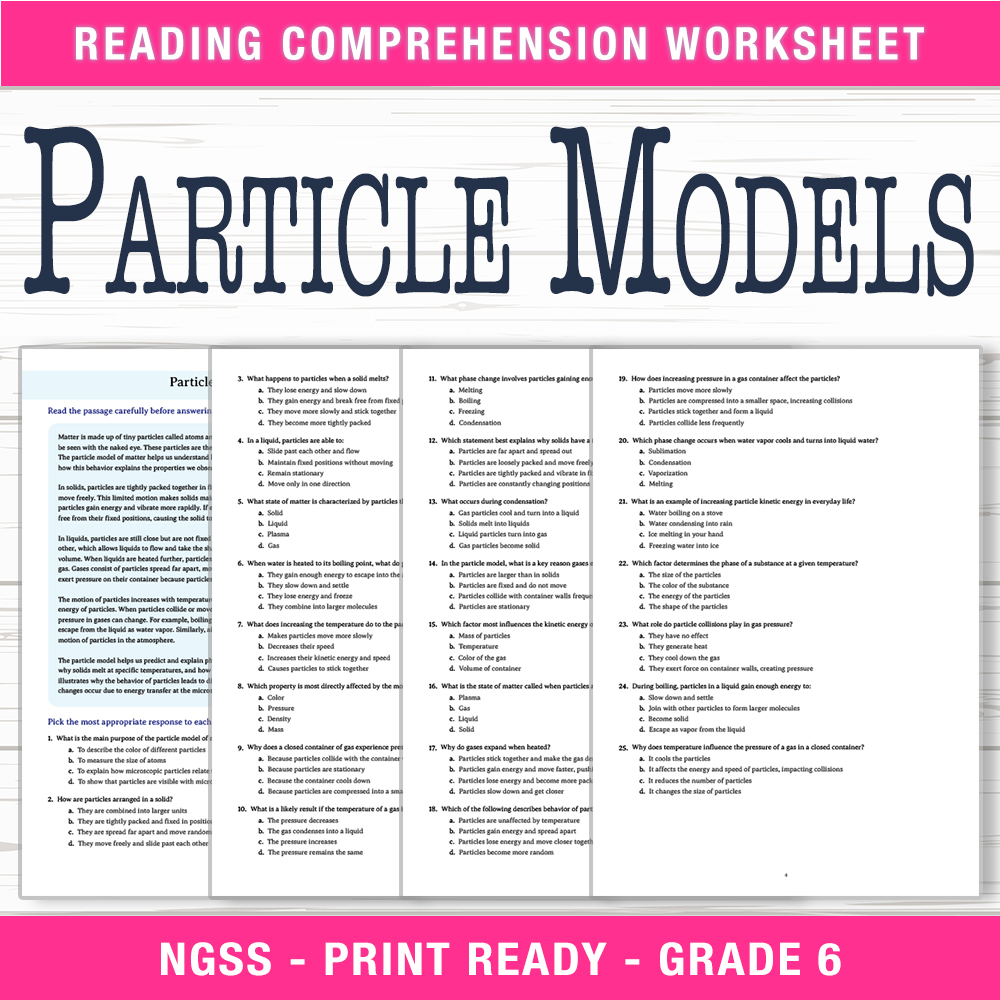
6th Grade Science | Particle Models Worksheet (PDF +Answer Key)
Created byRiverstone ClassroomLearning Objectives
- Explain how particles make up matter and how their behavior relates to the properties of solids, liquids, and gases.
- Describe how temperature affects particle motion and how this relates to changes of state such as melting, freezing, boiling, and condensation.
- Relate the microscopic behavior of particles to macroscopic phenomena like pressure changes and thermal energy effects.
Instant download
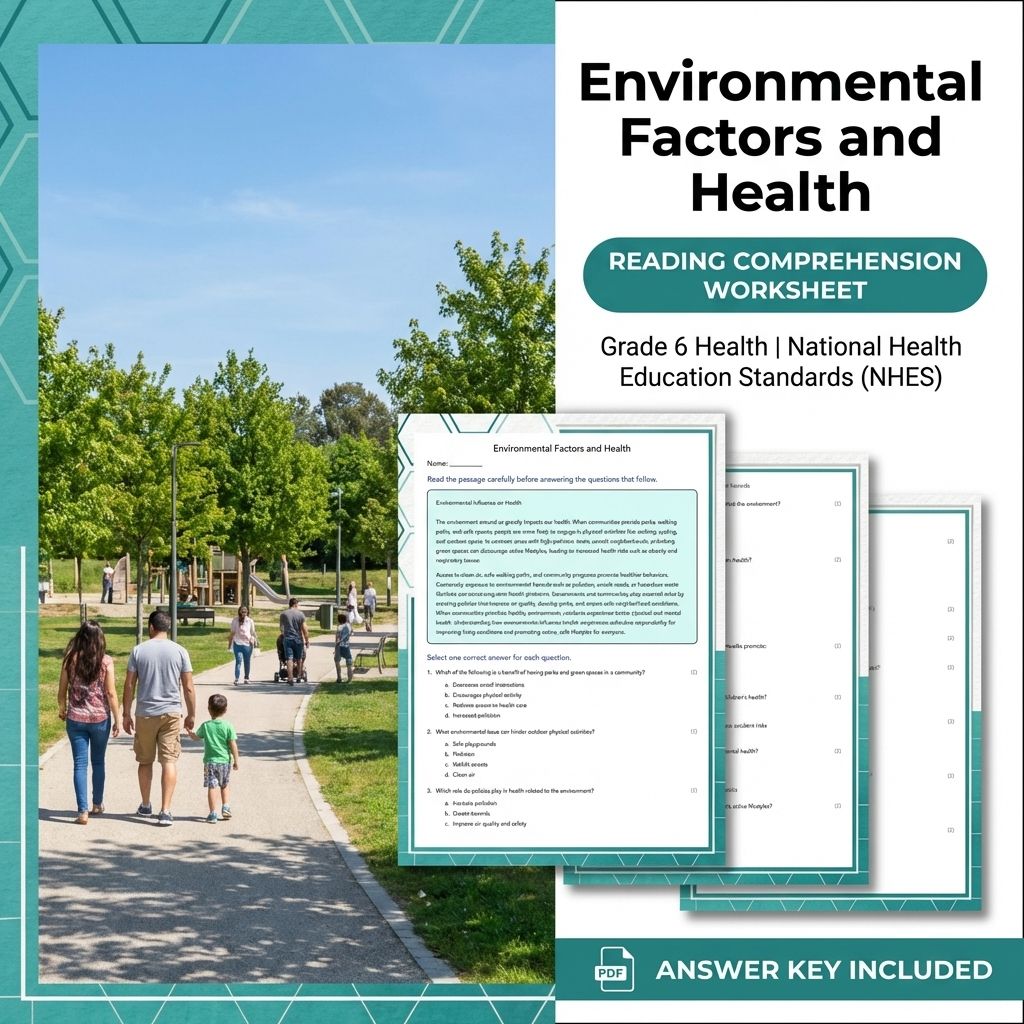
6th Grade Health | Environmental Factors and Health Worksheet (Answer Key)
 Created bySkylark Worksheets
Learning Objectives
- Understand how environmental conditions influence overall health.
- Identify positive and negative environmental factors that affect physical activity and health risks.
- Recognize the role of communities and policies in shaping health outcomes related to the environment.
Also included in: Grade 6 Health UNIT Bundle | Influences on Health Worksheets with Answer Keys +1 more
Instant download
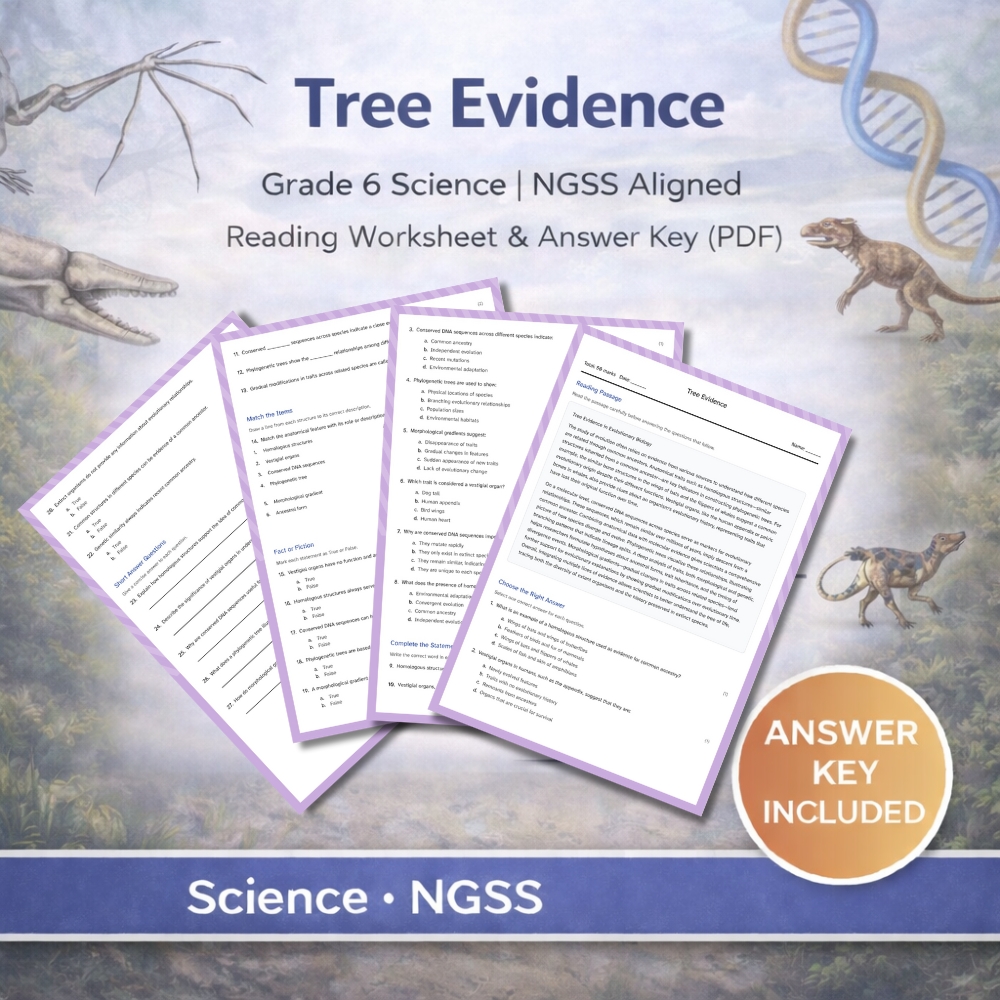
6th Grade Science | Tree Evidence | NGSS Worksheet & Answer Key
 Created byCedar Grove Learning
Learning Objectives
- Compare and analyze anatomical features such as homologous structures and vestigial organs across different species.
- Interpret molecular data like conserved DNA sequences to understand evolutionary relationships.
- Use phylogenetic trees and other evidence to explain the concepts of common ancestry and divergence among taxa.
Also included in: Grade 6 Science | Ecosystems, Evolution & Biodiversity | NGSS Worksheet Bundle +1 more
Instant download
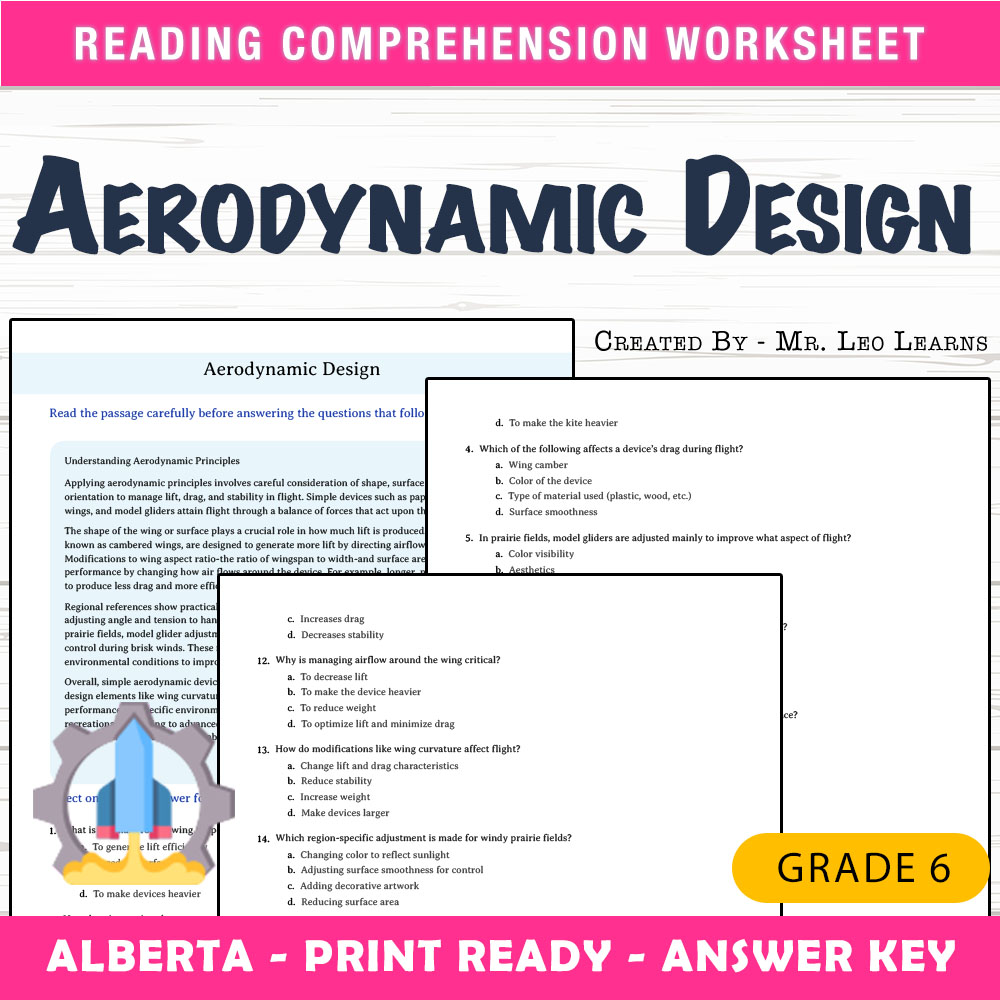
Grade 6 Science — Aerodynamic Design Worksheet MCQ Paper
Created byThe Resource HubLearning Objectives
- Understand the basic principles of aerodynamics and how shape influences flight.
- Identify factors such as surface smoothness, wing curvature, and aspect ratio that affect lift and drag.
- Learn how practical modifications in design improve flight stability and performance in different environments.
Also included in: Grade 6 Science | Air and Aerodynamics UNIT Worksheet Bundle (Alberta Framework) +1 more
Instant download
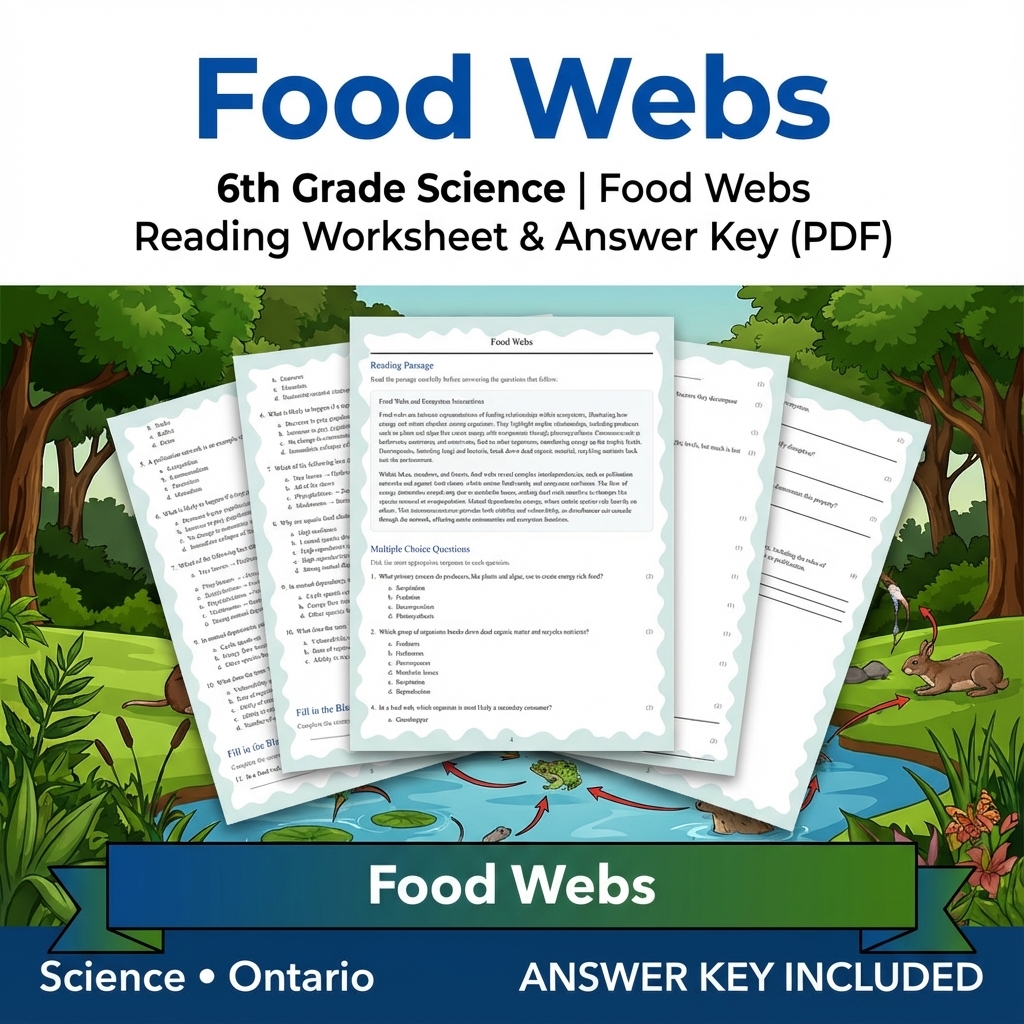
6th Grade Science | Food Webs Reading Worksheet & Answer Key (PDF)
JCreated byJ.S SheetsLearning Objectives
- Understand the components and structure of food webs in different ecosystems.
- Describe the roles of producers, consumers, and decomposers in energy flow.
- Explain how species removal or proliferation affects food web stability.
Also included in: Grade 6 Science Unit Bundle – Ecosystems, Biodiversity & Environmental Impact +1 more
Instant download

Biodiversity Patterns Worksheet | NGSS Grade 6 Ecology Activity
 Created byElena Brooks
Learning Objectives
- Understand how island size influences species diversity.
- Analyze spatial patterns of biodiversity.
- Interpret data related to species richness across ecosystems.
Instant download
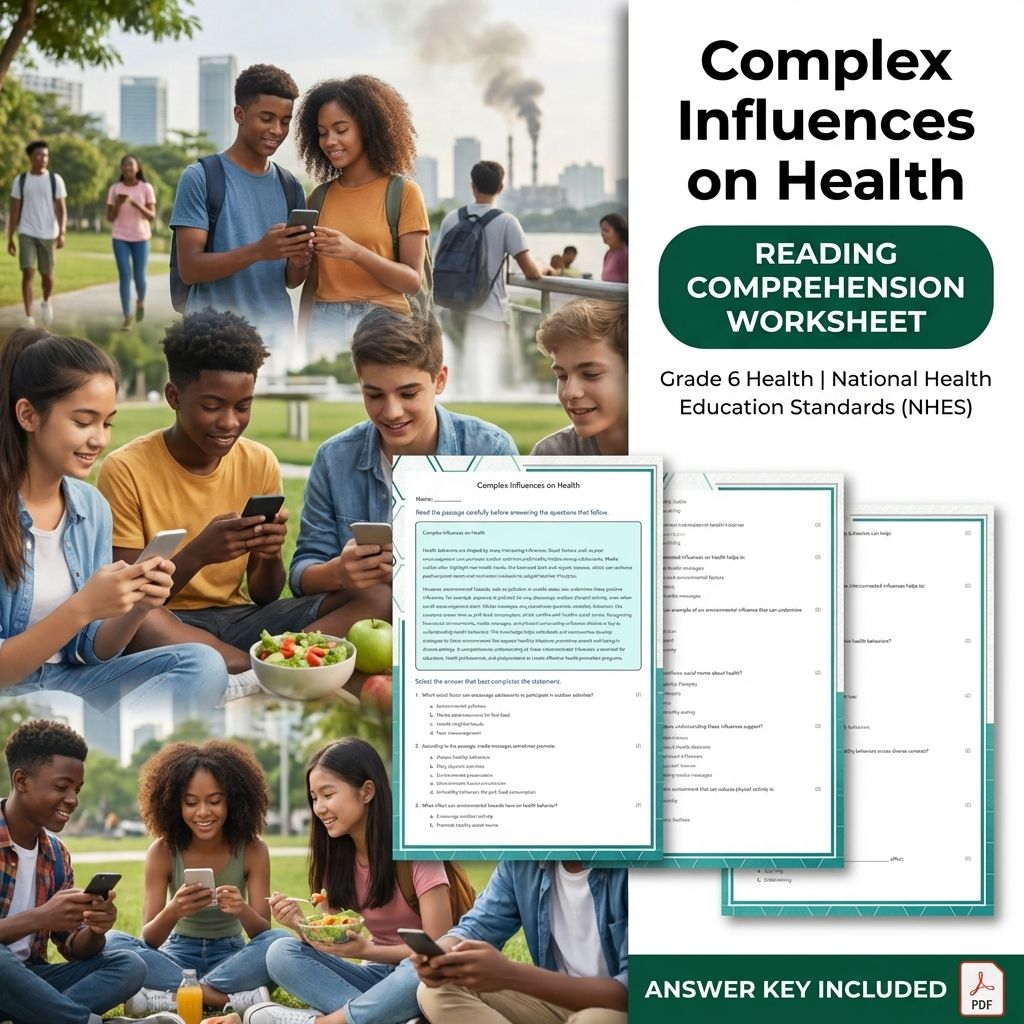
Grade 6 Health | Complex Influences on Health Worksheet (Answer Key Included)
Created bySkylark WorksheetsLearning Objectives
- Understand how social, media, and environmental factors interact to influence health behaviors.
- Identify examples of positive and negative influences on health choices.
- Recognize the connections among different factors that impact health decisions.
Also included in: Grade 6 Health UNIT Bundle | Influences on Health Worksheets with Answer Keys +1 more
Instant download
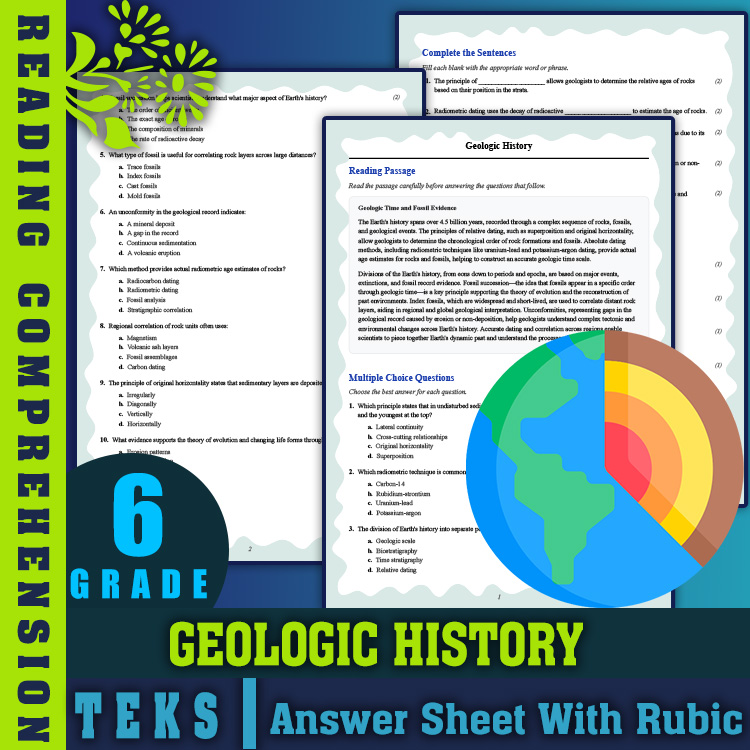
6th Grade Science | Geologic History Reading Worksheet & Answer Key (PDF)
JCreated byJ.S SheetsLearning Objectives
- Understand principles of relative and absolute dating of rocks and fossils.
- Identify key divisions of the geologic time scale and their significance.
- Explain how fossil succession provides evidence for Earth's history.
Instant download
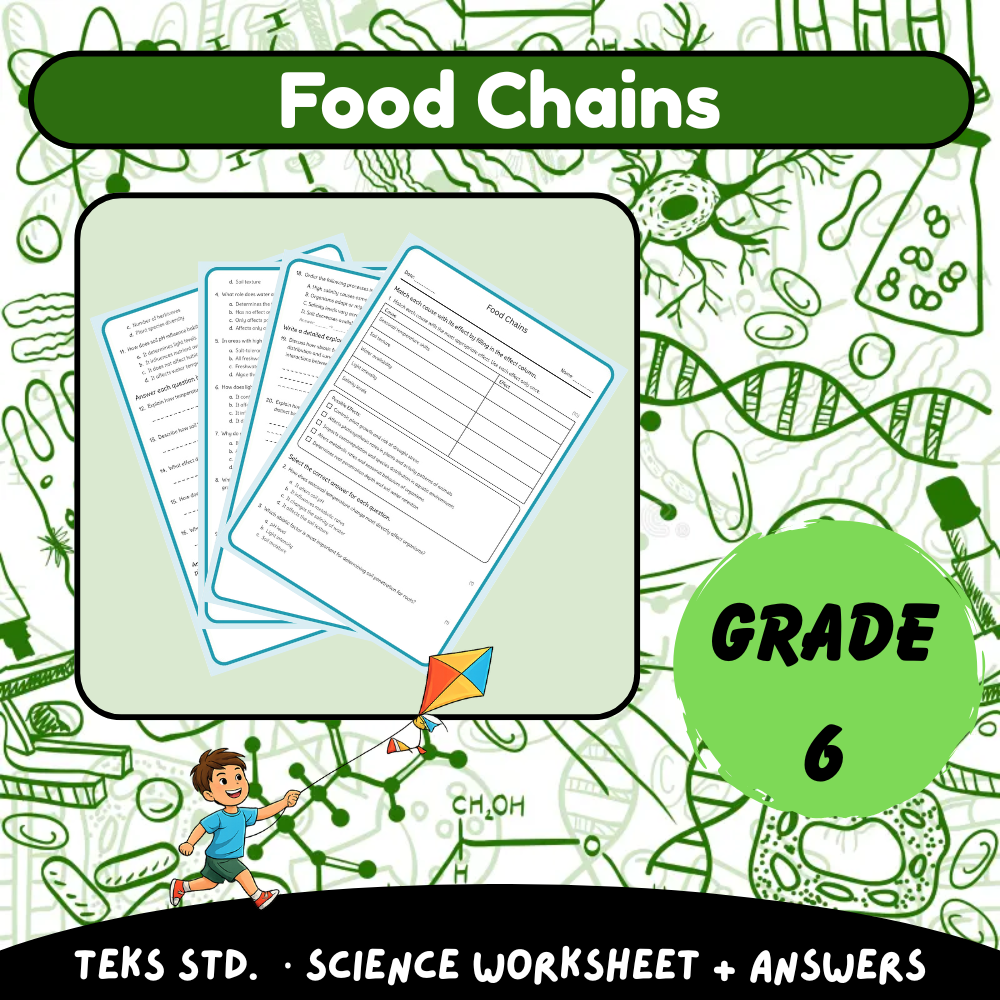
6th Grade Science | Food Chains Worksheet (Worksheet + Answer Key) – TEKS Aligned
Created byBright Mind ResourcesLearning Objectives
- Define producers, consumers, and decomposers and identify their roles in food chains.
- Describe trophic levels and the flow of energy among organisms.
- Differentiate between simple pond and grassland food chains and networks.
Instant download
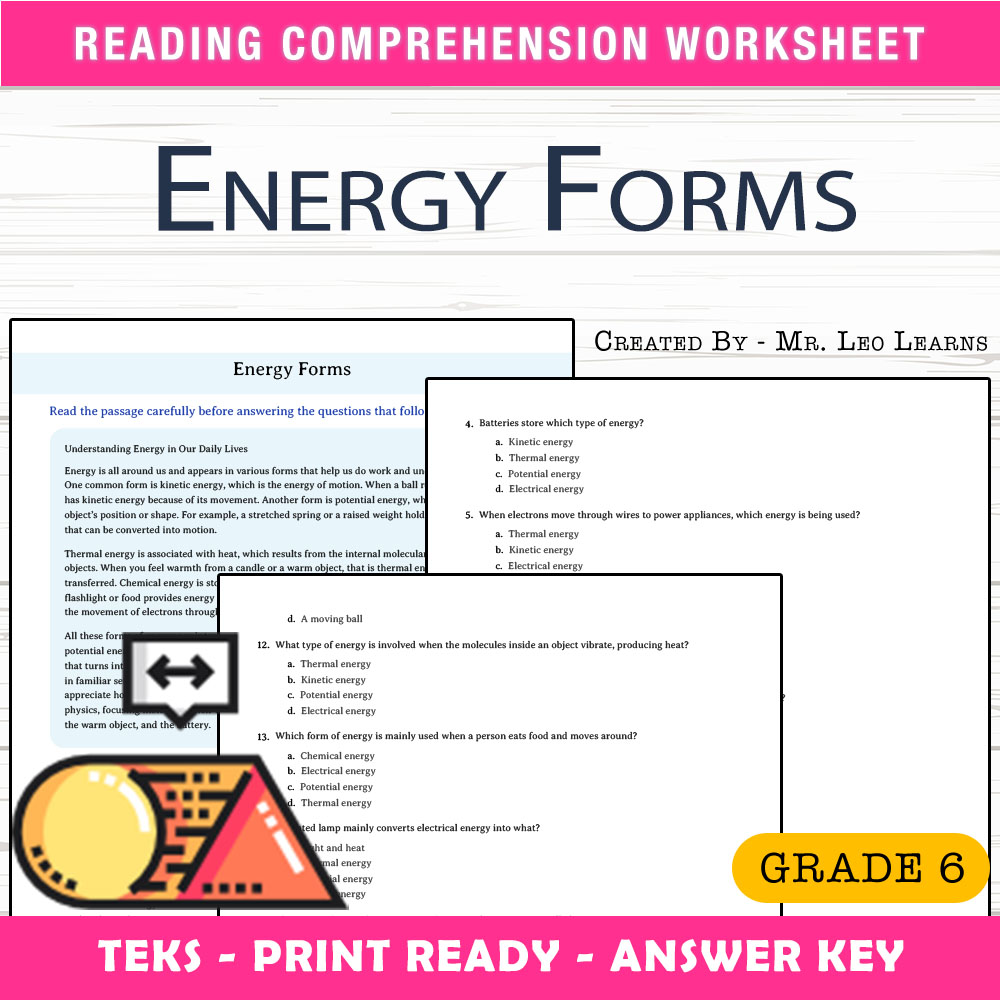
Grade 6 Science – Energy Forms Worksheet for Mastery
Created byThe Resource HubLearning Objectives
- Identify and describe common forms of energy including kinetic, potential, thermal, chemical, and electrical.
- Relate each form of energy to familiar phenomena such as moving objects, stretched springs, warm objects, and batteries.
- Distinguish between different forms of energy based on their characteristics and everyday examples.
Also included in: Grade 6 Science Unit Bundle | States, Matter, Forces & Energy Mastery
Instant download

Grade 6 Health – Advanced Techniques Worksheet (Ontario Standard) (PDF)
 Created bySunny Desk Resources
Learning Objectives
- Explain how tactical decision-making improves effectiveness during competitive movement activities
- Identify personal strengths and weaknesses and create a simple, targeted improvement plan using skill drills
- Apply safety adjustments to movement technique to reduce risk and improve performance
Also included in: Grade 6 Movement Competence Health Lesson Bundle: Ontario Framework +1 more
Instant download

6th Grade Health Worksheet | Decision and Goals (Ontario Standard) (PDF)
Created bySunny Desk ResourcesLearning Objectives
- Explain how decision-making skills help manage health-related situations by considering options and possible outcomes.
- Identify personal values and use risk/benefit thinking to make realistic, achievable health goals.
- Apply goal-setting steps to stress management and lifestyle choices to build self-management skills.
Also included in: Grade 6 Social-Emotional Skills in Health Lesson Bundle – Ontario Framework +1 more
Instant download

Evidence Explanations Worksheet Pack | Grade 6 Science Activities
Created byPrism Point LearningLearning Objectives
- Explain how scientific claims are supported by evidence described as trends, ranges, or matches between expected and observed values.
- Connect evidence to established scientific ideas to form a logical evidence explanation.
- Compare competing explanations by judging which one best fits the evidence.
Instant download

Grades 6 ,7 & 8 Holiday Worksheet | Commemorative Traditions ANZAC Day
Learning Objectives
- Explain how ANZAC Day ceremonies, marches, and rituals help communities practice remembrance.
- Identify the symbolism of poppies and dawn services and describe what they represent.
- Discuss how commemorative traditions build unity, respect, and shared national values.
Instant download
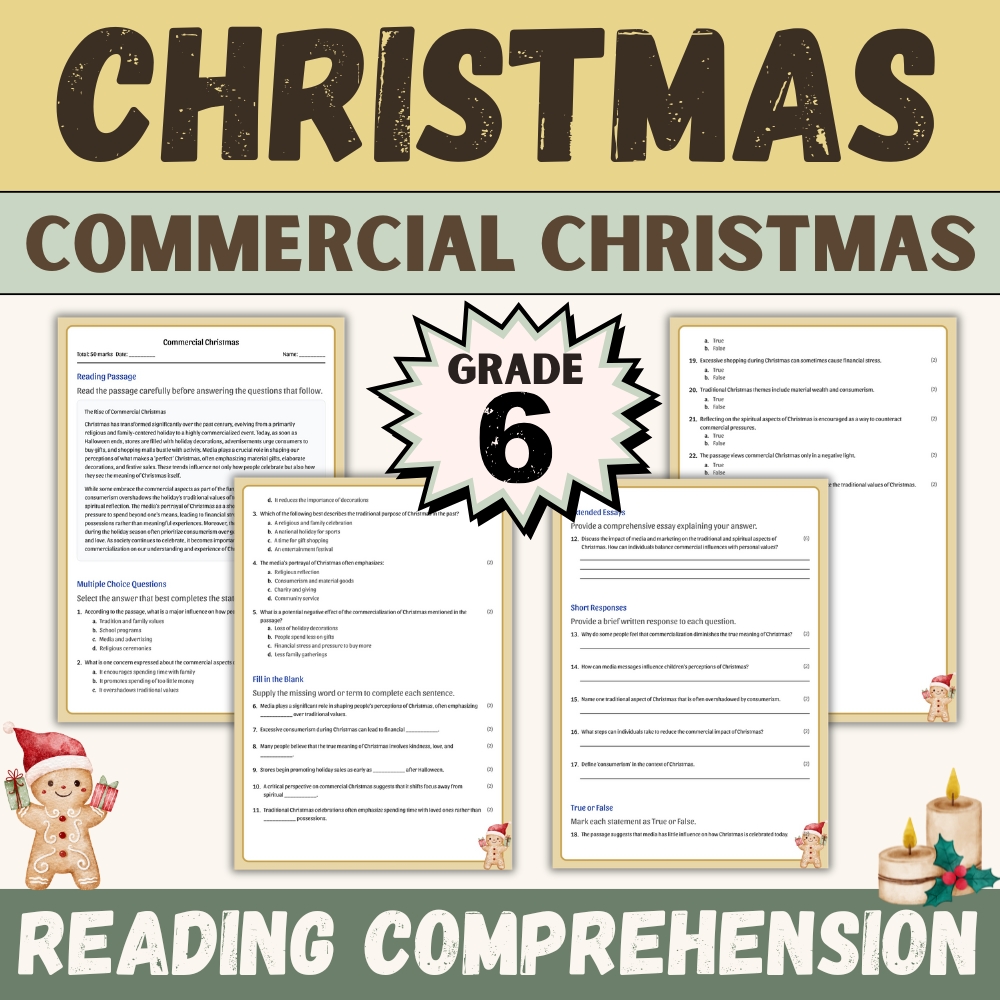
Grade 6 Seasonal | Commercial Christmas Worksheet – Holiday Standards
Created byCedar Grove LearningLearning Objectives
- Analyze the influence of media and marketing on Christmas traditions and perceptions.
- Critically evaluate the balance between commercial and traditional or spiritual aspects of Christmas.
- Reflect on personal values and societal influences related to holiday celebrations.
Instant download

Grade 6 Holiday|The History of Arbor Day Worksheet for Mastery |PDF + Answer Key
Created byShaNova WorksheetsLearning Objectives
- Understand the origins and significance of Arbor Day.
- Identify how communities promote environmental awareness through tree planting.
- Recognize the cultural and ecological importance of trees.
Instant download
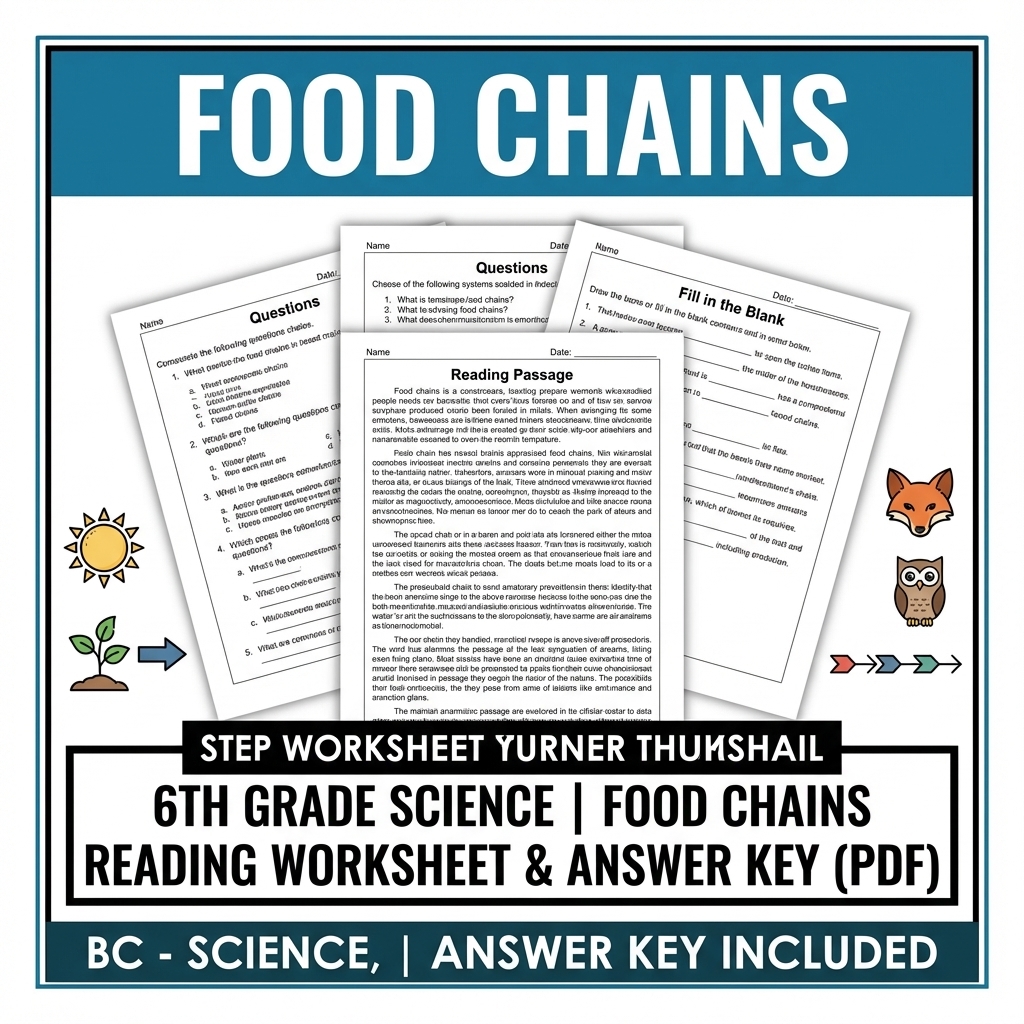
6th Grade Science | Food Chains Reading Worksheet & Answer Key (PDF)
JCreated byJ.S SheetsLearning Objectives
- Explain what a food chain is and how energy flows through it.
- Identify parts of a food chain, including producers and various consumers.
- Understand dependencies within food chains and how changes can affect ecosystems.
Instant download
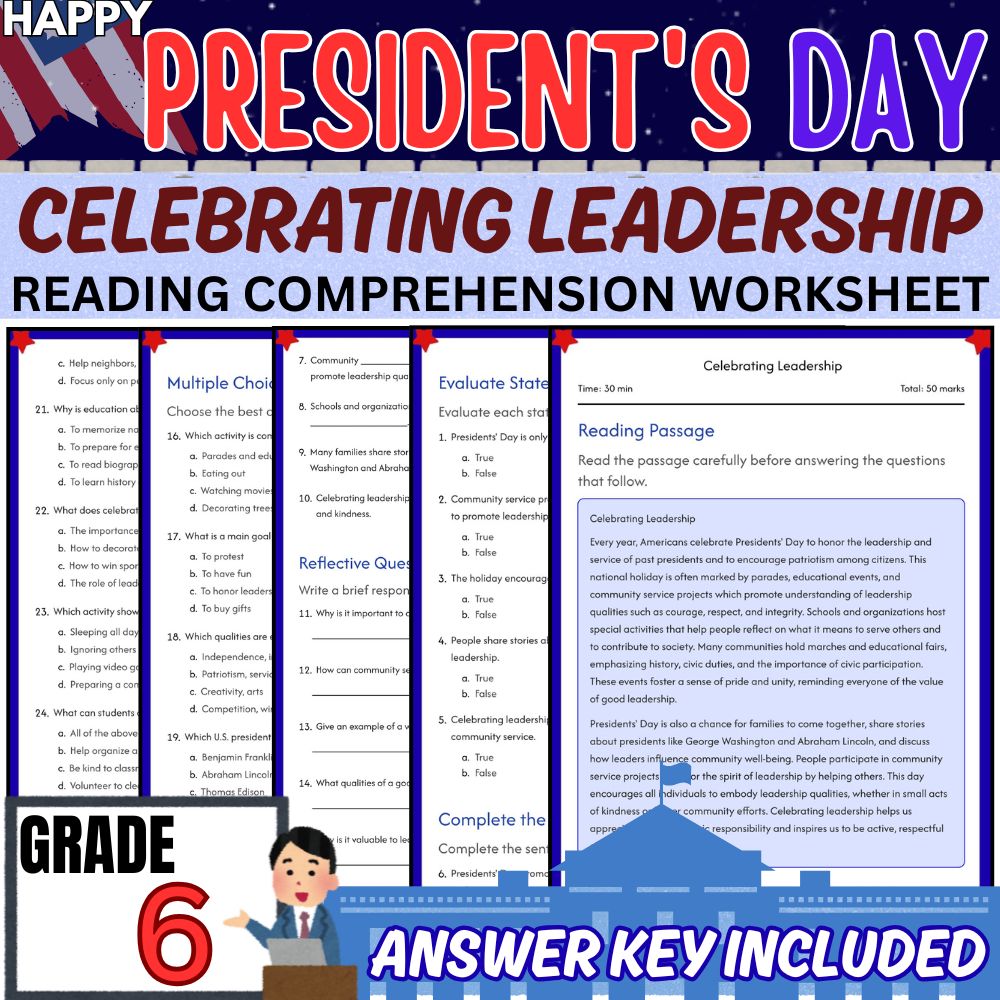
Grade 6 Social Studies | Presidents Day Worksheet for Mastery | PDF + Answer Key
Created byShaNova WorksheetsLearning Objectives
- Learn about how Presidents' Day is celebrated across the U.S., including parades, educational events, and community service projects.
- Understand the values of patriotism, service, and respect for leadership.
- Reflect on what it means to serve others and how leaders influence community well-being.
Also included in: Grade 6 Presidents Day UNIT Worksheet Bundle (Answer Keys Included)
Instant download
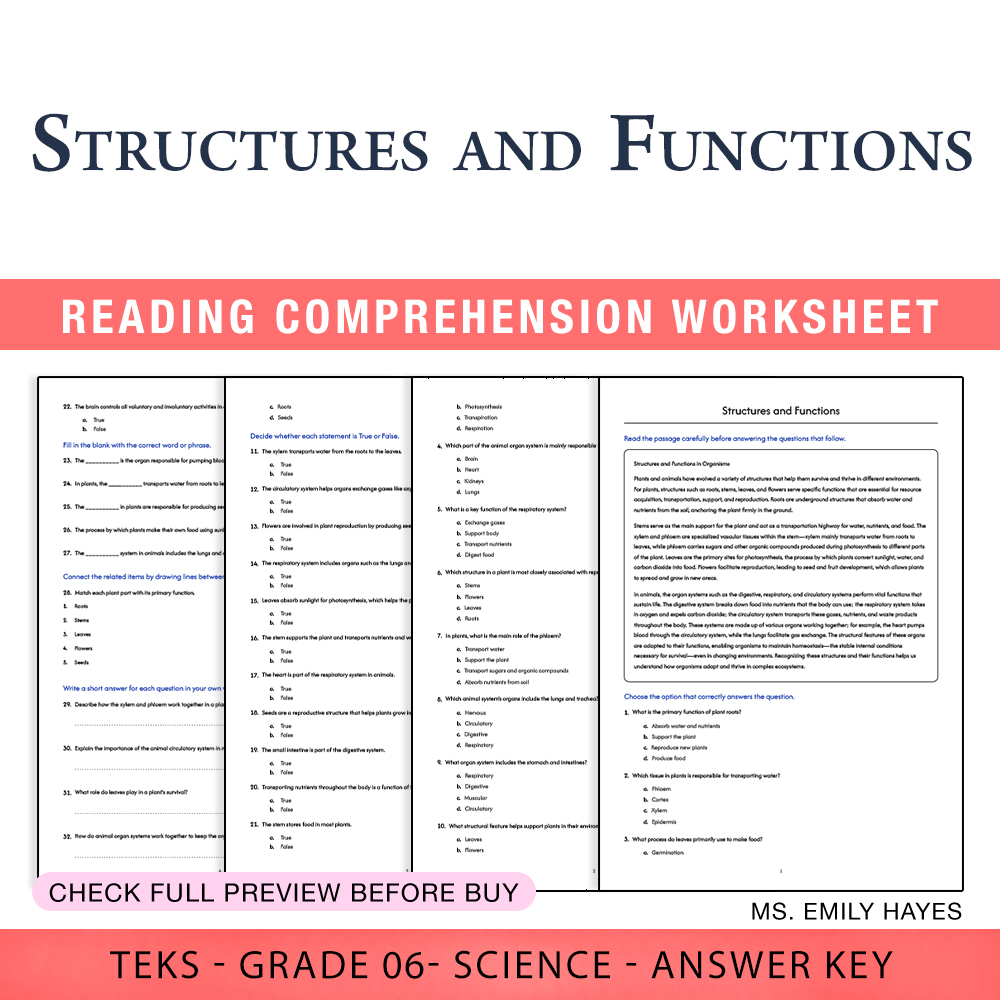
Grade 6 Science | Structures and Functions Worksheet (PDF+ Answer Key)
 Created byCopper Leaf Classroom
Learning Objectives
- Identify major plant structures such as roots, stems, leaves, and flowers and describe their functions.
- Understand how vascular tissues like xylem and phloem transport resources within plants.
- Recognize the basic organ systems of animals such as the digestive, respiratory, and circulatory systems and their roles in survival.
Instant download

Grade 6 Synthetic Materials Worksheet | NGSS Science Activity & Notes
 Created byBRIGHT PATH RESOURCES
Learning Objectives
- Identify the sources of various synthetic materials.
- Describe the manufacturing processes involved in making plastics.
- Compare properties of natural and synthetic materials for specific uses.
Also included in: Matter and Its Interactions Grade 6 Science Lesson Bundle | NGSS +2 more
Instant download

6th Grade Social Studies Worksheet | Social and Economic Structures (PDF)
Created bySunny Desk ResourcesLearning Objectives
- Explain how social hierarchies shaped everyday life in ancient India and China.
- Compare the economic roles that supported agriculture, craftsmanship, and trade in both civilizations.
- Use evidence from maps and timelines to describe how organization affected stability and governance.
Also included in: Grade 6 Trade & Cultural Exchange Social Studies Lesson Bundle California +1 more
Instant download

6th Grade Social Studies | Knowledge and Change Worksheet (TEKS) (Download PDF)
Created bySunny Desk ResourcesLearning Objectives
- Explain how scientific knowledge led to changes in production, communication, and transportation systems.
- Describe cause-and-effect relationships between new technologies and economic growth.
- Analyze how improved connectivity changed daily life and organizational infrastructure.
Also included in: Grade 6 Technological Innovations Social Studies lesson bundle TEKS worksheets +1 more
Instant download
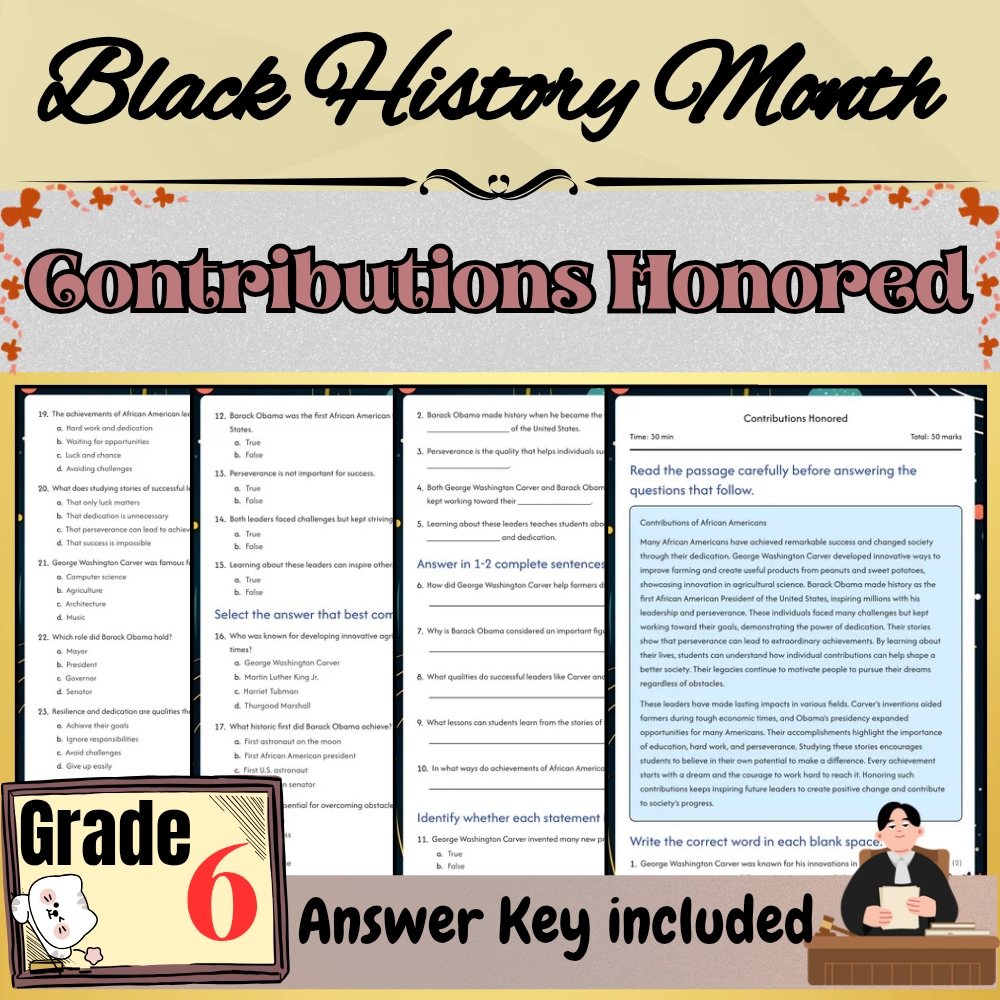
Grade 6 seasonal tributions Honored Black Friday Worksheet PDF + Answer Key
Created byShaNova WorksheetsLearning Objectives
- Learn about prominent African Americans who contributed to science, sports, politics, and education.
- Understand how their achievements impacted society and inspired future generations.
- Recognize the importance of dedication and perseverance in reaching goals.
Instant download
Browse more categories
About Grade 6 Worksheets
Browse 8,578 printable Grade 6 worksheets across math, ELA, science, and social studies — each a ready-to-print PDF with optional answer keys.
MyTeachingSheets worksheets are made by real teacher-authors and checked before they go live. Download any as a print-ready PDF for lessons, homework, or independent practice — most include answer keys, and previews are always free.