
Grade 6 Worksheets
8,578 grade resources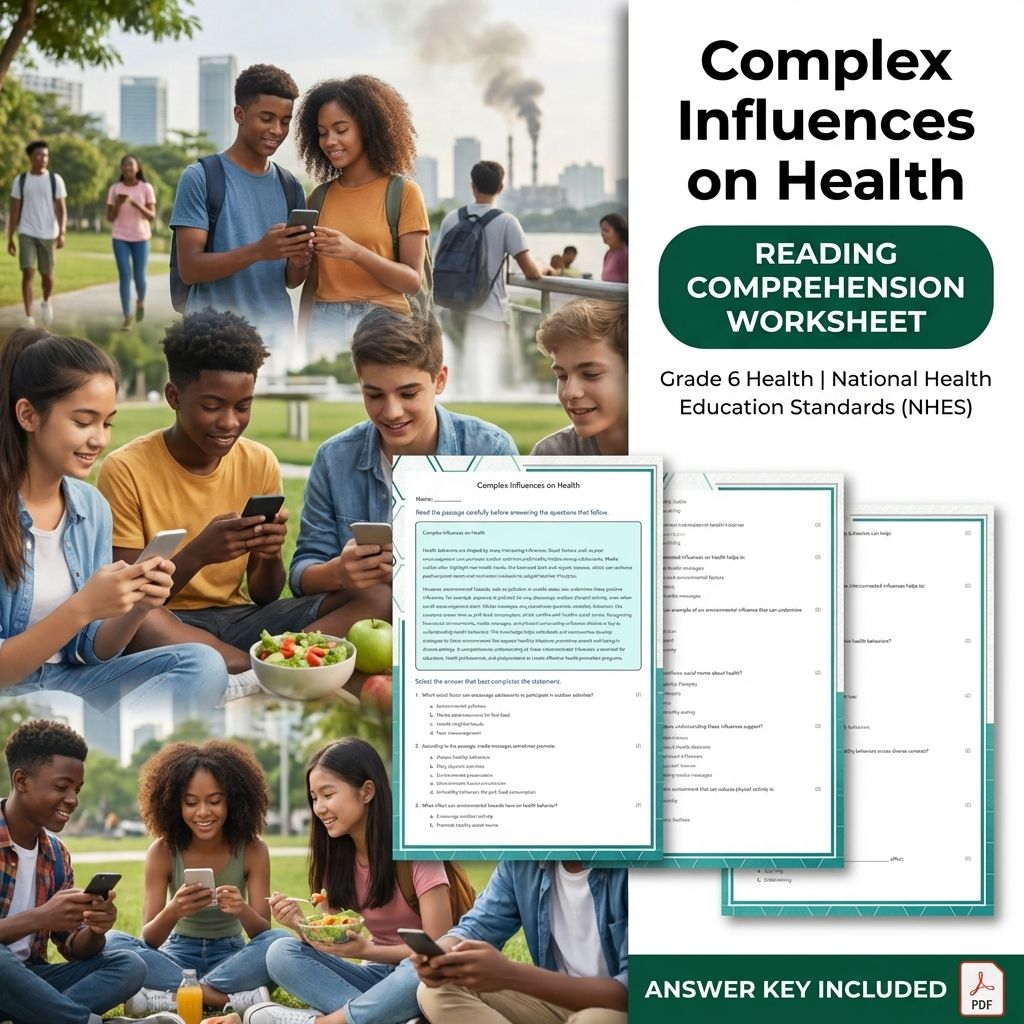
Grade 6 Health | Complex Influences on Health Worksheet (Answer Key Included)
 Created bySkylark Worksheets
Learning Objectives
- Understand how social, media, and environmental factors interact to influence health behaviors.
- Identify examples of positive and negative influences on health choices.
- Recognize the connections among different factors that impact health decisions.
Also included in: Grade 6 Health UNIT Bundle | Influences on Health Worksheets with Answer Keys +1 more
Instant download
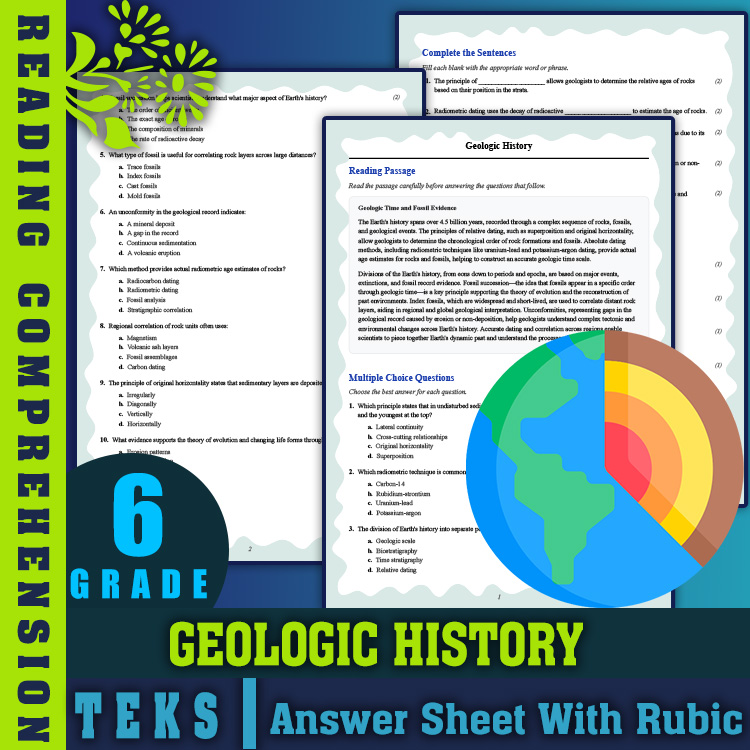
6th Grade Science | Geologic History Reading Worksheet & Answer Key (PDF)
JCreated byJ.S SheetsLearning Objectives
- Understand principles of relative and absolute dating of rocks and fossils.
- Identify key divisions of the geologic time scale and their significance.
- Explain how fossil succession provides evidence for Earth's history.
Instant download
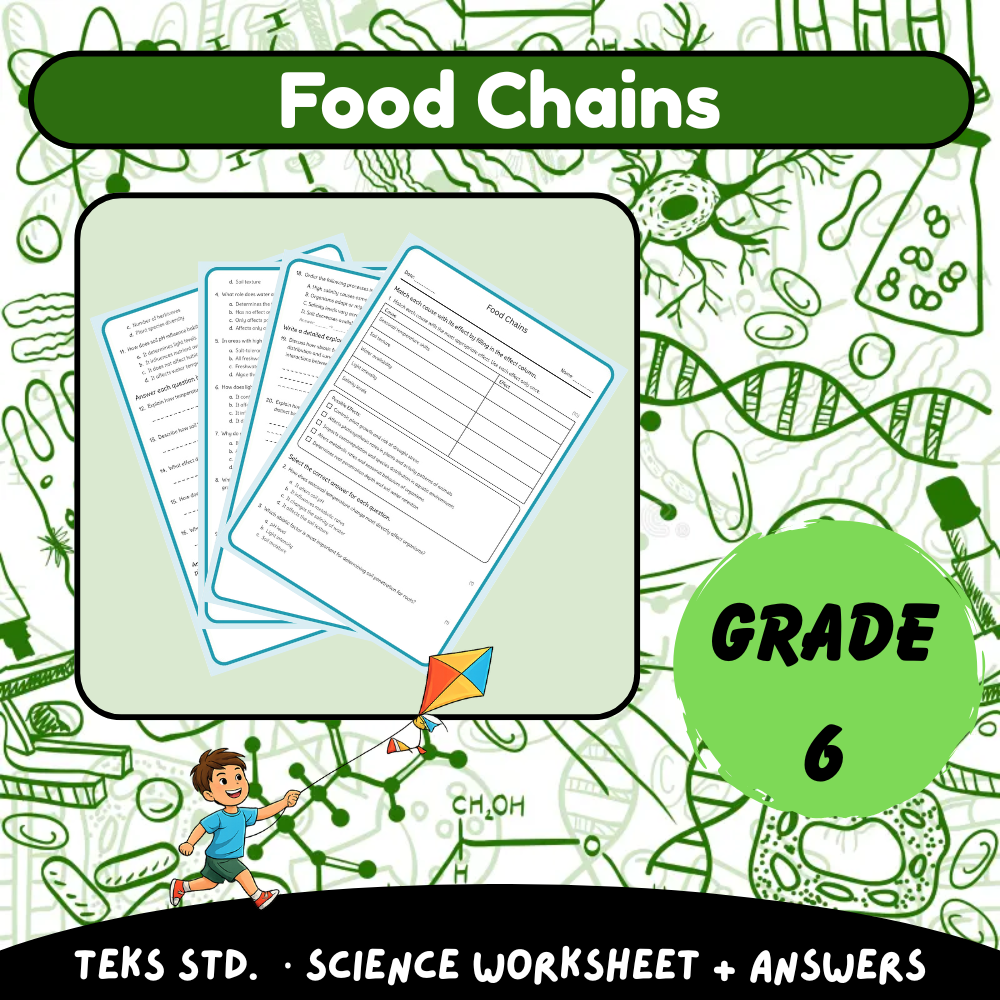
6th Grade Science | Food Chains Worksheet (Worksheet + Answer Key) – TEKS Aligned
 Created byBright Mind Resources
Learning Objectives
- Define producers, consumers, and decomposers and identify their roles in food chains.
- Describe trophic levels and the flow of energy among organisms.
- Differentiate between simple pond and grassland food chains and networks.
Instant download
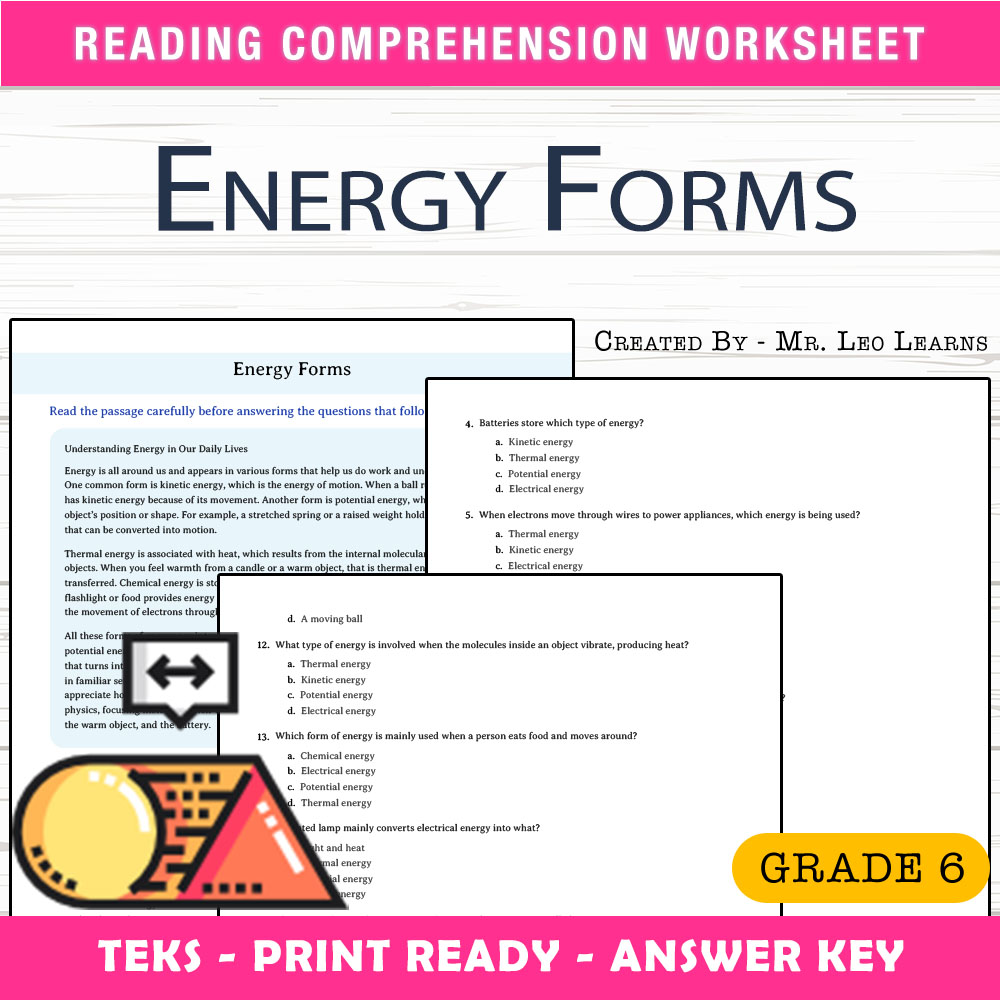
Grade 6 Science – Energy Forms Worksheet for Mastery
 Created byThe Resource Hub
Learning Objectives
- Identify and describe common forms of energy including kinetic, potential, thermal, chemical, and electrical.
- Relate each form of energy to familiar phenomena such as moving objects, stretched springs, warm objects, and batteries.
- Distinguish between different forms of energy based on their characteristics and everyday examples.
Also included in: Grade 6 Science Unit Bundle | States, Matter, Forces & Energy Mastery
Instant download

Grade 6 Health – Advanced Techniques Worksheet (Ontario Standard) (PDF)
 Created bySunny Desk Resources
Learning Objectives
- Explain how tactical decision-making improves effectiveness during competitive movement activities
- Identify personal strengths and weaknesses and create a simple, targeted improvement plan using skill drills
- Apply safety adjustments to movement technique to reduce risk and improve performance
Also included in: Grade 6 Movement Competence Health Lesson Bundle: Ontario Framework +1 more
Instant download

6th Grade Health Worksheet | Decision and Goals (Ontario Standard) (PDF)
Created bySunny Desk ResourcesLearning Objectives
- Explain how decision-making skills help manage health-related situations by considering options and possible outcomes.
- Identify personal values and use risk/benefit thinking to make realistic, achievable health goals.
- Apply goal-setting steps to stress management and lifestyle choices to build self-management skills.
Also included in: Grade 6 Social-Emotional Skills in Health Lesson Bundle – Ontario Framework +1 more
Instant download

Evidence Explanations Worksheet Pack | Grade 6 Science Activities
 Created byPrism Point Learning
Learning Objectives
- Explain how scientific claims are supported by evidence described as trends, ranges, or matches between expected and observed values.
- Connect evidence to established scientific ideas to form a logical evidence explanation.
- Compare competing explanations by judging which one best fits the evidence.
Instant download

Grades 6 ,7 & 8 Holiday Worksheet | Commemorative Traditions ANZAC Day
Learning Objectives
- Explain how ANZAC Day ceremonies, marches, and rituals help communities practice remembrance.
- Identify the symbolism of poppies and dawn services and describe what they represent.
- Discuss how commemorative traditions build unity, respect, and shared national values.
Instant download
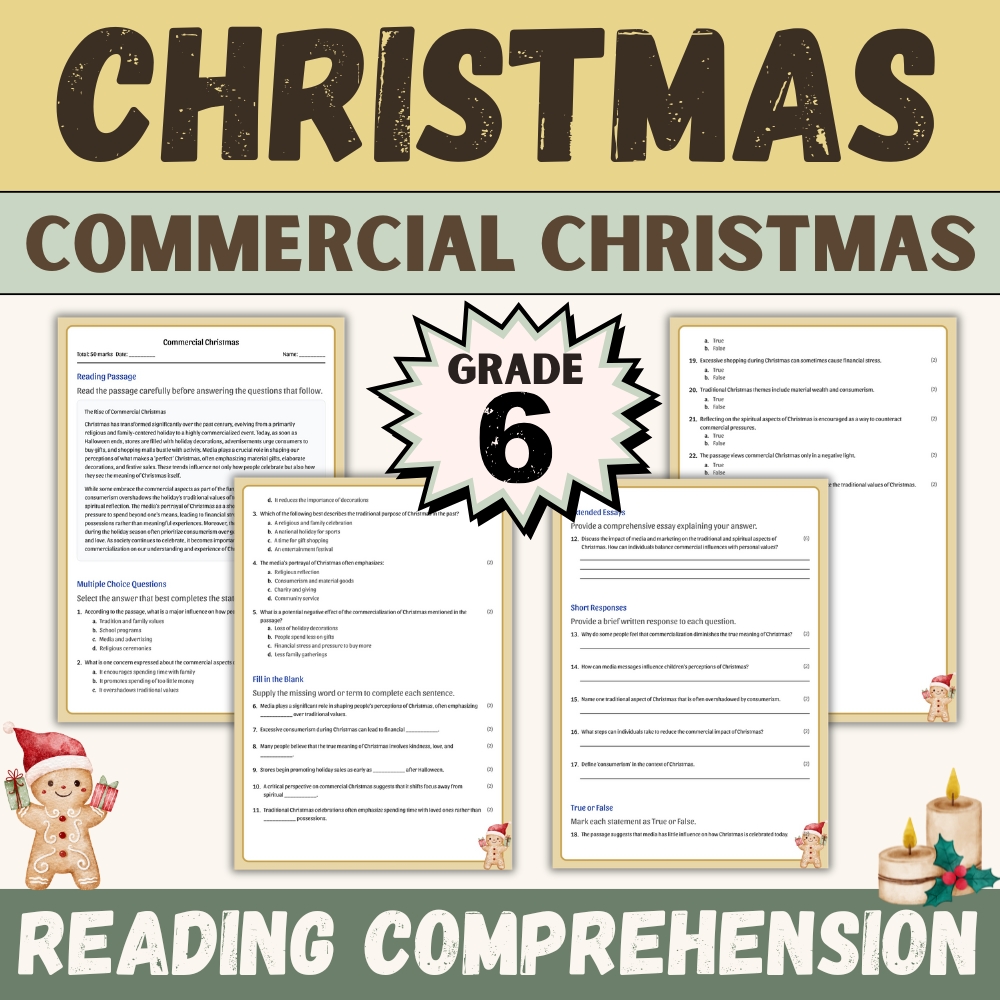
Grade 6 Seasonal | Commercial Christmas Worksheet – Holiday Standards
 Created byCedar Grove Learning
Learning Objectives
- Analyze the influence of media and marketing on Christmas traditions and perceptions.
- Critically evaluate the balance between commercial and traditional or spiritual aspects of Christmas.
- Reflect on personal values and societal influences related to holiday celebrations.
Instant download

Grade 6 Holiday|The History of Arbor Day Worksheet for Mastery |PDF + Answer Key
 Created byShaNova Worksheets
Learning Objectives
- Understand the origins and significance of Arbor Day.
- Identify how communities promote environmental awareness through tree planting.
- Recognize the cultural and ecological importance of trees.
Instant download
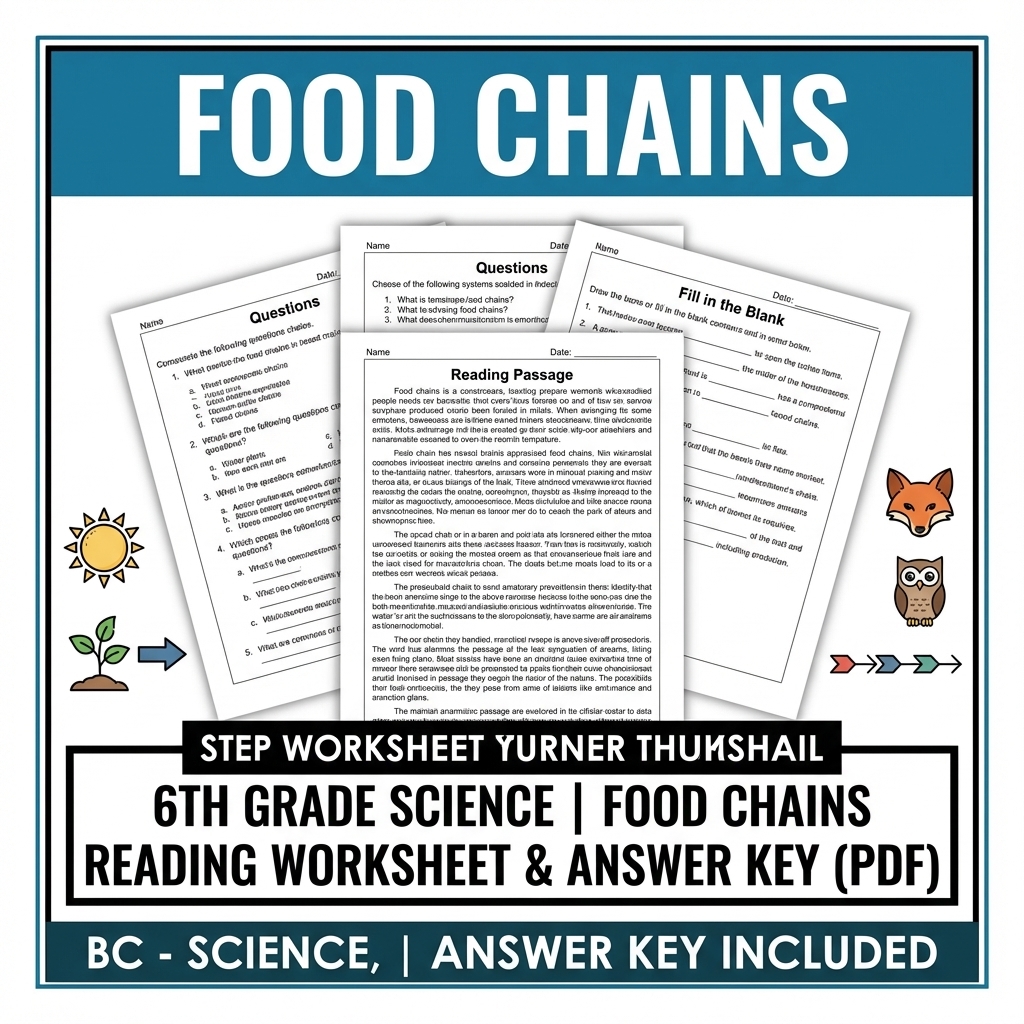
6th Grade Science | Food Chains Reading Worksheet & Answer Key (PDF)
JCreated byJ.S SheetsLearning Objectives
- Explain what a food chain is and how energy flows through it.
- Identify parts of a food chain, including producers and various consumers.
- Understand dependencies within food chains and how changes can affect ecosystems.
Instant download
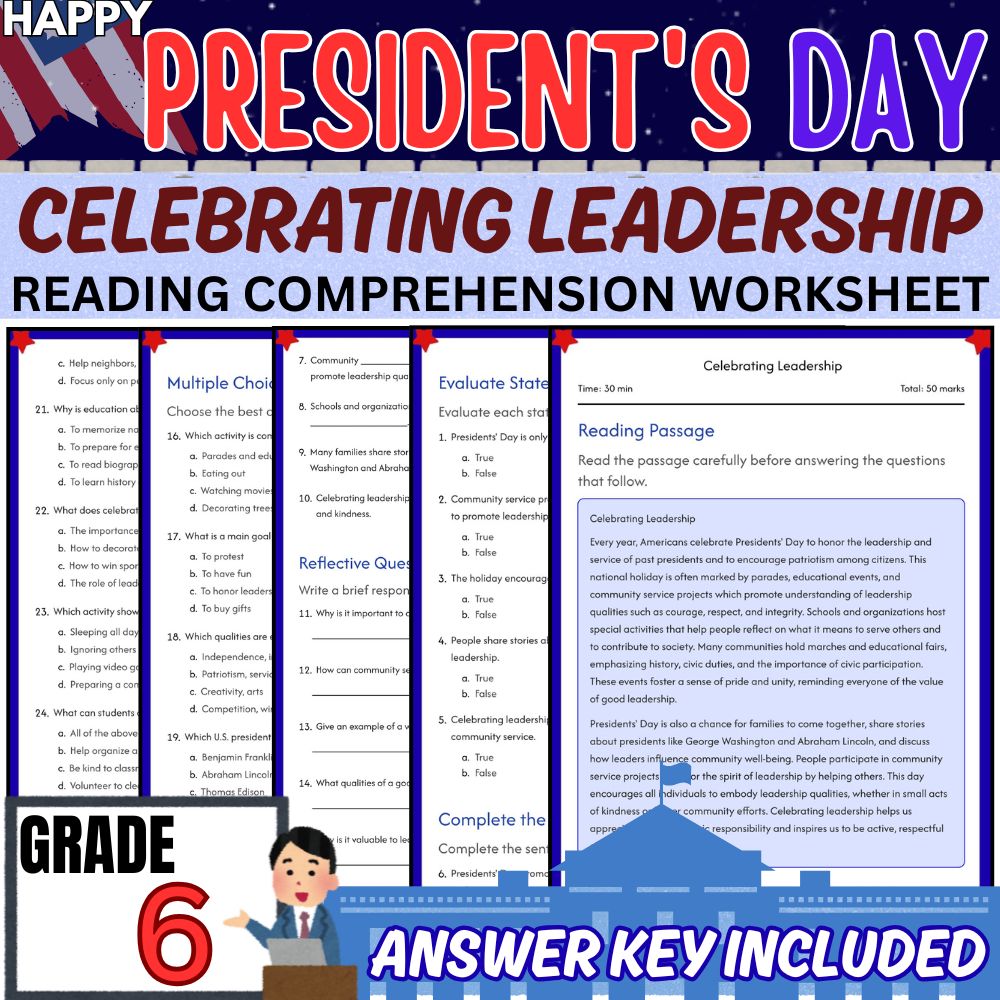
Grade 6 Social Studies | Presidents Day Worksheet for Mastery | PDF + Answer Key
Created byShaNova WorksheetsLearning Objectives
- Learn about how Presidents' Day is celebrated across the U.S., including parades, educational events, and community service projects.
- Understand the values of patriotism, service, and respect for leadership.
- Reflect on what it means to serve others and how leaders influence community well-being.
Also included in: Grade 6 Presidents Day UNIT Worksheet Bundle (Answer Keys Included)
Instant download
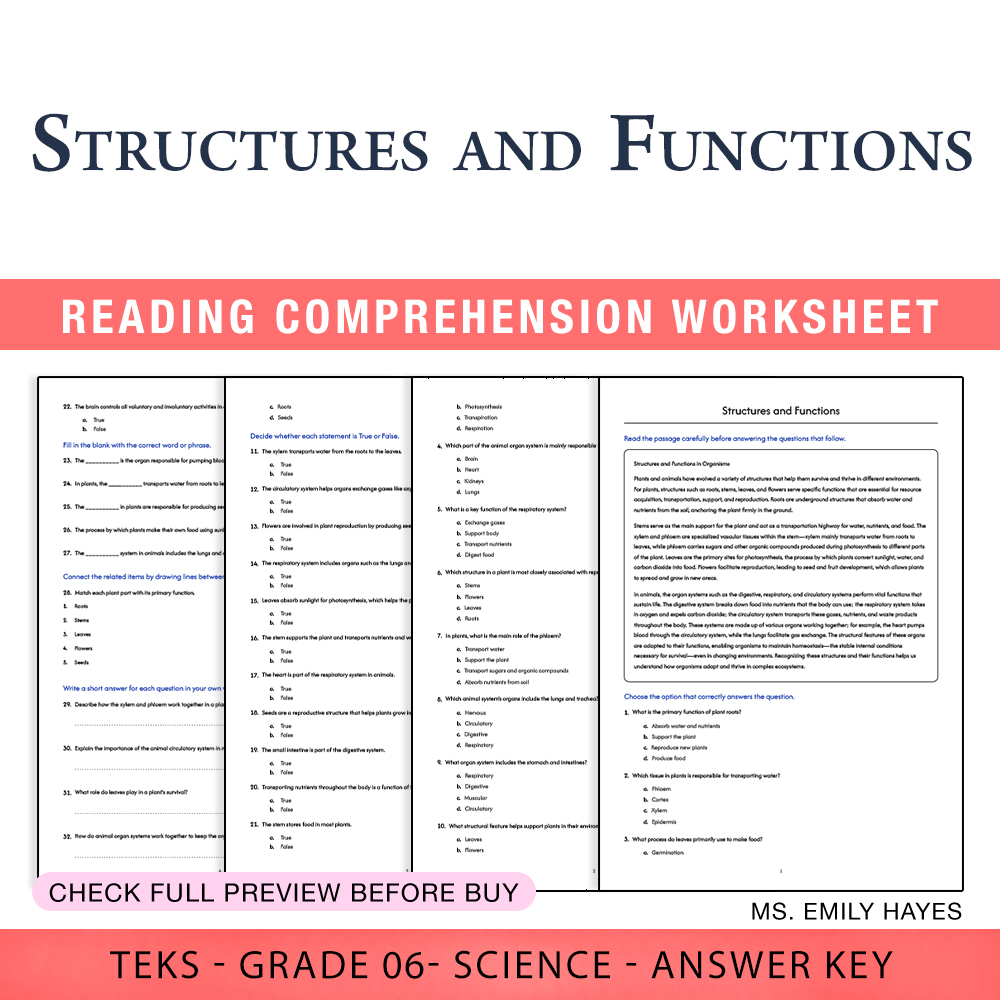
Grade 6 Science | Structures and Functions Worksheet (PDF+ Answer Key)
 Created byCopper Leaf Classroom
Learning Objectives
- Identify major plant structures such as roots, stems, leaves, and flowers and describe their functions.
- Understand how vascular tissues like xylem and phloem transport resources within plants.
- Recognize the basic organ systems of animals such as the digestive, respiratory, and circulatory systems and their roles in survival.
Instant download

Grade 6 Synthetic Materials Worksheet | NGSS Science Activity & Notes
 Created byBRIGHT PATH RESOURCES
Learning Objectives
- Identify the sources of various synthetic materials.
- Describe the manufacturing processes involved in making plastics.
- Compare properties of natural and synthetic materials for specific uses.
Also included in: Matter and Its Interactions Grade 6 Science Lesson Bundle | NGSS +2 more
Instant download

6th Grade Social Studies Worksheet | Social and Economic Structures (PDF)
Created bySunny Desk ResourcesLearning Objectives
- Explain how social hierarchies shaped everyday life in ancient India and China.
- Compare the economic roles that supported agriculture, craftsmanship, and trade in both civilizations.
- Use evidence from maps and timelines to describe how organization affected stability and governance.
Also included in: Grade 6 Trade & Cultural Exchange Social Studies Lesson Bundle California +1 more
Instant download

6th Grade Social Studies | Knowledge and Change Worksheet (TEKS) (Download PDF)
Created bySunny Desk ResourcesLearning Objectives
- Explain how scientific knowledge led to changes in production, communication, and transportation systems.
- Describe cause-and-effect relationships between new technologies and economic growth.
- Analyze how improved connectivity changed daily life and organizational infrastructure.
Also included in: Grade 6 Technological Innovations Social Studies lesson bundle TEKS worksheets +1 more
Instant download
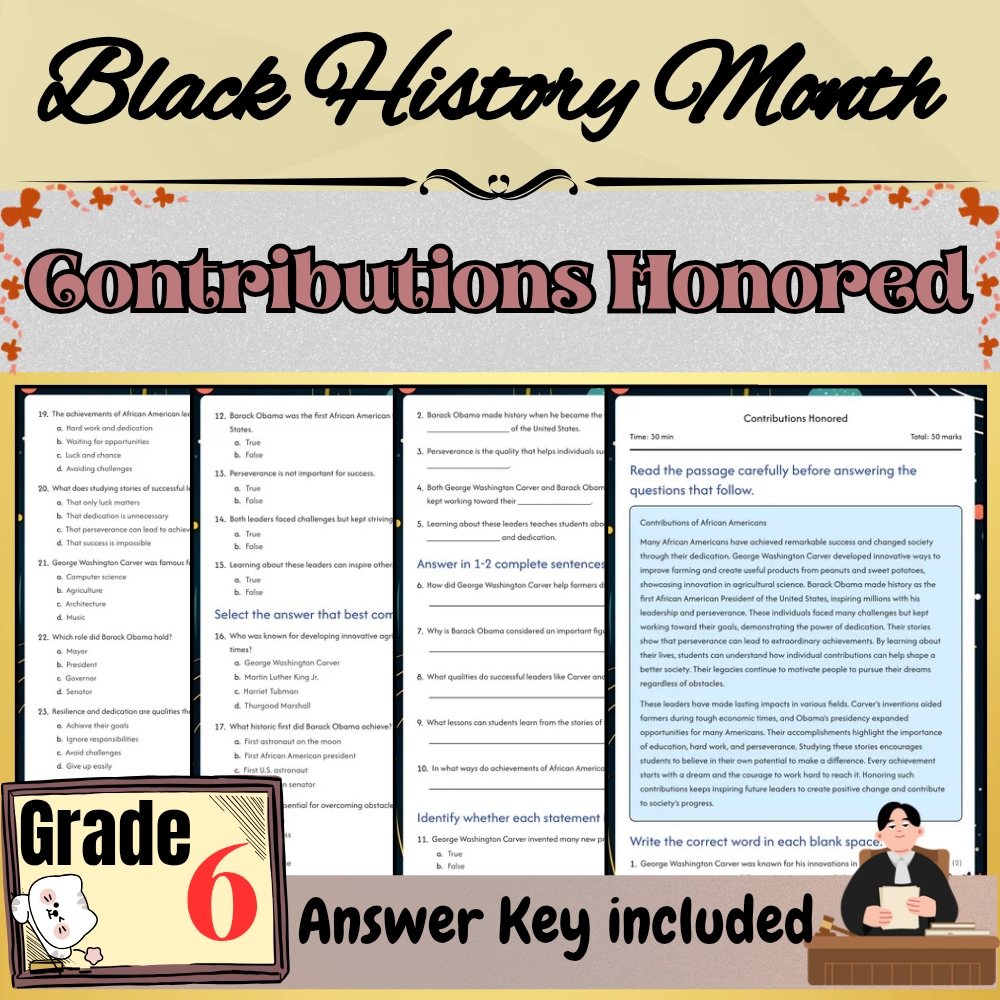
Grade 6 seasonal tributions Honored Black Friday Worksheet PDF + Answer Key
Created byShaNova WorksheetsLearning Objectives
- Learn about prominent African Americans who contributed to science, sports, politics, and education.
- Understand how their achievements impacted society and inspired future generations.
- Recognize the importance of dedication and perseverance in reaching goals.
Instant download
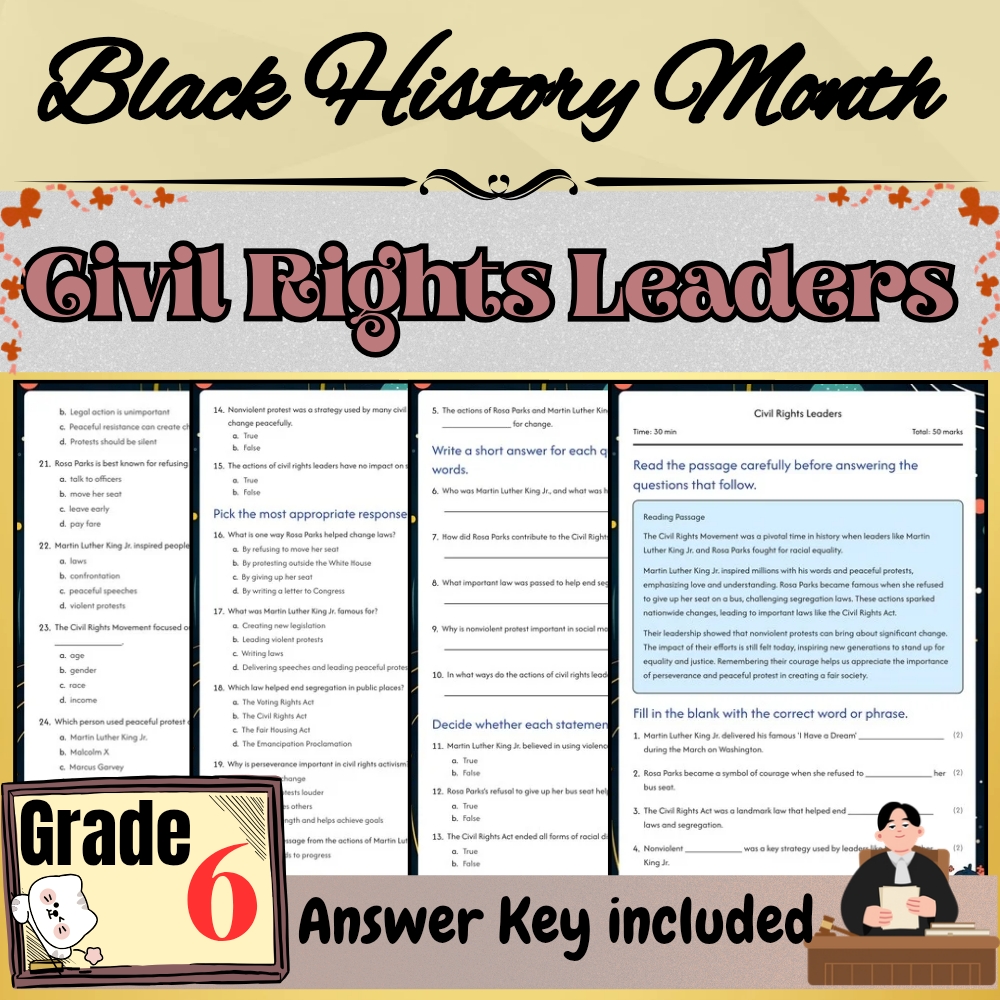
Grade 6 Social Studies – Civil Rights Leaders Worksheet | PDF + Answer Key
Created byShaNova WorksheetsLearning Objectives
- Understand the contributions of key civil rights leaders like Martin Luther King Jr. and Rosa Parks.
- Recognize the importance of nonviolent protest and perseverance in social change.
- Describe the historical impact of civil rights actions on society today.
Instant download
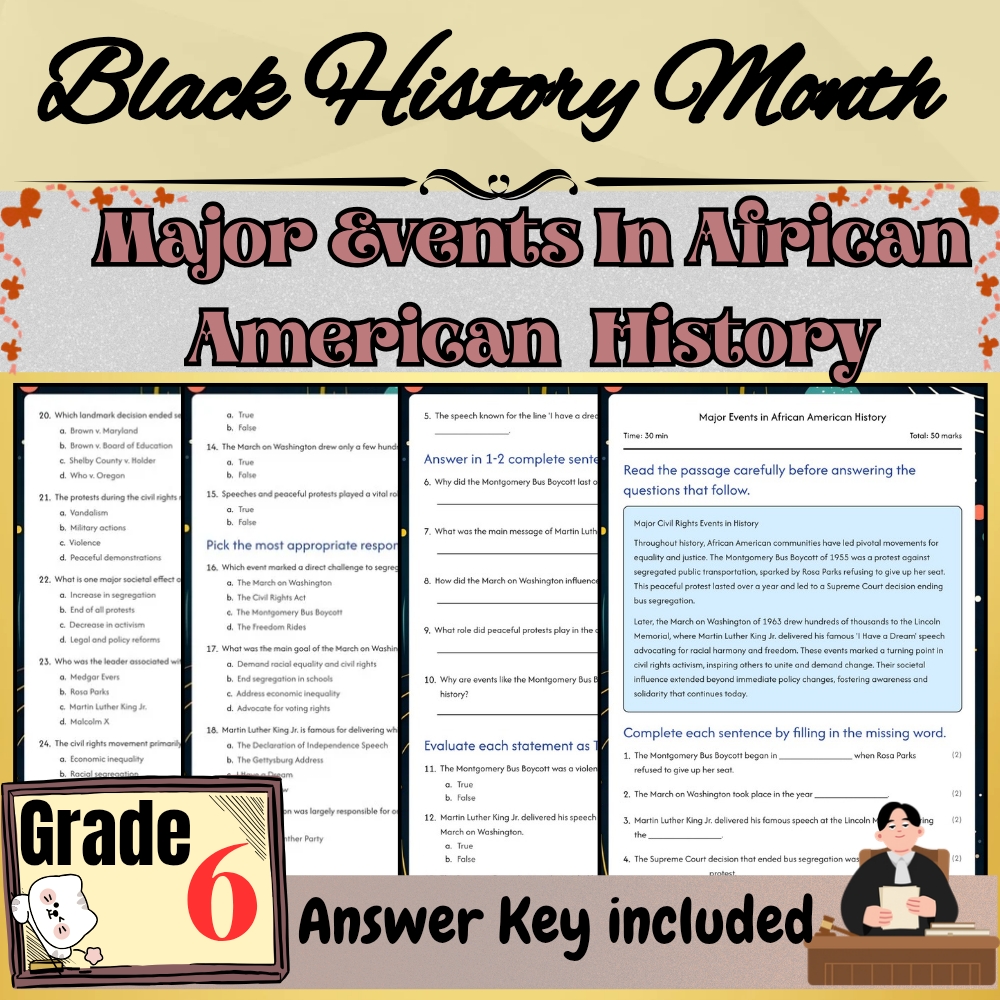
Grade 6 Major Events in African American History Worksheet| PDF + Answer Key
Created byShaNova WorksheetsLearning Objectives
- Understand key moments such as the Montgomery Bus Boycott and the March on Washington.
- Analyze speeches and articles to grasp activism and collective action.
- Learn about the societal impact of social movements.
Instant download

Balanced Diet Basics Worksheet Grade 6 Health | Ontario Nutrition Activity
Created byPrism Point LearningLearning Objectives
- Identify key food groups in a balanced diet (fruits, vegetables, proteins, grains, and dairy).
- Explain how nutrient-rich foods and proper portion sizes support growth and energy.
- Evaluate food choices by considering quality and balanced portions.
Instant download
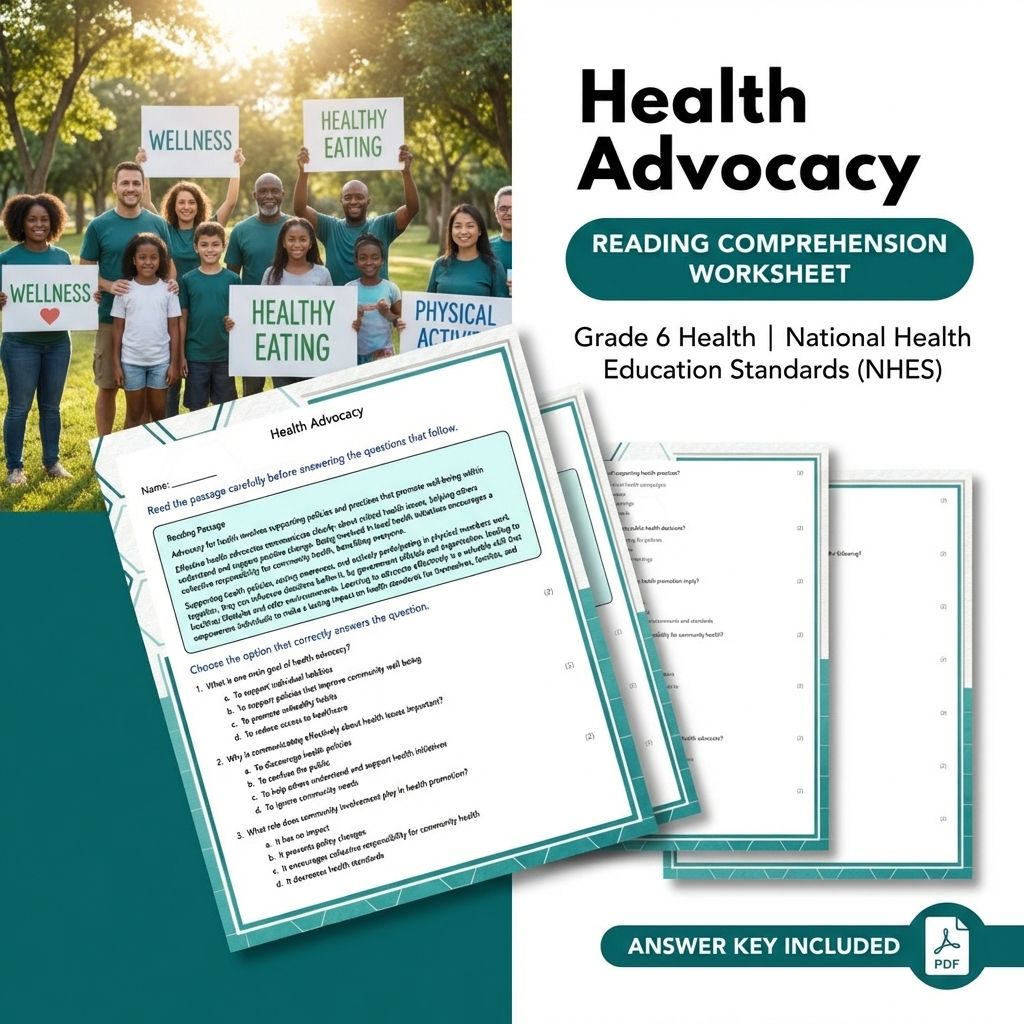
6th Grade Health | Advocacy Worksheet with Reading & Multiple Choice Questions
Created bySkylark WorksheetsLearning Objectives
- Understand the concept of health advocacy and its importance in community well-being.
- Identify effective ways to communicate about health issues and influence health policies.
- Recognize the role of active community involvement in promoting health standards.
Also included in: Grade 6 Health Unit | Body Systems, Disease Prevention & Environment Worksheets +1 more
Instant download
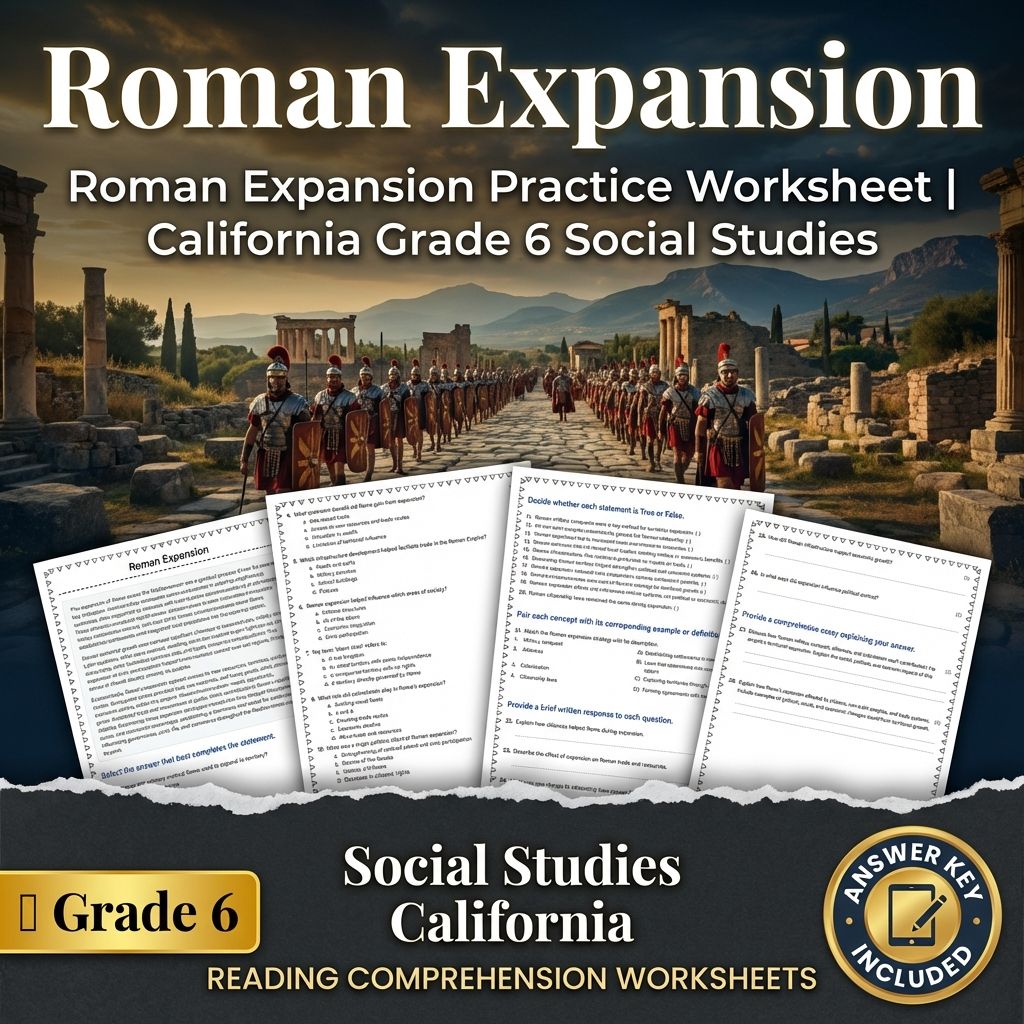
Roman Expansion Practice Worksheet | California Grade 6 Social Studies
JCreated byJ.S SheetsLearning Objectives
- Describe the methods Romans used to expand their territory, including military conquests, alliances, and colonization.
- Explain how Roman expansion impacted citizenship laws, allowing non-Latin peoples greater rights.
- Analyze the economic effects of Roman territorial growth, such as increased trade and access to resources.
Also included in: Grade 6 Social Studies Unit Bundle – Ancient Greece & Rome | Standards-Aligned +1 more
Instant download

6th Grade ELA – Infographic Details Worksheet (PDF) | Alberta Standards
 Created byGolden Apple Studio
Learning Objectives
- Identify how infographic visuals (axes, scales, icons, legends, and labels) communicate meaning.
- Explain how numerical claims in an infographic depend on accurate reading of categories and comparisons.
- Connect information from the visual and accompanying text to determine the main idea.
Also included in: Grade 6 Reading Comprehension Skills in ELA Lesson Bundle: Alberta Framework +1 more
Instant download
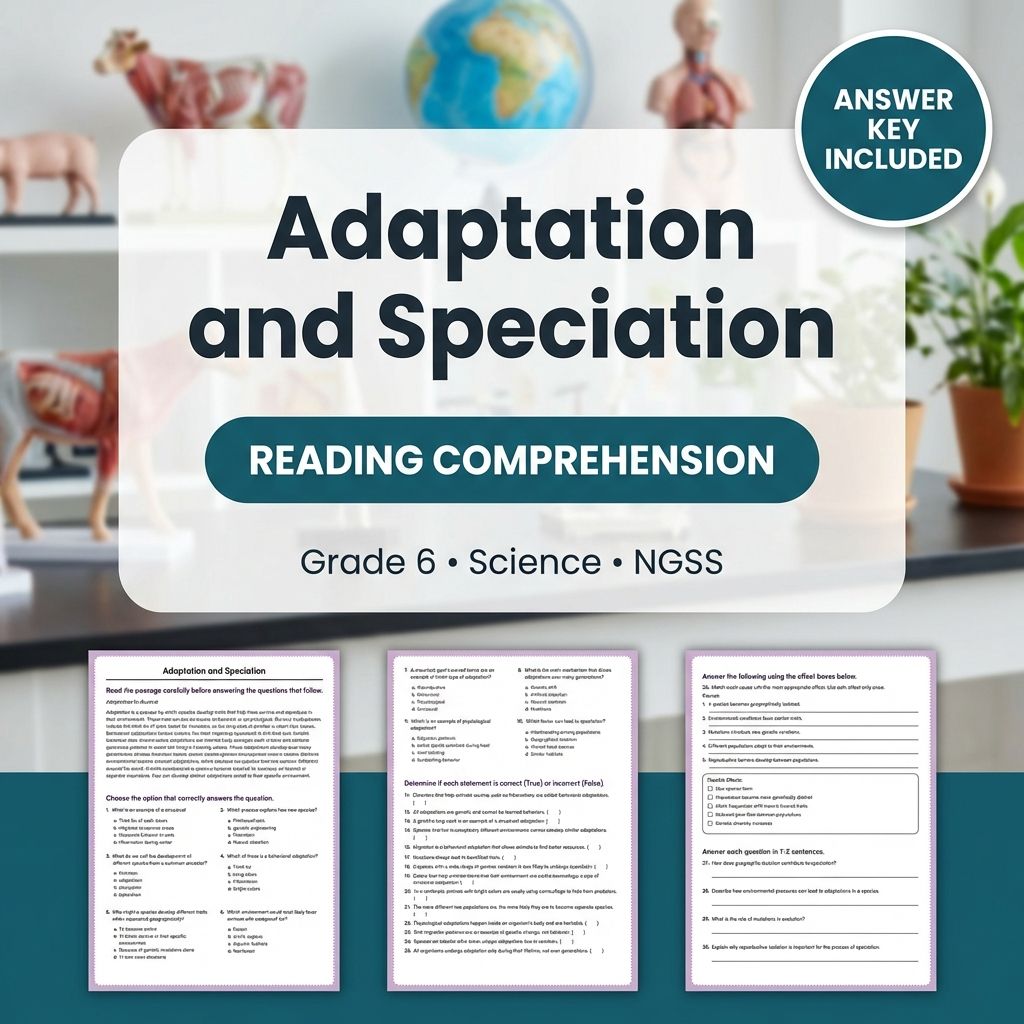
Grade 6 Science | Adaptation and Speciation Worksheet (Printable PDF + Answer Key)
Learning Objectives
- Understand the concepts of adaptation and how species evolve over time.
- Identify different types of adaptations in animals and plants.
- Explain the process of speciation and factors that lead to new species formation.
Also included in: Grade 6 Science | Biological Evolution: Unity and Diversity Unit Bundle (NGSS-aligned Worksheets) +1 more
Instant download

6th Grade Science – Keystone Species Worksheet (Ontario Standard) (PDF)
 Created byEvergreen Desk Education
Learning Objectives
- Define keystone species and explain why they can have a larger impact than their abundance suggests
- Describe how keystone species can cause cascading effects through trophic levels in an ecosystem
- Use evidence-based indicators to infer keystone status and predict impacts on biodiversity and habitat
Also included in: Grade 6 Biodiversity, Adaptation & Ecology Science Lesson Bundle | Ontario +1 more
Instant download
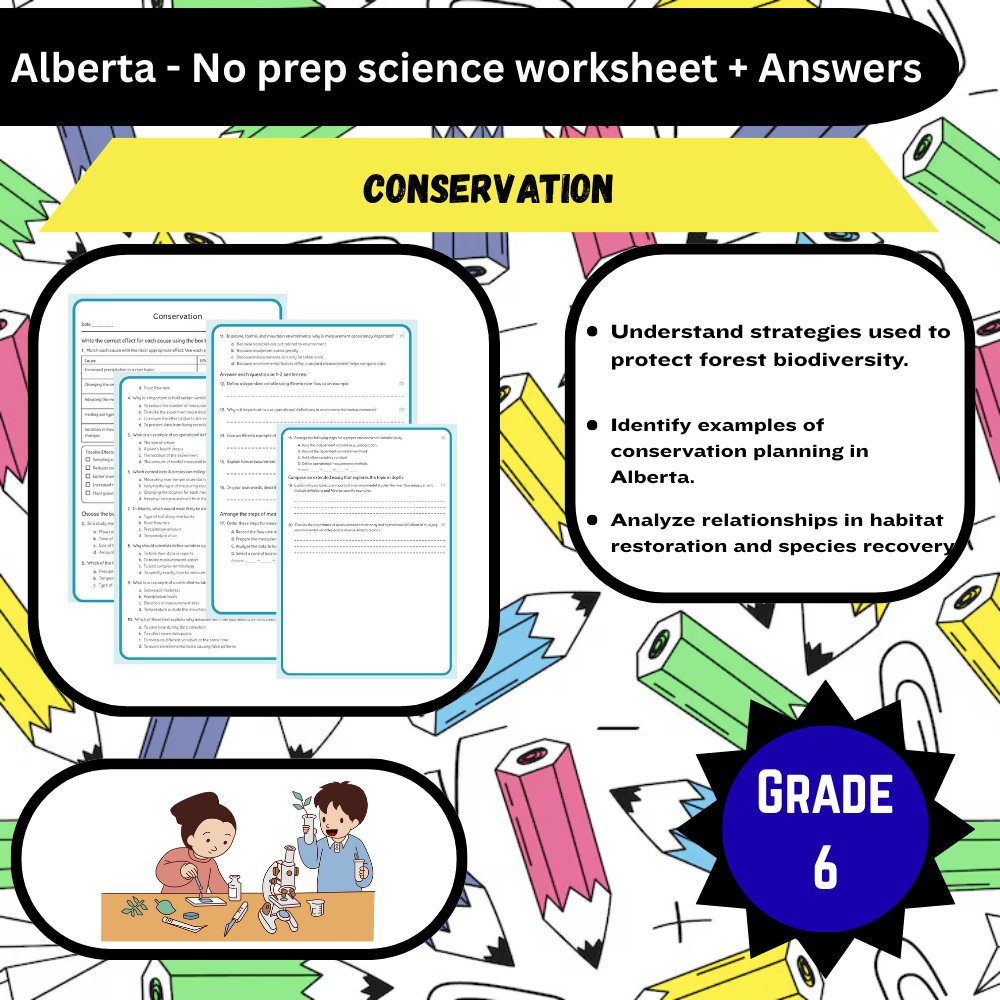
6th Grade Science | Conservation Strategies Worksheet (PDF)
Created byBright Mind ResourcesLearning Objectives
- Understand different conservation strategies used to protect forest biodiversity.
- Identify examples of conservation planning in Alberta's landscapes.
- Analyze cause-and-effect relationships related to habitat restoration and species recovery.
Instant download

Grade 6 |World Environmental Day Worksheet for Mastering Origin|PDF + Answer Key
Created byShaNova WorksheetsLearning Objectives
- Explain where and when World Environment Day began and why it was created
- Identify key ideas connected to global environmental awareness and action
- Describe how countries and communities contribute to improving the environment
Also included in: Grade 6 World Environmental Day Holiday Custom Bundle NGSS Worksheets
Instant download
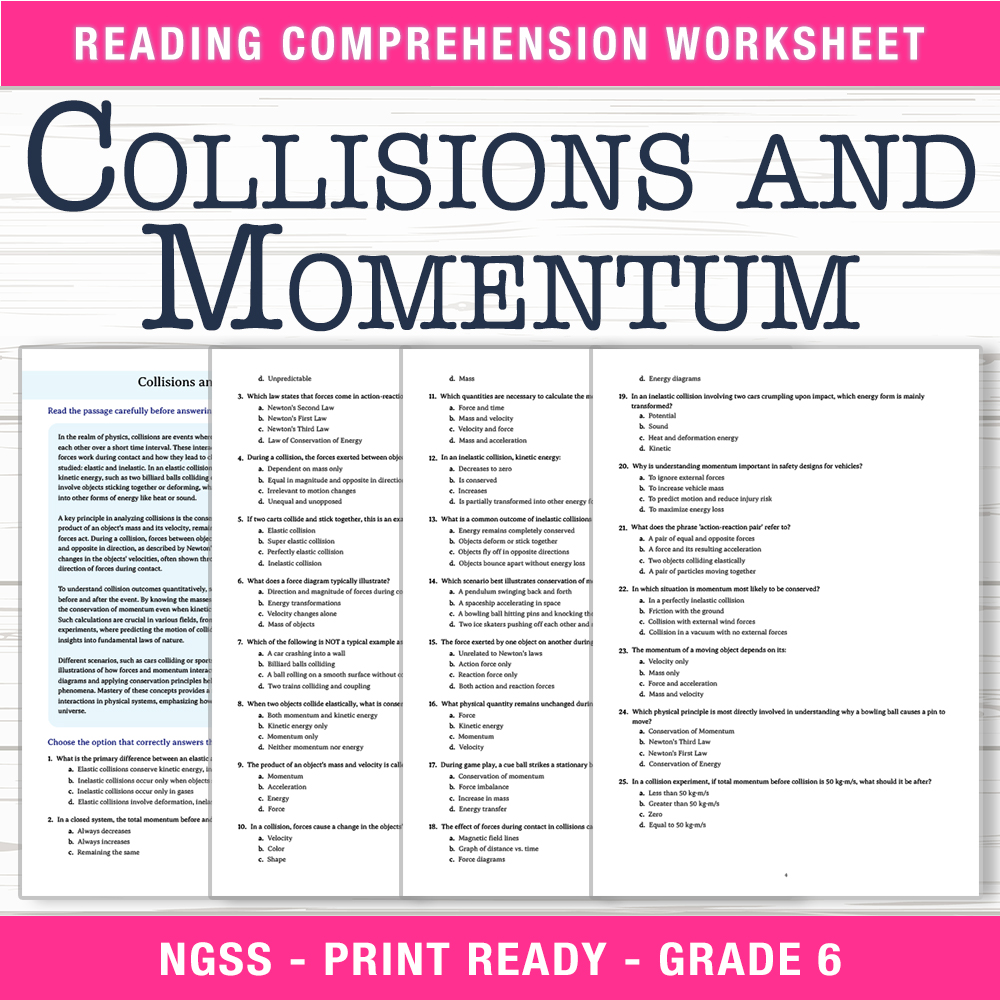
6th Grade Science | Collisions and Momentum Worksheet (PDF + Answer Key)
 Created byRiverstone Classroom
Learning Objectives
- Explain the concept of conservation of momentum in two-body collisions.
- Distinguish between elastic and inelastic collisions using real-world examples.
- Analyze force diagrams to identify action-reaction pairs during collision events.
Instant download
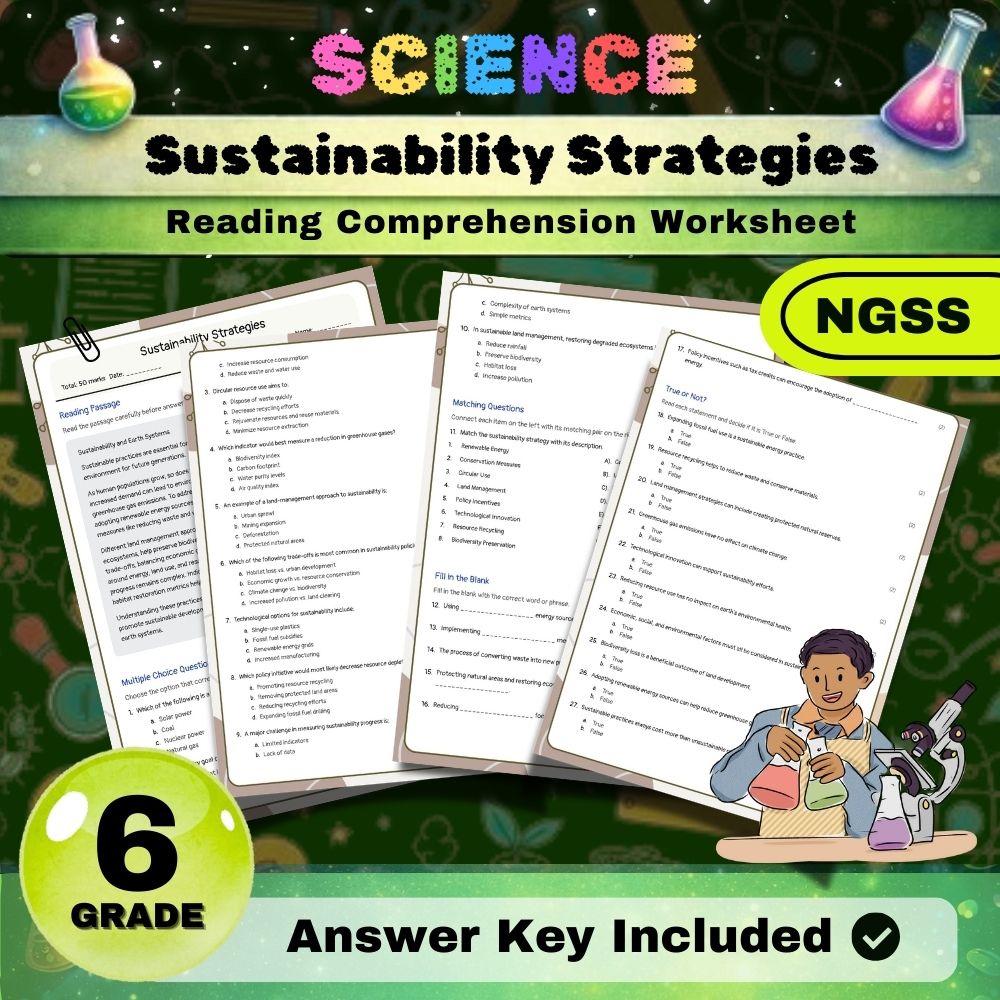
6th Grade Science | Sustainability Strategies NGSS Worksheet (PDF)
 Created byMaple Path Learning
Learning Objectives
- Understand how population trends and resource use impact earth systems.
- Identify different sustainable practices and their trade-offs.
- Analyze policy and technological options for promoting sustainability.
Also included in: Grade 6 Science | Earth's Systems & Sustainability NGSS Unit Bundle +1 more
Instant download
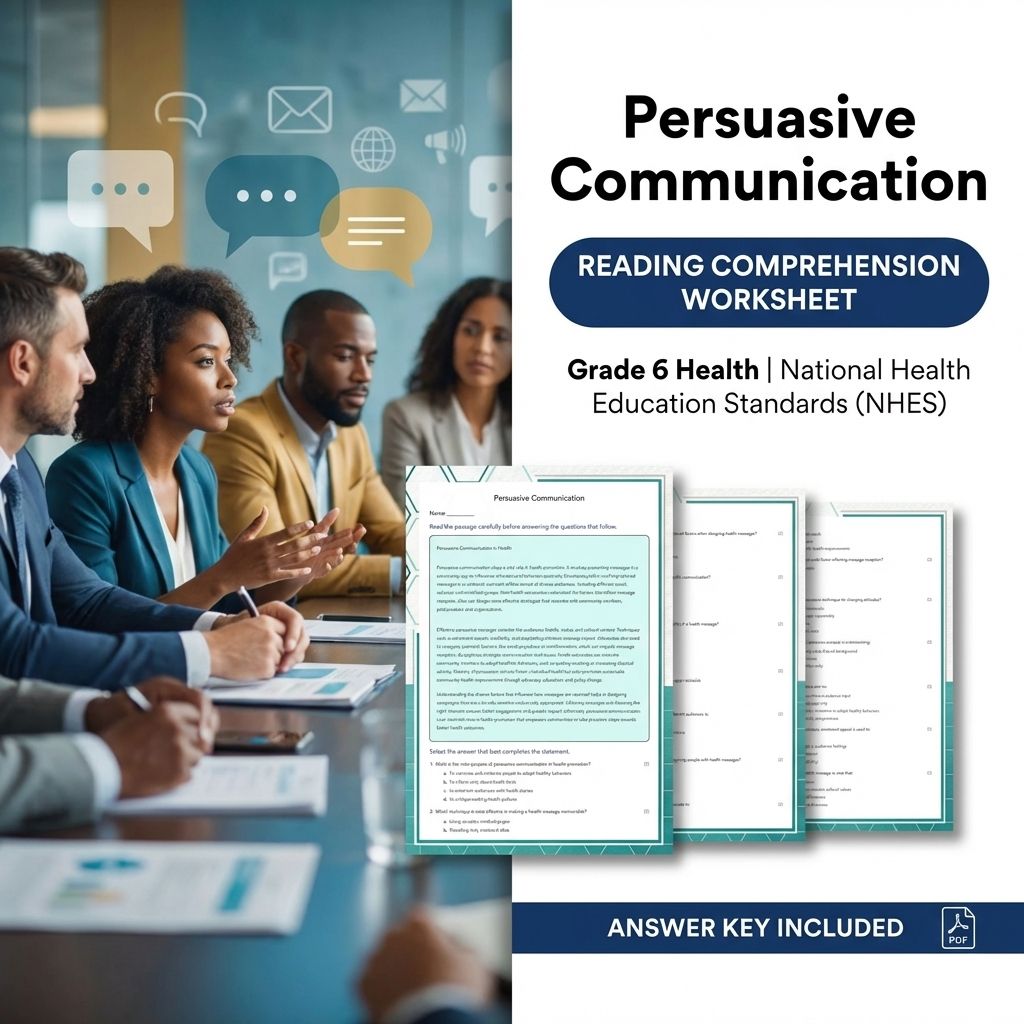
6th Grade Health | Persuasive Communication Worksheet (Answer Key Included)
Created bySkylark WorksheetsLearning Objectives
- Understand the principles of persuasive communication in health messaging.
- Identify effective techniques for crafting persuasive messages for diverse audiences.
- Recognize social, cultural, and individual factors influencing message reception.
Also included in: Grade 6 Health Unit | Advocacy & Communication Worksheets (Answer Key Included) +1 more
Instant download
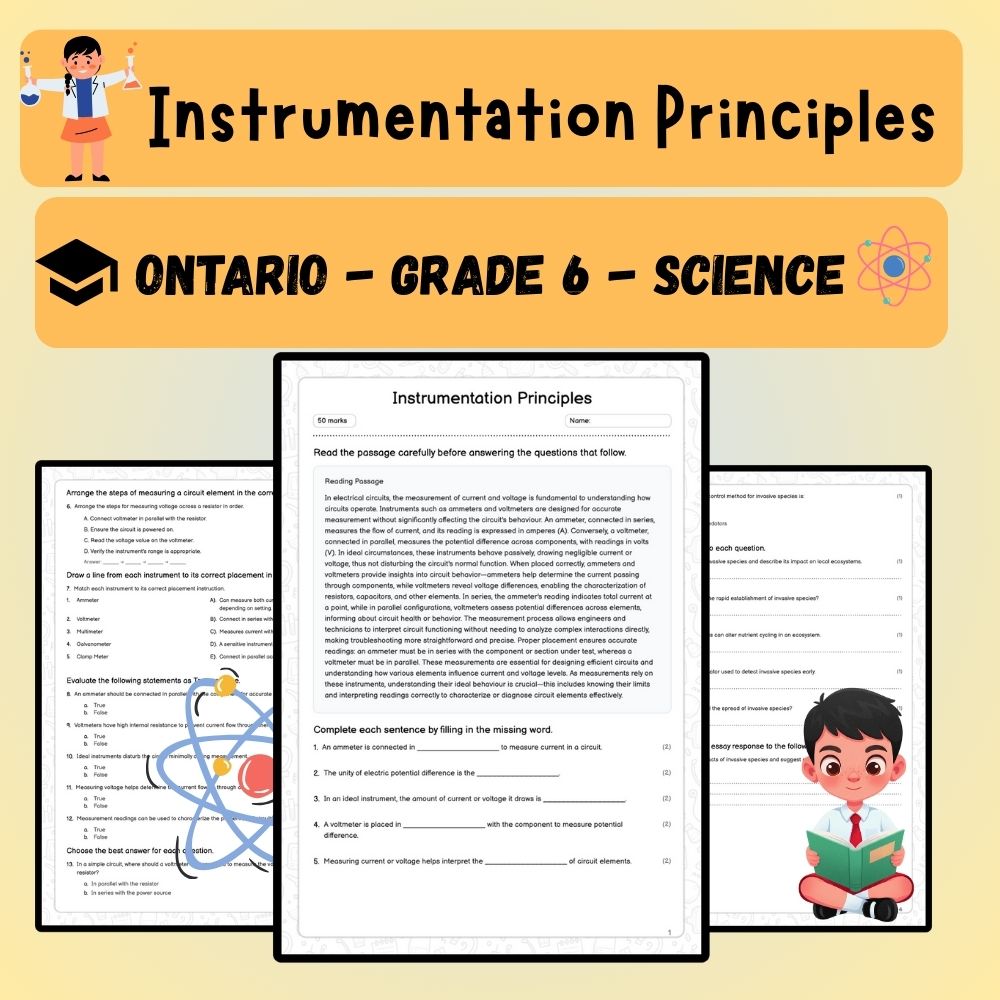
6th Grade Science | Instrumentation Principles Worksheet (PDF)
Created byPrism Point LearningLearning Objectives
- Understand the roles of ammeters and voltmeters in electrical circuits.
- Identify measurement units of amperes and volts and interpret their readings.
- Describe how instruments are positioned in series and parallel circuits for measurement.
Also included in: Grade 6 Science Unit – Circuits & Electricity Worksheet Bundle
Instant download
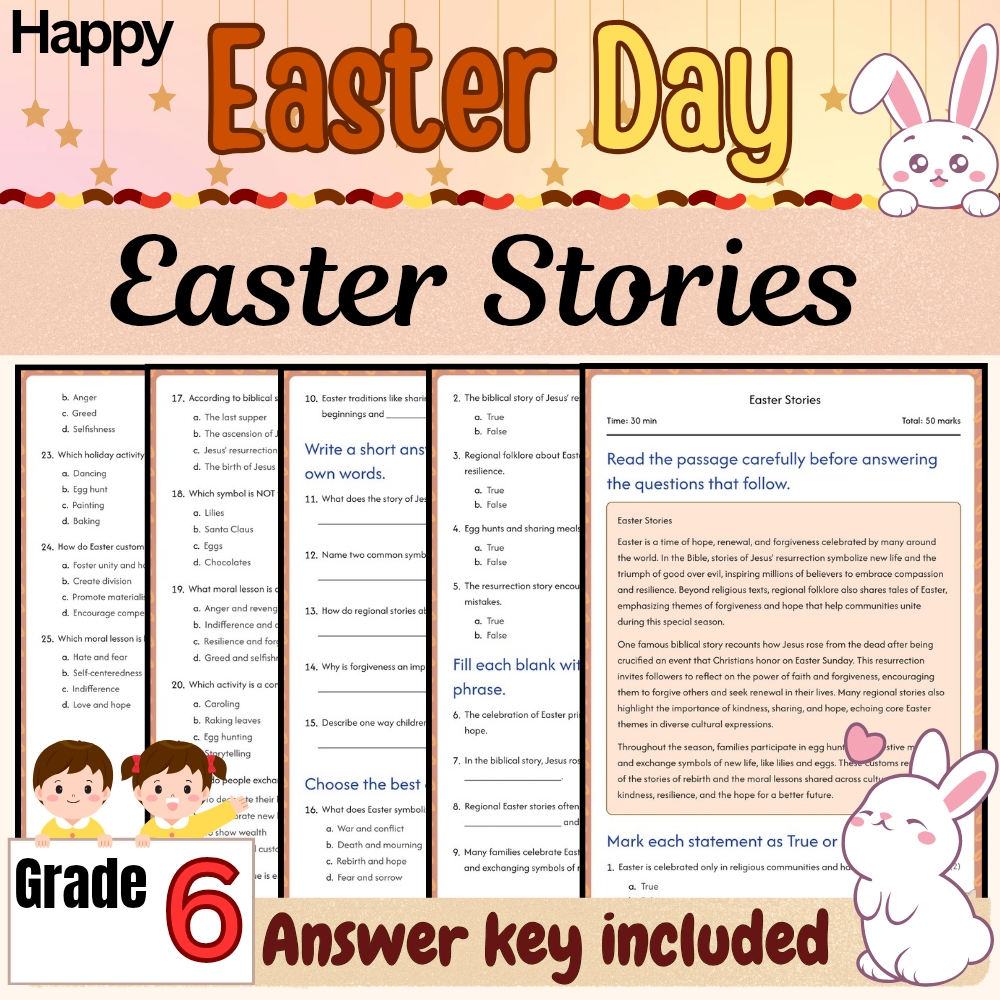
Grade 6 Seasonal | Happy Easter Worksheet for Holiday Stories | PDF + Answer Key
Created byShaNova WorksheetsLearning Objectives
- Understand the significance of Easter in different cultural and religious contexts.
- Recall key events from biblical stories about Easter.
- Identify moral lessons such as forgiveness, hope, and renewal in Easter narratives.
Instant download
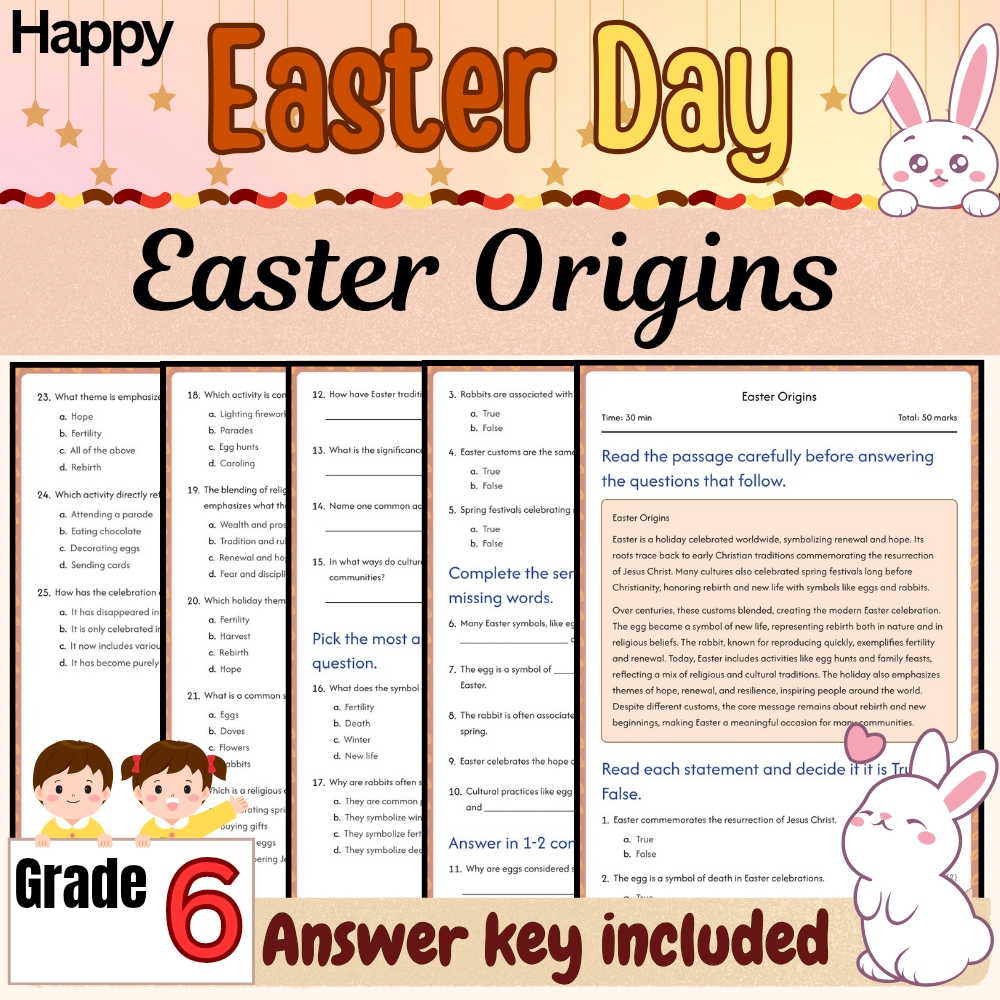
Grade 6 Happy Easter Worksheet for Understanding Holiday Origins |PDF+Answer Key
Created byShaNova WorksheetsLearning Objectives
- Understand the historical and cultural origins of Easter.
- Identify symbols associated with Easter, such as eggs and rabbits.
- Recognize how Easter blends religious and cultural practices over centuries.
Instant download
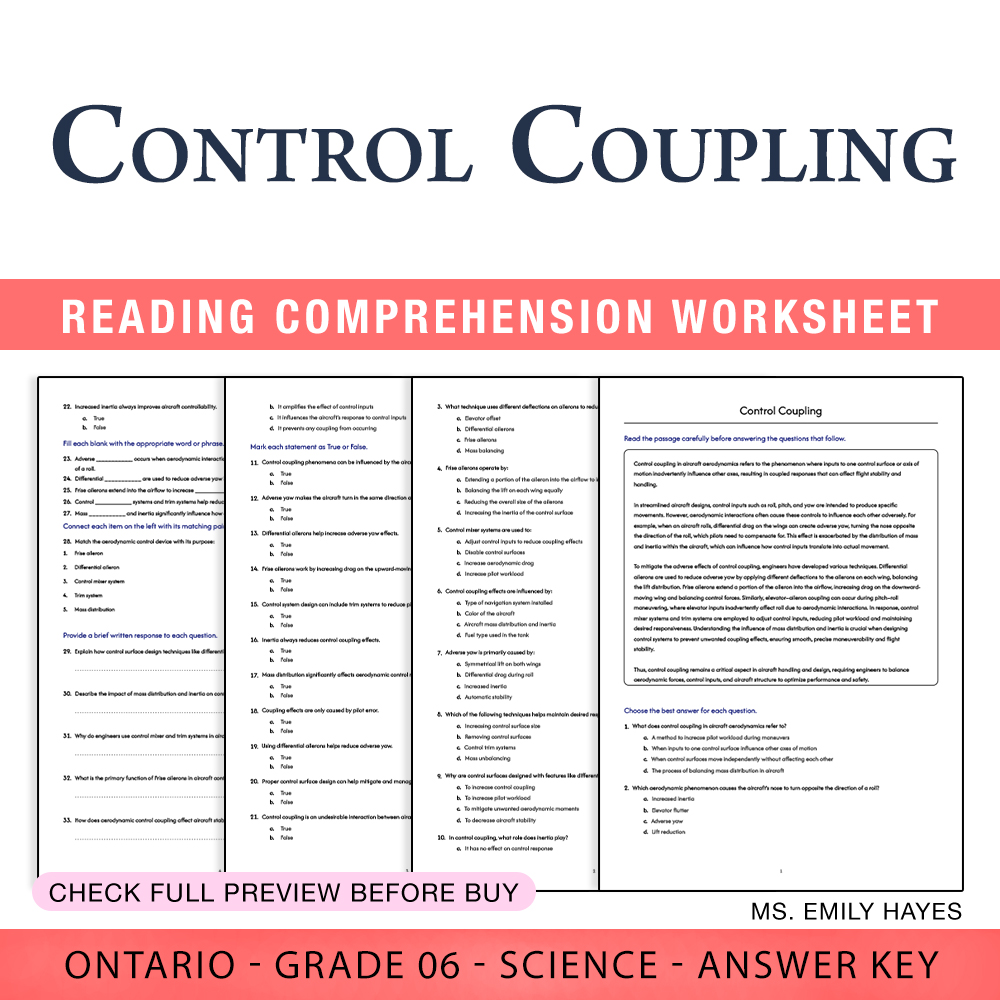
6th Grade Science | Control Coupling Worksheet (PDF + Answer Key)
Created byCopper Leaf ClassroomLearning Objectives
- Understand the principles of control coupling in aerodynamics and aircraft control surfaces.
- Identify how aerodynamic interactions such as adverse yaw and elevator–aileron coupling affect aircraft maneuverability.
- Explain techniques like differential and Frise ailerons used to mitigate control coupling effects.
Instant download

Grade 6 Pride Day Worksheet for Mastering Historic Beginnings | PDF + Answer Key
Created byShaNova WorksheetsLearning Objectives
- Describe key events of the Stonewall Riots in 1969 using age-appropriate historical details
- Use Pride Day vocabulary related to civil rights, activism, and community support
- Explain how resilience and activism helped the LGBTQ+ community advocate for equal rights
Also included in: Grade 6 Pride Day Holiday Lesson Bundle for CCSS ELA Reading & Writing
Instant download
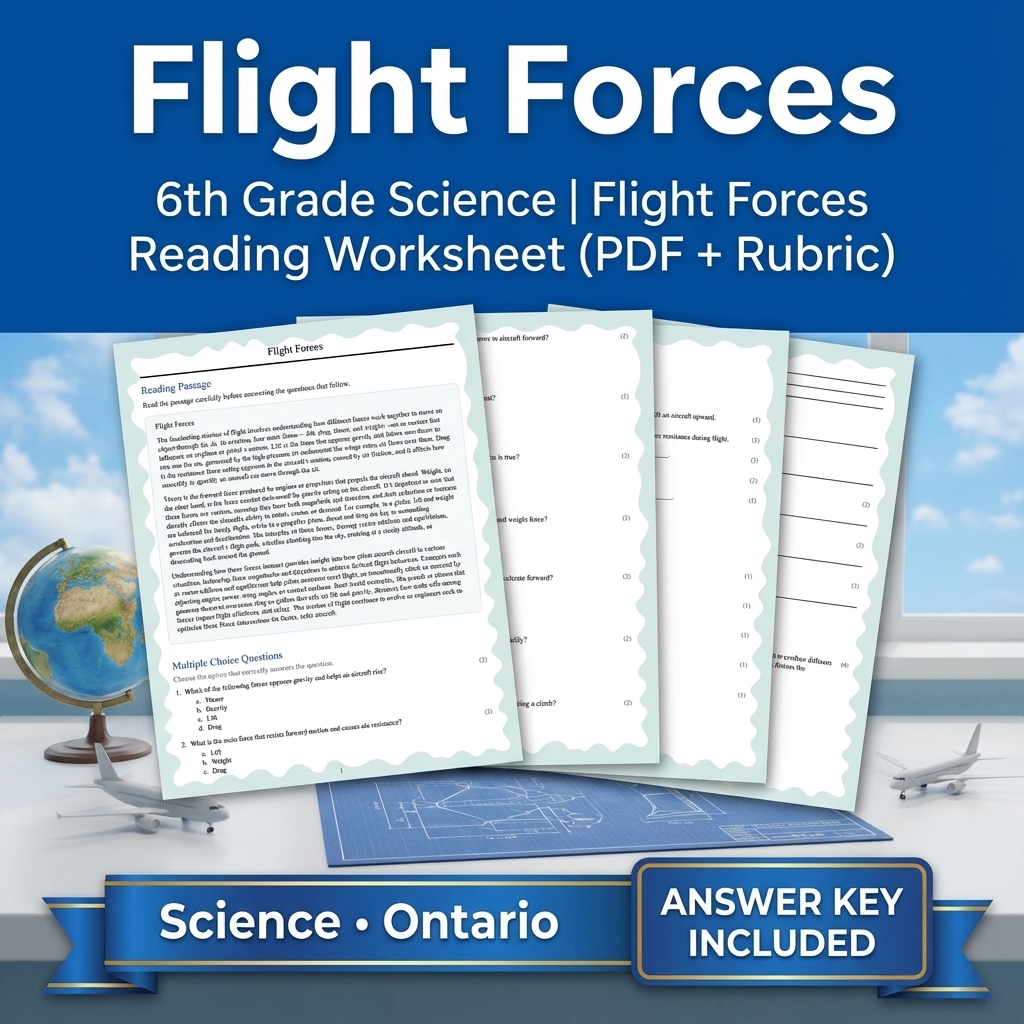
6th Grade Science | Flight Forces Reading Worksheet (PDF + Rubric)
JCreated byJ.S SheetsLearning Objectives
- Understand and identify the four primary aerodynamic forces: lift, drag, thrust, and weight.
- Describe how these forces interact to produce different flight patterns such as climb, level flight, and descent.
- Explain the concepts of vector addition and equilibrium in maintaining steady, level flight.
Also included in: Grade 6 Science | Aerodynamics & Flight Unit Worksheet Pack (PDF + Answer Keys) +1 more
Instant download

6th Grade Science | Data Tables Worksheet (PDF) Alberta Standards
 Created bySilver Birch Teaching
Learning Objectives
- Identify effective column headings and units in a science data table.
- Use consistent time stamps and metadata (location, instrument type, observer notes) to make data reusable.
- Interpret information from a data table to support later analysis and replication.
Also included in: Grade 6 Scientific Inquiry & Data Analysis Science Lesson Bundle: Alberta +1 more
Instant download
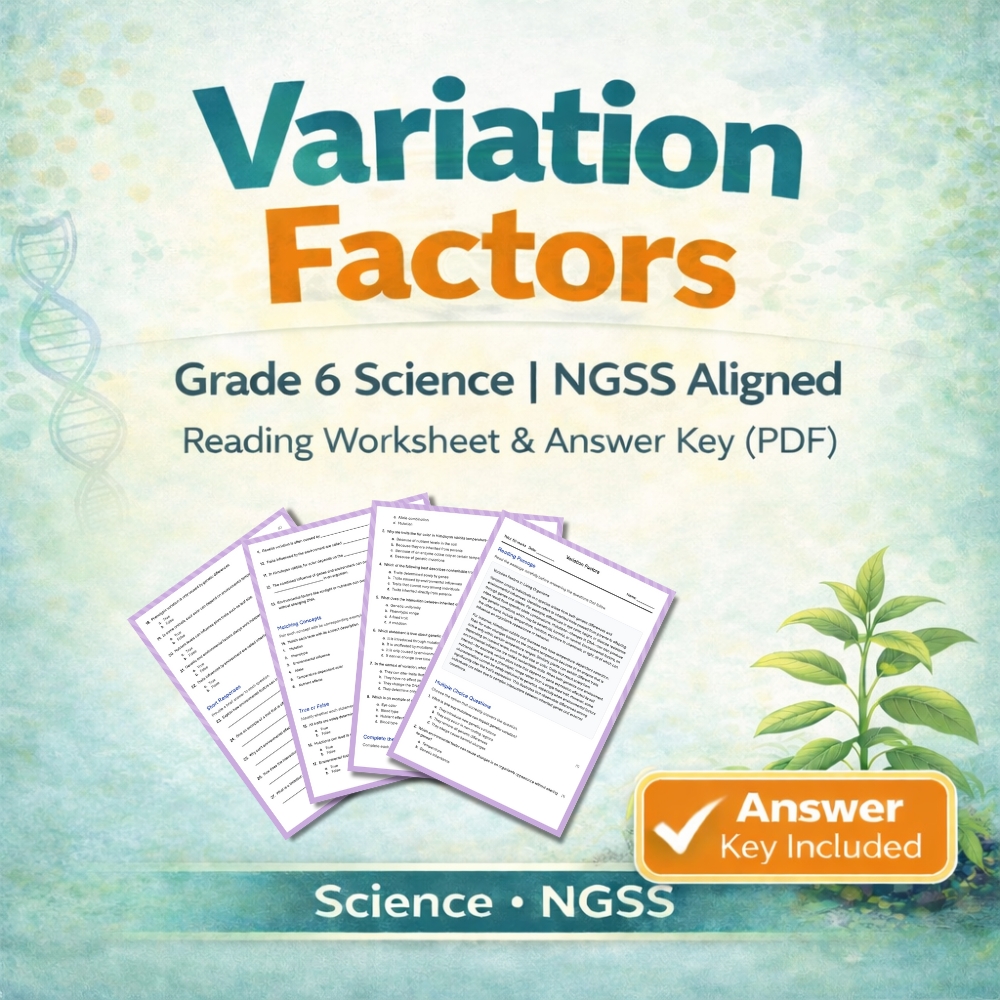
6th Grade Science | Variation Factors | NGSS Aligned ( Worksheet + Answer Key )
Created byCedar Grove LearningLearning Objectives
- Explain how genetic differences contribute to observable variation among individuals.
- Describe how environmental factors influence phenotypic traits in organisms.
- Analyze models of allele combinations, mutation impact, and environmental effects on traits.
Also included in: Grade 6 Science Unit Bundle | Variation Factors & Inheritance NGSS Worksheets +1 more
Instant download
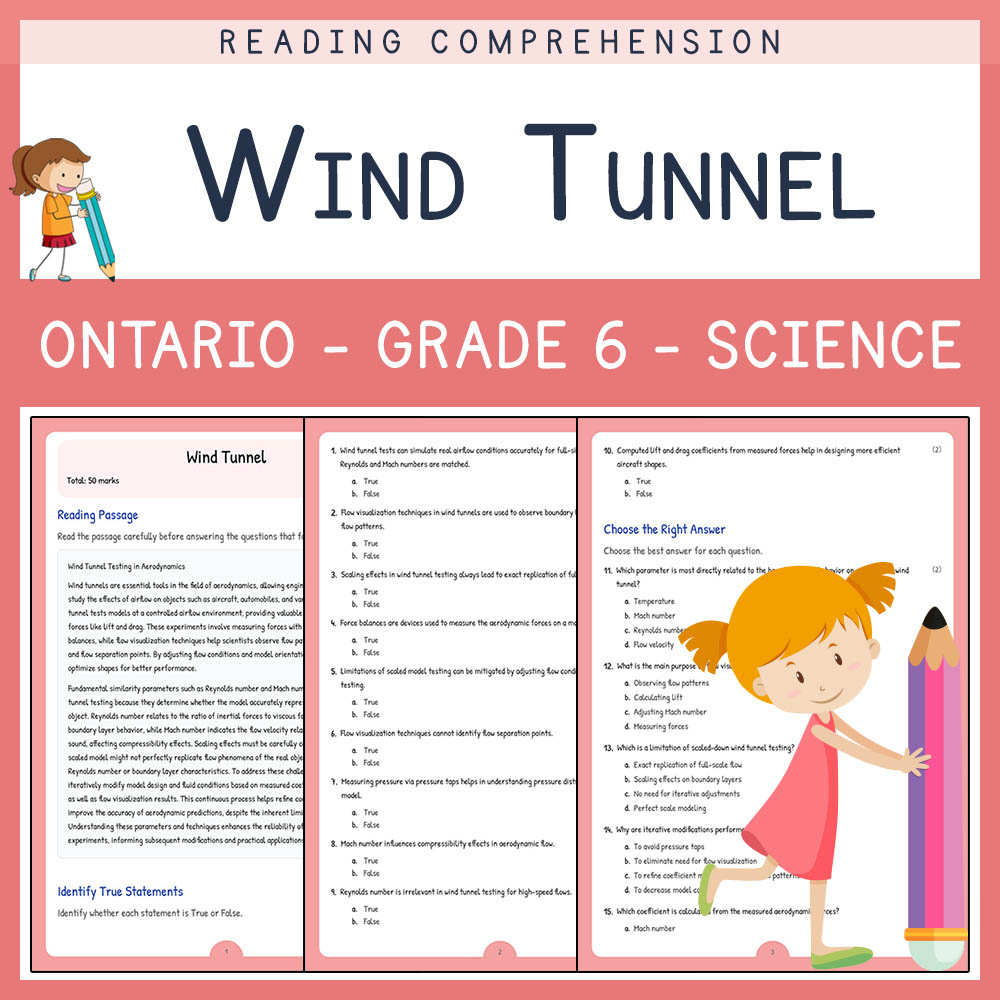
Grade 6 Science | Wind Tunnel Worksheet & Answer Key – Ontario Standards
 Created byLumora Learning
Learning Objectives
- Understand the purpose and methods of wind tunnel testing for aerodynamic analysis.
- Identify key parameters such as Reynolds and Mach numbers that influence scaled model testing.
- Explain how pressure taps, force balances, and flow visualization techniques are used in wind tunnel experiments.
Also included in: Grade 6 Science | Flight Custom Bundle | Ontario Standards
Instant download
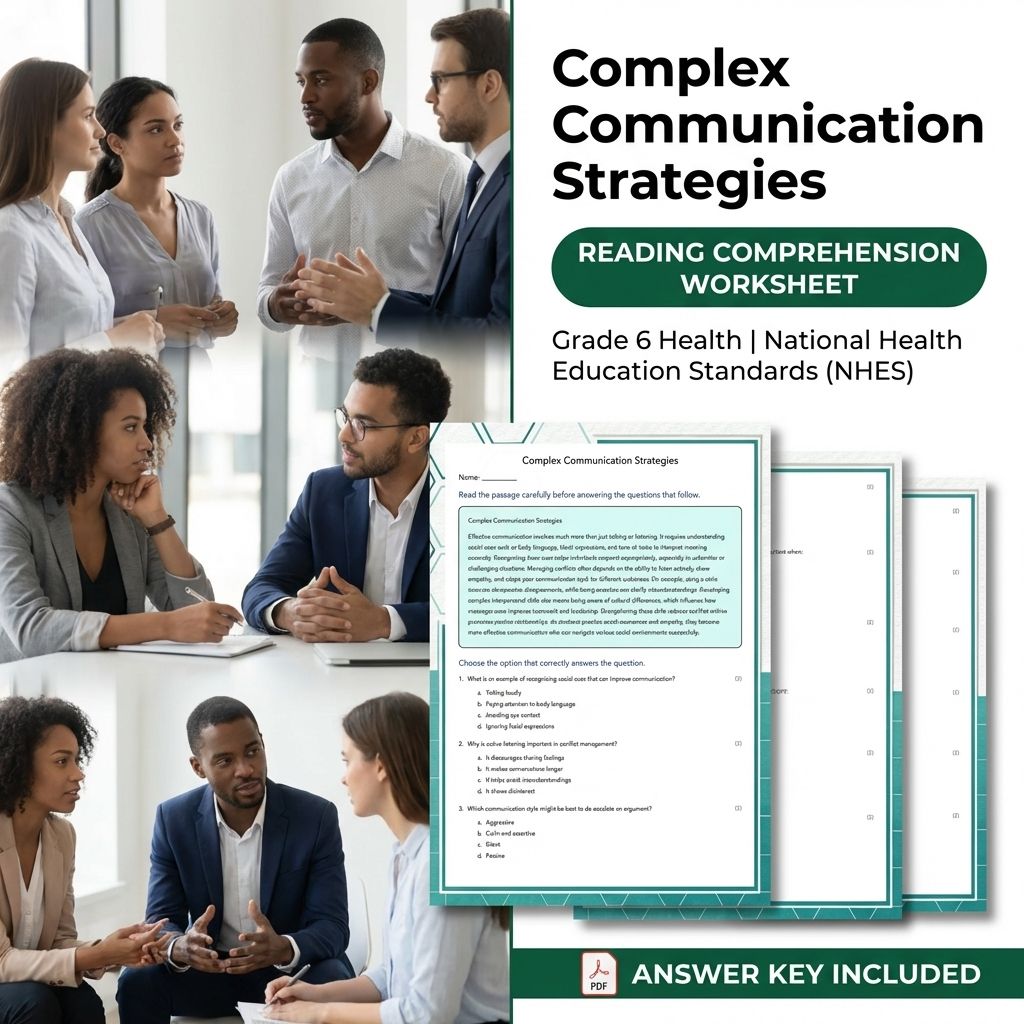
6th Grade Health | Complex Communication Strategies Worksheet (Answer Key)
Created bySkylark WorksheetsLearning Objectives
- Recognize social cues and interpret non-verbal communication signs.
- Manage conflicts effectively through active listening and empathy.
- Adapt communication styles to suit different social situations and diverse perspectives.
Also included in: Grade 6 Health Unit | Communication & Refusal Skills Worksheet Bundle +1 more
Instant download
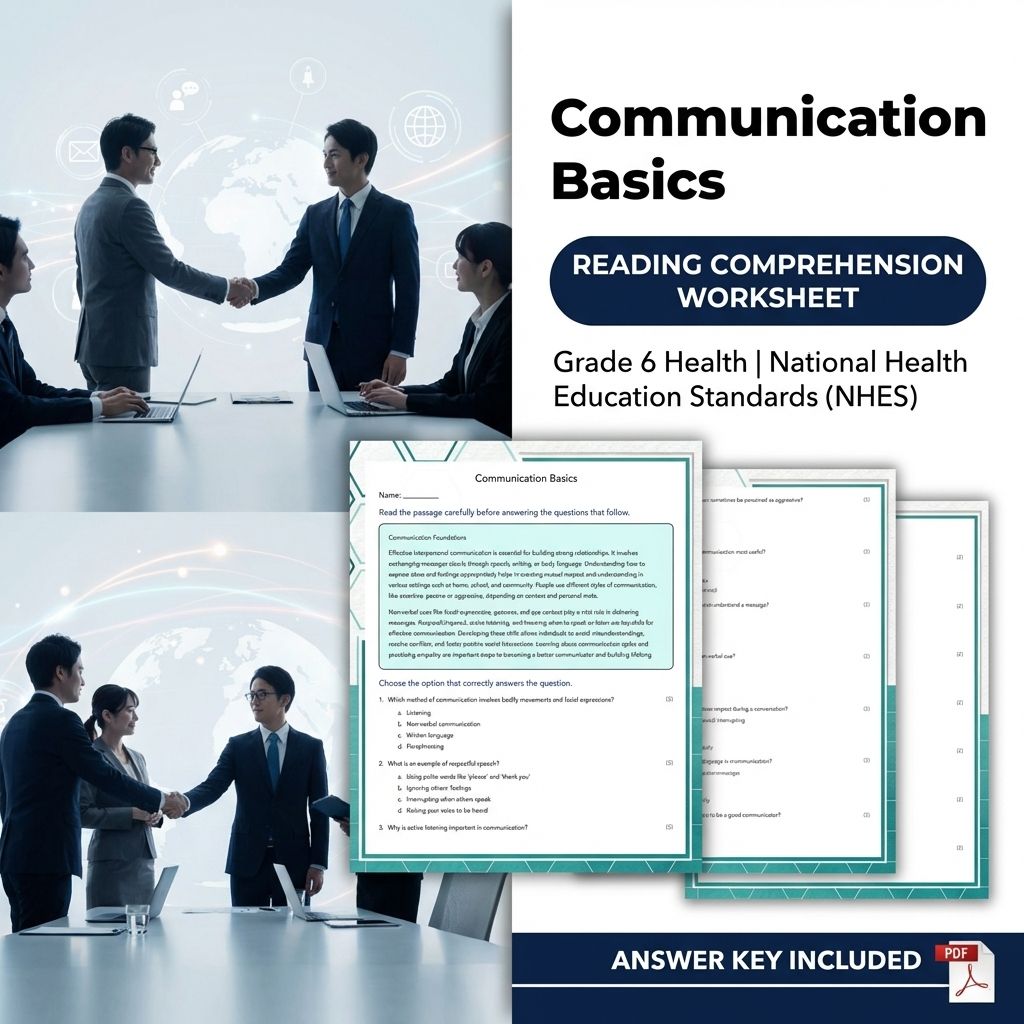
6th Grade Health | Communication Basics Worksheet & Answer Key (Printable)
Created bySkylark WorksheetsLearning Objectives
- Understand different methods of interpersonal communication, including spoken, written, and non-verbal cues.
- Recognize various communication styles and their appropriate contexts.
- Practice respectful language and active listening skills.
Also included in: Grade 6 Health Unit | Communication & Refusal Skills Worksheet Bundle +1 more
Instant download
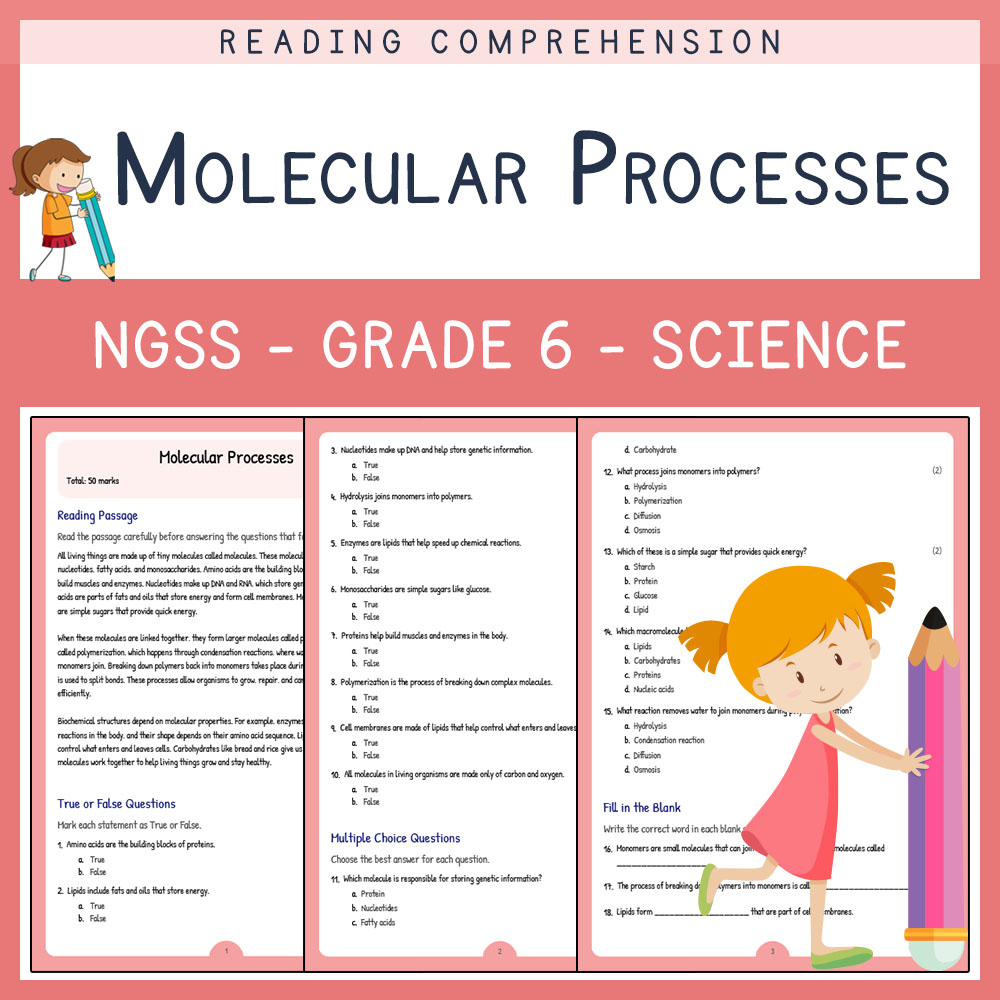
Grade 6 Science | Molecular Processes Worksheet (PDF) | NGSS Aligned
Created byLumora LearningLearning Objectives
- Identify basic molecular building blocks such as amino acids, nucleotides, fatty acids, and monosaccharides.
- Describe how monomers assemble into polymers through condensation reactions.
- Explain how macromolecules like proteins, nucleic acids, lipids, and carbohydrates function in living organisms.
Instant download
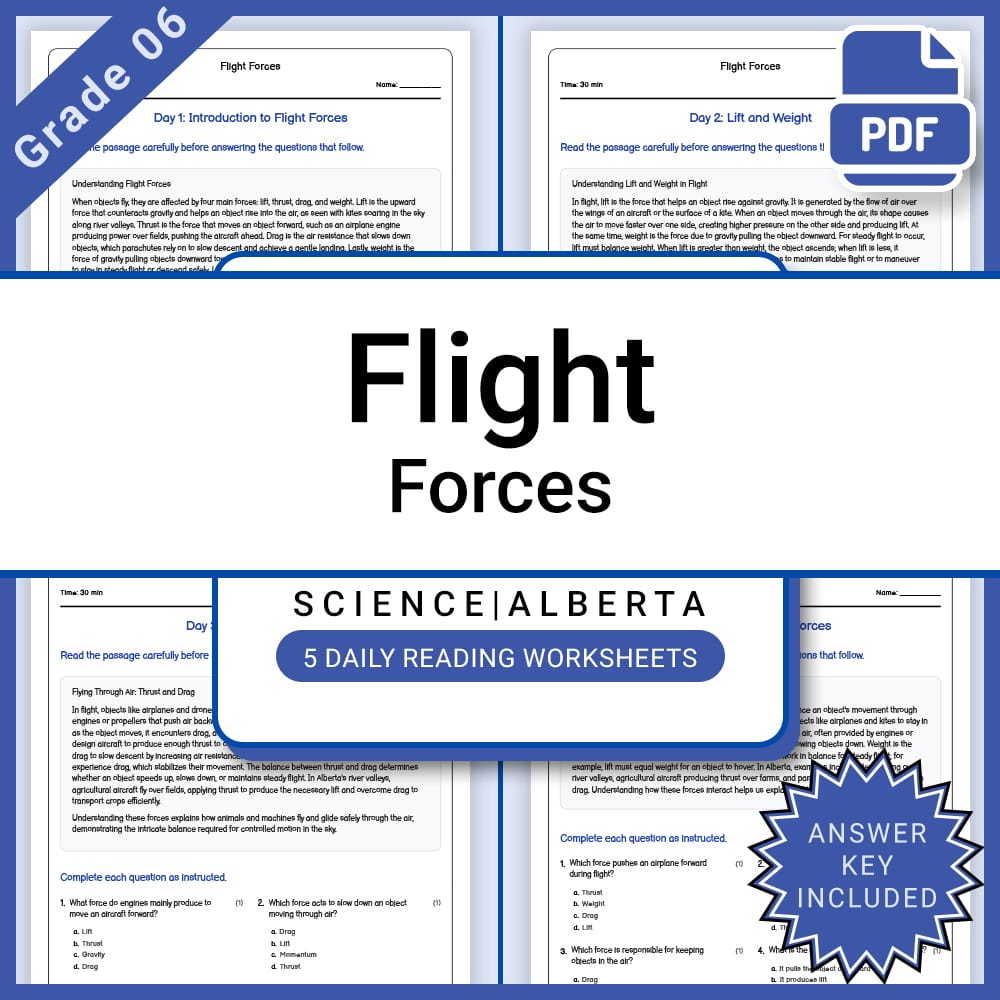
Grade 6 Science – Flight Forces Daily Reading Worksheet with Answer Key
JCreated byJ.S SheetsLearning Objectives
- Identify the four primary forces of flight: lift, thrust, drag, and weight.
- Describe how each force affects an object's motion through air.
- Understand real-world examples of flight forces, such as kites, aircraft, and parachutes.
Also included in: Grade 6 Science Lesson Bundle: Flight, Weather, and Aerodynamics +1 more
Instant download
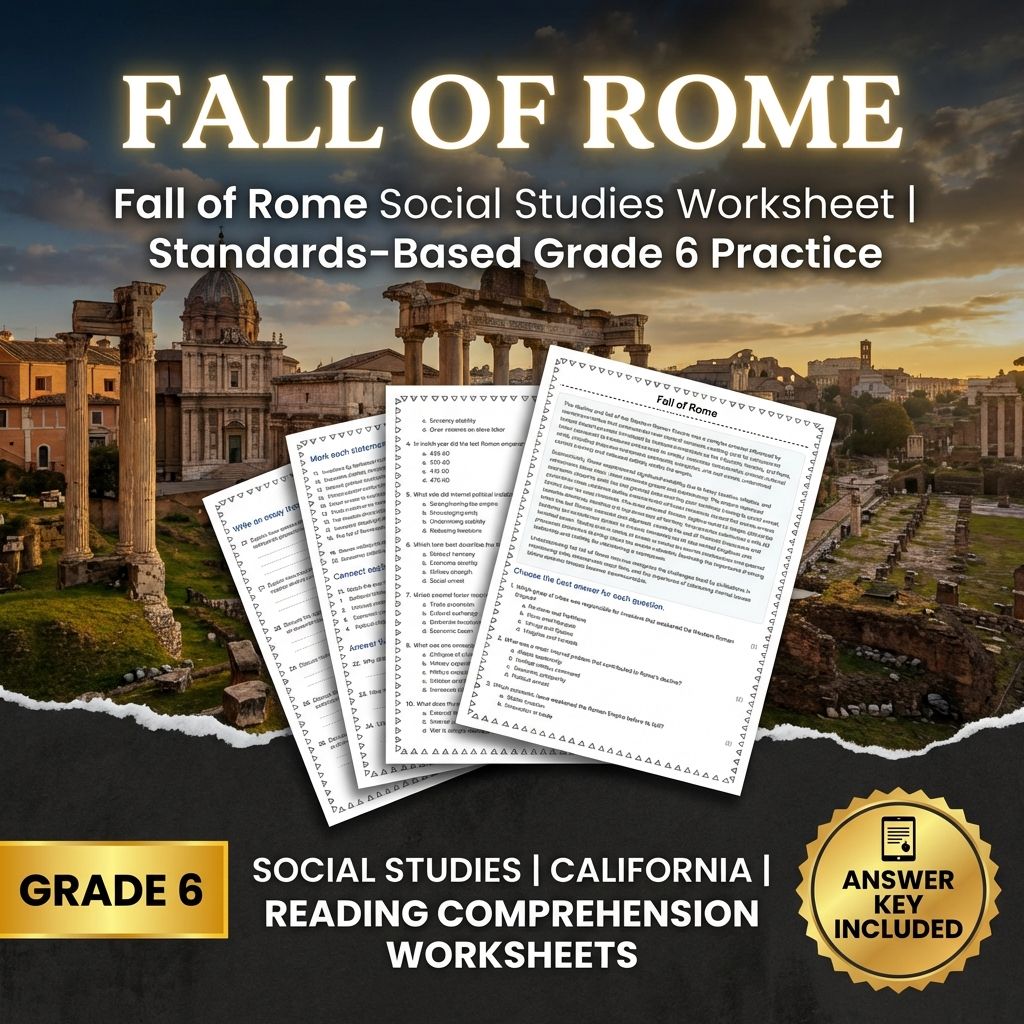
Fall of Rome Social Studies Worksheet | Standards-Based Grade 6 Practice
JCreated byJ.S SheetsLearning Objectives
- Understand the key factors that contributed to the decline of the Western Roman Empire.
- Analyze the chronological development of events leading to the fall of Rome.
- Evaluate the impact of invasions, political instability, and economic issues on Rome's collapse.
Also included in: Grade 6 Social Studies Unit Bundle – Ancient Greece & Rome | Standards-Aligned +1 more
Instant download

Conservation of Mass Worksheet | NGSS Grade 6 Science Practice
JCreated byJ.S SheetsLearning Objectives
- Develop models that demonstrate the conservation of mass during physical and chemical changes.
- Trace atoms and total mass through various processes to understand matter conservation.
- Use particle-level diagrams and symbolic representations to illustrate atom counts remain constant.
Also included in: Particle Models and Chemical Reactions Grade 6 Science Lesson Bundle | NGSS +1 more
Instant download
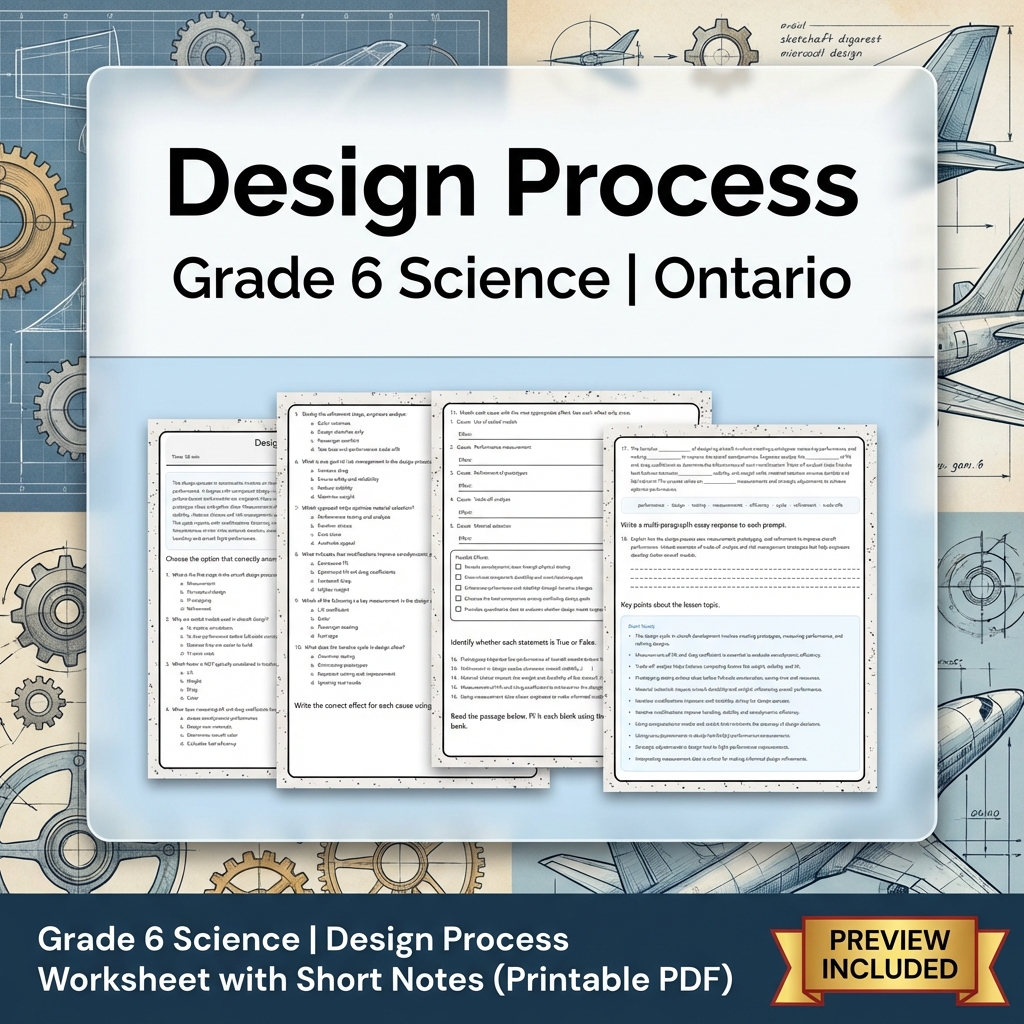
Grade 6 Science | Design Process Worksheet with Short Notes (Printable PDF)
 Created byMeadowlark Worksheets
Learning Objectives
- Understand the steps involved in the design process of aircraft and gliders.
- Identify key concepts such as prototyping, measurement, and refinement.
- Explain trade-offs among lift, drag, weight, and stability in aircraft design.
Also included in: Grade 6 Science Lesson Group Bundle – Ontario Framework Worksheets +1 more
Instant download

Grade 6 Science | Criteria & Constraints in Design - Daily Reading Comprehension
 Created byCoral Reef Learning
Learning Objectives
- Understand key concepts related to Science
- Apply knowledge through practice questions
- Demonstrate comprehension of the material
Instant download

Grade 6 Developing Solutions Science Worksheet | NGSS Engineering Design
Created byBRIGHT PATH RESOURCESLearning Objectives
- Understand the criteria and constraints used in designing solutions.
- Compare different design options based on qualitative and quantitative metrics.
- Use models and evidence to rank and refine potential solutions.
Also included in: Engineering Design Grade 6 Science Daily Reading Worksheets Lesson Bundle | Ngss +2 more
Instant download
Browse more categories
About Grade 6 Worksheets
Browse 8,578 printable Grade 6 worksheets across math, ELA, science, and social studies — each a ready-to-print PDF with optional answer keys.
MyTeachingSheets worksheets are made by real teacher-authors and checked before they go live. Download any as a print-ready PDF for lessons, homework, or independent practice — most include answer keys, and previews are always free.