
Grade 6 Worksheets
8,582 grade resources
Grade 6 Science – Roots & Water | Daily Reading Worksheet
 Created byBright Mind Resources
Learning Objectives
- Understand the functions of root systems in trees
- Identify different types of root adaptations in various environments
- Explain how roots contribute to tree health and resilience
Also included in: Grade 6 Forest Ecology Science Daily Reading Worksheets Lesson Bundle | Alberta +2 more
Instant download

6th Grade Science | Analyzing Digital Sources Worksheet (PDF)
 Created bySilver Birch Teaching
Learning Objectives
- Identify common types of digital sources used for local environmental inquiries (datasets, sensors, and remote-sensing products).
- Use metadata, temporal resolution, and spatial coverage to judge whether a digital source is appropriate for an Alberta-focused question.
- Explain how licensing and standardized formats affect the ability to access, combine, and compare digital data.
Also included in: Grade 6 Scientific Inquiry & Data Analysis Science Lesson Bundle: Alberta +1 more
Instant download
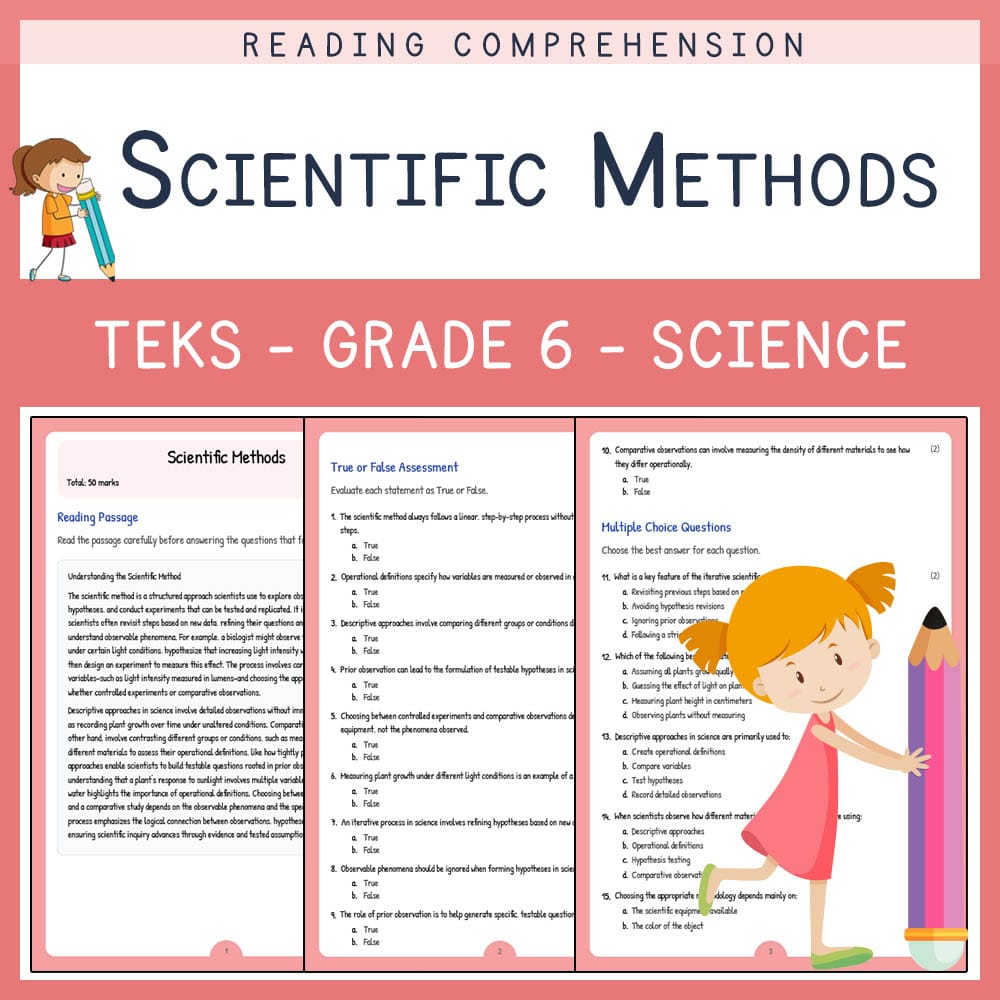
Grade 6 Science | Scientific Methods Worksheet | TEKS Alligned
 Created byLumora Learning
Learning Objectives
- Understand the iterative nature of scientific methods in testing hypotheses.
- Differentiate between descriptive and comparative scientific approaches.
- Learn how to define operational variables and select appropriate methodologies based on observable phenomena.
Instant download
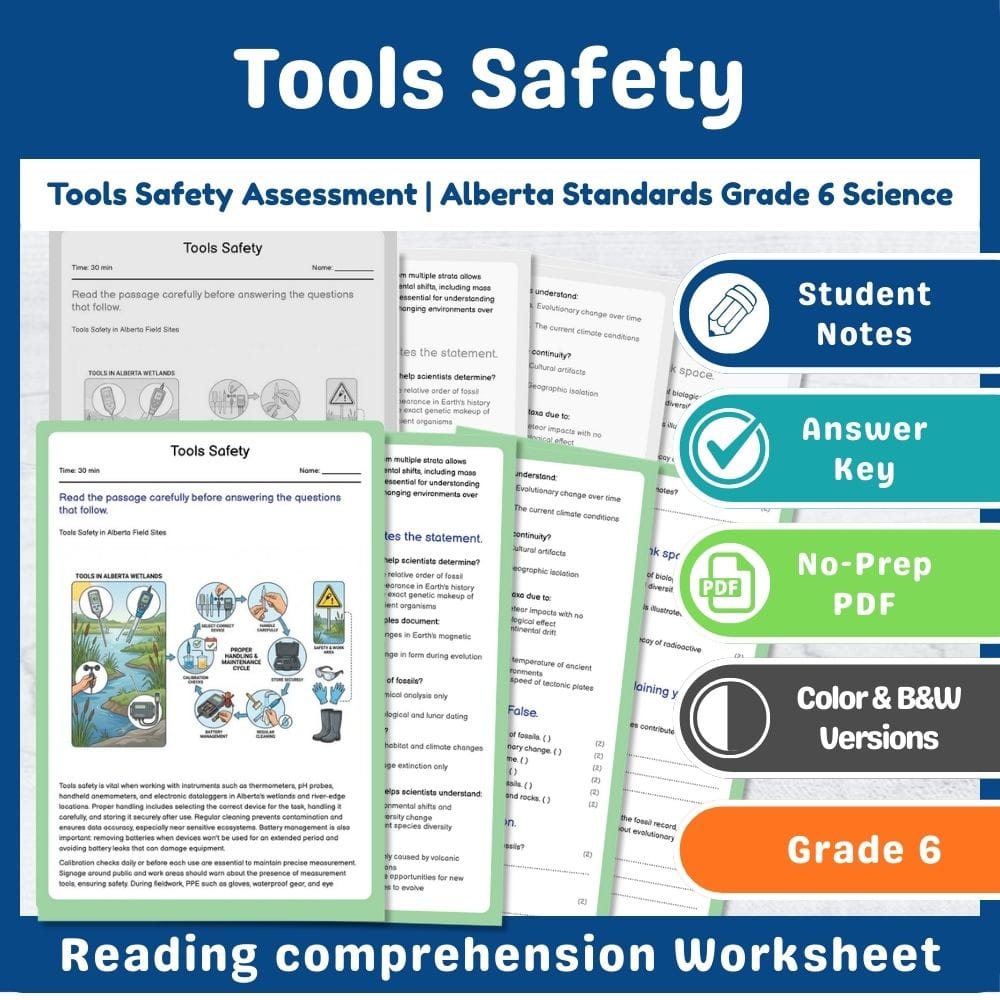
Tools Safety Assessment | Alberta Standards Grade 6 Science
 Created byPrism Point Learning
Learning Objectives
- Recognize safe handling procedures for measurement tools used in fieldwork.
- Identify proper storage, cleaning, and calibration practices for electronic measurement devices.
- Understand safety protocols and protective measures when working near wetlands or river sites.
Also included in: Lesson Grade 6 Science Mini Bundle | Evidence and Investigation
Instant download

Grade 6 Science – Abiotic Influences on Habitats Daily Reading Worksheet
Created byBright Mind ResourcesLearning Objectives
- Understand how temperature influences the distribution of plants and animals.
- Learn about the ways physical factors shape habitats.
- Identify examples of how temperature variations affect metabolic rates and organism survival.
Also included in: Ecosystems Grade 6 Science Daily Reading Worksheets Lesson Bundle | TEKS +2 more
Instant download

Grade 6 Streamlining Worksheet | Practice & Assessment PDF
 Created byClear Sky Classroom
Learning Objectives
- Explain how streamlining reduces aerodynamic resistance by shaping objects for smooth airflow.
- Identify key design features of streamlined shapes, such as rounded noses, tapered tails, and smooth surfaces.
- Describe how small shape changes can affect pressure distribution and the energy needed for motion.
Also included in: Grade 6 Air and Aerodynamics Science Lesson Bundle (Alberta Framework) +1 more
Instant download

Grade 6 Organ Systems Worksheet | NGSS Human Body Science Activity
 Created byAmber Owl Education
Learning Objectives
- Describe how organ systems (circulatory, respiratory, digestive, and nervous) work together to support body functions.
- Explain how tissues and organs contribute to system-level outcomes by connecting cellular processes to organ function.
- Use vocabulary from organ systems to identify roles of key organs (heart, lungs, liver, and brain).
Also included in: Cells & Scientific Evidence Lesson Bundle – Grade 6 Science NGSS +1 more
Instant download

Grade 6 Social Studies — Fall of Rome Worksheet MCQ Paper
 Created byThe Resource Hub
Learning Objectives
- Understand the key factors that contributed to the decline of the Western Roman Empire.
- Identify chronological developments leading to the fall of Rome.
- Analyze the impact of invasions, economic instability, and internal political strife on the empire.
Also included in: Grade 6 Ancient Rome Social Studies Custom Bundle: California Framework +1 more
Instant download

Grade 6 Social Studies — Human-Environment Impact Worksheet for Practice
Created byThe Resource HubLearning Objectives
- Understand how human activities affect local ecosystems and communities.
- Analyze case studies of urban development and forestry practices.
- Evaluate the ecological and social consequences of infrastructure projects and resource extraction.
Also included in: Grade 6 Human Systems and Resources Social Studies Lesson Bundle +1 more
Instant download

Keystone Species Worksheet | Ontario Grade 6 Science Assessment
 Created byCedar Grove Learning
Learning Objectives
- Explain what a keystone species is and how it can influence an ecosystem disproportionately.
- Describe how trophic interactions (predators, herbivores, and producers) can create cascading effects.
- Identify indicators of keystone status and predict potential outcomes for biodiversity and habitat complexity.
Also included in: Grade 6 Biodiversity and Adaptations Science Lesson Bundle Ontario +1 more
Instant download

Grade 6 Science – The Journey of Carbon & Ecosystems | Daily Reading Worksheet
Created byBright Mind ResourcesLearning Objectives
- Understand how carbon atoms cycle through ecosystems
- Identify the processes involved in the carbon cycle
- Explain why matter is conserved and reused in ecosystems
Also included in: Grade 6 Ecosystems and Energy Science Lesson Bundle | California Standards +1 more
Instant download
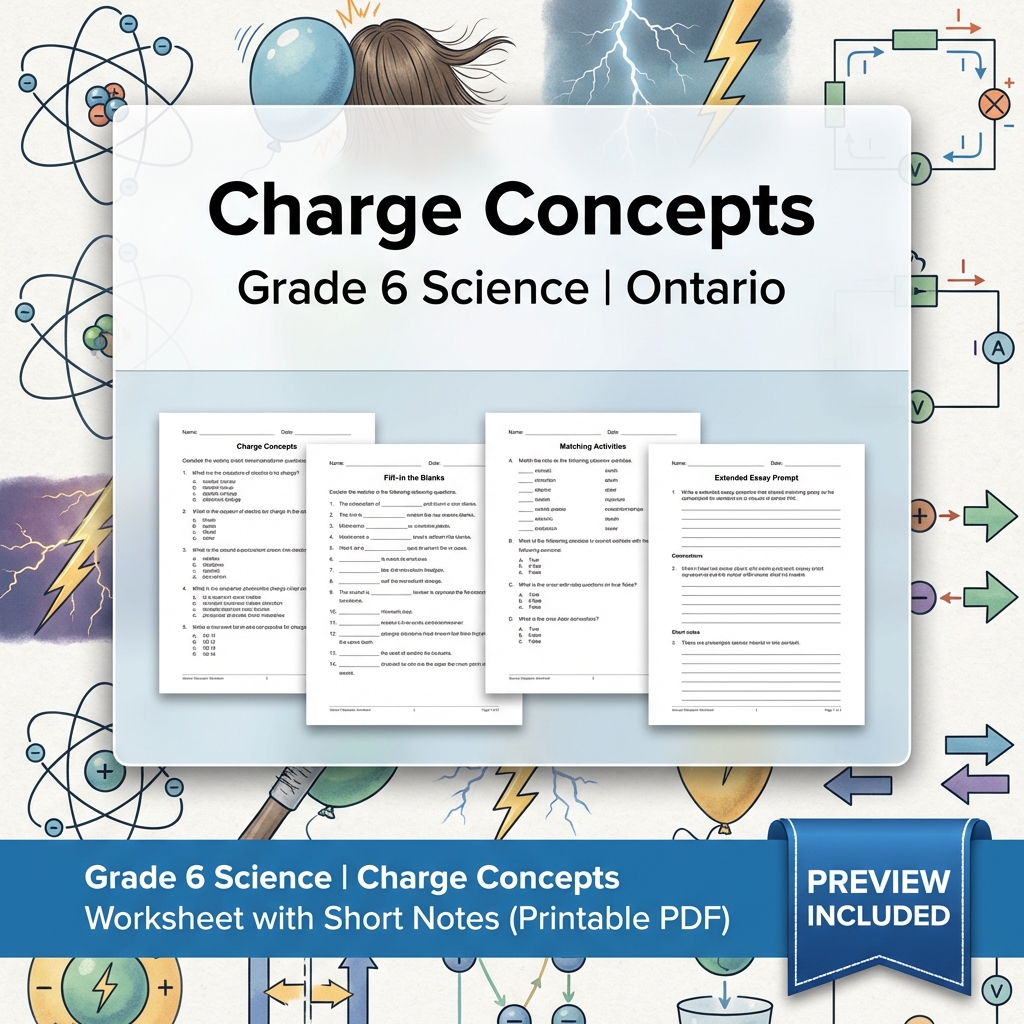
Grade 6 Science | Charge Concepts Worksheet with Short Notes (Printable PDF)
 Created byMeadowlark Worksheets
Learning Objectives
- Understand the difference between static and current electricity.
- Define electric charge, charge separation, and flow.
- Connect macroscopic phenomena like sparks and hair attraction to charge imbalance.
Also included in: Grade 6 Science Lesson Group on Energy, Circuits & Properties +1 more
Instant download

Grades 6, 7 & 8 Holiday Worksheet | Assessment & Student Practice PDF
Learning Objectives
- Explain how symbols, colors, and design choices communicate feelings in Mother’s Day artwork.
- Compare how different cultures use various decorations and symbols to honor maternal figures.
- Create and describe a personal art idea that expresses gratitude using clear visual reasons.
Also included in: Grades 6, 7 & 8 Holiday ELA Custom Bundle | ELA Worksheets +2 more
Instant download
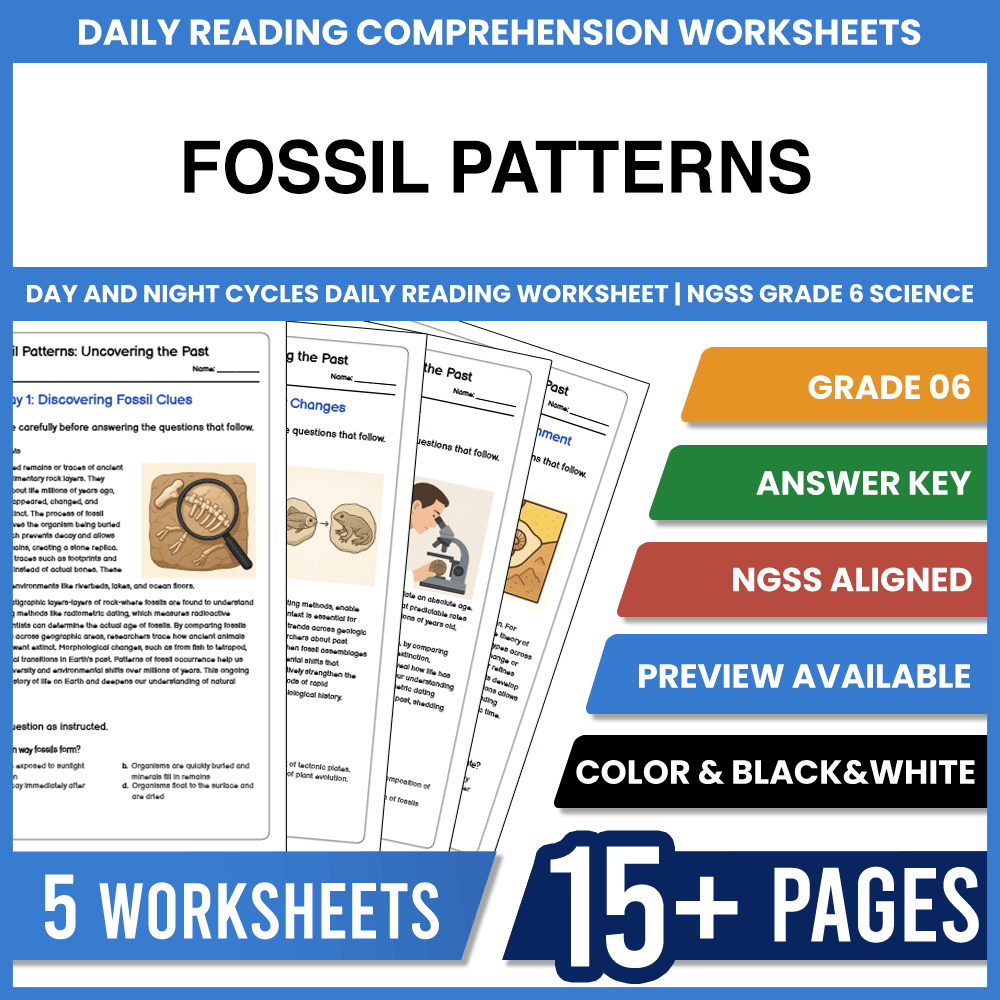
Grade 6 Science – Variation Effects in Organisms Daily Reading Worksheet
 Created byElena Brooks
Learning Objectives
- Understand how genetic information influences phenotypic variation.
- Identify examples of inherited traits and environmental effects on organisms.
- Describe how environmental factors like temperature and nutrition can modify traits.
Also included in: Grade 6 Science From Molecules to Organisms Worksheet Bundle | NGSS +1 more
Instant download

Grade 6 Science Adaptation Tradeoffs Worksheet with Short Notes | PDF
Created byMeadowlark WorksheetsLearning Objectives
- Understand the concept of adaptation trade-offs and how they influence survival strategies.
- Compare specialist and generalist strategies in different environments.
- Analyze benefits and costs of narrow niche versus broad tolerance adaptations.
Also included in: Grade 6 Science Lesson Bundle for Ontario | Ecosystems & Genetics +1 more
Instant download

Grade 6 Reasoning and Claims Daily Reading Worksheet | TEKS Science
 Created byBRIGHT PATH RESOURCES
Learning Objectives
- Distinguish an observation from an inferential claim.
- Identify evidence that supports or does not support a claim.
- Explain why a reasoning claim needs sufficient evidence.
Also included in: Scientific Methods 6th Science Daily Reading Worksheets Lesson Bundle | TeKS +1 more
Instant download

Grade 6 TEKS Earth’s Orbit and Seasonal Change Science Reading Worksheet
Created byBRIGHT PATH RESOURCESLearning Objectives
- Explain how Earth’s orbit and axial tilt cause seasons.
- Identify how gravitational interactions affect planetary motion.
- Use evidence from day length and sunlight angle to support ideas about seasonal change.
Also included in: Earth & Space Grade 6 Science Daily Reading Worksheets Lesson Bundle | TEKS +1 more
Instant download
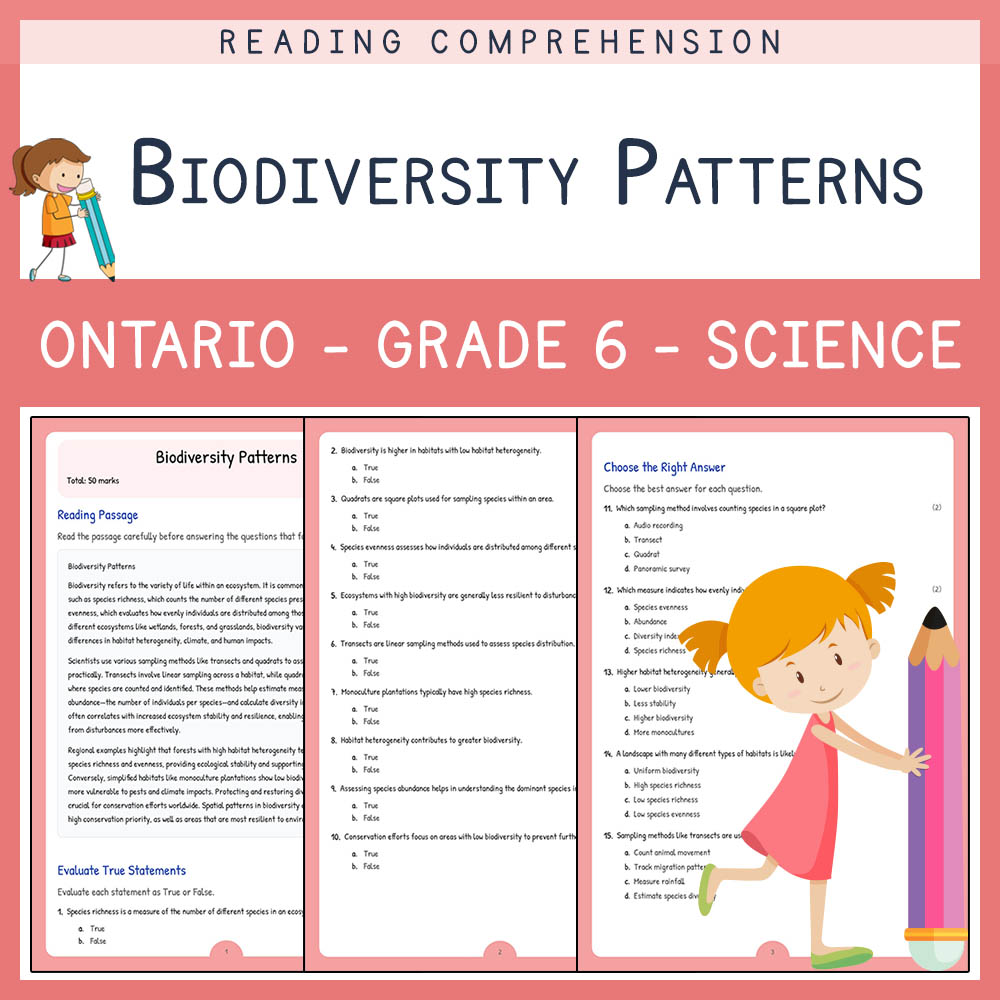
Grade 6 Science | Biodiversity Patterns Worksheet with Answer Key (PDF)
Created byLumora LearningLearning Objectives
- Understand measures of biodiversity such as species richness, abundance, and evenness across ecosystems.
- Explore sampling methods like transects and quadrats used to quantify diversity.
- Interpret spatial patterns and relate biodiversity metrics to ecosystem stability and resilience.
Also included in: Grade 6 Science | Biodiversity Custom Unit Resource | Ontario Framework
Instant download

Grade 6 Science – Observation Techniques & Data Collection | Reading Worksheet
Created byBright Mind ResourcesLearning Objectives
- Understand the concept of systematic observation in scientific data collection.
- Differentiate between qualitative notes and quantitative measurements.
- Identify common instruments used in scientific observation such as rulers, balances, and thermometers.
Also included in: Grade 6 Science Inquiry & Modeling Daily Reading Lesson Bundle | TEKS +2 more
Instant download
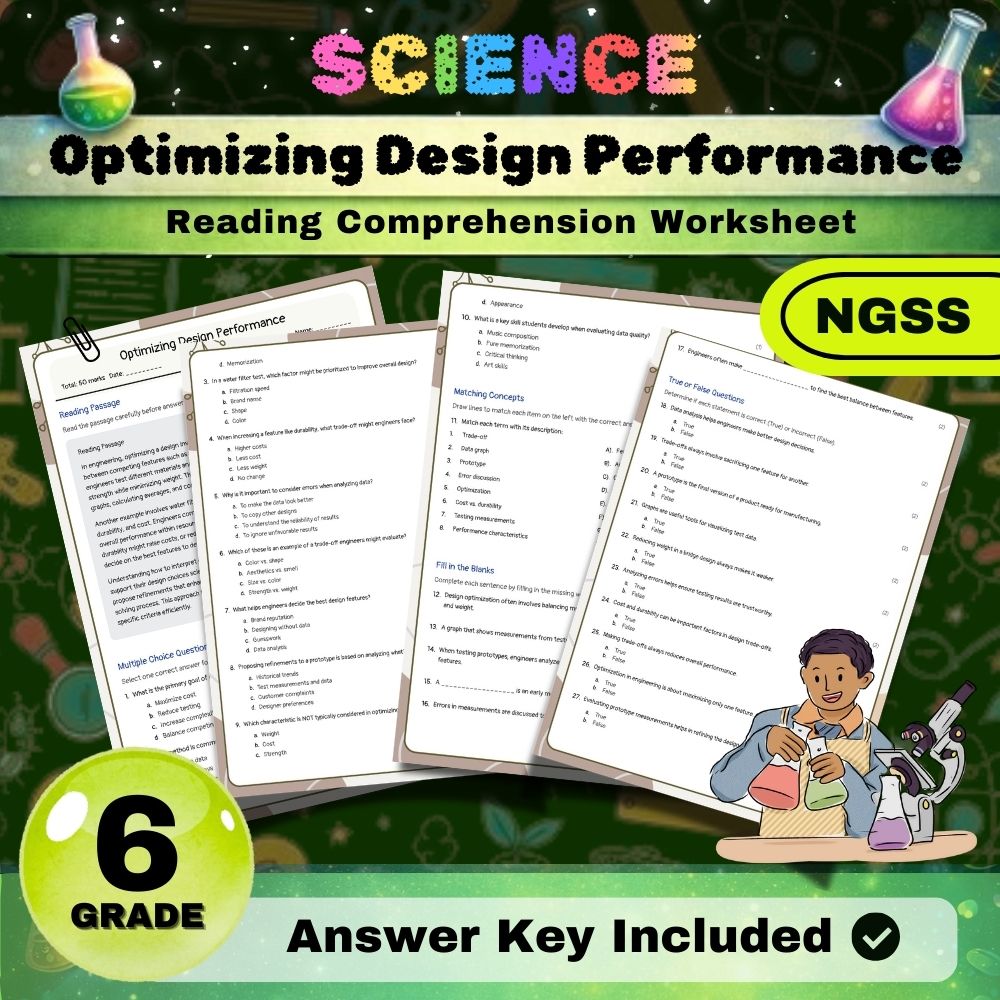
Grade 6 Science | Optimizing Design Performance Worksheet (PDF) NGSS
 Created byMaple Path Learning
Learning Objectives
- Understand how data from comparative tests informs design improvements.
- Analyze graphs, averages, and error discussions to make data-supported design choices.
- Evaluate trade-offs like strength versus weight or cost versus durability in optimization.
Also included in: Grade 6 Science Engineering Design Unit | NGSS Worksheets Pack +1 more
Instant download
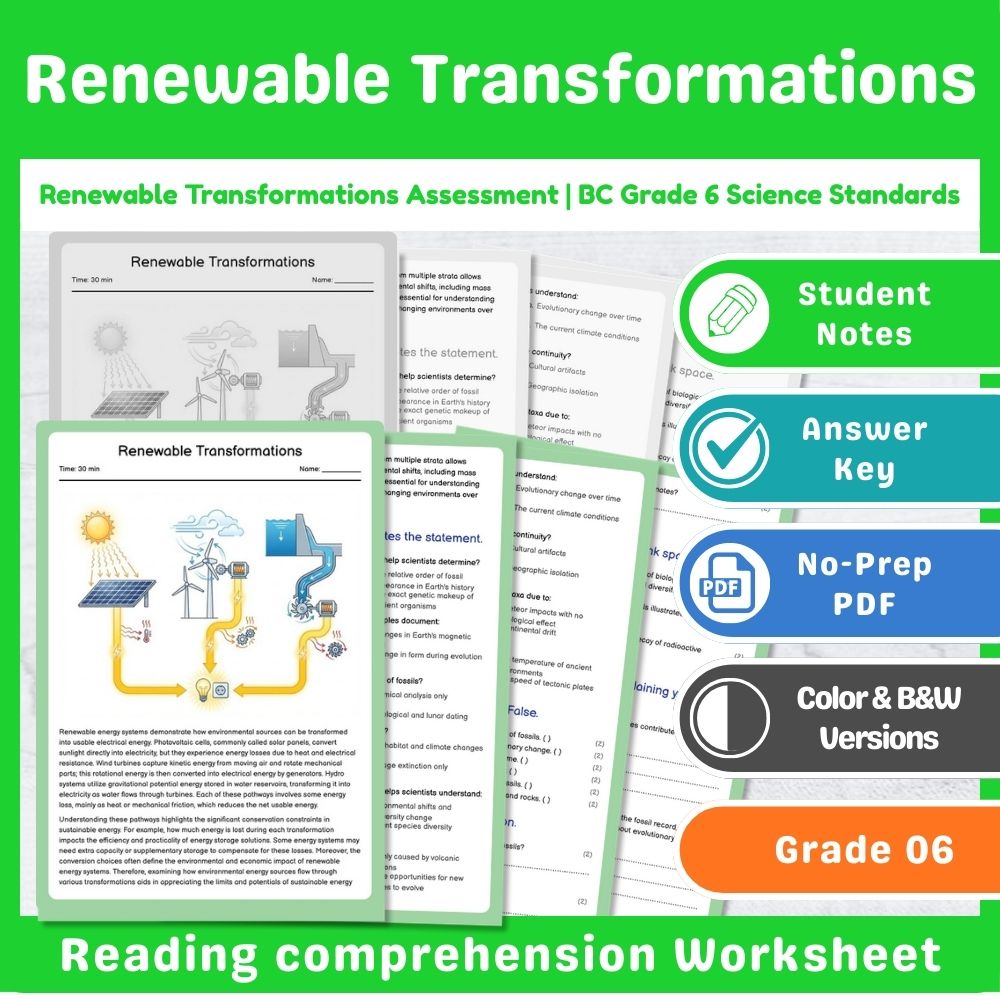
Renewable Transformations Assessment | BC Grade 6 Science Standards
Created byPrism Point LearningLearning Objectives
- Identify different types of renewable energy systems and their energy transformation processes.
- Explain how energy is converted and where losses occur in renewable energy systems.
- Assess the practical limits and conservation constraints of sustainable energy sources.
Instant download

Science Design Problem Worksheet | Grade 6 Standards-Aligned
JCreated byJ.S SheetsLearning Objectives
- Explain what makes a design problem: a need plus measurable requirements and constraints
- Identify how sketches, dimensions, and performance goals help designers create testable solutions
- Use evidence from requirements (size, safety, budget) to choose and justify a solution
Also included in: Grade 6 Engineering Design Process Science Lesson Bundle – General Framework +1 more
Instant download

Body Organization Levels Assessment | General Grade 6 Science Standards
Created byPrism Point LearningLearning Objectives
- Understand the hierarchical organization of organisms from cells to body systems.
- Identify the functions of different body structures and their contribution to overall health.
- Explain how changes in one level of body organization can affect the entire system.
Instant download

Grade 6 Day and Night & Seasons Science Worksheet | NGSS Earth & Space
Created byBRIGHT PATH RESOURCESLearning Objectives
- Understand Earth's rotation and its role in creating day and night.
- Explain how Earth's tilt and orbit produce seasons.
- Identify key observations such as sunrise, sunset, and shadows to explain Earth’s movements.
Also included in: Earth's Place in the Universe Grade 6 Science Worksheets Bundle | ngss +2 more
Instant download
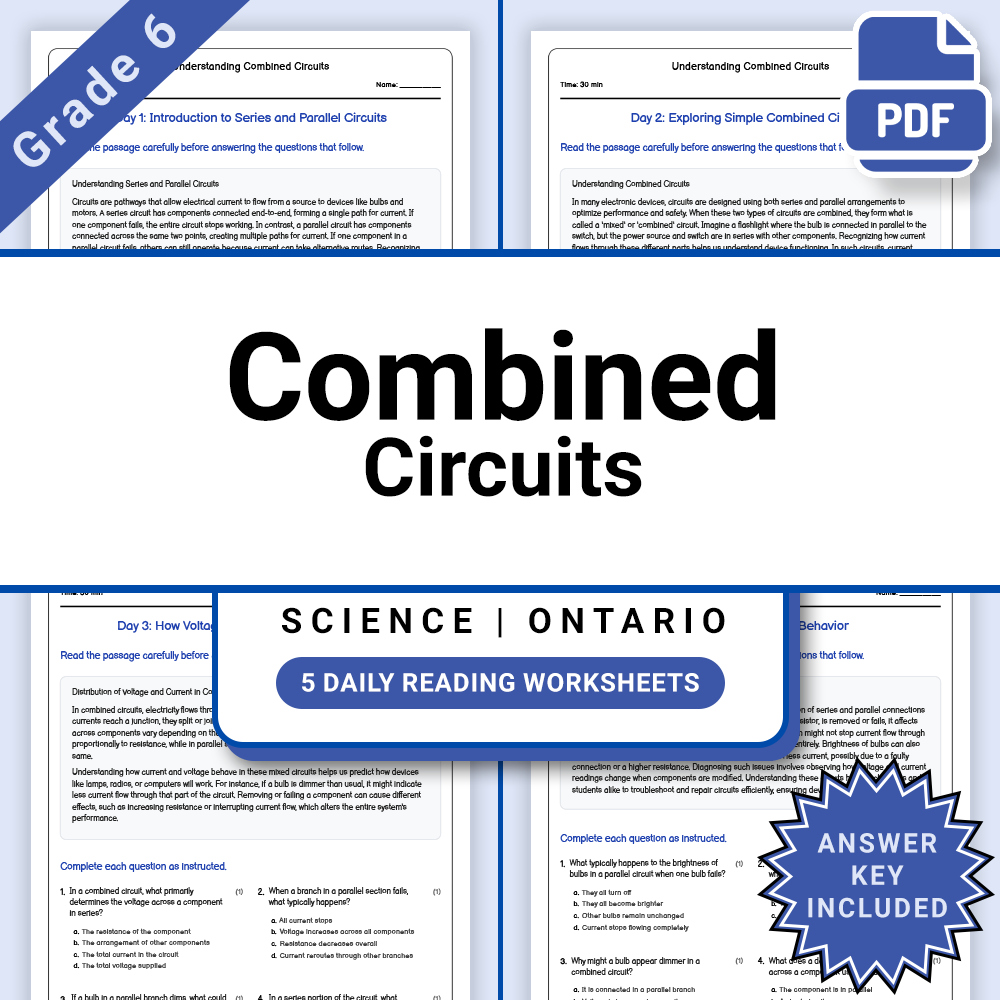
Grade 6 Science – Combined Circuits Daily Reading Worksheet + Answer Key
JCreated byJ.S SheetsLearning Objectives
- Recognize differences between series and parallel circuits
- Understand how currents and voltages distribute in combined circuits
- Decompose complex circuits into simpler series and parallel parts
Also included in: Grade 6 Science Lesson Group – Circuits and Energy Ontario Framework +1 more
Instant download
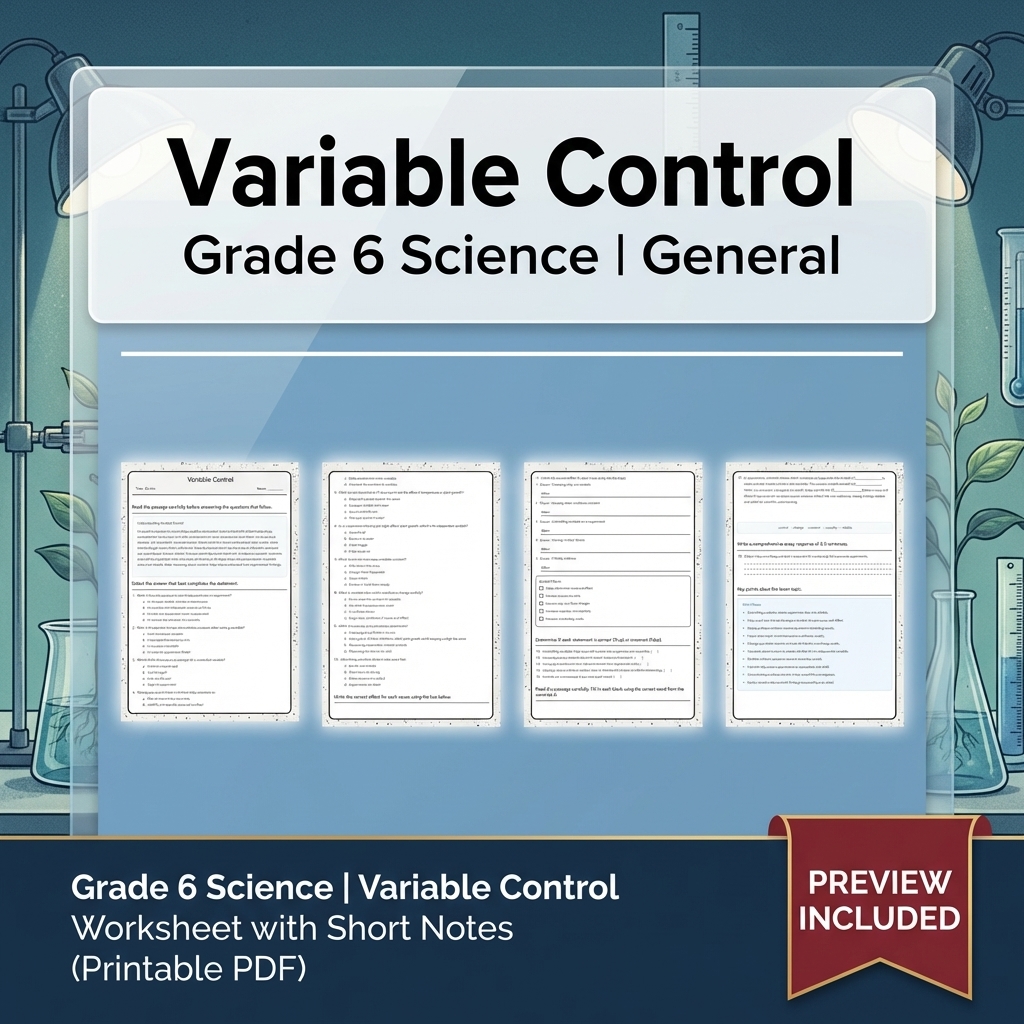
Grade 6 Science | Variable Control Worksheet with Short Notes (Printable PDF)
Created byMeadowlark WorksheetsLearning Objectives
- Understand the importance of controlling variables in experiments.
- Identify different types of variables and controls used in scientific investigations.
- Explain why controlling variables ensures reliable evidence.
Also included in: Grade 6 Science Lesson Group | Comprehensive Worksheets & Activities +1 more
Instant download
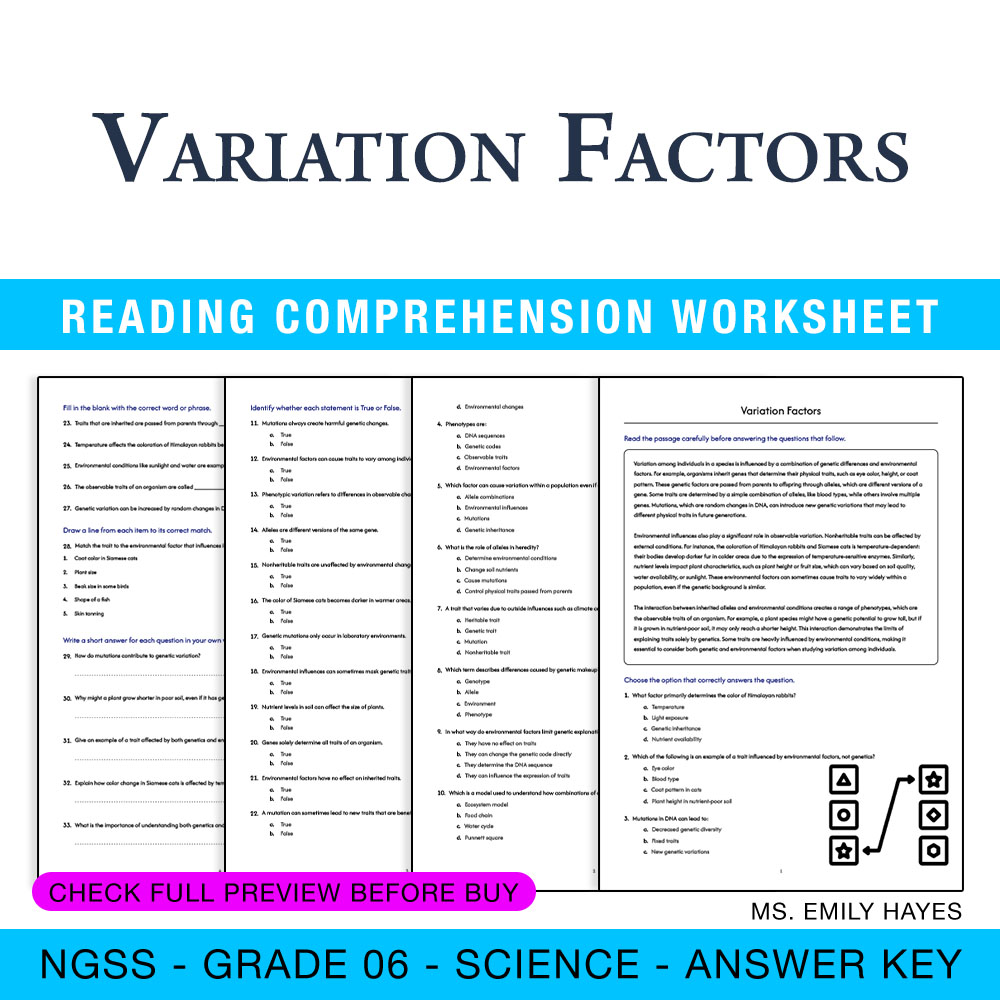
Grade 6 Science | Variation Factors Worksheet (PDF + Answer Key)
 Created byCopper Leaf Classroom
Learning Objectives
- Understand how genetic differences and environmental factors contribute to observable variation among individuals.
- Model the effect of allele combinations, mutations, and environmental influences on traits.
- Explain the limits of genetic explanations in traits affected by environment.
Also included in: Grade 6 Science | Inheritance and Variation Unit Pack (PDF+ Answer Key)
Instant download
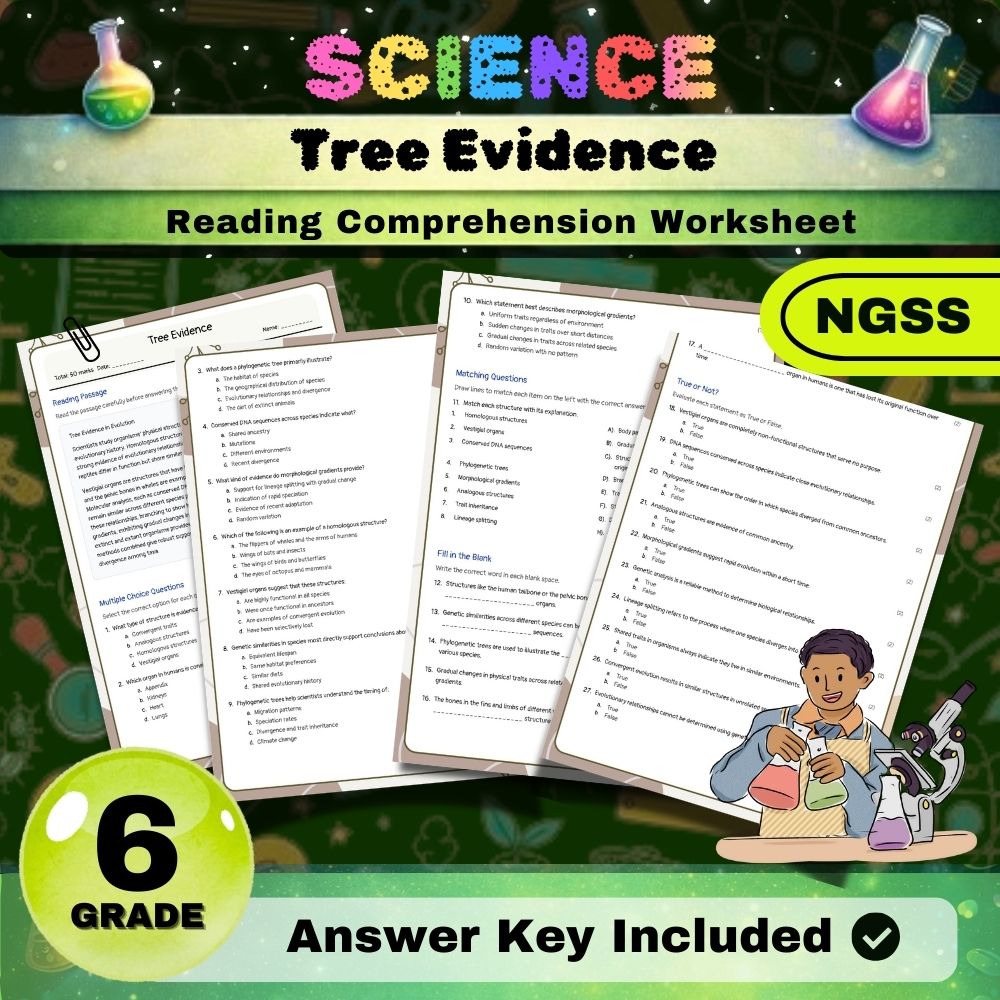
Grade 6 Science | Evidence of Evolution Worksheet (NGSS PDF + Google Form)
Created byMaple Path LearningLearning Objectives
- Understand how comparative anatomy and molecular traits support evolutionary relationships among taxa.
- Analyze phylogenetic trees and interpret evidence for common ancestry and divergence.
- Identify homologous structures, vestigial organs, and conserved DNA sequences in different organisms.
Also included in: Grade 6 Science Bundle | Evolution, Natural Selection & Biodiversity Worksheets +1 more
Instant download

Grade 6 Food Chains Science Daily Reading Worksheet | Producers & Energy TEKS
Created byBRIGHT PATH RESOURCESLearning Objectives
- Identify producers in a food chain.
- Explain how energy starts in a food chain.
- Describe how energy decreases as it moves to higher trophic levels.
Also included in: TEKS Ecosystems Grade 6 Science Daily Reading Worksheets Lesson Bundle | TEKS +1 more
Instant download

Grade 6 Forest Types Worksheet | Practice & Assessment PDF
Created byClear Sky ClassroomLearning Objectives
- Identify and describe major forest types (boreal mixedwood, montane, subalpine, and aspen parkland).
- Explain how abiotic factors like elevation, soil moisture, and fire history influence forest distribution.
- Use forest-type evidence to predict habitat conditions and possible species compositions.
Also included in: Grade 6 Biodiversity & Plant Ecosystems Science Lesson Bundle | Alberta +1 more
Instant download

6th Grade Holiday | Celebrating Educators Worksheet (PDF)
Created bySilver Birch TeachingLearning Objectives
- Describe how communities honor educators in both formal and informal ways.
- Explain why recognizing teachers supports students’ growth and strengthens society.
- Identify moral values (gratitude, respect, service) shown through traditions and stories.
Also included in: 6th Grade Holiday Lesson Bundle: May Framework +1 more
Instant download

Grade 6 Community Stewardship Science Worksheet & Doodle Note
 Created byChalk and Compass
Learning Objectives
- Apply scientific methods to local environmental and community issues using respectful, ethical engagement.
- Use consent, cultural sensitivity, and validation practices to responsibly collect and verify observations.
- Communicate findings clearly to non-specialist community members and propose actionable stewardship measures.
Also included in: Grade 6 Science Scientific Inquiry and Evidence Lesson Bundle | Ontario +1 more
Instant download

6th Grade Science | Inquiry Foundations Worksheet (PDF) Ontario Standards
 Created byEvergreen Desk Education
Learning Objectives
- Write testable scientific questions and identify the independent and dependent variables in a scenario.
- Use operational definitions and fair-test design to separate variables and make controlled comparisons.
- Explain how documentation, reproducibility, and limitations support evidence-based conclusions.
Also included in: Grade 6 Science Inquiry and Data Collection Lesson Bundle | Ontario +1 more
Instant download
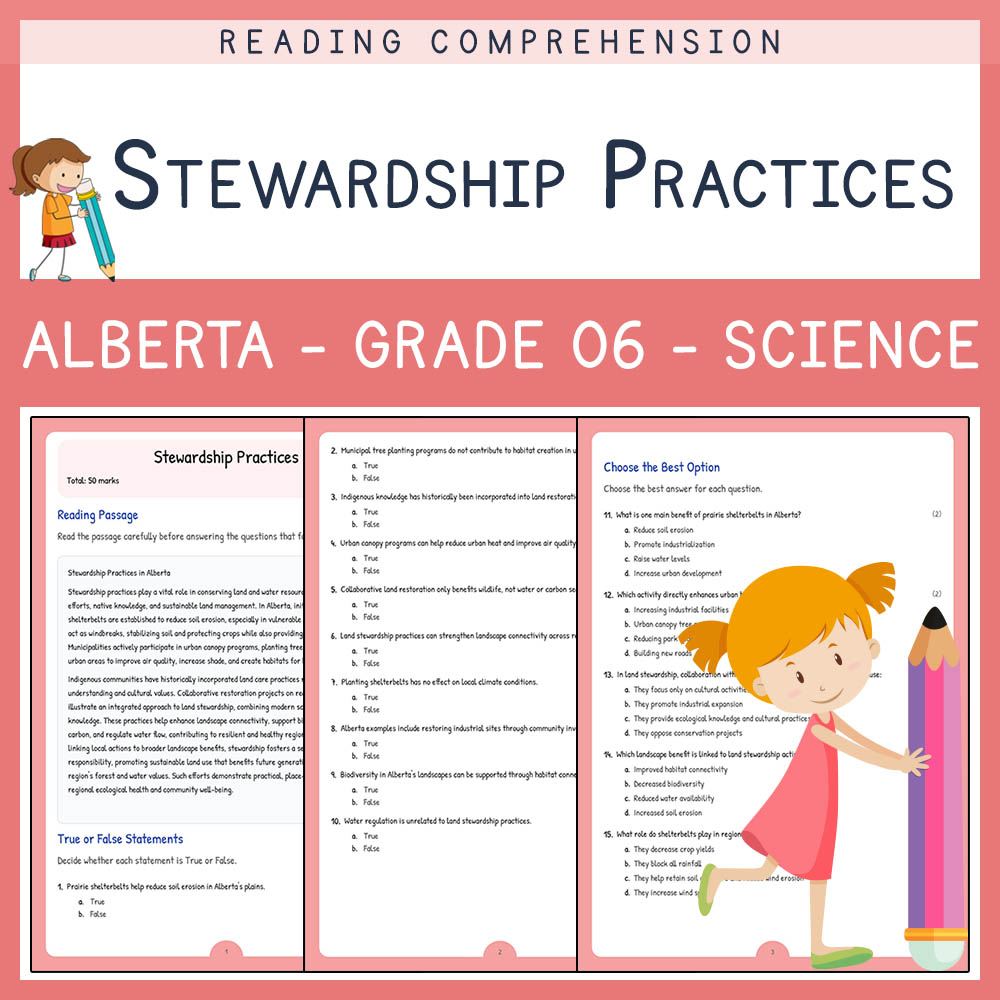
Grade 6 Science Worksheet | Stewardship Practices | Alberta Standards
Created byLumora LearningLearning Objectives
- Understand various community-based stewardship practices and their environmental benefits.
- Identify examples of stewardship activities in Alberta and their impact on landscape health.
- Recognize the connection between local stewardship efforts and broader ecological benefits.
Instant download

Grade 6 Health – Safety in Movement & Proper Landing Techniques| Daily Worksheet
 Created byQuiet Forest Education
Learning Objectives
- Understand the importance of safe landing techniques during physical activities.
- Identify proper methods to land safely to prevent injuries.
- Apply safety principles in movement for sports and games.
Also included in: Movement Competence Grade 6 Health Daily Reading Worksheets Bundle | Ontario +2 more
Instant download

One-Step Equations Worksheet for Grade 6 | Maths Worksheet with Answer Key
Created byElena BrooksLearning Objectives
- Solve one-step equations by using inverse operations to isolate the variable.
- Preserve equality by doing the same operation to both sides of an equation.
- Find solutions that may be rational numbers when equations involve fractions or decimals.
Also included in: Grade 6 Equations & Expressions Maths Lesson Bundle (CCSS) +1 more
Instant download

Testable Science Questions Worksheets for Grade 6 Scientific Inquiry
Created byBRIGHT PATH RESOURCESLearning Objectives
- Explain how measurable evidence helps answer a scientific question.
- Identify the variables that change and the variables that stay the same in an investigation plan.
- Use evidence-based reasoning to choose and evaluate testable questions.
Also included in: Grade 6 Scientific Inquiry Science Worksheets Bundle | General Science +2 more
Instant download
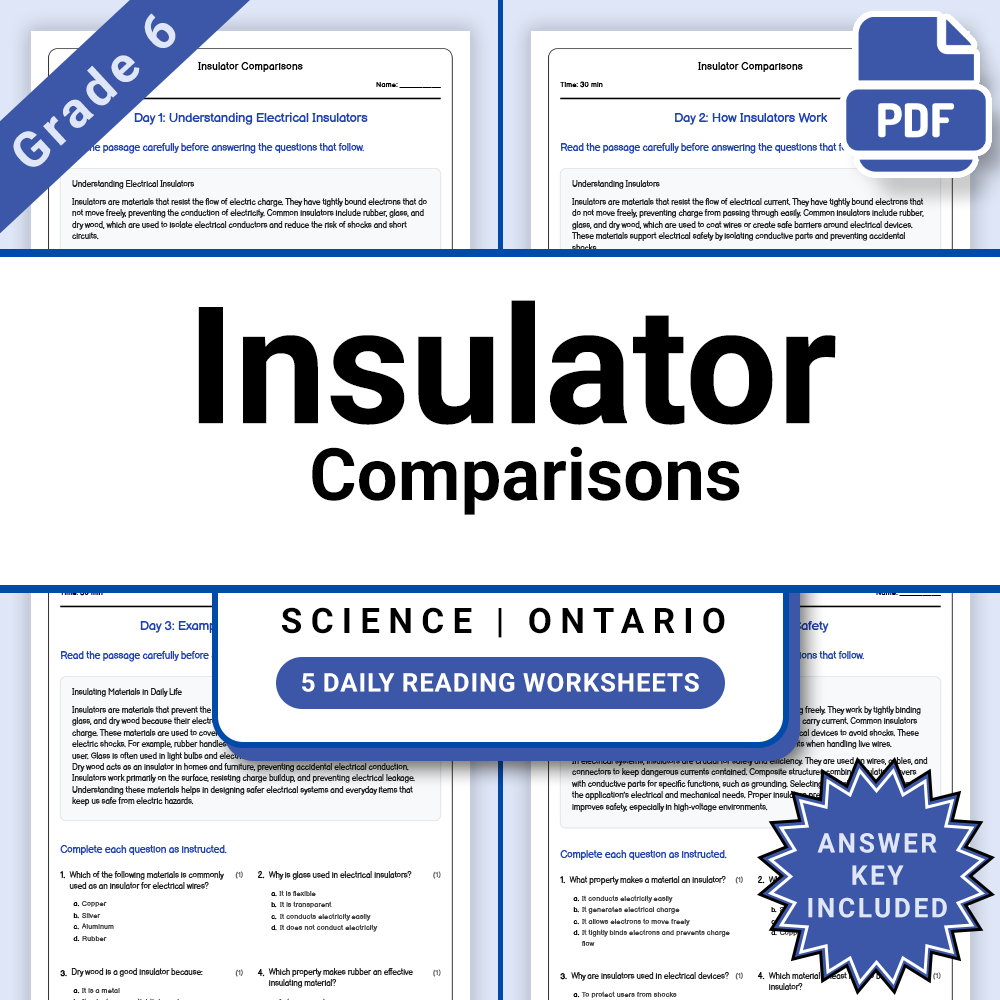
Grade 6 Science – Insulator Comparisons Daily Reading Worksheet + Answer Key
JCreated byJ.S SheetsLearning Objectives
- Identify common insulating materials such as rubber, glass, and dry wood.
- Understand how insulators prevent electrical charge flow and support safety.
- Compare bulk insulating properties with surface charge behaviors.
Also included in: Grade 6 Science Lesson Group – Circuits and Energy Ontario Framework +1 more
Instant download
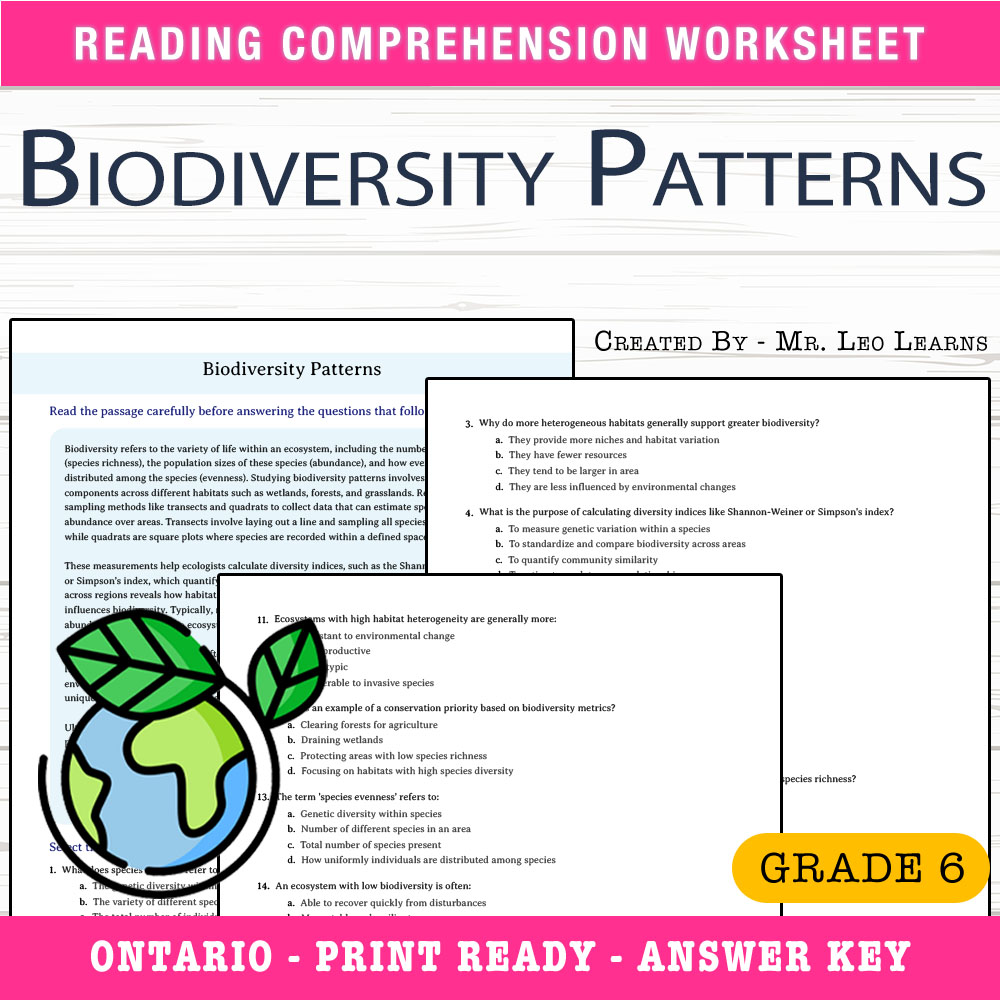
Grade 6 Science – Biodiversity Patterns Worksheet for Mastery | PDF + Answer Key
Created byThe Resource HubLearning Objectives
- Understand different measures of biodiversity such as species richness, abundance, and evenness across various ecosystems.
- Learn sampling techniques like transects and quadrats used for quantifying biodiversity.
- Interpret spatial patterns of biodiversity and relate these to habitat heterogeneity and ecosystem stability.
Also included in: Grade 6 Science Unit Bundle | Ecosystems, Genetic Traits & Environmental Impact +1 more
Instant download
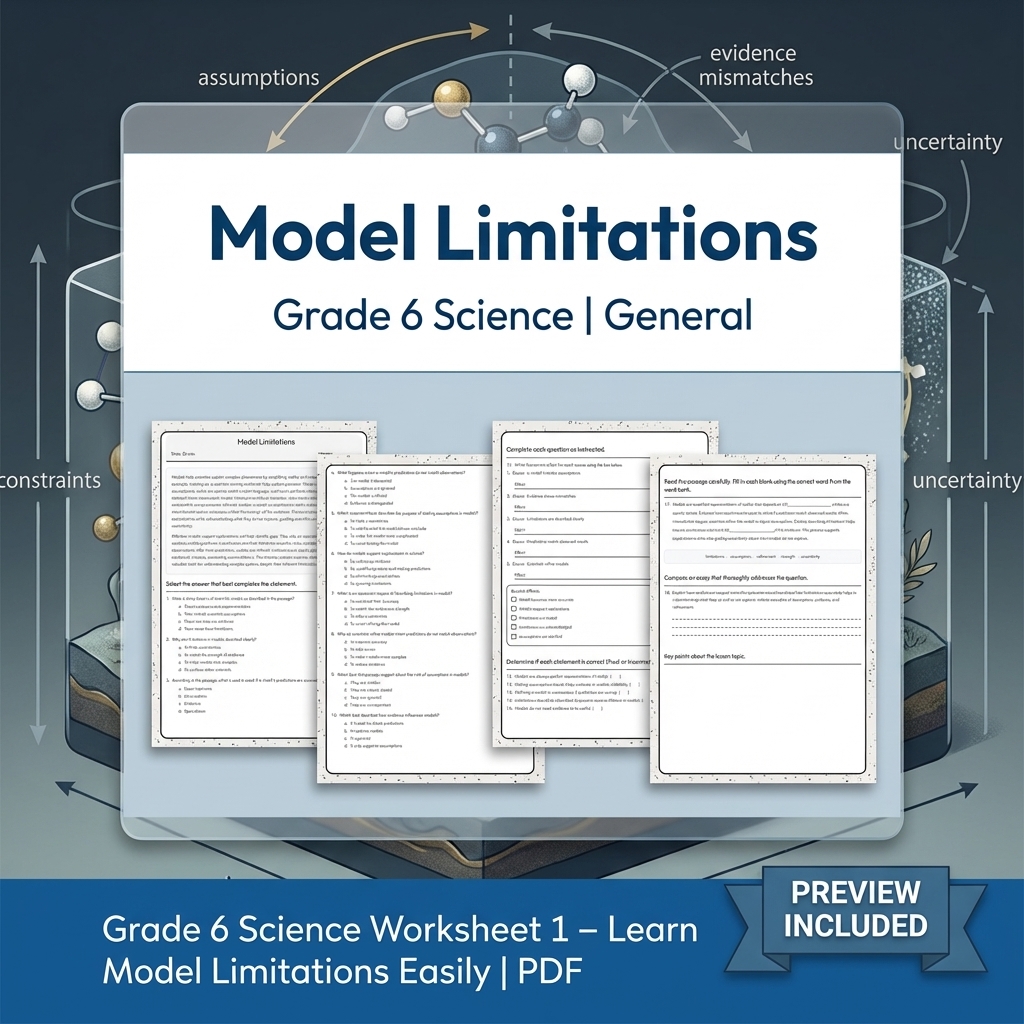
Grade 6 Science Worksheet Learn Model Limitations Easily | PDF
Created byMeadowlark WorksheetsLearning Objectives
- Understand how models support explanations and guide uncertainty.
- Recognize the importance of stating assumptions in models.
- Learn how evidence is used to check and refine models.
Also included in: Grade 6 Science Lesson Group | Comprehensive Worksheets & Activities +1 more
Instant download

Grade 6 Science – Heat & States of Matter | Daily Reading Worksheet
Created byBright Mind ResourcesLearning Objectives
- Understand how heat transfer causes changes in matter's state
- Identify everyday examples of melting, evaporation, and condensation
- Describe the process of energy absorption in matter
Also included in: Matter, Heat & Forces Lesson Bundle | Grade 6 Science | General +1 more
Instant download

Editing Conventions Practice Worksheet | Grade 6 ELA Review & Assessment
Created byMeadowlark WorksheetsLearning Objectives
- Revise writing for correct capitalization, spelling, and punctuation
- Improve readability by fixing sentence boundaries and run-ons
- Use grammar checks for subject-verb agreement and consistent verb tense
Also included in: Grade 6 Evidence-Based Writing Skills in ELA Lesson Bundle | Alberta +1 more
Instant download

Grade 6 Science – Inquiry Foundations & Scientific Questions | Reading Worksheet
Created byBright Mind ResourcesLearning Objectives
- Understand the importance of formulating testable questions in science.
- Identify and define independent and dependent variables.
- Learn how to establish fair tests through operational definitions and controls.
Also included in: Science Grade 6 Science Daily Reading Worksheets Lesson Bundle | Ontario +1 more
Instant download

Grade 6 Science | Classification Genetics Worksheet with Short Notes (PDF)
Created byMeadowlark WorksheetsLearning Objectives
- Understand molecular tools used in species classification, such as DNA barcoding and phylogenetic trees.
- Compare morphological and genetic approaches to species identification.
- Recognize cases where DNA analysis reveals cryptic species and informs taxonomy.
Also included in: Grade 6 Science Lesson Bundle for Ontario | Ecosystems & Genetics +1 more
Instant download

Grade 6 Tree Anatomy Worksheet | Practice & Assessment PDF
Created byClear Sky ClassroomLearning Objectives
- Identify major parts of a tree (roots, trunk, branches, leaves, buds, bark) and describe their functions.
- Explain how form–function relationships help trees survive in different environments.
- Connect tree anatomy to real examples from Alberta habitats.
Also included in: Grade 6 Biodiversity & Plant Ecosystems Science Lesson Bundle | Alberta +1 more
Instant download
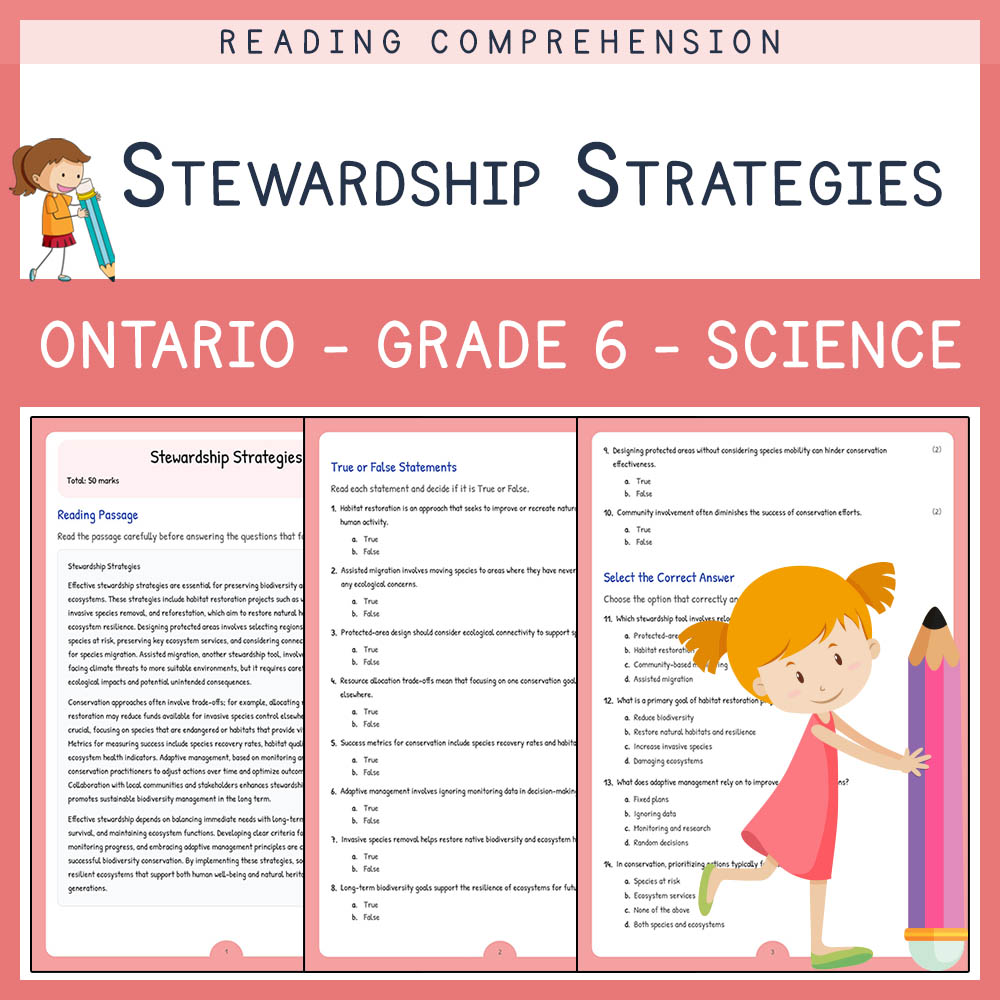
Grade 6 Science | Stewardship Strategies Worksheet & Answer Key (PDF)
Created byLumora LearningLearning Objectives
- Understand key stewardship strategies such as habitat restoration and protected-area design.
- Evaluate trade-offs among different conservation approaches.
- Identify criteria for prioritizing biodiversity actions.
Also included in: Grade 6 Science | Biodiversity Custom Unit Resource | Ontario Framework
Instant download

Grade 6 | Cinco de mayo day for Mastering Arts & Crafts | PDF + Answer Key
 Created byShaNova Worksheets
Learning Objectives
- Describe how Cinco de Mayo arts and crafts reflect cultural identity and community values.
- Explain the significance of bright colors and intricate designs in traditional handmade art.
- Use art-inspired motifs to create an original design that connects past and present.
Also included in: Grade 6 Cinco de Mayo Holiday Custom Bundle: Common Core Arts & History
Instant download

Producers And Consumers Test Prep Worksheet | Grade 6 Science BC
Created byPrism Point LearningLearning Objectives
- Explain how producers convert energy into biomass and how consumers obtain energy by eating other organisms.
- Describe the roles of primary, secondary, and higher-level consumers in a food web.
- Predict how energy transfer limits affect the number of organisms at different trophic levels.
Also included in: Ecosystems & Interdependence Lesson Bundle | Grade 6 Science | BC +1 more
Instant download
Browse more categories
About Grade 6 Worksheets
Browse 8,582 printable Grade 6 worksheets across math, ELA, science, and social studies — each a ready-to-print PDF with optional answer keys.
MyTeachingSheets worksheets are made by real teacher-authors and checked before they go live. Download any as a print-ready PDF for lessons, homework, or independent practice — most include answer keys, and previews are always free.