
Grade 6 Worksheets
8,582 grade resources
6th Grade ELA Worksheet | Quoting and Paraphrasing Skills - General ELA
 Created byGolden Apple Studio
Learning Objectives
- Explain how direct quotations and paraphrases support a claim using evidence from a text.
- Distinguish between quoting and paraphrasing while maintaining meaning and accuracy.
- Integrate evidence smoothly by connecting the cited detail to the interpretation.
Also included in: 6th Grade ELA Theme, Point of View & Evidence Lesson Bundle - General ELA +1 more
Instant download

Grade 6 Habitat Fragmentation Science Reading Worksheet | TEKS Ecology
 Created byBRIGHT PATH RESOURCES
Learning Objectives
- Identify the main idea of a science text about habitat fragmentation.
- Use supporting details to explain how human actions can affect ecosystems.
- Distinguish between true statements and false statements about habitat fragmentation.
Also included in: TEKS Ecosystems Grade 6 Science Daily Reading Worksheets Lesson Bundle | TEKS +1 more
Instant download

6th Grade Science | Leaf Functions Worksheet (Alberta Standards) (PDF)
 Created bySilver Birch Teaching
Learning Objectives
- Describe how leaf structures support photosynthesis, gas exchange, and transpiration.
- Explain how stomata and leaf traits (leaf area and chlorophyll) affect water use efficiency and growth.
- Compare how conifers and deciduous trees manage leaf functions across seasons in Alberta.
Also included in: Grade 6 Ecosystem Interactions Science Lesson Bundle: Alberta Framework +1 more
Instant download
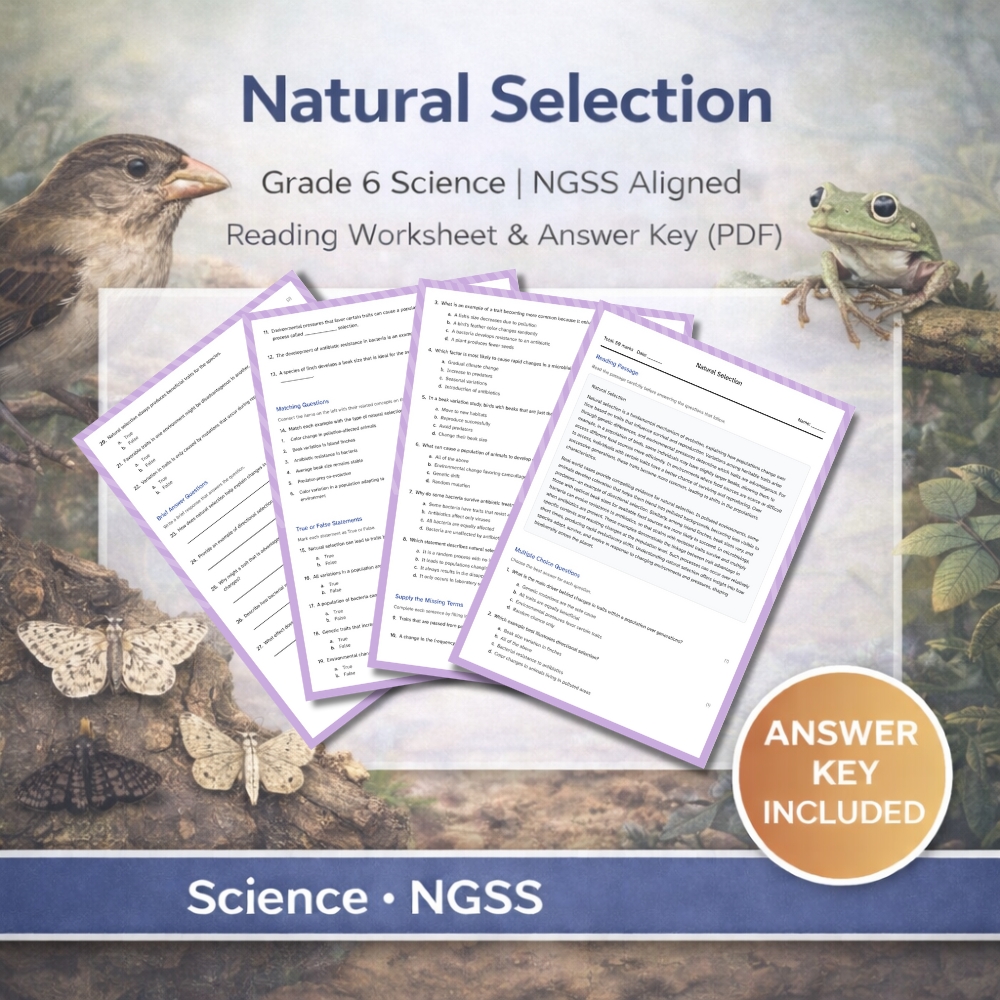
6th Grade Science | Natural Selection | NGSS Worksheet & Answer Key
 Created byCedar Grove Learning
Learning Objectives
- Understand how variation in heritable traits influences survival and reproduction.
- Explain how environmental pressures drive changes in trait frequencies over generations.
- Identify real-world examples of natural selection, including coloration changes, beak variation, and antibiotic resistance.
Also included in: Grade 6 Science | Ecosystems, Evolution & Biodiversity | NGSS Worksheet Bundle +1 more
Instant download
Grade 6 Science – Inheritance Modeling & Genes | Daily Reading Worksheet
 Created byElena Brooks
Learning Objectives
- Understand the basic concepts of inheritance and genes.
- Identify traits that are inherited from parents.
- Use simple models to predict offspring traits based on parent traits.
Also included in: Grade 6 Science Herbity Lesson Bundle | Inheritance & Trait Variation +1 more
Instant download
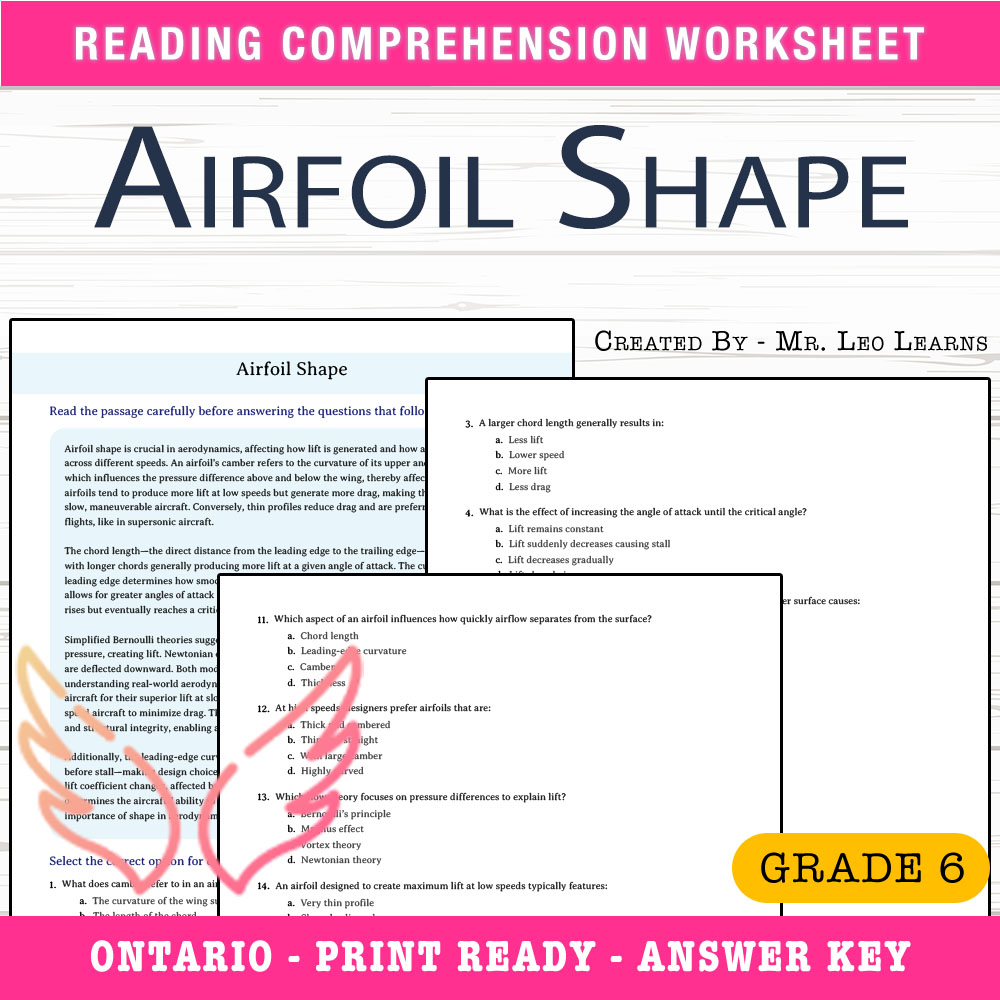
Grade 6 Science — Airfoil Shape Worksheet for Mastering Aerodynamics
 Created byThe Resource Hub
Learning Objectives
- Explain how camber, thickness, chord length, and leading-edge curvature influence pressure distribution and lift.
- Describe the differences between Bernoulli and Newtonian accounts for lift.
- Analyze how angle of attack and critical angles affect stall and lift performance.
Also included in: Grade 6 Science | Aerodynamics & Engineering Unit Workbook (Worksheet Pack) +1 more
Instant download

Atmospheric Circulation Worksheet | NGSSS Grade 6 Science Practice
JCreated byJ.S SheetsLearning Objectives
- Understand how uneven heating of Earth causes air movement and wind patterns.
- Describe the process of warm air rising and cool air sinking in atmospheric circulation.
- Explain how circulation patterns influence weather and climate in different regions.
Also included in: Grade 6 Climate and Atmospheric Systems Science Lesson Bundle: Florida NGSSS +1 more
Instant download

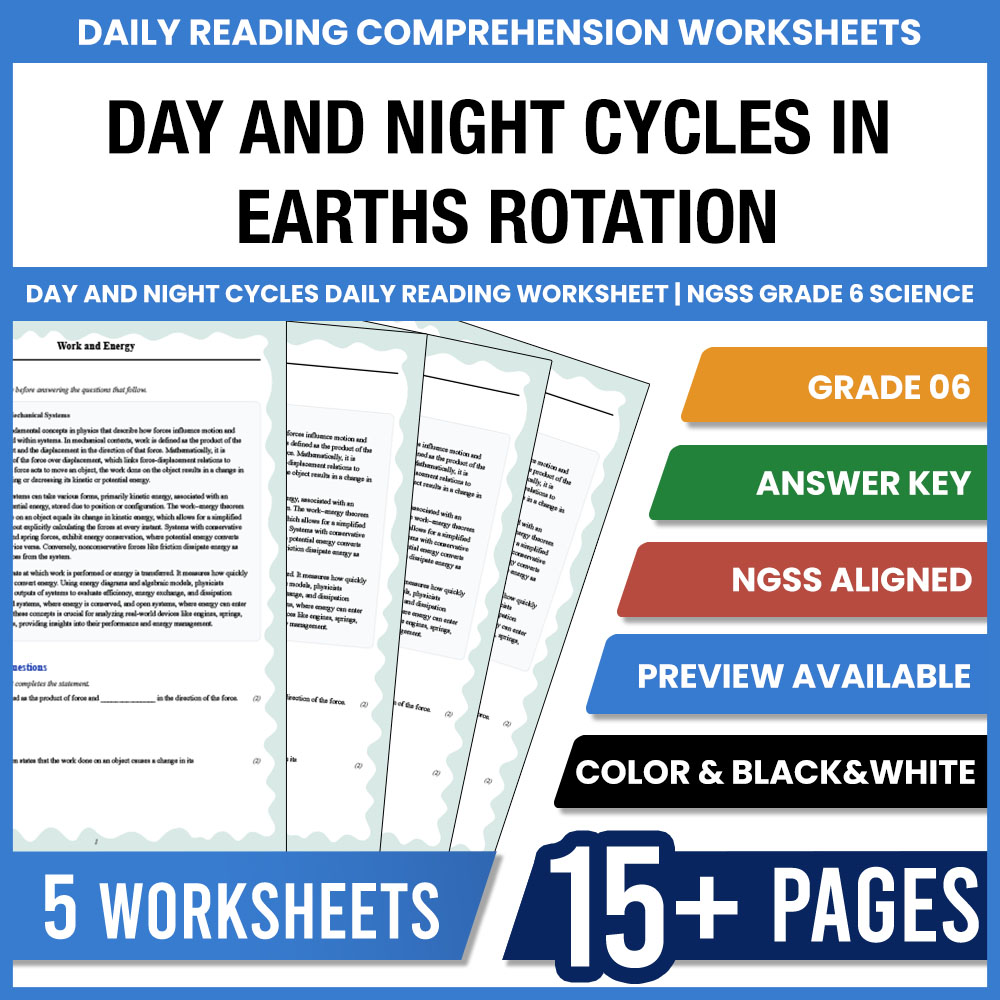
Grade 6 Science – Earth Rotation & Day/Night Cycle | Daily Reading Worksheet
 Created byBright Mind Resources
Learning Objectives
- Understand Earth's rotation and how it causes day and night
- Identify the effects of Earth's rotation on celestial observations
- Describe the sequence of sunrise, solar noon, and sunset
Also included in: Grade 6 Solar System & Seasons Science Daily Reading Lesson Bundle | Alberta +2 more
Instant download

Grade 6 Understanding Gravity & Orbital Motion Worksheet | NGSS Science
Created byBRIGHT PATH RESOURCESLearning Objectives
- Explain how gravitational attraction influences planetary orbits.
- Describe the role of mutual gravity between the Sun and planets.
- Understand elliptical orbits and orbital periods of planets.
Also included in: Earth's Place in the Universe Grade 6 Science Worksheets Bundle | ngss +2 more
Instant download
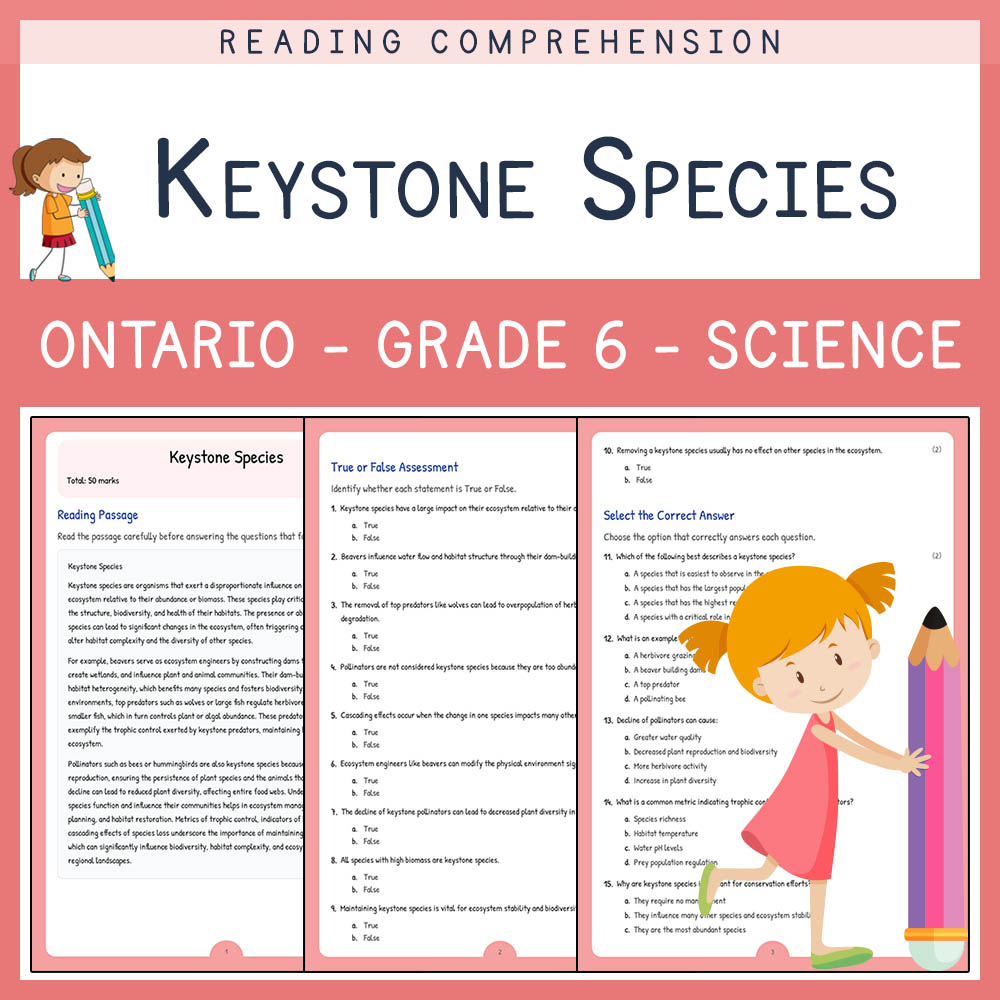
Grade 6 Science | Keystone Species Worksheet & Answer Key (PDF)
 Created byLumora Learning
Learning Objectives
- Understand the concept of keystone species and their role in ecosystems.
- Identify regional case studies illustrating keystone species effects.
- Explain cascading effects caused by keystone species on biodiversity and habitat.
Also included in: Grade 6 Science | Biodiversity Custom Unit Resource | Ontario Framework
Instant download
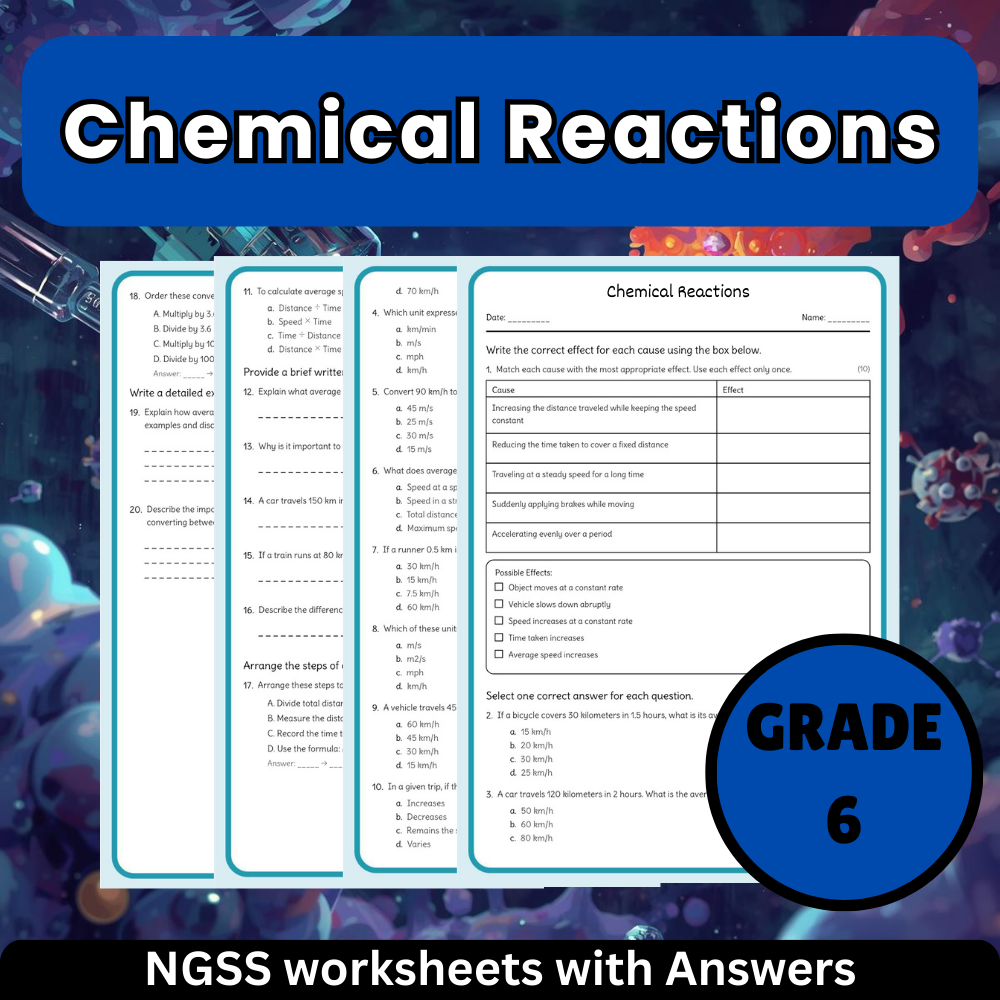
Grade 6 Science | Chemical Reactions Worksheet (NGSS Aligned & Answer Key)
Created byBright Mind ResourcesLearning Objectives
- Identify criteria that indicate a chemical reaction has occurred using qualitative data.
- Analyze quantitative data such as mass and temperature changes to determine if new substances are formed.
- Interpret indicators like color change, gas evolution, precipitate formation, and temperature change in chemical reactions.
Also included in: Grade 6 Science Unit Bundle | Chemical Reactions & Atomic Structure - NGSS +2 more
Instant download

Grade 6 Defining Problems Worksheet | NGSS Engineering Design & Answer Key
 Created byNorthstar Worksheets
Learning Objectives
- Identify the required functions, success measures, and constraints for a design problem.
- Explain how criteria and limits help guide solution planning and evaluation.
- Describe cause-and-effect impacts of design choices on people and natural systems.
Also included in: Grade 6 Engineering Design Lesson Bundle | NGSS Science +1 more
Instant download
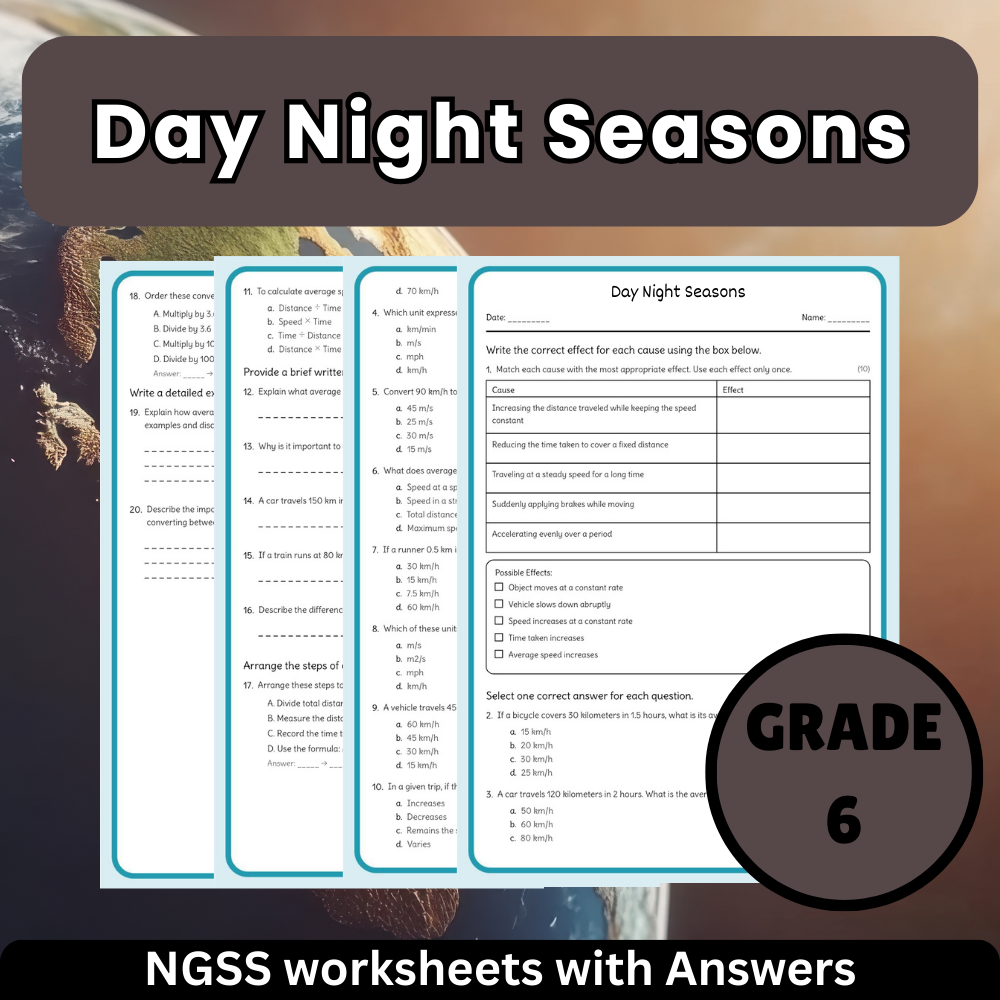
6th Grade Science | Day, Night & Seasons NGSS Worksheet (PDF)
Created byBright Mind ResourcesLearning Objectives
- Understand Earth's rotation and its role in producing day and night.
- Explain how Earth's orbit and axial tilt cause seasonal variations.
- Identify key observational clues like sunrise, sunset, and shadow length changes.
Also included in: Grade 6 Science Unit Bundle – Space, Moon, and Seasons Worksheets (NGSS Aligned) +2 more
Instant download
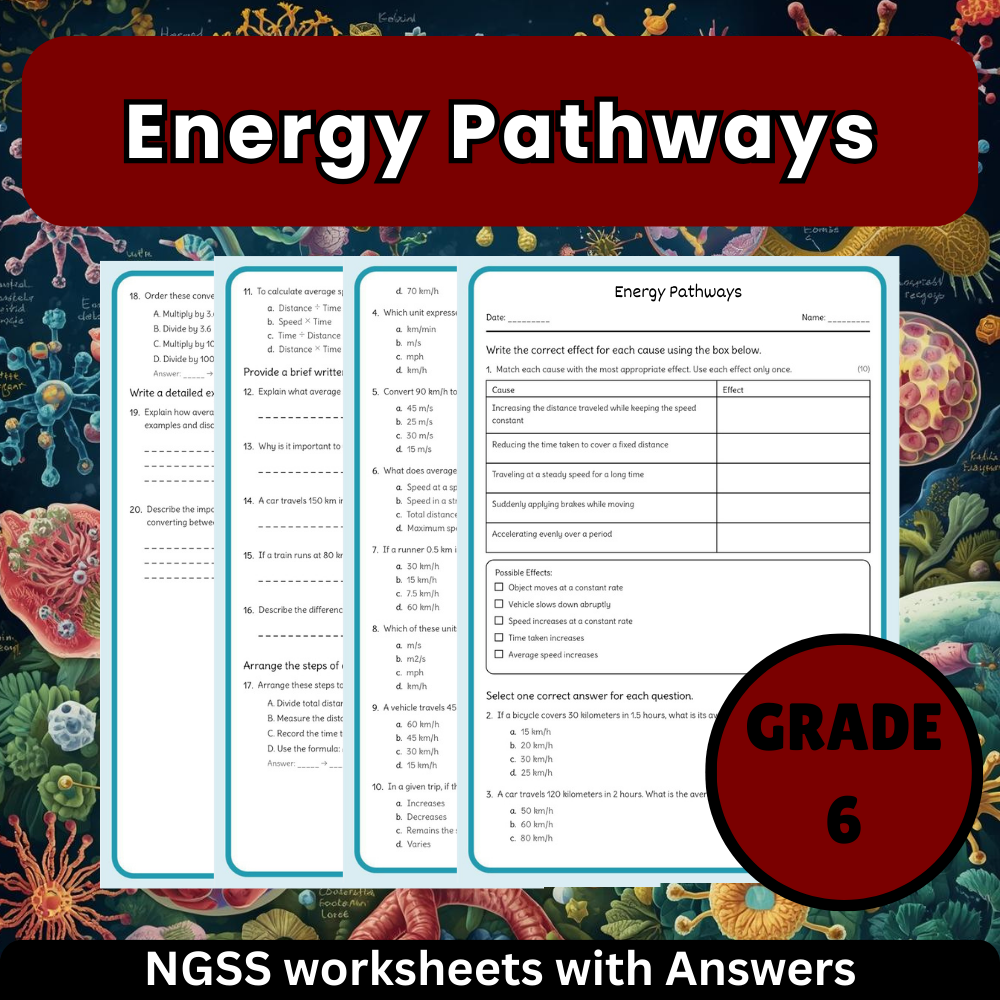
Grade 6 Science | Energy Pathways Worksheet (Answer Key) – NGSS Standards
Created byBright Mind ResourcesLearning Objectives
- Describe how energy is transferred through biological processes like photosynthesis and respiration.
- Identify reactants and products involved in energy transformations within chloroplasts and mitochondria.
- Explain how light energy is converted into chemical bonds in plants.
Also included in: Grade 6 Science UNIT Bundle | Cell Functions, Energy & Systems NGSS Worksheets +2 more
Instant download

Science and Technology Assessment | TEKS Grade 6 Science Worksheet
 Created byPrism Point Learning
Learning Objectives
- Understand how scientific investigation and technological development influence each other.
- Identify tools and instruments that extend observation and measurement in science.
- Explain how technological improvements can shape scientific inquiries and models.
Instant download

Grade 6 Science Daily Reading Data Representation TEKS Worksheet
Created byBRIGHT PATH RESOURCESLearning Objectives
- Explain what a data table shows and what each column and row means
- Read entries accurately using labels and units
- Use basic meanings of mean (average) to describe data
Also included in: Scientific Methods 6th Science Daily Reading Worksheets Lesson Bundle | TeKS +1 more
Instant download

Grade 6 Science – Pollution Effects & Ecosystems | Daily Reading Worksheet
Created byBright Mind ResourcesLearning Objectives
- Understand how nutrient overload affects aquatic ecosystems.
- Identify ecological indicators such as dissolved oxygen and algal biomass.
- Analyze the impact of chemical contaminants on terrestrial and aquatic life.
Also included in: Grade 6 Ecology & Biodiversity Science Lesson Bundle | Ontario Daily Reading +1 more
Instant download

Grade 6 Drag Types & Design Trade-Offs Science Worksheet | Alberta
Created byBRIGHT PATH RESOURCESLearning Objectives
- Identify key ideas about friction and pressure differences in drag
- Distinguish between parasitic and induced drag using passage vocabulary
- Explain how design changes can reduce drag and affect required thrust
Also included in: Aerodynamics & Flight Physics Grade 6 Science Worksheets Bundle | Alberta +1 more
Instant download

Grade 6 Science – Biodiversity Roles & Ecosystems | Daily Reading Worksheet
Created byBright Mind ResourcesLearning Objectives
- Understand how trees and other species contribute to ecosystem functions
- Identify keystone and indicator species in ecosystems
- Recognize the importance of species diversity for ecosystem resilience
Also included in: Grade 6 Forest Ecology Science Daily Reading Worksheets Lesson Bundle | Alberta +2 more
Instant download

Grade 6 Science – Evidence Communication & Data Analysis | Reading Worksheet
Created byBright Mind ResourcesLearning Objectives
- Understand how observations can be summarized and communicated scientifically.
- Learn methods for visualizing data with appropriate plots.
- Recognize the importance of citing data sources and labeling units.
Also included in: Grade 6 Science Data & Inquiry Daily Reading Worksheets Lesson Bundle | Alberta +2 more
Instant download

Evaluating With Variables Grade 6 Maths Worksheet | Common Core CCSS
Created byElena BrooksLearning Objectives
- Use substitution to evaluate expressions when a variable is given a value
- Apply the order of operations correctly, including with fractions and negative numbers
- Interpret the evaluated value as a quantity from a real-life context
Also included in: Grade 6 Equations & Expressions Maths Lesson Bundle (CCSS) +1 more
Instant download

Keystone Species Worksheet Grade 6 Science | Ecosystems Activity
 Created byChalk and Compass
Learning Objectives
- Define keystone species and explain why their impact can be out of proportion to their abundance.
- Describe trophic cascades and how they affect populations, biodiversity, and habitat complexity.
- Use indicators of keystone status to predict ecosystem consequences and management needs.
Also included in: Grade 6 Science Ecosystems, Adaptations & Biodiversity Lesson Bundle | Ontario +1 more
Instant download

Grade 6 Science – Data Representation & Graphs | Daily Reading Worksheet
Created byBright Mind ResourcesLearning Objectives
- Understand how to organize data using tables.
- Interpret data from organized tables.
- Identify trends and outliers in data sets.
Also included in: Science Grade 6 Science Daily Reading Worksheets Lesson Bundle | Ontario +1 more
Instant download

Energy Transformations Worksheet | Standards-Aligned Grade 6 Science Practice
JCreated byJ.S SheetsLearning Objectives
- Understand how energy can change forms during transformations.
- Identify examples of energy transformations in real-world scenarios.
- Explain the principle of conservation of energy in different systems.
Also included in: Grade 6 Matter, Energy, and Forces Science lesson bundle – Florida (NGSSS) +1 more
Instant download

Grade 6 Holiday | First day of spring Worksheet for Mastery | PDF + Answer Key
 Created byShaNova Worksheets
Learning Objectives
- Understand the significance of pollinators like bees and butterflies in ecosystems.
- Identify various community celebrations and activities associated with spring.
- Explore the environmental importance of planting and community clean-ups during spring.
Instant download

Grade 6 Science – Geologic Time & Dating Methods | Daily Reading Worksheet
Created byBright Mind ResourcesLearning Objectives
- Understand the concept of Earth's age and the geologic time scale
- Identify key principles of relative and absolute dating
- Recognize how fossils and stratigraphy are used to interpret Earth's history
Also included in: Grade 6 Earth and Space Science Lesson Bundle Daily Reading | TEKS +2 more
Instant download

Grade 6 Inheritance Modeling Worksheet | Practice & NGSS PDF
 Created byClear Sky Classroom
Learning Objectives
- Understand how traits are transmitted from parents to offspring through genes.
- Model inheritance patterns using Punnett squares and probability.
- Differentiate between dominant and recessive traits in inheritance.
Also included in: Grade 6 Heredity: Inheritance & Variation Science Lesson Bundle NGSS +1 more
Instant download
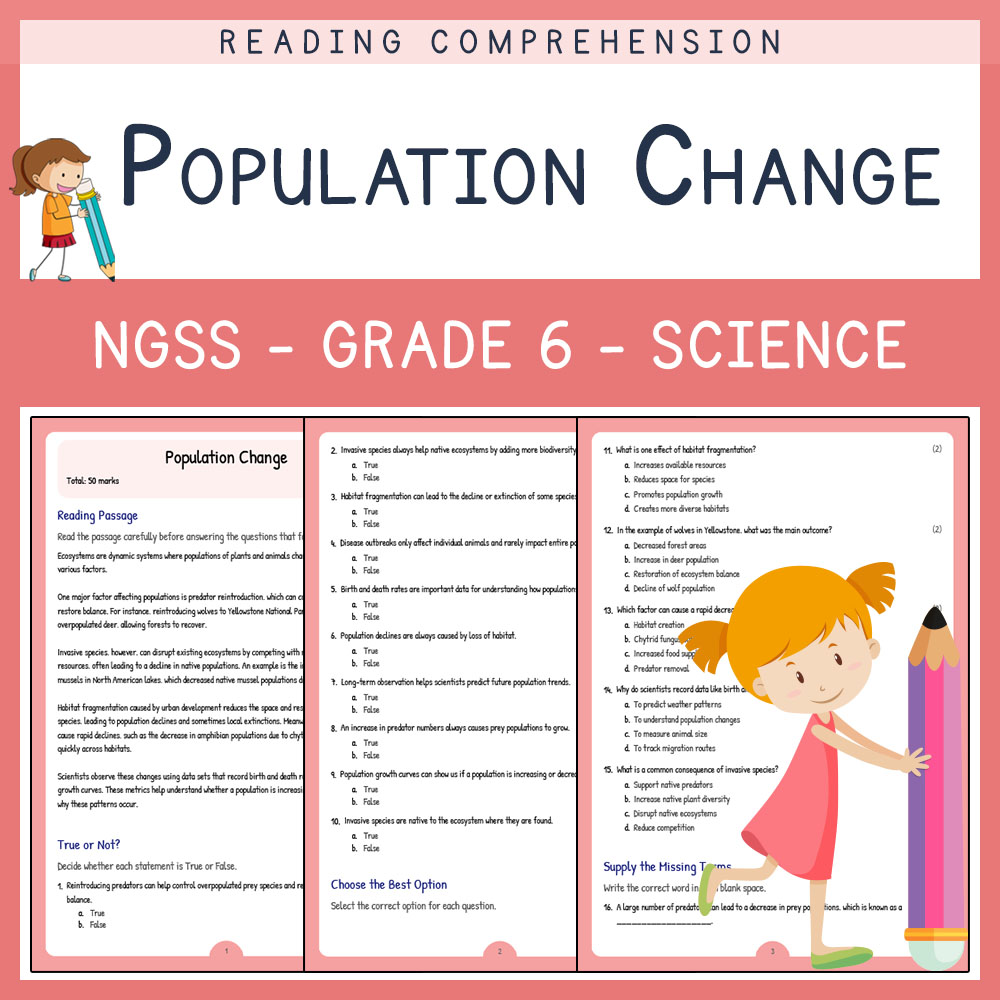
Grade 6 Science | Population Change Worksheet (PDF) | NGSS Aligned
Created byLumora LearningLearning Objectives
- Construct evidence-based arguments about factors influencing population changes in ecosystems.
- Interpret case studies concerning predator reintroduction, invasive species, habitat fragmentation, and disease outbreaks.
- Use empirical data and quantitative metrics to analyze population responses and patterns.
Instant download

Photosynthesis Energy Conversion Worksheet Grade 6 Science Practice Pack
Created byPrism Point LearningLearning Objectives
- Explain how photosynthesis converts light energy into chemical energy stored in sugar molecules.
- Identify reactants and products of photosynthesis and describe the role of oxygen release.
- Describe how energy flows from the Sun to producers and then to other organisms through feeding.
Also included in: Animals Matter Lesson Bundle | Grade 6 Science | California Standards
Instant download

Grade 6 Science | Understanding Drag in Flight - Daily Reading Comprehension
 Created byCoral Reef Learning
Learning Objectives
- Identify the two main types of drag in aircraft design
- Understand how drag affects aircraft performance
- Recognize design strategies to reduce drag
Also included in: Air and Aerodynamics Lesson Bundle – Grade 6 Science Alberta Reading Comp. +1 more
Instant download
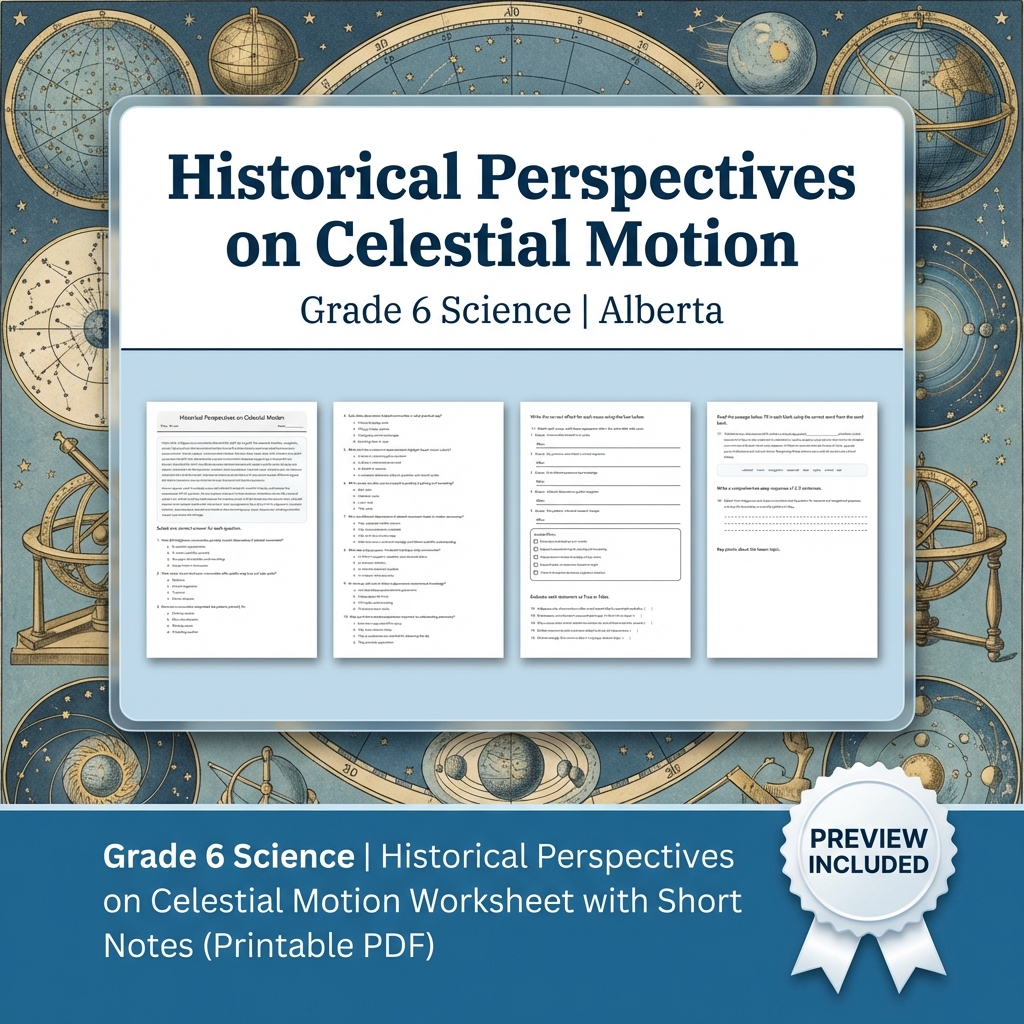
Grade 6 Science | Historical Perspectives on Celestial Motion Worksheet ( PDF)
 Created byMeadowlark Worksheets
Learning Objectives
- Understand how Indigenous and settler communities interpreted sky patterns for seasons and navigation.
- Describe oral knowledge and early astronomical records tied to solar and lunar cycles.
- Explain diverse cultural perspectives on celestial movement and seasonal prediction.
Also included in: Grade 6 Science Sky Science Unit Bundle | Alberta Curriculum Worksheets +1 more
Instant download

6th Grade ELA | Audience Adaptation Worksheet (PDF) – General ELA Standards
Created byGolden Apple StudioLearning Objectives
- Explain how speakers adapt language to purpose, context, and audience by changing tone, formality, and vocabulary.
- Identify which details and transitions are most relevant for a specific audience and goal.
- Use evidence from a speech scenario to justify changes in delivery (volume, pace, gesture).
Also included in: Grade 6 Evidence & Argument Mapping ELA Lesson Bundle: General ELA +1 more
Instant download
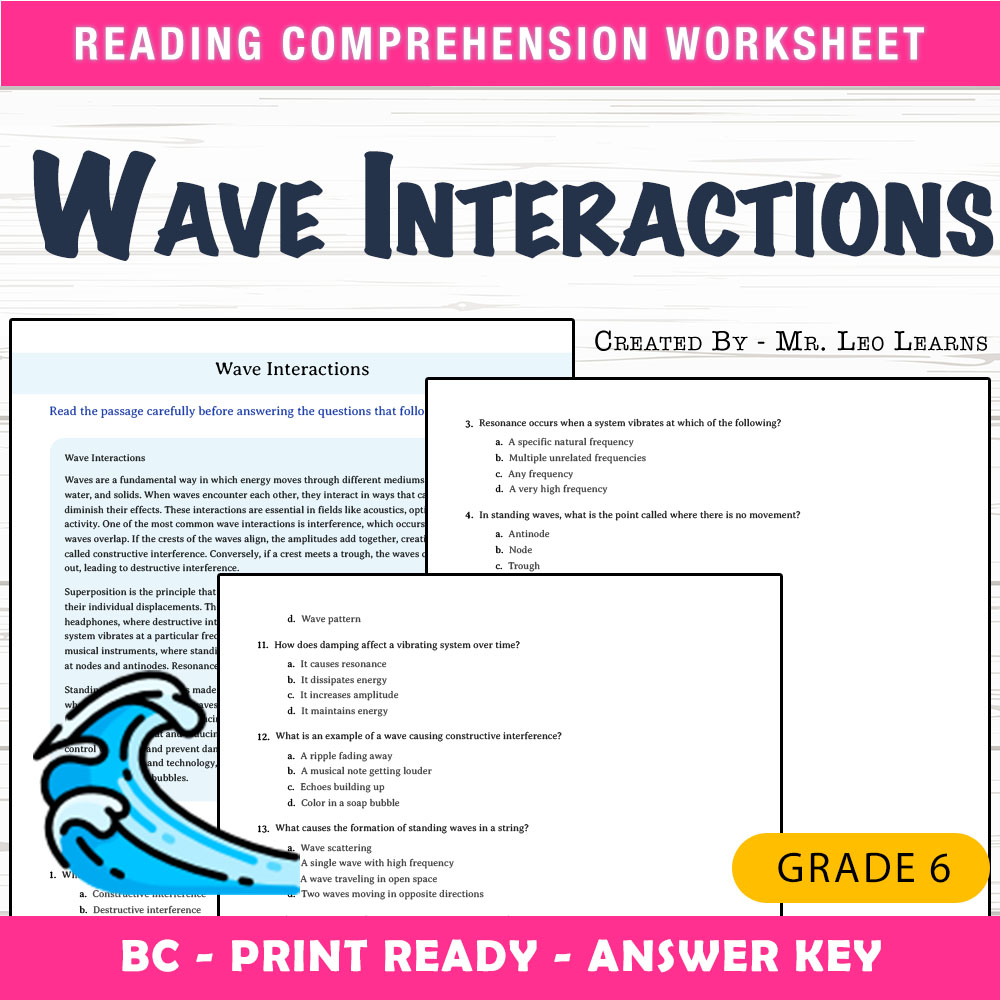
Grade 6 Science — Waves Interactions Worksheet MCQ Paper
Created byThe Resource HubLearning Objectives
- Explain how wave interference leads to constructive and destructive patterns.
- Describe the concept of resonance and how standing waves are formed.
- Identify how damping influences wave energy in systems.
Also included in: Grade 6 Science Energy, Waves & Circuits UNIT Bundle | BC Standards +1 more
Instant download
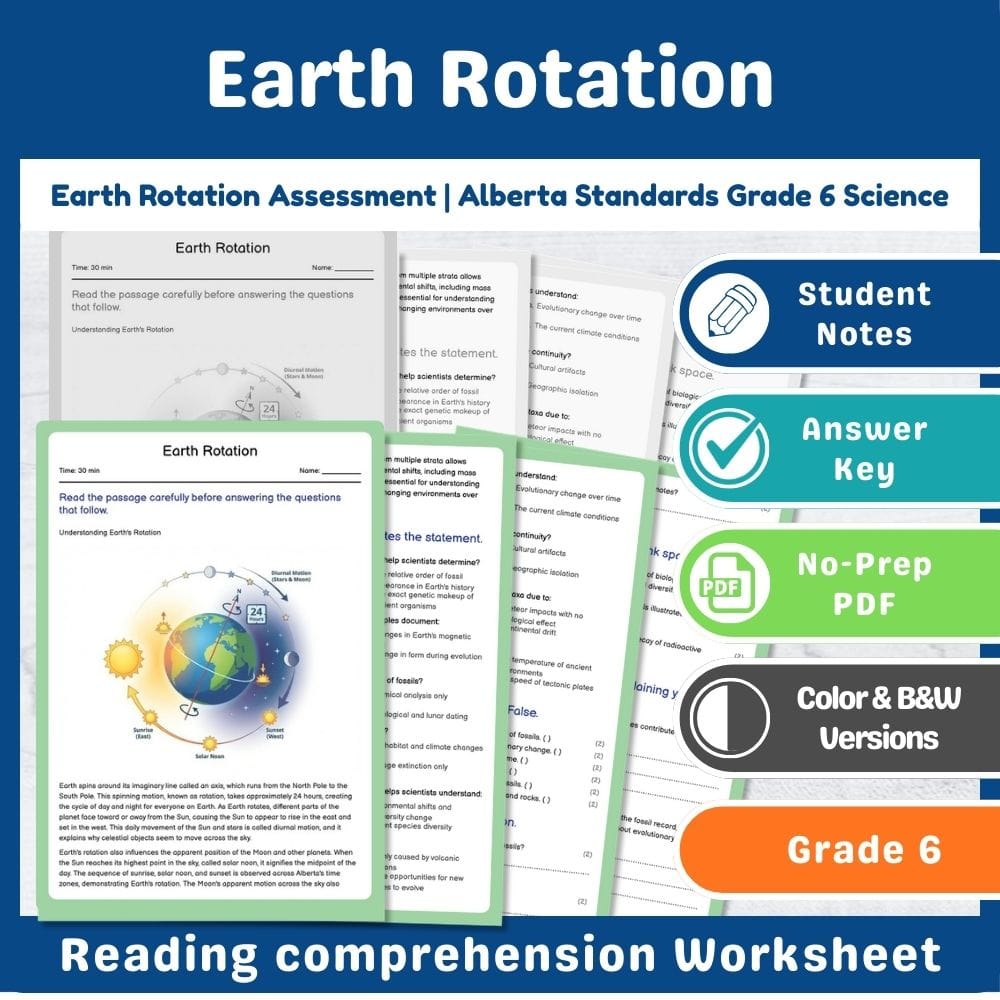
Earth Rotation Assessment | Alberta Standards Grade 6 Science
Created byPrism Point LearningLearning Objectives
- Explain how Earth's rotation causes day and night cycles.
- Describe the apparent daily motion of celestial objects due to Earth's rotation.
- Identify key features of Earth's rotation, such as sunrise, solar noon, and sunset.
Also included in: Lesson Grade 6 Science Assessment | Celestial & Earth Movements
Instant download

6th Grade Social Studies | Conservation Policy Worksheet (Ontario PDF)
 Created bySunny Desk Resources
Learning Objectives
- Explain how conservation policies use tools like protected areas, species-at-risk laws, and land-use zoning to protect ecosystems
- Analyze causes and consequences of conservation policy choices for communities and the environment
- Describe continuity and change in conservation governance across federal, provincial, and municipal levels
Also included in: Grade 6 Resource Patterns Social Studies Lesson Bundle | Ontario Framework +1 more
Instant download
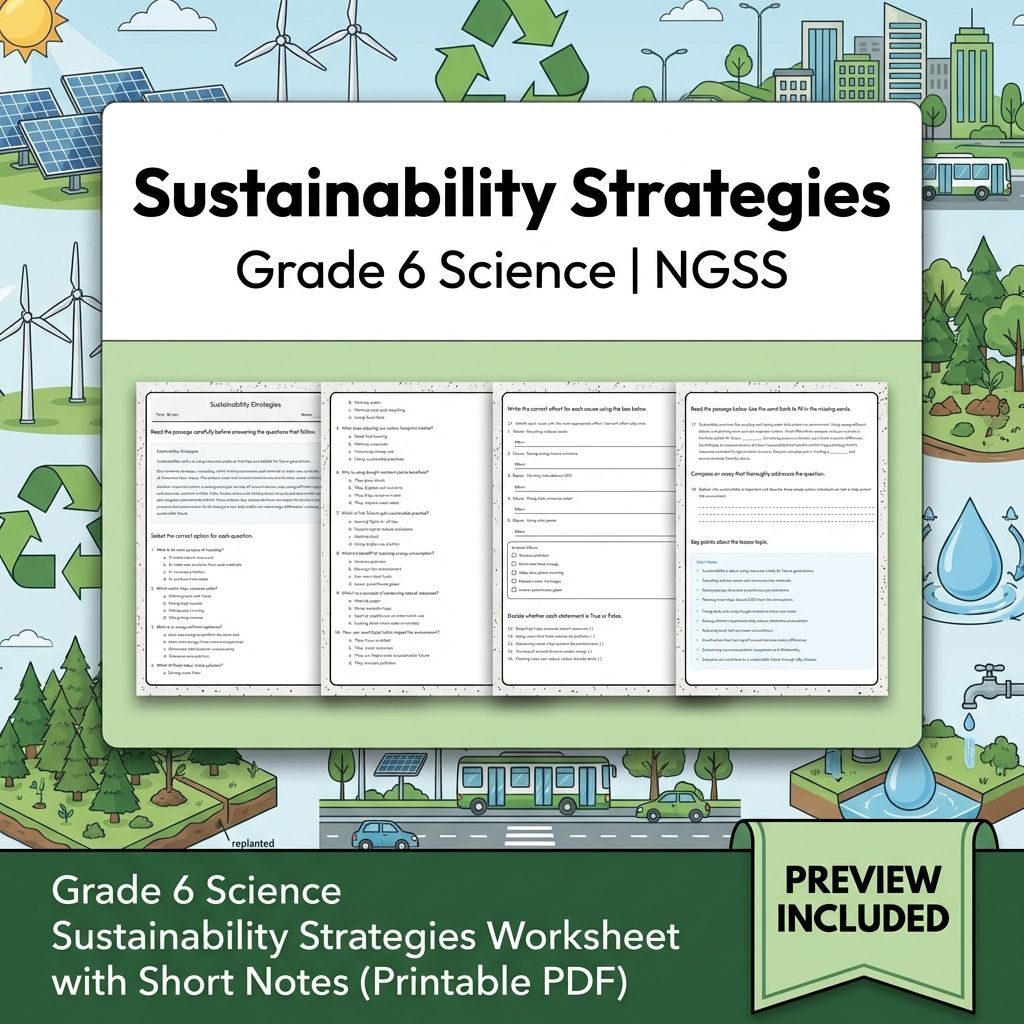
Grade 6 Science Sustainability Strategies Worksheet with Short Notes (PDF)
Created byMeadowlark WorksheetsLearning Objectives
- Understand basic sustainability strategies used in everyday life.
- Identify how recycling, conserving water, and saving energy help the environment.
- Learn key terms related to sustainability and environmental protection.
Also included in: Grade 6 Science | Earth and Human Activity Unit Bundle – NGSS Standards +1 more
Instant download

Grade 6 Variables Worksheet | Alberta Practice & PDF
Created byClear Sky ClassroomLearning Objectives
- Identify independent, dependent, and controlled variables in a science investigation
- Use operational definitions and consistent measurement intervals to reduce environmental noise
- Explain why researchers keep controls constant to make patterns easier to detect
Also included in: Grade 6 Scientific Investigation Data Analysis Science Lesson Bundle | Alberta +1 more
Instant download

Control Surfaces Worksheet Grade 6 Science | Ontario Aviation Unit
Created byChalk and CompassLearning Objectives
- Identify primary and secondary control surfaces and describe what each one helps control (roll, pitch, and yaw).
- Explain how deflecting a control surface changes lift and produces a turning moment.
- Describe control authority and how trim and surface sizing affect aircraft responsiveness and energy cost during maneuvers.
Also included in: Grade 6 Science Aviation Unit Aerodynamics & Flight Testing Lesson Bundle +1 more
Instant download
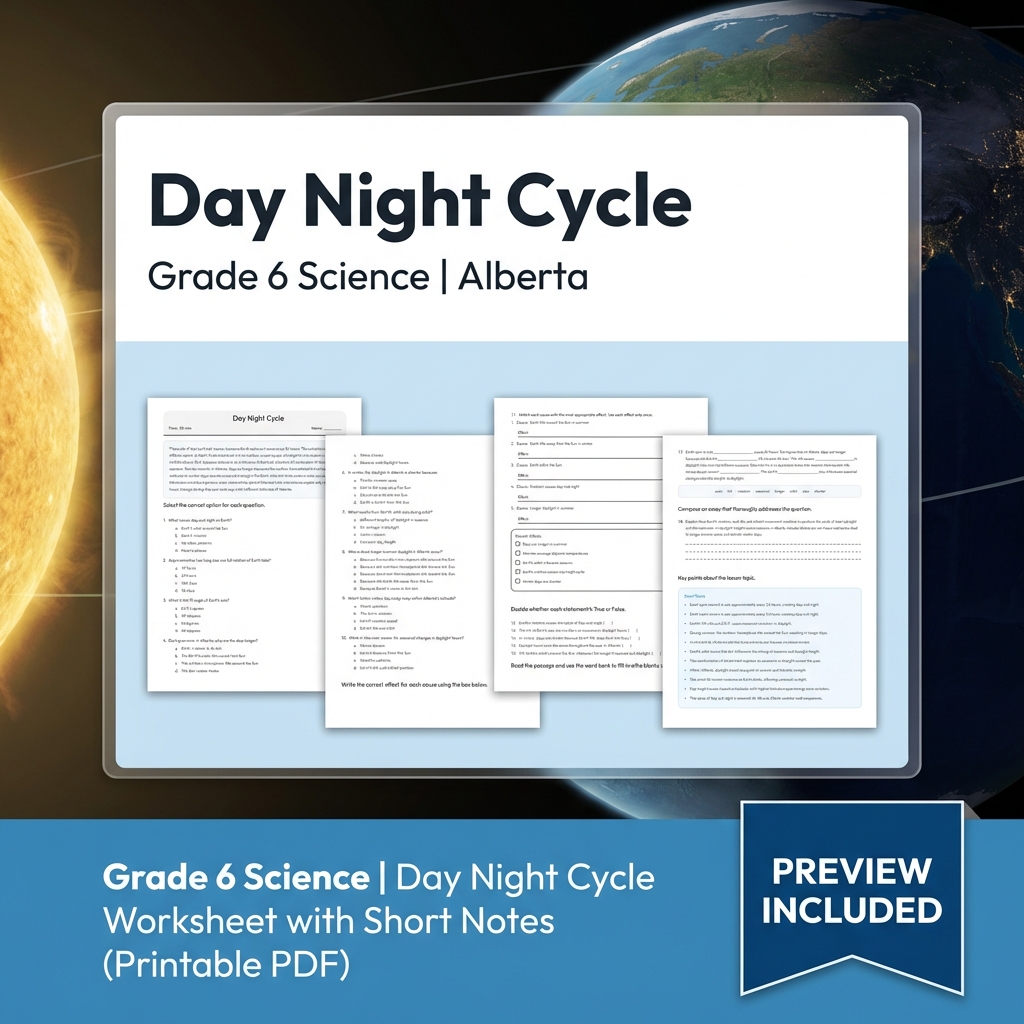
Grade 6 Science | Day Night Cycle Worksheet with Short Notes (Printable PDF)
Created byMeadowlark WorksheetsLearning Objectives
- Understand how Earth's rotation causes day and night.
- Explain how Earth's tilt and orbit affect the length of daylight during seasons.
- Relate patterns of daylight variation observed in Alberta to Earth's position and orientation.
Also included in: Grade 6 Science Sky Science Unit Bundle | Alberta Curriculum Worksheets +1 more
Instant download

Biodiversity Solutions Worksheet | NGSS Grade 6 Ecology Activity
 Created byAmber Owl Education
Learning Objectives
- Compare conservation, habitat restoration, protected-area design, and invasive-species management as solutions to maintain biodiversity.
- Evaluate trade-offs in ecosystem services such as pollination, water purification, and nutrient cycling.
- Use case studies to explain how different strategies can affect species persistence under changing environmental pressures.
Also included in: Grade 6 Science Ecology & Ecosystems Lesson Bundle | NGSS +1 more
Instant download

Grade 6 Lunar Motion Worksheet | Practice & Assessment PDF
Created byClear Sky ClassroomLearning Objectives
- Explain how the Moon’s orbit around Earth creates predictable changes in lunar phases.
- Describe the geometry of Sun–Earth–Moon that causes new, quarter, gibbous, and full phases.
- Use observations of the Moon’s rising times and direction to connect motion with phase changes.
Also included in: Grade 6 Sky Science Sun–Earth–Moon Science Lesson Bundle for Alberta +1 more
Instant download

Evidence for Inferences Worksheet Pack | Grade 6 ELA Practice
Created bySunny Desk ResourcesLearning Objectives
- Make an inference about a character, event, or idea by using specific evidence from a text
- Select and explain how exact wording, examples, or details support an inference
- Refine an inference when the text includes information that could contradict the original guess
Also included in: Reading and Viewing Lesson Bundle – Grade 6 ELA (BC Framework) +1 more
Instant download
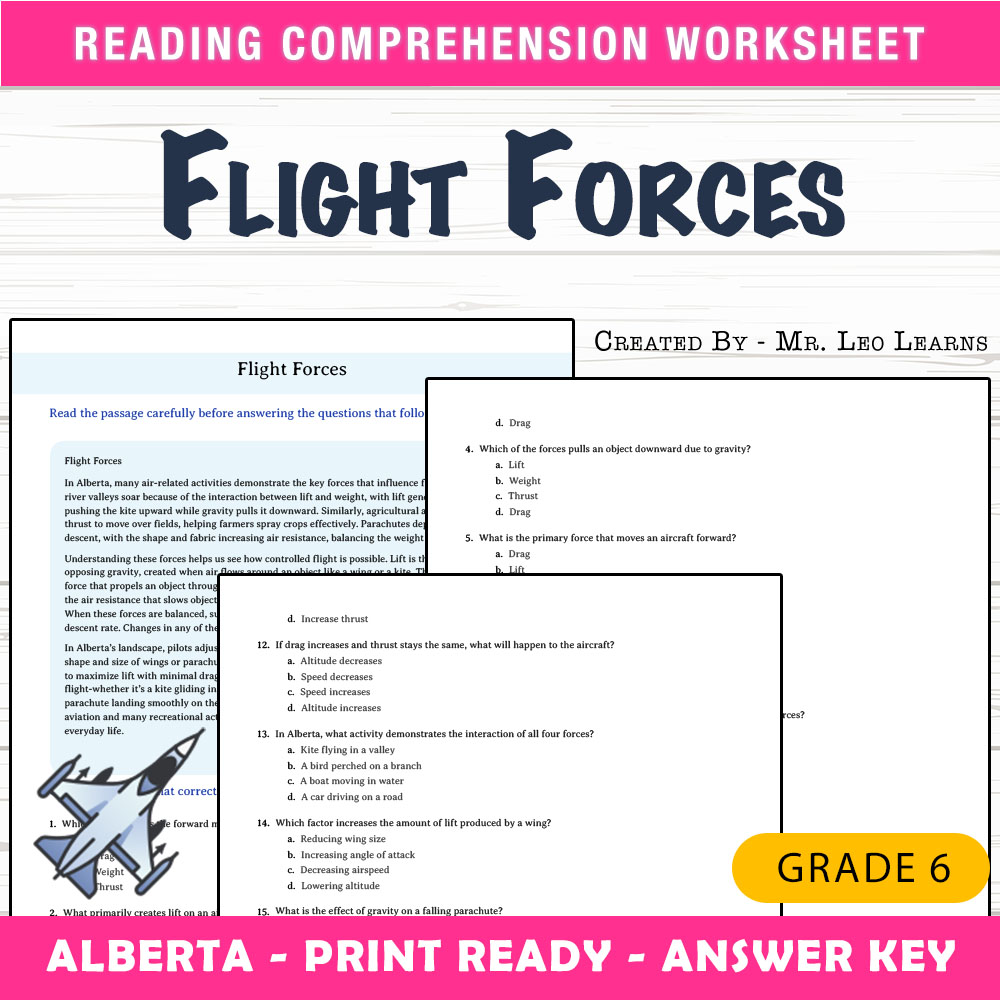
Grade 6 Science — Flight Forces Worksheet MCQ Paper for Mastery
Created byThe Resource HubLearning Objectives
- Understand the four primary forces of flight: lift, thrust, drag, and weight.
- Describe how these forces interact to produce controlled aerial motion.
- Identify real-world examples from Alberta illustrating each force.
Also included in: Grade 6 Science | Air and Aerodynamics UNIT Worksheet Bundle (Alberta Framework) +1 more
Instant download

6th Grade ELA Worksheet – Evidence and Media Skills (PDF)
Created byGolden Apple StudioLearning Objectives
- Identify how a claim is supported by relevant evidence in spoken presentations.
- Choose appropriate evidence types (data, observations, expert statements, textual details) to match a conclusion.
- Use multimedia (charts, photos, audio/video, infographics) to clarify key ideas without adding new unrelated information.
Also included in: Grade 6 Evidence & Argument Mapping ELA Lesson Bundle: General ELA +1 more
Instant download

Inherited Adaptations Worksheet for Grade 6 Science | Standards-Aligned Practice
JCreated byJ.S SheetsLearning Objectives
- Understand the concept of inherited adaptations and their role in survival.
- Identify different types of adaptations in various organisms.
- Explain how adaptations match environmental conditions to improve survival.
Also included in: Grade 6 Ecosystem Adaptations and Energy Flow Science Lesson Bundle | Florida NGSSS +1 more
Instant download

Error Analysis Assessment | TEKS Grade 6 Science Standards-Aligned
Created byPrism Point LearningLearning Objectives
- Identify different sources of error in scientific data collection.
- Distinguish between random and systematic errors and their impacts.
- Analyze data anomalies and evaluate their influence on results.
Also included in: Scientific Inquiry and Processes Grade 6 Science Lesson Bundle | TEKS
Instant download

6th Grade Science | Eclipses and Alignments Worksheet (PDF) Alberta Standards
Created bySilver Birch TeachingLearning Objectives
- Explain how near-linear alignments of the Sun, Moon, and Earth create solar and lunar eclipses
- Distinguish between total, partial, and annular eclipses using orbital geometry
- Describe why eclipses are relatively rare for a given location based on the orbits’ inclinations and timing
Also included in: Grade 6 Celestial Motion & Seasons Science Lesson Bundle | Alberta +1 more
Instant download

Grade 6 Science – Introduction to Forest Management Daily Reading Worksheet
Created byBright Mind ResourcesLearning Objectives
- Understand the ecological, economic, and social objectives of integrated forest management.
- Identify key strategies used in Alberta for sustainable forest practices.
- Analyze the importance of landscape-scale planning and stakeholder collaboration.
Also included in: Grade 6 Forest Ecology Science Daily Reading Worksheets Lesson Bundle | Alberta +2 more
Instant download
Browse more categories
About Grade 6 Worksheets
Browse 8,582 printable Grade 6 worksheets across math, ELA, science, and social studies — each a ready-to-print PDF with optional answer keys.
MyTeachingSheets worksheets are made by real teacher-authors and checked before they go live. Download any as a print-ready PDF for lessons, homework, or independent practice — most include answer keys, and previews are always free.