
Grade 6 Worksheets
8,582 grade resources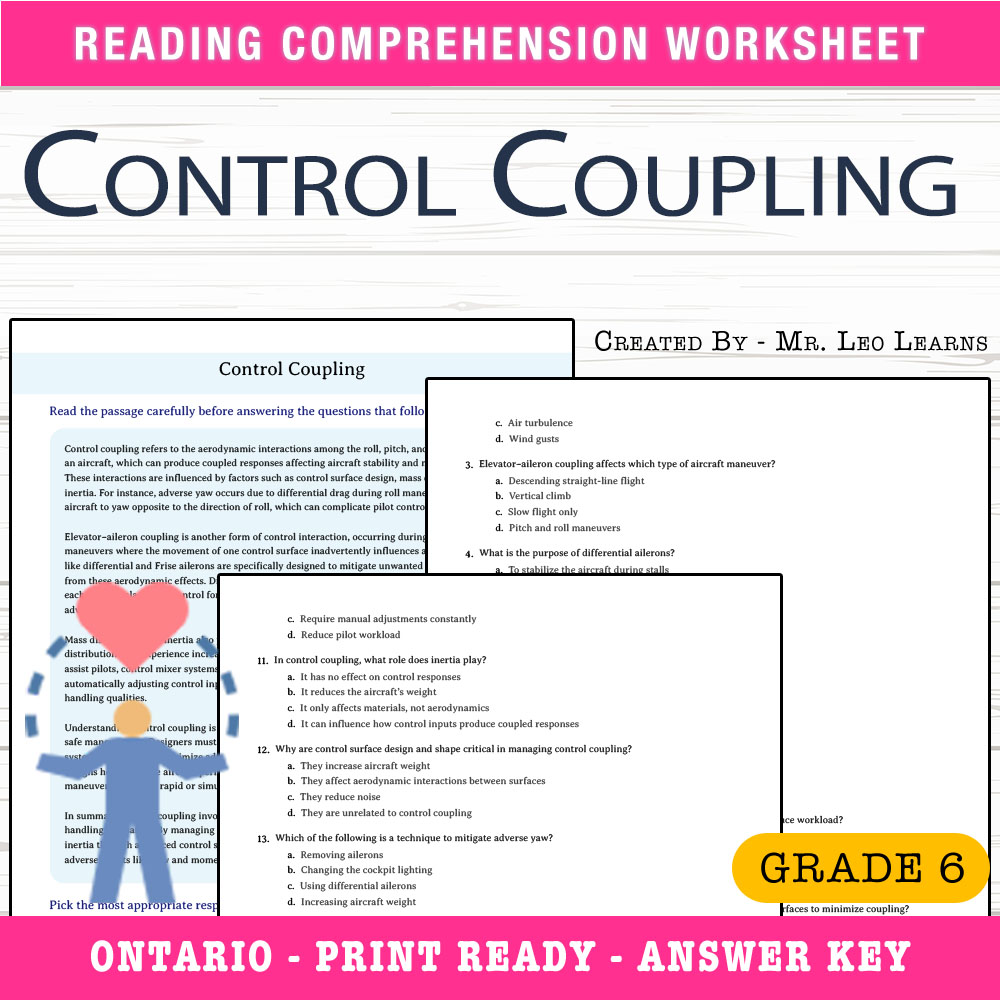
Grade 6 Science – Control Coupling Worksheet for Mastery
 Created byThe Resource Hub
Learning Objectives
- Understand the concept of control coupling and its impact on aerodynamic control responses.
- Identify techniques used to mitigate adverse control effects such as yaw and coupling.
- Explain how mass distribution and inertia influence control coupling in aircraft.
Also included in: Grade 6 Science | Aerodynamics & Engineering Unit Workbook (Worksheet Pack) +1 more
Instant download

Grade 6 Holiday Back To School | Harvest Traditions Worksheet PDF + Answer Key
 Created byShaNova Worksheets
Learning Objectives
- Describe the harvest festival Lammas and how it connects to the seasonal cycle of early August.
- Identify how gratitude and community sharing show up in harvest traditions.
- Compare ideas from the passage to explain why traditions differ across cultures.
Instant download
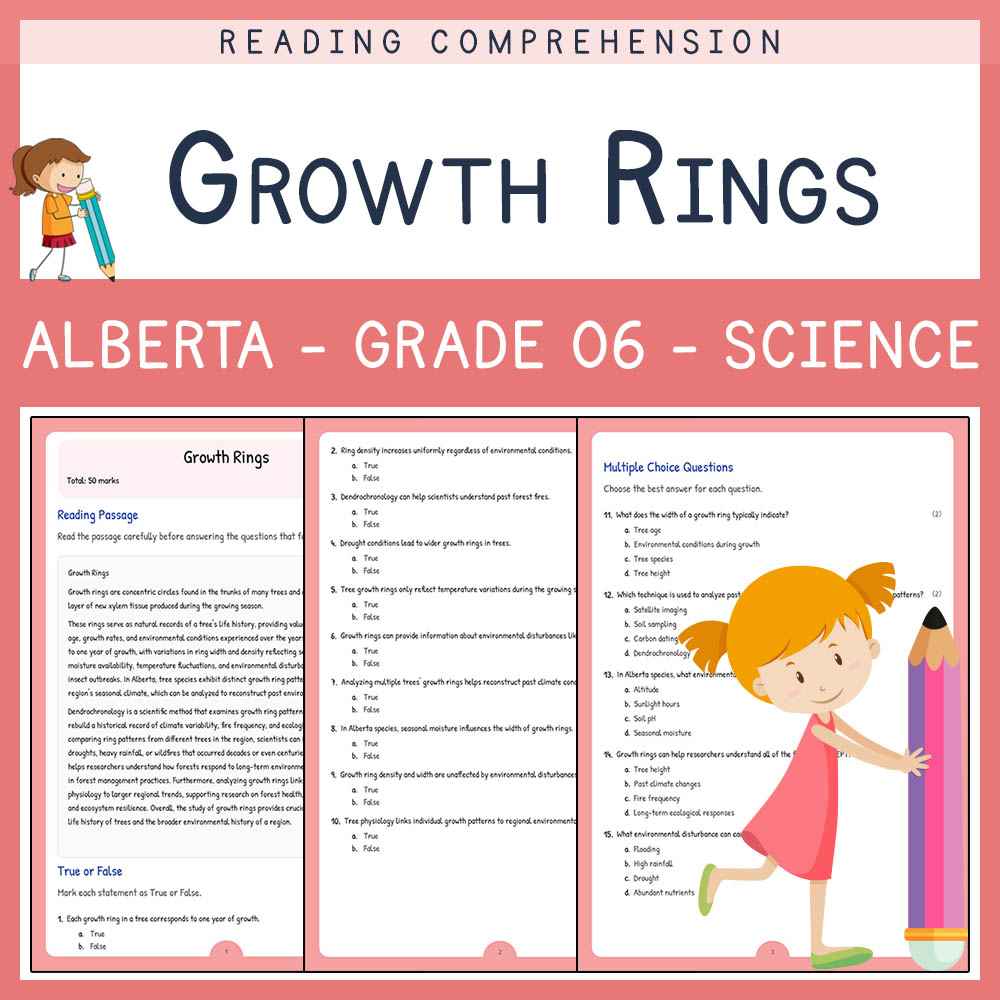
Grade 6 Science Worksheet | Growth Rings | Alberta Standards
 Created byLumora Learning
Learning Objectives
- Understand how growth rings record annual growth in trees.
- Identify what environmental factors influence the width and density of growth rings.
- Learn how dendrochronology is used to study past climates and environmental events.
Instant download
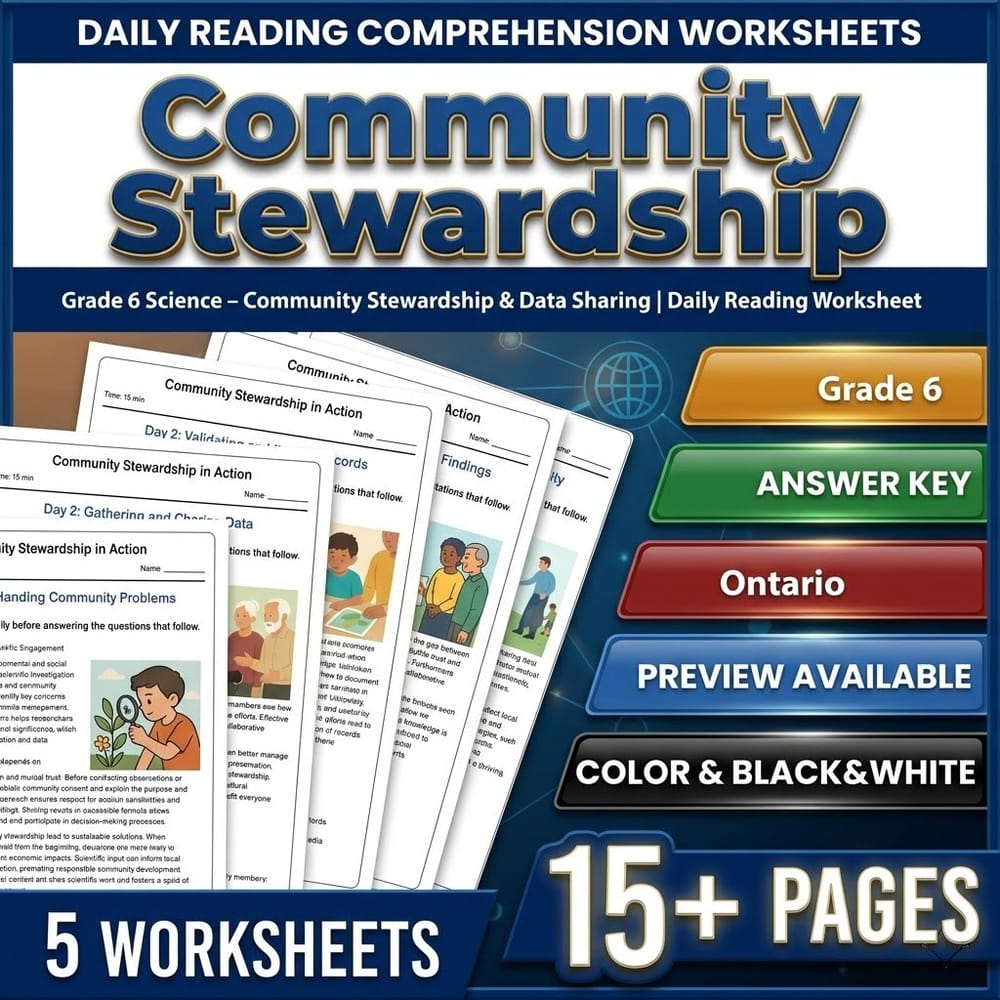
Grade 6 Science – Community Stewardship & Data Sharing | Daily Reading Worksheet
 Created byQuiet Forest Education
Learning Objectives
- Identify local environmental and social issues that can be addressed through scientific observation
- Understand the importance of community engagement and cultural sensitivity in scientific studies
- Recognize protocols for obtaining community consent and sharing data responsibly
Also included in: Science Grade 6 Daily Reading Worksheets Bundle | Ontario Framework +1 more
Instant download

Energy Forms Worksheet | Grade 6 Science Practice
 Created byPrism Point Learning
Learning Objectives
- Identify and describe common forms of energy: kinetic, potential, thermal, chemical, and electrical.
- Use everyday examples (rolling ball, raised weight, warm objects, batteries) to explain how energy is connected to motion, position, and internal activity.
- Differentiate energy forms by describing what changes when each form is present.
Also included in: Grade 6 Matter, Energy, and Change Science Lesson Bundle TEKS Worksheets +1 more
Instant download
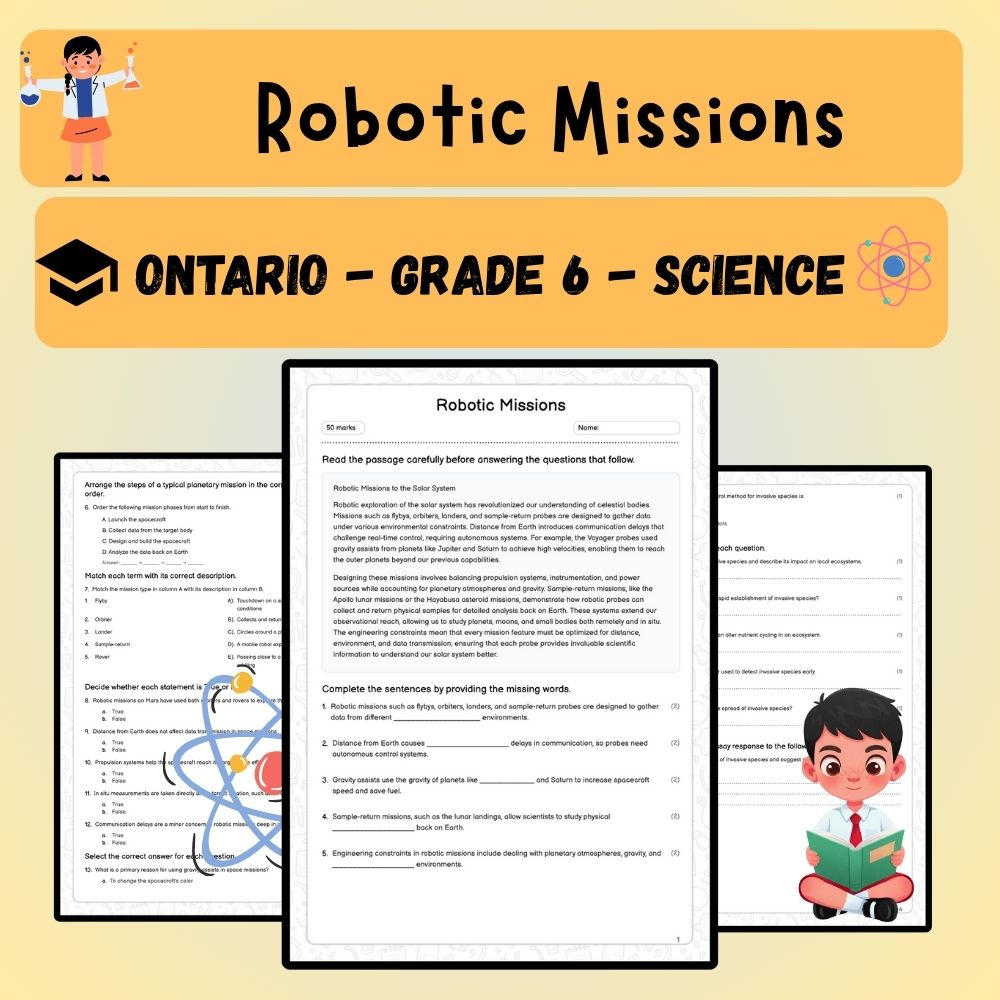
Grade 6 Science | Robotic Missions Worksheet (PDF ) | Ontario Standards
Created byPrism Point LearningLearning Objectives
- Describe different types of robotic space missions such as flyby, orbiter, lander, and sample-return.
- Explain the engineering constraints imposed by planetary environments and distance in robotic missions.
- Identify how mission design addresses challenges like gravity assists, propulsion, and communication delays.
Instant download
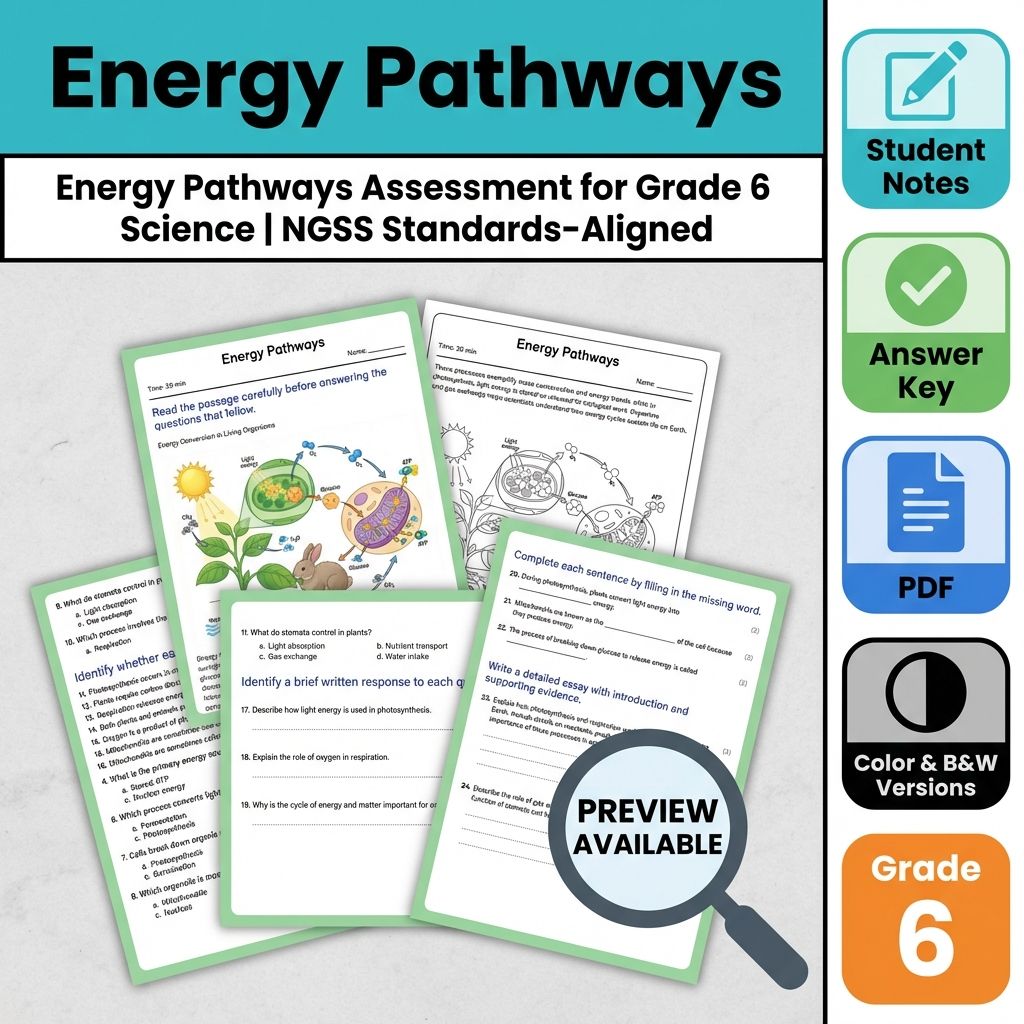
Energy Pathways Assessment for Grade 6 Science | NGSS Standards-Aligned
Created byPrism Point LearningLearning Objectives
- Describe the processes of photosynthesis and respiration in plant and animal cells.
- Explain how energy is transferred through chemical reactions in biological systems.
- Identify reactants and products involved in photosynthesis and respiration.
Also included in: Grade 6 Science Mini Bundle | Structures and Processes NGSS Not specified +1 more
Instant download
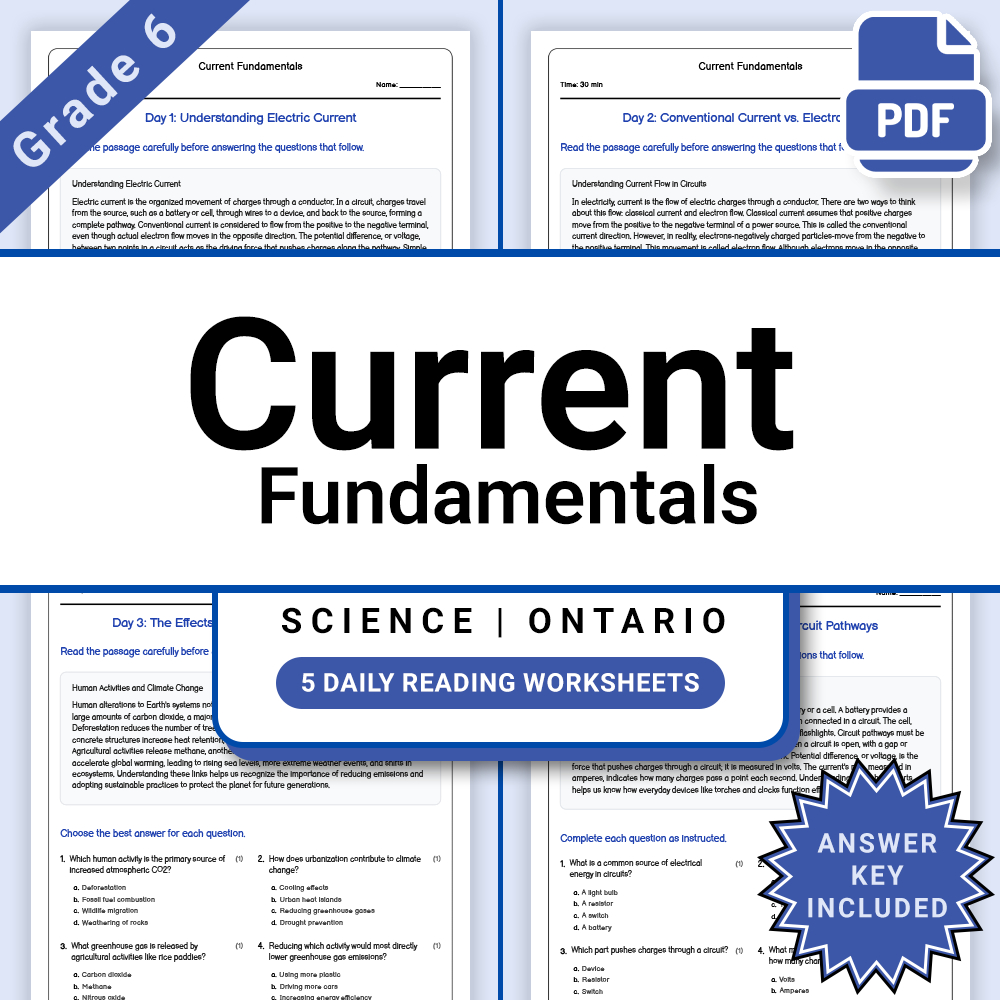
Grade 6 Science – Current Fundamentals Daily Reading Worksheet + Answer Key
JCreated byJ.S SheetsLearning Objectives
- Identify parts of an electrical circuit and understand charge movement
- Distinguish between conventional current and electron flow
- Explain potential difference as a driving force
Also included in: Grade 6 Science Lesson Group – Circuits and Energy Ontario Framework +1 more
Instant download
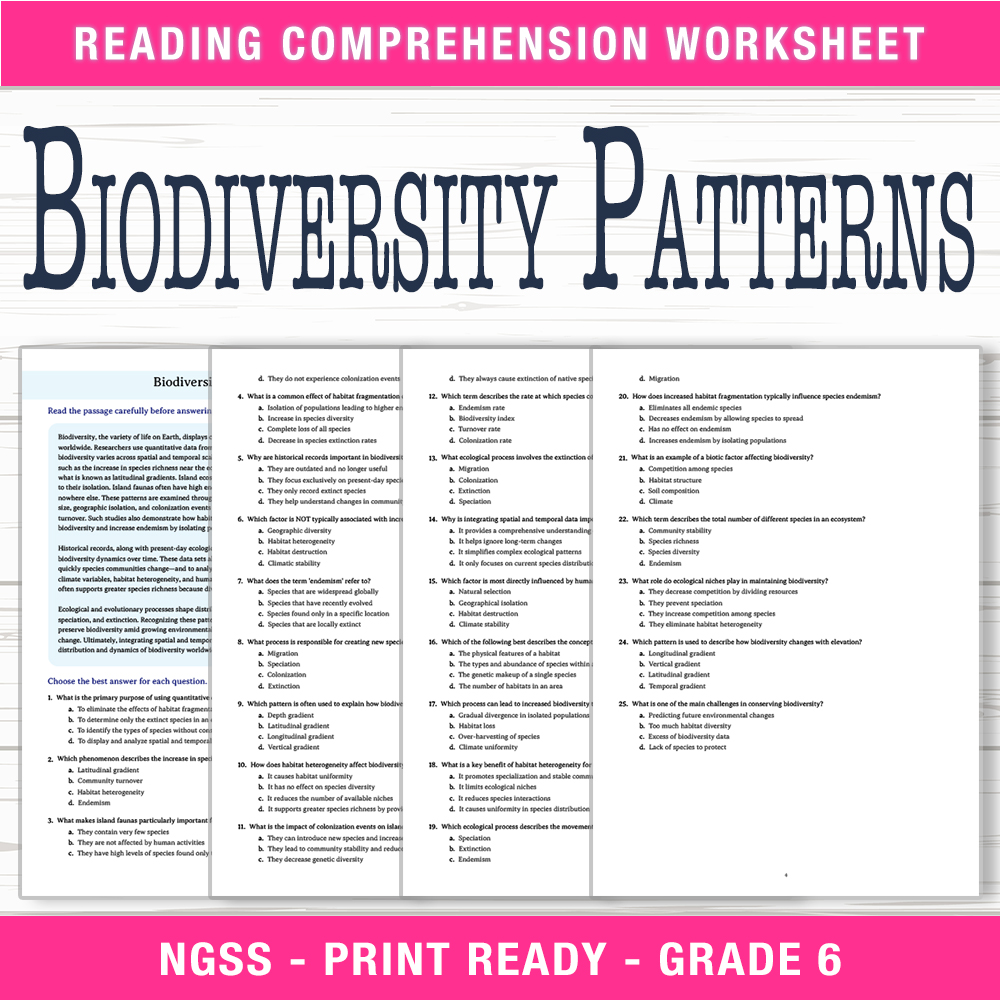
6th Grade Science | Biodiversity Patterns Worksheet (PDF + Answer Key)
 Created byRiverstone Classroom
Learning Objectives
- Understand how spatial and temporal data display biodiversity patterns across ecosystems.
- Identify factors influencing biodiversity and endemism in different habitats.
- Analyze historical and current data to interpret community composition and turnover rates.
Instant download
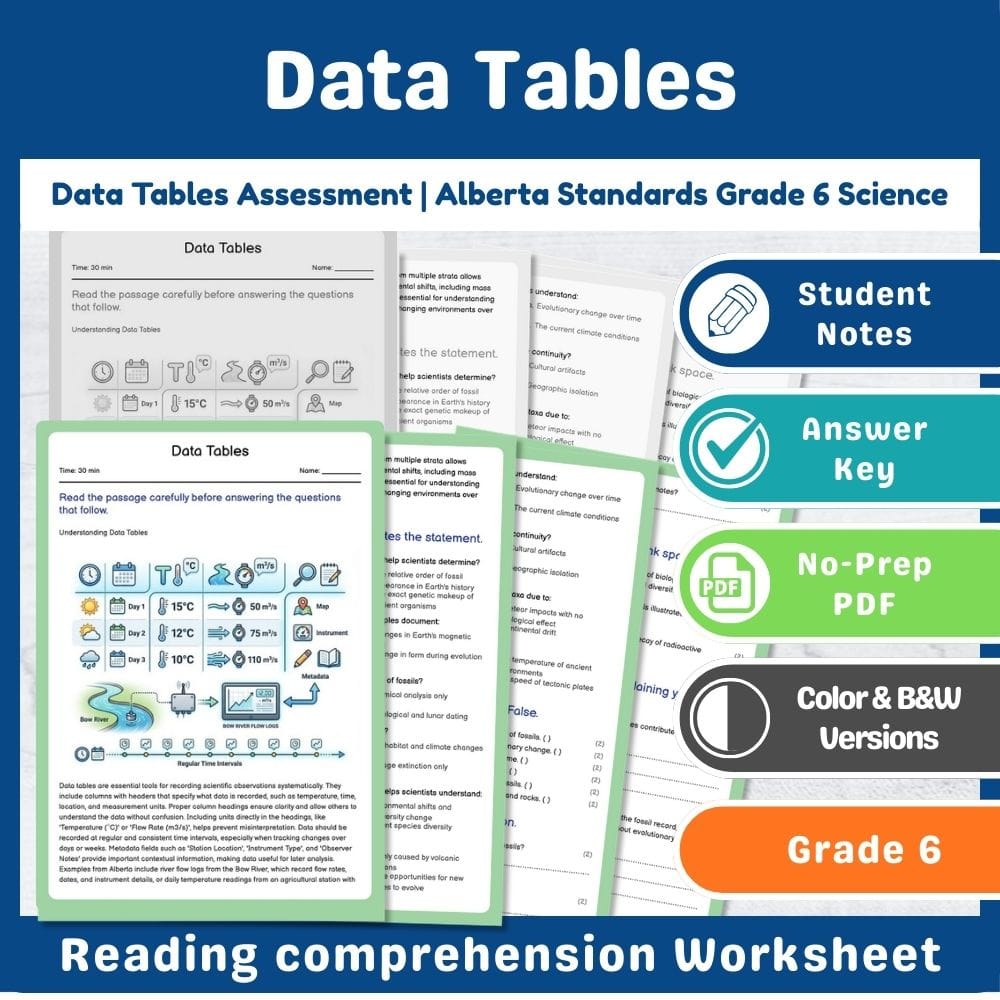
Data Tables Assessment | Alberta Standards Grade 6 Science
Created byPrism Point LearningLearning Objectives
- Understand the purpose and structure of data tables in scientific observations.
- Identify proper column headings, units, and metadata in data recording.
- Interpret data tables for analysis and reporting.
Also included in: Lesson Grade 6 Science Mini Bundle | Evidence and Investigation
Instant download

Grade 6 Science – Experimental Design & Inquiry | Daily Reading Worksheet
 Created byBright Mind Resources
Learning Objectives
- Understand the importance of variables and controls in scientific experiments.
- Identify independent, dependent, and controlled variables in a fair test.
- Learn how to justify control choices based on environmental contexts.
Also included in: Grade 6 Science Data & Inquiry Daily Reading Worksheets Lesson Bundle | Alberta +2 more
Instant download
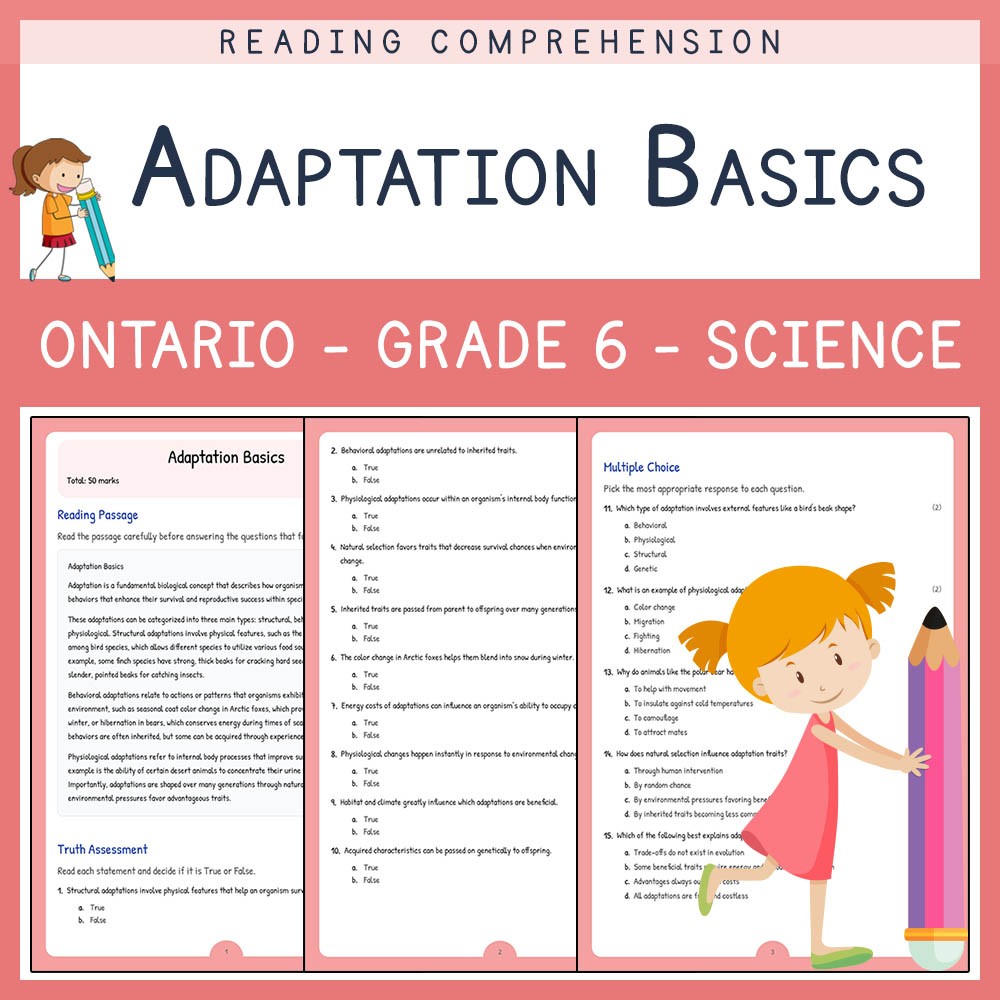
Grade 6 Science | Adaptation Basics Worksheet & Answer Key (PDF)
Created byLumora LearningLearning Objectives
- Identify the different types of adaptations and their functions.
- Describe how adaptation traits influence survival and reproduction.
- Distinguish between inherited and acquired characteristics.
Also included in: Grade 6 Science | Biodiversity Custom Unit Resource | Ontario Framework
Instant download
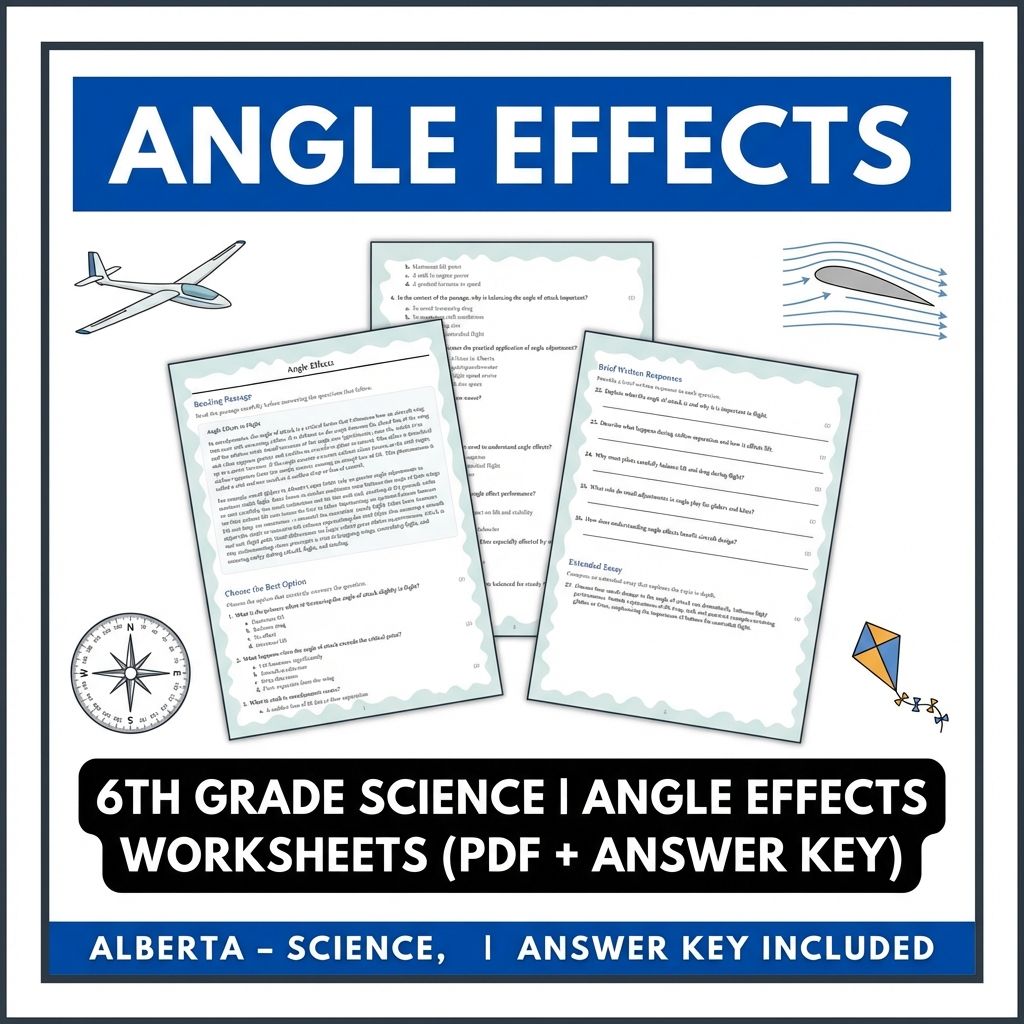
6th Grade Science | Angle Effects Worksheets (PDF + Answer Key)
JCreated byJ.S SheetsLearning Objectives
- Understand how the angle of attack influences lift and drag in flight.
- Explain the concept of stall and how critical angles affect wing performance.
- Analyze how small changes in angle can impact flight stability and efficiency.
Also included in: Grade 6 Science | Flight Physics & Aerodynamics UNIT Pack (Answer Keys Included) +1 more
Instant download
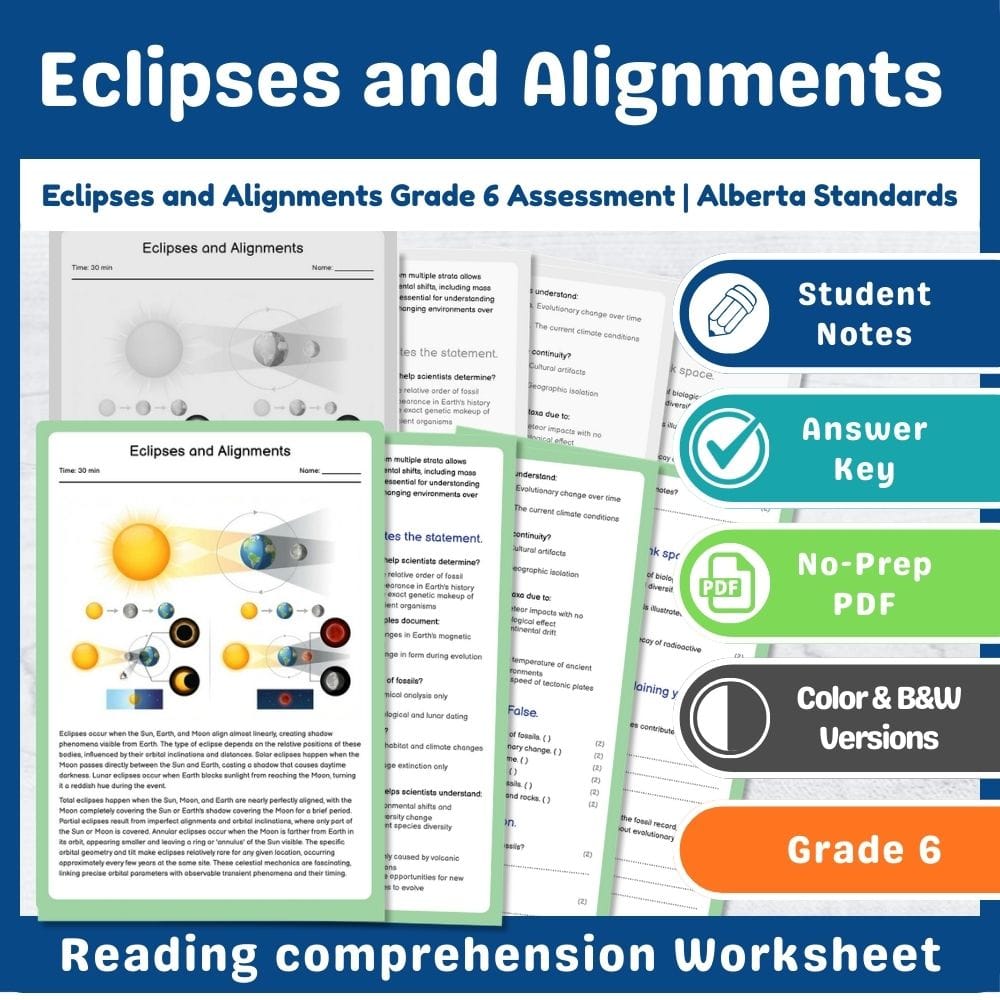
Eclipses and Alignments Grade 6 Assessment | Alberta Standards
Created byPrism Point LearningLearning Objectives
- Explain the celestial alignment conditions that lead to solar and lunar eclipses.
- Describe why eclipses are relatively rare at specific locations.
- Identify the differences between partial, total, and annular eclipses based on orbital geometry.
Also included in: Lesson Grade 6 Science Assessment | Celestial & Earth Movements
Instant download
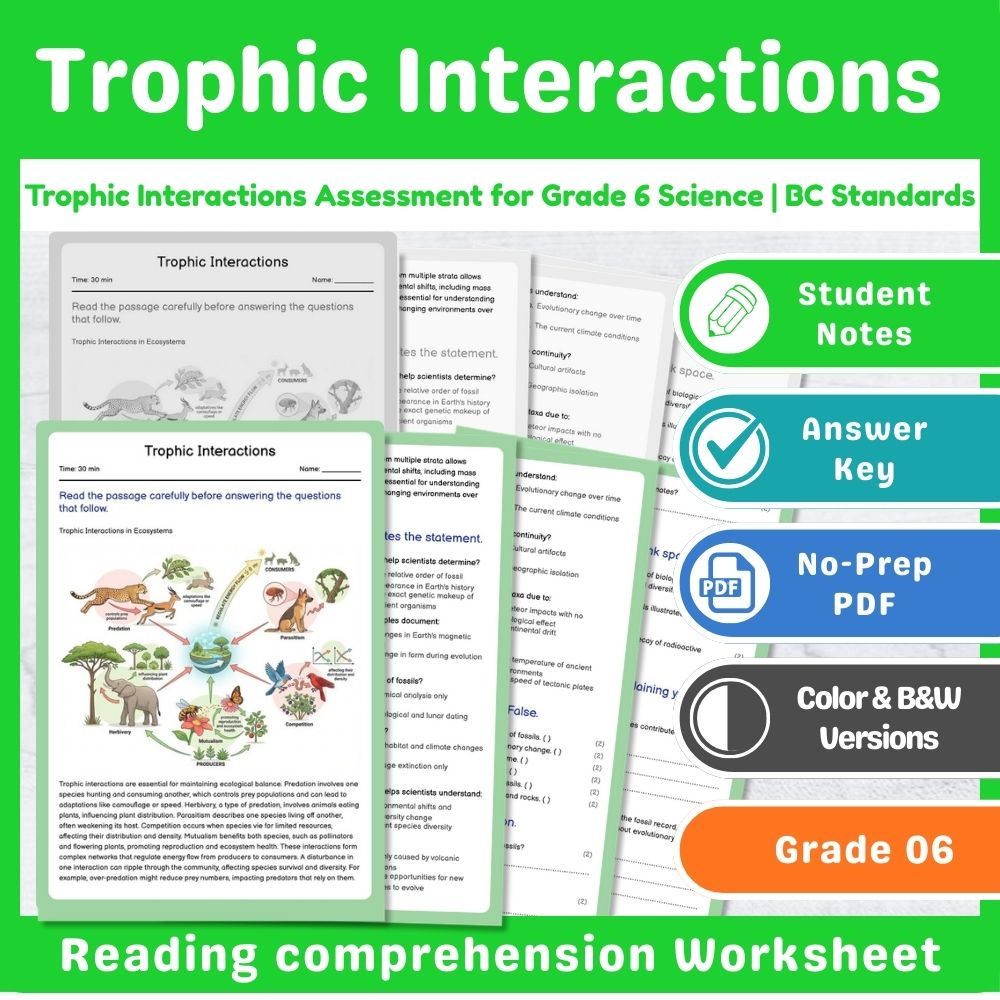
Trophic Interactions Assessment for Grade 6 Science | BC Standards
Created byPrism Point LearningLearning Objectives
- Understand the different types of trophic interactions such as predation, herbivory, parasitism, competition, and mutualism.
- Identify examples of trophic interactions in ecosystems and analyze their effects on species and community structure.
- Explain how trophic interactions influence energy flow and population dynamics within ecological networks.
Instant download
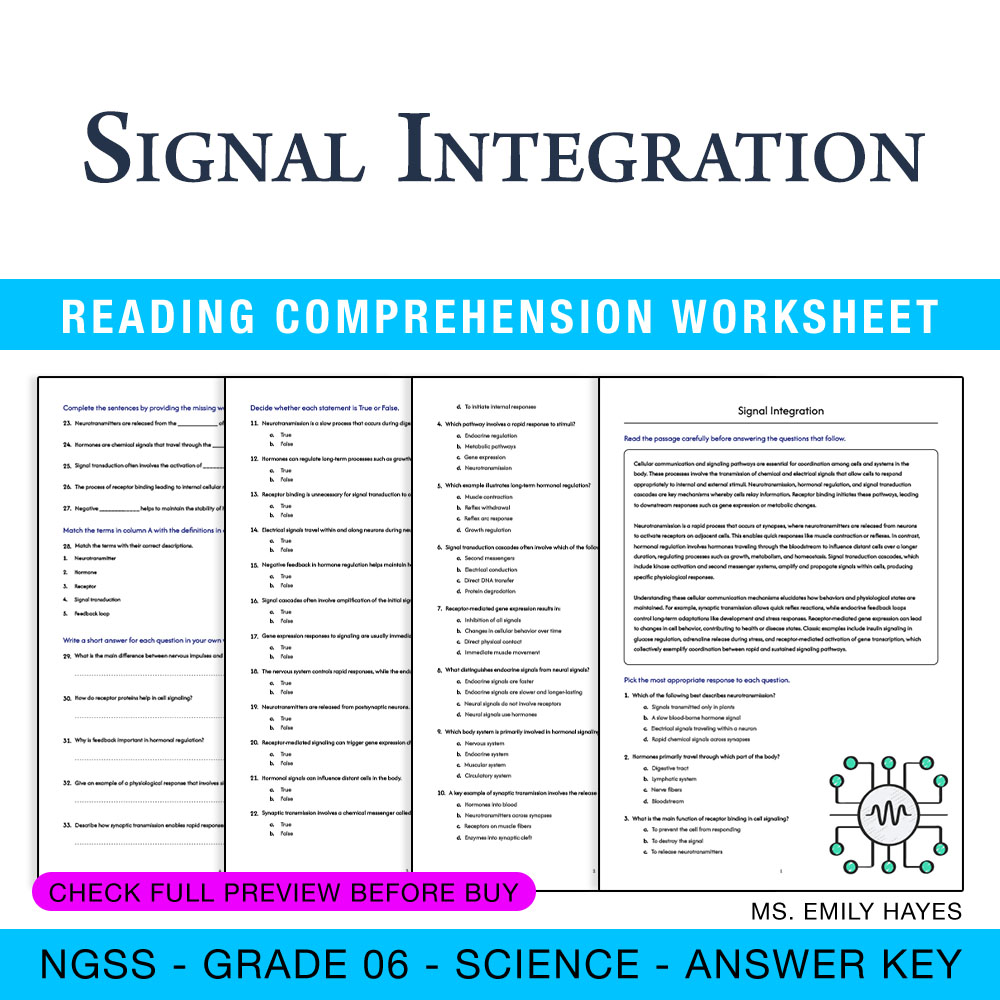
Grade 6 Science | Signal Integration Worksheet (PDF + Answer Key)
 Created byCopper Leaf Classroom
Learning Objectives
- Describe how cells communicate through chemical and electrical signals during signal transduction.
- Differentiate between rapid nervous impulses and longer-term endocrine responses.
- Explain the role of neurotransmission, hormonal regulation, and receptor-mediated pathways in physiological functions.
Instant download

Grade 6 Science – Trophic Levels Ecosystems Reading Worksheet | NGSSS Aligned
Created byBright Mind ResourcesLearning Objectives
- Identify producers and explain their role in the ecosystem.
- Describe the different trophic levels and their characteristics.
- Understand how energy flows through a food chain.
Also included in: Ecosystems Grade 6 Science Daily Reading Worksheets Lesson Bundle |Florida NGSSS +1 more
Instant download
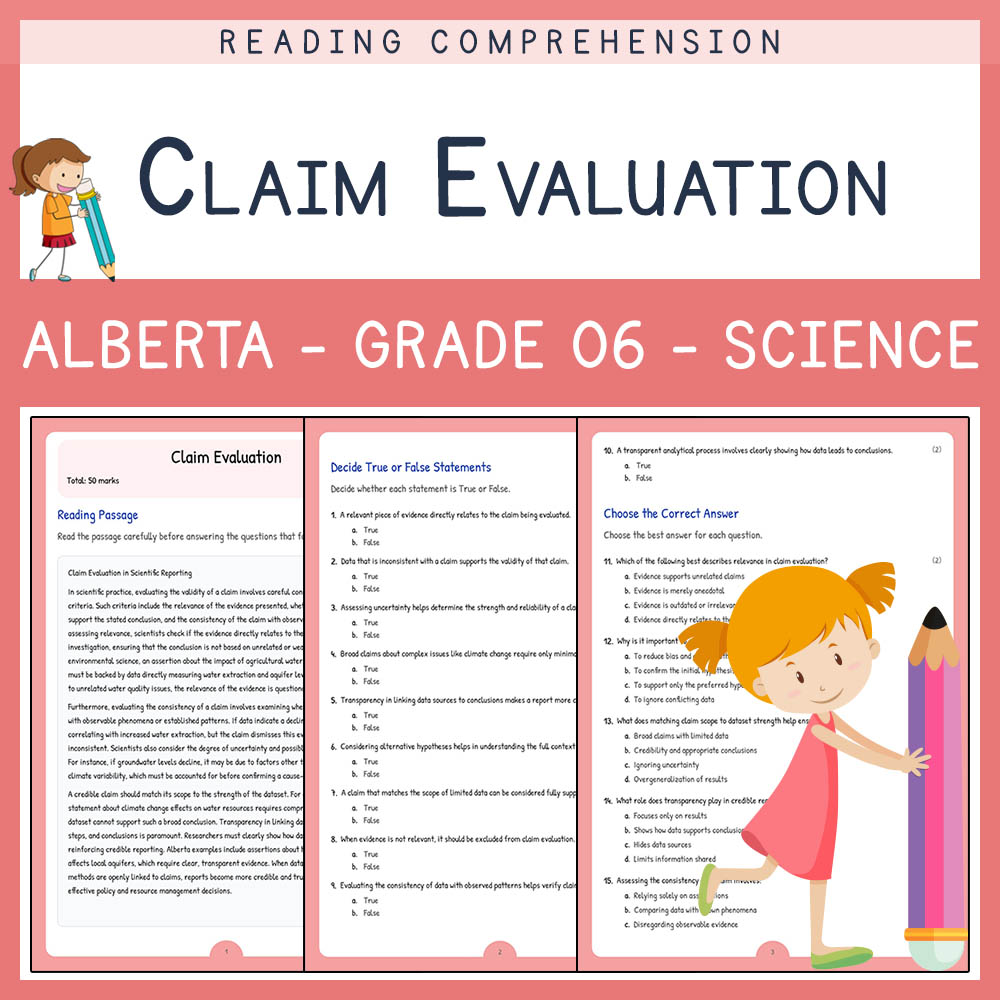
Grade 6 Science Worksheet | Claim Evaluation | Alberta-Aligned
Created byLumora LearningLearning Objectives
- Understand criteria for judging whether conclusions follow from data and methods.
- Learn to assess relevance, consistency, uncertainty, and scope in claims.
- Recognize the importance of transparent linkage between data, analysis, and conclusions.
Also included in: Grade 6 Science | Evidence and Investigation Custom Bundle | Alberta
Instant download

Competition for Survival Assessment | California Standards Grade 6 Science
Created byPrism Point LearningLearning Objectives
- Explain how competition for limited resources can affect survival and reproduction
- Describe direct and indirect competition and give examples
- Use cause-and-effect reasoning to connect resource availability to population changes
Also included in: Grade 6 Energy and Matter Cycles Science Lesson Bundle | California Standards +1 more
Instant download
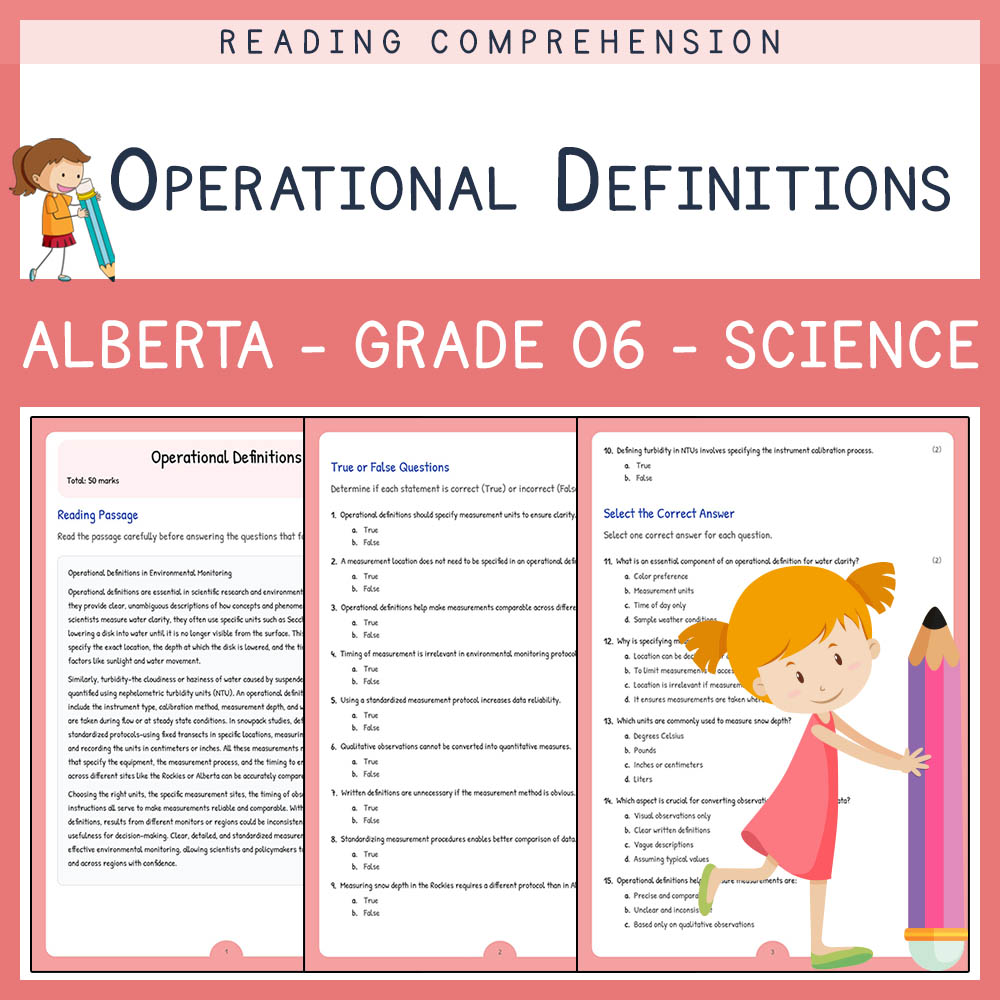
Grade 6 Science | Operational Definitions Worksheet Elena | Alberta Standard
Created byLumora LearningLearning Objectives
- Understand the purpose and importance of operational definitions in scientific measurements.
- Learn how to convert qualitative observations into precise, measurable descriptions.
- Identify key components such as units, measurement locations, timing, and written definitions.
Also included in: Grade 6 Science | Evidence and Investigation Custom Bundle | Alberta
Instant download
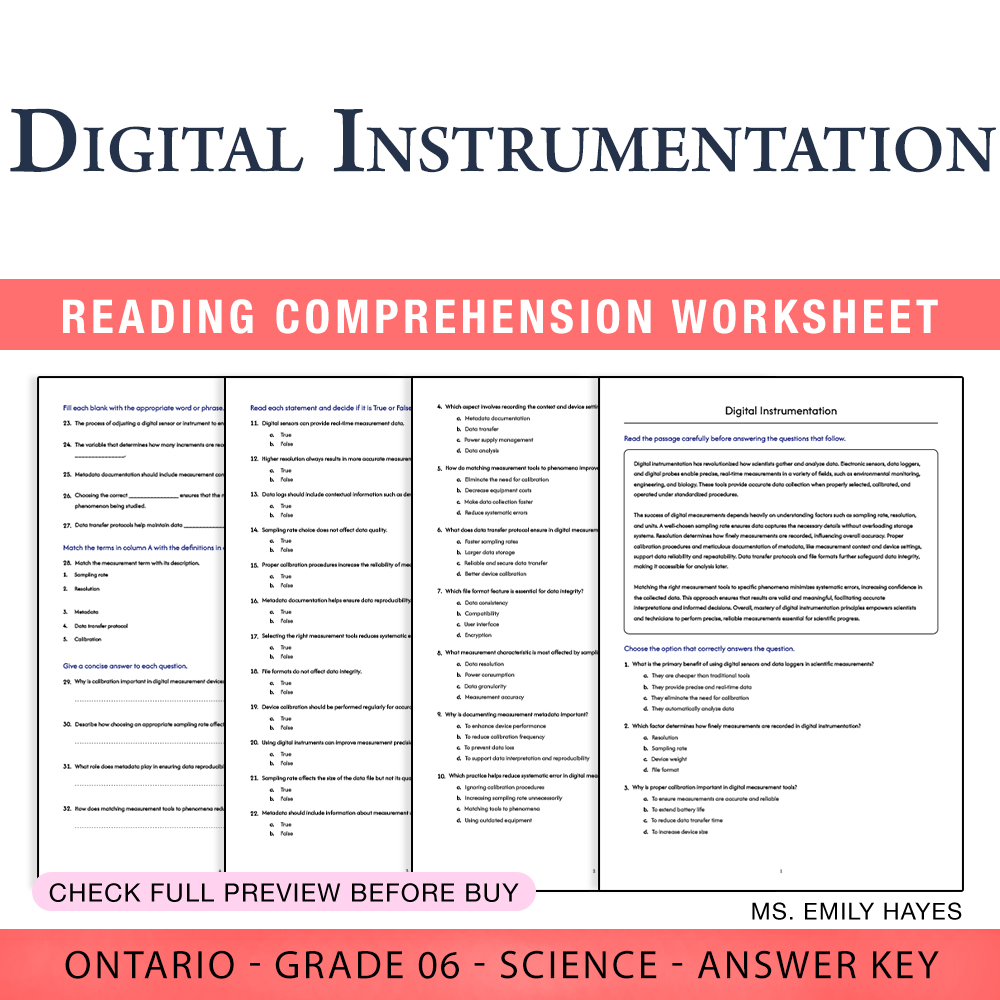
Grade 6 Science | Digital Instrumentation Worksheet (PDF+ Answer Key)
Created byCopper Leaf ClassroomLearning Objectives
- Understand the principles of electronic sensors, data loggers, and digital probes.
- Learn proper selection, calibration, and operation of digital measurement tools.
- Identify factors affecting measurement accuracy such as sampling rate, resolution, and units.
Instant download
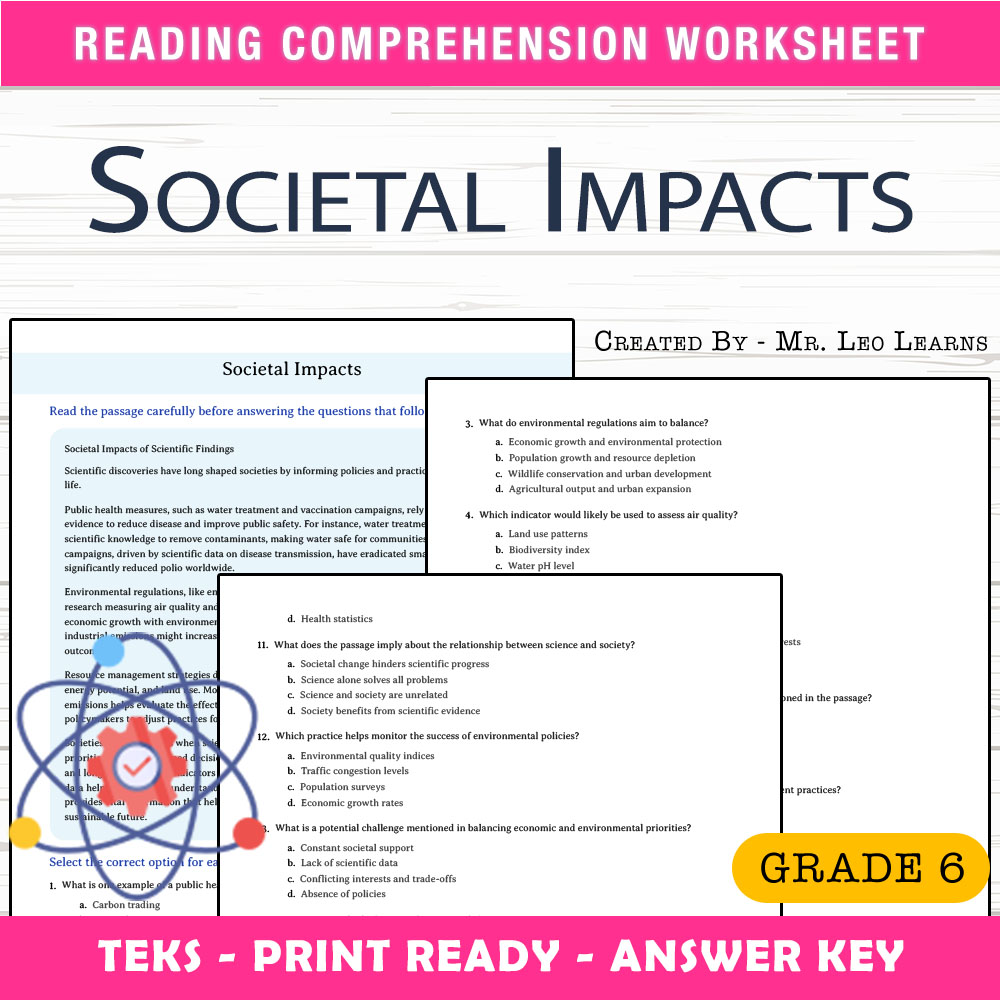
Grade 6 Science – Societal Impacts Worksheet for Mastery
Created byThe Resource HubLearning Objectives
- Analyze how scientific findings influence societal change through public health, environment, and resource management.
- Evaluate evidence and trade-offs in societal decision-making based on scientific data.
- Identify indicators used to assess the effectiveness of societal measures related to science.
Instant download
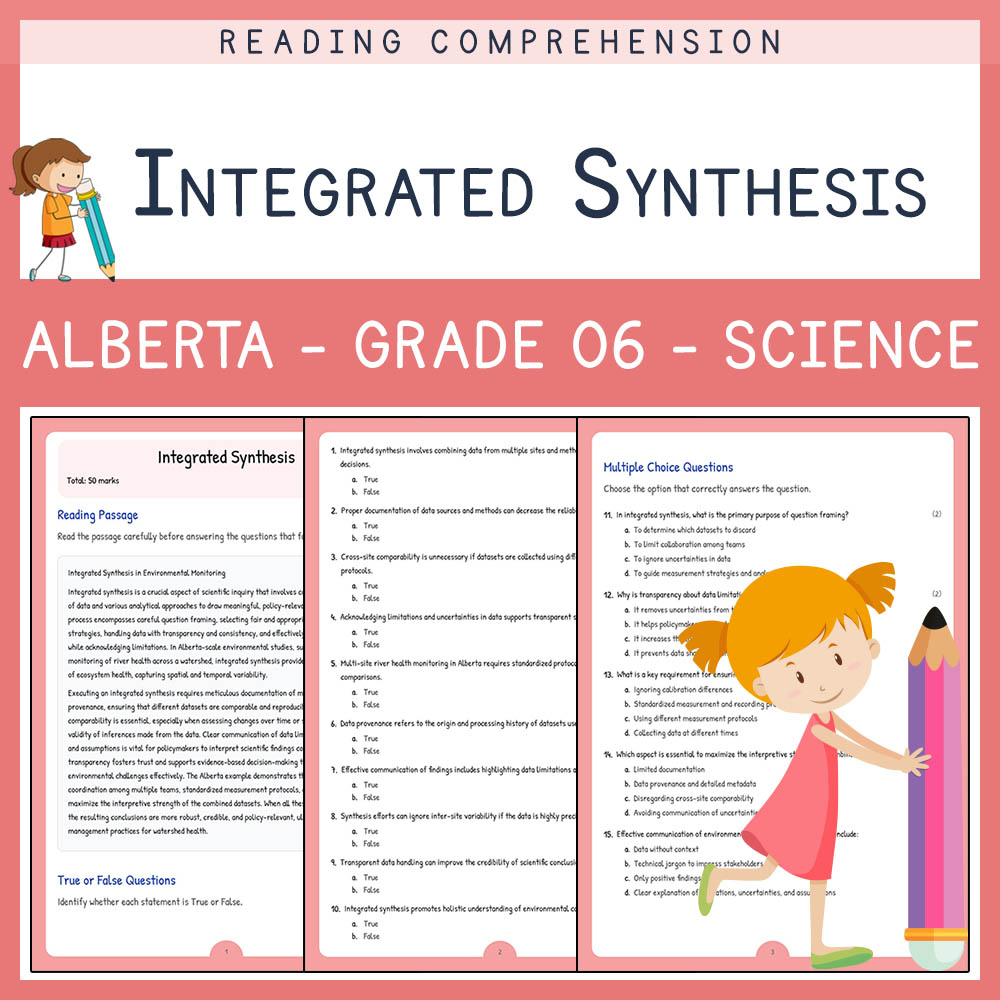
Grade 6 Science Worksheet Elena | Integrated Synthesis | Alberta Standards
Created byLumora LearningLearning Objectives
- Understand the components and importance of integrated synthesis in scientific inquiry.
- Identify key considerations such as measurement strategies, data handling, and communication.
- Analyze examples like multi-site river monitoring to illustrate synthesis concepts.
Also included in: Grade 6 Science | Evidence and Investigation Custom Bundle | Alberta
Instant download
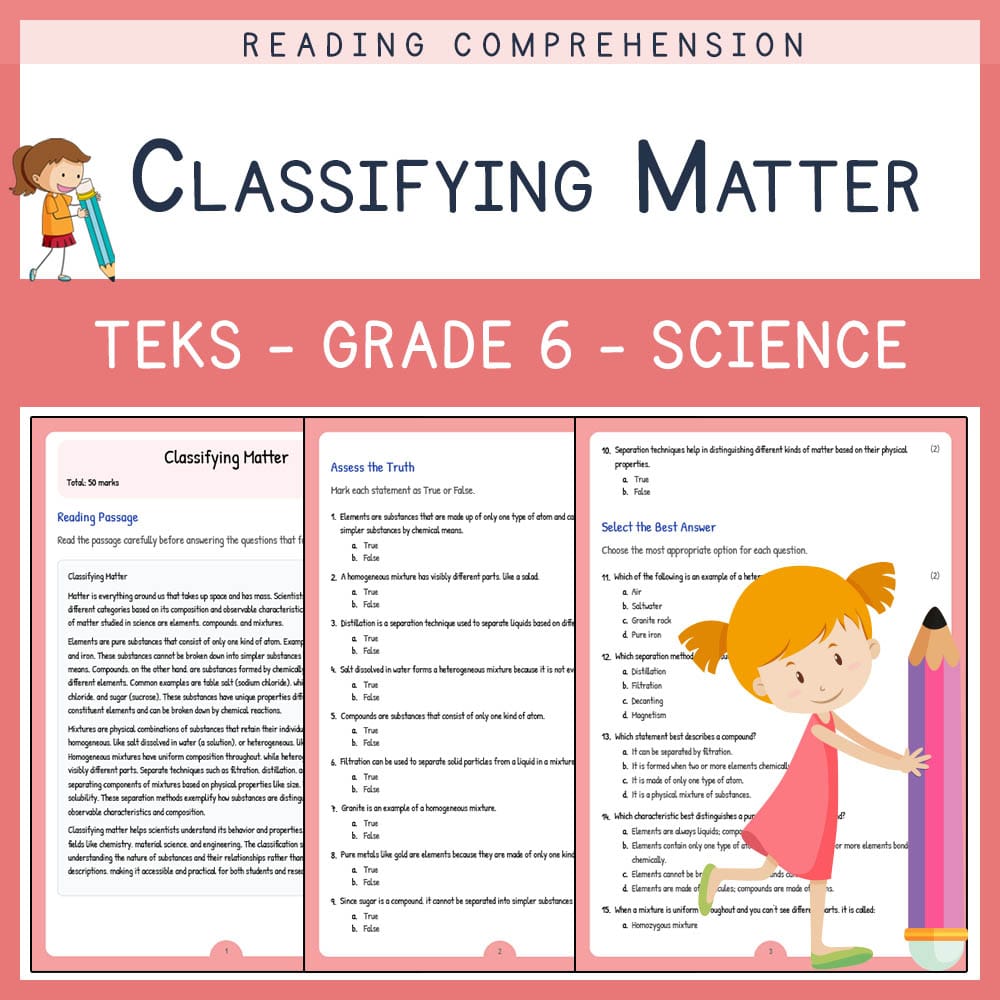
Grade 6 Science | Classifying Matter Worksheet | TEKS Alligned
Created byLumora LearningLearning Objectives
- Understand the different categories of matter: elements, compounds, and mixtures.
- Identify examples and distinguishing features of each category.
- Learn common separation techniques and how they relate to matter classification.
Also included in: Grade 6 Science | Matter and Energy Lesson Bundle | TEKS Aligned
Instant download
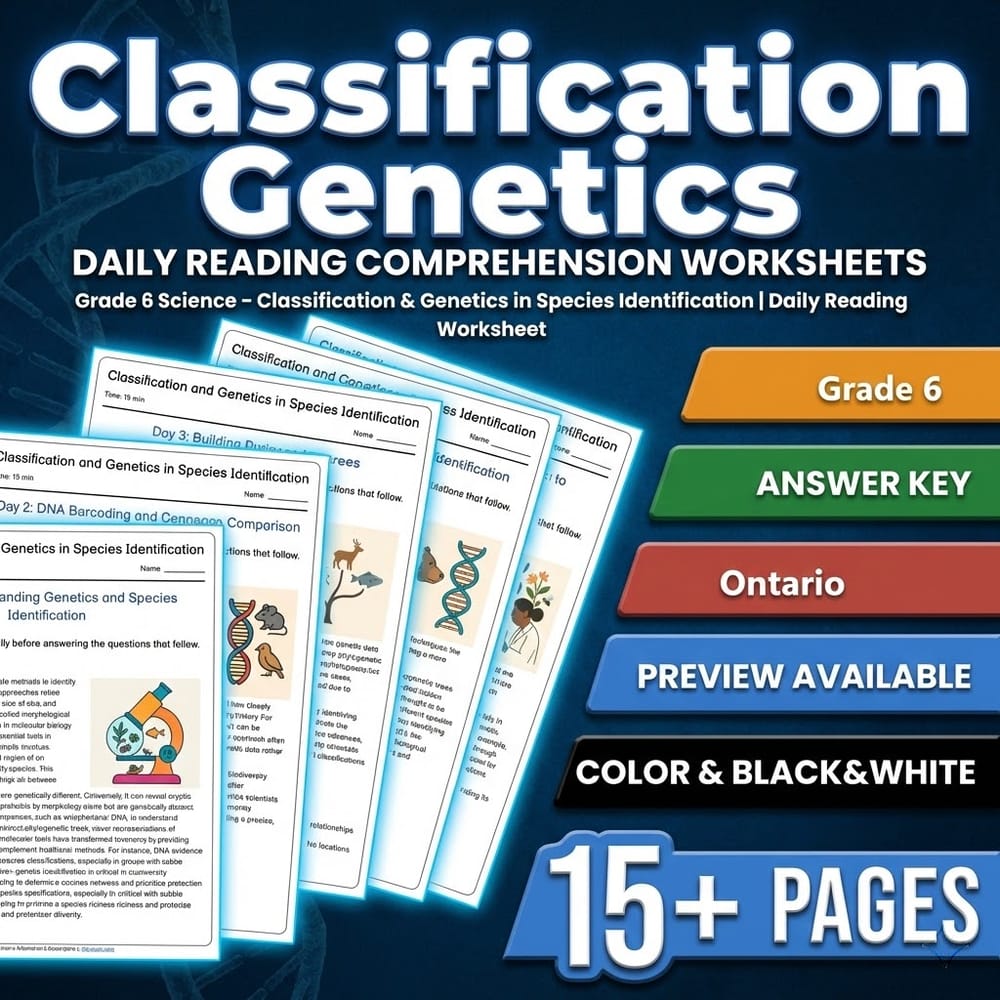
Grade 6 Science – Classification & Genetics in Species | Daily Worksheet
Created byQuiet Forest EducationLearning Objectives
- Understand the concept of genetic markers used in species classification
- Learn how DNA barcoding helps identify species
- Compare morphological keys with genetic markers for taxonomy
Also included in: Ecosystems and Environment Grade 6 Science Daily Worksheets Bundle | Ontario +1 more
Instant download

6th Grade Social Studies | Understanding Historical Continuity Worksheet (PDF)
 Created bySunny Desk Resources
Learning Objectives
- Explain the difference between continuity and change in early societies.
- Identify examples of cultural, technological, and political elements that persisted or transformed over time.
- Use evidence from a historical passage to support claims about how patterns shaped later civilizations.
Instant download
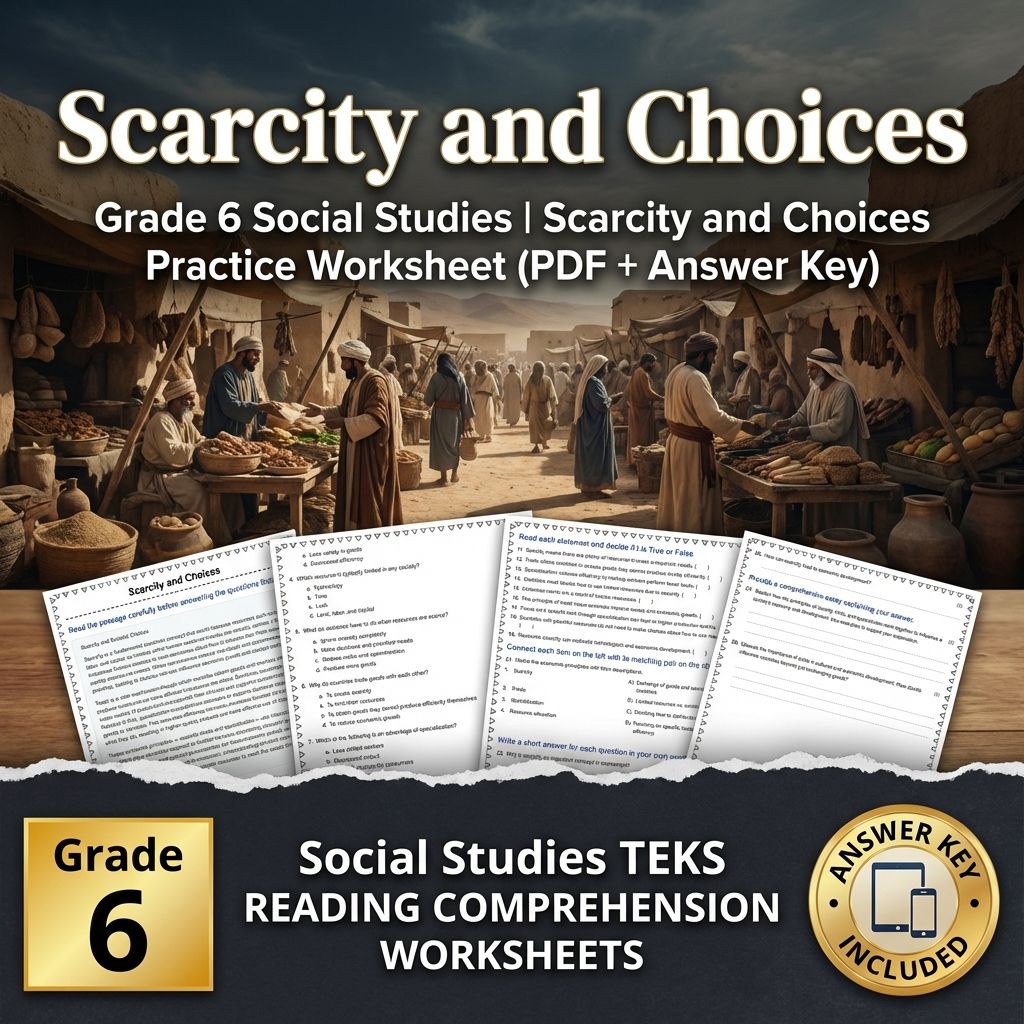
Grade 6 Social Studies | Scarcity and Choices Practice (PDF + Answer Key)
JCreated byJ.S SheetsLearning Objectives
- Understand the concept of scarcity and how it affects decision-making.
- Explain how trade, specialization, and resource allocation influence societies.
- Identify examples of economic principles shaping cultural and societal development.
Also included in: Grade 6 Social Studies Unit Bundle | Trade, Scarcity & Economic Institutions +1 more
Instant download
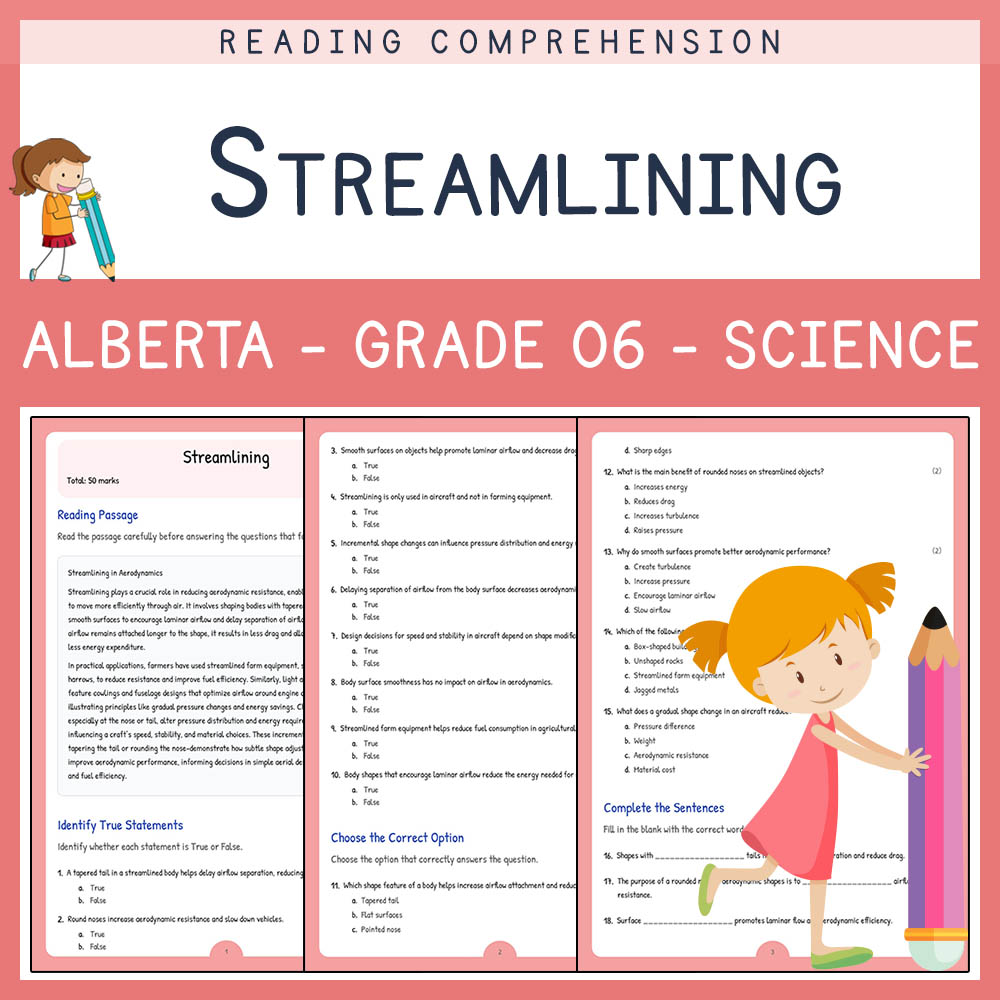
Grade 6 Science Assessment | Streamlining Worksheet Elena | Alberta
Created byLumora LearningLearning Objectives
- Understand the principles of streamlining and how body shape affects airflow.
- Identify practical examples of streamlined designs in agriculture and aircraft.
- Explain how shape changes influence pressure distribution and energy use.
Also included in: Grade 6 Science | Air and Aerodynamics Science Lesson Bundle | Alberta
Instant download

Physiological Traits Worksheet for Grade 6 Science | Standards-Aligned Practice
JCreated byJ.S SheetsLearning Objectives
- Understand the concept of physiological adaptations and their importance for survival.
- Identify examples of internal processes that help organisms adapt to their environments.
- Analyze how internal traits influence an organism's habitat and stress tolerance.
Also included in: Grade 6 Ecosystem Adaptations and Energy Flow Science Lesson Bundle | Florida NGSSS +1 more
Instant download
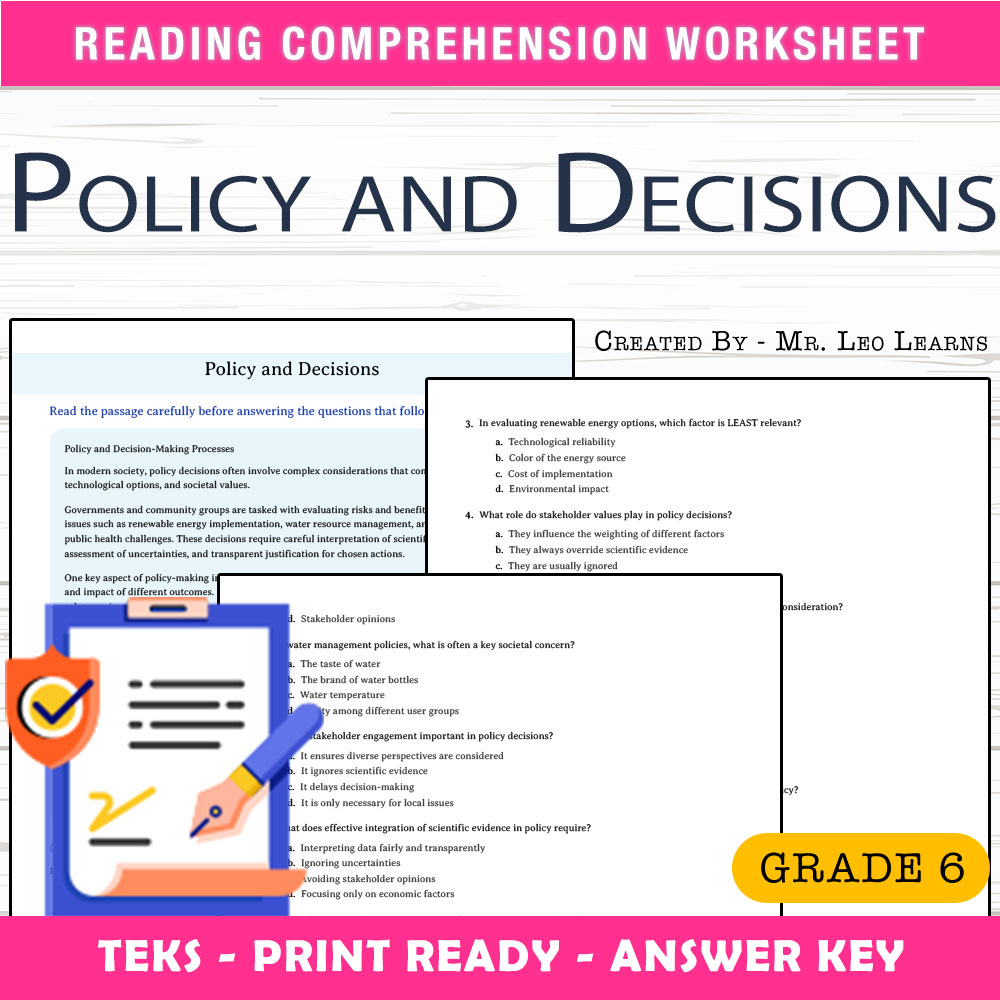
Grade 6 Science — Policy and Decisions Worksheet for Mastery
Created byThe Resource HubLearning Objectives
- Analyze how scientific evidence influences policy decisions.
- Evaluate the criteria used by governance bodies for risk assessment.
- Understand stakeholder values in societal decision-making.
Instant download

Grade 6 Science – Parachute Physics & Surface Area | Daily Reading Worksheet
Created byBright Mind ResourcesLearning Objectives
- Understand how surface area affects drag and descent speed in parachutes.
- Identify the factors that influence parachute stability and terminal velocity.
- Relate real-world examples of parachute design to physics concepts.
Also included in: Aerodynamics Grade 6 Science Daily Reading Worksheets Lesson Bundle | Alberta +2 more
Instant download
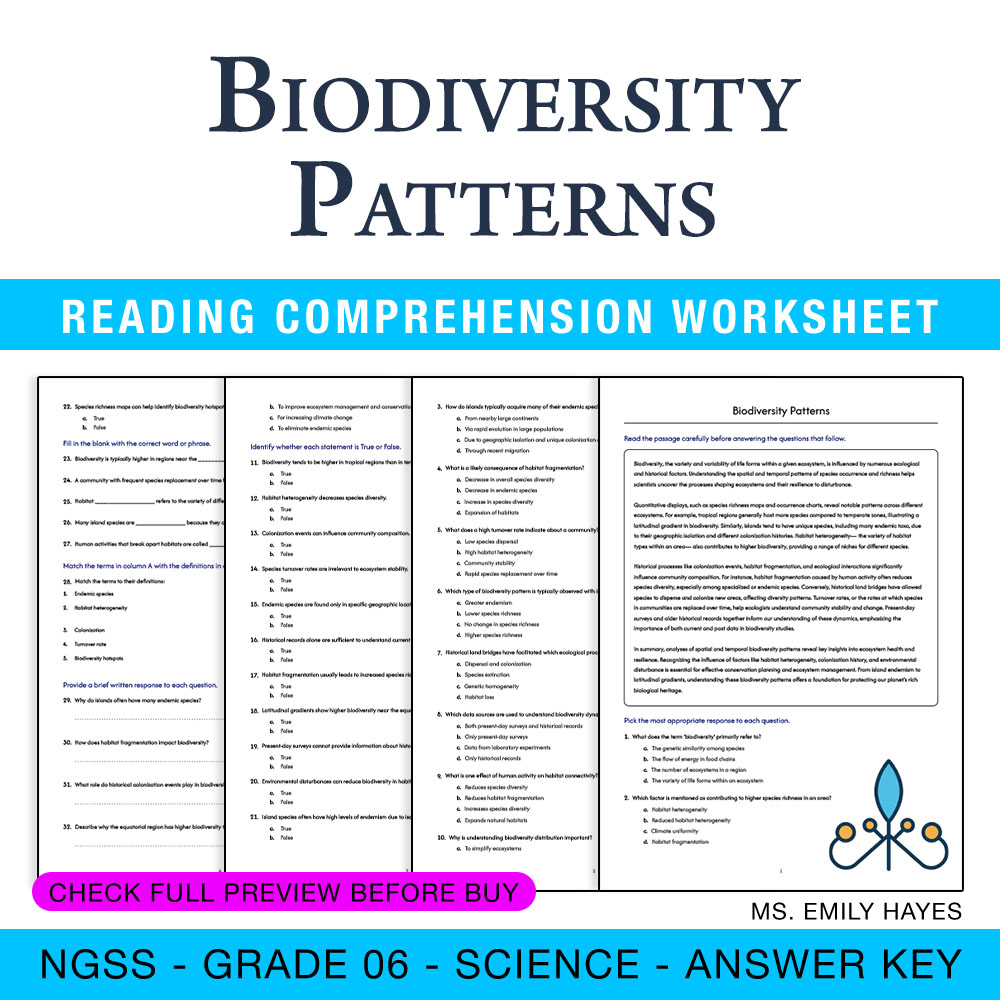
6th Grade Science | Biodiversity Patterns Worksheet (PDF + Answer Key)
Created byCopper Leaf ClassroomLearning Objectives
- Understand how species occurrence and richness reveal spatial and temporal biodiversity patterns across ecosystems.
- Interpret data displays such as charts and maps related to biodiversity in different habitats.
- Analyze ecological and historical factors influencing biodiversity distribution, including habitat fragmentation and colonization.
Instant download
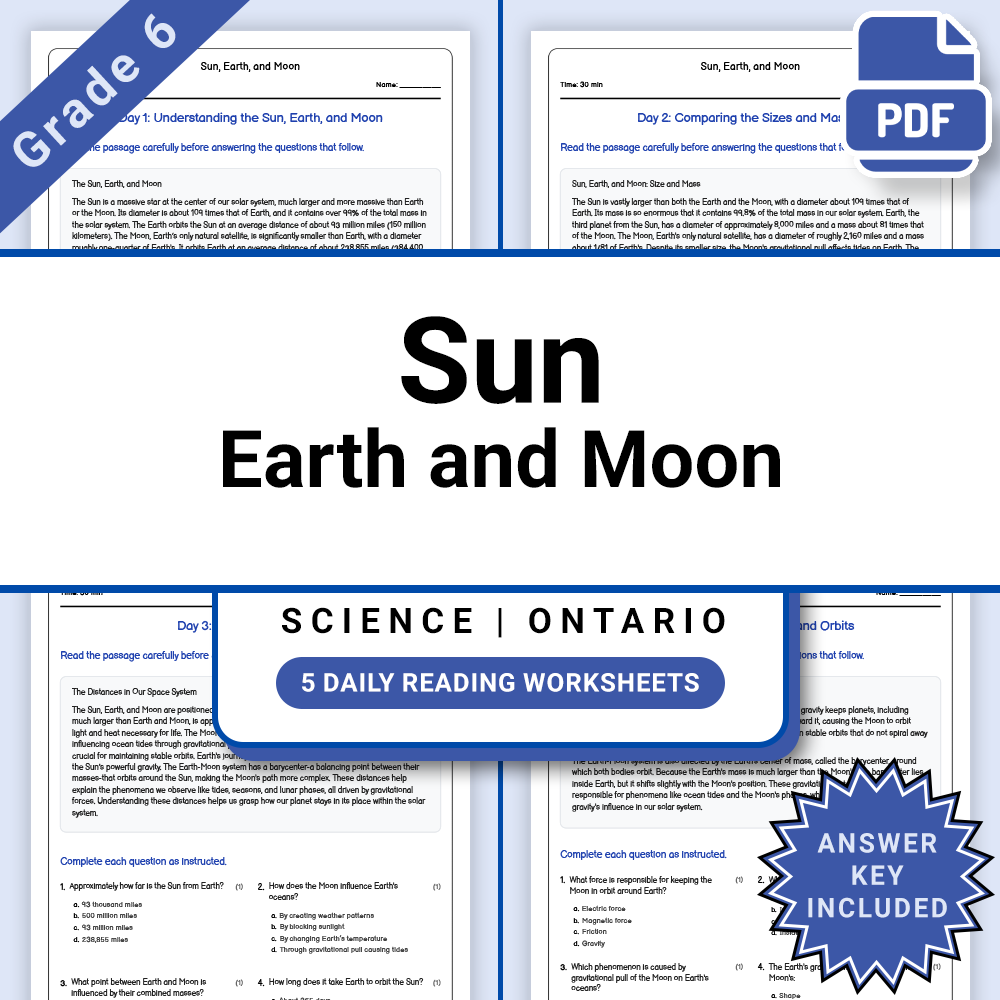
Grade 6 Science - Sun, Earth, and Moon Daily Reading Worksheet + Answer Key
JCreated byJ.S SheetsLearning Objectives
- Understand the relative sizes of the Sun, Earth, and Moon.
- Learn about the distances among the Sun, Earth, and Moon.
- Explore how gravitational forces influence their orbits.
Also included in: Grade 6 Science Lesson Bundle | Sun, Earth, Moon & Space Concepts +1 more
Instant download
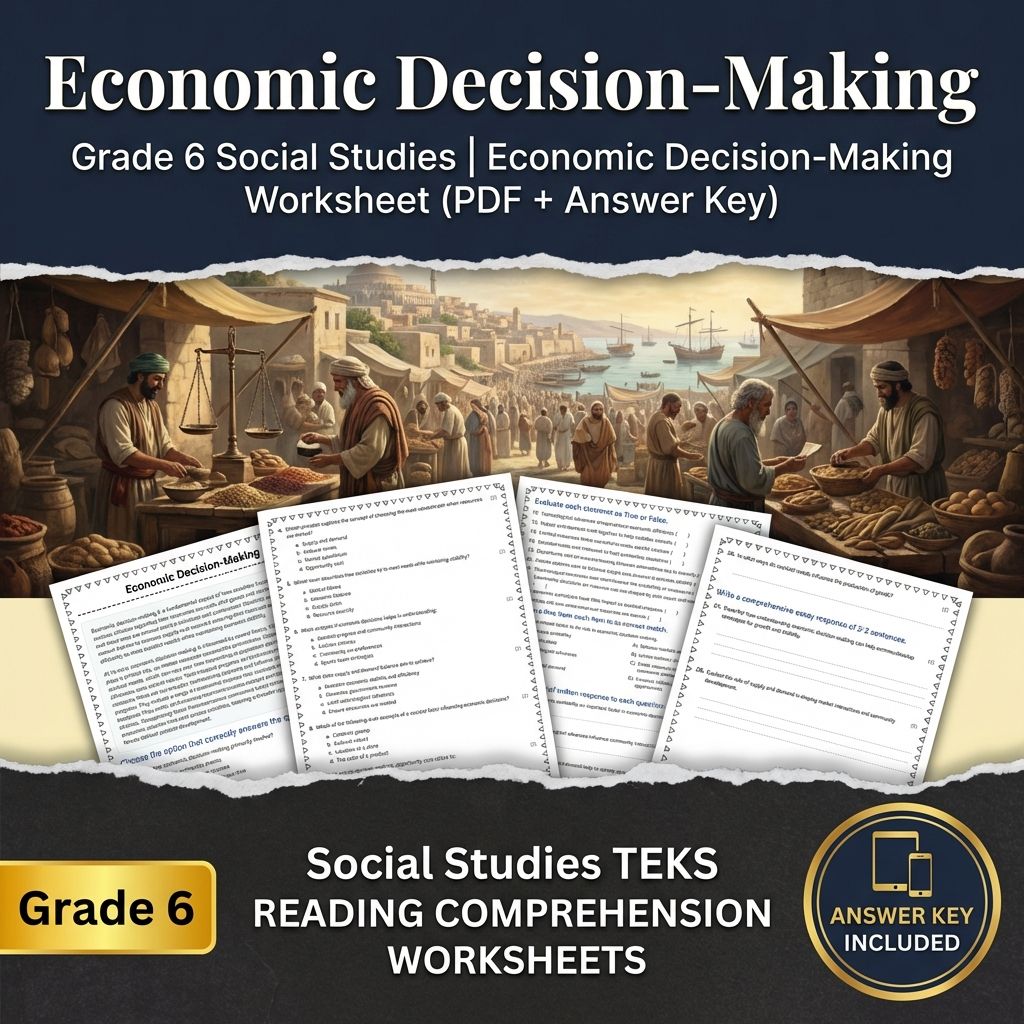
Grade 6 Social Studies | Economic Decision-Making Worksheet (PDF + Answer Key)
JCreated byJ.S SheetsLearning Objectives
- Understand the key concepts involved in economic decision-making within societies.
- Identify factors that influence resource allocation, production, and consumption.
- Analyze how societal needs and technological advances impact economic choices.
Also included in: Grade 6 Social Studies Unit Bundle | Trade, Scarcity & Economic Institutions +1 more
Instant download
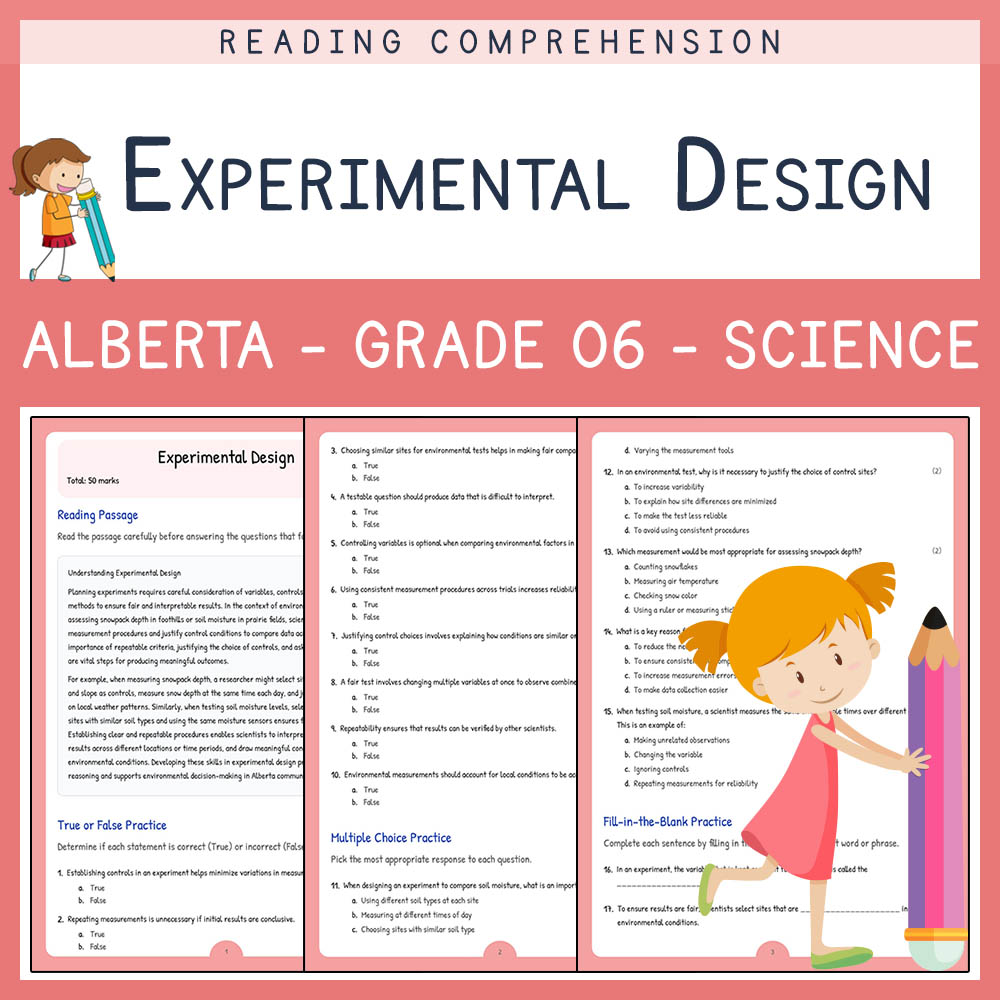
Grade 6 Science Assessment | Experimental Design Worksheet | Alberta
Created byLumora LearningLearning Objectives
- Understand the process of planning fair scientific tests.
- Identify variables, controls, and measurement procedures.
- Justify choices of controlled conditions using local environmental examples.
Also included in: Grade 6 Science | Evidence and Investigation Custom Bundle | Alberta
Instant download
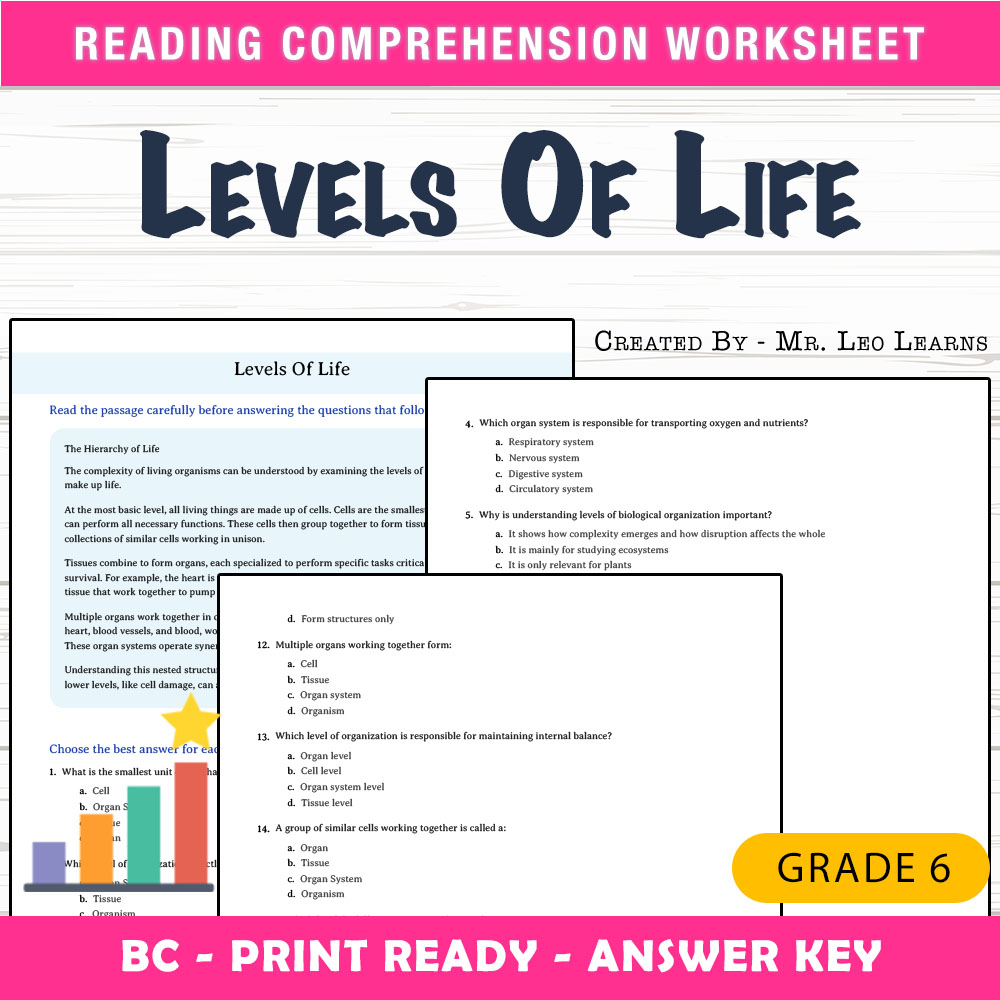
Grade 6 Science | Levels of Life MCQ Worksheet for Mastery
Created byThe Resource HubLearning Objectives
- Understand the hierarchical organization of living beings from cells to organisms.
- Identify how tissues, organs, and organ systems work together to sustain life.
- Explain the significance of each biological level and its role in maintaining balance.
Also included in: Grade 6 Science Unit | Multicellular Systems & Functions Worksheet Bundle +1 more
Instant download

Aircraft Control Surfaces and Flight Axes Worksheets | Grade 6 Science
Created byPrism Point LearningLearning Objectives
- Identify how primary and secondary control surfaces affect lift and moments
- Explain how ailerons, elevators, and rudders control aircraft movement
- Describe how flap deployment changes lift and drag
Also included in: Flight Lesson Bundle | Grade 6 Science | Ontario Framework
Instant download
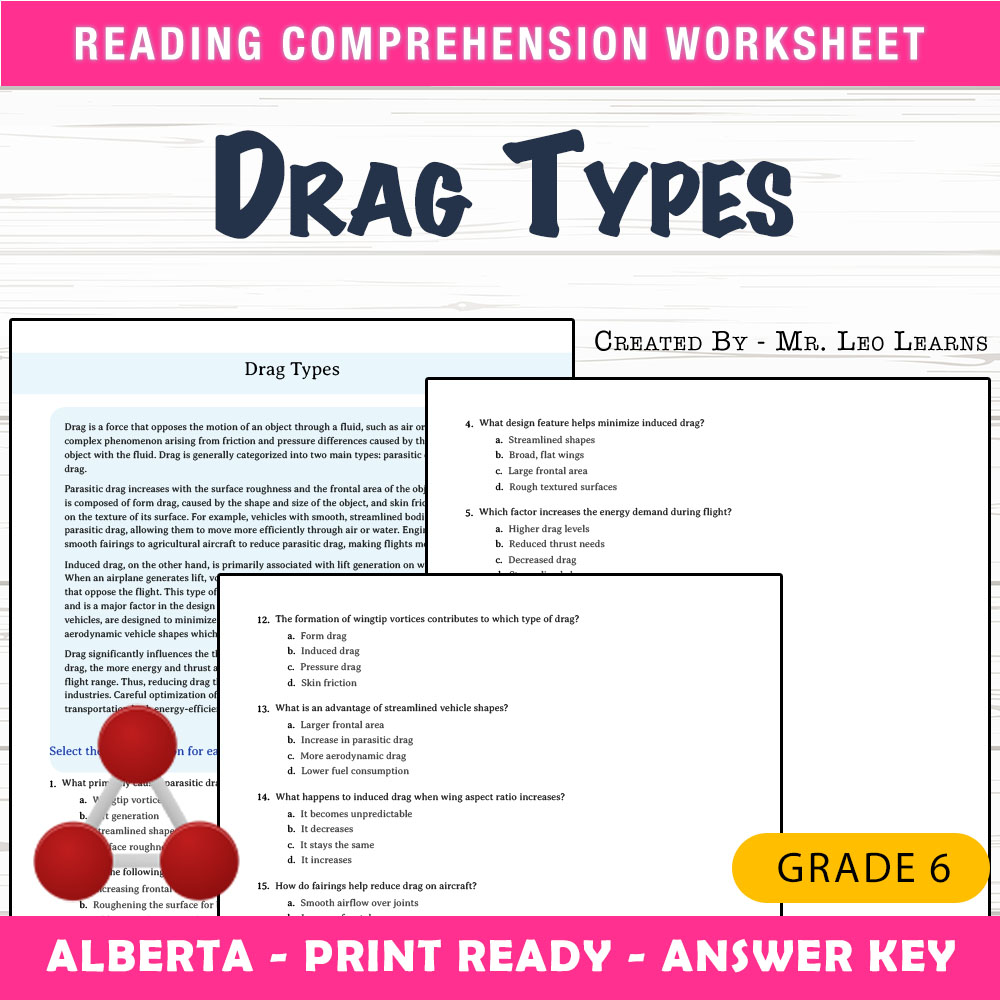
Grade 6 Science — Drag Types Worksheet MCQ Paper for Mastery
Created byThe Resource HubLearning Objectives
- Understand the different types of drag acting on objects in flight and movement.
- Identify factors that influence parasitic and induced drag.
- Analyze design strategies used to reduce drag on vehicles and aircraft.
Also included in: Grade 6 Science | Air and Aerodynamics UNIT Worksheet Bundle (Alberta Framework) +1 more
Instant download
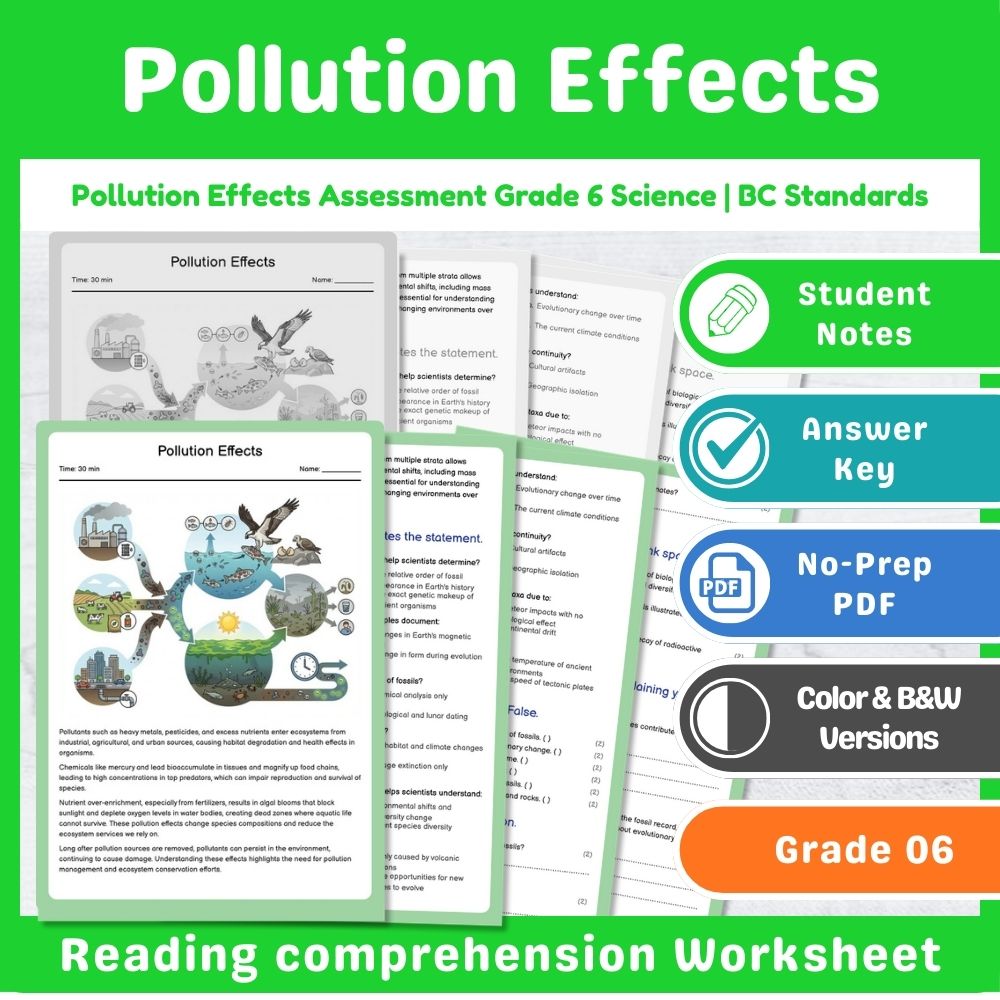
Pollution Effects Assessment | BC Standards Grade 6 Science
Created byPrism Point LearningLearning Objectives
- Understand how pollutants impact ecosystems and organisms.
- Identify bioaccumulation and biomagnification processes.
- Learn the effects of nutrient over-enrichment in aquatic environments.
Instant download
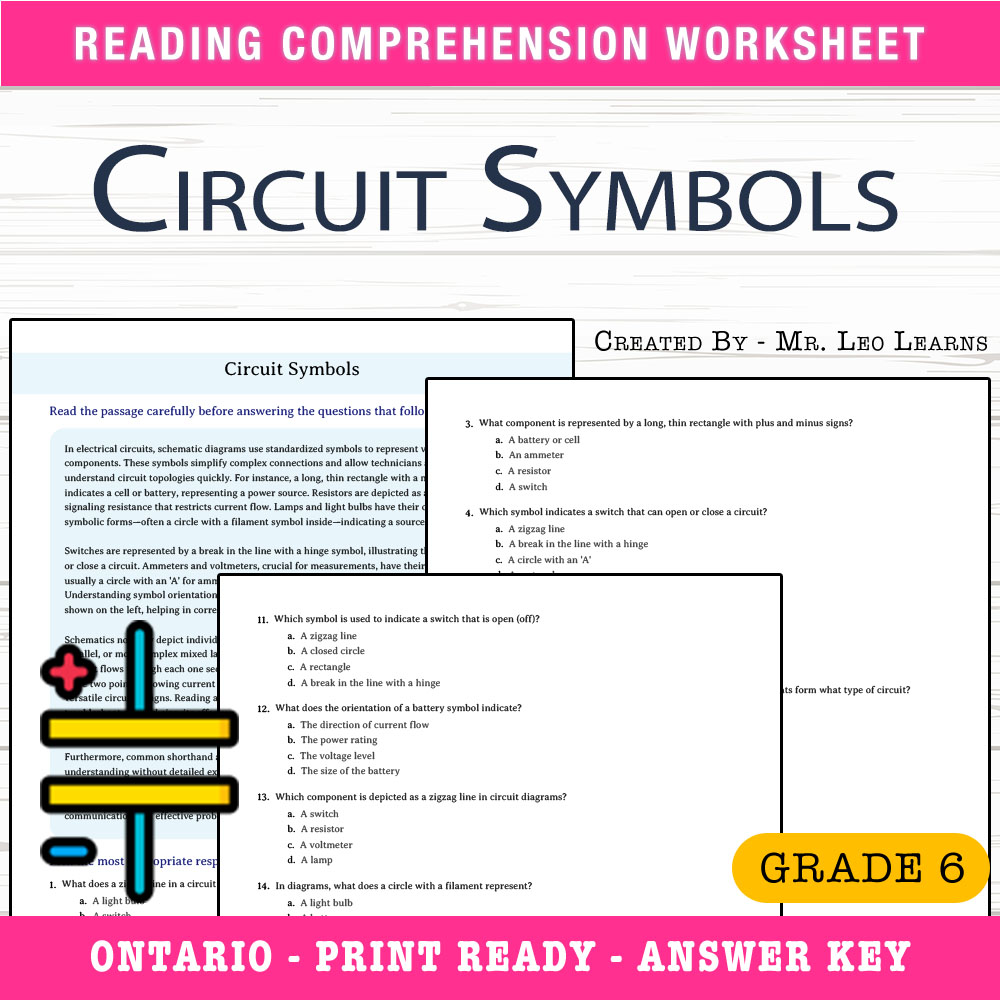
Grade 6 Science — Circuit Symbols Worksheet for Mastering Electrical Diagrams
Created byThe Resource HubLearning Objectives
- Identify and interpret standard circuit symbols such as cells, batteries, resistors, lamps, switches, ammeters, and voltmeters.
- Understand how to read and interpret schematic diagrams to predict circuit behavior and configuration.
- Distinguish between series, parallel, and mixed circuit arrangements through circuit symbols and diagrams.
Also included in: Grade 6 Science Unit Bundle – Circuits, Electricity & Energy Worksheets +1 more
Instant download
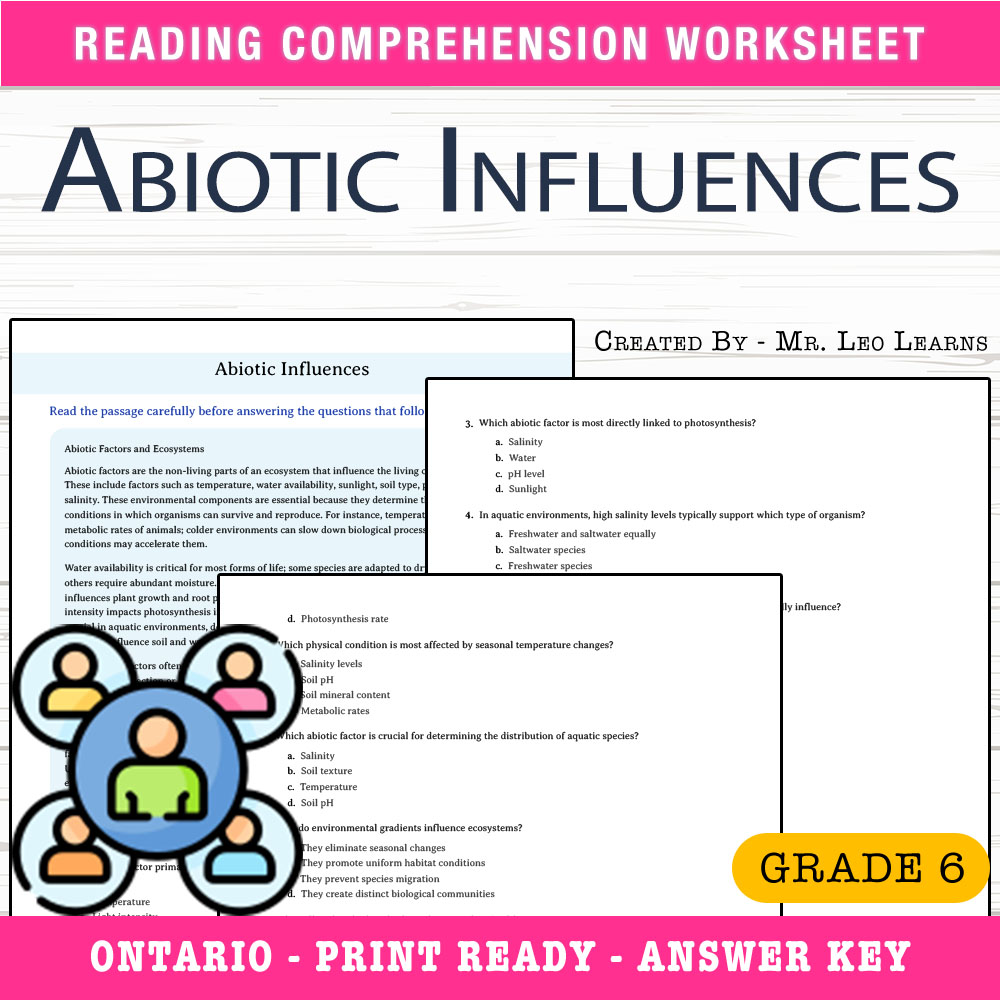
Grade 6 Science – Abiotic Influences Worksheet for Mastery
Created byThe Resource HubLearning Objectives
- Understand how abiotic factors such as temperature, water, and soil influence habitats and organism distribution.
- Identify examples of physical environmental gradients and their effects on ecosystems.
- Explain how abiotic conditions interact with biological processes to shape communities.
Also included in: Grade 6 Science Unit Bundle | Ecosystems & Environmental Relationships
Instant download
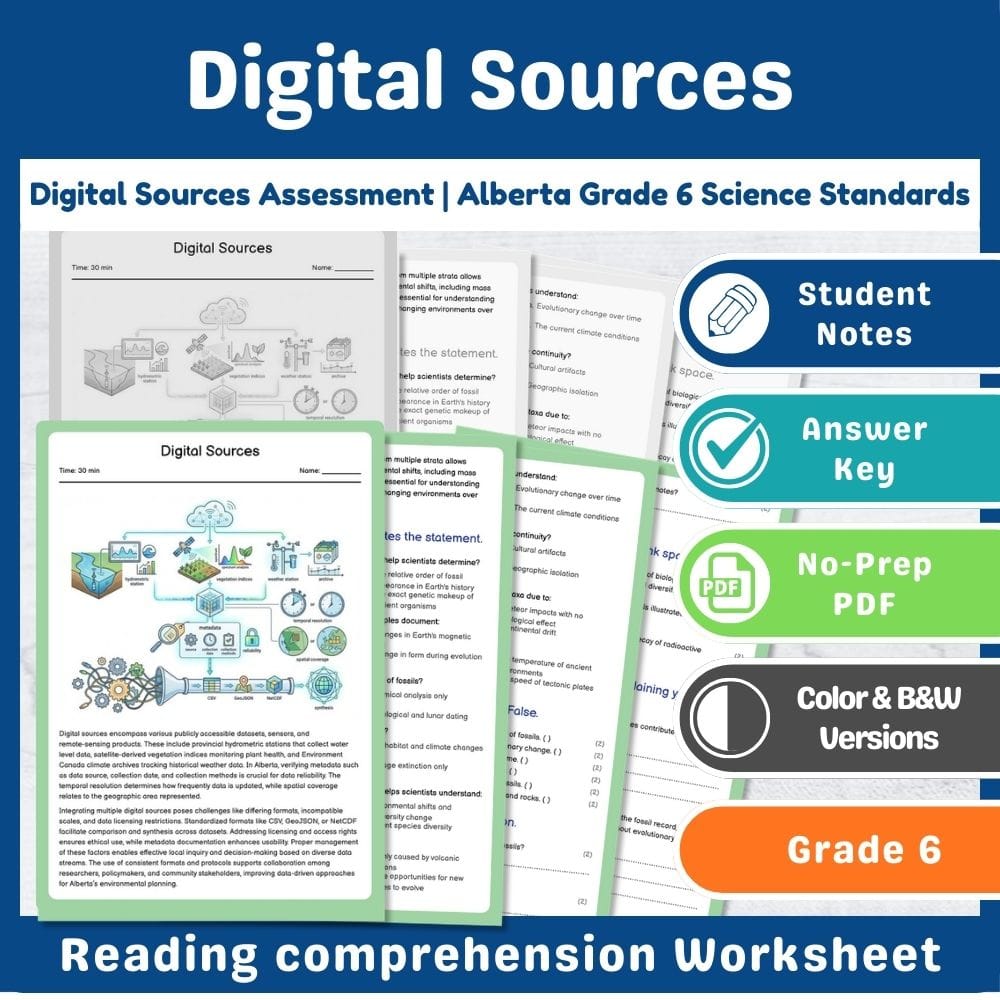
Digital Sources Assessment | Alberta Grade 6 Science Standards
Created byPrism Point LearningLearning Objectives
- Understand examples of digital data sources relevant to local inquiry.
- Identify how metadata, temporal resolution, and spatial coverage are verified for digital datasets.
- Recognize the challenges of integrating digital sources from multiple providers.
Also included in: Lesson Grade 6 Science Mini Bundle | Evidence and Investigation
Instant download

Equation Modeling Worksheet | Grade 6 Maths | Common Core CCSS
 Created byElena Brooks
Learning Objectives
- Translate a real-world situation into a one-variable equation using a clear variable definition
- Solve linear one-variable equations using inverse operations
- Interpret the solution by checking that it fits the original situation
Also included in: Grade 6 Equations & Expressions Maths Lesson Bundle (CCSS) +1 more
Instant download
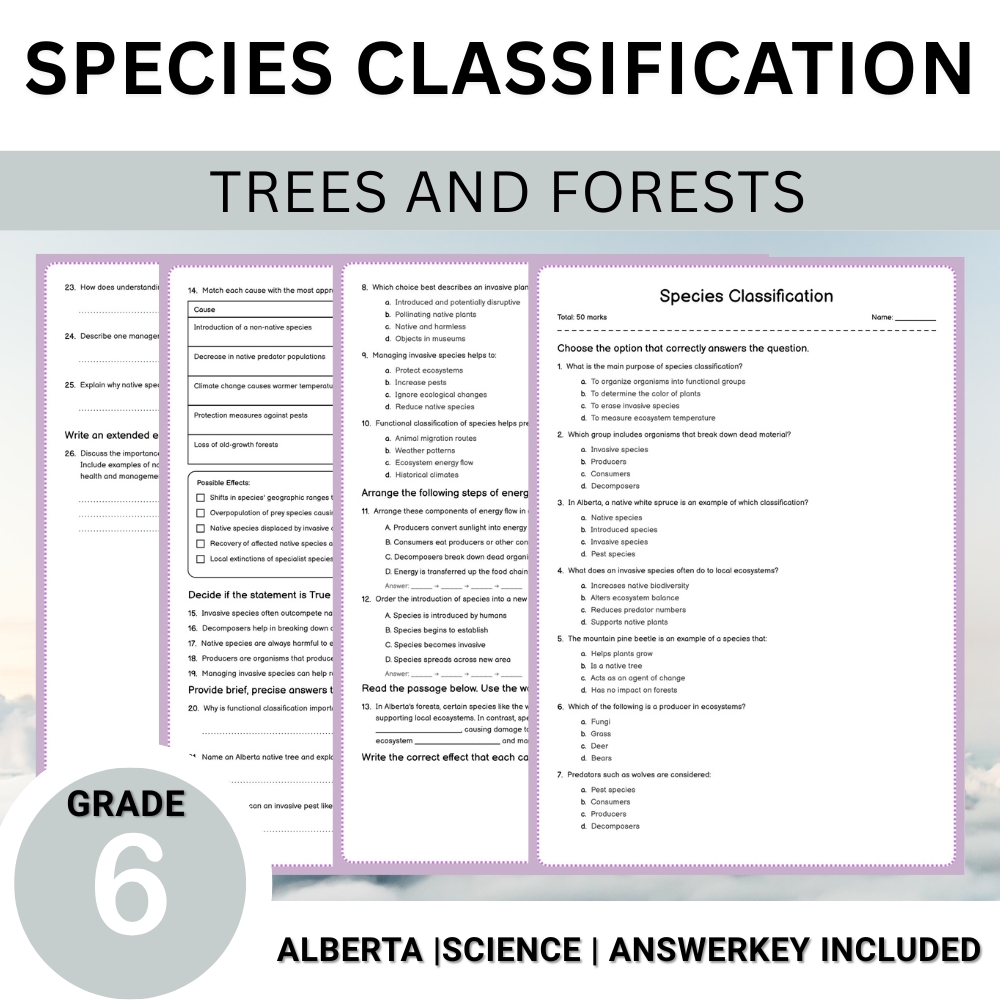
Grade 6 Science – Species Classification Worksheet (Printable PDF) for Assessment & Student Practice
Learning Objectives
- Understand the different functional groups of organisms and their roles in ecosystems.
- Distinguish between native and invasive species in Alberta's biogeographic zones.
- Learn how species classification supports ecosystem management and prediction.
Also included in: Grade 6 Science | Tree Anatomy, Ecology & Conservation Unit Worksheet Bundle +1 more
Instant download
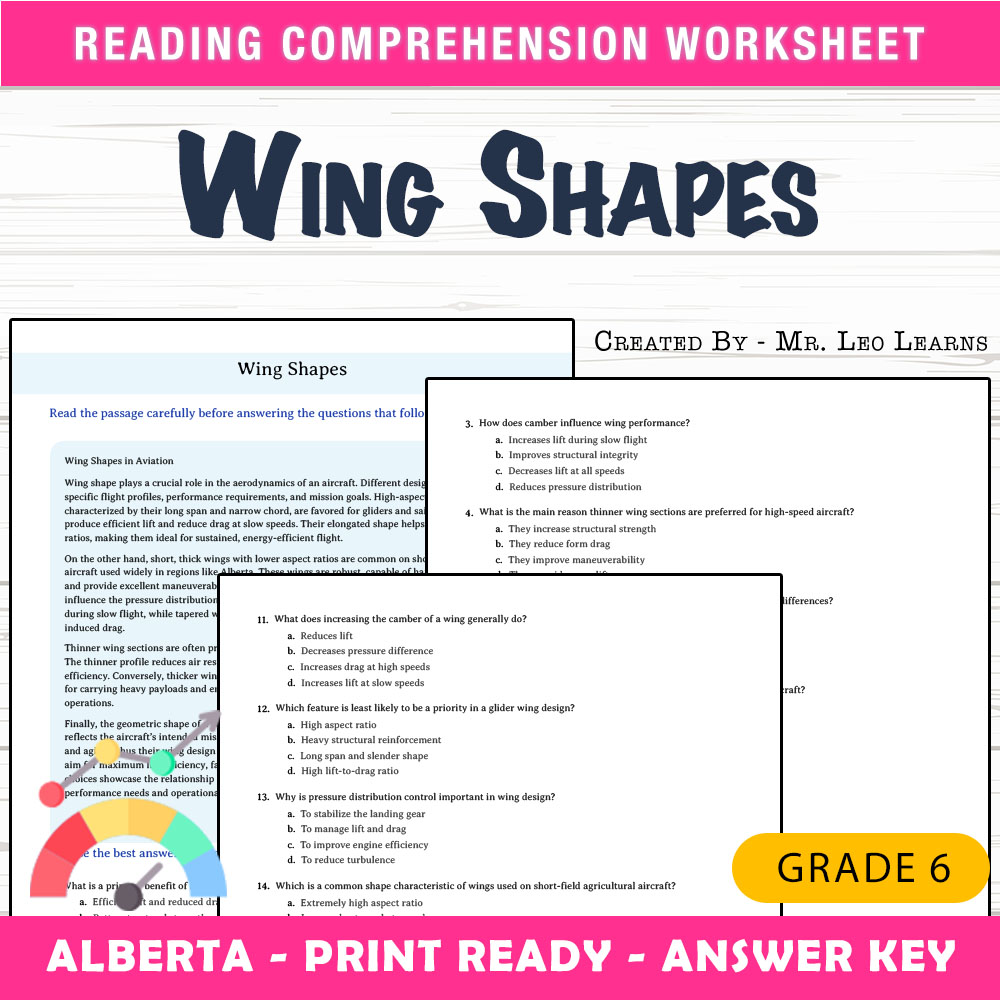
Grade 6 Science — Wing Shapes Worksheet MCQ Paper PDF + Answer Key
Created byThe Resource HubLearning Objectives
- Understand how wing shape influences lift and maneuverability.
- Identify the features such as camber, aspect ratio, and taper that affect flight performance.
- Compare high-aspect-ratio wings with low-aspect, robust wings used in regional aircraft.
Also included in: Grade 6 Science | Air and Aerodynamics UNIT Worksheet Bundle (Alberta Framework) +1 more
Instant download
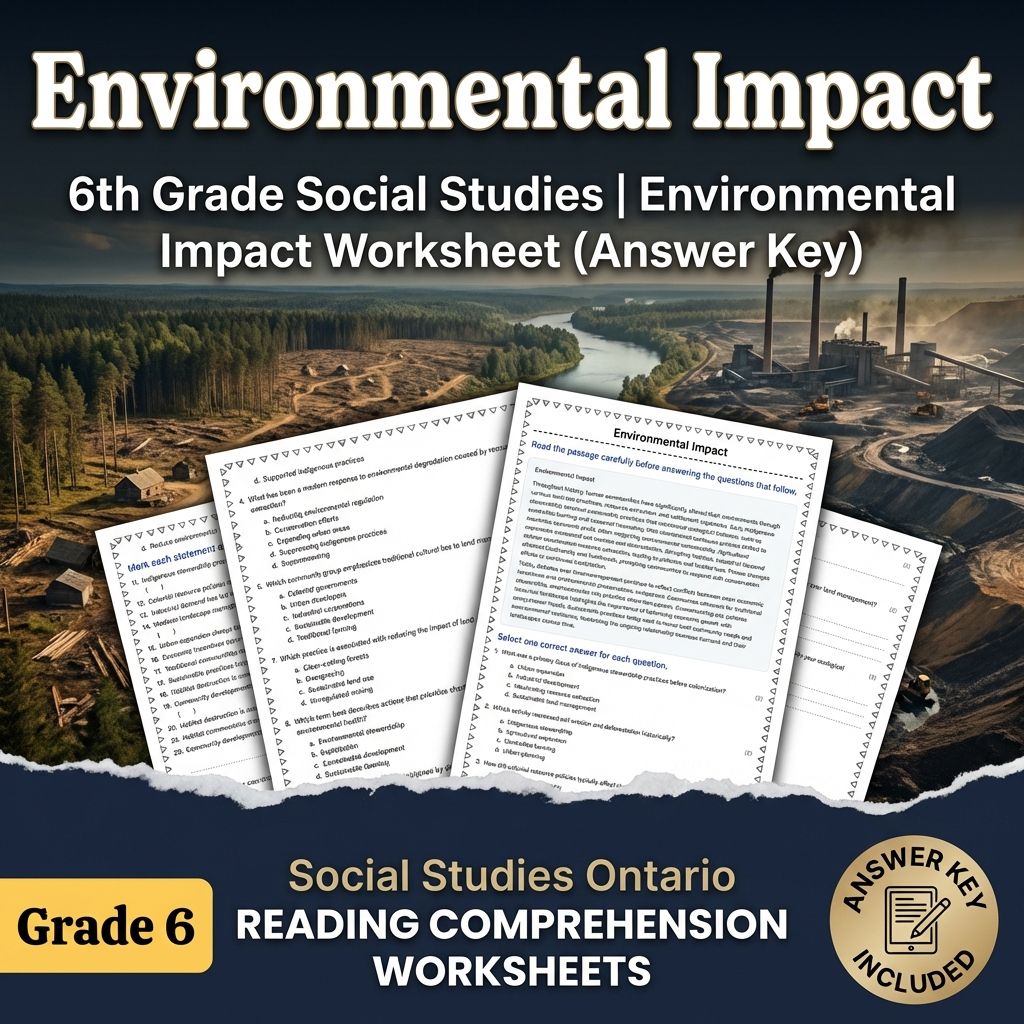
Grade 6 Social Studies | Environmental Impact Worksheet (PDF + Answer Key)
JCreated byJ.S SheetsLearning Objectives
- Analyze how land use and resource extraction have changed local environments.
- Identify causes and consequences of human activities on ecosystems.
- Examine different perspectives on landscape management and sustainability.
Also included in: Grade 6 Social Studies UNIT Bundle – Communities, History, & Culture (PDF) +1 more
Instant download
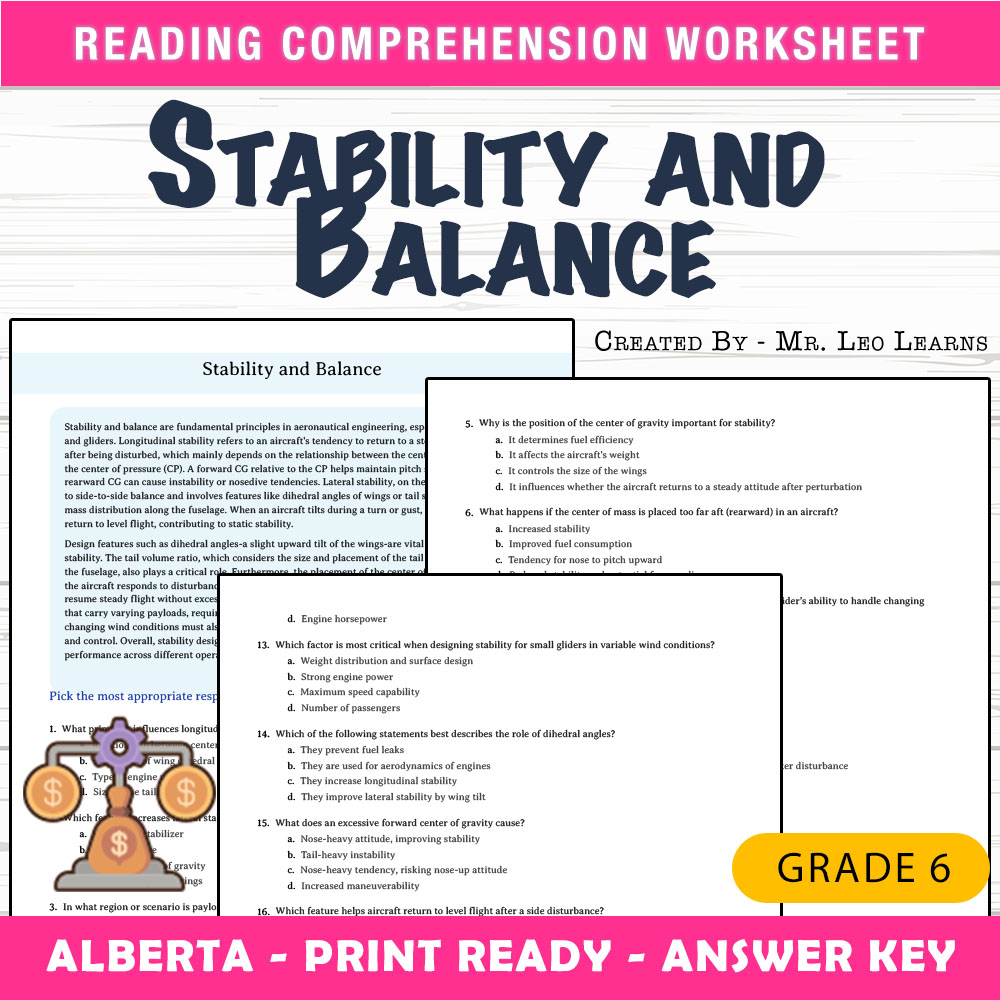
Grade 6 Science — Stability and Balance Worksheet MCQ Paper for Mastery
Created byThe Resource HubLearning Objectives
- Understand the principles of longitudinal and lateral stability in aircraft and gliders.
- Identify how image placement of center of mass and center of pressure affects stability.
- Explain the design features such as dihedral angles and tail volume that enhance static stability.
Also included in: Grade 6 Science | Air and Aerodynamics UNIT Worksheet Bundle (Alberta Framework) +1 more
Instant download

Grade 6 Wing Shapes Worksheet | Practice & Assessment PDF
 Created byClear Sky Classroom
Learning Objectives
- Explain how wing shape features (camber, thickness, and aspect ratio) affect lift efficiency
- Describe how air pressure differences form around wing curvature and influence stall behavior
- Relate wing geometry choices to specific mission needs, such as gliding versus short-field operations
Also included in: Grade 6 Air and Aerodynamics Science Lesson Bundle (Alberta Framework) +1 more
Instant download
Browse more categories
About Grade 6 Worksheets
Browse 8,582 printable Grade 6 worksheets across math, ELA, science, and social studies — each a ready-to-print PDF with optional answer keys.
MyTeachingSheets worksheets are made by real teacher-authors and checked before they go live. Download any as a print-ready PDF for lessons, homework, or independent practice — most include answer keys, and previews are always free.