
Grade 6 Worksheets
8,582 grade resources
Grade 6 Science | Societal Impacts - Daily Reading Comprehension
 Created byCoral Reef Learning
Learning Objectives
- Understand how water treatment improves public health
- Identify societal benefits of scientific research in environmental management
- Evaluate evidence-based outcomes of public health initiatives
Instant download

Nonrenewable Resources Worksheet | Ontario Grade 6 Social Studies Practice
JCreated byJ.S SheetsLearning Objectives
- Explain how nonrenewable resources form and why they are finite.
- Describe how mining, oil and gas extraction, and mineral processing affect regional economies and the environment.
- Analyze causes and consequences of boom–bust cycles and how technologies and reclamation efforts change over time.
Instant download

Constitution Day Citizenship Worksheets for Grade 6 Social Studies
 Created byShaNova Worksheets
Learning Objectives
- Describe how communities observe Constitution Day
- Identify responsibilities of active citizens in inclusive communities
- Explain connections between cultural awareness and community service
Instant download

Grade 6 Social Studies | Nonrenewable Resources Worksheet (PDF)
 Created bySunny Desk Resources
Learning Objectives
- Explain why nonrenewable resources are finite and how extraction changes the environment
- Describe how mining, oil and gas extraction, and mineral processing contribute to regional economic growth and boom–bust cycles
- Evaluate how technologies, reclamation efforts, regulations, and community well-being can create both benefits and harms
Also included in: Grade 6 Resource Patterns Social Studies Lesson Bundle | Ontario Framework +1 more
Instant download

Grandparents Day Traditions Worksheets & Reading Comprehension | Grade 6
Created byShaNova WorksheetsLearning Objectives
- Analyze how traditions honor elders across cultures
- Identify values connected to gratitude, respect, and community
- Interpret text details to support reading comprehension
Instant download

Citizenship in a Democracy Worksheets | Grade 6 Constitution Day
Created byShaNova WorksheetsLearning Objectives
- Explain what citizenship means in a democratic community
- Identify rights and responsibilities of citizens
- Describe how the Constitution protects freedoms
Instant download

Grade 6 Social Studies — Sustainable Practices Worksheet Multiple Choice
 Created byThe Resource Hub
Learning Objectives
- Explain key sustainable practices such as ecosystem-based management, community-led co-management, circular economy principles, and land-use planning
- Analyze causes and consequences of adopting or neglecting sustainable practices
- Describe how technology, cultural values, and governance structures work together to shape sustainability outcomes
Also included in: Grade 6 People and Environments Social Studies Custom Bundle: Ontario
Instant download

Rosh Hashanah Traditions and Meaning Worksheets | Grade 6 Holiday
Created byShaNova WorksheetsLearning Objectives
- Identify Rosh Hashanah symbols and explain their meanings
- Explain how reflection connects to Rosh Hashanah traditions
- Describe how renewal and community shape the holiday
Also included in: Rosh Hashanah Holiday Lesson Bundle | Grade 6 | September Framework
Instant download

Autumnal Equinox Worksheets: Earth's Tilt and Orbit Grade 6
Created byShaNova WorksheetsLearning Objectives
- Explain how Earth's tilt and orbit create seasonal changes
- Predict daylight changes using Earth–Sun relationships
- Explain how lower sun angles affect received solar energy
Also included in: Autumnal Equinox Lesson Bundle | Grade 6 Holiday Science | September
Instant download

World Gratitude Day Worksheets | Grade 6 Holiday Reading Activity
Created byShaNova WorksheetsLearning Objectives
- Explain how cultures express gratitude through respectful words and actions
- Identify behaviors that demonstrate respect, humility, and thankfulness
- Explain how gratitude can strengthen relationships and build trust
Instant download

International Literacy Day Critical Reading Worksheets Grade 6
Created byShaNova WorksheetsLearning Objectives
- Identify an author's purpose in texts about literacy initiatives
- Explain the main message of a literacy-focused informational text
- Evaluate arguments about equal access using textual evidence
Instant download

Grade 6 Science | Matter Properties - Daily Reading Comprehension
Created byCoral Reef LearningLearning Objectives
- Understand the concept of density and how it helps identify substances.
- Compare the density of different materials visually and quantitatively.
- Recognize other properties such as solubility, magnetism, and luster.
Instant download

International Day of Peace Worksheets | Grade 6 Holiday Reading
Created byShaNova WorksheetsLearning Objectives
- Explain the significance of the International Day of Peace.
- Identify how listening and words can reduce conflict.
- Explain how forgiveness can move conflicts beyond revenge.
Instant download

Portfolio Reflection Worksheets & Goal Setting Activity Grade 6
Created byShaNova WorksheetsLearning Objectives
- Explain how portfolios track learning progress over time
- Select work that demonstrates effort, learning, and improvement
- Identify reflection elements for selected portfolio pieces
Instant download

Talk Like a Pirate Day Worksheets: Pirate Slang & Storytelling Grade 6
Created byShaNova WorksheetsLearning Objectives
- Identify meanings and tones of common pirate slang expressions
- Explain how shared language creates culture and social identity
- Connect word choice and tone to characters and situations
Instant download

Labor Day Civic Pride Worksheets & Activity for Grade 6
Created byShaNova WorksheetsLearning Objectives
- Describe how Labor Day celebrations demonstrate civic pride
- Identify traditions connected to Labor Day community celebrations
- Compare ways communities show respect for workers
Instant download

Autumnal Equinox Worksheets | Earth’s Seasons Science Grade 6
Created byShaNova WorksheetsLearning Objectives
- Explain why day and night are nearly equal at the equinox
- Describe how Earth’s axial tilt affects seasonal sunlight patterns
- Explain how Earth’s orbit contributes to seasonal sunlight changes
Also included in: Autumnal Equinox Lesson Bundle | Grade 6 Holiday Science | September
Instant download

Family History & Traditions Reading Comprehension Worksheets Grade 6
Created byShaNova WorksheetsLearning Objectives
- Identify key details from a passage about intergenerational storytelling.
- Explain how family traditions can shape personal identity.
- Interpret the metaphor of stories as bridges between generations.
Instant download

Technology and Infrastructure Worksheets | Grade 6 Social Studies
 Created byWorld Paper Hub
Learning Objectives
- Explain how sanitation, electric lighting, and medical innovations changed daily routines over time
- Identify ways infrastructure supports public health and community organization
- Match key terms to their definitions related to infrastructure and technology
Also included in: Grade 6 Social Studies Worksheets Science Technology TEKS Bundle +1 more
Instant download

Labor Day Worksheets: Workers' Contributions & Civic Values Grade 6
Created byShaNova WorksheetsLearning Objectives
- Describe how workers contribute to communities and economic growth
- Use labor and worker-rights vocabulary in context
- Identify civic values connected to Labor Day traditions
Instant download

Individual Rights in History Worksheets | Grade 6 Civics & Citizenship
Created byWorld Paper HubLearning Objectives
- Define individual rights and explain how they protect personal freedoms in a society
- Identify examples of rights such as voting, free speech, and property ownership in historical contexts
- Compare how communities balance individual freedoms with community responsibilities
Also included in: Citizenship Grade 6 Worksheets Bundle | Social Studies TEKS +1 more
Instant download

Primary & Secondary Sources Worksheets | Grade 6 Social Studies
Created byWorld Paper HubLearning Objectives
- Define primary and secondary sources and explain how they differ
- Identify source information by examining origin, purpose, and reliability
- Use evidence from sources to support historical interpretations
Also included in: Grade 6 Social Studies Skills Worksheets TEKS Bundle | 4 Resources +1 more
Instant download

6th Grade Science | Alberta Seasons Worksheet (PDF) with Answer Key
 Created bySilver Birch Teaching
Learning Objectives
- Describe how Earth’s tilt and the Sun’s angle affect seasonal changes in Alberta.
- Explain how Alberta’s continental climate influences the timing and intensity of seasonal weather.
- Connect daylight and solar intensity to environmental effects such as river ice breakup and plant growth.
Also included in: Grade 6 Celestial Motion & Seasons Science Lesson Bundle | Alberta +1 more
Instant download

Grade 6 Science – Population Change & Habitats | Daily Reading Worksheet
 Created byBright Mind Resources
Learning Objectives
- Read and comprehend scientific passages about animal populations.
- Interpret data related to fluctuations in population sizes.
- Identify factors affecting population growth and decline.
Also included in: Grade 6 Ecosystems and Energy Science Lesson Bundle | California Standards +1 more
Instant download

Parallel Circuits and Branch Current Worksheets Grade 6 Science
 Created byPrism Point Learning
Learning Objectives
- Explain why voltage is equal across branches in parallel circuits
- Calculate total current from individual branch currents
- Compare parallel and series circuit behaviour when loads are removed
Also included in: Grade 6 Electricity Lesson Bundle | Ontario Science Framework
Instant download

Grade 6 Social Studies — Indigenous Perspectives Worksheet for Mastery
Created byThe Resource HubLearning Objectives
- Understand the role of cultural practices, beliefs, and traditions in Indigenous communities.
- Recognize how Indigenous groups maintain their identity and resilience through traditions.
- Identify ways Indigenous communities have adapted and revitalized their cultures amid external influences.
Also included in: Grade 6 Social Studies Bundle: Cultures and Identities – BC Framework +1 more
Instant download

Gravitational Attraction and Friction Forces Worksheets | Grade 6 Science
 Created byTeachers Club
Learning Objectives
- Explain how gravity depends on mass and distance using examples such as Earth and the Moon
- Compare gravitational attraction with contact forces like friction by describing how each changes motion
- Use evidence from quantitative patterns to support an argument about gravitational interactions
Also included in: Grade 6 Science Forces & Interactions Worksheets | NGSS Bundle +2 more
Instant download

Grade 6 Balanced Forces Worksheet | Practice & Assessment PDF
 Created byClear Sky Classroom
Learning Objectives
- Explain how balanced forces lead to a net force of zero and may keep an object’s motion the same
- Describe how unbalanced forces produce a net force that changes an object’s speed or direction
- Connect the direction of net force to the direction of resulting motion changes
Instant download

Net Force and Motion Worksheets: Grade 6 Science Forces & Interactions
Created byTeachers ClubLearning Objectives
- Explain how net force and mass affect an object's acceleration using vector addition
- Identify how changing one or more forces changes the direction and magnitude of motion
- Match common motion scenarios to definitions of net force and balanced forces
Also included in: Grade 6 Science Forces & Interactions Worksheets | NGSS Bundle +2 more
Instant download

Momentum Conservation in Two-Body Collisions Worksheets Grade 6
Created byTeachers ClubLearning Objectives
- Explain how momentum is conserved for an isolated two-object system during a collision.
- Use mass and velocity to calculate total momentum before and after a collision.
- Identify action-reaction interaction forces that occur during contact.
Also included in: Grade 6 Science Forces & Interactions Worksheets | NGSS Bundle +2 more
Instant download
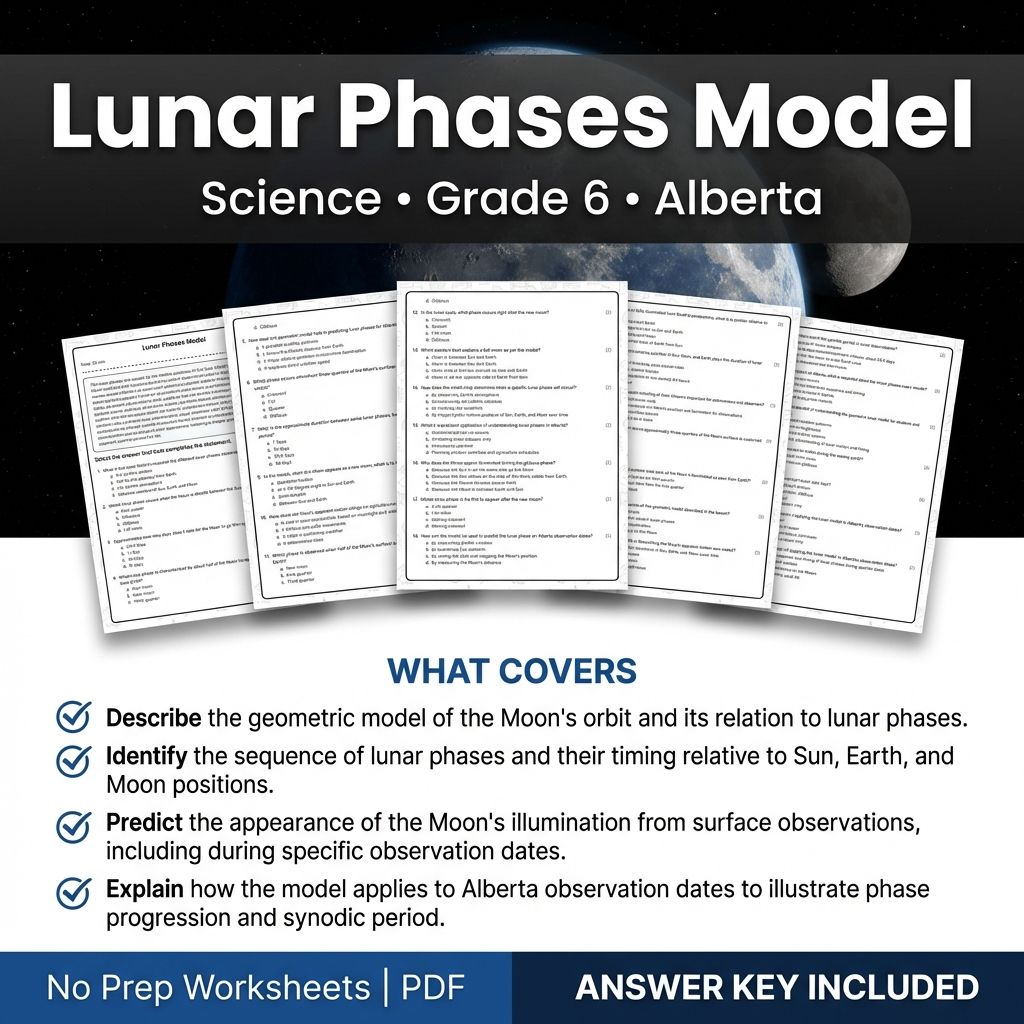
Lunar Phases Model Worksheet | Science Worksheet Grade 6 | Alberta
Created byCoral Reef LearningLearning Objectives
- Describe the geometric model of the Moon's orbit and its relation to lunar phases.
- Identify the sequence of lunar phases and their timing relative to Sun, Earth, and Moon positions.
- Predict the appearance of the Moon's illumination from surface observations, including during specific observation dates.
Instant download

Grade 6 Science | Inherited Adaptations - Daily Reading Comprehension
Created byCoral Reef LearningLearning Objectives
- Understand what inherited adaptations are
- Identify examples of adaptations in animals
- Explain how adaptations help animals survive in their environments
Instant download
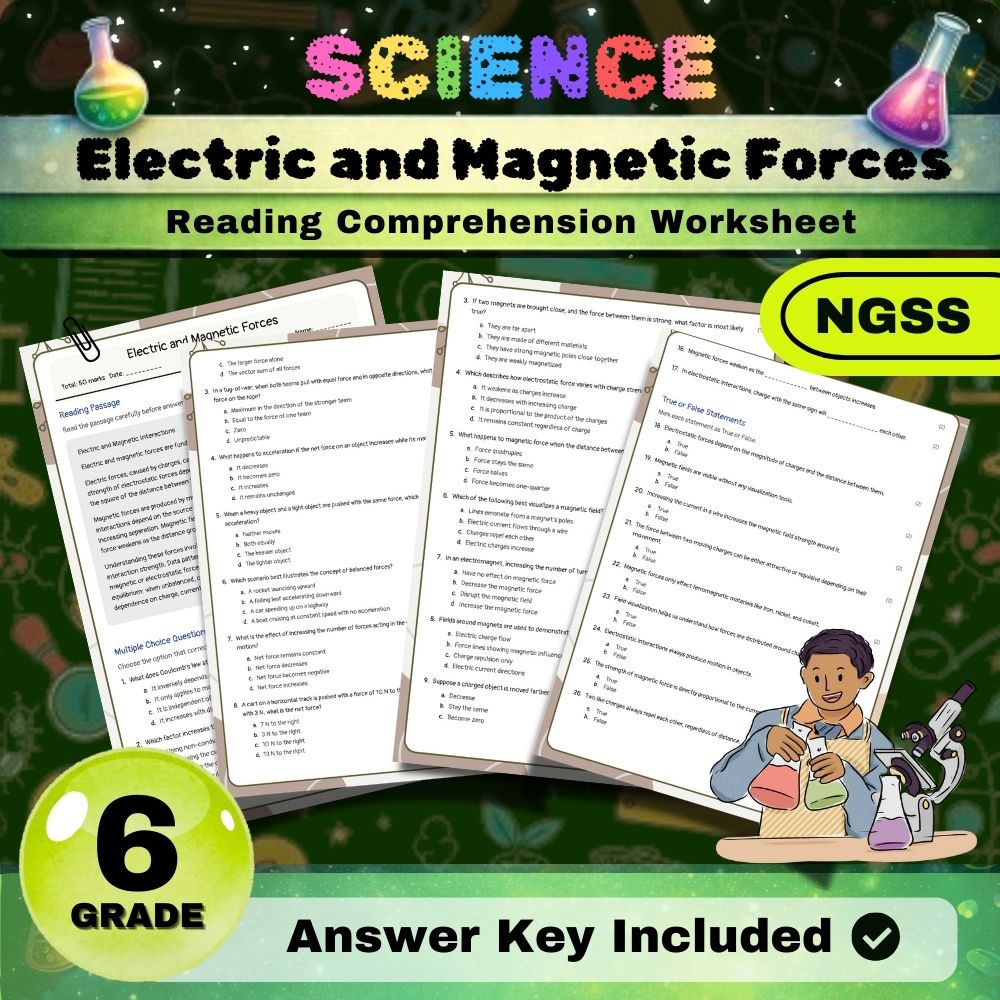
6th Grade Science – Electric and Magnetic Forces Worksheet (PDF)
 Created byMaple Path Learning
Learning Objectives
- Explain how electric and magnetic forces depend on source strength and distance.
- Differentiate between electrostatic and magnetic interactions through examples.
- Illustrate inverse and direct relationships in electromagnetic forces using qualitative data.
Also included in: Grade 6 Science Forces & Motion Unit Bundle (NGSS Worksheets + Answer Keys) +1 more
Instant download

Finding Trends and Patterns Worksheet Grade 6 Computer Science Activity
Created byPrism Point LearningLearning Objectives
- Identify the difference between a trend and a pattern in data
- Use trend and pattern clues to make an evidence-based prediction
- Describe whether data is increasing or decreasing over time
Also included in: Grade 6 Using Data to Support Conclusions Lesson Bundle | Computer Science (General) +1 more
Instant download

How the Internet Works Worksheet Grade 6 Computer Science Activity
Created byPrism Point LearningLearning Objectives
- Explain how the internet connects devices using networks and data transfer.
- Describe the roles of networks and servers in sending and receiving information.
- Use key vocabulary words correctly: internet, network, server, connect.
Also included in: Grade 6 How the Internet Works Lesson Bundle | Computer Science | General +1 more
Instant download
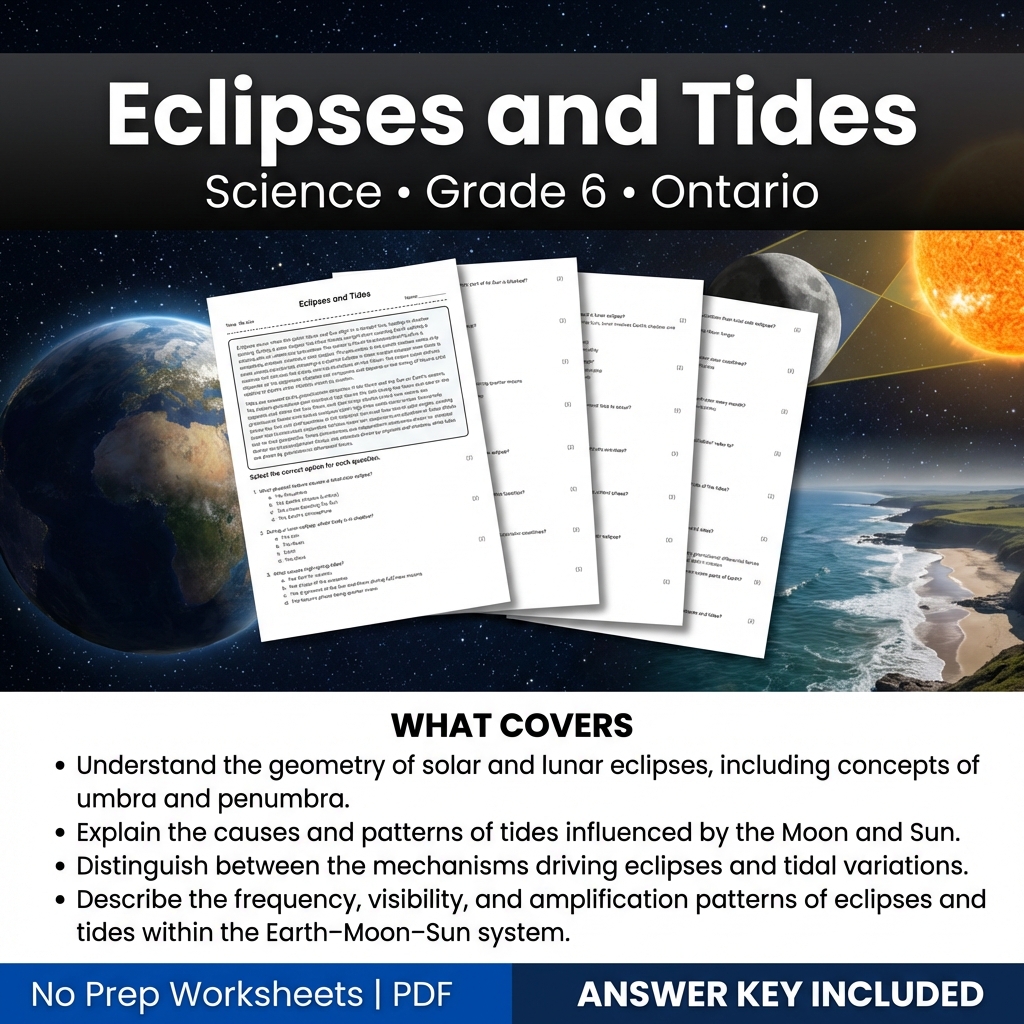
Grade 6 Science Worksheet on Eclipses and Tides | Ontario Standards
Created byCoral Reef LearningLearning Objectives
- Understand the geometry of solar and lunar eclipses, including concepts of umbra and penumbra.
- Explain the causes and patterns of tides influenced by the Moon and Sun.
- Distinguish between the mechanisms driving eclipses and tidal variations.
Instant download

Grade 6 Social Studies — Cultural Diffusion Worksheet MCQ Paper | PDF + Answer Key
Created byThe Resource HubLearning Objectives
- Define cultural diffusion and explain how it occurs between ancient societies.
- Identify examples of cultural diffusion along major trade routes such as the Silk Road and the Indian Ocean trade.
- Describe how exchanges of ideas, goods, and technology can affect civilizations over time.
Also included in: Grade 6 Ancient Civilizations & Cultural Change Lesson Bundle | TEKS +1 more
Instant download

6th Grade Science | Forms of Energy Worksheet (PDF) for BC Standards
 Created byEvergreen Desk Education
Learning Objectives
- Identify common forms of energy (kinetic, potential, thermal, chemical, electrical) and describe what they have to do with in everyday systems.
- Explain how energy can transform from one form to another (including examples like sunlight to chemical energy and combustion to thermal energy).
- Use energy vocabulary to predict how energy moves in natural and engineered processes.
Instant download

Grade 6 Social Studies — Key Civilizations Worksheet MCQ Paper
Created byThe Resource HubLearning Objectives
- Identify key geographic features that supported ancient civilizations in Mesopotamia, the Indus Valley, and China
- Compare how major civilizations used writing systems to record laws, trade, and ideas
- Describe governance and public works in ancient civilizations and explain their legacies
Also included in: Grade 6 Ancient Civilizations & Cultural Change Lesson Bundle | TEKS +1 more
Instant download

Properties of Matter Worksheets & States of Matter Review Activity Grade 6
Created byWorld Paper HubLearning Objectives
- Identify objects that are matter based on mass and occupied space.
- Classify materials as solids, liquids, or gases using observable properties.
- Compare materials using common physical properties.
Instant download
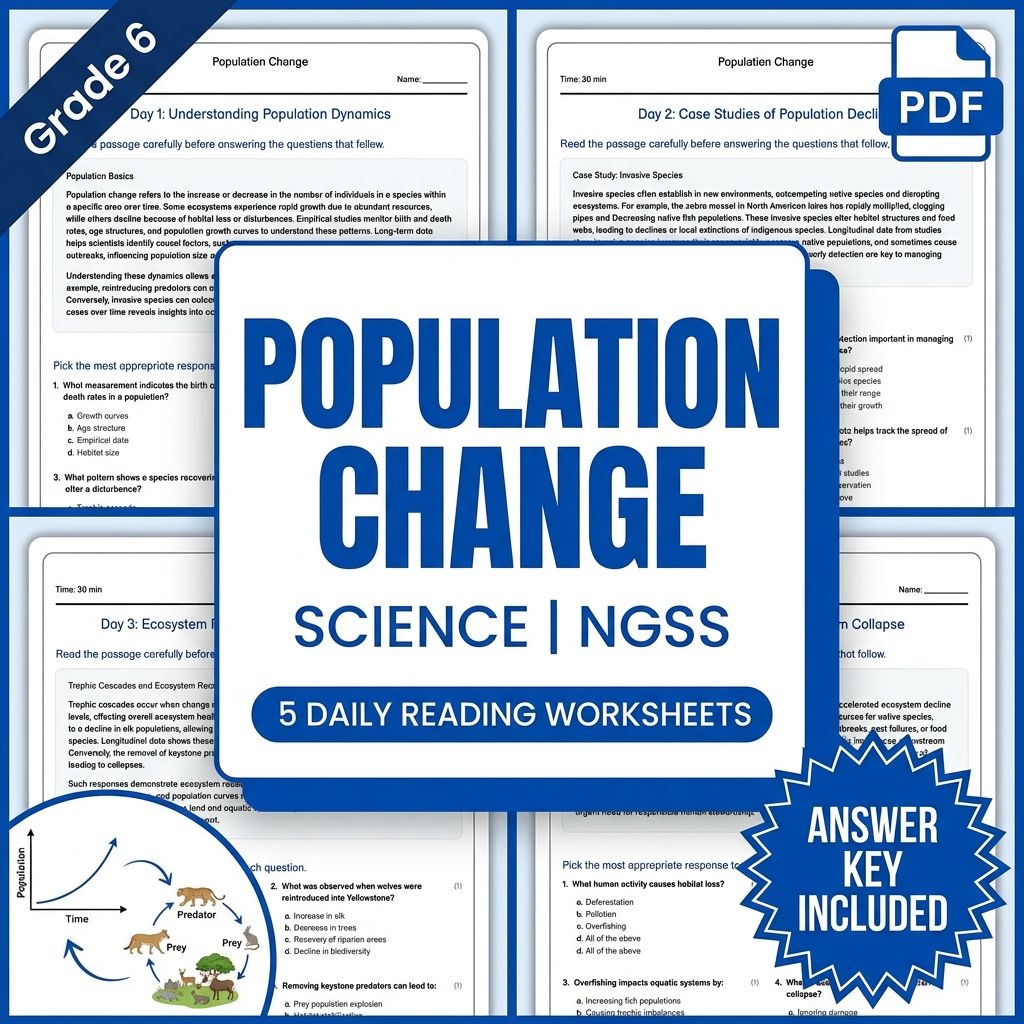
Grade 6 Science – Population Change Daily Reading Worksheet (PDF+ Answer Key)
 Created byCopper Leaf Classroom
Learning Objectives
- Construct evidence-based arguments linking ecosystem alterations to population increases or declines.
- Explain case studies involving predator reintroduction, invasive species, habitat fragmentation, and disease outbreaks.
- Analyze empirical data and longitudinal observations to infer causes of population responses.
Instant download

Grade 6 Social Studies — Geography of Greece Worksheet MCQ Paper
Created byThe Resource HubLearning Objectives
- Understand the geographical features that shaped ancient Greece, including seas and mountains.
- Identify how Greece's environment influenced trade, settlement, and conflicts among city-states.
- Analyze the impact of Greece's landscape on its political and military development.
Also included in: Grade 6 Ancient Rome Social Studies Custom Bundle: California Framework +1 more
Instant download

Grade 6 Ocean Currents Worksheet | NGSS Practice PDF
Created byClear Sky ClassroomLearning Objectives
- Explain how ocean currents move water and transport heat around Earth.
- Identify how wind patterns and Earth’s rotation influence surface currents.
- Describe how warm and cold currents affect coastal climates compared with inland areas.
Instant download

Atom Conservation Assessment | Standards-Aligned Grade 6 Science Worksheet
Created byPrism Point LearningLearning Objectives
- Explain conservation of atoms during chemical reactions as rearrangements of atoms into new combinations
- Use particle diagrams to track atoms in reactants and products
- Predict whether a reaction description or diagram conserves atoms by counting atoms of each element
Also included in: Grade 6 Atoms and Chemical Change Science lesson bundle | California Standards +1 more
Instant download

Earth's Interacting Systems Worksheets | Grade 6 Science Review
LCreated byLearnora ResourcesLearning Objectives
- Identify the geosphere, hydrosphere, atmosphere, and biosphere.
- Classify real-world examples into Earth's four major systems.
- Explain how matter and energy move between Earth systems.
Instant download
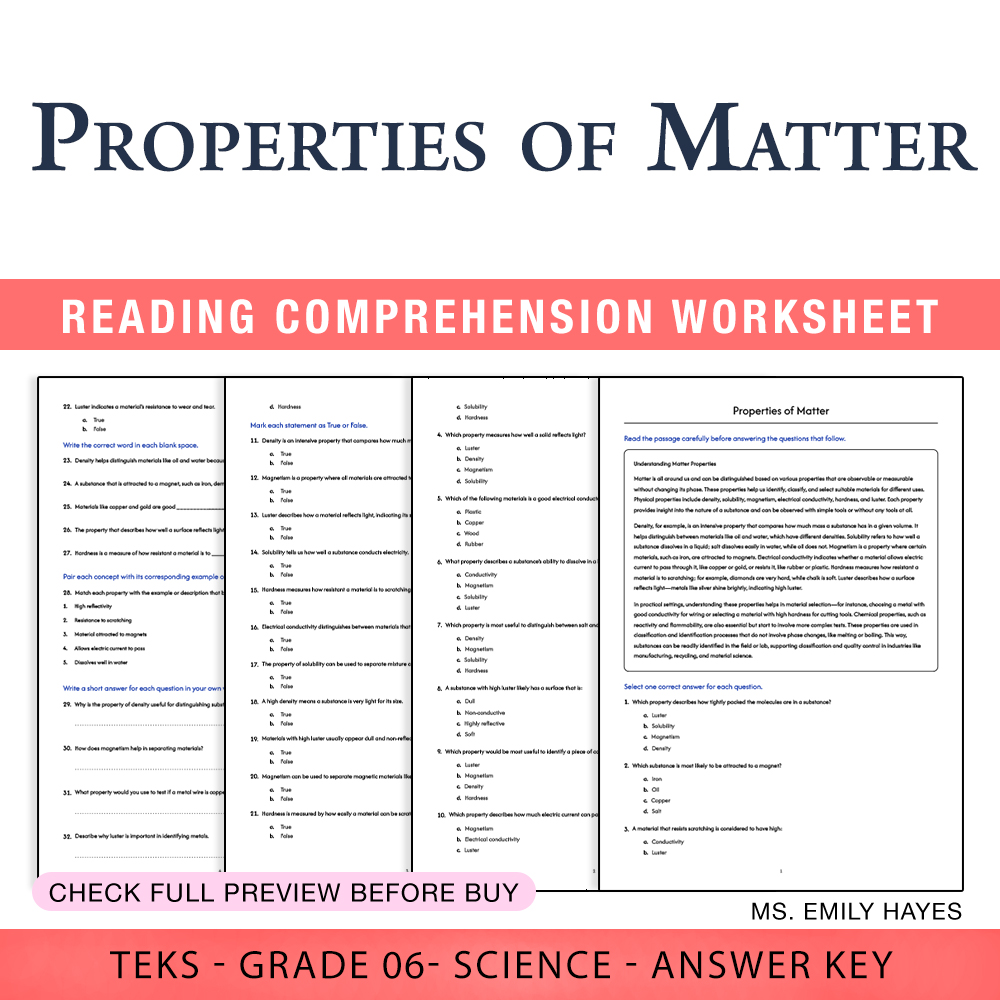
6th Grade Science | Properties of Matter Worksheet (PDF+ Answer Key)
Created byCopper Leaf ClassroomLearning Objectives
- Identify common physical and chemical properties used to distinguish substances.
- Describe how properties like density, solubility, magnetism, electrical conductivity, hardness, and luster are observed and measured.
- Connect property-based identification to material selection in real-world contexts.
Instant download

Loops and Repetition Worksheets | Grade 6 Computer Science Practice
Created byBright Mind ResourcesLearning Objectives
- Define loop, repeat, and iteration in the context of computer programs
- Explain how loops help programs run more efficiently by reducing duplicate code
- Choose appropriate loop logic for repeating actions such as counting, patterns, or movement
Instant download

Grade 6 Maths – Graphing Linear Functions Worksheet (PDF) | Ontario Standards
Created byClear Sky ClassroomLearning Objectives
- Understand how to interpret the slope and intercepts of a linear function.
- Apply algebraic models to graph linear functions in real-world contexts.
- Analyze and describe the behavior of linear graphs based on their equations.
Also included in: Grade 6 Algebra and Mathematical Modelling Lessons | Ontario Standards +1 more
Instant download
Browse more categories
About Grade 6 Worksheets
Browse 8,582 printable Grade 6 worksheets across math, ELA, science, and social studies — each a ready-to-print PDF with optional answer keys.
MyTeachingSheets worksheets are made by real teacher-authors and checked before they go live. Download any as a print-ready PDF for lessons, homework, or independent practice — most include answer keys, and previews are always free.