
Grade 6 Worksheets
8,582 grade resources
Earth's Interacting Systems Worksheets | Grade 6 Science Review
LCreated byLearnora ResourcesLearning Objectives
- Identify the geosphere, hydrosphere, atmosphere, and biosphere.
- Classify real-world examples into Earth's four major systems.
- Explain how matter and energy move between Earth systems.
Instant download
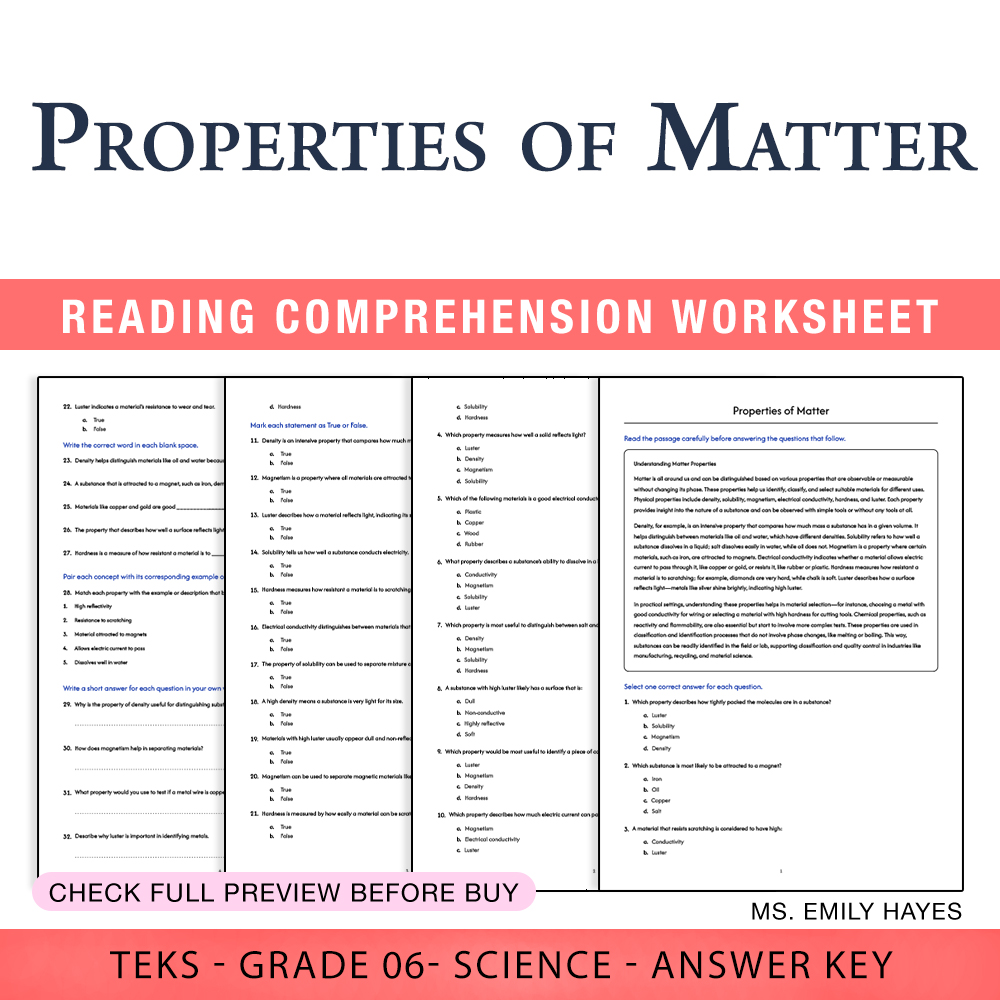
6th Grade Science | Properties of Matter Worksheet (PDF+ Answer Key)
 Created byCopper Leaf Classroom
Learning Objectives
- Identify common physical and chemical properties used to distinguish substances.
- Describe how properties like density, solubility, magnetism, electrical conductivity, hardness, and luster are observed and measured.
- Connect property-based identification to material selection in real-world contexts.
Instant download

Loops and Repetition Worksheets | Grade 6 Computer Science Practice
 Created byBright Mind Resources
Learning Objectives
- Define loop, repeat, and iteration in the context of computer programs
- Explain how loops help programs run more efficiently by reducing duplicate code
- Choose appropriate loop logic for repeating actions such as counting, patterns, or movement
Instant download

Grade 6 Maths – Graphing Linear Functions Worksheet (PDF) | Ontario Standards
 Created byClear Sky Classroom
Learning Objectives
- Understand how to interpret the slope and intercepts of a linear function.
- Apply algebraic models to graph linear functions in real-world contexts.
- Analyze and describe the behavior of linear graphs based on their equations.
Also included in: Grade 6 Algebra and Mathematical Modelling Lessons | Ontario Standards +1 more
Instant download

Science Grade 6 Resource Distribution Worksheet | NGSS Aligned
 Created bySkylark Worksheets
Learning Objectives
- Explain how geoscience processes (plate tectonics, sedimentation, and weathering) help form mineral, energy, and groundwater resources.
- Describe how the locations of ore deposits, petroleum basins, and aquifers follow patterns in Earth’s geologic history and water flow.
- Evaluate how demand, extraction impacts, and technology affect long-term availability and responsible resource allocation.
Also included in: Grade 6 Earth Systems & Human Impacts Science Lesson Bundle: NGSS Worksheets +1 more
Instant download

Natural Resources Worksheet | Grade 6 Science Activities
 Created byPrism Point Learning
Learning Objectives
- Classify natural resources as renewable or nonrenewable and describe how they form.
- Explain how location and distribution affect access to resources.
- Analyze environmental and economic trade-offs involved in extracting and using resources.
Also included in: Grade 6 Earth and Space Science Lesson Bundle TEKS (8 worksheets) +1 more
Instant download
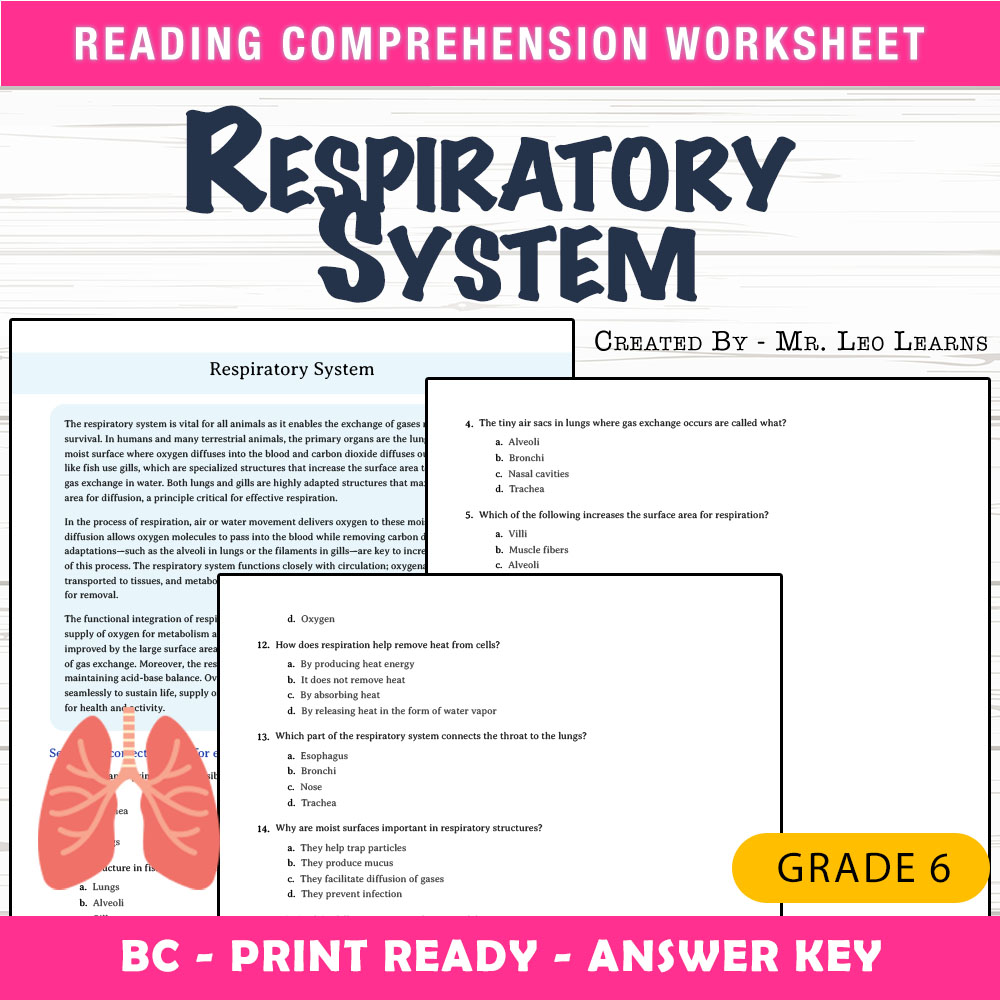
Grade 6 Science – Respiratory System Worksheet MCQ Paper for Mastery
 Created byThe Resource Hub
Learning Objectives
- Describe the structure and function of the respiratory system.
- Explain how gas exchange occurs in lungs and gills.
- Identify adaptations that increase respiratory efficiency.
Also included in: Grade 6 Science Unit | Multicellular Systems & Functions Worksheet Bundle +1 more
Instant download

Integrating Knowledge Worksheet Pack | Grade 6 ELA Practice
 Created bySunny Desk Resources
Learning Objectives
- Integrate information from multiple informational texts on the same topic to build a clearer understanding
- Compare perspectives across sources and explain how they support or differ
- Synthesize key insights by cross-referencing details and using evidence from texts
Also included in: Grade 6 Reading Comprehension Strategies Lesson Bundle | ELA | CCSS +1 more
Instant download

Grade 6 Science | Inquiry Foundations Daily Reading Comprehension
 Created byCoral Reef Learning
Learning Objectives
- Understand key concepts related to Science
- Apply knowledge through practice questions
- Demonstrate comprehension of the material
Instant download
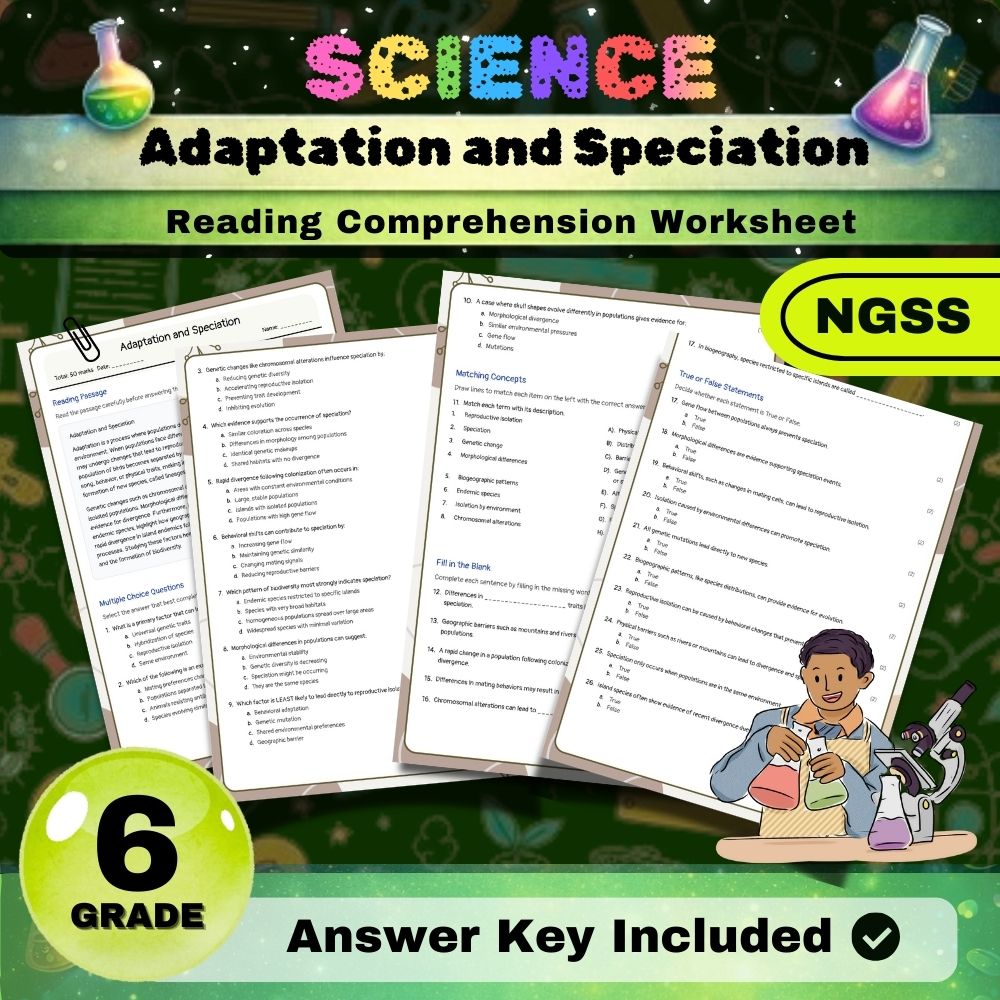
6th Grade Science | Adaptation and Speciation NGSS Worksheet (PDF + Answer Key)
 Created byMaple Path Learning
Learning Objectives
- Understand the processes by which populations diverge into new species through adaptation and reproductive isolation.
- Identify different types of evidence that support theories of speciation, such as morphology and biogeographic patterns.
- Analyze how geographic, behavioral, and genetic factors contribute to lineage splitting in populations.
Also included in: Grade 6 Science Bundle | Evolution, Natural Selection & Biodiversity Worksheets +1 more
Instant download
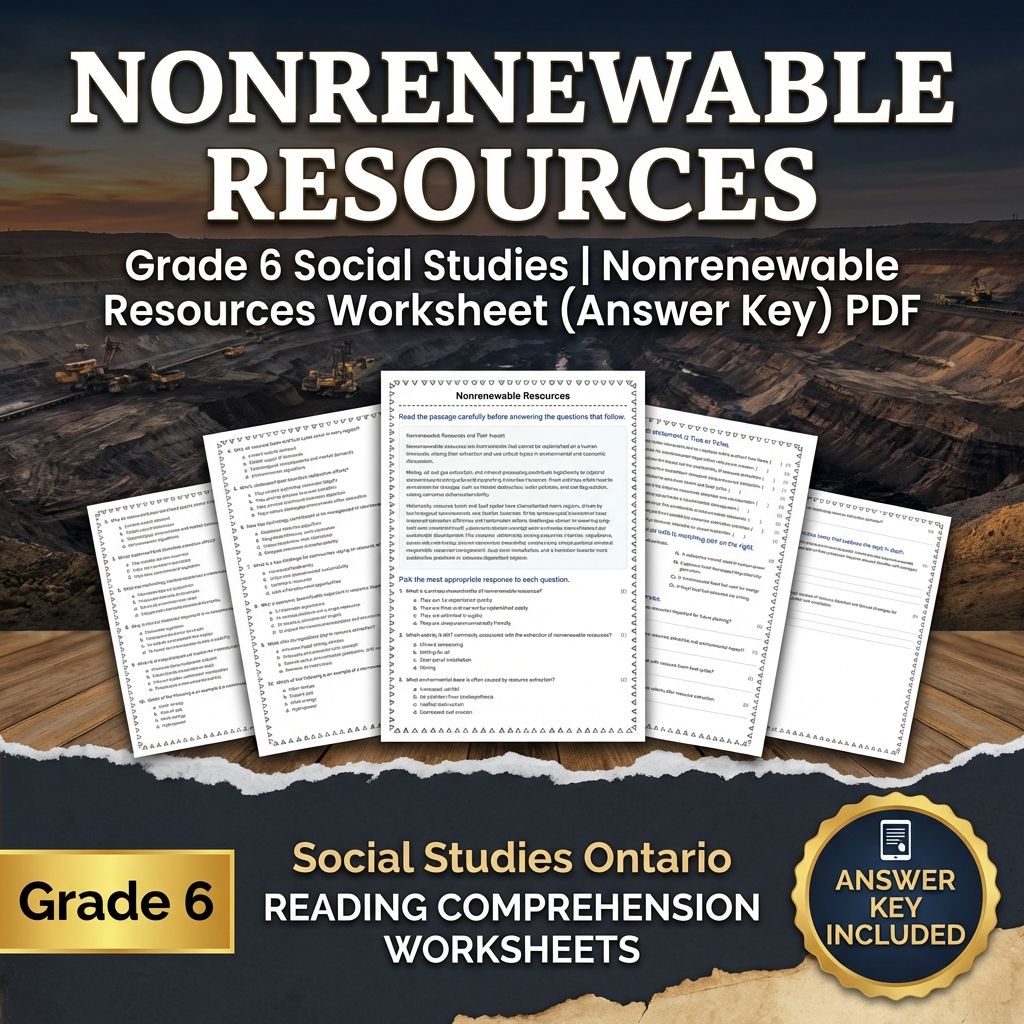
Grade 6 Social Studies | Nonrenewable Resources Practice + Answer Key (PDF)
JCreated byJ.S SheetsLearning Objectives
- Understand the significance of nonrenewable resources and their environmental impact.
- Identify the causes and consequences of resource extraction.
- Explain technological changes and reclamation efforts in resource management.
Also included in: Grade 6 Social Studies Unit Bundle | Canadian Resources, Climate & Environment +1 more
Instant download

Energy Transfer in Photosynthesis & Respiration Worksheets Grade 6
 Created byTeachers Club
Learning Objectives
- Explain how light energy is converted into chemical energy during photosynthesis in chloroplasts
- Describe how organisms release usable energy by breaking down organic molecules during respiration in mitochondria
- Connect matter cycling with conservation of mass across photosynthesis and respiration
Also included in: From Molecules to Organisms Grade 6 Science NGSS Bundle +2 more
Instant download

Signal Integration in Cells Worksheets | Grade 6 Science
Created byTeachers ClubLearning Objectives
- Explain how cells communicate using chemical and electrical signals
- Describe how receptor binding leads to downstream cell responses through signal transduction
- Compare rapid nervous signaling with longer-term endocrine effects and feedback
Also included in: From Molecules to Organisms Grade 6 Science NGSS Bundle +2 more
Instant download

Molecular Building Blocks and Polymer Reactions Worksheets Grade 6
Created byTeachers ClubLearning Objectives
- Identify monomers and describe how they form polymers through condensation reactions.
- Explain how hydrolysis breaks polymers into smaller molecules.
- Relate the structure of macromolecules to their functions, including roles in cells.
Also included in: From Molecules to Organisms Grade 6 Science NGSS Bundle +2 more
Instant download

Grade 6 Social Studies — Resource Distribution Worksheet MCQ Paper
Created byThe Resource HubLearning Objectives
- Explain how the spatial distribution of natural resources can influence where people live and work
- Describe how population density affects access to resources and regional economic development
- Interpret how trade and infrastructure connect resource-rich areas with population-heavy areas
Also included in: Maps & Physical/Political Features Lesson Bundle | Grade 6 Social Studies | TEKS +1 more
Instant download

Grade 6 Math | Analyzing Spatial Relationships Worksheet (PDF)
Created byClear Sky ClassroomLearning Objectives
- Apply geometric concepts to analyze the relationships between shapes and figures.
- Calculate coordinate positions and interpret spatial arrangements.
- Identify similarity, congruence, and symmetry in real-world contexts.
Also included in: Grade 6 Geometry and Spatial Sense Lesson Bundle for Ontario Maths +1 more
Instant download
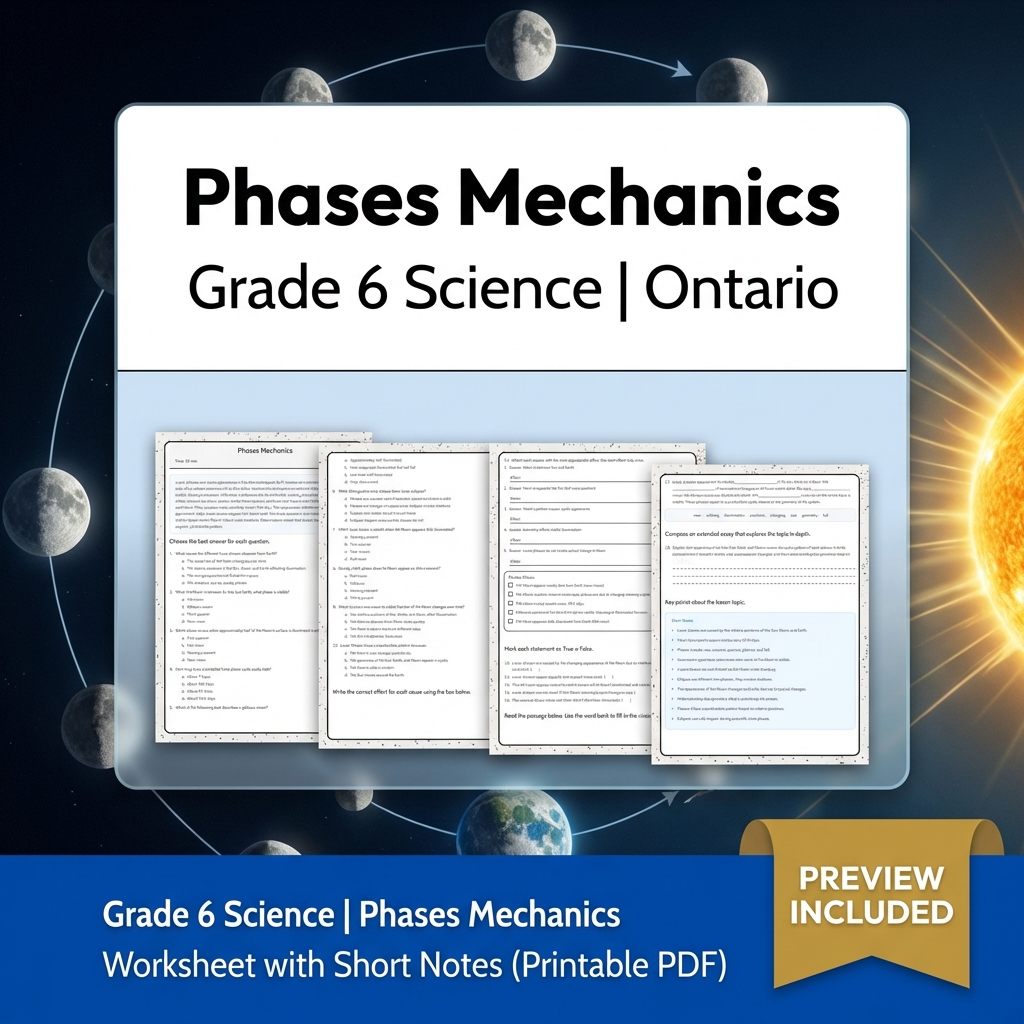
Grade 6 Science | Phases Mechanics Worksheet with Short Notes (Printable PDF)
 Created byMeadowlark Worksheets
Learning Objectives
- Understand the sequence of lunar phases based on the relative positions of the Sun, Earth, and Moon.
- Describe the geometry of illumination that produces different lunar phases.
- Differentiate between lunar phases and eclipse circumstances.
Also included in: Grade 6 Science Lesson Group Bundle – Ontario Curriculum Worksheets +1 more
Instant download

Text Categories Worksheet Grade 6 ELA Reading Skills + Answer Key
 Created byLumora Learning
Learning Objectives
- Distinguish between literary and informational texts by purpose and typical features
- Identify whether a text mainly tells a story, describes, informs, or persuades
- Use text clues (such as characters, events, headings, facts, and reasons) to predict what evidence to look for
Instant download

Grade 6 Science – Species Classification & Ecosystem Roles | Reading Worksheet
Created byBright Mind ResourcesLearning Objectives
- Understand the roles of producers, consumers, and decomposers in an ecosystem.
- Learn to identify native versus invasive species relevant to Alberta's environment.
- Recognize examples of species such as white spruce and mountain pine beetle.
Also included in: Grade 6 Forest Ecology Science Daily Reading Worksheets Lesson Bundle | Alberta +2 more
Instant download

Grade 6 Lunar Phases Model Worksheet | Practice & Assessment PDF
Created byClear Sky ClassroomLearning Objectives
- Describe how a Sun–Earth–Moon geometric model predicts lunar phase illumination from a viewpoint
- Use the model to explain the sequence of crescent, quarter, gibbous, and full Moon phases
- Relate observed changes in phase over time to the Moon’s apparent motion and the synodic period
Also included in: Grade 6 Sky Science Sun–Earth–Moon Science Lesson Bundle for Alberta +1 more
Instant download
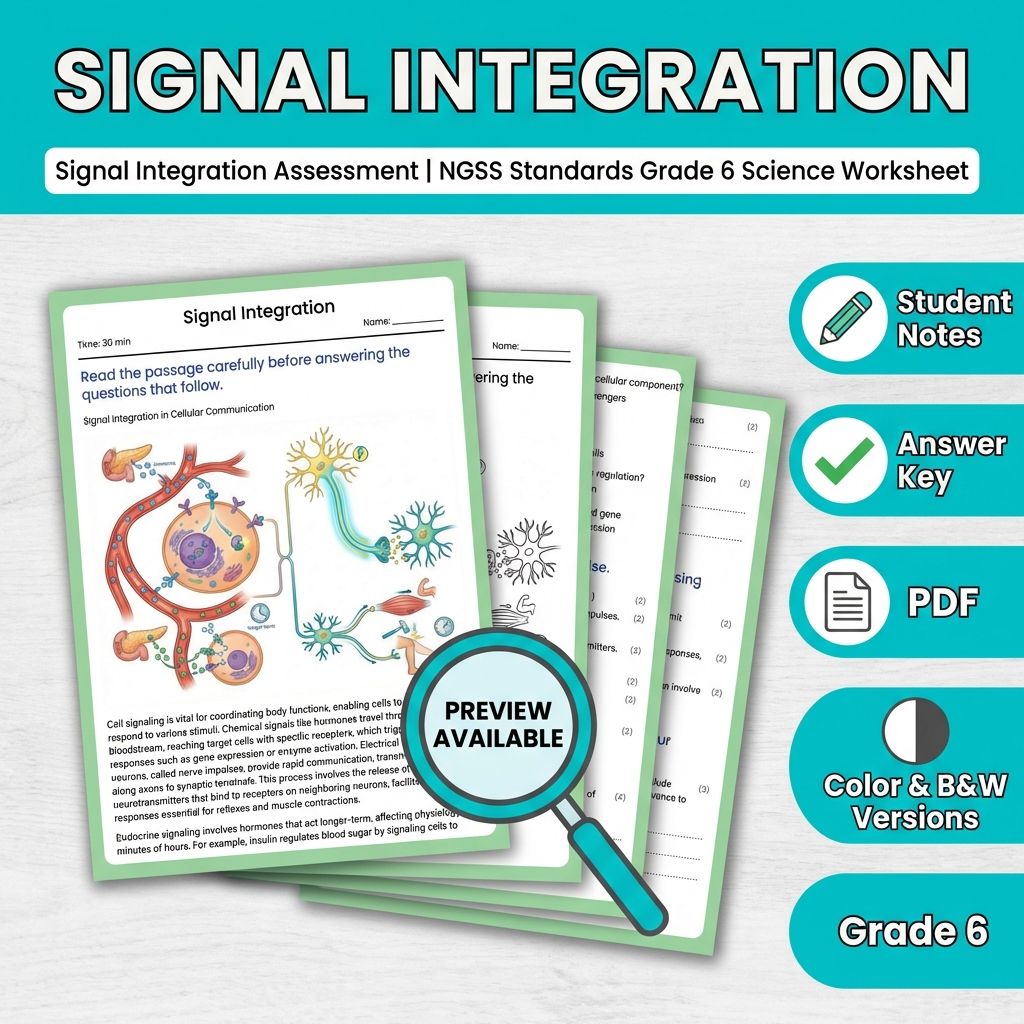
Signal Integration Assessment | NGSS Standards Grade 6 Science Worksheet
Created byPrism Point LearningLearning Objectives
- Explain how cells communicate using chemical and electrical signals.
- Describe the processes of neurotransmission and hormonal regulation.
- Compare rapid nervous responses to longer-term endocrine effects.
Also included in: Grade 6 Science Mini Bundle | Structures and Processes NGSS Not specified +1 more
Instant download

Grade 6 Science – Sky Observations & Movements | Daily Reading Worksheet
Created byBright Mind ResourcesLearning Objectives
- Identify different parts of the sky such as stars, Moon, and Sun.
- Understand basic observation skills for sky watching.
- Recognize patterns of sunrise, sunset, and Moon phases.
Also included in: Grade 6 Solar System & Seasons Science Daily Reading Lesson Bundle | Alberta +2 more
Instant download
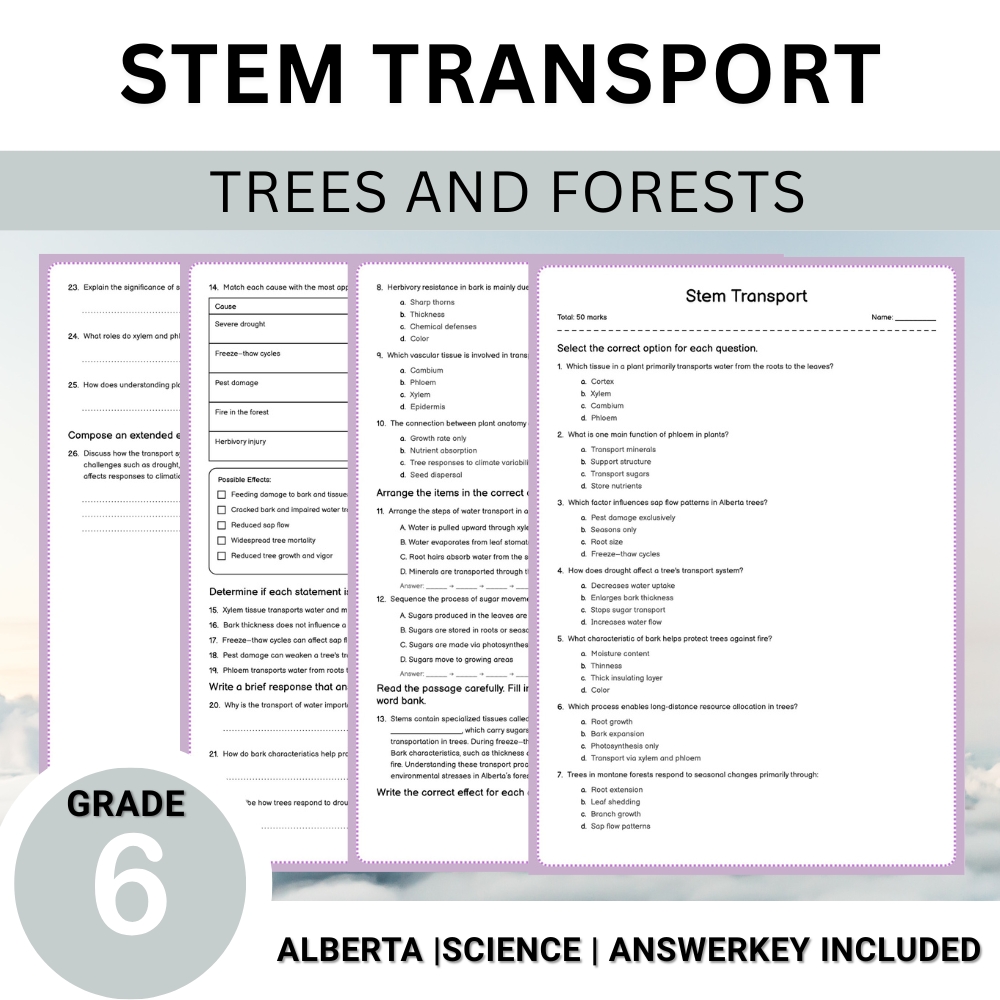
Grade 6 Science | Stem Transport Worksheet (Printable PDF & Assessment)
Learning Objectives
- Understand how stems and vascular tissues transport water, minerals, and sugars in plants.
- Describe the roles of xylem and phloem in resource transport.
- Explain how trees respond to climatic factors such as freeze–thaw cycles, drought, and pest damage through their transport systems.
Also included in: Grade 6 Science | Tree Anatomy, Ecology & Conservation Unit Worksheet Bundle +1 more
Instant download
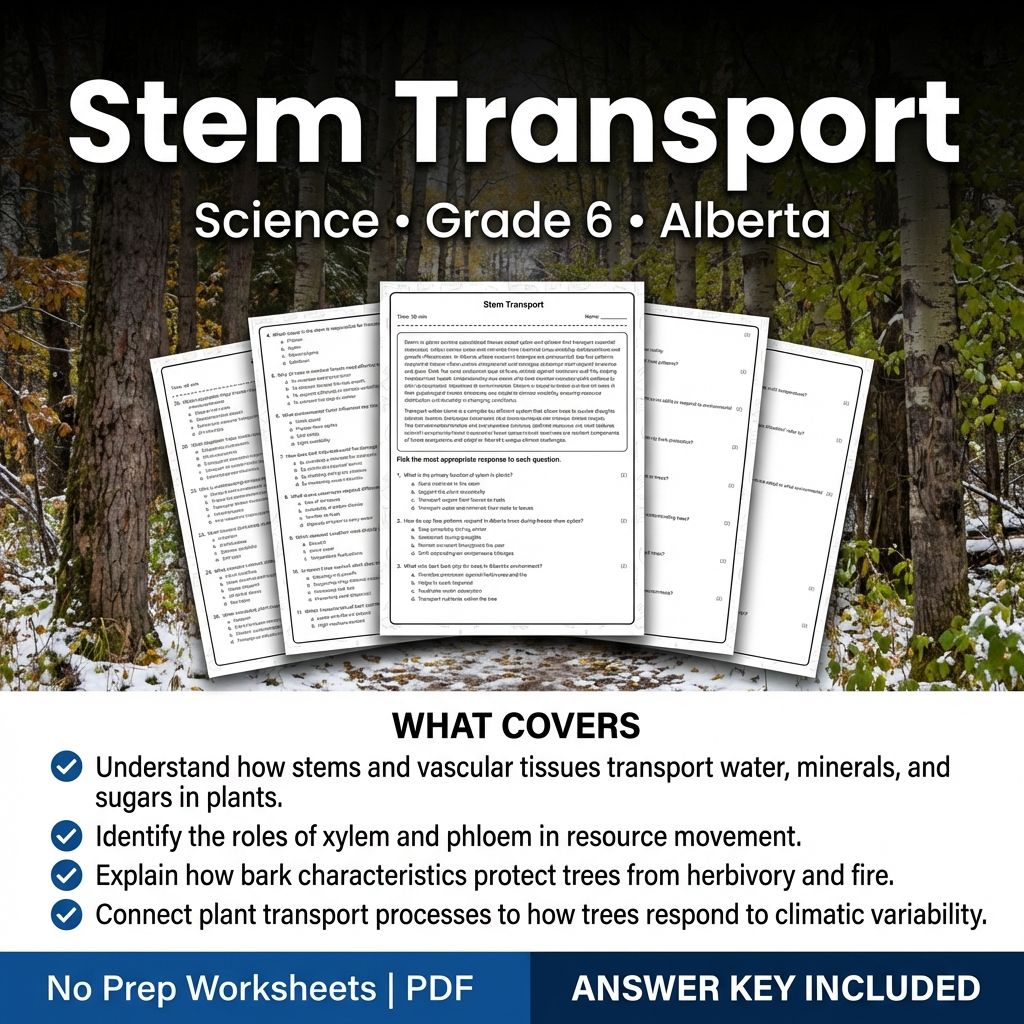
Grade 6 Science Worksheet on Stem Transport | Alberta Standards
Created byCoral Reef LearningLearning Objectives
- Understand how stems and vascular tissues transport water, minerals, and sugars in plants.
- Identify the roles of xylem and phloem in resource movement.
- Explain how bark characteristics protect trees from herbivory and fire.
Instant download

Grade 6 Science Worksheet | Stem Transport in Trees (Alberta Standards) (PDF)
 Created byEvergreen Desk Education
Learning Objectives
- Explain how xylem transports water and minerals and how phloem transports sugars in stems
- Describe how freeze–thaw cycles, drought, and pests can change sap flow patterns in Alberta trees
- Connect stem anatomy (vascular tissues and bark) to plant survival and seasonal storage
Instant download

Grade 6 Context Clues & Affixes Worksheet | Vocabulary Skills ELA Practice
Created bySunny Desk ResourcesLearning Objectives
- Use context clues (definition, restatement, example, and contrast) to infer the meaning of unfamiliar words.
- Apply knowledge of prefixes and suffixes to refine word meaning and interpretation.
- Connect inferred word meaning to the author’s purpose and the overall nuance of the text.
Also included in: Grade 6 Language Lesson Bundle | General ELA Writing & Vocabulary +1 more
Instant download

Terrain and Soils Worksheet | Standard-Aligned Practice for Grade 6
JCreated byJ.S SheetsLearning Objectives
- Explain how bedrock geology, glacial history, and erosion shape major Canadian landforms and soil regions
- Describe how soil types and terrain affect agriculture and the planning of transportation and other infrastructure
- Analyze causes and consequences of soil depletion and erosion, and evaluate how humans can reduce negative impacts
Instant download

Grade 6 Decomposition Recycling Worksheet | NGSS Practice PDF
Created byClear Sky ClassroomLearning Objectives
- Explain how decomposers (fungi and bacteria) break down dead organisms and waste
- Describe how decomposition returns nutrients to the environment for producers to reuse
- Connect matter cycling through decomposition to ecosystem stability over time
Instant download

Grade 6 Science | Elements in Compounds Worksheet | California Standards
Created byLumora LearningLearning Objectives
- Explain how compounds are made from atoms of multiple elements joined in definite proportions.
- Describe how particle models represent compounds using correct atom counts and bonding patterns.
- Use atomic composition to predict qualitative outcomes such as density trends and reaction behavior.
Instant download

Pattern Recognition in Problem Solving Worksheet Grade 6 Computer Science
Created byPrism Point LearningLearning Objectives
- Identify patterns in routines, data, and step-by-step solutions.
- Use patterns to predict what comes next in an algorithm or sequence.
- Explain how repeatable structure helps solve new problems using familiar ideas.
Also included in: Algorithmic Problem Solving Lesson Bundle | Grade 6 Computer Science | General +1 more
Instant download
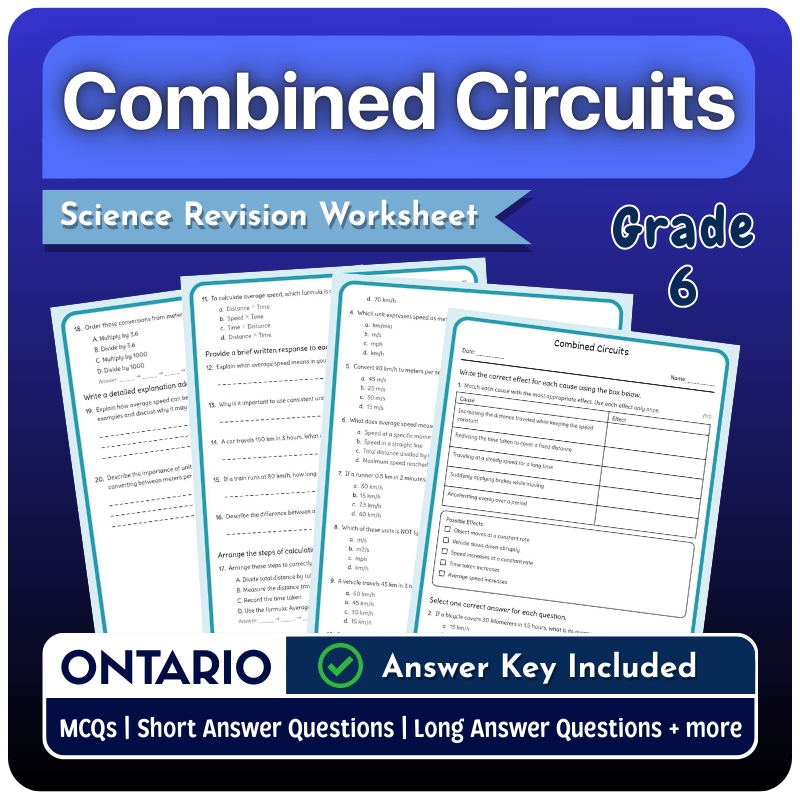
Grade 6 Science | Combined Circuits Worksheet (Ontario, PDF)
Created byBright Mind ResourcesLearning Objectives
- Understand how to decompose combined series-parallel circuits into simpler subcircuits.
- Explain how currents and voltages distribute in mixed circuit configurations.
- Identify the effects of component removal or failure in combined circuits.
Instant download

Lunar Phases Model Worksheet | Grade 6 Science Activities
Created byPrism Point LearningLearning Objectives
- Explain how a geometric model using the relative positions of the Sun, Earth, and Moon predicts lunar phases.
- Use the model to describe how the Moon’s apparent illumination changes over a week.
- Connect the order of crescent, quarter, gibbous, and full phases to the Moon’s position in its path.
Also included in: Celestial Patterns & Seasons Lesson Bundle | Grade 6 Science | Alberta
Instant download

Science Assessment: Earth System Interactions (Grade 6) | Assessment Florida NGSSS
Created byPrism Point LearningLearning Objectives
- Explain how the atmosphere, hydrosphere, geosphere, and biosphere interact through matter and energy flow
- Identify processes (heating, cooling, evaporation, condensation, erosion, deposition) that change Earth systems over time
- Describe how changes in one Earth sphere can affect conditions in other spheres
Instant download

Foundations of Scientific Inquiry Grade 6 Science Worksheet | Ontario
 Created byTeacher's Corner
Learning Objectives
- Write testable questions and describe what information an investigation should gather
- Identify independent and dependent variables in controlled comparisons
- Use operational definitions to explain how measurements are made
Instant download
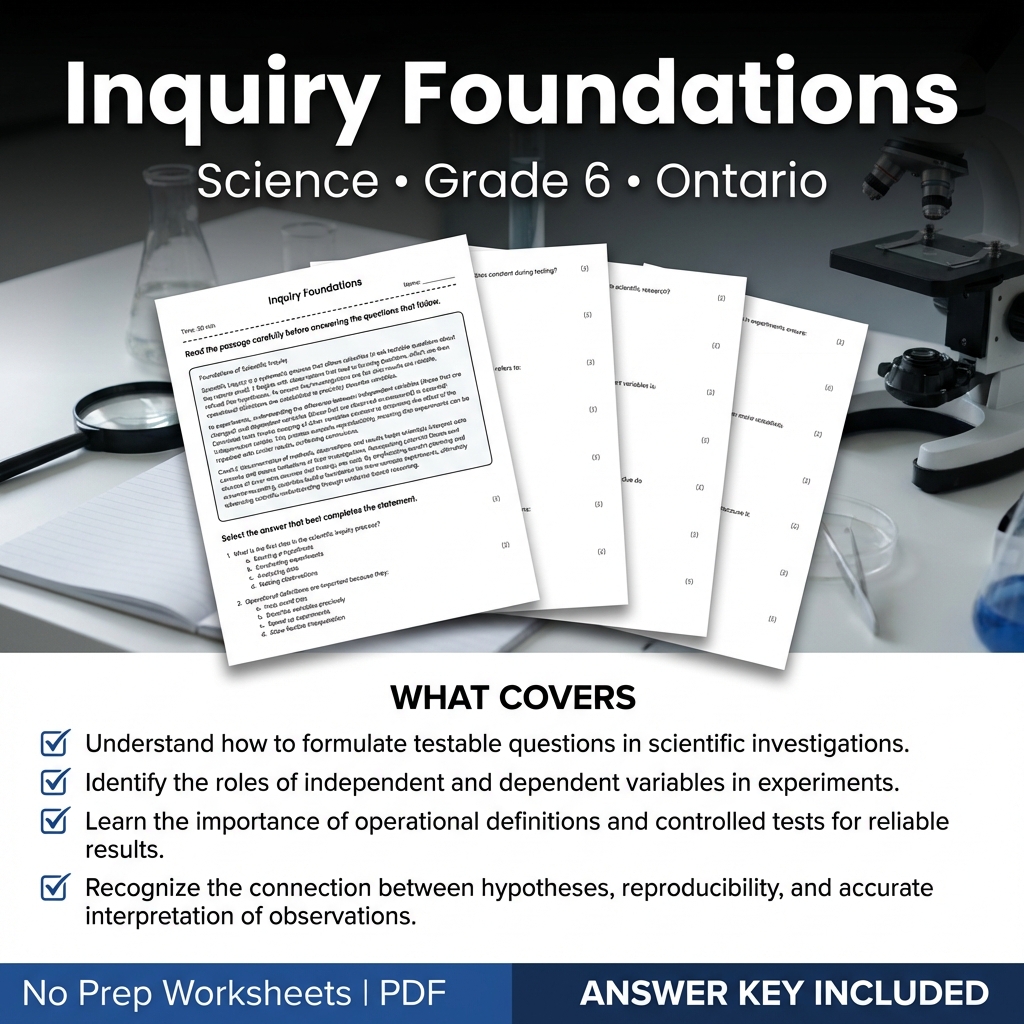
Inquiry Foundations Worksheet for Grade 6 Science | Ontario Standard
Created byCoral Reef LearningLearning Objectives
- Understand how to formulate testable questions in scientific investigations.
- Identify the roles of independent and dependent variables in experiments.
- Learn the importance of operational definitions and controlled tests for reliable results.
Instant download
Grade 6 Science – Design Problems Daily Reading Worksheet | NGSS Aligned
 Created byElena Brooks
Learning Objectives
- Define criteria and constraints for a design problem.
- Identify essential functions and success measures.
- Relate cause and effect using scientific principles.
Also included in: Grade 6 Science Engineering Design Lesson Bundle | NGSS Worksheets +1 more
Instant download
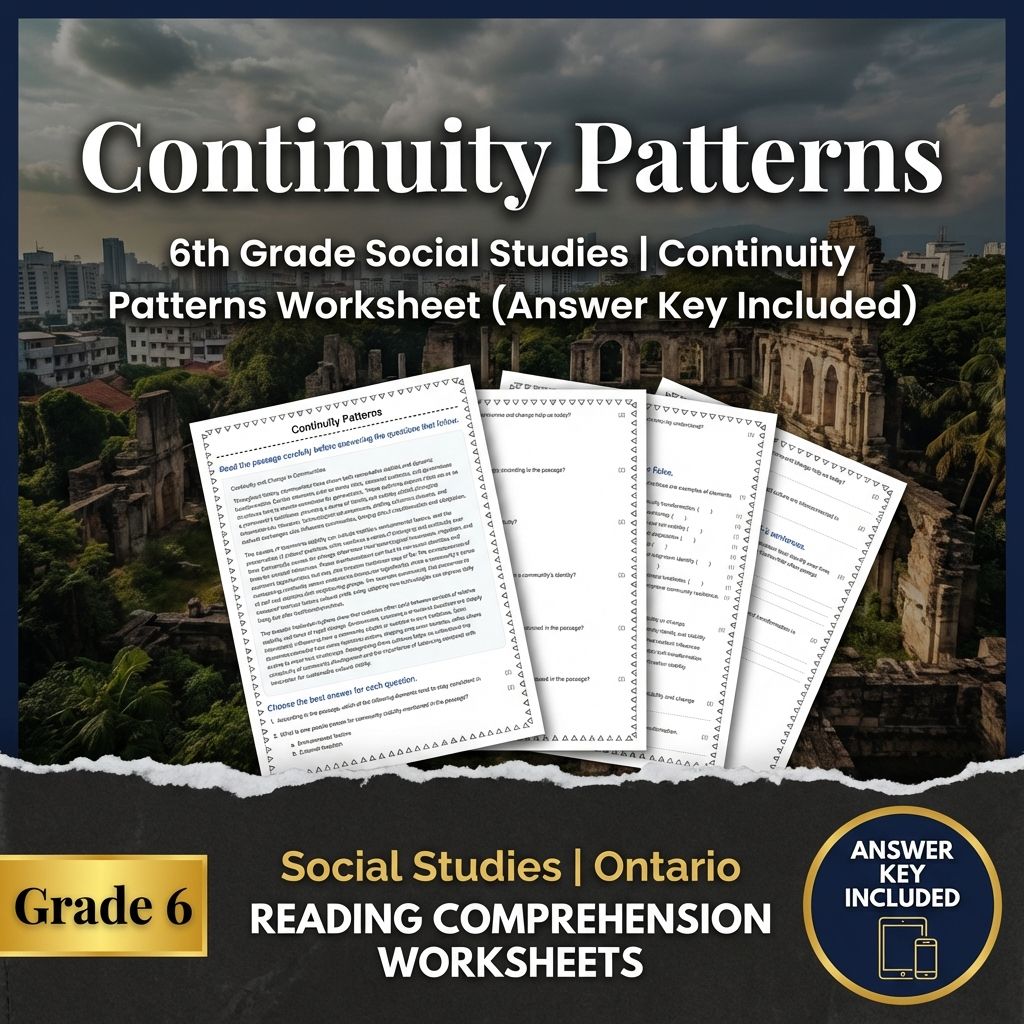
Grade 6 Social Studies | Continuity Patterns Practice Worksheet (PDF + Rubric)
JCreated byJ.S SheetsLearning Objectives
- Understand the role of persistent elements in community life over time.
- Analyze factors that contribute to stability and change in societies.
- Evaluate the impact of continuity and change on community identity.
Also included in: Grade 6 Social Studies UNIT Bundle – Communities, History, & Culture (PDF) +1 more
Instant download
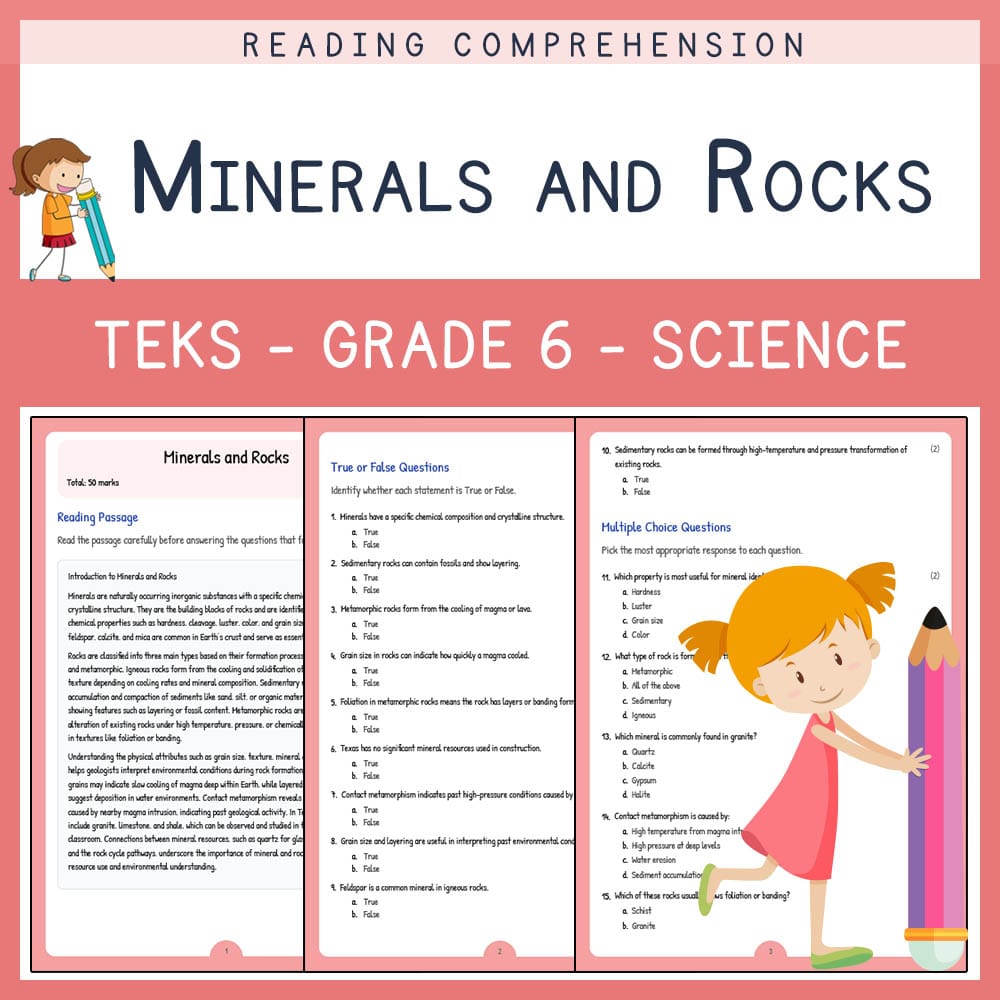
Grade 6 Science | Minerals and Rocks Worksheet | TEKS-Aligned
Created byLumora LearningLearning Objectives
- Identify key mineral and rock properties used for classification.
- Understand the processes involved in the formation of igneous, sedimentary, and metamorphic rocks.
- Describe how textural and compositional features inform environmental and origin interpretations.
Also included in: Grade 6 Science | Earth and Space Science Unit Bundle | TEKS Standard
Instant download

Earth's Rotation, Seasons & Daylight Patterns Grade 6 Worksheets
 Created bythe curious pencil
Learning Objectives
- Explain how Earth's rotation produces day and night
- Describe how axial tilt and orbit produce seasonal variations
- Compare solstices and equinoxes using daylight patterns
Also included in: Grade 6 Space Science Worksheets Bundle | Earth's Place in Universe +2 more
Instant download

Population Dynamics Worksheets: Population Change Grade 6 Science
Created bythe curious pencilLearning Objectives
- Explain how births, deaths, immigration, and emigration change population size.
- Interpret graphs and tables showing population increases and declines.
- Calculate simple trait frequencies and population changes.
Also included in: Biological Evolution Worksheets Bundle | Grade 6 Science NGSS +2 more
Instant download

Chemical Reactions Worksheets: Evidence of New Substances Grade 6
Created bythe curious pencilLearning Objectives
- Identify evidence that indicates a chemical reaction has occurred.
- Interpret mass, temperature, and composition data before and after reactions.
- Explain how gas, color change, precipitates, and temperature provide evidence.
Also included in: Matter and Its Interactions Grade 6 Science Worksheets NGSS Bundle +2 more
Instant download

Adaptation and Speciation Worksheets | Grade 6 Science Evolution
Created bythe curious pencilLearning Objectives
- Explain how heritable traits become more common over generations.
- Describe how geographic differences can contribute to speciation.
- Identify evidence used to study speciation and reproductive isolation.
Also included in: Biological Evolution Worksheets Bundle | Grade 6 Science NGSS +2 more
Instant download

Phylogenetic Trees Worksheets: Tree Evidence Grade 6 Science
Created bythe curious pencilLearning Objectives
- Interpret branching patterns in phylogenetic trees as evidence of relationships.
- Explain how homologous structures provide evidence of common ancestry.
- Describe how vestigial organs can reveal clues about ancestral forms.
Also included in: Biological Evolution Worksheets Bundle | Grade 6 Science NGSS +2 more
Instant download

Atomic Composition Worksheets: Matter and Particle Structures Grade 6
Created bythe curious pencilLearning Objectives
- Identify atoms as particles that make up matter
- Interpret chemical formulas to identify atom types and numbers
- Compare models of atomic arrangements
Also included in: Matter and Its Interactions Grade 6 Science Worksheets NGSS Bundle +2 more
Instant download

Weather Patterns Worksheets: Atmospheric Processes Grade 6 Science
Created bythe curious pencilLearning Objectives
- Explain how air movement produces local weather changes.
- Interpret weather maps and radar observations to describe patterns.
- Describe how convection contributes to cloud and precipitation formation.
Also included in: Earth's Systems Grade 6 Science Worksheets Bundle | NGSS +2 more
Instant download

Signal Integration Worksheets: Cells and Systems | Grade 6 Science
Created bythe curious pencilLearning Objectives
- Explain how chemical and electrical signals coordinate cell activities.
- Compare nervous and hormonal communication by speed and duration.
- Describe how receptors trigger cellular responses to signals.
Also included in: Grade 6 Science Cells & Organisms Worksheets Bundle | NGSS +2 more
Instant download

Energy Flow in Food Webs Grade 6 Science Worksheets
Created bythe curious pencilLearning Objectives
- Identify producers, consumers, and decomposers in food webs
- Explain how energy moves and decreases across trophic levels
- Describe how photosynthesis relates to energy flow
Also included in: Ecosystems Worksheets Grade 6 Science | NGSS Unit Bundle +2 more
Instant download

Biodiversity Patterns Worksheets | Grade 6 Science Evolution Review
Created bythe curious pencilLearning Objectives
- Explain how species richness reveals biodiversity patterns.
- Describe how habitat differences affect species diversity.
- Interpret how records and surveys reveal community changes.
Also included in: Biological Evolution Worksheets Bundle | Grade 6 Science NGSS +2 more
Instant download
Browse more categories
About Grade 6 Worksheets
Browse 8,582 printable Grade 6 worksheets across math, ELA, science, and social studies — each a ready-to-print PDF with optional answer keys.
MyTeachingSheets worksheets are made by real teacher-authors and checked before they go live. Download any as a print-ready PDF for lessons, homework, or independent practice — most include answer keys, and previews are always free.