
Grade 6 Science Worksheets
5,969 worksheets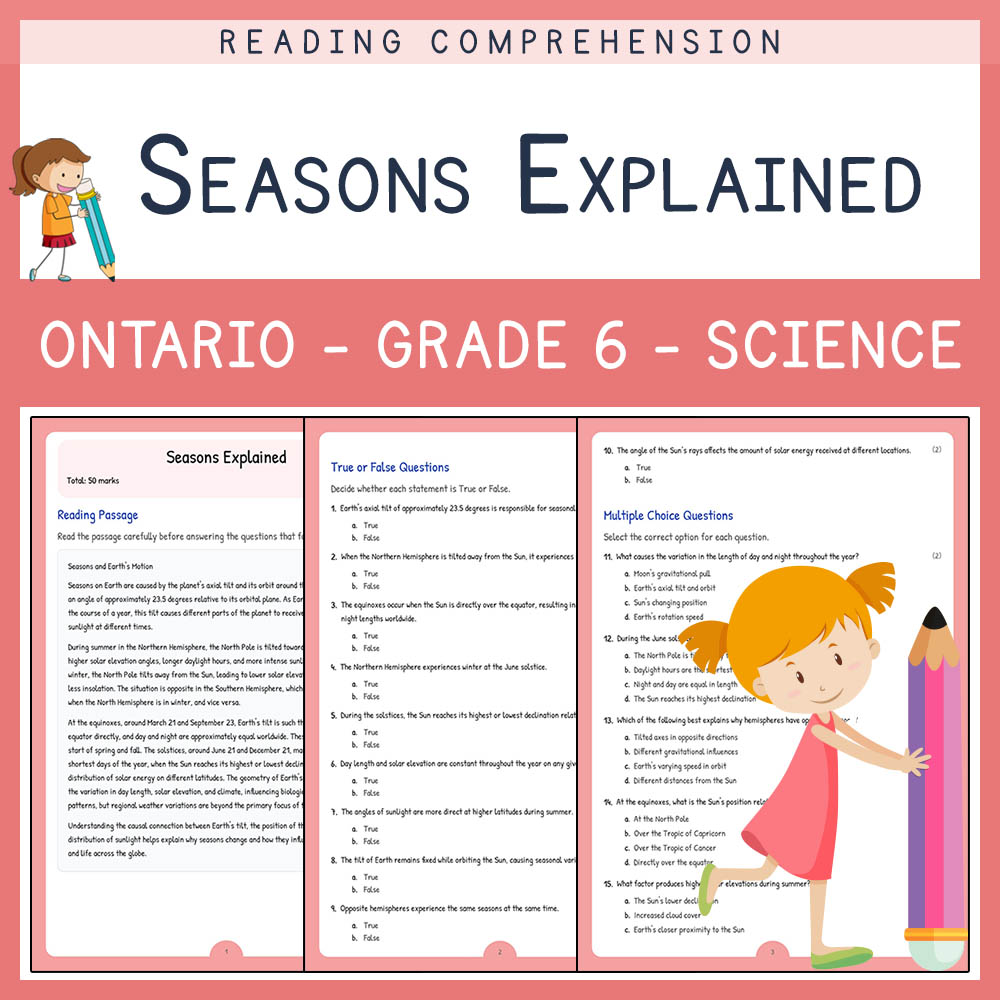
Grade 6 Science | Seasons Explained Worksheet (PDF + Answer Key) for Ontario Standards
 Created byLumora Learning
Learning Objectives
- Understand how Earth's axial tilt and orbit cause seasonal changes.
- Explain why hemispheres experience opposite seasons.
- Describe how daylight length and solar elevation vary throughout the year.
Also included in: Grade 6 | Space Science Lesson Bundle Worksheets | Ontario Framework
Instant download

Grade 6 Electric & Magnetic Forces Worksheet | NGSS Science Activity
 Created byAmber Owl Education
Learning Objectives
- Describe how electric forces act between charged objects and how magnetic forces act between magnets or currents
- Explain how force magnitude changes with distance and with the strength of the source (charge magnitude or current)
- Use qualitative field representations and data patterns to distinguish factors that strengthen or weaken electromagnetic interactions
Also included in: Grade 6 Science Forces and Motion Unit Lesson Bundle | NGSS +1 more
Instant download
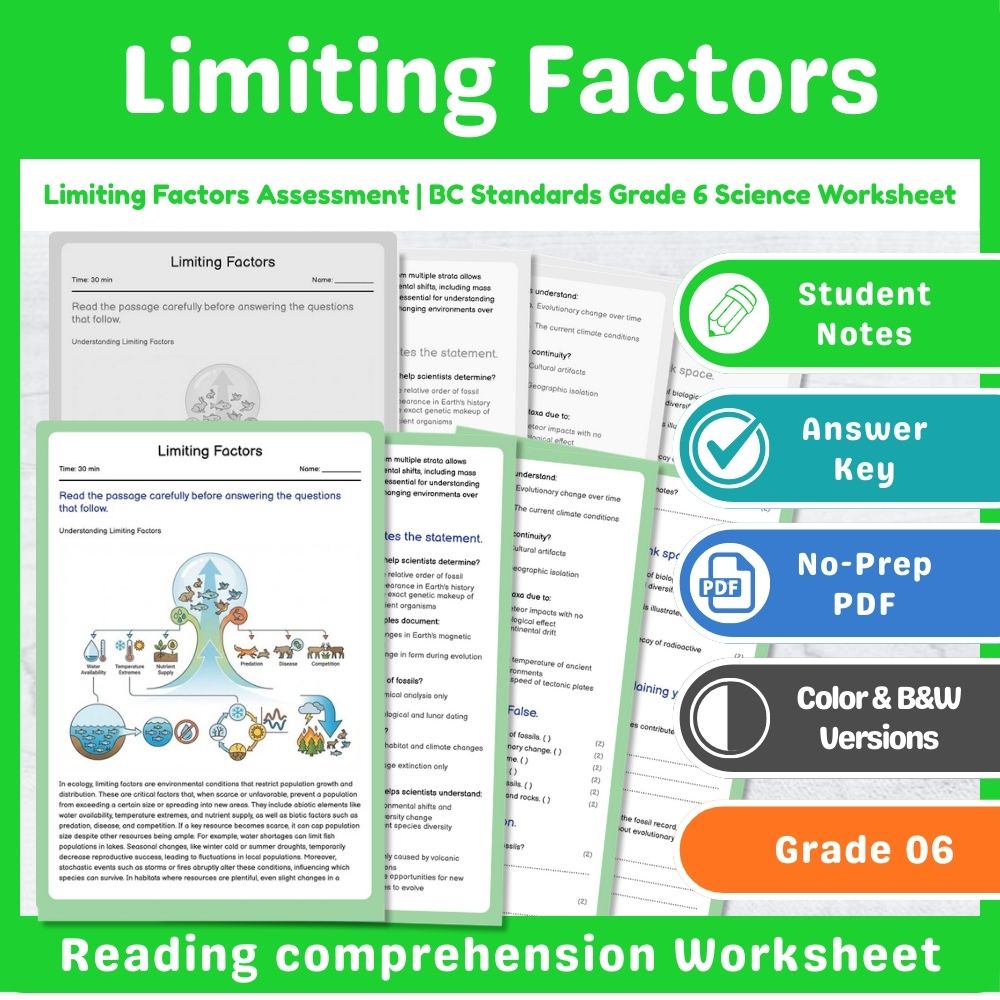
Limiting Factors Assessment | BC Standards Grade 6 Science Worksheet
 Created byPrism Point Learning
Learning Objectives
- Understand the concept of limiting factors in ecosystems.
- Identify abiotic and biotic elements that restrict population growth.
- Explain how changes in environmental conditions affect species survival.
Instant download

6th Grade Earth System Spheres Worksheet | California Science Standards PDF
 Created byEvergreen Desk Education
Learning Objectives
- Identify the major Earth system spheres: geosphere, hydrosphere, atmosphere, and biosphere
- Explain how matter and energy move between spheres using key processes such as weathering and evaporation
- Use gravity and rainfall patterns to describe cause-and-effect interactions across Earth systems
Instant download
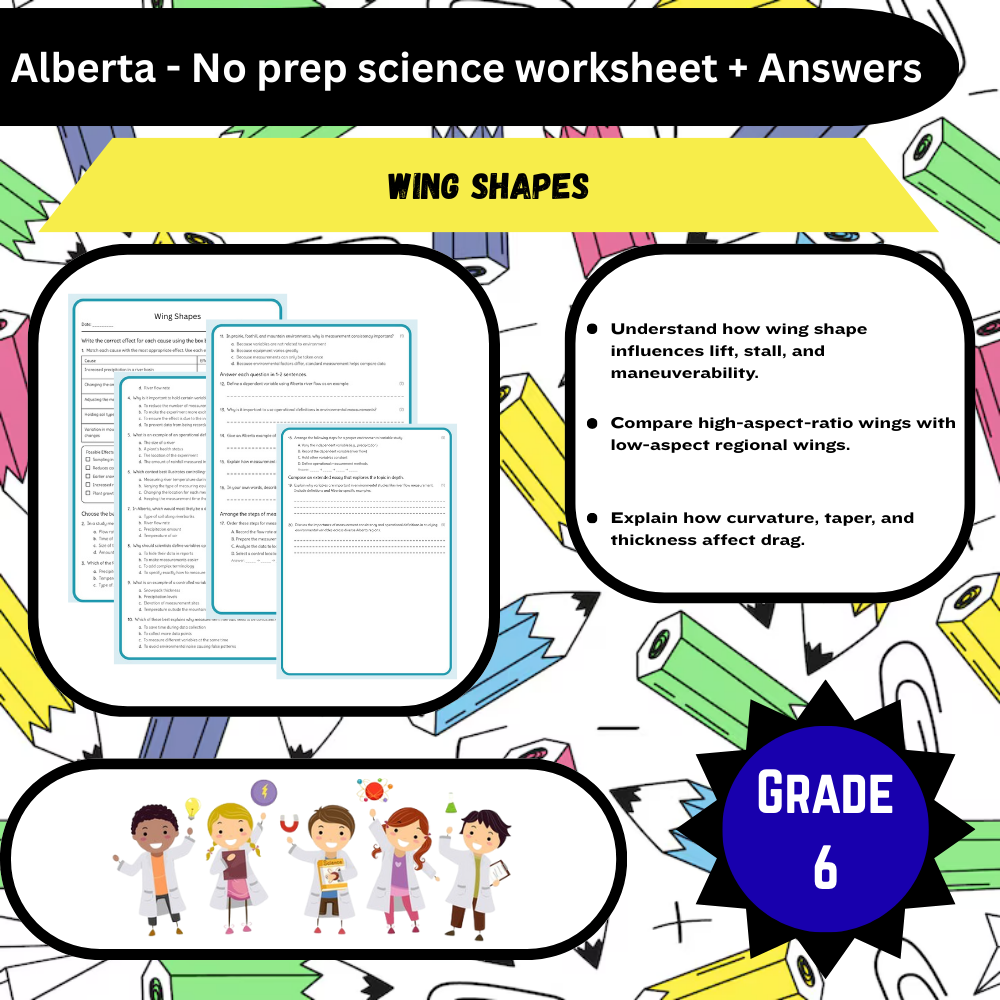
6th Grade Science – Wing Shapes Analysis Worksheet (PDF)
 Created byBright Mind Resources
Learning Objectives
- Understand how wing shape influences lift, stall behavior, and maneuverability in aircraft.
- Compare high-aspect-ratio wings used for gliders with low-aspect, robust wings used on regional aircraft.
- Explain how curvature, taper, and thickness affect pressure distribution and drag.
Instant download
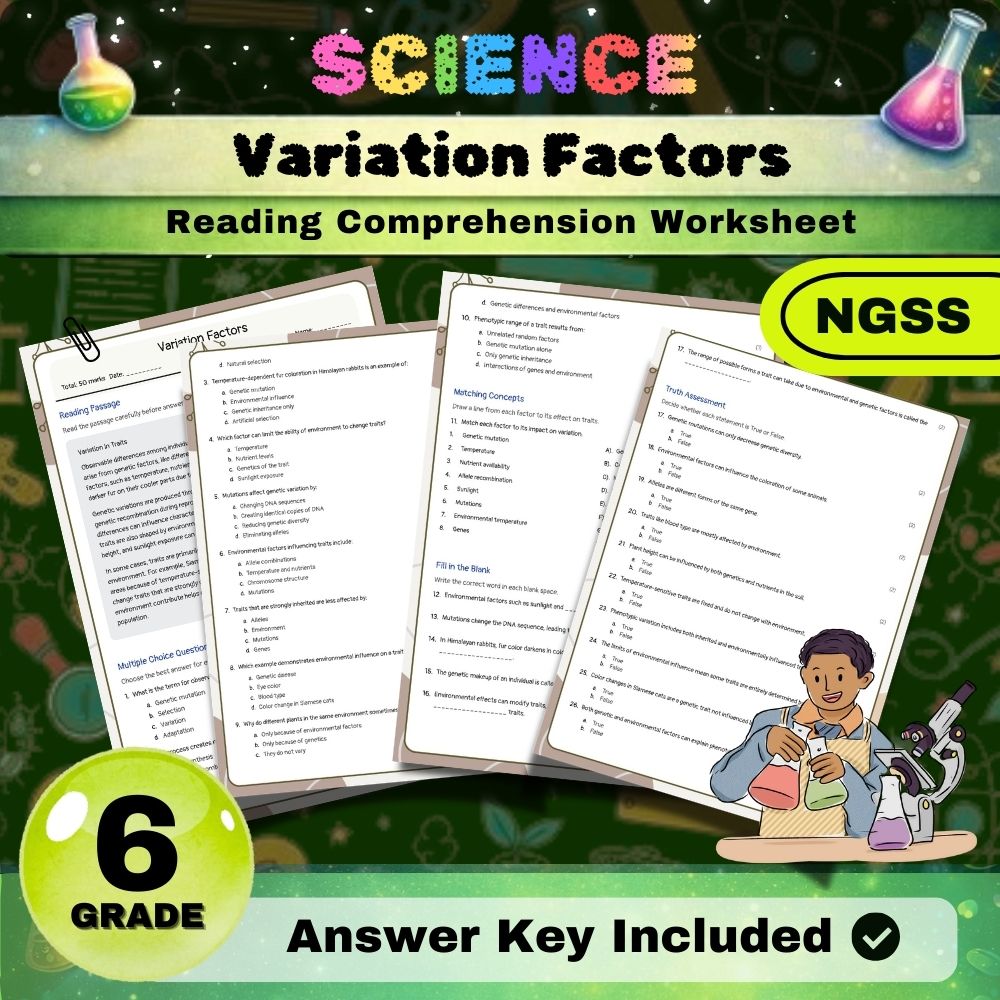
6th Grade Science | Variation Factors Worksheet (PDF) NGSS Aligned
 Created byMaple Path Learning
Learning Objectives
- Understand how genetic differences contribute to observable variation among individuals.
- Recognize how environmental factors influence traits and phenotypes.
- Analyze models illustrating allele combinations, mutations, and environmental influences.
Also included in: Grade 6 Science | Variation Factors & Inheritance Modeling Worksheets (NGSS) +1 more
Instant download

Grade 6 Science | Transfer Mechanisms Worksheet | General Standard
Created byLumora LearningLearning Objectives
- Explain how heat energy moves through matter by conduction, convection, and radiation
- Identify evidence of transfer mechanisms from temperature and state changes
- Compare how solids, liquids, and gases transfer heat in everyday situations
Instant download
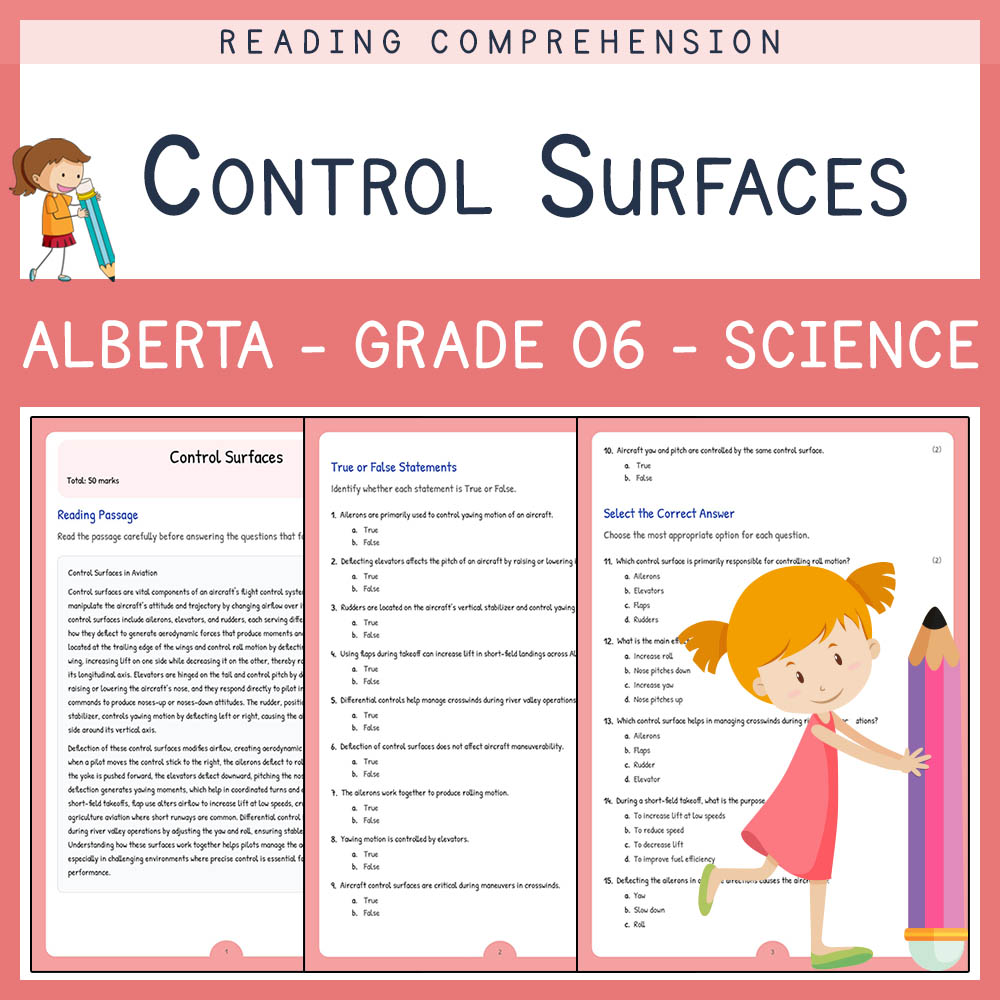
Grade 6 Science | Control Surfaces Worksheet Elena | Alberta Standard
Created byLumora LearningLearning Objectives
- Understand the function of control surfaces such as ailerons, elevators, and rudders in aircraft stability and maneuvering.
- Explain how deflection of control surfaces modifies airflow to produce lift and moments.
- Describe how control surfaces contribute to rolling, pitching, and yawing motions of an aircraft.
Also included in: Grade 6 Science | Air and Aerodynamics Science Lesson Bundle | Alberta
Instant download
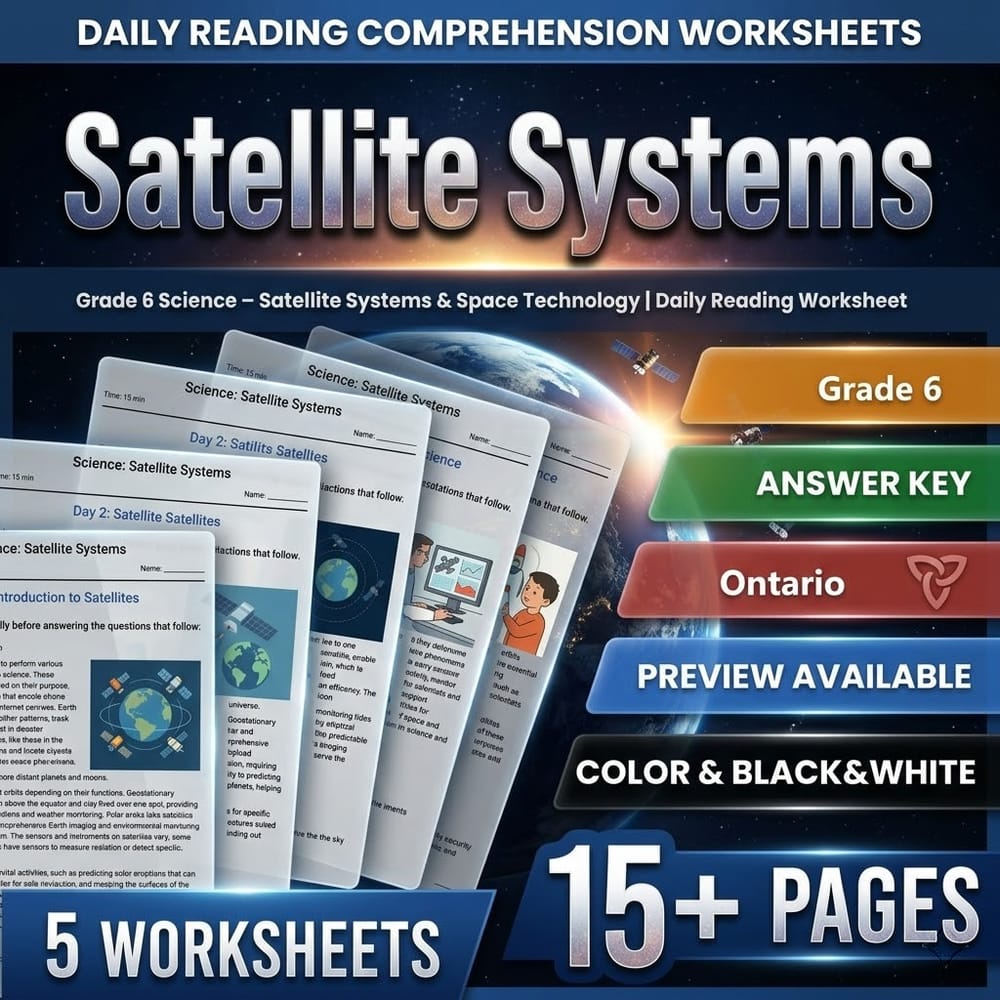
Grade 6 Science – Satellite Systems & Space Technology | Daily Reading Worksheet
 Created byQuiet Forest Education
Learning Objectives
- Identify different types of artificial satellites.
- Understand the functions and purposes of satellites in Earth observation, communication, navigation, and scientific research.
- Learn about orbital choices such as geostationary and polar orbits.
Also included in: Space Science Grade 6 Daily Reading Worksheets Bundle | Ontario +1 more
Instant download
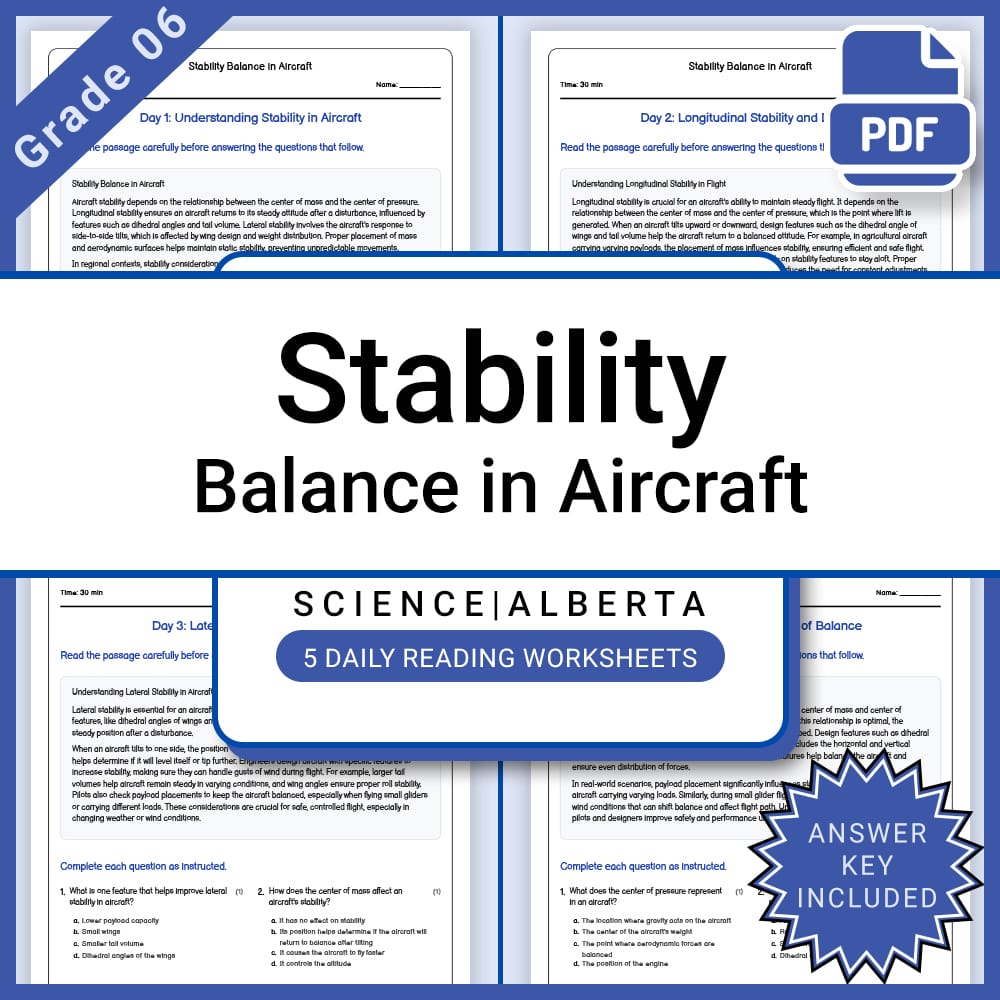
Grade 6 Science – Stability Balance in Aircraft Daily Worksheet + Answer Key
JCreated byJ.S SheetsLearning Objectives
- Understand how center of mass and center of pressure affect aircraft stability.
- Identify design features that enhance stability such as dihedral angles and tail volume.
- Explain how balance influences aircraft behavior in different flight conditions.
Also included in: Grade 6 Science Lesson Bundle: Flight, Weather, and Aerodynamics +1 more
Instant download
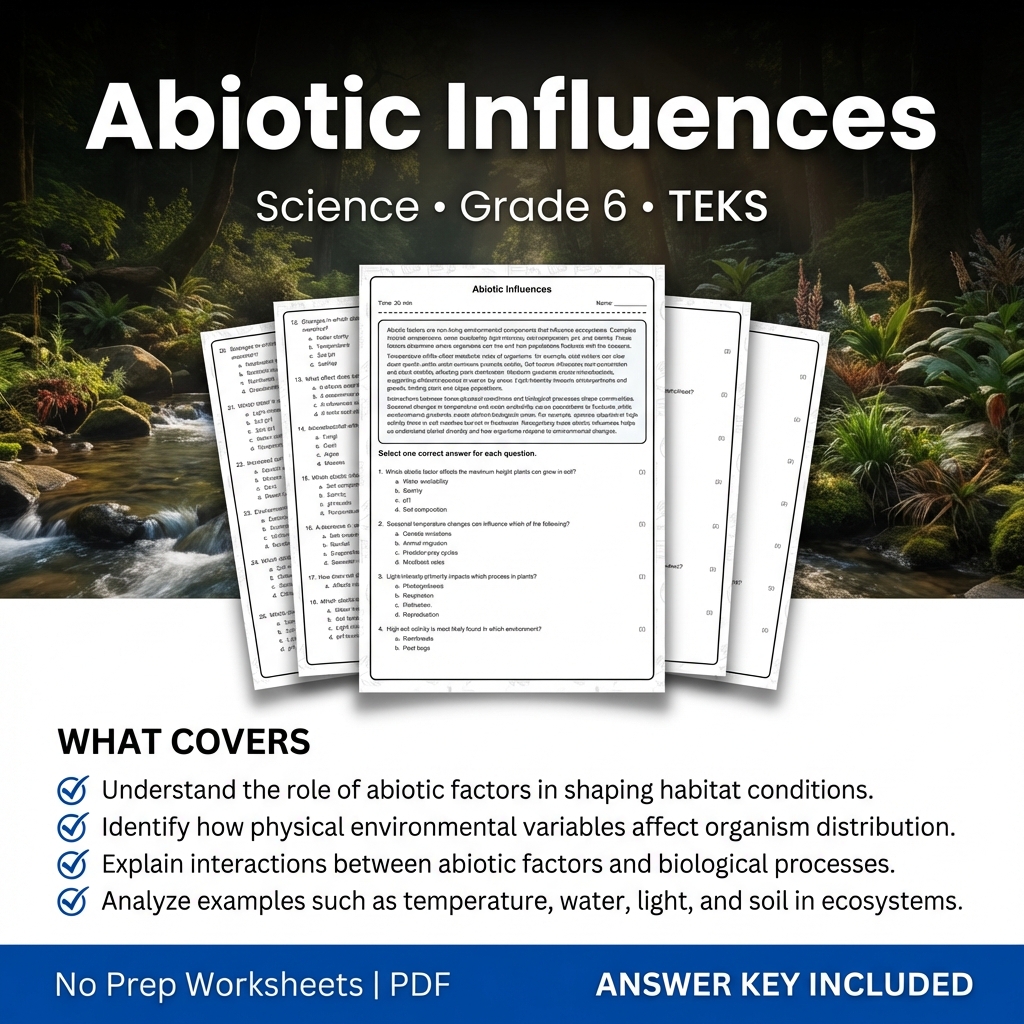
Grade 6 Science Worksheet on Abiotic Influences | TEKS Aligned
 Created byCoral Reef Learning
Learning Objectives
- Understand the role of abiotic factors in shaping habitat conditions.
- Identify how physical environmental variables affect organism distribution.
- Explain interactions between abiotic factors and biological processes.
Instant download
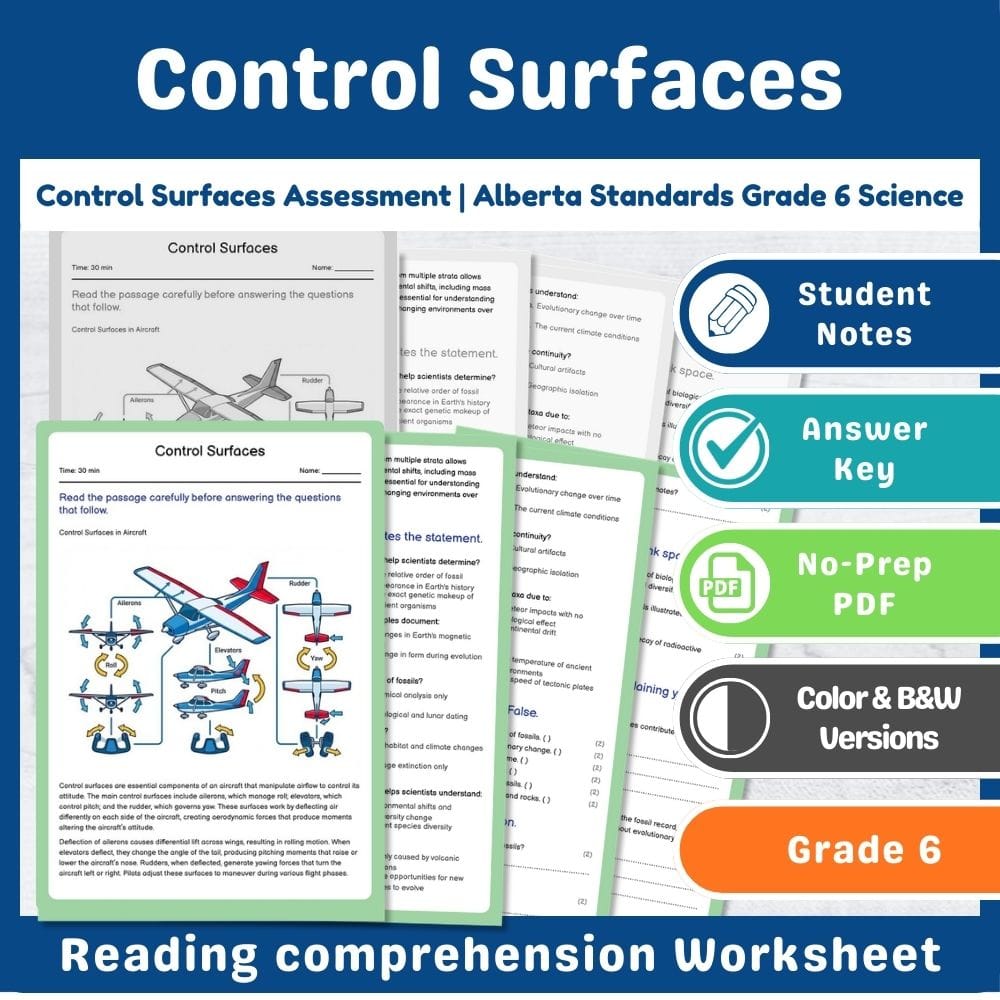
Control Surfaces Assessment | Alberta Standards Grade 6 Science
Created byPrism Point LearningLearning Objectives
- Define the main control surfaces on an aircraft, including ailerons, elevators, and rudders.
- Explain how deflecting control surfaces affects airflow to produce moments that alter an aircraft’s attitude.
- Describe how aerodynamic moments such as rolling, pitching, and yawing are generated by control surface deflections.
Also included in: Lesson Grade 6 Science Assessment | Alberta Standards and Topics
Instant download
Grade 6 Science | Error Analysis Reading Worksheet (PDF + Answer Key)
JCreated byJ.S SheetsLearning Objectives
- Understand sources of systematic and random errors in scientific data.
- Describe methods for estimating and mitigating errors in experiments.
- Recognize examples of error sources like instrument bias, procedural inconsistency, and environmental variability.
Also included in: Grade 6 Science Bundle – Data Analysis, Scientific Inquiry & Measurement Skills +1 more
Instant download

Grade 6 Science | Trophic Levels - Daily Reading Comprehension
Created byCoral Reef LearningLearning Objectives
- Understand what trophic levels are.
- Identify the roles of producers, consumers, and decomposers in ecosystems.
- Describe how energy flows through an ecosystem via trophic levels.
Instant download
Population Change Assessment for Grade 6 Science | NGSS Aligned
Created byPrism Point LearningLearning Objectives
- Construct evidence-based arguments linking ecosystem alterations to population changes.
- Analyze case studies involving predator reintroduction, invasive species, habitat fragmentation, and disease outbreaks.
- Interpret empirical data sets and longitudinal observations to infer causal relationships in ecosystems.
Also included in: Grade 6 Science Mini Bundle | Ecosystems: Interactions, Energy, and Dynamics +1 more
Instant download
Grade 6 Science – Adaptation & Features | Daily Reading Worksheet
Created byQuiet Forest EducationLearning Objectives
- Define the concept of adaptation in animals and plants.
- Identify different types of adaptations: structural, behavioral, physiological.
- Explain how adaptations help organisms survive and reproduce.
Also included in: Ecosystems and Environment Grade 6 Science Daily Worksheets Bundle | Ontario +1 more
Instant download

Grade 6 Science | Pressure Patterns in Weather - Daily Reading Comprehension
Created byCoral Reef LearningLearning Objectives
- Understand how pressure differences form high and low pressure zones.
- Identify the influence of topography on regional pressure patterns.
- Relate pressure gradients to everyday weather changes.
Also included in: Air and Aerodynamics Lesson Bundle – Grade 6 Science Alberta Reading Comp. +1 more
Instant download

Transfer Mechanisms Worksheet | Grade 6 Science Activities
Created byPrism Point LearningLearning Objectives
- Explain how heat energy is transferred by conduction, convection, and radiation.
- Identify which heat transfer mechanism is happening in everyday examples.
- Use temperature and state-change ideas to support predictions about heat flow.
Instant download
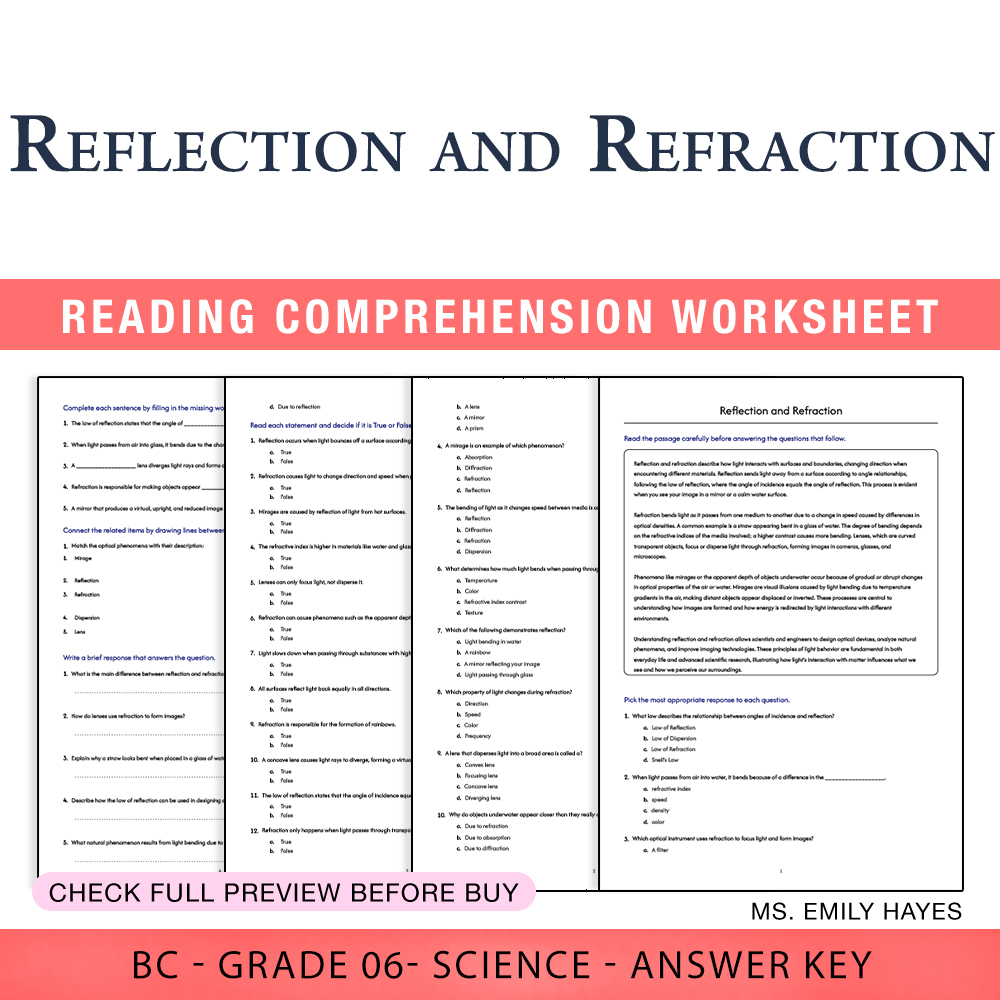
6th Grade Science | Reflection and Refraction Worksheet (PDF+ Answer Key)
 Created byCopper Leaf Classroom
Learning Objectives
- Explain the concepts of reflection and refraction of light.
- Describe how lenses focus and disperse light through refraction.
- Understand phenomena like mirages and apparent depth caused by optical changes.
Also included in: Grade 6 Science BC | Waves, Sound, Light & Energy Worksheets (PDF + Answer Key) +1 more
Instant download

Biomass Building Worksheet Grade 6 Science Photosynthesis Pack
Created byPrism Point LearningLearning Objectives
- Explain how photosynthesis provides carbon-based molecules for plant growth.
- Describe how different plant molecules (carbohydrates, proteins, fats) help build plant tissues.
- Connect biomass building to the need for a continuous supply of matter and energy.
Also included in: Animals Matter Lesson Bundle | Grade 6 Science | California Standards
Instant download
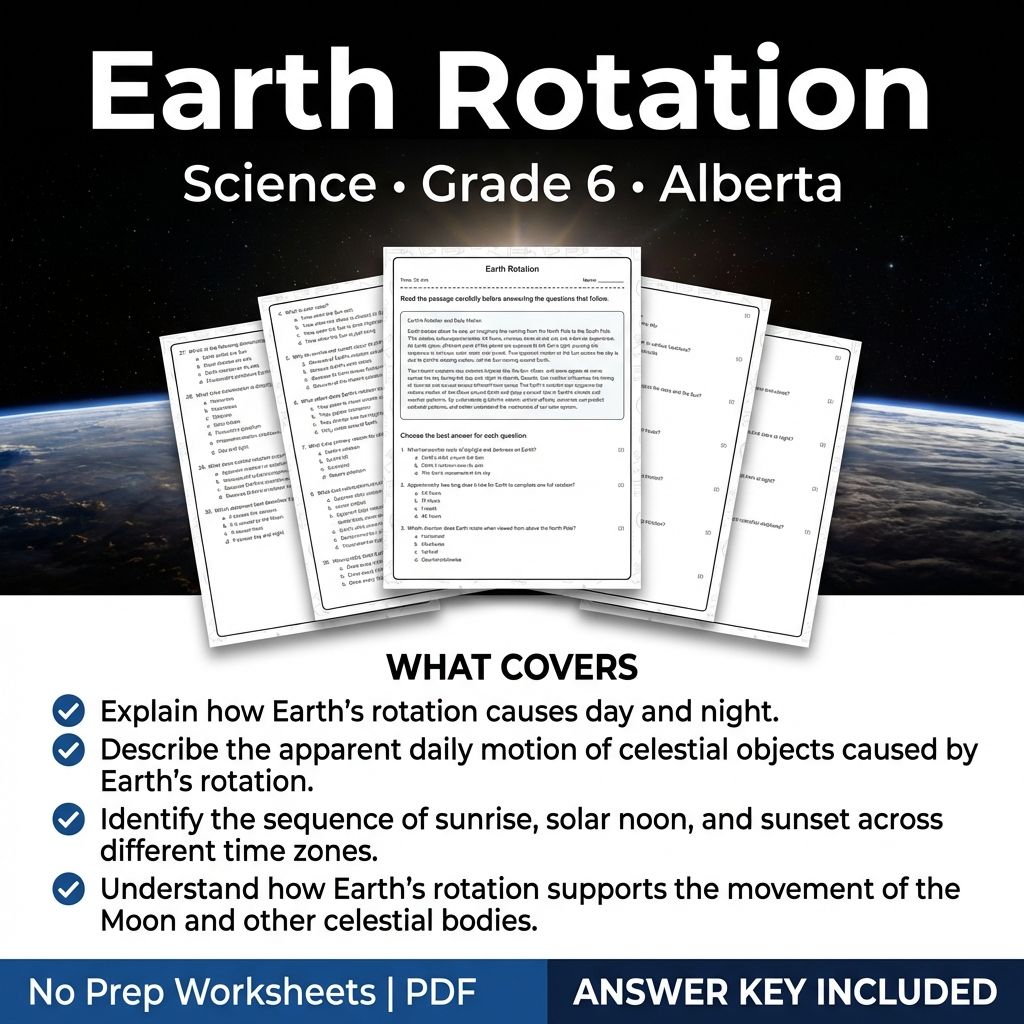
Earth Rotation Grade 6 Science Worksheet | Alberta Standards
Created byCoral Reef LearningLearning Objectives
- Explain how Earth's rotation causes day and night.
- Describe the apparent daily motion of celestial objects caused by Earth's rotation.
- Identify the sequence of sunrise, solar noon, and sunset across different time zones.
Instant download

Grade 6 Science | Understanding Error Analysis - Daily Reading Comprehension
Created byCoral Reef LearningLearning Objectives
- Identify different sources of errors in scientific measurements
- Differentiate between systematic and random errors
- Understand methods used to estimate error effects
Also included in: Evidence and Investigation Lesson Bundle | Grade 6 Science | Alberta +1 more
Instant download
Grade 6 Science | Collaborative Practices Worksheet with Short Notes (PDF)
 Created byMeadowlark Worksheets
Learning Objectives
- Understand principles that promote effective team collaboration in scientific projects.
- Identify common communication protocols and documentation standards used in group work.
- Analyze methods for resolving conflicts and sharing contributions within teams.
Also included in: Grade 6 Science Lesson Bundle | Ontario Framework & Inquiry Skills +1 more
Instant download
Grade 6 Science Modeling Systems Worksheet with Short Notes (Printable PDF)
Created byMeadowlark WorksheetsLearning Objectives
- Understand the different types of models used in science to represent complex systems.
- Identify assumptions, boundaries, and scaling factors when constructing models.
- Compare model predictions with actual observations to evaluate their limitations.
Also included in: Grade 6 Science Lesson Bundle | Ontario Framework & Inquiry Skills +1 more
Instant download
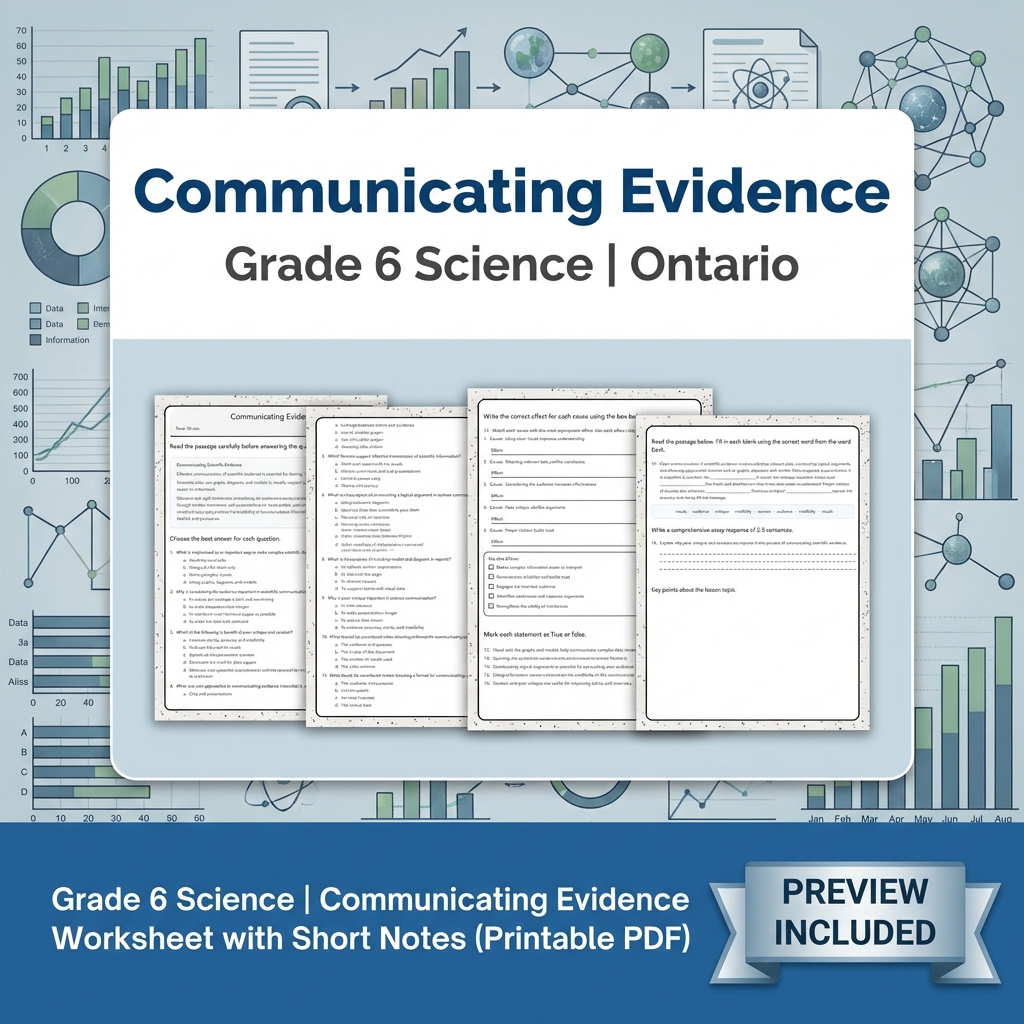
Grade 6 Science | Communicating Evidence Worksheet with Short Notes (PDF)
Created byMeadowlark WorksheetsLearning Objectives
- Understand core approaches to effectively communicating scientific evidence.
- Identify methods for linking claims with supporting data and reasoning.
- Learn how to present evidence using graphs, diagrams, and models appropriately.
Also included in: Grade 6 Science Lesson Bundle | Ontario Framework & Inquiry Skills +1 more
Instant download
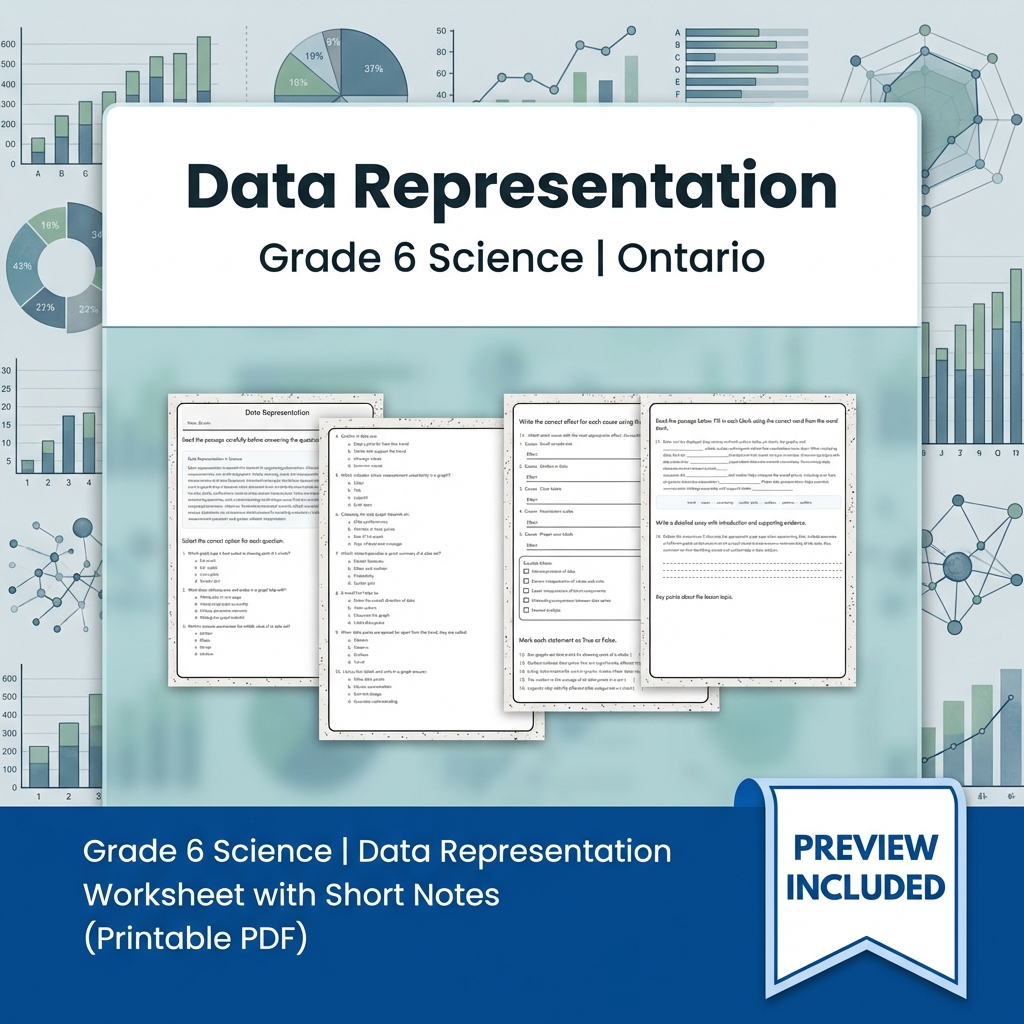
Grade 6 Science | Data Representation Worksheet with Short Notes (Printable PDF)
Created byMeadowlark WorksheetsLearning Objectives
- Understand different methods of data organization and display.
- Identify appropriate graph types for various data sets.
- Learn to label axes, scales, and interpret legends in charts.
Also included in: Grade 6 Science Lesson Bundle | Ontario Framework & Inquiry Skills +1 more
Instant download
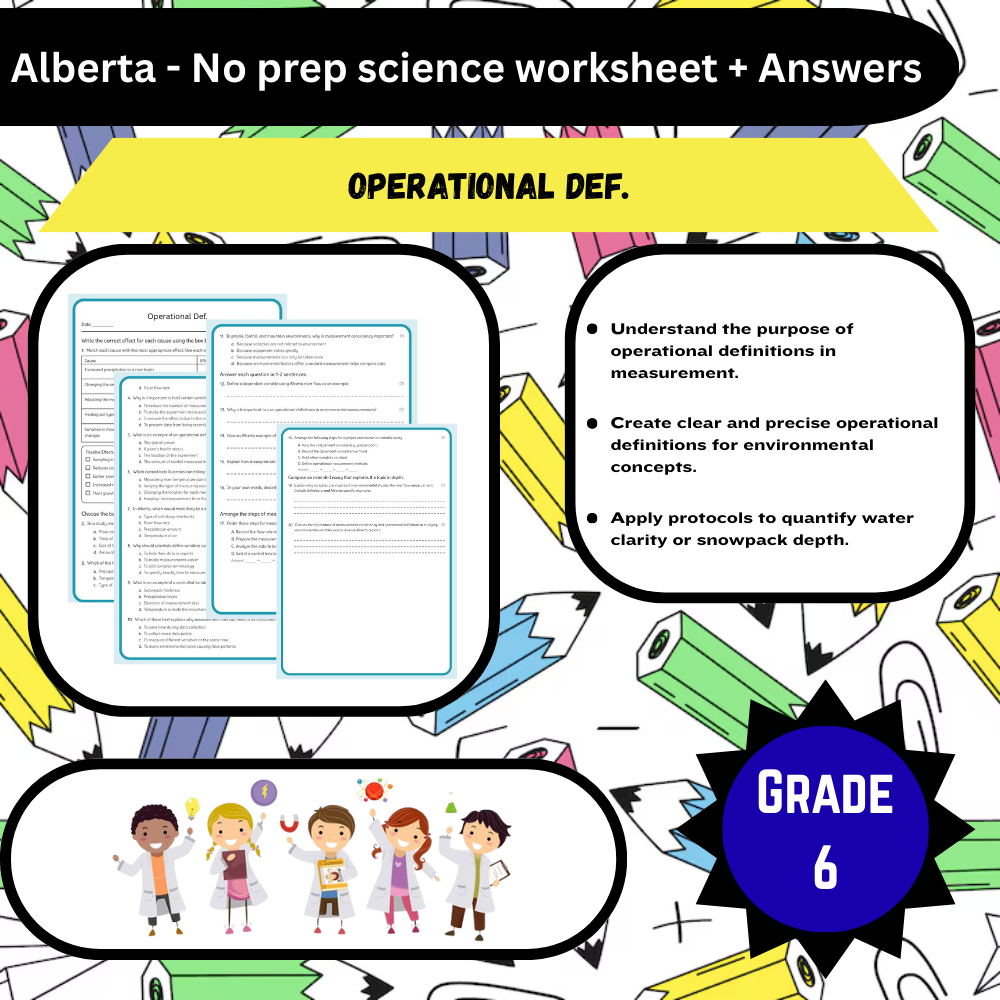
6th Grade Science | Operational Definitions Worksheet (PDF) - Alberta Standards
Created byBright Mind ResourcesLearning Objectives
- Understand the purpose of operational definitions in scientific measurement.
- Learn how to create clear and precise operational definitions for various environmental concepts.
- Apply measurement protocols to quantify water clarity, snowpack depth, and other environmental variables.
Instant download
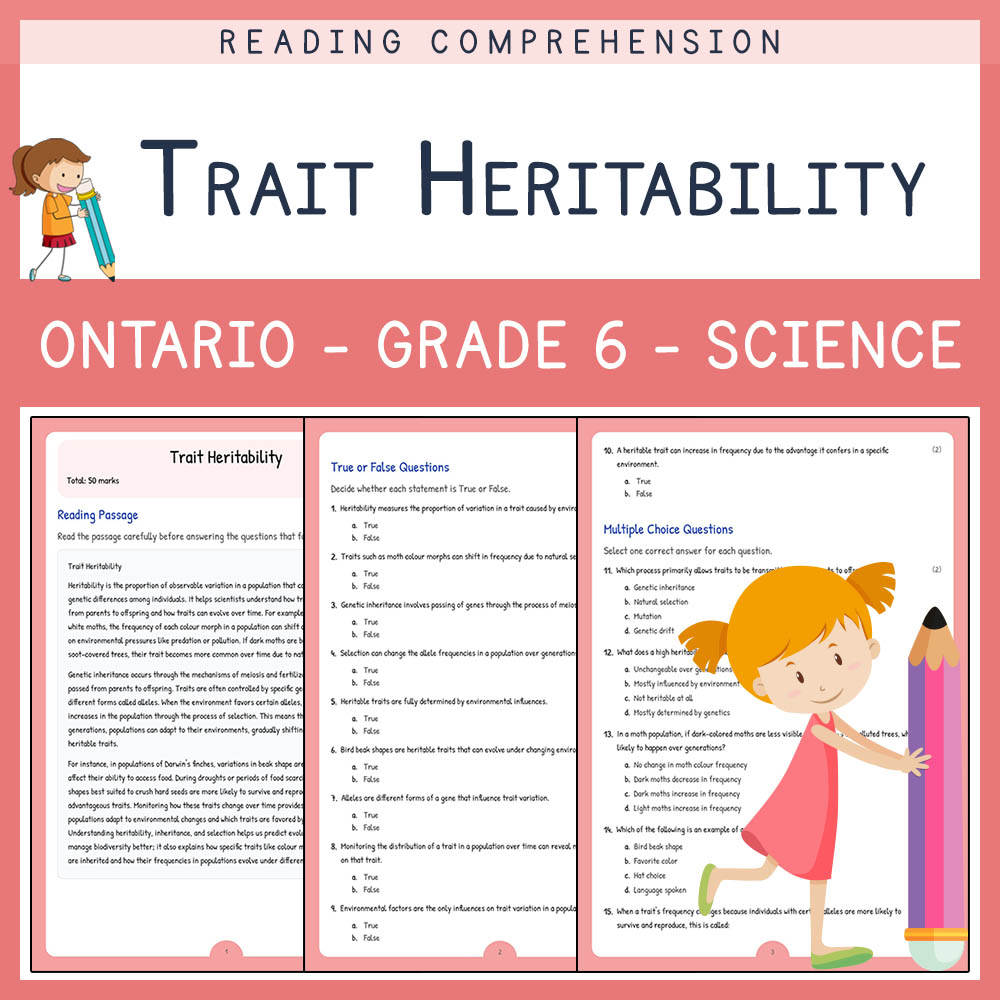
Grade 6 Science | Trait Heritability Worksheet + Answer Key (PDF PDF)
Created byLumora LearningLearning Objectives
- Explain the concept of heritability and how genetic variation contributes to adaptive traits.
- Distinguish between heritable traits and environmental influences.
- Describe basic mechanisms of inheritance and how trait frequencies change over generations.
Also included in: Grade 6 Science | Biodiversity Custom Unit Resource | Ontario Framework
Instant download
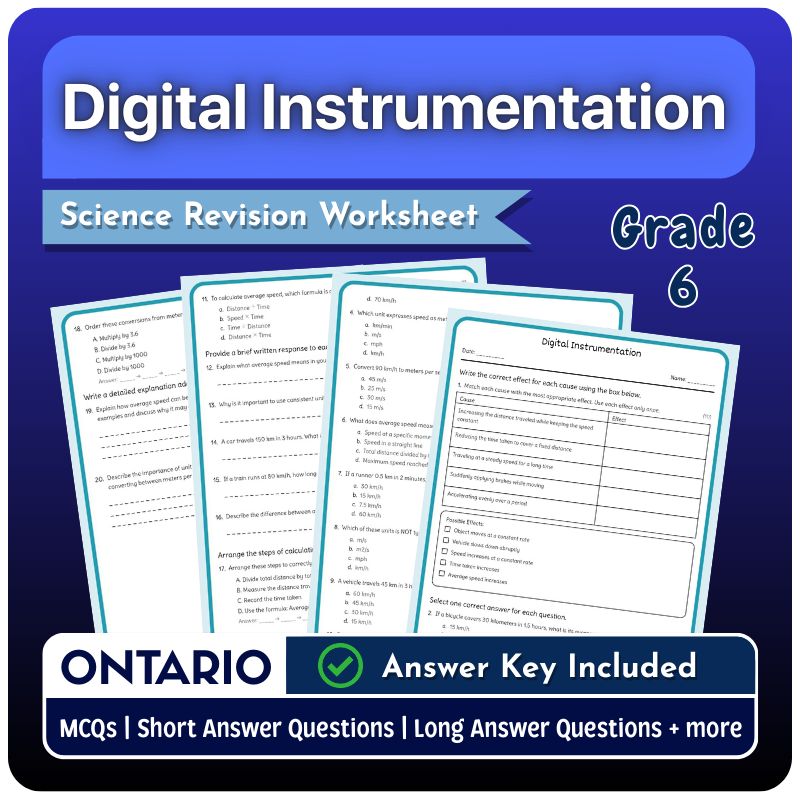
6th Grade Science | Digital Instrumentation Worksheet (Ontario Standards) (PDF)
Created byBright Mind ResourcesLearning Objectives
- Understand the components and functions of electronic sensors, data loggers, and digital probes.
- Learn proper calibration and operation techniques for accurate measurements.
- Identify factors affecting sampling rate, resolution, and units in digital data collection.
Instant download

Crystal Structures Worksheet | Standards-Aligned Grade 6 Science Practice
JCreated byJ.S SheetsLearning Objectives
- Understand the differences between crystalline and amorphous solids based on particle arrangements.
- Explain how particle bonding strength and spatial order influence the properties of solids.
- Connect microscopic particle arrangements to observable behaviors like melting points and brittleness.
Instant download

Grade 6 Aircraft Control Surfaces & Flight Motion Worksheet | Alberta
 Created byBRIGHT PATH RESOURCES
Learning Objectives
- Define ailerons, elevators, and rudders from a technical text
- Explain how deflecting control surfaces changes lift and airflow
- Identify the aircraft motions linked to rolling, pitching, and yawing
Also included in: Aerodynamics & Flight Physics Grade 6 Science Worksheets Bundle | Alberta +1 more
Instant download
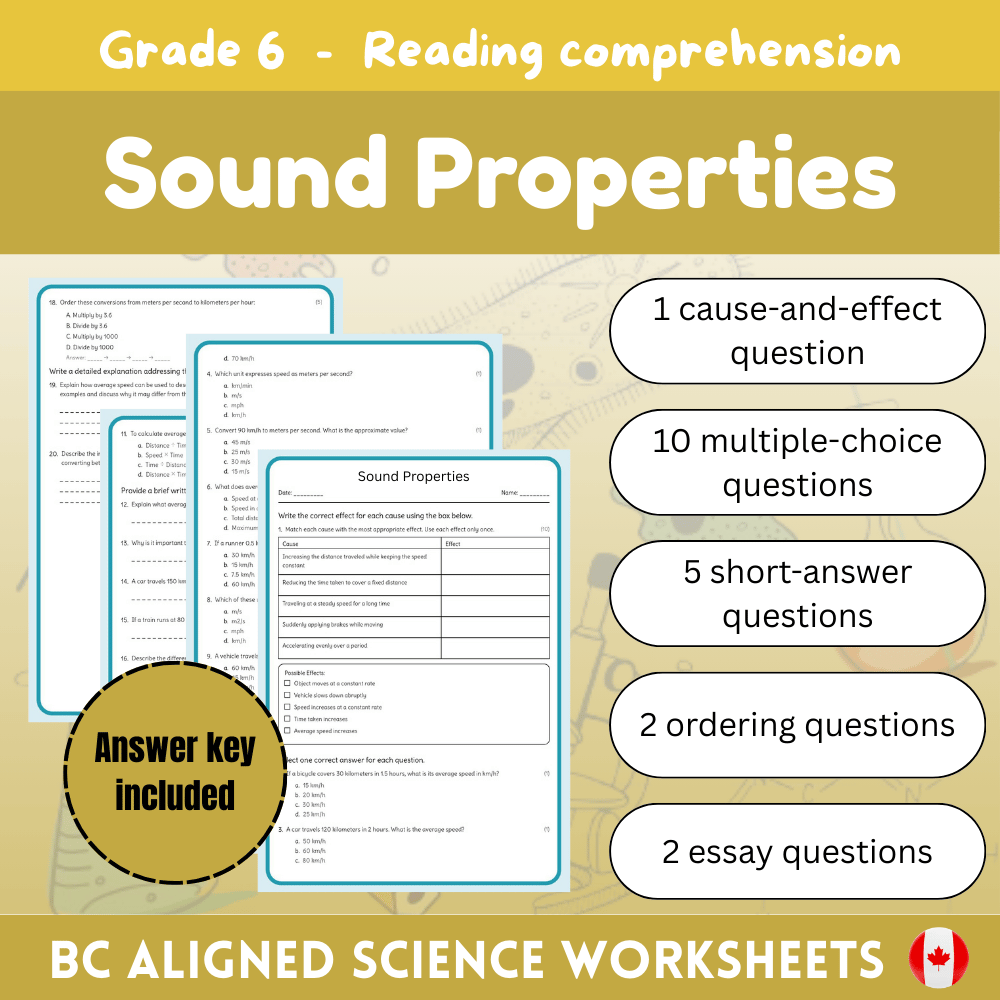
6th Grade Science | Sound Properties Worksheet (Answer Key) – BC Standards
Created byBright Mind ResourcesLearning Objectives
- Understand how sound propagates as a mechanical wave through different media.
- Identify the relationship between frequency, amplitude, pitch, and loudness in sound.
- Explain how temperature and medium affect the speed of sound.
Instant download

Solar System Survey Worksheet Practice | Grade 6 Science
Created byPrism Point LearningLearning Objectives
- Identify major components of the solar system and describe how they are classified.
- Compare terrestrial planets, gas giants, dwarf planets, and small-body regions using composition, orbital zone, and atmospheric or surface conditions.
- Explain how temperature and energy from the Sun influence planetary environments and habitability.
Also included in: Grade 6 Space Systems Science Lesson Bundle for Ontario (10 Worksheets)
Instant download
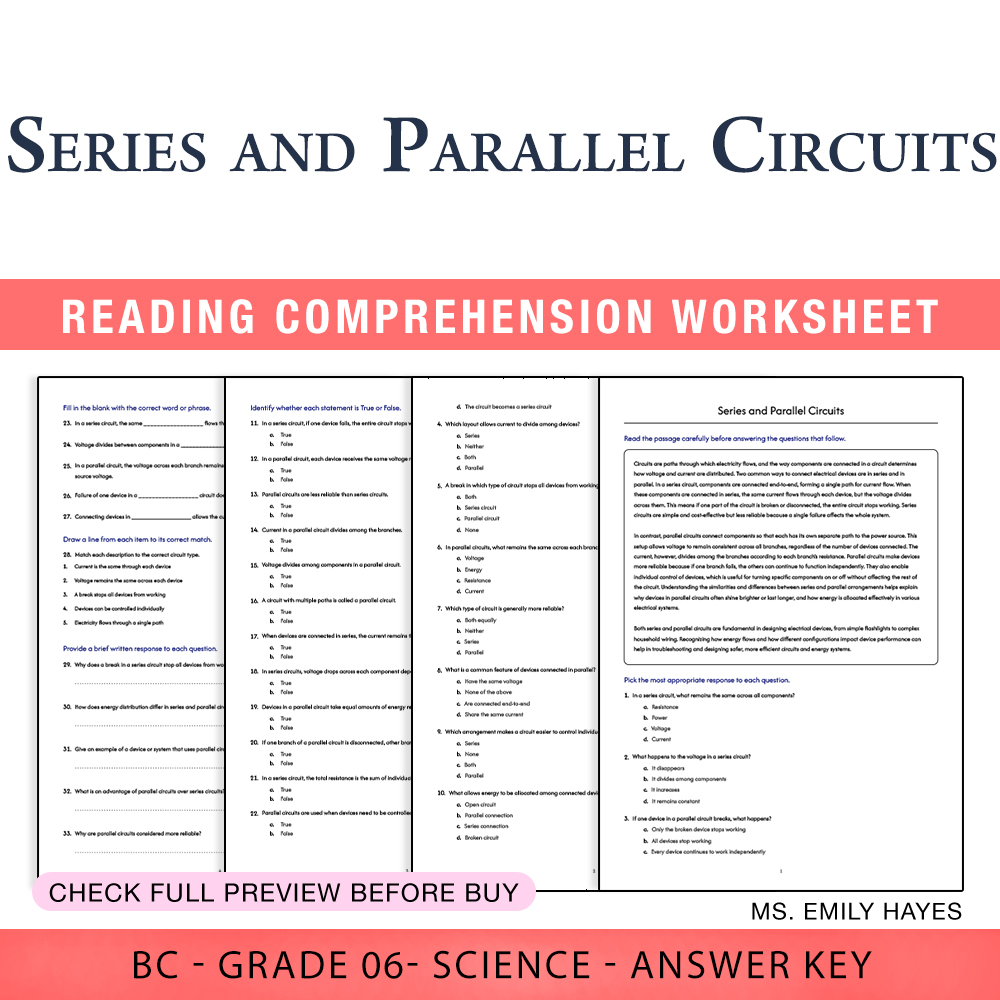
6th Grade Science | Series and Parallel Circuits Worksheet (PDF+ Answer Key)
Created byCopper Leaf ClassroomLearning Objectives
- Describe the differences between series and parallel electrical circuits.
- Explain how voltage and current distribute in series and parallel arrangements.
- Identify real-world examples of series and parallel circuits.
Also included in: Grade 6 Science BC | Waves, Sound, Light & Energy Worksheets (PDF + Answer Key) +1 more
Instant download

Orbital Motion Worksheet | Standards-Aligned Grade 6 Science Practice
JCreated byJ.S SheetsLearning Objectives
- Explain how gravitational attraction governs planetary and satellite orbits within the solar system.
- Describe elliptical orbits, orbital periods, and variations in orbital speed based on Keplerian relationships.
- Understand the role of gravitational potential in maintaining orbital paths and compare different celestial systems.
Also included in: Grade 6 Earth-Moon Relationships Space Science Lesson Bundle | NGSS +1 more
Instant download
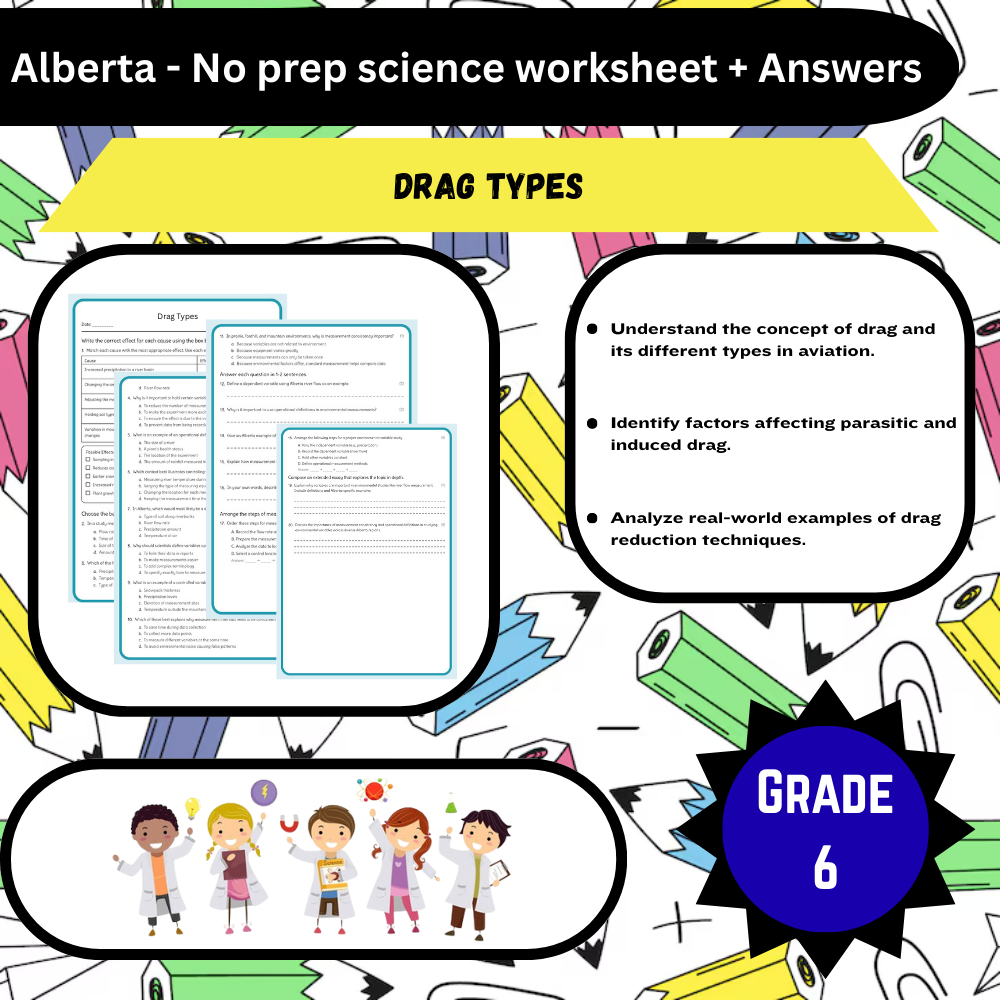
Grade 6 Science | Drag Types (Worksheet + Answer Key) – Alberta Standard
Created byBright Mind ResourcesLearning Objectives
- Understand the concept of drag and its different types in aviation and vehicles
- Identify factors affecting parasitic and induced drag and how design influences these forces
- Analyze real-world examples of drag reduction techniques in engineering
Instant download
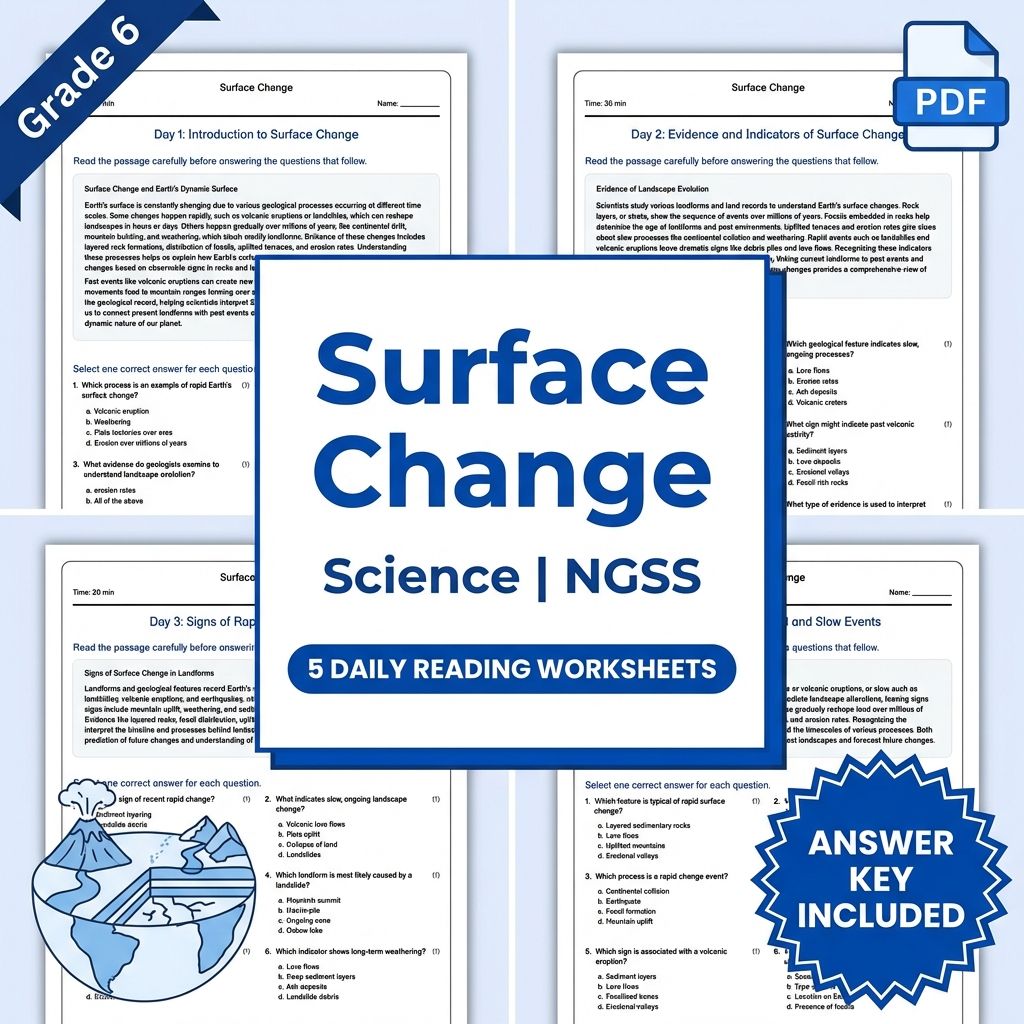
6th Grade Science | Surface Change Daily Reading Worksheet (PDF+ Answer Key)
Created byCopper Leaf ClassroomLearning Objectives
- Understand geologic processes that modify Earth's surface over time.
- Identify evidence of landscape evolution such as rock strata and fossil records.
- Differentiate between rapid and slow surface change events.
Instant download

Control Surfaces Test Prep Printable | Grade 6 Science
Created byPrism Point LearningLearning Objectives
- Explain how primary and secondary control surfaces affect roll, pitch, and yaw.
- Describe how deflection changes lift and aerodynamic moments on an aircraft.
- Compare control authority and stability by relating control inputs to aerodynamic stability modes.
Also included in: Grade 6 Aerodynamics Flight Design Science lesson bundle - Ontario
Instant download

Grade 6 Science – Light Properties Daily Reading Worksheet | BC Standards
Created byBright Mind ResourcesLearning Objectives
- Understand that light behaves both as a wave and as particles.
- Identify the characteristics of visible, ultraviolet, and infrared light.
- Explain how wavelength and frequency relate to energy in light.
Also included in: Grade 6 Daily Reading Science Worksheets | Lesson Bundle | BC Framework +1 more
Instant download

Modeling Systems Worksheet | Grade 6 Science Activities
Created byPrism Point LearningLearning Objectives
- Explain how physical and conceptual models represent scientific systems and help predict outcomes.
- Use evidence to evaluate and refine models, including identifying assumptions and limits.
- Generate testable predictions from a model and compare them to observed patterns.
Also included in: Grade 6 Scientific Investigation Practices Science Lesson Bundle TEKS +1 more
Instant download

Sampling Methods and Representative Samples Worksheets Grade 6 Science
 Created bySunny Desk Resources
Learning Objectives
- Describe how random, stratified, and systematic sampling differ and why each can produce representative results
- Explain how sample size and spatial distribution affect the strength and limits of conclusions
- Identify which sampling method best fits a given research situation
Also included in: Evidence & Investigation Grade 6 Science Worksheets | Alberta +1 more
Instant download

States Overview Assessment for Grade 6 Science | TEKS Standards
Created byPrism Point LearningLearning Objectives
- Describe the main states of matter: solid, liquid, and gas.
- Compare particle arrangement, movement, and traits among the states.
- Explain everyday phenomena that illustrate differences in states of matter.
Also included in: Lesson Bundle Grade 6 Matter and Energy Science Assessment | TEKS
Instant download

Energy Transfer Assessment for Grade 6 Science TEKS Standards
Created byPrism Point LearningLearning Objectives
- Explain how conduction, convection, and radiation transfer thermal energy.
- Identify examples of each energy transfer mechanism in everyday life.
- Connect changes in temperature to different ways heat transfer occurs.
Also included in: Lesson Bundle Grade 6 Matter and Energy Science Assessment | TEKS
Instant download

Properties of Matter Assessment | TEKS Grade 6 Science Worksheet
Created byPrism Point LearningLearning Objectives
- Identify and describe physical and chemical properties used to distinguish substances.
- Compare substances based on qualitative and simple quantitative properties.
- Relate observed material properties to examples like iron, salt, oil, and copper.
Also included in: Lesson Bundle Grade 6 Matter and Energy Science Assessment | TEKS
Instant download

Classifying Matter Assessment for Grade 6 Science TEKS Standards
Created byPrism Point LearningLearning Objectives
- Understand different classification schemes for elements, compounds, and mixtures.
- Identify characteristics that distinguish pure substances from mixtures.
- Recognize common separation techniques like filtration and distillation.
Also included in: Lesson Bundle Grade 6 Matter and Energy Science Assessment | TEKS
Instant download

Change Evidence Assessment | TEKS Grade 6 Science Standards-Aligned
Created byPrism Point LearningLearning Objectives
- Differentiate between physical and chemical changes based on observable indicators.
- Identify characteristic evidence such as gas formation, precipitate, color change, and temperature change in chemical processes.
- Recognize physical alterations like shape or phase reversibility and understand substance conservation.
Also included in: Lesson Bundle Grade 6 Matter and Energy Science Assessment | TEKS
Instant download

Atoms and Particles Worksheet Grade 6 Science Particle Model Practice
Created byPrism Point LearningLearning Objectives
- Explain how particle models describe matter as being made of particles and how atoms build elements.
- Identify how different combinations and relative numbers of atoms help determine properties like density and melting point.
- Connect atomic composition to observable/measureable properties rather than only macroscopic appearance.
Instant download

Grade 6 Science | Evaporation and Transpiration Worksheet | California Standards
Created byLumora LearningLearning Objectives
- Explain how energy and temperature affect evaporation and transpiration
- Describe how plants add water vapor to the atmosphere through transpiration
- Connect evaporation, transpiration, condensation, and precipitation as linked phase changes
Instant download
About Grade 6 Science Worksheets
Explore Grade 6 Science worksheets for classwork, homework, or review. Our 5,969 printables download instantly as PDFs.
MyTeachingSheets worksheets are made by real teacher-authors and checked before they go live. Download any as a print-ready PDF for lessons, homework, or independent practice — most include answer keys, and previews are always free.