
Grade 6 Science Worksheets
5,969 worksheets
Speed and Velocity Worksheet | Standards-Aligned Grade 6 Science Practice
JCreated byJ.S SheetsLearning Objectives
- Understand the difference between speed and velocity in describing motion.
- Explain how direction affects velocity even when speed remains constant.
- Calculate average speed using total distance and elapsed time.
Also included in: Grade 6 Matter, Energy, and Forces Science lesson bundle – Florida (NGSSS) +1 more
Instant download

States of Matter Worksheet | Standards-Aligned Grade 6 Science Practice
JCreated byJ.S SheetsLearning Objectives
- Describe the different states of matter: solids, liquids, and gases.
- Explain how particles behave in each state of matter.
- Identify changes in state and relate them to energy and particle motion.
Also included in: Grade 6 Matter, Energy, and Forces Science lesson bundle – Florida (NGSSS) +1 more
Instant download

Heat and Temperature Worksheet | Standards-Aligned Grade 6 Science Practice
JCreated byJ.S SheetsLearning Objectives
- Understand the difference between heat and temperature and how they relate to energy transfer.
- Describe how heat moves from warmer to cooler regions and how this affects systems.
- Explain why the same temperature does not necessarily mean the same amount of energy.
Also included in: Grade 6 Matter, Energy, and Forces Science lesson bundle – Florida (NGSSS) +1 more
Instant download

Thermal Energy Transfer Worksheet | Standards-Aligned Grade 6 Science Practice
JCreated byJ.S SheetsLearning Objectives
- Understand the three main mechanisms of thermal energy transfer: conduction, convection, and radiation.
- Identify examples of each energy transfer mechanism in real-world situations.
- Explain how the medium involved affects the process of thermal energy transfer.
Also included in: Grade 6 Matter, Energy, and Forces Science lesson bundle – Florida (NGSSS) +1 more
Instant download

Grade 6 Science – Observational Instruments & Observation Tools | Worksheet
 Created byBright Mind Resources
Learning Objectives
- Understand the different types of telescopes used to observe the solar system
- Recognize how different wavelengths reveal planetary features
- Compare ground-based and space-based observatories
Also included in: Space Systems Grade 6 Science Daily Reading Worksheets Bundle | Ontario +1 more
Instant download
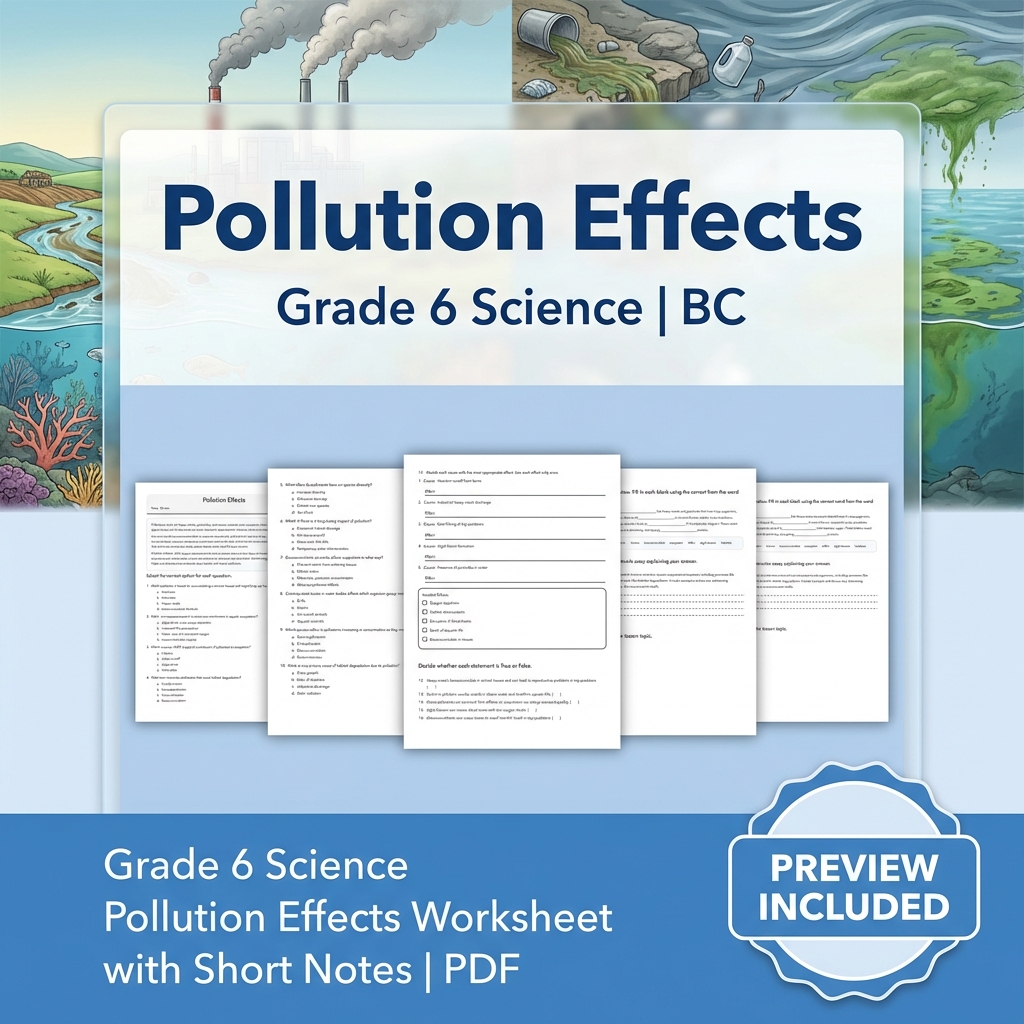
Grade 6 Science Pollution Effects Worksheet with Short Notes | PDF
 Created byMeadowlark Worksheets
Learning Objectives
- Understand how pollutants enter ecosystems and affect living organisms.
- Identify the processes of bioaccumulation and biomagnification.
- Explain the impact of nutrient over-enrichment on aquatic environments.
Also included in: Grade 6 Science | Ecosystems & Interdependence UNIT Worksheet Bundle +1 more
Instant download
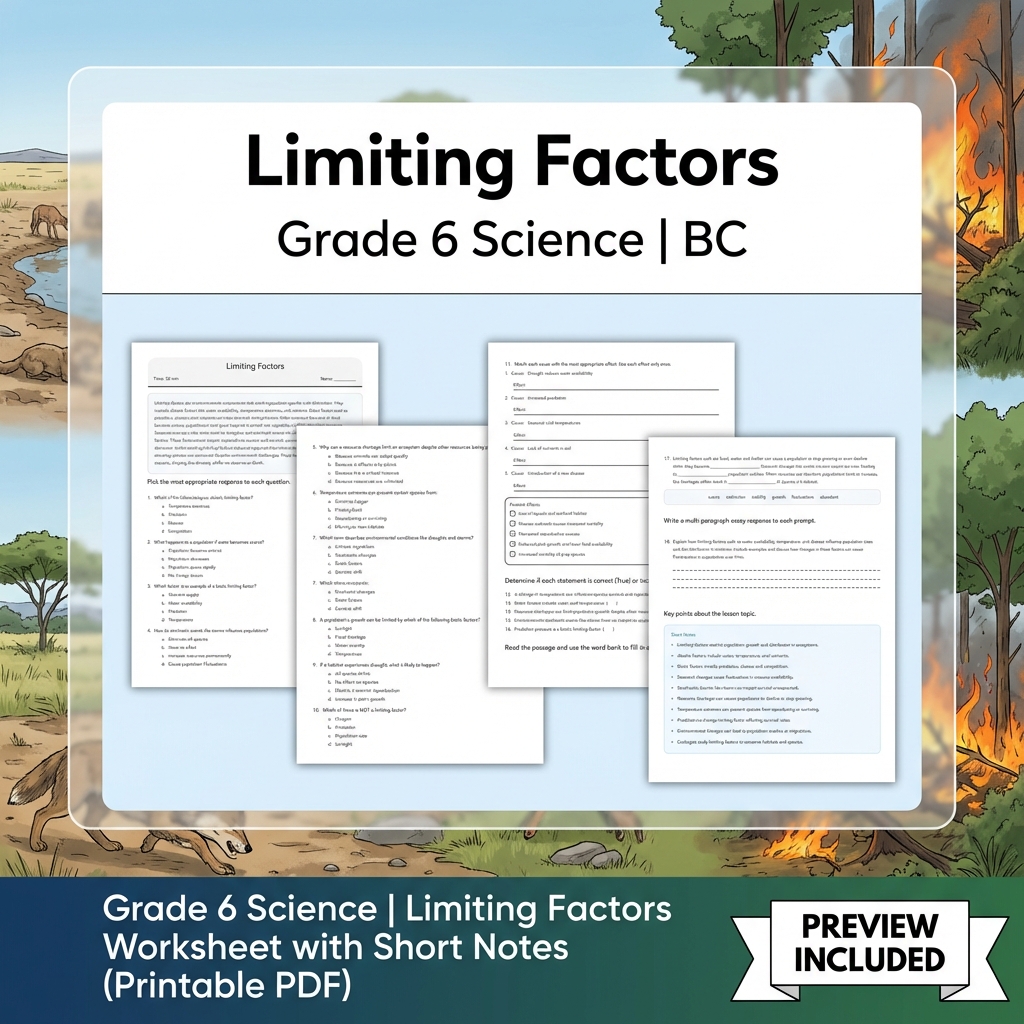
Grade 6 Science | Limiting Factors Worksheet with Short Notes (Printable PDF)
Created byMeadowlark WorksheetsLearning Objectives
- Understand what limiting factors are in ecosystems.
- Identify abiotic and biotic factors that restrict population growth.
- Explain how changes in limiting factors affect species survival.
Also included in: Grade 6 Science | Ecosystems & Interdependence UNIT Worksheet Bundle +1 more
Instant download
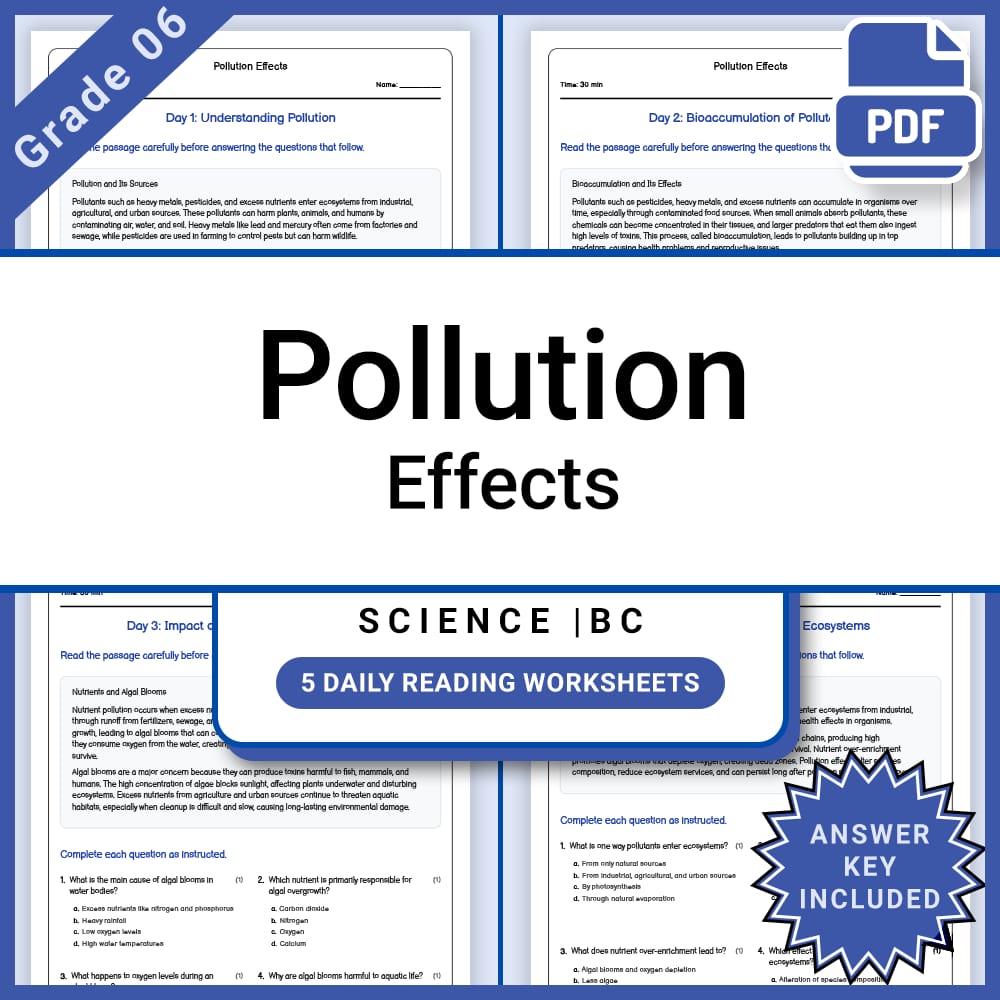
Grade 6 Science Pollution Effects Daily Reading Worksheet with Answer Key
JCreated byJ.S SheetsLearning Objectives
- Identify different types of pollutants and their sources
- Understand how pollutants impact ecosystems and organisms
- Learn the concept of bioaccumulation and biomagnification
Also included in: Grade 6 Science Lesson Group Bundle on Ecosystems and Ecology +1 more
Instant download
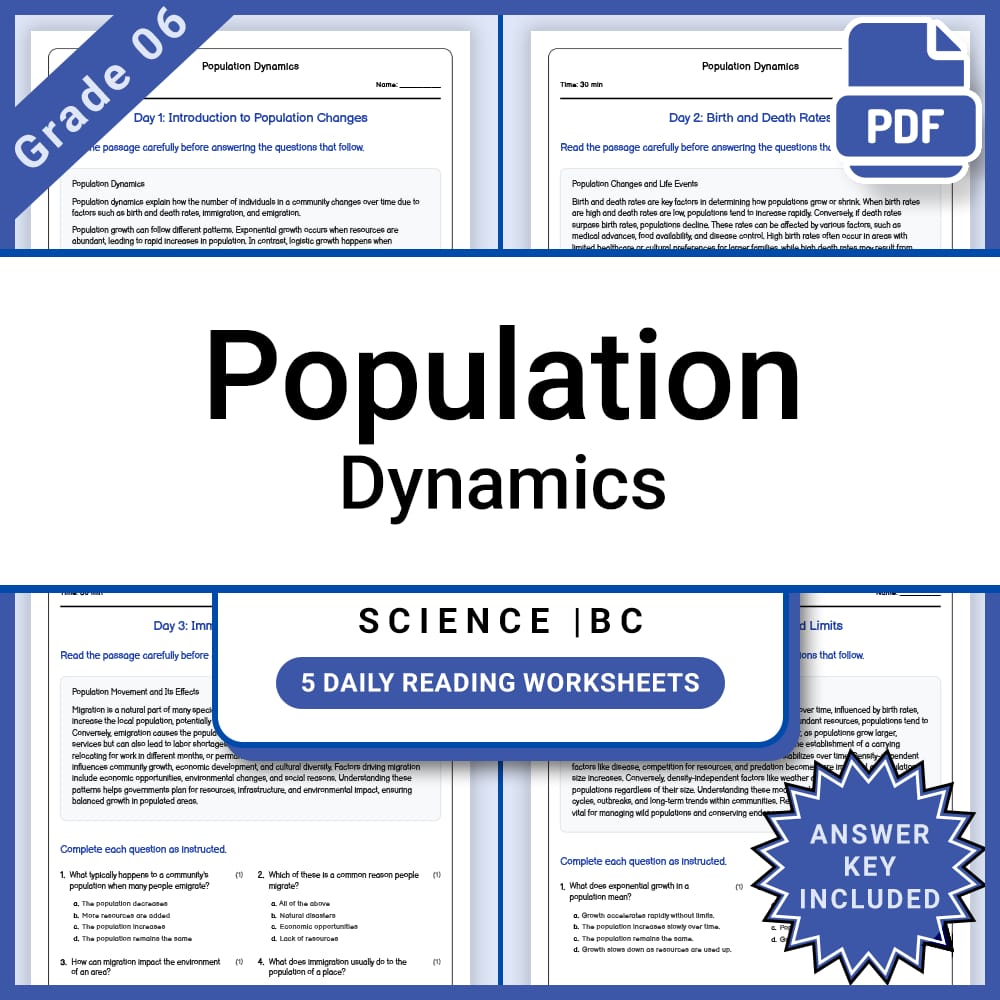
Grade 6 Science – Population Dynamics Daily Reading Worksheet with Answer Key
JCreated byJ.S SheetsLearning Objectives
- Understand basic concepts of population growth and decline
- Identify factors affecting population changes
- Differentiate between growth models such as exponential and logistic growth
Also included in: Grade 6 Science Lesson Group Bundle on Ecosystems and Ecology +1 more
Instant download
Grade 6 Science – Succession in Ecology Daily Reading Worksheet + Answer Key
JCreated byJ.S SheetsLearning Objectives
- Define ecological succession and distinguish between primary and secondary succession.
- Identify pioneer species and their roles in succession.
- Understand how succession leads to changes in biodiversity and community structure.
Also included in: Grade 6 Science Lesson Group Bundle on Ecosystems and Ecology +1 more
Instant download
Grade 6 Science – Habitats and Niches Daily Reading Worksheet + Answer Key
JCreated byJ.S SheetsLearning Objectives
- Understand key concepts related to Science
- Apply knowledge through practice questions
- Demonstrate comprehension of the material
Also included in: Grade 6 Science Lesson Group Bundle on Ecosystems and Ecology +1 more
Instant download
Grade 6 Science – Habitat Fragmentation Daily Reading Worksheet + Answer Key
JCreated byJ.S SheetsLearning Objectives
- Describe what habitat fragmentation is and identify its causes.
- Understand how habitat fragmentation affects animal and plant species.
- Recognize ways to mitigate the effects of habitat fragmentation.
Also included in: Grade 6 Science Lesson Group Bundle on Ecosystems and Ecology +1 more
Instant download
Grade 6 Science – Producers And Consumers Daily Reading Worksheet + Answer Key
JCreated byJ.S SheetsLearning Objectives
- Identify the role of producers in an ecosystem.
- Explain how producers make food through photosynthesis.
- Differentiate between producers and consumers.
Also included in: Grade 6 Science Lesson Group Bundle on Ecosystems and Ecology +1 more
Instant download
Grade 6 Science – Food Chains Daily Reading Worksheet with Answer Key
JCreated byJ.S SheetsLearning Objectives
- Identify the main components of a simple food chain
- Understand how energy transfers from producers to consumers
- Recognize the roles of different organisms in a food chain
Also included in: Grade 6 Science Lesson Group Bundle on Ecosystems and Ecology +1 more
Instant download
Grade 6 Science – Conservation Strategies Daily Reading Worksheet + Answer Key
JCreated byJ.S SheetsLearning Objectives
- Understand the importance of protected areas in conservation.
- Learn different conservation strategies and their roles.
- Recognize how protected areas contribute to ecosystems.
Also included in: Grade 6 Science Lesson Group Bundle on Ecosystems and Ecology +1 more
Instant download
Grade 6 Science – Limiting Factors Daily Reading Worksheet + Answer Key
JCreated byJ.S SheetsLearning Objectives
- Understand what limiting factors are and how they affect populations
- Identify different abiotic and biotic limiting factors in ecosystems
- Explain how limiting factors influence the survival and reproduction of species
Also included in: Grade 6 Science Lesson Group Bundle on Ecosystems and Ecology +1 more
Instant download
Grade 6 – Trophic Interactions in Ecosystems Daily Worksheet + Answer Key
JCreated byJ.S SheetsLearning Objectives
- Define predation and explain its role in ecosystems.
- Identify examples of predation and its effects on prey species.
- Understand how predation influences predator and prey adaptations.
Also included in: Grade 6 Science Lesson Group Bundle on Ecosystems and Ecology +1 more
Instant download
Grade 6 Science – Decomposers and Nutrients Daily Reading Worksheet + Answer Key
JCreated byJ.S SheetsLearning Objectives
- Understand key concepts related to Science
- Apply knowledge through practice questions
- Demonstrate comprehension of the material
Also included in: Grade 6 Science Lesson Group Bundle on Ecosystems and Ecology +1 more
Instant download
Grade 6 Science – Food Webs Daily Reading Worksheet with Answer Key
JCreated byJ.S SheetsLearning Objectives
- Define what a food web is and explain its components.
- Describe the importance of food webs in ecosystems.
- Identify how species interactions affect ecosystem stability.
Also included in: Grade 6 Science Lesson Group Bundle on Ecosystems and Ecology +1 more
Instant download
Grade 6 Science – Invasive Species Daily Reading Worksheet with Answer Key
JCreated byJ.S SheetsLearning Objectives
- Define invasive species and give examples.
- Explain how invasive species impact native ecosystems.
- Identify characteristics of invasive plants and animals.
Also included in: Grade 6 Science Lesson Group Bundle on Ecosystems and Ecology +1 more
Instant download
Grade 6 Science – Minerals and Rocks Daily Reading Worksheet + Answer Key
JCreated byJ.S SheetsLearning Objectives
- Understand the basic properties used to identify minerals
- Learn how rocks are classified into igneous, sedimentary, and metamorphic types
- Explore how mineral resources relate to the rock cycle
Also included in: Grade 6 Science Lesson Bundle: Space, Water, Earth, and Resources TEKS +1 more
Instant download

6th Grade Science | Phases Mechanics Worksheet (Ontario Standards) (PDF)
 Created byEvergreen Desk Education
Learning Objectives
- Explain how the changing relative positions of the Sun, Earth, and Moon create the visible fractions of the Moon during its phases.
- Describe the typical sequence of lunar phases and relate it to the Moon’s repeating cycle over time.
- Distinguish lunar phase appearance from eclipse circumstances using observational patterns.
Also included in: Grade 6 Solar System Space Science Lesson Bundle – Ontario Worksheets +1 more
Instant download
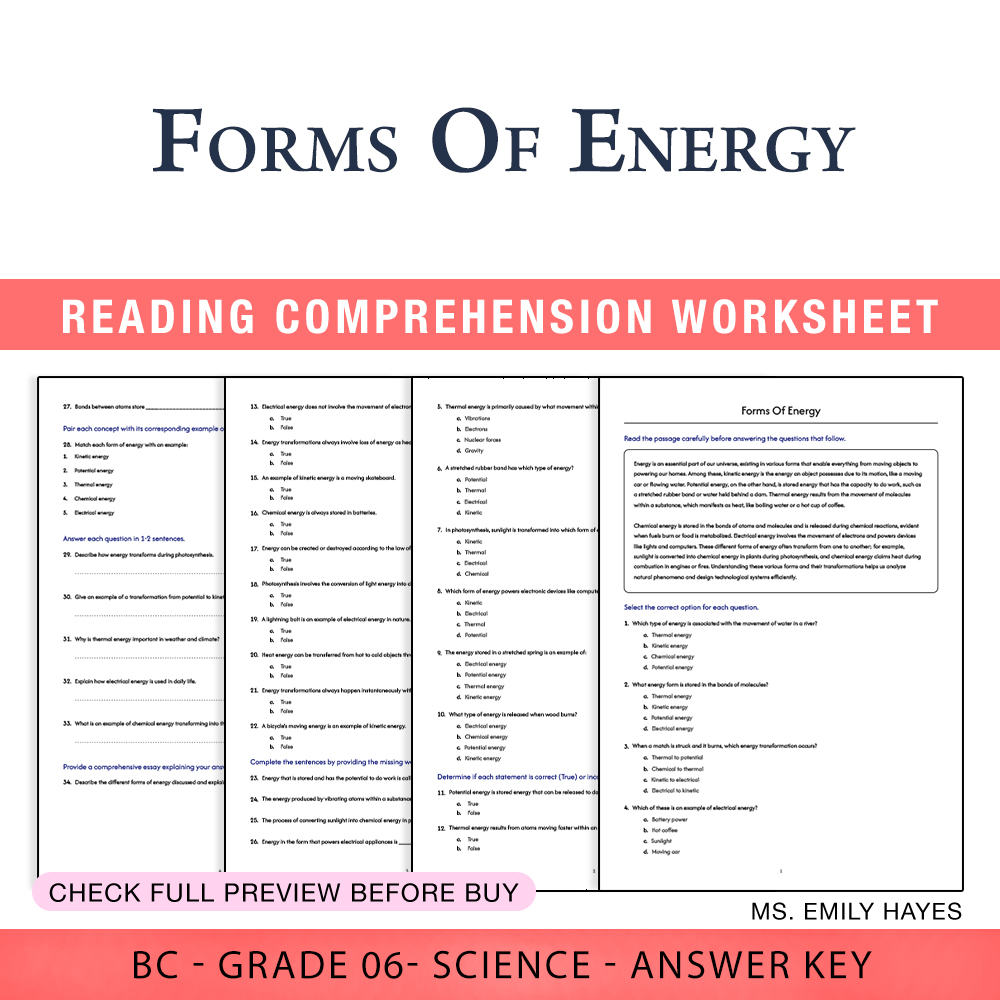
6th Grade Science | Forms of Energy Worksheet (PDF+ Answer Key)
 Created byCopper Leaf Classroom
Learning Objectives
- Identify and describe different forms of energy such as kinetic, potential, thermal, chemical, and electrical.
- Explain the process of energy transformations between different forms.
- Recognize common examples of energy forms and their typical transformations in real-world systems.
Also included in: Grade 6 Science BC | Waves, Sound, Light & Energy Worksheets (PDF + Answer Key) +1 more
Instant download

Species Classification Worksheets for Grade 6 Science: Forest Ecosystems
 Created bythe curious pencil
Learning Objectives
- Classify organisms as producers, consumers, or decomposers.
- Distinguish native species from introduced and invasive species.
- Explain how species interactions influence ecosystem balance.
Also included in: Grade 6 Science Forest Ecosystems Lesson Bundle | Alberta
Instant download

Flight Forces Worksheets: Lift, Thrust, Drag & Weight Grade 6
Created bythe curious pencilLearning Objectives
- Identify lift, thrust, drag, and weight in flight examples.
- Explain how balanced forces support steady flight.
- Compare how unbalanced forces affect speed and descent.
Also included in: Grade 6 Science Aerodynamics and Flight Lesson Bundle | Alberta
Instant download

Human Impacts on Forests and Ecosystems | Grade 6 Science
Created bythe curious pencilLearning Objectives
- Identify human activities that change forest habitats and landscapes.
- Explain how habitat fragmentation affects wildlife movement and connectivity.
- Describe how pollution and invasive species affect forest ecosystems.
Also included in: Grade 6 Science Forest Ecosystems Lesson Bundle | Alberta
Instant download

Scientific Data Interpretation and Evidence Communication Worksheets Grade 6
Created bythe curious pencilLearning Objectives
- Summarize environmental measurements using descriptive statistics.
- Compare bar graphs, line graphs, and scatter plots.
- Interpret scientific observations without overstating conclusions.
Instant download
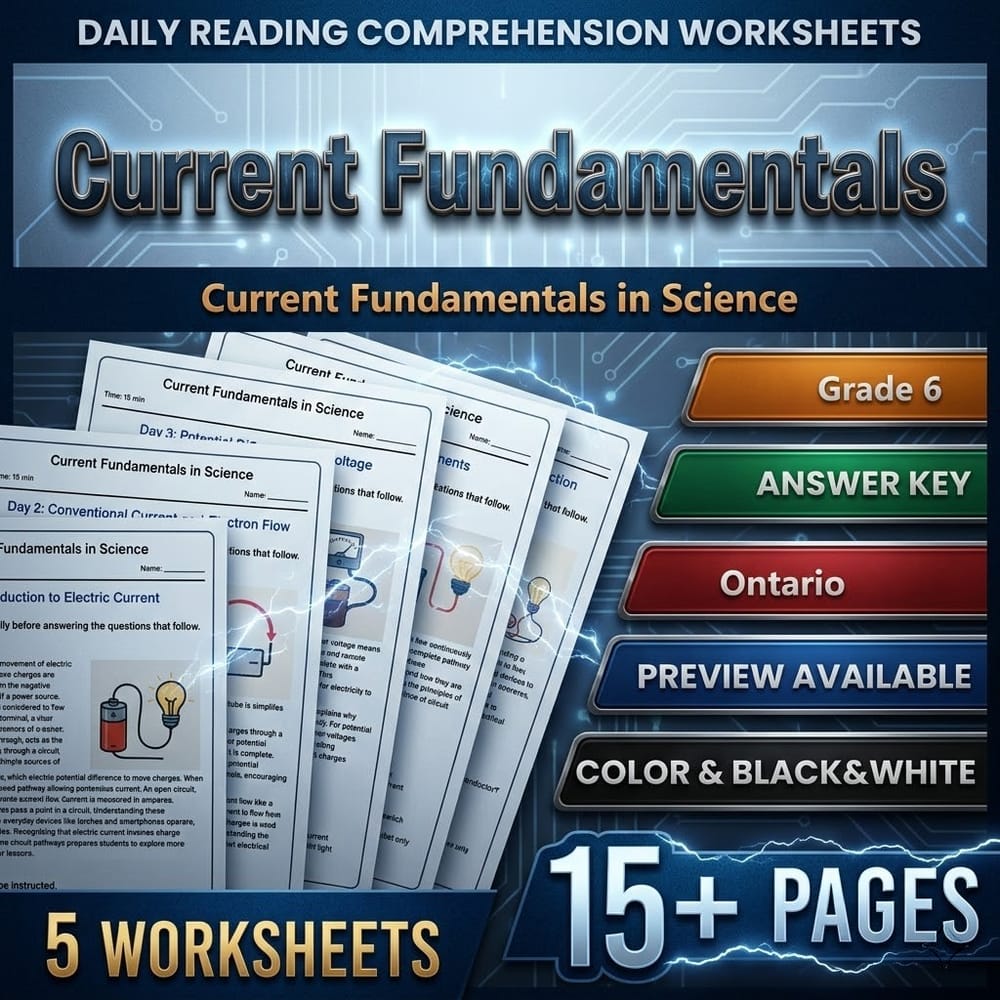
Grade 6 Science – Current Fundamentals & Circuits | Daily Reading Worksheet
 Created byQuiet Forest Education
Learning Objectives
- Understand the concept of electric current as organized movement of charges
- Differentiate between conventional current direction and electron flow
- Explain potential difference as the driving force of current
Also included in: Electricity Grade 6 Science Daily Reading Worksheets Bundle | Ontario +1 more
Instant download

6th Grade Science Worksheet | Iterative Improvement & Prototype Testing (PDF)
Created byEvergreen Desk EducationLearning Objectives
- Explain how evaluation data can guide design changes in iterative improvement.
- Describe how function and constraints can be refined while maintaining safe trade-offs.
- Use evidence from testing to justify a next prototype modification.
Also included in: Grade 6 Prototype Design Science Lesson Bundle: General Systems Thinking +1 more
Instant download
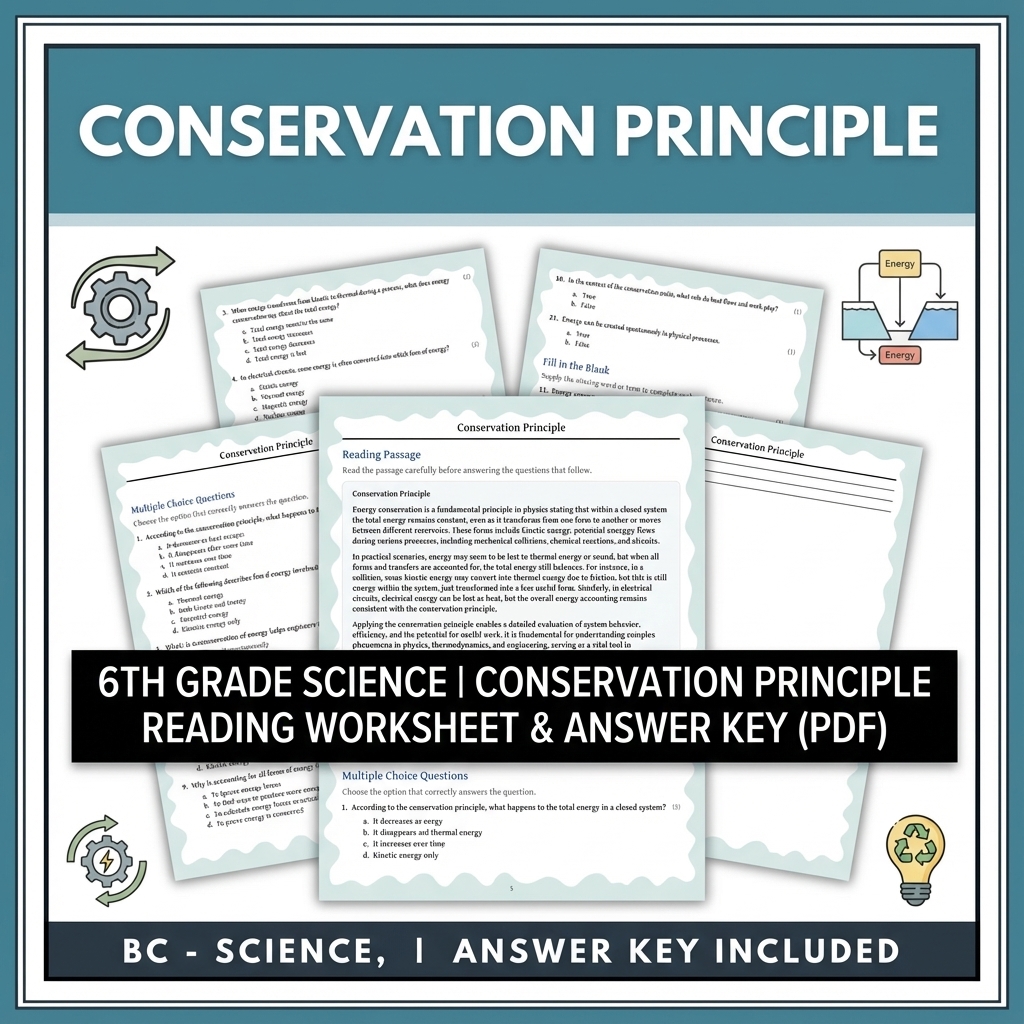
6th Grade Science | Conservation Principle Reading Worksheet & Answer Key (PDF)
JCreated byJ.S SheetsLearning Objectives
- Understand the concept of energy conservation within closed systems.
- Identify different forms of energy and how they transform and transfer.
- Explain how energy balance is maintained despite apparent losses.
Instant download
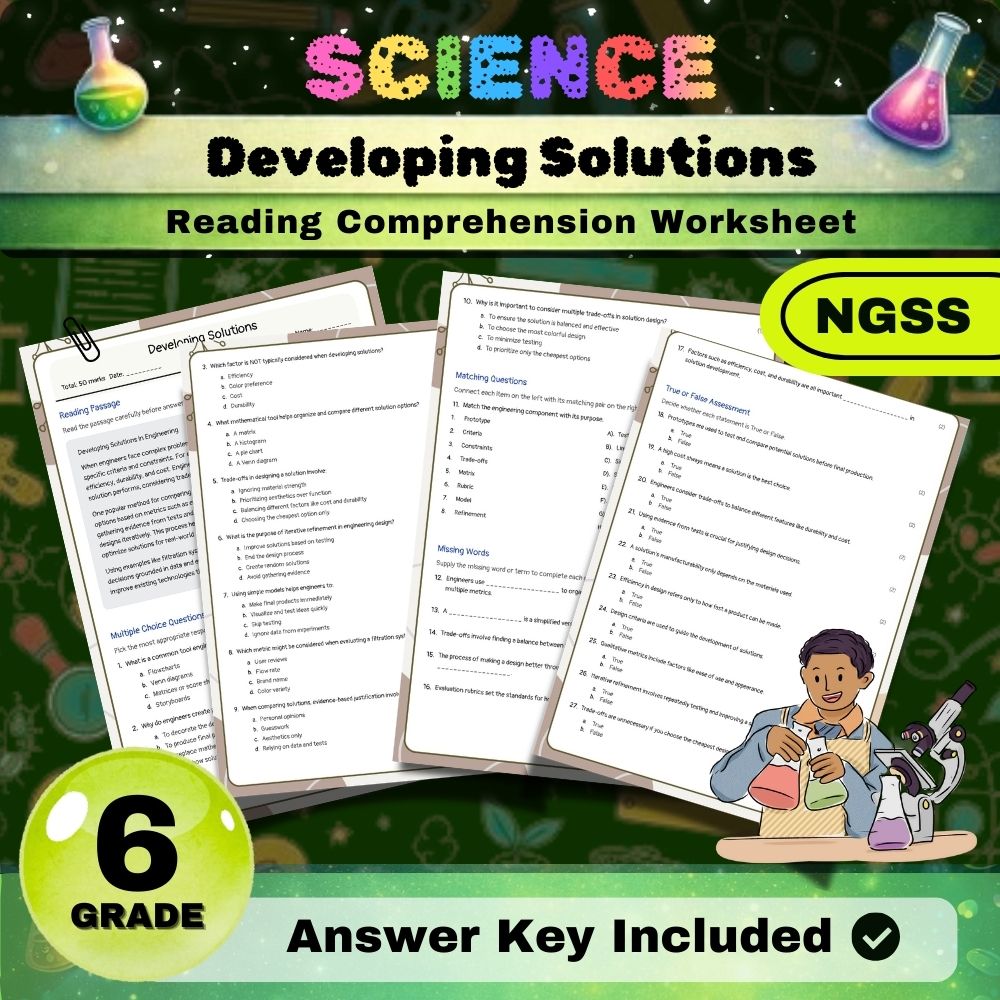
6th Grade Science | Developing Solutions Worksheet (PDF) — NGSS Aligned
 Created byMaple Path Learning
Learning Objectives
- Understand how to compare different design solutions using criteria and constraints.
- Use matrices, rubrics, and prototypes to evaluate solutions systematically.
- Analyze trade-offs among efficiency, durability, manufacturability, and cost.
Also included in: Grade 6 Science Engineering Design Unit | NGSS Worksheets Pack +1 more
Instant download
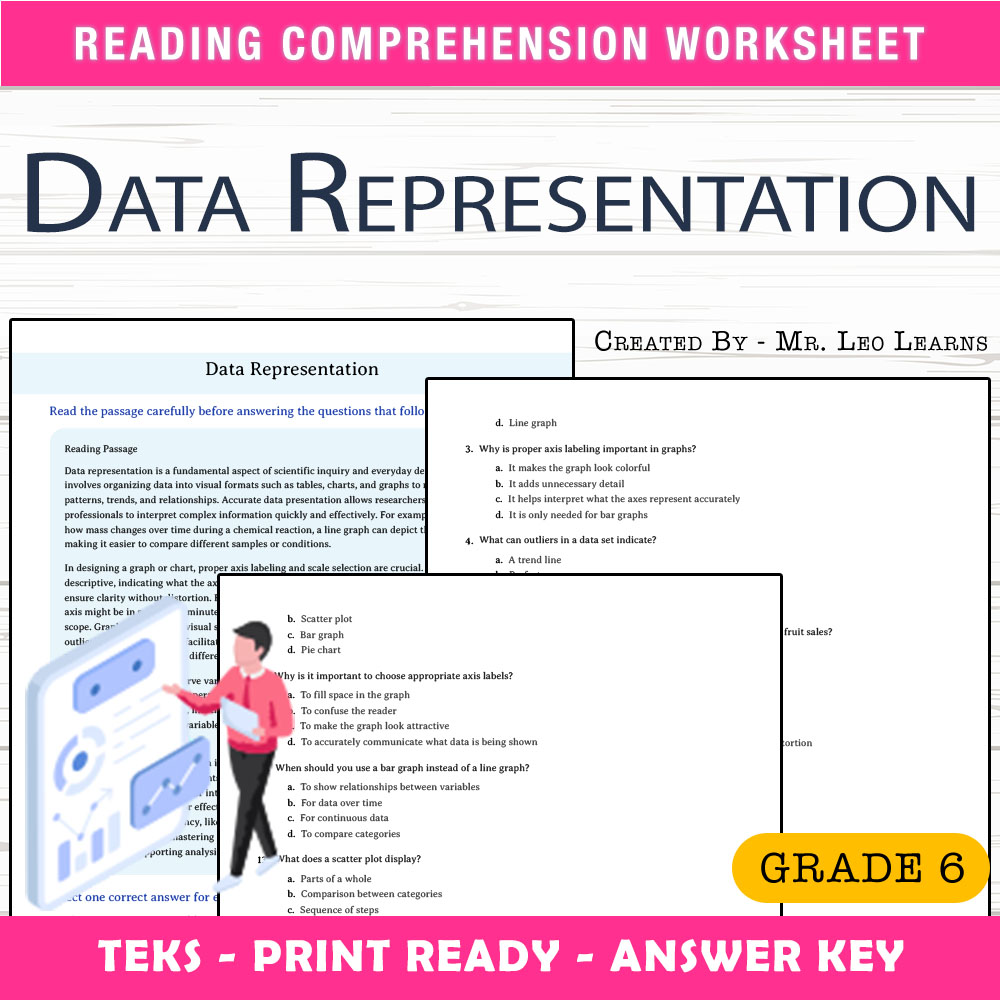
Grade 6 Science – Data Representation Worksheet for Mastering Scientific Graphs
 Created byThe Resource Hub
Learning Objectives
- Understand conventions for organizing and presenting data using different graphical methods.
- Interpret trends, patterns, outliers, and relationships in data visualizations.
- Apply proper axis labeling, scale selection, and graphical summaries to data sets.
Instant download
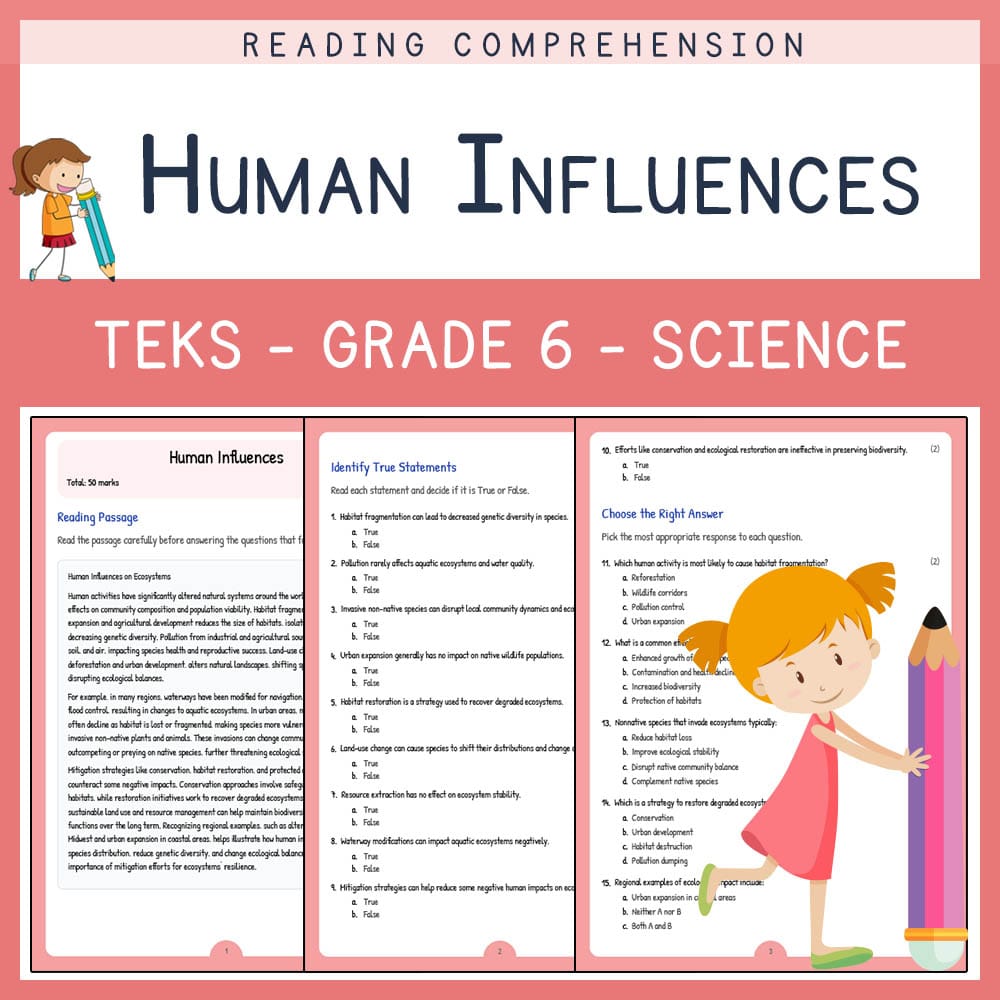
Grade 6 Science | Human Influences Worksheet | TEKS Alligned
 Created byLumora Learning
Learning Objectives
- Understand how human activities impact natural ecosystems and species diversity.
- Identify examples of habitat fragmentation, pollution, and other human-induced environmental changes.
- Explain mitigation strategies like conservation and restoration to reduce negative effects on communities.
Instant download
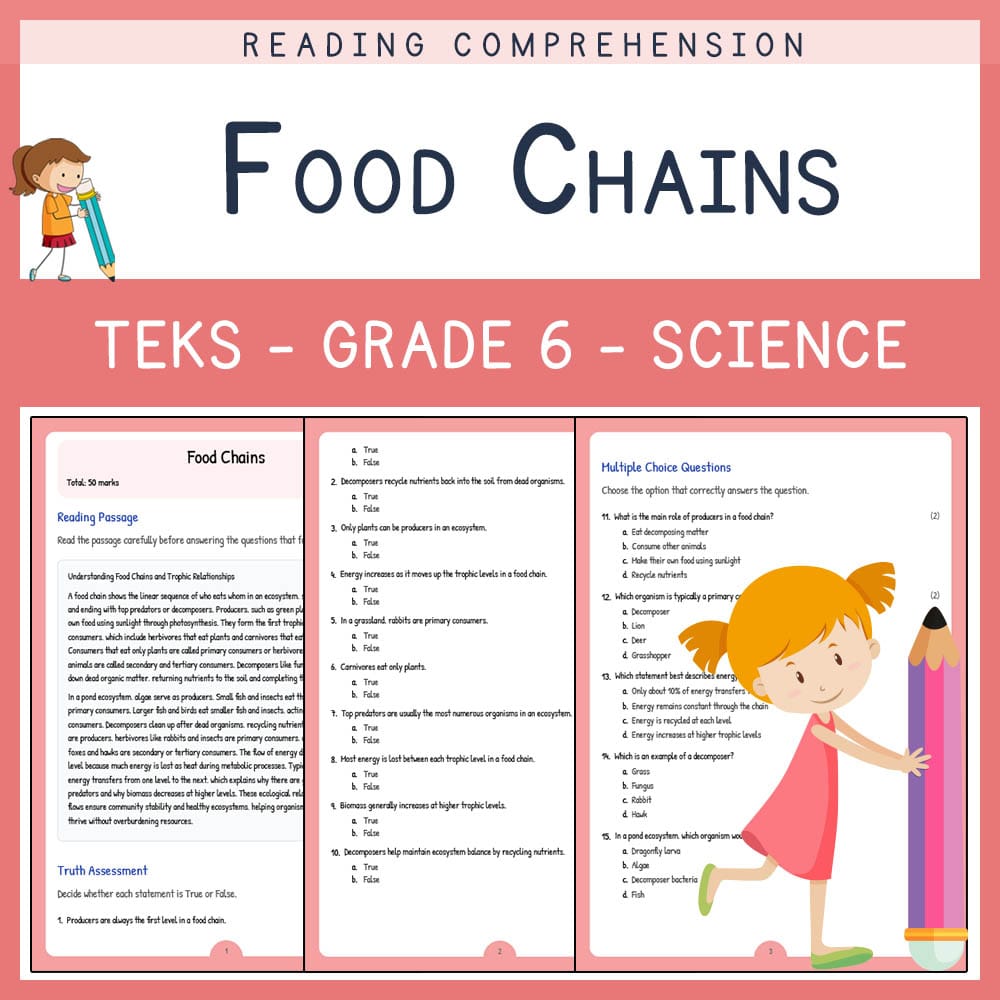
Grade 6 Science | Food Chains Worksheet Elena | TEKS-Aligned
Created byLumora LearningLearning Objectives
- Define and identify producers, consumers, and decomposers in food chains.
- Describe trophic levels and energy transfer among organisms.
- Illustrate simple pond and grassland food sequences to explain ecological relationships.
Instant download
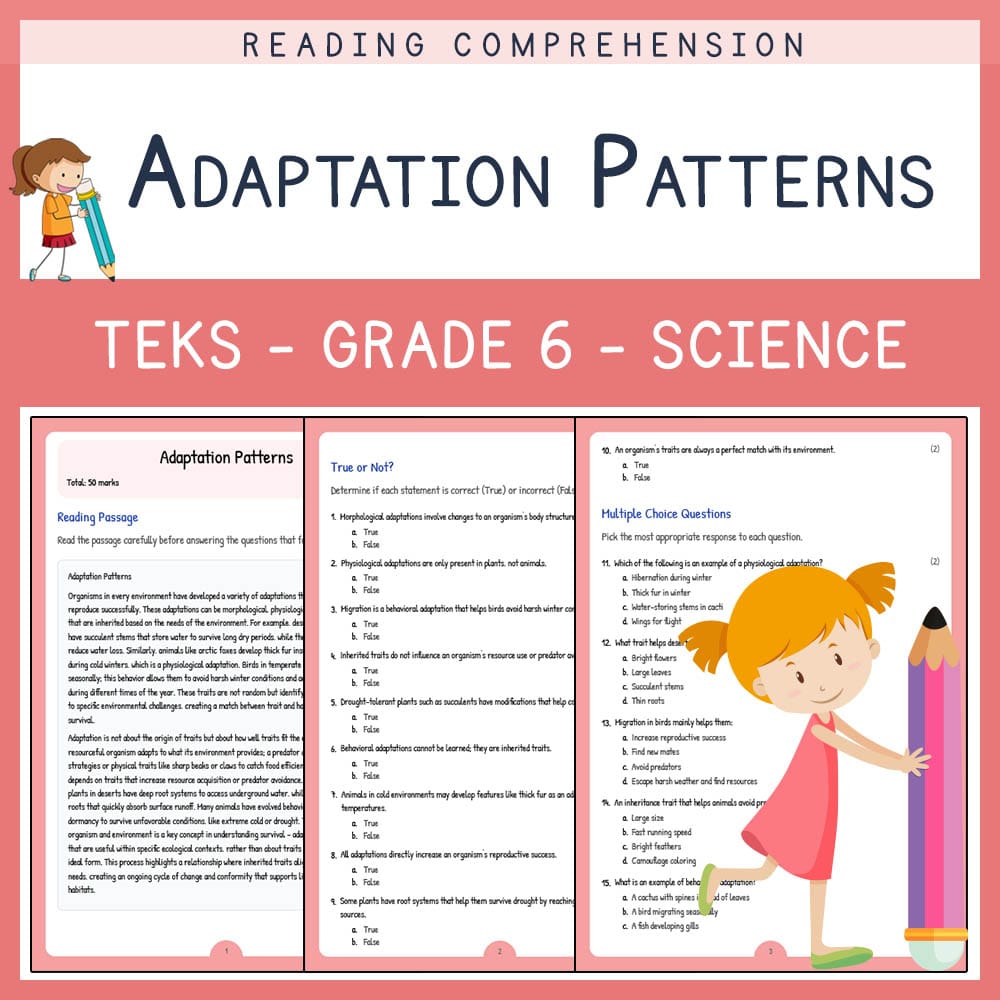
Grade 6 Science | Adaptation Patterns Worksheet | TEKS Standards
Created byLumora LearningLearning Objectives
- Understand the different types of adaptation patterns such as morphological, physiological, and behavioral traits.
- Identify examples of adaptations that enhance survival in various environments.
- Explain how inherited traits influence resource use, predator avoidance, and reproductive success.
Instant download
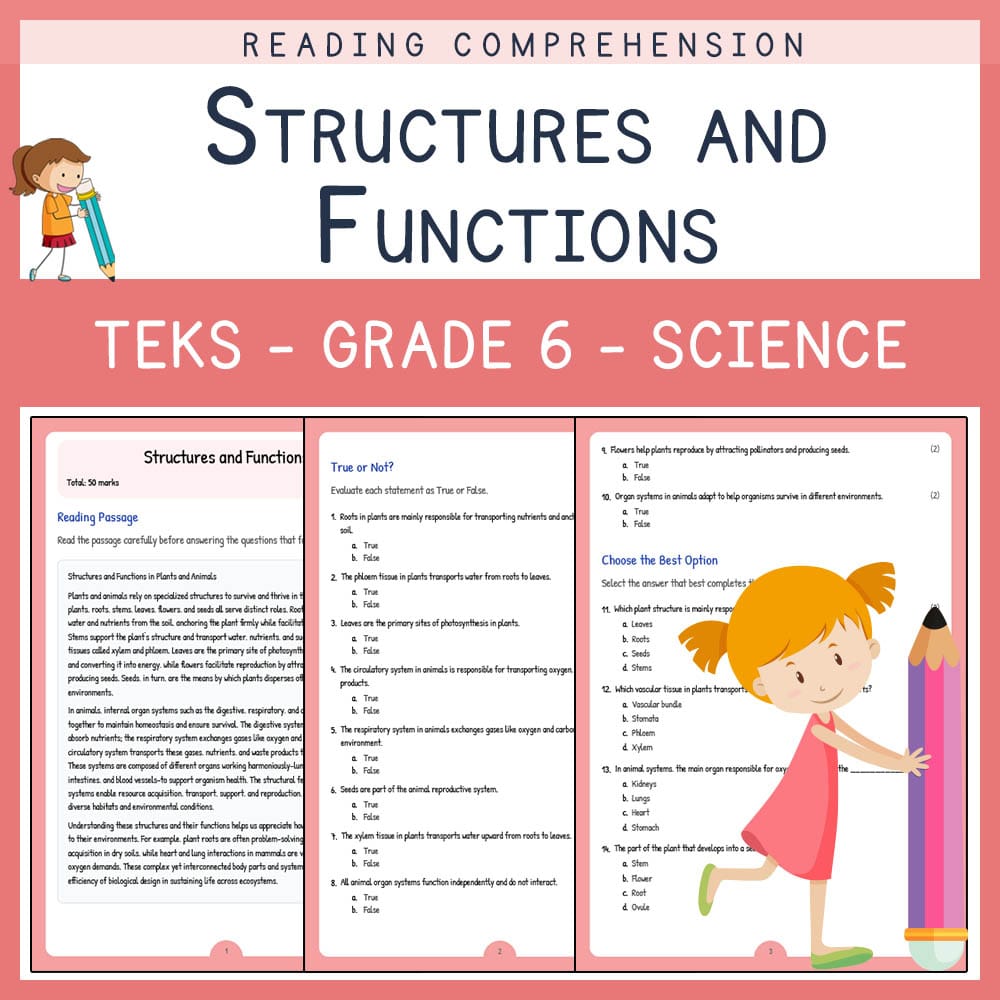
Grade 6 Science | Structures and Functions Worksheet | TEKS Standards
Created byLumora LearningLearning Objectives
- Describe major plant structures such as roots, stems, leaves, and flowers and explain their functions in resource acquisition and reproduction.
- Identify the roles of vascular tissues like xylem and phloem in transporting water and nutrients within plants.
- Explain basic animal organ systems such as digestive, respiratory, and circulatory systems and how they contribute to organism survival.
Instant download
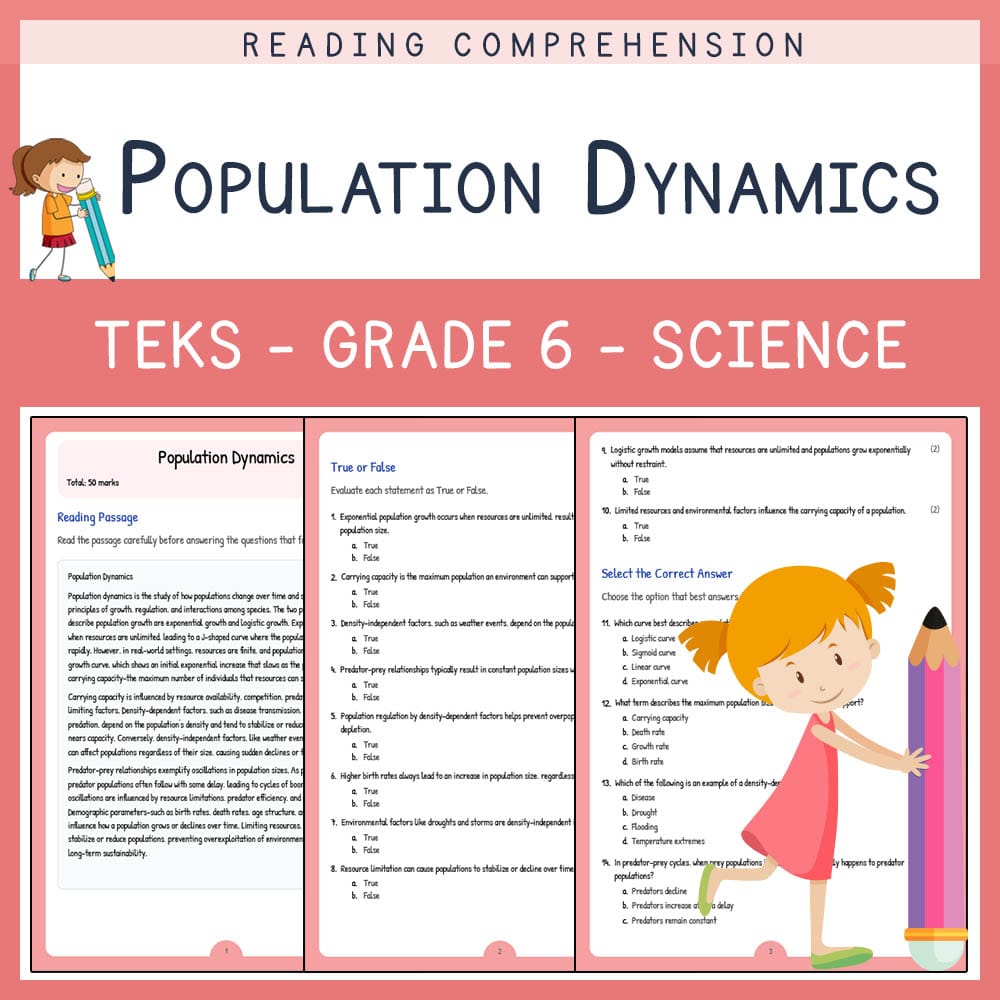
Grade 6 Science | Population Dynamics Worksheet | TEKS Aligned
Created byLumora LearningLearning Objectives
- Understand the principles of population size and how it changes over time.
- Differentiate between exponential and logistic growth curves in populations.
- Define carrying capacity and identify factors influencing population size.
Instant download
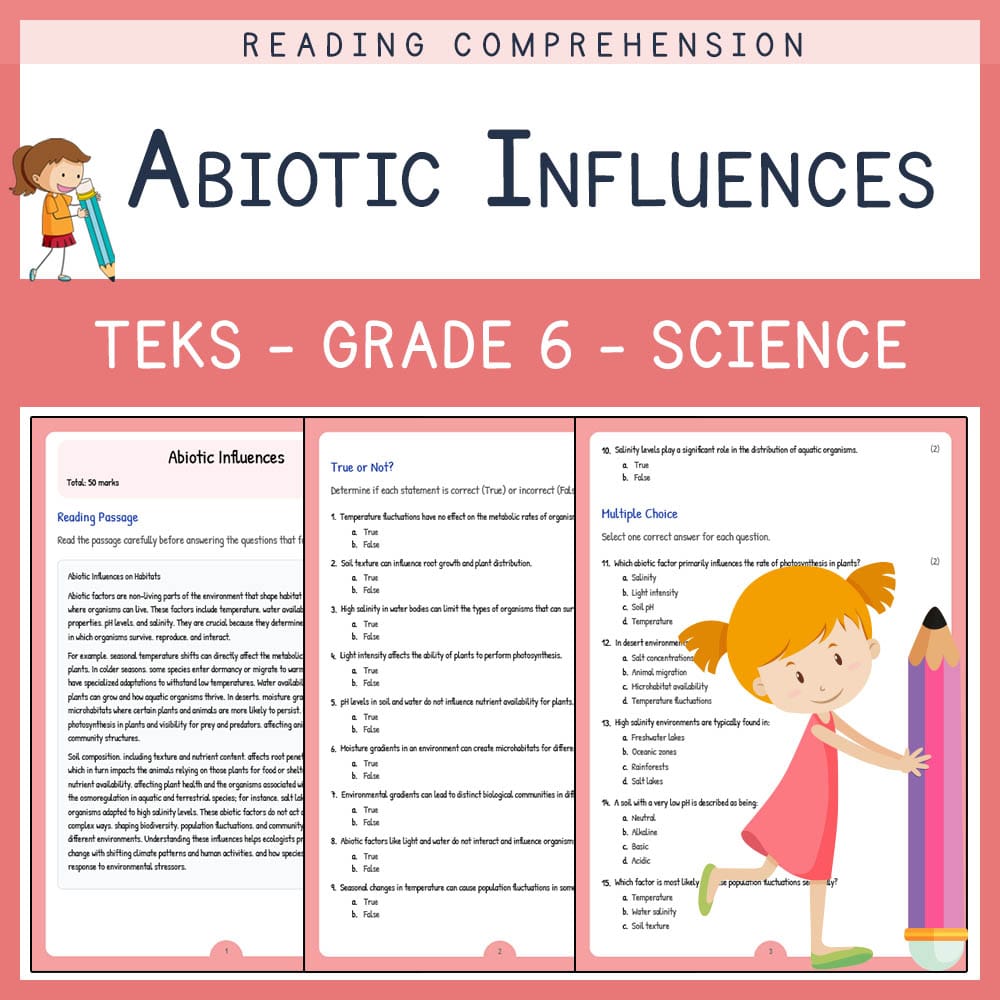
Grade 6 Science | Abiotic Influences Worksheet | TEKS Aligned
Created byLumora LearningLearning Objectives
- Understand how abiotic factors like temperature, water, light, soil, pH, and salinity influence habitats.
- Describe how environmental gradients affect organism distribution and community composition.
- Analyze examples of abiotic factors affecting biological processes and population dynamics.
Instant download
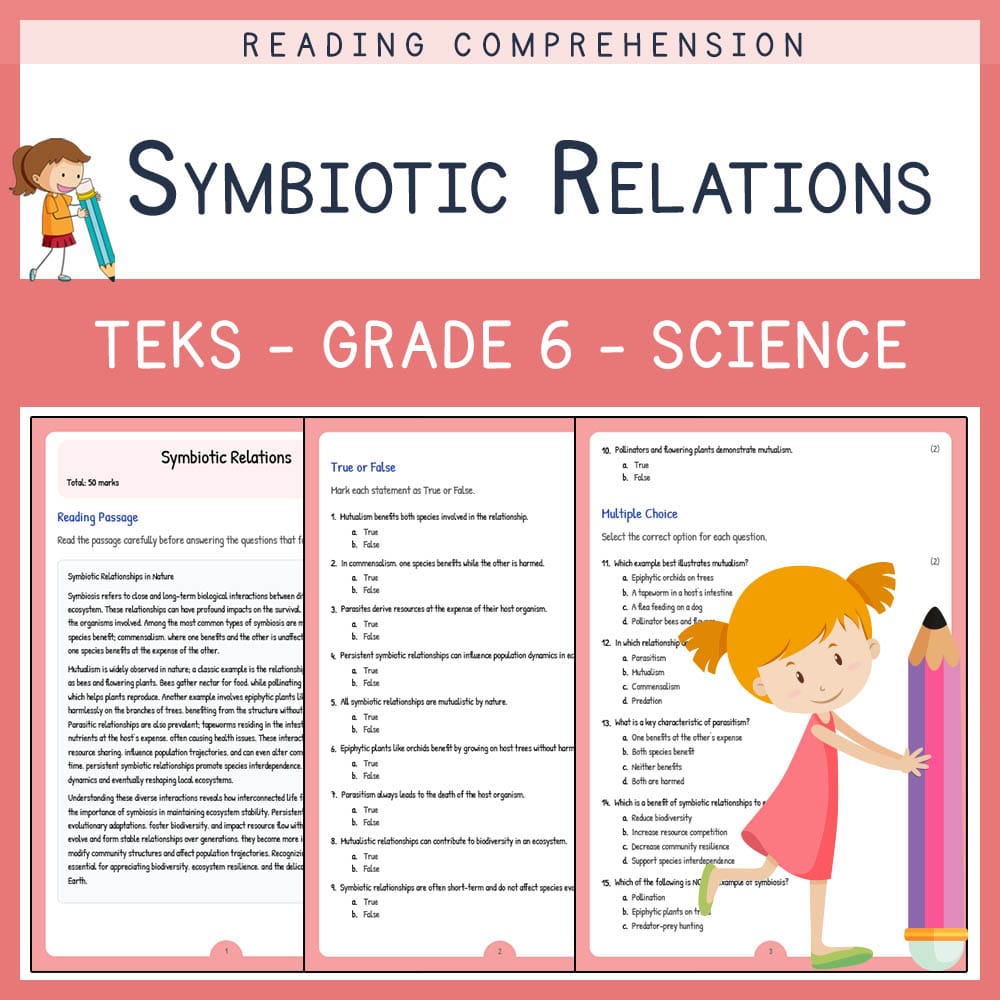
Grade 6 Science | Symbiotic Relations Worksheet | TEKS Alligned
Created byLumora LearningLearning Objectives
- Define and describe symbiotic relationships including mutualism, commensalism, and parasitism.
- Identify concrete examples of each type of symbiosis in real ecosystems.
- Analyze how symbiotic relationships influence organism fitness, resource distribution, and community structure.
Instant download

Climate and Patterns Worksheet | Grade 6 Science | Florida NGSSS Activity
Created byEvergreen Desk EducationLearning Objectives
- Explain how climate differs from weather and why climate changes more slowly
- Identify climate factors (latitude, altitude, distance from water, ocean currents, and winds) and connect them to regional patterns
- Use climate information to compare deserts, grasslands, and rain forests
Instant download
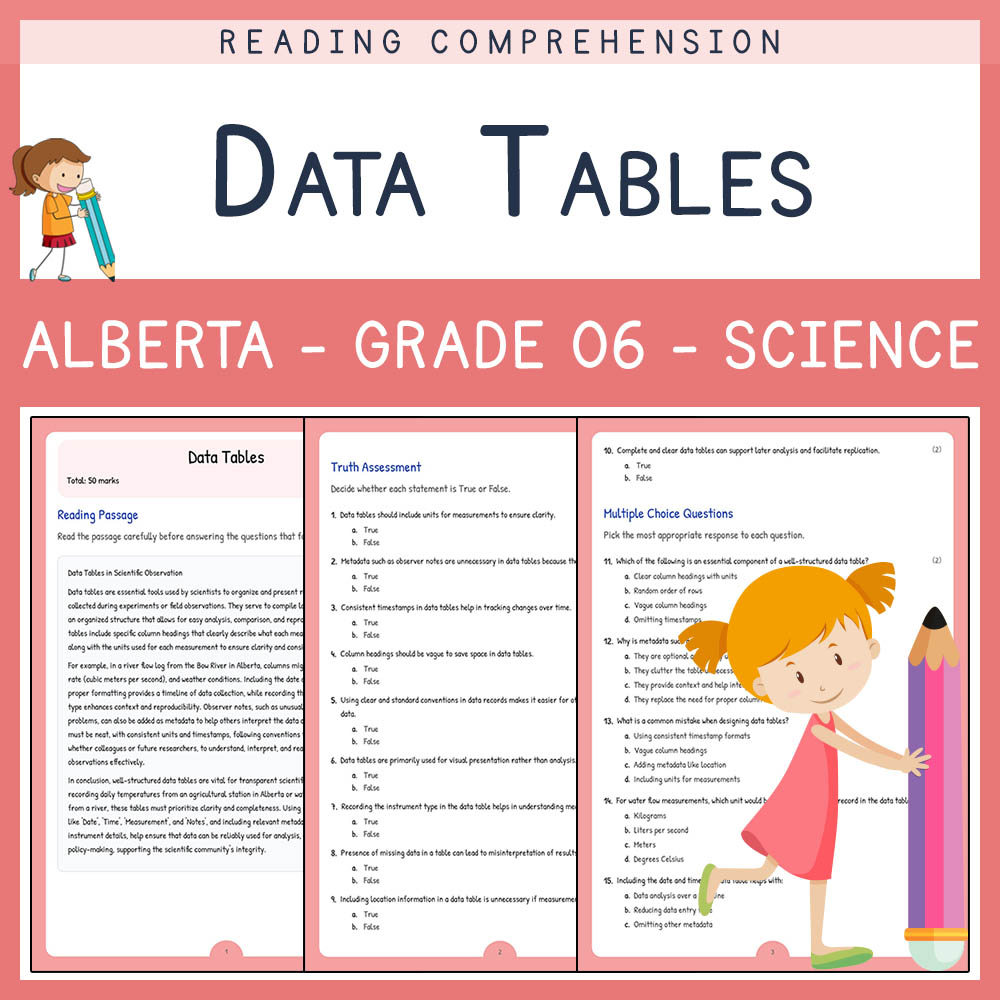
Grade 6 Science | Data Tables Worksheet Elena | Alberta Standards
Created byLumora LearningLearning Objectives
- Understand the purpose and importance of data tables in recording measurements.
- Identify appropriate column headings and units for data tables.
- Learn to include metadata fields such as location, instrument type, and observer notes.
Also included in: Grade 6 Science | Evidence and Investigation Custom Bundle | Alberta
Instant download
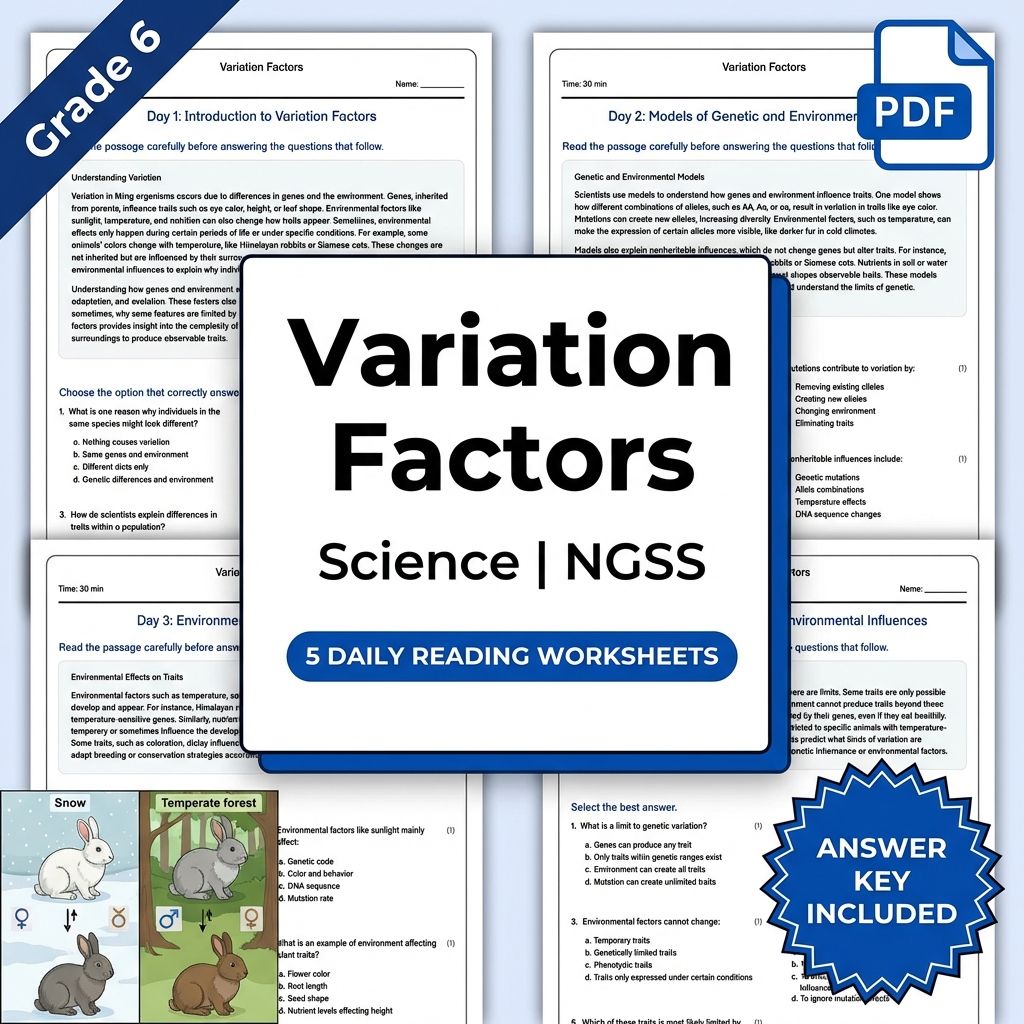
6th Grade Science | Variation Factors Daily Reading Worksheet (PDF+ Answer Key)
Created byCopper Leaf ClassroomLearning Objectives
- Understand how genetic differences and environmental factors contribute to observable variation among individuals.
- Identify models of allele combinations and mutation impacts on traits.
- Explain how environmental influences like temperature and nutrients affect phenotypic traits.
Instant download
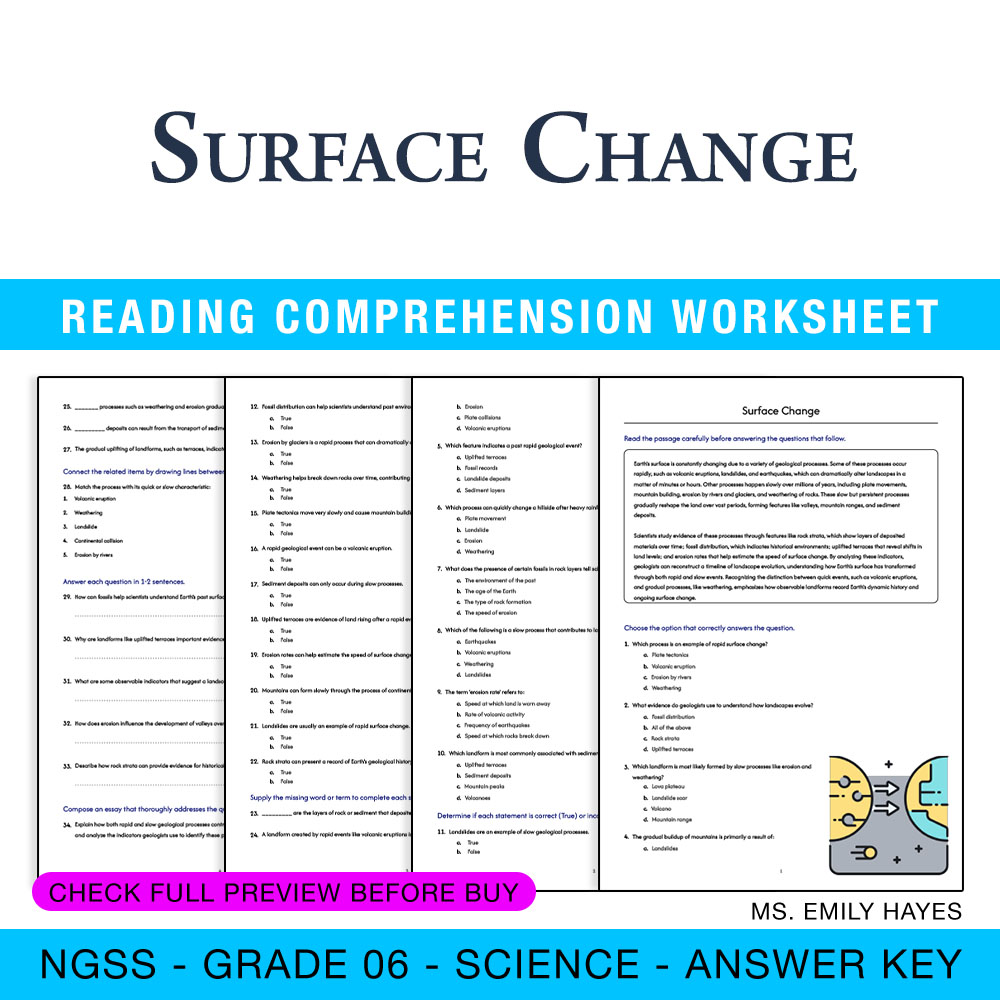
6th Grade Science | Surface Change Worksheet (PDF + Answer Key)
Created byCopper Leaf ClassroomLearning Objectives
- Explain the processes that modify Earth's surface, including both rapid and slow geological events.
- Identify evidence such as rock strata, fossil distribution, and landforms that help explain landscape evolution.
- Contrast the characteristics and effects of rapid surface change events like volcanic eruptions and landslides with slow processes like weathering and continental collision.
Also included in: Grade 6 Science | Weather and Climate System Bundle (PDF+ Answer Key)
Instant download
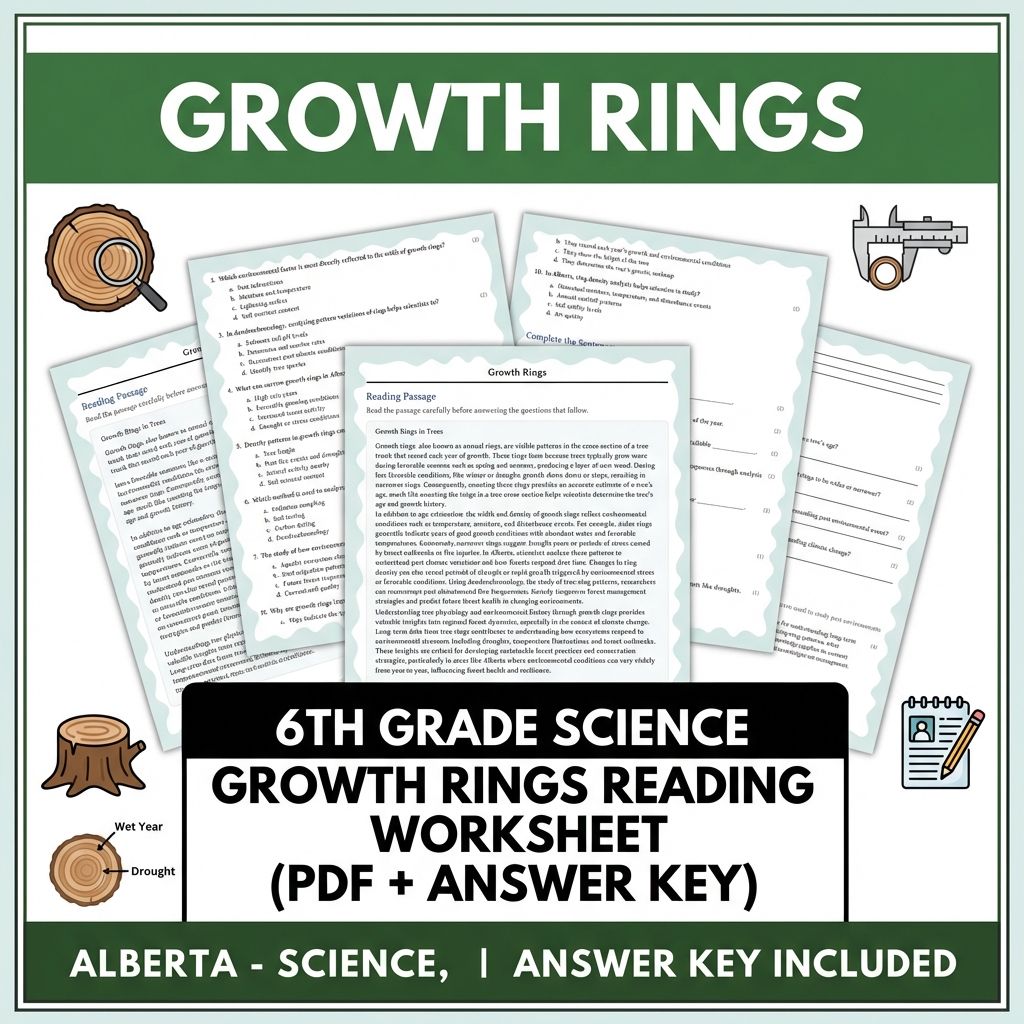
6th Grade Science | Growth Rings Reading Worksheet (PDF + Answer Key)
JCreated byJ.S SheetsLearning Objectives
- Understand how growth rings record annual tree growth and environmental information.
- Identify methods used to analyze growth rings for climate and environmental history.
- Explain how ring width and density reflect seasonal and environmental factors.
Also included in: Grade 6 Science Unit Bundle | Ecosystems and Biodiversity (Answer Keys Included) +1 more
Instant download

Grade 6 Ecosystem Components Worksheet | Practice & Assessment PDF
 Created byClear Sky Classroom
Learning Objectives
- Explain how biotic and abiotic factors interact within an ecosystem
- Identify common abiotic factors (sunlight, temperature, water, soil, air) and how they affect where organisms live
- Describe the roles of producers, consumers, and decomposers in an ecosystem
Instant download
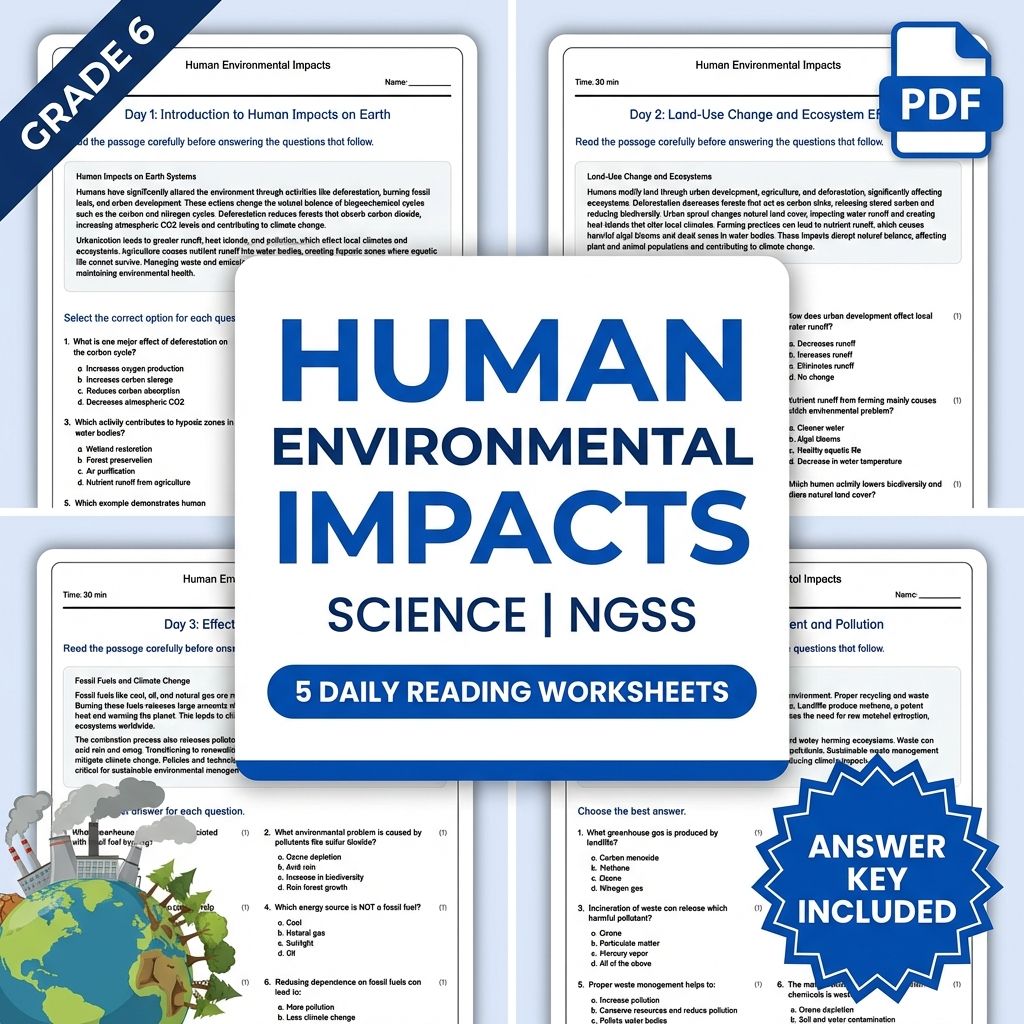
Grade 6 Science – Human Environmental Impacts Worksheet (PDF+ Answer Key)
Created byCopper Leaf ClassroomLearning Objectives
- Understand how human activities alter earth systems and biogeochemical cycles.
- Identify specific examples of land-use change, fossil fuel use, agriculture, and waste management impacts.
- Analyze the causal links between human actions and environmental trends.
Instant download
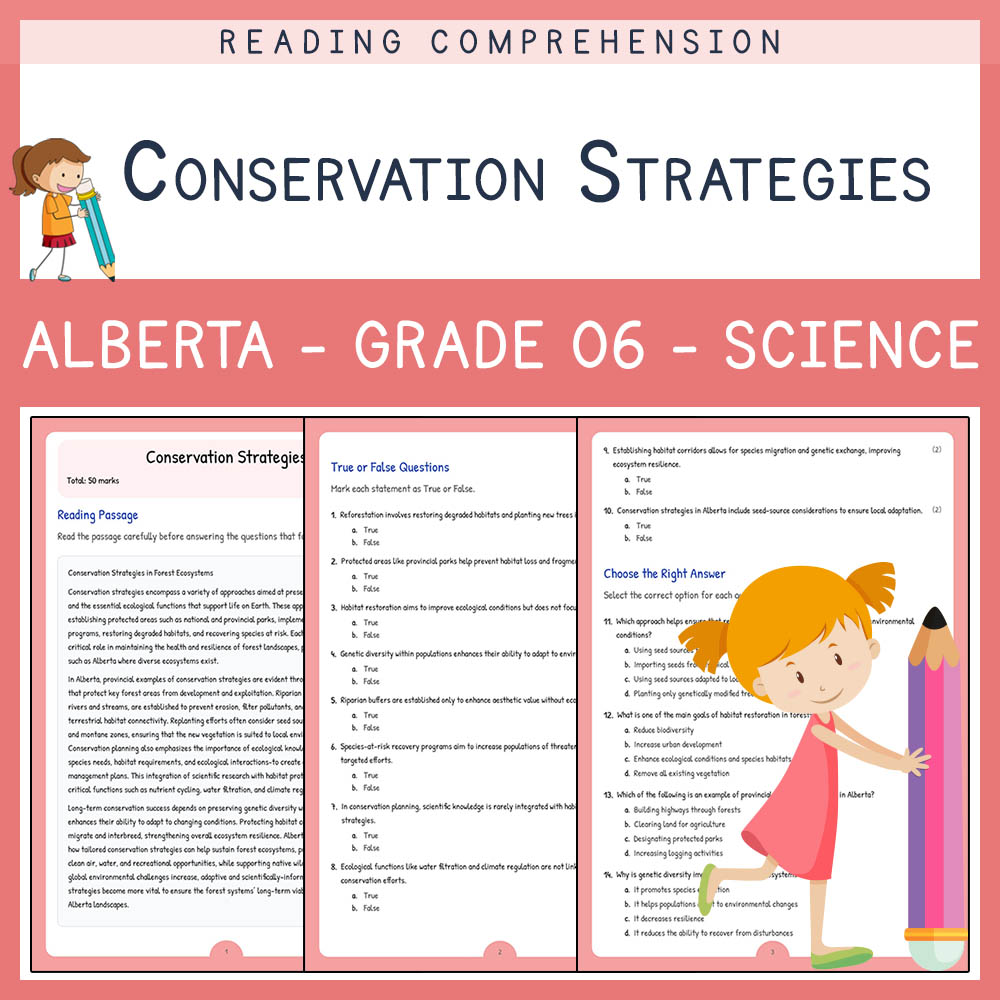
Grade 6 Science Assessment | Conservation Strategies Worksheet | Alberta
Created byLumora LearningLearning Objectives
- Understand different conservation strategies used to maintain forest biodiversity and ecosystems.
- Identify examples of provincial conservation efforts such as protected areas and reforestation.
- Learn how habitat protection and ecological knowledge are integrated in conservation planning.
Instant download
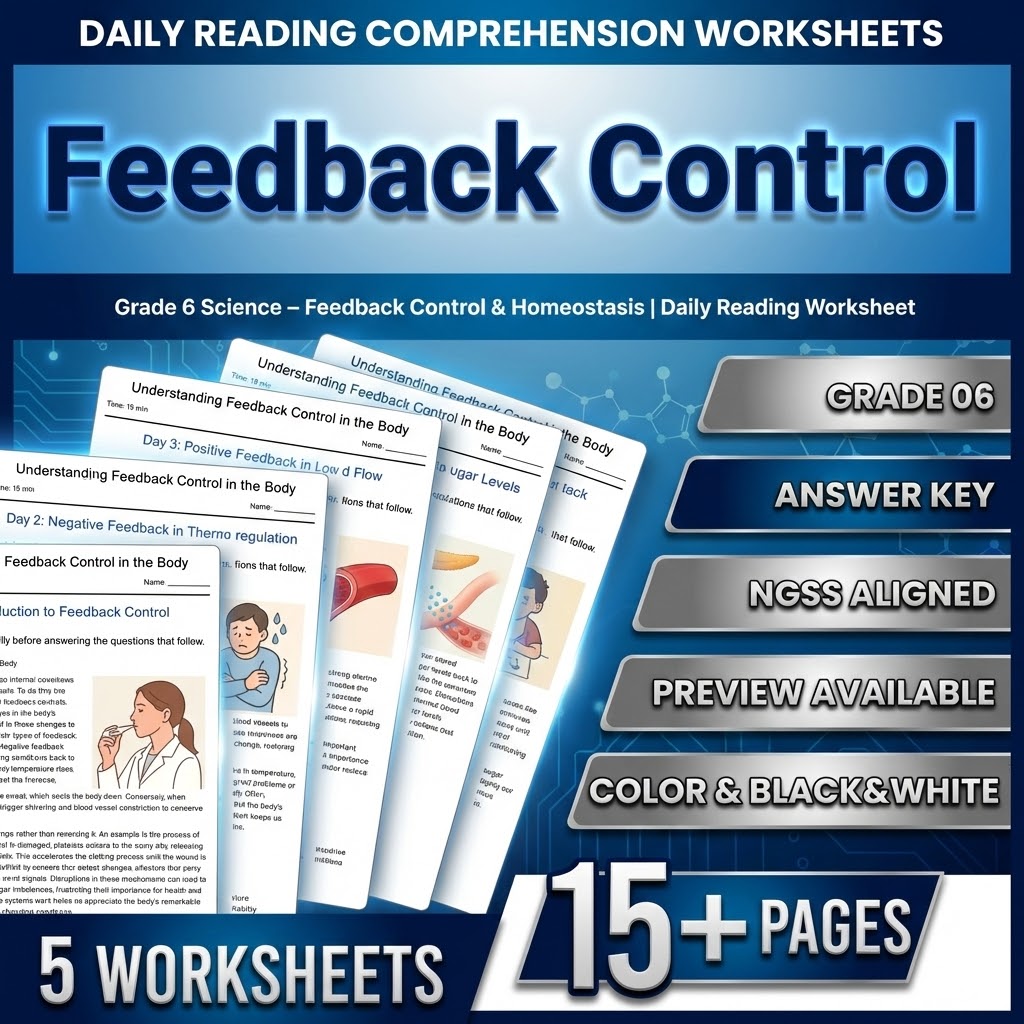
Grade 6 Science – Feedback Control & Homeostasis | Daily Reading Worksheet
 Created byElena Brooks
Learning Objectives
- Define feedback control mechanisms involved in maintaining internal stability.
- Describe the difference between negative and positive feedback.
- Identify examples of feedback control such as temperature regulation and blood sugar regulation.
Also included in: Grade 6 Science From Molecules to Organisms Worksheet Bundle | NGSS +1 more
Instant download
About Grade 6 Science Worksheets
Explore Grade 6 Science worksheets for classwork, homework, or review. Our 5,969 printables download instantly as PDFs.
MyTeachingSheets worksheets are made by real teacher-authors and checked before they go live. Download any as a print-ready PDF for lessons, homework, or independent practice — most include answer keys, and previews are always free.