
Grade 6 Science Worksheets
5,969 worksheets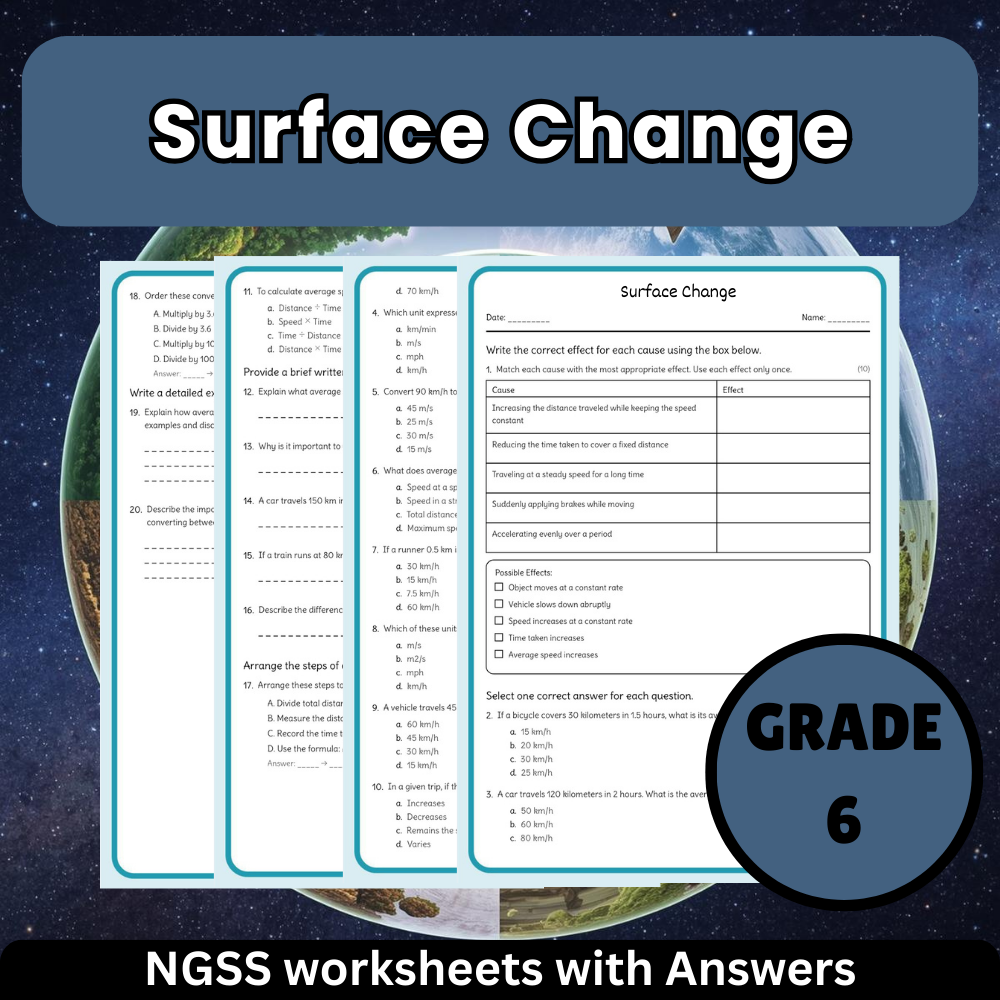
6th Grade Science | Surface Change Worksheet + Answer Key | NGSS Aligned
 Created byBright Mind Resources
Learning Objectives
- Describe geologic processes that modify Earth's surface over different time scales.
- Identify evidence such as rock strata and erosion rates that explain landscape evolution.
- Differentiate between rapid events like volcanic eruptions and slow processes like weathering.
Also included in: Grade 6 Science Unit Bundle - Weather, Water Cycle & Climate Systems - NGSS +2 more
Instant download
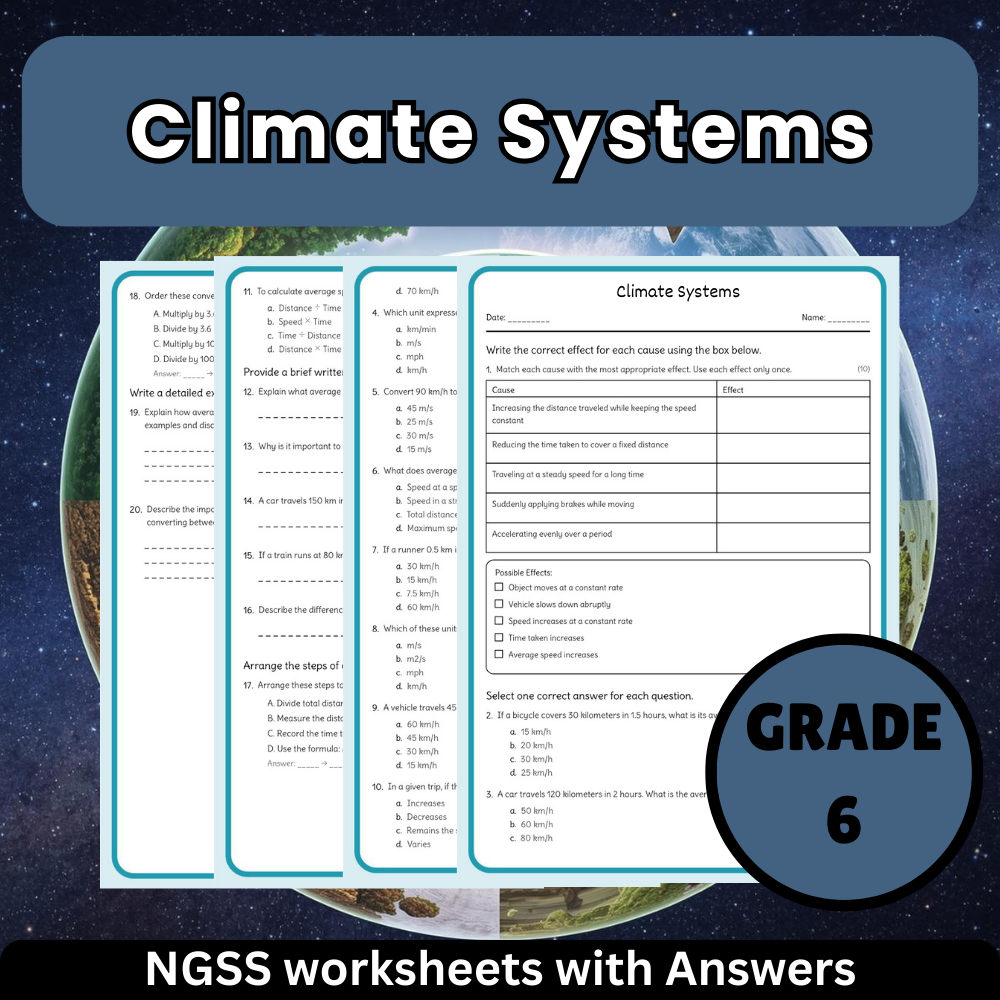
6th Grade Science | Climate Systems Worksheet (NGSS | Science PDF)
Created byBright Mind ResourcesLearning Objectives
- Explain how uneven solar heating affects global circulation patterns.
- Identify the main atmospheric cells and wind systems in Earth's climate.
- Describe the role of ocean currents in heat and moisture transport.
Also included in: Grade 6 Science Unit Bundle - Weather, Water Cycle & Climate Systems - NGSS +2 more
Instant download
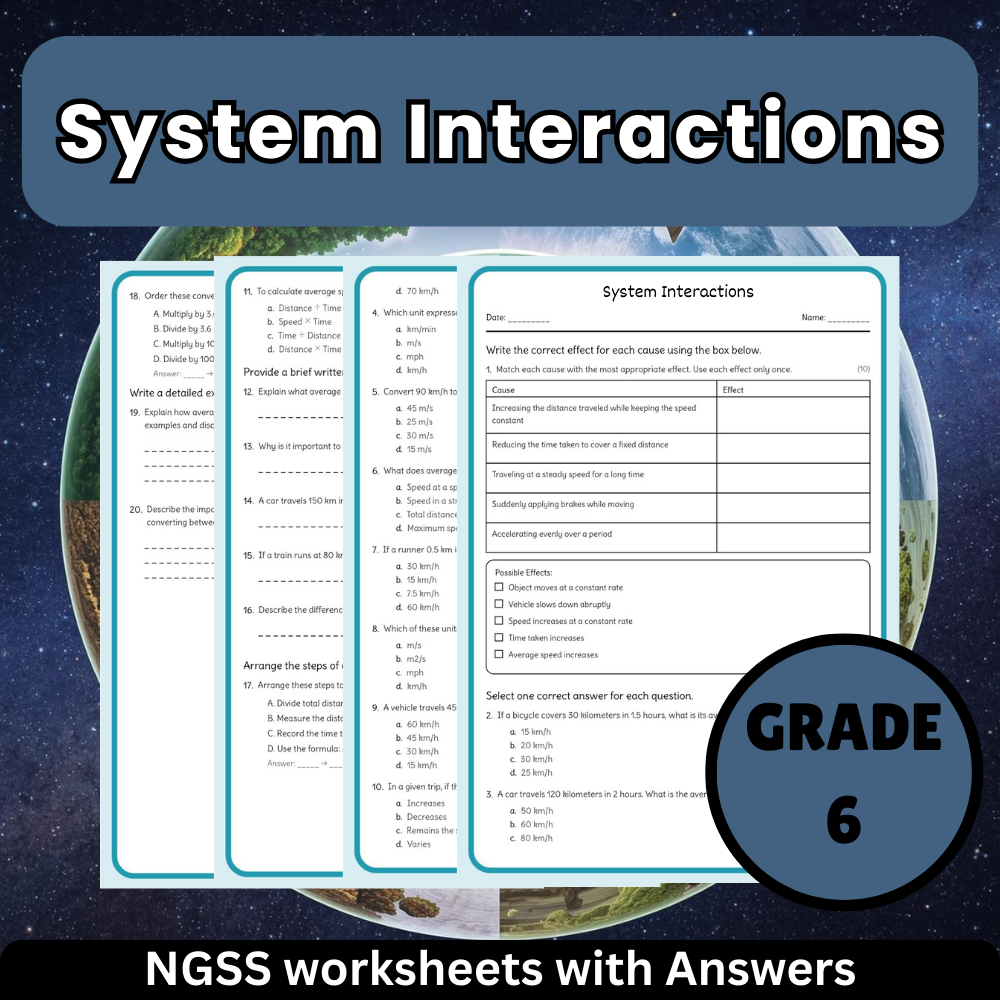
6th Grade Science | System Interactions NGSS Worksheet(PDF) for System Processes
Created byBright Mind ResourcesLearning Objectives
- Describe the coupled interactions among Earth's systems using models of matter and energy transfer.
- Identify feedback mechanisms such as albedo changes, sediment transport, and nutrient movement.
- Explain the flow of energy sources and sinks, including phase change energy transfers.
Also included in: Grade 6 Science Unit Bundle - Weather, Water Cycle & Climate Systems - NGSS +2 more
Instant download
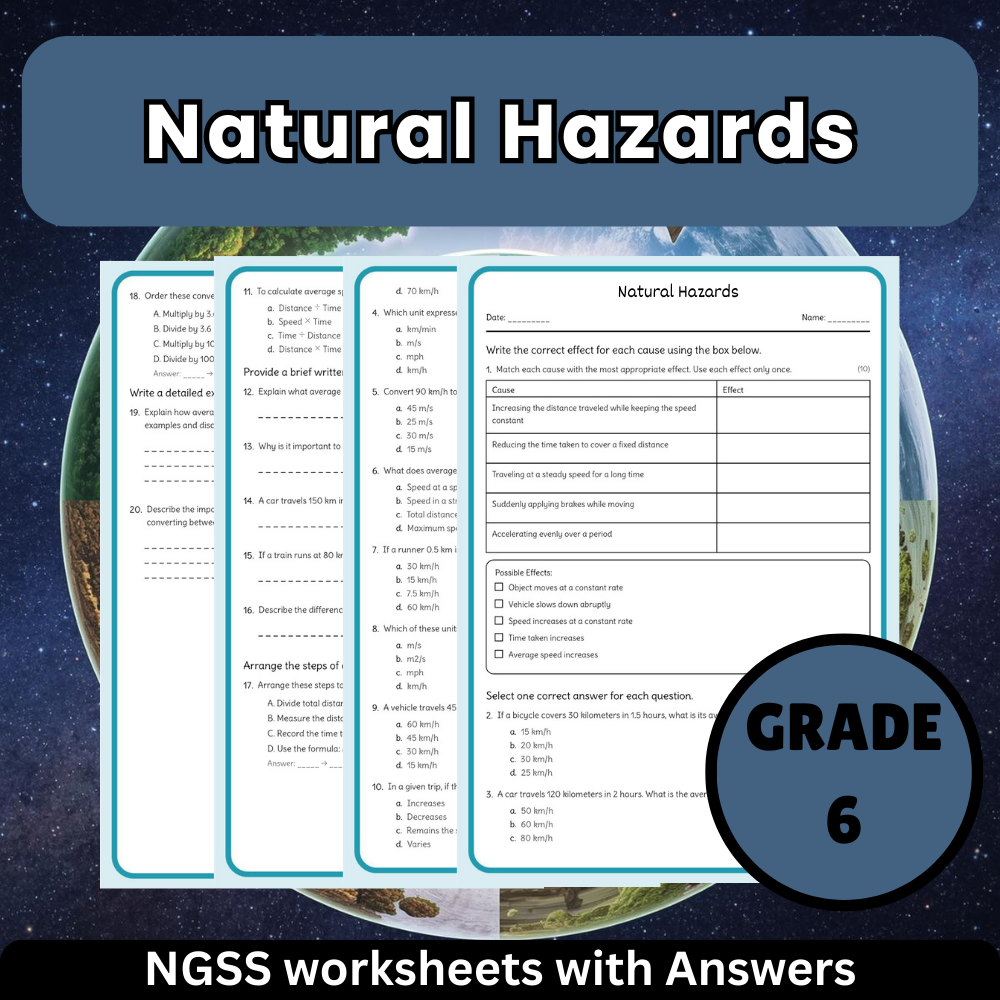
Grade 6 Science | Natural Hazards Worksheet (NGSS-Aligned) with Answer Key
Created byBright Mind ResourcesLearning Objectives
- Analyze observational and instrumental data related to natural hazards.
- Identify patterns and recurrence intervals of hazards such as earthquakes and floods.
- Estimate probable locations and magnitudes of natural hazard events.
Also included in: Grade 6 Science Unit Bundle - Weather, Water Cycle & Climate Systems - NGSS +2 more
Instant download
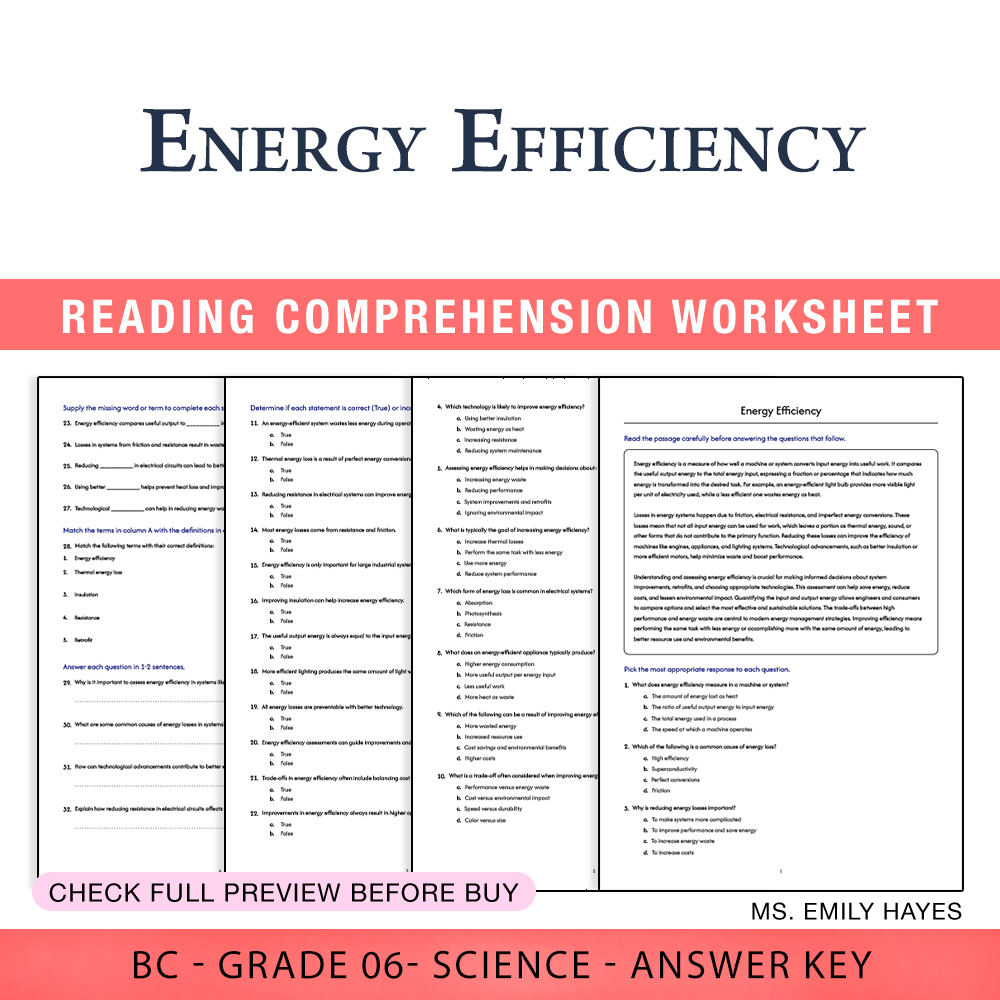
Grade 6 Science | Energy Efficiency Worksheet (PDF+ Answer Key)
 Created byCopper Leaf Classroom
Learning Objectives
- Define energy efficiency and explain its importance in systems like machines and lighting.
- Identify common energy losses and understand their causes.
- Calculate the efficiency of a system by comparing useful output to total input energy.
Also included in: Grade 6 Science BC | Waves, Sound, Light & Energy Worksheets (PDF + Answer Key) +1 more
Instant download

6th Grade Science | System Interactions Worksheet (PDF + Answer Key)
Created byCopper Leaf ClassroomLearning Objectives
- Describe how Earth's systems interact through transfers of matter and energy.
- Identify feedback mechanisms such as albedo changes, sediment transport, and nutrient movement.
- Explain energy sources and sinks within Earth's systems.
Also included in: Grade 6 Science | Weather and Climate System Bundle (PDF+ Answer Key)
Instant download
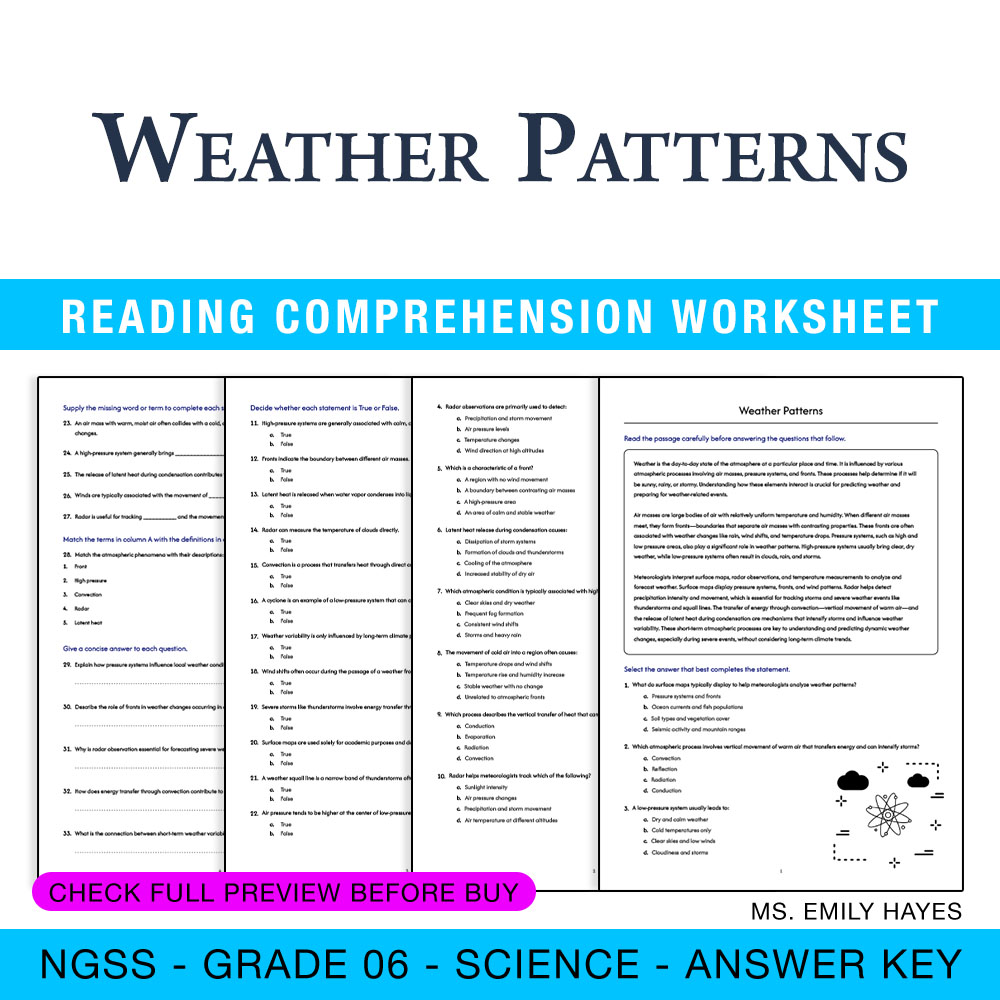
6th Grade Science | Weather Patterns Worksheet (PDF + Answer Key)
Created byCopper Leaf ClassroomLearning Objectives
- Explain how atmospheric processes produce local and regional weather phenomena.
- Interpret surface maps, temperature and pressure measurements, and radar data to identify weather conditions.
- Describe the formation and movement of air masses, fronts, and pressure systems.
Also included in: Grade 6 Science | Weather and Climate System Bundle (PDF+ Answer Key)
Instant download
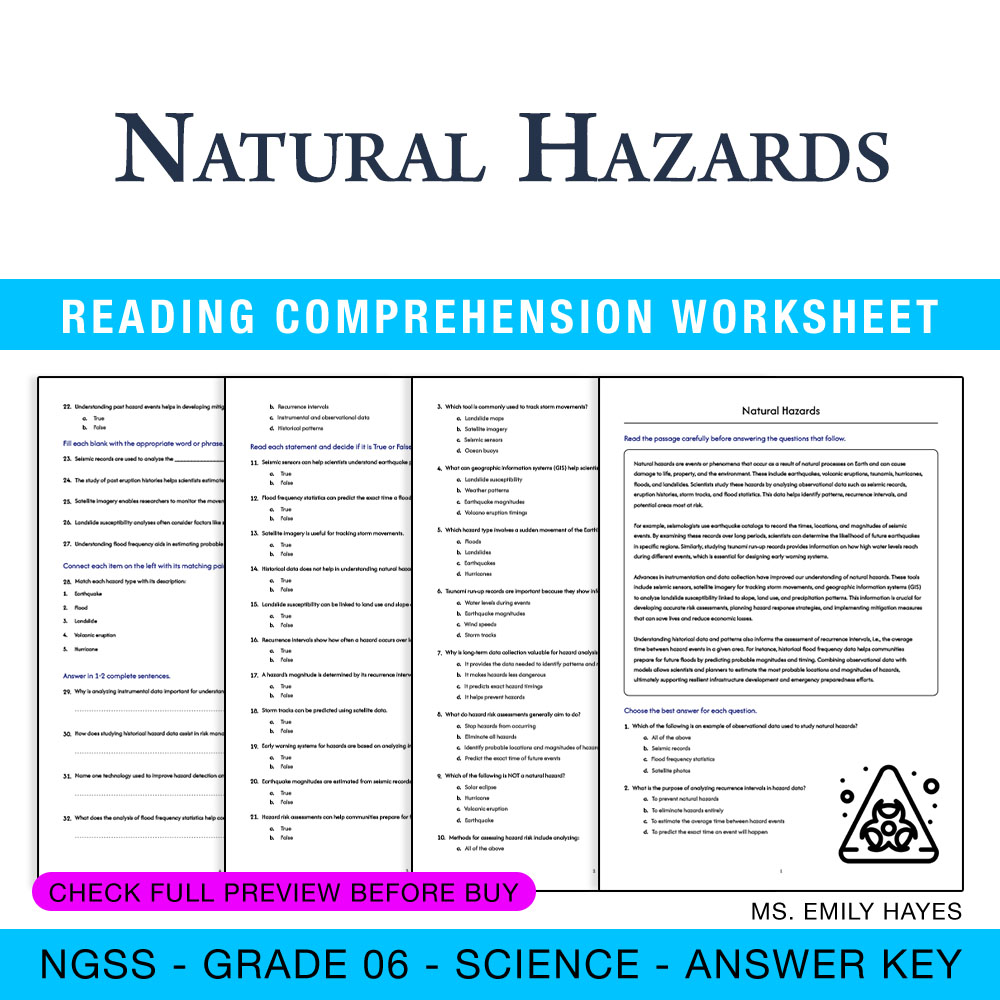
6th Grade Science | Natural Hazards Worksheet (PDF + Answer Key)
Created byCopper Leaf ClassroomLearning Objectives
- Understand how observational and instrumental data are used to analyze natural hazards.
- Identify patterns and recurrence intervals in natural hazard data.
- Learn methods for estimating the probable locations and magnitudes of hazards.
Also included in: Grade 6 Science | Weather and Climate System Bundle (PDF+ Answer Key)
Instant download
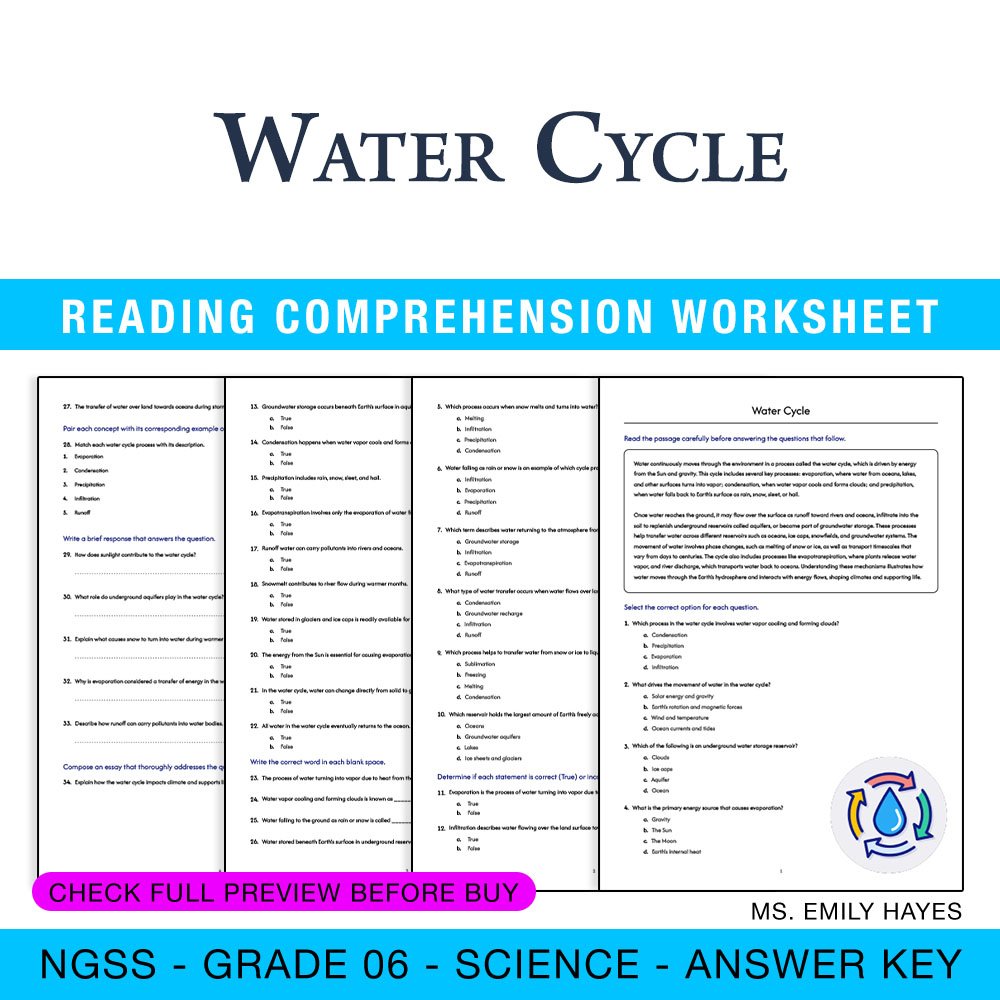
6th Grade Science | Water Cycle Worksheet (PDF + Answer Key)
Created byCopper Leaf ClassroomLearning Objectives
- Describe the main processes of the water cycle, including evaporation, condensation, precipitation, runoff, infiltration, and groundwater storage.
- Explain how solar energy and gravity drive the movement of water through different reservoirs like oceans, ice, and groundwater.
- Identify examples of water transport, phase changes, and storage timescales across the hydrosphere.
Also included in: Grade 6 Science | Weather and Climate System Bundle (PDF+ Answer Key)
Instant download
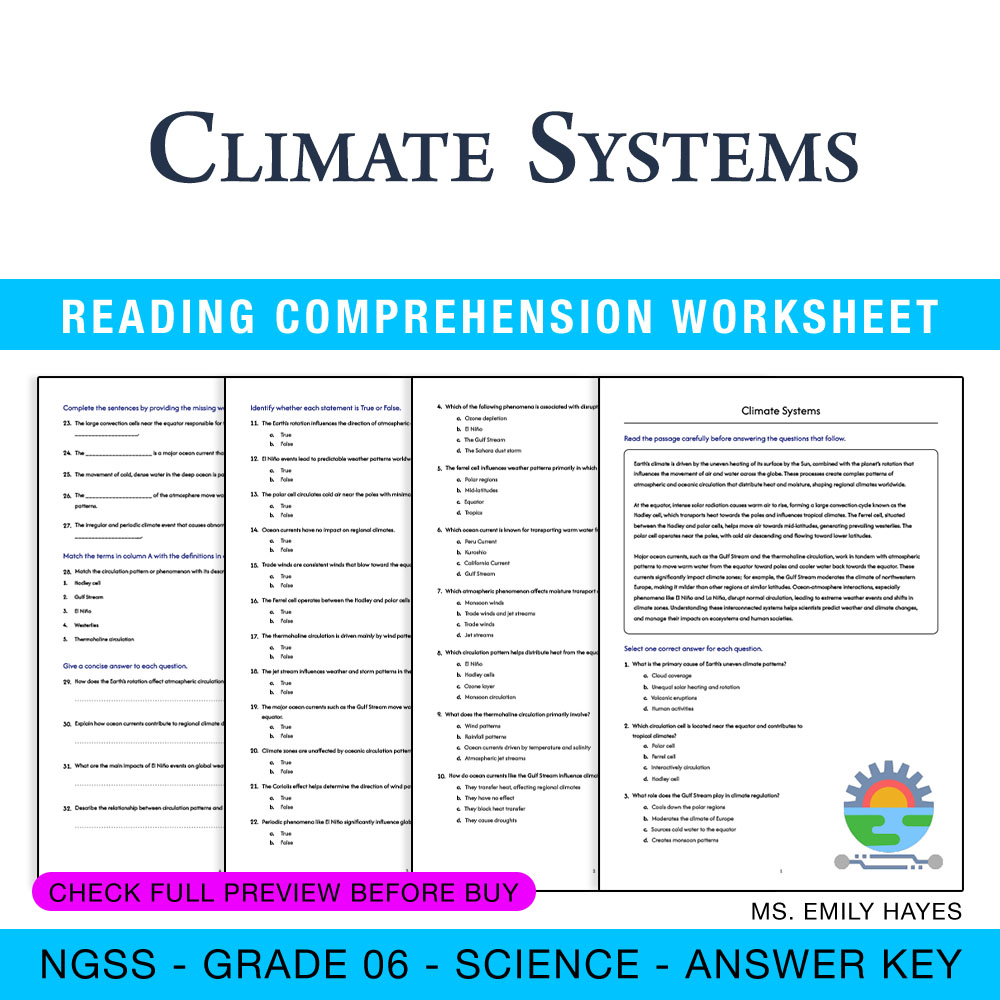
6th Grade Science | Climate Systems Worksheet + Answer Key – NGSS Standards
Created byCopper Leaf ClassroomLearning Objectives
- Explain how unequal solar heating and planetary rotation create global circulation patterns.
- Identify key models and phenomena related to atmospheric and oceanic circulation, such as Hadley cells, trade winds, and thermohaline circulation.
- Describe the influence of circulation patterns on regional climate zones and weather phenomena like El Niño.
Also included in: Grade 6 Science | Weather and Climate System Bundle (PDF+ Answer Key)
Instant download
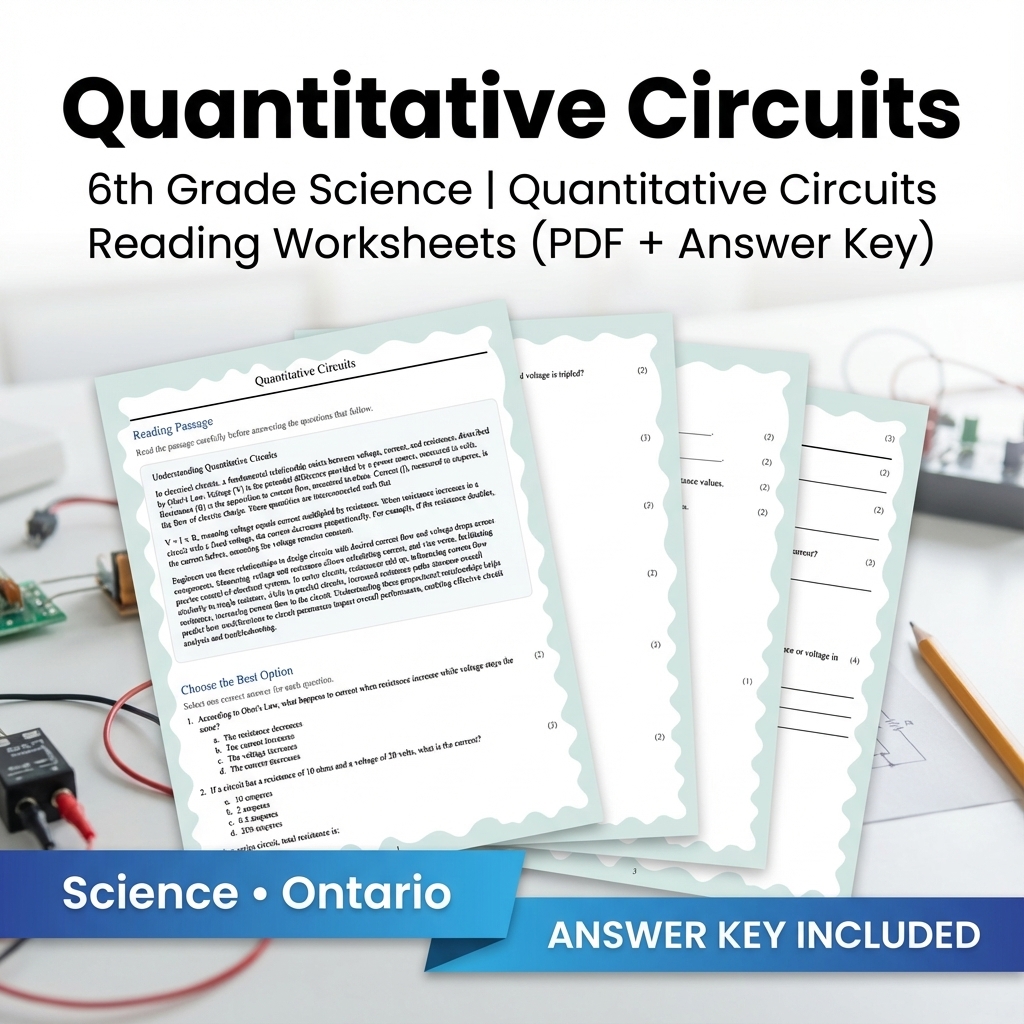
6th Grade Science | Quantitative Circuits Reading Worksheets (PDF + Answer Key)
JCreated byJ.S SheetsLearning Objectives
- Understand the relationship between voltage, current, and resistance in electrical circuits.
- Apply proportional reasoning to determine how changes in resistance affect current at a fixed voltage.
- Calculate circuit element characteristics using measured values.
Also included in: Grade 6 Science Circuit & Electricity Unit Bundle – Worksheets & Answer Keys +1 more
Instant download

Grade 6 Science – Structural Traits in Marine Animals | Daily Reading Worksheet
Created byBright Mind ResourcesLearning Objectives
- Identify different structural traits of marine animals
- Understand how body parts help animals survive in aquatic environments
- Analyze the relationship between anatomical features and habitat
Also included in: Ecosystems Grade 6 Science Daily Reading Worksheets Lesson Bundle |Florida NGSSS +1 more
Instant download

Grade 6 Science – Physiological Traits & Adaptations of Animals | Worksheet
Created byBright Mind ResourcesLearning Objectives
- Understand internal water regulation mechanisms in desert animals
- Identify physiological adaptations that help organisms survive in arid environments
- Explain the importance of internal processes like urine concentration and water conservation
Also included in: Ecosystems Grade 6 Science Daily Reading Worksheets Lesson Bundle |Florida NGSSS +1 more
Instant download

Structural Traits Worksheet Grade 6 Science Florida NGSSS Adaptations
 Created byPrism Point Learning
Learning Objectives
- Explain how structural adaptations help organisms survive in their environments.
- Describe how body structures can support feeding, movement, protection, and camouflage.
- Use evidence from examples to connect traits to habitat and survival needs.
Instant download

Grade 6 Science – Stability Balance Worksheet (PDF) Alberta Standards
 Created bySilver Birch Teaching
Learning Objectives
- Explain how the center of mass and center of pressure affect static stability after a disturbance.
- Describe how design features (like dihedral angles and tail volume) support longitudinal and lateral stability.
- Apply stability-balance ideas to real situations such as payload placement on aircraft and glider flight in changing wind.
Also included in: Grade 6 Aerodynamics & Flight Forces Science Lesson Bundle: Alberta +1 more
Instant download

Grade 6 Science | Atoms & Particles - Daily Reading Comprehension
 Created byCoral Reef Learning
Learning Objectives
- Understand what atoms are and why they are the basic units of matter.
- Identify the similarities and differences between atoms of different elements.
- Recognize how atomic composition relates to the properties of substances.
Instant download

Electrostatic Phenomena Practice Worksheet | Grade 6 Science Assessment
Created byPrism Point LearningLearning Objectives
- Explain how triboelectric effects move electric charge between materials when they rub or separate.
- Use the triboelectric series idea to predict which material more likely becomes positively or negatively charged.
- Describe attractions, repulsions, and electrostatic discharge, including the role of grounding and charge neutralization.
Also included in: Grade 6 Circuits & Electricity Science lesson bundle: Ontario
Instant download

Gravity and Friction Worksheet | NGSS Grade 6 Science Activity Pack
 Created byAmber Owl Education
Learning Objectives
- Argue how gravity depends on mass and distance using examples such as Earth–Moon and falling objects.
- Distinguish gravitational forces from contact forces like friction by describing how they change motion.
- Use simple quantitative reasoning (greater mass, smaller distance) to predict changes in attraction and orbit behavior.
Also included in: Grade 6 Science Forces and Motion Unit Lesson Bundle | NGSS +1 more
Instant download

Grade 6 Weather Patterns Air Masses Worksheet | NGSS Science Activity
 Created byBRIGHT PATH RESOURCES
Learning Objectives
- Identify different types of air masses
- Describe the characteristics of continental and maritime air masses
- Explain how air masses influence local and regional weather
Also included in: Earth's Systems Grade 6 Science Daily Reading Worksheets Lesson Bundle | NGSS +2 more
Instant download
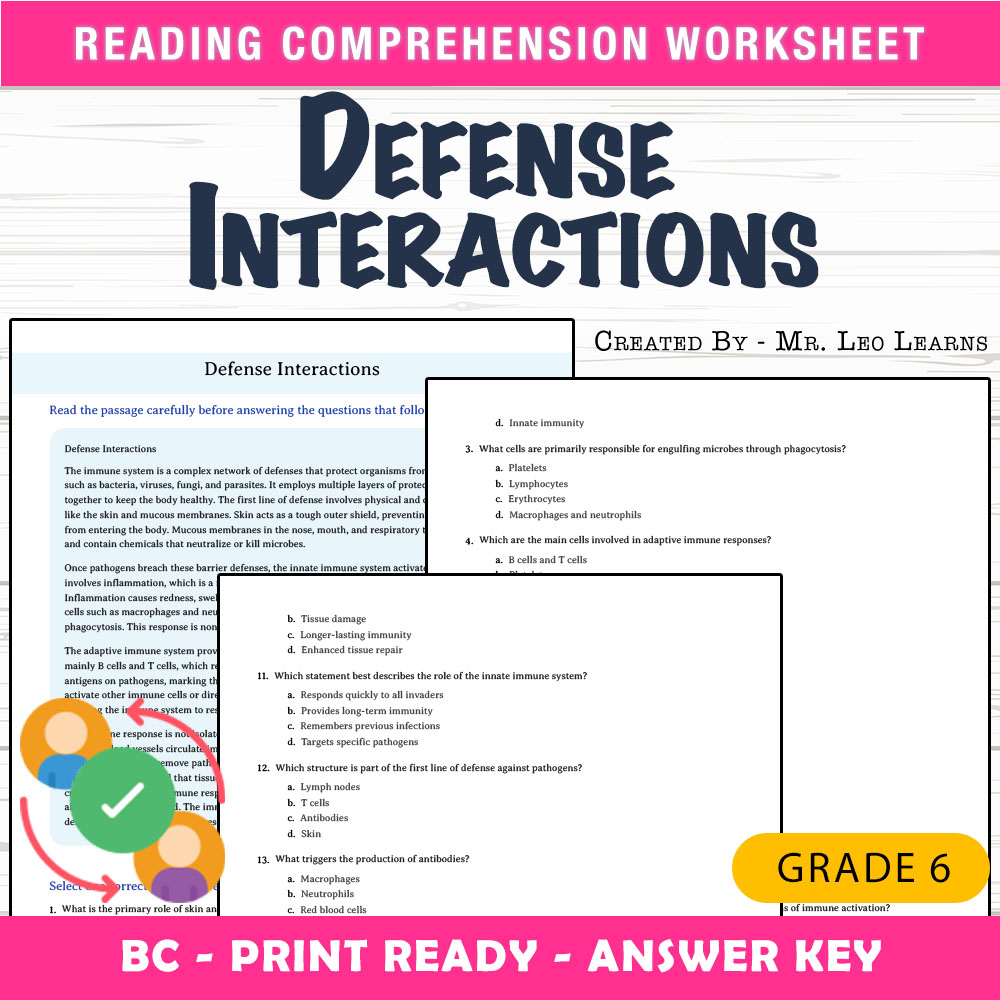
Grade 6 Science | Defense Interactions Worksheet for Mastery
 Created byThe Resource Hub
Learning Objectives
- Understand the different defense mechanisms of the immune system.
- Identify the roles of skin and mucous membranes as first-line barriers.
- Explain how innate inflammation and adaptive responses protect the body.
Also included in: Grade 6 Science Unit | Multicellular Systems & Functions Worksheet Bundle +1 more
Instant download

Species Classification Worksheet Grade 6 Science Practice
Created byPrism Point LearningLearning Objectives
- Explain how species classification groups organisms by their roles in ecosystems (producers, consumers, decomposers).
- Distinguish native species from invasive or pest species and describe how they can affect ecosystem balance.
- Use functional classification to make predictions about energy flow and competitive relationships.
Also included in: Trees and Forests Lesson Bundle | Grade 6 Science | Alberta Framework
Instant download

Reasoning Claims Assessment for Grade 6 Science TEKS – Printable PDF
Created byPrism Point LearningLearning Objectives
- Understand the process of connecting evidence to explanatory claims in scientific reasoning.
- Interpret data patterns such as distance-time graphs for motion analysis.
- Assess the strength of inferences based on available evidence.
Also included in: Scientific Inquiry and Processes Grade 6 Science Lesson Bundle | TEKS
Instant download
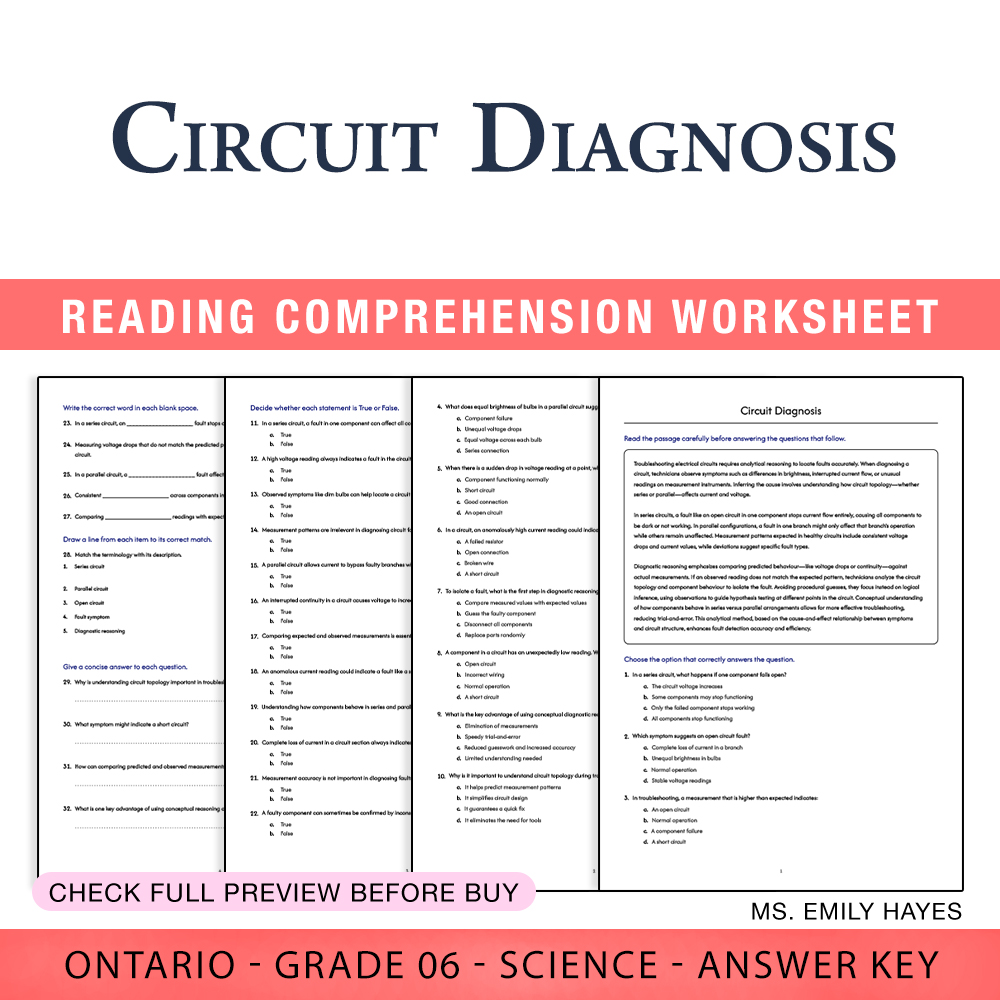
6th Grade Science | Circuit Diagnosis Worksheet (PDF + Answer Key)
Created byCopper Leaf ClassroomLearning Objectives
- Understand principles of troubleshooting electrical circuits using observed symptoms.
- Apply diagnostic reasoning based on circuit topology and component behaviour.
- Identify faults in series and parallel circuits through inferential methods.
Instant download

Grade 6 Science – Stem Transport & Water Movement | Daily Reading Worksheet
Created byBright Mind ResourcesLearning Objectives
- Understand how water and nutrients move through stems in plants
- Identify the roles of xylem and phloem in resource transportation
- Connect plant anatomy to physiological processes and environmental responses
Also included in: Grade 6 Forest Ecology Science Daily Reading Worksheets Lesson Bundle | Alberta +2 more
Instant download

Grade 6 Science – Disturbance Regimes in Forests & Fire Impacts | Worksheet
Created byBright Mind ResourcesLearning Objectives
- Understand what disturbance regimes are and their role in forest ecosystems.
- Identify different causes of fire disturbances in forests.
- Analyze the effects of fire disturbances on forest structure and succession.
Also included in: Grade 6 Forest Ecology Science Daily Reading Worksheets Lesson Bundle | Alberta +2 more
Instant download
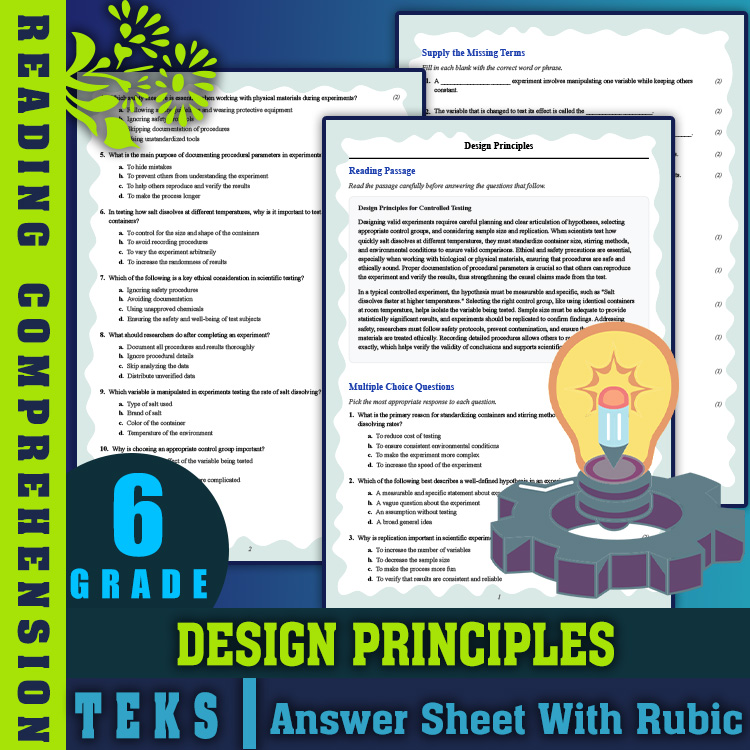
6th Grade Science | Design Principles Reading Worksheet & Answer Key (PDF)
JCreated byJ.S SheetsLearning Objectives
- Understand the key principles involved in designing valid controlled experiments.
- Identify the importance of hypotheses articulated in measurable terms and proper control groups.
- Recognize strategies for ensuring reproducibility, safety, and ethical considerations in testing.
Instant download
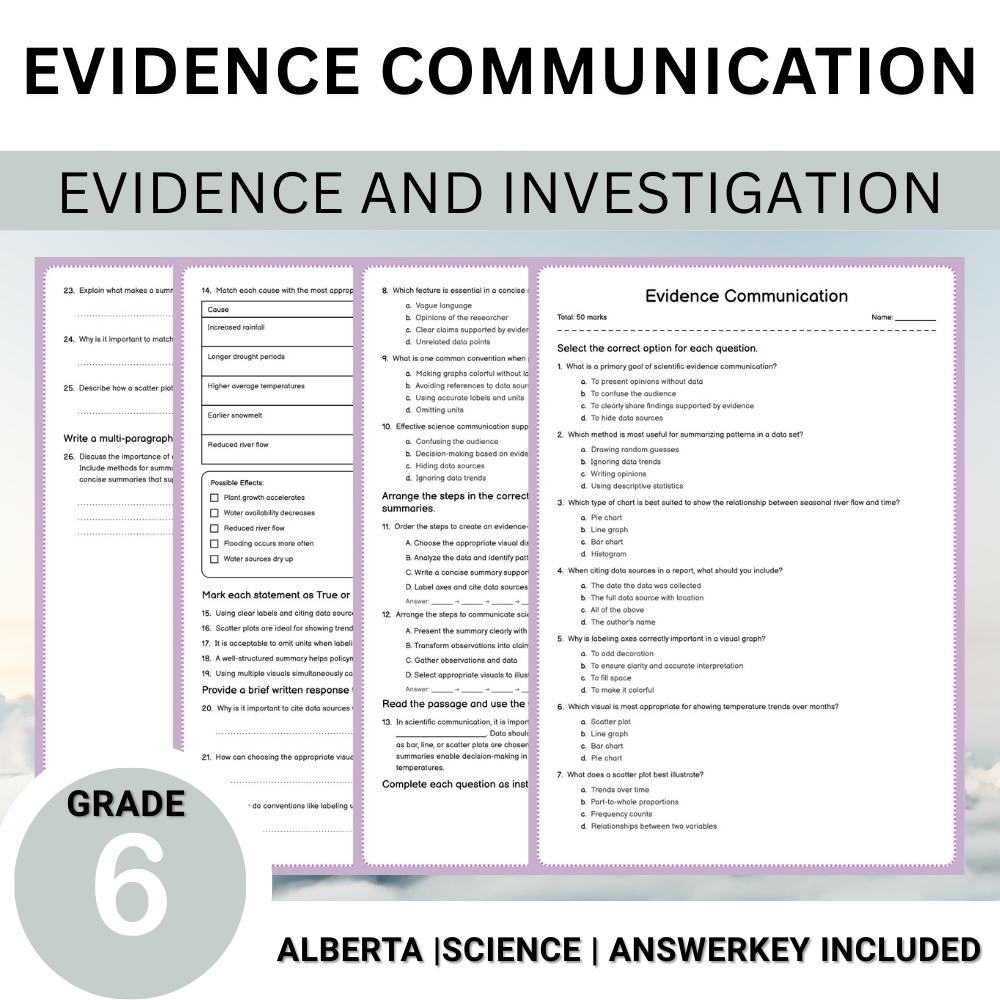
Grade 6 Science | Evidence Communication Worksheet (Printable PDF & Assessment)
Learning Objectives
- Understand how to interpret observations and transform them into clear scientific claims supported by evidence.
- Learn methods for summarizing data patterns, using descriptive statistics, and selecting appropriate visuals like bar, line, and scatter plots.
- Recognize conventions for citing data sources, labeling units, and crafting concise, evidence-based summaries for environmental decision-making.
Also included in: Grade 6 Science Unit | Data & Measurement Worksheets Bundle (Assessment & Practice) +1 more
Instant download

Variables Control Worksheet for Grade 6 Science | TEKS Standards Practice
JCreated byJ.S SheetsLearning Objectives
- Identify independent, dependent, and controlled variables in a controlled experiment
- Use operational definitions to describe how variables are measured or applied
- Recognize potential confounding influences and explain how control strategies reduce them
Instant download
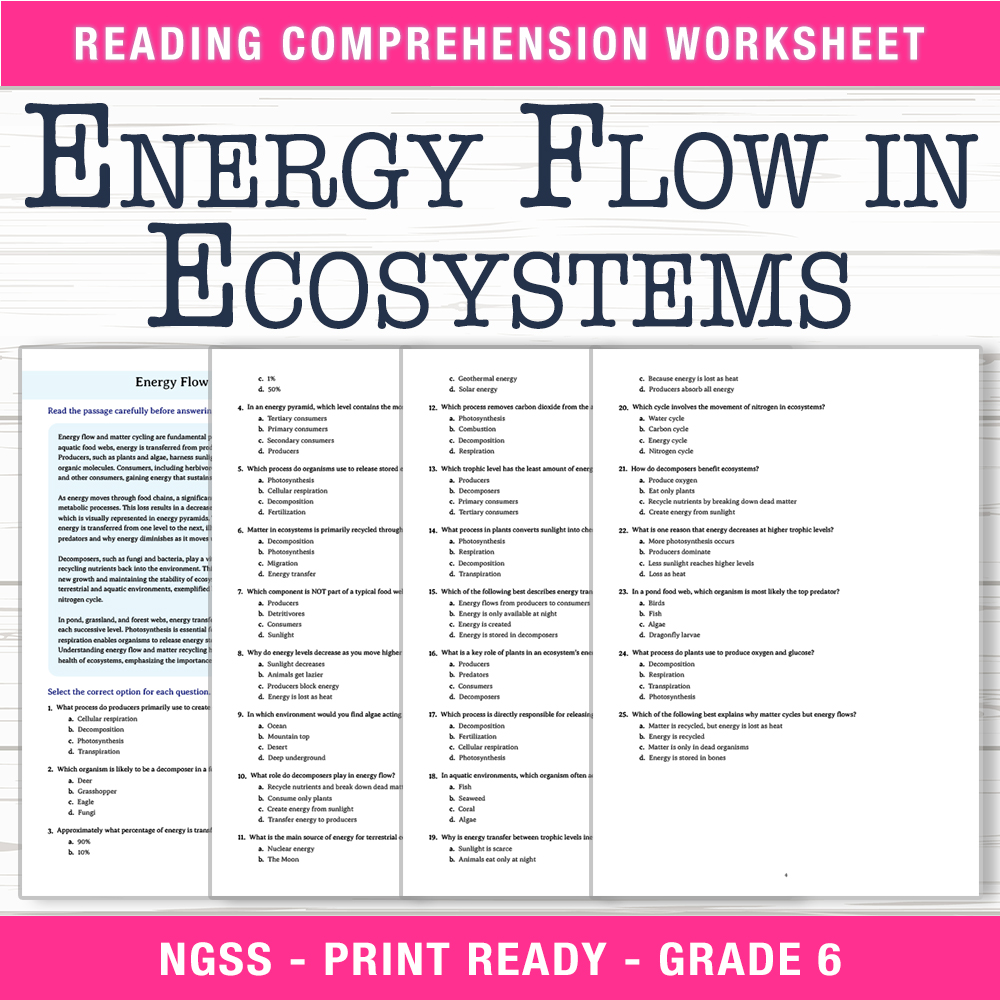
6th Grade Science | Energy Flow in Ecosystems Worksheet (PDF + Answer Key)
 Created byRiverstone Classroom
Learning Objectives
- Explain the concept of energy flow and matter cycling within food webs.
- Identify producers, consumers, and decomposers in terrestrial and aquatic ecosystems.
- Describe how energy diminishes across trophic levels in energy pyramids.
Also included in: Grade 6 Science Unit Bundle | Ecosystems & Biodiversity Worksheets
Instant download
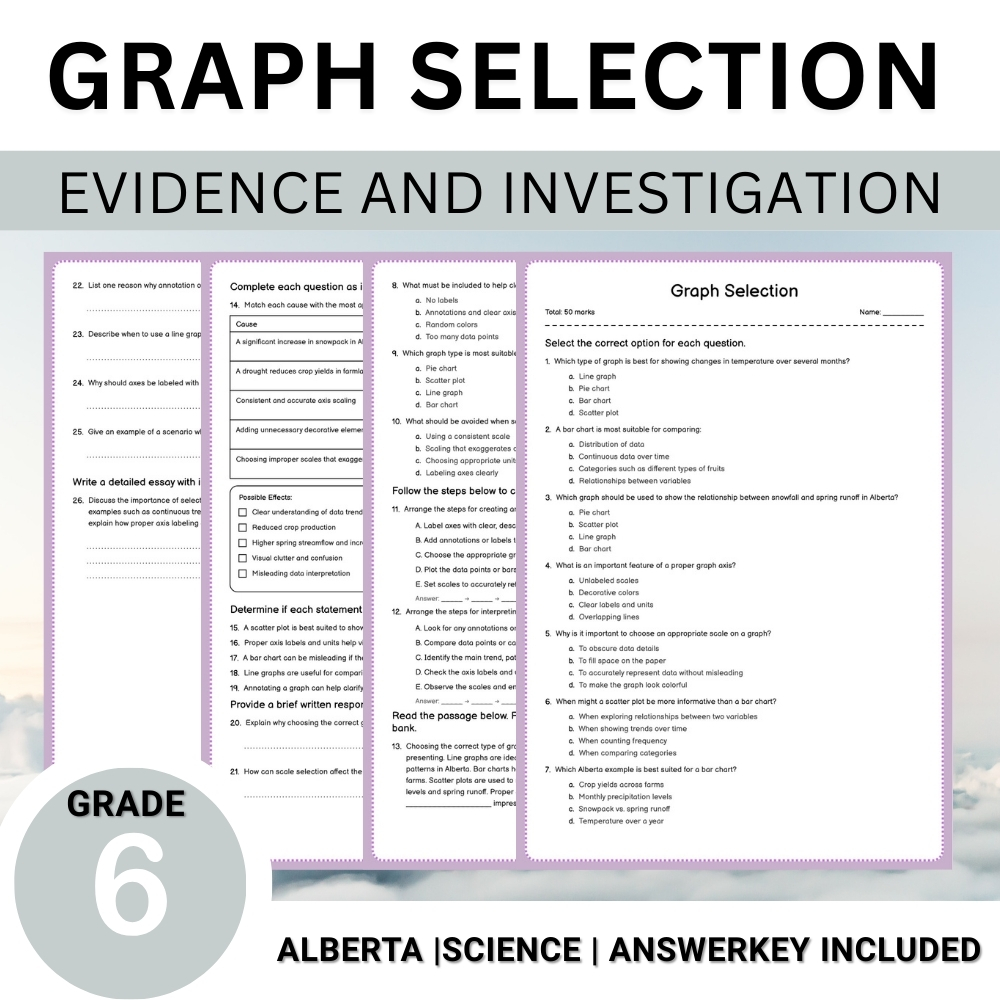
Grade 6 Science | Graph Selection Worksheet (Answer Key) for Classroom Assessment
Learning Objectives
- Identify different types of graphs and their appropriate uses.
- Match data types with suitable graph types and scales.
- Understand how to label axes and interpret visual data representations.
Also included in: Grade 6 Science Unit | Data & Measurement Worksheets Bundle (Assessment & Practice) +1 more
Instant download

6th Grade Science | Tissue Types Worksheet (PDF) – BC Standards
 Created byEvergreen Desk Education
Learning Objectives
- Identify the four general tissue types in multicellular animals: epithelial, connective, muscle, and nervous.
- Describe how each tissue type’s structures support its specific functions.
- Use evidence from a passage and tissue examples to explain relationships between tissues and organs.
Instant download

Earth System Spheres Worksheet for Grade 6 Science | Standards-Aligned Practice
JCreated byJ.S SheetsLearning Objectives
- Identify the four main Earth system spheres and their interactions.
- Describe processes such as weathering, evaporation, and biological activity.
- Explain how energy and gravity influence changes within Earth spheres.
Also included in: Grade 6 Earth & Space Science Lesson Bundle: California Standards +1 more
Instant download
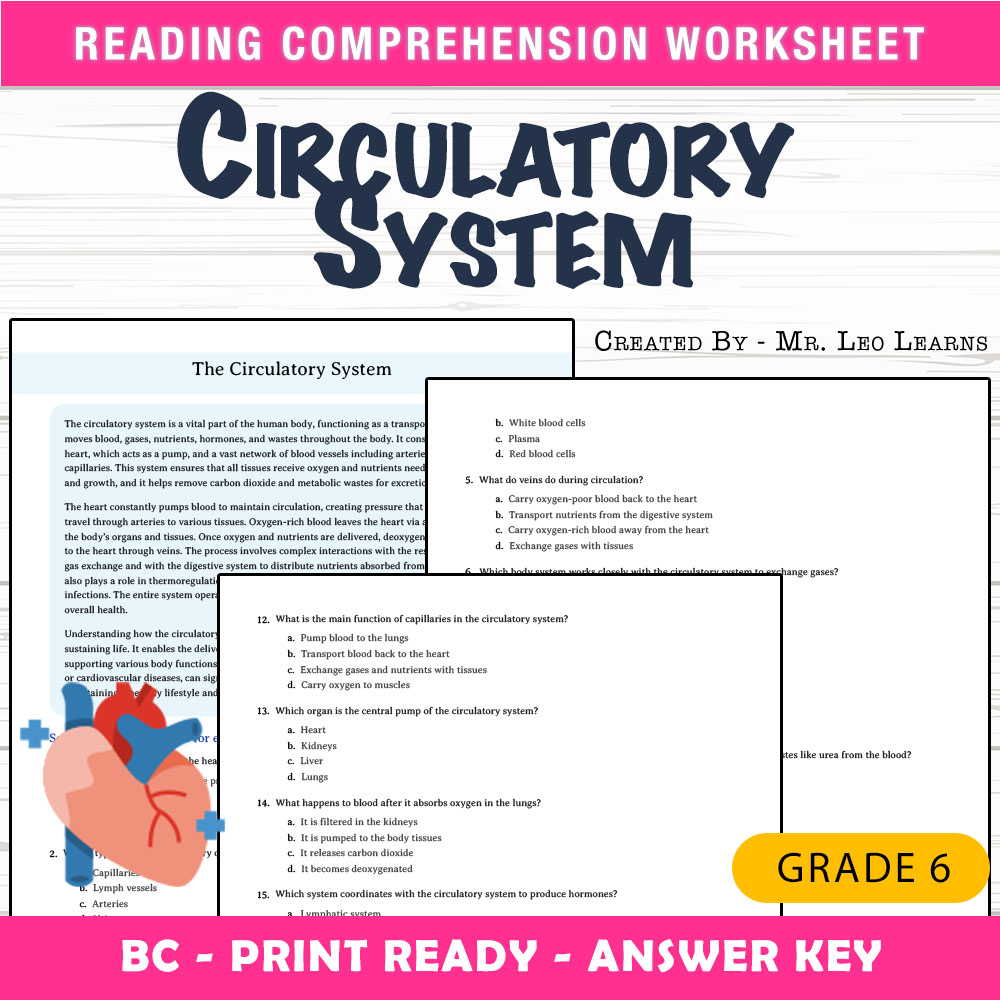
Grade 6 Science – The Circulatory System MCQ Worksheet for Mastery
Created byThe Resource HubLearning Objectives
- Understand how the circulatory system transports blood, gases, nutrients, hormones, and wastes.
- Identify the roles of the heart and blood vessels in circulation.
- Explain how circulation interacts with other body systems like respiratory and digestive systems.
Also included in: Grade 6 Science Unit | Multicellular Systems & Functions Worksheet Bundle +1 more
Instant download

6th Grade Science | Particle Model Worksheet (PDF) BC Standards
Created byEvergreen Desk EducationLearning Objectives
- Explain how the particle model describes matter using tiny particles in constant motion
- Compare particle spacing and motion in solids, liquids, and gases
- Predict macroscopic properties (shape, volume, compressibility, and flow) from particle behavior
Instant download
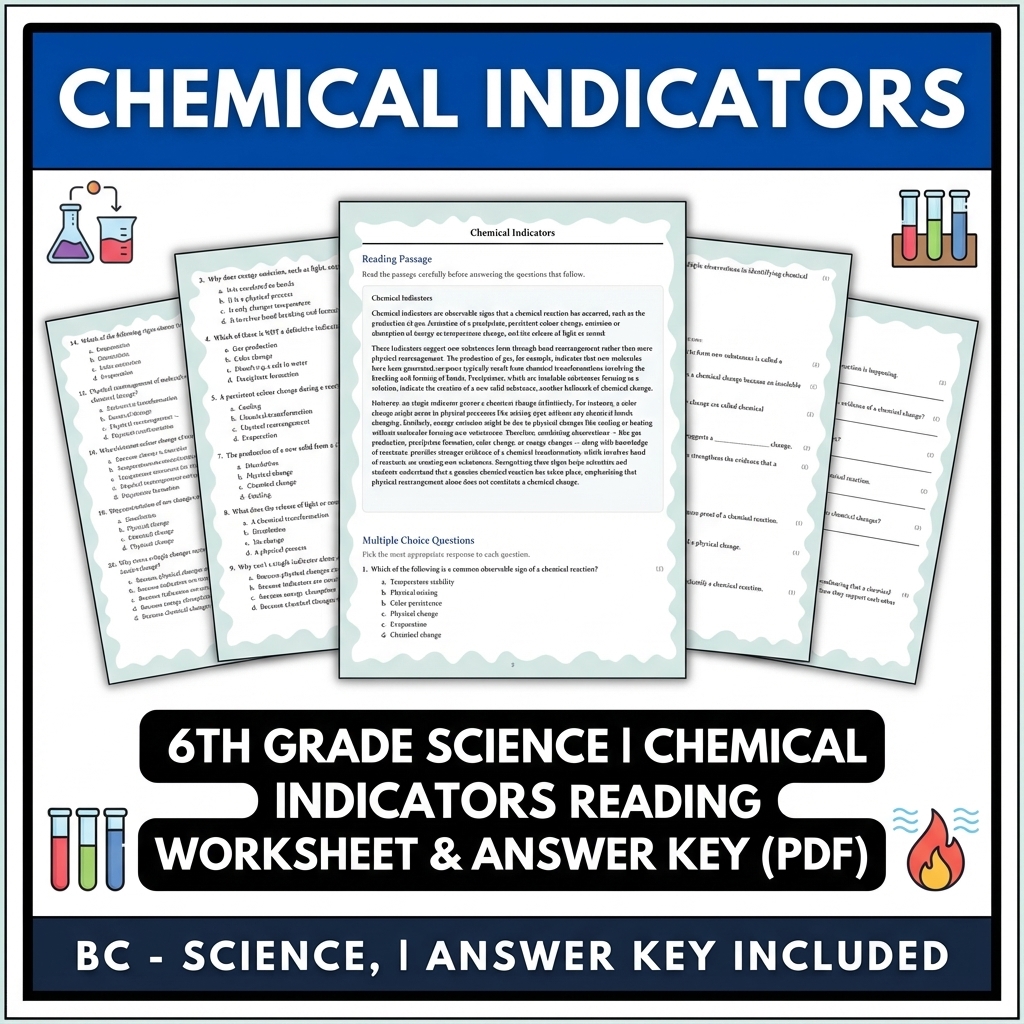
6th Grade Science | Chemical Indicators Reading Worksheet & Answer Key (PDF)
JCreated byJ.S SheetsLearning Objectives
- Define chemical indicators and understand their observable signs of chemical reactions.
- Identify different types of chemical indicators and their signs.
- Recognize that no single indicator confirms a chemical change, but a combination provides stronger evidence.
Instant download

Grade 6 Science | Adaptation Tradeoffs - Daily Reading Comprehension
Created byCoral Reef LearningLearning Objectives
- Understand the concepts of specialization and broad tolerance in animals and plants.
- Compare benefits and costs of narrow niche specialization versus broad tolerance.
- Analyze examples such as mountain versus lowland ecotypes, nocturnal versus diurnal insects, and migration behaviors.
Instant download
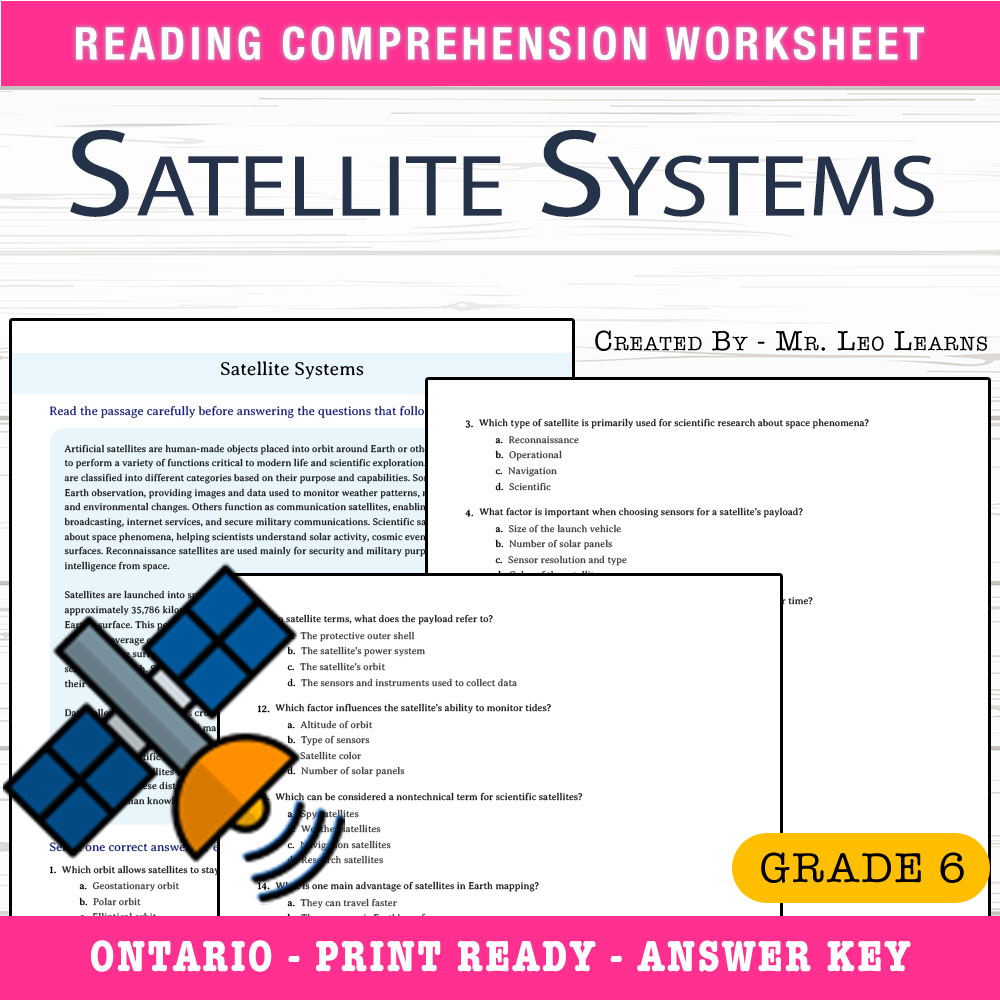
Grade 6 Science — Satellite Systems Worksheet for Mastering Orbital Concepts
Created byThe Resource HubLearning Objectives
- Understand the different functions and categories of artificial satellites.
- Identify how satellite orbits like geostationary and polar orbits serve various Earth observation and communication purposes.
- Describe sensor payload considerations and how satellite data helps in space phenomena prediction, tide monitoring, and surface mapping.
Also included in: Grade 6 Science Unit | Space Systems & Orbital Mechanics Worksheet Pack +1 more
Instant download

Grade 6 Science | Circulatory System - Daily Reading Comprehension
Created byCoral Reef LearningLearning Objectives
- Understand the functions of the circulatory system
- Identify the parts of the heart and blood vessels
- Explain how blood transports oxygen, nutrients, and waste
Instant download
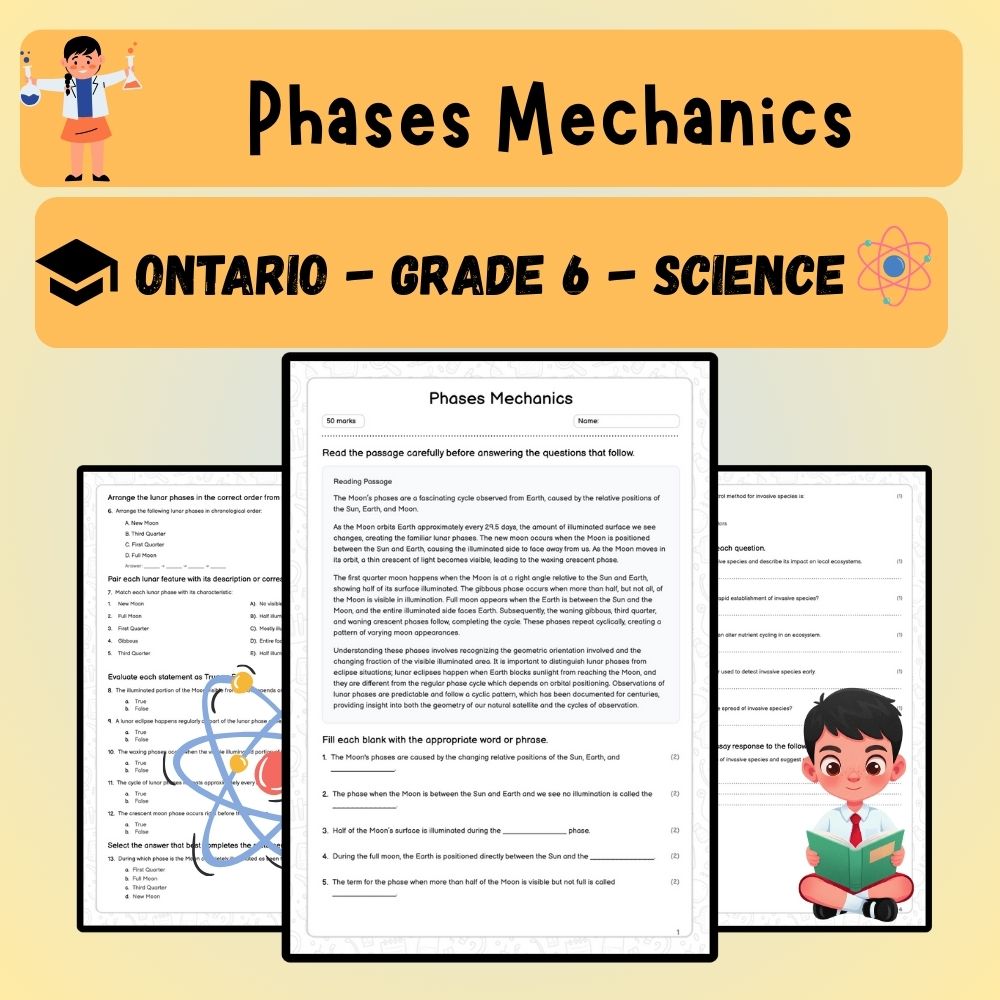
6th Grade Science | Phases Mechanics Worksheet (PDF ) – Ontario Standards
Created byPrism Point LearningLearning Objectives
- Explain the sequence and geometry of lunar phases based on the relative positions of the Sun, Earth, and Moon.
- Identify and differentiate between the various lunar phases such as new, crescent, quarter, gibbous, and full.
- Describe the geometric illumination patterns that produce changing visible fractions of the Moon.
Instant download

Grade 6 Understanding Chemical Reactions Worksheet | NGSS Science Activity
Created byBRIGHT PATH RESOURCESLearning Objectives
- Identify key signs of chemical reactions such as color change, gas evolution, precipitate formation, and temperature change.
- Interpret qualitative and quantitative data to determine if a chemical reaction has occurred.
- Analyze examples like acid-carbonate reactions and metal oxidation to understand reaction indicators.
Also included in: Matter and Its Interactions Grade 6 Science Lesson Bundle | NGSS +2 more
Instant download
Grade 6 Science – Cell Evidence & Cell Structures | Daily Reading Worksheet
 Created byElena Brooks
Learning Objectives
- Understand key concepts related to Science
- Apply knowledge through practice questions
- Demonstrate comprehension of the material
Also included in: Grade 6 Science From Molecules to Organisms Worksheet Bundle | NGSS +1 more
Instant download
Grade 6 Science – Circuit Diagnosis & Symptoms | Daily Reading Worksheet
 Created byQuiet Forest Education
Learning Objectives
- Identify common symptoms in electrical circuits and understand their possible causes.
- Apply diagnostic reasoning to hypothesize faults based on observed symptoms.
- Differentiate between issues caused by series and parallel circuit arrangements.
Also included in: Electricity Grade 6 Science Daily Reading Worksheets Bundle | Ontario +1 more
Instant download
Grade 6 Science – Understanding Instrumentation & Measurements | Daily Worksheet
Created byQuiet Forest EducationLearning Objectives
- Identify the roles of ammeters and voltmeters in electrical circuits
- Understand measurement units of amperes and volts
- Describe how electrical instruments are placed in circuits
Also included in: Electricity Grade 6 Science Daily Reading Worksheets Bundle | Ontario +1 more
Instant download
Grade 6 Science – Conductor Properties | Daily Reading Worksheet
Created byQuiet Forest EducationLearning Objectives
- Understand what makes a material a good electrical conductor.
- Identify common metals and materials that conduct electricity well.
- Describe factors that affect the electrical conductivity of materials.
Also included in: Electricity Grade 6 Science Daily Reading Worksheets Bundle | Ontario +1 more
Instant download
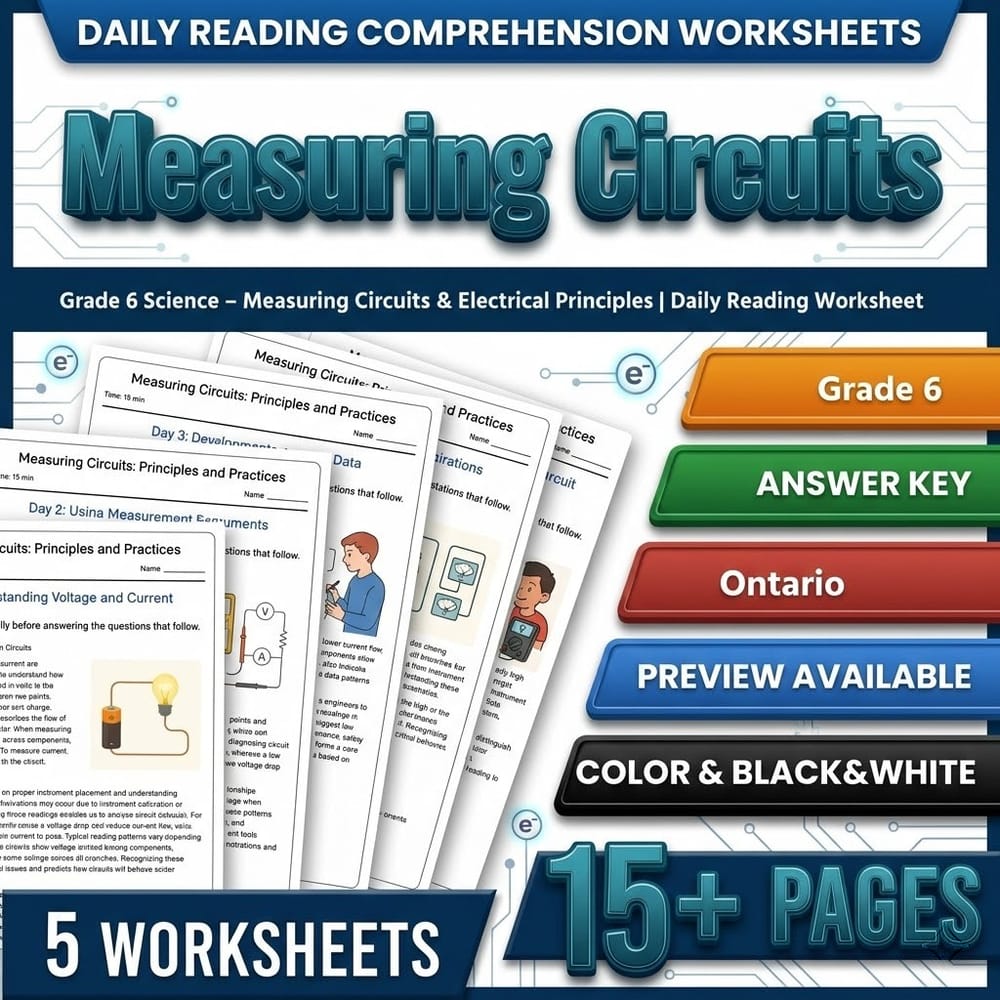
Grade 6 Science – Measuring Circuits & Electrical Principles | Daily Worksheet
Created byQuiet Forest EducationLearning Objectives
- Understand the concepts of voltage and current in circuits
- Interpret readings from voltage and current measurement tools
- Identify how measurement uncertainty affects circuit analysis
Also included in: Electricity Grade 6 Science Daily Reading Worksheets Bundle | Ontario +1 more
Instant download
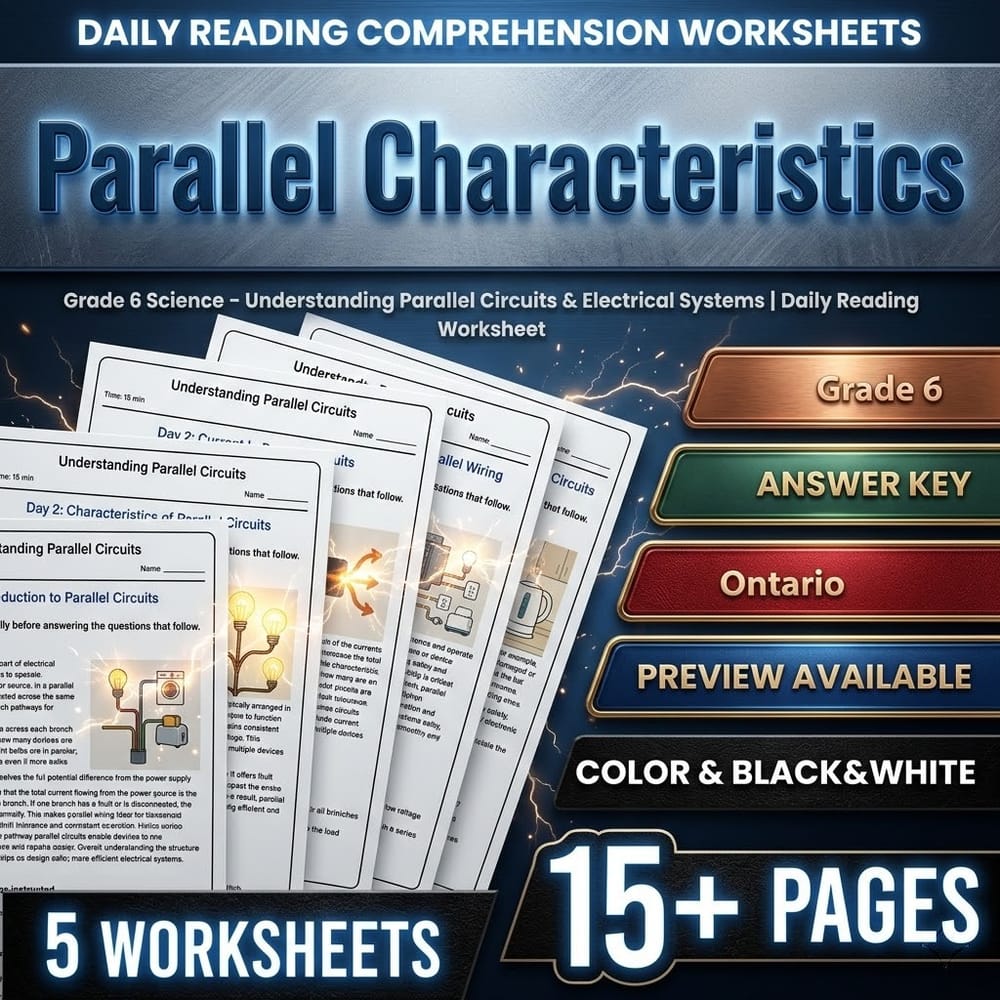
Grade 6 Science Parallel Circuits & Electrical Systems | Daily Reading Worksheet
Created byQuiet Forest EducationLearning Objectives
- Identify diagrams of parallel circuits and understand their key features.
- Explain how current splits and potential difference remains constant in parallel configurations.
- Compare the advantages and vulnerabilities of parallel and series circuits.
Also included in: Electricity Grade 6 Science Daily Reading Worksheets Bundle | Ontario +1 more
Instant download
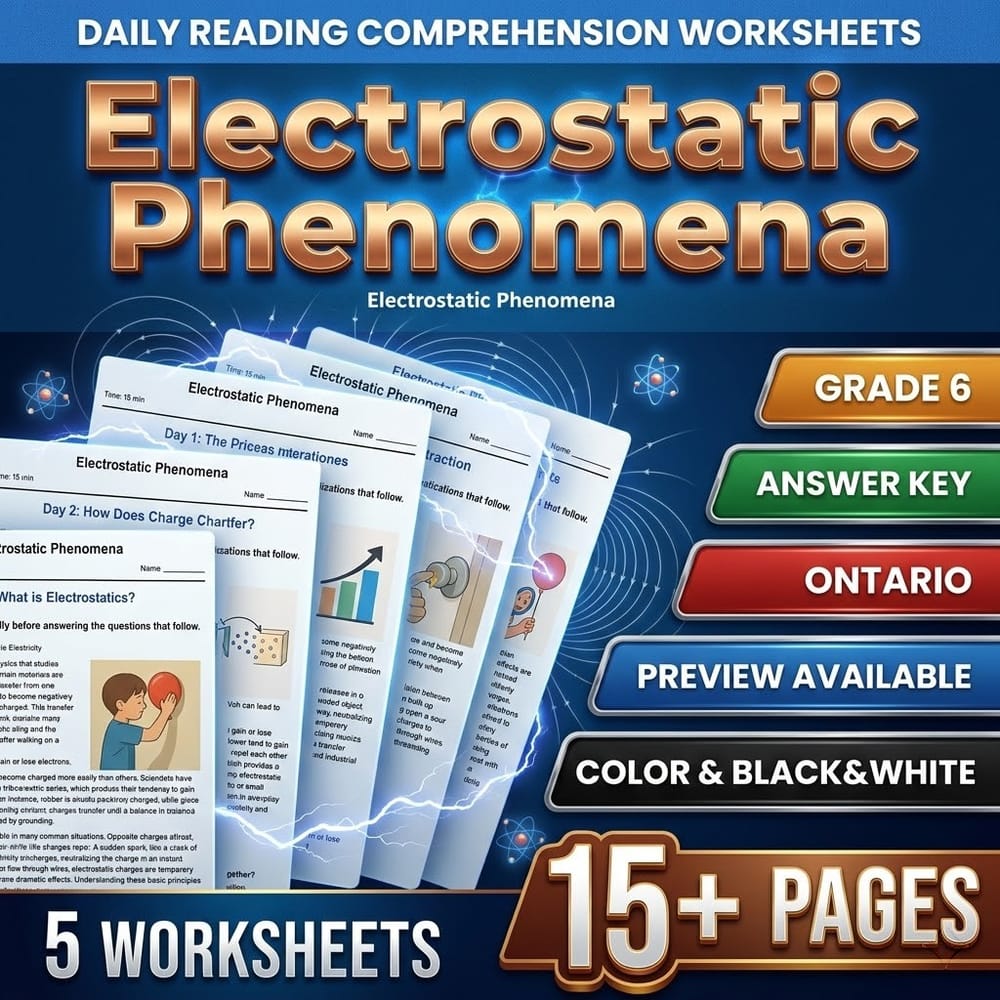
Grade 6 Science – Electrostatic Phenomena & Charge Transfer | Daily Worksheet
Created byQuiet Forest EducationLearning Objectives
- Understand the basic concepts of static electricity and electrostatic charge
- Learn how materials transfer charge through friction
- Identify common electrostatic phenomena such as attraction, repulsion, and sparks
Also included in: Electricity Grade 6 Science Daily Reading Worksheets Bundle | Ontario +1 more
Instant download
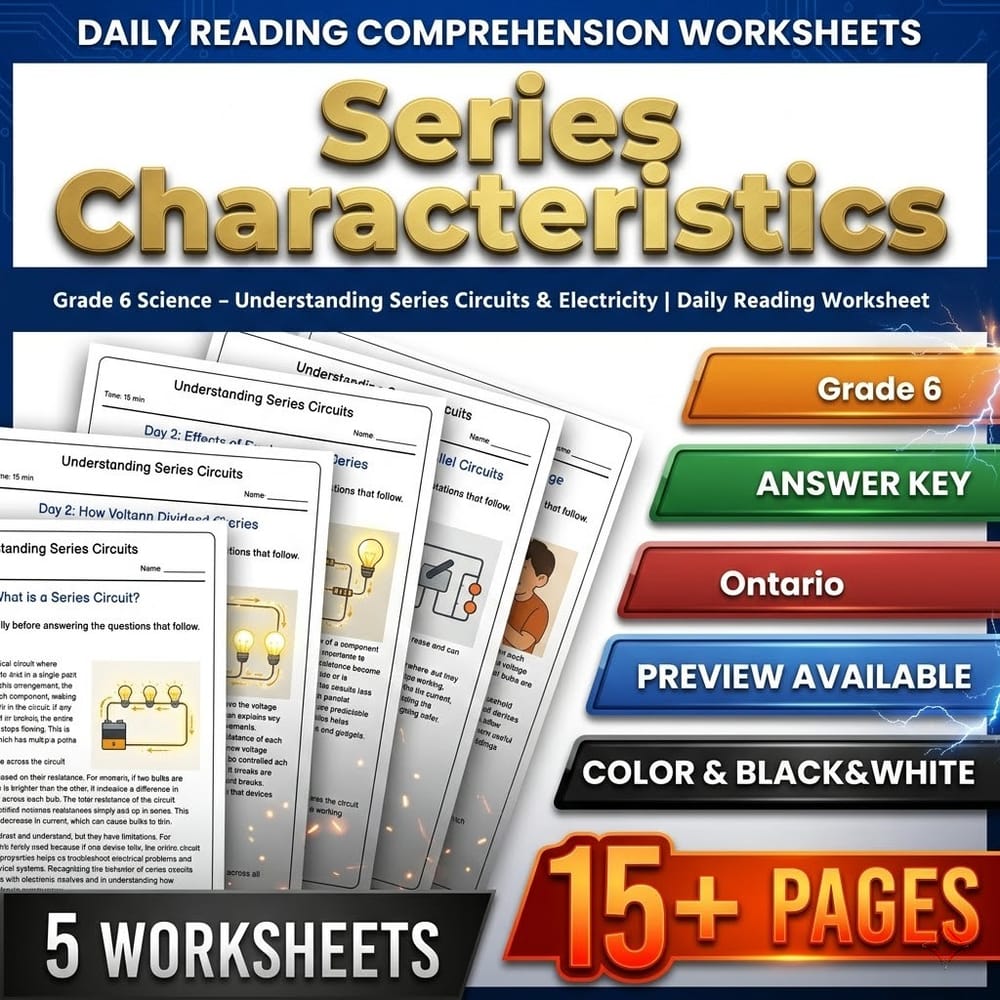
Grade 6 Science – Understanding Series Circuits & Electricity | Daily Worksheet
Created byQuiet Forest EducationLearning Objectives
- Identify the main components of a series circuit
- Describe how current flows through a series circuit
- Explain how voltage is divided among components in a series
Also included in: Electricity Grade 6 Science Daily Reading Worksheets Bundle | Ontario +1 more
Instant download
About Grade 6 Science Worksheets
Explore Grade 6 Science worksheets for classwork, homework, or review. Our 5,969 printables download instantly as PDFs.
MyTeachingSheets worksheets are made by real teacher-authors and checked before they go live. Download any as a print-ready PDF for lessons, homework, or independent practice — most include answer keys, and previews are always free.