
Grade 6 Science Worksheets
5,969 worksheets
Air Density and Lift Worksheets | Grade 6 Science Aerodynamics
 Created bythe curious pencil
Learning Objectives
- Define air density using the relationship between mass and volume.
- Explain how temperature affects the density of air.
- Compare humid and dry air at the same temperature and pressure.
Also included in: Grade 6 Science Aerodynamics and Flight Lesson Bundle | Alberta
Instant download

Sampling Methods and Representative Surveys Worksheet | Grade 6 Science
Created bythe curious pencilLearning Objectives
- Define random, stratified, and systematic sampling methods.
- Explain how sample size affects survey reliability.
- Compare sampling methods for different environmental investigations.
Instant download

Bernoulli Principle and Lift Worksheets | Grade 6 Science Aerodynamics
Created bythe curious pencilLearning Objectives
- Explain the relationship between fluid speed and pressure.
- Describe how pressure differences around an airfoil contribute to lift.
- Identify how wind tunnels help scientists investigate airflow.
Also included in: Grade 6 Science Aerodynamics and Flight Lesson Bundle | Alberta
Instant download

Earth’s Axial Tilt and Seasonal Changes Worksheets | Grade 6 Science
Created bythe curious pencilLearning Objectives
- Identify Earth's axial tilt as a cause of seasonal sunlight changes.
- Explain how sunlight angle affects the concentration of incoming solar energy.
- Compare daylight duration during summer and winter.
Instant download

Earth–Sun Geometry and Seasonal Daylight Prediction Worksheet Grade 6
Created bythe curious pencilLearning Objectives
- Explain how Earth's axial tilt influences seasonal daylight duration
- Predict seasonal changes in daylight using Earth–Sun models
- Interpret how solar angle relates to apparent solar position
Instant download

Tree Root Systems and Water Uptake: Grade 6 Science Worksheets
Created bythe curious pencilLearning Objectives
- Identify lateral roots and taproots by their growth patterns.
- Explain how root structures help trees access soil water.
- Describe how mycorrhizal fungi support water and mineral absorption.
Also included in: Grade 6 Science Forest Ecosystems Lesson Bundle | Alberta
Instant download

Field Measurement Tools Safety and Care Worksheets | Grade 6 Science
Created bythe curious pencilLearning Objectives
- Identify appropriate instruments for common field measurements.
- Explain how calibration checks support reliable scientific readings.
- Describe cleaning procedures that reduce sample contamination.
Instant download

Flight Design Refinement Worksheets | Grade 6 Science Aerodynamics
Created bythe curious pencilLearning Objectives
- Explain how shape and mass distribution affect flight.
- Identify control surfaces used to adjust a flying object.
- Describe how repeated observations improve flight-test comparisons.
Also included in: Grade 6 Science Aerodynamics and Flight Lesson Bundle | Alberta
Instant download

Stem Transport Through Xylem and Phloem Worksheet | Grade 6 Science
Created bythe curious pencilLearning Objectives
- Identify the transport functions of xylem and phloem.
- Explain how freeze–thaw cycles affect water movement through trees.
- Describe how drought influences water availability and stem transport.
Also included in: Grade 6 Science Forest Ecosystems Lesson Bundle | Alberta
Instant download

Forest Conservation Strategies and Biodiversity: Grade 6 Science Worksheets
Created bythe curious pencilLearning Objectives
- Identify conservation strategies that protect forest habitats and species.
- Explain how reforestation supports the recovery of forest environments.
- Describe how riparian buffers protect habitats near waterways.
Also included in: Grade 6 Science Forest Ecosystems Lesson Bundle | Alberta
Instant download

Forest Management and Conservation Worksheets Grade 6 Science
Created bythe curious pencilLearning Objectives
- Explain how integrated management balances different forest values.
- Describe how monitoring informs changes to forest management plans.
- Identify stakeholders involved in forest management decisions.
Also included in: Grade 6 Science Forest Ecosystems Lesson Bundle | Alberta
Instant download

Forest Food Webs and Energy Flow Worksheet | Grade 6 Science
Created bythe curious pencilLearning Objectives
- Identify producers, consumers, and decomposers in forest food webs.
- Explain how energy moves through connected feeding relationships.
- Describe how decomposers recycle nutrients to support plant growth.
Also included in: Grade 6 Science Forest Ecosystems Lesson Bundle | Alberta
Instant download

Aircraft Stability and Balance Worksheets | Grade 6 Science Aerodynamics
Created bythe curious pencilLearning Objectives
- Define the center of mass and center of pressure
- Explain how mass distribution affects aircraft stability
- Distinguish longitudinal stability from lateral stability
Also included in: Grade 6 Science Aerodynamics and Flight Lesson Bundle | Alberta
Instant download

Drag Types and Flight Design Worksheets for Grade 6 Science
Created bythe curious pencilLearning Objectives
- Identify parasitic drag and induced drag in flight design.
- Explain how surface texture affects parasitic drag.
- Describe how wingtip vortices relate to induced drag.
Also included in: Grade 6 Science Aerodynamics and Flight Lesson Bundle | Alberta
Instant download
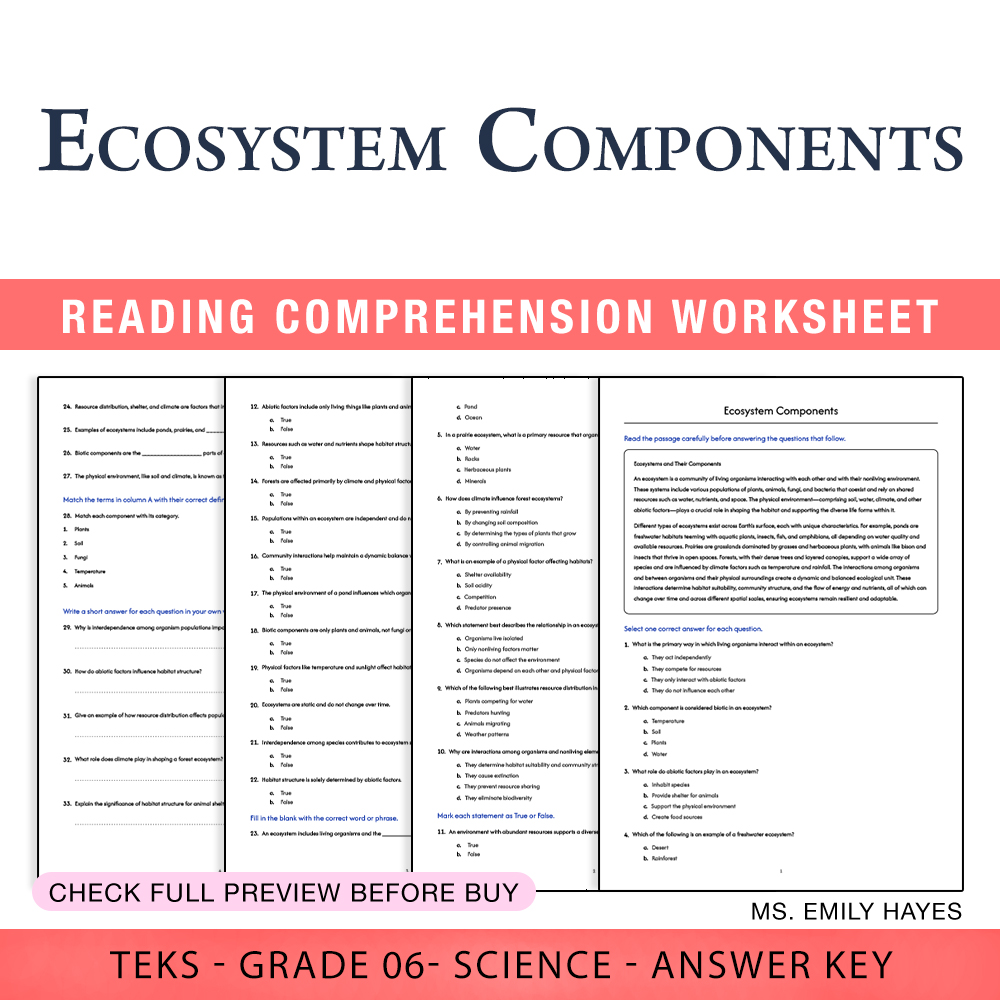
6th Grade Science | Ecosystem Components Worksheet (PDF+ Answer Key)
 Created byCopper Leaf Classroom
Learning Objectives
- Define ecosystems as interacting systems of populations, communities, and physical factors.
- Differentiate between biotic and abiotic components within habitats.
- Identify examples of ecosystems such as ponds, prairies, and forests.
Instant download

Habitat Fragmentation Worksheet | Standards-Aligned Grade 6 Science Practice
JCreated byJ.S SheetsLearning Objectives
- Understand the concept of habitat fragmentation and its effects on ecosystems.
- Identify ways to mitigate habitat fragmentation impacts.
- Analyze how habitat patches affect species diversity and survival.
Instant download
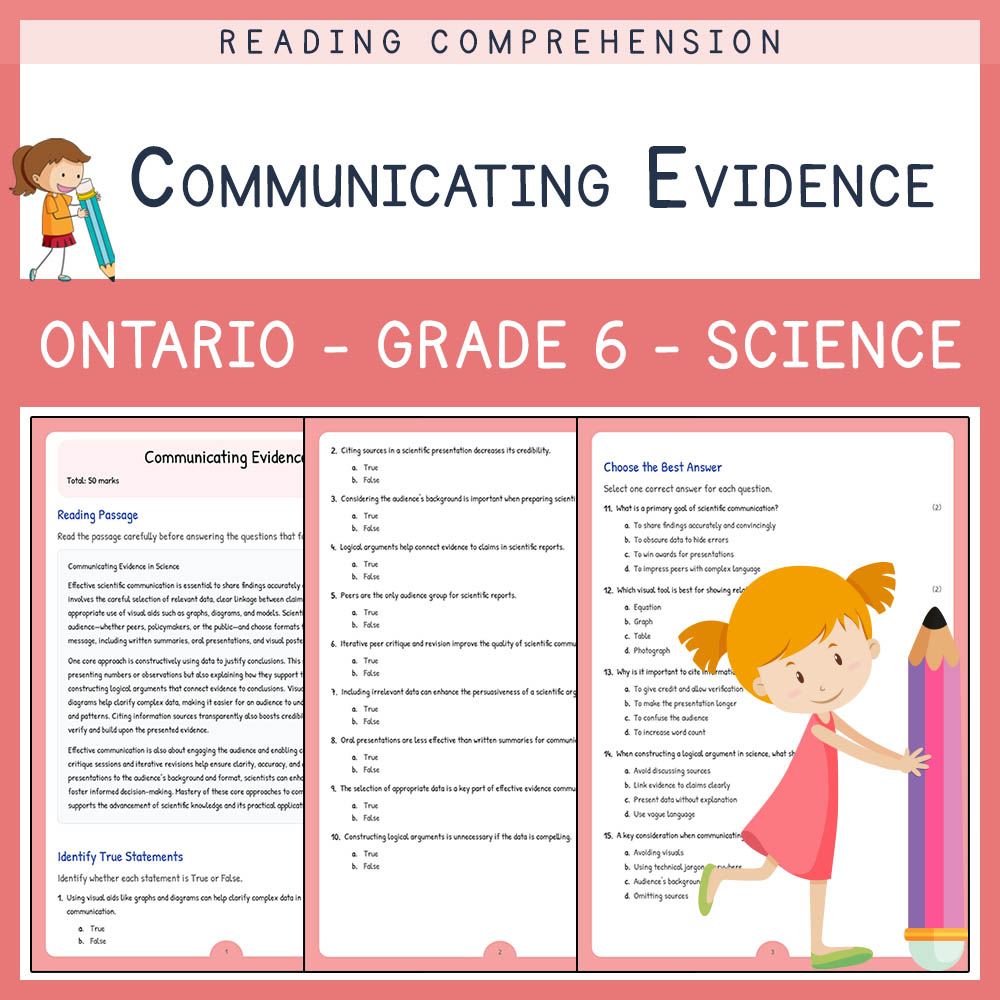
Grade 6 Science | Communicating Evidence Worksheet & Answer Key (PDF)
 Created byLumora Learning
Learning Objectives
- Understand key methods of clearly linking claims with supporting evidence and reasoning.
- Identify relevant data and appropriate formats for effective scientific communication.
- Develop skills in constructing logical arguments and visual representations of data.
Instant download

Electrostatic Phenomena Worksheet Grade 6 Science | Ontario + Doodle Note
 Created byChalk and Compass
Learning Objectives
- Explain how charge transfer (electron movement) happens when materials rub
- Use the triboelectric series idea to predict which material is more likely to become charged
- Describe attractions, repulsions, and electrostatic discharge (spark) in terms of charge buildup and release
Also included in: Grade 6 Science Circuits & Electricity Lesson Bundle | Ontario +1 more
Instant download

Grade 6 Science | Cell Specialization Worksheet | BC Standards
Created byLumora LearningLearning Objectives
- Understand how cells develop specialized structures and functions.
- Identify different types of specialized cells and their roles in the body.
- Explain the process of cell differentiation and gene expression.
Instant download

Ethical Dimensions Science Worksheet | Standards-Based Practice for Grade 6
JCreated byJ.S SheetsLearning Objectives
- Identify ethical criteria (beneficence, risk minimization, and justice) that guide scientific decisions in society.
- Explain how privacy, informed consent, and responsible data use apply to scientific and medical technologies.
- Evaluate environmental and long-term ecological consequences of scientific applications, including lab practices and production methods.
Instant download
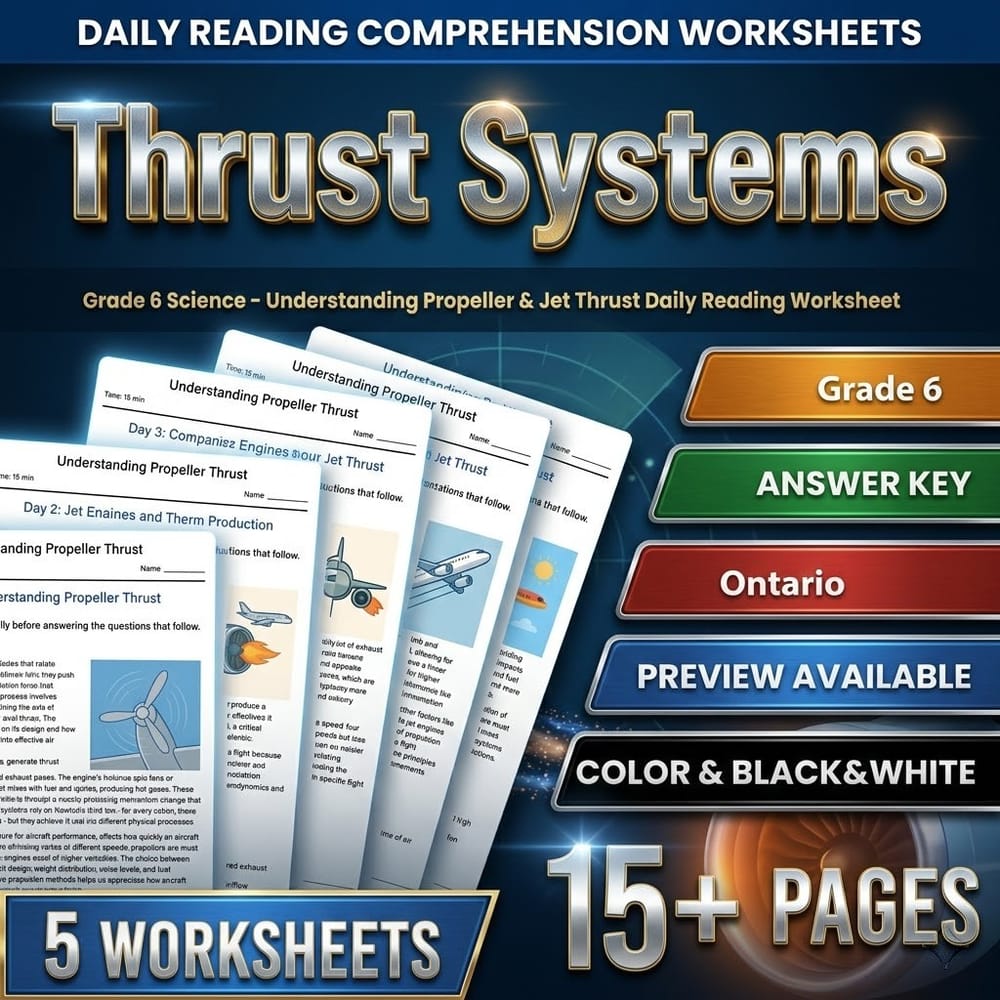
Grade 6 Science – Understanding Propeller & Jet Thrust Daily Reading Worksheet
 Created byQuiet Forest Education
Learning Objectives
- Explain how propellers generate thrust to move an aircraft forward.
- Identify the role of air acceleration in producing axial thrust.
- Distinguish between propeller-driven and jet-driven propulsion systems.
Also included in: Flight Science Grade 6 Daily Reading Worksheets Bundle | Ontario +1 more
Instant download
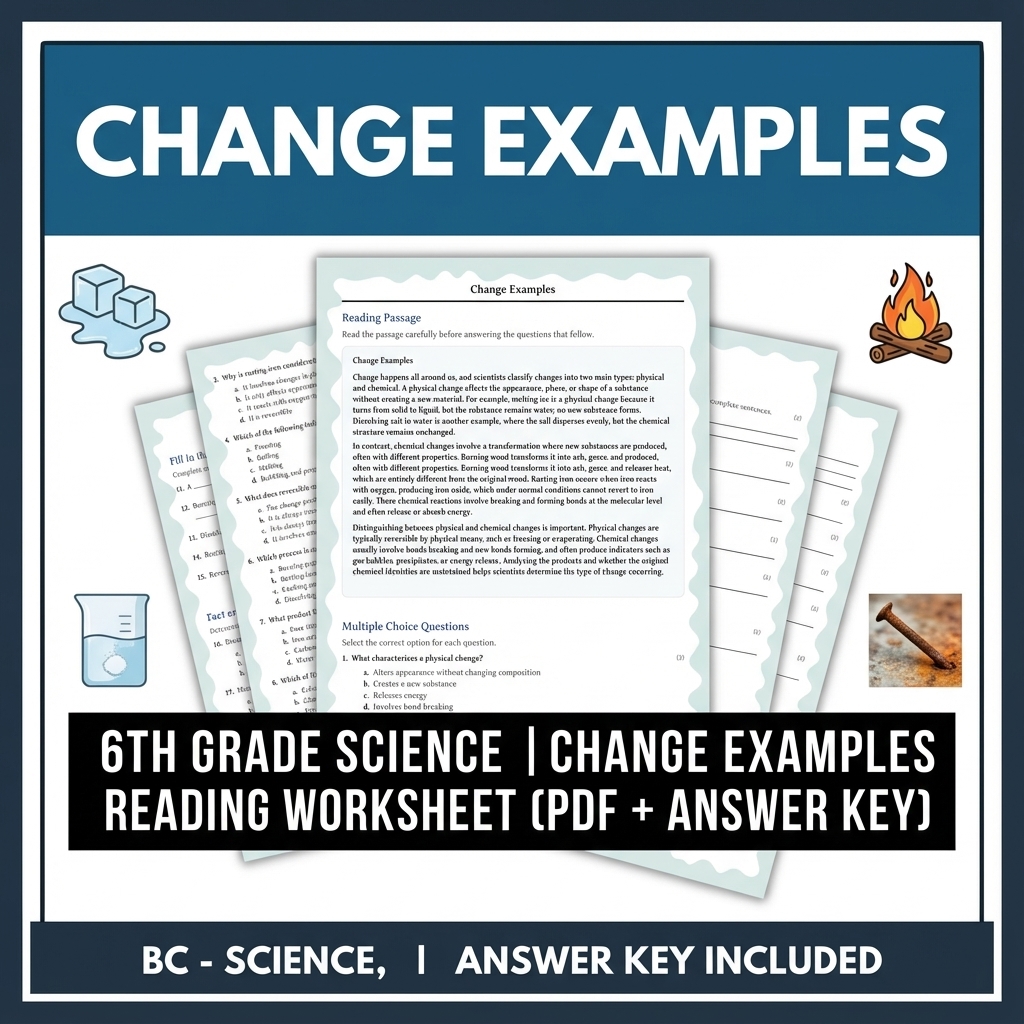
6th Grade Science | Change Examples Reading Worksheet (PDF + Answer Key)
JCreated byJ.S SheetsLearning Objectives
- Differentiate between physical and chemical changes with concrete examples.
- Identify properties of substances that change or stay the same during physical and chemical changes.
- Describe processes such as melting ice, dissolving salt, burning wood, and rusting iron.
Instant download

6th Grade Science | Criteria and Constraints Worksheet (PDF)
 Created byEvergreen Desk Education
Learning Objectives
- Distinguish goals from constraints in the design process
- Identify criteria that describe what success looks like
- Use constraints to explain why certain design solutions are limited
Also included in: Grade 6 Prototype Design Science Lesson Bundle: General Systems Thinking +1 more
Instant download
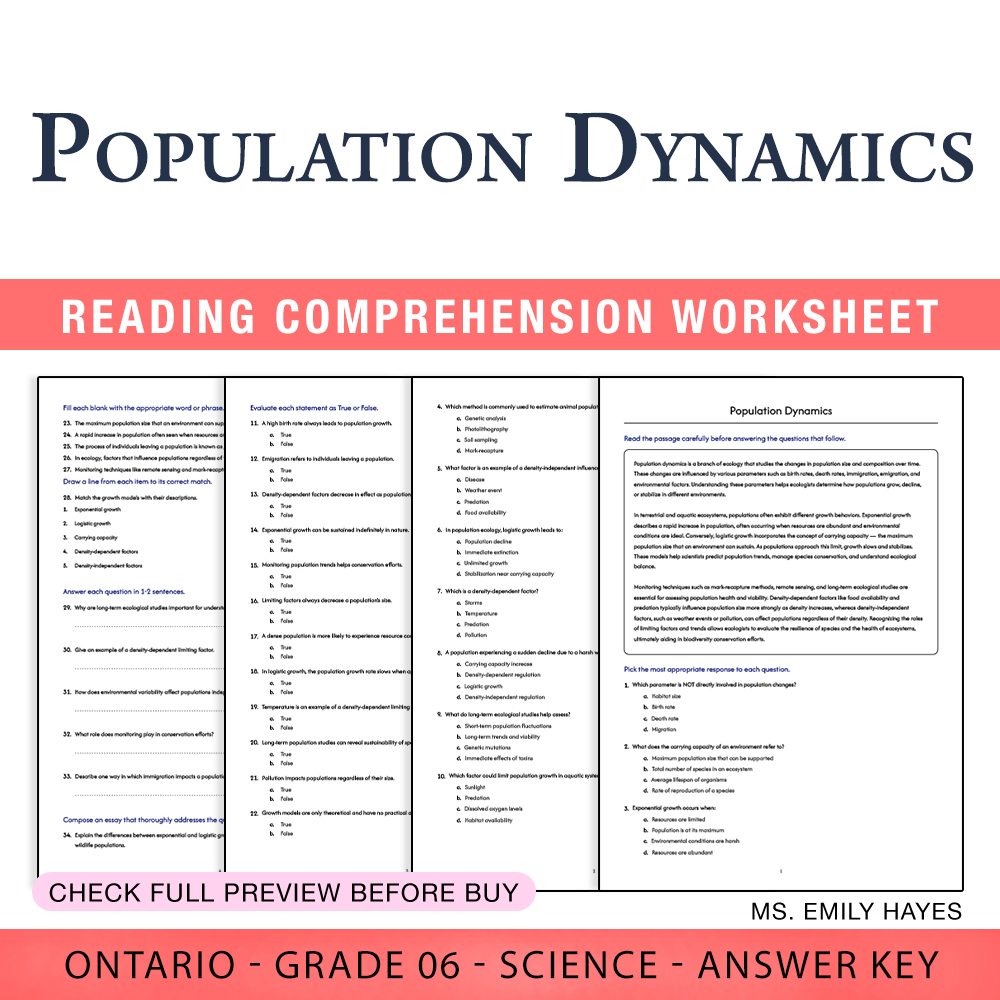
6th Grade Science | Population Dynamics Worksheet (PDF+ Answer Key)
Created byCopper Leaf ClassroomLearning Objectives
- Understand the key parameters that influence population change including birth rates, death rates, immigration, and emigration.
- Explain and distinguish between exponential and logistic growth models in populations.
- Identify factors that limit or promote population growth in terrestrial and aquatic systems.
Instant download
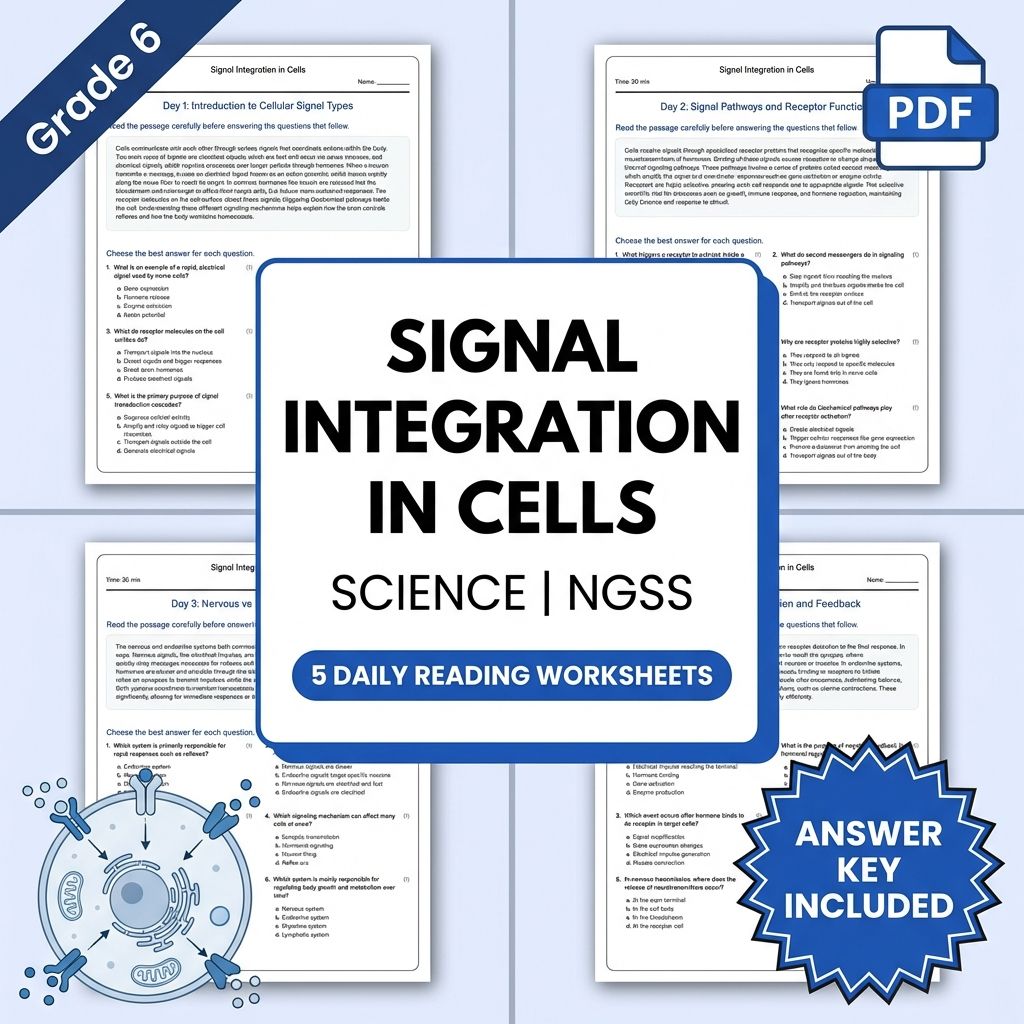
6th Grade Science | Signal Integration in Cells Worksheet (PDF+ Answer Key)
Created byCopper Leaf ClassroomLearning Objectives
- Explain the role of chemical and electrical signals in cellular communication.
- Describe the processes of neurotransmission, hormonal signaling, and signal transduction.
- Contrast rapid nervous responses with longer-term endocrine effects.
Instant download

6th Grade Science | Historical Perspectives Worksheet (PDF) - Alberta Standards
Created byEvergreen Desk EducationLearning Objectives
- Explain how different communities used observations of the Sun and Moon to support seasonal planning and navigation.
- Compare oral knowledge with early written astronomical records in terms of what they record and why.
- Connect patterns of apparent celestial motion to predictable cycles such as daylight length and Moon phases.
Instant download

Water and Resources Worksheet | Grade 6 Science Practice and Review
 Created byPrism Point Learning
Learning Objectives
- Explain the main steps of the water cycle and how they move water between Earth systems.
- Describe how water storage in glaciers and groundwater affects freshwater availability over time.
- Use water-cycle vocabulary to predict how land cover and temperature influence infiltration and streamflow.
Instant download
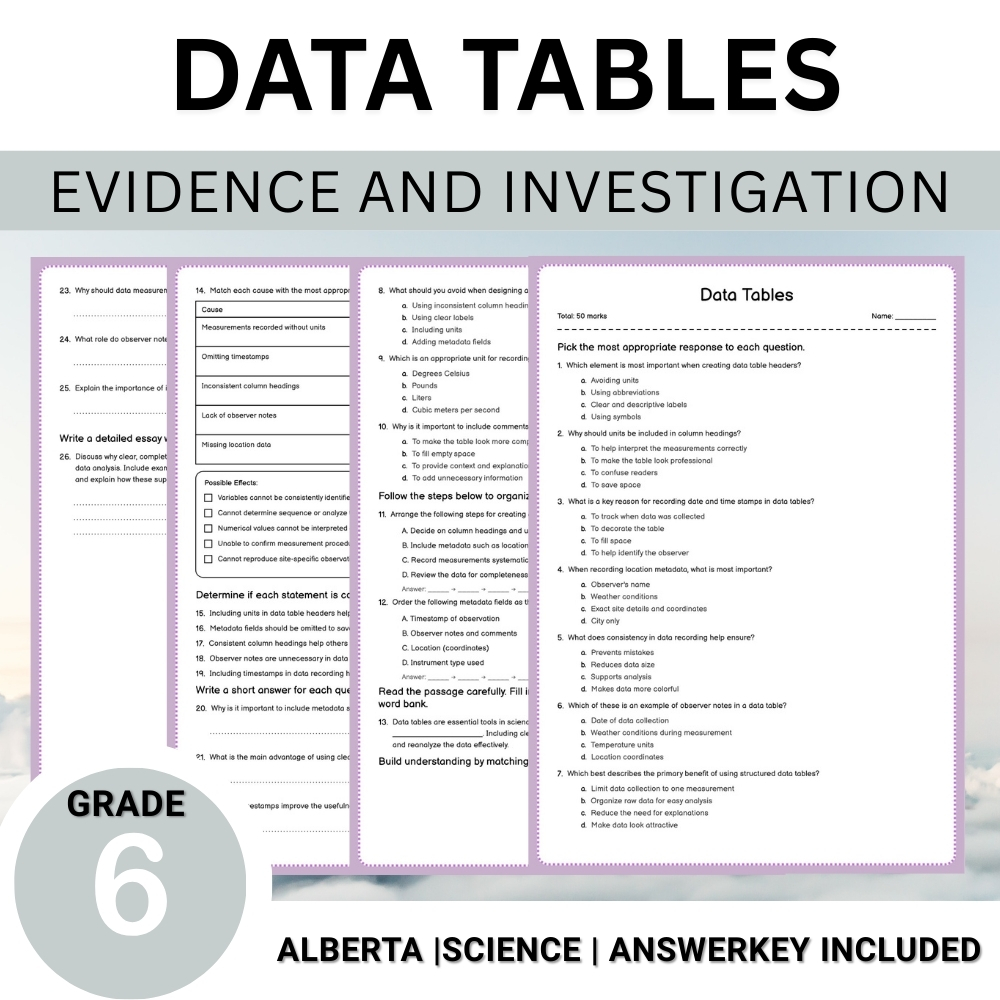
Grade 6 Science Data Tables Worksheet | .Printable PDF & Assessment
Learning Objectives
- Understand the purpose and structure of data tables in scientific recordings.
- Identify appropriate column headings, units, and metadata for clarity and completeness.
- Interpret and analyze data presented in structured table formats.
Also included in: Grade 6 Science Unit | Data & Measurement Worksheets Bundle (Assessment & Practice) +1 more
Instant download

Grade 6 Food Webs Worksheet | NGSS Practice & PDF
 Created byClear Sky Classroom
Learning Objectives
- Explain how a food web connects many food chains in an ecosystem
- Identify trophic levels and describe how energy transfers from one organism to another
- Predict how changes to one species can affect multiple organisms in a food web
Instant download
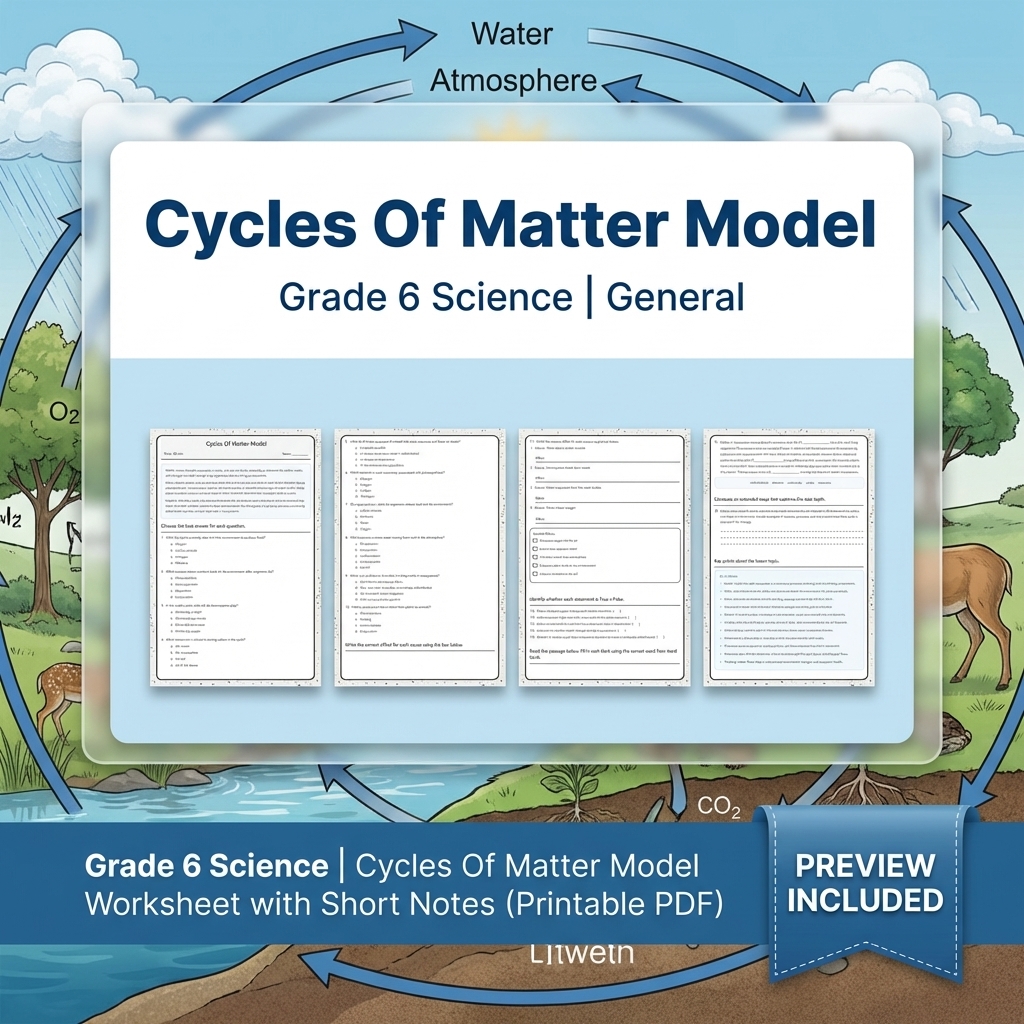
Grade 6 Science | Cycles Of Matter Model Worksheet with Short Notes
 Created byMeadowlark Worksheets
Learning Objectives
- Understand how matter cycles through ecosystems in biological and physical processes.
- Identify the roles of plants, consumers, and decomposers in matter transfer.
- Describe the movement of elements like carbon and water among air, soil, water, and organisms.
Also included in: Grade 6 Science Lesson Group | Body Systems and Life Processes Worksheet Bundle +1 more
Instant download
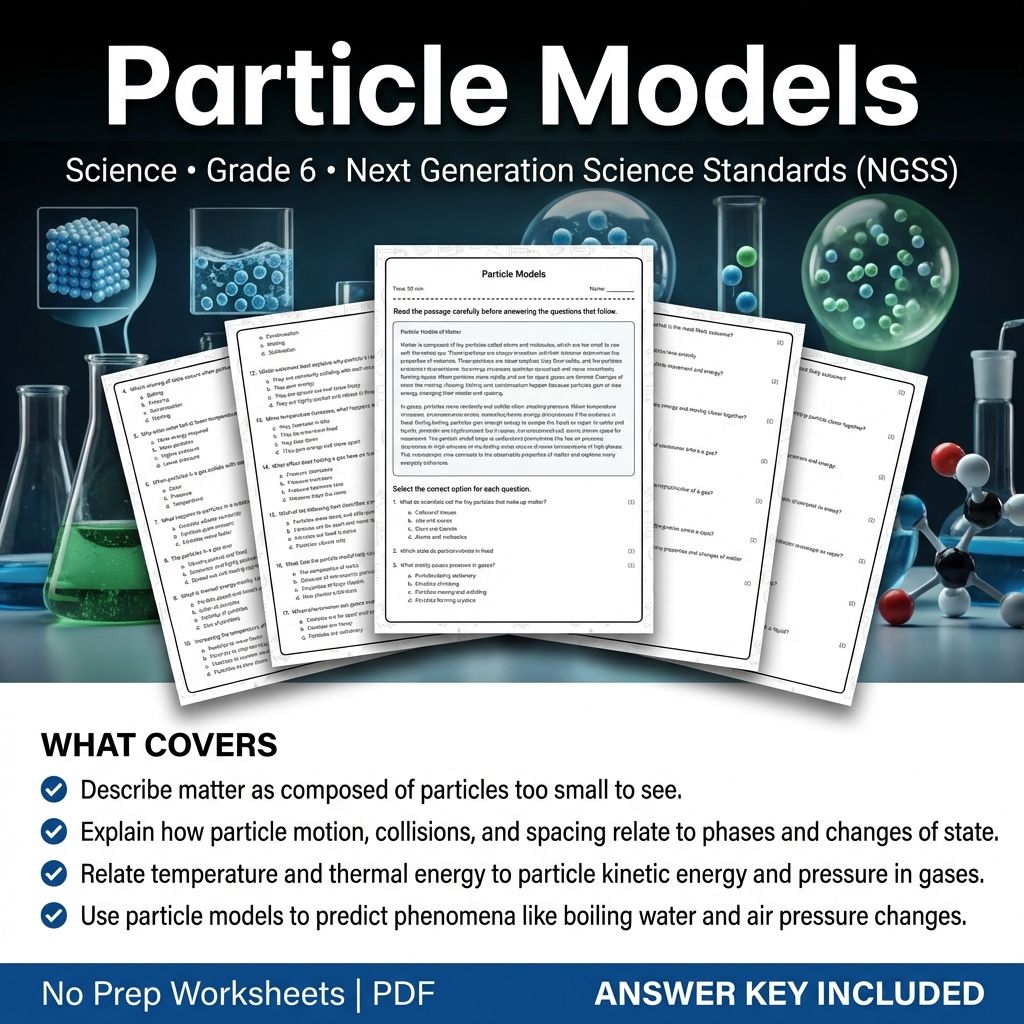
6th Grade Science | Particle Models Worksheet & Answer Key (Printable PDFs)
 Created byCoral Reef Learning
Learning Objectives
- Describe matter as composed of particles too small to see.
- Explain how particle motion, collisions, and spacing relate to phases and changes of state.
- Relate temperature and thermal energy to particle kinetic energy and pressure in gases.
Instant download

Grade 6 Surface Change Worksheet | NGSS Earth Science Activity Pack
 Created byAmber Owl Education
Learning Objectives
- Explain how slow and fast geologic processes modify Earth’s surface over different time scales.
- Use evidence from rock strata, fossils, and landforms (such as terraces) to support a landscape-evolution explanation.
- Describe how erosion and sediment transport by rivers and glaciers reshape landforms.
Also included in: Grade 6 Science Earth Systems & Climate Lesson Bundle | NGSS +1 more
Instant download

Climate Systems Worksheet & Doodle Notes | NGSS Grade 6 Science
Created byAmber Owl EducationLearning Objectives
- Explain how unequal solar heating and Earth’s rotation drive global atmospheric circulation patterns.
- Describe how wind belts (trade winds and westerlies) and ocean currents move heat and moisture.
- Use models of Hadley, Ferrel, and polar cells to connect circulation to regional climate zones.
Also included in: Grade 6 Science Earth Systems & Climate Lesson Bundle | NGSS +1 more
Instant download

Water Cycle Worksheet | Grade 6 NGSS Science Activity + Doodle Notes
Created byAmber Owl EducationLearning Objectives
- Describe the main processes of the water cycle: evaporation, condensation, precipitation, runoff, infiltration, and groundwater storage.
- Explain how solar energy and gravity drive the movement and phase changes of water in the hydrosphere.
- Use simple models (reservoirs and arrows) to trace where water goes and how long it can be stored.
Also included in: Grade 6 Science Earth Systems & Climate Lesson Bundle | NGSS +1 more
Instant download

Grade 6 System Interactions Worksheet | NGSS Science Activity & Notes
Created byAmber Owl EducationLearning Objectives
- Explain how Earth’s systems (geosphere, hydrosphere, atmosphere, biosphere) interact by transferring matter and energy.
- Use simple models to describe how feedbacks can change system behavior over time (from seasons to geologic time).
- Identify examples of energy sources, energy sinks, and phase-change energy transfers in Earth system processes.
Also included in: Grade 6 Science Earth Systems & Climate Lesson Bundle | NGSS +1 more
Instant download
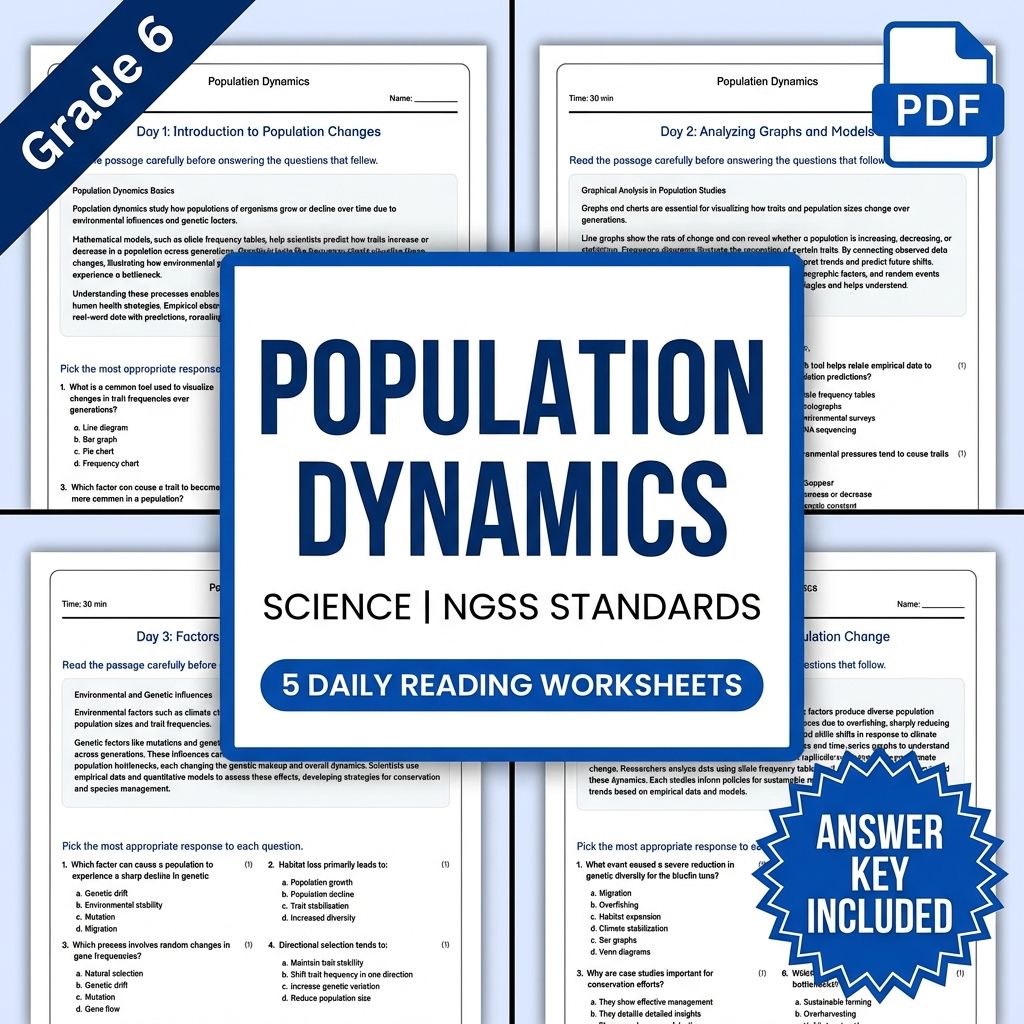
Grade 6 Science – Population Dynamics Daily Reading Worksheet (PDF + Answer Key)
Created byCopper Leaf ClassroomLearning Objectives
- Understand how trait frequencies and population sizes change over generations in response to environmental factors.
- Interpret graphical data such as frequency charts and time-series graphs to analyze population trends.
- Apply proportional reasoning and simple models to predict and compare scenarios like shifts, stability, and bottlenecks.
Instant download
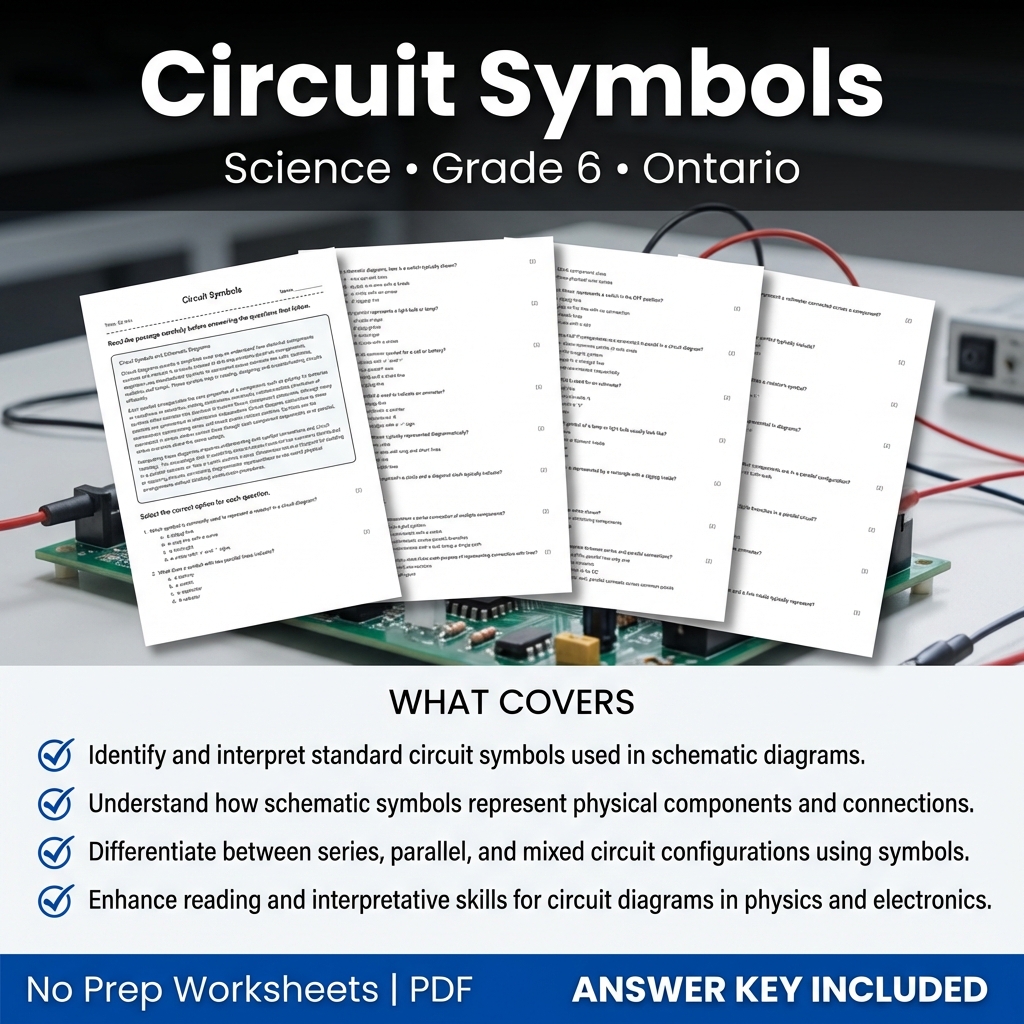
Grade 6 Science Worksheet on Circuit Symbols | Ontario Standards
Created byCoral Reef LearningLearning Objectives
- Identify and interpret standard circuit symbols used in schematic diagrams.
- Understand how schematic symbols represent physical components and connections.
- Differentiate between series, parallel, and mixed circuit configurations using symbols.
Instant download
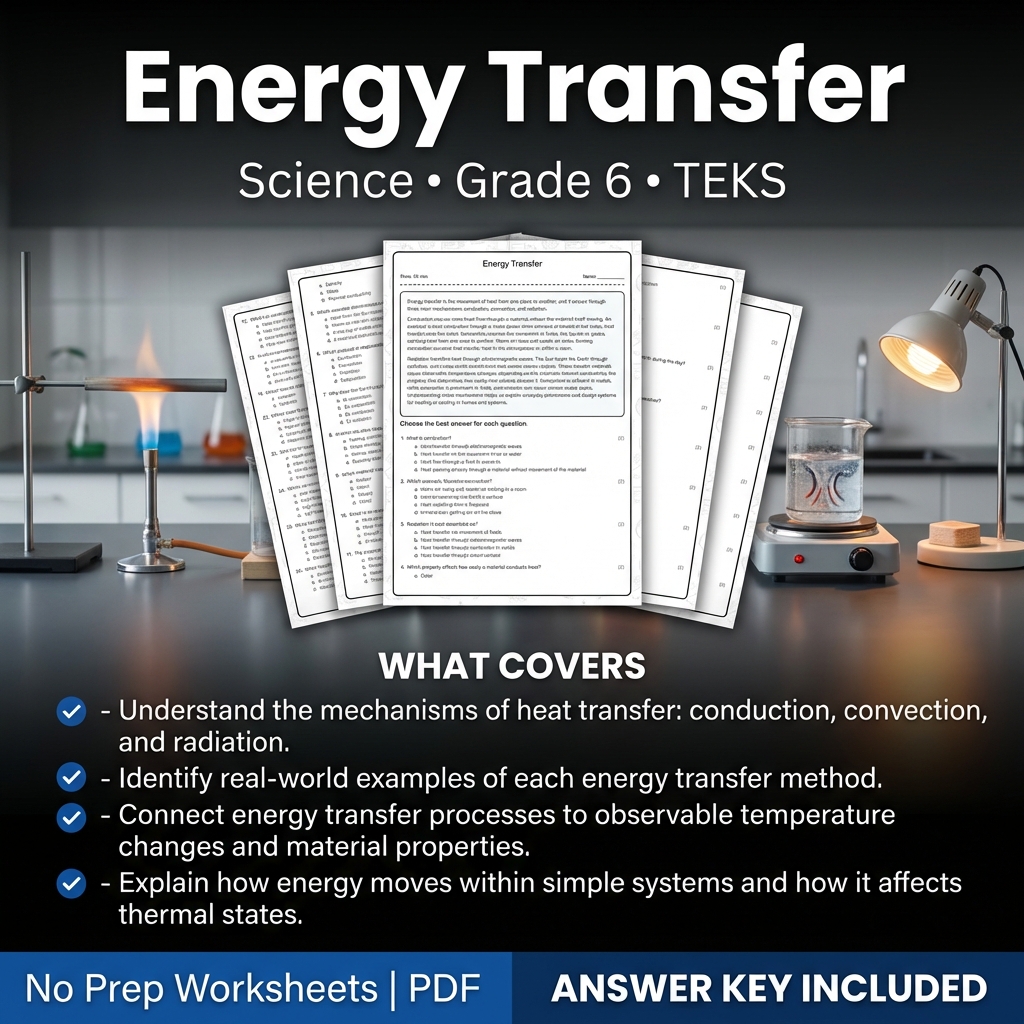
Energy Transfer Worksheet for Grade 6 Science | TEKS Aligned Practice
Created byCoral Reef LearningLearning Objectives
- Understand the mechanisms of heat transfer: conduction, convection, and radiation.
- Identify real-world examples of each energy transfer method.
- Connect energy transfer processes to observable temperature changes and material properties.
Instant download

Adaptation and Speciation Worksheet | NGSS Grade 6 Evolution Activity
WCreated byWorksheet HavenLearning Objectives
- Understand the basic processes of adaptation and speciation.
- Identify how environmental and genetic factors contribute to species divergence.
- Recognize evidence that supports the occurrence of speciation events.
Instant download

Data Representation Assessment | TEKS Grade 6 Science Printable Worksheet
Created byPrism Point LearningLearning Objectives
- Understand key concepts related to Science
- Apply knowledge through practice questions
- Demonstrate comprehension of the material
Also included in: Scientific Inquiry and Processes Grade 6 Science Lesson Bundle | TEKS
Instant download

Grade 6 Science – Mass Conservation & Atoms Daily Reading Worksheet
 Created byBright Mind Resources
Learning Objectives
- Explain the principle of mass conservation in chemical reactions
- Identify how atoms are conserved even when substances change form
- Describe the concept of a closed system in chemical processes
Also included in: Grade 6 Matter Science Daily Reading Worksheets Lesson Bundle | CA Standards +1 more
Instant download
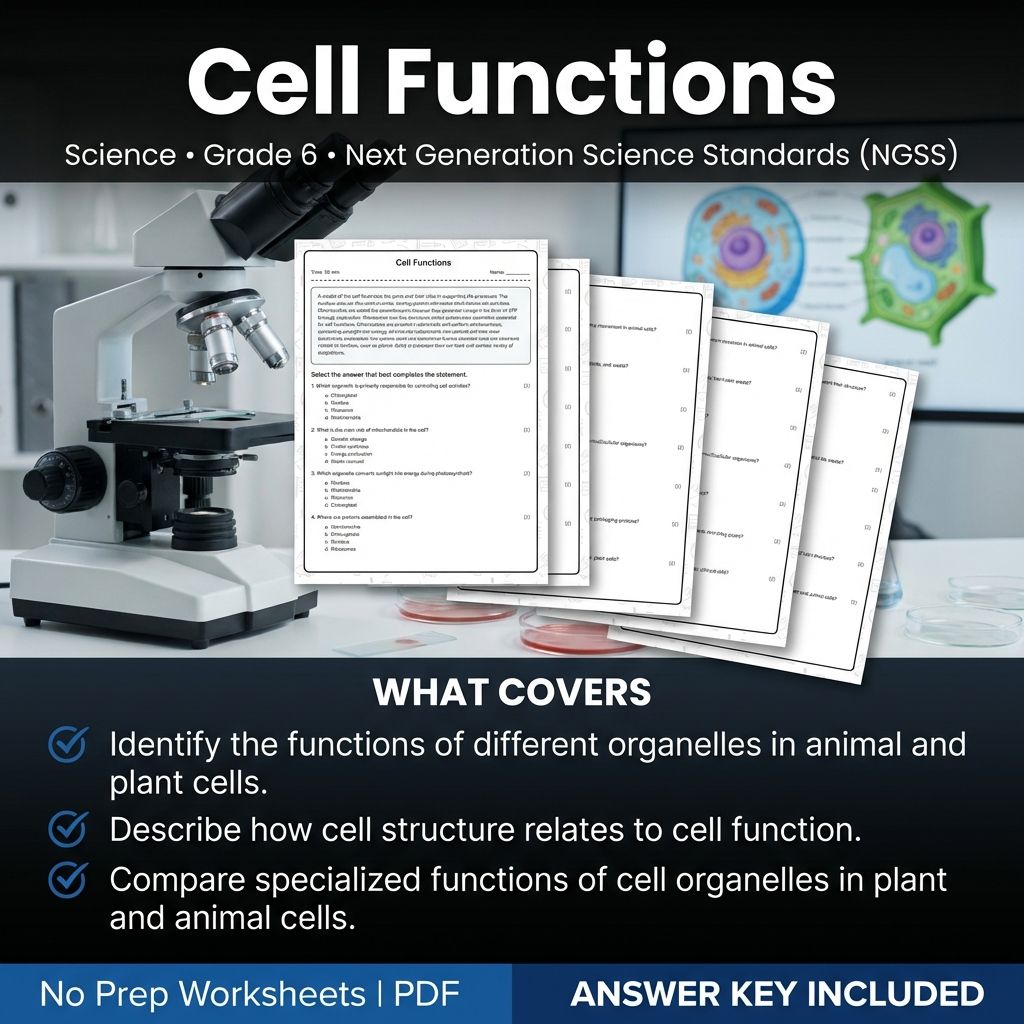
6th Grade Science | Cell Functions Worksheet & Answer Key (Printable PDF)
Created byCoral Reef LearningLearning Objectives
- Identify the functions of different organelles in animal and plant cells.
- Describe how cell structure relates to cell function.
- Compare specialized functions of cell organelles in plant and animal cells.
Instant download
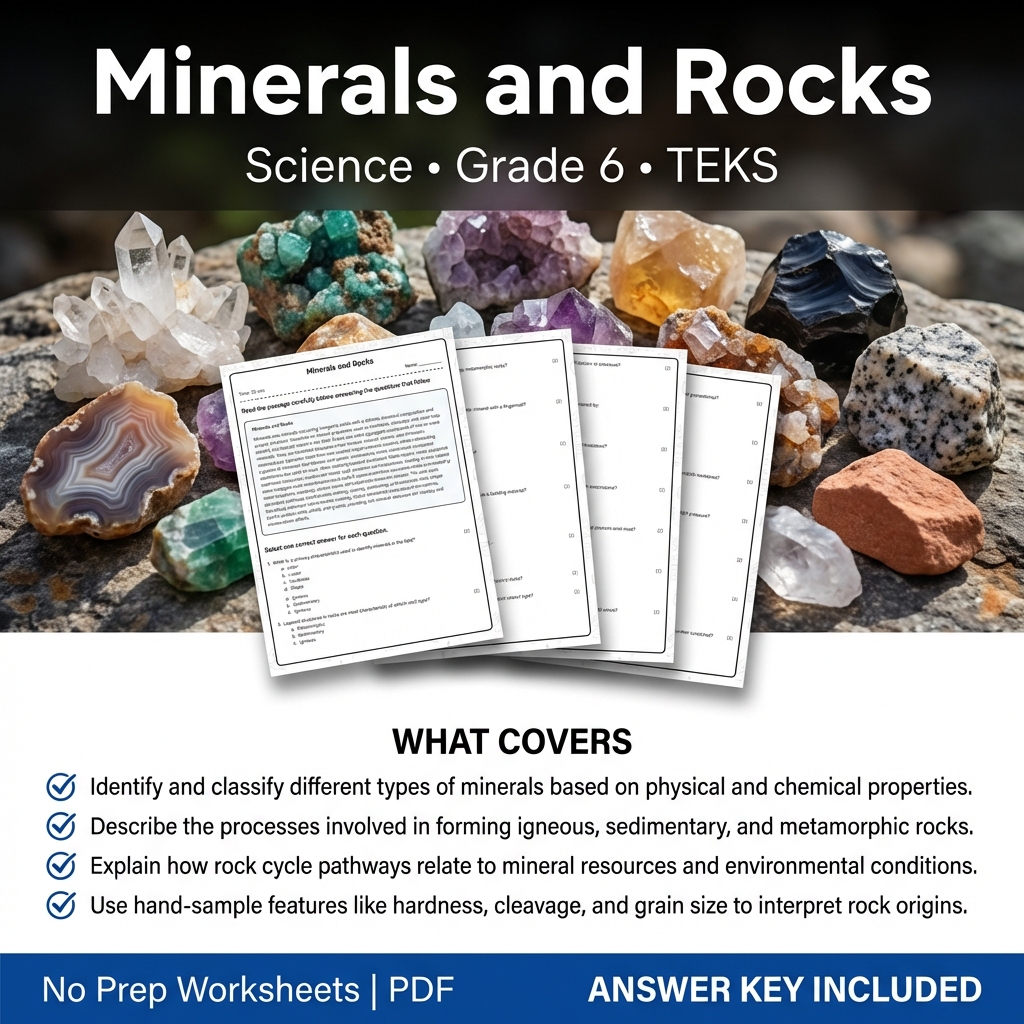
Grade 6 Science Worksheet on Minerals and Rocks | TEKS Aligned Assessment
Created byCoral Reef LearningLearning Objectives
- Identify and classify different types of minerals based on physical and chemical properties.
- Describe the processes involved in forming igneous, sedimentary, and metamorphic rocks.
- Explain how rock cycle pathways relate to mineral resources and environmental conditions.
Instant download
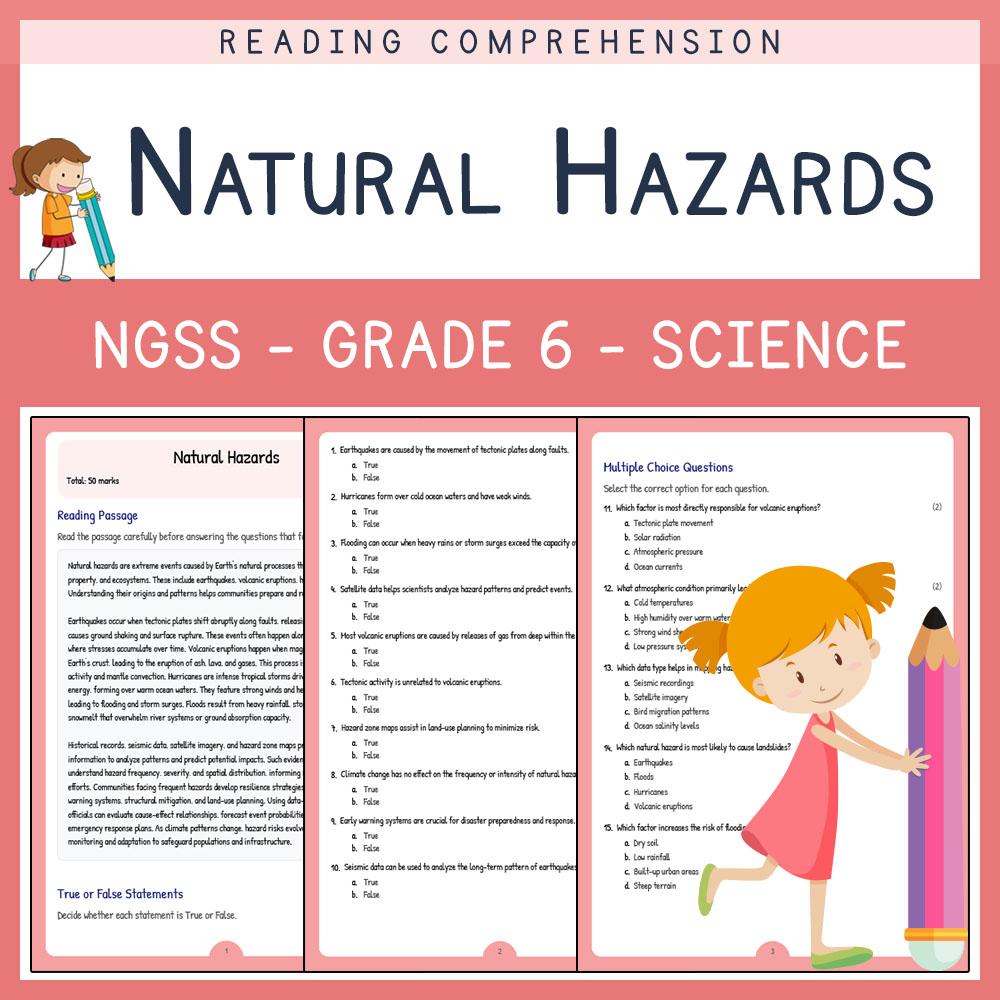
Grade 6 Science | Natural Hazards Worksheet ( Answer Key) | NGSS-Aligned
Created byLumora LearningLearning Objectives
- Explain the causes and effects of various natural hazards such as earthquakes, volcanoes, hurricanes, and floods.
- Identify patterns and relationships among tectonic processes, atmospheric conditions, and hydrological cycles related to hazards.
- Analyze historical data, seismic, and satellite evidence to evaluate hazard risks and impacts on communities.
Instant download
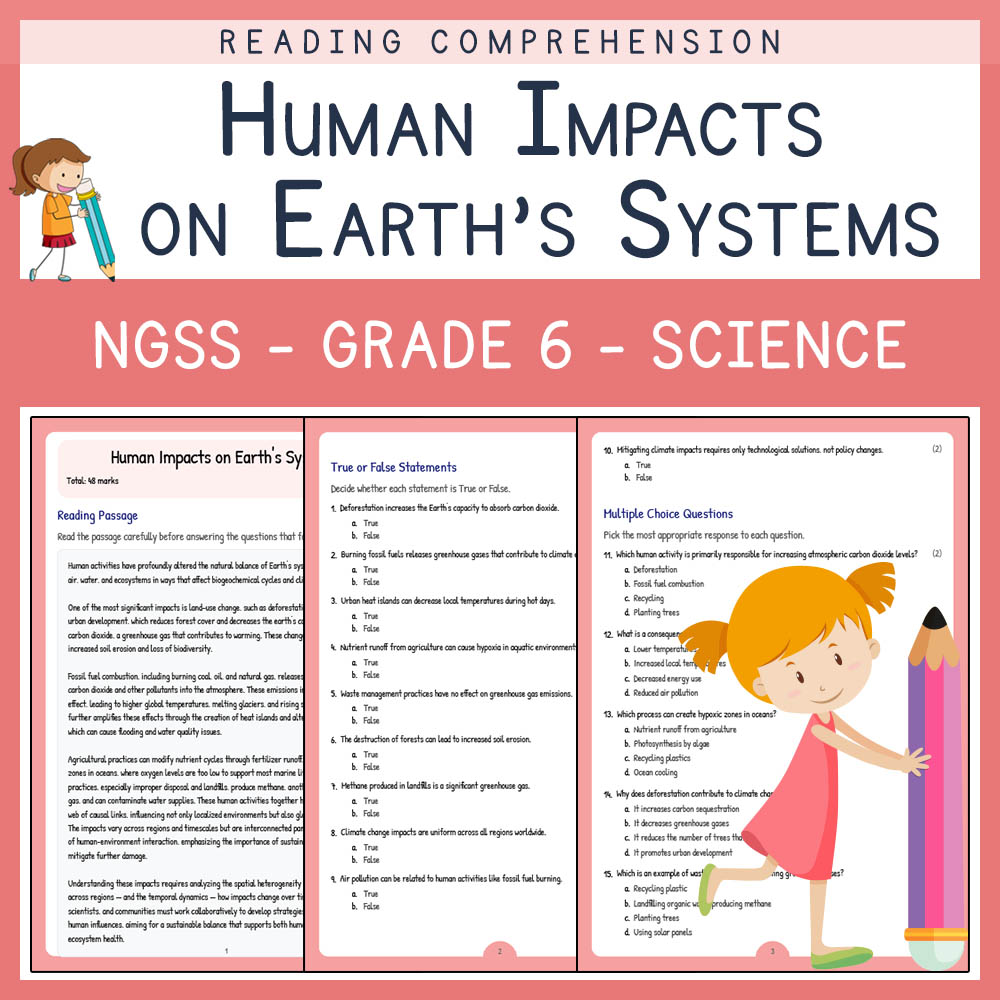
Grade 6 Science | Human Impacts on Earth's Systems Worksheet (Answer Key) | NGSS
Created byLumora LearningLearning Objectives
- Understand how human activities modify biogeochemical cycles and climate drivers.
- Identify examples of land-use change, fossil fuel combustion, agriculture, and waste management impacts.
- Analyze the causal links between human activities and environmental changes.
Instant download
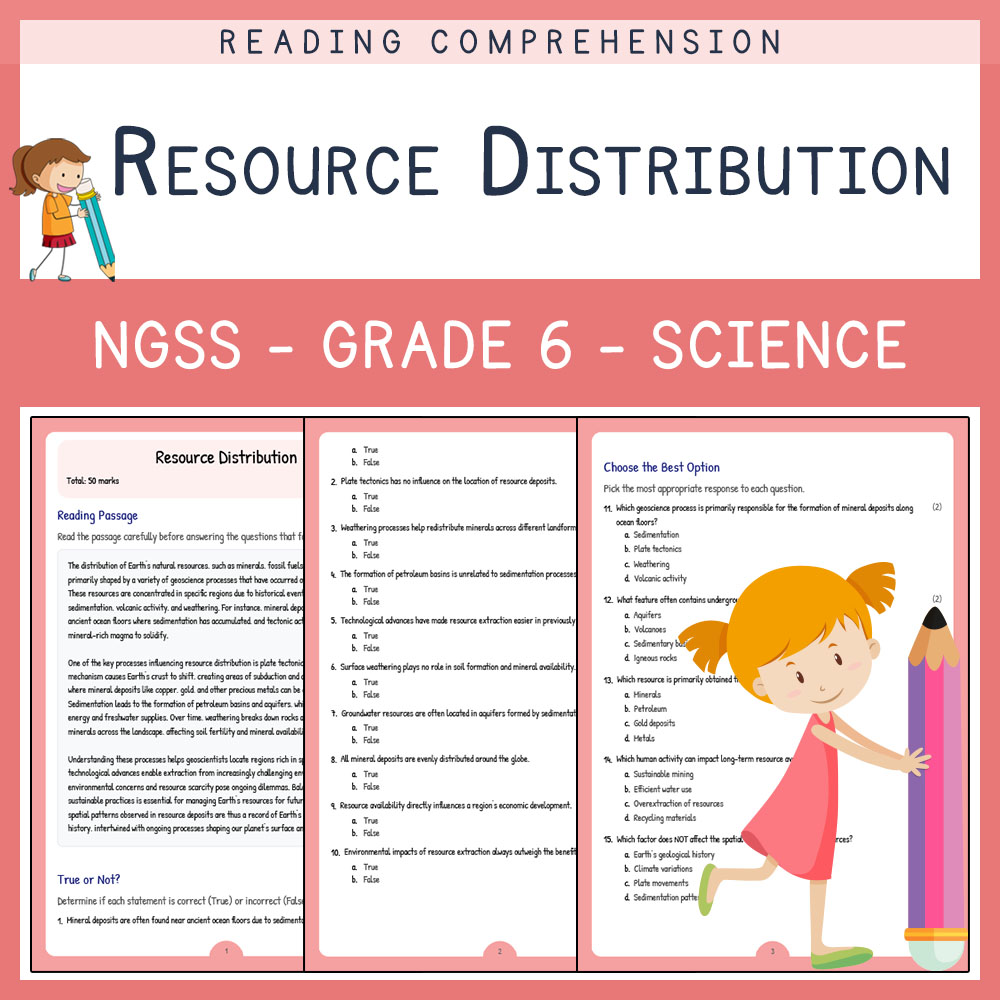
Grade 6 Science | Resource Distribution Worksheet | NGSS-Aligned
Created byLumora LearningLearning Objectives
- Understand the geological processes that influence the distribution of mineral, energy, and groundwater resources.
- Analyze spatial patterns in resource deposits and their relation to Earth's geological history.
- Evaluate societal and technological factors affecting resource extraction and long-term availability.
Instant download

Science Grade 6 Water Cycle Worksheet | NGSS-Aligned Assessment
 Created bySkylark Worksheets
Learning Objectives
- Explain the main processes of the water cycle: evaporation, condensation, precipitation, runoff, infiltration, and groundwater storage.
- Trace how energy from the Sun and gravity move water through different reservoirs on Earth.
- Use conceptual and graphical models to describe mass transfer and energy flows in oceans, ice, rivers, and aquifers.
Also included in: Grade 6 Earth & Climate Systems Science Lesson Bundle | NGSS Worksheets +1 more
Instant download

Climate Systems Worksheet Grade 6 Science | NGSS Assessment
Created bySkylark WorksheetsLearning Objectives
- Explain how uneven solar heating and Earth’s rotation drive global atmospheric circulation.
- Describe the roles of Hadley, Ferrel, and polar cells in forming trade winds and westerlies.
- Connect ocean currents and thermohaline circulation to heat transport and moisture distribution.
Also included in: Grade 6 Earth & Climate Systems Science Lesson Bundle | NGSS Worksheets +1 more
Instant download
About Grade 6 Science Worksheets
Explore Grade 6 Science worksheets for classwork, homework, or review. Our 5,969 printables download instantly as PDFs.
MyTeachingSheets worksheets are made by real teacher-authors and checked before they go live. Download any as a print-ready PDF for lessons, homework, or independent practice — most include answer keys, and previews are always free.