
Grade 6 Science Worksheets
5,969 worksheets
Grade 6 System Interactions Worksheet | NGSS Science Activity & Notes
 Created byAmber Owl Education
Learning Objectives
- Explain how Earth’s systems (geosphere, hydrosphere, atmosphere, biosphere) interact by transferring matter and energy.
- Use simple models to describe how feedbacks can change system behavior over time (from seasons to geologic time).
- Identify examples of energy sources, energy sinks, and phase-change energy transfers in Earth system processes.
Also included in: Grade 6 Science Earth Systems & Climate Lesson Bundle | NGSS +1 more
Instant download
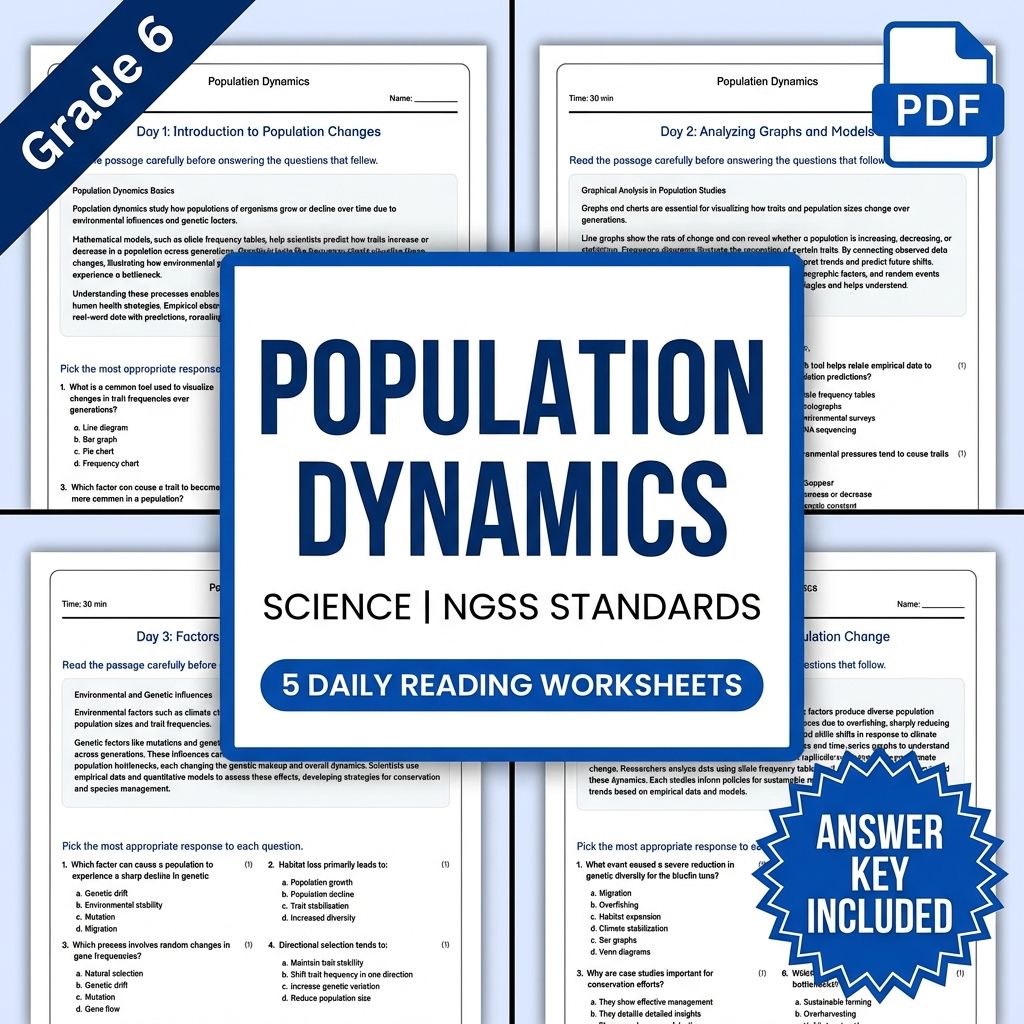
Grade 6 Science – Population Dynamics Daily Reading Worksheet (PDF + Answer Key)
 Created byCopper Leaf Classroom
Learning Objectives
- Understand how trait frequencies and population sizes change over generations in response to environmental factors.
- Interpret graphical data such as frequency charts and time-series graphs to analyze population trends.
- Apply proportional reasoning and simple models to predict and compare scenarios like shifts, stability, and bottlenecks.
Instant download
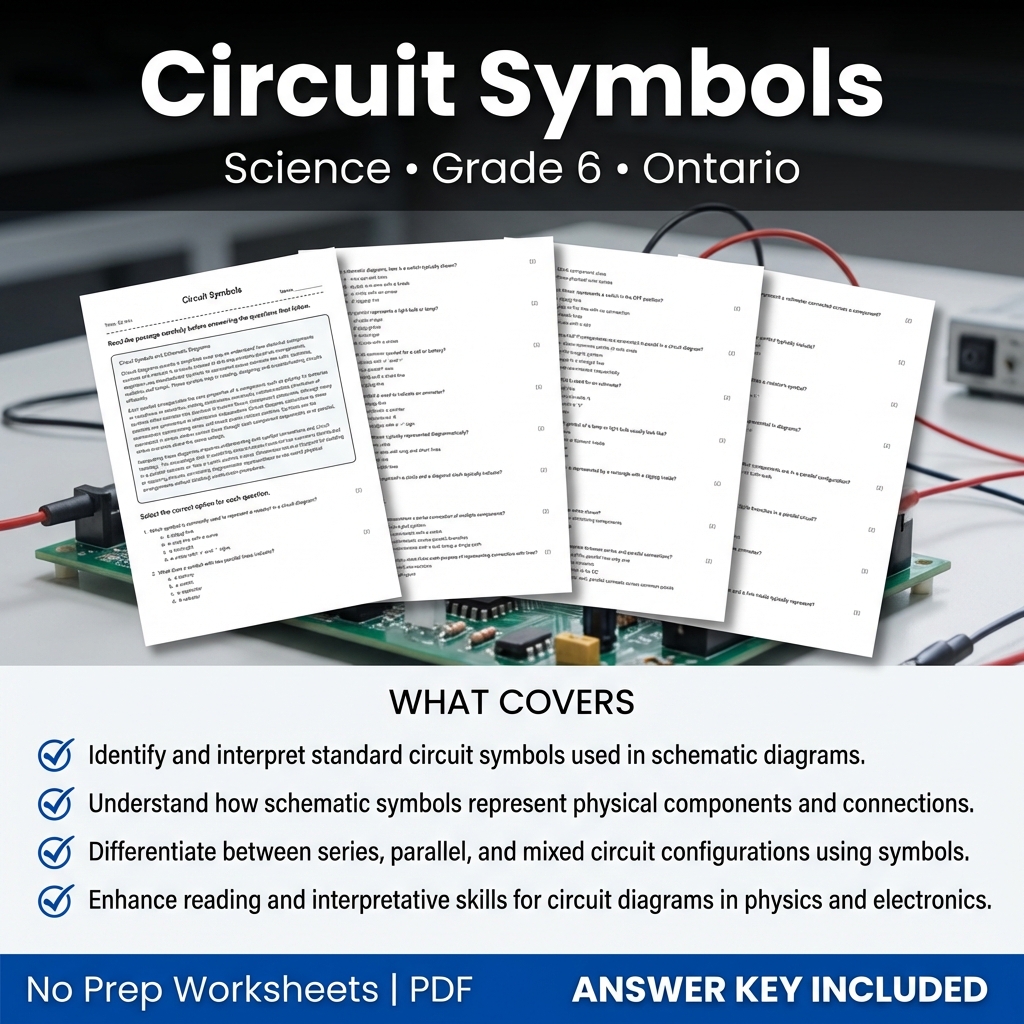
Grade 6 Science Worksheet on Circuit Symbols | Ontario Standards
 Created byCoral Reef Learning
Learning Objectives
- Identify and interpret standard circuit symbols used in schematic diagrams.
- Understand how schematic symbols represent physical components and connections.
- Differentiate between series, parallel, and mixed circuit configurations using symbols.
Instant download
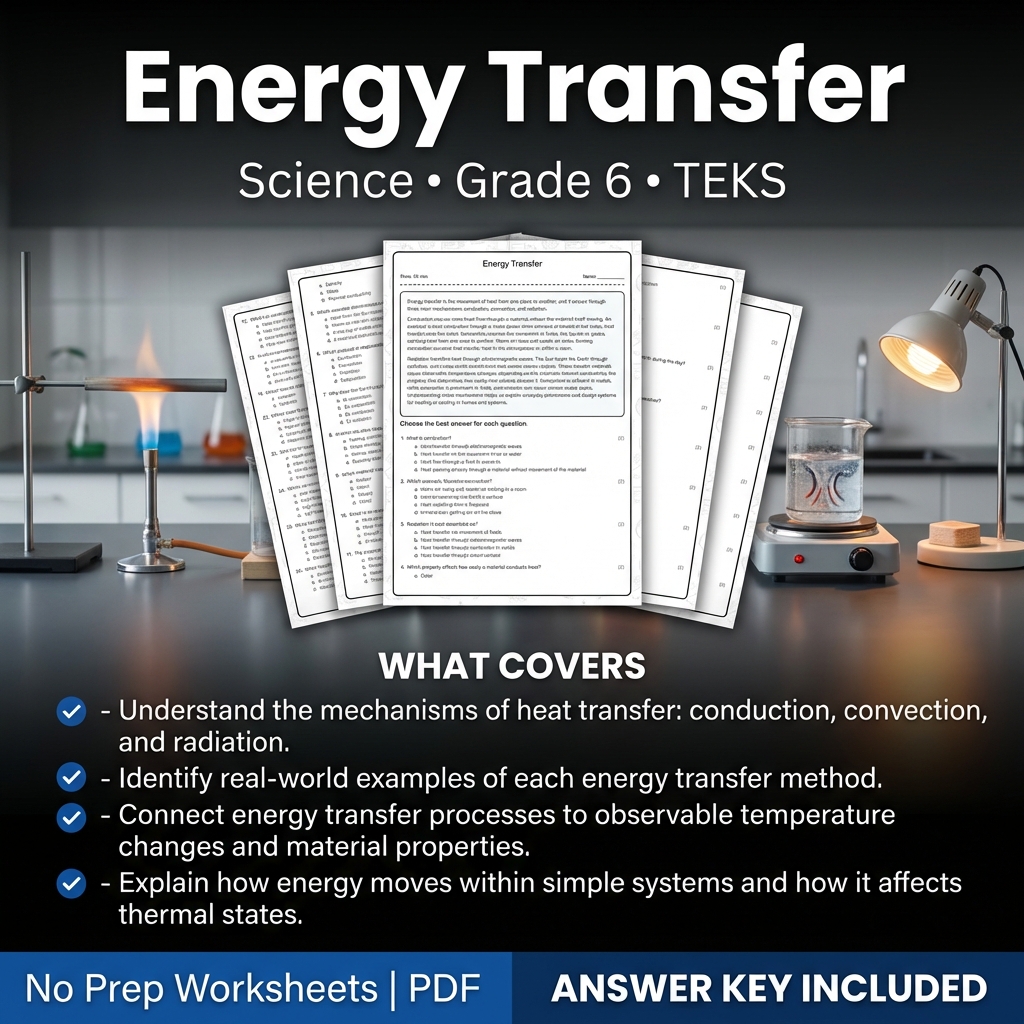
Energy Transfer Worksheet for Grade 6 Science | TEKS Aligned Practice
Created byCoral Reef LearningLearning Objectives
- Understand the mechanisms of heat transfer: conduction, convection, and radiation.
- Identify real-world examples of each energy transfer method.
- Connect energy transfer processes to observable temperature changes and material properties.
Instant download

Adaptation and Speciation Worksheet | NGSS Grade 6 Evolution Activity
WCreated byWorksheet HavenLearning Objectives
- Understand the basic processes of adaptation and speciation.
- Identify how environmental and genetic factors contribute to species divergence.
- Recognize evidence that supports the occurrence of speciation events.
Instant download

Data Representation Assessment | TEKS Grade 6 Science Printable Worksheet
 Created byPrism Point Learning
Learning Objectives
- Understand key concepts related to Science
- Apply knowledge through practice questions
- Demonstrate comprehension of the material
Also included in: Scientific Inquiry and Processes Grade 6 Science Lesson Bundle | TEKS
Instant download

Grade 6 Science – Mass Conservation & Atoms Daily Reading Worksheet
 Created byBright Mind Resources
Learning Objectives
- Explain the principle of mass conservation in chemical reactions
- Identify how atoms are conserved even when substances change form
- Describe the concept of a closed system in chemical processes
Also included in: Grade 6 Matter Science Daily Reading Worksheets Lesson Bundle | CA Standards +1 more
Instant download
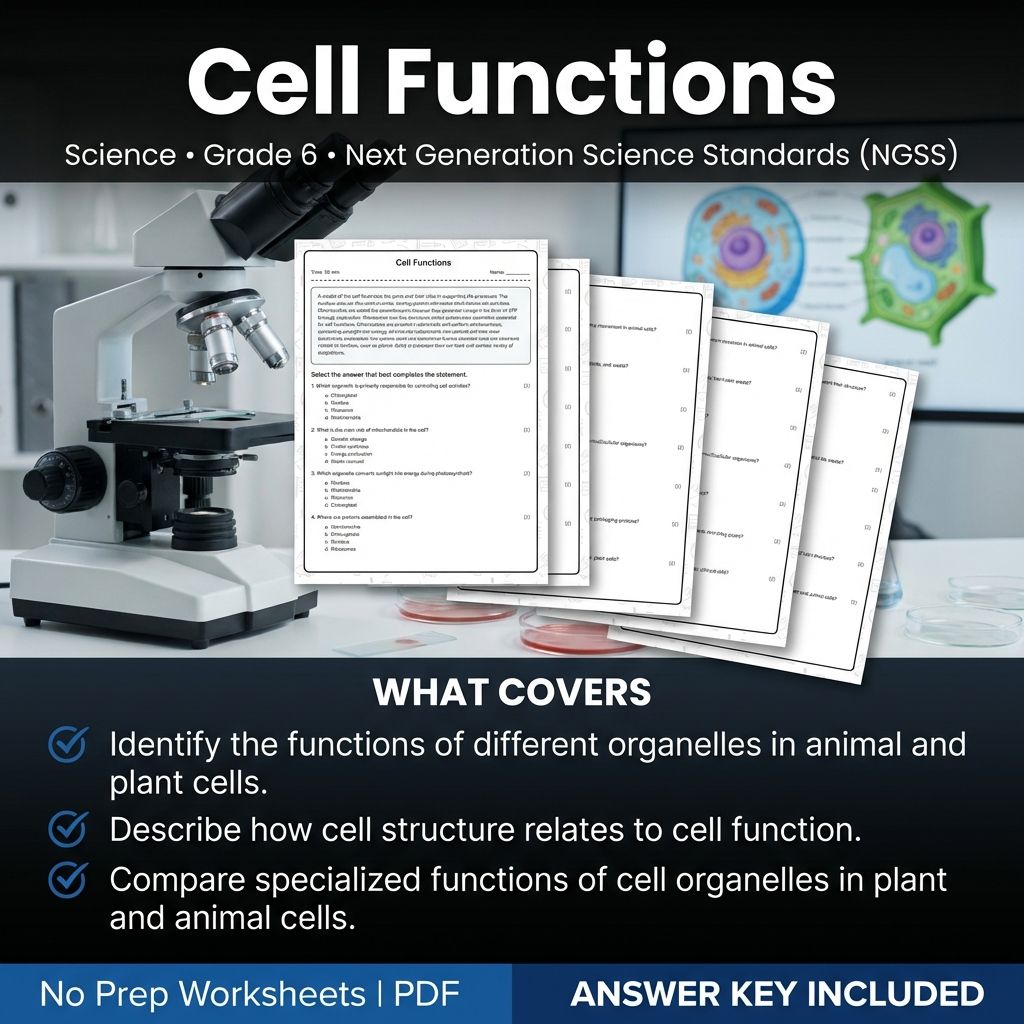
6th Grade Science | Cell Functions Worksheet & Answer Key (Printable PDF)
Created byCoral Reef LearningLearning Objectives
- Identify the functions of different organelles in animal and plant cells.
- Describe how cell structure relates to cell function.
- Compare specialized functions of cell organelles in plant and animal cells.
Instant download
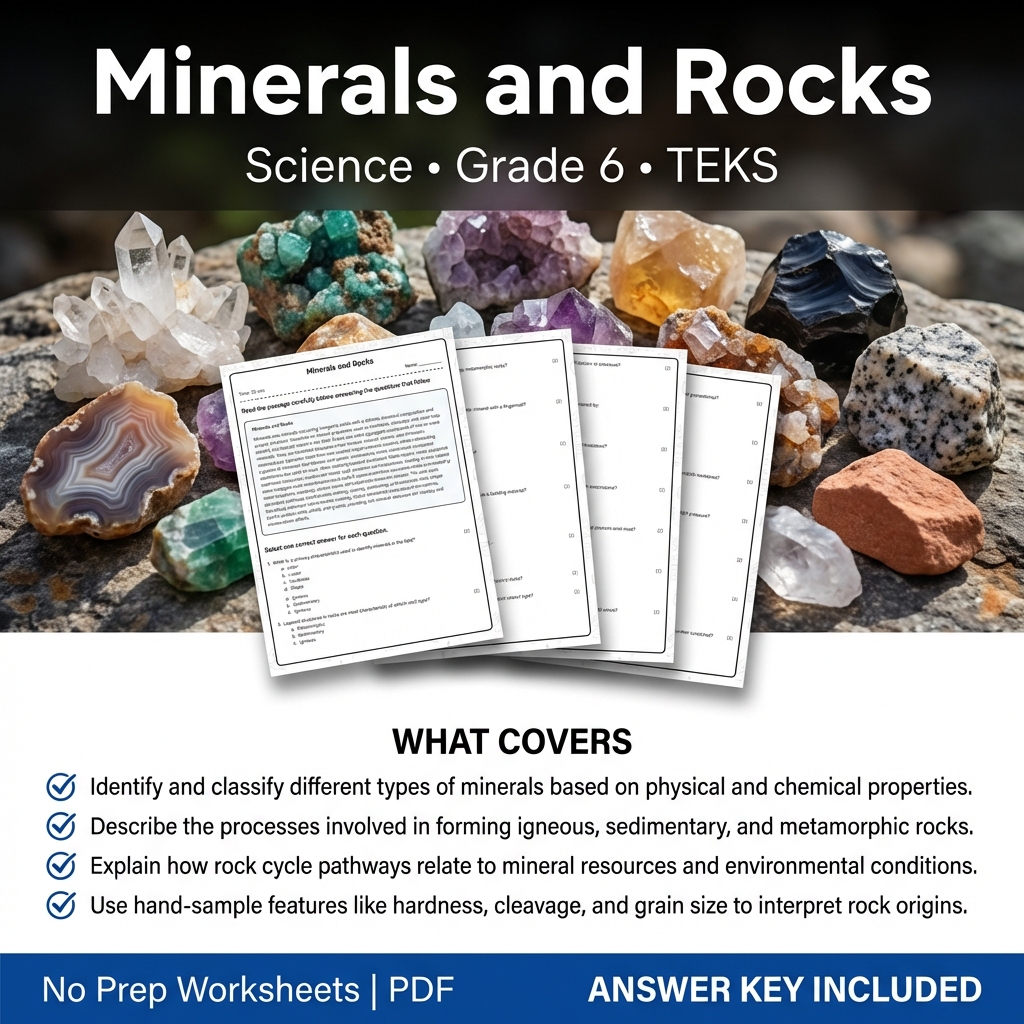
Grade 6 Science Worksheet on Minerals and Rocks | TEKS Aligned Assessment
Created byCoral Reef LearningLearning Objectives
- Identify and classify different types of minerals based on physical and chemical properties.
- Describe the processes involved in forming igneous, sedimentary, and metamorphic rocks.
- Explain how rock cycle pathways relate to mineral resources and environmental conditions.
Instant download
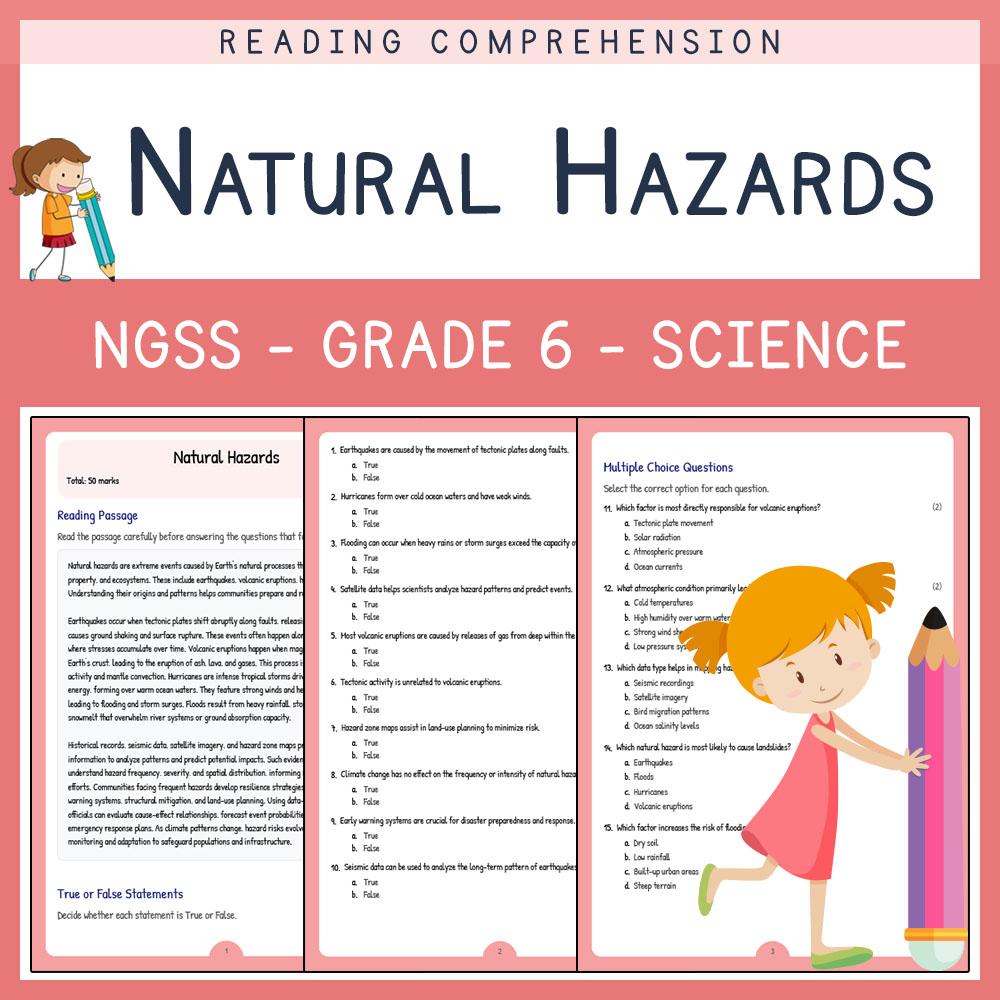
Grade 6 Science | Natural Hazards Worksheet ( Answer Key) | NGSS-Aligned
 Created byLumora Learning
Learning Objectives
- Explain the causes and effects of various natural hazards such as earthquakes, volcanoes, hurricanes, and floods.
- Identify patterns and relationships among tectonic processes, atmospheric conditions, and hydrological cycles related to hazards.
- Analyze historical data, seismic, and satellite evidence to evaluate hazard risks and impacts on communities.
Instant download
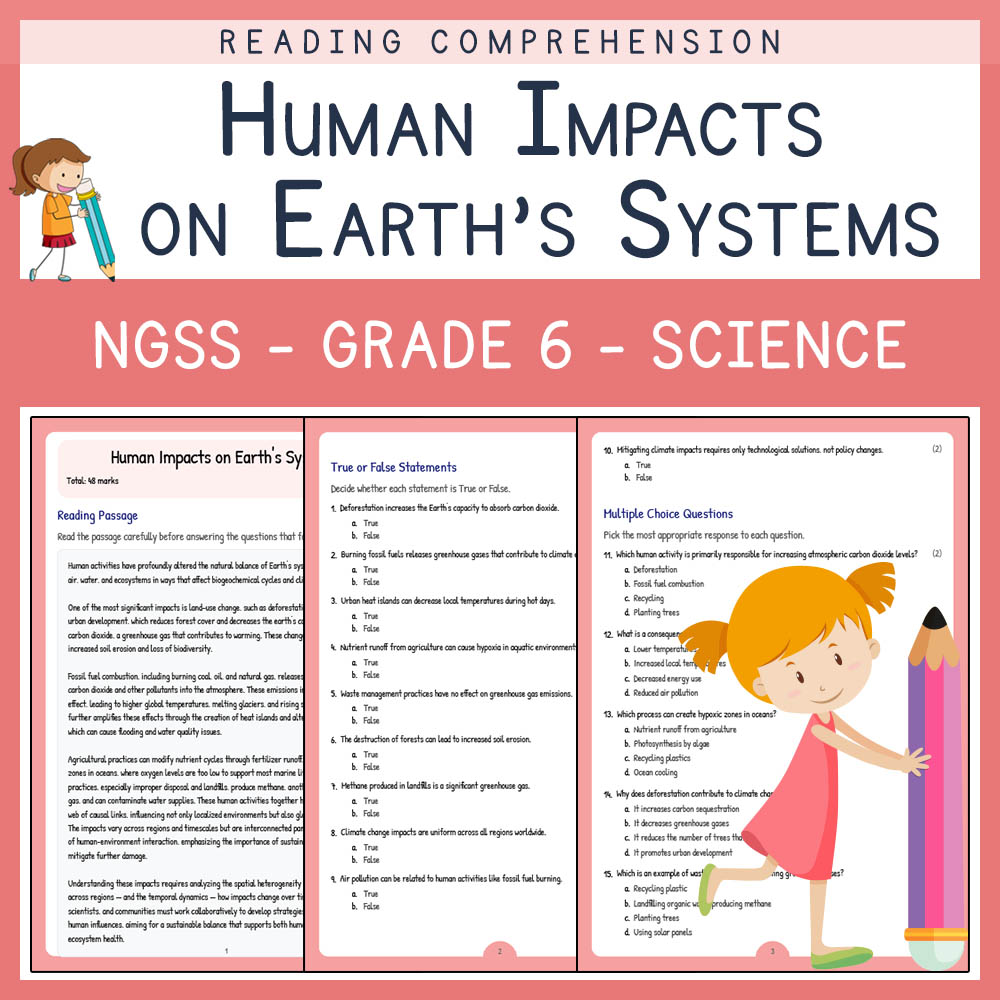
Grade 6 Science | Human Impacts on Earth's Systems Worksheet (Answer Key) | NGSS
Created byLumora LearningLearning Objectives
- Understand how human activities modify biogeochemical cycles and climate drivers.
- Identify examples of land-use change, fossil fuel combustion, agriculture, and waste management impacts.
- Analyze the causal links between human activities and environmental changes.
Instant download
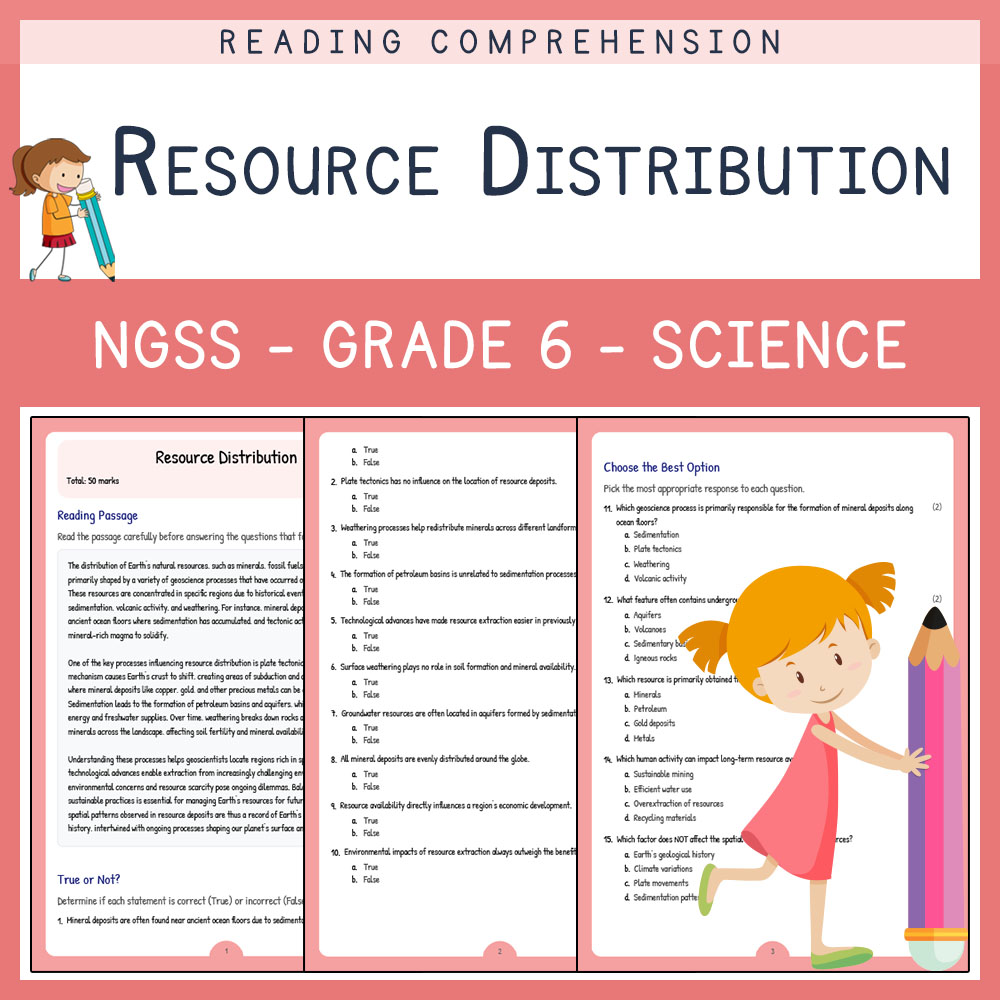
Grade 6 Science | Resource Distribution Worksheet | NGSS-Aligned
Created byLumora LearningLearning Objectives
- Understand the geological processes that influence the distribution of mineral, energy, and groundwater resources.
- Analyze spatial patterns in resource deposits and their relation to Earth's geological history.
- Evaluate societal and technological factors affecting resource extraction and long-term availability.
Instant download

Science Grade 6 Water Cycle Worksheet | NGSS-Aligned Assessment
 Created bySkylark Worksheets
Learning Objectives
- Explain the main processes of the water cycle: evaporation, condensation, precipitation, runoff, infiltration, and groundwater storage.
- Trace how energy from the Sun and gravity move water through different reservoirs on Earth.
- Use conceptual and graphical models to describe mass transfer and energy flows in oceans, ice, rivers, and aquifers.
Also included in: Grade 6 Earth & Climate Systems Science Lesson Bundle | NGSS Worksheets +1 more
Instant download

Climate Systems Worksheet Grade 6 Science | NGSS Assessment
Created bySkylark WorksheetsLearning Objectives
- Explain how uneven solar heating and Earth’s rotation drive global atmospheric circulation.
- Describe the roles of Hadley, Ferrel, and polar cells in forming trade winds and westerlies.
- Connect ocean currents and thermohaline circulation to heat transport and moisture distribution.
Also included in: Grade 6 Earth & Climate Systems Science Lesson Bundle | NGSS Worksheets +1 more
Instant download

Science Grade 6: Weather Patterns Worksheet | NGSS Standard Grade 6 Science
Created bySkylark WorksheetsLearning Objectives
- Explain how air masses, pressure systems, and fronts interact to produce local and regional weather.
- Interpret surface weather maps, temperature/pressure measurements, and radar observations to describe precipitation and wind shifts.
- Use weather observations to describe severe events such as thunderstorms and squall lines.
Also included in: Grade 6 Earth & Climate Systems Science Lesson Bundle | NGSS Worksheets +1 more
Instant download
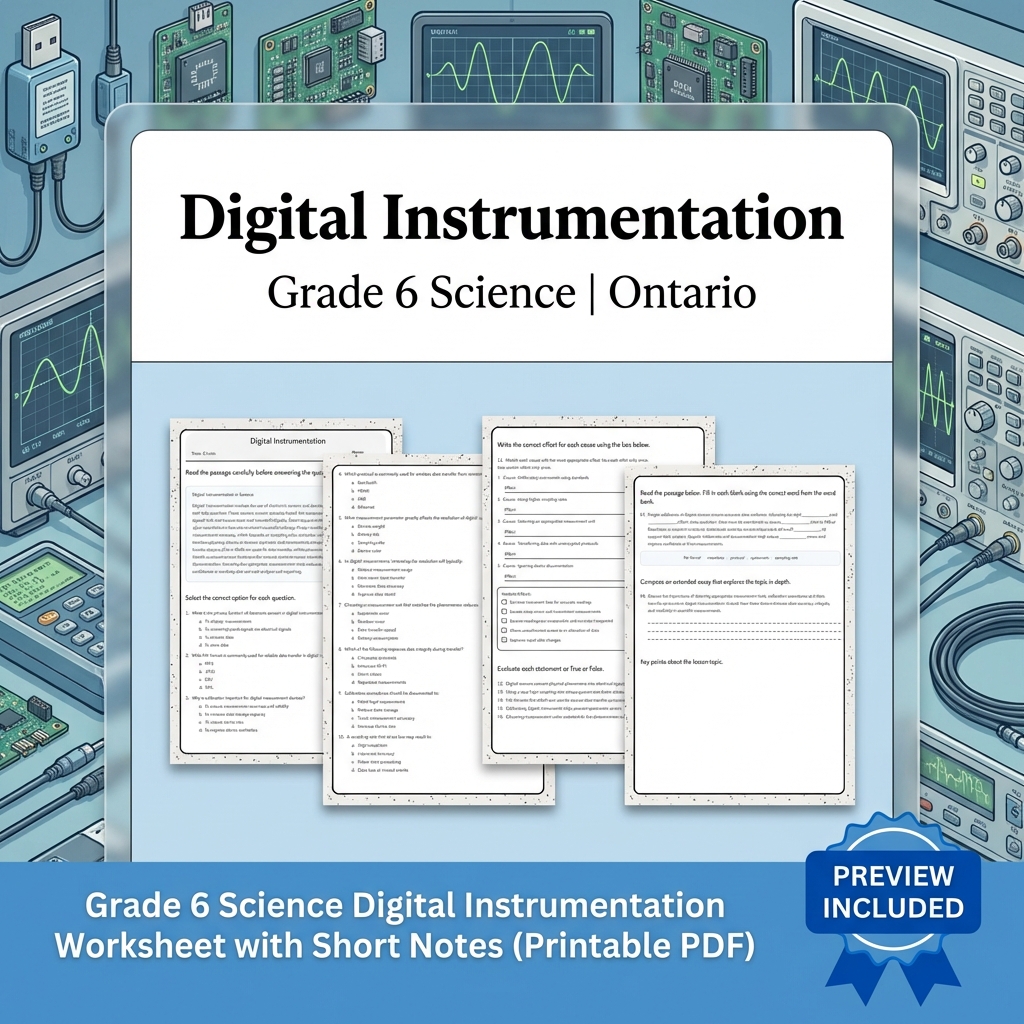
Grade 6 Science Digital Instrumentation Worksheet with Short Note
 Created byMeadowlark Worksheets
Learning Objectives
- Understand the components and functions of electronic sensors, data loggers, and digital probes.
- Learn proper techniques for calibration, operation, and data recording of digital measurement tools.
- Evaluate different sampling rates, resolutions, and units for accurate data collection.
Also included in: Grade 6 Science Lesson Bundle | Ontario Framework & Inquiry Skills +1 more
Instant download
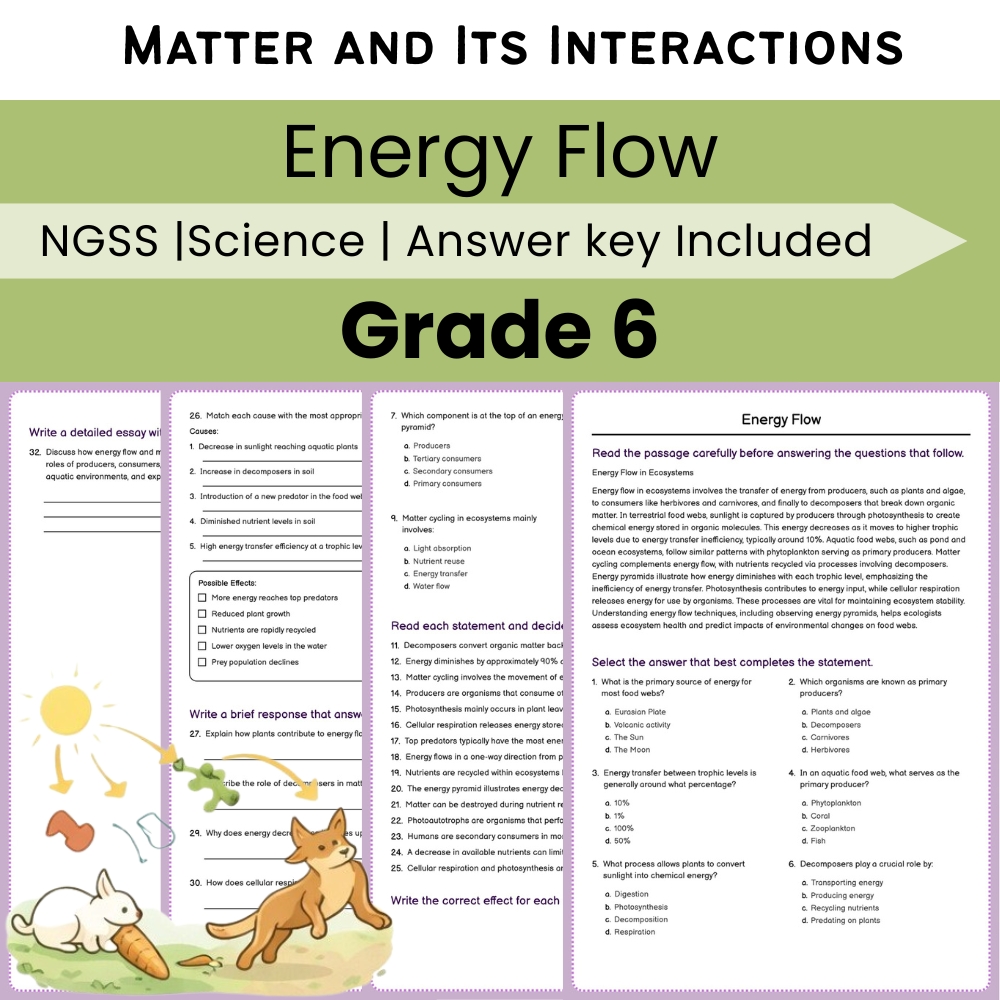
6th Grade Science | Energy Flow Worksheet (Printable PDF + Answer Key)
Learning Objectives
- Explain the components and flow of energy within terrestrial and aquatic food webs.
- Identify producers, consumers, and decomposers and their roles in ecosystems.
- Analyze energy pyramids and understand trophic transfer efficiency.
Also included in: Grade 6 Science | Ecosystems: Interactions, Energy & Dynamics NGSS Unit Bundle +1 more
Instant download
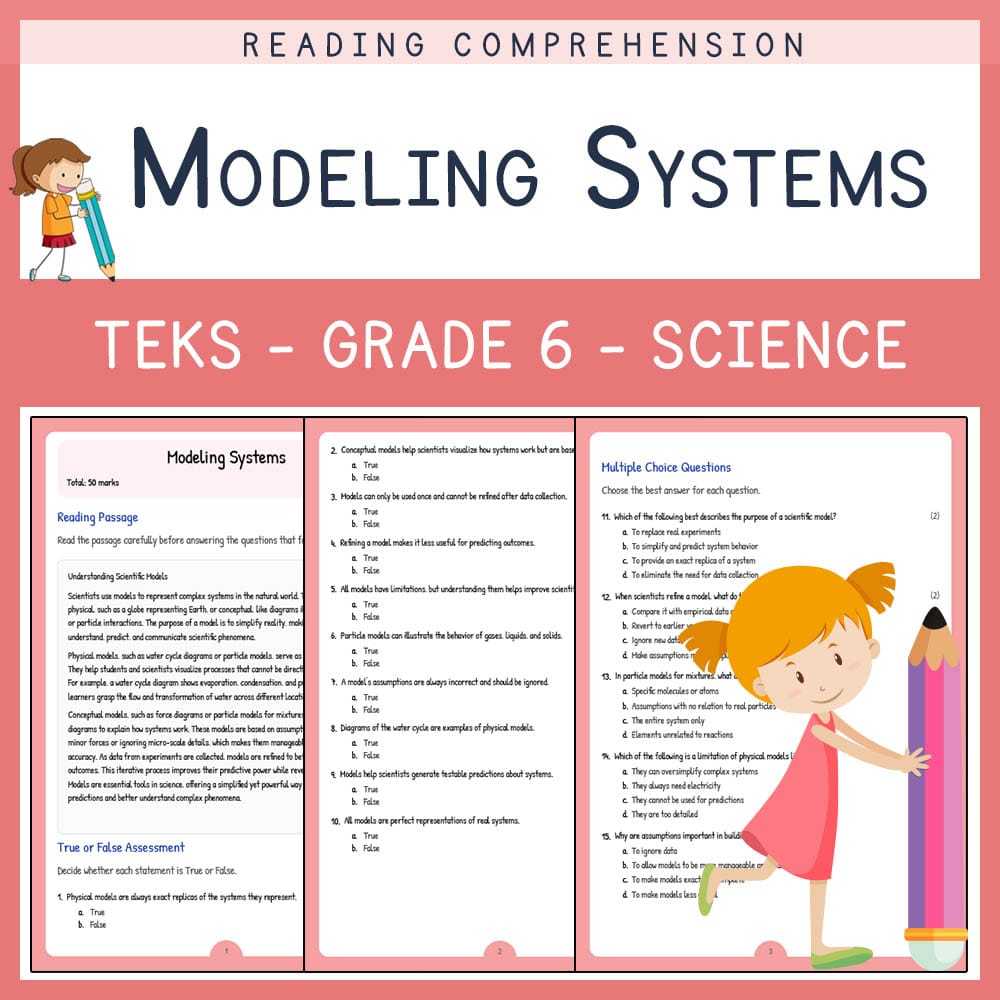
Grade 6 Science | Modeling Systems Worksheet | TEKS Alligned
Created byLumora LearningLearning Objectives
- Understand how physical and conceptual models represent scientific systems.
- Explain criteria for evaluating and refining models based on data.
- Interpret diagrams and particle models to predict outcomes.
Instant download
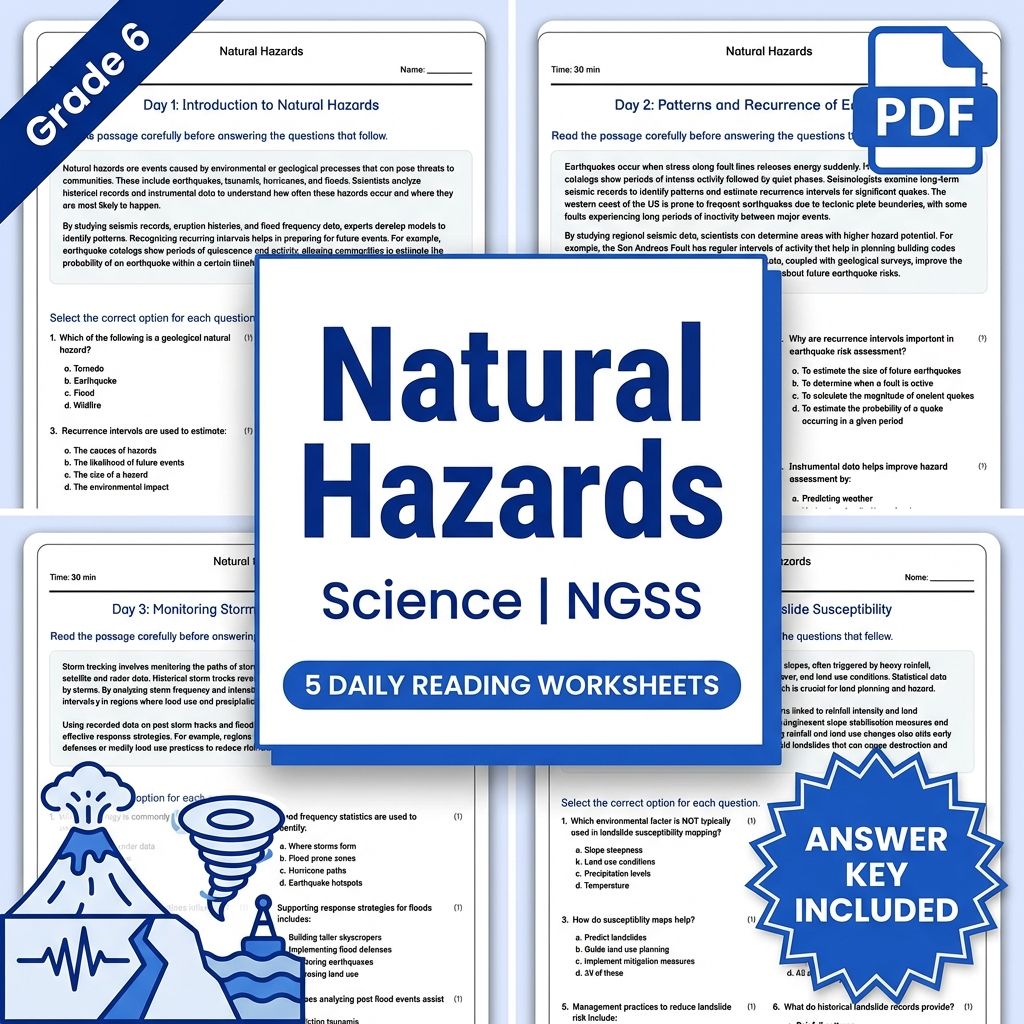
6th Grade Science | Natural Hazards Daily Reading Worksheet (PDF + Answer Key)
Created byCopper Leaf ClassroomLearning Objectives
- Identify different types of natural hazards and interpret observational data related to them.
- Understand patterns and recurrence intervals of natural hazards such as earthquakes and storms.
- Assess potential locations and magnitudes of hazards based on data analysis.
Instant download

Measuring Circuits Worksheet | Ontario Grade 6 Science Assessment
 Created byCedar Grove Learning
Learning Objectives
- Explain how current and voltage measurements characterize circuit behavior in different circuit configurations
- Describe how instrument placement affects the meaning of a reading in a circuit
- Interpret typical reading patterns to connect voltage/current values with component characteristics like resistance
Also included in: Grade 6 Electricity and Circuits Science lesson bundle: Ontario framework +1 more
Instant download

Energy and Power Worksheet | Ontario Grade 6 Science Assessment
Created byCedar Grove LearningLearning Objectives
- Explain power as the rate of energy transfer in electrical systems
- Relate electrical power to current and voltage using everyday circuit examples
- Describe how resistive components convert electrical energy into thermal energy and discuss efficiency
Also included in: Grade 6 Electricity and Circuits Science lesson bundle: Ontario framework +1 more
Instant download

Conductor Properties Worksheet | Ontario Grade 6 Science Assessment
Created byCedar Grove LearningLearning Objectives
- Explain how free electrons in materials allow electrical charge to move
- Describe typical metallic behaviour and how metals conduct electricity
- Identify factors that affect conductivity, including material type, temperature, and cross-sectional area
Also included in: Grade 6 Electricity and Circuits Science lesson bundle: Ontario framework +1 more
Instant download

Electrostatic Phenomena Worksheet | Grade 6 Science Ontario Standards
Created byCedar Grove LearningLearning Objectives
- Explain how static charge builds up through triboelectric effects and charge transfer
- Use the triboelectric series idea to predict which material tends to become positively or negatively charged
- Describe common electrostatic phenomena such as attraction, repulsion, and electrostatic discharge
Also included in: Grade 6 Electricity and Circuits Science lesson bundle: Ontario framework +1 more
Instant download

Grade 6 Biodiversity Patterns Worksheet | Ontario Science Activity
 Created byChalk and Compass
Learning Objectives
- Explain biodiversity using species richness, abundance, and evenness.
- Describe how transects and quadrats can be used to sample biodiversity.
- Interpret spatial biodiversity patterns in relation to habitat heterogeneity.
Also included in: Grade 6 Science Ecosystems, Adaptations & Biodiversity Lesson Bundle | Ontario +1 more
Instant download
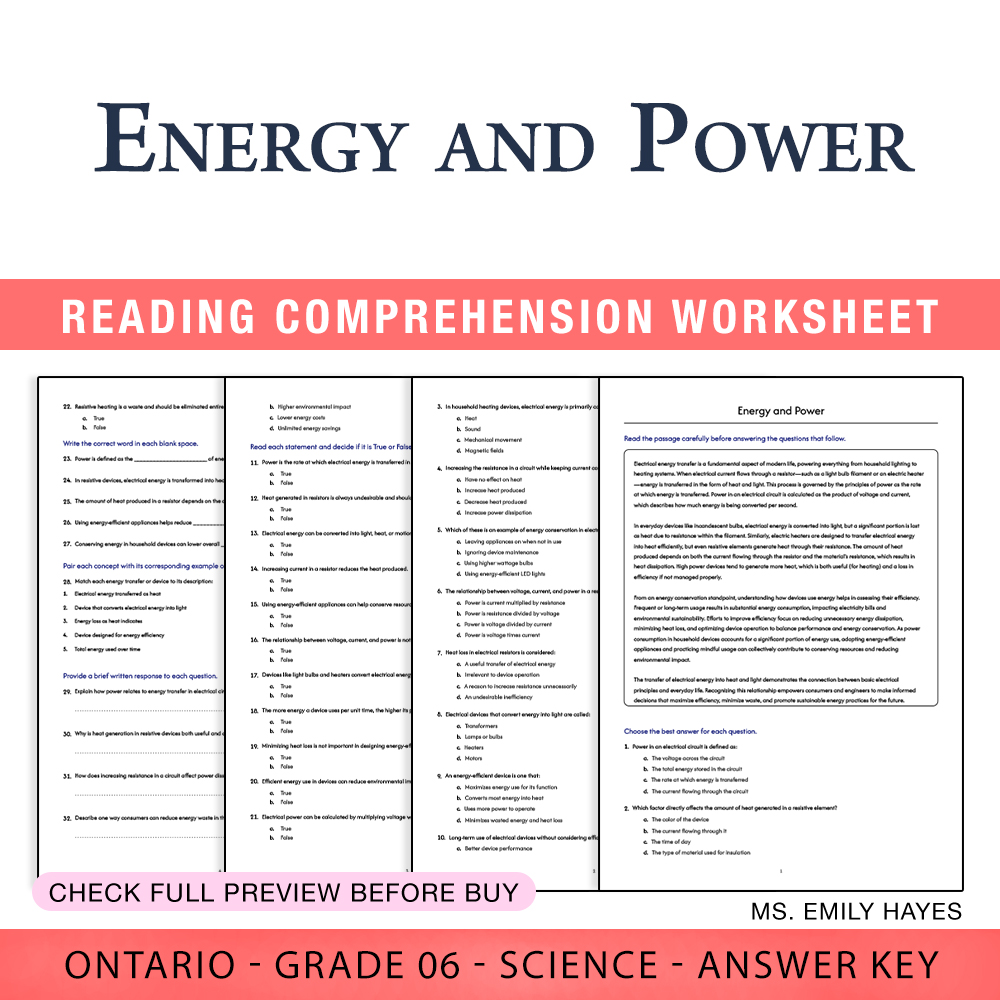
6th Grade Science | Energy and Power Worksheet (PDF + Answer Key)
Created byCopper Leaf ClassroomLearning Objectives
- Explain the concept of power as the rate of energy transfer in electrical circuits.
- Describe how electrical energy is converted into heat and light in various devices.
- Analyze the relationship between current, voltage, and power in resistive elements.
Instant download

Grade 6 Science — Worksheet MCQ Paper for Mastering Claim Evaluation
 Created byThe Resource Hub
Learning Objectives
- Understand and apply criteria for assessing the relevance and credibility of evidence.
- Evaluate the consistency of data with observed patterns and alternative hypotheses.
- Assess whether the scope of a claim matches the strength of the dataset.
Also included in: Grade 6 Science Unit | Evidence and Investigation Worksheets – Alberta Framework +1 more
Instant download
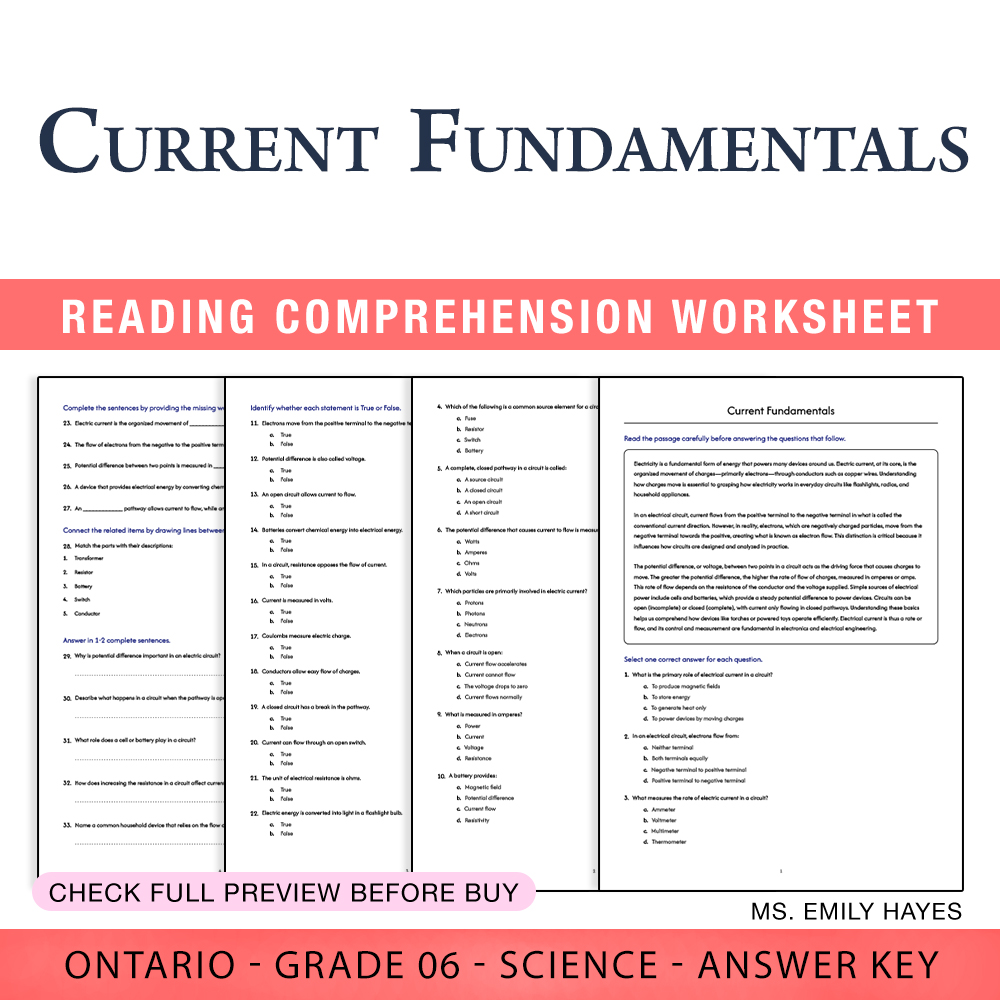
6th Grade Science | Current Fundamentals Worksheet (PDF + Answer Key)
Created byCopper Leaf ClassroomLearning Objectives
- Describe the nature of electric current as an organized movement of charges through a conductor.
- Distinguish between conventional current direction and electron flow.
- Explain potential difference as the driving force for current.
Instant download
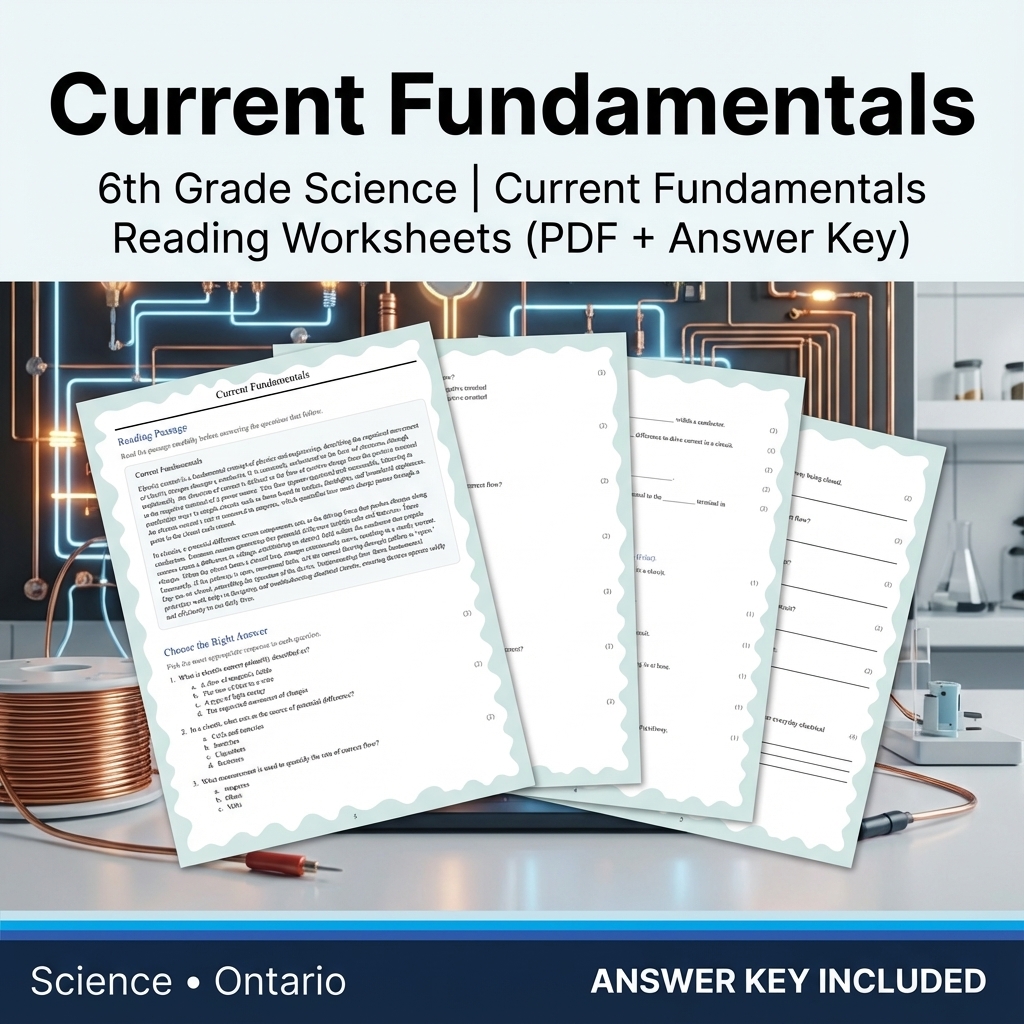
6th Grade Science | Current Fundamentals Reading Worksheets (PDF + Answer Key)
JCreated byJ.S SheetsLearning Objectives
- Describe the movement of electric charges as an organized current through conductors.
- Differentiate between conventional current flow and electron flow in circuits.
- Explain the concept of potential difference and its role as a driving force in current flow.
Also included in: Grade 6 Science Circuit & Electricity Unit Bundle – Worksheets & Answer Keys +1 more
Instant download
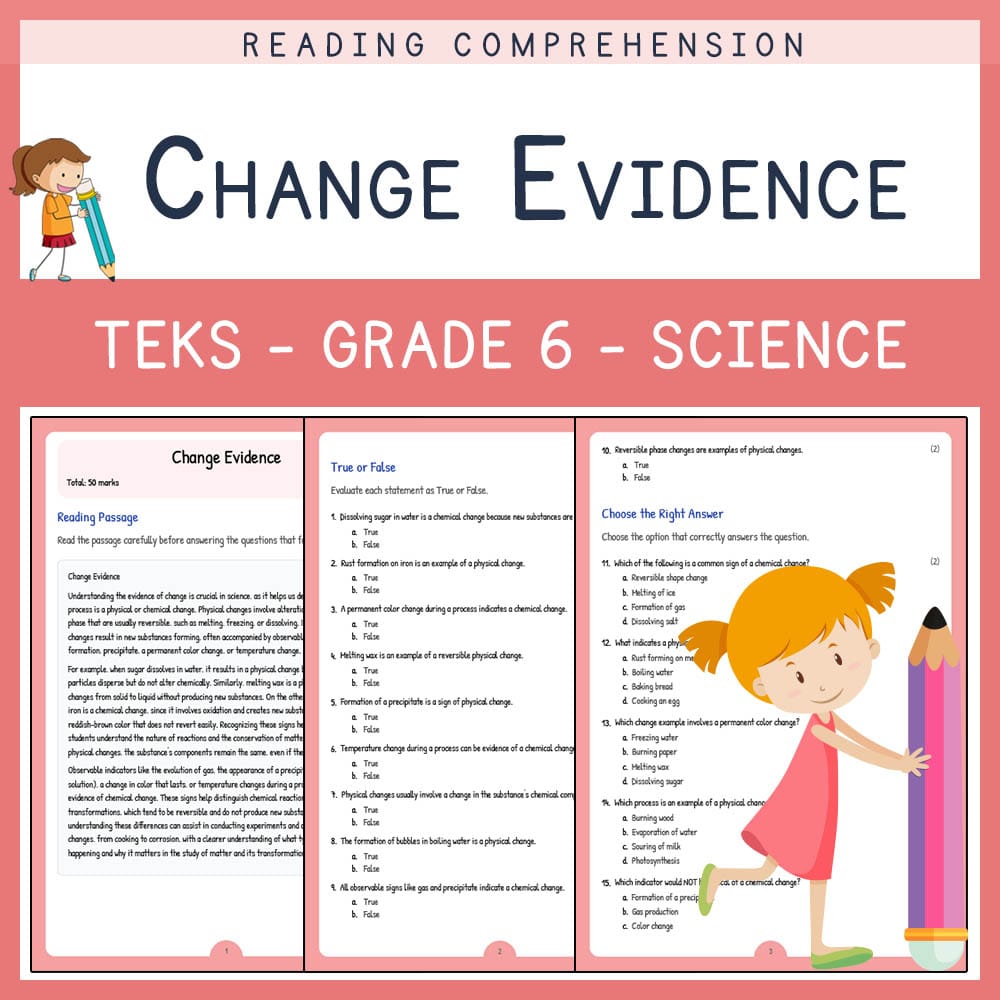
Grade 6 Science | Change Evidence Worksheet | TEKS-Aligned
Created byLumora LearningLearning Objectives
- Differentiate between physical and chemical changes based on observable indicators.
- Identify characteristic evidence of chemical changes such as gas formation, precipitate, color change, and temperature change.
- Understand that physical changes are often reversible and involve shape or phase alterations without changing substance composition.
Also included in: Grade 6 Science | Matter and Energy Lesson Bundle | TEKS Aligned
Instant download
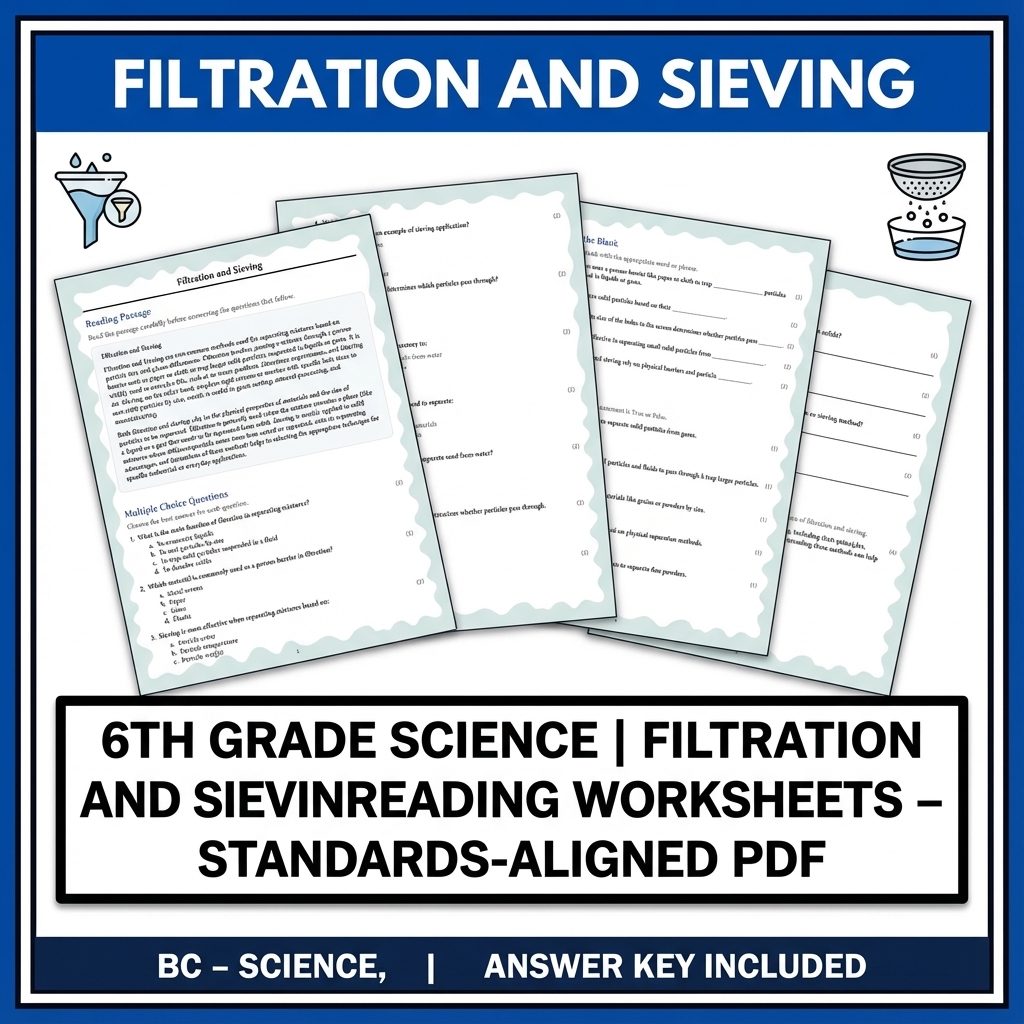
6th Grade Science | Filtration and Sieving Reading Worksheets
JCreated byJ.S SheetsLearning Objectives
- Understand the principles of filtration and sieving as methods for separating mixtures.
- Identify different materials used for porous barriers in filtration and sieving.
- Explain how particle size influences filtration and sieving effectiveness.
Instant download
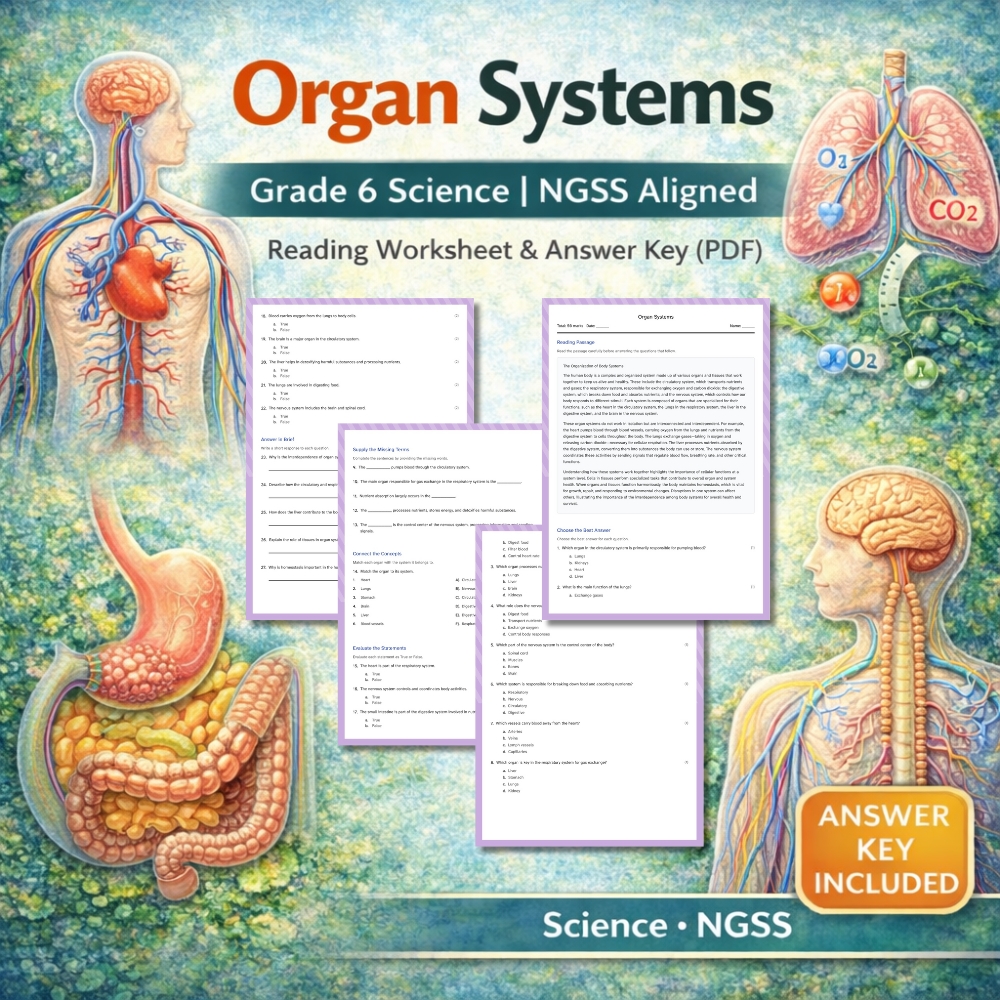
6th Grade Science | Organ Systems | Worksheet & Answer Key | NGSS Standards
Created byCedar Grove LearningLearning Objectives
- Identify the main organs involved in the circulatory, respiratory, digestive, and nervous systems.
- Explain how different organ systems interact and depend on each other to maintain body functions.
- Describe how tissues and organs work together to facilitate cellular functions and physiological outcomes.
Also included in: Grade 6 Science Worksheet Bundle | Cell Processes & Systems NGSS(PDF+Answer Key) +1 more
Instant download
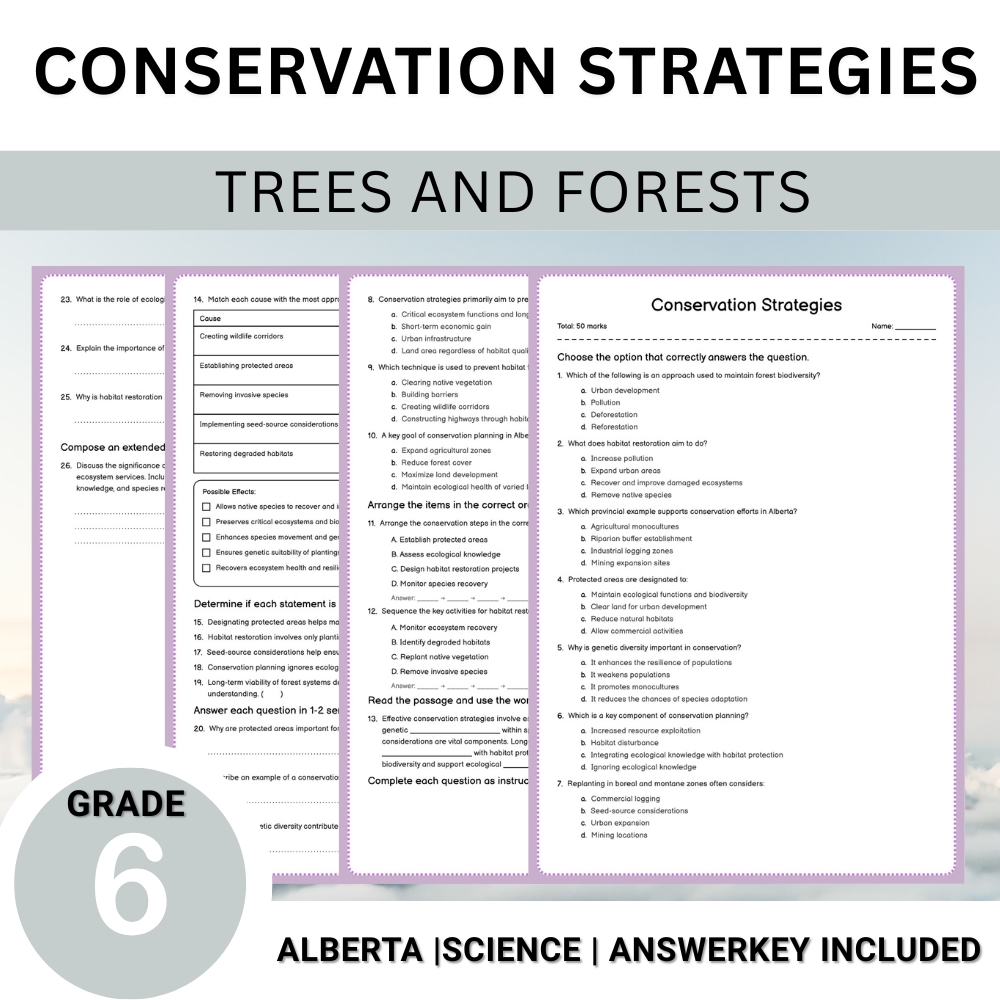
Grade 6 Science | Conservation Strategies Worksheet (Printable PDF + Answer Key)
Learning Objectives
- Identify different conservation strategies used to maintain biodiversity.
- Understand examples of conservation practices in Alberta landscapes.
- Describe the importance of habitat protection and ecological knowledge.
Also included in: Grade 6 Science | Tree Anatomy, Ecology & Conservation Unit Worksheet Bundle +1 more
Instant download

6th Grade Science | Variables Worksheet (Alberta Standards) (PDF)
 Created bySilver Birch Teaching
Learning Objectives
- Identify independent, dependent, and controlled variables in science investigations
- Use operational definitions and consistent measurement intervals to collect reliable data
- Explain why controls must be held constant to see true patterns in results
Also included in: Grade 6 Scientific Inquiry & Data Analysis Science Lesson Bundle: Alberta +1 more
Instant download
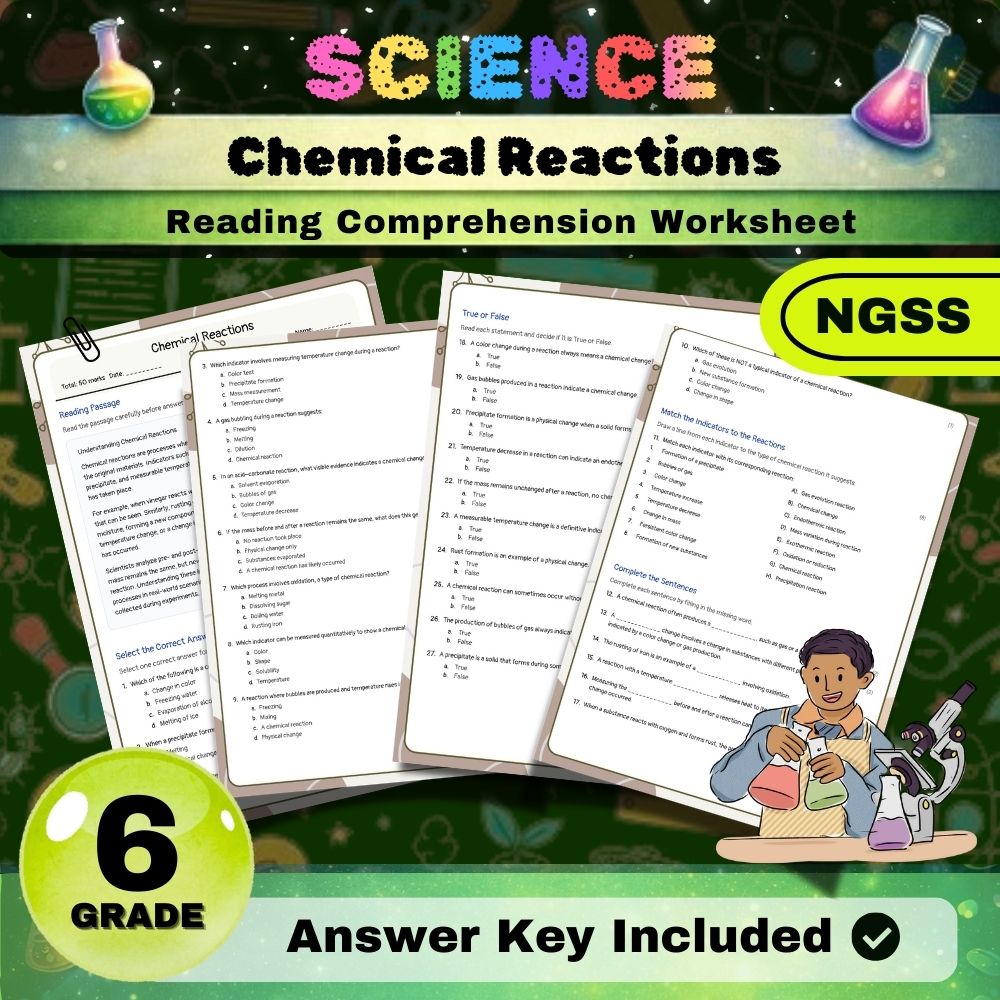
6th Grade Science – Chemical Reactions Worksheet (PDF) NGSS
 Created byMaple Path Learning
Learning Objectives
- Identify key indicators of chemical reactions through data analysis.
- Distinguish between physical and chemical changes using qualitative and quantitative evidence.
- Interpret pre- and post-interaction measurements to determine if a chemical reaction has occurred.
Also included in: Grade 6 Science| Matter, Chemical Reactions & Conservation NGSS Worksheet Bundle +1 more
Instant download

Grade 6 Population Change Worksheet | California Science Resource & Answer Key
 Created byEvergreen Desk Education
Learning Objectives
- Explain how birth rates, death rates, and resource availability can change a population over time.
- Interpret population data to infer whether a population is increasing or decreasing.
- Connect seasonal or habitat resource changes to real patterns in population counts.
Instant download
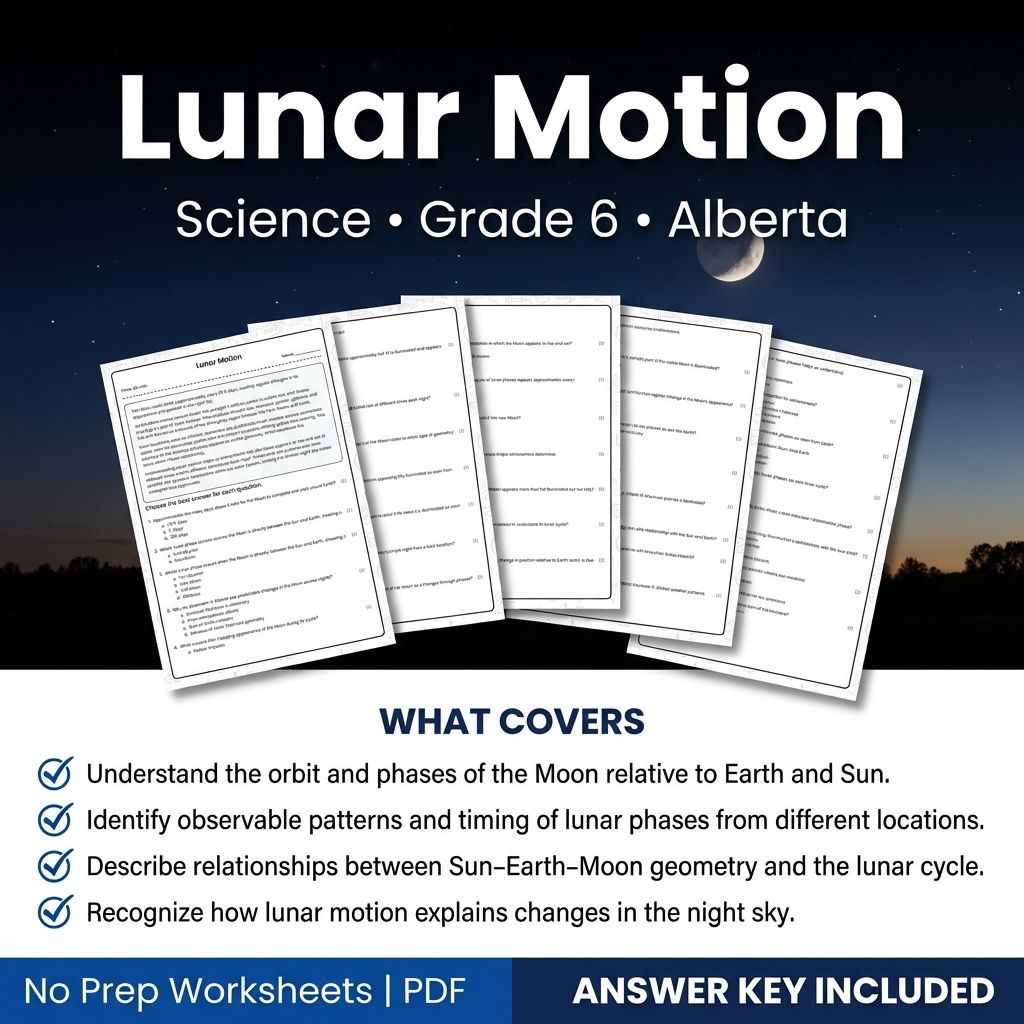
Grade 6 Science Worksheet on Lunar Motion | Alberta Standards
Created byCoral Reef LearningLearning Objectives
- Understand the orbit and phases of the Moon relative to Earth and Sun.
- Identify observable patterns and timing of lunar phases from different locations.
- Describe relationships between Sun–Earth–Moon geometry and the lunar cycle.
Instant download
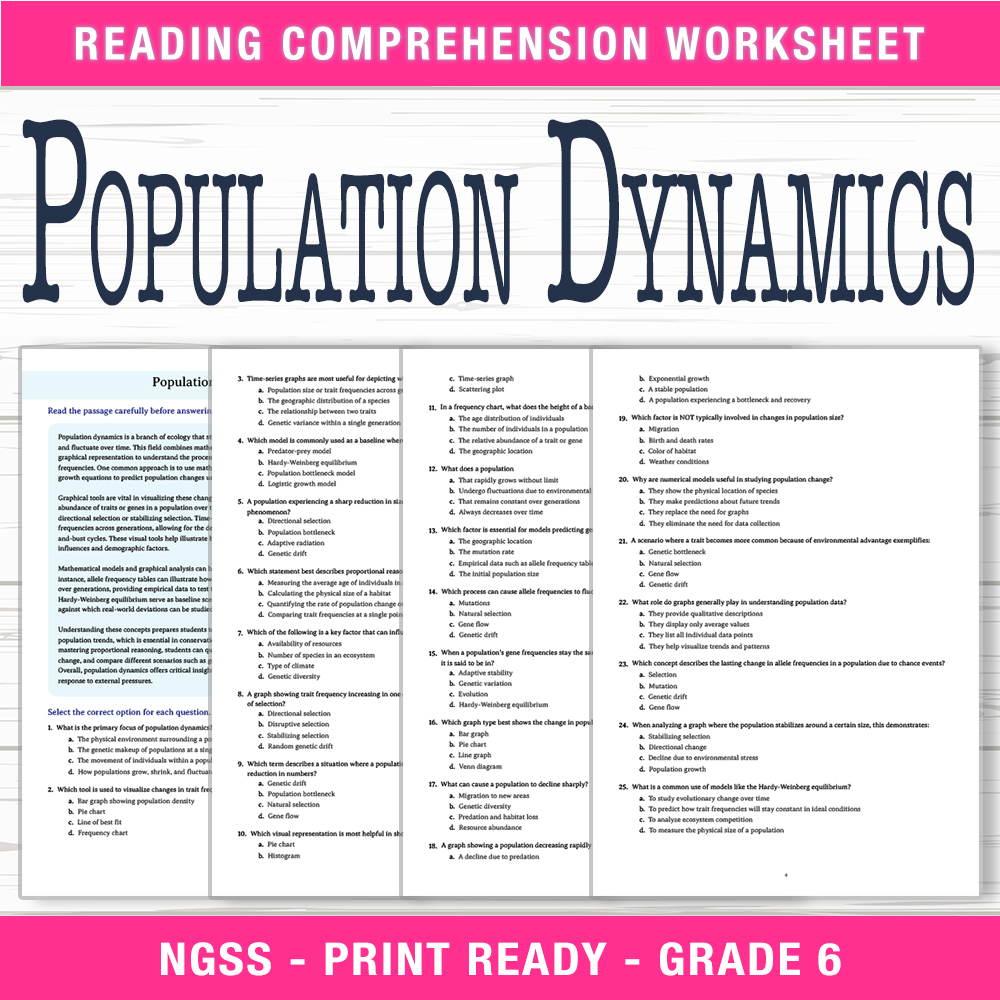
6th Grade Science | Population Dynamics Worksheet (PDF + Answer Key)
 Created byRiverstone Classroom
Learning Objectives
- Explain how trait frequencies and population sizes change over generations using mathematical models.
- Interpret and analyze graphical representations such as frequency charts and time-series graphs related to population change.
- Apply proportional reasoning to quantify rates of increase or decline in populations.
Instant download

Measurement Precision Assessment | TEKS Grade 6 Science Standards
Created byPrism Point LearningLearning Objectives
- Understand the conventions for reporting measurements in scientific experiments.
- Identify and interpret sources of measurement uncertainty and error.
- Apply appropriate significant figures and unit notation in recording data.
Also included in: Scientific Inquiry and Processes Grade 6 Science Lesson Bundle | TEKS
Instant download
Grade 6 Science Observation Techniques Worksheet – TEKS-Aligned (PDF)
Created byBright Mind ResourcesLearning Objectives
- Define systematic observation and data collection strategies.
- Differentiate between qualitative notes and quantitative measurements.
- Identify common observation instruments like rulers, balances, and thermometers.
Instant download
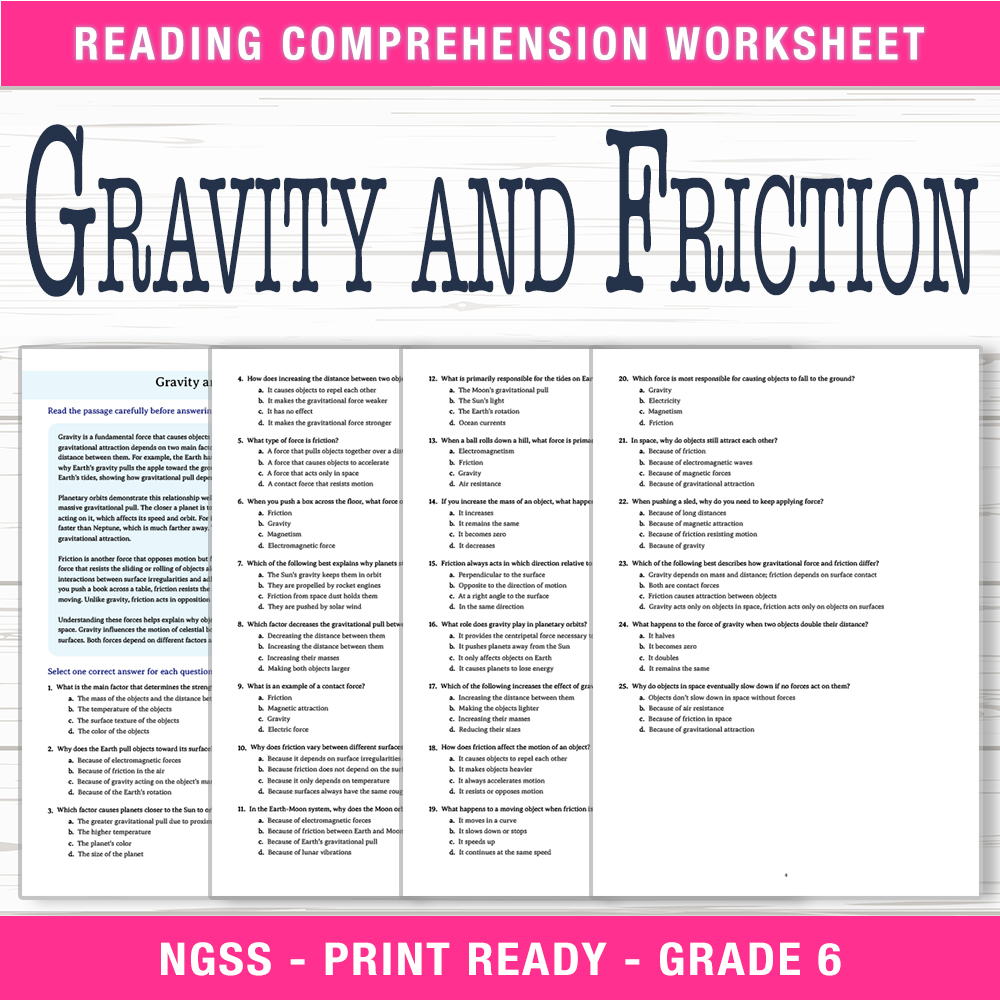
6th Grade Science | Gravity and Friction Worksheet (PDF + Answer Key)
Created byRiverstone ClassroomLearning Objectives
- Explain how gravitational forces depend on mass and distance using real-world examples.
- Differentiate between gravitational forces and contact forces such as friction.
- Describe how gravity influences planetary orbits and falling objects.
Instant download
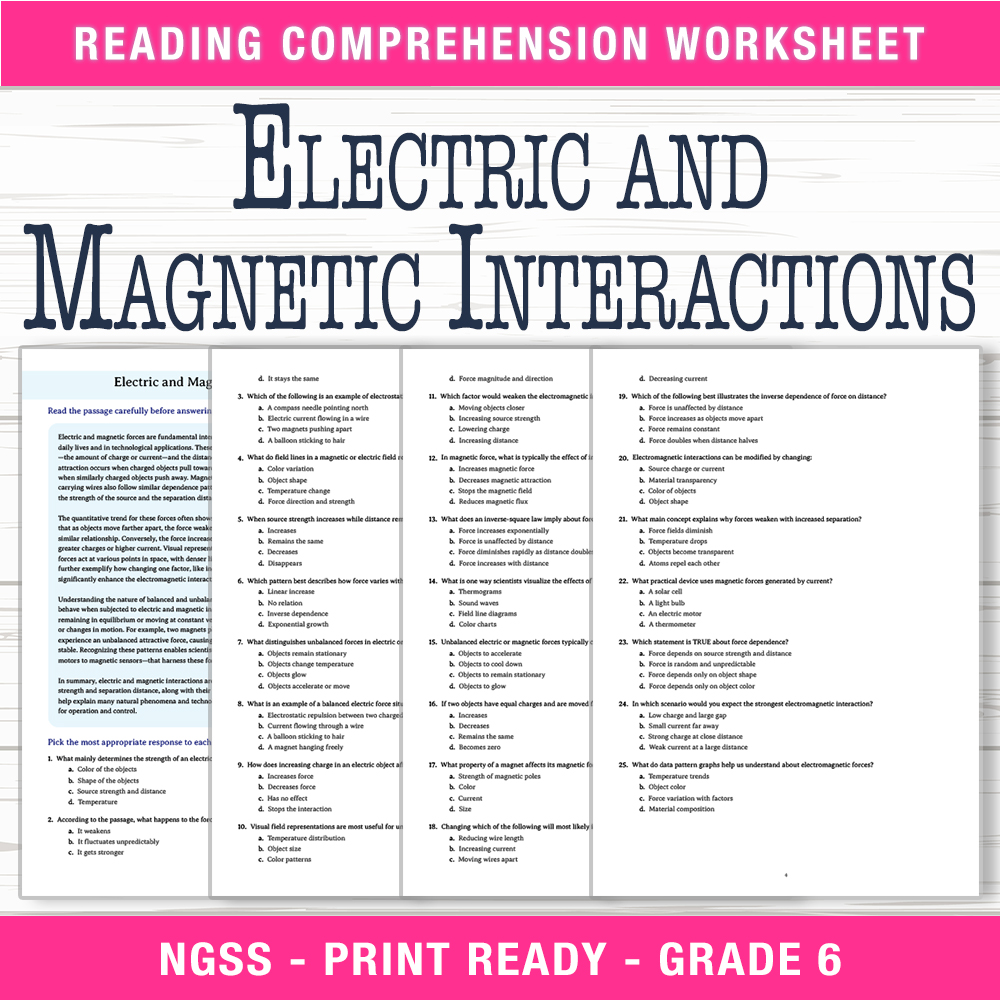
6th Grade Science – Electric and Magnetic Interactions (PDF + Answer Key)
Created byRiverstone ClassroomLearning Objectives
- Explain how electric and magnetic forces depend on source strength and distance.
- Describe examples of electrostatic and magnetic forces in real-world scenarios.
- Interpret qualitative data patterns and field representations related to electromagnetic interactions.
Instant download
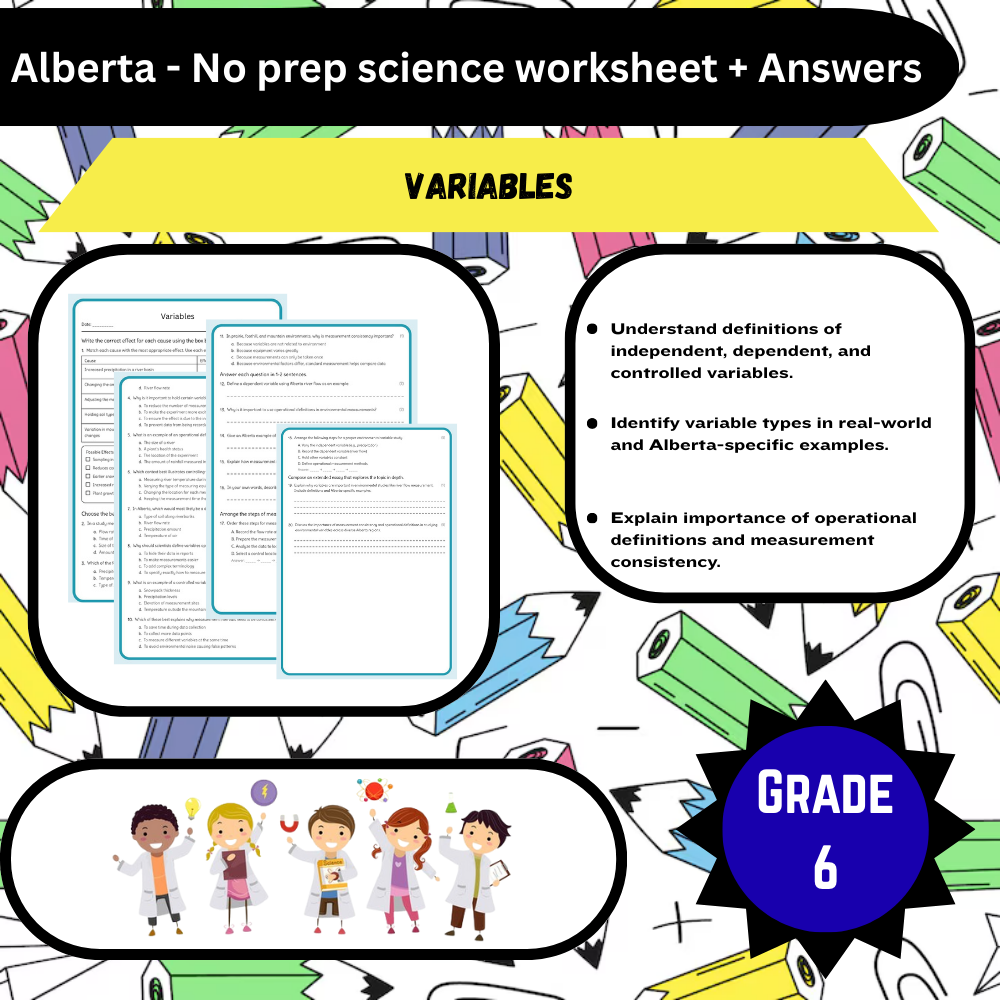
6th Grade Science | Variables Worksheet (PDF) – Alberta Standards
Created byBright Mind ResourcesLearning Objectives
- Understand the definitions of independent, dependent, and controlled variables in scientific experiments.
- Identify different types of variables in real-world and Alberta-specific examples.
- Explain the importance of operational definitions and measurement consistency in data collection.
Instant download

6th Grade Science | Food Webs Worksheet (Alberta Standard) PDF
Created byEvergreen Desk EducationLearning Objectives
- Identify producers, consumers, and decomposers and describe their roles in a food web.
- Explain how energy flows through trophic levels using examples from a forest ecosystem.
- Describe how seasonal changes and disruptions (invasive species or pest outbreaks) can alter food webs.
Instant download

6th Grade Science | Tree Anatomy Worksheet (Alberta Standards) (PDF)
Created bySilver Birch TeachingLearning Objectives
- Identify major parts of a tree (roots, trunk, branches, leaves, buds, and bark) and describe their functions.
- Explain how form–function relationships help trees survive in different habitats.
- Use scientific vocabulary to describe transport, storage, support, and protection in trees.
Also included in: Grade 6 Ecosystem Interactions Science Lesson Bundle: Alberta Framework +1 more
Instant download

Grade 6 Science | Roots and Water Worksheet (Alberta Standards) (PDF)
Created bySilver Birch TeachingLearning Objectives
- Explain how root systems provide anchorage, water and nutrient uptake, and storage
- Describe how different root adaptations (lateral roots and taproots) help trees survive in different environments
- Summarize how mycorrhizal fungi improve absorption and drought resilience
Also included in: Grade 6 Ecosystem Interactions Science Lesson Bundle: Alberta Framework +1 more
Instant download
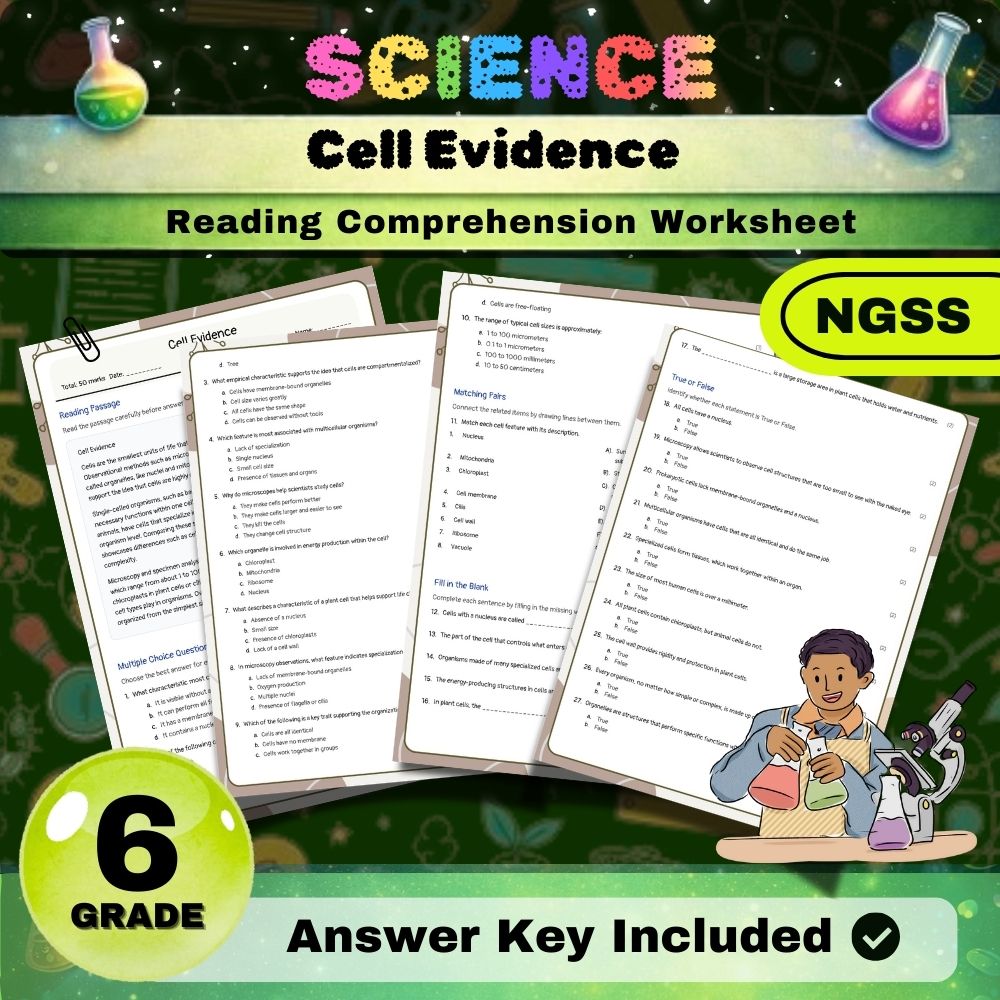
6th Grade Science | Cell Evidence NGSS Worksheet (PDF)
Created byMaple Path LearningLearning Objectives
- Identify the basic features that distinguish cells as the fundamental units of life.
- Compare the characteristics of single-celled and multicellular organisms using microscopy and specimen evidence.
- Describe relationships among cells, tissues, organs, and entire organisms to support biological organization claims.
Also included in: Grade 6 Science Unit Bundle – Cell Functions, Energy & Organ Systems Worksheets +1 more
Instant download
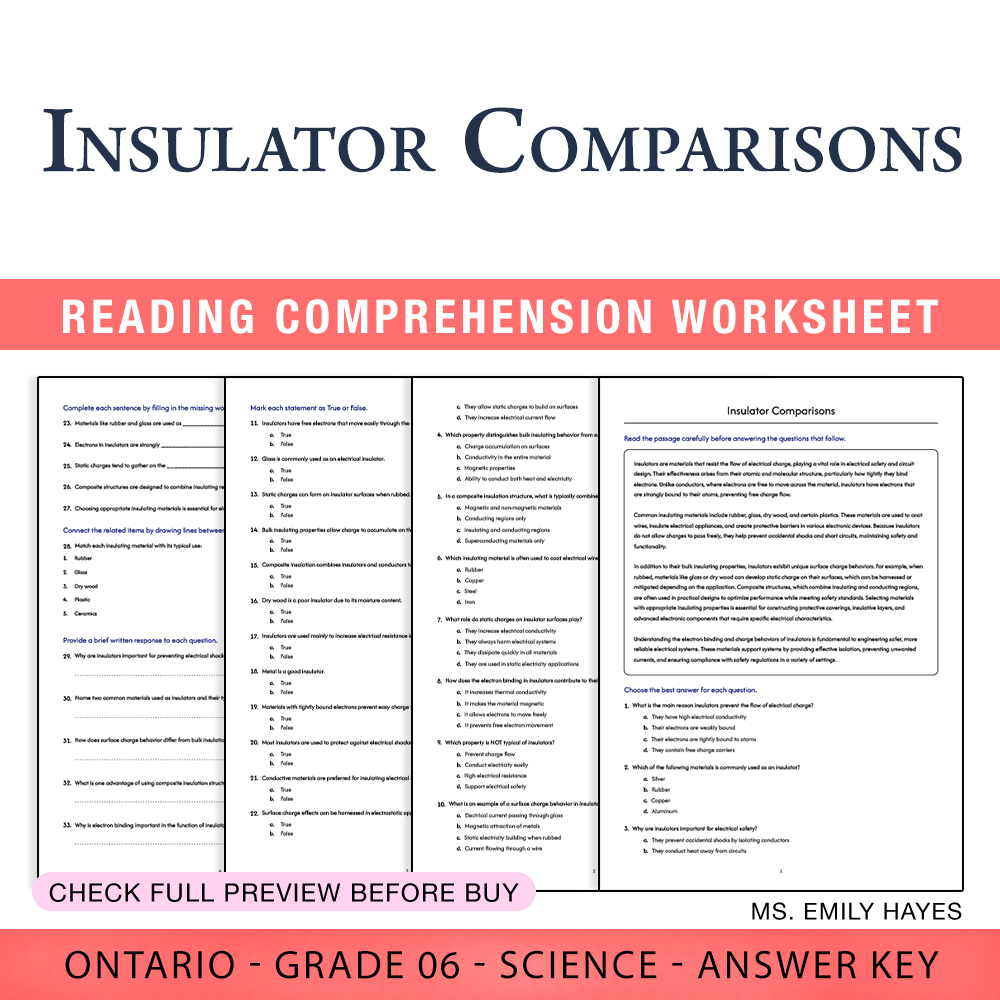
6th Grade Science | Insulator Comparisons Worksheet (PDF + Answer Key)
Created byCopper Leaf ClassroomLearning Objectives
- Understand the molecular structure of insulators and how electron binding prevents charge flow.
- Identify common insulating materials such as rubber, glass, and dry wood and their applications.
- Explain how insulators contribute to electrical safety through effective isolation.
Instant download
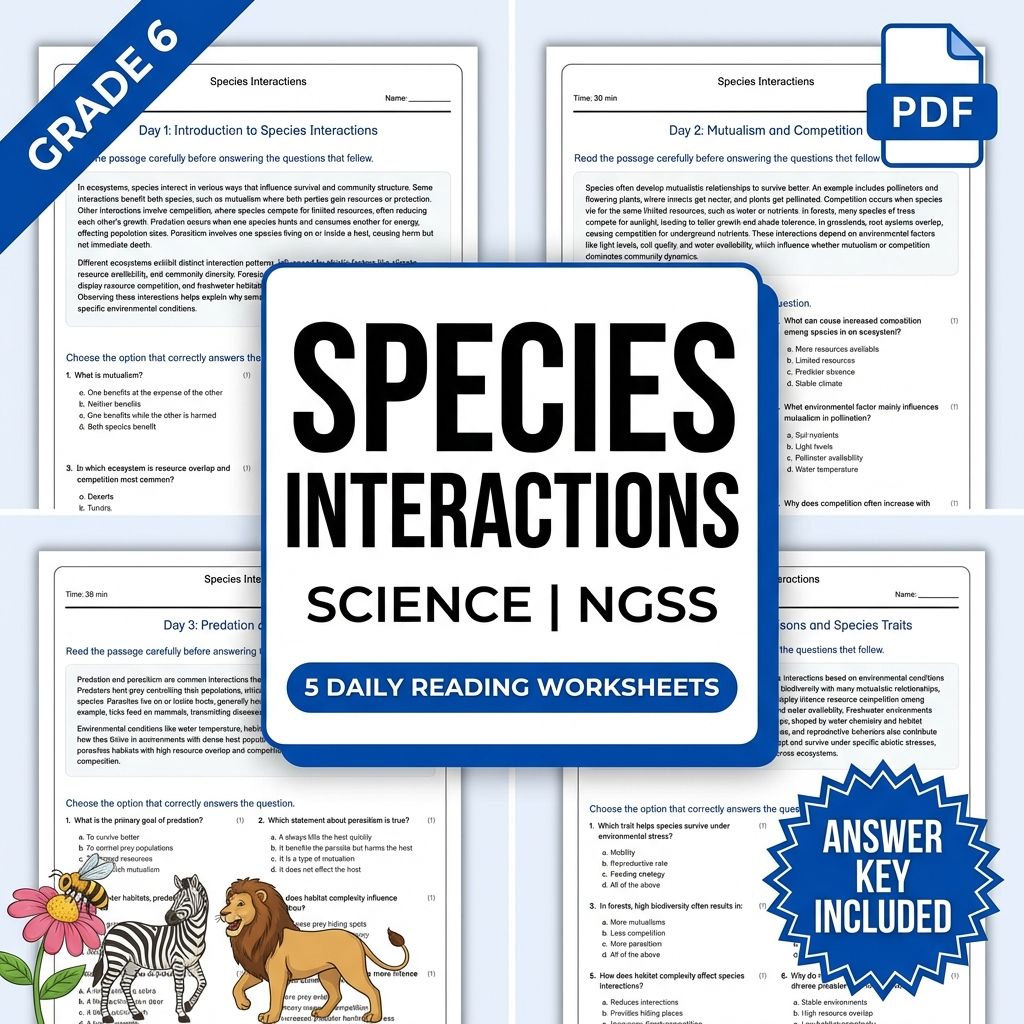
6th Grade Science | Species Interactions Reading Worksheet (PDF+ Answer Key)
Created byCopper Leaf ClassroomLearning Objectives
- Construct explanations predicting patterns of species interactions across ecosystems.
- Identify and differentiate mutualism, competition, predation, and parasitism as recurring interaction types.
- Compare outcomes of species interactions in forest, grassland, and freshwater environments.
Instant download
About Grade 6 Science Worksheets
Explore Grade 6 Science worksheets for classwork, homework, or review. Our 5,969 printables download instantly as PDFs.
MyTeachingSheets worksheets are made by real teacher-authors and checked before they go live. Download any as a print-ready PDF for lessons, homework, or independent practice — most include answer keys, and previews are always free.