
Grade 6 Science Worksheets
5,969 worksheets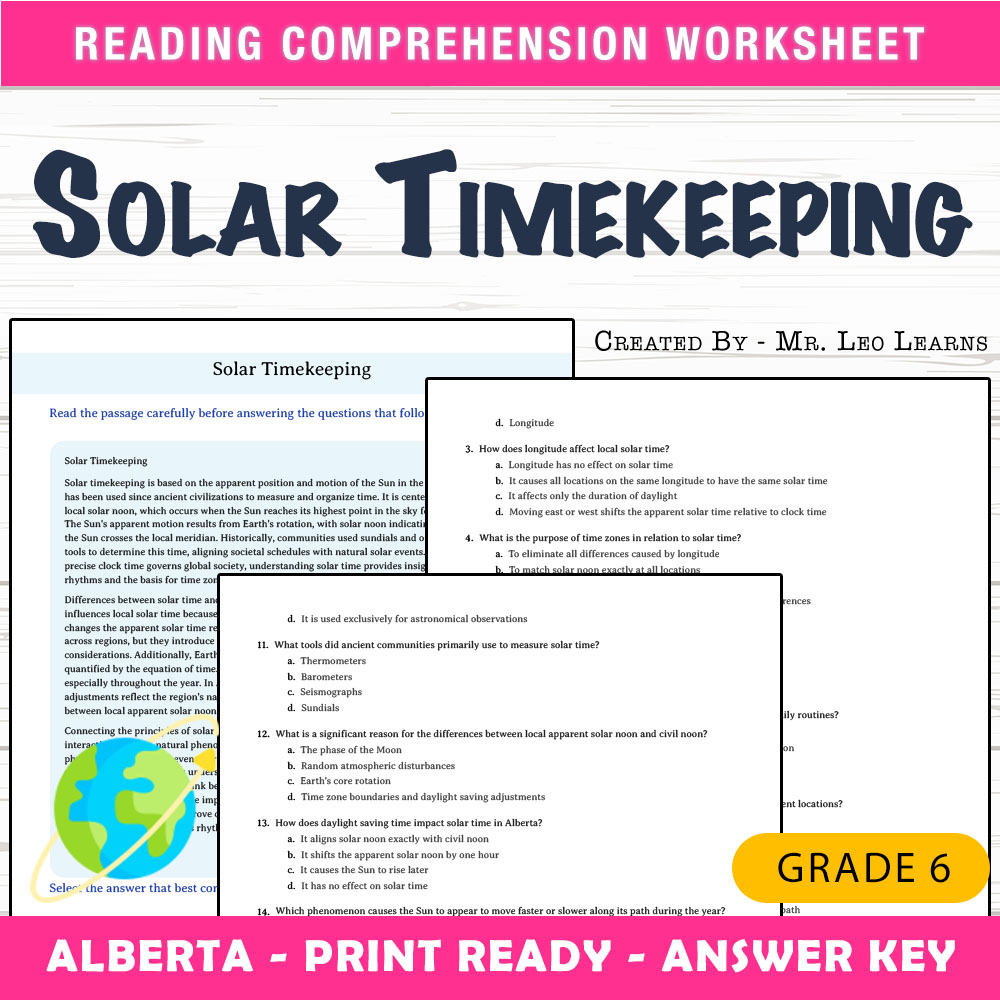
Grade 6 Science — Solar Timekeeping Worksheet MCQ Paper for Mastery
 Created byThe Resource Hub
Learning Objectives
- Explain the principles of solar timekeeping and its connection to apparent solar motion.
- Identify factors that cause differences between solar time and clock time, such as longitude, time zones, and Earth's orbital eccentricity.
- Describe how historical and contemporary communities in Alberta use solar time for scheduling and calendar calculations.
Also included in: Grade 6 Science Sky Science Unit Bundle – Celestial Motion & Earth-Sun Relations +1 more
Instant download
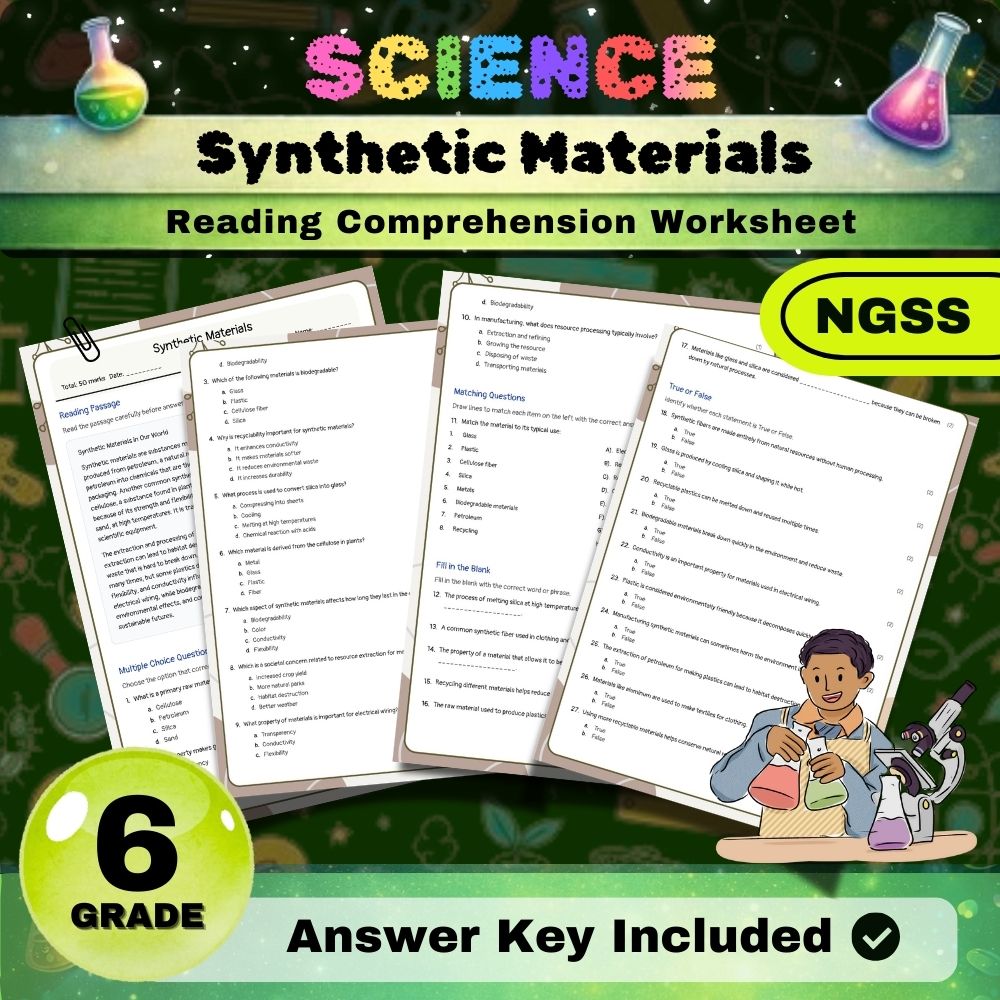
6th Grade Science – Synthetic Materials NGSS Worksheet (PDF)
 Created byMaple Path Learning
Learning Objectives
- Explain how natural resources are used to create synthetic materials.
- Compare properties of different substances used in manufacturing.
- Describe processes involved in resource extraction and material processing.
Also included in: Grade 6 Science| Matter, Chemical Reactions & Conservation NGSS Worksheet Bundle +1 more
Instant download
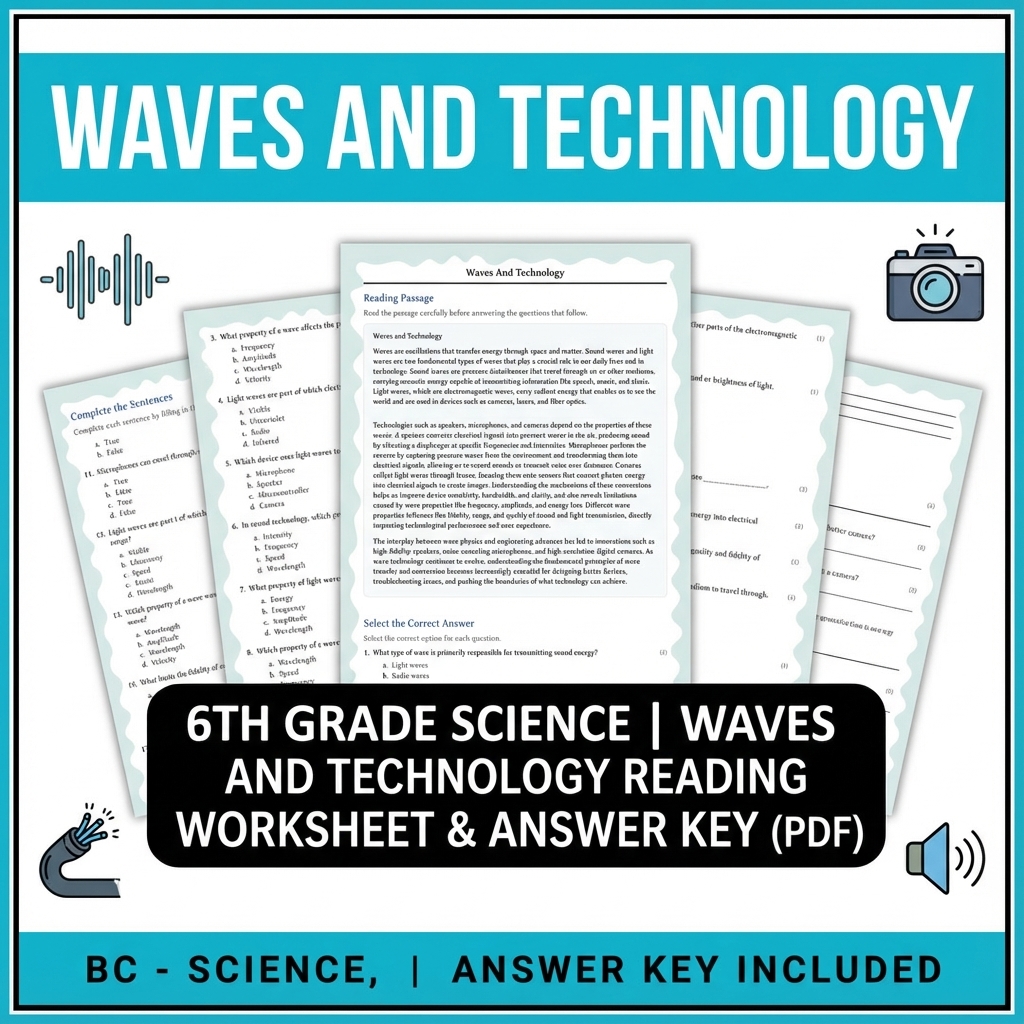
6th Grade Science | Waves and Technology Reading Worksheet & Answer Key (PDF)
JCreated byJ.S SheetsLearning Objectives
- Understand how sound and light waves are used in modern technology devices.
- Explain how energy is transferred and converted in speakers, microphones, and cameras.
- Identify wave properties like frequency and intensity that affect device performance.
Instant download

Thrust and Propulsion Worksheets | Grade 6 Science Flight Activities
LCreated byLearnora ResourcesLearning Objectives
- Explain how thrust helps an object move forward
- Identify engines and the energy sources they use
- Compare propeller designs and explain effects on thrust
Instant download
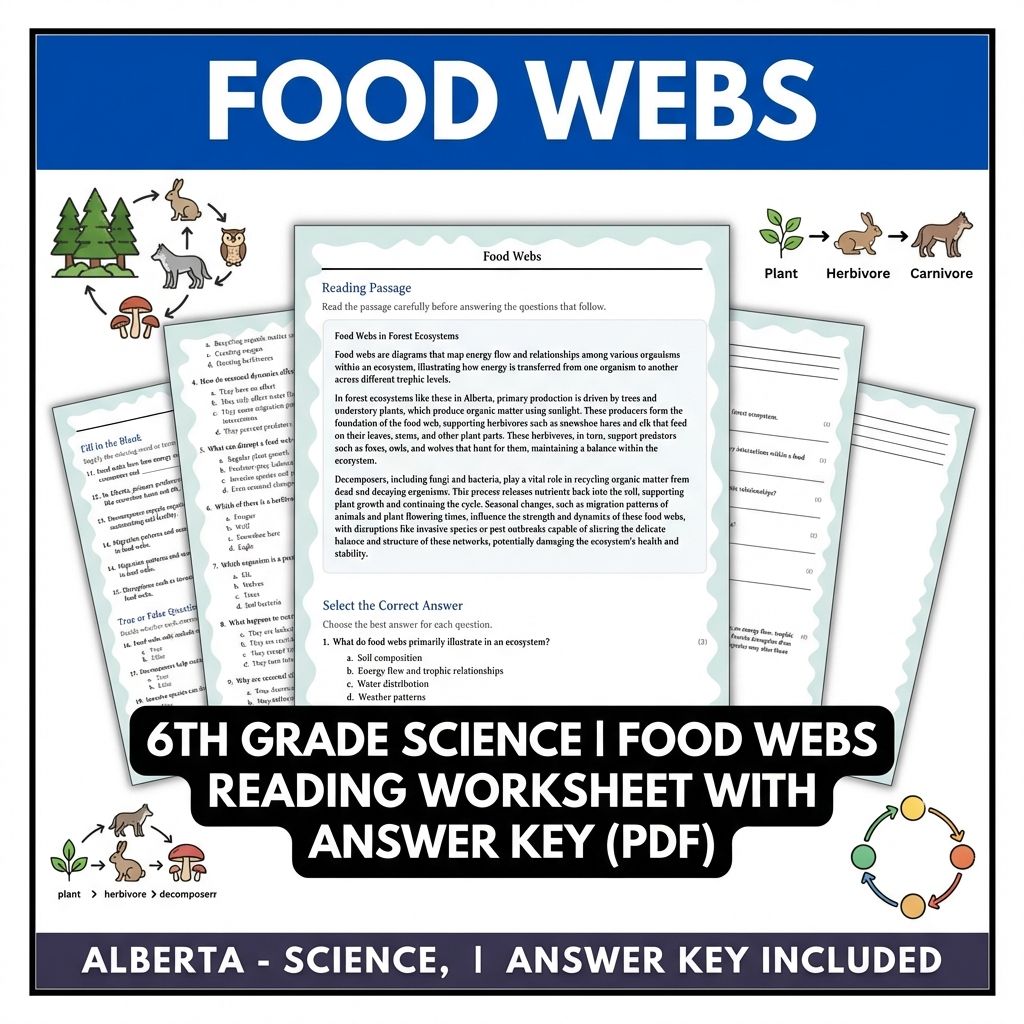
6th Grade Science | Food Webs Reading Worksheet with Answer Key (PDF)
JCreated byJ.S SheetsLearning Objectives
- Understand the components and function of food webs in forest ecosystems.
- Identify energy flow and trophic relationships among producers, consumers, and decomposers.
- Describe how seasonal dynamics and migration patterns affect food webs.
Also included in: Grade 6 Science Unit Bundle | Ecosystems and Biodiversity (Answer Keys Included) +1 more
Instant download

Grade 6 Adaptation and Speciation Worksheet | NGSS Science Activity
 Created byBRIGHT PATH RESOURCES
Learning Objectives
- Understand the concepts of biological adaptation and speciation
- Identify examples of adaptations in different animals
- Learn how geographic and behavioral changes lead to new species
Also included in: Biological Evolution: Unity & Diversity Grade 6 Science Lesson Bundle | ngss +2 more
Instant download

Grade 6 Science | Mass Conservation Worksheet (BC Standards) PDF
 Created byEvergreen Desk Education
Learning Objectives
- Explain the law of conservation of mass for closed systems during physical and chemical changes.
- Distinguish between closed and open systems when interpreting changes in measured mass.
- Use particle and evidence-based reasoning to account for reactants and products in mass conservation problems.
Instant download
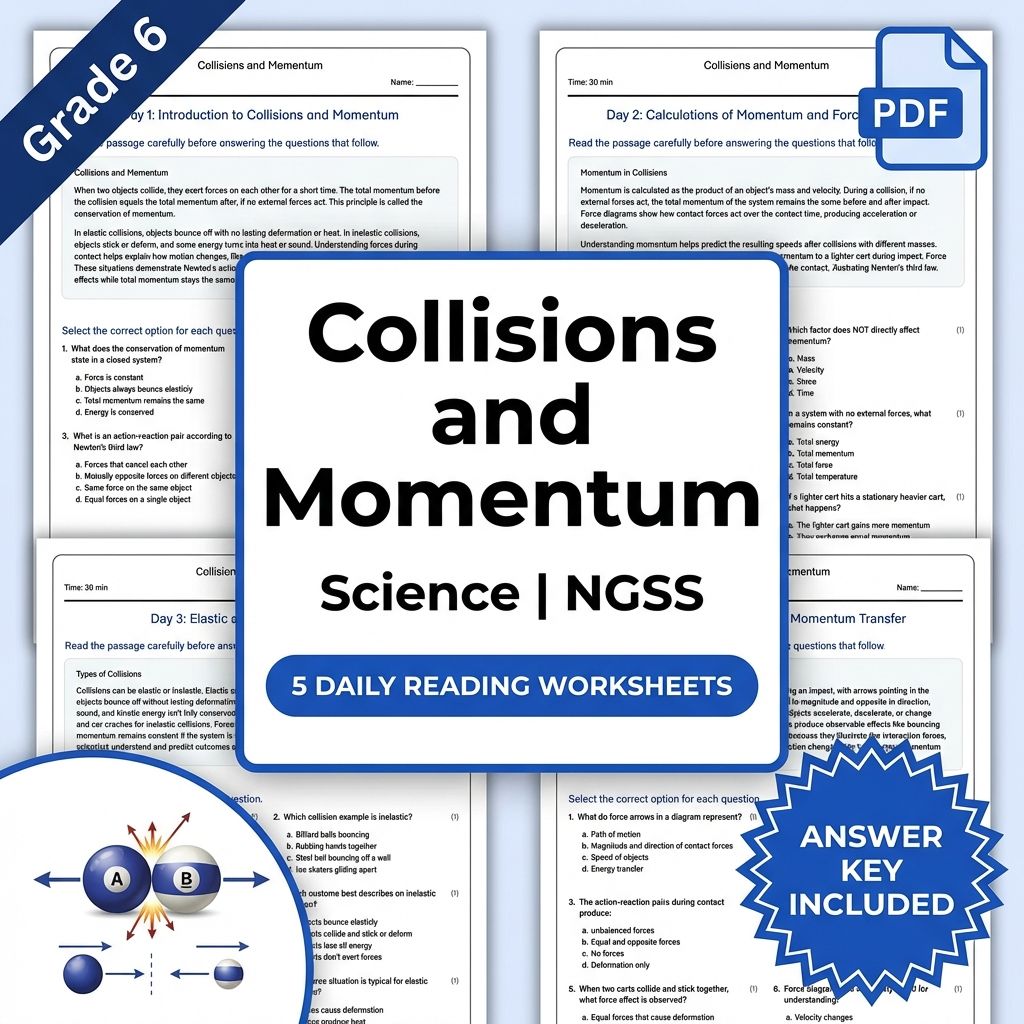
6th Grade Science | Collisions & Momentum Reading Worksheet (PDF + Answer Key)
 Created byCopper Leaf Classroom
Learning Objectives
- Understand the basic principles of momentum and how it is conserved in collisions.
- Analyze how forces during contact influence motion changes in colliding objects.
- Distinguish between elastic and inelastic collisions through examples and calculations.
Instant download

Grade 6 Science | Scientific Inquiry Worksheet | NGSSS Aligned
 Created byLumora Learning
Learning Objectives
- Explain how scientific inquiry begins with observations and leads to testable questions
- Describe how evidence, measurement, and logical reasoning support reliable explanations
- Use scientific vocabulary related to variables, data, measurement, and uncertainty to communicate findings
Instant download
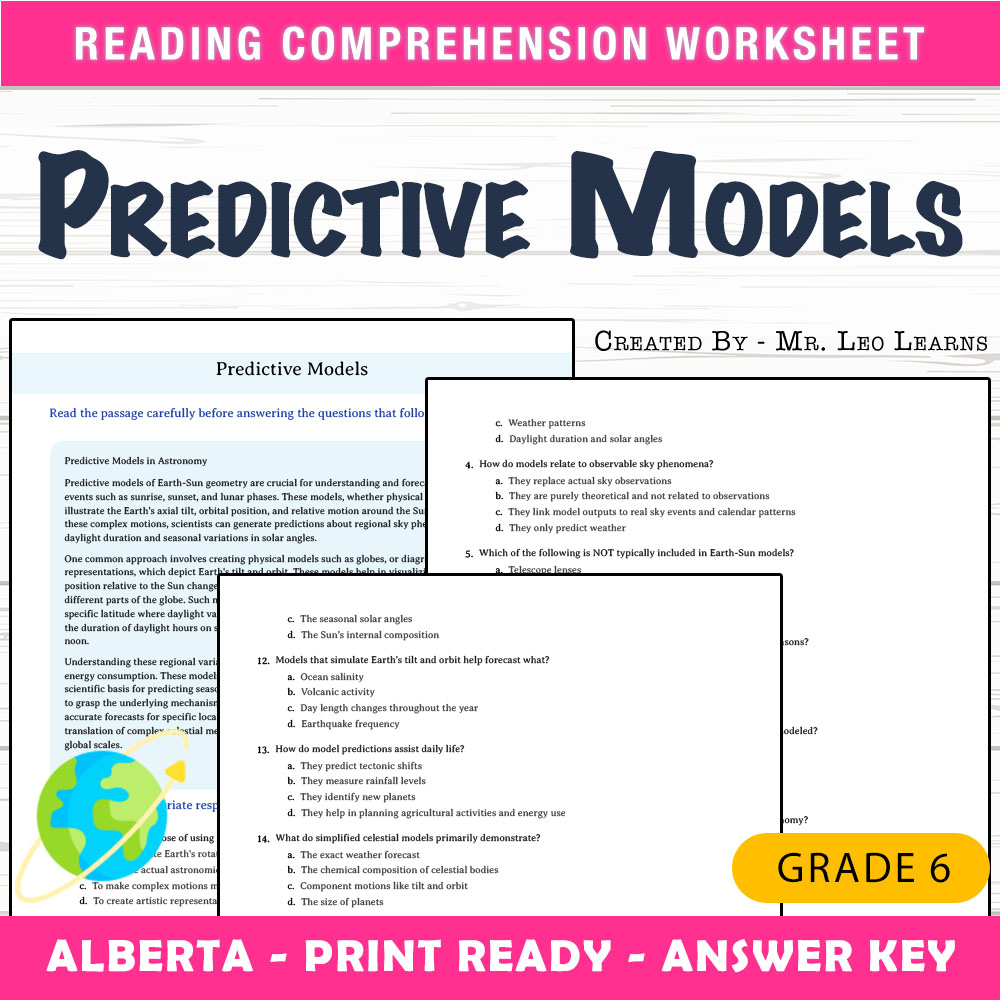
Grade 6 Science — Predictive Models Worksheet MCQ Paper for Mastery
Created byThe Resource HubLearning Objectives
- Understand how models represent Earth–Sun geometry to predict celestial events.
- Identify the components of simplified physical or diagrammatic models such as axial tilt and orbital position.
- Explain how models can be applied to regional locations like Alberta to forecast daylight and seasons.
Also included in: Grade 6 Science Sky Science Unit Bundle – Celestial Motion & Earth-Sun Relations +1 more
Instant download
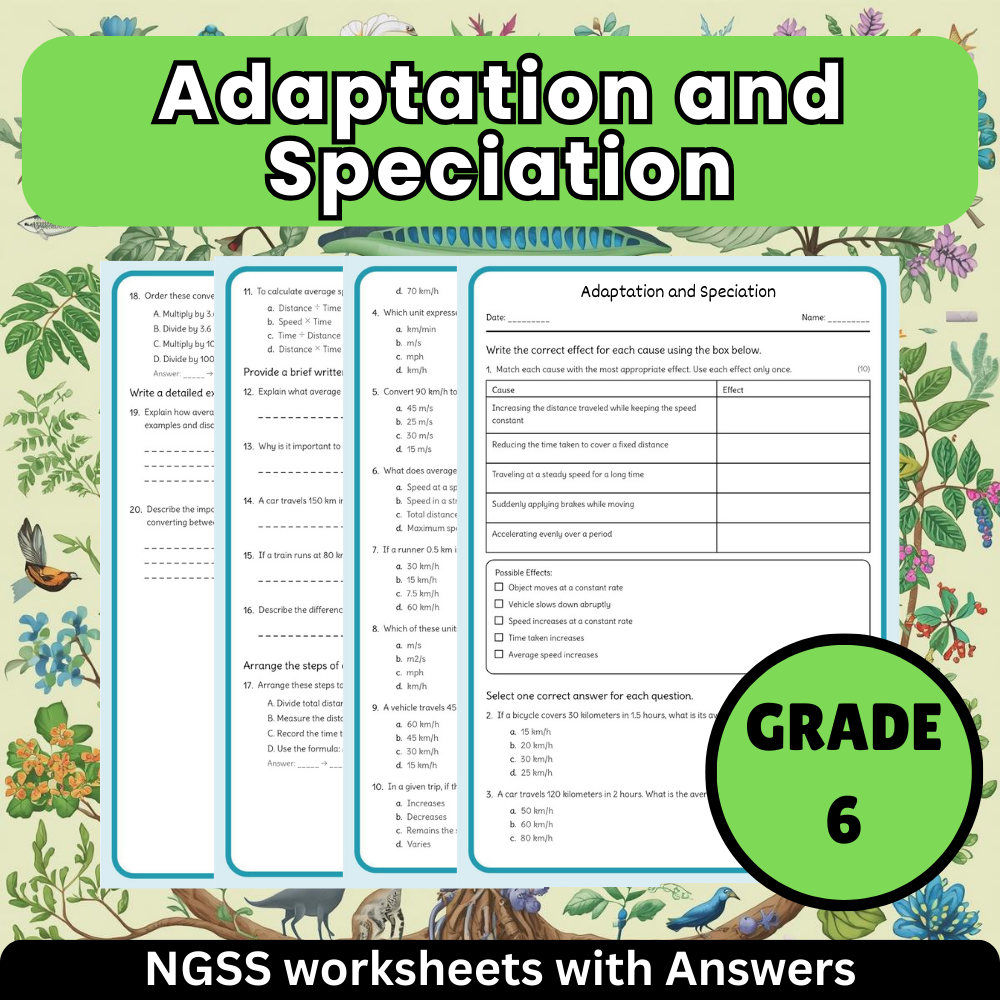
6th Grade Science | Adaptation and Speciation Worksheet (Answer Key) NGSS
 Created byBright Mind Resources
Learning Objectives
- Explain the processes of adaptation and how they can lead to speciation.
- Identify evidence that supports the occurrence of speciation events.
- Describe factors such as geographic separation and genetic changes that contribute to lineage divergence.
Also included in: Grade 6 Science Unit Bundle | Evolution, Genetics & Biodiversity NGSS Worksheets +2 more
Instant download

6th Grade Science – Food Chains Worksheet (TEKS | PDF)
Created byEvergreen Desk EducationLearning Objectives
- Identify producers, consumers, and decomposers and describe what each role does in a food chain
- Determine trophic levels (primary, secondary, tertiary) and explain how energy transfers between levels
- Compare linear food chains with networked food webs and explain why energy loss affects population size and stability
Instant download
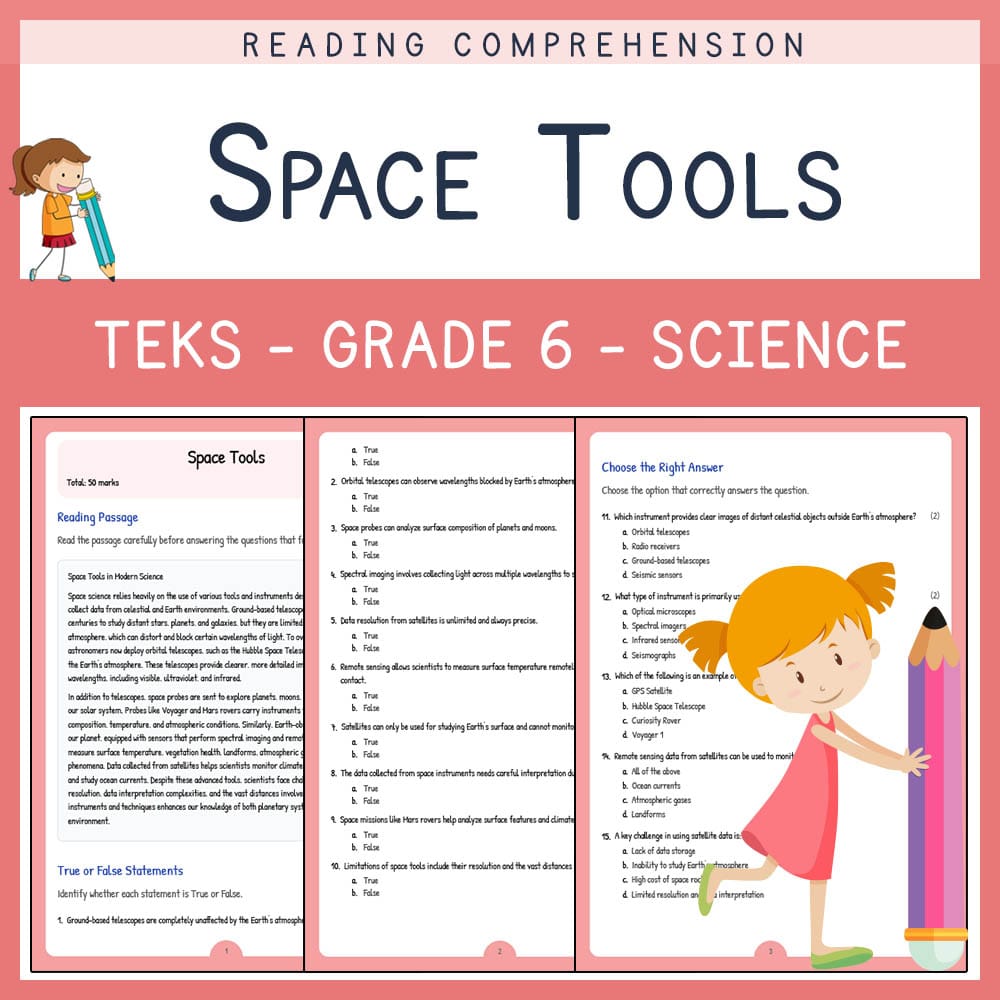
Grade 6 Science | Space Tools Worksheet | TEKS-Aligned
Created byLumora LearningLearning Objectives
- Understand the different instruments used in space science such as telescopes, space probes, and satellites.
- Describe how spectral imaging and remote sensing are employed to study Earth and planets.
- Identify the types of data collected from space instruments and how it helps scientists.
Also included in: Grade 6 Science | Earth and Space Science Unit Bundle | TEKS Standard
Instant download

6th Grade Science | Food Chains Worksheet (BC Standards) (PDF)
Created byEvergreen Desk EducationLearning Objectives
- Explain how a food chain transfers energy and nutrients through trophic levels
- Identify producers and different consumer roles in a simple food chain
- Describe how changes in one population can affect other populations in a linear food chain
Instant download
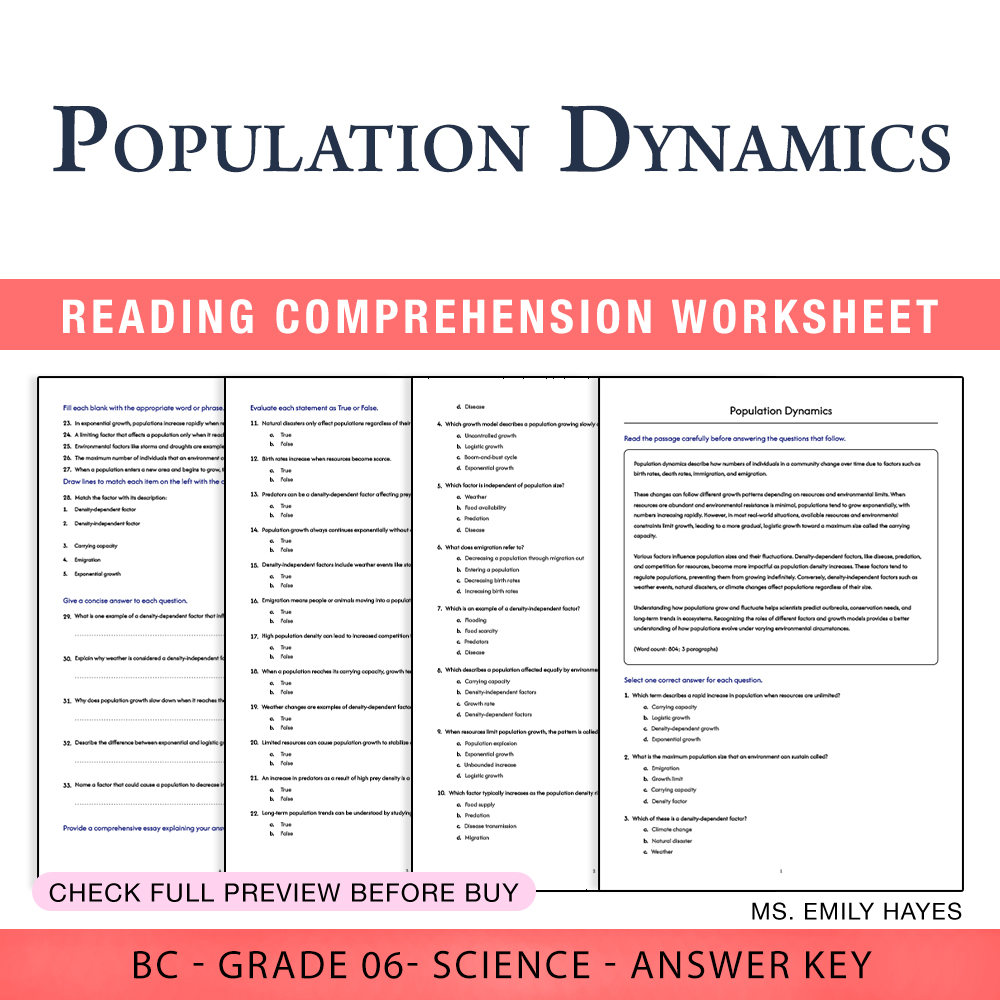
6th Grade Science | Population Dynamics Worksheet (PDF+ Answer Key)
Created byCopper Leaf ClassroomLearning Objectives
- Understand the basic concepts of population change, including birth and death rates, immigration, and emigration.
- Differentiate between growth models such as exponential and logistic growth.
- Identify and explain factors affecting population density, including density-dependent and density-independent factors.
Also included in: Grade 6 Science BC | Ecosystems and Human Impact Unit (PDF + Answer Keys) +1 more
Instant download
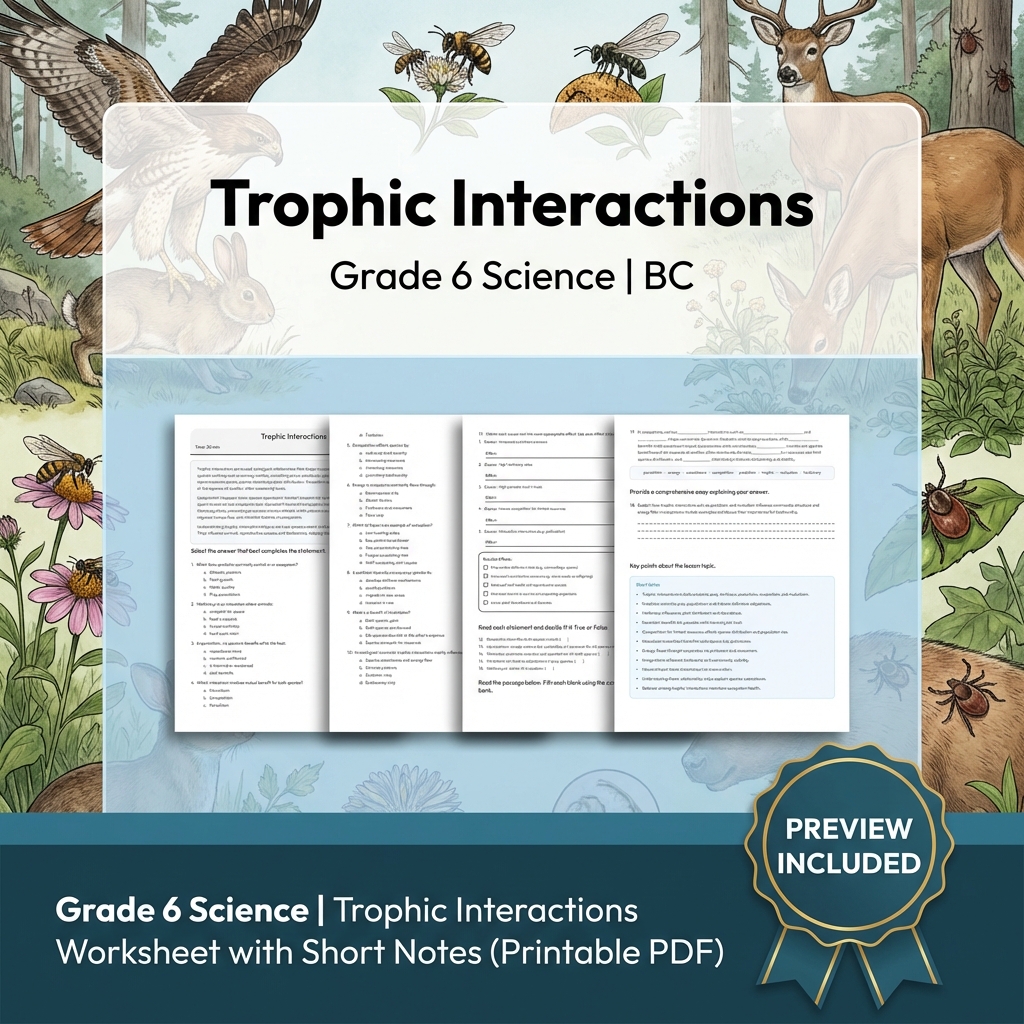
Grade 6 Science | Trophic Interactions Worksheet with Short Notes (PDF)
 Created byMeadowlark Worksheets
Learning Objectives
- Understand the different types of trophic interactions, including predation, herbivory, parasitism, competition, and mutualism.
- Identify examples of trophic interactions and explain their roles in ecosystems.
- Describe how trophic interactions influence community structure and energy flow.
Also included in: Grade 6 Science | Ecosystems & Interdependence UNIT Worksheet Bundle +1 more
Instant download
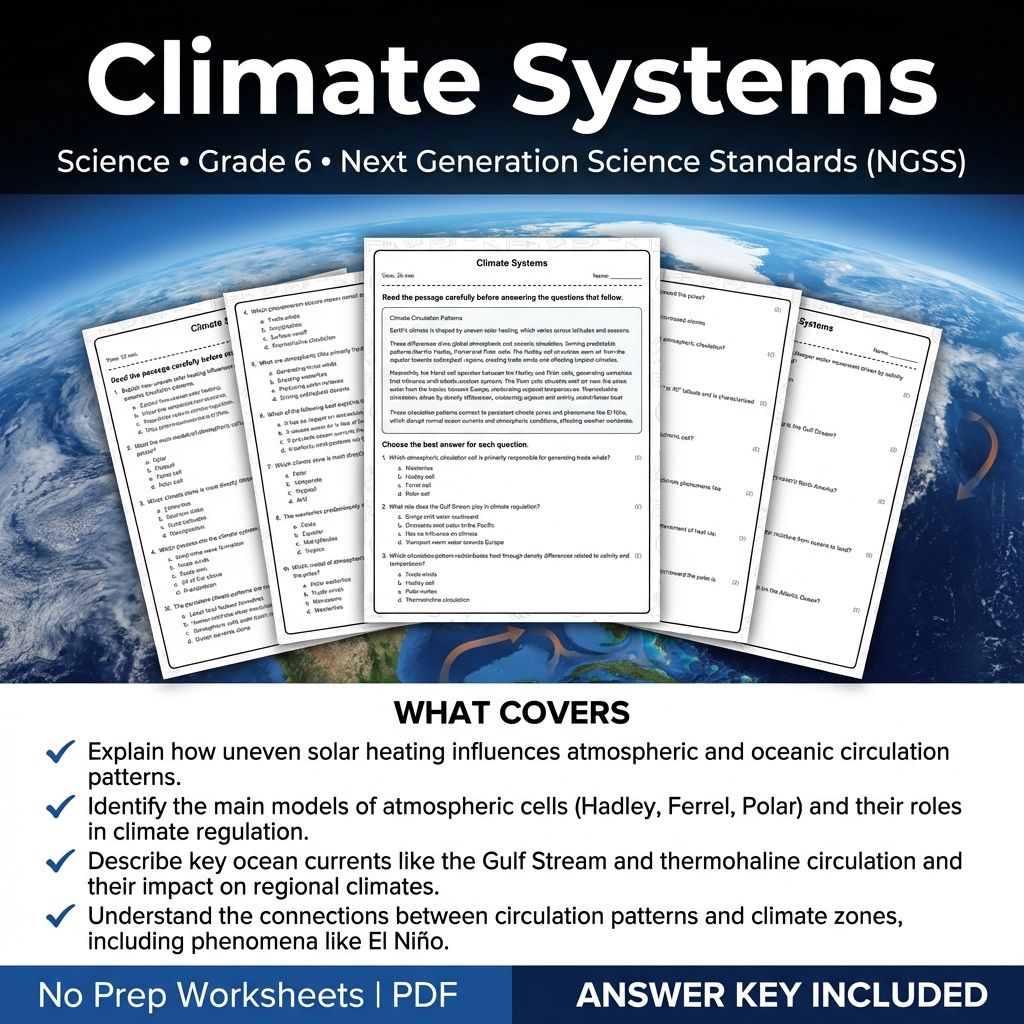
6th Grade Science | Climate Systems Worksheet with Answer Key (Printable PDF)
 Created byCoral Reef Learning
Learning Objectives
- Explain how uneven solar heating influences atmospheric and oceanic circulation patterns.
- Identify the main models of atmospheric cells (Hadley, Ferrel, Polar) and their roles in climate regulation.
- Describe key ocean currents like the Gulf Stream and thermohaline circulation and their impact on regional climates.
Instant download
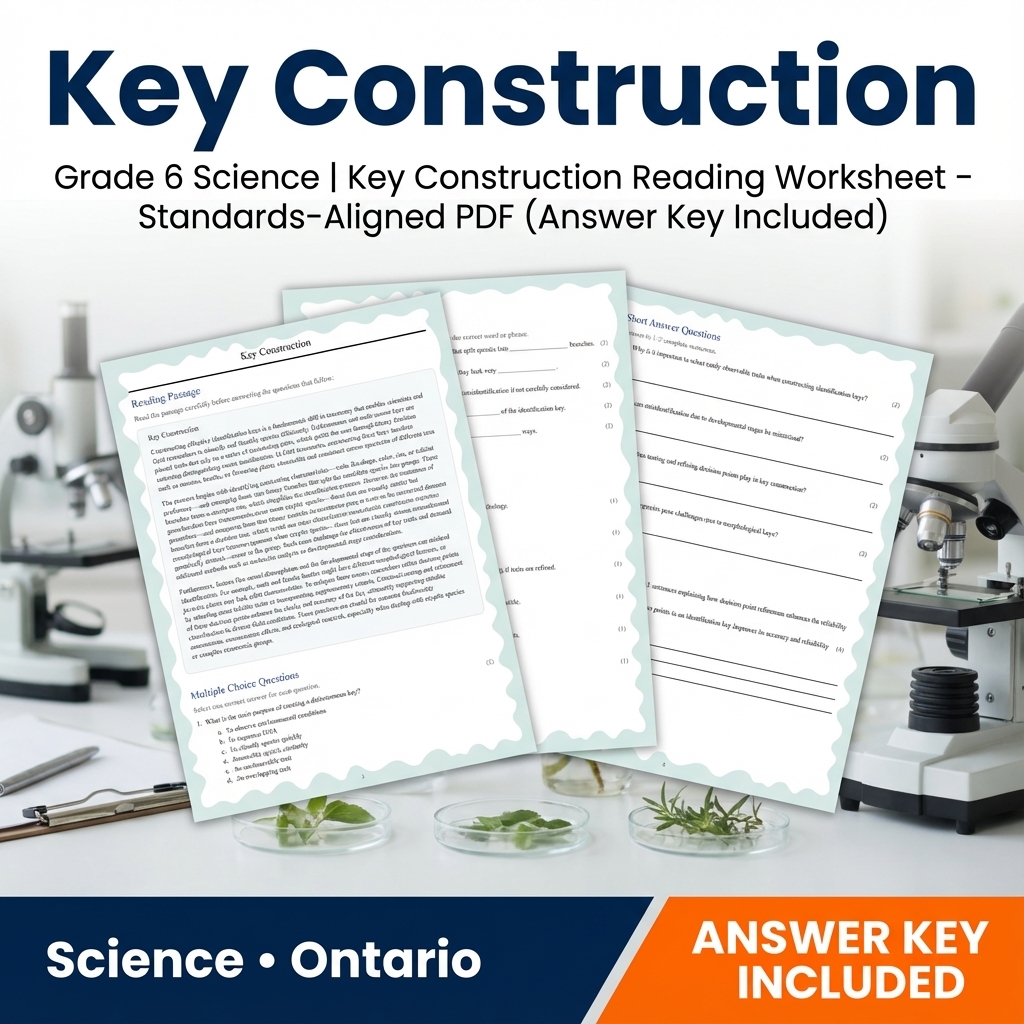
6th Grade Science | Key Construction Reading Worksheet (PDF + Answer Key)
JCreated byJ.S SheetsLearning Objectives
- Understand the procedures for constructing dichotomous and multi-access keys based on contrasting traits.
- Identify limitations of morphological keys, including issues caused by cryptic species, developmental stages, and sexual dimorphism.
- Learn methods for refining decision points to improve classification accuracy in field inventories.
Also included in: Grade 6 Science Unit Bundle – Ecosystems, Biodiversity & Environmental Impact +1 more
Instant download
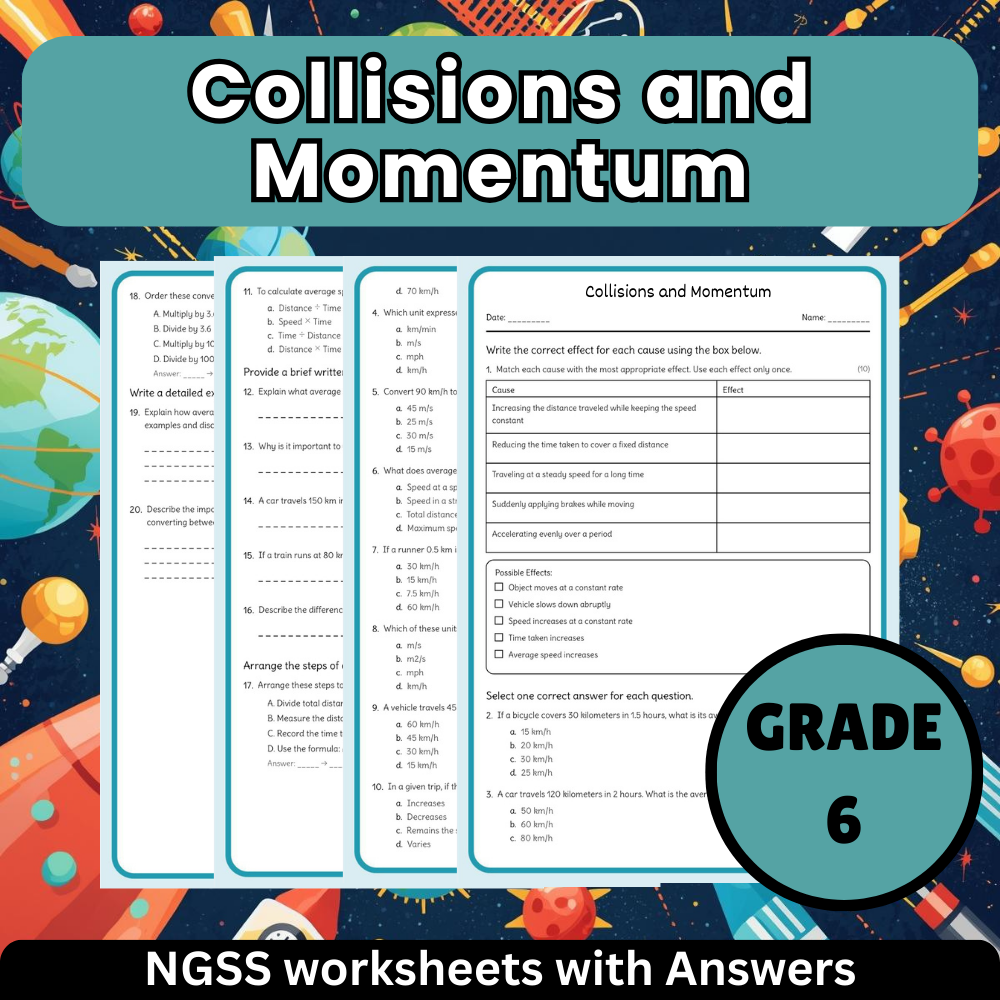
6th Grade Science | Collisions & Momentum Worksheet (Worksheet + Answer Key)
Created byBright Mind ResourcesLearning Objectives
- Understand the principles of conservation of momentum during two-body collisions.
- Identify action-reaction force pairs in collision scenarios such as billiard balls and colliding carts.
- Distinguish between elastic and inelastic collisions based on energy conservation.
Also included in: Grade 6 Science Unit Bundle – Forces, Motion & Magnetism Worksheets (NGSS) +2 more
Instant download
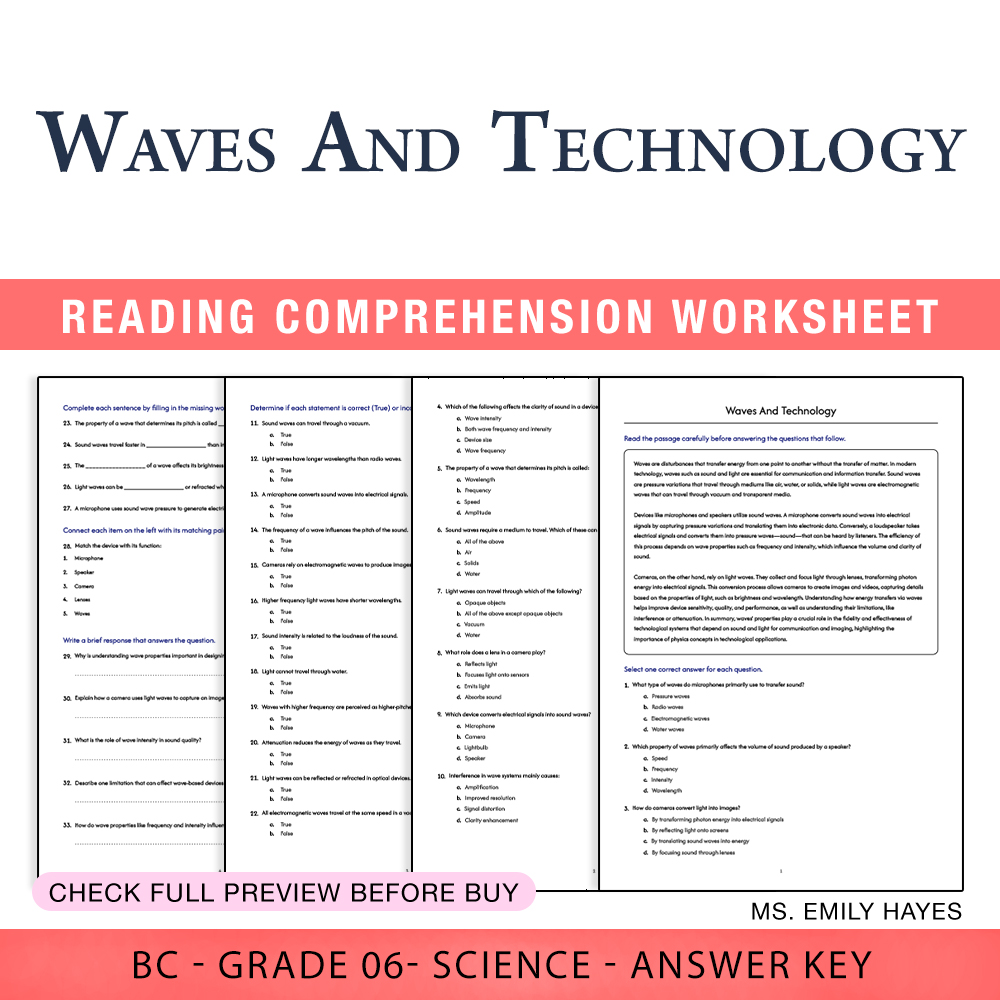
Grade 6 Science | Waves and Technology Worksheet (PDF+ Answer Key)
Created byCopper Leaf ClassroomLearning Objectives
- Describe how sound and light waves transfer energy in technological devices
- Explain how components like microphones, speakers, and cameras convert energy using waves
- Identify properties of waves such as frequency and intensity and how they affect device performance
Also included in: Grade 6 Science BC | Waves, Sound, Light & Energy Worksheets (PDF + Answer Key) +1 more
Instant download
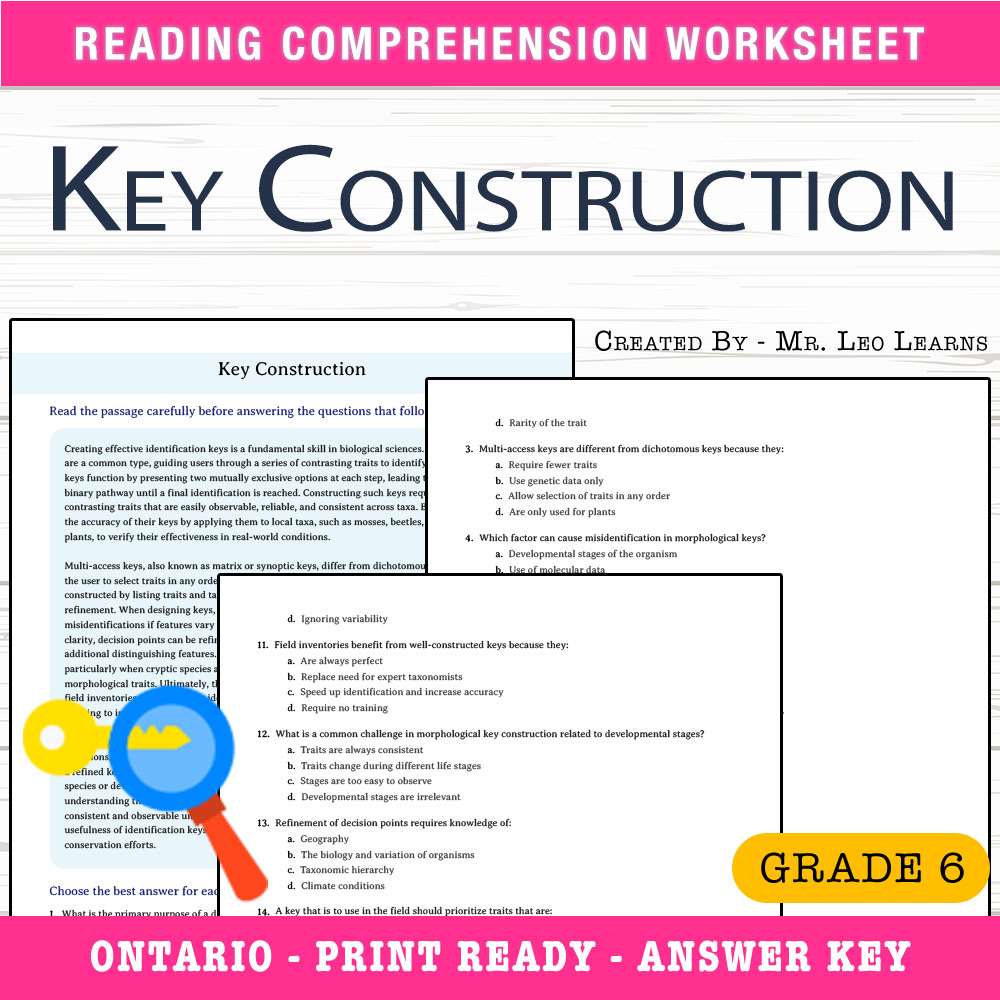
Grade 6 Science — Creating Identification Keys Worksheet for Mastery
Created byThe Resource HubLearning Objectives
- Understand the principles of dichotomous and multi-access keys in biological classification.
- Learn procedures for selecting contrasting traits and constructing binary branches in keys.
- Test the accuracy of keys using local taxa such as mosses, beetles, and flowering plants.
Also included in: Grade 6 Science Unit Bundle | Ecosystems, Genetic Traits & Environmental Impact +1 more
Instant download

Grade 6 Science | Particle Models Worksheet | California Standard
Created byLumora LearningLearning Objectives
- Explain how particle models represent matter using atoms and molecules
- Use particle models to predict how substances change when reactions occur
- Connect particle arrangements to observable properties and evidence of chemical change
Instant download
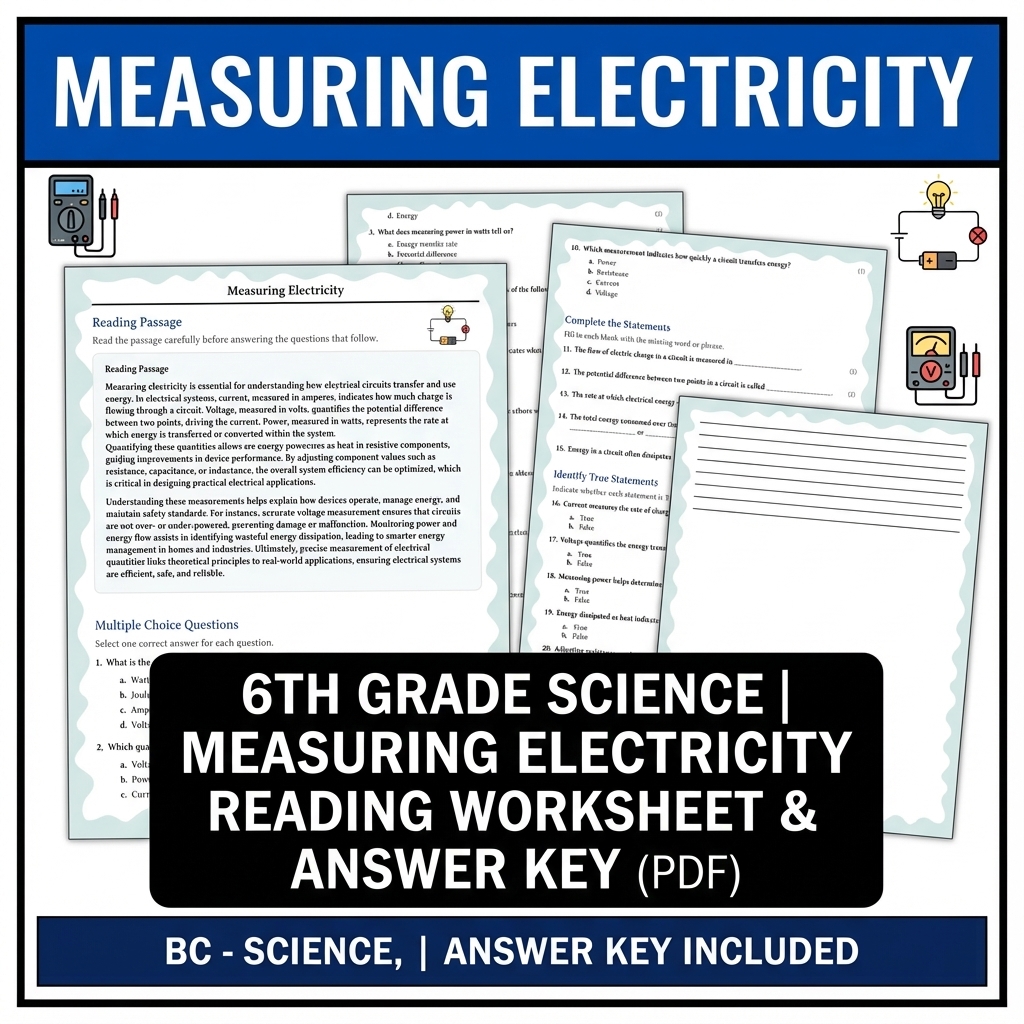
6th Grade Science | Measuring Electricity Reading Worksheet & Answer Key (PDF)
JCreated byJ.S SheetsLearning Objectives
- Understand the key electrical quantities: current, voltage, and power.
- Learn how to quantify energy transfer in electrical circuits.
- Recognize how measurements reveal energy dissipation and efficiency.
Instant download
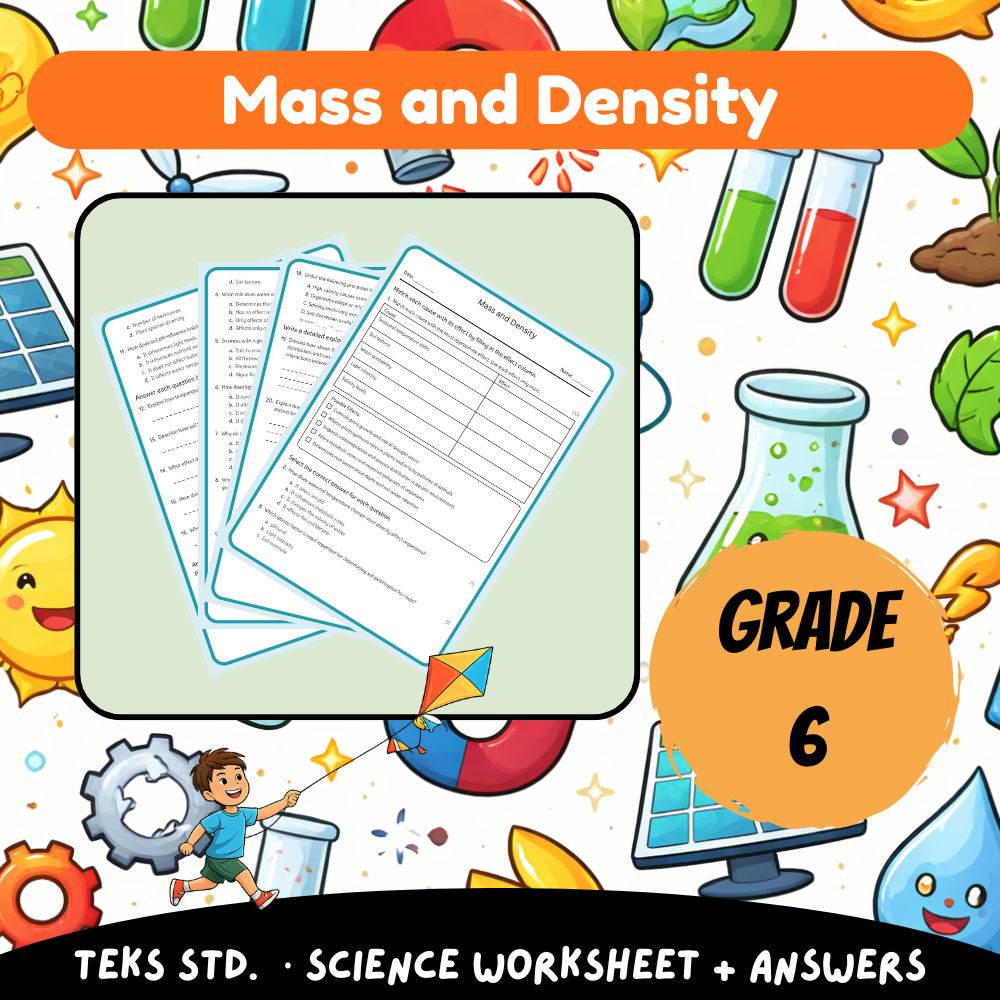
Grade 6 Science | Mass & Density Concepts Worksheet (Worksheet + Answer Key) (PDF)
Created byBright Mind ResourcesLearning Objectives
- Define mass and volume and understand their relationship through density.
- Calculate and interpret density for simple solids and liquids.
- Compare objects that sink or float based on their density.
Instant download
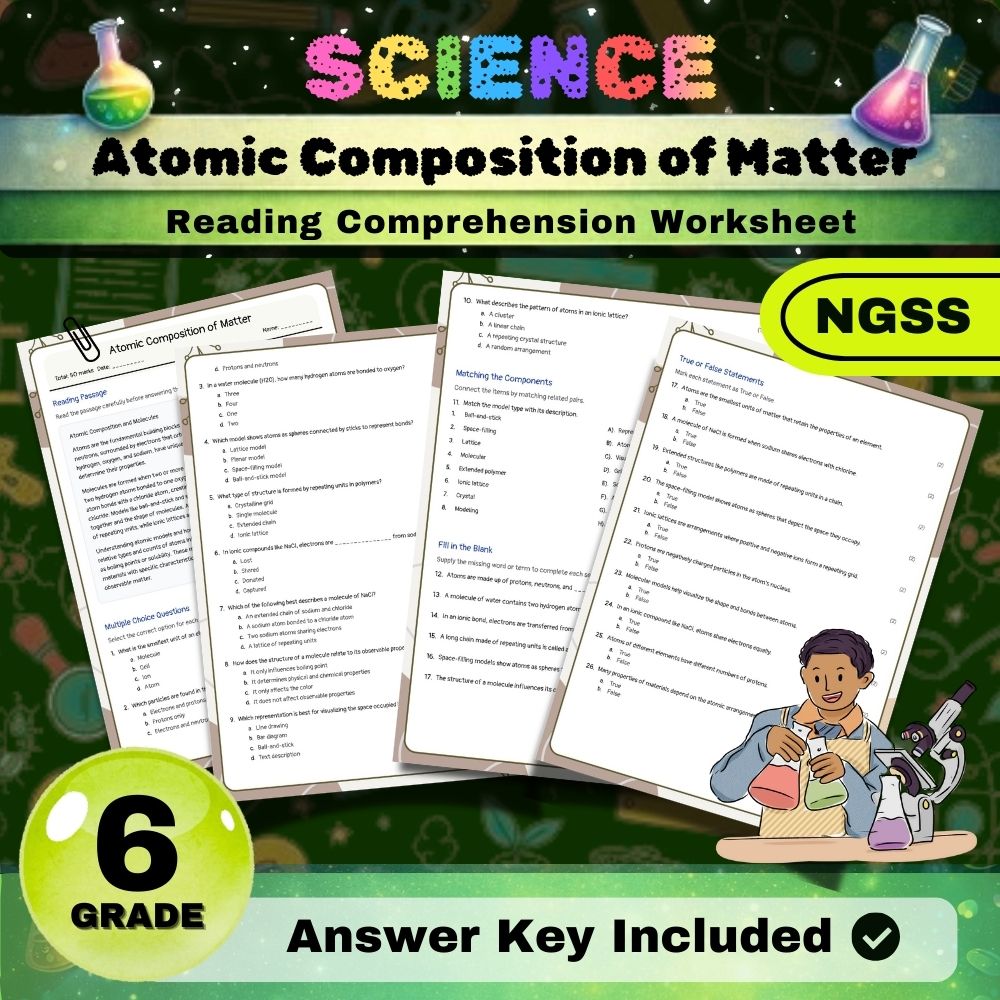
Grade 6 Science | Atomic Composition of Matter Worksheet (PDF) NGSS
Created byMaple Path LearningLearning Objectives
- Describe how atoms combine to form simple molecules such as H2O and NaCl.
- Use models like ball-and-stick and space-filling representations to visualize molecules.
- Explain the relationship between molecular structure and observable properties of matter.
Also included in: Grade 6 Science| Matter, Chemical Reactions & Conservation NGSS Worksheet Bundle +1 more
Instant download

6th Grade Science Worksheets | Exploring Scientific Careers (PDF)
Created byEvergreen Desk EducationLearning Objectives
- Identify how scientific inquiry and technology work together in common science careers
- Describe typical tasks (data collection, equipment maintenance, interpreting measurements, and communicating results) for several science jobs
- Connect science career skills to math, scientific reasoning, and technical literacy
Instant download
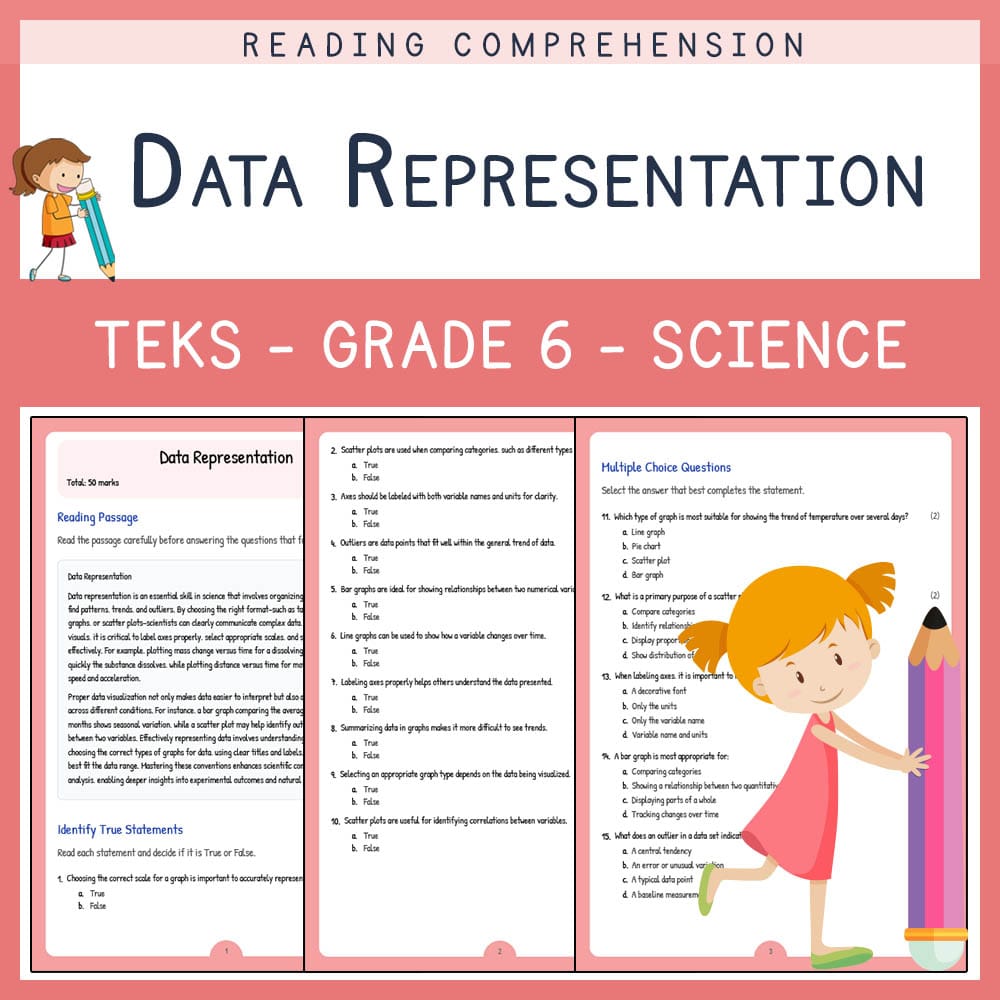
Grade 6 Science | Data Representation Worksheet | TEKS Alligned
Created byLumora LearningLearning Objectives
- Understand conventions for organizing data in tables and graphs.
- Identify proper labeling, scaling, and effective graphical summaries.
- Apply data representation to real-world examples to interpret trends.
Instant download
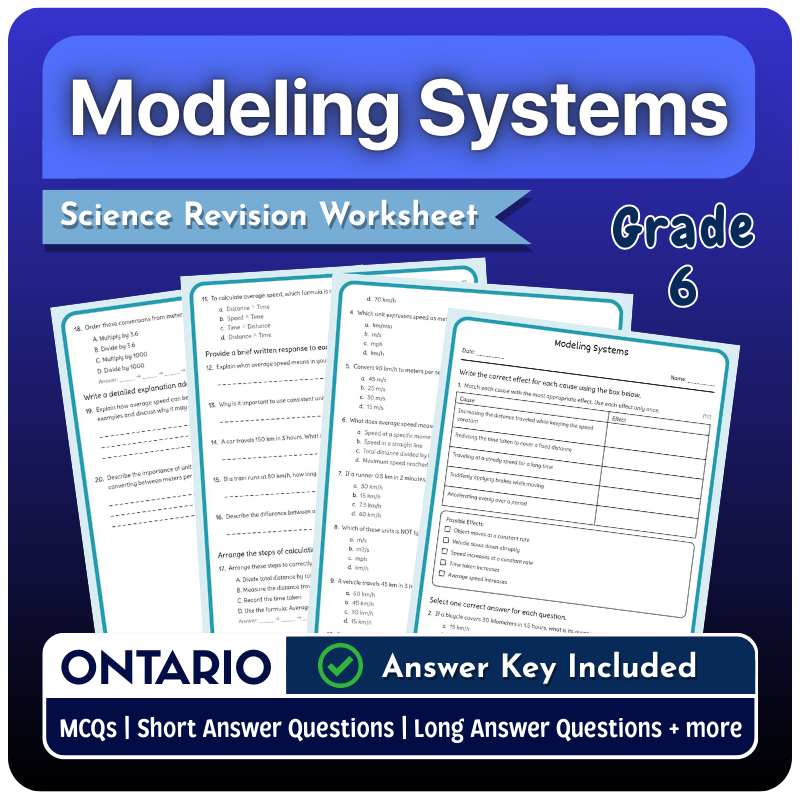
6th Grade Science | Modeling Systems Worksheet (Ontario Standards) (PDF)
Created byBright Mind ResourcesLearning Objectives
- Understand the purpose of different types of models in representing complex systems.
- Identify key assumptions and boundaries when constructing models.
- Analyze the limitations of models and compare predictions to observable outcomes.
Instant download
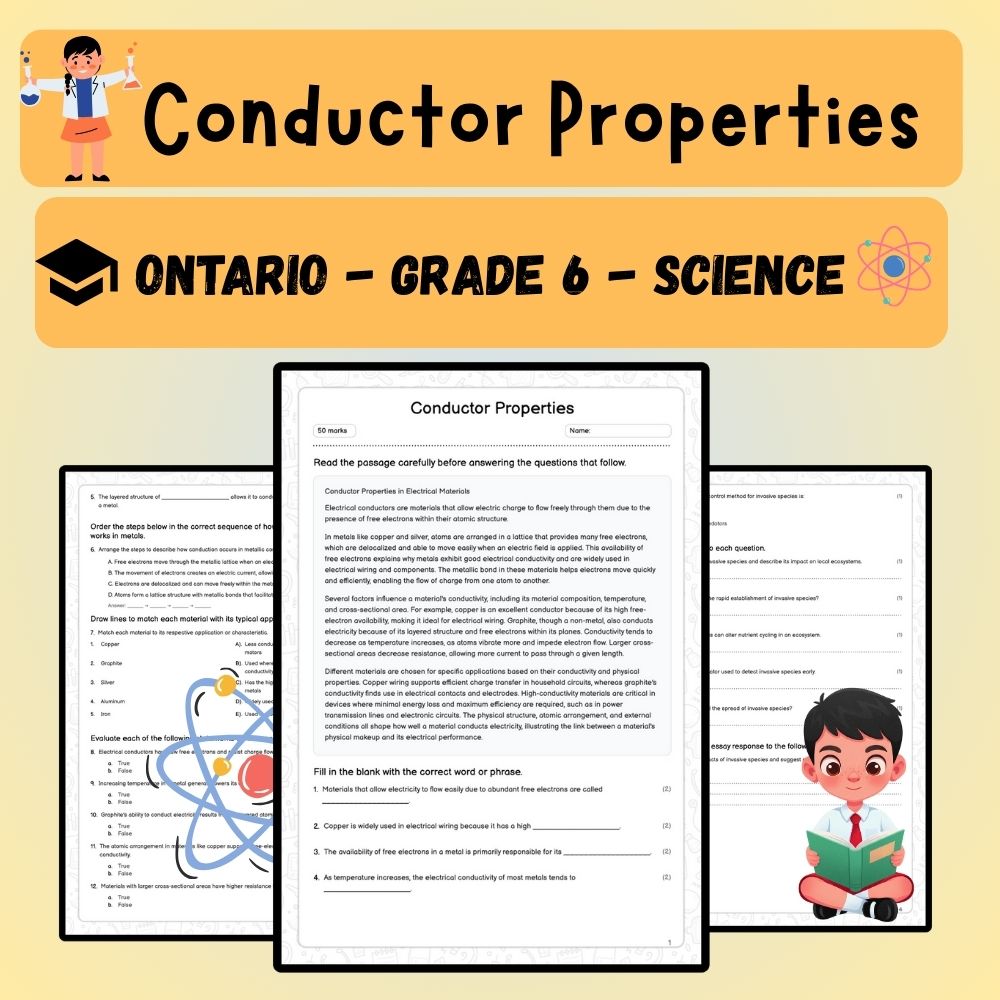
6th Grade Science | Conductor Properties Worksheet (PDF )
 Created byPrism Point Learning
Learning Objectives
- Explain the key features that make a material an effective electrical conductor.
- Identify common conducting materials such as copper and graphite and describe their properties.
- Understand how factors like material composition, temperature, and cross-sectional area influence electrical conductivity.
Also included in: Grade 6 Science Unit – Circuits & Electricity Worksheet Bundle
Instant download

6th Grade Science – Conservation Strategies Worksheet (Alberta Standards) (PDF)
 Created bySilver Birch Teaching
Learning Objectives
- Describe how protected areas, reforestation, habitat restoration, and species-at-risk recovery help conserve forest biodiversity and ecosystem services.
- Explain how ecological knowledge (like riparian buffers and seed-source selection) supports long-term forest resilience across different landscapes.
- Identify cause-and-effect relationships between conservation actions and improvements in habitat quality.
Also included in: Grade 6 Ecosystem Interactions Science Lesson Bundle: Alberta Framework +1 more
Instant download

Human Influences Assessment for Grade 6 Science TEKS Standards
Created byPrism Point LearningLearning Objectives
- Identify different human activities that impact natural systems.
- Explain how habitat fragmentation, pollution, and resource extraction affect community dynamics.
- Describe mitigation strategies like conservation and restoration to protect ecological balance.
Instant download
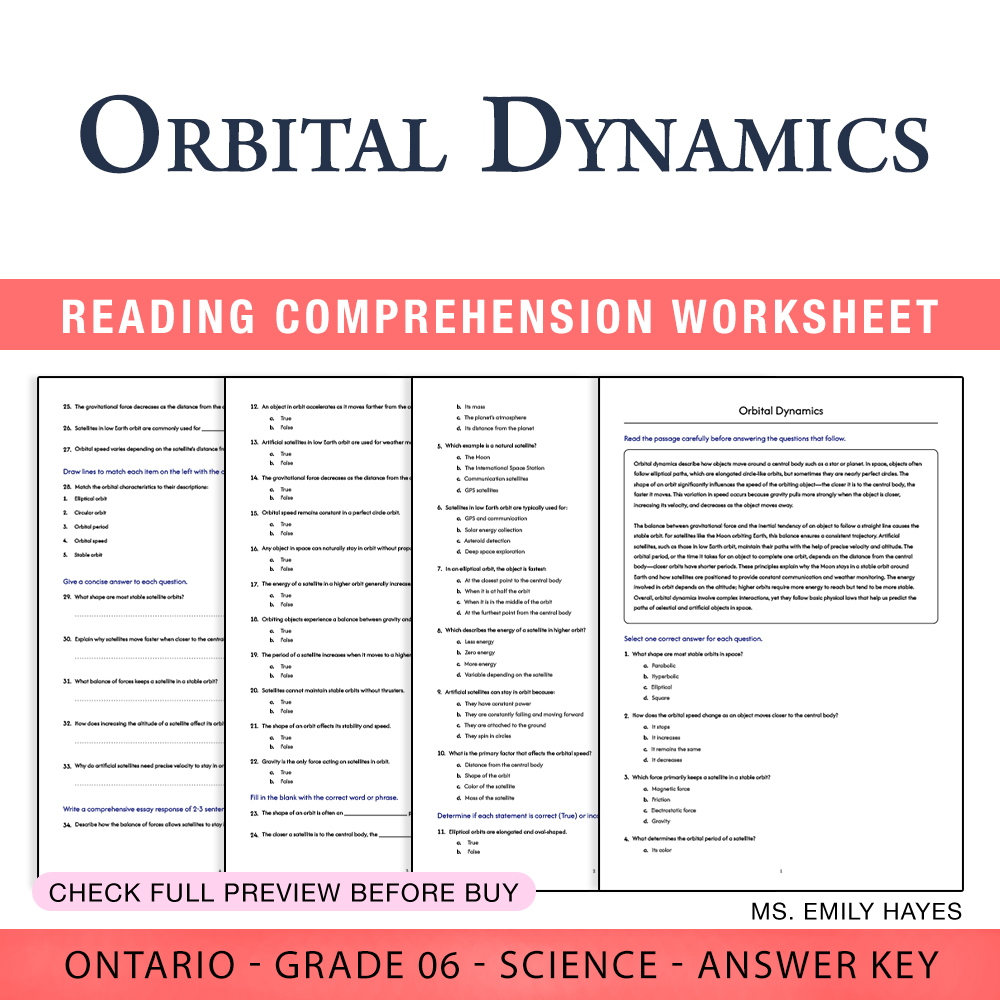
6th Grade Science | Orbital Dynamics Worksheet (PDF + Answer Key)
Created byCopper Leaf ClassroomLearning Objectives
- Explain the difference between elliptical and near-circular orbits.
- Describe how orbital speed varies with distance from a central body.
- Understand the balance of gravitational force and inertial motion in maintaining orbits.
Instant download
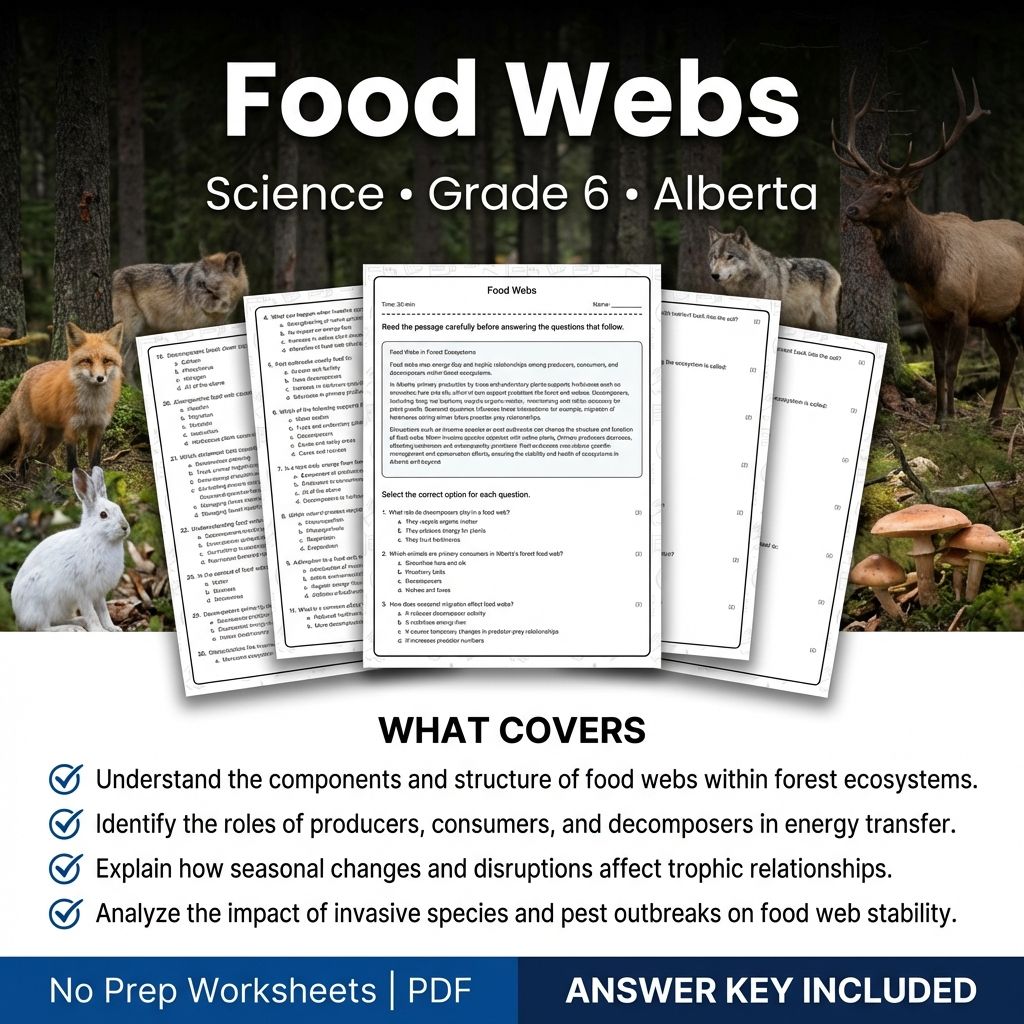
Food Webs Worksheet | Grade 6 Science | Alberta Standards
Created byCoral Reef LearningLearning Objectives
- Understand the components and structure of food webs within forest ecosystems.
- Identify the roles of producers, consumers, and decomposers in energy transfer.
- Explain how seasonal changes and disruptions affect trophic relationships.
Instant download
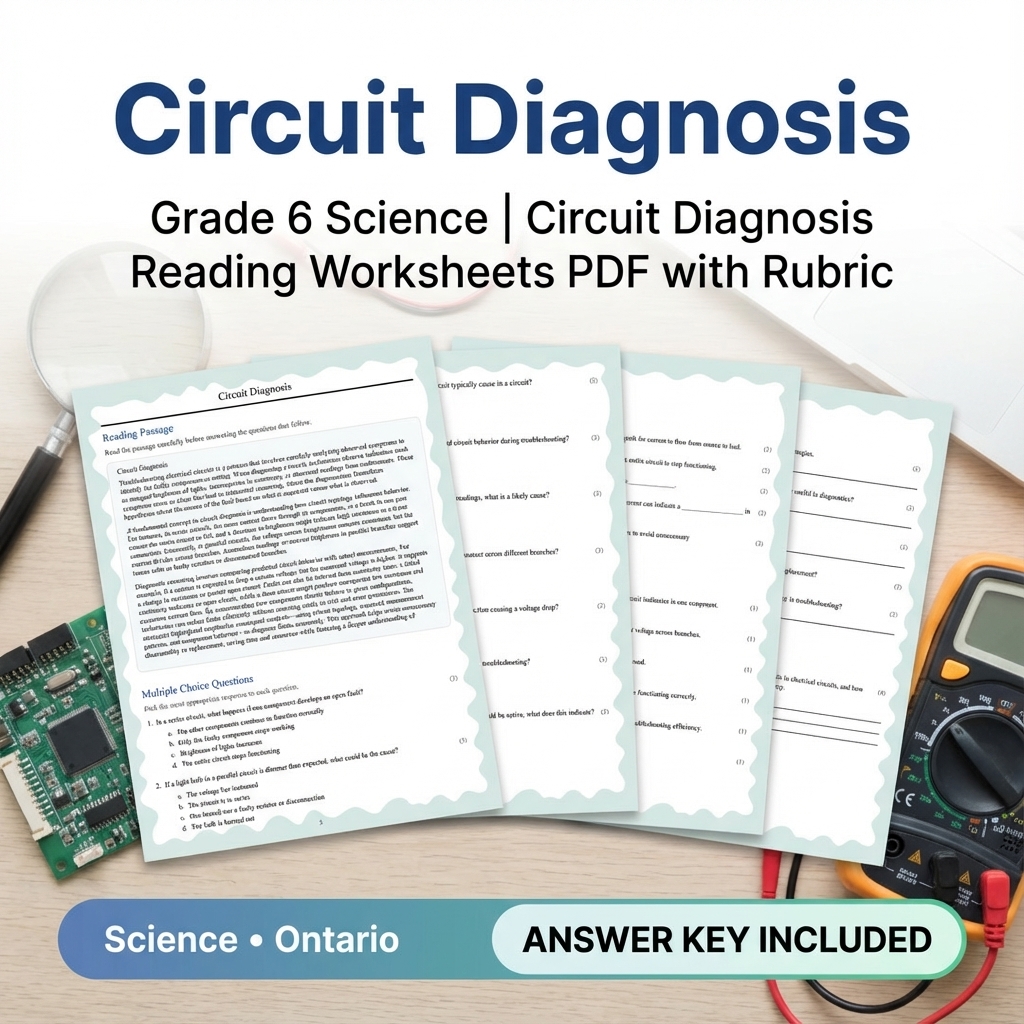
Grade 6 Science | Circuit Diagnosis Reading Worksheets PDF with Rubric
JCreated byJ.S SheetsLearning Objectives
- Understand the principles of troubleshooting electrical circuits through observation and inference.
- Develop skills to interpret circuit behaviours such as brightness, continuity, and measurement patterns to diagnose faults.
- Learn to apply conceptual diagnostic strategies based on circuit topology and component behavior.
Also included in: Grade 6 Science Circuit & Electricity Unit Bundle – Worksheets & Answer Keys +1 more
Instant download
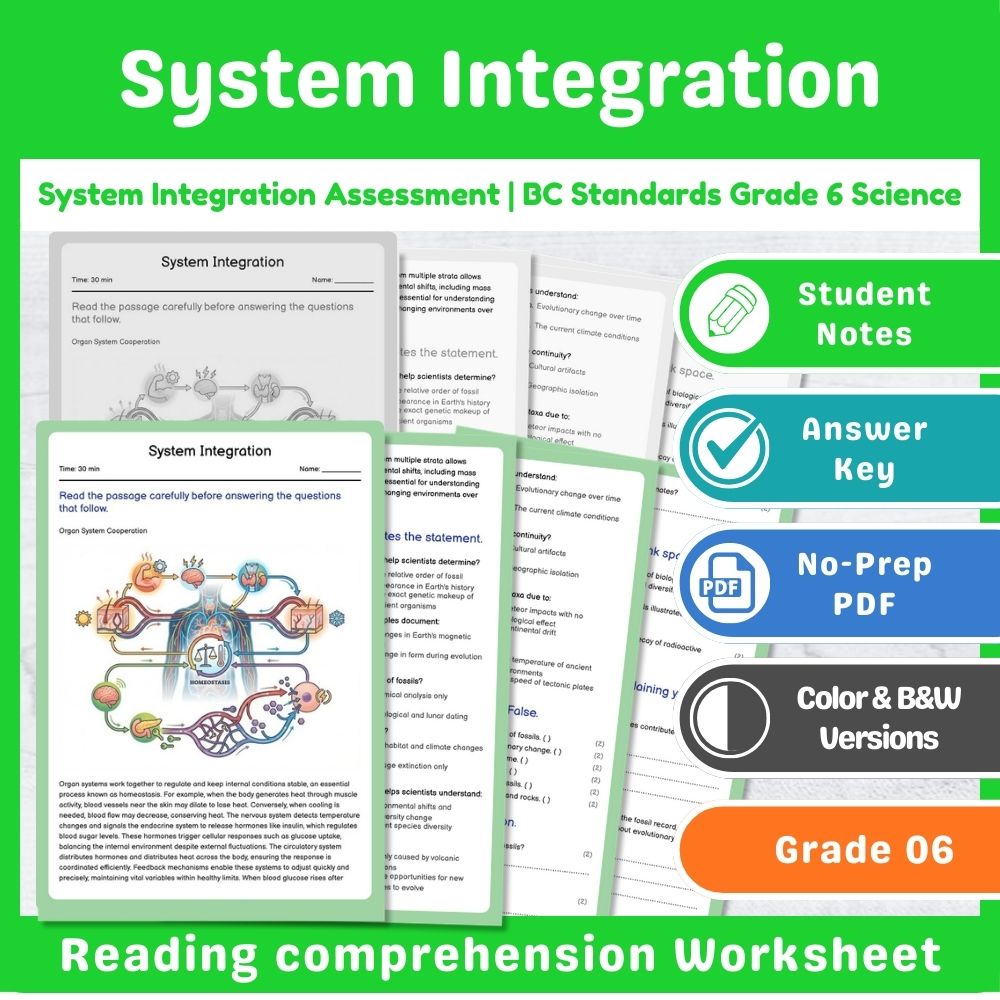
System Integration Assessment | BC Standards Grade 6 Science
Created byPrism Point LearningLearning Objectives
- Understand how different organ systems collaborate to maintain homeostasis amid external changes.
- Identify examples of feedback mechanisms involved in temperature regulation and blood sugar control.
- Describe the roles of the nervous, endocrine, and circulatory systems in homeostasis.
Instant download
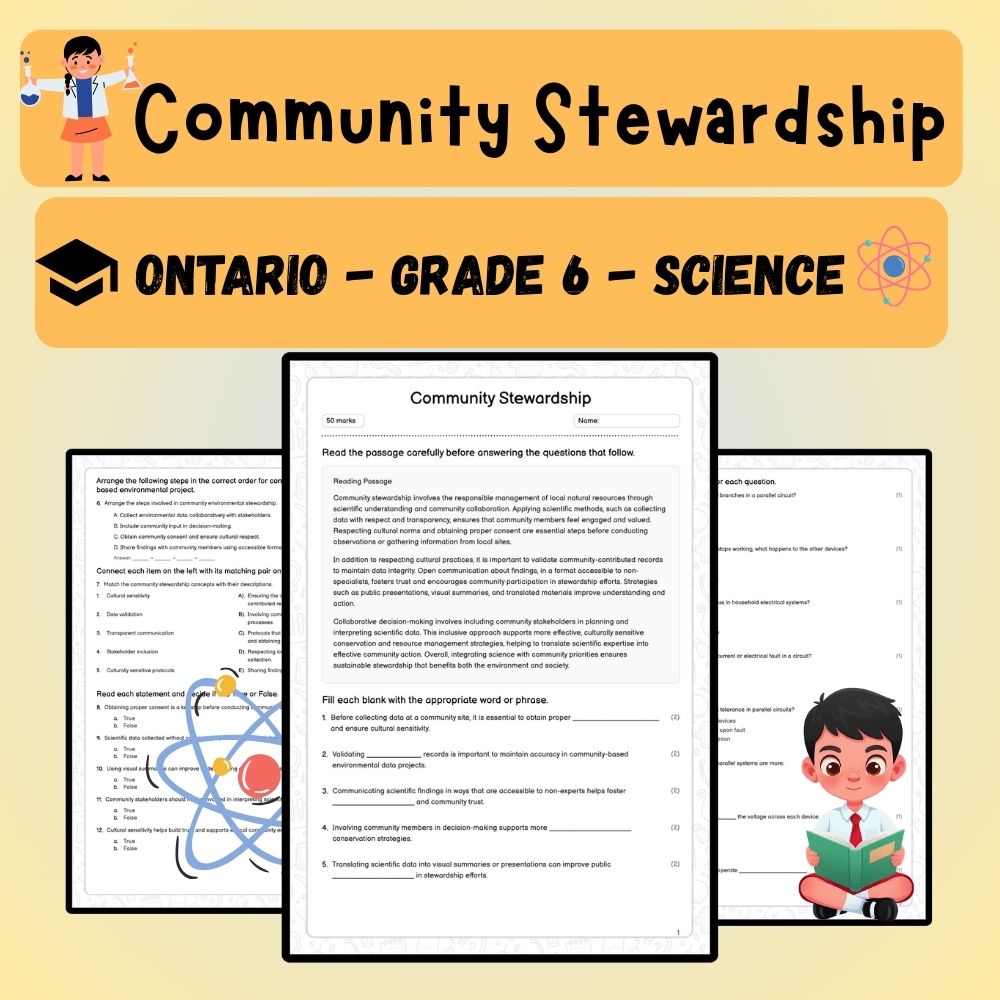
6th Grade Science | Community Stewardship Worksheet (PDF )
Created byPrism Point LearningLearning Objectives
- Understand the importance of respectful community engagement when collecting environmental data.
- Apply scientific methods to analyze local issues related to environmental conservation.
- Develop strategies for communicating scientific findings effectively to non-expert audiences.
Also included in: Grade 6 Science Unit | Inquiry, Modeling & Data Skills Worksheet Bundle
Instant download
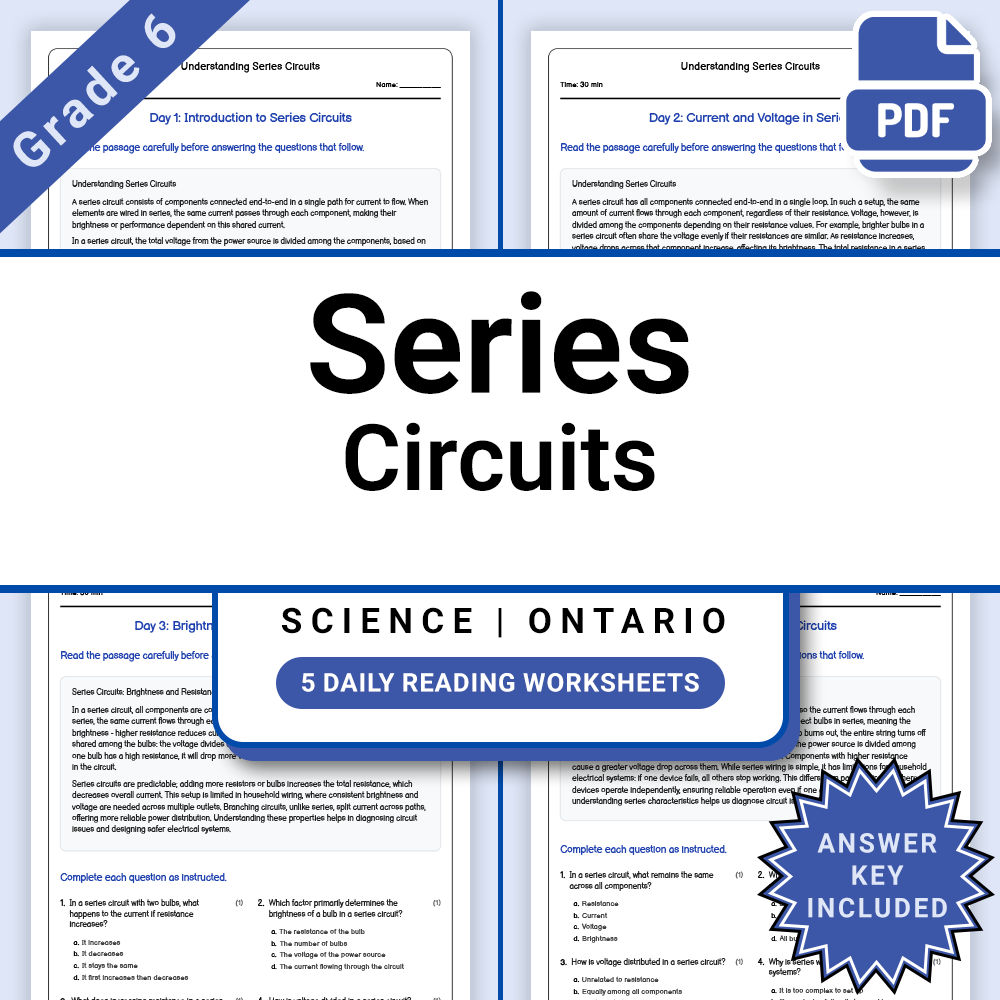
Grade 6 Science – Understanding Series Circuits | Daily Reading Worksheet + Answer Key
JCreated byJ.S SheetsLearning Objectives
- Identify the main features of series circuits.
- Explain how current flows through a series circuit.
- Describe voltage division among components in series.
Also included in: Grade 6 Science Lesson Group – Circuits and Energy Ontario Framework +1 more
Instant download
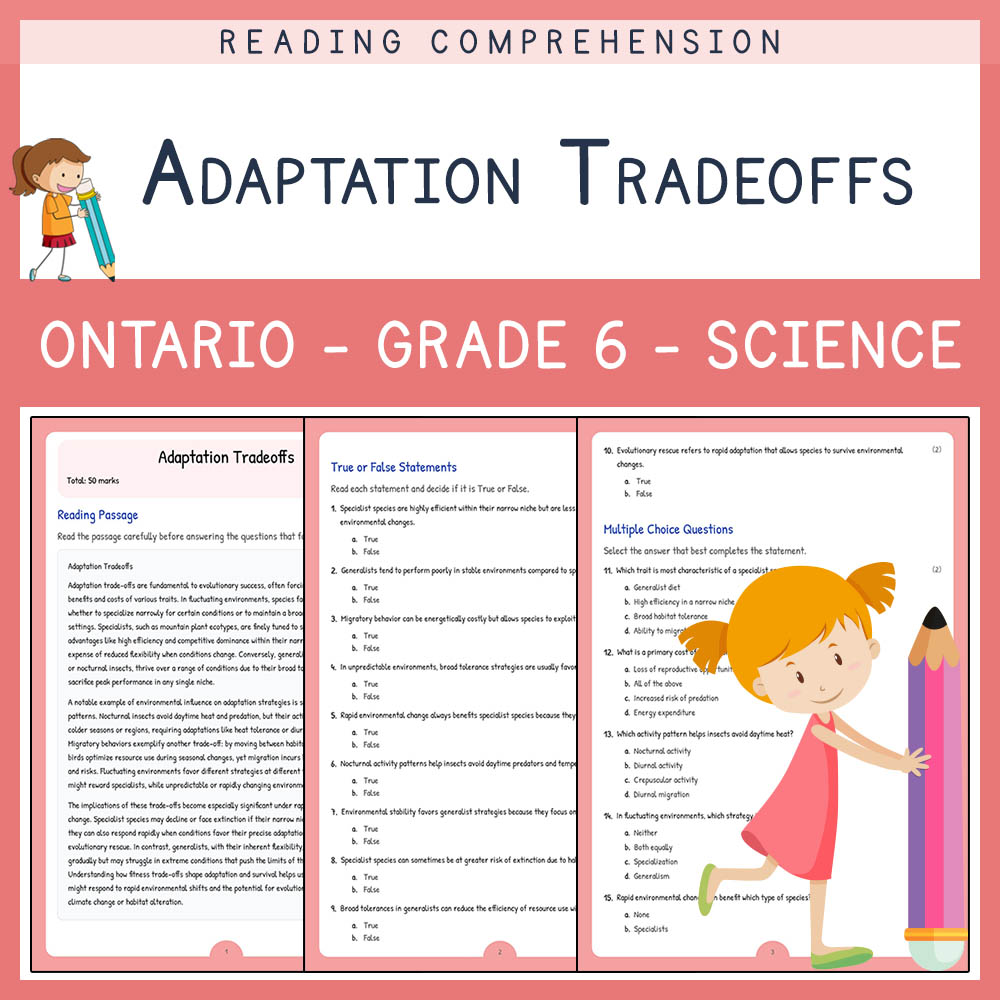
Grade 6 Science | Adaptation Tradeoffs Worksheet with Answer Key (PDF)
Created byLumora LearningLearning Objectives
- Understand the concept of fitness trade-offs in animal and plant adaptations.
- Compare and contrast specialist and generalist strategies in fluctuating environments.
- Analyze examples of adaptation trade-offs, such as habitat specialization, activity patterns, and migratory behaviors.
Also included in: Grade 6 Science | Biodiversity Custom Unit Resource | Ontario Framework
Instant download

6th Grade Science | Lunar Phases Model Reading Worksheet (PDF & Rubric)
JCreated byJ.S SheetsLearning Objectives
- Describe the sequence and timing of lunar phases using a geometric model of the Moon's orbit.
- Explain how relative positions of the Sun, Earth, and Moon affect the Moon's illumination as seen from Earth.
- Apply the lunar model to observe and predict lunar phases over specific dates and periods.
Also included in: Grade 6 Science | Celestial Motion & Sky Observation Worksheets Bundle +1 more
Instant download
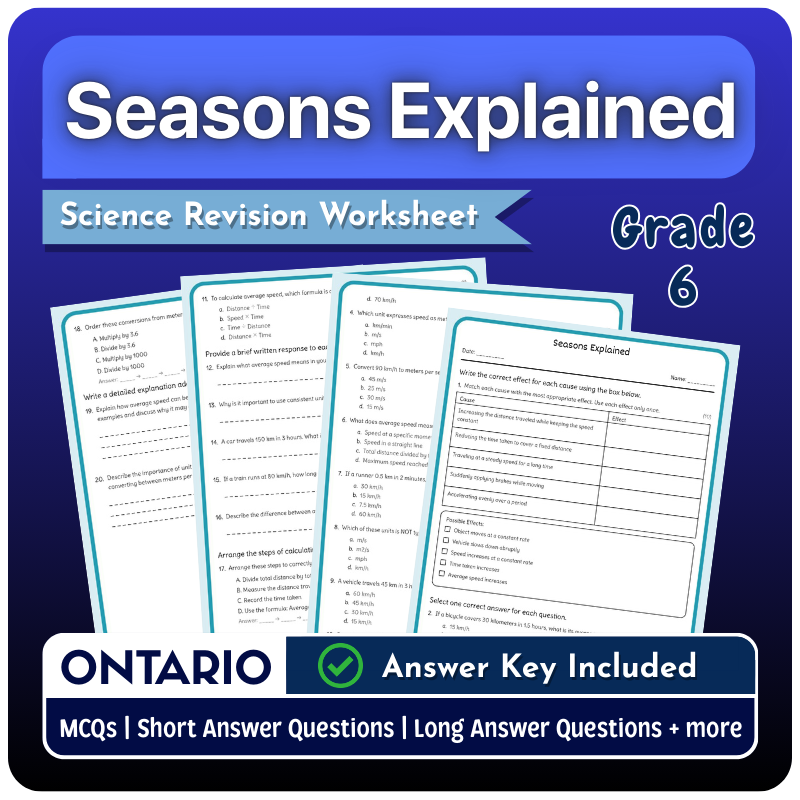
6th Grade Science | Seasons and Earth's Tilt Worksheet (PDF)
Created byBright Mind ResourcesLearning Objectives
- Understand how Earth's axial tilt and orbital motion cause seasonal changes.
- Explain why hemispheres experience opposite seasons.
- Describe how day length and solar elevation vary throughout the year.
Instant download
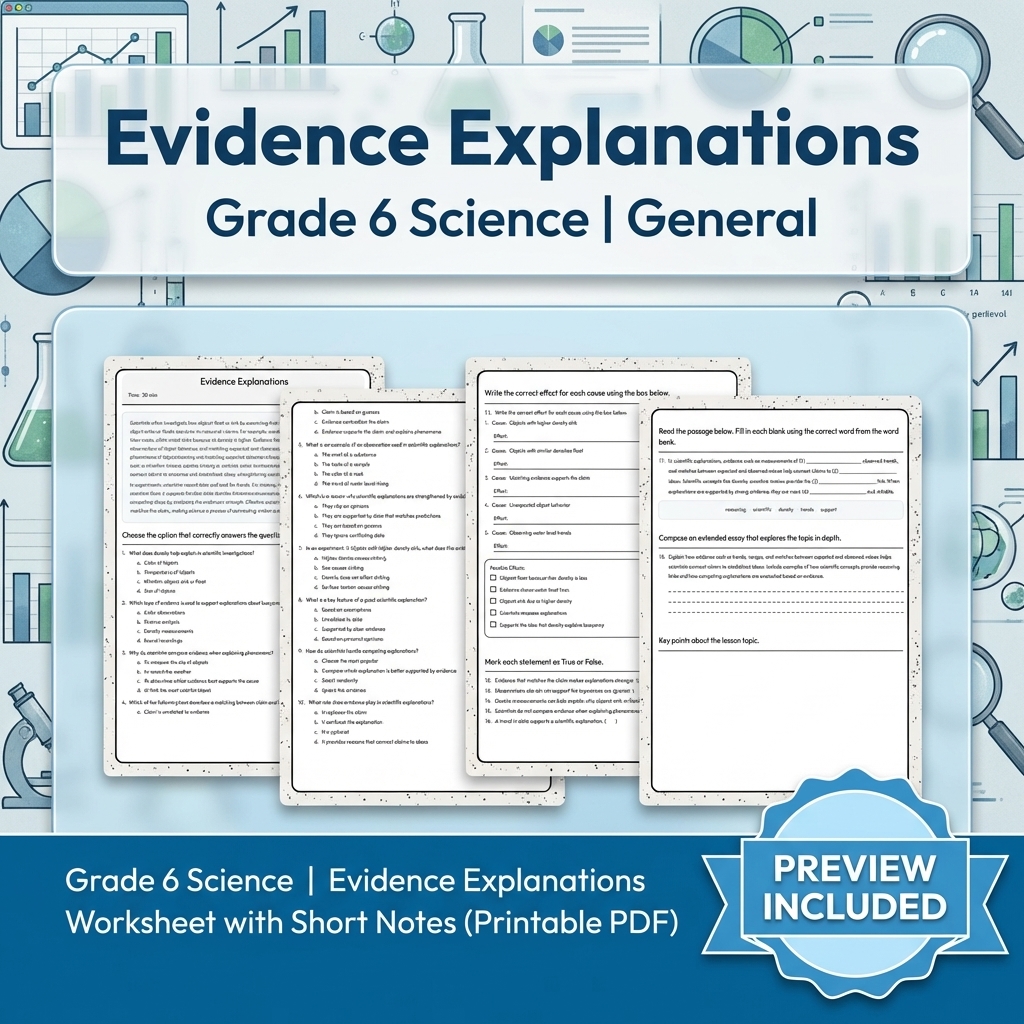
Grade 6 Science | Evidence Explanations Worksheet with Short Notes
Created byMeadowlark WorksheetsLearning Objectives
- Understand how evidence connects claims to scientific ideas.
- Identify different types of evidence such as trends, ranges, and matches.
- Explain how scientific concepts provide reasoning links in explanations.
Also included in: Grade 6 Science Lesson Group | Comprehensive Worksheets & Activities +1 more
Instant download

Grade 6 Energy Drives Change Worksheet | Practice & PDF | NGSS
 Created byClear Sky Classroom
Learning Objectives
- Explain how energy from the Sun and forces like gravity drive Earth system processes.
- Describe how heating affects water states, evaporation, and cloud formation.
- Use cause-and-effect reasoning to show how gravity influences the movement and accumulation of water and sediments.
Instant download
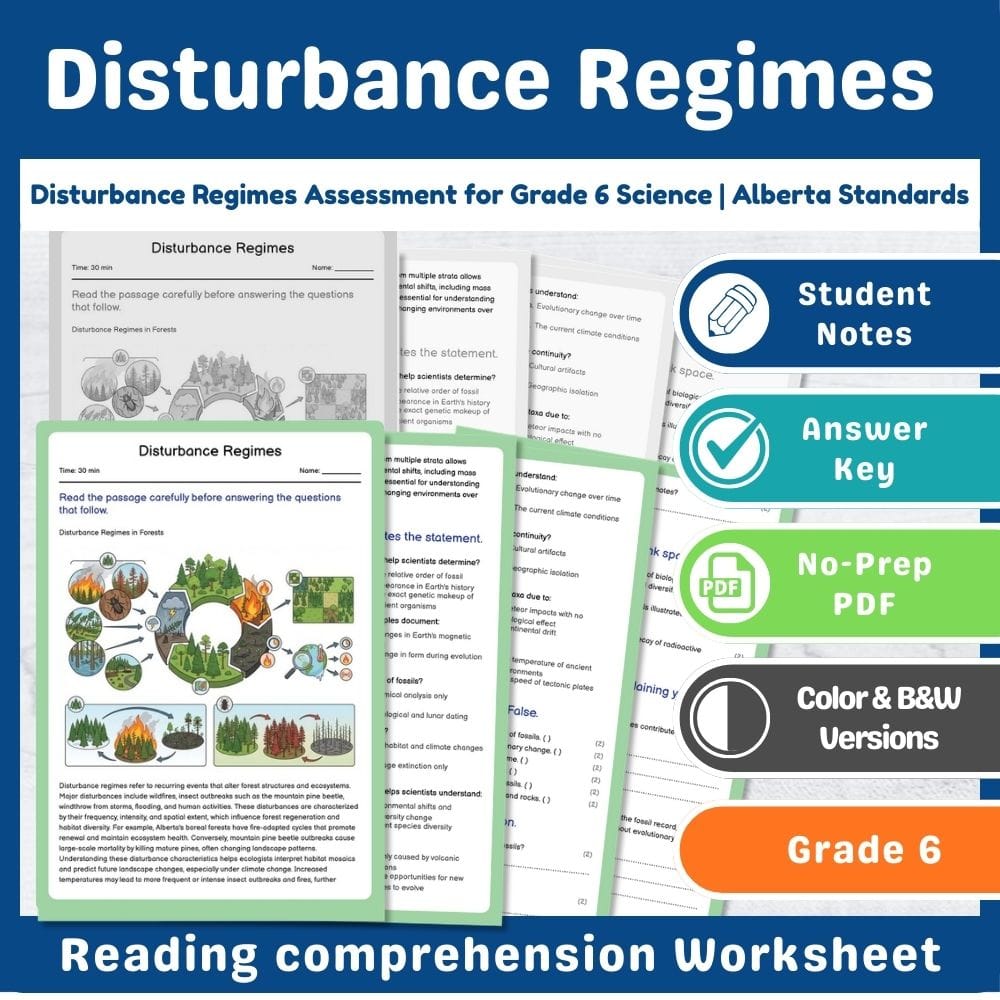
Disturbance Regimes Assessment for Grade 6 Science | Alberta Standards
Created byPrism Point LearningLearning Objectives
- Describe various disturbance regimes that affect forest ecosystems.
- Explain how disturbance frequency and intensity influence landscape heterogeneity.
- Identify characteristics of fire-adapted cycles and insect outbreaks in forests.
Also included in: Lesson Grade 6 Science Mini Bundle Trees and Forests Alberta Standards
Instant download
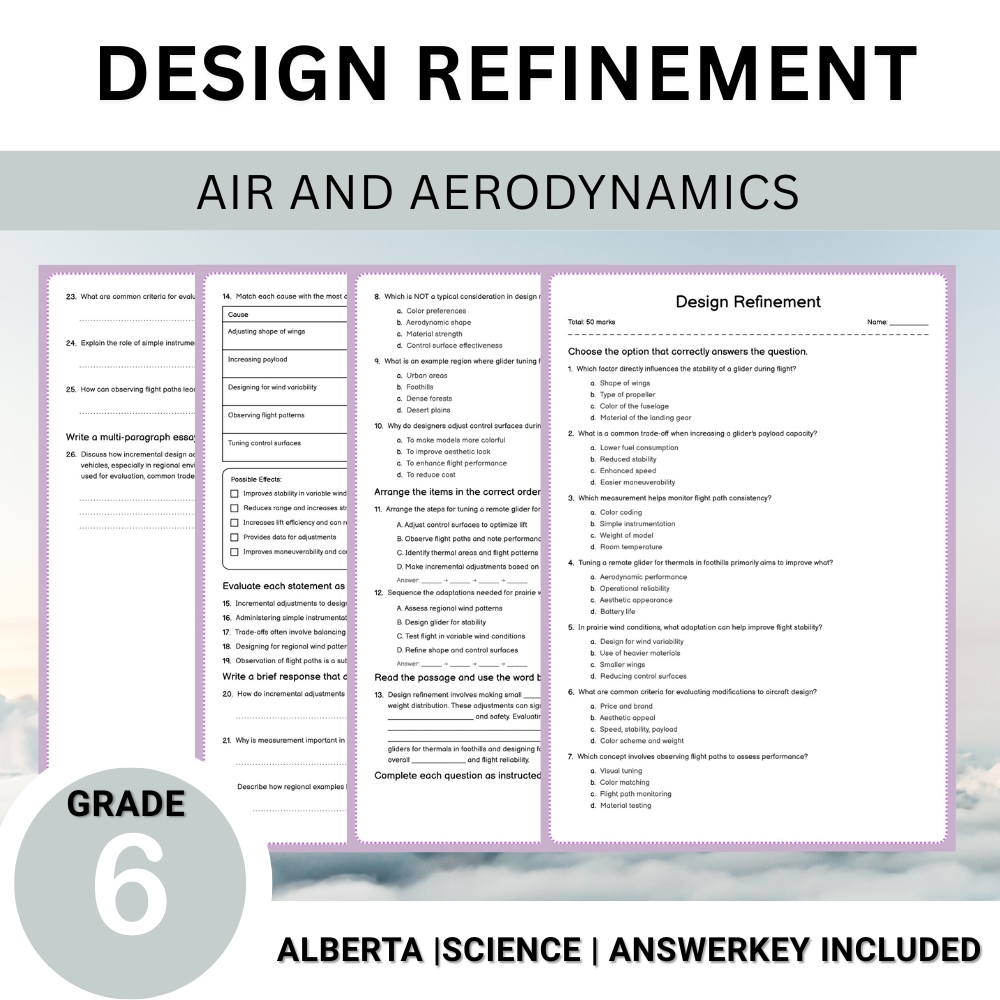
Grade 6 Science | Design Refinement Worksheet – Science (PDF) for Alberta Standards
Learning Objectives
- Understand how incremental adjustments affect aerodynamic performance.
- Identify criteria for evaluating modifications in aircraft design.
- Explain trade-offs between speed, stability, and payload capacity.
Also included in: Grade 6 Science Unit Bundle | Flight, Air Pressure & Aerodynamics Worksheets +1 more
Instant download
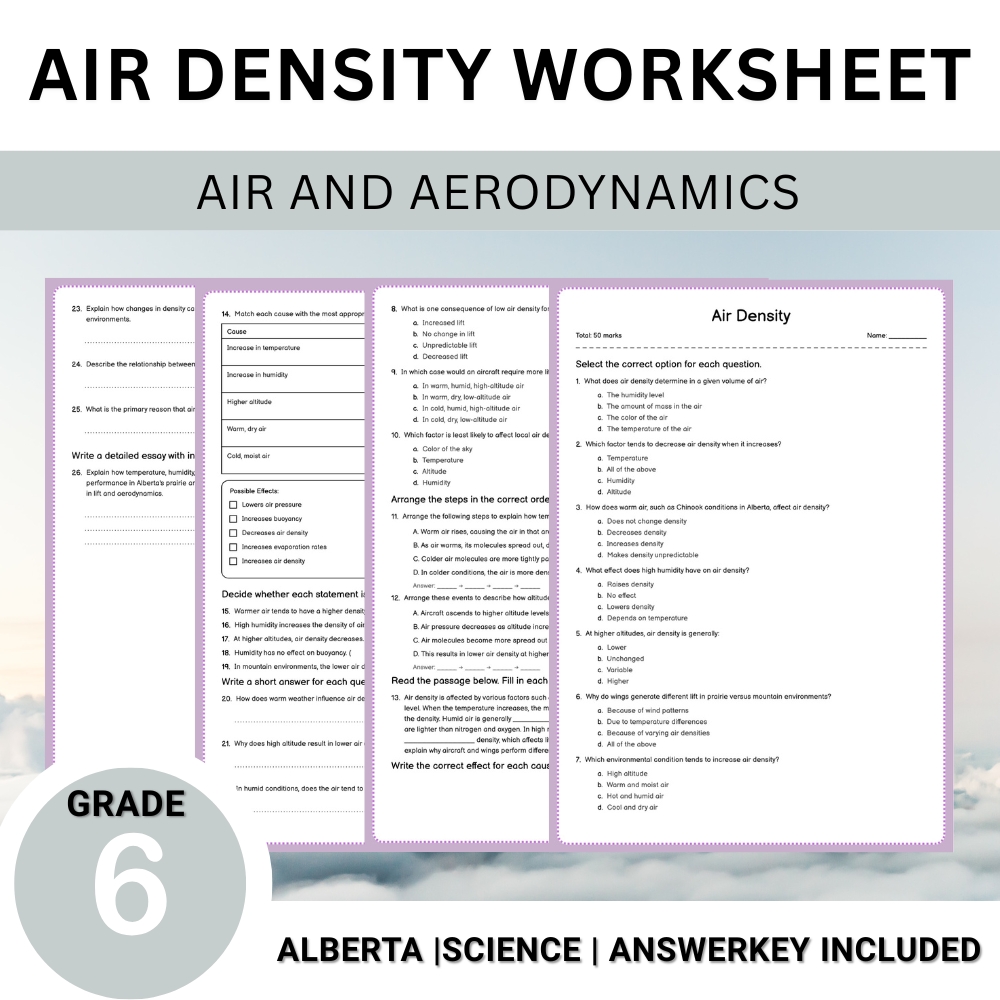
Grade 6 Science | Air Density Worksheet (Printable PDF & Assessment)
Learning Objectives
- Understand what air density is and how it affects buoyancy and aerodynamics.
- Explain how temperature, humidity, and altitude influence air density.
- Describe the differences in air density under various atmospheric conditions.
Also included in: Grade 6 Science Unit Bundle | Flight, Air Pressure & Aerodynamics Worksheets +1 more
Instant download
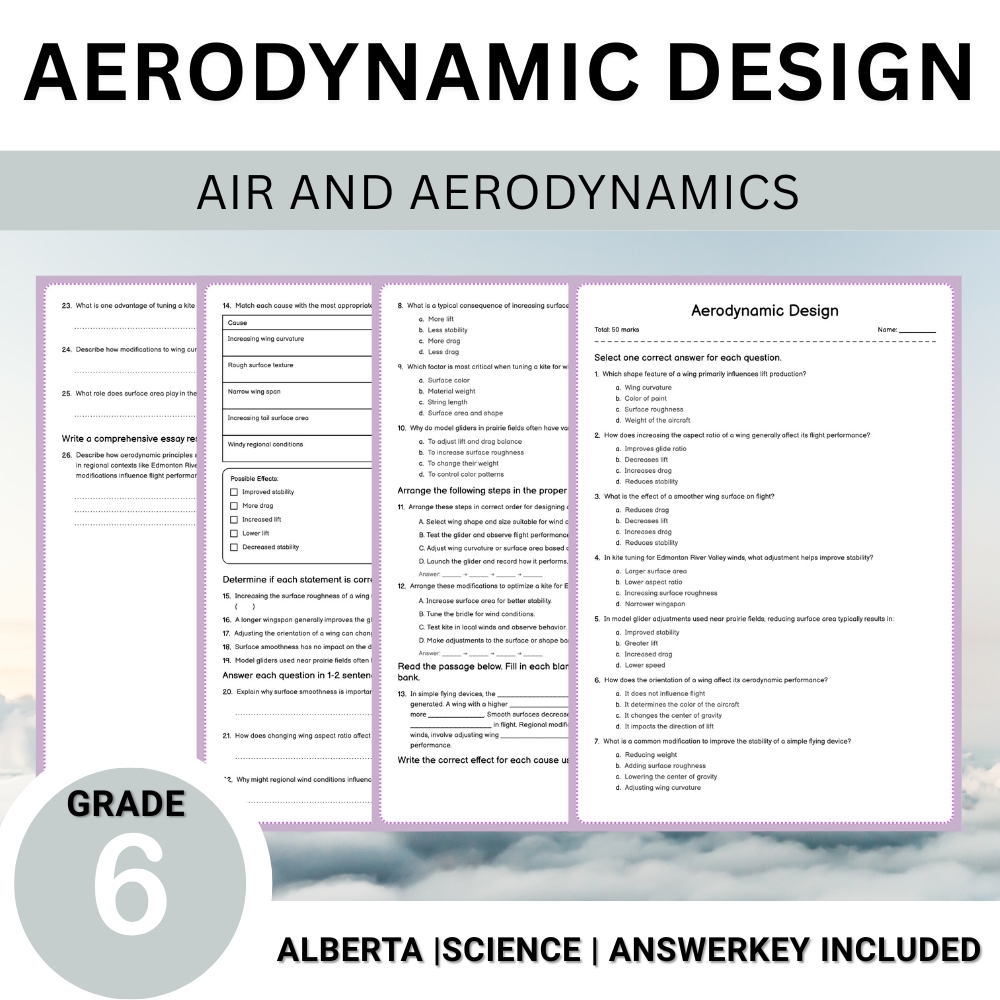
Grade 6 Science | Aerodynamic Design Worksheet (Printable PDF) for Assessment & Student Practice
Learning Objectives
- Understand the principles of aerodynamics that affect flight, including lift, drag, and stability.
- Identify how shape, surface smoothness, and orientation influence aircraft performance.
- Describe practical applications of aerodynamic modifications in kite tuning and model glider adjustments.
Also included in: Grade 6 Science Unit Bundle | Flight, Air Pressure & Aerodynamics Worksheets +1 more
Instant download
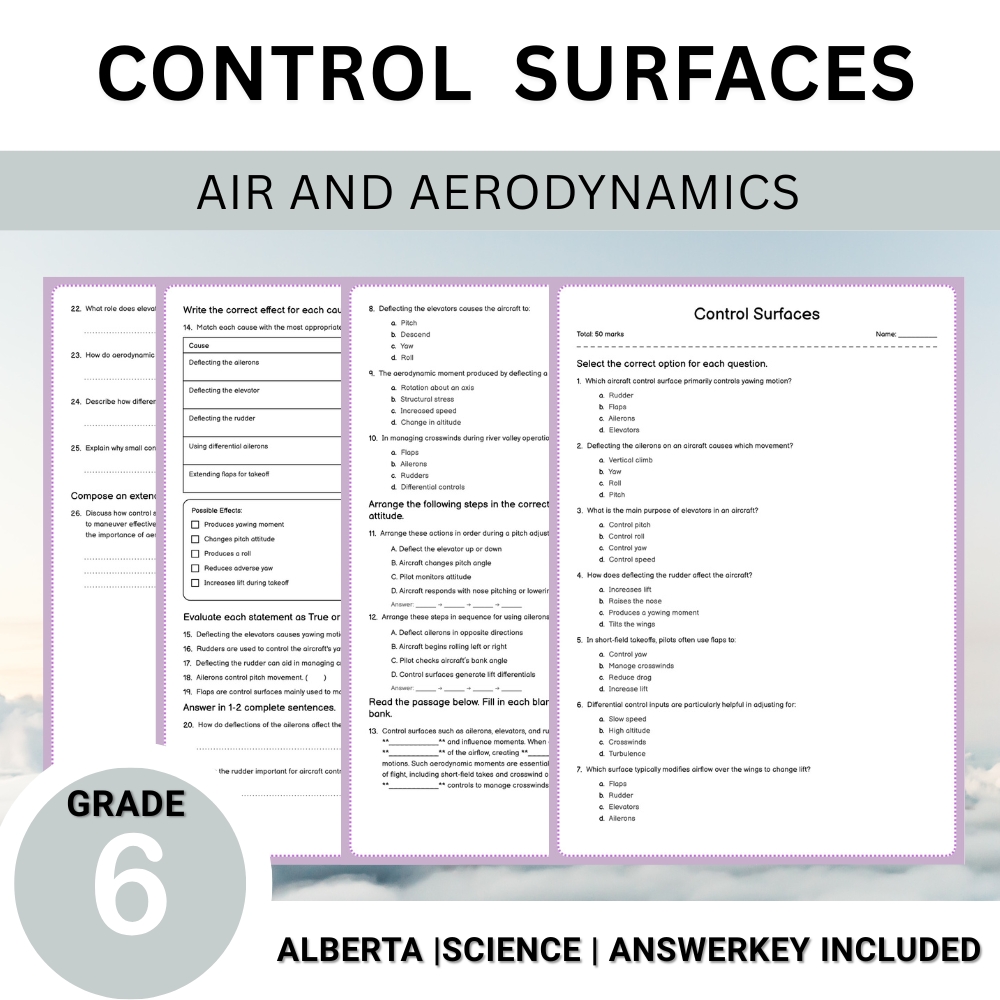
Grade 6 Science | Control Surfaces Worksheet – Classroom Assessment & Practice PDF
Learning Objectives
- Describe the function of various control surfaces such as ailerons, elevators, and rudders.
- Explain how deflection of control surfaces affects airflow and aircraft attitude.
- Understand how aerodynamic moments are produced and how they influence rolling, pitching, and yawing motions.
Also included in: Grade 6 Science Unit Bundle | Flight, Air Pressure & Aerodynamics Worksheets +1 more
Instant download
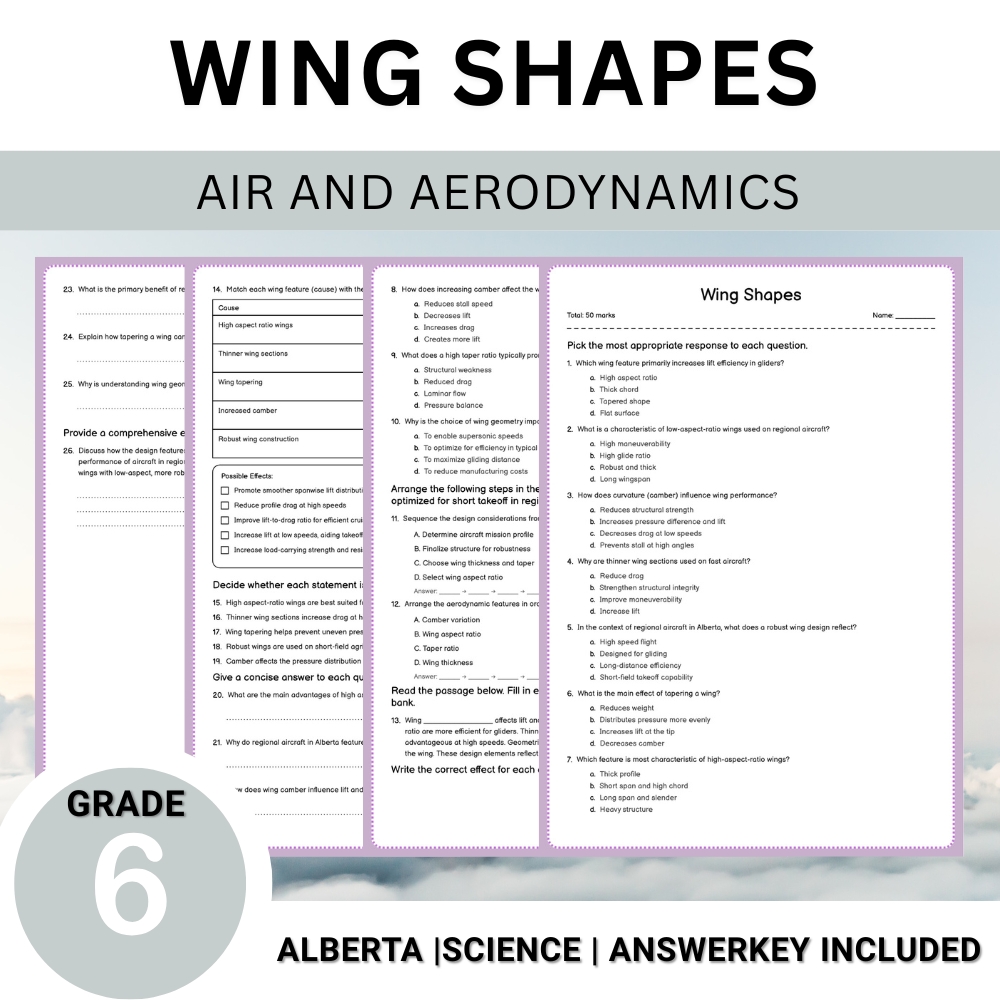
Grade 6 Science | Wing Shapes Worksheet (Assessment & Student Practice Printable )
Learning Objectives
- Understand how wing shape affects lift, stall, and maneuverability in aircraft.
- Identify features such as camber, aspect ratio, and taper, and their influence on wing performance.
- Compare high-aspect-ratio wings used in gliders with low-aspect, robust wings used in regional aircraft.
Also included in: Grade 6 Science Unit Bundle | Flight, Air Pressure & Aerodynamics Worksheets +1 more
Instant download
About Grade 6 Science Worksheets
Explore Grade 6 Science worksheets for classwork, homework, or review. Our 5,969 printables download instantly as PDFs.
MyTeachingSheets worksheets are made by real teacher-authors and checked before they go live. Download any as a print-ready PDF for lessons, homework, or independent practice — most include answer keys, and previews are always free.