
Grade 6 Science Worksheets
5,969 worksheets
Sustainability Strategies Worksheet | NGSS Grade 6 Science Activity
 Created byAmber Owl Education
Learning Objectives
- Explain how population trends and per-capita resource use can affect Earth systems and sustainability.
- Compare renewable energy, conservation, circular resource use, and land-management strategies.
- Evaluate trade-offs among economic, social, and environmental priorities when choosing sustainability policies and technologies.
Also included in: Grade 6 Science Sustainability and Natural Hazards Lesson Bundle | ngss +1 more
Instant download
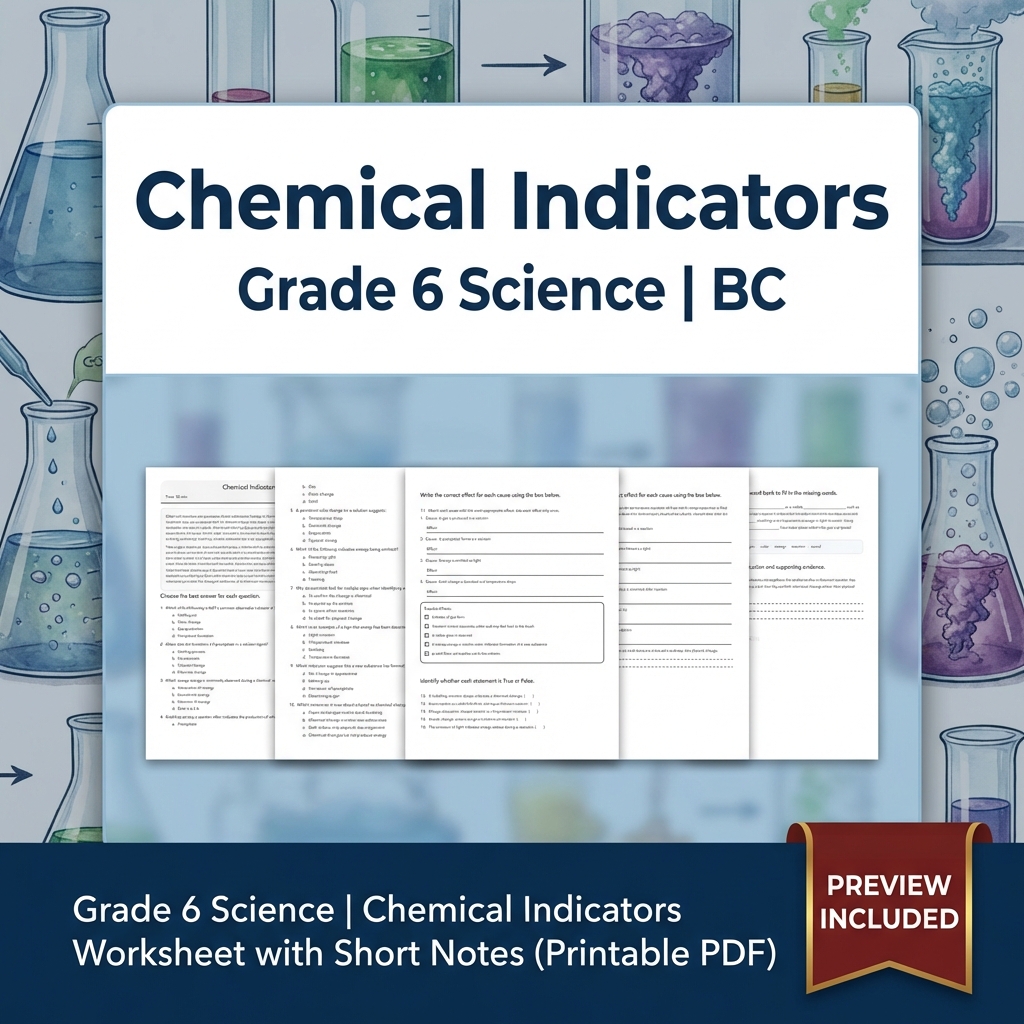
Grade 6 Science | Chemical Indicators Worksheet with Short Notes (Printable PDF)
 Created byMeadowlark Worksheets
Learning Objectives
- Identify observable signs that indicate a chemical reaction has occurred.
- Understand various chemical indicators such as gas production, precipitates, and energy changes.
- Explain why multiple indicators provide stronger evidence of chemical change.
Also included in: Grade 6 Science | Matter, Properties & Change UNIT Worksheet Bundle +1 more
Instant download
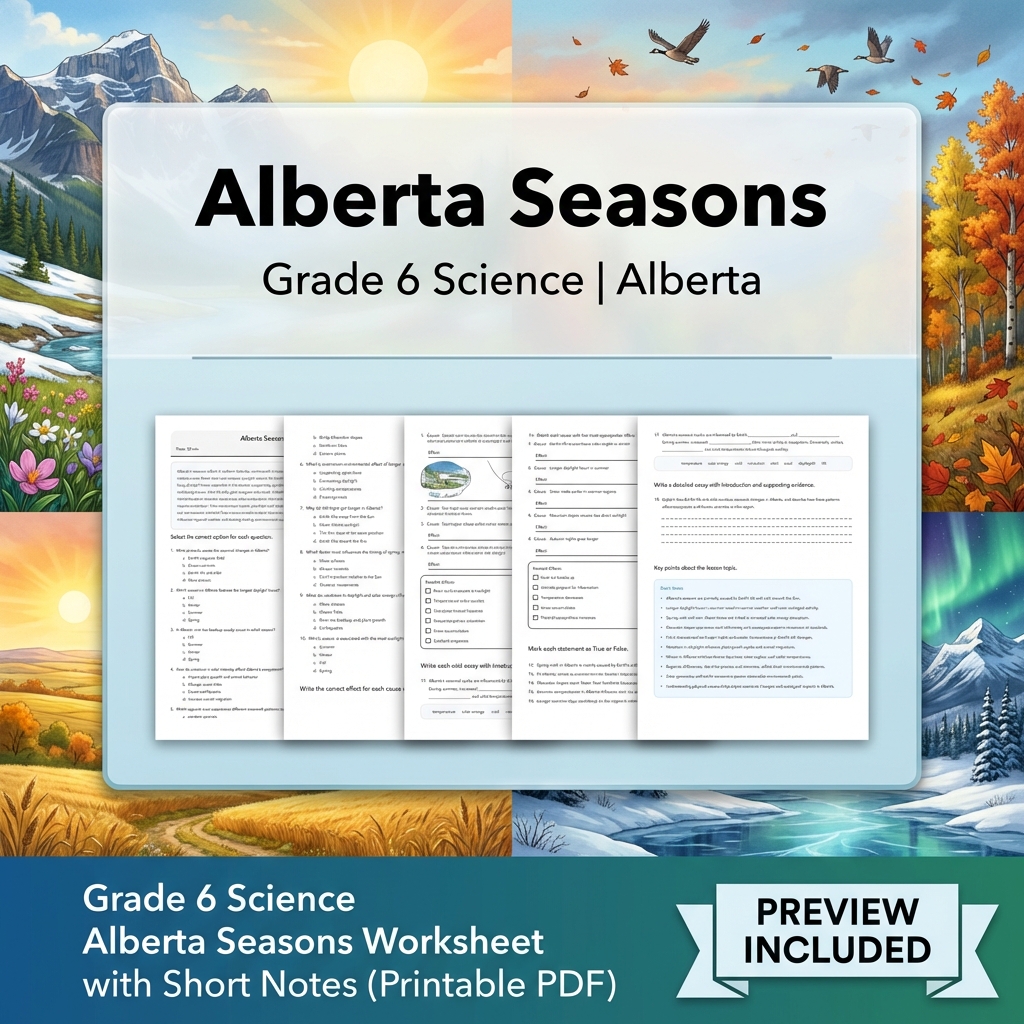
Grade 6 Science Alberta Seasons Worksheet with Short Notes (Printable PDF)
Created byMeadowlark WorksheetsLearning Objectives
- Describe seasonal patterns in Alberta and their causes.
- Link astronomical factors like Earth's tilt and solar geometry to environmental cycles.
- Explain how daylight and solar intensity affect ecosystems and human activities in Alberta.
Also included in: Grade 6 Science Sky Science Unit Bundle | Alberta Curriculum Worksheets +1 more
Instant download

Flight Forces Worksheet | Grade 6 Science Ontario Standards
 Created byCedar Grove Learning
Learning Objectives
- Identify and describe lift, drag, thrust, and weight as the four main aerodynamic forces acting on aircraft
- Explain how direction and magnitude of forces affect an object’s motion (climb, level cruise, and descent)
- Use the idea of vector addition and equilibrium to describe steady level flight
Also included in: Grade 6 Aerodynamics | Flight - Science Lesson Bundle – Ontario Framework +1 more
Instant download

Grade 6 Science | Conservation of Mass - Daily Reading Comprehension
 Created byCoral Reef Learning
Learning Objectives
- Understand the principle of conservation of mass in physical and chemical changes.
- Identify how atoms and molecules rearrange during different processes without changing total mass.
- Model mass changes using particle diagrams and symbolic representations.
Instant download
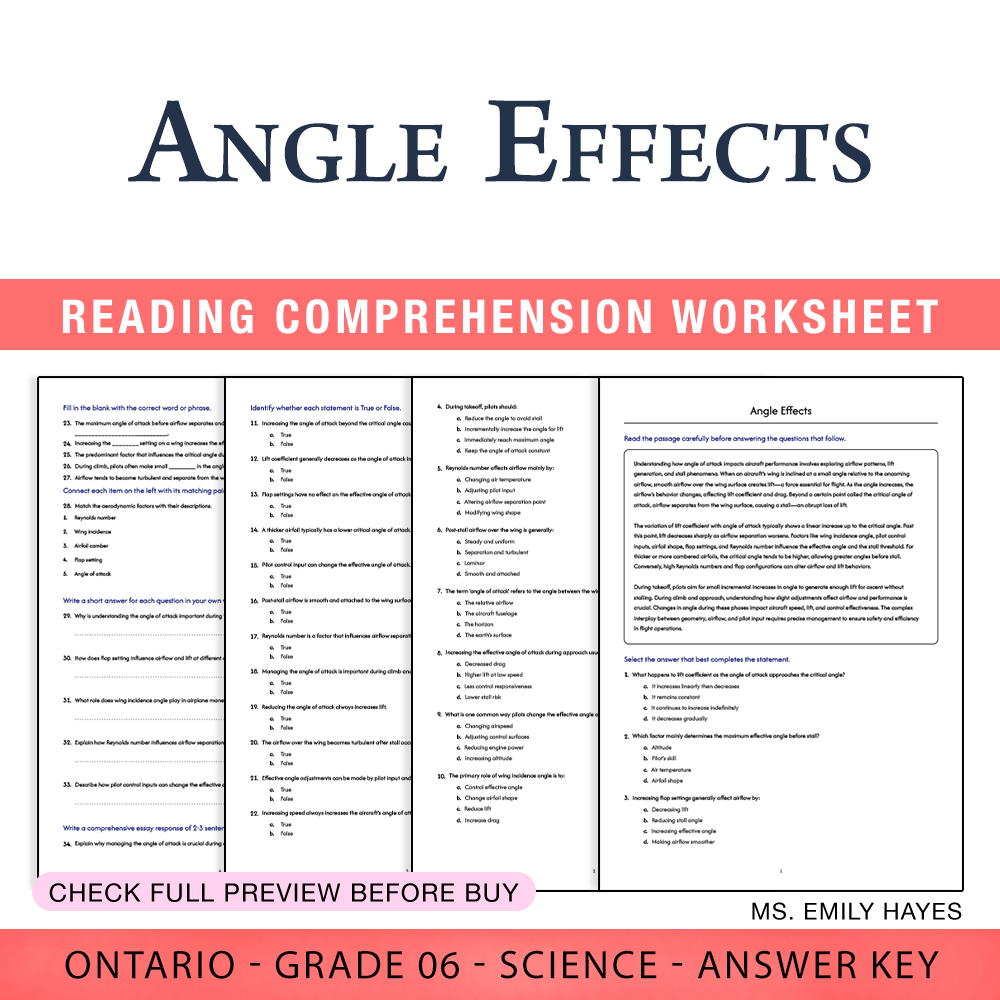
6th Grade Science | Angle Effects Worksheet (PDF + Answer Key)
 Created byCopper Leaf Classroom
Learning Objectives
- Describe how the angle of attack influences airflow and lift in aircraft wings
- Explain the relationship between wing incidence, pilot input, and effective angle
- Identify the factors affecting the critical angle of attack for different airfoil shapes
Instant download

Grade 6 Trait Heritability & Natural Selection Worksheet | Ontario Science
 Created byTeacher's Corner
Learning Objectives
- Explain heritability using the idea that traits can be influenced by genes
- Distinguish heritable traits from traits caused mainly by the environment
- Describe how allele frequencies can change over generations due to selection
Instant download
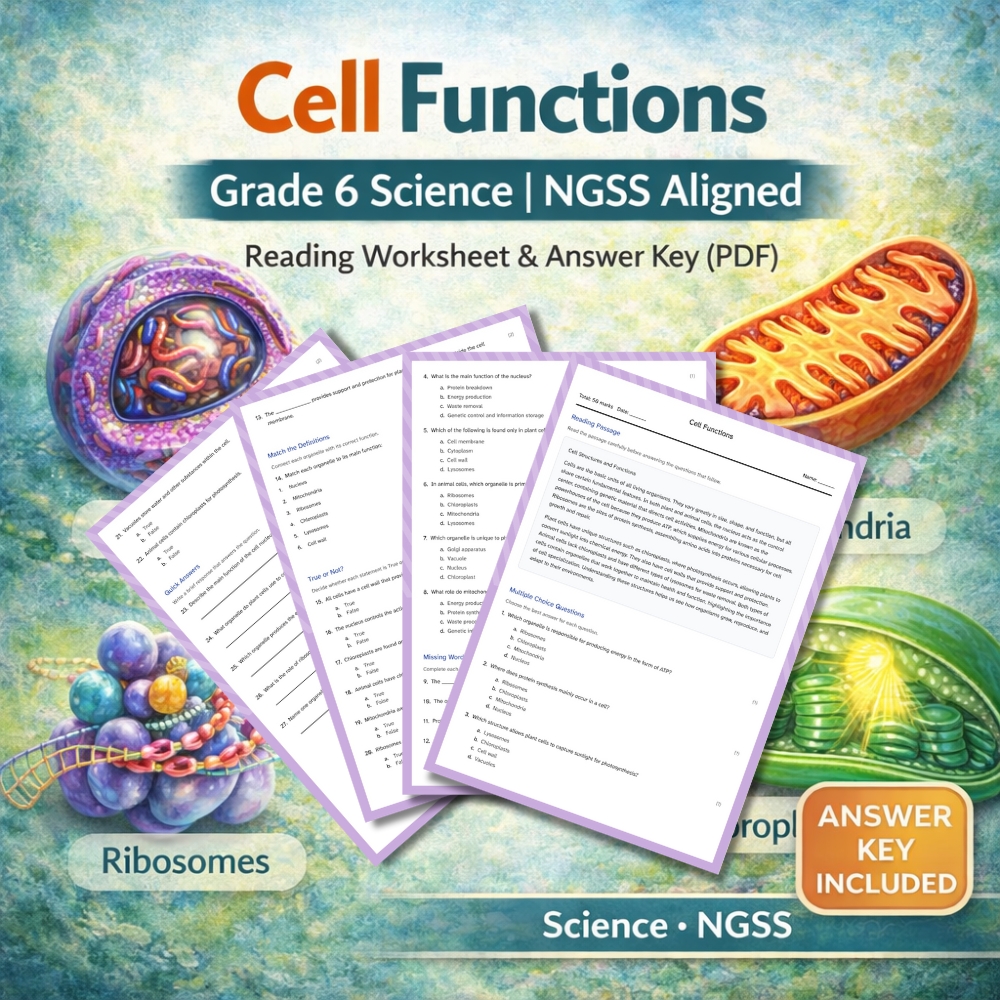
6th Grade Science | Cell Functions | Worksheet & Answer Key – NGSS Aligned
Created byCedar Grove LearningLearning Objectives
- Identify the main organelles in plant and animal cells and their functions.
- Explain how cell structure relates to its role in energy processing, protein synthesis, waste removal, and regulation.
- Compare and contrast plant and animal cells based on their organelle composition and specialization.
Also included in: Grade 6 Science Worksheet Bundle | Cell Processes & Systems NGSS(PDF+Answer Key) +1 more
Instant download

Grade 6 Niche Relationships Worksheet | Ecology NGSSS Science Activity
 Created byEvergreen Desk Education
Learning Objectives
- Explain what an ecological niche is and how it includes an organism’s needs and behaviors.
- Describe how two species can coexist in the same habitat by using different resources or conditions.
- Interpret niche overlap and competition when resources become limited.
Instant download
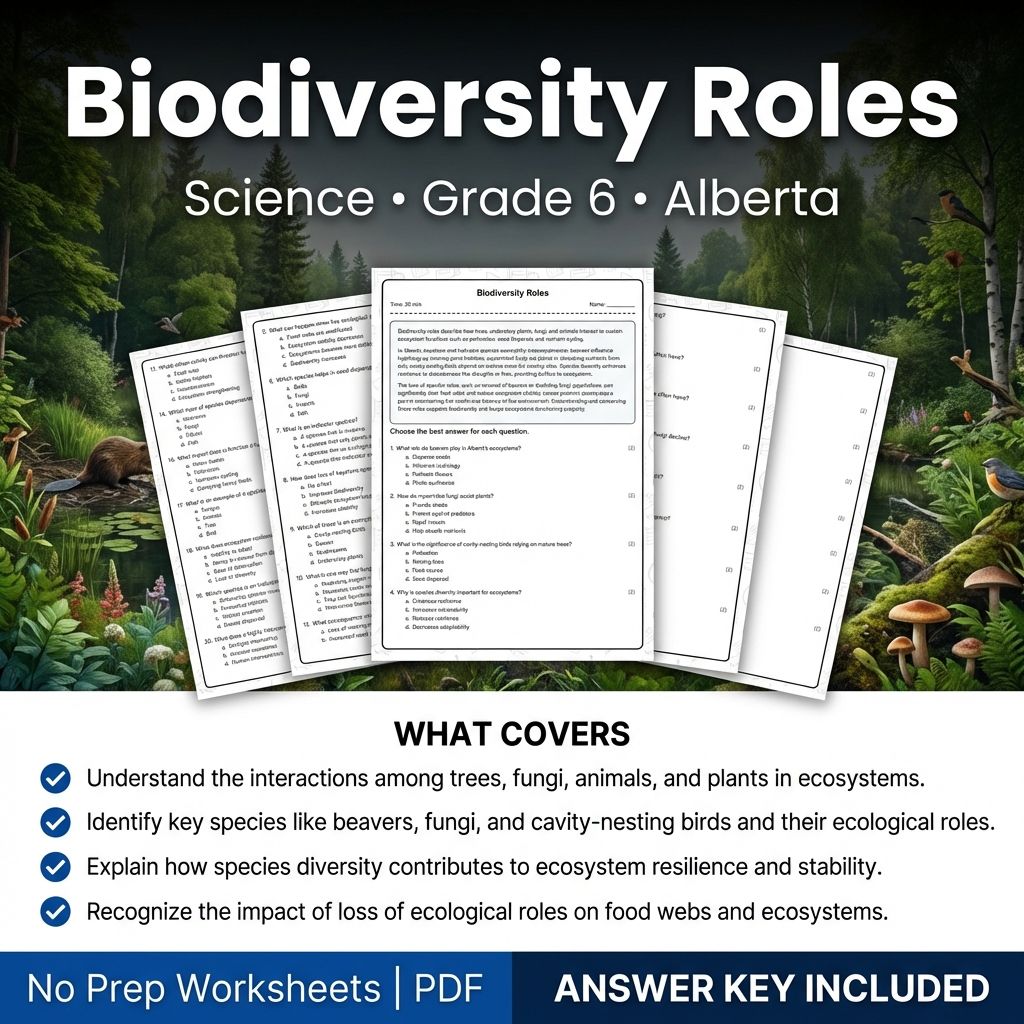
Grade 6 Science Worksheet on Biodiversity Roles | Alberta Standards
Created byCoral Reef LearningLearning Objectives
- Understand the interactions among trees, fungi, animals, and plants in ecosystems.
- Identify key species like beavers, fungi, and cavity-nesting birds and their ecological roles.
- Explain how species diversity contributes to ecosystem resilience and stability.
Instant download

Parachute Physics Worksheet | Grade 6 Science Activities
 Created byPrism Point Learning
Learning Objectives
- Explain how drag force affects a parachute’s descent
- Describe how canopy design (surface area, porosity, and suspension geometry) changes descent speed and stability
- Use the idea of mass-to-area ratio to predict how descent rate changes
Also included in: Aerodynamics and Flight Design Lesson Bundle – Grade 6 Science Alberta
Instant download

Grade 6 Science Representing Data with Graphs, Tables & Measures Ontario
Created byTeacher's CornerLearning Objectives
- Organize observations into tables and identify what information belongs where.
- Select an appropriate graph type to display quantitative and qualitative data.
- Read and interpret graphs by describing trends, outliers, and uncertainty.
Instant download
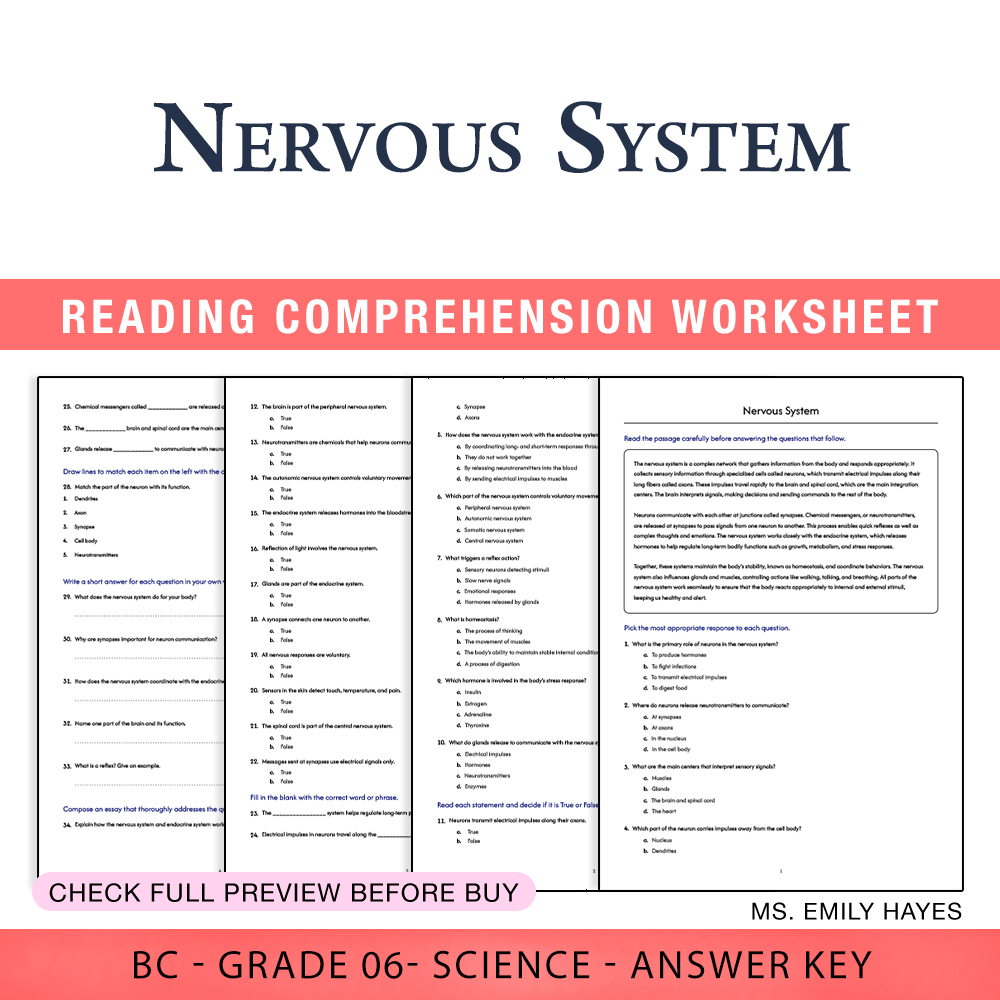
6th Grade Science | Nervous System Worksheet (PDF+ Answer Key)
Created byCopper Leaf ClassroomLearning Objectives
- Understand the basic structure and function of the nervous system.
- Identify the roles of neurons, synapses, and integration centers.
- Explain how the nervous system works with the endocrine system to regulate the body.
Also included in: Grade 6 Science BC | Human Body Systems & Adaptations (PDF+ Answer Keys) +1 more
Instant download

Structures and Functions Assessment | TEKS Grade 6 Science Worksheet
Created byPrism Point LearningLearning Objectives
- Identify major plant structures and their functions in resource acquisition, support, and reproduction.
- Describe the roles of vascular tissues such as xylem and phloem in transporting water and nutrients.
- Understand the basic organization of animal organ systems, including digestive, respiratory, and circulatory systems, and their contribution to organism survival.
Instant download
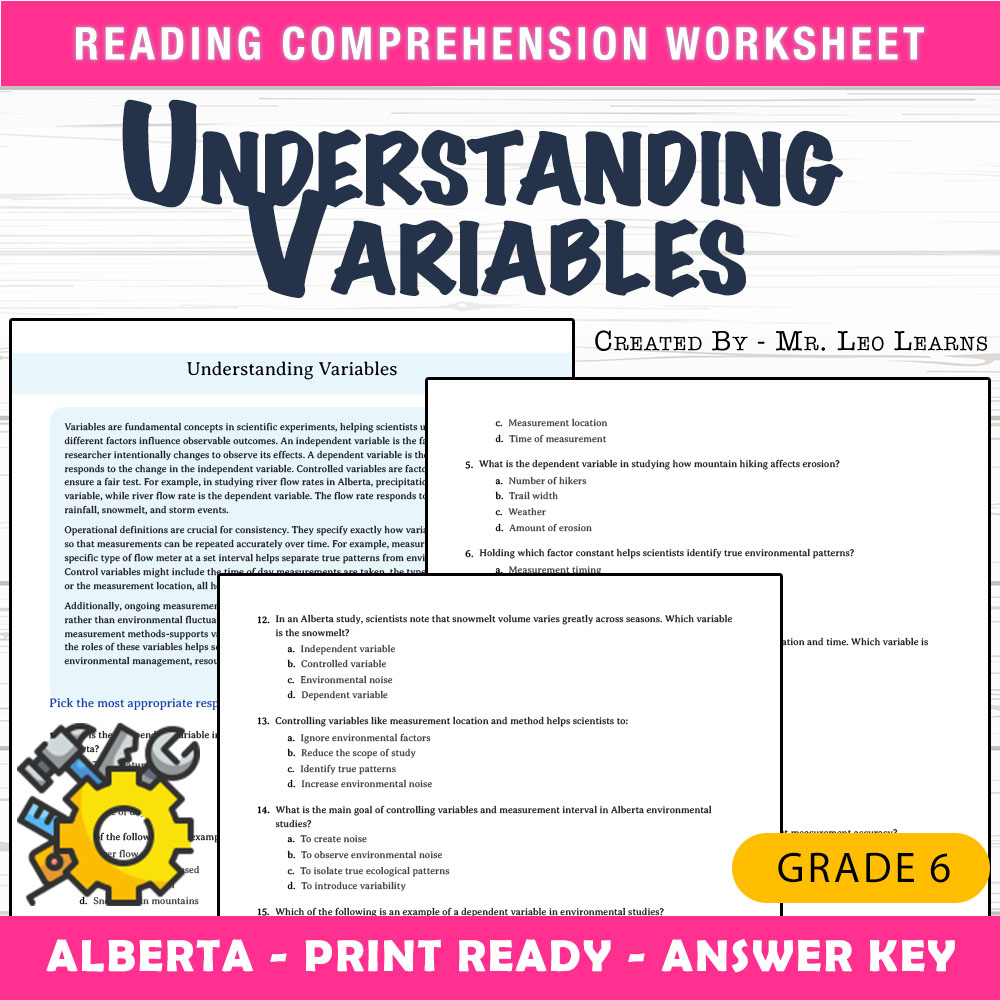
Grade 6 Science — Understanding Variables Worksheet for Mastery
 Created byThe Resource Hub
Learning Objectives
- Define the different types of variables: independent, dependent, and controlled.
- Explain the role of operational definitions and measurement consistency in experiments.
- Identify Alberta-focused examples of variables affecting environmental outcomes.
Also included in: Grade 6 Science Unit | Evidence and Investigation Worksheets – Alberta Framework +1 more
Instant download

Grade 6 Science | Eclipses & Alignments - Daily Reading Comprehension
Created byCoral Reef LearningLearning Objectives
- Understand the basic types of eclipses: solar, lunar, partial, total, and annular.
- Learn how the positions of the Sun, Earth, and Moon determine the type of eclipse observed.
- Recognize why eclipses are relatively rare at specific locations due to orbital inclinations.
Also included in: Sky Science Lesson Bundle | Grade 6 Science Daily Reading | Alberta +1 more
Instant download
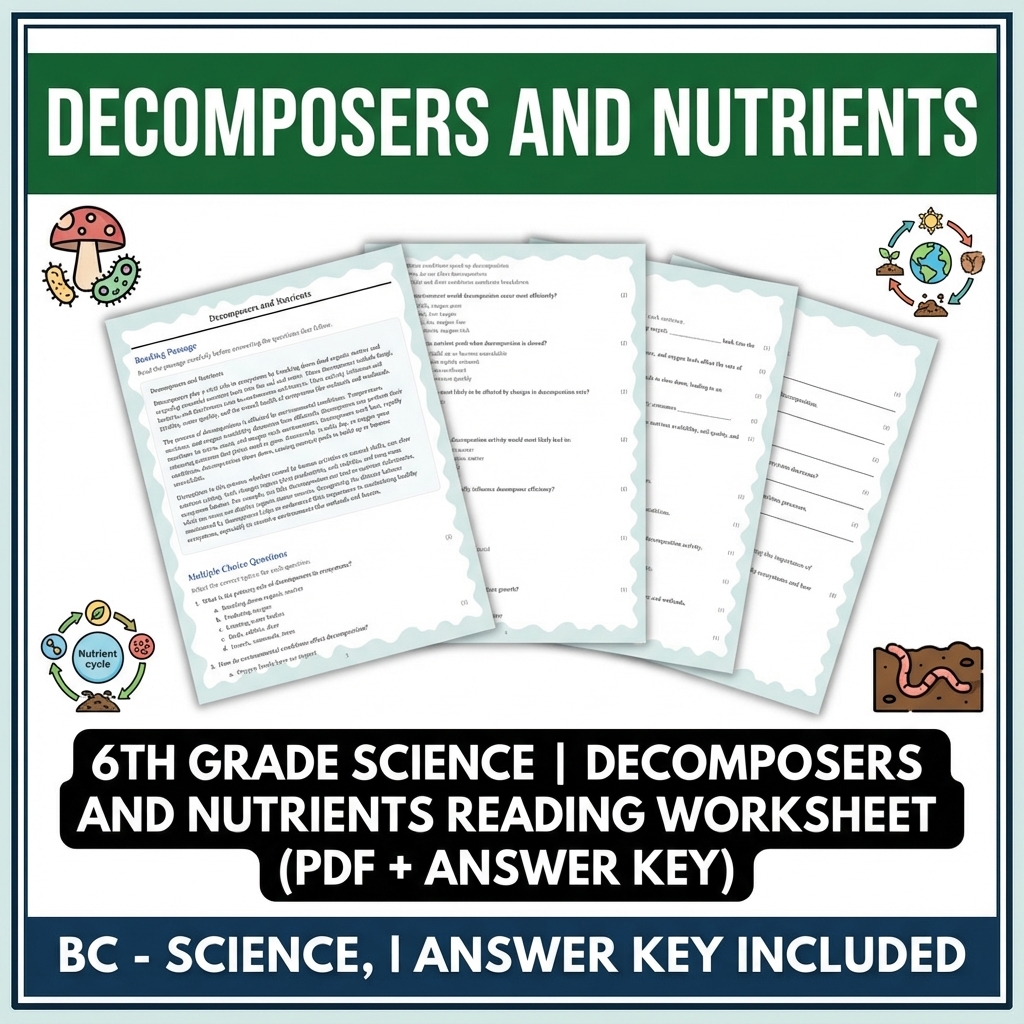
6th Grade Science | Decomposers and Nutrients Reading (PDF + Answer Key)
JCreated byJ.S SheetsLearning Objectives
- Understand the role of decomposers in breaking down organic matter and recycling nutrients.
- Identify various decomposers such as fungi, bacteria, and detritivores.
- Explain how environmental factors like temperature, moisture, and oxygen affect decomposition.
Instant download

Grade 6 Water Cycle Pathways Worksheet | NGSS Practice & PDF
 Created byClear Sky Classroom
Learning Objectives
- Describe the main pathways of the water cycle, including evaporation, condensation, precipitation, runoff, and infiltration.
- Explain how energy changes cause water to change state as it moves through the atmosphere, land, and oceans.
- Connect water cycle pathways to real-world effects such as wet/dry seasons and drought or flooding.
Instant download
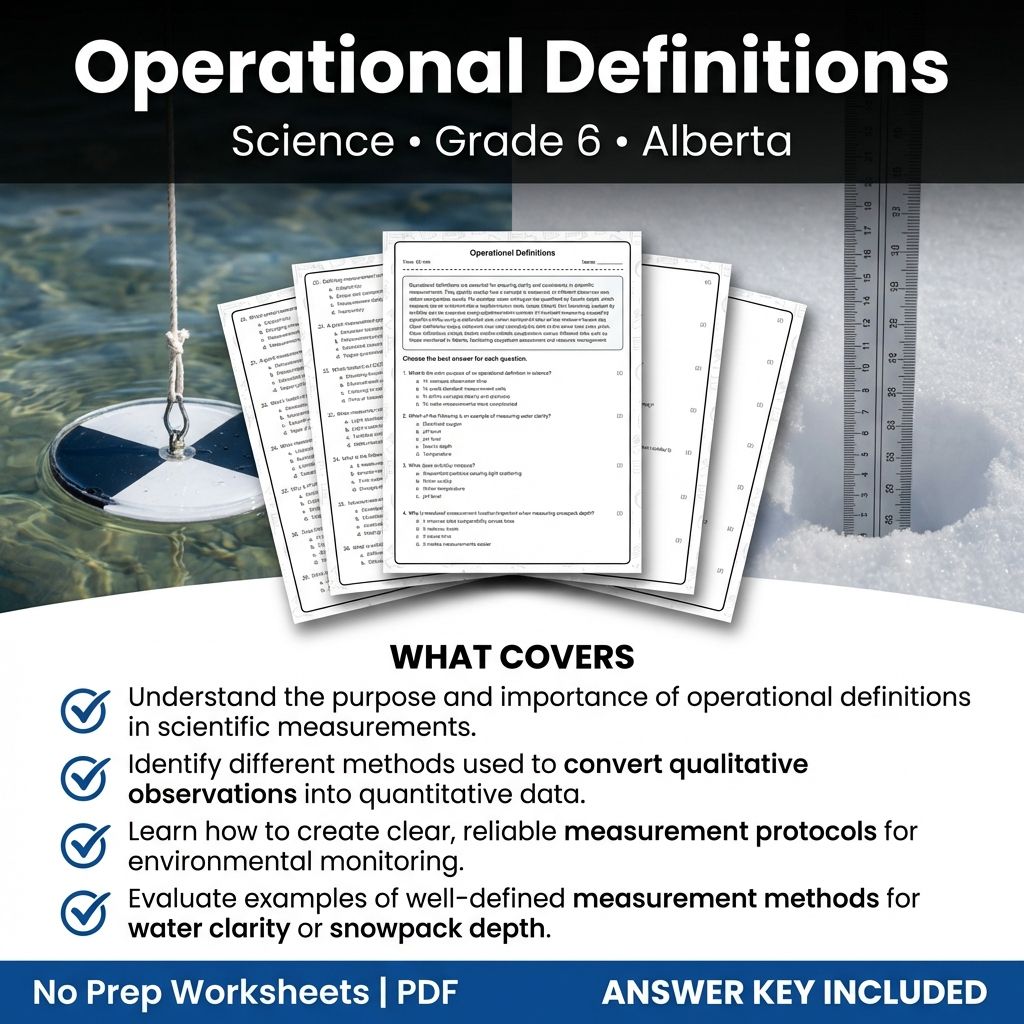
Grade 6 Science Worksheet on Operational Definitions—Alberta Standards
Created byCoral Reef LearningLearning Objectives
- Understand the purpose and importance of operational definitions in scientific measurements.
- Identify different methods used to convert qualitative observations into quantitative data.
- Learn how to create clear, reliable measurement protocols for environmental monitoring.
Instant download

Food Webs & Trophic Relationships Worksheet Grade 6 Ontario Science
Created byTeacher's CornerLearning Objectives
- Identify producers, consumers, and decomposers in food webs and food chains.
- Explain how energy transfers and decreases across trophic levels.
- Describe how removing or adding a species can affect other species in a connected community.
Instant download

Circuit Diagnosis Worksheet Grade 6 Science | Ontario Circuits Unit
 Created byChalk and Compass
Learning Objectives
- Explain how observed symptoms (brightness changes, missing continuity, abnormal readings) can suggest where a fault may be in a circuit.
- Use circuit topology (series vs. parallel paths) to predict what measurements should look like when components function correctly.
- Describe diagnostic reasoning by comparing expected patterns to observed results to isolate likely causes.
Also included in: Grade 6 Science Circuits & Electricity Lesson Bundle | Ontario +1 more
Instant download

Combined Circuits Worksheet Grade 6 Science | Series & Parallel Circuits
Created byChalk and CompassLearning Objectives
- Explain how combined (series-parallel) circuits can be broken into simpler series and parallel subcircuits
- Describe how current and voltage distribute in mixed series-parallel configurations
- Predict and diagnose changes in brightness or readings when a component is removed or fails
Also included in: Grade 6 Science Circuits & Electricity Lesson Bundle | Ontario +1 more
Instant download

Grade 6 Energy and Power Worksheet | Ontario Science Activity
Created byChalk and CompassLearning Objectives
- Define electrical power as the rate of energy transfer and relate it to how fast energy is used.
- Explain how current and voltage affect power in common circuit elements using basic relationships.
- Describe how efficiency and heat generation are connected for resistive components.
Also included in: Grade 6 Science Circuits & Electricity Lesson Bundle | Ontario +1 more
Instant download

Design Principles Assessment | TEKS Grade 6 Science Standards-Aligned Assessment
Created byPrism Point LearningLearning Objectives
- Understand how to articulate hypotheses in measurable terms for controlled tests.
- Identify key elements needed for designing valid experiments, including control groups and replication strategies.
- Recognize ethical and safety considerations involved in testing physical or biological materials.
Also included in: Scientific Inquiry and Processes Grade 6 Science Lesson Bundle | TEKS
Instant download

Modeling Systems Assessment for Grade 6 Science TEKS | Printable Worksheet
Created byPrism Point LearningLearning Objectives
- Understand different types of models used in science to represent systems.
- Evaluate the assumptions and predictive limits of various models.
- Interpret empirical data to refine models and improve their accuracy.
Also included in: Scientific Inquiry and Processes Grade 6 Science Lesson Bundle | TEKS
Instant download

Scientific Methods Assessment | TEKS Grade 6 Science Standards
Created byPrism Point LearningLearning Objectives
- Describe the iterative nature of scientific methods and how they are used to develop testable questions.
- Differentiate between descriptive and comparative approaches in scientific investigations.
- Explain how observational phenomena guide methodological choices in experiments.
Also included in: Scientific Inquiry and Processes Grade 6 Science Lesson Bundle | TEKS
Instant download

6th Grade Science | Earth Structure Worksheet (TEKS) (PDF)
Created byEvergreen Desk EducationLearning Objectives
- Explain Earth’s internal layers (crust, mantle, outer core, inner core) and how they relate to plate motion.
- Compare divergent, convergent, and transform plate boundaries and identify typical surface features.
- Describe how tectonic processes cause earthquakes, volcanic eruptions, and mountain building.
Instant download
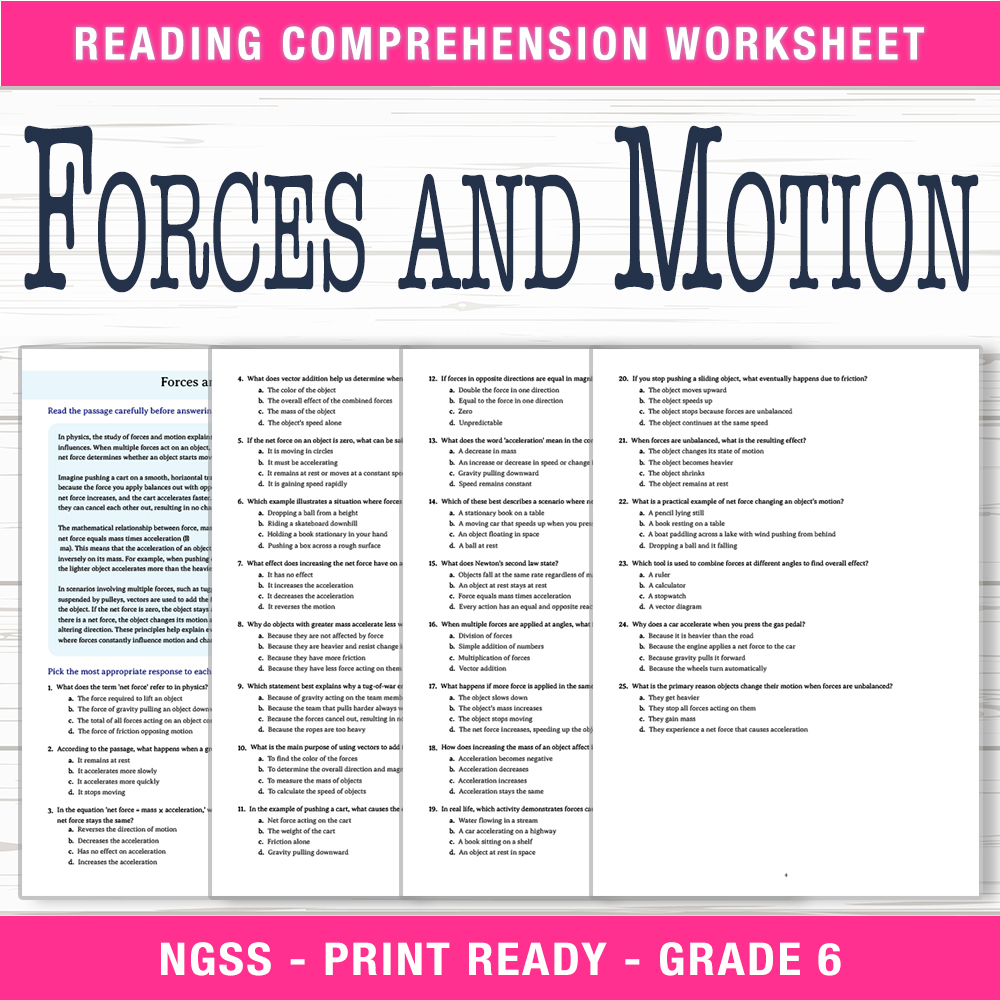
Grade 6 Science | Forces and Motion Worksheet (PDF + Answer Key)
 Created byRiverstone Classroom
Learning Objectives
- Understand how net force affects the motion of objects based on their mass.
- Explain the relationship between force, mass, and acceleration using the formula net force equals mass times acceleration.
- Identify scenarios where forces change and predict resulting motion alterations.
Instant download

Grade 6 Science Worksheet: Habitat Fragmentation Assessment – Ontario
JCreated byJ.S SheetsLearning Objectives
- Explain how habitat fragmentation divides landscapes and changes connectivity between habitat patches
- Describe how fragmentation can reduce gene flow and pollinator movement
- Analyze how edge effects and isolation can disrupt species interactions and food webs
Instant download
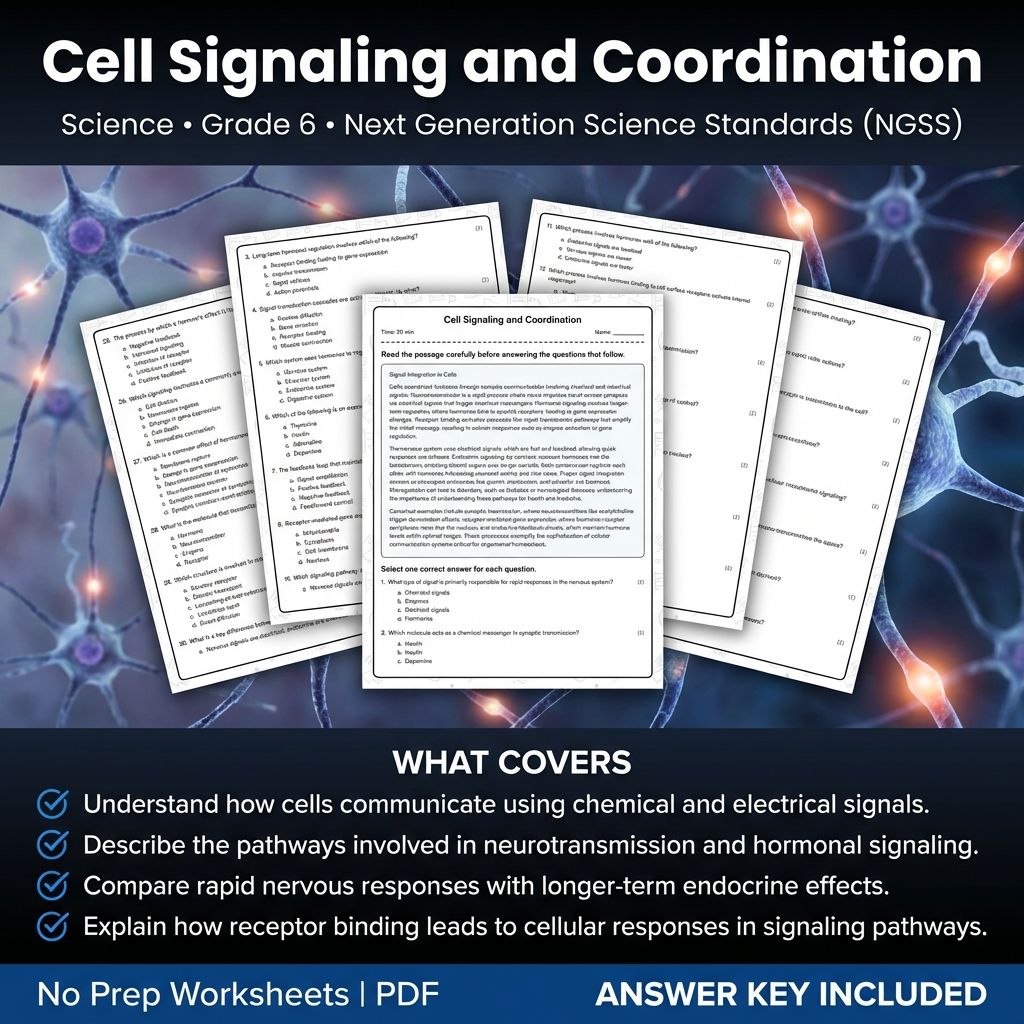
6th Grade Science Worksheet | Cell Signaling & Coordination (Printable PDF + Answer Key)
Created byCoral Reef LearningLearning Objectives
- Understand how cells communicate using chemical and electrical signals.
- Describe the pathways involved in neurotransmission and hormonal signaling.
- Compare rapid nervous responses with longer-term endocrine effects.
Instant download
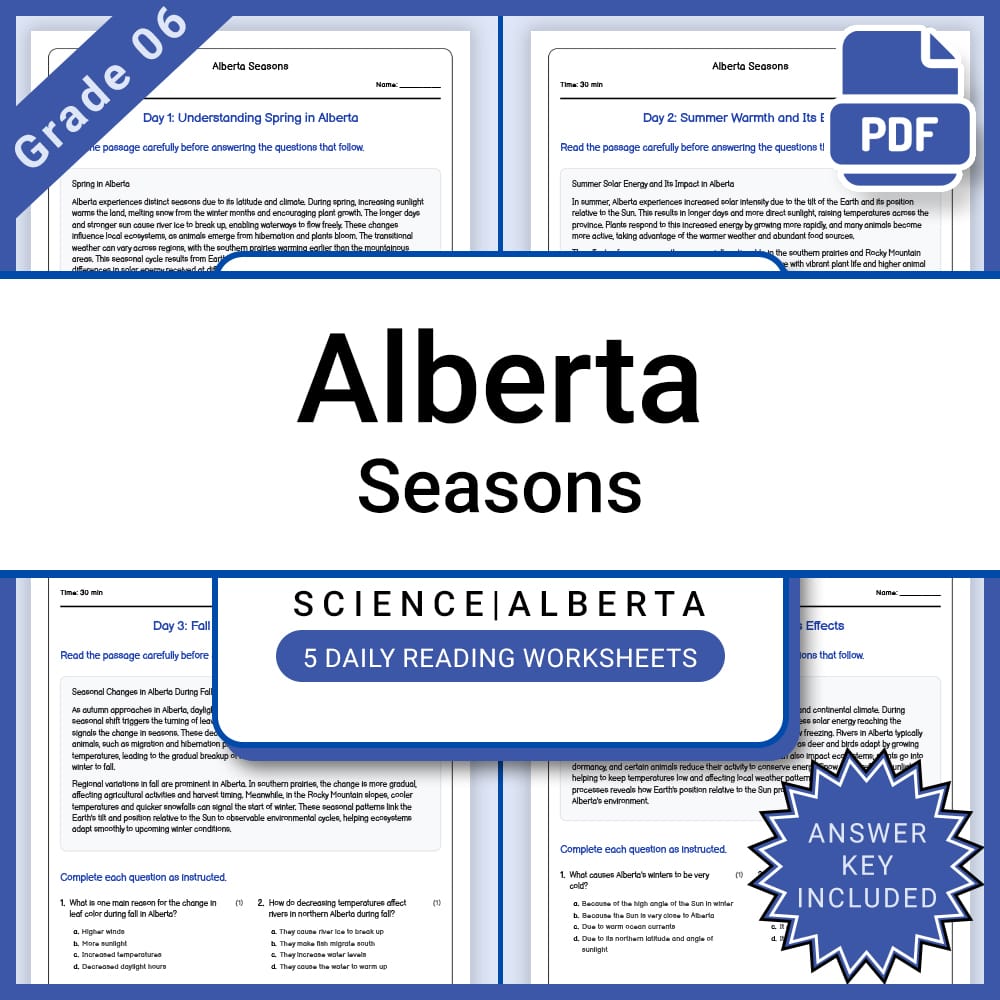
Grade 6 Science – Alberta Seasons Daily Reading Worksheet with Answer Key
JCreated byJ.S SheetsLearning Objectives
- Understand the concept of seasonal changes in Alberta.
- Identify factors that influence Alberta's seasons, such as sunlight and latitude.
- Describe how seasons affect local ecosystems and human activities.
Also included in: Grade 6 Science Lesson Group: Earth & Space Reading Worksheets Bundle +1 more
Instant download
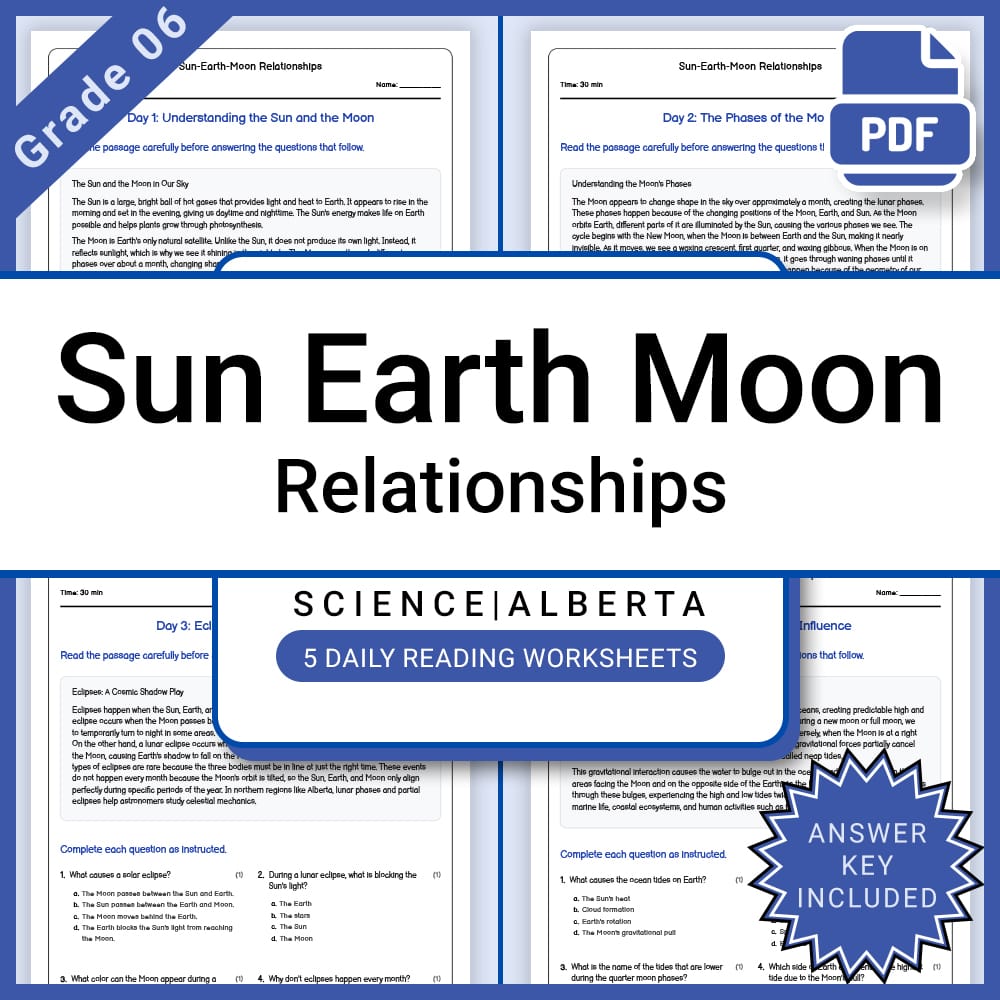
Grade 6 Science Sun–Earth–Moon Relationships Daily Reading Worksheet + Answer Key
JCreated byJ.S SheetsLearning Objectives
- Identify the basic positions of the Sun, Earth, and Moon.
- Describe how the Sun and Moon shine or reflect light.
- Understand the different phases of the Moon and their causes.
Also included in: Grade 6 Science Lesson Group: Earth & Space Reading Worksheets Bundle +1 more
Instant download
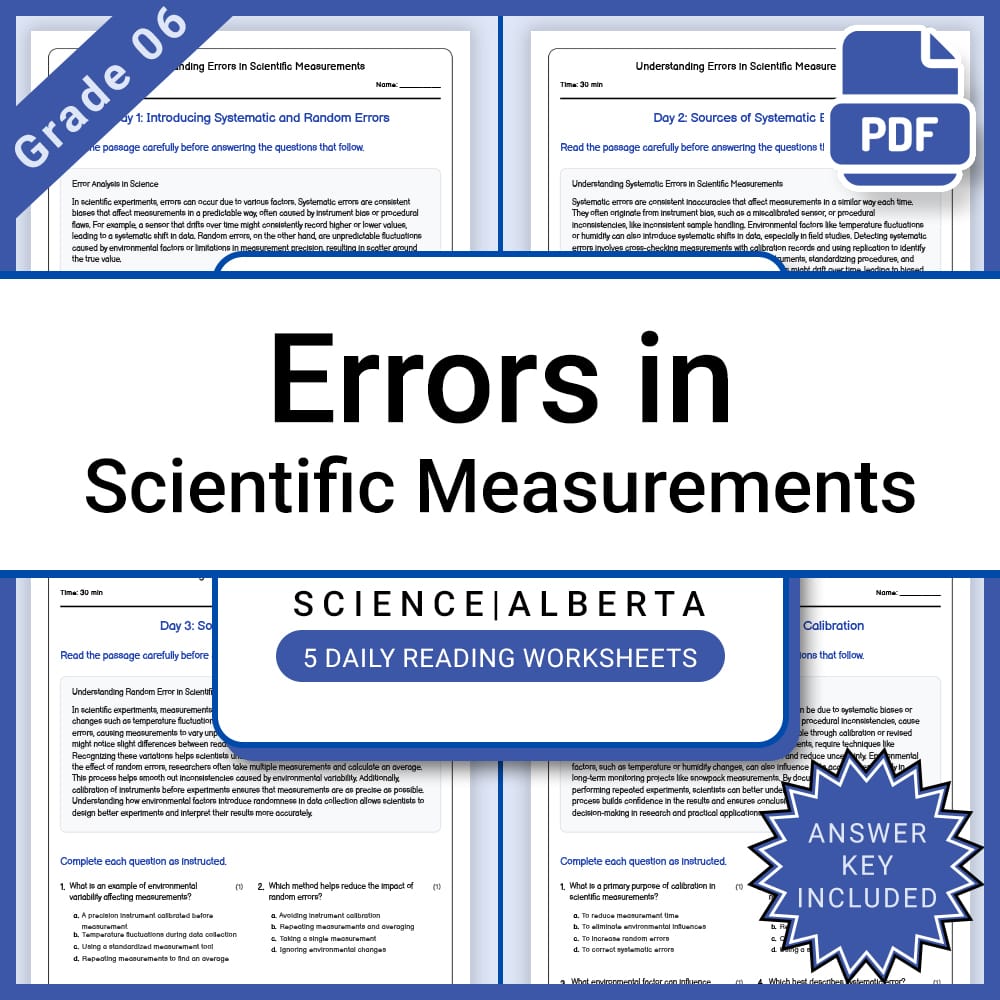
Grade 6 Science – Errors in Scientific Measurements Daily Worksheet + Answer Key
JCreated byJ.S SheetsLearning Objectives
- Define and distinguish between systematic and random errors.
- Identify sources of errors in scientific experiments.
- Explain methods used to analyze and reduce errors.
Also included in: Grade 6 Science Lesson Group Bundle | Alberta Standards with Reading Worksheets +1 more
Instant download
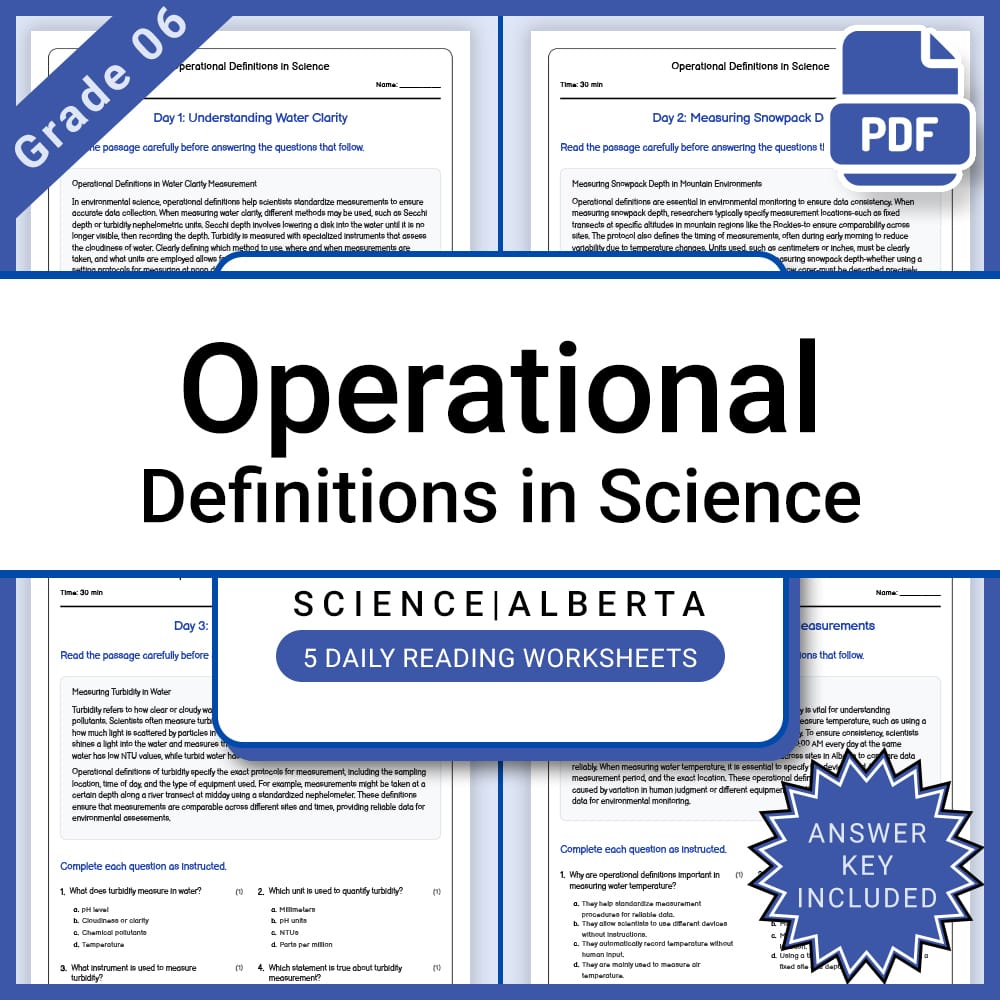
Grade 6 Science – Operational Definitions Daily Reading Worksheet + Answer Key
JCreated byJ.S SheetsLearning Objectives
- Understand the purpose and importance of operational definitions in scientific measures.
- Learn how to convert qualitative observations into quantitative data.
- Identify examples of measurement methods such as water clarity and snowpack depth.
Also included in: Grade 6 Science Lesson Group Bundle | Alberta Standards with Reading Worksheets +1 more
Instant download
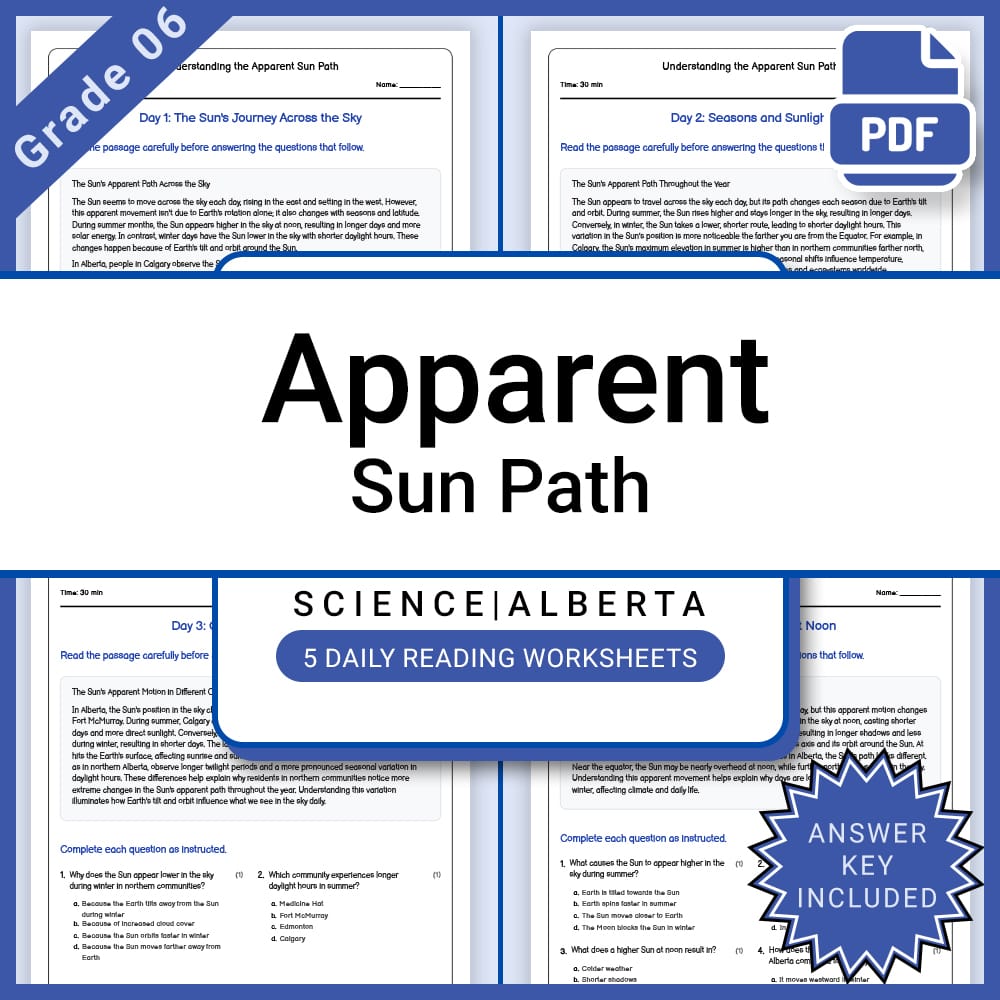
Grade 6 Science – Apparent Sun Path Daily Reading Worksheet + Answer Key
JCreated byJ.S SheetsLearning Objectives
- Describe how the Sun appears to move across the sky during different seasons.
- Explain how latitude affects the Sun's apparent path.
- Understand the relationship between Earth's tilt and the Sun's position at different times of the year.
Also included in: Grade 6 Science Lesson Group: Earth & Space Reading Worksheets Bundle +1 more
Instant download
Grade 6 Science – Data Tables Daily Reading Worksheet + Answer Key
JCreated byJ.S SheetsLearning Objectives
- Identify the components of a data table, including column headings and metadata.
- Understand the importance of clear and consistent labels in data recording.
- Recognize examples of data tables used in real-world scientific observations.
Also included in: Grade 6 Science Lesson Group Bundle | Alberta Standards with Reading Worksheets +1 more
Instant download
Grade 6 Science – Earth's Rotation Daily Reading Worksheet with Answer Key
JCreated byJ.S SheetsLearning Objectives
- Explain the concept of Earth's rotation about its axis.
- Describe how Earth's rotation causes day and night.
- Identify key positions in the daily path of the Sun across the sky.
Also included in: Grade 6 Science Lesson Group: Earth & Space Reading Worksheets Bundle +1 more
Instant download
Grade 6 Science – Moon Phases Daily Reading Worksheet with Answer Key
JCreated byJ.S SheetsLearning Objectives
- Identify different phases of the Moon
- Describe how the Moon's appearance changes over time
- Explain the relationship between the Sun, Earth, and Moon in lunar motion
Also included in: Grade 6 Science Lesson Group: Earth & Space Reading Worksheets Bundle +1 more
Instant download
Grade 6 Science – Temperature Trends Daily Reading Worksheet + Answer Key
JCreated byJ.S SheetsLearning Objectives
- Learn how to identify long-term temperature patterns in datasets.
- Understand the concepts of seasonal cycles and anomalies in temperature data.
- Explore methods like descriptive statistics and moving averages used in pattern analysis.
Also included in: Grade 6 Science Lesson Group Bundle | Alberta Standards with Reading Worksheets +1 more
Instant download
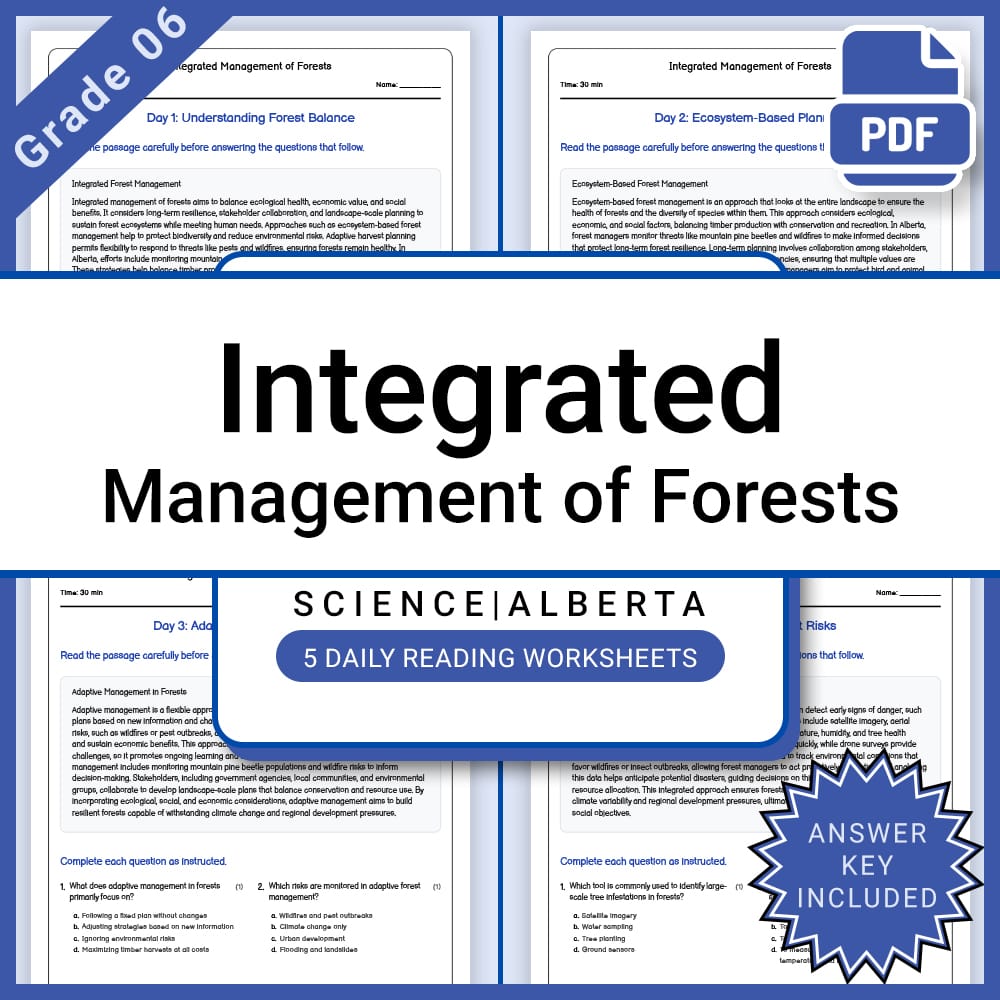
Grade 6 Science – Integrated Forest Management Daily Worksheet + Answer Key
JCreated byJ.S SheetsLearning Objectives
- Understand the concept of integrated forest management.
- Identify ecological, economic, and social objectives in forest planning.
- Learn about approaches like ecosystem-based management and adaptive planning.
Also included in: Grade 6 Science Lesson Bundle – Ecosystems, Trees, and Land Management +1 more
Instant download
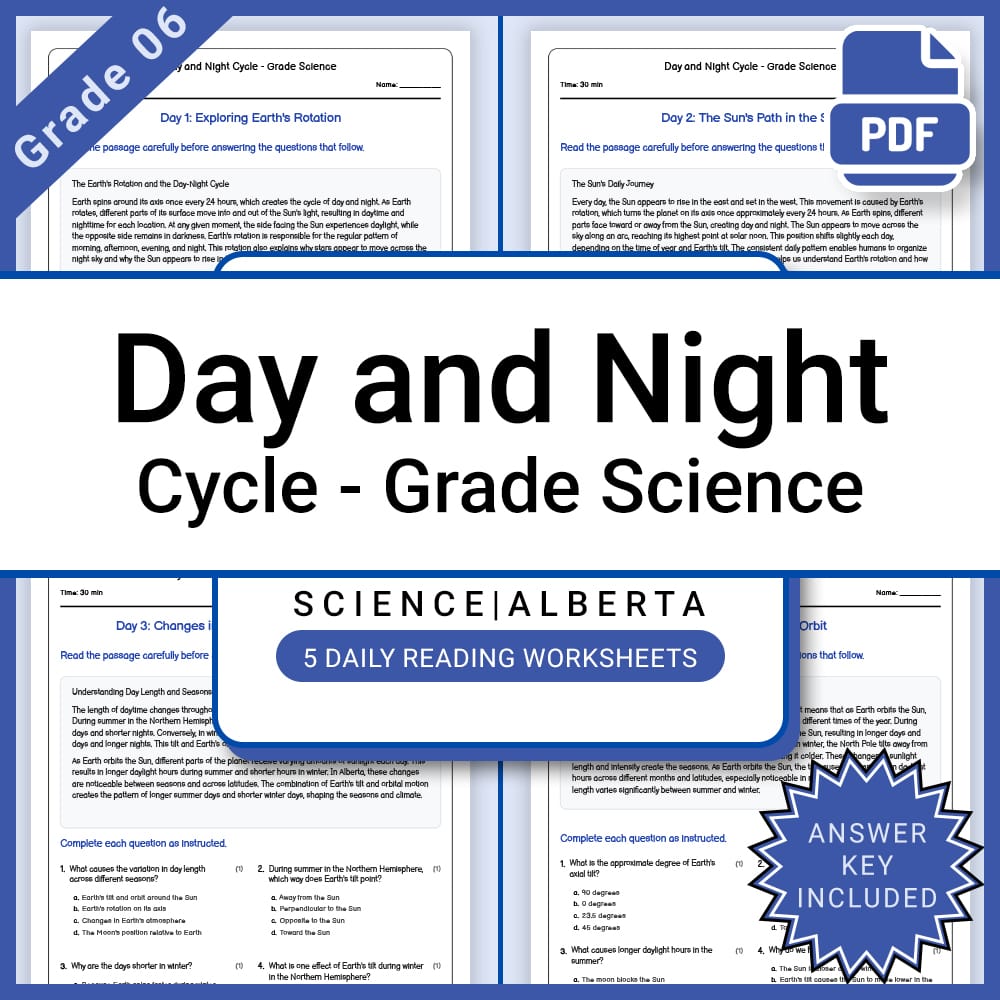
Grade 6 Science – Day and Night Cycle Daily Reading Worksheet + Answer Key
JCreated byJ.S SheetsLearning Objectives
- Understand Earth's rotation and how it causes day and night
- Explain the mechanics behind the cycle of day and night
- Identify factors influencing daylight duration throughout the year
Also included in: Grade 6 Science Lesson Group: Earth & Space Reading Worksheets Bundle +1 more
Instant download
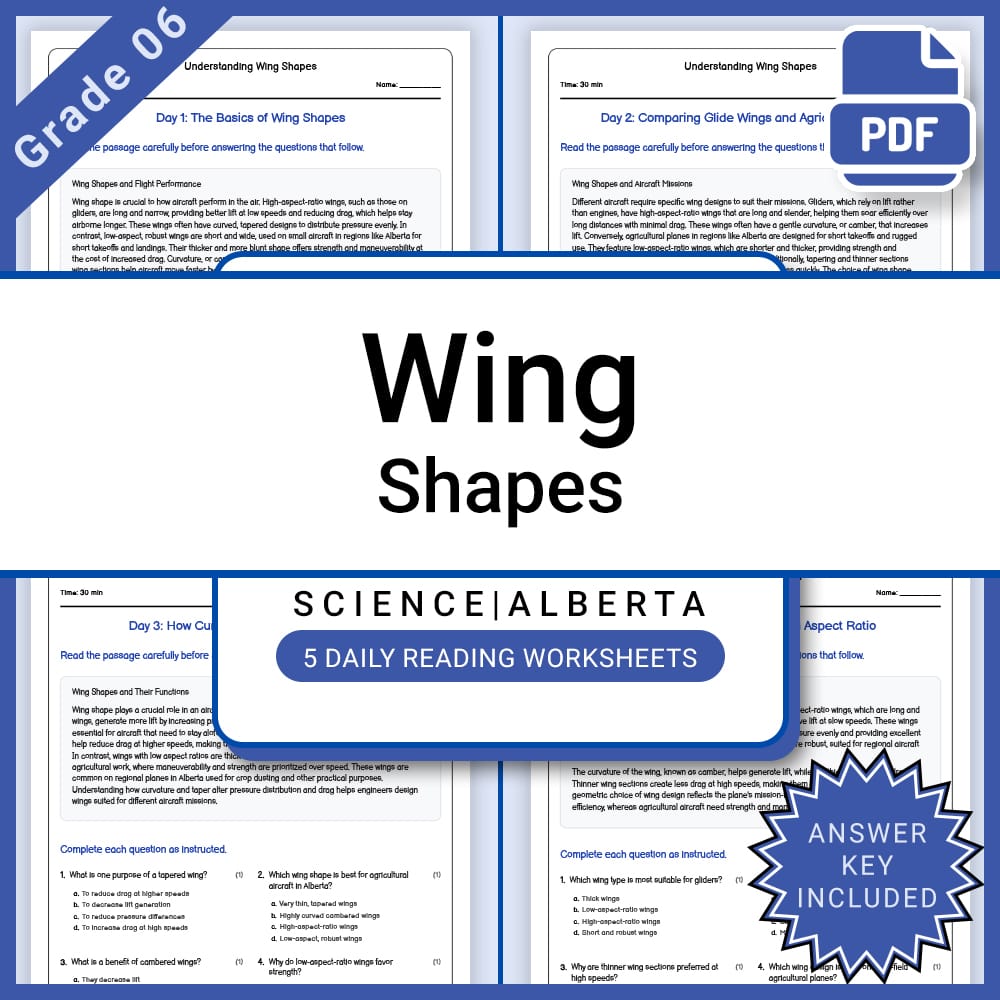
Grade 6 Science – Wing Shapes Daily Reading Worksheet with Answer Key
JCreated byJ.S SheetsLearning Objectives
- Identify different wing features such as camber, thickness, and aspect ratio.
- Explain how wing shape influences lift, stall behavior, and maneuverability.
- Compare high-aspect-ratio wings with low-aspect-ratio wings used in regional aviation.
Also included in: Grade 6 Science Lesson Bundle: Flight, Weather, and Aerodynamics +1 more
Instant download

Grade 6 Science – Biodiversity Roles Daily Reading Worksheet Answer Key
JCreated byJ.S SheetsLearning Objectives
- Understand the concept of keystone species and their influence on ecosystems.
- Recognize the importance of biodiversity for ecosystem stability.
- Identify different species roles such as keystone, indicator, and interdependent species.
Also included in: Grade 6 Science Lesson Bundle – Ecosystems, Trees, and Land Management +1 more
Instant download

Grade 6 Science – Tree Growth Rings Daily Reading Worksheet with Answer Key
JCreated byJ.S SheetsLearning Objectives
- Define what growth rings in trees are
- Describe how growth rings provide information about a tree's age and environment
- Identify how environmental factors influence ring patterns
Also included in: Grade 6 Science Lesson Bundle – Ecosystems, Trees, and Land Management +1 more
Instant download
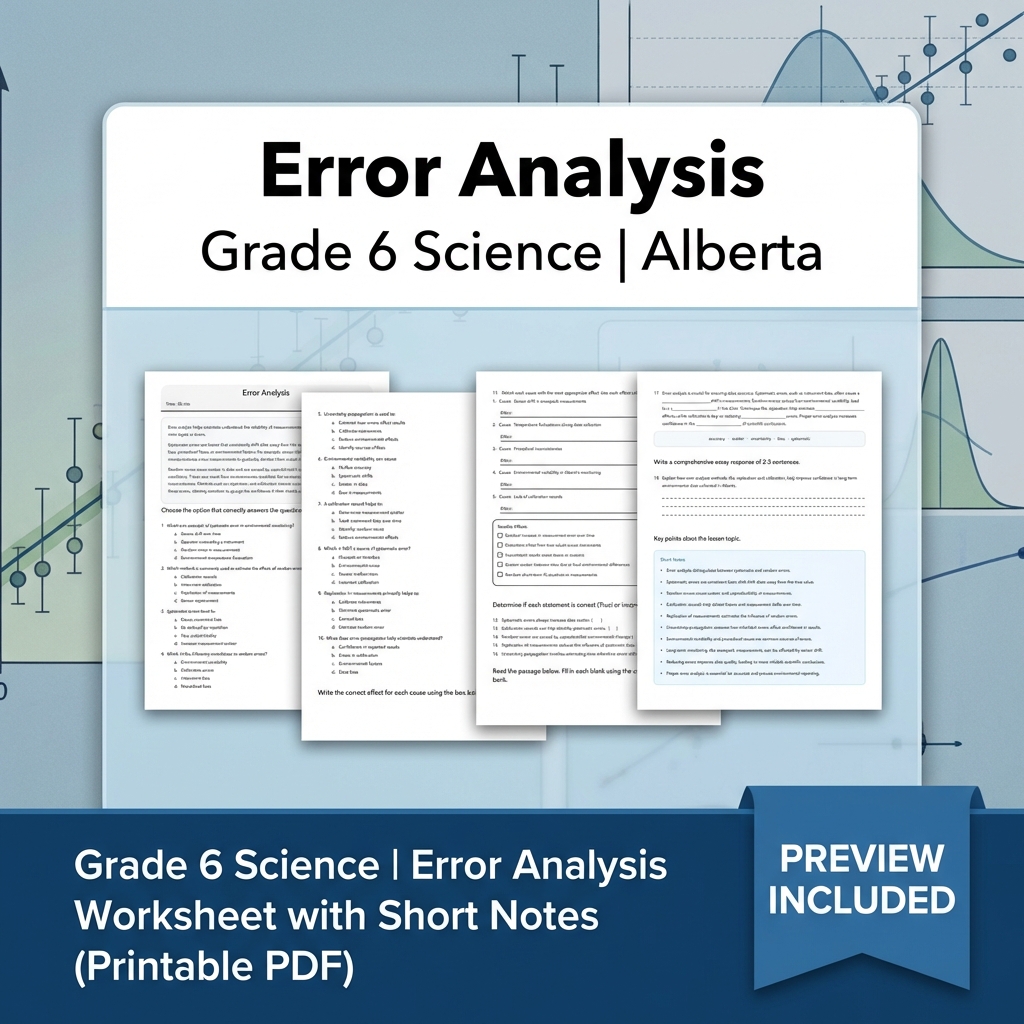
Grade 6 Science | Error Analysis Worksheet with Short Notes (Printable PDF)
Created byMeadowlark WorksheetsLearning Objectives
- Understand the sources and types of errors in scientific measurements.
- Distinguish between systematic and random errors and their effects on data.
- Learn methods such as replication, calibration, and uncertainty propagation to assess errors.
Also included in: Grade 6 Science | Evidence & Investigation Unit Worksheet Bundle +1 more
Instant download

Grade 6 Science – Physiological Adaptations & Animal Survival | Worksheet
 Created byBright Mind Resources
Learning Objectives
- Understand how internal processes help animals regulate temperature
- Identify key physiological mechanisms like heat exchange, urine concentration, and metabolic rate
- Learn how these processes contribute to animal survival in cold environments
Also included in: Grade 6 Science: Organ Systems & Adaptations Daily Reading Lesson Bundle | BC +1 more
Instant download
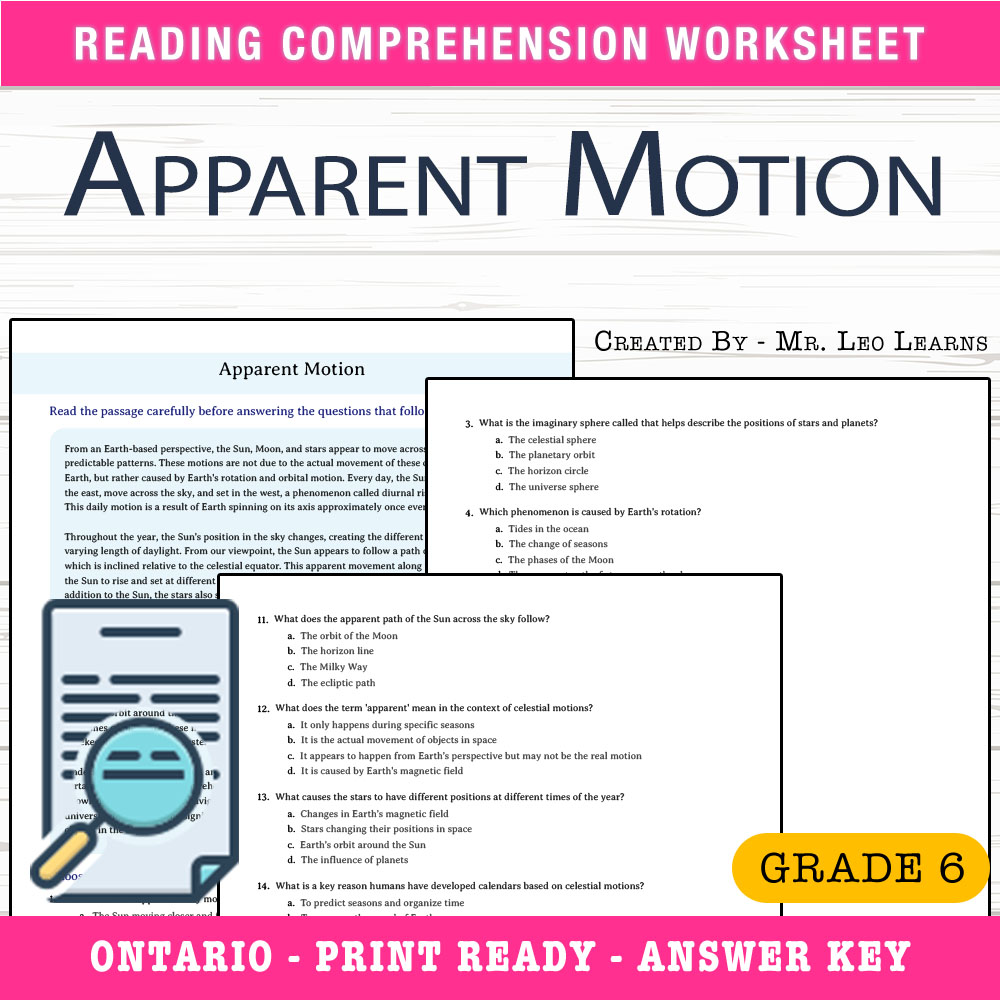
Grade 6 Science — Apparent Motion Worksheet for Mastery
Created byThe Resource HubLearning Objectives
- Understand the daily and yearly apparent motions of the Sun, Moon, and stars from Earth's perspective.
- Explain how Earth's rotation and orbit cause the observed movements in the sky.
- Describe key concepts such as diurnal rising and setting, celestial paths, and the celestial sphere.
Also included in: Grade 6 Science Unit | Space Systems & Orbital Mechanics Worksheet Pack +1 more
Instant download
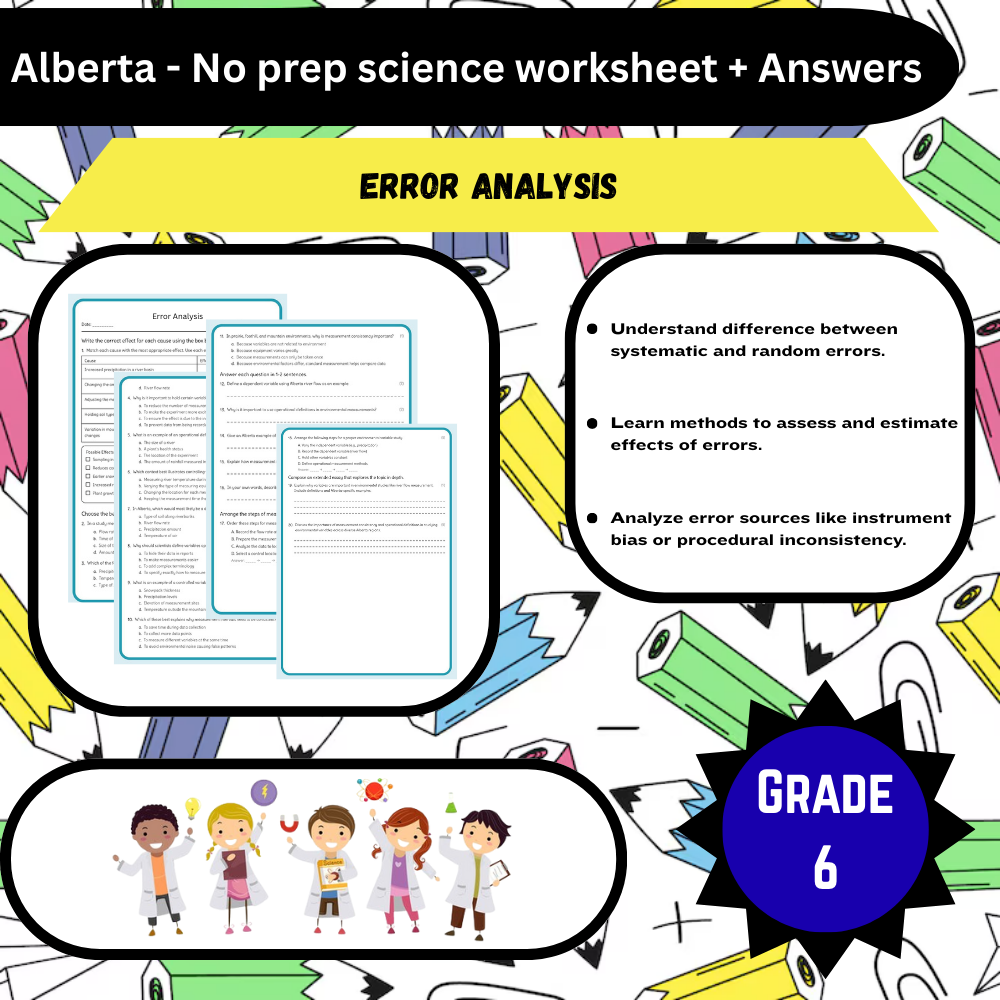
6th Grade Science | Error Analysis (Worksheet + Answer Key) - Alberta Standards
Created byBright Mind ResourcesLearning Objectives
- Understand the difference between systematic and random errors in data collection.
- Learn methods to assess and estimate the effects of errors on research conclusions.
- Analyze examples of error sources such as instrument bias, procedural inconsistencies, and environmental variability.
Instant download
About Grade 6 Science Worksheets
Explore Grade 6 Science worksheets for classwork, homework, or review. Our 5,969 printables download instantly as PDFs.
MyTeachingSheets worksheets are made by real teacher-authors and checked before they go live. Download any as a print-ready PDF for lessons, homework, or independent practice — most include answer keys, and previews are always free.