
Grade 7 Science Worksheets
6,039 worksheets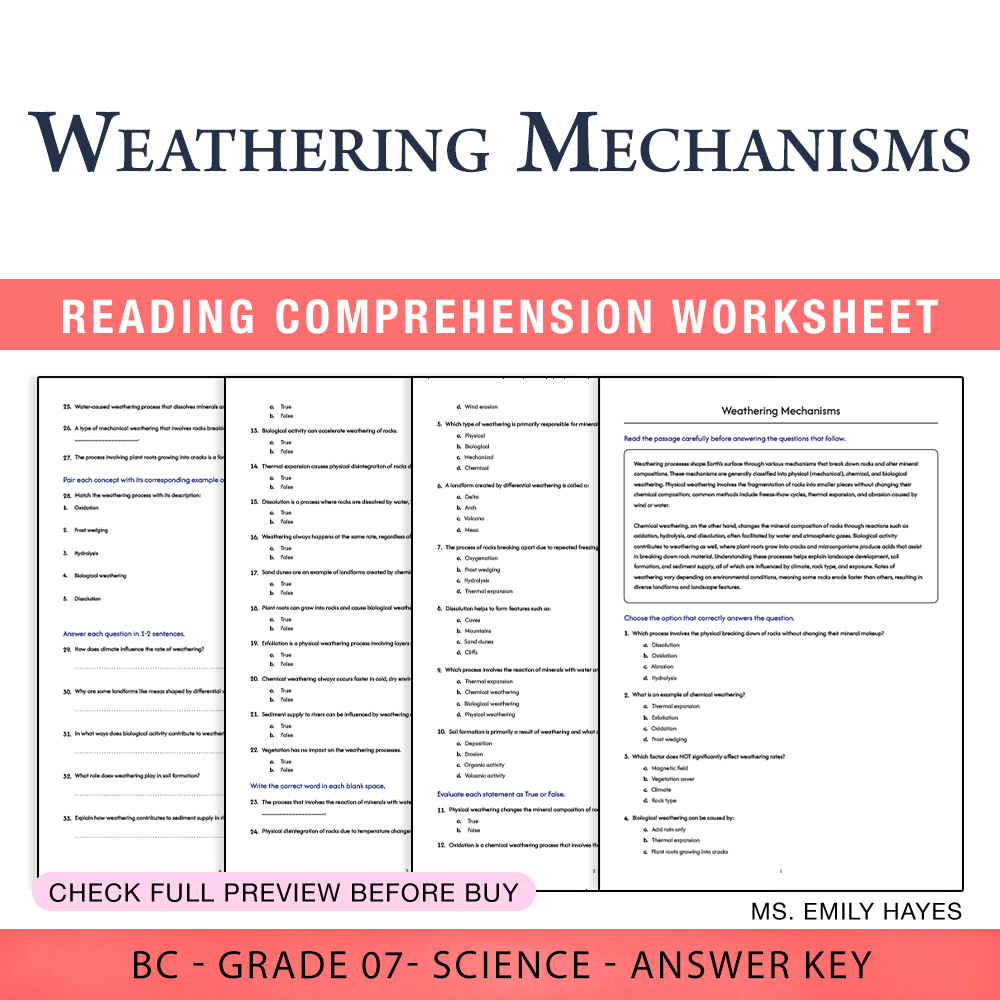
7th Grade Science | Weathering Mechanisms Worksheet (PDF+ Answer Key)
 Created byCopper Leaf Classroom
Learning Objectives
- Describe the different types of weathering and how they affect rocks and landscapes.
- Explain the factors that influence weathering rates and landform development.
- Identify examples of physical, chemical, and biological weathering processes.
Also included in: Grade 7 Science | Earth Systems & Geology Unit (PDF+ Answer Keys) +1 more
Instant download
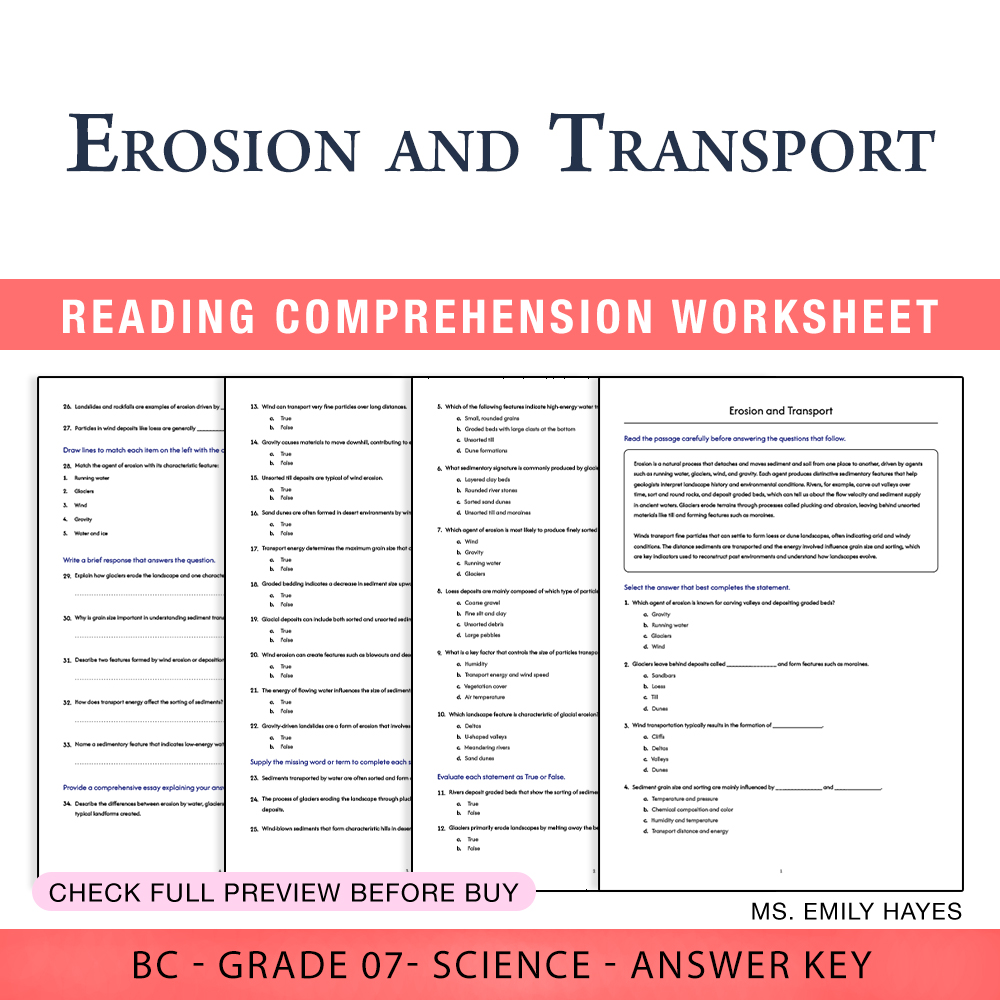
7th Grade Science | Erosion and Transport Worksheet (PDF + Answer Key)
Created byCopper Leaf ClassroomLearning Objectives
- Describe the processes of erosion by water, glaciers, wind, and gravity.
- Identify the distinctive sedimentary signatures produced by different agents of erosion.
- Explain how transport distance and energy influence grain size and sorting.
Also included in: Grade 7 Science | Earth Systems & Geology Unit (PDF+ Answer Keys) +1 more
Instant download
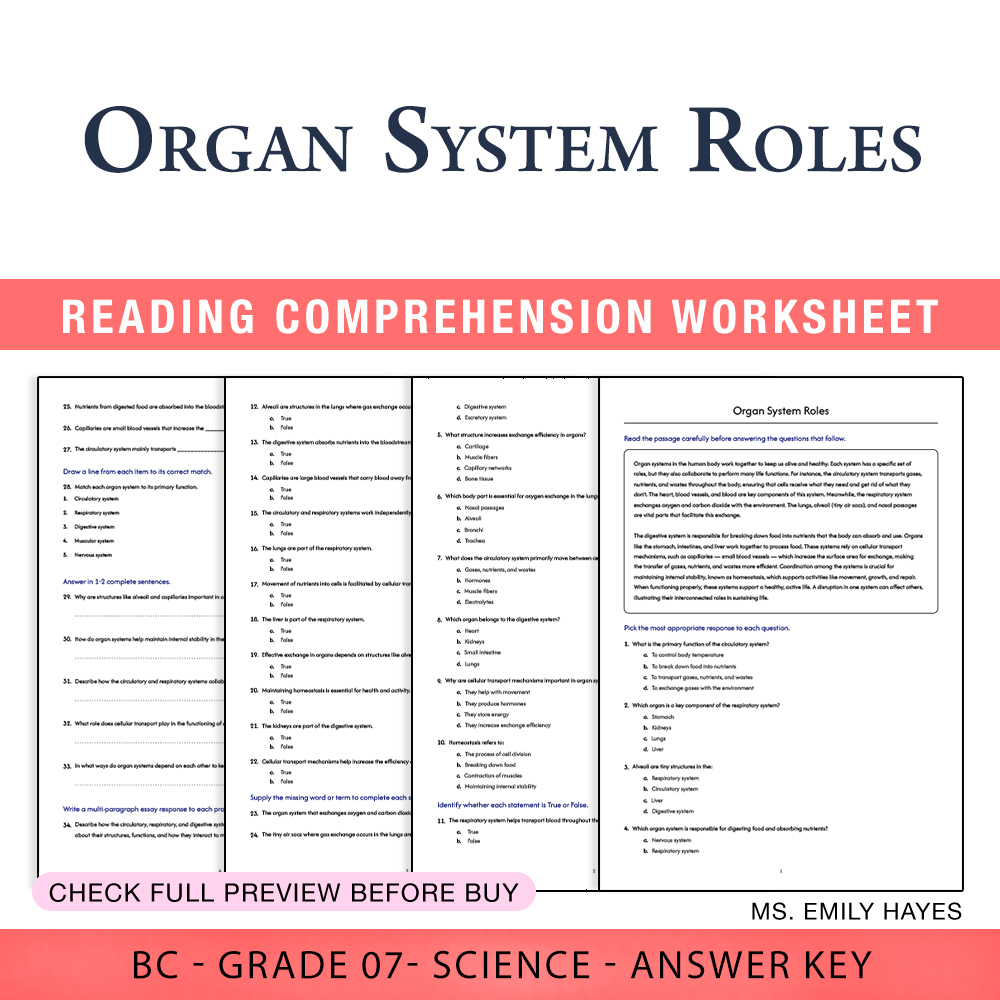
Grade 7 Science | Organ System Roles Worksheet (PDF+ Answer Key)
Created byCopper Leaf ClassroomLearning Objectives
- Understand how different organ systems work together to perform vital functions.
- Identify the structures involved in the circulatory, respiratory, and digestive systems.
- Describe how tissues and organs coordinate within each organ system.
Also included in: Grade 7 Science Unit – Cells, Organ Systems & Surface Area (PDF+ Answer Key) +1 more
Instant download
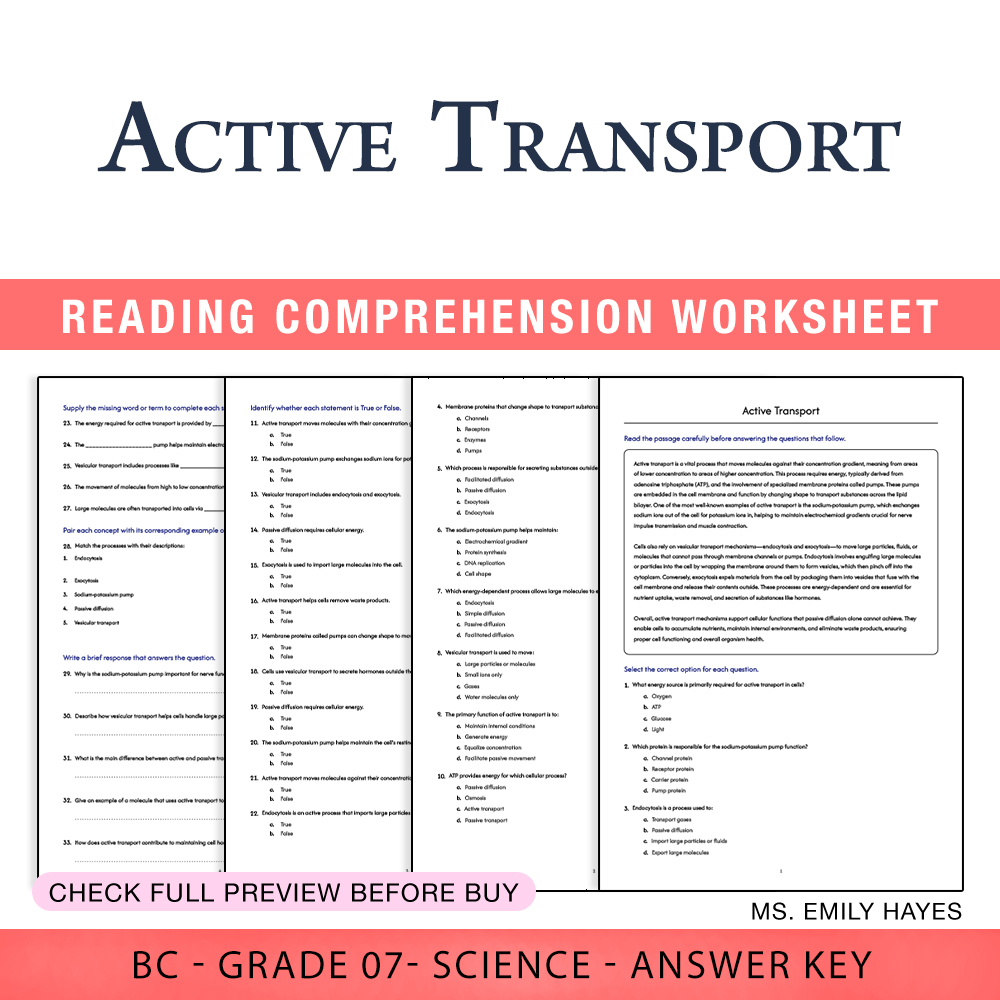
7th Grade Science | Active Transport Worksheet (PDF+ Answer Key)
Created byCopper Leaf ClassroomLearning Objectives
- Explain the process of active transport and how it differs from passive diffusion.
- Identify cellular structures involved in active transport such as pumps and vesicles.
- Describe the role of the sodium-potassium pump in maintaining cellular functions.
Also included in: Grade 7 Science Unit – Cells, Organ Systems & Surface Area (PDF+ Answer Key) +1 more
Instant download
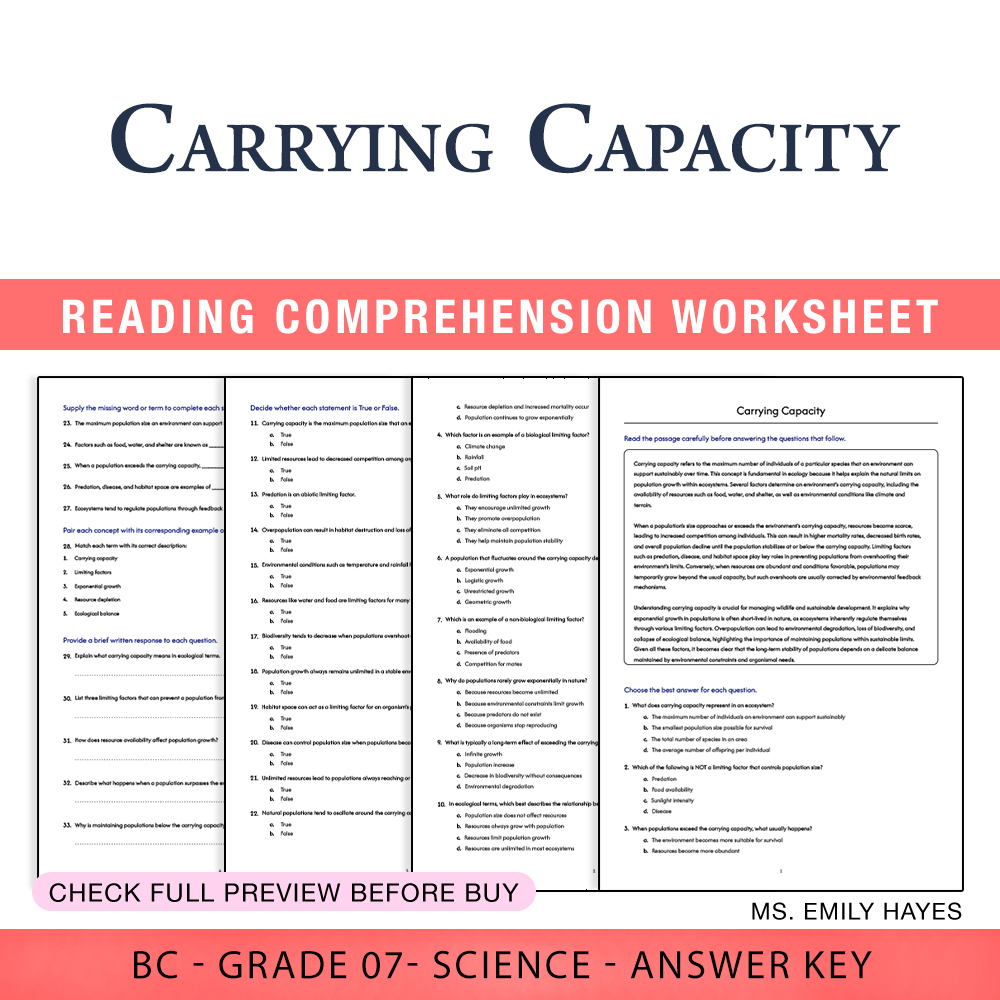
Grade 7 Science | Carrying Capacity Worksheet (PDF+ Answer Key)
Created byCopper Leaf ClassroomLearning Objectives
- Understand the concept of carrying capacity and its significance in ecosystems.
- Identify the factors that influence an environment's carrying capacity.
- Analyze how populations fluctuate around the carrying capacity in natural systems.
Also included in: Grade 7 Science Bundle | Ecosystem Dynamics & Population (PDF+ Answer Key) +1 more
Instant download
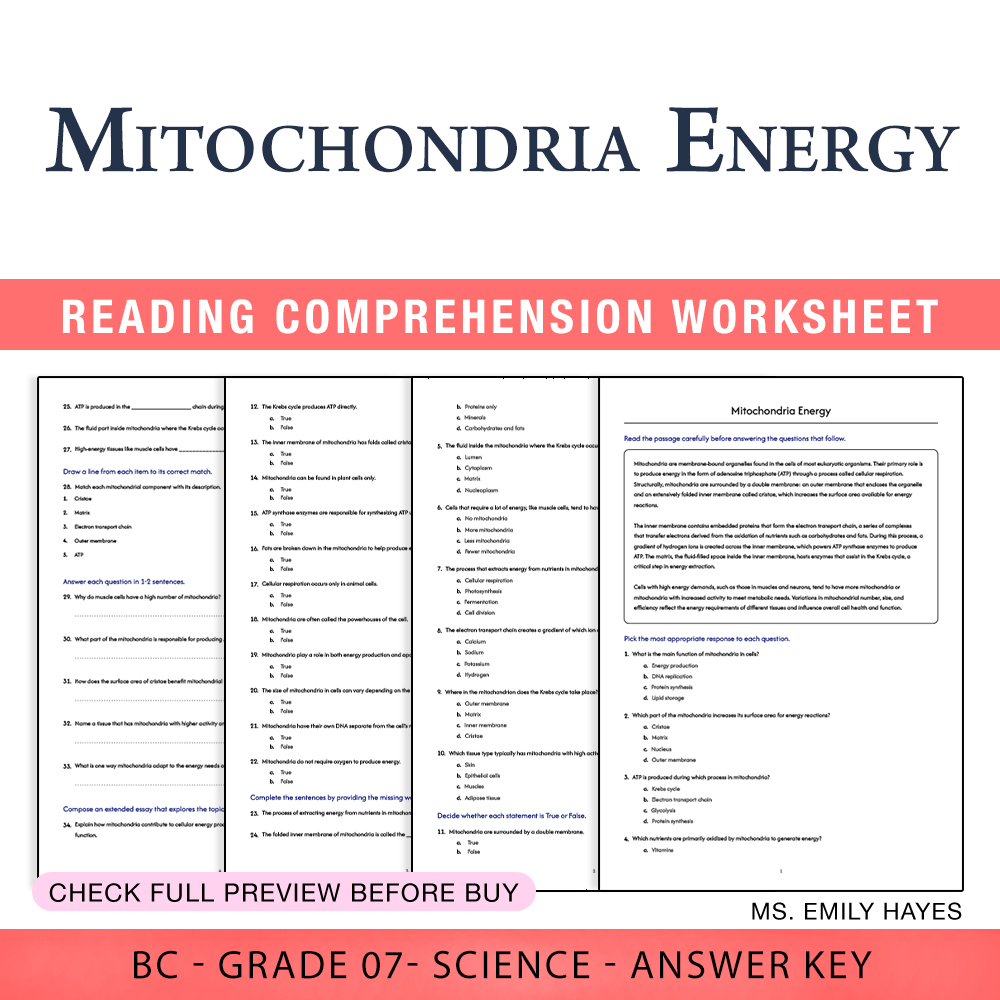
Grade 7 Science | Mitochondria Energy Worksheet (PDF + Answer Key)
Created byCopper Leaf ClassroomLearning Objectives
- Describe the structure and function of mitochondria in cellular energy production.
- Explain the process of cellular respiration and how it produces ATP.
- Identify different cell types that have high mitochondrial activity.
Also included in: Grade 7 Science Unit – Cells, Organ Systems & Surface Area (PDF+ Answer Key) +1 more
Instant download
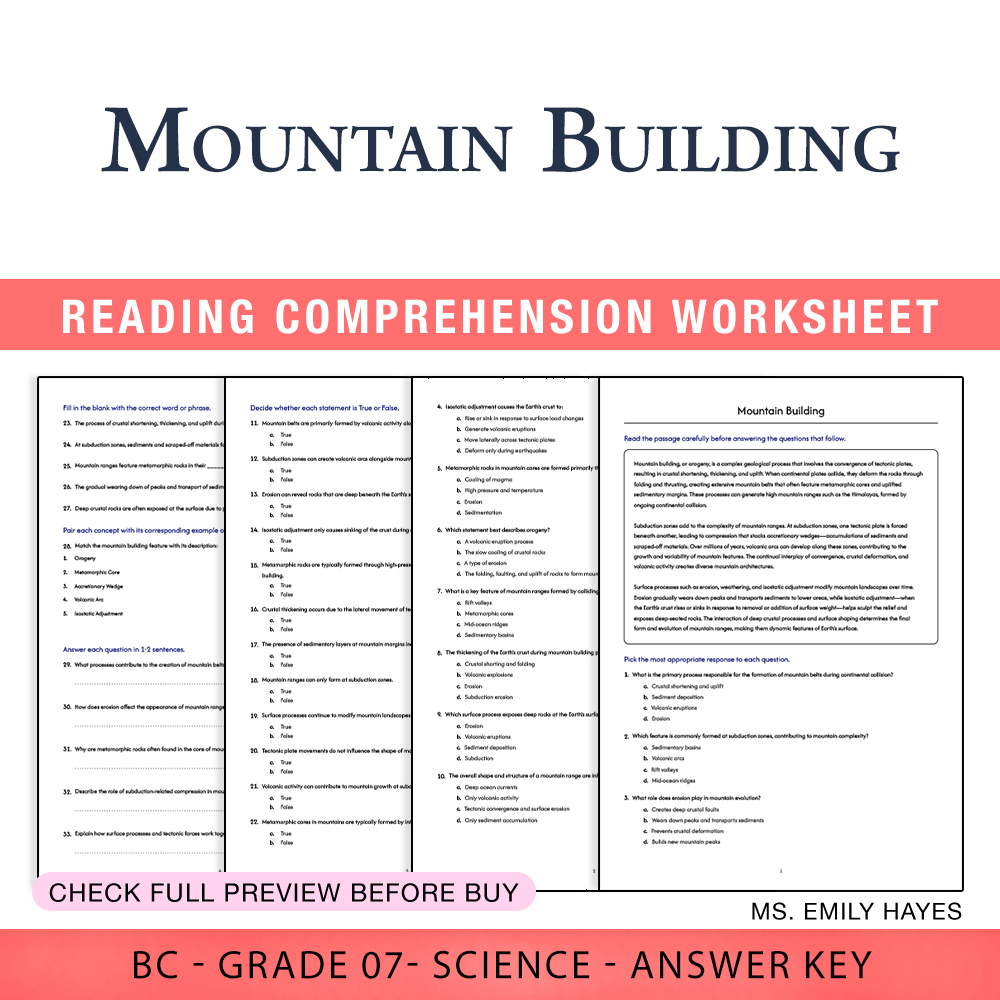
7th Grade Science | Mountain Building Worksheet (PDF+ Answer Key)
Created byCopper Leaf ClassroomLearning Objectives
- Explain the processes involved in mountain building, including orogeny and crustal deformation.
- Describe how surface processes like erosion and isostatic adjustment shape mountain landscapes.
- Identify different types of mountain formation features such as mountain belts, volcanic arcs, and metamorphic cores.
Also included in: Grade 7 Science | Earth Systems & Geology Unit (PDF+ Answer Keys) +1 more
Instant download
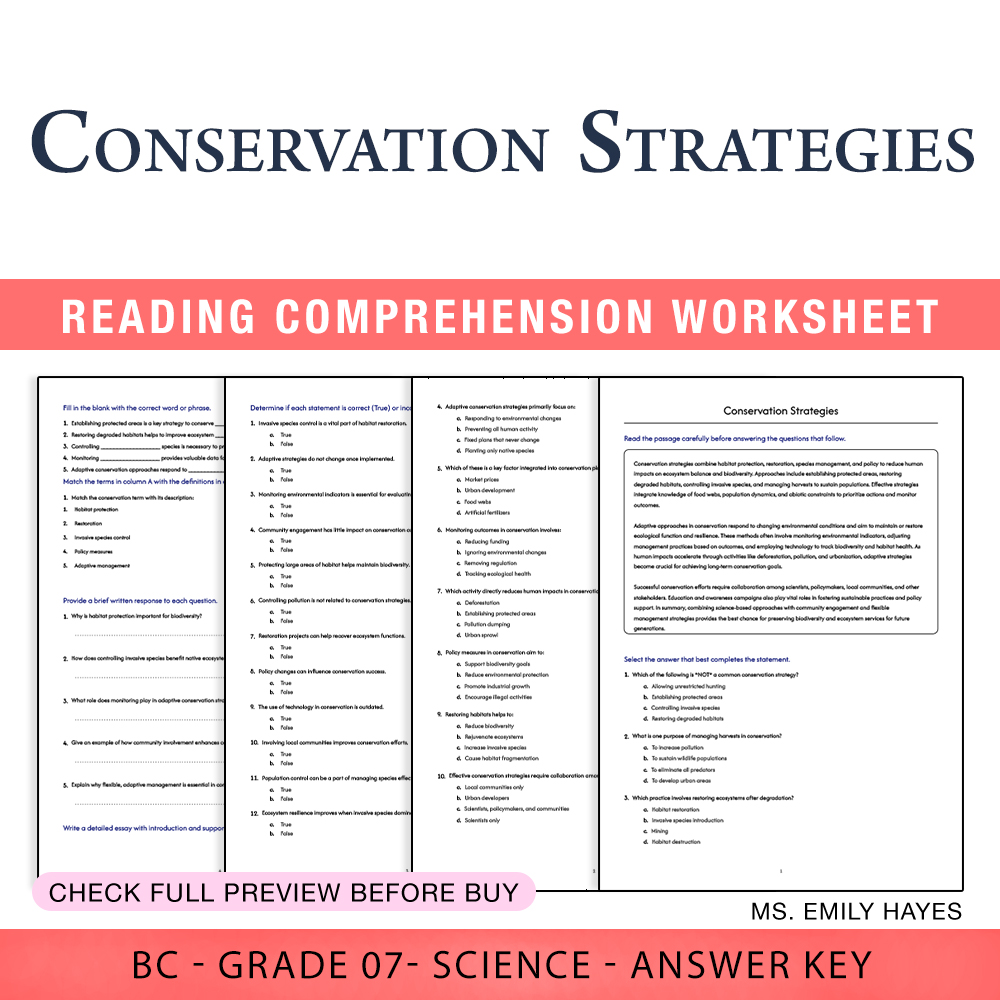
7th Grade Science | Conservation Strategies Worksheet (PDF + Answer Key)
Created byCopper Leaf ClassroomLearning Objectives
- Understand key conservation strategies used to protect ecosystems and biodiversity.
- Identify different methods such as habitat protection, restoration, and species management.
- Analyze the importance of adaptive approaches in conservation efforts.
Also included in: Grade 7 Science Bundle | Ecosystem Dynamics & Population (PDF+ Answer Key) +1 more
Instant download
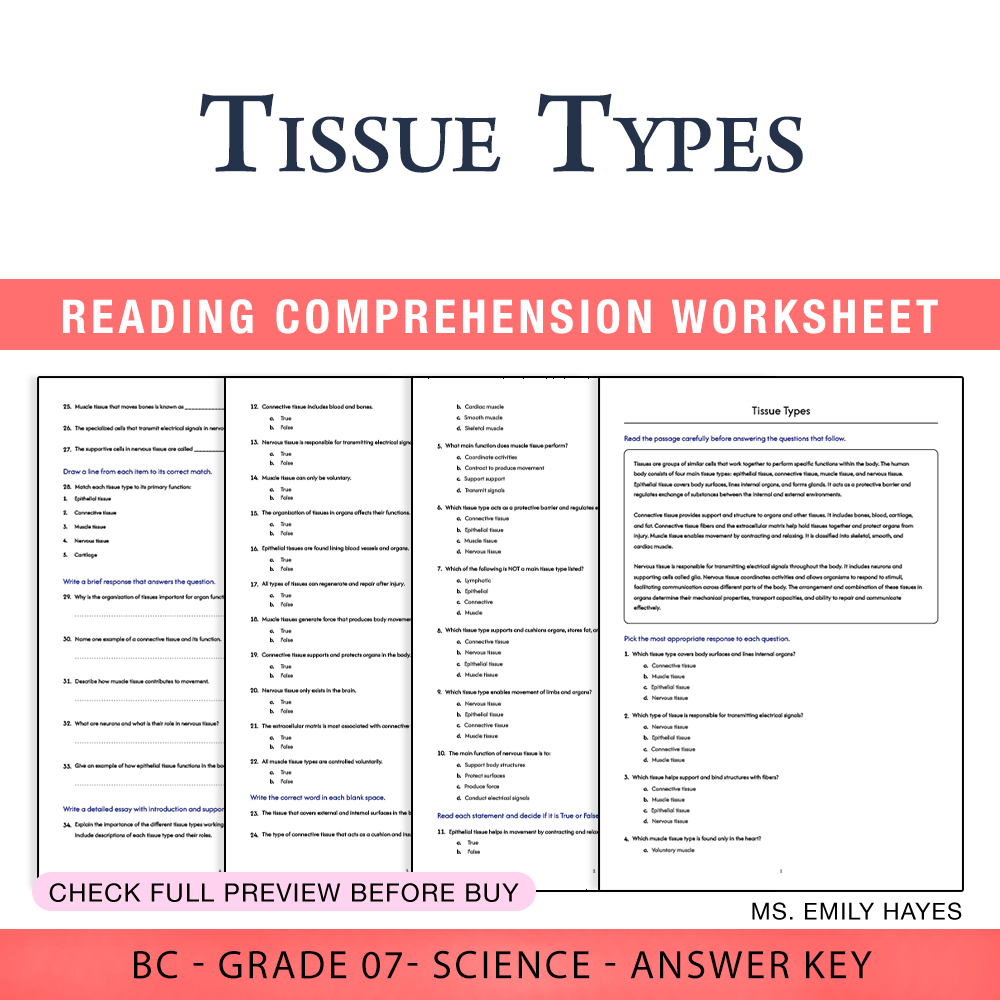
7th Grade Science | Tissue Types Worksheet (PDF+ Answer Key)
Created byCopper Leaf ClassroomLearning Objectives
- Describe the four main tissue types and their functions.
- Identify different tissue types in diagrams and descriptions.
- Explain how tissue organization affects organ function.
Also included in: Grade 7 Science Unit – Cells, Organ Systems & Surface Area (PDF+ Answer Key) +1 more
Instant download
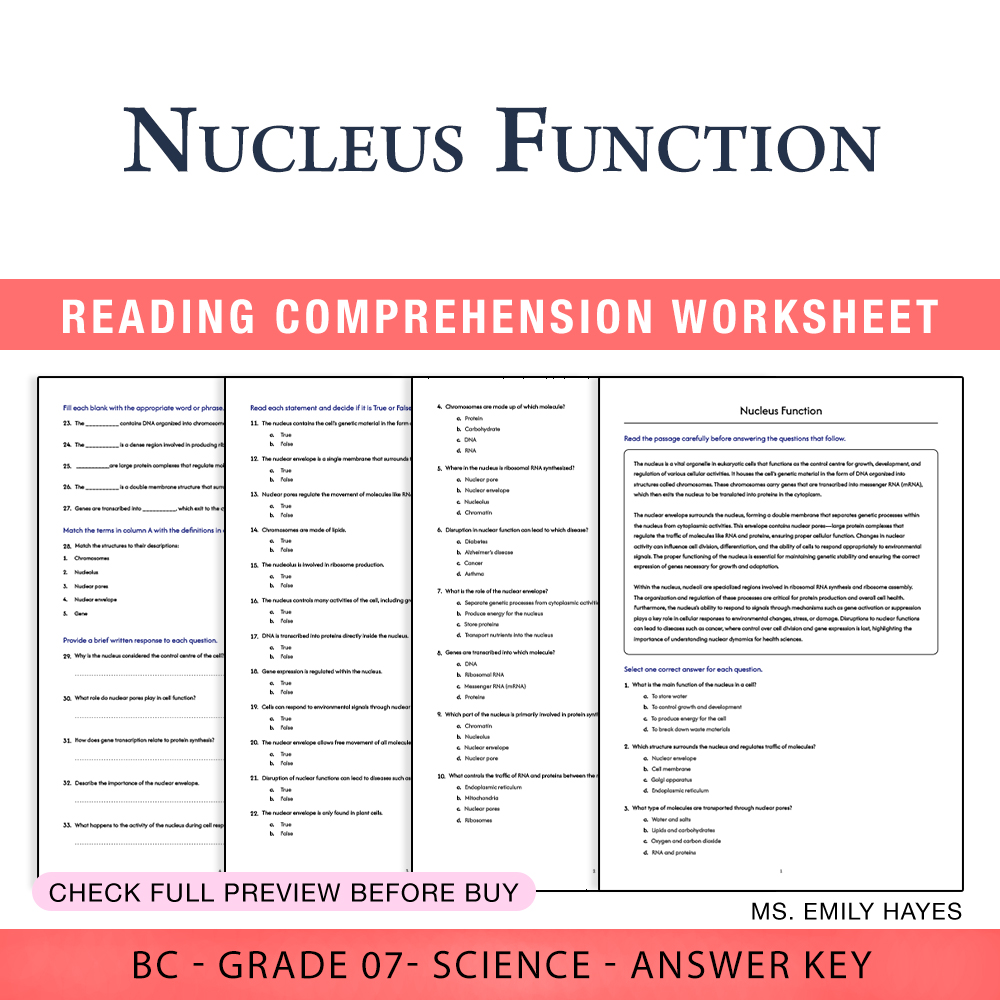
Grade 7 Science | Nucleus Function Worksheet (PDF+ Answer Key)
Created byCopper Leaf ClassroomLearning Objectives
- Describe the main functions of the cell nucleus.
- Explain how genetic material is organized and regulated within the nucleus.
- Identify structures involved in the transport of RNA and proteins in and out of the nucleus.
Also included in: Grade 7 Science Unit – Cells, Organ Systems & Surface Area (PDF+ Answer Key) +1 more
Instant download
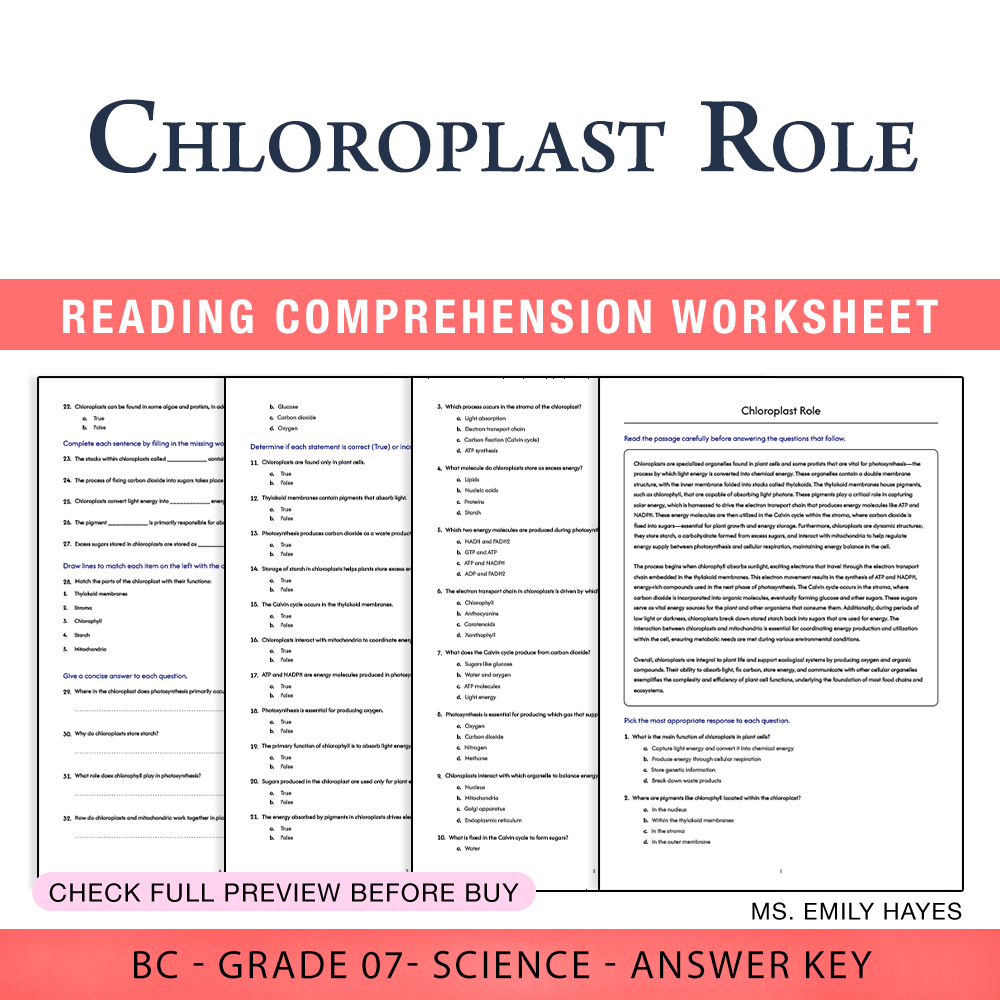
7th Grade Science | Chloroplast Role Worksheet (PDF+ Answer Key)
Created byCopper Leaf ClassroomLearning Objectives
- Explain the function of chloroplasts in plant cells and protists.
- Describe the process of photosynthesis including the role of thylakoid membranes and pigments.
- Identify where carbon fixation occurs within the chloroplast.
Also included in: Grade 7 Science Unit – Cells, Organ Systems & Surface Area (PDF+ Answer Key) +1 more
Instant download
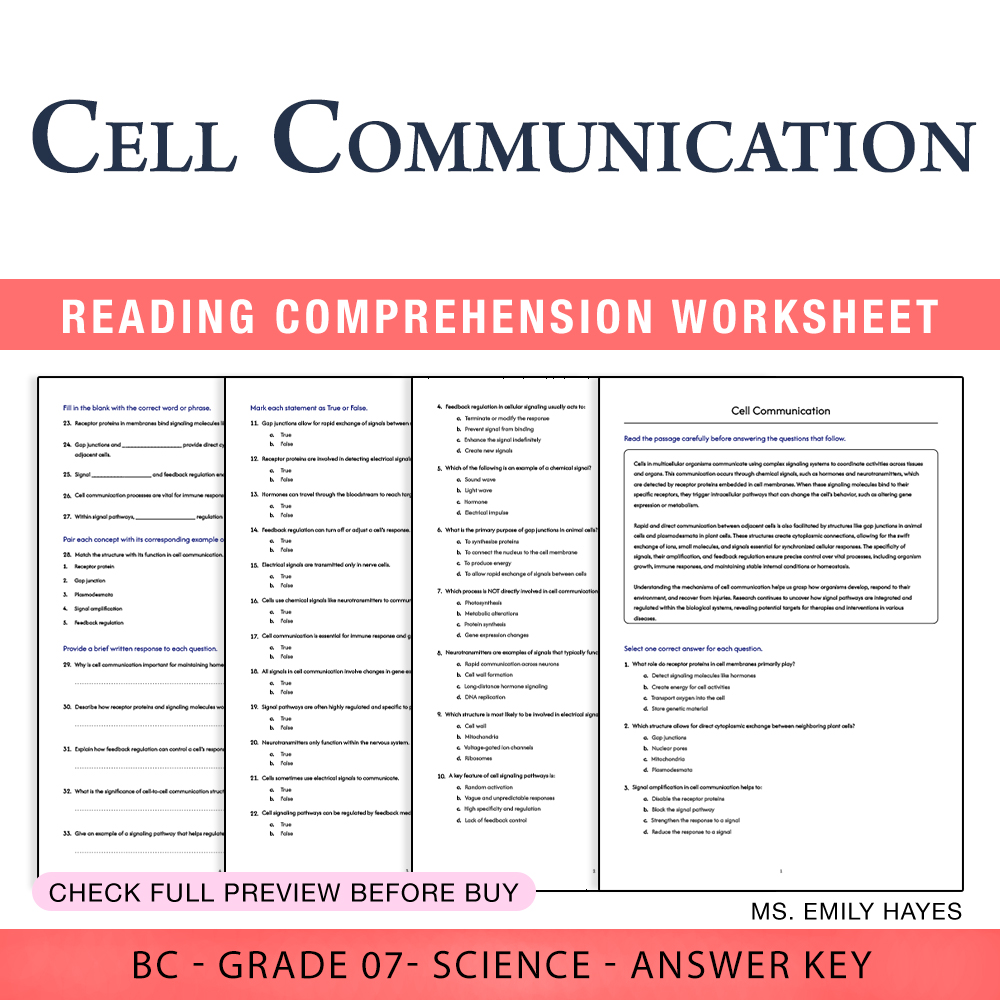
7th Grade Science | Cell Communication Worksheet (PDF+ Answer Key)
Created byCopper Leaf ClassroomLearning Objectives
- Describe how cells communicate through chemical and electrical signals.
- Explain the role of receptor proteins, gap junctions, and plasmodesmata in cell communication.
- Identify processes like signal amplification and feedback regulation involved in cell signaling.
Also included in: Grade 7 Science Unit – Cells, Organ Systems & Surface Area (PDF+ Answer Key) +1 more
Instant download
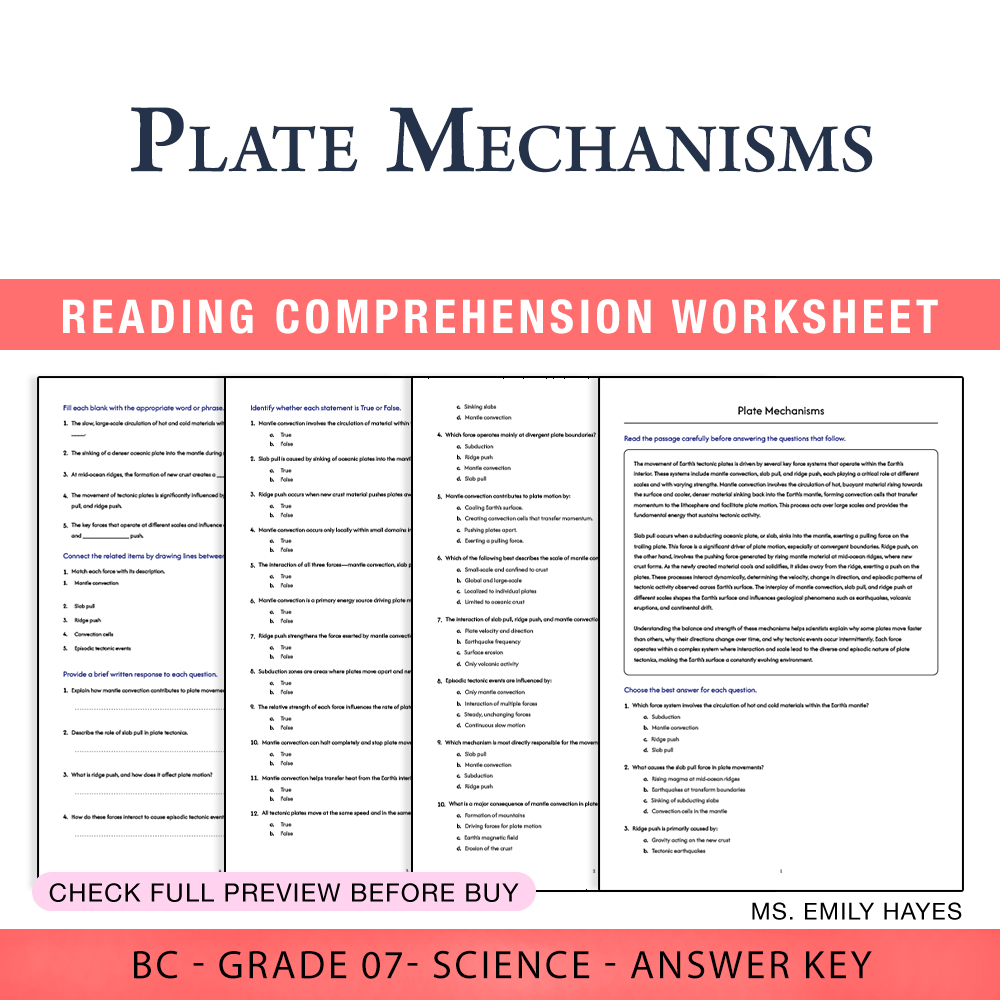
Grade 7 Science | Plate Mechanisms Worksheet (PDF+ Answer Key)
Created byCopper Leaf ClassroomLearning Objectives
- Understand the different force systems that drive plate motion within the Earth
- Explain mantle convection, slab pull, and ridge push and their roles in plate tectonics
- Describe how these mechanisms influence plate velocity, direction, and episodic tectonic events
Also included in: Grade 7 Science | Earth Systems & Geology Unit (PDF+ Answer Keys) +1 more
Instant download
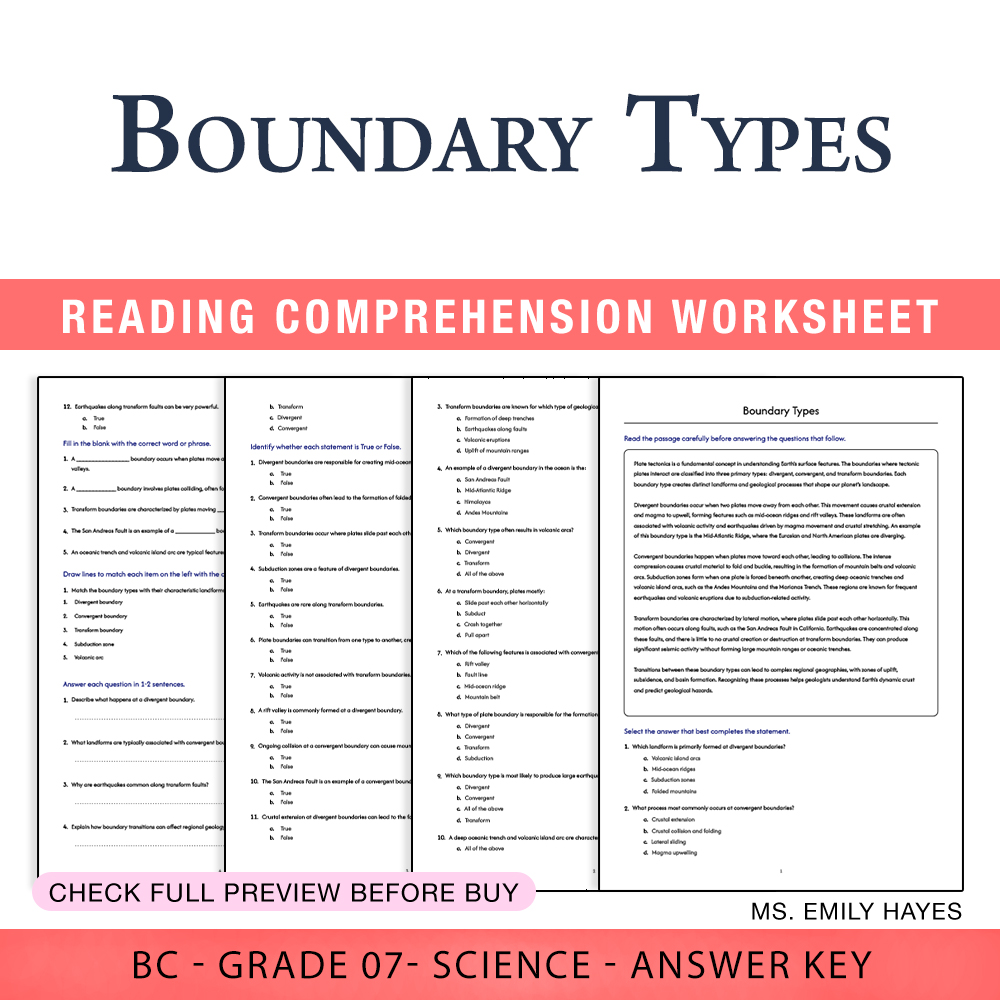
7th Grade Science | Boundary Types Worksheet (PDF+ Answer Key)
Created byCopper Leaf ClassroomLearning Objectives
- Understand the three main boundary types and their characteristics
- Identify landforms and processes associated with divergent, convergent, and transform boundaries
- Explain how boundary interactions lead to seismicity, volcanic activity, and uplift or subsidence
Also included in: Grade 7 Science | Earth Systems & Geology Unit (PDF+ Answer Keys) +1 more
Instant download
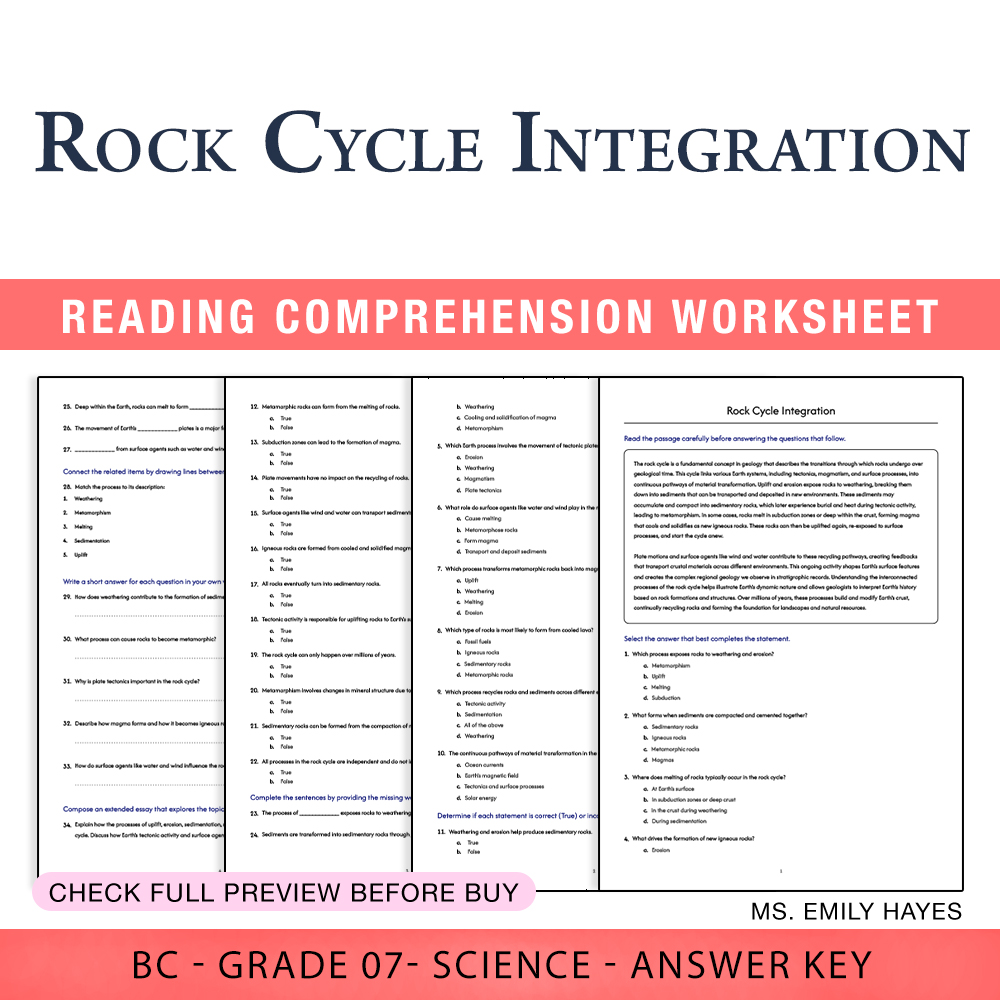
7th Grade Science | Rock Cycle Integration Worksheet (PDF + Answer Key)
Created byCopper Leaf ClassroomLearning Objectives
- Understand the processes involved in the rock cycle, including weathering, erosion, sedimentation, metamorphism, melting, and solidification.
- Identify how tectonic activity and surface processes interact to transform rocks and recycle Earth's materials.
- Describe the role of different geological environments in the formation and transformation of rocks.
Also included in: Grade 7 Science | Earth Systems & Geology Unit (PDF+ Answer Keys) +1 more
Instant download

Grade 7 Rock Strata Worksheet | NGSS Practice PDF
 Created byClear Sky Classroom
Learning Objectives
- Understand the principles of relative dating such as superposition, original horizontality, and cross-cutting relationships.
- Identify key features like fossils, unconformities, and intrusions as markers for correlating rock layers.
- Analyze stratigraphic data to interpret the sequence of Earth's geological events.
Also included in: Grade 7 Space Science NGSS Lesson Bundle for Science: Worksheet B +1 more
Instant download

Grade 7 Solar Patterns Worksheet | NGSS Practice & PDF
Created byClear Sky ClassroomLearning Objectives
- Describe the cyclic patterns produced by the relative motions of the Sun, Earth, and Moon.
- Explain how orbital geometry and axial tilt influence day-night cycles and phases.
- Connect observational records to predictable patterns in the solar system.
Also included in: Grade 7 Space Science NGSS Lesson Bundle for Science: Worksheet B +1 more
Instant download

Grade 7 Science | Population Models Worksheet (BC Standard) (PDF)
 Created byEvergreen Desk Education
Learning Objectives
- Describe how exponential and logistic population models differ and what each implies about resource limits and carrying capacity.
- Explain how density-dependent and density-independent factors affect population growth rates over time.
- Use population models to interpret patterns in real ecosystems and make simple predictions.
Instant download

7th Grade Science | Design Optimization Worksheet & Answer Key (Printable PDF)
 Created byCoral Reef Learning
Learning Objectives
- Analyze test data to identify factors affecting design performance.
- Refine parameters iteratively using quantitative comparisons.
- Apply evidence-based justifications to improve design solutions within constraints.
Instant download
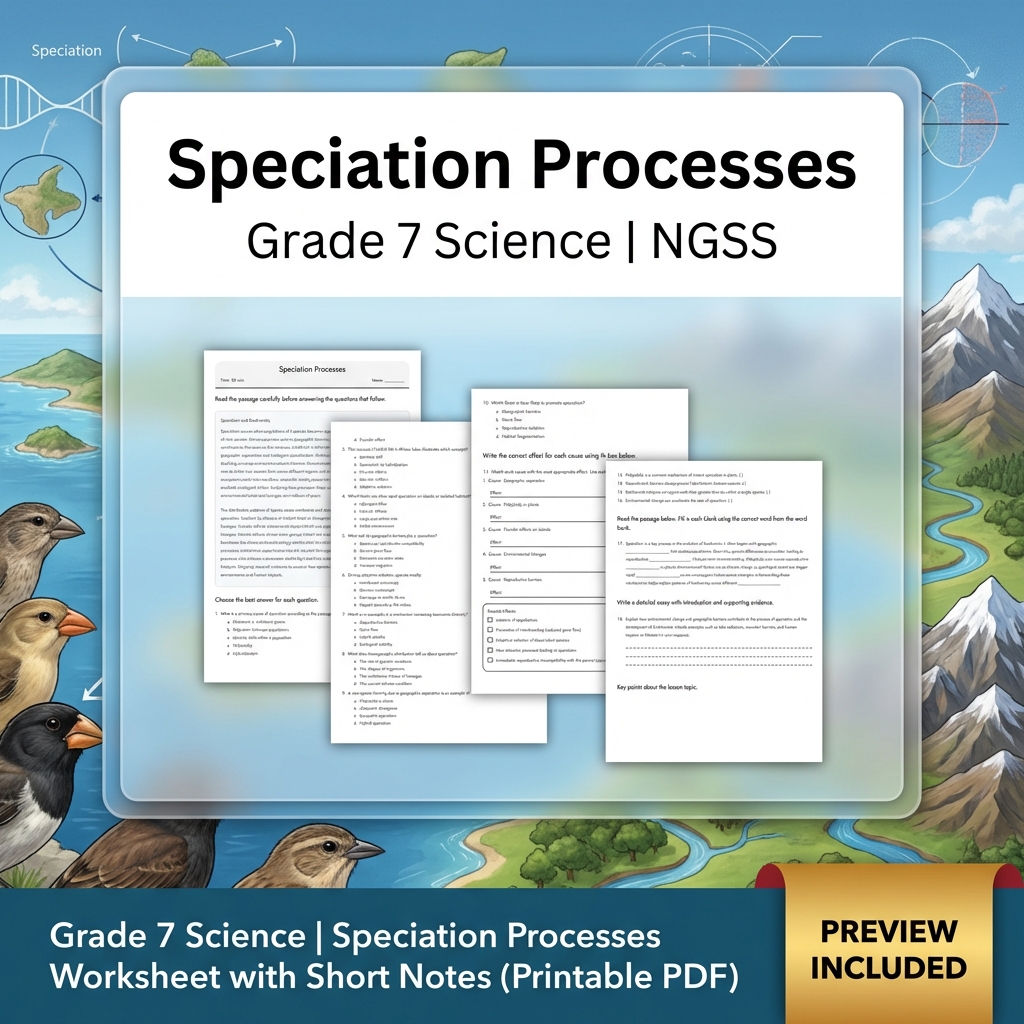
Grade 7 Science | Speciation Processes Worksheet with Short Notes (PDF)
 Created byMeadowlark Worksheets
Learning Objectives
- Understand the mechanisms that lead to speciation and increased biodiversity.
- Identify examples of speciation such as allopatric divergence and polyploidy.
- Explain how environmental changes influence the formation of new species.
Also included in: Grade 7 Science | Biological Evolution Bundle – Unity & Diversity (NGSS Aligned) +1 more
Instant download
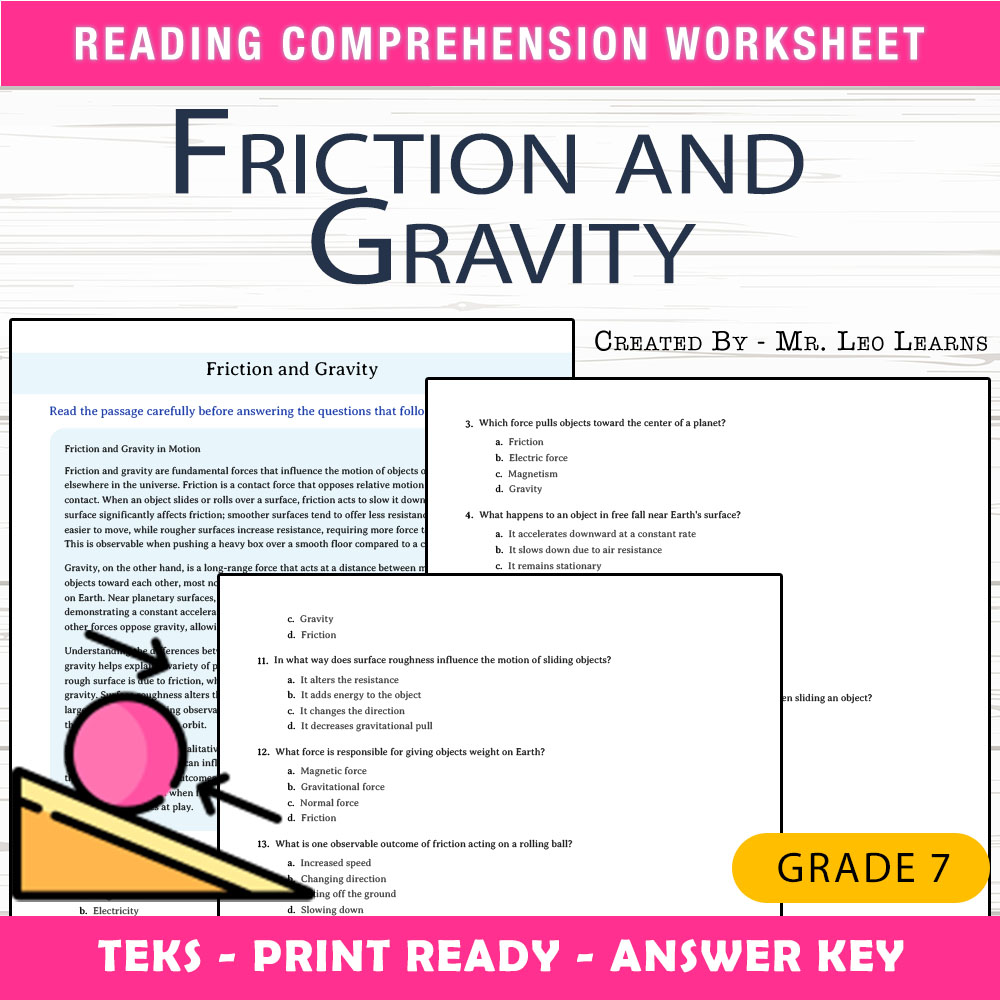
Grade 7 Science – Friction and Gravity Worksheet for Mastery
 Created byThe Resource Hub
Learning Objectives
- Explain how friction opposes motion and how surface roughness affects resistance.
- Describe how gravity acts as a long-range force and influences objects in free fall.
Also included in: Grade 7 Science Unit Bundle – Motion, Forces & Energy Worksheets for Mastery +1 more
Instant download
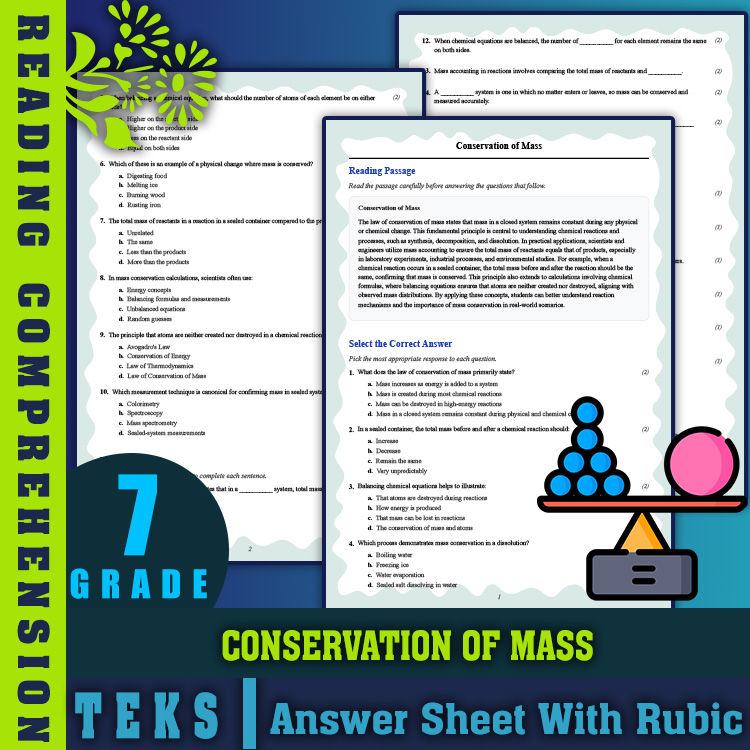
7th Grade Science | Conservation of Mass Reading Worksheet & Answer Key (PDF)
JCreated byJ.S SheetsLearning Objectives
- Understand the law of conservation of mass and its fundamental principles.
- Apply mass accounting to chemical and physical processes in closed systems.
- Recognize how balancing chemical equations relates to mass conservation.
Instant download

Grade 7 Science | Ecosystem Resilience & Introduction - Daily Reading Comprehension
Created byCoral Reef LearningLearning Objectives
- Understand what an ecosystem is and its key components.
- Learn how ecosystems respond to disturbances.
- Recognize factors that contribute to ecosystem resilience.
Instant download

Grade 7 Science | Forces Introduction - Daily Reading Comprehension
Created byCoral Reef LearningLearning Objectives
- Understand key concepts related to Science
- Apply knowledge through practice questions
- Demonstrate comprehension of the material
Also included in: Forces, Structures and Motion Lesson Bundle | Grade 7 Science Alberta +1 more
Instant download

Grade 7 Science Assessment | Building Envelope Worksheet Elena | Ontario
 Created byLumora Learning
Learning Objectives
- Explain how different components of a building envelope contribute to thermal performance.
- Identify key indicators used to assess envelope efficiency and performance.
- Compare retrofit approaches like sealing and layered insulation to improve energy efficiency.
Instant download
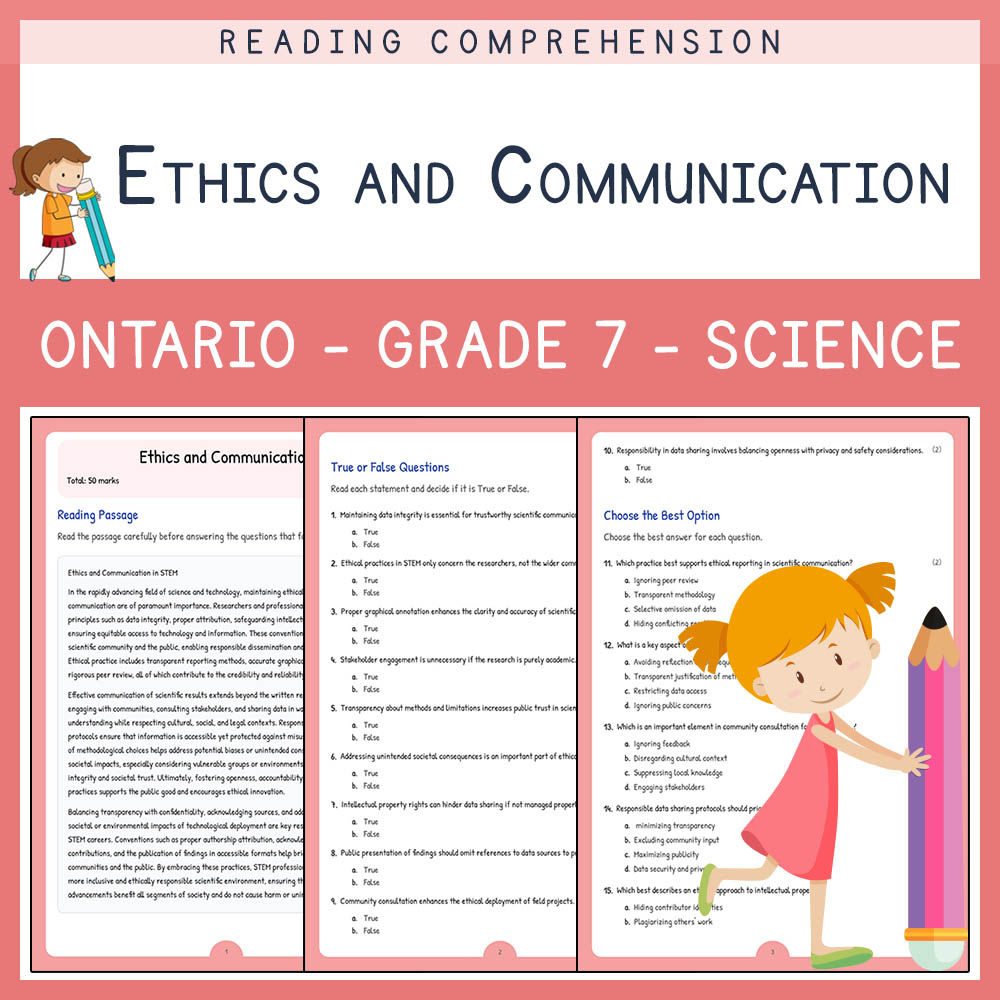
Grade 7 Science | Ethics and Communication Worksheet | Ontario Standards
Created byLumora LearningLearning Objectives
- Understand the importance of ethical considerations in STEM communication.
- Identify responsible practices for data sharing and attribution.
- Recognize conventions for transparent reporting and graphical annotation.
Also included in: Grade 7 Science | STEM Skills and Connections Custom Bundle | Ontario
Instant download
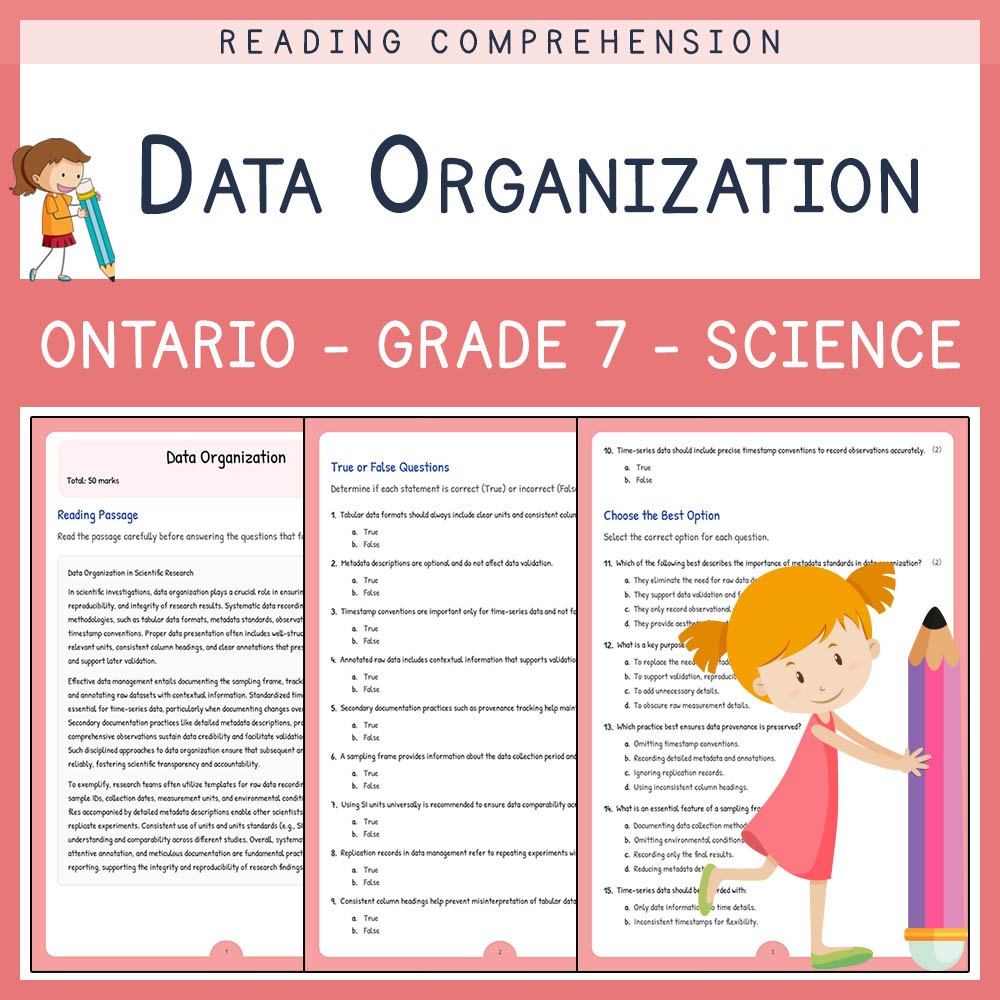
Grade 7 Science Assessment | Data Organization Worksheet Elena | Ontario
Created byLumora LearningLearning Objectives
- Understand systematic data recording methods used in scientific research.
- Identify different data structures including categorical and numerical.
- Learn standards for metadata, annotations, and time-series data documentation.
Also included in: Grade 7 Science | STEM Skills and Connections Custom Bundle | Ontario
Instant download
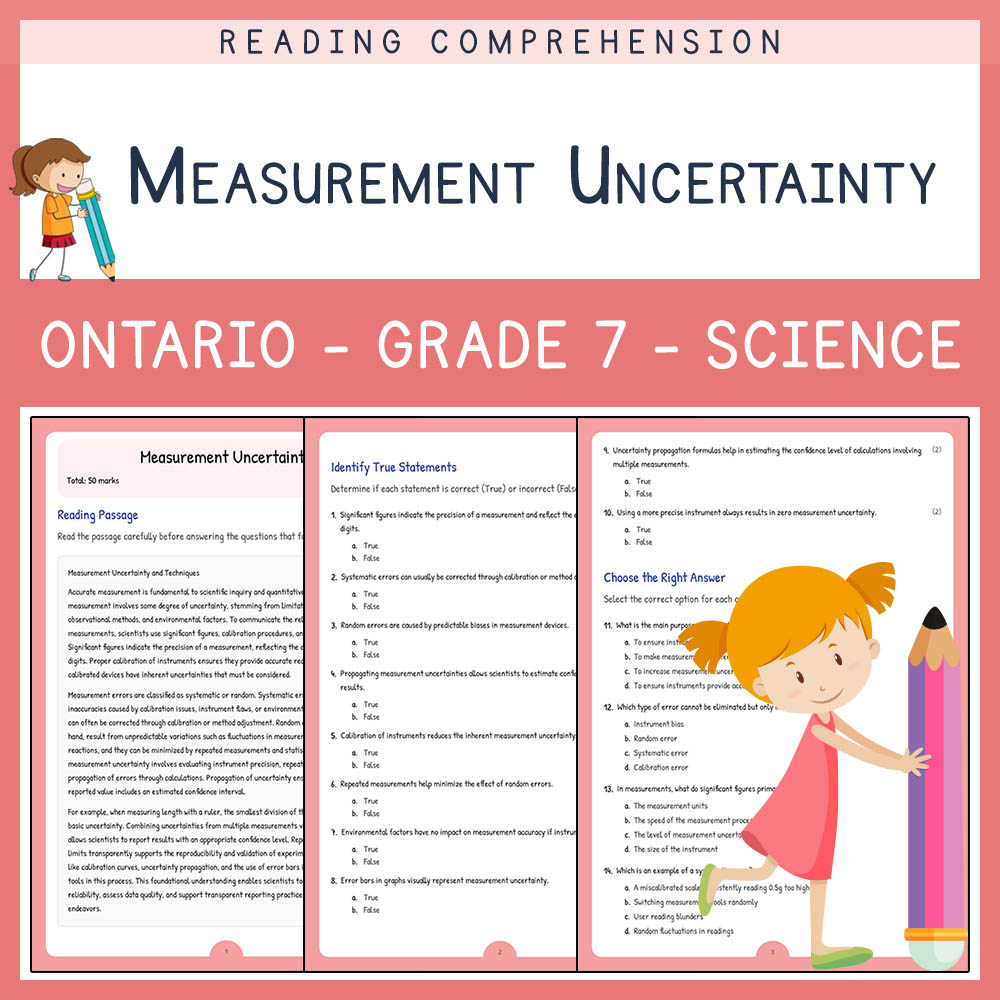
Grade 7 Science | Measurement Uncertainty Worksheet | Ontario Standard
Created byLumora LearningLearning Objectives
- Understand the principles of measurement accuracy and precision.
- Identify sources of systematic and random measurement errors.
- Learn techniques for estimating and reporting measurement uncertainty.
Also included in: Grade 7 Science | STEM Skills and Connections Custom Bundle | Ontario
Instant download
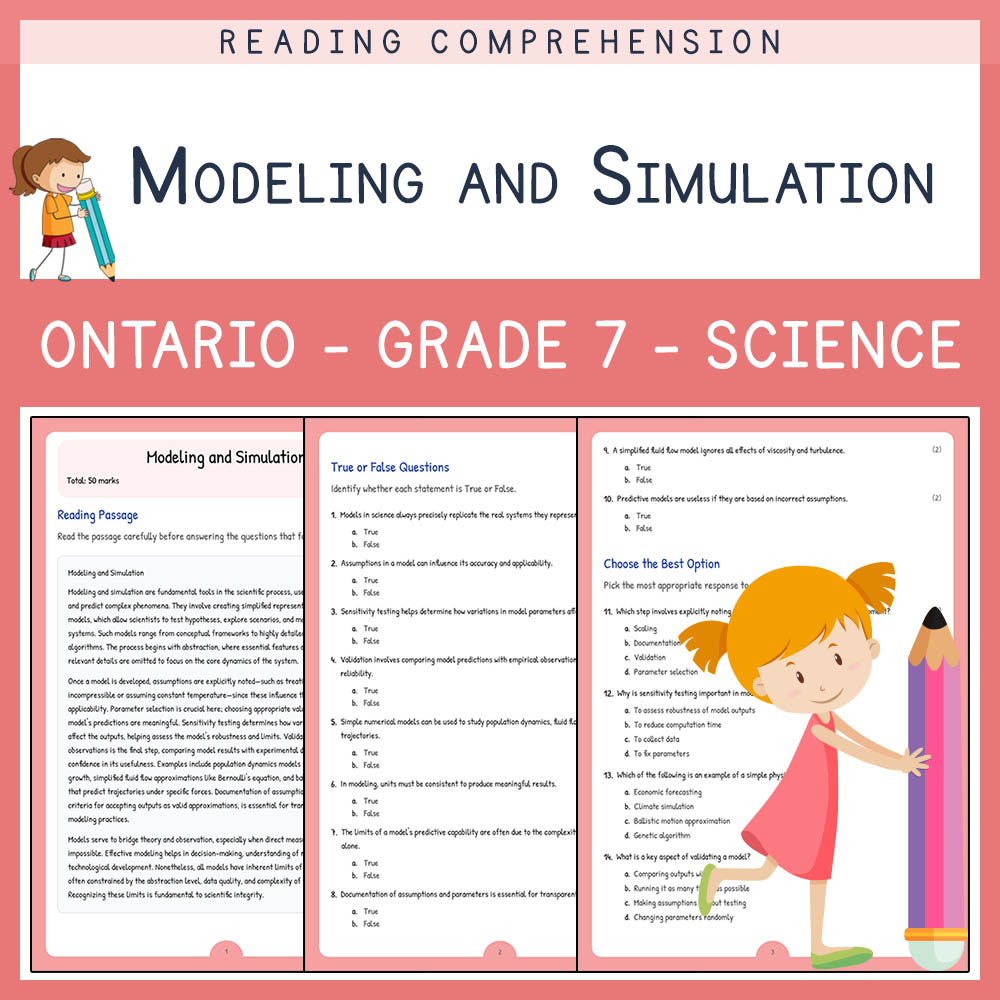
Grade 7 Science | Modeling and Simulation Worksheet | Ontario Standard
Created byLumora LearningLearning Objectives
- Understand the key concepts of modeling and simulation in science.
- Identify different types of models and their purposes.
- Explain the importance of assumptions, scaling, and validation in modeling.
Also included in: Grade 7 Science | STEM Skills and Connections Custom Bundle | Ontario
Instant download

Grade 7 Science Modeling and Simulation Worksheet | Ontario Curriculum
Created byClear Sky ClassroomLearning Objectives
- Explain how models use abstraction and assumptions to represent real-world systems.
- Identify key parameters, units, and variables used in simple numerical models.
- Describe how scientists validate models using empirical observations and evaluate when predictions are reliable.
Instant download

Grade 7 Science | Design Principles Worksheet (TEKS) (PDF)
Created byEvergreen Desk EducationLearning Objectives
- Identify independent, dependent, and controlled variables in an experiment and explain how each is used to test cause and effect.
- Write operational definitions and select appropriate control conditions for a fair and reproducible experiment.
- Plan data collection methods and sample sizes that support valid comparisons.
Instant download

Grade 7 Science Worksheet | Environment and Traits (Phenotype) NGSS
 Created bySkylark Worksheets
Learning Objectives
- Explain how phenotype can result from interactions between genotype and environmental factors.
- Identify real-world examples of environmental influences on traits (nutrition, UV exposure, temperature).
- Distinguish inherited genetic contributions from environmental modulation using evidence-based claims.
Also included in: Grade 7 Genetics: Traits Inheritance Science Lesson Bundle for NGSS +1 more
Instant download

Energy Transformations Worksheet | NGSS Grade 7 Science Practice
JCreated byJ.S SheetsLearning Objectives
- Explain how light energy is converted into chemical energy during photosynthesis.
- Describe the process of cellular respiration and how organisms harvest energy from food.
- Connect the roles of chloroplasts and mitochondria in energy transfer within cells.
Also included in: Grade 7 Cellular and Organ Systems Science Lesson Bundle: NGSS Practice +1 more
Instant download
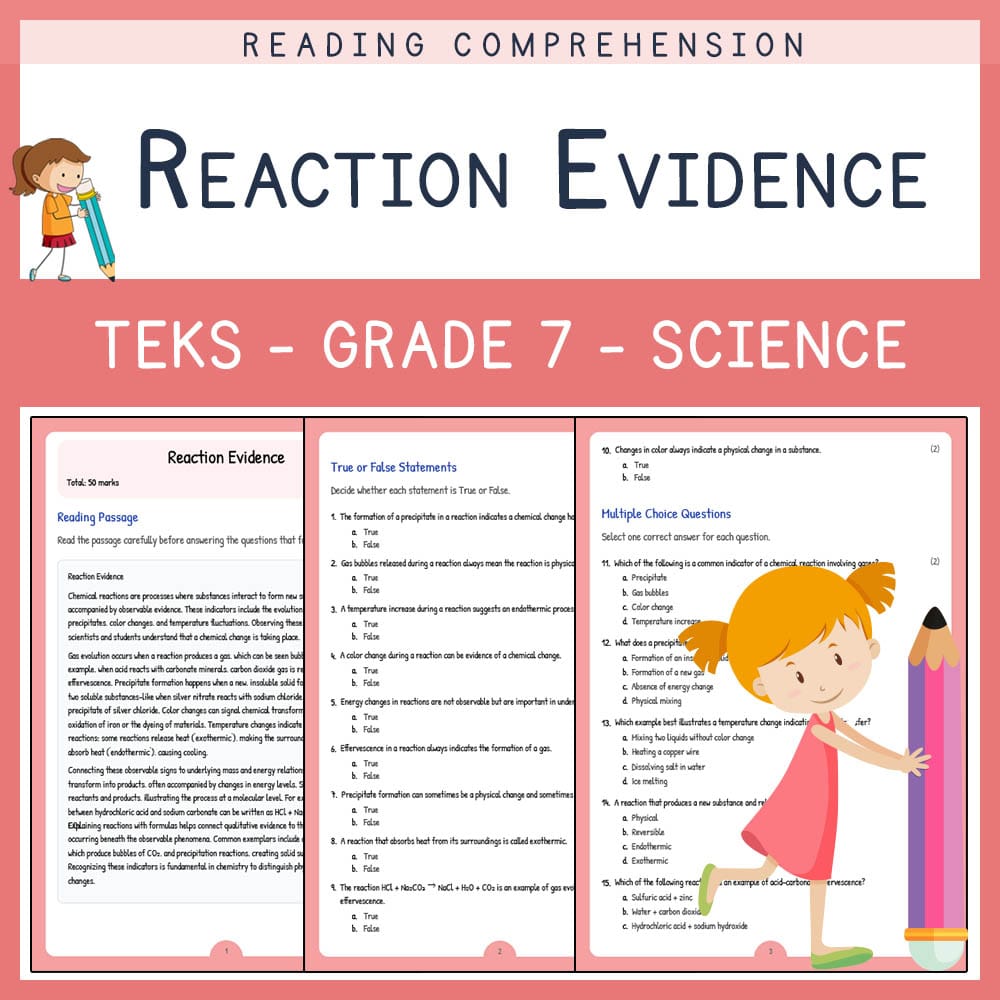
Grade 7 Science | Reaction Evidence Worksheet | TEKS-Aligned
Created byLumora LearningLearning Objectives
- Describe observable indicators of chemical reactions such as gas production, precipitate formation, color change, and temperature change.
- Connect qualitative evidence of chemical reactions to changes in mass and energy.
- Identify common reaction types like acid–carbonate effervescence and precipitation based on observable evidence.
Also included in: Grade 7 Science | Matter and Energy Lesson Bundle | TEKS Aligned
Instant download

Grade 7 Science | Wetland Functions Worksheet (Alberta Standard) (PDF)
Created byEvergreen Desk EducationLearning Objectives
- Explain how wetlands store and release water that affects regional hydrology.
- Describe how wetlands cycle nutrients and help improve water quality.
- Connect wetland habitats to biodiversity, including amphibians and migratory birds.
Instant download

Science Worksheet Physical vs Chemical Changes Grade 7 NGSSS
JCreated byJ.S SheetsLearning Objectives
- Differentiate physical changes from chemical changes by analyzing what happens to matter.
- Identify indicators of chemical changes, such as gas production, precipitate formation, and temperature/color changes.
- Classify common examples as physical or chemical changes and justify the classification.
Also included in: Grade 7 Matter, Energy & Forces Science Lesson Bundle – Florida NGSSS +1 more
Instant download
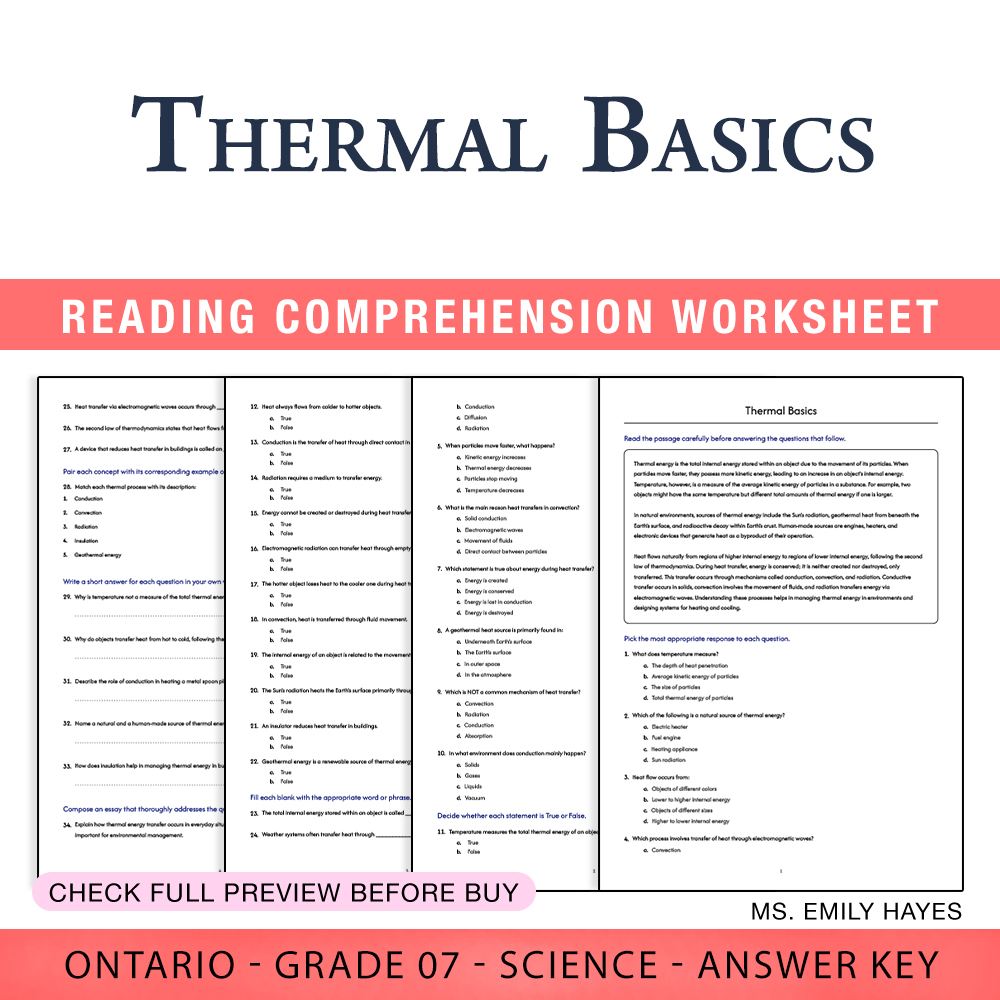
7th Grade Science | Thermal Basics Worksheet (PDF+ Answer Key)
Created byCopper Leaf ClassroomLearning Objectives
- Define and differentiate between thermal energy and temperature.
- Identify common sources of thermal energy in natural and built environments.
- Explain the concept of heat flow from higher to lower internal energy.
Instant download

Grade 7 Potential Energy Worksheet | NGSS Practice PDF
Created byClear Sky ClassroomLearning Objectives
- Understand different models that represent potential energy stored in systems.
- Identify how changes in object arrangement affect stored energy.
- Recognize examples of gravitational, elastic, and magnetic potential energy.
Also included in: Grade 7 Energy Transfer Science Lesson Bundle | NGSS +1 more
Instant download

Grade 7 Kinetic Energy Worksheet | NGSS Practice PDF
Created byClear Sky ClassroomLearning Objectives
- Construct and interpret graphs showing the relationship between kinetic energy, potential energy, mass, and speed.
- Analyze how changes in mass and speed affect kinetic energy using real-world examples.
- Calculate kinetic energy based on given mass and velocity data.
Also included in: Grade 7 Energy Transfer Science Lesson Bundle | NGSS +1 more
Instant download

Science Grade 7: Prototyping Methods Worksheet | Grade 7 Science
JCreated byJ.S SheetsLearning Objectives
- Compare scaled physical models, digital finite-element models, and laboratory load rigs for testing strength, stiffness, and failure modes
- Explain how instrumentation such as strain gauges and displacement transducers helps quantify structural response
- Describe limitations of prototyping, including scaling issues for material heterogeneity and joint behavior
Instant download

Grade 7 Science | Conservation of Mass - Daily Reading Comprehension
Created byCoral Reef LearningLearning Objectives
- Understand the principle that matter is conserved during chemical reactions.
- Recognize how atoms rearrange during reactions without changing the total mass.
- Explain the concept of a closed system in mass conservation.
Instant download

Grade 7 Food Web Complexity Worksheet | BC Use Practice PDF
Created byClear Sky ClassroomLearning Objectives
- Explain how energy flows through producers, consumers, and decomposers in a food web
- Describe how food webs are more resilient than simple food chains due to redundancy and alternative pathways
- Predict how changes to one species can cascade through multiple relationships in an ecosystem
Instant download
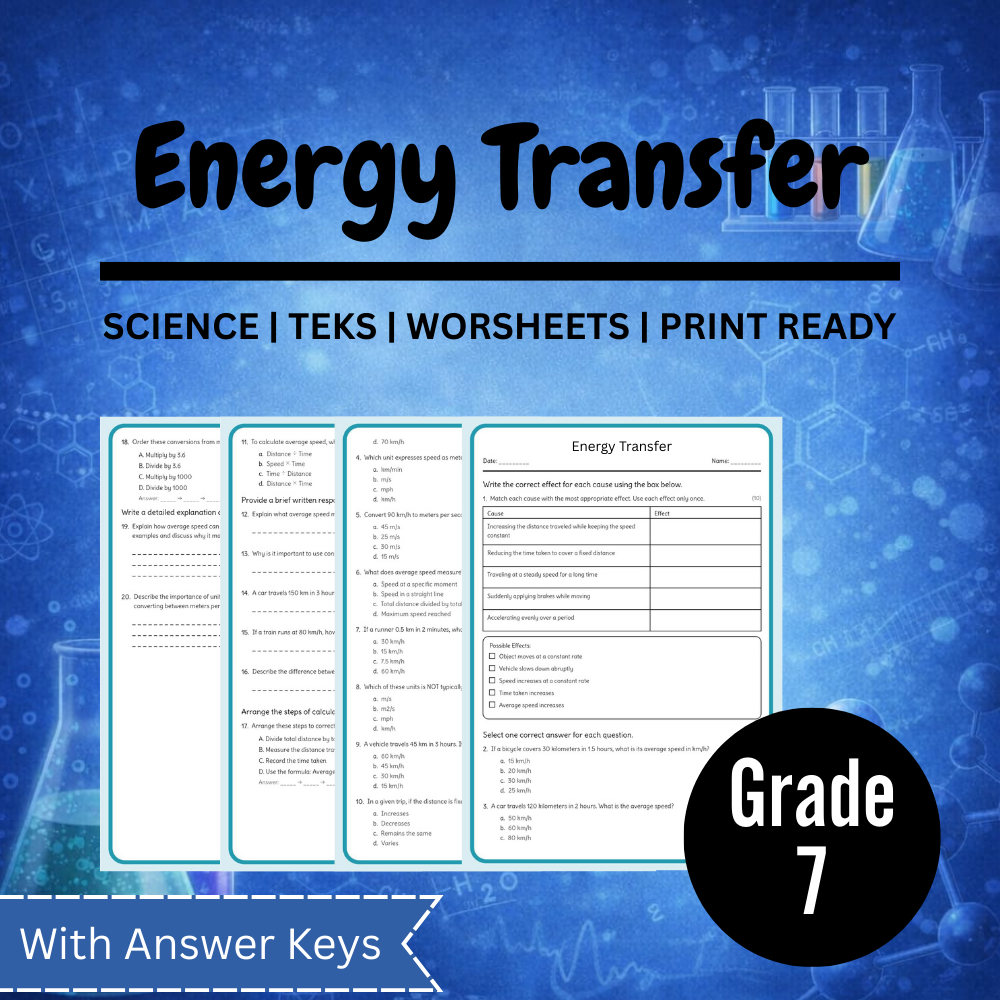
Grade 7 Science | Energy Transfer Worksheet (Worksheet + Answer Key) – TEKS-Aligned
 Created byBright Mind Resources
Learning Objectives
- Describe how heat energy moves through conduction, convection, and radiation.
- Relate energy transfer mechanisms to phenomena such as thermal conductivity differences, convective currents, and radiant heating.
- Explain the relationship between temperature gradients, specific heat, and phase changes in matter.
Also included in: Grade 7 Science Unit Bundle | States of Matter & Atomic Structure Worksheets +2 more
Instant download

Grade 7 Science | Heat Transfer Models Worksheet | General Standards
Created byLumora LearningLearning Objectives
- Explain how thermal energy moves from warmer objects to cooler ones using models of heat transfer
- Differentiate conduction, convection, and radiation as three ways heat can travel
- Use temperature differences to predict the direction of heat transfer in everyday situations
Instant download
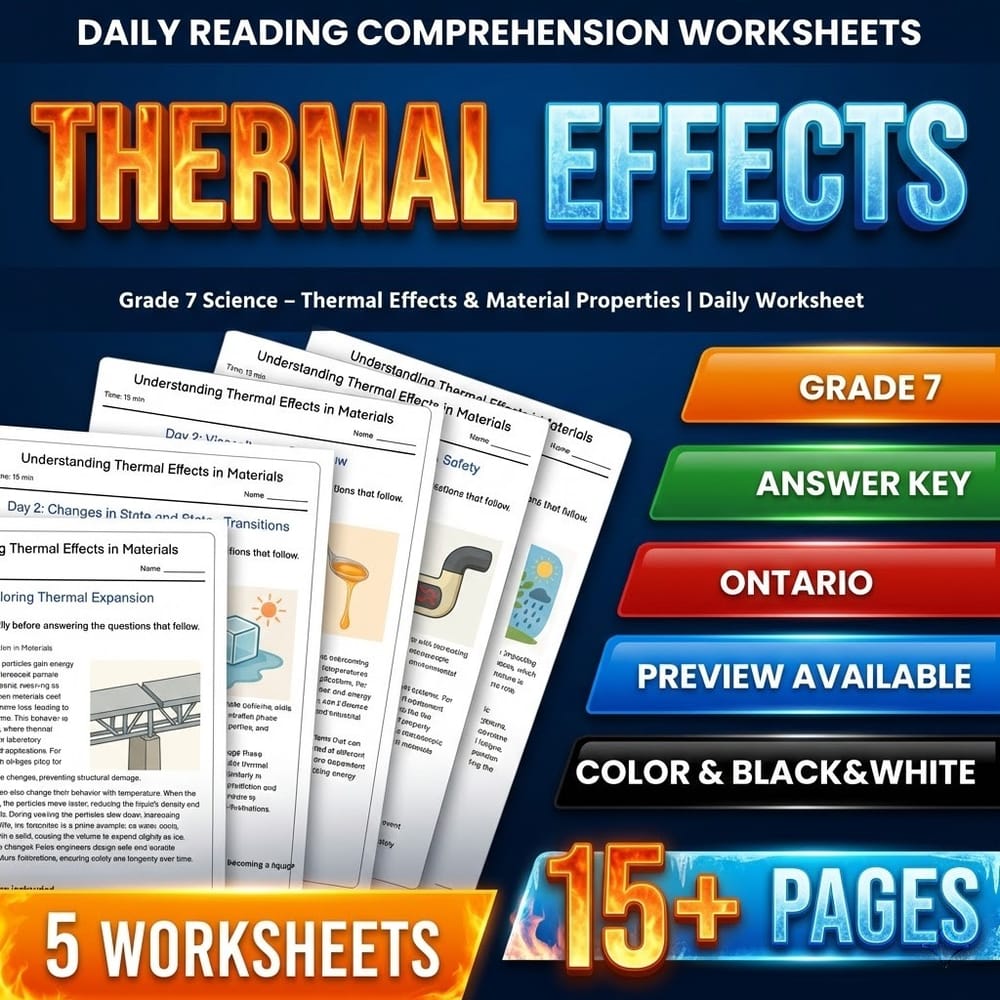
Grade 7 Science – Thermal Effects & Material Properties | Daily Worksheet
 Created byQuiet Forest Education
Learning Objectives
- Define thermal expansion and contraction
- Identify examples of thermal effects in everyday objects
- Explain how particle motion influences material properties
Also included in: Thermal Energy Grade 7 Science Daily Reading Worksheets Bundle | Ontario +1 more
Instant download
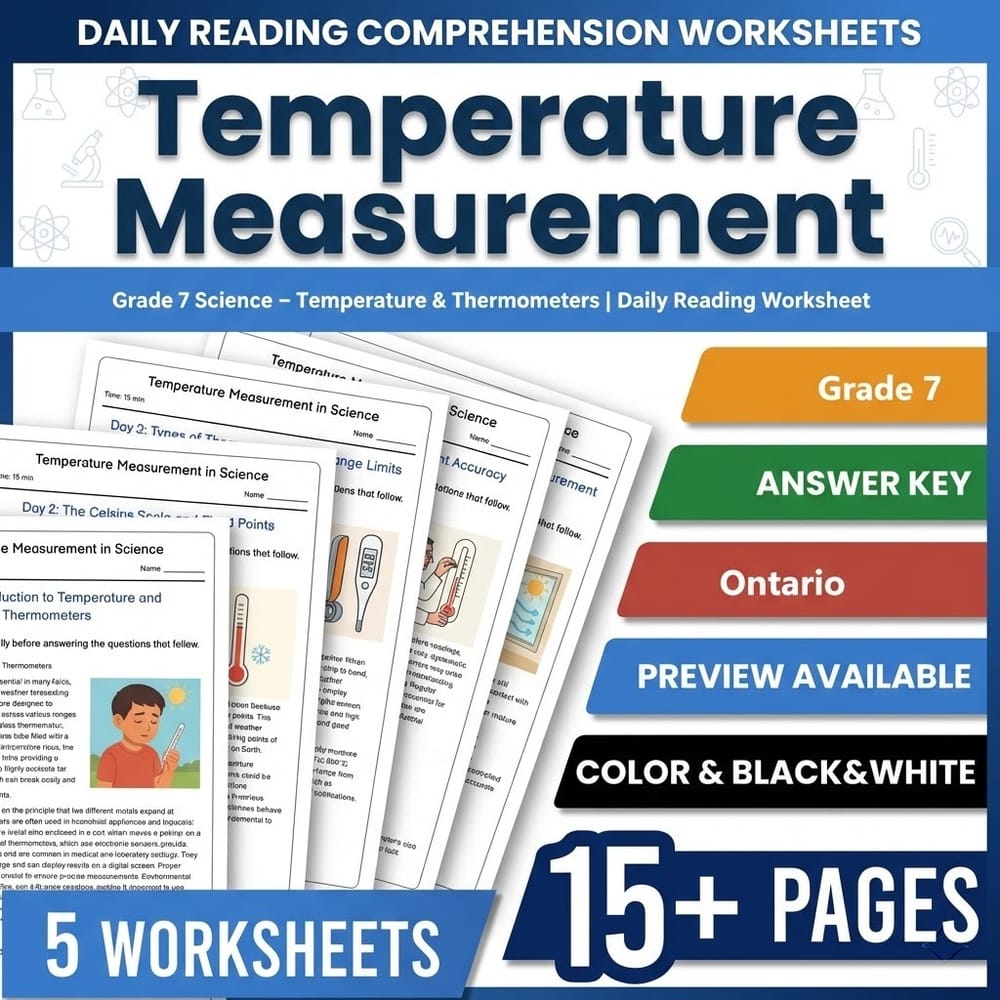
Grade 7 Science – Temperature & Thermometers | Daily Reading Worksheet
Created byQuiet Forest EducationLearning Objectives
- Identify different types of thermometers and understand their basic functions
- Understand the principles of temperature measurement
- Recognize the importance of calibration and environmental influences on temperature readings
Also included in: Thermal Energy Grade 7 Science Daily Reading Worksheets Bundle | Ontario +1 more
Instant download
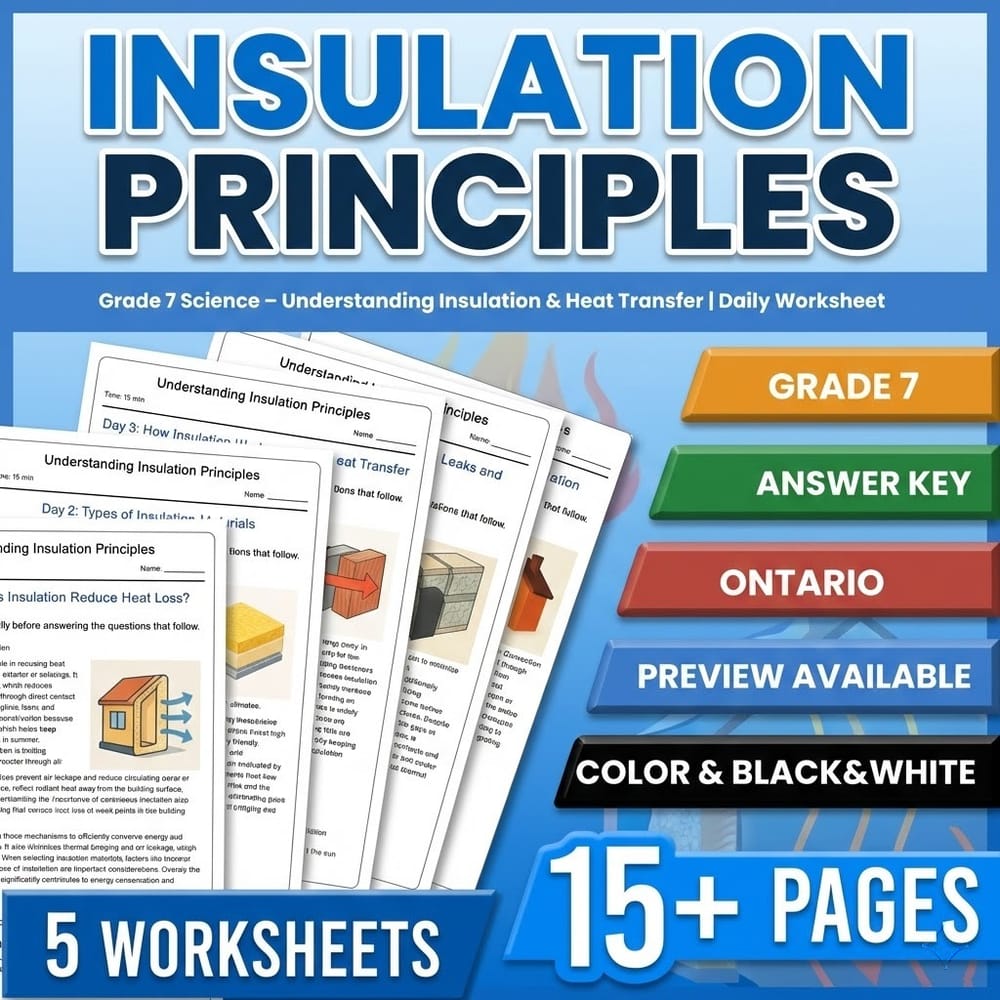
Grade 7 Science – Understanding Insulation & Heat Transfer | Daily Worksheet
Created byQuiet Forest EducationLearning Objectives
- Understand key concepts related to Science
- Apply knowledge through practice questions
- Demonstrate comprehension of the material
Also included in: Thermal Energy Grade 7 Science Daily Reading Worksheets Bundle | Ontario +1 more
Instant download
Grade 7 Science – Building Envelope & Thermal Performance | Daily Worksheet
Created byQuiet Forest EducationLearning Objectives
- Identify the main components of a building envelope including walls, roofs, windows, and foundations.
- Understand how different components contribute to thermal performance and energy efficiency.
- Describe the significance of interfaces, thermal bridging, and air infiltration in building insulation.
Also included in: Thermal Energy Grade 7 Science Daily Reading Worksheets Bundle | Ontario +1 more
Instant download
About Grade 7 Science Worksheets
Browse 6,039 printable Grade 7 Science worksheets — ready-to-print PDFs with answer keys where available.
Every worksheet on MyTeachingSheets is created by independent teacher-authors and reviewed before publication. All resources download as printable PDFs for classroom, homework, or at-home practice, and many include answer keys. Preview any worksheet free before buying.