
Grade 7 Science Worksheets
6,039 worksheets
Grade 7 Science – Instrument Accuracy & Temperature Sensors | Daily Worksheet
 Created byQuiet Forest Education
Learning Objectives
- Understand different types of temperature sensors used in environmental monitoring
- Learn how calibration, response time, and placement affect measurement accuracy
- Identify common sources of measurement error and how to minimize them
Also included in: Thermal Energy Grade 7 Science Daily Reading Worksheets Bundle | Ontario +1 more
Instant download
Grade 7 Science – Convection & Climate | Daily Reading Worksheet
Created byQuiet Forest EducationLearning Objectives
- Explain how heat transfer occurs through convection in fluids.
- Identify the key factors that influence convective circulation.
- Relate convection phenomena to real-world environmental examples.
Also included in: Thermal Energy Grade 7 Science Daily Reading Worksheets Bundle | Ontario +1 more
Instant download
Grade 7 Science – Urban Heat & Climate Change | Daily Reading Worksheet
Created byQuiet Forest EducationLearning Objectives
- Explain the concept of urban heat islands and their causes
- Identify the effects of urban heat on cities and human health
- Describe mitigation strategies used to reduce urban heat effects
Also included in: Thermal Energy Grade 7 Science Daily Reading Worksheets Bundle | Ontario +1 more
Instant download
Grade 7 Science – Conductive Materials & Heat Transfer | Daily Worksheet
Created byQuiet Forest EducationLearning Objectives
- Understand the properties of materials that conduct heat.
- Differentiate between metals and non-metals in terms of thermal conductivity.
- Identify factors that influence a material’s ability to transfer heat.
Also included in: Thermal Energy Grade 7 Science Daily Reading Worksheets Bundle | Ontario +1 more
Instant download
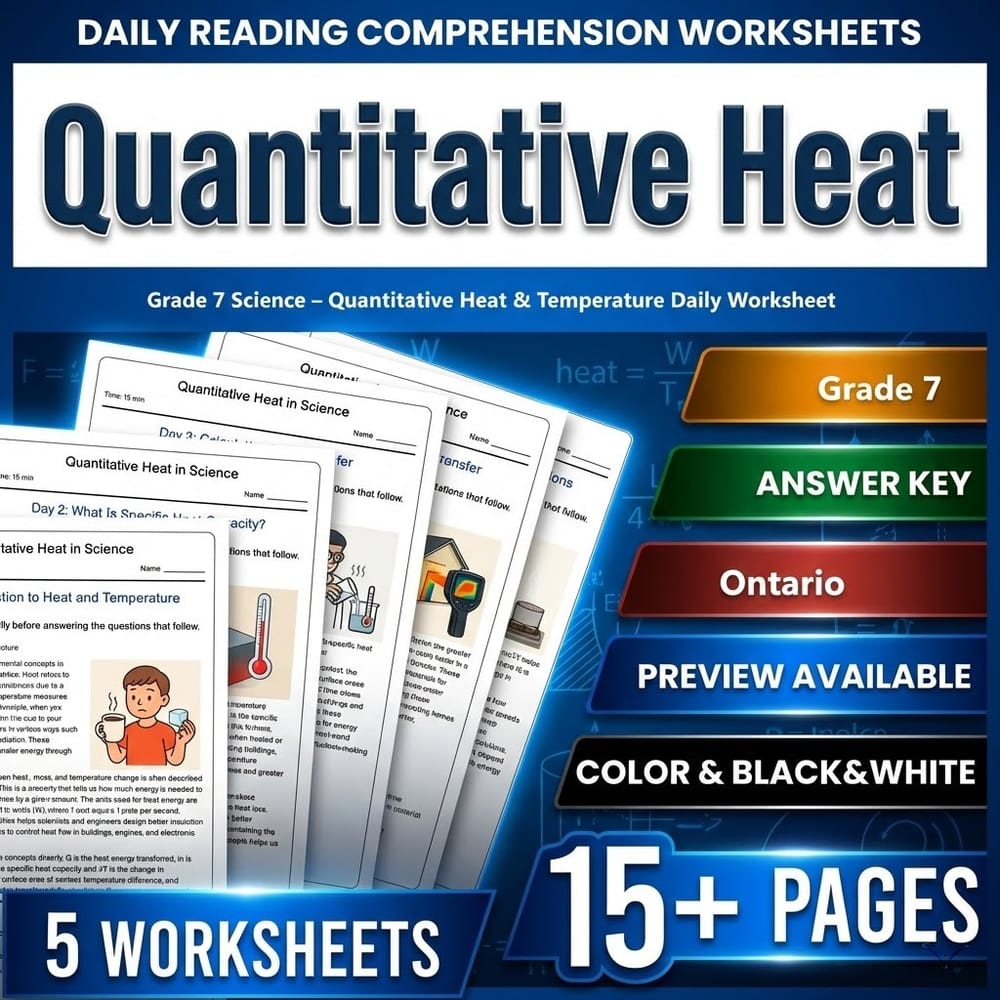
Grade 7 Science – Quantitative Heat & Temperature Daily Worksheet
Created byQuiet Forest EducationLearning Objectives
- Understand the relationship between heat, mass, and temperature change
- Learn about specific heat capacity and basic heat calculations
- Recognize units such as joules and watts used in heat measurement
Also included in: Thermal Energy Grade 7 Science Daily Reading Worksheets Bundle | Ontario +1 more
Instant download

Grade 7 Energy Relationships Worksheet | Practice & Assessment PDF
 Created byClear Sky Classroom
Learning Objectives
- Explain how kinetic and potential energy are related to motion and elevation in mechanical systems.
- Use conservation of mechanical energy to predict qualitative energy changes during motion.
- Connect energy relationships to forces, safe speed, and structural loading in real-world transportation and industrial contexts.
Instant download

Indigenous Knowledge Worksheet | Grade 7 Science Activities
 Created byPrism Point Learning
Learning Objectives
- Explain how traditional ecological knowledge uses long-term observation to understand ecological relationships and seasonal cycles.
- Describe how oral histories and place-based information can serve as habitat indicators for species and ecosystems.
- Compare Indigenous knowledge with other knowledge systems and explain why both can support environmental understanding.
Also included in: Grade 7 Ecosystems & Biodiversity Science Lesson Bundle | Alberta
Instant download
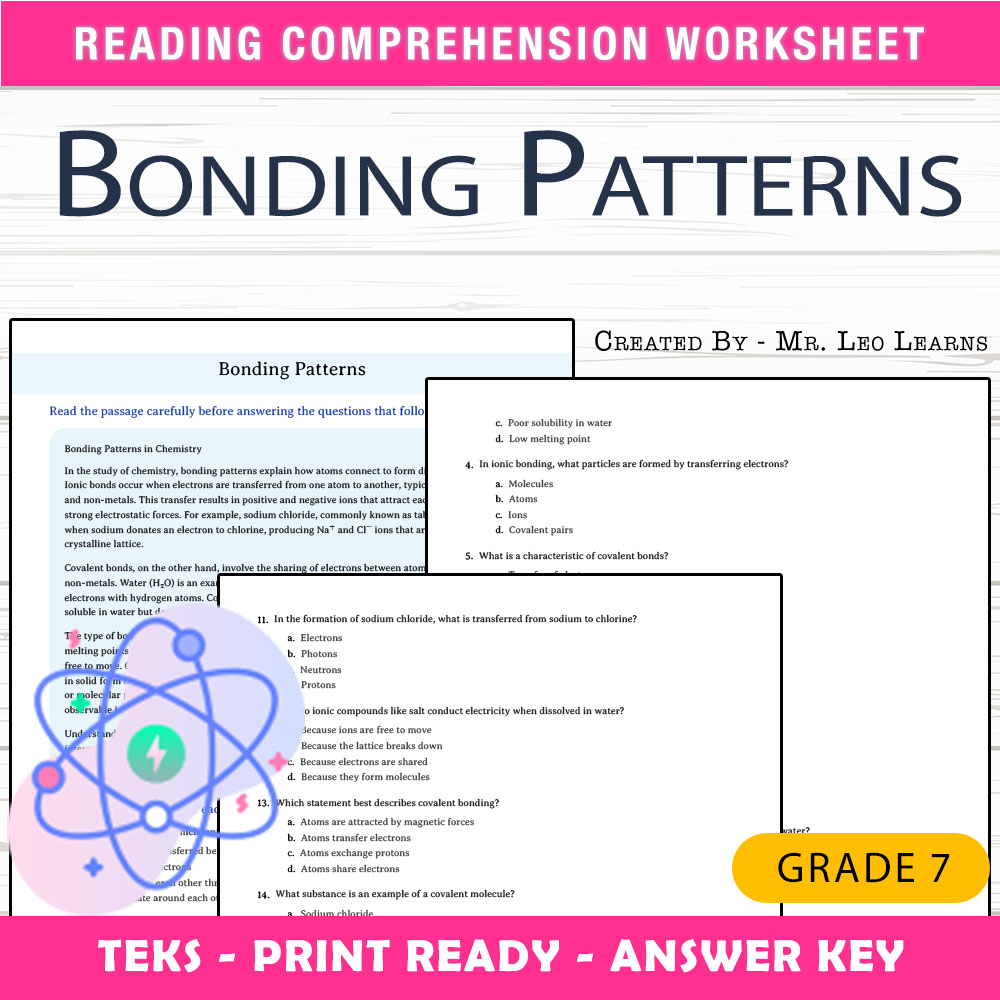
Grade 7 Science – Bonding Patterns Worksheet for Mastery
 Created byThe Resource Hub
Learning Objectives
- Explain the differences between ionic and covalent bonding based on atomic interactions.
- Relate bonding types to properties like melting point, solubility, and electrical conductivity.
- Describe simple formation processes of binary ionic salts and molecular compounds.
Also included in: Grade 7 Science Unit Bundle – States, Reactions & Atomic Structure Worksheets +1 more
Instant download
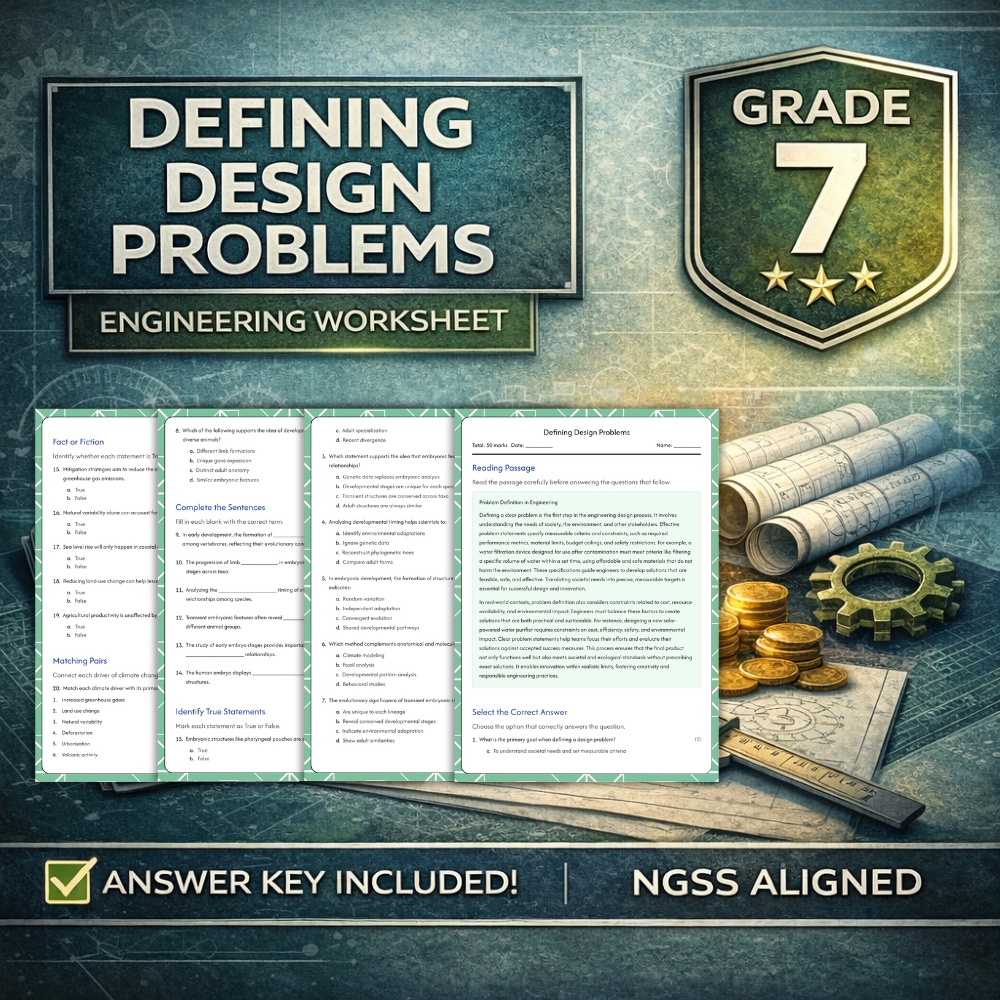
7th Grade Science | Defining Design Problems NGSS Worksheet (Answer Key)
 Created byCedar Grove Learning
Learning Objectives
- Understand how to define design problems with clear criteria and constraints.
- Learn to translate societal and environmental needs into measurable targets.
- Identify real-world examples of problem specifications in science and engineering.
Instant download

Optimization Metrics Assessment | Standards-Based Practice Grade 7 Science
Created byPrism Point LearningLearning Objectives
- Explain how optimization uses explicit criteria to compare design changes under constraints
- Identify common optimization metrics such as strength-to-weight ratio, operating cost, and energy conversion efficiency
- Evaluate tradeoffs by describing how improving one metric can affect other performance requirements
Also included in: Grade 7 Science Engineering Assessment Lesson Bundle: California Standards +1 more
Instant download

Modes of Transfer Worksheet Grade 7 Science Heat Transfer Activity
 Created byChalk and Compass
Learning Objectives
- Identify and describe conduction, convection, and radiation as three primary modes of thermal energy transfer.
- Explain how particles and matter (solids, fluids, and empty space) relate to each mode of heat transfer.
- Use everyday examples to predict how heat moves and which mode is most likely in a given situation.
Also included in: Grade 7 Science Heat Transfer and Thermal Energy Lesson Bundle | Ontario +1 more
Instant download

Urban Heat Island Worksheet Grade 7 Science Ontario + Doodle Note
Created byChalk and CompassLearning Objectives
- Explain the urban heat island phenomenon and identify key drivers such as surface materials, reduced vegetation, and anthropogenic heat.
- Describe how impervious surfaces, reduced evapotranspiration, and building geometry affect local heat retention and nighttime temperatures.
- Evaluate mitigation strategies (e.g., cool pavements, increased urban greenery, and strategic shading) and predict their likely impacts on comfort and energy use.
Also included in: Grade 7 Science Heat Transfer and Thermal Energy Lesson Bundle | Ontario +1 more
Instant download

Grade 7 Science Instrumentation Accuracy Worksheet & Doodle Note
Created byChalk and CompassLearning Objectives
- Explain how calibration and traceable reference points improve temperature measurement accuracy.
- Describe how sensor response time, placement, shielding, and thermal contact affect measured temperature in environmental settings.
- Interpret temperature readings using uncertainty, resolution limits, and an uncertainty budget.
Also included in: Grade 7 Science Heat Transfer and Thermal Energy Lesson Bundle | Ontario +1 more
Instant download

Thermal Basics Worksheet Grade 7 Science Ontario | Heat & Energy
Created byChalk and CompassLearning Objectives
- Distinguish temperature from internal energy and explain what each measures at the particle level.
- Describe how thermal energy moves from regions of higher internal energy to lower internal energy.
- Summarize common sources of thermal energy in natural and built environments and relate them to energy transfer.
Also included in: Grade 7 Science Heat Transfer and Thermal Energy Lesson Bundle | Ontario +1 more
Instant download

Science Grade 7 Worksheet Durability Factors | Standards-Aligned Assessment
JCreated byJ.S SheetsLearning Objectives
- Explain how corrosion, rot/moisture uptake, freeze–thaw cycling, and UV degradation reduce material performance over time
- Identify protective measures (coatings, cathodic protection, concrete cover) and how they affect service lifespan
- Use bridge deck and exterior roofing examples to connect environmental exposure, inspection, and maintenance to long-term reliability
Instant download
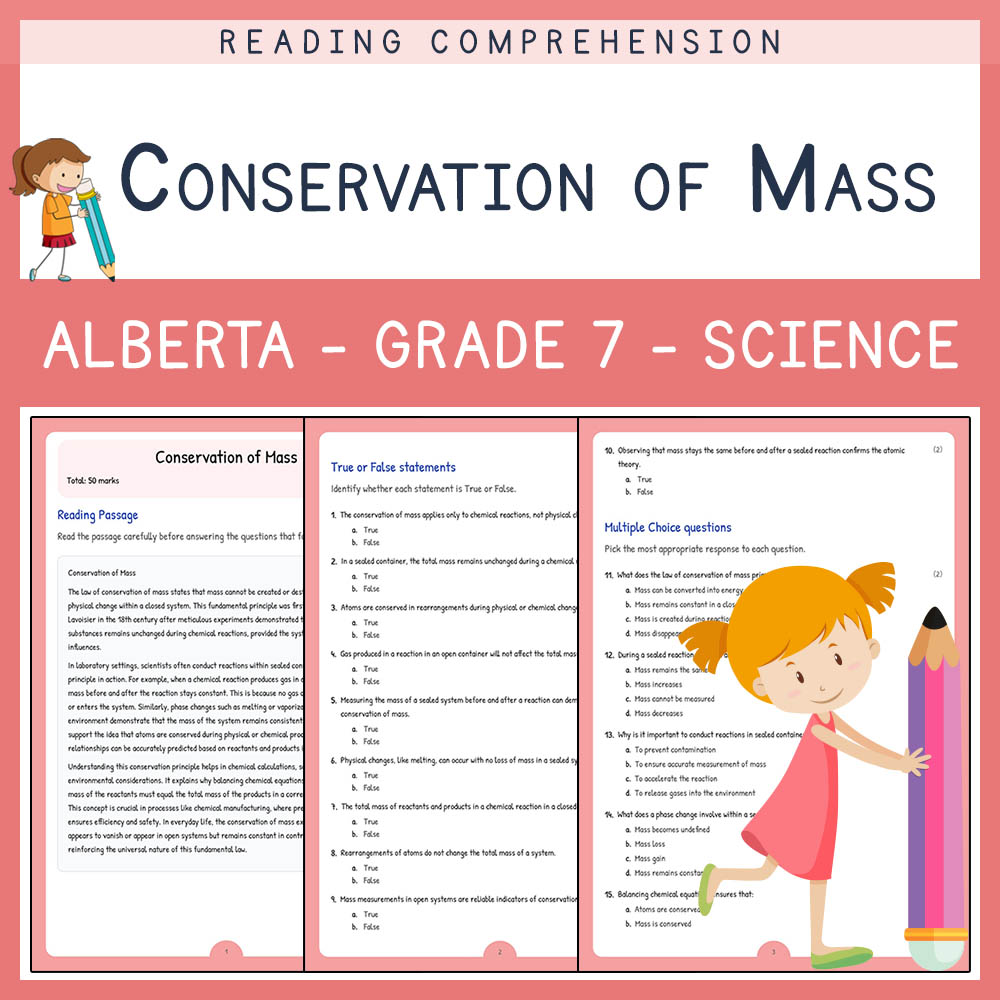
Grade 7 Science | Conservation of Mass | Alberta Standard
 Created byLumora Learning
Learning Objectives
- Understand the principle of conservation of mass during physical and chemical changes.
- Recognize that total mass remains constant in a closed system during reactions.
- Observe and interpret measurements of mass before and after sealed reactions.
Instant download
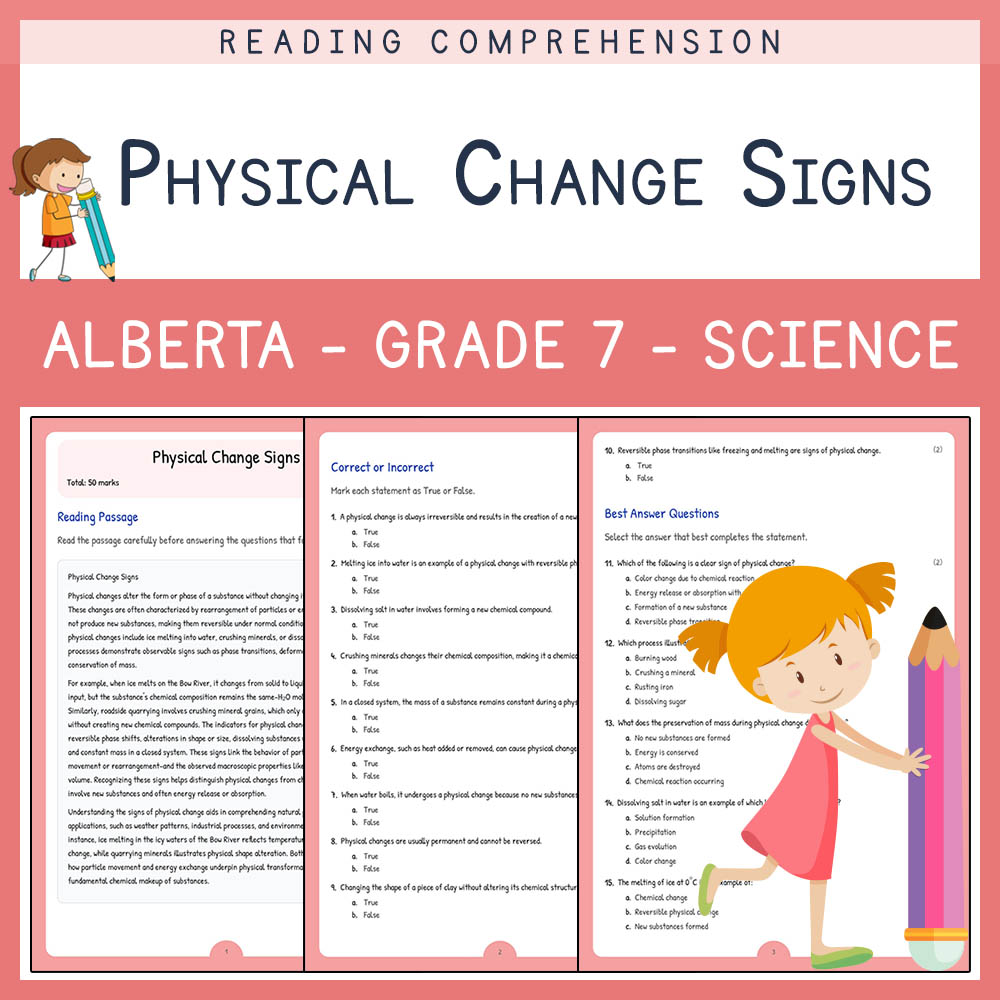
Grade 7 Science | Physical Change Signs | Alberta Standards
Created byLumora LearningLearning Objectives
- Understand the key indicators of physical changes in substances.
- Identify examples of physical changes in real-world contexts.
- Differentiate between physical and chemical changes based on observable signs.
Instant download
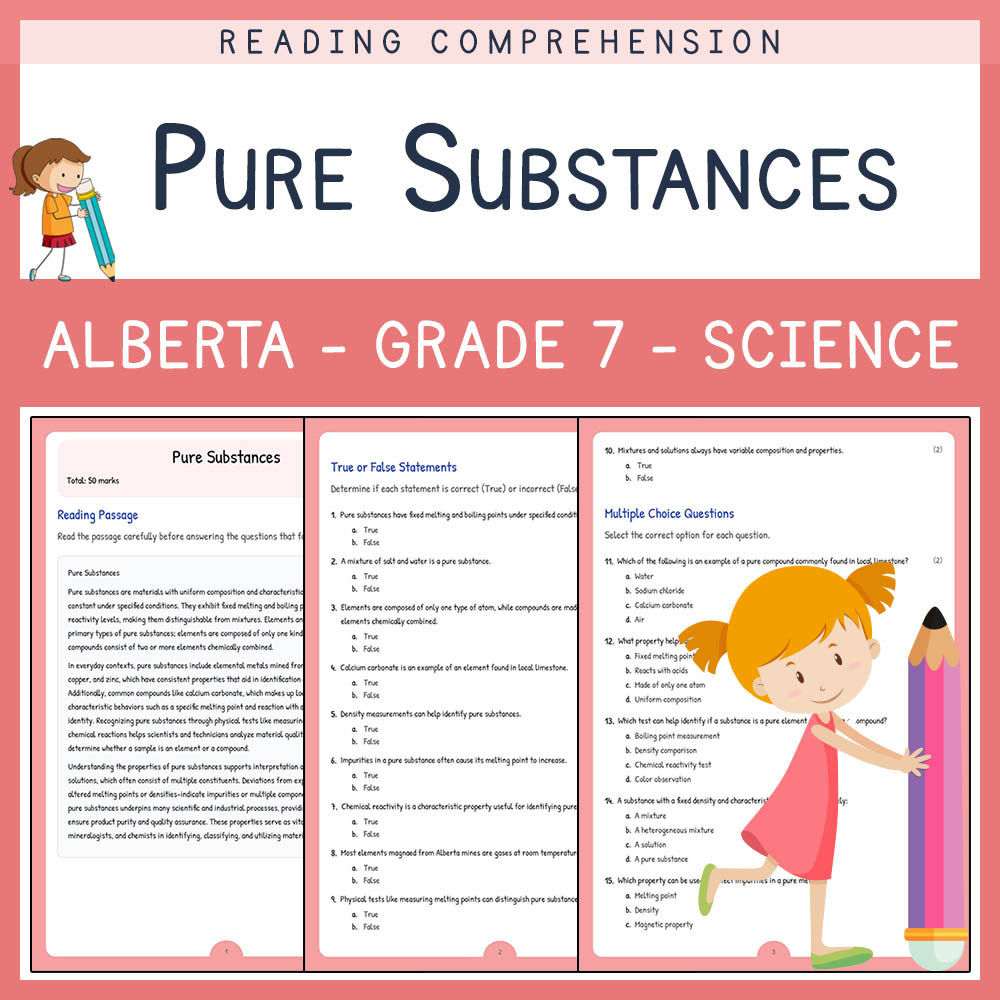
Grade 7 Science | Pure Substances Worksheet | Alberta Standards
Created byLumora LearningLearning Objectives
- Understand the defining properties of pure substances such as fixed melting and boiling points, density, and reactivity.
- Distinguish between elements and compounds through physical and chemical tests.
- Identify examples of pure substances, including elemental metals and chemical compounds like calcium carbonate.
Instant download
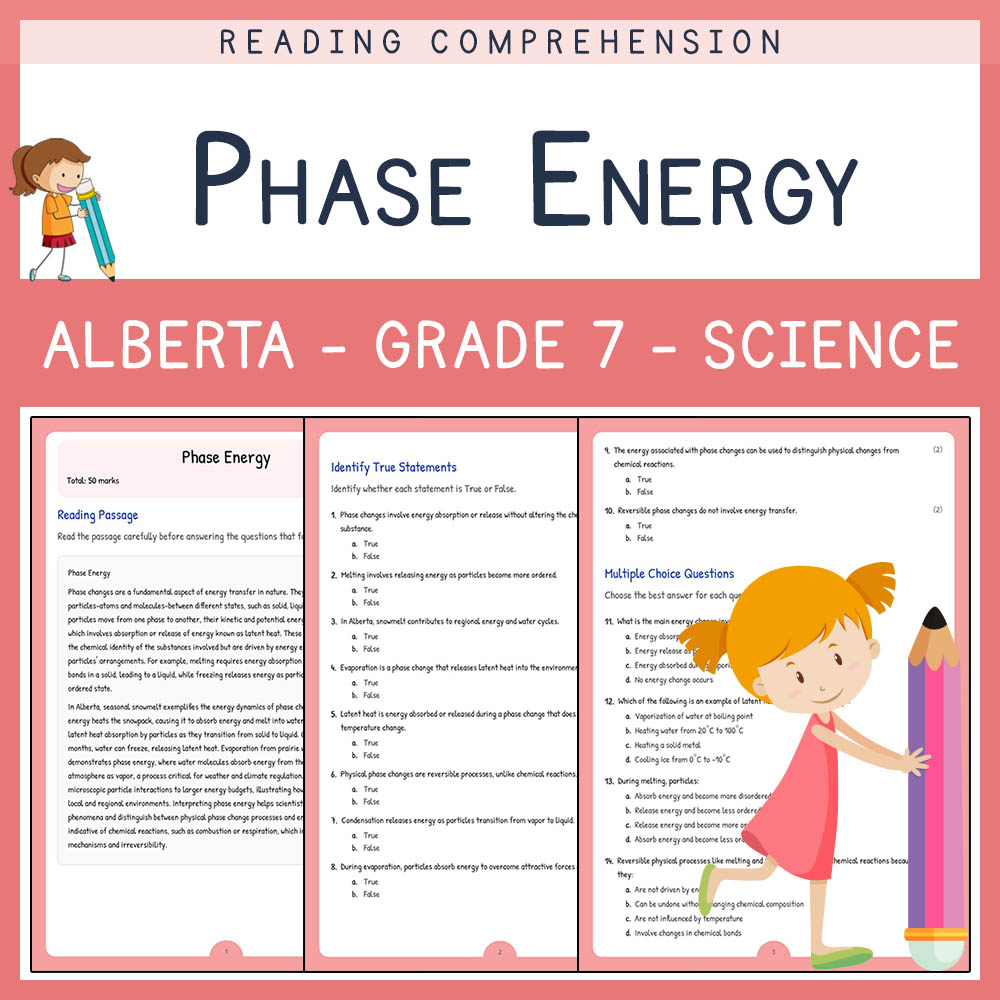
Grade 7 Science | Phase Energy Worksheet | Alberta Standards
Created byLumora LearningLearning Objectives
- Explain how phase changes reflect changes in particle energy and discuss latent heat phenomena.
- Identify examples of phase energy in real-world scenarios, such as snowmelt and evaporation.
- Interpret how microscopic particle interactions contribute to macroscopic energy changes during phase transitions.
Instant download
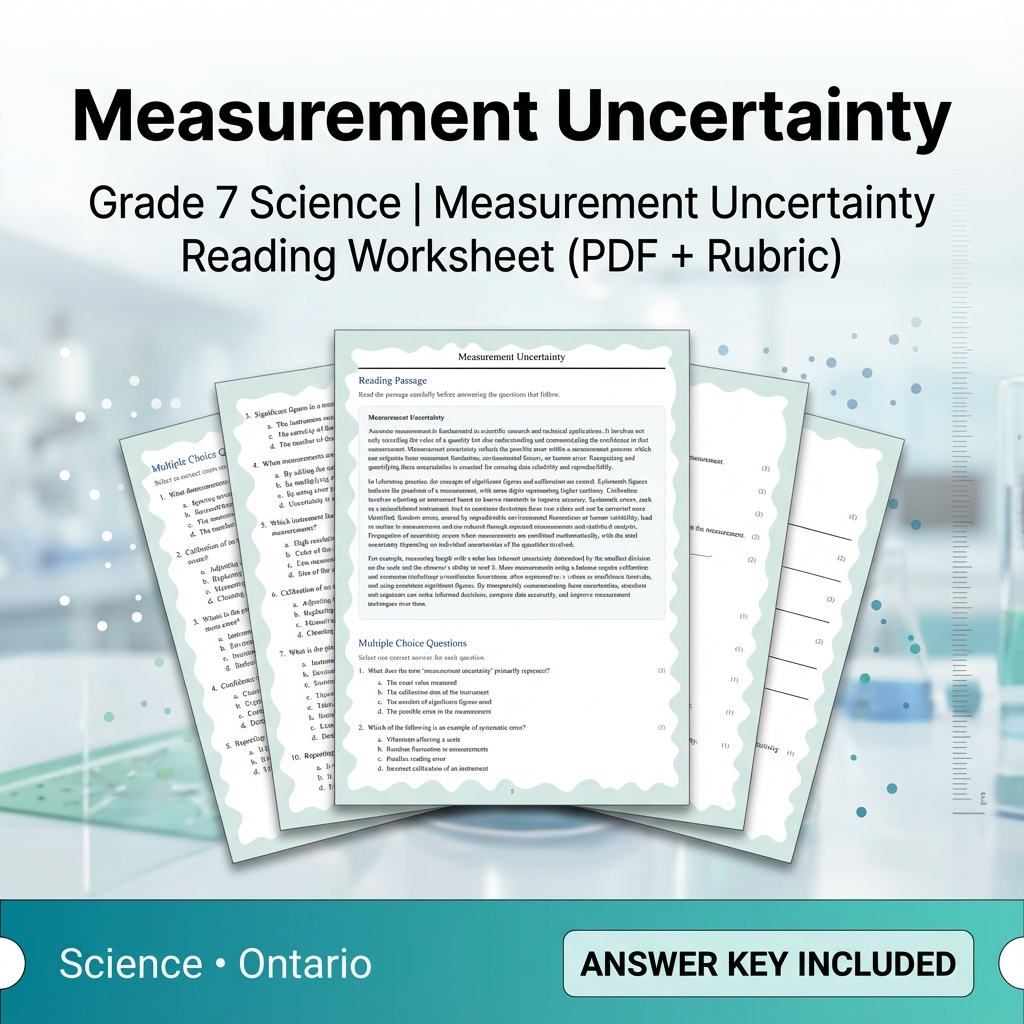
Grade 7 Science | Measurement Uncertainty Reading Worksheet (PDF + Rubric)
JCreated byJ.S SheetsLearning Objectives
- Understand the concepts of accuracy, precision, and measurement uncertainty.
- Identify sources of systematic and random errors in measurement.
- Learn techniques for estimating and reporting measurement uncertainty.
Also included in: Grade 7 Science Unit Bundle | Inquiry, Data & Modeling Skills +1 more
Instant download
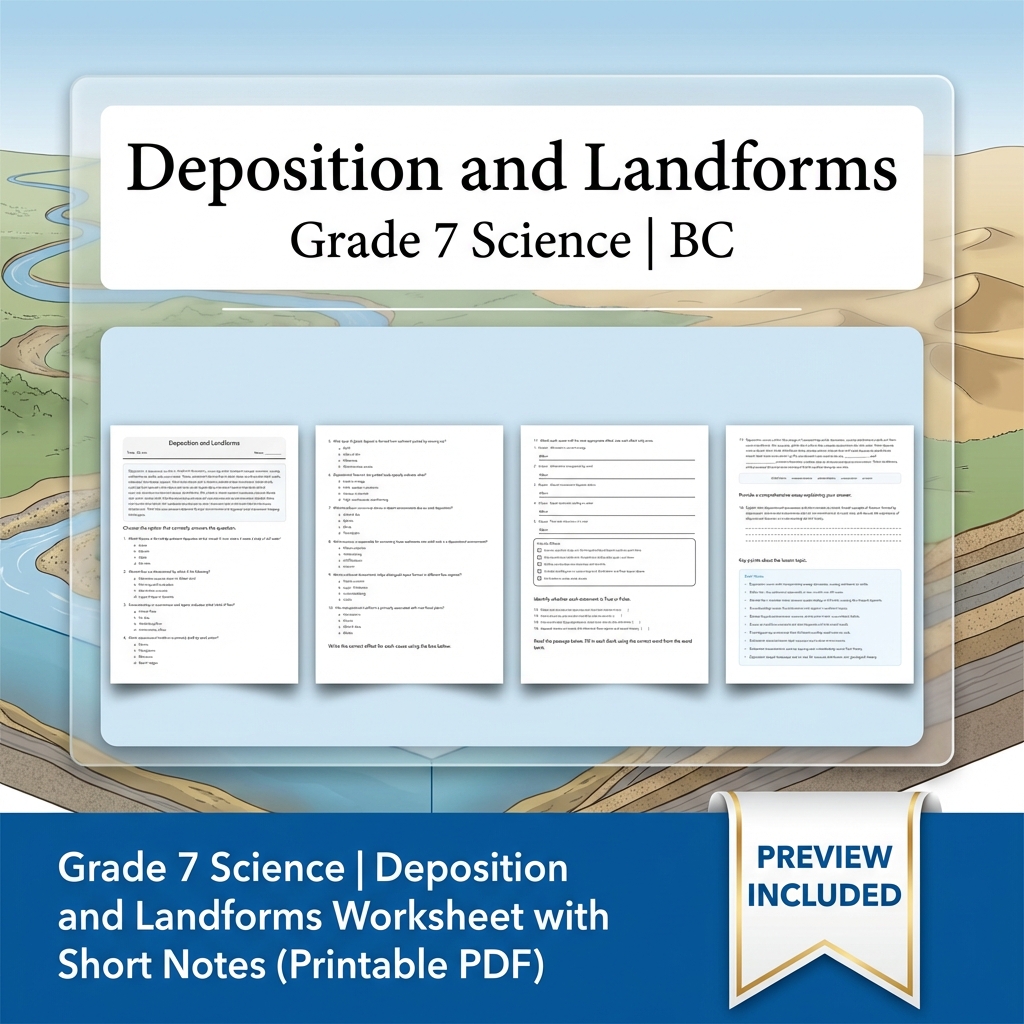
Grade 7 Science | Deposition and Landforms Worksheet with Short Notes (PDF)
 Created byMeadowlark Worksheets
Learning Objectives
- Understand how deposition shapes different landforms such as deltas, alluvial fans, and dunes.
- Identify depositional features and processes based on sediment characteristics.
- Explain the formation of layered strata, cross-bedding, and graded beds in depositional environments.
Also included in: Grade 7 Science Lesson Bundle | Earth Processes Worksheets Group +1 more
Instant download
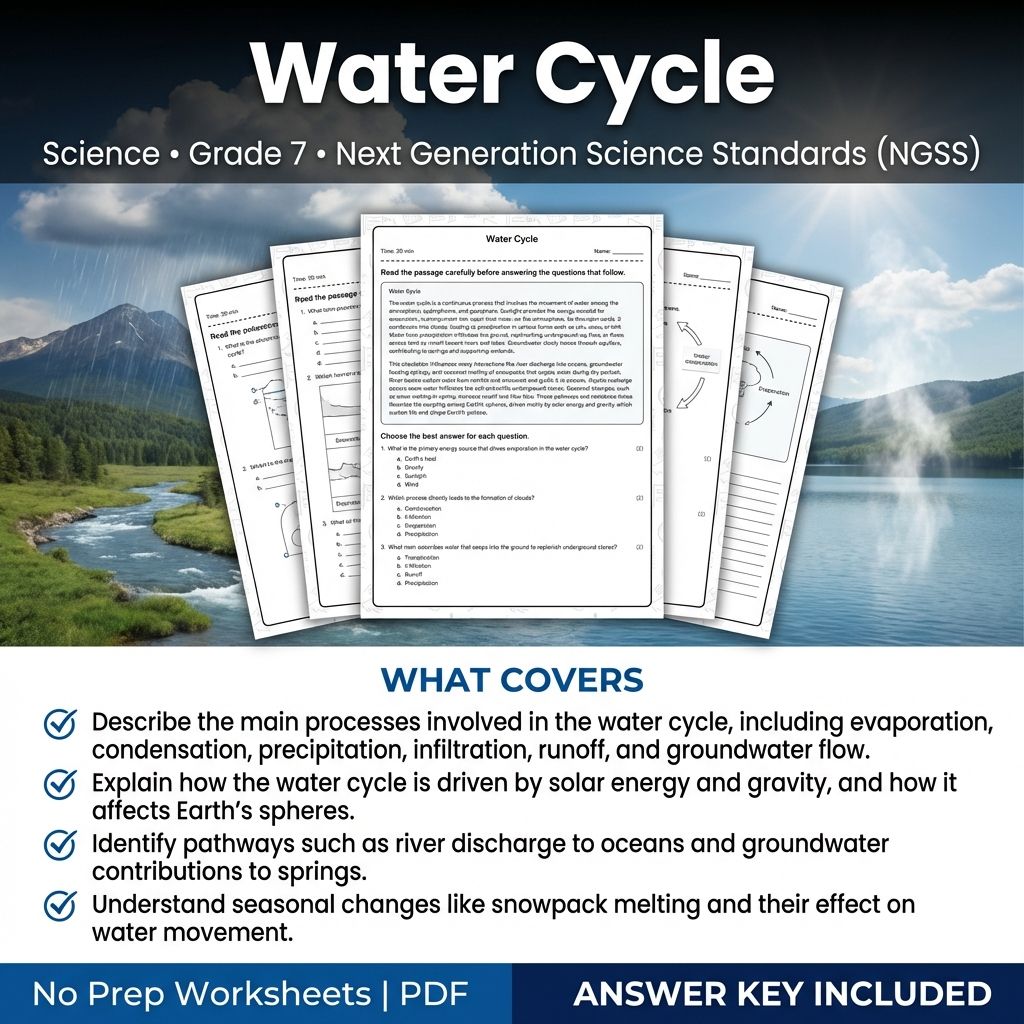
Grade 7 Science | Water Cycle Worksheet with Answer Key (Printable PDF)
 Created byCoral Reef Learning
Learning Objectives
- Describe the main processes involved in the water cycle, including evaporation, condensation, precipitation, infiltration, runoff, and groundwater flow.
- Explain how the water cycle is driven by solar energy and gravity, and how it affects Earth's spheres.
- Identify pathways such as river discharge to oceans and groundwater contributions to springs.
Instant download
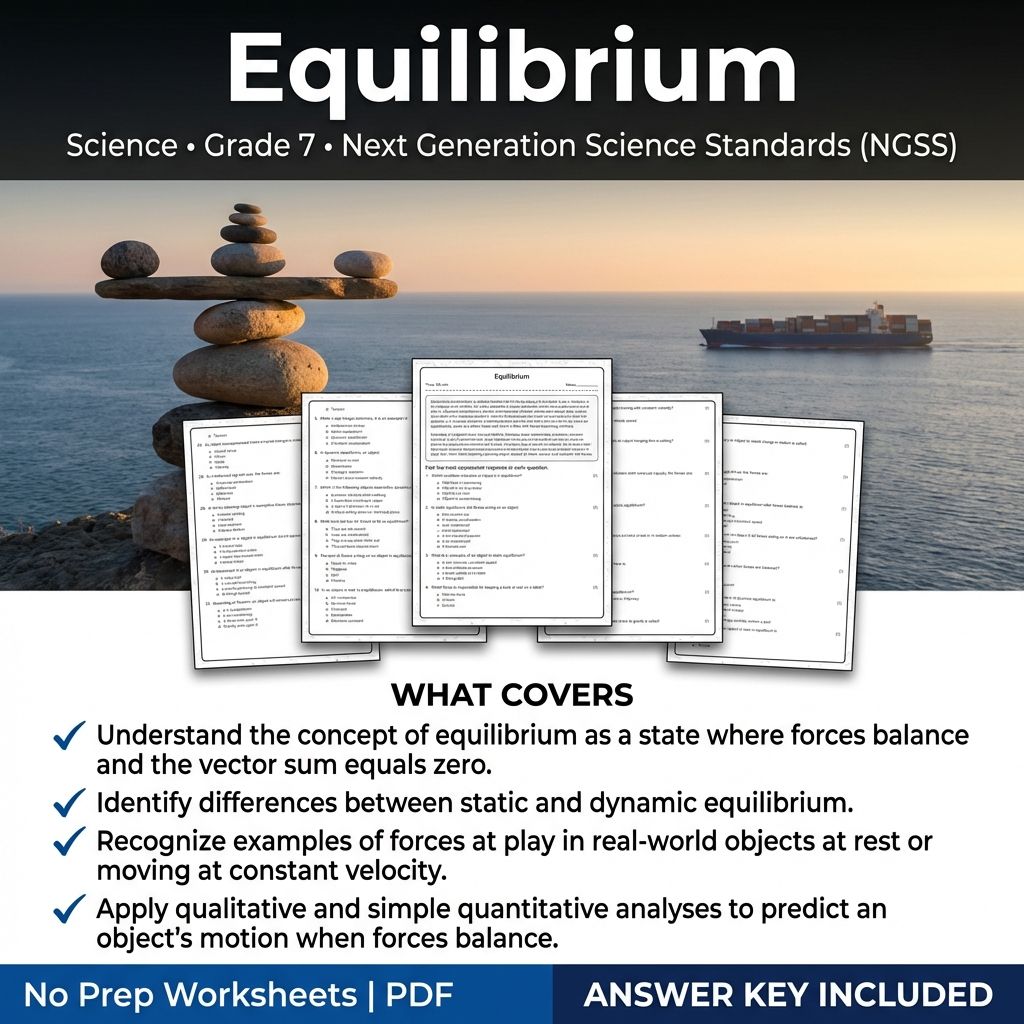
Grade 7 Science Worksheet | Equilibrium Concepts & Practice (PDF + Answer Key)
Created byCoral Reef LearningLearning Objectives
- Understand the concept of equilibrium as a state where forces balance and the vector sum equals zero.
- Identify differences between static and dynamic equilibrium.
- Recognize examples of forces at play in real-world objects at rest or moving at constant velocity.
Instant download

Grade 7 Science Worksheet | Cited Scientific Reasoning (PDF)
 Created byEvergreen Desk Education
Learning Objectives
- Use data and observations to support scientific claims with direct references to evidence.
- Explain why evidence implies a claim by using appropriate relationships and units.
- Evaluate alternative explanations by stating which evidence supports one explanation more strongly.
Also included in: Grade 7 Model-Based Scientific Reasoning Science Lesson Bundle (General) +1 more
Instant download

Plants for Food and Fibre Science Worksheets | Grade 7 Alberta
 Created bythe curious pencil
Learning Objectives
- Construct a testable prediction about plant growth under different watering conditions
- Identify safe practices for investigating plant-growing methods
- Interpret plant-growth observations and recognize uncertainty in results
Also included in: Plants for Food and Fibre Lesson Bundle | Grade 7 Science | Alberta
Instant download

Plant Structures and Life Processes Worksheet | Grade 7 Science
Created bythe curious pencilLearning Objectives
- Identify the functions of roots, stems, leaves, and flowers
- Explain how water moves from roots toward plant leaves
- Describe how photosynthesis uses light, water, and carbon dioxide
Also included in: Plants for Food and Fibre Lesson Bundle | Grade 7 Science | Alberta
Instant download

Soil Properties and Crop Management Worksheets | Grade 7 Science
Created bythe curious pencilLearning Objectives
- Compare soil textures and explain their effects on water availability.
- Explain how soil nutrients and organic matter support plant growth.
- Distinguish biological pest control from chemical pest control.
Also included in: Plants for Food and Fibre Lesson Bundle | Grade 7 Science | Alberta
Instant download

Seeds, Germination and Plant Propagation Worksheet | Grade 7 Science
Created bythe curious pencilLearning Objectives
- Describe how pollination and fertilization contribute to seed formation.
- Identify the structures and functions of a flowering plant seed.
- Explain the conditions required for successful seed germination.
Also included in: Plants for Food and Fibre Lesson Bundle | Grade 7 Science | Alberta
Instant download

Grade 7 Population Size & Birth–Death Factors Science Worksheet Alberta
 Created byBRIGHT PATH RESOURCES
Learning Objectives
- Explain how birth and death rates change population size using cause-and-effect.
- Identify how resource availability and abiotic constraints can increase deaths or limit births.
- Use measurement of population trends to describe whether a population is growing, shrinking, or fluctuating.
Also included in: Grade 7 Alberta Science Interactions and Ecosystems Worksheet Bundle +1 more
Instant download

Fixed-Site Surveys and Standardized Monitoring | Grade 7 Science Worksheet
Created byBRIGHT PATH RESOURCESLearning Objectives
- Identify key details of standardized fixed-site survey protocols
- Explain how consistent sampling helps detect ecological change over time
- Use vocabulary from monitoring methods (fixed-site, point count, replicate, quality control) to interpret results
Also included in: Grade 7 Alberta Science Interactions and Ecosystems Worksheet Bundle +1 more
Instant download

Cold Tolerance Adaptations in Boreal Animals | Grade 7 Science Worksheet
Created byBRIGHT PATH RESOURCESLearning Objectives
- Identify key details about cold tolerance adaptations in boreal animals.
- Summarize how an adaptation helps an animal survive and reproduce in cold environments.
- Explain how variation in traits can change in populations across generations through selection.
Also included in: Grade 7 Alberta Science Interactions and Ecosystems Worksheet Bundle +1 more
Instant download

Migration Patterns and Timing Cues Worksheet | Grade 7 Alberta Science
Created byBRIGHT PATH RESOURCESLearning Objectives
- Summarize how seasonal migration helps animals meet food and shelter needs.
- Identify timing cues that influence when animals move.
- Explain how migration affects population dynamics over time.
Also included in: Grade 7 Alberta Science Interactions and Ecosystems Worksheet Bundle +1 more
Instant download
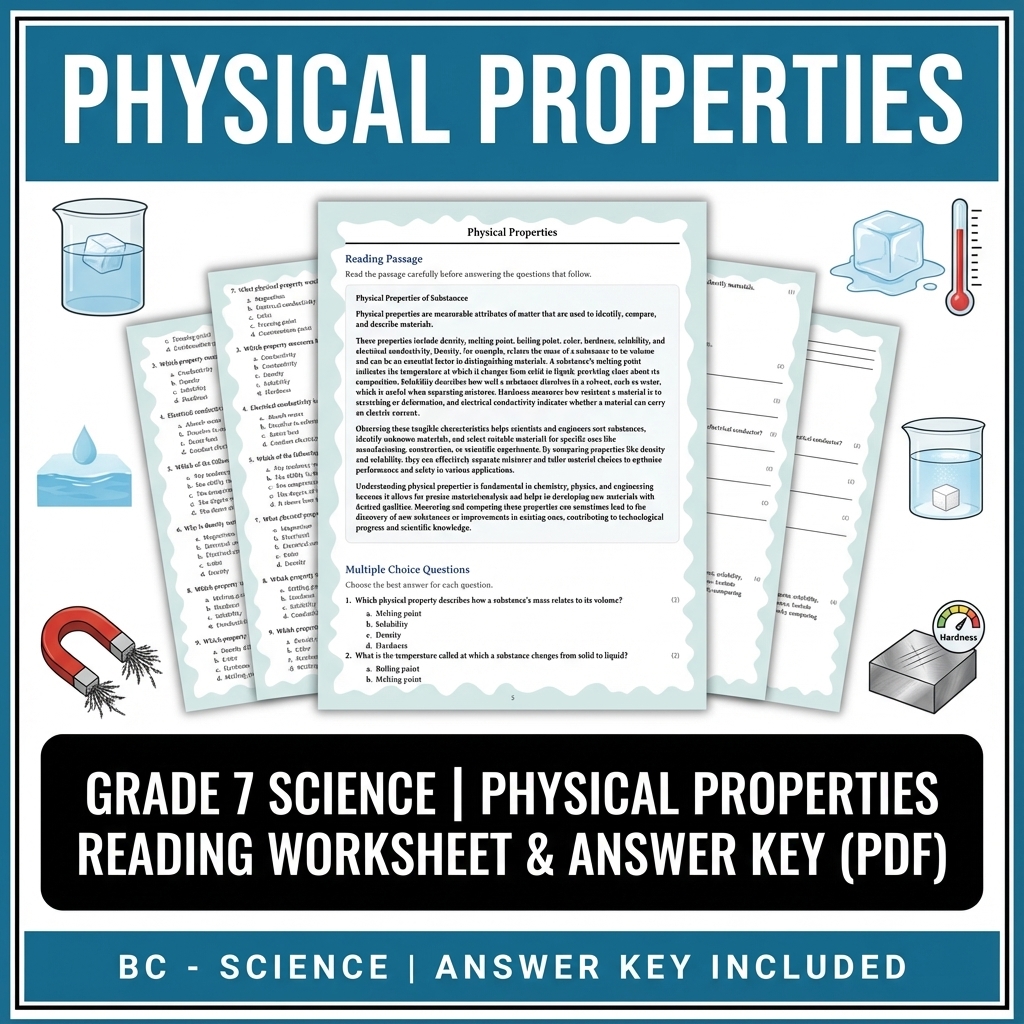
Grade 7 Science | Physical Properties Reading Worksheet & Answer Key (PDF)
JCreated byJ.S SheetsLearning Objectives
- Define and understand physical properties such as density, melting point, boiling point, color, hardness, solubility, and electrical conductivity.
- Explain how physical properties are used to identify and categorize substances.
- Describe the importance of density and solubility in separating mixtures and selecting materials for specific applications.
Instant download
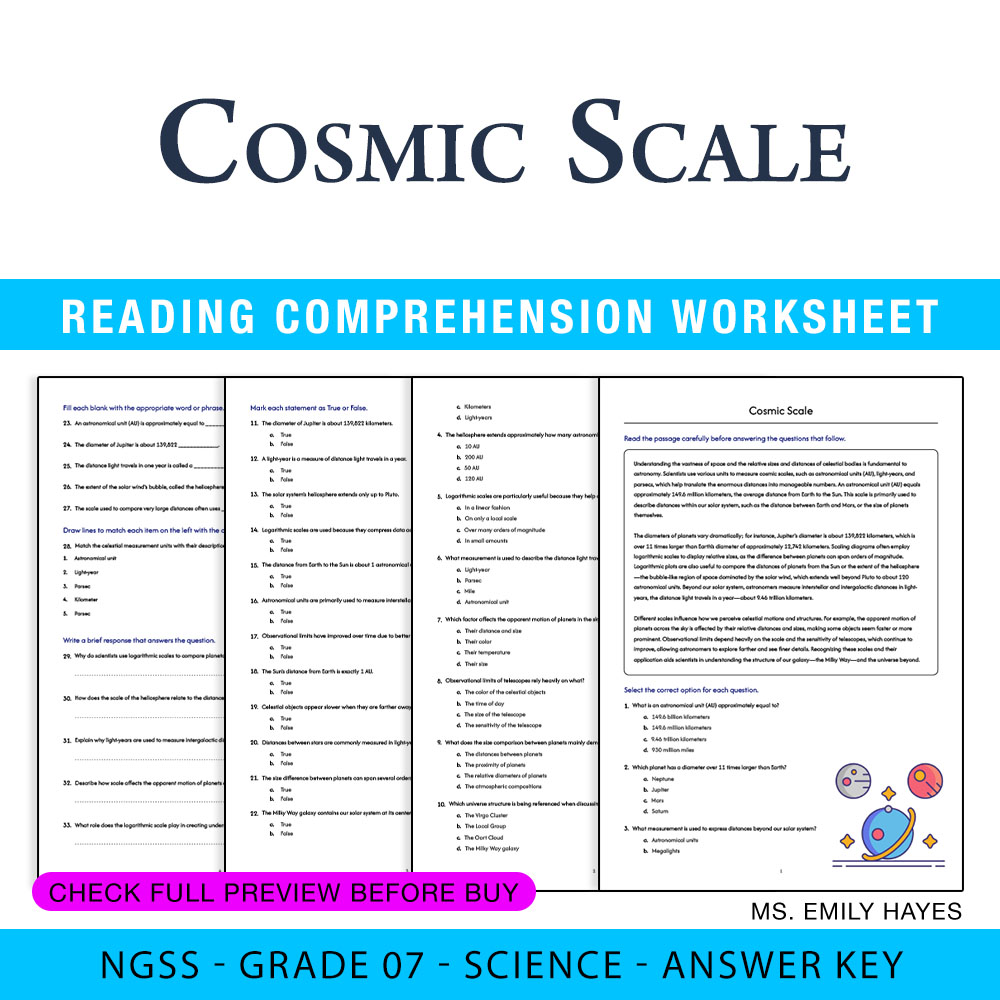
7th Grade Science | Cosmic Scale Worksheet (PDF + Answer Key)
 Created byCopper Leaf Classroom
Learning Objectives
- Understand the concept of astronomical units and how they are used to measure distances within the solar system.
- Interpret different scales and representations, such as diagrams and logarithmic plots, to compare planetary sizes and distances.
- Analyze data related to stellar distances, including light-years, and assess how scale influences observation and perception of celestial objects.
Instant download
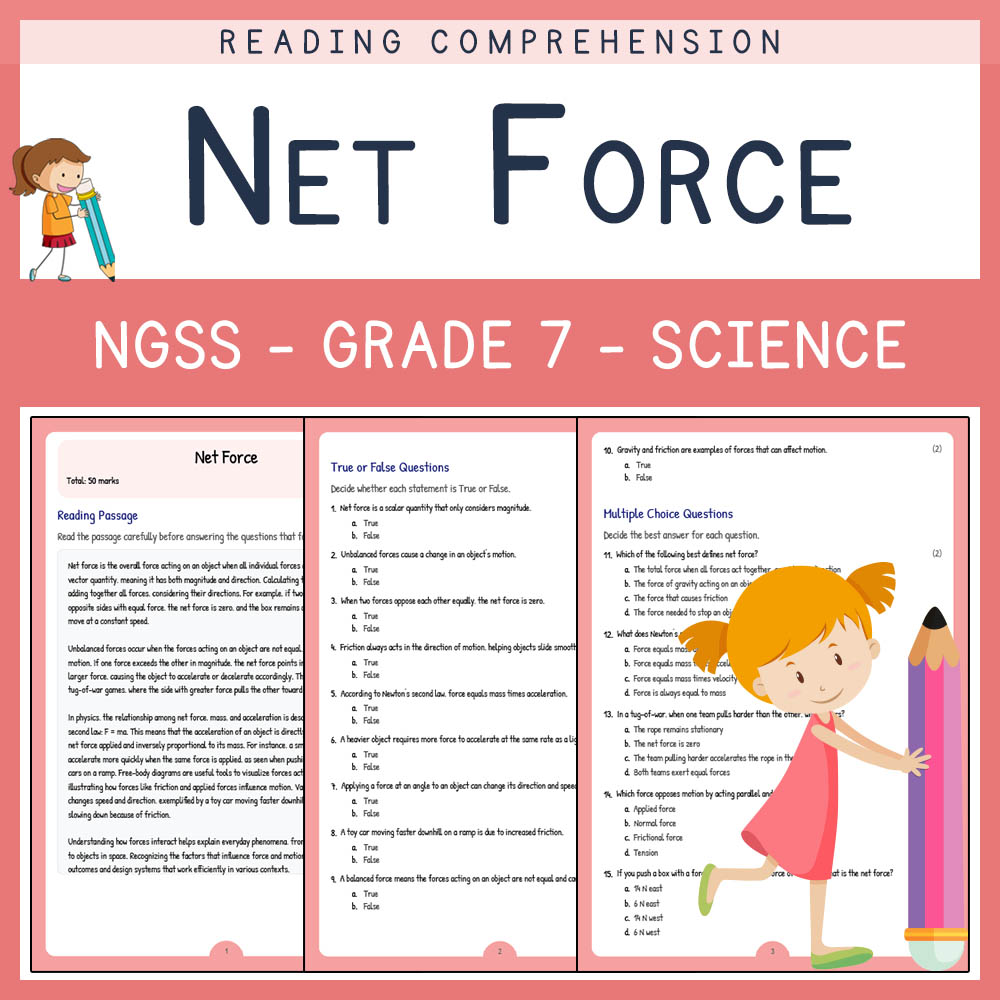
Grade 7 Science | Net Force Worksheet & Answer Key | NGSS Aligned
Created byLumora LearningLearning Objectives
- Define net force as the vector sum of all forces acting on an object.
- Explain how unbalanced forces produce changes in an object's motion.
- Understand the relationship between net force, mass, and acceleration using free-body diagrams.
Instant download
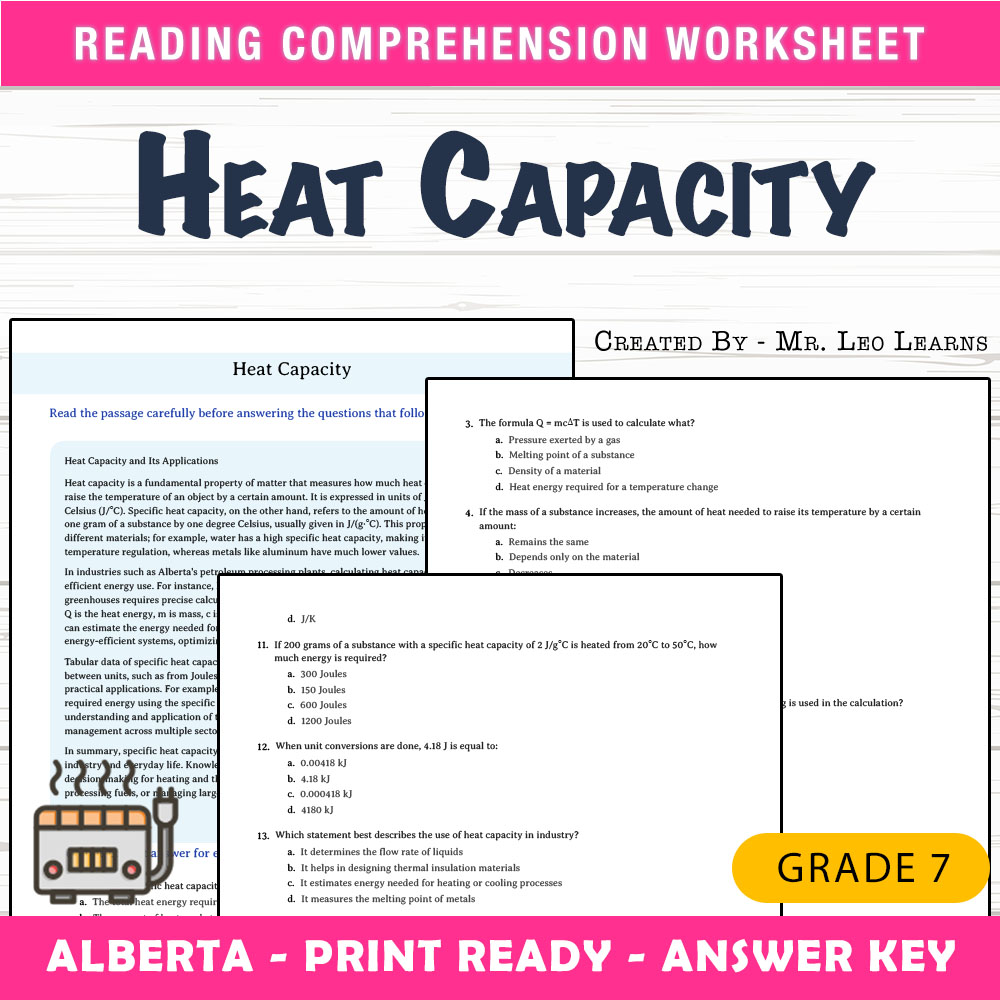
Grade 7 Science — Heat Capacity Worksheet MCQ Paper for Mastery
Created byThe Resource HubLearning Objectives
- Understand the concept of specific heat capacity and its units of measurement.
- Apply formulas to calculate the energy required to change the temperature of a substance.
- Interpret tabular data and perform unit conversions involving Joules, kilojoules, grams, and degrees Celsius.
Also included in: Grade 7 Science Alberta Energy Heat Thermal Processes Worksheet Bundle +1 more
Instant download

Grade 7 Mitochondria Energy Worksheet | BC Practice & PDF
Created byClear Sky ClassroomLearning Objectives
- Explain how mitochondria convert chemical energy from food into ATP using cellular respiration.
- Describe how mitochondrial structure (especially the inner membrane folds) supports energy-releasing reactions.
- Use evidence to identify correct statements about electron transport chains and ATP synthesis.
Instant download

Grade 7 Migration Patterns Worksheet | Practice & Assessment PDF
Created byClear Sky ClassroomLearning Objectives
- Explain why animals migrate using food availability and breeding needs as drivers.
- Describe how timing cues and energetic demands affect migration schedules.
- Analyze how migratory connectivity links ecosystems across regions and influences population dynamics.
Instant download

Density And Volume Assessment | NGSSS Standards Grade 7 Science Worksheet
Created byPrism Point LearningLearning Objectives
- Explain how density relates mass and volume to identify and compare materials.
- Calculate and interpret density using appropriate units.
- Distinguish intensive properties from extensive properties using density as an example.
Also included in: Grade 7 Matter, Forces & Energy Science Lesson Bundle | Florida NGSSS
Instant download
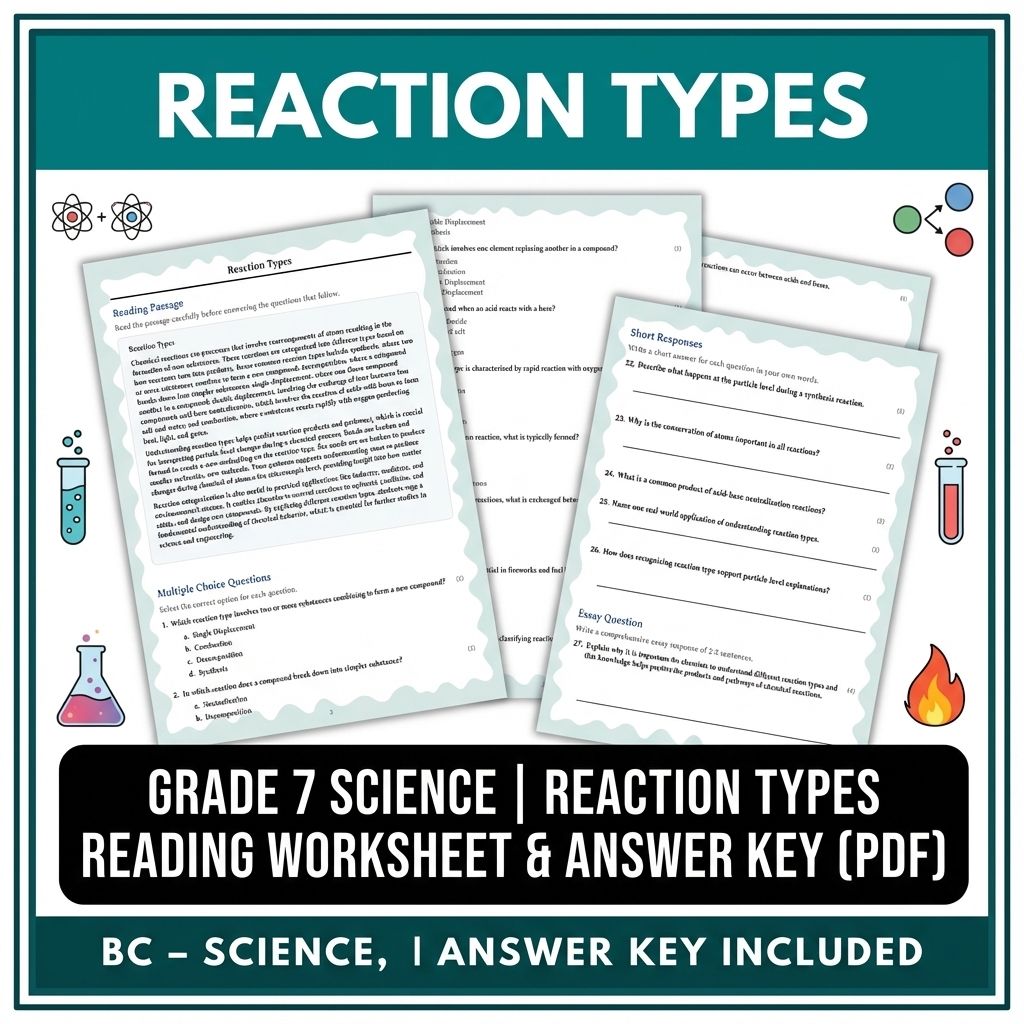
Grade 7 Science | Reaction Types Reading Worksheet & Answer Key (PDF)
JCreated byJ.S SheetsLearning Objectives
- Understand the different categories of chemical reaction types.
- Identify and distinguish syntheses, decompostions, single and double displacements, acid-base neutralizations, and combustion reactions.
- Predict possible products based on reaction type at the particle level.
Instant download

DNA and Chromosomes Worksheet | Grade 7 NGSS Genetics Activity & Doodle Note
 Created byAmber Owl Education
Learning Objectives
- Explain how DNA is organized into chromosomes and how genes on chromosomes influence traits
- Describe how chromosome segregation during meiosis helps offspring inherit genetic material from both parents
- Use molecular and cellular examples (such as pigmentation genes and structural proteins) to connect DNA sequence differences to observable traits
Also included in: Grade 7 Science NGSS Genetics Lesson Bundle | Punnett Squares & DNA (NGSS) +1 more
Instant download
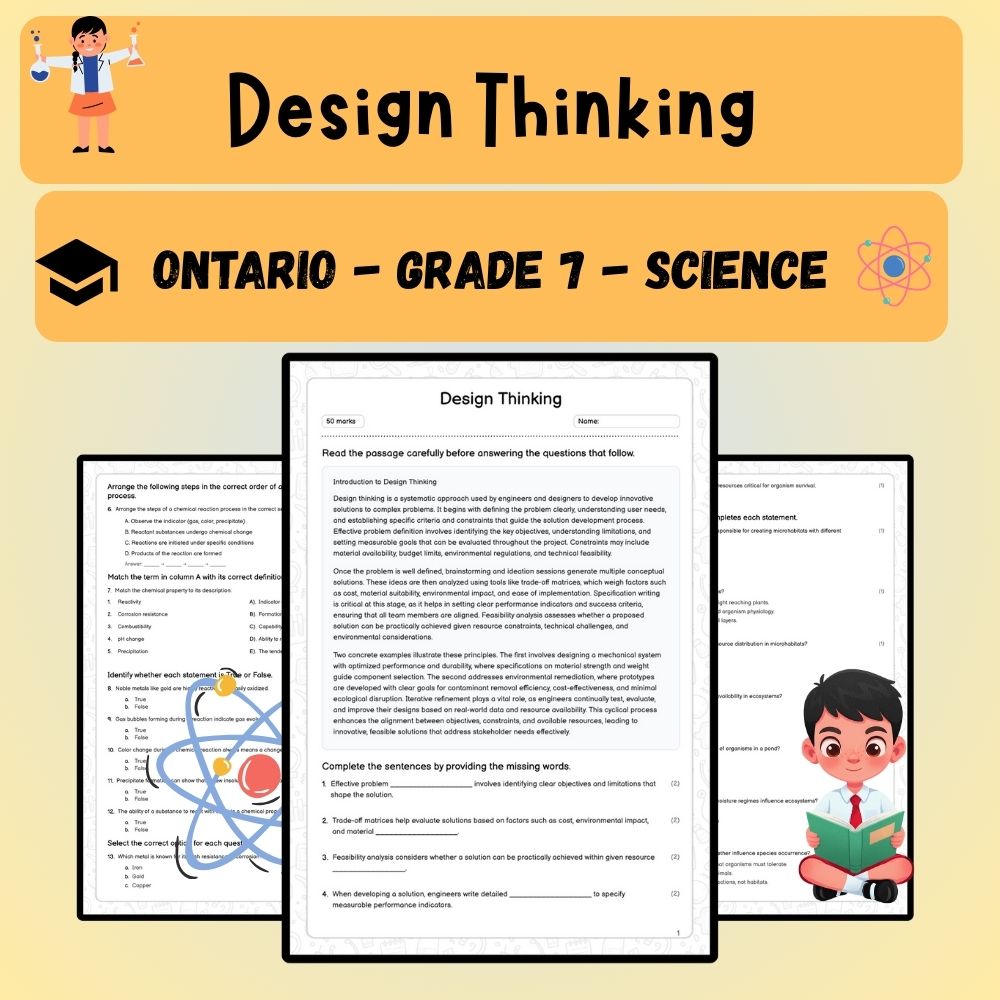
Grade 7 Science | Design Thinking Worksheet (PDF ) – Ontario Standards
Created byPrism Point LearningLearning Objectives
- Understand the fundamentals of engineering design, including problem definition, criteria, and constraints.
- Learn how to develop and evaluate conceptual solutions using specification writing and trade-off analysis.
- Explore how feasibility criteria influence material selection, cost analysis, and environmental considerations.
Also included in: Grade 7 Science UNIT Worksheet Bundle – Scientific Inquiry & Data Skills (PDF) +1 more
Instant download
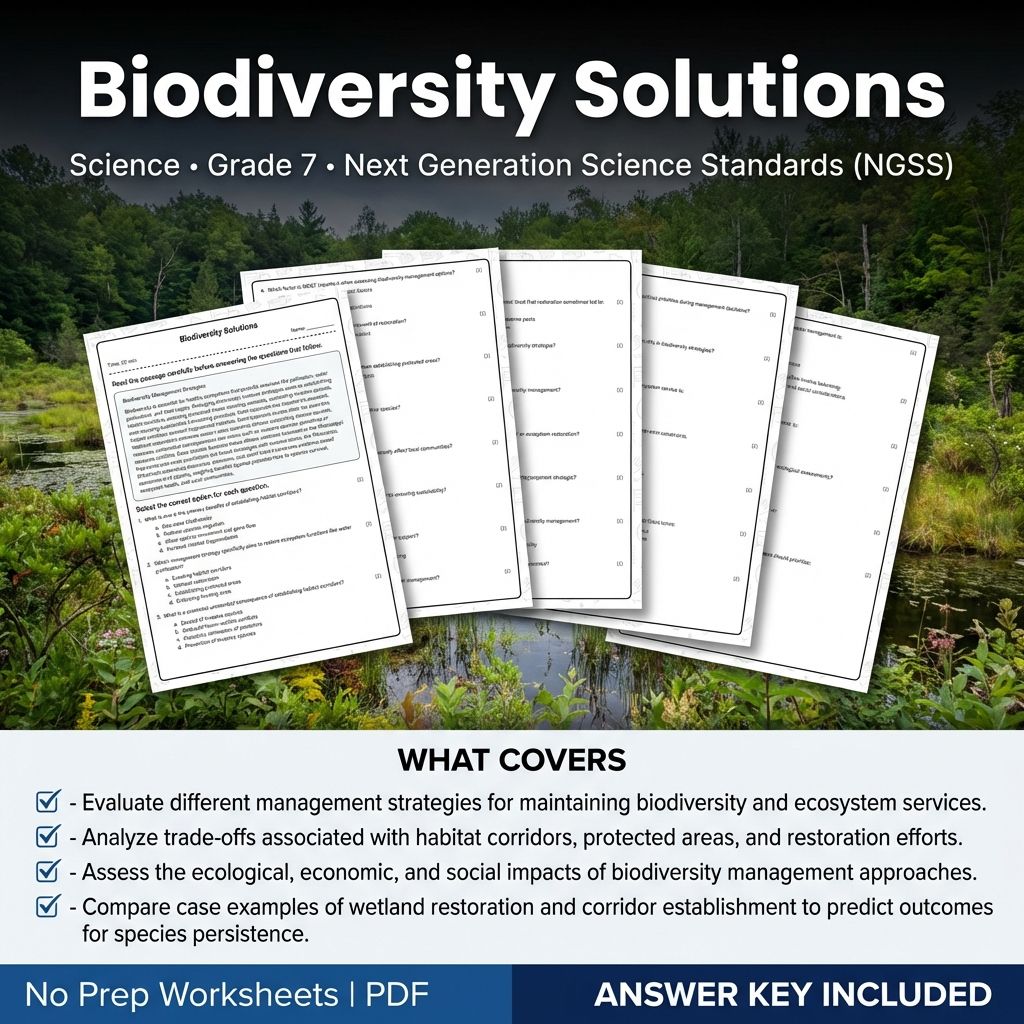
7th Grade Science | Biodiversity Solutions Worksheet & Answer Key (Printable)
Created byCoral Reef LearningLearning Objectives
- Evaluate different management strategies for maintaining biodiversity and ecosystem services.
- Analyze trade-offs associated with habitat corridors, protected areas, and restoration efforts.
- Assess the ecological, economic, and social impacts of biodiversity management approaches.
Instant download

Grade 7 Science | Optimization Metrics Worksheet | California Standards
Created byLumora LearningLearning Objectives
- Explain how optimization metrics and constraints help guide scientific design choices
- Identify tradeoffs when improving one performance measure may worsen another
- Apply metric-based reasoning to decide which option best meets an overall goal
Instant download
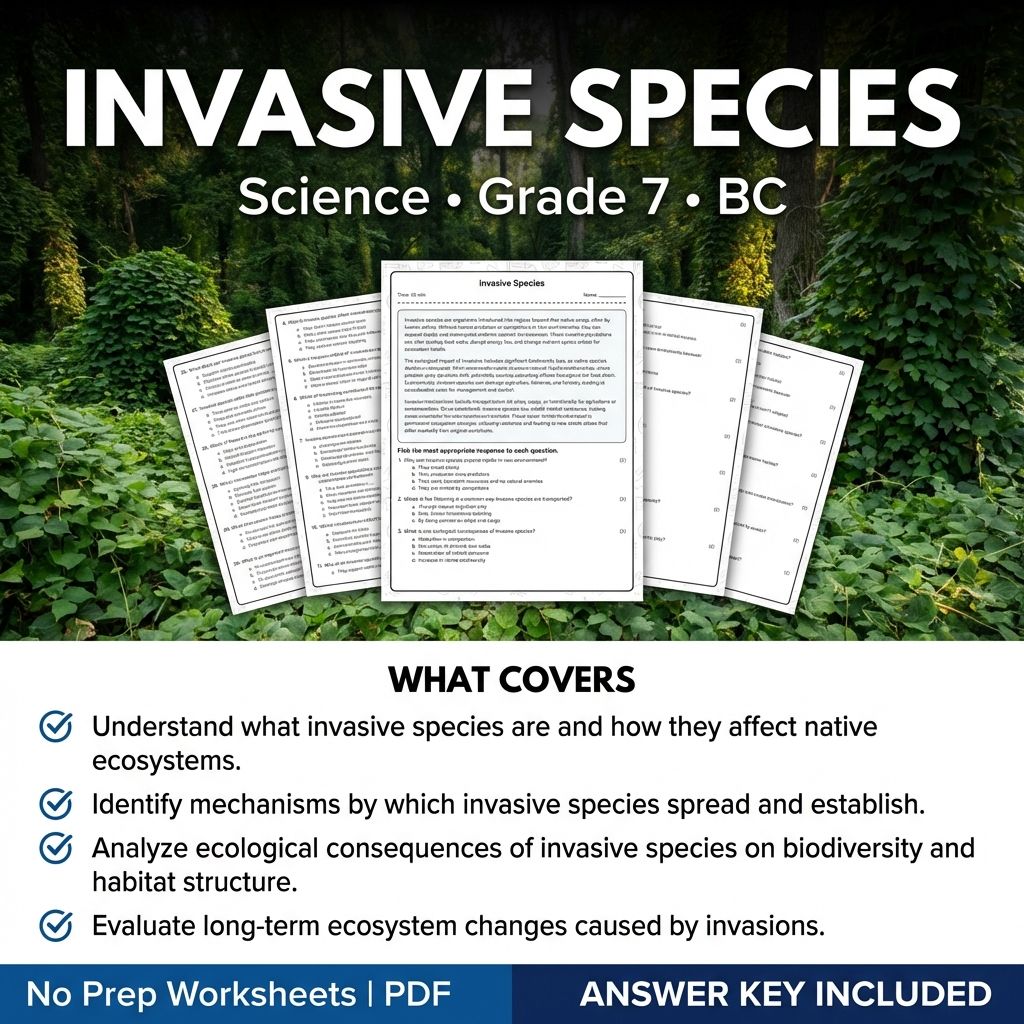
7th Grade Science | Invasive Species Worksheet & Answer Key (Printable PDF)
Created byCoral Reef LearningLearning Objectives
- Understand what invasive species are and how they affect native ecosystems.
- Identify mechanisms by which invasive species spread and establish.
- Analyze ecological consequences of invasive species on biodiversity and habitat structure.
Instant download
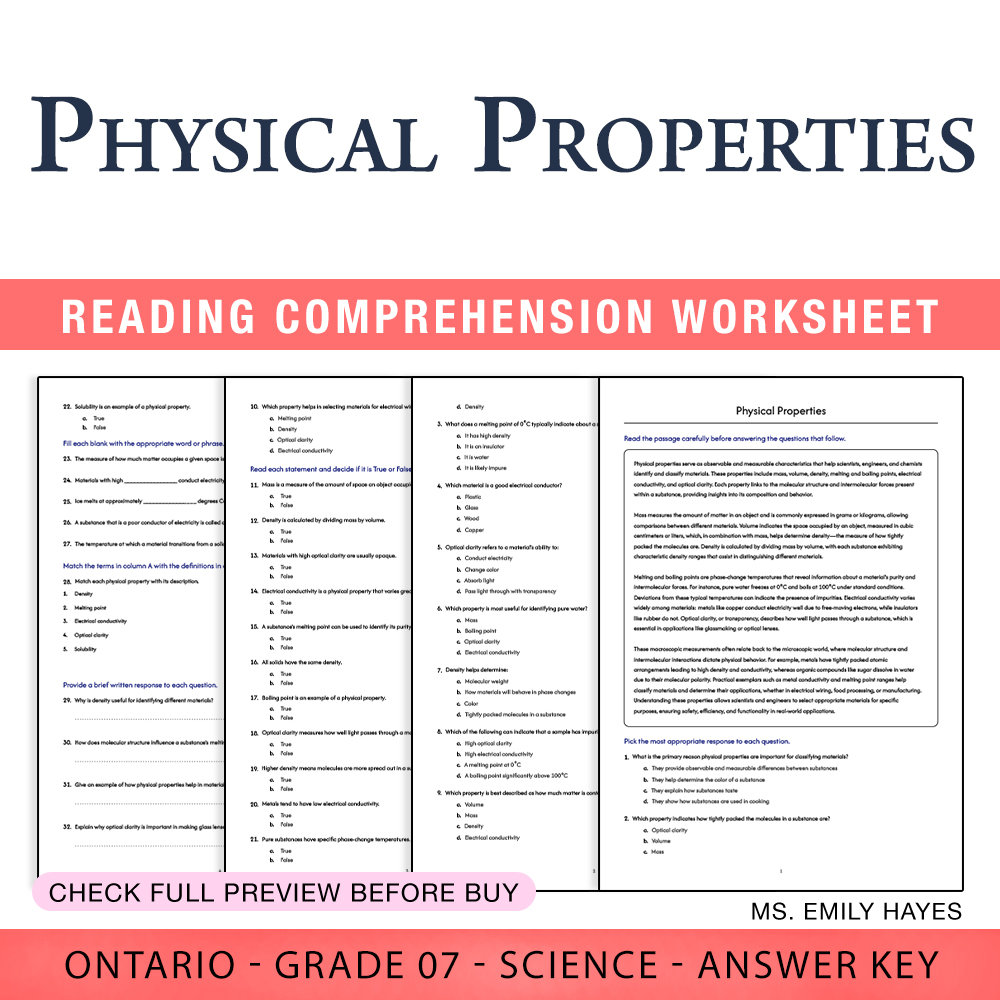
7th Grade Science | Physical Properties Worksheet (PDF+ Answer Key)
Created byCopper Leaf ClassroomLearning Objectives
- Define and describe physical properties such as mass, volume, density, melting point, boiling point, electrical conductivity, and optical clarity.
- Explain how physical properties are used to differentiate and classify substances based on their molecular structure and intermolecular forces.
- Relate macroscopic measurements to microscopic structures and discuss practical examples like metal conductivity and melting points.
Instant download
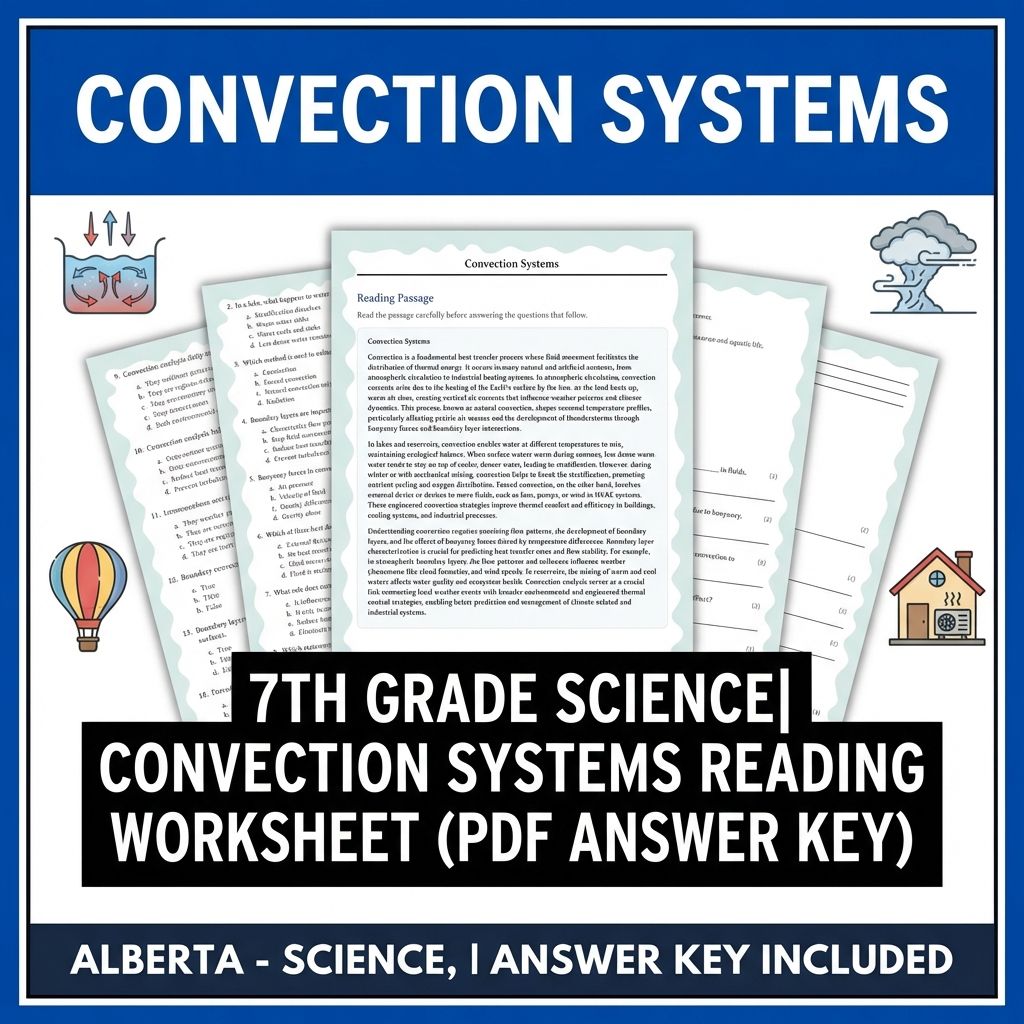
7th Grade Science | Convection Systems Reading Worksheet (PDF Answer Key)
JCreated byJ.S SheetsLearning Objectives
- Understand the principles of convection and how it transports heat in fluids.
- Identify natural and forced convection examples in environmental and engineered systems.
- Analyze flow patterns, boundary layers, and buoyancy forces in convection processes.
Instant download

Net Force Worksheet | Grade 7 Science NGSS Forces and Motion Activity
Created byAmber Owl EducationLearning Objectives
- Define net force as the vector sum of all forces acting on an object and explain the effect of balanced vs. unbalanced forces on motion.
- Use free-body diagrams to identify forces (including applied forces and friction) and determine the direction of the net force.
- Describe how net force relates to acceleration and how mass affects acceleration using proportional reasoning within Grade 7 scope.
Also included in: Grade 7 Science Forces and Motion Lesson Bundle – NGSS Worksheets +1 more
Instant download
About Grade 7 Science Worksheets
Browse 6,039 printable Grade 7 Science worksheets — ready-to-print PDFs with answer keys where available.
Every worksheet on MyTeachingSheets is created by independent teacher-authors and reviewed before publication. All resources download as printable PDFs for classroom, homework, or at-home practice, and many include answer keys. Preview any worksheet free before buying.