
Grade 9 Science Worksheets
6,986 worksheets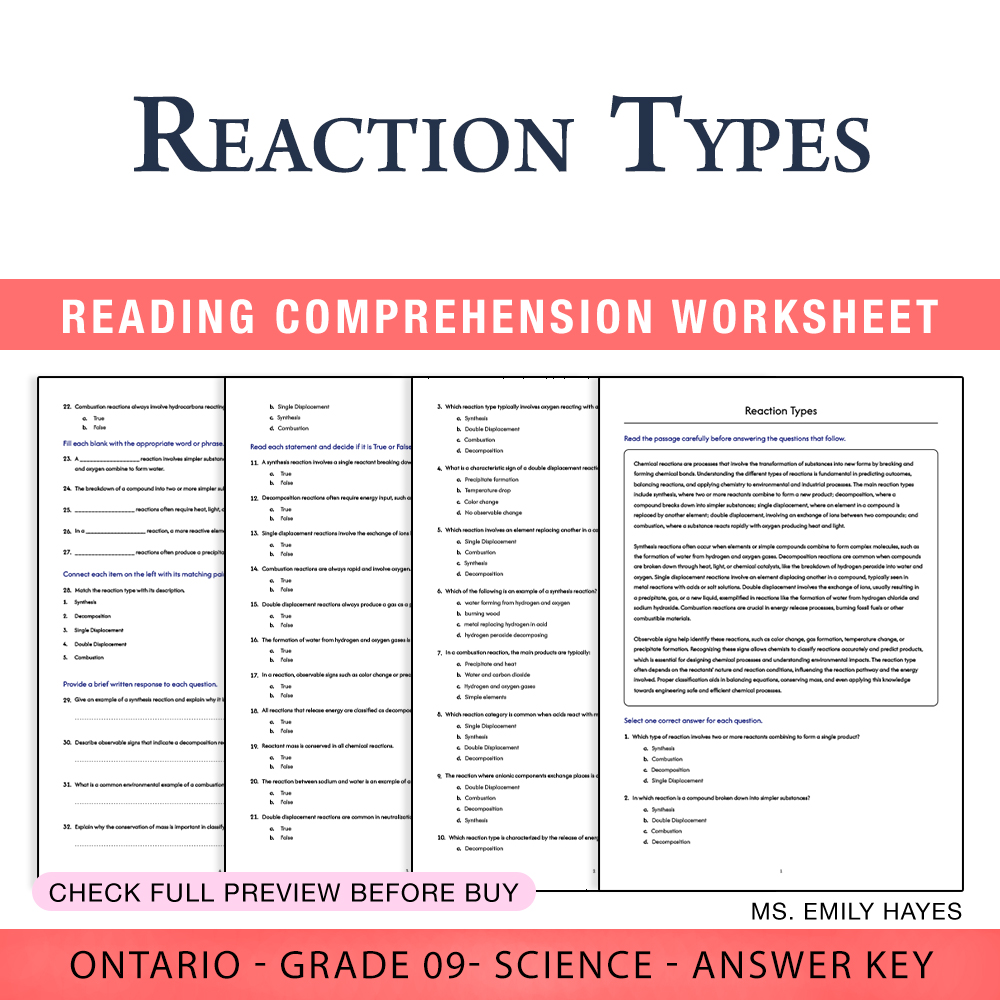
9th Grade Science | Reaction Types Worksheet (PDF + Answer Key)
 Created byCopper Leaf Classroom
Learning Objectives
- Identify and describe the main types of chemical reactions: synthesis, decomposition, single displacement, double displacement, and combustion.
- Recognize observable signs and patterns that distinguish different reaction types.
- Predict products based on reaction patterns and understand mass conservation principles.
Instant download

Glucose Regulation Worksheet | Grade 9 Science TEKS Practice
 Created byPrism Point Learning
Learning Objectives
- Explain how insulin and glucagon help maintain blood glucose within a healthy range.
- Describe the negative feedback loop involved in glucose regulation and identify its set point, sensors, and effectors.
- Connect hormone signals to changes in glycogen synthesis, glycogen breakdown, and glucose production.
Instant download
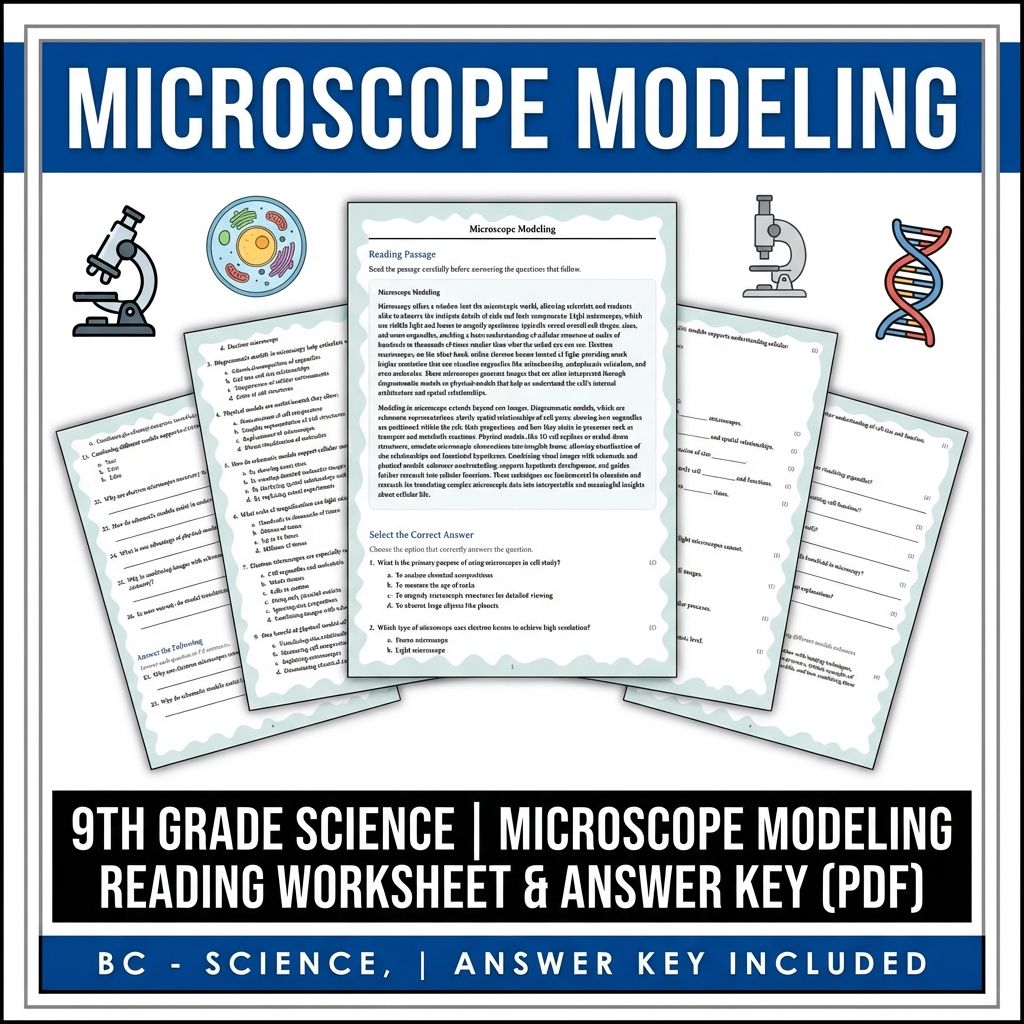
9th Grade Science | Microscope Modeling Reading Worksheet & Answer Key (PDF)
JCreated byJ.S SheetsLearning Objectives
- Understand how microscopy provides visual cell models and scales.
- Identify different types of microscopes and their features.
- Explain how diagrammatic and physical models aid in understanding cellular structures.
Instant download

Grade 9 Acceleration From Data Worksheet | Practice & PDF
 Created byClear Sky Classroom
Learning Objectives
- Interpret acceleration from speed–time and distance–time data graphs
- Determine whether acceleration is approximately constant or changing based on graph shape and slope
- Explain how the sign of acceleration relates to whether speed is increasing or decreasing
Instant download
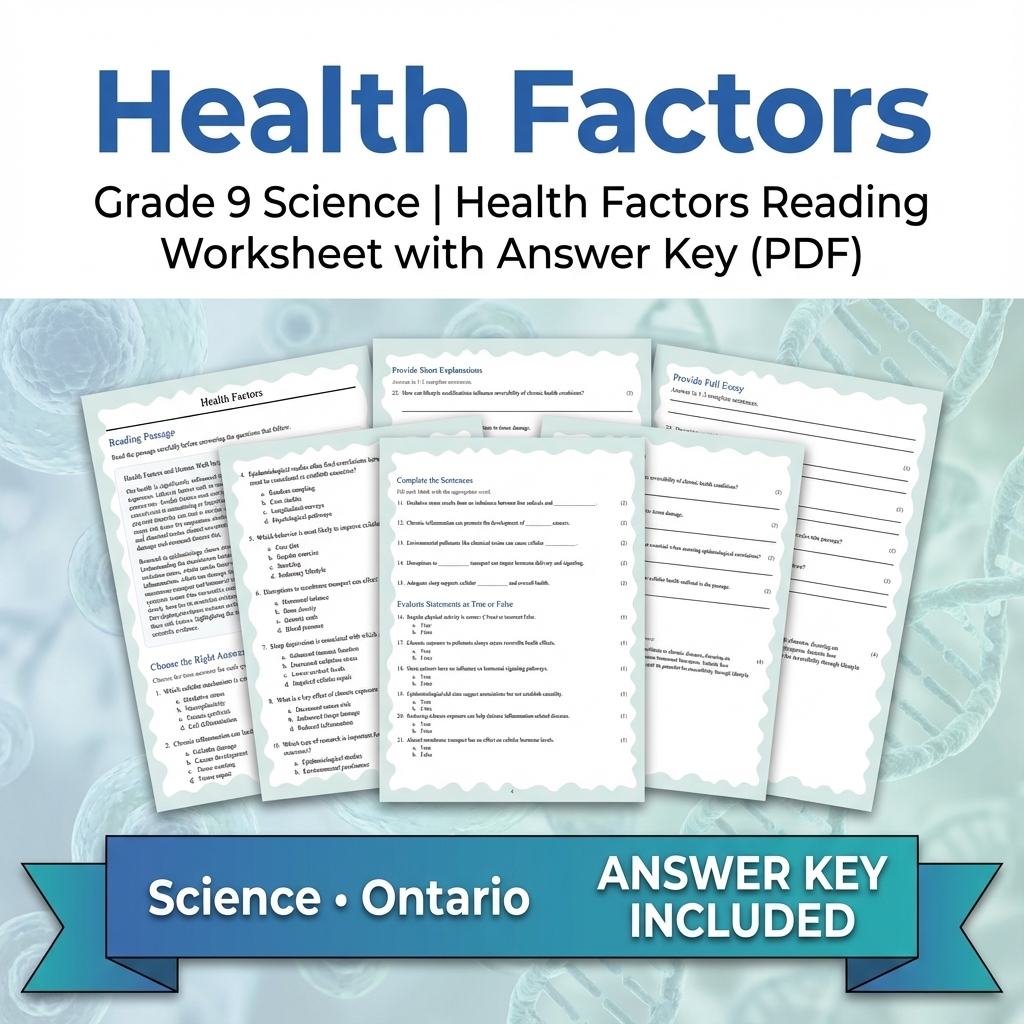
Grade 9 Science | Health Factors Reading Worksheet with Answer Key (PDF)
JCreated byJ.S SheetsLearning Objectives
- Understand how lifestyle and environmental factors impact human health.
- Interpret epidemiological data and physiological mechanisms related to chronic conditions.
- Analyze the effects of nutrition, activity, tobacco, pollutants, and sleep on cellular and systemic health.
Also included in: Grade 9 Science Unit Bundle | Human Body Systems & Cell Functions +1 more
Instant download
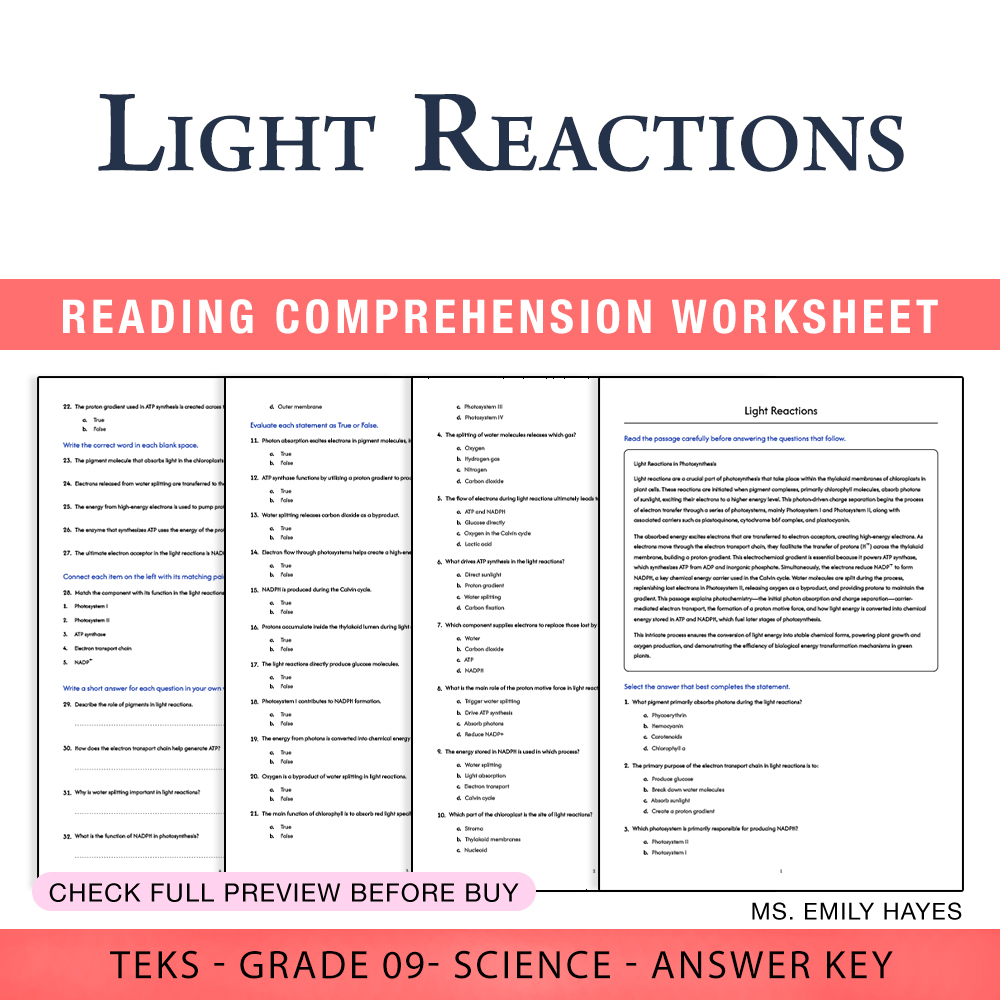
9th Grade Science | Light Reactions Worksheet (PDF+ Answer Key)
Created byCopper Leaf ClassroomLearning Objectives
- Explain the process occurring in the thylakoid membranes during light reactions.
- Identify the role of pigment complexes and photosystems in photon absorption.
- Describe how electron flow, proton gradient, and ATP/NADPH formation are interconnected.
Instant download
Grade 9 Science | Cellular Energy Worksheet (PDF + Answer Key)
Created byCopper Leaf ClassroomLearning Objectives
- Describe the processes of glycolysis, the citric acid cycle, and oxidative phosphorylation in cellular energy metabolism.
- Explain how mitochondrial structure supports ATP production, including the roles of inner membrane folds and enzymes in the matrix.
- Differentiate between aerobic and anaerobic pathways and their relevance in various tissues, such as skeletal muscle during exertion.
Instant download

Grade 9 Science | Electrical Quantities in Science - Daily Reading Comprehension
 Created byCoral Reef Learning
Learning Objectives
- Understand the concept of electric current, voltage, and resistance.
- Learn the units and symbols used for electrical quantities.
- Recognize typical magnitudes of electrical quantities in regional systems.
Also included in: Electricity and Magnetism Lesson Bundle – Grade 9 Science Alberta +1 more
Instant download

Adaptive Radiation Worksheet | Standards-Based Science Practice for Grade 9
JCreated byJ.S SheetsLearning Objectives
- Define adaptive radiation and describe how a single ancestral lineage can diversify into multiple species.
- Explain the roles of ecological niches, key innovations, and selective pressures in driving diversification.
- Use evidence and models to describe how gene flow, genetic drift, and natural selection shape evolutionary patterns.
Instant download
Fluid Balance Assessment for Grade 9 Science | Standards-Aligned
Created byPrism Point LearningLearning Objectives
- Understand the process of kidney osmoregulation and its role in maintaining water and ion balance.
- Identify the functions of filtration, reabsorption, secretion, and concentration in nephrons.
- Explain how hormones like antidiuretic hormone (ADH) and aldosterone regulate fluid and electrolyte balance.
Instant download
9th Grade Science | Cardiopulmonary Interaction Reading (PDF + Answer Key)
JCreated byJ.S SheetsLearning Objectives
- Explain how the heart and lungs work together to oxygenate blood and remove carbon dioxide.
- Describe the processes of pulmonary ventilation and cardiovascular transport of gases.
- Identify how the body adjusts heart rate, stroke volume, and vascular resistance during respiratory changes.
Instant download
Cell Type Differences Worksheet for Grade 9 Science | BC Standards
Created byCoral Reef LearningLearning Objectives
- Compare and contrast prokaryotic and eukaryotic cells in terms of structure and function.
- Identify key components unique to each cell type and explain their roles.
- Understand how cellular organization affects biological capabilities and evolution.
Instant download

Grade 9 Homeostasis Basics Worksheet | Practice BC PDF
Created byClear Sky ClassroomLearning Objectives
- Explain how homeostasis maintains internal conditions within narrow ranges despite external changes
- Describe how sensors, integrating centers, and effectors work together in feedback mechanisms
- Connect specific body systems (respiratory, circulatory, endocrine, renal, nervous) to maintaining stable internal conditions
Instant download
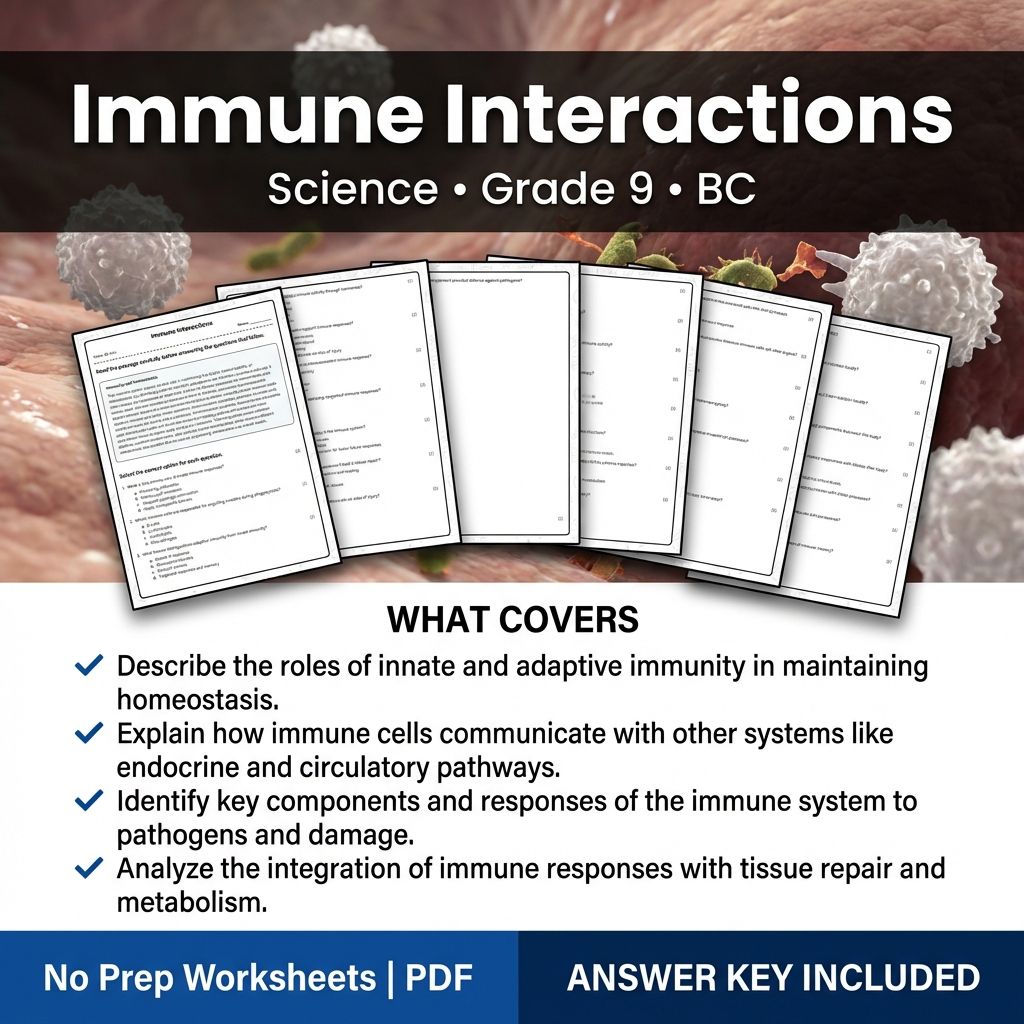
Immune Interactions Science Worksheet | Grade 9 BC Standards
Created byCoral Reef LearningLearning Objectives
- Describe the roles of innate and adaptive immunity in maintaining homeostasis.
- Explain how immune cells communicate with other systems like endocrine and circulatory pathways.
- Identify key components and responses of the immune system to pathogens and damage.
Instant download
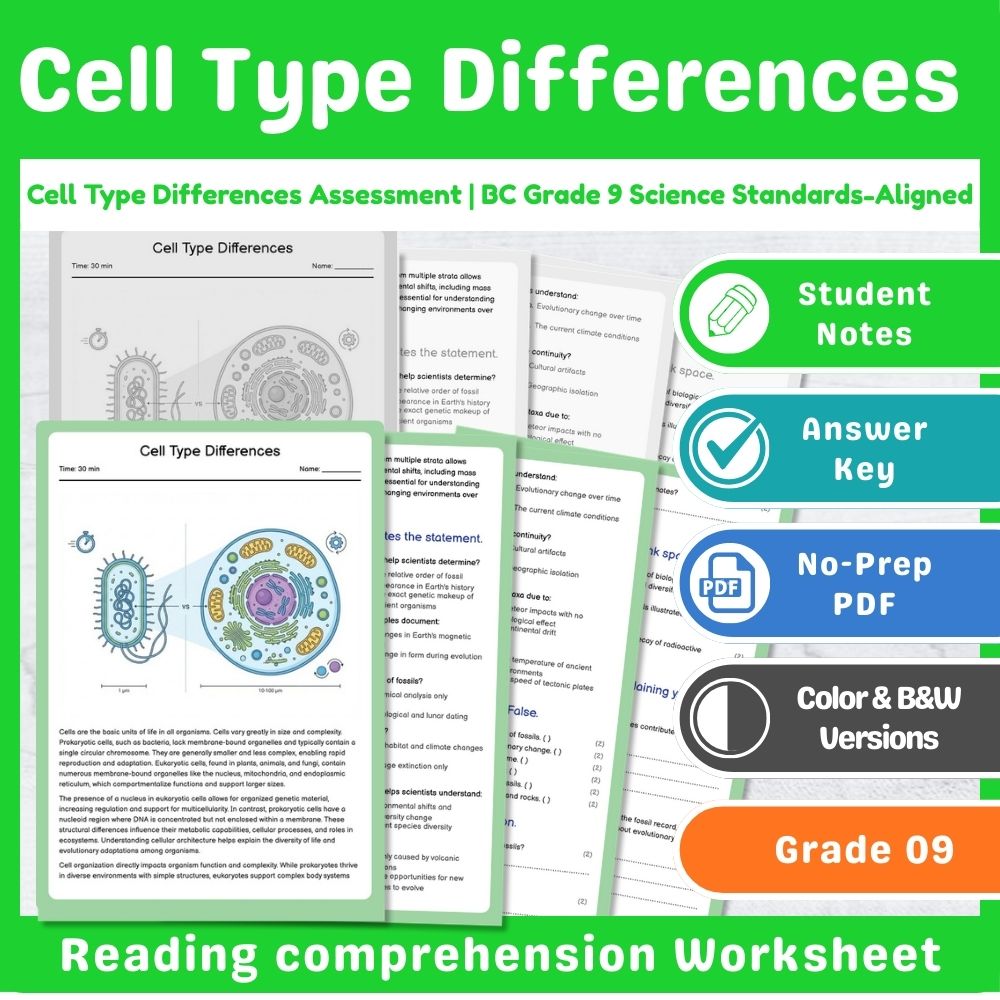
Cell Type Differences Assessment | BC Grade 9 Science Standards-Aligned
Created byPrism Point LearningLearning Objectives
- Understand the structural differences between prokaryotic and eukaryotic cells.
- Identify key components unique to each cell type.
- Explain how cell structure relates to function and organism complexity.
Instant download

Grade 9 Science – Immune Interactions Worksheet (PDF) BC Standards
 Created byEvergreen Desk Education
Learning Objectives
- Explain how innate and adaptive immunity work together to maintain homeostasis during infection or injury
- Describe how immune cells coordinate inflammation and repair using chemical and cellular signals
- Connect immune function with circulatory and endocrine system roles in transporting signals and regulating body processes
Instant download

Grade 9 Science | Cell Essential Functions Worksheet | General Standards
 Created byLumora Learning
Learning Objectives
- Explain how cell membranes regulate transport to support homeostasis
- Describe how cellular energy use powers chemical reactions needed for growth and maintenance
- Use evidence (uptake rates and growth patterns) to connect cellular structure to function
Instant download
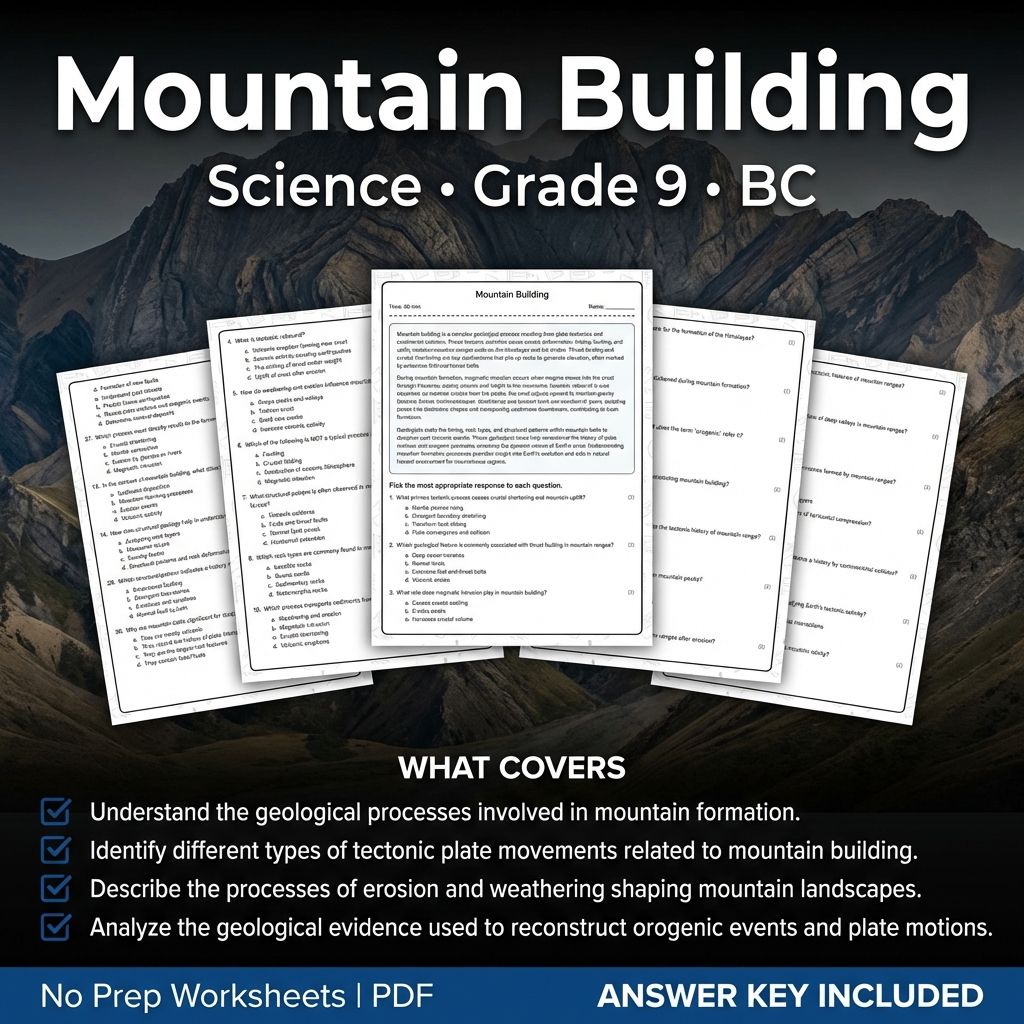
Grade 9 Science Worksheet | Mountain Building Concepts & Practice ( Answer Key)
Created byCoral Reef LearningLearning Objectives
- Understand the geological processes involved in mountain formation.
- Identify different types of tectonic plate movements related to mountain building.
- Describe the processes of erosion and weathering shaping mountain landscapes.
Instant download

Grade 9 Science | Evidence for Claims in Science - Reading Comprehension
Created byCoral Reef LearningLearning Objectives
- Understand how scientific evidence supports or challenges claims.
- Interpret data patterns to infer explanations.
- Evaluate alternative interpretations of evidence.
Instant download
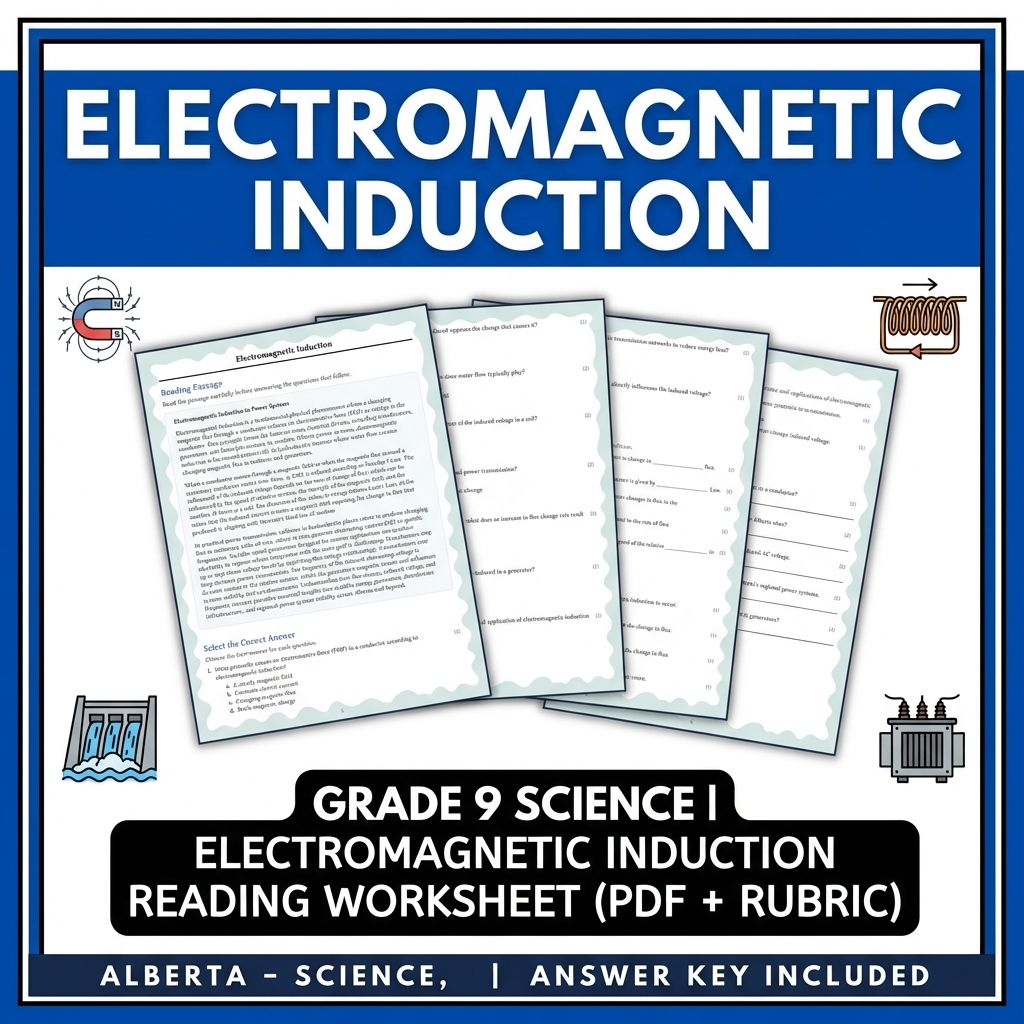
Grade 9 Science | Electromagnetic Induction Reading Worksheet (PDF + Rubric)
JCreated byJ.S SheetsLearning Objectives
- Explain the principles of electromagnetic induction and how changing magnetic flux induces an electromotive force.
- Describe practical applications such as transformers and generators in regional power systems.
- Connect magnetic flux change, induced voltage, and frequency relationships to scalable energy generation and transmission.
Also included in: Grade 9 Science Bundle | Electricity, Energy & Magnetism (PDF + Answer Keys) +1 more
Instant download
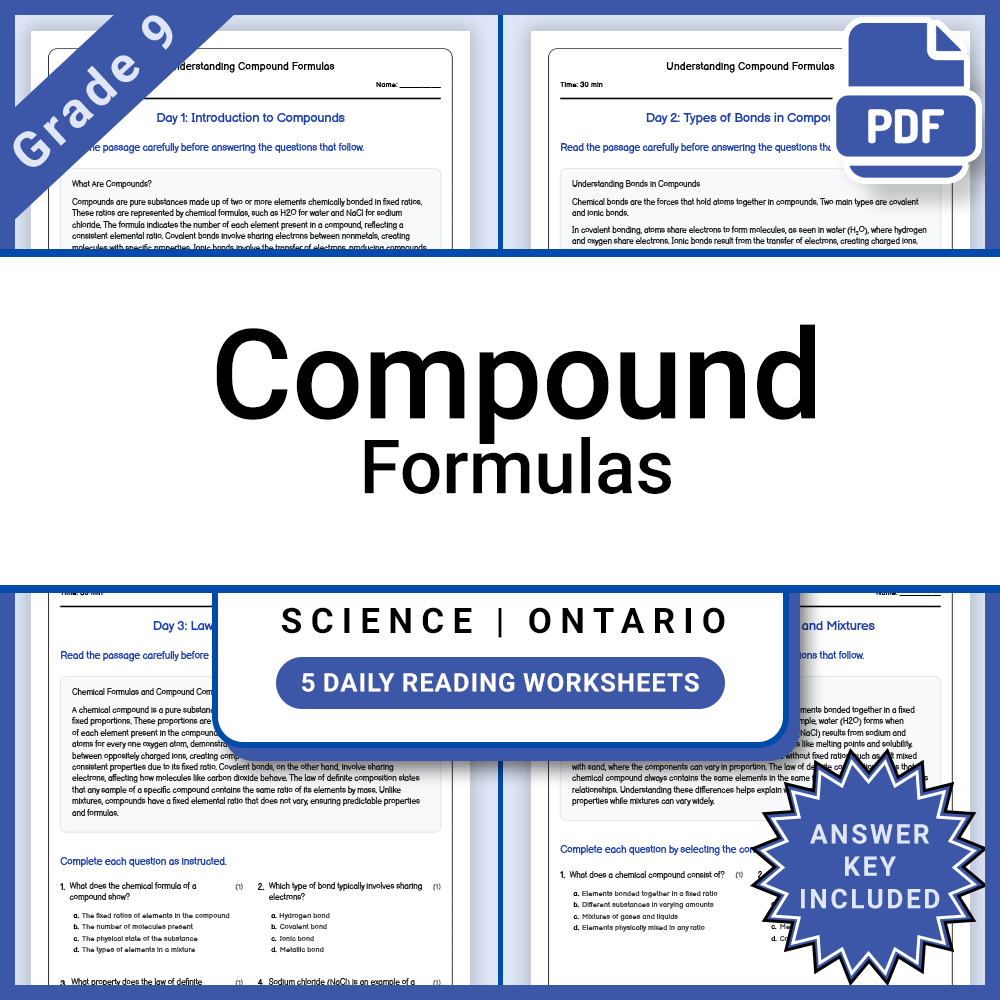
Grade 9 Science – Compound Formulas Daily Reading Worksheet + Answer Key
JCreated byJ.S SheetsLearning Objectives
- Define compounds and explain their fixed elemental ratios.
- Interpret chemical formulas to identify elements and their quantities.
- Understand how covalent and ionic bonds influence compound properties.
Also included in: Grade 9 Science Lesson Group: Ontario Curriculum Daily Reading Worksheets +1 more
Instant download
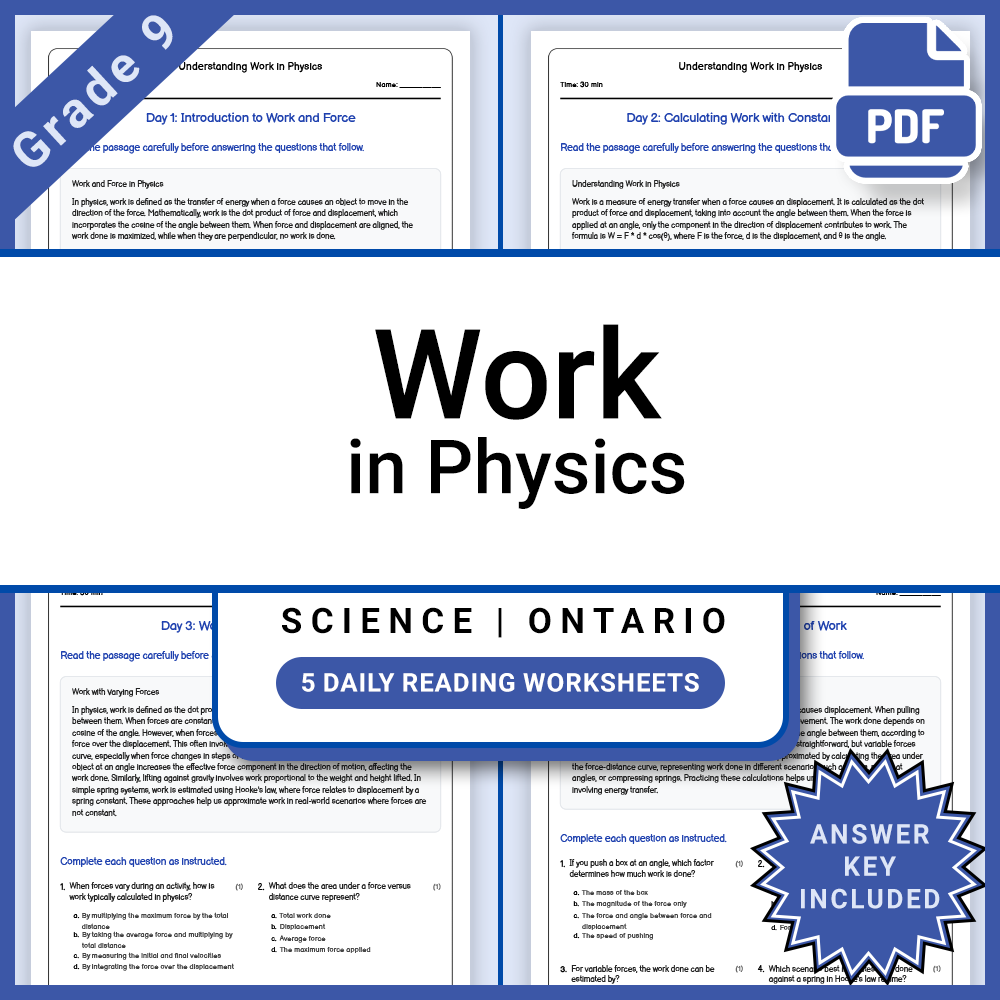
Grade 9 Science – Work in Physics Daily Reading Worksheet with Answer Key
JCreated byJ.S SheetsLearning Objectives
- Understand key concepts related to Science
- Apply knowledge through practice questions
- Demonstrate comprehension of the material
Also included in: Grade 9 Science Lesson Group: Physics and Motion Worksheets Bundle +1 more
Instant download
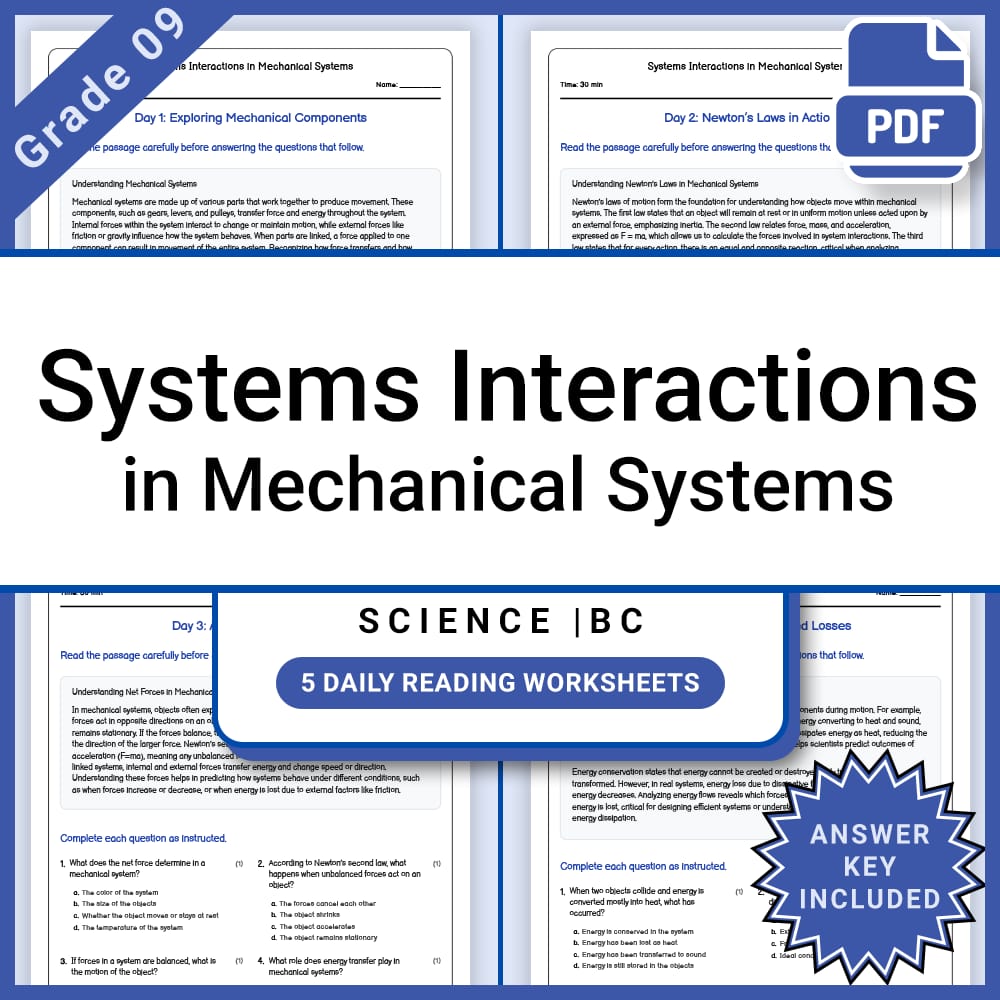
Grade 9 – Systems Interactions in Mechanical | Daily Worksheet + Answer Key
JCreated byJ.S SheetsLearning Objectives
- Identify the parts of complex mechanical systems
- Explain how parts interact and transfer energy
- Predict the motion of systems using Newton's laws
Also included in: Grade 9 Science Lesson Bundle | Physics and Energy Concept Worksheets +1 more
Instant download
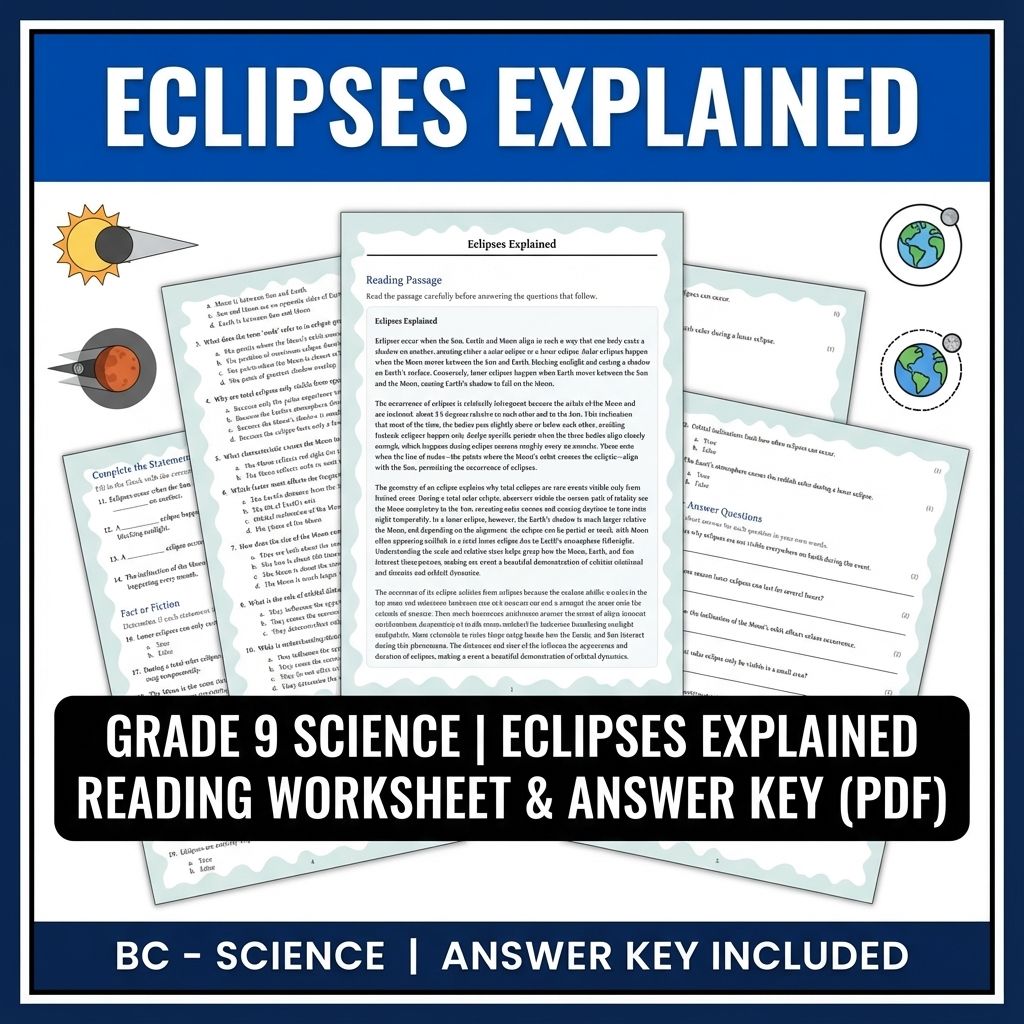
Grade 9 Science | Eclipses Explained Reading Worksheet & Answer Key (PDF)
JCreated byJ.S SheetsLearning Objectives
- Understand the basic geometry and types of eclipses involving the Sun, Earth, and Moon.
- Describe the positions and alignments necessary for solar and lunar eclipses.
- Explain how orbital inclinations influence eclipse frequency and paths of totality.
Instant download
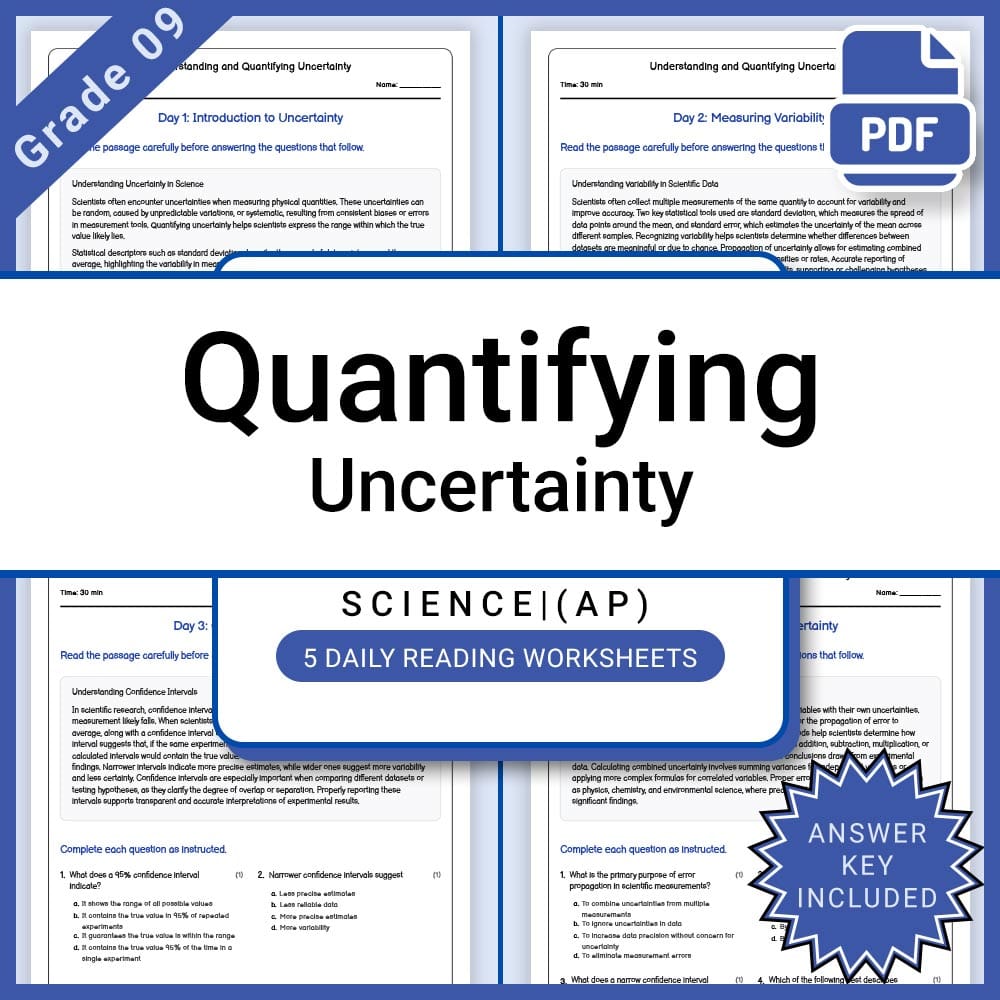
Grade 9 Science – Quantifying Uncertainty Daily Reading Worksheet + Answer Key
JCreated byJ.S SheetsLearning Objectives
- Identify different sources of uncertainty in scientific measurements
- Read and interpret basic statistical descriptors such as mean, standard deviation, and standard error
- Understand how uncertainty propagates through calculations
Also included in: Grade 9 Science Lesson Group - AP Framework Daily Reading Worksheets +1 more
Instant download

Grade 9 Science | Observable Properties Worksheet (Alberta Standards PDF)
Created byEvergreen Desk EducationLearning Objectives
- Define observable properties and distinguish them from properties that require special equipment or conditions.
- Classify common materials using observable traits such as colour, hardness, density, solubility, and conductivity.
- Use evidence from observations to justify how matter can be grouped for everyday and industrial purposes.
Instant download
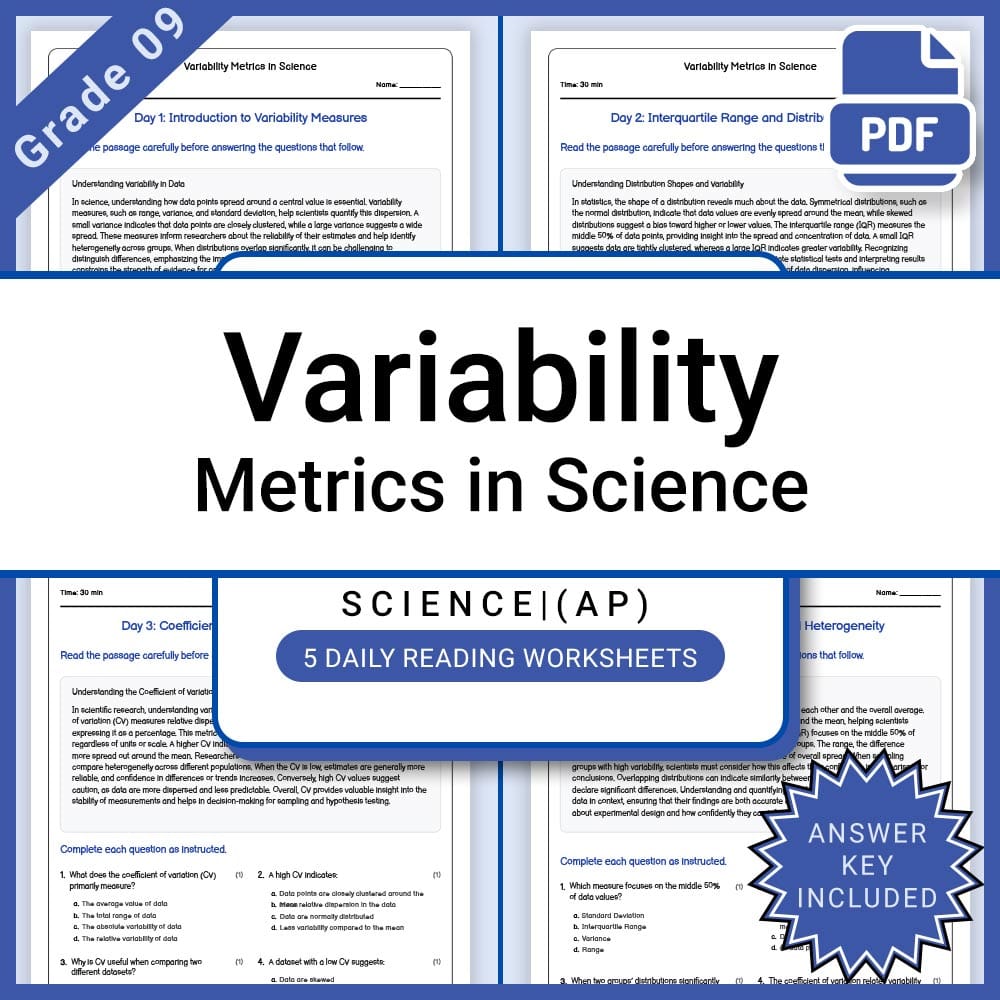
Grade 9 Science – Variability Metrics Daily Reading Worksheet + Answer Key
JCreated byJ.S SheetsLearning Objectives
- Identify basic measures of dispersion such as range and variance.
- Understand how variability influences confidence in data estimates.
- Relate measures of variability to sampling design and data heterogeneity.
Also included in: Grade 9 Science Lesson Group - AP Framework Daily Reading Worksheets +1 more
Instant download

Grade 9 Orbital Interactions Worksheet | Ontario Science with Answer Key
Created byClear Sky ClassroomLearning Objectives
- Explain how eccentricity, axial tilt, and precession change seasonal insolation patterns over time.
- Describe how tidal forcing from the Moon and Sun arises from gravitational gradients and relative geometry.
- Connect orbital dynamics to observable effects such as day-length variations, tidal range changes, and long-term climate modulation.
Instant download
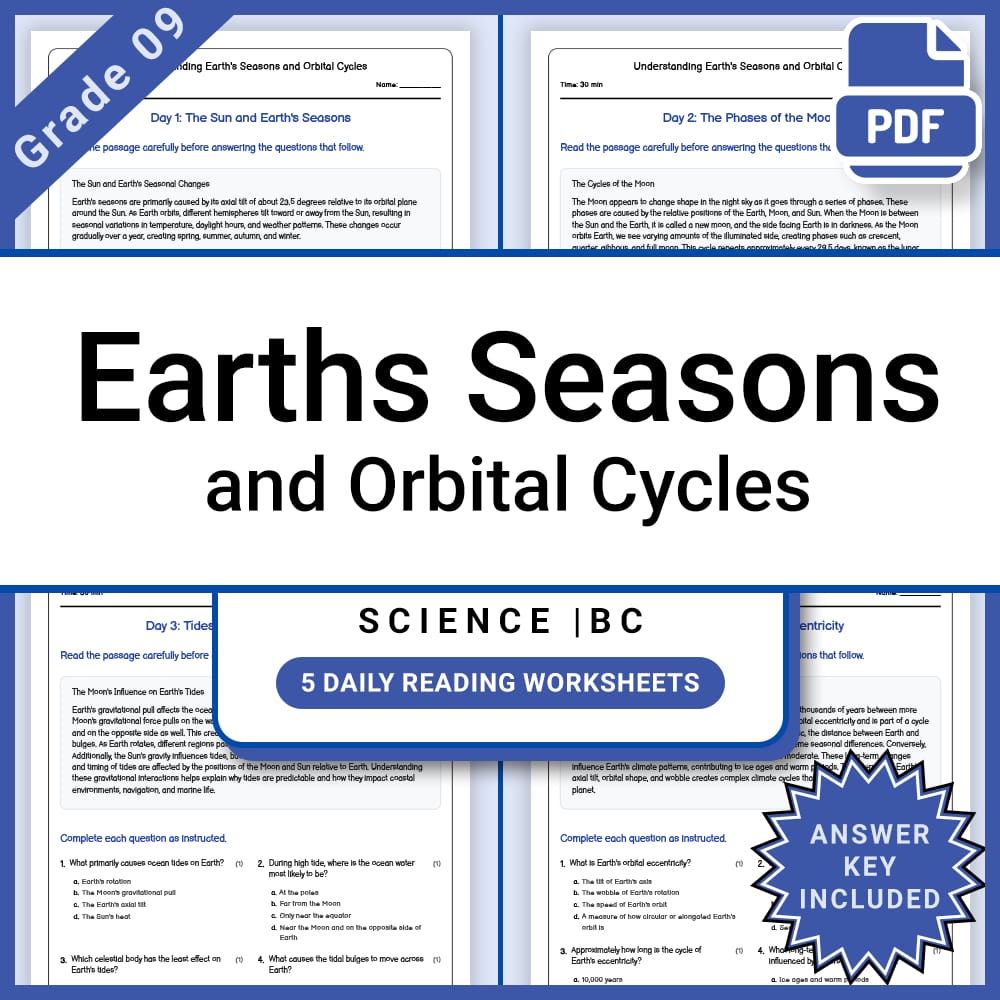
Grade 9 – Earth's Seasons and Orbital Cycles Daily Worksheet + Answer Key
JCreated byJ.S SheetsLearning Objectives
- Explain how Earth's tilt and orbit influence seasonal changes.
- Describe the relationship between the Sun, Earth, and Moon related to lunar phases and tides.
- Identify how orbital eccentricity affects climate patterns.
Also included in: Grade 9 Science Lesson Bundle: Tidal Forces, Tectonic Plates & Climate Physics +1 more
Instant download

Grade 9 Science – Neural Control & Nervous System | Daily Reading Worksheet
 Created byQuiet Forest Education
Learning Objectives
- Understand the basic structure and function of neurons
- Describe how neurons communicate across synapses
- Explain the propagation of nerve impulses via action potentials
Also included in: Human Body Science Grade 9 Daily Reading Worksheets Bundle | Ontario +1 more
Instant download

Grade 9 Science – Circulatory System & Blood Flow | Daily Reading Worksheet
Created byQuiet Forest EducationLearning Objectives
- Identify the main components of the cardiovascular system
- Describe the structure and function of the heart
- Explain how blood vessels vary in size and function
Also included in: Human Body Science Grade 9 Daily Reading Worksheets Bundle | Ontario +1 more
Instant download
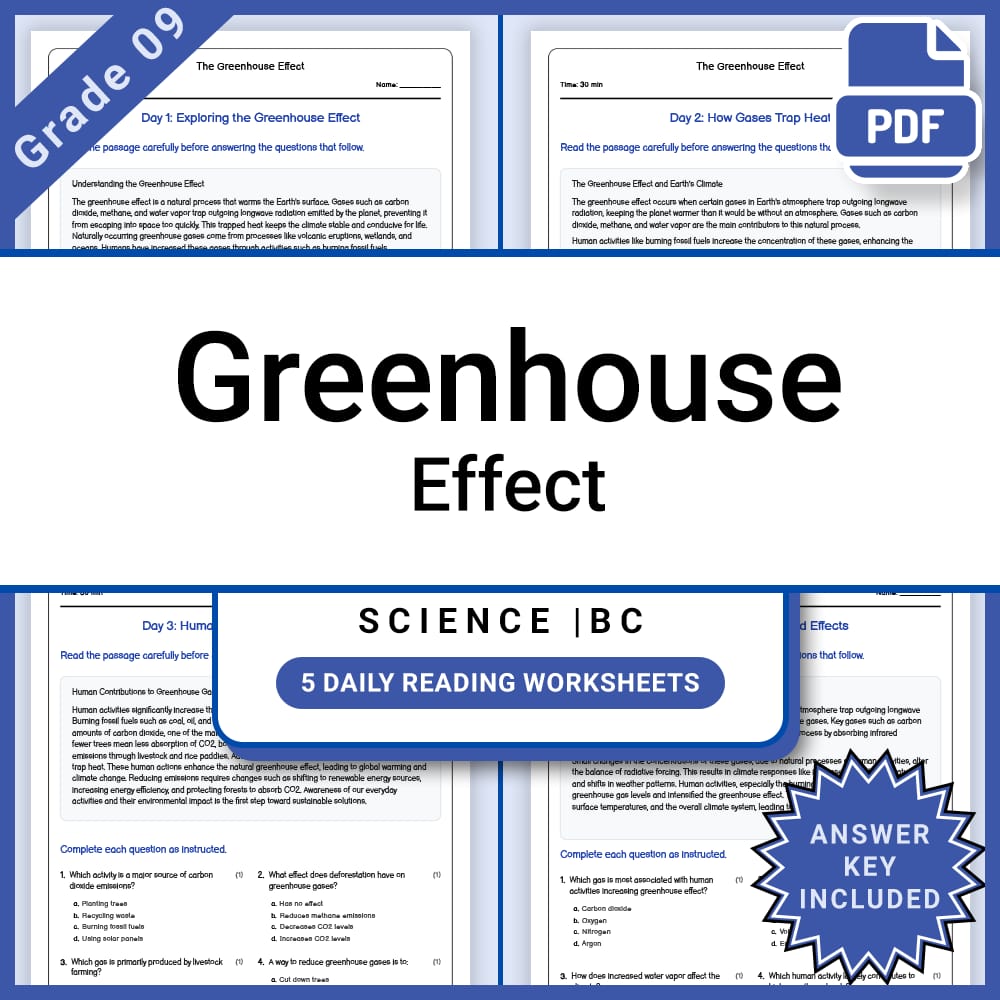
Grade 9 Science – The Greenhouse Effect Daily Reading Worksheet & Answer Key
JCreated byJ.S SheetsLearning Objectives
- Understand what greenhouse gases are and their sources.
- Describe how greenhouse gases trap heat and contribute to Earth's warming.
- Identify natural versus human-made greenhouse gases.
Also included in: Grade 9 Science Lesson Bundle: Tidal Forces, Tectonic Plates & Climate Physics +1 more
Instant download
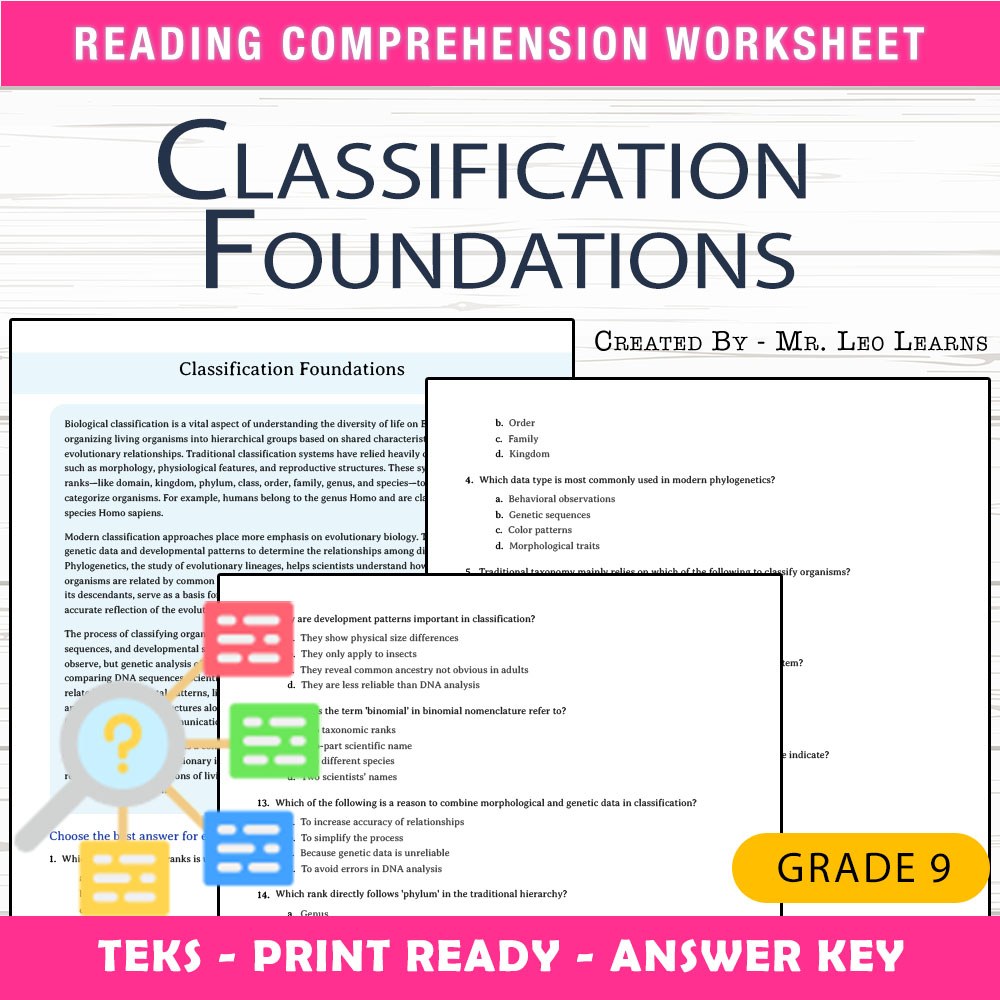
Grade 9 Science | Classification Foundations Worksheet for Mastery
 Created byThe Resource Hub
Learning Objectives
- Understand the hierarchical structure of biological classification systems.
- Identify key taxa such as domain, kingdom, phylum, class, order, family, genus, and species.
- Explain the differences between traditional and modern classification approaches.
Also included in: Grade 9 Science Evolution & Classification Unit Worksheet Pack +1 more
Instant download
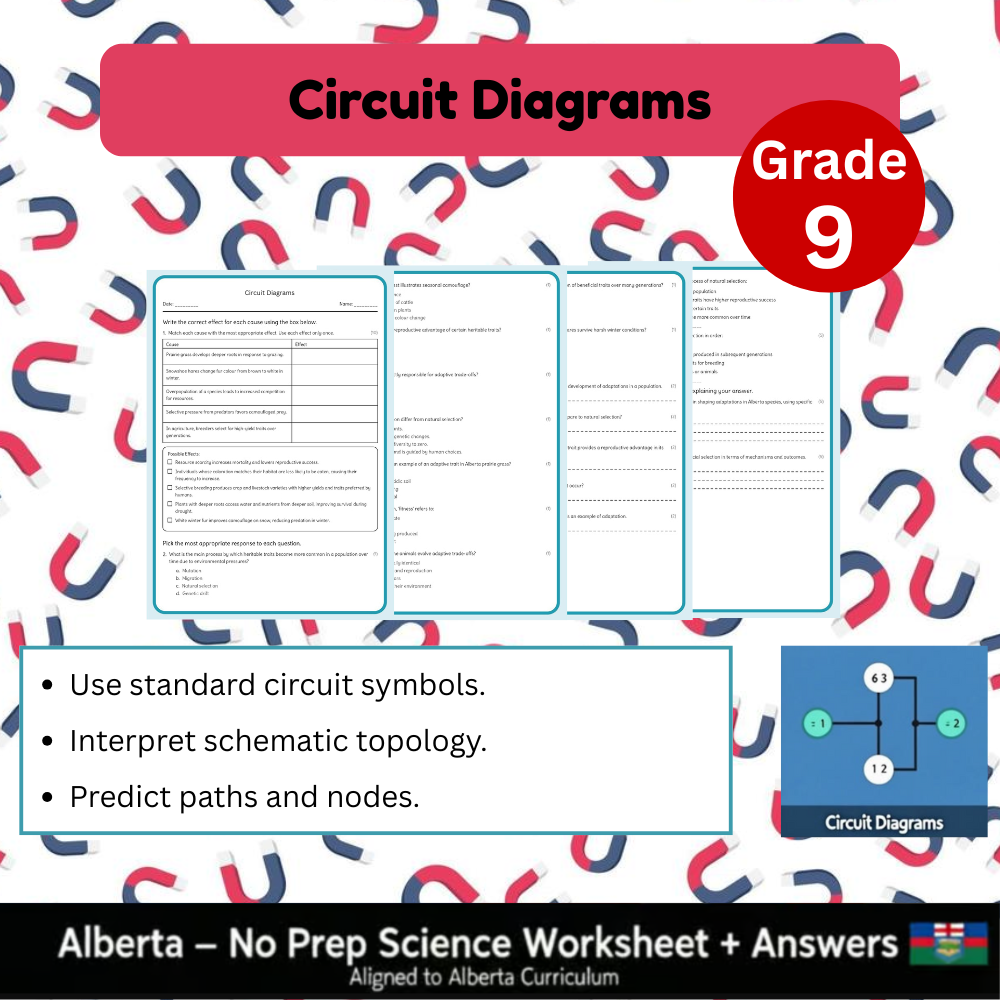
Grade 9 Science – Circuit Diagrams Worksheet (PDF) – Alberta Standards
 Created byBright Mind Resources
Learning Objectives
- Understand standardized symbols used in circuit diagrams.
- Interpret circuit topology from schematic diagrams.
- Predict current paths, voltage drops, and node relationships based on symbols and notation.
Instant download
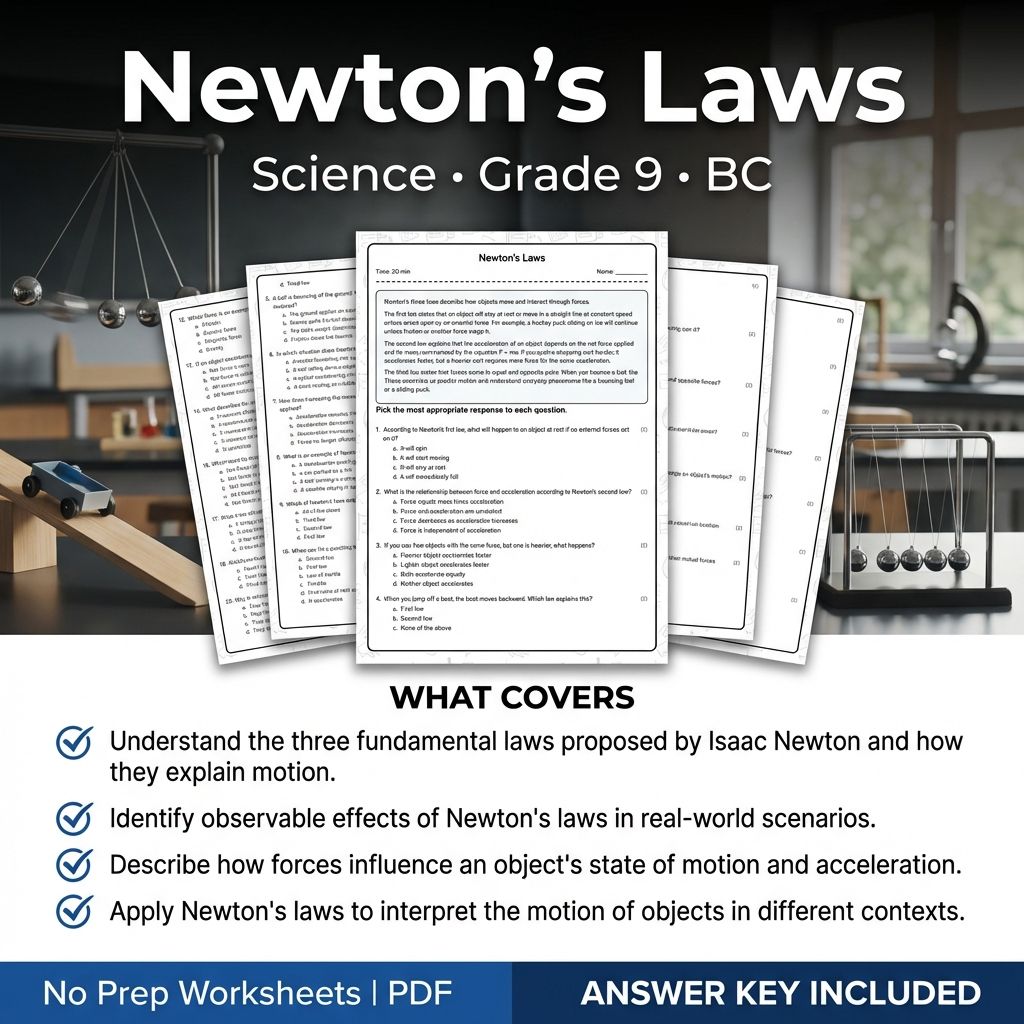
Newton's Laws Grade 9 Science Worksheet with Answer Key | BC Standards
Created byCoral Reef LearningLearning Objectives
- Understand the three fundamental laws proposed by Isaac Newton and how they explain motion.
- Identify observable effects of Newton's laws in real-world scenarios.
- Describe how forces influence an object's state of motion and acceleration.
Instant download

Energy Profiles Science Worksheet | Standards-Aligned Grade 9 Assessment
JCreated byJ.S SheetsLearning Objectives
- Describe the concept of energy profiles and their significance in chemical reactions.
- Differentiate between exothermic and endothermic reactions based on energy profiles.
- Identify transition states and activation energy barriers in reaction pathways.
Instant download
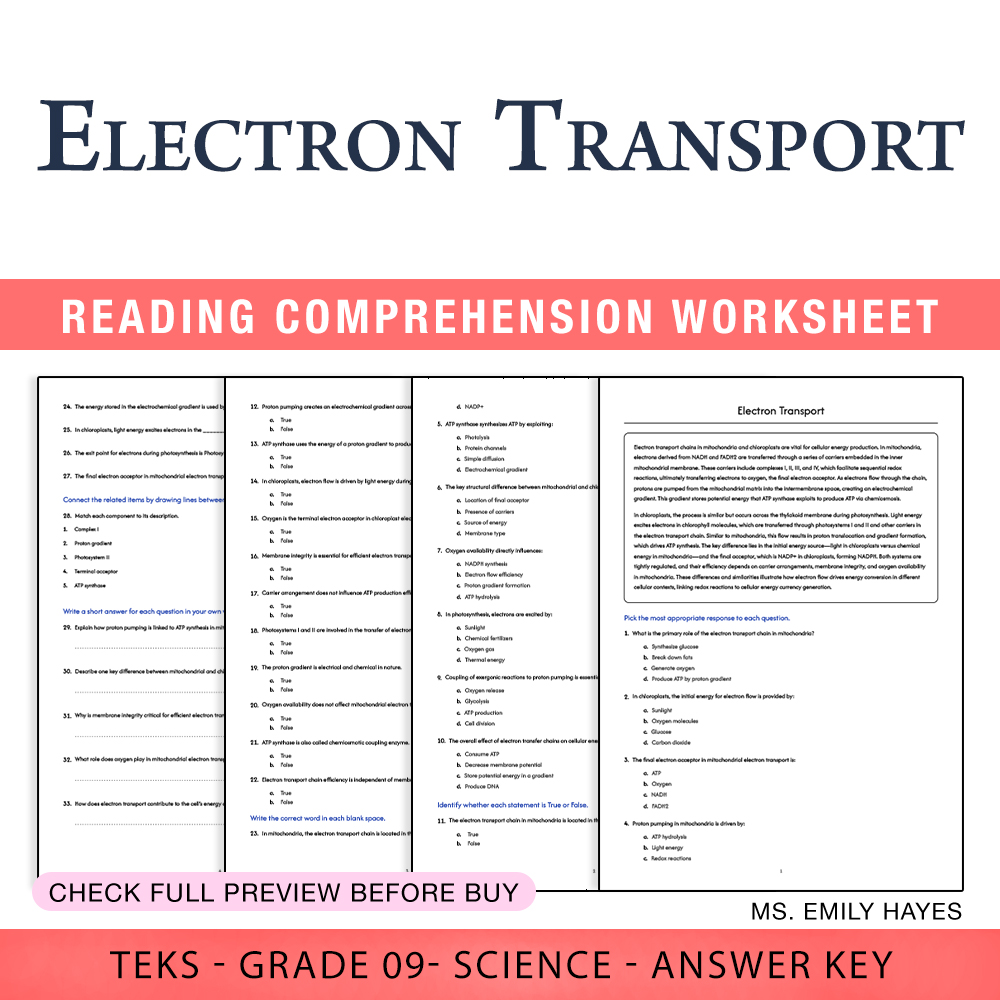
9th Grade Science | Electron Transport Worksheet (PDF+ Answer Key)
Created byCopper Leaf ClassroomLearning Objectives
- Describe the process of electron transport chains in mitochondria and chloroplasts.
- Explain how electron flow couples with proton pumping to generate ATP.
- Identify the differences between mitochondrial and thylakoid electron transport pathways.
Instant download
9th Grade Science | Balancing Equations Practice Worksheet (PDF + Answer Key)
Created byCopper Leaf ClassroomLearning Objectives
- Understand the importance of balancing chemical equations to reflect the law of conservation of mass.
- Recognize the symbols and notation used in chemical equations.
- Demonstrate the ability to balance simple chemical reactions such as combustion and formation of water.
Instant download

Grade 9 Science – Newton's Second Law | Daily Reading Worksheet + Answer Key
JCreated byJ.S SheetsLearning Objectives
- Explain the basic concept of Newton's second law
- Identify the mathematical formula F = ma
- Distinguish between mass and weight
Also included in: Grade 9 Science Lesson Group: Physics and Motion Worksheets Bundle +1 more
Instant download
Grade 9 Science – Free-Body Diagrams Daily Reading Worksheet + Answer Key
JCreated byJ.S SheetsLearning Objectives
- Recognize and interpret free-body diagrams for simple objects
- Identify the common forces involved in free-body diagrams
- Understand the conventions for force vectors, points of application, and coordinate systems
Also included in: Grade 9 Science Lesson Group: Physics and Motion Worksheets Bundle +1 more
Instant download
Grade 9 Science – Basic Kinematic Equations Daily Reading Worksheet + Answer Key
JCreated byJ.S SheetsLearning Objectives
- Interpret the fundamental kinematic equations linking displacement, velocity, acceleration, and time.
- Understand the physical meaning of variables u, v, s, a, and t in motion scenarios.
- Apply kinematic equations to different contexts such as free-fall and projectile motion.
Also included in: Grade 9 Science Lesson Group: Physics and Motion Worksheets Bundle +1 more
Instant download
Grade 9 Science Power and Efficiency Daily Reading Worksheet + Answer Key
JCreated byJ.S SheetsLearning Objectives
- Understand the concept of power as the rate of energy transfer or work per unit time.
- Identify the units used to measure power, including Watts.
- Explain the difference between average and instantaneous power.
Also included in: Grade 9 Science Lesson Group: Physics and Motion Worksheets Bundle +1 more
Instant download
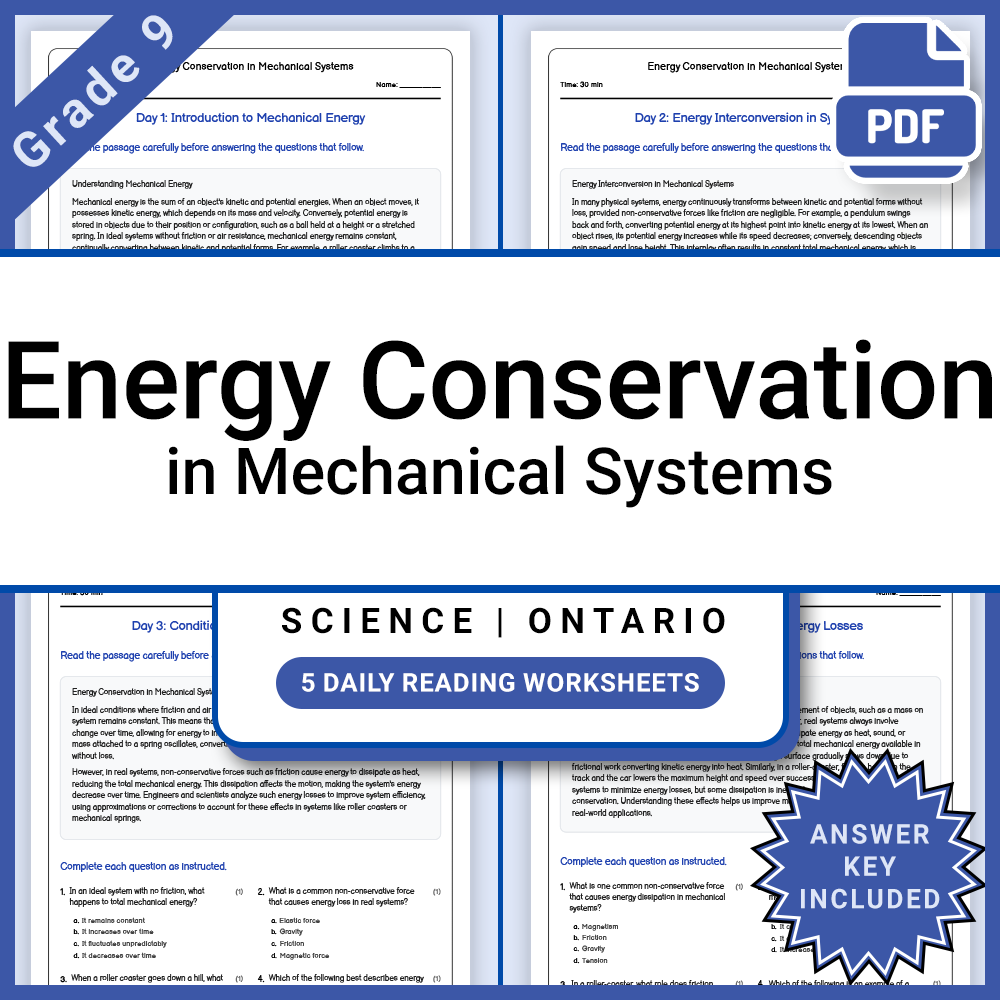
Grade 9 – Energy Conservation in Mechanical Systems Worksheet + Answer Key
JCreated byJ.S SheetsLearning Objectives
- Understand the concepts of kinetic and potential energy.
- Learn how energy transforms between kinetic and potential forms in systems.
- Recognize the impact of non-conservative forces like friction on energy conservation.
Also included in: Grade 9 Science Lesson Group: Physics and Motion Worksheets Bundle +1 more
Instant download
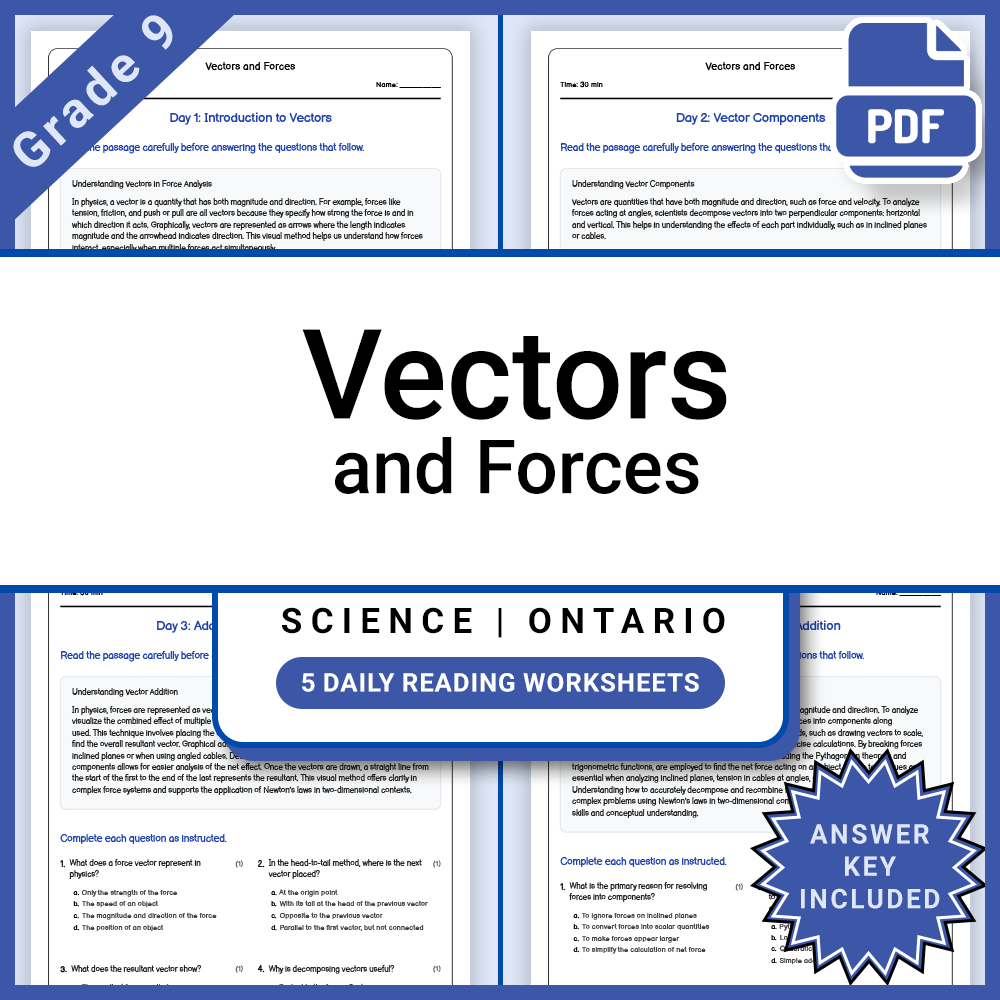
Grade 9 Science – Vectors and Forces Daily Reading Worksheet + Answer Key
JCreated byJ.S SheetsLearning Objectives
- Understand the concept of vectors as quantities with magnitude and direction
- Learn to represent forces graphically using vectors
- Resolve vectors into components along orthogonal axes
Also included in: Grade 9 Science Lesson Group: Physics and Motion Worksheets Bundle +1 more
Instant download

Grade 9 Science | Vectors & Forces - Daily Reading Comprehension
Created byCoral Reef LearningLearning Objectives
- Understand the concept of vectors representing forces including magnitude and direction
- Learn to resolve forces into their components along orthogonal axes
- Calculate the resultant of multiple forces graphically and analytically
Instant download
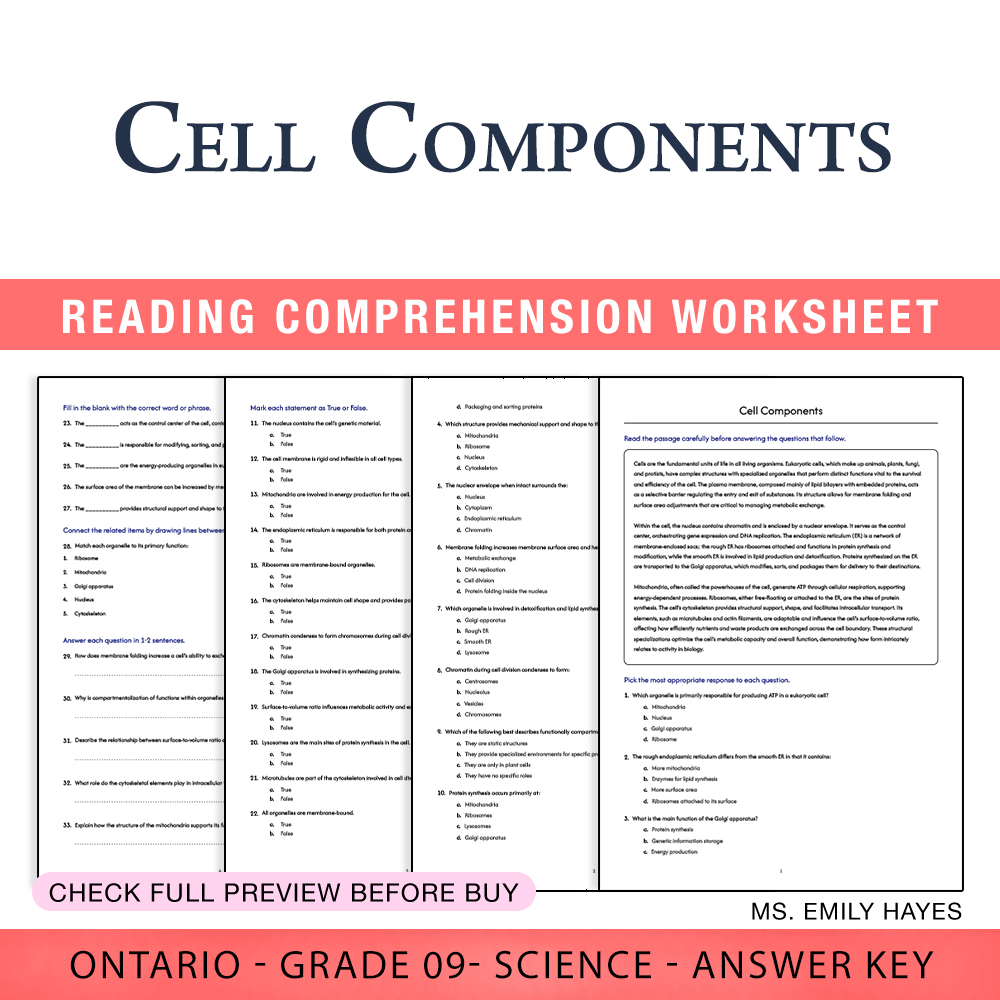
9th Grade Science | Cell Components Worksheet (PDF + Answer Key)
Created byCopper Leaf ClassroomLearning Objectives
- Describe the major organelles of eukaryotic cells and their functions.
- Explain how structural features like membrane folding and compartmentalization influence metabolic rates and exchange across cell boundaries.
- Relate the morphology of cell components to their roles in cellular processes.
Instant download
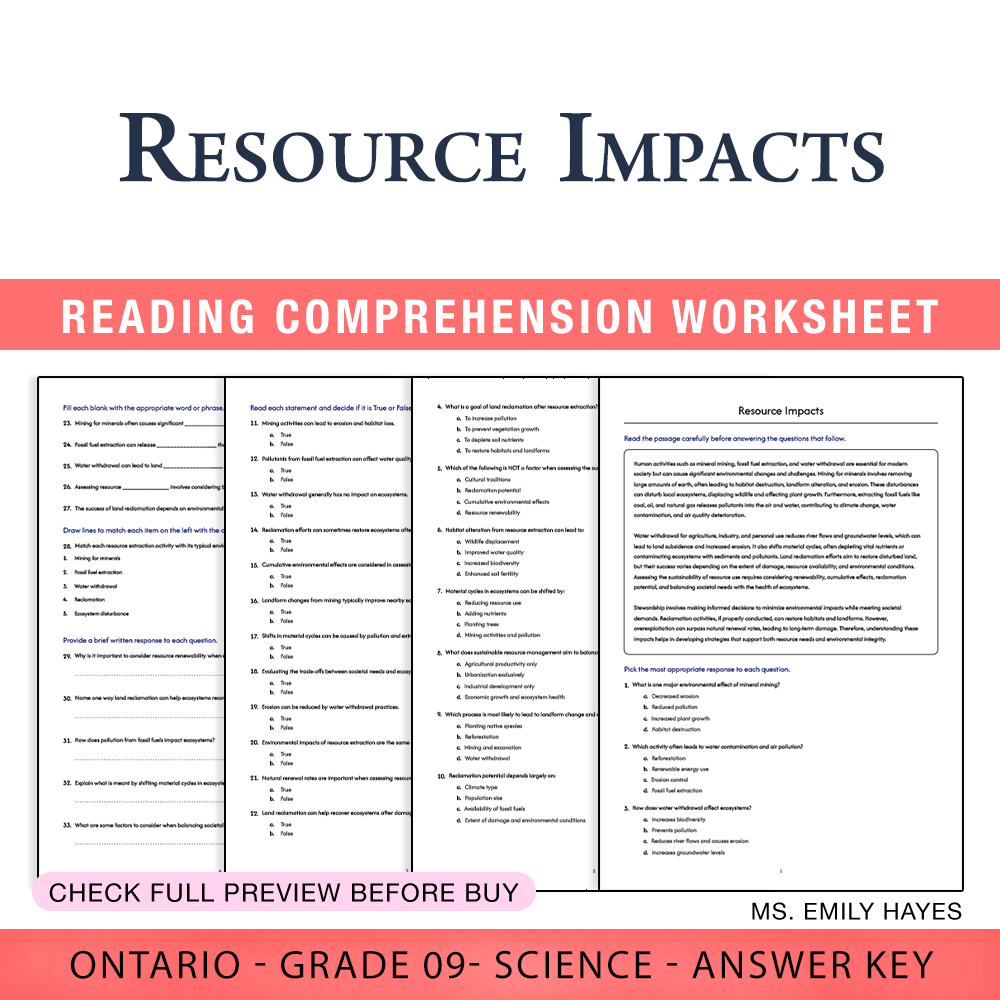
9th Grade Science | Resource Impacts Worksheet (PDF + Answer Key)
Created byCopper Leaf ClassroomLearning Objectives
- Analyze how resource extraction affects ecosystems, landforms, and material cycles.
- Evaluate criteria for sustainability, including resource renewability and environmental trade-offs.
- Understand the environmental effects of mineral mining, fossil fuel extraction, and water withdrawal.
Instant download
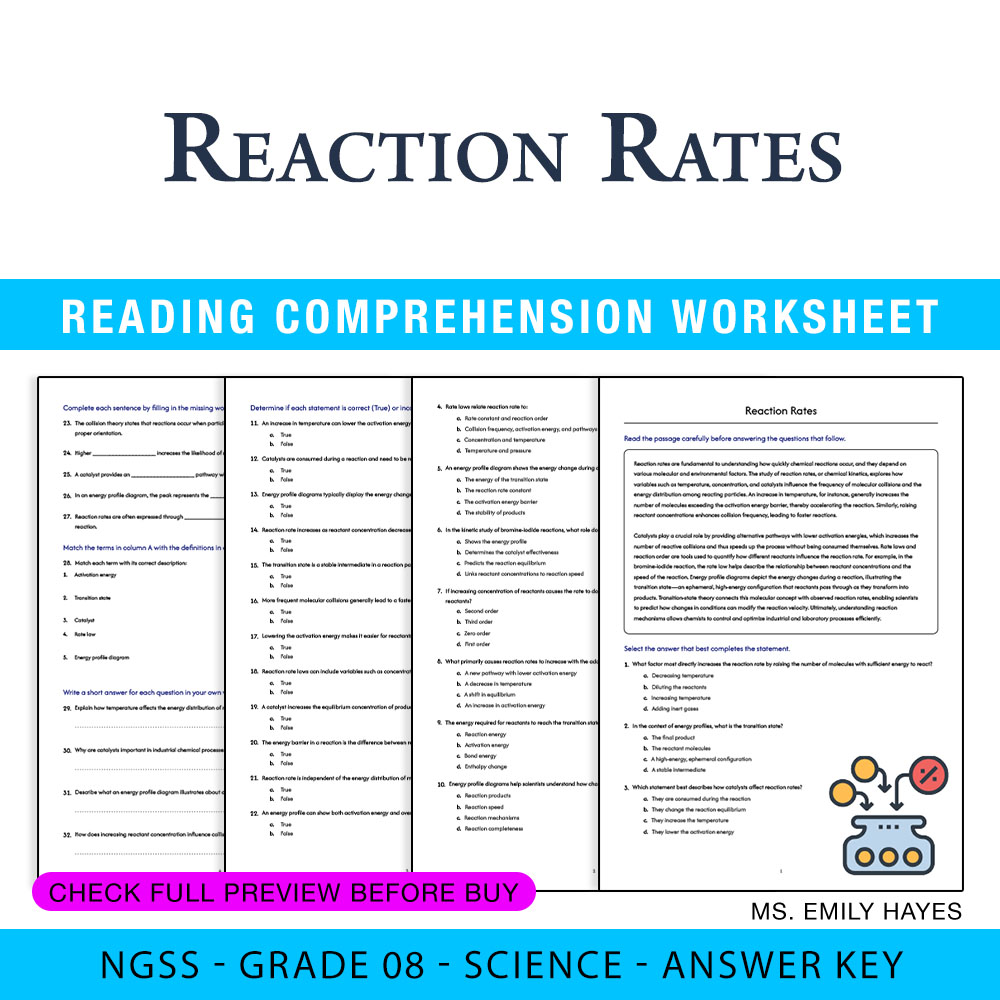
9th Grade Science | Reaction Rates Worksheet (PDF+ Answer Key)
Created byCopper Leaf ClassroomLearning Objectives
- Explain how temperature, concentration, and catalysts affect reaction rates.
- Describe the relationship between collision frequency and reaction speed.
- Interpret rate laws and reaction order in chemical kinetics.
Instant download
About Grade 9 Science Worksheets
Find Science worksheets built for Grade 9. All 6,986 cover core skills, practice, and review, each an instant PDF download.
Every worksheet on MyTeachingSheets is created by independent teacher-authors and reviewed before publication. All resources download as printable PDFs for classroom, homework, or at-home practice, and many include answer keys. Preview any worksheet free before buying.