
Grade 9 Science Worksheets
6,986 worksheets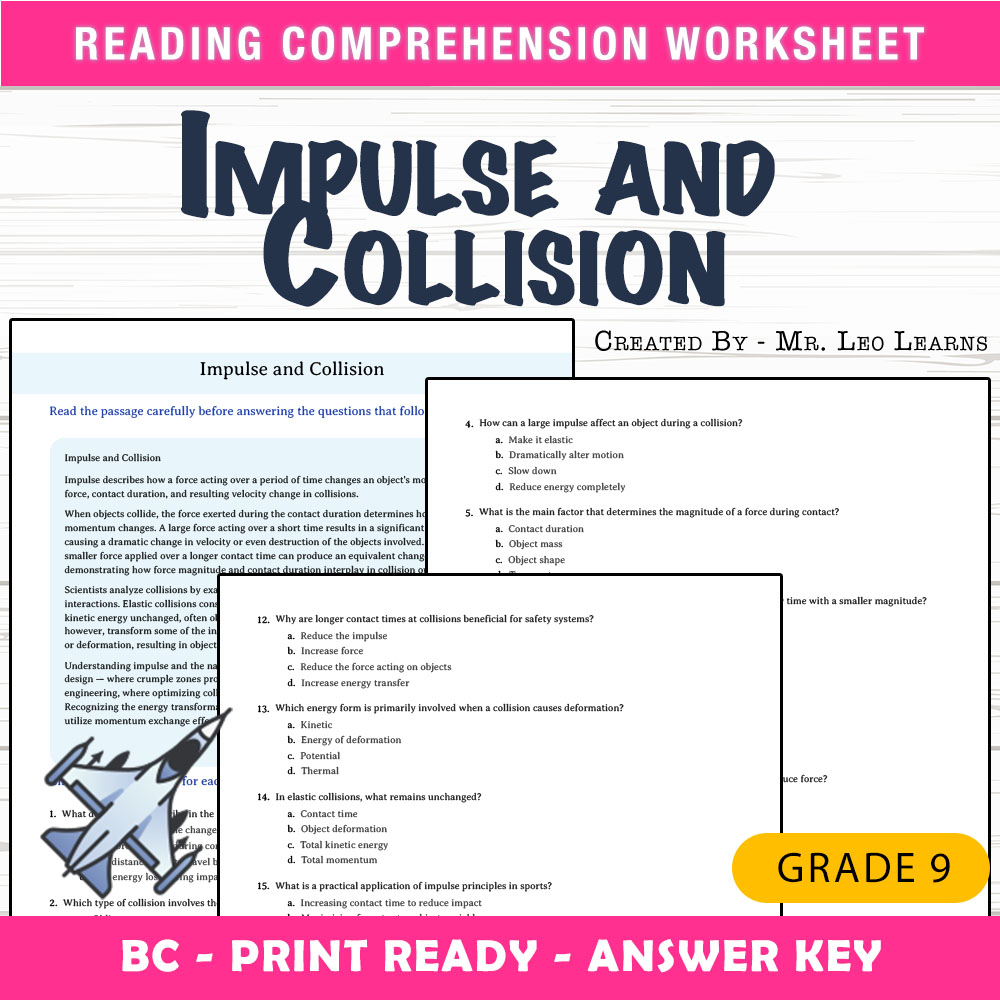
Grade 9 Science — Worksheet MCQ Paper for Mastering Impulse and Collision
 Created byThe Resource Hub
Learning Objectives
- Understand how impulse relates force, contact time, and change in momentum during collisions.
- Differentiate between elastic and inelastic collisions and their energy transformations.
- Apply the impulse-momentum principle to analyze collision scenarios.
Also included in: Grade 9 Science Forces & Motion Worksheet Bundle – BC Curriculum (15 Worksheets) +1 more
Instant download

Grade 9 Science | Gravity and Orbits Worksheet (PDF) for Standard Mastery
 Created byEvergreen Desk Education
Learning Objectives
- Explain how gravity supplies the centripetal force that keeps planets and moons in curved orbits
- Compare how orbital speed and distance change across elliptical and circular paths
- Use orbital motion to predict recurring sky patterns over time
Also included in: Grade 9 Earth and Space Science Lesson Bundle (General) Science Worksheets +1 more
Instant download

Reaction Balancing Worksheet | Grade 9 Science Activities
 Created byPrism Point Learning
Learning Objectives
- Explain how conservation of matter is used to interpret chemical reactions.
- Balance simple chemical equations by matching the number of atoms of each element on both sides.
- Interpret reaction coefficients as particle ratios and justify when coefficients need to change.
Instant download
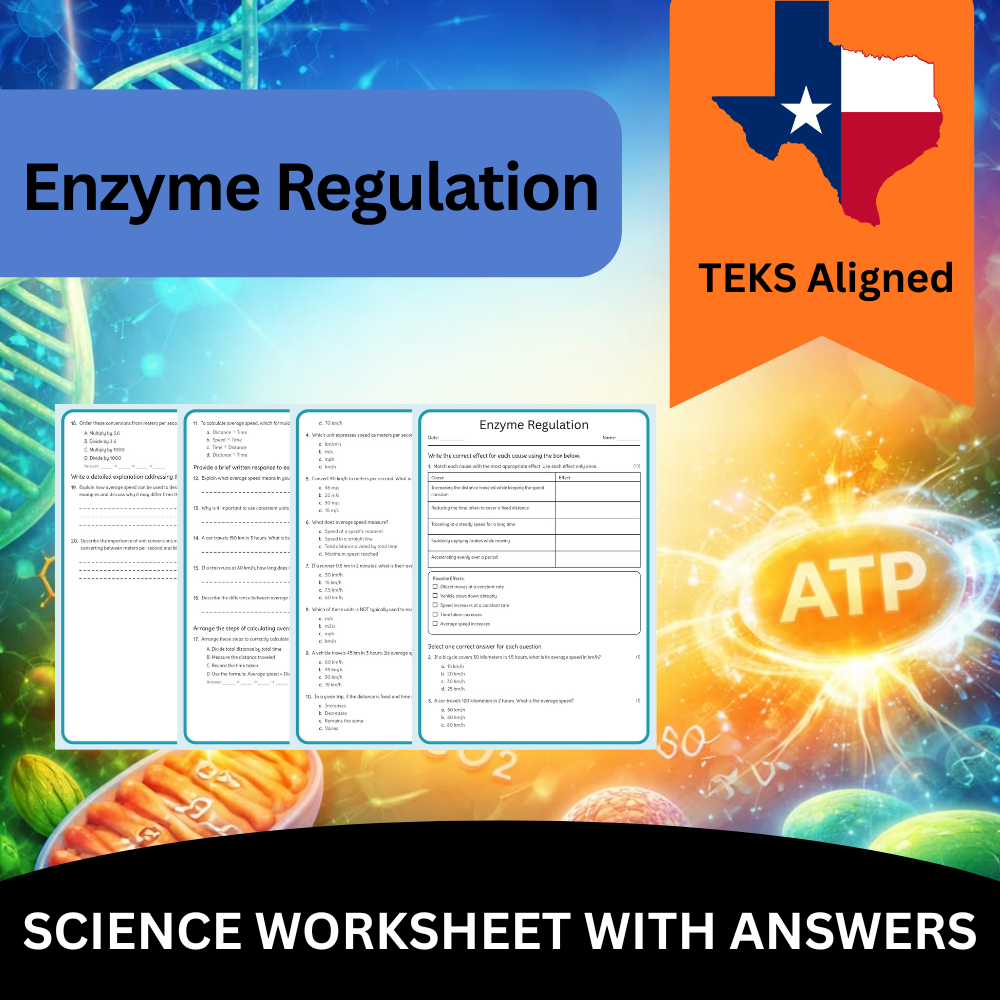
Grade 9 Science | Enzyme Regulation Worksheet (Worksheet + Answer Key) – TEKS Aligned
 Created byBright Mind Resources
Learning Objectives
- Understand the mechanisms of enzyme regulation such as allosteric control, inhibition, covalent modification, and gene expression.
- Describe how environmental factors affect enzyme activity and reaction rates.
- Explain feedback inhibition and its role in metabolic pathways.
Also included in: Grade 9 Science | Photosynthesis & Metabolic Pathways Unit Bundle (TEKS Aligned) +3 more
Instant download
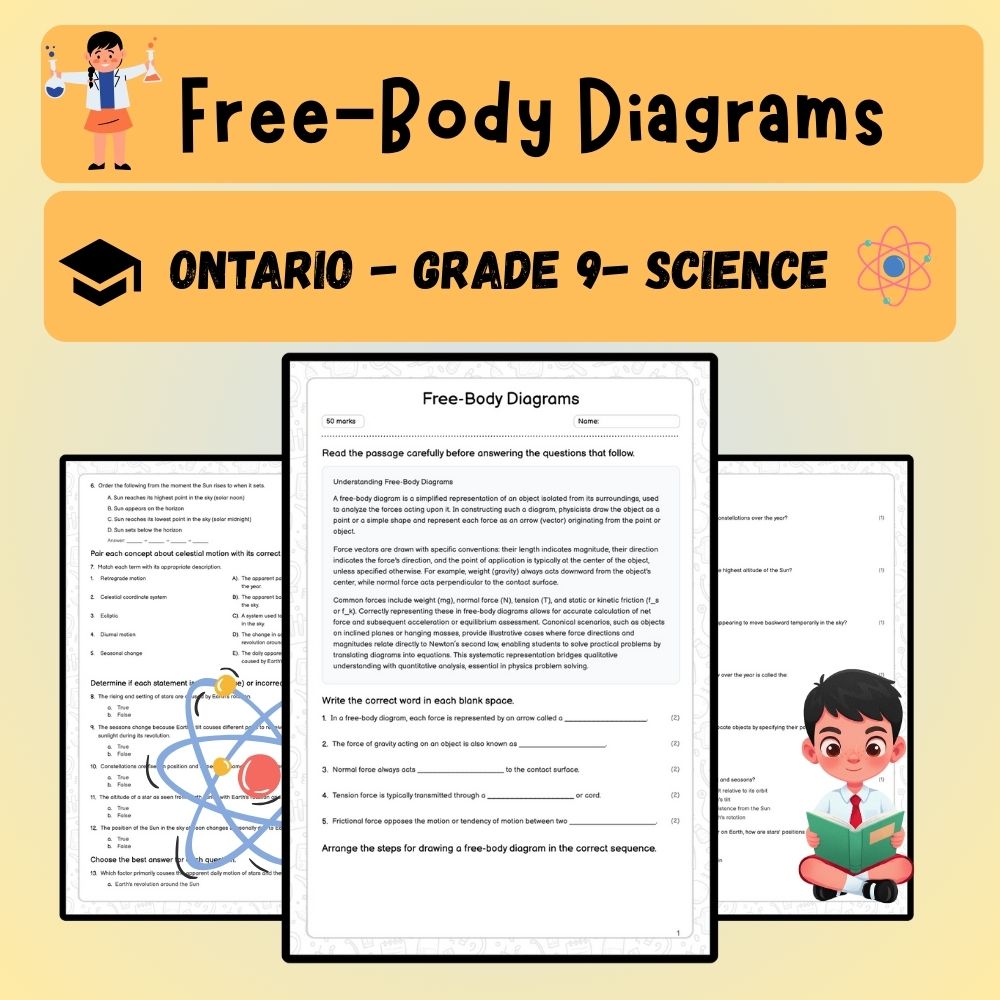
Grade 9 Science | Free-Body Diagrams Worksheet (Ontario Standards)
Created byPrism Point LearningLearning Objectives
- Understand the conventions and components involved in drawing free-body diagrams for isolated objects.
- Identify and represent different forces such as weight, normal force, tension, and friction with proper vector notation.
- Apply free-body diagrams to analyze equilibrium and acceleration in physical systems, including objects on inclined planes and hanging masses.
Also included in: Grade 9 Science Unit | Forces, Motion & Energy Worksheets (Ontario Standards) +1 more
Instant download
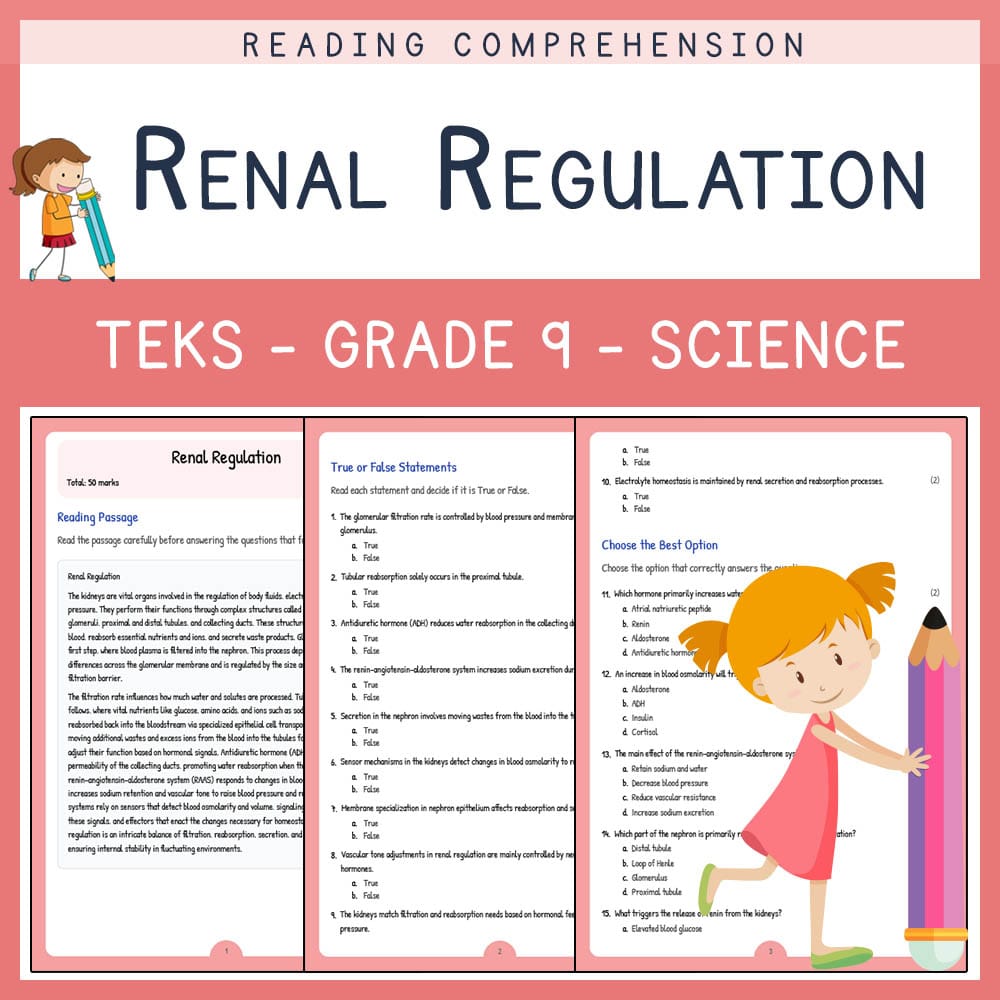
Grade 9 Science | Renal Regulation Worksheet | TEKS-Aligned
 Created byLumora Learning
Learning Objectives
- Describe how hormonal feedback mechanisms regulate kidney function and help maintain homeostasis.
- Explain the processes of glomerular filtration, tubular reabsorption, and secretion in the nephron.
- Identify the roles of specific hormones such as antidiuretic hormone and the renin–angiotensin–aldosterone system in fluid and electrolyte balance.
Instant download
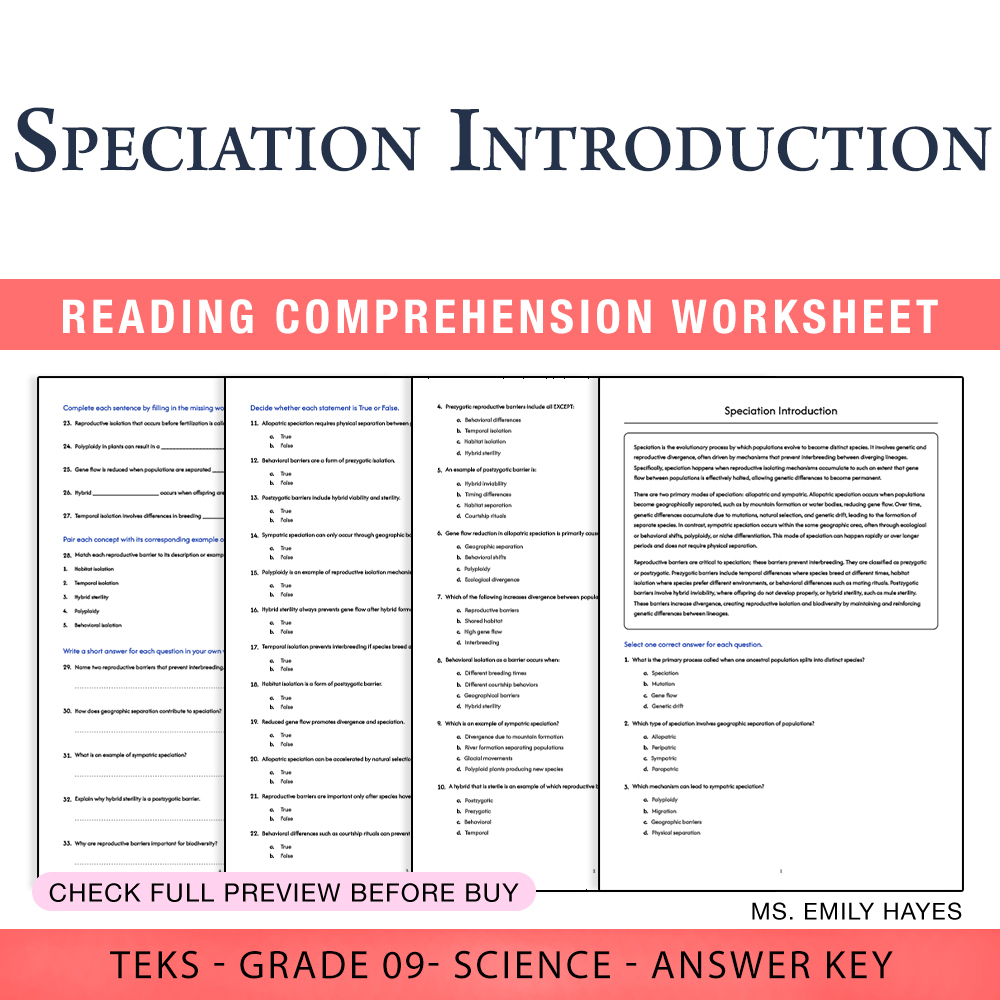
9th Grade Science | Speciation Introduction Worksheet (PDF+ Answer Key)
 Created byCopper Leaf Classroom
Learning Objectives
- Understand the process of speciation and the mechanisms involved.
- Differentiate between allopatric and sympatric speciation.
- Identify types of reproductive barriers that contribute to speciation.
Instant download
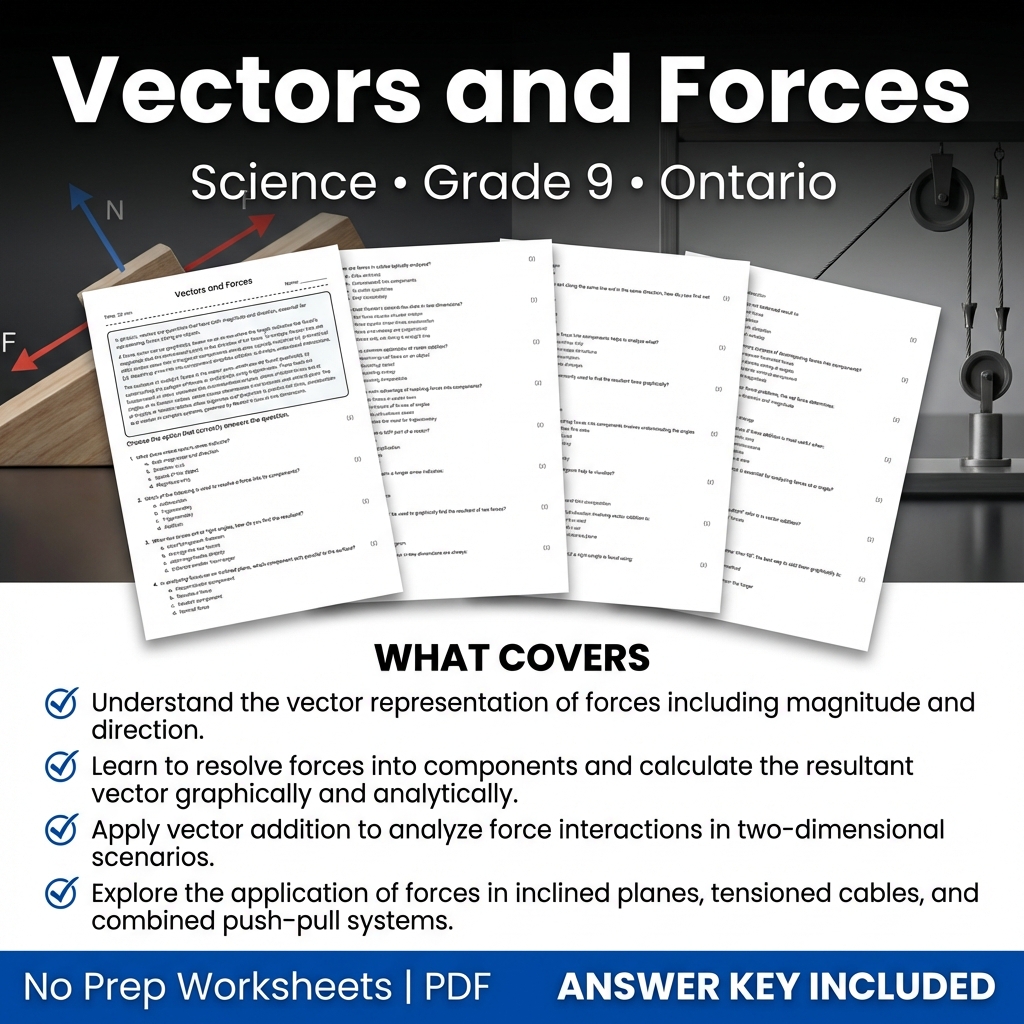
Vectors and Forces Worksheet Grade 9 Science Ontario Standard
 Created byCoral Reef Learning
Learning Objectives
- Understand the vector representation of forces including magnitude and direction.
- Learn to resolve forces into components and calculate the resultant vector graphically and analytically.
- Apply vector addition to analyze force interactions in two-dimensional scenarios.
Instant download
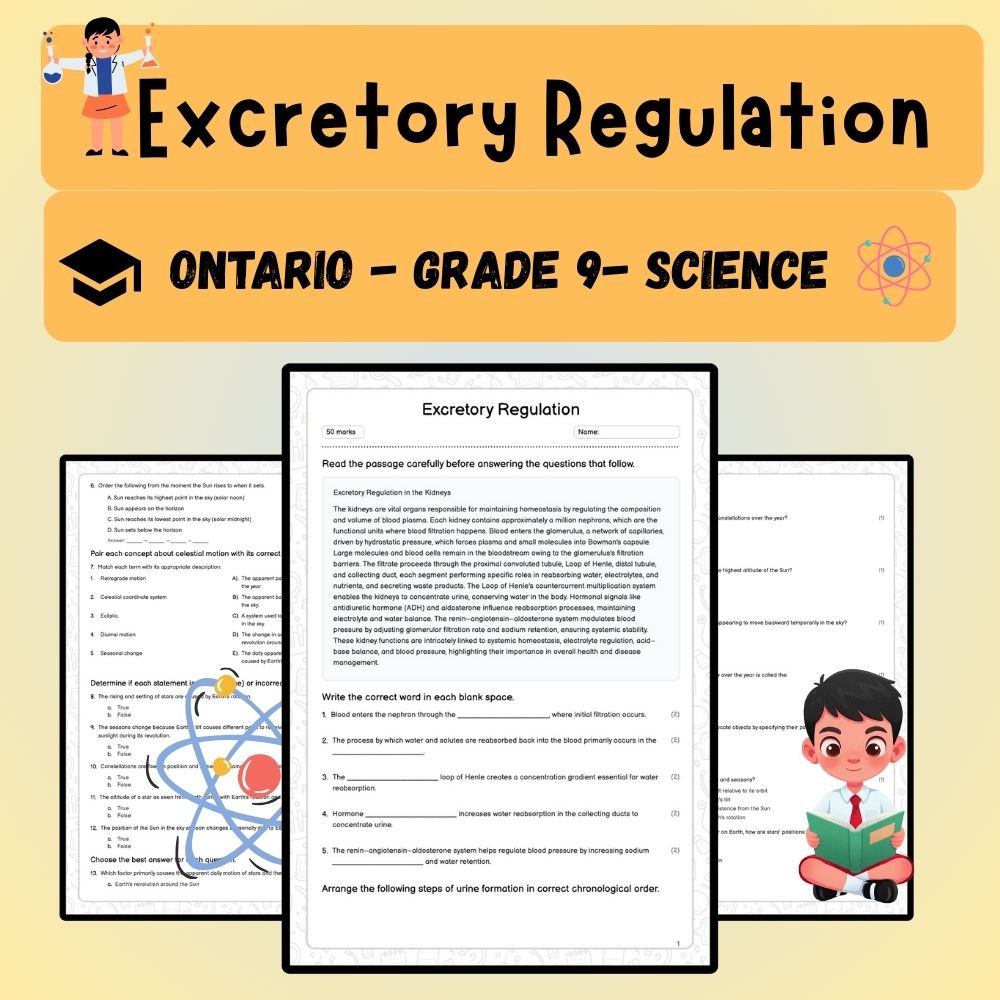
Grade 9 Science | Excretory Regulation Worksheet (Answer Key) - Ontario Standards
Created byPrism Point LearningLearning Objectives
- Describe the structure and function of the nephron in blood filtration and urine formation.
- Explain the processes of glomerular filtration, reabsorption, secretion, and urine concentration mechanisms.
- Relate renal regulation of electrolytes, acid–base balance, and blood pressure to overall homeostasis.
Also included in: Grade 9 Science Unit Bundle | Human Body Systems & Cell Functions +1 more
Instant download
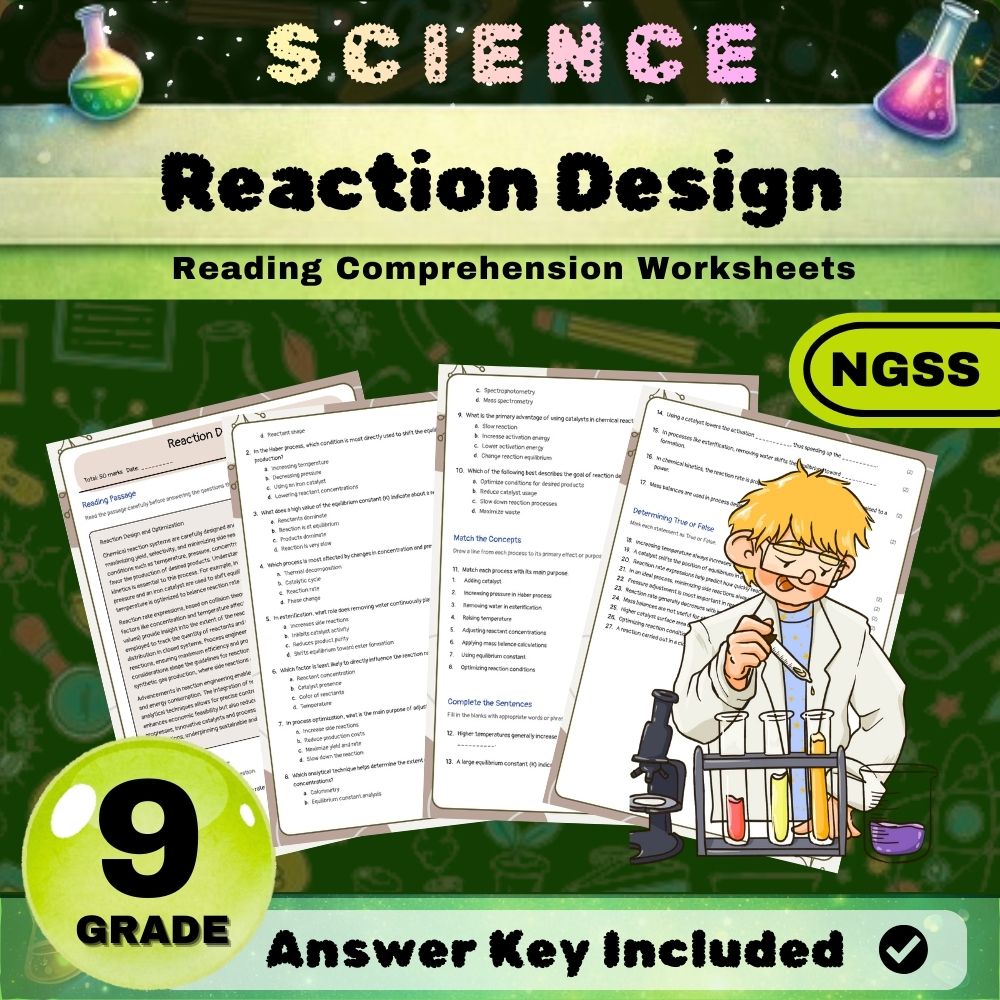
Grade 9 Science | Reaction Design Worksheet (NGSS) Practice PDF
 Created byMaple Path Learning
Learning Objectives
- Understand how temperature, pressure, concentration, and catalysts influence chemical reactions.
- Explain the principles of chemical equilibrium and reaction kinetics in process optimization.
- Apply equilibrium constants, reaction-rate expressions, and mass balances to predict product outcomes.
Also included in: Grade 9 Science | Matter and Its Interactions NGSS Unit Bundle – Worksheets +1 more
Instant download
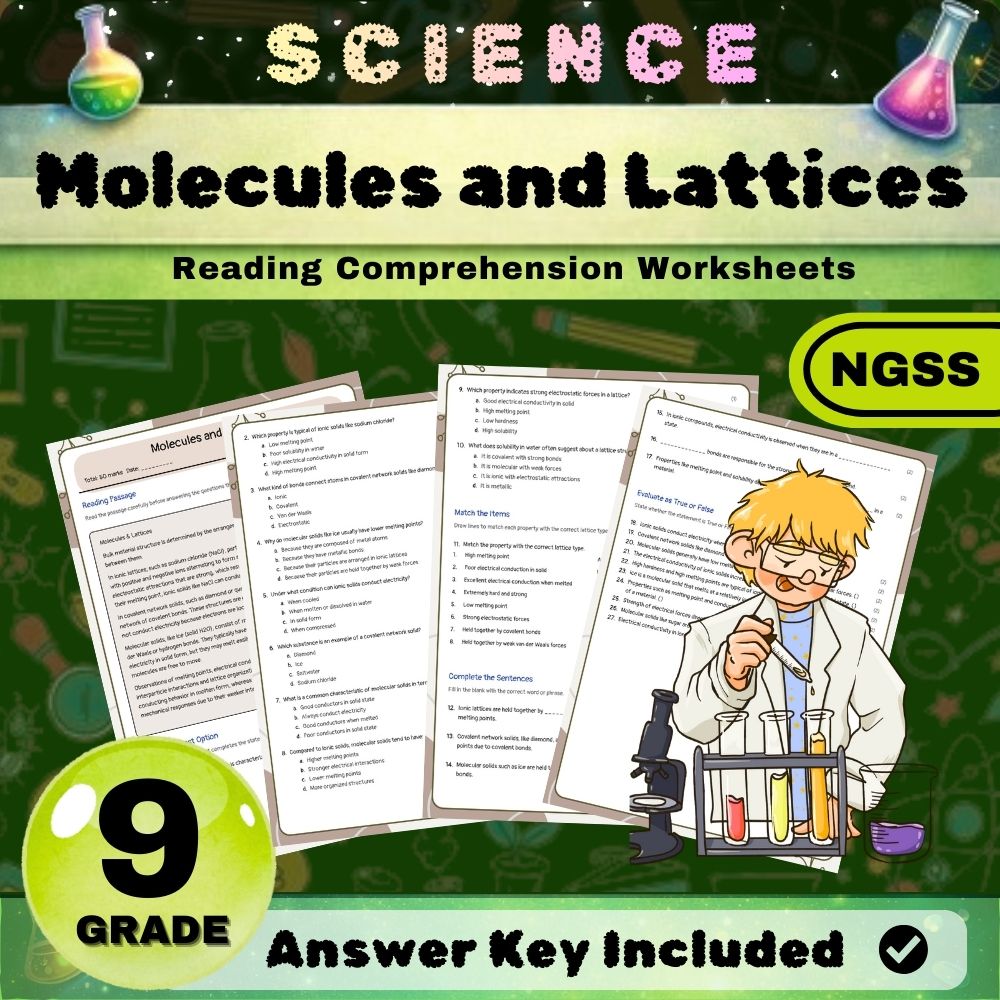
Grade 9 Science – Molecules and Lattices Worksheet (NGSS) PDF
Created byMaple Path LearningLearning Objectives
- Understand the relationship between particle arrangement and bulk material properties in different lattice structures.
- Distinguish between ionic lattices, covalent networks, and molecular solids based on physical and electrical characteristics.
- Describe how melting point, electrical conductivity, hardness, and solubility are affected by lattice organization and interparticle forces.
Also included in: Grade 9 Science | Matter and Its Interactions NGSS Unit Bundle – Worksheets +1 more
Instant download
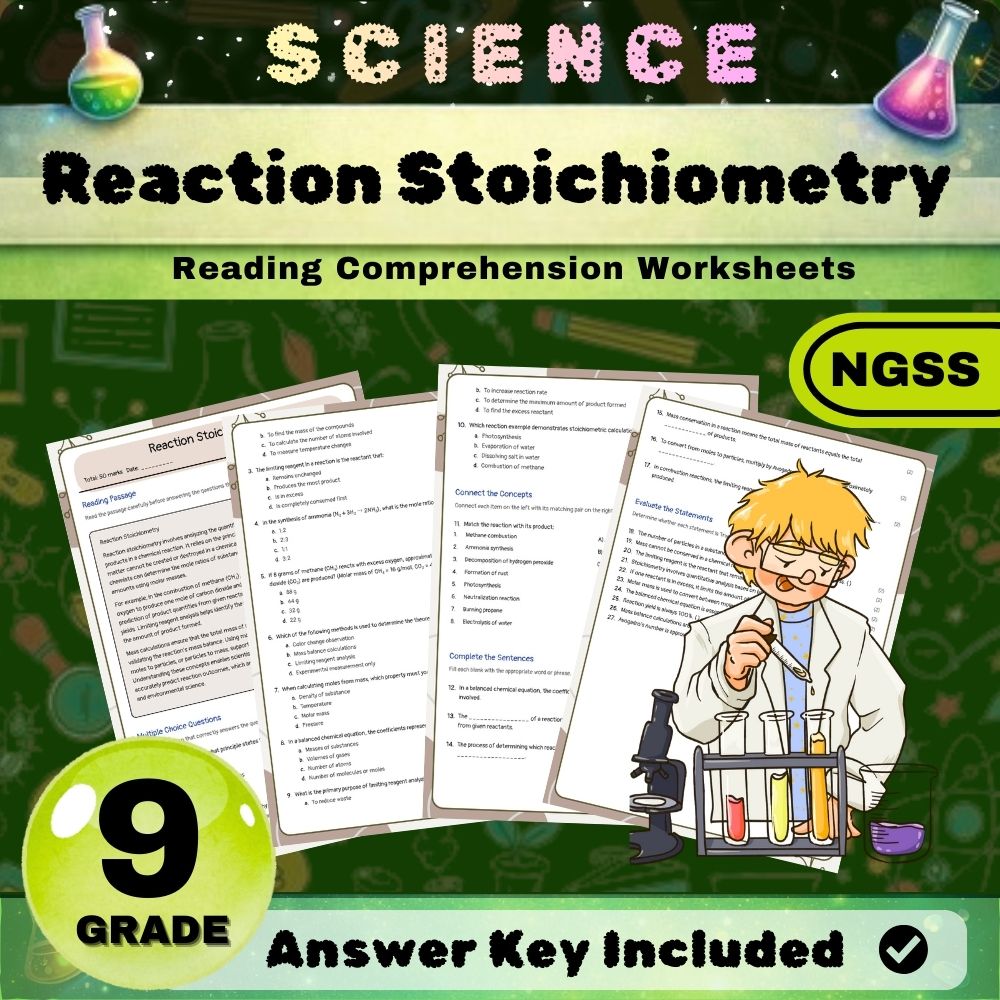
Grade 9 Science | Reaction Stoichiometry Worksheet (NGSS PDF)
Created byMaple Path LearningLearning Objectives
- Understand the concept of molar relationships in balanced chemical equations.
- Apply conservation of mass to relate reactant and product quantities in chemical reactions.
- Calculate moles, mass, and particle counts using molar mass conversions.
Also included in: Grade 9 Science | Matter and Its Interactions NGSS Unit Bundle – Worksheets +1 more
Instant download
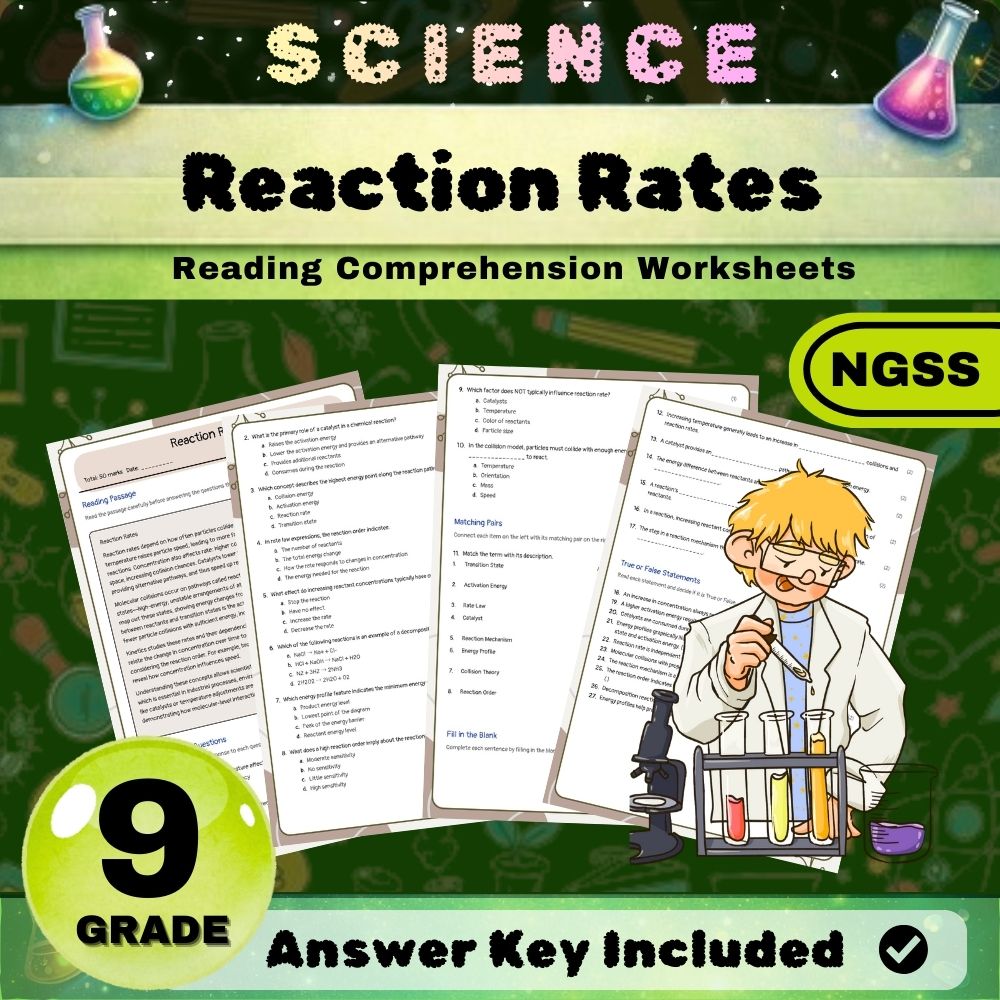
Grade 9 Science | Reaction Rates Worksheet (NGSS) – PDF
Created byMaple Path LearningLearning Objectives
- Explain how collision frequency, activation energy, and reaction pathways influence reaction rates.
- Analyze the effects of temperature, concentration, and catalysts on reaction speed.
- Apply rate laws and reaction order concepts to specific chemical reactions like bromine-iodide kinetics.
Also included in: Grade 9 Science | Matter and Its Interactions NGSS Unit Bundle – Worksheets +1 more
Instant download
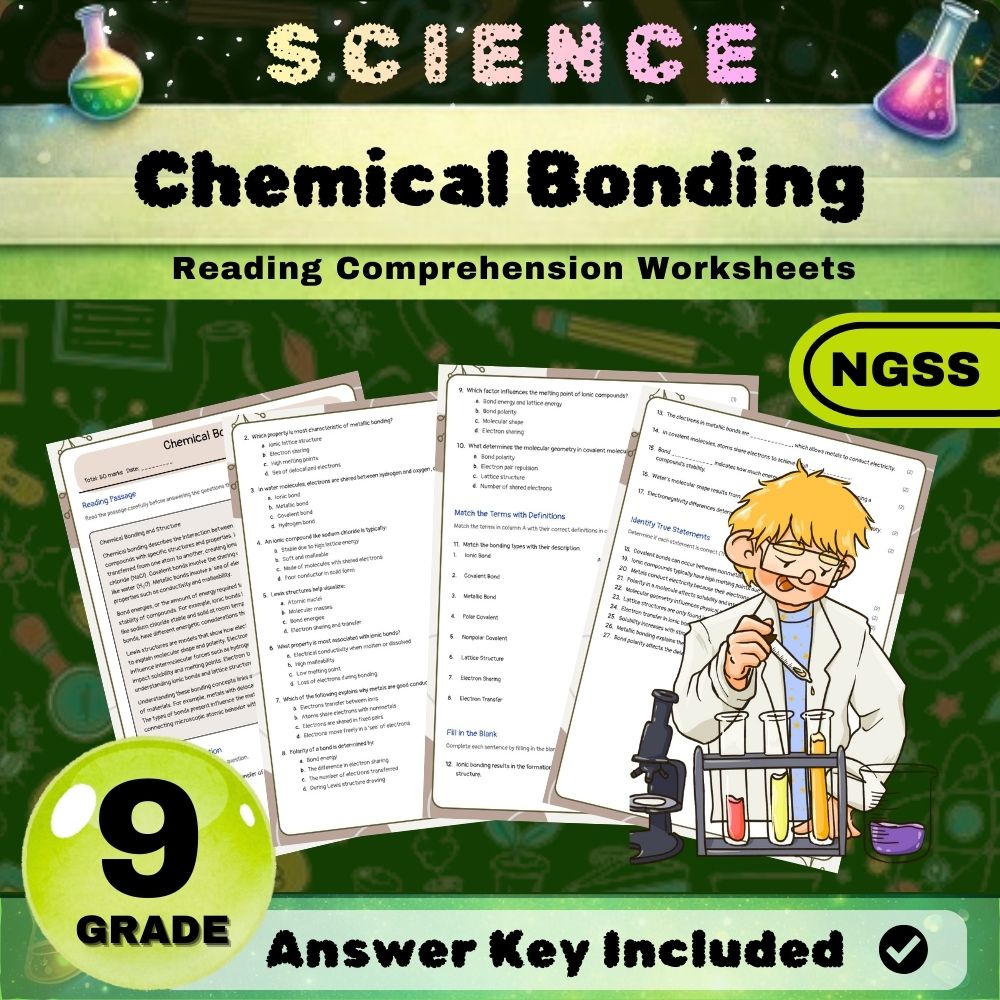
Grade 9 Science | Chemical Bonding Worksheet (NGSS) – PDF
Created byMaple Path LearningLearning Objectives
- Explain the differences between ionic, covalent, and metallic bonds.
- Describe how electron sharing and transfer affect molecular and lattice structures.
- Analyze how bond energies influence the stability of compounds like sodium chloride and water.
Also included in: Grade 9 Science | Matter and Its Interactions NGSS Unit Bundle – Worksheets +1 more
Instant download

Grade 9 Science – Simple Machines & Levers | Daily Reading Worksheet
Created byBright Mind ResourcesLearning Objectives
- Understand the basic components of a lever
- Identify levers in everyday objects
- Explain how levers make work easier
Also included in: Grade 9 Simple Machines Science Daily Reading Lesson Bundle | Alberta +1 more
Instant download

Grade 9 Science | Force and Acceleration Worksheet | BC Standards
Created byLumora LearningLearning Objectives
- Understand the relationship between net force, mass, and acceleration.
- Explain how vector quantities of force and acceleration influence movement.
- Analyze the effect of changing forces and mass on an object's acceleration.
Instant download

Grade 9 Science | Energy Conservation Worksheet | BC Aligned
Created byLumora LearningLearning Objectives
- Understand the principle of conservation of energy in isolated systems.
- Identify how kinetic and potential energy transform during motion.
- Explain the role of nonconservative forces like friction in dissipating mechanical energy.
Instant download

Grade 9 Science | Net Force Concept Worksheet | BC Aligned
Created byLumora LearningLearning Objectives
- Understand the definition and significance of net force in motion.
- Identify when forces are balanced or unbalanced and predict object motion.
- Learn how to resolve forces into components and add them to determine net force.
Instant download

Grade 9 Science | Power and Efficiency Worksheet | BC Standards
Created byLumora LearningLearning Objectives
- Describe how power measures the rate of energy transfer in mechanical systems.
- Explain the concept of efficiency and how it relates useful output energy to input energy.
- Identify factors that cause energy loss such as heat, sound, or deformation.
Instant download

Grade 9 Science | Work and Energy Worksheet | BC Standards
Created byLumora LearningLearning Objectives
- Define and describe the concept of work in physics.
- Explain how work relates to energy transfer and energy change in systems.
- Identify scenarios where work is positive, negative, or zero.
Instant download
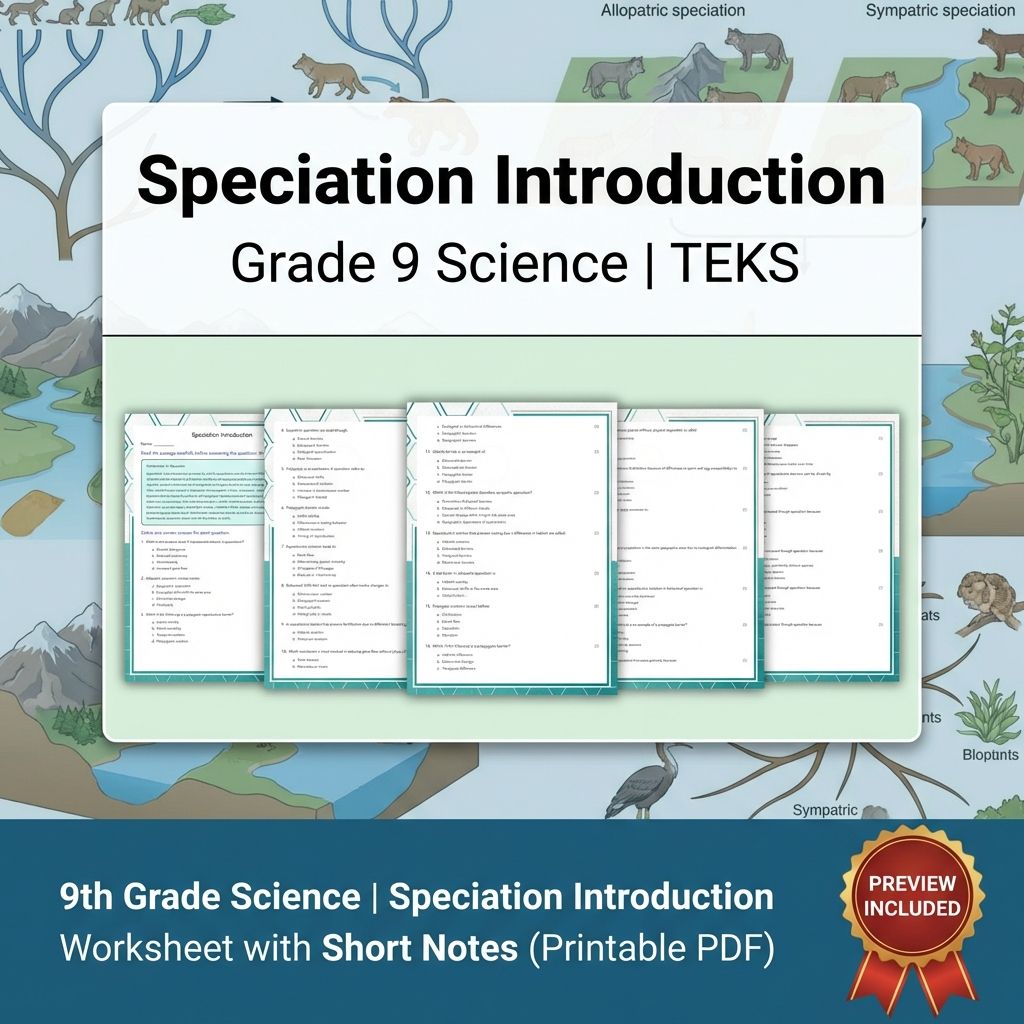
9th Grade Science | Speciation Introduction Worksheet with Short Notes (PDF)
 Created byMeadowlark Worksheets
Learning Objectives
- Define the process of speciation and its significance in biodiversity.
- Differentiate between allopatric and sympatric speciation.
- Identify reproductive barriers and their roles in speciation.
Instant download

Grade 9 Science | Watershed Change Reading Worksheets (PDF + Rubric)
JCreated byJ.S SheetsLearning Objectives
- Understand human influences on watershed processes such as urbanization, deforestation, agriculture, and infrastructure.
- Identify consequences of watershed alterations including runoff, sediment load, nutrient fluxes, and groundwater recharge.
- Relate changes in watershed practices to channel morphology, flood frequency, and aquatic ecosystem health.
Also included in: Grade 9 Science | Earth Processes & Celestial Phenomena Worksheets Collection +1 more
Instant download
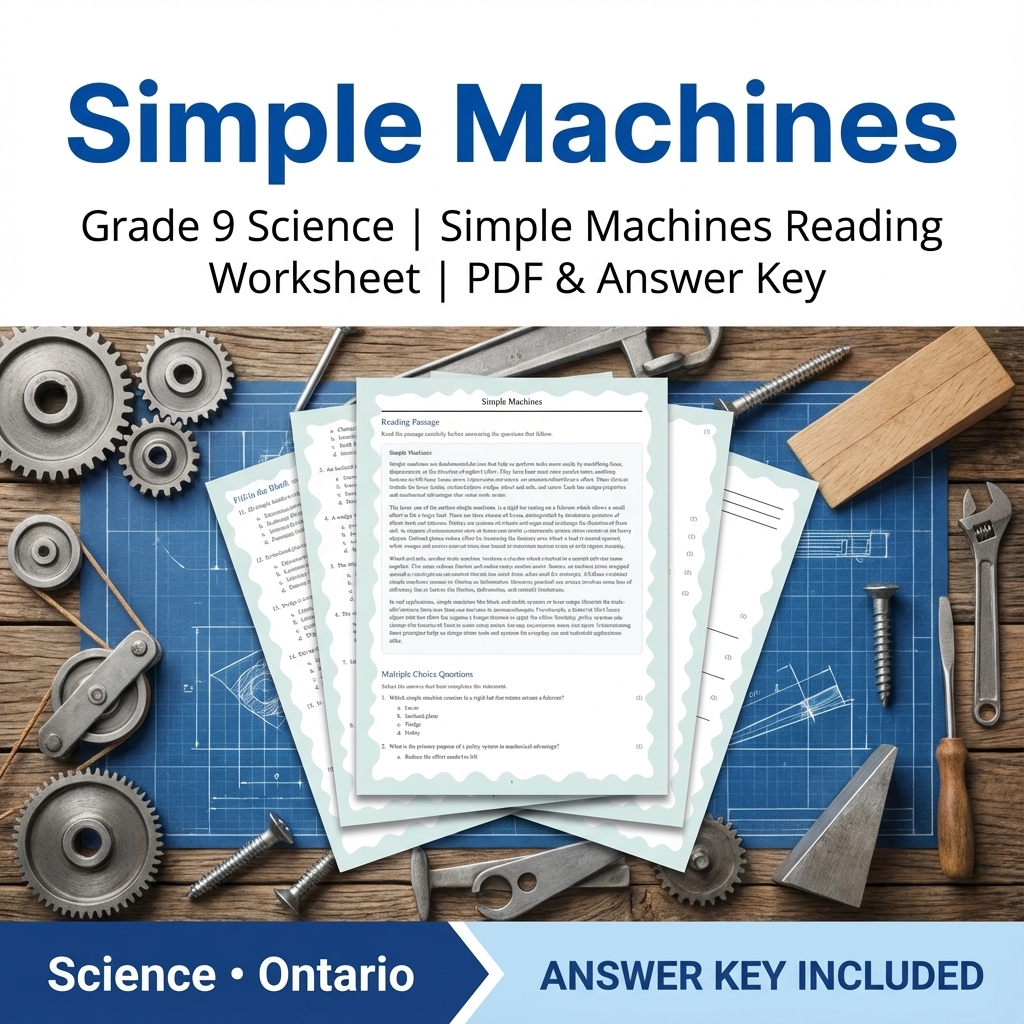
Grade 9 Science | Simple Machines Reading Worksheet | PDF & Answer Key
JCreated byJ.S SheetsLearning Objectives
- Understand the characteristics and roles of classical simple machines in mechanical advantage.
- Identify different types of simple machines such as levers, pulleys, inclined planes, wedges, wheels and axles, and screws.
- Explain the concepts of ideal mechanical advantage and how force and displacement relate in simple machines.
Also included in: Grade 9 Science Unit | Force, Motion & Energy Worksheets & Answer Keys Bundle +1 more
Instant download

Heat and Work Energy Transfer Pathways Worksheet | Grade 9 Science Standards
JCreated byJ.S SheetsLearning Objectives
- Explain how heat transfer occurs due to temperature differences between a system and its surroundings.
- Describe how work transfer occurs when forces act through a distance, changing a system’s energy.
- Distinguish heat and work as specific energy-transfer pathways in both physical and chemical changes.
Also included in: Grade 9 Energy, Waves, and Motion Science Lesson Bundle: General Framework +1 more
Instant download

Regulatory Mechanisms Worksheet Grade 9 Science TEKS Practice
Created byPrism Point LearningLearning Objectives
- Explain how regulatory DNA elements and proteins control gene transcription without changing DNA sequence
- Describe how epigenetic modifications affect chromatin accessibility and gene expression
- Use examples of feedback and regulatory networks to predict how cells respond to signals
Also included in: Grade 9 Genetics & Biotechnology Lesson Bundle | TeKS Science
Instant download

Pedigree Analysis Worksheet | Grade 9 Science Activities
Created byPrism Point LearningLearning Objectives
- Identify inheritance patterns in pedigrees (autosomal dominant, autosomal recessive, X-linked, and mitochondrial).
- Use affected and carrier status, sex distribution, and generation skipping to infer likely genotypes.
- Apply basic probability ideas to estimate recurrence risk for relatives and explain how penetrance can affect interpretation.
Also included in: Grade 9 Genetics & Biotechnology Lesson Bundle | TeKS Science
Instant download

Genetic Data Worksheet | Grade 9 Science Activities
Created byPrism Point LearningLearning Objectives
- Interpret genetic data using genotype and phenotype frequencies to infer inheritance patterns
- Evaluate how molecular evidence (PCR markers, single nucleotide variants, sequencing reads) supports variant detection
- Use basic statistics and comparisons to expected ratios to reason about linkage, heterozygosity, and selection
Also included in: Grade 9 Genetics & Biotechnology Lesson Bundle | TeKS Science
Instant download
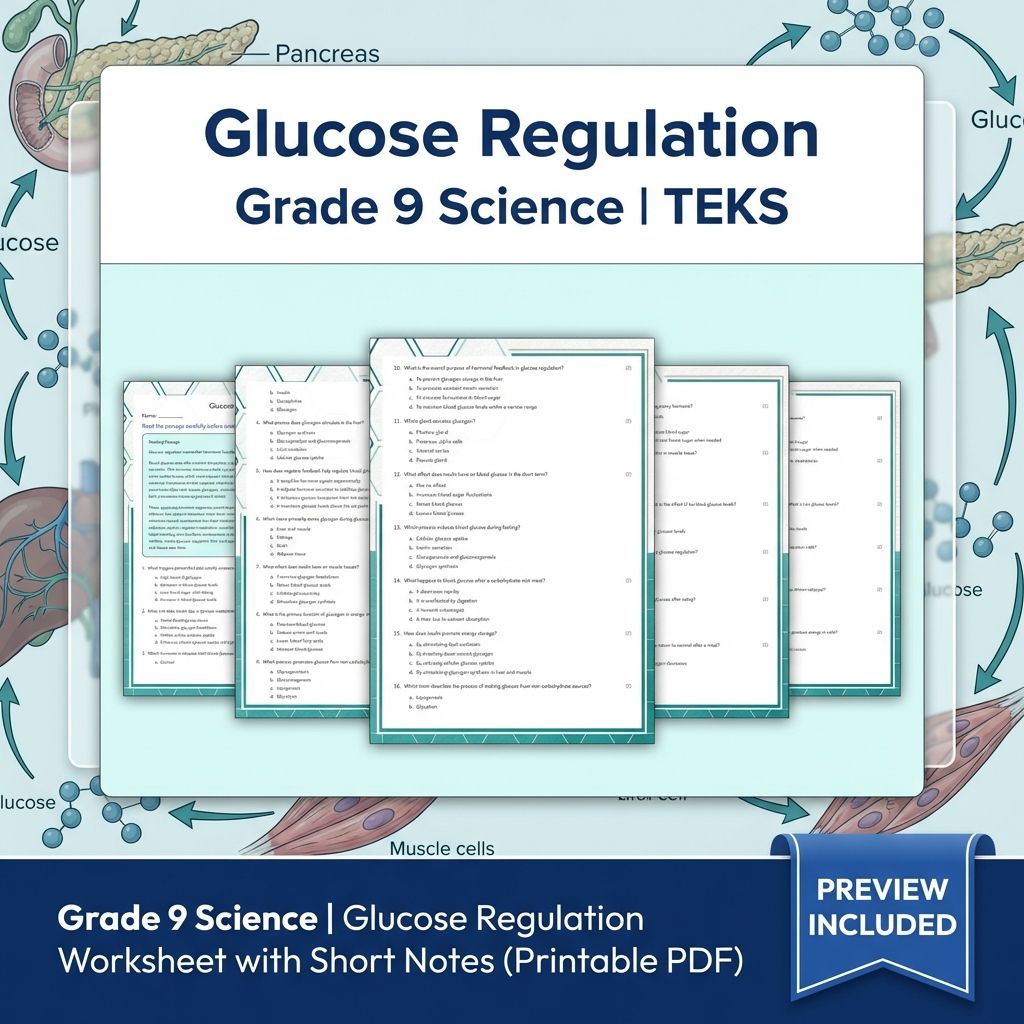
Grade 9 Science | Glucose Regulation Worksheet with Short Notes (Printable PDF)
Created byMeadowlark WorksheetsLearning Objectives
- Understand how hormonal feedback maintains energy balance through glucose regulation.
- Describe the roles of insulin and glucagon in blood glucose control.
- Explain how negative feedback loops help maintain set points in metabolic processes.
Instant download
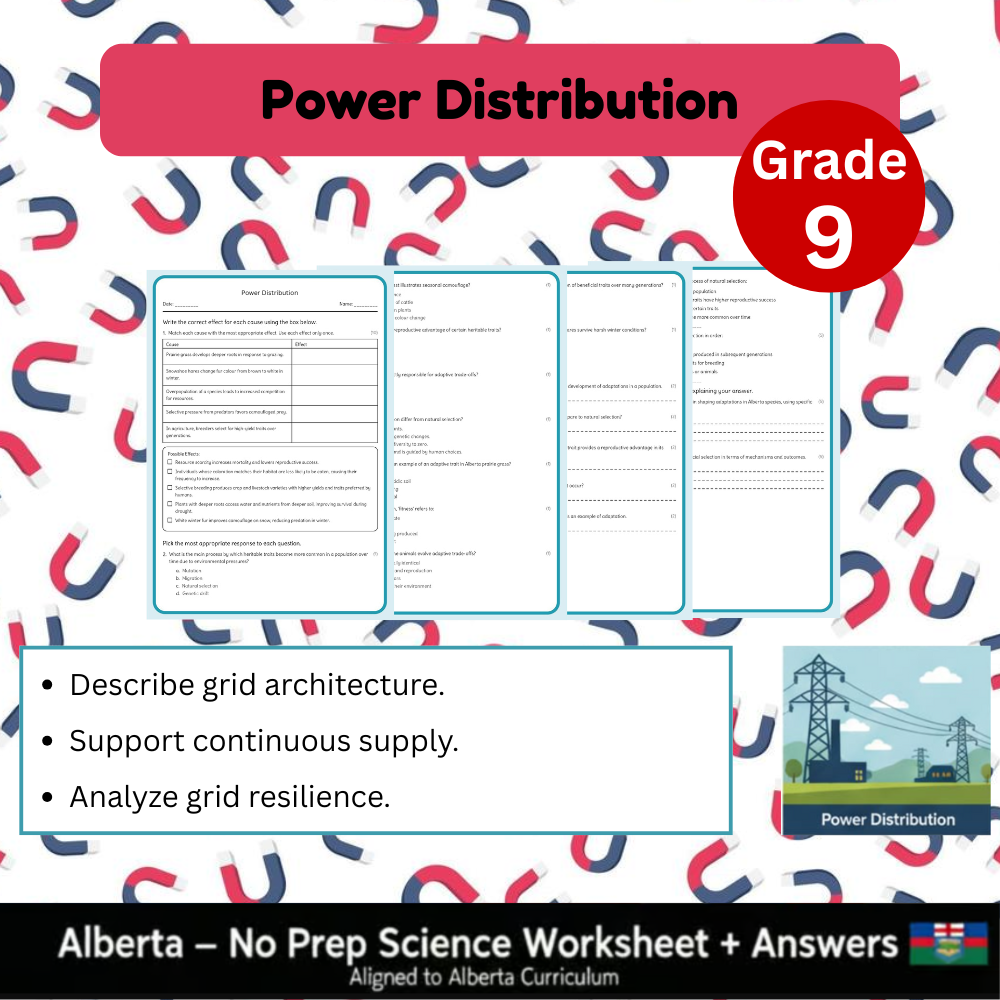
Grade 9 Science – Power Distribution Worksheet (PDF) | Alberta Standard
Created byBright Mind ResourcesLearning Objectives
- Understand the components and architecture of power distribution systems.
- Identify how system design supports continuous electricity supply.
- Analyze the effects of faults and regional constraints on power grid resilience.
Instant download
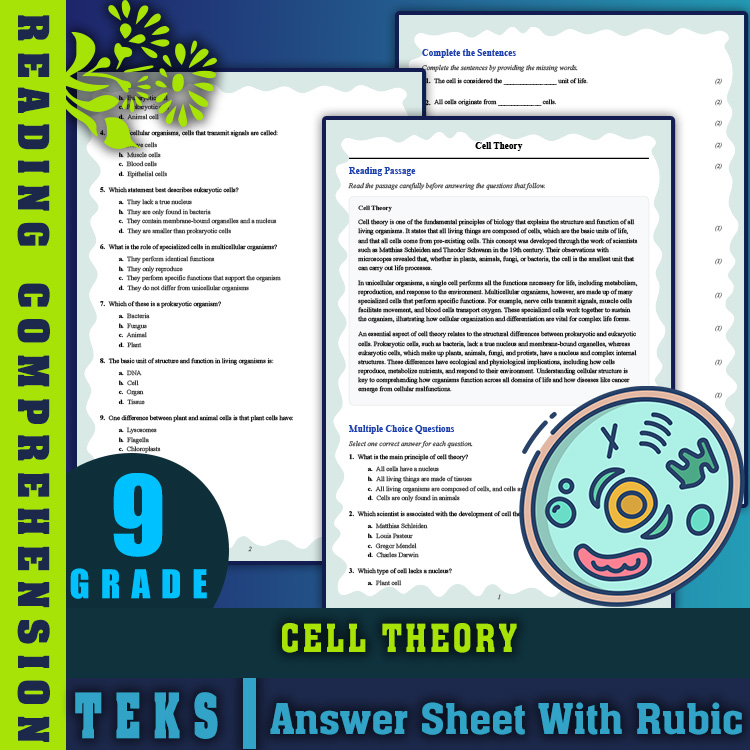
9th Grade Science | Cell Theory Reading Worksheet & Answer Key (PDF)
JCreated byJ.S SheetsLearning Objectives
- Understand the fundamental principles of the cell theory.
- Differentiate between unicellular and multicellular organisms based on cellular organization.
- Explain the differences between prokaryotic and eukaryotic cells.
Instant download

Grade 9 Science | Patterns of Inheritance Worksheet | Alberta Standards
Created byLumora LearningLearning Objectives
- Understand the principles of Mendelian inheritance, including dominant and recessive alleles.
- Distinguish between genotype and phenotype in genetic traits.
- Explain how Punnett squares predict trait segregation ratios.
Instant download
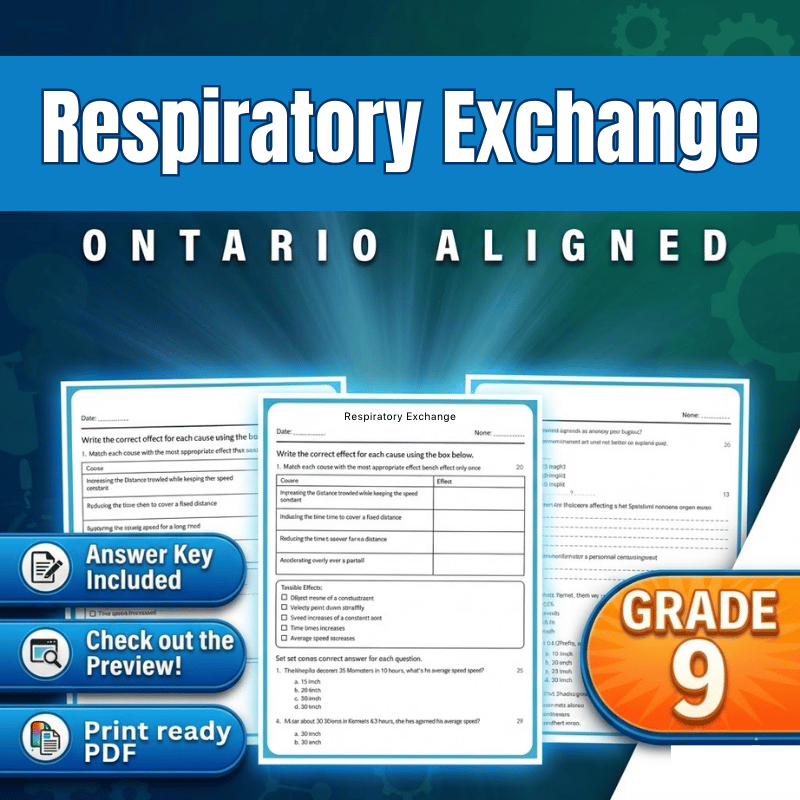
Grade 9 Science Worksheet | Respiratory Exchange (Ontario - PDF)
Created byBright Mind ResourcesLearning Objectives
- Understand the process of gas exchange at the alveolar–capillary interface.
- Explain how diffusion, surface area, and membrane thickness influence oxygen and carbon dioxide transfer.
- Describe the mechanics of ventilation and factors affecting oxygen uptake and carbon dioxide removal.
Instant download

Grade 9 Science – Fossil Records Daily Reading Worksheet | TEKS Aligned
Created byBright Mind ResourcesLearning Objectives
- Understand what fossil records are and their significance in studying Earth's history.
- Identify different types of fossils and methods used to date them.
- Recognize how fossils contribute to our knowledge of evolution and extinction events.
Also included in: Grade 9 Evolution Science Daily Reading Worksheets Lesson Bundle | TEKS +2 more
Instant download
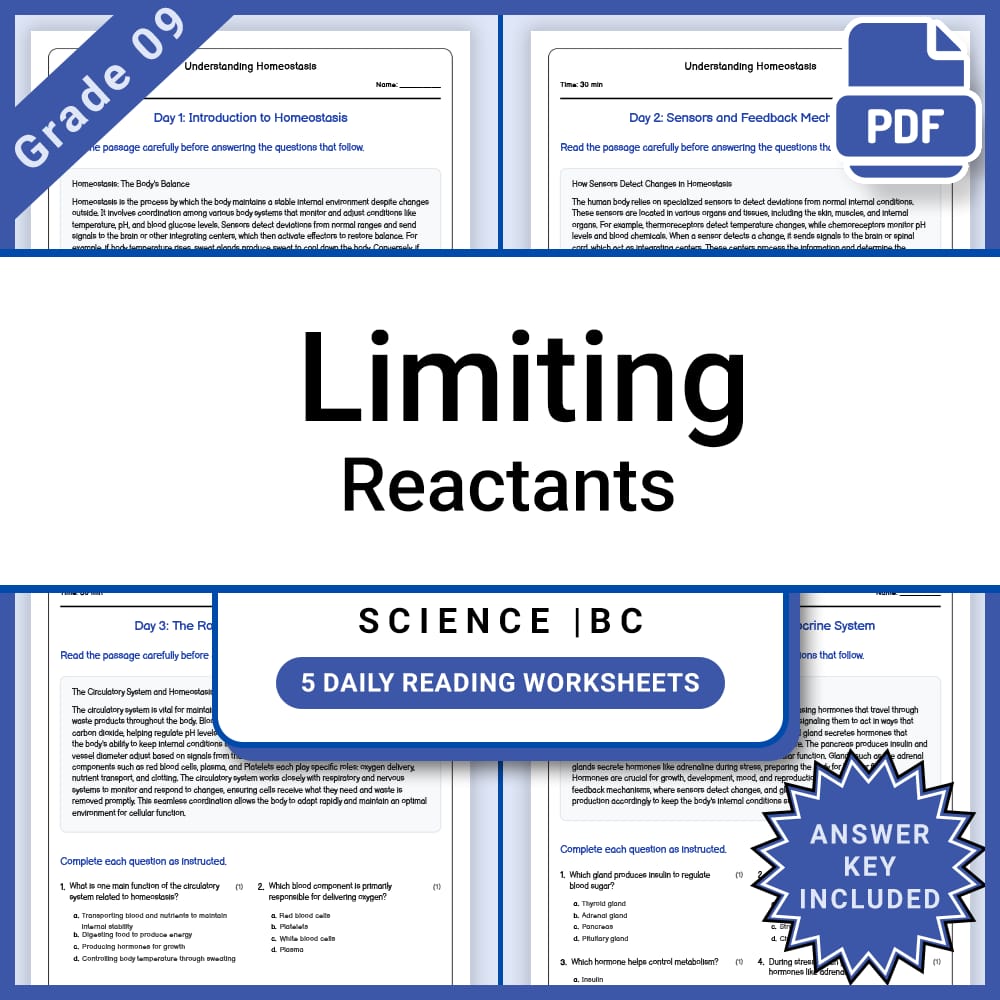
Grade 9 Science – Limiting Reactants Daily Reading Worksheet + Answer Key
JCreated byJ.S SheetsLearning Objectives
- Define a limiting reactant in a chemical reaction.
- Explain the difference between theoretical yield and actual yield.
- Calculate the limiting reactant in given chemical scenarios.
Also included in: Grade 9 Science Lesson Group BC Framework | Chemistry, Physics, and More +1 more
Instant download
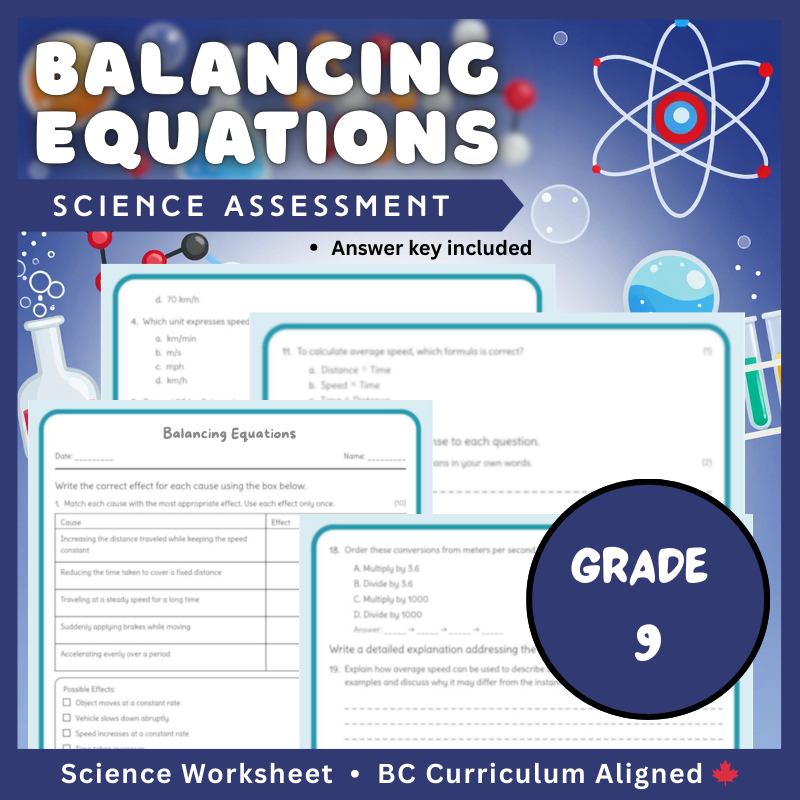
Grade 9 Science | Balancing Equations Worksheet (PDF) – Standard BC
Created byBright Mind ResourcesLearning Objectives
- Understand the importance of balancing chemical equations to reflect conservation of atoms.
- Learn how to identify and use coefficients to balance equations correctly.
- Recognize the significance of proper symbolic representation including state indicators and stoichiometry.
Instant download

Sexual and Asexual Reproduction Worksheets Grade 9 Science
 Created bySunny Desk Resources
Learning Objectives
- Compare sexual and asexual reproduction in terms of genetic variation and how offspring are produced.
- Explain how reproductive strategies can affect population growth and genetic diversity over generations.
- Identify examples of asexual reproduction and describe the mechanisms involved.
Also included in: Genetics & Heredity Lesson Bundle | Grade 9 Science | Alberta Framework +1 more
Instant download

Grade 9 Science – Intermolecular Forces & BC Standards | Daily Reading Worksheet
Created byBright Mind ResourcesLearning Objectives
- Identify different types of intermolecular forces
- Understand how molecular structure influences intermolecular forces
- Explain the effect of intermolecular forces on physical properties
Also included in: Grade 9 Chemical Reactions Science Lesson Bundle: Daily Reading (BC) +1 more
Instant download
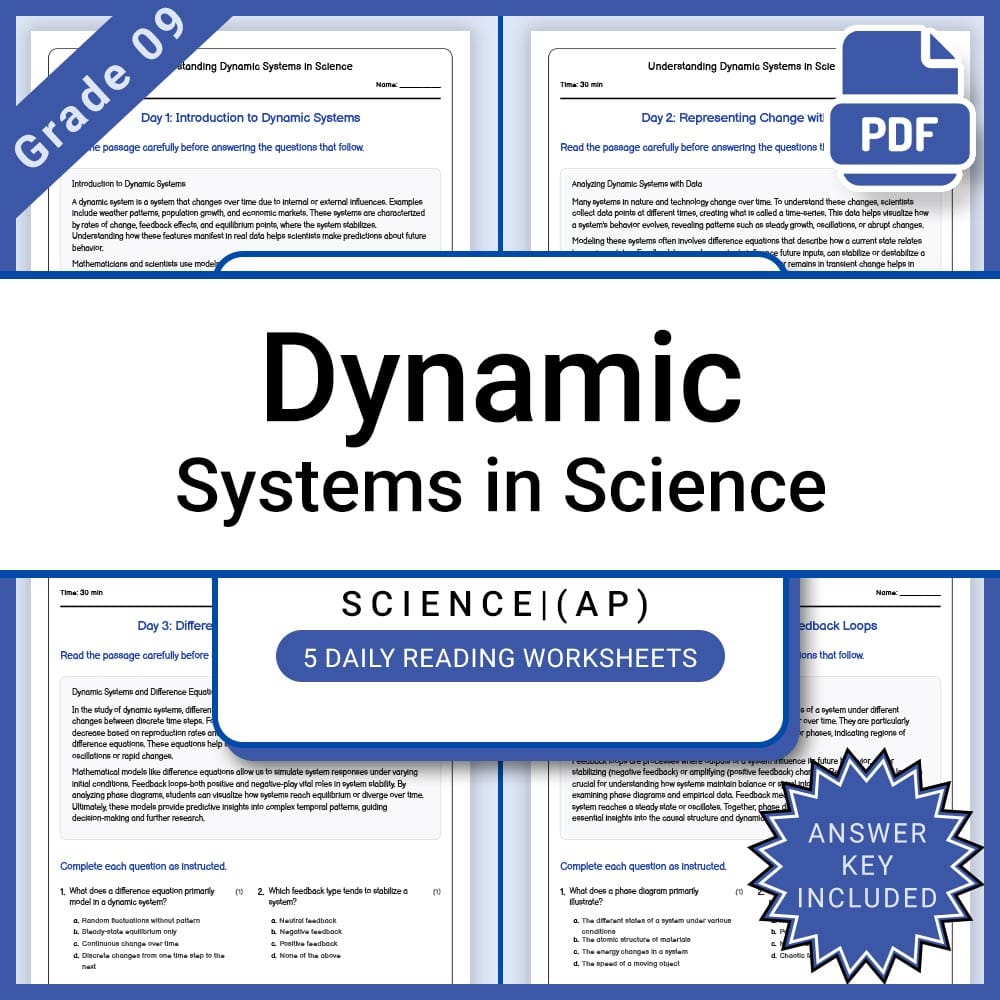
Grade 9 Science – Dynamic Systems Worksheet with Answer Key
JCreated byJ.S SheetsLearning Objectives
- Define what a dynamic system is and explain its key features.
- Identify how rates, feedback loops, and equilibrium manifest in real-world data.
- Differentiate between transient and steady-state behaviors in systems.
Also included in: Grade 9 Science Lesson Group - AP Framework Daily Reading Worksheets +1 more
Instant download
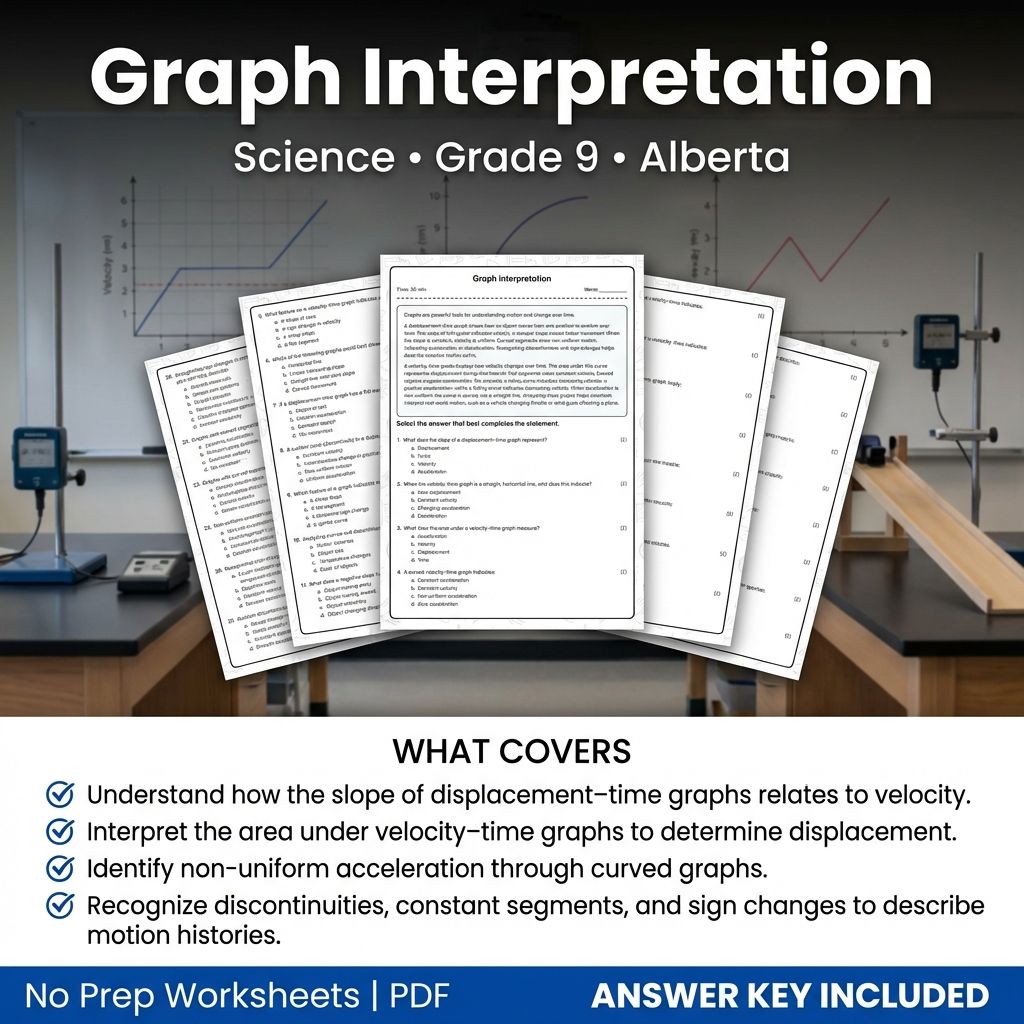
Grade 9 Science Worksheet on Graph Interpretation | Alberta Standards
Created byCoral Reef LearningLearning Objectives
- Understand how the slope of displacement–time graphs relates to velocity.
- Interpret the area under velocity–time graphs to determine displacement.
- Identify non-uniform acceleration through curved graphs.
Instant download

Neuroendocrine Control Worksheet | Grade 9 Science Practice
Created byPrism Point LearningLearning Objectives
- Explain the pathway from brain neural inputs to hormone release in the neuroendocrine system
- Describe how anatomical interfaces (portal vessels and fenestrated capillaries) help control timing and hormone magnitude
- Connect neuroendocrine control to body functions such as metabolism, growth, reproduction, and stress responses
Instant download
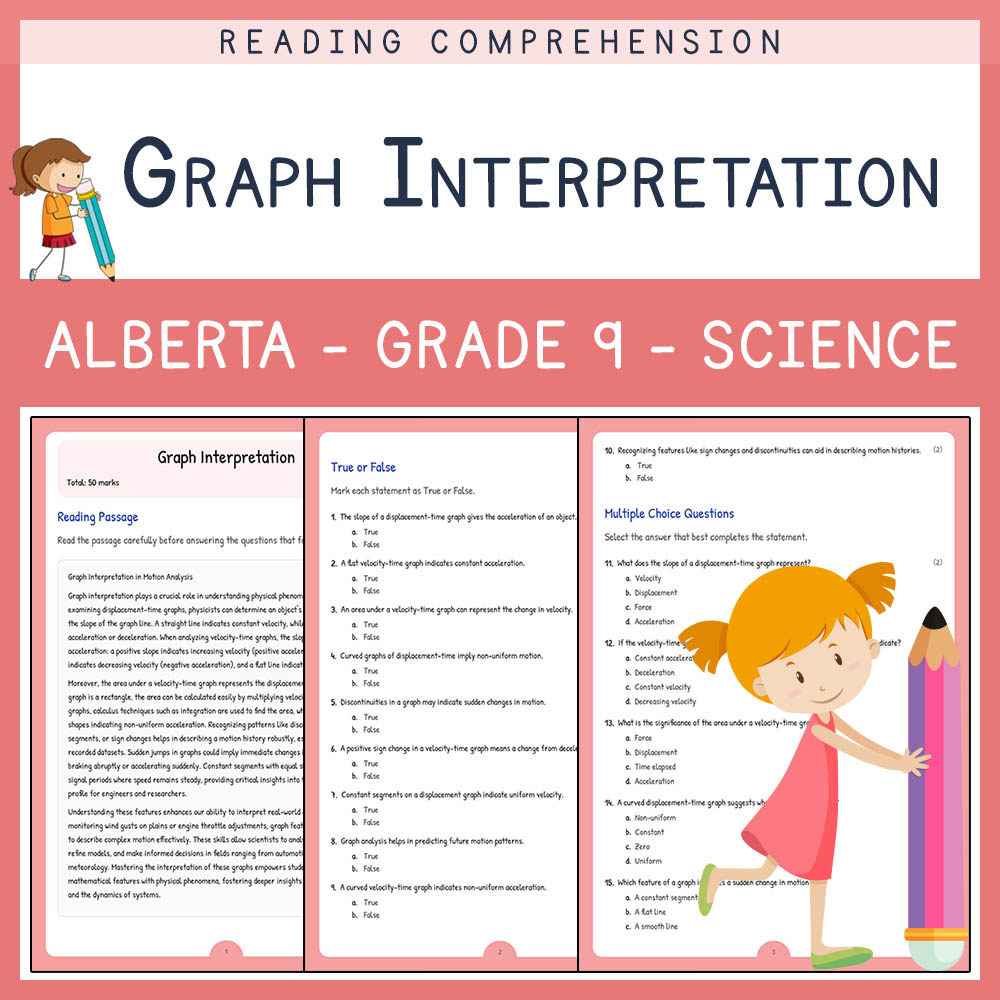
Grade 9 Science | Graph Interpretation Worksheet | Alberta Standards
Created byLumora LearningLearning Objectives
- Understand how the slope of displacement-time graphs relates to velocity.
- Interpret areas under velocity-time graphs to determine displacement.
- Identify non-uniform acceleration from curved graphs and discontinuities.
Instant download

Grade 9 Science Solution Behaviour Worksheet | Solubility & Solutions Ontario
 Created byChalk and Compass
Learning Objectives
- Describe dissolution in terms of solute–solvent interactions and qualitative solubility behaviour
- Differentiate unsaturated, saturated, and supersaturated solutions using simple examples
- Explain how temperature and agitation affect solubility qualitatively
Also included in: Matter and Chemical Change - Grade 9 Bundle +1 more
Instant download

Grade 9 Tissue Types Worksheet | Epithelial, Connective, Muscle & Nervous
Created byChalk and CompassLearning Objectives
- Compare the four principal tissue classes by cellular organization and key functions.
- Explain how extracellular matrix properties relate to connective tissue mechanics.
- Differentiate muscle tissue types based on contractile behavior and control.
Also included in: Homeostasis and Human Body Systems Lesson Bundle | Grade 9 Science | Ontario +1 more
Instant download

Grade 9 Chemical Changes Worksheet | Evidence & Indicators | Ontario Science
Created byChalk and CompassLearning Objectives
- Describe chemical change as a process that forms new substances with different properties and composition.
- Identify observable indicators of chemical change such as temperature change, gas production, precipitate formation, and persistent color change.
- Explain, at a microscopic level, how reactants rearrange to form products, and distinguish chemical evidence from physical changes.
Also included in: Matter and Chemical Change - Grade 9 Bundle +1 more
Instant download

Grade 9 Renal Regulation and Homeostasis Worksheet | Ontario Science
Created byChalk and CompassLearning Objectives
- Explain how glomerular filtration is driven by hydrostatic and oncotic pressures
- Describe nephron processes of selective reabsorption, secretion, and urine concentration
- Connect kidney regulation of electrolytes, acid–base balance, and blood pressure to homeostasis and endocrine signals
Also included in: Homeostasis and Human Body Systems Lesson Bundle | Grade 9 Science | Ontario +1 more
Instant download

Motion Equations Worksheet Pack | Grade 9 Science Activities
Created byPrism Point LearningLearning Objectives
- Use constant-acceleration equations to relate displacement, velocities, acceleration, and time.
- Apply a sign convention to choose correct positive/negative values in motion problems.
- Substitute values into kinematic equations to predict stopping distance or travel distance.
Also included in: Forces, Motion & Energy Lesson Bundle | Grade 9 Science (Alberta)
Instant download
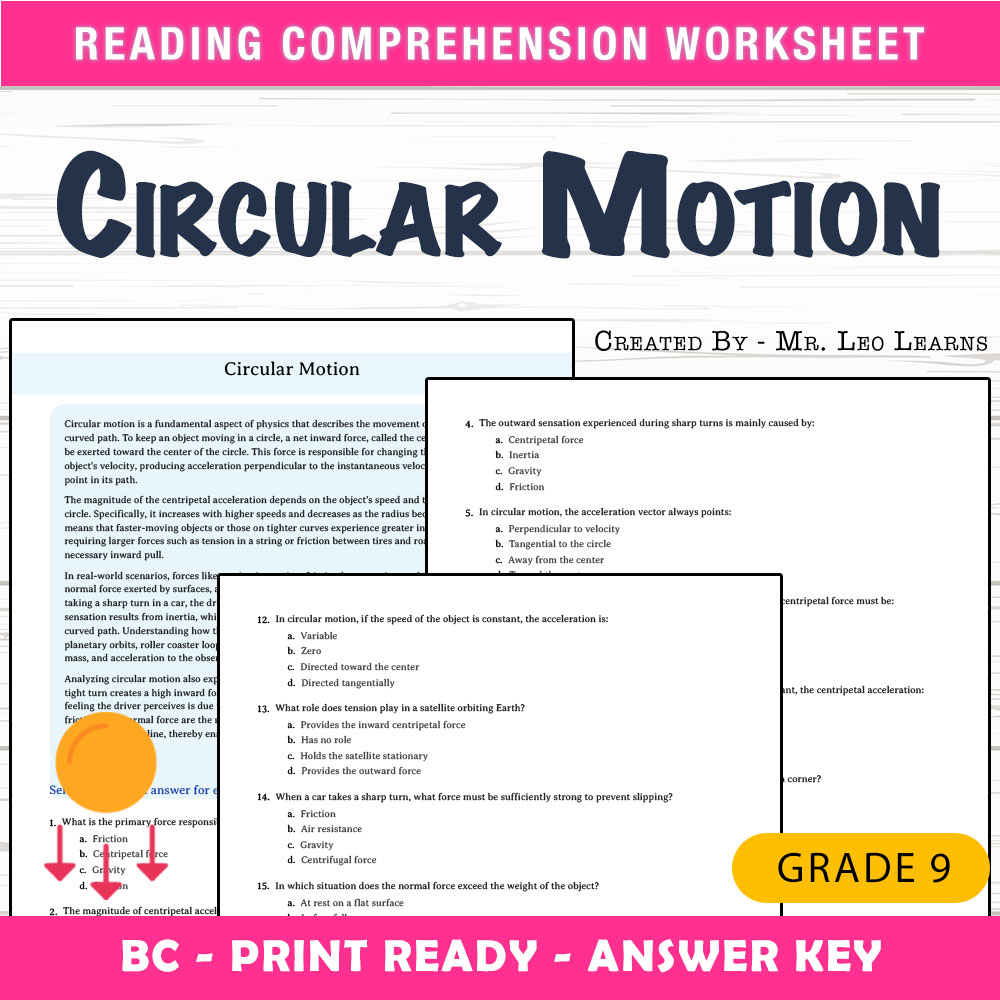
Grade 9 Science — Worksheet MCQ Paper for Mastering Circular Motion
Created byThe Resource HubLearning Objectives
- Explain the concept of centripetal force and how it affects objects in circular motion.
- Describe the relationship between velocity, radius, and acceleration in circular paths.
- Analyze the roles of tension, friction, and normal force in maintaining circular motion.
Also included in: Grade 9 Science Forces & Motion Worksheet Bundle – BC Curriculum (15 Worksheets) +1 more
Instant download
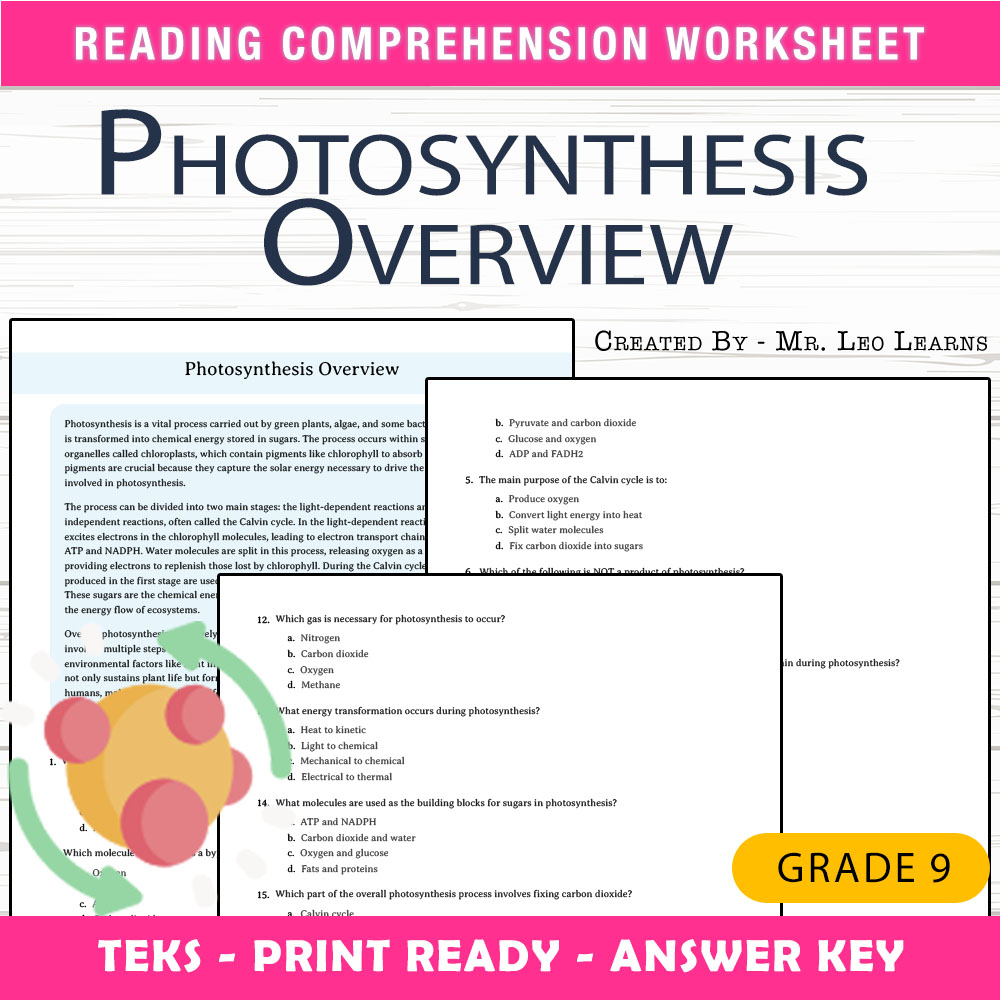
Grade 9 Science – Photosynthesis Overview Worksheet for Mastery
Created byThe Resource HubLearning Objectives
- Understand the basic process of photosynthesis and its significance.
- Identify the inputs, outputs, and main steps involved in photosynthesis.
- Explain how light energy is converted into chemical energy within chloroplasts.
Also included in: Grade 9 Science | Enzymes, Photosynthesis & Metabolic Pathways Unit Bundle +1 more
Instant download
About Grade 9 Science Worksheets
Find Science worksheets built for Grade 9. All 6,986 cover core skills, practice, and review, each an instant PDF download.
Every worksheet on MyTeachingSheets is created by independent teacher-authors and reviewed before publication. All resources download as printable PDFs for classroom, homework, or at-home practice, and many include answer keys. Preview any worksheet free before buying.