
Science Worksheets
44,342 subject resources
Grade 10 Science | DNA Structure Worksheet | TEKS-Aligned
 Created byLumora Learning
Learning Objectives
- Understand the structure and components of DNA including nucleotide subunits.
- Identify complementary base pairing rules in DNA.
- Explain the role of hydrogen bonds in stabilizing the DNA double helix.
Also included in: Grade 10 Science | Genetics & Molecular Biology Lesson Bundle | TEKS Aligned +1 more
Instant download

Grade 10 Science | DNA Replication Worksheet | TEKS-Aligned
Created byLumora LearningLearning Objectives
- Understand the steps involved in DNA replication, including enzyme functions and strand synthesis.
- Describe the roles of helicase, primase, DNA polymerase, and other enzymes during replication.
- Identify the differences between leading and lagging strands and the formation of Okazaki fragments.
Also included in: Grade 10 Science | Genetics & Molecular Biology Lesson Bundle | TEKS Aligned +1 more
Instant download

Grade 10 Science | Inheritance Patterns Worksheet | TEKS Aligned
Created byLumora LearningLearning Objectives
- Explain how dominant and recessive alleles influence phenotype expression.
- Describe Mendelian principles such as segregation and independent assortment.
- Analyze monohybrid and dihybrid crosses to predict trait ratios.
Also included in: Grade 10 Science | Genetics & Molecular Biology Lesson Bundle | TEKS Aligned +1 more
Instant download

Grade 11 Worksheet B: Molecular Genetics (DNA → Protein → Traits) | NGSS
 Created byClear Sky Classroom
Learning Objectives
- Explain how DNA sequence information is copied, transcribed, and translated into functional proteins.
- Describe how DNA structure and chromosomal organization support gene inheritance and regulation.
- Use the genetic code to connect codons to specific amino acids and predict effects on proteins and phenotypes.
Also included in: Grade 11 Genetics Science Lesson Bundle: NGSS Mutation & Inheritance +1 more
Instant download
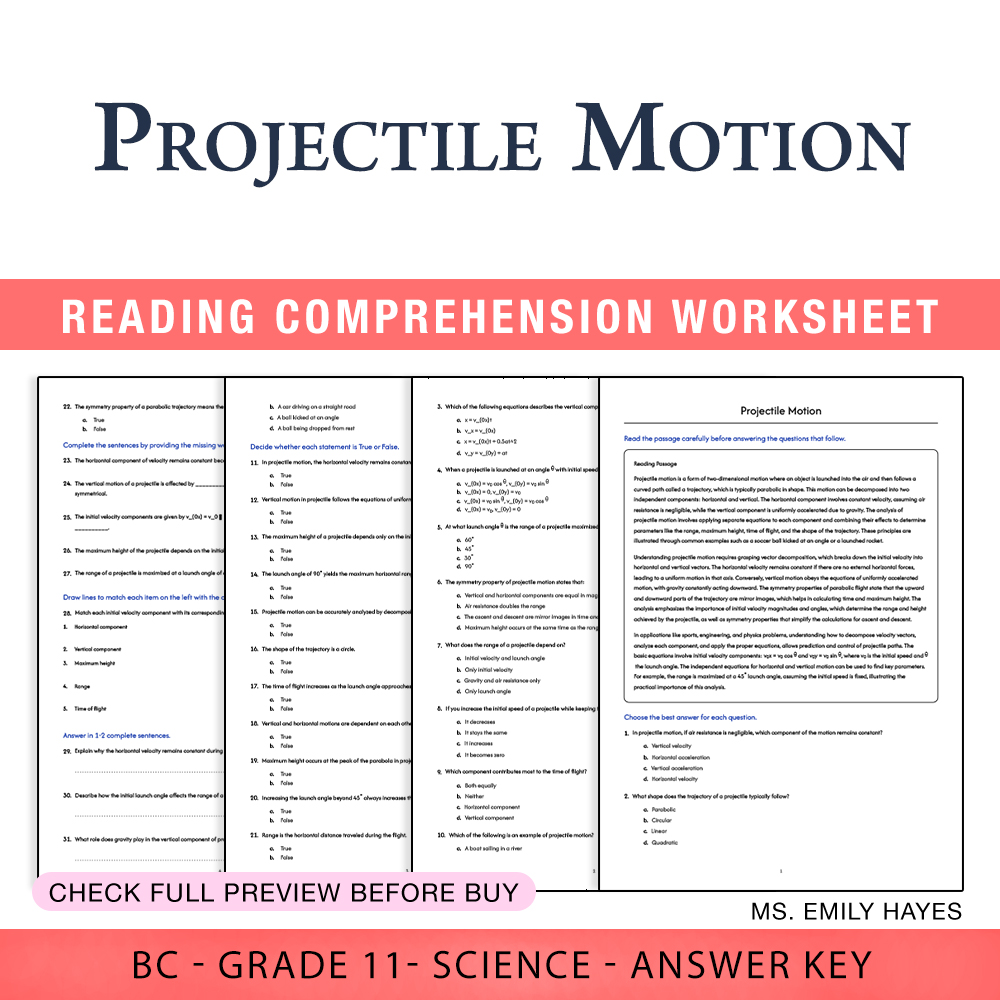
11th Grade Science | Projectile Motion Worksheet (PDF + Answer Key)
 Created byCopper Leaf Classroom
Learning Objectives
- Understand the components of projectile motion and their independent equations.
- Describe the effects of initial speed and launch angle on trajectory, range, and maximum height.
- Analyze vector decomposition of motion into horizontal and vertical components.
Also included in: Grade 11 Science BC | Motion, Energy & Force Concepts (PDF+ Answer Keys) +1 more
Instant download
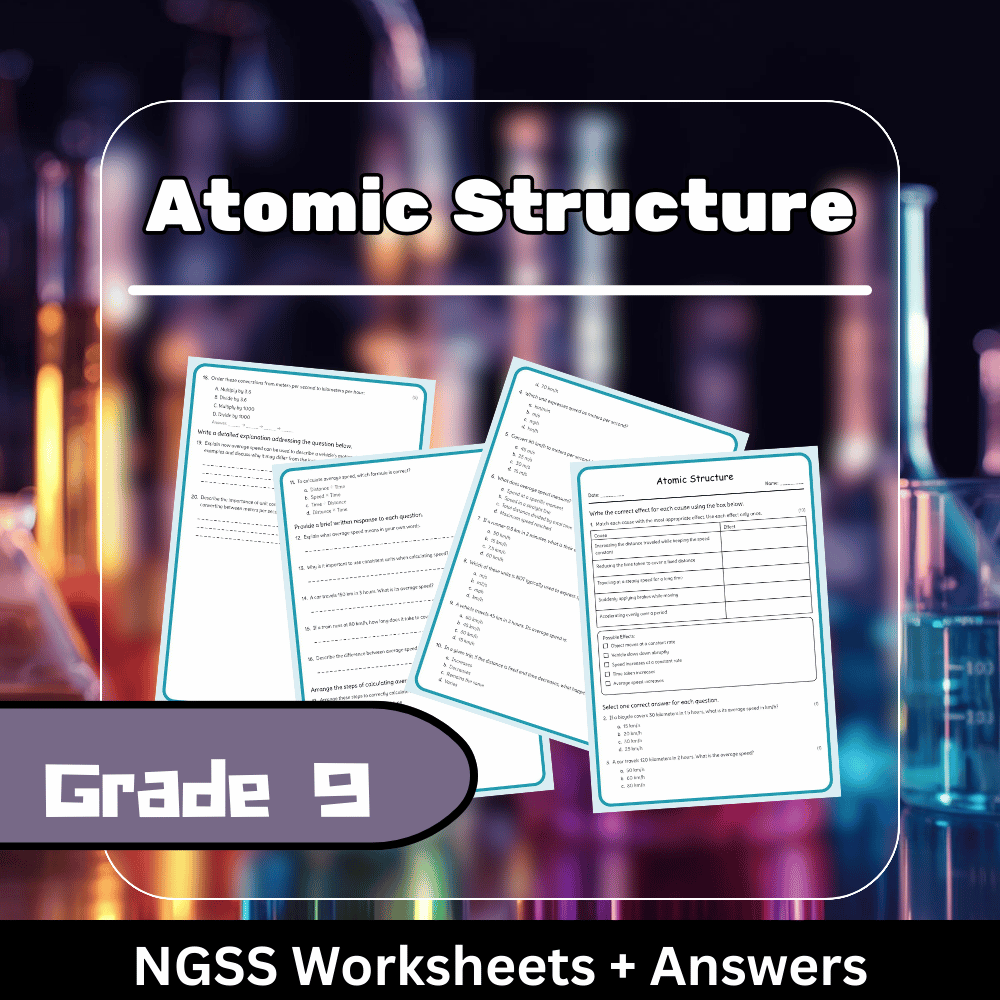
Grade 9 Science | Atomic Structure Worksheet (Answer Key) aligned with NGSS
 Created byBright Mind Resources
Learning Objectives
- Describe the fundamental particles of atoms: protons, neutrons, and electrons.
- Explain electron configurations and their significance in atomic behavior.
- Organize elements using the periodic table based on valence electrons.
Instant download

Grade 10 Worksheet B: Gravitation Fields Practice | NGSS PDF
Created byClear Sky ClassroomLearning Objectives
- Explain gravitational fields using inverse-square behavior for point masses
- Use gravitational field vectors and Newton’s law to predict force and motion
- Apply orbital relations (speed and period) for circular and elliptical orbits
Also included in: Grade 10 Forces & Motion Science Lesson Bundle (NGSS) +1 more
Instant download
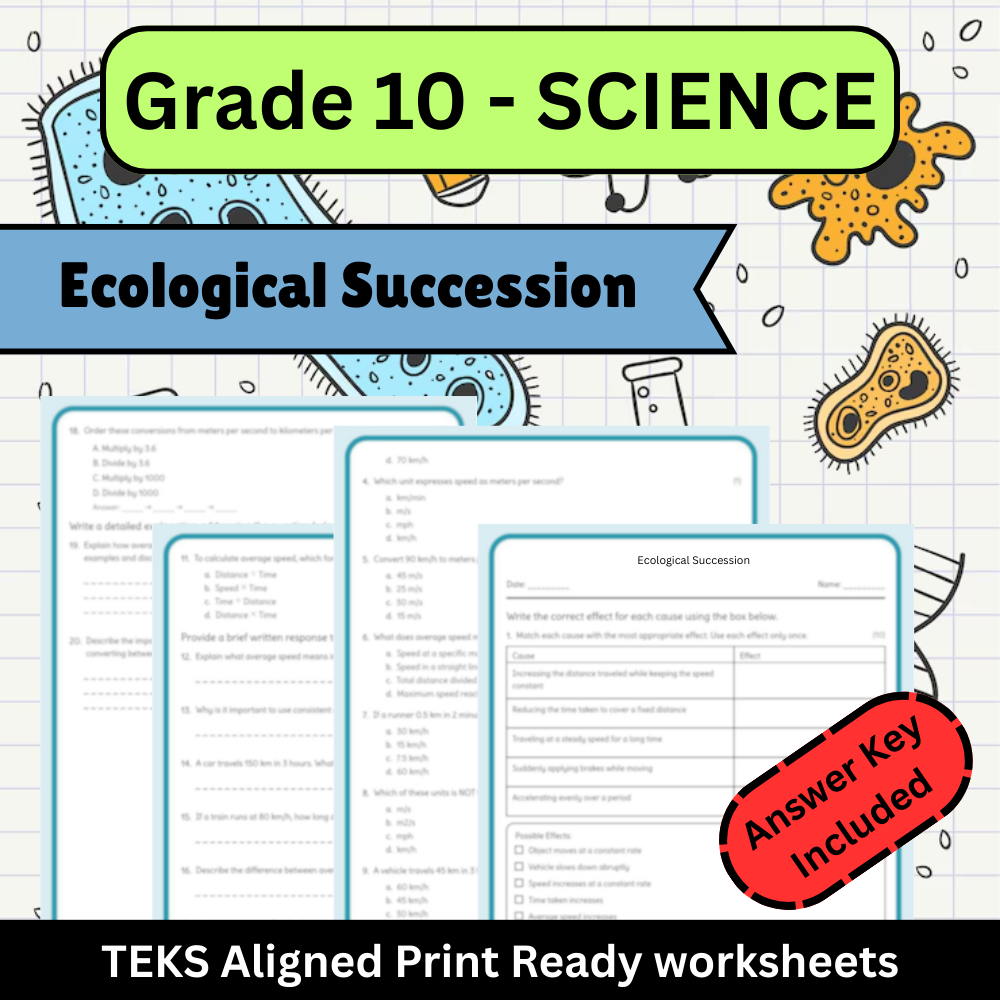
Grade 10 Science | Ecological Succession Worksheet (Answer Key) – TEKS-Aligned
Created byBright Mind ResourcesLearning Objectives
- Understand the difference between primary and secondary succession.
- Identify the processes involved in succession pathways such as species colonization and competition.
- Describe how disturbance frequency and intensity influence succession and biodiversity.
Also included in: Grade 10 Science | Ecosystems & Biodiversity Unit Worksheet Bundle(TEKS-Aligned) +5 more
Instant download

Grade 12 Science – Entropy & Gibbs Free Energy | Daily Reading Worksheet
Created byBright Mind ResourcesLearning Objectives
- Define entropy and explain its significance in thermodynamics.
- Describe how entropy relates to energy dispersal and system disorder.
- Understand Gibbs free energy and how it predicts spontaneity in chemical reactions.
Also included in: Grade 12 Chemistry Science Lesson Bundle | BC Daily Reading Worksheets +1 more
Instant download

8th Grade Science | Weather and Climate Reading Worksheets (PDF + Answer Key)
JCreated byJ.S SheetsLearning Objectives
- Understand the differences between weather and climate patterns.
- Describe how atmospheric variables like temperature, humidity, and pressure influence weather events.
- Explain the role of air mass interactions, fronts, and circulation cells in weather formation.
Instant download
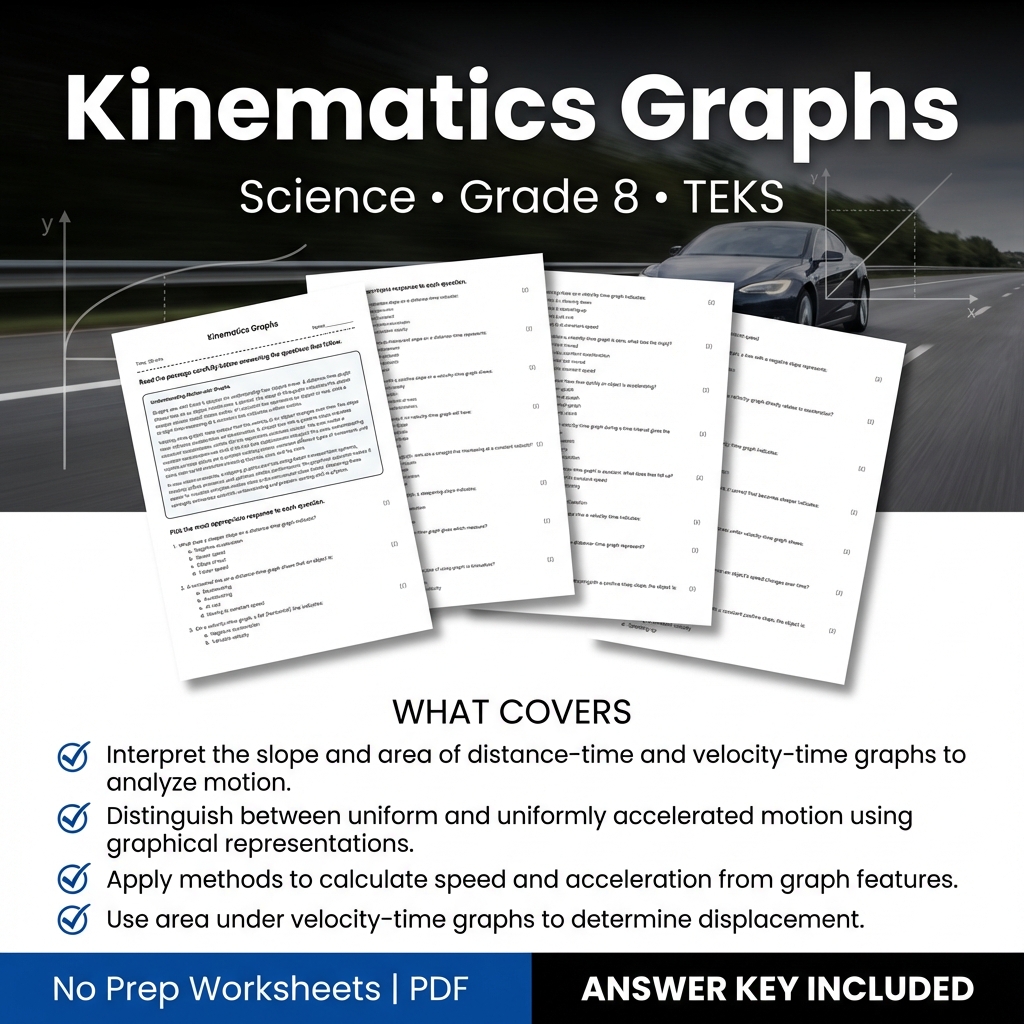
Grade 8 Science Worksheet on Kinematics Graphs | TEKS Aligned
 Created byCoral Reef Learning
Learning Objectives
- Interpret the slope and area of distance–time and velocity–time graphs to analyze motion.
- Distinguish between uniform and uniformly accelerated motion using graphical representations.
- Apply methods to calculate speed and acceleration from graph features.
Instant download
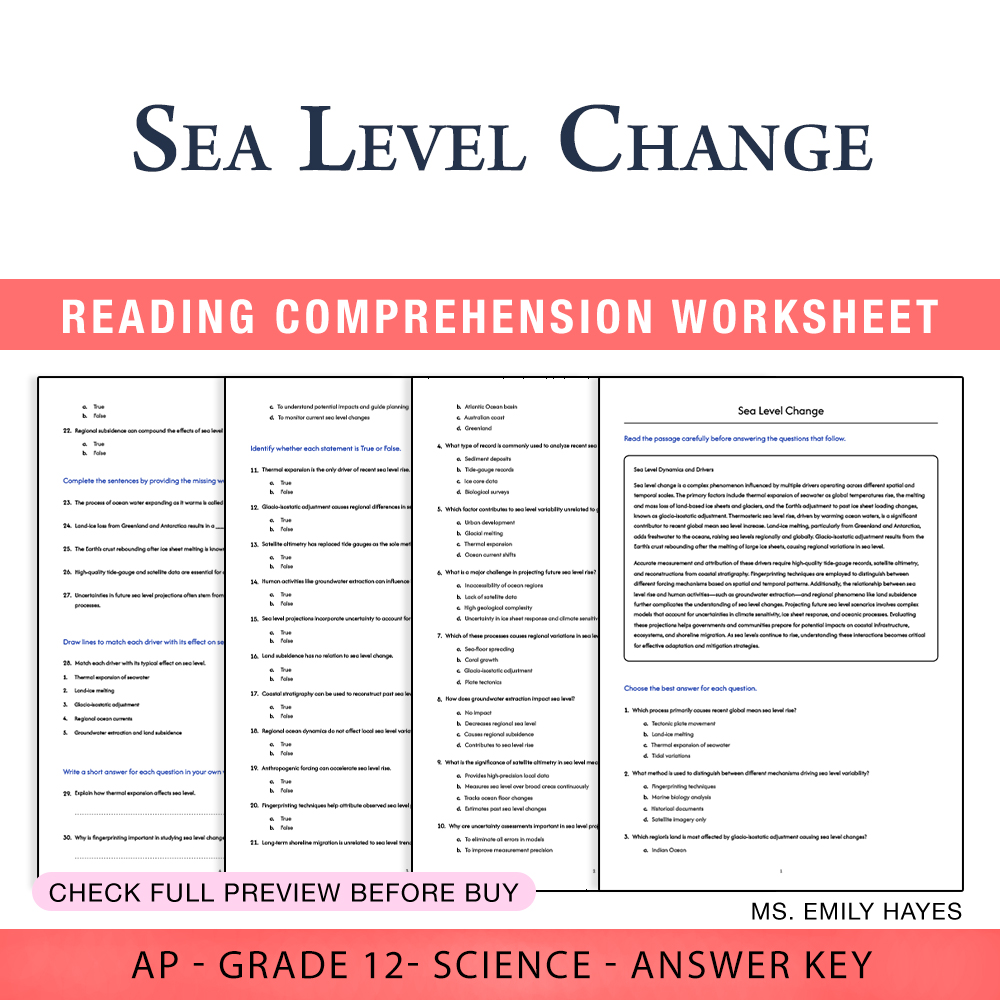
Grade 12 Science | Sea Level Change Assessment Worksheet (PDF+ Answer Key)
Created byCopper Leaf ClassroomLearning Objectives
- Describe the main drivers contributing to variability in sea level, including thermal expansion, land-ice mass change, and glacio-isostatic adjustment.
- Interpret tide-gauge and satellite altimetry data for sea level analysis.
- Evaluate methods for reconstructing historical sea level changes from coastal stratigraphy and fingerprinting techniques.
Also included in: Grade 12 Science | Earth Systems & Climate AP Worksheet (PDF + Answer Key) +1 more
Instant download
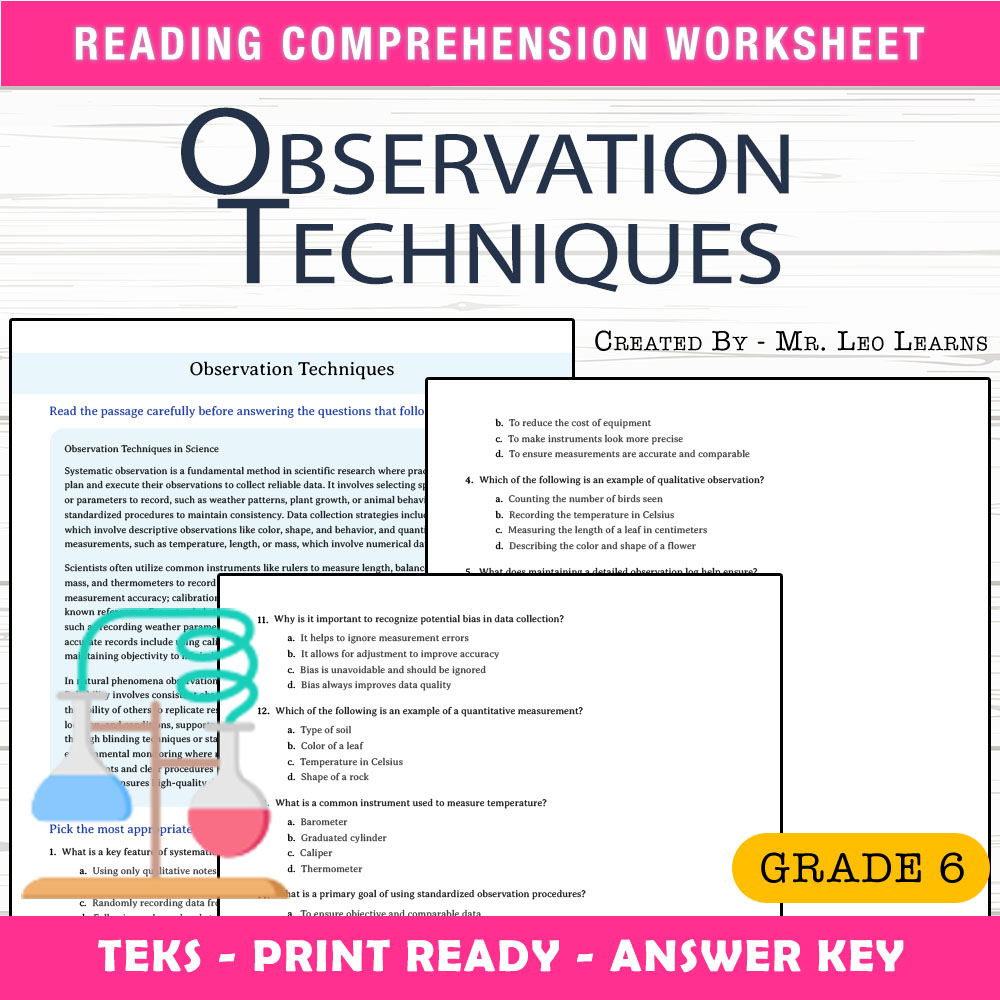
Grade 6 Science — Observation Techniques Worksheet for Mastery
 Created byThe Resource Hub
Learning Objectives
- Define systematic observation and explain data collection strategies.
- Distinguish between qualitative notes and quantitative measurements in scientific observation.
- Identify common instruments used in scientific observations such as rulers, balances, and thermometers.
Instant download
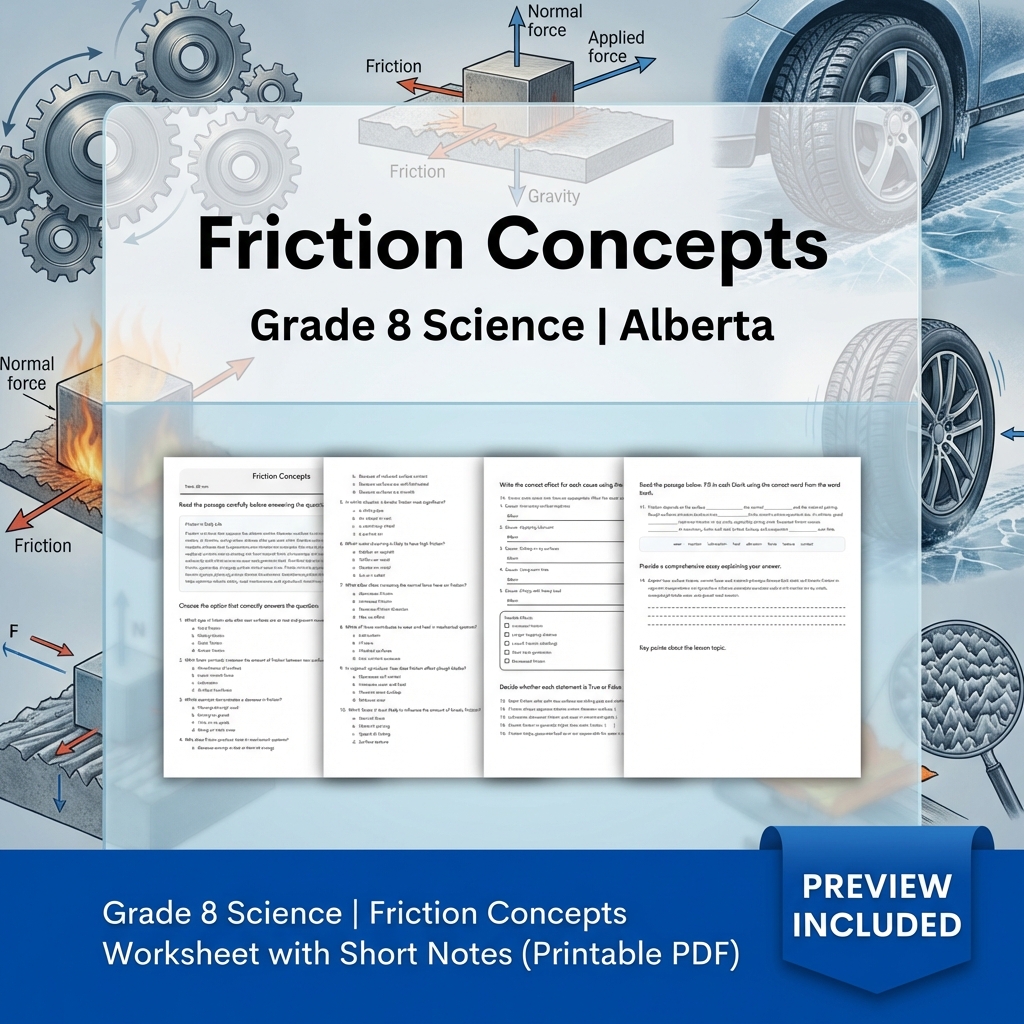
Grade 8 Science | Friction Concepts Worksheet with Short Notes (Printable PDF)
 Created byMeadowlark Worksheets
Learning Objectives
- Understand the difference between static and kinetic friction.
- Identify factors affecting frictional forces such as surface texture and normal force.
- Analyze regional examples where friction plays a vital role in transportation and agriculture.
Also included in: Grade 8 Science Forces & Motion UNIT Bundle – Alberta Curriculum +1 more
Instant download

Particle Conservation Worksheet Grade 9 Science Activities
 Created byPrism Point Learning
Learning Objectives
- Explain particle conservation by describing how atoms rearrange during chemical reactions.
- Use the particulate view to justify why total mass and the number of atoms of each element stay the same.
- Interpret reactants and products as collections of atoms rather than matter being created or destroyed.
Instant download
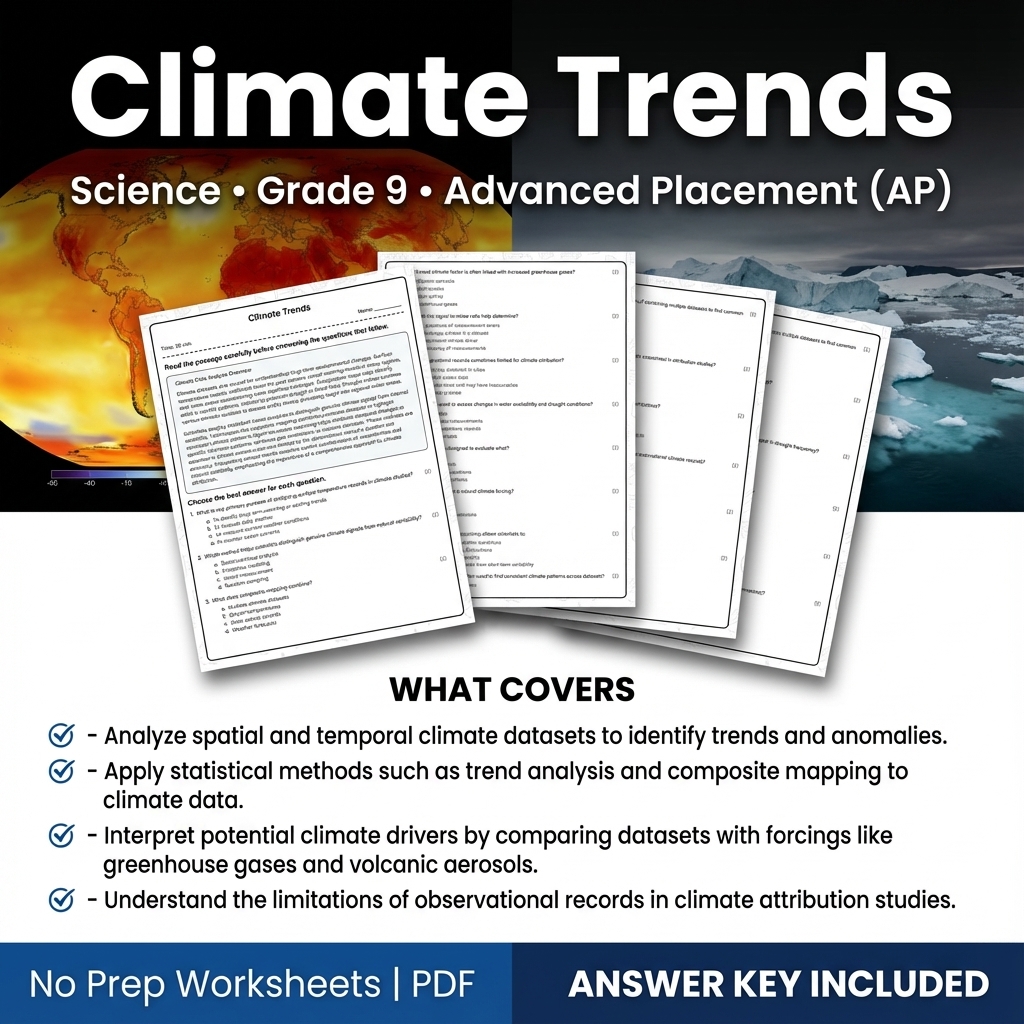
9th Grade Science | Climate Trends Worksheet (Printable PDF + Answer Key)
Created byCoral Reef LearningLearning Objectives
- Analyze spatial and temporal climate datasets to identify trends and anomalies.
- Apply statistical methods such as trend analysis and composite mapping to climate data.
- Interpret potential climate drivers by comparing datasets with forcings like greenhouse gases and volcanic aerosols.
Also included in: Grade 9 Science Unit | Earth Processes & Climate Worksheets Pack (PDF & Answer Keys) +2 more
Instant download
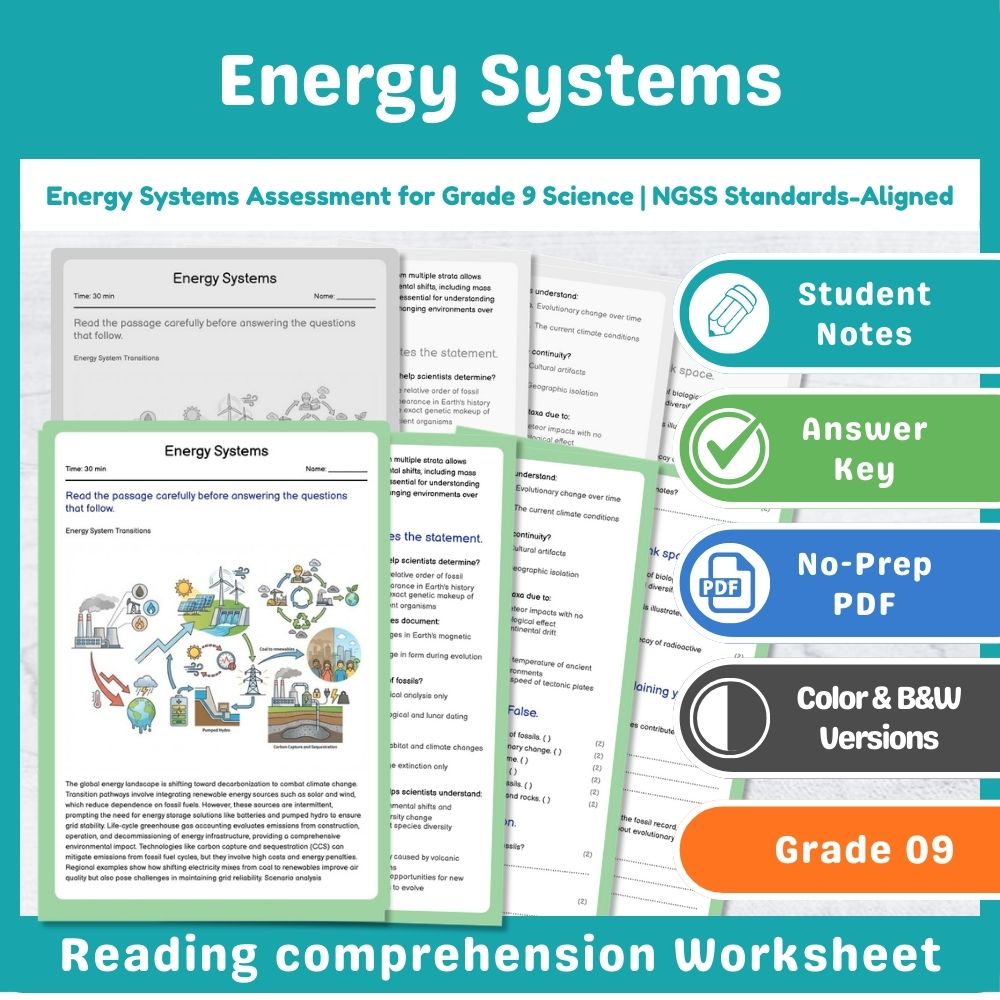
Energy Systems Assessment for Grade 9 Science | NGSS Standards-Aligned
Created byPrism Point LearningLearning Objectives
- Explain the processes involved in energy system transitions and decarbonization pathways.
- Analyze life-cycle greenhouse gas emissions for various energy technologies.
- Evaluate the trade-offs between reliability, affordability, and emissions reductions in energy planning.
Instant download
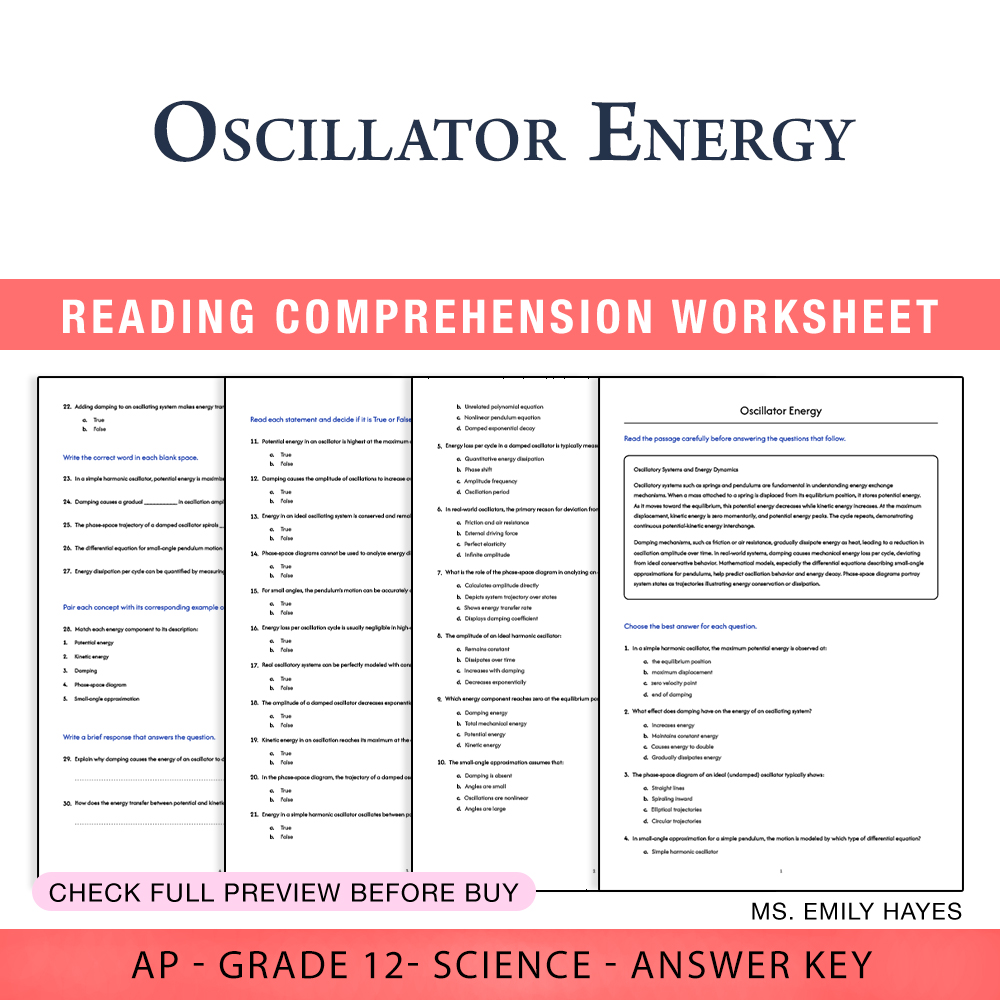
12th Grade Science | Oscillator Energy Worksheet Assessment (PDF + Answer Key)
Created byCopper Leaf ClassroomLearning Objectives
- Describe the energy exchange between potential and kinetic energy in oscillatory systems.
- Explain the effects of amplitude and damping on the energy in simple harmonic motion.
- Use phase-space and energy diagrams to analyze oscillatory behavior.
Also included in: Grade 12 Science AP – Energy, Motion & Electricity Mastery(PDF+ Answer Key) +1 more
Instant download

Balancing Chemical Equations Worksheet Grade 9 Science Activity | NGSSS
Created byPrism Point LearningLearning Objectives
- Explain how chemical equation coefficients balance the number of atoms on both sides, reflecting conservation of matter
- Interpret balanced equations as consistent particle-to-particle accounting between reactants and products
- Determine whether statements about balancing equations are correct and justify reasoning using atomic counts
Instant download
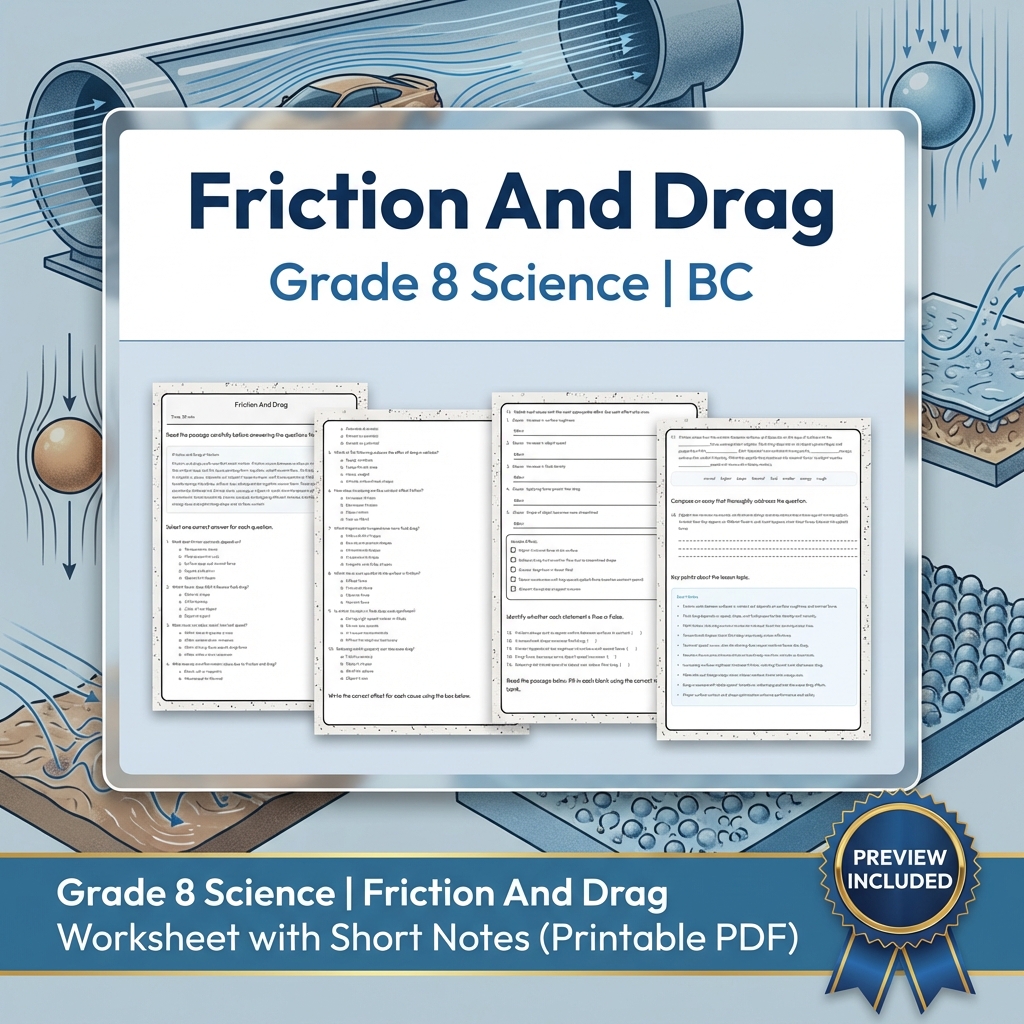
Grade 8 Science | Friction And Drag Worksheet with Short Notes (Printable PDF)
Created byMeadowlark WorksheetsLearning Objectives
- Understand how friction and fluid drag oppose motion and influence acceleration.
- Identify factors affecting friction and drag, such as surface types, speed, and shape.
- Explain how resistive forces transform mechanical energy into thermal energy.
Also included in: Grade 8 Science Lesson Bundle | BC Framework & Key Concepts Worksheet Pack +1 more
Instant download

Measurement Practices Worksheet Grade 9 Science Activities | Florida NGSSS
Created byPrism Point LearningLearning Objectives
- Explain how choosing appropriate instruments and units helps observations become usable data.
- Distinguish precision from accuracy using measurement examples and descriptions.
- Describe how calibration, repeat trials, and consistent reference standards improve reliability of data.
Instant download

Energy Transformations Worksheet Grade 9 Science Activity | NGSSS
Created byPrism Point LearningLearning Objectives
- Explain how energy can change form while the total energy of a chosen system stays balanced.
- Describe how mechanical energy can convert to heat due to resistive forces like friction and air resistance.
- Predict how temperature changes can affect motion and material behavior.
Instant download
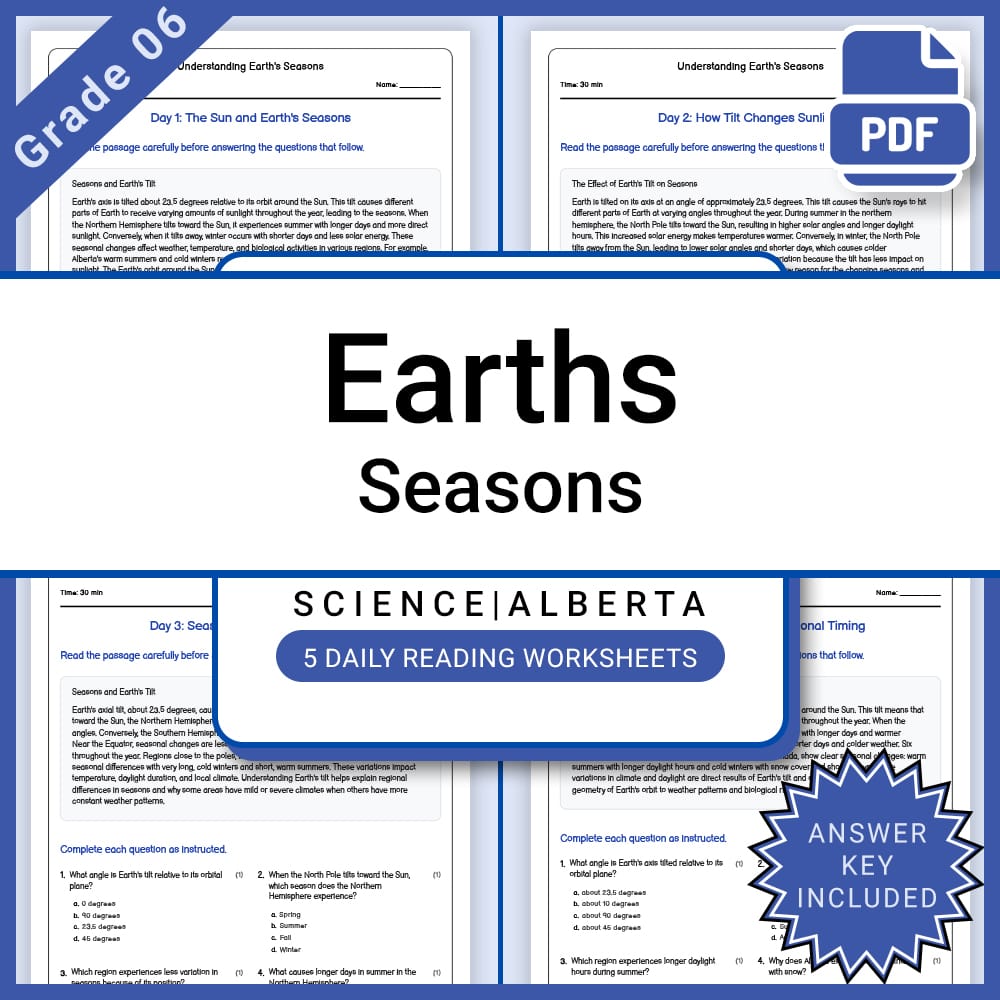
Grade 6 Science – Earth's Seasons Daily Reading Worksheet + Answer Key
JCreated byJ.S SheetsLearning Objectives
- Explain how Earth's axial tilt influences seasons.
- Describe how the Sun's position affects temperature and daylight.
- Relate regional seasonal patterns to Earth's tilt and orbit.
Also included in: Grade 6 Science Lesson Group: Earth & Space Reading Worksheets Bundle +1 more
Instant download

Conservation of Matter Worksheet Grade 9 Science Activity | NGSSS
Created byPrism Point LearningLearning Objectives
- Explain conservation of atoms during chemical reactions using particle-level reasoning.
- Use conservation of mass in a closed system to justify why total mass does not change.
- Connect reactant quantities to possible product quantities through atom accounting.
Instant download
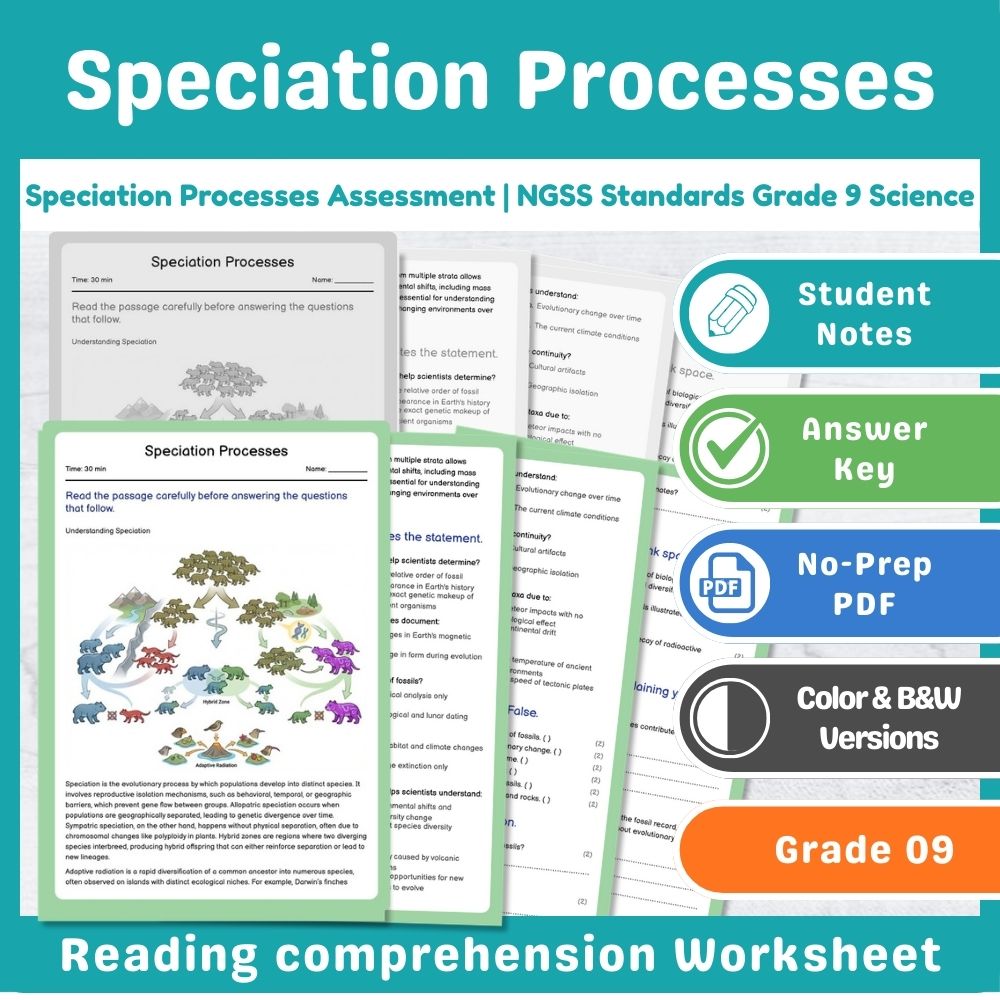
Speciation Processes Assessment | NGSS Standards Grade 9 Science
Created byPrism Point LearningLearning Objectives
- Explain the mechanisms leading to the formation of new species, including reproductive isolation and genetic divergence.
- Differentiate between allopatric and sympatric speciation models with examples.
- Describe how hybrid zones, polyploidy, and adaptive radiation contribute to speciation.
Instant download
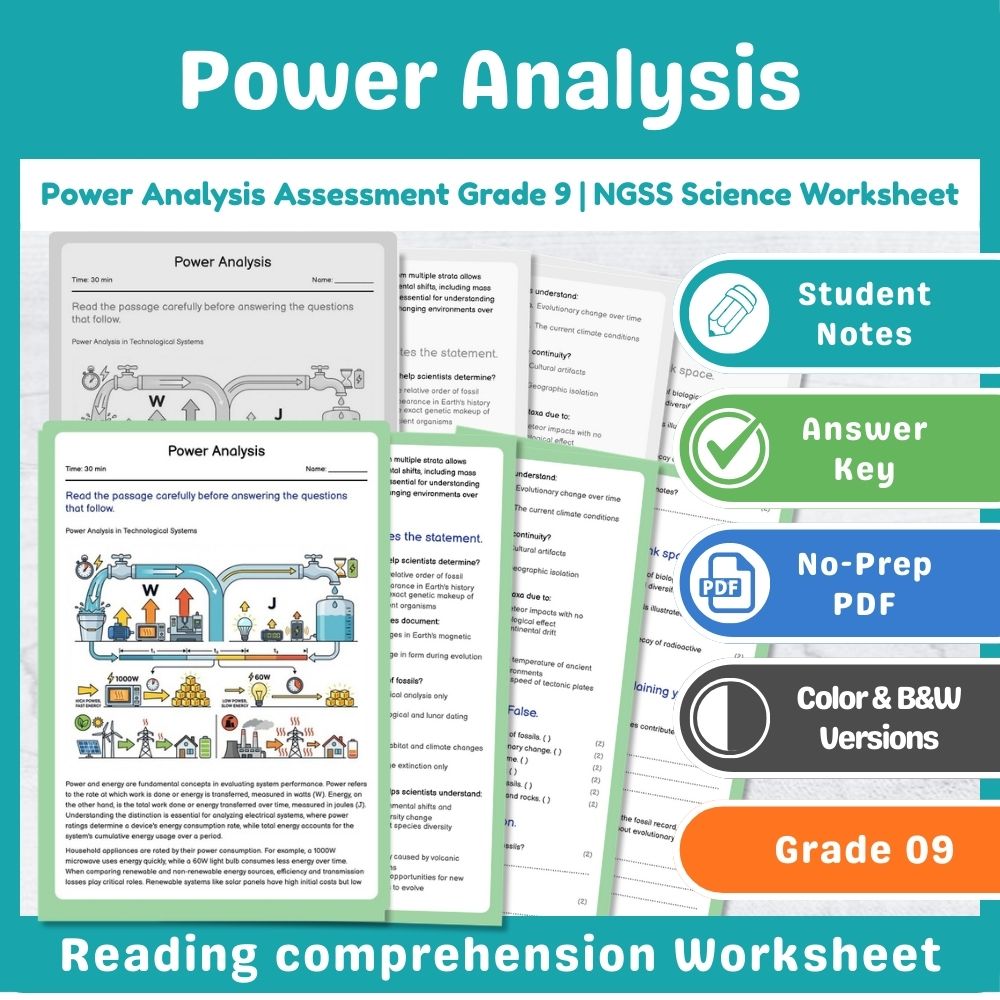
Power Analysis Assessment Grade 9 | NGSS Science Worksheet
Created byPrism Point LearningLearning Objectives
- Understand the difference between power and energy in system analysis.
- Calculate energy demand over time considering efficiency and system losses.
- Compare the power ratings of household appliances and their impact on energy consumption.
Instant download
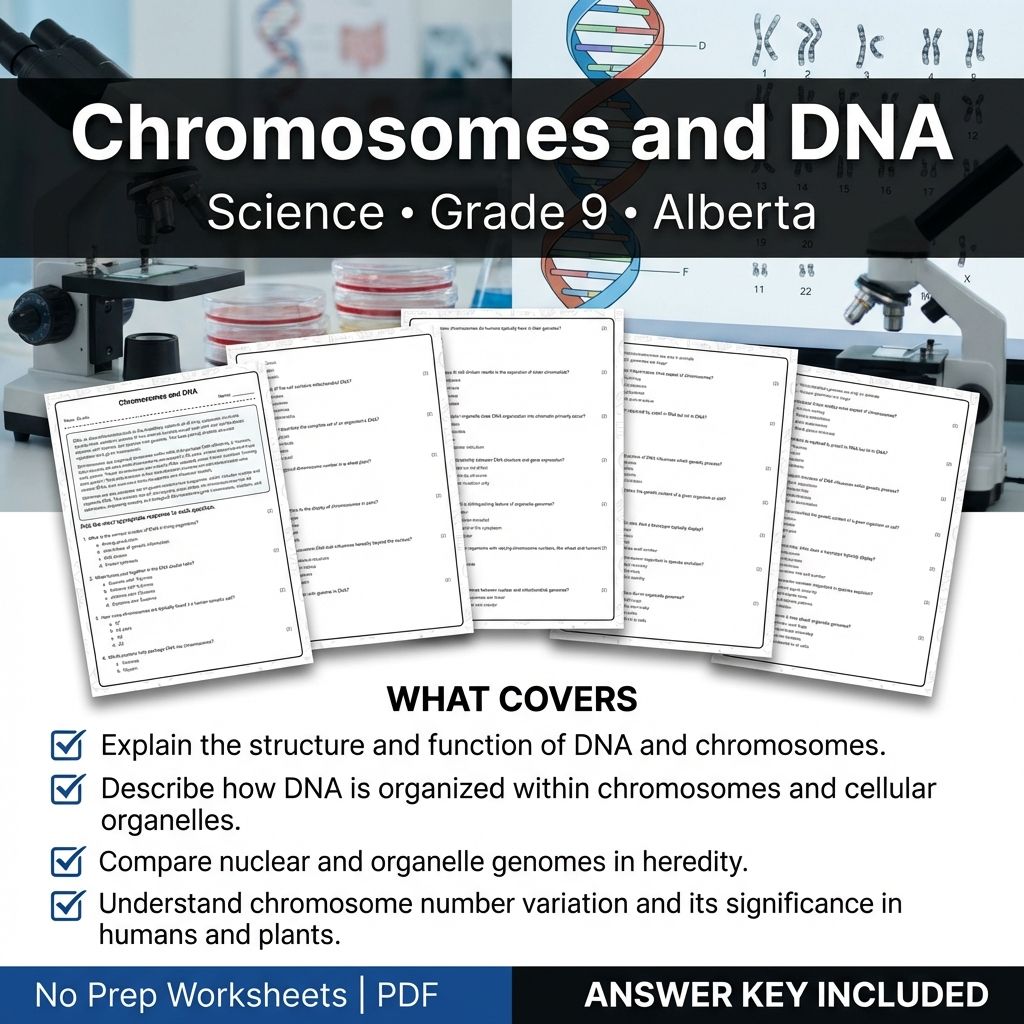
Chromosomes and DNA Worksheet | Grade 9 Science | Alberta
Created byCoral Reef LearningLearning Objectives
- Explain the structure and function of DNA and chromosomes.
- Describe how DNA is organized within chromosomes and cellular organelles.
- Compare nuclear and organelle genomes in heredity.
Instant download

Hazard Assessment Worksheet Practice Test | Grade 9 Science NGSS
Created byPrism Point LearningLearning Objectives
- Explain how hazard risk depends on occurrence, frequency, and consequences for natural events
- Use exposure, vulnerability, and cascading system effects to evaluate community and infrastructure susceptibility
- Connect hazard mapping and return-period information to mitigation and planning decisions
Also included in: Grade 9 Test Prep Science Lesson Bundle NGSS: Energy Systems & Modeling
Instant download

Grade 11 Science | Anatomical Clues Worksheet | TEKS Aligned
Created byLumora LearningLearning Objectives
- Understand the importance of comparative anatomy in inferring evolutionary relationships.
- Identify homologous and analogous structures in different species.
- Explain the significance of vestigial organs and embryonic patterns in evolutionary studies.
Instant download

Grade 11 Science | Classification Methods Worksheet | TEKS Aligned
Created byLumora LearningLearning Objectives
- Explain how cladistic analysis groups organisms based on shared derived characters.
- Differentiate between phenetic and phylogenomics approaches in biological classification.
- Describe how hierarchical taxonomic systems reflect evolutionary relationships.
Instant download

Grade 12 Science | Inheritance Patterns Worksheet (PDF) aligned to BC standards
 Created byEvergreen Desk Education
Learning Objectives
- Explain how dominant/recessive inheritance, incomplete dominance, and sex linkage affect genotype and phenotype outcomes
- Use recombination frequency to infer relative chromosomal positions and predict trait assortments
- Interpret pedigrees to determine the most likely inheritance pattern and identify possible carriers
Instant download
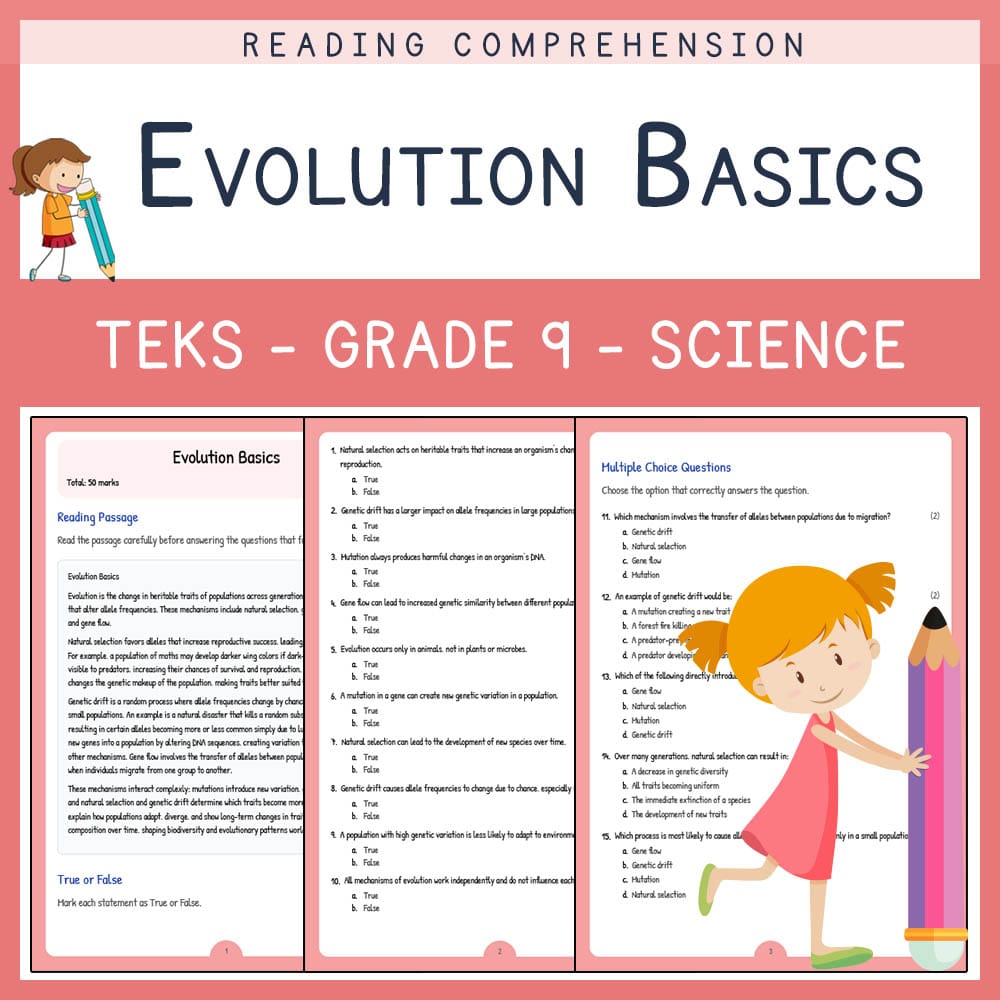
Grade 9 Science | Evolution Basics Worksheet | TEKS Aligned
Created byLumora LearningLearning Objectives
- Understand the fundamental mechanisms of evolution, including natural selection, genetic drift, mutation, and gene flow.
- Explain how these mechanisms interact to produce long-term changes in populations.
- Identify examples of evolution in real-world scenarios.
Instant download
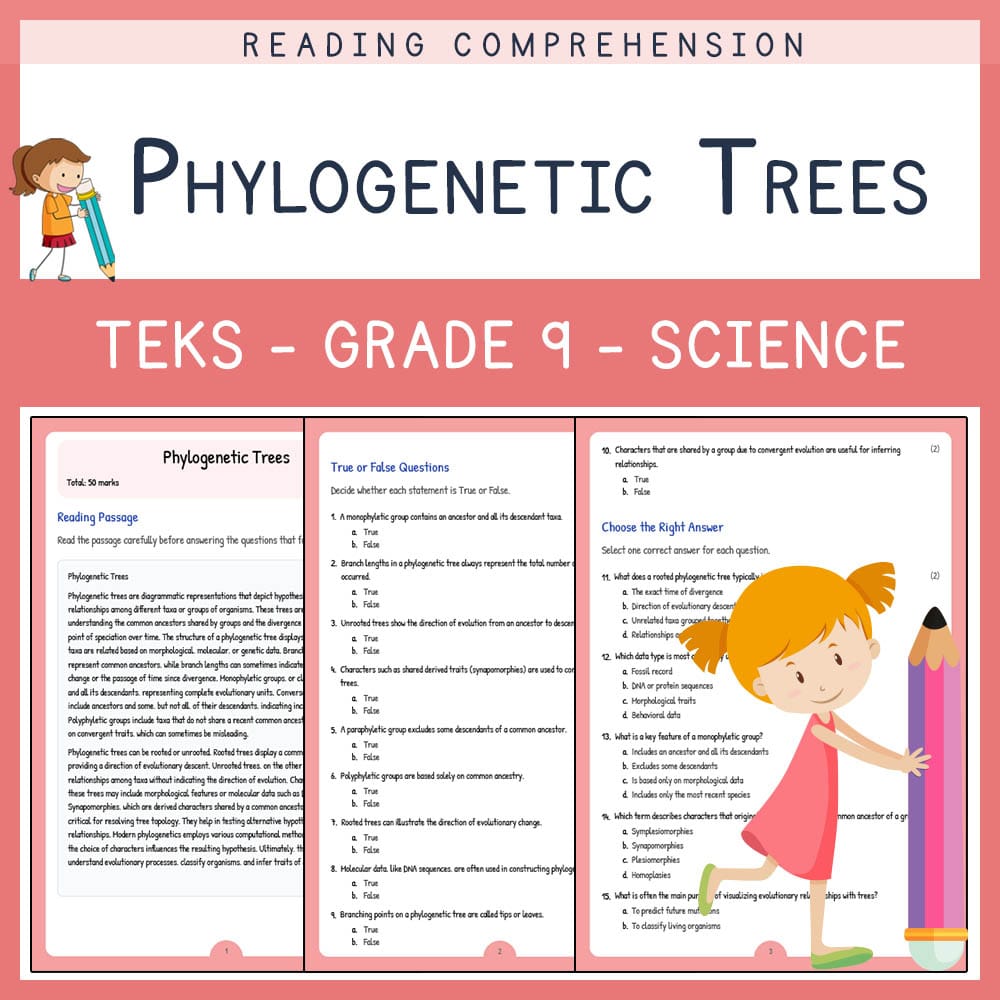
Grade 9 Science | Phylogenetic Trees Worksheet | TEKS Aligned
Created byLumora LearningLearning Objectives
- Understand the structure and purpose of phylogenetic trees in evolutionary biology.
- Identify monophyletic, paraphyletic, and polyphyletic groups within trees.
- Distinguish between rooted and unrooted phylogenetic trees and interpret branch lengths.
Instant download
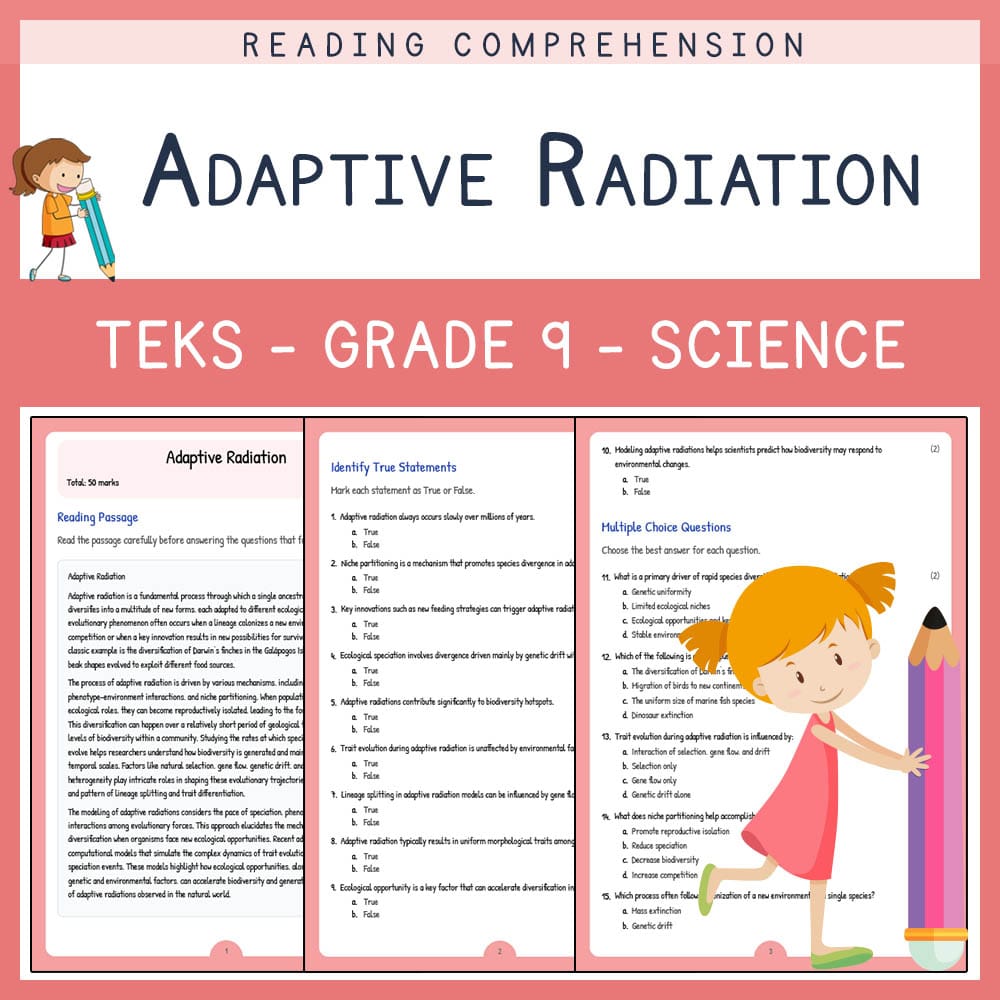
Grade 9 Science | Adaptive Radiation Worksheet | TEKS-Aligned
Created byLumora LearningLearning Objectives
- Define adaptive radiation and describe its key features.
- Identify examples of adaptive radiation in nature.
- Understand the role of ecological niches and key innovations in speciation.
Instant download
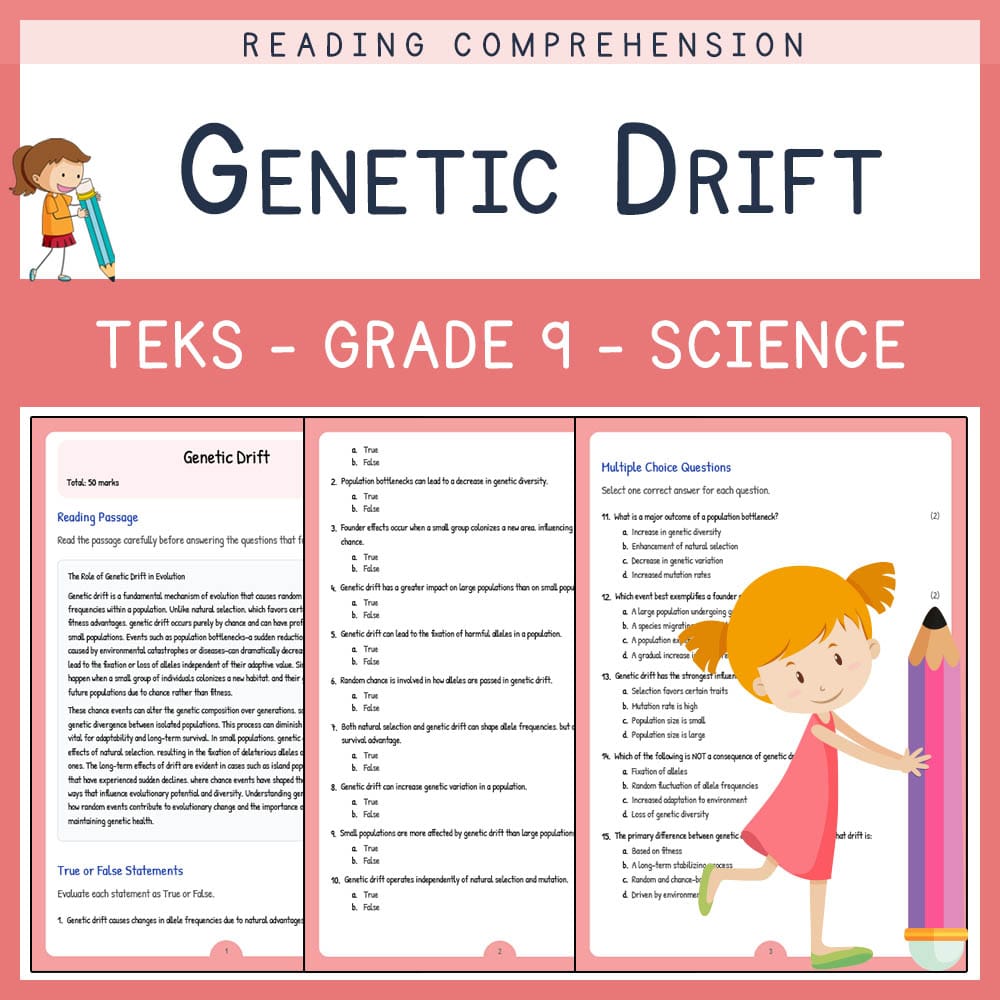
Grade 9 Science | Genetic Drift Worksheet | TEKS-Aligned
Created byLumora LearningLearning Objectives
- Understand the concept of genetic drift and how it affects small populations.
- Identify different events that can lead to genetic drift such as bottlenecks and founder effects.
- Explain how chance events influence allele frequencies over time.
Instant download

Grade 11 Science | Natural Selection Worksheet | TEKS-Aligned
Created byLumora LearningLearning Objectives
- Understand the mechanisms of natural selection and how they influence evolution.
- Identify different modes of selection and their effects on traits within populations.
- Recognize examples of natural selection, such as antibiotic resistance and camouflage.
Instant download
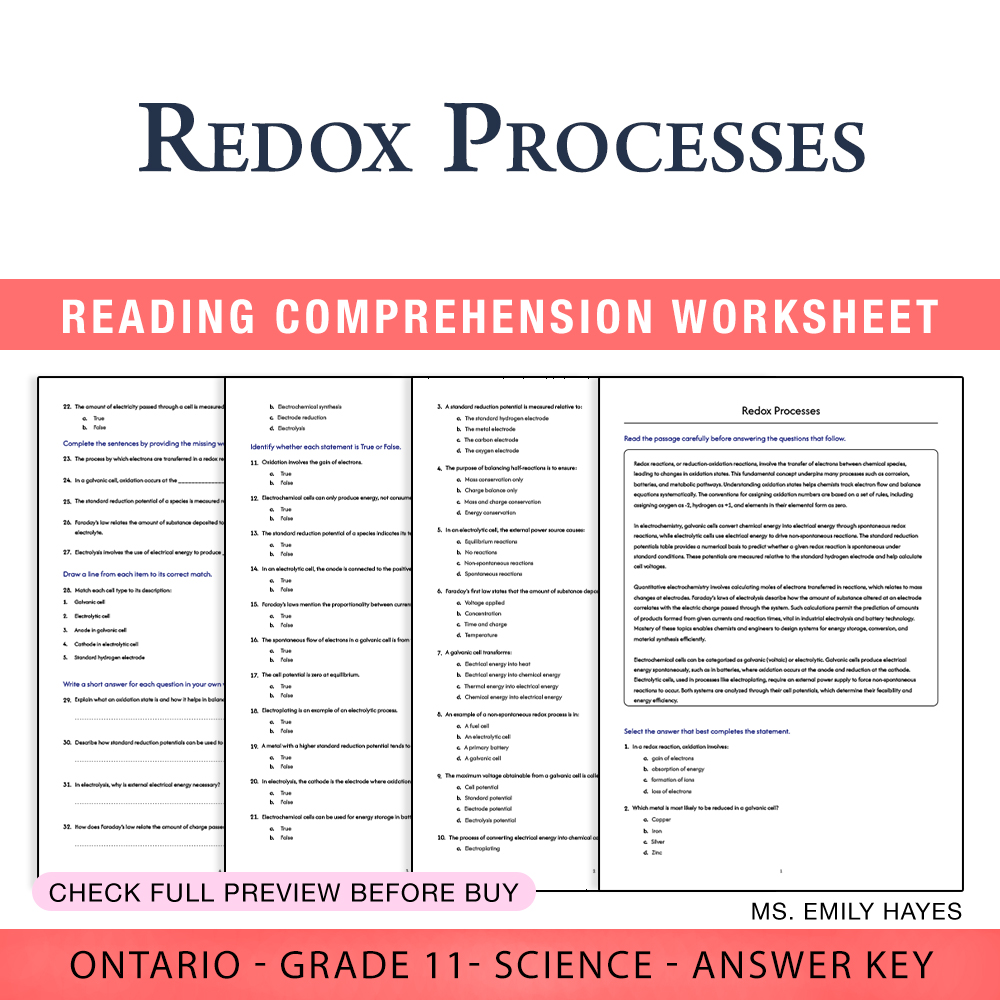
11th Grade Science | Redox Processes Worksheet (PDF + Answer Key)
Created byCopper Leaf ClassroomLearning Objectives
- Explain the concept of oxidation states and assign oxidation numbers in chemical compounds.
- Formulate and balance half-reactions in redox processes systematically.
- Describe the functioning of galvanic and electrolytic cells and relate standard reduction potentials to cell spontaneity.
Instant download
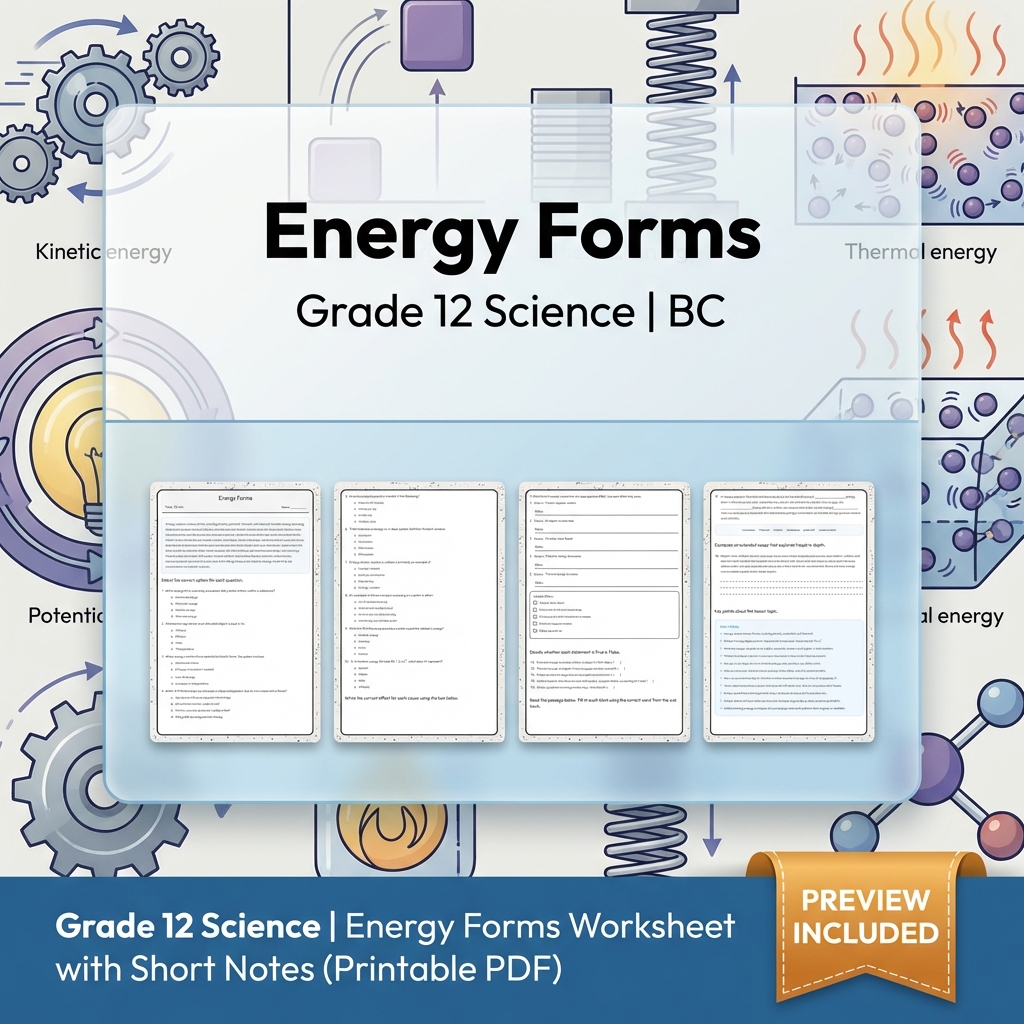
Grade 12 Science | Energy Forms Worksheet with Short Notes (Printable PDF)
Created byMeadowlark WorksheetsLearning Objectives
- Define various forms of energy such as kinetic, potential, and thermal.
- Explain how energy transforms between different forms during motion, collisions, and deformation.
- Understand the quantitative relationships that describe energy conservation and transfer.
Also included in: Grade 12 Science Lesson Bundle | Wave, Quantum, Electromagnetism Worksheets +1 more
Instant download

Grade 9 Electromagnetic Radiation Worksheet | NGSS Science Waves Activity
 Created byBRIGHT PATH RESOURCES
Learning Objectives
- Identify different types of electromagnetic radiation and their positions in the spectrum.
- Describe the characteristics of electromagnetic waves, including frequency and wavelength.
- Explain how photons relate to electromagnetic wave energy and matter interactions.
Also included in: Waves & Communication Systems Grade 9 Science Daily Reading Lesson Bundle | NGSS +1 more
Instant download
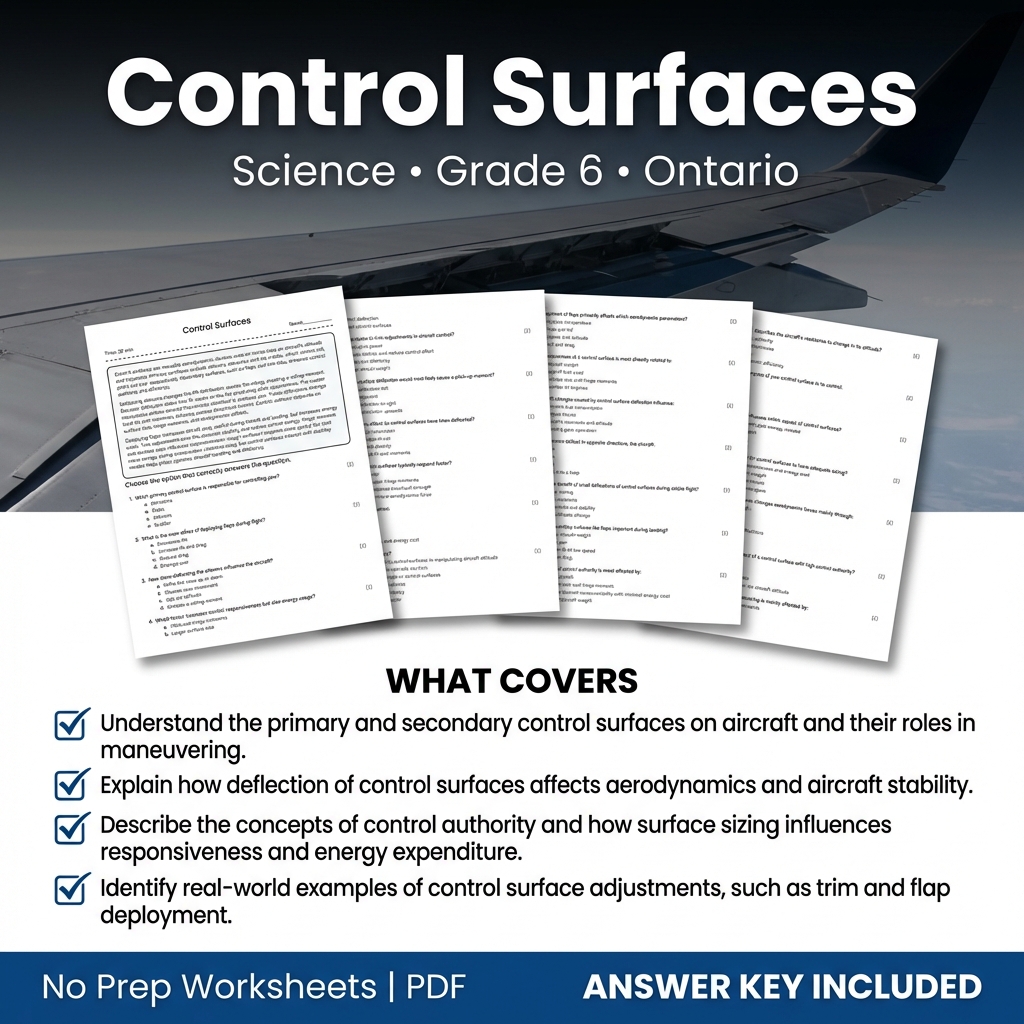
Control Surfaces Science Worksheet Grade 6 | Ontario Standards
Created byCoral Reef LearningLearning Objectives
- Understand the primary and secondary control surfaces on aircraft and their roles in maneuvering.
- Explain how deflection of control surfaces affects aerodynamics and aircraft stability.
- Describe the concepts of control authority and how surface sizing influences responsiveness and energy expenditure.
Instant download
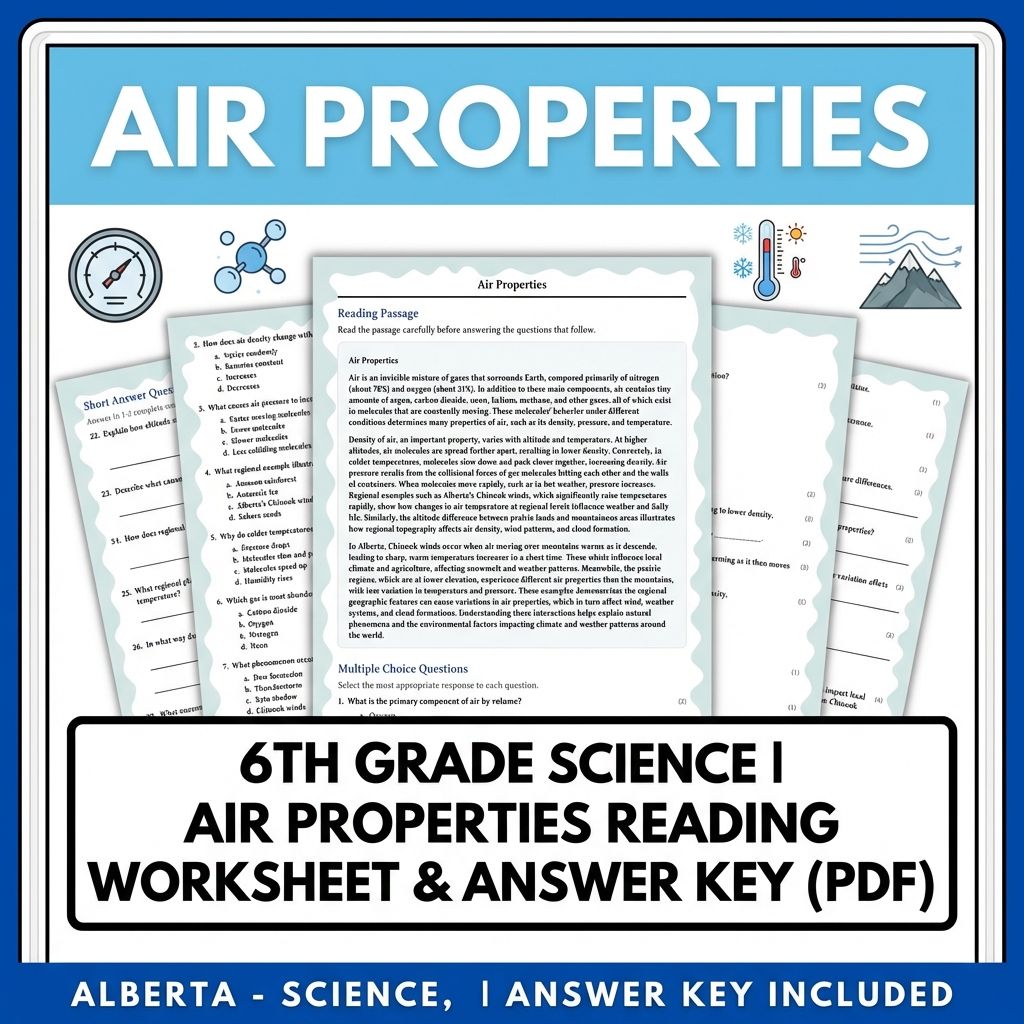
6th Grade Science | Air Properties Reading Worksheet & Answer Key (PDF)
JCreated byJ.S SheetsLearning Objectives
- Understand the molecular composition of air and how it influences its properties.
- Explain how temperature, pressure, and altitude affect air density and behavior.
- Describe regional examples such as Chinook winds and altitude differences to illustrate air property variations.
Also included in: Grade 6 Science | Flight Physics & Aerodynamics UNIT Pack (Answer Keys Included) +1 more
Instant download

Grade 7 Science Worksheet on Atomic Structure | TEKS Aligned
Created byCoral Reef LearningLearning Objectives
- Describe the basic subatomic particles of an atom: protons, neutrons, and electrons.
- Explain how atomic number and mass number relate to element identity and isotopes.
- Identify simple electron arrangements and understand their role in chemical properties.
Instant download

6th Grade Science Energy Drives Change Worksheet | California Standards PDF
Created byEvergreen Desk EducationLearning Objectives
- Explain how energy from the Sun drives changes in water state, including evaporation and cloud formation
- Describe how gravity influences the movement and accumulation of water and sediment on slopes
- Connect energy to Earth material cycling, including weathering rates and how sediments and soils change over time
Instant download
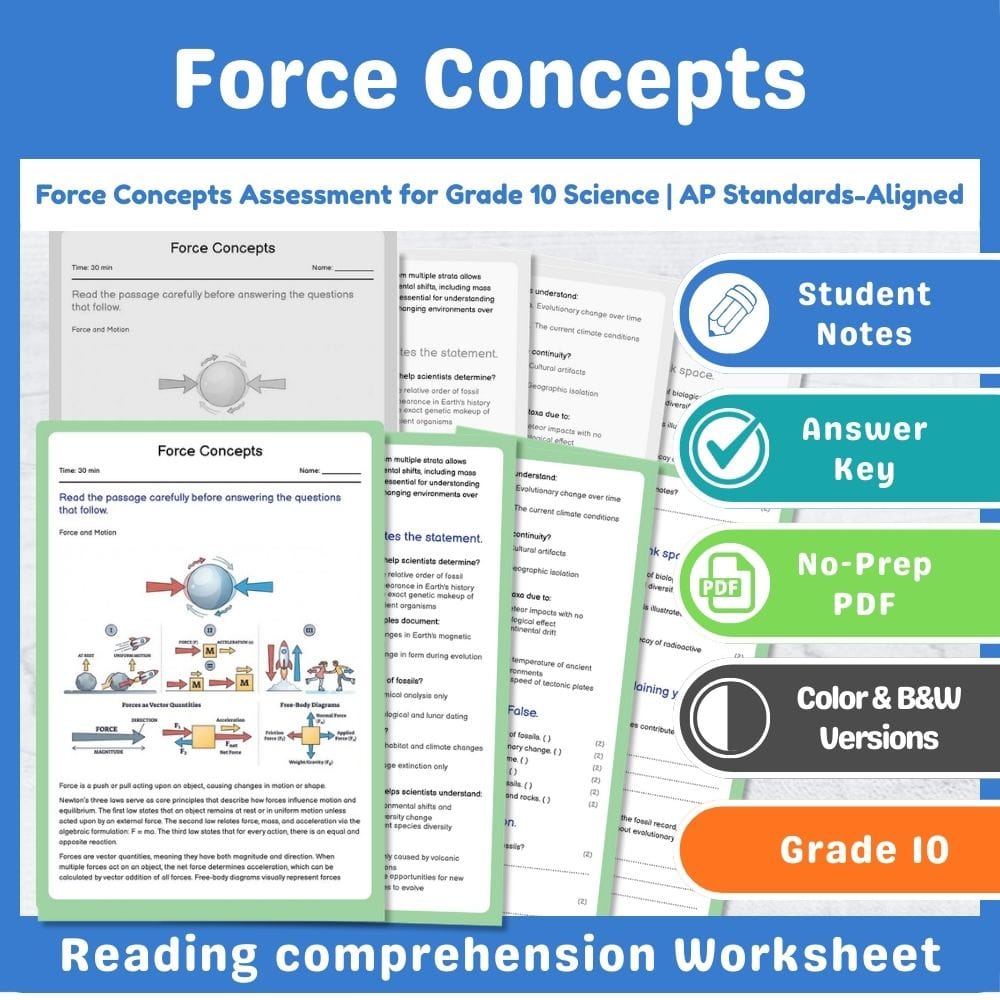
Force Concepts Assessment for Grade 10 Science | AP Standards-Aligned
Created byPrism Point LearningLearning Objectives
- Understand the vector nature of forces and how to determine net force in various scenarios.
- Explain Newton's three laws and their applications to motion and equilibrium.
- Interpret free-body diagrams and algebraic formulations of forces.
Also included in: Lesson Grade 10 Science Assessment Bundle | AP Standards-Aligned
Instant download

Governance Futures Assessment | TEKS Grade 12 Science Standards
Created byPrism Point LearningLearning Objectives
- Understand the role of regulatory standards and risk assessment in shaping scientific policy.
- Analyze the importance of international agreements and adaptive governance models in technology oversight.
- Evaluate foresight methods and scenario analysis in anticipatory planning for governance.
Also included in: Grade 12 Science Technology and Society Science Lesson Bundle: TEKS
Instant download
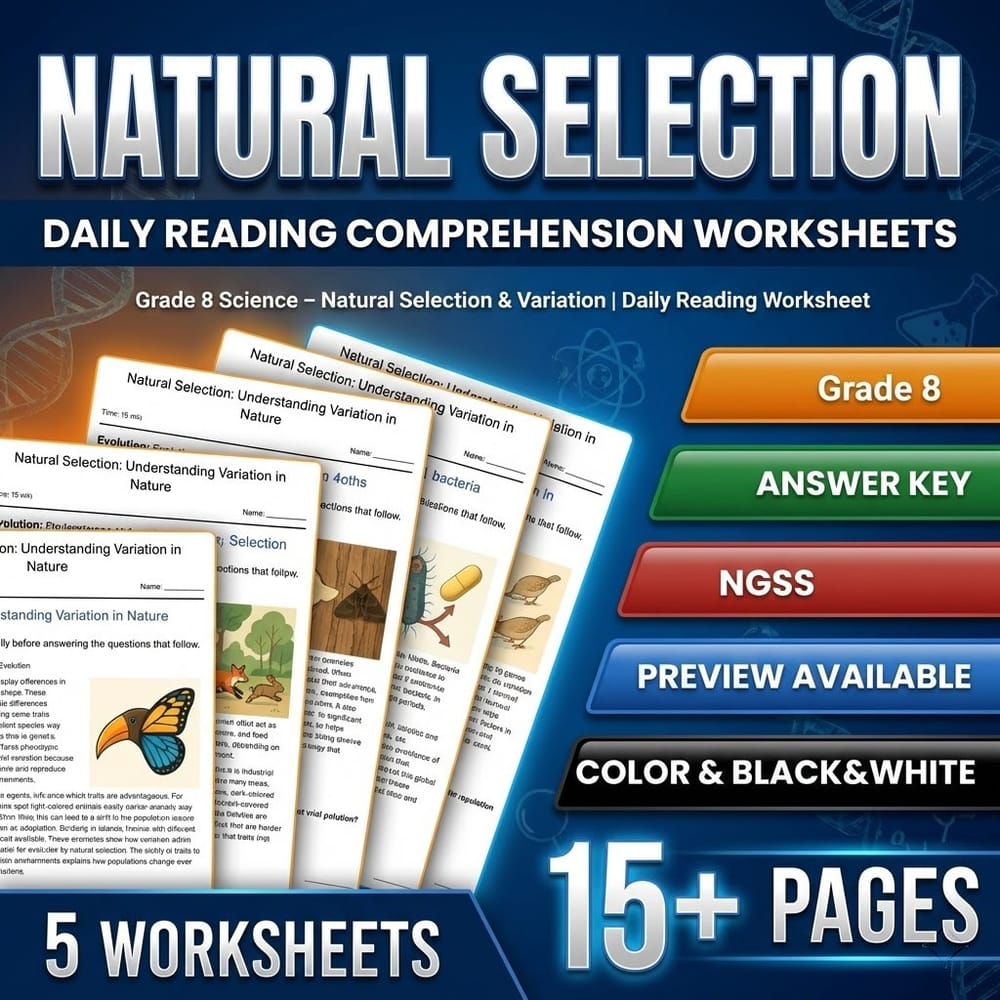
Grade 8 Science – Natural Selection & Variation | Daily Reading Worksheet
 Created byElena Brooks
Learning Objectives
- Identify phenotypic variation among organisms
- Explain how traits are inherited
- Understand environmental factors influencing natural selection
Instant download
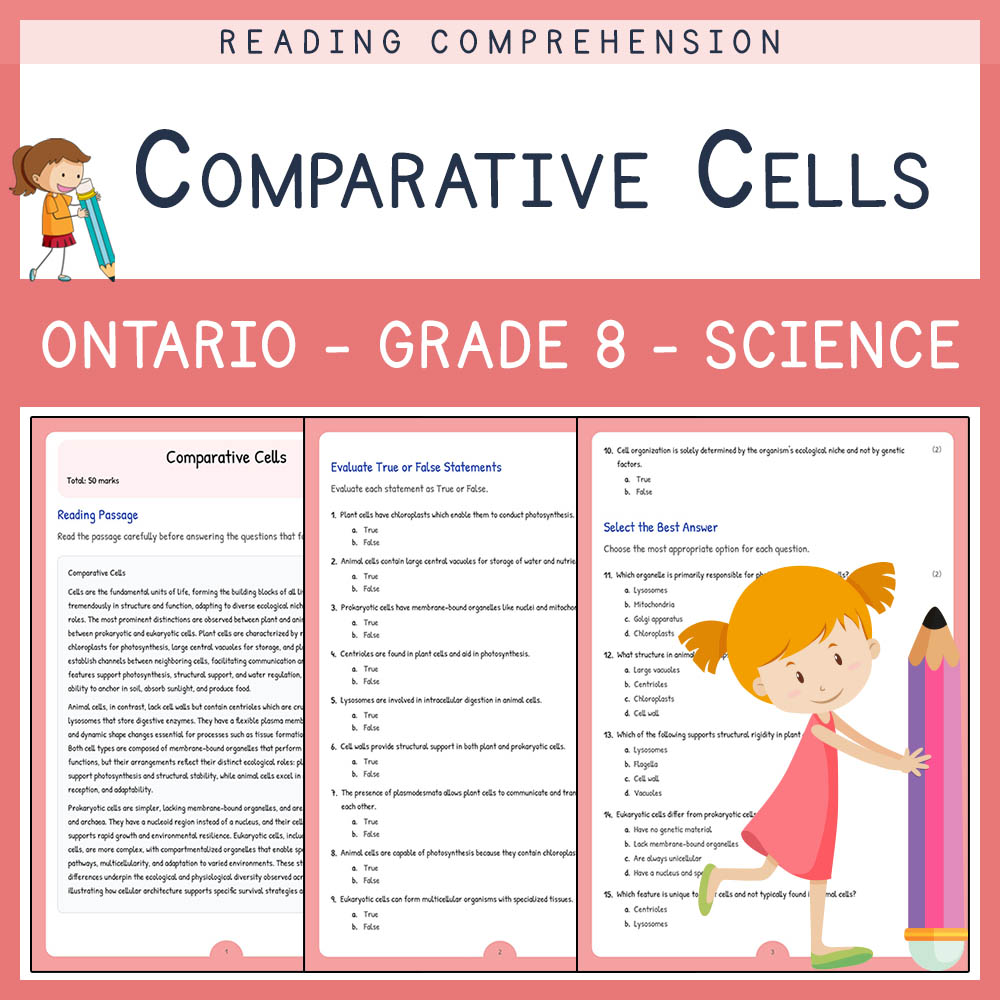
Grade 8 Science | Comparative Cells Worksheet Elena | Ontario Standards
Created byLumora LearningLearning Objectives
- Identify the structural differences between plant and animal cells and their functional implications.
- Compare prokaryotic and eukaryotic cells in terms of organization and roles in ecosystems.
- Explain how cellular structures like cell walls, chloroplasts, and lysosomes support specific physiological functions.
Instant download
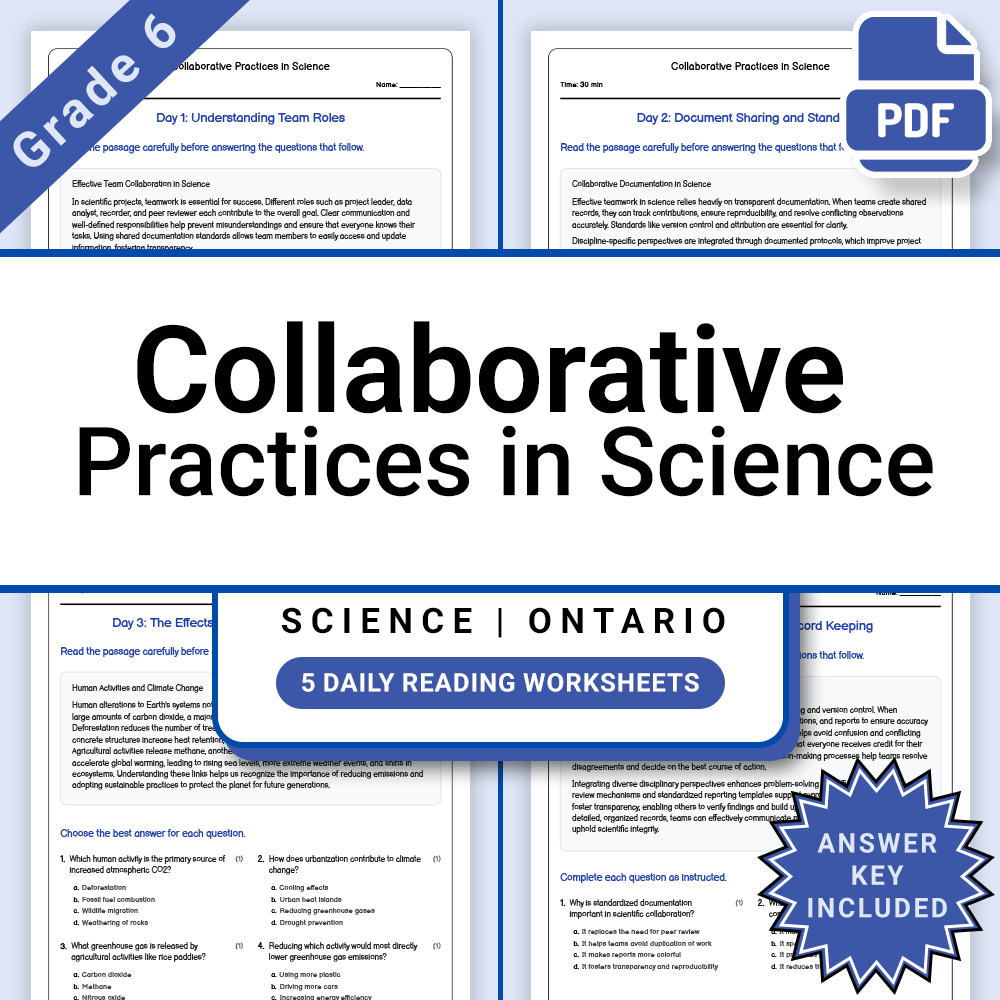
Grade 6 Science – Collaborative Practices Daily Worksheet with Answer Key
JCreated byJ.S SheetsLearning Objectives
- Understand different roles within a scientific team
- Recognize the importance of shared documentation and protocols
- Identify principles that enhance collaboration and project efficiency
Also included in: Grade 6 Science STEM Skills and Connections Lesson Bundle with Ontario Framework +1 more
Instant download
Browse more categories
About Science Worksheets
Find Science worksheets spanning core skills, practice, and review. All 44,342 resources are instant PDF downloads for the classroom or home.
Every worksheet on MyTeachingSheets is created by independent teacher-authors and reviewed before publication. All resources download as printable PDFs for classroom, homework, or at-home practice, and many include answer keys. Preview any worksheet free before buying.