
Science Worksheets
44,342 subject resources
Measurement Uncertainty Worksheet Practice | Grade 7 Science
 Created byPrism Point Learning
Learning Objectives
- Identify standard metric units and choose suitable instruments for a measurement task
- Read scales accurately and report measurements using appropriate significant figures
- Distinguish between systematic and random error and explain how uncertainty affects results
Instant download
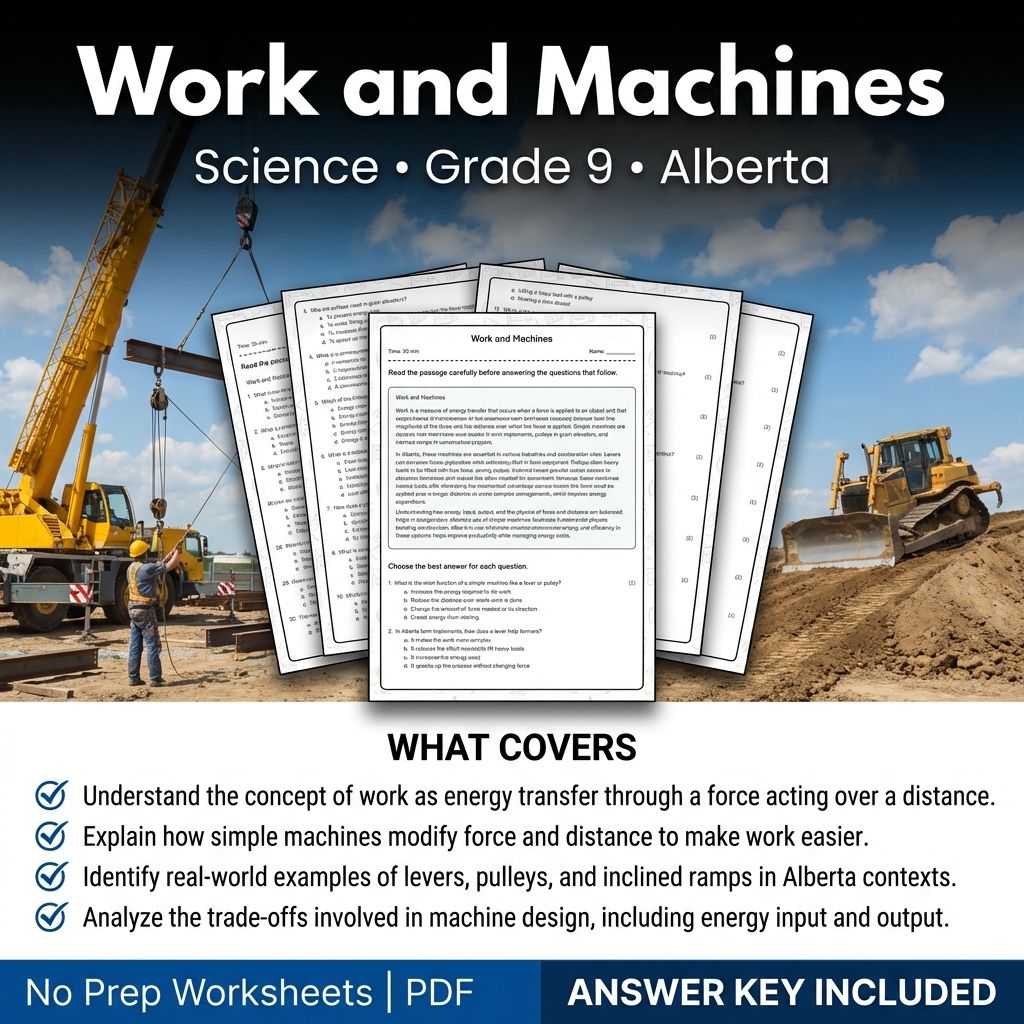
Work and Machines Grade 9 Science Worksheet | Alberta Standards
 Created byCoral Reef Learning
Learning Objectives
- Understand the concept of work as energy transfer through a force acting over a distance.
- Explain how simple machines modify force and distance to make work easier.
- Identify real-world examples of levers, pulleys, and inclined ramps in Alberta contexts.
Instant download
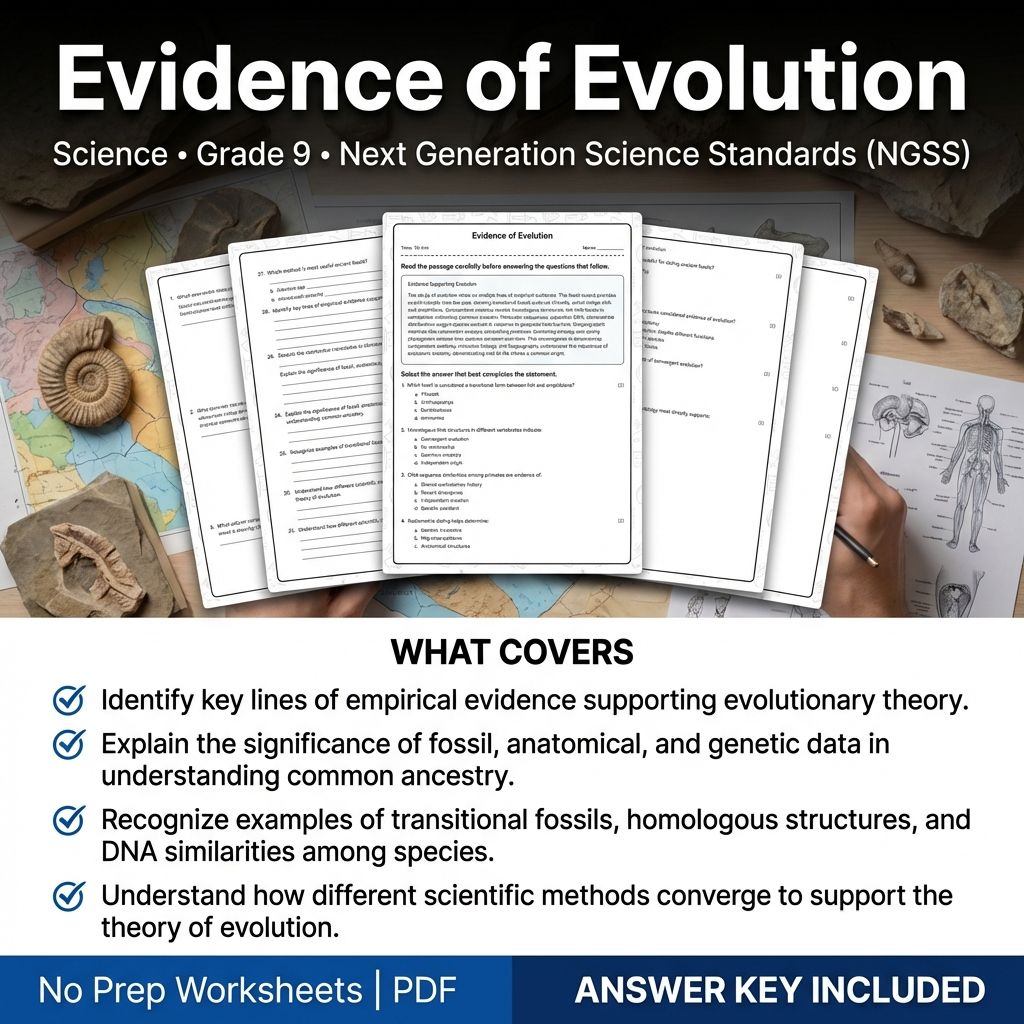
9th Grade Science | Evidence of Evolution Worksheet & Answer Key (Printable PDF)
Created byCoral Reef LearningLearning Objectives
- Identify key lines of empirical evidence supporting evolutionary theory.
- Explain the significance of fossil, anatomical, and genetic data in understanding common ancestry.
- Recognize examples of transitional fossils, homologous structures, and DNA similarities among species.
Also included in: Grade 9 Science | Evolution & Phylogenetics Worksheet Bundle (Printable PDFs) +1 more
Instant download

Population Factors Worksheet for Grade 7 Science | Alberta Standards Practice
JCreated byJ.S SheetsLearning Objectives
- Understand how birth, death, immigration, and emigration influence population size and distribution.
- Identify regional drivers such as water availability, fire regimes, and disease outbreaks that affect populations.
- Analyze how population trends inform species status and biodiversity assessments.
Instant download
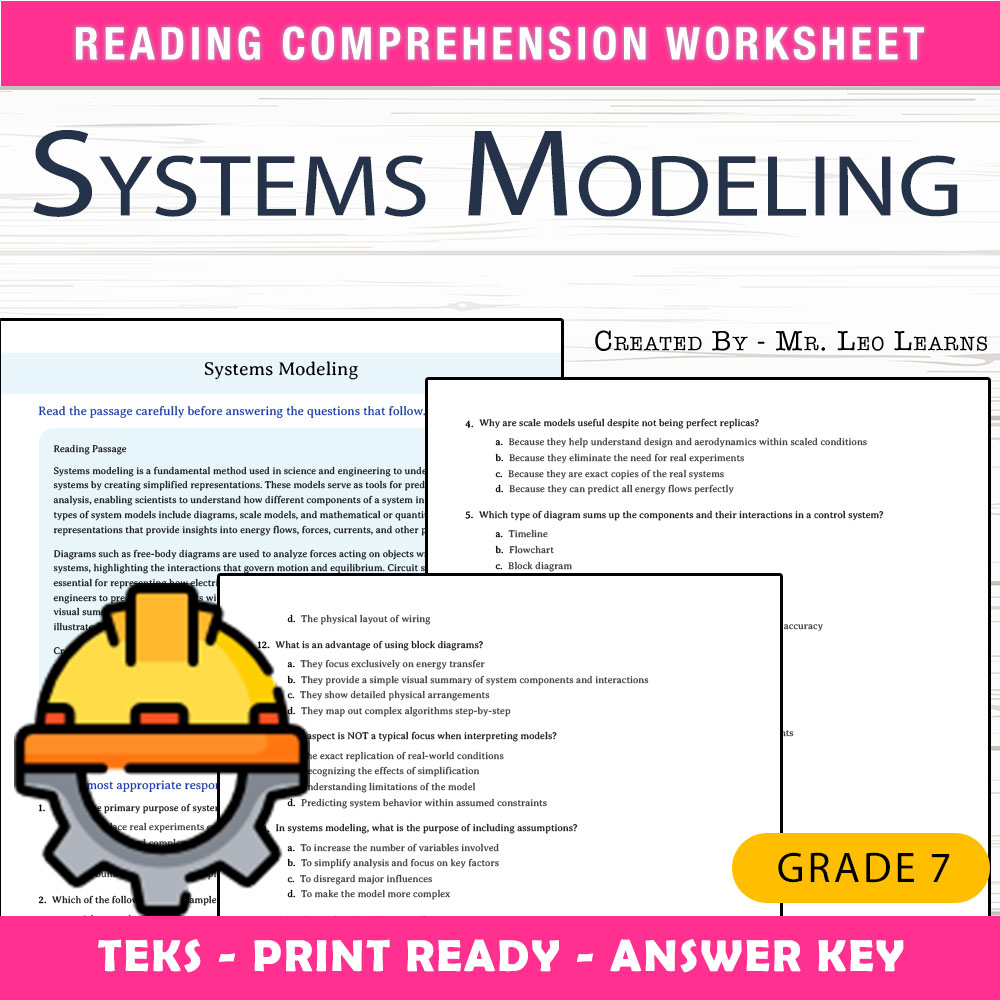
Grade 7 Science – Systems Modeling Worksheet for Mastery
 Created byThe Resource Hub
Learning Objectives
- Explain the concept of systems modeling and its purpose in scientific analysis.
- Identify different types of system models such as diagrams, scale models, and quantitative representations.
- Describe the use of diagrams like free-body diagrams, circuit schematics, and block diagrams.
Also included in: Grade 7 Science Unit | Engineering, Technology & Innovation Worksheet Bundle +1 more
Instant download
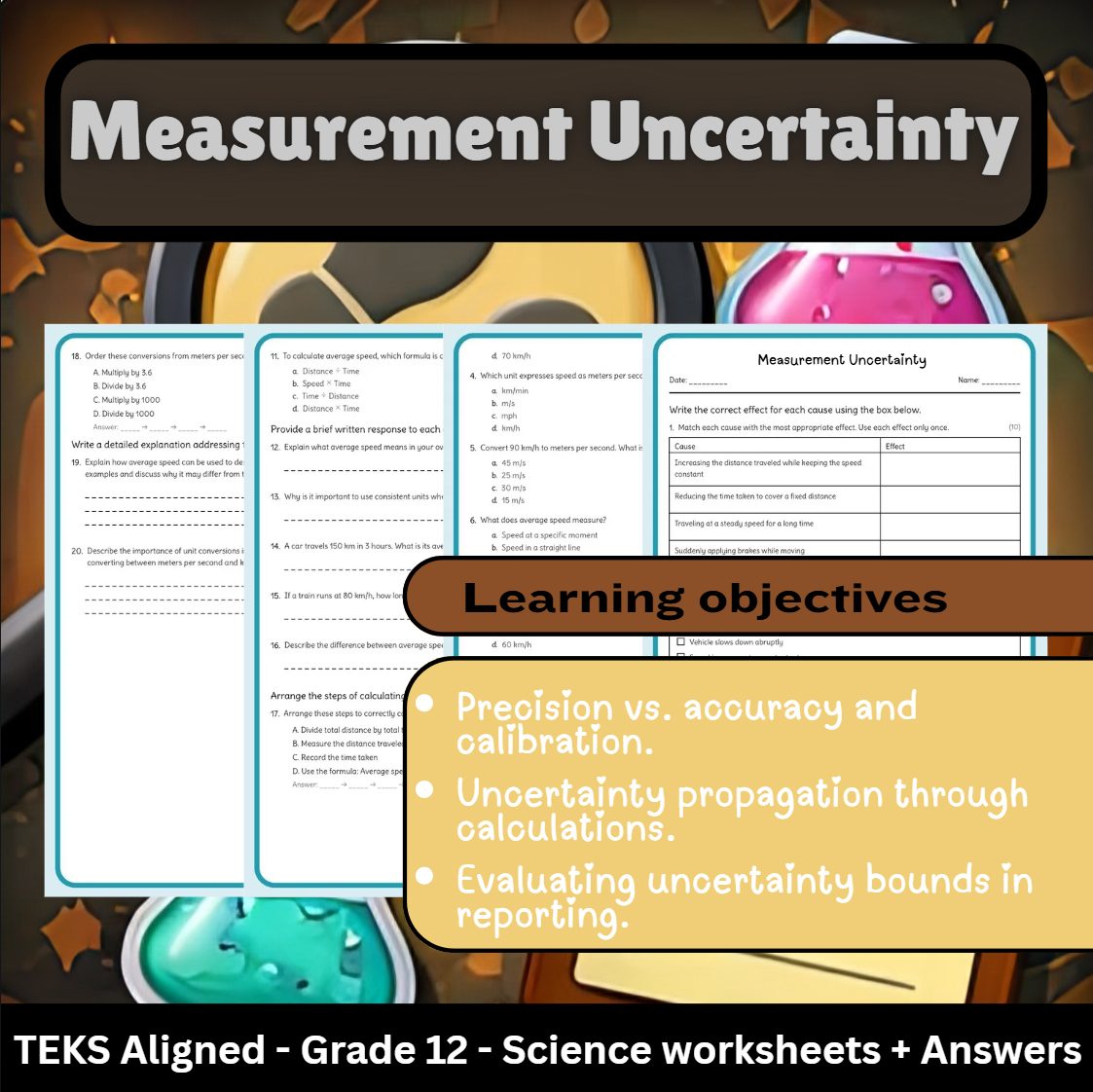
Grade 12 Science | Measurement Uncertainty Worksheet (PDF) aligned with TEKS
 Created byBright Mind Resources
Learning Objectives
- Understand the distinction between precision, accuracy, and calibration in measurement.
- Learn how to propagate measurement uncertainty through calculations.
- Interpret confidence intervals and evaluate uncertainty bounds in reporting results.
Instant download
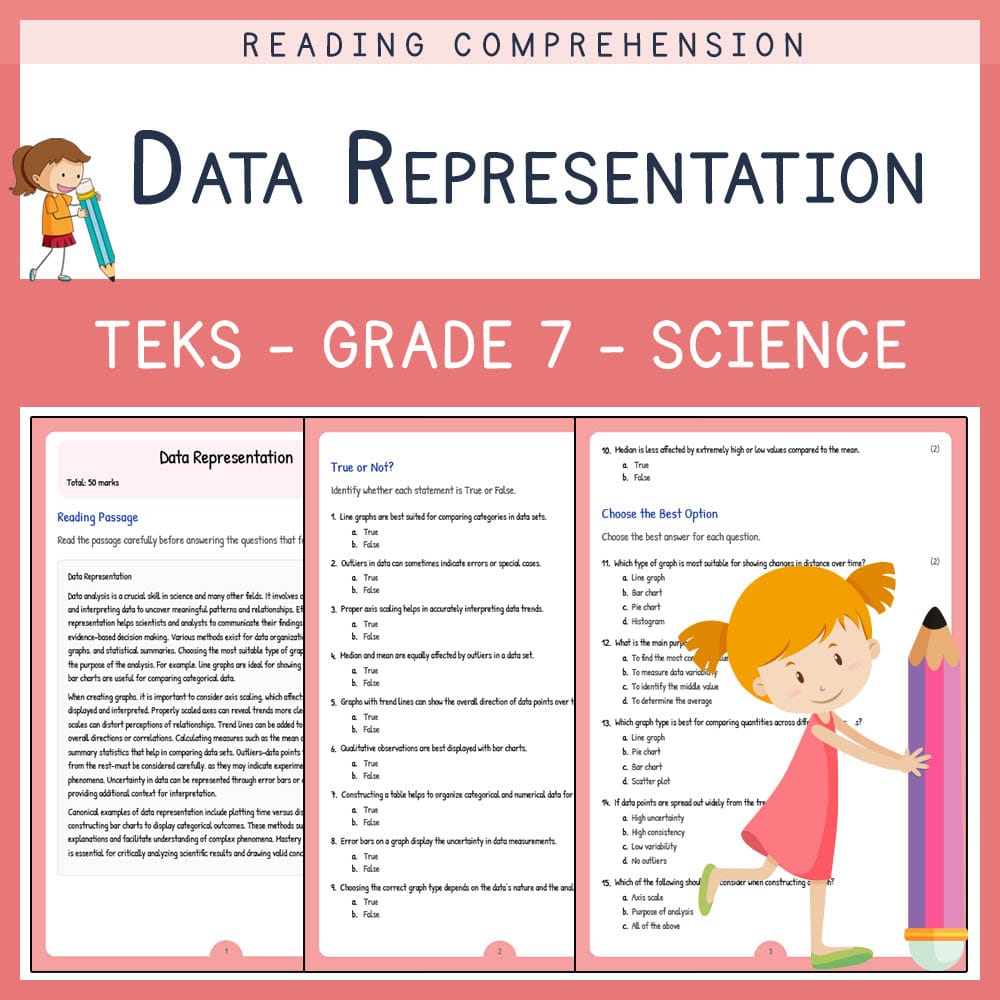
Grade 7 Science | Data Representation Worksheet | TEKS Alligned
 Created byLumora Learning
Learning Objectives
- Understand how to organize data into tables and graphs for analysis.
- Identify appropriate graph types for different data sets.
- Interpret trends and relationships from charts and summary statistics.
Instant download
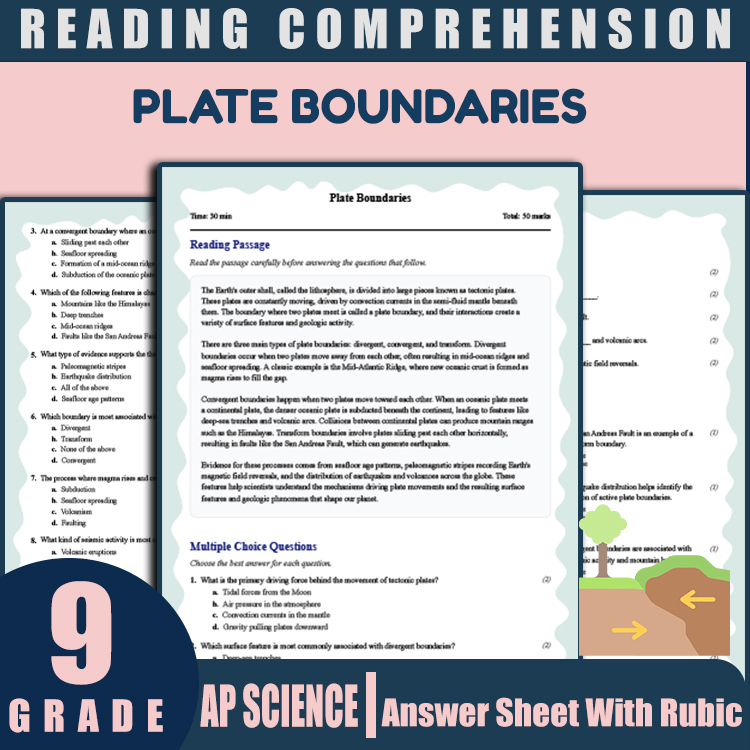
9th Grade Science | Plate Boundaries Reading Worksheets (PDF & Rubric)
JCreated byJ.S SheetsLearning Objectives
- Explain the mechanisms behind divergence, convergence, and transform plate boundaries.
- Identify surface features and geologic evidence associated with different types of plate boundaries.
- Describe how plate tectonics influences seismic and volcanic activity globally.
Instant download
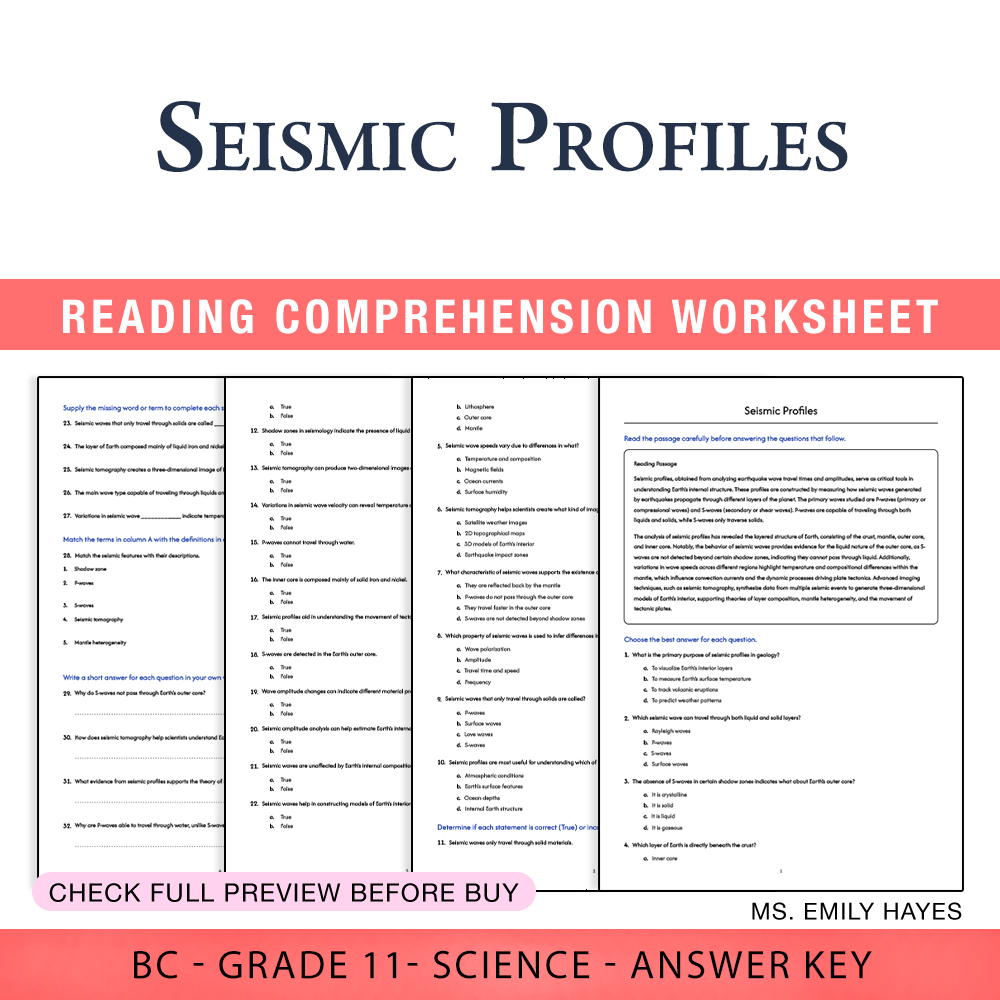
11th Grade Science | Seismic Profiles Worksheet (PDF + Answer Key)
 Created byCopper Leaf Classroom
Learning Objectives
- Explain how seismic profiles provide information about Earth's internal layers.
- Identify differences between P-waves and S-waves and their significance in seismology.
- Describe how seismic wave behavior reveals the presence of a liquid outer core.
Also included in: Grade 11 Science BC | Earth Structures & Geological Processes (PDF+ Answer Keys) +1 more
Instant download

Food Webs & Trophic Relationships Worksheet Grade 6 Ontario Science
 Created byTeacher's Corner
Learning Objectives
- Identify producers, consumers, and decomposers in food webs and food chains.
- Explain how energy transfers and decreases across trophic levels.
- Describe how removing or adding a species can affect other species in a connected community.
Instant download

Circuit Diagnosis Worksheet Grade 6 Science | Ontario Circuits Unit
 Created byChalk and Compass
Learning Objectives
- Explain how observed symptoms (brightness changes, missing continuity, abnormal readings) can suggest where a fault may be in a circuit.
- Use circuit topology (series vs. parallel paths) to predict what measurements should look like when components function correctly.
- Describe diagnostic reasoning by comparing expected patterns to observed results to isolate likely causes.
Also included in: Grade 6 Science Circuits & Electricity Lesson Bundle | Ontario +1 more
Instant download

Combined Circuits Worksheet Grade 6 Science | Series & Parallel Circuits
Created byChalk and CompassLearning Objectives
- Explain how combined (series-parallel) circuits can be broken into simpler series and parallel subcircuits
- Describe how current and voltage distribute in mixed series-parallel configurations
- Predict and diagnose changes in brightness or readings when a component is removed or fails
Also included in: Grade 6 Science Circuits & Electricity Lesson Bundle | Ontario +1 more
Instant download

Grade 6 Energy and Power Worksheet | Ontario Science Activity
Created byChalk and CompassLearning Objectives
- Define electrical power as the rate of energy transfer and relate it to how fast energy is used.
- Explain how current and voltage affect power in common circuit elements using basic relationships.
- Describe how efficiency and heat generation are connected for resistive components.
Also included in: Grade 6 Science Circuits & Electricity Lesson Bundle | Ontario +1 more
Instant download

Grade 9 Science Worksheet | Atomic Structure Alberta Standards (PDF)
 Created byEvergreen Desk Education
Learning Objectives
- Explain how atomic number and mass number determine the identity and isotopes of elements
- Describe the roles of protons, neutrons, and electrons in atomic structure
- Use simple nucleus and electron-shell models to predict basic chemical behaviour
Instant download

Design Principles Assessment | TEKS Grade 6 Science Standards-Aligned Assessment
Created byPrism Point LearningLearning Objectives
- Understand how to articulate hypotheses in measurable terms for controlled tests.
- Identify key elements needed for designing valid experiments, including control groups and replication strategies.
- Recognize ethical and safety considerations involved in testing physical or biological materials.
Also included in: Scientific Inquiry and Processes Grade 6 Science Lesson Bundle | TEKS
Instant download

Modeling Systems Assessment for Grade 6 Science TEKS | Printable Worksheet
Created byPrism Point LearningLearning Objectives
- Understand different types of models used in science to represent systems.
- Evaluate the assumptions and predictive limits of various models.
- Interpret empirical data to refine models and improve their accuracy.
Also included in: Scientific Inquiry and Processes Grade 6 Science Lesson Bundle | TEKS
Instant download

Scientific Methods Assessment | TEKS Grade 6 Science Standards
Created byPrism Point LearningLearning Objectives
- Describe the iterative nature of scientific methods and how they are used to develop testable questions.
- Differentiate between descriptive and comparative approaches in scientific investigations.
- Explain how observational phenomena guide methodological choices in experiments.
Also included in: Scientific Inquiry and Processes Grade 6 Science Lesson Bundle | TEKS
Instant download

6th Grade Science | Earth Structure Worksheet (TEKS) (PDF)
Created byEvergreen Desk EducationLearning Objectives
- Explain Earth’s internal layers (crust, mantle, outer core, inner core) and how they relate to plate motion.
- Compare divergent, convergent, and transform plate boundaries and identify typical surface features.
- Describe how tectonic processes cause earthquakes, volcanic eruptions, and mountain building.
Instant download
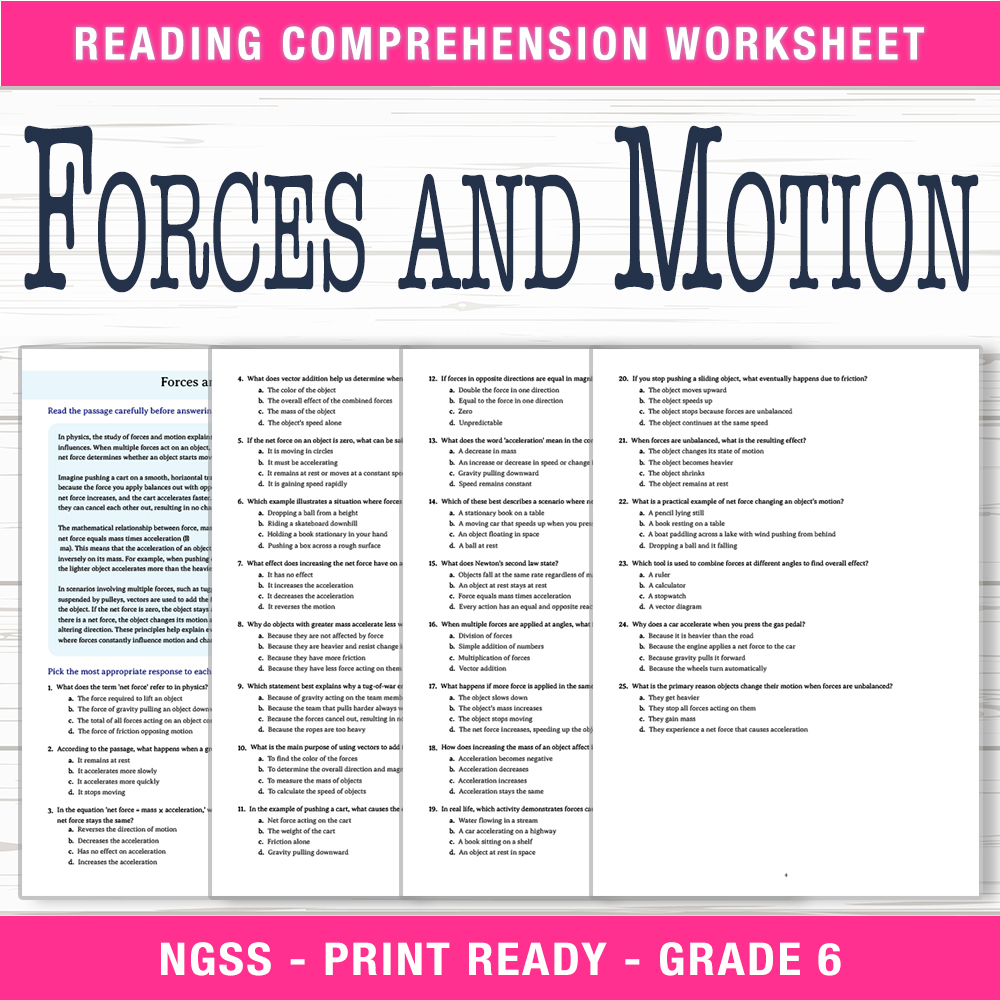
Grade 6 Science | Forces and Motion Worksheet (PDF + Answer Key)
 Created byRiverstone Classroom
Learning Objectives
- Understand how net force affects the motion of objects based on their mass.
- Explain the relationship between force, mass, and acceleration using the formula net force equals mass times acceleration.
- Identify scenarios where forces change and predict resulting motion alterations.
Instant download

Earth Materials Worksheet | NGSS Grade 8 Science Assessment
 Created byCedar Grove Learning
Learning Objectives
- Model Earth's material cycles and energy flows by understanding rock cycle processes, mantle convection, and surface interactions.
- Identify and describe the transfer of mass through melting, crystallization, uplift, weathering, transport, and deposition.
- Explain energy sources such as Earth's internal heat and gravitational potential in shaping Earth's features.
Instant download

Biodiversity Drivers Practice Worksheet | Grade 10 Science NGSS
Created byPrism Point LearningLearning Objectives
- Explain how habitat fragmentation, invasive species, land-use change, and climate-driven range shifts can affect species richness and composition
- Describe how genetic diversity, metapopulation structure, and connectivity influence extinction risk and recovery
- Evaluate how evidence from terrestrial and aquatic studies can link biodiversity loss to ecosystem function and long-term viability
Also included in: Grade 10 Ecosystems & Biodiversity Science Lesson Bundle Practice: NGSS
Instant download

Ecosystem Resilience Worksheet for Grade 11 Science TEKS Aligned
JCreated byJ.S SheetsLearning Objectives
- Explain what ecosystem resilience is and why it matters for ecological stability.
- Identify key mechanisms that help ecosystems absorb disturbances (redundancy, functional traits, feedback loops).
- Analyze how disturbance intensity, frequency, and landscape context affect recovery and stable states.
Instant download
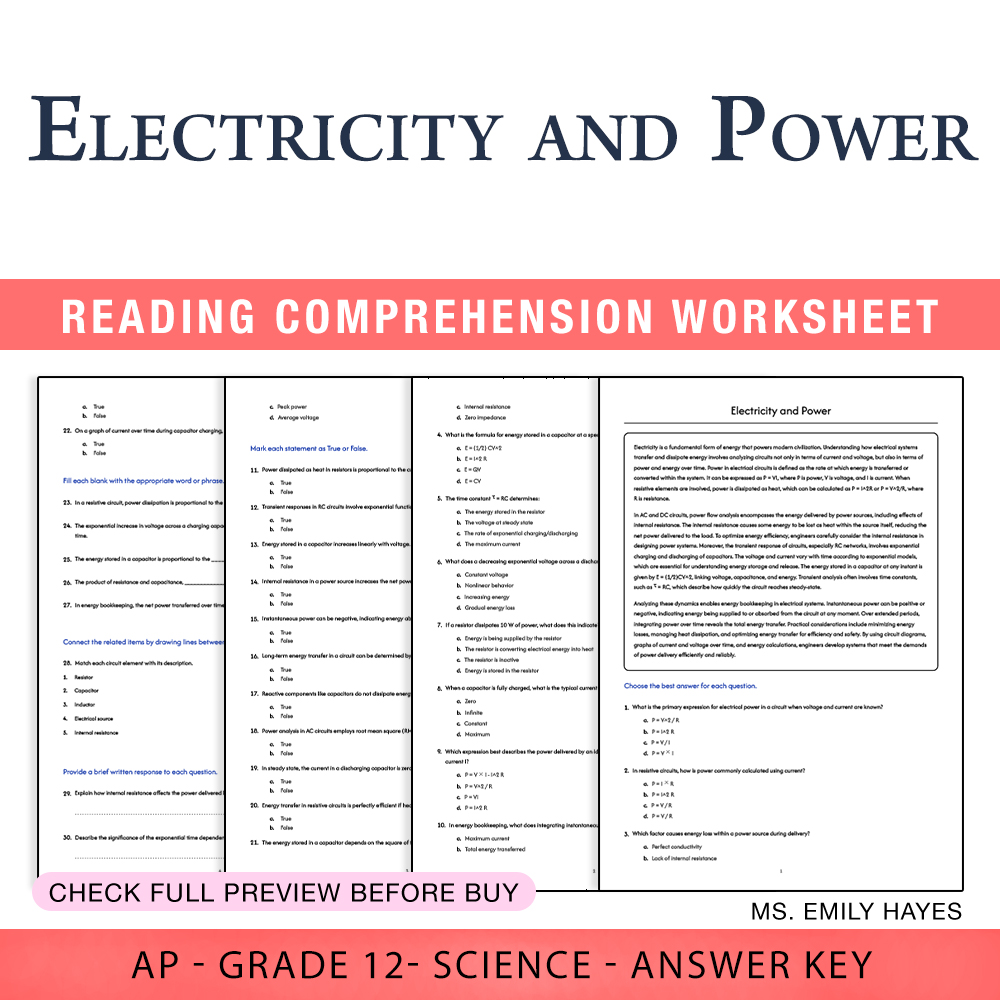
12th Grade Science | Electricity and Power Assessment Worksheet (PDF+ Answer Key
Created byCopper Leaf ClassroomLearning Objectives
- Understand the concepts of power, energy transfer, and their relationships in electrical circuits.
- Analyze energy dissipation in resistive elements and how internal resistance affects power delivered by sources.
- Model transient charging and discharging in RC networks using exponential functions.
Also included in: Grade 12 Science AP – Energy, Motion & Electricity Mastery(PDF+ Answer Key) +1 more
Instant download

Grade 7 Science | Introduction to Truss Structures - Daily Reading Comprehension
Created byCoral Reef LearningLearning Objectives
- Understand the basic parts of a truss
- Identify how loads are distributed in a truss
- Recognize the significance of triangle shapes in structural stability
Also included in: Forces, Structures and Motion Lesson Bundle | Grade 7 Science Alberta +1 more
Instant download
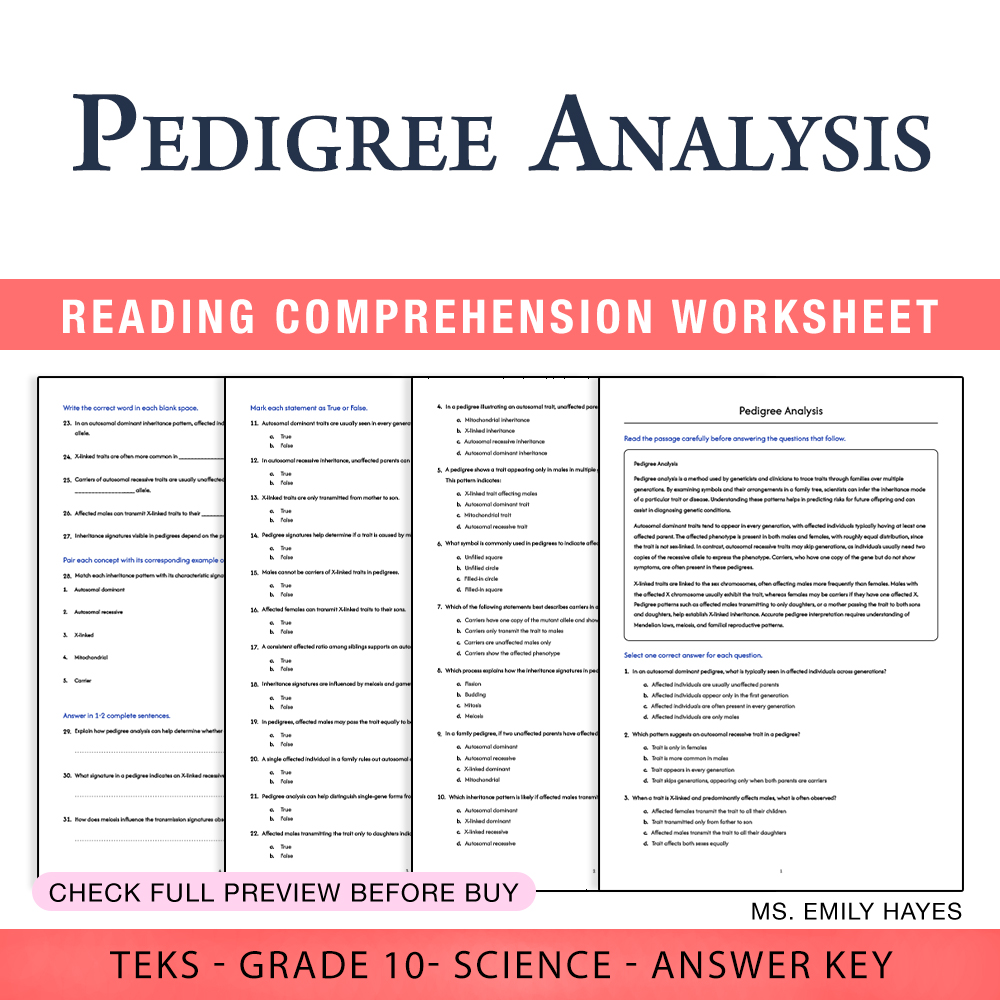
10th Grade Science | Pedigree Analysis Worksheet (PDF+ Answer Key)
Created byCopper Leaf ClassroomLearning Objectives
- Interpret family trees (pedigrees) to determine inheritance patterns.
- Differentiate between autosomal dominant, autosomal recessive, and X-linked traits using pedigree signatures.
- Predict genotype probabilities based on pedigree data.
Instant download

Biotech Ethics Worksheet for Grade 9 Science | Standards-Aligned Practice
JCreated byJ.S SheetsLearning Objectives
- Evaluate biotechnological proposals by balancing potential benefits and potential risks to individuals and communities.
- Explain ethical concerns related to genetic privacy, informed consent, off-target genome-editing effects, and ecological consequences.
- Identify how equitable access and public engagement influence regulation and policy decisions for biotechnology.
Instant download
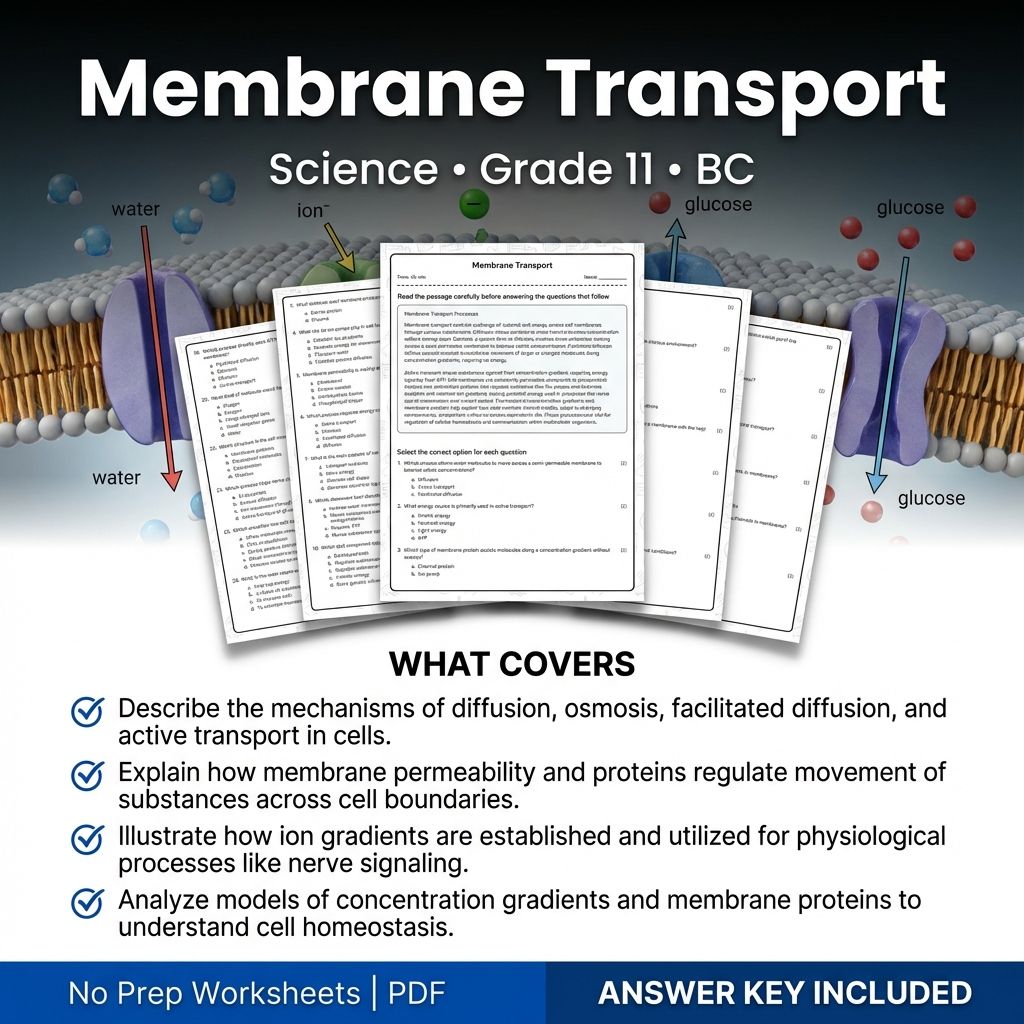
Membrane Transport Worksheet for Grade 11 Science | BC Standards
Created byCoral Reef LearningLearning Objectives
- Describe the mechanisms of diffusion, osmosis, facilitated diffusion, and active transport in cells.
- Explain how membrane permeability and proteins regulate movement of substances across cell boundaries.
- Illustrate how ion gradients are established and utilized for physiological processes like nerve signaling.
Instant download

Grade 6 Science Worksheet: Habitat Fragmentation Assessment – Ontario
JCreated byJ.S SheetsLearning Objectives
- Explain how habitat fragmentation divides landscapes and changes connectivity between habitat patches
- Describe how fragmentation can reduce gene flow and pollinator movement
- Analyze how edge effects and isolation can disrupt species interactions and food webs
Instant download
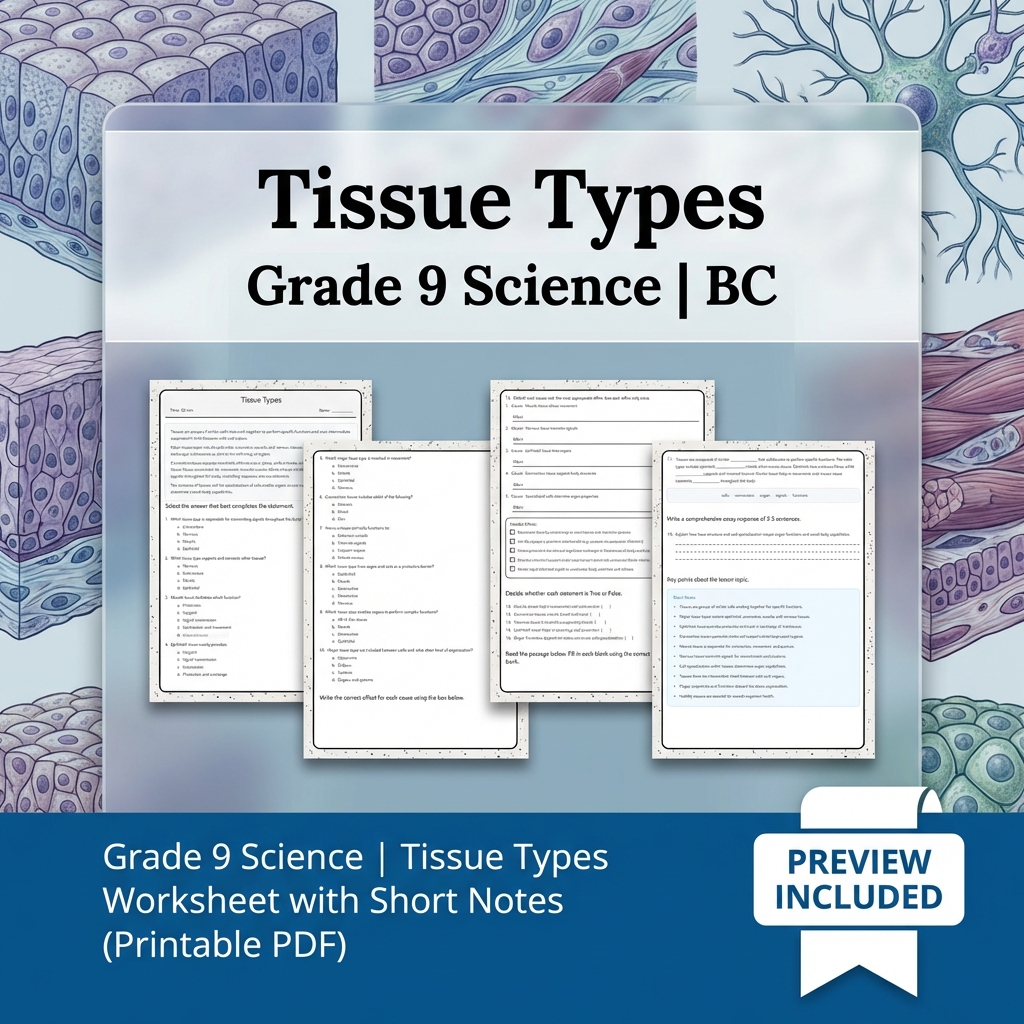
Grade 9 Science | Tissue Types Worksheet with Short Notes (Printable PDF)
 Created byMeadowlark Worksheets
Learning Objectives
- Identify and describe the major tissue types in the human body.
- Understand the functions of epithelial, connective, muscle, and nervous tissues.
- Explain how tissue structure relates to tissue function and organ properties.
Also included in: Grade 9 Science Lesson Bundle | BC Framework Worksheets (15-Piece Collection) +1 more
Instant download
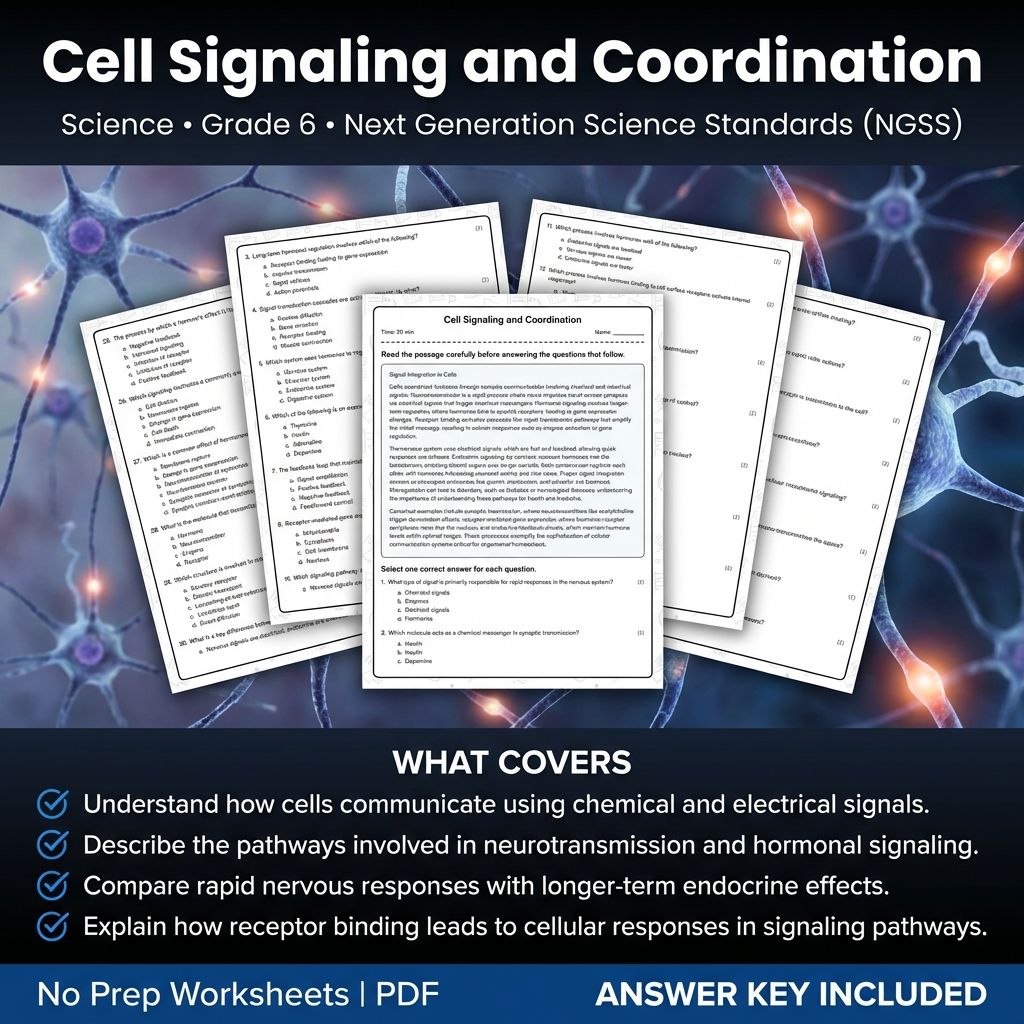
6th Grade Science Worksheet | Cell Signaling & Coordination (Printable PDF + Answer Key)
Created byCoral Reef LearningLearning Objectives
- Understand how cells communicate using chemical and electrical signals.
- Describe the pathways involved in neurotransmission and hormonal signaling.
- Compare rapid nervous responses with longer-term endocrine effects.
Instant download
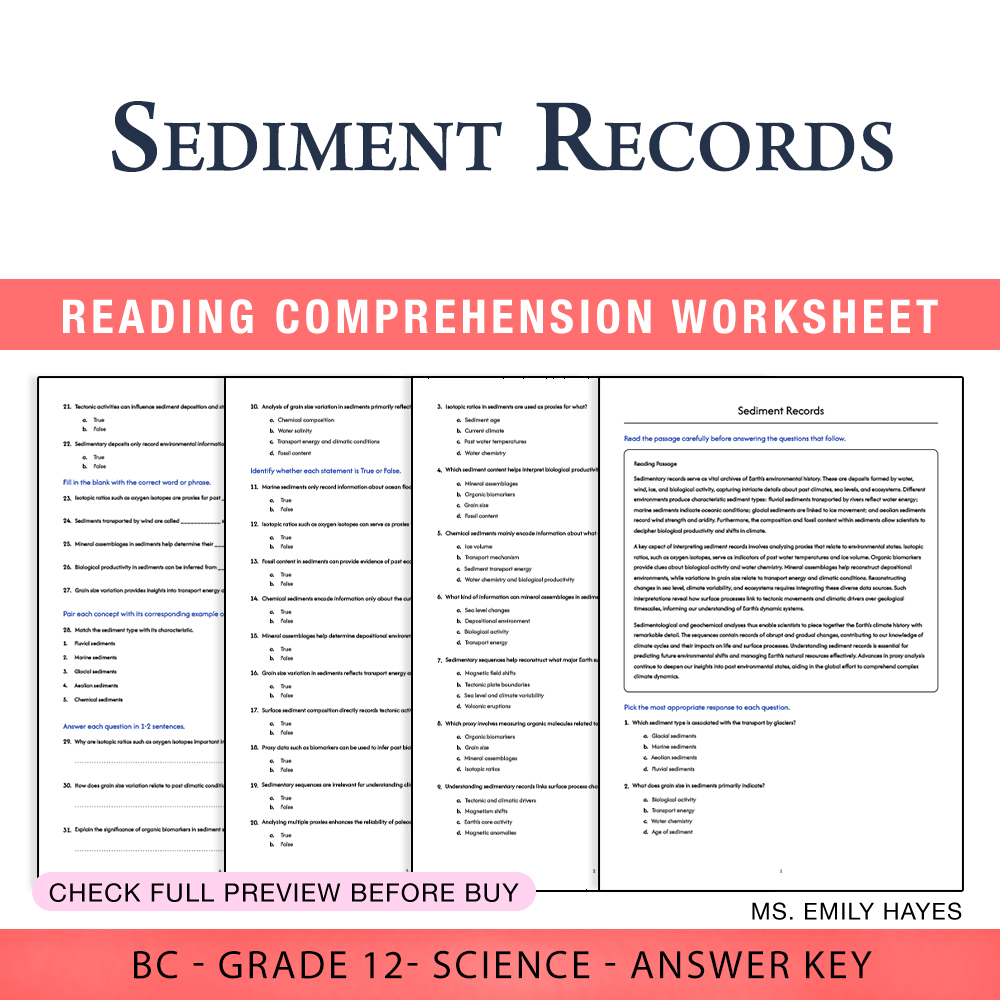
Grade 12 Science | Sediment Records Worksheet (PDF + Answer Key)
Created byCopper Leaf ClassroomLearning Objectives
- Understand how sedimentary deposits record environmental interactions and past climate conditions.
- Identify different types of sediment and what they reveal about transport energy and climate.
- Learn about proxies like isotopic ratios and biomarkers used for reconstructing environmental changes.
Also included in: Grade 12 Science BC | Earth Structures & Geology Bundle (PDF+ Answer Keys) +1 more
Instant download
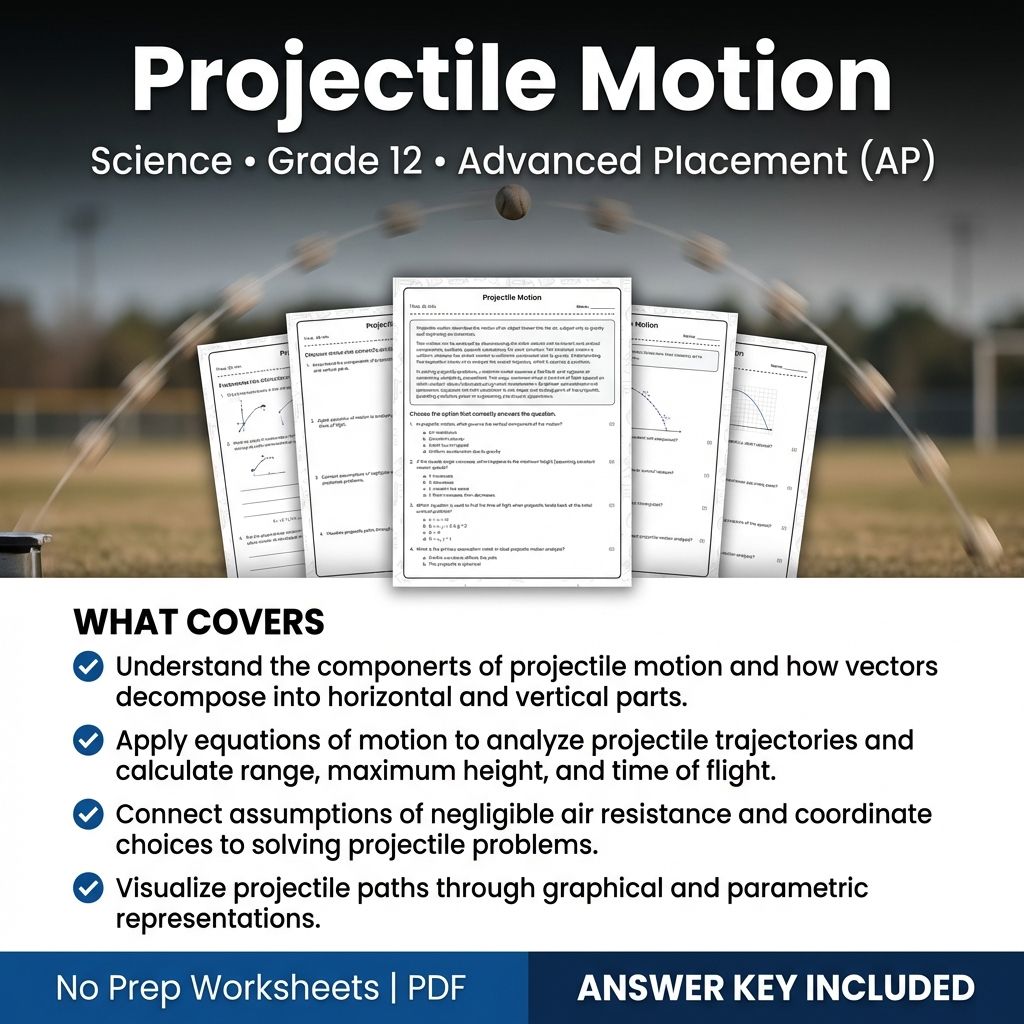
Grade 12 Science Worksheet | Projectile Motion Practice with Answer Key (PDF)
Created byCoral Reef LearningLearning Objectives
- Understand the components of projectile motion and how vectors decompose into horizontal and vertical parts.
- Apply equations of motion to analyze projectile trajectories and calculate range, maximum height, and time of flight.
- Connect assumptions of negligible air resistance and coordinate choices to solving projectile problems.
Also included in: Grade 12 Science Unit Bundle – Physics Topics with Worksheets & Answer Keys +1 more
Instant download
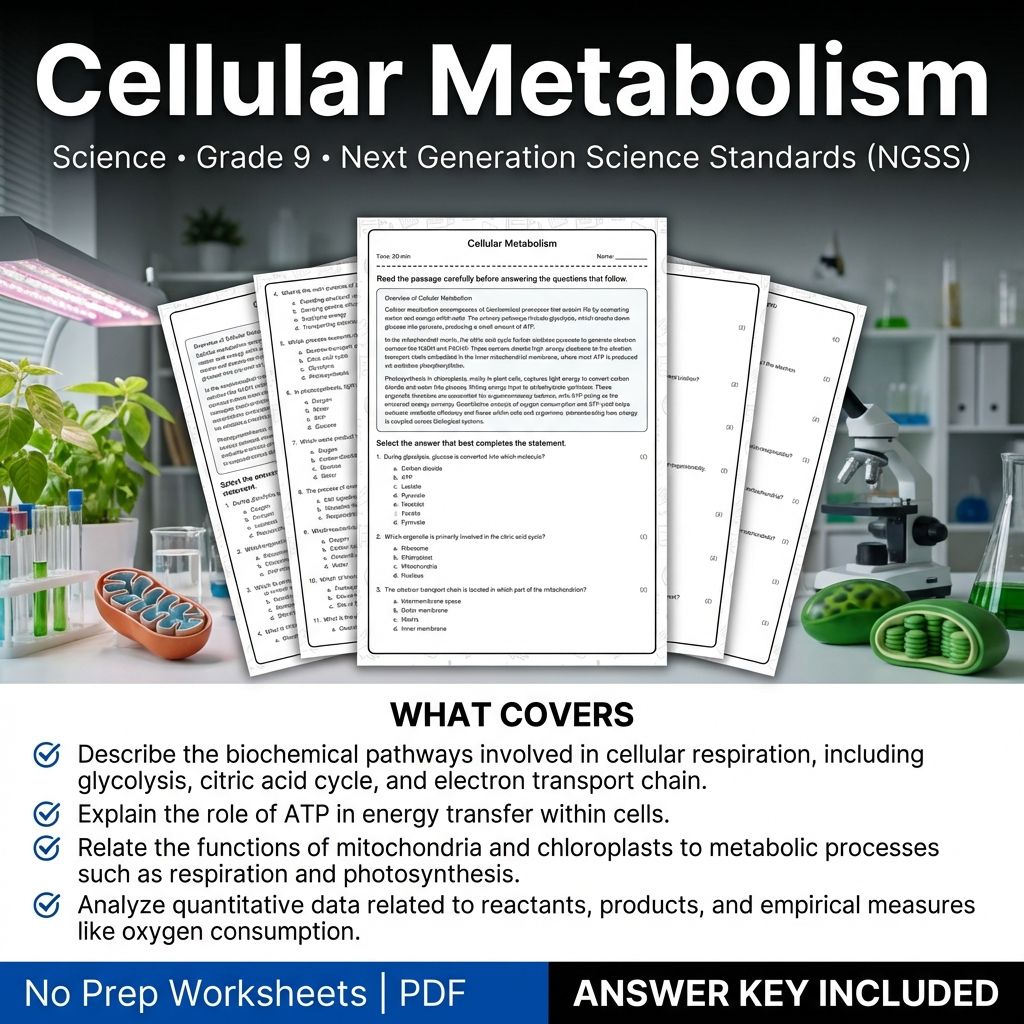
Grade 9 Science | Cellular Metabolism Worksheet & Answer Key (Printable PDF)
Created byCoral Reef LearningLearning Objectives
- Describe the biochemical pathways involved in cellular respiration, including glycolysis, citric acid cycle, and electron transport chain.
- Explain the role of ATP in energy transfer within cells.
- Relate the functions of mitochondria and chloroplasts to metabolic processes such as respiration and photosynthesis.
Also included in: Grade 9 Science Unit Bundle-Biological Systems & Molecular Regulation Worksheets +1 more
Instant download

Competition & Niche Use Species Interactions Worksheet | Grade 11 TEKS
 Created byBRIGHT PATH RESOURCES
Learning Objectives
- Explain how competition shapes resource use and population sizes
- Describe how the niche concept reduces conflict between similar species
- Predict how resource limitation can change outcomes of species coexistence
Instant download

Thermal Expansion Worksheet Grade 7 Science | Heat and Matter
Created byPrism Point LearningLearning Objectives
- Explain how increasing temperature increases particle motion and average spacing, causing thermal expansion in solids and liquids.
- Describe how heating changes gas particle motion and increases pressure in a confined space.
- Use particle theory to predict contraction when temperature decreases.
Instant download
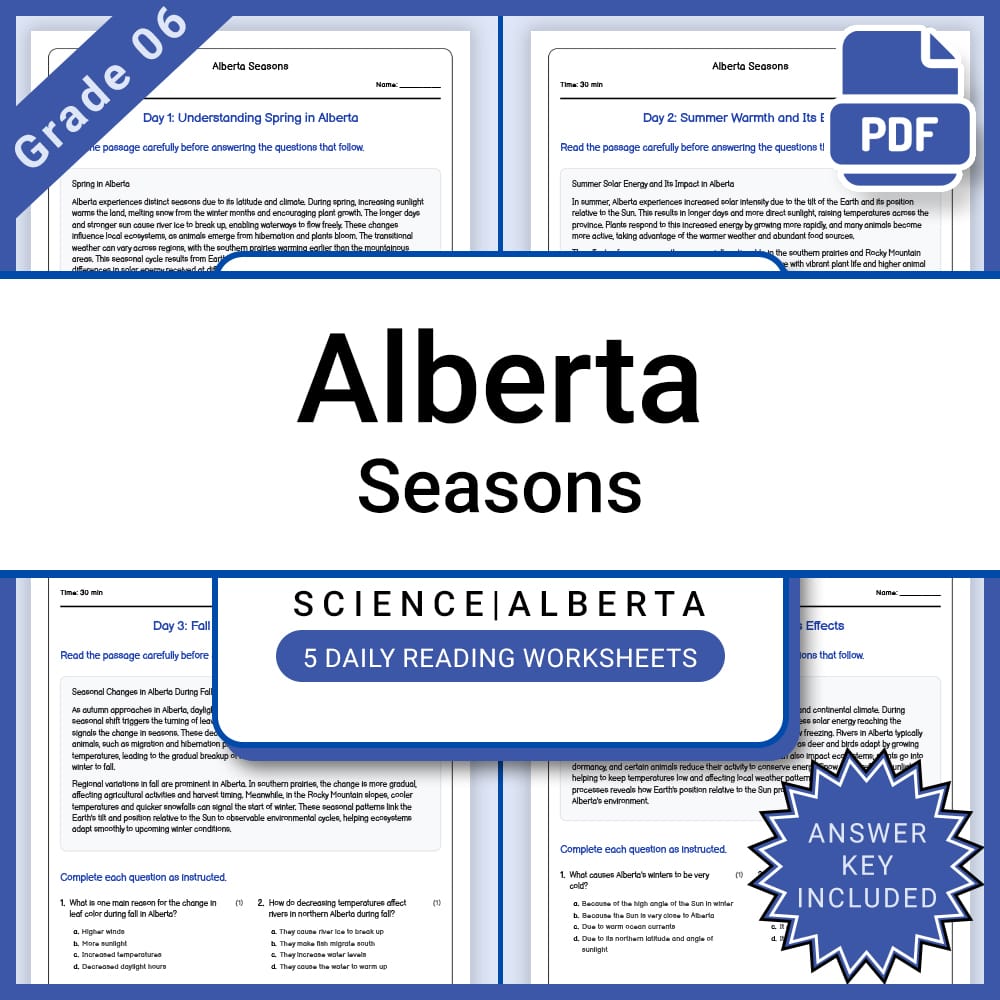
Grade 6 Science – Alberta Seasons Daily Reading Worksheet with Answer Key
JCreated byJ.S SheetsLearning Objectives
- Understand the concept of seasonal changes in Alberta.
- Identify factors that influence Alberta's seasons, such as sunlight and latitude.
- Describe how seasons affect local ecosystems and human activities.
Also included in: Grade 6 Science Lesson Group: Earth & Space Reading Worksheets Bundle +1 more
Instant download
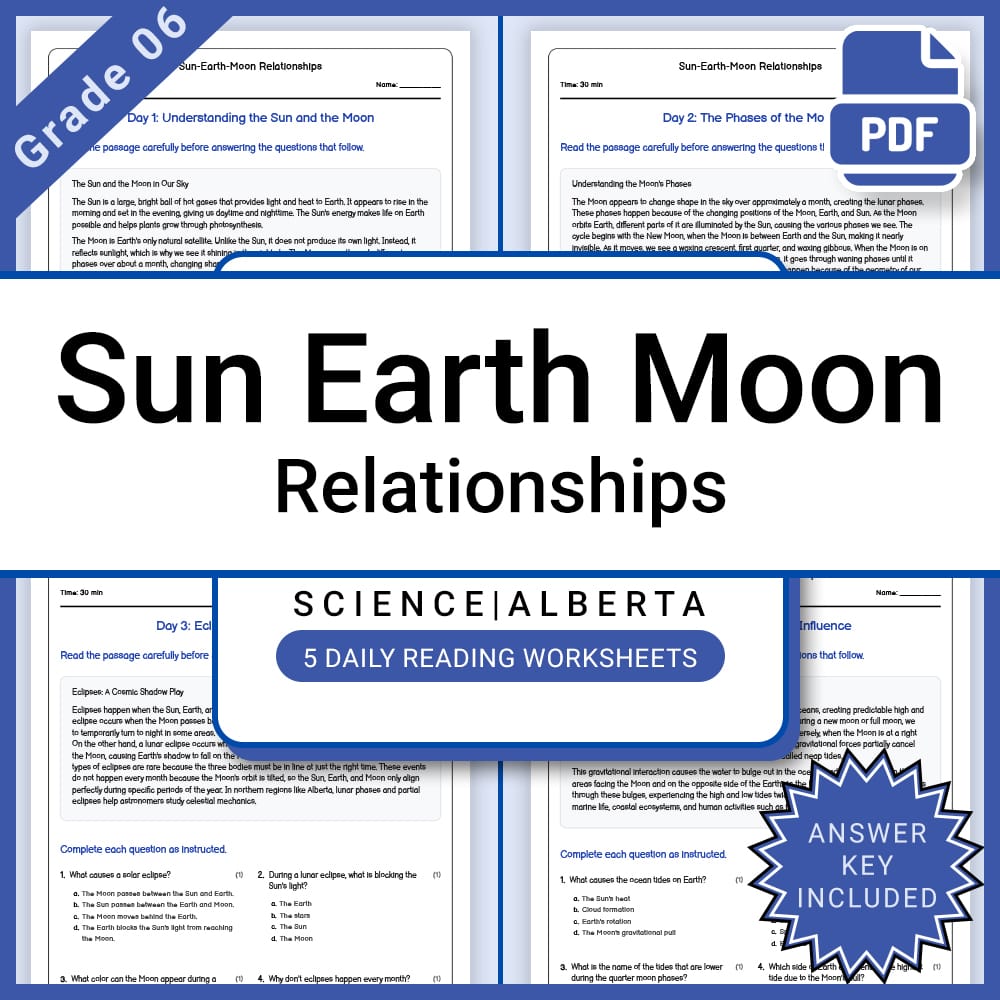
Grade 6 Science Sun–Earth–Moon Relationships Daily Reading Worksheet + Answer Key
JCreated byJ.S SheetsLearning Objectives
- Identify the basic positions of the Sun, Earth, and Moon.
- Describe how the Sun and Moon shine or reflect light.
- Understand the different phases of the Moon and their causes.
Also included in: Grade 6 Science Lesson Group: Earth & Space Reading Worksheets Bundle +1 more
Instant download
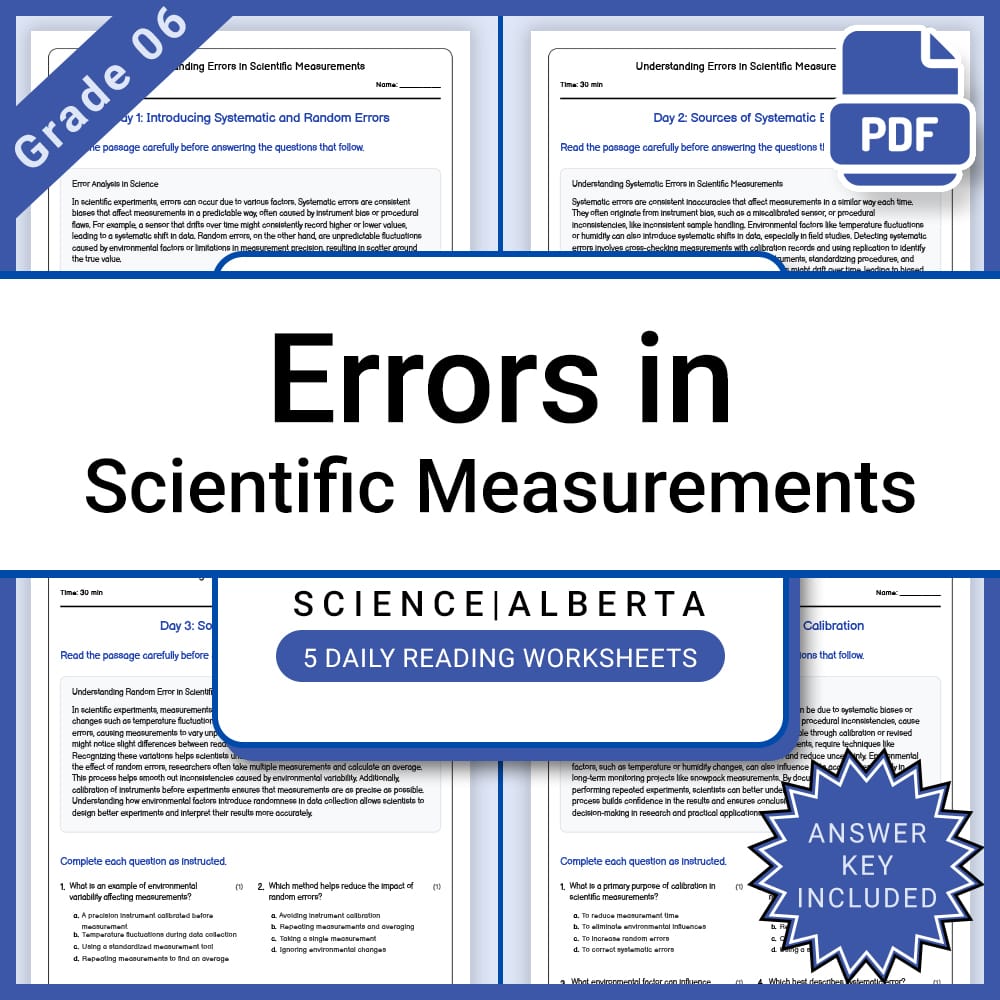
Grade 6 Science – Errors in Scientific Measurements Daily Worksheet + Answer Key
JCreated byJ.S SheetsLearning Objectives
- Define and distinguish between systematic and random errors.
- Identify sources of errors in scientific experiments.
- Explain methods used to analyze and reduce errors.
Also included in: Grade 6 Science Lesson Group Bundle | Alberta Standards with Reading Worksheets +1 more
Instant download
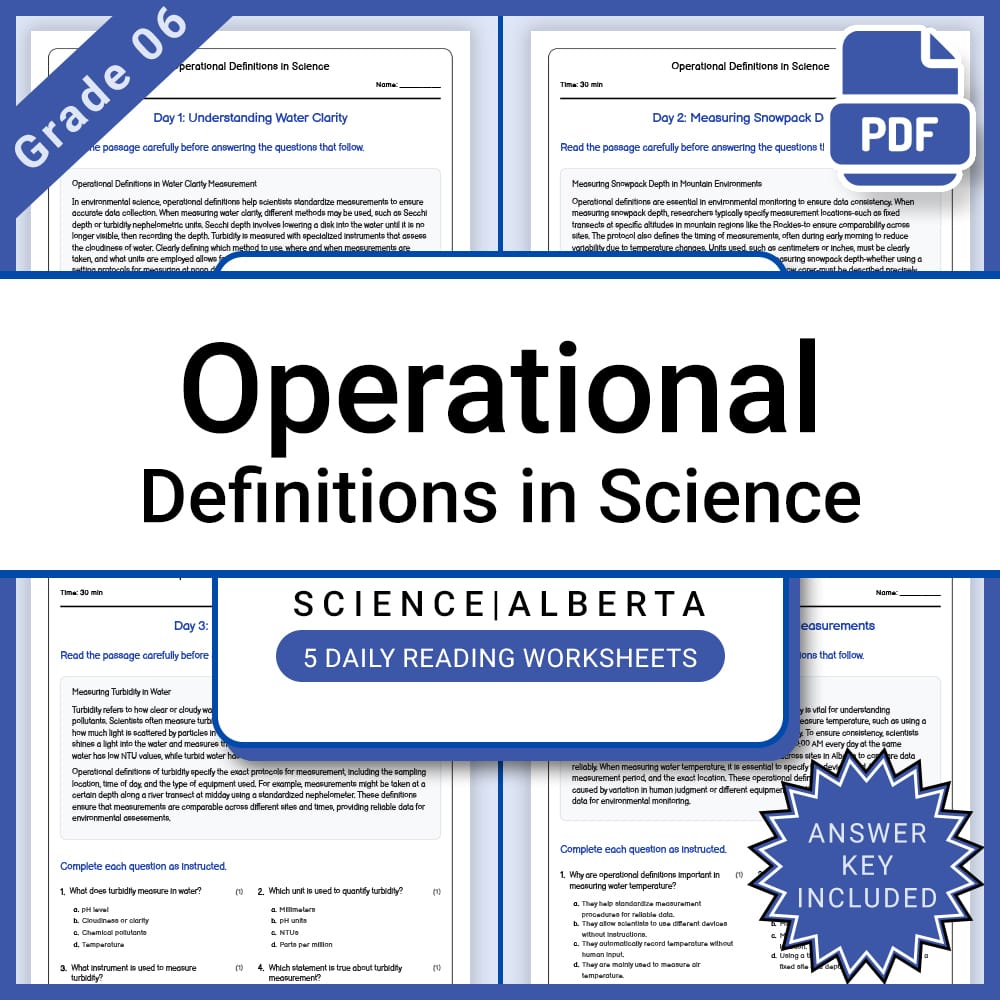
Grade 6 Science – Operational Definitions Daily Reading Worksheet + Answer Key
JCreated byJ.S SheetsLearning Objectives
- Understand the purpose and importance of operational definitions in scientific measures.
- Learn how to convert qualitative observations into quantitative data.
- Identify examples of measurement methods such as water clarity and snowpack depth.
Also included in: Grade 6 Science Lesson Group Bundle | Alberta Standards with Reading Worksheets +1 more
Instant download
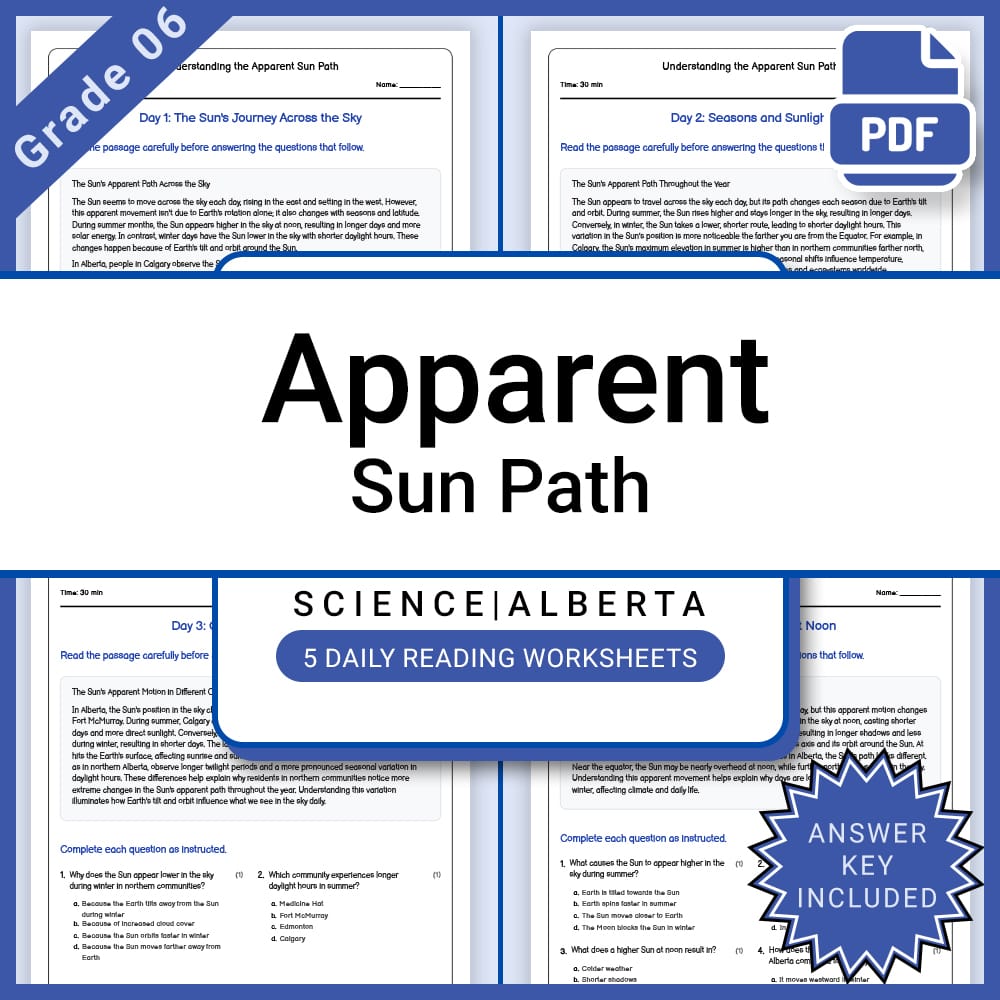
Grade 6 Science – Apparent Sun Path Daily Reading Worksheet + Answer Key
JCreated byJ.S SheetsLearning Objectives
- Describe how the Sun appears to move across the sky during different seasons.
- Explain how latitude affects the Sun's apparent path.
- Understand the relationship between Earth's tilt and the Sun's position at different times of the year.
Also included in: Grade 6 Science Lesson Group: Earth & Space Reading Worksheets Bundle +1 more
Instant download
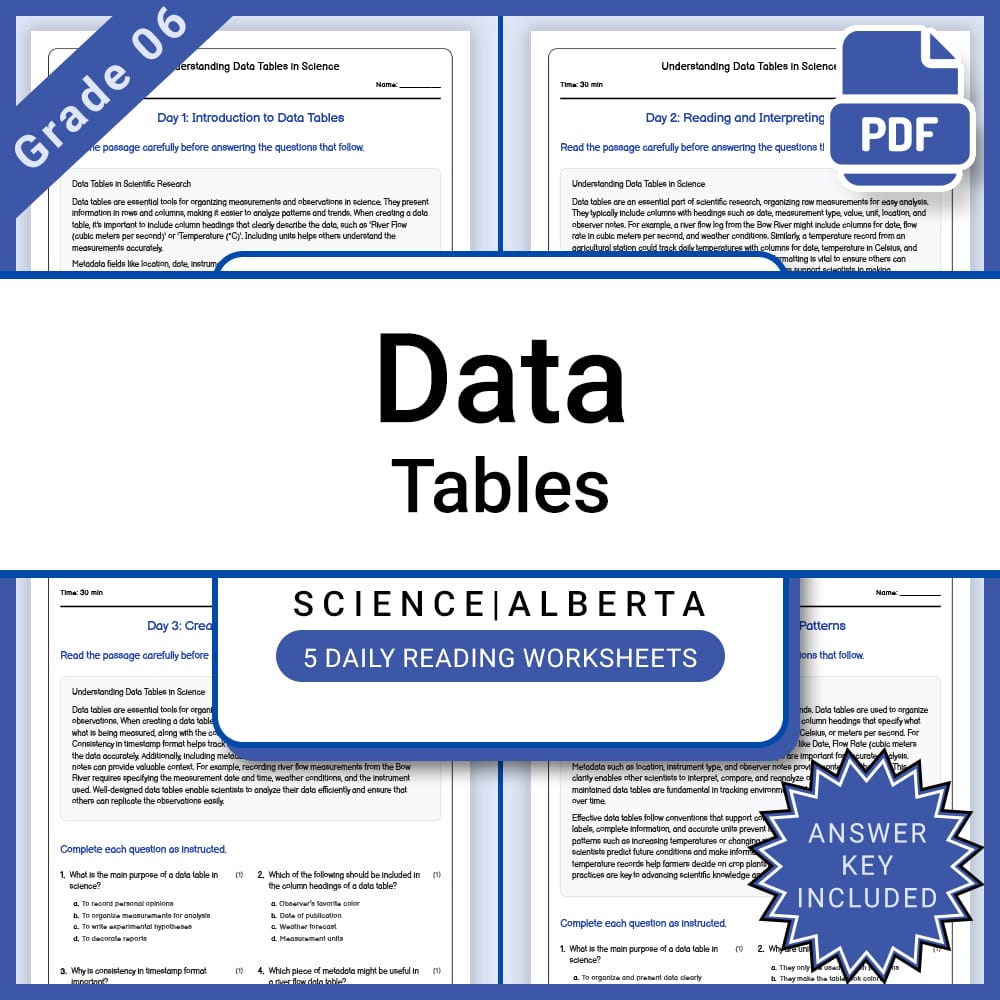
Grade 6 Science – Data Tables Daily Reading Worksheet + Answer Key
JCreated byJ.S SheetsLearning Objectives
- Identify the components of a data table, including column headings and metadata.
- Understand the importance of clear and consistent labels in data recording.
- Recognize examples of data tables used in real-world scientific observations.
Also included in: Grade 6 Science Lesson Group Bundle | Alberta Standards with Reading Worksheets +1 more
Instant download
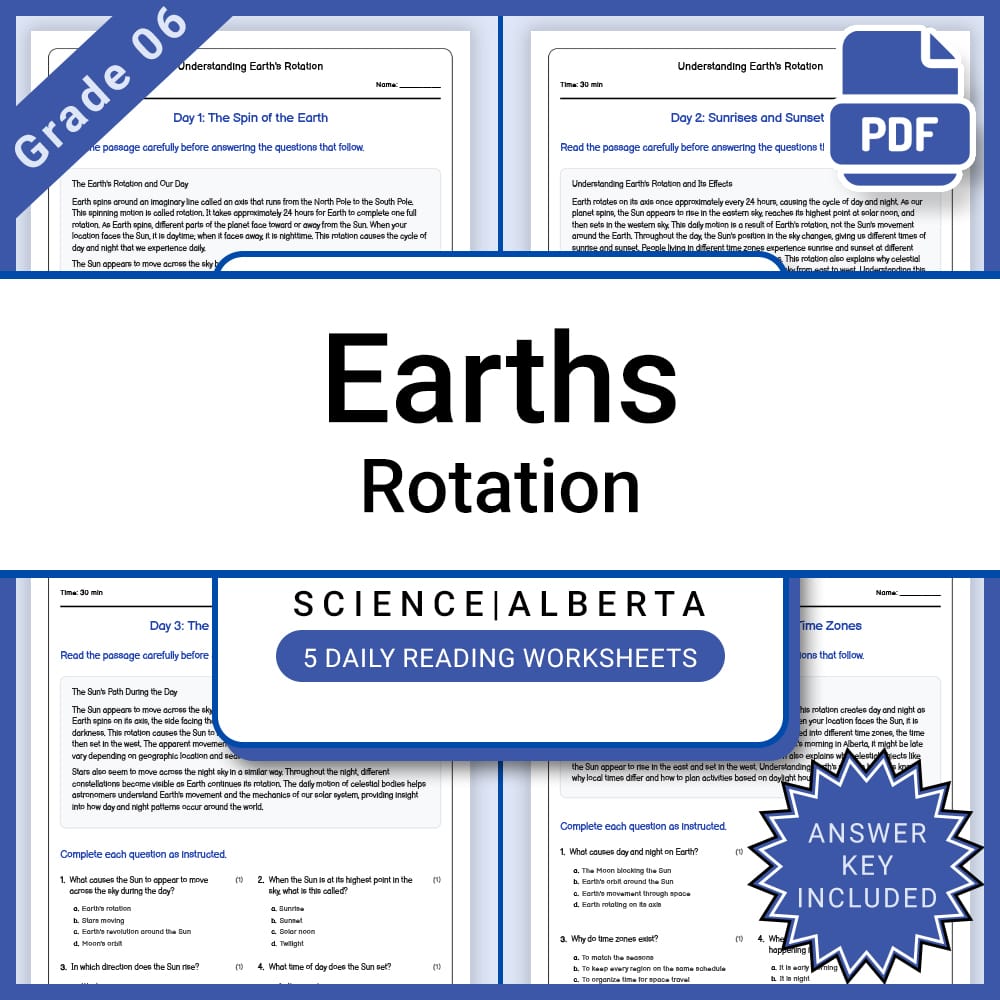
Grade 6 Science – Earth's Rotation Daily Reading Worksheet with Answer Key
JCreated byJ.S SheetsLearning Objectives
- Explain the concept of Earth's rotation about its axis.
- Describe how Earth's rotation causes day and night.
- Identify key positions in the daily path of the Sun across the sky.
Also included in: Grade 6 Science Lesson Group: Earth & Space Reading Worksheets Bundle +1 more
Instant download
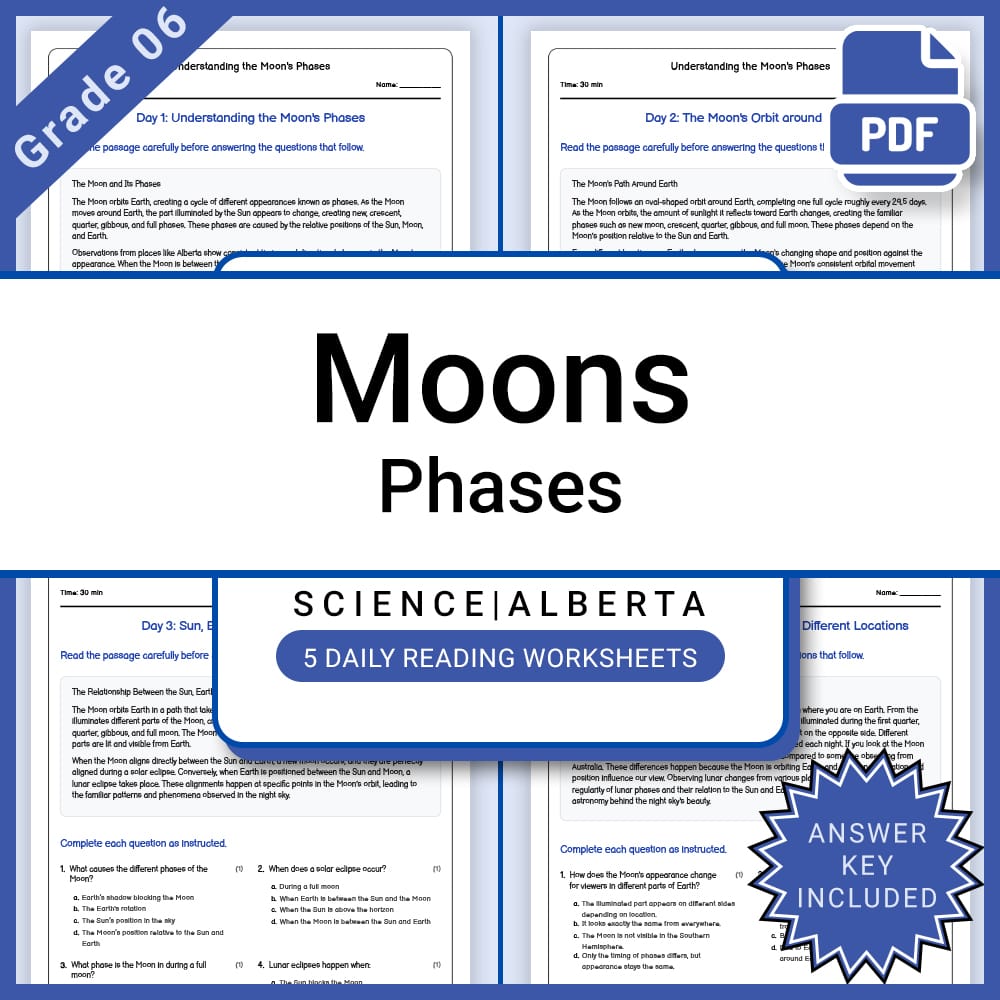
Grade 6 Science – Moon Phases Daily Reading Worksheet with Answer Key
JCreated byJ.S SheetsLearning Objectives
- Identify different phases of the Moon
- Describe how the Moon's appearance changes over time
- Explain the relationship between the Sun, Earth, and Moon in lunar motion
Also included in: Grade 6 Science Lesson Group: Earth & Space Reading Worksheets Bundle +1 more
Instant download
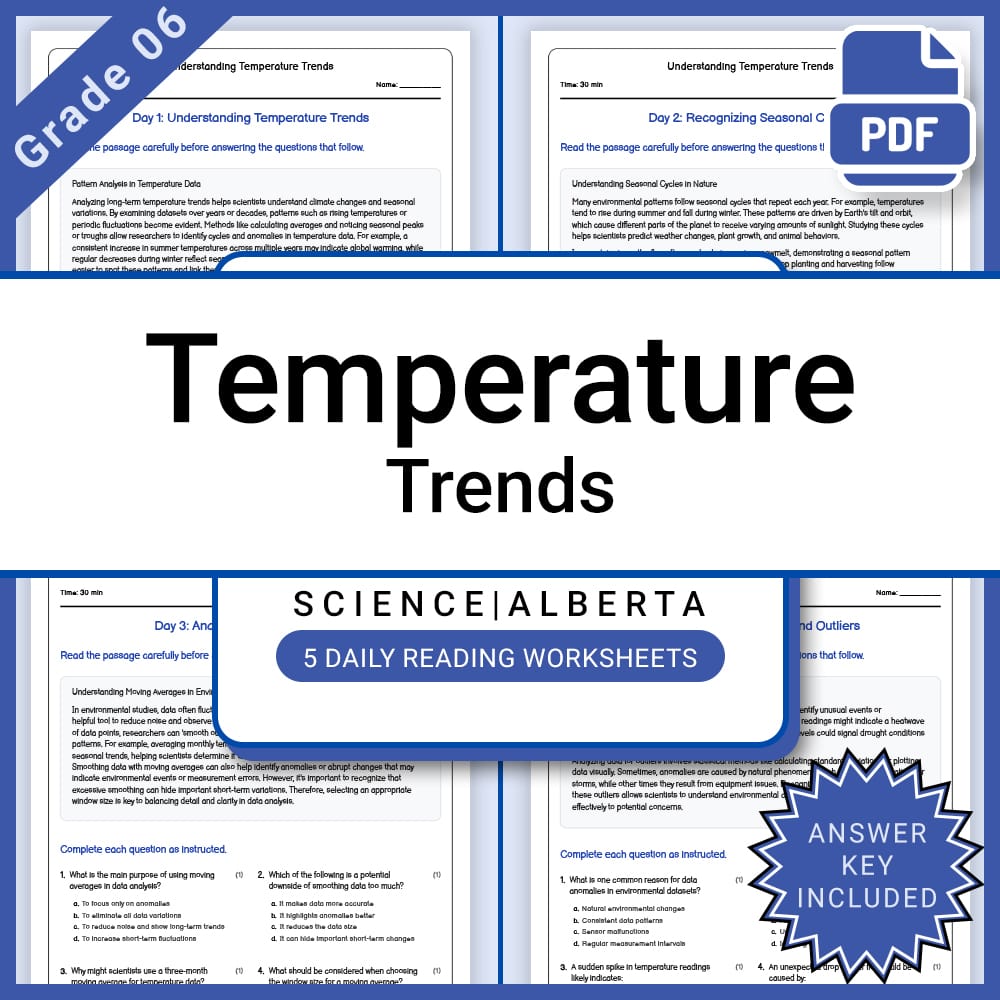
Grade 6 Science – Temperature Trends Daily Reading Worksheet + Answer Key
JCreated byJ.S SheetsLearning Objectives
- Learn how to identify long-term temperature patterns in datasets.
- Understand the concepts of seasonal cycles and anomalies in temperature data.
- Explore methods like descriptive statistics and moving averages used in pattern analysis.
Also included in: Grade 6 Science Lesson Group Bundle | Alberta Standards with Reading Worksheets +1 more
Instant download
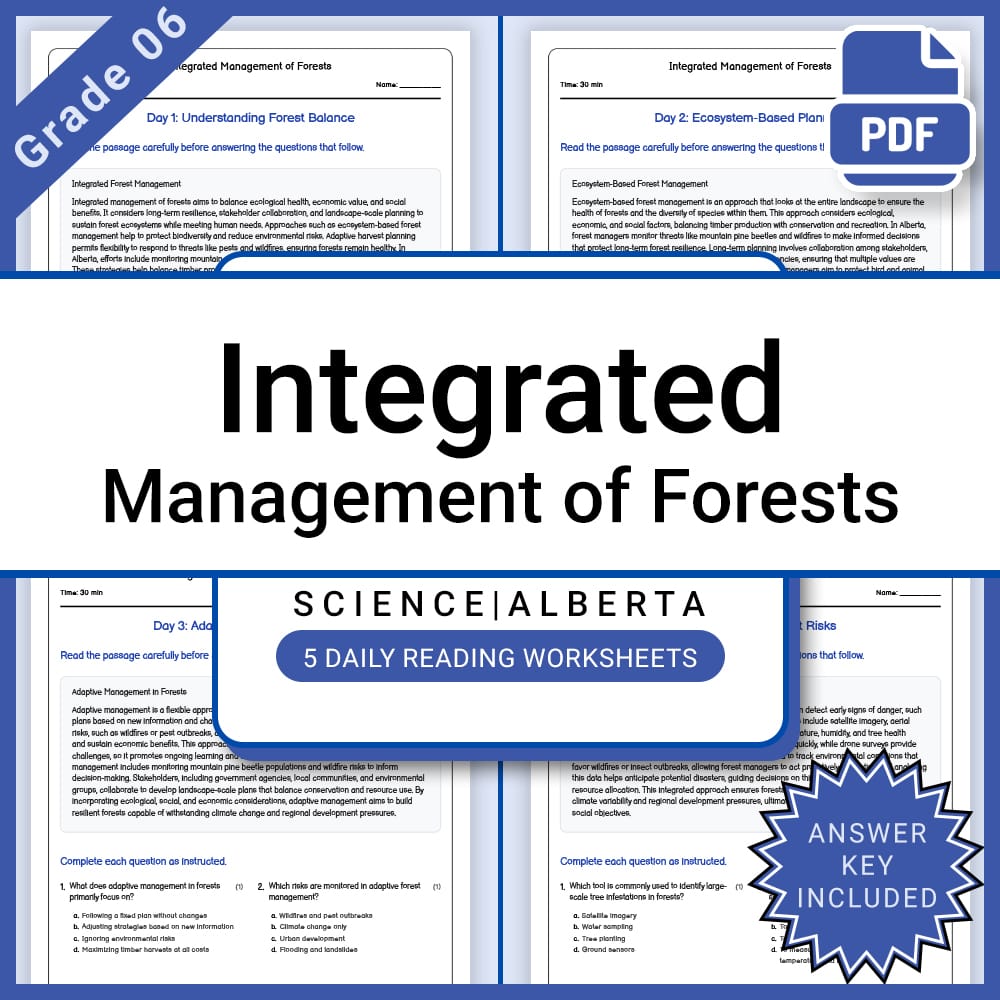
Grade 6 Science – Integrated Forest Management Daily Worksheet + Answer Key
JCreated byJ.S SheetsLearning Objectives
- Understand the concept of integrated forest management.
- Identify ecological, economic, and social objectives in forest planning.
- Learn about approaches like ecosystem-based management and adaptive planning.
Also included in: Grade 6 Science Lesson Bundle – Ecosystems, Trees, and Land Management +1 more
Instant download
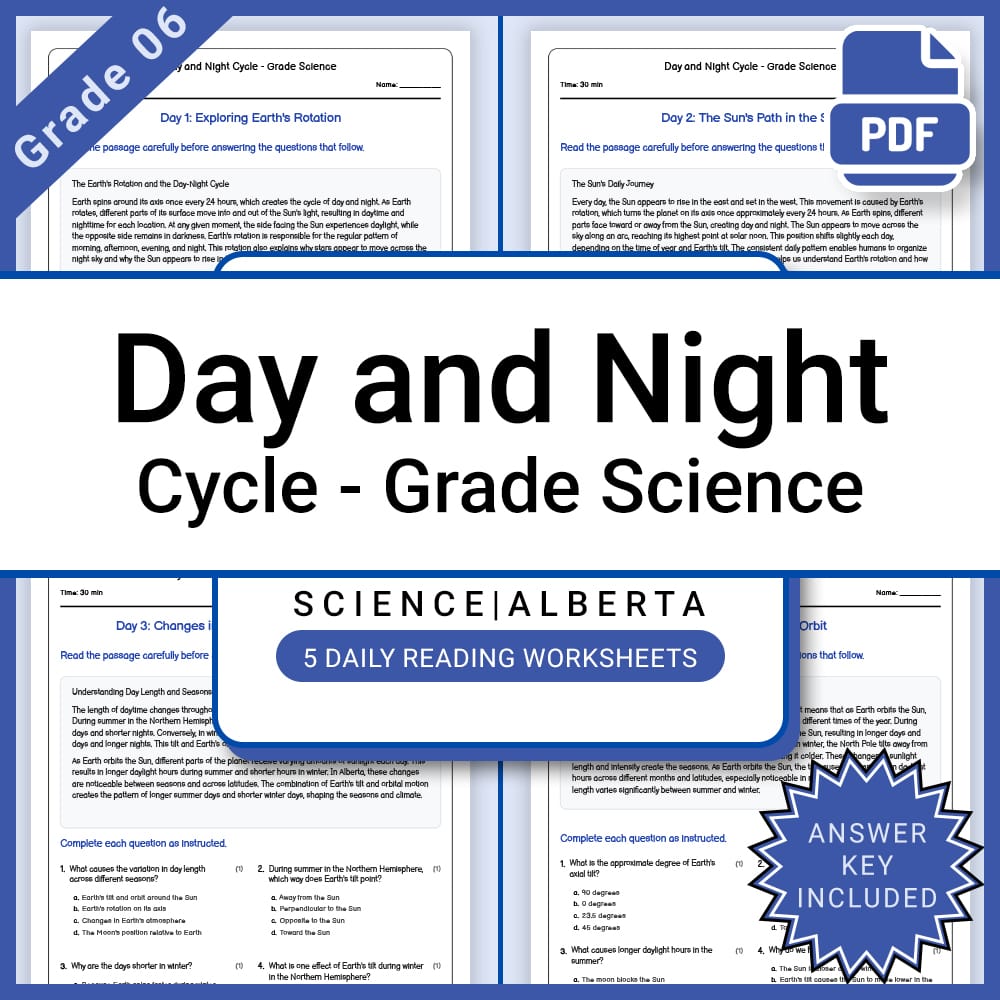
Grade 6 Science – Day and Night Cycle Daily Reading Worksheet + Answer Key
JCreated byJ.S SheetsLearning Objectives
- Understand Earth's rotation and how it causes day and night
- Explain the mechanics behind the cycle of day and night
- Identify factors influencing daylight duration throughout the year
Also included in: Grade 6 Science Lesson Group: Earth & Space Reading Worksheets Bundle +1 more
Instant download
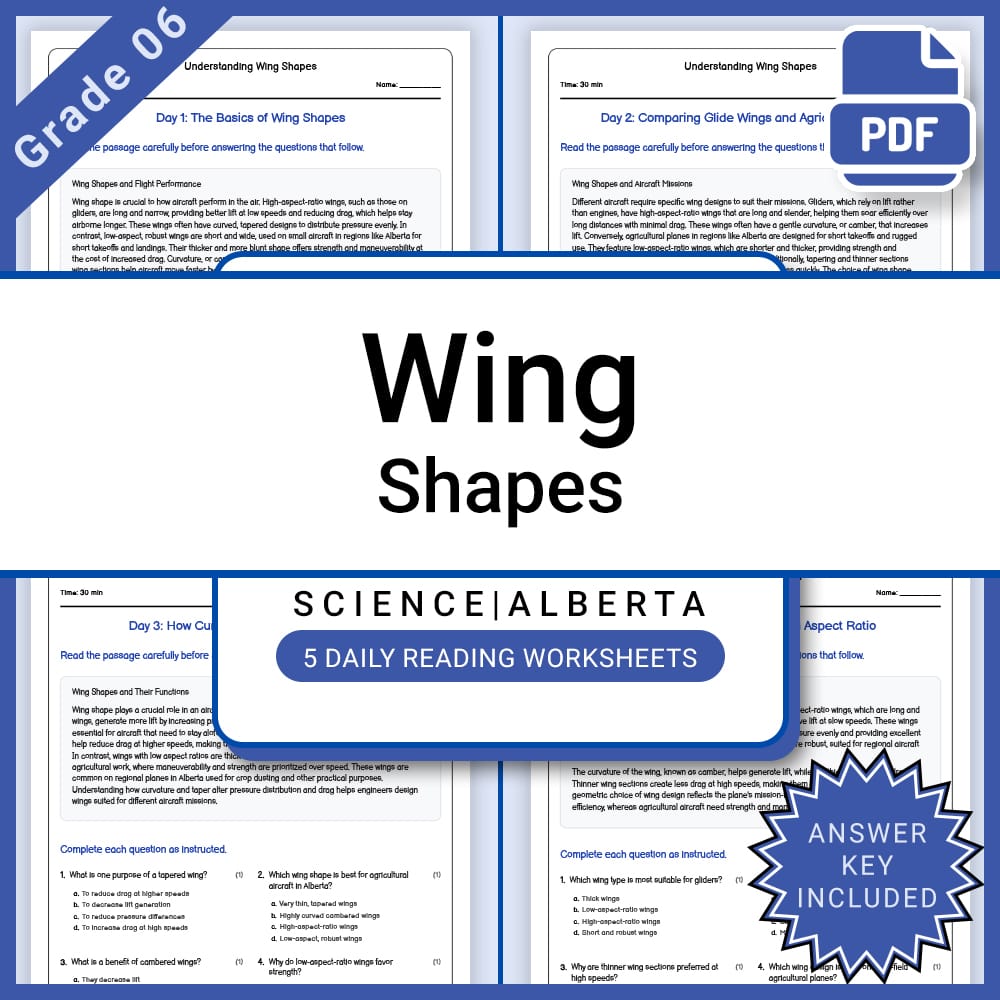
Grade 6 Science – Wing Shapes Daily Reading Worksheet with Answer Key
JCreated byJ.S SheetsLearning Objectives
- Identify different wing features such as camber, thickness, and aspect ratio.
- Explain how wing shape influences lift, stall behavior, and maneuverability.
- Compare high-aspect-ratio wings with low-aspect-ratio wings used in regional aviation.
Also included in: Grade 6 Science Lesson Bundle: Flight, Weather, and Aerodynamics +1 more
Instant download

Grade 6 Science – Biodiversity Roles Daily Reading Worksheet Answer Key
JCreated byJ.S SheetsLearning Objectives
- Understand the concept of keystone species and their influence on ecosystems.
- Recognize the importance of biodiversity for ecosystem stability.
- Identify different species roles such as keystone, indicator, and interdependent species.
Also included in: Grade 6 Science Lesson Bundle – Ecosystems, Trees, and Land Management +1 more
Instant download
Browse more categories
About Science Worksheets
Find Science worksheets spanning core skills, practice, and review. All 44,342 resources are instant PDF downloads for the classroom or home.
Every worksheet on MyTeachingSheets is created by independent teacher-authors and reviewed before publication. All resources download as printable PDFs for classroom, homework, or at-home practice, and many include answer keys. Preview any worksheet free before buying.