
Science Worksheets
44,620 subject resources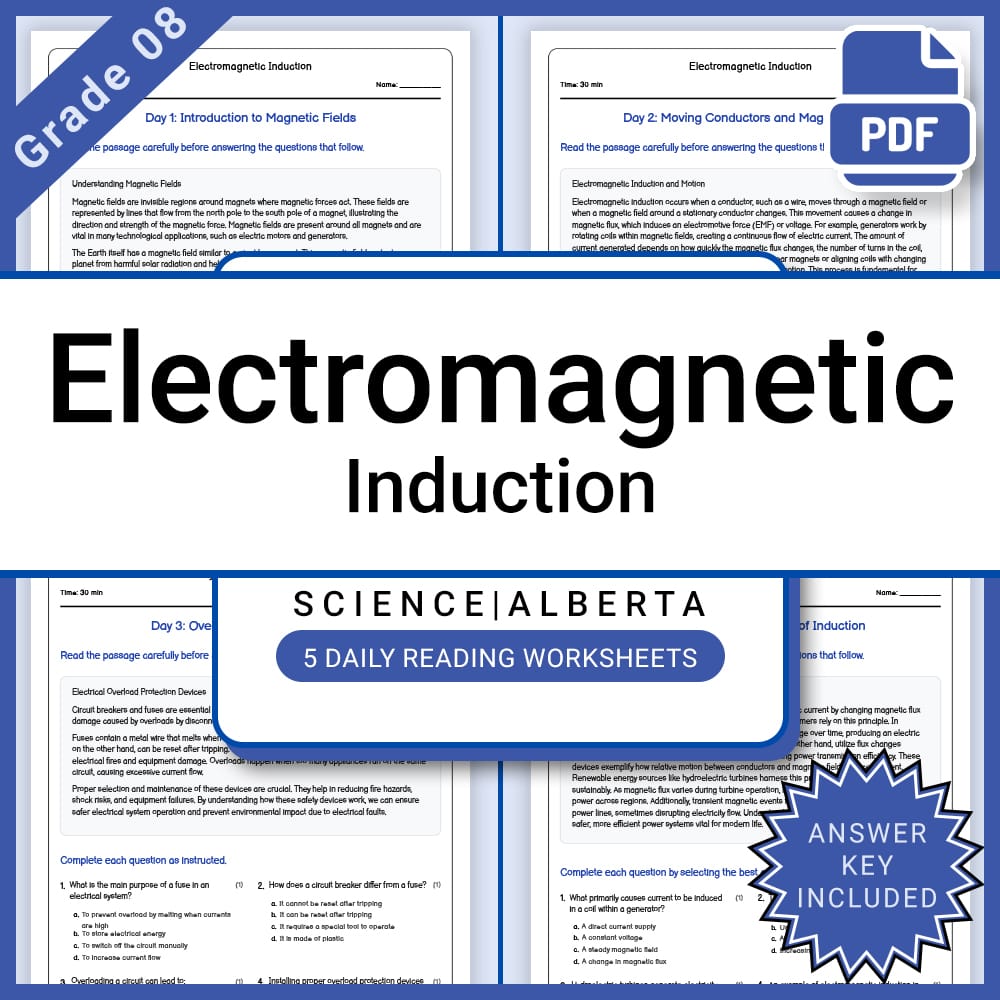
Grade 8 Science – Electromagnetic Induction Daily Reading Worksheet + Answer Key
JCreated byJ.S SheetsLearning Objectives
- Understand the concept of magnetic fields and how they interact with conductors
- Explain the principle of electromagnetic induction and its role in electricity generation
- Identify sources of magnetic flux change and their effects on induced current
Also included in: Grade 8 Science Lesson Bundle — Electricity, Circuits & Energy +1 more
Instant download
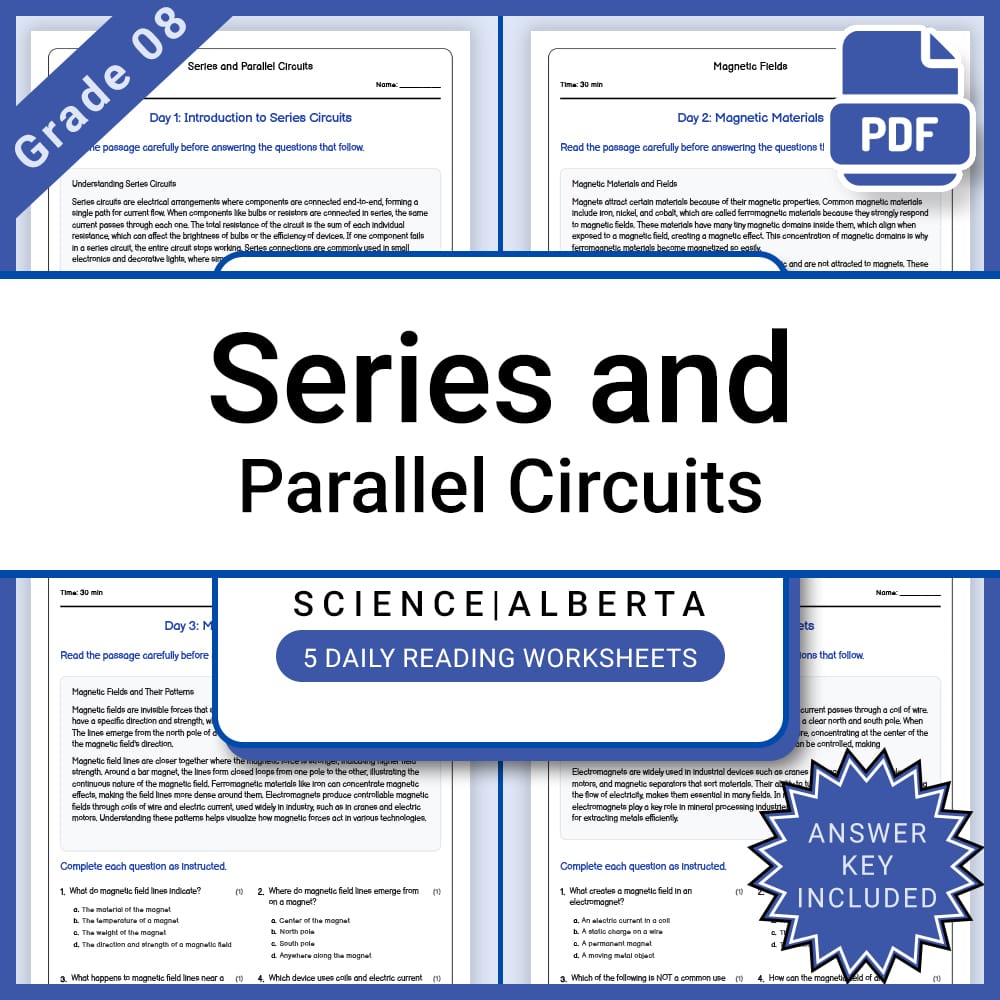
Grade 8 Science – Series and Parallel Circuits Daily Reading Worksheet + Answer Key
JCreated byJ.S SheetsLearning Objectives
- Understand the basic differences between series and parallel circuits.
- Identify diagrams of series circuits.
- Explain how current and voltage behave in series and parallel arrangements.
Also included in: Grade 8 Science Lesson Bundle — Electricity, Circuits & Energy +1 more
Instant download
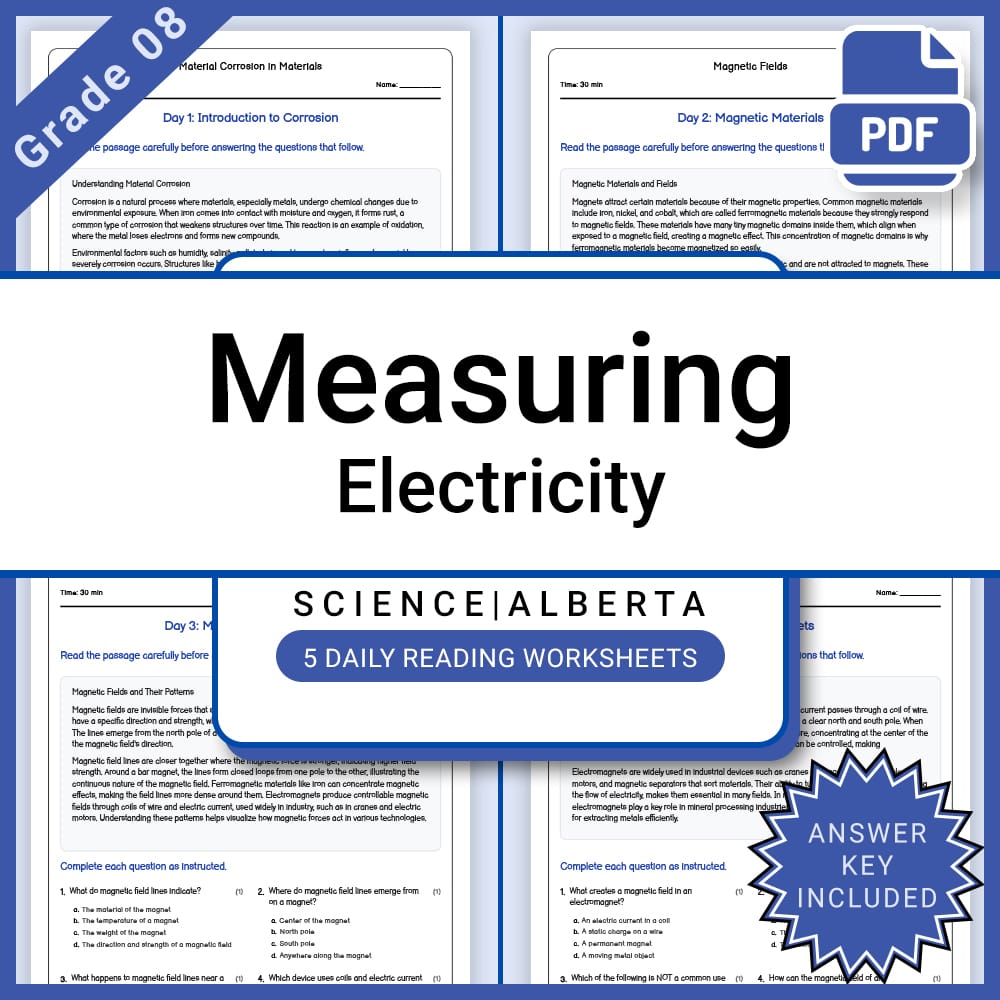
Grade 8 Science Measuring Electricity Daily Reading Worksheet with Answer Key
JCreated byJ.S SheetsLearning Objectives
- Understand the function and proper use of voltmeters and ammeters
- Identify how to connect measuring instruments in a circuit correctly
- Recognize the impact of meter impedance on circuit measurements
Also included in: Grade 8 Science Lesson Bundle — Electricity, Circuits & Energy +1 more
Instant download

Grade 12 Science | Waves Interact with Matter Worksheet | California Standards
 Created byLumora Learning
Learning Objectives
- Explain how waves interact with different materials through absorption, reflection, refraction, and transmission.
- Describe the factors that influence wave-matter interactions, including properties of waves and substances.
- Analyze how wave interactions result in observable effects such as heating or charge movement.
Instant download

Grade 10 Science | Human Impacts Worksheet | BC Aligned
Created byLumora LearningLearning Objectives
- Understand how human activities affect biodiversity and ecosystems.
- Identify the main factors through which human impacts alter natural environments.
- Explain how climate change interacts with human activities to influence species and habitats.
Also included in: Grade 10 Science | Evolution & Biodiversity Lesson Bundle | BC Framework
Instant download

Grade 10 Science | Mechanisms Overview Worksheet | BC Standards
Created byLumora LearningLearning Objectives
- Understand the main mechanisms of evolution and how they influence allele frequencies.
- Explain how natural selection leads to adaptation within populations.
- Identify the roles of genetic drift, gene flow, and mutation in evolution.
Also included in: Grade 10 Science | Evolution & Biodiversity Lesson Bundle | BC Framework
Instant download
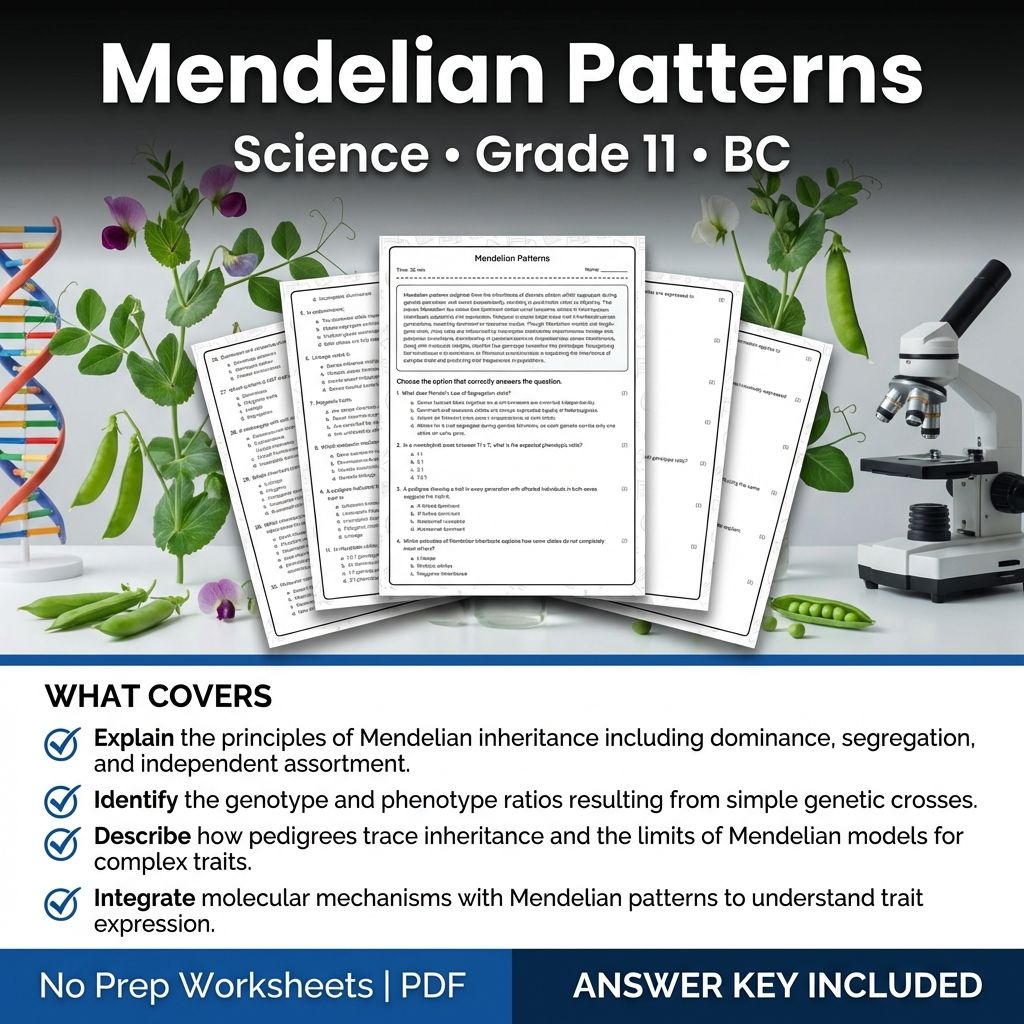
11th Grade Science | Mendelian Patterns Worksheet & Answer Key PDF
 Created byCoral Reef Learning
Learning Objectives
- Explain the principles of Mendelian inheritance including dominance, segregation, and independent assortment.
- Identify the genotype and phenotype ratios resulting from simple genetic crosses.
- Describe how pedigrees trace inheritance and the limits of Mendelian models for complex traits.
Instant download

Grade 8 Science | Separation Methods Worksheet (Alberta Standard) (PDF)
 Created bySilver Birch Teaching
Learning Objectives
- Explain how separation methods use differences in physical properties (such as particle size, solubility, boiling point, and magnetic susceptibility).
- Identify which separation method best fits a real-world mixture based on observable properties and evidence.
- Use key vocabulary (filtration, evaporation, distillation, magnetic separation, solubility, boiling point, density).
Also included in: Grade 8 Matter & Chemical Change Science Lesson Bundle | Alberta Framework +1 more
Instant download

Grade 4 Using Models Worksheet | NGSS Practice PDF
 Created byClear Sky Classroom
Learning Objectives
- Explain why scientists use models to represent objects, systems, or processes that are hard to observe directly.
- Describe how models use simplified parts, patterns, or scale representations to connect evidence to explanations.
- Identify how assumptions in a model can be tested and revised using new observations.
Instant download
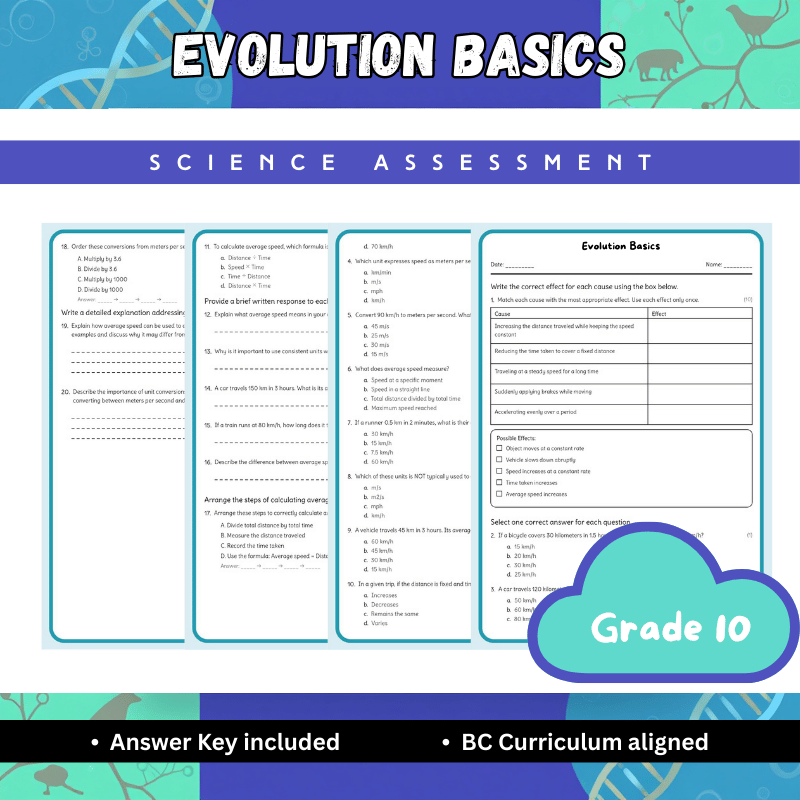
10th Grade Science | Evolution Basics Worksheet (PDF) – BC Standards
 Created byBright Mind Resources
Learning Objectives
- Understand the concept of evolution and how populations change over generations.
- Identify different types of evidence that support the theory of evolution.
- Interpret data from fossils, biogeography, and molecular similarities to explain common ancestry.
Instant download
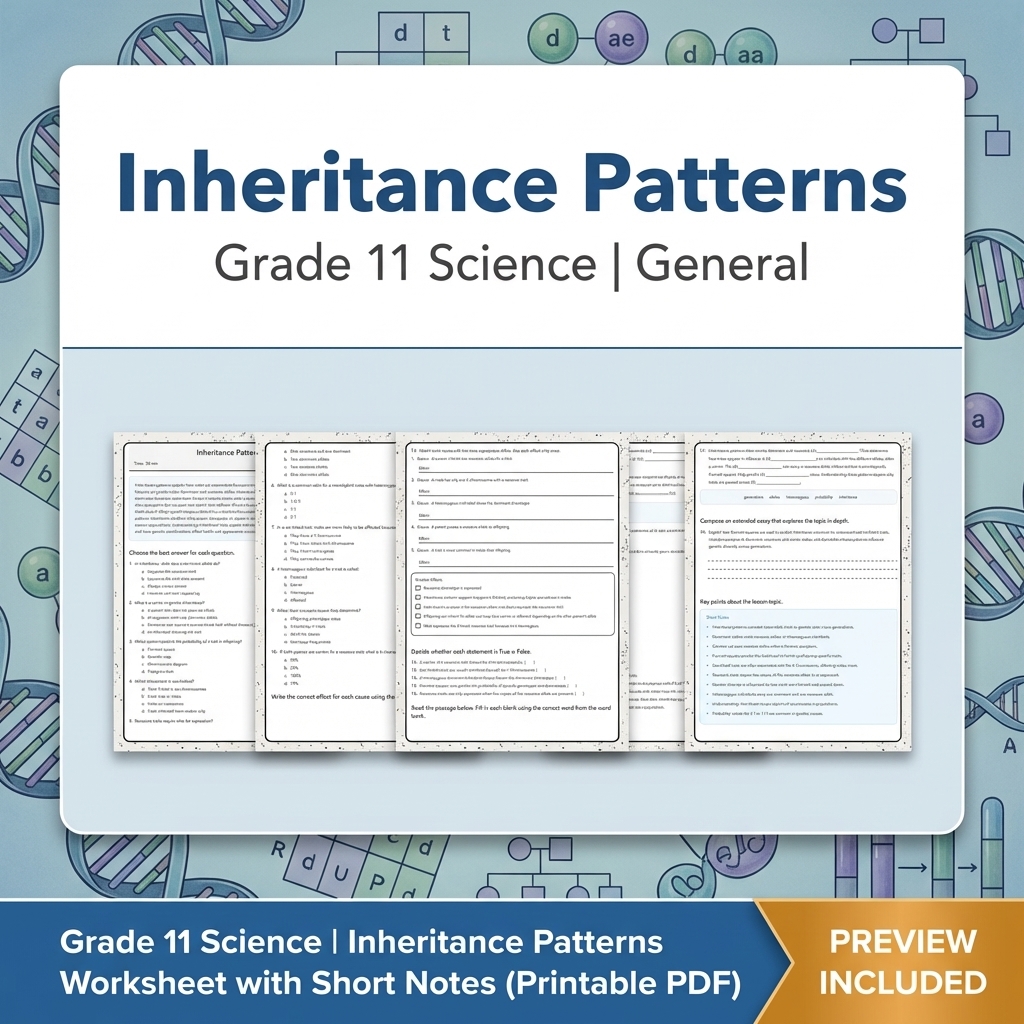
Grade 11 Science | Inheritance Patterns Worksheet with Short Notes
 Created byMeadowlark Worksheets
Learning Objectives
- Understand how inheritance patterns connect observable traits to genetic rules across generations.
- Learn how Punnett squares predict offspring outcomes for autosomal and sex-linked traits.
- Identify dominant, recessive, and carrier states and their influence on trait inheritance.
Also included in: Grade 11 Biology Foundations Science Lesson Bundle: General Worksheets +1 more
Instant download
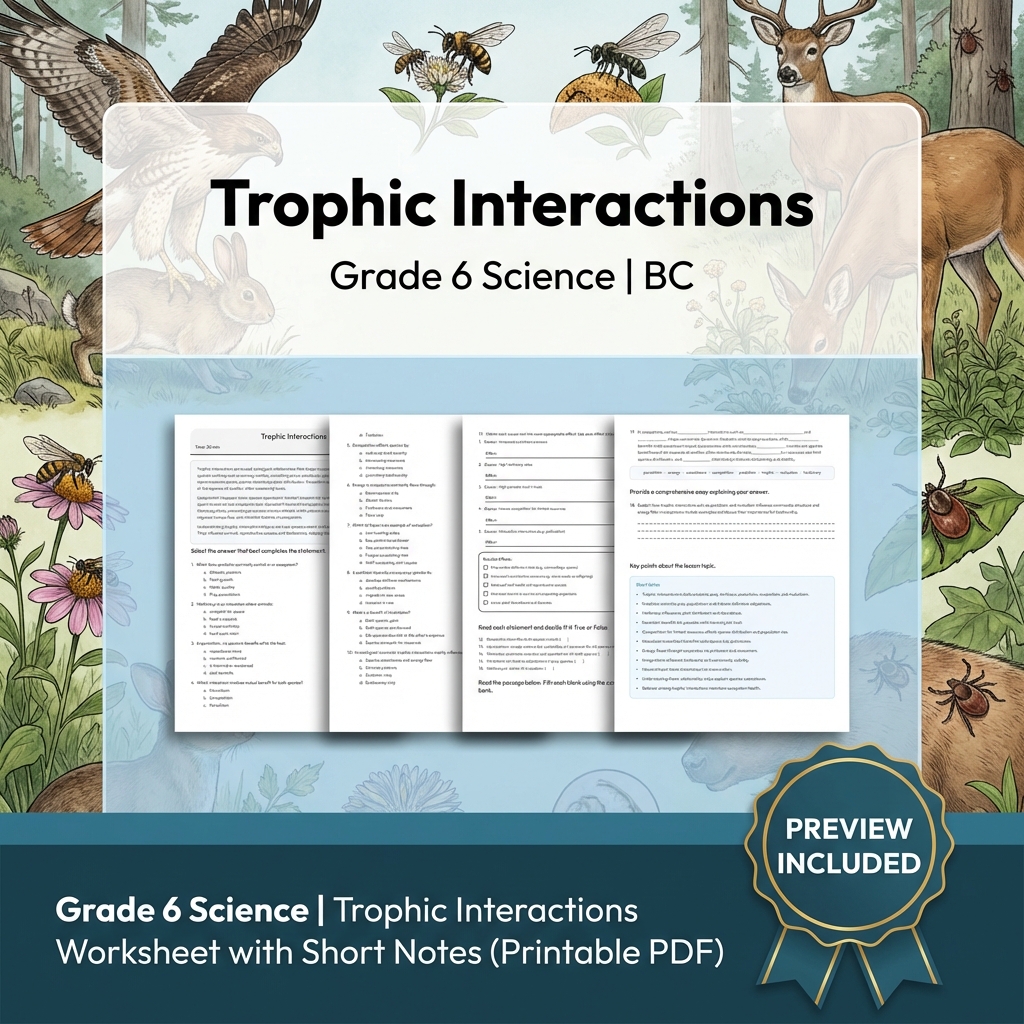
Grade 6 Science | Trophic Interactions Worksheet with Short Notes (PDF)
Created byMeadowlark WorksheetsLearning Objectives
- Understand the different types of trophic interactions, including predation, herbivory, parasitism, competition, and mutualism.
- Identify examples of trophic interactions and explain their roles in ecosystems.
- Describe how trophic interactions influence community structure and energy flow.
Also included in: Grade 6 Science | Ecosystems & Interdependence UNIT Worksheet Bundle +1 more
Instant download

Stoichiometric Calculations Worksheet | Grade 11 Science Practice
 Created byPrism Point Learning
Learning Objectives
- Use balanced chemical equations and mole ratios to convert between mass and moles and between moles of reactants and products.
- Determine the limiting reagent and predict which product forms in the smallest theoretical amount.
- Calculate percent yield by comparing actual yield to theoretical yield.
Instant download
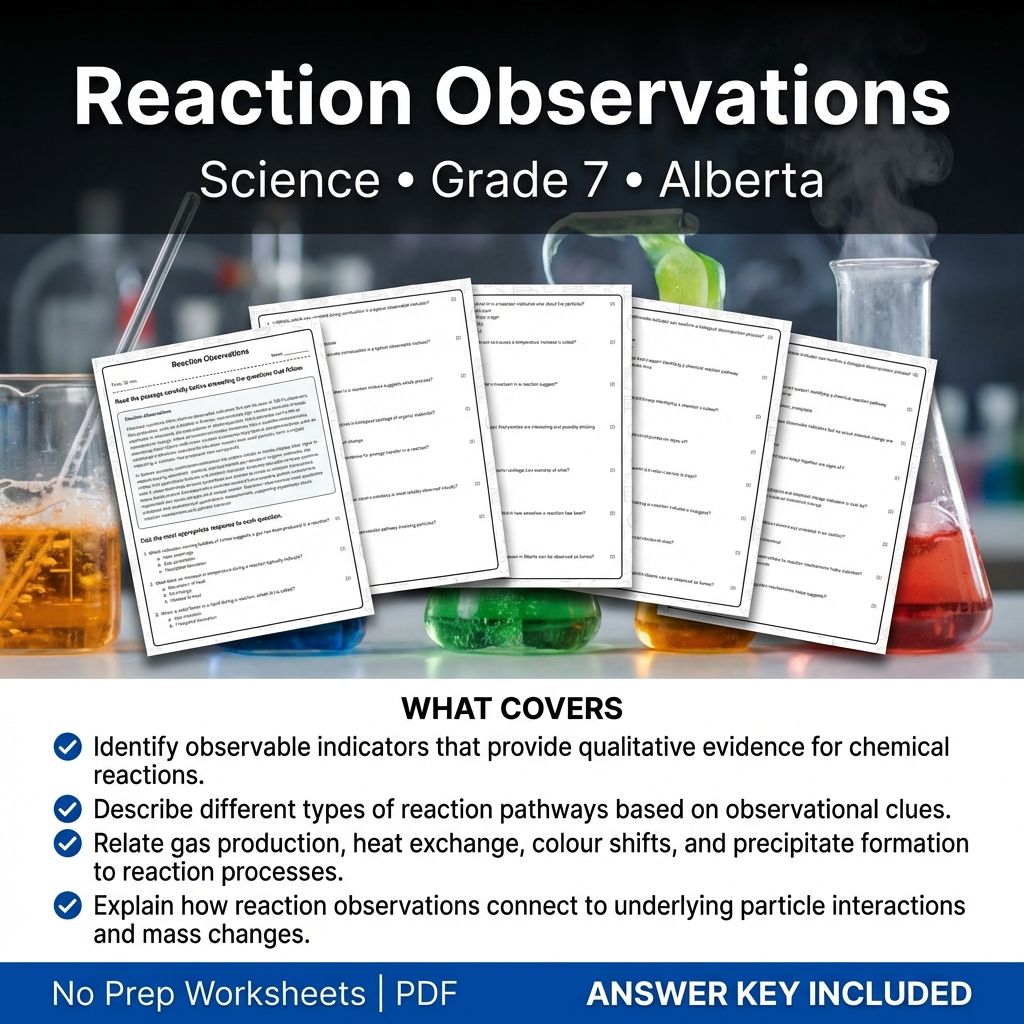
Reaction Observations Worksheet | Alberta Grade 7 Science Practice
Created byCoral Reef LearningLearning Objectives
- Identify observable indicators that provide qualitative evidence for chemical reactions.
- Describe different types of reaction pathways based on observational clues.
- Relate gas production, heat exchange, colour shifts, and precipitate formation to reaction processes.
Instant download

Oscillations Basics Worksheet | AP Science Practice for Grade 10
JCreated byJ.S SheetsLearning Objectives
- Understand the fundamental concepts of simple harmonic motion, including period, frequency, amplitude, and phase.
- Describe the energy transfer between kinetic and potential forms during oscillations.
- Use sinusoidal functions and phase-space sketches to analyze oscillatory systems.
Also included in: Grade 10 Motion, Waves & Electricity Science Lesson Bundle
Instant download
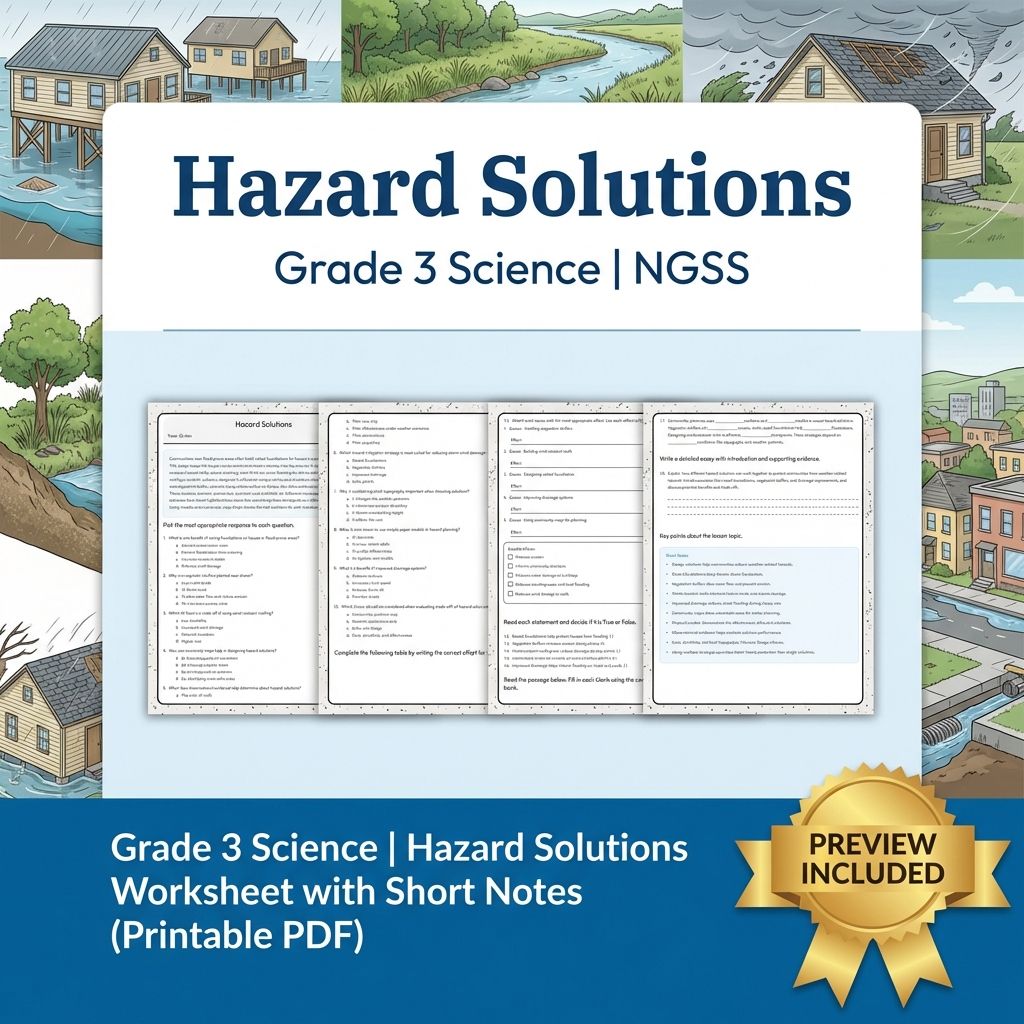
Grade 3 Science | Hazard Solutions Worksheet with Short Notes (Printable PDF)
Created byMeadowlark WorksheetsLearning Objectives
- Identify different design solutions that reduce weather-related hazards.
- Make reasoned claims about the effectiveness of hazard mitigation strategies.
- Use observational evidence and models to compare hazard mitigation options.
Also included in: Grade 3 Science | Earth and Human Activity NGSS Unit Bundle (Worksheet Included) +1 more
Instant download
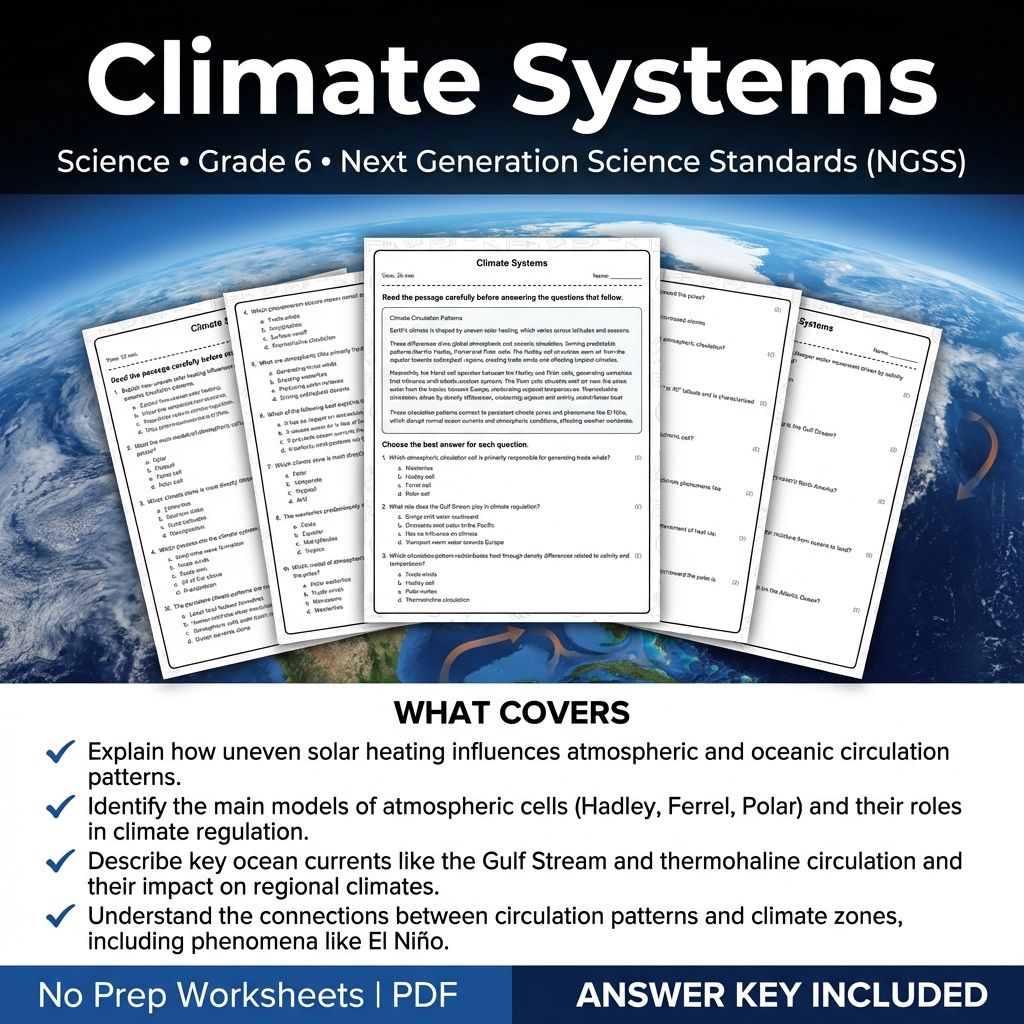
6th Grade Science | Climate Systems Worksheet with Answer Key (Printable PDF)
Created byCoral Reef LearningLearning Objectives
- Explain how uneven solar heating influences atmospheric and oceanic circulation patterns.
- Identify the main models of atmospheric cells (Hadley, Ferrel, Polar) and their roles in climate regulation.
- Describe key ocean currents like the Gulf Stream and thermohaline circulation and their impact on regional climates.
Instant download
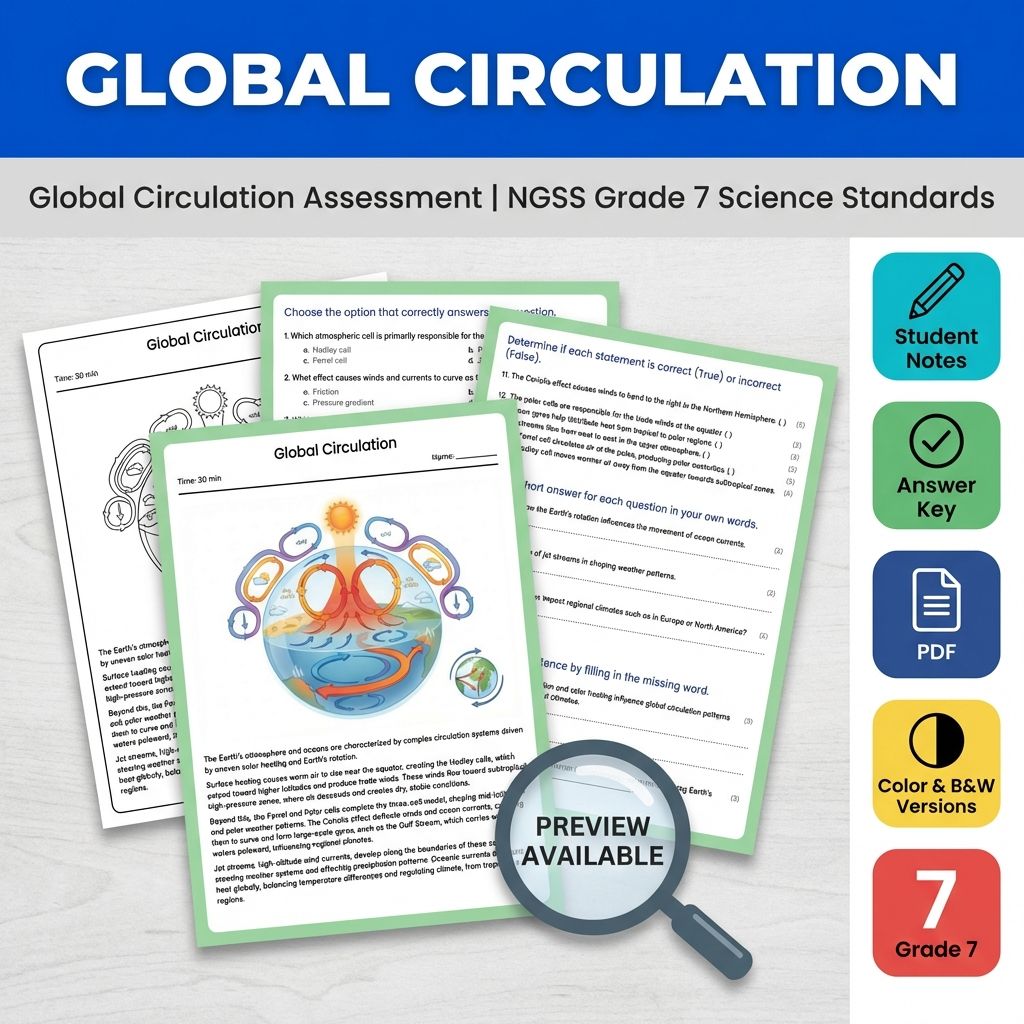
Global Circulation Assessment | NGSS Grade 7 Science Standards
Created byPrism Point LearningLearning Objectives
- Explain the basic principles of Earth's atmospheric and oceanic circulation patterns.
- Identify the main cells, wind belts, and ocean currents associated with global climate.
- Understand the influence of Coriolis effect and jet streams on weather and climate zones.
Also included in: Grade 7 Science Lesson | Earth's Systems NGSS Not specified Unit +1 more
Instant download
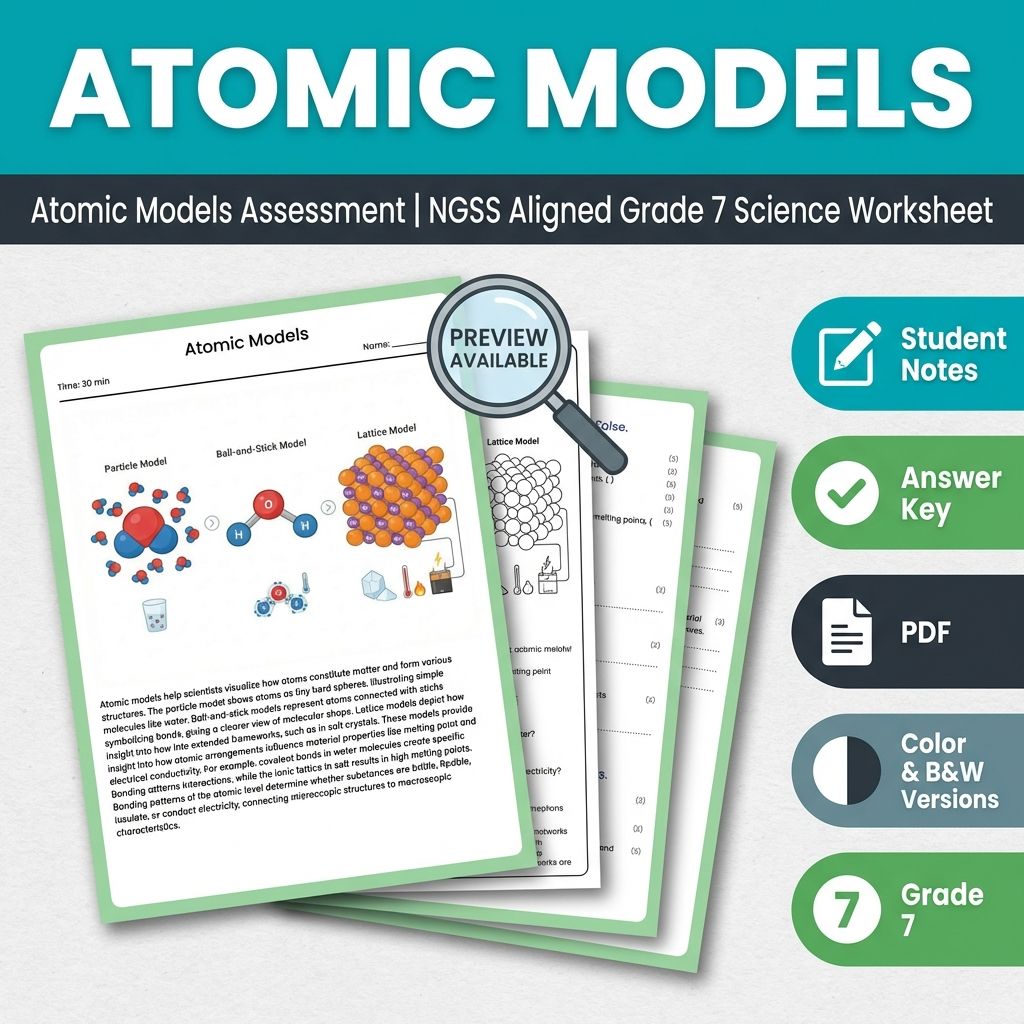
Atomic Models Assessment | NGSS Aligned Grade 7 Science Worksheet
Created byPrism Point LearningLearning Objectives
- Understand different atomic model representations such as particle, ball-and-stick, and lattice models.
- Identify how atoms form molecules and extended structures through bonding patterns.
- Explain the relationship between subatomic particles, atomic number, and material properties.
Also included in: Grade 7 Science Lesson | Matter and Its Interactions Standards +1 more
Instant download
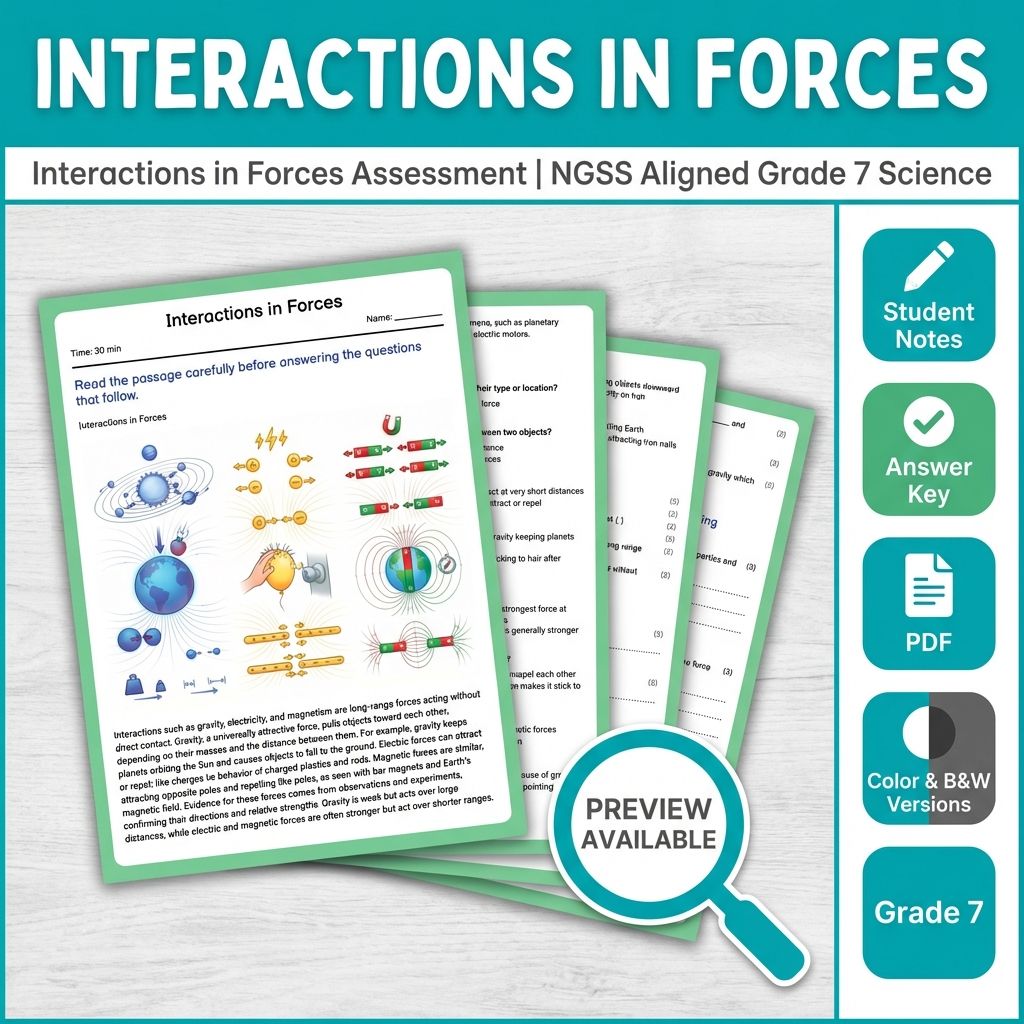
Interactions in Forces Assessment | NGSS Aligned Grade 7 Science
Created byPrism Point LearningLearning Objectives
- Describe gravitational, electric, and magnetic interactions as long-range forces that act without contact.
- Explain the universal attraction of gravity and how electric and magnetic forces can be attractive or repulsive.
- Relate gravitational attraction to mass and distance in qualitative terms using evidence-based reasoning.
Also included in: Grade 7 Science Mini Bundle – Forces & Interactions NGSS Unit (Printable) +1 more
Instant download
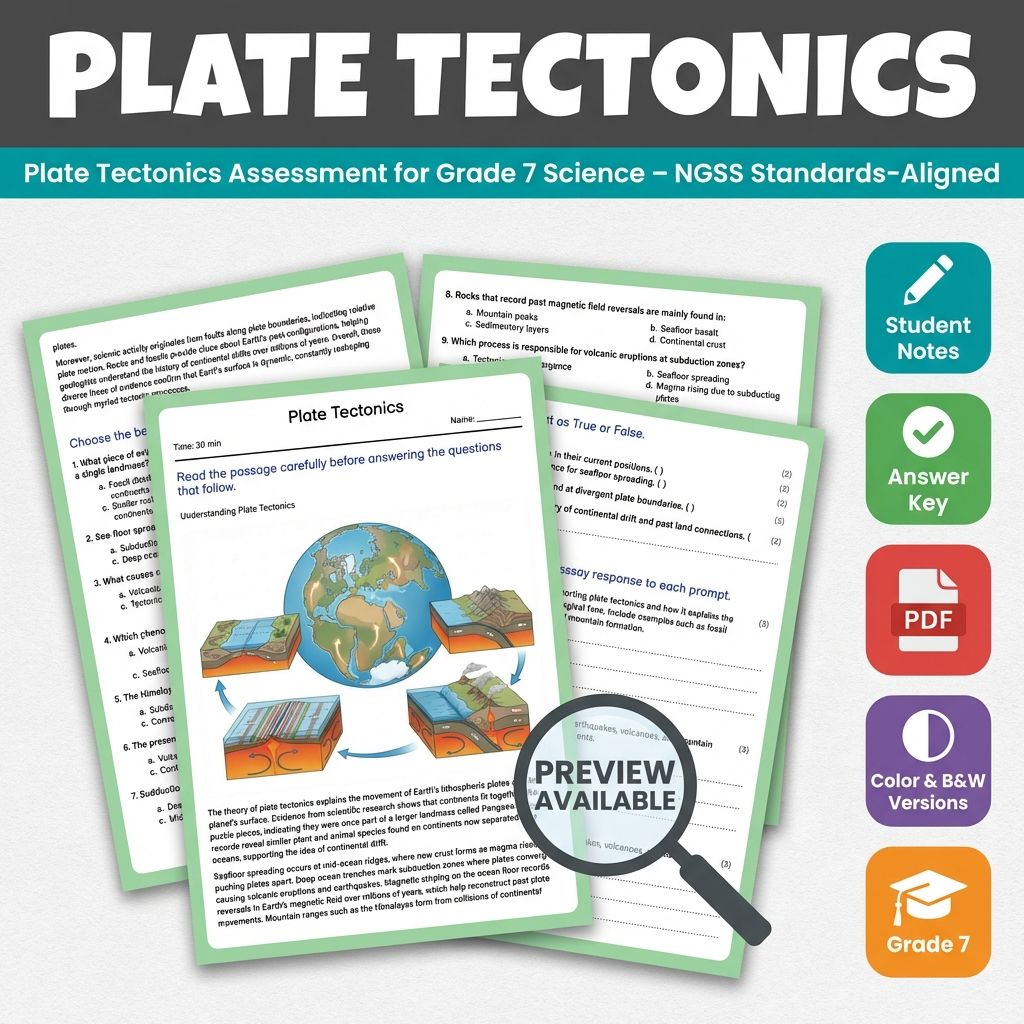
Plate Tectonics Assessment for Grade 7 Science – NGSS Standards-Aligned
Created byPrism Point LearningLearning Objectives
- Understand how geologic and fossil evidence supports the theory of plate tectonics and continental movement.
- Identify features such as mid-ocean ridges, trenches, and mountain ranges as evidence of tectonic activity.
- Explain how rock types, fossil distribution, and seafloor structures record Earth's geological history.
Also included in: Grade 7 Science Lesson | Earth's Systems NGSS Not specified Unit +1 more
Instant download
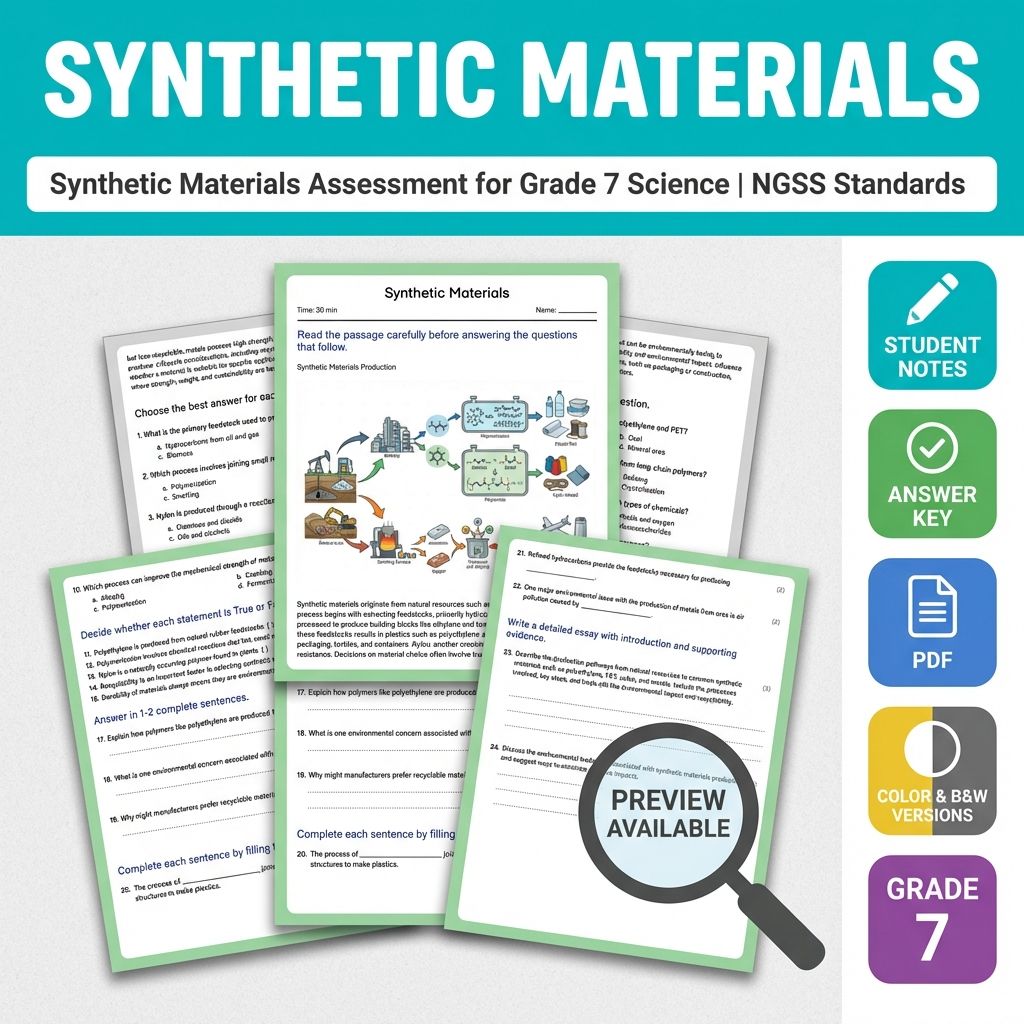
Synthetic Materials Assessment for Grade 7 Science | NGSS Standards
Created byPrism Point LearningLearning Objectives
- Describe how natural resources are transformed into synthetic materials through production pathways including feedstocks, polymerization, and refining steps.
- Identify examples such as polyethylene, PET, nylon, and metals derived from ores, and explain their manufacturing processes.
- Discuss the advantages and disadvantages, including durability, recyclability, and environmental impacts, of various synthetic materials.
Also included in: Grade 7 Science Lesson | Matter and Its Interactions Standards +1 more
Instant download
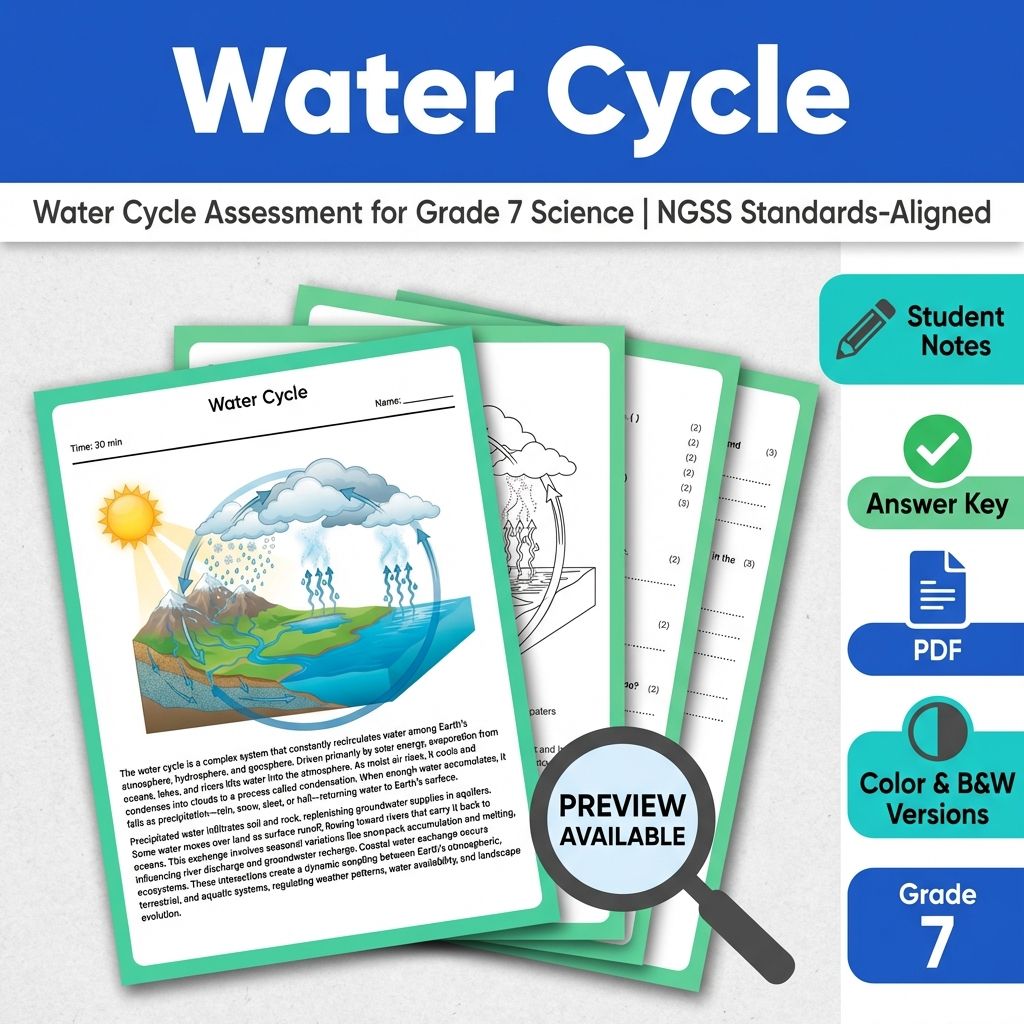
Water Cycle Assessment for Grade 7 Science | NGSS Standards-Aligned
Created byPrism Point LearningLearning Objectives
- Describe the processes involved in the water cycle, including evaporation, condensation, and precipitation.
- Explain how water moves through Earth's spheres via processes such as infiltration, runoff, and groundwater flow.
- Identify the interactions among rivers, aquifers, and ocean exchange in the water cycle, especially seasonal and seasonal variations.
Also included in: Grade 7 Science Lesson | Earth's Systems NGSS Not specified Unit +1 more
Instant download
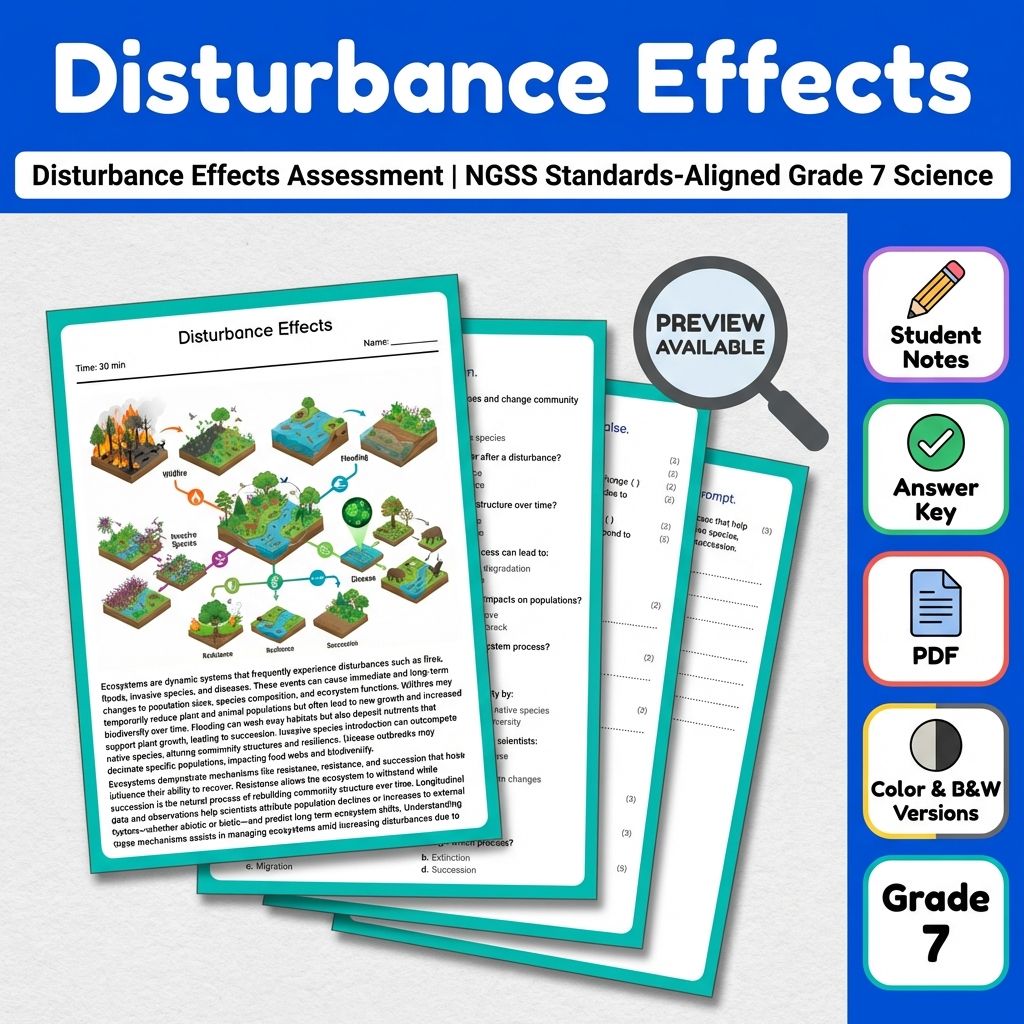
Disturbance Effects Assessment | NGSS Standards-Aligned Grade 7 Science
Created byPrism Point LearningLearning Objectives
- Understand how physical and biological disturbances impact ecosystems and populations.
- Identify mechanisms such as resilience, resistance, and succession that influence ecosystem recovery.
- Interpret empirical data and observations to determine causes of population changes.
Also included in: Grade 7 Science Mini Bundle | Ecosystems: Interactions & Energy – NGSS +1 more
Instant download
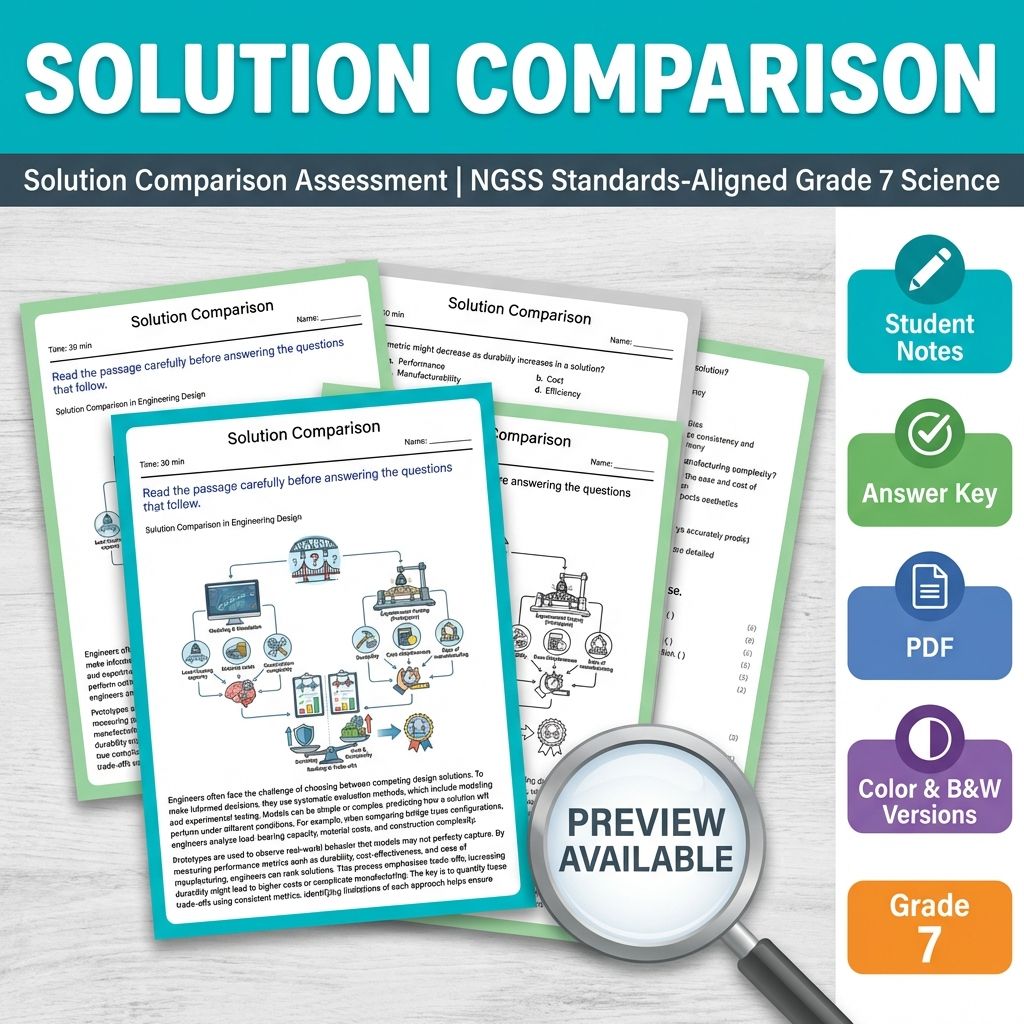
Solution Comparison Assessment | NGSS Standards-Aligned Grade 7 Science
Created byPrism Point LearningLearning Objectives
- Understand systematic evaluation of different design solutions using modeling and analysis.
- Identify and quantify trade-offs among performance, cost, durability, and manufacturability.
- Apply models to predict and observe behaviors of prototypes in engineering contexts.
Also included in: Grade 7 Science Lesson Unit: Engineering Design Standards-Aligned Not Specified +1 more
Instant download
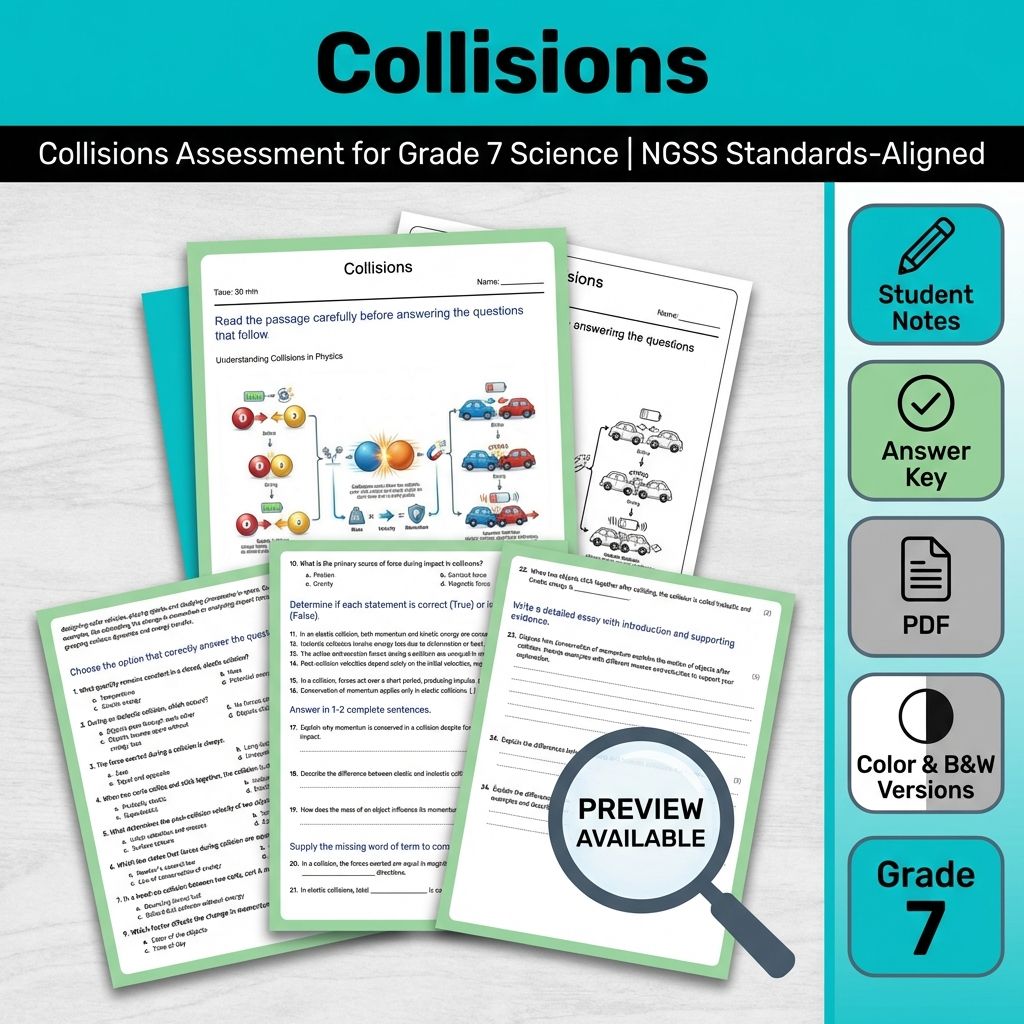
Collisions Assessment for Grade 7 Science | NGSS Standards-Aligned
Created byPrism Point LearningLearning Objectives
- Explain the principles of momentum conservation during collisions.
- Differentiate between elastic and inelastic collisions.
- Calculate post-collision velocities using mass and velocity data.
Also included in: Grade 7 Science Mini Bundle – Forces & Interactions NGSS Unit (Printable) +1 more
Instant download
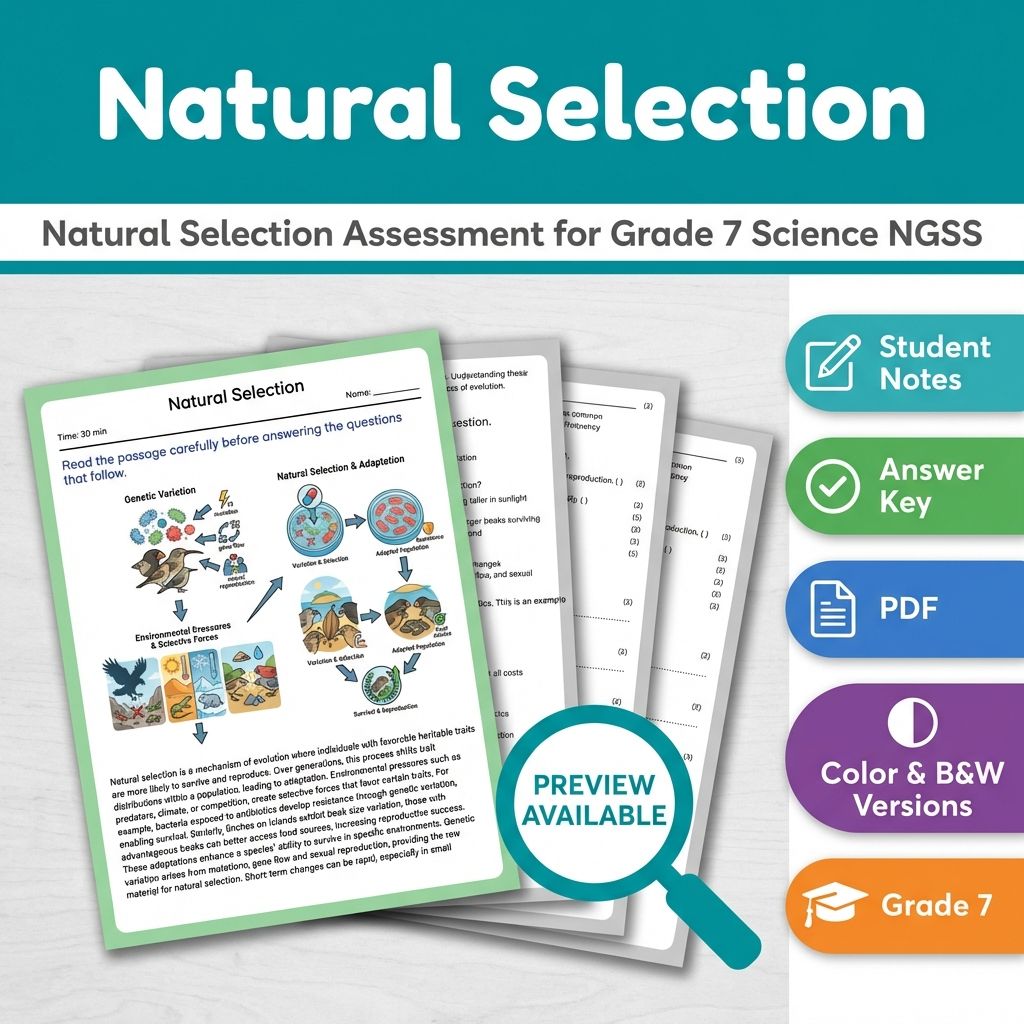
Natural Selection Assessment for Grade 7 Science NGSS
Created byPrism Point LearningLearning Objectives
- Explain how heritable variation and environmental pressures influence natural selection.
- Identify examples of adaptation in different species.
- Describe how reproductive success and selective pressures shape evolution.
Also included in: Grade 7 Science Mini Bundle – Biological Evolution: Unity & Diversity +1 more
Instant download
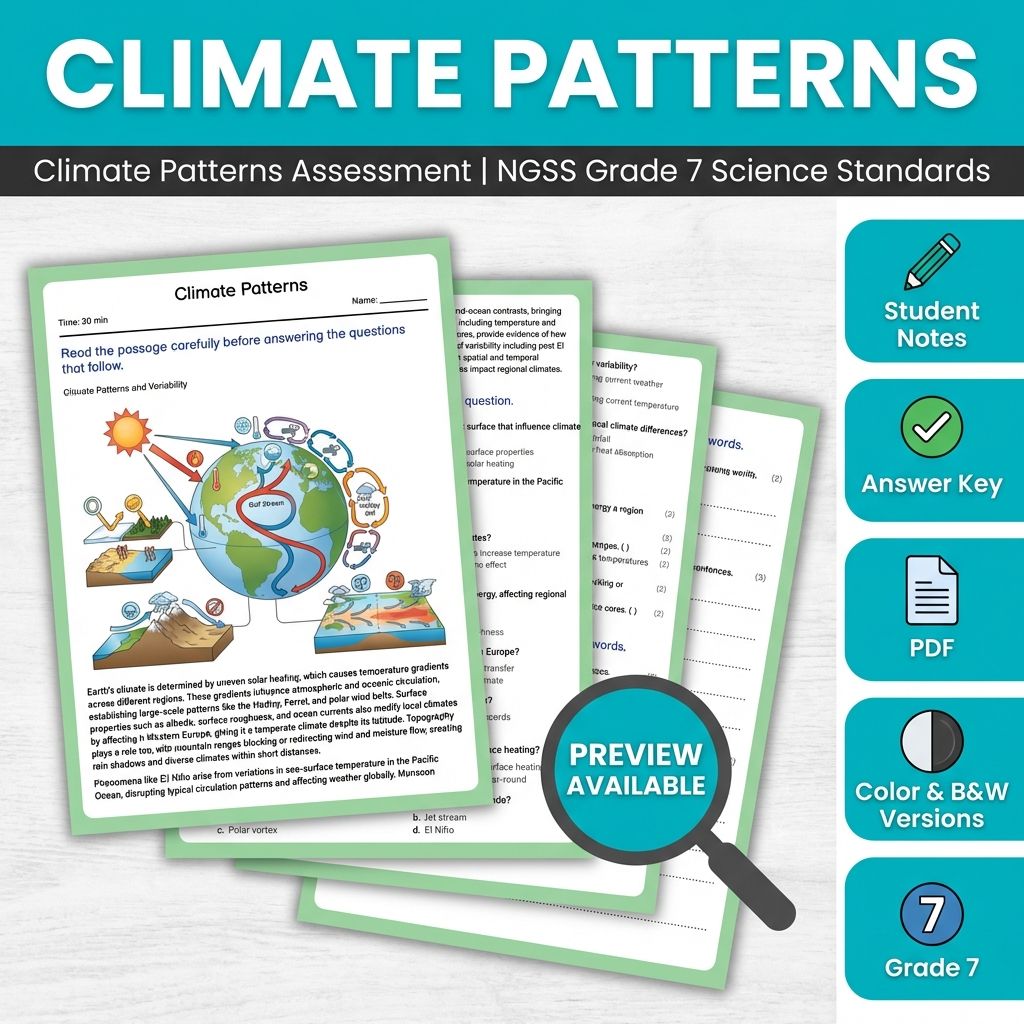
Climate Patterns Assessment | NGSS Grade 7 Science Standards
Created byPrism Point LearningLearning Objectives
- Understand how uneven solar heating influences regional climate patterns.
- Identify key features such as El Niño, monsoon regimes, and wind belts that affect climate zones.
- Analyze how surface properties and topography modify local climates.
Also included in: Grade 7 Science Lesson | Earth's Systems NGSS Not specified Unit +1 more
Instant download
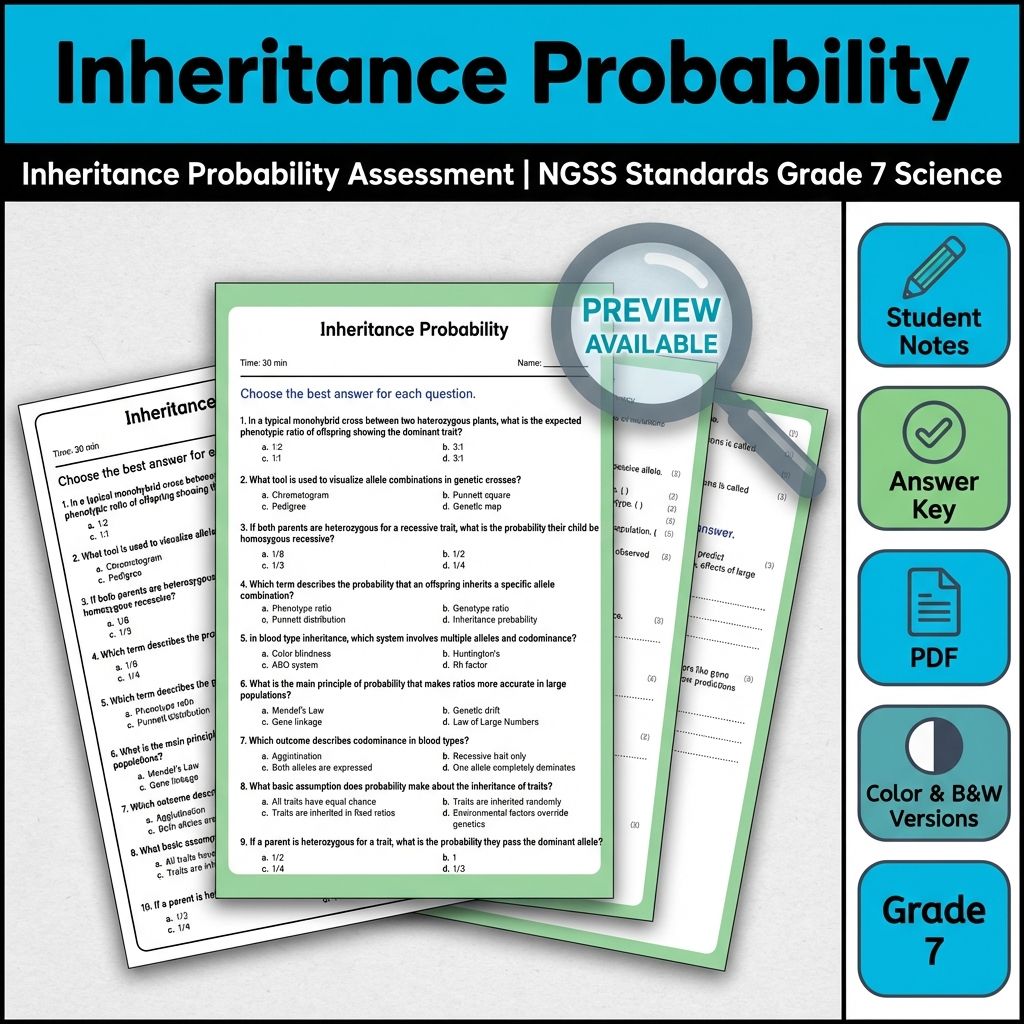
Inheritance Probability Assessment | NGSS Standards Grade 7 Science
Created byPrism Point LearningLearning Objectives
- Understand how probability concepts apply to predicting genetic variation among offspring.
- Interpret genotype and phenotype ratios resulting from monohybrid crosses using Punnett squares.
- Calculate expected proportions of different genotypes and phenotypes in genetic crosses.
Also included in: Grade 7 Science Mini Bundle – Heredity: Inheritance and Variation of Traits +1 more
Instant download
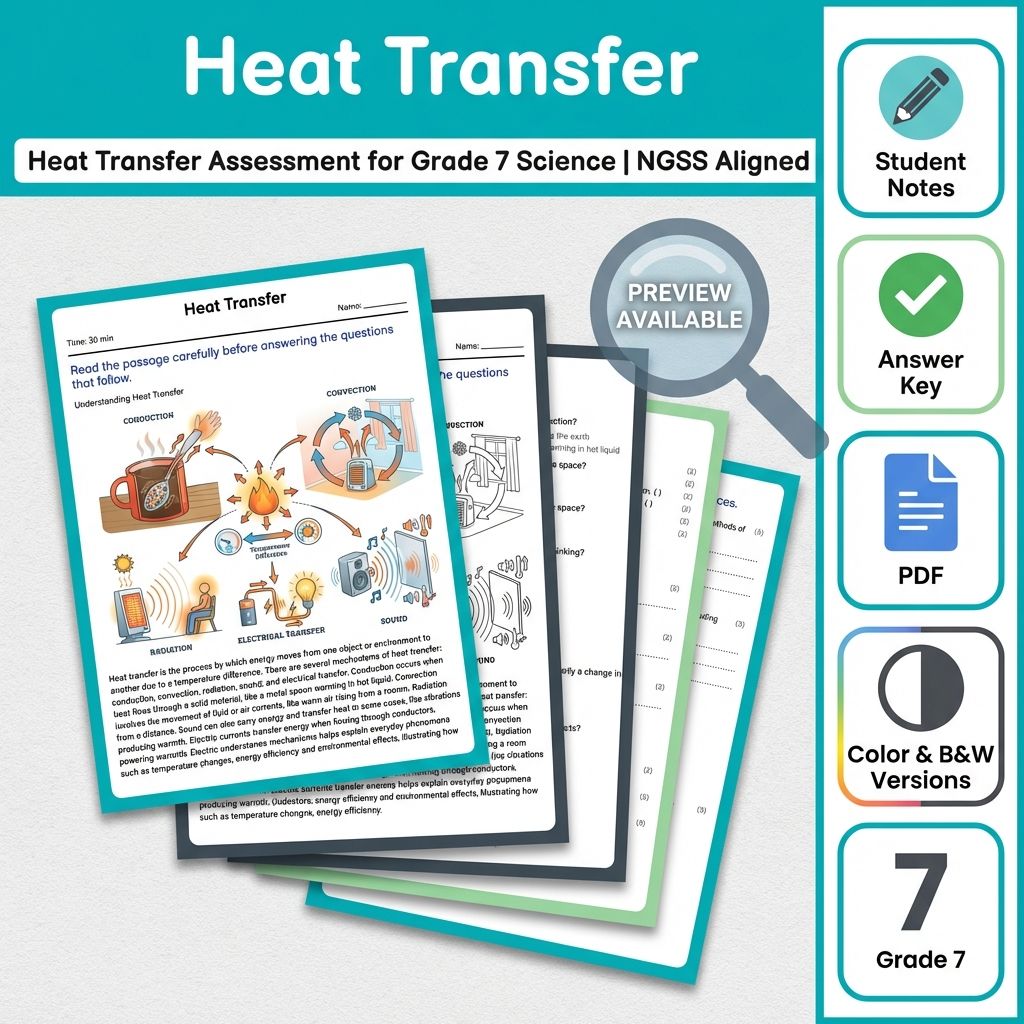
Heat Transfer Assessment for Grade 7 Science | NGSS Aligned
Created byPrism Point LearningLearning Objectives
- Understand the different mechanisms of heat transfer: conduction, convection, radiation, sound, and electric current.
- Identify examples of each heat transfer process in real-life situations.
- Describe observable evidence of energy transfer such as temperature changes and rate differences.
Also included in: Grade 7 Science Mini Bundle | Energy Unit & NGSS Standards-Aligned Resources +1 more
Instant download
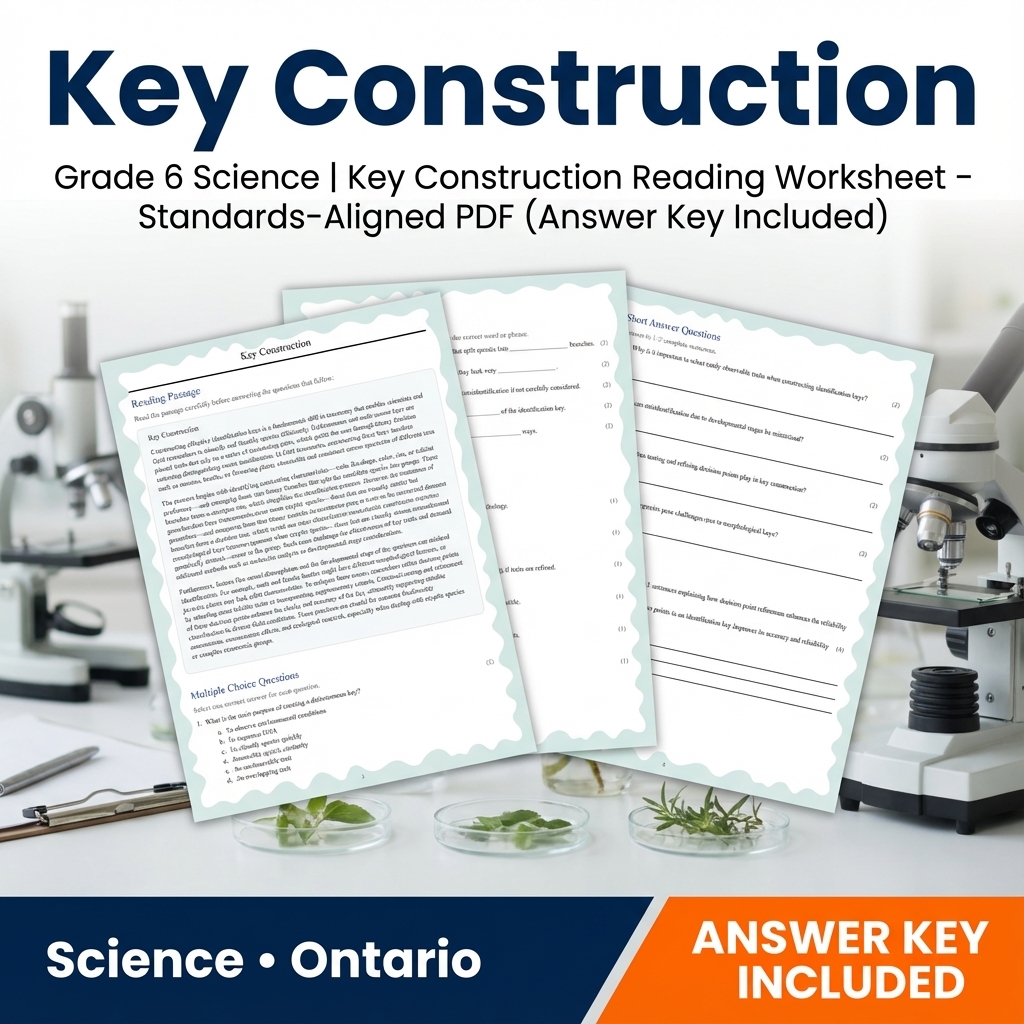
6th Grade Science | Key Construction Reading Worksheet (PDF + Answer Key)
JCreated byJ.S SheetsLearning Objectives
- Understand the procedures for constructing dichotomous and multi-access keys based on contrasting traits.
- Identify limitations of morphological keys, including issues caused by cryptic species, developmental stages, and sexual dimorphism.
- Learn methods for refining decision points to improve classification accuracy in field inventories.
Also included in: Grade 6 Science Unit Bundle – Ecosystems, Biodiversity & Environmental Impact +1 more
Instant download
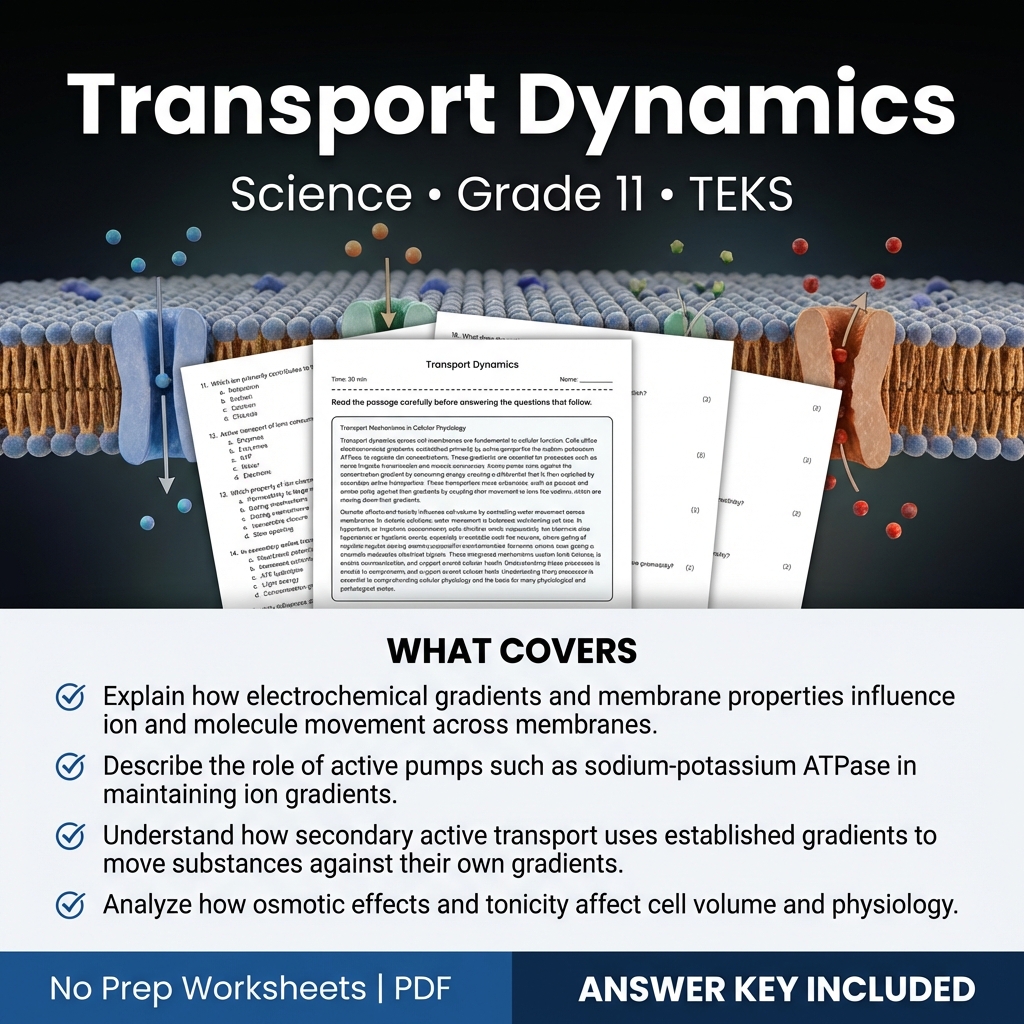
Transport Dynamics Worksheet for Grade 11 Science | TEKS aligned
Created byCoral Reef LearningLearning Objectives
- Explain how electrochemical gradients and membrane properties influence ion and molecule movement across membranes.
- Describe the role of active pumps such as sodium-potassium ATPase in maintaining ion gradients.
- Understand how secondary active transport uses established gradients to move substances against their own gradients.
Instant download
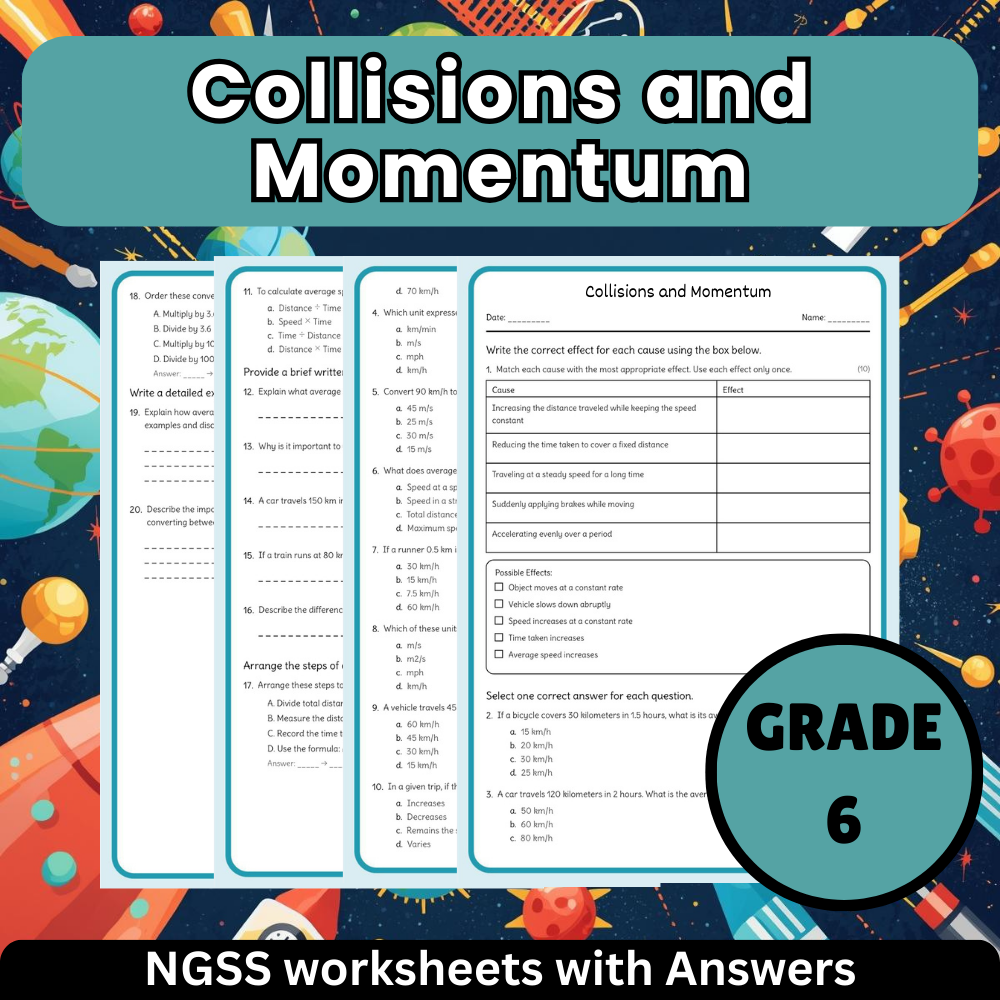
6th Grade Science | Collisions & Momentum Worksheet (Worksheet + Answer Key)
Created byBright Mind ResourcesLearning Objectives
- Understand the principles of conservation of momentum during two-body collisions.
- Identify action-reaction force pairs in collision scenarios such as billiard balls and colliding carts.
- Distinguish between elastic and inelastic collisions based on energy conservation.
Also included in: Grade 6 Science Unit Bundle – Forces, Motion & Magnetism Worksheets (NGSS) +2 more
Instant download
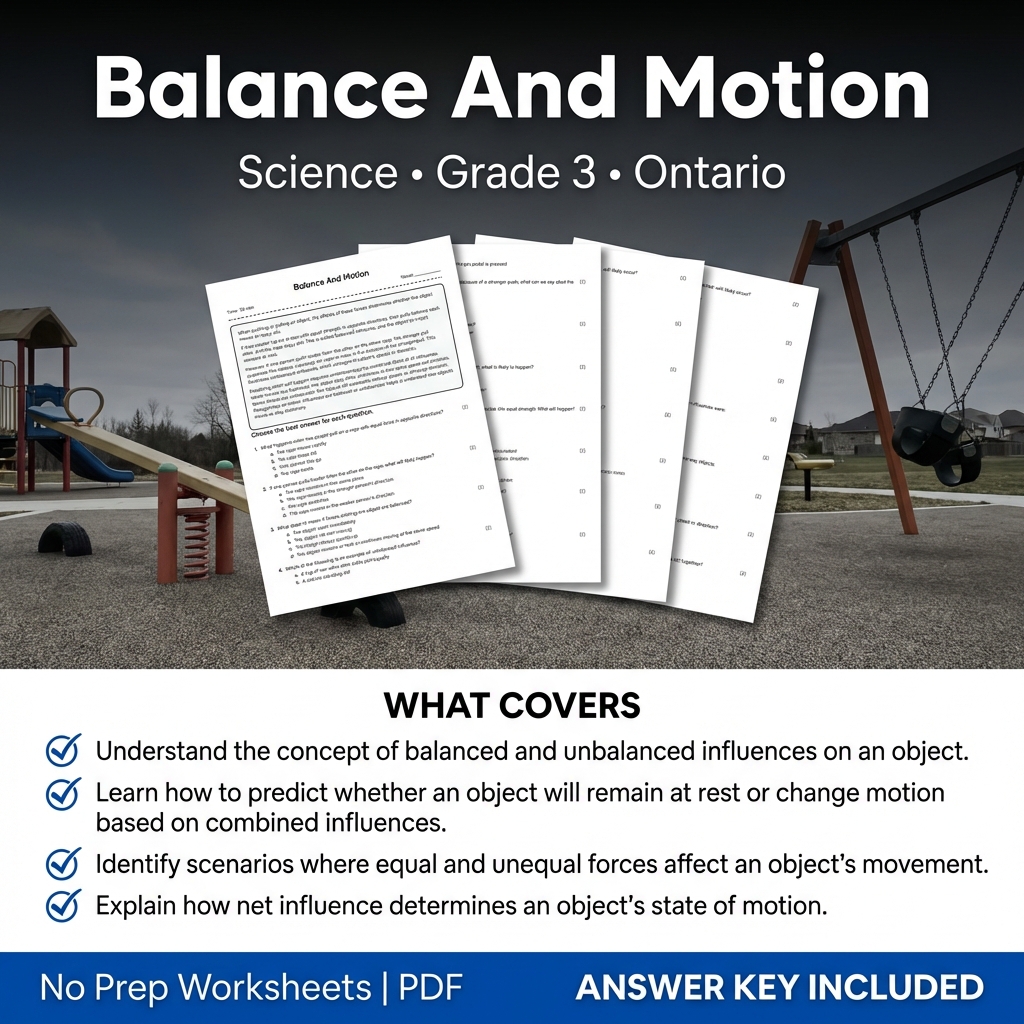
Balance And Motion Grade 3 Science Worksheet | Ontario Standards
Created byCoral Reef LearningLearning Objectives
- Understand the concept of balanced and unbalanced influences on an object.
- Learn how to predict whether an object will remain at rest or change motion based on combined influences.
- Identify scenarios where equal and unequal forces affect an object's movement.
Instant download
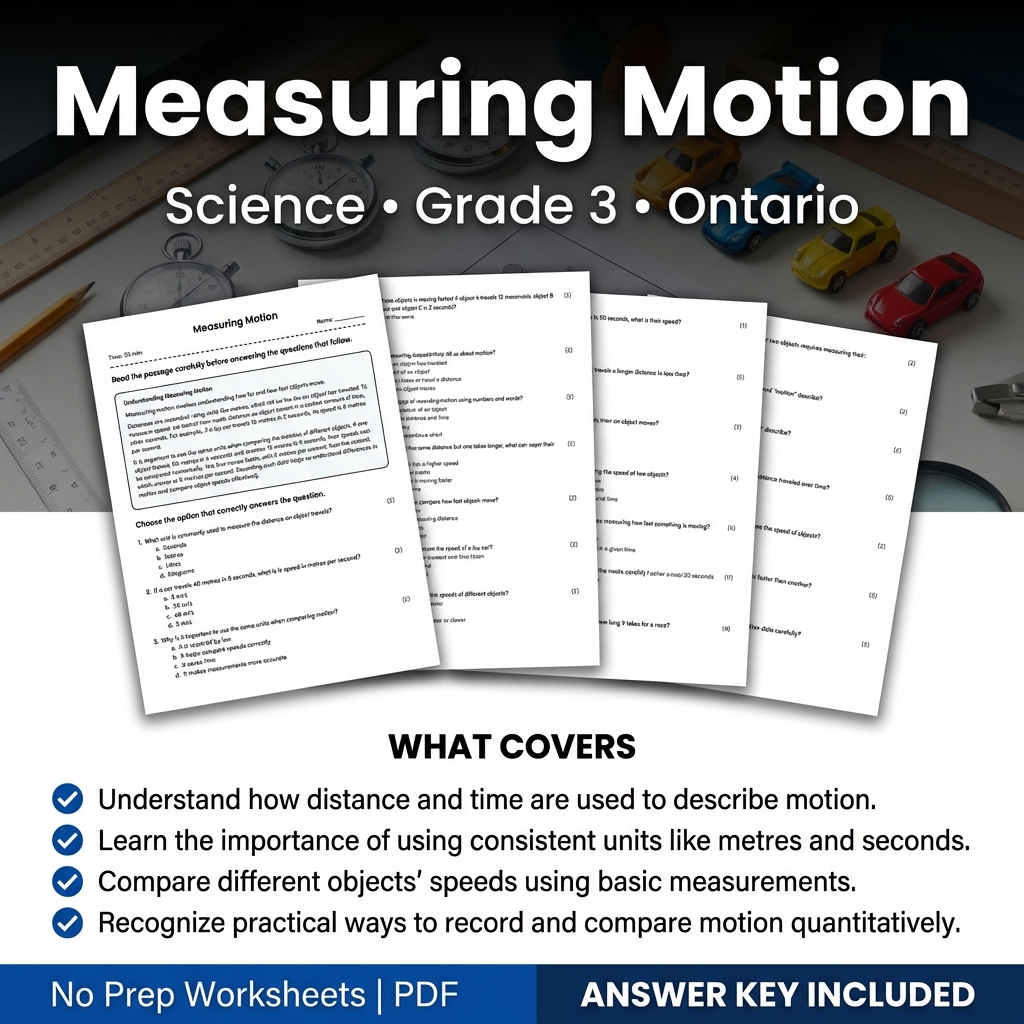
Measuring Motion Grade 3 Science Worksheet | Ontario Standards
Created byCoral Reef LearningLearning Objectives
- Understand how distance and time are used to describe motion.
- Learn the importance of using consistent units like metres and seconds.
- Compare different objects’ speeds using basic measurements.
Instant download

Grade 9 Selective Breeding & Hybridization Alberta Science Worksheet
 Created byBRIGHT PATH RESOURCES
Learning Objectives
- Identify the main idea of a biotechnology text and use details to support it.
- Explain how selective breeding and hybridization can change traits in crops or livestock over generations.
- Connect genetic technology choices to potential benefits and limitations.
Instant download
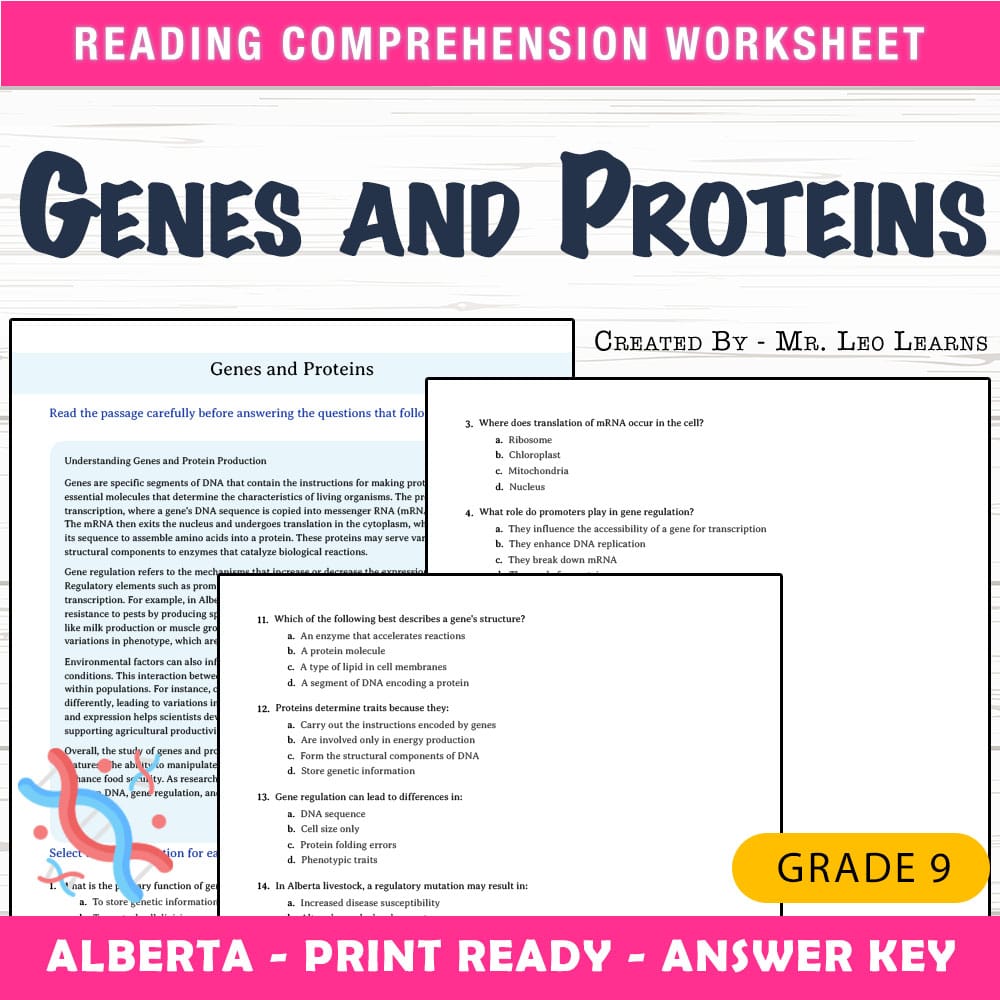
Grade 9 Science — Worksheet MCQ Paper for Mastering Genes and Proteins
 Created byThe Resource Hub
Learning Objectives
- Understand the role of genes as DNA segments coding for proteins.
- Explain the processes of transcription and translation in protein synthesis.
- Identify how gene regulation influences phenotypic traits in crops and livestock.
Also included in: Grade 9 Science Lesson Bundle | Reproduction and Heredity Worksheets +1 more
Instant download
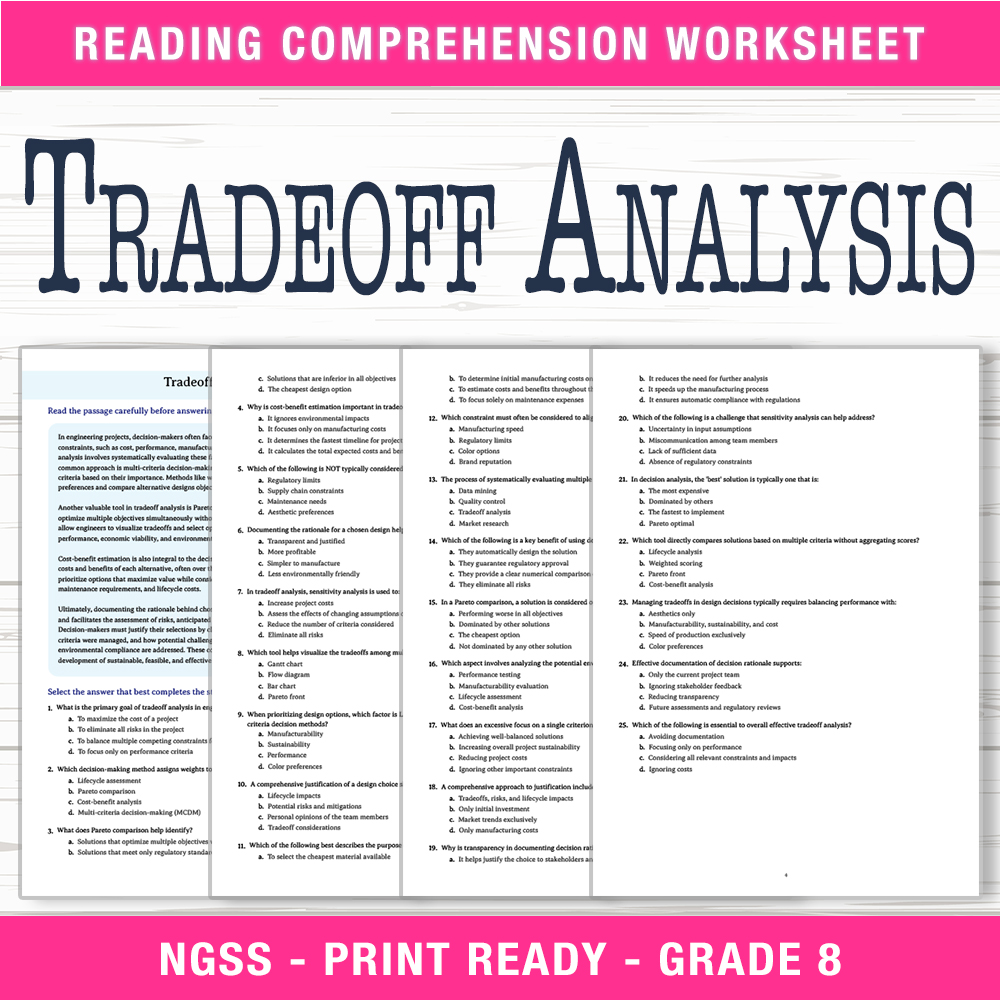
Grade 8 Science – Tradeoff Analysis Worksheet (PDF + Answer Key)
 Created byRiverstone Classroom
Learning Objectives
- Understand how to apply multi-criteria decision methods to evaluate project options.
- Learn to use tools like weighted scoring and Pareto comparisons for prioritization.
- Analyze tradeoffs among performance, manufacturability, and sustainability constraints.
Instant download

Grade 4 Integrated Mechanisms Worksheet | Ontario Science Activities & Guide
 Created byChalk and Compass
Learning Objectives
- Explain how gears, pulleys, levers, and linkages can work together to create a desired output motion or force.
- Describe trade-offs in combined mechanisms, such as torque versus speed and simplicity versus compactness.
- Use vocabulary such as torque, speed, linkage, and direction change to interpret simple real-world designs.
Also included in: Grade 4 Science Simple Machines & Mechanical Advantage Lesson Bundle | Ontario +1 more
Instant download
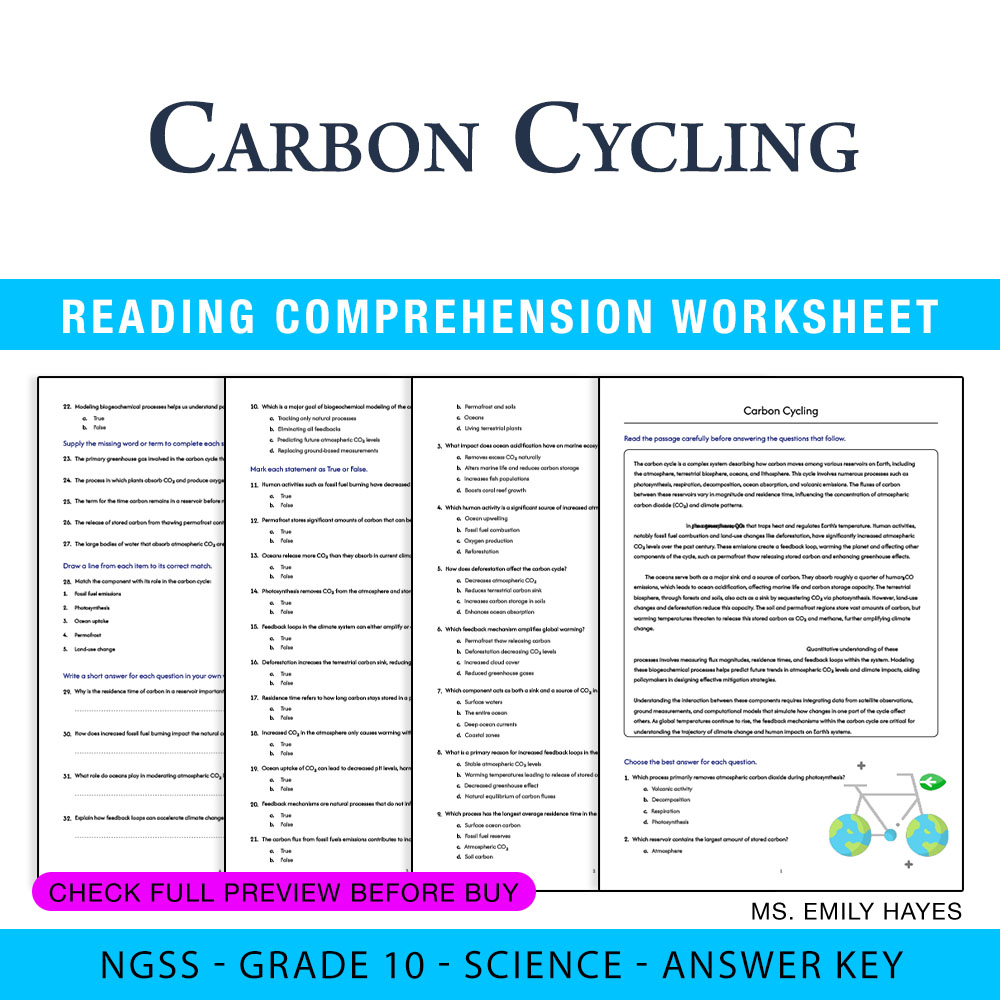
10th Grade Science | Carbon Cycling Worksheet (PDF+ Answer Key)
 Created byCopper Leaf Classroom
Learning Objectives
- Describe the main components and pathways involved in the global carbon cycle.
- Explain how fluxes, residence times, and feedback mechanisms influence atmospheric carbon dioxide levels.
- Analyze the impacts of human activities on carbon fluxes and climate change.
Instant download

Freshwater Dynamics Worksheet | Ontario Grade 7 Science Assessment
 Created byCedar Grove Learning
Learning Objectives
- Describe how stratification, light penetration, and oxygen gradients form in ponds and lakes
- Explain how abiotic gradients affect community composition and vertical zonation
- Compare the effects of summer stratification and seasonal turnover on dissolved oxygen and nutrient distribution
Also included in: Grade 7 Ecosystem Dynamics Science worksheets lesson bundle Ontario +1 more
Instant download
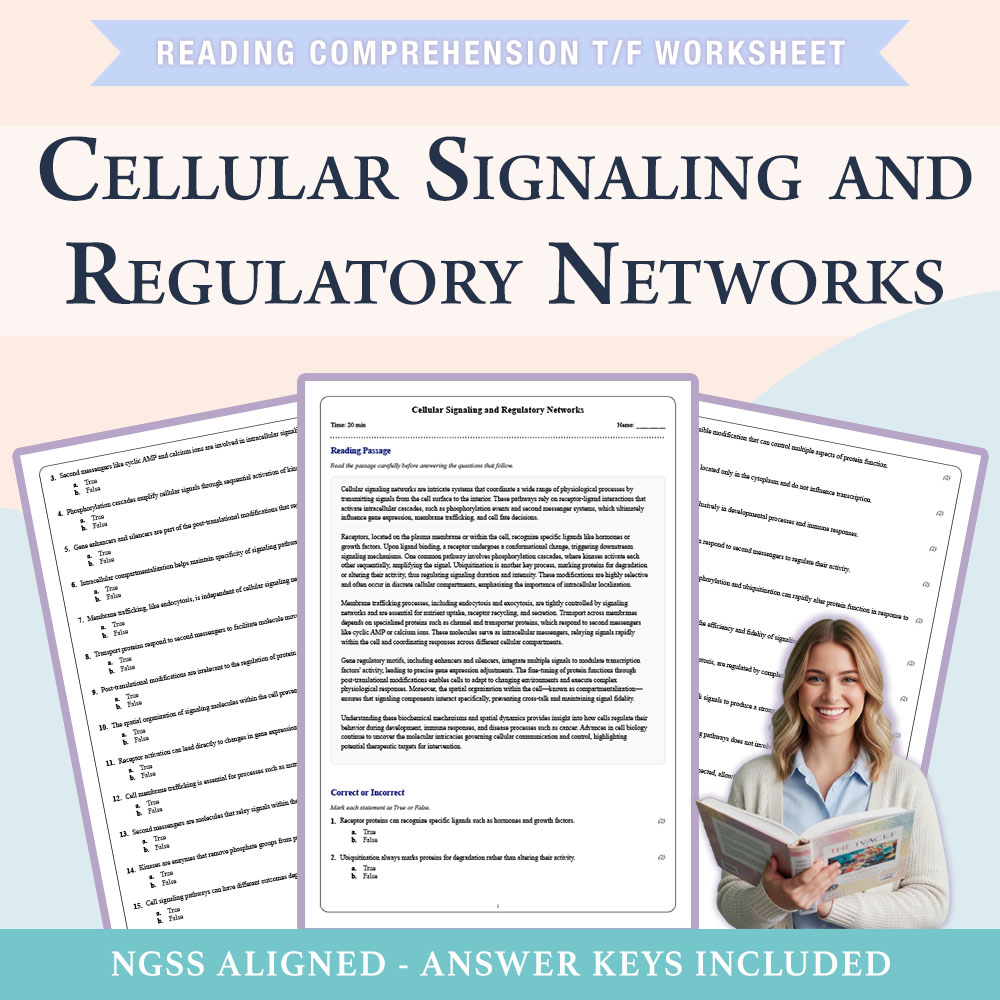
11th Grade Science | Cellular Signaling & Regulatory Networks (PDF + Answer Key)
Created byCopper Leaf ClassroomLearning Objectives
- Understand the biochemical mechanisms underlying cellular signaling pathways.
- Identify key molecular processes such as phosphorylation cascades, ubiquitination, and gene regulation.
- Describe how intracellular compartmentalization and membrane transport influence cell function.
Also included in: Grade 11 Science Bundle | Cellular Metabolism & Organization (PDF + Answer Key) +1 more
Instant download

Grade 9 Science – Evolution Evidence & Fossil Record | Daily Reading Worksheet
Created byBright Mind ResourcesLearning Objectives
- Understand how fossils support the theory of evolution.
- Identify different types of fossil evidence.
- Explain how fossils demonstrate gradual change in species over time.
Also included in: Selection Grade 9 Science Daily Reading Worksheets Lesson Bundle | FL NGSSS +1 more
Instant download
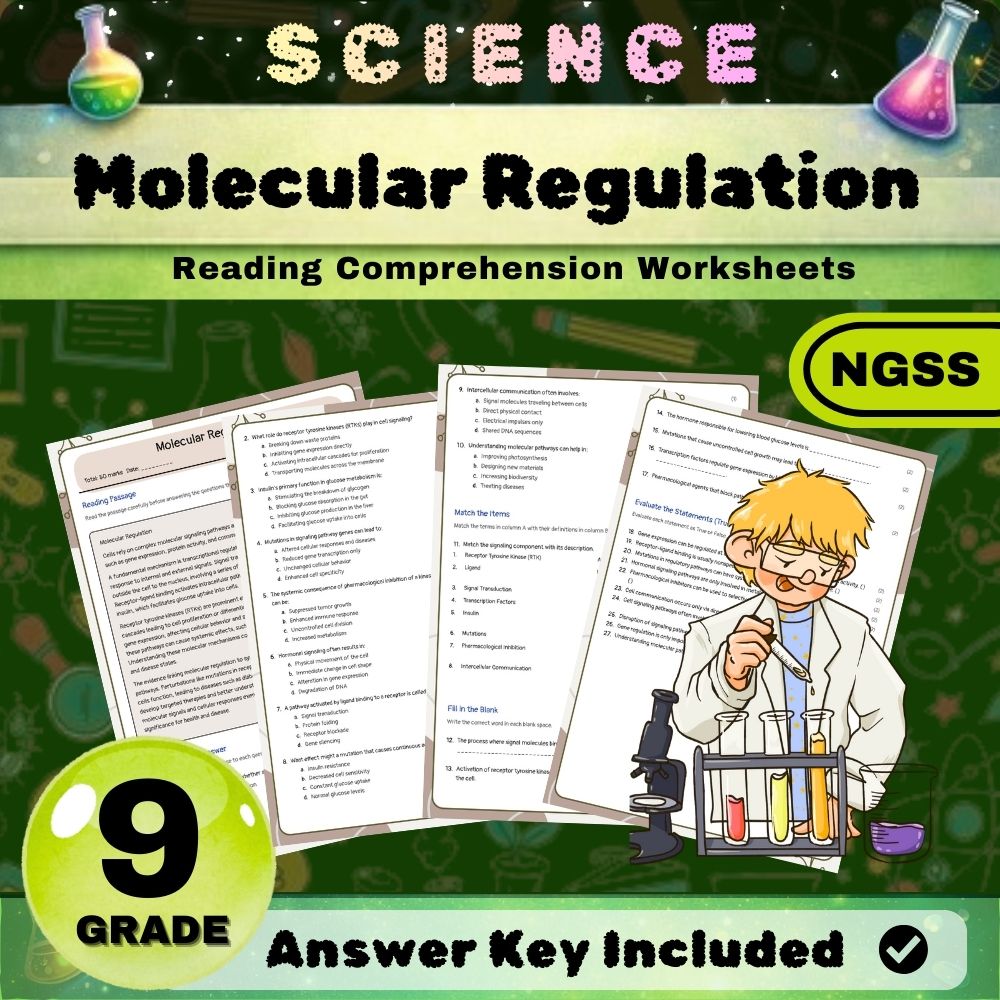
Grade 9 Science – Molecular Regulation Worksheet (NGSS) PDF
 Created byMaple Path Learning
Learning Objectives
- Understand the mechanisms of gene regulation, signal transduction, and intercellular communication.
- Identify examples of molecular signaling pathways such as insulin-mediated glucose uptake and receptor tyrosine kinase cascades.
- Explain how molecular regulation affects cellular functions and physiological outcomes.
Also included in: Grade 9 Science NGSS| From Molecules to Organisms: Structures & Processes Bundle +1 more
Instant download
Grade 3 Science Patterns From Data Worksheet with Short Notes (Printable PDF)
Created byMeadowlark WorksheetsLearning Objectives
- Understand how data organization reveals patterns.
- Learn to interpret tables and graphs for comparisons.
- Connect patterns in data to reasoning and explanations.
Also included in: Grade 3 Science Lesson Bundle | Data, Models, and Evidence Activities +1 more
Instant download
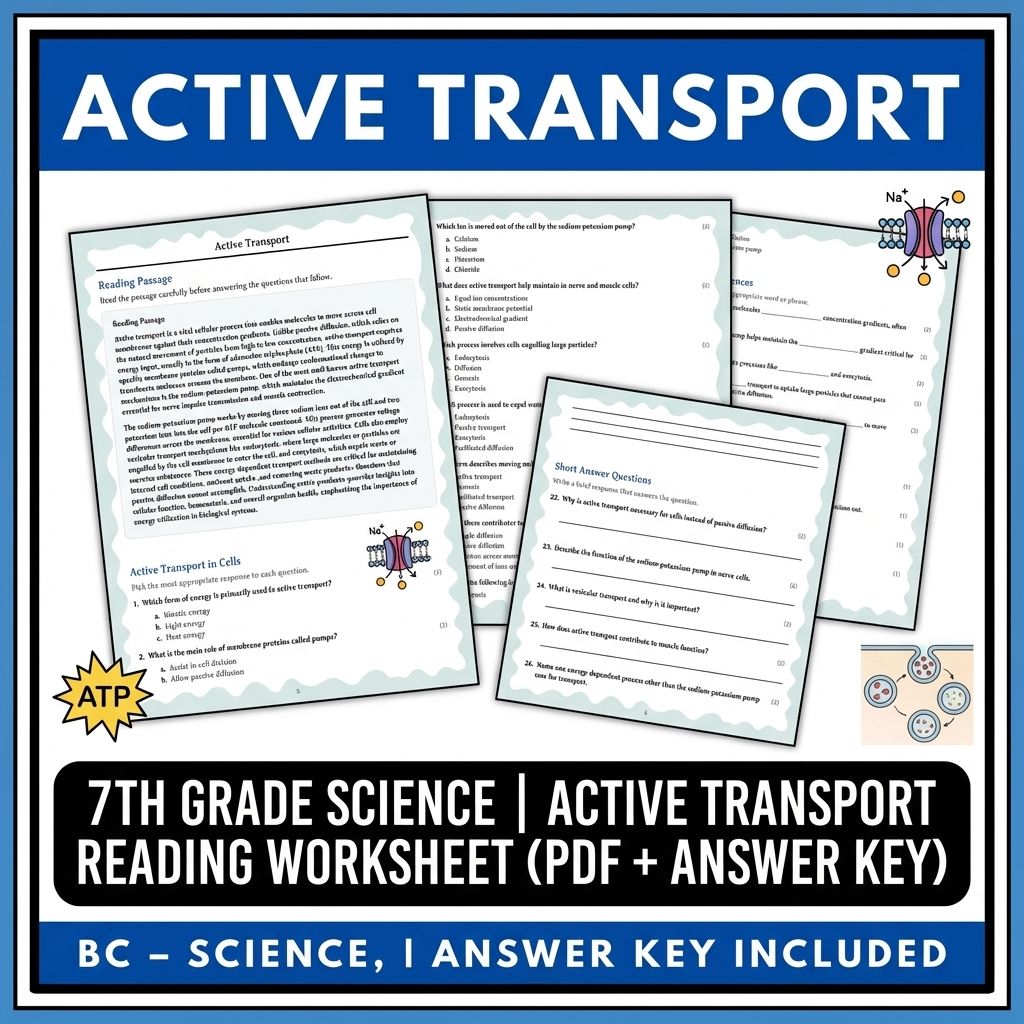
7th Grade Science | Active Transport Reading Worksheet (PDF + Answer Key)
JCreated byJ.S SheetsLearning Objectives
- Understand the concept of active transport and how it moves molecules against concentration gradients.
- Identify the role of ATP and membrane proteins such as pumps in cellular transport.
- Explain the function of the sodium-potassium pump in maintaining electrochemical gradients.
Instant download

Reaction Energetics Worksheet | AP Science Practice for Grade 11
JCreated byJ.S SheetsLearning Objectives
- Explain how enthalpy changes relate to energy transfer in chemical reactions.
- Apply calorimetric reasoning and Hess’s law to determine overall reaction heats.
- Relate bond enthalpies and formation energies to reaction stability and energy diagrams.
Instant download

Grade 3 Design Problem Statement Worksheet | Practice & PDF
Created byClear Sky ClassroomLearning Objectives
- Identify the parts of a simple design problem statement: a real need or want, the situation, the goal, and success criteria.
- Distinguish between describing what must change (goal and success) and choosing specific materials or exact measurements.
- Create and evaluate clear design problem statements using plain, targeted language.
Instant download
Browse more categories
About Science Worksheets
Find Science worksheets spanning core skills, practice, and review. All 44,620 resources are instant PDF downloads for the classroom or home.
Every worksheet on MyTeachingSheets is created by independent teacher-authors and reviewed before publication. All resources download as printable PDFs for classroom, homework, or at-home practice, and many include answer keys. Preview any worksheet free before buying.