
Science Worksheets
44,620 subject resources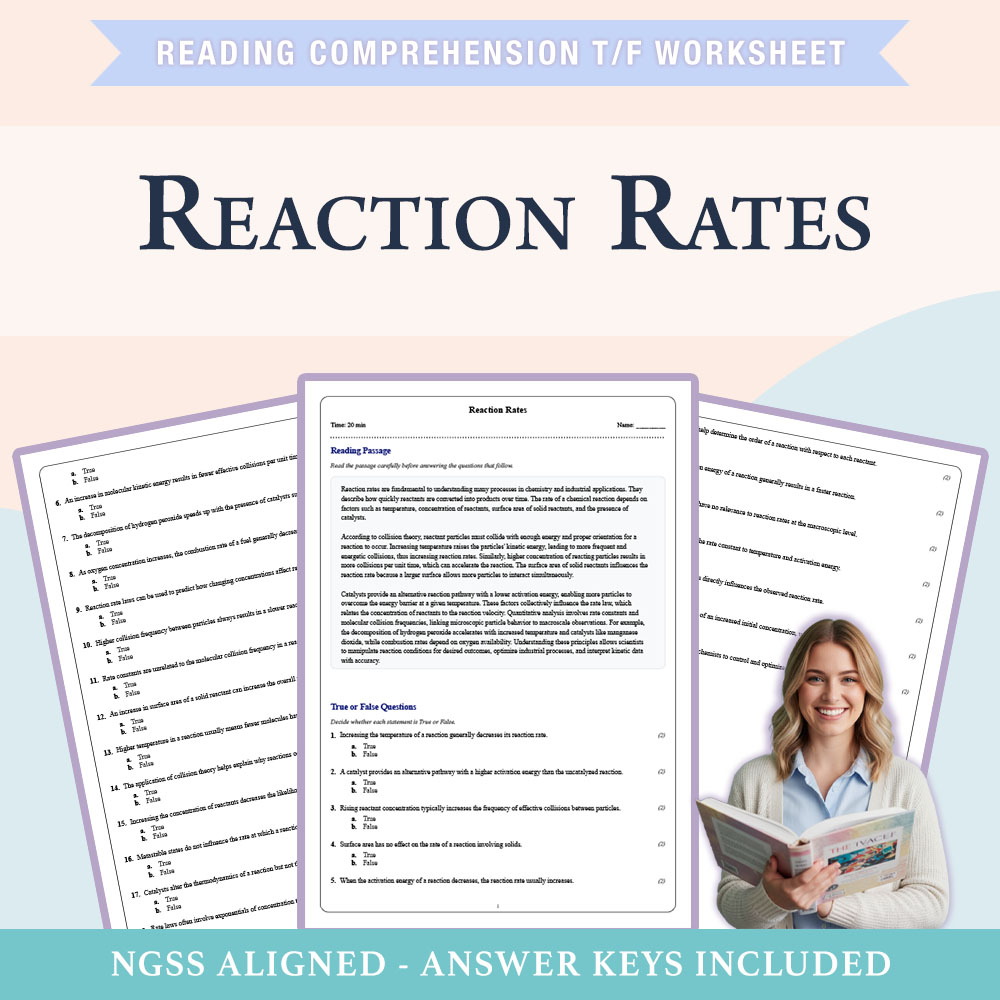
10th Grade Science | Reaction Rates Worksheet (PDF + Answer Key)
 Created byCopper Leaf Classroom
Learning Objectives
- Explain how temperature, concentration, surface area, and catalysts influence reaction rates.
- Interpret empirical rate data using collision theory, activation energy, and rate laws.
- Describe how particle kinetic energy and collision frequency affect macroscopic reaction progress.
Also included in: Grade 10 Science | Chemical Reaction & Particle Interactions (PDF + Answer Key) +1 more
Instant download

Grade 9 Science | Respiratory Pathways Worksheet | AP-aligned
 Created byLumora Learning
Learning Objectives
- Describe the pathways involved in cellular respiration, including glycolysis, the TCA cycle, and electron transport.
- Explain the differences between aerobic and anaerobic respiration and their implications for ATP production.
- Connect substrate-level phosphorylation and oxidative phosphorylation to ATP yields and redox balances.
Also included in: Grade 9 Science | Biology and Ecosystems Custom Bundle | AP Worksheets
Instant download
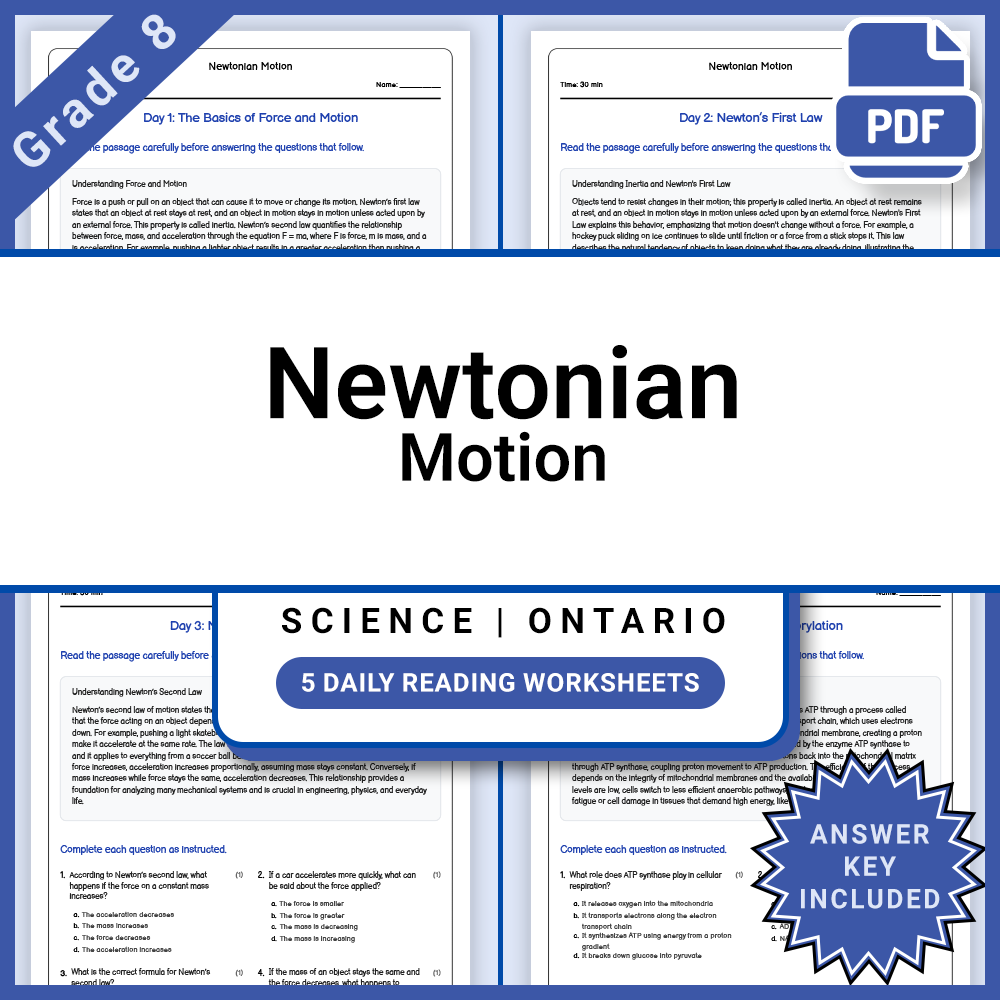
Grade 8 Science – Newtonian Motion Daily Reading Worksheet + Answer Key
JCreated byJ.S SheetsLearning Objectives
- Understand Newton's three laws of motion
- Describe how force, mass, and acceleration are related
- Apply Newton's second law (F = ma) to different systems
Also included in: Grade 8 Science Lesson Group Bundle – Mechanical Systems and Energy +1 more
Instant download
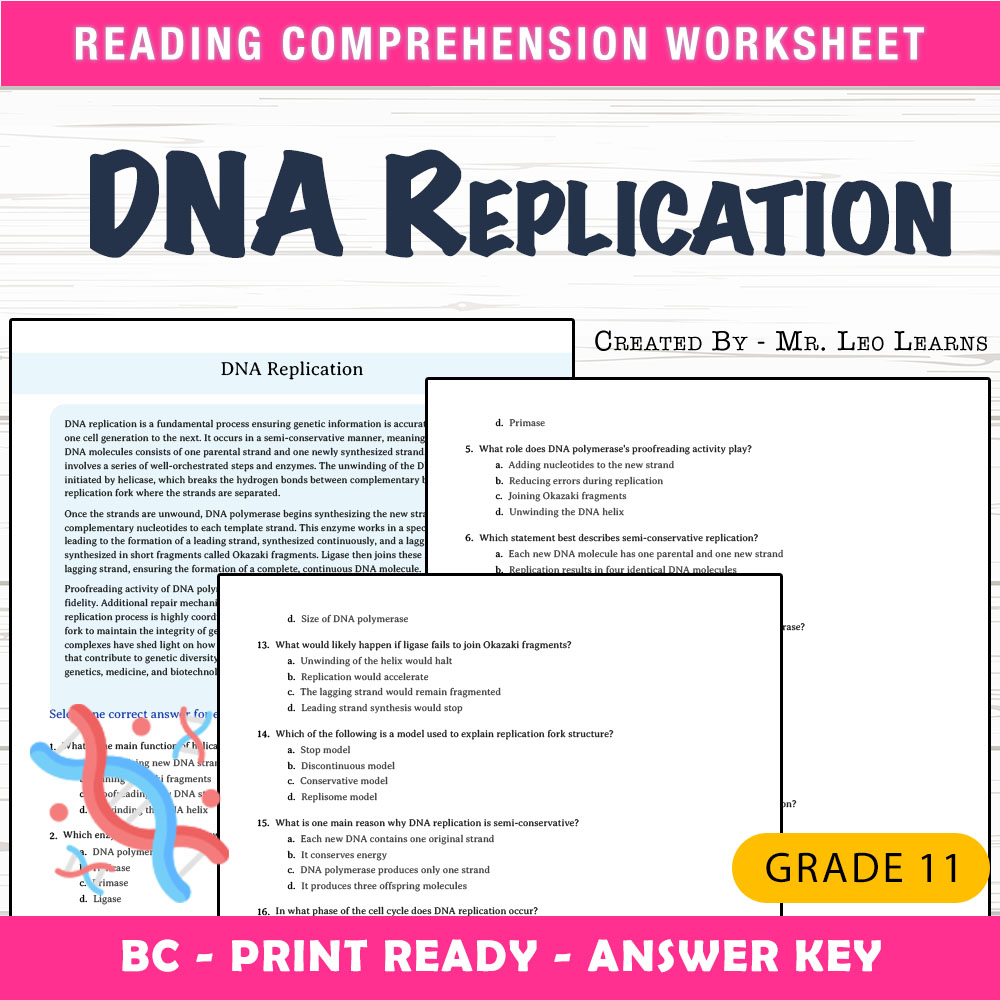
Grade 11 Science — DNA Replication Worksheet MCQ Paper for Mastery
 Created byThe Resource Hub
Learning Objectives
- Understand the semi-conservative nature of DNA replication.
- Identify the roles of enzymes such as helicase and DNA polymerase.
- Explain the process of lagging and leading strand synthesis.
Also included in: Grade 11 Science Bundle | Biology Unit Worksheets for Mastery (BC Framework) +1 more
Instant download
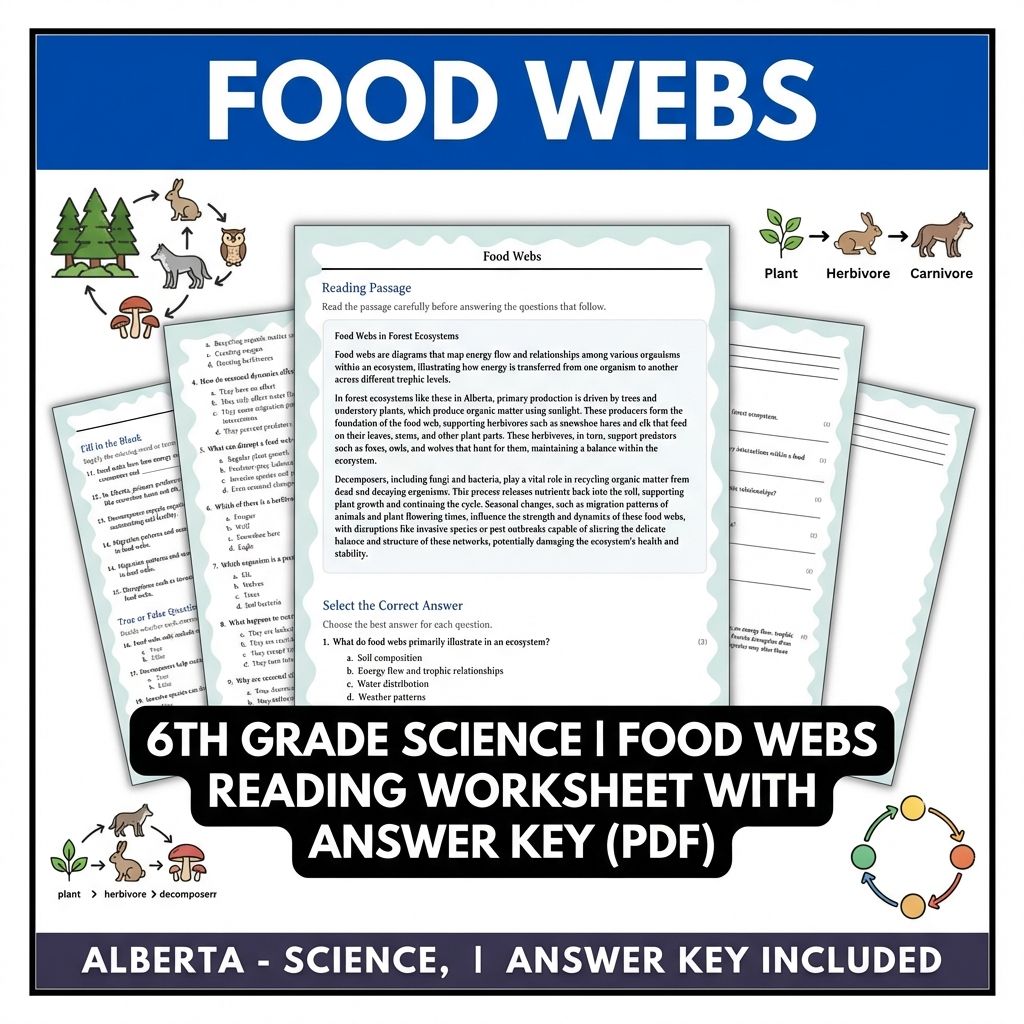
6th Grade Science | Food Webs Reading Worksheet with Answer Key (PDF)
JCreated byJ.S SheetsLearning Objectives
- Understand the components and function of food webs in forest ecosystems.
- Identify energy flow and trophic relationships among producers, consumers, and decomposers.
- Describe how seasonal dynamics and migration patterns affect food webs.
Also included in: Grade 6 Science Unit Bundle | Ecosystems and Biodiversity (Answer Keys Included) +1 more
Instant download
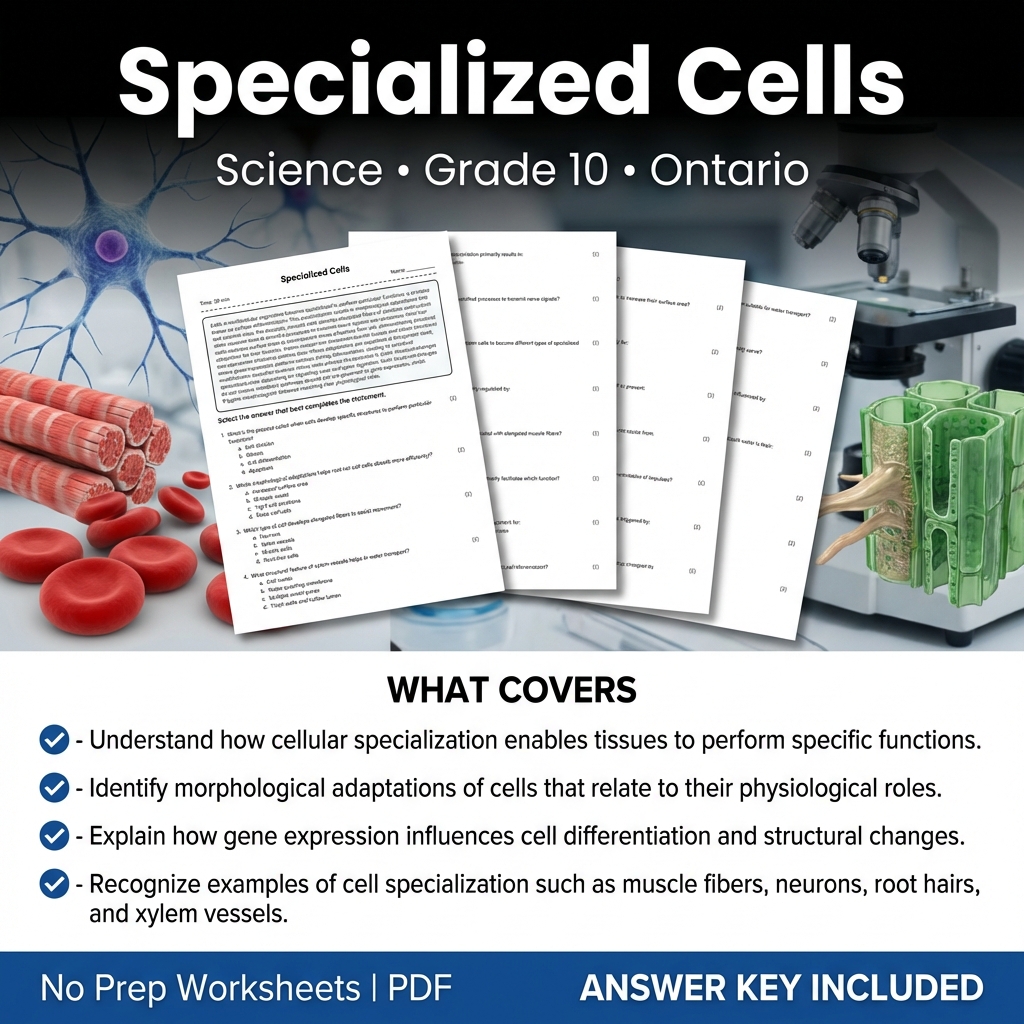
Specialized Cells Science Worksheet for Grade 10 | Ontario Standards
 Created byCoral Reef Learning
Learning Objectives
- Understand how cellular specialization enables tissues to perform specific functions.
- Identify morphological adaptations of cells that relate to their physiological roles.
- Explain how gene expression influences cell differentiation and structural changes.
Instant download

Grade 12 Science | Resource Impacts & Environmental Consequences - Reading Comp.
Created byCoral Reef LearningLearning Objectives
- Understand how mining activities impact land and ecosystems.
- Identify the environmental effects of resource extraction.
- Analyze the balance between resource use and environmental sustainability.
Instant download
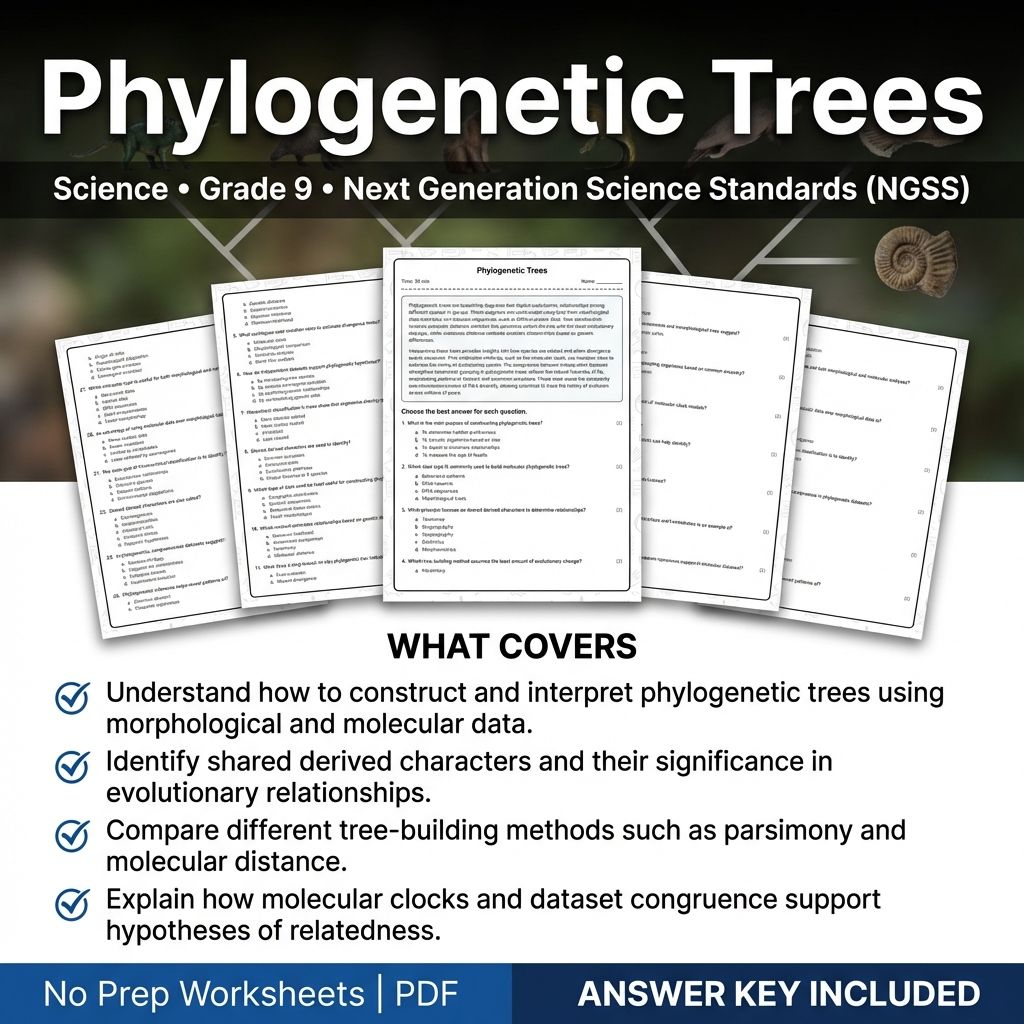
9th Grade Science | Phylogenetic Trees Worksheet & Answer Key (Printable PDF)
Created byCoral Reef LearningLearning Objectives
- Understand how to construct and interpret phylogenetic trees using morphological and molecular data.
- Identify shared derived characters and their significance in evolutionary relationships.
- Compare different tree-building methods such as parsimony and molecular distance.
Also included in: Grade 9 Science | Evolution & Phylogenetics Worksheet Bundle (Printable PDFs) +1 more
Instant download
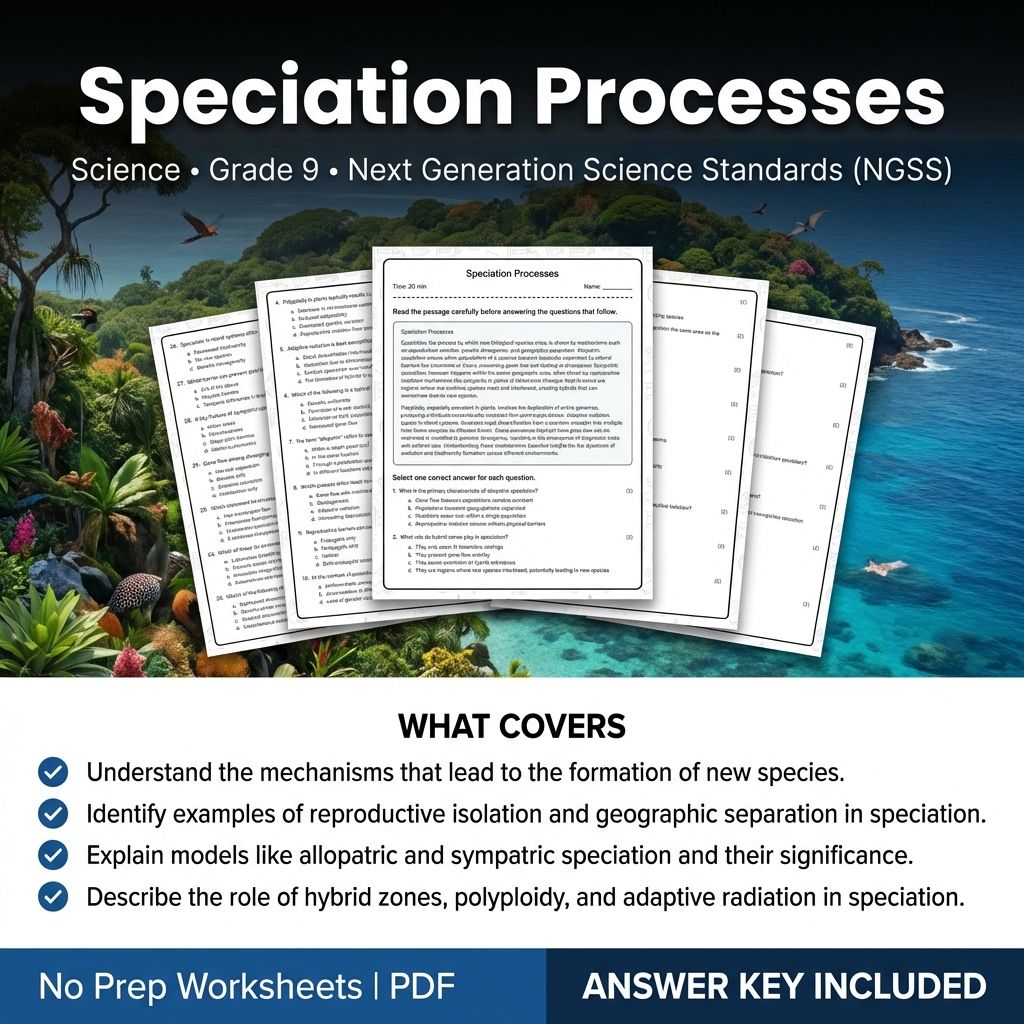
Grade 9 Science | Speciation Processes Worksheet & Answer Key (Printable PDF)
Created byCoral Reef LearningLearning Objectives
- Understand the mechanisms that lead to the formation of new species.
- Identify examples of reproductive isolation and geographic separation in speciation.
- Explain models like allopatric and sympatric speciation and their significance.
Also included in: Grade 9 Science | Evolution & Phylogenetics Worksheet Bundle (Printable PDFs) +1 more
Instant download
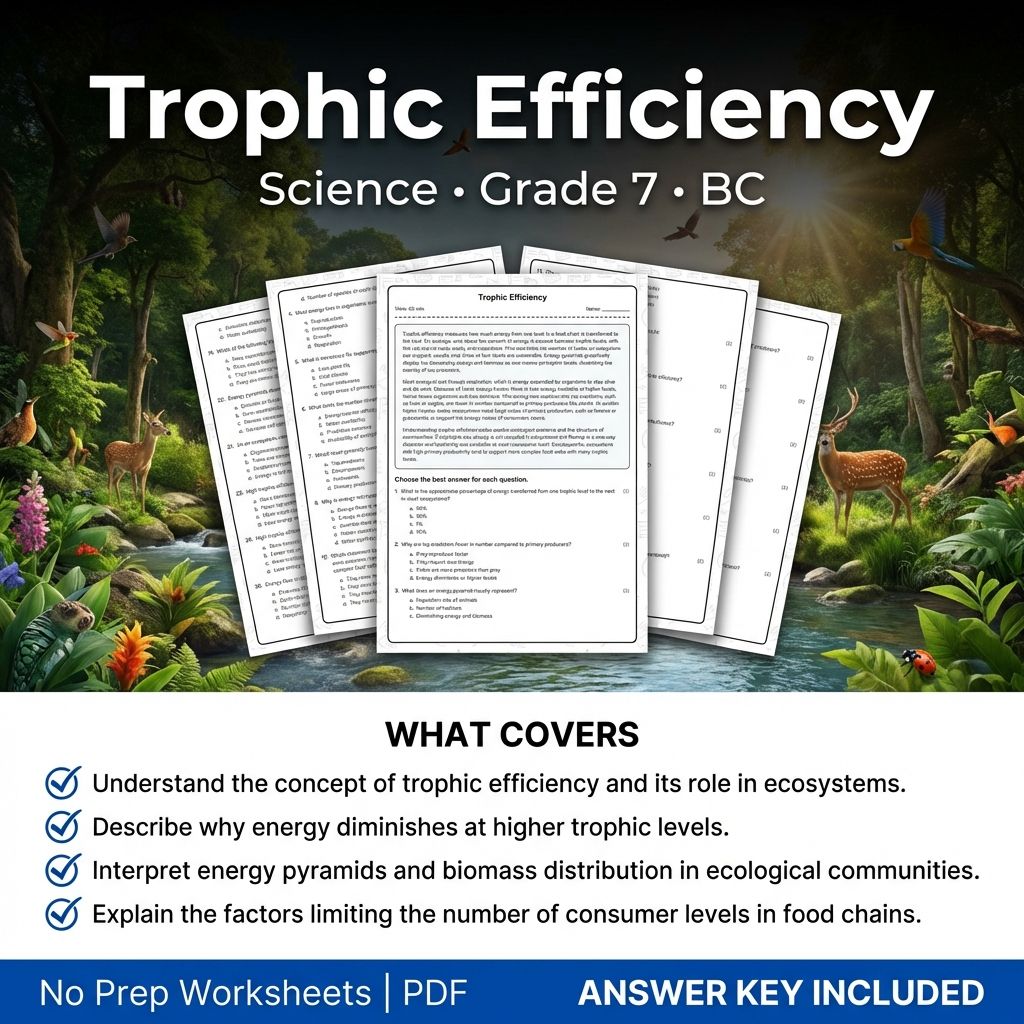
7th Grade Science | Trophic Efficiency Worksheet & Answer Key (PDF Printable)
Created byCoral Reef LearningLearning Objectives
- Understand the concept of trophic efficiency and its role in ecosystems.
- Describe why energy diminishes at higher trophic levels.
- Interpret energy pyramids and biomass distribution in ecological communities.
Instant download
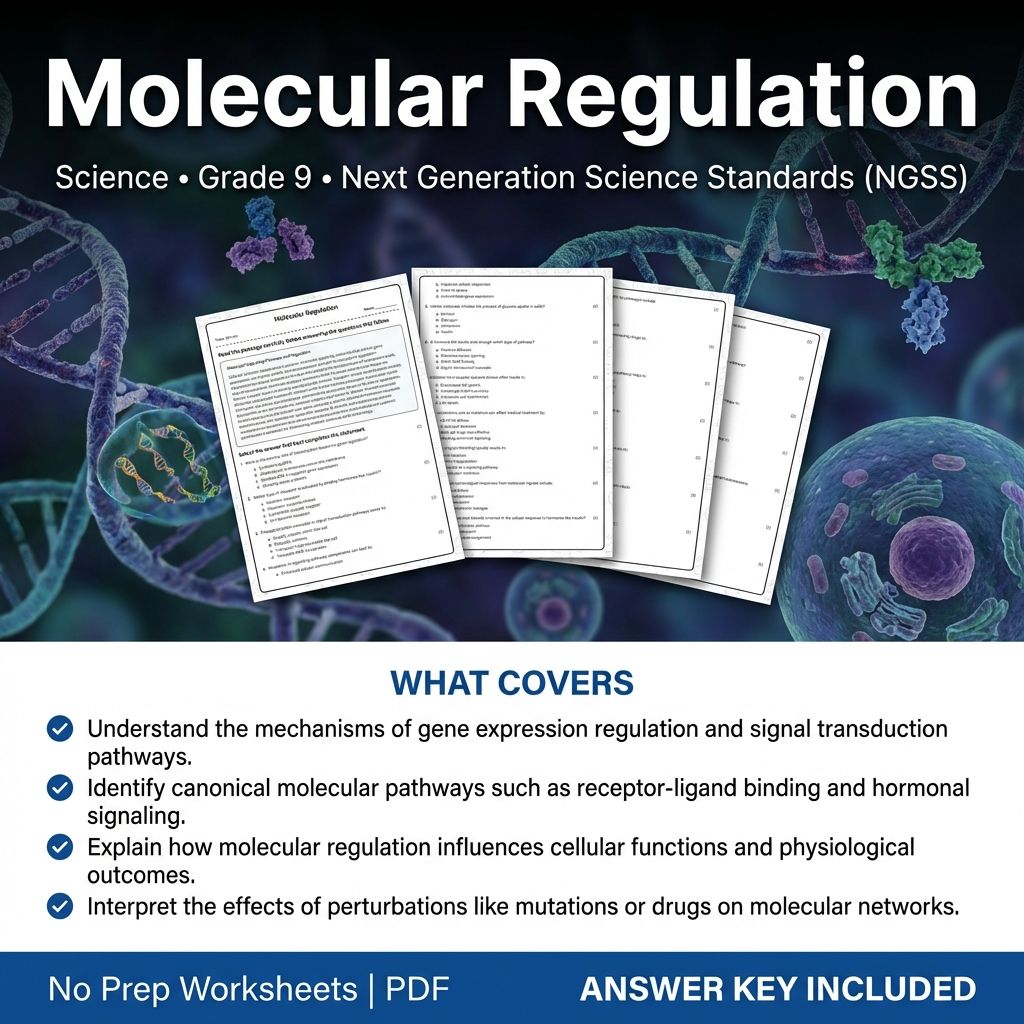
9th Grade Science | Molecular Regulation Worksheet & Answer Key (Printable PDF)
Created byCoral Reef LearningLearning Objectives
- Understand the mechanisms of gene expression regulation and signal transduction pathways.
- Identify canonical molecular pathways such as receptor-ligand binding and hormonal signaling.
- Explain how molecular regulation influences cellular functions and physiological outcomes.
Also included in: Grade 9 Science Unit Bundle-Biological Systems & Molecular Regulation Worksheets +1 more
Instant download
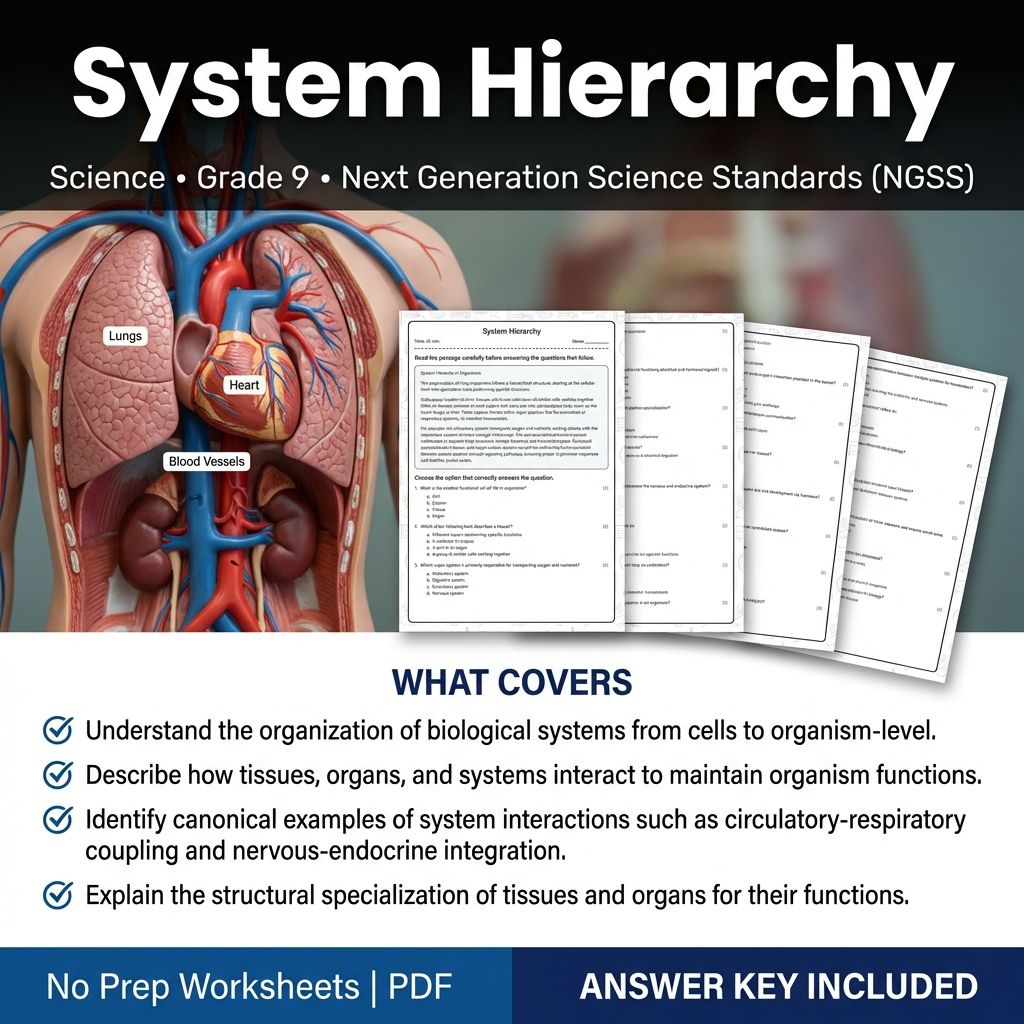
Grade 9 Science | System Hierarchy Worksheet + Answer Key for Classroom Use
Created byCoral Reef LearningLearning Objectives
- Understand the organization of biological systems from cells to organism-level.
- Describe how tissues, organs, and systems interact to maintain organism functions.
- Identify canonical examples of system interactions such as circulatory-respiratory coupling and nervous-endocrine integration.
Also included in: Grade 9 Science Unit Bundle-Biological Systems & Molecular Regulation Worksheets +1 more
Instant download
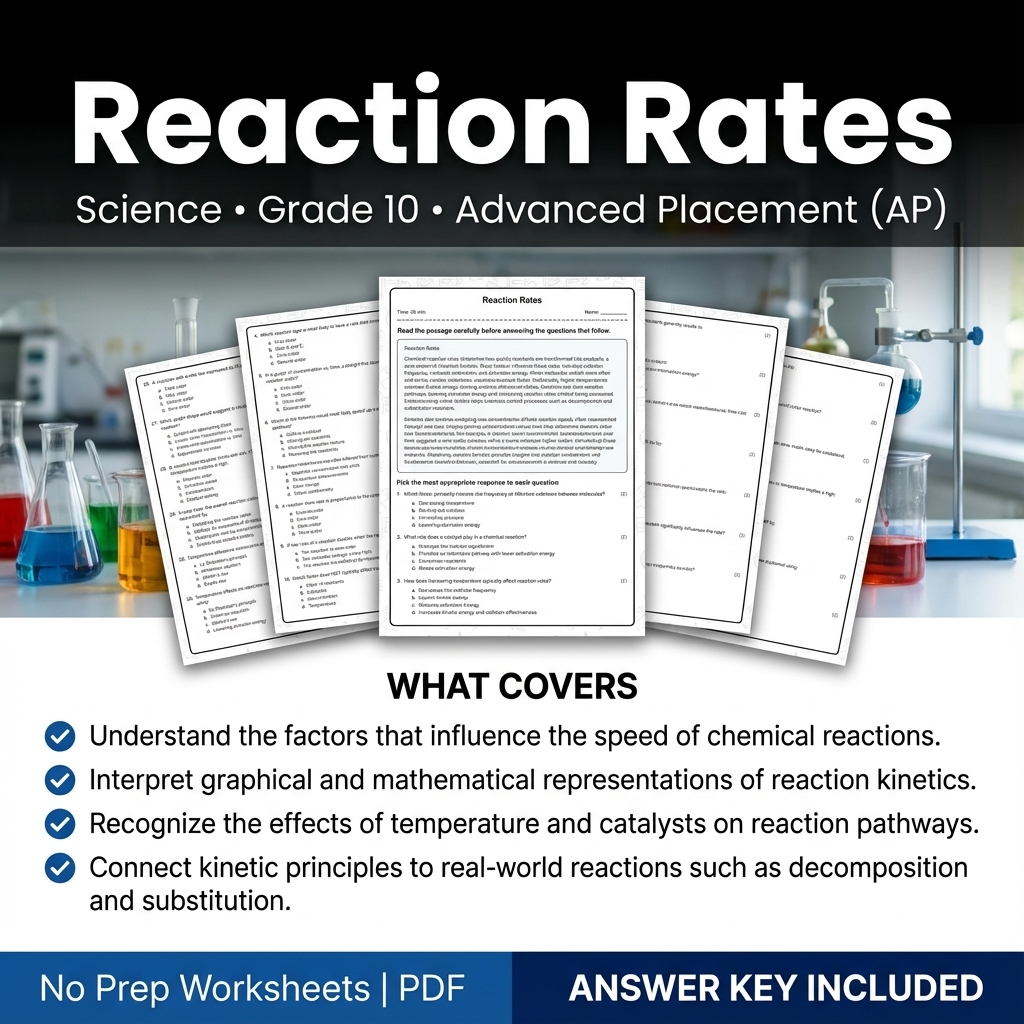
10th Grade Science | Reaction Rates Worksheet (Printable PDF + Answer Key)
Created byCoral Reef LearningLearning Objectives
- Understand the factors that influence the speed of chemical reactions.
- Interpret graphical and mathematical representations of reaction kinetics.
- Recognize the effects of temperature and catalysts on reaction pathways.
Also included in: Grade 10 Science Unit Bundle | Thermochemistry, Stoichiometry & Atomic Structure +1 more
Instant download

Adaptation Forms Worksheet for Grade 7 Science | Standards-Aligned Practice
JCreated byJ.S SheetsLearning Objectives
- Define morphological, physiological, and behavioral adaptations and identify examples from different habitats.
- Explain how specific traits improve survival and reproductive success under particular selective pressures.
- Differentiate adaptations from acclimation and describe at least one adaptive trade-off.
Instant download
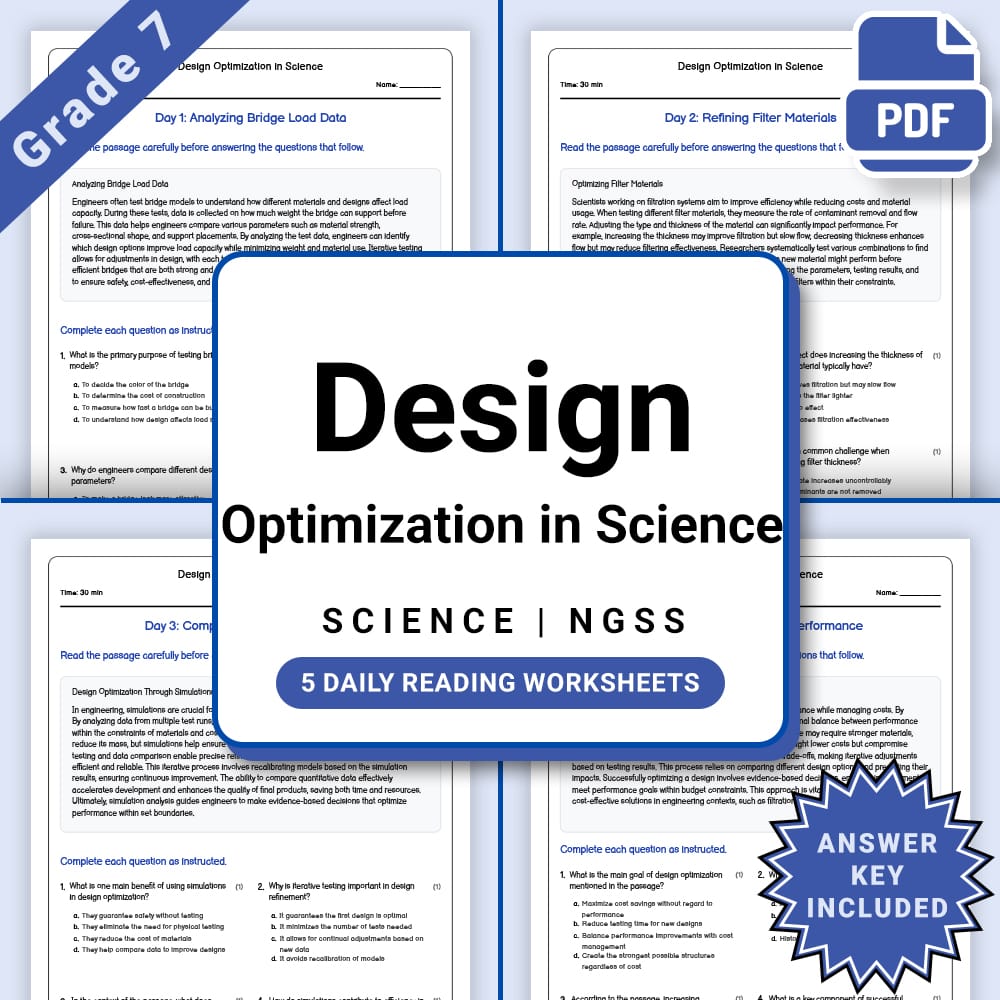
Grade 7 Science – Design Optimization Worksheet(PDF + Answer Key)
Created byCopper Leaf ClassroomLearning Objectives
- Interpret data from testing experiments related to bridge design.
- Compare different design parameters to assess performance.
- Identify how iterative testing improves design solutions.
Instant download

Science Grade 7 Interaction Types in Ecosystems Worksheet | Standards-Aligned
JCreated byJ.S SheetsLearning Objectives
- Explain how competition, predation, and symbiosis affect survival and population changes in an ecosystem.
- Distinguish mutualism, commensalism, and parasitism as types of symbiosis.
- Use evidence from examples to predict how an interaction can change resource availability over time.
Also included in: Grade 7 Ecosystem Dynamics Science Lesson Bundle Worksheets – General +1 more
Instant download
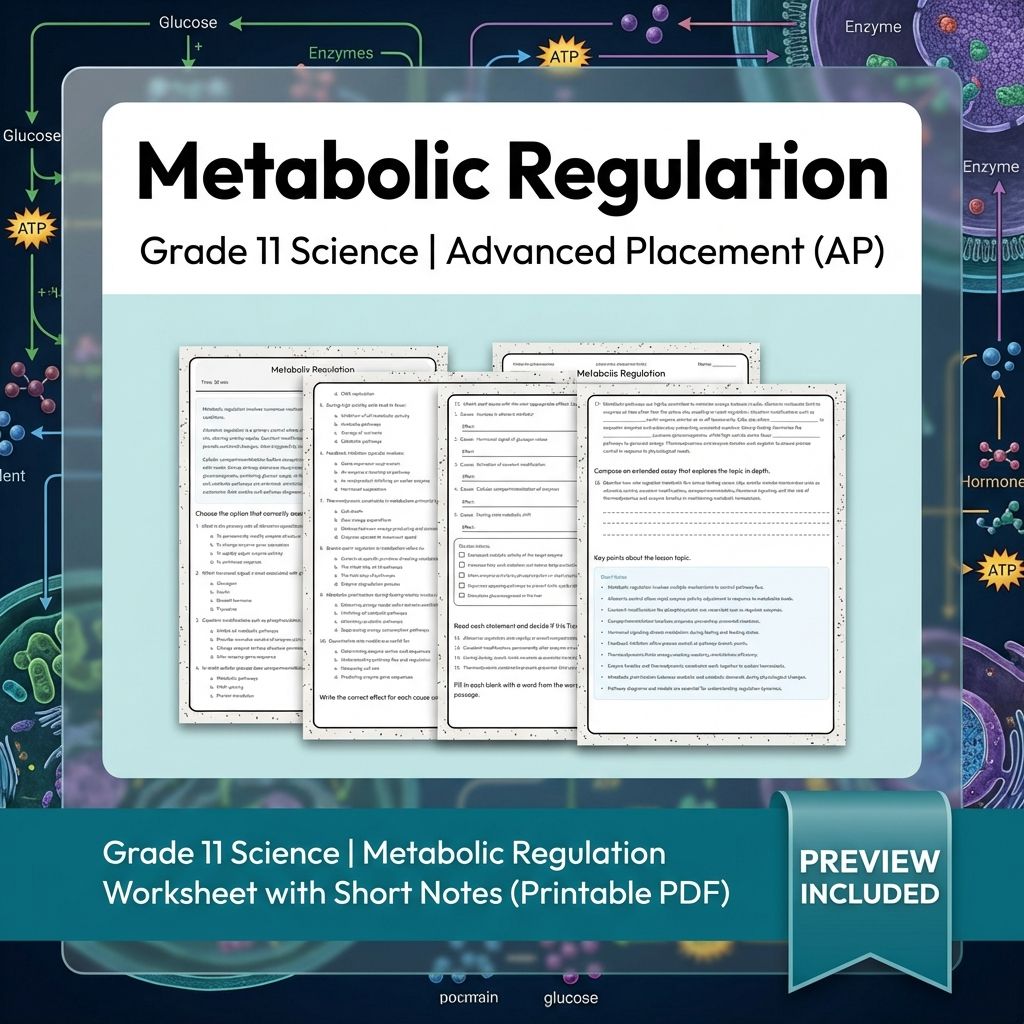
Grade 11 Science | Metabolic Regulation Worksheet with Short Notes (PDF)
 Created byMeadowlark Worksheets
Learning Objectives
- Understand mechanisms controlling metabolic pathway flux including allosteric control, covalent modification, and compartmentalization.
- Explain feedback inhibition, branch-point regulation, and metabolic prioritization during fasting and high activity.
- Integrate thermodynamic constraints with enzyme kinetics to describe cellular energy balance and homeostasis.
Also included in: Grade 11 Science | Biological Systems & Genetics Unit Worksheet Pack (PDF) +1 more
Instant download

Grade 6 Adaptation and Speciation Worksheet | NGSS Science Activity
 Created byBRIGHT PATH RESOURCES
Learning Objectives
- Understand the concepts of biological adaptation and speciation
- Identify examples of adaptations in different animals
- Learn how geographic and behavioral changes lead to new species
Also included in: Biological Evolution: Unity & Diversity Grade 6 Science Lesson Bundle | ngss +2 more
Instant download
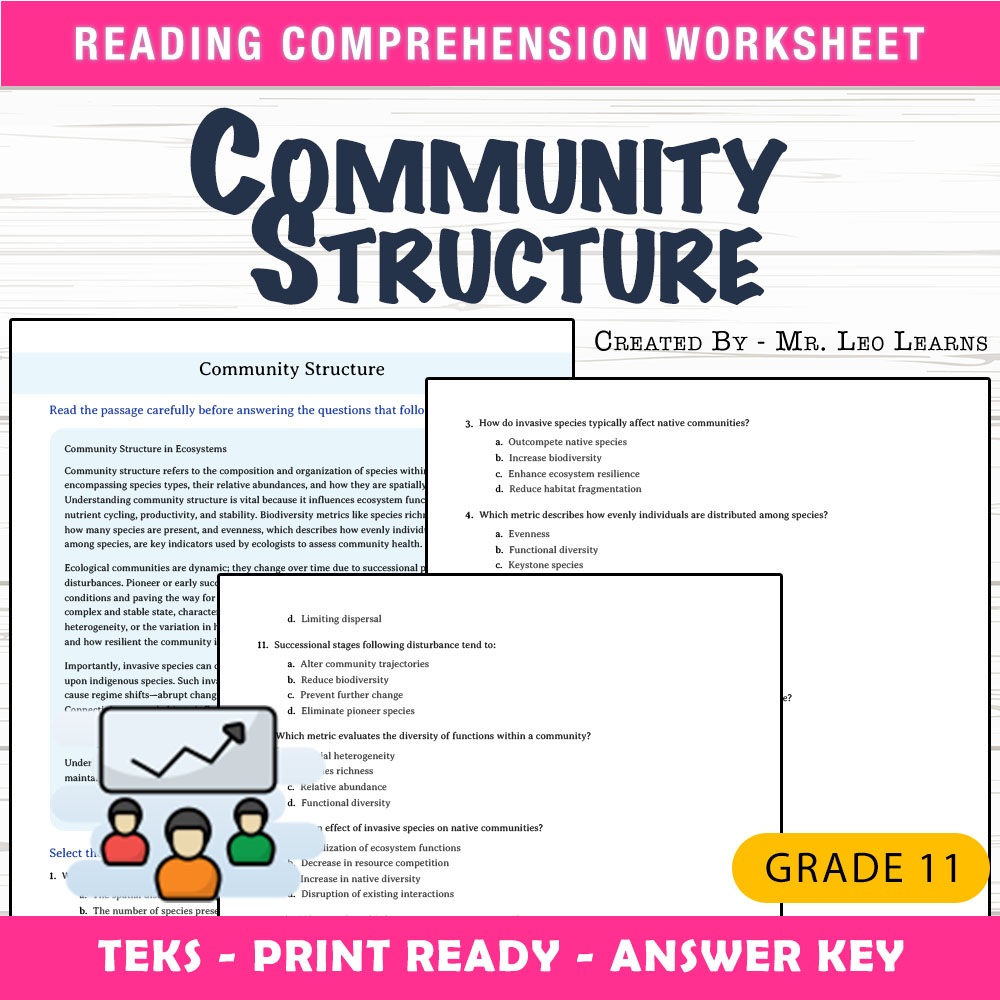
Grade 11 Science – Community Structure Worksheet for Mastery
Created byThe Resource HubLearning Objectives
- Understand the key components and metrics used to describe community structure in ecology.
- Explain how succession affects community composition over time.
- Evaluate the influence of spatial heterogeneity and invasive species on ecosystems.
Also included in: Grade 11 Science Ecosystems & Ecology UNIT Worksheet Bundle (Mastery Pack) +1 more
Instant download
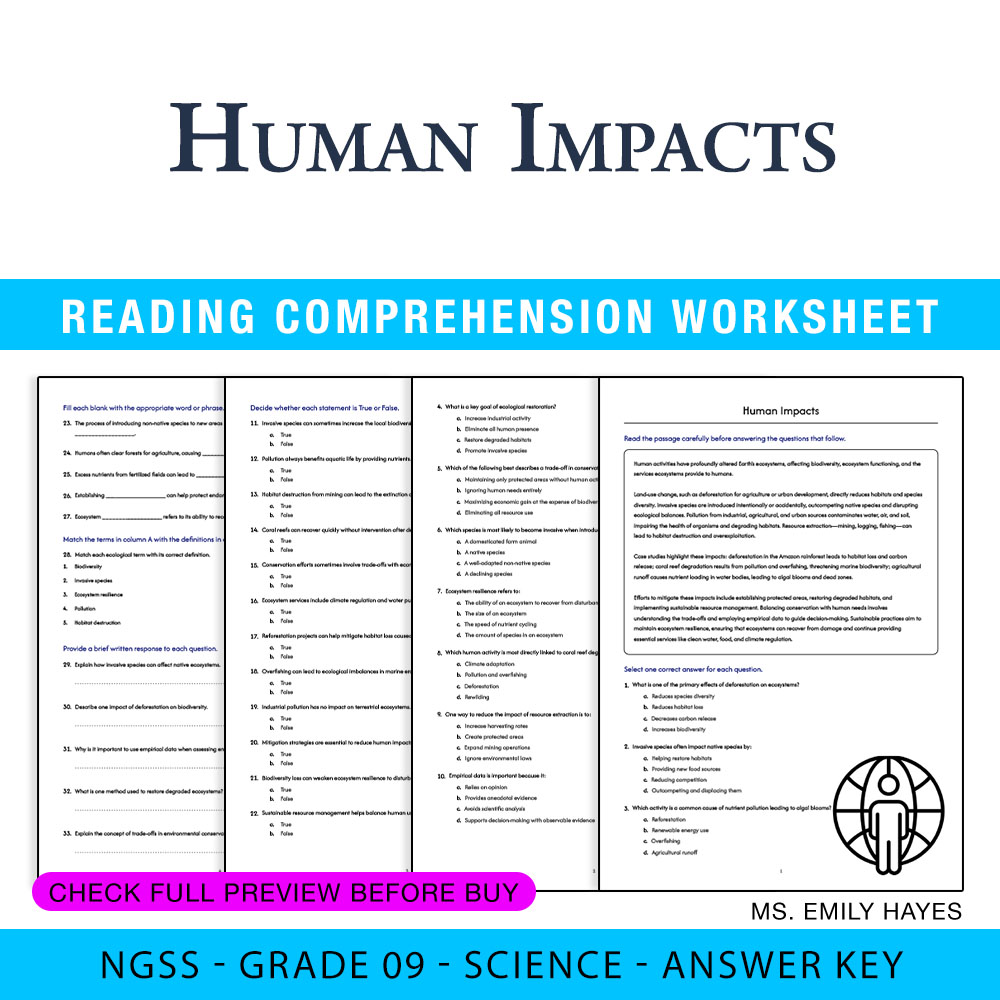
9th Grade Science | Human Impacts Worksheet (PDF+ Answer Key)
Created byCopper Leaf ClassroomLearning Objectives
- Explain how land-use change, invasive species, pollution, and resource extraction impact biodiversity and ecosystems.
- Interpret empirical data from case studies to evaluate environmental impacts and mitigation strategies.
- Identify trade-offs among conservation efforts and socioecological outcomes.
Instant download

Stoichiometry and Reaction Rate Worksheets | Grade 10 Chemistry
 Created bySunny Desk Resources
Learning Objectives
- Explain how mass conservation and reaction stoichiometry are used to balance industrial chemical processes.
- Calculate expected product yields using reagent amounts and conversion assumptions.
- Describe how reaction rate and process conditions affect throughput without violating conservation of mass.
Also included in: Grade 10 Chemistry Lesson Bundle | Alberta Science Reaction & Analysis +1 more
Instant download

Grade 6 Science | Mass Conservation Worksheet (BC Standards) PDF
 Created byEvergreen Desk Education
Learning Objectives
- Explain the law of conservation of mass for closed systems during physical and chemical changes.
- Distinguish between closed and open systems when interpreting changes in measured mass.
- Use particle and evidence-based reasoning to account for reactants and products in mass conservation problems.
Instant download
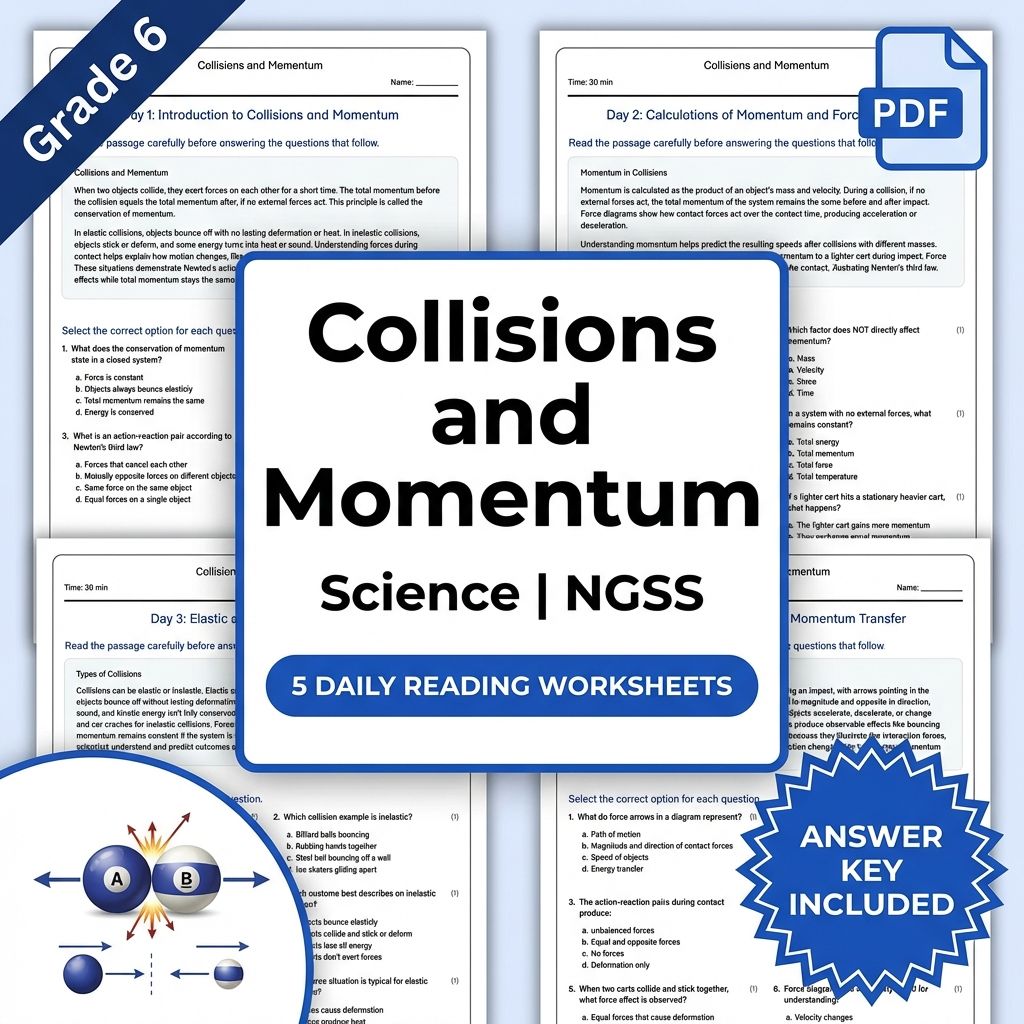
6th Grade Science | Collisions & Momentum Reading Worksheet (PDF + Answer Key)
Created byCopper Leaf ClassroomLearning Objectives
- Understand the basic principles of momentum and how it is conserved in collisions.
- Analyze how forces during contact influence motion changes in colliding objects.
- Distinguish between elastic and inelastic collisions through examples and calculations.
Instant download
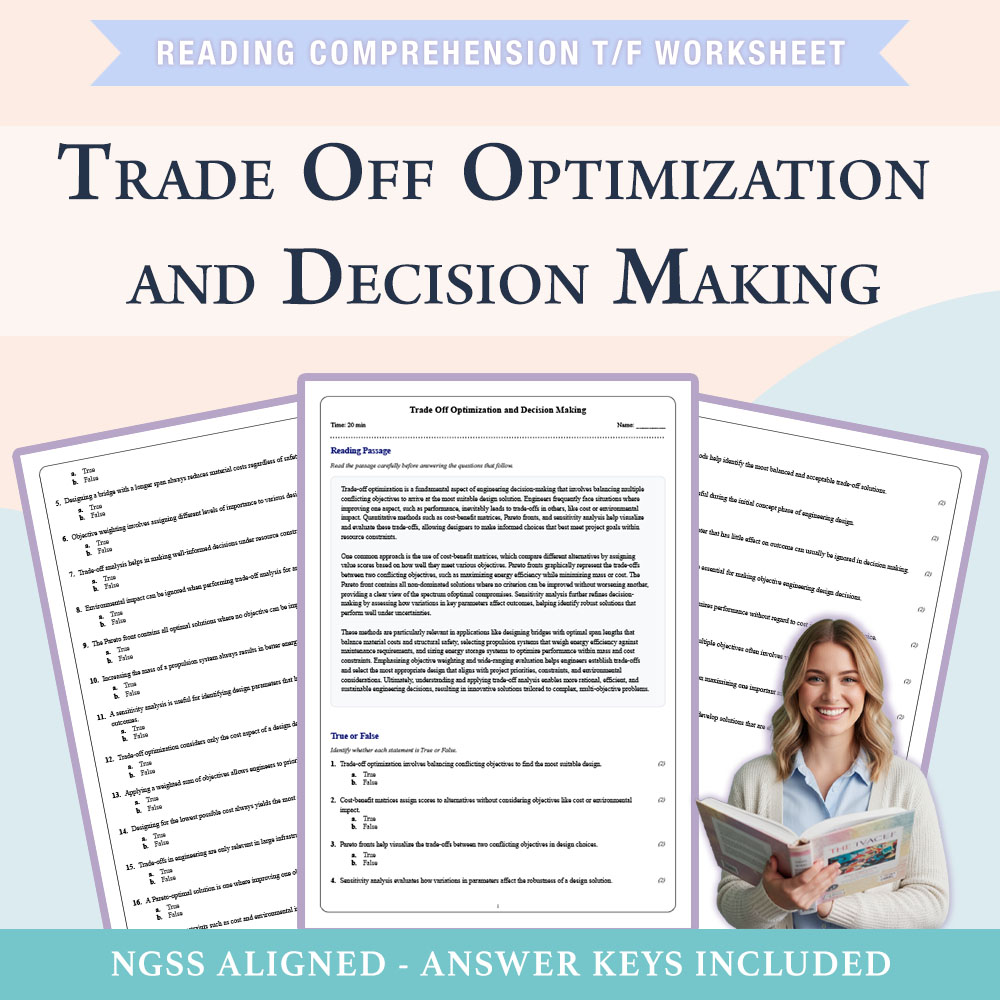
Grade 10 Science | Trade-Off Optimization and Decision Making (PDF + Answer Key)
Created byCopper Leaf ClassroomLearning Objectives
- Understand the concept of trade-offs and how to quantify competing objectives in engineering design.
- Analyze and interpret cost-benefit matrices, Pareto fronts, and sensitivity analyses for optimal decision-making.
- Apply concepts of trade-off analysis to real-world examples such as bridge spans, propulsion systems, and energy storage sizing.
Also included in: Grade 10 Science Bundle |Systems, Decision-Making & Engineering (PDF+Answer Key) +1 more
Instant download
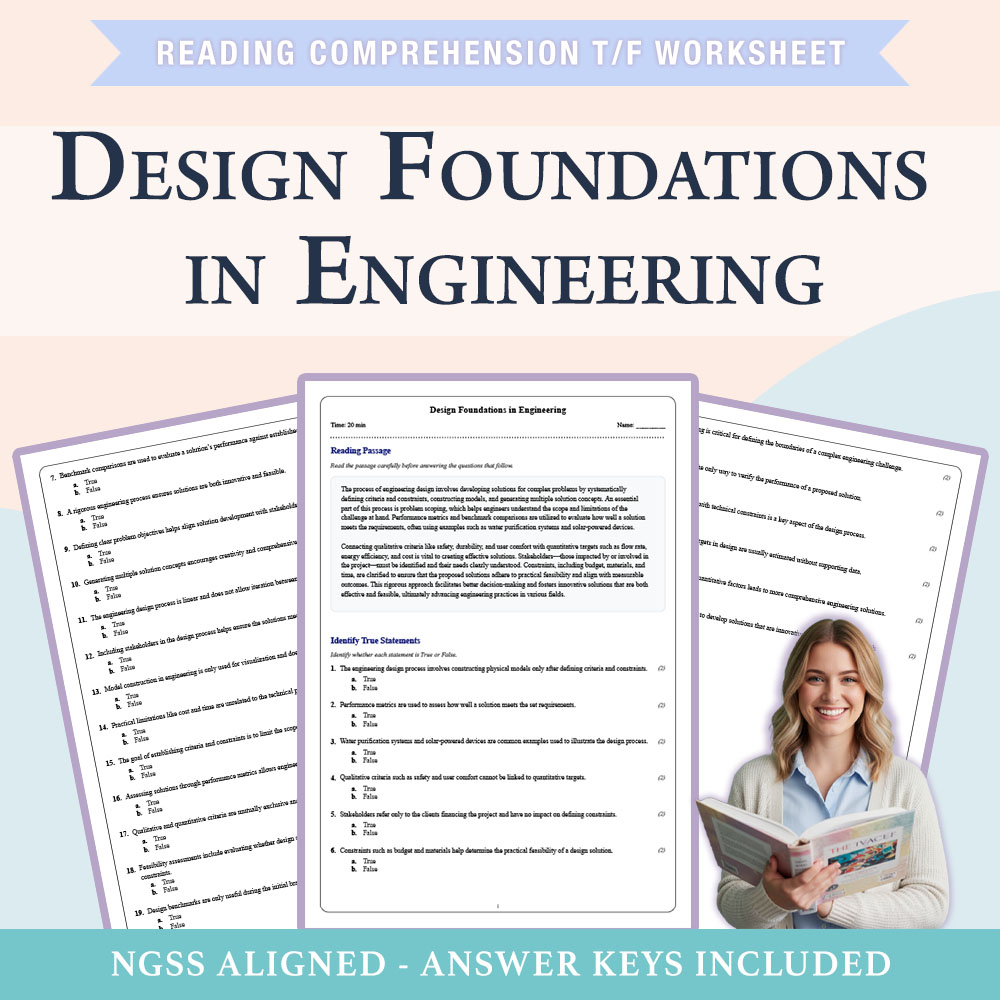
10th Grade Science | Design Foundations in Engineering Worksheet (PDF + Answers)
Created byCopper Leaf ClassroomLearning Objectives
- Understand the engineering design process for complex problems.
- Identify and evaluate criteria, constraints, and stakeholders in design solutions.
- Connect qualitative criteria with quantitative performance metrics.
Also included in: Grade 10 Science Bundle |Systems, Decision-Making & Engineering (PDF+Answer Key) +1 more
Instant download
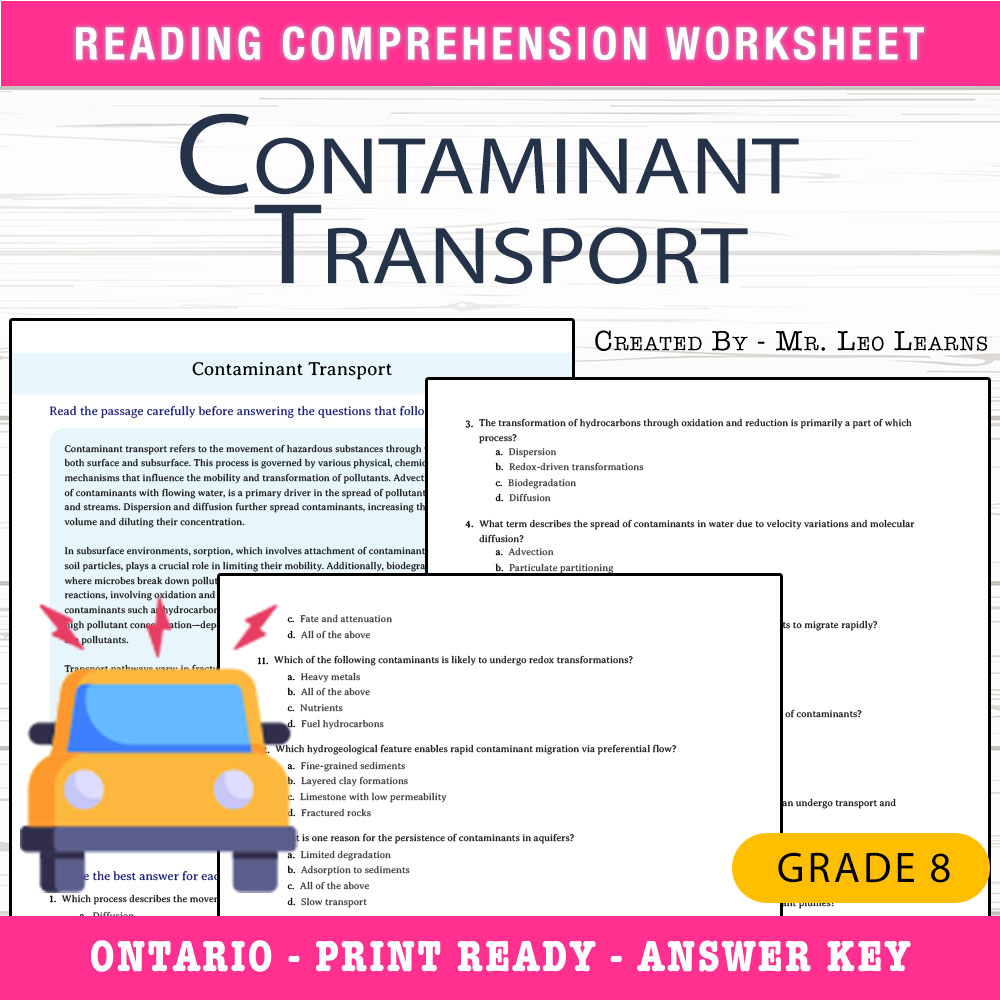
Grade 8 Science – Contaminant Transport Worksheet for Mastery
Created byThe Resource HubLearning Objectives
- Understand the processes governing the movement and fate of contaminants in surface and subsurface waters.
- Identify key mechanisms such as advection, dispersion, diffusion, sorption, and biodegradation involved in contaminant transport.
- Describe how contaminant plumes form and migrate in aquifers and the factors influencing their behavior.
Also included in: Grade 8 Science Water Systems UNIT Bundle – Hydrology & Conservation Worksheets +1 more
Instant download

Grade 11 Science | Metabolic Integration Worksheet with Short Notes (PDF)
Created byMeadowlark WorksheetsLearning Objectives
- Understand how interconnected metabolic pathways regulate energy flow.
- Explain enzyme kinetics and allosteric regulation in metabolism.
- Describe branch points in carbohydrate, lipid, and protein metabolism.
Also included in: Grade 11 Science NGSS | From Molecules to Organisms: Structures & Processes +1 more
Instant download

Using Models as Evidence Worksheets | Grade 9 Physical Science
Created byBRIGHT PATH RESOURCESLearning Objectives
- Explain how quantitative measurements constrain scientific claims about motion, forces, energy transfer, and waves.
- Use models to describe patterns and connect variables in a claim, then judge how well the model matches evidence.
- Compare competing explanations by using accuracy, expected relationships, and stated assumptions.
Also included in: Grade 9 Science Waves, Forces & Energy Transfer Worksheets Bundle +1 more
Instant download
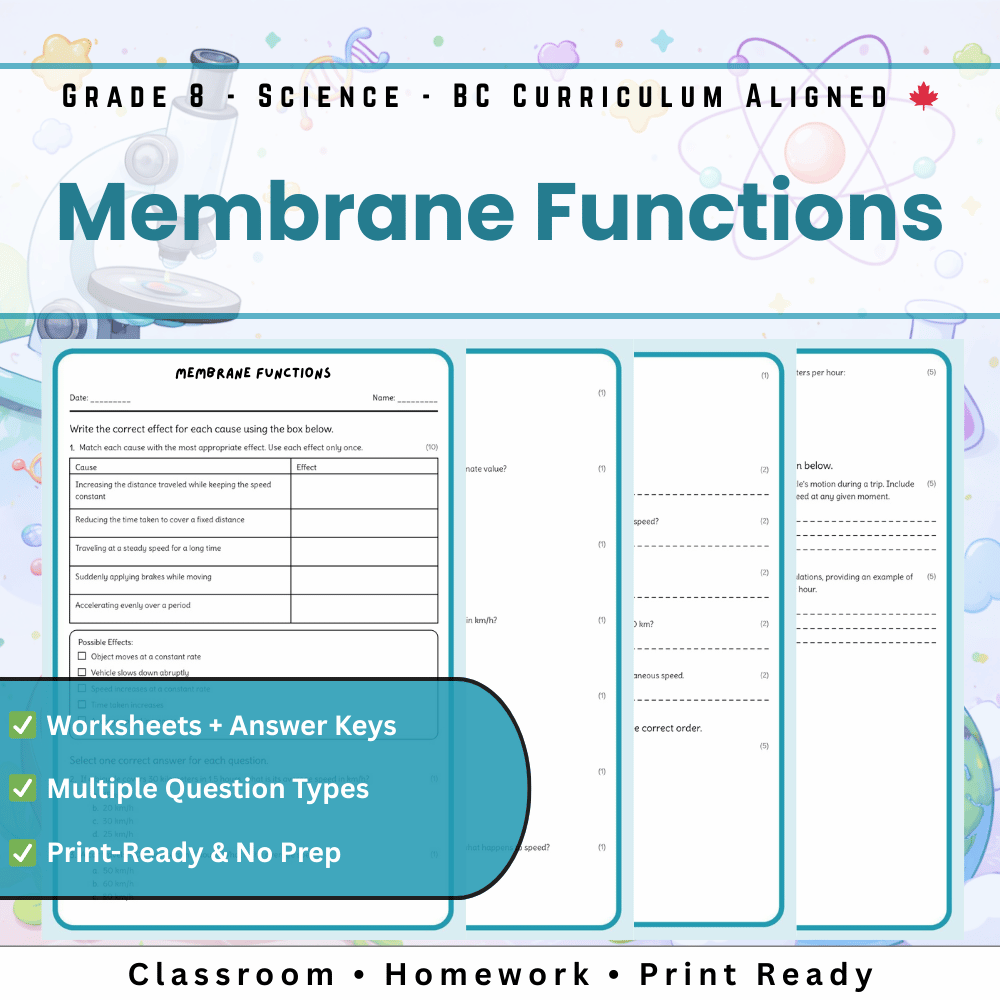
Grade 8 Science | Membrane Functions Worksheet + Answer Key (PDF)
 Created byBright Mind Resources
Learning Objectives
- Describe how cell membranes regulate exchange between the cell interior and exterior.
- Explain how membrane composition and surface area influence diffusion and cell signaling.
- Link microscopic membrane structure to organ function and overall physiological performance.
Instant download

Grade 10 Science | Lifecycle Analysis in Scientific Technology - Reading Comp.
Created byCoral Reef LearningLearning Objectives
- Understand the concept of lifecycle analysis and its role in assessing energy consumption.
- Identify the stages involved in a technology's lifecycle: extraction, manufacturing, operation, and disposal.
- Learn how to quantify total energy inputs and outputs across different lifecycle stages.
Instant download
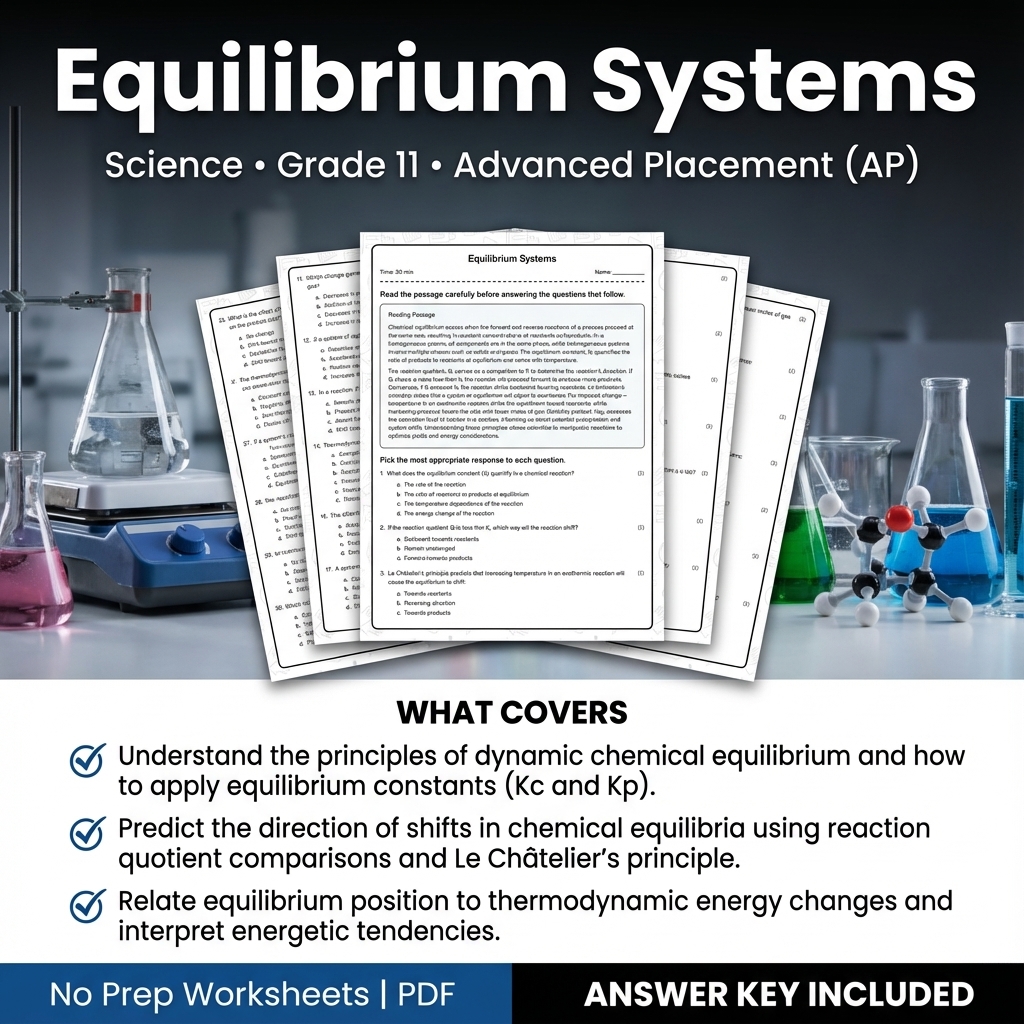
11th Grade Science | Equilibrium Systems Worksheet (Printable PDF + Answer Key)
Created byCoral Reef LearningLearning Objectives
- Understand the principles of dynamic chemical equilibrium and how to apply equilibrium constants (Kc and Kp).
- Predict the direction of shifts in chemical equilibria using reaction quotient comparisons and Le Châtelier’s principle.
- Relate equilibrium position to thermodynamic energy changes and interpret energetic tendencies.
Also included in: Grade 11 Science Unit Worksheet Pack | Chemistry & Atomic Structure +1 more
Instant download
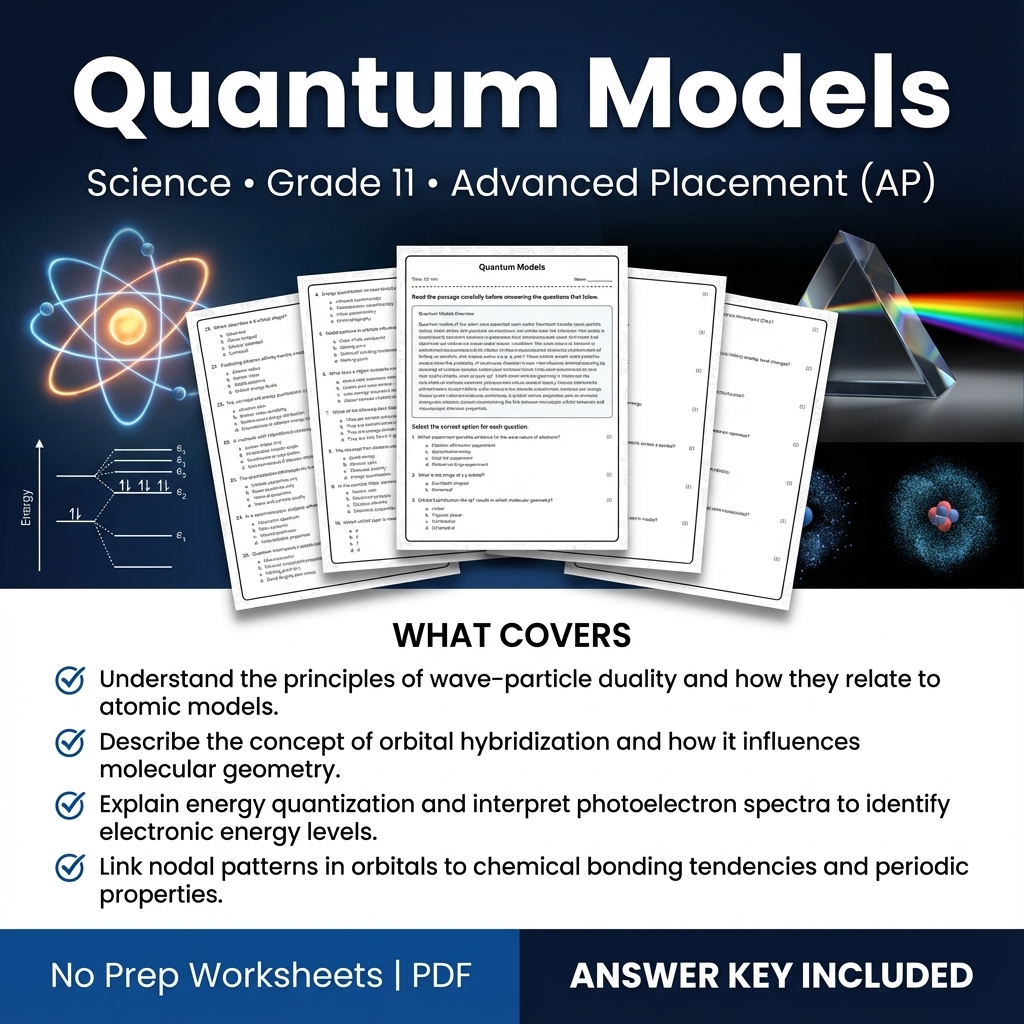
11th Grade Science | Quantum Models Worksheet (Printable PDF + Answer Key)
Created byCoral Reef LearningLearning Objectives
- Understand the principles of wave–particle duality and how they relate to atomic models.
- Describe the concept of orbital hybridization and how it influences molecular geometry.
- Explain energy quantization and interpret photoelectron spectra to identify electronic energy levels.
Also included in: Grade 11 Science Unit Worksheet Pack | Chemistry & Atomic Structure +1 more
Instant download

Organ Systems Worksheet | TEKS Grade 9 Science Assessment Practice
JCreated byJ.S SheetsLearning Objectives
- Explain how circulatory, respiratory, digestive, and renal systems contribute to maintaining internal balance
- Describe how nervous and endocrine signaling help coordinate organ systems during changing conditions
- Use cause-and-effect reasoning to connect changes in one system to responses in other systems
Instant download

Rock Cycle Integration Worksheet | Grade 7 Science Practice
JCreated byJ.S SheetsLearning Objectives
- Explain the processes involved in the rock cycle and how they connect tectonics, magmatism, and surface processes.
- Identify different types of rocks and the transformations they undergo during geological processes.
- Describe how surface agents and internal Earth processes contribute to the recycling of crustal materials.
Instant download
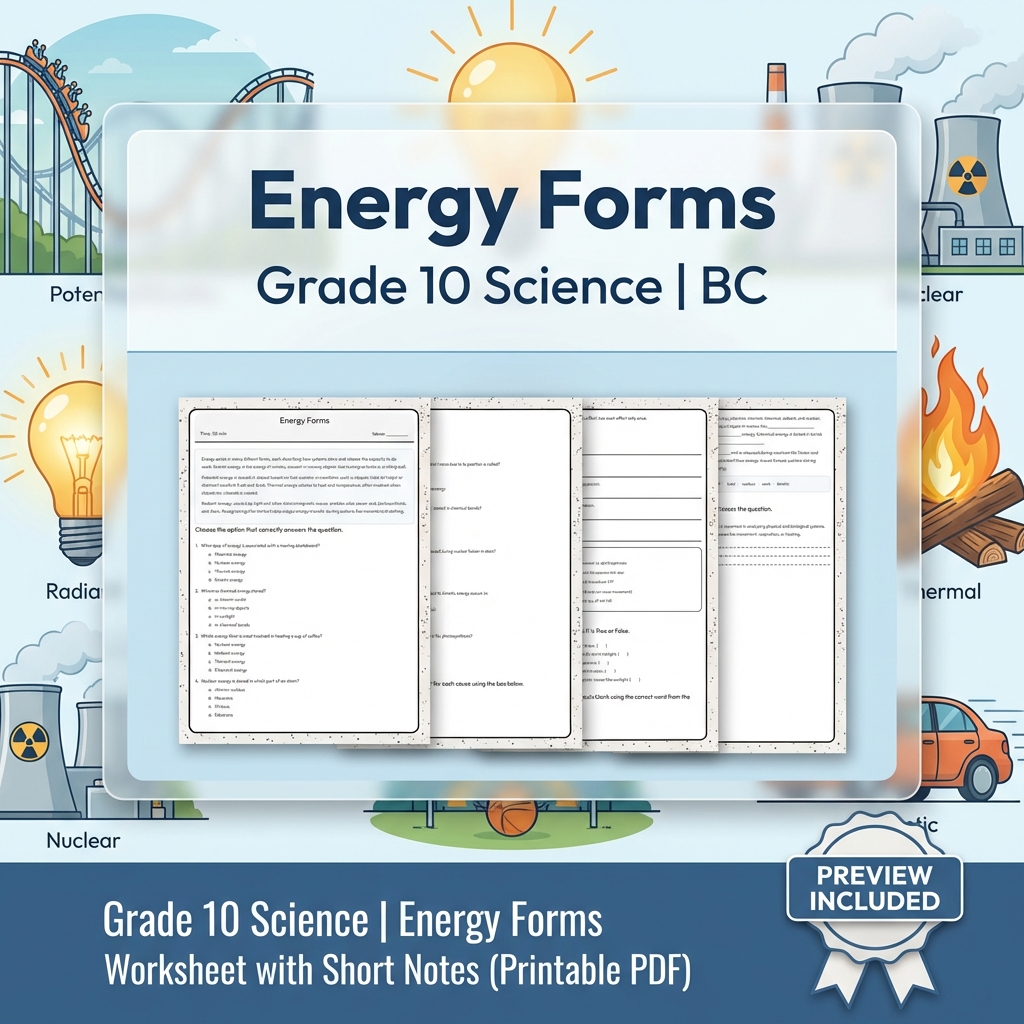
Grade 10 Science | Energy Forms Worksheet with Short Notes (Printable PDF)
Created byMeadowlark WorksheetsLearning Objectives
- Identify different forms of energy such as kinetic, potential, thermal, chemical, radiant, and nuclear.
- Understand how systems store and release energy during various processes.
- Recognize examples of energy transfer in real-world biological and physical systems.
Also included in: Grade 10 Science Lesson Bundle | Energy & Thermodynamics Worksheets +1 more
Instant download
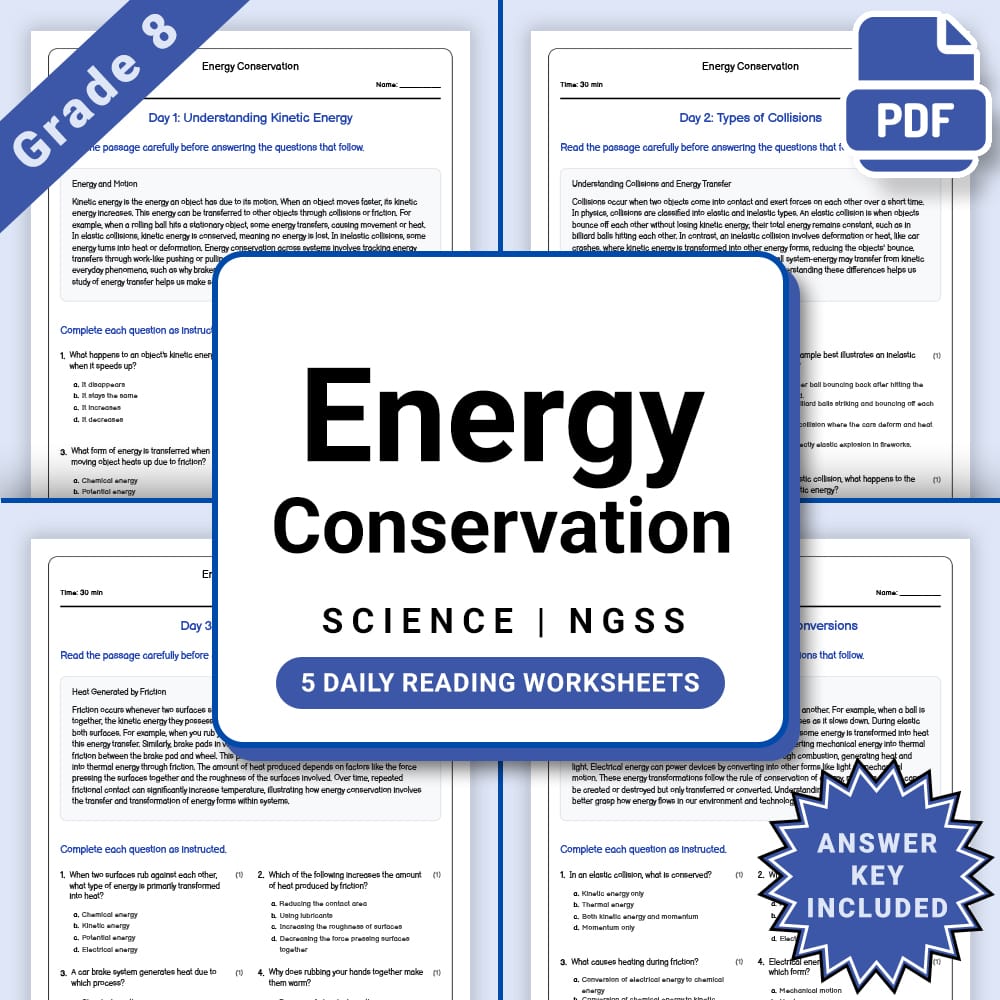
Grade 8 Science – Energy Conservation Worksheet(PDF + Answer Key)
Created byCopper Leaf ClassroomLearning Objectives
- Understand the relationship between motion and energy.
- Explain how energy is transferred during collisions and motion.
- Identify different forms of energy and their conversions.
Instant download

Grade 6 Science | Scientific Inquiry Worksheet | NGSSS Aligned
Created byLumora LearningLearning Objectives
- Explain how scientific inquiry begins with observations and leads to testable questions
- Describe how evidence, measurement, and logical reasoning support reliable explanations
- Use scientific vocabulary related to variables, data, measurement, and uncertainty to communicate findings
Instant download
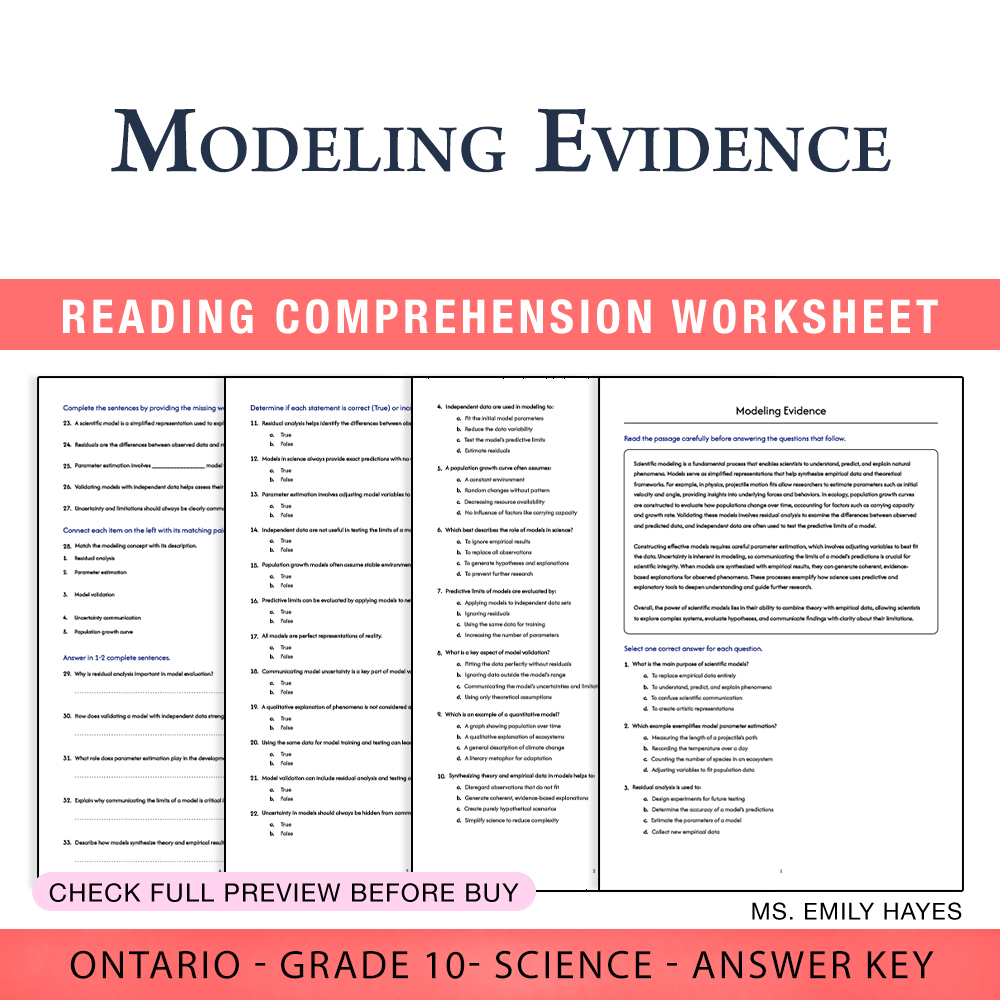
10th Grade Science | Modeling Evidence Worksheet (PDF + Answer Key)
Created byCopper Leaf ClassroomLearning Objectives
- Understand how to construct and interpret scientific models for observed phenomena.
- Evaluate and analyze the accuracy and reliability of different types of models.
- Apply parameter estimation, residual analysis, and model validation techniques.
Instant download
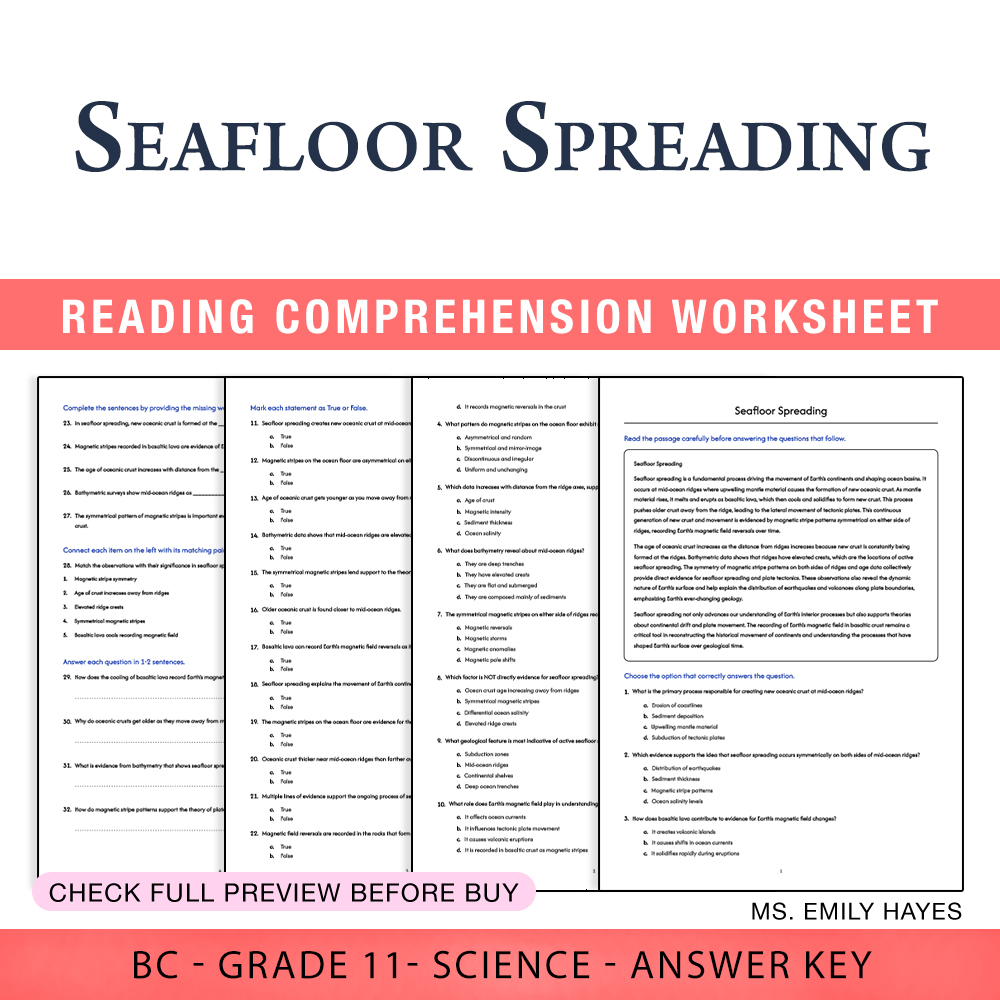
11th Grade Science | Seafloor Spreading Worksheet (PDF + Answer Key)
Created byCopper Leaf ClassroomLearning Objectives
- Describe the process of seafloor spreading and its role in plate tectonics.
- Identify evidence supporting seafloor spreading, such as magnetic stripes and age data.
- Explain how basaltic lava records Earth's magnetic field and how this evidence supports continental drift.
Also included in: Grade 11 Science BC | Earth Structures & Geological Processes (PDF+ Answer Keys) +1 more
Instant download

Grade 10 Science | Ecosystem Modeling - Daily Reading Comprehension
Created byCoral Reef LearningLearning Objectives
- Understand the flow of energy and matter within ecosystems.
- Interpret diagrams representing energy and matter exchange.
- Learn about different models used to simulate ecosystem dynamics.
Instant download
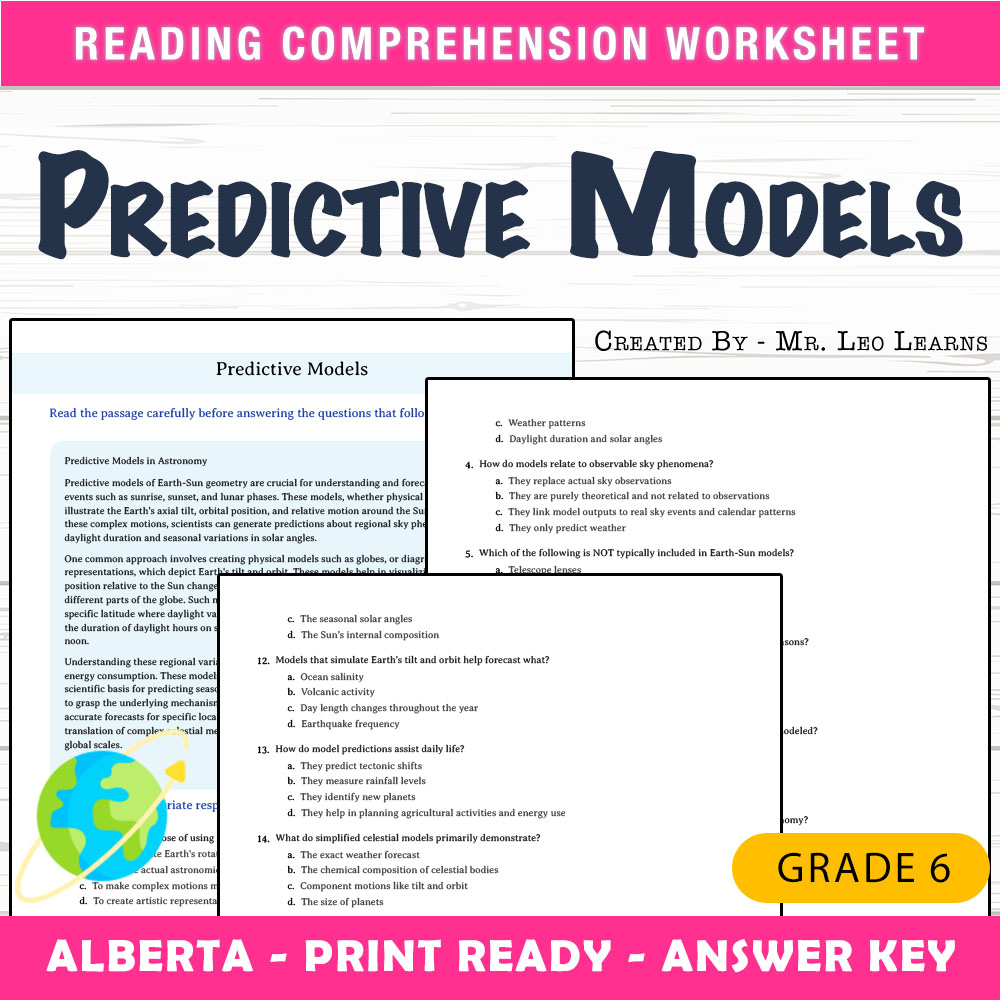
Grade 6 Science — Predictive Models Worksheet MCQ Paper for Mastery
Created byThe Resource HubLearning Objectives
- Understand how models represent Earth–Sun geometry to predict celestial events.
- Identify the components of simplified physical or diagrammatic models such as axial tilt and orbital position.
- Explain how models can be applied to regional locations like Alberta to forecast daylight and seasons.
Also included in: Grade 6 Science Sky Science Unit Bundle – Celestial Motion & Earth-Sun Relations +1 more
Instant download

Systems Overview Worksheet for Grade 12 Science | AP Standards Practice
JCreated byJ.S SheetsLearning Objectives
- Identify the major components of Earth's systems and their fluxes.
- Explain how energy and mass balance link different Earth subsystems.
- Describe models of steady-state and transient responses in Earth systems.
Instant download
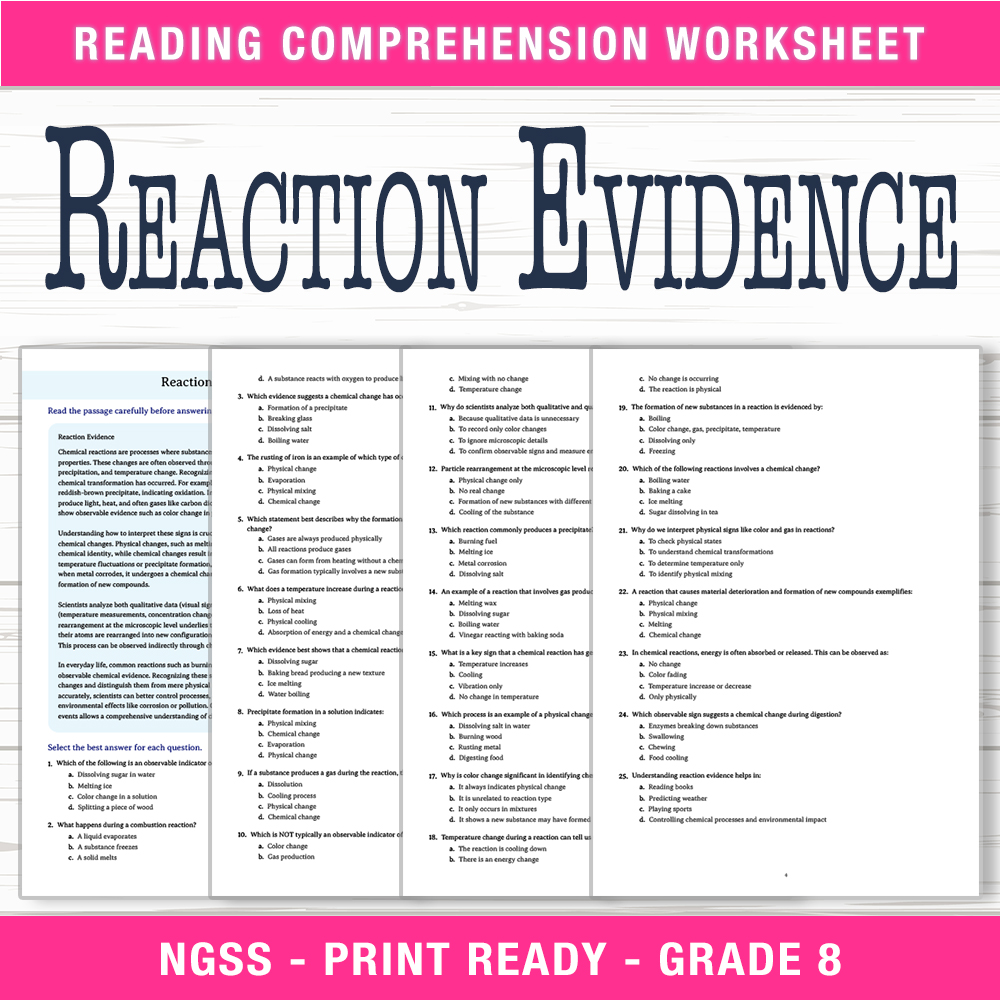
Grade 8 Science | Reaction Evidence Worksheet (PDF + Answer Key)
 Created byRiverstone Classroom
Learning Objectives
- Identify observable indicators that signify a chemical change during reactions.
- Differentiate between chemical and physical changes based on qualitative and quantitative data.
- Interpret macroscopic reaction evidence to infer particle rearrangements and formation of new substances.
Instant download
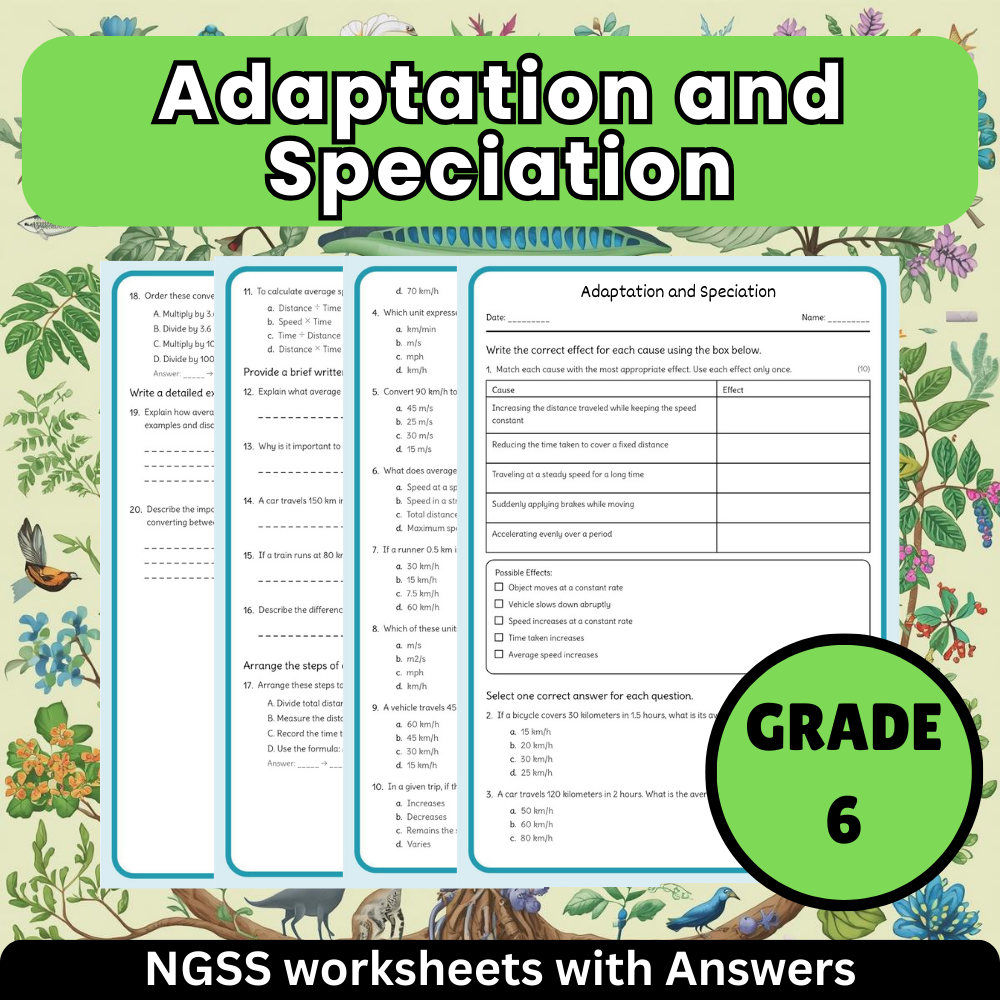
6th Grade Science | Adaptation and Speciation Worksheet (Answer Key) NGSS
Created byBright Mind ResourcesLearning Objectives
- Explain the processes of adaptation and how they can lead to speciation.
- Identify evidence that supports the occurrence of speciation events.
- Describe factors such as geographic separation and genetic changes that contribute to lineage divergence.
Also included in: Grade 6 Science Unit Bundle | Evolution, Genetics & Biodiversity NGSS Worksheets +2 more
Instant download

Grade 8 Science | Ecosystem Change Reading Worksheets (Answer Key)
JCreated byJ.S SheetsLearning Objectives
- Understand the natural and human-induced disturbances that affect ecosystems.
- Describe processes of ecological succession and recovery after disturbances.
- Identify examples of ecosystem resilience and adaptability.
Instant download
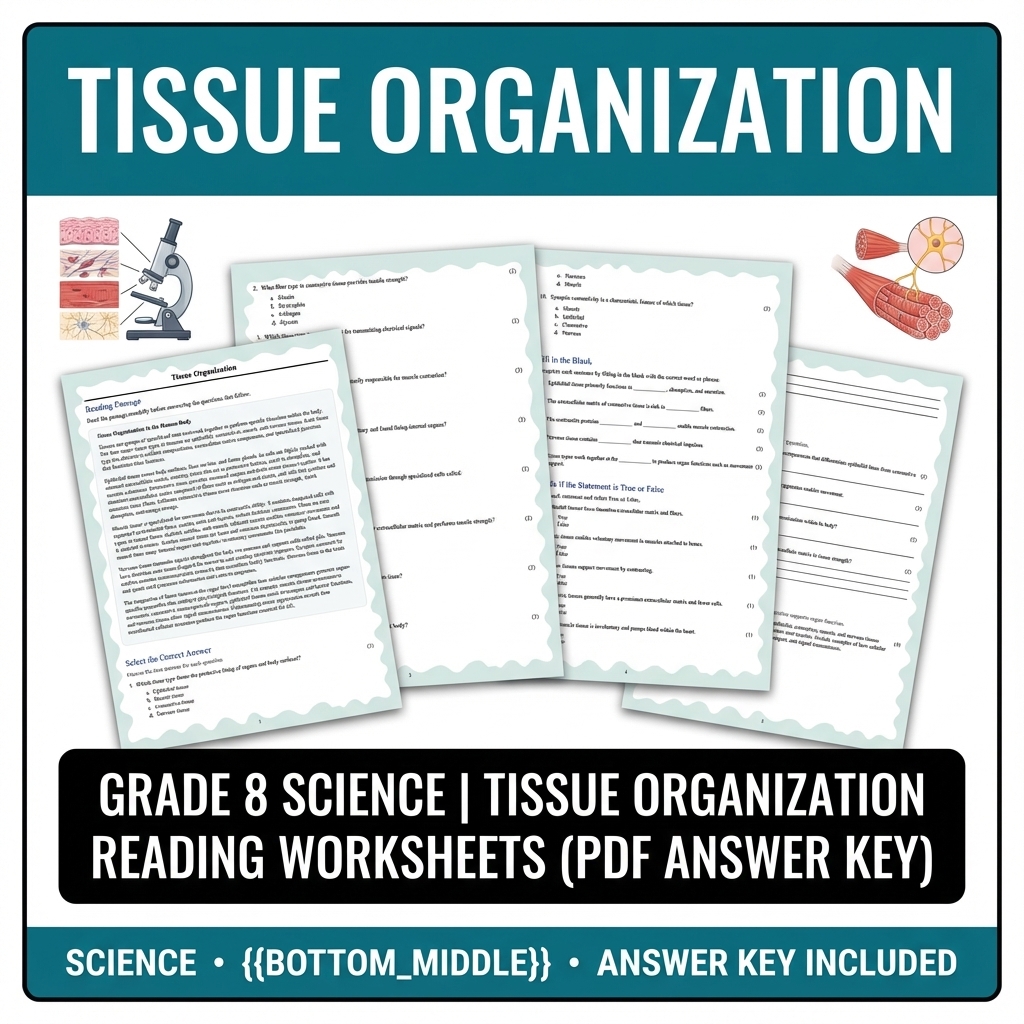
Grade 8 Science | Tissue Organization Reading Worksheet & Answer Key (PDF)
JCreated byJ.S SheetsLearning Objectives
- Describe the major tissue types and their cellular and extracellular components.
- Explain the structural-functional relationships within epithelial, connective, muscle, and nervous tissues.
- Illustrate how tissue integration contributes to organ-level functions and physiological processes.
Also included in: Grade 8 Science Unit Bundle – Cell Structure & Function (Answer Keys Included) +1 more
Instant download

6th Grade Science – Food Chains Worksheet (TEKS | PDF)
Created byEvergreen Desk EducationLearning Objectives
- Identify producers, consumers, and decomposers and describe what each role does in a food chain
- Determine trophic levels (primary, secondary, tertiary) and explain how energy transfers between levels
- Compare linear food chains with networked food webs and explain why energy loss affects population size and stability
Instant download
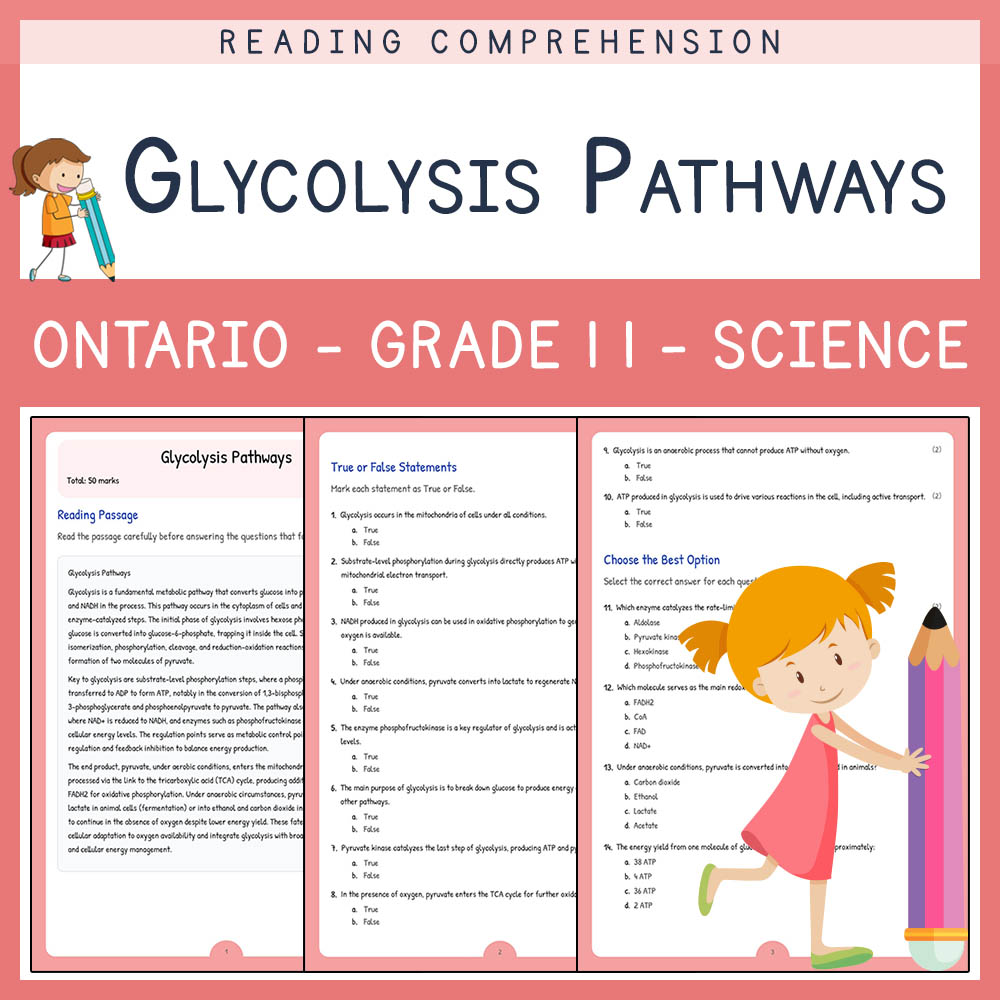
Grade 11 Science | Glycolysis Pathways Worksheet Elena | Ontario Standard
Created byLumora LearningLearning Objectives
- Describe the steps of glycolysis, including substrate-level phosphorylation and cofactor changes.
- Explain the regulation points of glycolysis and enzyme control mechanisms.
- Compare the metabolic fates of pyruvate under aerobic and anaerobic conditions.
Instant download
Browse more categories
About Science Worksheets
Find Science worksheets spanning core skills, practice, and review. All 44,620 resources are instant PDF downloads for the classroom or home.
Every worksheet on MyTeachingSheets is created by independent teacher-authors and reviewed before publication. All resources download as printable PDFs for classroom, homework, or at-home practice, and many include answer keys. Preview any worksheet free before buying.