
Science Worksheets
44,573 subject resources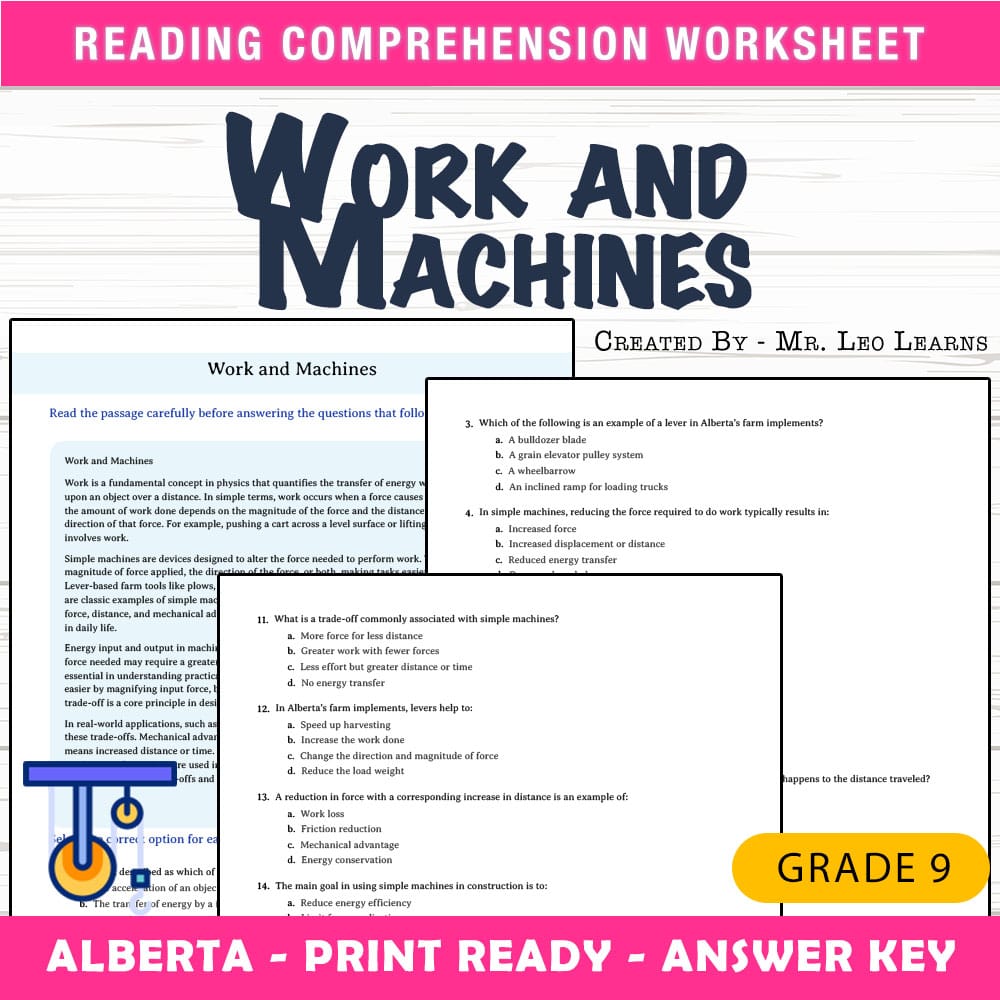
Grade 9 Science — Work and Machines Worksheet MCQ for Mastery
 Created byThe Resource Hub
Learning Objectives
- Understand the concept of work as energy transfer by force and displacement.
- Identify how simple machines change the magnitude or direction of applied forces.
- Explain the relationships among force, distance, work, and mechanical advantage in practical contexts.
Also included in: Grade 9 Science Forces and Motion Worksheet Pack | Alberta Curriculum +1 more
Instant download
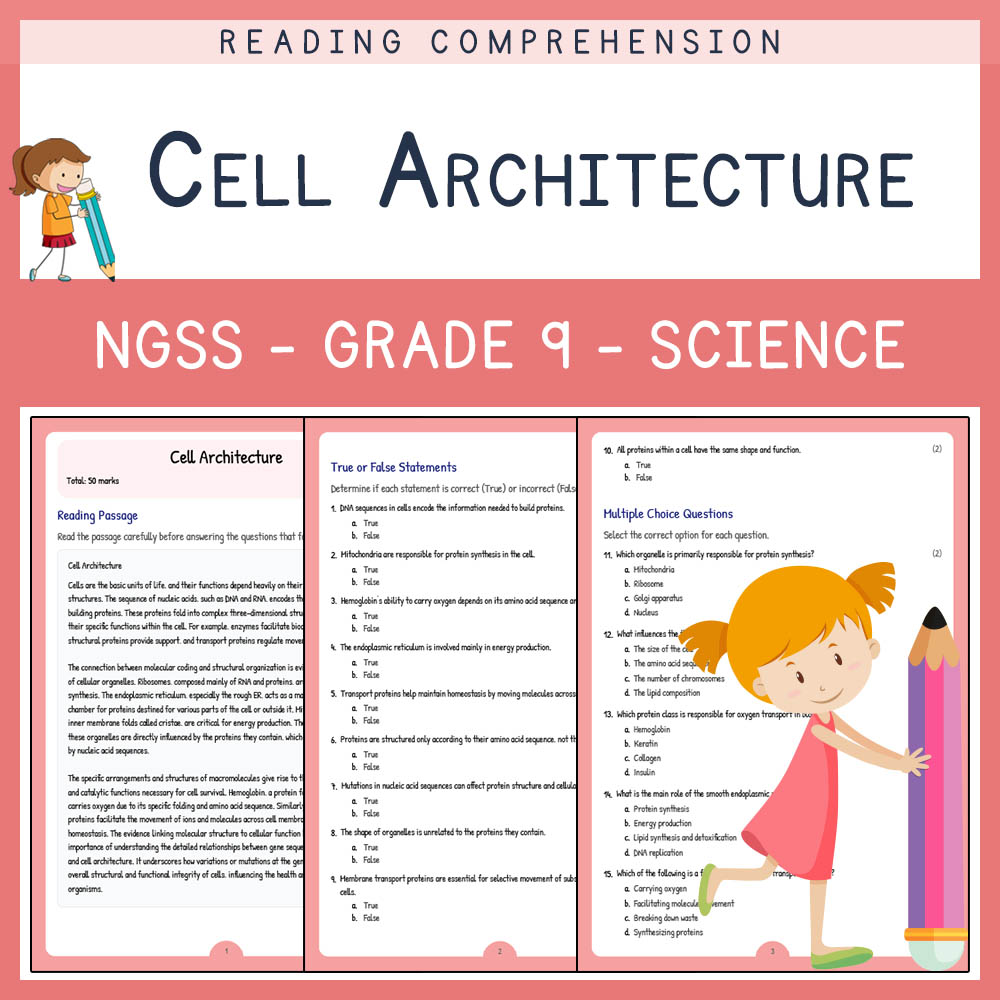
Grade 9 Science | Cell Architecture Worksheet with Answer Key (PDF)
 Created byLumora Learning
Learning Objectives
- Understand how nucleic acid sequences determine amino acid chains and protein structures.
- Connect molecular coding and folding to the architecture and function of cellular organelles.
- Identify examples of proteins that influence cell function, such as hemoglobin and membrane transport proteins.
Instant download

Grade 10 Science – Balancing Equations Reading Worksheet | Ontario Standards
 Created byBright Mind Resources
Learning Objectives
- Understand the concept of conservation of mass in chemical reactions
- Recognize unbalanced chemical equations
- Learn how to assign coefficients to balance equations correctly
Also included in: Grade 10 Chemistry Science Daily Reading Worksheets Lesson Bundle | Ontario +1 more
Instant download
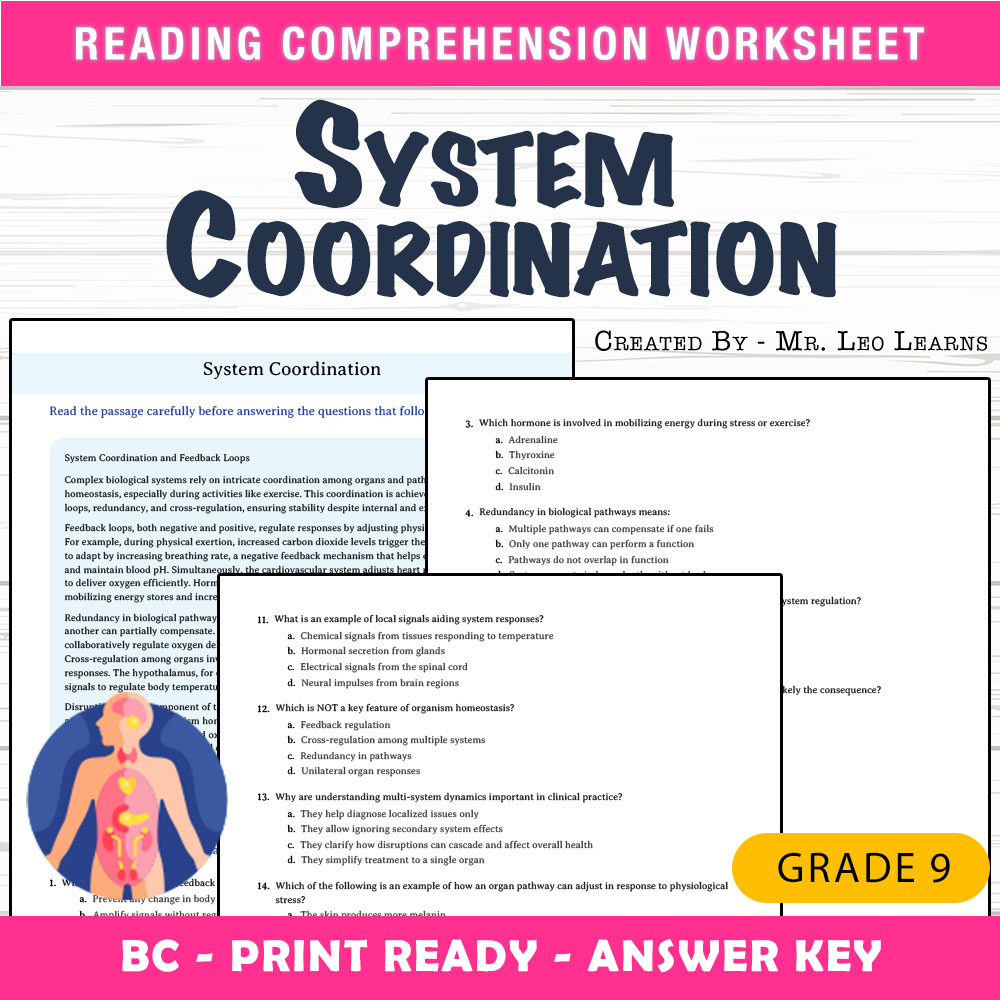
Grade 9 Science — Worksheet MCQ Paper for Mastering System Coordination
Created byThe Resource HubLearning Objectives
- Describe how feedback loops contribute to multi-system coordination in the body.
- Explain the roles of neural, hormonal, and local signals in mediating organism responses.
- Analyze how disruptions in one component of system coordination can cascade to affect overall homeostasis.
Also included in: Grade 9 Science Cells & Body Systems Worksheet Bundle | BC Curriculum Resources +1 more
Instant download
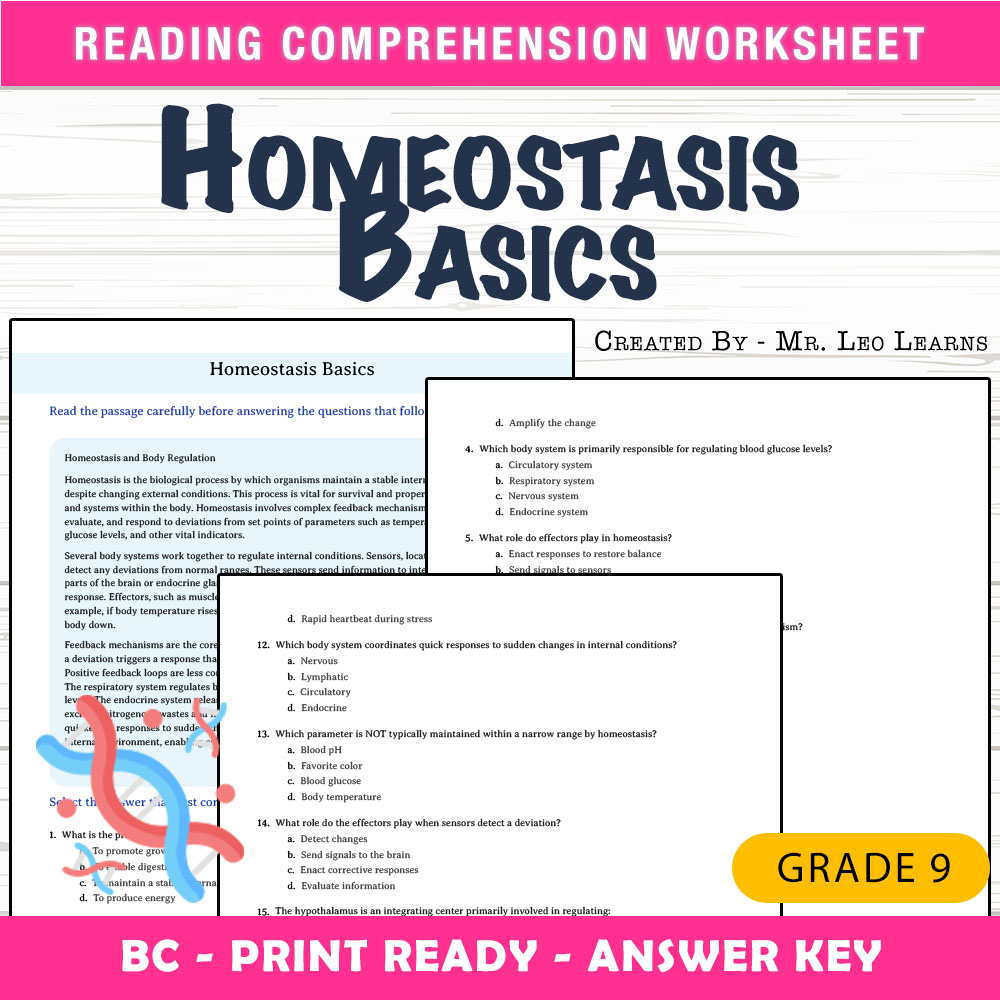
Grade 9 Science — Worksheet MCQ Paper for Mastering Homeostasis
Created byThe Resource HubLearning Objectives
- Define homeostasis and understand its significance in maintaining internal body conditions.
- Identify the roles of sensors, integrating centers, and effectors in feedback mechanisms.
- Describe how various body systems contribute to homeostasis, including respiratory, circulatory, endocrine, renal, and nervous systems.
Also included in: Grade 9 Science Cells & Body Systems Worksheet Bundle | BC Curriculum Resources +1 more
Instant download
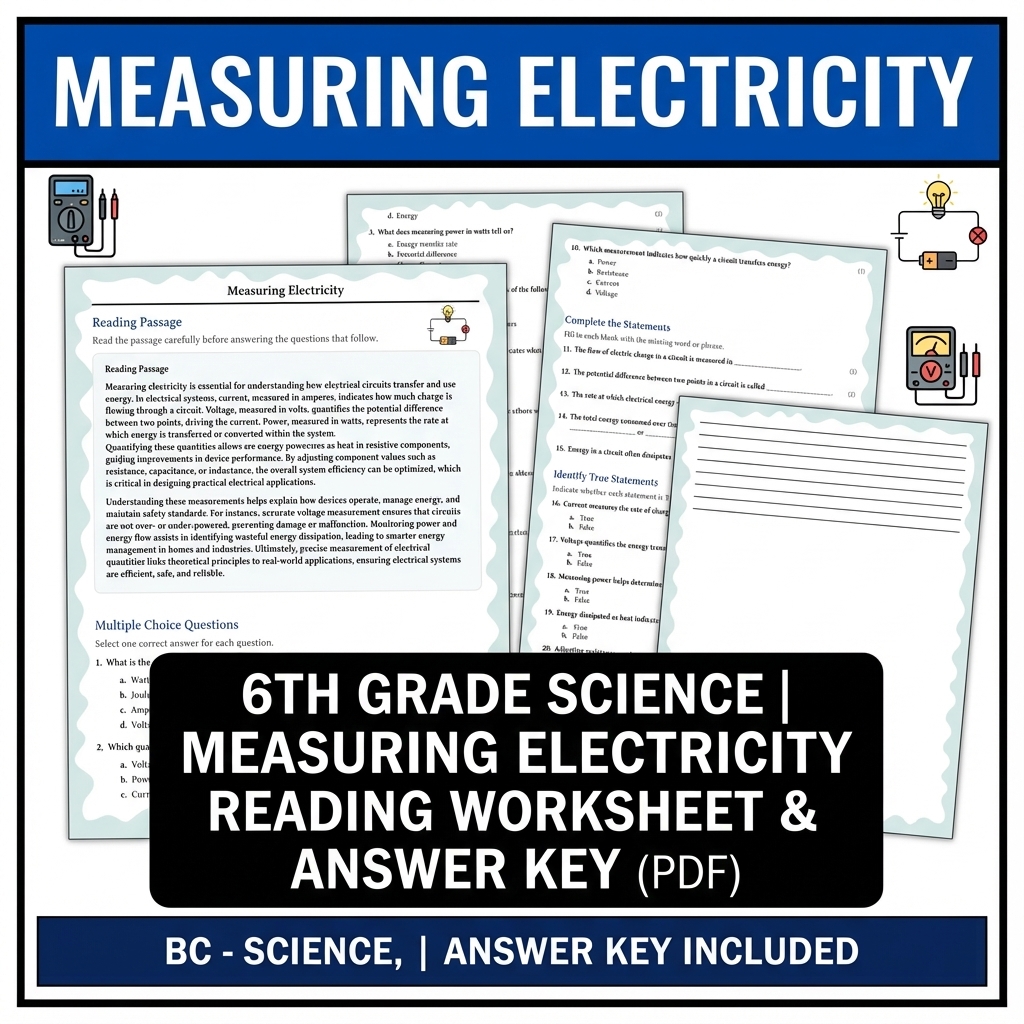
6th Grade Science | Measuring Electricity Reading Worksheet & Answer Key (PDF)
JCreated byJ.S SheetsLearning Objectives
- Understand the key electrical quantities: current, voltage, and power.
- Learn how to quantify energy transfer in electrical circuits.
- Recognize how measurements reveal energy dissipation and efficiency.
Instant download

Organelle Roles Worksheet | Grade 9 Science Activities
 Created byPrism Point Learning
Learning Objectives
- Identify major eukaryotic organelles and describe their specific functions
- Explain how organelle structure and molecular composition support cellular tasks
- Connect organelle roles to how different tissues carry out specialized activities
Instant download

Membrane Structure Worksheet | Grade 9 Science Activities
Created byPrism Point LearningLearning Objectives
- Explain how the phospholipid bilayer creates a selective barrier using hydrophobic and hydrophilic regions.
- Describe how integral and peripheral proteins support transport, signaling, and structure in membranes.
- Connect membrane fluidity and selective permeability to cholesterol and the fluid mosaic model.
Instant download
Grade 9 Science – Regulatory Mechanisms Worksheet (Answer Key) | TEKS Aligned
Created byBright Mind ResourcesLearning Objectives
- Explain how genes are regulated through promoter, enhancer, silencers, and transcription factors.
- Describe epigenetic modifications such as DNA methylation and histone acetylation and their effects on gene expression.
- Analyze how regulatory networks and feedback loops respond to developmental and environmental signals.
Also included in: Grade 9 Science Genetics & Biotechnology Unit - TEKS - Aligned (Answer Keys) +3 more
Instant download
Grade 9 Science – Genetic Data Analysis Worksheet (PDF) | TEKS-Aligned Practice
Created byBright Mind ResourcesLearning Objectives
- Interpret molecular and phenotypic data to infer inheritance patterns.
- Compare observed genotype and phenotype frequencies with expected ratios.
- Identify variants through PCR-based markers, single nucleotide variants, and sequencing reads.
Also included in: Grade 9 Science Genetics & Biotechnology Unit - TEKS - Aligned (Answer Keys) +3 more
Instant download
Grade 9 Science | DNA Replication Worksheet (Answer Key) – TEKS-Aligned
Created byBright Mind ResourcesLearning Objectives
- Describe the semi-conservative nature of DNA replication.
- Identify key enzymes involved in DNA replication and their functions.
- Explain the differences between leading and lagging strand synthesis.
Also included in: Grade 9 Science Genetics & Biotechnology Unit - TEKS - Aligned (Answer Keys) +3 more
Instant download
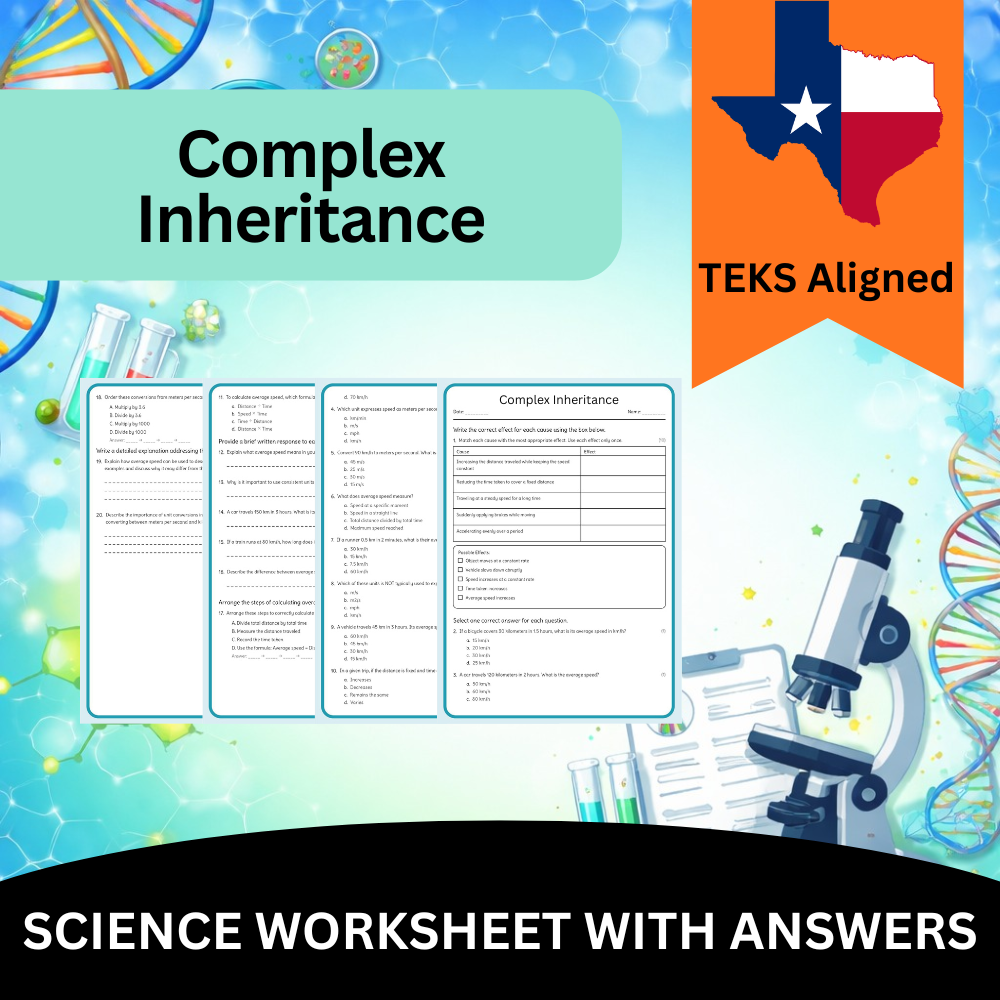
Grade 9 Science | Complex Inheritance TEKS-Aligned Worksheet (PDF)
Created byBright Mind ResourcesLearning Objectives
- Understand the concepts of polygenic traits, epistasis, and pleiotropy.
- Identify how variable penetrance and expressivity influence phenotype expression.
- Explain how linkage reduces independent assortment and the role of environmental factors.
Also included in: Grade 9 Science Genetics & Biotechnology Unit - TEKS - Aligned (Answer Keys) +3 more
Instant download
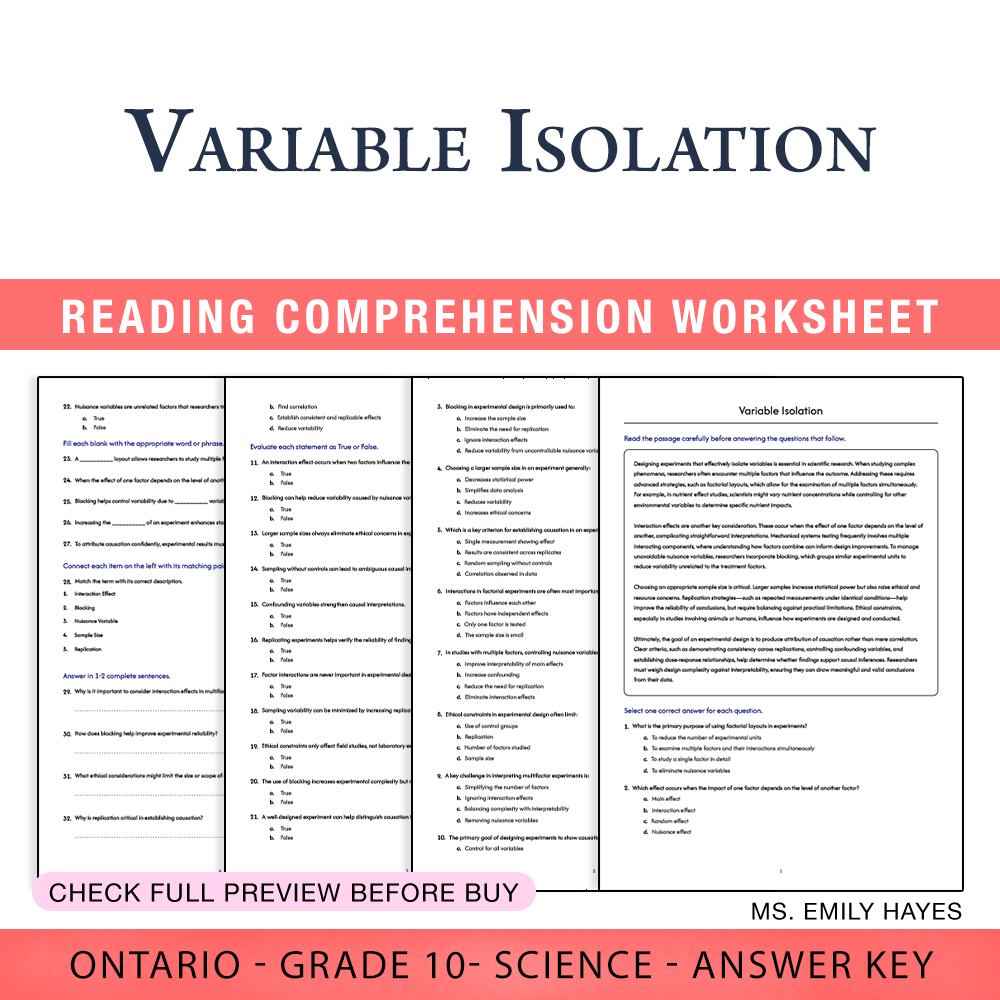
10th Grade Science | Variable Isolation Worksheet (PDF + Answer Key)
 Created byCopper Leaf Classroom
Learning Objectives
- Understand the concept of variable isolation in experimental design.
- Analyze the effects of multiple factors and interactions in complex experiments.
- Evaluate design trade-offs such as complexity versus interpretability.
Instant download
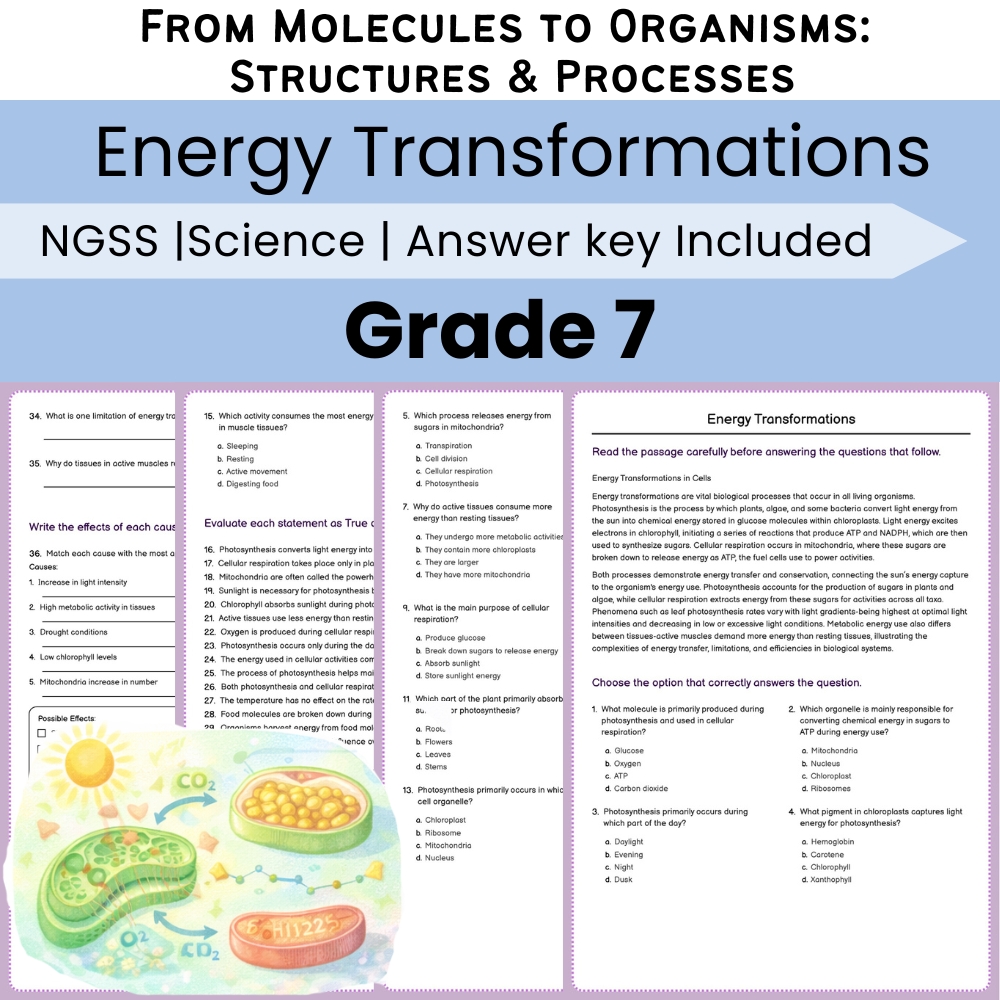
Energy Transformations Worksheet | Grade 7 Science printable PDF NGSS
Learning Objectives
- Explain how light energy is converted into chemical energy during photosynthesis.
- Describe how organisms harvest energy from food through cellular respiration.
- Connect processes in chloroplasts and mitochondria related to energy flow in autotrophs and heterotrophs.
Also included in: Grade 7 Science Lesson Bundle | From Molecules to Organisms NGSS +1 more
Instant download
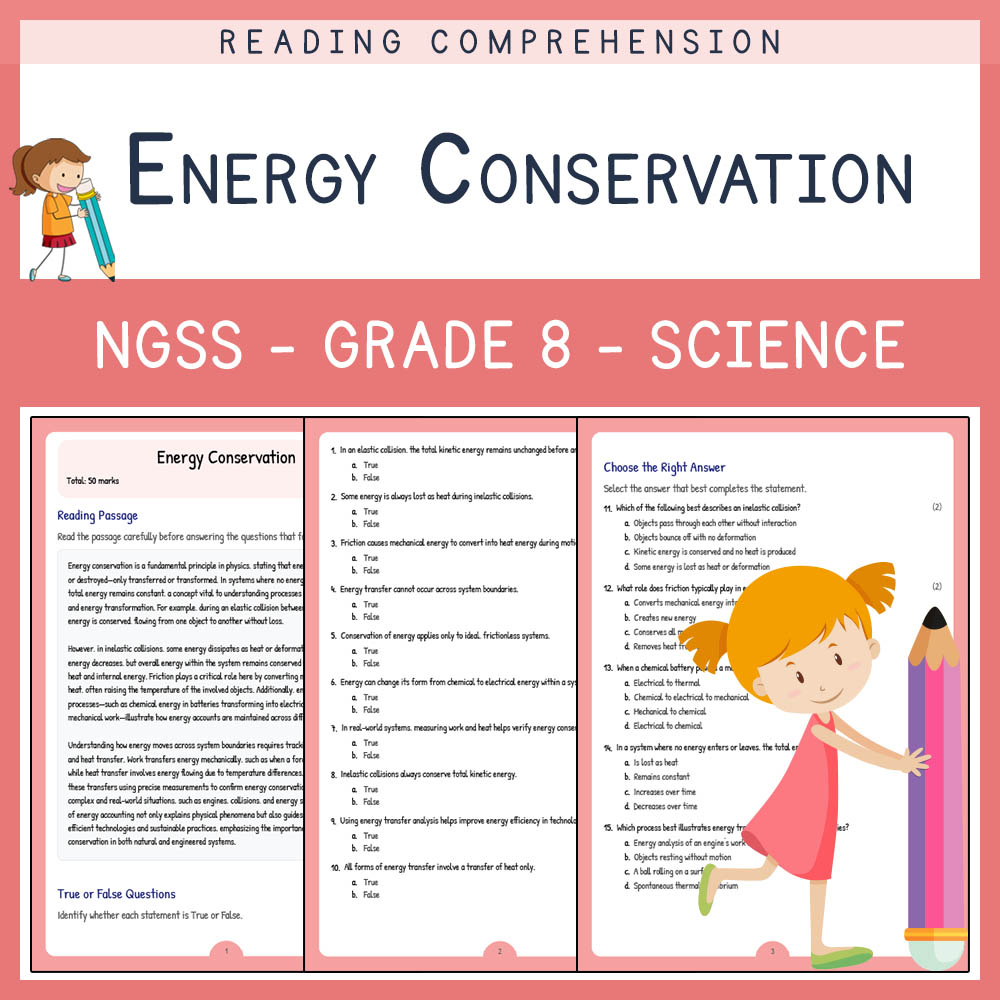
Grade 8 Science | Energy Conservation Worksheet (Answer Key) – NGSS Aligned
Created byLumora LearningLearning Objectives
- Understand how changes in an object's kinetic energy relate to energy transfer in closed systems.
- Identify examples of energy transfer through work and heat during physical processes.
- Differentiate between elastic and inelastic collisions and their effects on energy conservation.
Instant download
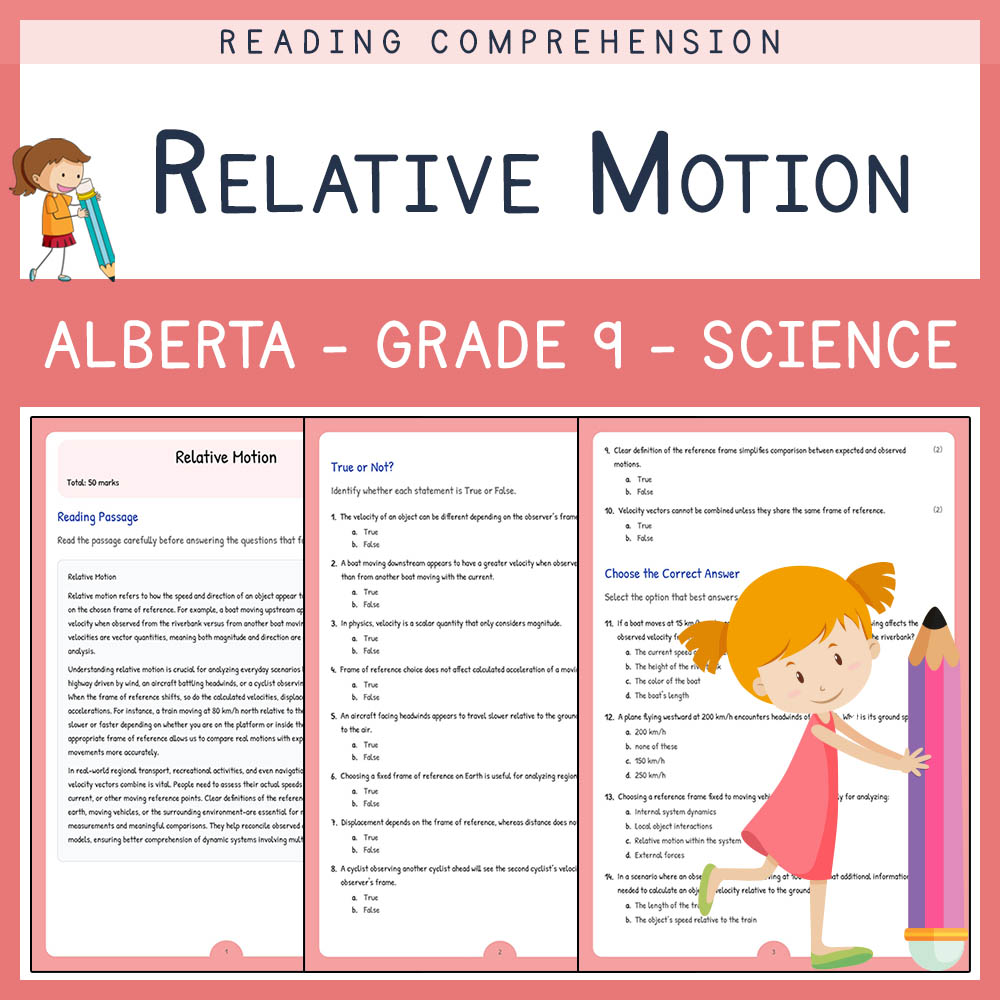
Grade 9 Science | Relative Motion Worksheet | Alberta Standards
Created byLumora LearningLearning Objectives
- Explain how observed speed and direction depend on the reference frame.
- Describe scenarios illustrating vector addition of velocities in relative motion.
- Analyze how frame choices impact calculations of displacement, speed, and acceleration.
Instant download

Biotech Applications Grade 12 Biology Worksheet Alberta Curriculum
 Created byEvergreen Desk Education
Learning Objectives
- Explain how biotechnology supports agricultural innovation, diagnostic testing, and bioremediation in Alberta contexts.
- Analyze how genetic improvement and molecular detection methods work and why they are chosen.
- Evaluate ethical, regulatory, and socioeconomic considerations involved in responsible biotech deployment.
Instant download
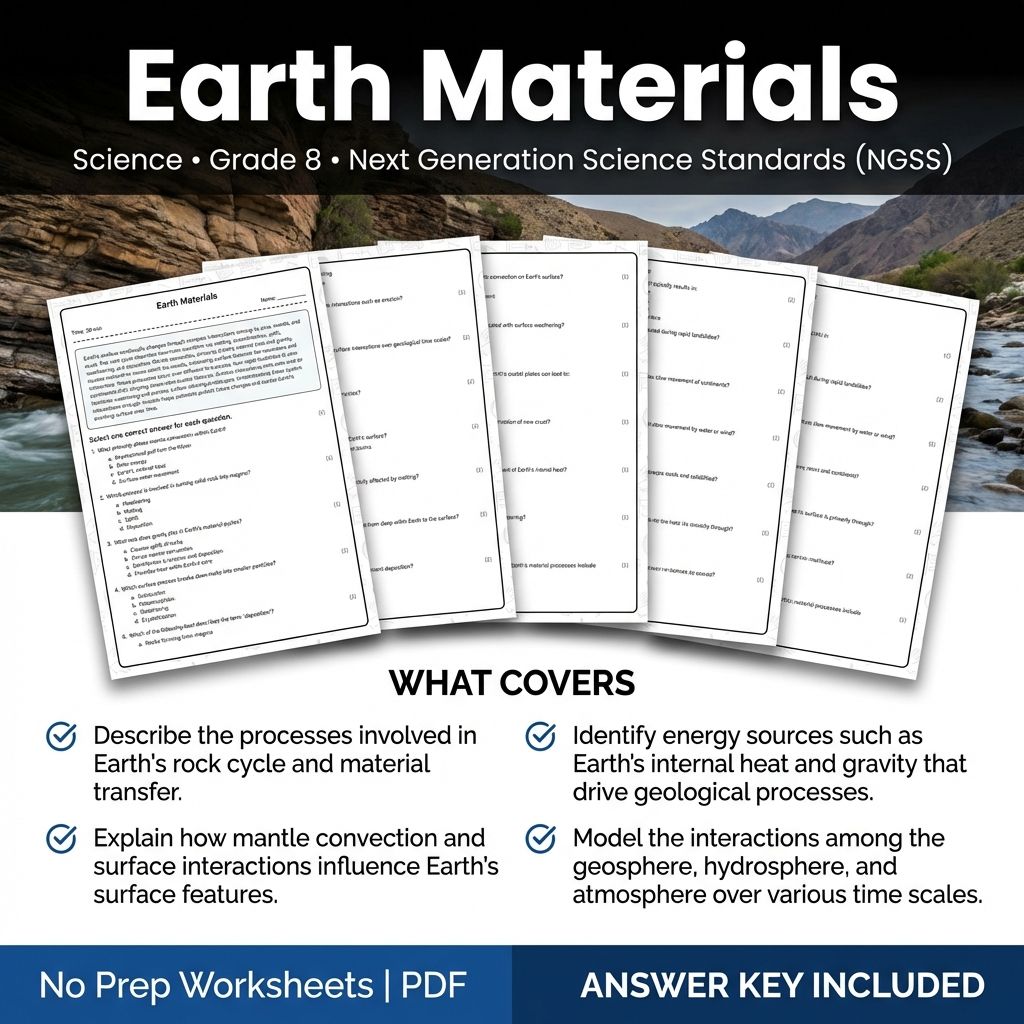
8th Grade Science | Earth Materials Worksheet & Answer Key for Classroom Use
 Created byCoral Reef Learning
Learning Objectives
- Describe the processes involved in Earth's rock cycle and material transfer.
- Explain how mantle convection and surface interactions influence Earth’s surface features.
- Identify energy sources such as Earth's internal heat and gravity that drive geological processes.
Instant download

Grade 7 Science Worksheet on Variable Control | Ontario Standards Practice
Created byCoral Reef LearningLearning Objectives
- Understand the roles of independent, dependent, and controlled variables in experiments.
- Explain the importance of operational definitions and fair test design for valid causal conclusions.
- Identify sources of confounding and how to minimize bias in sampling and experimentation.
Instant download
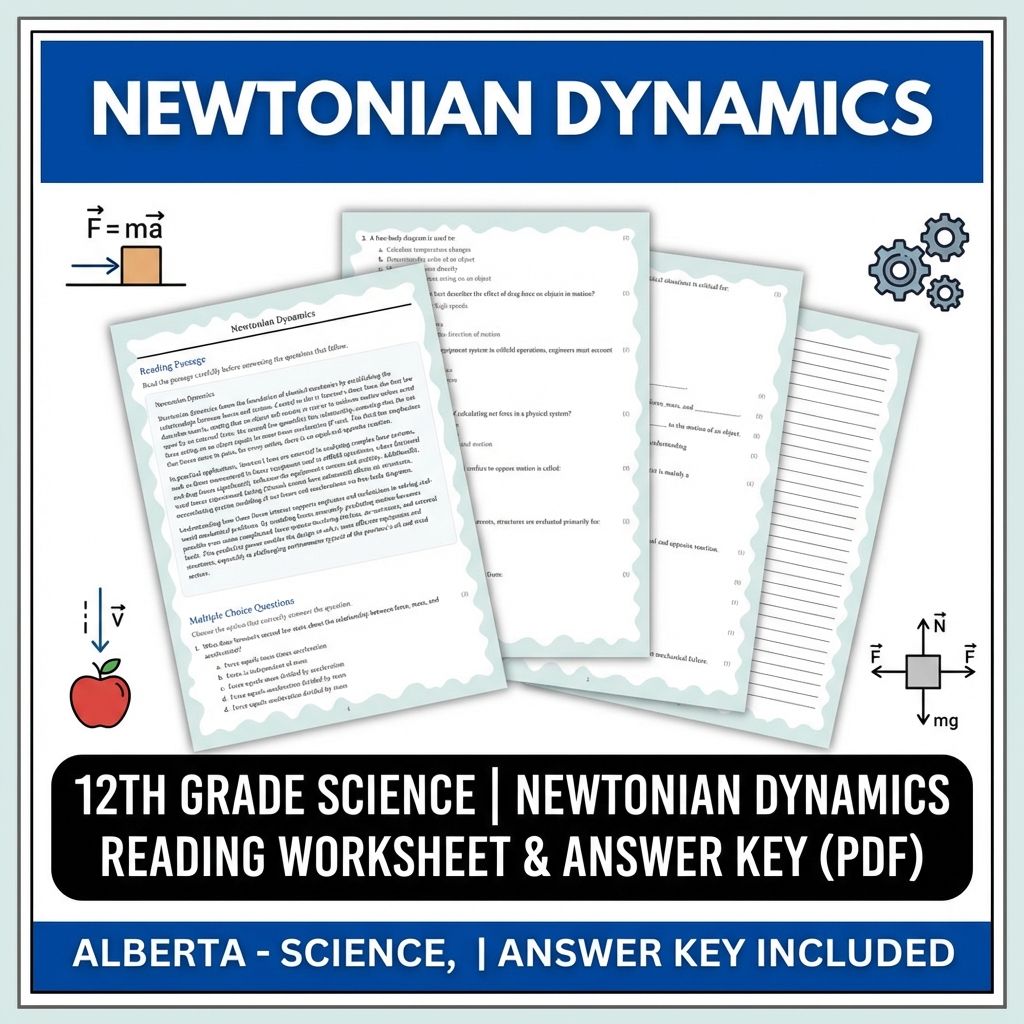
12th Grade Science | Newtonian Dynamics Reading Worksheet & Answer Key (PDF)
JCreated byJ.S SheetsLearning Objectives
- Understand Newton's three laws of motion and their application in real-world scenarios.
- Identify and interpret free-body diagrams for complex force systems.
- Calculate net forces and predict the resulting acceleration of objects.
Also included in: Grade 12 Science UNIT Bundle – Waves, Nuclear & Electromagnetism Worksheets +1 more
Instant download
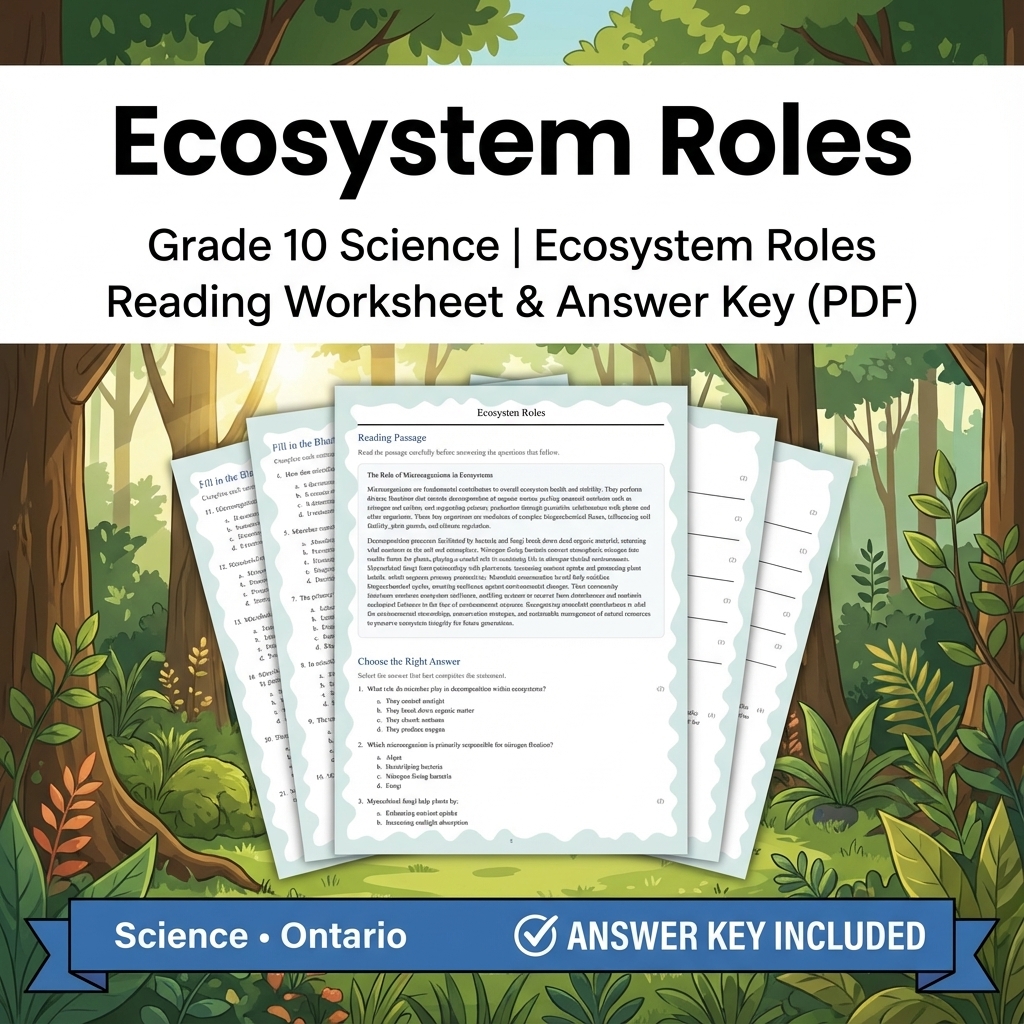
Grade 10 Science | Ecosystem Roles Reading Worksheet & Answer Key (PDF)
JCreated byJ.S SheetsLearning Objectives
- Understand how microorganisms contribute to ecosystem processes such as decomposition and nutrient cycling.
- Identify microbial interactions like nitrogen fixation and symbiosis that support primary production.
- Explain how microbial community composition affects ecosystem services and resilience.
Also included in: Grade 10 Science Unit Bundle | Cell Biology, Microbes & Energy Activities +1 more
Instant download
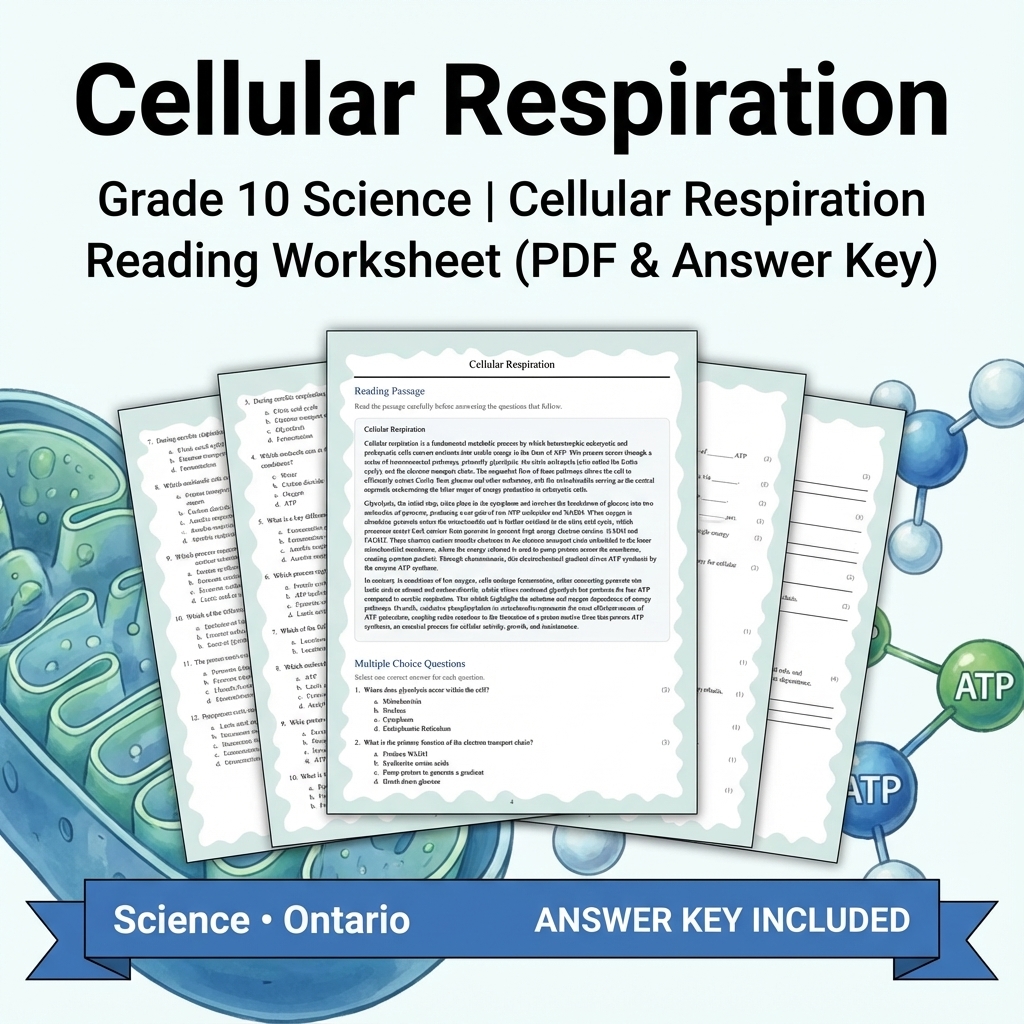
Grade 10 Science | Cellular Respiration Reading Worksheet (PDF & Answer Key)
JCreated byJ.S SheetsLearning Objectives
- Describe the sequence of pathways involved in cellular respiration.
- Explain the role of mitochondria in energy production.
- Differentiate between aerobic respiration and anaerobic fermentation in terms of efficiency and oxygen dependence.
Also included in: Grade 10 Science Unit Bundle | Cell Biology, Microbes & Energy Activities +1 more
Instant download
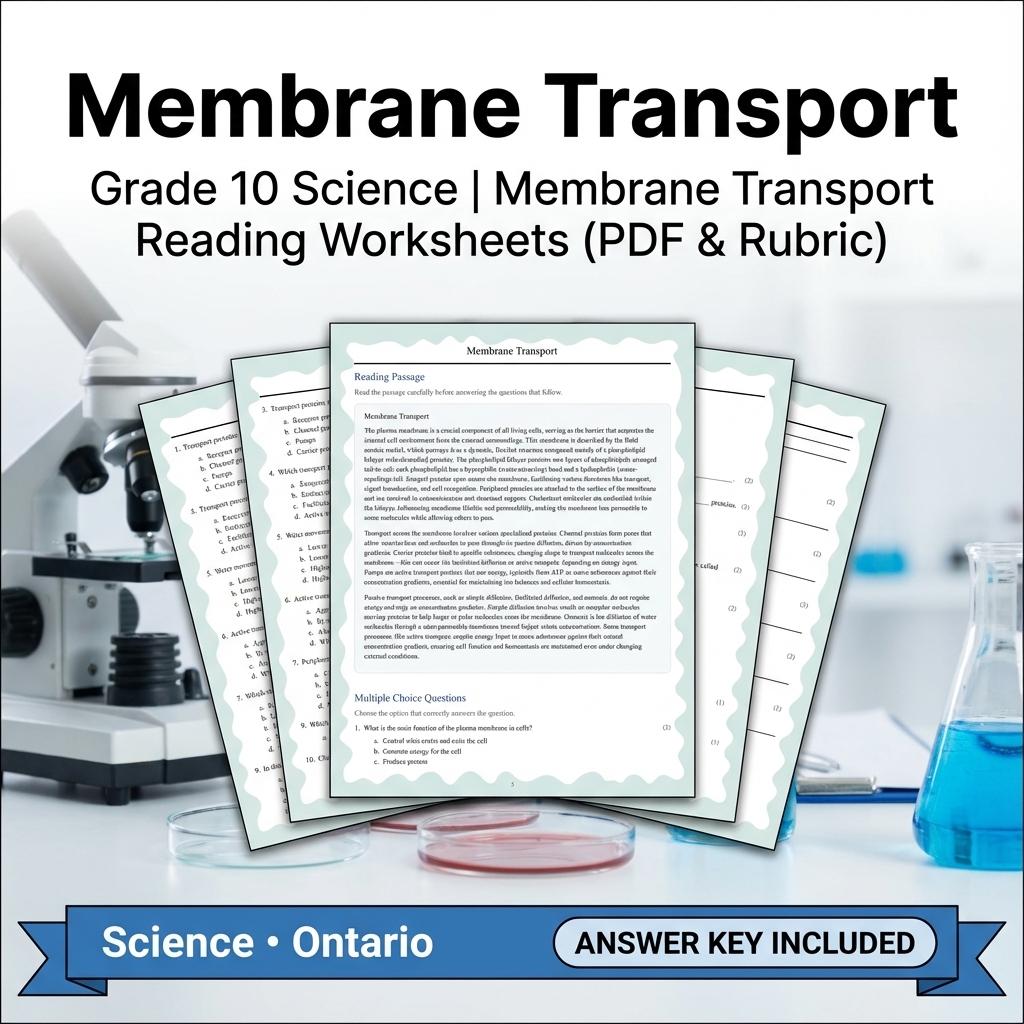
Grade 10 Science | Membrane Transport Reading Worksheets (PDF & Rubric)
JCreated byJ.S SheetsLearning Objectives
- Describe the structure of the plasma membrane based on the fluid mosaic model.
- Differentiate between types of transport proteins such as channels, carriers, and pumps.
- Explain passive transport mechanisms including diffusion, facilitated diffusion, and osmosis.
Also included in: Grade 10 Science Unit Bundle | Cell Biology, Microbes & Energy Activities +1 more
Instant download
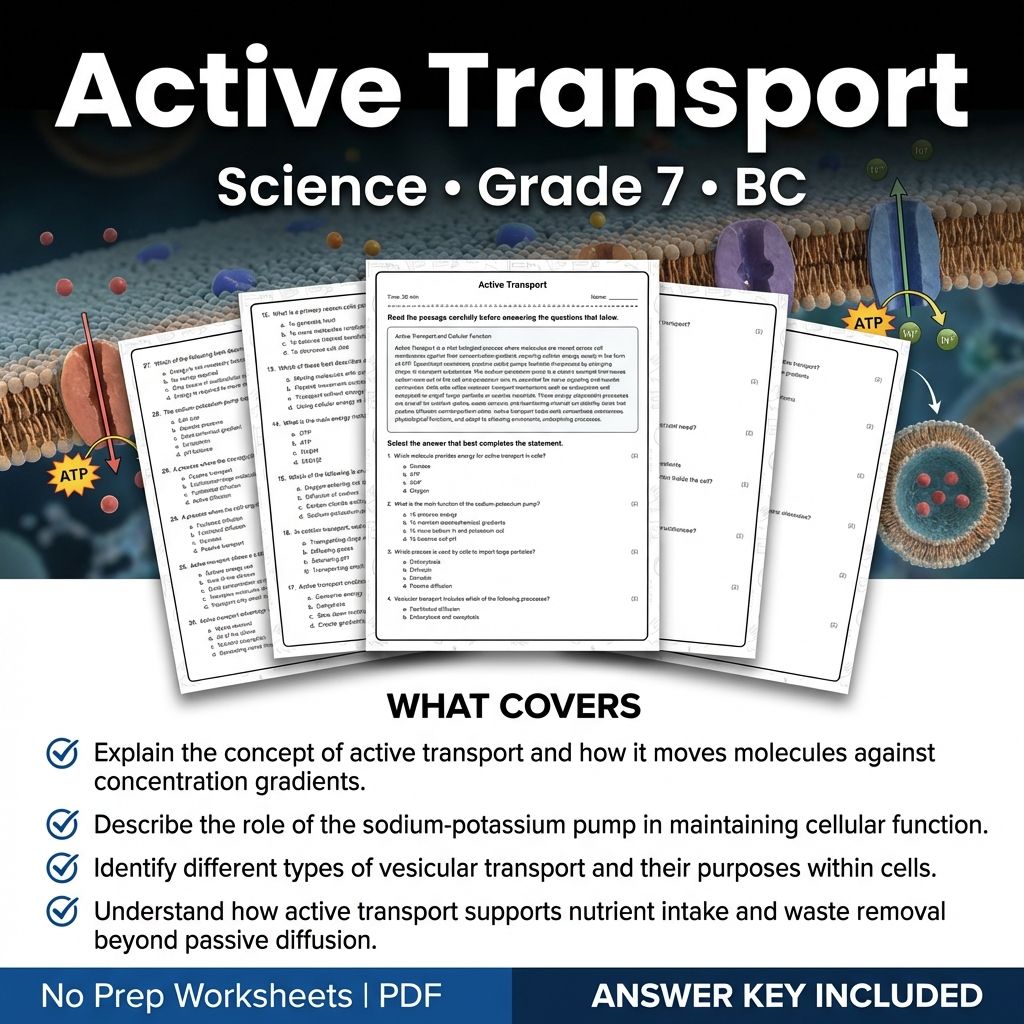
7th Grade Science | Active Transport Worksheet & Answer Key (Printable PDF)
Created byCoral Reef LearningLearning Objectives
- Explain the concept of active transport and how it moves molecules against concentration gradients.
- Describe the role of the sodium-potassium pump in maintaining cellular function.
- Identify different types of vesicular transport and their purposes within cells.
Instant download

Grade 7 Science Worksheet | Active Transport & Cell Movement (BC Standards) (PDF)
Created byEvergreen Desk EducationLearning Objectives
- Explain how active transport moves substances against a concentration gradient using cellular energy and membrane proteins.
- Describe the sodium-potassium pump and its role in maintaining electrochemical gradients for nerve and muscle function.
- Compare active transport with passive diffusion and identify examples of vesicular transport (endocytosis and exocytosis).
Instant download
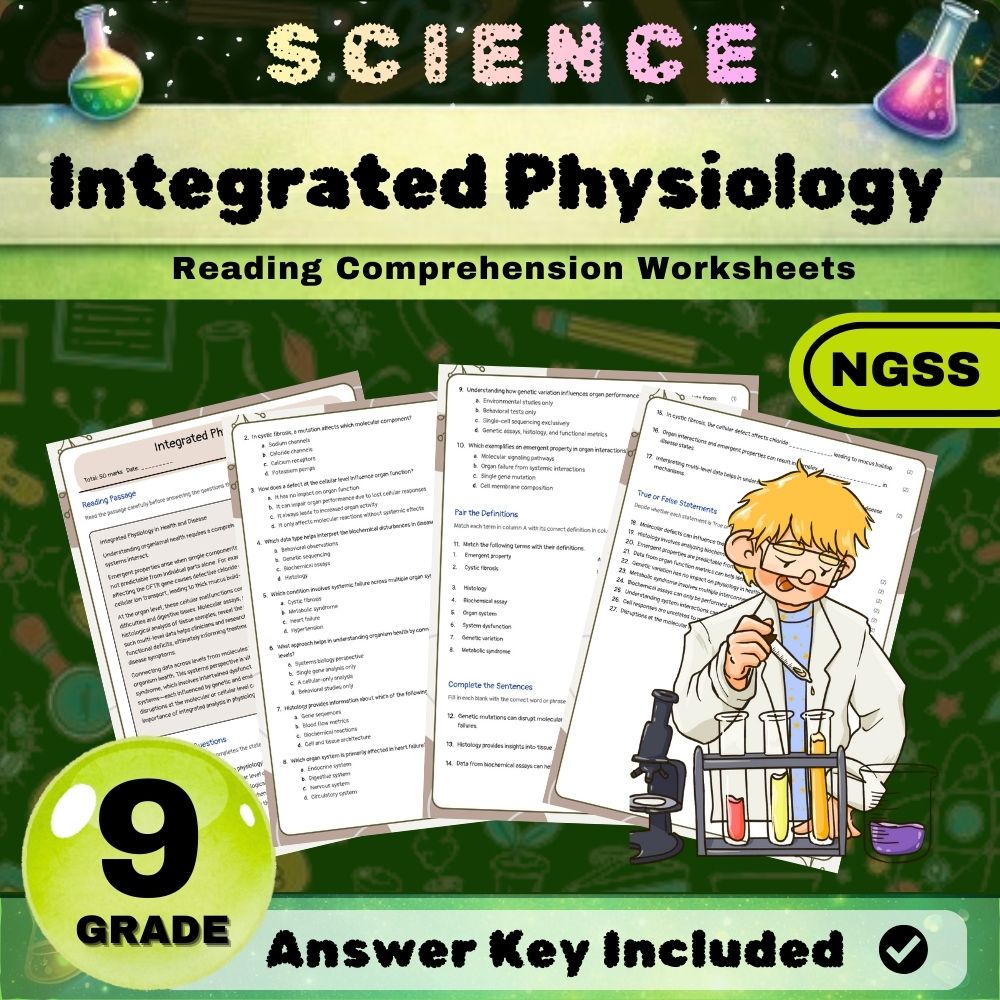
Grade 9 Science – Integrated Physiology Worksheet (NGSS) PDF
 Created byMaple Path Learning
Learning Objectives
- Explain how molecular, cellular, and organ-level interactions produce emergent physiological properties.
- Analyze how genetic variations can lead to system dysfunction in conditions such as cystic fibrosis, heart failure, and metabolic syndrome.
- Interpret data from biochemical assays, histology, and organ function metrics to assess organismal health and disease pathways.
Also included in: Grade 9 Science NGSS| From Molecules to Organisms: Structures & Processes Bundle +1 more
Instant download
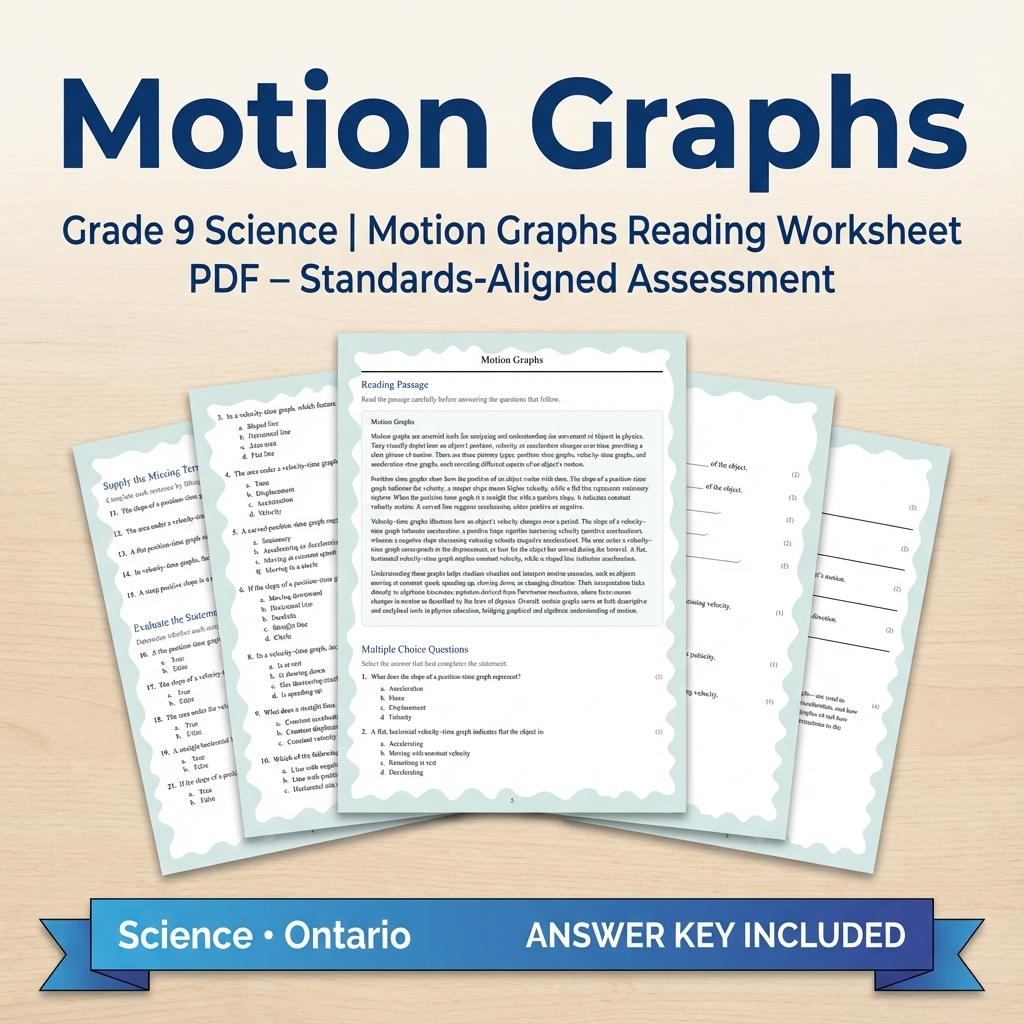
Grade 9 Science | Motion Graphs Reading Worksheet PDF
JCreated byJ.S SheetsLearning Objectives
- Interpret position–time and velocity–time graphs in the context of motion.
- Understand how the slope of a position–time graph indicates velocity and how the slope of a velocity–time graph indicates acceleration.
- Recognize that the area under a velocity–time graph corresponds to displacement.
Also included in: Grade 9 Science Unit | Force, Motion & Energy Worksheets & Answer Keys Bundle +1 more
Instant download

Grade 9 Science Cell Architecture Worksheet with Short Notes (Printable PDF)
 Created byMeadowlark Worksheets
Learning Objectives
- Understand how nucleic acid sequences determine amino acid chains and protein structures.
- Connect molecular coding and folding to organelle architecture such as ribosomes, endoplasmic reticulum, and mitochondria.
- Identify functional roles of proteins like hemoglobin and membrane transporters based on their structure.
Also included in: Grade 9 Science NGSS From Molecules to Organisms Structures & Processes Bundle +1 more
Instant download

Cell Modeling Worksheet | NGSS Grade 8 Science Assessment
 Created bySkylark Worksheets
Learning Objectives
- Explain how cell models use structure to represent function of organelles and membrane systems.
- Use models to interpret membrane transport processes such as diffusion and osmosis.
- Relate organelle energy pathways (mitochondria and chloroplasts) to cell viability in models.
Also included in: Grade 8 Molecules to Organisms Structures & Processes Science Lesson Bundle NGSS +1 more
Instant download

Grade 7 Science | Change Indicators Worksheet | BC Standards
Created byLumora LearningLearning Objectives
- Understand the signs that indicate a chemical change has occurred.
- Identify observable evidence such as gas formation, color change, and temperature change.
- Explain why multiple indicators together provide stronger evidence of a chemical change.
Also included in: Grade 7 Science | Matter & Chemical Change Unit Bundle | BC Aligned
Instant download
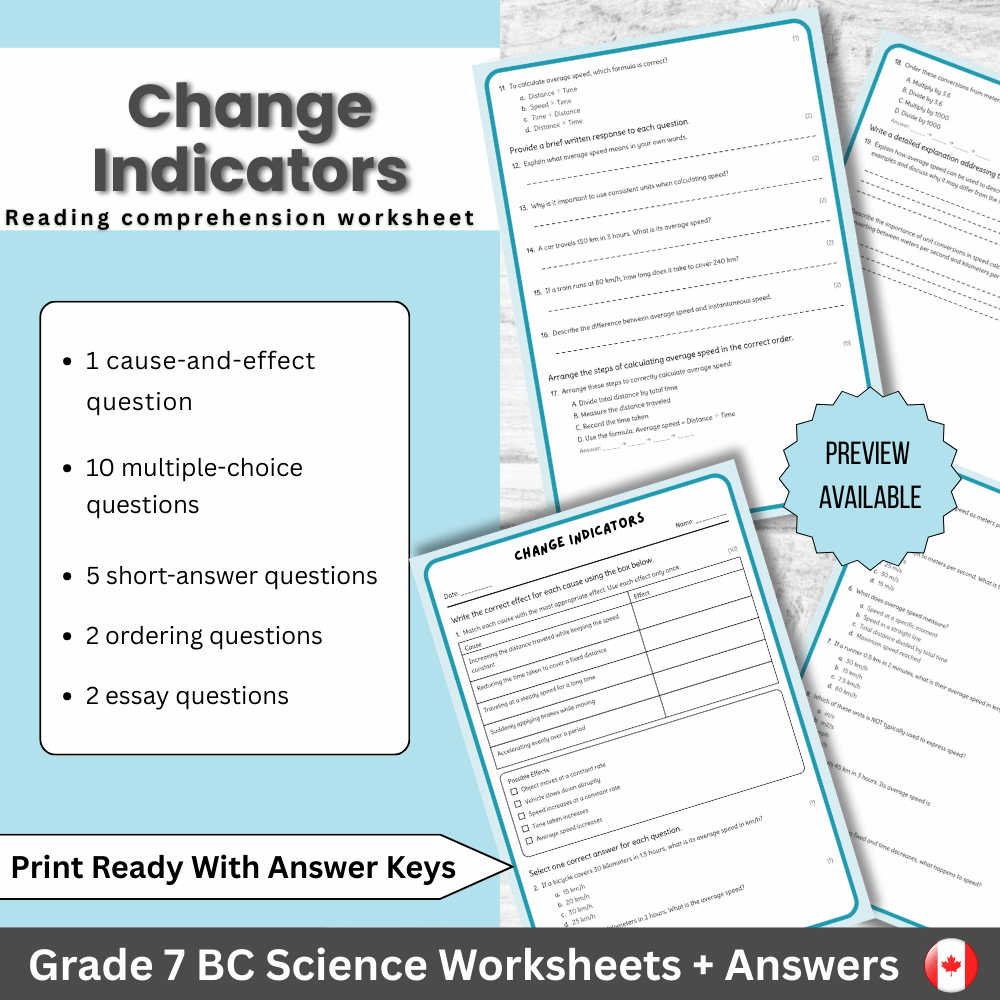
Grade 7 Science | Change Indicators Worksheet (Answer Key) for BC Standards
Created byBright Mind ResourcesLearning Objectives
- Identify observable signs that indicate a chemical change has occurred.
- Understand the importance of multiple indicators in confirming chemical reactions.
- Describe different types of evidence such as gas formation, color change, and temperature change.
Instant download
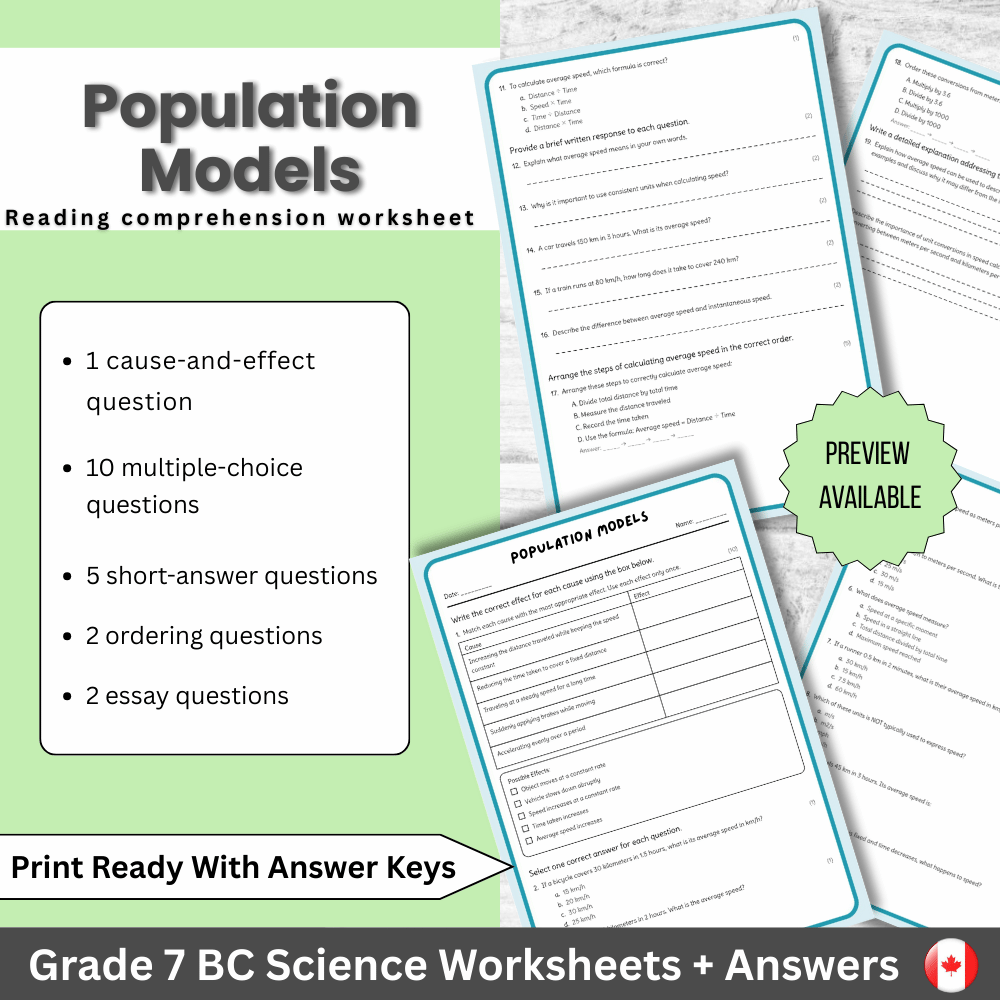
Grade 7 Science | Population Models Worksheet + Answer Key (BC Standards)
Created byBright Mind ResourcesLearning Objectives
- Describe the differences between exponential and logistic population growth models.
- Identify factors that influence population size, including density-dependent and density-independent factors.
- Interpret how models predict population patterns under various conditions.
Instant download
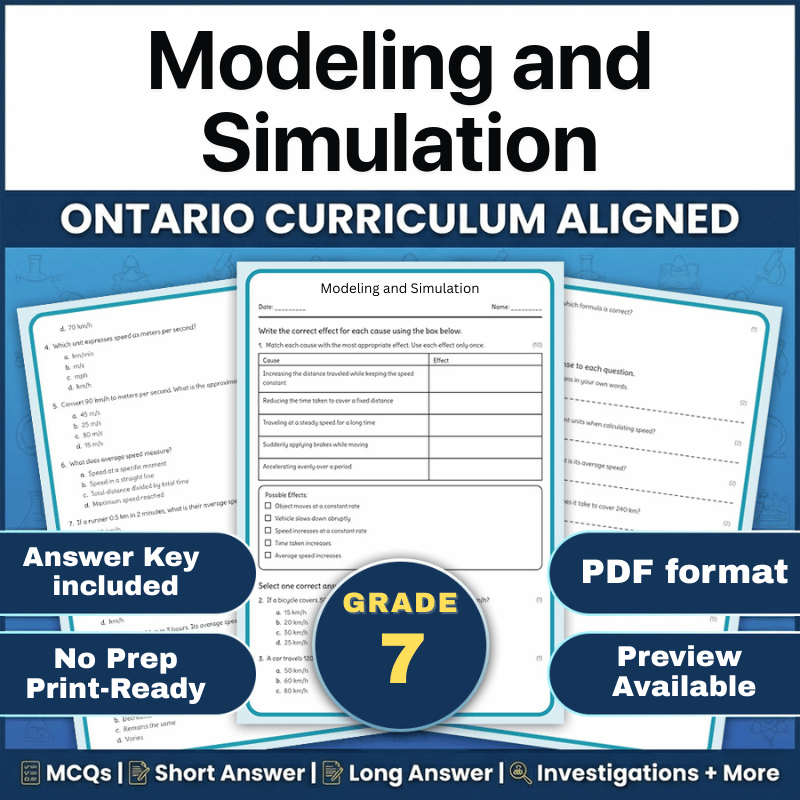
Grade 7 Science | Modeling and Simulation Worksheet (Ontario Standard) (PDF)
Created byBright Mind ResourcesLearning Objectives
- Understand the key concepts and practices involved in scientific modeling and simulation.
- Identify the importance of abstraction, assumptions, and validation in models.
- Describe examples of simple numerical models and their applications.
Instant download
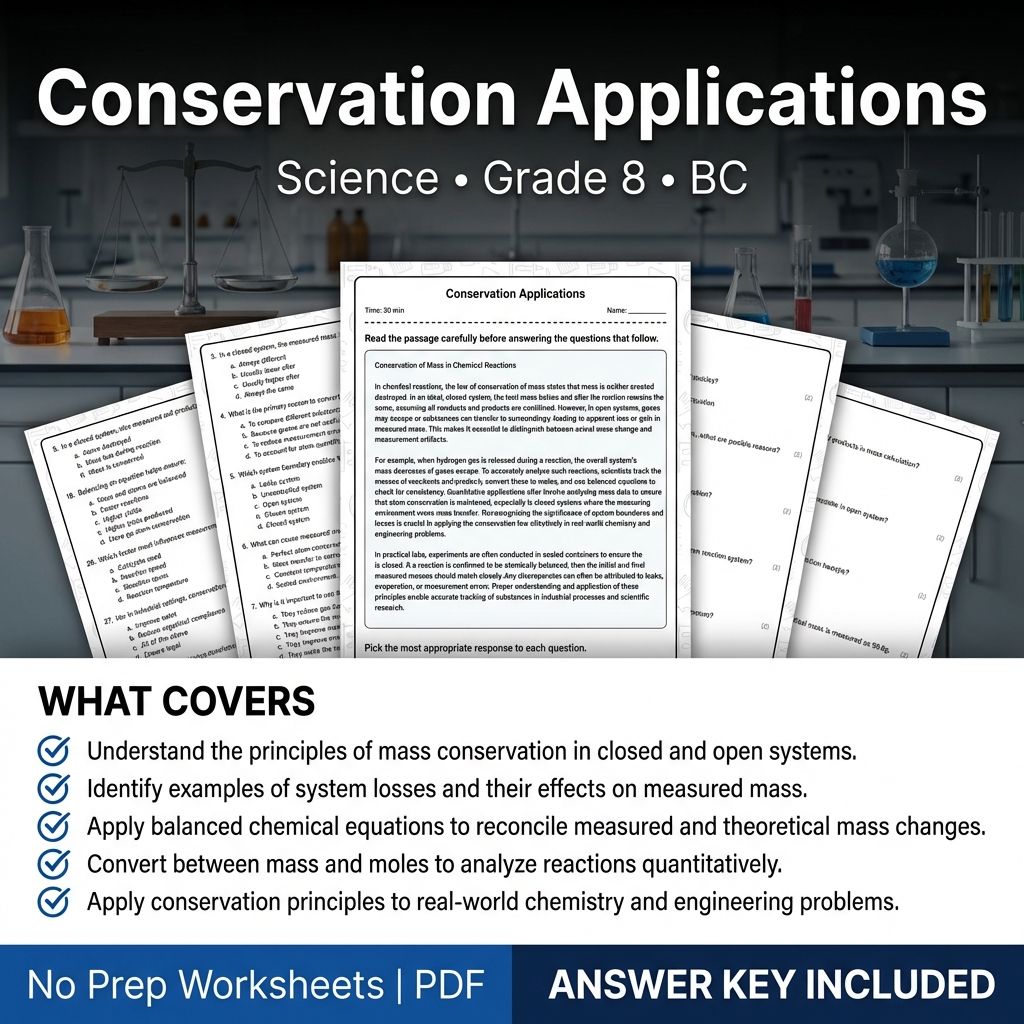
Grade 8 Science| Conservation Applications Worksheet & Answer Key(Printable PDF)
Created byCoral Reef LearningLearning Objectives
- Understand the principles of mass conservation in closed and open systems.
- Identify examples of system losses and their effects on measured mass.
- Apply balanced chemical equations to reconcile measured and theoretical mass changes.
Instant download
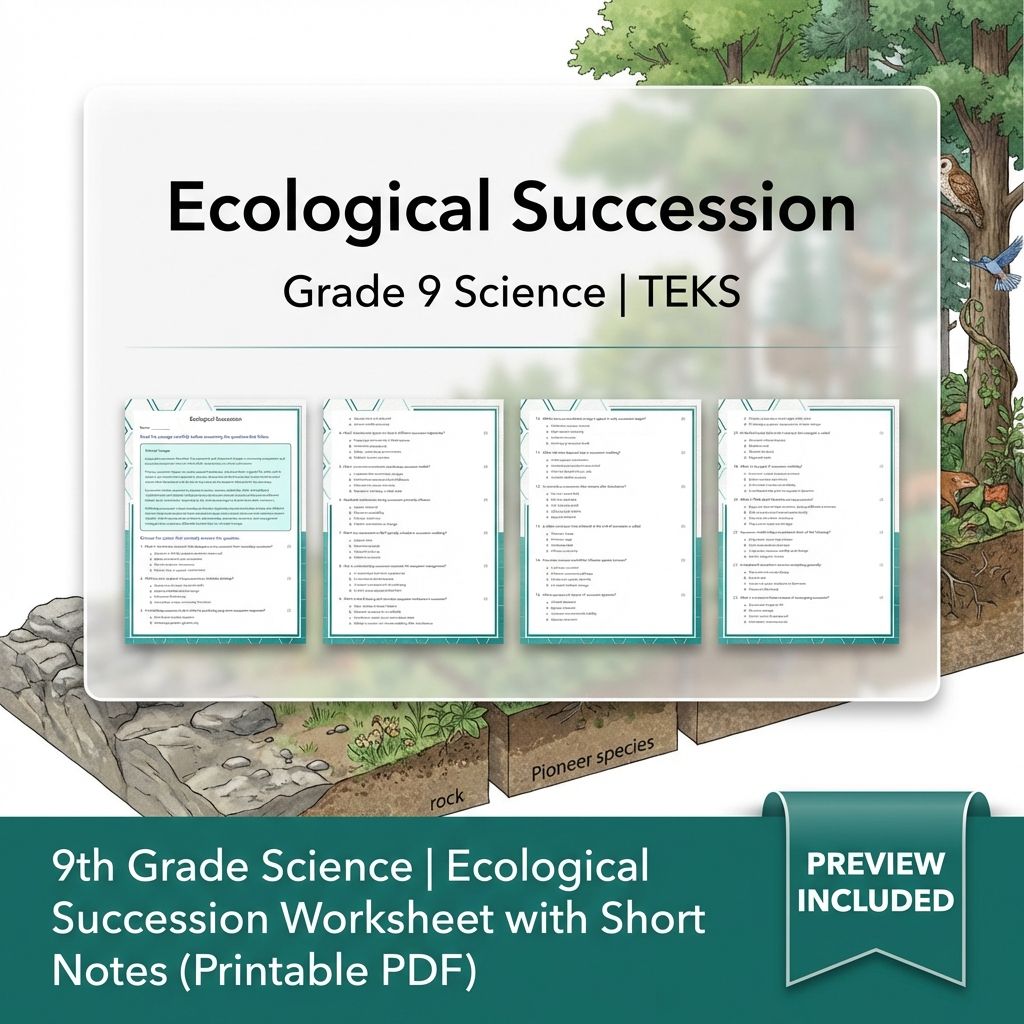
9th Grade Science | Ecological Succession Worksheet with Short Notes (PDF)
Created byMeadowlark WorksheetsLearning Objectives
- Understand the concept and stages of ecological succession.
- Differentiate between primary and secondary succession.
- Identify factors that influence succession trajectories and ecosystem stability.
Instant download

Fossil Records Worksheet | TEKS Science Assessment Grade 9
JCreated byJ.S SheetsLearning Objectives
- Explain how fossil records provide evidence of past life through preserved remains, impressions, and traces.
- Describe how stratigraphy and radiometric dating contribute to determining fossil ages.
- Evaluate how taphonomy and preservation bias affect which organisms appear in the fossil record.
Instant download
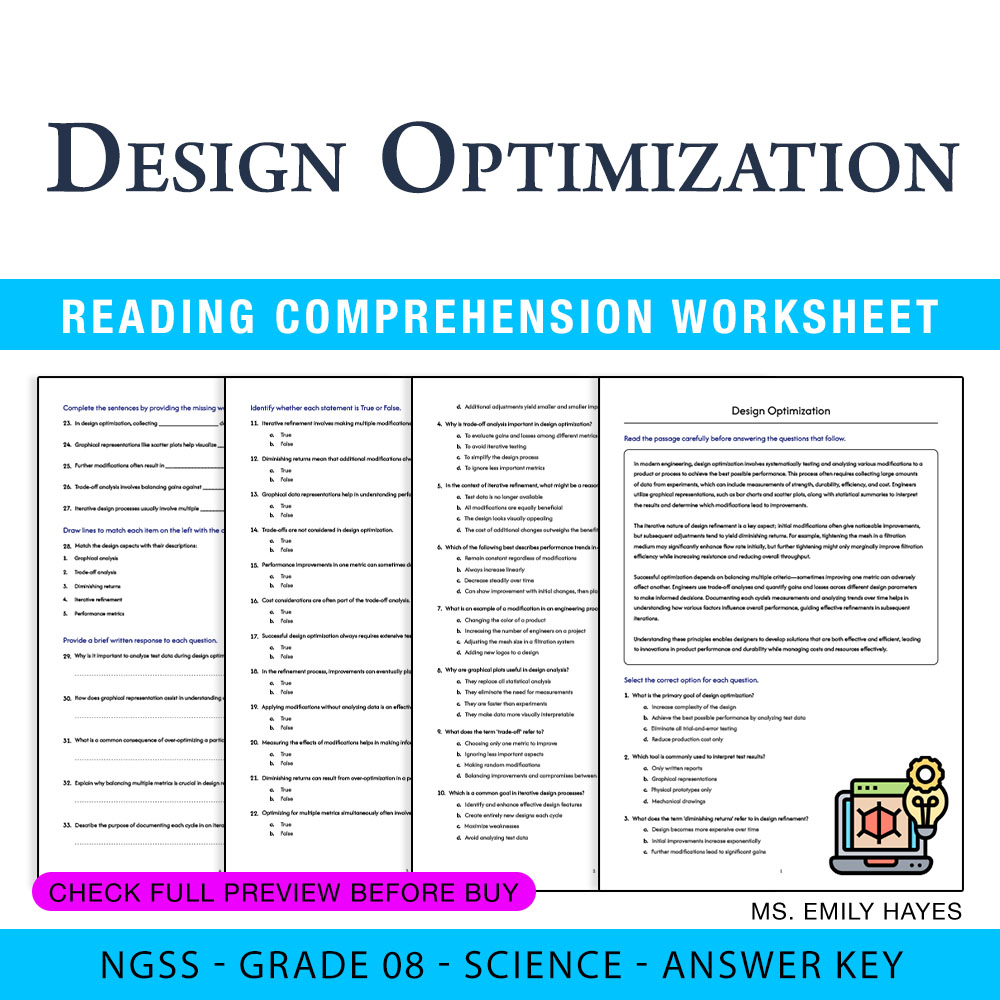
8th Grade Science | Design Optimization Worksheet (PDF+ Answer Key)
Created byCopper Leaf ClassroomLearning Objectives
- Analyze test data to identify performance trends in experimental designs.
- Use graphical and statistical methods to evaluate design modifications.
- Identify effective design characteristics and quantify trade-offs among metrics.
Instant download
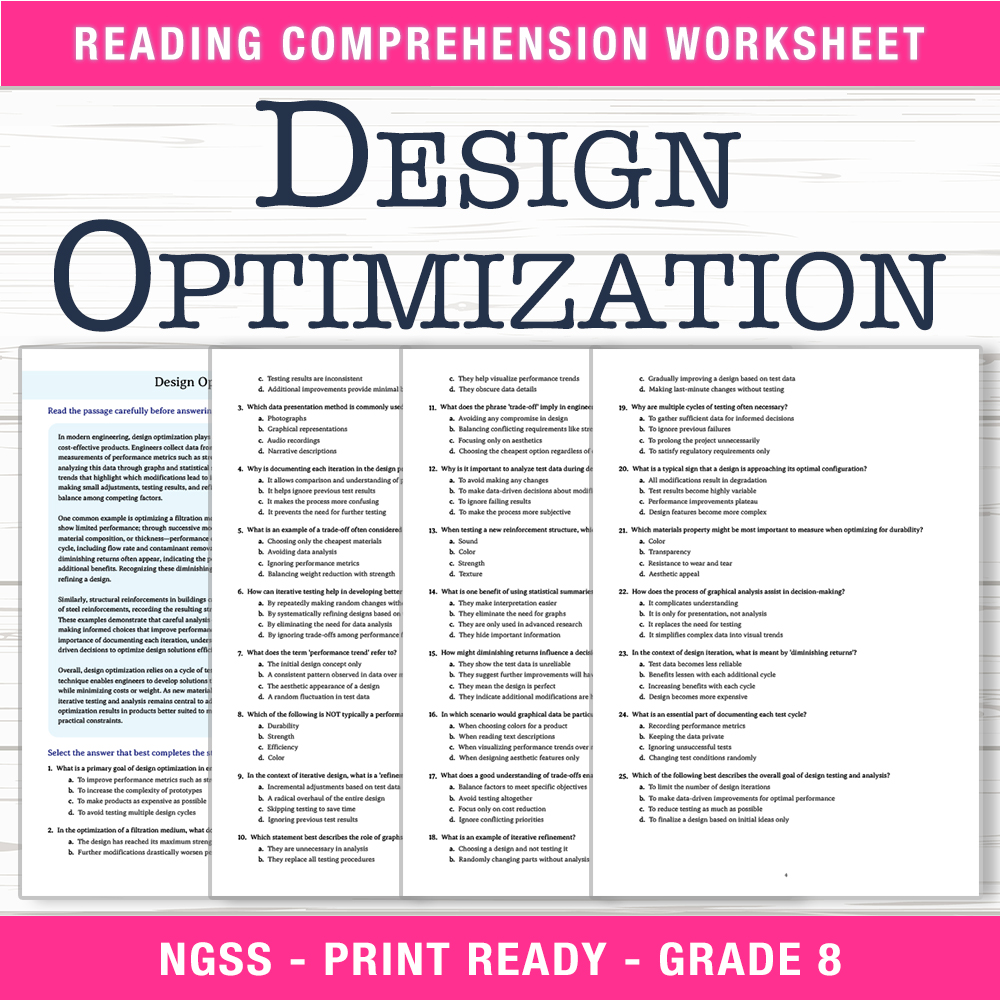
Grade 8 Science | Design Optimization Worksheet (PDF + Answer Key)
 Created byRiverstone Classroom
Learning Objectives
- Analyze test data to identify performance trends in design modifications.
- Use graphical and statistical tools to evaluate trade-offs among efficiency, strength, and durability.
- Apply iterative refinement techniques to optimize design characteristics in practical scenarios.
Instant download
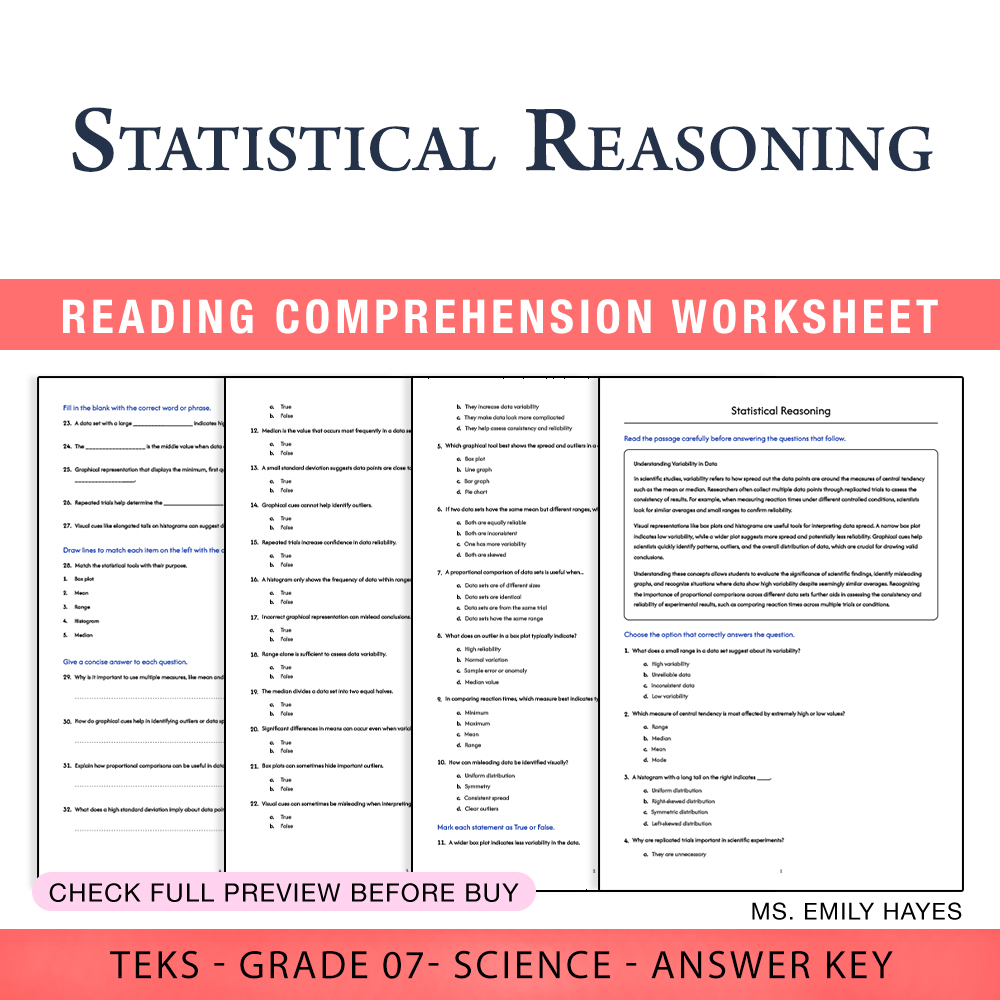
7th Grade Science | Statistical Reasoning Worksheet (PDF+ Answer Key)
Created byCopper Leaf ClassroomLearning Objectives
- Interpret variability and measures of central tendency in data sets.
- Use graphical cues to assess data reliability and significance.
- Compare data sets using mean, median, and range.
Instant download
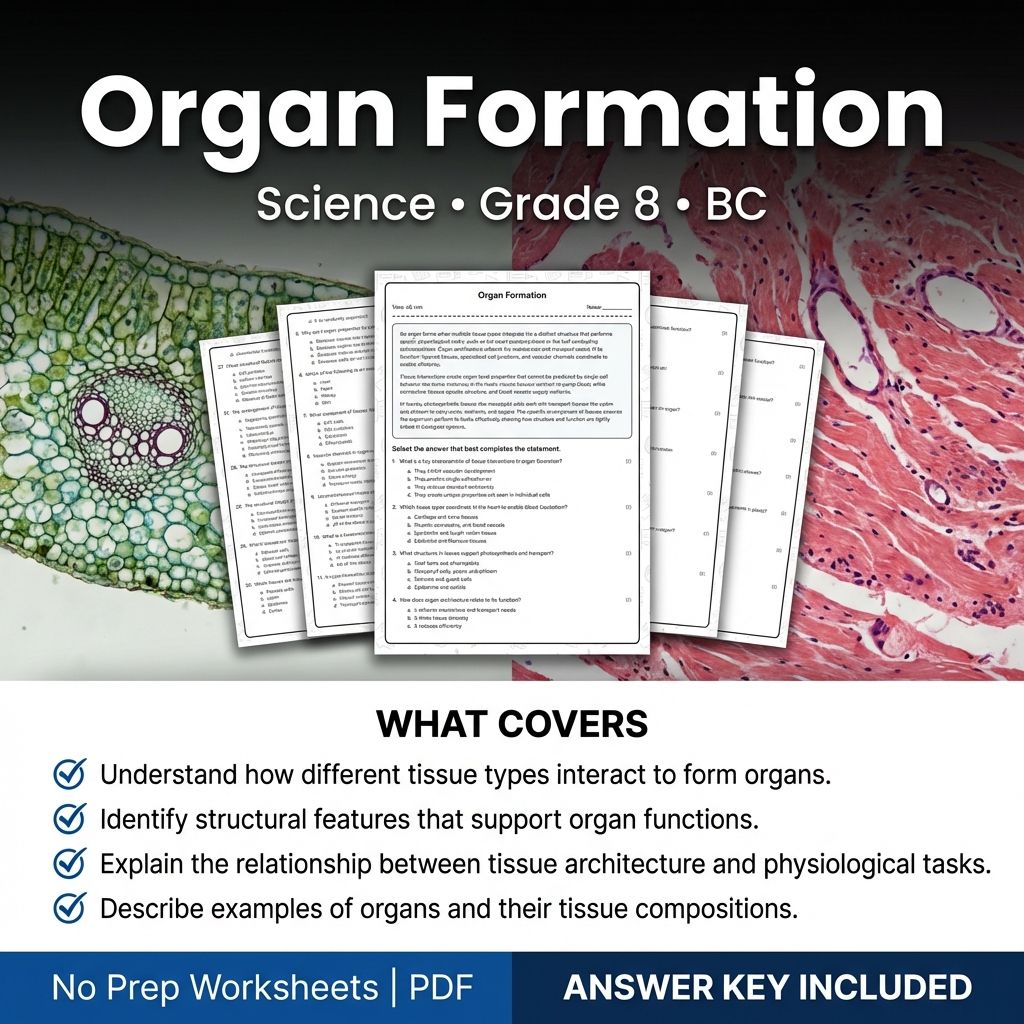
8th Grade Science | Organ Formation Worksheet with Answer Key (Printable PDF)
Created byCoral Reef LearningLearning Objectives
- Understand how different tissue types interact to form organs.
- Identify structural features that support organ functions.
- Explain the relationship between tissue architecture and physiological tasks.
Instant download
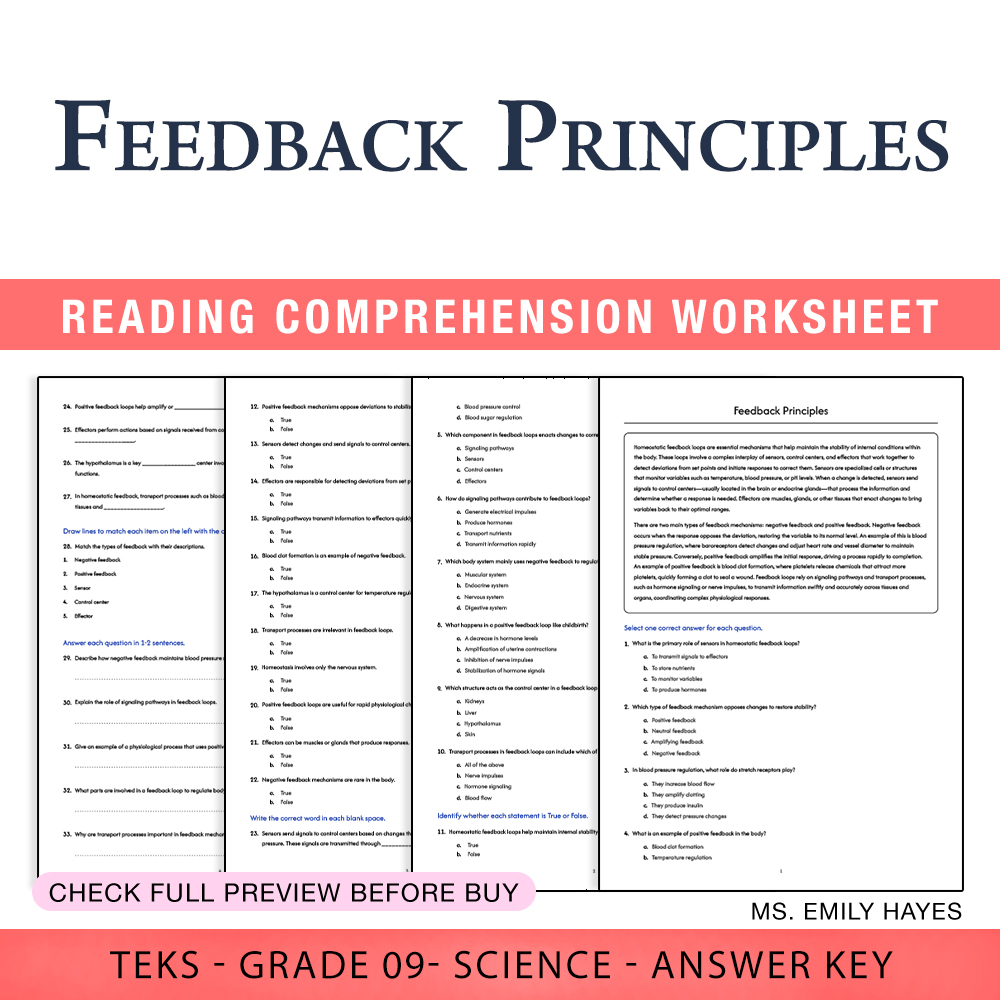
9th Grade Science | Feedback Principles Worksheet (PDF+ Answer Key)
Created byCopper Leaf ClassroomLearning Objectives
- Understand the components and functions of homeostatic feedback loops.
- Differentiate between negative and positive feedback mechanisms.
- Explain how signaling pathways and transport processes transmit information in feedback loops.
Instant download
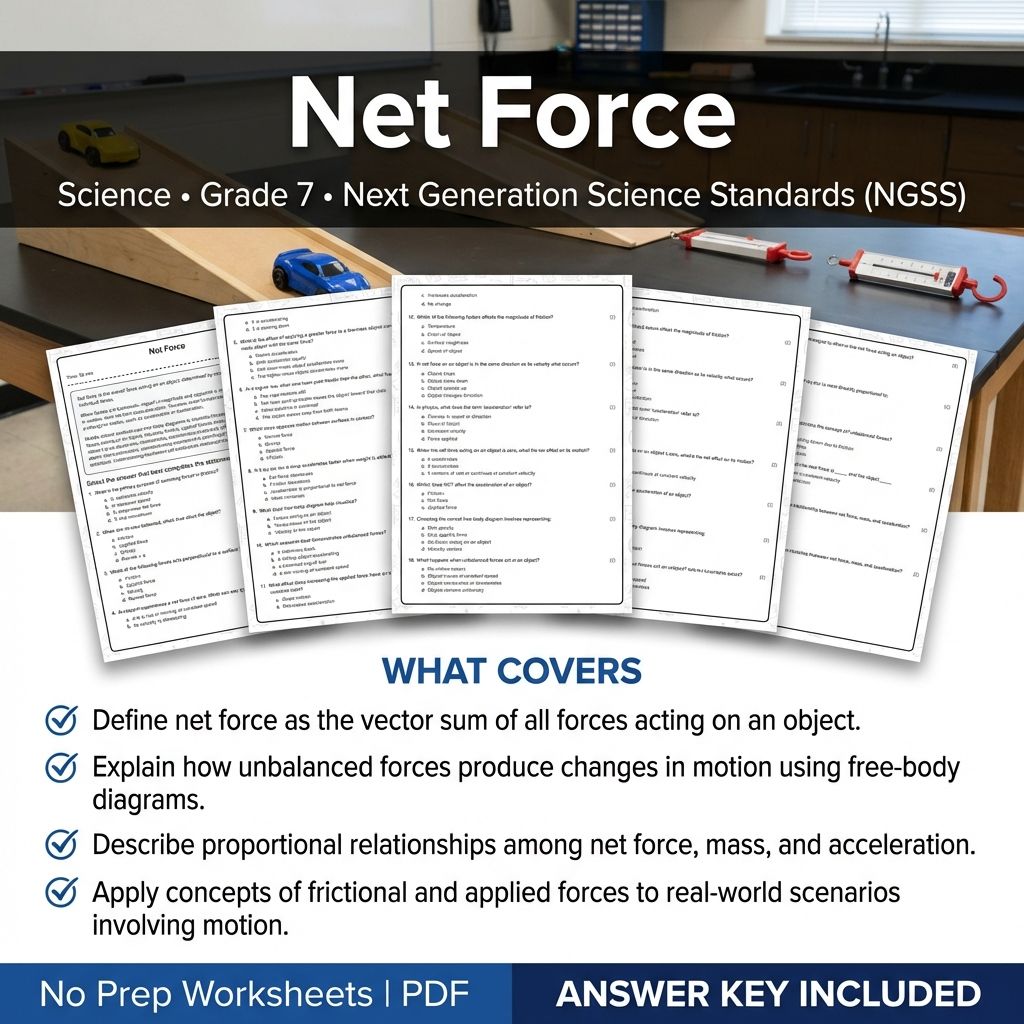
7th Grade Science | Net Force Worksheet & Answer Key (Printable PDF)
Created byCoral Reef LearningLearning Objectives
- Define net force as the vector sum of all forces acting on an object.
- Explain how unbalanced forces produce changes in motion using free-body diagrams.
- Describe proportional relationships among net force, mass, and acceleration.
Instant download
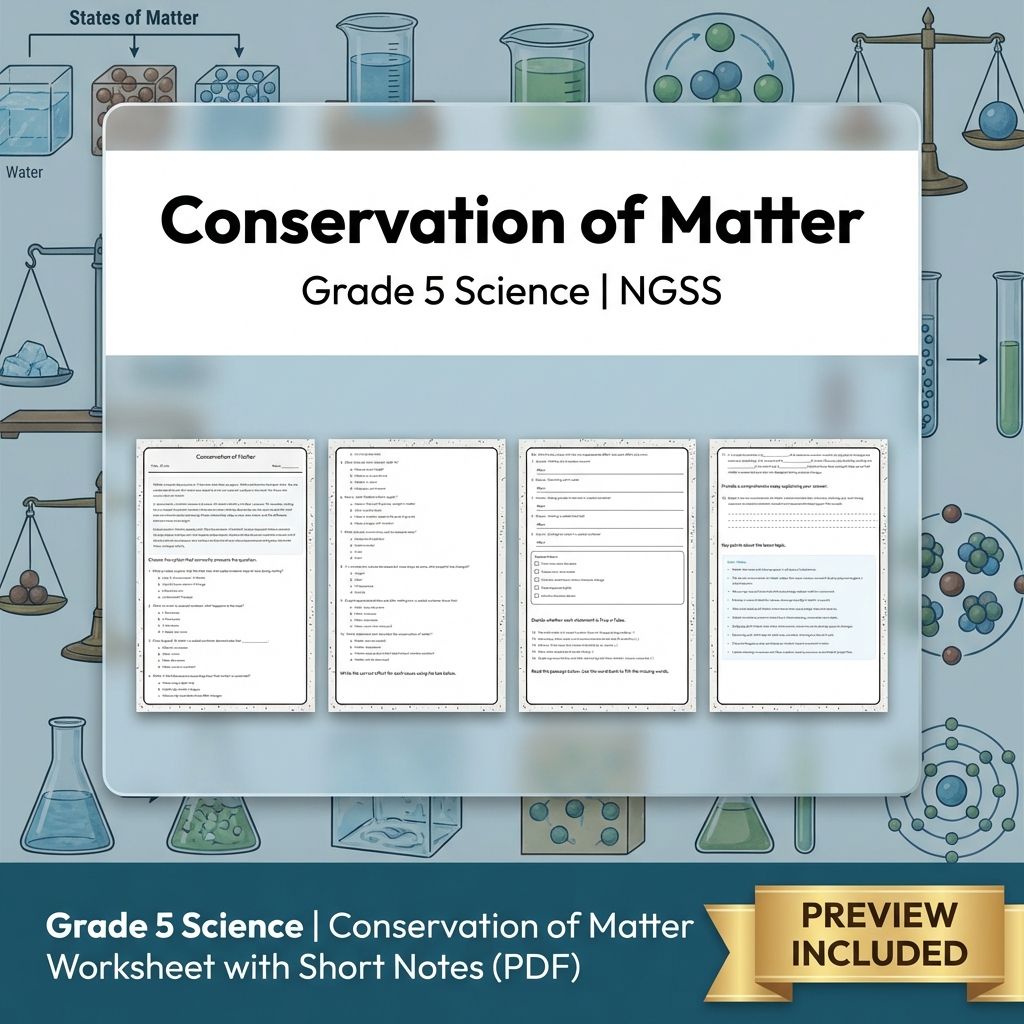
Grade 5 Science | Conservation of Matter Worksheet with Short Notes (PDF)
Created byMeadowlark WorksheetsLearning Objectives
- Understand how the mass of substances remains constant during physical changes in closed systems.
- Analyze measurements and graphical data related to melting ice, dissolving salt, and mixing materials.
- Distinguish between mass and weight, and comprehend density concepts.
Also included in: Grade 5 Science | Matter and Its Interactions NGSS Unit Bundle (Worksheet Pack) +1 more
Instant download
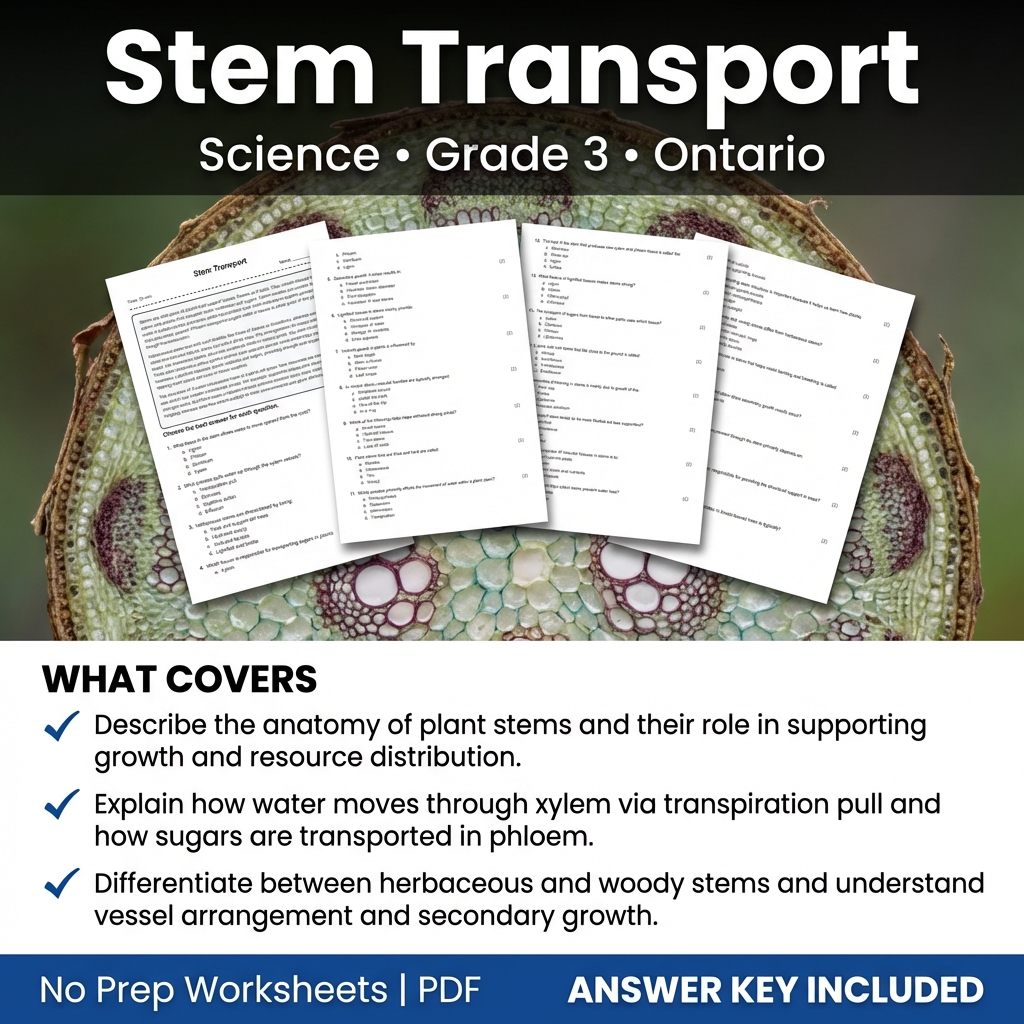
Stem Transport Science Worksheet for Grade 3 | Ontario Standards
Created byCoral Reef LearningLearning Objectives
- Describe the anatomy of plant stems and their role in supporting growth and resource distribution.
- Explain how water moves through xylem via transpiration pull and how sugars are transported in phloem.
- Differentiate between herbaceous and woody stems and understand vessel arrangement and secondary growth.
Instant download
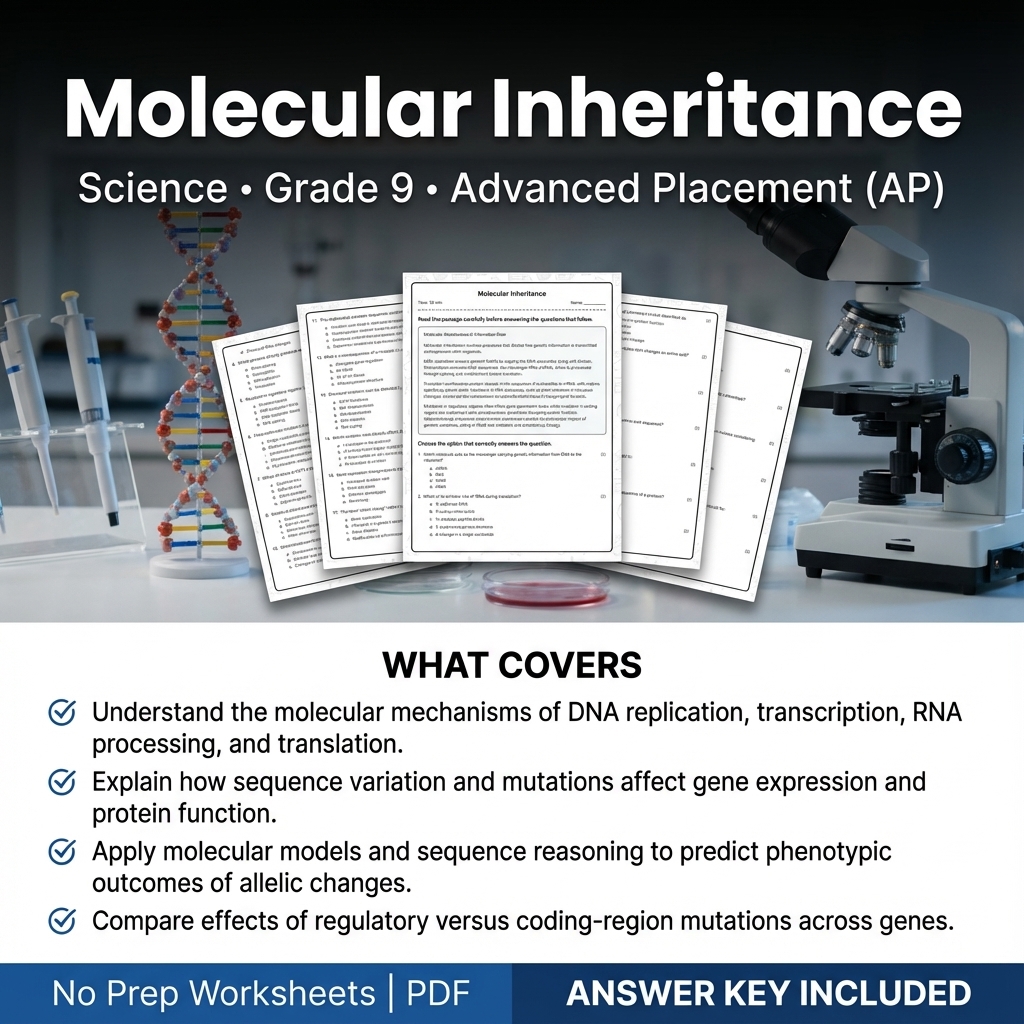
9th Grade Science | Molecular Inheritance Worksheet (Printable PDF + Answer Key)
Created byCoral Reef LearningLearning Objectives
- Understand the molecular mechanisms of DNA replication, transcription, RNA processing, and translation.
- Explain how sequence variation and mutations affect gene expression and protein function.
- Apply molecular models and sequence reasoning to predict phenotypic outcomes of allelic changes.
Also included in: Grade 9 Science Unit Worksheet Bundle | Cell Function to Ecosystem Dynamics +2 more
Instant download
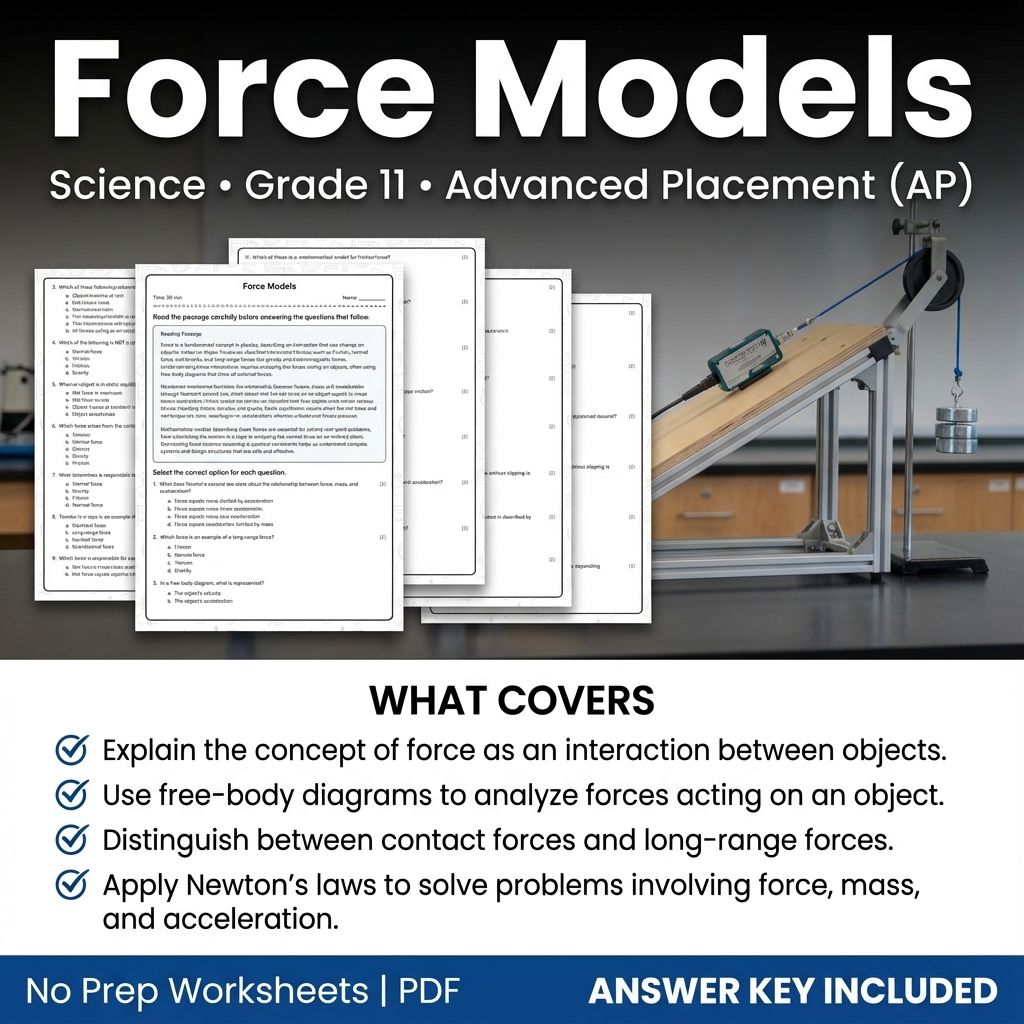
11th Grade Science | Force Models Worksheet (Printable PDF + Answer Key)
Created byCoral Reef LearningLearning Objectives
- Explain the concept of force as an interaction between objects.
- Use free-body diagrams to analyze forces acting on an object.
- Distinguish between contact forces and long-range forces.
Also included in: Grade 11 Science Unit | Physics Worksheets on Work, Power & Motion PDF Bundle +1 more
Instant download
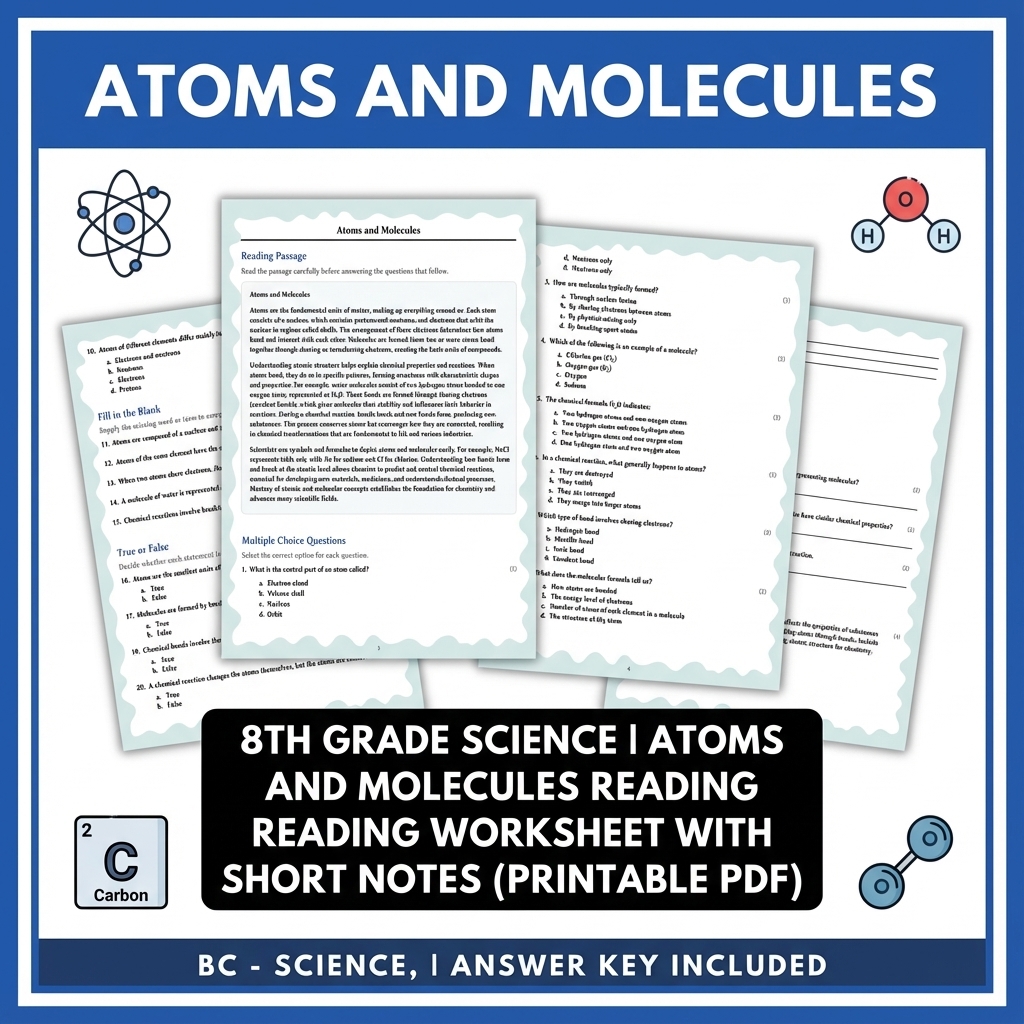
Grade 8 Science | Atoms and Molecules Reading Worksheet (PDF + Answer Key)
JCreated byJ.S SheetsLearning Objectives
- Understand the basic structure of atoms and how atoms form molecules.
- Explain how chemical bonds and arrangements influence properties of substances.
- Describe the process of chemical reactions as bond-breaking and bond-forming events.
Instant download

Grade 9 Science | Cell Theory - Daily Reading Comprehension Practice
Created byCoral Reef LearningLearning Objectives
- Identify the basic parts of a cell and describe their functions.
- Understand the principles of cell theory and its significance in biology.
- Differentiate between unicellular and multicellular organisms.
Instant download
Browse more categories
About Science Worksheets
Find Science worksheets spanning core skills, practice, and review. All 44,573 resources are instant PDF downloads for the classroom or home.
Every worksheet on MyTeachingSheets is created by independent teacher-authors and reviewed before publication. All resources download as printable PDFs for classroom, homework, or at-home practice, and many include answer keys. Preview any worksheet free before buying.