
Science Worksheets
44,627 subject resources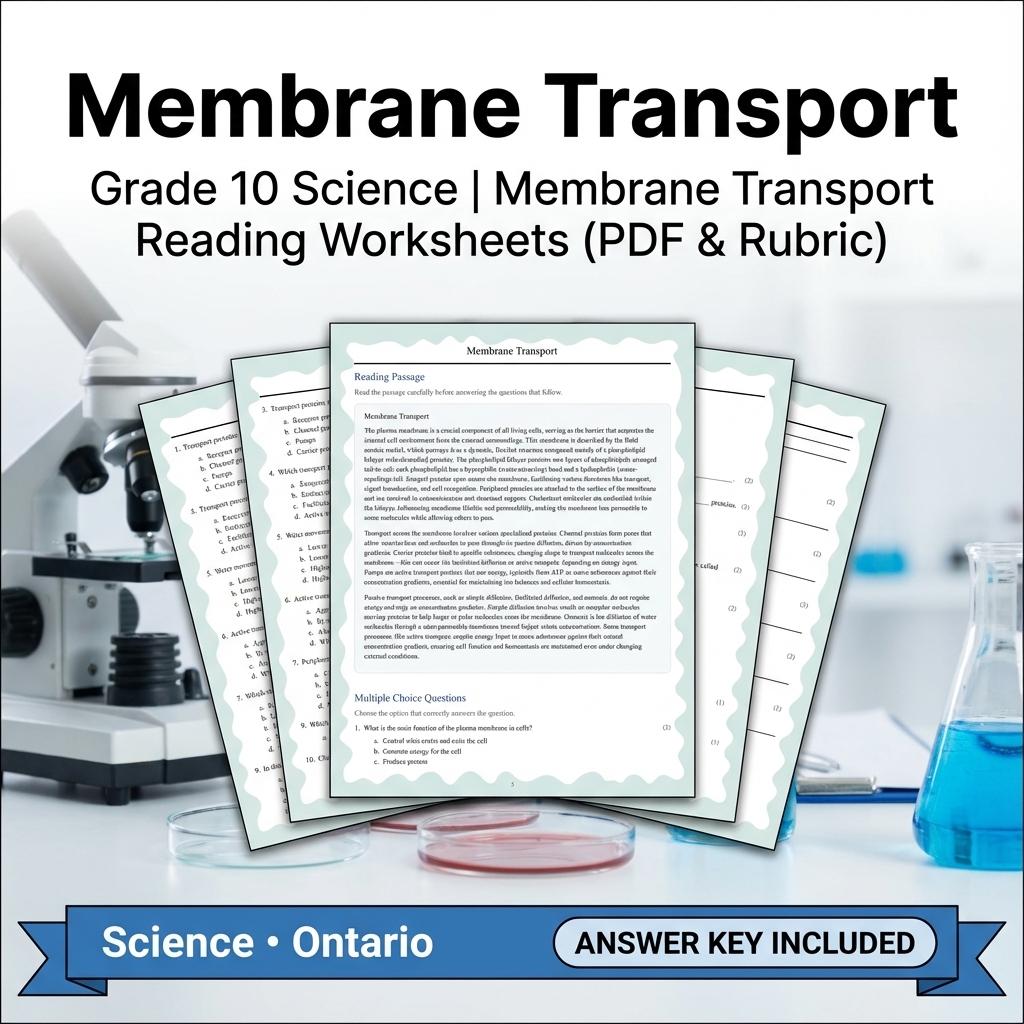
Grade 10 Science | Membrane Transport Reading Worksheets (PDF & Rubric)
JCreated byJ.S SheetsLearning Objectives
- Describe the structure of the plasma membrane based on the fluid mosaic model.
- Differentiate between types of transport proteins such as channels, carriers, and pumps.
- Explain passive transport mechanisms including diffusion, facilitated diffusion, and osmosis.
Also included in: Grade 10 Science Unit Bundle | Cell Biology, Microbes & Energy Activities +1 more
Instant download
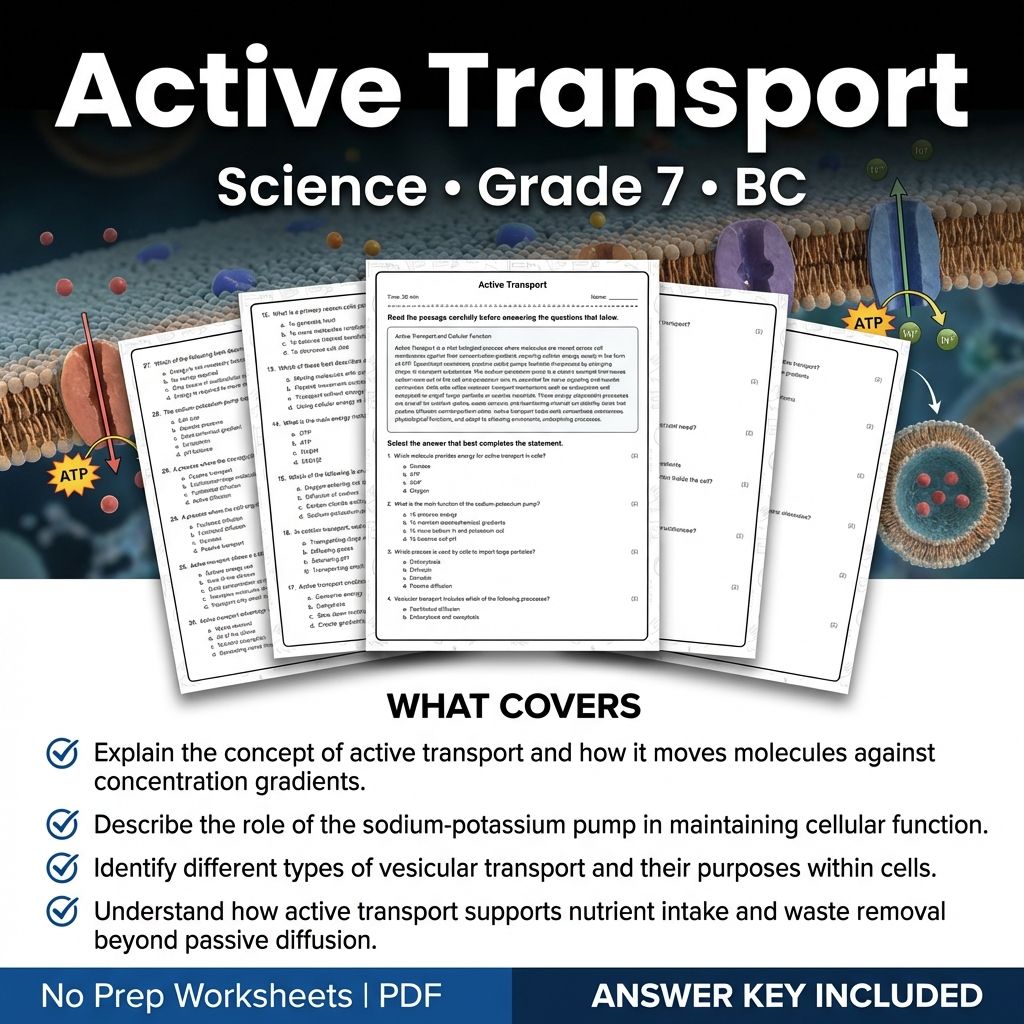
7th Grade Science | Active Transport Worksheet & Answer Key (Printable PDF)
 Created byCoral Reef Learning
Learning Objectives
- Explain the concept of active transport and how it moves molecules against concentration gradients.
- Describe the role of the sodium-potassium pump in maintaining cellular function.
- Identify different types of vesicular transport and their purposes within cells.
Instant download

Grade 7 Science Worksheet | Active Transport & Cell Movement (BC Standards) (PDF)
 Created byEvergreen Desk Education
Learning Objectives
- Explain how active transport moves substances against a concentration gradient using cellular energy and membrane proteins.
- Describe the sodium-potassium pump and its role in maintaining electrochemical gradients for nerve and muscle function.
- Compare active transport with passive diffusion and identify examples of vesicular transport (endocytosis and exocytosis).
Instant download
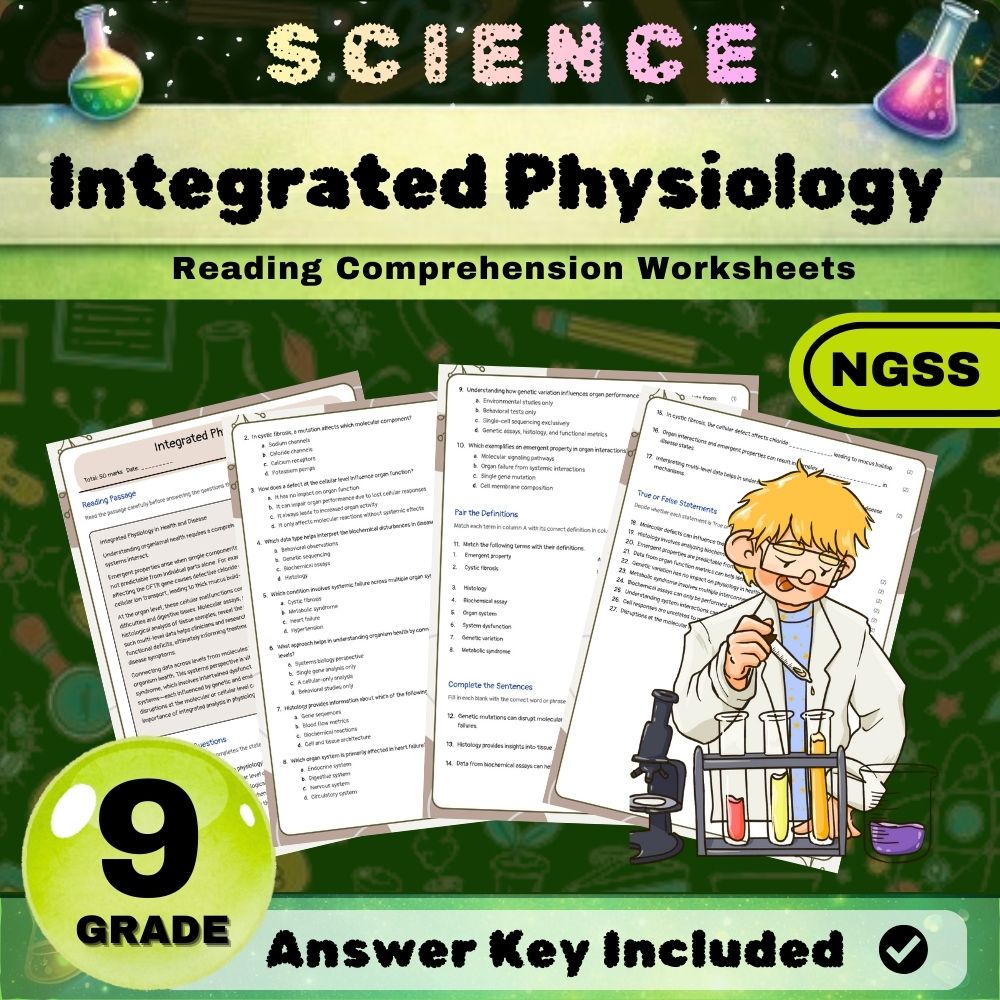
Grade 9 Science – Integrated Physiology Worksheet (NGSS) PDF
 Created byMaple Path Learning
Learning Objectives
- Explain how molecular, cellular, and organ-level interactions produce emergent physiological properties.
- Analyze how genetic variations can lead to system dysfunction in conditions such as cystic fibrosis, heart failure, and metabolic syndrome.
- Interpret data from biochemical assays, histology, and organ function metrics to assess organismal health and disease pathways.
Also included in: Grade 9 Science NGSS| From Molecules to Organisms: Structures & Processes Bundle +1 more
Instant download
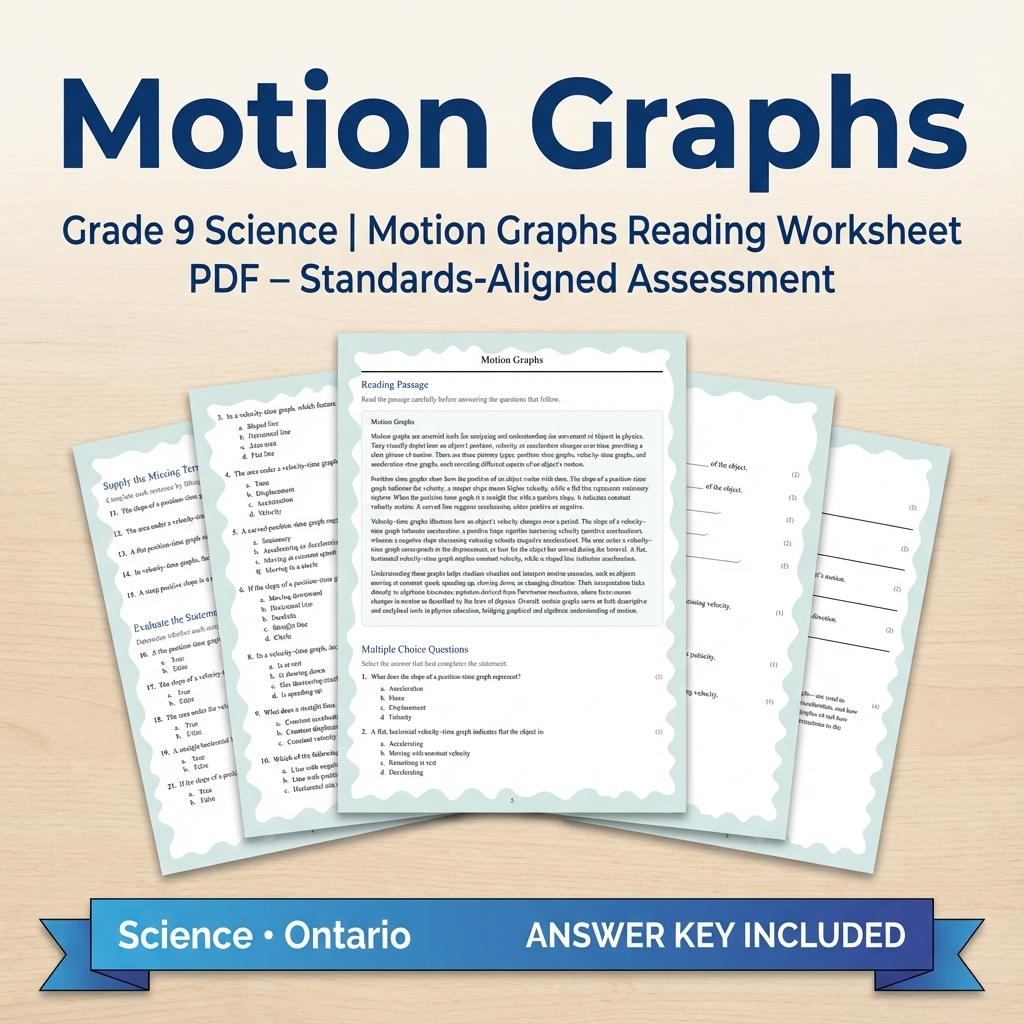
Grade 9 Science | Motion Graphs Reading Worksheet PDF
JCreated byJ.S SheetsLearning Objectives
- Interpret position–time and velocity–time graphs in the context of motion.
- Understand how the slope of a position–time graph indicates velocity and how the slope of a velocity–time graph indicates acceleration.
- Recognize that the area under a velocity–time graph corresponds to displacement.
Also included in: Grade 9 Science Unit | Force, Motion & Energy Worksheets & Answer Keys Bundle +1 more
Instant download

Grade 9 Science Cell Architecture Worksheet with Short Notes (Printable PDF)
 Created byMeadowlark Worksheets
Learning Objectives
- Understand how nucleic acid sequences determine amino acid chains and protein structures.
- Connect molecular coding and folding to organelle architecture such as ribosomes, endoplasmic reticulum, and mitochondria.
- Identify functional roles of proteins like hemoglobin and membrane transporters based on their structure.
Also included in: Grade 9 Science NGSS From Molecules to Organisms Structures & Processes Bundle +1 more
Instant download

Cell Modeling Worksheet | NGSS Grade 8 Science Assessment
 Created bySkylark Worksheets
Learning Objectives
- Explain how cell models use structure to represent function of organelles and membrane systems.
- Use models to interpret membrane transport processes such as diffusion and osmosis.
- Relate organelle energy pathways (mitochondria and chloroplasts) to cell viability in models.
Also included in: Grade 8 Molecules to Organisms Structures & Processes Science Lesson Bundle NGSS +1 more
Instant download

Grade 7 Science | Change Indicators Worksheet | BC Standards
 Created byLumora Learning
Learning Objectives
- Understand the signs that indicate a chemical change has occurred.
- Identify observable evidence such as gas formation, color change, and temperature change.
- Explain why multiple indicators together provide stronger evidence of a chemical change.
Also included in: Grade 7 Science | Matter & Chemical Change Unit Bundle | BC Aligned
Instant download
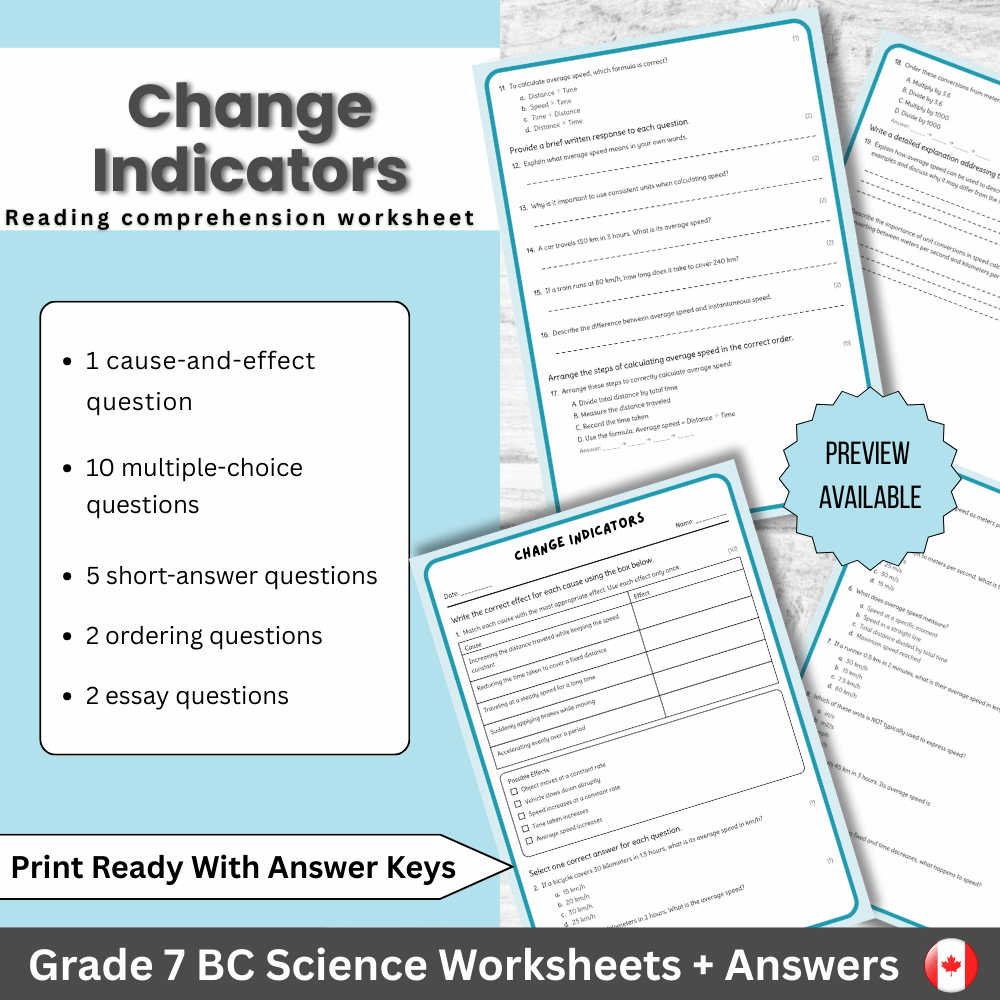
Grade 7 Science | Change Indicators Worksheet (Answer Key) for BC Standards
 Created byBright Mind Resources
Learning Objectives
- Identify observable signs that indicate a chemical change has occurred.
- Understand the importance of multiple indicators in confirming chemical reactions.
- Describe different types of evidence such as gas formation, color change, and temperature change.
Instant download
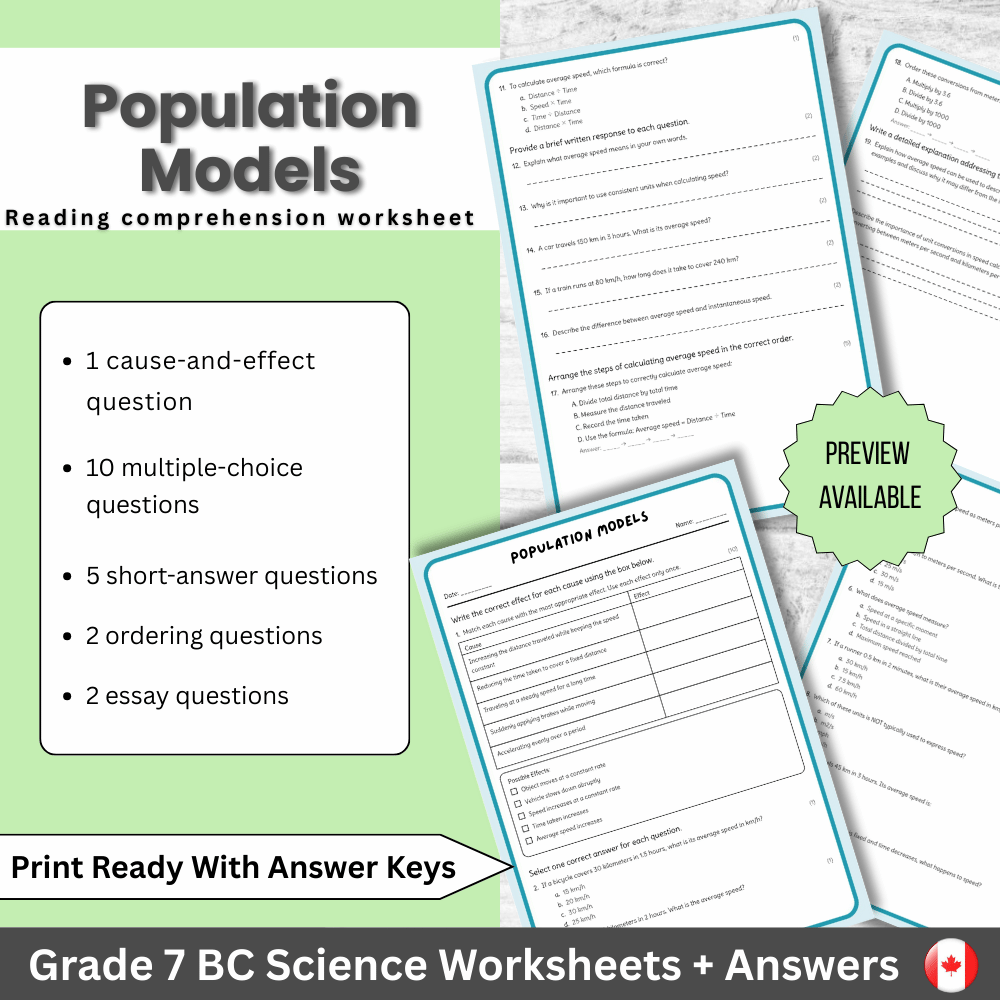
Grade 7 Science | Population Models Worksheet + Answer Key (BC Standards)
Created byBright Mind ResourcesLearning Objectives
- Describe the differences between exponential and logistic population growth models.
- Identify factors that influence population size, including density-dependent and density-independent factors.
- Interpret how models predict population patterns under various conditions.
Instant download
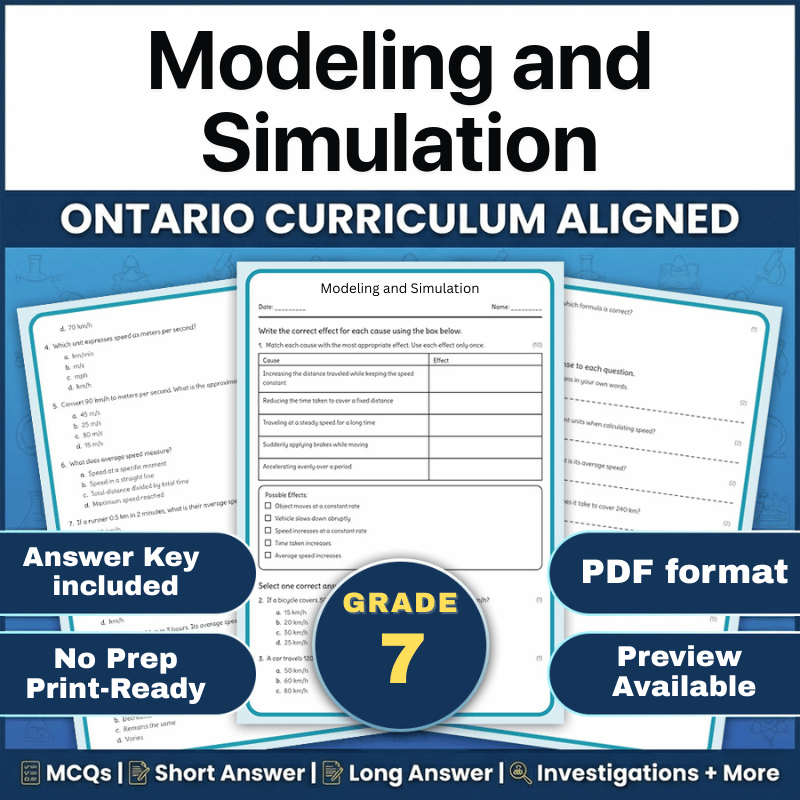
Grade 7 Science | Modeling and Simulation Worksheet (Ontario Standard) (PDF)
Created byBright Mind ResourcesLearning Objectives
- Understand the key concepts and practices involved in scientific modeling and simulation.
- Identify the importance of abstraction, assumptions, and validation in models.
- Describe examples of simple numerical models and their applications.
Instant download
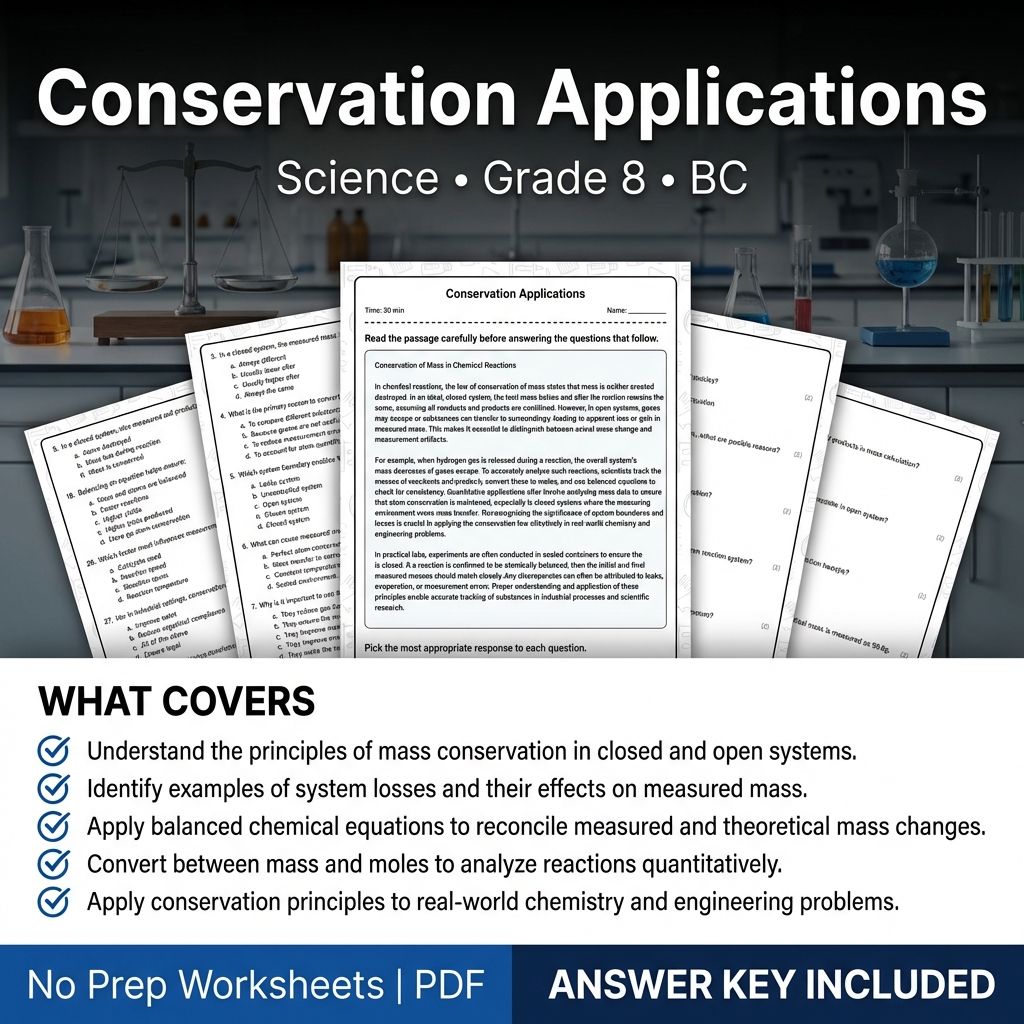
Grade 8 Science| Conservation Applications Worksheet & Answer Key(Printable PDF)
Created byCoral Reef LearningLearning Objectives
- Understand the principles of mass conservation in closed and open systems.
- Identify examples of system losses and their effects on measured mass.
- Apply balanced chemical equations to reconcile measured and theoretical mass changes.
Instant download
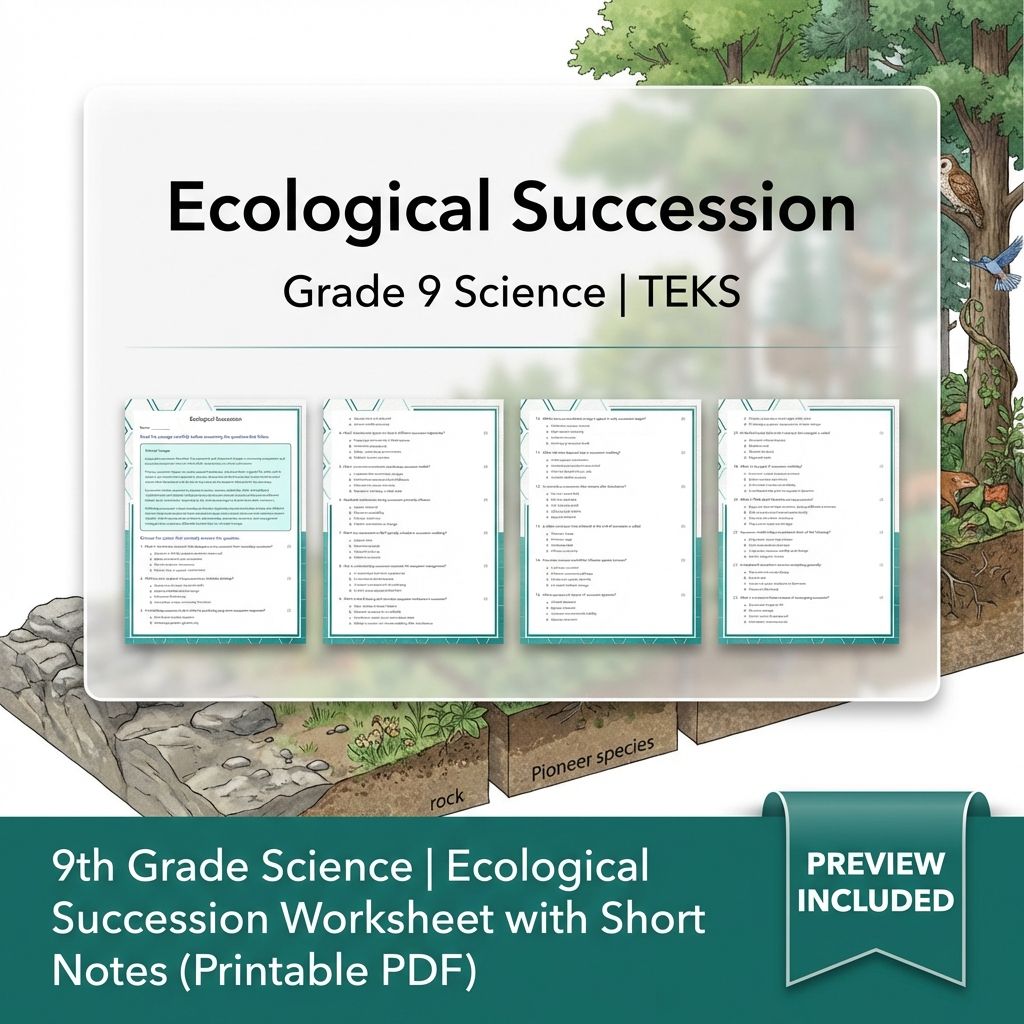
9th Grade Science | Ecological Succession Worksheet with Short Notes (PDF)
Created byMeadowlark WorksheetsLearning Objectives
- Understand the concept and stages of ecological succession.
- Differentiate between primary and secondary succession.
- Identify factors that influence succession trajectories and ecosystem stability.
Instant download

Fossil Records Worksheet | TEKS Science Assessment Grade 9
JCreated byJ.S SheetsLearning Objectives
- Explain how fossil records provide evidence of past life through preserved remains, impressions, and traces.
- Describe how stratigraphy and radiometric dating contribute to determining fossil ages.
- Evaluate how taphonomy and preservation bias affect which organisms appear in the fossil record.
Instant download
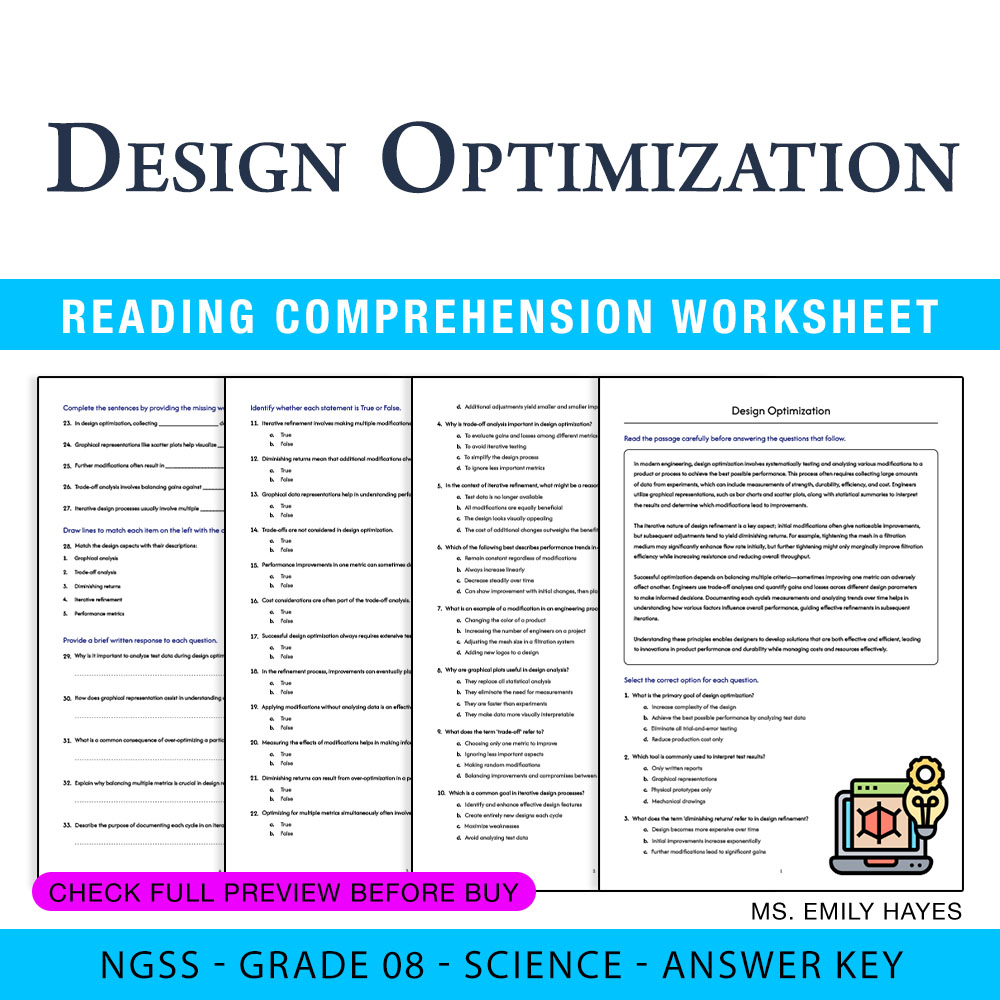
8th Grade Science | Design Optimization Worksheet (PDF+ Answer Key)
 Created byCopper Leaf Classroom
Learning Objectives
- Analyze test data to identify performance trends in experimental designs.
- Use graphical and statistical methods to evaluate design modifications.
- Identify effective design characteristics and quantify trade-offs among metrics.
Instant download
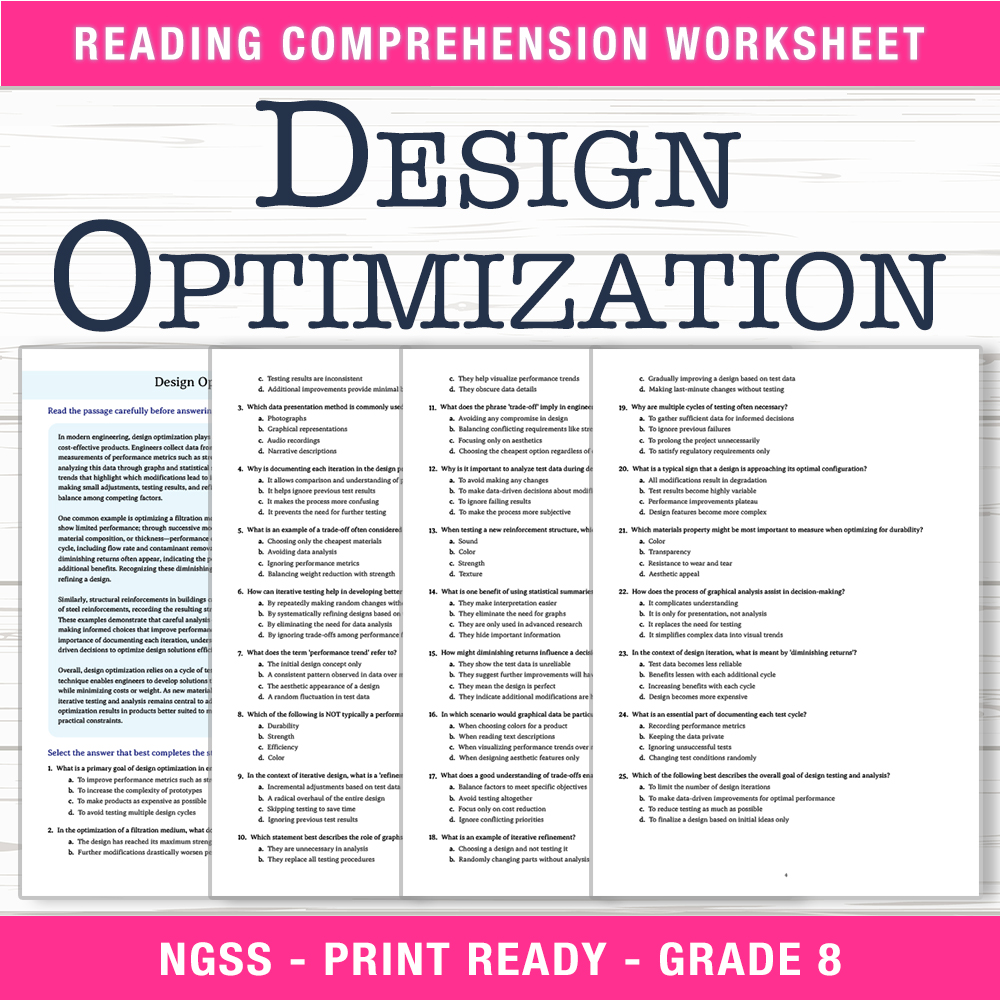
Grade 8 Science | Design Optimization Worksheet (PDF + Answer Key)
 Created byRiverstone Classroom
Learning Objectives
- Analyze test data to identify performance trends in design modifications.
- Use graphical and statistical tools to evaluate trade-offs among efficiency, strength, and durability.
- Apply iterative refinement techniques to optimize design characteristics in practical scenarios.
Instant download
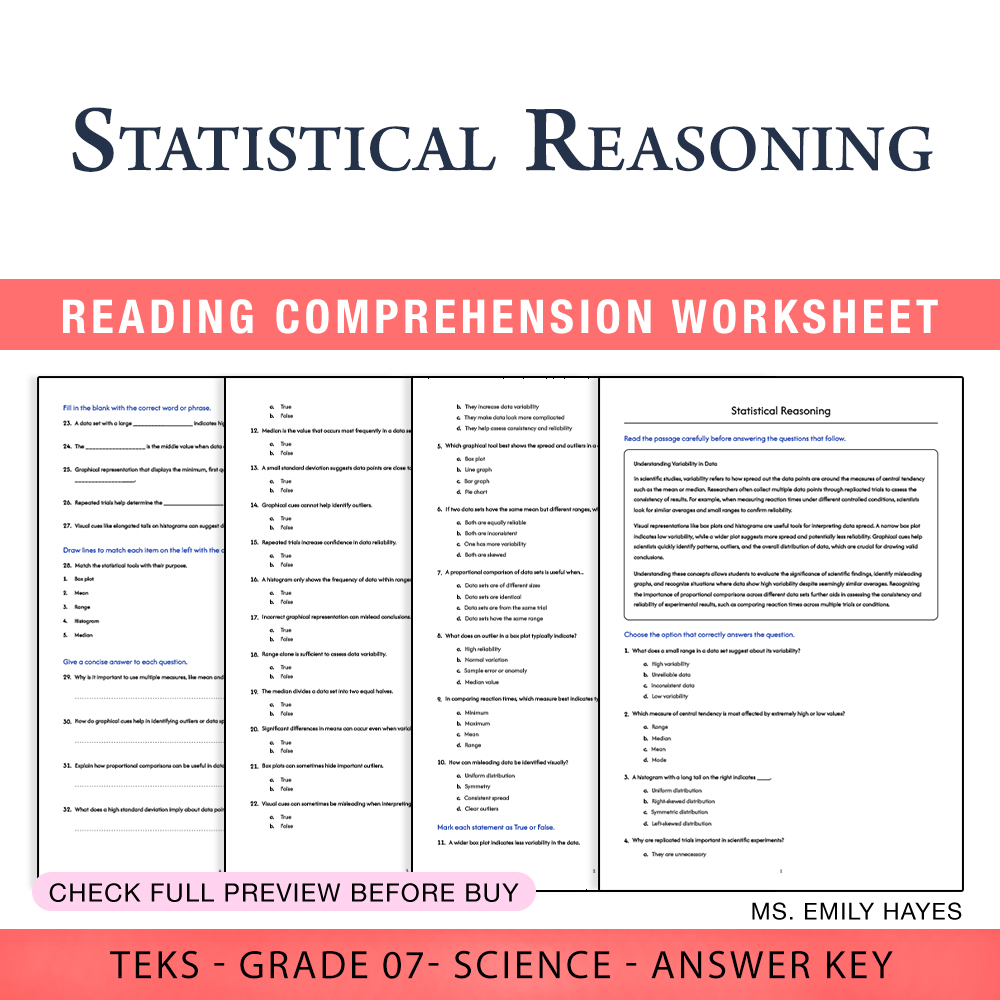
7th Grade Science | Statistical Reasoning Worksheet (PDF+ Answer Key)
Created byCopper Leaf ClassroomLearning Objectives
- Interpret variability and measures of central tendency in data sets.
- Use graphical cues to assess data reliability and significance.
- Compare data sets using mean, median, and range.
Instant download
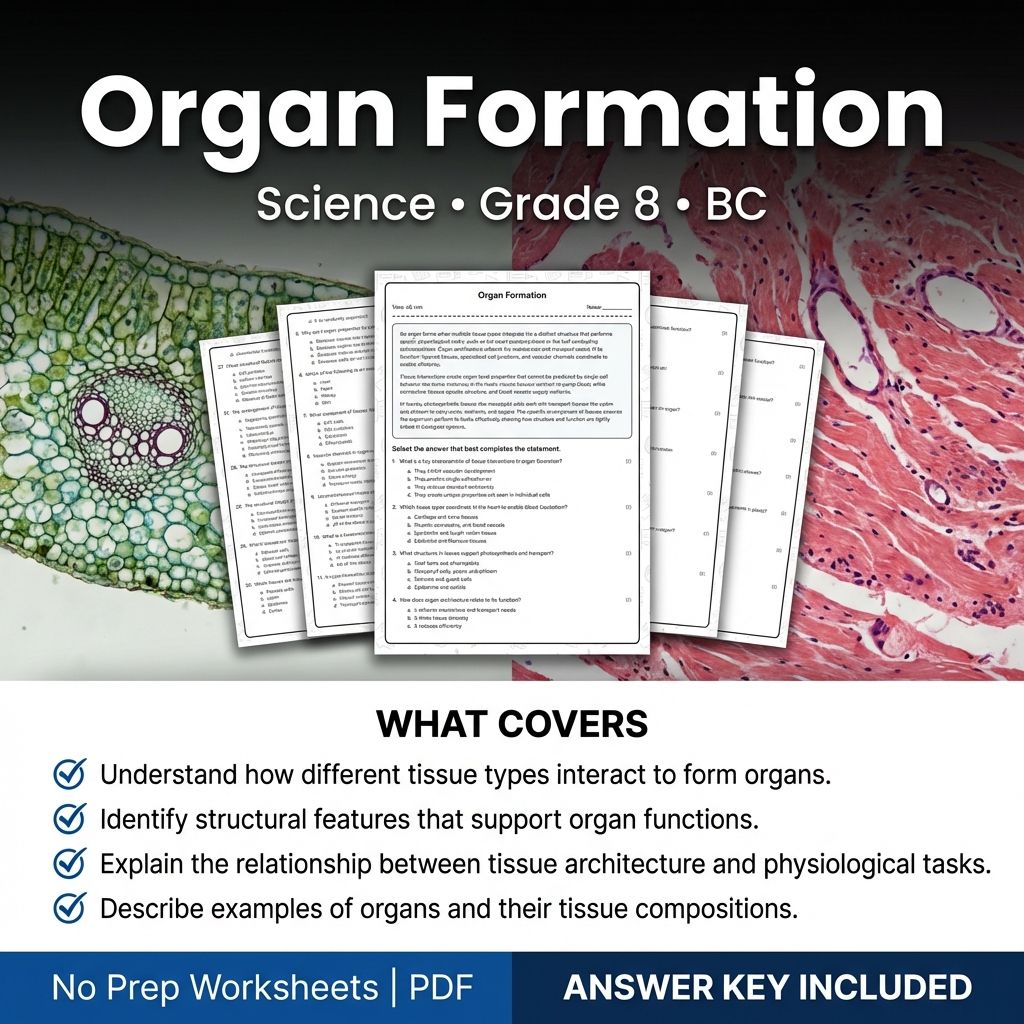
8th Grade Science | Organ Formation Worksheet with Answer Key (Printable PDF)
Created byCoral Reef LearningLearning Objectives
- Understand how different tissue types interact to form organs.
- Identify structural features that support organ functions.
- Explain the relationship between tissue architecture and physiological tasks.
Instant download
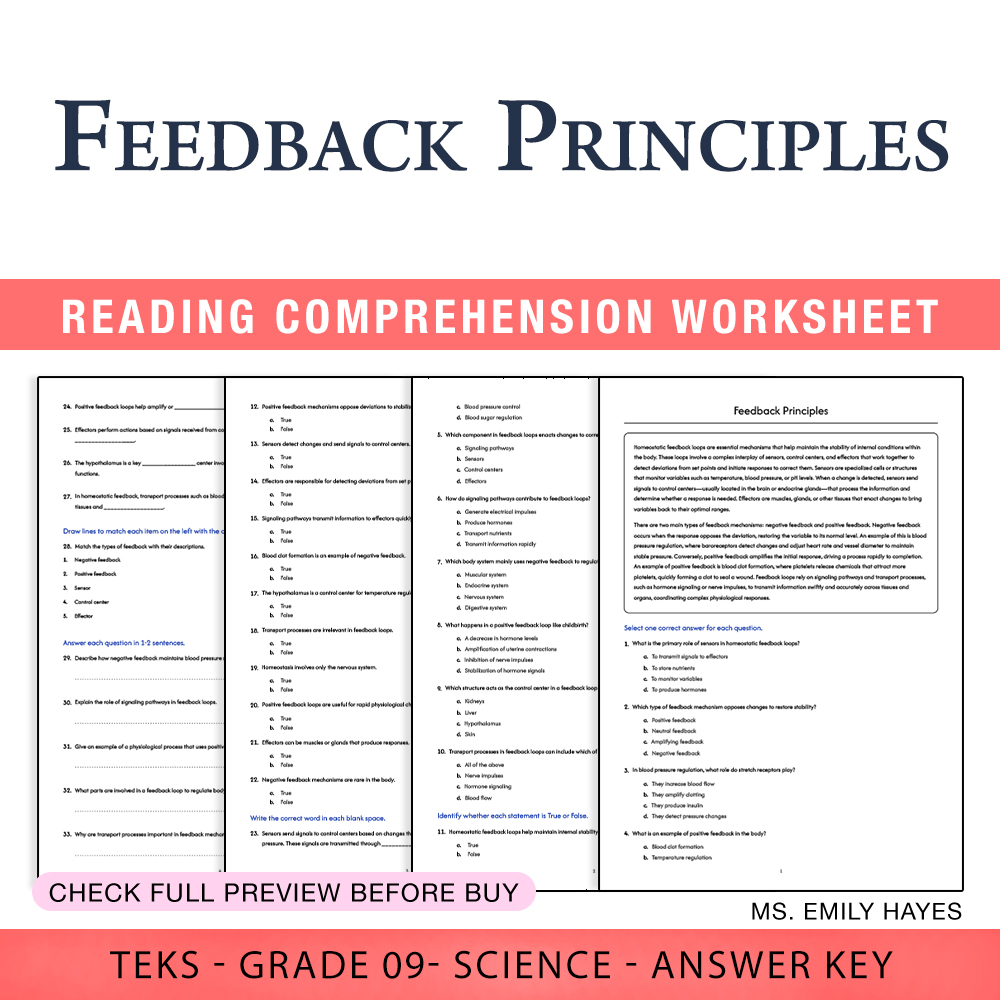
9th Grade Science | Feedback Principles Worksheet (PDF+ Answer Key)
Created byCopper Leaf ClassroomLearning Objectives
- Understand the components and functions of homeostatic feedback loops.
- Differentiate between negative and positive feedback mechanisms.
- Explain how signaling pathways and transport processes transmit information in feedback loops.
Instant download
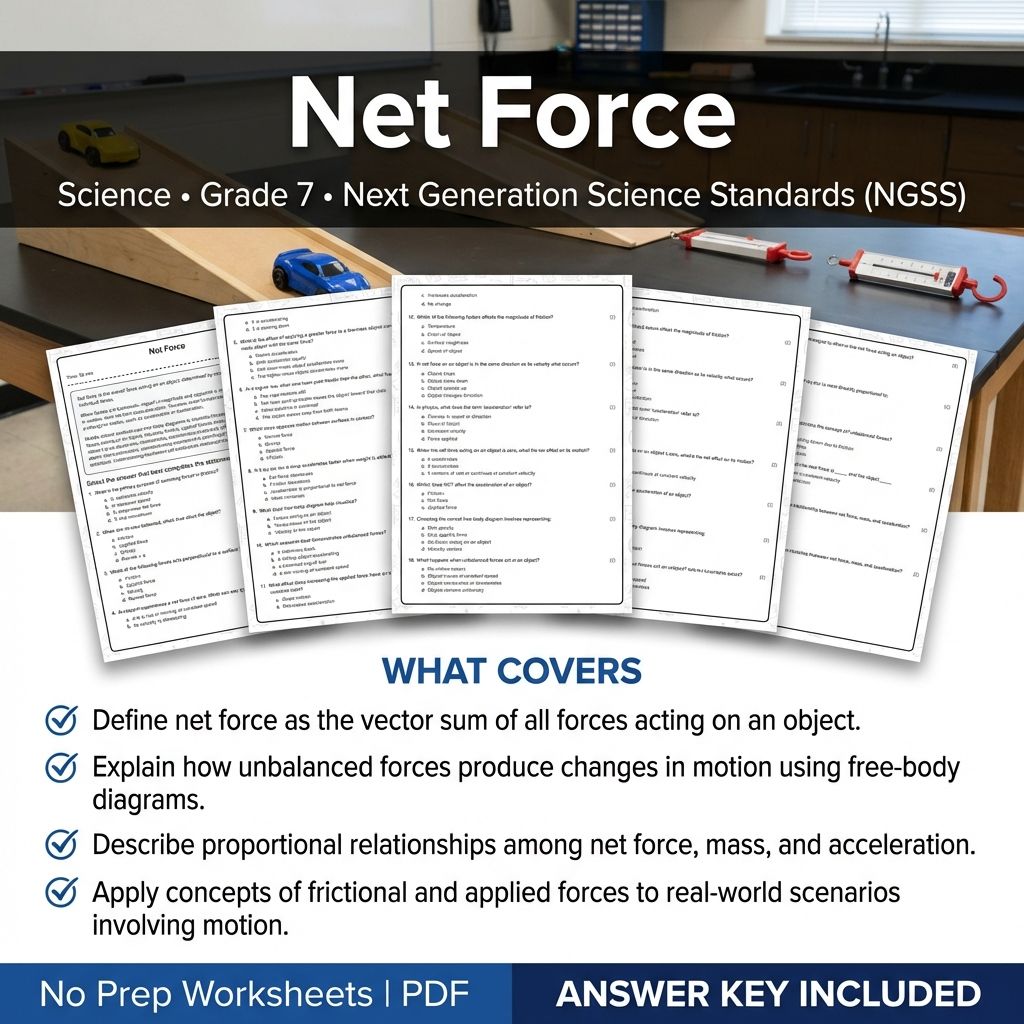
7th Grade Science | Net Force Worksheet & Answer Key (Printable PDF)
Created byCoral Reef LearningLearning Objectives
- Define net force as the vector sum of all forces acting on an object.
- Explain how unbalanced forces produce changes in motion using free-body diagrams.
- Describe proportional relationships among net force, mass, and acceleration.
Instant download
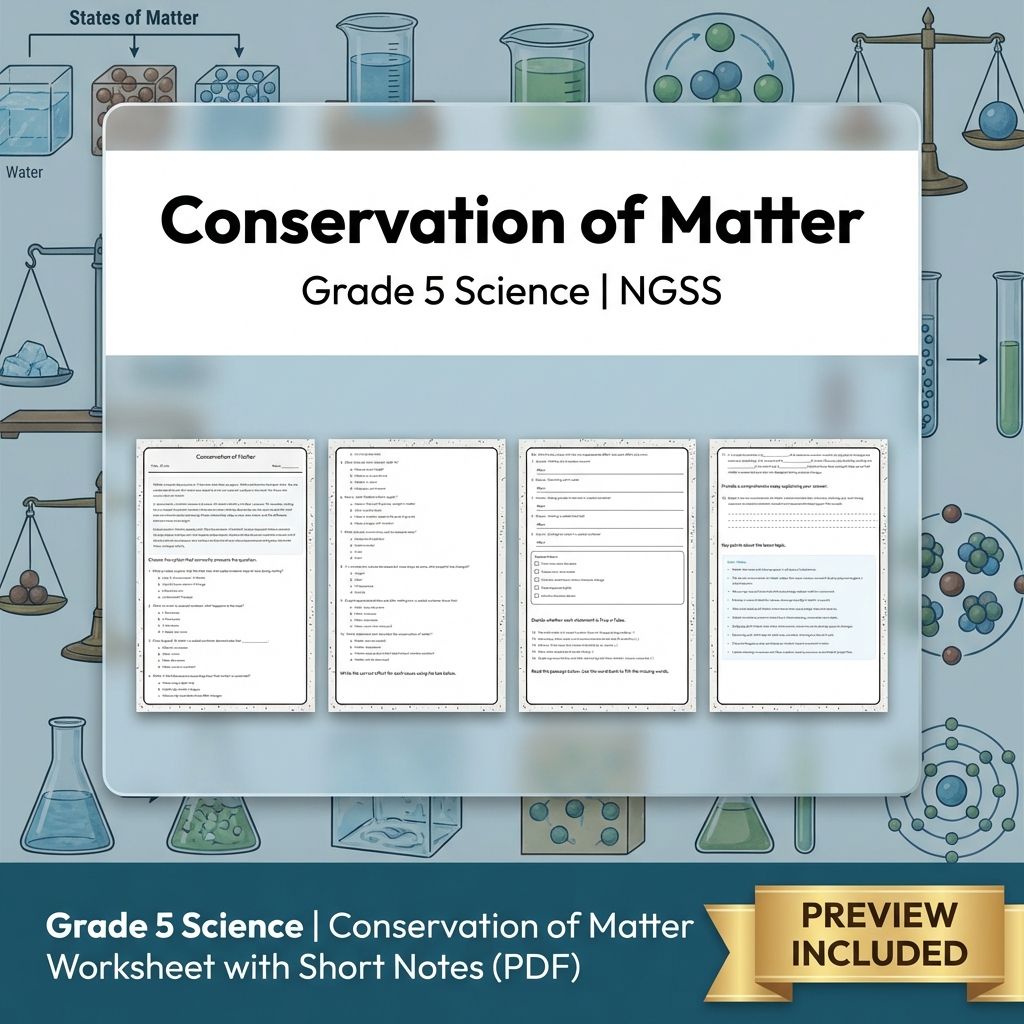
Grade 5 Science | Conservation of Matter Worksheet with Short Notes (PDF)
Created byMeadowlark WorksheetsLearning Objectives
- Understand how the mass of substances remains constant during physical changes in closed systems.
- Analyze measurements and graphical data related to melting ice, dissolving salt, and mixing materials.
- Distinguish between mass and weight, and comprehend density concepts.
Also included in: Grade 5 Science | Matter and Its Interactions NGSS Unit Bundle (Worksheet Pack) +1 more
Instant download
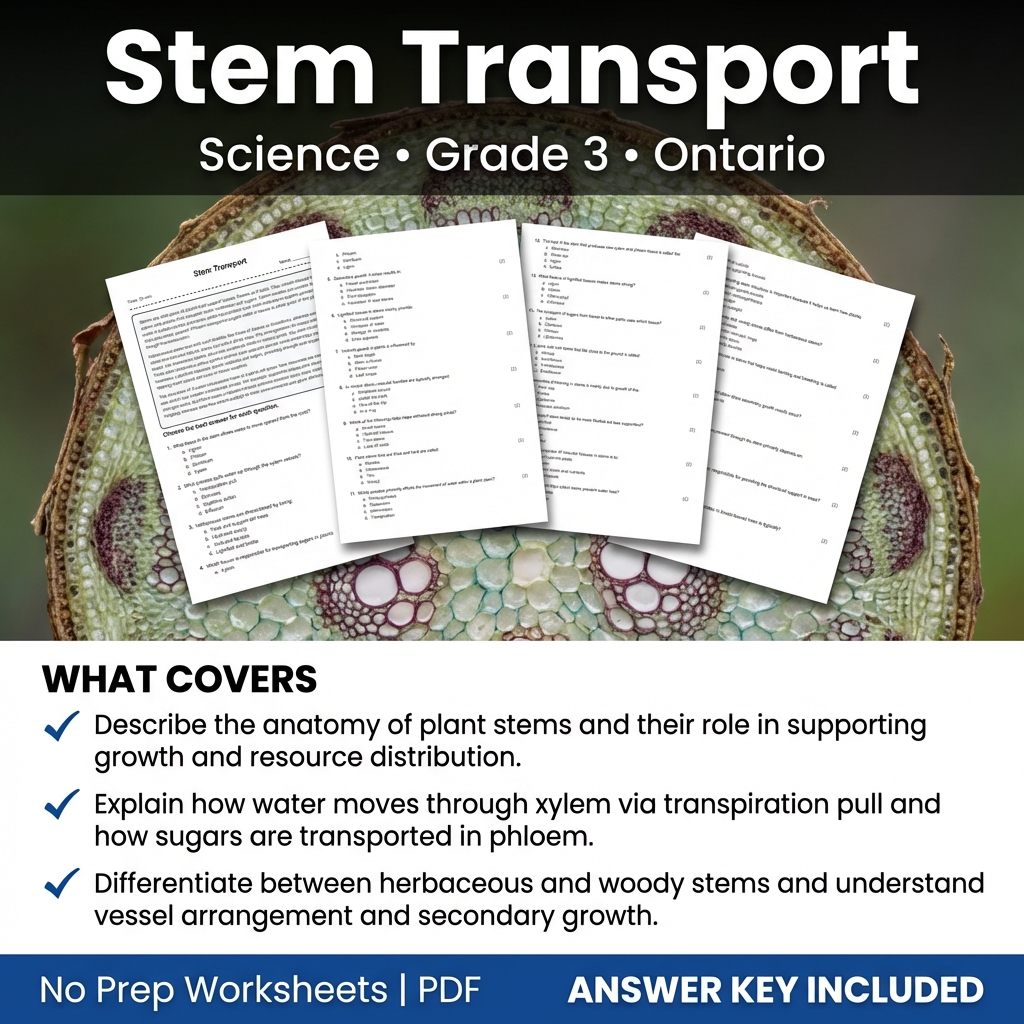
Stem Transport Science Worksheet for Grade 3 | Ontario Standards
Created byCoral Reef LearningLearning Objectives
- Describe the anatomy of plant stems and their role in supporting growth and resource distribution.
- Explain how water moves through xylem via transpiration pull and how sugars are transported in phloem.
- Differentiate between herbaceous and woody stems and understand vessel arrangement and secondary growth.
Instant download
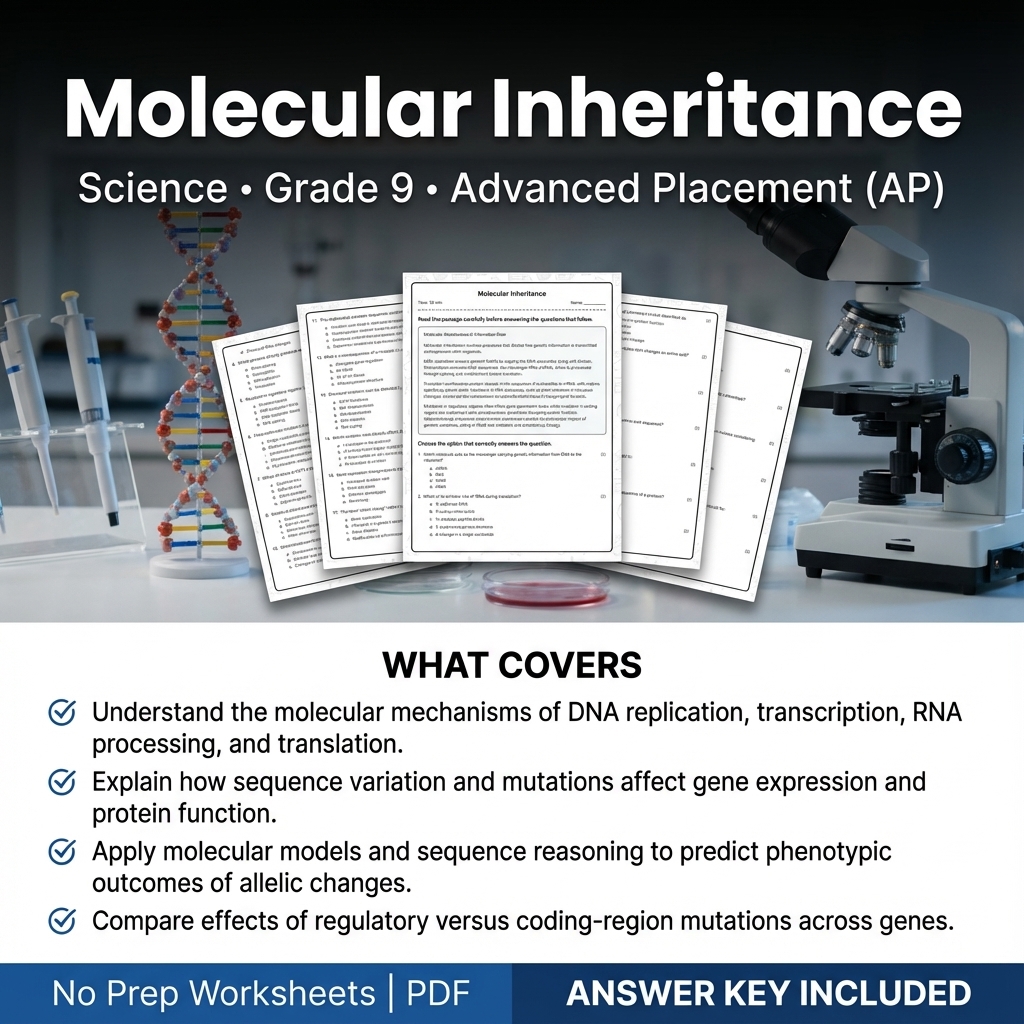
9th Grade Science | Molecular Inheritance Worksheet (Printable PDF + Answer Key)
Created byCoral Reef LearningLearning Objectives
- Understand the molecular mechanisms of DNA replication, transcription, RNA processing, and translation.
- Explain how sequence variation and mutations affect gene expression and protein function.
- Apply molecular models and sequence reasoning to predict phenotypic outcomes of allelic changes.
Also included in: Grade 9 Science Unit Worksheet Bundle | Cell Function to Ecosystem Dynamics +2 more
Instant download
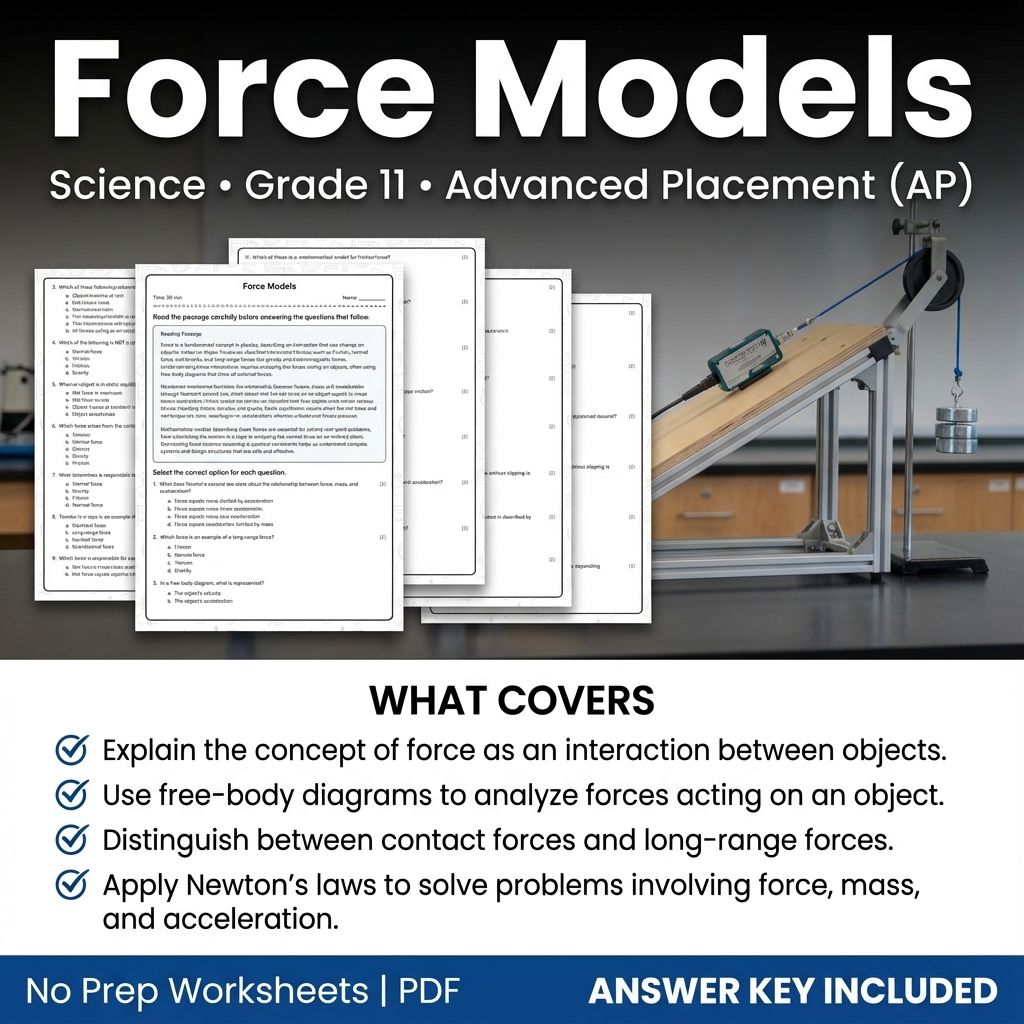
11th Grade Science | Force Models Worksheet (Printable PDF + Answer Key)
Created byCoral Reef LearningLearning Objectives
- Explain the concept of force as an interaction between objects.
- Use free-body diagrams to analyze forces acting on an object.
- Distinguish between contact forces and long-range forces.
Also included in: Grade 11 Science Unit | Physics Worksheets on Work, Power & Motion PDF Bundle +1 more
Instant download
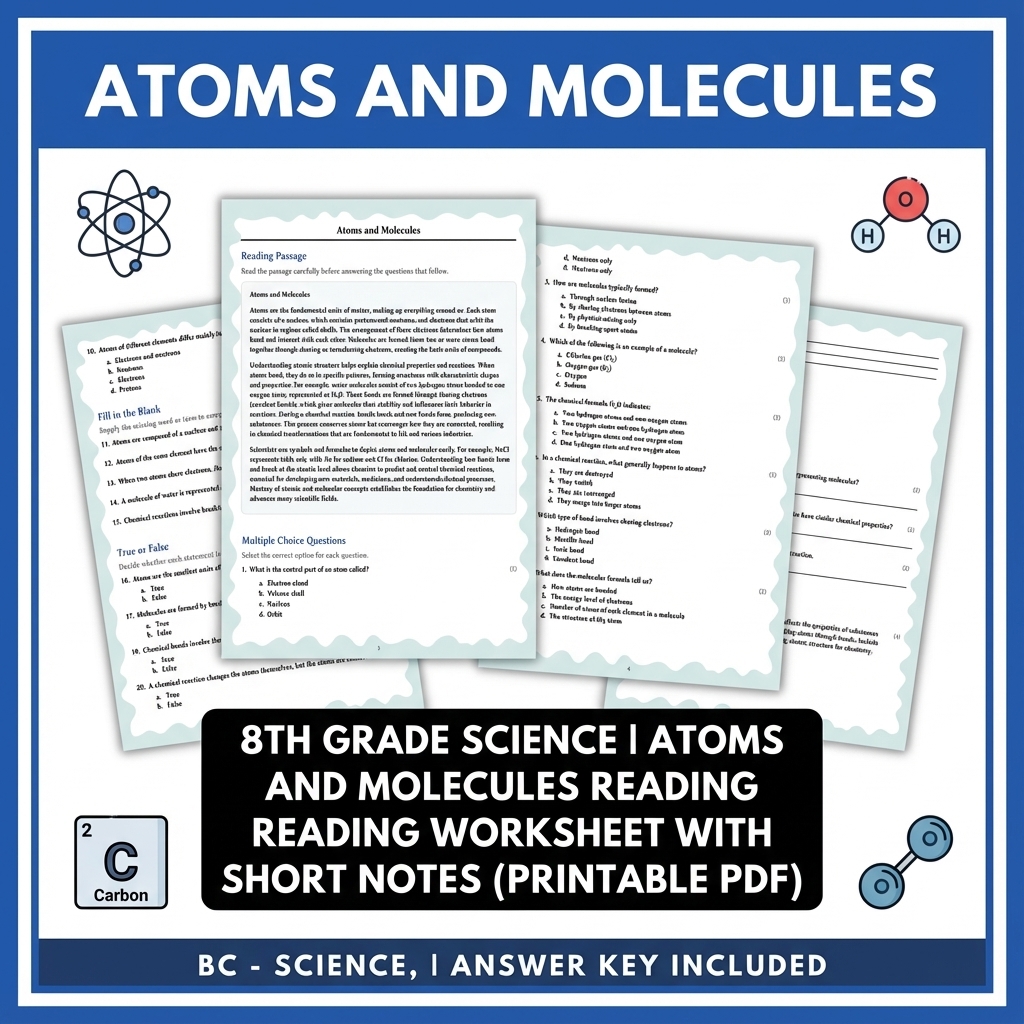
Grade 8 Science | Atoms and Molecules Reading Worksheet (PDF + Answer Key)
JCreated byJ.S SheetsLearning Objectives
- Understand the basic structure of atoms and how atoms form molecules.
- Explain how chemical bonds and arrangements influence properties of substances.
- Describe the process of chemical reactions as bond-breaking and bond-forming events.
Instant download

Grade 9 Science | Cell Theory - Daily Reading Comprehension Practice
Created byCoral Reef LearningLearning Objectives
- Identify the basic parts of a cell and describe their functions.
- Understand the principles of cell theory and its significance in biology.
- Differentiate between unicellular and multicellular organisms.
Instant download
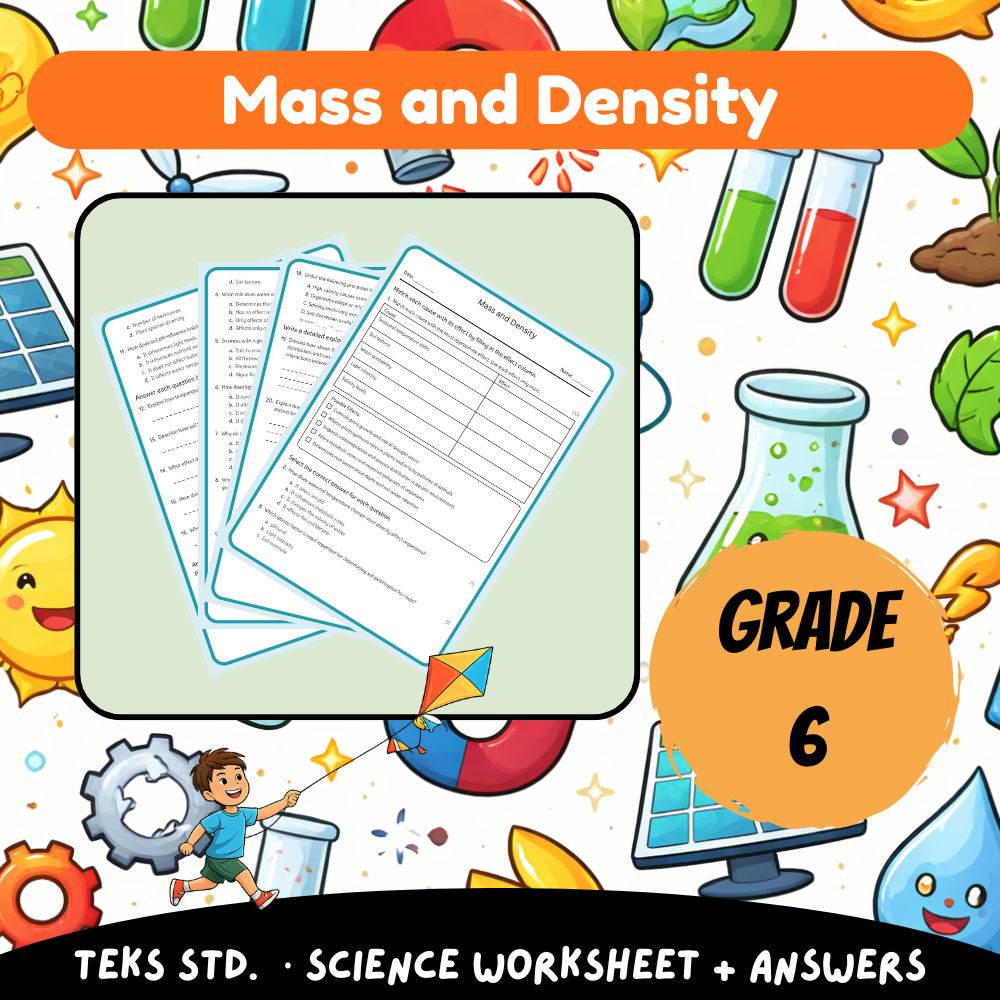
Grade 6 Science | Mass & Density Concepts Worksheet (Worksheet + Answer Key) (PDF)
Created byBright Mind ResourcesLearning Objectives
- Define mass and volume and understand their relationship through density.
- Calculate and interpret density for simple solids and liquids.
- Compare objects that sink or float based on their density.
Instant download
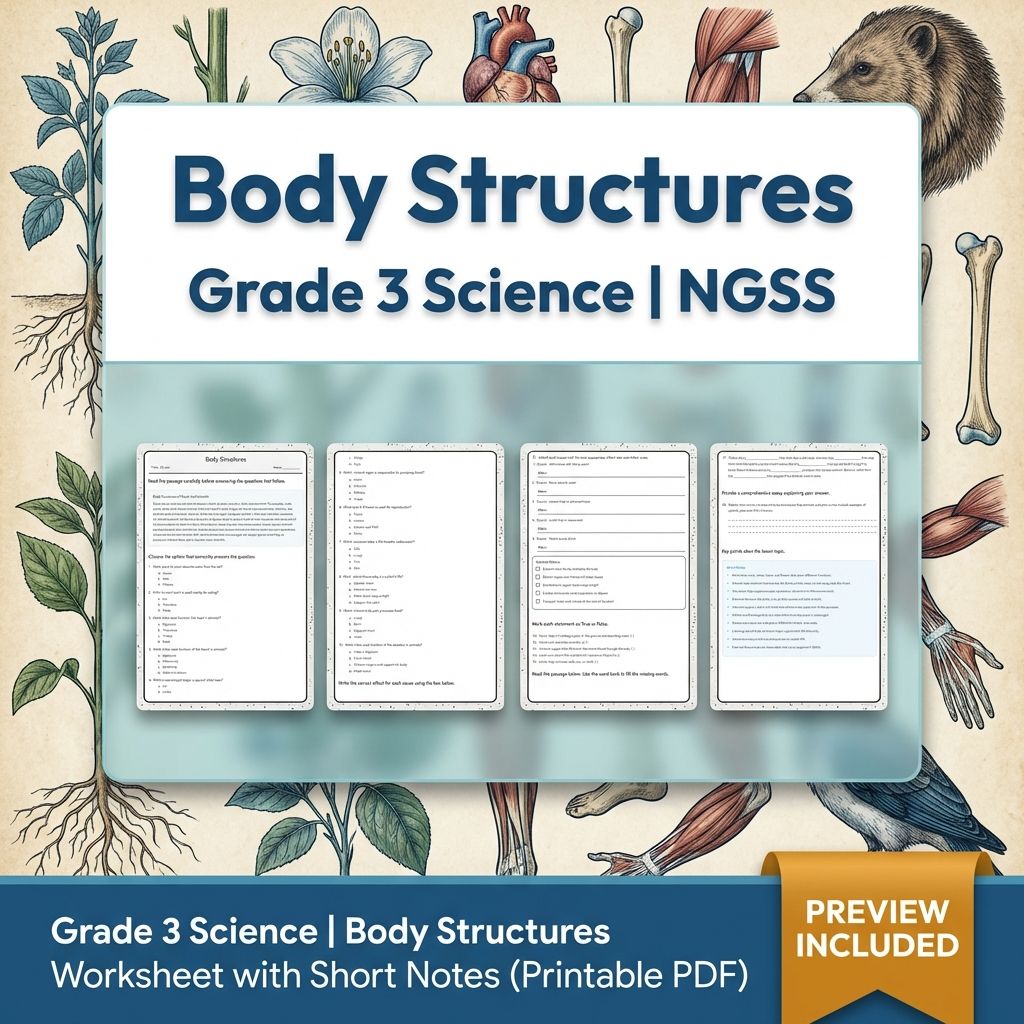
Grade 3 Science | Body Structures Worksheet with Short Notes (Printable PDF)
Created byMeadowlark WorksheetsLearning Objectives
- Identify common external and internal structures of plants and animals.
- Understand the roles of different body parts in survival, growth, and reproduction.
- Recognize structural diversity among organisms using models and drawings.
Also included in: Grade 3 Science NGSS Unit | From Molecules to Organisms Bundle +1 more
Instant download

Solution Comparison Test Prep Worksheet | Grade 8 Science NGSS Review
 Created byPrism Point Learning
Learning Objectives
- Compare multiple design concepts using clear selection criteria and constraints.
- Use measurable performance indicators and evidence to support decisions between competing solutions.
- Explain trade-offs between qualitative and quantitative information when evaluating designs.
Also included in: Grade 8 NGSS Science Practice Lesson Bundle: Modeling & Tradeoff Review
Instant download

Modeling Data Assessment Worksheet | Grade 8 Science NGSS Review
Created byPrism Point LearningLearning Objectives
- Construct physical and computational models to generate quantitative data for comparing design options.
- Use consistent input conditions and repeatable procedures to improve the reliability of experimental results.
- Identify sources of measurement uncertainty and explain how they can affect conclusions from model-based data.
Also included in: Grade 8 NGSS Science Practice Lesson Bundle: Modeling & Tradeoff Review
Instant download

Grade 7 Symbiosis Types Worksheet | Alberta Practice PDF
 Created byClear Sky Classroom
Learning Objectives
- Define mutualism, commensalism, and parasitism using evidence from interactions between species.
- Explain how symbiosis types can affect population size, resource distribution, and community structure.
- Apply symbiosis concepts to Alberta-relevant examples in local ecosystems.
Instant download
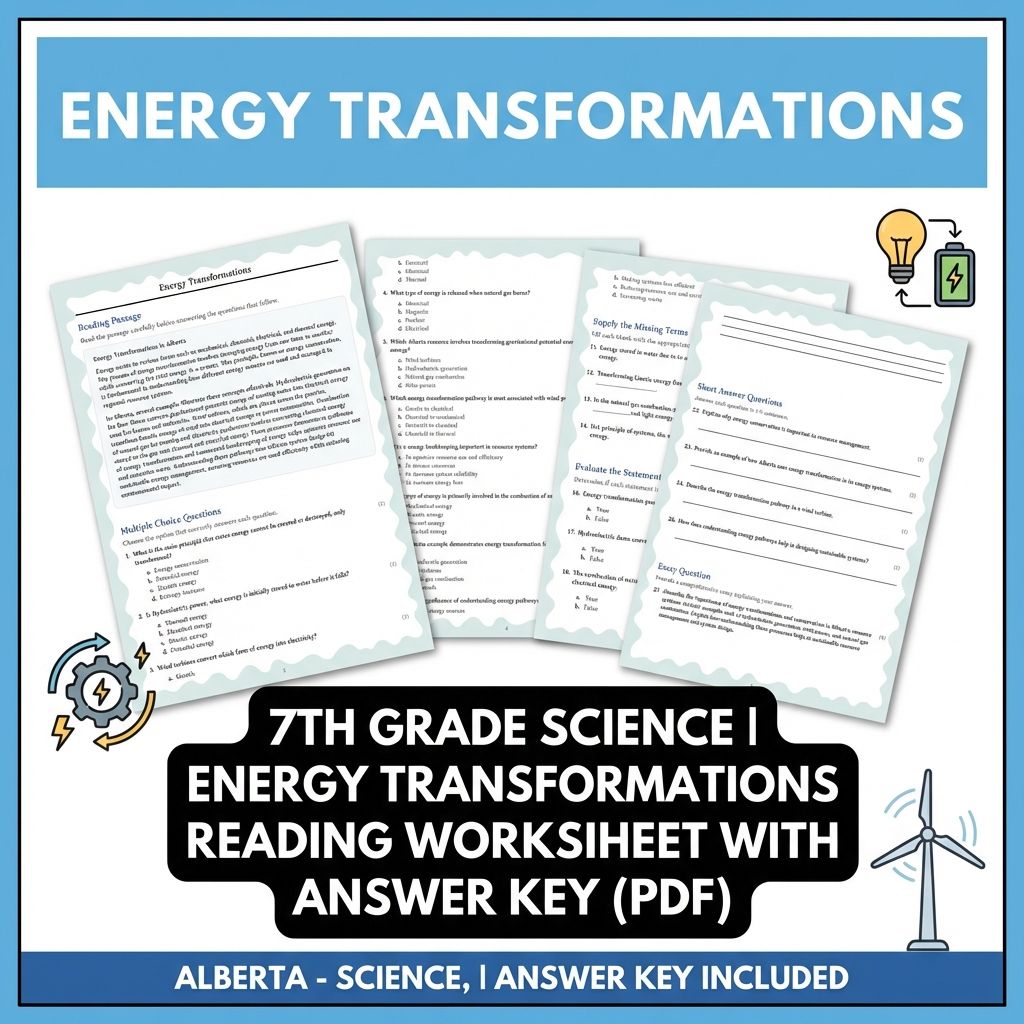
7th Grade Science | Energy Transformations Worksheet with Answer Key (PDF)
JCreated byJ.S SheetsLearning Objectives
- Understand different forms of energy and how they transform from one type to another.
- Identify real-world examples of energy transformations in Alberta's resource systems.
- Explain the principle of energy conservation during transformations.
Also included in: Grade 7 Science UNIT Bundle | Heat Transfer, Convection & Energy Worksheets +1 more
Instant download

Conservation of Matter Daily Reading Worksheet Grade 5 NGSS Science
 Created byBRIGHT PATH RESOURCES
Learning Objectives
- Identify key vocabulary such as mass, volume, and closed system
- Explain what it means for a system to be closed
- Distinguish mass from weight using evidence and examples
Also included in: Particle Model & Conservation Matter Grade 5 Science Lesson Bundle | NGSS +2 more
Instant download
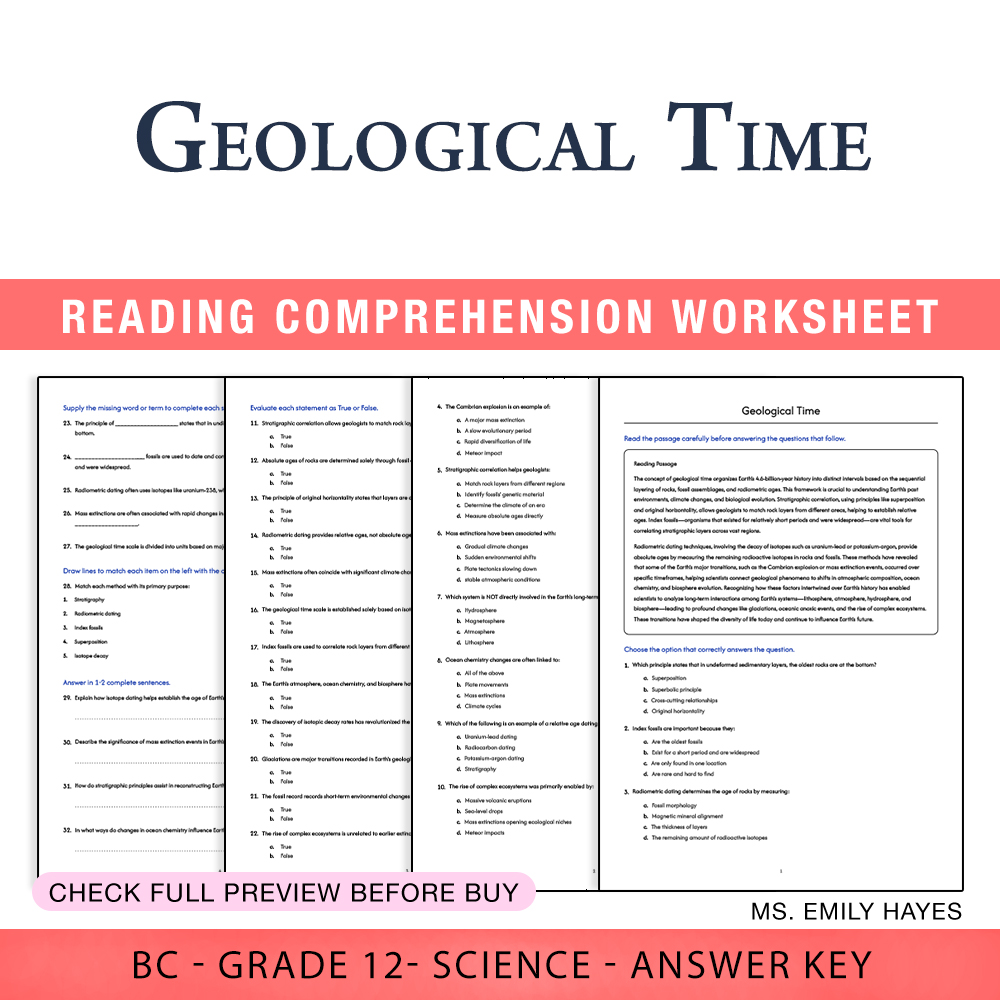
12th Grade Science | Geological Time Worksheet (PDF + Answer Key)
Created byCopper Leaf ClassroomLearning Objectives
- Understand the sequential intervals that define Earth's geological history.
- Explain methods used to establish relative and absolute ages of rock layers and fossils.
- Analyze how Earth's systems interacted during major transitions like mass extinctions and glaciations.
Also included in: Grade 12 Science BC | Earth Structures & Geology Bundle (PDF+ Answer Keys) +1 more
Instant download
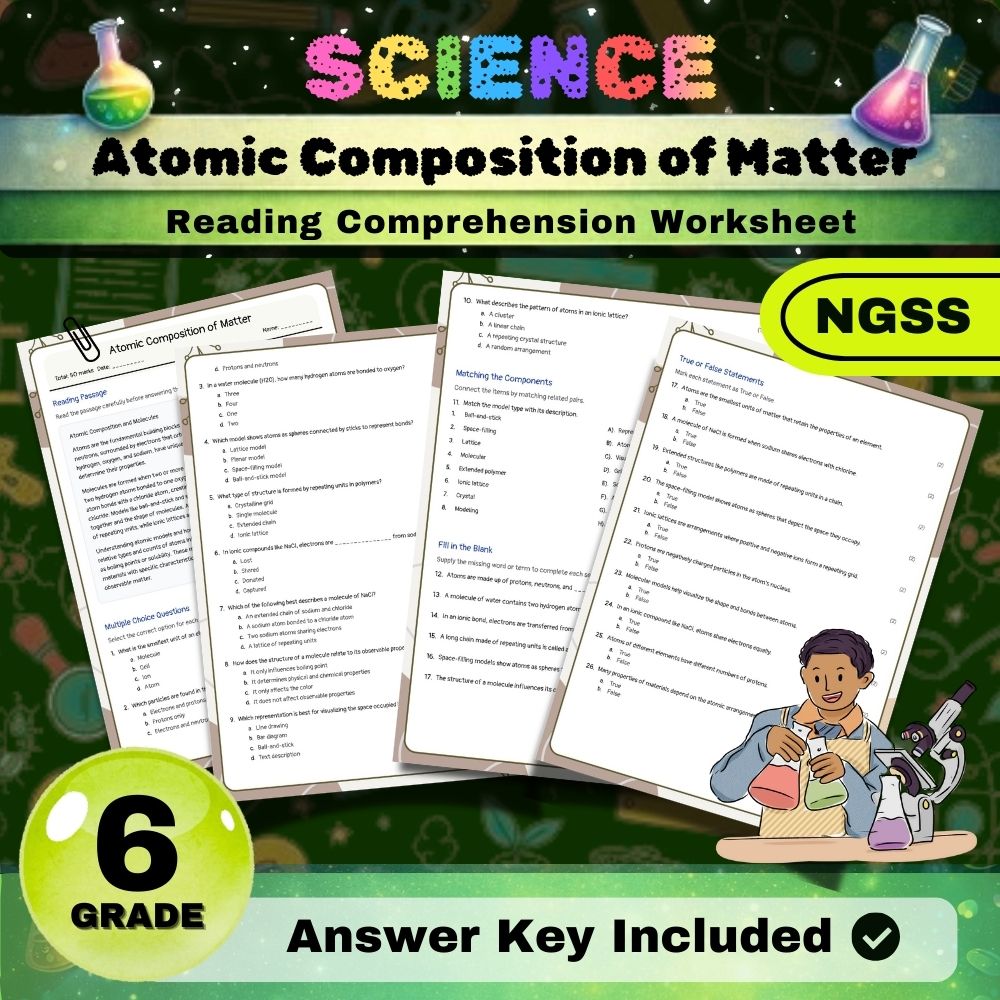
Grade 6 Science | Atomic Composition of Matter Worksheet (PDF) NGSS
Created byMaple Path LearningLearning Objectives
- Describe how atoms combine to form simple molecules such as H2O and NaCl.
- Use models like ball-and-stick and space-filling representations to visualize molecules.
- Explain the relationship between molecular structure and observable properties of matter.
Also included in: Grade 6 Science| Matter, Chemical Reactions & Conservation NGSS Worksheet Bundle +1 more
Instant download

6th Grade Science Worksheets | Exploring Scientific Careers (PDF)
Created byEvergreen Desk EducationLearning Objectives
- Identify how scientific inquiry and technology work together in common science careers
- Describe typical tasks (data collection, equipment maintenance, interpreting measurements, and communicating results) for several science jobs
- Connect science career skills to math, scientific reasoning, and technical literacy
Instant download
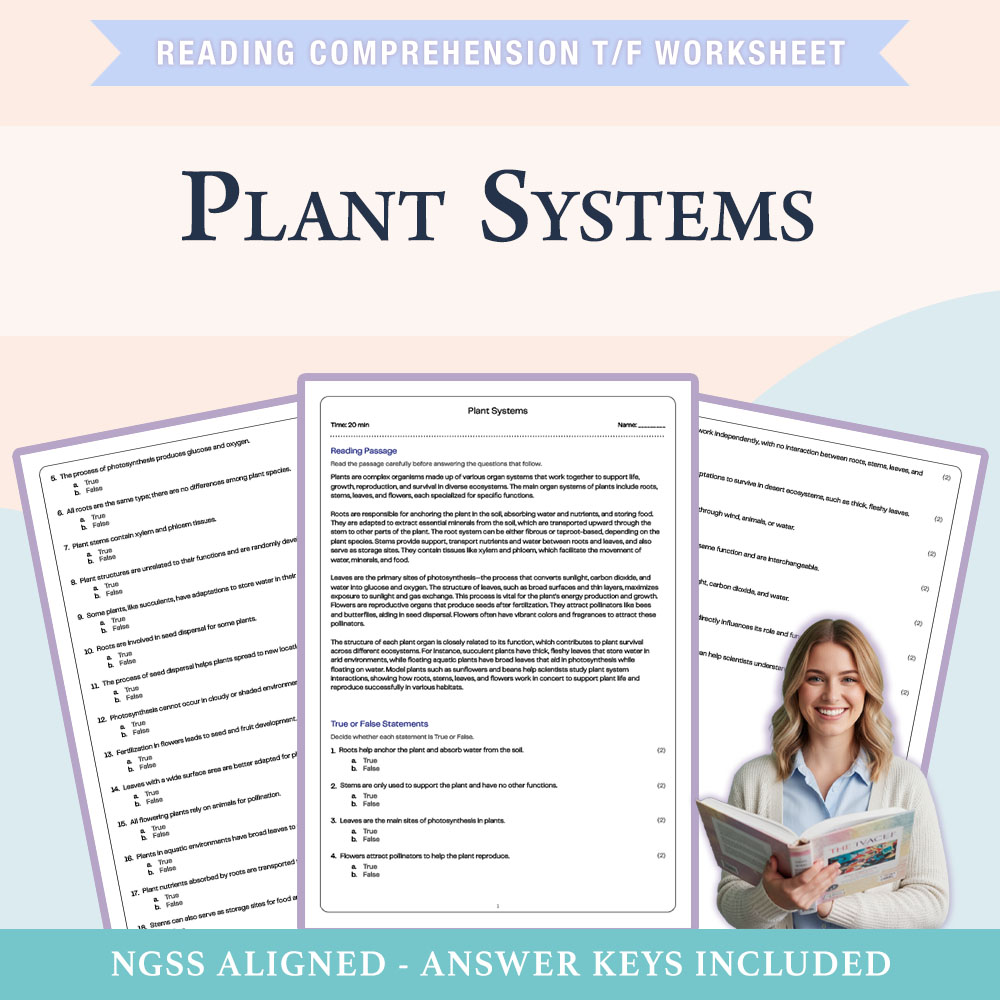
6th Grade Science | Plant Systems True or False Worksheet (PDF +Answer Key)
Created byCopper Leaf ClassroomLearning Objectives
- Understand the major organs of plants and their functions
- Describe processes such as photosynthesis, nutrient transport, and seed dispersal
- Explain how plant organ structure relates to survival in various ecosystems
Instant download
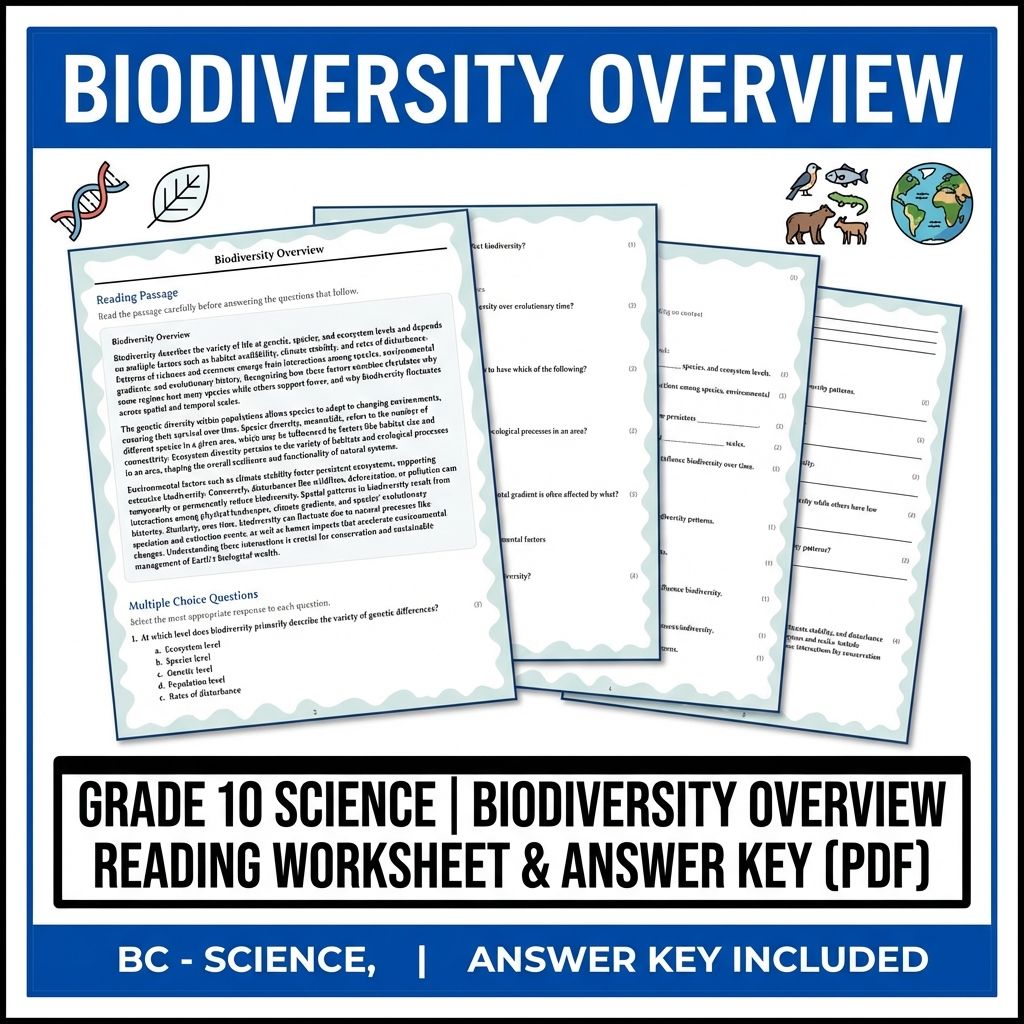
Grade 10 Science | Biodiversity Overview Reading Worksheet & Answer Key (PDF)
JCreated byJ.S SheetsLearning Objectives
- Understand the concept of biodiversity at genetic, species, and ecosystem levels.
- Identify factors that influence patterns of biodiversity across regions.
- Explain how environmental gradients, habitat availability, and evolutionary history affect biodiversity.
Instant download
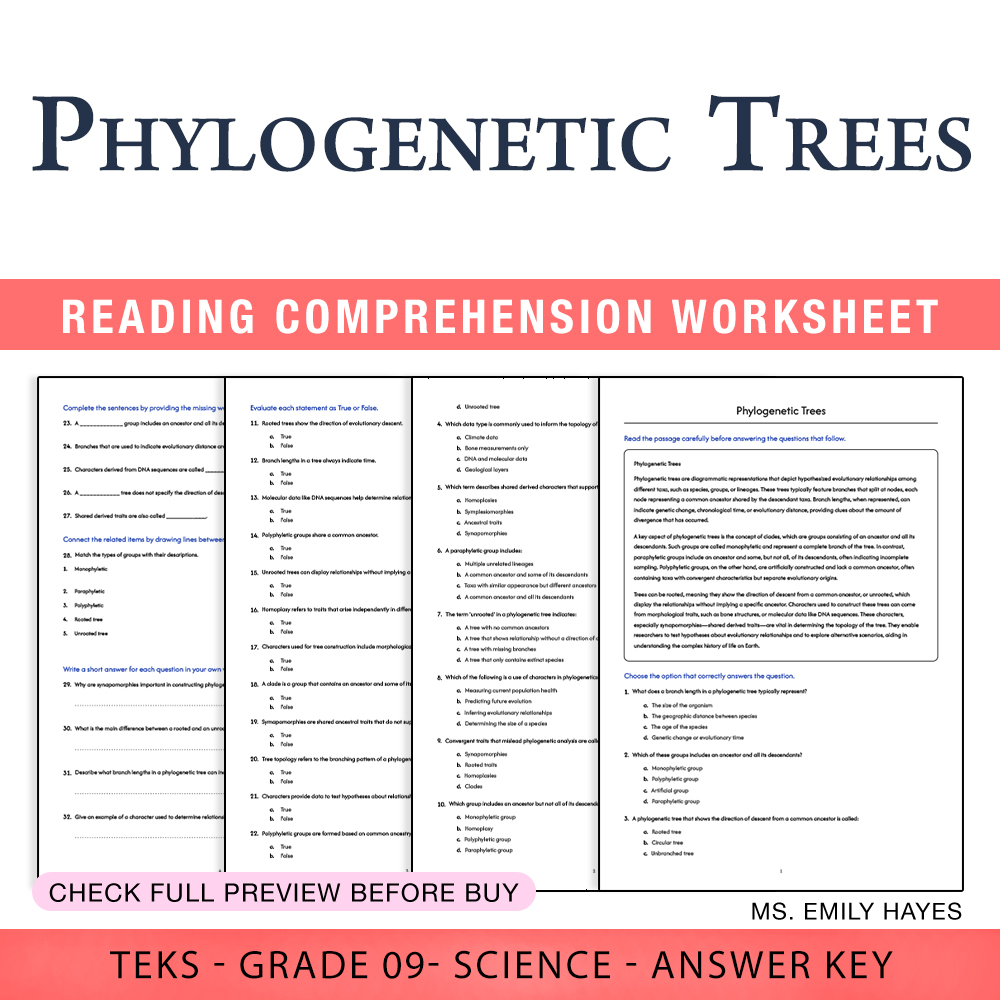
9th Grade Science | Phylogenetic Trees Worksheet (PDF+ Answer Key)
Created byCopper Leaf ClassroomLearning Objectives
- Understand the concept of phylogenetic trees and their components.
- Identify the differences between monophyletic, paraphyletic, and polyphyletic groups.
- Interpret branch lengths and rooted versus unrooted trees.
Instant download

Grade 7 Science – Systems Modeling Worksheet (TEKS PDF)
Created byEvergreen Desk EducationLearning Objectives
- Explain how diagrams, scale models, and quantitative representations help predict the behavior of a system.
- Interpret model outputs and identify assumptions, limitations, and scaling effects that affect accuracy.
- Distinguish between different model types (e.g., free-body diagrams, circuit schematics, and block diagrams) and what each is used for.
Instant download
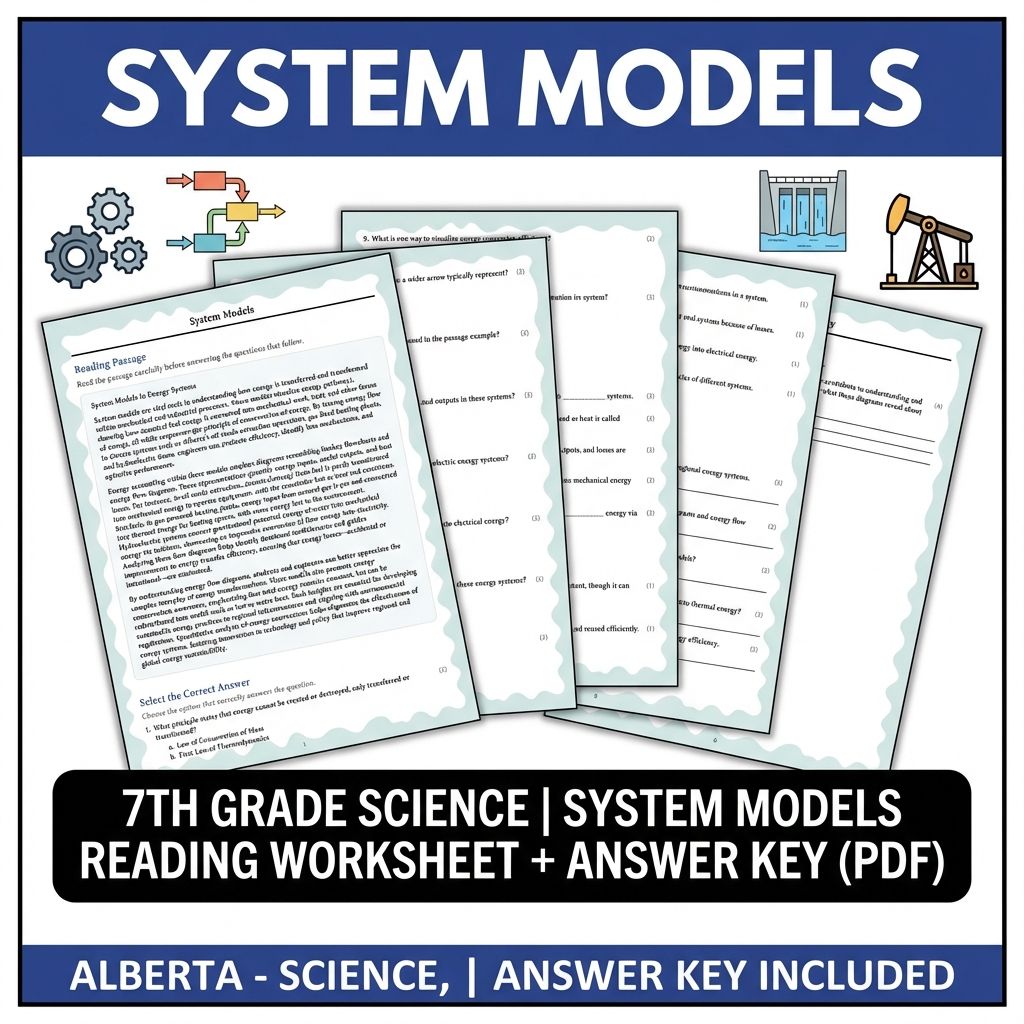
7th Grade Science | System Models Reading Worksheet + Answer Key (PDF)
JCreated byJ.S SheetsLearning Objectives
- Understand how energy flows and transforms within mechanical and industrial systems.
- Interpret energy flow diagrams and Sankey diagrams to quantify inputs, useful outputs, and waste heat.
- Explain the conservation of energy principles in various energy systems such as oil sands extraction, heating plants, and hydroelectric infrastructure.
Also included in: Grade 7 Science UNIT Bundle | Heat Transfer, Convection & Energy Worksheets +1 more
Instant download
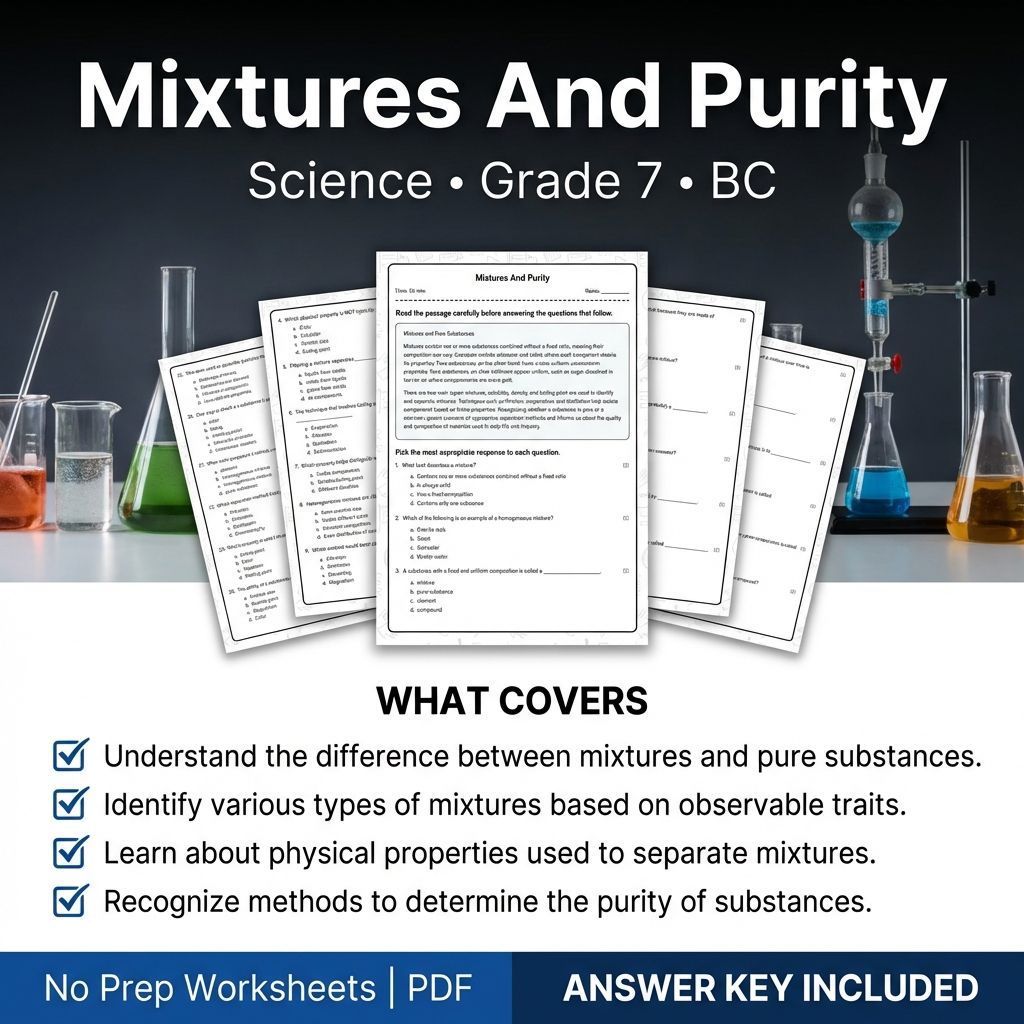
7th Grade Science | Mixtures and Purity Worksheet with Answer Key (Printable PDF)
Created byCoral Reef LearningLearning Objectives
- Understand the difference between mixtures and pure substances.
- Identify various types of mixtures based on observable traits.
- Learn about physical properties used to separate mixtures.
Instant download
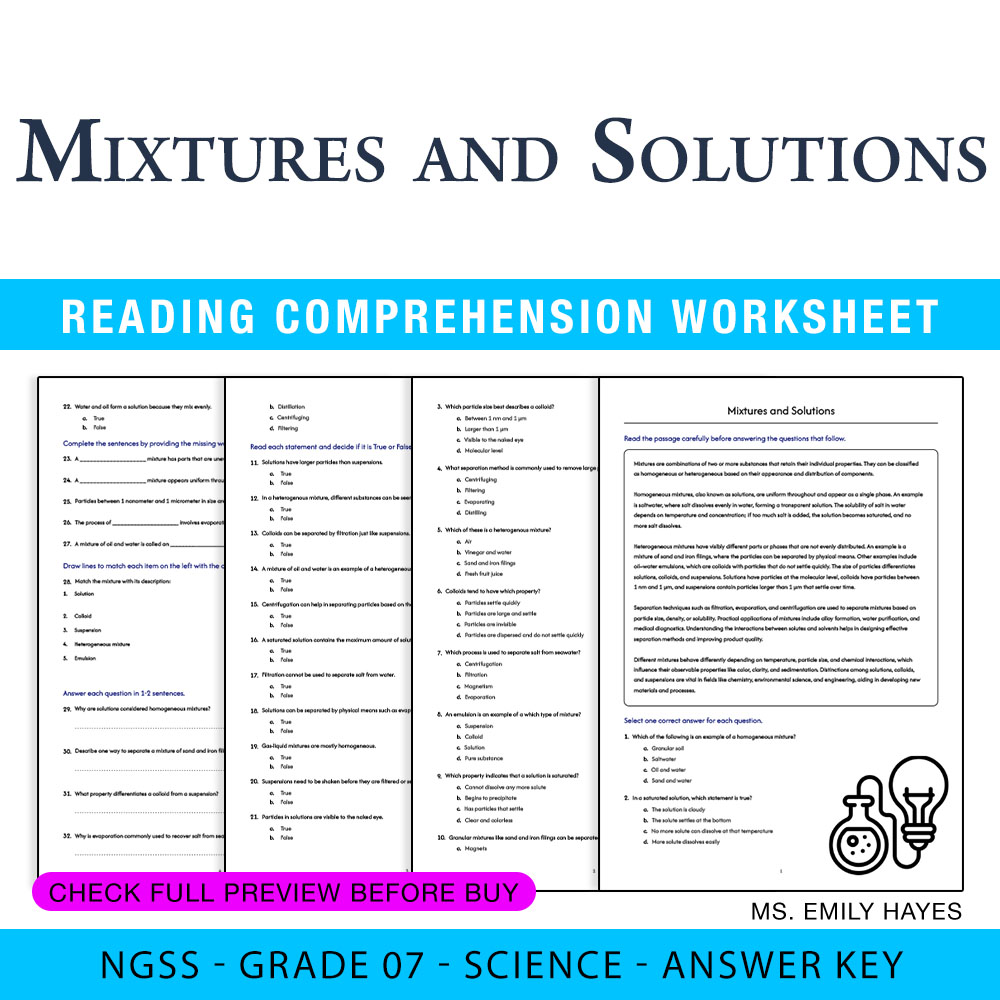
7th Grade Science | Mixtures and Solutions Worksheet (PDF +Answer Key)
Created byCopper Leaf ClassroomLearning Objectives
- Identify the differences between homogeneous and heterogeneous mixtures.
- Explain how solubility, saturation, and concentration affect solutions.
- Describe methods used to separate mixtures and their practical applications.
Instant download
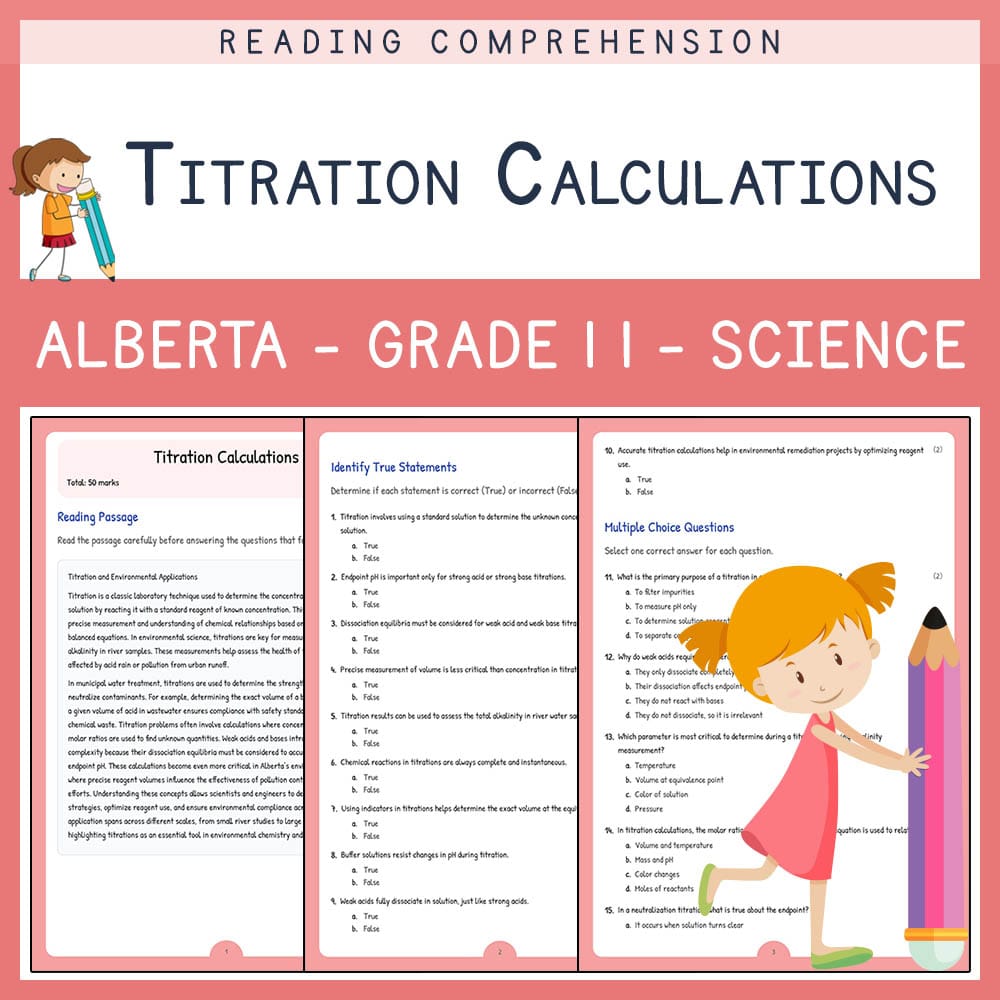
Grade 11 Science | Titration Calculations Worksheet | Alberta Standards
Created byLumora LearningLearning Objectives
- Understand how to perform stoichiometry calculations in titrations.
- Apply concentration relationships to determine unknown values in titration scenarios.
- Analyze endpoint pH variations for acids and bases with different strengths.
Instant download
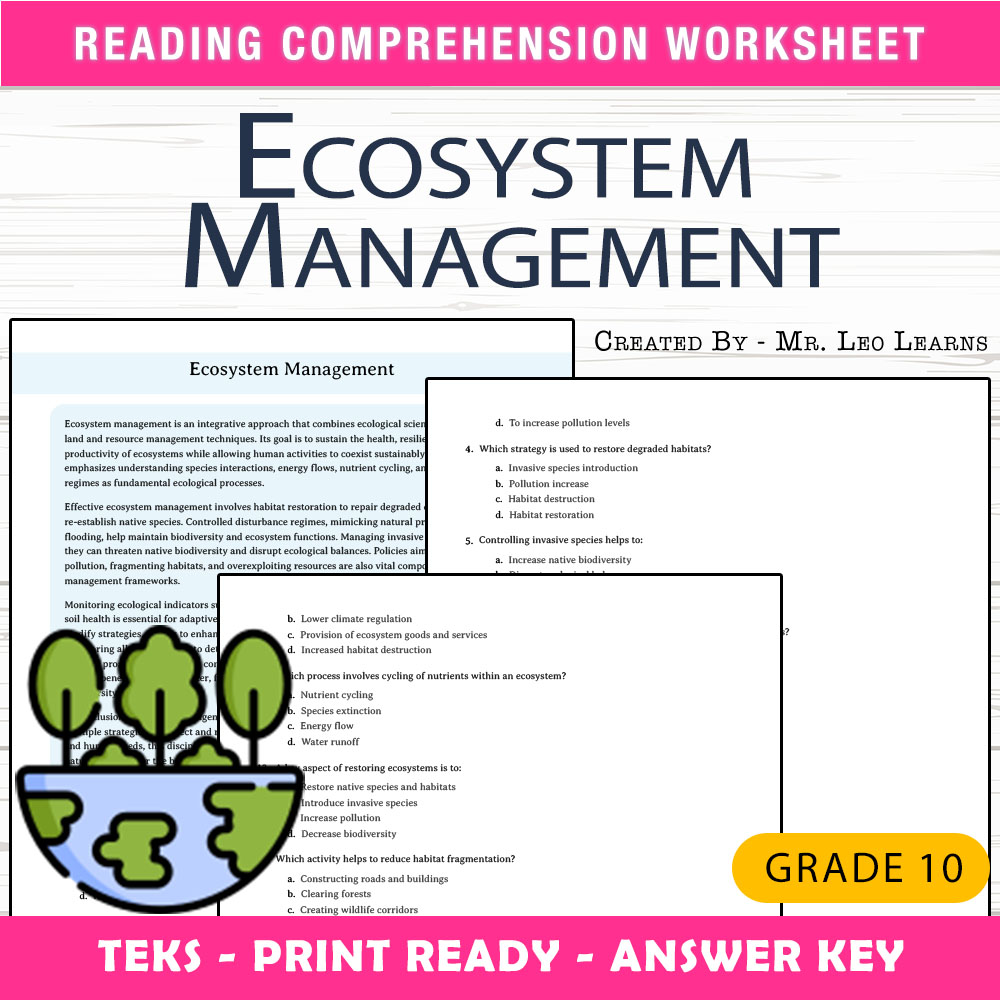
Grade 10 Science – Ecosystem Management Worksheet for Practice
 Created byThe Resource Hub
Learning Objectives
- Understand ecological principles involved in ecosystem management.
- Identify strategies used in conserving and restoring ecosystems.
- Explain the importance of monitoring ecological indicators for adaptive management.
Also included in: Grade 10 Science Unit Bundle | Ecosystems & Ecology Worksheets +1 more
Instant download
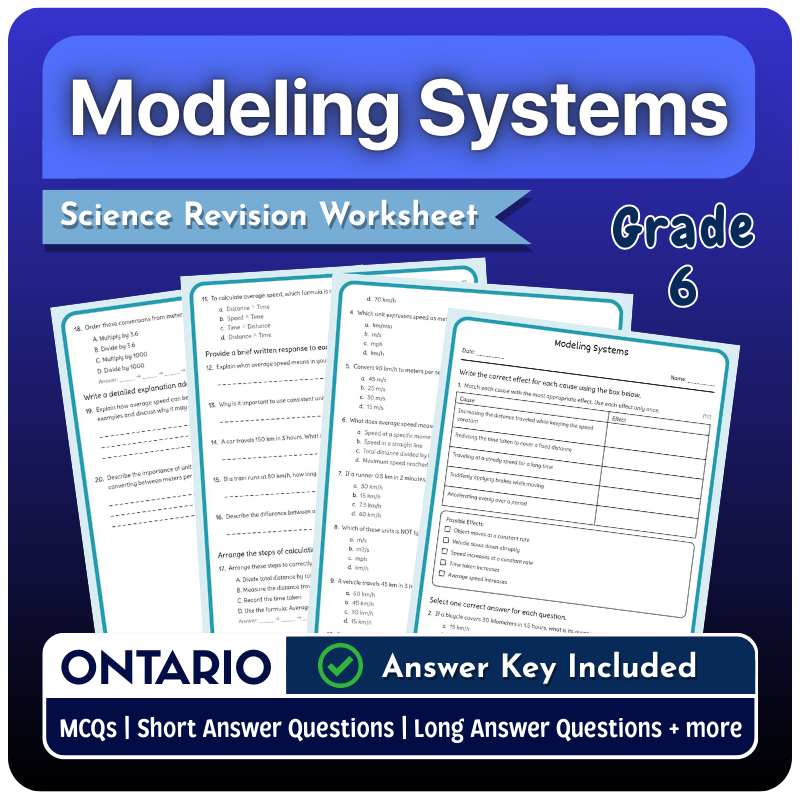
6th Grade Science | Modeling Systems Worksheet (Ontario Standards) (PDF)
Created byBright Mind ResourcesLearning Objectives
- Understand the purpose of different types of models in representing complex systems.
- Identify key assumptions and boundaries when constructing models.
- Analyze the limitations of models and compare predictions to observable outcomes.
Instant download
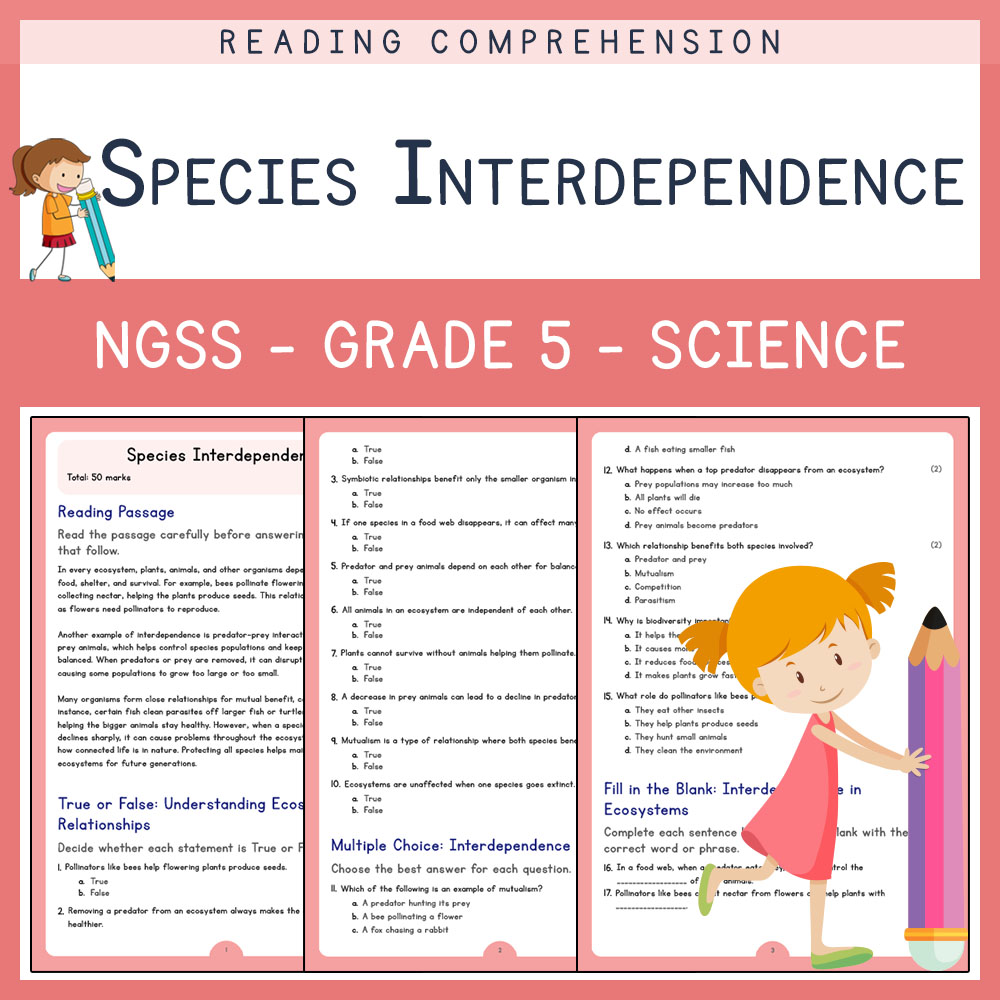
Grade 5 Science | Species Interdependence Worksheet (PDF) | NGSS Aligned
Created byLumora LearningLearning Objectives
- Understand how organisms depend on each other in ecosystems
- Identify different types of interdependent relationships such as pollination and predator-prey
- Learn how the loss of one species affects ecosystems and food webs
Instant download
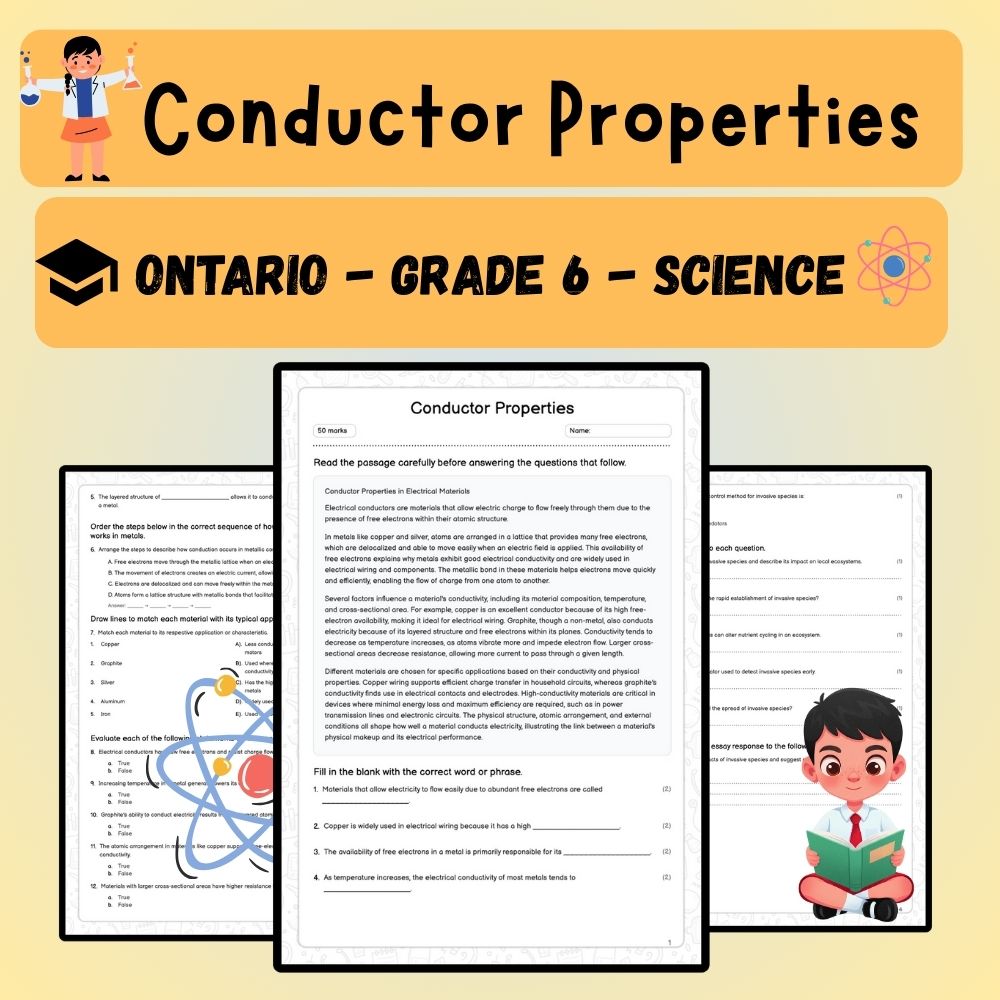
6th Grade Science | Conductor Properties Worksheet (PDF )
Created byPrism Point LearningLearning Objectives
- Explain the key features that make a material an effective electrical conductor.
- Identify common conducting materials such as copper and graphite and describe their properties.
- Understand how factors like material composition, temperature, and cross-sectional area influence electrical conductivity.
Also included in: Grade 6 Science Unit – Circuits & Electricity Worksheet Bundle
Instant download
Browse more categories
About Science Worksheets
Find Science worksheets spanning core skills, practice, and review. All 44,627 resources are instant PDF downloads for the classroom or home.
Every worksheet on MyTeachingSheets is created by independent teacher-authors and reviewed before publication. All resources download as printable PDFs for classroom, homework, or at-home practice, and many include answer keys. Preview any worksheet free before buying.