
Science Worksheets
44,627 subject resources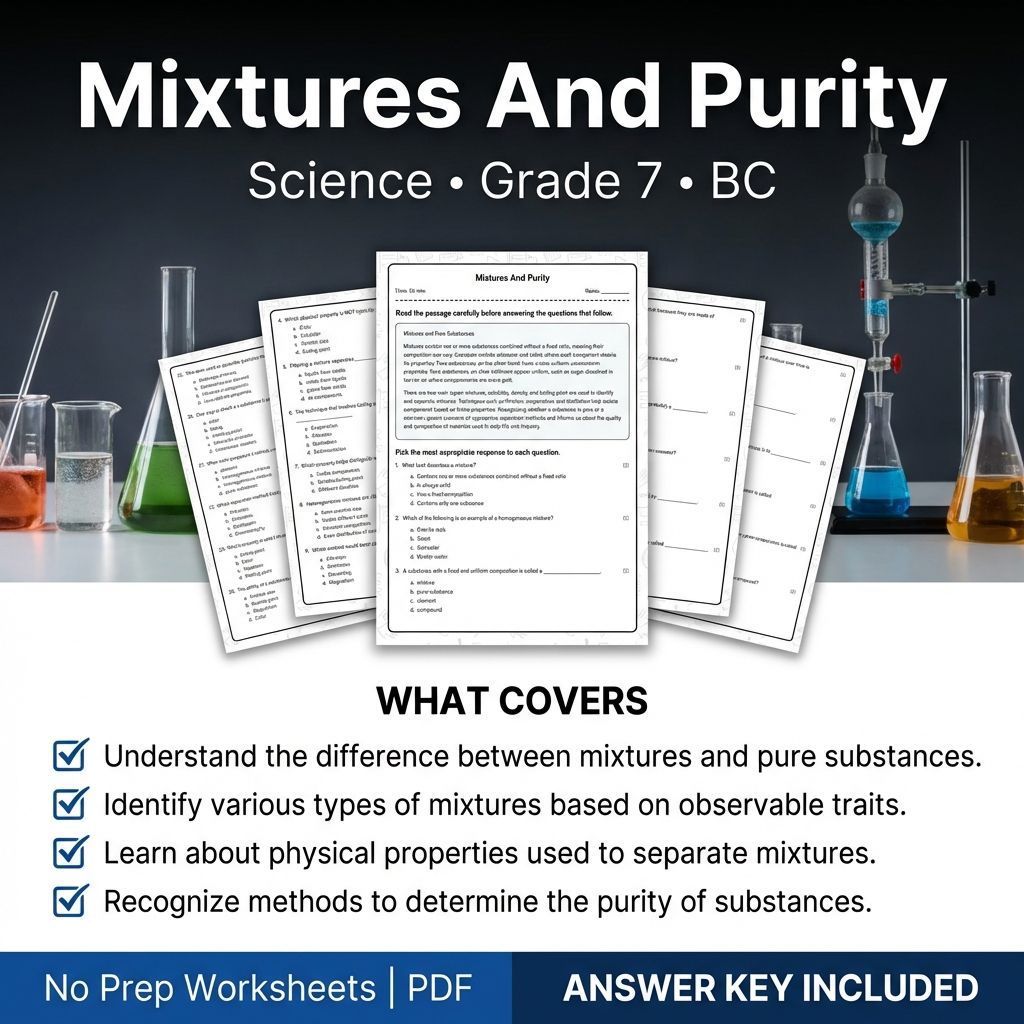
7th Grade Science | Mixtures and Purity Worksheet with Answer Key (Printable PDF)
 Created byCoral Reef Learning
Learning Objectives
- Understand the difference between mixtures and pure substances.
- Identify various types of mixtures based on observable traits.
- Learn about physical properties used to separate mixtures.
Instant download
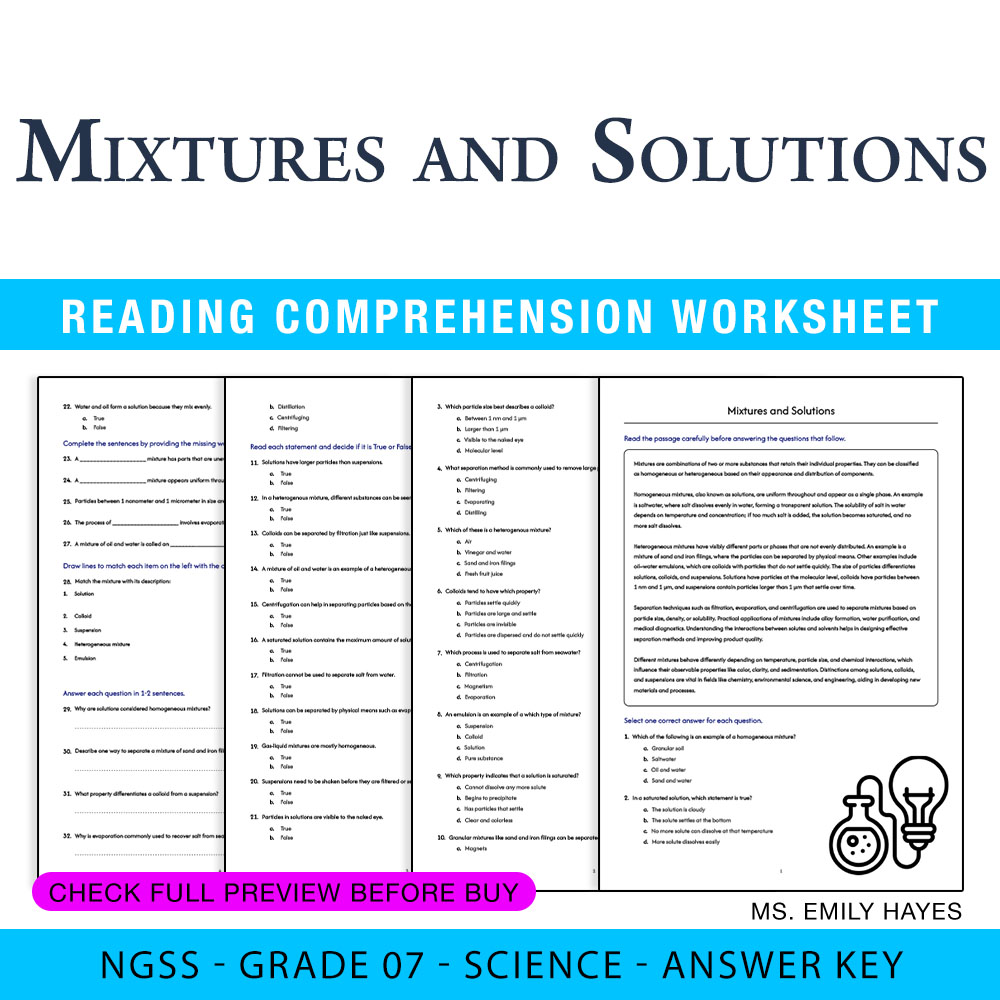
7th Grade Science | Mixtures and Solutions Worksheet (PDF +Answer Key)
 Created byCopper Leaf Classroom
Learning Objectives
- Identify the differences between homogeneous and heterogeneous mixtures.
- Explain how solubility, saturation, and concentration affect solutions.
- Describe methods used to separate mixtures and their practical applications.
Instant download
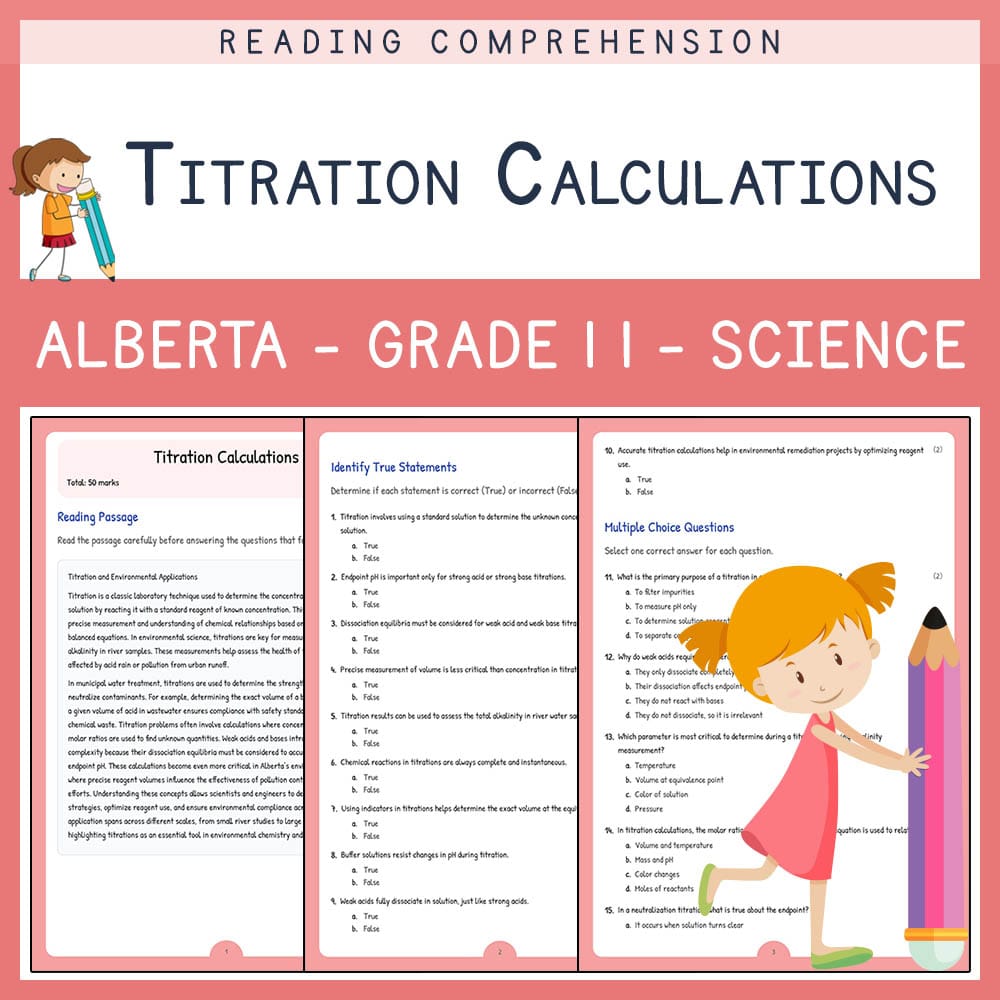
Grade 11 Science | Titration Calculations Worksheet | Alberta Standards
 Created byLumora Learning
Learning Objectives
- Understand how to perform stoichiometry calculations in titrations.
- Apply concentration relationships to determine unknown values in titration scenarios.
- Analyze endpoint pH variations for acids and bases with different strengths.
Instant download
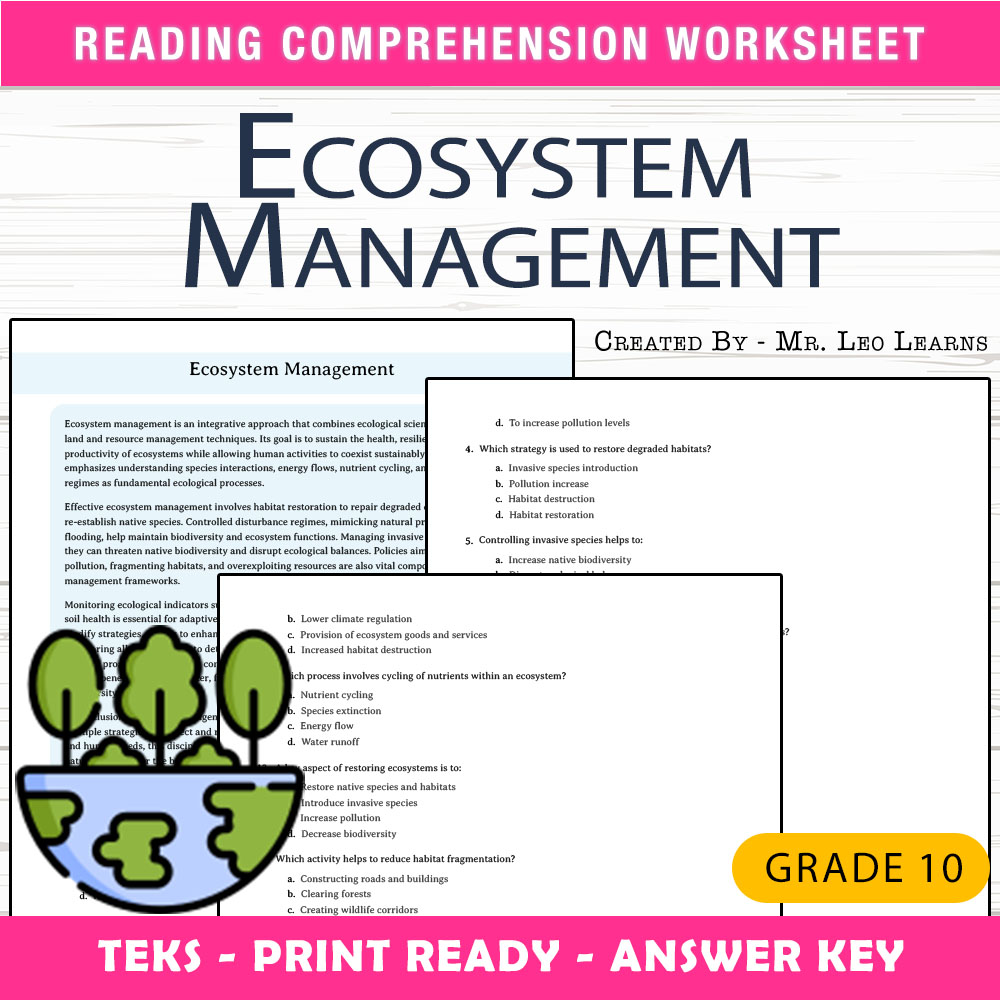
Grade 10 Science – Ecosystem Management Worksheet for Practice
 Created byThe Resource Hub
Learning Objectives
- Understand ecological principles involved in ecosystem management.
- Identify strategies used in conserving and restoring ecosystems.
- Explain the importance of monitoring ecological indicators for adaptive management.
Also included in: Grade 10 Science Unit Bundle | Ecosystems & Ecology Worksheets +1 more
Instant download
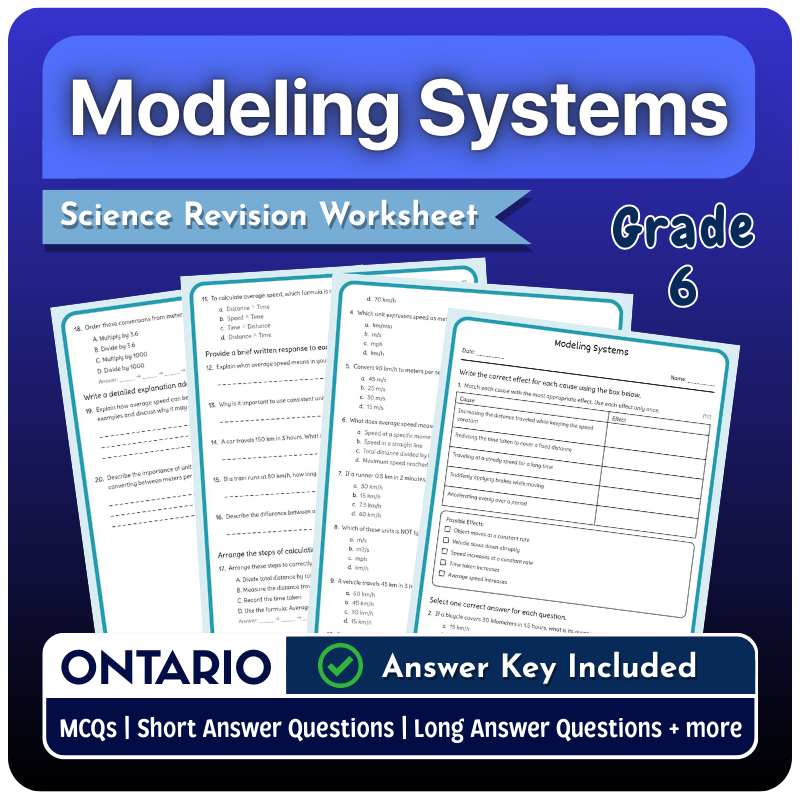
6th Grade Science | Modeling Systems Worksheet (Ontario Standards) (PDF)
 Created byBright Mind Resources
Learning Objectives
- Understand the purpose of different types of models in representing complex systems.
- Identify key assumptions and boundaries when constructing models.
- Analyze the limitations of models and compare predictions to observable outcomes.
Instant download
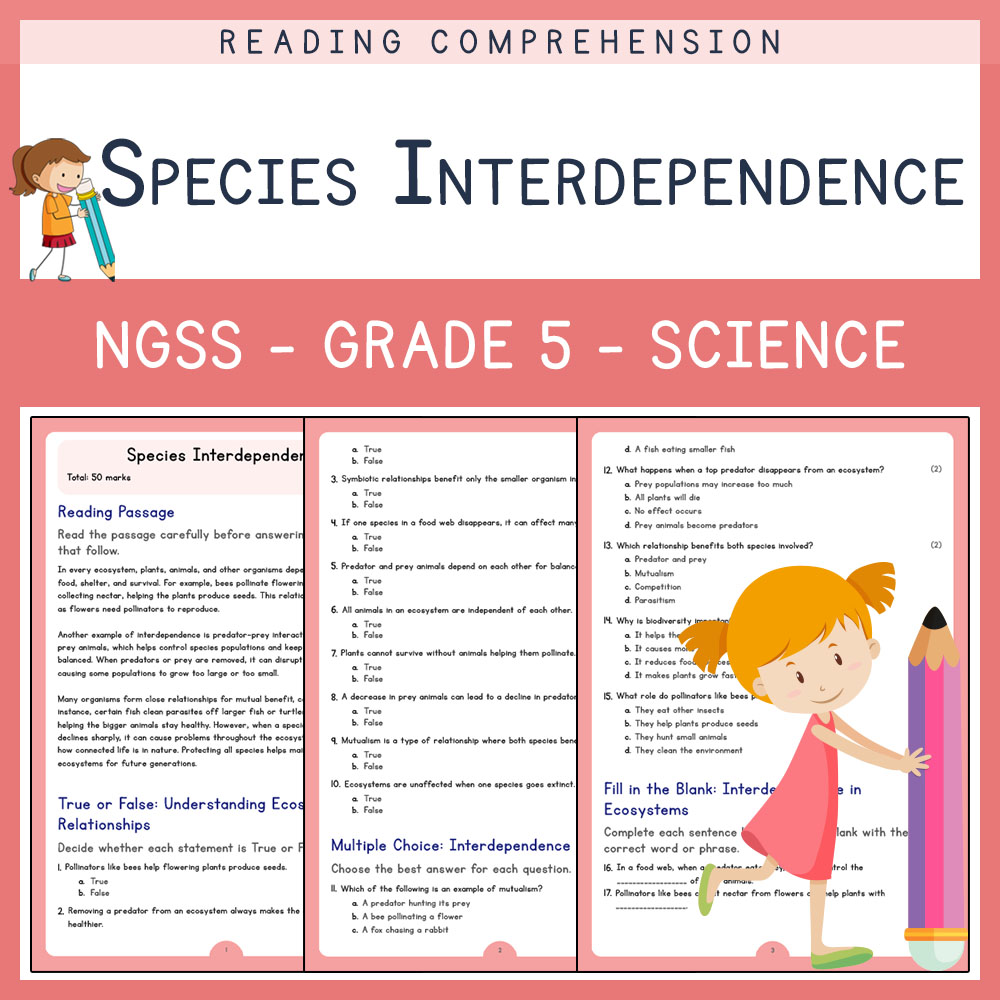
Grade 5 Science | Species Interdependence Worksheet (PDF) | NGSS Aligned
Created byLumora LearningLearning Objectives
- Understand how organisms depend on each other in ecosystems
- Identify different types of interdependent relationships such as pollination and predator-prey
- Learn how the loss of one species affects ecosystems and food webs
Instant download
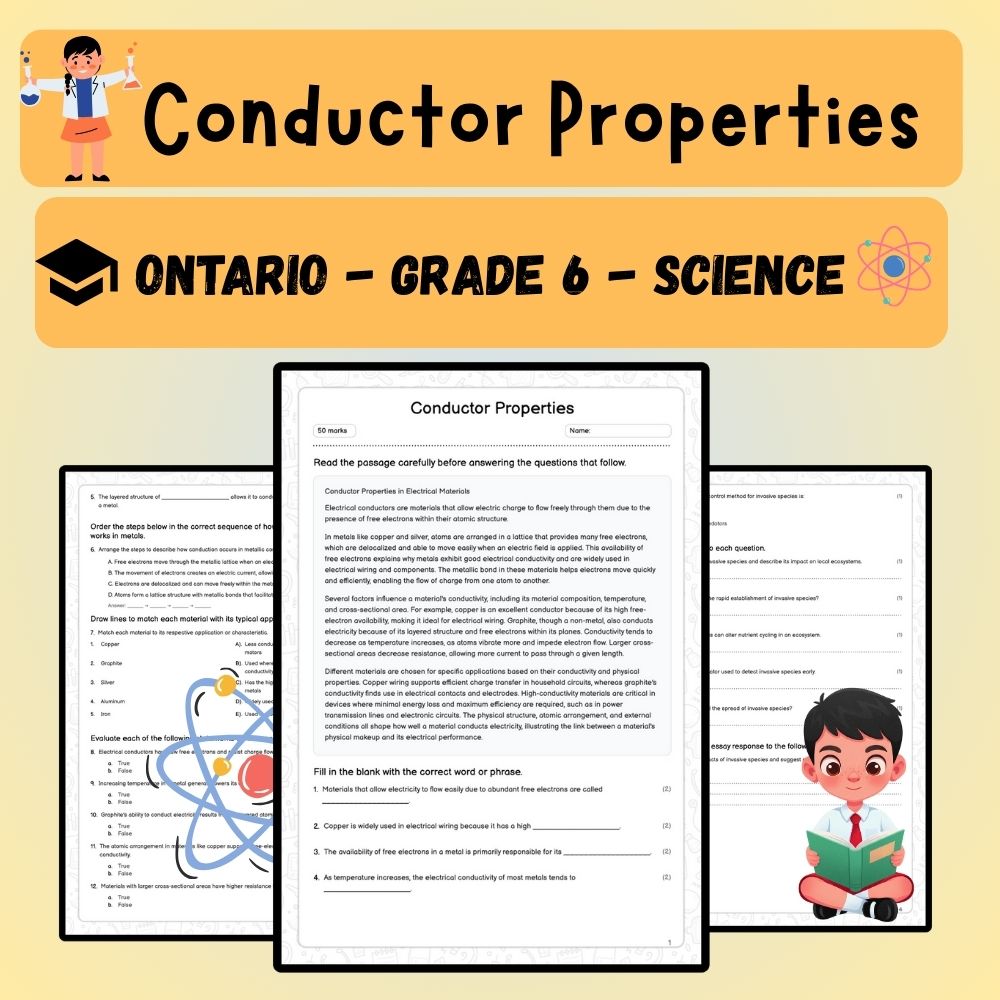
6th Grade Science | Conductor Properties Worksheet (PDF )
 Created byPrism Point Learning
Learning Objectives
- Explain the key features that make a material an effective electrical conductor.
- Identify common conducting materials such as copper and graphite and describe their properties.
- Understand how factors like material composition, temperature, and cross-sectional area influence electrical conductivity.
Also included in: Grade 6 Science Unit – Circuits & Electricity Worksheet Bundle
Instant download
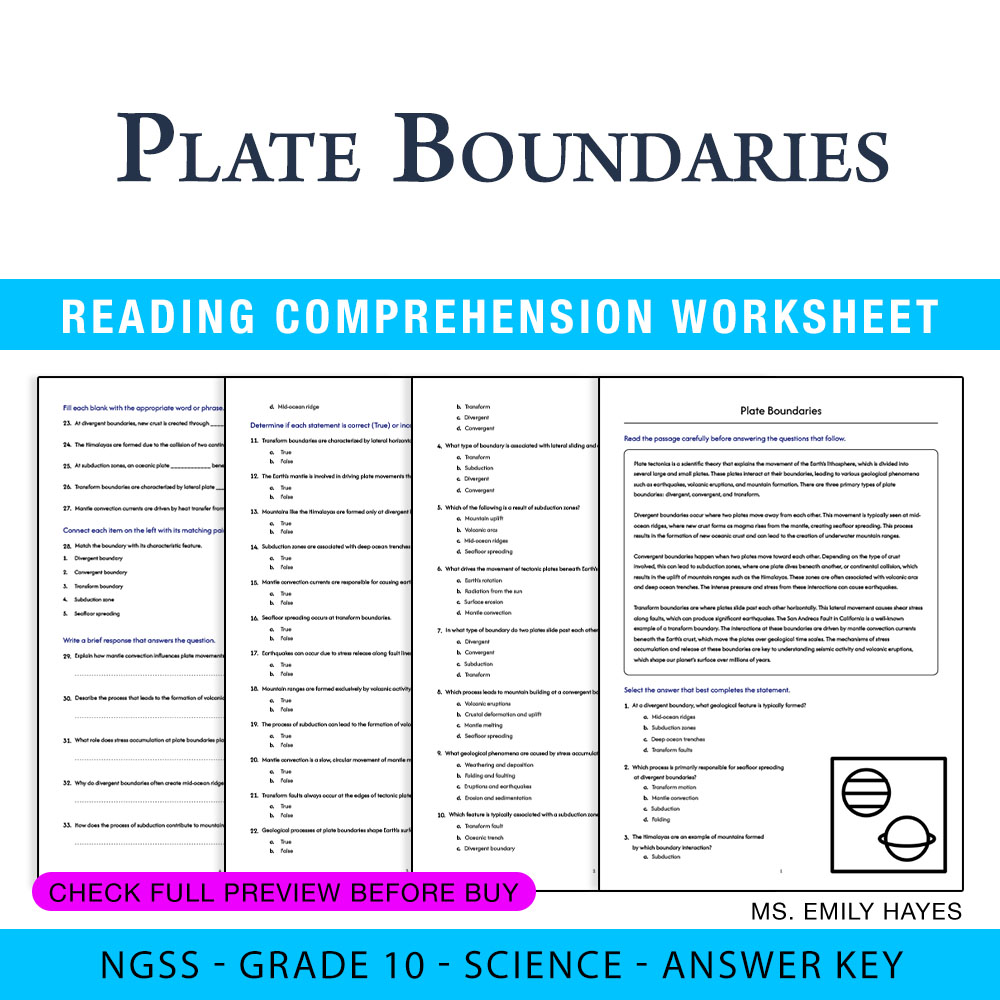
10th Grade Science | Plate Boundaries Worksheet (PDF + Answer Key)
Created byCopper Leaf ClassroomLearning Objectives
- Describe the different types of plate boundaries (divergent, convergent, transform).
- Explain the geological phenomena associated with each boundary type, such as mid-ocean ridges, subduction zones, and mountain uplift.
- Analyze the processes of mantle convection and stress accumulation that cause earthquakes and volcanic activity.
Instant download
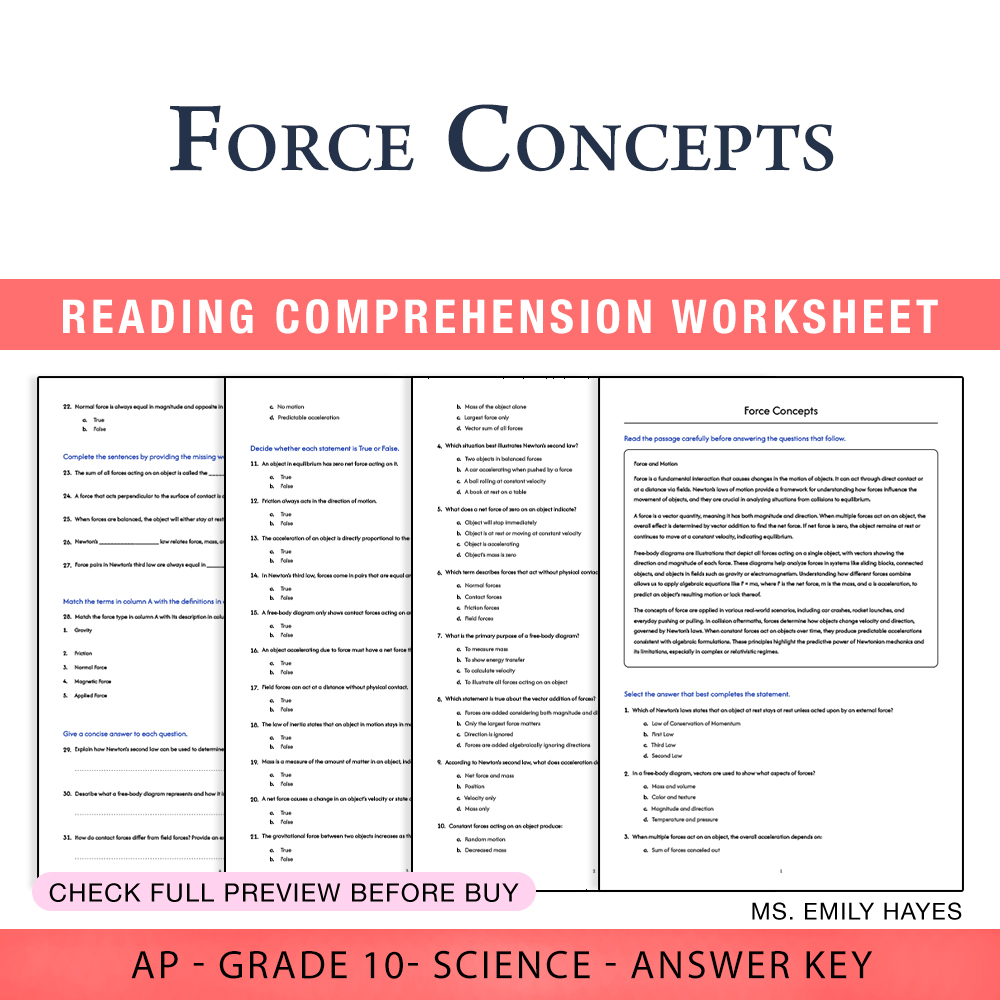
10th Grade Science | Force Concepts Worksheet (PDF+ Answer Key)
Created byCopper Leaf ClassroomLearning Objectives
- Explain the vector nature of forces and determine net force in various scenarios.
- Interpret free-body diagrams and identify force interactions.
- Apply Newton's three laws to predict motion, equilibrium, and outcomes of collisions and constant-force situations.
Also included in: Grade 10 Science AP | Physics & Energy Concepts (PDF+ Answer Key) +1 more
Instant download
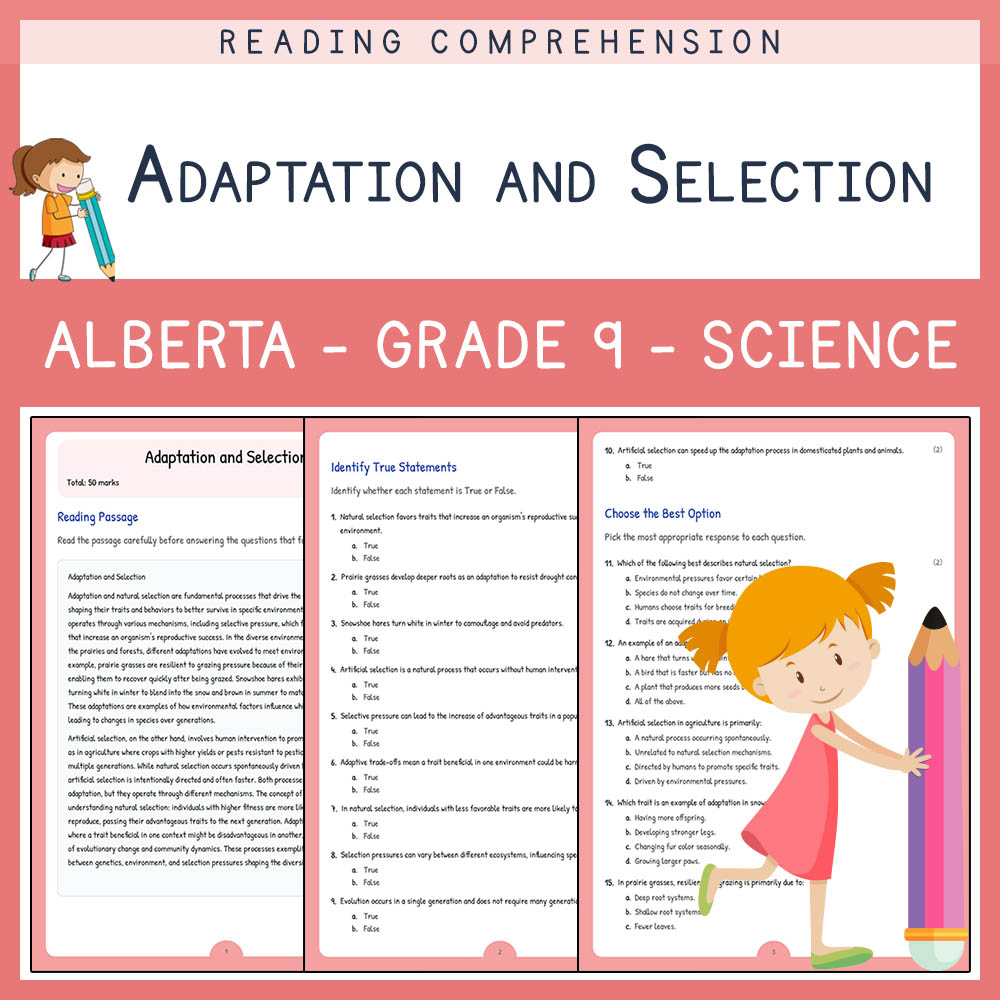
Grade 9 Science | Adaptation and Selection Worksheet | Alberta Standards
Created byLumora LearningLearning Objectives
- Explain the process of natural selection and its role in evolution.
- Identify examples of adaptation in Alberta's ecosystems such as prairie grass and snowshoe hares.
- Distinguish between natural and artificial selection and their effects on populations.
Instant download
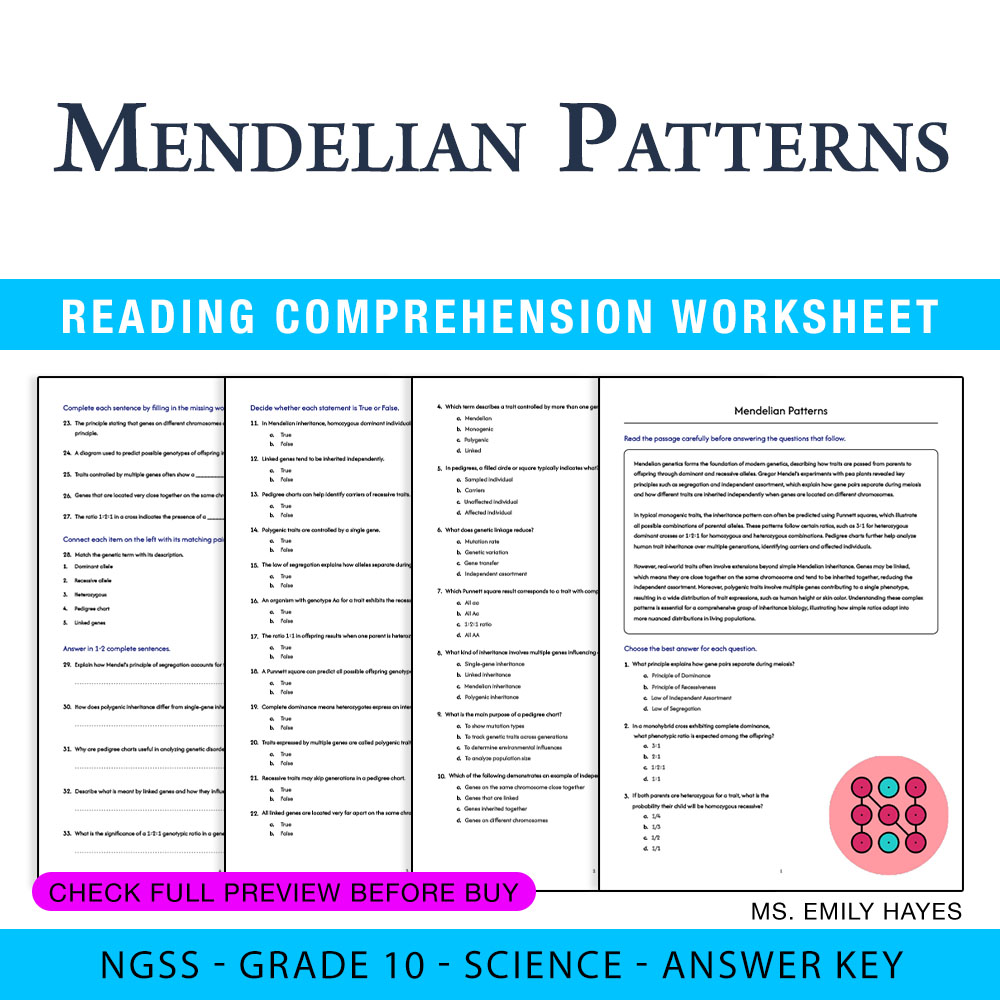
10th Grade Science | Mendelian Patterns Worksheet (PDF+ Answer Key)
Created byCopper Leaf ClassroomLearning Objectives
- Understand the principles of dominant and recessive inheritance patterns.
- Use Punnett squares to predict offspring genotypes and phenotypes.
- Interpret pedigree charts to analyze inheritance of traits.
Instant download
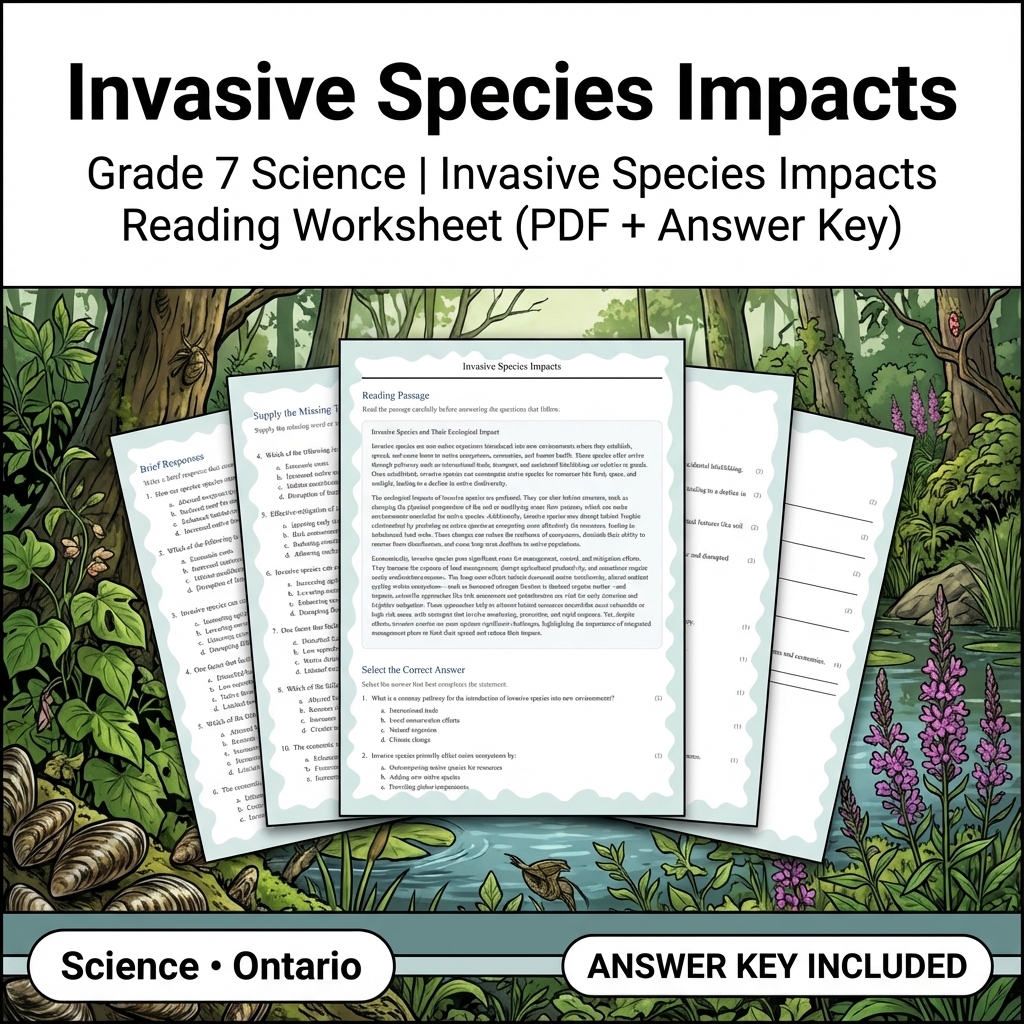
Grade 7 Science | Invasive Species Impacts Reading Worksheet (PDF + Answer Key)
JCreated byJ.S SheetsLearning Objectives
- Understand the ecological consequences of invasive species introductions.
- Recognize pathways and factors facilitating the establishment of invasive species.
- Evaluate the long-term ecological and economic effects of non-native species.
Also included in: Grade 7 Science | Ecosystems, Biodiversity & Environmental Stewardship +1 more
Instant download
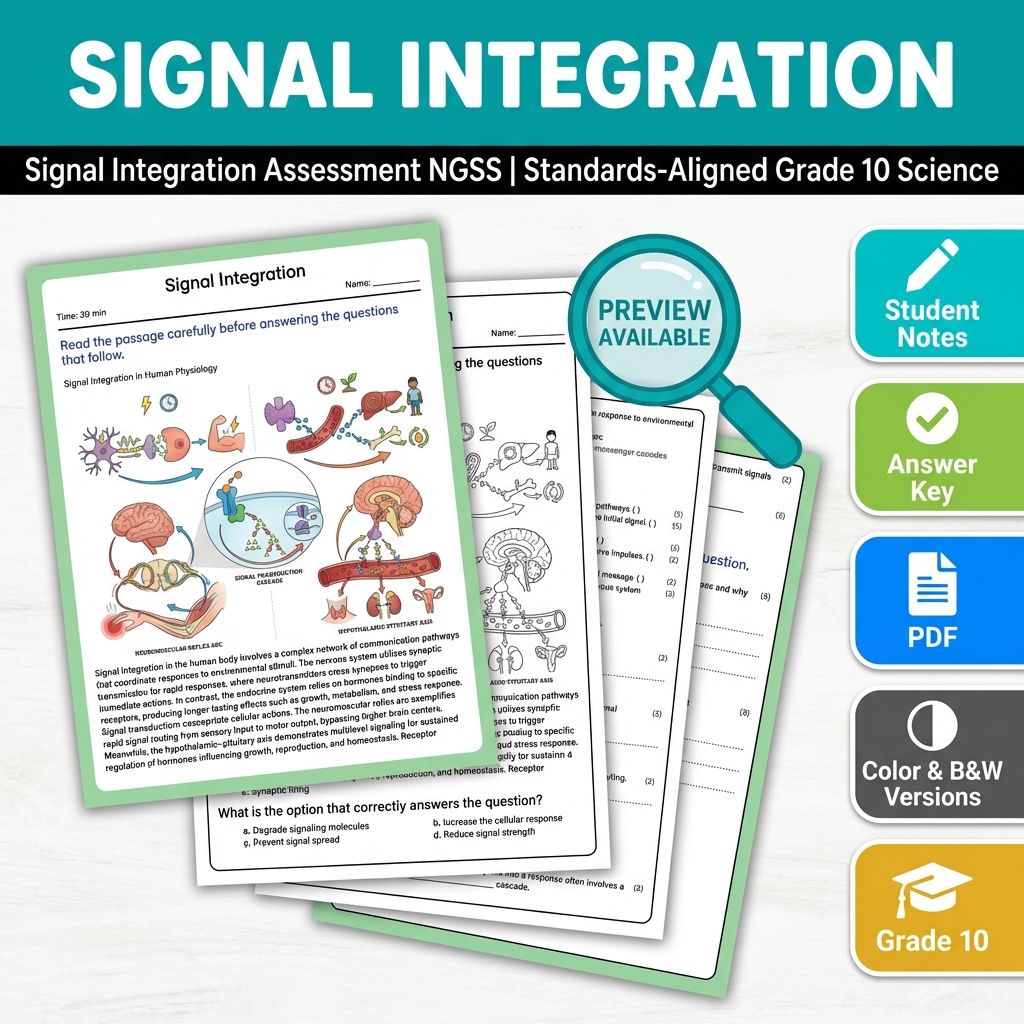
Signal Integration Assessment NGSS | Standards-Aligned Grade 10 Science
Created byPrism Point LearningLearning Objectives
- Understand how nervous and endocrine systems coordinate responses through signal integration.
- Identify mechanisms like receptor specificity and signal transduction cascades that regulate physiological responses.
- Describe the processes involved in synaptic transmission, hormone-receptor interactions, and amplification pathways.
Also included in: Grade 10 Science | Cell Signaling & Physiology NGSS Assessment Bundle
Instant download
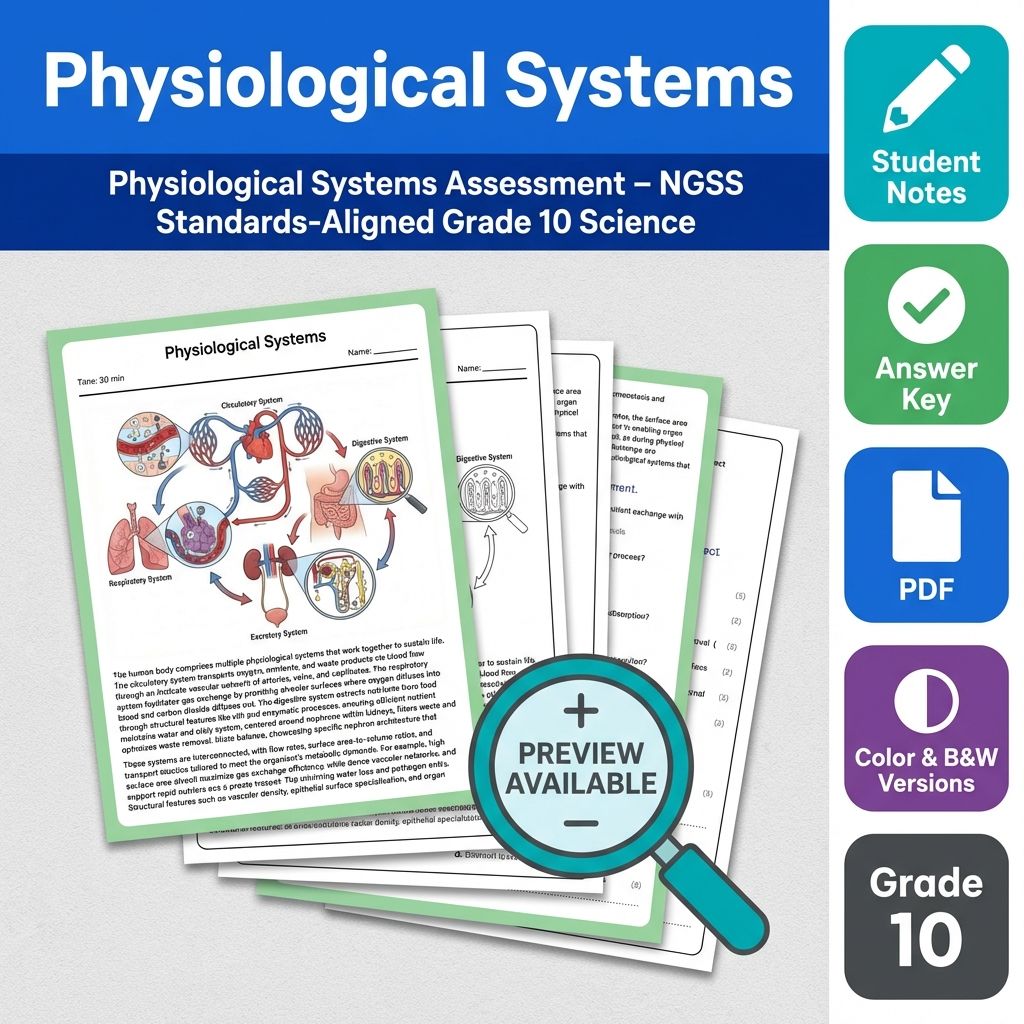
Physiological Systems Assessment – NGSS Standards-Aligned Grade 10 Science
Created byPrism Point LearningLearning Objectives
- Understand the structural features of circulatory, respiratory, digestive, excretory, and integumentary systems.
- Analyze how organ systems coordinate to meet organismal metabolic demands.
- Describe functional imperatives such as transport rates, surface area relationships, and transport kinetics.
Also included in: Grade 10 Science | Cell Signaling & Physiology NGSS Assessment Bundle
Instant download
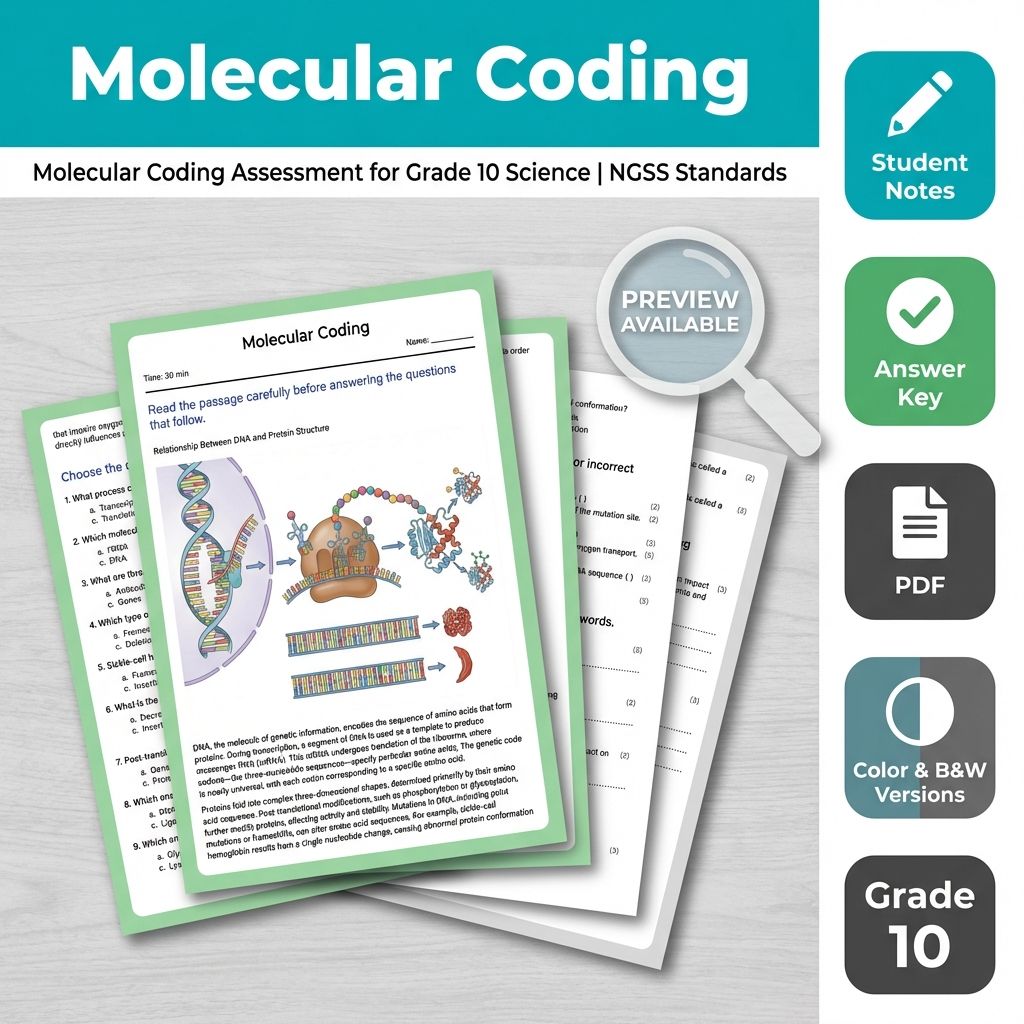
Molecular Coding Assessment for Grade 10 Science | NGSS Standards
Created byPrism Point LearningLearning Objectives
- Explain how DNA sequences determine amino acid sequences during protein synthesis.
- Describe the processes of transcription and translation in gene expression.
- Illustrate the effects of point mutations and frameshifts on protein structure.
Also included in: Grade 10 Science | Cell Signaling & Physiology NGSS Assessment Bundle
Instant download

Grade 11 Science | Thermochemistry Worksheet (PDF) – BC Standards
 Created byEvergreen Desk Education
Learning Objectives
- Explain endothermic and exothermic reactions using enthalpy (ΔH) and the idea of energy flow.
- Use bond energies, standard enthalpies of formation, and Hess’s law to calculate reaction enthalpy (ΔH) qualitatively and quantitatively.
- Connect thermochemistry to real-world applications such as fuels, combustion energetics, and chemical stability.
Instant download
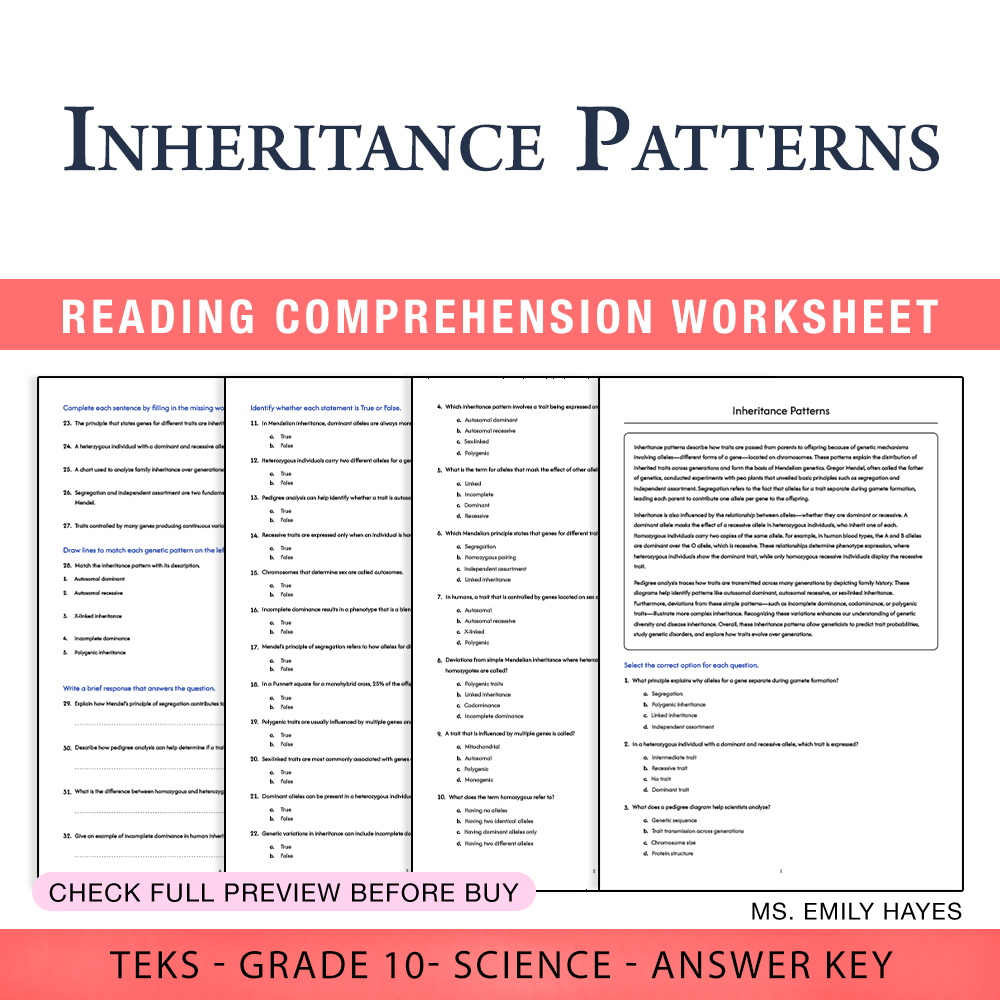
10th Grade Science | Inheritance Patterns Worksheet (PDF+ Answer Key)
Created byCopper Leaf ClassroomLearning Objectives
- Understand how dominant and recessive alleles influence phenotype expression.
- Identify different inheritance patterns such as Mendelian segregation and independent assortment.
- Analyze pedigrees to trace trait transmission across generations.
Instant download

Metabolic Regulation Assessment | TEKS Standards Grade 11 Science
Created byPrism Point LearningLearning Objectives
- Understand the mechanisms of enzyme regulation in metabolic pathways.
- Identify different types of enzyme modifications such as allosteric modulation and covalent changes.
- Explain how compartmentalization and membrane transport influence metabolic flux.
Also included in: Grade 11 Photosynthesis and Respiration Science Lesson Bundle | TEKS
Instant download
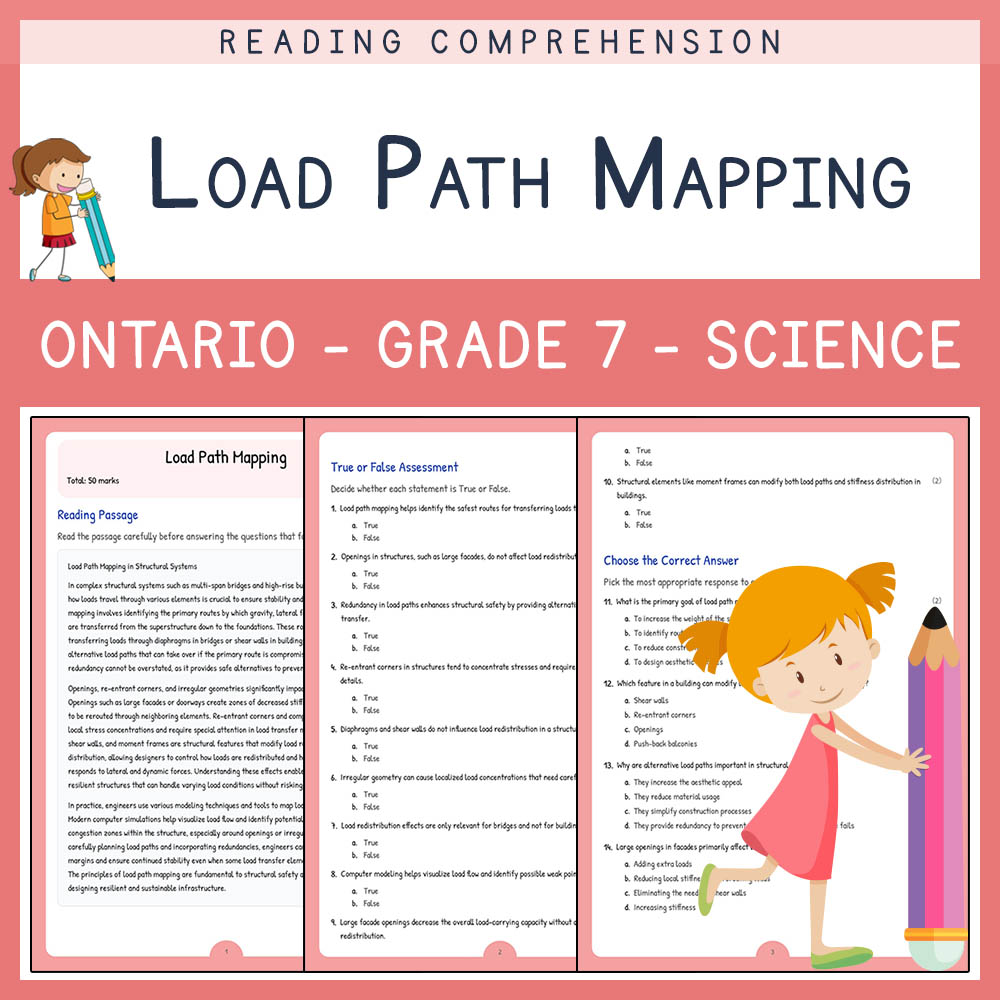
Grade 7 Science | Load Path Mapping Worksheet & Answer Key – Ontario Standards
Created byLumora LearningLearning Objectives
- Understand methods for mapping load paths in complex structures.
- Identify primary and secondary load routes transferring gravity and lateral loads.
- Analyze how openings, corners, and geometry influence load redistribution.
Also included in: Grade 7 Science | Form Function Design Structures Unit Bundle | Ontario
Instant download
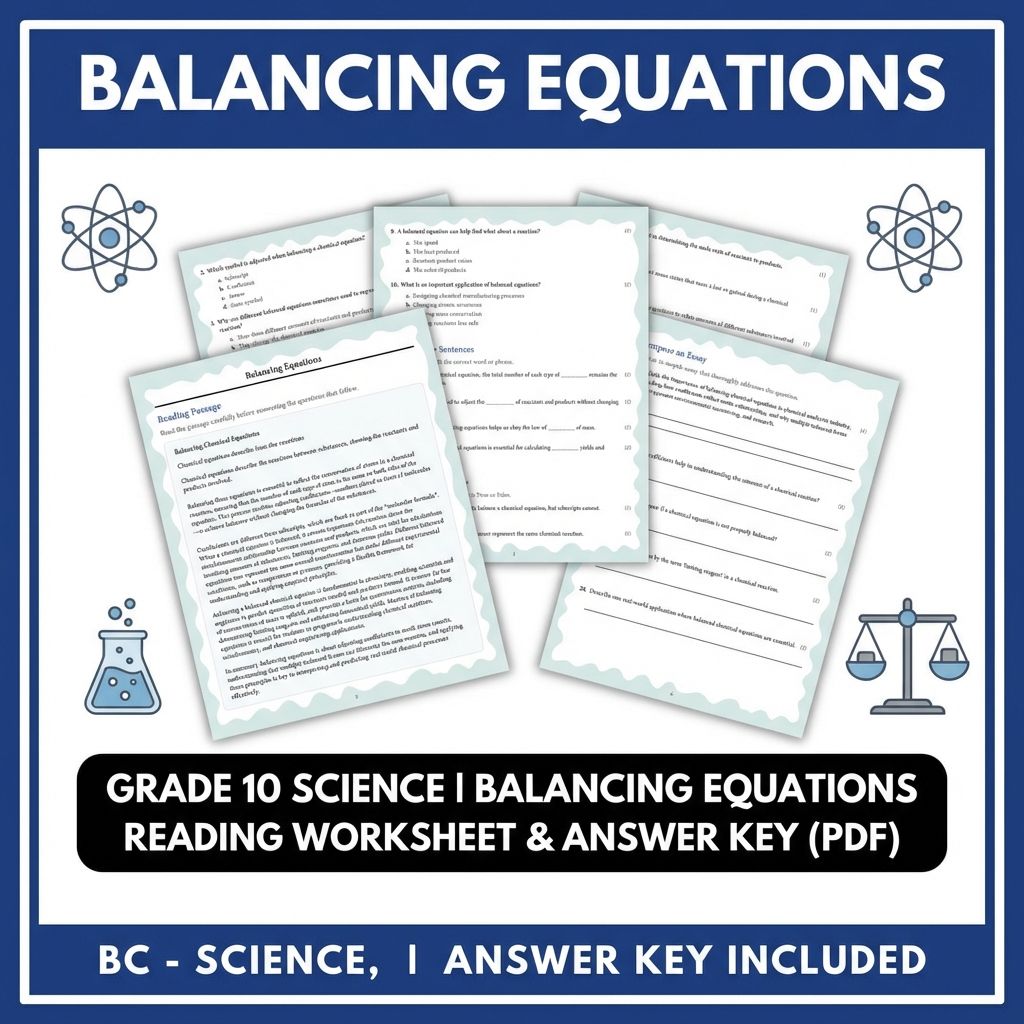
Grade 10 Science | Balancing Equations Reading Worksheet & Answer Key (PDF)
JCreated byJ.S SheetsLearning Objectives
- Understand the concept of balancing chemical equations to obey the law of conservation of mass.
- Learn how coefficients are used to balance reactants and products in chemical equations.
- Recognize that different balanced equations can represent the same chemical transformation under various conditions.
Instant download

6th Grade Science – Conservation Strategies Worksheet (Alberta Standards) (PDF)
 Created bySilver Birch Teaching
Learning Objectives
- Describe how protected areas, reforestation, habitat restoration, and species-at-risk recovery help conserve forest biodiversity and ecosystem services.
- Explain how ecological knowledge (like riparian buffers and seed-source selection) supports long-term forest resilience across different landscapes.
- Identify cause-and-effect relationships between conservation actions and improvements in habitat quality.
Also included in: Grade 6 Ecosystem Interactions Science Lesson Bundle: Alberta Framework +1 more
Instant download
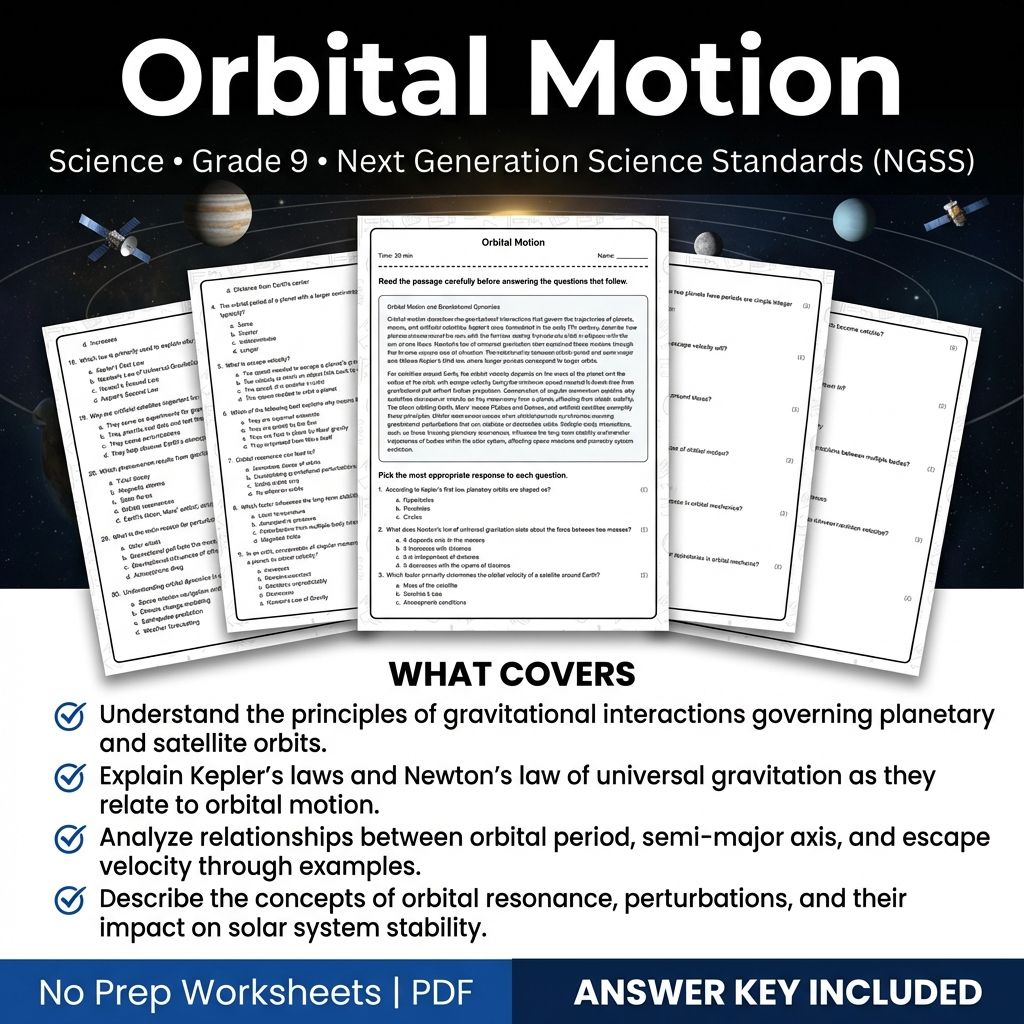
9th Grade Science | Orbital Motion Worksheet & Answer Key (Printable PDF)
Created byCoral Reef LearningLearning Objectives
- Understand the principles of gravitational interactions governing planetary and satellite orbits.
- Explain Kepler's laws and Newton's law of universal gravitation as they relate to orbital motion.
- Analyze relationships between orbital period, semi-major axis, and escape velocity through examples.
Also included in: Grade 9 Science Unit Bundle | Stellar Evolution & Cosmic Timescales Worksheets +1 more
Instant download

Grade 9 Science | Newtonian Concepts - Daily Reading Comprehension
Created byCoral Reef LearningLearning Objectives
- Understand key concepts related to Science
- Apply knowledge through practice questions
- Demonstrate comprehension of the material
Also included in: Forces and Motion Mechanical Systems Lesson Bundle | Grade 9 Science Alberta +1 more
Instant download
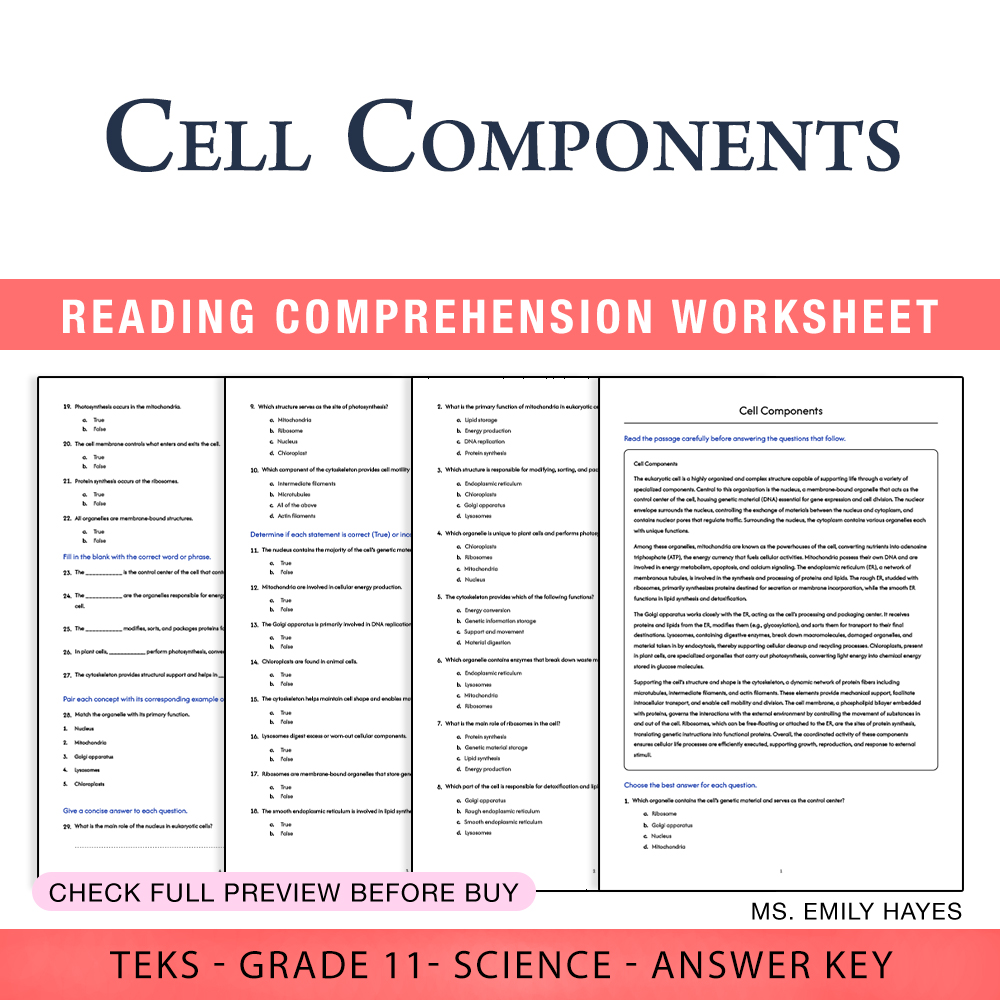
11th Grade Science | Cell Components Worksheet (PDF+ Answer Key)
Created byCopper Leaf ClassroomLearning Objectives
- Identify and describe the functions of various organelles within eukaryotic cells.
- Differentiate between membrane-bound and non-membrane-bound cell structures.
- Understand how cellular structures coordinate to support cell metabolism, genetic control, and material transport.
Instant download

Grade 3 Landform Processes Worksheet | NGSS Practice PDF
 Created byClear Sky Classroom
Learning Objectives
- Identify how weathering, erosion, and deposition change landforms over time.
- Explain how water, wind, and ice can move soil and sediment to create features like valleys, stream channels, deltas, and hills.
- Use maps, photos, and simple models to connect observable landform changes to surface processes.
Instant download
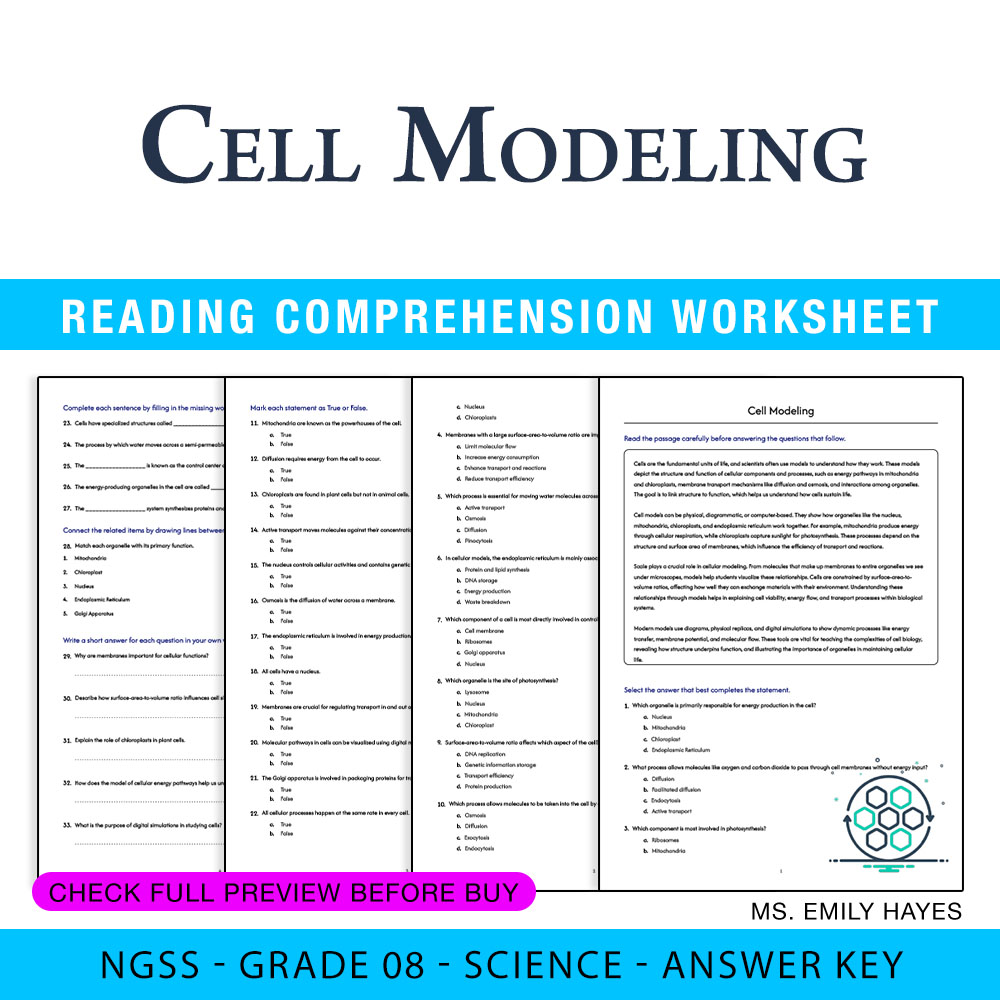
8th Grade Science | Cell Modeling Worksheet (PDF + Answer Key)
Created byCopper Leaf ClassroomLearning Objectives
- Understand and describe models of cellular processes and structures.
- Identify the roles of organelles and membrane systems in cell function.
- Explain how models link structure to cellular function, including energy pathways and membrane constraints.
Instant download
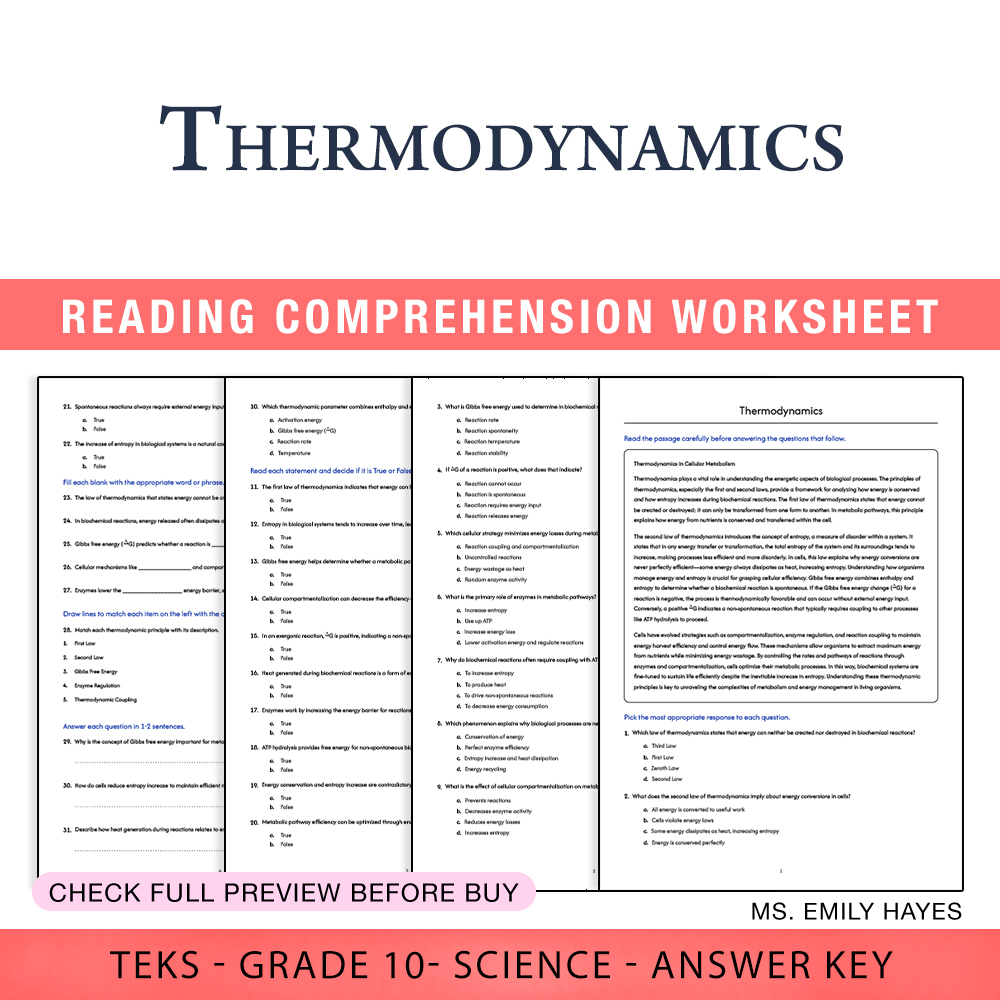
10th Grade Science | Thermodynamics Worksheet (PDF+ Answer Key)
Created byCopper Leaf ClassroomLearning Objectives
- Understand the fundamental principles of thermodynamics as they apply to biochemical reactions.
- Explain the significance of energy conservation and entropy in cellular metabolism.
- Describe how Gibbs free energy determines reaction spontaneity and pathway coupling.
Instant download

Grade 7 Science – Net Force Diagrams Worksheet (Alberta Standards) (PDF)
Created bySilver Birch TeachingLearning Objectives
- Explain how free-body diagrams represent all forces acting on an object
- Determine the net force magnitude and direction by combining perpendicular force components
- Decompose forces on inclined surfaces into parallel and perpendicular components
Also included in: Grade 7 Simple Machines and Forces Science Lesson Bundle: Alberta +1 more
Instant download

Grade 9 Science | Evidence With Models - Daily Reading Comprehension
Created byCoral Reef LearningLearning Objectives
- Understand the role of models in scientific explanations
- Identify different types of scientific models
- Evaluate how models are used to interpret measurement data
Instant download
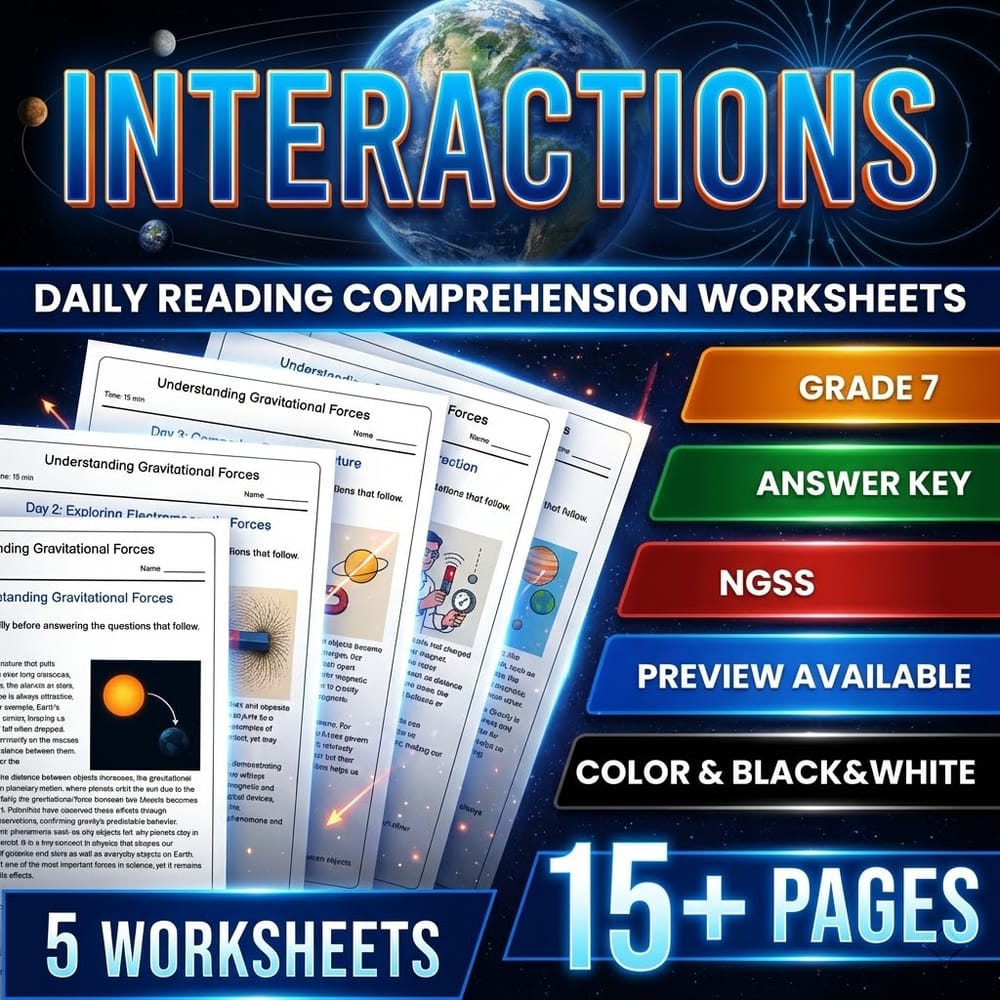
Grade 7 Science – Gravitational Forces & Evidence | Daily Reading Worksheet
 Created byElena Brooks
Learning Objectives
- Recognize gravity as a long-range, attractive force that acts between objects with mass.
- Describe how gravity depends on mass and distance.
- Identify examples of gravitational interactions in daily life and planetary motion.
Also included in: Force and Motion Grade 7 Science Daily Reading Worksheets Bundle | NGSS +1 more
Instant download
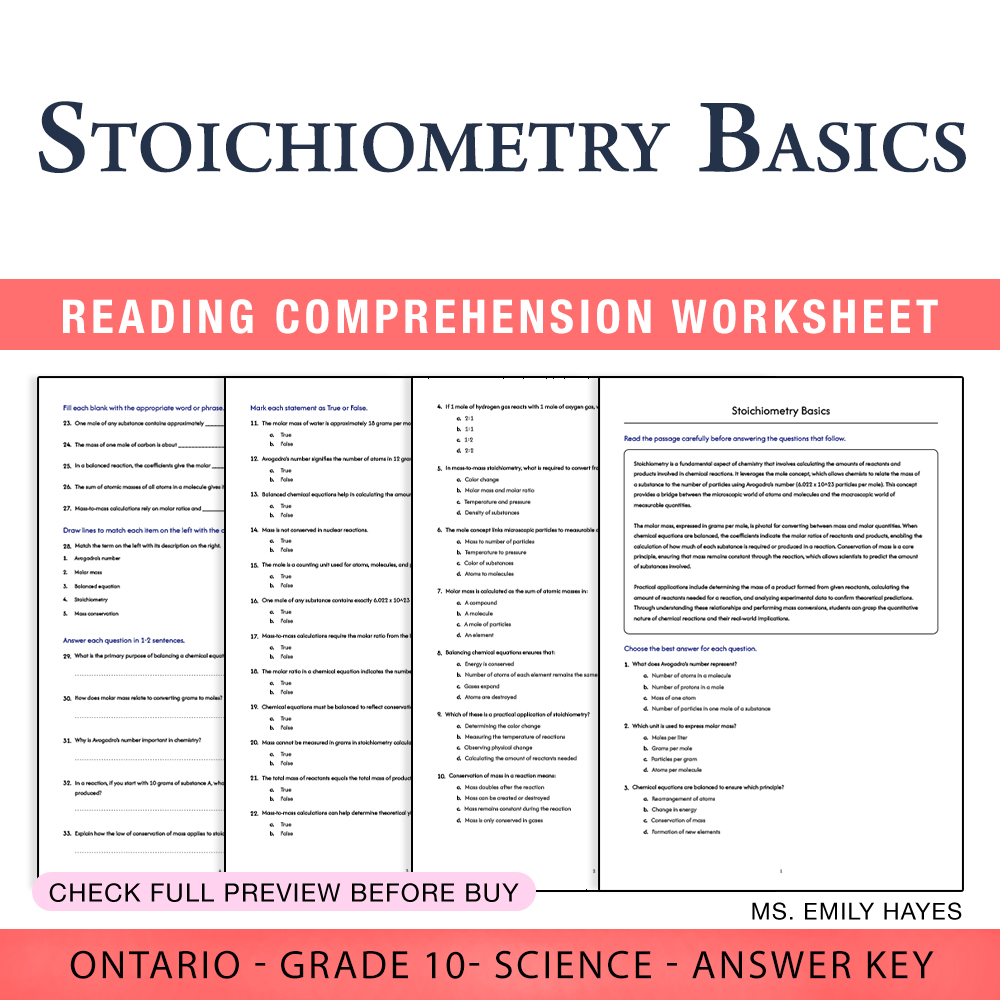
10th Grade Science | Stoichiometry Basics Worksheet (PDF + Answer Key)
Created byCopper Leaf ClassroomLearning Objectives
- Understand the mole concept and its significance in chemistry.
- Use Avogadro's number to convert between quantity of particles and moles.
- Determine molar mass and perform mass-to-mole conversions.
Instant download
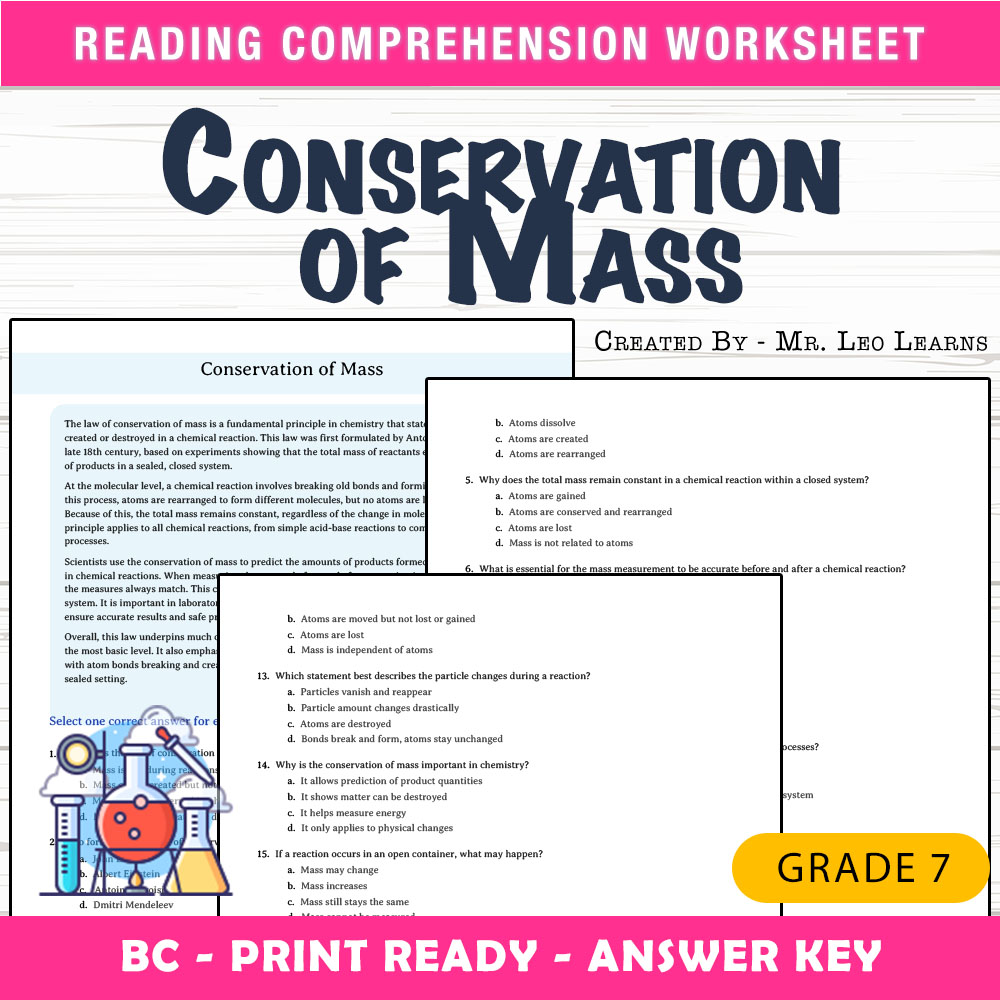
Grade 7 Science — Worksheet MCQ Paper for Mastering Conservation of Mass
Created byThe Resource HubLearning Objectives
- Understand the principle of conservation of mass in chemical reactions.
- Identify how atoms are conserved during reactions at the particle level.
- Recognize the significance of closed systems in mass measurement before and after reactions.
Also included in: Grade 7 Science | Matter & Chemical Change Worksheet Bundle – BC Framework +1 more
Instant download
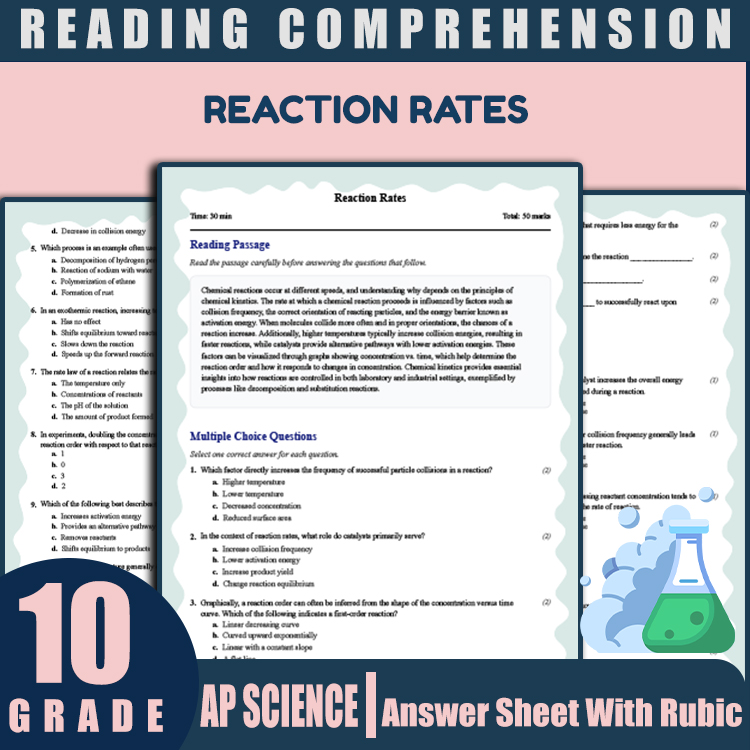
Grade 10 Science | Reaction Rates Reading Worksheet & Answer Key (PDF)
JCreated byJ.S SheetsLearning Objectives
- Explain the basic principles of chemical kinetics, including how collision frequency, orientation, and activation energy influence reaction rates.
- Interpret graphical and mathematical representations of concentration versus time to determine reaction order.
- Describe how temperature changes and catalysts modify reaction pathways without using advanced mathematics.
Also included in: Grade 10 Science Unit Worksheet Bundle | Chemical Reactions & Atomic Structure +1 more
Instant download

Human Influences Assessment for Grade 6 Science TEKS Standards
Created byPrism Point LearningLearning Objectives
- Identify different human activities that impact natural systems.
- Explain how habitat fragmentation, pollution, and resource extraction affect community dynamics.
- Describe mitigation strategies like conservation and restoration to protect ecological balance.
Instant download
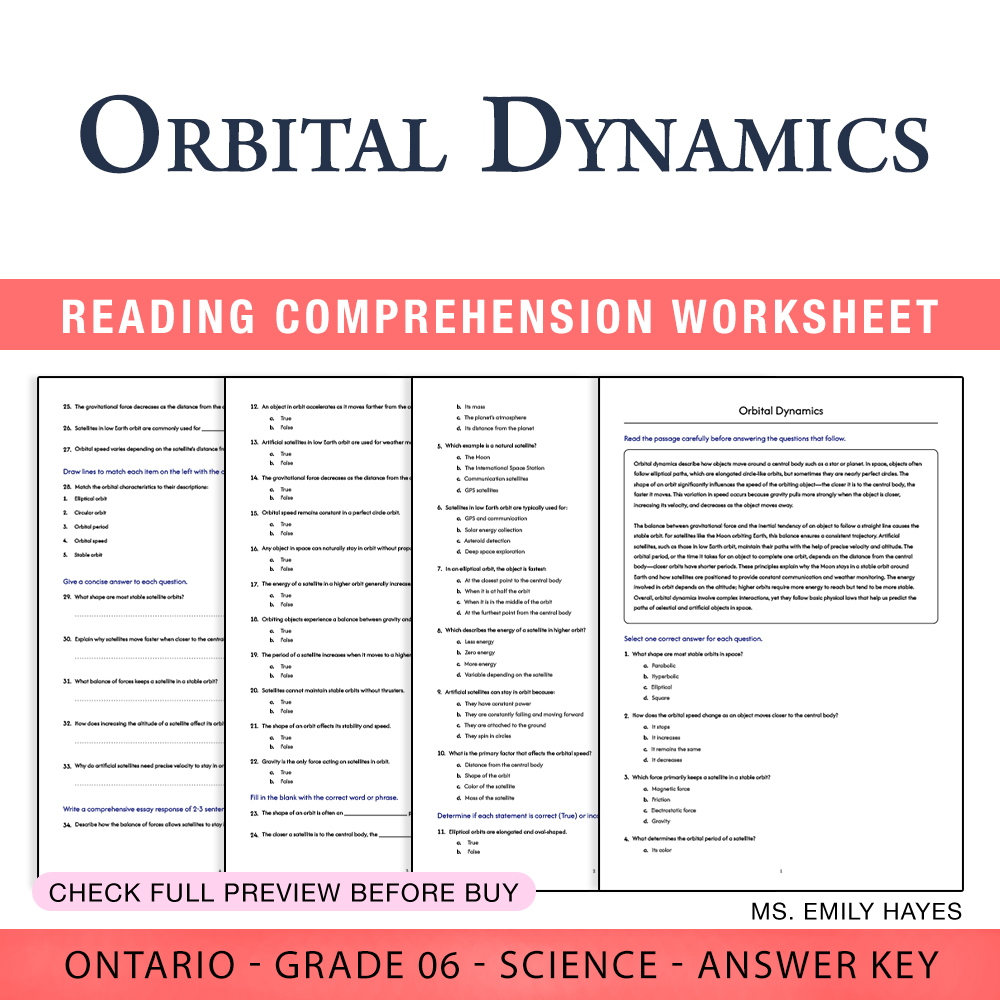
6th Grade Science | Orbital Dynamics Worksheet (PDF + Answer Key)
Created byCopper Leaf ClassroomLearning Objectives
- Explain the difference between elliptical and near-circular orbits.
- Describe how orbital speed varies with distance from a central body.
- Understand the balance of gravitational force and inertial motion in maintaining orbits.
Instant download

Grade 8 Atoms And Molecules Worksheet | BC Practice & PDF
Created byClear Sky ClassroomLearning Objectives
- Explain how atoms and molecules form matter and how their arrangement affects properties.
- Describe how chemical reactions rearrange atoms by breaking and forming bonds while conserving atoms.
- Interpret simple chemical diagrams and use symbols/formulas to identify reactants and products.
Instant download
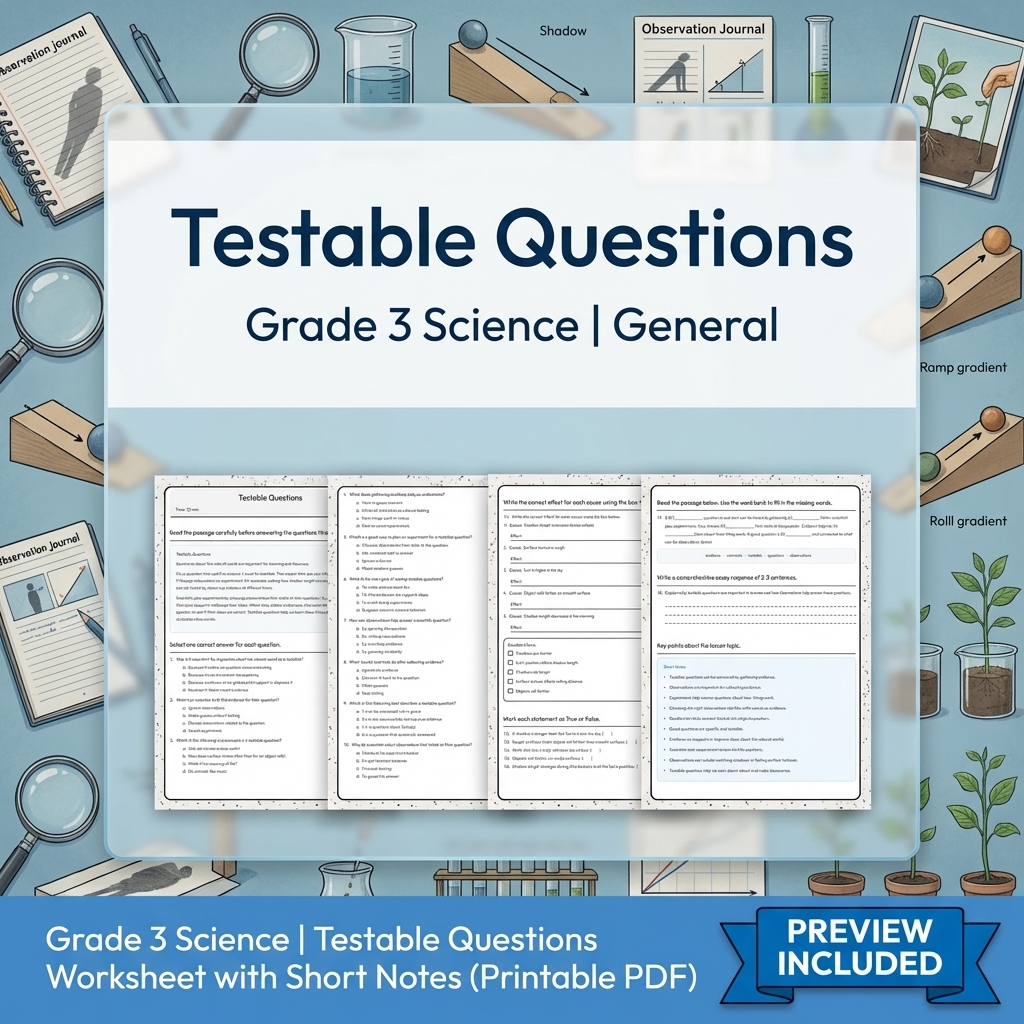
Grade 3 Science | Testable Questions Worksheet with Short Notes (Printable PDF)
 Created byMeadowlark Worksheets
Learning Objectives
- Understand what makes a question testable and connected to evidence.
- Identify observations that relate to scientific questions.
- Learn how to select relevant evidence to support a question.
Also included in: Grade 3 Science Lesson Bundle | Data, Models, and Evidence Activities +1 more
Instant download

Plate Tectonics Worksheet Grade 8 Science Activities & Earth Science Practice
Created byPrism Point LearningLearning Objectives
- Explain how plate motions reshape Earth’s landforms over geologic time.
- Describe how evidence (matching coastlines, seafloor features, earthquakes) supports plate tectonics.
- Differentiate divergent, convergent, and transform boundaries by typical landforms and activity.
Also included in: Earth Systems & Climate Lesson Bundle | Grade 8 Science | Florida NGSSS
Instant download
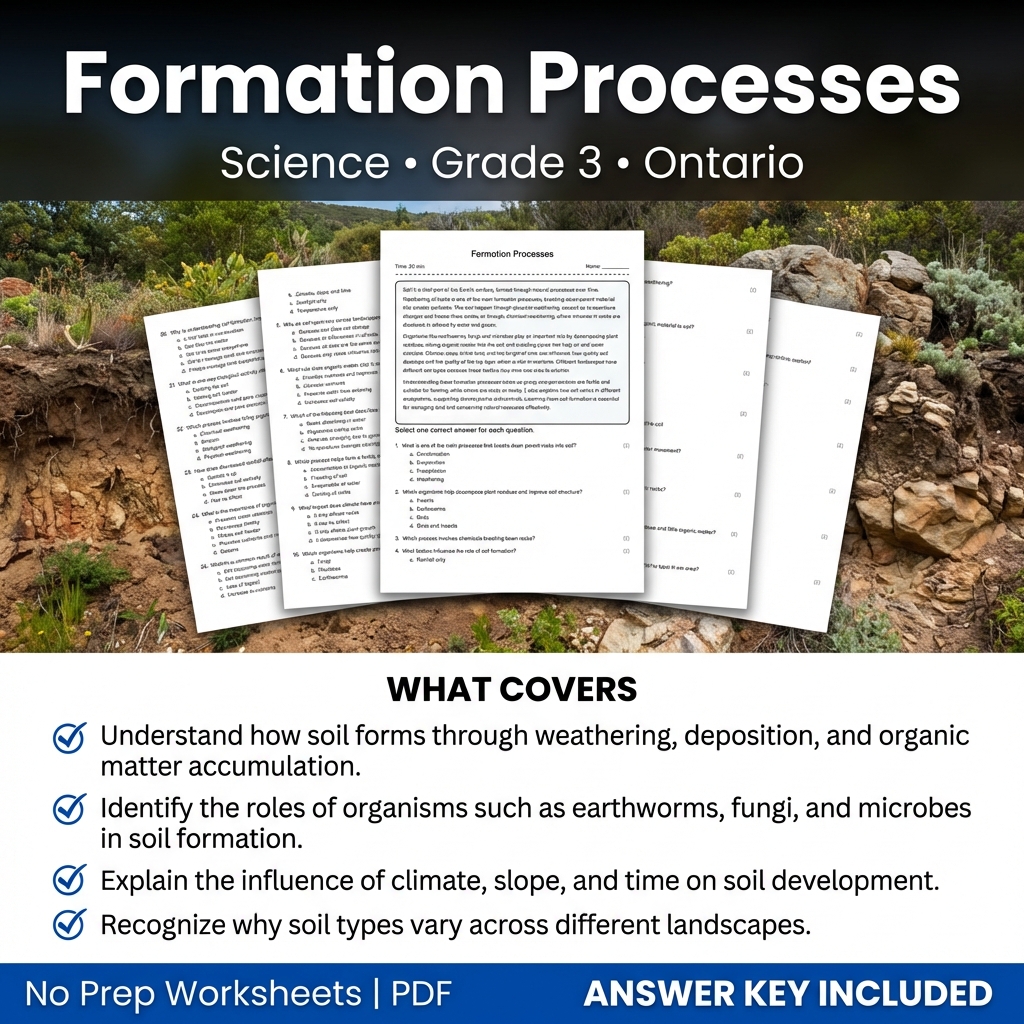
Formation Processes Worksheet | Science | Grade 3 | Ontario Standards
Created byCoral Reef LearningLearning Objectives
- Understand how soil forms through weathering, deposition, and organic matter accumulation.
- Identify the roles of organisms such as earthworms, fungi, and microbes in soil formation.
- Explain the influence of climate, slope, and time on soil development.
Instant download
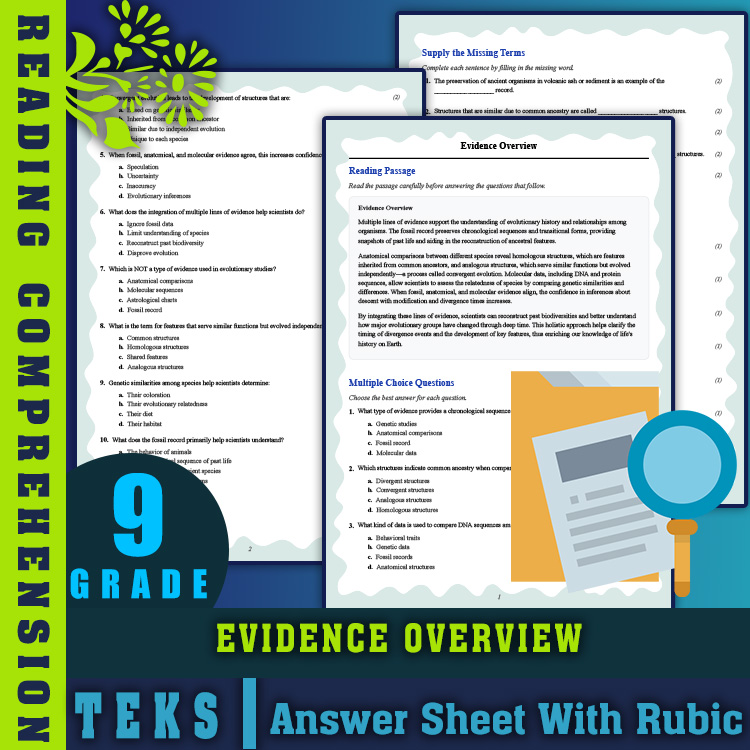
Grade 9 Science | Evidence of Evolution & Relationships (PDF + Answer Key)
JCreated byJ.S SheetsLearning Objectives
- Understand the different lines of evidence used to infer evolutionary relationships.
- Identify how fossil, anatomical, and molecular data support evolutionary history.
- Explain the importance of integrating multiple evidence types to reconstruct biodiversity over time.
Instant download
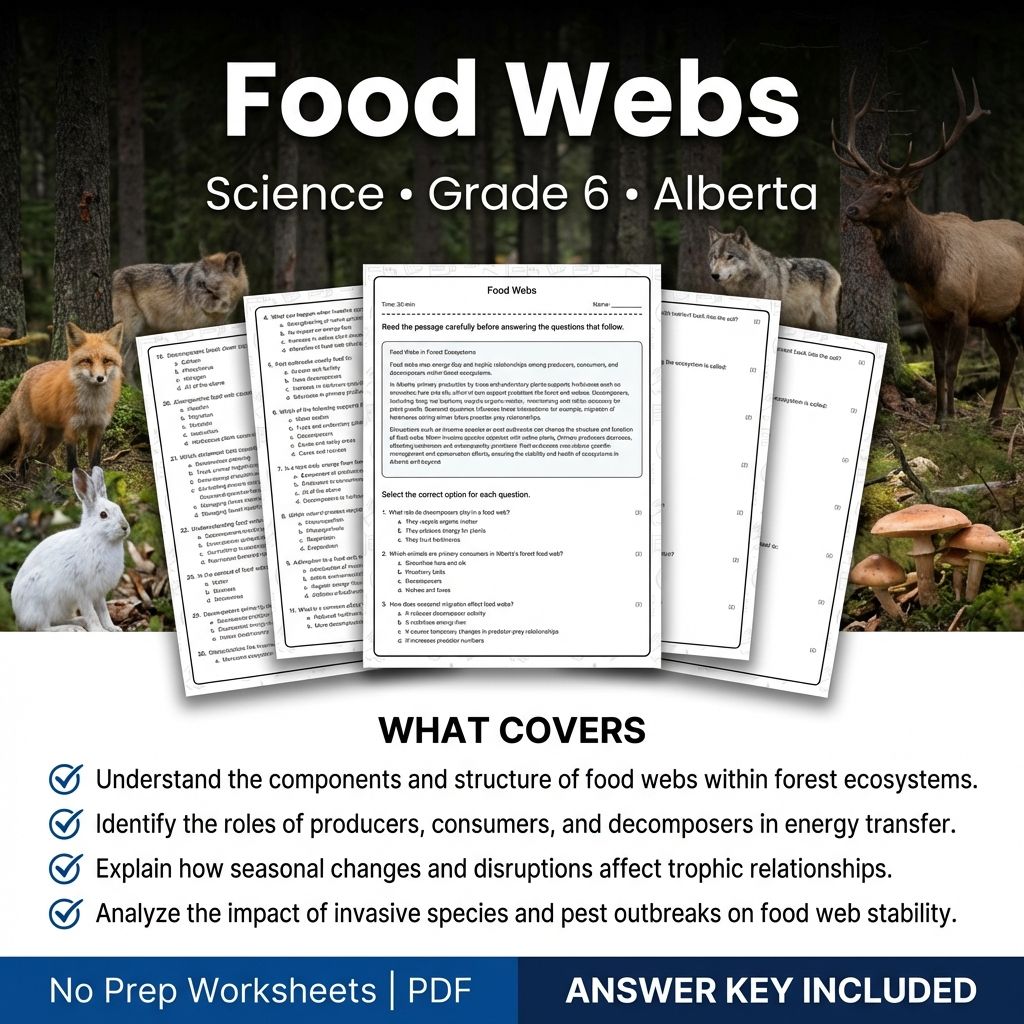
Food Webs Worksheet | Grade 6 Science | Alberta Standards
Created byCoral Reef LearningLearning Objectives
- Understand the components and structure of food webs within forest ecosystems.
- Identify the roles of producers, consumers, and decomposers in energy transfer.
- Explain how seasonal changes and disruptions affect trophic relationships.
Instant download

Grade 5 Science Sustainability & Circular Economy Worksheet | Ontario
 Created byChalk and Compass
Learning Objectives
- Explain how design choices can reduce resource use and energy demand through durability, repairability, and better material selection.
- Describe circular economy strategies such as product-as-service, remanufacturing, and design for disassembly.
- Identify higher-level approaches that reduce net resource extraction, including energy recovery from waste and industrial symbiosis.
Instant download

Grade 5 Energy Efficiency Choices for Appliances Science Worksheet Ontario
Created byChalk and CompassLearning Objectives
- Compare appliances using energy-rating labels and standby power consumption
- Explain how maintenance, proper sizing, and everyday habits affect lifetime energy use
- Identify examples of technologies that reduce energy losses in home systems
Instant download
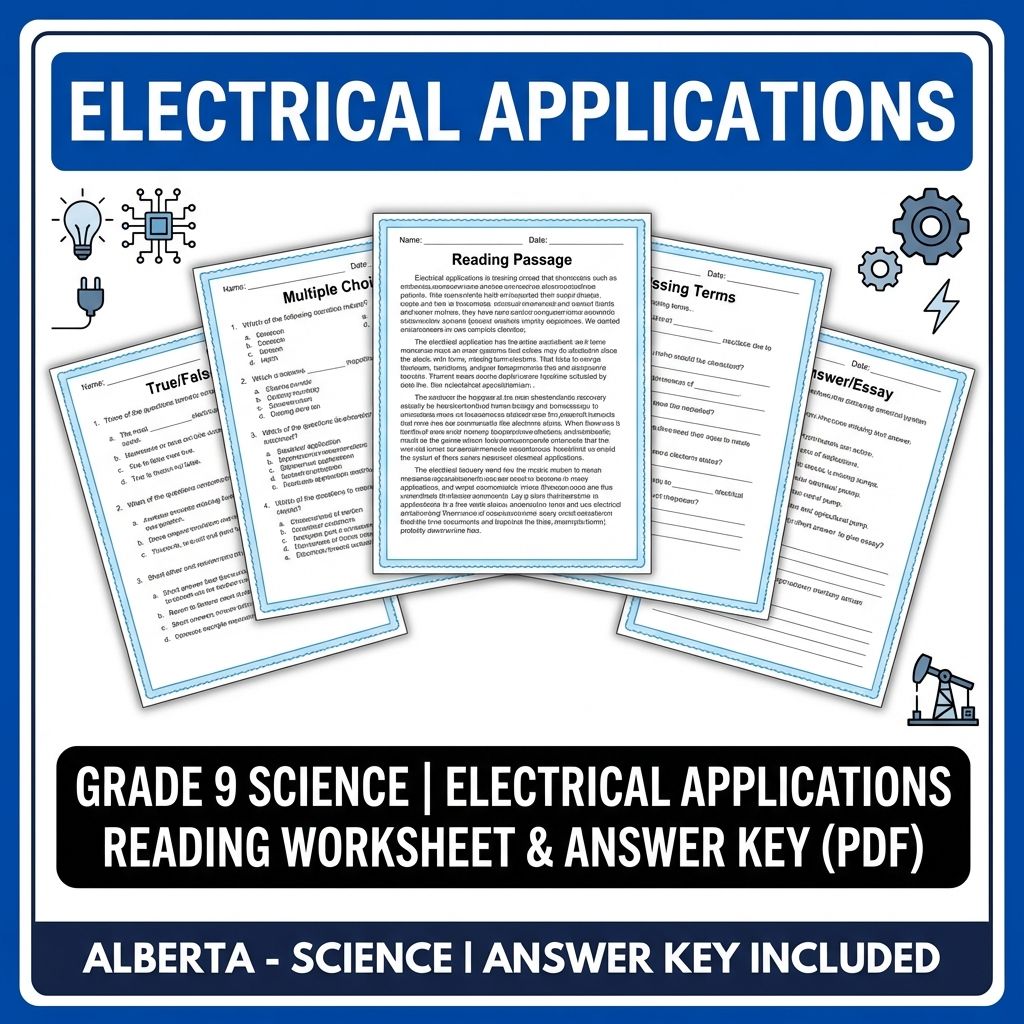
Grade 9 Science | Electrical Applications Reading Worksheet & Answer Key (PDF)
JCreated byJ.S SheetsLearning Objectives
- Understand the principles of safe and effective electrical system use in various applications.
- Learn to match device ratings and functions with appropriate power sources and environmental conditions.
- Identify protective measures essential for safety and efficiency in electrical systems.
Also included in: Grade 9 Science Bundle | Electricity, Energy & Magnetism (PDF + Answer Keys) +1 more
Instant download
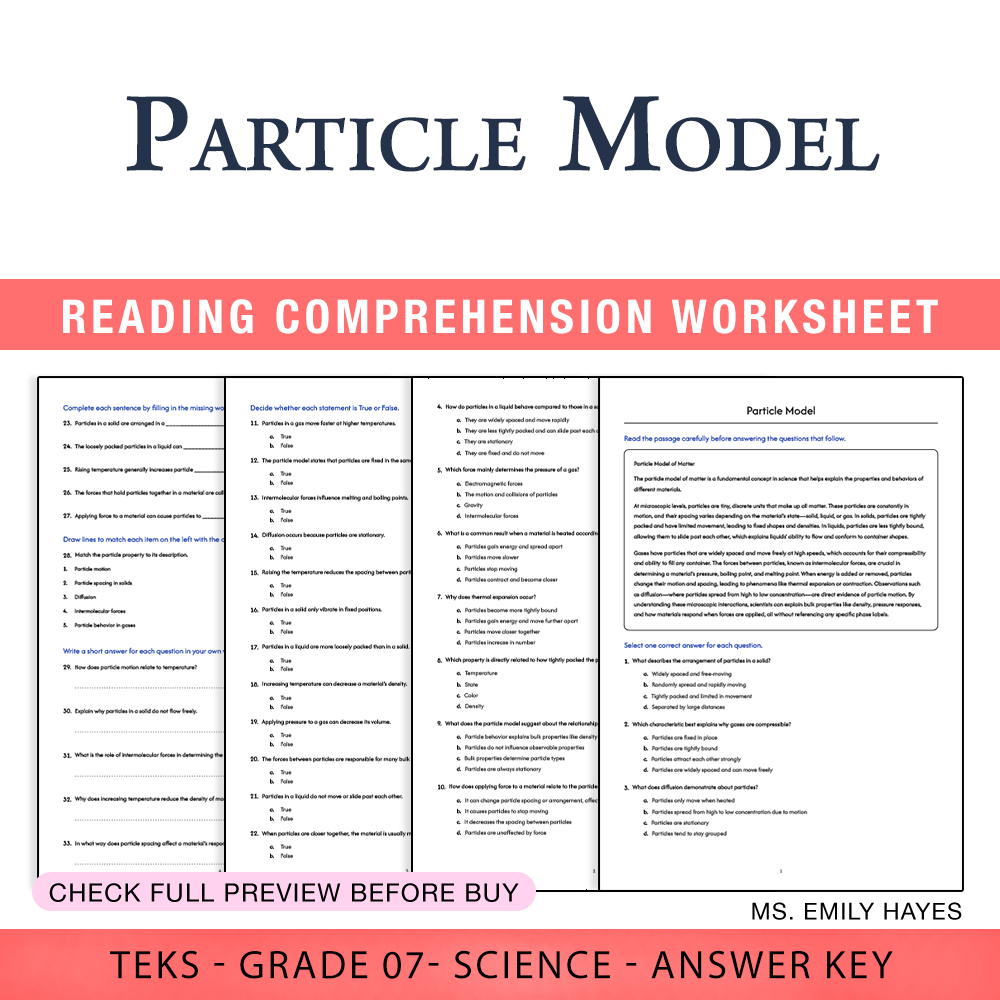
7th Grade Science | Particle Model Worksheet (PDF+ Answer Key)
Created byCopper Leaf ClassroomLearning Objectives
- Explain the basic principles of the particle model of matter and how particles behave in different states
- Describe how particle spacing, motion, and forces account for observable properties like density, pressure, and compressibility
- Relate micro-scale particle interactions to macro-scale measurements such as diffusion, thermal expansion, and response to applied forces
Instant download

Solubility Curves Assessment for Grade 11 Science | Alberta Standards
Created byPrism Point LearningLearning Objectives
- Understand how to read and interpret solubility curves for different compounds.
- Identify regions of saturation, supersaturation, and unsaturation in solubility graphs.
- Connect graphical trends to molecular interactions in solutions.
Also included in: Grade 11 Solutions and Solubility Science Lesson Bundle | Alberta Framework +1 more
Instant download
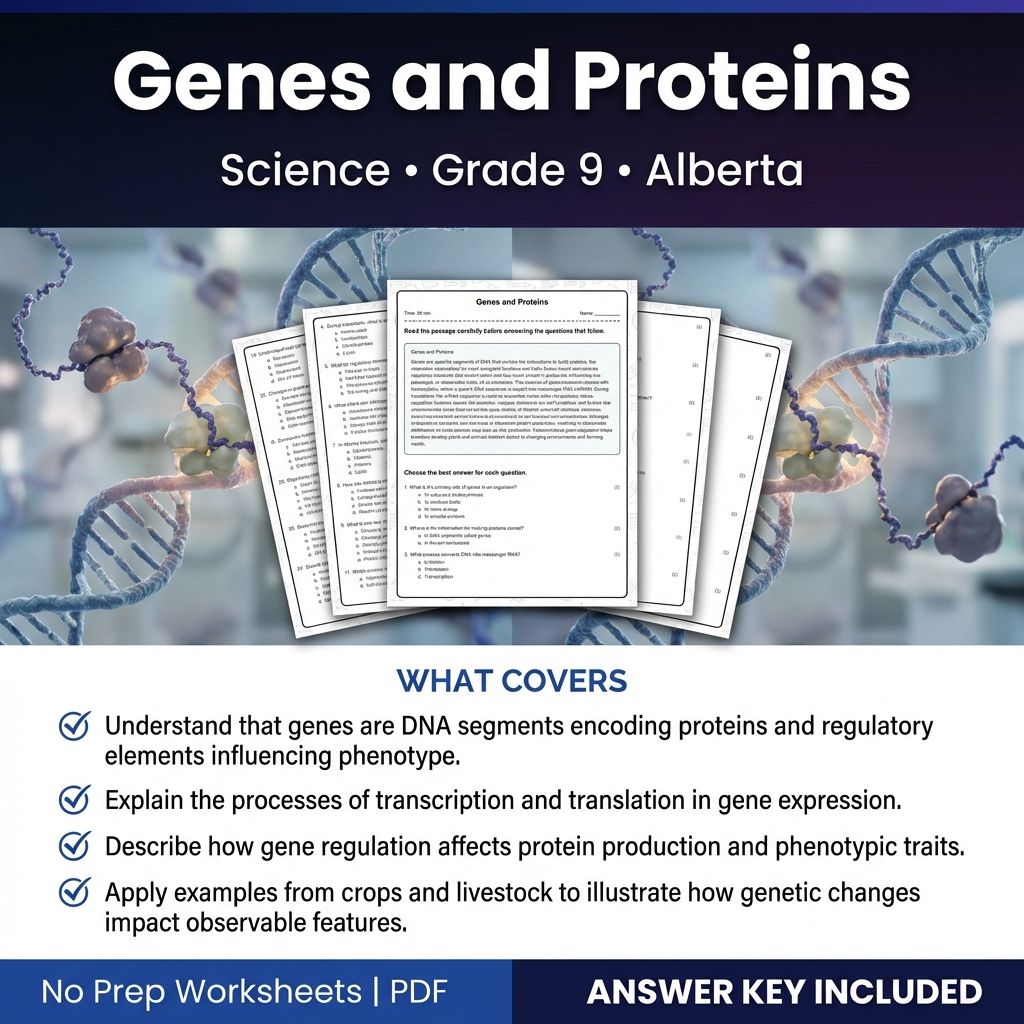
Genes and Proteins Worksheet for Grade 9 Science | Alberta Standards
Created byCoral Reef LearningLearning Objectives
- Understand that genes are DNA segments encoding proteins and regulatory elements influencing phenotype.
- Explain the processes of transcription and translation in gene expression.
- Describe how gene regulation affects protein production and phenotypic traits.
Instant download

Grade 12 Science | Lifecycle Impact Balance in Battery Technology - Reading Comp
Created byCoral Reef LearningLearning Objectives
- Understand the scientific mechanisms behind battery degradation chemistry
- Analyze how thermal limits affect battery performance over its lifecycle
- Evaluate the impact of recovery efficiency on sustainable engineering decisions
Instant download
Browse more categories
About Science Worksheets
Find Science worksheets spanning core skills, practice, and review. All 44,627 resources are instant PDF downloads for the classroom or home.
Every worksheet on MyTeachingSheets is created by independent teacher-authors and reviewed before publication. All resources download as printable PDFs for classroom, homework, or at-home practice, and many include answer keys. Preview any worksheet free before buying.