
Science Worksheets
44,628 subject resources
Grade 10 Science | Net Force and Motion Worksheet (NGSS-Aligned PDF)
 Created bySilver Birch Teaching
Learning Objectives
- Analyze the quantitative relationships between net force, mass, and acceleration using Newton's second law.
- Interpret motion graphs and understand their relation to constant acceleration and force.
- Apply vector summation to determine net force in various scenarios including inclined planes and frictional effects.
Also included in: Grade 10 Forces, Motion, and Fields Science Lesson Bundle for NGSS +1 more
Instant download

Grade 10 Science | Momentum & Impulse NGSS Worksheet (PDF)
Created bySilver Birch TeachingLearning Objectives
- Understand the relationship between impulse and momentum and their mathematical formulations.
- Explain the impulse-momentum theorem and its application in analyzing collisions and interactions.
- Describe conservation of momentum in closed systems during elastic and inelastic collisions.
Also included in: Grade 10 Forces, Motion, and Fields Science Lesson Bundle for NGSS +1 more
Instant download
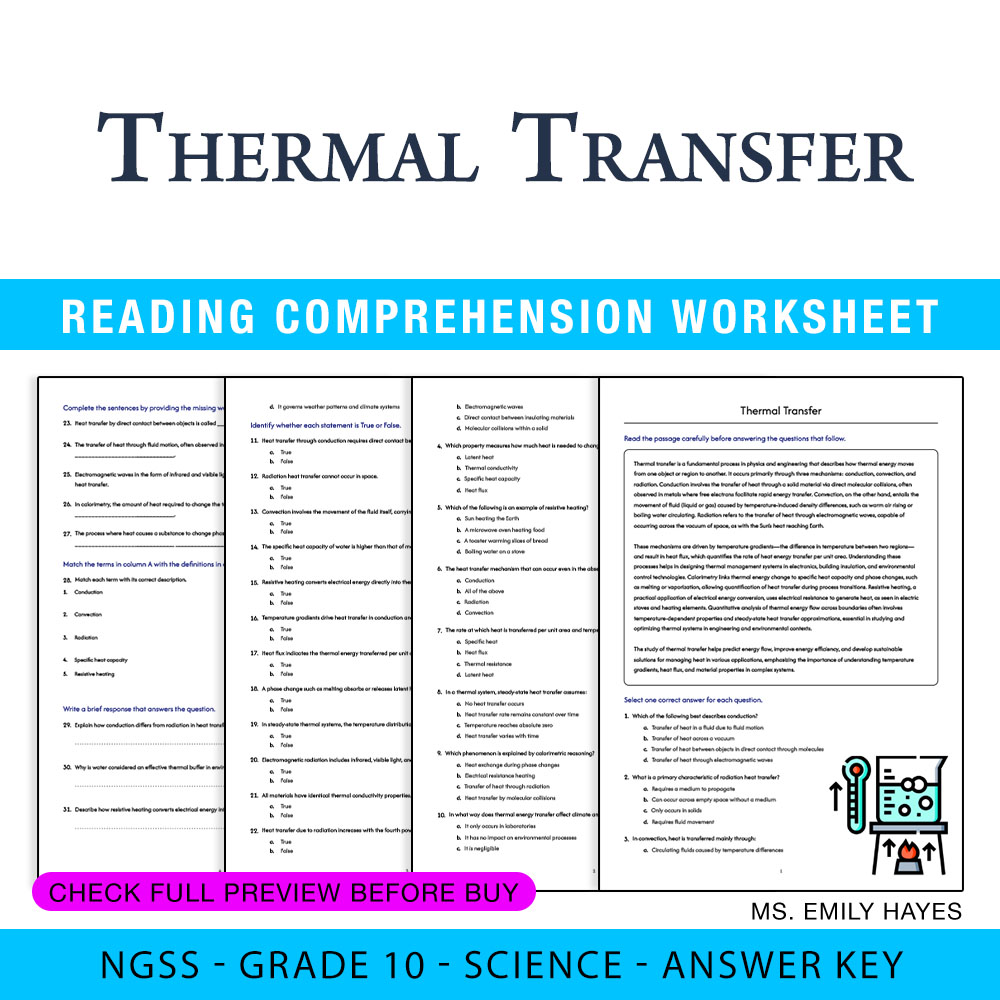
10th Grade Science | Thermal Transfer Worksheet (PDF+ Answer Key)
 Created byCopper Leaf Classroom
Learning Objectives
- Describe the mechanisms of heat transfer: conduction, convection, and radiation.
- Analyze heat flux and temperature gradients in thermal systems.
- Apply calorimetric reasoning to relate thermal energy change to specific heat and phase changes.
Instant download
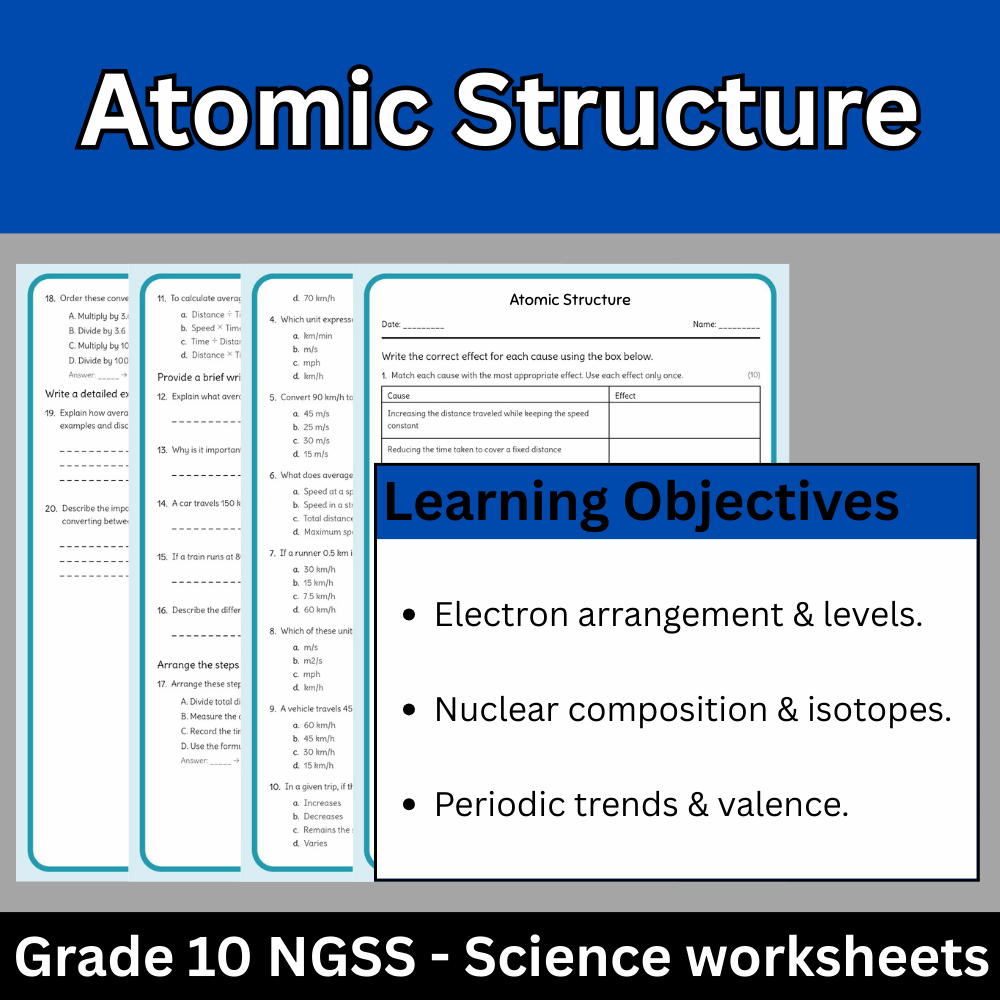
Grade 10 Science | Atomic Structure Worksheet (Answer Key) | NGSS Aligned
 Created byBright Mind Resources
Learning Objectives
- Understand the arrangement of electrons in atoms and their energy levels.
- Connect nuclear composition and isotopes to atomic mass and reactivity.
- Interpret periodic trends based on electron configuration and valence electrons.
Instant download

Energy Forms Worksheet | Standards-Aligned Practice for Grade 8 Science
JCreated byJ.S SheetsLearning Objectives
- Identify the different forms of energy related to motion and position.
- Explain how kinetic energy varies with speed and mass.
- Describe how gravitational potential energy depends on height.
Also included in: Grade 8 Forces, Energy & Matter Science Lesson Bundle | California Standards +1 more
Instant download

Grade 10 Science | Immune System & Homeostasis - Daily Reading Comprehension
 Created byCoral Reef Learning
Learning Objectives
- Identify the main components of the immune system.
- Understand how the immune system contributes to maintaining homeostasis.
- Recognize the mechanisms of inflammatory responses and fever.
Instant download
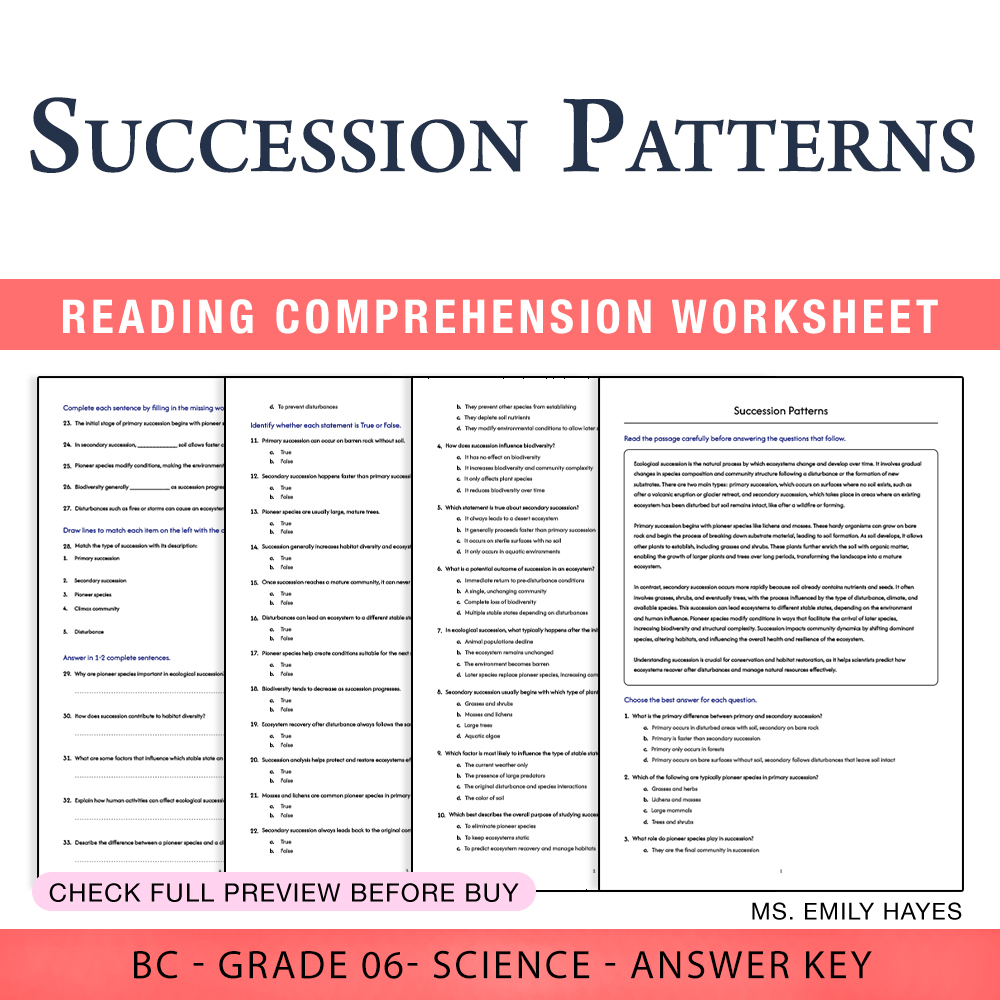
6th Grade Science | Succession Patterns Worksheet (PDF+ Answer Key)
Created byCopper Leaf ClassroomLearning Objectives
- Describe the process of ecological succession and distinguish between primary and secondary succession.
- Identify the role of pioneer species during succession and understand how they modify environments for later species.
- Explain how succession affects biodiversity, community structure, and habitat availability.
Also included in: Grade 6 Science BC | Ecosystems and Human Impact Unit (PDF + Answer Keys) +1 more
Instant download
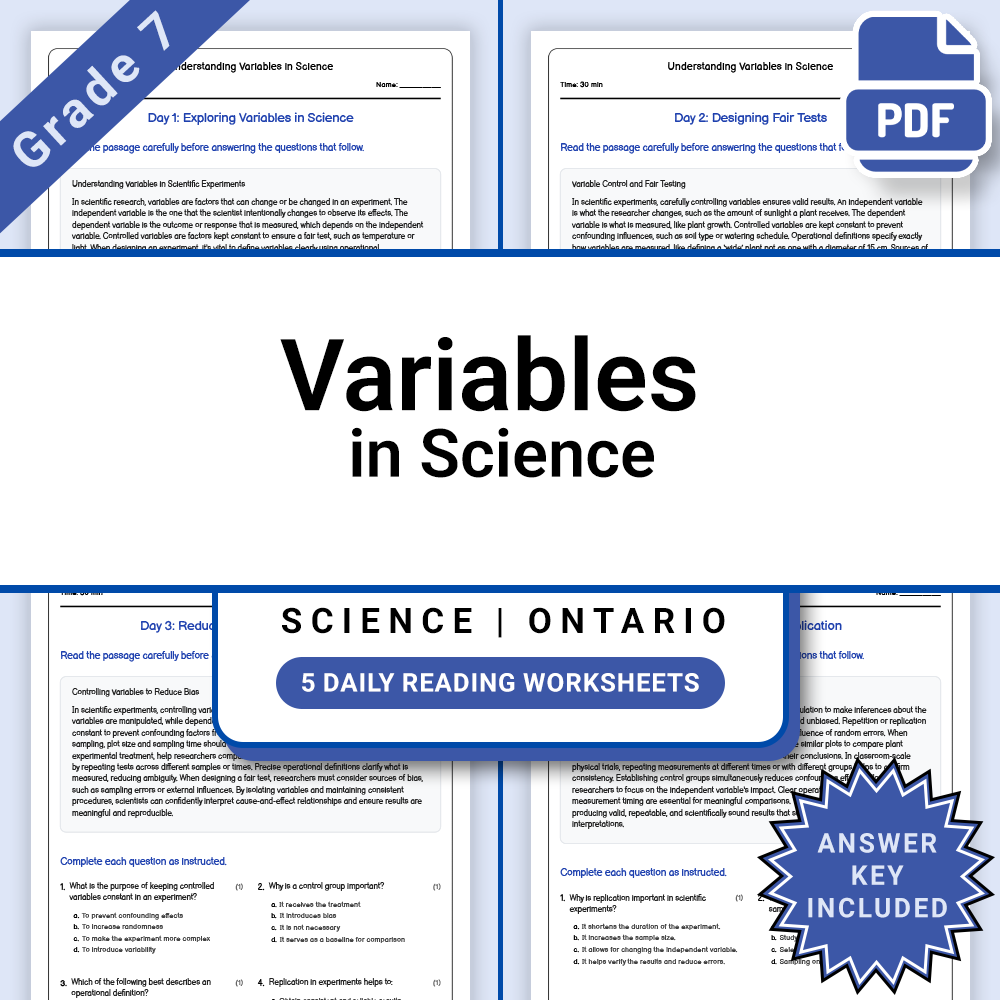
Grade 7 Science – Understanding Variables Daily Reading Worksheet + Answer Key
JCreated byJ.S SheetsLearning Objectives
- Define independent, dependent, and controlled variables in experiments.
- Explain the importance of operational definitions and fair test design.
- Identify sources of confounding and how to reduce bias.
Also included in: Grade 7 Science Lesson Bundle | Ontario Curriculum Reading Worksheets +1 more
Instant download

Trade-Offs Analysis Worksheet | NGSS-Aligned 11th Grade Science Practice
JCreated byJ.S SheetsLearning Objectives
- Evaluate proposed solutions against multiple criteria and constraints using quantitative and qualitative methods.
- Apply systems thinking to analyze component interactions, emergent behavior, and unintended consequences in engineering and urban systems.
- Assess trade-offs among cost, safety, environmental impact, scalability, and maintainability using performance metrics.
Also included in: Grade 11 Engineering Design with Computational Modeling Science +1 more
Instant download
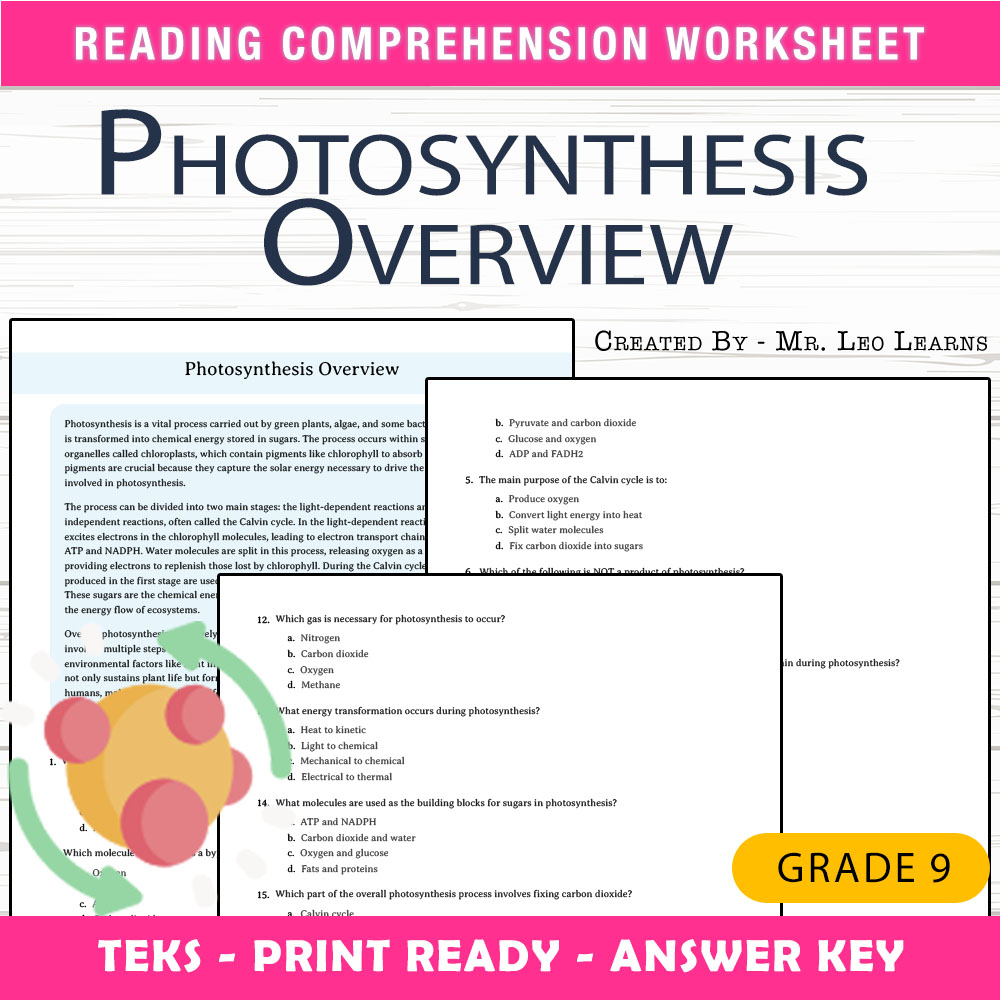
Grade 9 Science – Photosynthesis Overview Worksheet for Mastery
 Created byThe Resource Hub
Learning Objectives
- Understand the basic process of photosynthesis and its significance.
- Identify the inputs, outputs, and main steps involved in photosynthesis.
- Explain how light energy is converted into chemical energy within chloroplasts.
Also included in: Grade 9 Science | Enzymes, Photosynthesis & Metabolic Pathways Unit Bundle +1 more
Instant download

6th Grade Science | Control Surfaces Worksheet (PDF) – Alberta Standards
 Created byEvergreen Desk Education
Learning Objectives
- Explain how ailerons, elevators, and rudders change airflow to create aerodynamic moments.
- Describe how deflecting control surfaces alters lift and produces rolling, pitching, and yawing motions.
- Connect control-surface responses to real-world flight examples, including short-field operations and crosswind control.
Instant download
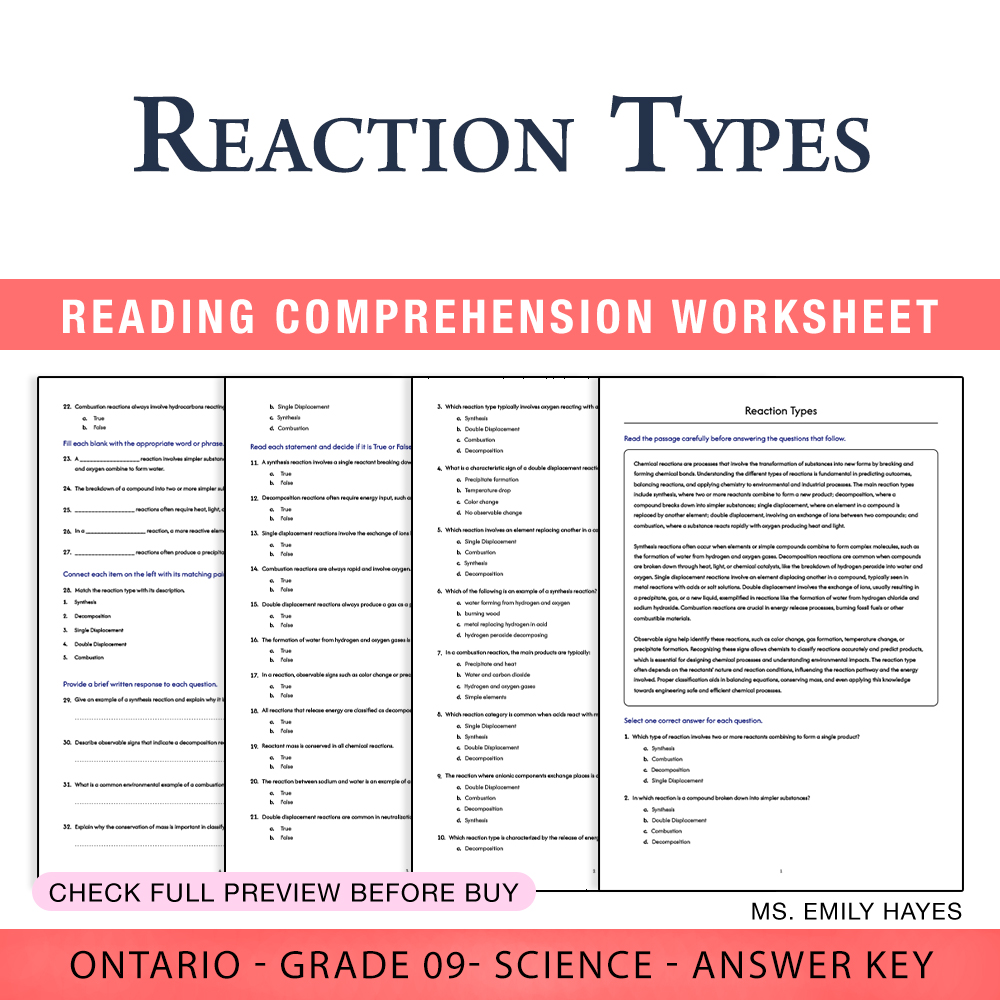
9th Grade Science | Reaction Types Worksheet (PDF + Answer Key)
Created byCopper Leaf ClassroomLearning Objectives
- Identify and describe the main types of chemical reactions: synthesis, decomposition, single displacement, double displacement, and combustion.
- Recognize observable signs and patterns that distinguish different reaction types.
- Predict products based on reaction patterns and understand mass conservation principles.
Instant download
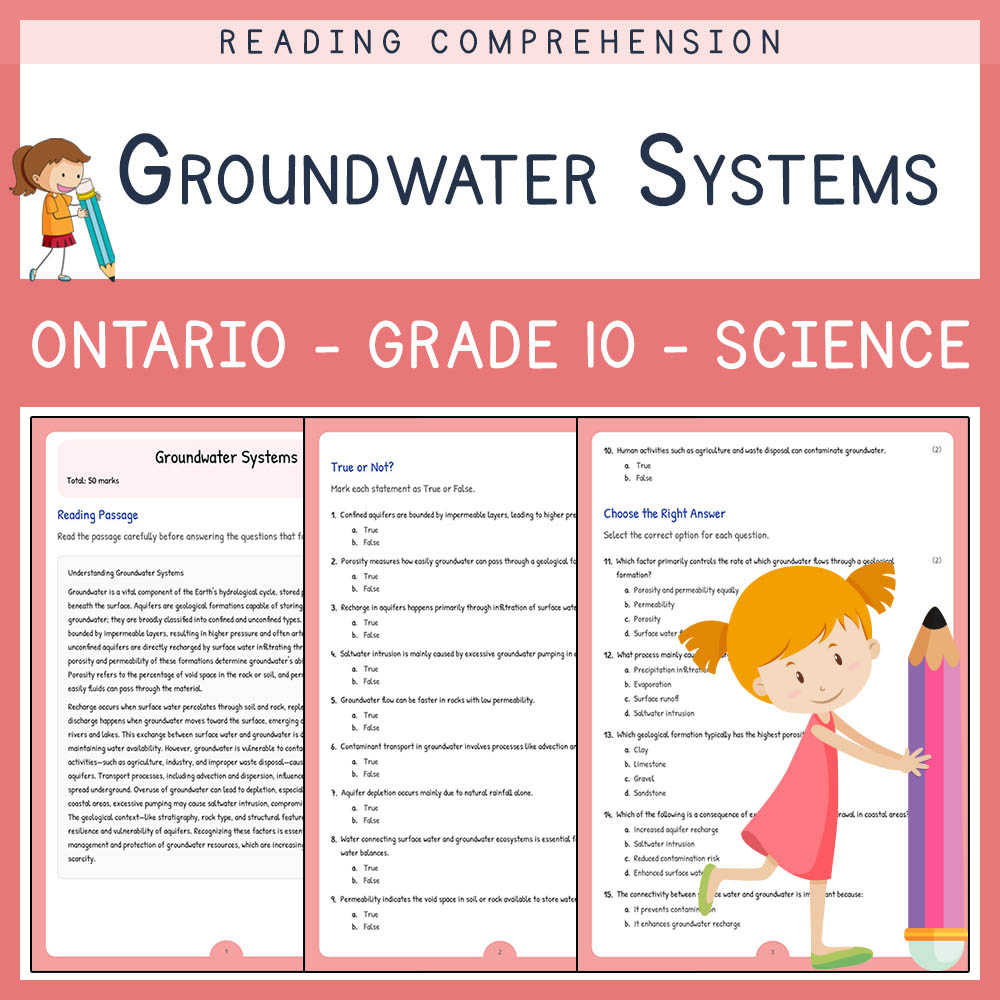
Grade 10 Science | Groundwater Systems Worksheet Elena | Ontario Standard
 Created byLumora Learning
Learning Objectives
- Understand the types and properties of aquifers and their influence on groundwater flow.
- Explain the concepts of porosity and permeability and their effects on recharge and discharge dynamics.
- Analyze the vulnerability of groundwater to contamination and the processes involved in contaminant transport.
Instant download

8th Grade Science | Experimental Design Worksheet (PDF+ Answer Key)
Created byCopper Leaf ClassroomLearning Objectives
- Understand the key components of experimental design, including hypothesis formulation and operational definitions.
- Identify control conditions, replication, and measurement criteria used in experiments.
- Analyze the manipulation of independent variables and measurement of dependent variables in scientific studies.
Instant download

Grade 12 Science | Membrane Dynamics Worksheet | AP Aligned
Created byLumora LearningLearning Objectives
- Explain how lipid bilayer organization and membrane proteins create selective permeability and maintain concentration gradients.
- Compare passive transport mechanisms (diffusion, osmosis, facilitated diffusion) with active transport and how they relate to energy input.
- Use quantitative relationships involving concentration differences and electrochemical forces to interpret membrane potential.
Instant download
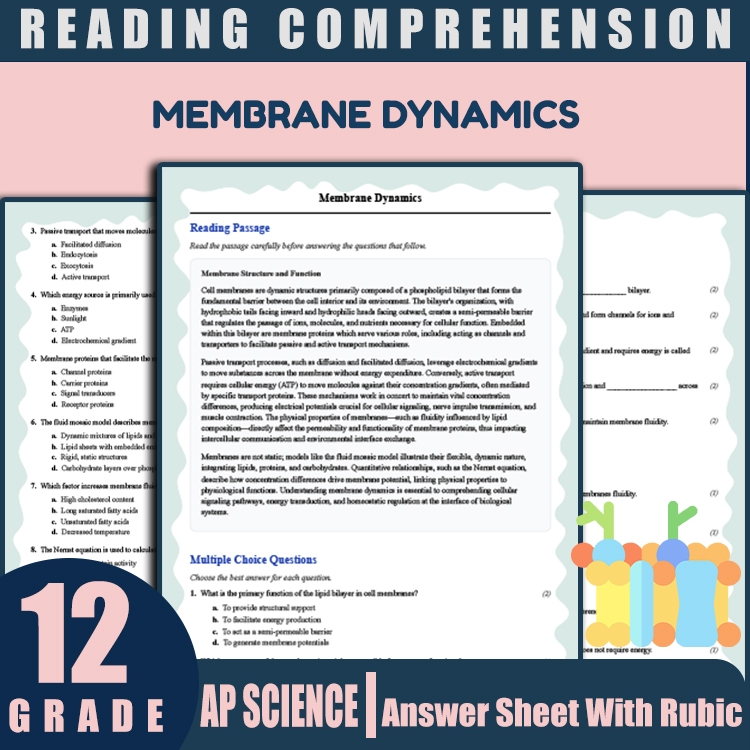
12th Grade Science | Membrane Dynamics Reading Worksheet (PDF + Answer Key)
JCreated byJ.S SheetsLearning Objectives
- Explain the structural organization of lipid bilayers and their impact on membrane fluidity and permeability.
- Describe the roles of membrane proteins in transport, signaling, and maintaining cellular homeostasis.
- Identify mechanisms of passive and active transport across membranes and relate them to electrochemical gradients.
Also included in: Grade 12 Science Unit Worksheet Pack | Molecular Biology, Genetics & Ecosystems +1 more
Instant download
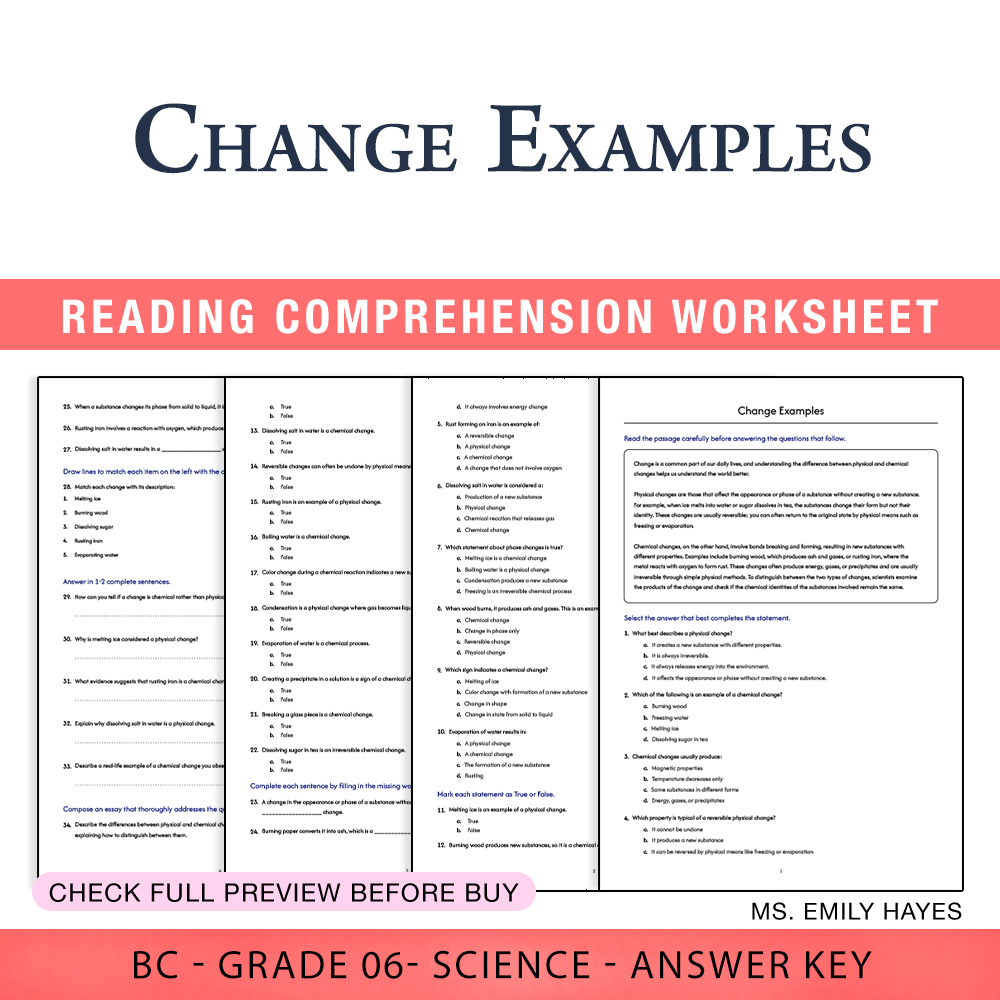
6th Grade Science | Change Examples Worksheet (PDF+ Answer Key)
Created byCopper Leaf ClassroomLearning Objectives
- Identify and differentiate between physical and chemical changes using real-world examples.
- Explain how to determine whether a change is physical or chemical by examining products and properties.
- Describe the features of reversible physical changes versus irreversible chemical changes.
Also included in: Grade 6 Science BC| Reaction Rates & Chemical Properties (PDF+ Answer Keys) +1 more
Instant download

Grade 7 Science | Biodiversity Measures Worksheet (PDF) Alberta Standards
Created byEvergreen Desk EducationLearning Objectives
- Explain how biodiversity can be described using richness, evenness, and habitat heterogeneity.
- Interpret what biodiversity metrics can reveal about ecosystem resilience and function.
- Use evidence from habitat complexity and species assemblages to make ecological health claims.
Instant download
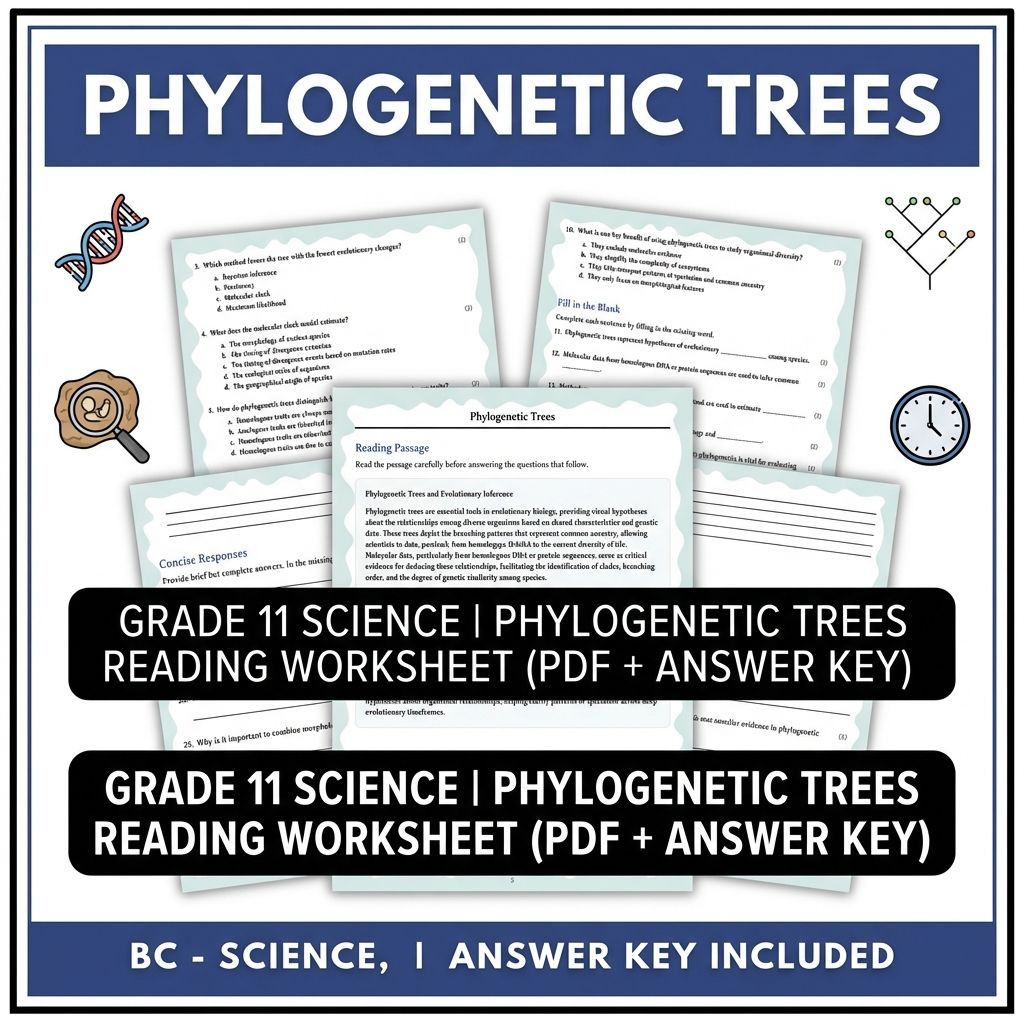
Grade 11 Science | Phylogenetic Trees Reading Worksheet (PDF + Answer Key)
JCreated byJ.S SheetsLearning Objectives
- Understand how phylogenetic trees depict hypotheses of evolutionary relationships.
- Identify the methods and data used to infer evolutionary histories.
- Distinguish between homology and analogy in organismal traits.
Instant download

Grade 7 Science – Igneous Processes & Formation | Daily Reading Worksheet
Created byBright Mind ResourcesLearning Objectives
- Understand how magma is generated within Earth's mantle and crust.
- Identify the processes that influence magma composition and texture.
- Relate plate tectonic settings to types of magma and igneous rocks.
Also included in: Grade 7 Earth Processes Science Daily Reading Worksheets Lesson Bundle | BC +1 more
Instant download
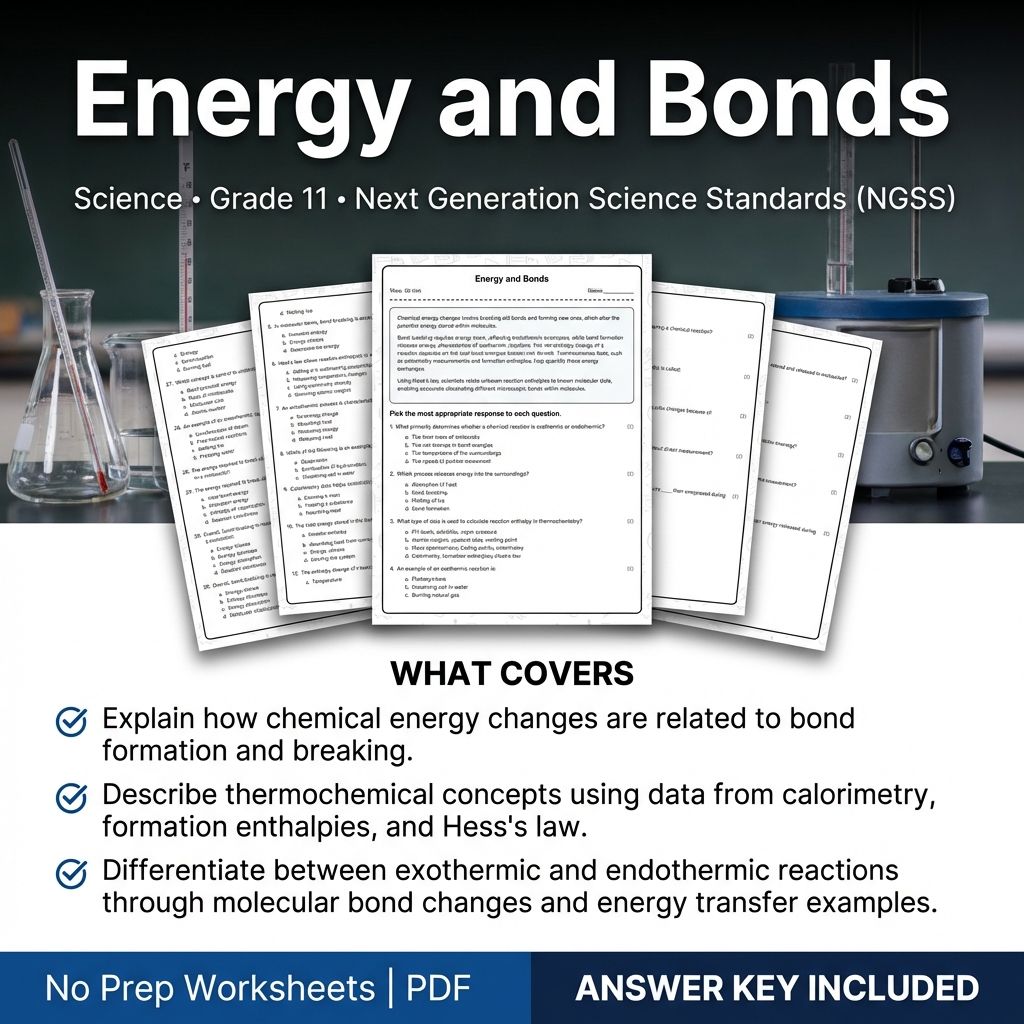
11th Grade Science | Energy and Bonds Worksheet & Answer Key (Printable PDF)
Created byCoral Reef LearningLearning Objectives
- Explain how chemical energy changes are related to bond formation and breaking.
- Describe thermochemical concepts using data from calorimetry, formation enthalpies, and Hess's law.
- Differentiate between exothermic and endothermic reactions through molecular bond changes and energy transfer examples.
Also included in: Grade 11 Science Unit Bundle – Chemical Reactions & Periodic Trends Worksheets +1 more
Instant download
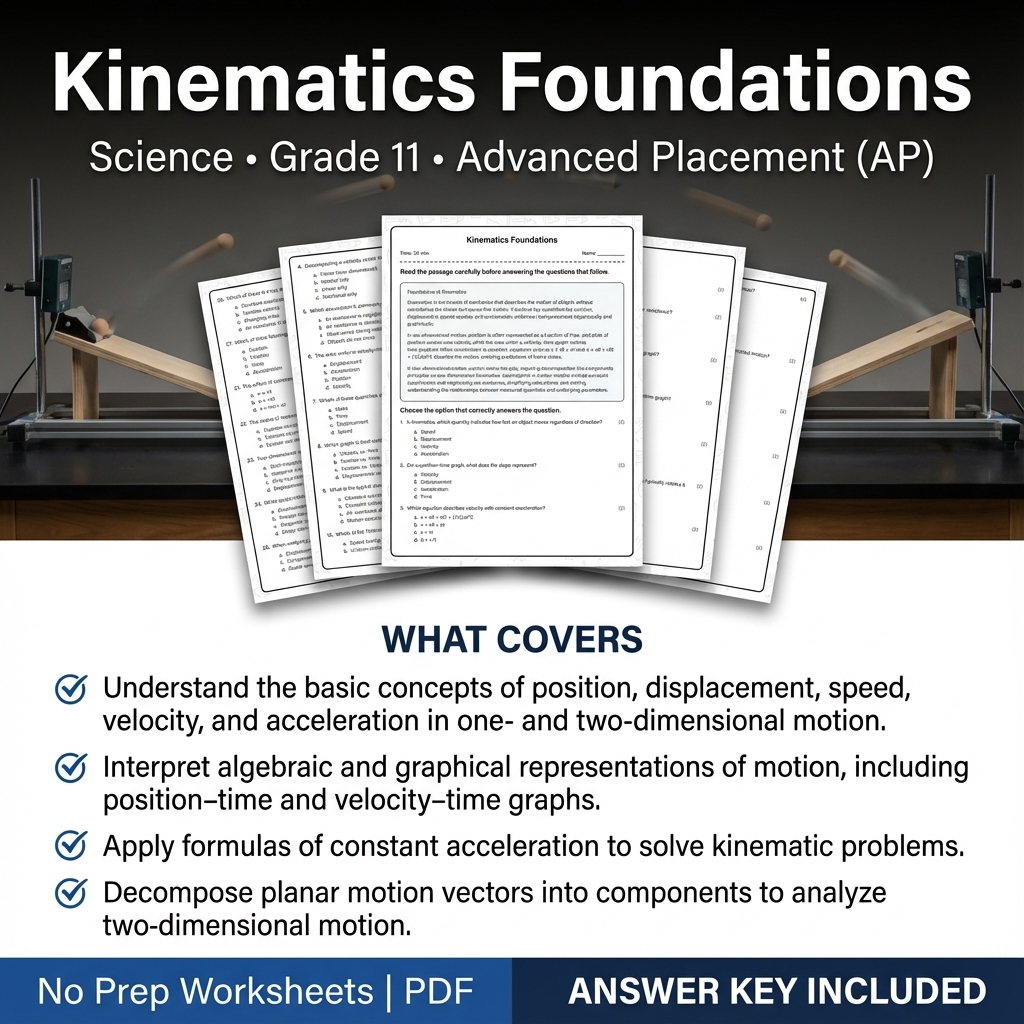
11th Grade Science | Kinematics Fundamentals Worksheet (Printable PDF + Answer Key)
Created byCoral Reef LearningLearning Objectives
- Understand the basic concepts of position, displacement, speed, velocity, and acceleration in one- and two-dimensional motion.
- Interpret algebraic and graphical representations of motion, including position–time and velocity–time graphs.
- Apply formulas of constant acceleration to solve kinematic problems.
Also included in: Grade 11 Science Unit | Physics Worksheets on Work, Power & Motion PDF Bundle +1 more
Instant download
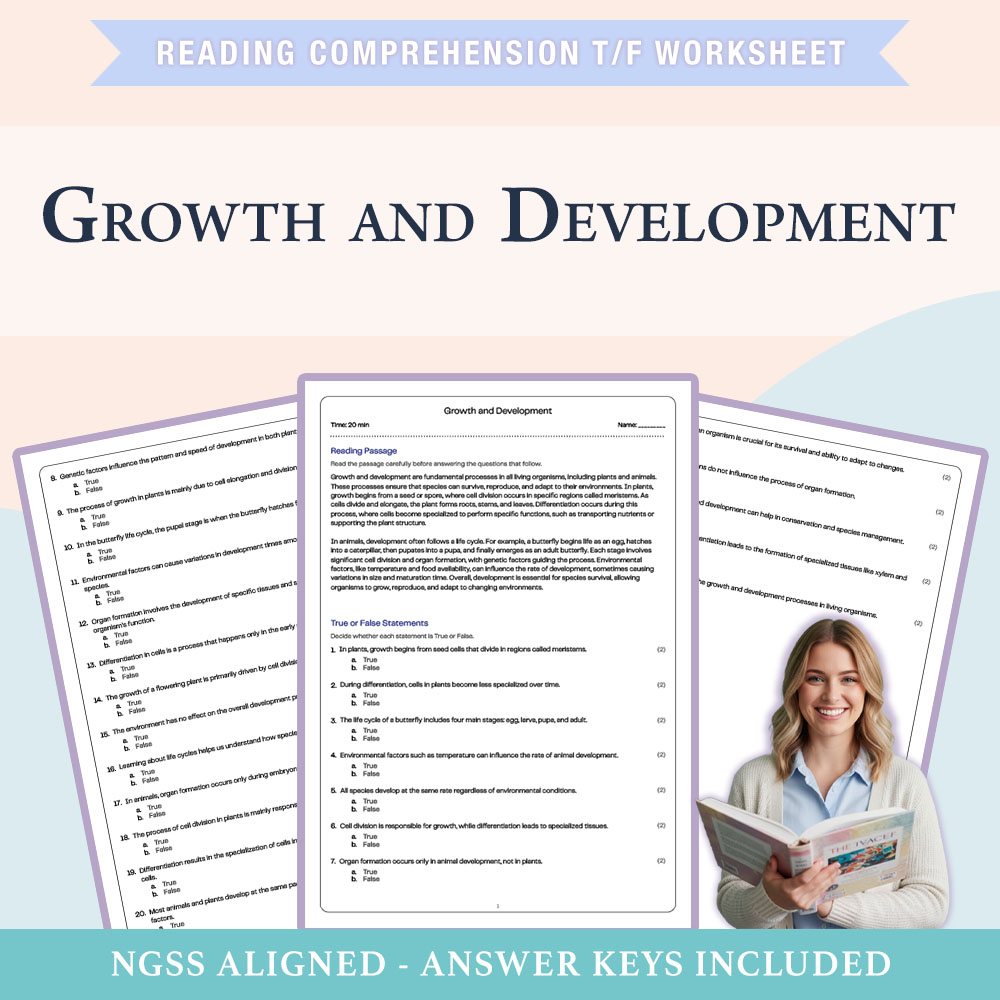
6th Grade Science | Growth and Development True or False (PDF +Answer Key)
Created byCopper Leaf ClassroomLearning Objectives
- Understand the stages of growth and development in plants and animals
- Explain the processes of cell division, differentiation, and organ formation
- Identify examples of life cycles such as butterflies and flowering plants
Instant download

Evidence Supporting Evolution Worksheet for Grade 11 Science | NGSS
JCreated byJ.S SheetsLearning Objectives
- Understand the various lines of evidence that support common ancestry and evolution.
- Describe how fossil records, comparative anatomy, molecular data, biogeography, and vestigial organs provide evidence for evolution.
- Explain the importance of concordance among different datasets in evolutionary biology.
Also included in: Grade 11 Evolutionary Models and Evidence Science lesson bundle: NGSS +1 more
Instant download

Statistical Models Worksheet for Grade 11 Science | NGSS Practice
JCreated byJ.S SheetsLearning Objectives
- Understand how allele frequencies are modeled using statistical and probabilistic methods.
- Apply Hardy–Weinberg principles to calculate expected genotype frequencies and assess deviations.
- Use chi-square tests and confidence intervals to evaluate population data and detect evolutionary changes.
Also included in: Grade 11 Evolutionary Models and Evidence Science lesson bundle: NGSS +1 more
Instant download
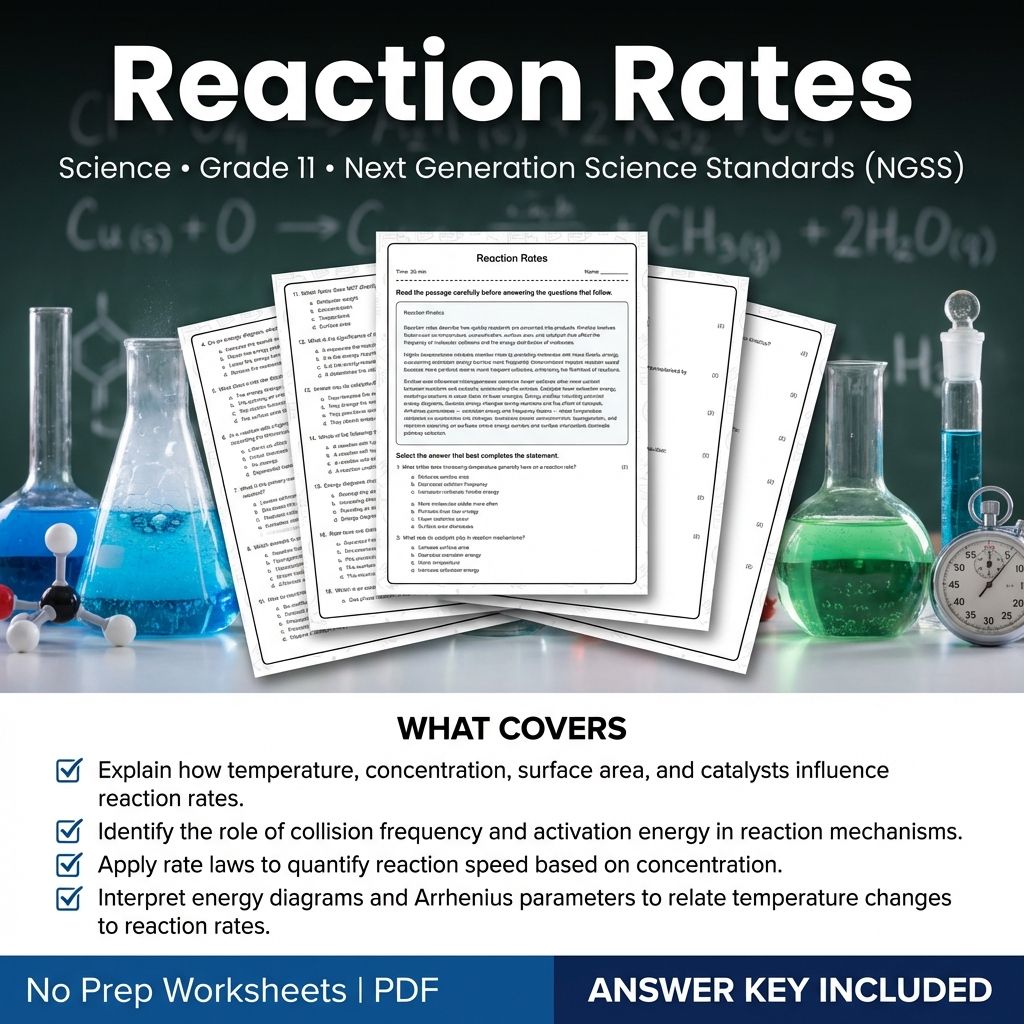
11th Grade Science | Reaction Rates Worksheet with Answer Key (Printable PDF)
Created byCoral Reef LearningLearning Objectives
- Explain how temperature, concentration, surface area, and catalysts influence reaction rates.
- Identify the role of collision frequency and activation energy in reaction mechanisms.
- Apply rate laws to quantify reaction speed based on concentration.
Also included in: Grade 11 Science Unit Bundle – Chemical Reactions & Periodic Trends Worksheets +1 more
Instant download

6th Grade Science | Fossil Patterns Worksheet (PDF + Answer Key)
 Created byRiverstone Classroom
Learning Objectives
- Understand how fossil occurrences reveal patterns of organism origin, diversification, and extinction over geologic time.
- Analyze morphological transitions in the fossil record to infer evolutionary change.
- Interpret stratigraphic sequences, dating methods, and geographic distribution data to trace lineage continuity and environmental shifts.
Instant download

Glucose Regulation Worksheet | Grade 9 Science TEKS Practice
 Created byPrism Point Learning
Learning Objectives
- Explain how insulin and glucagon help maintain blood glucose within a healthy range.
- Describe the negative feedback loop involved in glucose regulation and identify its set point, sensors, and effectors.
- Connect hormone signals to changes in glycogen synthesis, glycogen breakdown, and glucose production.
Instant download
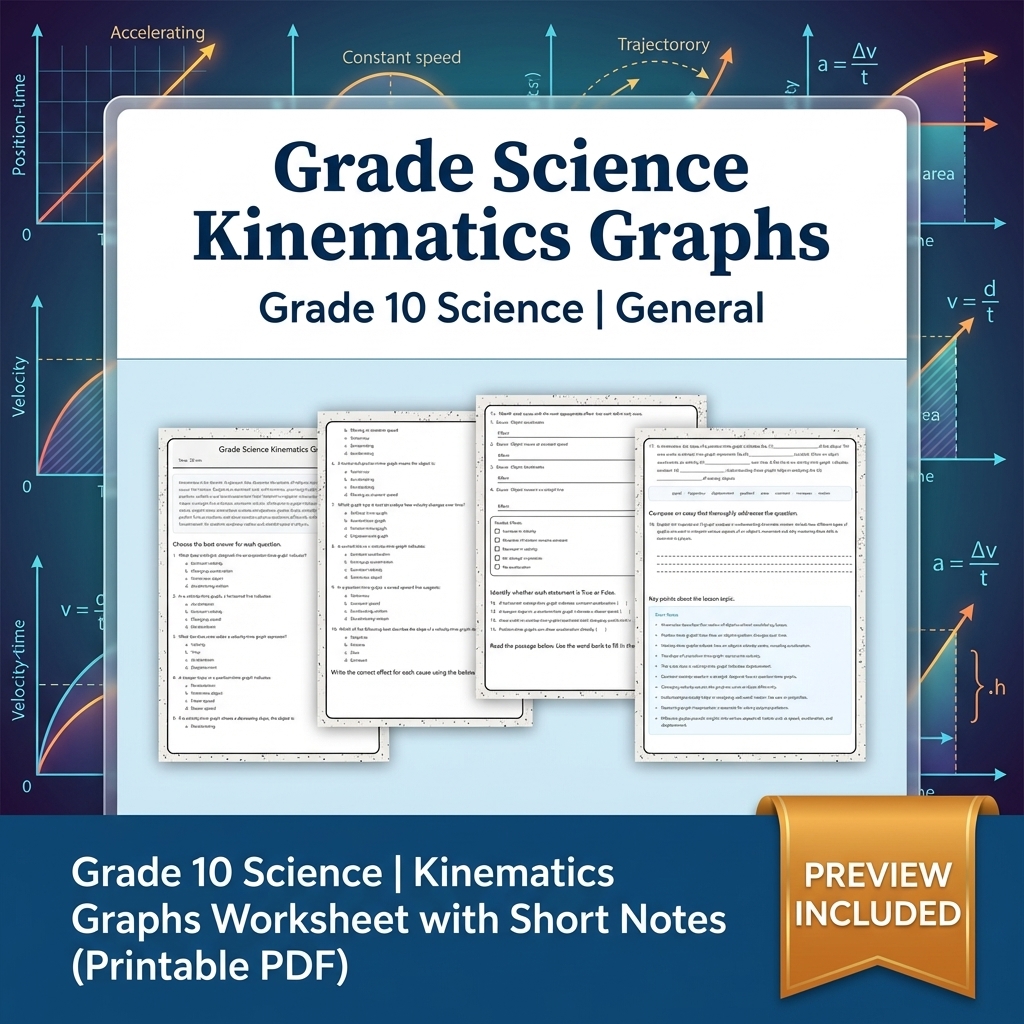
Grade 10 Science | Kinematics Graphs Worksheet with Short Notes (Printable PDF)
 Created byMeadowlark Worksheets
Learning Objectives
- Understand the different types of kinematic graphs and their significance.
- Interpret motion data from position-time and velocity-time graphs.
- Draw and analyze graphs representing various types of motion.
Also included in: Grade 10 Forces and Energy Science Lesson Bundle for General Framework +1 more
Instant download
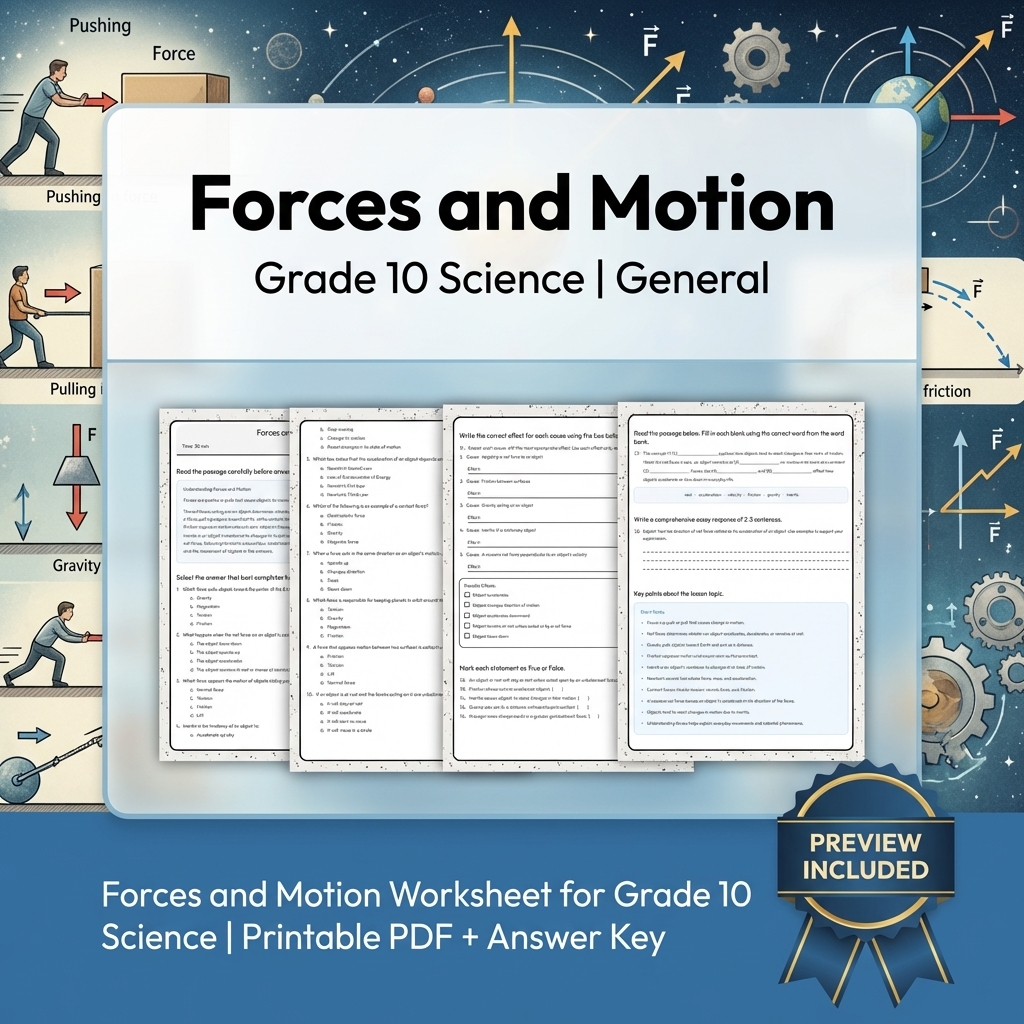
Forces and Motion Worksheet for Grade 10 Science | Printable PDF
Created byMeadowlark WorksheetsLearning Objectives
- Explain how net force affects the motion of objects.
- Identify different types of forces such as gravity, friction, and contact forces.
- Describe the concept of inertia and how it resists changes in motion.
Also included in: Grade 10 Forces and Energy Science Lesson Bundle for General Framework +1 more
Instant download
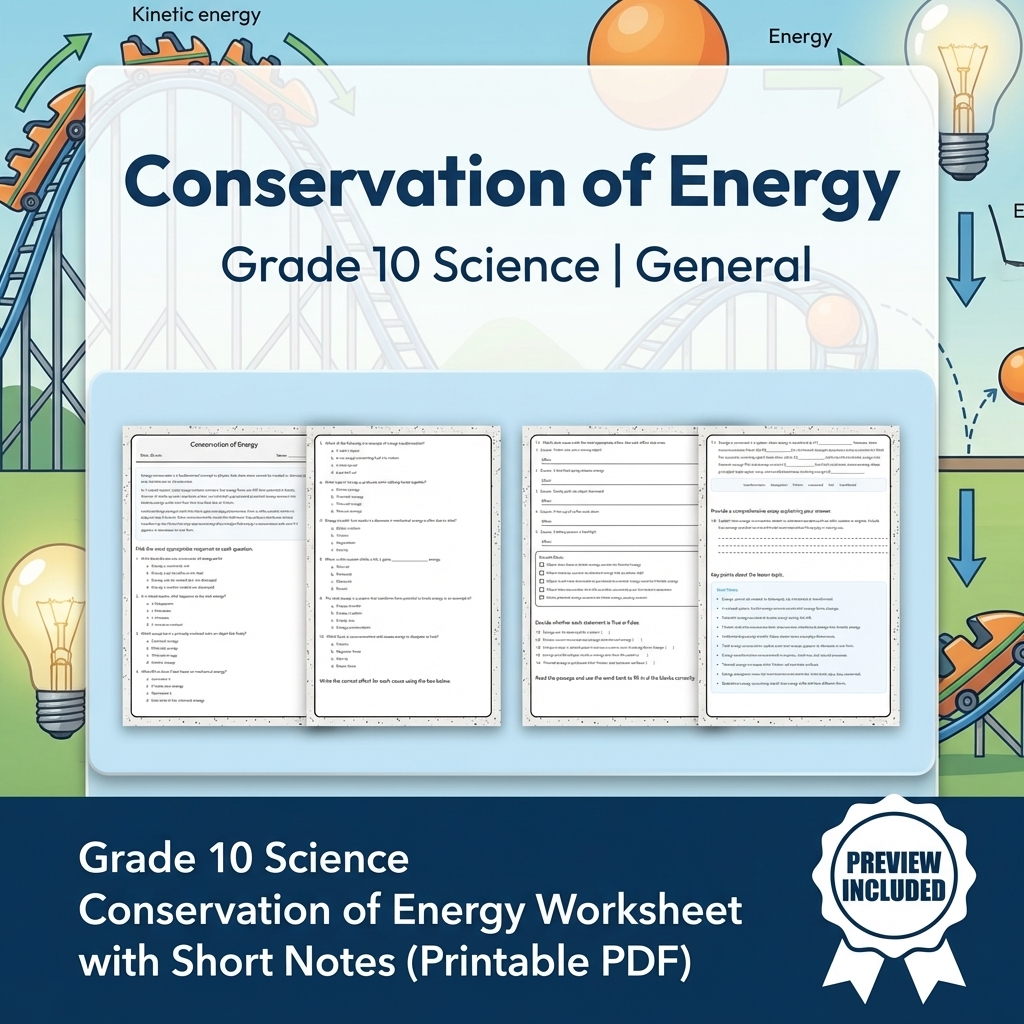
Grade 10 Science Conservation of Energy Worksheet with Short Notes
Created byMeadowlark WorksheetsLearning Objectives
- Understand the principle that energy is neither created nor destroyed but transferred and transformed.
- Explain how energy forms change in a closed system during different processes.
- Identify real-world examples of energy transfer, such as gravitational to kinetic energy.
Also included in: Grade 10 Forces and Energy Science Lesson Bundle for General Framework +1 more
Instant download
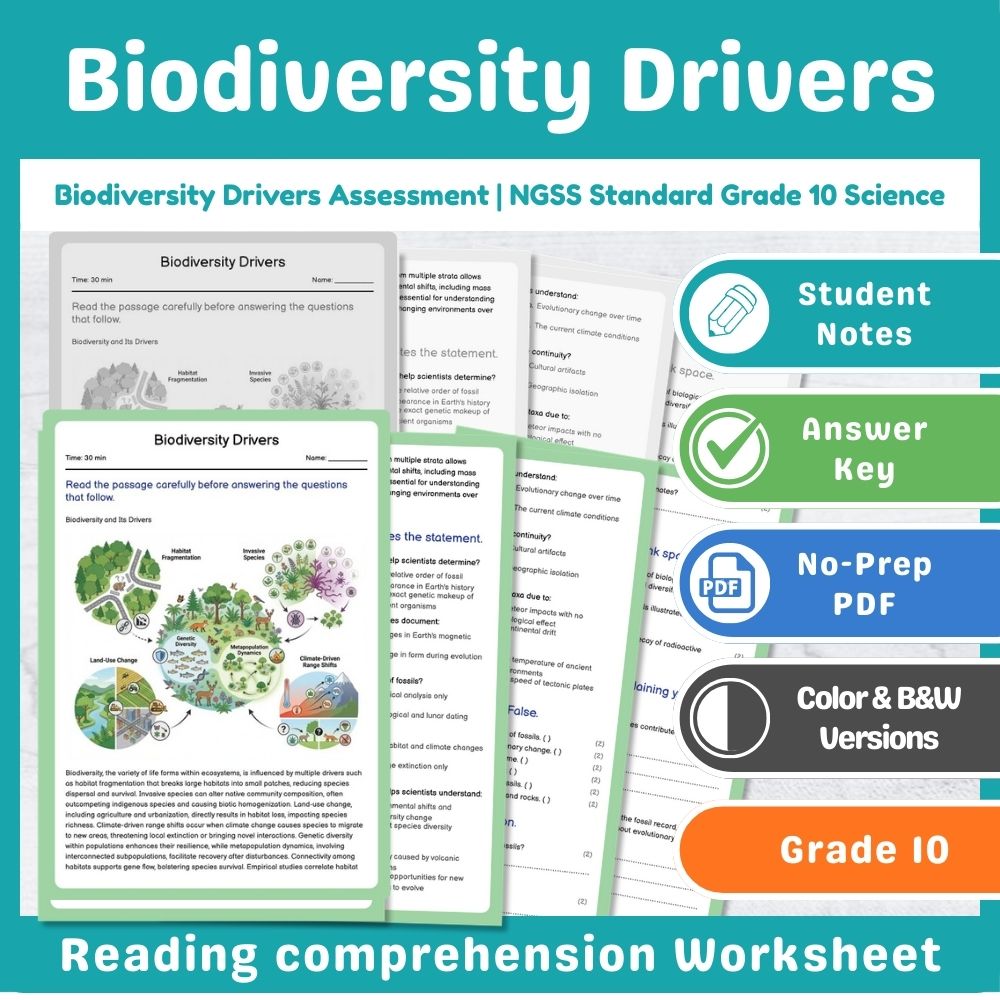
Biodiversity Drivers Assessment | NGSS Standard Grade 10 Science
Created byPrism Point LearningLearning Objectives
- Identify key factors influencing species richness and composition in ecosystems.
- Evaluate the impacts of habitat fragmentation, invasive species, and climate shifts on biodiversity.
- Understand mechanisms like genetic diversity and metapopulation structure that mediate extinction risk.
Instant download
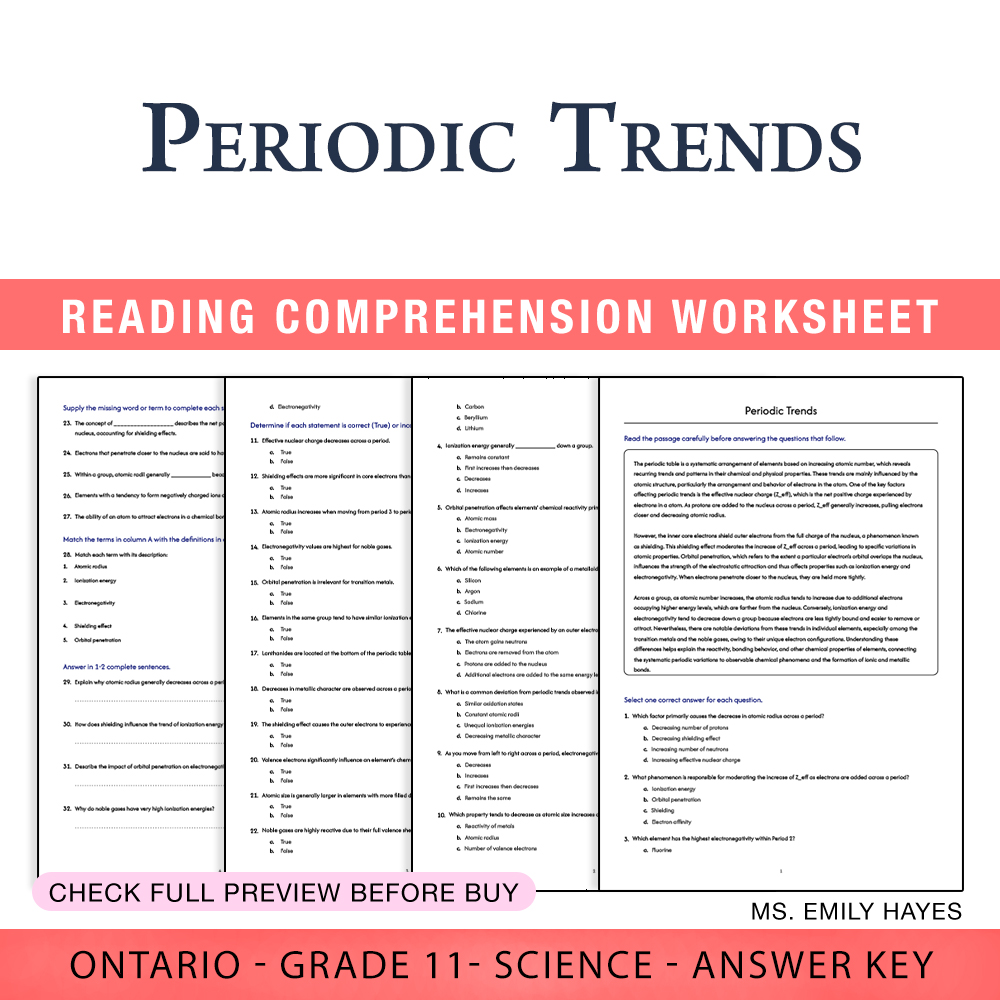
11th Grade Science | Periodic Trends Worksheet (PDF + Answer Key)
Created byCopper Leaf ClassroomLearning Objectives
- Explain the concepts of effective nuclear charge, shielding, and orbital penetration and their roles in periodic trends.
- Analyze how atomic radius, ionization energy, and electronegativity vary across periods and groups.
- Identify deviations from idealized periodic trends in representative elements and relate these to their chemical properties and behaviors.
Instant download
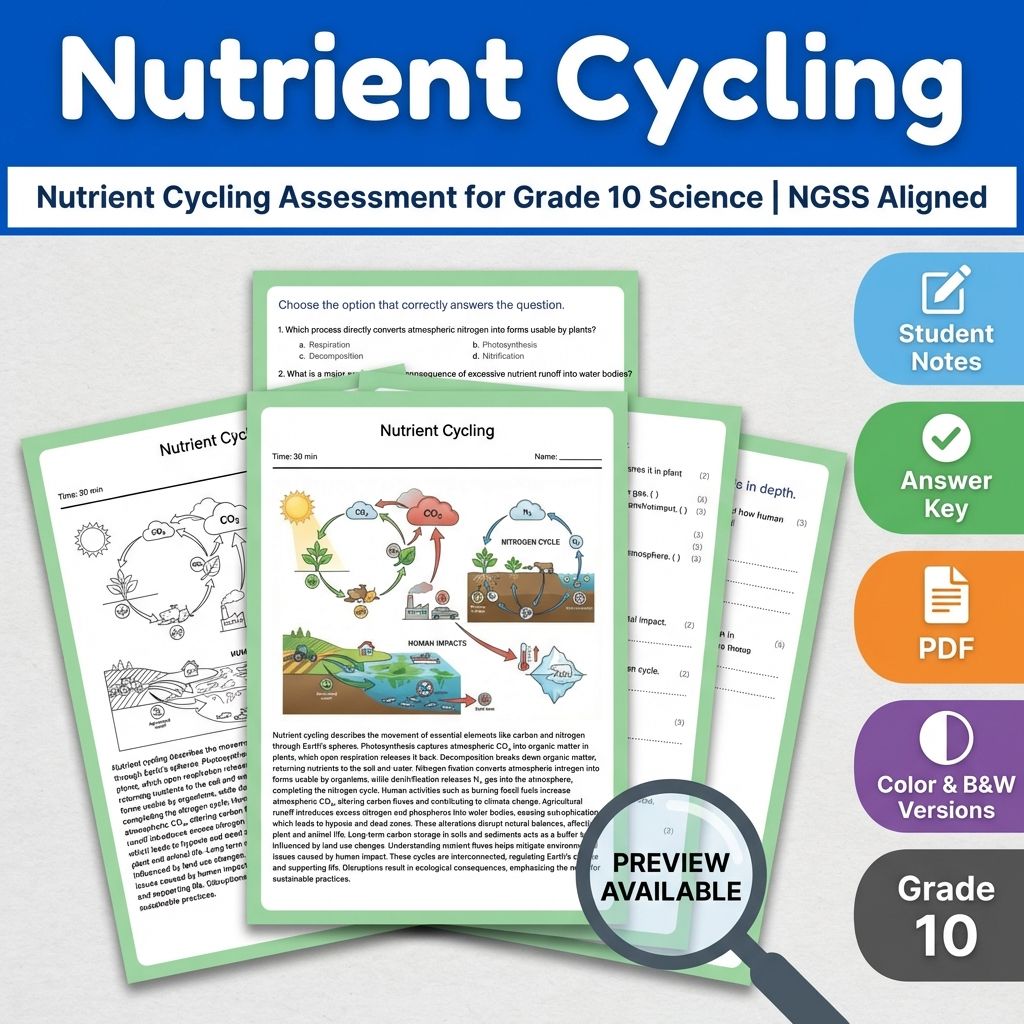
Nutrient Cycling Assessment for Grade 10 Science | NGSS Aligned
Created byPrism Point LearningLearning Objectives
- Understand the major biogeochemical cycles, including carbon and nitrogen fluxes.
- Describe the processes such as photosynthesis, respiration, nitrification, denitrification, and decomposition.
- Analyze how human activities alter nutrient reservoirs and flux rates.
Instant download
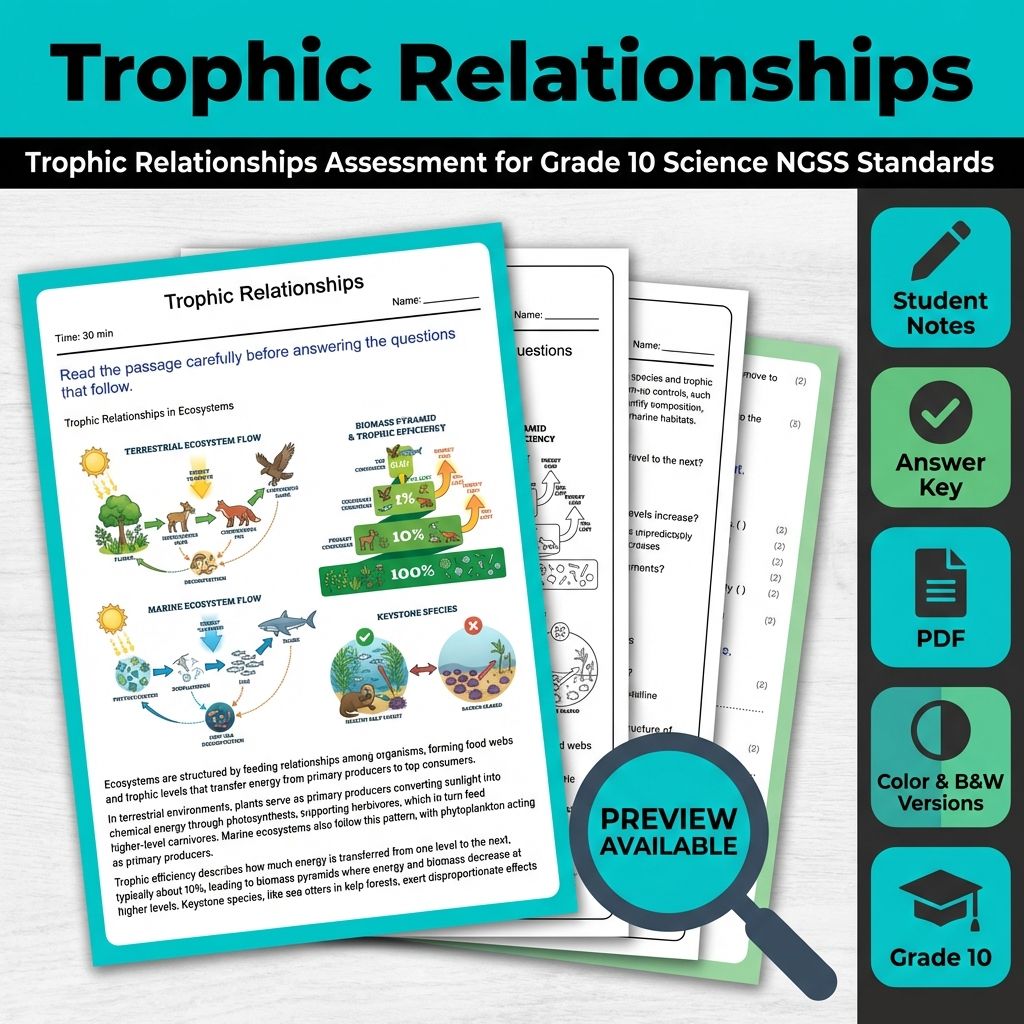
Trophic Relationships Assessment for Grade 10 Science NGSS Standards
Created byPrism Point LearningLearning Objectives
- Explain the concept of energy transfer within food webs and trophic levels.
- Analyze the effects of keystone species and trophic cascades on ecosystem stability.
- Evaluate how trophic efficiency influences biomass distribution in terrestrial and marine ecosystems.
Instant download
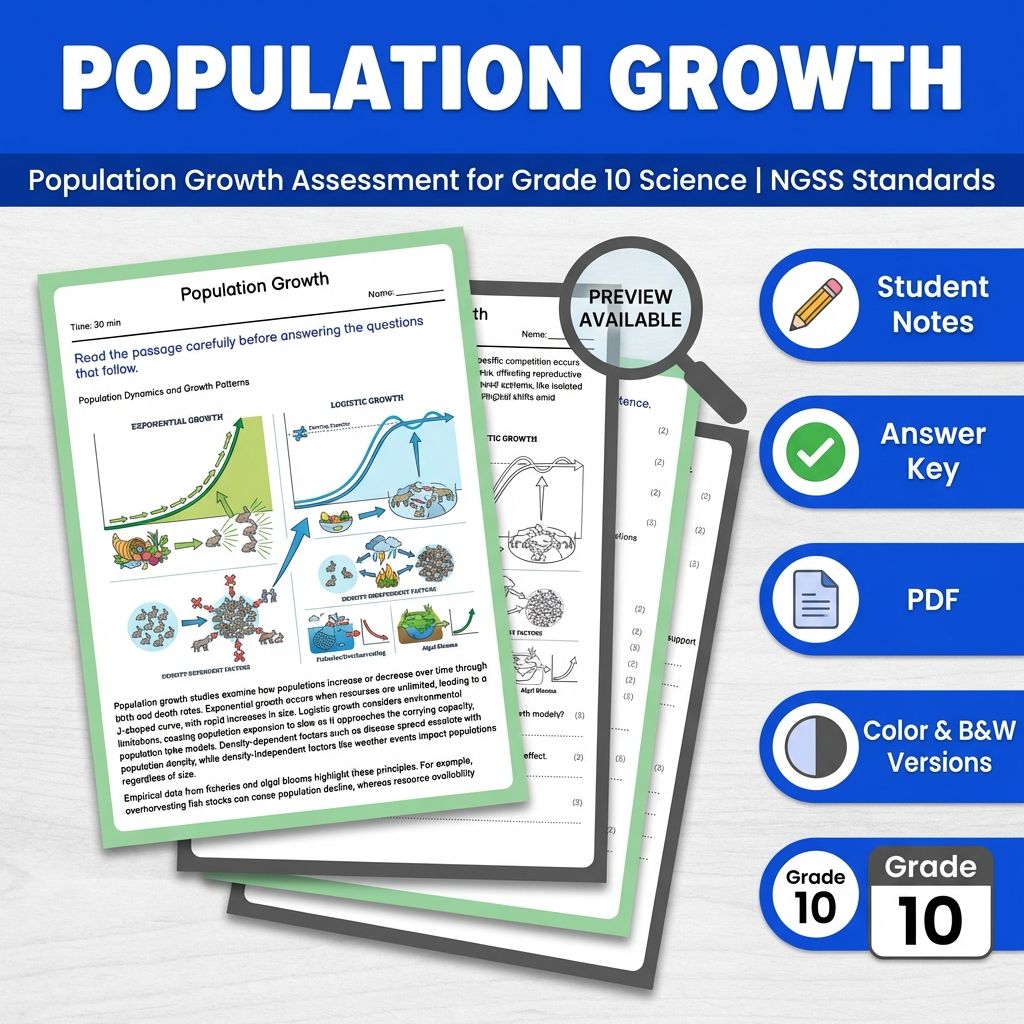
Population Growth Assessment for Grade 10 Science | NGSS Standards
Created byPrism Point LearningLearning Objectives
- Understand the principles of exponential and logistic population growth models.
- Analyze factors affecting population dynamics, including limiting factors and carrying capacity.
- Evaluate biological and environmental data to interpret population patterns and interactions.
Instant download
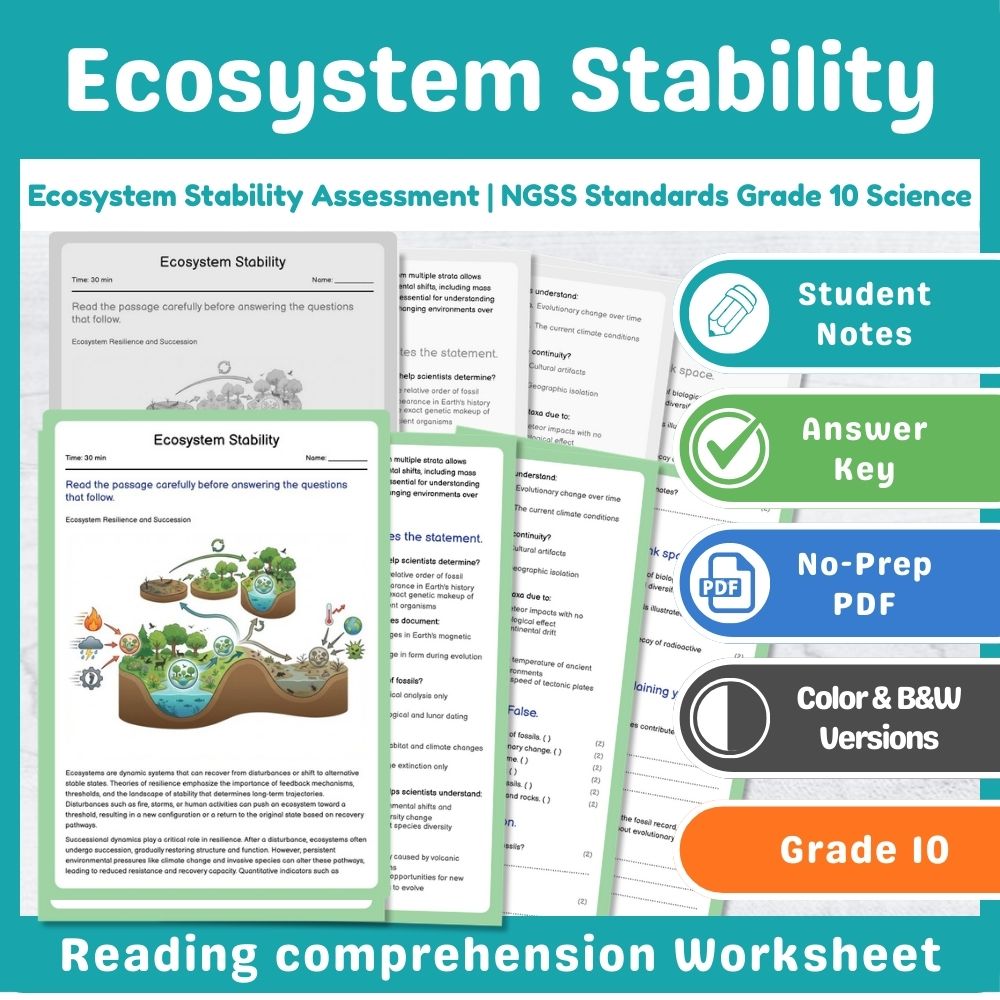
Ecosystem Stability Assessment | NGSS Standards Grade 10 Science
Created byPrism Point LearningLearning Objectives
- Understand the concepts of resilience and stability landscapes in ecosystems.
- Describe how natural and human disturbances affect ecosystem recovery pathways and thresholds.
- Identify indicators used to assess resistance, recovery time, and functional redundancy in ecosystems.
Instant download
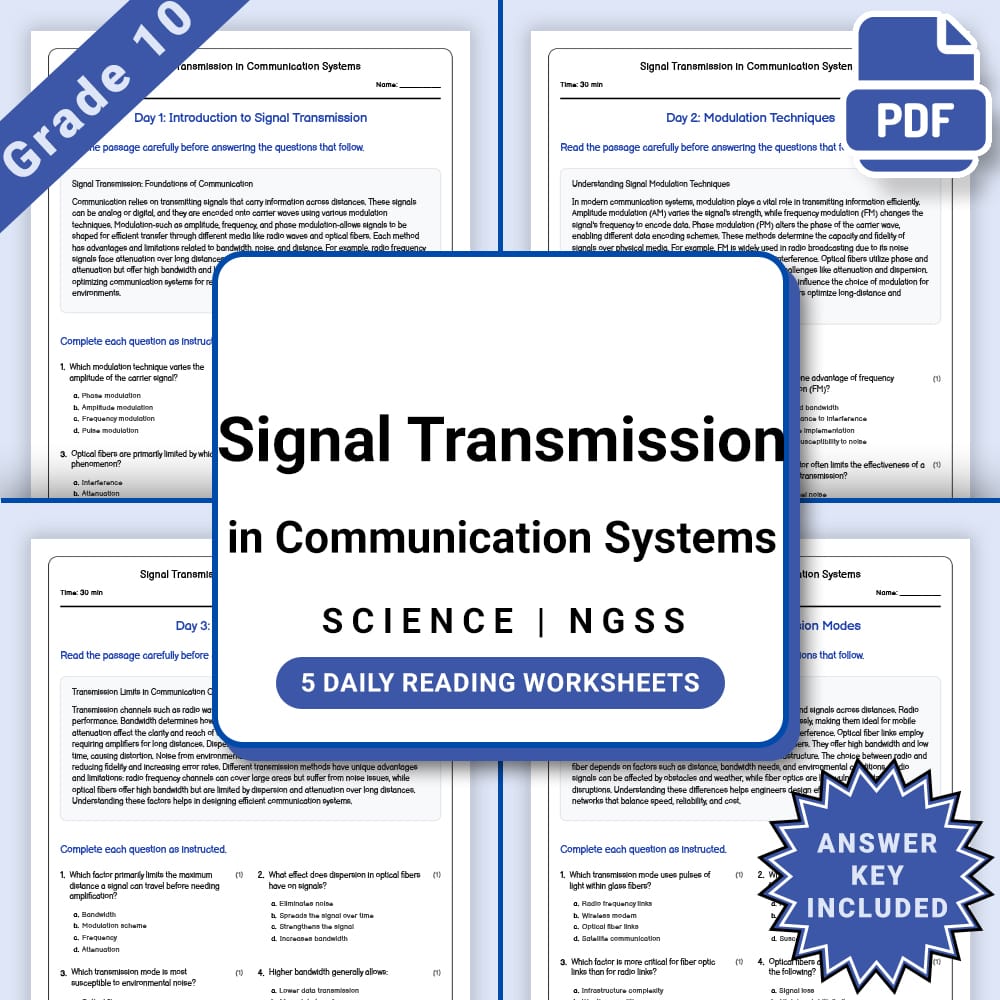
Grade 10 Science – Signal Transmission Worksheet (PDF +Answer Key)
Created byCopper Leaf ClassroomLearning Objectives
- Understand key concepts related to Science
- Apply knowledge through practice questions
- Demonstrate comprehension of the material
Instant download
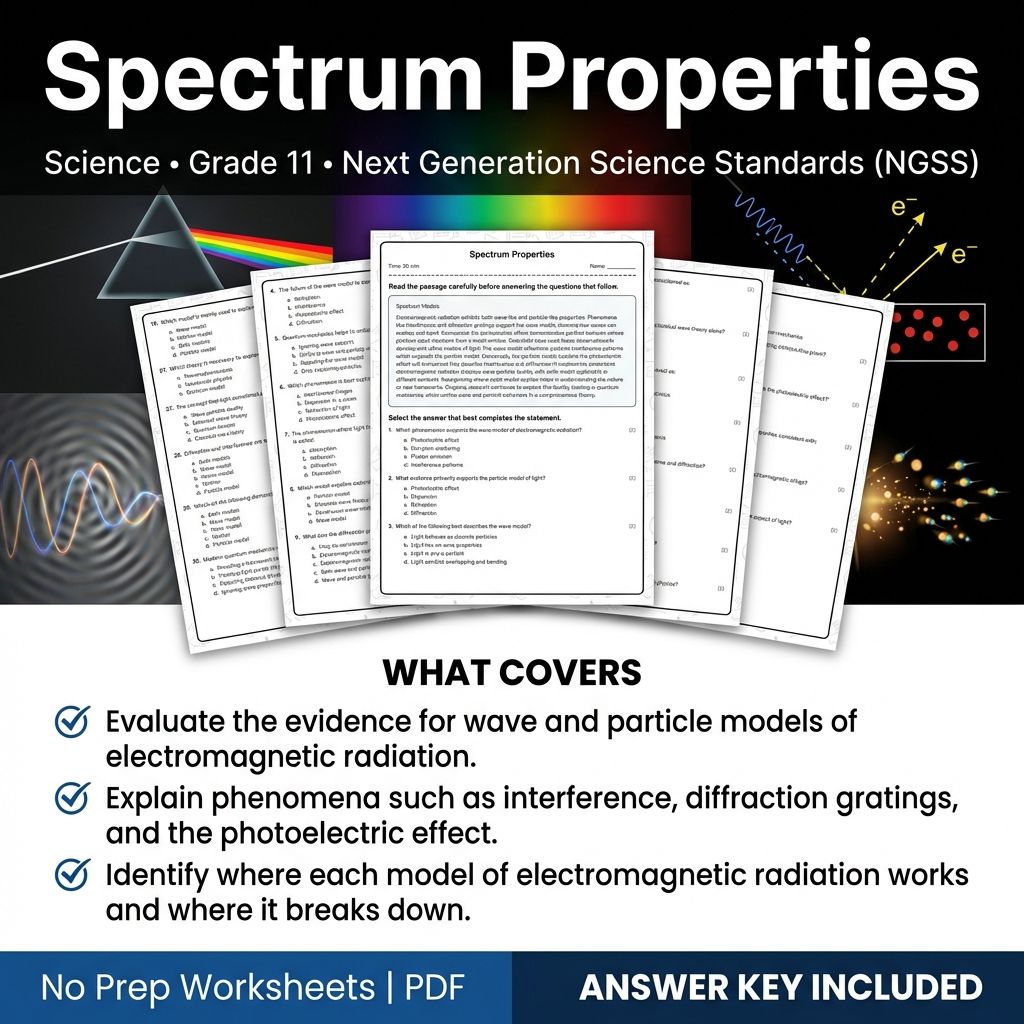
11th Grade Science Worksheet | Spectrum & Electromagnetic Radiation + Answer Key
Created byCoral Reef LearningLearning Objectives
- Evaluate the evidence for wave and particle models of electromagnetic radiation.
- Explain phenomena such as interference, diffraction gratings, and the photoelectric effect.
- Identify where each model of electromagnetic radiation works and where it breaks down.
Also included in: Grade 11 Science Unit Bundle | Wave, Spectrum & Signal Encoding Worksheets +1 more
Instant download
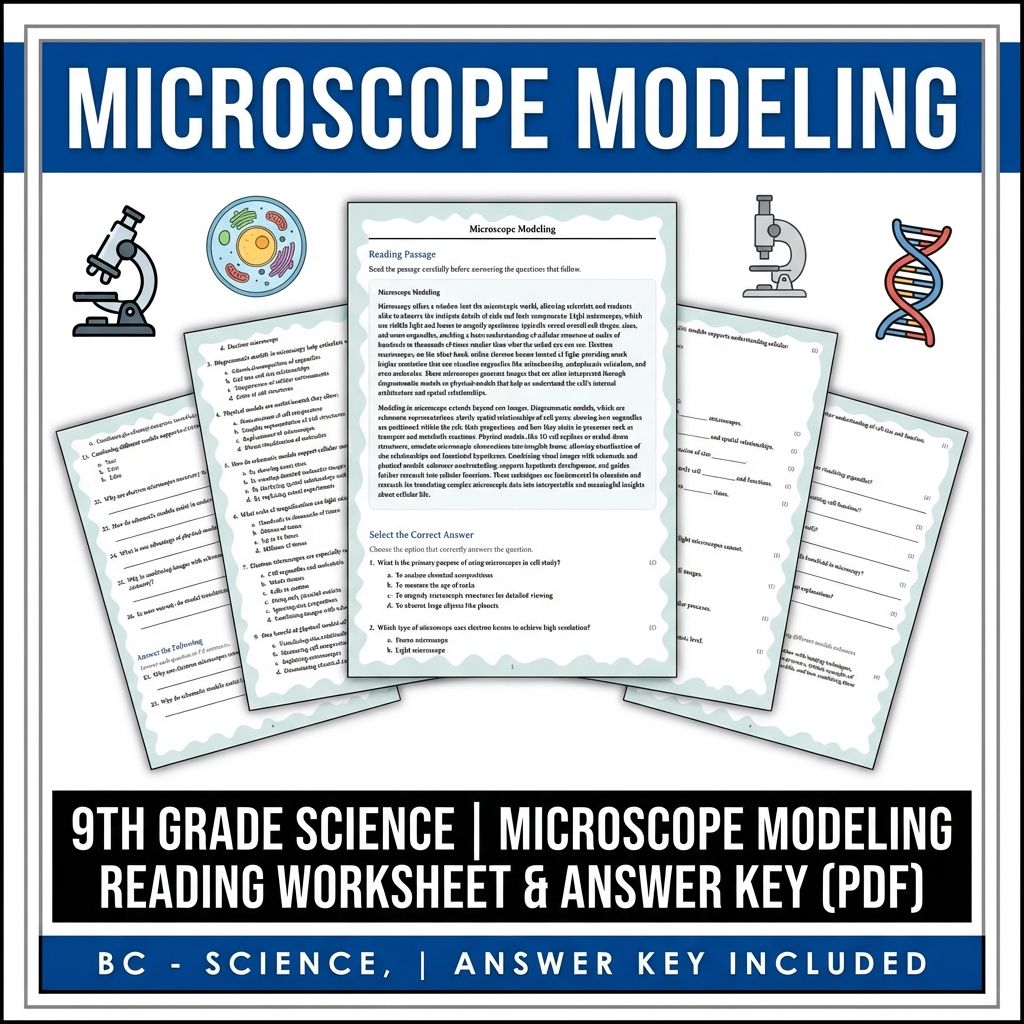
9th Grade Science | Microscope Modeling Reading Worksheet & Answer Key (PDF)
JCreated byJ.S SheetsLearning Objectives
- Understand how microscopy provides visual cell models and scales.
- Identify different types of microscopes and their features.
- Explain how diagrammatic and physical models aid in understanding cellular structures.
Instant download

Grade 9 Science | Systems Thinking in Science - Daily Reading Comprehension
Created byCoral Reef LearningLearning Objectives
- Understand the concept of systems thinking and its importance in science.
- Identify components and interactions within a system.
- Recognize how changes in one part of a system can affect the whole.
Instant download
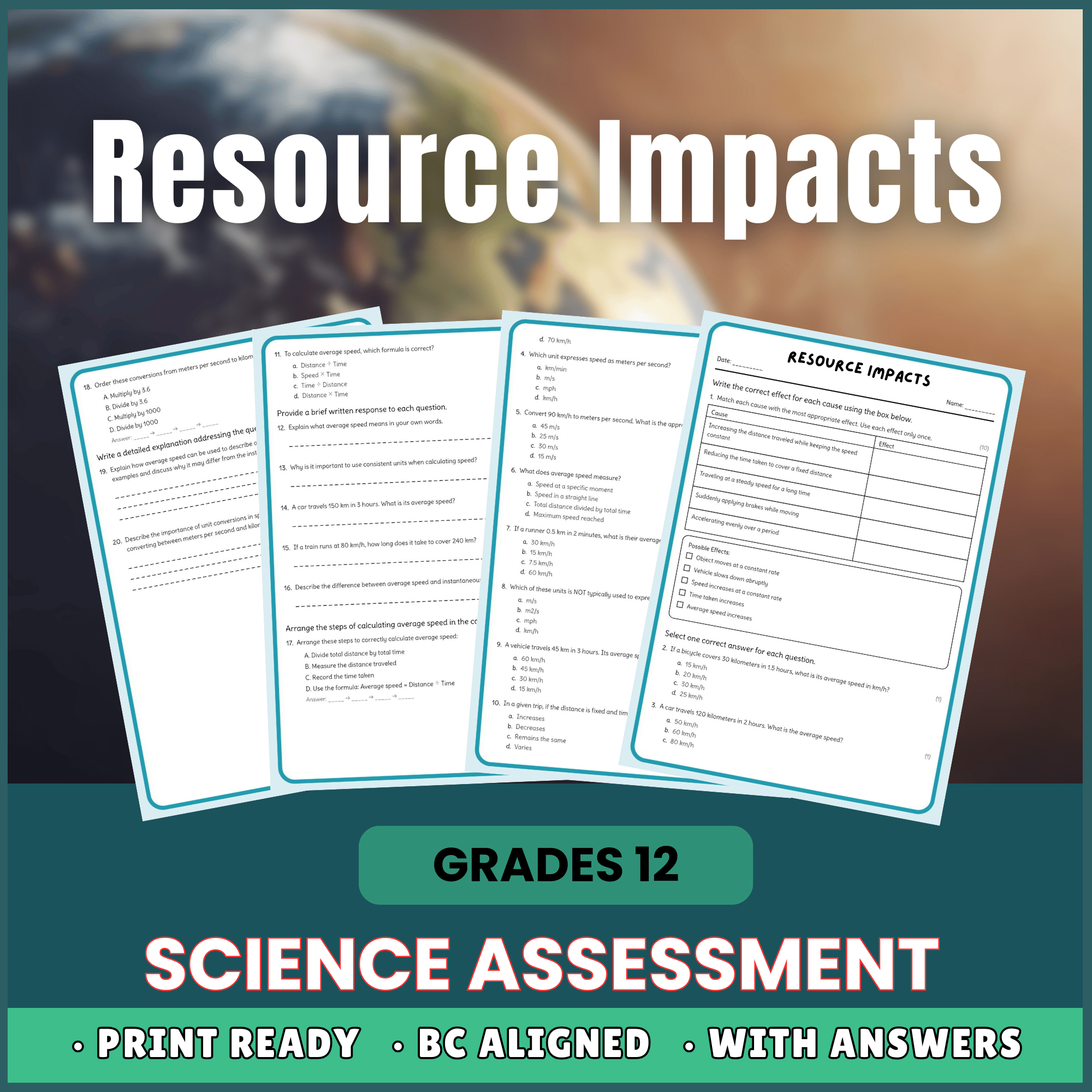
12th Grade Science | Resource Impacts Worksheet + Answer Key – BC Standards
Created byBright Mind ResourcesLearning Objectives
- Analyze how human resource use affects Earth systems through extraction, land modification, and emissions.
- Evaluate environmental trade-offs involved in resource extraction and management.
- Identify strategies for reducing environmental impact and promoting sustainability in resource use.
Instant download
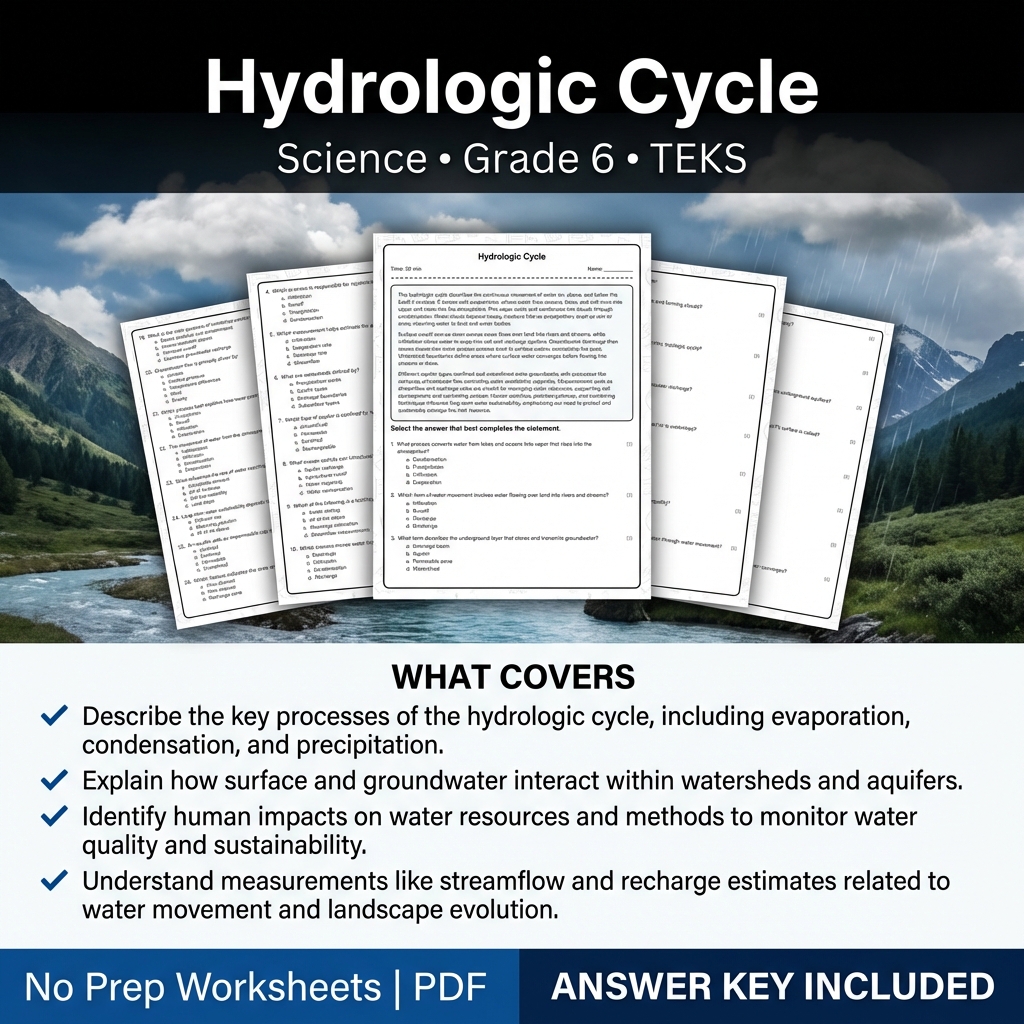
Hydrologic Cycle Science Worksheet for Grade 6 | TEKS Aligned
Created byCoral Reef LearningLearning Objectives
- Describe the key processes of the hydrologic cycle, including evaporation, condensation, and precipitation.
- Explain how surface and groundwater interact within watersheds and aquifers.
- Identify human impacts on water resources and methods to monitor water quality and sustainability.
Instant download

Growth Needs of Living Things Worksheets | Grade 4 Science Practice
 Created byBRIGHT PATH RESOURCES
Learning Objectives
- Explain how energy from food, water, and oxygen help organisms grow over time.
- Identify how temperature and habitat features affect organism growth and development.
- Describe what can happen to growth when basic needs are not met consistently.
Also included in: Grade 4 Science Life Cycles Ecosystems & Metamorphosis Worksheets Bundle +2 more
Instant download
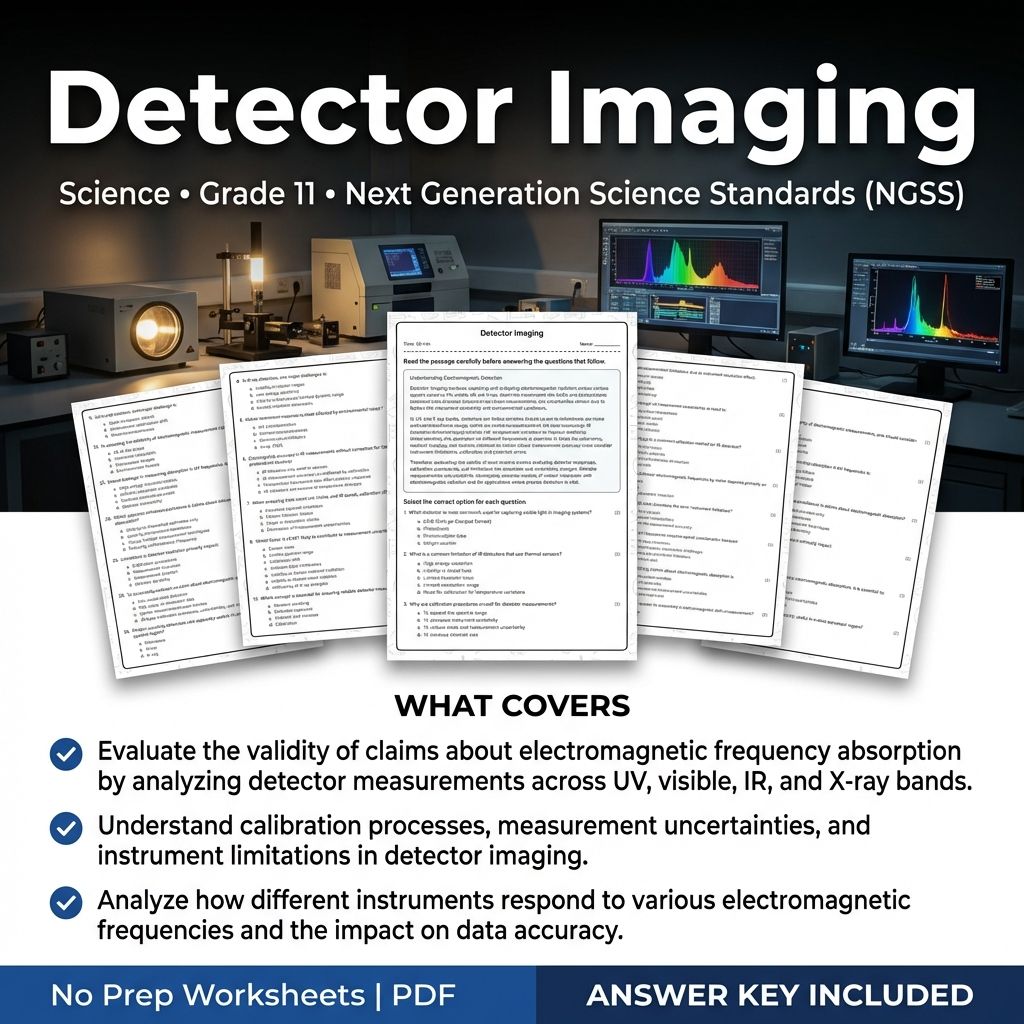
Grade 11 Science | Detector Imaging Worksheet & Answer Key (Printable PDF)
Created byCoral Reef LearningLearning Objectives
- Evaluate the validity of claims about electromagnetic frequency absorption by analyzing detector measurements across UV, visible, IR, and X-ray bands.
- Understand calibration processes, measurement uncertainties, and instrument limitations in detector imaging.
- Analyze how different instruments respond to various electromagnetic frequencies and the impact on data accuracy.
Also included in: Grade 11 Science Unit Bundle | Wave, Spectrum & Signal Encoding Worksheets +1 more
Instant download
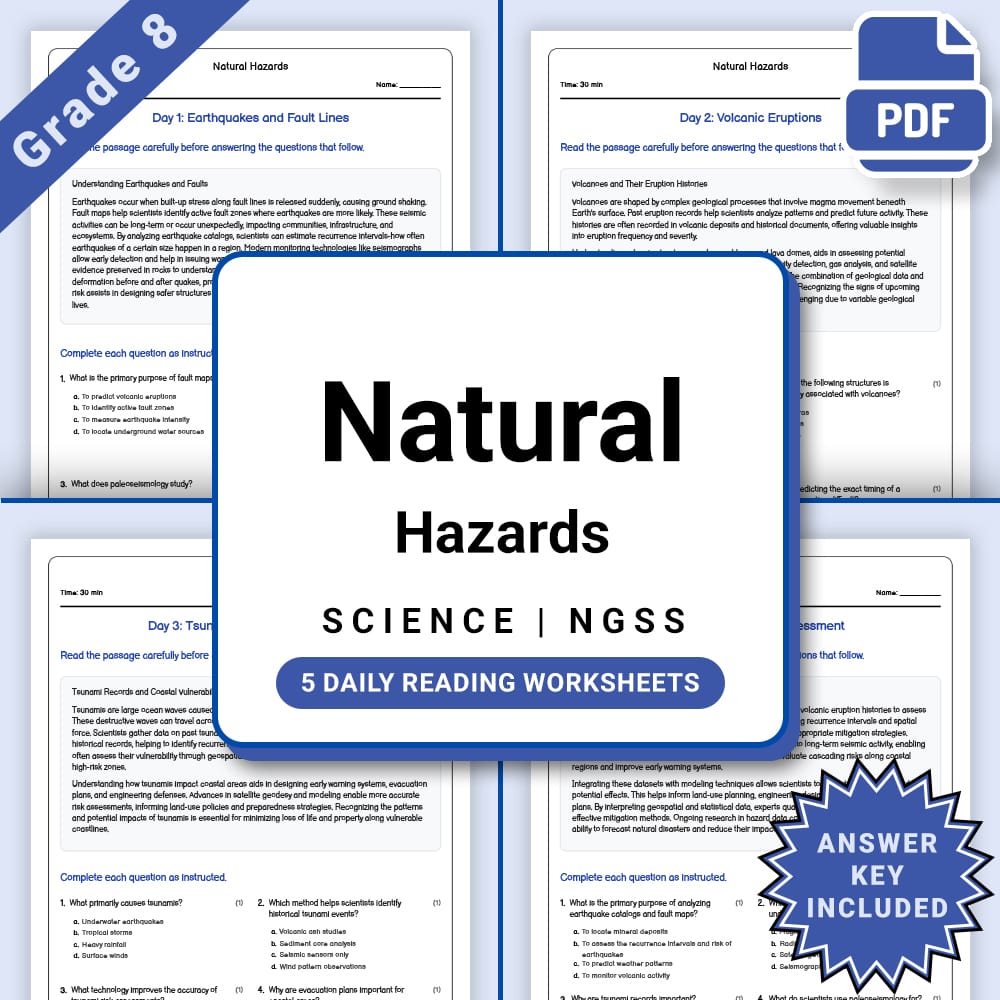
Grade 8 Science – Natural Hazards Daily Reading Worksheet(PDF + Answer Key)
Created byCopper Leaf ClassroomLearning Objectives
- Understand how seismic data and fault maps help identify earthquake risks.
- Interpret geological and geospatial datasets related to natural hazards.
- Analyze the recurrence intervals and potential impacts of earthquakes and tsunamis.
Instant download

Spectrum Properties Test Prep Worksheets | Grade 11 Science NGSS Review
Created byPrism Point LearningLearning Objectives
- Evaluate evidence for the wave and particle models of electromagnetic radiation using interference, diffraction, and the photoelectric effect.
- Explain where each model works well and where it breaks down for different observed phenomena.
- Connect spectral observations (wavelength, frequency, energy) to the underlying behavior of light.
Also included in: Grade 11 Wave, Spectrum & Imaging Science Test Prep Lesson Bundle | NGSS
Instant download

Detector Imaging Test Prep Worksheet | Grade 11 Science NGSS Review
Created byPrism Point LearningLearning Objectives
- Evaluate claims about how detector response changes across electromagnetic frequency bands using evidence from measurements.
- Explain how calibration, uncertainty, and instrument limitations affect the validity and reliability of detector imaging results.
Also included in: Grade 11 Wave, Spectrum & Imaging Science Test Prep Lesson Bundle | NGSS
Instant download
Browse more categories
About Science Worksheets
Find Science worksheets spanning core skills, practice, and review. All 44,628 resources are instant PDF downloads for the classroom or home.
Every worksheet on MyTeachingSheets is created by independent teacher-authors and reviewed before publication. All resources download as printable PDFs for classroom, homework, or at-home practice, and many include answer keys. Preview any worksheet free before buying.