
Science Worksheets
44,628 subject resources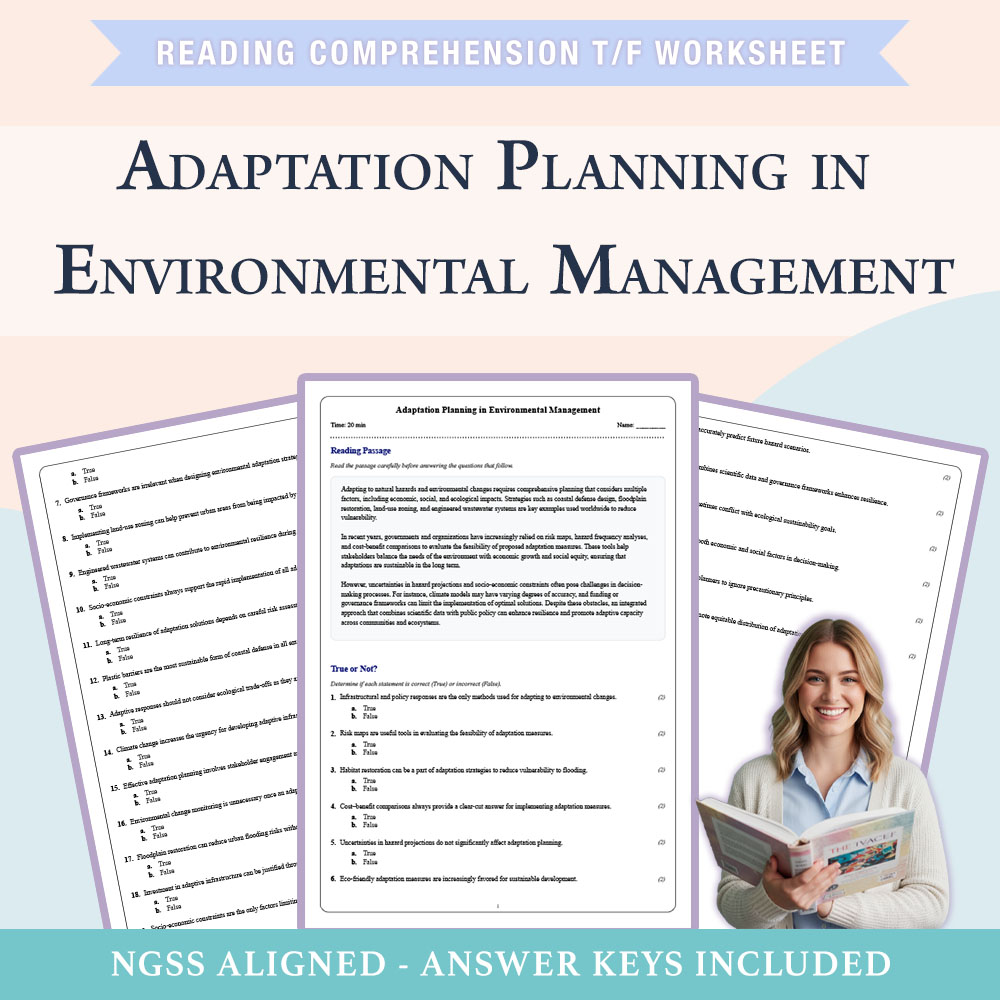
Grade 10 Science|Adaptation Planning in Environmental Management (PDF + Answers)
 Created byCopper Leaf Classroom
Learning Objectives
- Understand the concept of infrastructural and policy responses for environmental adaptation.
- Evaluate various adaptation strategies considering ecological, social, and economic trade-offs.
- Analyze risk maps, hazard frequency, and governance frameworks to assess adaptation feasibility.
Also included in: Grade 10 Science | Environmental Management & Climate Change (PDF + Answer Key) +1 more
Instant download
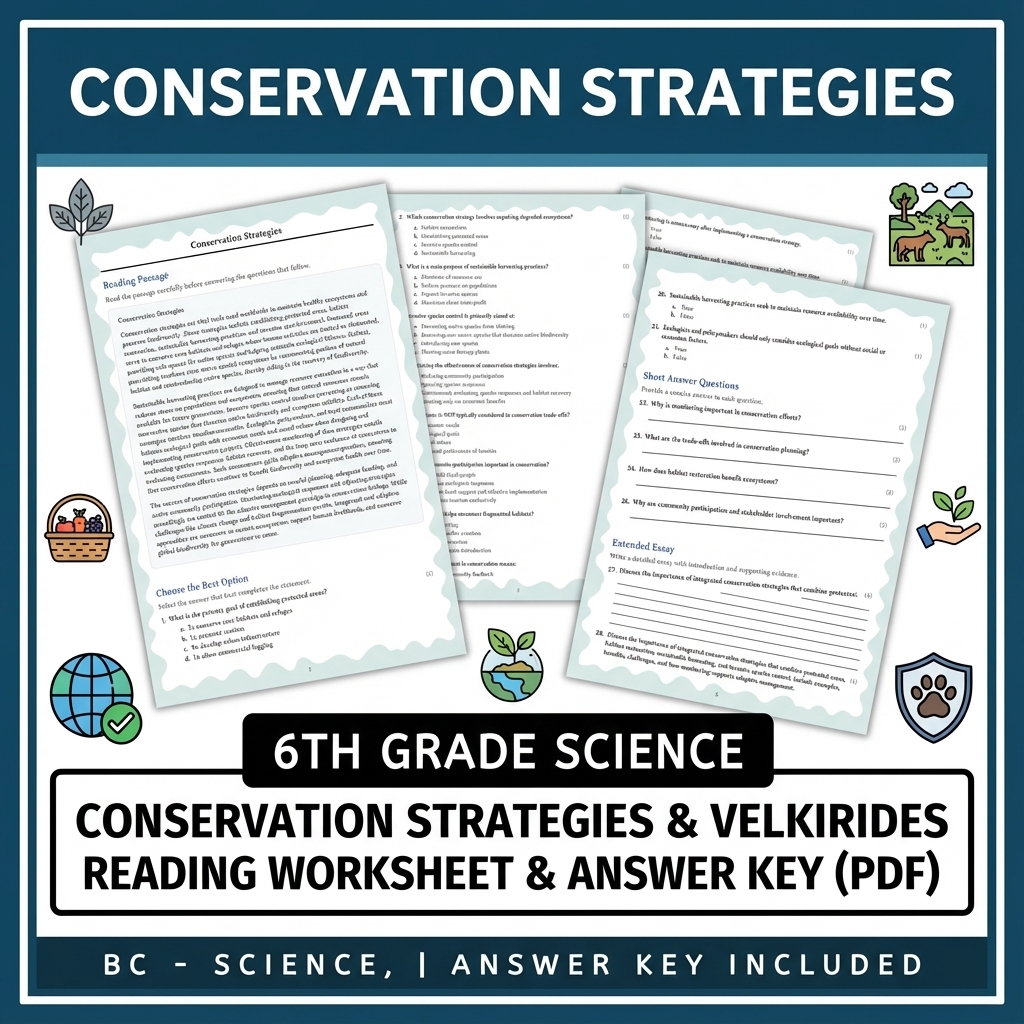
6th Grade Science | Conservation Strategies Reading Worksheet & Answer Key (PDF)
JCreated byJ.S SheetsLearning Objectives
- Understand various conservation strategies used to protect ecosystems.
- Identify key features and purposes of protected areas, habitat restoration, sustainable harvesting, and invasive species control.
- Evaluate the benefits and trade-offs of different conservation methods.
Instant download

Grade 11 Science | Ecosystem Basics - Daily Reading Comprehension
 Created byCoral Reef Learning
Learning Objectives
- Understand the key components of an ecosystem
- Explain the flow of energy through food chains and webs
- Describe nutrient cycles such as carbon and nitrogen
Instant download
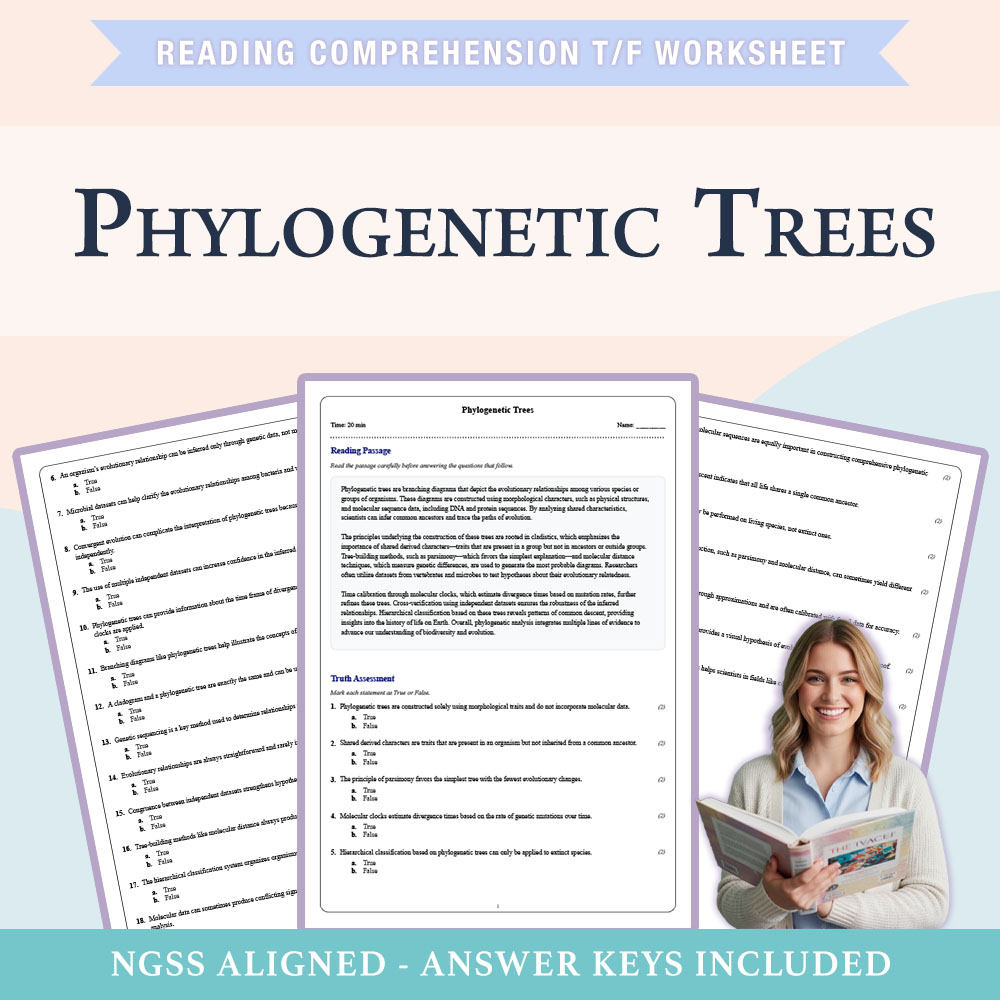
9th Grade Science | Phylogenetic Trees Worksheet (PDF + Answer Key)
Created byCopper Leaf ClassroomLearning Objectives
- Understand the construction and interpretation of phylogenetic trees and their role in depicting evolutionary relationships.
- Identify key principles such as shared derived characters, molecular clocks, and hierarchical classification in phylogenetics.
- Differentiate between methods like parsimony and molecular distance and their application in tree-building.
Also included in: Grade 9 Science | Evolution & Speciation Worksheets Bundle (PDF + Answer Key) +1 more
Instant download
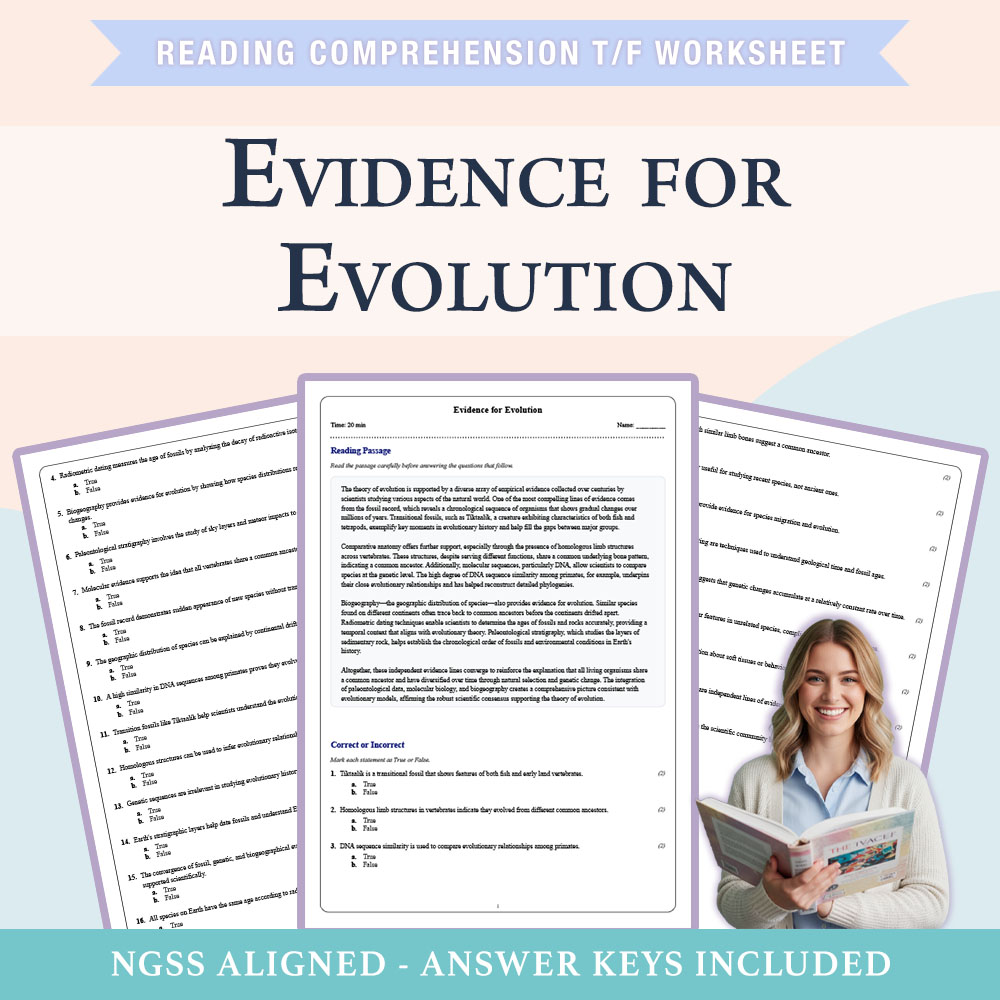
9th Grade Science | Evidence for Evolution Worksheet (PDF + Answer Key)
Created byCopper Leaf ClassroomLearning Objectives
- Understand the multiple lines of empirical evidence supporting common ancestry
- Recognize examples of transitional fossils, homologous structures, and genetic similarities
- Appreciate how fossil records, molecular data, and biogeography intertwine to support evolution
Also included in: Grade 9 Science | Evolution & Speciation Worksheets Bundle (PDF + Answer Key) +1 more
Instant download
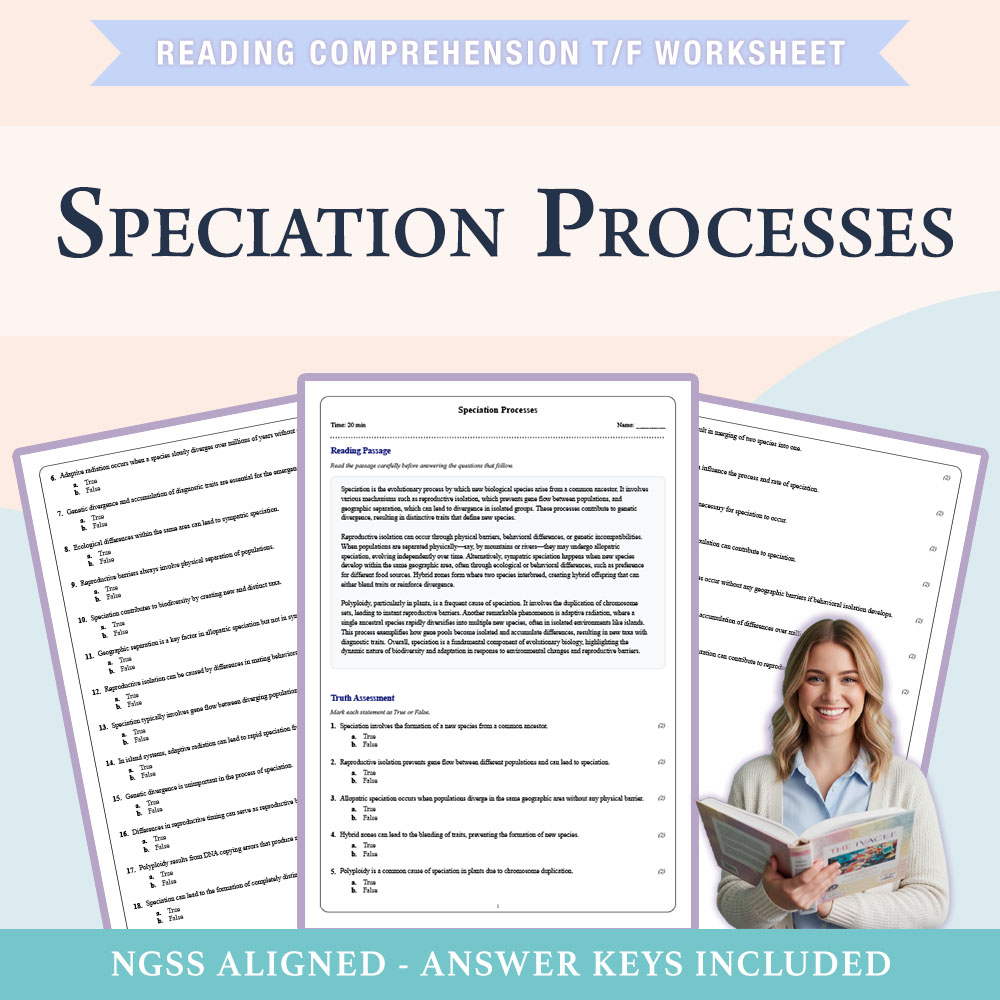
9th Grade Science | Speciation Processes Worksheet (PDF + Answer Key)
Created byCopper Leaf ClassroomLearning Objectives
- Understand the mechanisms that lead to the formation of new species
- Identify different models and examples of speciation including allopatric and sympatric speciation
- Recognize the role of hybrid zones, polyploidy, and adaptive radiation in species divergence
Also included in: Grade 9 Science | Evolution & Speciation Worksheets Bundle (PDF + Answer Key) +1 more
Instant download
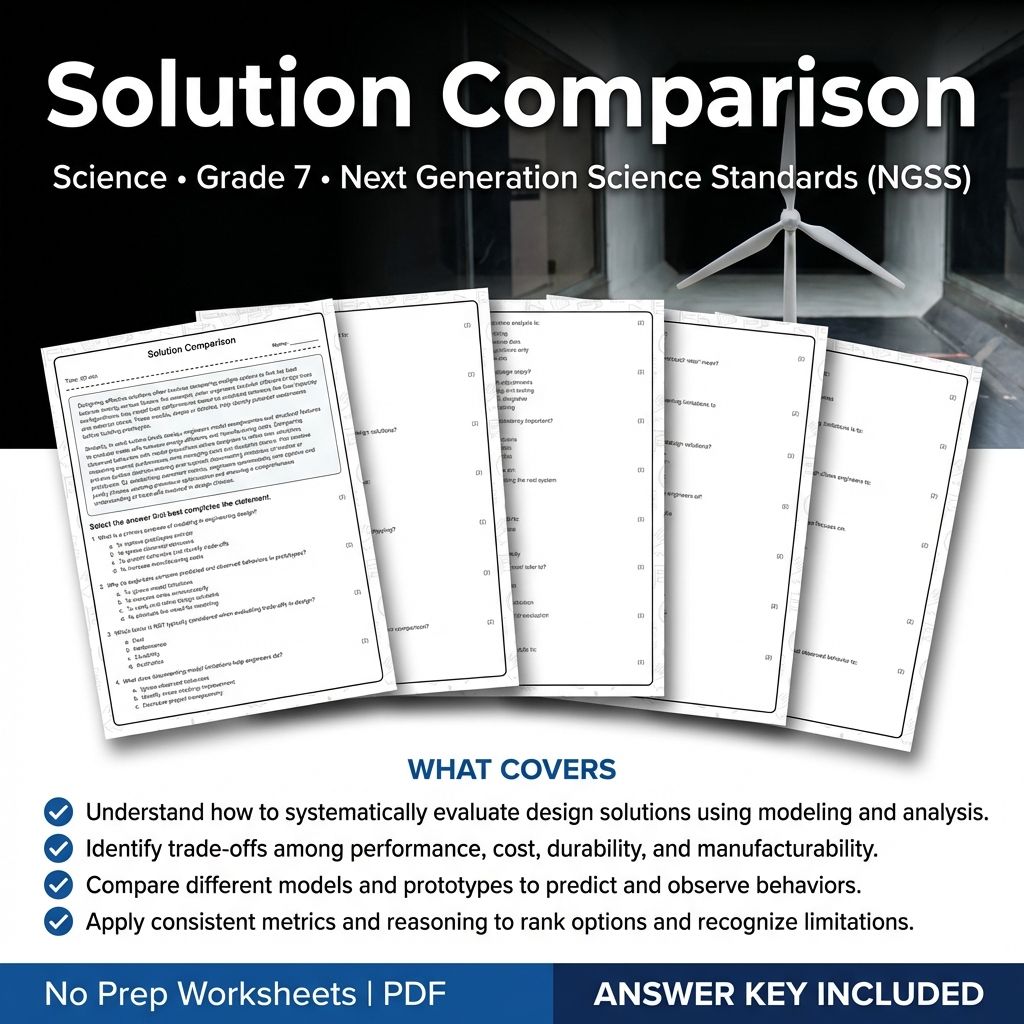
7th Grade Science | Solution Comparison Worksheet & Answer Key (Printable PDF)
Created byCoral Reef LearningLearning Objectives
- Understand how to systematically evaluate design solutions using modeling and analysis.
- Identify trade-offs among performance, cost, durability, and manufacturability.
- Compare different models and prototypes to predict and observe behaviors.
Instant download
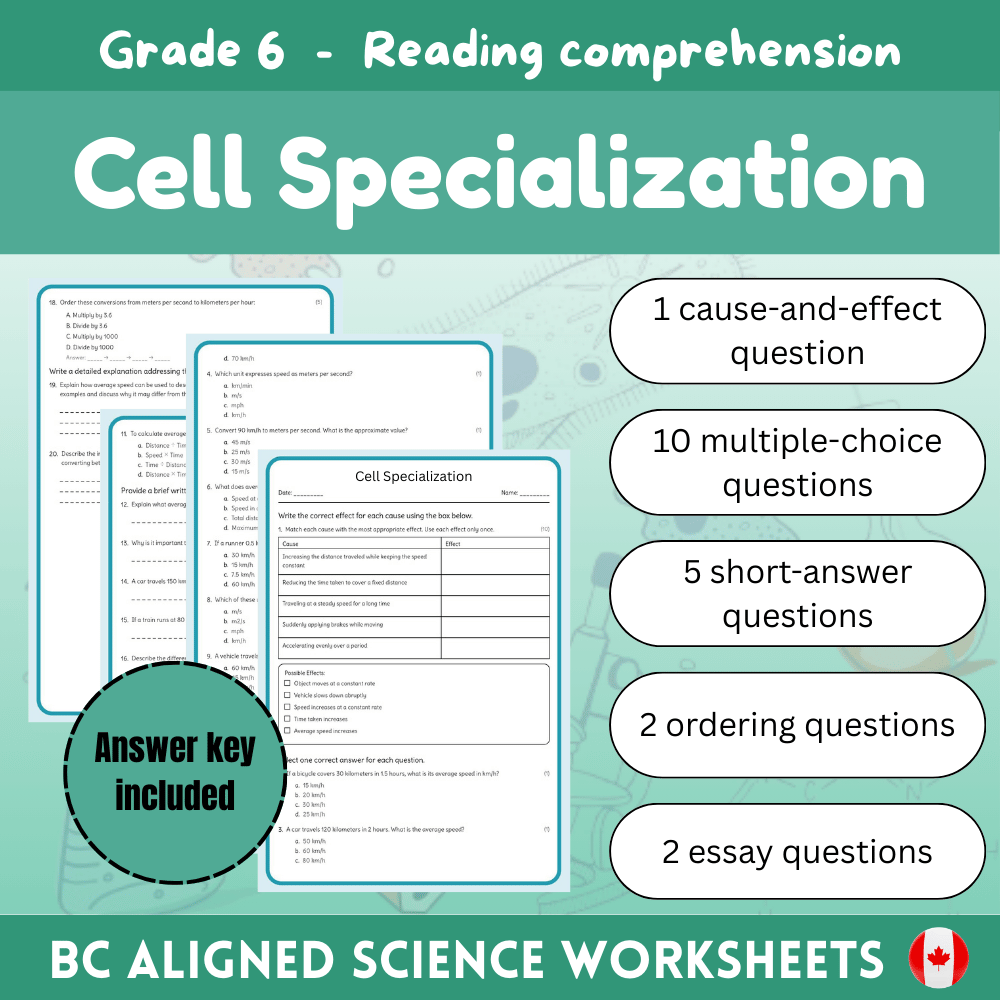
6th Grade Science | Cell Specialization Worksheet + Answer Key - BC Standard
 Created byBright Mind Resources
Learning Objectives
- Understand how cells develop unique structures for specific functions.
- Explain the process of differentiation and gene expression in cells.
- Recognize how specialized cells form tissues and organs that perform complex tasks.
Instant download
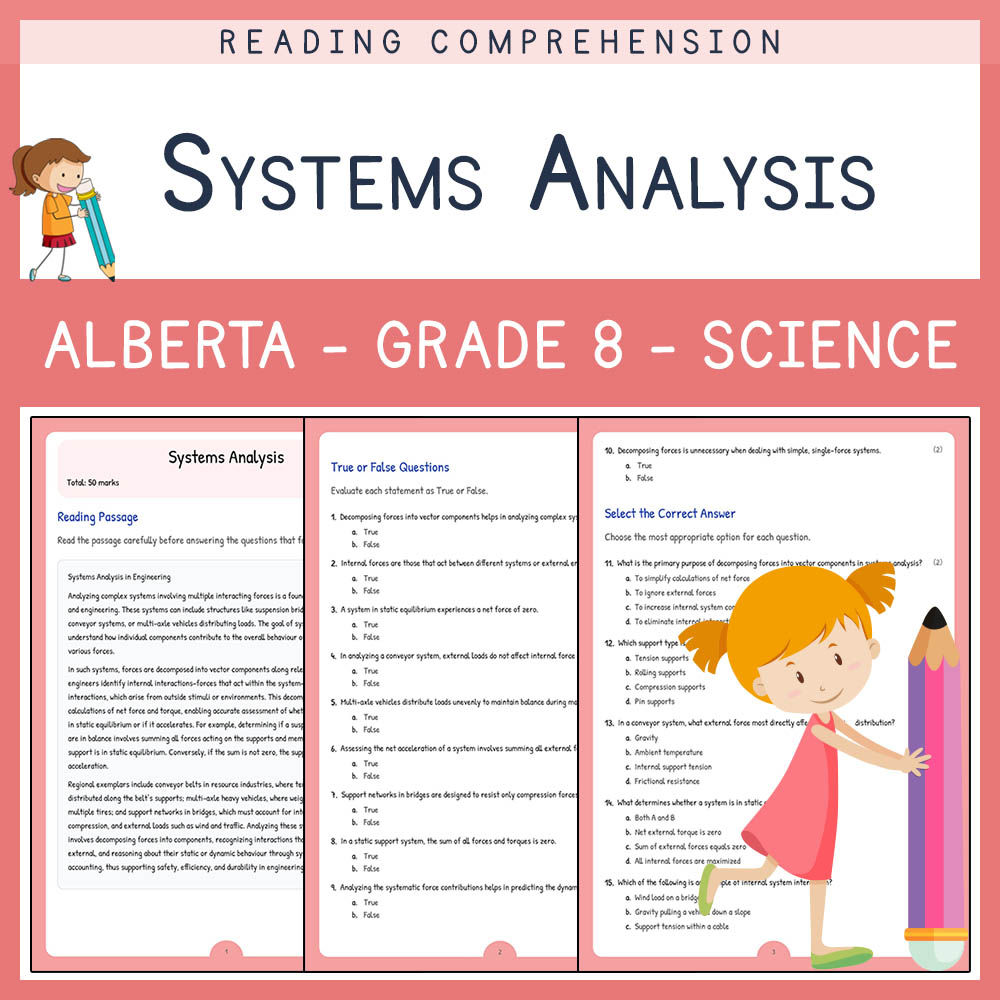
Grade 8 Science | Systems Analysis Worksheet | Alberta Standard
 Created byLumora Learning
Learning Objectives
- Understand the components and forces involved in complex systems such as bridges, conveyor belts, and vehicle load distributions.
- Learn to decompose system forces into their vector components and analyze the effects of internal and external interactions.
- Assess whether systems are in static equilibrium or experiencing net acceleration based on systematic force accounting.
Instant download
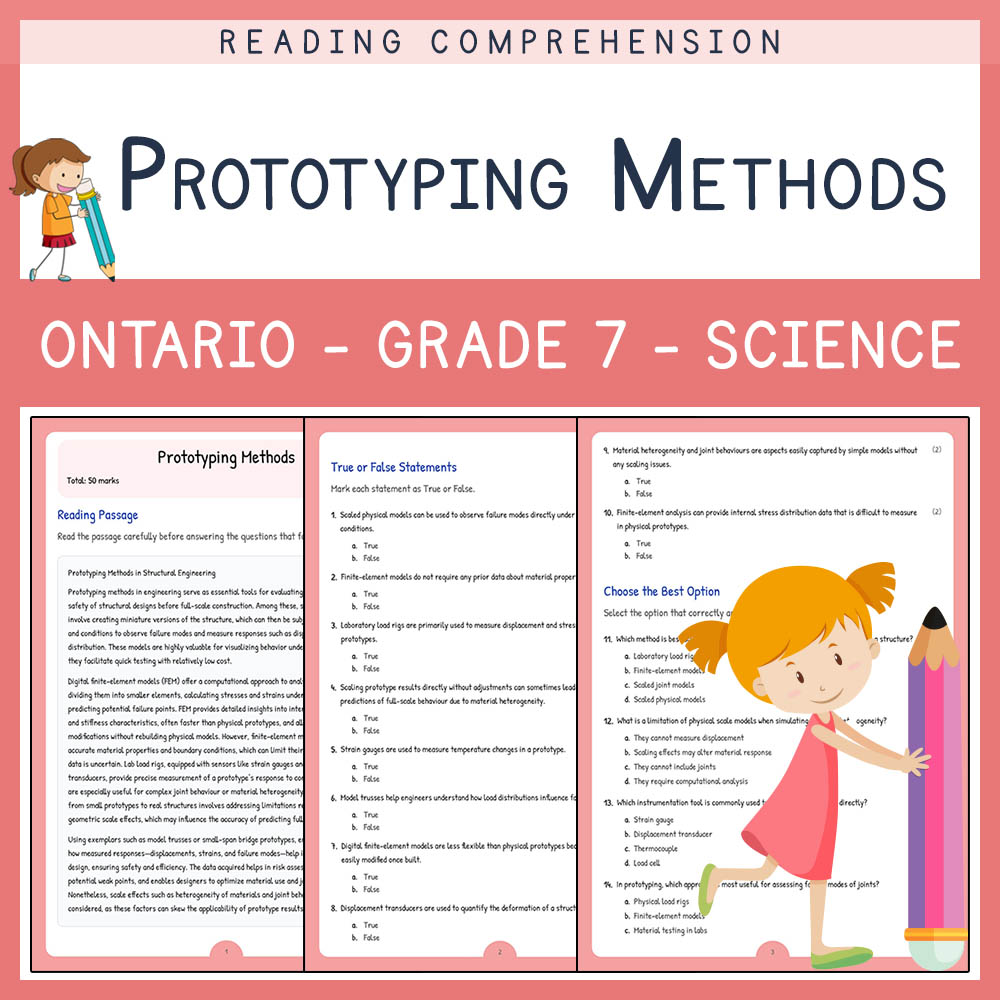
Grade 7 Science Assessment | Prototyping Methods Worksheet | Ontario
Created byLumora LearningLearning Objectives
- Understand different prototyping approaches including scaled physical models, digital finite-element models, and laboratory load rigs.
- Compare the advantages and limitations of each prototyping method for assessing strength, stiffness, and failure modes.
- Identify instrumentation tools such as strain gauges and displacement transducers used to quantify responses.
Also included in: Grade 7 Science | Form Function Design Structures Unit Bundle | Ontario
Instant download
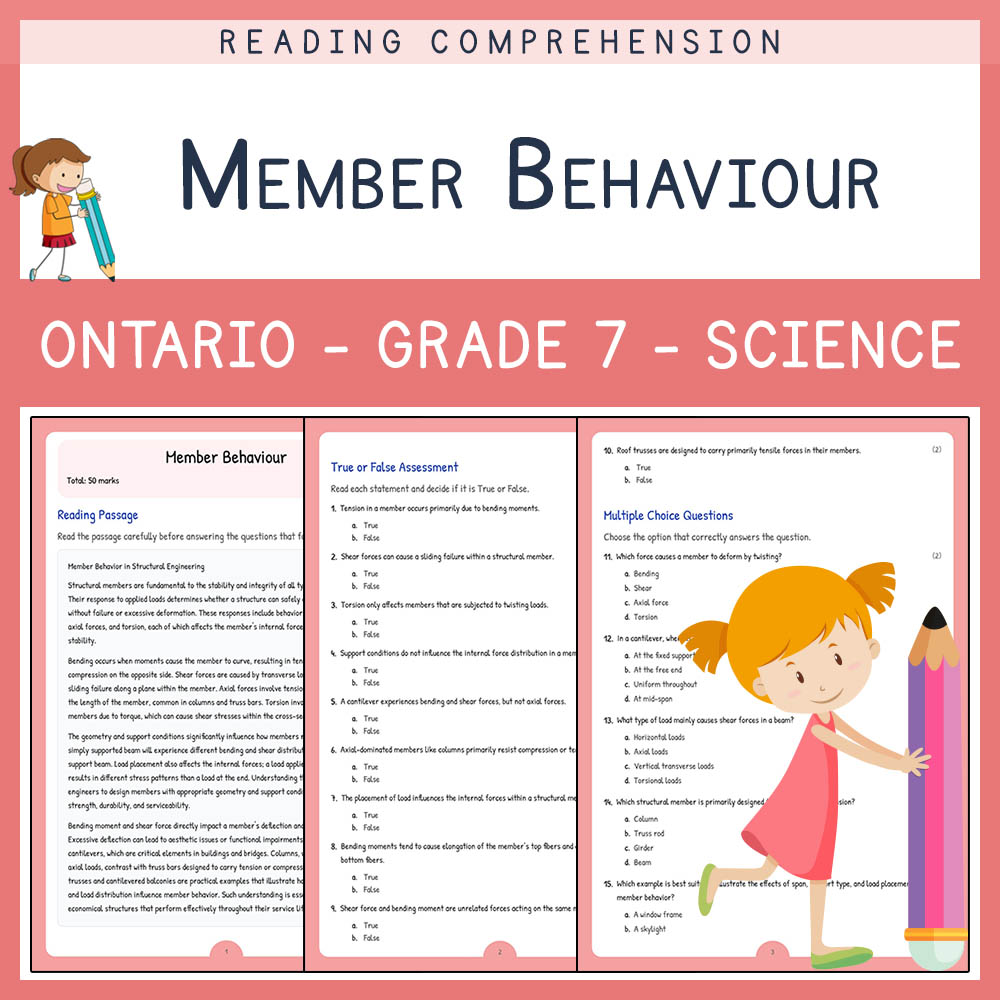
Grade 7 Science | Member Behaviour Worksheet (PDF + Answer Key) Aligned with Ontario
Created byLumora LearningLearning Objectives
- Describe how structural members respond to applied loads through bending, shear, axial force, and torsion.
- Relate the geometry and support conditions of members to internal force distribution.
- Explain the effects of bending moment and shear force on deflection and serviceability in beams and cantilevers.
Also included in: Grade 7 Science | Form Function Design Structures Unit Bundle | Ontario
Instant download
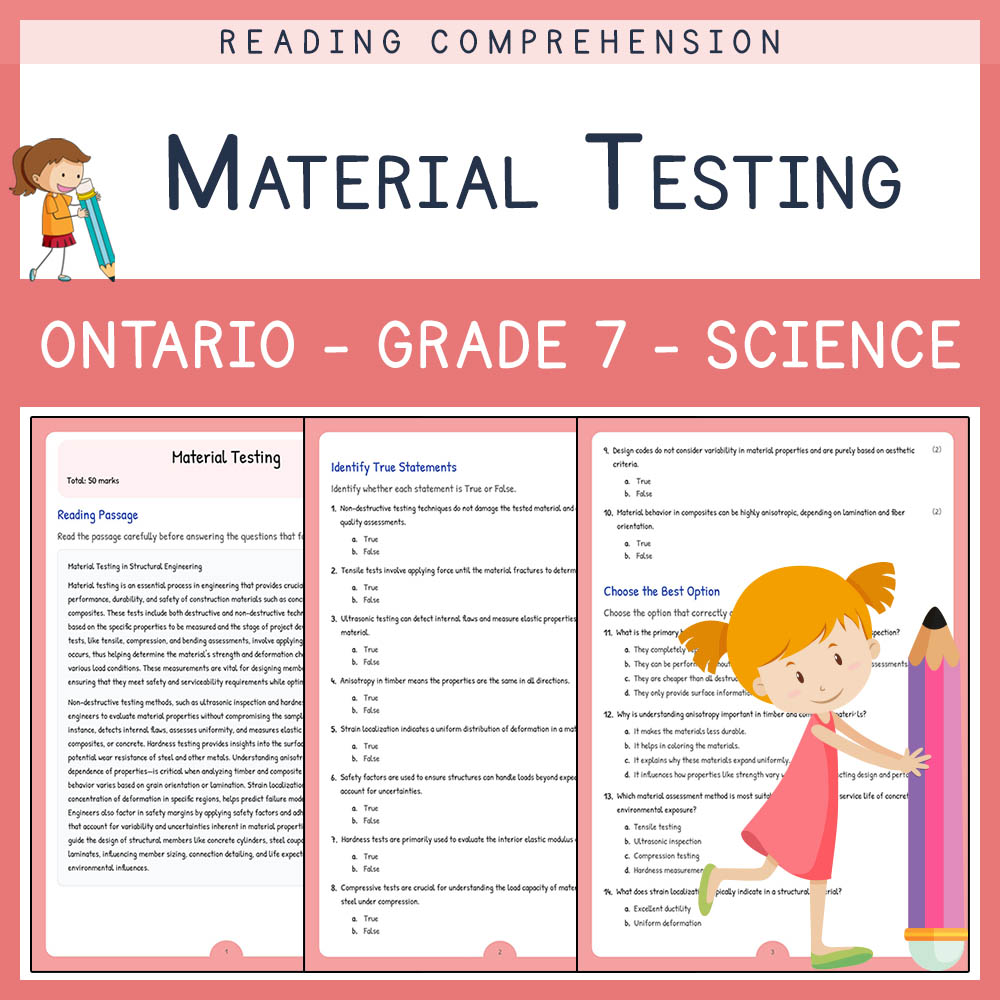
Grade 7 Science | Material Testing Worksheet Elena – Ontario Standards
Created byLumora LearningLearning Objectives
- Understand characteristic methods used for testing material behavior, including tensile, compression, and bending assessments.
- Learn about non-destructive techniques such as ultrasonic and hardness measurements.
- Explore the concepts of anisotropy, strain localization, and their implications in material performance.
Also included in: Grade 7 Science | Form Function Design Structures Unit Bundle | Ontario
Instant download
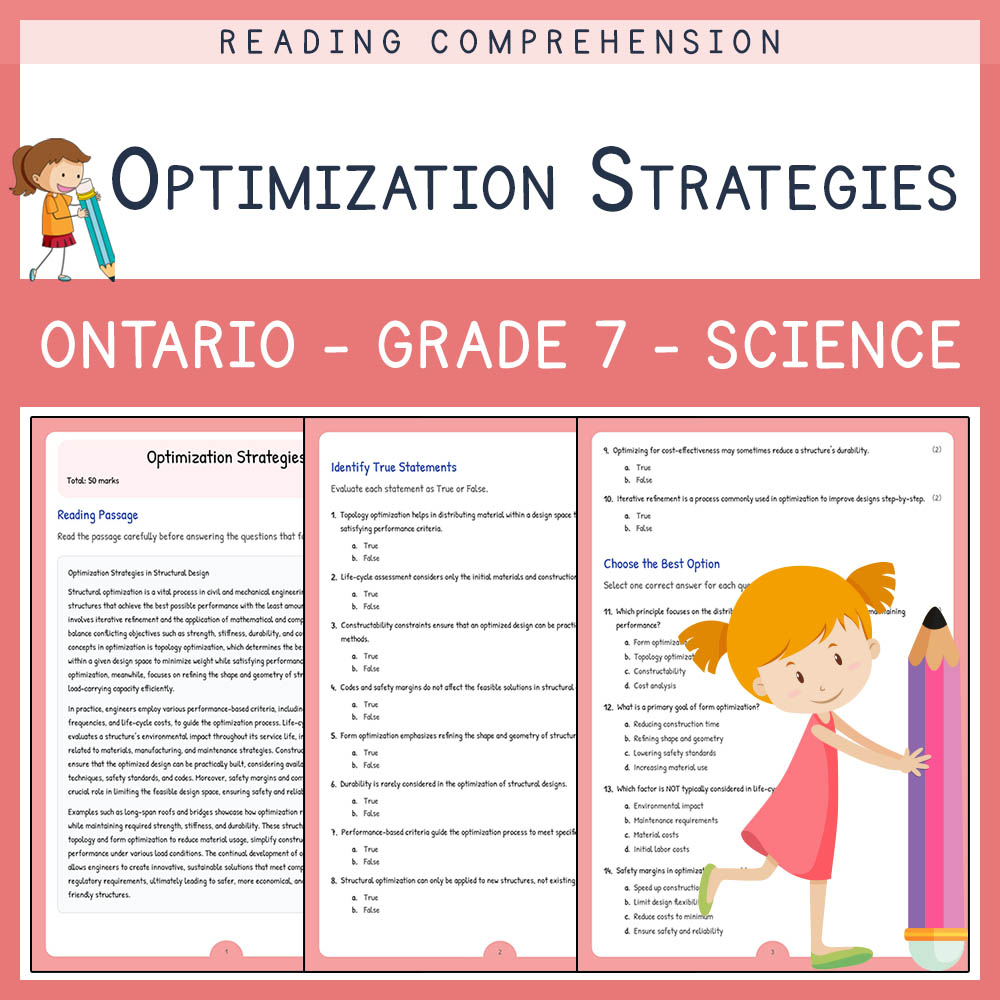
Grade 7 Science Assessment | Optimization Strategies Worksheet | Ontario
Created byLumora LearningLearning Objectives
- Understand key principles of structural optimization, including material efficiency, cost-effectiveness, and performance.
- Identify different optimization techniques such as topology and form optimization.
- Analyze how performance-based criteria, life-cycle assessment, and constructability constraints influence design decisions.
Also included in: Grade 7 Science | Form Function Design Structures Unit Bundle | Ontario
Instant download
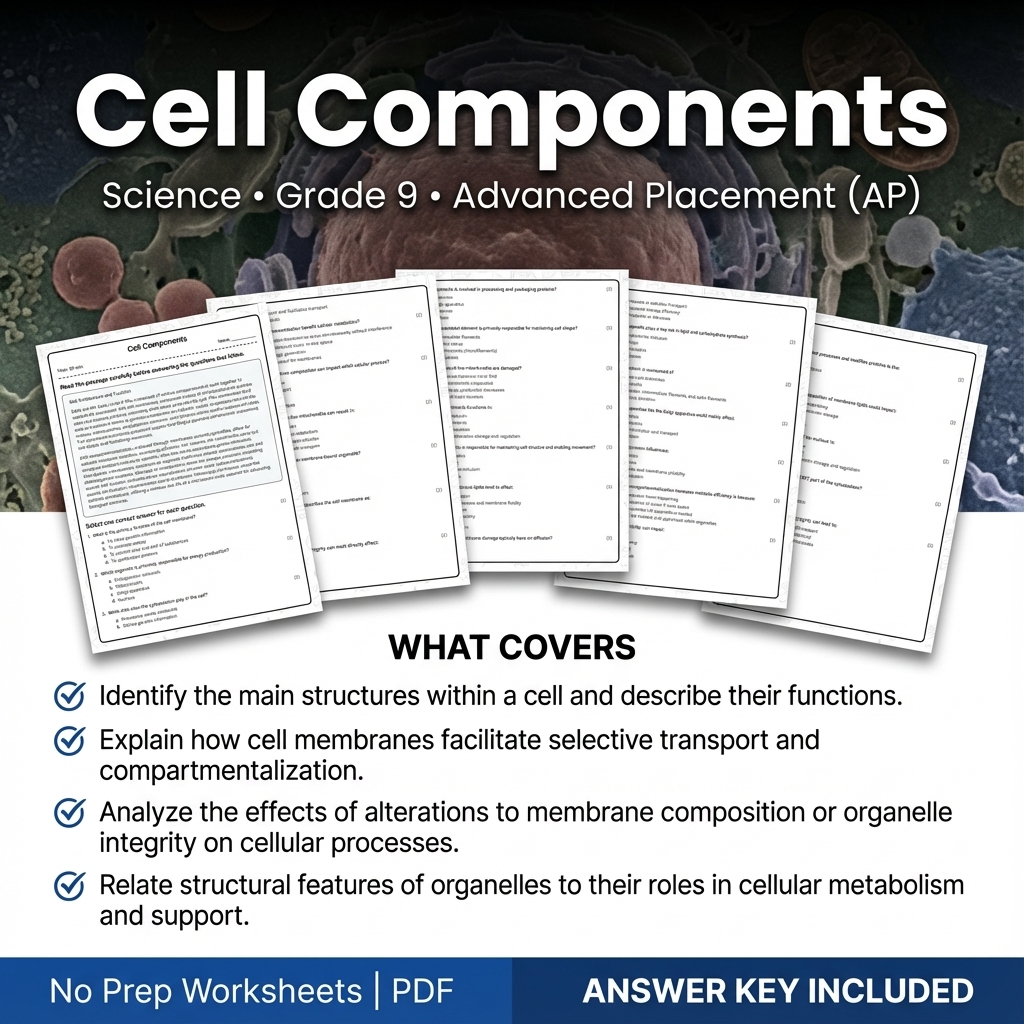
Grade 9 Science | Cell Components Worksheet (Printable PDF + Answer Key)
Created byCoral Reef LearningLearning Objectives
- Identify the main structures within a cell and describe their functions.
- Explain how cell membranes facilitate selective transport and compartmentalization.
- Analyze the effects of alterations to membrane composition or organelle integrity on cellular processes.
Also included in: Grade 9 Science Unit Worksheet Bundle | Cell Function to Ecosystem Dynamics +2 more
Instant download
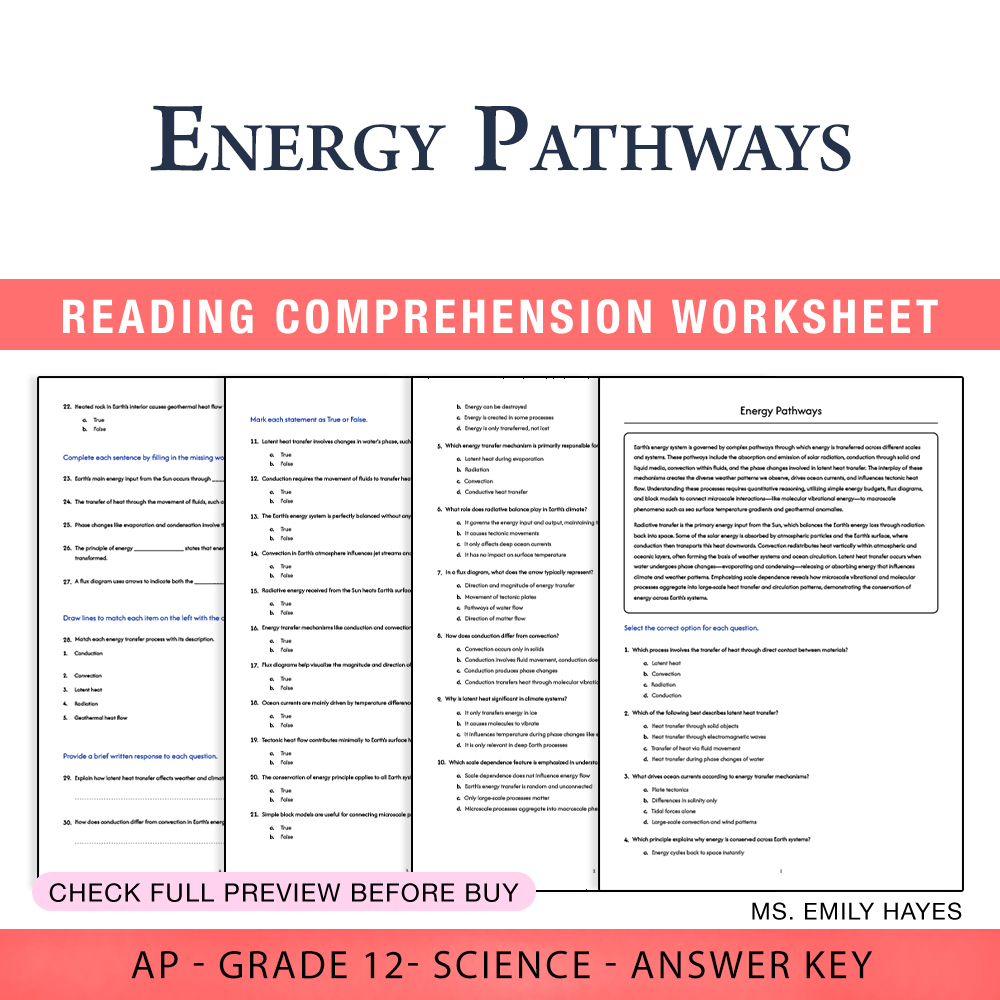
Grade 12 Science | Energy Pathways Worksheet (PDF+ Answer Key)
Created byCopper Leaf ClassroomLearning Objectives
- Describe the main mechanisms of energy transfer within Earth systems, including radiative balance, conduction, convection, and latent heat processes.
- Relate energy pathways to phenomena such as weather patterns, ocean currents, and geothermal heat flow.
- Apply quantitative reasoning to energy budgets, flux diagrams, and models connecting microscale processes to macroscale phenomena.
Also included in: Grade 12 Science | Earth Systems & Climate AP Worksheet (PDF + Answer Key) +1 more
Instant download
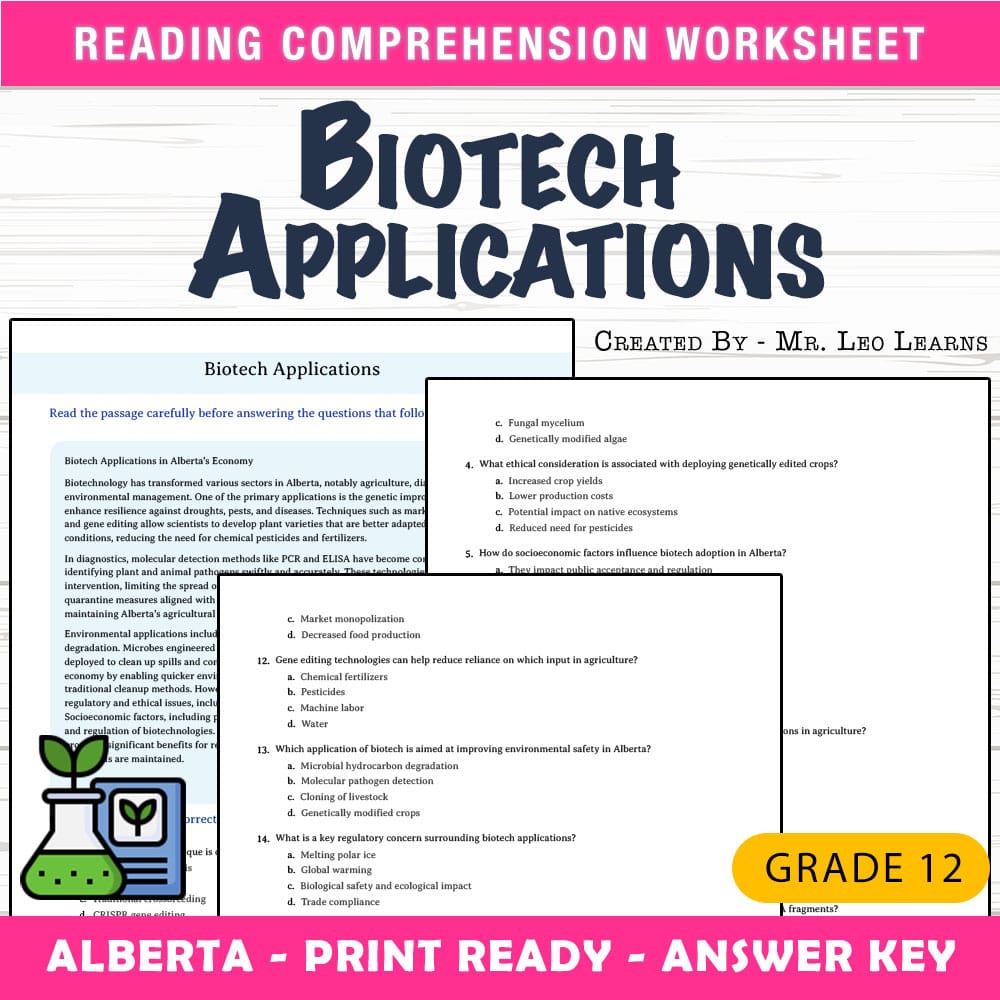
Grade 12 Science — Biotech Applications Worksheet MCQ Paper for Mastery
 Created byThe Resource Hub
Learning Objectives
- Understand the role of biotechnology in agricultural resilience and crop improvement.
- Identify molecular detection techniques for plant and animal pathogens.
- Recognize microbial approaches to hydrocarbon bioremediation.
Also included in: Grade 12 Science Alberta Worksheets Bundle +1 more
Instant download
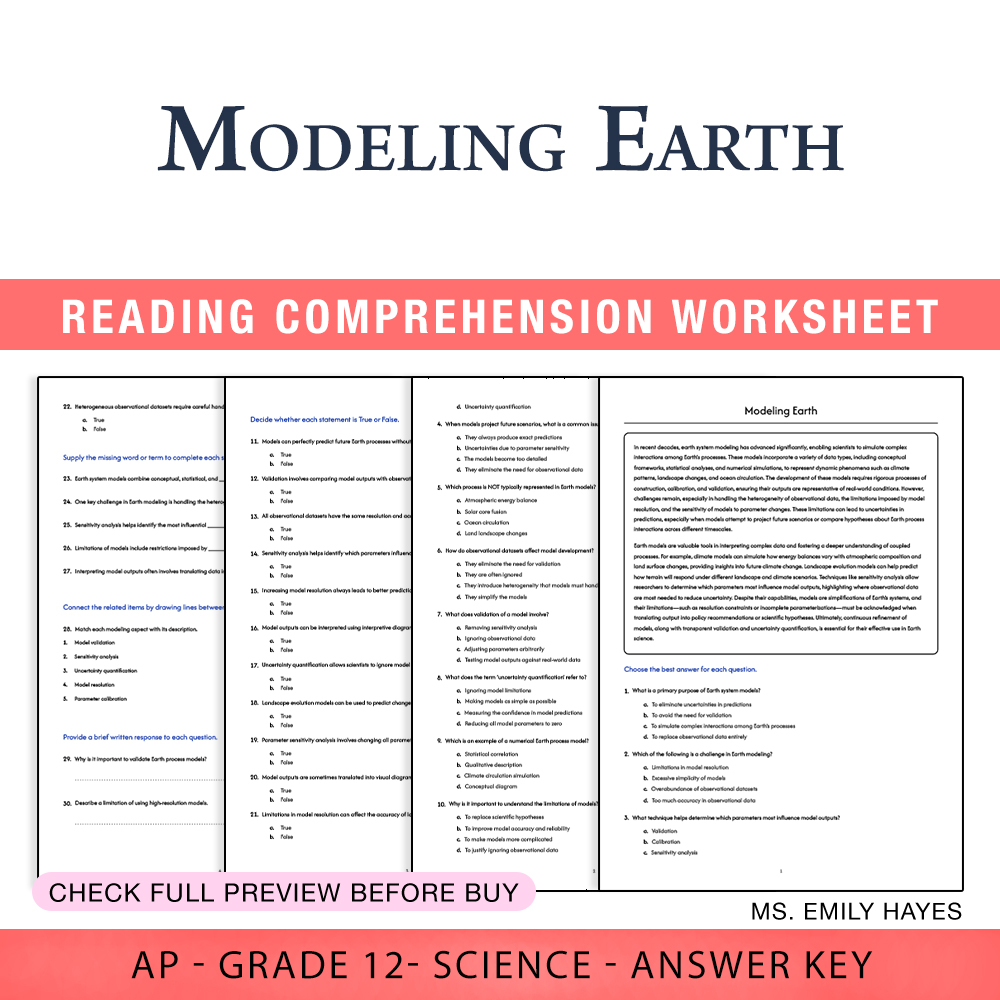
Grade 12 Science | Modeling Earth Assessment Worksheet (PDF+ Answer Key)
Created byCopper Leaf ClassroomLearning Objectives
- Understand the purpose and application of Earth process models across different timescales.
- Develop skills in constructing, validating, and analyzing energy-balance, circulation, and landscape evolution models.
- Interpret model outputs through diagrams and quantify uncertainty related to model resolution and parameter selection.
Also included in: Grade 12 Science | Earth Systems & Climate AP Worksheet (PDF + Answer Key) +1 more
Instant download
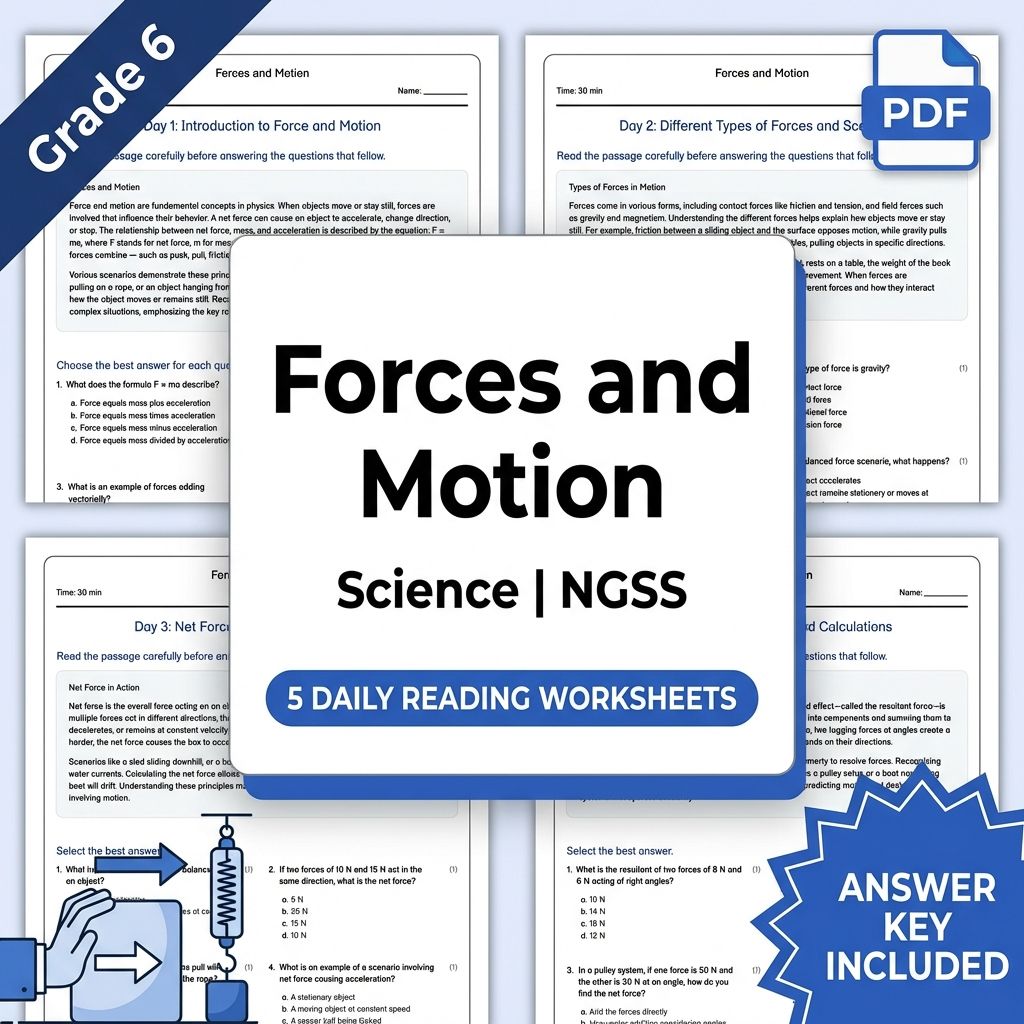
6th Grade Science | Forces and Motion Daily Reading Worksheet (PDF + Answer Key)
Created byCopper Leaf ClassroomLearning Objectives
- Understand the relationship between net force, mass, and acceleration.
- Identify different scenarios where forces act on objects.
- Apply the equation net force equals mass times acceleration to real-world problems.
Instant download
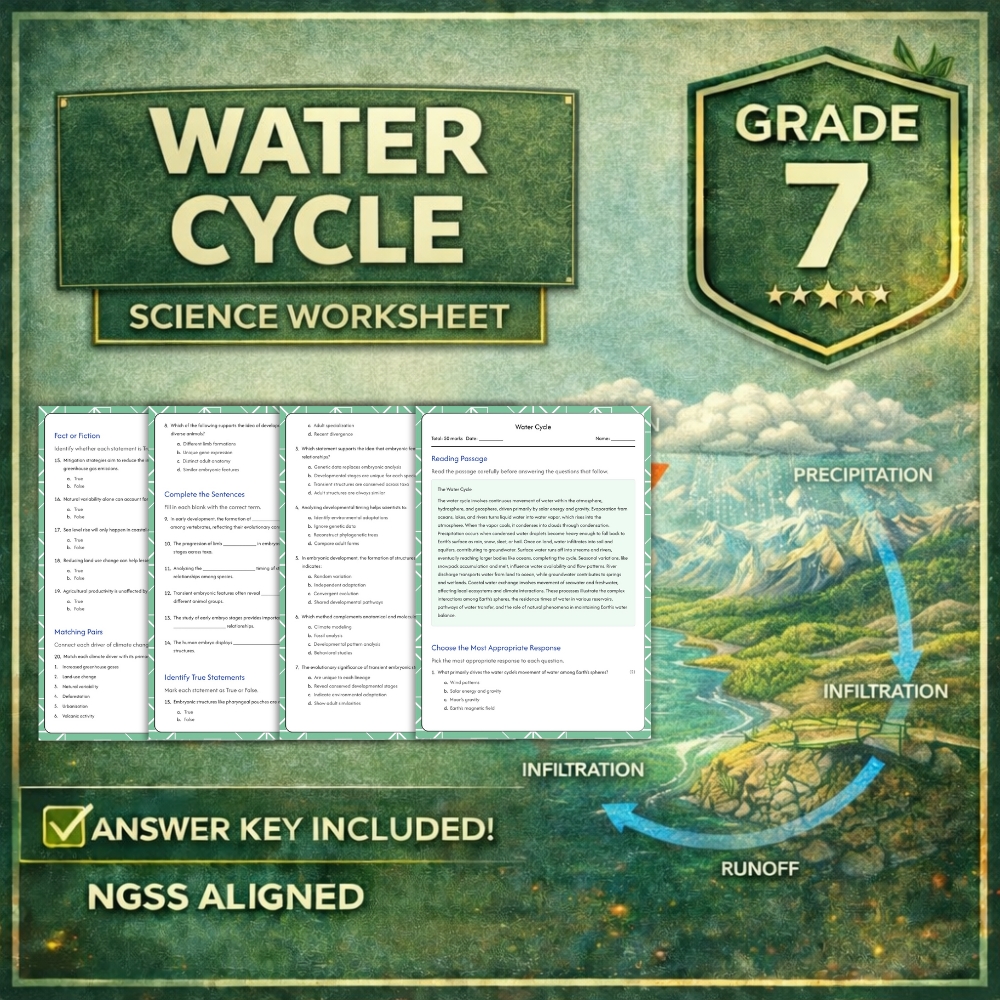
Grade 7 Science | Water Cycle Worksheet (NGSS) – Printable PDF & Answer Key
 Created byCedar Grove Learning
Learning Objectives
- Describe the key processes in the water cycle such as evaporation, condensation, and precipitation.
- Explain the interactions among Earth's atmosphere, hydrosphere, and geosphere in water movement.
- Identify pathways like river discharge, groundwater flow, and snowpack to understand water transfer.
Also included in: Grade 7 Science Bundle | Earth Systems & Processes NGSS (Worksheet Pack)
Instant download
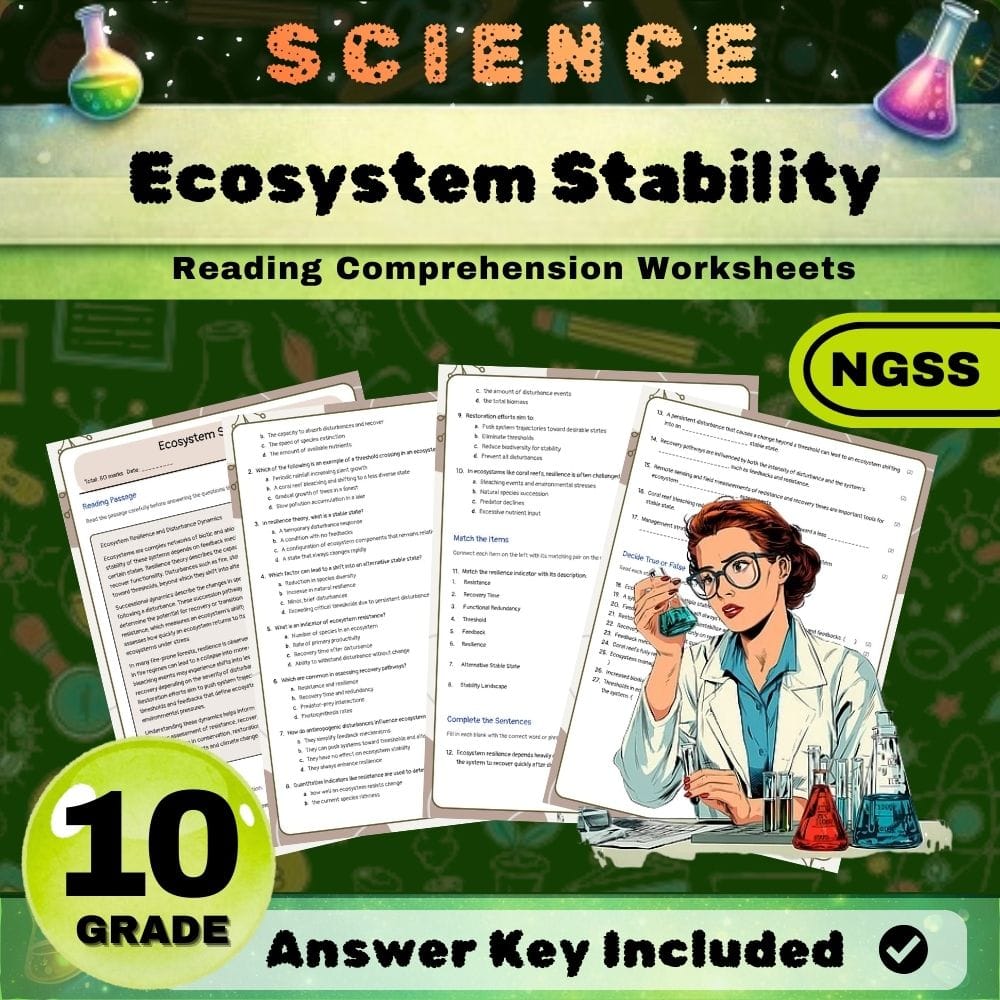
Grade 10 Science – Ecosystem Stability Worksheet (NGSS) PDF
 Created byMaple Path Learning
Learning Objectives
- Understand the concepts of resilience theory, thresholds, and feedbacks in ecosystems.
- Analyze how natural and human disturbances affect long-term ecosystem trajectories.
- Evaluate recovery pathways, stable states, and management implications for ecosystems like forests and coral reefs.
Also included in: Grade 10 Science Ecosystems Interactions Energy and Dynamics Lesson Bundle | NGSS +1 more
Instant download
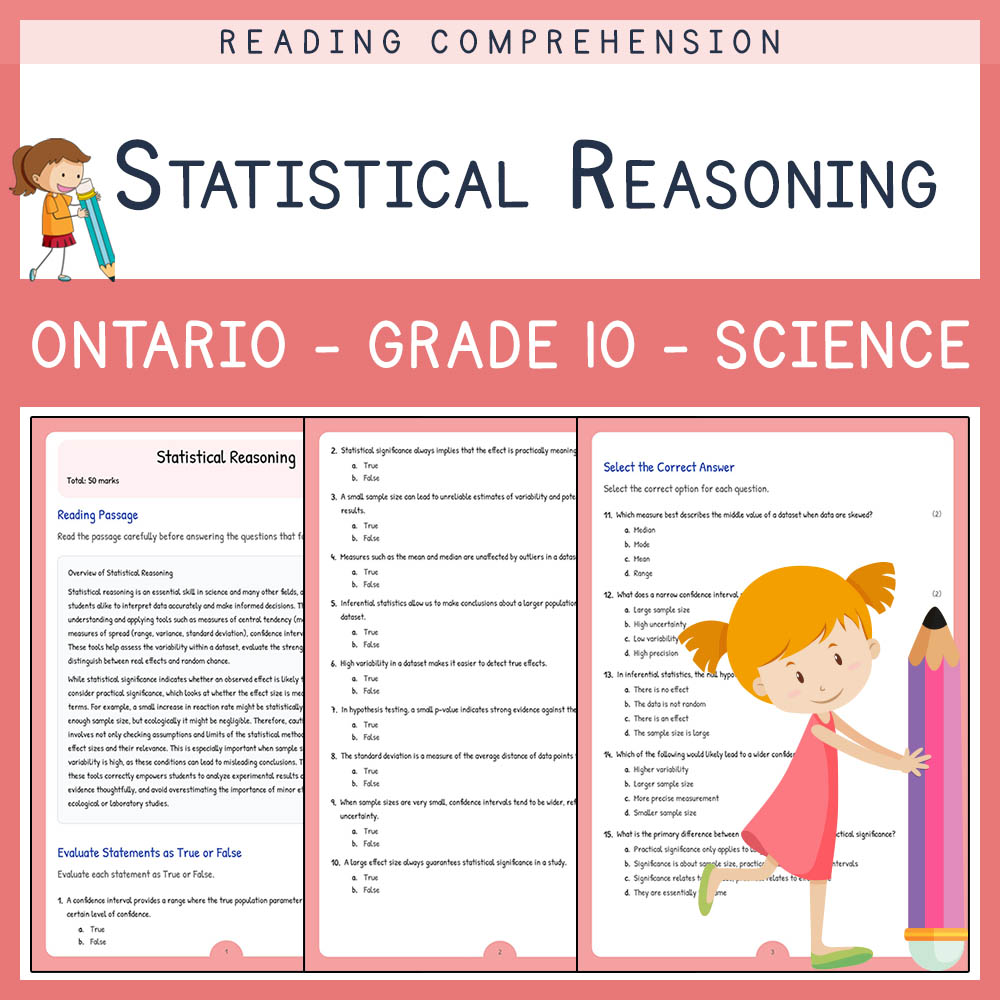
Grade 10 Science | Statistical Reasoning Worksheet | Ontario Standard
Created byLumora LearningLearning Objectives
- Understand and interpret measures of central tendency and variability in datasets.
- Differentiate between statistical significance and practical significance in data comparisons.
- Apply confidence intervals and basic inferential tools to classroom-scale datasets.
Instant download
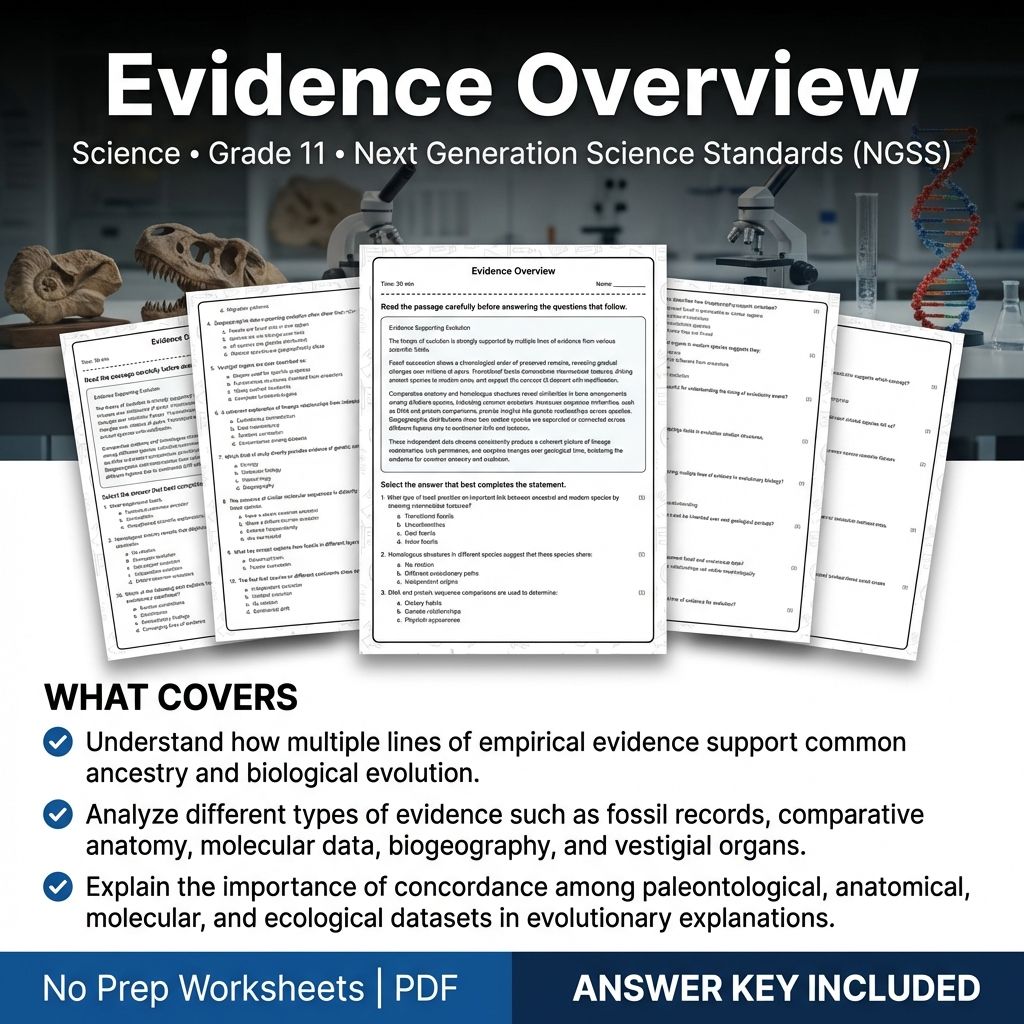
11th Grade Science | Evidence Overview Worksheet & Answer Key (Printable PDF)
Created byCoral Reef LearningLearning Objectives
- Understand how multiple lines of empirical evidence support common ancestry and biological evolution.
- Analyze different types of evidence such as fossil records, comparative anatomy, molecular data, biogeography, and vestigial organs.
- Explain the importance of concordance among paleontological, anatomical, molecular, and ecological datasets in evolutionary explanations.
Also included in: Grade 11 Science | Biological Evolution & Population Genetics Worksheet Bundle +1 more
Instant download
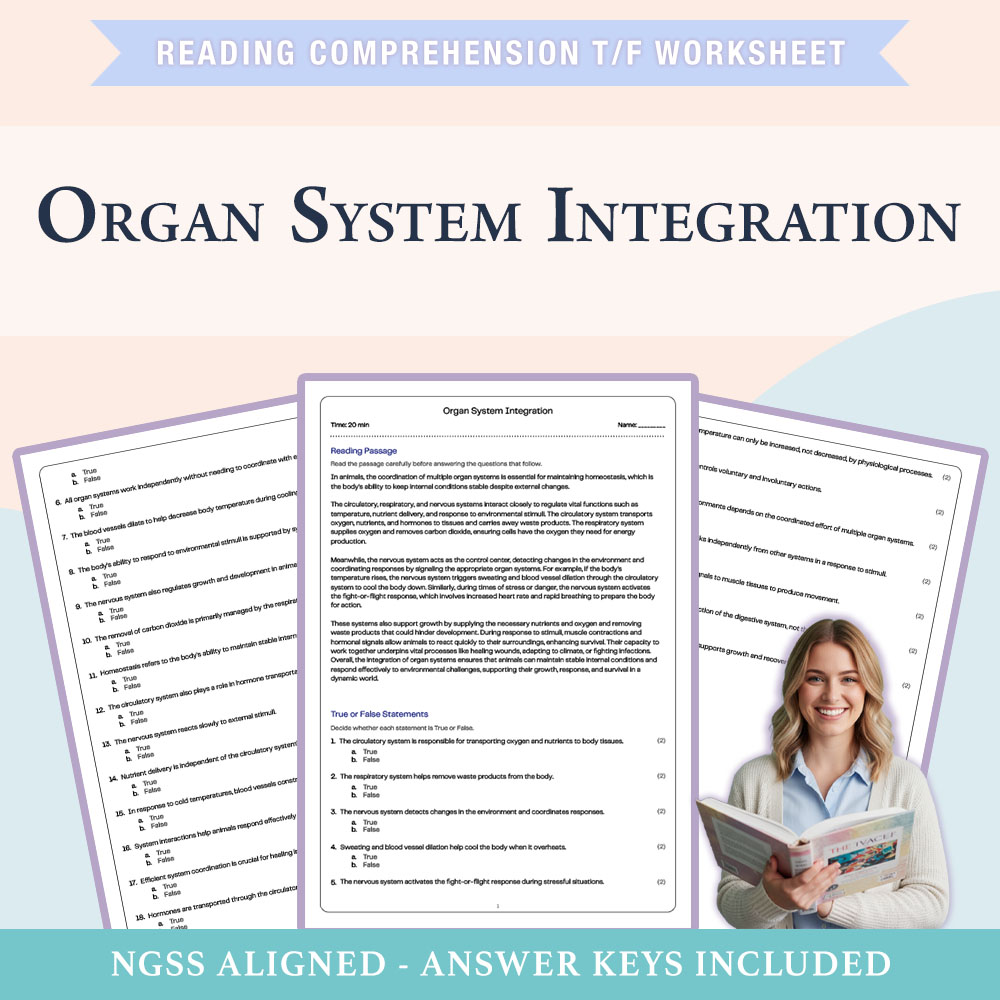
6th Grade Science | Organ System Integration True or False (PDF +Answer Key)
Created byCopper Leaf ClassroomLearning Objectives
- Understand how multiple organ systems work together to maintain homeostasis in animals.
- Describe the roles of the circulatory, respiratory, and nervous systems in regulating body functions.
- Explain how system interactions support growth, response to stimuli, and survival in changing environments.
Instant download
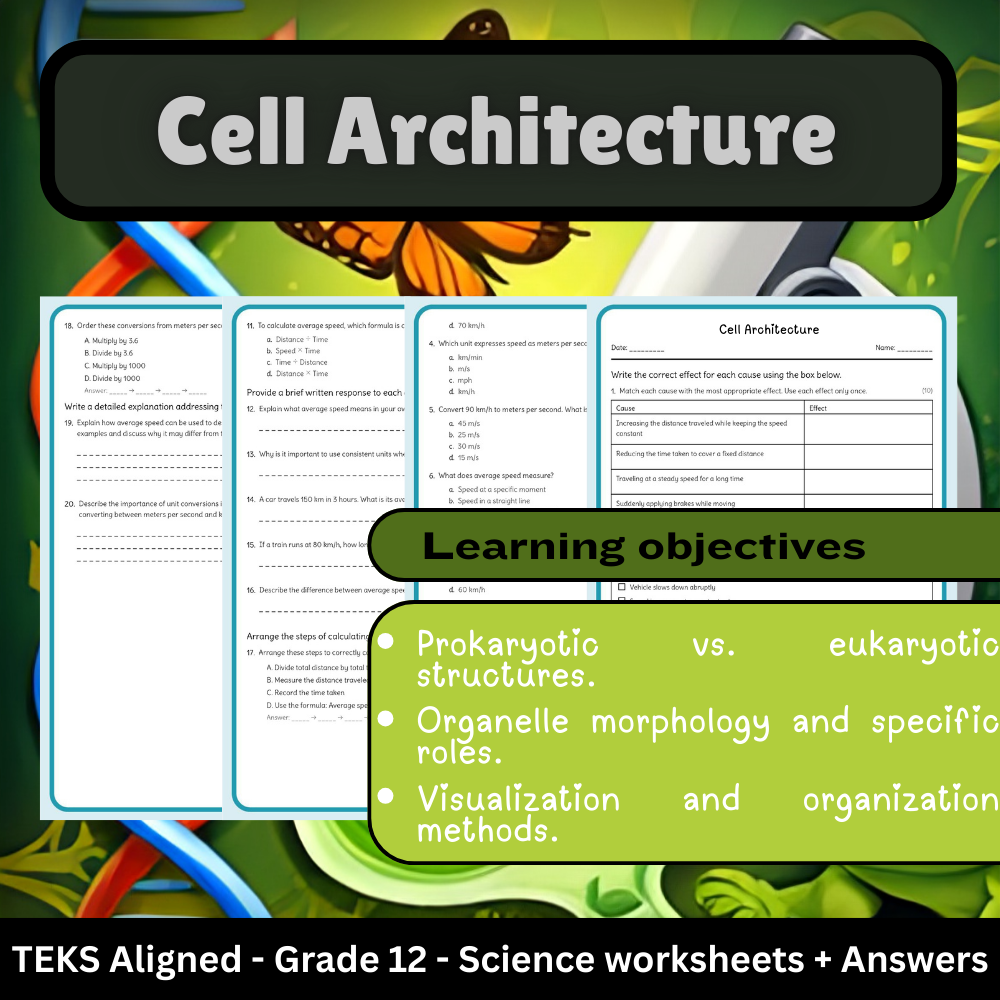
Grade 12 Science | Cell Architecture Worksheet (Answer Key) – TEKS Aligned
Created byBright Mind ResourcesLearning Objectives
- Describe the structural components and functions of prokaryotic and eukaryotic cells.
- Identify the major organelles, their morphology, and their roles within the cell.
- Understand the methods used to visualize cellular structures and interpret cellular organization.
Instant download
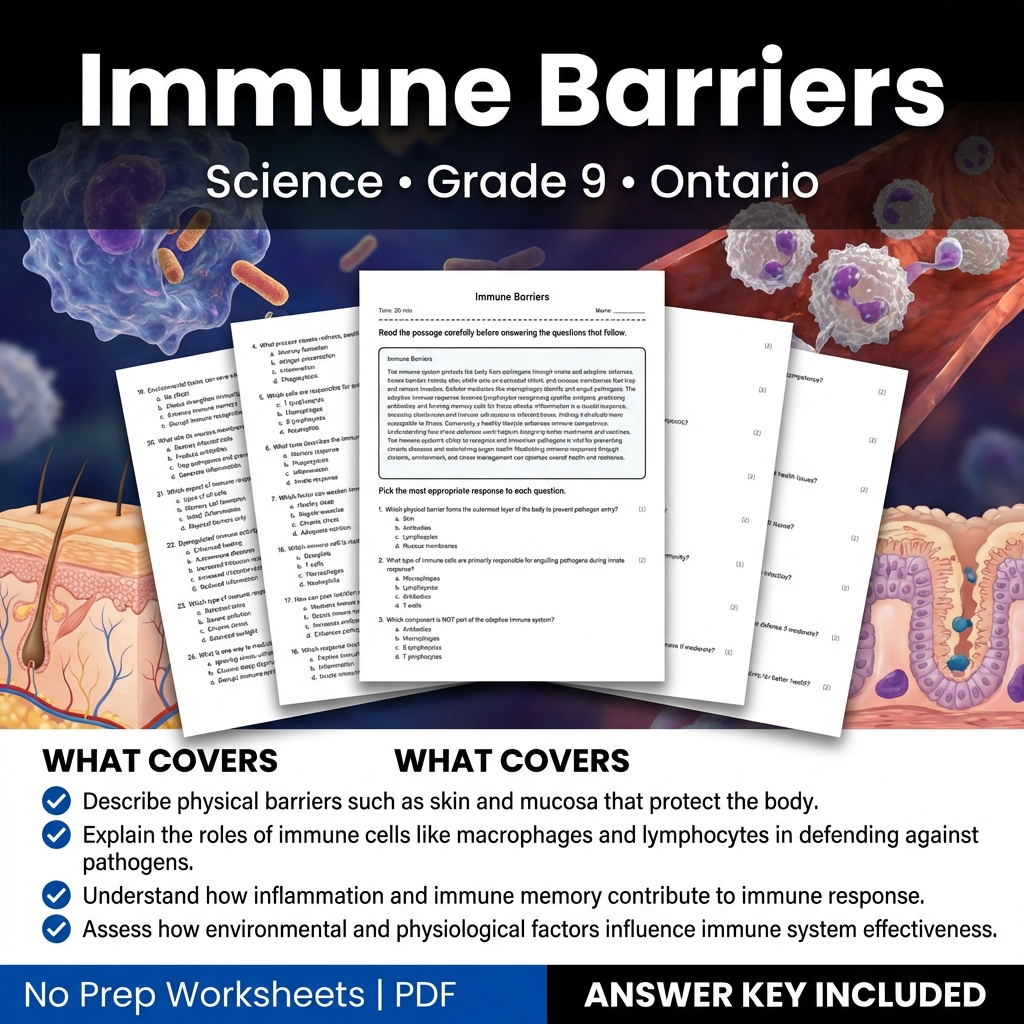
Grade 9 Science Worksheet on Immune Barriers | Ontario Standards
Created byCoral Reef LearningLearning Objectives
- Describe physical barriers such as skin and mucosa that protect the body.
- Explain the roles of immune cells like macrophages and lymphocytes in defending against pathogens.
- Understand how inflammation and immune memory contribute to immune response.
Instant download
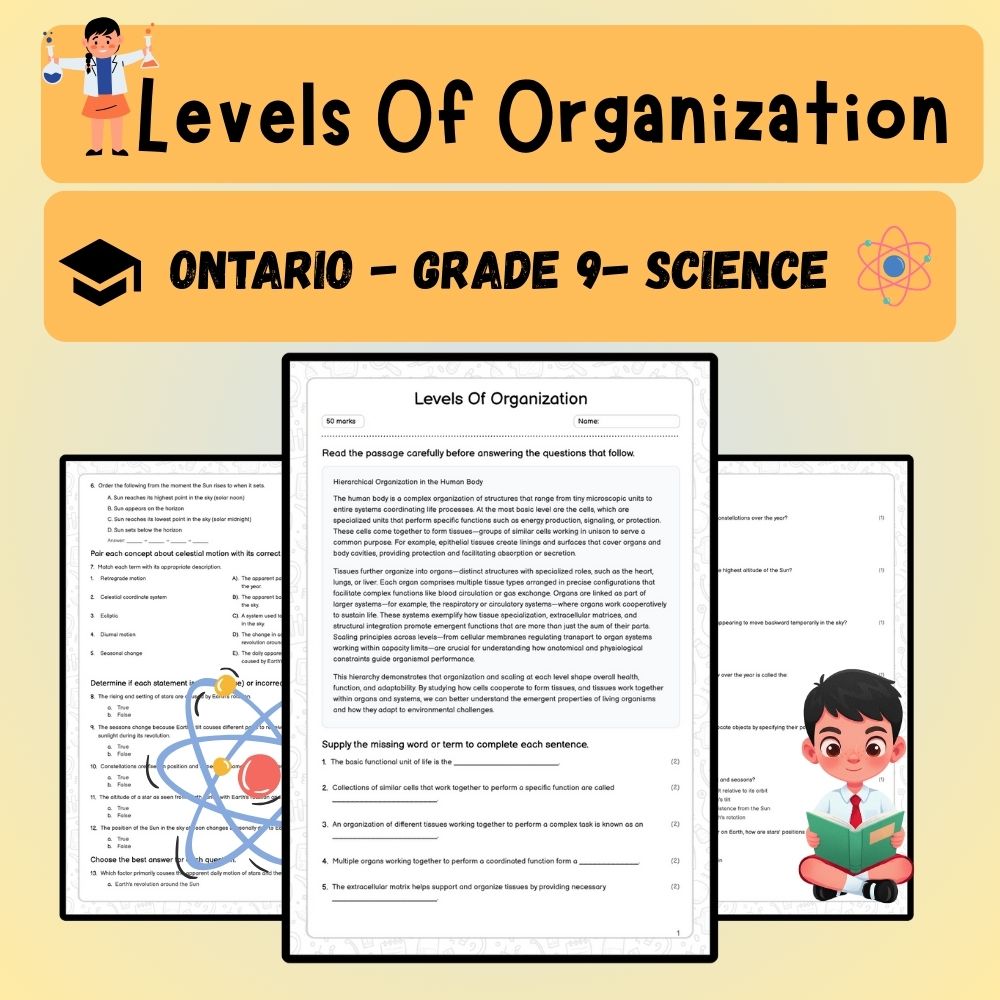
Grade 9 Science | Levels Of Organization Worksheet (PDF) Aligned with Ontario Standards
 Created byPrism Point Learning
Learning Objectives
- Explain the hierarchical relationship among cells, tissues, organs, and systems.
- Describe how cell specialization and extracellular matrices contribute to organ functions.
- Analyze how tissue arrangement supports organ-level processes.
Also included in: Grade 9 Science Unit Bundle | Human Body Systems & Cell Functions +1 more
Instant download
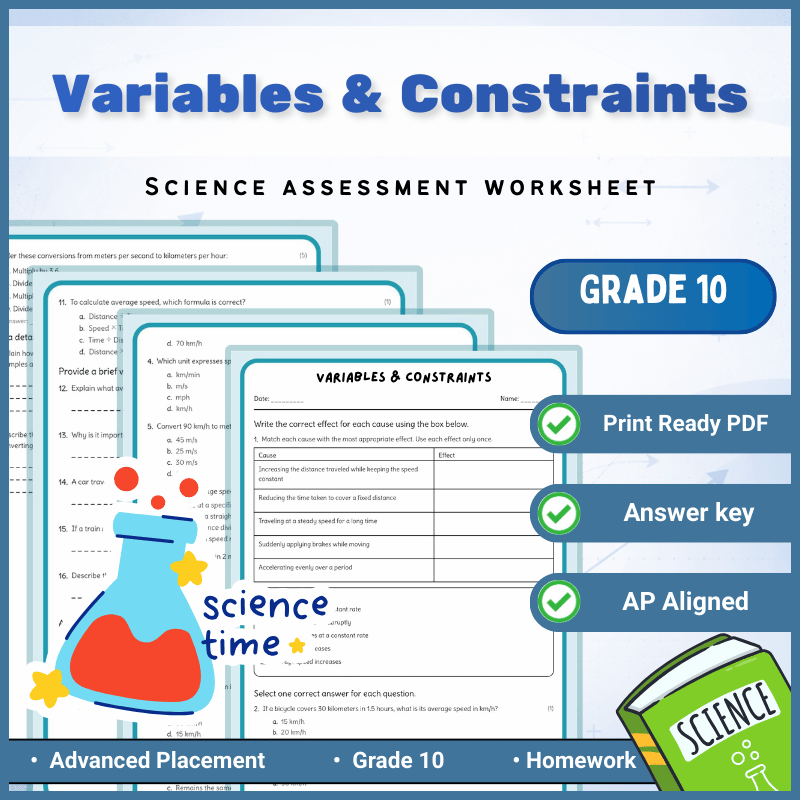
Grade 10 Science | Variables & Constraints Worksheet (AP Standards) PDF
Created byBright Mind ResourcesLearning Objectives
- Identify and classify independent, dependent, and controlled variables in experiments.
- Understand how constraints shape experimental design and measurement.
- Analyze scenarios involving heat transfer to determine operational definitions and boundary conditions.
Instant download

Grade 12 Science | Atomic Models - Daily Reading Comprehension
Created byCoral Reef LearningLearning Objectives
- Understand the development of atomic models from Dalton to Bohr.
- Recognize empirical evidence such as cathode rays and gold foil scattering.
- Explain concepts like nuclear charge, mass number, and isotopic abundance.
Also included in: Grade 12 Science Daily Reading Worksheets Full-Year Bundle | TEKS
Instant download
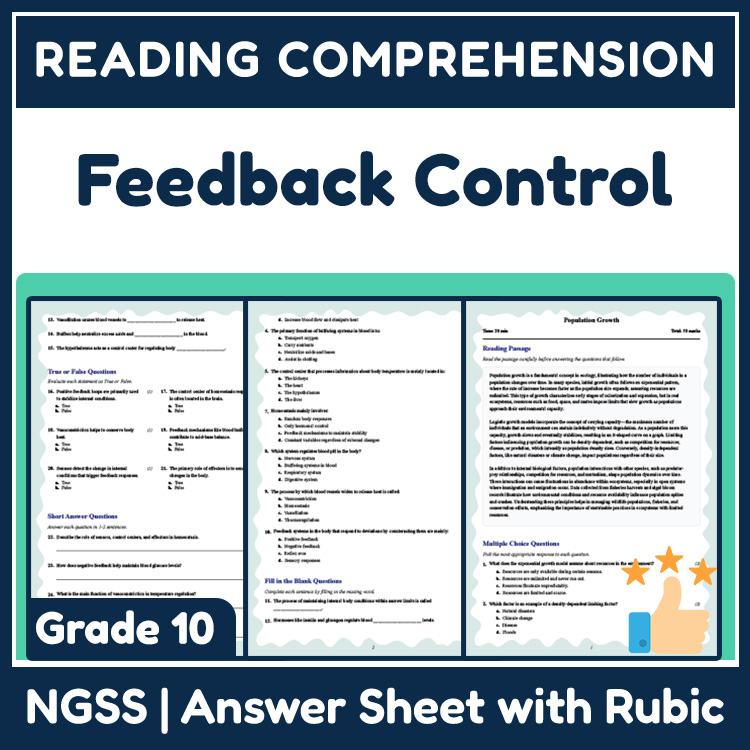
10th Grade Science | Feedback Control Reading Worksheet & Answer Key (PDF)
JCreated byJ.S SheetsLearning Objectives
- Understand the principles of homeostasis and feedback mechanisms in the human body.
- Identify the roles of sensors, control centers, and effectors in physiological regulation.
- Describe the processes involved in negative and positive feedback loops for internal stability.
Also included in: Grade 10 Science Unit | Cellular & Physiological Systems Worksheets
Instant download
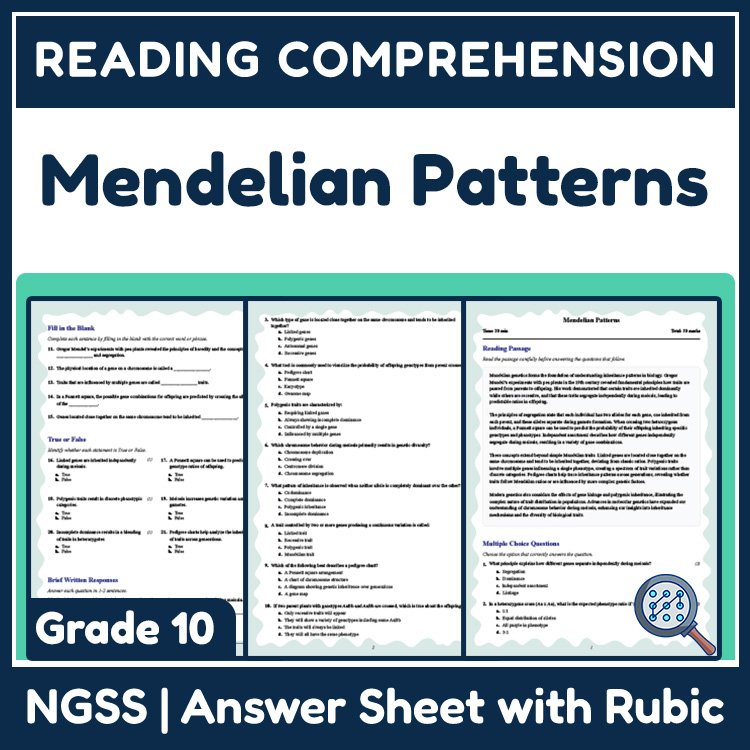
10th Grade Science | Mendelian Patterns Reading Practice Worksheet
JCreated byJ.S SheetsLearning Objectives
- Understand and explain Mendelian inheritance principles such as dominance, segregation, and independent assortment.
- Interpret Punnett squares and pedigree charts to analyze inheritance patterns of single-gene traits.
- Relate chromosome behavior during meiosis to Mendelian inheritance laws.
Instant download
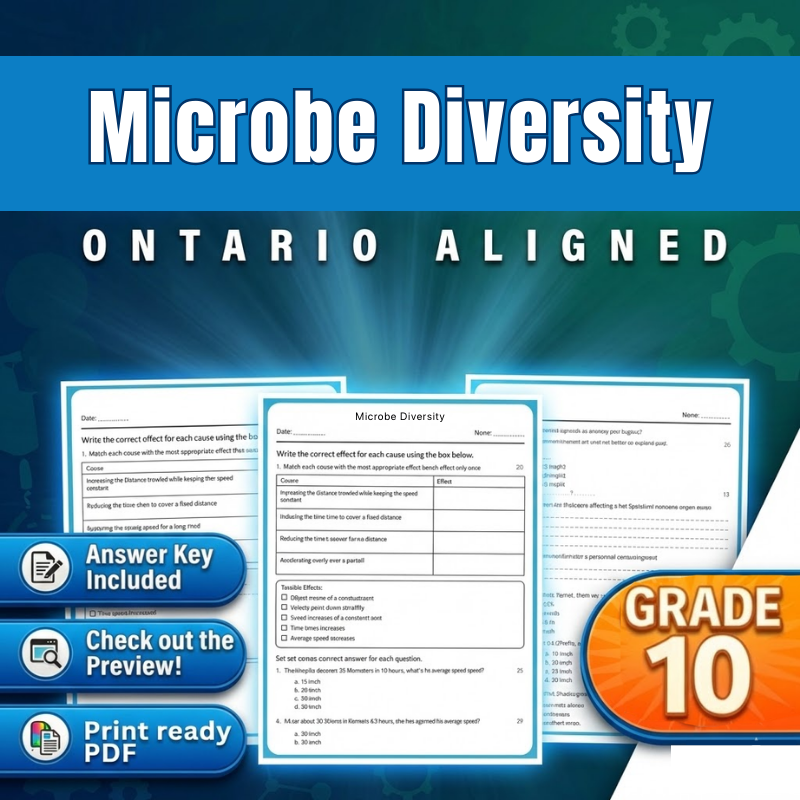
Grade 10 Science | Microbe Diversity Worksheet (Ontario Standards) (PDF)
Created byBright Mind ResourcesLearning Objectives
- Identify major groups of microorganisms and distinguish their characteristics.
- Compare cellular organization, genetic material, and reproduction strategies among microbes.
- Explain the ecological roles and habitats occupied by bacteria, archaea, viruses, fungi, and protists.
Instant download
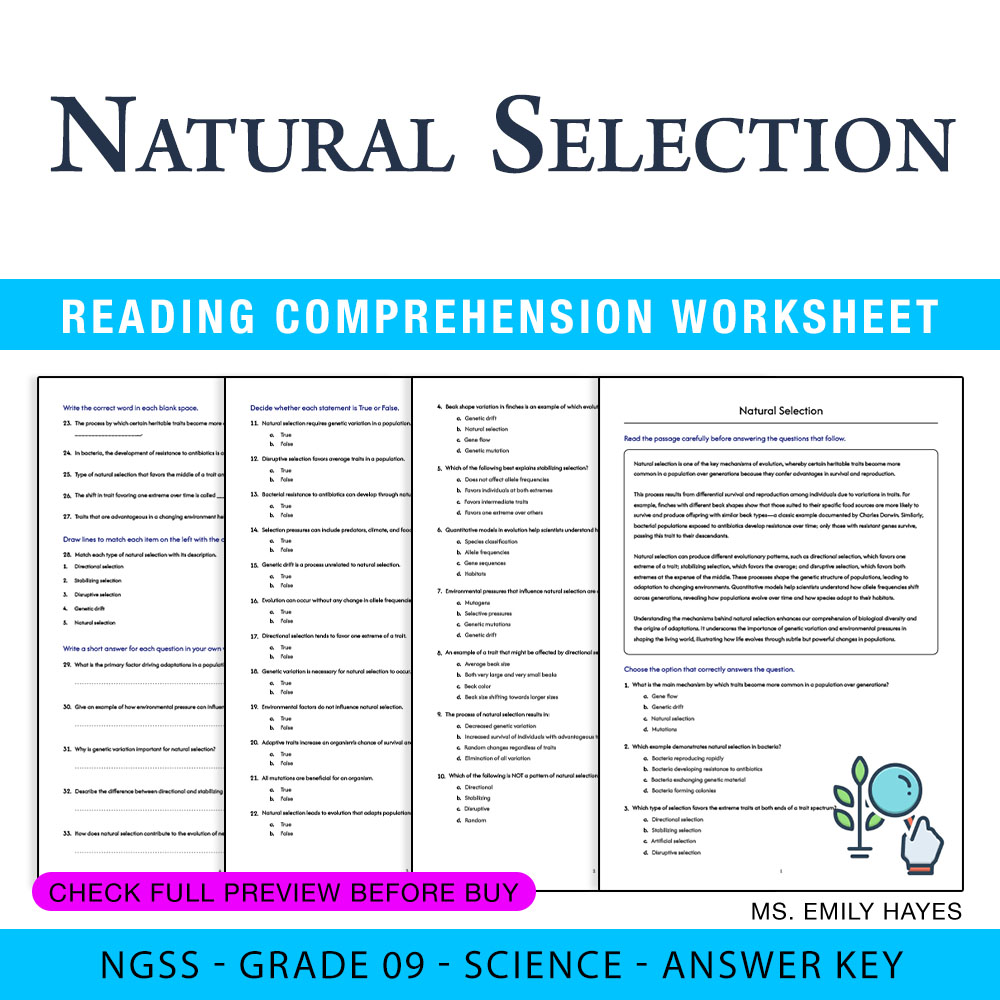
9th Grade Science | Natural Selection Worksheet (PDF+ Answer Key)
Created byCopper Leaf ClassroomLearning Objectives
- Explain the concept of natural selection and how it causes adaptation in populations.
- Describe mechanisms such as variation, inheritance, and selective pressures that drive evolution.
- Analyze examples like beak morphology shifts in finches and bacterial antibiotic resistance.
Instant download
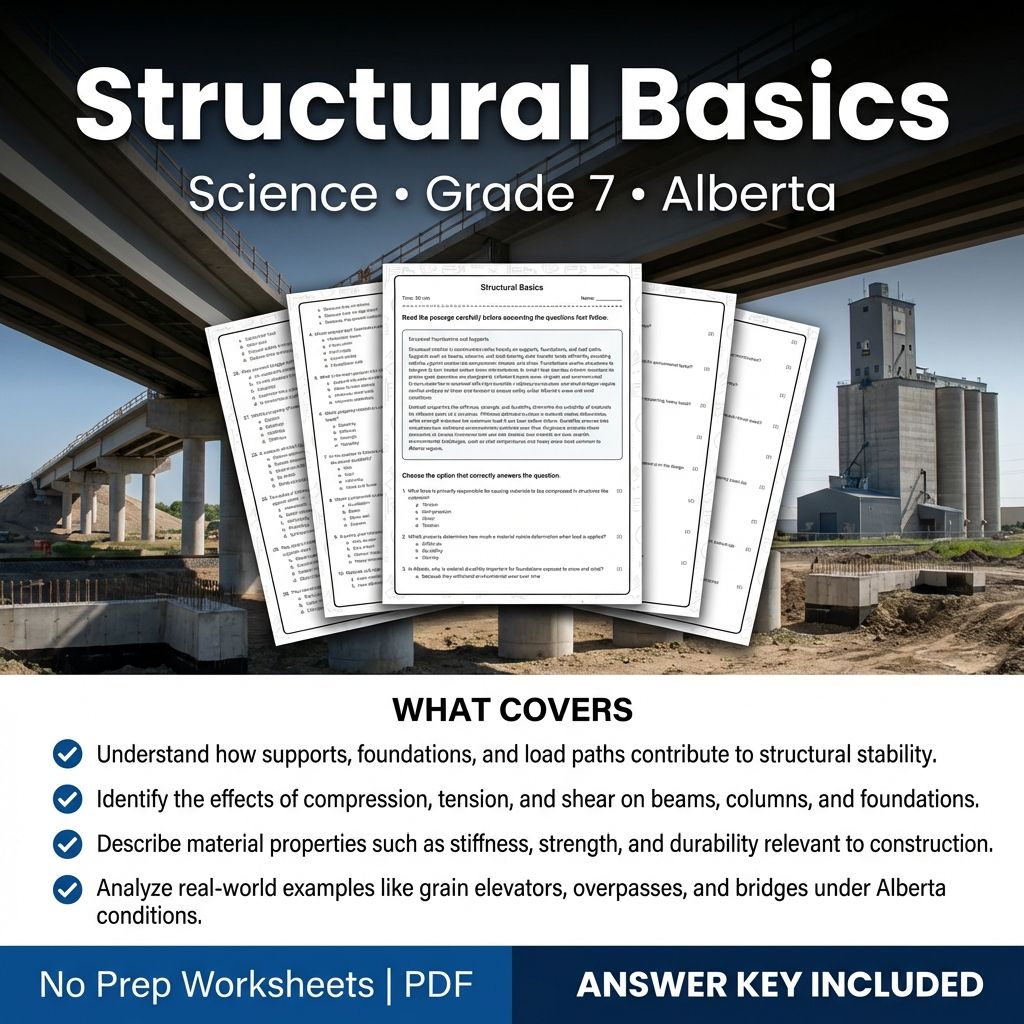
Grade 7 Science Worksheet on Structural Basics | Alberta Standards
Created byCoral Reef LearningLearning Objectives
- Understand how supports, foundations, and load paths contribute to structural stability.
- Identify the effects of compression, tension, and shear on beams, columns, and foundations.
- Describe material properties such as stiffness, strength, and durability relevant to construction.
Instant download
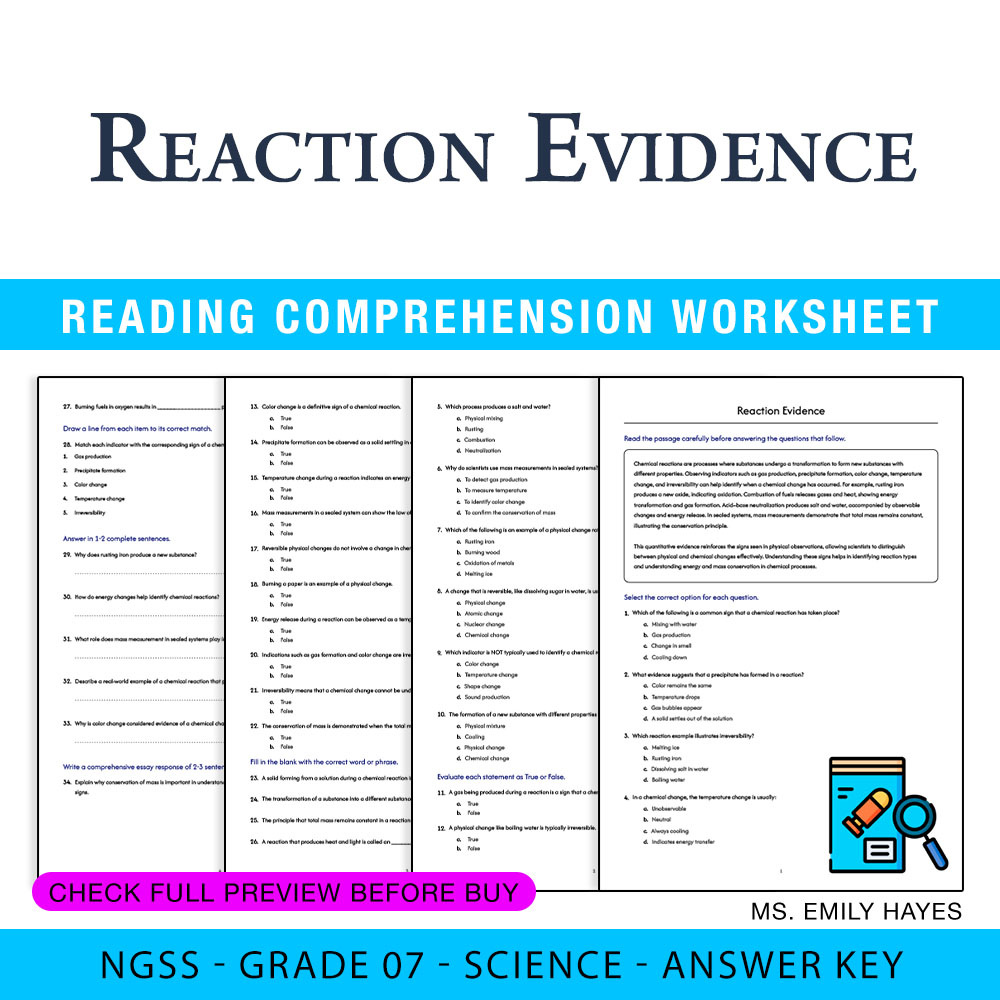
7th Grade Science | Reaction Evidence Worksheet (PDF +Answer Key)
Created byCopper Leaf ClassroomLearning Objectives
- Identify observable signs indicating a chemical reaction has occurred, such as gas production, precipitate formation, color change, temperature change, and irreversibility.
- Explain the concept of irreversibility in chemical changes and how mass measurements in sealed systems support the conservation of mass principle.
- Describe real-world examples of chemical reactions including rusting, combustion, and acid–base neutralization, highlighting their signs and outcomes.
Instant download
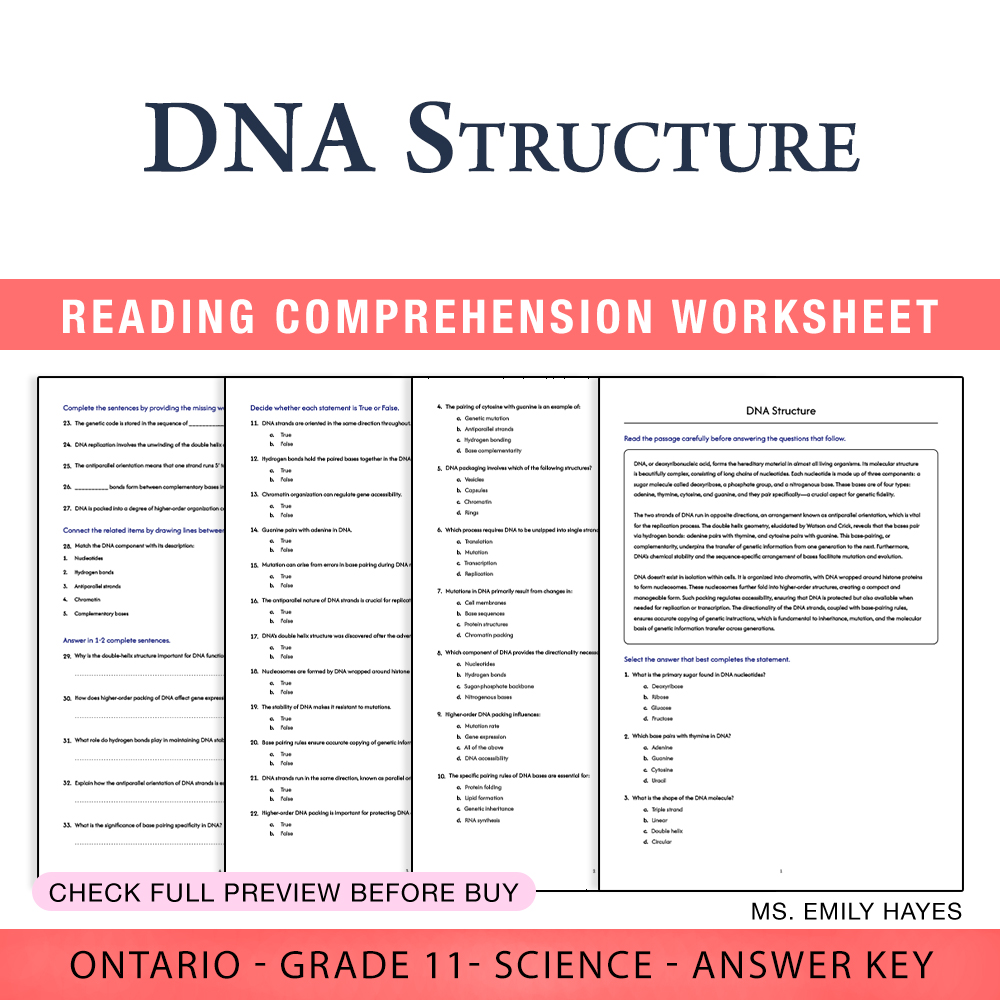
11th Grade Science | DNA Structure Worksheet (PDF + Answer Key)
Created byCopper Leaf ClassroomLearning Objectives
- Understand the molecular composition and structure of DNA, including nucleotides, antiparallel strands, and double helix geometry.
- Explain the base-pairing rules and their role in genetic inheritance and mutation.
- Describe how chromatin organization and higher-order packing influence DNA accessibility for replication and transcription.
Instant download
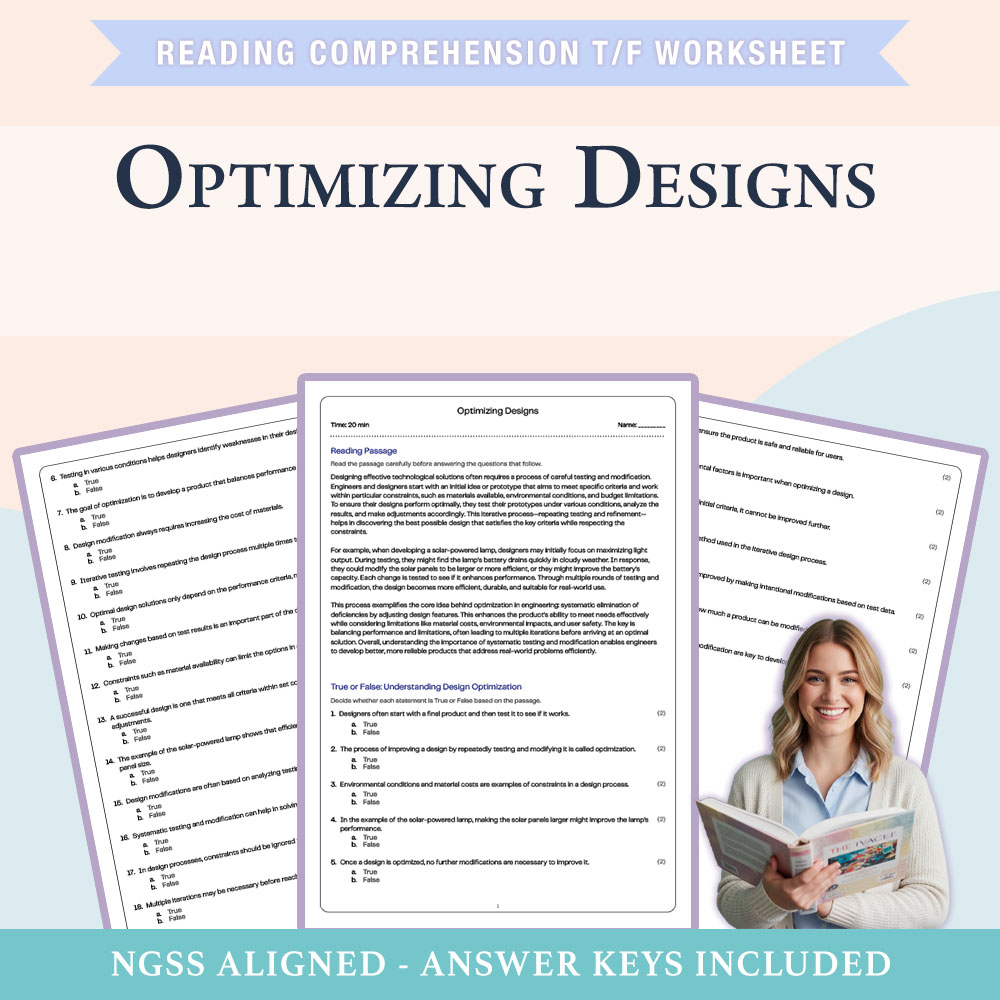
6th Grade Science | Optimizing Designs True/False Worksheet (PDF +Answer Key)
Created byCopper Leaf ClassroomLearning Objectives
- Understand the process of improving technological designs through systematic testing and modification.
- Identify how design criteria and constraints influence the iterative design process.
- Recognize examples of optimization, such as refining a solar-powered lamp for better efficiency.
Instant download

Grade 10 Sustainability Assessment Worksheet | Alberta Science PDF
 Created byEvergreen Desk Education
Learning Objectives
- Explain how sustainability assessments use environmental, economic, and social indicators to evaluate long-term resource viability.
- Identify key metrics used to compare water allocation, land reclamation performance, and cumulative development effects.
- Interpret how indicator trends and trade-offs support decision-making for extraction, conservation, and restoration.
Instant download
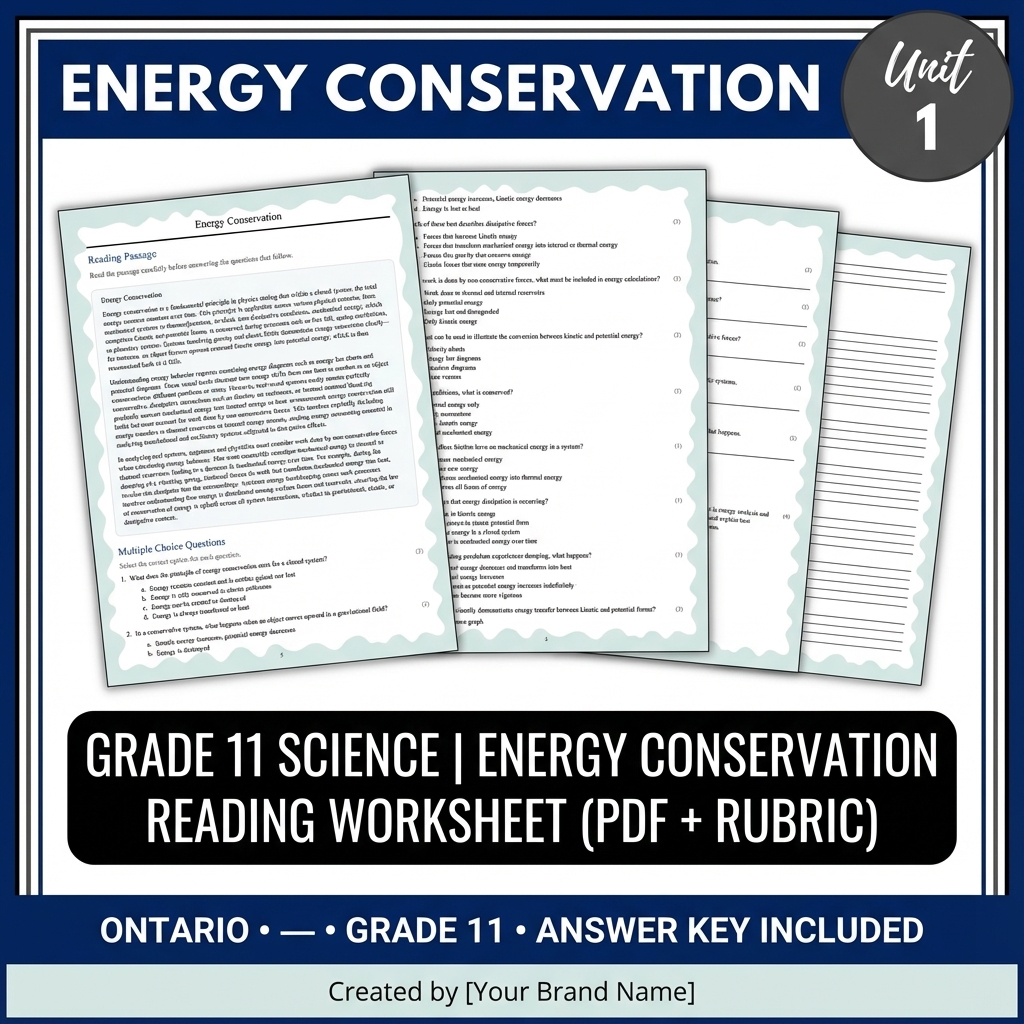
Grade 11 Science | Energy Conservation Reading Worksheet (PDF + Rubric)
JCreated byJ.S SheetsLearning Objectives
- Explain the principles of energy conservation in closed systems.
- Describe the conversion between kinetic and potential energy during motion.
- Identify how dissipative forces affect energy within a system.
Also included in: Grade 11 Science Unit Bundle: Physics, Waves & Motion (Answer Keys Included) +1 more
Instant download
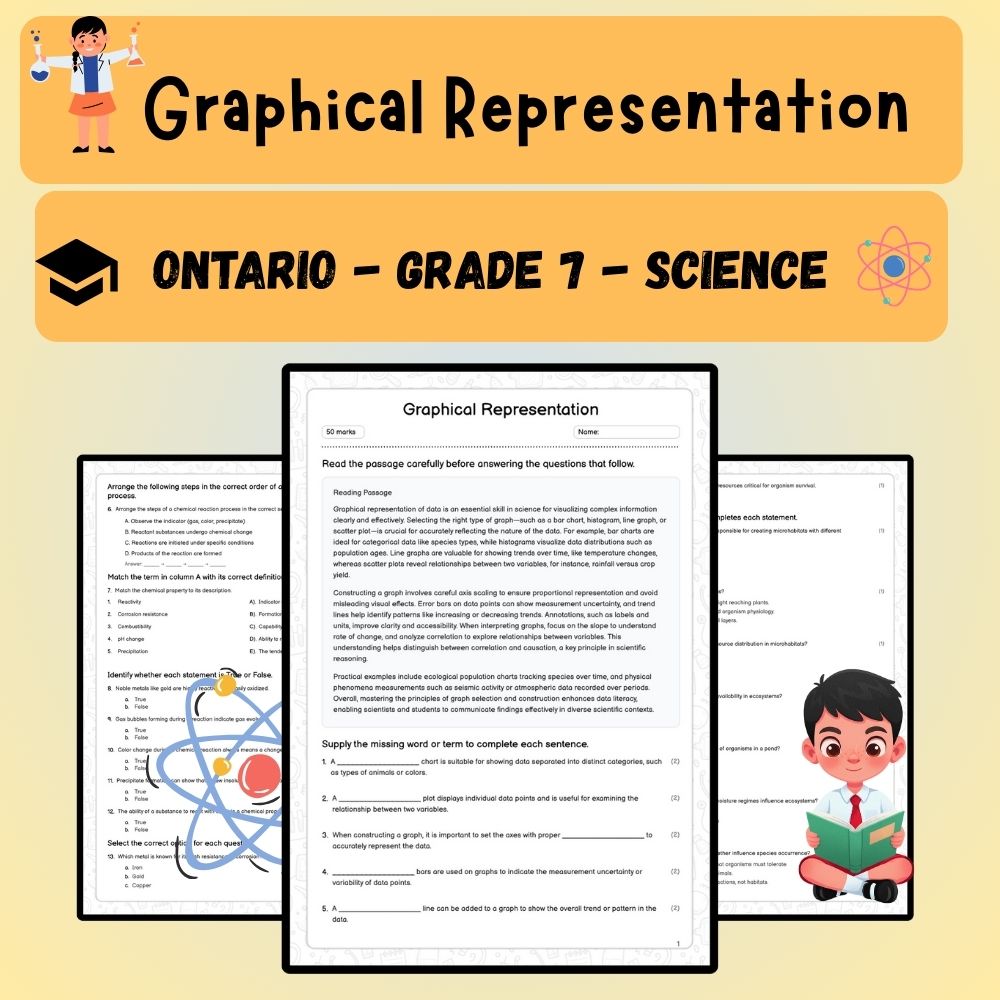
Grade 7 Science – Graphical Representation Worksheet (PDF) – Ontario Standards
Created byPrism Point LearningLearning Objectives
- Understand and identify various types of graphs such as bar charts, histograms, line graphs, and scatter plots.
- Learn how to select appropriate graph types to accurately reflect data distribution and measurement scales.
- Gain skills in constructing and interpreting axes, error bars, trend lines, and annotations for clarity.
Also included in: Grade 7 Science UNIT Worksheet Bundle – Scientific Inquiry & Data Skills (PDF) +1 more
Instant download
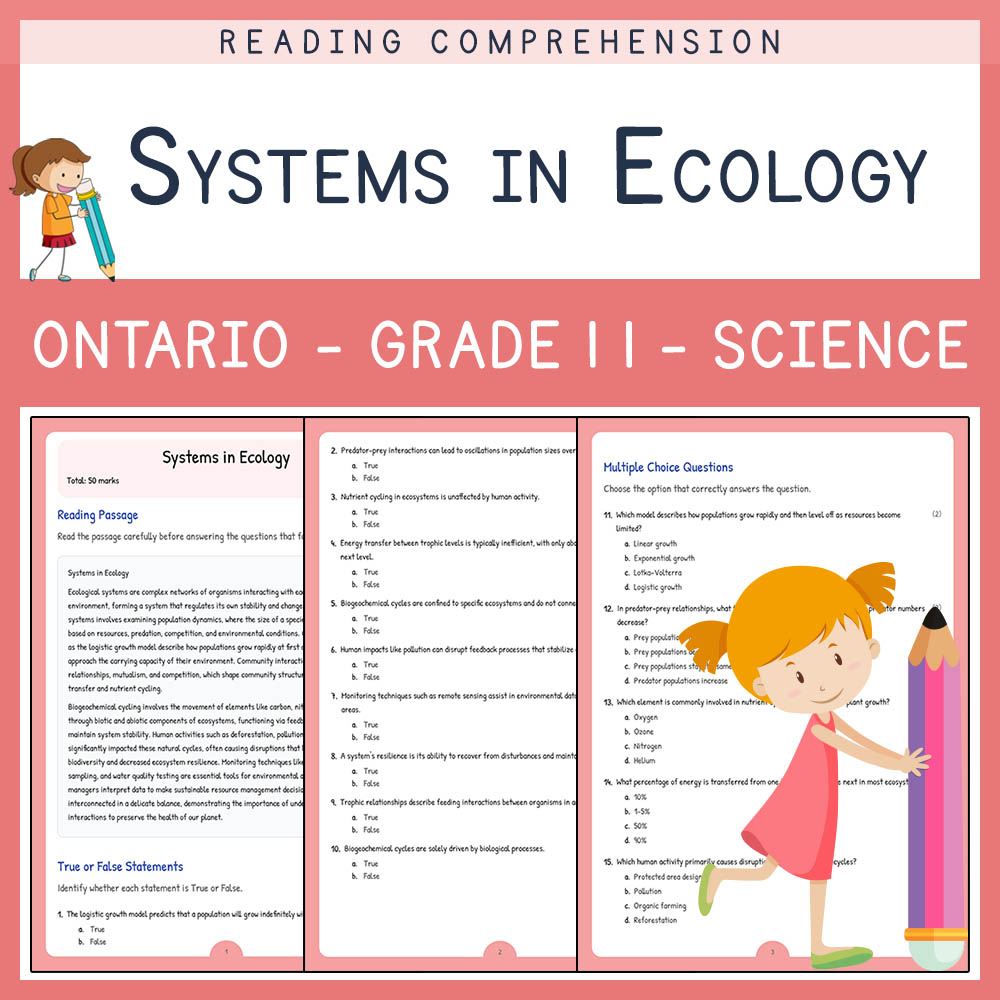
Grade 11 Science Assessment | Systems in Ecology Worksheet Elena | Ontario
Created byLumora LearningLearning Objectives
- Explain key concepts of ecological systems, including population dynamics, community interactions, and biogeochemical cycles.
- Understand and interpret quantitative models such as logistic growth and Lotka–Volterra interactions.
- Analyze human impacts on ecosystems and their effects on system stability and resilience.
Instant download
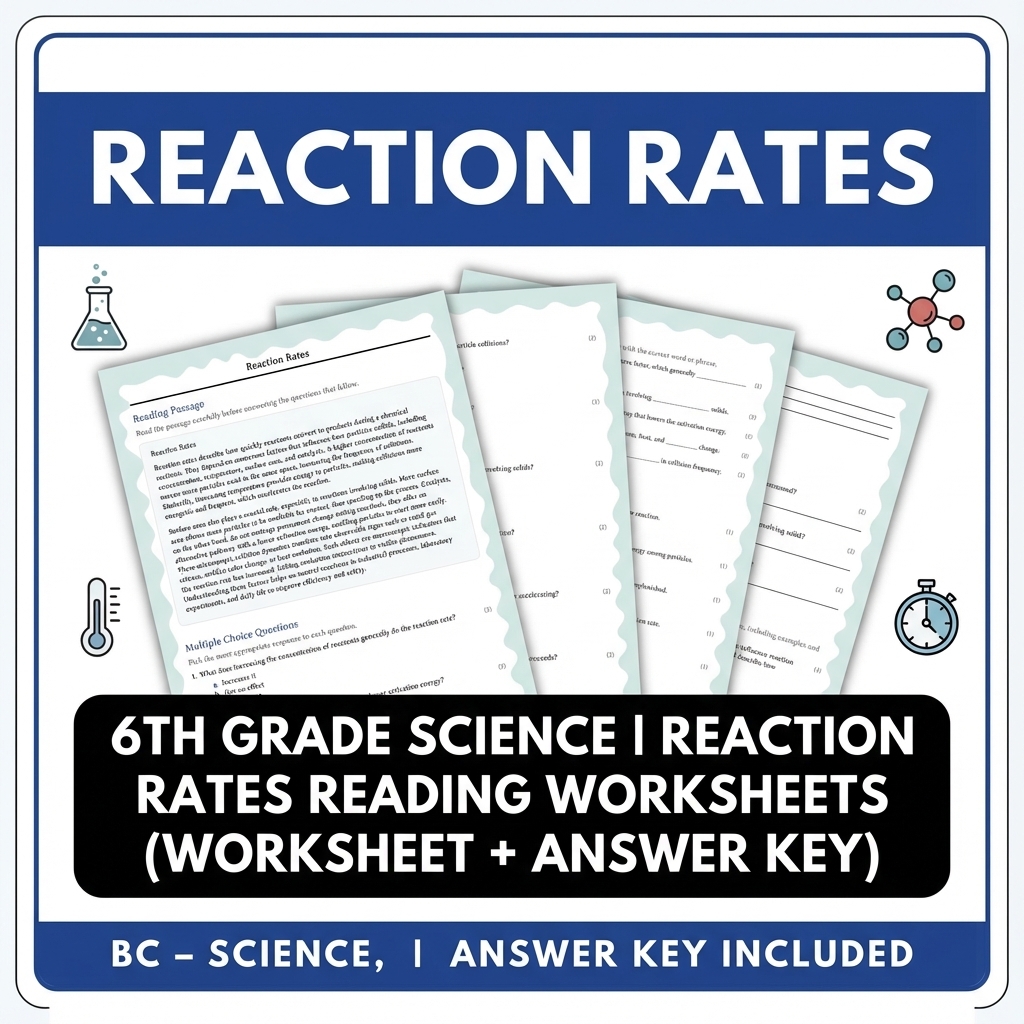
6th Grade Science | Reaction Rates Reading Worksheets (Worksheet + Answer Key)
JCreated byJ.S SheetsLearning Objectives
- Describe what reaction rates are and how they measure the speed of chemical reactions.
- Explain how factors like concentration, temperature, surface area, and catalysts influence reaction rates.
- Relate microscopic collision dynamics to observable signs of reaction progress such as gas release, color change, or heat production.
Instant download

Grade 8 Science | Statistical Reasoning Worksheet (TEKS) + Answer Key
Created byEvergreen Desk EducationLearning Objectives
- Choose appropriate summary statistics (mean, median, range, standard deviation) to describe variability in experimental data
- Interpret distributions and identify how spread and outliers affect conclusions
- Explain what a correlation coefficient does (and does not) tell you about two variables
Instant download

6th Grade Science – Species Classification Worksheet (Alberta Standards) (PDF)
 Created bySilver Birch Teaching
Learning Objectives
- Explain how species classification groups organisms into functional categories such as producers, consumers, and decomposers
- Distinguish native species from invasive or pest species and describe how they can affect ecosystem balance
- Use functional classification to predict energy flow and interactions among organisms in an Alberta ecosystem
Also included in: Grade 6 Ecosystem Interactions Science Lesson Bundle: Alberta Framework +1 more
Instant download

Grade 12 Science | DNA to Protein Worksheet | NGSSS Assessment
Created byLumora LearningLearning Objectives
- Explain how genetic information in DNA is converted into messenger RNA through transcription
- Describe how ribosomes use mRNA codons to assemble amino acids during translation
- Connect changes in DNA sequence to potential changes in protein structure and cell function
Instant download
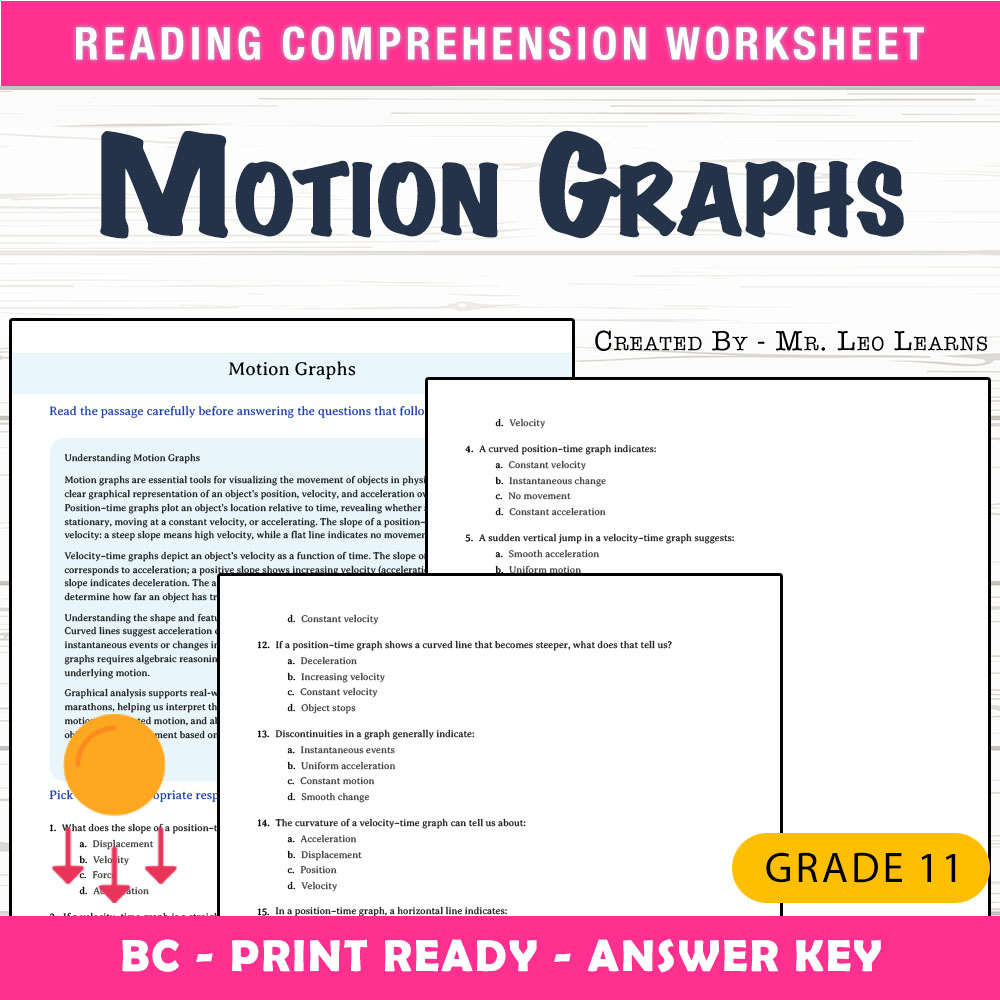
Grade 11 Science — Worksheet MCQ Paper for Mastering Motion Graphs
Created byThe Resource HubLearning Objectives
- Understand how position–time graphs represent object motion and interpret their slopes.
- Analyze velocity–time graphs to determine acceleration and displacement from area under curves.
- Identify and describe different motion types, including uniform velocity, constant acceleration, and instantaneous events, using graphical data.
Also included in: Grade 11 Science BC Physics Unit Bundle | Motion, Energy & Forces Worksheets +1 more
Instant download
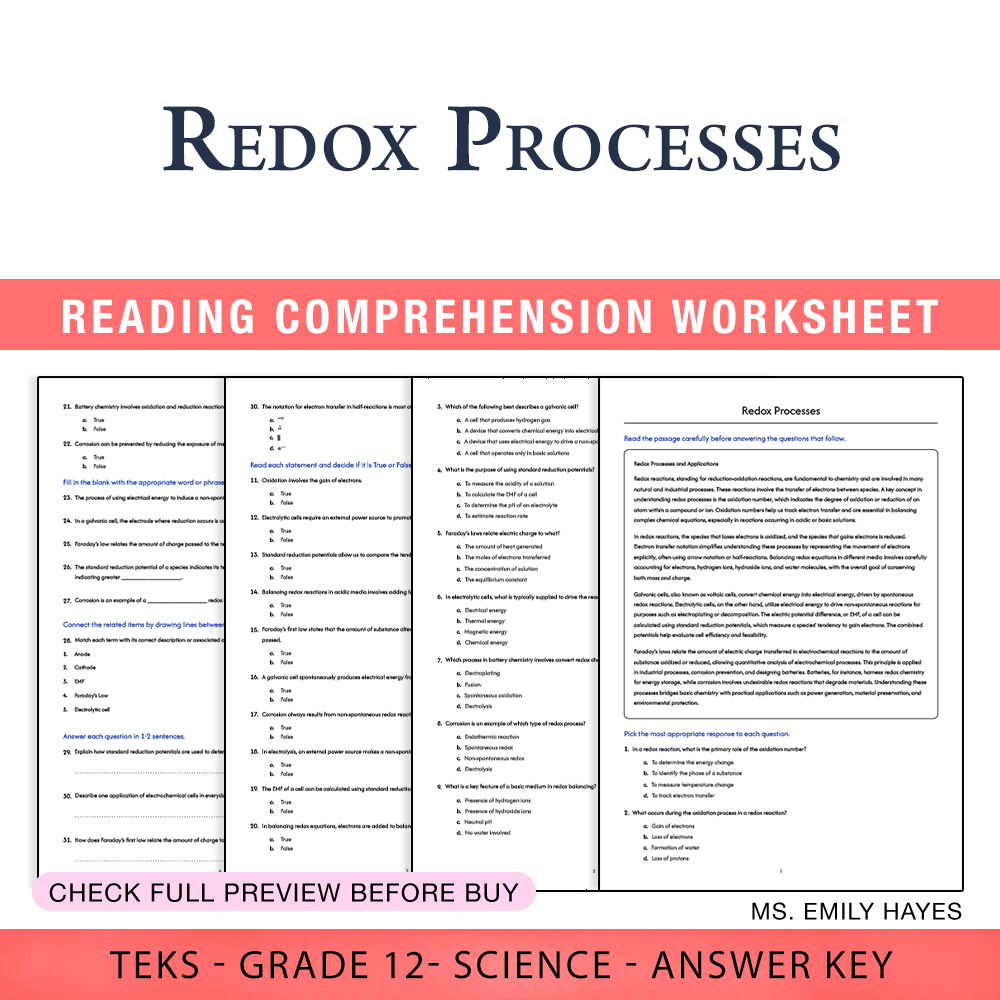
12th Grade Science | Redox Processes Worksheet (PDF+ Answer Key)
Created byCopper Leaf ClassroomLearning Objectives
- Explain the concept of oxidation numbers and their application in balancing redox reactions.
- Describe electron transfer notation and how it relates to oxidation and reduction.
- Balance redox equations in both acidic and basic media.
Instant download
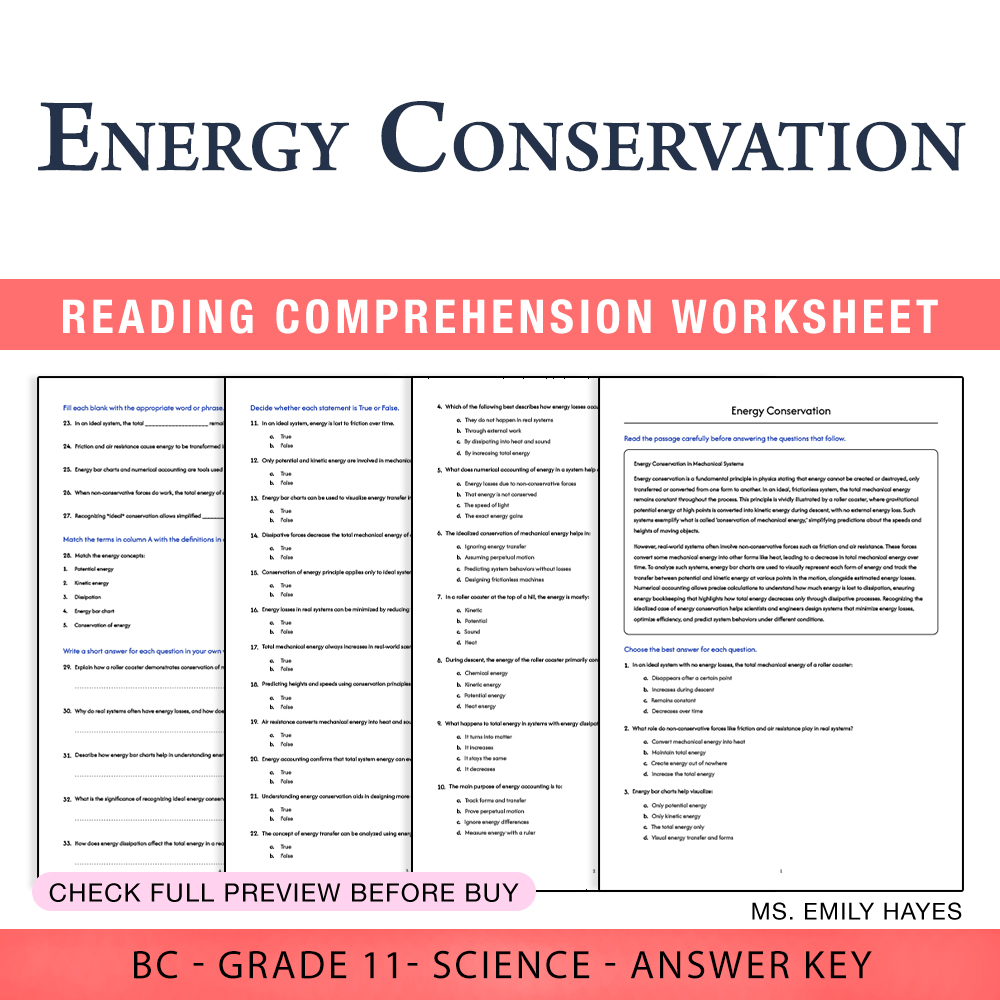
Grade 11 Science | Energy Conservation Worksheet (PDF + Answer Key)
Created byCopper Leaf ClassroomLearning Objectives
- Understand the principles of mechanical energy conservation and how energy exchanges occur in systems absent of significant energy loss.
- Recognize the role of non-conservative forces like friction and air resistance in dissipating energy.
- Interpret energy bar charts and perform numerical accounting to track energy forms and transfers.
Also included in: Grade 11 Science BC | Motion, Energy & Force Concepts (PDF+ Answer Keys) +1 more
Instant download
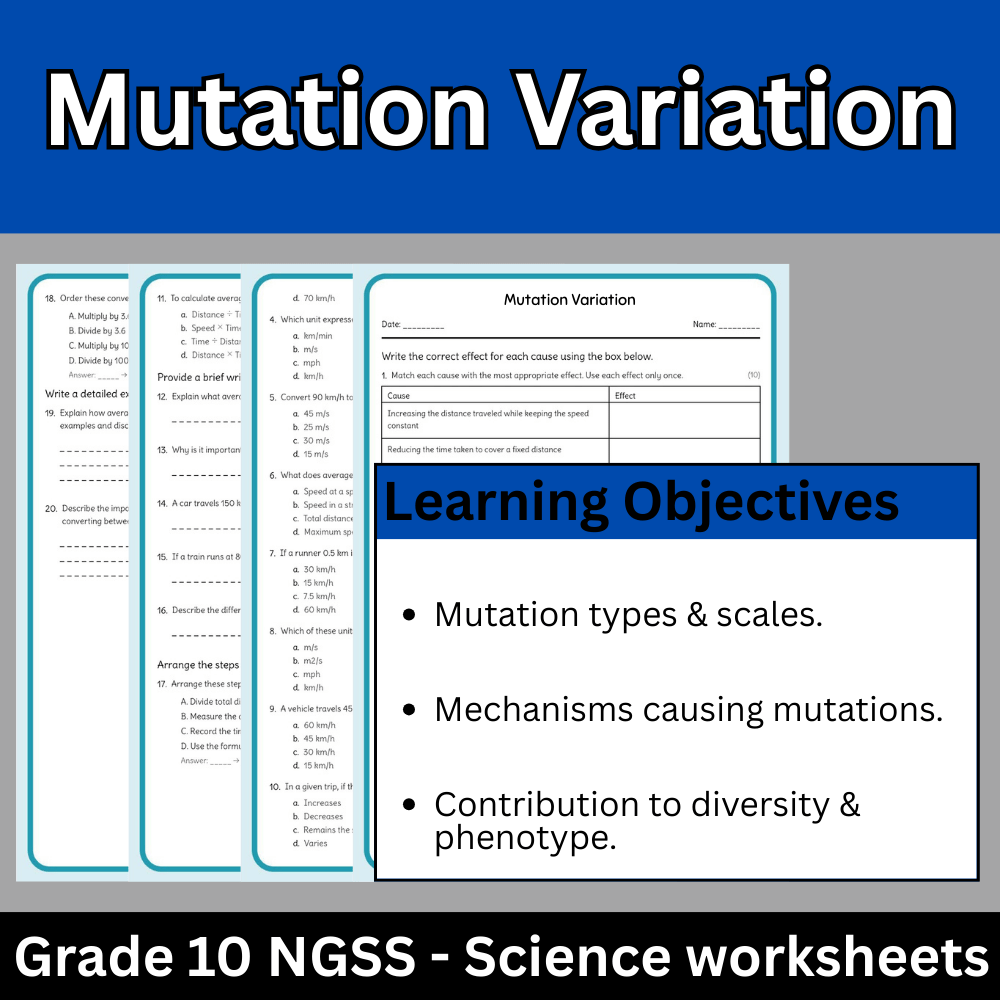
Grade 10 Science | Mutation Variation Worksheet with NGSS Alignment (PDF)
Created byBright Mind ResourcesLearning Objectives
- Understand different types of genetic mutations and their scales.
- Identify the mechanisms that cause mutations.
- Explore how mutations contribute to genetic diversity and phenotypic changes.
Instant download
Browse more categories
About Science Worksheets
Find Science worksheets spanning core skills, practice, and review. All 44,628 resources are instant PDF downloads for the classroom or home.
Every worksheet on MyTeachingSheets is created by independent teacher-authors and reviewed before publication. All resources download as printable PDFs for classroom, homework, or at-home practice, and many include answer keys. Preview any worksheet free before buying.