
Science Worksheets
44,773 subject resources
Grade 11 Science | Climate Dynamics Worksheet (NGSS) PDF
 Created byMaple Path Learning
Learning Objectives
- Analyze the role of atmospheric composition, radiative balance, and large-scale circulation in climate variability and change.
- Explain mechanisms such as greenhouse gas forcing, albedo feedbacks, ocean-atmosphere interactions, and teleconnections like El Niño–Southern Oscillation and thermohaline circulation.
- Interpret instrumental records, satellite observations, and paleoclimate proxies to relate energy transport and composition changes to climate shifts.
Also included in: Grade 11 Earth Systems Science Lesson Bundle – NGSS Modeling Worksheets +1 more
Instant download

Grade 11 Climate Dynamics Worksheet | NGSS Earth Science Activity & Review
 Created byBRIGHT PATH RESOURCES
Learning Objectives
- Understand the composition of Earth's atmosphere and its role in climate regulation.
- Learn about the mechanisms such as greenhouse gases, albedo feedbacks, and ocean-atmosphere interactions.
- Explore how instrumental and proxy records help analyze climate variability and change.
Also included in: Earths Systems Lesson Bundle | Grade 11 Earth Science | NGSS +1 more
Instant download

Grade 11 Worksheet B: Spectrum Properties—Wave vs. Particle Models | NGSS
 Created byClear Sky Classroom
Learning Objectives
- Evaluate evidence for wave and particle models of electromagnetic radiation using interference, diffraction, and the photoelectric effect.
- Explain where the wave model works best (e.g., polarization, interference, diffraction) and where it breaks down.
- Explain where the particle (photon) model works best (e.g., quantized energy transfer in the photoelectric effect) and where it breaks down.
Also included in: Grade 11 Wave and EM Signal Relationships Science Lesson Bundle for NGSS +1 more
Instant download

Grade 7 Embryonic Patterns Worksheet | NGSS Practice PDF
Created byClear Sky ClassroomLearning Objectives
- Compare embryonic development stages across different taxa.
- Identify conserved developmental structures such as pharyngeal pouches and limb buds.
- Analyze how developmental timing supports evolutionary relationships.
Also included in: Grade 7 Natural Selection & Adaptation Science Lesson Bundle for NGSS +1 more
Instant download
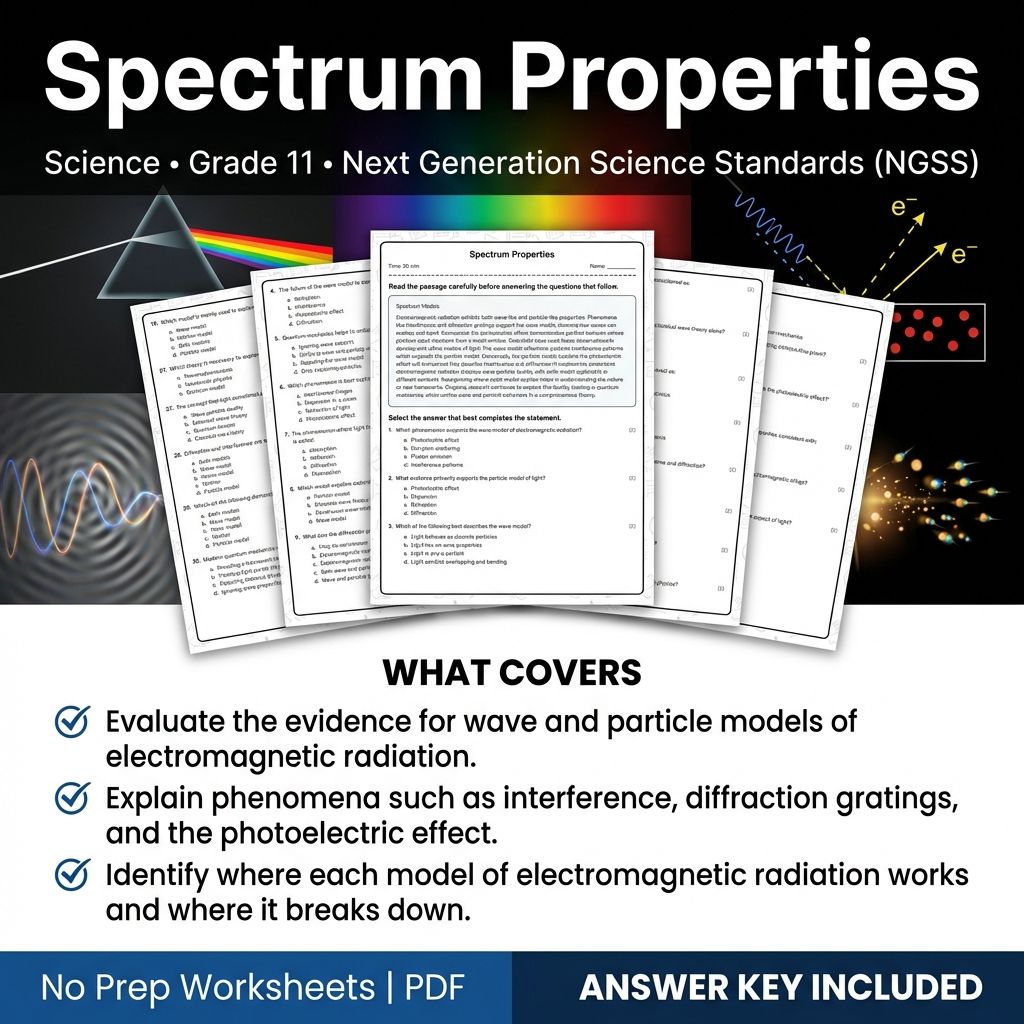
11th Grade Science Worksheet | Spectrum & Electromagnetic Radiation + Answer Key
 Created byCoral Reef Learning
Learning Objectives
- Evaluate the evidence for wave and particle models of electromagnetic radiation.
- Explain phenomena such as interference, diffraction gratings, and the photoelectric effect.
- Identify where each model of electromagnetic radiation works and where it breaks down.
Also included in: Grade 11 Science Unit Bundle | Wave, Spectrum & Signal Encoding Worksheets +1 more
Instant download
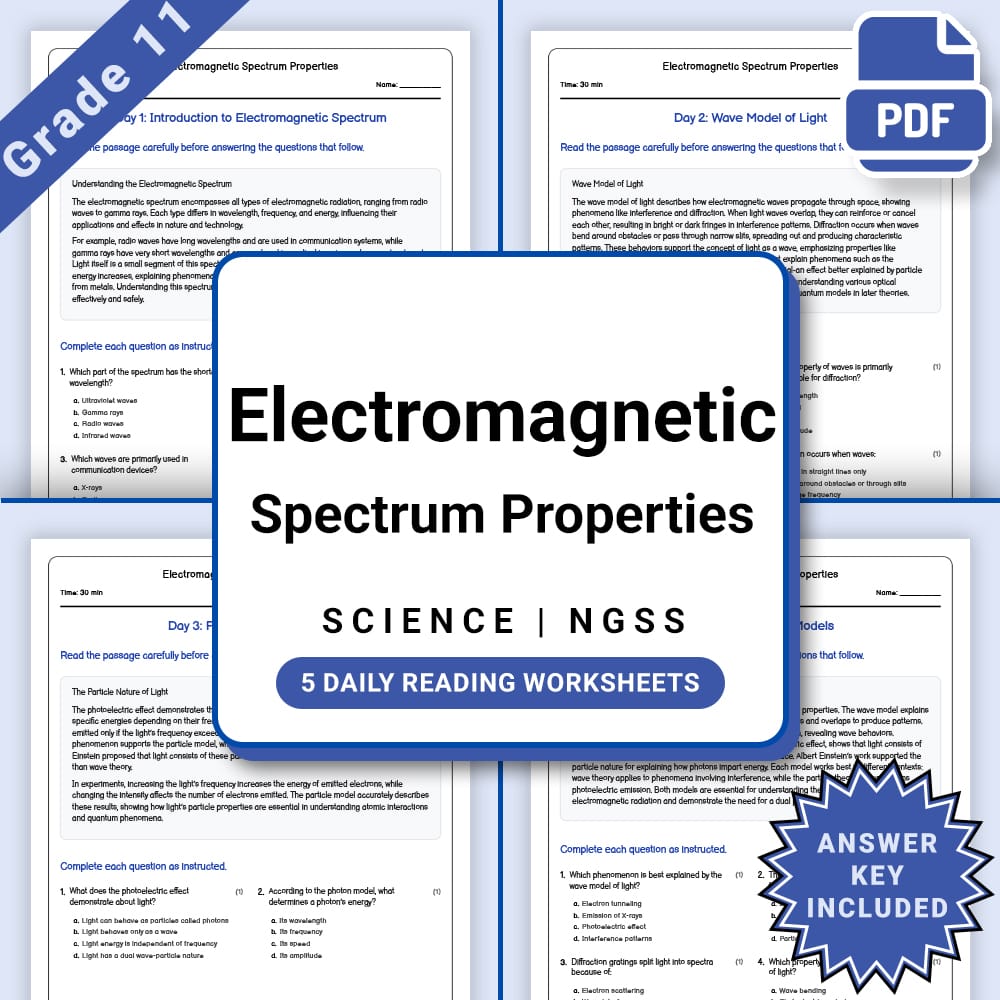
Grade 11 Science – Electromagnetic Spectrum Properties Worksheet(PDF +Answers)
 Created byCopper Leaf Classroom
Learning Objectives
- Identify and describe the different parts of the electromagnetic spectrum.
- Understand the properties of waves, including interference and diffraction phenomena.
- Explain the photoelectric effect and how it supports the particle model of light.
Instant download

Embryonic Patterns Worksheet | NGSS-Aligned Science Practice for Grade 7
JCreated byJ.S SheetsLearning Objectives
- Compare embryonic development stages across different taxa to identify conserved features.
- Explain how developmental structures like pharyngeal pouches and limb buds reflect evolutionary relationships.
- Analyze developmental timing and patterning to understand phylogenetic connections among vertebrates.
Also included in: Grade 7 Evolution Evidence and Speciation Processes Science Lesson Bundle – NGSS +1 more
Instant download
Grade 11 Science | Spectrum Properties Worksheet (Answer Key) NGSS-Aligned
 Created byBright Mind Resources
Learning Objectives
- Evaluate the evidence supporting wave and particle models of electromagnetic radiation.
- Describe phenomena such as interference, diffraction gratings, and the photoelectric effect.
- Explain where each model (wave or particle) is applicable and where it breaks down.
Instant download

Grade 11 Science | Spectrum Properties Worksheet (NGSS) PDF
Created byMaple Path LearningLearning Objectives
- Evaluate the evidence for wave and particle models of electromagnetic radiation including phenomena such as interference, diffraction, and the photoelectric effect.
- Explain where wave and particle models of electromagnetic radiation are applicable and where they break down.
- Describe properties of electromagnetic waves such as wavelength, frequency, and interference patterns.
Also included in: Grade 11 Electromagnetic Waves & Signal Transmission Science Lesson Bundle NGSS +1 more
Instant download

Grade 3 Refining The Target Worksheet | Practice & Assessment PDF
Created byClear Sky ClassroomLearning Objectives
- Explain how refining a design target clarifies the goal and limits acceptable solutions.
- Identify constraints and desired results in a simple science/design problem.
- Use refined targets to choose design ideas that can be compared fairly.
Instant download
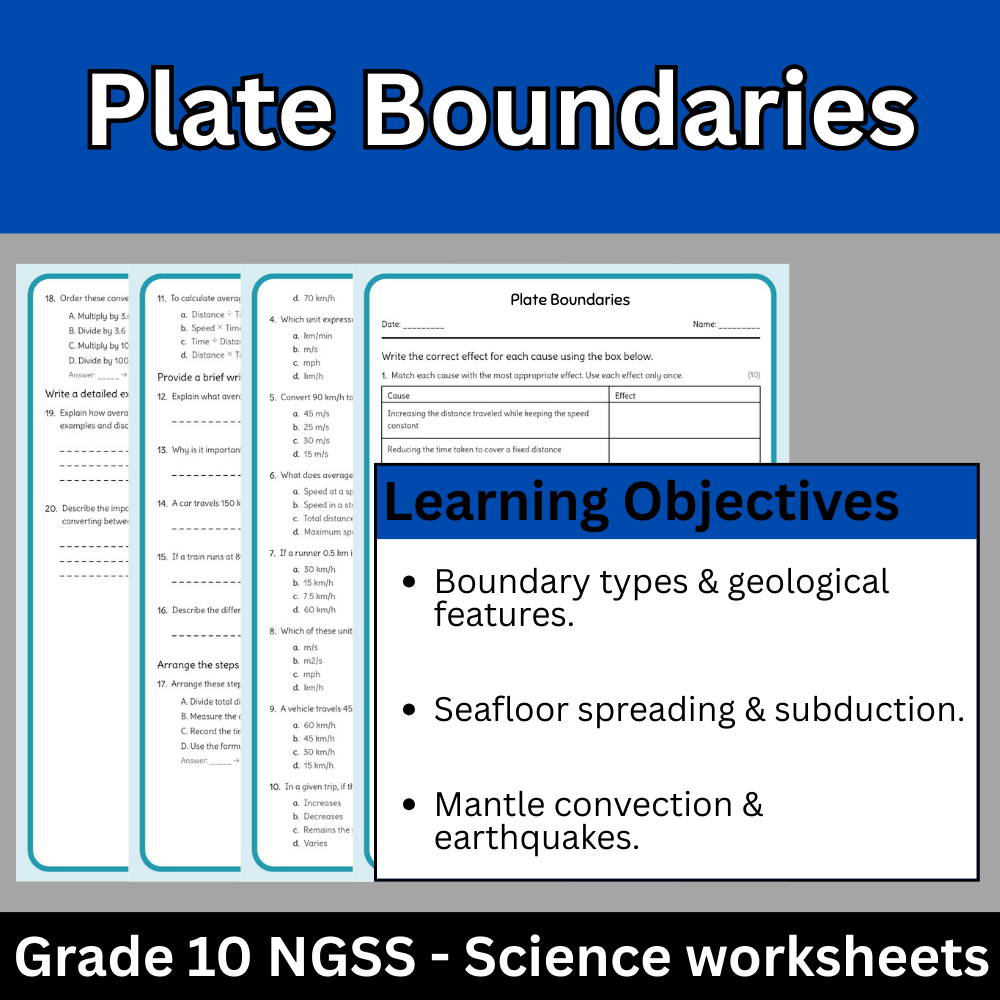
Grade 10 Science | Plate Boundaries Worksheet + Answer Key (NGSS Aligned)
Created byBright Mind ResourcesLearning Objectives
- Explain the different types of plate boundaries and their associated geological features.
- Identify key processes such as seafloor spreading, subduction, and continental collision.
- Describe the mechanisms of mantle convection and stress accumulation leading to earthquakes and volcanic activity.
Instant download
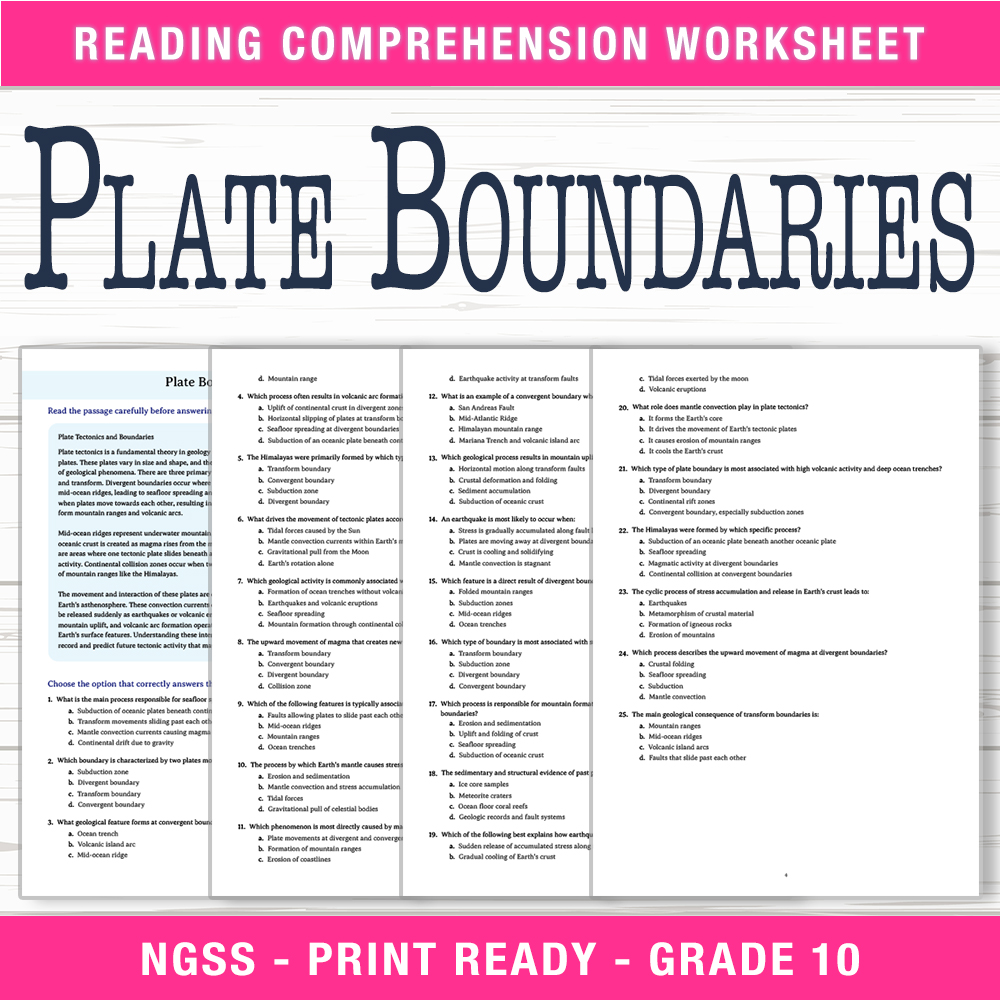
Grade 10 Science – Plate Boundaries Worksheet (PDF + Answer Key)
 Created byRiverstone Classroom
Learning Objectives
- Understand the different types of plate boundaries and their geologic features.
- Identify canonical phenomena such as mid-ocean ridges, subduction zones, and continental collision.
- Explain processes like seafloor spreading, volcanic arc formation, and mountain uplift.
Instant download

Plate Boundaries Review Practice Assessment | Grade 10 Science
 Created byPrism Point Learning
Learning Objectives
- Explain how divergent, convergent, and transform plate boundaries differ in motion and typical geologic features
- Describe key processes such as seafloor spreading, subduction, volcanic arcs, and continental collision
- Relate mantle convection and stress buildup to earthquakes and volcanic activity
Also included in: Grade 10 Earth Systems Science lesson bundle: NGSS practice worksheets
Instant download
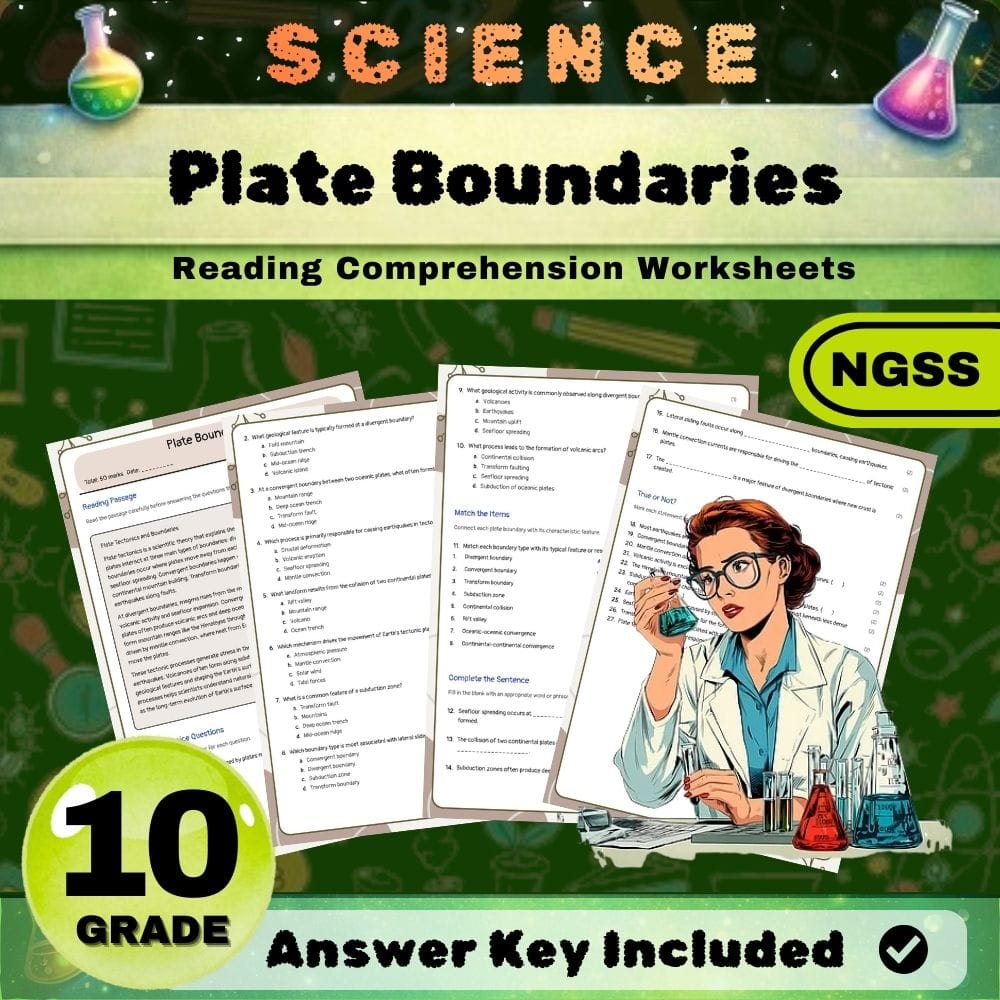
Grade 10 Science – Plate Boundaries Worksheet (NGSS) Practice & Assessment (PDF)
Created byMaple Path LearningLearning Objectives
- Explain the different types of plate boundaries and their geological features.
- Describe the processes of seafloor spreading, volcanic arc formation, and mountain uplift.
- Analyze how mantle convection and stress accumulation cause earthquakes and volcanic activity.
Also included in: Grade 10 Earth’s Systems Science Worksheets Bundle | NGSS +1 more
Instant download

Grade 10 Science | Plate Boundaries Worksheet (NGSS) PDF
 Created bySilver Birch Teaching
Learning Objectives
- Understand the different types of plate boundaries and their geological features.
- Analyze processes such as seafloor spreading, subduction, and mountain formation.
- Explain the mechanisms of mantle convection and stress accumulation leading to earthquakes and volcanic activity.
Also included in: Grade 10 Earth Systems Science Lesson Bundle for NGSS ngss10 Worksheets +1 more
Instant download
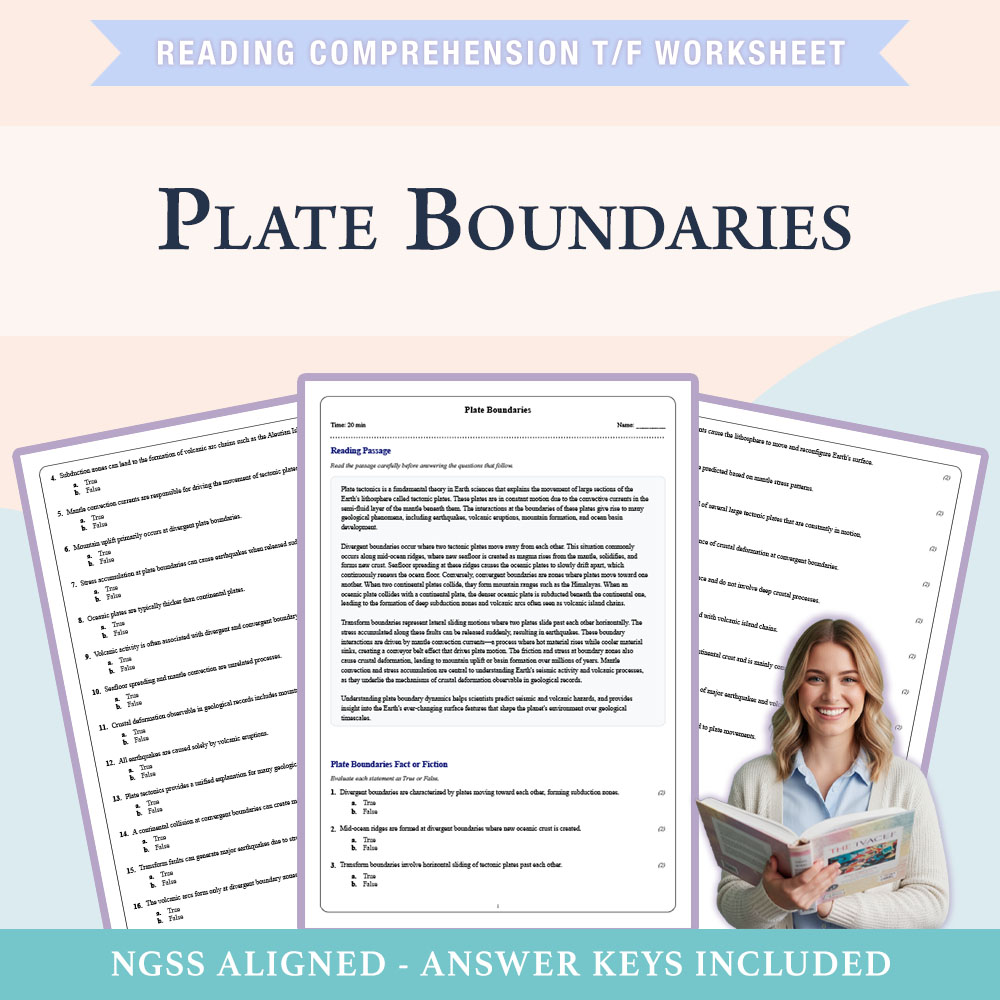
10th Grade Science | Plate Boundaries Worksheet (PDF +Answer Key)
Created byCopper Leaf ClassroomLearning Objectives
- Understand and identify different types of plate boundaries: divergent, convergent, and transform.
- Describe key geological phenomena associated with plate boundaries, such as mid-ocean ridges, subduction zones, and mountain ranges.
- Explain the processes of mantle convection, seafloor spreading, volcanic arc formation, and mountain uplift.
Also included in: Grade 10 Science | Earth Systems & Climate Change Bundle (PDF + Answer Key) +1 more
Instant download

Embryonic Patterns Worksheet | Evolution Evidence Activity Grade 7
 Created byAmber Owl Education
Learning Objectives
- Compare embryonic development stages across different animal groups and identify conserved features.
- Explain how shared embryonic structures and developmental timing can support evolutionary relationships.
- Use examples such as pharyngeal pouches and limb buds to interpret evidence for common developmental pathways.
Also included in: Grade 7 Science Evolution & Biodiversity Lesson Bundle – NGSS +1 more
Instant download

Conservation of Mass in Chemical Reactions Worksheet | Grade 11 Science
JCreated byJ.S SheetsLearning Objectives
- Explain the law of conservation of mass in closed systems
- Connect balanced chemical equations to measurable masses of reactants and products
- Use conservation of mass to interpret experimental evidence from reactions
Also included in: Grade 11 Forces, Energy, and Chemical Reactions Science Lesson Bundle +1 more
Instant download

Grade 11 Science | Conservation of Mass - Daily Reading Comprehension
Created byCoral Reef LearningLearning Objectives
- Understand the principle of conservation of mass in chemical reactions
- Identify reactants and products in chemical equations
- Explain how mass is conserved in a sealed system during a chemical reaction
Instant download

Grade 7 Science | Embryonic Patterns in Development - Reading Comprehension
Created byCoral Reef LearningLearning Objectives
- Identify key stages in embryonic development across different taxa
- Compare morphological similarities and differences during early development
- Understand the significance of conserved developmental stages for evolutionary relationships
Instant download

Grade 8 Mixtures and Changes Worksheet | NGSS Practice & PDF
Created byClear Sky ClassroomLearning Objectives
- Distinguish between mixtures and pure substances using particle-level ideas
- Explain the difference between physical and chemical changes, including evidence at the macroscopic level
- Describe solutions as a type of mixture where a solute dissolves in a solvent without forming new substances
Instant download

Science Grade 8 Mixtures and Changes Worksheet | NGSSS Standards Practice
JCreated byJ.S SheetsLearning Objectives
- Explain what a mixture is and how its properties depend on its components
- Differentiate solute and solvent in a solution and describe how dissolving differs from chemical change
- Distinguish physical changes from chemical changes using particle-level ideas
Also included in: Grade 8 Energy, Motion, and Matter Changes Science Lesson Bundle: Florida NGSSS +1 more
Instant download

Grade 8 Science | Mixtures & Changes - Daily Reading Comprehension
Created byCoral Reef LearningLearning Objectives
- Understand the difference between mixtures and chemical changes.
- Identify different types of mixtures such as solutions, suspensions, and colloids.
- Describe how particles behave in various mixtures.
Instant download

Light Reactions and the Start of Carbon Fixation Worksheet | Grade 10
Created byBRIGHT PATH RESOURCESLearning Objectives
- Identify how chlorophyll helps capture light energy in photosynthesis
- Describe what happens to electrons during the light reactions
- Explain how ATP and NADPH are produced and later used for carbon fixation
Also included in: Grade 10 Metabolism & Energy Processes Science Worksheets Bundle | TEKS +1 more
Instant download
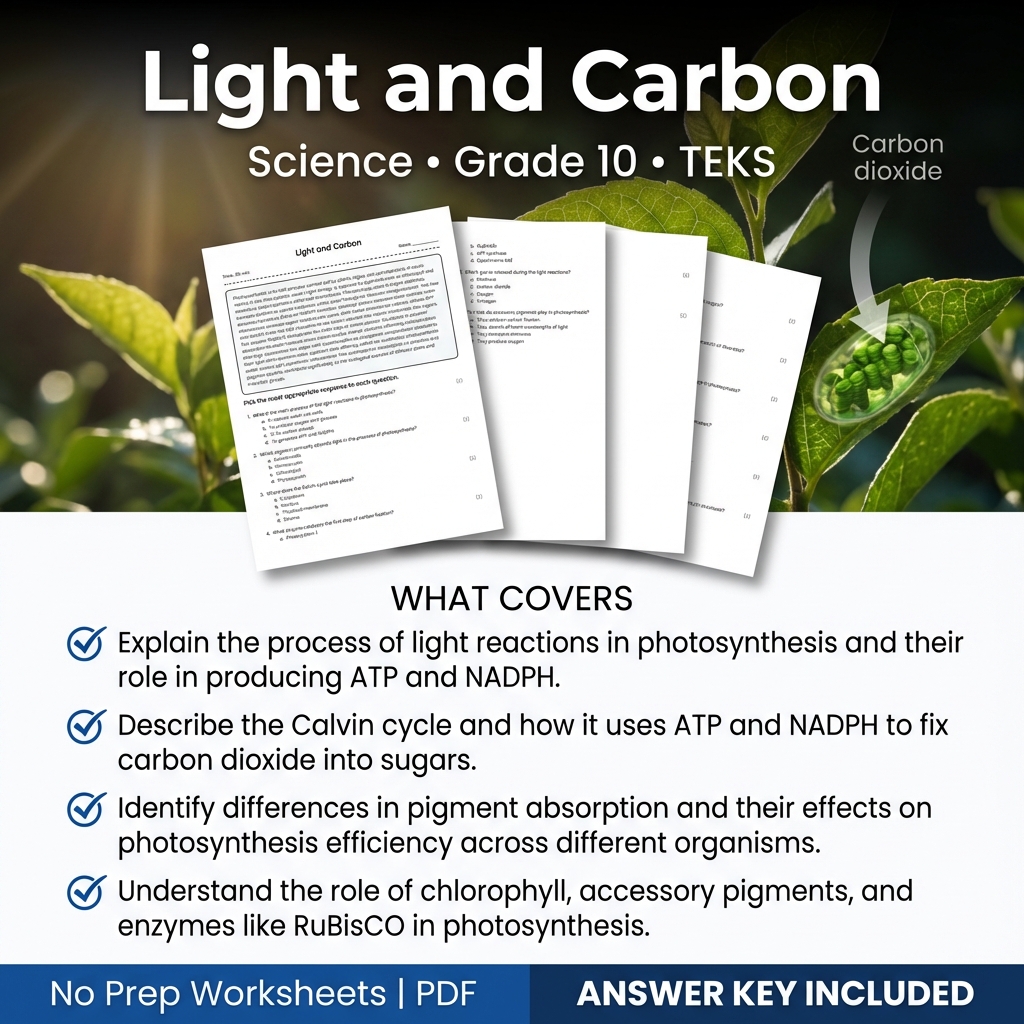
Light and Carbon Science Worksheet | TEKS Grade 10 Practice
Created byCoral Reef LearningLearning Objectives
- Explain the process of light reactions in photosynthesis and their role in producing ATP and NADPH.
- Describe the Calvin cycle and how it uses ATP and NADPH to fix carbon dioxide into sugars.
- Identify differences in pigment absorption and their effects on photosynthesis efficiency across different organisms.
Instant download

Light and Carbon Assessment | TEKS Grade 10 Science
Created byPrism Point LearningLearning Objectives
- Describe the process of light reactions and their role in photosynthesis.
- Understand how the Calvin cycle fixes carbon dioxide into sugars.
- Identify the roles of chlorophyll, accessory pigments, and enzymes like RuBisCO.
Instant download

Grade 10 Science – Light & Carbon in Photosynthesis Daily Reading Worksheet
Created byBright Mind ResourcesLearning Objectives
- Understand the process of light reactions in photosynthesis
- Identify the role of pigments in capturing light energy
- Describe the Calvin cycle and its function in carbon fixation
Also included in: Grade 10 Energy in Biological Systems Science Daily Reading Lesson Bundle | TEKS +2 more
Instant download

Volcanism Orogeny Review Practice Assessment | Grade 10 Science
Created byPrism Point LearningLearning Objectives
- Explain how magma is generated by partial melting and how ascent is influenced by density, viscosity, and volatile content.
- Compare effusive and explosive volcanism and describe the volcanic landforms they typically produce.
- Relate convergent margin processes (arc magmatism and continental collision) to mountain belt formation and crustal thickening.
Also included in: Grade 10 Earth Systems Science Lesson Bundle: Ontario Review Worksheets
Instant download

Volcanism and Orogeny Worksheet Grade 10 Earth Science Ontario
Created byClear Sky ClassroomLearning Objectives
- Explain how magma forms through partial melting and how volatiles influence magma behavior during ascent and eruption.
- Compare effusive and explosive volcanism and identify common volcanic landforms linked to each style.
- Describe how convergent margins and continental collision processes build mountain belts through arc magmatism and crustal thickening.
Instant download

Grade 10 Science – Magma Formation & Volcanism | Daily Reading Worksheet
 Created byQuiet Forest Education
Learning Objectives
- Explain how magma is generated within the Earth's crust.
- Differentiate between effusive and explosive volcanic eruptions.
- Describe the processes involved in convergent margin volcanism and mountain belt formation.
Also included in: Earth Science Grade 10 Daily Reading Worksheets Bundle | Ontario Framework +1 more
Instant download
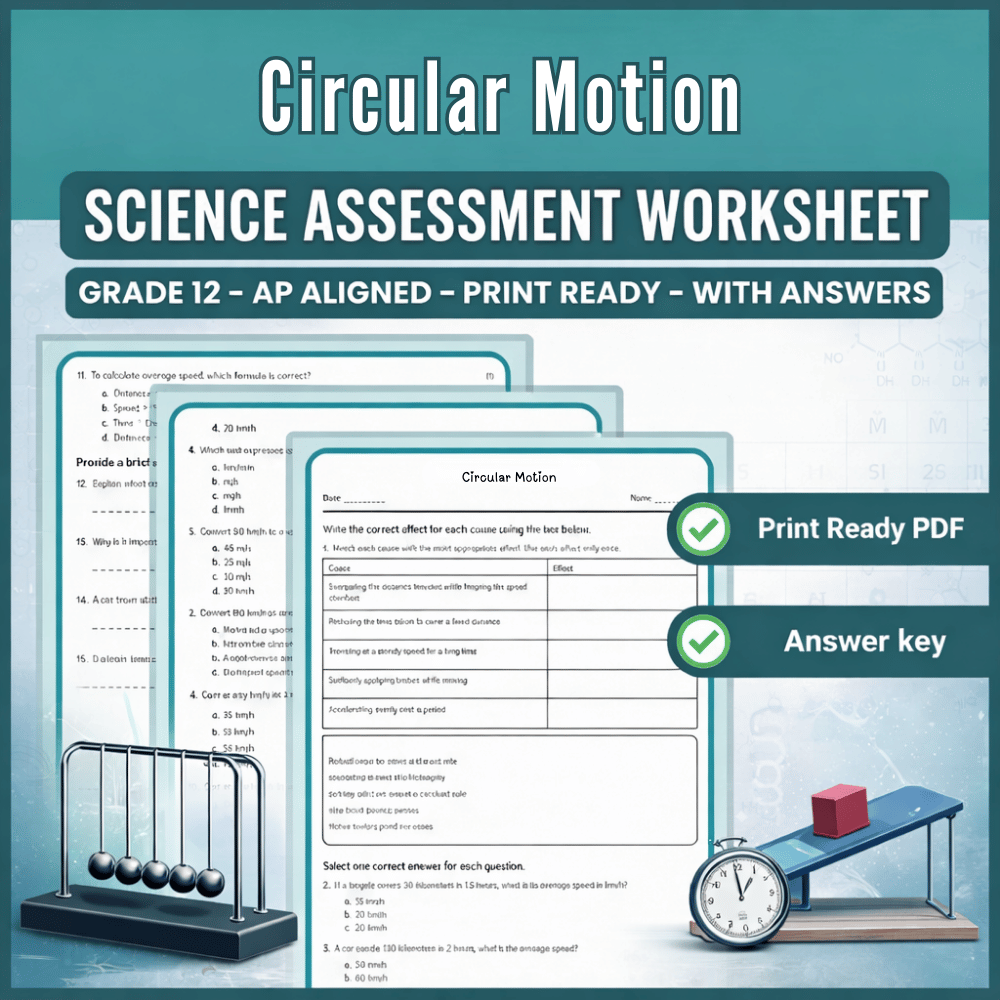
Grade 12 Science – Circular Motion Worksheet (AP) PDF
Created byBright Mind ResourcesLearning Objectives
- Explain the concept of uniform circular motion and the role of centripetal acceleration.
- Relate velocity, radius, and acceleration using mathematical formulas in circular motion.
- Analyze the effects of nonuniform circular motion involving tangential acceleration.
Instant download

Grade 10 Science – Volcanism & Orogeny Reading Worksheet | Ontario Standards
Created byBright Mind ResourcesLearning Objectives
- Understand the process of magma formation beneath Earth's crust
- Identify different styles of volcanic eruptions and their landforms
- Explain the roles of partial melting, volatile content, and tectonic settings in volcanism
Also included in: Earth Science Grade 10 Science Daily Reading Worksheets Lesson Bundle | Ontario +1 more
Instant download

Volcanism and Mountain Belt Formation Worksheets | Grade 10 Science
Created byPrism Point LearningLearning Objectives
- Explain how slab-released fluids promote partial melting in mantle wedges
- Compare effusive and explosive volcanism using eruption characteristics
- Describe how volatile content influences magma and eruption behaviour
Also included in: Earth and Space Systems Grade 10 Science Ontario Bundle
Instant download
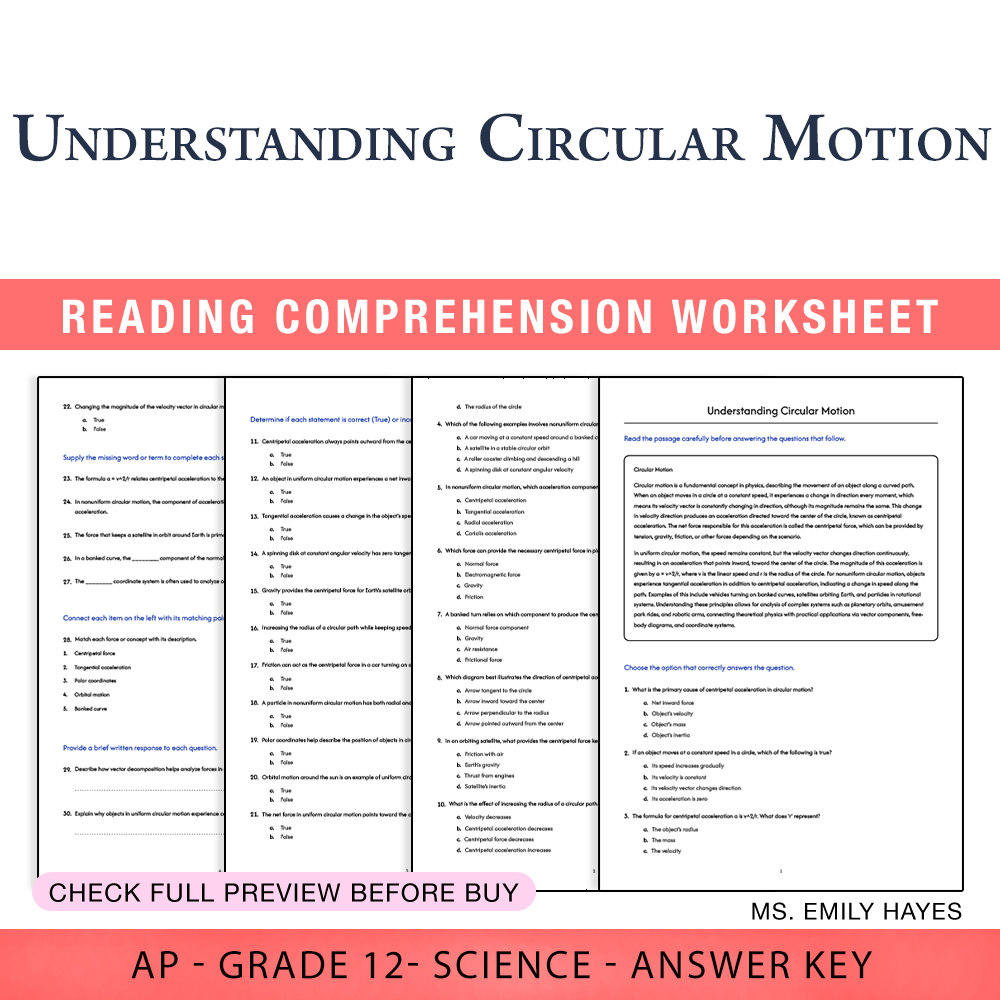
12th Grade Science | Circular Motion Assessment Worksheet (PDF + Answer Key)
Created byCopper Leaf ClassroomLearning Objectives
- Explain the concept of uniform and nonuniform circular motion and the role of centripetal acceleration.
- Develop the mathematical relationships among speed, radius, and acceleration for circular motion.
- Analyze the effects of tangential acceleration in nonuniform circular motion scenarios.
Also included in: Grade 12 Science AP – Energy, Motion & Electricity Mastery(PDF+ Answer Key) +1 more
Instant download
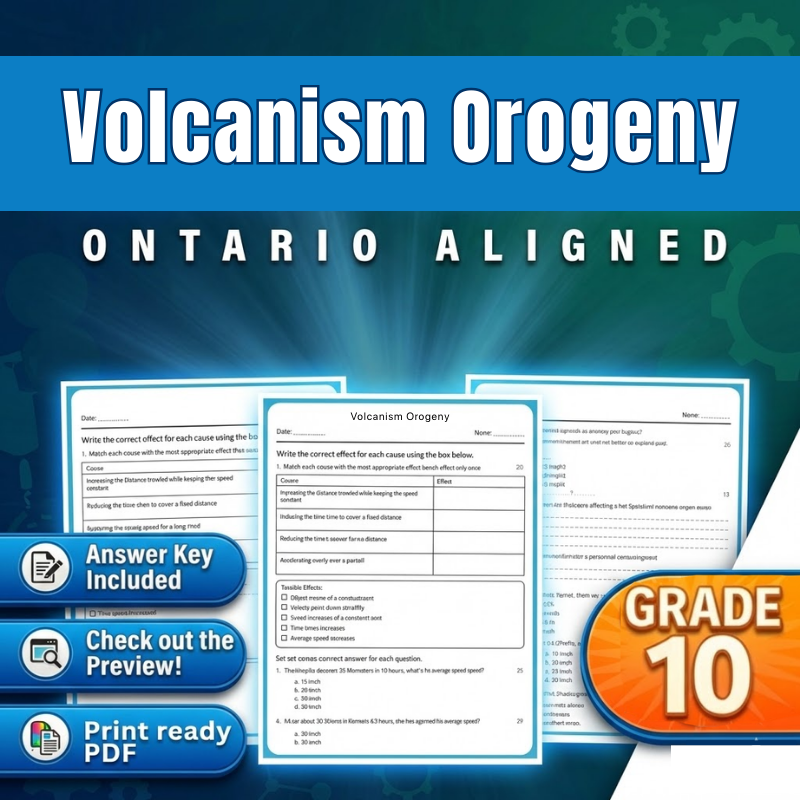
Grade 10 Science | Volcanism and Orogeny Worksheet (Ontario Standards) (PDF)
Created byBright Mind ResourcesLearning Objectives
- Explain the process of magma generation and ascent in volcanoes.
- Differentiate between effusive and explosive volcanic eruptions.
- Describe volcanic landforms and their formation processes.
Instant download
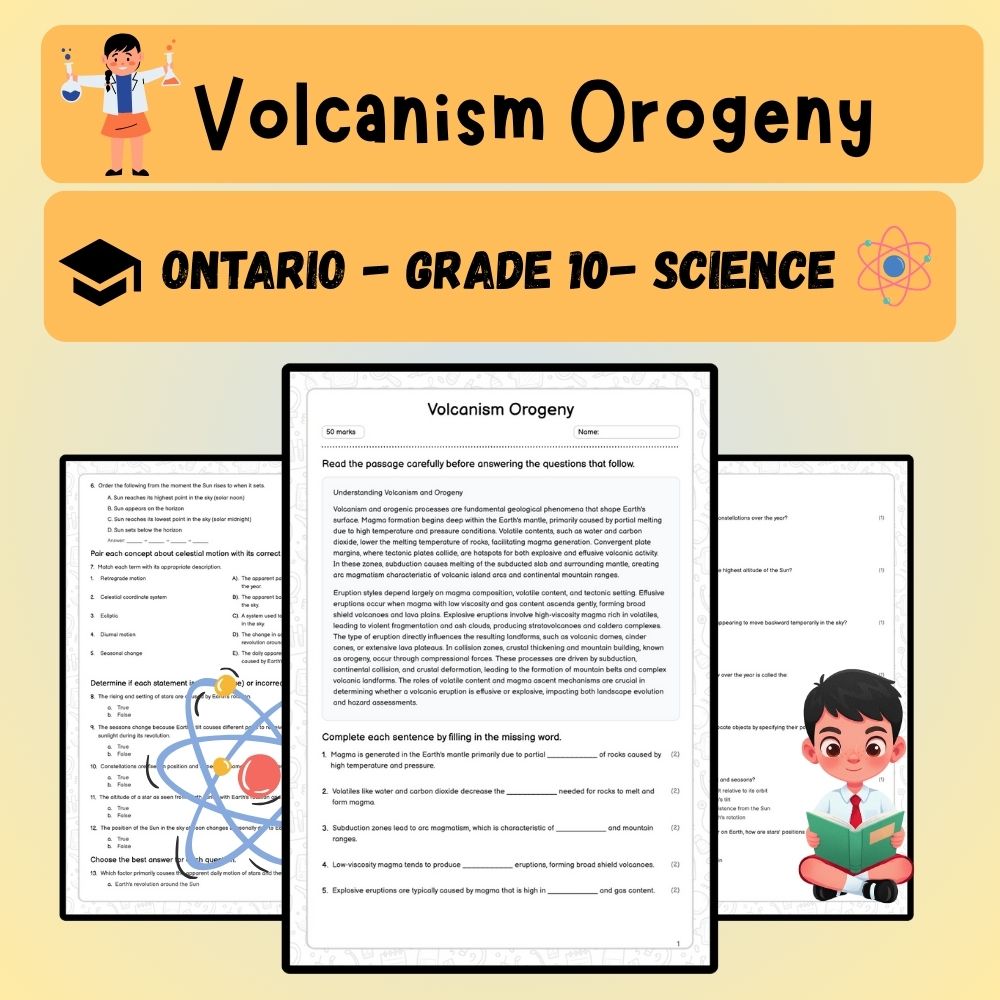
Grade 10 Science | Volcanism Orogeny Worksheet (PDF) – Ontario Standards
Created byPrism Point LearningLearning Objectives
- Explain the processes of magma generation, ascent, and eruption styles in volcanism.
- Differentiate between effusive and explosive volcanism and their landforms.
- Describe the role of tectonic setting, partial melting, and volatile content in volcano behavior.
Also included in: Grade 10 Science UNIT Bundle | Earth Processes & Resources Ontario Standards +1 more
Instant download
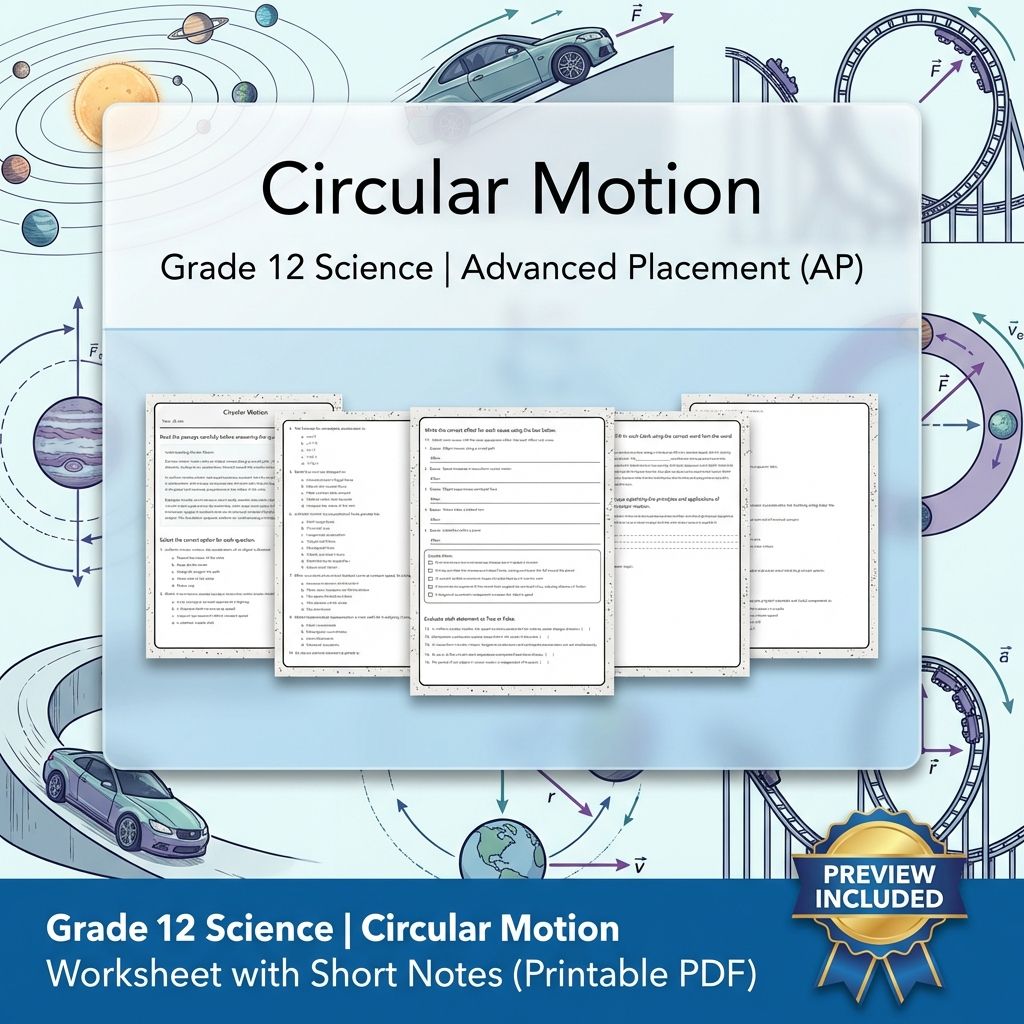
Grade 12 Science | Circular Motion Worksheet with Short Notes (Printable PDF)
 Created byMeadowlark Worksheets
Learning Objectives
- Understand the fundamental concepts of uniform and nonuniform circular motion.
- Explain the vectors involved in circular motion and how they produce centripetal acceleration.
- Derive and apply the formulas relating velocity, radius, and acceleration in circular motion.
Also included in: 12th Grade Science | Work, Energy & Motion Unit Worksheet Bundle +1 more
Instant download
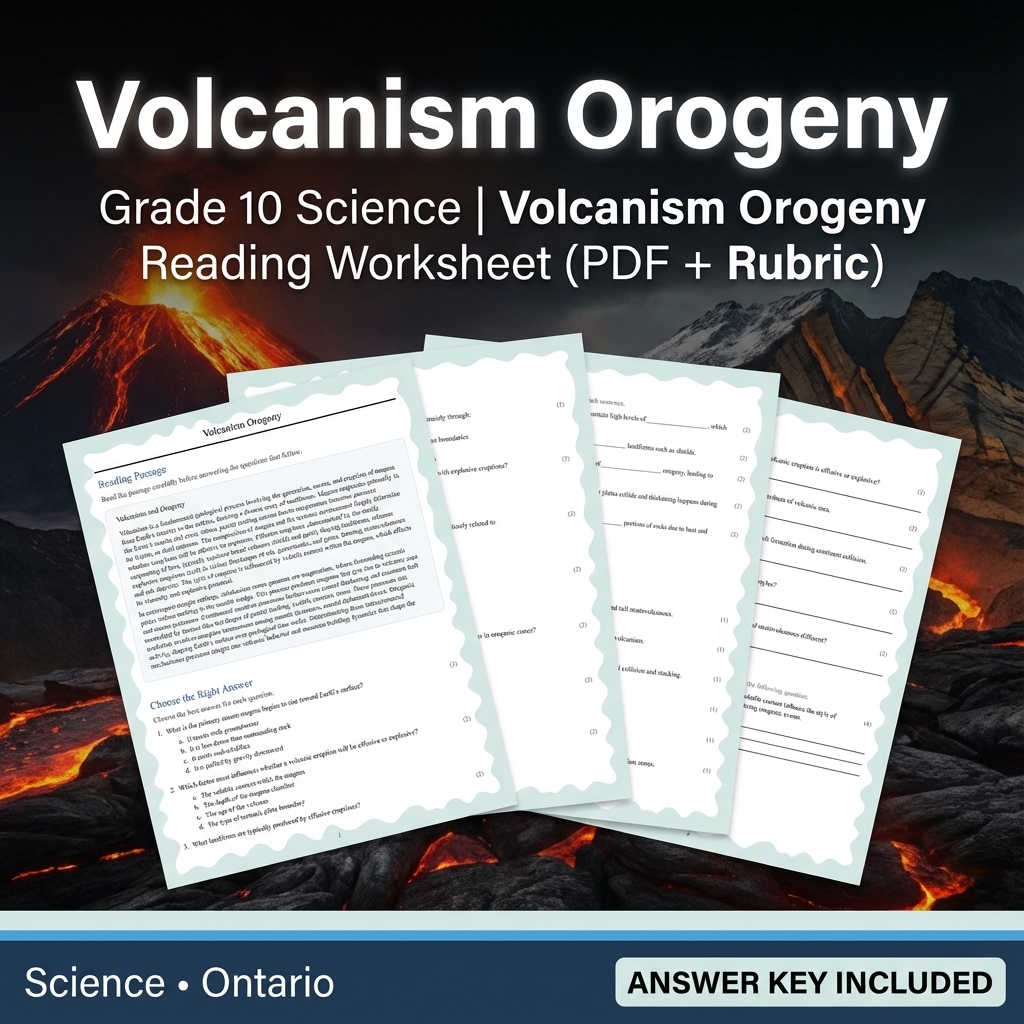
Grade 10 Science | Volcanism Orogeny Reading Worksheet (PDF + Rubric)
JCreated byJ.S SheetsLearning Objectives
- Understand the processes of magma generation, ascent, and eruption styles in volcanism.
- Compare effusive and explosive volcanic landforms and their formation mechanisms.
- Examine the role of tectonic setting, partial melting, and volatile content in volcanic behavior.
Also included in: Grade 10 Science Unit Bundle – Earth Dynamics & Resources (PDF + Rubrics) +1 more
Instant download
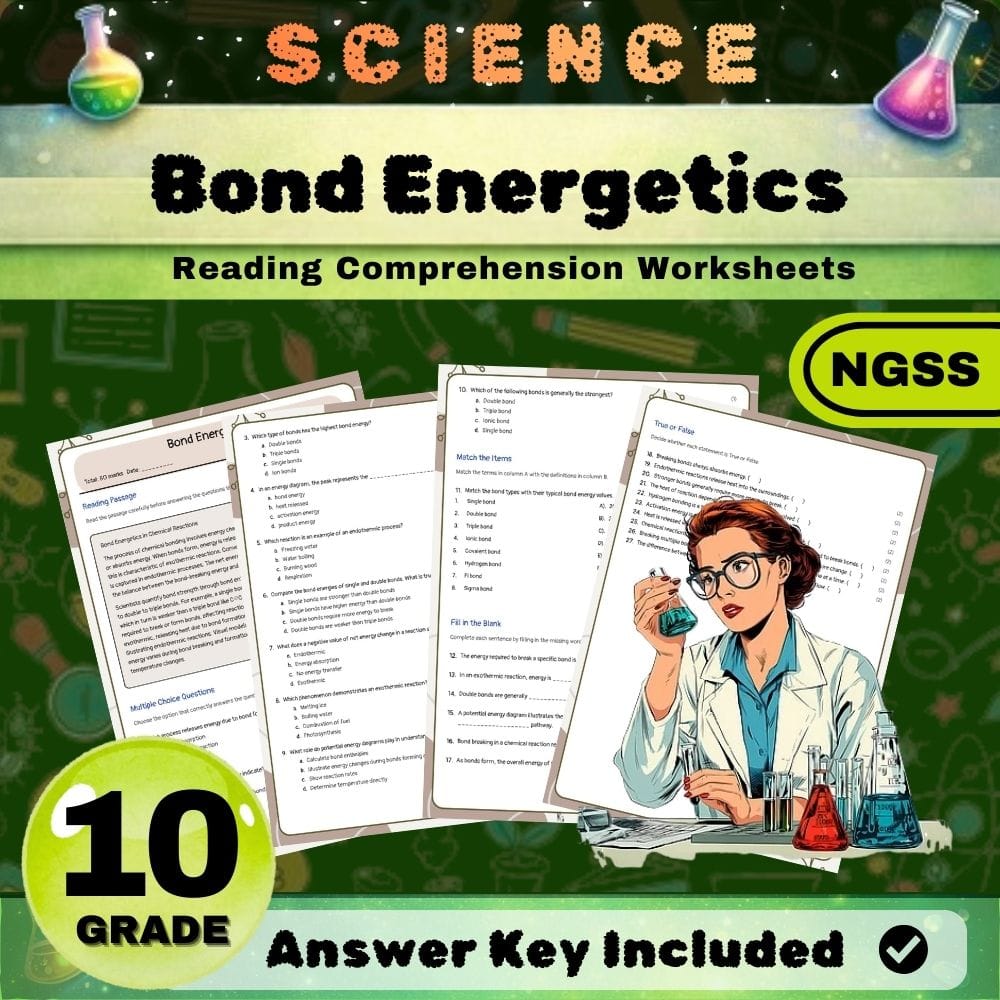
Grade 10 Science – Bond Energetics Worksheet (NGSS) (PDF)
Created byMaple Path LearningLearning Objectives
- Explain how chemical bonds store and release energy during reactions.
- Distinguish between exothermic and endothermic processes based on bond energy changes.
- Analyze potential energy diagrams to interpret energy flow in reactions.
Also included in: Grade 10 Science Matter and Its Interactions Lesson Bundle | NGSS +1 more
Instant download

Bond Energetics and Reaction Energy Worksheet | Grade 10 NGSS Science
Created byAmber Owl EducationLearning Objectives
- Explain how bond formation and bond breaking relate to energy changes in chemical reactions.
- Classify reactions as exothermic or endothermic using bond enthalpy ideas and energy diagrams.
- Compare strengths of single, double, and triple bonds in terms of typical energy required to break them.
Instant download

Grade 10 Science | Bond Energetics - Daily Reading Comprehension
Created byCoral Reef LearningLearning Objectives
- Understand the concept of chemical bonds and their energy characteristics
- Differentiate between types of chemical bonds (single, double, triple)
- Explain how bond formation and breaking involve energy changes
Instant download

Bond Energetics Practice Worksheet | Grade 10 Science NGSS Review
Created byPrism Point LearningLearning Objectives
- Explain how bond breaking and bond formation are linked to energy changes during chemical reactions.
- Use bond enthalpy ideas and potential energy diagrams to distinguish exothermic and endothermic reactions.
- Relate combustion and hydrogen–oxygen formation to net bond energy and observed temperature/phase changes.
Also included in: Grade 10 Reaction Rates and Equilibrium Science Lesson Bundle NGSS
Instant download

Grade 12 Circular Motion Worksheet | AP Practice & PDF
Created byClear Sky ClassroomLearning Objectives
- Explain how changing velocity during circular motion leads to centripetal acceleration and a net radial force.
- Use uniform circular motion relationships between speed, radius, and centripetal acceleration to solve quantitative problems.
- Apply vector decomposition and free-body representations to understand tangential vs radial acceleration, including nonuniform circular motion.
Also included in: Grade 12 Physics Science Lesson Bundle: Motion, Energy (Advanced Placement (AP)) +1 more
Instant download

Grade 10 Science | Bond Energetics Worksheet with Short Notes (Printable PDF)
Created byMeadowlark WorksheetsLearning Objectives
- Understand how bond formation and breaking relate to energy changes in chemical reactions.
- Distinguish between exothermic and endothermic processes using bond energy models.
- Interpret potential energy diagrams and bond enthalpy values to analyze energy flow during reactions.
Also included in: Grade 10 Science – Matter and Its Interactions NGSS Unit Bundle (7 Worksheets) +1 more
Instant download
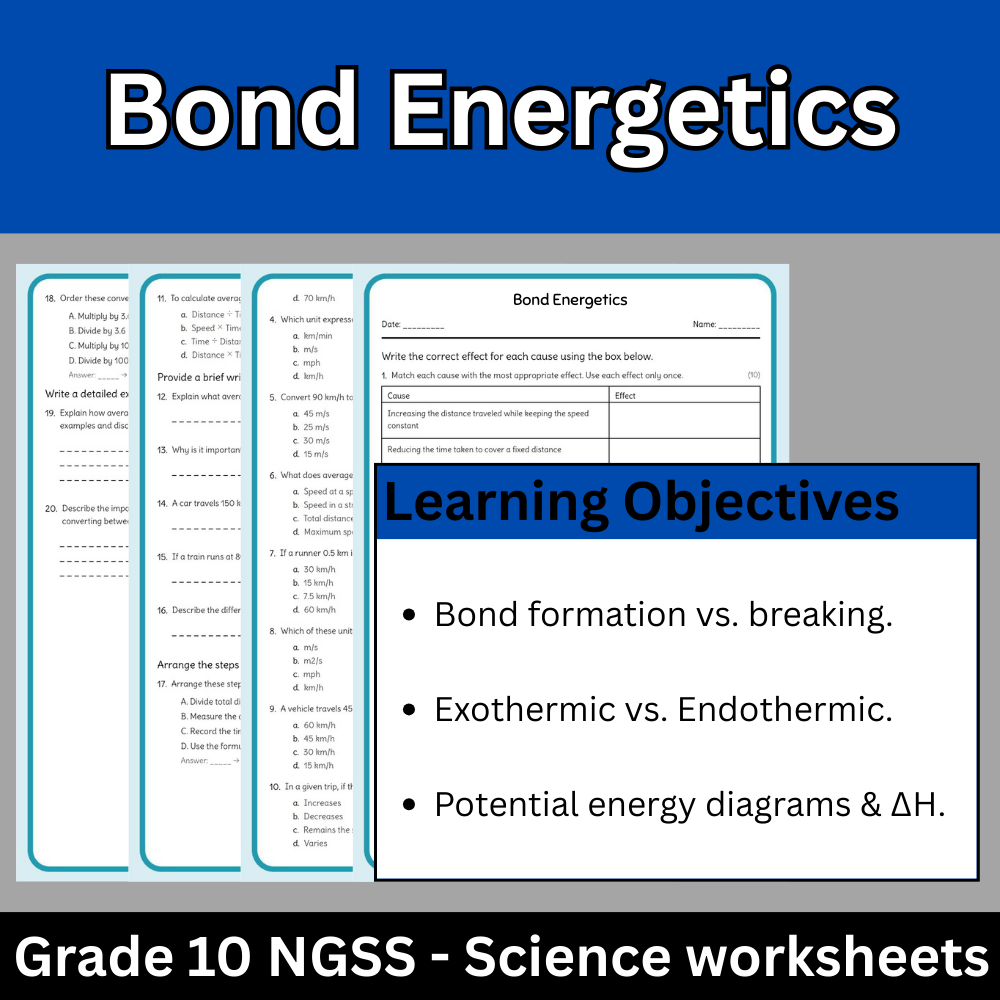
Grade 10 Science | Bond Energetics Worksheet (Answer Key) – NGSS Aligned
Created byBright Mind ResourcesLearning Objectives
- Explain how bond formation and breaking relate to energy changes in reactions.
- Distinguish between exothermic and endothermic processes based on bond energies.
- Interpret potential energy diagrams and bond enthalpy values in chemical reactions.
Instant download
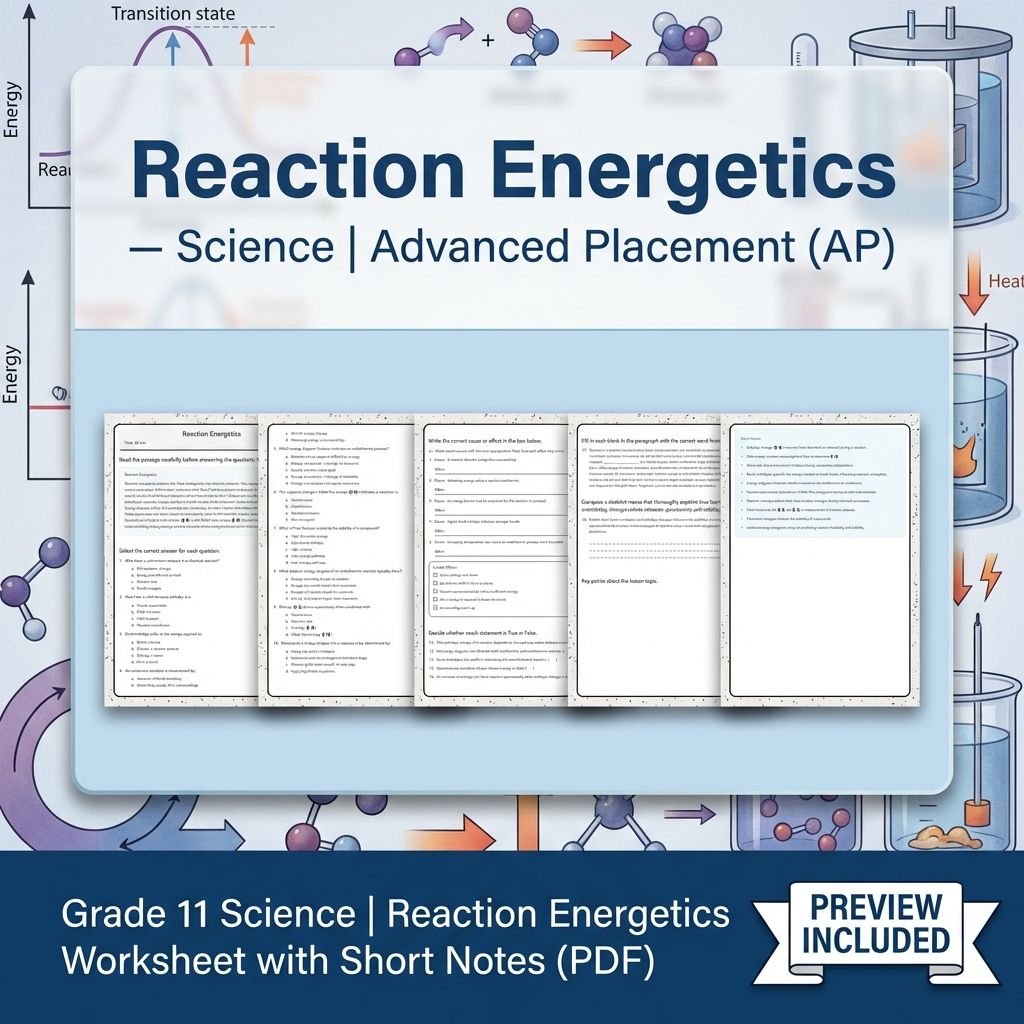
Grade 11 Science | Reaction Energetics Worksheet with Short Notes (PDF)
Created byMeadowlark WorksheetsLearning Objectives
- Understand the concepts of enthalpy change and calorimetry in chemical reactions.
- Apply Hess’s law to determine overall reaction heat from component steps.
- Relate bond enthalpies and formation energies to reaction stability and energy profiles.
Also included in: 11th Grade Science UNIT Worksheet Pack | Atomic Structure, Kinetics & More +1 more
Instant download

Grade 11 Reaction Energetics Worksheet | Practice & Assessment PDF
Created byClear Sky ClassroomLearning Objectives
- Explain how enthalpy changes relate to reaction heat and how calorimetry measurements connect to q = m c ΔT
- Use Hess’s law, bond enthalpies, and formation energies to calculate overall reaction enthalpy
- Interpret energy diagrams to distinguish endothermic and exothermic processes and predict qualitative spontaneity using entropy ideas
Also included in: Grade 11 AP Chemistry Science Lesson Bundle: Foundations & Models +1 more
Instant download
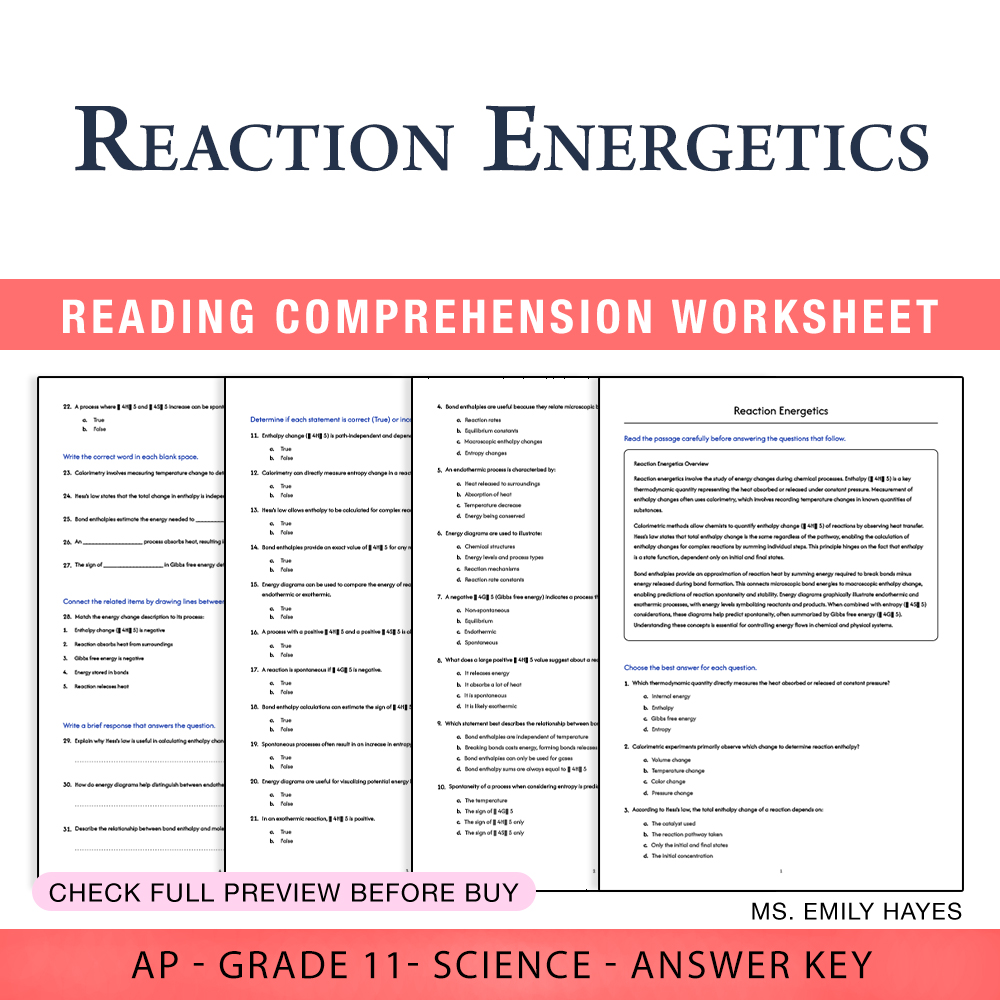
11th Grade Science | Reaction Energetics Worksheet (PDF+ Answer Key)
Created byCopper Leaf ClassroomLearning Objectives
- Describe enthalpy changes and their measurement in chemical reactions.
- Explain calorimetric reasoning and how it relates to reaction heat.
- Apply Hess's law to calculate overall enthalpy changes from steps.
Also included in: Grade 11 Science | Chemistry Foundations AP Worksheet Bundle (PDF+ Answer Keys) +1 more
Instant download
Browse more categories
About Science Worksheets
Find Science worksheets spanning core skills, practice, and review. All 44,773 resources are instant PDF downloads for the classroom or home.
Every worksheet on MyTeachingSheets is created by independent teacher-authors and reviewed before publication. All resources download as printable PDFs for classroom, homework, or at-home practice, and many include answer keys. Preview any worksheet free before buying.