
Science Worksheets
44,773 subject resources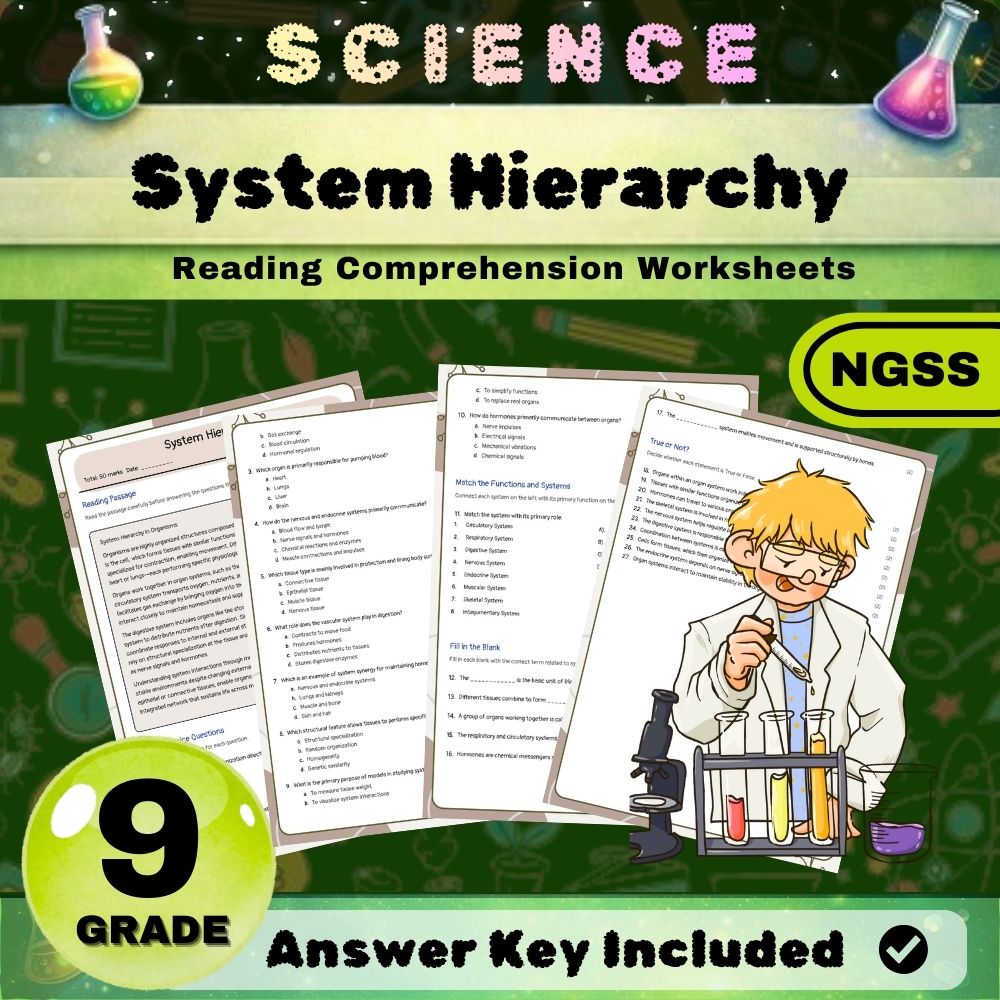
Grade 9 Science | System Hierarchy Worksheet (NGSS) – PDF
 Created byMaple Path Learning
Learning Objectives
- Describe how cells organize into tissues, organs, and organ systems.
- Explain the interactions between different organ systems such as circulatory-respiratory coupling and digestive-vascular transport.
- Analyze the structural specialization of tissues and organs in supporting organism functions.
Also included in: Grade 9 Science NGSS| From Molecules to Organisms: Structures & Processes Bundle +1 more
Instant download

Grade 10 Science | Reaction Evidence Worksheet (NGSS10 PDF)
 Created bySilver Birch Teaching
Learning Objectives
- Explain how conservation of atoms and atomic rearrangement support evidence of chemical reactions.
- Identify observable signs of chemical reactions such as gas evolution, color change, temperature change, and precipitate formation.
- Correlate reactant properties with product identities using balanced chemical formulas.
Also included in: Grade 10 Chemical Reactions & Equilibrium Science Lesson Bundle NGSS +1 more
Instant download

Embryonic Patterns Worksheet | NGSS-Aligned Science Practice for Grade 7
JCreated byJ.S SheetsLearning Objectives
- Compare embryonic development stages across different taxa to identify conserved features.
- Explain how developmental structures like pharyngeal pouches and limb buds reflect evolutionary relationships.
- Analyze developmental timing and patterning to understand phylogenetic connections among vertebrates.
Also included in: Grade 7 Evolution Evidence and Speciation Processes Science Lesson Bundle – NGSS +1 more
Instant download
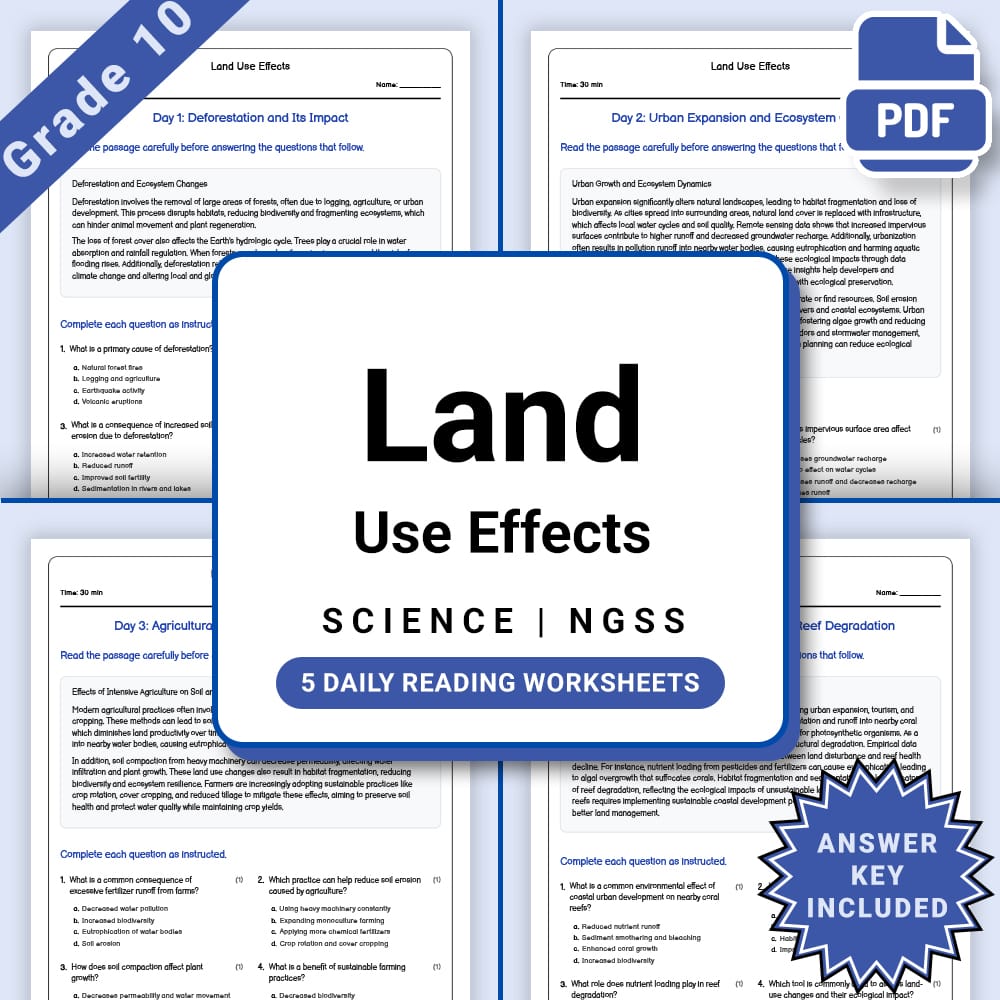
Grade 10 Science – Land Use Effects Worksheet (PDF +Answer Key)
 Created byCopper Leaf Classroom
Learning Objectives
- Understand how deforestation impacts ecosystems and biodiversity
- Identify mechanisms by which land-use change affects Earth systems
- Analyze empirical data related to land cover change and ecological consequences
Instant download

Land Use Effects Worksheet Practice Test | Grade 10 Science NGSS
 Created byPrism Point Learning
Learning Objectives
- Explain how land-cover change from human activities affects ecosystem function, hydrologic cycles, and biodiversity.
- Use empirical indicators (e.g., soil erosion, habitat fragmentation, nutrient loading, and sediment runoff) to connect land use to ecological outcomes.
- Interpret how different land-use types can increase or decrease risks such as eutrophication and biodiversity loss.
Instant download

Grade 7 Resource Availability Worksheet | Practice & Standards PDF
 Created byClear Sky Classroom
Learning Objectives
- Explain how natural processes (precipitation, groundwater storage, and ecosystems) affect the availability of Earth’s resources
- Describe how natural events and human demands can increase stress on shared resources
- Use evidence from a text to identify main ideas about resource availability challenges and responses
Instant download

Grade 10 Worksheet B: Land Use Effects on Earth Systems Worksheet | NGSS
Created byClear Sky ClassroomLearning Objectives
- Explain how land-cover change can alter ecosystem function, hydrologic cycles, and biodiversity
- Interpret indicators such as habitat fragmentation, nutrient loading, soil erosion rates, and coral reef degradation
- Use evidence from land-use maps, remote sensing, and biotic surveys to connect human land changes to ecological outcomes
Also included in: Grade 10 Climate & Natural Hazards Science Lesson Bundle (NGSS) +1 more
Instant download
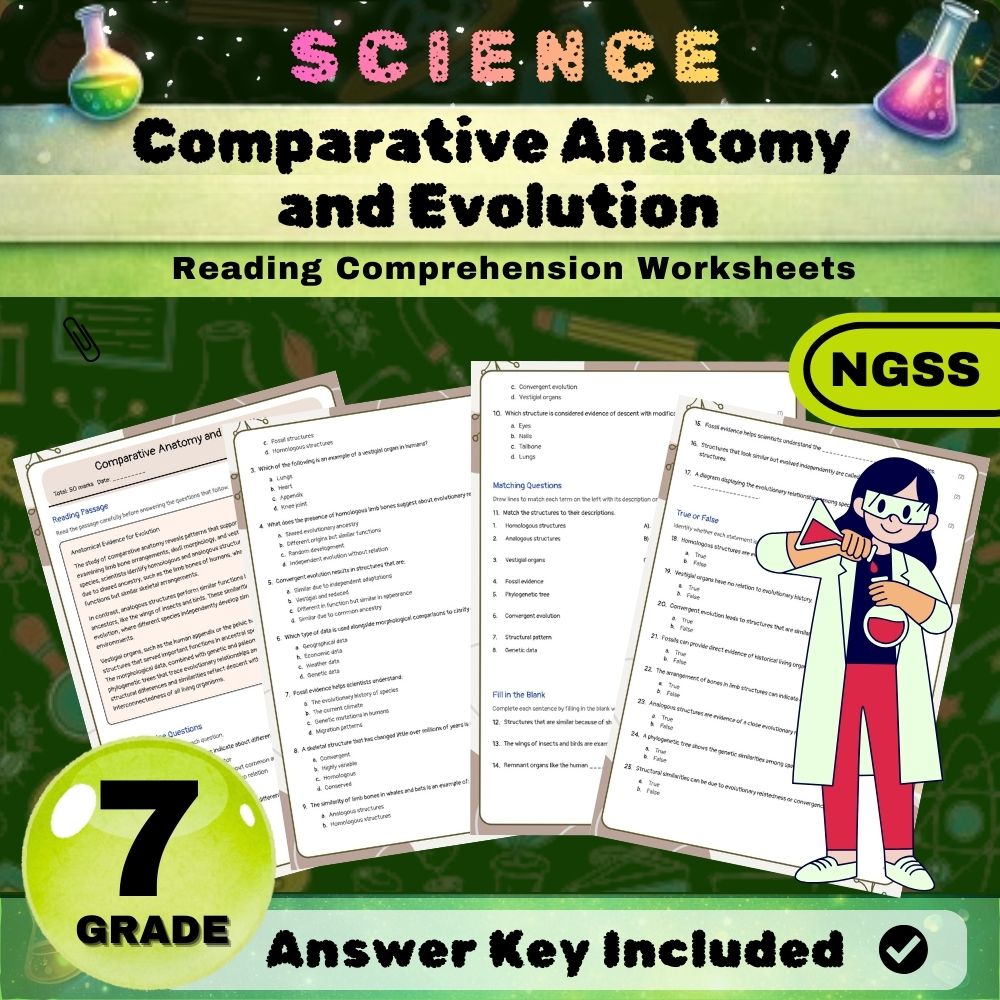
Grade 7 Science – Comparative Anatomy & Evolution NGSS Worksheet (PDF)
Created byMaple Path LearningLearning Objectives
- Understand how anatomical features provide evidence for evolution.
- Identify homologous and analogous structures in different species.
- Analyze morphological data to interpret phylogenetic relationships.
Also included in: Grade 7 Science | Evolution & Adaptation NGSS Worksheet Bundle +1 more
Instant download
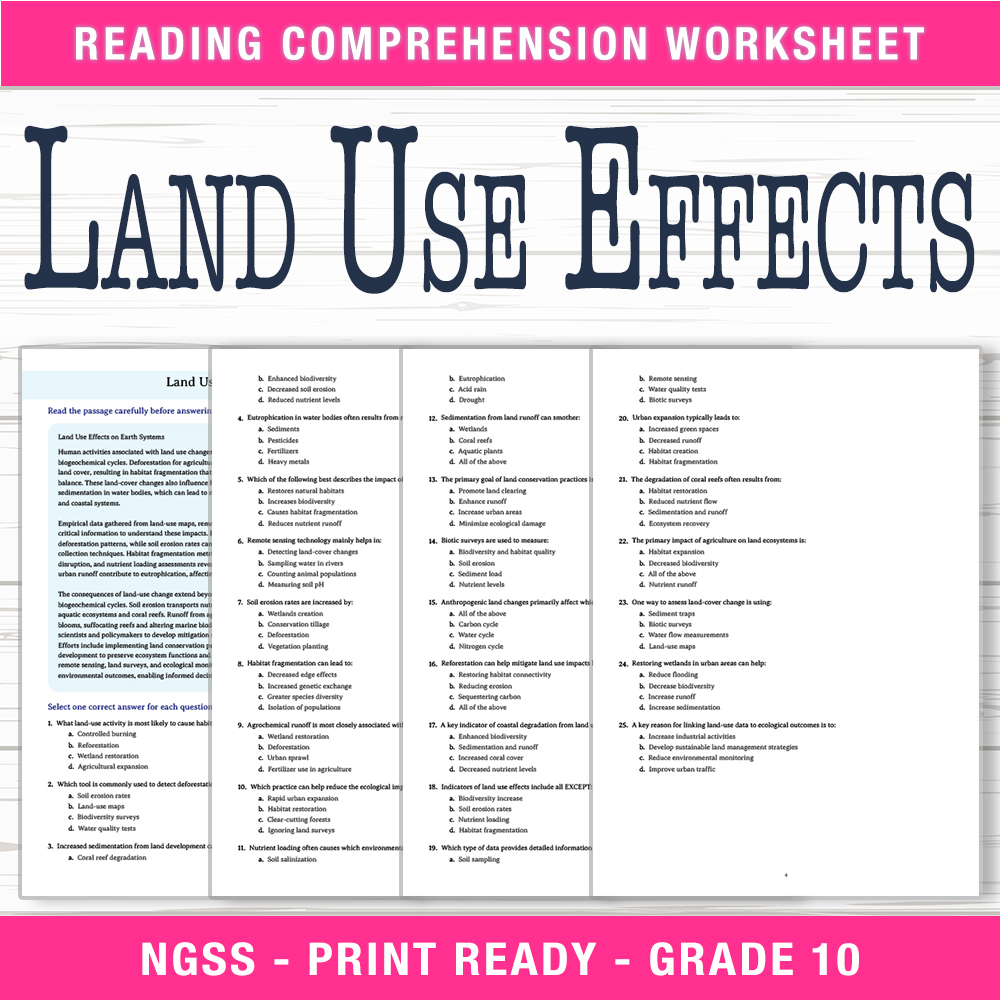
Grade 10 Science – Land Use Effects Worksheet (PDF + Answer Key)
 Created byRiverstone Classroom
Learning Objectives
- Describe how human land-use changes impact ecosystems and earth systems.
- Identify indicators of land-use change such as habitat fragmentation and soil erosion.
- Interpret empirical data from land-cover maps, remote sensing, and biological surveys.
Instant download
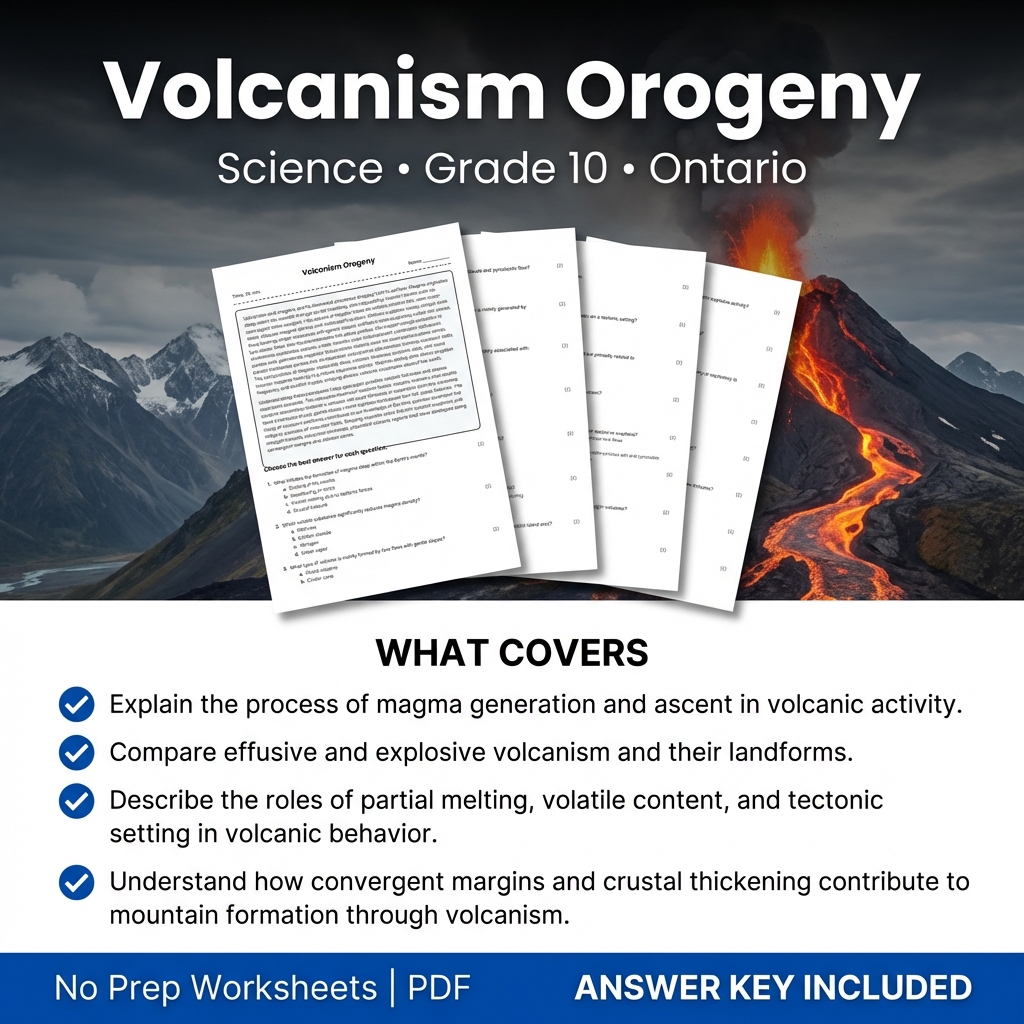
Volcanism Orogeny Grade 10 Science Worksheet | Ontario Standards
 Created byCoral Reef Learning
Learning Objectives
- Explain the process of magma generation and ascent in volcanic activity.
- Compare effusive and explosive volcanism and their landforms.
- Describe the roles of partial melting, volatile content, and tectonic setting in volcanic behavior.
Instant download

Grade 10 Science | Understanding Volcanism & Orogeny - Reading Comprehension
Created byCoral Reef LearningLearning Objectives
- Explain the process of magma generation and ascent.
- Differentiate between effusive and explosive volcanism.
- Identify volcanic landforms produced by different eruptions.
Instant download

Land Use Effects on Ecosystems and Water Worksheets Grade 10
 Created byTeachers Club
Learning Objectives
- Explain how land-cover change alters ecosystem function and biodiversity
- Interpret land-use maps and remote sensing evidence
- Describe how runoff and erosion affect freshwater systems
Also included in: Grade 10 Earth Science Worksheets Bundle | NGSS Earth & Human Activity +1 more
Instant download

Grade 10 Science – Volcanism Orogeny Worksheet (Ontario Standards) (PDF)
 Created byEvergreen Desk Education
Learning Objectives
- Explain how magma is generated through partial melting and how volatiles influence magma behavior
- Compare effusive and explosive eruption styles and relate them to common volcanic landforms
- Describe how convergent-margin processes (subduction and continental collision) produce arc magmatism and mountain belts
Also included in: Grade 10 Earth Systems Geology Science Lesson Bundle: Ontario Worksheets +1 more
Instant download

System Hierarchy Worksheet | NGSS Grade 9 Science Assessment
 Created bySkylark Worksheets
Learning Objectives
- Explain how organization from cells to tissues, organs, and organ systems supports coordinated body functions.
- Describe how different systems communicate (nervous, endocrine, and physical signaling) to maintain homeostasis.
- Model how interacting systems (e.g., circulatory–respiratory and digestive–vascular) support gas exchange and nutrient distribution.
Also included in: Cellular Systems and Regulation Lesson Bundle | Grade 9 Science | NGSS +1 more
Instant download

Bond Energetics and Reaction Energy Worksheet | Grade 10 NGSS Science
 Created byAmber Owl Education
Learning Objectives
- Explain how bond formation and bond breaking relate to energy changes in chemical reactions.
- Classify reactions as exothermic or endothermic using bond enthalpy ideas and energy diagrams.
- Compare strengths of single, double, and triple bonds in terms of typical energy required to break them.
Instant download

Grade 10 Science | Bond Energetics - Daily Reading Comprehension
Created byCoral Reef LearningLearning Objectives
- Understand the concept of chemical bonds and their energy characteristics
- Differentiate between types of chemical bonds (single, double, triple)
- Explain how bond formation and breaking involve energy changes
Instant download
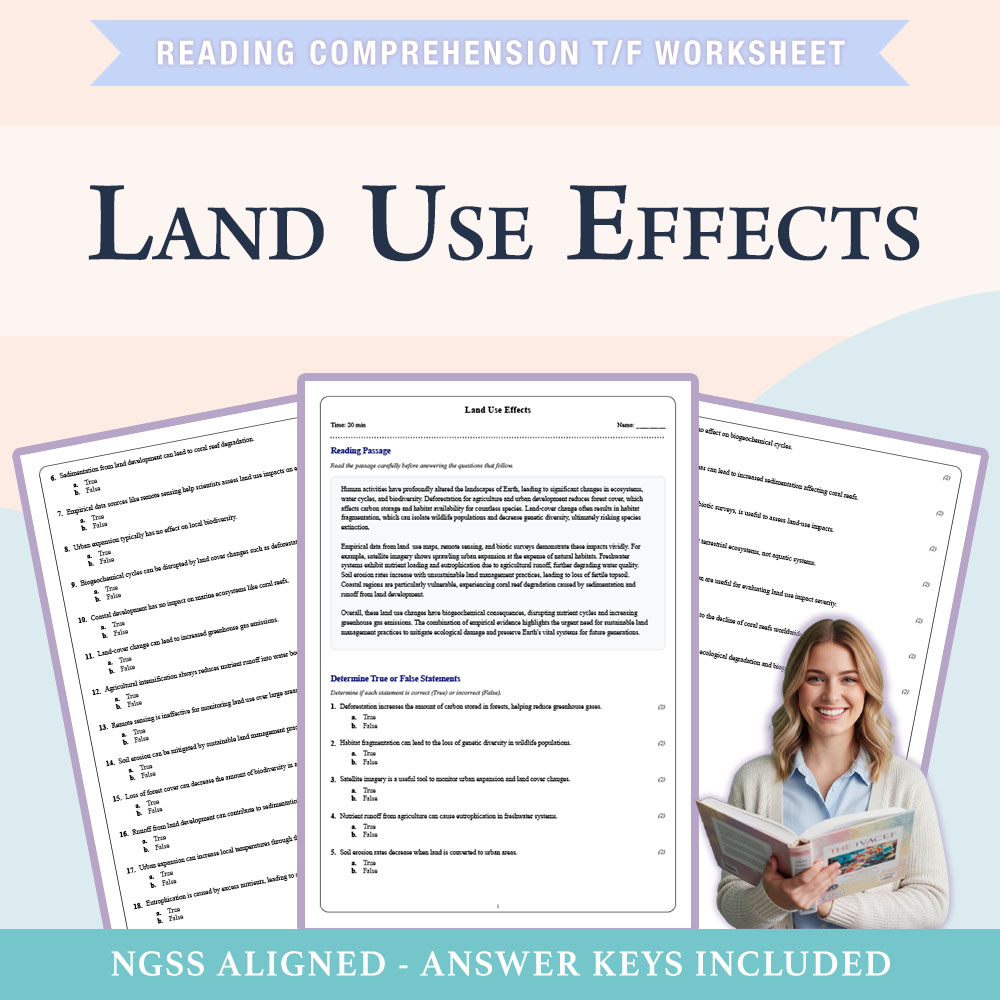
10th Grade Science | Land Use Effects Worksheet (PDF + Answer Key)
Created byCopper Leaf ClassroomLearning Objectives
- Understand how human land-use activities impact ecosystems, hydrological cycles, and biodiversity.
- Identify indicators of land use changes such as habitat fragmentation, soil erosion, and coral reef degradation.
- Analyze empirical data sources like land‑use maps and remote sensing to link human activities to ecological consequences.
Also included in: Grade 10 Science | Environmental Management & Climate Change (PDF + Answer Key) +1 more
Instant download
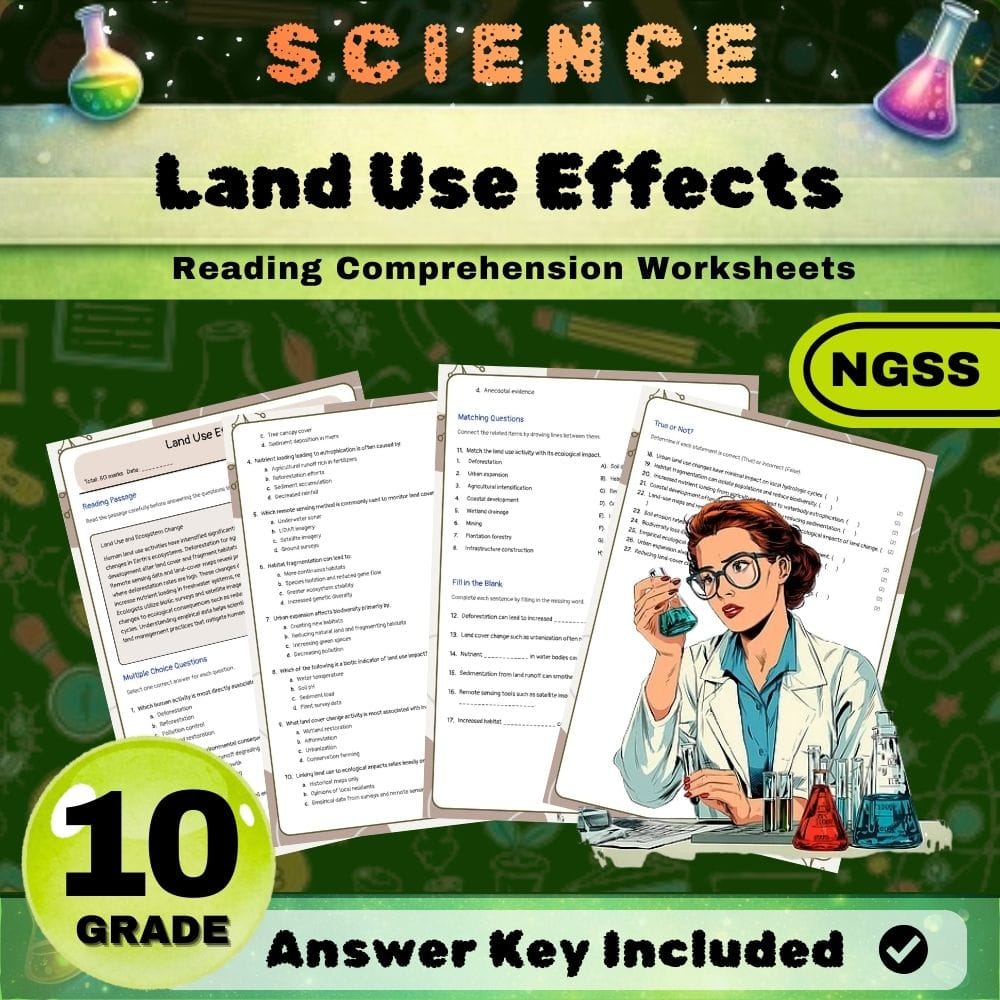
Grade 10 Science | Land Use Effects Worksheet (NGSS) (PDF)
Created byMaple Path LearningLearning Objectives
- Analyze how human land use activities affect ecosystems and Earth systems.
- Interpret empirical data from land-cover maps and biotic surveys regarding land change impacts.
- Identify mechanisms like deforestation, urban expansion, and agriculture that alter biodiversity and biogeochemical cycles.
Also included in: Grade 10 Science Earth and Human Activity Lesson Bundle | NGSS +1 more
Instant download

Grade 10 Science | Land Use Effects - Daily Reading Comprehension
Created byCoral Reef LearningLearning Objectives
- Understand the causes and consequences of deforestation
- Analyze how land-cover change impacts ecosystems and biodiversity
- Interpret empirical data related to land use and ecological health
Instant download

Grade 7 Embryonic Patterns Worksheet | NGSS Practice PDF
Created byClear Sky ClassroomLearning Objectives
- Compare embryonic development stages across different taxa.
- Identify conserved developmental structures such as pharyngeal pouches and limb buds.
- Analyze how developmental timing supports evolutionary relationships.
Also included in: Grade 7 Natural Selection & Adaptation Science Lesson Bundle for NGSS +1 more
Instant download
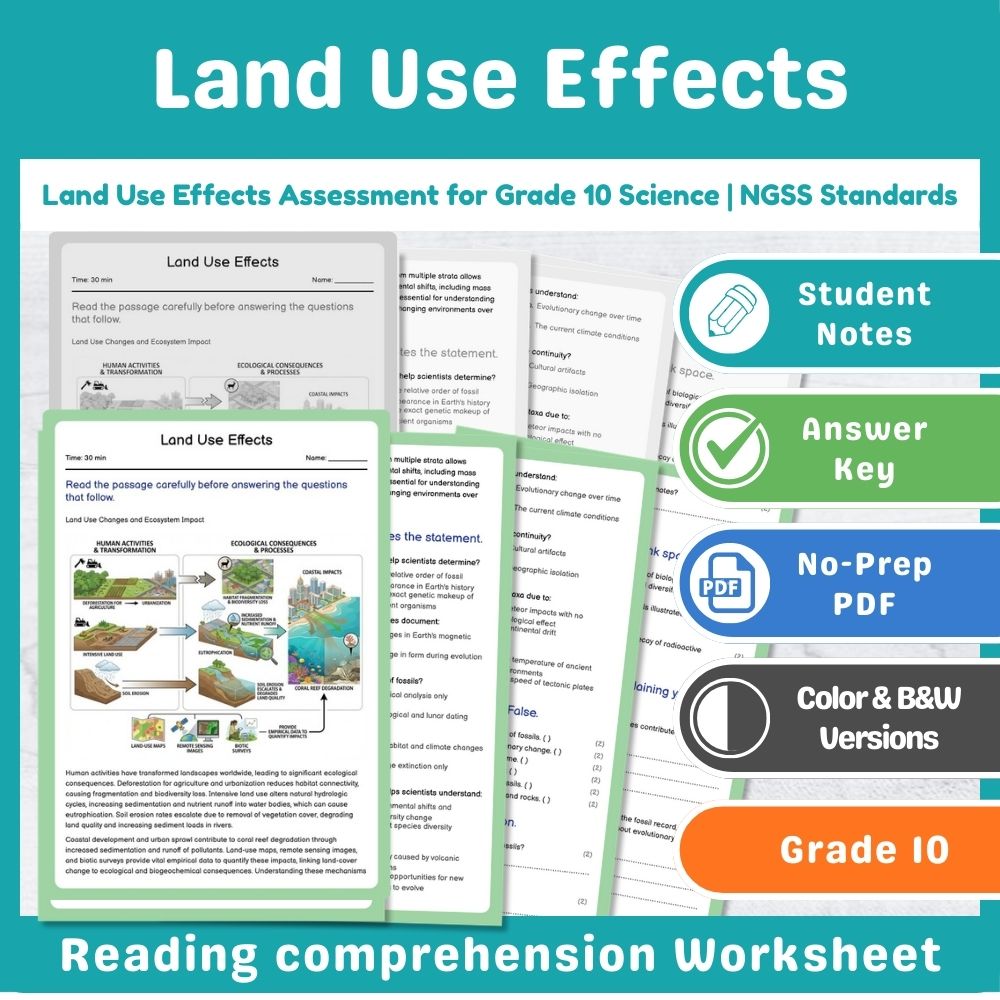
Land Use Effects Assessment for Grade 10 Science | NGSS Standards
Created byPrism Point LearningLearning Objectives
- Analyze human impacts on Earth systems through land-cover changes.
- Identify indicators such as habitat fragmentation, nutrient loading, soil erosion, and coral reef degradation.
- Interpret empirical land-use data from maps, remote sensing, and surveys to assess ecological consequences.
Also included in: Grade 10 Science Resource Tradeoffs Assessment | NGSS Standards-Aligned
Instant download
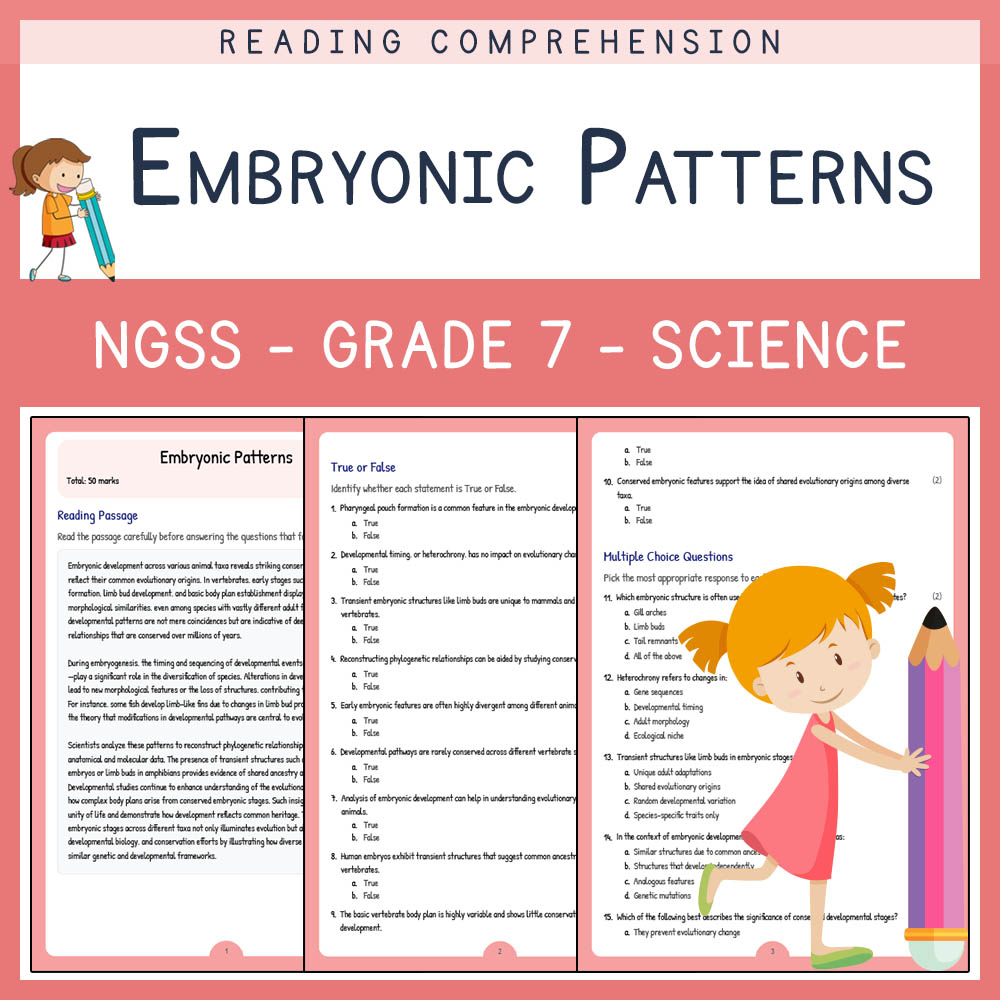
Grade 7 Science | Embryonic Patterns Worksheet PDF | NGSS-Aligned
 Created byLumora Learning
Learning Objectives
- Understand the key stages in embryonic development across different taxa.
- Identify conserved embryonic structures and their significance in evolution.
- Analyze developmental timing and patterning to infer phylogenetic relationships.
Instant download

Bond Energetics Practice Worksheet | Grade 10 Science NGSS Review
Created byPrism Point LearningLearning Objectives
- Explain how bond breaking and bond formation are linked to energy changes during chemical reactions.
- Use bond enthalpy ideas and potential energy diagrams to distinguish exothermic and endothermic reactions.
- Relate combustion and hydrogen–oxygen formation to net bond energy and observed temperature/phase changes.
Also included in: Grade 10 Reaction Rates and Equilibrium Science Lesson Bundle NGSS
Instant download

Grade 10 Science | Bond Energetics Worksheet with Short Notes (Printable PDF)
 Created byMeadowlark Worksheets
Learning Objectives
- Understand how bond formation and breaking relate to energy changes in chemical reactions.
- Distinguish between exothermic and endothermic processes using bond energy models.
- Interpret potential energy diagrams and bond enthalpy values to analyze energy flow during reactions.
Also included in: Grade 10 Science – Matter and Its Interactions NGSS Unit Bundle (7 Worksheets) +1 more
Instant download

Science Worksheet Evaporation and Crystallization | Grade 7 Science
JCreated byJ.S SheetsLearning Objectives
- Explain how evaporation can lead to supersaturation and nucleation during crystallization
- Describe how nucleation and crystal growth affect crystal size and crystal shape
- Evaluate how cooling profiles and impurities influence crystal purity and yield
Instant download

Grade 7 Science Worksheet on Embryonic Patterns | NGSS Assessments
Created bySkylark WorksheetsLearning Objectives
- Explain how early embryonic structures can be conserved across different animal groups
- Compare embryonic features (pharyngeal pouches, limb buds, and body-plan patterns) across taxa
- Use developmental timing to support ideas about evolutionary relationships
Also included in: Grade 7 Speciation and Evolution Evidence Science Lesson Bundle NGSS +1 more
Instant download
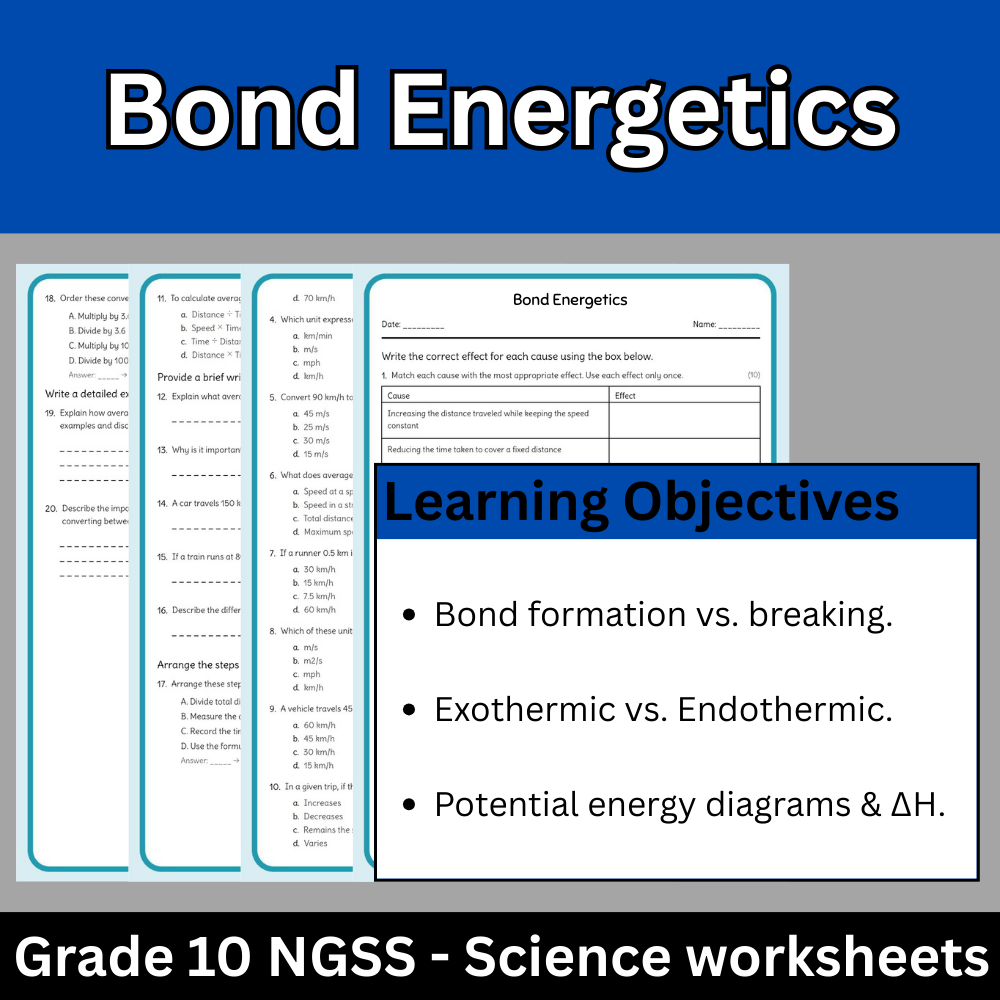
Grade 10 Science | Bond Energetics Worksheet (Answer Key) – NGSS Aligned
 Created byBright Mind Resources
Learning Objectives
- Explain how bond formation and breaking relate to energy changes in reactions.
- Distinguish between exothermic and endothermic processes based on bond energies.
- Interpret potential energy diagrams and bond enthalpy values in chemical reactions.
Instant download
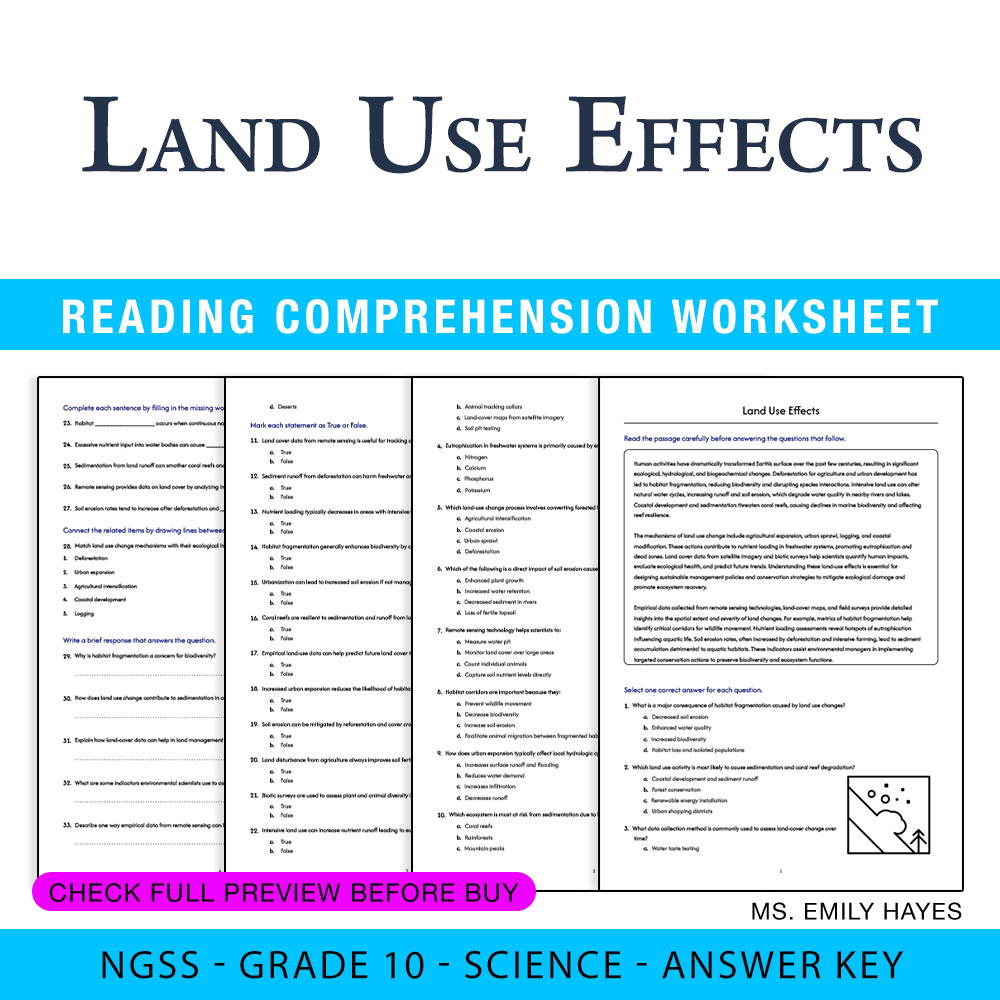
10th Grade Science | Land Use Effects Worksheet (PDF+ Answer Key)
Created byCopper Leaf ClassroomLearning Objectives
- Understand how human land-use activities alter ecosystems and biogeochemical cycles.
- Analyze empirical land-cover data and remote sensing images to assess ecological impacts.
- Evaluate the consequences of land-change mechanisms such as deforestation and urban expansion.
Instant download
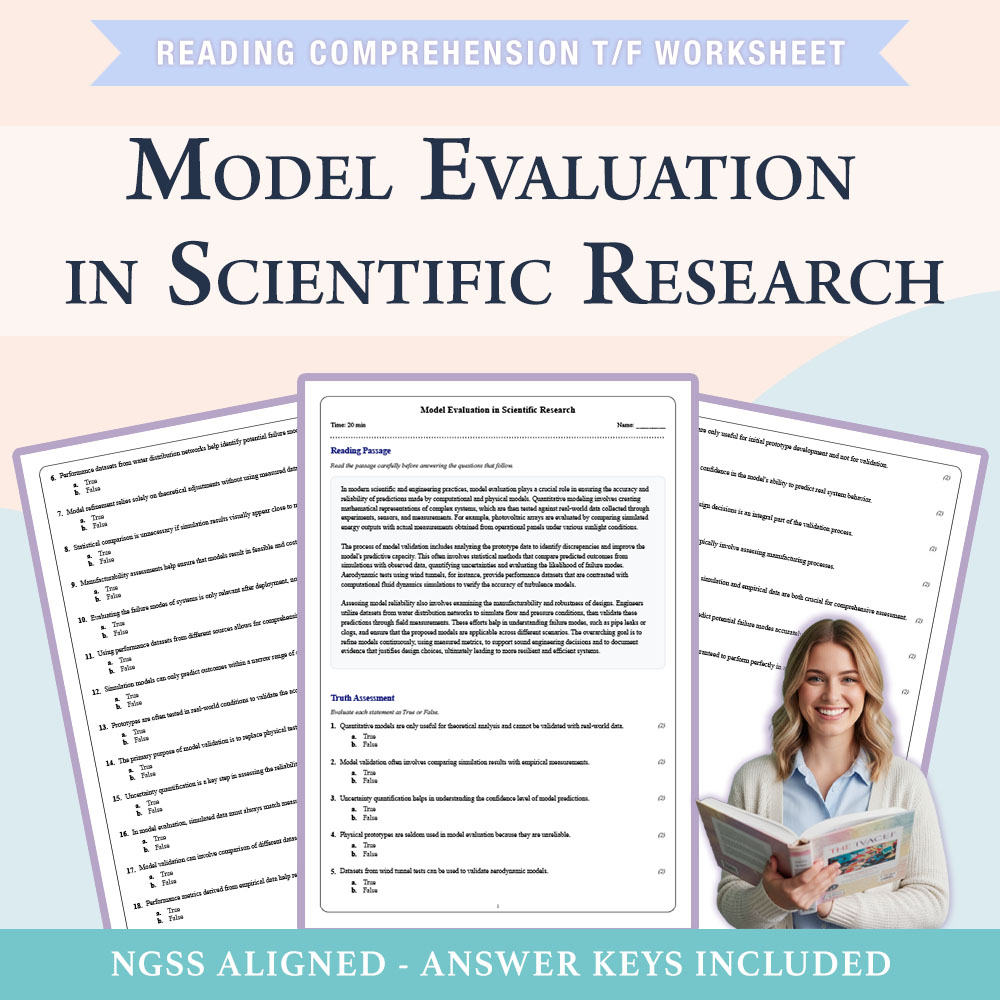
10th Grade Science | Model Evaluation in Scientific Research (PDF + Answer Key)
Created byCopper Leaf ClassroomLearning Objectives
- Understand the importance of quantitative modeling and prototype data analysis in scientific evaluation.
- Learn how to interpret and compare simulation results with empirical measurements for model validation.
- Recognize the role of statistical comparison, uncertainty quantification, and performance metrics in assessing model reliability.
Also included in: Grade 10 Science Bundle |Systems, Decision-Making & Engineering (PDF+Answer Key) +1 more
Instant download

Embryonic Patterns Practice Worksheet | Grade 7 Science NGSS Review
Created byPrism Point LearningLearning Objectives
- Compare embryonic development across animal groups to identify conserved stages and transient structures.
- Explain how developmental timing and patterning can support evolutionary relationships.
- Use embryology evidence (e.g., pharyngeal pouches and limb buds) to make claims about shared developmental pathways.
Also included in: Grade 7 Evolution, Natural Selection Science Lesson Bundle for NGSS
Instant download
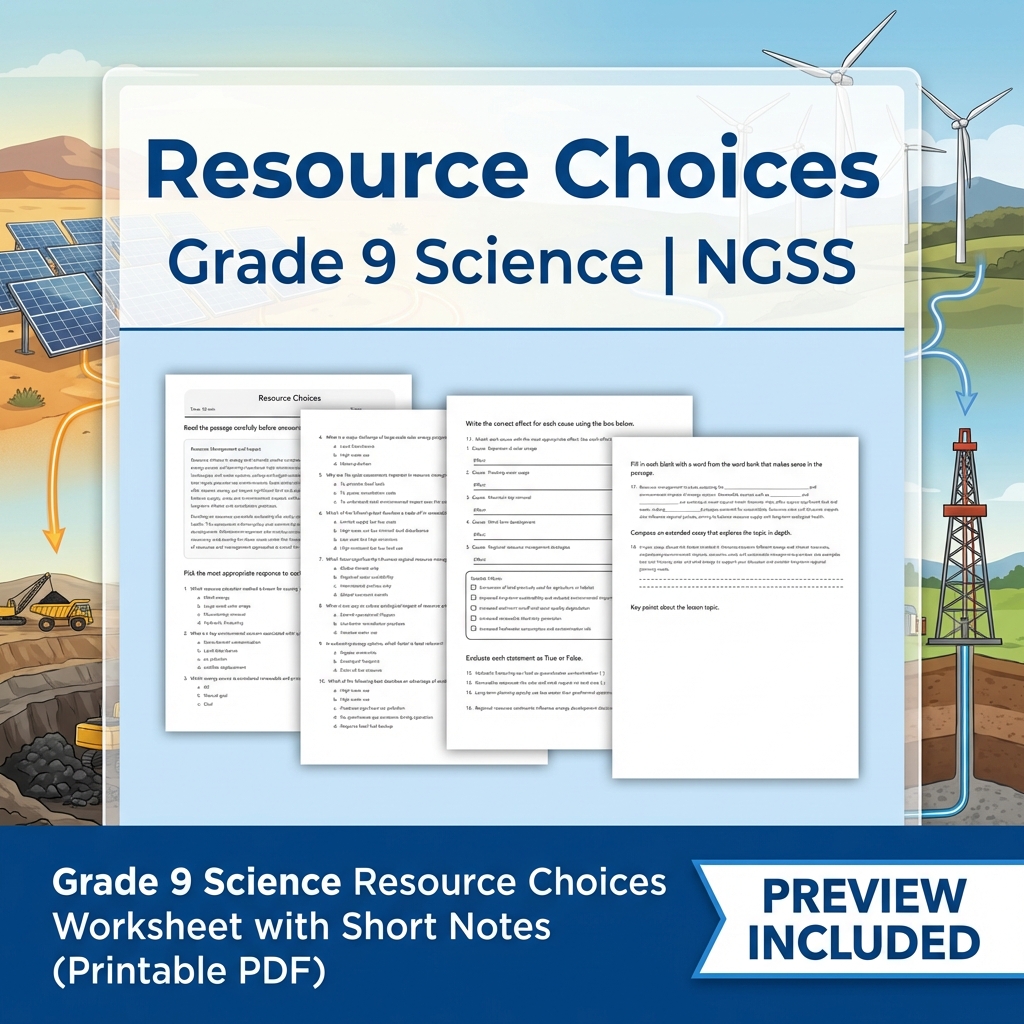
Grade 9 Science Resource Choices Worksheet with Short Notes (Printable PDF)
Created byMeadowlark WorksheetsLearning Objectives
- Compare different energy and mineral resource options based on environmental and economic factors.
- Analyze the impacts of resource extraction methods on ecosystems and communities.
- Evaluate sustainable resource management practices and decision criteria for long-term planning.
Also included in: Grade 9 Science NGSS UNIT Bundle – Earth & Human Activity Resources Pack +1 more
Instant download

Science Grade 7 Worksheet on Building Envelope Thermal Performance
JCreated byJ.S SheetsLearning Objectives
- Explain how walls, roofs, windows, and foundations affect heat loss and heat gain through conduction, air leakage, and radiation.
- Identify how thermal bridging and air infiltration reduce the effectiveness of insulation and air barriers.
- Use common indicators (R-value, U-value, and air changes per hour) to describe building envelope performance.
Instant download
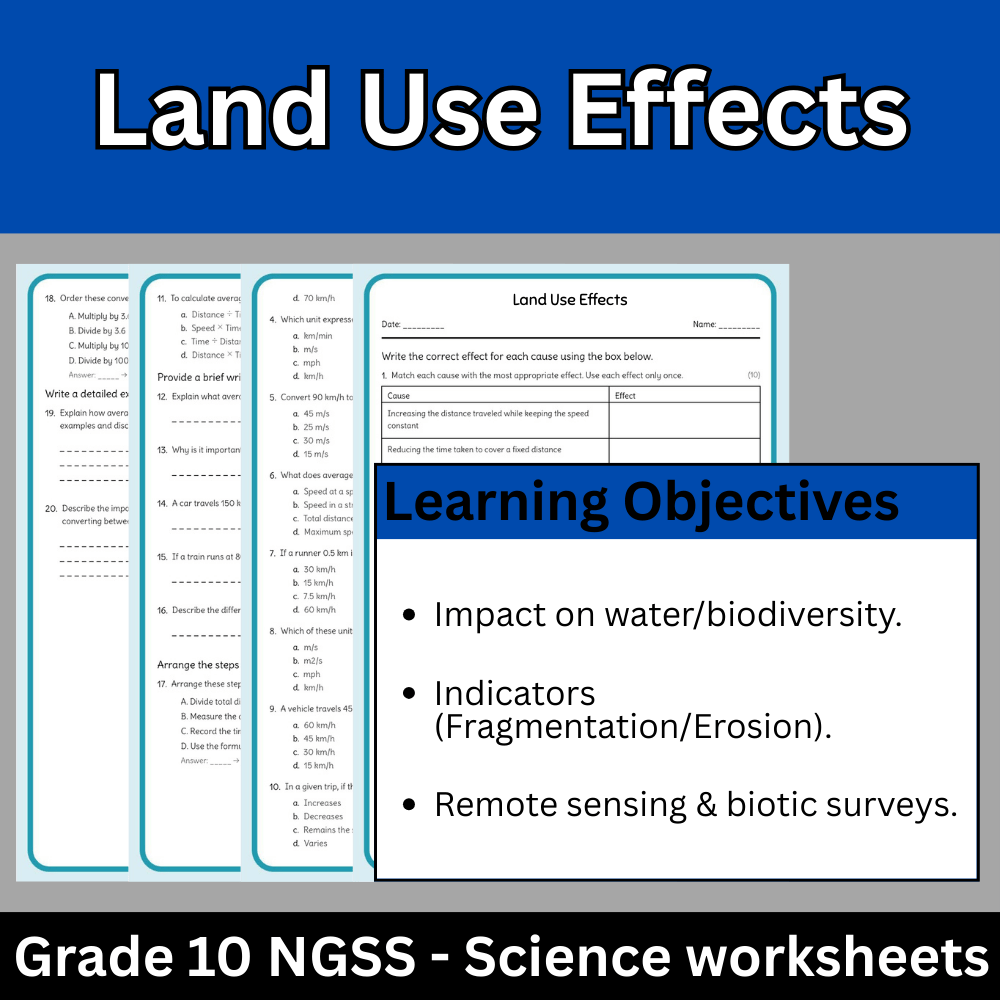
Grade 10 Science | Land Use Effects Worksheet ( Answer Key) – NGSS Aligned
Created byBright Mind ResourcesLearning Objectives
- Understand how human land-use changes affect ecosystems, water cycles, and biodiversity.
- Identify indicators of land use impacts such as habitat fragmentation, soil erosion, and coastal degradation.
- Analyze empirical data from land-cover maps, remote sensing, and biotic surveys to evaluate ecological consequences.
Instant download

Grade 10 Land Use Effects Worksheet | NGSS Environmental Science Activity
 Created byBRIGHT PATH RESOURCES
Learning Objectives
- Understand key concepts related to Science
- Apply knowledge through practice questions
- Demonstrate comprehension of the material
Also included in: Env Hazards Grade 10 Sci Daily Reading Worksheets Lesson Bundle | NGSS +1 more
Instant download

Grade 10 Science | Land Use Effects Worksheet with Short Notes (Printable PDF)
Created byMeadowlark WorksheetsLearning Objectives
- Understand how human land use changes impact ecosystems and Earth systems.
- Identify indicators of ecological and biogeochemical consequences of land cover change.
- Analyze empirical data from land-cover maps, remote sensing, and surveys to assess land use impacts.
Also included in: Grade 10 Science NGSS Earth & Human Activity Unit | Worksheet Pack +1 more
Instant download

Reaction Energetics Worksheet | AP Science Practice for Grade 11
JCreated byJ.S SheetsLearning Objectives
- Explain how enthalpy changes relate to energy transfer in chemical reactions.
- Apply calorimetric reasoning and Hess’s law to determine overall reaction heats.
- Relate bond enthalpies and formation energies to reaction stability and energy diagrams.
Instant download
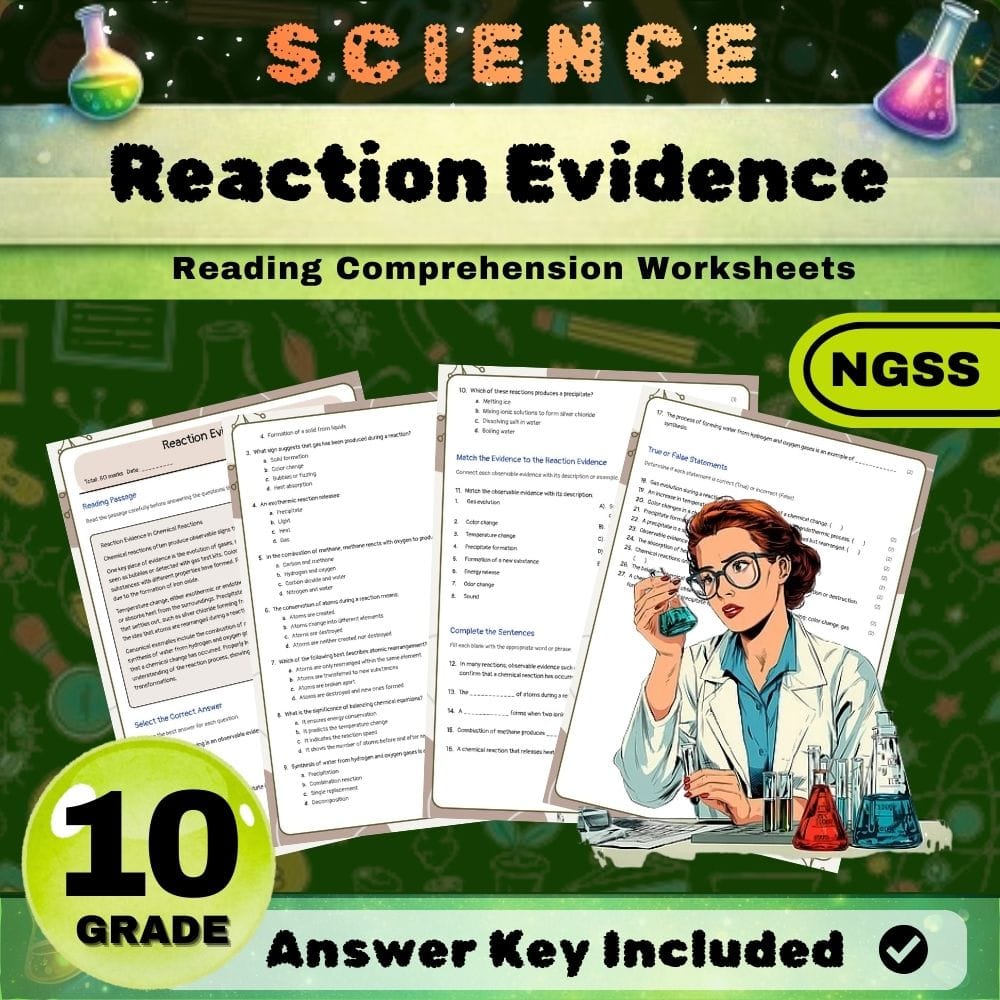
Grade 10 Science – Reaction Evidence Worksheet (NGSS) PDF
Created byMaple Path LearningLearning Objectives
- Understand how conservation of atoms and atomic rearrangement relate to chemical reactions.
- Identify observable evidence of chemical reactions such as gas evolution, color change, temperature change, and precipitate formation.
- Explain the relationship between reactant properties and product identities using balanced chemical formulas.
Also included in: Grade 10 Science Matter and Its Interactions Lesson Bundle | NGSS +1 more
Instant download
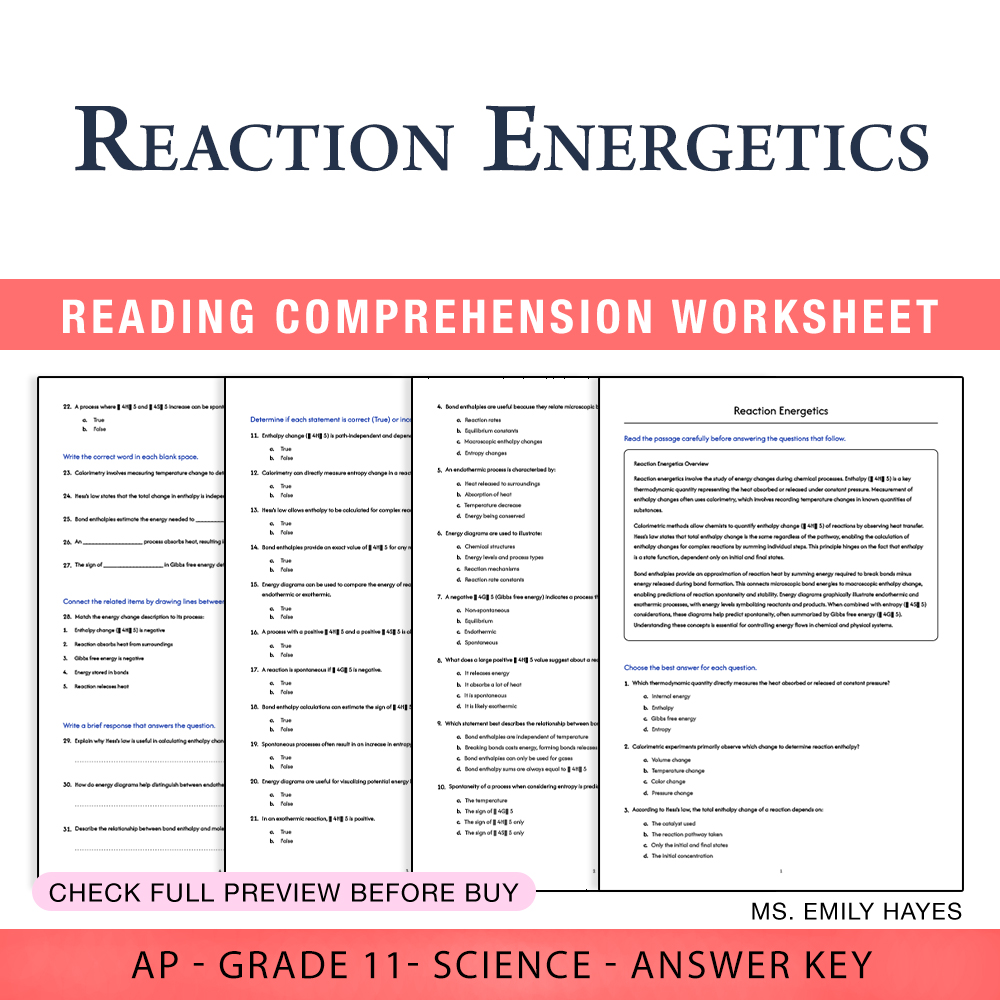
11th Grade Science | Reaction Energetics Worksheet (PDF+ Answer Key)
Created byCopper Leaf ClassroomLearning Objectives
- Describe enthalpy changes and their measurement in chemical reactions.
- Explain calorimetric reasoning and how it relates to reaction heat.
- Apply Hess's law to calculate overall enthalpy changes from steps.
Also included in: Grade 11 Science | Chemistry Foundations AP Worksheet Bundle (PDF+ Answer Keys) +1 more
Instant download

Grade 9 Science Worksheet | NGSS Aligned Printable Activity + Answer Key
Created byBRIGHT PATH RESOURCESLearning Objectives
- Identify the basic structures of cells and tissues.
- Differentiate between various tissue types and their functions.
- Describe how tissues combine to form organs and organ systems.
Also included in: Cell Signaling Grade 9 Science Daily Reading Worksheets Lesson Bundle | NGSS +1 more
Instant download

Grade 8 Science – Seismic Activity & Earthquakes | Daily Reading Worksheet
Created byBright Mind ResourcesLearning Objectives
- Understand the basic concepts of seismic activity and earthquake generation.
- Identify different fault types and understand how stress accumulation leads to earthquakes.
- Learn how seismic waves propagate and affect the Earth's crust.
Also included in: Grade 8 Earth & Space Science Daily Reading Worksheets Lesson Bundle | TEKS +2 more
Instant download

Grade 7 Embryonic Patterns and Evolution Worksheet | NGSS Life Science
Created byBRIGHT PATH RESOURCESLearning Objectives
- Identify key stages of embryonic development across different animal groups
- Compare and contrast embryonic features among taxa to understand evolutionary relationships
- Recognize conserved structures such as pharyngeal pouches and limb buds
Also included in: Evolution & Genetics Grade 7 Science Worksheets Lesson Bundle | NGSS +2 more
Instant download
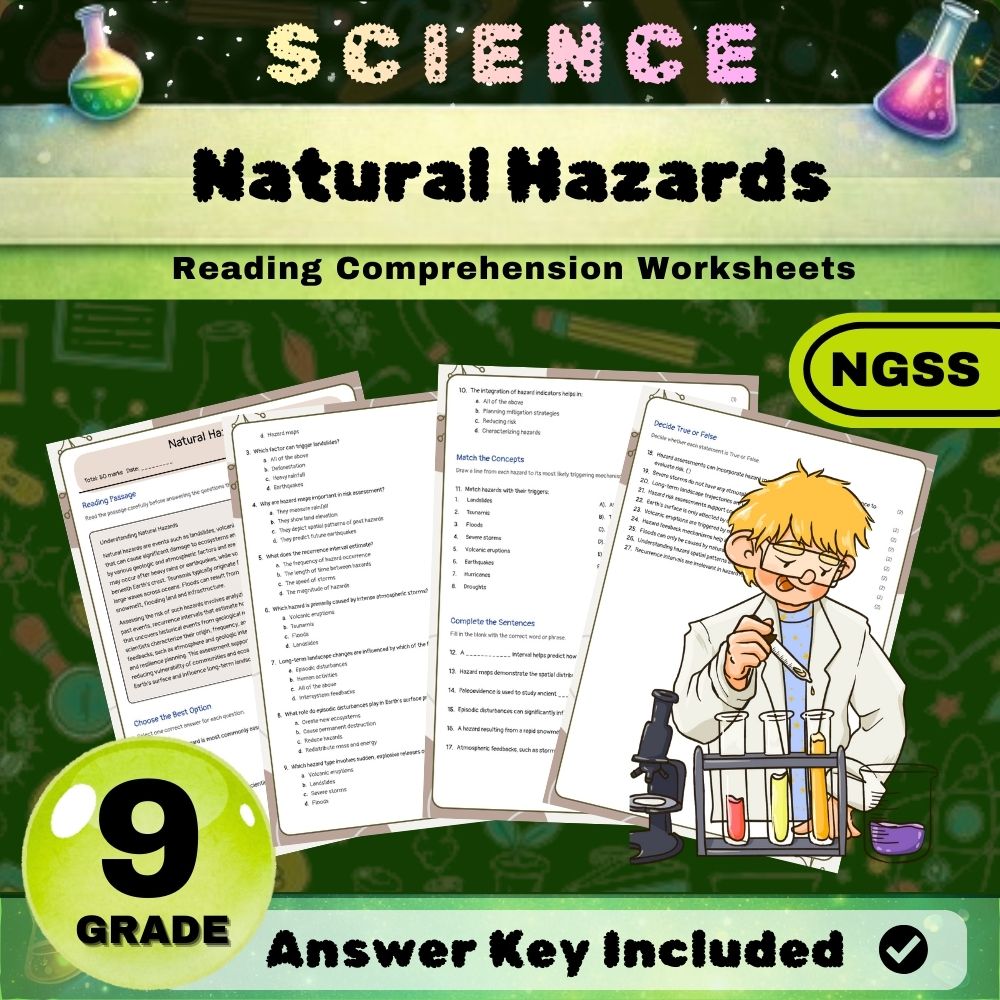
Grade 9 Science | Natural Hazards Worksheet (NGSS) Practice Set (PDF)
Created byMaple Path LearningLearning Objectives
- Identify different types of natural hazards and their causes.
- Analyze how geologic and atmospheric indicators are used to assess hazards.
- Evaluate the impacts of hazards on human and ecological systems.
Also included in: Grade 9 Science | Earth's Systems NGSS Unit Bundle (NGSS-Aligned Instruction) +1 more
Instant download
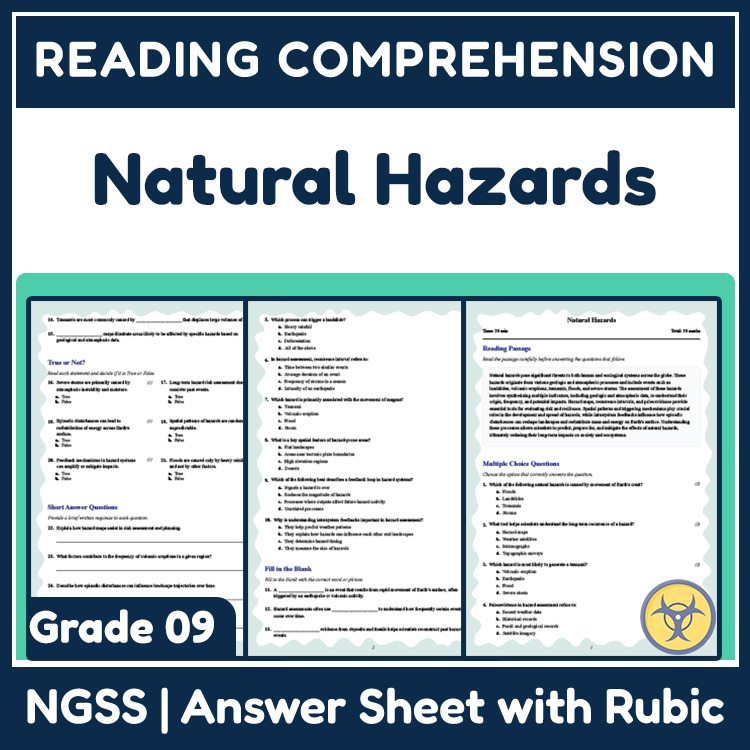
9th Grade Science | Natural Hazards Reading Worksheet with Answer Key (PDF)
JCreated byJ.S SheetsLearning Objectives
- Understand the different types of natural hazards and their origins.
- Analyze how spatial patterns and triggering mechanisms influence hazard risks.
- Evaluate the long-term impacts of natural hazards on landscapes and human systems.
Instant download

Fossil Record Clues Worksheet Grade 8 Science Evolution Evidence
Created byPrism Point LearningLearning Objectives
- Explain how index fossils and fossil assemblages can be used to correlate rock layers across distant regions
- Describe how the fossil record and sedimentary rock features help scientists infer past environments and climates
- Use geologic principles, such as superposition, to reason about relative ages in the rock record
Instant download

Grade 9 Natural Hazards: Landslides Worksheet | NGSS Earth Science Activity
Created byBRIGHT PATH RESOURCESLearning Objectives
- Understand what causes landslides.
- Identify the effects of landslides on landscapes.
- Analyze how landslides contribute to Earth's surface changes.
Also included in: Plate Tectonics & Earth Systems Grade 9 Science Lesson Bundle | NGSS +1 more
Instant download
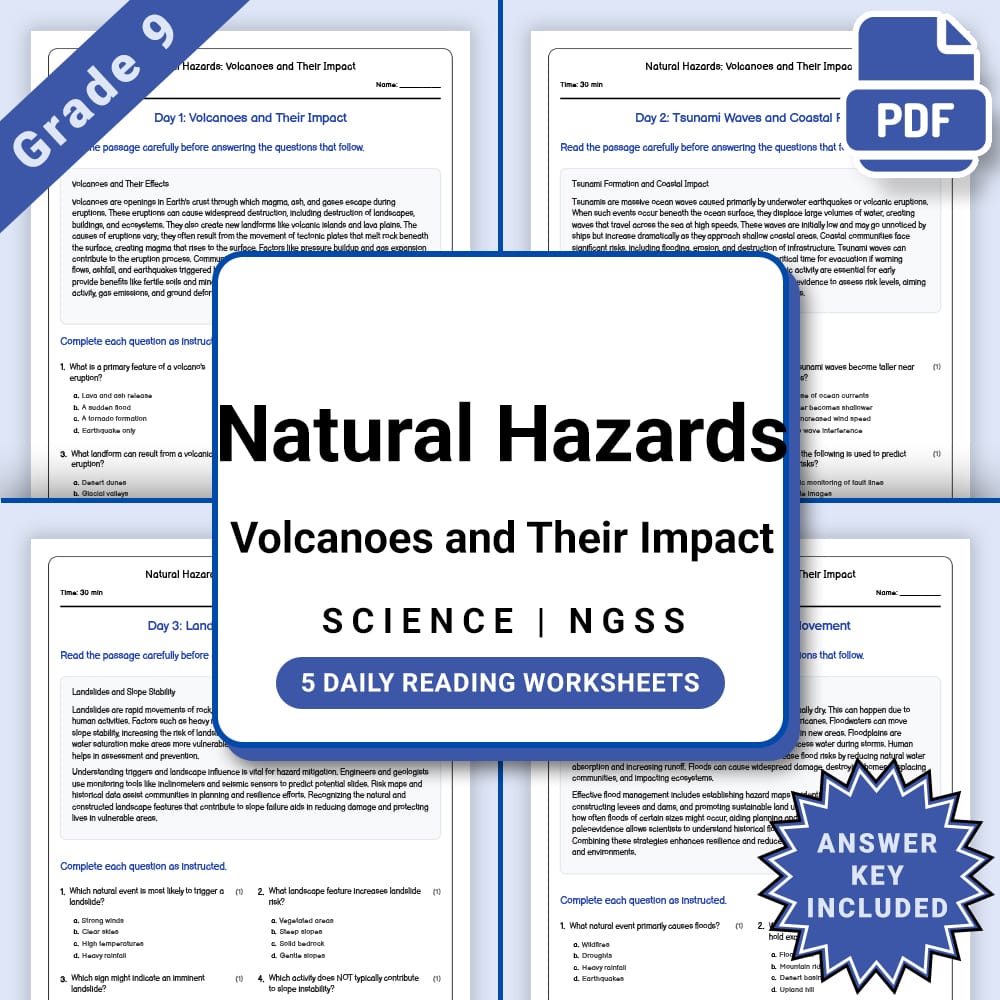
Grade 9 Science – Natural Hazards Volcanoes Worksheet(PDF + Answer Key)
Created byCopper Leaf ClassroomLearning Objectives
- Identify key volcanic hazards and their effects.
- Understand the causes of volcanic eruptions.
- Analyze how volcanoes influence landscapes and communities.
Instant download
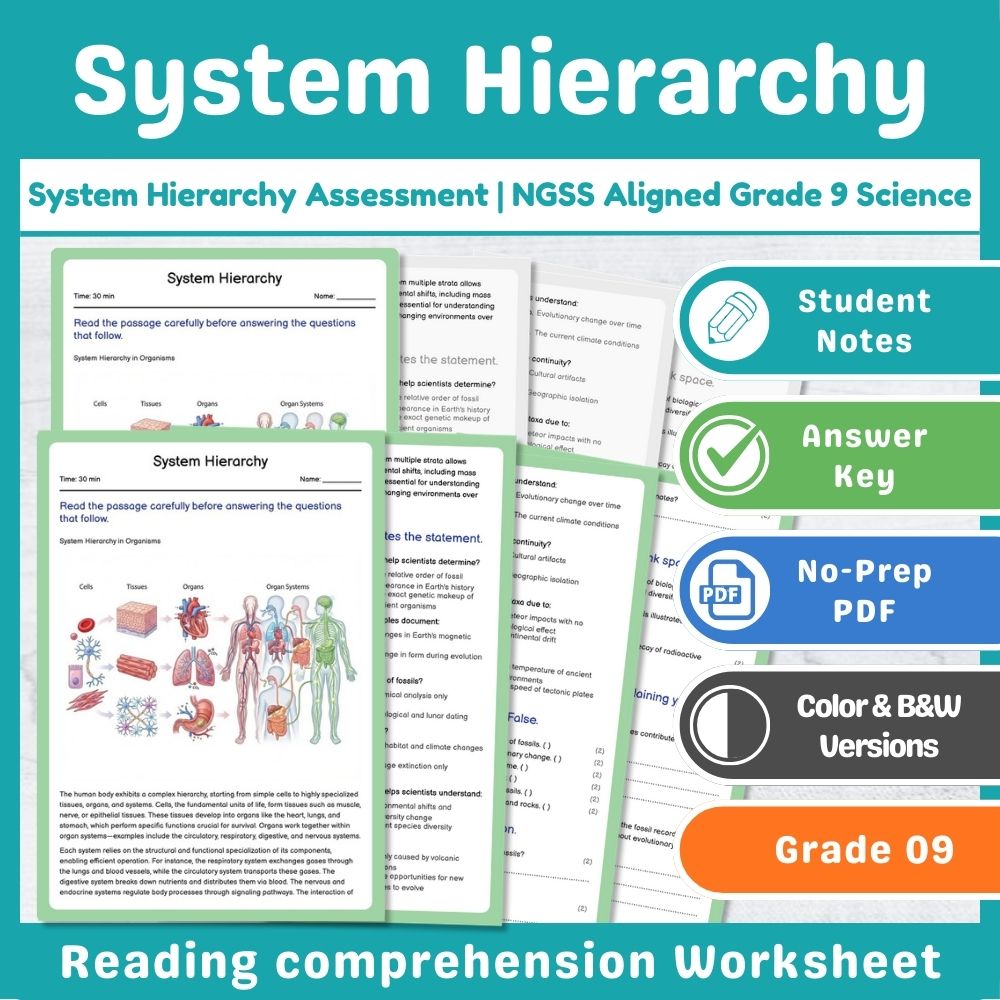
System Hierarchy Assessment | NGSS Aligned Grade 9 Science
Created byPrism Point LearningLearning Objectives
- Describe the hierarchical organization of the body from cells to organ systems.
- Explain how tissues, organs, and organ systems interact to maintain organismal functions.
- Identify examples of physiological coupling, such as circulatory-respiratory and digestive-vascular systems.
Instant download

Grade 8 Science Worksheet on Seismic Activity | TEKS Standards (PDF)
Created byEvergreen Desk EducationLearning Objectives
- Explain how earthquakes originate at faults due to stress buildup and sudden slip.
- Describe how P-waves and S-waves propagate through Earth and differ in motion and travel speed.
- Compare seismic magnitude and intensity and explain how epicenters are estimated.
Instant download
Browse more categories
About Science Worksheets
Find Science worksheets spanning core skills, practice, and review. All 44,773 resources are instant PDF downloads for the classroom or home.
Every worksheet on MyTeachingSheets is created by independent teacher-authors and reviewed before publication. All resources download as printable PDFs for classroom, homework, or at-home practice, and many include answer keys. Preview any worksheet free before buying.